
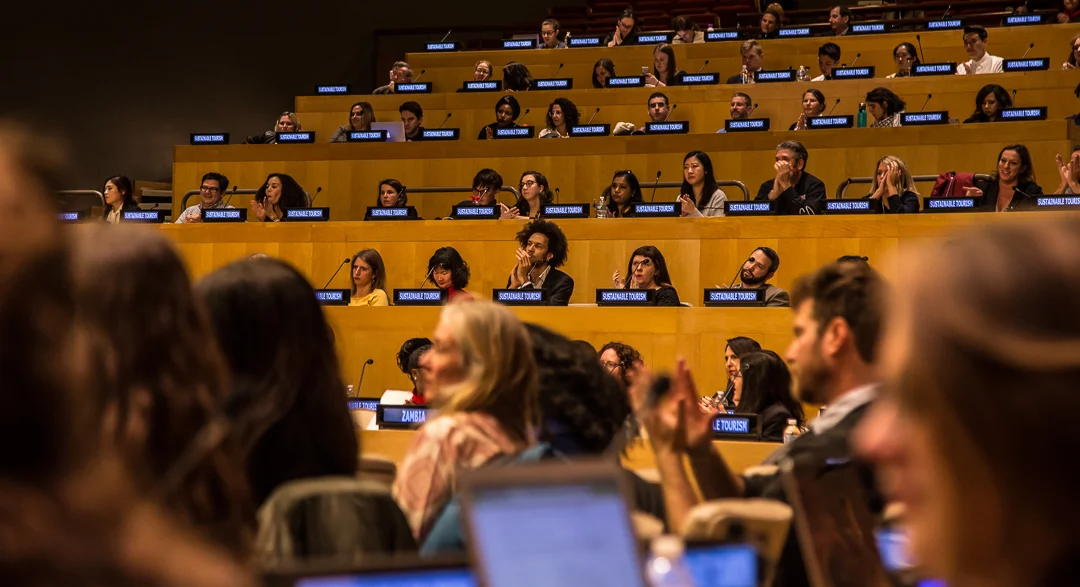
November 16th – 17th, Travel Social Good hosted its annual summit at the United Nations in New York City. Guests included tourism ambassadors, travel industry professionals and members of the hospitality community. The core challenge and theme was Transparency and focused on the UN’s declaration of 2017 as the International Year of Sustainable Tourism For Development. Summit partners included Global Sustainable Tourism Council, Sustainable Travel International, Center for Responsible Travel, and Tourism Cares. For those tweeting live or following along at home, the hashtag #TravelGood17 was created.
Every year 1.2 billion people travel the globe for business, pleasure, and familial reasons. Of the estimated trillions of dollars generated by this type of travel, less than 10 percent of it remains to benefit the local community. Some critics have described this as colonialism 2.0. The notion that the comparatively wealthy come to a place, consume and exhaust its resources, and leave the lands and oceans worse. Then, the same industries that profited from this practice dare to tell both travelers and indigenous people what’s best for the local lands, bodies of waters, and the economy.
Whether due to criticism or a sense of wanting to do the right thing, many travel professionals and innovators are creating ways to mitigate the damage being done by the industry. “Tourism can be parasitic,” keynote speaker and Planeterra Foundation President, and VP of G Adventures, Jamie Sweeting said. 21st century travel does more harm than good, he asserted. Sweeting noted that 2002 was the UN’s International Year of Eco-Tourism, and fifteen years later, with this being the Year of Sustainable Tourism, the industry is still talking about essentially the same issues. He said the field is still too focused on destination “arrivals and visits” and not enough on generating substantive “non-menial jobs” for locals. He challenged all sectors of the travel industry— airlines, hotels, agents, restaurants, manufacturers, etc.— to do better.
Sweeting’s financial statistics were grimmer than those put out earlier in the conference by travel experts. He said only “5 out of 100 dollars stay with developing and local economies.” “Who really benefits from tourism?” he asked the audience. Using Andrew Carnegie as an illustration, Sweeting noted that the industrialist became wealthy by manufacturing steel but did so using child labor and a “weakened” morality. He was charitable, but also created damage. The travel industry, he implored, must “reduce their harm.”
Jamie pointed to G Adventures’ G Local as an example of causing less harm within the business of tourism. Sweeting said 91% of the company’s suppliers are locally owned and 90% of those suppliers use local resources. Out of $250M generated, $200M is recycled back into the local community, Sweeting said.
Representatives from Israel, Botswana, Gambia, and Kenya were also present at TSG’s summit and spoke about tourism in their nations. They highlighted the beautiful attractions of their lands and gave historical and political information about their countries. H.E. Mr. Adonia Ayebar described Uganda’s rainforests and deserts and said the country has over 1,000 species of birds due to its unique climate and geography. Victoria Falls in Zambia, is one of the seven wonders of the world according to H.E. Ms. Christine Kalamwina. In addition to Kenya being “the most wonderful place on the planet,” the nation has also increased penalties for poaching and attacking crops, H.E. Ms. Koki Muli Grignon informed the audience.
The idea of using data to demonstrate a destination’s value was also presented at the summit. According to Nature Conservancy’s Geof Rochester, reefs in Barbados mitigate waves and clean gallons of ocean water. 40% of the nation’s economy is tied to tourism, at $24T per year. Of the estimated 70 million trips taken to coral reefs and “reef adjacent,” (i.e. beaches nearest the reefs) $35.5B was generated according to the data collected. Data such as this can then be presented to governments, airlines, trip insurers, etc. to help “calculate value” of certain destinations.
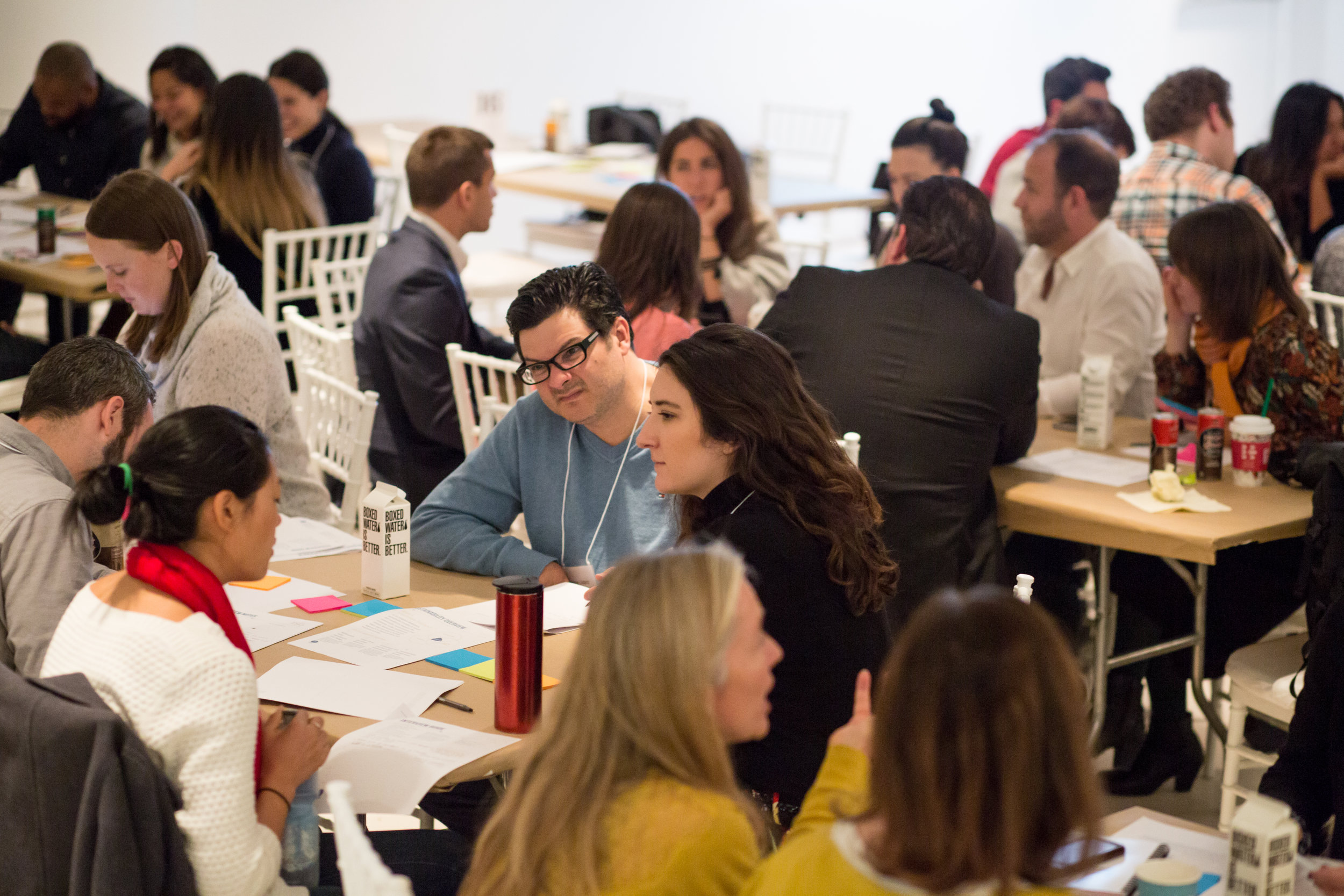
Towards the close of the summit, attendees were asked to engage in “design thinking” to help problem solve and mitigate the negative impacts of tourism.
Jeremy Smith, co-founder of Travindy, pointed out that though “tourism only directly supports 3.6% of [the] economy,” it’s responsible for 5% of greenhouse gases. He highlighted hotels that were beginning to use plant carpets to offset carbon emissions. Conference goers broke into smaller groups to brainstorm such creative solutions.
Gail Grimmett, president of Travel Leaders Elite told attendees, “purpose is the new luxury,” and encouraged the audience and industry leaders to be stewards of the resources we come in contact with.
For more information, please visit travelsocialgood.org.

ALEXANDREA THORNTON
Alexandrea is a journalist and producer living in NY. A graduate of UC Berkeley and Columbia University, she splits her time between California and New York. She's an avid reader and is penning her first non-fiction book.