
The village of Kamikatsu in Japan has taken their commitment to sustainability to a new level. While the rest of the country has a recycling rate of around 20 percent, Kamikatsu surpasses its neighbors with a staggering 80 percent. After becoming aware of the dangers of carbon monoxide associated with burning garbage, the town instated the Zero Waste Declaration with the goal of being completely waste-free by 2020.
The Cape Town Water Crisis: Delaying Day Zero
In the Broadway musical Urinetown, people line up to use the toilet because a 20 year old drought has made private toilets a thing of the past. And when the protagonist rises up finally and allows unrestricted toilet use, the water supply completely evaporates. The final scenes ominously hint at more worrisome issues for the citizens, who, once concerned only with toilet use, most grapple with dying of thirst among other problems.
Although Urinetown is a satire, residents of Cape Town might see it as a scary prediction of their future if Day Zero arrives. As apocalyptical as it sounds, it does accurately embody the looming doomsday scenario: Day Zero is when the taps run dry. How? An unexpected three year drought, starting in 2014, drastically depleted the six dams that serve Cape Town. Whereas 20 years ago water management in Cape Town could rely on seasonal rainfall patterns and small conservation measures, it is now relying on unreliable rain and big changes.
Since Day Zero has been first predicted in early 2018, it has been continuously delayed. Projections now suggest Day Zero will occur in 2019. And in recent weeks, many are rejoicing in water returning to the dry dams. In the words of Anton Bedell, minister of Local Government, Environmental Affairs, and Development Planning: “It’s…good to see Clanwilliam dam at 20.4%. A few weeks ago the dam was below 6%.” The other dams have reflected similar increases, but the relief is only temporary as the dams await more rain—if it will come.
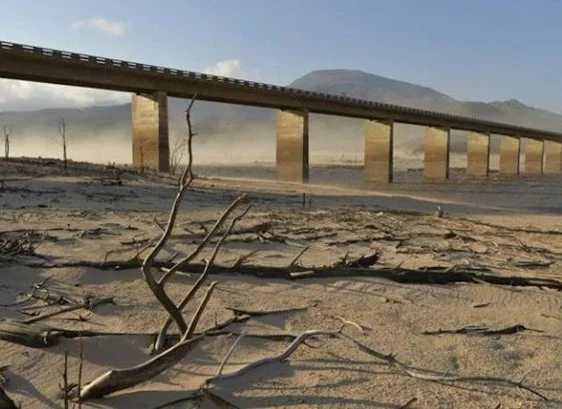
Theewaterskloof dam in February 2018 (source: 2oceanvibes)
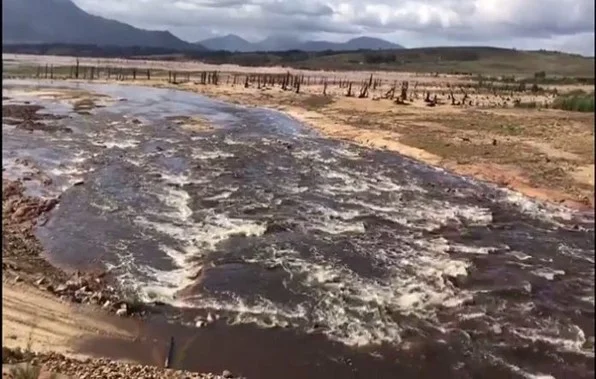
Waters return in early June (source: Storm Report)
The biggest assistance in delaying Day Zero is restrictions implemented on February 1st. The main restriction was the allowance of 50 liters, a little more than 13 gallons, of water per person. Comparatively, the average individual in the United States uses 80-100 gallons of water a day and the average family over 300 gallons a day. The question of how Americans end up using so much illustrates just how little 13 gallons is for a Capetonian. For example, imagine the average bathroom break. A toilet flush requires at least 1.6 gallons with water efficient models, but if it is an older model it will need up to 4 gallons. Then you will wash your hands with about 3 gallons of water. Considering most people take at least four bathrooms breaks a day, that’s already 18.4 gallons used in one day (on a water efficient toilet): more than what one Capetonian is allowed in a single day.
So it is no wonder people are following the “if it’s yellow, let it mellow” rule and putting reminders in bathroom stalls around Cape Town. Even restaurant and bar washroom taps are shut off. But it is not just in the bathroom that changes are being made. Any use of municipal drinking water for irrigation, watering, hosing down paved surfaces, washing vehicles, or filling a private pool is not allowed. Agricultural users have to decrease water usage by 60% and commercial places by 45% compared to their pre-drought usage in 2015. And for residential units that use too much, you’ll face a fine or have to install water management devices.
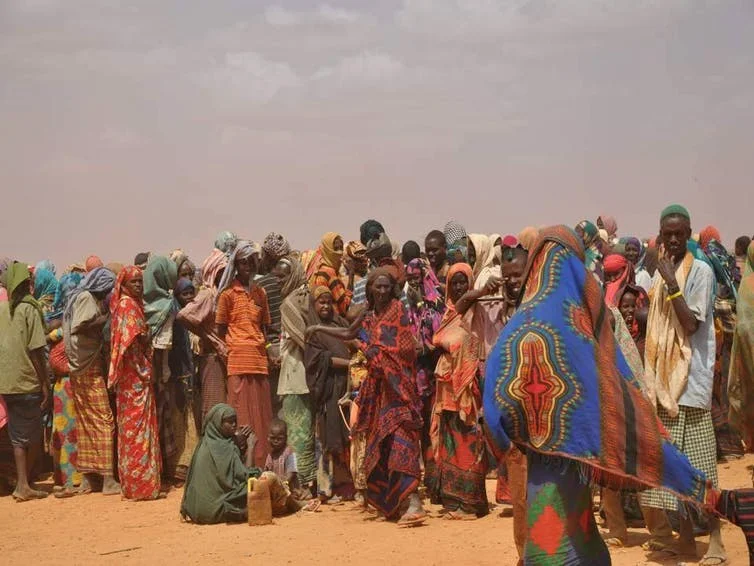
And globally, Cape Town is a sign of the future. As population increases, especially in urban centers, water resources are straining to accommodate. This is against a backdrop of climate changes that favor extreme weather events like frequent droughts. What might have worked in the past, is not necessarily the solution for the future. California, Beijing, Sao Paulo, Jakarta, Mexico City are just some cities that may be the next unwilling host of Day Zero. And water shortages lead to other problems such as famine and violence. The International Panel on Climate Change predicts the Middle East and North Africa will face the most severe water shortage problems. And already, many Somalis have become climate change refugees—leaving their rural farms for the capital, Mogadishu, in hope of different sources of income with farming no longer possible. Millions more are projected in the years to come as climate change makes itself even more apparent.
It is a bleak picture, but subtle changes are happening as global leaders are becoming more aware of the looming water crisis. But we can also start at home with our own water usage. Maybe you don’t need to take a long bath after a hard day and use 36 gallons of water simply to unwind. Instead, take a quick shower and find something else to help you relax. The small changes might sound silly but it is the little things that matter as Capetonians will tell you.
TERESA NOWALK is a student at the University of Virginia studying anthropology and history. In her free time she loves traveling, volunteering in the Charlottesville community, and listening to other people’s stories. She does not know where her studies will take her, but is certain writing will be a part of whatever the future has in store.
The Zambia Project
Janssen Powers had the pleasure of shooting this piece for World Vision. He said "to say it was an eye opening trip would be an understatement. As crazy as it is to imagine drinking contaminated water everyday, it's even crazier when you realize that so many people spend the majority of their time just looking for it."
World Vision is an amazing organization doing great things in Zambia and all over the world. To learn more about their effort to bring Zambia clean water, visit worldvisionwater.org.
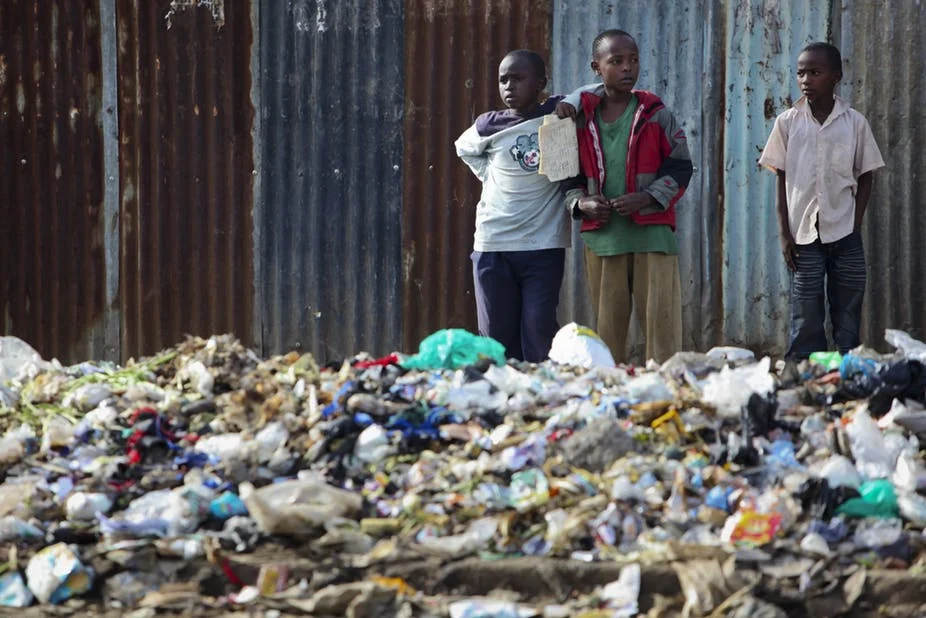
Nairobi’s current waste disposal system is fraught with major problems. EPA/Dai Kurokawa
How Nairobi Can Fix Its Serious Waste Problem
Uncollected solid waste is one of Nairobi’s most visible environmental problems. Many parts of the city, especially the low and middle-income areas, don’t even have waste collection systems in place. In high income areas, private waste collection companies are booming. Residents pay handsomely without really knowing where the waste will end up.
The Nairobi county government has acknowledged that with 2,475 tons of waste being produced each day, it can’t manage. Addis Ababa Ethiopia has a similar size population but only generates 1,680 tons per day.
Nairobi’s current waste disposal system is fraught with major problems. These range from the city’s failure to prioritise solid waste management to inadequate infrastructure and the fact that multiple actors are involved whose activities aren’t controlled. There are over 150 private sector waste operators independently involved in various aspects of waste management. To top it all there’s no enforcement of laws and regulations.
Nairobi’s waste disposal problems go back a long way and there have been previous efforts to sort them out. For example in the early 1990s, private and civil society actors got involved, signing contractual arrangements with waste generators. They often did this without informing or partnering with the city authorities.
More recently other strategies were put in place, some of which left parts of the city clean. They worked for a period, but unfortunately they weren’t sustainable because no institutional changes were made.
But there’s hope on the horizon with a new Nairobi Governor – Mike Sonko Mbuvi. He should learn from the mistakes of the past and put a new regime in place that addresses the structural problems that have plagued the city. This would include an improved improved collection and transportation plan that incorporates the private sector.
Learning from the past
In 2005 John Gakuo took over the management of city affairs as the Town Clerk. During his tenure (2005-2009) he made a deliberate effort to introduce new approaches.
When he took over the city only had 13 refuse trucks. They were able to collect a paltry 20% of the waste produced by the city. To overcome this, the authorities contracted private waste collection firms to collect, transport and dispose waste at Dandora dump site which is the biggest and the only designated site. This quickly boosted the total waste collected with levels oscillating between 45%-60%.
Other changes included:
The development of a proper waste collection and transportation schedule with market operators. This meant waste from open-air markets was brought to identified collection points on specific days.
A weighbridge to measure amounts of waste disposed at Dandora was introduced. An important way to know disposal levels vis-a-vis collection and generation.
Enforcement officers were deployed to prevent dumping in parts of the city that were notorious for waste accumulation.
Over 2,000 arrests were made, making residents aware that indiscriminate dumping was illegal and punishable under the city authority laws.
All these efforts paid off – for parts of the city. For example, the heart of the city, the Central Business District, was cleaned up and waste was brought under control.
But crucial elements that would have ensured that the changes were sustainable were left out. For example, no new physical infrastructure, like the construction of waste transfer centres and proper landfills, were built, nor was new equipment bought.
After Gakuo’s regime, the next one worth a mention is Evans Kidero’s regime (2013 - 2017). It can be credited for trying to fast-track the implementation of the Solid Waste Management Master Plan which assessed the waste management problem of Nairobi and developed projects that could be implemented to ensure a sustainable system was in place.
This ensured that while the private sector needed to help with waste collection and transportation, the government was key to institutionalising waste management services.
Thirty waste collection trucks were bought and serious investment was made into heavy equipment. And in an effort to streamline waste collection a franchise system of waste collection was rolled out. This involved dividing the city into nine zones to make it easier to manage waste.
The franchise arrangement gave private operators a monopoly over both waste and fee collections, but relied heavily on the public body for enforcement of the system.
The franchising system failed due to a lack of enforcement by the city. In addition, in-fighting broke out between the private waste collection firms that had individual contracts with waste generators and the appointed contractor.
But other changes introduced during this period were more successful and had longer lasting effect. For example new laws were introduced designed to create order in the sector. These included the solid waste management act in 2015. This classified waste and also created a collection scheme based on the sub-county system. It also put penalties in place.
In addition, in 2016, 17 environment officers were appointed and posted to the sub-counties to plan and supervise waste management operations alongside other environmental issues.
These changes planted the seeds of an efficient and working waste management system. But the regime fell down when it come to enforcement. This meant that the gains that had been made were soon lost.
What needs to be done
Expectations are high for the new regime that has taken over. It should look to fast-track the following programmes:
Implement an improved collection and transportation plan that incorporates private sector and civil society groups;
Establish a disposal facility to reduce secondary pollution from the city’s dumps;
Decommission the Dandora dump site;
Implement the re-use, reduction, and recycling of waste;
Establish intermediate treatment facilities to reduce waste and its hazards;
Create an autonomous public corporation;
Put in place legal and institutional reforms to create accountability;
Implement a financial management plan, and
Implement private sector involvement.
Nairobi can fix it’s waste disposal problems. All it needs is focused attention, good governance and the implementation of systems that ensure changes outlive just one administration.
This article was originally published on The Conversation.

LEAH OYAKE-OMBIS
Part-time lecturer and Director of the Africa Livelihood Innovations for Sustainable Environment Consulting Group, University of Nairobi
MEXICO: Turning Gas Guzzlers Into Clean Cars
In Mexico City, more than 3.5 million cars navigate the streets, plazas and avenues of North America’s most populous urban area. That makes for a ton of exhaust, but luckily, there’s a solution to this environmental problem. Enter engineer/auto mechanic Alvaro de la Paz and computer scientist Hector Ruiz. Together, they’re transforming old gasoline-fueled automobiles into electric cars.
Read MoreFighting to Keep Mexico’s Floating Farms Alive
Lucio Usobiaga, the co-founder of Yolcan—a nonprofit aimed at preserving the chinampas.
Read MoreThe Meaning of Travel: A New Guide For Millennials
In today’s highly connected and accessible world, to go anywhere is easy.
But to be a true traveler? That’s the daunting task.
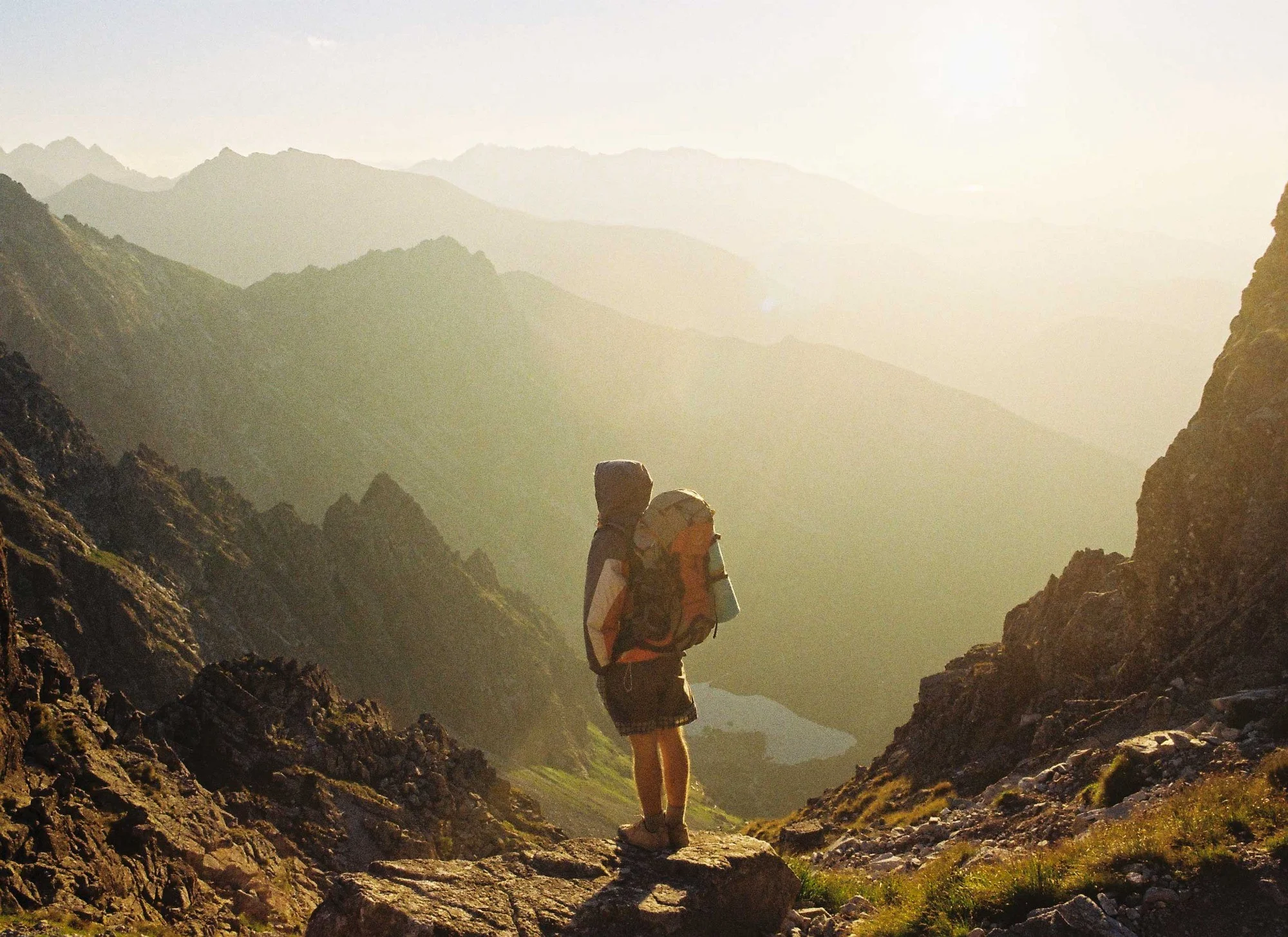
Many of us have taken planes, and have gone to exotic places outside of where we grew up and live. Be it a backpacking trip to India, a short weekend holiday spent in Bali, or a work-related trip to Johannesburg, the act of going somewhere outside of our personal zone of familiarity and comfort is often seen as an opportunity offering some form of inner transformation.
Indeed, the act of exposing ourselves to the foreign and unknown can evoke a plethora of new feelings in us. Sometimes, this experience leads us to new perspective, or even new decisions about ourselves and our lives.
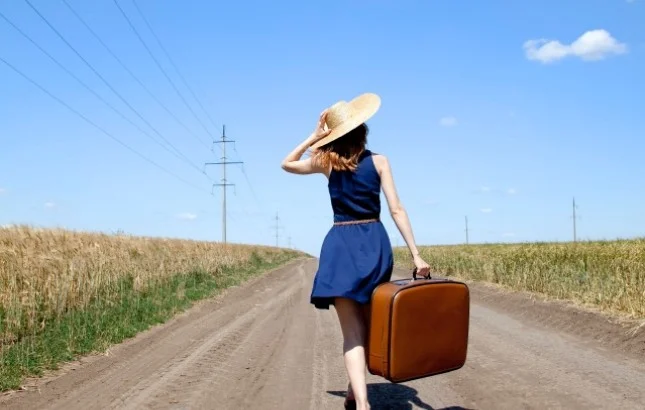
Don’t be mistaken though, not all journeys that we take will lead us to a new self at the end of the road.
More often than not, we return home as the same person as we were before, just with a few more stories to tell and a few more memories to reminisce about during our mundane 9-to-5 job.
So, you may ask, what differentiates a trip that leaves us unchanged, from a travel experience that can potentially transform us from the inside out? How can I make my travels mean more? How do I get more out of them?
Well, there is no one way to achieve it, that’s for sure. We are all different individuals, from different backgrounds and with our own interpretation of the world.
Having said so, we are all similar in so many ways too. A genuine smile, a simple greeting, or an act of kindness may be all it takes for two persons separated by their backgrounds and languages to relate and connect with each other.

Photo by Laura Grier
Hear someone out. Listen to their story.
To travel is not just to see and to experience, but also to listen. I think many people missed out on that, and therefore, on a great learning opportunity. To listen is to try to empathise, to put yourself in the other person’s shoes.
By listening to the stories of the strangers we meet on the roads, about their lives, about their view of what’s happening in the world, about their dreams for the future, we gained not just the knowledge and viewpoint of another human being, but also learn of the value and validity of our own pre-existing views and beliefs.
“Perhaps travel cannot prevent bigotry, but by demonstrating that all peoples cry, laugh, eat, worry, and die, it can introduce the idea that if we try and understand each other, we may even become friends.”
— Maya Angelou
That’s how we gain human perspective I think — not by looking at the endless Himalayan mountain range, or the ebb and flow of the sea by the beach. You’ll never know, sometimes it’s the most unexpected persons who impart us with the most valuable lessons in life.
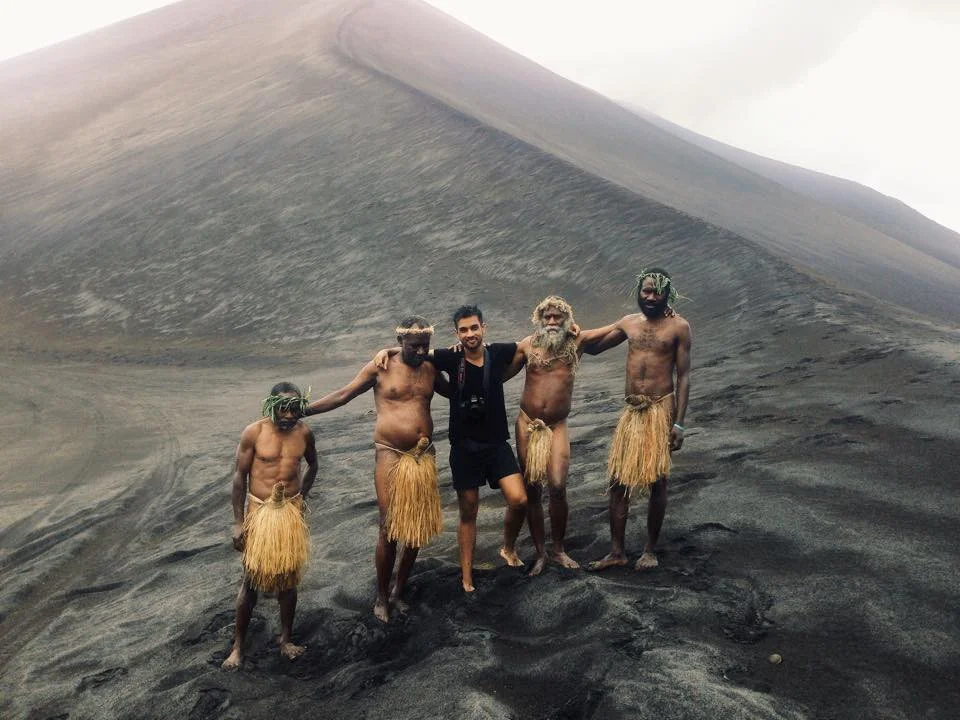
Photo by Prashant Ashoka
Also, tell your story.
I often hear people say that they travel to feel free again. They explained that traveling helps them escape temporarily from the realities back at home — their old problems, burdens and responsibilities.
True enough, being in a foreign land where nobody knows anything about you does have its unique liberating quality. You can be anybody, and you can be nobody. There, I think, is where you find your most authentic self, and then be it.
“… sometimes one feels freer speaking to a stranger than to people one knows. Why is that? Probably because a stranger sees us the way we are, not as he wishes to think we are.”
— Carlos Ruiz Zafón
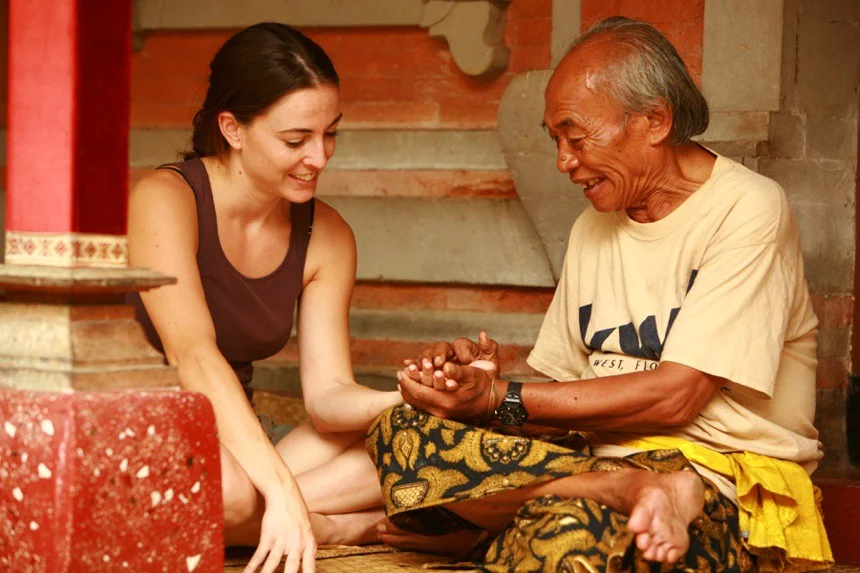
Photo by Laura Grier
How do you start? Well, relax. Don’t overthink it. Instead, try to enjoy the process of letting go of your insecurities, your fears and inhibitions. What better ways to get things off your chest than to confide in a stranger whom you know you’ll never meet again? There! You just save yourself a costly trip to a therapist.
Jokes aside, it does take time and a few tries before you learn to open yourself up, not just to strangers, but to the world as a whole. But trust me, once you’ve reached that point, you will begin to see the world in a more fearless and unprejudiced manner.
Last but not least, leave your mark.
Make your travel different and more meaningful by contributing to the local cause. And no, I’m not talking about volunteering here. Neither am I talking about donating old clothes, books and stuff that people might not really need.
By contributing, I mean helping locals who want to help themselves. By aiding them in creating a positive outcome that is both tangible and sustainable. That’s what I think a real positive impact entails. That’s how we truly help.
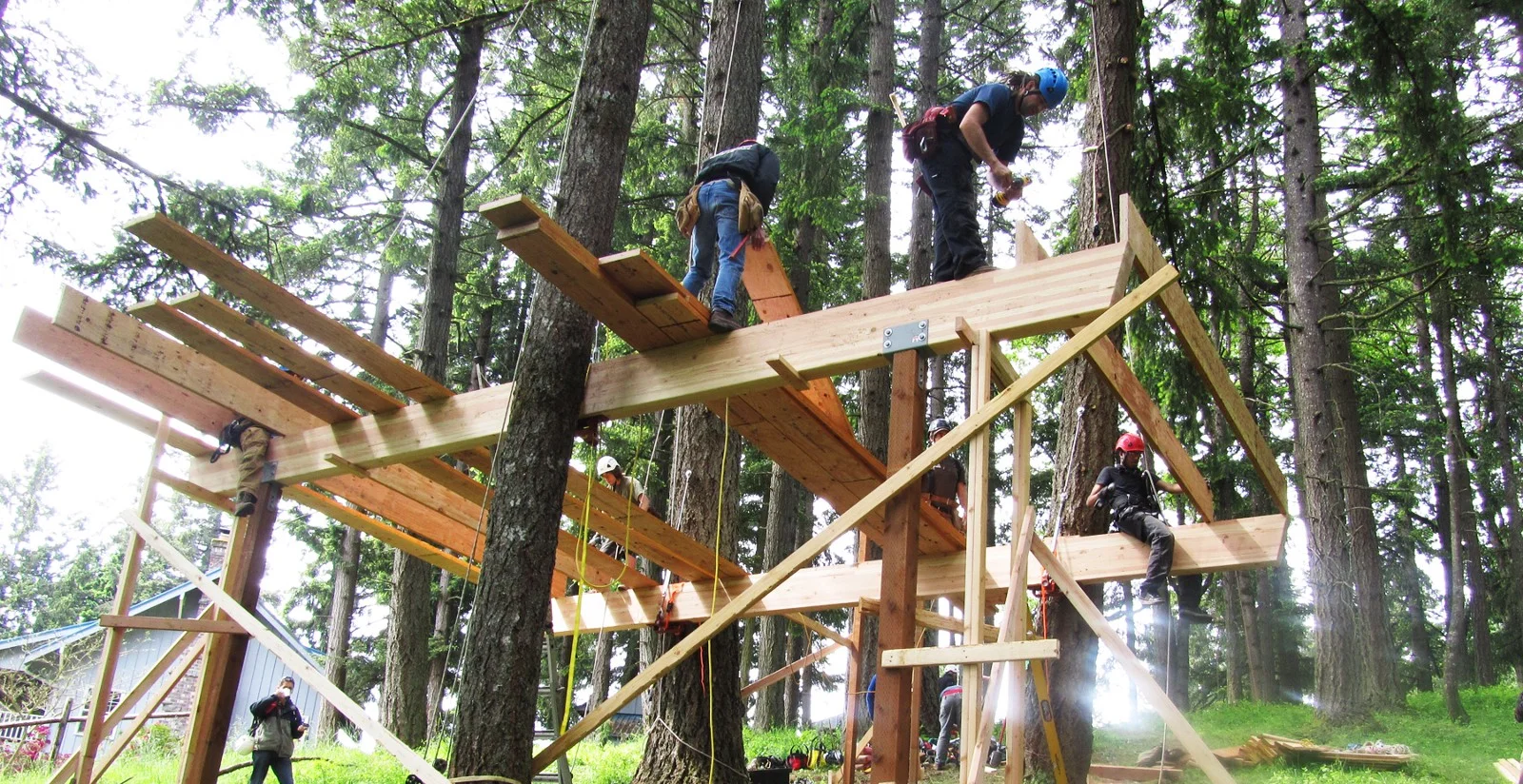
Want to help build a treehouse? A project on TravelStarter is offering just that.
Some local businesses may be starting up or in the process of renovation and need some funding. One easy way to get in touch with these people — the entrepreneurs, designers or small business owners living/working in the area you’re traveling to — is through online crowdfunding platforms like Kickstarter and Indiegogo, which have thousands of projects coming in from all across the globe.
To skip the hassle of searching through the tons of projects which may not be relevant to your needs, you can also try TravelStarter, a travel-specific crowdfunding platform with a growing array of travel and tourism business projects from different parts of the world.
Want to help a Croatian instructor rebuild his sailing boat and be rewarded with a sailing course? Or help a New Zealander living in the Philippines rebuild his Con-Fusion Cafe after typhoon Yolanda destroyed the restaurant? Or are you headed down to San Diego anytime soon? Help a new B&B at Pacific Beach in their funding raising efforts to refurnish the hostel. For a contribution of $80, you will be rewarded with a two-night stay, a three-hour whale watching tour and also a brewery tour!
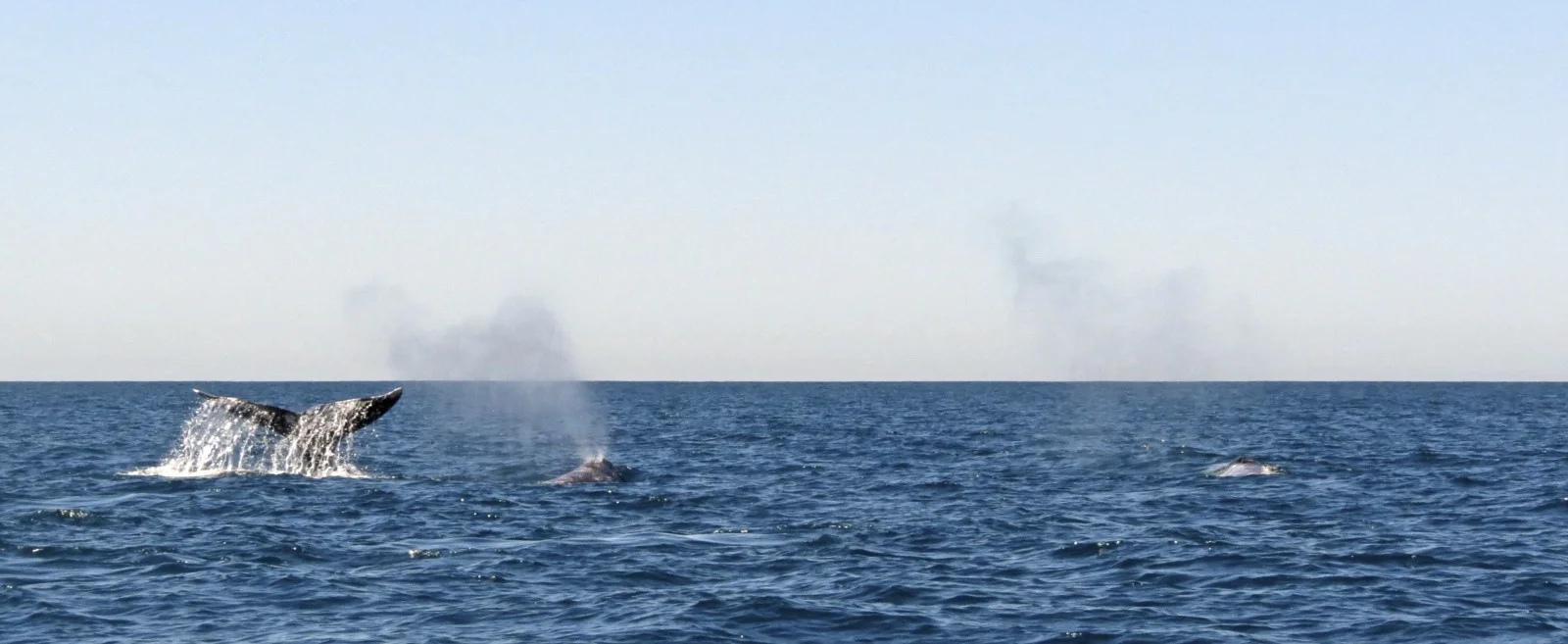
Photo by San Diego Whales And Dolphins
With the help of platforms like TravelStarter, travelers are encouraged and enabled to engage in more locally instigated experiences.
That’s not only a good way to help somebody, it’s probably the best way to make a local friend too. Definitely an experience that’s worth more than what you fork out of your pocket.

Photo by Ivon Domingo
At the end of the day,
Or at the end of your life, you will realise that it’s not the places you have seen, the crazy adventures you have gone through, or the pictures that you have taken that matters the most.
It’s the people that you have met along the way — those whom you have helped, those whom you have loved, those whose lives you have touched — that really mean the most. They are what made you a true traveler of life.
Lastly, always remember:
“A journey is best measured in friends, rather than miles.”
— Tim Cahill
The world’s waiting for you. Now GO!
THIS ARTICLE WAS ORIGINALLY PUBLISHED ON THE COFFEELICIOUS.
KEAY NIGEL
Keay Nigel is an independent writer/designer currently based in San Francisco. He has lived in the Hongkong, China, India and various parts of the United States. Travel is his passion and he's been documenting his overseas adventures through YouTube videos. Check out more of his writings here.
Kayan: Beyond The Rings
Years ago the Kayan people fled Burma and headed to Thailand due to civil war, they lived in refugee camps until the government settled them in Northern Thailand.
Read More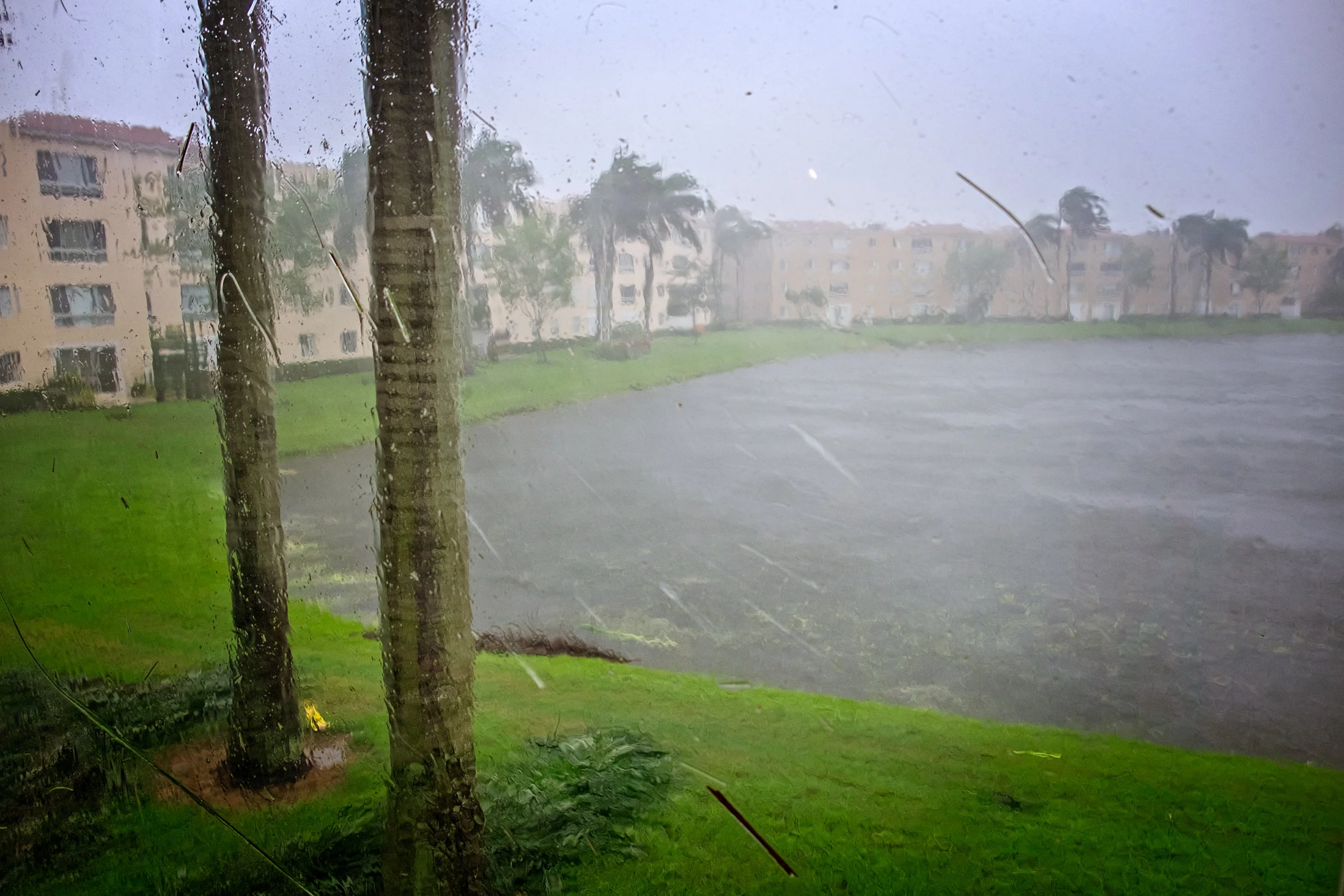
Hurricane Irma. Joan Nova, CC-BY-NC-ND
The Irma Diaries: Hurricane Irma Survivor Stories Should Be a Climate Change Wake-Up Call
There’s a popular quote often attributed to Mark Twain that was used in a radio ad in the Virgin Islands many years ago: “Everybody talks about the weather, but no one does anything about it….”
It always seemed strangely inappropriate in a place where people seldom talk about the weather, and where blue skies produce picture postcard days and temperatures seldom vary from the mid-80s. In the islands, the saying goes, as in much of the Caribbean, the weather is pretty predictable.
But really, it is not.
Rising sea levels, longer dry spells and erosion of precious beaches are affecting people’s lives and livelihoods. And in her new book, The Irma Diaries: Compelling Survivor Stories from The Virgin Islands, British Virgin Islands author Angela Burnett warns that unless there’s some real movement to curtail greenhouse gas emissions, the series of deadly hurricanes that churned their way through the Caribbean in September 2017 could be a glimpse into a future of unprecedented weather.
“There is a real possibility that a hostile climate could eventually make the islands I have always called and cherished as home uninhabitable,” writes Burnett, who works as a climate change officer in the British Virgin Islands.
Irma was the most powerful Atlantic Ocean hurricane in recorded history, and it left a trail of destruction and despair across the Caribbean and Florida. The British Virgin Islands, a territory with a population of 36,000, took a direct hit.
The storm killed four, destroyed businesses, eroded beaches, shredded hillside vegetation, flattened homes and left an untold number of people adrift and sickened from the destruction of water and electricity systems. Maria, another Category 5 hurricane, followed two weeks later, grazing the Virgin Islands but devastating the nearby island of Puerto Rico, which had become a staging ground for its Irma-ravaged neighbors.
The hurricanes of 2017 left no one unscathed in the Caribbean islands it touched, and the story of their economic and emotional toll is still unfolding four months later. “Irma was definitely a game changer,” Burnett says. “The BVI is now at a very important crossroad; Irma makes it impossible for us to redevelop without factoring in climate change impacts.”
The Irma Diaries, which Burnett wrote in about two months, tells the story of 25 hurricane survivors, based on her first-hand interviews with a cross section of residents from the four major inhabited islands in the BVI (Tortola, Virgin Gorda, Anegada and Jost Van Dyke).
Their stories—of ripped-off roofs, flying debris, blown-in doors, broken windows, crumbled walls, homes caught afire and overturned vehicles—are horrifying and harrowing, and also at times humorous. But along with the anecdotes on how the people prepared for and survived a storm of a magnitude none of them had ever experienced, many of them talked, unprompted, about the role the changing climate had in shaping these disasters.
They’ve had ample evidence this year alone. Almost exactly a month before Irma, an unusual storm dumped between 8 and 15 inches of rain in various parts of the territory in 24 hours, leading to widespread flash flooding.
One resident, having clearly read Al Gore’s Truth to Power, referred to the “rain bomb,” which is how Gore in his book describes a kind of downpour that might have occurred once in a thousand years, but now occurs quite regularly.
Another person, referring to the hurricane as “Irmageddon,” was outraged that the climate change conversation has not gotten any more prominent in public policy debates. One family that had been planning an expansion of their home is now considering building a concrete bunker instead.
Burnett, 31, gave her book an unofficial launch at the United Nations Climate Change Conference in Bonn, Germany, in November 2017.
Often the youngest person at many of the climate functions she attends, Burnett also authored the climate change adaptation policy for the BVI and conducted a vulnerability assessment for the region’s tourism sector. She also helped to pioneer and develop the new Climate Change Trust Fund, whose board was seated just weeks before Irma hit. The need for such a fund is based on recognition that the U.K.-dependent territory simply doesn’t qualify for most of the big pots of climate change funds available to other countries. From public school classrooms to government cabinets, Burnett has been trying to educate people locally around the importance of climate change adaptation and warning of the likelihood of stronger hurricanes. Still, the strength and ferocity of Irma surprised even her.
“People never act on something unless they care about it first,” she says. “You need to get them to connect to that thing at some level.” With this book, she wants to “put people in the shoes of those who lived this disaster, even if they’re on a small island in the Caribbean. Spending the hurricane with them and going through how they had to save their lives at the hands by this climate-change induced threat I think is a powerful way to start a connection.”
Burnett began writing the book about a month after the hurricane made landfall. She wrote at times in longhand and on many nights she worked by candlelight because many of the homes on the island, including hers, had no power. Many still remain in the dark four months later.
She says was stopped by police many nights for breaking curfew, because she was driving home late from interviews or from the local sewer treatment plant, which had become a refuge because it was one of the few places on the island with power that she could access.
A decade ago, when she first started her work on climate change, many people in the islands didn’t really know what it was or that it had anything to do with them because most of the images associated with it were of melting ice caps and starving polar bears, she says.
While the entire Caribbean contributes very little overall to global emissions, “If you look at our carbon footprint, per capita, we are probably up there with the average citizen of in some developed countries or other countries making significant contributions,” she says. “From a moral perspective we have a responsibility to act. Climate change impacts everything about our future.”
A big part of getting that message across has been to help Virgin Islanders understand how climate change affects them. Talking to primary and high school students, for example, Burnett uses familiar analogies to explain the dynamics of climate. She’s helped stage local debates on climate change and once included a climate change parade float for a colorful cultural festival. She’s done exhibits, streamed Al Gore’s An Inconvenient Truth on movie nights and played short videos in public places where people wait in line, like banks.
“Our climate has been such a steady, unchanging backdrop to life that we often don’t realize how fundamental it is to everything about our existence,” Burnett says. “Adaptation requires a new way of thinking and acting on the part of government, civil society, private sector and individuals.”
In an afterword to Burnett’s book, Michael Taylor, a physics professor at the University of the West Indies’ Mona Campus in Jamaica, wrote that Irma is solid proof of why climate change needs to be taken seriously in the Caribbean. The impact of unprecedented climate is not just erosion of a Caribbean way of life but derailment of Caribbean development, Taylor said.
The setback to economies, many based on tourism and agriculture, will be considerable, he wrote. “In a real sense, Irma portends the future challenge of climate change for the Caribbean region—the challenge of living in a new era likely consistently marked by climatic events only rarely seen to date, or by climatic events that have never been experienced before.”
THIS ARTICLE WAS ORIGINALLY PUBLISHED ON YES! MAGAZINE.

LORNET TURNBULL
Lornet Turnbull wrote this article for YES! Magazine. Lornet is an editor for YES! and a Seattle-based freelance writer. Follow her on Twitter @TurnbullL.
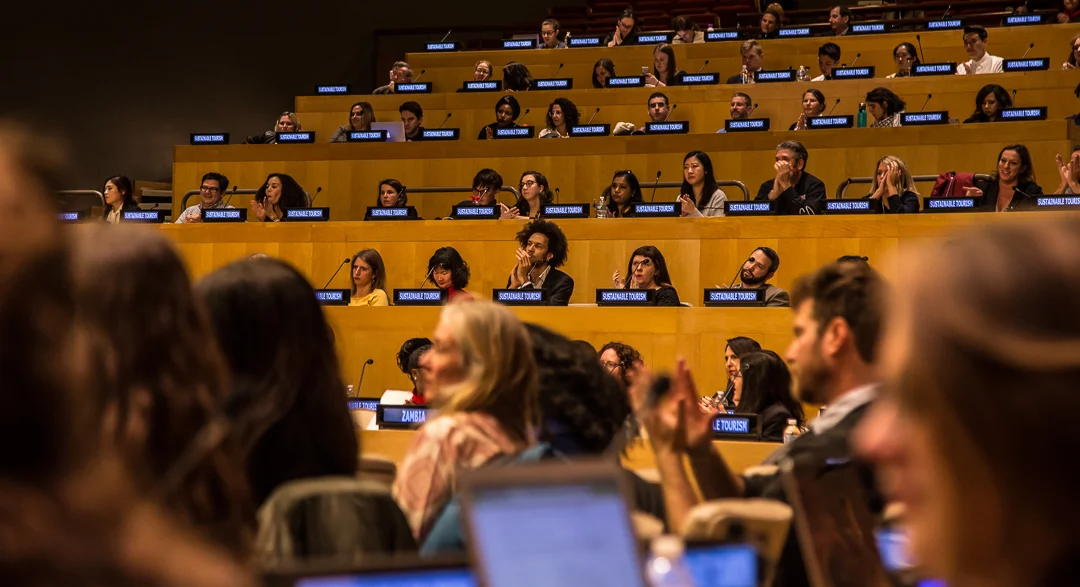
International Year of Sustainable Tourism: Travel Social Good 2017 Summit
November 16th – 17th, Travel Social Good hosted its annual summit at the United Nations in New York City. Guests included tourism ambassadors, travel industry professionals and members of the hospitality community. The core challenge and theme was Transparency and focused on the UN’s declaration of 2017 as the International Year of Sustainable Tourism For Development. Summit partners included Global Sustainable Tourism Council, Sustainable Travel International, Center for Responsible Travel, and Tourism Cares. For those tweeting live or following along at home, the hashtag #TravelGood17 was created.
Every year 1.2 billion people travel the globe for business, pleasure, and familial reasons. Of the estimated trillions of dollars generated by this type of travel, less than 10 percent of it remains to benefit the local community. Some critics have described this as colonialism 2.0. The notion that the comparatively wealthy come to a place, consume and exhaust its resources, and leave the lands and oceans worse. Then, the same industries that profited from this practice dare to tell both travelers and indigenous people what’s best for the local lands, bodies of waters, and the economy.
Whether due to criticism or a sense of wanting to do the right thing, many travel professionals and innovators are creating ways to mitigate the damage being done by the industry. “Tourism can be parasitic,” keynote speaker and Planeterra Foundation President, and VP of G Adventures, Jamie Sweeting said. 21st century travel does more harm than good, he asserted. Sweeting noted that 2002 was the UN’s International Year of Eco-Tourism, and fifteen years later, with this being the Year of Sustainable Tourism, the industry is still talking about essentially the same issues. He said the field is still too focused on destination “arrivals and visits” and not enough on generating substantive “non-menial jobs” for locals. He challenged all sectors of the travel industry— airlines, hotels, agents, restaurants, manufacturers, etc.— to do better.
Sweeting’s financial statistics were grimmer than those put out earlier in the conference by travel experts. He said only “5 out of 100 dollars stay with developing and local economies.” “Who really benefits from tourism?” he asked the audience. Using Andrew Carnegie as an illustration, Sweeting noted that the industrialist became wealthy by manufacturing steel but did so using child labor and a “weakened” morality. He was charitable, but also created damage. The travel industry, he implored, must “reduce their harm.”
Jamie pointed to G Adventures’ G Local as an example of causing less harm within the business of tourism. Sweeting said 91% of the company’s suppliers are locally owned and 90% of those suppliers use local resources. Out of $250M generated, $200M is recycled back into the local community, Sweeting said.
Representatives from Israel, Botswana, Gambia, and Kenya were also present at TSG’s summit and spoke about tourism in their nations. They highlighted the beautiful attractions of their lands and gave historical and political information about their countries. H.E. Mr. Adonia Ayebar described Uganda’s rainforests and deserts and said the country has over 1,000 species of birds due to its unique climate and geography. Victoria Falls in Zambia, is one of the seven wonders of the world according to H.E. Ms. Christine Kalamwina. In addition to Kenya being “the most wonderful place on the planet,” the nation has also increased penalties for poaching and attacking crops, H.E. Ms. Koki Muli Grignon informed the audience.

The idea of using data to demonstrate a destination’s value was also presented at the summit. According to Nature Conservancy’s Geof Rochester, reefs in Barbados mitigate waves and clean gallons of ocean water. 40% of the nation’s economy is tied to tourism, at $24T per year. Of the estimated 70 million trips taken to coral reefs and “reef adjacent,” (i.e. beaches nearest the reefs) $35.5B was generated according to the data collected. Data such as this can then be presented to governments, airlines, trip insurers, etc. to help “calculate value” of certain destinations.
Towards the close of the summit, attendees were asked to engage in “design thinking” to help problem solve and mitigate the negative impacts of tourism.
Jeremy Smith, co-founder of Travindy, pointed out that though “tourism only directly supports 3.6% of [the] economy,” it’s responsible for 5% of greenhouse gases. He highlighted hotels that were beginning to use plant carpets to offset carbon emissions. Conference goers broke into smaller groups to brainstorm such creative solutions.
Gail Grimmett, president of Travel Leaders Elite told attendees, “purpose is the new luxury,” and encouraged the audience and industry leaders to be stewards of the resources we come in contact with.
For more information, please visit travelsocialgood.org.

ALEXANDREA THORNTON
Alexandrea is a journalist and producer living in NY. A graduate of UC Berkeley and Columbia University, she splits her time between California and New York. She's an avid reader and is penning her first non-fiction book.
WAVES For Development: Changing Lives in Peru Through Surf
Meet Dave Aabo, the founder of WAVES for Development, a volunteer surf organization operating in Peru and around the world, in this exclusive CATALYST interview.
Read More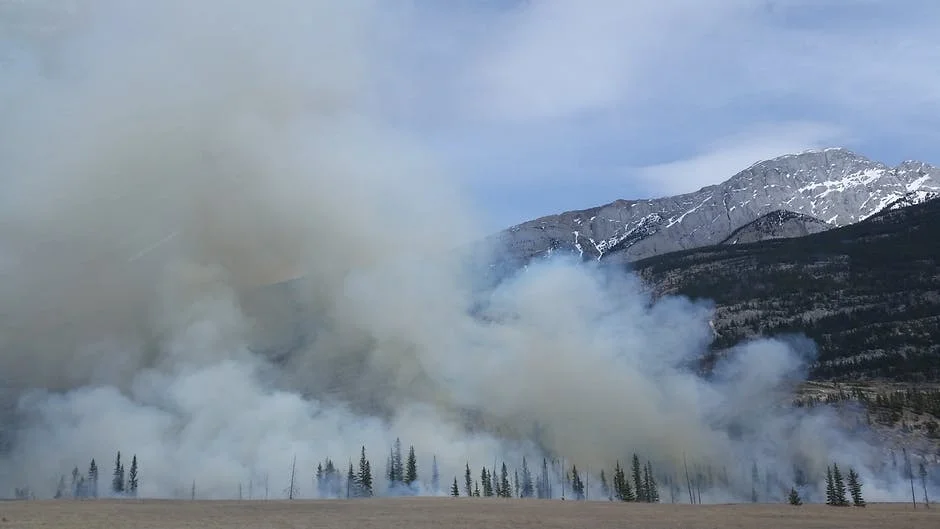
Climate Change Will Displace Millions in Coming Decades: Nations Should Prepare Now to Help Them
Wildfires tearing across Southern California have forced thousands of residents to evacuate from their homes. Even more people fled ahead of the hurricanes that slammed into Texas and Florida earlier this year, jamming highways and filling hotels. A viral social media post showed a flight-radar picture of people trying to escape Florida and posed a provocative question: What if the adjoining states were countries and didn’t grant escaping migrants refuge?
By the middle of this century, experts estimate that climate change is likely to displace between 150 and 300 million people. If this group formed a country, it would be the fourth-largest in the world, with a population nearly as large as that of the United States.
Yet neither individual countries nor the global community are completely prepared to support a whole new class of “climate migrants.” As a physician and public health researcher in India, I learned the value of surveillance and early warning systems for managing infectious disease outbreaks. Based on my current research on health impacts of heat waves in developing countries, I believe much needs to be done at the national, regional and global level to deal with climate migrants.
The U.S. government is spending US$48 million to relocate residents of Isle de Jean Charles, Louisiana, because their land is sinking.
Millions displaced yearly
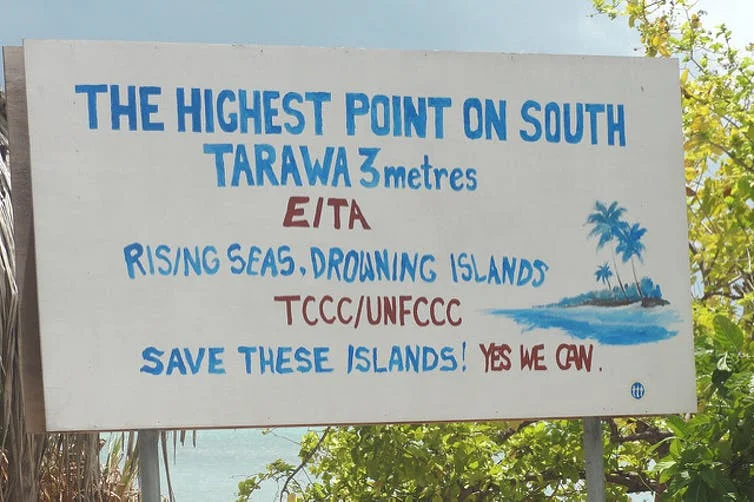
Climate migration is already happening. Every year desertification in Mexico’s drylands forces 700,000 people to relocate. Cyclones have displaced thousands from Tuvalu in the South Pacific and Puerto Rico in the Caribbean. Experts agree that a prolonged drought may have catalyzed Syria’s civil war and resulting migration.
Between 2008 and 2015, an average of 26.4 million people per year were displaced by climate- or weather-related disasters, according to the United Nations. And the science of climate change indicates that these trends are likely to get worse. With each one-degree increase in temperature, the air’s moisture-carrying capacity increases by 7 percent, fueling increasingly severe storms. Sea levels may rise by as much as three feet by the year 2100, submerging coastal areas and inhabited islands.
The Pacific islands are extremely vulnerable, as are more than 410 U.S. cities and others around the globe, including Amsterdam, Hamburg, Lisbon and Mumbai. Rising temperatures could make parts of west Asia inhospitable to human life. On the same day that Hurricane Irma roared over Florida in September, heavy rains on the other side of the world submerged one-third of Bangladesh and eastern parts of India, killing thousands.
Climate change will affect most everyone on the planet to some degree, but poor people in developing nations will be affected most severely. Extreme weather events and tropical diseases wreak the heaviest damage in these regions. Undernourished people who have few resources and inadequate housing are especially at risk and likely to be displaced.
Recognize and plan for climate migrants now
Today the global community has not universally acknowledged the existence of climate migrants, much less agreed on how to define them. According to international refugee law, climate migrants are not legally considered refugees. Therefore, they have none of the protections officially accorded to refugees, who are technically defined as people fleeing persecution. No global agreements exist to help millions of people who are displaced by natural disasters every year.
Refugees’ rights, and nations’ legal obligation to defend them, were first defined under the 1951 Refugee Convention, which was expanded in 1967. This work took place well before it was apparent that climate change would become a major force driving migrations and creating refugee crises.
Under the convention, a refugee is defined as someone “unable or unwilling to return to their country of origin owing to a well-founded fear of being persecuted for reasons of race, religion, nationality, membership of a particular social group, or political opinion.” The convention legally binds nations to provide access to courts, identity papers and travel documents, and to offer possible naturalization. It also bars discriminating against refugees, penalizing them, expelling them or forcibly returning them to their countries of origin. Refugees are entitled to practice their religions, attain education and access public assistance.
In my view, governments and organizations such as the United Nations should consider modifying international law to provide legal status to environmental refugees and establish protections and rights for them. Reforms could factor in the concept of “climate justice,” the notion that climate change is an ethical and social concern. After all, richer countries have contributed the most to cause warming, while poor countries will bear the most disastrous consequences.
Some observers have suggested that countries that bear major responsibility for greenhouse gas emissions should take in more refugees. Alternatively, the world’s largest carbon polluters could contribute to a fund that would pay for refugee care and resettlement for those temporarily and permanently displaced.
The Paris climate agreement does not mention climate refugees. However, there have been some consultations and initiatives by various organizations and governments. They include efforts to create a climate change displacement coordination facility and a U.N. Special Rapporteuron Human Rights and Climate Change.
It is tough to define a climate refugee or migrant. This could be one of the biggest challenges in developing policies.
As history has shown, destination countries respond to waves of migration in various ways, ranging from welcoming immigrants to placing them in detention camps or denying them assistance. Some countries may be selective in whom they allow in, favoring only the young and productive while leaving children, the elderly and infirm behind. A guiding global policy could help prevent confusion and outline some minimum standards.
Short-term actions
Negotiating international agreements on these issues could take many years. For now, major G20 powers such as the United States, the European Union, China, Russia, India, Canada, Australia and Brazil should consider intermediate steps. The United States could offer temporary protected status to climate migrants who are already on its soil. Government aid programs and nongovernment organizations should ramp up support to refugee relief organizations and ensure that aid reaches refugees from climate disasters.
In addition, all countries that have not signed the United Nations refugee conventions could consider joining them. This includes many developing countries in South Asia and the Middle East that are highly vulnerable to climate change and that already have large refugee populations. Since most of the affected people in these countries will likely move to neighboring nations, it is crucial that all countries in these regions abide by a common set of policies for handling and assisting refugees.
The scale of this challenge is unlike anything humanity has ever faced. By midcentury, climate change is likely to uproot far more people than World War II, which displaced some 60 million across Europe, or the Partition of India, which affected approximately 15 million. The migration crisis that has gripped Europe since 2015 has involved something over one million refugees and migrants. It is daunting to envision much larger flows of people, but that is why the global community should start doing so now.
This article was originally published on The Conversation.

GULREZ SHAH AZHAR
Gulrez Shah Azhar is a doctoral candidate at the Pardee RAND Graduate School and an Assistant Policy Researcher at the RAND Corporation in Santa Monica. His dissertation, "Indian Summer: Three Essays on Heatwave Vulnerability, Estimation and Adaptation," focuses on health impacts of heat waves in developing countries.

Women’s NGOs Are Changing the World – and Not Getting Credit for It
Women's NGOs play crucial roles in development projects, often mobilizing, organizing and building projects that otherwise would never have been launched.
Read More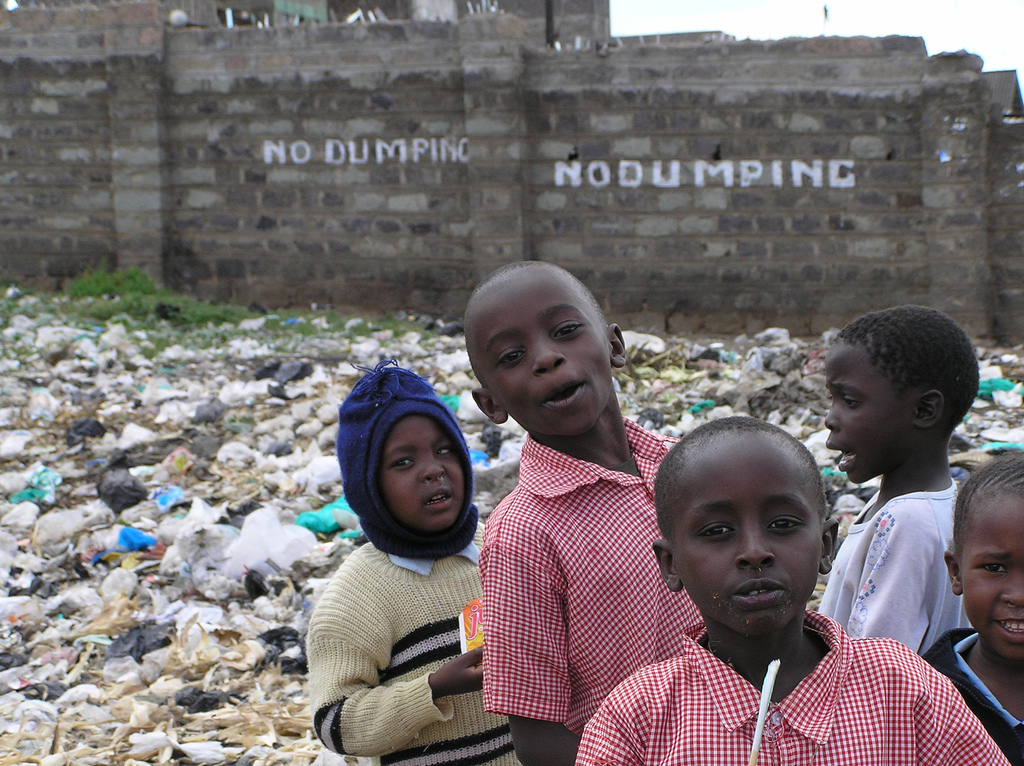
Kenyans Face Up to 4 Years In Prison For Using Plastic Bags
Beginning today, plastic bags will no longer be found in Kenya. If someone is found using one, then they will face a $38,000 fine or potential four-year jail sentence.
It’s officially the world’s harshest plastic bag deterrent.
A full ban on producing, selling, or using plastic bags went into law Monday after a court rejected challenges brought by two large plastic bag importers. The new law was successfully implemented on the third time around, after the first bag-ban in Kenya was proposed over 10 years ago.
Plastic bag pollution is a persistent problem in Kenya. It is not uncommon to see large piles of the single use bags littering the streets of urban centers, where vendors and customers frequently use them to sell and transport items.
Though the bags are convenient, the ultimate cost to the environment is astounding.
"Plastic bags now constitute the biggest challenge to solid waste management in Kenya,” said Kenya's Environment Minister Judy Wakhungu in an interview with the BBC. “This has become our environmental nightmare that we must defeat by all means.”
According to Wakhungu, plastic bags can last anywhere from 20 to 1,000 years in a landfill before they biodegrade. In the meantime, they pose environmental hazards to the communities they end up in.
Serious concerns were raised about the safety of bag disposal when rements of plastic bags were found in the stomach of cows who were to be slaughtered for human consumption. Leaching of plastics into beef destined for supermarkets pose a worrying health risk, according to local veterinarian Mbuthi Kinyanjui.
“This is something we didn’t get 10 years ago but now it’s almost on a daily basis,” he told the Guardian.
Scientists are concerned that the pile up of plastic bags is having a similar negative effect on the marine food chain, where plastic particles can easily make their way into the fish humans eat. The bags also threaten sea life not consumed by humans, such as dolphins, whales, and turtles.
In a country that uses an estimated 24 million plastic bags per month, many see the move as a victory for the environment.
However, some people in the business community worry that the ban will ultimately harm economic prosperity, and generally make life more difficult for the average Kenyan.
Kenya is a major exporter of plastic bags in Africa.
In an interview with the Guardian, spokesman for the Kenyan Association of Manufacturers Samuel Matonda said the ban would eliminate 60,000 jobs and cause 176 manufacturers to close.
“The knock-on effects will be very severe,” Matonda said. “It will even affect the women who sell vegetables in the market – how will their customers carry their shopping home?”
Right now, Kenyans discovered using bags will only have them confiscated with a warning. Soon, they could face the penalties of what is being called the “world’s toughest law against plastic bags.”
Several other African nations have already enacted similar bans or fines on plastic bag use, as have more than 40 countries around the world including China, France, and Italy.
THIS ARTICLE WAS ORIGINALLY PUBLISHED ON GLOBAL CITIZEN.

ANDREW MCMASTER
Andrew McMaster is an editorial intern at Global Citizen. He believes that every voice is significant, and through thoughtful listening we can hear how every person is interrelated. Outside of the office he enjoys cooking, writing, and backpacking.
The Lion Guardians
With human-wildlife conflict on the rise in East Africa, the hunt for a long-term, viable conservation solution is on. From conservancies that benefit the Maasai landowners, to the transformation of their young warriors into lion protectors, to “predator-proofing” livestock, a massive cultural shift is underway.
DAWN IS JUST BREAKING WHEN KAMUNU SAITOTI SETS OUT ACROSS THE AMBOSELI BUSH IN SEARCH OF LIONS.
On first glance, he appears much like any other Maasai warrior. Lean and tall, his dark red shuka is wrapped around his torso and waist concealing his only weapon, a long knife with a simple wooden handle. Brightly colored beads adorn Saitoti’s neck, ears, forearms, and ankles, and his feet, far more weathered than the rest of his body, are only partially covered by dusty sandals fashioned from discarded car tires.
“I killed my first lion when I was 21,” Saitoti says as he scans the horizon. In all, he has killed five lions. This, he says, was an integral part of his family history, part of being raised as a moran, a Maasai warrior. “My brother and father have also killed lions.”
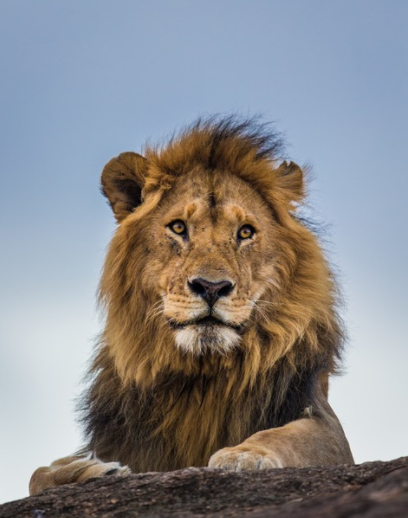
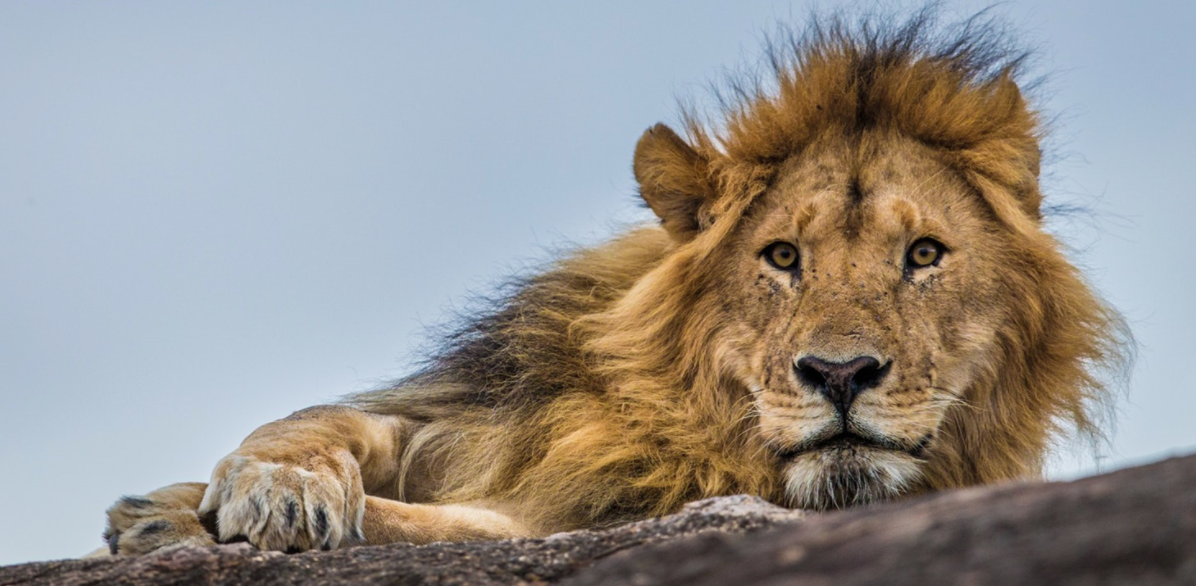
A male lion surveys his territory on the outskirts of Masai Mara National Reserve.
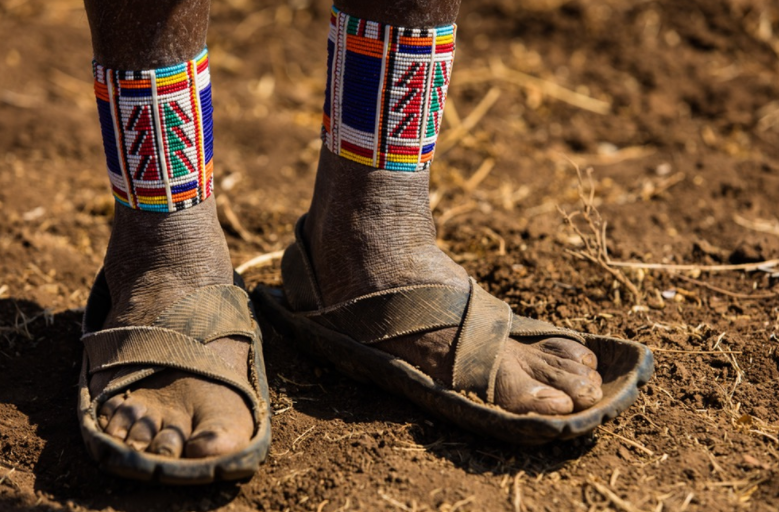
Traditional Maasai beads adorn Saitoti’s ankles.
The Maasai are traditionally a nomadic people subsisting almost exclusively on the milk, blood, and meat of cattle grazed on East Africa’s vast rangeland, once home to endless numbers of wild animals.
In the past, lion killing for the Maasai was as much about cultural tradition as it was about protecting their livestock from predators. To hunt and kill a lion was a critical right of passage known as olamayio — the way in which all young Maasai males became men. The tradition also created a powerful connection between warriors and lions, with each young moran receiving a lion name after his first successful hunt. Saitoti’s lion name, Meiterienanka, means “one who is faster than all the others.”
But traditions are beginning to change. On this day, in place of a spear, Saitoti carries a radio telemetry kit. He unfolds the antenna in a manner suggesting he has done this countless times before, and looks around in search of a hill — not an easy task in a landscape as flat as this. He settles for the remnants of an abandoned termite mound and begins to scan for a signal. Once he has a sense of the direction the signal is coming from, he packs away the kit and begins walking, dust trailing his brisk march along the well-used track.

Standing on the remains of an old termite mound, Lion Guardian Kamunu Saitoti scans for a signal. A number of the lions in the area have been fitted with radio collars.
For the next three hours, Saitoti stops only to look for signs of lions, or to talk to herders. Most tracks he sees are too old to bother with, but as the sun nears its zenith, he finds a set that elicits visible excitement — a departure from his otherwise solemn demeanor. These are the tracks of lion cubs, young ones, and very fresh. Patience, however, will be required here. The narrow trail leads into a maze of dense shrubs, and that is no place to follow a lioness with cubs — even for someone as experienced as Saitoti is.
At 36, Saitoti is a seven-year veteran, and one of Kenya’s three regional coordinators, of an organization called Lion Guardians. Established in 2007, the program is dedicated to finding ways for Maasai and lions to coexist. At its core is a shift in the relationship between the moran and the lion:
Hunters have become protectors. This profound change in perspective is a critical component of East Africa’s lion conservation efforts.
But the Guardians have a lot of ground to cover — just 45 Maasai warriors patrol a million acres of Kenyan rangelands — and human-wildlife conflict is a bigger problem than one organization, or one approach, can solve.
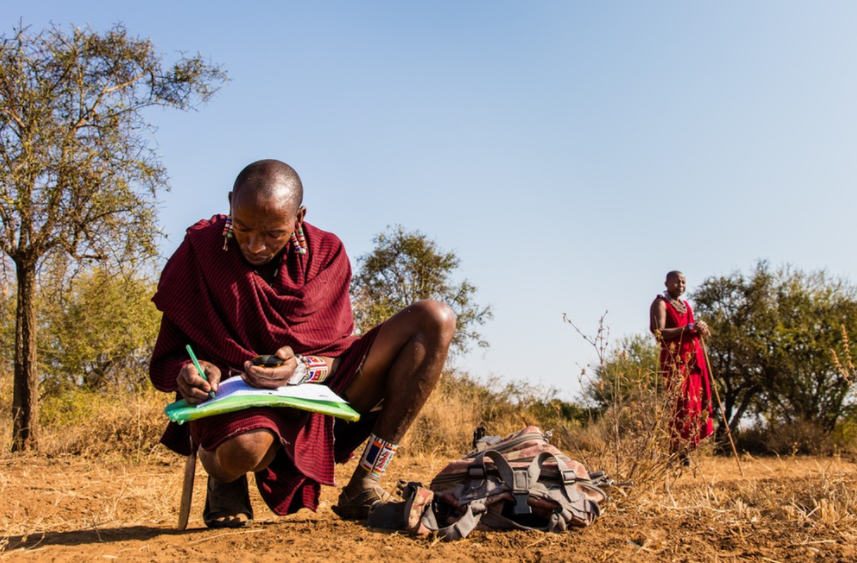
Lion Guardian Kamunu Saitoti takes meticulous notes about his observations, including GPS readings of animal tracks.
Lion Guardians is just one of a number of small- and medium-sized efforts by government officials, NGOs, and locals to reduce human-wildlife conflicts in Kenya and elsewhere in Sub-Saharan Africa. As human populations in the region have exploded, consuming increasing amounts of wildlife habitat in the process, the numbers of some of the region’s most iconic and important species have been in steep decline. Populations of many of Kenya’s large herbivores have fallen by 70 to 90 percent since the late 1970s. And as their prey have become more scarce, so too have lions.
Scientists estimate that lion populations have fallen by more than 40 percent in the past 20 years, and the 20,000 or so wild lions that remain in Africa occupy just 8 percent of the species’ historical range.
In many ways, the need for such intervention has never been greater. Yet, in a region where droughts are common and famine is never completely out of sight, finding a path toward peaceful coexistence between herders and the predators that hunt their livestock will require a great deal of persistence, creativity, and a shift in how the region’s wildlife is valued.
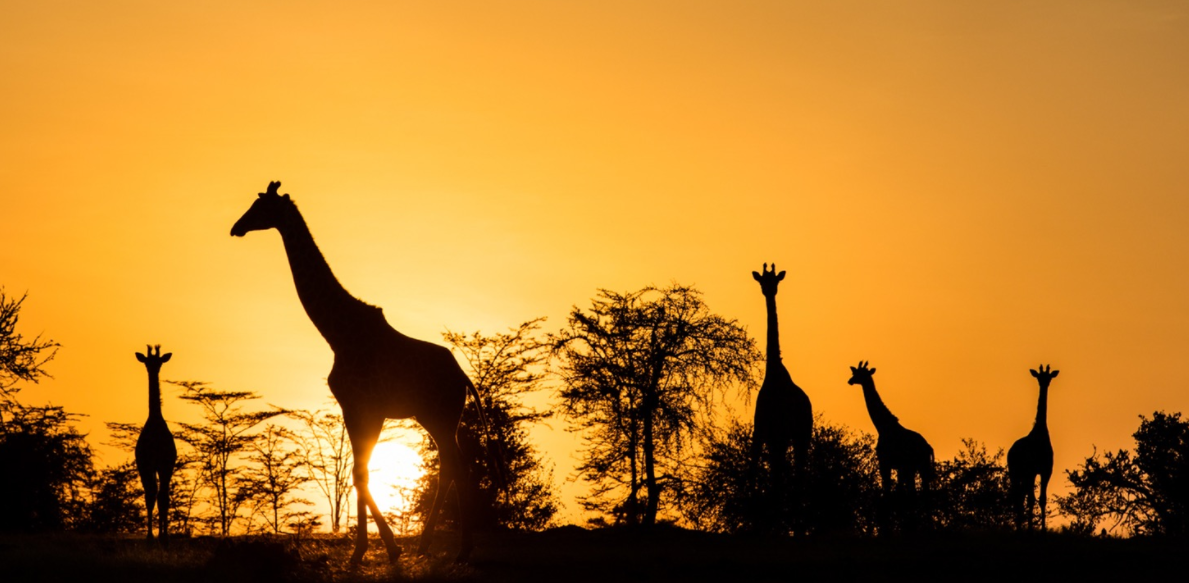
For most Maasai, the response to finding a leopard in your goat pen, surrounded by several slain goats, would be simple and quick: Kill the leopard. There would be no repercussions, as Kenya’s wildlife laws allow citizens to dispatch so-called problem animals. One particular young male leopard, who like his mother before him, had been terrorizing the small village of Ngerende, was certainly a good fit for that description.
Known to a number of neighboring communities for years, he had already killed hundreds of goats — losses that are keenly felt in what is one of Kenya’s poorest regions, and a hotbed of human-wildlife conflict. With the leopard’s paw now caught in the fencing of a traditional pen, or boma, as livestock enclosures are called, it seems there can be only one possible outcome. But the owner of this particular boma, Mark Ole Njapit, is no ordinary Maasai.
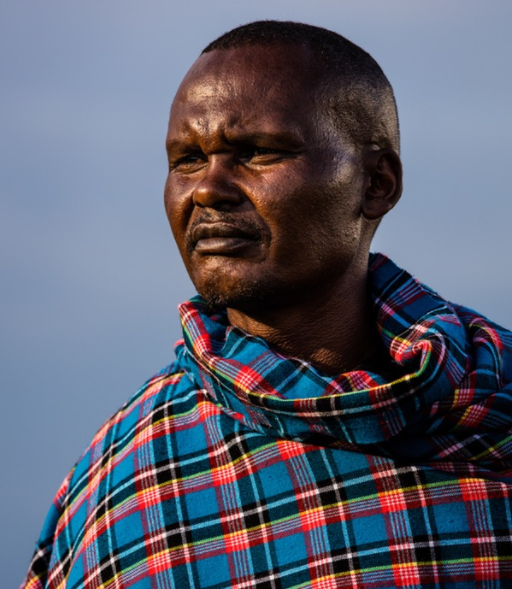
Mark Ole Njapit, who also known as “Pilot,” is a respected elder in the Masaai community of Ngerende.
“I understand the value of wildlife for the future of our people,” says Njapit (48), a Ngerende community elder known by most as “Pilot.”
“Everyone here was very upset and wanted to spear the leopard, but I calmed them down and called KWS (the Kenya Wildlife Service).” Fortunately for the leopard, KWS officers were treating some elephants nearby and responded quickly. After tranquilizing the cat, they were able to cut him free and move him to a new area where he would be less likely to get into trouble.
That was six months ago. Today, Pilot is supervising as members of his village work in partnership with the Anne K. Taylor Fund (AKTF) — an organization working to reduce human-wildlife conflicts — to construct his new boma.
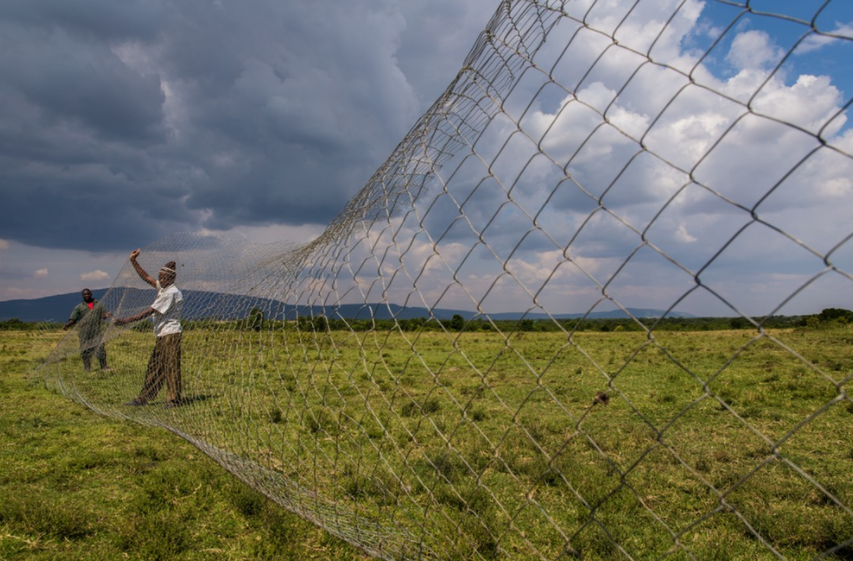
Workers stretch out the chain-link fencing for Pilot’s new ‘boma.’ The process typically takes two days, one for setting the posts in cement, and another for attaching the fencing.
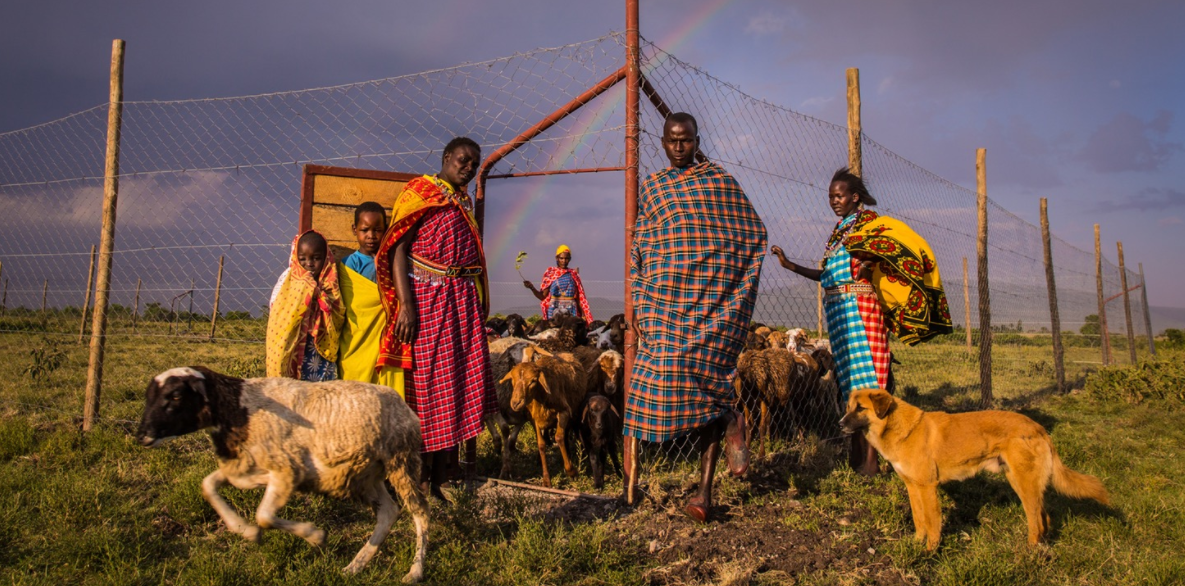
The enclosure that the AKTF team is building is formidable, with welded corner posts interspersed with termite-proof eucalyptus timber poles, all set in concrete. The chain-link fence is stretched tight, seven feet above ground and another foot buried in the soil; the fence is designed to be virtually impossible for a predator to push over, climb, or dig beneath. (While a leopard could easily scale a similar-sized fence constructed entirely of wood, they tend to avoid chain-link fencing.) Today, after more than two years and nearly a hundred of the latest iteration of AKTF bomas constructed, the program’s record remains intact: Not a single livestock animal protected by one of these enclosures has been killed by a wild predator.
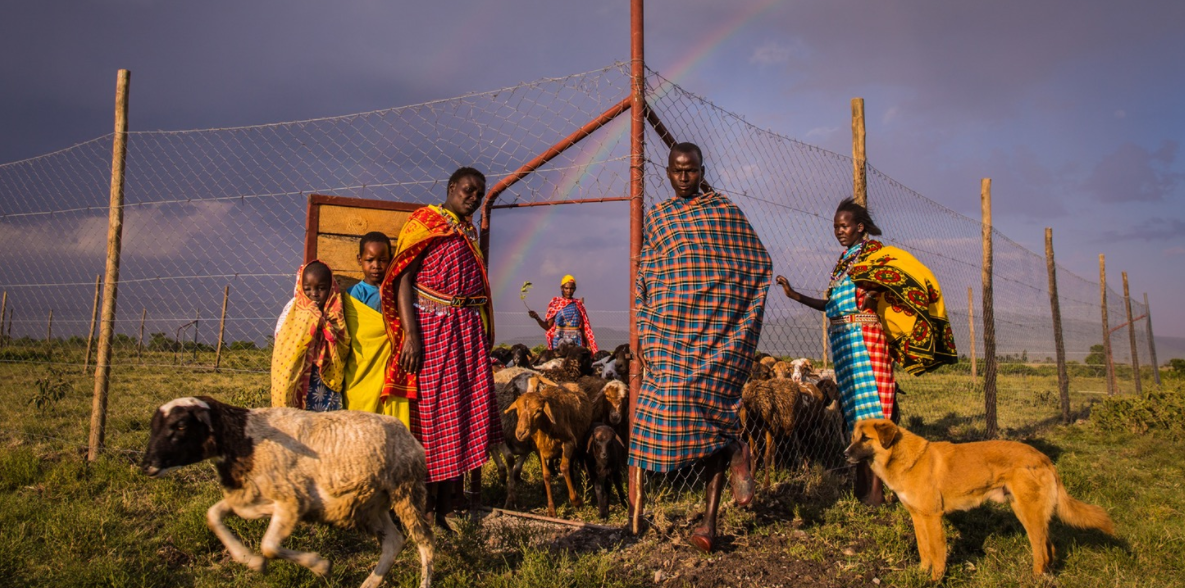
Members of Pilot’s family stand at the gate of his newly constructed predator-proof ‘boma,’ just a few miles from the edge of the Masai Mara National Reserve.
The effectiveness of the new bomas means that they are in high demand among the locals. And while AKTF doesn’t normally work in villages as far north as Ngerende, when Pilot reached out, the program’s construction director, Felix Masaku, decided to make an exception. “Here is a man whose small village loses maybe ten goats a week choosing not to kill the leopard that is doing much of that damage. That is very unusual, and it is important to support this man so others might follow his example.”
In general, AKTF prioritizes cases in which livestock losses have been greatest. “This is about conservation and co-existence,” Masaku continues. “We want to minimize conflict and retaliatory killings. If someone is losing five goats and two cows every week, that person is more likely to try to kill predators than someone who loses maybe one goat a month.”
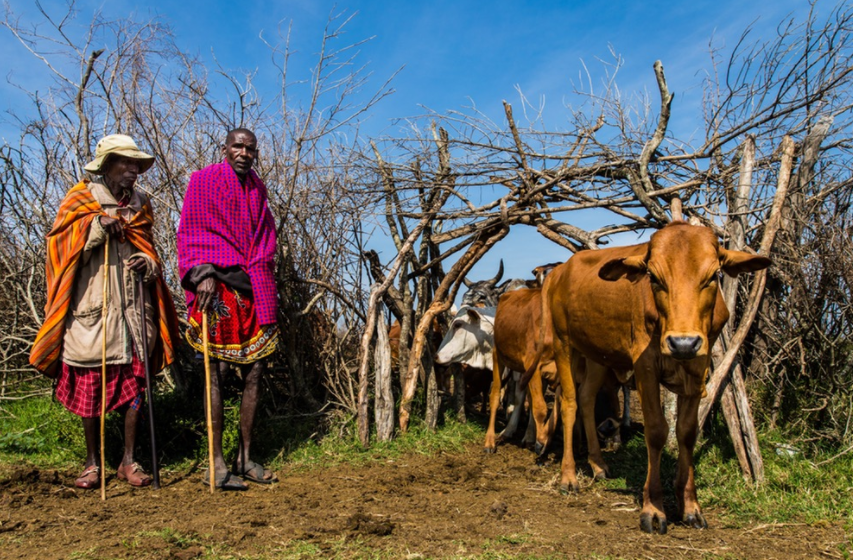
A traditional ‘boma’ that has been constructed of wood and thorny branches.
By reducing the vulnerability of livestock to predation, this program and others like it aim to reduce, if not eliminate, retaliatory killings, known as olkiyioi. This practice poses a grave threat to lions in particular, especially when angry cattle owners turn to poison rather than spears with the intention of wiping out entire prides of lions. In recent years, there have been a number of high-profile killings. For example, several members of the Marsh pride (of BBC Big Cat Diary fame) were deliberately poisoned in the Masai Mara National Reserve (MMNR) in 2015, and six lions, including two cubs, were speared to death outside Nairobi National Park in early 2016.
One troubling detail about the slaughter of the Marsh pride members is that it was carried out by Maasai seeking revenge for cattle killed while being grazed illegally inside the reserve. This practice is not uncommon. In fact, a paper published in the Journal of Zoology in 2011 estimated that by the early 2000s, livestock made up 23 percent of the MMNR’s mammal biomass — up from a mere 2 percent a few decades earlier. Today, this figure greatly exceeds that of any resident wildlife species in the protected area with the exception of buffalo. This is as much a sign of declining wildlife populations as it is of human incursions into the reserve, and it underscores significant challenges both in terms of protecting livestock and preventing human-wildlife conflicts.
As Anne Taylor, the founder of AKTF, put it:
“Inside the bomas is one thing, but keeping cattle or livestock safe if they are literally brought into the lions’ den is virtually impossible.”
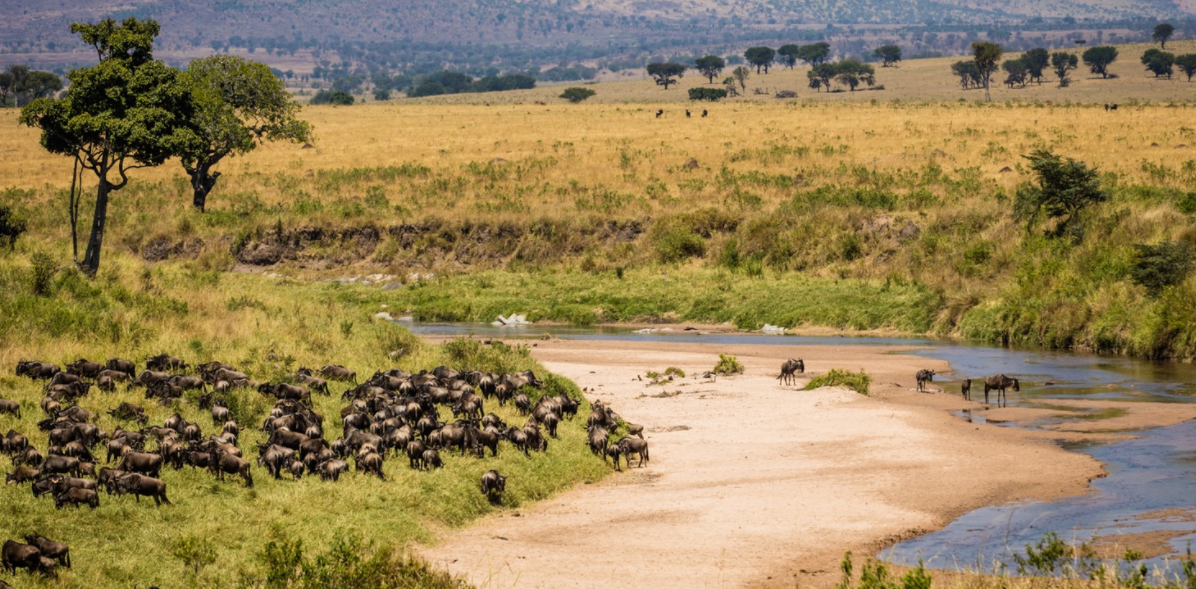
Wildebeest pause before crossing the Sand River. While the Masai Mara’s resident wildebeest are all but gone, their numbers decimated primarily by agricultural expansion, each year, more than a million cross the border from Tanzania’s Serengeti National Park.
For many Maasai today, lions and other predators have become an expensive nuisance at best, and a source of deep-seated resentment at worst. In general, this resentment is not directed toward the predators themselves, but toward a government — and the world at large — which often appears to place more value on the big cats (and the tourism dollars they generate) than on Maasai lives and livelihoods.
National parks and reserves cover a mere 8 percent of Kenya’s land area and support only a third of its wildlife. The remaining two-thirds of the country’s wild animals inhabit private and communal rangelands. This is land that they share with the Maasai, Samburu, and other pastoral people who have been here for thousands of years. Many think it is here, outside of the parks and reserves, that the future of Kenya’s wildlife will be decided.
According to a recent report co-authored by Panthera, WildAid, and the Wildlife Conservation Research Unit, loss of habitat due to agricultural expansion, which invariably pushes wildlife into closer contact with farmers and pastoralists, is the underlying factor of all major threats that lions face.
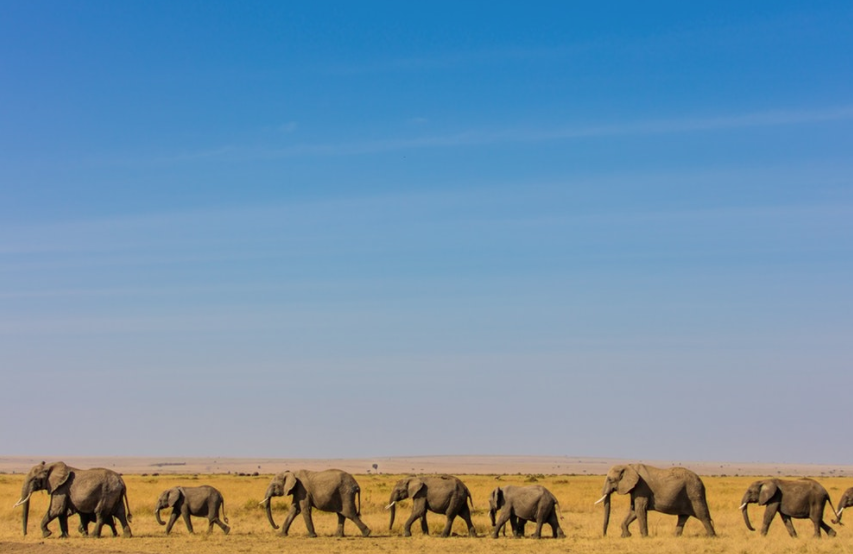
To many, the conversion of unprotected rangelands to agriculture might seem inevitable as the region’s population grows, but Calvin Cottar, a fourth-generation Kenyan whose great-grandfather emigrated from Iowa in 1915 and today runs a safari service in partnership with the Maasai community, disagrees. According to Cottar, it all comes down to economic security.
“We are talking about some of the world’s poorest people,” Cottar says. “For them it is about survival.
“Why should we expect them to care about lions or elephants when they are struggling to put food on the table ... Wildlife is costing them money, not earning them money, and that is what has to change.”
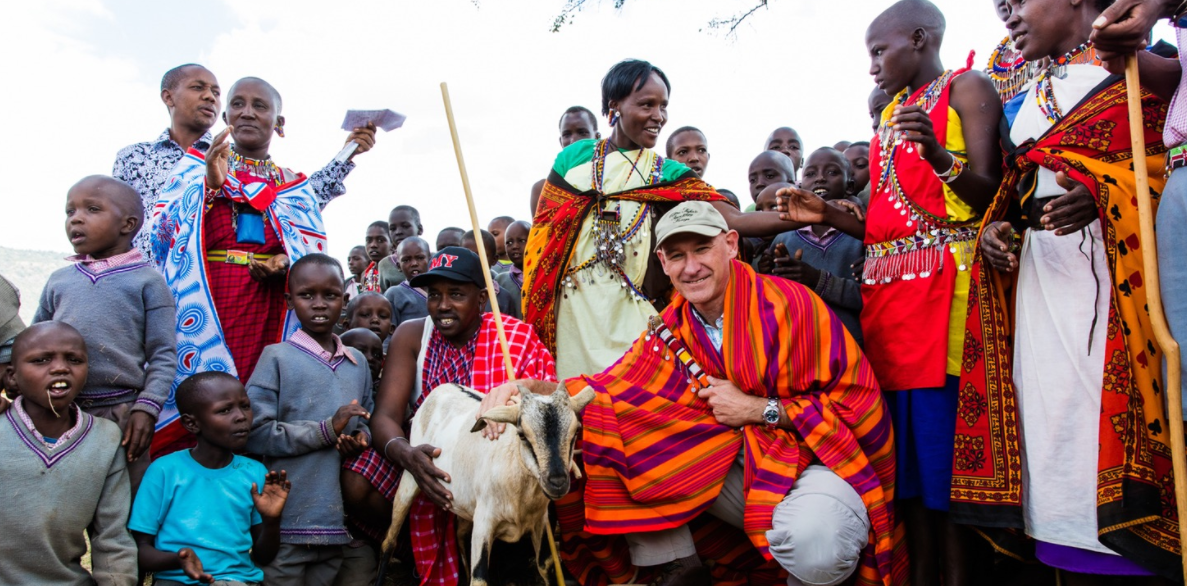
Calvin Cottar is presented with a goat as a token of appreciation for building Olpalagilagi Primary School, as well as funding salaries and meals. In the long run, the hope is that land lease fees will enable locals to fund their own projects, bringing greater autonomy.
Toward this end, while working with the Kenya Wildlife Service (KWS), the Cottars Wildlife Conservation Trust has initiated the formation of several district wildlife associations in an attempt to help local landowners acquire ownership rights to the wildlife residing on their lands. Because all wild animals in Kenya have historically been considered property of the state, benefits to the local communities that have to co-exist with these creatures have generally been few and far between.
Now in his 50s, Cottar says there is much more to be done. He is more convinced than ever that the future of Kenya’s wildlife lies with the people sharing the land with them — and with a shift in government policy.
“It’s really quite simple,” Cottar explains. “We all have to pay for ecosystem services. Pay the Maasai landowners a monthly lease for their land in return for leaving it intact. The problem is that wildlife has no value to them, whereas cattle and commercial agriculture do.”
While removing snares, building livestock enclosures, and monitoring lion populations are all important management practices, Cottar says, they don’t solve the root cause of human-wildlife conflict. Wild animals are basically a nuisance and a liability to the Maasai, he explains.
“We have to make maintaining wildlife the most productive land use, and do this in a way that respects the Maasai lifestyle and culture.”
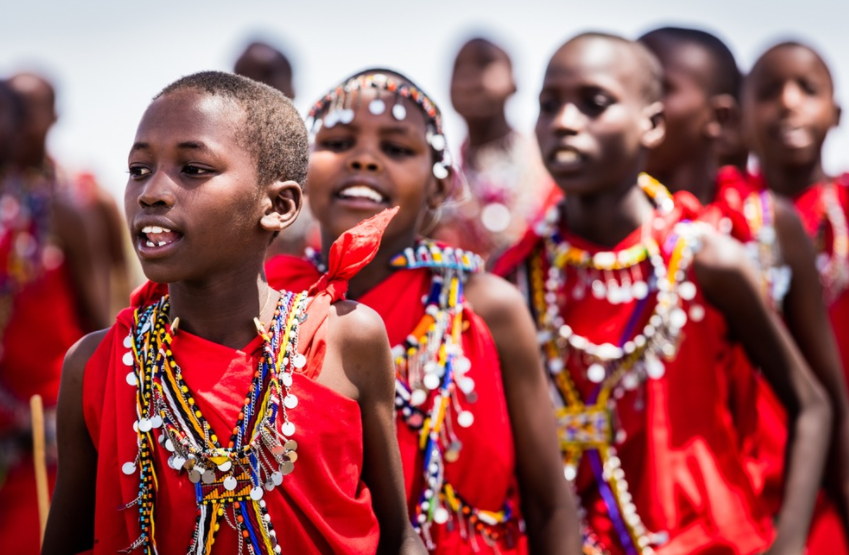
Local schoolchildren perform a traditional Maasai dance to open proceedings at a meeting hosted by Olpalagilagi Primary School.
That is why Cottar now finds himself sitting in a circle with perhaps 50 Maasai — young and old, men and women. The topic for discussion, just as it has been for the last three years, is the formation of the Olderkesi Conservancy, on the land where Cottar’s safari camp currently stands.
In general, the conservancy model consists of land being leased directly from its owners for conservation purposes. Olderkesi is slightly different in that the 100,000-hectare ranch is yet to be subdivided, making it the last communally owned ranch left in Kenya. As a result, the land will be leased from a trust representing all 6,000 land owners, and because the agreement involves the Maasai, complete consensus is required before anything can be signed. In Maasailand, patience is not so much a virtue as an absolute necessity.
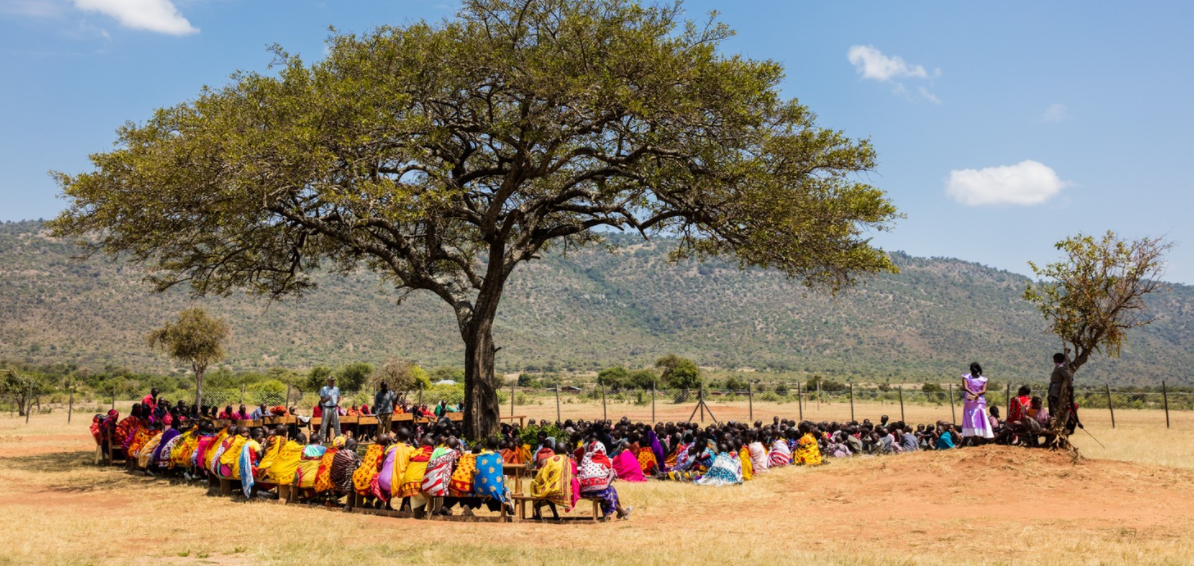
Members of the Maasai community meet at Olpalagilagi Primary School to discuss the formation of the Olderikesi Wildlife Conservancy.
Joining Cottar in the circle is one of the community’s most respected elders, Kelian Ole Mbirikani (58), a member of the Olderkesi Land Committee and Chairman of the Olentoroto land owners group, which holds the deeds to the land immediately surrounding Cottar’s safari camp. Mbirikani is also one of the key driving forces behind the conservancy initiative.
“The Maasai depend almost completely on their cattle,” Mbirikani explains, “so convincing them that it is possible to have both wildlife and livestock at the same time is our biggest challenge. In their experience, when land is set aside for wildlife, all of the cattle disappear. That’s what national parks do.”
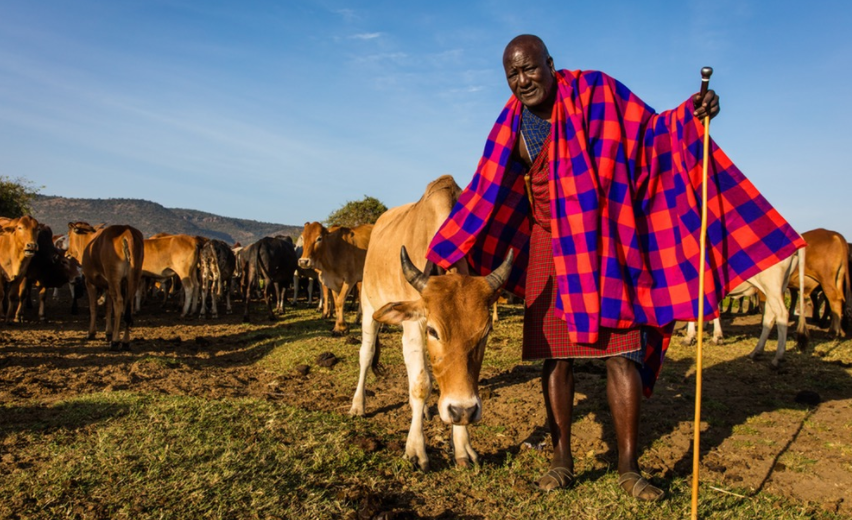
Kelian Ole Mbirikani, a member of the Olderkesi Land Committee and Chairman of the Olentoroto land owners group, with his cattle.
Mbirikani is convinced the conservancy concept can work, though. He and a group of other Maasai traveled with Cottar recently to conservancies as far north as Samburu. There, they saw wildlife and met landowners who are still able to graze their cattle. “The people are really benefitting,” Mbirikani says. “Their children are being educated all through university level with the money from the conservancies. That is what we want for our people, too.”

The AKTF team spend much of their time searching for and removing snares from inside the Masai Mara National Reserve. Although the snares are set primarily to catch herbivores they are indiscriminate killers, also trapping lions, leopards, and other predators.
There are nine other conservancies around the MMNR, and a handful more in other parts of the country, which all make regular, direct payments to local landowners. Similar approaches have been employed by Wilderness Safaris in Namibia and the Nature Conservancy in the United States, among others, and while none can be said to offer financial benefits on the same scale as Olderkesi, Cottar is clearly not alone in seeing this as a promising solution.
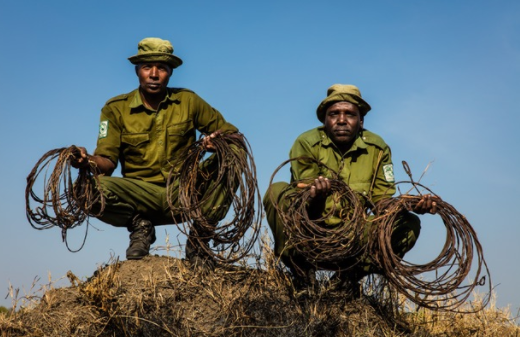
The snares displayed here by the members of the AKTF anti-poaching team were found during a single morning’s patrol in the Masai Mara National Reserve.
Indeed, two studies published last year demonstrate the effectiveness of Kenya’s conservancy approach. According to one of these assessments, despite lack-luster political support conservancies managed to achieve “direct economic benefits to poor landowner households, poverty alleviation, rising land values, and increasing wildlife numbers.” The other study saw a direct positive effect on lion populations within Kenya’s conservancies, with a nearly three-fold increase in just ten years.
However, while these results seem promising, there will always be areas outside conservancy boundaries — borderlands and buffer zones — where human-wildlife conflict are bound to continue. There is simply not enough funding to expand conservancies enough to eliminate these conflict zones.
The question, then, is whether people can learn to co-exist with lions and other wildlife even when there is no monthly payment to be collected.
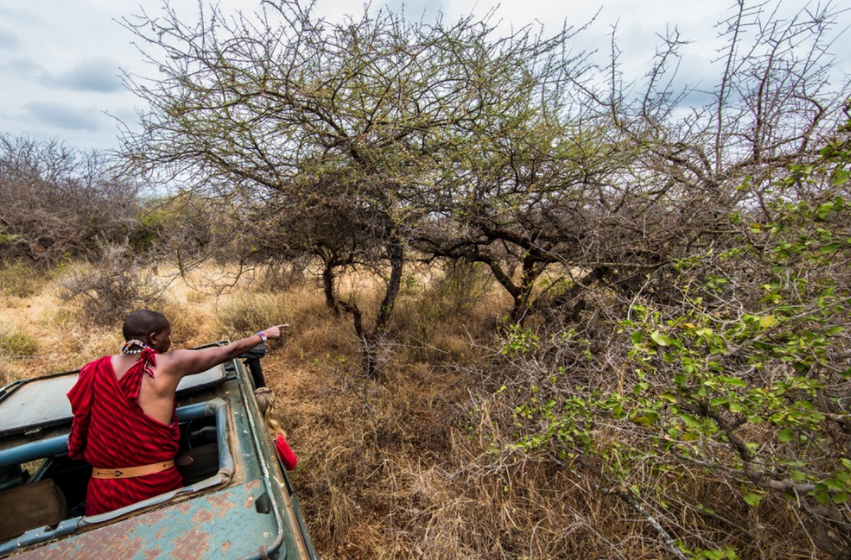
Lion Guardian and accomplished tracker Kamunu Saitoti keeps a lookout.
BACK IN THE BUSH, KAMUNU SAITOTI WAITS PATIENTLY, HOPING TO GLIMPSE THE NEW LION CUBS WHEN THEY FINALLY EMERGE FROM THE THICKET.
He has been joined by a younger Lion Guardian, Kikanai Ole Masarie, and not long after, a battered Land Cruiser arrives with one of the organization’s founders, Director of Science Stephanie Dolrenry. The two warriors pile into the vehicle and they all set off in search of the cubs. “These lions are not like those in the parks,” Dolrenry explains. “There’s no tourism here, so they are not habituated to people or cars. We’ll be lucky if we find them at all. They can be extremely shy, especially with young cubs.”
But this is a lucky day, it seems. With thorny acacia bushes screeching against the glass and metal of the bouncing vehicle, the team suddenly finds itself in a veritable crowd of cats. Dolrenry, like the Guardians, is able to identify them all. Mere meters from the car, Meoshi, her three cubs, and her mother, Selenkay, lounge in the shade. A few dozen paces away, but on their way to join them, Meoshi’s sister Nenki with her own four cubs. Much smaller than Meoshi’s, these were the young lions whose tracks Saitoti was following. This is the first time anyone has laid eyes on this new generation.
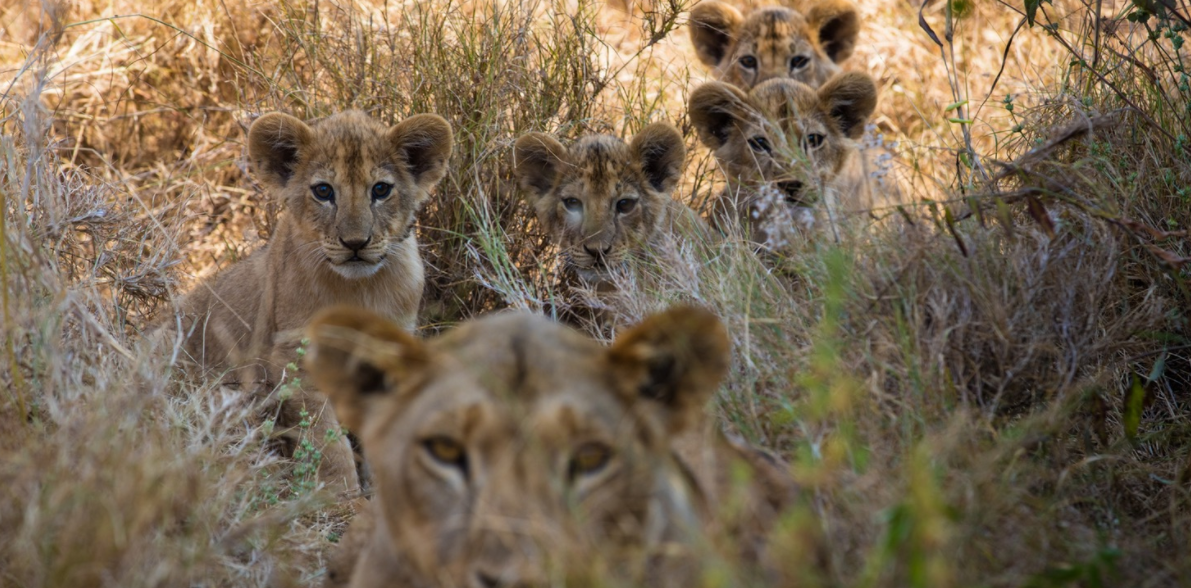
The team’s first sighting of lioness Nenki’s four young cubs.
“Selenkay is a bit of a celebrity around here,” Dolrenry says. “She causes problems like no other lion, but she’s a tough one, and it’s hard not to admire her.” Saitoti nods. Selenkay is his favorite lion — her guile and tenacity are something to be respected. She and her family frequently target cattle and are well known for giving the Guardians plenty of headaches. She has been hunted more times than anyone cares to remember. One of her sisters has fallen victim to poison, and so too has one of her mates, while another sister was killed by spear. She has endured three male takeovers, and has even attacked a Maasai moran to protect her young cubs. Like the owners of the livestock she frequently kills, Selenkay is a true warrior.
Yet Selenkay’s legacy is far greater than her own reputation. Her longevity, itself the result of the unyielding commitment of Saitoti, Masarie, and the other Guardians, combined with the growing tolerance of the Maasai inhabiting these rangelands, has helped to connect populations in vital conservation areas, and has added much-needed genetic diversity to established prides in the region. One of her sons has made it as far north as Nairobi National Park where he is now breeding successfully.
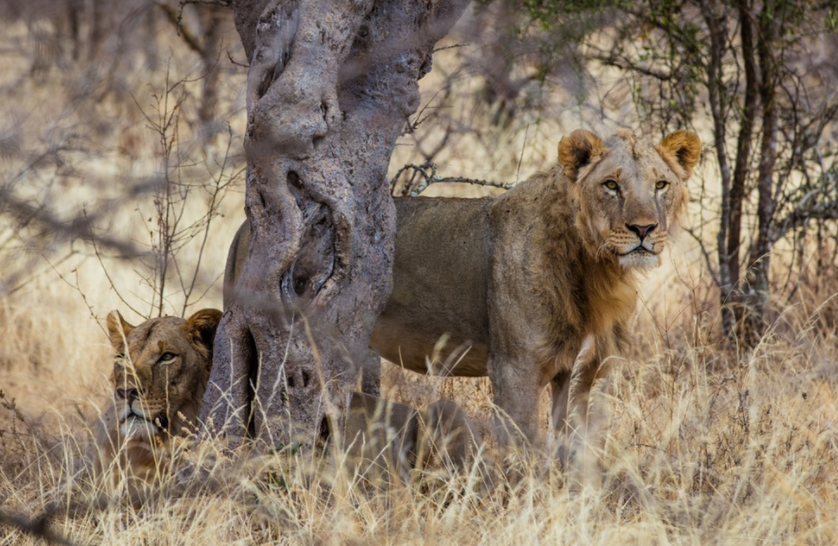
A pair of male lions seeks respite from the heat in the shade of a tree.
Saitoti did not become a Guardian because he loved lions. Instead, he was in trouble and needed a job. Arrested for being part of an illegal hunt, his father had to sell three cows to have him released on bail. That made him reconsider his path. Killing lions, despite bringing prestige and honor, also brought hardship. “For the first two years my feelings about lions were the same,” Saitoti says. “This was just a job. But slowly, things began to change. They give food for my family, they help educate my children, I even buy veterinary medicine for my cattle with my salary from the lions.”
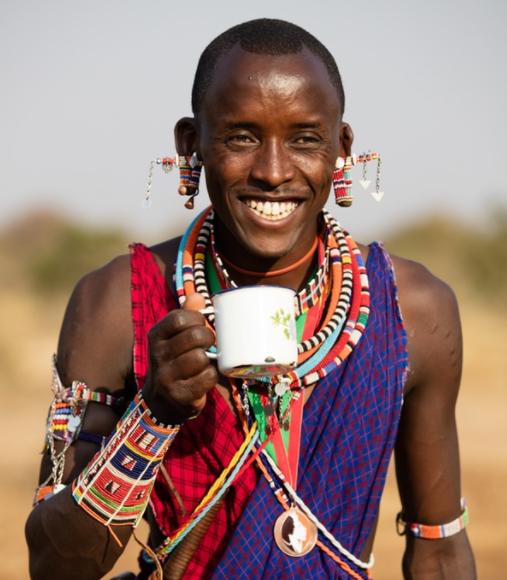
Lion Guardian Kikanai Ole Masarie celebrates the sighting of lioness Nenki’s cubs with a fresh cup of tea. Note the Lion Guardians symbol hung around his neck, alongside his traditional handmade Maasai beads.
“And we still get the girls!” Masarie chips in with a broad smile, referring to the social status that killing lions — and, more recently, protecting lions — can bring to an eligible young Maasai man. At 24, he is part of a younger generation of Guardians, and his words are significant, as they hint at an ability for long-held Maasai beliefs and traditions to change. “The other warriors mostly stay at home, but here we are, close to the lions every day, tracking them and finding lost cattle. The girls know we must be very brave!”
Saitoti smiles and continues, “For me, now, I feel there is no difference between the lions and my cows at home. I care about them equally.”
LEARN HOW YOU CAN HELP TODAY
The success of conservancies like Olderkesi, supported by Cottars Wildlife Conservation Trust, indicates their importance as long-term viable solutions for conservation in partnership with the landowners themselves, the Maasai people. Explore more about other Masai Mara Conservancies here.
The Lion Guardians organisation have been conserving lions and preserving cultures since 2007. Learn more about their work and donate to support them at lionguardians.org. The 750 predator-proof bomas constructed by the Anne K. Taylor Fund have saved many lives and you can learn more and support their work at annektaylorfund.org. I hope you will join me in supporting the work of these dedicated organisations!
THIS ARTICLE WAS ORIGINALLY PUBLISHED ON MAPTIA.
MARCUS WESTBERG
Marcus Westberg is a a Swedish photographer, writer, conservationist, and guide working primarily in Sub-Saharan Africa.
How Poaching Is Changing the Face of African Elephants
Elephants and their ancestors have roamed the African continent for millions of years. They are the largest land animals on earth and can live up to 70 years. Elephants are profoundly intelligent and social creatures. They have trunks that serves as their nose, arm, and fingers. But elephant populations have taken a massive hit to their populations. Despite an international ban on the ivory trade and other laws to protect elephants, their overall populations continue to fall due to habitat loss and rampant poaching for their tusks. Because of that, a once rare trait is being passed onto more African elephants. The trait is tusklessness, The loss of tusks is only the beginning. The real devastation occurs with the loss of a groups matriarch. The oldest and most experienced grandmothers are the family’s living memory of migration routes, friendly elephants, food and water sources, etc. Matriarchs are also, the first in line to protect their families and without them an entire group of elephants can fall apart. But with China banning ivory in 2017, providing stronger incentives to protect elephants, and sustained conservation efforts from organizations like ElephantVoices, African Parks, and others, elephants may stand a chance to roam the continent as their ancestors once did.
INDONESIA: The Kingdom of Bantar Gebang
“The world has enough for everyone’s need, but not enough for everyone’s greed.” — Mahatma Gandhi
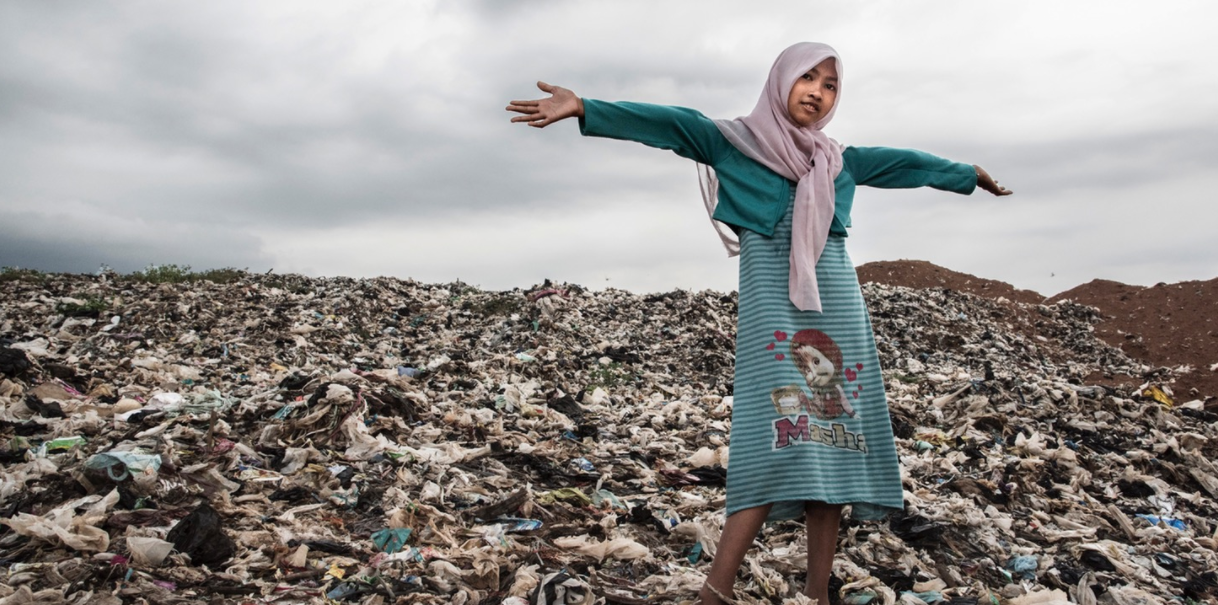
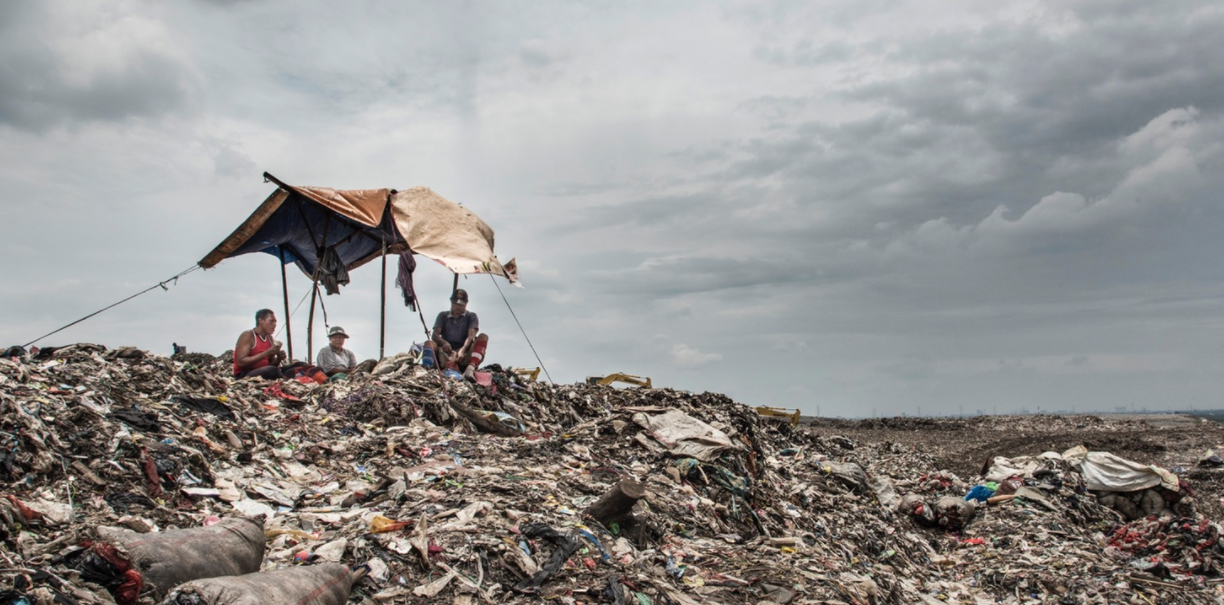
On the Indonesian island of Java, twenty kilometres from the fast-growing capital city Jakarta, is a malodorous, contaminated world with towering hills of half-decomposed waste, that stretches as far as the eye can see. This monstrosity is Bantar Gebang, the largest uncovered landfill site in Southeast Asia. It is also home to over 3,000 families, many with young children, who make a living amongst the garbage, scavenging what they can.
Jakarta, home to over 10 million people, produces more than 7,000 square metres of garbage per day — a figure that is still growing — and every year hundreds of thousands of tons of trash are indiscriminately dumped here, in the nearby district of Bekasi, at the massive Bantar Gebang landfill.
For the few outsiders who come to experience this place first-hand, it is a shocking wake-up call for the consequences of our over-consumption of the planet’s resources and the desperate need for better waste management. In a society enamoured with all things disposable, we are constantly having to find somewhere to put our rubbish. As general rule, far out of our sight.
On the road towards Bantar Gebang, what hits you first is the smell. Even before you arrive at the site, an overpowering stench of decomposing organic matter steadily invades the atmosphere. Next, the buzzing clouds of flies appear, and finally, the first mountains of waste come distantly into view. Many workers who move here say that when they first arrive they cannot eat, and that the smell makes them vomit constantly for the first few weeks.
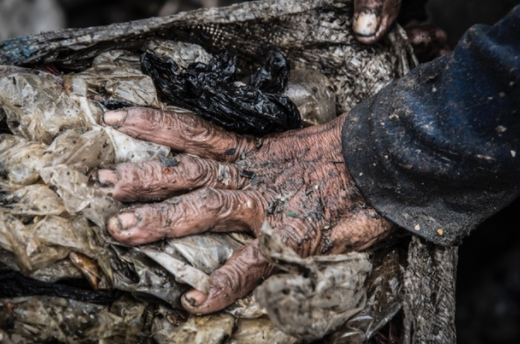
Working day in, day out at the landfill, handling the rotting, decomposing rubbish with little to no protection takes a serious toll on the basic health of all the inhabitants here.
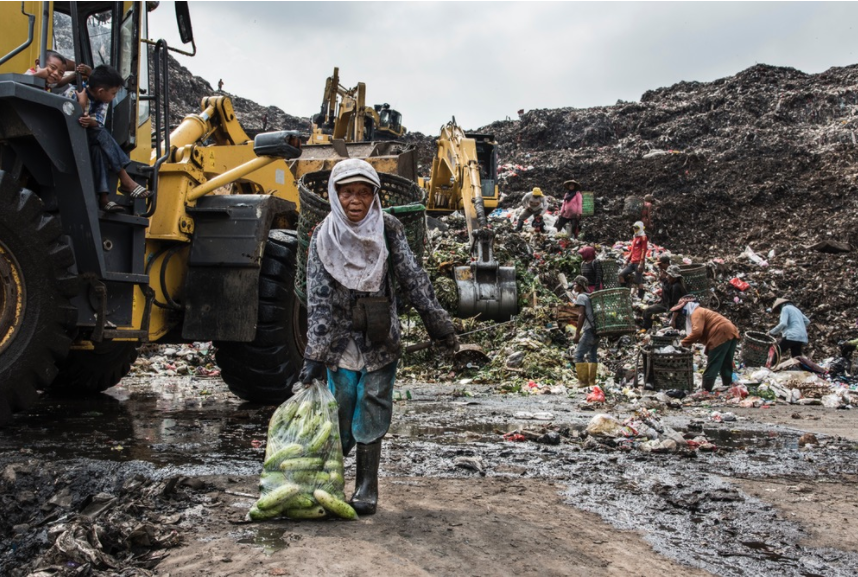
Yet, Bantar Gebang has become the poorest people’s El Dorado, a lucrative and chaotic place of individual enterprise where hundreds of families come to salvage what can be resold or eaten. Alongside the stray cats, goats, and cockroaches, they wade knee-deep through decomposing vegetables, soiled clothes, broken furniture, and festering waste of every kind, loading their baskets with glass bottles, tins, and plastics. Business here is booming, and the scavengers, some of them children as young as five, make around 30,000 rupiah (£2.20) a day. For many, this is as good a wage as they will find.
Every day new trucks arrive with more than 8,000 tones of rubbish from Jakarta, depositing their load anywhere they can find space, while bulldozers giant mechanical arms shift and mould the ever-growing mountains of waste.
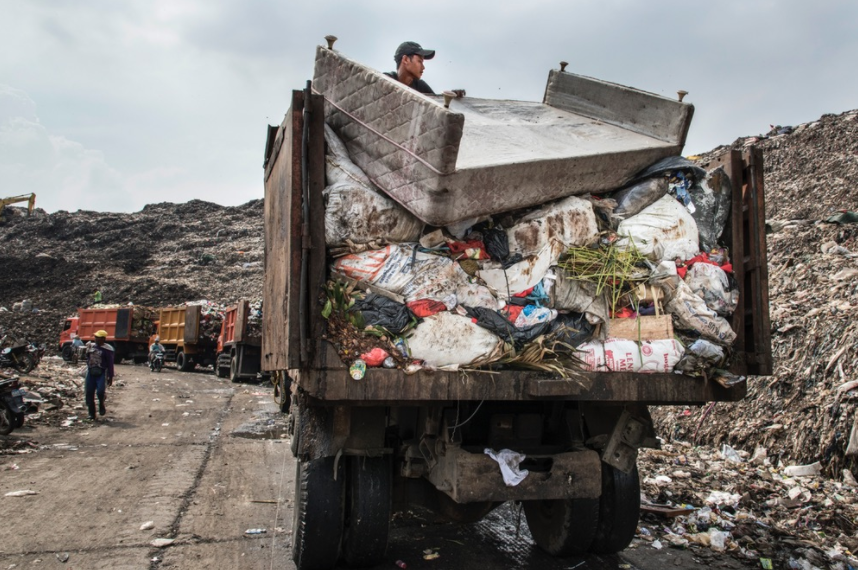
Many families are accompanied by their young children, who live in the most insanitary conditions imaginable, in this breeding ground for germs and disease. You often see them padding about, barefoot in the rubbish, looking for something which could be used as a toy. Some children slip and injure themselves, and when wounds become infected, there is no medical service available on-site to help them. Many also suffer from suffer skin infections, bronchial problems, and intestinal worms from working on the landfill.
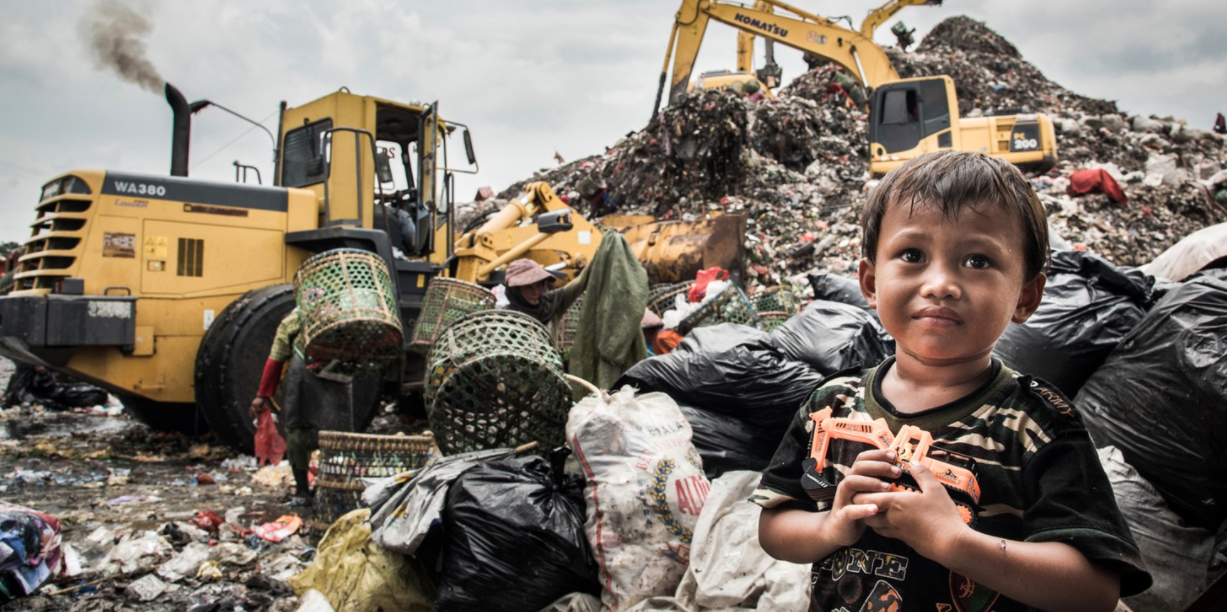
Amir, whose home is amongst these mounds of rubbish, waits for his mum who is working behind him. His favourite toy? A digger.
Some of these children were born here, brought into the world amongst the towering mounds of rotting waste that dominate the horizon. Every day, while parents are retrieving what they can resell or eat, these young children wait patiently for the next meal they will share as a family. This meal is often consumed directly off the ground, amidst the flies, foul odours, and trash.
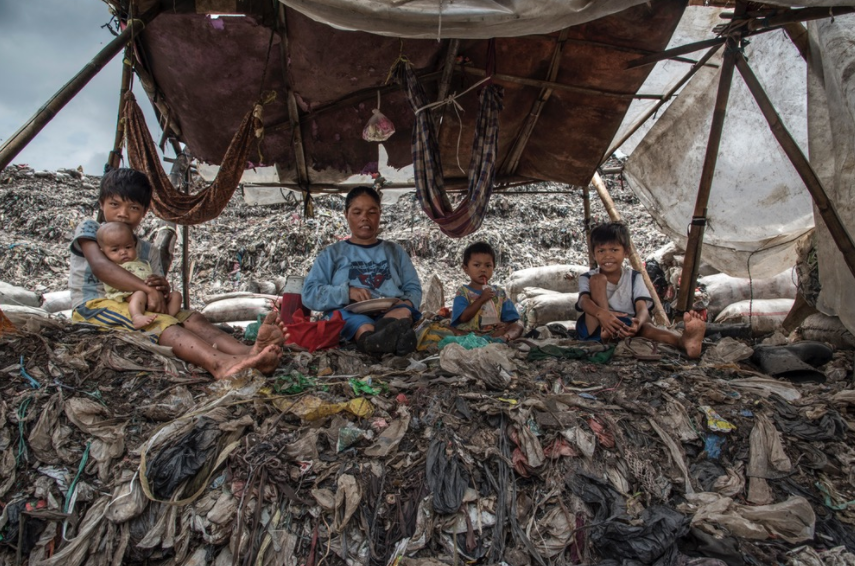
The Bantar Gebang landfill was built on rice paddy fields in the district of Bekasi in 1989, and for some here, this is all they have ever known. Many are unskilled workers who have been scavenging in streets and rubbish bins their whole lives. Others, who once made their living digging the earth, are the former rice farmers whose land has been swallowed up by the relentless tide of garbage. Today, they all make a living by digging the ever-expanding “mountains” of Bantar Gebang, searching for their own personal treasure.
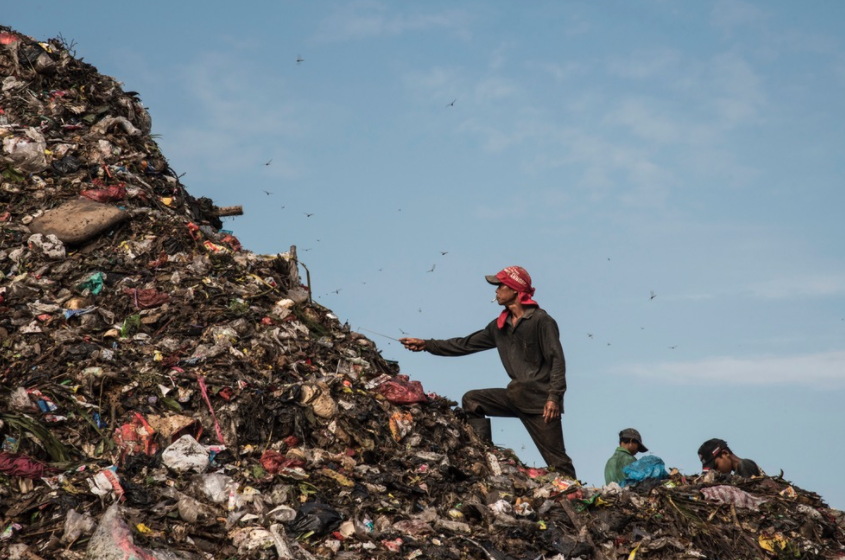
In this filthy and chaotic universe, I begin to understand how one man’s trash becomes another man’s means of survival.
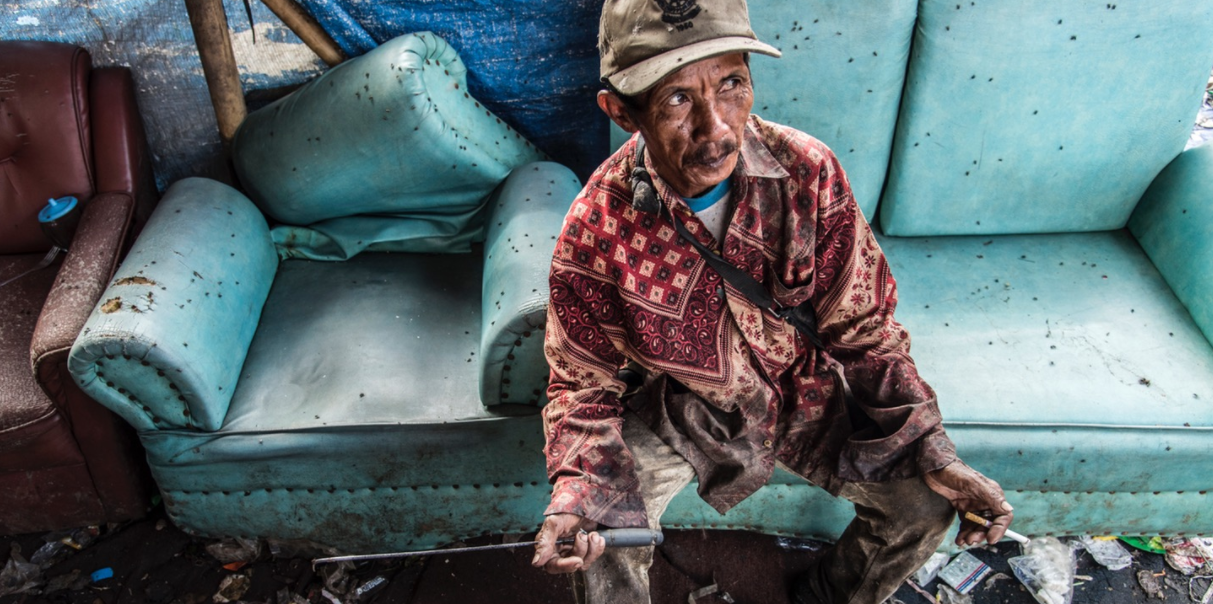
Here, everything old finds a new purpose. Abandoned sofas and tables are often huddled together in impromptu ‘cafes’ where workers will pause to share a cigarette or have a cold drink, while ... You will also hear the call of Bantar Gebang’s resident imams wafting out over the landscapes of trash, but despite a strong sense of community at the landfill, many workers say that they are stigmatised and avoided if they ever cross its boundaries.
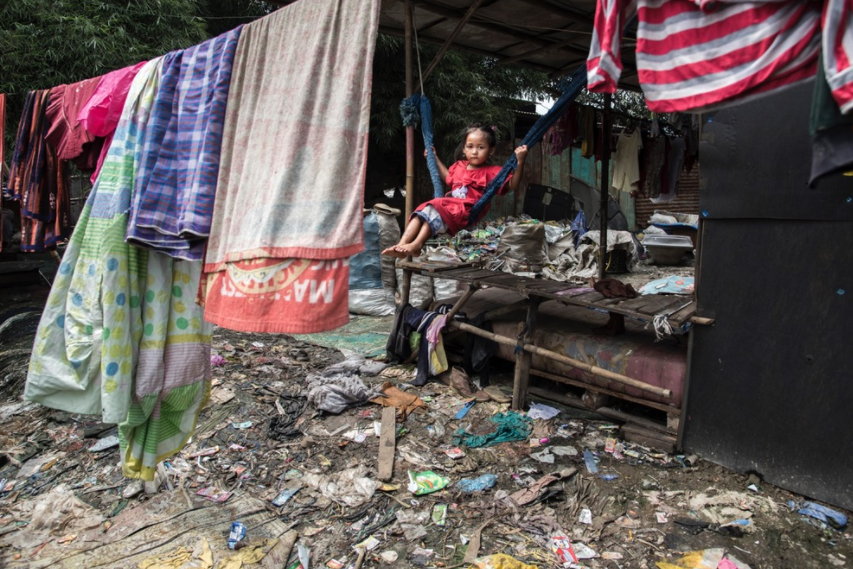
Today, the landfill is home to an estimated 3,000 families, and as Jakarta’s waste keeps growing, so does its population. Almost all residents live in makeshift shelters built from tarpaulins and scraps of metal as protection against the sun and rain. Those who have been there longer have fashioned huts from pieces of scrap wood, cardboard, old rugs, plastic advertisements, and nails rummaged from the landfill. During the rainy season, flood water rises and seeps into these dwellings. The water that is used to fulfill their daily needs is drawn from groundwater infected by leakages and sewage.
During the days I spend documenting life at Bantar Gebang, I do my best to show humanity, to take an interest in those living here, to simply be myself, and to convey that I consider those living and working here my equals.
Yet the foul smell is inescapable, the heat suffocating, and whenever I move I sweat, though I make no effort. When you find yourself in conditions like these, in an environment rife with the evidence of inequality, the only thing you feel is an overwhelming sense of gratefulness to have been able to satisfy your basic needs and a burning desire to do something to help. With my foreigner’s gaze, I cannot help but compare my everyday life to that of the men, women and children whose photographs I take. Some of them simply have no point of comparison, and live in acceptance of their condition.
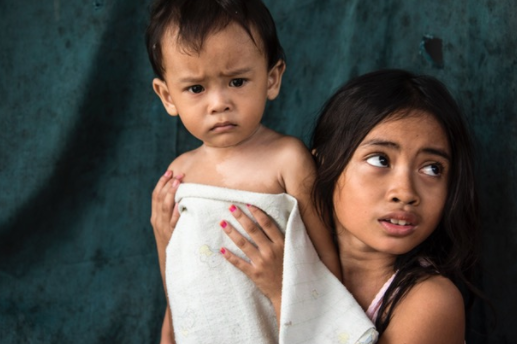
Nila, one of the children who is growing up at the Bantar Gebang landfill, bathes her little brother in their family’s shelter.
Following the day-to-day existence of the people who call Bantar Gebang their home was also a lesson in the incredible strength and resilience of the human spirit. In the midst of these challenging conditions, people of all ages proved to me that love and joy will always exist even in the worst of places.
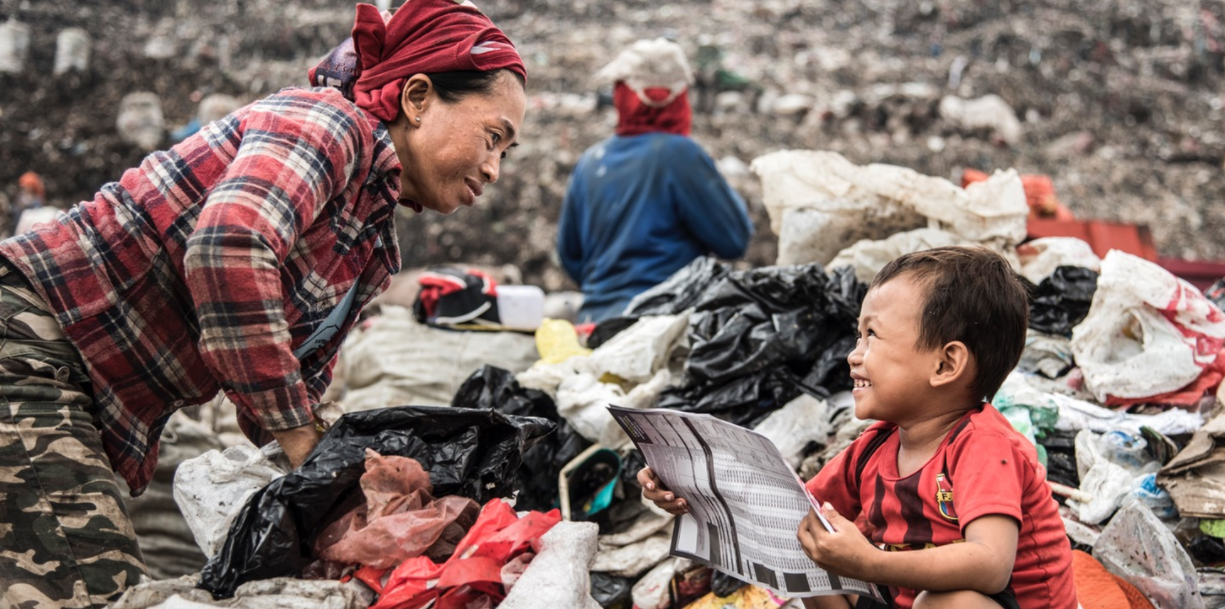
Andi, only a few years old, plays amongst the mounds of rubbish as his mother sifts through to salvage what she can.Andi, only a few years old, plays amongst the mounds of rubbish as his mother sifts through to salvage what she can.
On this occasion, I had travelled to Bantar Gebang to learn how I could assist the remarkable Resa Boenard. Brought to the area by her parents when she was just ten months old, Resa grew up one of Bantar Gebang’s children, surrounded by these vast, decaying mountains. At first her parent’s home was among rice fields, today, fifty metres of trash tower outside her windows.
Unlike so many others who live and work here, Resa had the chance to attend secondary school and to complete her studies, experiencing life outside this place, despite frequent bullying by her classmates for living on a landfill. Later, unable to afford the fees to attend university or to pursue her dream of becoming a doctor, Resa felt compelled to move back to Bantar Gebang, deciding that she would dedicate her time to helping the people here.
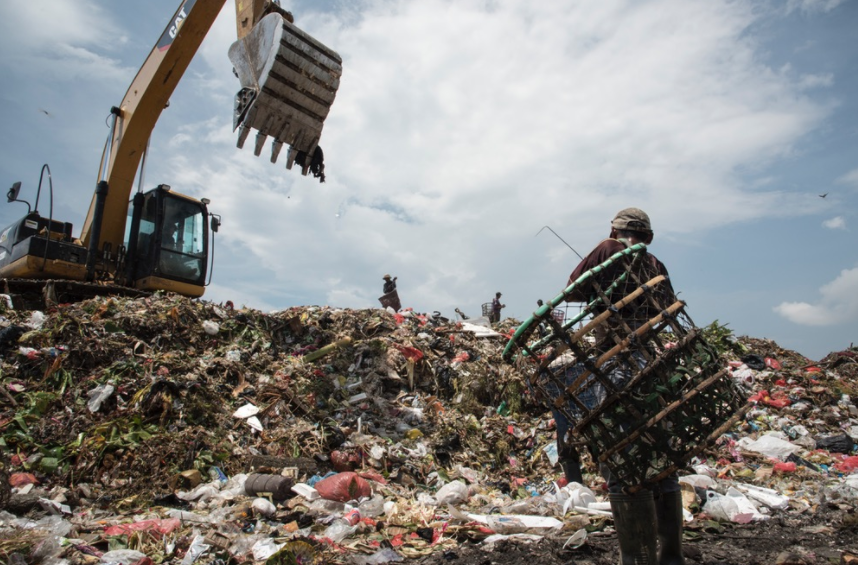
“Just because we are born among rubbish, doesn’t mean we are rubbish. My commitment to the people and young people here, it is still big in my heart. I have to do it.” — Resa, founder of BGBJ
Determined to give other children living on the landfill the same opportunity she had, Resa has re-named the landfill ‘The Kingdom of Bantar Gebang’ and started an organisation called BGBJ, which stands for ‘the seeds of Bantar Gebang’, along with her British friend and co-founder John Devlin. Resa believes that the children at the landfill are like seeds, and when nurtured and supported, they will be able to gain an education and to see that they can become something else. At first, with no funding or other support, Resa simply opened her home to the children living on the dumpsite, and began.
Today, with both a hostel and community hub on the landfill, BGBJ aims to develop a healthy and sustainable way out of poverty for the children and families who live and work here, through education and employment. Since 2014, volunteers and travellers have been helping Resa to expand her work and to turn her neighbourhood into what she calls, “the best dump ever”.
Here you can watch a short video interview I made with Resa during my time there. The positive spirit in Reza’s home and at BGBJ is simply amazing.
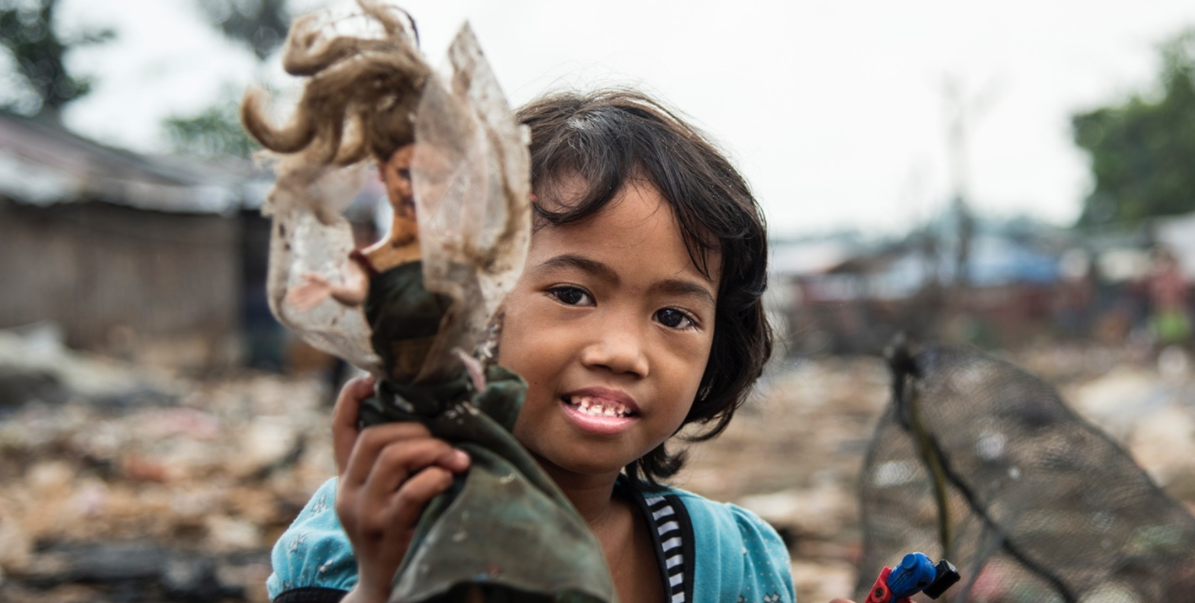
Sita, one of the young children whose families call the landfill their home, searches for toys amongst the rubbish.
Last year, waste management in Jakarta underwent a major shake-up, with multiple blockades and protests preventing trucks from entering the landfill, after disputes erupted between the Jakarta administration and their Bekasi counterparts. Angry at the stench of the never-ending stream of passing garbage trucks hauling waste to the landfill, which were now violating working hours and using a prohibited road, the protesters nearly paralysed Jakarta’s waste management during early November. The disputes were finally resolved when the city’s acting governor visited Bantar Gebang and promised to double the compensation provided for households located near the landfill to Rp 600,000 (around USD $45) every three months.
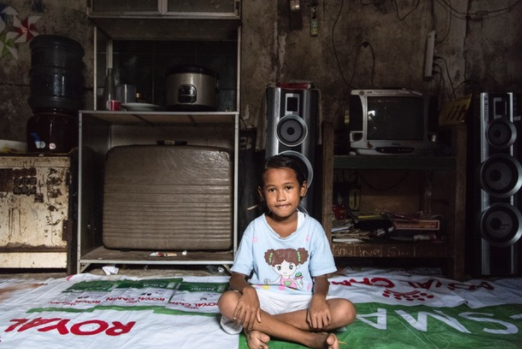
Ina, one of the luckier Bantar Gebang children, whose family have a small home with some concrete walls.
Though officials have admitted that Jakarta may need at least ten years to start fully addressing its significant waste management issues, some things look set to change. Recent initiatives to trap methane produced by the landfill and build on-site recycling facilities have eased Bantar Gebang’s pollution, and in 2016 a landmark agreement was made with Finnish energy company Fortum to develop an intermediate treatment facility (ITF) in the capital.
Despite expert concerns that the incinerator at this new ITF may emit hazardous substances if plastic waste is not properly removed, it is expected to process 2,000 to 2,200 tonnes of waste per day, and is intended to help reduce the city’s long-term dependency on the Bantar Gebang landfill. Three more bids are currently being conducted for further ITFs in the city.
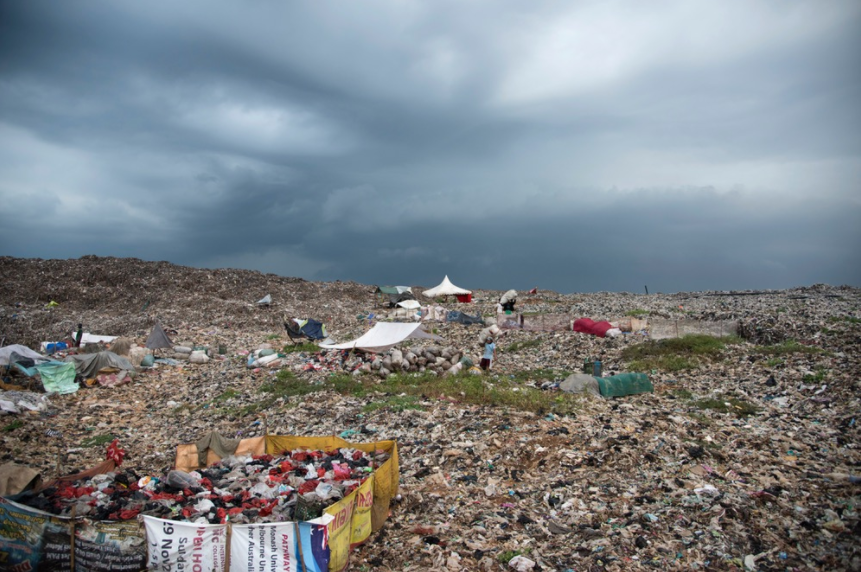
For now, however, life remains the same for the families and children of the Kingdom of Bantar Gebang, where Resa is affectionately called the ‘queen’.
Taking things one day, and one project, at a time, BGBJ is not waiting for the government to take action and has ambitious plans for improving the lives of the children and families living at Bantar Gebang, such as a new school, a workshop, a tool shed, improved sanitation, and a computer lab. For the past year, they have also been hosting backpackers and travellers, who come to offer English lessons and to go on jalan-jalan or walkabout around the dumpsite. Providing an amazing opportunity for eco-tourism and cultural exchange these events have been a wonderful success with the kids.

So far, BGBJ has been completely independent, funding improvements with their own personal savings, with money generated from the day trips and overnight stays, and with donations from individuals and groups.
Today, they are raising USD $5,000 in seed funds for a workshop that will enable BGBJ to establish a sustainable social enterprise, called ‘BGBJ Style’. With the goal of producing a range of merchandise and upcycled products from the landfill, they have already begun by developing and producing their own natural insect repellant, balms, and candles. Offering alternative employment to some of the parents of BGBJ kids, this enterprise will generate an income so that BGBJ can continue to pay for and improve its services.
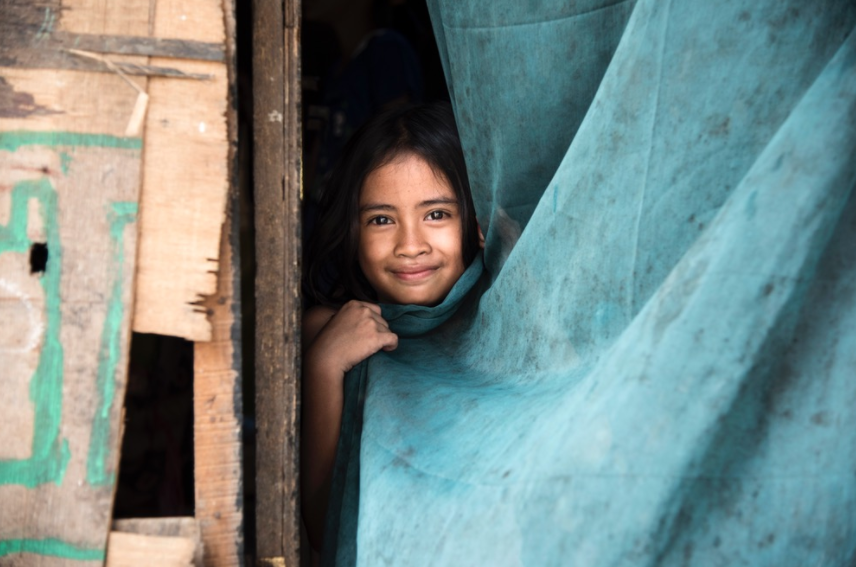
Nila, who lives with her family in a homemade shelter at the Bantar Gebang landfill, peeps out from behind a makeshift curtain.
Mahatma Gandhi once said, “Be the change that you wish to see in the world.” and it is up to all of us to do our bit. For my part, I have been inspired to do everything I can to help support Resa’s work. I hope you will join me.
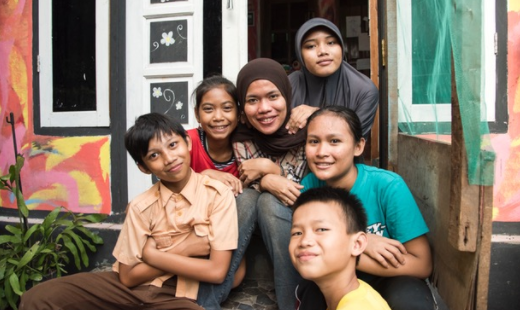
Resa Boenard, the inspiring founder of BGBJ, with some the kids growing up at Bantar Gebang landfill.
Please help me support this amazing local organization through their current GoFundMe campaign, where you will find more stories and details. More information can also be found about their work through the BGBJ website.
ALEXANDRE SATTLER
Alexandre Sattler is a photographer, traveler, and producer of audio documentaries on our planet's diverse cultures, our shared humanity, and the environment.
What the Earth would look like if all the ice melted
We learned last year that many of the effects of climate change are irreversible. Sea levels have been rising at a greater rate year after year, and the Intergovernmental Panel on Climate Change estimates they could rise by another meter or more by the end of this century.
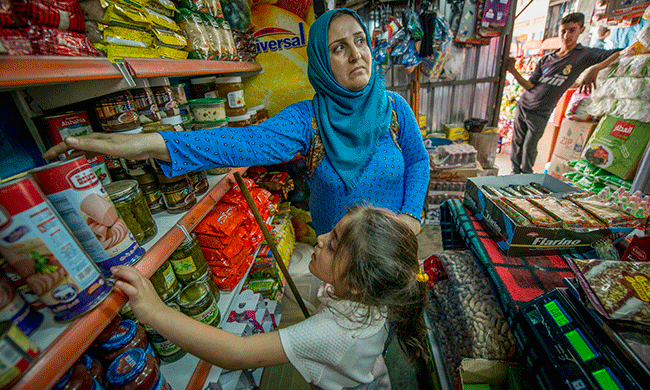
The Refugee Crisis Is a Sign of a Planet in Trouble
We must shift the structures of society to ensure the Earth remains healthy and everyone has access to a decent livelihood.
The plight of immigrant families in the United States facing threat of deportation has provoked a massive compassionate response, with cities, churches, and colleges offering sanctuary and legal assistance to those under threat. It is an inspiring expression of our human response to others in need that evokes hope for the human future. At the same time, we need to take a deeper look at the source of the growing refugee crisis.
There is nothing new or exceptional about human migration. The earliest humans ventured out from Africa to populate the Earth. Jews migrated out of Egypt to escape oppression. The Irish migrated to the United States to escape the potato famine. Migrants in our time range from university graduates looking for career advancement in wealthy global corporations to those fleeing for their lives from armed conflicts in the Middle East or drug wars in Mexico and Central America. It is a complex and confusing picture.
There is one piece that stands out: A growing number of desperate people are fleeing violence and starvation.
I recall an apocryphal story of a man standing beside a river. Suddenly he notices a baby struggling in the downstream current. He immediately jumps into the river to rescue it. No sooner has he deposited the baby on the shore, than he sees another. The babies come faster and faster. He is so busy rescuing them that he fails to look upstream to see who is throwing them in.
According to a 2015 UN Refugee Agency (UNHCR) report, 65.3 million people were forcibly displaced by conflict or persecution in 2015, the most since the aftermath of World War II. It is the highest percentage of the total world population since UNHCR began collecting data on displaced persons in 1951.
Of those currently displaced outside their countries of origin, Syrians make up the largest number, at 4.9 million. According to observers, this results from a combination of war funded by foreign governments and drought brought on by human-induced climate change. The relative importance of conflict and drought is unknown, because there is no official international category for environmental refugees.
The world community will be facing an ever-increasing stream of refugees.
Without a category for environmental refugees, we have no official estimate of their numbers, but leading scientists tell us the numbers are large and expected to grow rapidly in coming years. Senior military officers warn that food and water scarcity and extreme weather are accelerating instability in the Middle East and Africa and “could lead to a humanitarian crisis of epic proportions.” Major General Munir Muniruzzaman, former military advisor to the president of Bangladesh and now chair of the Global Military Advisory Council on Climate Change, notes that a one-meter sea level rise would flood 20 percent of his country and displace more than 30 million people.
Already, the warming of coastal waters due to accelerating climate change is driving a massive die-off of the world’s coral reefs, a major source of the world’s food supply. The World Wildlife Federation estimates the die-off threatens the livelihoods of a billion people who depend on fish for food and income. These same reefs protect coastal areas from storms and flooding. Their loss will add to the devastation of sea level rise.
All of these trends point to the tragic reality that the world community will be facing an ever-increasing stream of refugees that we must look upstream to resolve.
This all relates back to another ominous statistic. As a species, humans consume at a rate of 1.6 Earths. Yet we have only one Earth. As we poison our water supplies and render our lands infertile, ever larger areas of Earth’s surface become uninhabitable. And as people compete for the remaining resources, the social fabric disintegrates, and people turn against one another in violence.
The basic rules of nature present us with an epic species choice. We can learn to heal our Earth and shift the structures of society to assure that Earth remains healthy and everyone has access to a decent livelihood. Or we can watch the intensifying competition for Earth’s shrinking habitable spaces play out in a paroxysm of violence and suffering.
THIS ARTICLE WAS ORIGINALLY PUBLISHED IN YES MAGAZINE.
DAVID KORTEN
David Korten wrote this opinion piece for YES! Magazine as part of his series of biweekly columns on “A Living Earth Economy.” David is co-founder and board chair of YES! Magazine, president of the Living Economies Forum, a member of the Club of Rome, and the author of influential books, including When Corporations Rule the World and Change the Story, Change the Future: A Living Economy for a Living Earth. His work builds on lessons from the 21 years he and his wife, Fran, lived and worked in Africa, Asia, and Latin America on a quest to end global poverty. Follow him on Twitter @dkorten and on Facebook.
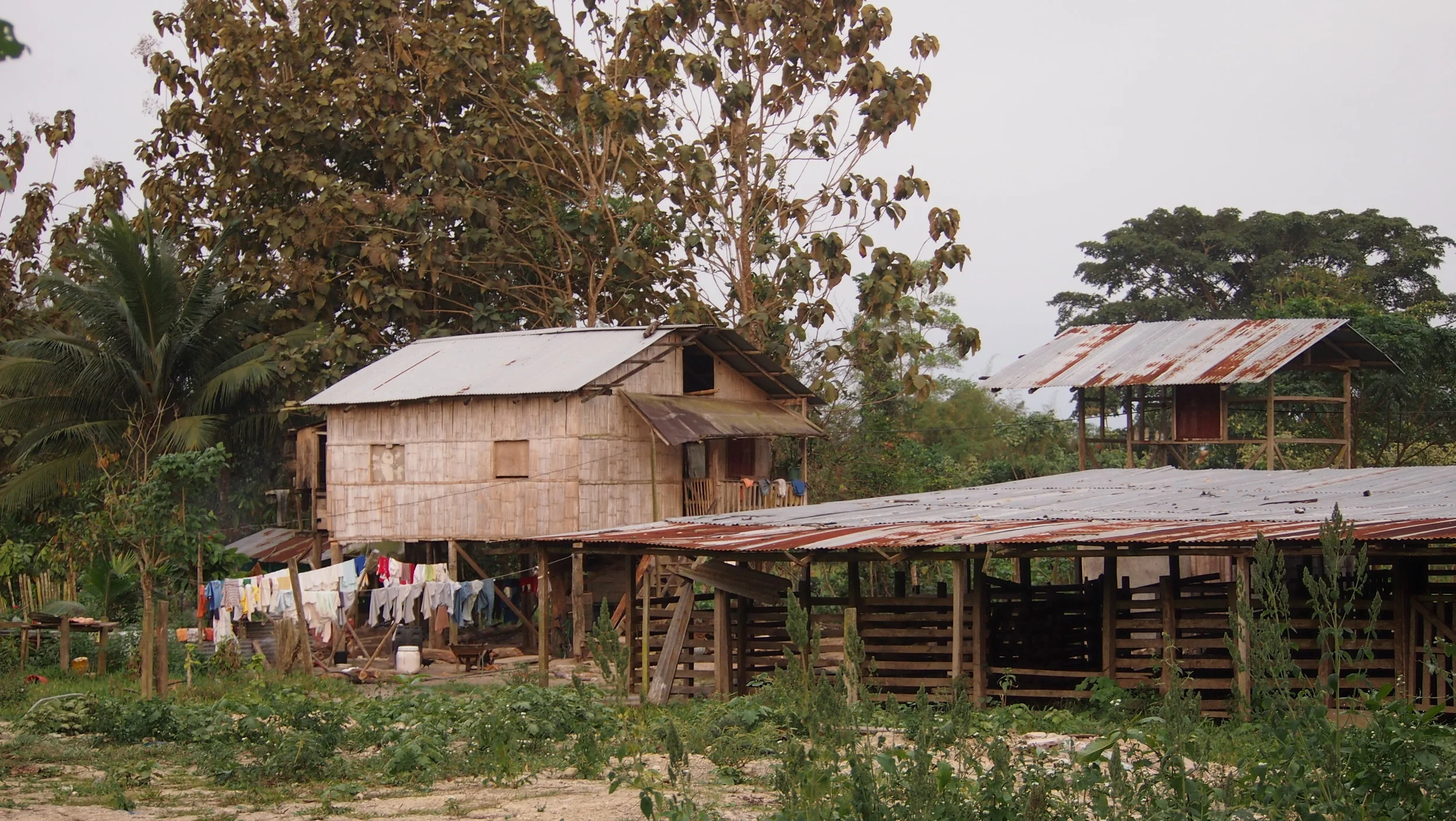
5 Lessons I Learned from Living with an Extreme Eco-Witch
In a rural town in the coast of Ecuador I had the pleasure of living with a woman. An eccentric woman. Some even said a witch. Witch or not she challenged me to challenge myself and my ecological standing. Here is what I learnt.
The walls of the Secret Garden were embedded with glass shards. Above the wall sat strategically placed barbed wire. The wall stood 10 ft. high communicating something along the lines of “I dare you to even try”. I pictured every shard of glass as a remnant of the woman behind it. Hidden for 8 years by high fences and rumors that she was a witch. From inside she watched the uninterrupted life outside of her icy fortress. A bird that once caged itself and has been trapped ever since.
The Secret Garden was not so aptly named. It was the largest house on the block by at least one whole story. The Secret Garden. I repeated it to myself. The irony tingled on my tongue. My partner Alex held my hand as we entered what was to be home for the next month.
Bucket Showers
We’ve been here a few days shy of a month and for the most part have caused this eccentric woman a drought. We’ve been showering with a one liter measuring jug. While the locals nearby go to a well, she collects rain water. The roof has pipes fringing the roof which collect in a tank. From there it is pumped upwards into a second tank and then she uses gravity for the last step. Water flows from the highest tank into the taps. She relays to me she’s only had running water for 6 months though she has been collecting rain water for much longer. It’s going to be the second time she calls the truck. She holds my glance as she says this, looking me up and down and reinforcing the message. “The second time!”.
All water is conserved here. There are two buckets in the sink. One for washing and one for rinsing. It works in a cycle. The washing water is thrown out over the garden and replaced by the rinse water. Furthermore any water that goes down the sink or in the shower is collected in another tank.
The water truck comes. She looks defeated. Her statements are witty and passive aggressive as though she knows I was using 2 liters of water for my bucket showers instead of one. In my defense it is the dry season.
Lesson 1: Be conscious of water usage. Water doesn’t just fall from the sky ya know.
Fishy Road Kill and Voodoo Dolls
There was something missing about the house and for the first few days we couldn’t figure it out… and then we went grocery shopping. This woman didn’t own a fridge. Overall, it was a good thing as it meant that all left overs were eaten rather than thrown to the back of the fridge. She tossed us a Styrofoam box filled with brown goo; “just buy ice… oh and give it a wash”. Our seafood, was always bought fresh. Every morning there are fisherman detangling their catch from nets with the patience and precision that only years of practice could bestow. We would wait until lunch to cook our spoils and because of this it always had a thick pasty consistency and fishy road kill flavor. Our broccoli, too, was always expired. I cursed firstly the heat and then the cooler which only offered half a day of solace from the tormenting sun.
But we were not the only ones. She keeps her homemade cat food in a neighbor’s fridge. Two out of three of her cats’ bellies sag so low they sweep the floor. From what I saw this was her favorite neighbor. The man in the blue house down the road. The family behind her think that she is a witch. A label she perpetuates by leaving voodoo dolls over their side of the fence. The family adjacent to her vacated when she told them that she came from a land of devils. A clever play on words for the Tasmanian Devil in Australia. “The locals here are a little superstitious”, she cackles.
Lesson 2: Buy fresh and eat fresh. More walks to the market isn’t necessarily a bad thing.
You Threw THAT away?
Need I say this woman recycled? She owned a series of garbage containers distinguishing intricacies in the material. She was working towards a plastic free home, a feat much more difficult than it sounds. In our room there was a list of rules, one of which was “no plastic bags”. Buying food, if caught without a bag became a game of smuggling. The fruit and vegetable trucks come every other day at random times. And when caught off guard, we would use plastic. As per request, after unpacking we would wash the plastic bags and hang them up to dry, to be reused. This was done in secret to try to avoid a punishing eye about bringing home more plastic bags. More often than not we would walk home with an assortment of items stacked awkwardly against our chest and were greeted with an approving smile or “what’s for dinner?”.
Lesson 3: Everything can be reused, recycled or up cycled.
SHIT!
“This is the bathroom”. Alex and I were getting the grand tour of her house. “It’s a composting toilet so you can throw your toilet paper inside the toilet” “ohhh” “ahhh”. For anyone else who has travelled through Latin America, you know this is kind of a big deal. All you do is chuck some sawdust in afterwards and let nature do its magic. Well, technically less magic from nature and more bugs digesting feces which is then shoveled to be used for compost in the garden. Ta-da! The garden gifted her back fruits, vegetables, herbs and an assortment of goodies she made into cleaning products, mosquito repellent, even gift wrapping.
Lesson 4: Literally, you can recycle anything.
Bliss Bombs
She told us that the government watches her because of her ‘bliss bombs’, a fruity protein ball of shredded coconut, almond meal chia seeds and dates. “If you google ‘bomb’, which I do because of ‘bliss bomb’ then the government puts you on a blacklist”. Once a chef and always an animal rights activist, I was amazed at what much she could make with just vegetables and a few grains. No gluten, no fats, no meat and “no fucking sugar” this was written on a whiteboard in the kitchen and repeated in all of her meals. Her chili sauce, a family recipe, was to die for and made an appearance in different restaurants in the town, in recycled Gatorade bottles she collected along the road.
Lesson 5: You are what you eat. Eat to reflect your ethics.
Admittedly, I’ve never been overly conscious of my waste more than the basic dabble in vegetarianism and using a recycle bin. But, since moving out I’ve seen little differences here and there in my dispositions towards conservation and sustainability in everyday activities. This eco-warrior/ witch/ woman taught me a lot.

JESS LEMIRE
Jess Lemire is a traveller, writer and social activist, sometimes simultaneously. I write about the things that I am passionate about and am passionate about what I write. I'm a cultural observer and linguist at heart.
I love good food and am a low key fruit juice enthusiast.