
Elephants and their ancestors have roamed the African continent for millions of years. They are the largest land animals on earth and can live up to 70 years. Elephants are profoundly intelligent and social creatures. They have trunks that serves as their nose, arm, and fingers. But elephant populations have taken a massive hit to their populations. Despite an international ban on the ivory trade and other laws to protect elephants, their overall populations continue to fall due to habitat loss and rampant poaching for their tusks. Because of that, a once rare trait is being passed onto more African elephants. The trait is tusklessness, The loss of tusks is only the beginning. The real devastation occurs with the loss of a groups matriarch. The oldest and most experienced grandmothers are the family’s living memory of migration routes, friendly elephants, food and water sources, etc. Matriarchs are also, the first in line to protect their families and without them an entire group of elephants can fall apart. But with China banning ivory in 2017, providing stronger incentives to protect elephants, and sustained conservation efforts from organizations like ElephantVoices, African Parks, and others, elephants may stand a chance to roam the continent as their ancestors once did.
Rewriting the Code in Africa
Vulnerable girls and young women in Africa are being given a unique chance to learn vital technology skills in a safe space through an innovative pilot project launched by the charity Theirworld.
Code Clubs are low-cost, sustainable and scaleable safe spaces where girls can build, learn and create through technology, creativity and coding.
Theirworld - the charity behind A World at School - is launching Code Clubs in partnership with Kano, Codeacademy and Africa Gathering.
Fighting the Desert with Gardens in Senegal
This video follows a group of people in Senegal who are fighting deforestation. Due to extreme poverty, many people in Senegal result to cutting down trees to make money. This group is planting trees and gardens to help the environment.
ETHIOPIA: Suspended in Time
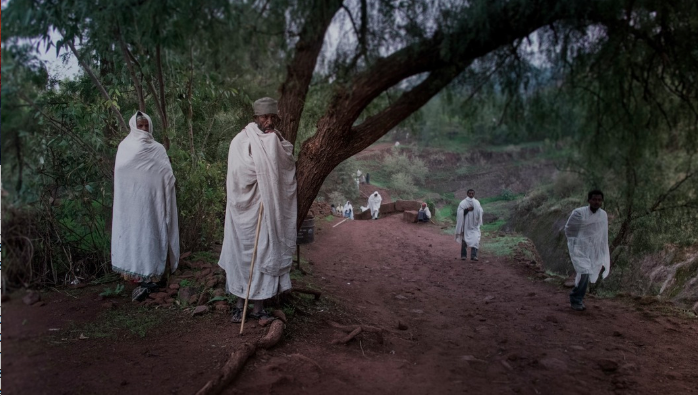
The moon shines brightly, as white robe and candle mark the lines of pilgrims winding their way up the hillside, to reach the ancient rock-hewn churches of Lalibela — a sacred place for those of the Christian faith since the 12th century.
According to the legends, men and angels worked together to construct the remarkable rock-hewn churches of Lalibela — the men working through the day and the angels taking over during the night.
Many historians believe that these great monolithic churches were commissioned during the reign of Saint Gebre Mesqel Lalibela, who ruled Ethiopia in the late 12th century and early 13th century, when the town was known as Roha. When Lalibela, whose name means “the bees recognise his sovereignty” in Old Agaw, was born, it is said that a swarm of bees surrounded him, which his mother took as a sign of his future reign as Emperor of Ethiopia. So the mythos tells us, Lalibela later visited Jerusalem, and after its capture by the Muslim caliphate in 1187 he swore to build another such sacred place of pilgrimage in his own country.
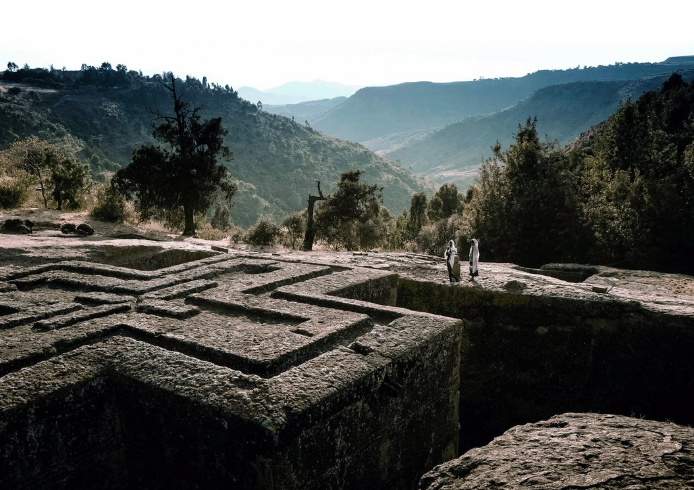
Each of Lalibela’s eleven churches was carved from a single piece of solid rock to symbolize spirituality and humility. The churches seem timeless, painstakingly excavated from the ground itself. It is believed that they were constructed first by digging out a kind of moat and were then hewn from the square rock that remained. The degree of craftsmanship and countless hours of heavy manual labour that it must have taken to carve out these wonders with hand tools alone is astounding. The churches are connected through a labyrinth of tunnels and sit beside a small river, called Jordan, and many other features also have Biblical names.
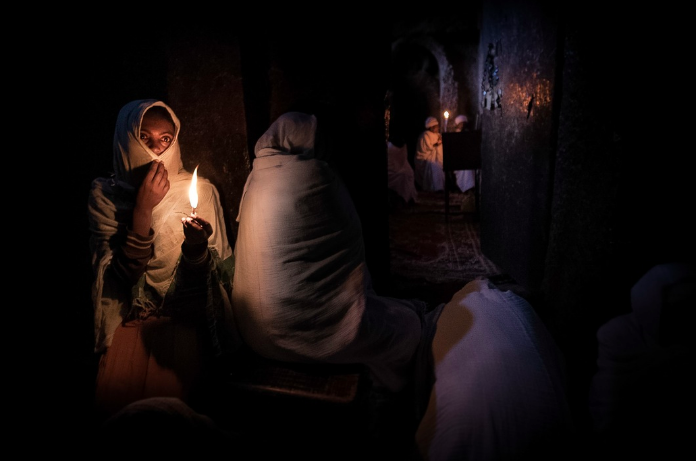
Just as astounding as the architecture, is that the churches have been in continuous use throughout the centuries since they were built.
Today, Lalibela is a town of no more than ten thousand people, but over a tenth of those are priests. Ritual and religion are the twin fulcrums upon which life in this place spins. Many times a year, there are processions, fasting, dancing, and the sound of many voices lifted up in song.
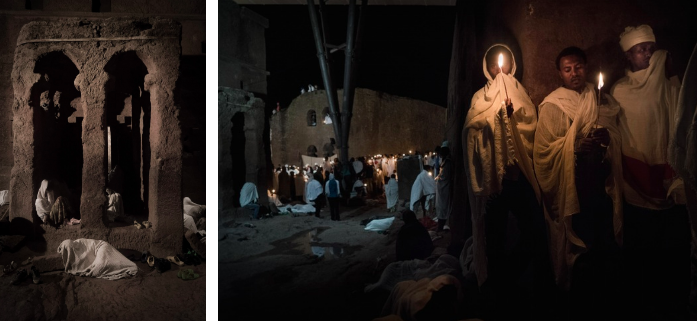
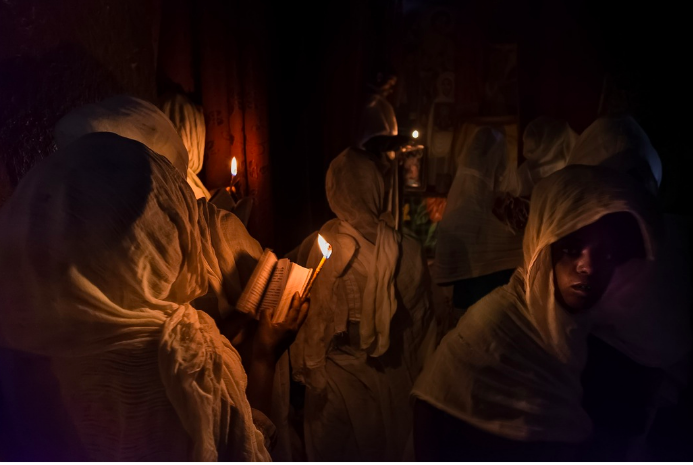
I feel privileged to have been in the holy city of Lalibela on many occasions and it continues to be one of the most fascinating photography trips I take anywhere in the world. It is a jump back in time, a photographic journey beyond compare. With the churches dimly lit by flickering candles, surrounded by faith and roughhewn rock — it is an entire world suspended in the 12th century.
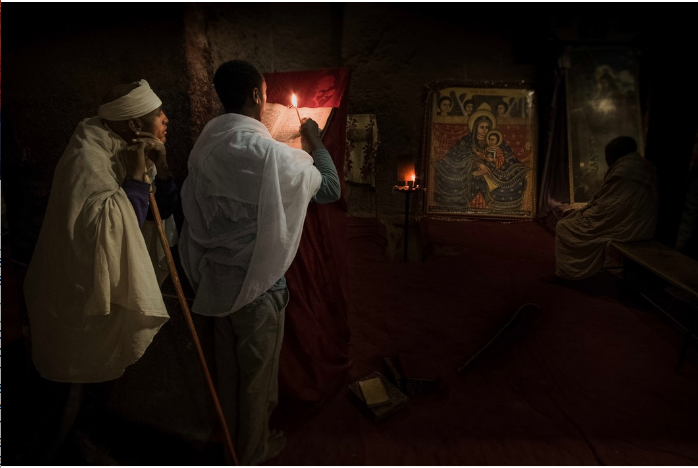
Easter week in Lalibela is the most extraordinary in the year, when many thousands of devotees dressed in white will gather from all over the country, and father afield, to profess their love and Christian faith.
We land, and I arrive at the tiny, ancient airport terminal. To the left is an unmoving, rusted out conveyor belt with no hope of resurrection. Dragging my bags along behind me I reach the famous ‘Shuttle’. We are told to put the bags around back in the trunk. It is jammed, of course.
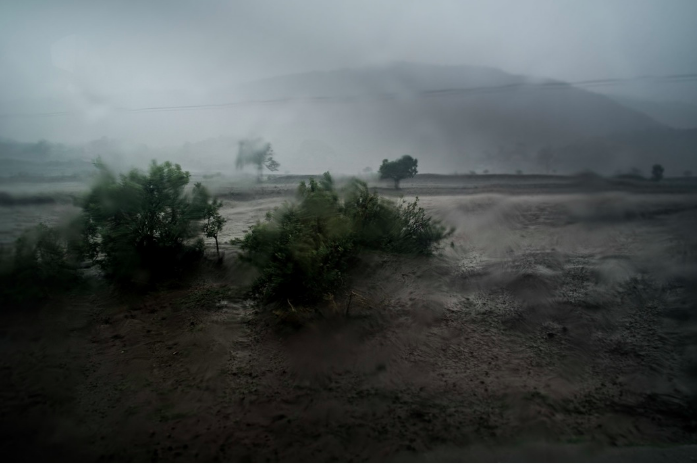
A few people toss their bags on the roof and the rest keep them on their laps once seated. I find a seat wedged between my bags and the stairwell, ending up intimately, uncomfortably close to my seat-mate. After a flat and long slow climb we reach the town on three and a half wheels.
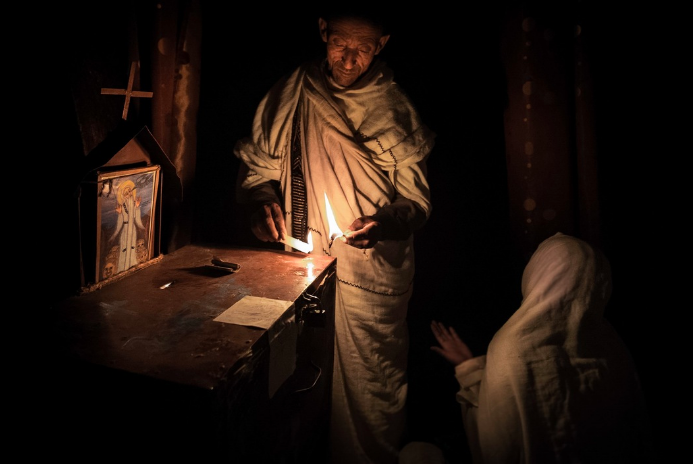
“Ferengui... Ferengui...” (Foreigner... Foreigner...), I hear them murmuring amongst themselves. The time is 5:30 in the morning, and it is still dark. The inside of the church is small, austere, and it is difficult to move around discreetly by oneself let alone with a camera, and no cloak to help me meld with the darkness so thick that the eyes can hardly adjust. There is a candle here and there, occasional light through a tiny upper window, and the sudden glare of an opening door. Precious little else to see by.
The moon shines brightly over the hillsides and the lines of ascending faithful are seen thanks to the candles they carry up towards the church. In the morning half-light, the first chants begin. Voices lift.
Suspended in a parenthesis of time, I am witness to the rising dawn over the year 1100, as the first light breaks free of the horizon.
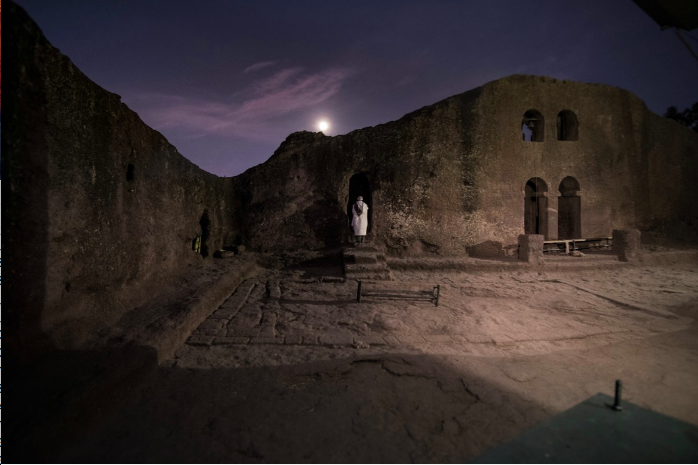
Swathed in long white robes, men and women come up the hill in silence. The lines of the path are drawn in the darkness by cloth and candle.
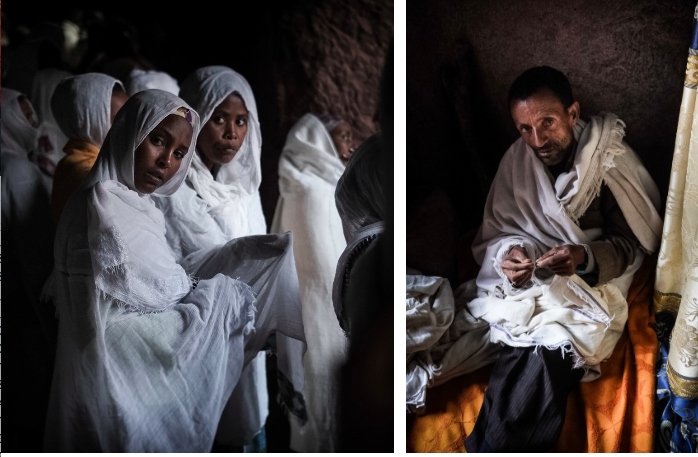
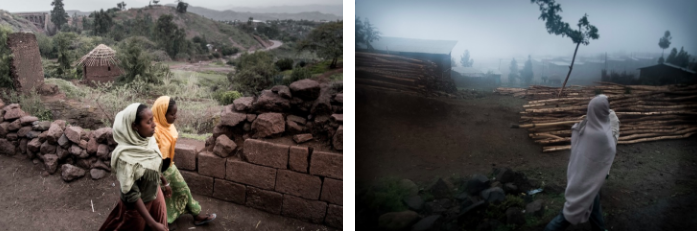
I have found a spot to wait in, where the faithful will have to pass by me. The more timid among them hid their faces in their cloaks, but the less so look at me squarely in the eyes. No aggression. Simply curious, trying to discern what on earth I am doing up here before dawn, if I am not here to pray, and what I am so patiently photographing.
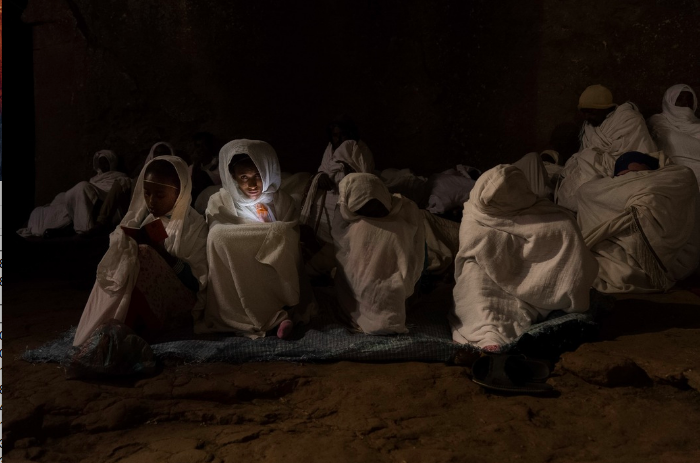
The hours seem like moments, and I am alone, though among many. The fervor of the devotees as I move through the shadowed churches touches me deeply. These scenes, even for a skeptic who tries to stay propped behind his camera and maintaining distance, are magical. Moving.
HARRY FISCH
Harry Fisch is a travel photographer and leader of photo tours to exotic destinations with my company Nomad Photo Expeditions. He is also a winner and loser of the 2012 World National Geographic Photo Contest.
ORIGINALLY PUBLISHED ON MAPTIA
NAMIBIA: Colors of a Country
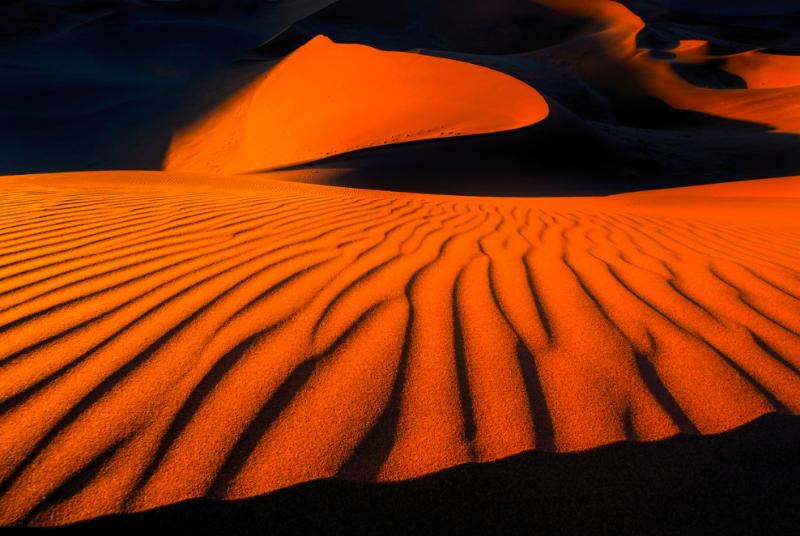
Namibia is a land of contrasts and extremes. Situated between the Namib and the Kalahari deserts, Namibia gets less rain than any other country in sub-Saharan Africa. Namibia’s coastal desert is one of the planet’s oldest, with powerful offshore winds sculpting the highest sand dunes in the world, in some places rising more than 1,000 feet.
Water — or more to the point, its absence — defines life in Namibia.
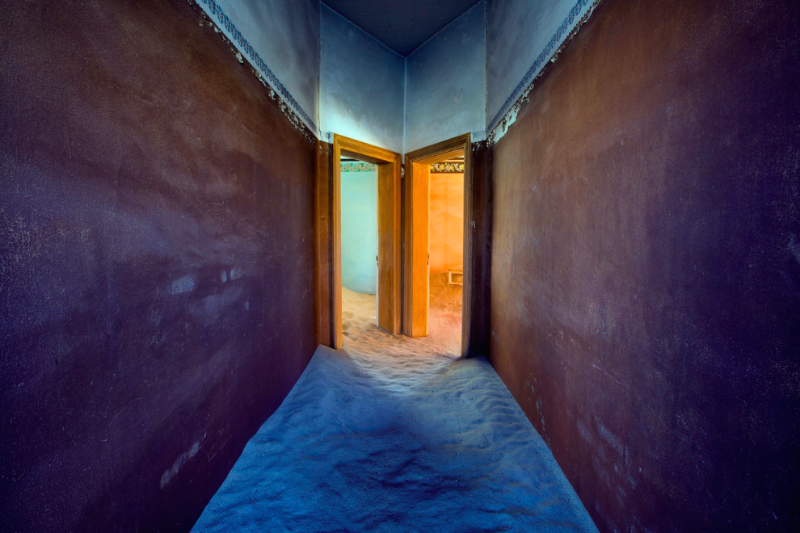
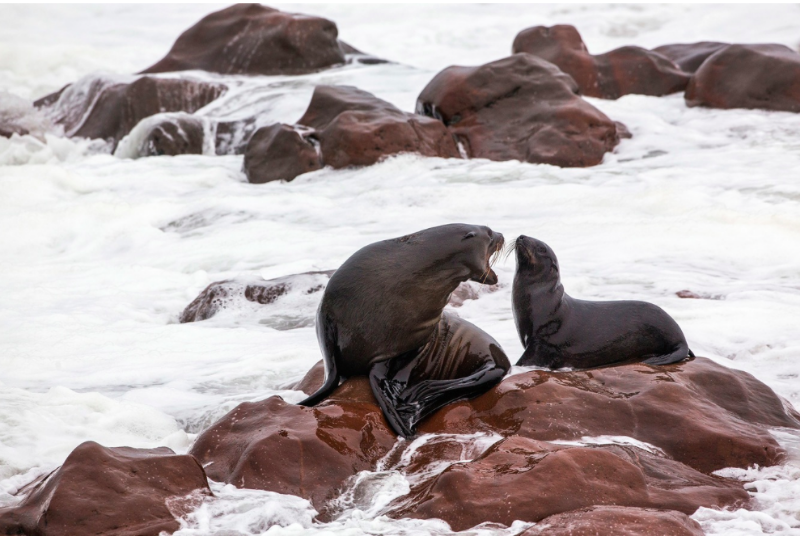
Hot and arid in the interior, Namibia’s coast is surprisingly cool and moist, the product of the cold Atlantic colliding with Africa’s warm and dry southern tip. Seals and sea birds come by the thousands to congregate in this narrow temperate zone.
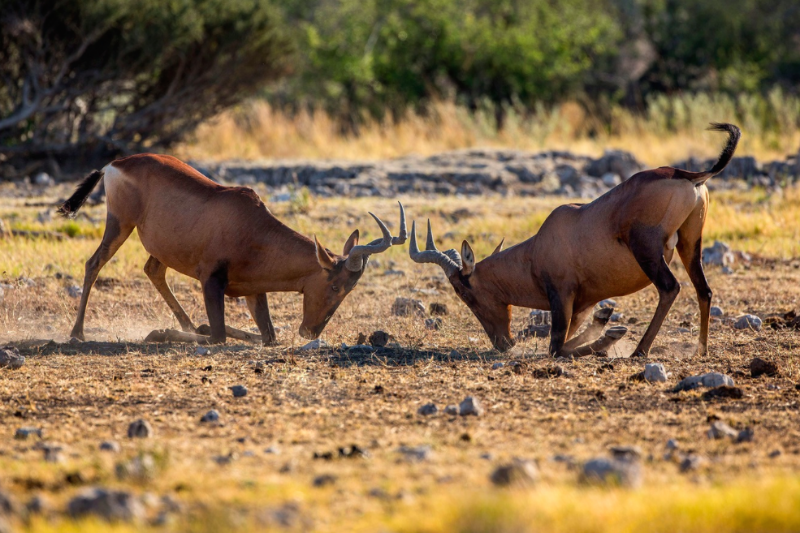
In the rest of the country, only where there is water is there life. Here is my vision of this untouched and primal land, with its towering red sand dunes, vast deserts, and wild animals struggling to survive.
KOLMANSKOP
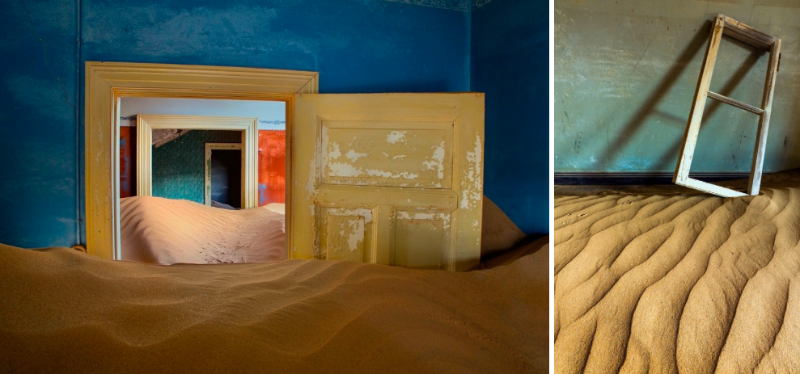
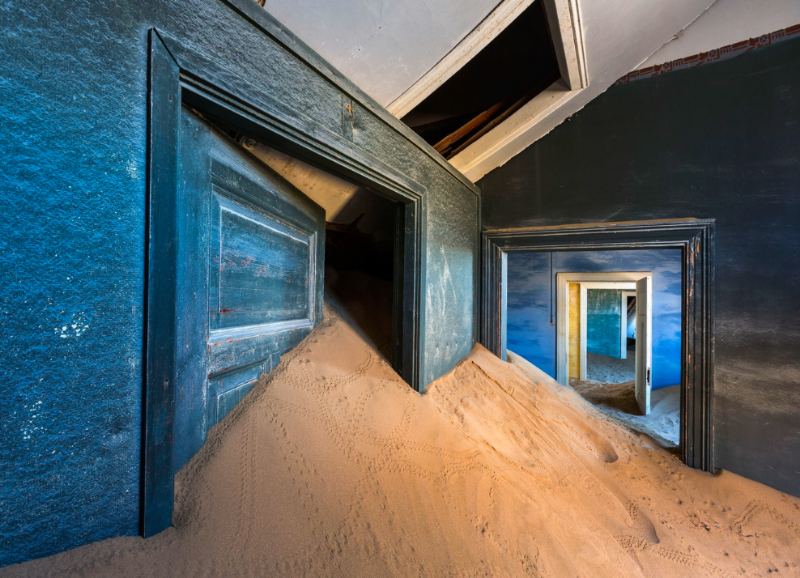
Kolmanskop is a deserted German mining settlement located in Namibia. The town was abandoned in the 1950s, and the desert has been reclaiming it ever since, creating an interesting mix of colorful painted walls and sweeping sand dunes engulfing entire rooms.
QUIVER TREE FOREST
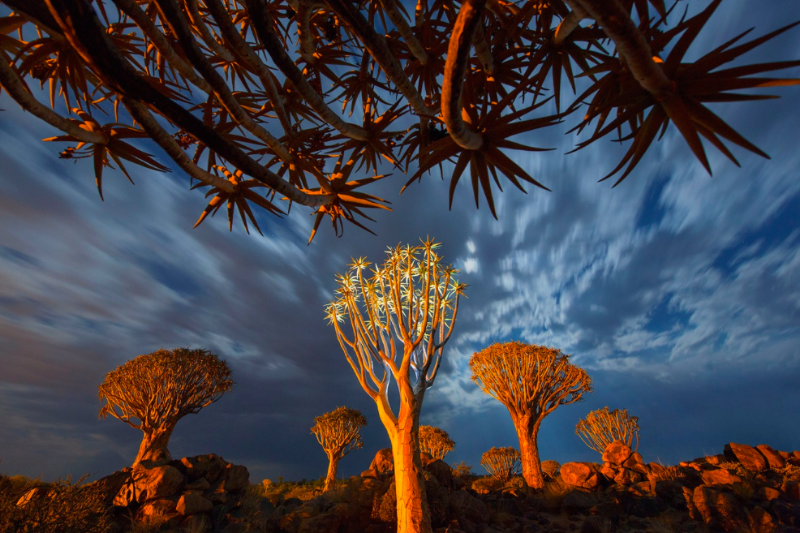
The Quiver Tree Forest, near Keetmanshoop, contains a collection of the so-called “quiver trees” which aren’t really trees at all, but rather a species of aloe, a flowering succulent plant.
NAMIB-NAUKLUFT NATIONAL PARK
Namib-Naukluft National Park preserves part of the extensive Namib Desert. The most famous area of the park is called Sossusvlei, which contains the tallest sand dunes in the world, rising more than 1,000 feet above the desert floor. Oxidization of iron in the sand gives them a reddish-orange color, which becomes especially intense when bathed in the warm light of sunrise and sunset.
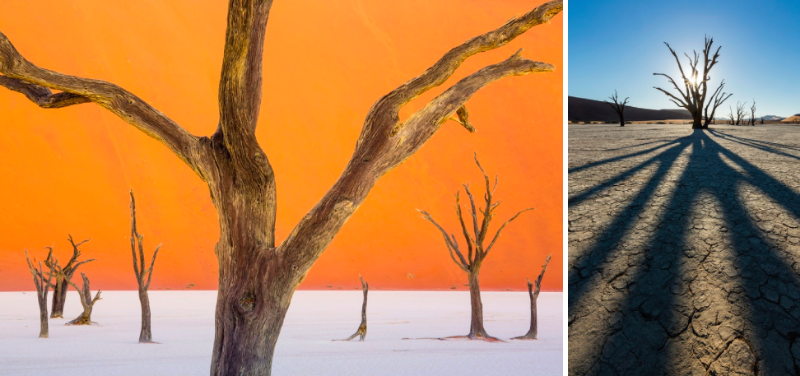
One of the most stunning places in Sossusvlei is known as Deadvlei (which means “dead marsh”). The area used to be wet and covered in trees, but 600 or 700 years ago the water dried and the trees died, their eerie skeletons preserved by the dry air.
ETOSHA NATIONAL PARK
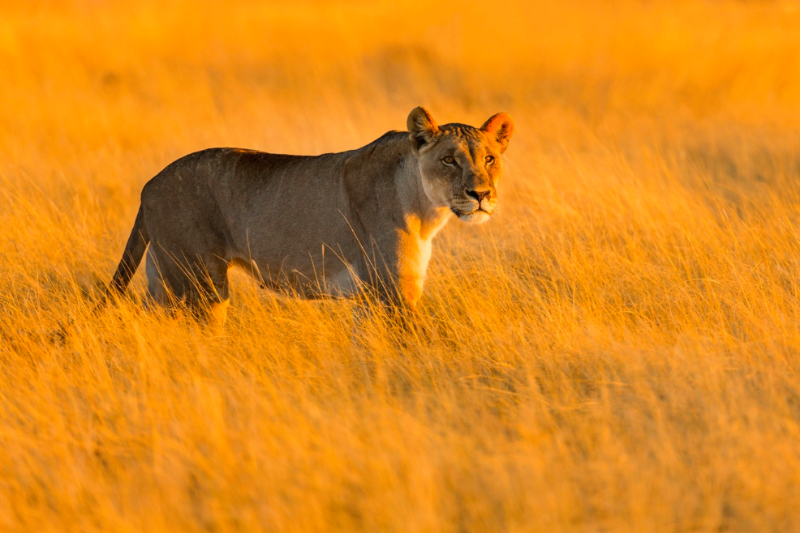
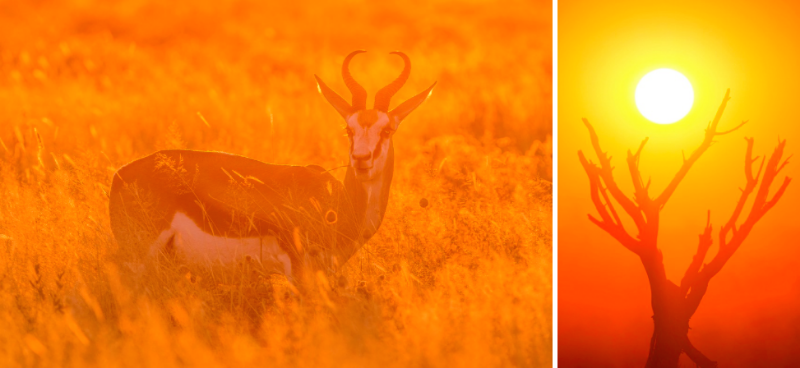
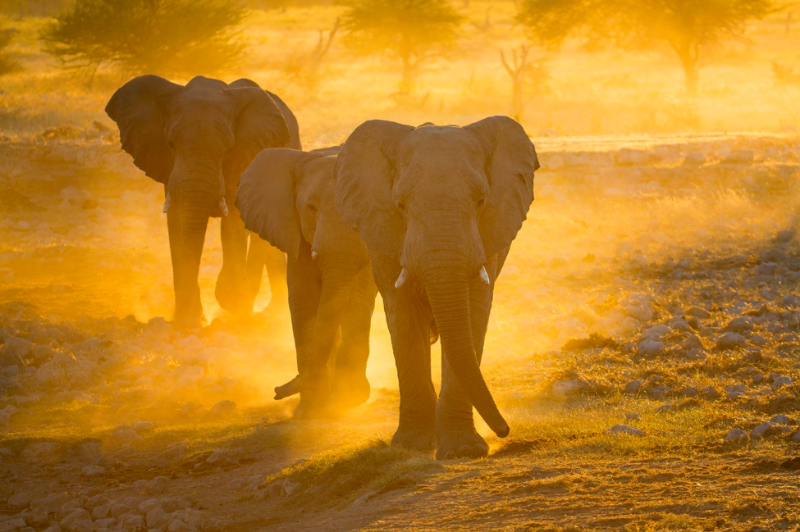
Etosha National Park is a beautiful national park in northwestern Namibia, known for its abundance of large game animals, including elephant, lion, rhino, giraffe, cheetah, zebra, and many more. What amazes me most about Etosha is the clear, strong light at sunrise and sunset, bathing animals and landscapes in warm color.
IAN PLANT
World-renowned professional photographer, writer, and adventurer Ian Plant is a frequent contributor to and blogger for Outdoor Photographer Magazine, a Contributing Editor to Popular Photography Magazine, a monthly columnist for Landscape Photography Magazine, and a Tamron Image Master. Ian is also the author of numerous books and instructional videos. See more of his work at www.ianplant.com
Finding Myself in Morocco’s Hammam Rituals
Complete submersion in a world far different from your own can be overwhelming. But when met with a cup of mint tea, it can be a life-changing adventure.
Read MoreTRIP REVIEW: Surfing South Africa to Help Out
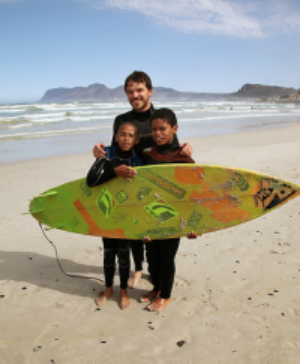
The downfall of many volunteer organizations is cost. All too often there will be a $1000+ price tag on a trip that lasts only a week or two, not included airfare. This isn’t news, so it should come as no surprise that there are people out there who are working to fix this. One of these people is Daniel Radcliffe (no, not the actor). After collecting a Masters of Business, Daniel decided that it was time to give back to the world. He began to research volunteer trips. He too ran into this roadblock, but unlike someone like me who will simple notice the problem and then write about it, Daniel decided to do something. International Volunteer HQ was founded upon his return to New Zealand in 2007. “IVHQ was born with the goal of providing safe, affordable and high quality placements in areas where there is a real need for volunteers.” One of these places is South Africa.
It’s easy to read a statistic or to watch a documentary and think that we understand. Sure, we have problems here in the United States, there’s inequality and poverty everywhere, but, honestly, we cannot imagine what some citizens of the world live through. In South Africa the average life expectancy of a white South African is 71 years. The average life expectancy for the black population is 48 years. In 2005 it was estimated that 31% of the female population was infected with HIV, most of them black. There are 1,200,000 orphans. These are numbers and statistics, I could throw them onto a graph and you would see the vast differences, but you still wouldn’t know, you would still be using your imagination. Over there, it’s a reality. South Africa needs help and, if you feel so inclined, you can give it.
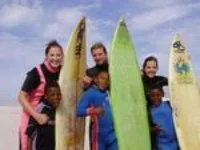
IVHQ sends volunteers to South Africa on the first and third Monday of each month. They normally arrive in groups of twenty to fifty people and the assist the community in an astounding variety of ways. Participants can involve themselves in a teaching project, in childcare, computer training, sports development and, an organization after my own heart, a surf outreach program.
Maybe you’re wondering what good a surf outreach program would do for children when they could be receiving extra medical attention or extra food and shelter. In the words of Ellen Varoy, Marketing and Media Coordinator for IVHQ, “The Surf Outreach program is designed to provide these children with an after school activity, keeping them off the streets of Cape Town and placing them in a safe and encouraging environment. Through the program, these children have the opportunity to learn new skills, take up new challenges, gain confidence and interact with our international volunteers, who the children look up to as role models.” It’s not about whether or not these kids learn to surf. It’s about showing them that there are people who care. It’s about being a ray of light on an otherwise bleak horizon. As a surfer would say, it’s about sharing the stoke. Would these children benefit more from help that focused on their health and nourishment? On the spreadsheet, probably, but where would they go after that? I say give them role models, give them hope and teach them that they can overcome. That, in my opinion, will last much longer than a loaf of bread.
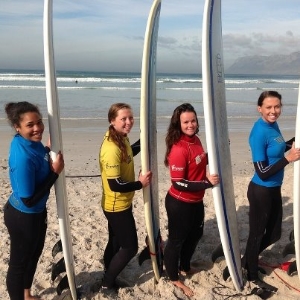
The cost of IVHQ trips is one of the things that makes this organization so great. Prospective volunteers for the surf outreach program only have to pay $320 for one week. Longer periods of time require more money, being capped off at six months for $4580. This does not included airfare or visas or spending money. Also, if you want to participate in the surf outreach program you must know how to swim. I just thought I would point that out. If you are interested in any of the other programs offered for South Africa, you can find more information here.
IVHQ is a fantastic option for people who want to volunteer for an affordable price. A full range of trips can be found at their website, http://www.volunteerhq.org/. As usual, if you were interested in the trip, but don’t think it’s for you, check back with Mission.tv next week for the next article in our series of trip reviews.
For testimonials by volunteers who completed the surf outreach program, check out: Testimonials
To check out a video from the trip click here.
LEARN MORE ABOUT IVHQ
KINO CROOKE spent the last three years juggling school and travel. He most recently spent the last two months traveling across Spain before moving to New York to work with CATALYST.
Otelo Burning (2011): Surfers In South Africa Battling Tides
Somewhere between City of God and Blue Crush, Otelo Burning is a coming of age story in South Africa set against the backdrop of Nelson Mandela's release from prison. It's an emotional story of kids in the township learning to surf. It's a story of the explosive potential for change at the time of apartheid's end.
RWANDA: Sweet Dreams
How does a country distance itself up from the horrors of the past? In post-genocide Rwanda, this has proven to be a tall task. Yet, great strides have been made in the country's economic recovery since the '94 genocide. Pioneering Rwandan theater director Kiki Katese believes though that, "people are not like roads and buildings." 'Sweet Dreams' shows us the truth in her sentiment by following the story of Rwanda's first women-only drumming troupe as they empowerer themselves through a new and foreign venture - the creation of the country's first ever Ice Cream shop.
CONNECT WITH SWEET DREAMS
VIDEO: SolarAid Gives Light to Millions of Africans
Throughout Africa, hundreds of millions live without access to electricity. For light, many use toxic and expensive kerosene lamps; simultaneously harming the environment while keeping families within the grips of poverty. SolarAid is aiming to disrupt this market by providing those in need with cheaper and safer solar lights. Solar lights are more safe for the environment as well, which is important when combating climate change. With more than one million lights sold, that change is becoming tangible.
CONNECT WITH SOLARAID
VIDEO: Change Heroes and Free The Children Help the World in 3 Hours
Watch what 22-year-old Evan Mula, from Boston, did with just a bit of time. He and 32 of his friends raised $10,000 in three hours to build a school in Kenya through Change Heroes and Free The Children. This is his trip to see that vision emerge in reality. Evan is able to demonstrate that anyone can change the world with just a bit of hard work. He now sets a standard for activists who work in Kenya.
LEARN MORE AT CHANGE HEROES
VIDEO: The Kula Project Invests in Farmers to Help the People of Rwanda
The majority of farmers in developing nations like Rwanda are unable to generate enough income to feed and sustain their families. This is due to the lack of basic needs for success. The Kula Project invests in small-scale farmers in Rwanda to create sustainable communities.
CONNECT WITH KULA PROJECT
VIDEO: Jono Moehlig’s Spoken Poem on the Beauty of Rwanda
Jono Moehlig went on a trip to Rwanda and found that the people he encountered there were some of the most amazing people he has ever met. Watching wartorn killers that have been released and loved by the neighbors they once destroyed, he learned what peace really is.
CONNECT WITH KULA PROJECT
VIDEO: Changing Girls’s Lives at The More Than Me Academy in Liberia
The More Than Me Academy is on a mission to make sure education and opportunity, not exploitation and poverty, define the lives of the most vulnerable girls from the West Point Slum of Liberia. When she graduates, she will decide what comes next for her life.
CONNECT WITH MORE THAN ME
Morocco: The Color of Tough
It was the cemeteries that first spoke to me.
Read More


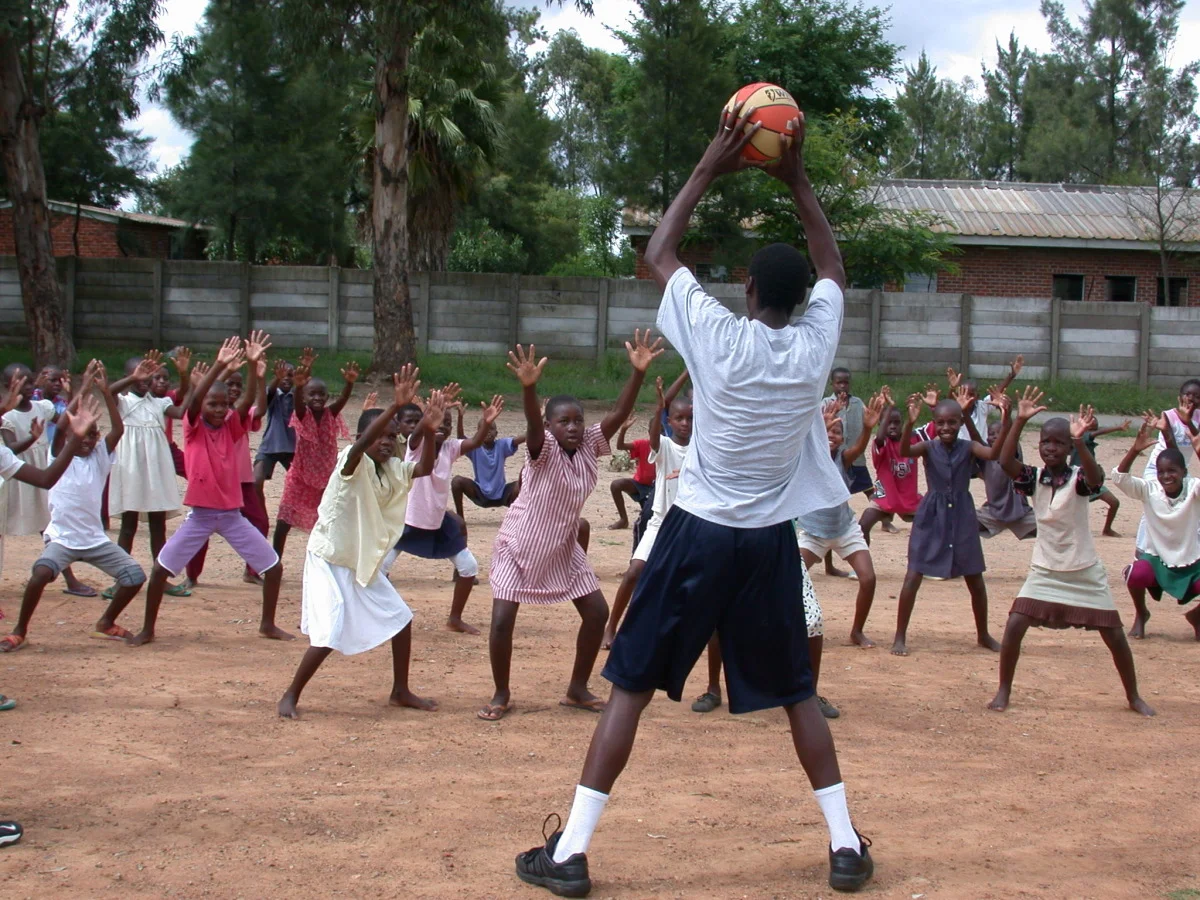


Hoops4Hope
There are few elements across the spectrum of humanity that bind and connect us as people, no matter our age, race, or cultural background. They validate our bond as humans and in many cases, drive the most profound change that is occurring across the globe, bringing us together as a global community. The sport’s friendly competition does exactly this.
This is where Hoops 4 Hope (H4H) comes into play. Since 1995, H4H is an international non-profit organization, which has utilized the “power of sport to create sustainable long-term positive impact for youth, equipping them with the tools to manage the social, health and economic related challenges they face.” — Mark Crandall, H4H Founder & Director More
As the sister organization for Soccer 4 Hope, Hoops 4 Hope utilizes the medium of basketball to provide empowering sports programing to youth across Zimbabwe and South Africa. The organization’s mission is to educate youth with life skills necessary to survive; it has flourished in communities that struggle with poverty, unemployment, HIV/AIDS, violence, crime, substance abuse, and gender inequality.
Over its 18 years of existence, H4H has seen many of its youngsters receive sports scholarships to high schools, coaches being chosen for overseas cultural exchanges, and even have a Zimbabwean athlete now playing professionally in the Euro League. Furthermore, various H4H courts have been graced with visits from German Chancellor, Angela Merkel, along with NBA Star and member of the Chicago Bulls, Luol Deng, amongst many others.
This photo essay highlights Hoops 4 Hope as our NGO of the Week, taking you to the on-site project locations throughout Zimbabwe and South Africa, many of which were made possible through collaborations with local schools, shelters, and community organizations.
Connect with Hoops 4 Hope here.
ANDREW BRIDGE is a global enthusiast with a passion for the road less traveled. As a frequent collaborator with World Hip Hop Market and Nomadic Wax, Andrew has worked with numerous socially conscious artists from around the world in the pursuit of inspiring cultural understanding and exchange through entertainment. This fascination with the world at large has taken him to over 20 countries (so far) through studying, volunteering, and writing about his travels, with no signs of slowing his globetrotting nature down. Connect with Andrew at @Bridgin_TheGap
Conflict Zones Through The Lens of Marcus Bleasdale
“This is an exciting time for digital storytellers.”
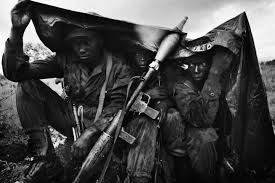
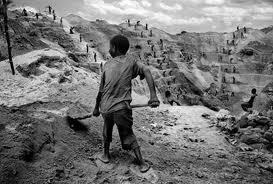
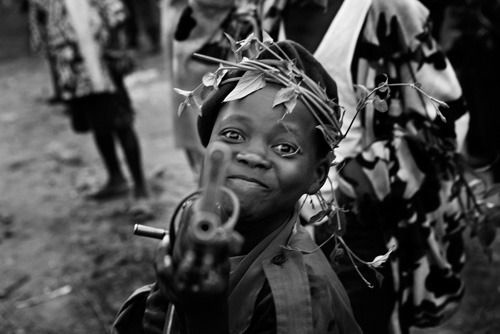
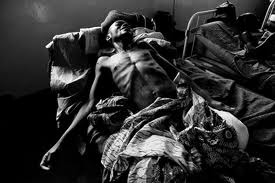
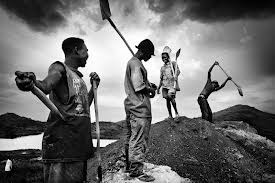
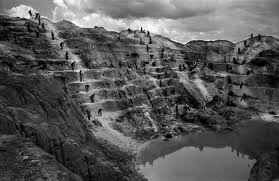
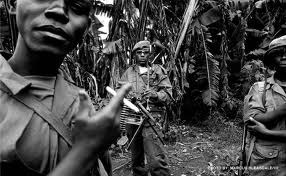
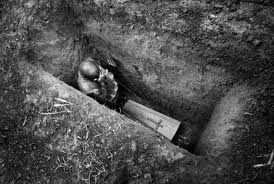
Truer words have never been spoken. But in the spirit of the commencement of this year’s Social Good Summit, it should be noted that these storytellers also hold a great responsibility to the masses. As a distinguished photographer, Marcus Bleasdale embodies this sense of responsibility in his coverage of conflict areas around the world through the medium of his trusted camera lens. Over the past 15 years, the region of the Democratic Republic of Congo (DRC) has captured his steady attention.
Throughout his time working within the DRC, Bleasdale has gained a first-hand perspective into a nation that, while rich in minerals, has been coerced into a haunting reality of violence, disease, poverty and profound injustice. Children are stripped of their adolescence, forced into militant lives plagued by mindless violence at the behest of their devious superiors. Families are torn apart, displaced, and involuntary bare witness to the perils of life within the misleading comfort of their own backyards.
More
As the conflict within the borders has continued to run its rampant course over the past 15+ years, 2 million Congolese natives have been displaced, 40,000 women fall victim of sexual violence annually, and over 5.5 million deaths have been recorded as a result of rampant disease, and violence throughout the region. In his Keynote adderess to the Social Good audience, Bleasdale stressed that these are simply the statistics; his images however, are what interpret the reality.
An important distinction however, is how Bleasdale goes about creating a narrative of an area so riddled by conflict for decades. He goes into depth about how he works to construct such a narrative in saying:
“For me, I’m trying to engage in order to enhance the narrative that I’m trying to tell. There are many different aspects of the story to engage with - the mind, the child soldiers, the sexual violence, displacement, horrific health issues that have spread through the DRC. I have to touch on each one of those in each unique situation to try and engage with a subject in a way that will truly hone the message that this should stop.”
He delves deeper in his philosophy toward photojournalism in conflict areas, stating, “Every image cannot be misery, and should not be so difficult to look at that you want to turn away. You have to also try to look for the beauty, and the hope, to show the opportunity that is available that has not necessarily been seized.”
Having covered the Democratic Republic of Congo for more than 15 years now, Bleasdale’s knowledge and wisdom towards his craft should be respected. As for his advice for the brave soul aspiring to photojournalism of this nature; one word came to mind, patience.
“Everything takes time, especially when working within the areas I have. In relation to my work in the DRC, you can’t tell that story in a week, a month. I’ve been telling that story for 15 years now and still I don’t think it’s finished, because it’s still going on.“
An award-winning photographer who has been heralded by the US House of Representatives, The United Nations and the House of Parliament in the UK, Bleasedale will undoubtedly continue to be a respected voice within the realm of photography, specifically within regions of conflict.
He can be followed on twitter @marcusbleasedale.
ANDREW BRIDGE @Bridgin_TheGap
Andrew is Editor-in-Chief of CATALYST's Social Good Summit Daily, and Managing Editor of CATALYST. He is a global enthusiast with a passion for the road less traveled. As a frequent collaborator with World Hip Hop Market and Nomadic Wax, Andrew has worked with numerous socially conscious artists from around the world in the pursuit of inspiring cultural understanding and exchange through entertainment. This fascination with the world at large has taken him to over 20 countries (so far) through studying, volunteering, and writing about his travels, with no signs of slowing.