
"Ever wanted to go on an unknown journey to discover amazing and unexpected things every step of the way? Come to Europe, throw a pair of dice and see where the adventure takes you".
Foster Care Word Cloud by Epic Top 10 is licensed under CC BY 2.0
How the Coronavirus is Impacting Children in Foster Care
The threat of the novel coronavirus has forced many of us to shelter in place, leaving more than 17 million Americans without jobs. Just last week, 6.6 million Americans applied for unemployment benefits, according to the Washington Post. Also impacted are the children and adolescents in foster care--an already flawed system--and in some cases, broken.
On any given day, there are about 440,000 children in foster care in the United States, according to Children’s Rights, a nonprofit organization advocating for better child welfare systems in America. The health and economic disaster is putting the vulnerable youth at more of a risk to be abused, to have nowhere to live, and to be separated from their families.
Family courts are shutting down, but children are still being removed from homes where neglect or abuse is suspected, according to The Marshall Project, a nonprofit journalism organization that focuses on criminal justice issues. Without open family courts, children who are not being abused or neglected by their parents/guardians cannot go back home, and because programs like parenting classes and drug treatment are currently cancelled, parents are unable to prove they are ready to get their children back.
Doctors are concerned that stress from food insecurity, unemployment, and risk of illness will cause the rate of physical abuse to rise. Because of social distancing, children living in abusive homes are isolated from people like teachers and school staff who care and are obligated to file reports of mistreatment, alleged or not. Not enough research has been done about how many foster children experience abuse from a foster parent, but one study of foster children in Oregon and Washington found that nearly one third reported abuse in their foster homes, not including abuse from other foster children. A Psychology Today article reported that over 28% of children in foster care in New York are abused while in the system. These underreported statistics and studies were conducted under normal circumstances, so it can be safely assumed that the number of foster children facing abuse during the coronavirus pandemic is higher. According to The Marshall Project, “the Trump administration’s Children’s Bureau last week said that in extraordinary circumstances, the in-person requirement can be waived,” so child welfare agencies are trying to come up with alternatives to in-person check ins like videochatting. The problem with videochat is, although the child welfare agent can see the child, they do not know who may be in the same room as them and cannot see the reality of the child’s living situation.
In addition to fears of increased child abuse, social workers are finding it difficult to find foster parents for children who have not been placed in foster homes prior to shelter-in-place orders. Some foster parents are worried about accepting new foster children because they don’t know if they may have been in contact with someone who has the coronavirus. According to The Marshall Project, fears that foster children will become homeless or resort to couch-surfing are increasing as group homes become understaffed due to caretakers staying at home, and elderly foster parents are unable to be around young people. If child services cannot find safe places to house foster children, the already vulnerable population runs a higher risk of contracting the coronavirus and spreading it further.
Asiya Haouchine
is an Algerian-American writer who graduated from the University of Connecticut in May 2016, earning a BA in journalism and English. She was an editorial intern and contributing writer for Warscapes magazine and the online/blog editor for Long River Review. She is currently studying for her Master’s in Library and Information Science. @AsiyaHaou
Explore Seychelles
Seychelles is an island republic in the western Indian Ocean, comprising about 115 islands with lush tropical vegetation, beautiful beaches, and a wide variety of marine life. Considerable efforts have been made to preserve the islands’ marked biodiversity. In fact, Seychelles’ government has established several nature preserves and marine parks. Seychelles’ Aldabra Islands, a large atoll, are the site of a preserve inhabited by tens of thousands of giant tortoises, the world’s oldest living creatures, which government conservation efforts have helped rescue from the brink of extinction. Though its history is unremarkable and fairly typical of islands in the days of European colonialism, the Seychelles is quite unique even beyond its wildlife, in its own right. It has a rich culture made up of a blend of many different people, developing its own language and customs. Although swanky hotel resorts dominate and often fill the landscape, ultimately the provide access to this stunning archipelago.
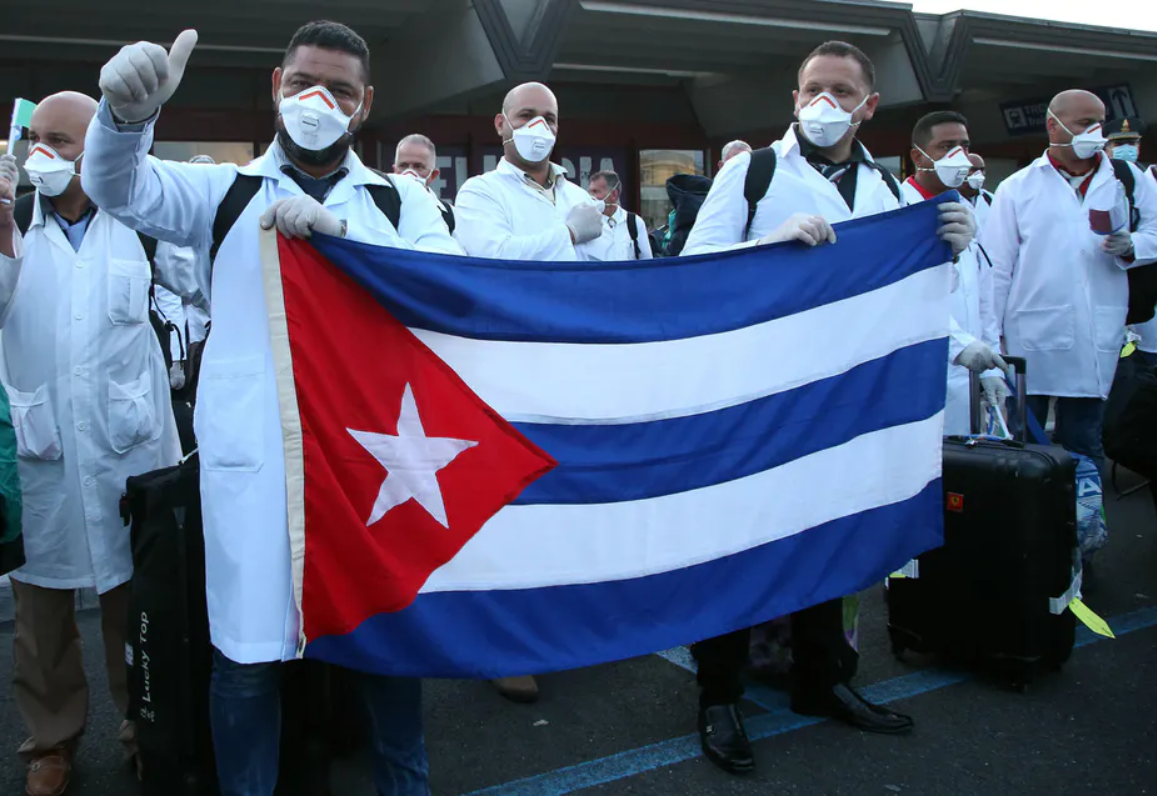
Cuban doctors arrive in Italy to help fight COVID-19. Matteo Bazzi/EPA
By Sending Doctors to Italy, Cuba Continues its Long Campaign of Medical Diplomacy
As Italy continues its battle against the global coronavirus pandemic, Cuba has sent 52 doctors and nurses to the country to help. The excellent training of Cuban doctors as well as the fact that they are used to working in precarious and high-risk situations will provide invaluable support for the Italian people.
For nearly 60 years, Cuba has been sending healthcare professionals around the world. It does this in solidarity with those in need, but also as part of a concerted campaign of medical diplomacy and to make money to help the country survive an ongoing US embargo.
Since the very early years of the Cuban revolution, its former leader, Fidel Castro, made clear that universal healthcare and internationalism would be key to the country’s strategy. Based on the socialist concept that everyone should have the same opportunities in life, Cuba believed these ideals should be applicable at the global level. The Cuban programme was born out of an interest to export its revolutionary socialist ideals, first to Africa, and later to South America and the rest of the world.
Cuba sent its first long-term mission of Cuban doctors to Algeria in 1963, a country facing a territorial conflict with Morocco. Since then, Cuba has sent more than 400,000 healthcare professionals to work in 164 countries, according to statistics published by the state media.
They have helped both in disaster relief, as well as to provide access to healthcare for those living in remote areas, for example in Venezuela and Brazil. These interventions are born out of trade cooperation agreements between the receiving country and Cuba, for which the Cuban government gets paid either in cash or in goods.
In 2019, more than 28,000 Cuban healthcare professionals were working abroad. And before the outbreak of the coronavirus, 59 countries were benefiting from Cuba’s medical internationalism. The Cuban government recently confirmed that its medical missions will be maintained and that, where needed, the services provided by their doctors would focus on combating the virus.
The national press never misses an opportunity to present Cuba’s internationalist doctors as heroes, responsible for giving hope to people all over the world who are in desperate situations. Pedro*, one of the doctors I interviewed as part of my research on the life stories of Cuban healthcare workers, explained the uniqueness of the Cuban doctors’ position:
The doctor can be Cuban, or from another country, but not every doctor will sacrifice their life and put themselves in danger to save lives, and this without any kind of financial compensation. This is something we Cubans only do.
Critics and fugitives
Despite the admirable aspects of the programme, it has also received criticism. Some suggest the real interests of the programme are economic and diplomatic and that it allows Cuba to shift scrutiny away from its own poor human rights record.
Others have criticised what they see as the “selective humanitarianism” of the programme, calling attention to the lower numbers of doctors available to the Cuban population due to the high numbers of doctors working abroad. In my research in Cuba, I’ve witnessed long waiting times in medical centres and several of the people I interviewed spoke of a lack of continuity in doctor-patient care.
As for the doctors and nurses who take part, their participation is not always driven by solidarity but in some cases by the opportunities these missions represent for them and their families. In many cases, working on a mission will improve their standard of living when they return to the island. Many are also able to send goods such as fridges or other household appliances to their families while they are away.
Many doctors have also used the mission as a way to escape a country that is still governed by an authoritarian regime and between 2006 and 2016, more than 7,000 Cuban doctors defected to the US. Several have even accused the Cuban government of using them as modern slaves.
A moment for global cooperation
Cuba always offers its medical help, but Italy is the first developed European country which has decided to accept it.
Many global leaders have been wary of doing so, because of Cuba’s poor human rights record. The case of Hurricane Katrina in 2005 is illustrative here. Castro offered to send 1,500 doctors to the US to help with the relief effort. A special group of healthcare professionals was formed for the task called the Henry Reeve medical brigade, named after an American who supported the Cuban independence forces in 1868 and died in combat for the cause. But US president George W Bush never got back to Castro and the doctors and nurses were redeployed elsewhere. It’s this same brigade which has now gone to Italy.

More than 1,500 Cuban doctors, offered by Fidel Castro to help in the wake of Hurricane Katrina, wait in Havana. Alejander Ernesto/EPA
In 2005, while waiting for Bush’s response, Castro made clear what should be at the centre of decisions in times of crisis:
This is not a war between human beings, it is a war for the life of human beings, it is a war against diseases, against repeating calamities, and one of the first things this world should learn especially now, with the changes that are taking place and the phenomena of this type, is to cooperate.
While everyone may not agree with Castro’s revolution, perhaps this is a moment for the world to put ideological disagreements aside and focus on the global war against coronavirus by all working together.
* Names have been changed to protect the anonymity of interviewees.
Stéphanie Panichelli-Batalla Associate Professor in Global Sustainable Development, University of Warwick
THIS ARTICLE WAS ORIGINALLY PUBLISHED ON THE CONVERSATION
City Streets Across the Globe Emptied
TIME Magazine presents chilling footage of city streets across the globe which have been emptied due to coronavirus lock-downs.
Bridging the Food-or-Energy Gap
Should land be used for solar panels or agriculture? The burgeoning Solar Sheep movement argues: Why not both?
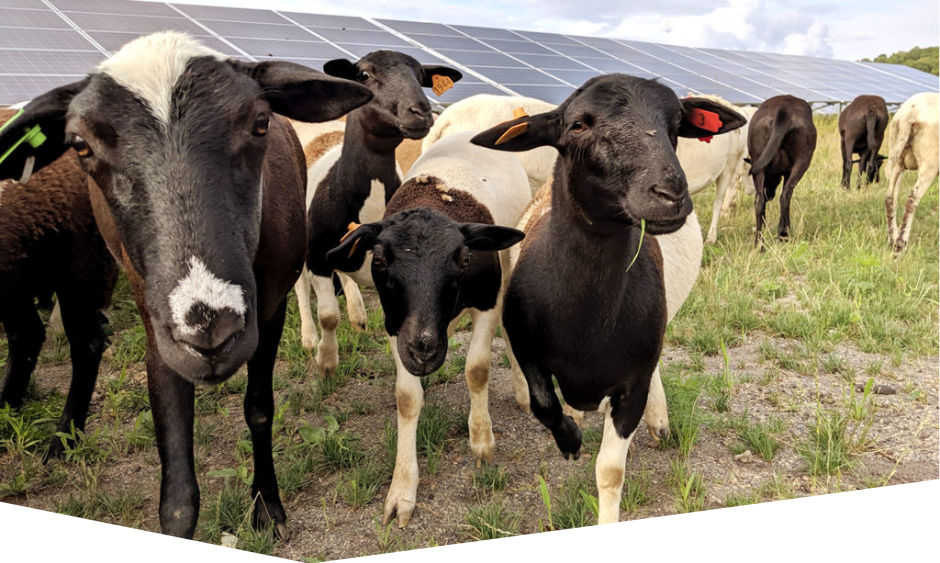
Affectionately called "lambmowers," these sheep graze among a field of solar panels.All Photos from the American Solar Grazing Association
Lexie Hain tucks a chunk of business cards in her back pocket before bounding up to speak to a room of 75 livestock farmers. On a rain-dumping January day, they’ve driven in from around New York and New England. A polite lethargy has set in by the time Hain, the final presenter, stands up, but her talk, “Solar and Sheep: The New Power Couple,” jolts the crowd like a dozen diner-coffee refills. By the end, Hain is slapping backs, handing out cards, and promising to talk farmer to farmer to the dozens lined up. The conference sponsor, Cornell Cooperative Extension, has to boot her out of the ballroom before the hotel’s next scheduled event.
Hain had projected image after image onto a big screen: the woolly, timeless faces of sheep munching among the sweeping, futuristic angles of solar arrays. Hain and her wife, Marguerite, farm in New York’s Finger Lakes region, where Hain tends a flock of 100 ewes. For the past few years, she has grazed those sheep on a 4-acre Cornell University solar field. It’s part of the 100 acres that Hain and her business partner graze, a third of which belong to Cornell. In 2017, Hain co-founded a trade group, the American Solar Grazing Association, after realizing that sheep like hers could not only help earn a farm living, but also solve a larger problem.
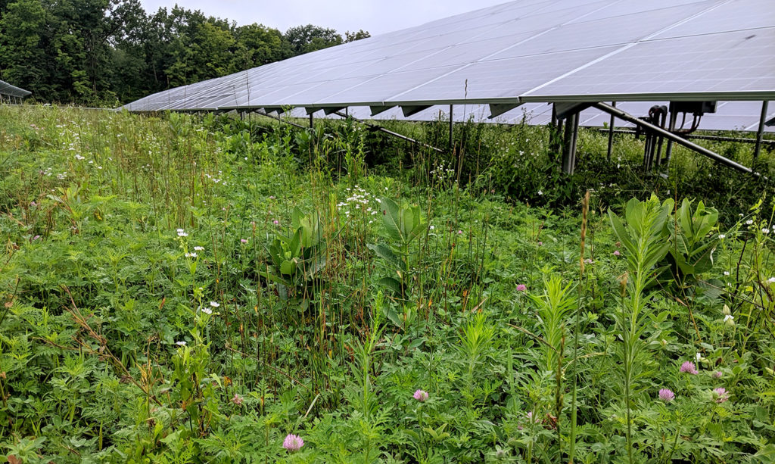
A key element in good solar grazing practices is letting the land rest and recover periodically.
The question lies in how to define “productive use.” Are fields of open, often fertile land better used for producing renewable energy or food? The U.S. already hosts more than 2 million solar installations, and photovoltaic capacity is projected to more than double over the next five years. Meanwhile, our growing global population means we’ll need to produce 70 percent more food to feed 2.2 billion more people by 2050. An emerging land-use solution is called agrivoltaics: co-locating solar panels with agriculture.
Benefits in kind
Within the small-but-growing U.S. agrivoltaic industry, an early winner is making solar ground into pasture for sheep. It’s common practice in countries such as the United Kingdom and Uruguay. When sheep graze on fields that also support solar arrays, the same land can produce energy, wool, and meat, all at the same time. Not to mention the benefits of their manure and hooves to the soil health.
Some farmers are installing solar to power their own farms. Others, including the American Solar Grazing Association’s several hundred members, are renting out their sheep to solar companies for vegetation maintenance.
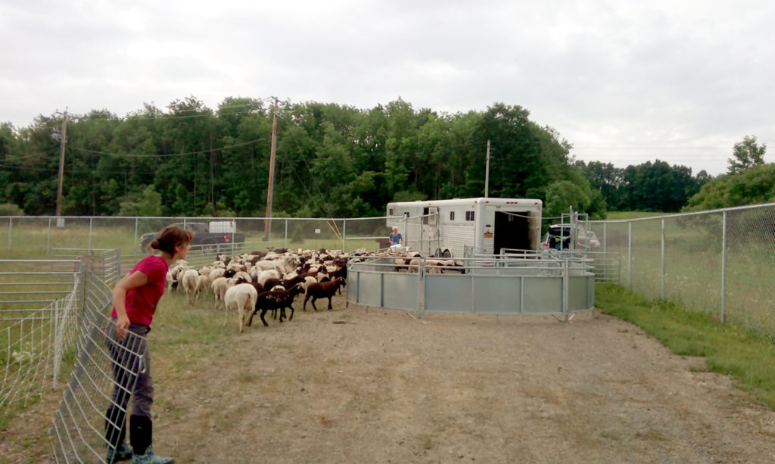
At the end of the grazing season, sheep are rounded up and hauled away from a solar field.
The collaboration is a win-win—the shepherds earn extra income, and the sheep keep greenery trimmed for less than it would cost solar companies to mow. Lots of news coverage has called sheep cheaper, nimbler, lower-emission lawnmowers. Hain likes to joke about how simplistic it sounds: “Solar brings jobs. Some of those jobs could be ours!” she tells her fellow livestock farmers, to chuckles, at Cornell’s grazing conference. But then, for the next 45 minutes, she talks about how much deeper the solar sheep solution goes than jobs and cost-savings.
The sheep benefit from the windbreak and shade of solar panels, often napping under them on sunny days. In turn, they keep plants from growing high enough to shade or disturb the panels. The solar field’s vegetation provides the sheep food. Sheep will eat almost anything, with the exception of thistle. That includes turf grass (though it sometimes has a fungus that keeps the sheep from gaining weight.) Rotating the sheep’s grazing around different parts of the solar array, fed on a mix of grasses, is optimal. Their manure then turns around and fertilizes the land.
“This dual use of the land adds a layer of efficiency that wouldn’t be there,” Hain says. “You start seeing layer after layer of benefit, benefit, benefit.”
Shepherd Kim Tateo loves the sound of that. She has come to the grazing conference expressly to hear Hain speak. Part of the fresh generation of urbanites-turned-agrarians, Tateo left her work in New York City’s composting industry several years back to farm upstate. She now grazes about 20 sheep at Albany’s Tivoli Lake Preserve. But with city grant funding for the project drying up, she says, she needs a new income stream.
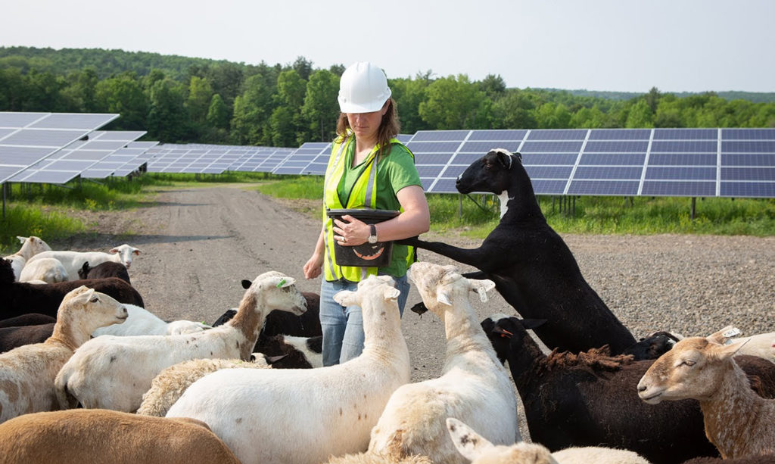
An informal meet-and-greet with a flock of solar grazers.
“Learning more about it, it makes total sense to have sheep there,” Tateo says. “These sheep will eat the grass and improve the soil. Instead of just having dead panels, you can have something that is very alive and at the same time producing energy.”
Power tools
In San Antonio, Ely Valdez sees even more benefits. Five years ago, he owned a traditional landscaping business. He lived on a ranch with about 20 sheep, which he raised mostly as a learning project for his young sons, Ely, Eric, and Emilio. Then, in 2017, he read a news story about solar sheep. It struck him with the force of the Texas sun hitting a photovoltaic panel.
“Running all over with weed wackers gets pretty hard on my guys when it gets to 102 or 105 [degrees Fahrenheit] in the summertime,” he says. “It’s relaxing to go see the sheep underneath the panels.” His whole business model changed.
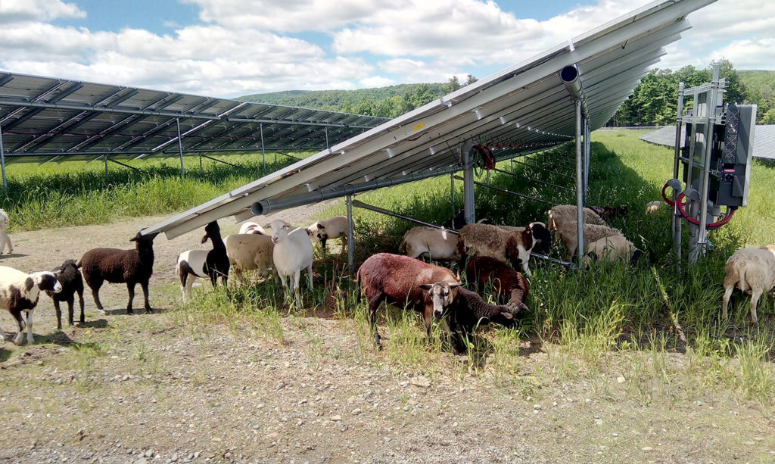
In the midday heat, sheep graze in the shade under the solar panels.
Valdez’s ranch sits in a hot but surprisingly lush spot between the San Antonio and Medina rivers. The water quality is frequently tested by San Antonio River Authority, so to prevent chemical runoff, Valdez has a company rule that prohibits the use of herbicides. In the rainy season, Valdez says, the Johnsongrass plant can grow 2 to 3 inches per day. High-reaching sunflowers can quickly shade solar panels, too. His animals nibble both while the plants are small. “Sheep have been the best result for the problems we have here,” he says. “It’s a great impact for the environment.”
There are challenges, though. Making sure the sheep have enough water takes constant vigilance, Valdez says, especially in the Texas heat. A coyote snagged one of his lambs once. And a couple times, sheep have rubbed up against the emergency-stop button, calling a technician to the site. But it’s worth the occasional trouble, he says, especially when summer temperatures rise.
After the lambing season that began in January, Valdez will be up to 400 sheep this year, with a goal of getting the flock to 1,200 sheep that can graze on multiple solar arrays.
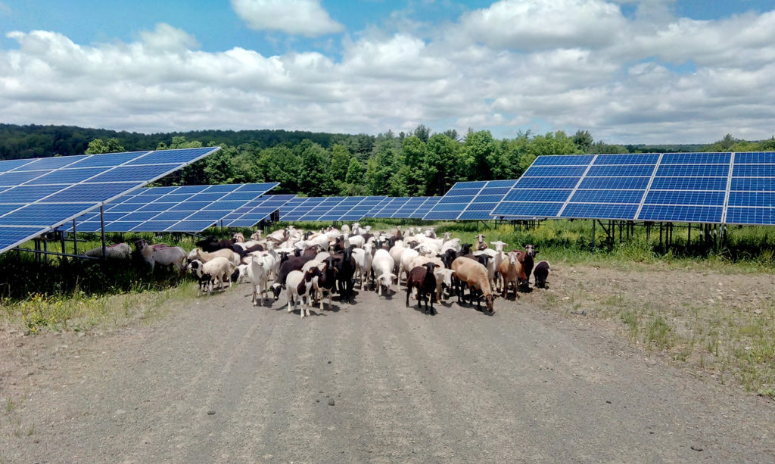
A flock of solar grazers gathers by a solar array.
Fuzz, buzz, and beyond
Sheep, of course, aren’t the only livestock that graze. Solar co-location experiments are also being done with other animals. A test project at the University of Massachusetts Crop Research Station, for instance, placed panels 7 feet off the ground so cattle could graze underneath. Although it worked well, the cost of steel to mount panels at this height has largely kept developers from following suit. Trials with goats, meanwhile, have shown that installations might also have to be modified, because the goats sometimes jump on panels or chew wires.
Experiments are also being done with row crops so they’re partially shaded by panels and thus use less water. University of Arizona researchers have been testing whether foods such as tomatoes, peppers, chard, kale, and herbs could grow better under photovoltaic panels in dryland areas. Last year, their study found that chiltepin pepper plants yielded three times as much fruit, and tomatoes twice as much, in the agrivoltaic setup.
Where sheep are involved, yet another food can be made on the same land: honey. Setting aside more pollinator habitat has been imperative since a combination of pesticides and mites contributed to mass honeybee die-offs over the past decade. Companies such as Minnesota-based Bare Honey are now marketing products made with “solar honey” as value-added. The American Solar Grazing Association has helped develop a seed mix of plants with Ernst Conservation Seeds for the Northeast region that are good for sheep and also provide pollinator habitat. Hain, always good-humored, had it named Fuzz & Buzz.
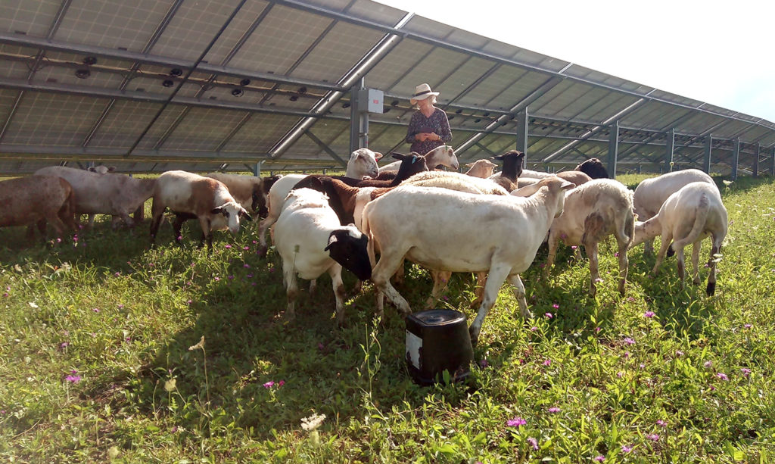
Solar grazing benefits shepherds as well as solar farmers
For shepherds, the remaining challenge is that the number of sheep, and the people who tend them, will grow. Ely Valdez has already expanded his flock, and Kim Tateo hopes to. The network of processors and customers will necessarily need to grow up around them, too. In the same way that solar grazing can meet human needs for food, warmth, energy, and economic activity, it can also feed the Earth. “I love the idea of [aspects like] pollinator patches and making them into something that is feeding a whole ecosystem,” Tateo says.
As Cornell Cooperative Extension staffer Aaron Gabriel closes down the grazing conference, he tells Hain, “We’re going to have to do a lot more processing and marketing [of lamb]—we’re going to have a lot more sheep people here.”
“I am deeply aware of the need for that,” Hain answers. “There’s going to be a whole community that builds up.”
Lynn Freehill-Maye writes about sustainability and related topics from her home in New York's Hudson Valley. Her work has appeared in the New Yorker, the New York Times, CityLab, Civil Eats, and Sierra, among other publications.
THIS ARTICLE WAS ORIGINALLY FEATURED ON YES! MAGAZINE
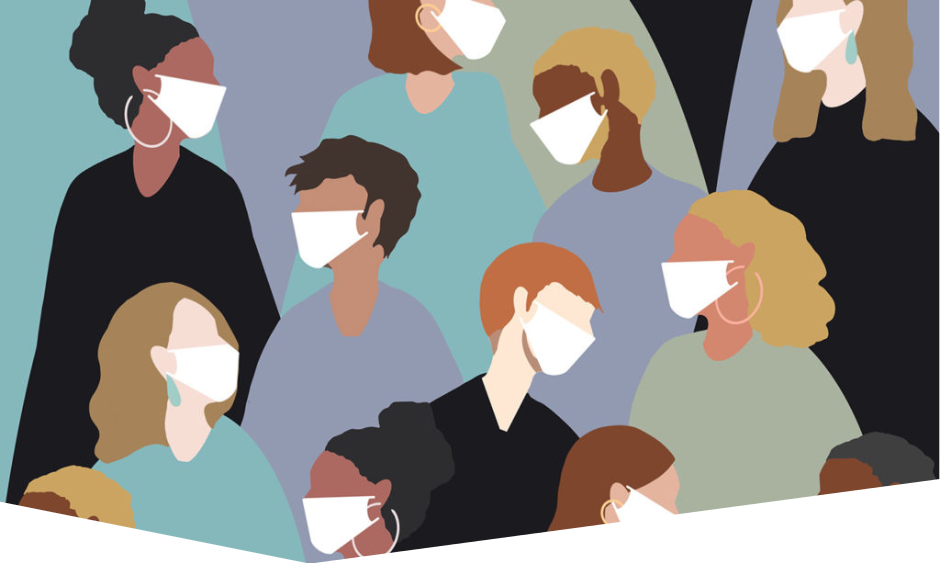
Photo by Ada Yokota
Why Coronavirus Is Humanity’s Wake-Up Call
The rapid spread of novel coronavirus has prompted government, business, and civil society to take dramatic action—canceling events large and small, restricting travel, and shutting down major segments of the economy on which nearly all of us depend. It is a demonstration of our ability, when the imperative is clear, for deep and rapid global cooperation and change at a previously unimaginable speed and scale.
There is an obvious desire to protect ourselves and our loved ones. But we are also seeing something more as communities mobilize to address the crisis—a sense of mutual responsibility, born of a recognition that we are ultimately bound to a common fate. The speed of the resulting global shift is beyond any prior human experience.
At the same time, the crisis of the coronavirus pandemic focuses attention in the United States on the disastrous deficiencies of a profiteering health care system. Corporations are competing only to increase their take from health expenditures while minimizing the amount of money they spend on providing care. This system is reasonably proficient in providing boutique care for the very rich at exorbitant prices, but it is disastrously deficient in addressing the health care needs of ordinary people affordably. It is similarly deficient in anticipating, preparing for, and responding to public health emergencies such as the one we are in now.
I sense that as our eyes open to this reality, we are seeing a simultaneous awakening to the imperative to deal with a host of other system failures that imperil our common future. For example:
• An economic system that values nature only for its market price, ignores Earth’s limits, and wantonly destroys the stability of its climate and the health and purity of its air, water, and soil. This directly imperils our survival and well-being.
• Military expenditures that consume more than half of all federal discretionary funding to prepare for conventional wars of the past and engage us in unwinnable conflicts born of environmental and social collapse. This represents wasted resources that would be better applied to addressing the underlying sources of current security threats.
• A financial system devoted to generating speculative profits for the richest without the burden of contributing to meaningful livelihoods and security for those who do useful work. Money must serve us, not enslave us.
•An education system that promotes maximizing personal financial returns as the highest moral obligation to society. Education should prepare us to transform a self-destructive system into one that will support our long-term future.
For far too long, we have ignored the failures of a system that reduces ever more people to homelessness, incarceration, refugee camps, permanent indebtedness, and servitude to institutions devoted to conflict and the generation of unearned financial returns. The challenges are monumental and are likely to be addressed only as we begin to understand that business as usual is simply not an option.
We need leaders committed to effective government of, by, and for the people.
This is humanity’s wake-up call. As we awaken to the truth of the profound failure of our existing institutions, we also awaken to the truth of our possibilities and interconnections with one another and with Earth. With that awakening comes a recognition that we must now learn to live lightly on the Earth, to war no more, and to dedicate ourselves to the well-being of all in an interdependent world.
We in the United States also face a special challenge. We have much that the world admires. But far from being a model for others to emulate, we represent an extreme example of what the world must now leave behind.
As a nation, we have for too long battled over simplistic political ideologies that limit our choices to granting ultimate power either to government or corporations, both of which are controlled by the richest among us. The coronavirus pandemic is a powerful reminder that effective government committed to the common good is essential to our well-being, and that there is no place in our common future for politicians committed to proving that government cannot work.
We need leaders committed to effective government of, by, and for the people. These leaders must simultaneously recognize that the collective well-being of all depends on institutions in all three sectors—government, business, and civil society—that are effective at, committed to, and accountable for serving the well-being of the communities that create them.
These are challenging and frightening times. As we respond to the coronavirus emergency and the immediate needs of the people and communities impacted by it, let us also keep in view the systemic needs and possibilities that crisis exposes. Despite the trauma all around us, let us embrace this moment as an opportunity to move forward to create a better world for all.
David Korten is co-founder of YES! Media, president of the Living Economies Forum, a member of the Club of Rome, and the author of influential books, including “When Corporations Rule the World” and “Change the Story, Change the Future: A Living Economy for a Living Earth.” His work builds on lessons from the 21 years he and his wife, Fran, lived and worked in Africa, Asia, and Latin America on a quest to end global poverty.
THIS ARTICLE WAS ORGINALLY PUBLISHED ON YES!
The Complicated History of the Word ‘Marijuana’
Cannabis has a complicated history in the United States—particularly in relation to race, ethnicity, and poverty.
Read MoreWanderlust: Plose in South Tyrol, Italy
Film makers Peter Jablonowski, Thomas Pöcksteiner, Maximilian Lang and Lorenz Pritz share with viewers their hiking exploration of Plose, a mountain in South Tyrol, Italy. Here, we can see that the possibilities for mountain sport activities, cultural visits, outings, and undertakings are boundless. In addition, the area is known for drawing in culinary fans with its hearty cuisine, which is loved far beyond the borders of South Tyrol. Many travelers enjoy the exceptional wines, chestnut treats, apple creations, and farm specialties too.
Transformation in Macau, China
Originally a sparsely populated collection of coastal islands, the territory of Macau has become a major resort city and the top destination for gambling tourism. In fact, it is the ninth-highest recipient of tourism revenue and its gambling industry is seven times larger than that of Las Vegas. A far cry from what the grandparents of videographer, Vhils, experienced during his childhood. A homage to his grandparents, Vhils explores the changing high-tech culture and its effect on relationships, social life and worldview. And he isn’t alone, Macau has a rich and predominately rural history. These fast-paced changes toward technology has left a huge wage gap throughout society. So, while Macau has preserved many historical properties in the urban areas, the government is heavily criticized by its citizens for ignoring the conservation of heritage and tradition in its urban planning and technological development.
India: Maldives: Sri Lanka
India, Maldives and Sri Lanka have been deeply entwined for centuries. The earliest settlers in the Maldives were likely from southern India. Indo-European speakers followed them from Sri Lanka in the fourth and fifth centuries BC. Today, the ethnic identity of these countries is still truly unique, but nevertheless a blend of these cultures reinforced by religion and language. From riding motorbikes to swimming with sharks, follow one man’s journey to all three countries as he explores the city life, wildlife and rural life.

"CNN.com" by Bruno Pin is licensed under CC BY-NC-SA 2.0
How the 24-hour News Cycle Perpetuates Racial Bias in the Case of Coronavirus
Sensationalism and the 24-hour news cycle aided in killing journalistic integrity, and it also aids in perpetuating racial bias, fear, and panic. Constant reporting forces news stations to air stories that will maintain a captive audience. There is only so much news (or so many sides to a story) that can be reported on in a day. This forces 24-hour news channels to come up with content that will fill time slots and keep the audience tuned in. Since the ongoing coverage is usually focused on one particular subject or event, the audience is subjected to a constant barrage of narrowly focused facts and opinions. As a result, fear turns into panic, which can often lead to deadly results.
Coronavirus is the latest epidemic that is fueling racism, panic, and mistrust. This fear is exacerbated by sensational news and 24-hour reportage. Amidst “doomsday prepping” and the price gouging of masks and hand sanitizer, is the worst result of overblown news coverage of the coronavirus: physical and verbal attacks fueled by racism. Racist attacks against Asians in the United States, Canada, the Netherlands, and across Europe have been linked to coronavirus. Overblown news coverage of coronavirus, along with ignorance and misinformation, has helped lead to this spike in racist assaults across the globe.
One video making rounds on Twitter shows a New York subway passenger spraying what appears to be a can of Febreze in the direction of an Asian passenger while shouting at him to move away from him. Tanny Jiraprapasuke, who is Thai American, uploaded a video on Facebook of a xenophobic rant directed toward her on the Los Angeles Metro. Singaporean student Jonathan Mok posted a detailed account and pictures of his battered face on Facebook after he was assaulted on Oxford Street in London.
It does not help that some media purposely (or carelessly) enforce racial bias. On March 1, the New York Post published a story about the first confirmed case of coronavirus in Manhattan. They tweeted a link to the story along with an image of an Asian man on Main Street in Flushing, Queens, which has a large Asian American population. New York’s first confirmed case of coronavirus is a woman in her late 30s. On the same day, the New York Times used a photograph of two older Asian women wearing medical masks on a Facebook post about the same first coronavirus case in New York. The New York Post and the New York Times’s decision to use photographs of Asian Americans helped further perpetuate harmful stereotypes and fearmongering against Asians.
Roger Keil, a professor in the environmental studies department at York University said, “To combat racism, people in the public eye, including politicians and media outlets, have to begin by uncoupling the disease from its origin point.” If the media continues to be irresponsible by reporting in a way that racializes epidemics, xenophobic and racist attacks like those related to the coronavirus, SARS, and Ebola will continue to plague our societies. Coronavirus is not an excuse to discriminate. It certainly does not.
Asiya Haouchine
is an Algerian-American writer who graduated from the University of Connecticut in May 2016, earning a BA in journalism and English. She was an editorial intern and contributing writer for Warscapes magazine and the online/blog editor for Long River Review. She is currently studying for her Master's in Library and Information Science.
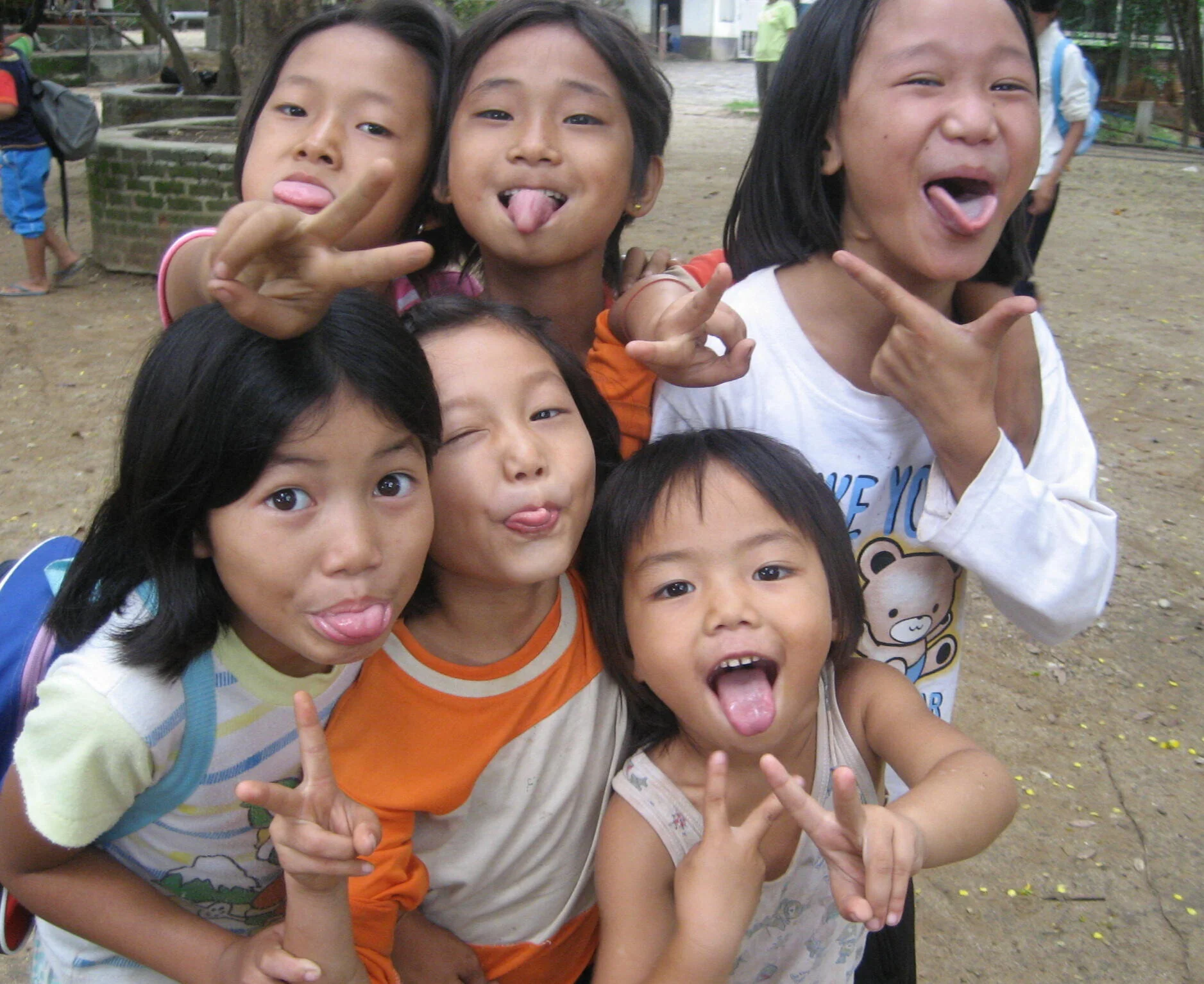
Young girls from the DEPDC in Thailand make silly faces for volunteers. Photo by Raeann Mason
Volunteer Tourism is (Sometimes) Not the Answer
“The number of truly orphaned children in Cambodia halved in 2013, but the number of orphanages doubled.”
Perhaps you woke up today and realized that it was time for you to travel the world. If you’re anything like me, avoiding traditional tourism is a priority as you begin to research the ways and places to travel. The good news is, there are many alternatives to traditional tourism. Oftentimes, travelers want to make a difference as they move through the world so, naturally, combining your travel adventures and your philanthropy is a good idea, right? Not necessarily. While it’s likely that the most effective way to help someone in need, is to stay put and send them the money you were going to use on your trip, I know that most folks who volunteer in place of traditional tourism do so with good intentions. You should know then that there are some things that often go over-looked by those of us who want to see the world and make it better as we do. So, before you pack up and head to the Bahamas to do some hurricane relief here are three of the more commonly overlooked risks to keep in mind:
1) Carbon footprint
Chances are if you’re going somewhere that falls into the category of volunteer tourism, or voluntourism, it’s going to take massive amounts of fuel to fly there. Make sure that it’s worth the environmental cost before you hop on a plane and travel somewhere that is likely experiencing the effects of climate change firsthand. Check for train routes, and other alternative forms of transport before you book a flight that covers the whole length of your trip.
2) Building Projects
Many do-gooders hope to help people in need by building homes, schools or orphanages. While these things are certainly needed around the world, I hate to say it, you’re most likely not a qualified builder, and you probably don’t know building codes/laws for the place you’re visiting (though if you are-good on ya). You’re more likely to build a poor standing structure than say, a local professional, who you may have inadvertently taken the job from because you were willing to do it for free (though this isn’t always the case).
3) Orphanages
Turns out that many children in orphanages around the world have at least one living parent –or at least an Aunt or two. Many families are told that their children will be better cared for and given better opportunities if they allow their child to be separated from them. Those opportunities rarely arise, and governments love to capitalize off the billion-dollar (orphan) travel industry. For example: the number of truly orphaned children in Cambodia halved in 2013, but the number of orphanages doubled.
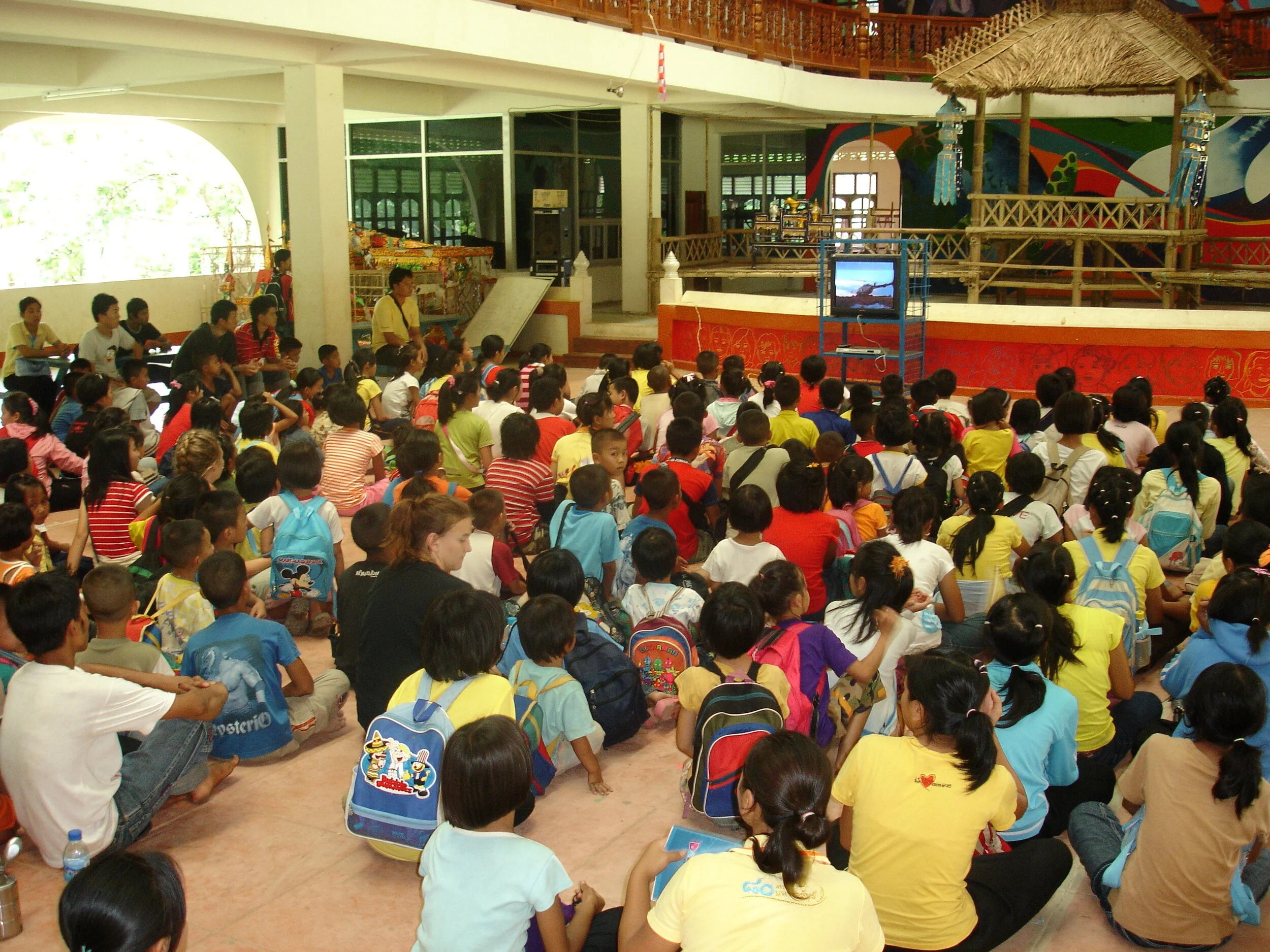
Children are included in a workshop on how to mitigate the struggles their community faces. Raeann Mason
In an increasingly xenophobic world, however, travel volunteerism can be used to combat these very problems. In order to avoid falling into the trap of becoming volunteers who perpetuate poverty and crisis, we need to shift our focus. We can mitigate the negative effects of voluntourism by first engaging with a place as it is –be patient— wait to be invited by a local and help in their pre-existing projects. We can also educate ourselves about the organizations we are considering volunteering with – doing some vetting is necessary if we want to be responsible travelers. Don’t forget, we can always not volunteer with an organization at all. Get neighborly and meet the people around you; see if you can meet their needs all on your own. Because if we can shift our mindset from “helping” the poor to engaging in a cultural exchange we allow ourselves, and those we hope to benefit, a stable foundation that can be built upon. The more we learn about the places we hope to go, and the people who live there (like, on a personal level), the better we can bring the world together instead of breaking it down with our ignorance.
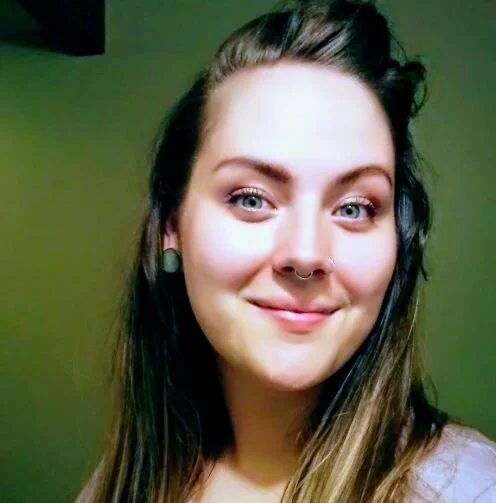
Raeann Mason
Raeann is an avid traveler, digital storyteller and guide writer. She holds a Bachelor’s degree in Mass Comm & Media Studies from the Walter Cronkite School of Journalism & Mass Communication. Passionate about a/effective journalism and cultural exchange, she is an advocate of international solidarity and people's liberation. As the founder of ROAM + WRITE and EIC of Monarch Magazine, Raeann hopes to reshape the culture of travel and hospitality to be ethically sound and sustainable.

President Donald Trump takes questions at Coronavirus update briefing, 3/14/20. Official White House photo by Shealah Craighead. Public Domain.
The Authoritarian Repercussions of Coronavirus
Around the world, Coronavirus has led to an increase in government surveillance, crackdowns on journalism, restrictions on movement and less restrictions on legislature. There is no doubt that they infringe upon civil liberties and may remain in effect long after the spread of the virus has calmed down.
Read MorePORTUGAL: Coronatrip
See Portugal in a whole new way as videographer Lorenzo Attardo takes a trip through some of Portugal’s most famous sites; including Porto, Coimbra, Nazarè, Obidos, Peniche, Sintra and Lisbona. His film provides audiences with a unique perspective of these typically busy places which have now been emptied due to the fast spreading Coronavirus.
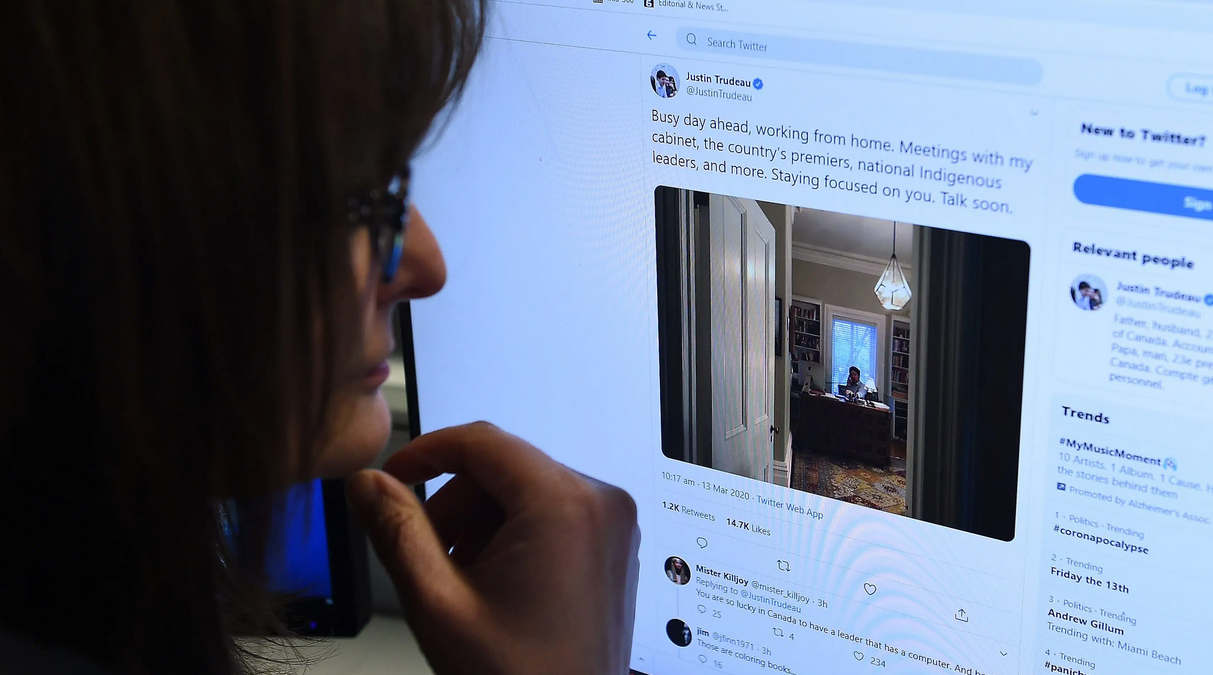
The pandemic has made us into breaking news junkies. Getty/Olivier Douliery / AFP
3 Ways the Coronavirus Pandemic is Changing Who We Are
For most Americans, the coronavirus pandemic represents a completely unprecedented circumstance, as novel as it is life-changing. No event in recent history has affected us as profoundly and pervasively.
Not only does it remind us of our physical fragility, it undermines economic security, throws daily routines topsy-turvy, wreaks havoc on plans and isolates us from friends and neighbors.
I am a psychologist who studies human motivation and its impact on what we feel, how we think and what we do. I see that little by little, the stressful external forces this pandemic unleashed are exerting a deep internal effect. Little by little, they are changing who we are and how we relate to people and the world.
The pandemic affects our psyches three ways: It influences how we think, how we relate to others and what we value.
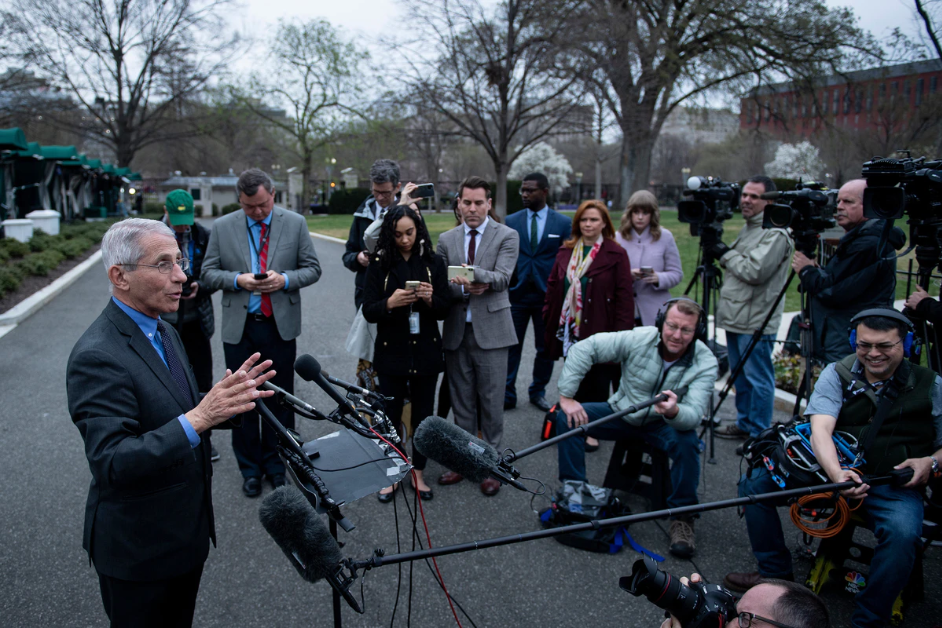
The public has a growing need for answers during the coronavirus pandemic and the National Institutes of Health’s Dr. Anthony Fauci, left, has responded to that need. Getty/Brendan Smialowski / AFP
Changed sense of security
This crisis has induced wide reaching uncertainty. We do not know what to think or how to make heads or tails of these completely unfamiliar circumstances.
Who will be affected? Will our loved ones? How quickly? Will tests be available? Will we survive? How long will this last? What about our work? Our income?
The combination of uncertainty and danger is a recipe for severe angst. It feeds an intense desire for certainty, better known to psychologists as the need for cognitive closure.
Once aroused, the need for closure fosters the craving for reliable information, the acute desire to dispel the paralyzing ambiguity that engulfs us. We long for clarity and guidance, a “light at the end of the tunnel” – a tunnel that at this moment appears without end.
Glued to our TV sets, we become breaking news junkies, hoping against hope that the next cycle will finally provide the enlightenment that keeps eluding us.
Research on the need for closure tells us much more: Under conditions of diffuse uncertainty, people are drawn, as if by a magnet, to simplistic solutions and black-and-white reasoning.
Some gravitate to the pole of denial that nothing is wrong at all, others to that of utter panic, the belief that the worst is sure to come and that the end is near. Rumors are circulated widely and seized upon uncritically.
This is the time where steady, reassuring leadership is desperately needed. It is the time, too, when authoritative, confident direction is much preferred over flexible, laissez-faire guidance.
We need to be told what to do, plain and simple. This is no time for complex deliberations.
Changed needs
When their need for closure rises, people become “group-centric,” which means they yearn for cohesion and unity.
Patriotism is elevated but so, often, is nationalism, the idea that our nation is superior to others, better at handling the crisis that foreigners have propagated to begin with.
The coronavirus pandemic is scary. Everyone can be infected. No one is exempt. No matter what your station in life, your status, power or popularity, the virus still can get you.
This possibility evokes an overriding sense of fragility and vulnerability. Ample research attests that with one’s feelings of control and personal agency at an ebb – such as in infancy, in sickness or old age – one’s dependence on others rises.
This prompts putting social relations at a premium, strengthening one’s attachment to others, boosting the appreciation of one’s loved ones, family and friends.
One consequence of our helplessness in face of the pandemic is our greater sociability, a yearning for warmth and succor, the realization that we need others, that we cannot hack it alone.

In the pandemic, people value those who sacrifice their self interests for the common good. Here, a a doctor with San Francisco’s Haight Ashbury Free Clinic prepares to talk with homeless people about the coronavirus. Getty/Josh Edelson / AFP
Changed values
Along with the growing attachment to others comes a subtle shift in our morals.
Communal values of cooperation, consideration and caring are prioritized, whereas individualistic ones of prestige, popularity and power lose some of their cachet.
Our cultural ideals morph accordingly. In times of crisis, we celebrate and accord major significance to persons who serve communitarian values, extend a helping hand to others, sacrifice their self-interests for the common good, exhibit empathy and model humanity.
Fascination with fame and riches is diminished; it takes a back seat to admiration for simple acts of kindness.
The coronavirus pandemic alters who we are, affecting diverse facets of our psyche.
We may approve of some of the changes – toward stronger communal bonds and humanitarian values – and disapprove of others – closed-mindedness, black-and-white thinking. Whether we like it or not, the immense crisis we are facing brings out the best in us, but also the worst in us.
Arie Kruglanski is a Professor of Psychology, University of Maryland
THIS ARTICLE WAS ORIGINALLY PUBLISHED ON THE CONVERSATION

“Projects intended to show the joys of traveling and femininity” Joanna Jurczak. CC-BY-NC-ND 4.0
Empowering Women Through Ethical Travel
As the sustainable travel movement takes hold throughout the tourism industry, a new initiative has grown: one which promotes social sustainability by empowering women who run travel organizations, as well as the women who live and work in the communities visited.
In recent years, a new movement has grown within the tourism industry: socially-responsible travel. A primary facet of the ethical travel movement has been eco-tourism: international travel focused on reducing environmental impact as much as possible. When thinking about the ethics of travel, tourism is especially tricky. Although not completely straightforward, environmental footprint can be measured quantitatively by studying emissions, soil erosion, and fluctuations within ecosystems. Similarly, travel undertaken without cultural awareness risks trampling, commercializing, and exploiting the cultures and peoples indigenous to the places visited. Negative socio-cultural effects of travel are frequently masked--or if not masked, are presumed to be mitigated--by the economic benefits of tourism. Because of this, and unlike environmental effects, the drawbacks of socially-irresponsible travel are difficult to categorize, and spiral throughout society as a whole.
Fortunately, the ill-effects on the social structure of communities created by tourism can be minimized through a respect for and a foreknowledge of the history, language, and culture of the peoples and places visited. More than just minimizing social impact, there exist multiple organizations and projects dedicated to mindful traveling that promotes female empowerment and forging sustainable global relationships. The work of these organizations allows for enriching travel experiences while cultivating the socio-economic flourishment of local cultures. Growing alongside eco-tourism, but often less discussed, are movements empowering women through the travel industry; these include women-owned travel firms with primarily female staff, as well as organizations that seek to connect with and offer support to women in the communities they visit.
One such organization is Planeterra, a foundation that assists in designing, planning, and executing projects focused on sustainability and global development by harnessing the resources available in local communities in combination with those generated through the travel industry. A major facet of Planeterra’s work is in female social and economic empowerment, which includes employing women as tour guides, and contributing funding to and bringing in markets for handicrafts and services provided by entrepreneurs who are women all over the world. Similarly, the Intrepid Foundation has spearheaded the Empowerment Collective, a series of localized community projects based around the world. Empowerment Collective projects concentrate on areas such as women’s education and literacy, vocational training, and supporting entrepreneurial endeavors undertaken by women inside and outside of the travel industry.
Consequently, ethical travel spearheaded by women, for women fosters sustainability in ways that differ from environmentally-sustainable travel. Rather than seeking to reduce impact alone, female empowerment projects promote sustainability in a productive sense: forming relationships and growing networks of economic support that heightens the personal and financial power of women globally. The act of traveling connects women and builds self-esteem, while providing avenues for women who are entrepreneurs in the travel industry to empower themselves and one another by achieving economic independence and forming cross-cultural partnerships. Although the ability to travel itself is, for the most part, linked inextricably to socio-economic privileges, it is misguided to say that those hierarchies must be replicated in the places visited. That is to say, intentional channeling of the resources of the tourism industry brings heightened personal independence and opportunity to both the women who run these projects and the women who live and work in the places visited, creating avenues for greater socio-economic parity all over the world.
Hallie Griffiths
is an undergraduate at the University of Virginia studying Foreign Affairs and Spanish. After graduation, she hopes to apply her passion for travel and social action toward a career in intelligence and policy analysis. Outside of the classroom, she can be found, quite literally, outside: backpacking, rock climbing, or skiing with her friends.
MADAGASCAR: Nosy Lehibe
An epicenter of wildlife, Madagascar sits like The Garden of Eden about 300 miles off the coast of southern Africa. Best known for its lemurs and baobab trees, it is also home to more than 20 ethnic groups hailing from Africa and Indonesia. Explore Madagascar in this short video.
Read More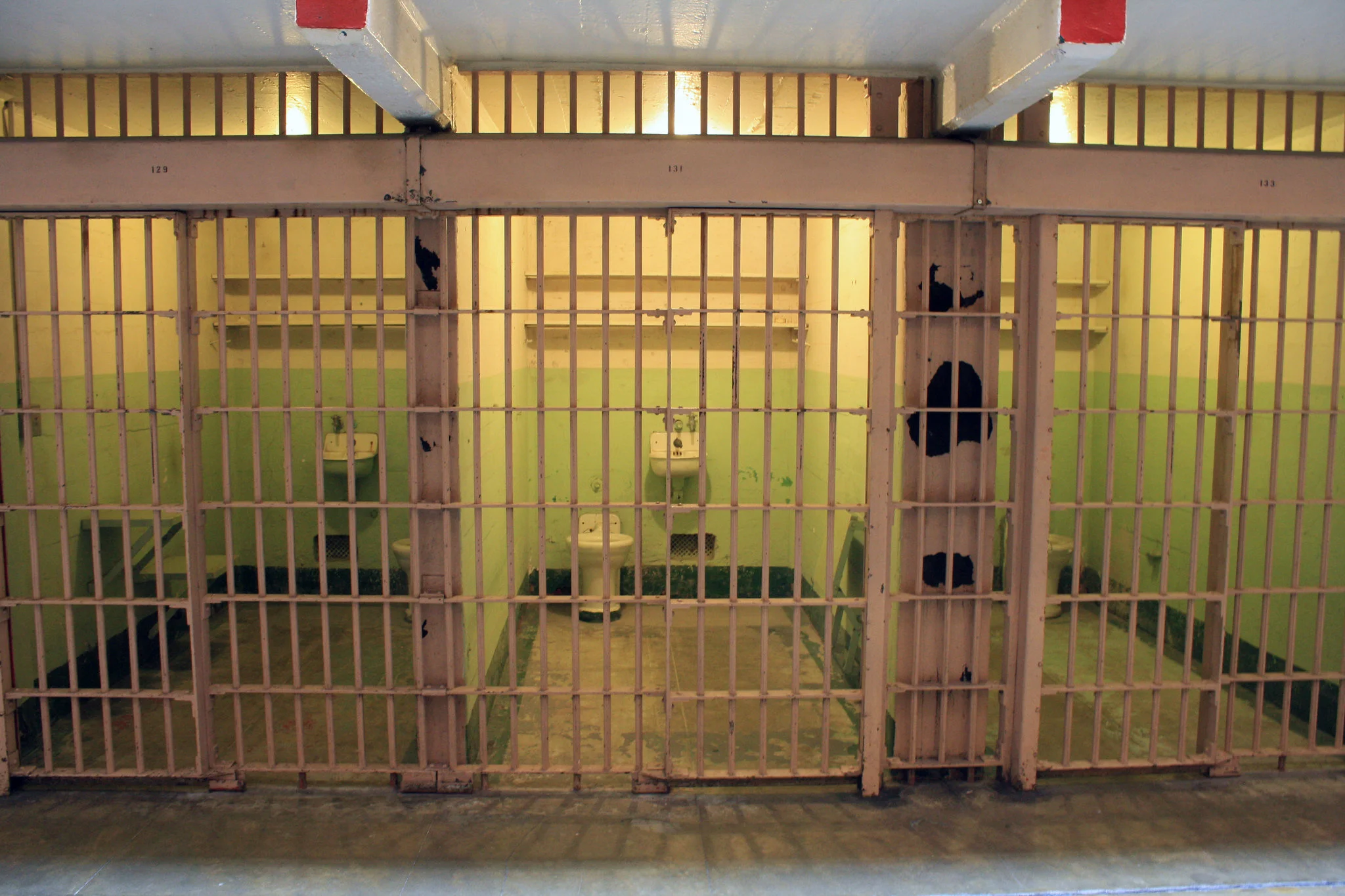
“Prison Cells” by miss_millions is licensed under CC BY 2.0
Rising Number of Coronavirus Cases Heightens Concerns About Prison Populations
As calls for the world’s population to practice social distancing have ramped up, it calls in to question a certain population that cannot practice social distancing: inmates. Prisons keep inmates in very close quarters, are overcrowded, and often lack proper sanitary conditions—three conditions that go against what the general American populace has been told to do to prevent spreading the coronavirus. The Center for Disease Control (CDC) recommended limiting gatherings to no more than 10 people, social distancing, maintaining a six-foot distance between people, and to avoid shaking hands. Concerts, weddings, funerals, conferences, and other events were cancelled because of the precautions the CDC recommended, but it was only recently that some US states began discussing and preparing to release inmates.
Over the past two weeks the Los Angeles County Sheriff’s Department has released inmates, reducing its inmate population by 600.
On March 19, New York City Mayor Bill de Blasio said the city will begin releasing some inmates, “including people who were arrested for minor crimes and those most vulnerable to infection due to underlying health problems,” according to the BBC. On the same day, it was reported that Rikers Island, a massive prison in NYC, saw the first confirmed case of the coronavirus in an inmate, according to Al Jazeera.
Salt Lake County District Attorney Sim Gill announced plans to release 90 inmates from the Salt Lake County jail on March 20. As many as 200 could be released in the coming days, according to The Salt Lake Tribune.
Prisoners Cannot “Flatten the Curve”
The United States has the highest incarceration rate in the world. According to a report from the Bureau of Justice Statistics, “an estimated 6,613,500 persons were under the supervision of U.S. adult correctional systems on December 31, 2016.” The population far surpasses the population of cities like Los Angeles, Chicago, and Houston; only New York City has a larger population at 8,398,748 as of July 2018. Overcrowded prisons cannot practice what the CDC has recommended regarding social distancing.
Jails and prisons are often dirty and lack medical resources and hygienic materials. The CDC recommends covering your mouth with a tissue when you sneeze or cough, to wash your hands frequently or use hand sanitizer that is at least 60% alcohol, and to sanitize frequently used surfaces. But it is not possible for most inmates to adhere to the CDC’s recommendations since, according to The Marshall Project, “access to toilet paper or tissues is often limited and covering your mouth can be impossible if you’re handcuffed, either because of security status or during transport to another facility.”
At a news conference on March 10, 2018, New York Governor Andrew Cuomo revealed bottles of hand sanitizer made by New York inmates. As described in a directive from the New York State Department of Corrections and Community Supervision, inmates are not allowed to possess anything with alcohol in it. The very same inmates who are making the hand sanitizer are not allowed to possess or use it because alcohol is the main ingredient.
Health officials from all over the world have said older people and those with pre-existing medical conditions are most at risk of becoming severely ill from the coronavirus, according to the World Health Organization (WHO). According to statistics from the Federal Bureau of Prisons, about 20 percent of all inmates are older than 50. The lack of proper medical resources and materials coupled with their advanced age, means older inmates are particularly vulnerable to the coronavirus.
Asiya Haouchine
is an Algerian-American writer who graduated from the University of Connecticut in May 2016, earning a BA in journalism and English. She was an editorial intern and contributing writer for Warscapes magazine and the online/blog editor for Long River Review. She is currently studying for her Master’s in Library and Information Science. @AsiyaHaou

"Indian Flag at Sriperumbdur" by rednivaram is licensed under CC BY-NC-SA 2.0
Delhi Muslims Still Rebuilding Their Lives After Days of Deadly Riots
Almost three weeks after religious violence erupted in Delhi, India, thousands of Muslims are still displaced, most living in relief camps that are overwhelmed by the number of people who have lost everything.
Hindu mobs attacked neighborhoods in the northeast area of New Delhi on Sunday, February 23, 2020. At least 53 people have been killed and more than 200 injured in what is being called the worst violence New Delhi has seen in decades. The three days of violent attacks included the torching and looting of schools, homes, mosques, and businesses. “Mobs of people armed with iron rods, sticks, Molotov cocktails and homemade guns ransacked several neighborhoods, killing people, setting houses, shops and cars on fire”, according to CBS News. The New York Times reported, “Gangs of Hindus and Muslims fought each other with swords and bats, shops burst into flames, chunks of bricks sailed through the air, and mobs rained blows on cornered men.” These attacks came after months of mainly peaceful protests by people of all faiths over changes to citizenship laws that allowed discrimination against Muslims.
The new law, called the Citizenship Amendment Bill, uses a religious test to determine whether immigrants from Afghanistan, Bangladesh, and Pakistan can be considered for expedited Indian naturalization. All of South Asia’s major religions were included—except Islam. According to CBS News, those who oppose the law say, “it makes it easier for persecuted minorities from the three neighboring nations of Pakistan, Afghanistan and Bangladesh to get Indian citizenship - unless they are Muslim.” Kapil Mishra, a local Hindu politician of the Hindu nationalist party, the Bharatiya Janata Party, told India’s police that they needed to break up the protests against the law, or he and others would take it into their own hands.
Doctors at the Mustafabad Idgah camp (one of the largest camps) are reporting that many of the survivors are showing early signs of Post-Traumatic Stress Disorder (PTSD) and depression. The makeshift relief camps are overcrowded and undersupplied, and are lacking in some sanitation amenities. Due to the lack of hygiene amenities, many are suffering from urinary tract infections and skin rashes. The lack of basic hygiene amenities is even more dangerous and deadly amid the global coronavirus pandemic.
Muslims found help from another religious minority in India: Sikhs. A Sikh man, Mohinder Singh, and his son, Inderjit, helped sixty people get to safety by tying turbans around their heads so they would not be recognized as being Muslim. Sikhs themselves experienced large-scale religious violence in October 1984 when 3,000 Sikhs were killed in Delhi after the assassination of then-Prime Minister Indira Gandhi. Khalsa Aid, a non-profit organization founded upon Sikh principles, was one of the first groups to provide aid to the victims. Members of the organization helped by assisting in repairing looted and damaged shops. They also opened a “langar”, a Sikh term for a community kitchen that serves free meals to all visitors—regardless of religion, caste, gender, or ethnicity.
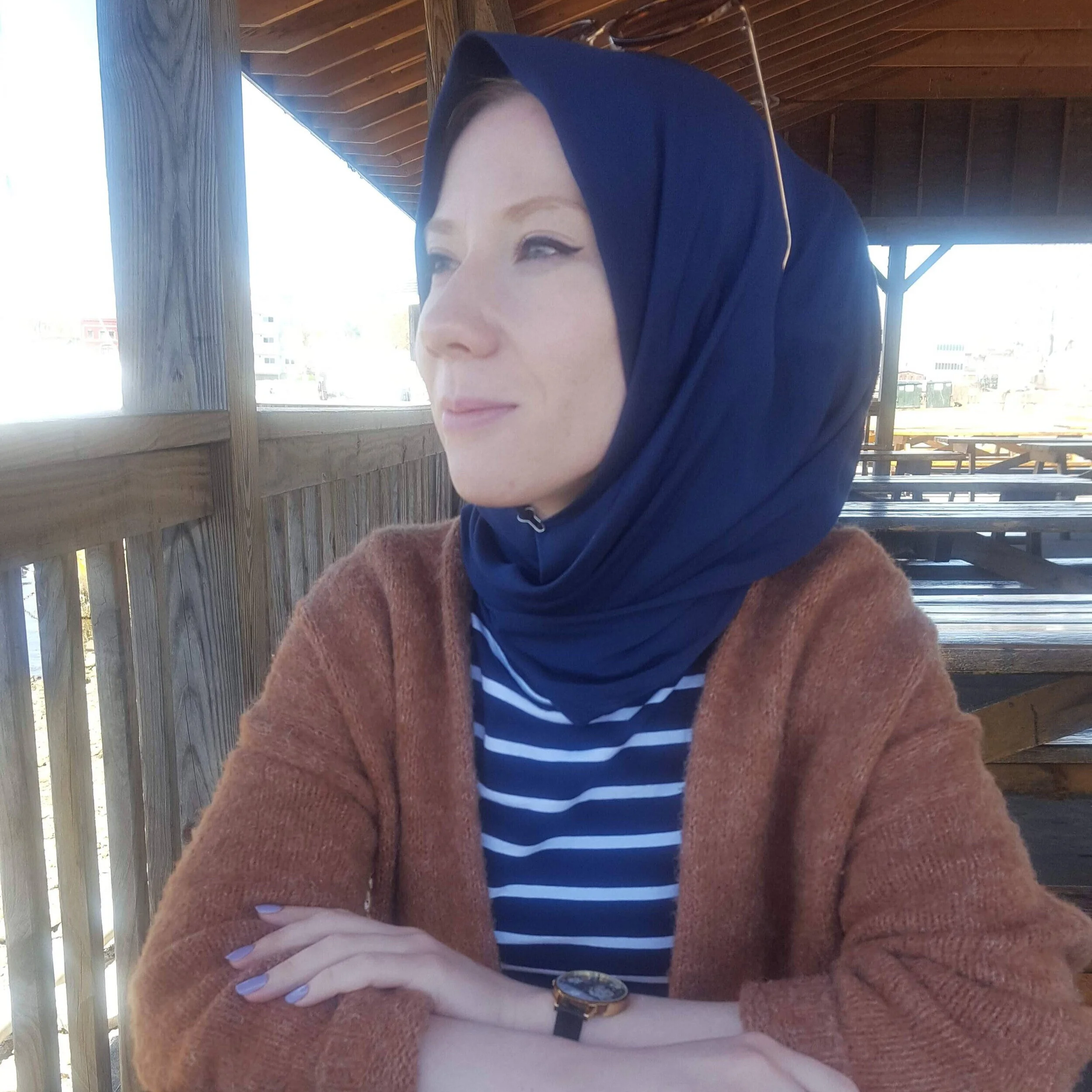
Asiya Haouchine
is an Algerian-American writer who graduated from the University of Connecticut in May 2016, earning a BA in journalism and English. She was an editorial intern and contributing writer for Warscapes magazine and the online/blog editor for Long River Review. She is currently studying for her Master's in Library and Information Science.
@AsiyaHaou