
• Travel Features
  • Global Action
  • Take A Trip
  • Travel Guides
    • Podcast
    • Courses
    • Bookshop
  • About
  • Sign Up
Menu

CATALYST PLANET

  • Travel Features
  • Global Action
  • Take A Trip
  • Travel Guides
  • Discover
    • Podcast
    • Courses
    • Bookshop
  • About
  • Sign Up

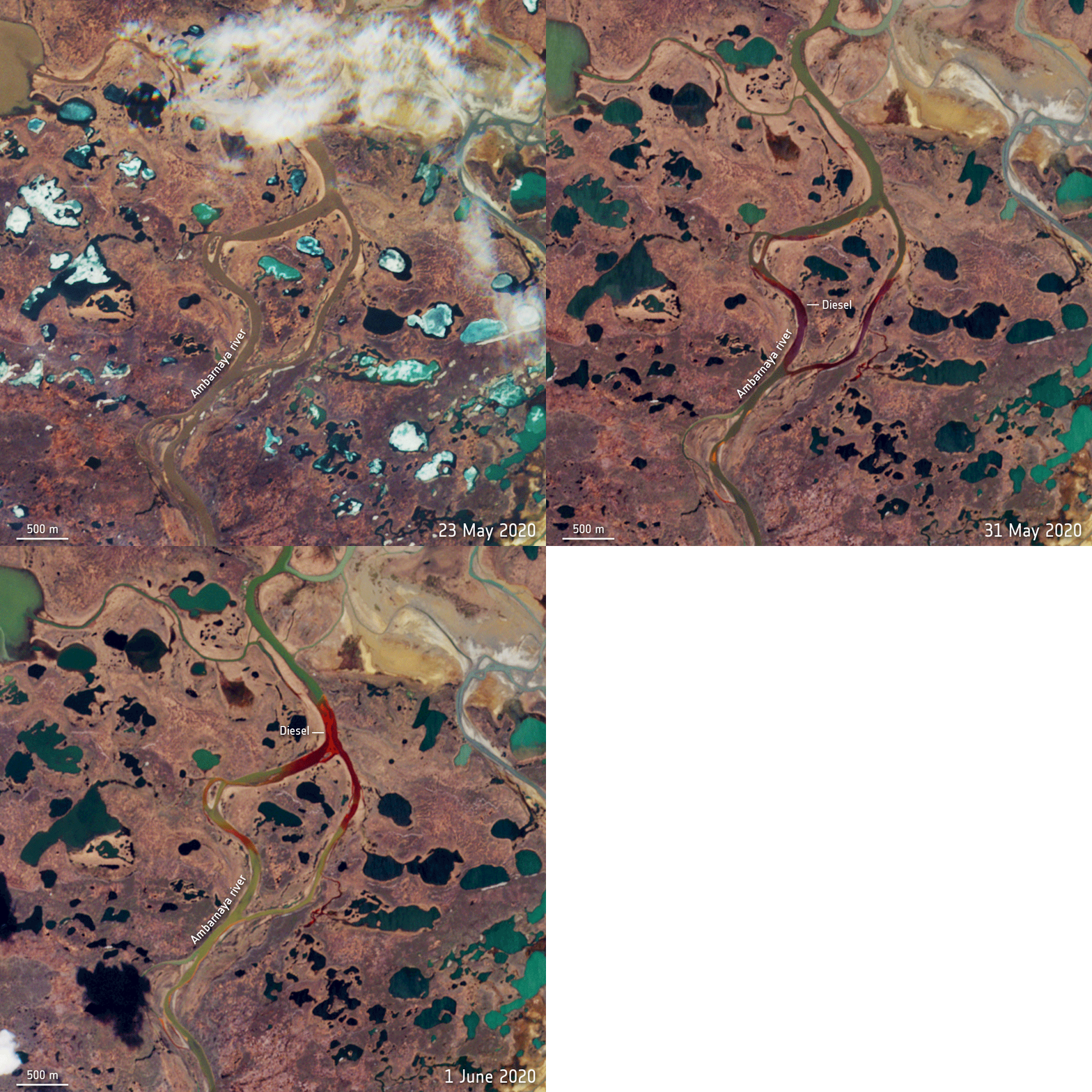
Arctic oil spill over time as seen by the European Space Agency’s Copernicus Sentinel-2 satellite. CC BY-SA 3.0 IGO.

Russia’s Oil Disaster in the Arctic Circle

June 11, 2020

On June 4th, 20,000 tons of diesel fuel spilled into the Russian Arctic after a fuel reservoir collapsed at a power plant near the city of Norilsk. It is considered Russia’s second largest oil spill in modern history. The site of the spill is the Ambarnaya River. The site of the spill, the Ambarnaya River, has turned into a deep red pool of deadly oil.  Since then, Russian President Vladimir Putin has instituted a state of emergency for the region around Norilsk, and investigations into the power plant are beginning. 

In terms of economics, it is vital that Russia acts with speed in order to clean up the oil, as they are the world’s third largest oil producer. Environmentally, though, the disaster is even worse. This oil spill has the potential to wipe out entire species in the region, literally poisoning and suffocating the plants and animals that rely on the Ambarnaya. 

How it happened  

There was a slight delay between the actual spill and reporting of the incident to the public, so the investigation process is playing catch-up. As investigations are ongoing, it is not entirely clear how such a massive disaster could have happened. The power plant claims that the fuel reservoir possibly collapsed due to thawing of permafrost below it. This could be a result of the larger issue of global warming and over-construction on unstable permafrost. 
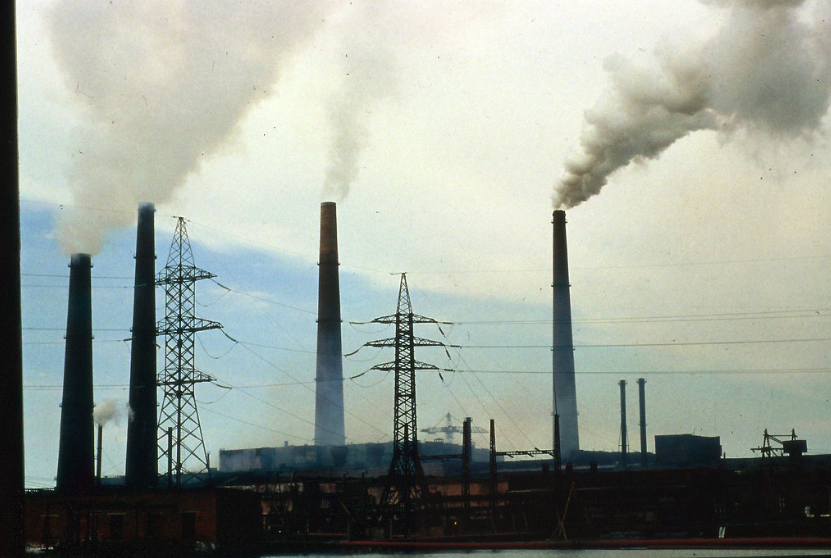
Norilsk, Siberia, Russia. GRIDArendal. CC BY-NC-SA 2.0

Norilsk Nickel, the company that owns the power plant under investigation, is a huge economic force in Russia as they lead the world in nickel and palladium production. This has not stopped the Russian government from taking the power plant director, Vyacheslav Starostin, into custody. It is pursuing a criminal case of pollution and alleged negligence against the company.

What is being done

Putin began the work to remedy the spill by declaring a state of emergency over the region, but he expects the company to pay for the costs of damages. In collaboration with Norilsk Nickel, the Russian government’s state of emergency allows for more clean up personnel to be dispatched to the area. According to BBC, Oleg Mitvol, former deputy head of Russia's environmental watchdog Rosprirodnadzor, said there had "never been such an accident in the Arctic zone". Mitvol said the clean up could potentially cost 100bn roubles (£1.2bn; $1.5bn) and take between five and 10 years

Cleanup efforts have been difficult because of the remote location of the plant. The crews are unable to use barges due to the shallow water, and there are no roads leading to Norilsk. Sergey Dyachenko, chief operating officer of Norilsk Nickel, told reporters on June 4 that the company plans “to transport contaminated oil to temporary sites for remediation.”

To prevent the oil from spreading to other areas, containment booms have been placed on the Ambarnaya River. In response, Greenpeace stated on its website that it “will help collect only a minor part of the pollution, and therefore it would be safe to say that nearly all of the diesel fuel will remain in the environment.”
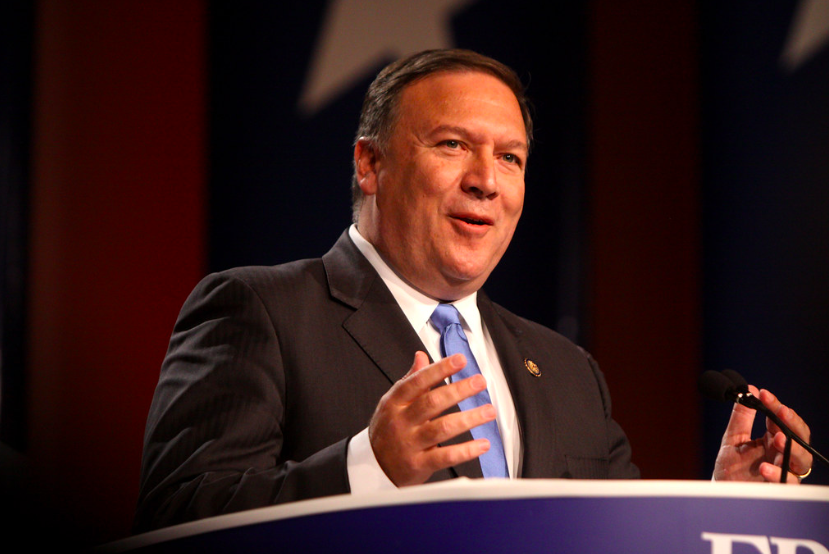
U.S. Secretary of State Mike Pompeo. Gage Skidmore. CC BY-SA 2.0.

The United States has also offered its help. U.S. Secretary of State Mike Pompeo tweeted on June 6, "Saddened to hear about the fuel spill in Norilsk, Russia." He added that despite their disagreements, “the United States stands ready to assist Russia to mitigate this environmental disaster and offer our technical expertise.” Although the U.S. State Department and White House have not specified the ways they plan to help, efforts are in progress. 

The future 

It is not known how long the process to clean up the oil will take, or if all of the oil can even be cleaned up. Until then, it is important to note how environmental disasters in the Arctic like this are a result of the other dangerous environmental practices in place. The soil, plants and animals in this region of Siberia will be undoubtedly impacted and some species may never recover. This is not the first oil spill of its kind, and it will likely not be the last. 


Renee Richardson

Renee is currently an English student at The University of Georgia. She lives in Ellijay, Georgia, a small mountain town in the middle of Appalachia. A passionate writer, she is inspired often by her hikes along the Appalachian trail and her efforts to fight for equality across all spectrums. She hopes to further her passion as a writer into a flourishing career that positively impacts others.

In News and Social Action, Global Health & Crisis Tags Russia, deisel fuel, President Vladimir Putin, economics, oil spill, state of emergency, Ambarnaya River, Greenpeace, oil, Arctic Circle, Disaster Relief
Comment

Photo by Ada Yokota

Why Coronavirus Is Humanity’s Wake-Up Call

April 10, 2020

The rapid spread of novel coronavirus has prompted government, business, and civil society to take dramatic action—canceling events large and small, restricting travel, and shutting down major segments of the economy on which nearly all of us depend. It is a demonstration of our ability, when the imperative is clear, for deep and rapid global cooperation and change at a previously unimaginable speed and scale.

There is an obvious desire to protect ourselves and our loved ones. But we are also seeing something more as communities mobilize to address the crisis—a sense of mutual responsibility, born of a recognition that we are ultimately bound to a common fate. The speed of the resulting global shift is beyond any prior human experience.

At the same time, the crisis of the coronavirus pandemic focuses attention in the United States on the disastrous deficiencies of a profiteering health care system. Corporations are competing only to increase their take from health expenditures while minimizing the amount of money they spend on providing care. This system is reasonably proficient in providing boutique care for the very rich at exorbitant prices, but it is disastrously deficient in addressing the health care needs of ordinary people affordably. It is similarly deficient in anticipating, preparing for, and responding to public health emergencies such as the one we are in now.  

I sense that as our eyes open to this reality, we are seeing a simultaneous awakening to the imperative to deal with a host of other system failures that imperil our common future. For example:

• An economic system that values nature only for its market price, ignores Earth’s limits, and wantonly destroys the stability of its climate and the health and purity of its air, water, and soil. This directly imperils our survival and well-being.

• Military expenditures that consume more than half of all federal discretionary funding to prepare for conventional wars of the past and engage us in unwinnable conflicts born of environmental and social collapse. This represents wasted resources that would be better applied to addressing the underlying sources of current security threats.

• A financial system devoted to generating speculative profits for the richest without the burden of contributing to meaningful livelihoods and security for those who do useful work. Money must serve us, not enslave us.

•An education system that promotes maximizing personal financial returns as the highest moral obligation to society. Education should prepare us to transform a self-destructive system into one that will support our long-term future.

For far too long, we have ignored the failures of a system that reduces ever more people to homelessness, incarceration, refugee camps, permanent indebtedness, and servitude to institutions devoted to conflict and the generation of unearned financial returns. The challenges are monumental and are likely to be addressed only as we begin to understand that business as usual is simply not an option.

We need leaders committed to effective government of, by, and for the people.

This is humanity’s wake-up call. As we awaken to the truth of the profound failure of our existing institutions, we also awaken to the truth of our possibilities and interconnections with one another and with Earth. With that awakening comes a recognition that we must now learn to live lightly on the Earth, to war no more, and to dedicate ourselves to the well-being of all in an interdependent world.

We in the United States also face a special challenge. We have much that the world admires. But far from being a model for others to emulate, we represent an extreme example of what the world must now leave behind.

As a nation, we have for too long battled over simplistic political ideologies that limit our choices to granting ultimate power either to government or corporations, both of which are controlled by the richest among us. The coronavirus pandemic is a powerful reminder that effective government committed to the common good is essential to our well-being, and that there is no place in our common future for politicians committed to proving that government cannot work.

We need leaders committed to effective government of, by, and for the people. These leaders must simultaneously recognize that the collective well-being of all depends on institutions in all three sectors—government, business, and civil society—that are effective at, committed to, and accountable for serving the well-being of the communities that create them.

These are challenging and frightening times. As we respond to the coronavirus emergency and the immediate needs of the people and communities impacted by it, let us also keep in view the systemic needs and possibilities that crisis exposes. Despite the trauma all around us, let us embrace this moment as an opportunity to move forward to create a better world for all.


David Korten is co-founder of YES! Media, president of the Living Economies Forum, a member of the Club of Rome, and the author of influential books, including “When Corporations Rule the World” and “Change the Story, Change the Future: A Living Economy for a Living Earth.” His work builds on lessons from the 21 years he and his wife, Fran, lived and worked in Africa, Asia, and Latin America on a quest to end global poverty.

THIS ARTICLE WAS ORGINALLY PUBLISHED ON YES!

In News and Social Action, Global Health & Crisis Tags Coronavirus, economic development, homelessness, humanity, state of emergency, trauma, Environment, Human Rights, COVID, USA, COVID-19
Comment

President Donald Trump takes questions at Coronavirus update briefing, 3/14/20. Official White House photo by Shealah Craighead. Public Domain.

The Authoritarian Repercussions of Coronavirus

March 28, 2020

Around the world, Coronavirus has led to an increase in government surveillance, crackdowns on journalism, restrictions on movement and less restrictions on legislature. There is no doubt that they infringe upon civil liberties and may remain in effect long after the spread of the virus has calmed down.

Read More
Tags COVID-19, Coronavirus, authoritarianism, security, state of emergency, biological warfare, America, China, Hungary, surveillance state, journalism, government
Comment

Also check out...

Featured
Vietnam’s Floating Markets Are Disappearing
The Supernatural Role of Masks in Nigeria’s Yoruba Tribal Culture
Opening the World to Deaf Travelers with Lily Yu

Featured trips

Featured
Offer NGO Support While Visiting Quito
Experience Life as a Mongolian Nomad
Help Grow Organic Costa Rican Coffee

Sign up for the CATALYST newsletter

Sign up for our newsletter to get the scoop on international travel, global social impact insights, our latest podcast releases, and more from around the world, all delivered right to your inbox!

We respect your privacy.

Thank you!
Newsletter Sign Up | Advertise | Careers + Internships | Privacy Policy | Submissions | Contact Us

Copyright © 2025, MISSION MEDIA LLC. All rights reserved.