
Imagine being trapped in a cage as active comabt rages around you. That’s the terrifying reality for zoo animals living in war zones. Veterinarian Amir Khalil is saving as many as he can. He runs the rapid response unit of the animal rescue organization Four Paws and risks his life rushing into trouble spots around the globe, treating and evacuating shell-shocked, starving and injured animals.
Reclaiming Native American Art
There is a great demand for cultural art in today’s market, with everything from clothing to home goods and jewelry featuring Native American-inspired designs. Unfortunately, the majority of these products are counterfeit, using appropriated designs by non-Native artists. Now, Louie Gong is reclaiming his heritage through Eighth Generation, a company that merges the traditional works of Native artists with a modern aesthetic.
A Pageant for Survivors
Each year, Haifa, Israel, plays host to a beauty pageant. But the contestants aren't what you'd expect. Each one is a Holocaust survivor. And last year's winner—84 year-old Rita Berkowitz—is set to pass her crown on to the new queen. This pageant has had critics who claim that the event sensationalizes the suffering of the participants, but Rita doesn't see it that way. For her, the pageant is a way for survivors from all over Israel to come together and celebrate being alive.
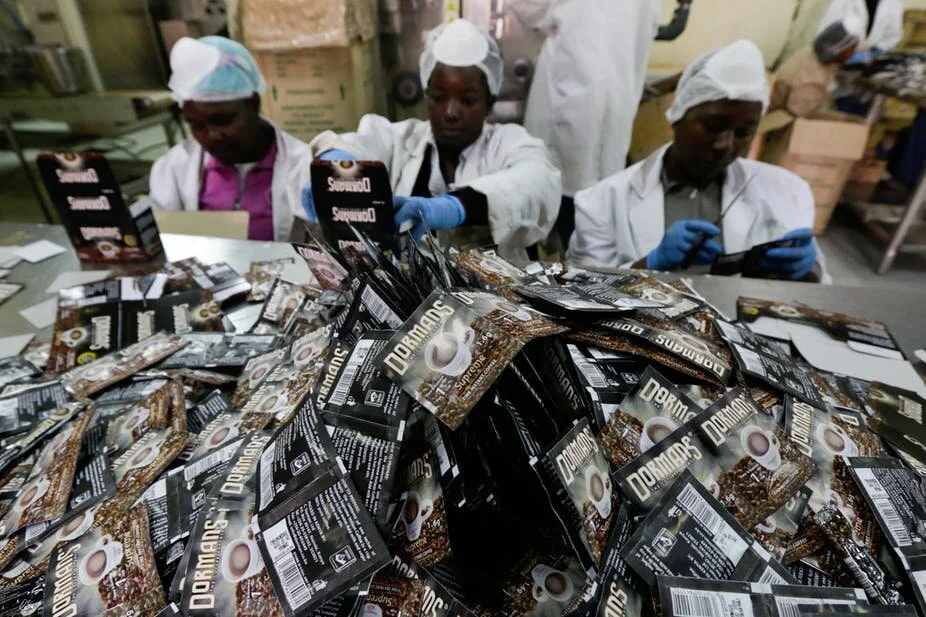
African Countries Can’t Industrialise? Yes, They Can
Narratives are essential. Humans are, after all, “helpless story junkies”. Business and economic success depend much more than is commonly acknowledged on getting the narrative right. And if there is a narrative where getting it right or wrong matters hugely, it is the narrative about Africa’s industrial development.
Africa is the poorest continent. It is likely to be the most affected by climate change. It is the continent where terrorist groups are spreading fast.
Therefore, African industrialisation is essential. Unfortunately, the dominant narrative is that Africa has been de-industrialising, even prematurely. In this narrative, it is also questioned whether Africa can ever industrialise. African countries have even been advised not to try. The World Bank’s “Trouble in the Making”report concludes that manufacturing is becoming less relevant for low-income countries.
Fortunately, a very different narrative is possible. In a recent paper, I argue that Africa can industrialise because of three factors. These are “brilliant” new technologies enabling digitisation, smart materials and 3D-printing; a more vibrantentrepreneurship scene; and Africa’s growing middle class (as measured by the share of households that earn between $11 and $110 per person per day), which supports the continent’s first generation of indigenous tech-entrepreneurs.
Consider therefore the following narrative: More than 300digital platforms, mostly indigenous, are operating across the continent. There are also more than 400 high-tech hubs, and more are being added. In addition, venture capital funding into African tech start-ups increased ten-fold between 2012 and 2018.
Moreover, manufacturing has more than doubled in size in real terms since 1980. And since 2000, manufacturing value added has grown at more than 4% a year. That is double the average between 1980 and 2000 (numbers from the Expanded African Sector Database).
As a result, total employment in manufacturing in 18 of the largest African economies (for which there is data) grew from roughly 9 million in 2004 to more than 17 million by 2014. That is an 83% increase in ten years. The proportion of labour in manufacturing for Africa as a region grew from roughly 5% in the 1970s to almost 10% by 2008.
So, how will these trends shape the future? I argue that they will result in three varieties of industrialisation.
Three varieties
The first variety can be labelled “acquiring traditional manufacturing capabilities”. This variety is implied by Overseas Development Institute researchers Karishma Banga and Dirk Willem te Velde. It will be experienced by countries and sectors where technological change is too fast and complex to benefit immediately. These countries and sectors will need time to first put complementary investments in place, while at the same time continuing to promote traditional labour-intensive manufacturing.
The second variety, “fostering sectors with the characteristics of manufacturing”, is elaborated in a recent UNU-WIDER book. Here it is argued that service sectors can take up “the role held by manufacturing in the past”. In many countries, services such as ICT and telecoms, tourism and transport, financial and farming services can lead to productive development.
The third variety, “resurgent entrepreneurship-led industrialisation” is based on my earlier work. I point to the growing list of achievements of African countries in terms of high-tech manufacturing. For example South Africa leads in advanced manufacturing in having one of the world’s largest 3D-printers, used to manufacture parts for the aviation industry.
Different combinations of these varieties will dominate in different countries. For example, Kenya is already experiencing the simultaneous development of high-tech financial services alongside growth in traditional manufacturing, such as food processing and textiles, as well as clusters of advanced manufacturing. While every country’s pathway will be a unique combination of these varieties, what they will have in common is that progress will require that they deal with the impact of new technology, especially digitisation, on manufacturing.
To ensure momentum is maintained, the narrative about industrialisation has to change. As Israeli historian Yuval Noah Harari pointed out, neither land – the core resource of feudalism – nor physical capital – the core resource of 20th-century capitalism – will be decisive for competitiveness in the future. Instead, data and data science, free information flows, ICT (data) skills, and decentralisation of decision-making will be the decisive factors.
What needs to be done
With an outdated story that gives up on manufacturing, Africa will fail to close the huge digital gap it still faces. The gap is reflected in the fact the continent contributes less than 1% of world’s digital knowledge production. To reduce this gap, African countries will have to start by expanding internet access and use. If internet use across the continent can be expanded to the same rate as in high-income countries, 140 million new jobs and US$2,2 trillion could be added to GDP.
What must be done to change the narrative? What do African governments need to do? The first is that its leaders need to start telling more stories about the future than about the past. Perhaps, like China’s leaders, they can even be inspired by science fiction. British best-selling author Neil Gaiman relates how China started to embrace science fiction after sending a delegation to
“the US, to Apple, to Microsoft, to Google, and they asked the people there who were inventing the future about themselves. And they found that all of them had read science fiction when they were boys or girls.”
Helping to imagine the future of African industrialisation, South African President Cyril Ramaphosa recently stressed that fact that Africa is one of the early adopters of mobile telephony and moreover that the continent needs to aspire to more:
We need to focus on the new technologies that are going to revolutionise the world, and we need to be ahead of the curve.
This is the right narrative. It is necessary, although not sufficient for African industrialisation. For this, words need to lead to actions. And some consistent actions, at least for a start, would be for African governments to refrain from creating stumbling blocks for their brave new tech-entrepreneurs, such as curbing access to the internet, restricting digital information flows, under-investing in science, technology, engineering and mathematics education, neglecting data-privacy legislation, and restricting the rights of women to work in manufacturing.
Wim Naudé is a Professorial Fellow, Maastricht Economic and Social Research Institute on Innovation and Technology (UNU-MERIT), United Nations University
THIS ARTICLE WAS ORIGINALLY PUBLISHED ON THE CONVERSATION
In Dr Seuss’ Children’s Books, a Commitment to Social Justice That Remains Relevant Today
On February 18, Random House announced the discovery of What Pet Should I Get?, an unpublished – and heretofore unseen – picture book by Dr Seuss. The announcement came 10 days after the same publisher revealed that it would publish Harper Lee’s “discovered” manuscript for Go Set a Watchman in the summer of 2015.
In What Pet Should I Get? – released this week – the very same siblings who first appeared in One Fish Two Fish Red Fish Blue Fish now struggle with the question of what pet they should choose.
While the siblings in What Pet Should I Get? may not be as familiar as Scout and Jem Finch, Dr Seuss’ new book is the latest addition to a body of work that remains just as committed to social justice as Harper Lee’s famous novels.
From Flit to Horton Hears a Who!
Such matters were not always the chief focus of Theodor Geisel (Dr Seuss’ real name).
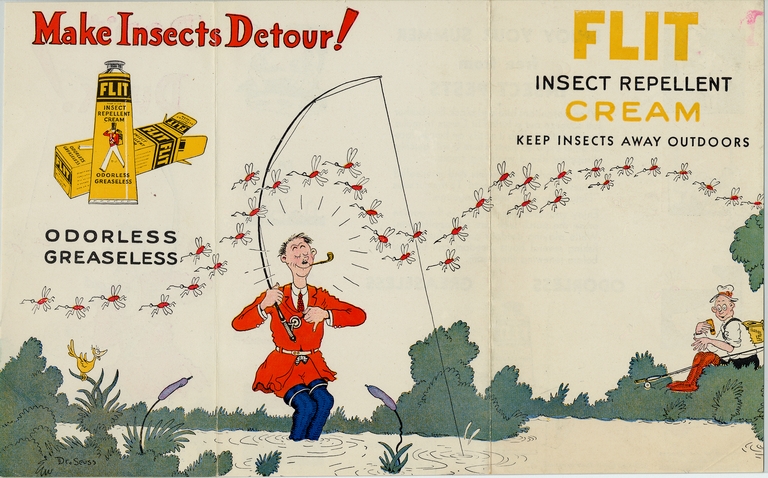
In the late 1930s, using the pen name Dr Seuss, Geisel created cockamamie ad campaigns for Flit bug spray. During the early years of World War II, he contributed notoriously vicious caricatures of the people and leaders of Axis nations for the Popular Front tabloid PM. After joining famous Hollywood director Frank Capra’s Army Signal Corps unit in 1943, he co-created propaganda films under Capra’s tutelage.
However in the years after the war, Dr Seuss’ art underwent a radical thematic shift. With a flood of eager baby boomer readers, he decided he wanted to speak to the perspective of children.
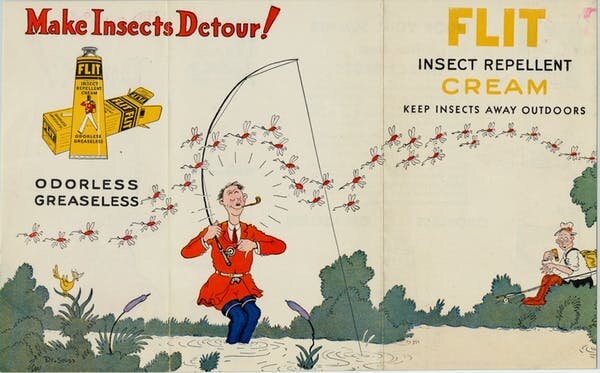
A Flit advertisement proof from the 1930s, drawn by Dr Seuss. Special Collection & Archives, UC San Diego Library
A Flit advertisement proof from the 1930s, drawn by Dr Seuss. Special Collection & Archives, UC San Diego Library
The racist caricatures of Japanese civilians and soldiers that Dr Seuss published in PM had drawn on the social prejudice and aggression that Geisel believed lay at the heart of adult humor. So Geisel entrusted Dr Seuss’ postwar art to the belief that children possessed a sense of fairness and justice that could transform their parents’ world.
Geisel described his 1954 children’s book Horton Hears a Who!, in part, as an apology to the Japanese people his propaganda had demeaned during the war. In subsequent children’s books, he began addressing the major issues of the 20th century: civil rights in The Sneetches (1961), environmental protection in The Lorax (1971) and the nuclear arms race in The Butter Battle Book (1984).
The zany wisdom of Dr Seuss
In 1960, Geisel spelled out the stakes of his art:
In these days of tension and confusion, writers are beginning to realize that Books for Children have a greater potential for good, or evil, than any other form of literature on earth.
Like To Kill a Mockingbird, One Fish Two Fish Red Fish Blue Fish was published in 1960. And like Mockingbird, the conflicts, tensions and fears of that era are highlighted (albeit indirectly).
One Fish Two Fish Red Fish Blue Fish follows a brother and sister who encounter a series of increasingly fantastic creatures. Nonsensical skits and slapstick gags disrupt the children’s need to decide on a definitive taxonomy – numbers, colors, oppositions, emotional dispositions – for these animals.
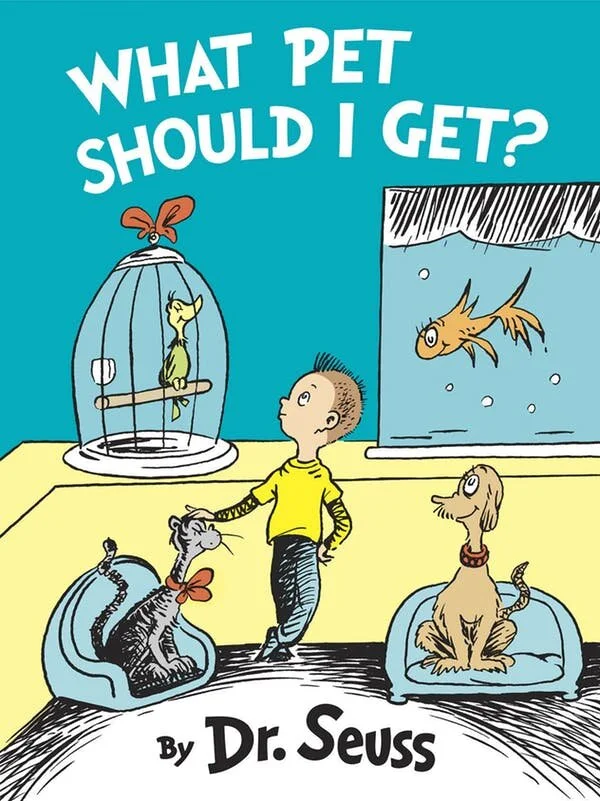
A question nearly all children face. Random House
A question nearly all children face. Random House
The array of sorting mechanisms communicates the siblings’ attraction to different, ever-stranger living things. The book introduces more than a dozen creatures and each is outlandishly distinctive. Most importantly, the children value all of them because of their uniqueness.
Overall, this tale of inclusivity cultivated an appetite for diversity and a delight for change. It rejected the stereotypical ways of regarding persons and things through strict categorization.
Dr Seuss engaged 1960s unrest more directly in Green Eggs and Ham, also published in 1960. Using visual and verbal eloquence, Dr Seuss forces the the adult, Grinch-looking creature to confront his stubborn prejudice against green eggs and ham: the character is presented with a series of challenging questions designed to expose the absence of any foundation for his bias.
The adult remains stubborn in his intolerance until his much younger counterpart convinces him that there’s no more basis for his distaste for green eggs and ham than the dislike he’s taken to Sam-I-Am.
The 650 million children who have read Dr Seuss’ books have been exposed to new ways of viewing the world, of rethinking a social order often imbued in prejudice. But adults continue to use the themes of One Fish Two Fish Red Fish Blue Fish. It has inspired a CEO’s leadership manual, a Barnes & Noble e-readerand the name of a dating website. The book was quoted by Supreme Court Justice Elena Kagan in a dissenting opinion earlier this year.
In 1994, Johnny Valentine and Melody Sarecky even applied it to promote same-sex marriage in their children’s book One Dad, Two Dads, Brown Dad, Blue Dads.
An original sketch from What Pet Should I Get? discovered in Dr Seuss’ home office in La Jolla, California. Dr Seuss Enterprises
The pet shop that provides the setting for What Pet Should I Get? is inhabited by creatures that display striking resemblances to Horton, the Whos and the Sneetches, along with Sam-I-Am and the fish protagonists of One Fish Two Fish Red Fish Blue Fish. An offshoot of the social vision informing these narratives, What Pet Should I Get? won’t disappoint Dr. Seuss’ readers in the way the Atticus Finch disappointed some To Kill a Mockingbird fans.
As older readers relive their response to a universal question nearly all children face, What Pet Should I Get? will allow a new generation of readers to discover why Dr Seuss remains forever relevant.
Donald E Pease is a Professor of English, Dartmouth College
THIS ARTICLE WAS ORIGINALLY PUBLISHED ON THE CONVERSATION
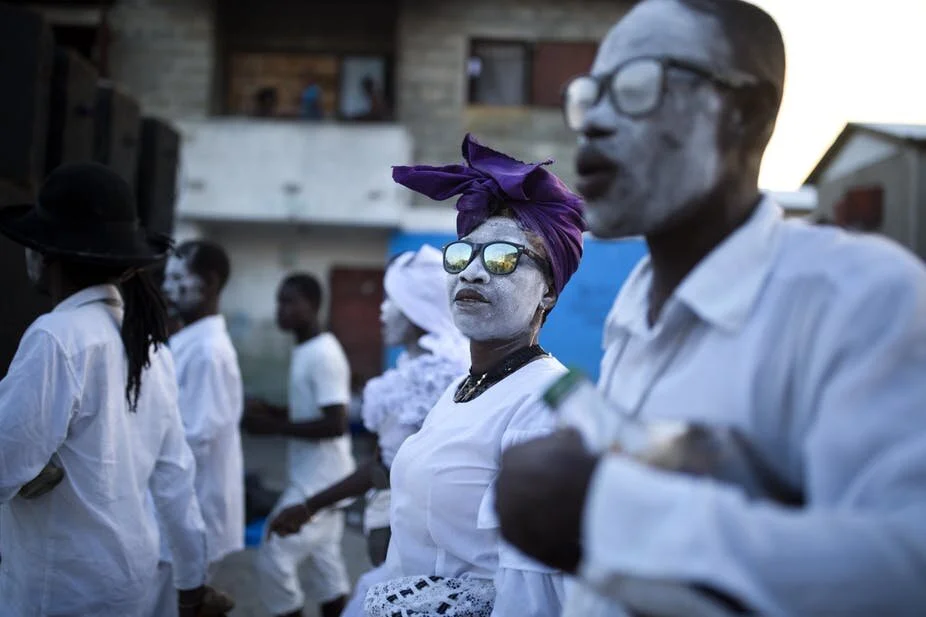
Voodoo believers walk during the annual Voodoo festival Fete Gede at Cite Soleil Cemetery in Port-au-Prince, Haiti. AP Photo/Dieu Nalio Chery
What is Haitian Voodoo?
For many in the West, Voodoo invokes images of animal sacrifices, magical dolls and chanted spells. But Voodoo—as practiced in Haiti and by the black diaspora around the world—is a religion based on ancestral spirits and patron saints.
Read More
Flavour, a popular Nigerian musician, can wear his dreadlocks in peace because they are seen as a temporary fashion statement. Elizabeth Farida/Wikimedia Commons
In Nigeria, Dreadlocks Are Entangled with Beliefs About Danger
A grown man wearing his hair in dreadlocks is bound to attract attention in Nigeria. And it’s not always positive attention. Many Nigerians, regardless of their education and status, view dreadlocked men as dangerous. The hairstyle sometimes even gets a violent reaction.
This bias is deeply rooted in traditional religious beliefs and myths, especially those of the Yoruba and Igbo people.
My book on the symbolism of dreadlocks in Yorubaland tries to explain what knotted hair means to Yoruba people, and where these ideas come from. Numbering around 40 million, Yoruba people predominantly occupy southwestern Nigeria. In West Africa, they are found in Benin Republic, Ghana, Togo, Sierra Leone, and Liberia. In the diaspora, they are significantly present in the US, Brazil, Cuba, Haiti and the Caribbean.
An affront to society’s orderliness
A popular phrase used by Yoruba people to describe dreadlocks is “a crazy person’s hair”. The language also has an idiom that shows how people feel about madness. A person will ask, “kini ogun were?” (what is the cure for madness?) and get the response, “egba ni ogun were” (whip is the cure for madness).
Mentally disturbed people often wear dreadlocks due to neglect. Because they are unpredictable, they are avoided as they roam the streets, and sometimes beaten. Their knotted hair show disharmony with the community; being unkempt and unruly, they are viewed as an affront to societal norm of orderliness.
Adult men with dreadlocks are viewed similarly. They are perceived as volatile and dangerous. Their untamed hair connotes wildness. Therefore, they are associated with the wilderness; uncultivated and unruly. In traditional Yoruba and Igbo worldview, unkempt hair is akin to the forest – mysterious, dark, and to be avoided.
There are exceptions: musicians and athletes who wear these hairstyles are “tolerated” as they are presumed to be assuming a persona that matches their brand. Essentially, theirs is a temporary fashion statement. And because they are famous and successful, they are protected from attacks on the streets.
Dark and frightening by tradition
The Yoruba thought system has it that some children are raised in the forest by gnomes and other mysterious beings. They come back into the community with supernatural powers, strange mannerisms, and sometimes knotted hair. Since they traverse the physical and spiritual worlds, it is believed that they can discern the destiny of others and can negatively influence them.
These knotted-haired people are avoided, more so when their dreadlocks are greying because “normal” adult Igbo and Yoruba males shave their heads completely, or they cut their hair very short. Deviating hairstyles are viewed suspiciously.
Unlike adult males, children born with knotted hair are revered and welcomed as a gift of the gods and not a product of the wild. Such children are called “dada” among the Yoruba in western Nigeria and the Hausa in the north. In south eastern Nigeria, the Igbo call them “ezenwa” or “elena”.
In Yoruba mythology, Dada is the son of Yemoja, the goddess of the sea, wealth, procreation, and increase. Dada is said to be one of the deified Yoruba kings. His younger brother is believed to be Shango, the god of thunder, who wears cornrows.
Children-dada are presumed to be spiritual beings and descendants of the gods by virtue of their dreadlocks. As such, their hair is not to be groomed and can only be touched by their mothers. They are the bringers of wealth, which is symbolised in both Yoruba and Igbo cultures by cowrie shells. They are celebrated. Feasts are held in their honour.
Their time on earth is special. It is marked by special rites that define different phases of life. In nearly all cases, their hair is shaved before puberty in order to integrate them into the community. The shaving ritual takes place at a river, where the shaved head is washed. The cut hair is then stored in a pot containing medicinal ingredients and water from the river. The concoction is believed to have healing properties and needed when they fall ill.
After the hair-shaving ceremony, the dada wears “tamed” hair in conformity with societal expectations. The child is still recognised as special and mysterious but is now integrated into society. The visible sign of their spirituality is no longer present. Any grownup, therefore, who still wears their dreadlocks is deemed to have been possessed by evil forces, or chose to do so malevolently; in either case, dangerous.
Challenges to the culture
Despite their negative associations, dreadlocks increased in Nigeria’s religious and popular cultures in the 1960s. Itinerant priests of the Celestial Church of Christ appear in white gowns and knotted hair. The famous musician and talented artist from Osogbo, Twin Seven Seven, performed on stage and television with his dreadlocks and white attire. He was the sole survivor of seven (considered a mysterious number in Yoruba tradition) sets of twins.
Yorubaland has the highest rate of twins in the world. Twins are considered spiritual beings, so they are also revered and celebrated. Being a twin, having knotted hair, and only wearing white clothes (like the gods or ghosts), further mystified Twin Seven-Seven in popular imagination and fanciful stories about him spread. For example, it was said that he was raised in the forest by spiritual beings, hence his creative imagination and hairstyle.
In the 1970s and 80s, other Nigerian musicians like Majek Fashekwere inspired by the fame of Jamaican reggae artists to begin styling their hair the same way. From the 1990s, Nigerian footballers joined in by wearing cornrows and dreadlocks.
Barring these exceptions, adults with unkempt hair are judged deviant beings who have become conduits for evil. Since it is difficult to differentiate between adults wearing dreadlocks as fashion statement from those with “evil dreadlocks”, people either flee from them or attack them out of fear and self preservation.
Augustine Agwuele is a Professor, Department of Anthropology, Texas State University
THIS ARTICLE WAS ORIGINALLY PUBLISHED ON THE CONVERSATION
The Amazing Bike Machines of Guatemala
Bike machines, or "bicimaquinas," are changing people's lives in San Andrés Itzapa, Guatemala. The unique stationary bicycles have been altered to function as human powered machines that can do everything from washing clothes, to blending and shelling nuts. Made of discarded, eco-friendly parts, they are the brainchild of locally run non-profit Maya Pedal. Not only are these machines functional and economical, they also contribute health benefits.
Escalations in Violence in Hong Kong Could Prove Perilous to Human Rights

“A protestor wearing a Guy Fawkes mask in October 2019.” Honcques Laus. CC0.
Demonstrators have seemed to reach a stalemate against the government of Hong Kong, which refuses to accede to the demands of the protesters. Given the rapid escalations in violence and the willingness of the police to employ excessive force, a stalemate could have serious consequences for the state of human rights in Hong Kong.
Protests in Hong Kong began in late April 2019, in reaction to the raising of an extradition bill, which would have permitted the extradition of citizens of Hong Kong to mainland China. Pro-democracy protesters see the extradition bill as a significant acquiescence of Hong Konger’s sovereignty to mainland China, as Hong Kong remains a territory not technically under the direct purview of the Chinese government. The specific worry is that Beijing would use the extradition bill to suppress the growing pro-democracy sentiment among younger generations of Hong-Kongers by demanding that Hong Kong hand over its activists and successful con-China politicians. They represent a movement that has been developing since the late 1990s, focused on maintaining Hong Kong’s distance in relation to the Central People’s Republic in Beijing, with the eventual aim of bringing fully-democratic elections to Hong Kong.
Presently, the citizens of Hong Kong are allowed free speech and rights to free assembly and association, as outlined in the Basic Law. The government and election structure of Hong Kong is quasi-representative. There are 1,200 electors who ostensibly select officials: representatives of various economic sectors, business interests, and the affluent of Hong Kong. However, the central mainland government exercises a great deal of control over the political proceedings of Hong Kong; the incumbent Chief Executive Carrie Lam was openly favored by China’s President, Xi Jinping. While the extradition bill was removed from the table following the outbreak of protests, the potential for democracy in Hong Kong seems to hang in the balance, as demonstrated in Executive Lam’s unwillingness to accede to the demands of the protesters, and in Beijing’s continued support for Lam.
The protestors have issued a list of demands beyond the reneging of the proposed extradition bill, repealed in September, that includes investigation into police actions as well as amnesty for protesters in custody, complete universal suffrage, and Lam’s withdrawal from her post as Chief Executive of Hong Kong. The government of Hong Kong has issued a hardline stance, supported explicitly by Xi Jinping and the Central People’s Republic. In her refusal to acquiesce to demands, Lam pushes the protests in Hong Kong towards a path of greater uncertainty; given the perseverance demonstrated by the protesters, it seems that the situation will only continue to escalate.
Consequently, the first weeks of November have seen significant escalations in the protests in Hong Kong: on November 7th, a university student died after he fell from the top of a parking deck during a skirmish with the police. Monday November 11th saw major instances of violence, in which a police officer shot a protester at close range, and a pro-China counter-protester was set on fire by a group of demonstrators. Protesters and police alike have exhibited violent tactics since the inception of the protests. Police have not shied away from tear gas and rubber bullets, as well as employing excessive physical force towards protesters and members of the press. Demonstrators have also used tactics such as vandalism and violence against those believed to be pro-China.
However, equating police violence with the actions of the protesters carries dangerous human rights implications; the police act from a privileged position because of the backing they receive from both the government of Hong Kong as well as that of mainland China. The protesters have only the solidarity they experience among one another. Violence by protesters is the impetus of an individual working in conjunction with other individuals; excessive force against protesters by the police is a hit by the state in its entirety.
In this way, escalating patterns of police violence prove pernicious, because they undermine the human rights of Hong Kongers, and breed complications for a hypothetical future peace process. Instances of excessive violence towards the press prove especially destabilizing, because the suppression of information perpetuates the murkiness that allows the police to continue to carry out extreme, and in many cases illegal acts of retribution against demonstrators. As it stands, the violence in Hong Kong will only continue its escalation should the government of Hong Kong maintain its staunch refusal of concessions. A stalemate could have alarming consequences for the state of human rights in Hong Kong, as the police have already turned to violent tactics involving excessive uses of force, and the demonstrators have, in turn, only increased their fervor in furthering their demands.

HALLIE GRIFFITHS is an undergraduate at the University of Virginia studying Foreign Affairs and Spanish. After graduation, she hopes to apply her passion for travel and social action toward a career in intelligence and policy analysis. Outside of the classroom, she can be found, quite literally, outside: backpacking, rock climbing, or skiing with her friends.
Venezia
Much has been made about the wonders of Venice, but few ever venture deep enough across its less touristy, yet still historical hidden places. Beyond hundreds of canals and a diverse architectural style, a secret facet of Venetian life lives on, in which the journey of hand crafting gondola wooden oars and loomed fabrics remains rooted in ancient folk traditions.
Has the West Forgotten About Ebola?
Although the Ebola crisis has remained ongoing, it has received no tangible attention in Western media since 2015. A compelling explanation for this phenomenon rests in colonial associations of race and disease, and the way in which those associations have become implicitly present today.
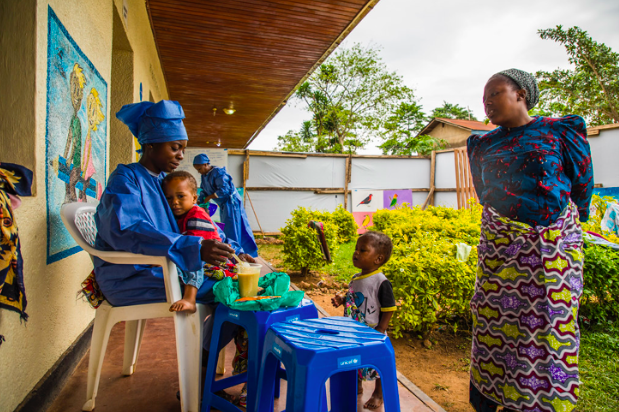
Nurses Caring for Children at the Height of the Ebola Epidemic. World Bank Photo Collection. CC BY-NC-ND 2.0
In 2014-2015, Guinea, Sierra Leone, and Liberia experienced 11,300 fatal cases of the Ebola virus. While not comparable to the scope of the incidence rate in Africa, the handful of fatalities in the West sparked panic about the growing global public health crisis of Ebola. Following the first fatality due to Ebola in the United States, the crisis reached national and international news.
In reality, the outbreak of Ebola, although it has diminished since 2015, is far from being over: nearly 3300 new cases, including 2171 fatalities, have resulted from the Ebola virus in the Democratic Republic of the Congo in the 12 months between October 2018 and October 2019 alone. Although incidence rates remain steady across Central and West Africa, concentrated especially in the DRC, with additional incidences possible in Tanzania, major media coverage in the West has dwindled to nearly nothing following 2015. The hypocrisy in media coverage in the West and especially the U.S. regarding Ebola is nuanced, and stems from a long history of biases that have developed and been reinforced throughout centuries.
That is to say, race has been implicitly coded over time into the way in which individuals conceive of hygiene, sanitation, and disease. Much of this coding arose from and became reinforced in colonialism: the colonized was marked “dirty, diseased.” In response, the colonizer labeled itself as a “savior.” Moreover, the concept of miasma, the leading Western theory of disease during the colonial era stipulated that disease originated from “foulness,” which—while not entirely incorrect, potentially misplacing correlation as causation— came to be shorthand for the treatment of the indigenous populations under the Western gaze. The concept of “foulness” was coded into the very identity of the colonized by the colonizer, as the status of the imperialist rested on the denigration of the colonized. It is these social relations which, then, are informative of the present social relations.
Consequently, centuries later, these attitudes have become baked into everyday life, translated over time from explicit positions into implicit biases. Even during the height of the crisis in 2014, attention has been brought to the phenomenon of the implicit white saviorism in the media reporting. The illustration in the West minimized the victims of Ebola in Liberia, Guinea, and Sierra Leone to numbers. In this way, the narrative implicated a diseased, “backwards” population in need of saving—implicitly posturing a parent-child relationship, rather than one of symmetrical foreign aid between states. This relationship creates an “us-other” distinction, such that when the virus reached the West the line between “us” and the “other” blurred. Once there were no longer instances of the Ebola virus in the West, the virus returned to its status of something belong to the “other,” directly reminiscent of the colonial attitudes regarding miasma and the colonizer’s role among the colonized.
Important to note, researchers have found that the cases in the most recent wave of Ebola in the Congo have disproportionately affected women. A dearth of medical research has found that the medical conditions of women, especially women of color, are minimized implicitly both in the medical profession and in general thought. This tendency towards minimization of marginalized groups further adds complexity to the issue of the asymmetry in coverage surrounding the Ebola outbreaks.
Certainly, this is not to say that anxiety over the proximity of the virus in the United States in 2015 is not partly explanatory of the brief surge and decline of Ebola’s salience in the media. However, the racialization in the framing of public health crises is crucial to understand the dynamics of outbreaks such as the one that has been ongoing. Although still a serious public health crisis, the Ebola virus largely disappeared from the media after its incidence in the West fell back to zero. This phenomenon has had concrete consequences: experts estimated that the incidence rate of fatal cases in the 2014-2015 crisis could have been reduced by 80% had response measures been instated two months ahead of when they were initiated. The responsiveness in public health crises is directly related to the salience of those crises: Westerners were simply less likely to label the Ebola outbreak a public health emergency until the virus was discovered in the West. The asymmetries in media coverage do not occur in a vacuum, however, and understanding their roots and implications is critical to their mitigation.

HALLIE GRIFFITHS is an undergraduate at the University of Virginia studying Foreign Affairs and Spanish. After graduation, she hopes to apply her passion for travel and social action toward a career in intelligence and policy analysis. Outside of the classroom, she can be found, quite literally, outside: backpacking, rock climbing, or skiing with her friends.
The Film Camp Giving Disabled Talent a Chance to Shine
For those with disabilities, finding a place in the film industry can feel isolating. The dearth of opportunity for disabled talent inspired the Halby family to create Zeno Mountain Farm, a camp dedicated to finding and celebrating the talent in everyone. Every summer, the camp creates a movie using an integrated cast and crew of those with and without disabilities. This year, they’re taking on their most ambitious project yet: a high school musical. At Zeno, everyone deserves an equal shot at the spotlight.
An Inuit Approach to Cancer Care Promotes Self-Determination and Reconciliation
For thousands of years, Inuit have adapted to the changes in their environment, and continue to find new and innovative ways to survive.
But life expectancy among populations in Inuit Nunangat (the traditional territory of Inuit in Canada) is an average of 10 years less than that of the general Canadian population.
Cancer is a leading cause of this disparity. Inuit experience the highest mortality rates from lung cancer in the world, and mortality rates of some other cancers continue to increase disproportionately.
Inuit communities tend to be self-reliant and are renowned for working together for a common goal, which is evident in their self-governance and decision-making activities. They have also endured a long history of cultural insensitivity and negative health-care experiences that span generations
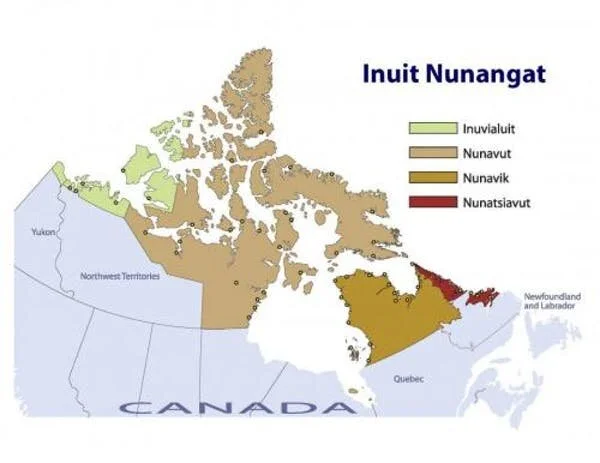
Map of Inuit Nunangat (Inuit Regions of Canada) (Inuit Tapiriit Kanatami)
The ways the Canadian health-care system interacts with Inuit populations plays an important part in this health disparity. And there is an urgent need for Inuit to be able to access and receive appropriate health care.
Elder Peter Irniq speaks about the remarkable Inuit capacity for survival in extreme conditions
In 2015, the Truth and Reconciliation Commission of Canada (TRC) report made 94 recommendations in the form of Calls to Action. Seven of these Calls to Action specifically relate to health. They explain the importance of engaging community members, leaders and others who hold important knowledge in the development of health care.
As members of a team of Inuit and academic health-care researchers, we have been working with health-system partners to support Inuit in cancer care. We focus on enhancing opportunities for Inuit to participate in decisions about their cancer care through the shared decision-making model, in a research project we call “Not Deciding Alone.”
We travel thousands of miles for cancer care
Our collective success in addressing the TRC Calls to Action will require health research to focus on addressing the health-care inequities experienced by Inuit, First Nations and Métis populations in ways that take action to promote self-determination.
This is important as current health-care models do not often support Indigenous values, ways of knowing and care practices.
Poor cultural awareness in our mainstream health-care systemsdiscourages Indigenous people from seeking care and engaging with health services. It increases the risk that Indigenous people will encounter racism when seeking care.
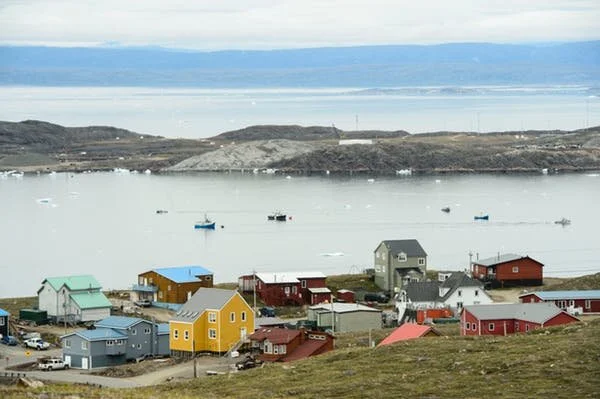
Small boats make their way through the Frobisher Bay inlet in Iqaluit on Aug. 2, 2019. THE CANADIAN PRESS/Sean Kilpatrick
There are many documented instances of our health-care system’s failure to provide appropriate health care to Indigenous people, due to unfair assumptions and demeaning and dehumanizing societal stereotypes.
These health system failures discourage people from seeking care, and have resulted in death, as in the case of Brian Sinclair,who died after a 34-hour wait in a Winnipeg hospital emergency room in September 2008.
There can also be significant physical barriers to care for Inuit. Critical health services such as oncology specialists and treatments are often located in urban centres such as Ottawa, Winnipeg, Edmonton, Montréal and St John’s, thousands of kilometres away from remote communities in Inuit Nunangat. This leaves many Inuit negotiating stressful urban environments, dealing with cultural dislocation and navigating complex health systems without the benefit of community support networks.
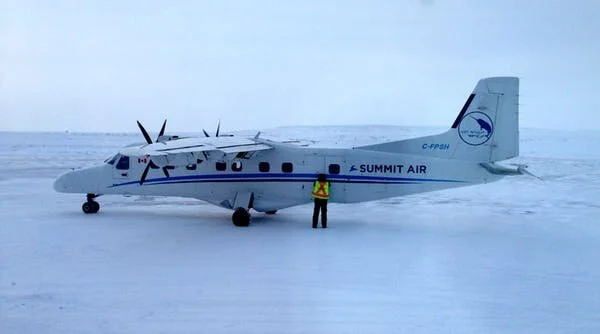
People must fly out of remote communities for cancer treatment. (Alex Hizaka), Author provided
During our research, an Inuit peer support worker explained what it can be like for those who travel far from their family and community for their care:
“People come with no idea of why, and we are having to bridge two worlds for them. Often patients have no idea why health-care providers tell them to get on a plane, and then they think they are coming for treatment for three days and then it becomes two weeks. It is a tough situation as often people have no money, no support. People need to be able to explain their situation and how it is for them. People need to know that they are not alone.”
Research shows that these geographical challenges significantly impact access to health care and are often exacerbated by language barriers. Together these factors may make people vulnerable to additional harms unrelated to the health conditions for which they seek treatment.
Patients and health-care providers work together
Shared decision-making is an important evidence-informed strategy that holds the potential to promote patient participation in health decisions
In this model, health-care providers and patients work togetherusing evidence-based tools and approaches and arrive at decisions that are based on clinical data and patient preferences— to select diagnostic tests, treatments, management and psycho-social support packages.
Shared decision-making is considered a high standard of carewithin health systems internationally and it has been found to benefit people who experience disadvantage in health and social systems.
Shared decision-making has also been found to promote culturally safe care, and has the potential to foster greater engagement of Inuit with their health-care providers in decision-making.
The concept of cultural safety was developed to improve the effectiveness and acceptability of health care with Indigenous people. Culturally safe care identifies power imbalances in health-care settings — to uphold self-determination and decolonization in health-care settings for Indigenous people.
The aim of a shared decision-making approach is to engage the patient in decision-making in a respectful and inclusive way, and to build a health-care relationship where patient and provider work together to make the best decision for the patient.
Most importantly, our approach has emphasized ways of partnering that align with the socio-cultural values of research partners and community member participants, both to develop tools and create approaches to foster shared decision-making. The term “shared decision-making” translates in Inuktitut to “Not Deciding Alone” and so that is the name of our project.
The results are outcomes that Inuit are more likely to identify as useful and relevant and that respect and promote Inuit ways, within mainstream health-care systems.
Self-determination through Inuit Qaujimajatuqangit
Our research uses the guiding principles of Inuit Qaujimajatuqangit — a belief system that seeks to serve the common good through collaborative decision-making — as the foundation for a strengths-based approach to promote Inuit self-determination and self-reliance.
Inuit Qaujimajatuqangit principles have been passed down from one generation to the next and are firmly grounded in the act of caring for and respecting others.
There is important learning taking place within academic and health-care systems that involves deepening understandings of what “patient-oriented care” means. We need to learn how to do research in partnership with those who are the ultimate knowledge users in cancer-care systems — patients.
In our work, Inuit partners and community members are leading the development of shared decision-making tools and approaches, building on their strengths and resiliency. Our research and health systems are beneficiaries of these partnerships that hold potential to create health care that is welcoming and inclusive for all.
With guidance and support from Inuit and more broadly, from Indigenous partners, we are learning how to take action on the TRC recommendations, and to make respect and kindness integral to best practice in research and health care.
Janet Jull is a Assistant Professor, School of Rehabilitation Therapy, Queen's University, Ontario
THIS ARTICLE WAS ORIGINALLY PUBLISHED ON THE CONVERSATION
The Spirit of Morocco: Music, Architecture, and Living Heritage
There is more to Morocco than the gorgeous sand dunes of Merzouga in the Sahara or the majestic Atlas Mountains of the Maghreb region. Morocco’s music can take you on a journey through Spain, with flavors of Berber, hints of Arabic, and the Saharan style. Its architecture is a show stopping feature of pisé buildings, the finesse of Moorish exiles, and a glimpse into the Islamic influence of the Idrisid dynasty. The people bring craftsmanship and skill to their communities, combining history and culture in a way only Morocco can do.
Read MoreMADAGASCAR: Nosy Lehibe
An epicenter of wildlife, Madagascar sits like The Garden of Eden about 300 miles off the coast of southern Africa. Best known for its lemurs and baobab trees, it is also home to more than 20 ethnic groups hailing from Africa and Indonesia. Explore Madagascar in this short video.
Read MoreOil Wars: The Significance of Small Battles for Land Rights Against Major Oil Companies
The complexity of the oil industry and the massive influence of big money over environmental and public health decisions often leaves the small battles to be squashed before they have seen the surface. But recent fights over land rights, have led to some large victories. Home owners, environmental groups, and tribes have all made strides against companies in their area; can these local battles gain headway on a national level?
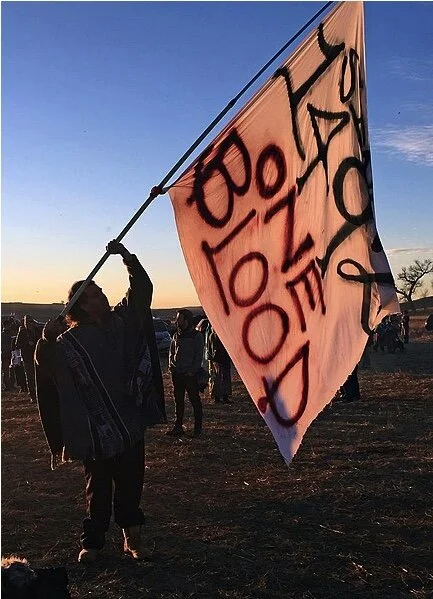
Flag at a protest for the construction of the Dakota Access Pipeline. Becker1999. CC-BY-2.0.
Oil has hit a cornerstone between immense support from Trump’s administration and increasing heat from environmental activists. Often oil companies are in the news when facing massive consequences for oil spills. But, people that live near drilling sites or along pipelines can face health effects and unfair treatment from corporate and government agencies every day.
The biggest culprits are often in rural areas where people are dependent on the land for their livelihood. For example, a pipeline being built from western Texas to the Gulf cuts straight through Hill Country and the ranches there. This is even true for areas designated as private conservation land that is supposed to be protected from any development. The building raises concerns for environmental, aesthetic, and public health reasons.
The same problem is found in West Virginia, where pipeline development cuts through private homes. If the owners refuse to sell their land, it can be taken legally through Eminent Domain. This will continue to become more popular in the next 15 years as there is an estimated 26,000 miles of new gas pipelines to be built. People are starting to sue to bring the problem to the Supreme Court. The increased danger of living next to a pipeline can lead to cancer, contaminated drinking water, and increased dangers if the line were to break or become damaged.
One of the biggest groups fighting against pipelines are native tribes. The Sioux gained attention at Standing Rock while fighting the production of the Dakota Access Pipeline. In the Upper Midwest, rights to Line 5 are being revoked on reservations. In Alaska, Inuit tribes are fighting drilling in the Arctic National Wildlife Reserve (ANWR) which has been opened up to drilling for the first time under the Trump administration.
The ANWR and the Arctic are thought to be some of the largest untapped oil reserves in the world. Climate change has increased access to areas of the region that couldn’t be reached before, yet the environmental risk of drilling and transporting in an extremely unique and fragile ecosystem has led to a lot of resistance. In the ANWR, drilling is thought to upset Caribou migration and breeding grounds, which the local people rely on as a food source and cultural significance.
In the US, it often seems like these fights always end in the same way, but in Ecuador and Canada tribes have main significant gains against drilling. In the Amazon, the Waorani won a landmark case against the Ecuadorian government that was trying to open the rainforest to mining. The government hoped to bring more cash into the country but would do so at a huge environmental and cultural cost. One that the Waorani wouldn’t allow. The area covered 7 million acres of Indigenous land. The Waorani said that is about more than the land but instead about a way of living that supports the lives of others.
In Canada, fights against seismic blasts to find offshore oil reserves had great success to protect the local ecosystem. The local Inuit of Clyne River joined with Greenpeace and grassroots environmental movements to bring it to national attention. Now Arctic off-shore blasting has seen its final days. There are great strides to be made by fighting the daily impacts of oil and gas drilling. If anything, increasing drilling and pipeline construction is continuing our dependence on one of the most carbon-dense energy sources in the world.
DEVIN O’DONNELL’s interest in travel was cemented by a multi-month trip to East Africa when she was 19. Since then, she has continued to have immersive experiences on multiple continents. Devin has written for a start-up news site and graduated from the University of Michigan with a degree in Neuroscience.

Birth Fate: Institutionalized Racism in New Zealand Prisons
New Zealand has the second highest incarceration rate in the Western World, beat only by the United States. Yet, there is an unequal distribution throughout prisons, with Maori making up majority of those incarcerated. The explanation lies in history.
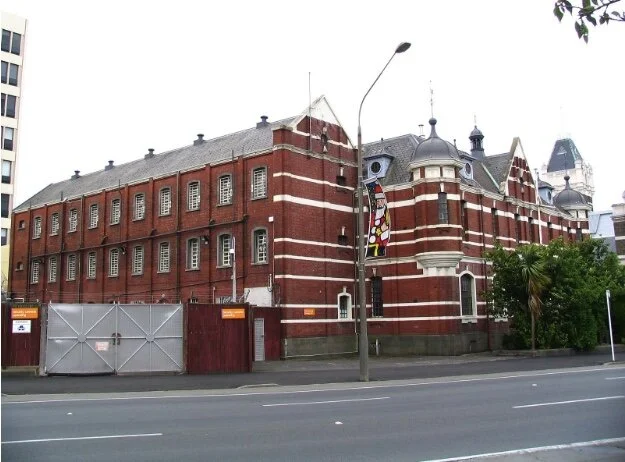
Historic prison in Dunedin, New Zealand. Benchill. BY-SA 3.0.
New Zealand has been praised for its efforts in incorporating aspects of indigenous culture into everyday life. Road signs are posted in both English and Maori. Students in school learn Maori history and culture. The All Blacks do the haka. But looking beneath the surface it is apparent that racism against the Maori culture still very much exists. This is no more evident as in the incarceration rates. Maori make up about 15 percent of New Zealand’s population but over 50 percent of the prison population. This difference has to be examined not just on a criminal justice level but also from a historical perspective.
A study from the University of Otago, found that there three main reasons behind the high incarceration rates for Maori people. They are structural racism, intergenerational trauma, and colonization. Of course these three are all intertwined with colonization being the cause for intergenerational trauma and structural racism. The biggest effects of colonization come from subordination and institutionalized change. Having a change in the value of wealth – to one of monetary and property value – and being on the losing end of that spectrum creates a never ending struggle. Maori justice system before colonization revolved around group accountability and following tikanga, the Maori just way of being. Prisons involve punishment and individual causation. Adapting to a system whose values are drastically different than your own and having to fight for your land and culture, has left the Maori at a disadvantage.
On an individual level, majority of inmates had been a victim to violence, had a mental health diagnosis or brain injury, did not have proper schooling, and/or had a parent who also had been in correctional facilities. Poverty on its own is a huge factor in crime statistics with first acts being committed out of necessity. Add on top of that, generational histories of crime, violence, and mental health, it is hard to break the cycle.
If you look both at the history of New Zealand and the history of the person, it is no surprise that institutionalized racism exists. The current government is working on reducing the number of people incarcerated but it is hard to tackle the problem when Maori representation at the government level is lacking. They are looking towards examples from Norway, with community correction facilities, and there are programs working to bring Maori values to prisons. But until more effort is done to correct inequalities in wealth, education, and healthcare it may be hard to have lasting change.
DEVIN O’DONNELL’s interest in travel was cemented by a multi-month trip to East Africa when she was 19. Since then, she has continued to have immersive experiences on multiple continents. Devin has written for a start-up news site and graduated from the University of Michigan with a degree in Neuroscience.

Investing in War: How Violence Has Turned into a Profitable Business
Violence finds its home most often in some of the poorest places. But money filtrates its way through often gathering in arms businesses and corrupt governments. In recent times, this has been true in many countries throughout Africa and the Middle East. Is the price of death worth it?
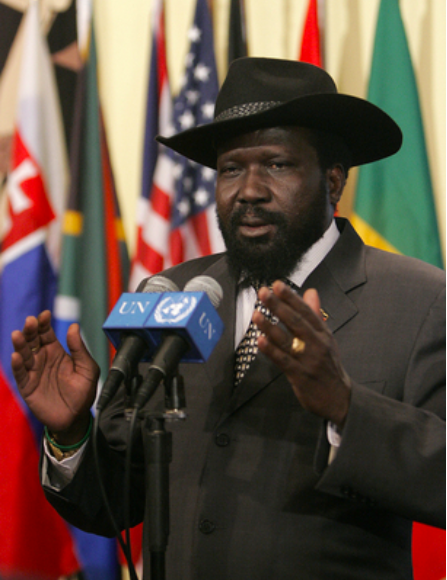
Salva Kiir, President of South Sudan. Jenny Rockett. CC BY-SA 1.0.
There is a moral question that has surfaced over the years on whether you would have to choose between the death of someone you loved or thousands of strangers. Most of the time it would be frowned upon if you picked one life at the expense of thousands. But not everybody agrees. That moral standard doesn’t translate when power is involved. Too often the death of innocent people is picked for monetary gain. This isn’t just found with governments often associated with corruption but also can be found in US foreign policy and even in the UN. Just look at the Rwandan Genocide and Iraqi War for example. The US tends to only involve itself in conflict in which it has another interest in, often oil or another economic benefit. In Rwanda, the UN actually left the country when violence broke out and only got re-involved once it reached international attention. After the genocide ended, the country got so much foreign aid that its capital city, Kigali, is being recreated as a post-modern enterprise focused solely on appearance and not reality. This pattern has continued throughout many conflicts. It is, quite frankly, the business of war.
This best current examples of this trend lie in South Sudan and Yemen. The rise of the Arab Spring lead to the intermingling of conflict, with wealthy monarchies fueling and funding neighboring battles. This is seen in both Syria and Libya. The most notable pairing though is the UAE in Yemen. Like most foreign involvement it is motivated by economic gain, namely control of the Red Sea coastline, and military prowess, as presence equals power. The UAE’s influence has led to the risk of starvation for 14 million people and a much more complex civil war. The leaders of militia groups are now benefiting greatly from foreign aid while the gap between rich and poor continues to spread.
South Sudan follows a similar pattern. The civil war has led to leadership on both sides of line pocketing millions and pursuing private business in real estate acquisitions and capital investments. South Sudan’s economy is completely dependent on oil leading to endless conflict over oil reserves and wealth distribution. The war has left over 5 million in need of aid yet little is being done to stop it. When those in charge get nothing but wealth, why save the people?
One of the biggest culprits of profiting from war lies in the companies controlling valuable natural resources. Often these companies are foreign owned and operated and give little thought to the violence surrounding it, focusing only on the influx of cash. These goals often coincide with a repressive regime. A study from the World Bank found that if one-fourth of the country's GDP is from primary commodity exports, the possibility of a civil war increases by 30%. Two examples of this are in Columbia and Tibet. Both areas have repressive governments with Tibet under illegal occupation of China. This has allowed for the expansion of foreign interest in mining in both countries, often with little regard to the surrounding area and the people that live there. In Columbia alone, 68% of displacements occurred in mining areas.
As long as money is involved and there are people, governments, and companies benefitting from war and violence, there is little motivation to change. If only we could learn that you don’t need to fight violence with violence, you fight by combatting the wealth of those with power.
DEVIN O’DONNELL’s interest in travel was cemented by a multi-month trip to East Africa when she was 19. Since then, she has continued to have immersive experiences on multiple continents. Devin has written for a start-up news site and graduated from the University of Michigan with a degree in Neuroscience.



The Swimming Sisters of Alcatraz
The waters between San Francisco and Alcatraz, a former prison, are rife with urban legend. Some say the water is too dangerous for swimming, but Mitali Khanzodé, 16, and her sister Anaya, 12, see the water as a place to make and break open water swimming records. Anaya currently holds the record as the youngest person to swim the span of the Golden Gate Bridge, which was previously held by her sister. Although the waters can be rough and extremely cold, both sisters cannot imagine a life where open water swimming isn’t part of their weekly routine.
Turning Plastic Trash Into Cash in Haiti
Plastic Bank is a global network of micro-recycling markets that empower the poor to transcend poverty by cleaning the environment. Operating in Haiti, the Philippines, Indonesia and Brazil, it works like this…. Locals collect plastic trash, bring it to recycling centers where it is exchanged for cash.
Read More