
Tucked away in the depths of Siberia is a town called Mirny. Amongst its picturesque landscape is something quite spectacular. In the heart of the city lies a 1,700-feet deep hole, once used as a diamond mine. As the first place diamonds were found in Russia, the Mir Mine is an iconic symbol in Russian history. While some of the surrounding mines remain active, the pit of the Mir Mine is now closed for business. The mine stands as a testament to the small town’s perseverance against the cruel conditions of Siberian winters and reminds its habitants that they are still a diamond in the rough.
Ireland Becomes the First Country to Divest from Fossil Fuels
Executive Director of Trócaire calls the bill “both substantive and symbolic.”

Sunset in Skerries, Ireland. Giuseppe Milo. CC BY 2.0
Last July, Ireland moved to take public funds out of fossil fuels. While many universities, organizations, and even cities have made similar commitments, Ireland will be the first country to do so. According to the New York Times, Ireland’s action represents the most substantial advance for divestment in the world.
The bill commiting to divestment was passed with all party support by the lower house of Parliament and necessitates that money from the sovereign fund (8.9 billion euros) be taken out of fossil fuels. According to a statement, the change will be made, “as soon as practicable.” (The phrase likely refers to changes made to the bill: originally it called for divestment within five years, but was altered to give the government more flexibility.)
According to the Guardian, the bill defines a fossil fuel company as one that receives 20% or more of its income from the “exploration, extraction or refinement of fossil fuels.”
The divestment bill will move on to the Senate which has the ability to delay, but not overturn it. According to the aid of Thomas Pringle, the parliament member who introduced the bill, it has the support of Prime Minister Leo Varadkar and is thus almost guaranteed to become law. Varadkar’s support is expected, as he has professed hopes that Ireland will become a “leader in climate action.”
According to Pringle himself, the “movement is highlighting the need to stop investing in the expansion of a global industry which must be brought into managed decline if catastrophic climate change is to be averted. Ireland by divesting is sending a clear message that the Irish public and the international community are ready to think and act beyond narrow short term vested interests.”
Eamonn Meehan, director of Trócaire, the environmental organization that advocated for the bill, told the New York Times that the bill, “will stop public money being invested against the public interest, and it sends a clear signal nationally and globally that action on the climate crisis needs to be accelerated urgently, starting with the phase-out of fossil fuels.”
Currently, Ireland has over 300 million euros in fossil fuel investments, according to the Guardian. The country's decision to divest is so momentous in part because of its reputation as slacker in fighting climate change. According to a survey by Climate Action Network, conducted a month before the decision, Ireland was was ranked second to last in the category of climate action, followed by Poland. The country’s decision to divest promises a greener future for Ireland.
Now, Ireland hopes that other countries will follow its lead. According to Gerry Liston of the Global Legal Action Network, and drafter of the bill, “governments will not meet their obligations under the Paris agreement on climate change if they continue to financially sustain the fossil fuel industry. Countries the world over must now urgently follow Ireland’s lead and divest from fossil fuels.”
EMMA BRUCE is an undergraduate student studying English and marketing at Emerson College in Boston. While not writing she explores the nearest museums, reads poetry, and takes classes at her local dance studio. She is passionate about sustainable travel and can't wait to see where life will take her.


The Museum of Antioquia, in Medellin. Jonathan Robinson.
Turmoil, Pain, and Beauty: Colombia’s Blossoming Art Scene
With its rich, diverse culture, picturesque landscapes and lush natural resources, Colombia should be one of the most popular tourist destinations in South America. However, the country’s image took a hit in the 1980s, with the rise of cocaine and the drug cartels that controlled it, most notably, Pablo Escobar and his Medellin cartel. In recent years the Colombian government has addressed this problem head-on, dismantling drug rings and adopting a national slogan designed to put visitors at ease: “The only risk is never wanting to leave”. A recent spike in Colombia’s art scene may also help lift the stigma that shrouds the country, adding a new dimension to a people and culture the world thought it knew, and helping Colombia develop a new identity, or perhaps, reclaim an old one.
To be fair, Colombia is still the world's top producer of cocaine, and the legal status of cocaine within the country, combined with the high demand for it outside of the country makes the drug trade a recurrent enemy of the government. To make matters worse, drugs are not the only vice thriving in Colombia. Prostitution is also legal and readily available, making Colombia a popular destination for sex tourism, like Thailand or the Netherlands. In 2012, American secret service agents made international headlines when they got into a spat with a prostitute over an unpaid bill for “services rendered” while then President Barack Obama was visiting Cartagena. While the incident was a PR nightmare for the US, it also added to Colombia’s already prevalent image as a haven for illicit activity.
There is, however, much more to Colombia than sex and dope—and there always has been. In the heart of Medellin, the very city Escobar called home, lies the Museo de Antioquia, one of Colombia’s oldest museums. The museum features the work of famed Medellin artist Fernando Botero, known for his voluminous depictions of people and animals. This “Boterismo” style won Botero international fame, with many of his paintings and sculptures being featured in museums around the world. There was even a restaurant named after him in Las Vegas. Medellin is not the only city to get swept up in the art craze. The capital city of Bogota is home to over 100 commercial art galleries, a byproduct of an economic boom that Colombia experienced as the drug wars began to subside and the country began to stabilize.
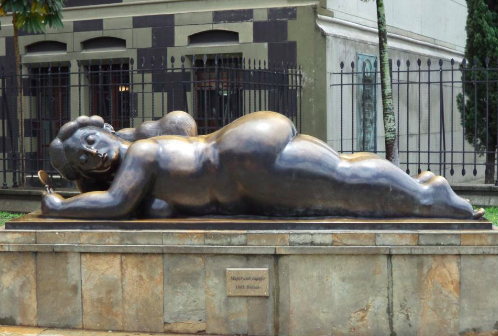
The works of Fernando Botero are prominently featured at the museum. Jonathan Robinson.
Sometimes, in the scramble to create a compelling story, media outlets may narrow or oversimplify the identities of people. Colombians are joining a long list of ethnic, gender, and religious groups who take issue with the way they are portrayed in the media and are taking it upon themselves to help the world understand that their culture may be a bit more nuanced than it has been led to believe. While the rise of Colombia's art scene may not refute the bloody images the media has shown in the past, it does add to them, creating a separate narrative for the country that exists alongside the current one. In the end, understanding Colombia may not require the world to empty its cup, but rather, to invest in a larger one.
JONATHAN ROBINSON is an intern at CATALYST. He is a travel enthusiast always adding new people, places, experiences to his story. He hopes to use writing as a means to connect with others like himself.

Spirit of Kenya
Wow Tapes has taken us across the globe through videos demonstrating experiences have been as culturally exhilarating as this one. The filmmakers were accepted with broad smiles and open arms into a wonderful campfire evening with one of the many tribal groups in Masai Mara. Sitting under the moonlight, they heard tribal legends and felt the human-aspect of the animal-dominated savannah.
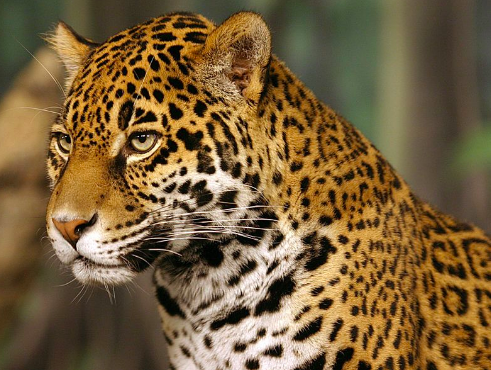
The jaguar is the third largest cat on the planet. Cburnett at English Wikipedia. CC BY-SA 3.0.
Conservationists Hope to Help Jaguar Populations Claw Their Way Back from Near Extinction
Last month, at the Convention for Biological Diversity in Sharm El-Sheikh, Egypt, the United Nations Development Programme (UNDP), World Wildlife Fund (WWF), Wildlife Conservation Society (WCS), Panthera, and government officials from several Latin American countries came together to announce the designation of November 29th as International Jaguar Day, and also to unveil the The Jaguar 2030 Conservation Roadmap for the Americas, a plan for increasing wild jaguar populations. Once widespread throughout the Americas, the jaguar has seen its numbers decline over the last few decades. By increasing international awareness and funding programs that can protect jaguars, conservationists hope to help the animal restore its population numbers.
The jaguar, or Pathera Onca, is the third largest cat in the world, behind the tiger and lion, respectively. While these animals are typically found in South America, sightings have occurred as far north as Los Angeles. Jaguars are often confused with two other spotted big cats, the cheetah and leopard, but they are easily distinguished when one inspects their coats. Cheetahs are covered in singular, dot-like spots while leopards have ringed markings called rosettes. Jaguars have large rosettes with singular spots in the center, a combination of the two smaller cats’ markings. All three cats were hunted extensively for their fur, or to keep them from preying on livestock at local farms. In the 1960s the wild jaguar population stood at around 400,000. Hunters killed 18,000 jaguars each year and today, estimates place the total population at around 15,000. The jaguar has been listed as a “near threatened species” by the International Union for Conservation of Nature, meaning that there is a high risk that it could become endangered or even extinct in near future.
There is some good news, however. Thanks to conservation programs enacted in 2005, Mexico saw its jaguar population increase by 20 percent over the last 8 years. Last year, the Arizona Game and Fish Department released footage of a female jaguar prowling through southern Arizona, the first female sighted there since the 1960s. Instances such as these give conservationists hope that the big cats can make a comeback. The Jaguar 2030 Conservation Roadmap for the Americas aims to bolster Jaguar conservation in an area between Mexico and Argentina known as “The Jaguar Corridor”. The organizers hope to create 30 jaguar conservation sites in this area and to stimulate programs that mitigate hunting and promote ecotourism, thus creating a more peaceful coexistence to between the animals and the people they share space with. It’s a huge undertaking, but if it succeeds, we can look forward to seeing more spotted cats in the coming years.
JONATHAN ROBINSON is an intern at CATALYST. He is a travel enthusiast always adding new people, places, experiences to his story. He hopes to use writing as a means to connect with others like himself.

THE KINGDOM | A Conservation Story
A love letter to conservation, our changing climate, and the difference one person can make in a great big world. This is the quiet story of Sonam Phuntsho, a forest caretaker in the Kingdom of Bhutan, who has spent the last 60 years planting over 100,000 trees by hand.
Corsica
Corsica is a mountainous Mediterranean island with large, thick forests. The places captured in this video are Porto, Plage de Porto, Tête du Chien, Gorges de Spelunca, Capo-Rosso, Tour de Turghiu, Calvi, Boucle de Ficaghiola, Lumio, Plage Arinella, Village d'Occi, Pigna, Eglise Sant’Antonino, l’île-Rousse, Plage de Ghjunchitu, Plage de Lozari, Désert des Agriates, Punta di Furmiguli, Plage de Saleccia, Saint-Florent, Nonza, Plage de Nonza, Eglise Santa-Giulia, Erbalunga, Corte, and Lac de Melu.
Tides of Change : Japan to Resume Commercial Whaling
For more than thirty years, the island nation of Japan has fought to expand its commercial whaling operations. That fight has mostly been a losing one, with its efforts often being blocked by anti-whaling countries around the world and condemned by the International Whaling Commission, an organization whose members include Japan itself. However, Japan’s recently proposed exit from the commission will allow the country to reclaim one of its most time-honored traditions, and the move is drawing international criticism.

Two Minke Whales being loaded onto the Nisshin Maru. The ship has facilities on board which allow it to freeze and process whales while at sea. Australian Customs and Border Protection Service. CC BY-SA 3.0
In 1982 the International Whaling Commission, or IWC, imposed a global moratorium on all commercial whaling, save for subsistence whaling by Aboriginal communities. The moratorium went into effect in 1985 and was met with opposition from Iceland, Norway, and Japan, countries with strong whaling traditions. In Japan, whale meat generally served the same purpose that beef or lamb served in Western societies and this was especially true during hard times. In the 1940s as the country was recovering from World War 2, whale meat was the single most consumed meat among Japanese people, and it remained so through the 1960s. After the announcement of the IWC’s whaling ban, Japan petitioned for the right to continue whaling in the Antarctic for “scientific purposes” though the specific nature of its research remained unclear. Whale activists claimed that this “research whaling” was in fact, commercial whaling in disguise, and vessels like the Nisshin Maru, Japan’s largest whaling vessel and the world's only factory whaling ship, became a frequent target of animals rights groups, with some going so far as to board vessels of their own and try to disrupt the Maru’s whaling expeditions by obstructing its path. Earlier this year, Japan expressed a desire to develop new ships, fast enough to outrun those of the activists, but the plan appears to have been scrapped, as the Japanese government announced in late December that it will formally withdraw from the IWC, discontinue its operations in the Antarctic and resume commercial whaling operations in its own coastal waters. Though the demand for whale meat has diminished somewhat in Japan, the practice of whale fishing is still considered by many to be intrinsic to the country’s cultural identity.
Environmental conservation hinges on the idea that some of the Earth’s resources are non-renewable. Humans can hunt an animal to extinction, and that extinction creates an imbalance in the ecosystem that the animal once belonged to. The effects of that imbalance can, in turn, come back to haunt humans, either directly or indirectly. These are, however, relatively young ideas, and pitting them against hundreds of years of tradition is sure to be a test for all parties involved.
JONATHAN ROBINSON is an intern at CATALYST. He is a travel enthusiast always adding new people, places, experiences to his story. He hopes to use writing as a means to connect with others like himself.

Nigeria - Any Dream
In June 2017 we took a heart and went to the city of Lagos, Nigerias melting pot and the dream destination for most people who reside in nearby cities and rural communities. Everyone believes Lagos is a city where dreams come true, regardless of your means of livelihood.
The Trail To Kazbegi
What happens when four like-minded adventurers head into one of the world’s wildest mountain ranges with nothing but their mountain bikes and enough food to survive for 10 days?
The answer? What doesn’t happen? Terrifying lightning storms. Raging-river crossings. Snow-covered glacial pass traverses. Mind-melting descents. Constant fights with vicious dogs. Tense encounters with over-zealous border-patrol guards.
All of the above were just another day following “The Trail to Kazbegi,” a self-supported mountain-bike mission through the highest reaches of the Caucasus Mountains in the former Soviet Republic of Georgia. Our four-man team—adventure filmmaker Joey Schusler, Bike magazine editor Brice Minnigh, photographer Ross Measures and mountain man Sam Seward—spent half of June 2015 exploring the crown jewels of the Georgian High Caucasus on a feature assignment for Bike.
Fighting Food Waste in Los Angeles
When Rick Nahmias realized that fresh produce in his community was routinely being tossed out for minor bruising or browning, he knew something needed to be done to end the unnecessary waste. He founded Food Forward, a non-profit dedicated to ending hunger by sharing abundance. The organization recovers fresh produce that may otherwise go to waste, collecting from farmers markets, wholesale food suppliers, and even residential backyards. Within the past year, they’ve already fed 1.5 million people across Los Angeles.
Unlikely Emcees: The Muslim Hip-Hop Artists Bridging Worlds
Poetic Pilgrimage is a hip-hop duo from the U.K., and their music is influenced by their Muslim faith, Jamaican background and British upbringing. Not only is their music giving a voice to Muslim women, it's become an unexpected bridge between the global hip-hop community and Islam.
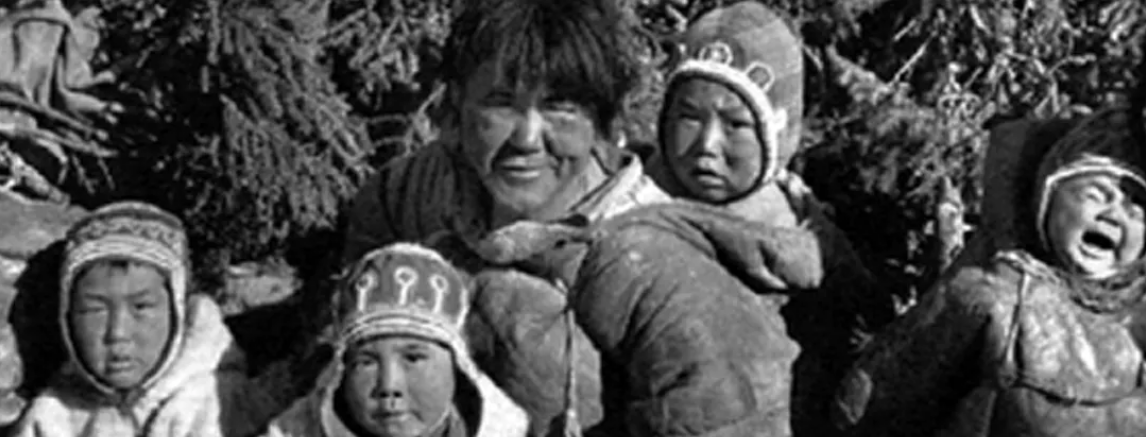
A family of Ahiarmiut, including David Serkoak pictured behind his mother Mary Qahug Miki (centre) at Ennadai Lake in the mid-50s before the Canadian government forcefully relocation them.
Canada’s Genocide: The Case of the Ahiarmiu
As a human rights scholar, I have long argued that Canada committed cultural genocide against Indigenous peoples. But recently, I’ve come to conclude, in the case of the Ahiarmiut, that it’s not cultural genocide —it’s actual physical genocide.
An article in the Globe and Mail last summer by Gloria Galloway told the story of what happened to the Ahiarmiut, a small group of Inuit in 1950.
The Canadian government forcefully relocated them 100 kilometres from their original home in what is now Nunavut. The government’s reason for moving the Ahiarmiut people was that they were becoming too dependent on trade with federal employees at a nearby radio tower.
Galloway got much of her information from David Serkoak, an Elder who lived through the relocations. Recently, Serkoak collaborated with the Canadian Museum for Human Rights (CMHR) to tell his story and to be a storyteller for his community.
RHODA E. HOWARD-HASSMANN is a Professor Emeritus, Department of Political Science, at Wilfrid Laurier University.
THIS ARTICLE WAS ORIGINALLY PUBLISHED ON THE CONVERSATION
Nomads of Mongolia
Life in Western Mongolia is an adventure. Training eagles to hunt, herding yaks, and racing camels are just a few of the daily activities of the nomadic Kazakh people. Brandon Li spent a few weeks living with them and experiencing one of the most unique cultures in the world.
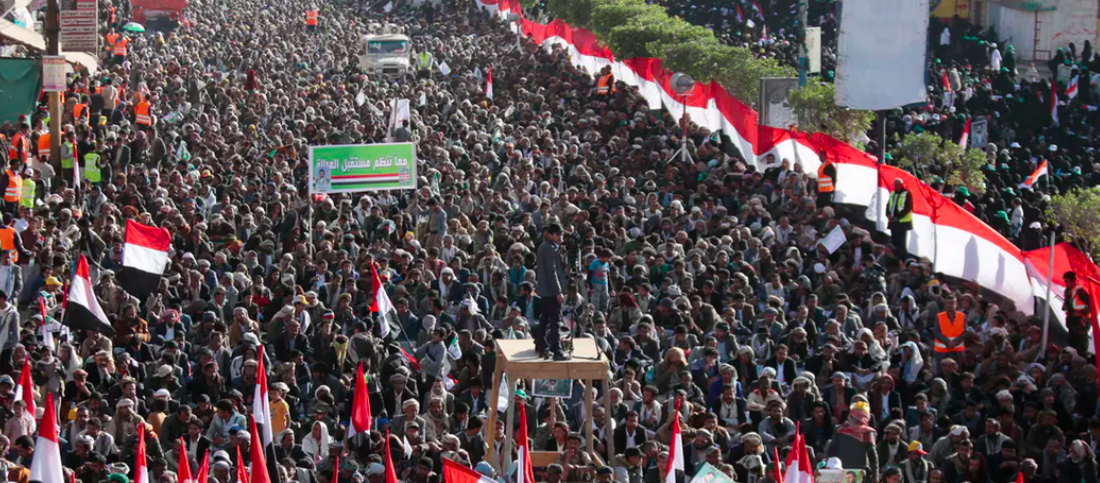
Supporters of Shiite Houthi rebels attend a rally in Sanaa, Yemen, in 2017. AP Photo/Hani Mohammed, File
Who are Yemen’s Houthis?
Fully half of Yemen’s population – 14 million people – are on the brink of starvation. Some analysts blame their inability to access basic foodstuff on escalating conflict between two religious factions: the country’s Sunni Muslims and its Houthis. The Houthis belong to the Shiite branch of Islam.
Saudi Arabia, which shares a border with Yemen and is predominantly Sunni, has been helping Yemen’s government forces try to regain control over Houthi-held parts of the country. For several weeks, a Saudi-led coalition has unleashed near-continuous airstrikes on Houthi strongholds including access points for the majority of humanitarian aid coming into country.
What are the Houthis’ religious beliefs?
Roots of Houthi movement
Just as the Protestant tradition is subdivided into Methodists, Presbyterians, Congregationalists and others, Shiite Islam is also subdivided. Houthis belong to the Zaydi branch.
From the ninth century onward, or for a thousand years, a state ruled by Zaydi religious leaders and politicians existed in northern Yemen. Then, in 1962, Egyptian-trained Yemeni military officers toppled the Zaydi monarchy and replaced it with a republic. Because of their ties to the ancient regime, Zaydis were perceived as a threat to the new government and were subjected to severe repression.
Nearly three decades later, in 1990, the region known as south Yemen merged with north Yemen to become the Republic of Yemen. Zaydis remained a majority in the north and west of the country, and also in the capital city of Sanaa. However, in terms of the overall population, they became a minority.
According to a 2010 CIA estimate, 65 percent of Yemen’s people are Sunnis and 35 percent are Shiites. The majority of those Shiites are Zaydis. Jews, Bahais, Hindus and Christians make up less than 1 percent of inhabitants, many of whom are refugees or temporary foreign residents.
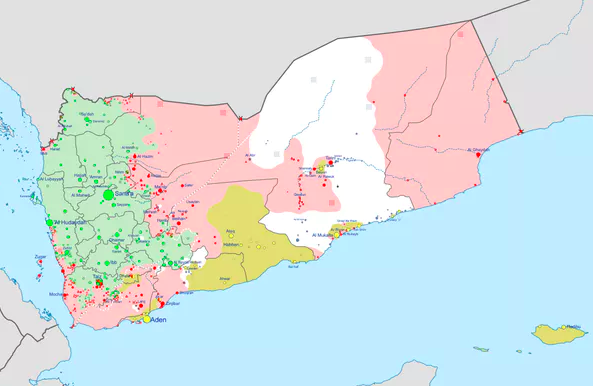
Yemen: 2015 Civil War map. The section in green is controlled by the Houthis. 0ali1,via Wikimedia Commons, CC BY-SA
To reduce the dominance of Zaydis in the north, government authorities encouraged Muslims belonging to two Sunni branches with links to Saudi Arabia – Salafis and Wahhabis – to settle in the heart of the Zaydis’ traditional territories.
Start of Houthi insurgency
Contributing to this trend, in the early 1990s, a Yemeni cleric founded a teaching institute in the Zaydis’ heartland. This cleric, educated in Saudi Arabia, developed a version of Salafi Islam.
His institute proselytized with the goal of reforming Muslims through conversion. It educated thousands of Yemeni students and, in less than three decades, the new religious group grew large enough to compete with older groups such as the Zaydis.
According to scholar Charles Schmitz, the Houthi insurgency began in the early 1990s, spurred, in part, by Zaydi resistance to growing Salafi and Wahhabi influence in the north.
Hussein Badreddin al-Houthi, son of a prominent Zaydi cleric, gave the grassroots movement its name. He coalesced support among his followers around a narrative of Houthis as defenders and revivers of Zaydi religion and culture.
Sunni vs. Zaydi Shiite beliefs
What beliefs set Zaydis apart from Sunni Muslims? That is an old story, dating back to the seventh century when the Prophet Muhammad died.
Shiites and Sunnis disagree about who should have been selected to succeed Muhammad as head of the Muslim community. Two groups emerged after his death. One group of the Prophet’s followers – later called Sunnis – recognized four of his companions as “rightly guided” leaders In contrast, another group – later called Shiites – recognized only Ali, the fourth of these leaders, as legitimate.
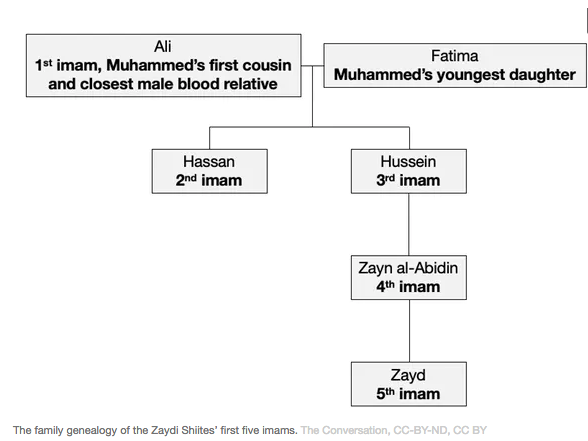
Ali was the Prophet’s first cousin and closest male blood relative. He was also married to Fatima, Muhammad’s youngest daughter. For these and other reasons, Shiites believe that Ali was uniquely qualified to lead. In support of this claim, they cite sources describing Muhammad’s wish that Ali succeed him. Shiites consider Ali second in importance only to the Prophet.
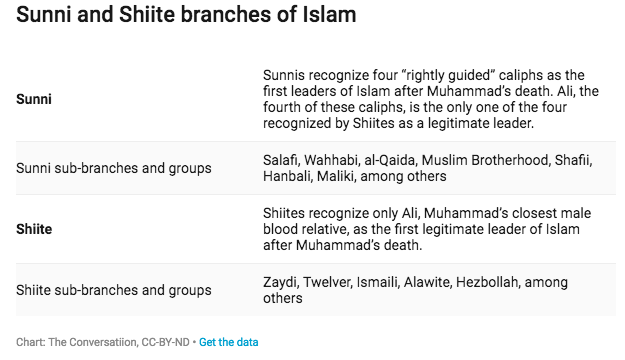
Over time, further divisions took place. Allegiances to different descendants of Ali and his two sons, Hassan and Hussein, split Shiites into sub-branches. A grandson of Hussein called Zayd gave the Zaydis their name. To them, he is the fifth imam after Muhammad, giving the Zaydis their other name: “Fivers.”
Zayd earned the respect of his followers when he rose up against the powerful Muslim rulers of his time, whom he believed to be tyrannical and corrupt. Though his rebellion was ill-fated, his fight against oppression and injustice inspires Zaydis to actively resist.
A key Zaydi belief is that only blood relatives of Ali and Fatima are eligible to serve as religious leaders, or imams. In Yemen, these relatives form a notable class of people called Sada. Hussein al-Houthi, the first leader of the Houthis, came from a prestigious clan of Sada.
Impact of sectarian differences
Not all Zaydis have a favorable view of Sada elites. When north and south Yemen merged in 1990, the republican government, led by a Zaydi president sought to reduce their outsized influence and limit their privileges.
Some members of the Sada reacted to the country’s changing political landscape by joining electoral politics to secure honor and exercise power. This path was initially followed by Hussein al-Houthi but, after he decided it was ineffective, he abandoned it.
Other members of the Sada, particularly the youth, reacted by pledging to teach and promote Zaydism among their peers who had forgotten their ancestors’ religion. To accomplish this, they founded the Believing Youth organization and set up a cultural education program based on a network of summer camps in the north. Hussein al-Houthi joined this organization in the early 2000s and later transformed it into a political movement critical of the Yemeni government’s ties to the West.
Security forces sent to arrest Hussein al-Houthi touched off the first war with the Houthis. Hussein was killed during the conflict and leadershippassed to Hussein’s father and then to Hussein’s youngest brother, Abdul-Malik Badreddin al-Houthi. Abdul-Malik helped transform the Houthi movement into a powerful fighting force.
Five additional wars followed over the next six years until, in 2010, the rebels had grown strong enough to repel a ground and aerial offensive launched against them by Saudi Arabia. During these wars, the Houthispushed beyond their traditional base and captured vast sections of territory.
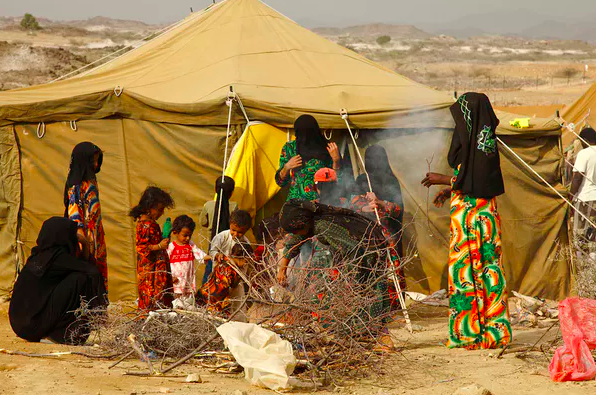
Yemeni women and children at a camp in north Yemen. IRIN Photos/Flickr.com, CC BY-NC-ND
Many Yemenis, according to one expert, believe that the Houthis are fighting to restore a state like the one prior to 1962, led by imams who came exclusively from Sada families.
Complex factors today
Houthis continue to focus on protecting the Zaydi region of north Yemen from state control. However, they have also forged coalitions with other groups – some of them Sunni – unhappy with Yemen’s persistent high unemployment and corruption.
A 2015 U.N. Security Council report estimates that the Houthi movement includes 75,000 armed fighters. However, if unarmed loyalists are taken into account, they could number between 100,000 and 120,000.
Sectarian tension is only one factor in the complex set of interlocking factors responsible for violence and starvation in Yemen. But it is, without a doubt, a contributing factor.
MYRIAM RENAUD is the Principal Investigator and Project Director of the Global Ethic Project, Parliament of the World's Religions at the University of Chicago.
THIS ARTICLE WAS ORIGINALLY PUBLISHED ON THE CONVERSATION
SOUTH AMERICA - A Time-Lapse Adventure
In this short film, you will be taken on a journey through the incredibly varied landscapes of this imposing continent, South America.
One year of travel, nine countries, countless hours on busses, motorbikes, and cars. Hundreds of thousands of images taken. 30TB of data used, 5 months of editing. The time-lapse film features South America like it has never been before with images from Brazil, Venezuela, Guyana, Colombia, Argentina, Chile, Peru, Bolivia and Ecuador.
The Alien Beauty of Socotra Island
The remote island of Socotra looks like a landscape out of a sci-fi film. Over millions of years, the isolated island in the Arabian Sea has cultivated a unique biodiversity unlike anywhere else on Earth. Twisted dragon’s blood trees and bulbous bottle trees have made Socotra a place of legends, feared by sailors throughout history and believed by some to be the site of the original Garden of Eden.

Genking, a male-born Japanese TV personality and ‘genderless’ pioneer. _genking_/Instagram
Japan’s Gender-Bending History
I’m an anthropologist who grew up in Japan and has lived there, off and on, for 22 years. Yet every visit to Tokyo’s Harajuku District still surprises me. In the eye-catching styles modeled by fashion-conscious young adults, there’s a kind of street theater, with crowded alleyways serving as catwalks for teenagers peacocking colorful, inventive outfits.
Boutiques are filled with cosmetics and beauty products intended for both males and females, and it’s often difficult to discern the gender of passersby. Since a gendered appearance (“feminine” or “masculine”) often (but not always) denotes the sex of a person, Japan’s recent “genderless” fashion styles might confuse some visitors – was that person who just walked by a woman or a man?
Although the gender-bending look appeals equally to young Japanese women and men, the media have tended to focus on the young men who wear makeup, color and coif their hair and model androgynous outfits. In interviews, these genderless males insist that they are neither trying to pass as women nor are they (necessarily) gay.
Some who document today’s genderless look in Japan tend to treat it as if it were a contemporary phenomenon. However, they conveniently ignore the long history in Japan of blurred sexualities and gender-bending practices.
Sex without sexuality
In premodern Japan, aristocrats often pursued male and female lovers; their sexual trysts were the stuff of classical literature. To them, the biological sex of their pursuits was often less important than the objective: transcendent beauty. And while many samurai and shoguns had a primary wife for the purposes of procreation and political alliances, they enjoyed numerous liaisons with younger male lovers.
Only after the formation of a modern army in the late-19th century were the sort of same-sex acts central to the samurai ethos discouraged. For a decade, from 1872 to 1882, sodomy among men was even criminalized. However, since then, there have been no laws in Japan banning homosexual relations.
It’s important to note that, until very recently, sexual acts in Japan were not linked to sexual identity. In other words, men who had sex with men and women who had sex with women did not consider themselves gay or lesbian. Sexual orientation was neither political nor politicized in Japan until recently, when a gay identity emerged in the context of HIV/AIDS activism in the 1990s. Today, there are annual gay pride parades in major cities like Tokyo and Osaka.
In Japan, same-sex relations among children and adolescents have long been thought of as a normal phase of development, even today. From a cultural standpoint, it’s frowned upon only when it interferes with marriage and preserving a family’s lineage. For this reason, many people will have same-sex relationships while they’re young, then get married and have kids. And some even later resume having same-sex relationships after fulfilling these social obligations.
Contentious cross-dressing
Like same-sex relationships, cross-dressing has a long history in Japan. The earliest written records date to the eighth century and include stories about women who dressed as warriors. In premodern Japan, there were also cases of women passing as men either to reject the prescribed confines of femininity or to find employment in trades dominated by men.

‘Modern girls’ (‘moga’) stroll along the Ginza, Japan’s Fifth Avenue, in 1928. Wikimedia Commons
A century ago, “modern girls” (moga) were young women who sported short hair and trousers. They attracted media attention – mostly negative – although artists depicted them as fashion icons. Some hecklers called them “garçons” (garuson), an insult implying unfeminine and unattractive.
Gender, at that time, was thought of in zero-sum terms: If females were becoming more masculine, it meant that males were becoming feminized.
These concerns made their way into the theater. For example, the all-female Takarazuka Revue was an avant-garde theater founded in 1913 (and is still very popular today). Females play the parts of men, which, in the early 20th century, sparked heated debates (that continue today) about “masculinized” women on stage – and how this might influence women off the stage.
However, today’s genderless males aren’t simply weekend cross-dressers. Instead, they want to shatter the existing norms that say men must dress and present themselves a certain way.
They ask: Why should only girls and women be able to wear skirts and dresses? Why should only women be able to wear lipstick and eye shadow? If women can wear pants, why shouldn’t men be able to wear skirts?
Actually, the adjective “genderless” is misleading, since these young men aren’t genderless at all; rather, they’re claiming both femininity and masculinity as styles they wear in their daily lives.
In this regard, these so-called genderless men have historical counterparts: In the late 19th and early 20th centuries, cosmopolitan “high collar” men (haikara) wore facial powder and carried scented handkerchiefs, paying meticulous attention to their Westernized appearances. One critic – invoking the zero-sum gender attitudes of the era – complained that “some men toil over their makeup more than women.” Conservative pundits derided the haikara as “effeminate” by virtue of their “un-Japanese” style.
On the other end of the masculinity spectrum were the nationalistic “primitive” men (bankara) who wore wooden clogs (geta) to complement their military-style school uniforms. Ironically, like their samurai predecessors – and unlike the foppish haikara – the macho bankara would engage in same-sex acts.
Japan’s ‘beautiful youths’
Probably the biggest contemporary inspiration for today’s genderless males are a spate of popular androgynous boy bands. Cultivated and promoted by Johnny & Associates Entertainment Company, Japan’s largest male talent agency, they include boy bands like SMAP, Johnny’s West and Sexy Zone.
Johnny’s West performs their song ‘Summer Dreamer.’
There’s a term for the type of teenage boy that Johnny & Associates cultivates: “beautiful youths” (bishōnen), which was coined a century ago to describe a young man whose ambiguous gender and sexual orientation appealed to females and males of all ages.
Similarly, Visual Kei is a 1980s glam-rock and punk music genre that features bishōnen performers who don flamboyant, gender-bending costumes and hairdos. In its new, 21st-century incarnation as Neo-Visual Kei, the emphasis on androgyny is even more pronounced, as epitomized by the prolific career of the androgynous Neo-Visual Kei pop star Gackt, who enjoys an international fan following.
Since the word “genderless” is misleading, a better term might be “gender-more,” in the sense that young men – especially in Tokyo – are insisting on the right to present and express themselves in ways that contradict and exceed traditional masculinity. In the long span of Japanese cultural history, there have been many things that were – and are – new under the sun. But genderless males aren’t among them.
JENNIFER ROBERTSON is a Professor of Anthropology and Art History at the University of Michigan.
THIS ARTICLE WAS ORIGINALLY PUBLISHED ON THE CONVERSATION
This Mega Kitchen Serves 40,000 People Each Day
With one of the largest kitchens in Asia, the Shri Saibaba temple in Shirdi, India, prepares, cooks and serves quantities of food that are nearly unimaginable. The kitchen dishes out as many as 40,000 meals per day, every day, all year long. It takes 600 people working in two daily shifts to prepare all this food. Yet despite all the effort, meals are free to the public. Why? The temple believes that those who are hungry deserve to be fed, and those who are thirsty deserve to be given a drink.
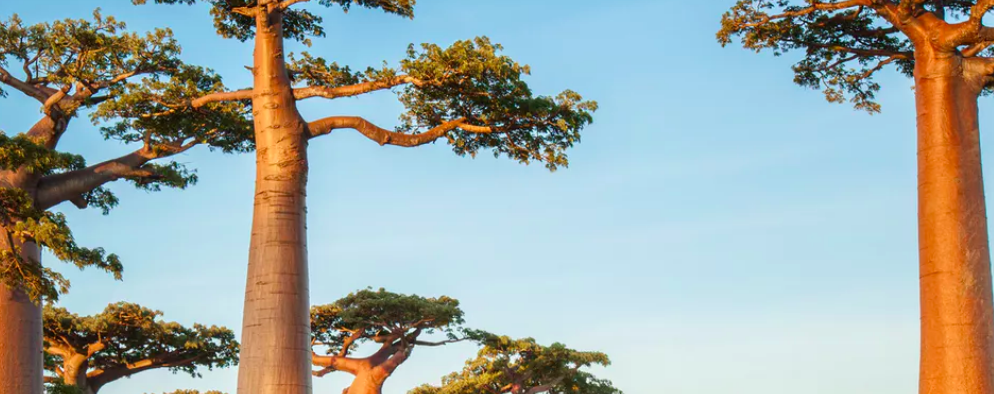
Like Dr. Seuss’ imaginary truffula trees, baobabs are endangered. Dudarev Mikhail/Shutterstock.com
Why Companies Should Help Pay for the Biodiversity That’s Good for Their Bottom Line
In the “The Lorax,” an entrepreneur regrets wiping out all the make-believe truffala trees by chopping them down to maximize his short-term gains. As the Dr. Seuss tale ends, the Once-ler – the man responsible for this environmental tragedy – tells a young child that “Unless someone like you cares a whole awful lot, nothing is going to get better. It’s not.”
Likewise, many corporations that profit from nature’s bounty, such as Unilever, Patagonia and Interface, appear to be reaching a similar conclusion. They are realizing that it’s time for the business world to do more about conservation.
We, two economists who have extensively researched natural resources and development, are proposing a new way to solve the problem of species and ecosystem loss. Corporations that benefit from biodiversity could forge what some are calling a “new deal for nature” by paying part of the tab for biodiversity conservation.
Biodiversity
Biodiversity, the variety of all natural ecosystems and species, is being lost at an unprecedented rate. According to the recent World Wildlife Fund Living Planet Report, the populations of mammals, birds, fish, reptiles and amphibians have fallen by an average of 60 percent in just over 40 years. The scientists Gerardo Ceballos, Paul R. Ehrlich and Rodolfo Dirzo have dubbed this decline and an impending wave of extinctions a “biological annihilation.”
We argue that many businesses are threatened by the loss of species and ecosystems, such as declining bee populations and dwindling stocks of fish, forests, wetlands and mangroves. Without an array of ecosystems and species, it’s tough for farmers to grow crops or ranchers to raise animals.
The pharmaceutical industry needs them to make and create drugs. For example, one team of U.S.-based researchers estimates that the pharmaceutical value of marine biodiversity for anti-cancer drug discovery could range from US$563 billion to as much as $5.7 trillion.
Insurance companies depend on coastal wetlands to minimize the impact of big storms. For example, an international group of researchers estimated that preserving one hectare of mangroves in the Philippinesyields more than $3,200 in flood-reduction benefits each year.
A global treaty, the Convention on Biological Diversity does set worldwide conservation targets. But we believe they may not be ambitious enough. Cristiana Pașca Palmer, who serves as the UN’s biodiversity chief, is considering raising the treaty’s targets to conserve at least half of terrestrial, inland water, coastal, and marine habitats to preserve biodiversity.
But the existing efforts to preserve biodiversity are not only inadequate. They’re underfunded.
New way to pay
Global biodiversity protection requires $100 billion annually, according to a previous study one of us conducted, yet the international community spends up to $10 billion each year on biodiversity conservation.
Much of the world’s biodiversity is in developing countries, which lack the financial wherewithal to adequately conserve it.

The Lorax could speak for the trees, but he lacked the cash to preserve them. Random House Children's Books
As we have explained with our colleague Thomas J. Dean in Science magazine, we believe that involving businesses in an international environmental agreement could help bridge a chronic funding gap.
A key part of this new deal for nature would be making the corporations that depend on the health of natural ecosystems and species help foot the bill to preserve biodiversity.
Benefiting the bottom line
Why would corporations want to get involved?
First off, it may benefit their bottom line. Big companies depend on robust natural ecosystems systems and individual species.
We calculate that the increase in revenue and profits from biodiversity conservation could generate between $25 billion and $50 billion annually to fund global conservation efforts.
The seafood industry stands to gain $53 billion annually from an increase in marine stocks. This could generate $5 billion to $10 billion each year to spend on preserving biodiversity.
The insurance industry could see an additional $52 billion from increasing the area of protected coastal wetlands with a similar investment.
Agriculture also has an incentive to protect habitats of wild pollinators, who along with managed populations enhance global crop production by an amount a global group of scientists estimates to be worth between $235 billion to $577 billion annually.
What’s more, there is growing evidence that when corporations engage in environmental stewardship, they become more attractive investmentsand their borrowing costs decline.
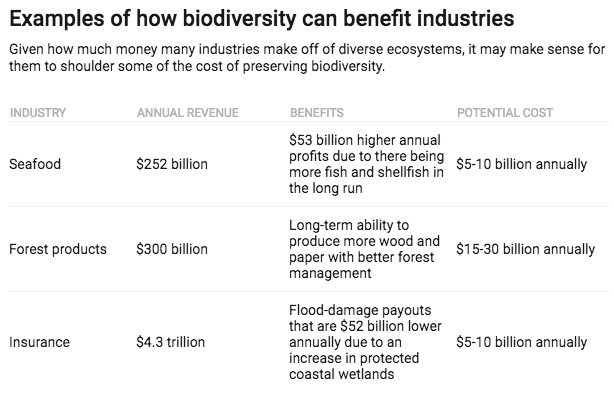
Chart: The Conversation, CC-BY-ND Source: Edward B. Barbier, Joanne C. Burgess and Thomas J. Dean Get the data
Corporate social responsibility
There is a second reason why big companies are sometimes willing to take action and pay to conserve biodiversity: corporate social responsibility, an ethos that builds into business models a commitment to protect the environment and benefit society.
Danone is a leader in this regard. It established the first partnership agreement between a global environmental convention and a private company over 20 years ago.
Since then, the multinational corporation best known for its yogurt and bottled water has promoted and supported the sustainable use and management of wetlands.
Danone, for example, worked with local partners to replant mangroves in approximately 500 Senegalese villages. We believe this reforestation project shows that investments in nature can be sustainable and scalable business models.
Danone, which earned $3 billion in profits in 2017, has its own $80 million “Ecosystem Fund.” It’s just one of an increasing number of companies taking concrete steps toward biodiversity protection, even though they are not required by any law or national policy.
More than 21 national and regional initiatives have been established to encourage partnerships between business and biodiversity conservation. For example, 10 of the 13 biggest seafood companies that control up to 16 percent of global marine catch and 40 percent of the largest and most valuable fisheries have come together to support an ocean stewardship initiative.
Similarly, the International Council of Forest and Paper Associations, which represents the global forest products industry, now engages in sustainable forest management certification.
The total area of forests worldwide deemed to be subject to sustainable practices supplying the industry increased from 62 million hectares, 12 percent of the total global forest area, in 2000, to 310 million hectares in 2015, according to the industry group. That’s more than half of the total global forest area. The annual revenue of the world’s 100 largest global forest, paper and packaging companies is over $300 billion.
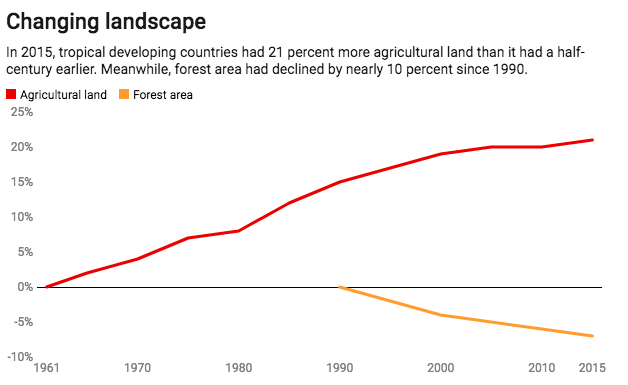


Chart: The Conversation, CC-BY-ND Source: World Bank Get the data
A new deal for nature
In addition to creating marine reserves, protecting forests, preserving the habitats of wild pollinators and conserving coastal wetlands, the private sector could also help finance conservation efforts in developing countries.
Based on our calculations, if the seafood sector were to set aside up to 20 percent of the increase in profits it gets from sustainably managing marine biomass stocks, it could conceivably spend up to $10 billion annually for marine biodiversity conservation.
And we estimate that by channeling up to 10 percent of the gains from sustainable forest management, the forest products industry could raise as much as $30 billion each year for investment in increasing protected forest area.
An agricultural sector contribution of around 10 percent of the benefits it derives from wild pollination services would amount to about $20 billion to $60 billion per year in additional financing for the conservation, creation and restoration of wild pollinator habitats.
All told, this business-world support could help close the $100 billion gap in global biodiversity conservation funding. This would go a long way toward slowing, and potentially reversing, biodiversity loss.
There are, of course, barriers to corporate conservation. The costs may be high. It may be hard for to businesses to assess the long-term value of biodiversity conservation benefits and integrate them into investment decisions. And it is possible that some of the corporations that take this step could be at a competitive disadvantage, especially in the short term.
But a number of companies are already showing that they believe investing in ecosystem preservation is worth it. In our view, corporate support for international biodiversity conservation is essential to prevent “biological annihilation.”
JOANNE BURGESS is an Assistant Professor of Economics at Colorado State University and EDWARD BARBIER is a Professor of Economics at Colorado State University.
THIS ARTICLE WAS ORIGINALLY PUBLISHED ON THE CONVERSATION