
In the center of a small neighborhood located in the city of Pachuca, Hidalgo, the largest graffiti mural in all of Mexico, painted onto a canvas of 200 homes, was inaugurated this July. But the “macro mural” has done much more than simply give some color to the hillside district of Las Palmitas, a predominantly rural neighborhood with a certain degree of poverty and crime.
Read MoreEducation of Girls in the Developing World & How Le Dessein Helps
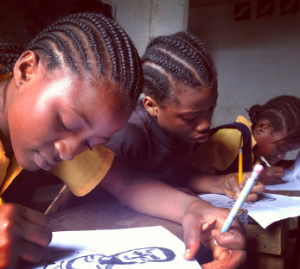
If women in the developing countries completed secondary education, 3 million children under the age of 5 would be saved every year.
This unfortunate statistic by the I.M.F. is just one the many plights young girls and women in general are facing in parts of Africa, Asia and Latin America.
Here are some more startling facts:
1) More than 115 million 6 to 12-year old children are not in school in the developing world; three-fifths of them are girls.
2) When a girl in the developing world receives seven or more years of education, she marries four years later and has 2.2 fewer children.
3) A woman with six or more years of education is more likely to seek prenatal care, assisted childbirth, and postnatal care, reducing the risk of maternal and child mortality and illness.
4) When women and girls earn income, they reinvest 90 percent of it into their families, as compared to only 30 to 40 percent for a man.
5) Today, the U.S. invests in its future by spending about $6,800 a year per primary student on public education. In Iran the figure is $156 per student per year, in India $64, in Laos $30, and in Rwanda, $30.
6) An extra year of primary school boosts girls’ eventual wages by 10 to 20 percent. An extra year of secondary school: 15 to 25 percent.
Young girls in developing nations have not been given the attention they highly deserve in education. Yet they have the undeniable power to help uplift their communities out of poverty through education and the earning power it will generate.
Through fashion, art, and socially responsible actions, we’ve designed a way to get involved. Le Dessein is a fashion line aimed at funding the education of underprivileged girls around the world by featuring their designs on our fashion. We then contribute 25% of our proceeds to the girls’ yearly school tuition.
The nature of our effort is not just monetary – our ultimate vision is to create independence and freedom through the empowerment of our girls. A critical component of this whole vision being self esteem – we were adamant on making sure that our girls would be intimately tied to the creation of the designs which would end up on garments. The success of their artistic journey through their participation and engagement would create a profound sense of OWNERSHIP, which is essential in affecting one’s self-esteem. Indeed, we wanted to demark ourselves from the traditional form of aid towards developing countries, which has consisted mainly of charity, and instead have “ownership” be the driving factor in maintaining this self-sustaining endeavor.
Creating an impact in these young girls’ lives will take collective effort from various committed parties. Inculcating the notion of “Ownership” though noble, can be an arduous task and required collaboration. And we’ve had the fortune and pleasure of being aligned with the More Than Me Foundation – “The More Than Me Foundation is on a mission to make sure education and opportunity, not exploitation and poverty, define the lives of the most vulnerable girls from the West Point Slum of Liberia.” Its motto is: “When she graduates, she will decide what comes next for her life.”
Indeed, for our girls, this is about reclaiming and redefining their own sense of self. For far too long, girls and women from the developing world have been subjected to a strongly patriarchal society – a society where their “value” was unilaterally decided by men – So “Ownership” to us is simply the final destination defined by an effort that consists of arming our girls and presenting them with opportunities susceptible to make this journey a worthy one.
Our fashion linehiis elegant and sophisticated and aims at serving a market that for too long has had to sacrifice quality and design for purpose and mission.
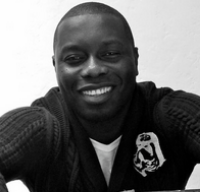
ERIC COLY
Eric is the founder and CEO of Le Dessien. Eric grew up in Dakar, Senegal, where he was influenced by his mother's passion, drive, and fashion sense at a young age. His mother would eventually inspire him to start Le Dessein. He attended UCLA Business School and began his career in investment banking.
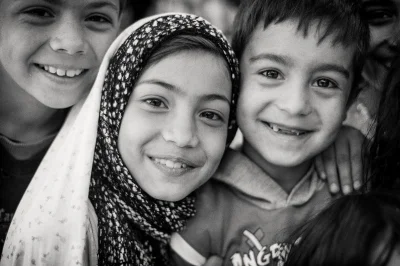
Pictures of Afghan children at a school run by a local mosque for Afghan orphans & refugees in Shiraz, Iran. Photo by Simon Monk (CC BY-NC-ND 2.0).
IRAN: A Commitment to Provide Universal Public Healthcare to Refugees
In an announcement from the United Nation mission in Iran, the Iranian government will include all of its registered refugees into its Salamat Insurance Scheme. This is a collaboration between the Ministry of Interior, responsible for immigrant affairs, the Iranian Health Insurance Organization and the United Nations High Commissioner for Refugees (UNHCR). This plan is targeted at Iran's Afghan and Iraqi refugee population.
Iran's English daily Tehran Times, part of the Mehr News Agency owned by the Islamic Ideology Dissemination Organisation, described the “gratitude” of Sivanka Dhanapala, the UNHCR Representative in Iran, for the program:
“UNHCR’s Representative in Iran acknowledged the Iranian Government’s contribution, expressed UNHCR’s gratitude towards the Government of the Islamic Republic of Iran for all the services it has rendered to the largest protracted urban refugee population in the world for over three decades, and inclusion of the refugees in this Universal Insurance Scheme which is exemplary not only regionally but also globally, and added that such a services haven’t been provided before and I sincerely hope other countries will follow this example.
”
Half of the coverage for the program will come from the Iranian government, while the UNHCR will contribute with US $8.3 million. The program will be available to all registered refugees, who will receive access to a health insurance package for “hospitalization and temporary hospitalization”, as available to Iranian nationals.
According to the UNHCR website, Iran is home to one of “the world's largest and most protracted refugee populations.” Iran's Afghan refugee population nears 1 million, with an additional estimated 1.4 to 2 million unregistered refugees living and working in the country.
Iran's treatment of this demographic has been subject to past criticism, however, most notable in the 2013 Human Rights Watch report that detailed the mistreatment and sometimes abuse Afghans faced from both Iranian society and the government.
For their 2015 projection, the UNHCR detailed their expectations for Iran's intake for mostly Afghan, Iraqi and Pakistani refugees as outlined in the image below.
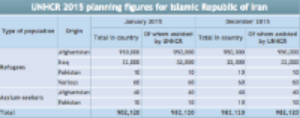
Iran has been criticized for not taking in any Syrian refugees throughout the civil war there. This reproach comes amidst the fact that it is heavily involved in the Syrian conflict as an ally and supporter of the Syrian President Bashar Al-Assad.
Indeed, this development in instating universal public healthcare for refugee populations is a notable milestone for both Iran and the region. Iran can, however, still improve its image in bolstering its role in alleviating the neighbouring Syrian refugee crisis.
ORIGINALLY PUBLISHED ON GLOBALVOICES
Mahsa Alimardani
Mahsa Alimardani is an Iranian-Canadian Internet researcher. Her focus in on the intersection of technology and human rights, especially as it pertains to freedom of expression and access to information inside Iran. She holds an Honours Bachelor in Political Science from the University of Toronto and is completing her Masters degree in New Media and Digital Culture at the University of Amsterdam.
SOUTH KOREA: Surfing the Demilitarized Zone
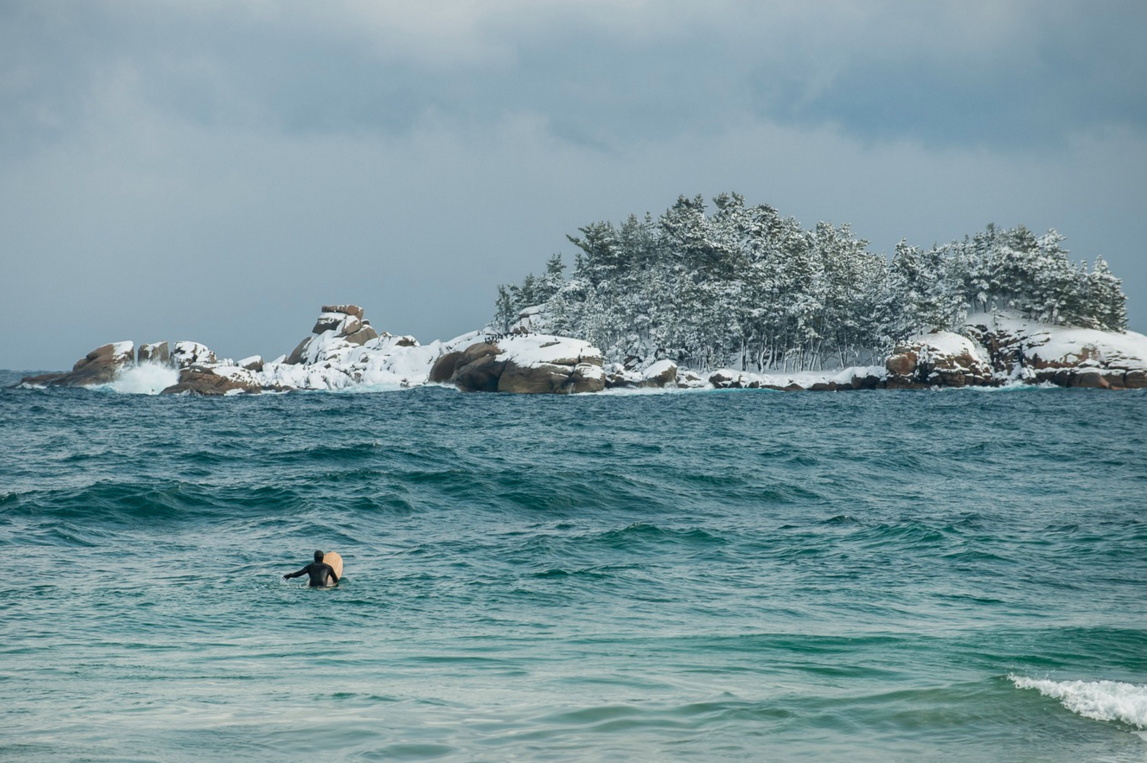
38th Parallel Beach is located just 50 kilometres south of one of the most dangerous places on Earth — the line dividing North and South Korea.
Known as sahm-parl in Korean (the numbers 3 and 8), 38th Parallel Beach is a harbour, military base, beach and a highway rest stop. Weary travelers can stop for strong, sweet coffee, spicy food and tacky souvenirs. They can inspect the coastline and enjoy the rare beauty of the Gangwando coastline. Today it is also a rather unusual surfing spot.
While living in Seoul working as a university teacher, I spent three years photographing and surfing with the Korean and foreign surfers who were establishing the area as a legitimate surfing community.
I was drawn in by bar tales spun by roughish Australians who said they had surfed with local Koreans in blizzards, but pre-Facebook and iPhones, proof was murky. Poor photos of clean waves in deep snow and a complex myriad of forecasting and unreliable local bus info made it even more confusing. Eventually these rumours led me down a three-hour stretch of highway from Seoul to the 38th Parallel on Korea’s east coast.
As I left, my Korean co-workers giggled at me for coming to the country with a surfboard, but a peninsula must have wind I thought — and where there is wind and water, well, there must be waves.
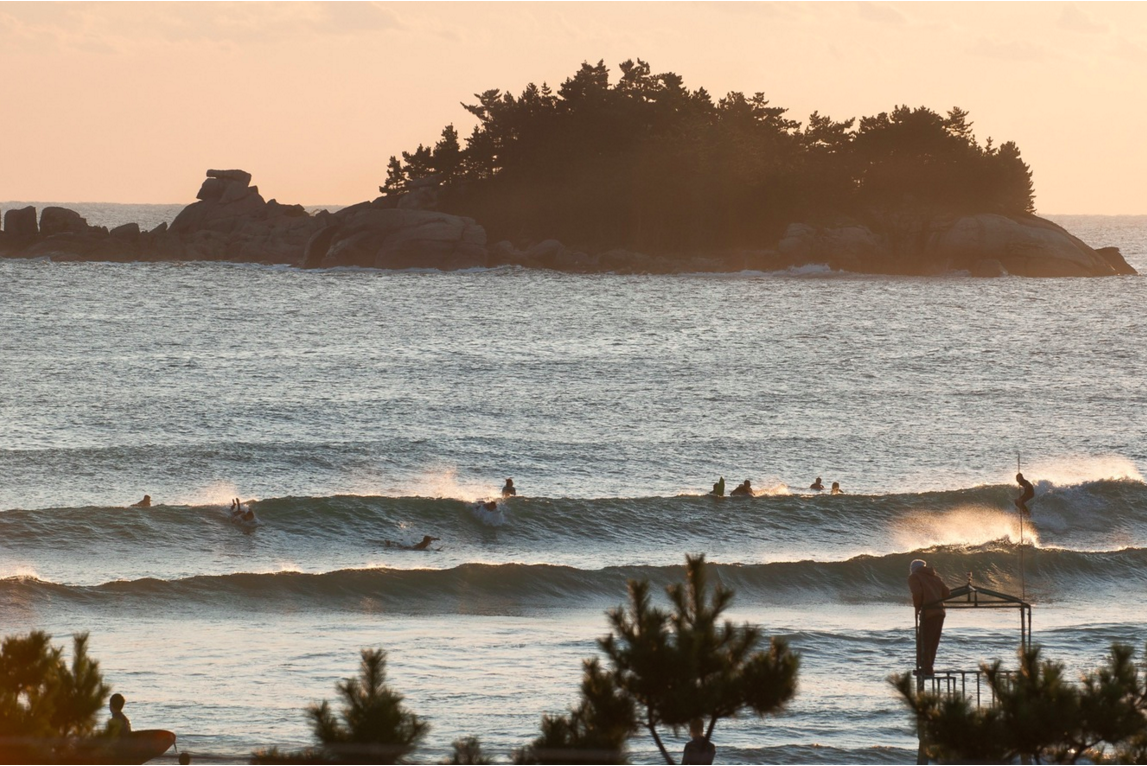
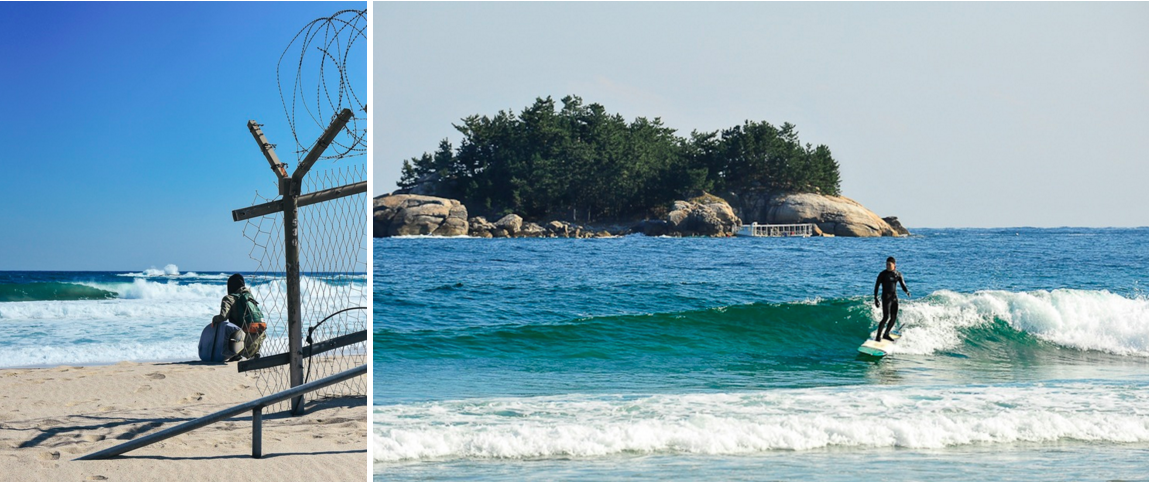
Arriving at a protected harbour I could immediately see some small but nicely shaped waves, peeling intermittently down a well-defined bank. I was impressed and could see its potential, so we jumped in.
It was a fun spot. Surprisingly, when we came in a film camera was shooting us as we came up the beach together. Turns out they were filming a commercial for nuclear waste storage and our water exit appealed to them. I posed for a photo with the bespectacled producer and later learned that we had made it into the commercial.
38th Parallel beach felt special from day one and this slightly surreal first experience would set the tone for my future visits.
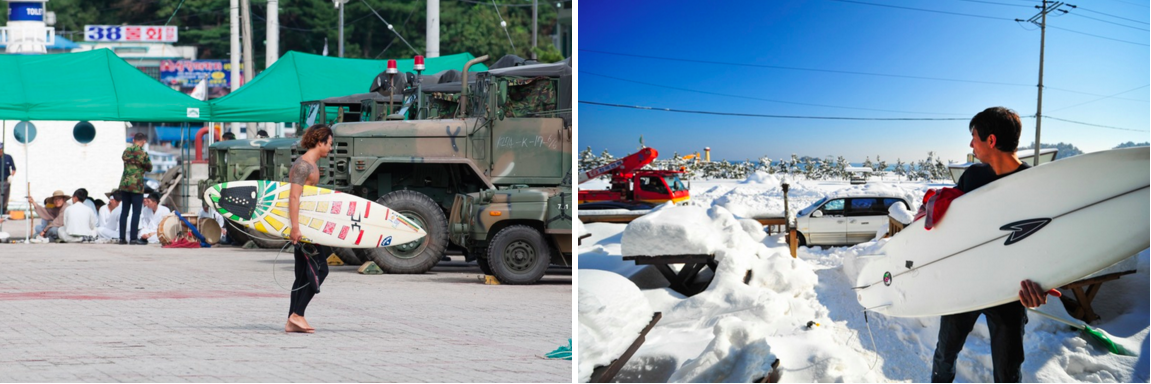
In the months to come, I discovered some of the best waves I had seen in the country, and to my surprise there were a lot of surfers, too. Koreans, Kiwi surf rats, and even some wobbly Nova Scotians, all hunting for peaks to break the grind of Korean ex-pat life. The good surf days remain particularly vivid in my mind because my lowered expectations only amplified my ‘stoke’. The surf and culture on the east coast of Korea surprised me and my experiences were in a word, unique.
Surfing in Korea is tinged with madness and magic. Koreans tend to go full throttle with everything they do, and surfing is no different.
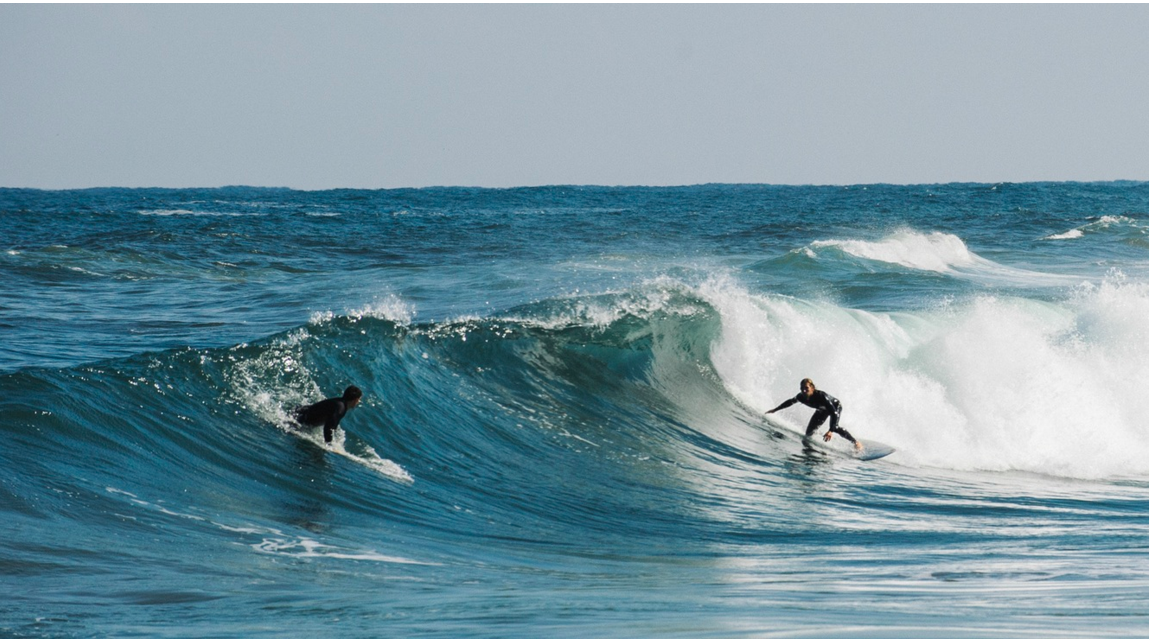
On a weekend, the line-up resembles a chaotic Korean market place with people and boards going every direction. Korea is small country with an enormous amount of people, so fighting for your position is a way of life and the surfing line-up is no different. Luckily, over 3ft Mother Nature takes control of the space politics and the line-up clears out significantly.
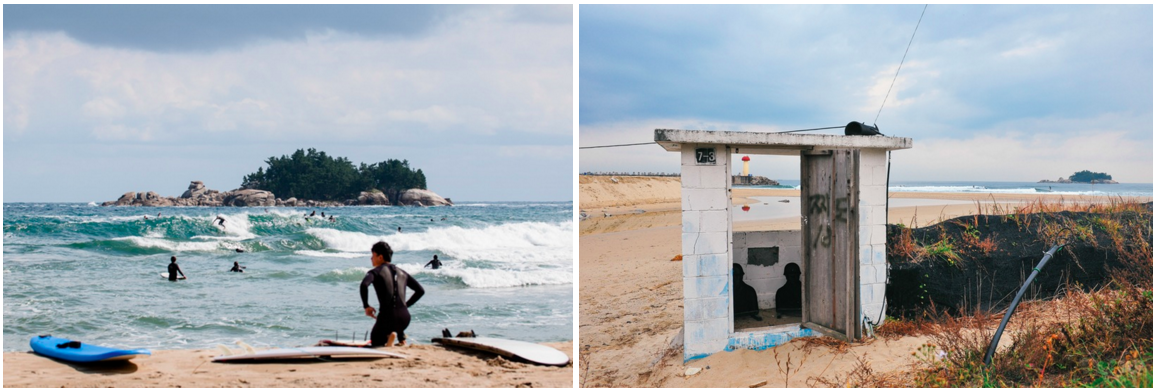
South Korea has gotten the surf bug badly, and 38th Parallel Beach has fast become a hub for Seoul’s young jet-setting surfer class, traveling down through scenic Gangwando to reach this barbed wired bay.
On any given day, and in any of Korea’s four distinct and extreme seasons, you will see trendies, gangsters, Hongdae hipsters, Gangnam DJs, and foreign English teachers all jostling for a wave.
The car park overflows on every swell with Seoul surfers chain-smoking in the latest gear and waxing up only the hippest of shapes. Koreans love to do things together, be it banquet-style eating, all night drinking, or raucous socialising. Surfing has become another activity to share and the entire culture is geared up for it with various surf stores and camps along the coast catering to the dedicated Seoul surfing clique.
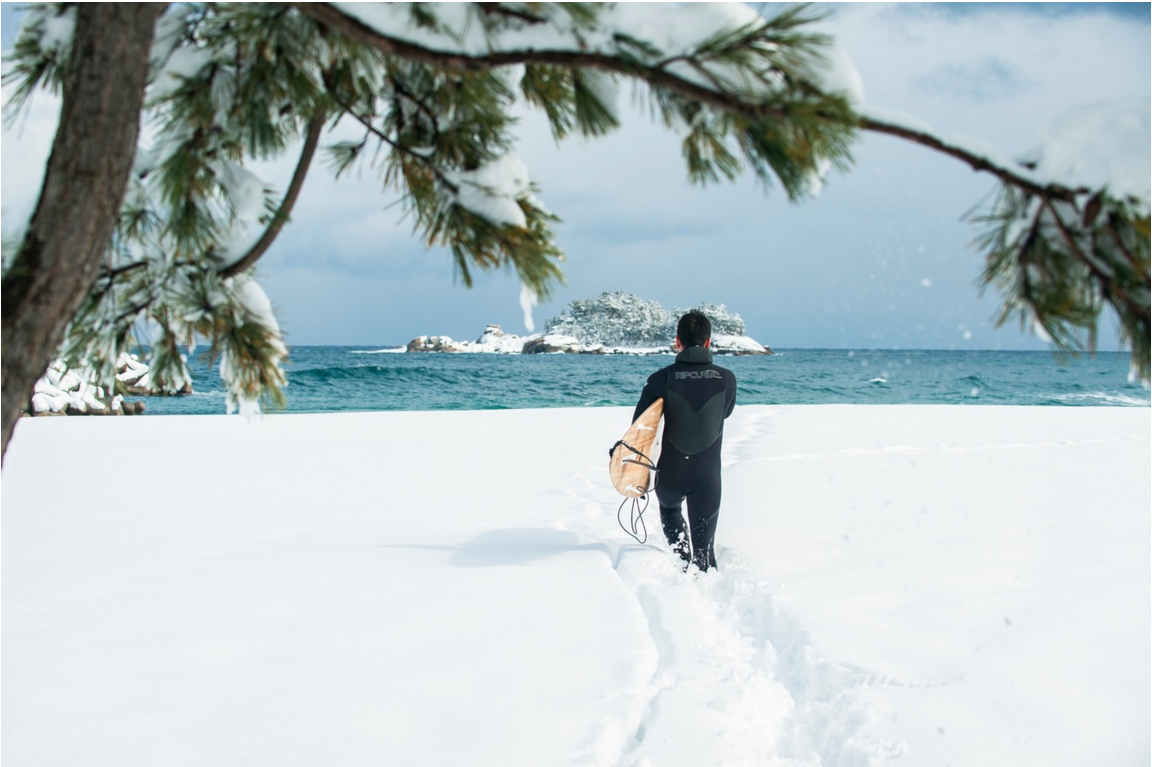
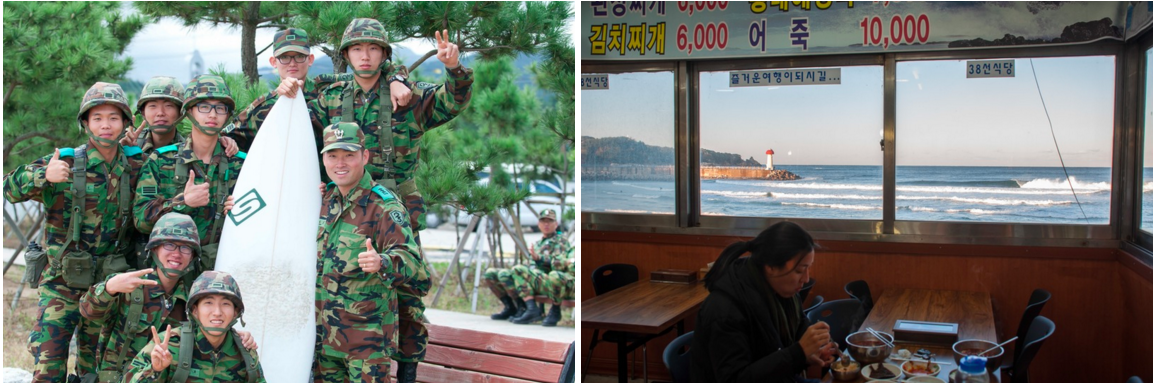
With some of the most consistent and powerful waves in the country and with ever improving forecasting technology, modern social media and South Korean connectivity, the short lived swells that originate in the East Sea are no longer left un-surfed, even in the deepest of winter.
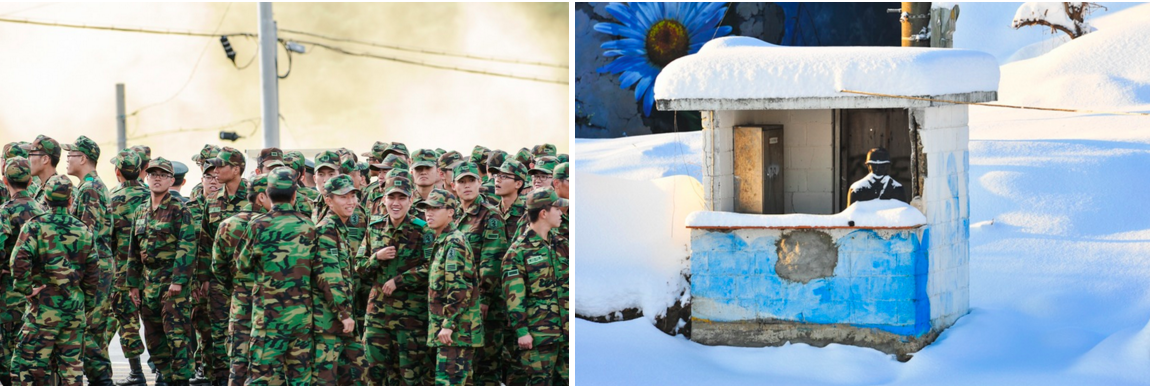
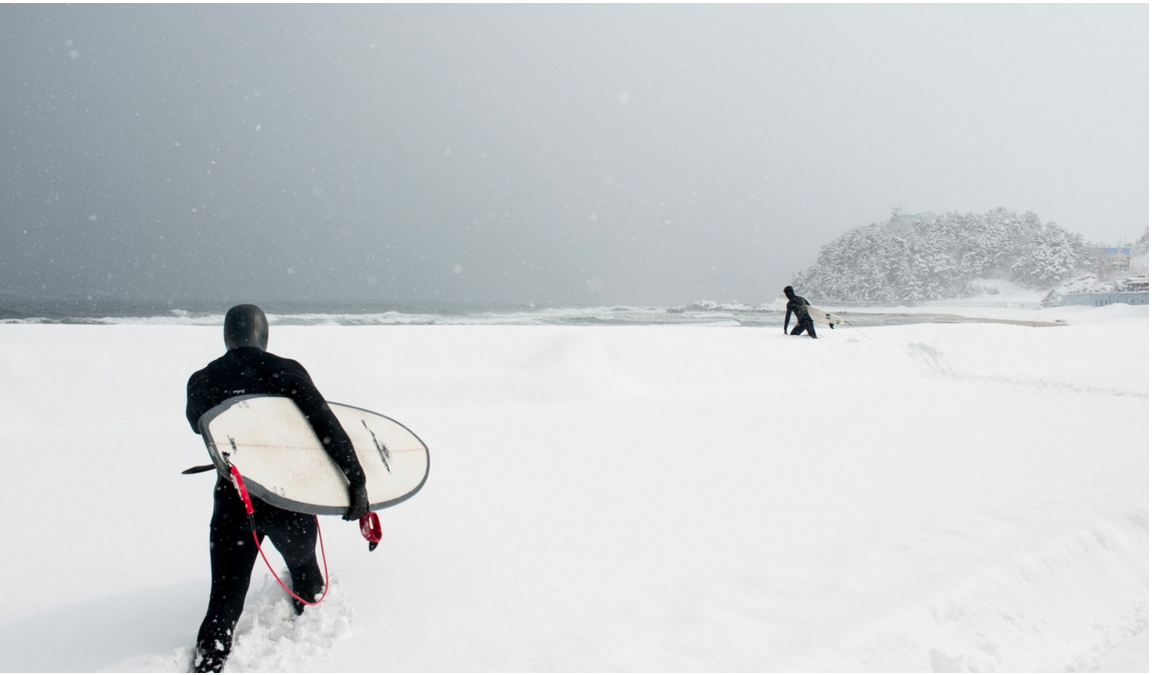
Koreans adore trends, and the newest trend, surfing is red hot. The surf community at 38th Parallel Beach has grown rapidly, enjoying a strange co-existence with the local fishing community and the ever-present ROK (Republic of Korea) defence force, who have been protecting South Korea from the distant threat of a North Korean attack or DPRK defectors since the 1950s.
Being a lifelong surfer, the mixture of this semi-remote location, the exotic culture, and these three dramatically different groups all occupying the same space is incredible to me. Over the next few years I tried to spend as much time as I could out at 38th Parallel Beach, getting my surf fix and capturing the amazing and strange things I saw.
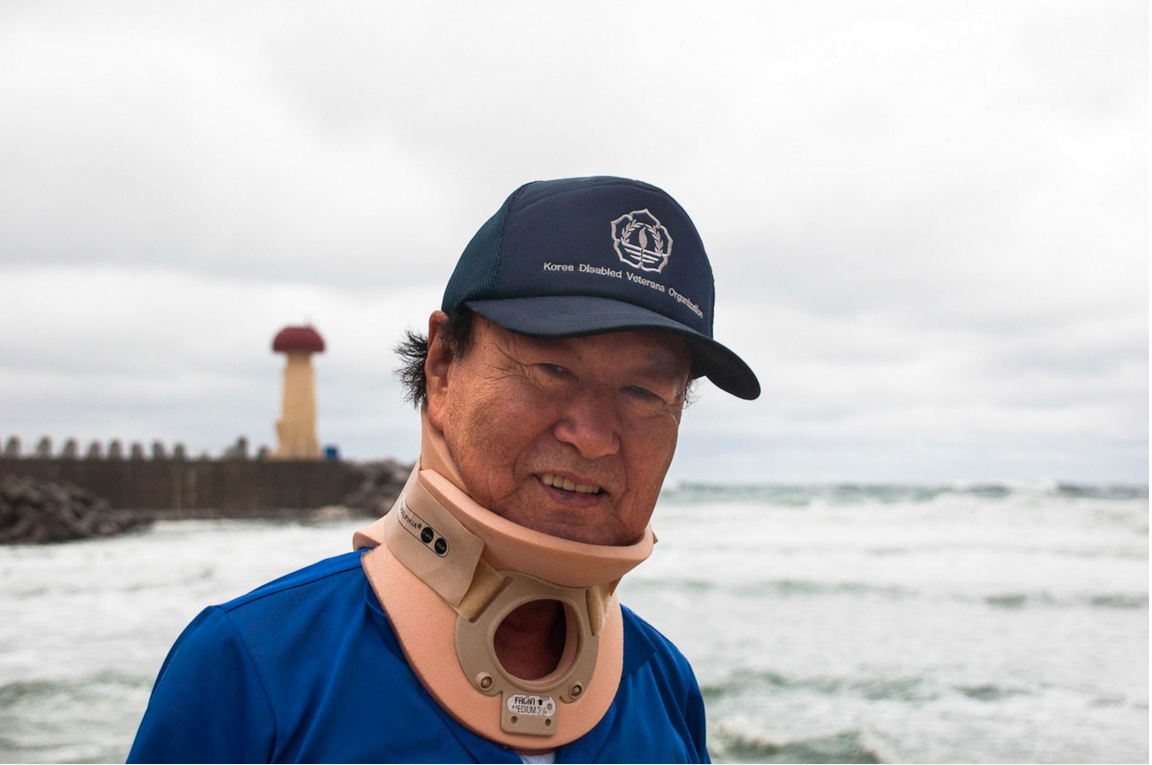
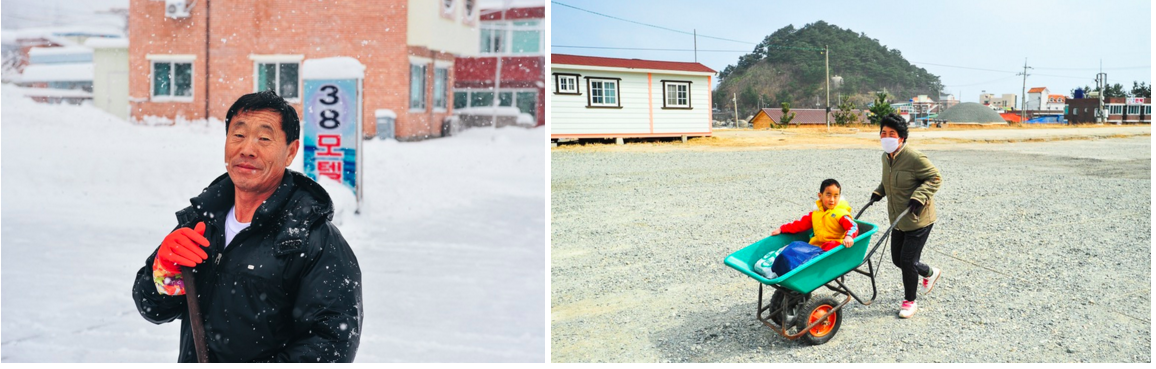
ORIGINALLY PUBLISHED ON MAPTIA

Shannon Aston
www.shannonaston.com
Shannon Aston is a world traveler, surfer, and photographer from New Zealand.
USA: Skateboarding with Lakota Youth
'Skateboarding in Pine Ridge' chronicles a skatepark build and the lives of Lakota youth in Pine Ridge, South Dakota. The director hopes to put a spotlight the hard work of the Stronghold Society, an organization dedicated to empowering youth through skateboarding, art, and music.
LEARN MORE HERE
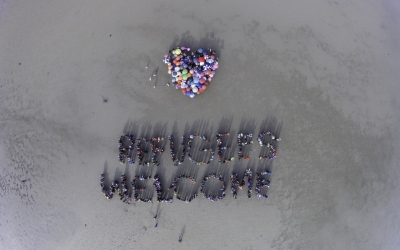
In Ireland, people gather the stand in solidarity with refugees around the world. Photo: Steve Kingston
When Myths Go Viral: Reclaiming Humanity Online to Make #RefugeesWelcome
Myths and facts about the Syrian refugee crisis—and why your support matters.
My job at Oxfam usually keeps me in the behind the scenes, creating webpages, scheduling tweets, analyzing data from our website, etc.
The best part about it is that I get to hear from our supporters, our blog readers (hey you!), our Twitter followers, and everyone else we engage with online every day. In times of humanitarian crises, which seem never-ending lately, we hear from people a lot. The Syrian refugee crisis seems to have galvanized people online in a way I’ve never seen before. This can be incredibly inspiring, but it also comes with sadness and discouragement. We’ve all seen the heartbreaking viral photo of a little boy, washed up dead on the beach in Turkey, but there’s a lot of other viral content out there too – some much less sympathetic, sometimes downright hateful. To make matters worse, there’s a lot of misinformation going around.
That’s why I’m stepping out from behind the scenes today. I want to address some most common misconceptions I’ve seen on social media. Because in order for people to make a difference and take action, we first need to equip ourselves with the facts.
Myths gone viral
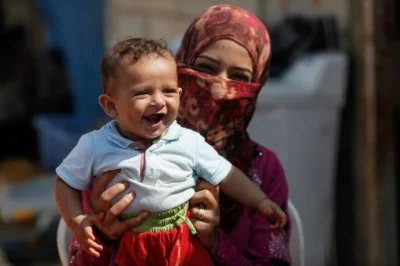
Noura, 24, from Homs province in Syria with her 7-month old son Ziad. They are living with her family in the informal refugee settlement of Barsa. Photo: Sam Tarling / Oxfam
Myth #1: We have enough homeless people, orphaned children, and underserved veterans in our own country and should focus our resources on them.
Okay, so this isn’t really a myth, because it is absolutely true that there are many people in our own cities living in poverty who need help. However, compassion is not zero-sum – there is enough to go around. It’s important to help people in our communities, or donate to local charities, but that shouldn’t stop us from looking past our own borders. This is a global crisis, and we shouldn’t turn our backs on anyone because of where they were born.
Myth #2: A majority of refugees are young men who pose a terrorist threat if we let them into our country.
We are constantly hearing stories about extremist groups and terrorist attacks in the news, and this threat is nothing to take lightly. However, most Syrian refugees are fleeing these exact same violent groups. They want to live somewhere safe and peaceful as much as you or I do. Not to mention that almost half of the 12 million Syrians who need humanitarian assistance are children – that’s almost an entire generation of Syrians growing up without a safe childhood.
Myth #3: Refugees have smartphones so they must have enough money to take care of themselves.
Before the war, Syria was considered a “lower middle income” country. The violence has affected people from all types of economic backgrounds. Some people had more savings than others to tide them over, but it’s been over four years, and those savings have run dry. The fact is, a cell phone does not make anyone any less of a refugee or any less deserving of help. If you had to flee your home right now, your cell phone might be the first thing you grab.
So, what can we do about it?
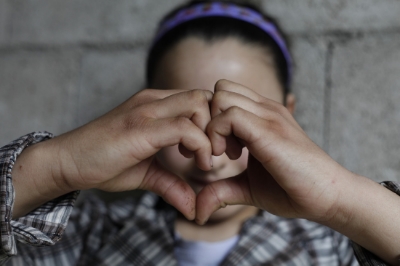
Reema (Not her real name), 12, sits inside the partially constructed building that is serving as home to her family in Qalamoun, near Tripoli in northern Lebanon. Photo: Sam Tarling / Oxfam
What can we do to help in a situation that can feel so hopeless? Well, you’ve already taken the first step and learned more about the situation. I recommend this video if you want more.
Second, you can show the people of Syria that you support them and share the message with your friends. Share a story, a tweet, or photo, like this one, with the hashtag #RefugeesWelcome. Your support matters, even across the world.
Third, make your voice heard to the U.S. government. Tell them that we need to do more for refugees and commit to welcoming at least 100,000 through resettlement in the coming year. Send a letter to the President, Secretary of State, and Secretary of Homeland Security. All you have to do is add your name!
And to everyone who has shown their support already, thank you! Your financial support helps us provide refugees in Jordan and Lebanon with clean water, relief supplies, and more. And your voice helps us advocate for political change.
In his historic address to the United States Congress, Pope Francis addressed the refugee crisis by saying, “We must not be taken aback by their numbers, but rather view them as persons, seeing their faces and listening to their stories, trying to respond as best we can to their situation. To respond in a way which is always humane, just, and fraternal. We need to avoid a common temptation nowadays: to discard whatever proves troublesome.”
So let’s take his advice and spread humanity, not hate. We need every bit we can get.
ORIGINALLY PUBLISHED ON OXFAMAMERICA.ORG
Kate Willis
Kate Willis is based in Boston and is the coordinator for the digital engagement team at Oxfam America.
PAKISTAN: Meet 25-Year-Old Shazia, Her Country's First Female Firefighter Who Is Redefining Badass
When we talk about firefighting, most of us picture robust men running out of red fire vans, jumping right into the blazing fire, not giving a damn about their own safety and saving lives. Little or no women choose the profession, at least if you go by the figures in Asia.
While India got it's first set of women firefighters in Mumbai in 2012, Pakistan has followed suit and 25-year-old Shazia Perveen proudly stands as the first firefighter in the country, according to Rescue 1122, a firefighting training organisation based out of Pakistan.
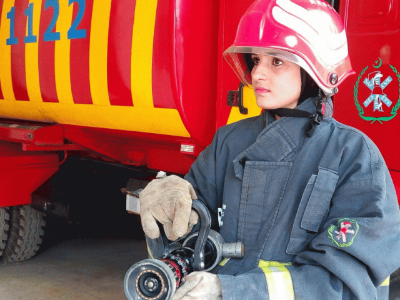
Source : vehari.sujag.org
A certified firefighter, Shazia usually helps other firefighters when women victims are involved.
In a male-dominated profession, Perveen has not only made a mark, but also stands as an inspiration for women across the globe to opt for a profession they usually wouldn't.
Hailing from the Vehari district in Punjab, Pakistan, Perveen joined the Rescue 1122 emergency services as a firefighter in 2010. What made her choose the profession? Perveen says this has always been a dream job for her and she jumped at the opportunity when Rescue 1122 opened a Women’s Department.
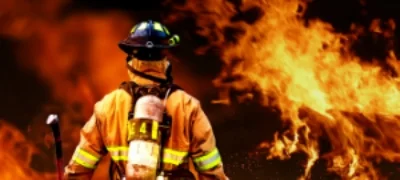
Source : www.learyfirefighters.org
Talking to a Pakistani portal, vehari.sujag.org, she said she was enthusiastic about working shoulder-to-shoulder with men. However, it wasn't an easy journey for her. Out of the 600 women who signed up for the training, only she completed it, like a boss! The training included learning to swim, jump, fight fire, and climbing roofs with the help of ropes.
“At the outset, people would laugh at me when they saw me working with male workers. But afterwards, when I saved their precious properties during fires, they started admiring me,” she added.
“Here, it is believed that women are only able to start fires, whereas I have disproved this old adage and now I extinguish fires,” she signs off.
ORIGINALLY PUBLISHED ON SCOOPWHOOP
Isha Jalan
Isha Jalan is a staff writer for ScoopWhoop, who is "exploring the world outside, and the one inside."
What is Social Justice?
Pop culture has many definitions of the word social justice. After years of working with these issues as an org. and seeing our community make an impact in this world. We are raising our hand and asking "What is Social Justice to you?"
The Love Alliance has started this campaign to support individuals and groups in what they are currently doing and to encourage them to get more involved with these issues. This campaign is meant to be a positive and uplifting voice to the conversation about social justice.
So we ask...What is social justice to you?
LEARN MORE AT whatissocialjustice.com
Travel Where You Live
What if we live the same way we travel?

The Fairuz Mural in Gemmayzeh, Beirut. On Fairuz, Yazan said: “Fairuz is a national symbol of unity: she might be the only person the Lebanese agree that they love. She is a positive cultural figure. She was also one of my first portraits, I used her mural to cover some political posters that were still hanging from a number of years back. It is extremely interesting how much people identify with her. Photo by Yazan Halwani.”
LEBANON: Spotlight on Yazan Halwani, Beirut's Street Artist
“To Beirut,
From my heart, I send peace to Beirut,
And kisses to the sea and homes,
To the Rock that is as the face of an old sailor.
She comes from the soul of the people, from wine,
She comes from their sweat, from jasmine.
Then how did her taste change to smoke and fire?”
So reads the translated lyrics of Fairuz's most famous song, “Li Beirut” (To Beirut). Today, the song is often cited as a symbol of Lebanon's history, full of sadness and suffering. But Fairuz also sings of Beirut and its people as being one -“You are mine, you are mine. Ah, hug me”- both in suffering and in hope.
In that spirit, Yazan Halwani is taking back the streets to make them more ‘Beiruti’. His weapon? Art. We sat down with this young Lebanese graffiti artist to see what makes him tick.
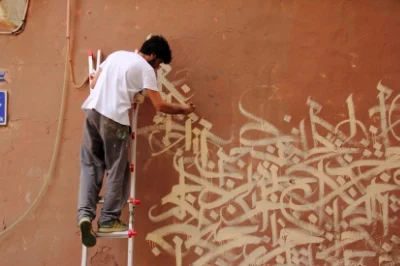
Yazan Halwani in front of the yet-unfinished Fairuz mural in Gemmayze. Source: Facebook.
Can you please introduce yourself?
My name is Yazan Halwani and I am a street artist and calligrapher from Beirut, Lebanon. I have been street painting for around seven years now, mainly in Beirut, the city that inspired it all, but also in Tunisia, Singapore, Dubai, France.
Can you describe your work?
My current work is a style I have developed myself over the past years. It combines Arabic calligraphy, oriental geometry and patterning and portraiture. I think that my work is also not only about mural painting but more about the relation of the wall to the people and the city it surrounds. For example the Feyrouz mural has become somewhat of a landmark for the people living around it. The owner of the several buildings around it called it:”The most photographed wall in the city”. One time when someone scribbled on the Fairuz mural, someone living next to the mural called me, without knowing who he is, and asked me if I could fix the mural.
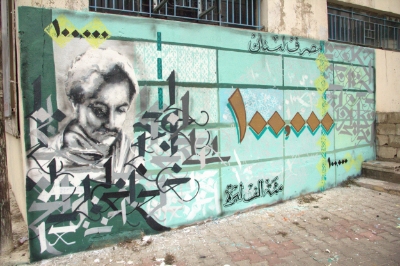
Yazan's image of what the Lebanese 100,000 LL bill would look like with Khalil Gibran, the Lebanese-American poet and author of “The Prophet”. “Apparently someone suggested this currency design to the head of the Central Lebanese Bank, from what I heard it was as quickly dismissed because of complications that might arise from adding Gibran to the note,” Yazan said. Photo by Yazan Halwani.
What inspired you to do what you do?
I have developed over the years. I have started my work as a graffiti artist being inspired by the graffiti scene in Europe and the US, where graffiti artists write their name in flashy and colorful ways. After a few years of doing that, I started questioning the relationship the relation of my work within a city in the Middle-East: at the time, it was somewhat alien from its surroundings, I realized that writing my name was not really different than what political parties have been doing around the city. I needed to change direction.
One day, I stumbled across a book of the five main calligraphy scripts (Diwani, Koufi, Thuluth, Naqsh, etc.) and decided to change my style: instead of doing my “alias”, I would paint words, letters, images that fit much better within the city, the culture and the context. At this stage I thought that a good mural is one that talks to the citizens surrounding it: it becomes part of the city and it becomes theirs, not the artist's.
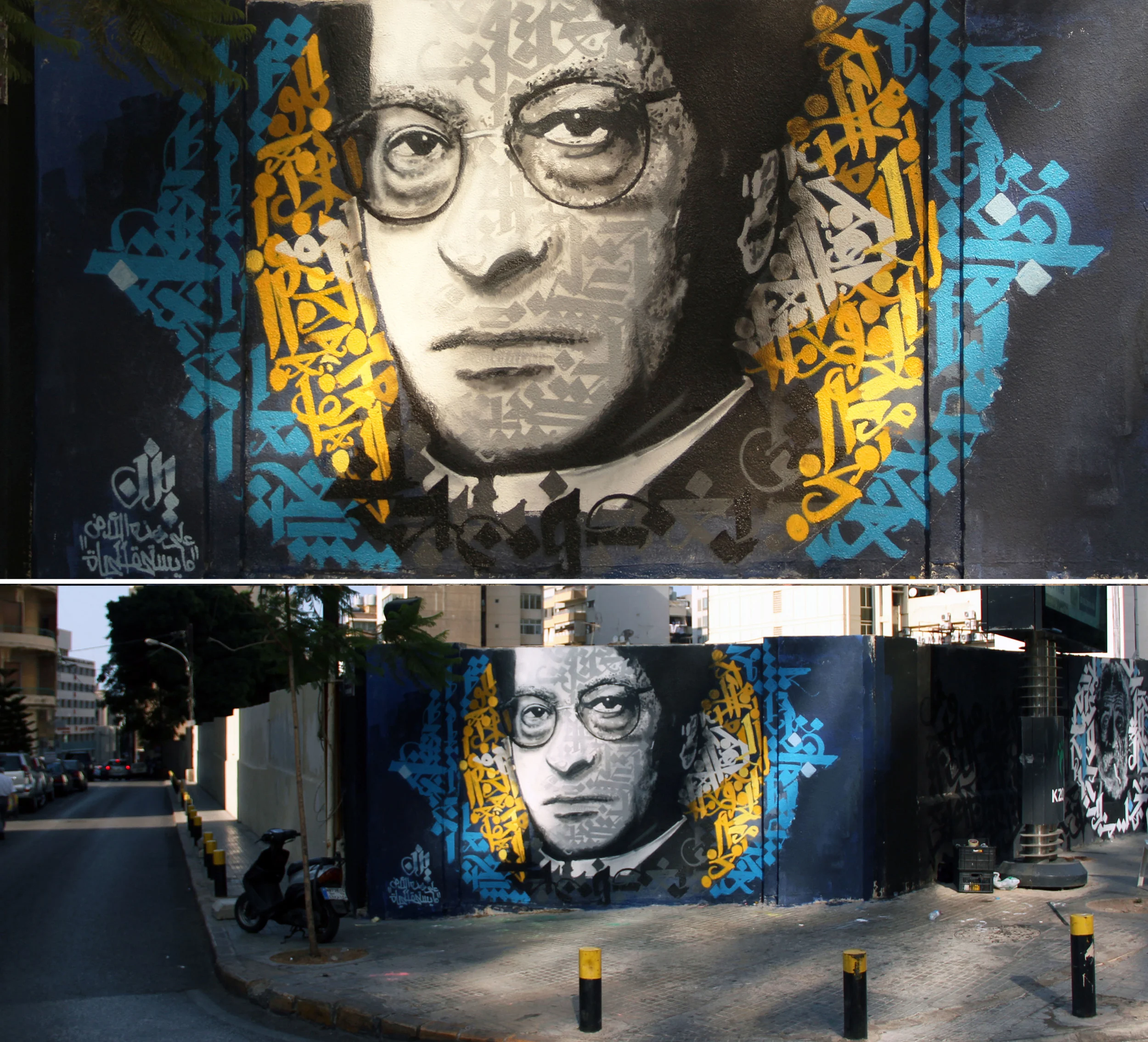
Palestinian poet Mahmoud Darwish in Hamra, Beirut. This mural was vandalized and Yazan decided to repaint it in Tunisia, where Darwish spent a part of his life. On Darwish, he said: “I personally love Darwish for his stance on the conflict in Palestine as well as his poetry. The first time I painted him was near the Hamra street, in a street he probably walked in back when he was in Beirut. Unfortunately someone chose to throw paint on his face. Instead of repainting it in the same spot, I choose to repaint it away from any vandal. I took Darwish to the streets of Tunisia, a country that has also welcomed him. I used a poem from Darwish that says “How can we be cured from the love for Tunisia” for my calligraphy.”
This is why each mural tries to have a story that relates to the people living around it: Ali Abdallah‘s mural is a reminder of a homeless man who died from the cold and it tries to make people help or remember their social responsibilities.
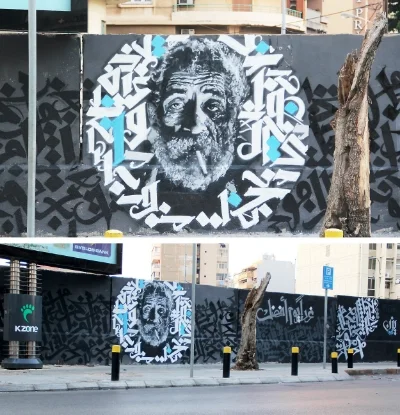
Mural of Ali Abdallah, a homeless man who lived in the Hamra neighborhood. He died from the cold. Photo by Yazan Halwani.
Indeed, Yazan doesn't just paint famous people. The story of Ali Abdallah is a particularly striking one. In Yazan's words:
Some people told me that I “paint famous people”, this is not true. I paint faces that tell stories, and are part of our culture. One of my favorite murals is the one of “Ali Abdallah”, a homeless man living on Bliss street.
Ali's existence was surrounded by urban legends about how he became homeless. Some of them say he was a physics teacher that had a scaring experience during the Civil War. The one thing everyone agreed on was their love for Ali.
Despite that, on one of the coldest winter nights, Ali passed away. This tragedy triggered several short-lived initiatives to try to help the homeless in Beirut. After a few months everybody seemed to have forgotten about Ali's story. This is why I painted the mural to remind people of his friendly face, and also to remind people on an everyday basis of these short-lived initiatives.
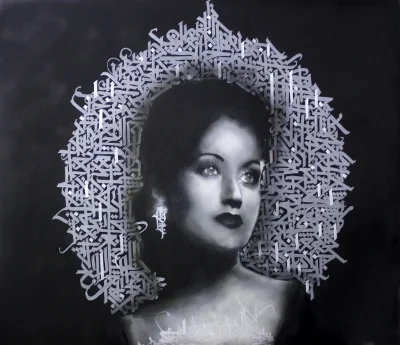
Mural of Asmahan, the popular Syrian-Egyptian singer, actress and popular icon. Seen in Achrafieh, Beirut. Photo by Yazan Halwani.
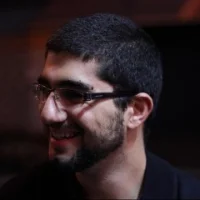
Joey Ayoub
Joey is a Lebanese blogger, wanderluster and writer. You can check out his blog here.
The World's 10 Hungriest Countries
There are over 870 million people in the world who are hungry right now. I'm not talking about could use a snack before lunch hungry, not even didn’t have time for breakfast hungry, but truly, continually, hungry.
Of these 870 million people, it's been estimated by the World Food Programme that 98% live in developing countries, countries that perversely produce most of the world’s food stocks. So why is this the case?
Here we look at the top 10 worst affected countries and see what obstacles are making them hungry and why:
1. Burundi
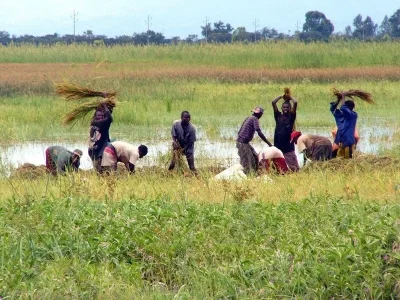
Image: Imgur
73.4% of the population is believed to be undernourished.
Sitting between Rwanda, the Democratic Republic of the Congo and Tanzania, Burundi is a landlocked country, which means that on average it will experience 6% less economic growth than non landlocked countries, mainly due to the cost of transport for import and export transactions.
Over half of Burundi’s 9.85 million citizens live below the poverty line, with an estimated 35% of the population being out of work.
The main problem with Burundi is not that it can’t produce food, but that due to overpopulation, soil erosion, climate change, high food prices and an ongoing civil war, the country has to import more than they are exporting. In the last few years alone due to these factors, and the increase of internally displaced citizens who can’t produce their own food, the subsistence economy of Burundi has contracted by 25%.
Looking at the current economic and political climate of Burundi it is clear to see that poverty alone isn’t the cause of hunger, but that many external factors contribute to the hardship being endured.
2. Eritrea

Image: Imgur
65.4% of population have been classified as undernourished.
Eritrea, which is located in the Horn of Africa, has experienced considerable growth to its economy in recent years, but unfortunately the effect of this hasn’t trickled down to its citizens or the food chain.
In 2004, agriculture employed nearly 80 percent of the population but accounted for only 12.4 percent of gross domestic product (GDP). The agricultural sector has improved with the use of modern farming equipment and techniques; however, it is still compromised by a lack of financial services and investment.
Another big problem facing Eritrea is that, as a result of the war between Eritrea and Ethiopia, almost a quarter of the country’s most productive land remains unused. This can be attributed to a number of issues, but it’s largely because of the displacement of nearly 1 million Eritreans during the 1998-2000 Eritrean Ethiopian war, which left the country with a lack of skilled agricultural workers, and because of the widespread presence of land mines on the ground meaning that the plots are ruined.
3. Comoros
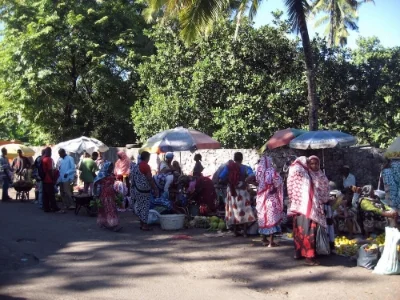
Image: Imgur
70% of the population are estimated to be undernourished.
Comoros, which is made up of 3 tiny islands of the coast of Mozambique, has a population of just 800,000 people. Around half of the population live below the poverty line.
The reason for such high numbers of poverty and undernourishment are varied. One of the biggest problems is that although there is a rapidly increasing young population entering into the agricultural workforce, their low educational levels mean that innovation and economic growth aren’t in correlation.
Because of these factors it is essential that Comoros continues to receive foreign support in order to develop the right educational and economic infrastructures to be able to drive levels of poverty and undernourishment down.
4. Timor Leste
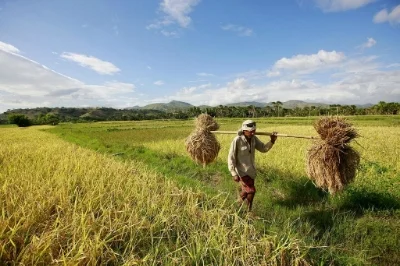
Image: Imgur
38% of the population in Timor-Leste are undernourished.
Sitting between Indonesia and Australia Timor-Leste is a small island with a population of just over 1 million people.
It continues to suffer the after-effects of a decades-long struggle for independence against Indonesian occupation, which severely damaged the country's infrastructure.
Private sector development has lagged due to human capital shortages, infrastructure weakness, an incomplete legal system, and an inefficient regulatory environment.
Because of this nearly half of the population suffer from undernourishment, with Timor famously suffering through ‘hunger season’ between November and March when old stores have run out and new crops haven’t been harvested.
5. Sudan
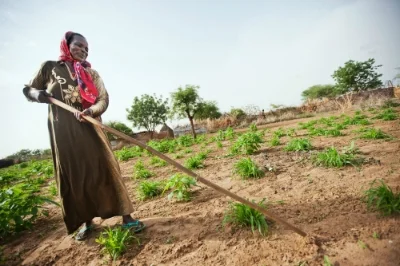
Image: Imgur
Around 25% of Sudan’s population is undernourished and hunger is on the rise.
Hunger is rife because Sudan suffers from several challenges, for much of Sudan's history the nation has suffered from rampant ethnic strife and has been plagued by internal conflicts including two civil wars and the War in the Darfur region.
Another reason that Sudan is suffering is because of the extreme climate conditions that the country suffers from, which is something that is unfortunately out of their control.
6. Chad

Image: Imgur
33.4% of population of the population in Chad are undernourished.
Poverty in Chad has been aggravated by numerous conflicts during its 50 years of independence. Tensions between the country’s northern and southern ethnic groups have further contributed to political and economic instability, and Chad’s landlocked location and desert climate in the north inhibit economic development. The Sahelian zone (central and eastern Chad) is particularly affected by chronic food deficits. Moreover, Chad is subject to spill-over effects from crises in neighboring Sudan and the Central African Republic. It is estimated that there are 330,000 refugees in Chad, which puts additional pressure on the limited resources of the already highly vulnerable local population.
Chad relies heavily on external assistance for its food security, especially in the Sahelian zone. Cereal production is heavily affected by erratic rains, cyclical droughts, locust infestations and poor farming practices. The 2011 drought, which resulted in a 30 percent deficit in the population’s cereal needs, was then followed by a severe food and nutrition crisis in 2012.
7. Yemen Republic
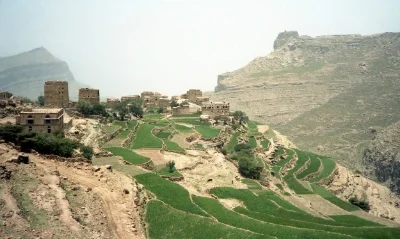
Image: Imgur
Undernourished: 32.4% of population
Yemen has had an extreme change in it’s food security over the last 10 years. Because of large-scale displacement, civil conflict, political instability, high food prices, endemic poverty and influxes of refugee and migrants. In 2013, the World Food Programme is aiming to provide almost 5 million people in 16 governorates with food assistance and is working to build communities’ resilience. In 2013, WFP conducted an Updated Food Security Monitoring Survey which found that 43 percent (10.5 million people) of the population is food insecure. Some 4.5 million of those people were found to be severely food insecure, unable to buy or produce the food they need, and 6 million are moderately food insecure.
Child malnutrition rates are among the highest in the world with close to half of Yemen’s children under 5 years, that is two million children, stunted and one million acutely malnourished.
8. Ethiopia
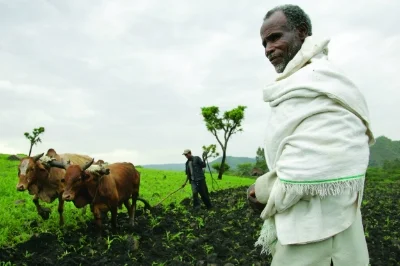
Image: Imgur
In Ethiopia an alarming 40.2% of population are undernourished.
The 2011 Horn of Africa drought left 4.5 million people in Ethiopia in need of emergency food assistance. Pastoralist areas in southern and south-eastern Ethiopia were most severely affected by the drought. At the same time, cereal markets experienced a supply shock, and food prices rose substantially, resulting in high food insecurity among poor people. By the beginning of 2012, the overall food security situation had stabilized thanks to the start of the Meher harvest after the June-to-September rains -- resulting in improved market supply -- and to sustained humanitarian assistance. While the number of new arrivals in refugee camps has decreased significantly since the height of the Horn of Africa crisis, Ethiopia still continues to receive refugees from Somalia, Sudan and South Sudan.
The Humanitarian Requirements Document issued by the government and humanitarian partners in September 2012 estimates that 3.76 million people require relief food assistance from August to December 2012. The total net emergency food and non-food requirement amounts to US$189,433,303.
Ethiopia remains one of the world’s least developed countries, ranked 174 out of 187 in the 2011 UNDP Human Development Index.
9. Madagascar
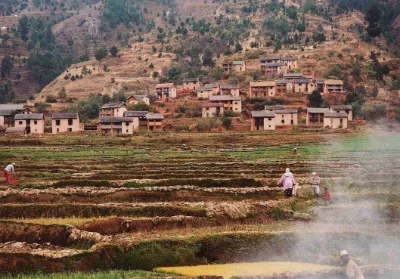
Image: Imgur
33.4% of the population of Madagascar are undernourished.
The country is prone to natural disasters such as cyclones, flooding and drought. In 2013, the island faced its worst ever locust plague, which hampered agricultural production and threatened food security.
The increasing fragility of the ecosystem, due to deforestation and poor land management, is a major cause of the increased vulnerability to shocks and related food insecurity. Deforestation has become a major concern: 85 percent of its rainforests have been lost due to the use of wood and charcoal for cooking, and slash and burn agricultural practices.
Approximately 28 percent of rural households suffer from food insecurity - of which 2.7 percent are severely food insecure and nearly 25 percent moderately food insecure. In total, about four million people are facing hunger in 2013. The food security of a further 9.6 million people could deteriorate as food prices increase during the lean season,when crops are planted but not yet harvested. Also of concern is the cyclone season, which runs from November to March.
10. Zambia
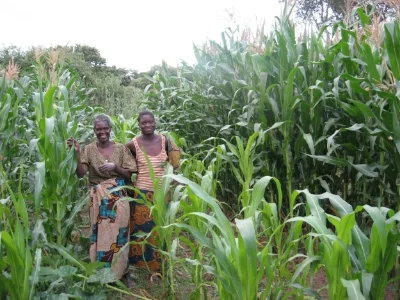
Image: Imgur
47.4% of the population are under nourished
Numerous challenges burden the country, including high rates of malnutrition, poverty, food insecurity, HIV and AIDS and malaria. While Zambia has reduced the rate of extreme poverty from 58 percent (1991) to 42.7 percent (2010), extreme poverty continues to be much higher in rural areas (57 percent) compared to urban areas (13 percent ). Zambia's food security challenges are worsened by a high dependence on rain-fed agriculture and the absence of market incentives to encourage a fundamental shift from subsistence farming.
Consequently, access to food is a challenge for many. According to the Zambia Vulnerability Assessment Committee, the number of people at risk of food insecurity is up from about 63,000 in 2012 to about 209,000 in 2013. This is attributed to localized poor crop production due to poor weather conditions in some parts of the country.
It calculated a ‘global hunger’ score for countries by looking at the percentage of the population that is undernourished, children younger than five who are underweight, and the percentage of children dying before the age of five.
ORIGINALLY PUBLISHED ON GLOBAL CITIZEN
Clea Guy-Allen
Clea hails from Brighton, United Kingdom and was the UK Global Citizen Editor. Now she works as the digital coordinator for ONE, a campaigning and advocacy organization to end extreme poverty and preventable disease.
VIDEO: Bouncing Cats — The Story Of Breakdance Project Uganda
The 2010 documentary "Bouncing Cats" tells the story of Breakdance Project Uganda (BPU). BPU is a nonprofit founded by Abraham "Abramz" Tekya, a break-dancer and AIDS orphan. BPU utilizes break-dancing and hip-hop to promote social change and social responsibility. The nonprofit achieves this by "bringing together people from different social, economical, educational, tribal, and religious backgrounds" through dance. Based in Kampala, Uganda, BPU offers free break-dancing classes and gives lessons in juvenile prisons, local schools, community centers, and orphanages.
LEARN MORE AT BOUNCING CATS
Systemic Discrimination Against Haitian Workers in the Dominican Republic
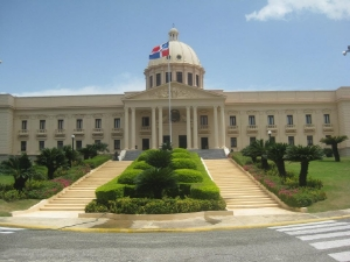
Capitol Building in Santo Domingo, DR
In July 2012, I lived within the sugar cane communities of the Dominican Republic, known as the “Bateyes,” as a volunteer for Save the Children, a nonprofit that advocates for children’s rights. Recent media attention to Dominican immigration reform has provoked international criticism for its perceived racial bias, as it threatens to deport thousands of Hatian workers. My experiences on the ground exposed me to some of the hardships that individuals from this region endure. For members of the Bateyes, destitution and food insecurity are systemic challenges that define everyday life. After hours of hard labor under the Caribbean sun, cane cutters earn an average of less than two dollars per day. Walking between the tall sugar stocks on an impromptu tour of a community, a local resident demonstrated the proper way to cut cane. Since the plants are sensitive, agricultural machinery is less effective than individuals with machetes and gardening tools. The man explained that cane cutters leave for the fields at dawn and work until dusk. The only available form of nutrition is the sugar cane, which is absorbed from bits of chewed stock consumed throughout the day.
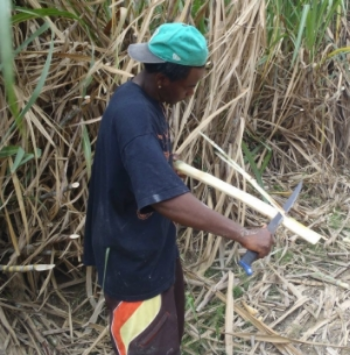
Cane cutting demonstration in Bateye Margarita
Back in the communities, families stretch their two-dollar income to purchase food such as rice from the sundry store. When fellow volunteers and I asked the kids at a small, under-resourced school what they wanted to be when they grew up, they were excited to share dreams that resembled those of children everywhere: doctors, police officers, astronauts, and beyond. I thought back to the truck of cane cutters I watched disappear into the fields earlier that day and was reminded of the tragic reality that awaits this population: Undocumented in the eyes of the law, these children will either remain in the Bateyes as workers and wives or else be deported to Haiti.
In 2004, Dominican authorities passed an immigration law specifying that children born to undocumented immigrants would be excluded from Dominican nationality. Over the past 50 years, the DR has recruited thousands of Haitian laborers to cut sugar cane under two bilateral agreements signed by the countries in 1959 and 1966. First-person accounts describe a form of modern slavery, in which Haitians were deceived by promises of better opportunities, taken across the border in buses in the middle of the night, then stripped of their papers that declare citizenship status. The impoverished families were left with no alternative but to work in the cane fields and reside in the neglected communities they now call home.
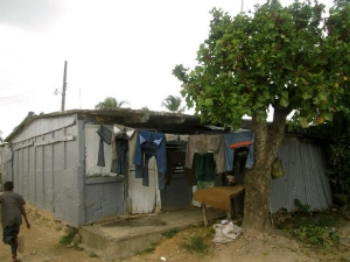
Typical home in Bateye Experimental
After decades of struggle in the Bateyes, a population that is 90% Haitian, a 2013 Dominican Constitutional Court decision reinterpreted the immigration law. This decision altered the law to extend its definition to individuals born between 1929 and 2010, and ordered government officials to revoke citizenship from those who no longer qualified. A naturalization law was passed the same year as a pathway to gain citizenship, but the process was marred with bureaucratic roadblocks and inconsistencies. The deadline to register passed at the end of June 2015: Almost 200,000 individuals remain at risk of deportation back to Haiti.
During my time in the Bateyes, I stayed at a quasi-hostel run by a missionary. In addition to lodging, the woman created a pathway for the undocumented to restore their citizenship. While her service has provided an opportunity to rise above the inescapable cycle, the cost is $40 dollars (American). It often takes years — if not decades or a lifetime — to save that much money. And since the communities are nestled across a large swath of farmland, the missionary shared stories of people walking up to 18 miles to reach her office. The line is always out the door, and if the father of a household is the one to obtain the papers, he has to take a day off work.
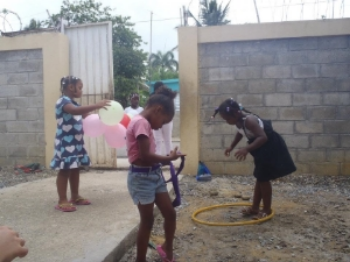
Children at play in Bateye Don Juan
A long legacy of racial and political tensions between the two countries that divide the island of Hispaniola contributes to a national ambivalence toward the situation. Sugar is also one of the Dominican Republic’s most lucrative exports. One of the main buyers is Hershey, which is popular in countries like the United States. As consumers, it is our responsibility to be conscious of the supply chain behind the products we purchase: Ignorance should not be an excuse.
While inflammatory headlines such as Huffington Post’s “Thousands Woke Up At Risk Of Deportation In The Dominican Republic. Almost All Of Them Are Black,” help shed light upon the issue, they also run the risk of dehumanizing what’s occurring. International pressure has prompted the DR to reform policy in the past, but another way to help these people is to practice conscious consumerism. Choosing not to buy products that contain sugar from the Dominican Bateyes, for example,candy from The Hershey Company, demonstrates individual dissatisfaction with abusive work practices. I am grateful for my opportunity to have volunteered in the sugar cane communities and will never forget the people I worked alongside during that time.

SARAH SUTPHIN
Sarah is an undergraduate at Yale University and a content editor for CATALYST. As a traveler who has visited 30 countries (and counting!), she feels passionate about international development through sustainable mechanisms. Sarah has taken an interest in the intersection between public health and theater, and hopes to create a program that utilizes these disciplines for community empowerment. She is a fluent Spanish speaker with plans to take residence in Latin American after graduation.
Bridging the Inequality Gap for Panama’s Darién Province
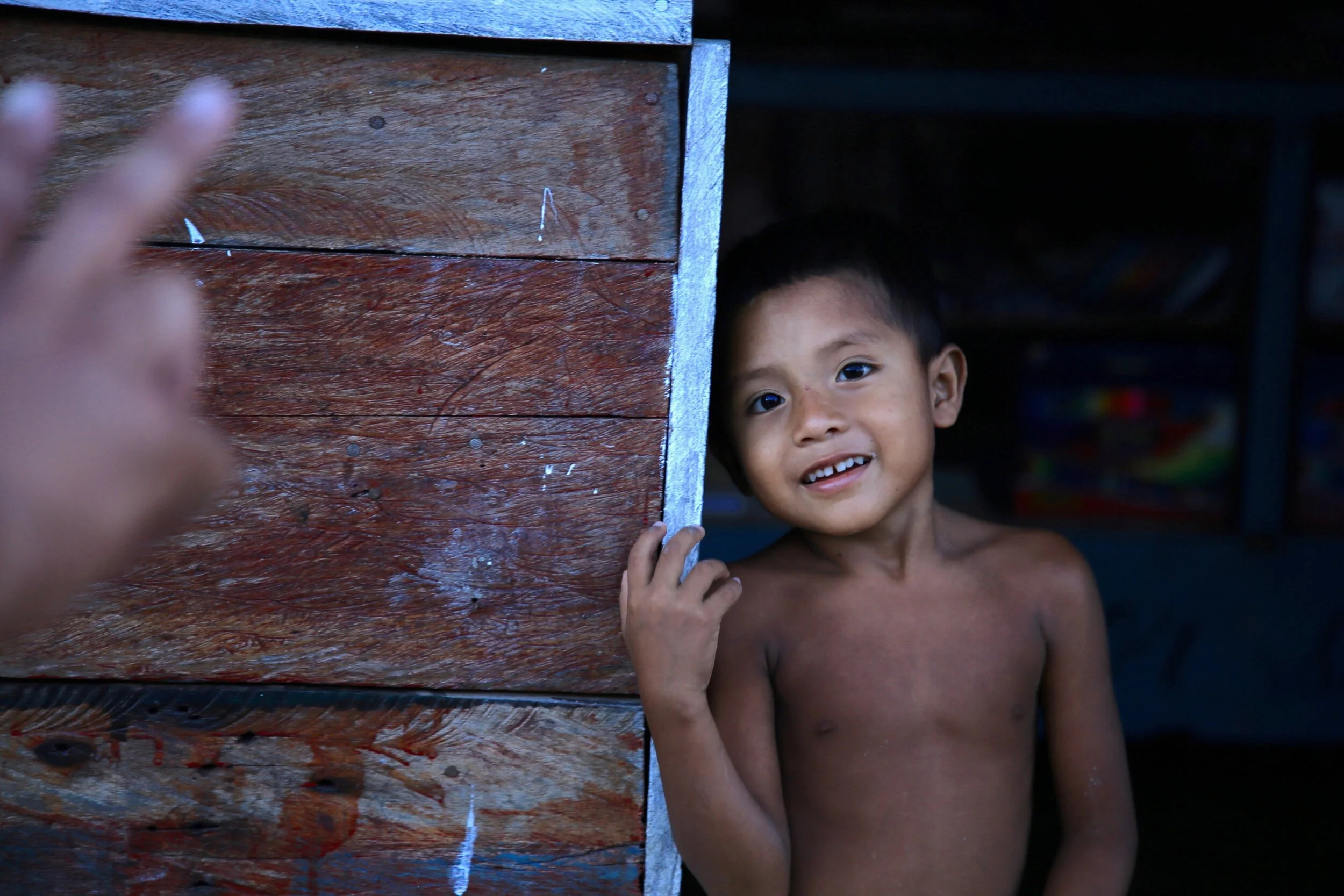
Photo by Katie Chen on Unsplash
The Gallup-Healthways Global Well-Being Index has ranked residents of Panama as the leaders in “well-being” for two consecutive years. However, three weeks in communities of the Darién province exposed me to the destitution and gubernatorial neglect that blankets this eastern region. Inhabitants of the Darién have been stigmatized, leaving them without access to clean water, health care facilities, or economic opportunity. My experience led me not only to question the validity of the Index, but also to consider the ways we can empower a forgotten sub-population.
“A little further down the road, you’ll find that it comes to an end,” my local Panamanian guide remarked while en route to the compound where we reside for the following three weeks. At the time, the idea of a place with no road was beyond comprehension. How could people stay connected? How could they receive supplies? The answer to these questions is simple —they don’t.
Soon after arriving in Panama, I began to comprehend the “Darién Gap” which is a 99-mile swath of undeveloped swampland and forest located within Panama’s Darién province — a symbol of the many development projects that have been discontinued in the region over the past decades. I found that the double-edged sword of indigenous isolation offers cultural preservation on one side, clean water and healthcare deficiencies on the other.
The border between Panama and Colombia is the only one in the world that remains unpaved! While the decision to stop construction of the Pan-American Highway provided benefits to some groups, such as law enforcement officers against drug traffickers and indigenous inhabitants of the Gap who wish to preserve a traditional lifestyle, it also resulted in neglect of an entire region. With the fastest-growing economy in the Americas, Panama now has an opportunity to improve the quality of life for all of its citizens. Yet, despite the recent boom, the nation has the greatest economic inequality in the Americas with nearly 40 percent of the country living in poverty. Many of those who endure economic destitution live in the eastern half of the country, particularly in the Darién.
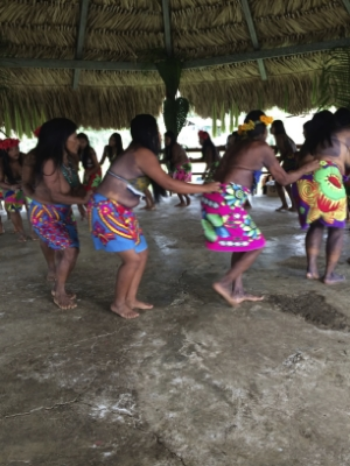
My three weeks in Panama were dedicated to community visits throughout this beleaguered province. We met with officials and members of individual households, and conducted surveys to determine the accessibility to fundamental necessities, such as clean water, health care, and education. I was an intern for a nonprofit based in Panama City, but which conducts most of its projects with American undergraduates serving communities of the Darién. This nonprofit creates partnerships with communities located in proximity to a road or a rocky pathway that Panamanian officials call highway. More indigenous groups are sheltered within the Darién Gap, undisturbed and unacknowledged.
According to community members who responded to our surveys in July 2014, lack of access to clean water is the main problem affecting daily life for an appreciable number of residents in the Darién province. Although the Panamanian government’s Ministry of Health is responsible for water distribution by means of aqueduct systems, complications such as project incompletion, water shortages, pipeline damages, and contamination from pesticides/animals inhibit achievement of the goal. Residents described complex, inconsistent, and seasonally based methods for receiving water. In the past, families might go two months without water when a government-constructed pipeline to a water tank is broken. When water finally arrives, it will sometimes come out dirty or contaminated from passage through farmland.
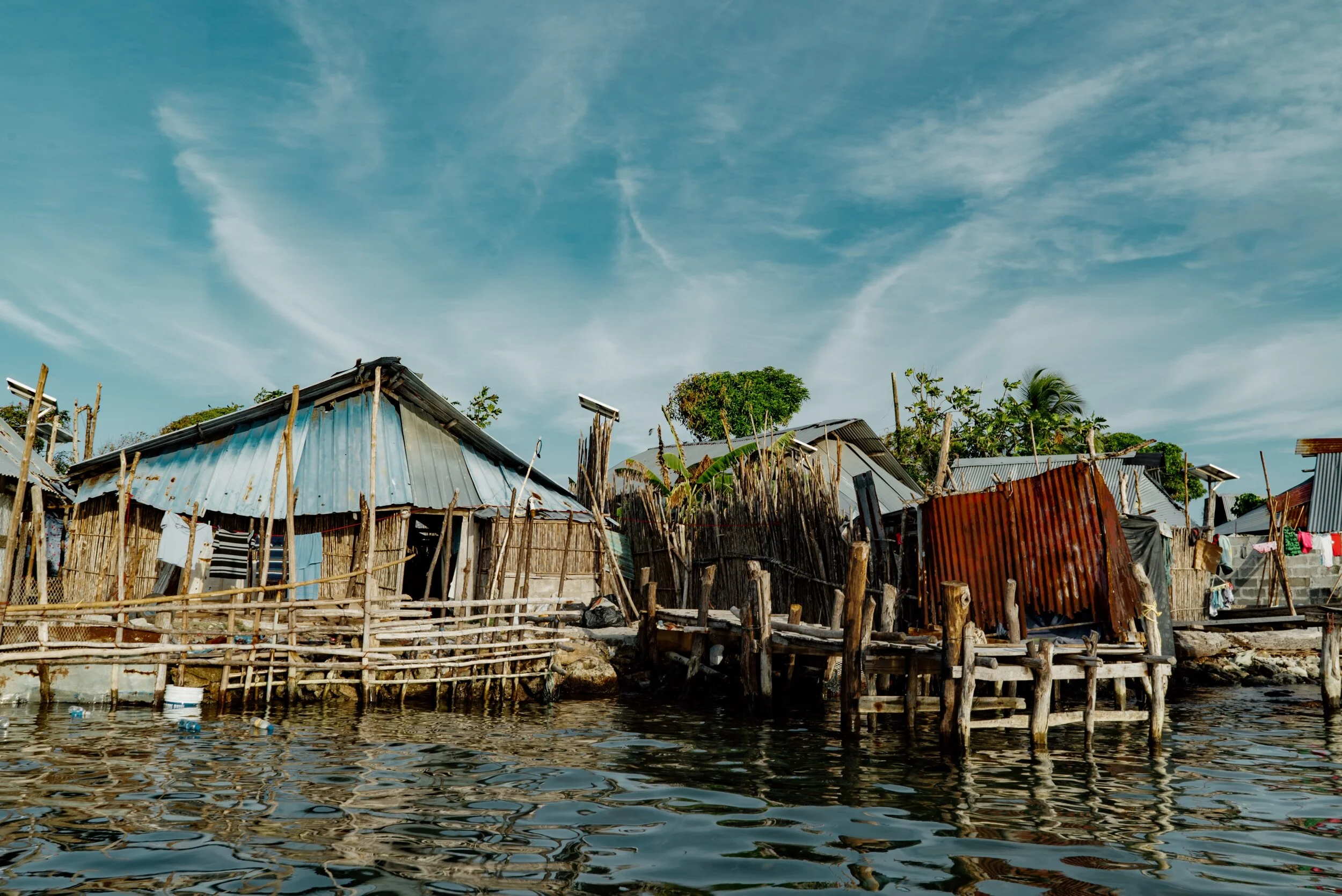
Photo by Aljoscha Laschgari on Unsplash
Observation and conversation with members of various communities taught me that collaboration between locals and external, resource-rich groups has been a driver for successful growth in this area. Yet, one person I met described the Darién province as “the temple of abandoned development projects” for the number of missionary and nonprofit groups that have attempted and failed to provide assistance to families in the greatest need. In an indigenous community named Emberá Puru, I noticed little blue water filters strewn about the property. The leaders explained that a missionary group had provided over 100 filters, but not explained how to use them. The group left after a week of what could be described as “voluntourism” — volunteering abroad that resembles a tourism opportunity — and the community was left with pieces of plastic polluting the land.
The neglected Darién province is not a unique case. Panamanians from other parts of the country (like Panama City) expressed surprise and/or distaste when my group revealed we were working in this eastern region. These people hold onto misconceptions, such as the idea that the Darién is filled with dangerous members of drug cartels or that it’s a completely unlivable swampland.
While the “Darién Gap” might lack a constructed road, the population of this area has done its best to overcome deficiency through resiliency. When a government or its people show indifference toward improving the lives of an entire population sector, outside measures need to be taken to reduce inequality. However, these outside measures should also be performed through culturally conscious and responsible mechanisms in order to achieve sustainable success. No clear-cut solution exists to resolve problems such as clean water, healthcare, and education inaccessibility in the Darién province, Panama. However, creative and collaborative efforts have the power to mediate substandard conditions and to catalyze change one household at a time.

SARAH SUTPHIN
Sarah is an undergraduate at Yale University and a content editor for CATALYST. As a traveler who has visited 30 countries (and counting!), she feels passionate about international development through sustainable mechanisms. Sarah has taken an interest in the intersection between public health and theater, and hopes to create a program that utilizes these disciplines for community empowerment. She is a fluent Spanish speaker with plans to take residence in Latin American after graduation.
A Criminal State of Affairs

THERE ARE ENOUGH LAWS TO TACKLE IT.
THEN WHY IS UNTOUCHABILITY STILL PERPETUATED?
Ten Years ago, I started on a journey to document practices of untouchability across several states and religions of India. 25,000 kilometres, 9,000 minutes of footage and four years later, I put together a documentary called India Untouched. The main reason for making this film was to challenge the belief of most Indians that untouchability is a thing of the past.
In the years since the making of that film, little has changed. We still receive reports of barber shops refusing to shave Dalits. Homeowners unwilling to rent their houses to Dalits. Children segregated and discriminated in schools, women not allowed to draw water from wells, families pushed out of temples. Segregated mosques, churches, even crematoriums. Pervasive violence aimed at those who challenge caste discrimination. Social and economic boycotts for those who dare to transgress caste boundaries. Newly-weds chased and killed because they chose to marry outside their own caste. Rapes. Acid attacks. The list goes on shamelessly.
What is more shameful is that these practices are manifestations of a belief that views certain castes as nothing but an impure sect, which should remain servile and accepting of its lesser status. Our failure is to see this belief as endorsing of and perpetuating criminal behaviour.
Article 17 of the Indian Constitution states that “Untouchability is abolished and its practice in any form is forbidden. The enforcement of any disability arising out of untouchability shall be an offence punishable in accordance with law.” However, society continues to look at untouchability as a social given, grounded in ‘tradition’. Instead, we should see such practices for what they are: criminal acts. If your house were burgled, you would expect the case to be treated as a criminal act/offence. Such a luxury is not afforded, however, to Dalits facing discrimination and persecution. The laws in place to address the scourge of caste-based discrimination may be progressive, but the mechanisms that exist to enforce legislation are regressive.
A large part of the problem is that law enforcement agencies operate in a reactive rather than a proactive manner. Despite the prevalence of caste-based behaviour leading to untouchability (criminal offences) these agencies wait for an aggrieved party to file a complaint — and report violation of Article 17 — rather than do their job in enforcing the law. How else does one explain the fact that police stations and courts have not taken any suo moto cognizance of these everyday events? How else can we understand that there are no public or government campaigns to remind citizens that untouchability has been abolished, and that those practicing it will be treated as criminals? In order to fall in line with the shifted morality and ethics of our time, we need a strong and proactive law enforcement mechanism. We do not have this in India.
On 14 April 2012, we launched a campaign at Video Volunteers (a media and human rights organisation) to draw attention to the issue of untouchability. To date, we have collated 30 videos that document breaches of Article 17. Together with the videos, we collected 2,800 signatures that were sent to the National Commission for Scheduled Castes (NCSC) with an appeal that the videos be taken as evidences of offences, and that those involved be prosecuted. Despite submitting the petition and video evidence twice over, we have not received any sort of acknowledgement — let alone action — from the NCSC. We have now sought answers with an application under the RTI Act. It’s a sign of the times when one needs to file an RTI with the institution responsible for protecting the rights of Scheduled Castes, just to find out what is going on.
As a society, when we hear about untouchability practices, we should feel outraged, as we would with other criminal acts like murder and rape. It’s time we accepted that the practice of untouchability is not the vestigial remains of some backward, social phenomenon or tradition: it’s a criminal offence. Let’s start calling it what it is.
ORIGINALLY PUBLISHED IN TEHELKA.COM
Stalin K.
@stalink
Stalin is the Managing Trustee of Video Volunteers India. He is a leading voice in the community media movement in India (including as co-drafter of the government’s recent community radio policy), a human rights activist focused on issues of caste and communal violence, an award-winning filmmaker (screened at Hamptons and winner of the Mumbai International Film Festival and Indo-american Arts Council Film Fest in NY, Earth VIsion Film Festival, Tokyo), and a sought after trainer and guest lecturer in media and human rights at universities around the world. He has produced 25 films on development issues, set up two community radio stations, designed a dozen rights-based campaigns, and conducted over 300 training workshops. Stalin has worked with more than 100 NGOs and regularly distributes his films to over 1000 groups, placing him at the heart of India’s NGO networks.
Why Working Your Bag Off Is Spiritual
In my favorite book of all time, “Autobiography of a Yogi,” there is a story about a typical 33-year-old man in India who is approached by an enlightened guru who helps him to remember his past lifetimes when he too was an enlightened master. The guru, wanting this man to become enlightened again, materializes all the wealth that the man could ever want, right before his eyes. The guru does this so all of the last earthly desire the man had, which was being wealthy, could be satisfied so he can move past it and onto enlightenment. The guru says that desire is what chains us to the reincarnation wheel.
While some self-identifying spiritual people speak of wanting less, desiring nothing, and frown upon striving for money or material success, I believe satisfying earthly desires can be one the most spiritual things you can do. I don’t mean just trying to have the biggest boat for the sake of being able to say you have the biggest boat. I mean acknowledging your inner desires and looking them right in the eye. And when you feel like attaining them is part of your growth and purpose, GO FOR IT, regardless of whether it is focused on material gain.
While many people cite their darkest hours, such as being on their deathbed or losing everything, as the times they learned what is truly important in life, I had a number of different (you could say opposite) experiences. When I was 25, I busted my ass for 365 days straight selling real estate to reach a highly coveted award level and recieve the big plaque that came with it. After I reached that goal and became the highest grossing new Realtor in North America, I relaxed for the first time in a year and enjoyed it. Well, I enjoyed it until I realized that if I wanted to keep my success going, I would need to go out and bust my hump for another year to win another big award. It was when I reached the top of my game that I realized that the great feeling success brings is temporary, fleeting, not real, illusory. It is not anything close to true happiness.
This scenario played out over and over again in my 20s and I reached higher and higher goals in business, physical fitness, romantic relationships, and finances. However, each success became less and less fulfilling to the point where I said “screw it!”, sold everything, and took up social entrepreneurship full time.
It was largely because of fulfilling huge goals that I abandoned the notion of “more” equaling happiness. It was because of reaching my goals goals that my entire life is now dedicated to service. It’s not that I made a boatload of cash and became a wealthy philanthropist. Heck no. I sold everything I owned to fund my current venture that has now funded 60 schools and libraries in 9 developing countries for 60,000 kids, and I am flat broke because of it.
But, you would not believe how great I sleep at night, with a big, stupid smile on my face.
Why? Because a number in a bank account doesn’t define me. And it doesn’t define you either.
Like the man from the story, I had desires that needed to be fulfilled. Thanks to going after those desires 100%, I can now say with personal experience that money, success, and reaching goals don’t mean squat to me. What matters to me is loving yourself, serving others, and taking pleasure in simplicity.
Striving after material success in my 20s ended up being the most spiritual thing I could have done. It was my way of materializing my desires so I could see the illusion they actually are. I am nowhere closer to enlightenment than anyone reading this, but I do know what makes me happy, and that feels really good.

Taylor Conroy
Taylor is the founder of Change Heroes and Destroy Normal Consulting, which focus on innovative philanthropy and building projects like schools, wells, and libraries all over the developing world. His most recent efforts have seen schools funded in India, Nepal, Kenya, Sierra Leone, and Tanzania, impacting over 30,000 children. He has set foot on every continent, dozens of countries, and has worked as a professional fire fighter, real estate broker, and currently as an avid social entrepreneur.
How Life Below the Line Affects Us All
There are lines everywhere. Lines being drawn, crossed, walked around, and even erased when necessary, or when someone has the power to do so. There is an ugly, unjust line that isn’t serving any of us, and killing many who live below it. This is the poverty line. Today, 1.2 billion people around the world live at or below the poverty level, and they exist on $1.50 per day. This sounds unfathomable, but it’s a real fact and a real crisis. To address the issue, the Global Poverty Project created the Live Below the Line campaign challenging everyone to spend five consecutive days eating and drinking on just $1.50 per day.
The challenge runs from April 29 to May 3rd. Istarted a couple of days early on behalf of UNICEF. Since I’m traveling most of this week, I figured it would be wise to begin the challenge while I’m stationary and more in control of my schedule. So far, so good.
My breakfasts have consisted of oatmeal, bananas and honey. For lunch, I’ve been eating a baked potato a day, and for dinner I’ve been gobbling up half a cup of rice mixed with vegetables.
Am I hungry? A little. Am low in energy? No. Am I truly living below the line? No. To do that I would need to experience living without a roof over my head, clean running water, sanitized food, and a number of other elements I’ve taken for granted, which would be viewed as luxuries to people surviving in impoverished communities across the globe.
Am I becoming more and more conscious about what my body consumes, and how gluttonous and wasteful I normally am? Oh, yes. There is no need to eat nearly the amount of food that I ingest on a regular basis. The sugar, the large portions, the plastic and paper packaging of food, and the money that goes into it all is JUST. SO. EXCESSIVE.
Someone asked me if I felt that participating in this campaign was life-changing. I don’t know that I would describe the experience as such, but I will say that it is life-affirming and awakening. I have so much to be thankful for, and I don’t count my blessings nearly enough. To have a voice, the ability to write, and the means to pursue all my heart’s aspirations is a gift. More so than that, it’s a miracle. I say this because I entered the world without a family. Fortunate enough to be adopted, I’ve lived a charmed life. There were times that I struggled. There were times I was broke. But there has never been a time that I lived below the line, and that is because of the good will and compassion of others.
So, this just makes me wonder. If thousands of people collectively bestowed their good will and compassion to those in need, could’t more miracles arise?
There are people across the globe, some in the backyards of our very own cities, who have no voice because no one is listening. And if they continue to endure living in poverty their children will grow up in poverty, and their children’s children will be raised in poverty. And these crimes against humanity may lead to those children leading lives of crime, in order to survive. Counter-productivity, the loss of goods and services, and the tragedies that occur because of such extreme aridity are just a few reasons to combat destitution to the best of our ability.
While the Live Below The Line campaign is about engaging our moral fiber to benefit those who cannot help themselves, its potential impact can transcend that monumental summit and shift the human condition. Global poverty affects all of us, and we can all do something to squash it.
Thanks to everyone who has donated so far, we’ve already surpassed my initial fundraising goal. Thank you and good luck to the thousands of people around the world who are participating in the program starting today. It is an absolute privilege and honor to be in your company. Together, we can erase the poverty line and make miracles happen.
ORIGINALLY PUBLISHED ON INCENTIVIZE

MELISSSA JUN ROWLEY
@MelissaRowley
Melissa is a journalist and impact producer focused on promoting STEAM (Science, Technology, Engineering, Art & Math) to advance humanity.
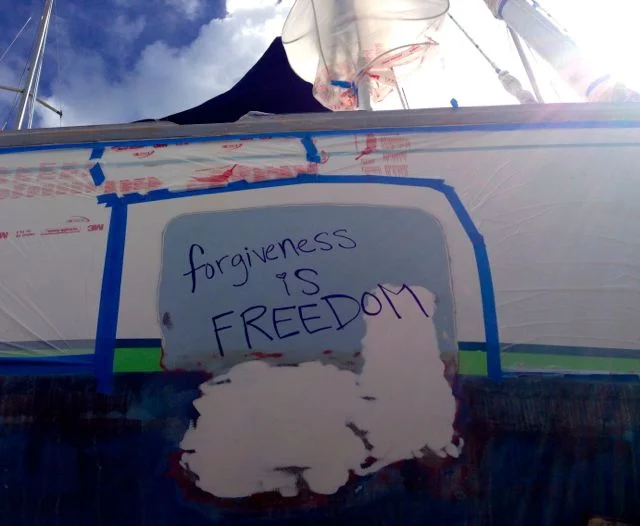
The collision point on Swell's hult post-repair...
Forgiveness is Freedom
Early last May around 2pm, Swell sat at anchor over my favorite sand bank in Tahiti after arriving the following evening from a year-long, 2,600 mile loop through the outer islands of French Polynesia. I was tucked in at my little desk in Swell’s cabin talking to my father on the phone…
“I’m so proud of you Lizzie! Congratulations! Navigation through those waters is no small feat!” He said.
“Thanks, Dad. What a year it was!”
Suddenly I heard yelling outside, and lifted my head to the window. A massive catamaran was barrelling straight down on Swell!?!
CRAAAAAAAAAAAAAAASHHHHHH!!!!!!!!!!!!!!!!!
“Aaaaaaaaaaaaaaahhhhhhhhhhhh!!! Dad, I’ll call you back!!” I yelled. “Someone just hit me!”
The 50 ft charter yacht had properly t-boned Swell, ramming its port hull into her starboard side, just above the waterline slightly aft of the chainplates. It bent some stanchions and broke lifelines and kinked my forward lower cable, too. Where the hull had flexed inward, the interior wood near the bookshelf and drawers crushed and splintered.
Shocked, speechless, adrenaline coursing, I could hardly do more than stare at the middle-aged American dude waving frantically on the bow…Raiarii, on the contrary, was foaming at the mouth, livid, cursing, and ready to leap over and tackle him. The guy backed his yacht away, anchored behind us, and then came over in his dinghy with his wife and another crew shortly after.
In the minutes before his arrival, I talked myself into being calm and kind. Surely, I’d done something as equally ridiculous as to crash into an anchored vessel in the middle of a huge open bay in broad daylight…??? Maybe not…but we all make mistakes…I pleaded with Raiarii to let me do the talking since they spoke English anyway (in retrospect I wish I’d let him handle it the Tahitian way!)
When they arrived I greeted them with a smile, and the captain, Mr. Glenn Dimmit nervously climbed aboard and ran around Swell assessing the damage. He seemed apologetic at first…
“This is completely my fault.” He said. “I went below to do something and the boat was drifting faster than I realized and…”
“It’s ok,” I said. “What’s done is done. Just take care of the damage and lets not let it ruin your vacation.” He claimed he knew lots about boats and that the damage was minimal. But the bulbous hull of the catamaran had hit initially, then pushed Swell over on her port side, where the boat struck her a second time slightly below the waterline when Swell tilted back to starboard. The boat would have to be hauled and the rig would have to be checked to truly assess all the damage…
“Let’s make a list of the damage,” Glenn said.
It seemed like a good idea to me.
His non-engaging wife walked around Swell like it was contaminated with toxic waste, adjusting her hairdo after each photo she took of the damage.
“Honey, did you get this?” She’d say, ignoring me altogether.
He wrote out the list on a few clean pages of my notebook and then curiously numbered each page in the bottom corner…”1 of 3, 2 of 3, 3 of 3”. He then signed his name at the bottom.
“Just sign right here,” he said, “to verify that this is the only damage there is.”
“Wait?” I thought. “Something isn’t right here…? This stranger just carelessly rammed into my home, my life, my way of transportation…and he wants me to sign something? We can’t possibly know what all the damage is yet. What do you think I wanted you to ram into me??”
I recoiled and looked at him suspiciously…
“You know,” he smirked, “just in case this turns into a pissing match…”
At that, my Zen bubble was painfully popped. The magic of a year’s worth of wild open ocean, remote island beauty, and generous Polynesians had been t-boned by a conniving kook from Anaheim. He didn’t give a spit about Swell or I, he was only out to cover his own ass, knowing that his recklessness could be expensive.
“Hmmm…” I played dumb at first. “I really don’t think its necessary for me to sign anything. We can’t possibly know what all the damage is until it has been properly assessed.”
He shoved the paper at me again nervously. My good humor was melting away quickly. I’d been so nice?! He’d made such a hideously blatant error?! I’d kept my Tahitian boyfriend from crushing him into rubble!? And there he was trying to trick me into signing a some sneaky document to protect his ASSets!!?
Maybe I’d been at sea too long–adrift in my fantasy world of positivity and love…but this guy was really a douche!! He and his posse slinked away shortly after my final refusal to sign his paper. He never passed again to see how we were doing in the two days he remained anchored behind Swell. In fact, he’d motor his dinghy wide on his way to shore in order to avoid us…
I called the charter company to report the accident, which kicked off a saga of poor handling by the company’s manager. Despite the deep pockets of the international company, Dream Yacht Charter refused to pay for a true assessment of the damage by a surveyor. And in the end, Swell was repaired as minimally and heartlessly as possible.
Friends and strangers alike urged me to fight back. I could sue Mr Dimmit in California for my losses due to his recklessness. I could file an international lawsuit against the charter company manager, Jerome, who I watched sneakily wipe off the paint from collision point of the accident above the Swell’s waterline, and then tell the yard worker not to grind that area down (because he didn’t want to have to pay to redo the paint!?). When I ground the patch down myself, there was a large area of damaged fiberglass that would not have been repaired had I not happened to see him slyly arrive on his scooter with acetone and a rag in hand.
The whole ordeal was time-consuming, energy draining, and downright disheartening. I wrote some letters of appeal for support to Glenn and those higher up at Dream Yacht Charter. Glenn never responded at all, and the company only turned accusations and faults on me. I spent too much time feeling angry, hurt, confused as what was the best thing to do…I had always tried to do right by others…how could they care so little??
I despised Glenn and Jerome through the summer, until I realized that my negative energy for them was really only hurting me. I was taking it personally, when really, their heartless way of living was their own problem. If I felt anger toward them, I was even more of the loser.
So little by little, I talked myself into letting the whole thing go…My kicking and screaming to bring them to justice was not worth the amount of money and time that I would lose fixing Swell properly on my own. Lawsuits were plain unthinkable—the mere thought of courtrooms and paperwork gave me the jitters.
One morning, while vacationing with my family in Catalina, I made the decision to put the whole thing behind me. I must have had a karmic debt to pay, and both Glenn and Jerome would have theirs too. Nothing is wasted or lost in this universe…And a minute more spent thinking about the situation, was a minute less spent with my beloved family.
Standing under a cool blue sky on my parents boat in Catalina, I lifted it up to greater forces and handed it over…ahhhhh it felt so good!!
Prior to that moment, I feared that ‘letting go’ would hurt my pride, or render me weak, but instead, the forgiveness induced an immediate wave of freedom and serenity that washed completely over me… Suddenly, ‘pride’ and ‘losing’ seemed so pitifully insignificant! I couldn’t wait to get back to playing with my family.
Back to what matters…love, family, and the pursuit of a better world.
I took my next breath feeling renewed, empowered, and ready to get back to much more important things like inspiring people to live out their dreams, promoting sustainability, and sharing Light and Love with a world in need! We must find a way to keep peace in our own hearts…for if not, how can we strive for peace amongst humanity?
LIZ CLARK
Liz left California aboard her 40-ft sailboat, Swell, in 2006 and has sailed over 18,000 nautical miles in the Pacific exploring for remote waves to surf, learning new cultures, seeking truth, living simply from the sea, and writing about it on her blog:www.swellvoyage.com. As an eco and spiritual activist, she hopes to inspire people to live their passions and reconnect with nature and our inherent Oneness.
I Met Bashar Al Assad. He Was Pretty Cool.
In May of 2008, as a 24-year-old student at Harvard's Kennedy School of Government, I went on a two-week, student-led trip to Lebanon and Syria. As part of that trip, we had unprecedented access to Bashar Al Assad and his wife Asma.
The 20 of us on the trip stayed in a boutique hotel in downtown Damascus, a dusty stones' throw from the massive Umayyad Mosque, dating back to the pre-Christian days of Aramea. We spent the first day exploring the chaotic, ancient city. Conde Nast would a year later call Damascus a must-see destination, and our hotel was on their recommendation list.
My family is half Turkish Jews, and a few of my friends and I made our way to the Jewish quarter, where I connected with a group of Jewish Syrians whose families had been living there since the days of Jesus. We took a photo together underneath the domineering gaze of Bashar, his father Hafez, and the early Jewish scholar Maimonedes. The elderly Jewish men and women showed us thousand year-old Torah scrolls, and they described how they felt safe as a tiny minority in a land dominated by Islam. Under Bashar Al Assad, Syrian citizens of all stripes traded privacy for security. These people were oppressed, but they were free and safe to practice their religion openly -- not the case under many other regimes. But the silence and fear were palpable. The oppression showed in their tight smiles, and in the hardened stares behind their eyes.
The morning we met Bashar and Asma, we all put on suits and ties, and boarded a private bus. Surrounded by armored SUVs and stiff looking dudes on 1200 CC motorcycles, we rumbled our way out of downtown Damascus, and up to Bashar's palace. Perched on top of a nearby mountain like a dictatorial acropolis, we passed through multiple checkpoints as we ascended a deserted four-lane road that felt more like a military runway than a driveway. All 20 of us sat in hushed silence as the enormity of both the building, and this opportunity, dawned on us.
The country's more recent past was grim. Bashar's father, Hafez Al Assad took power in 1970. For the next 30 years, he ran the country as if he had trained in the school of torture, death, and oppression. He was an Alawite, a religious minority. He handled the Sunni majority like a sadist. In 1982, he put down a Muslim Brotherhood uprising in the city of Hama by indiscriminately slaughtering 20,000 of its men, women, and children. He then paved over their mangled and mixed remains with concrete in order to avoid being charged with war crimes.
Bashar was studying ophthalmology in London in 1994 when his older brother, the heir to the presidency, died in a car accident. Hafez called Bashar back from the UK, expedited him through the country's military schools, and prepared him to inherit the realm. At Hafez's death in 2000, Bashar became president. His wife Asma Al Assad was generally referred to as a "bright," "energetic," "fashionable," "smart," and "modern" woman. She was born in London to a Syrian cardiologist and his diplomat wife, she drove herself everywhere (rare for a first lady in a conservative regime), and she turned down Harvard Business School (my alma mater) to marry Bashar.
Since taking power eight years prior, Bashar and Asma had done zero non-Arabic interviews. They almost never left Syria. And they certainly had never sat down with a group of American, European and Asian Harvard students prepped to the nines with tough questions. This was an unprecedented opportunity.
We pulled up to Bashar's palace. The structure looked like an enormous Arabian genie had mashed together the Pentagon, Disney's Aladdin, and Saddam Hussein's architectural wet dream. A Middle Eastern Ivan Drago with perfectly coiffed hair dressed in a five thousand dollar custom suit greeted us as we got off the bus. The guy could have been a male model or top-flight investment banker, but I could see the bulge of some weapon system underneath his suit jacket. He calmly asked us to follow him, and our group of 20 wandered into the entrance. No pat down, no metal detector. We just strode right in.
The building was designed by famed Japanese architect Kenzo Tange. The foyer was the size of a football field, with a 10-story gold inverted bowl chandelier hovering over what looked like a school bus-sized terracotta volcano. Eighty-foot tall marble columns reflected off the mirror smooth floor. Ornate tile patterns adorned the walls, and at the far end of the foyer 30-foot-tall bronze doors were shut tight. You couldn't imagine a more perfect dictator's lair.
We were ushered into a side room, all marble, mother of pearl, and intricate tile. Our 20 seats were aligned on two sides of the space, and at the head of the room were two mahogany upholstered thrones. Above the thrones hung a six-foot-tall imperial eagle, also carved out of mahogany. We were served bottled water and some sort of juice from concentrate, but before I could take a preservative-riddled sip, there he was. We all stood as Bashar Al Assad entered the room.
He strode to the thrones, shaking hands with all of us along the way. Smiling, saying "Hello, thank you for coming, nice to meet you" in his nerdy, unobtrusive, borderline lisp. He took his seat.
We spent the next two hours asking him every possible question we could imagine. We started off friendly, asking about development goals, banking reforms, gross domestic product, international trade, and his family. Bashar talked about democracy, raising three children, missing London. We then started playing rough.
"How can you in good conscience preside over a brutal intelligence apparatus?"
"What was your involvement in the murder of Raafik Hariri in Beirut?"
"Why do you support Hezbollah?"
"What is your relationship with Iran?"
We were not friendly. We were downright confrontational.
And he responded to every question with measured, well-reasoned, very convincing answers. He was straight up amazing. He parried our hardest punches, he acknowledged the massacres and pain caused during his father's era, and he eloquently laid out his vision for a reformed Syria, for a modern, healthy, happy Syria. We ate it up.
Two hours into our inquisition, as we lost our venom and began to come around, he brought in Asma. She was beautiful. She wore a fashionable dress that looked like it was made from strips of marble and cloud. She sat in the other throne next to Bashar, and she too answered our questions. She spoke about her passion, the future youth of Syria, bringing Syria's magnificent culture into the twenty-first century. She spoke with an enchanting British accent, about her plans to open local development centers throughout the country, where she would extend education and extracurricular support to the millions of her citizens who needed her help.
We all left the session thrilled. There was hope! These were enlightened monarchs! They just needed to get their story out to the world!
And then, the icing on the cake -- he invited us all to his private box at the opera. That evening we kept on our suits and ties, and we attended the Syrian National Symphony Orchestra's Annual Gala Concert. Bashar and Asma were announced, we all rose, and then our "delegation" from Harvard was announced to the crowd of several thousand in the gilded opera hall. We were all enchanted.
In May 2008, there was no way of knowing that the Arab Spring would erupt, and that it would take down the dictators of Tunisia, Libya, and Egypt. There was no way of knowing that Assad, the nerdy ophthalmologist with a long neck and bad mustache, would kill reportedly over one hundred thousand of Syria's citizens. There was no way of knowing that he would launch SCUD missiles, and chemical weapons, at his own people. There was no way of knowing that he would torture hundreds of thousands more, many of them children.
As Joan Juliet Buck reported:
On April 29, 2011, a chubby 13-year-old boy named Hamza Ali al-Khateeb was arrested during a protest in Saida, near Daraa. On May 24, Hamza's mutilated body was returned to his parents. The report by Al Jazeera said: "The child had spent nearly a month in the custody of Syrian security, and when they finally returned the corpse, it bore the scars of brutal torture: lacerations, bruises and burns to his feet, elbows, face, and knees. Hamza's eyes were swollen and black and there were identical bullet wounds where he had apparently been shot through both arms, the bullets tearing a hole in his sides and lodging in his belly. On Hamza's chest was a deep, dark burn mark. His neck was broken and his penis cut off."
Today I wonder about Asma and Bashar Al Assad. The friendly, smart, kind parents who cared so much about the youth and future of Syria. The English accent, and the unobtrusive lisp. How could they not know what was happening? How could they stand by and do nothing while the Syrian regime mutilated the future?
I'd like to think that Bashar has no power, that it's really his generals who have wrested all control and are tearing apart that beautiful ancient land. I'd like to think that I'm a better judge of character. I'd like to think that there is a part of this story that I'm missing, something that ties it all together so that my time with Bashar Al Assad and his wife makes sense.
But that's not the case. We were duped by a monster.
ORIGINALLY PUBLISHED IN THE HUFFINGTON POST.
NICK TARANTO
Nick is co-founder of Plated.com where he runs all non-technical aspects of the e-commerce gourmet recipe kit delivery business. Nick graduated from Dartmouth College and then started a microfinance institution in Central Java, Indonesia while on a Fulbright grant. Nick is a US Marine Corps infantry officer, and has spent time consulting with McKinsey & Co and as a private wealth advisor with Goldman Sachs. He received his MPA and MBA from the Harvard Kennedy School and Business School. He has six brothers and sisters, is married, and loves peaty whiskey and esoteric endurance sports.
Anything is Possible: Removing 'NO' from your Vocabulary
When I think about what it takes to change the world, I think that the most important thing is being able to ignore the word no. You’ll be hit with no all the time as a shameless idealist, and each time you dust it off, you get one step closer to making the difference that you want to make. People will say that you aren’t old enough, don’t have enough money, there aren’t enough of you, there is too much to be done, that you won’t reach your goals, that your contribution isn’t going to make an impact. You’ll hear doors slam, people will walk right past you, some will even laugh at you. In their own way, each of these people will be saying no to your vision — your dream for a better world.
Don’t listen to them.
When I was in high school, I saw the first Invisible Children DVD a couple weeks after it was released. As the credits rolled, I knew that my life would be forever changed by what I had just become a witness to. I started spreading the word around, but raising awareness amongst the people I knew just wasn’t enough — I wanted to contribute, to do something for those kids that I now felt I knew.
I wrangled two of my friends into helping me with a half-baked idea, and soon, we had turned a room in my house into a home-base of sorts, with maps of Uganda, Invisible Children swag, posters, pamphlets and a mini fridge. From there, we decided we wanted to throw a benefit concert to raise money and awareness for “The Rescue”, Invisible Children’s campaign to rescue child soldiers from Joseph Kony. This is when we began to hear the word no.
We went to our principal with a pitch – she told us that we were too young, too inexperienced, and that there weren’t enough of us to run a concert. She suggested a bake sale. I sat on the steps in front of my school and cried, in despair that I would never be old enough or important enough to make the difference I wanted to make, the one I knew I could make if I was given a shot. However, in what I now look back on as the most defining moment of my short life, I decided that her no was not going to stop me. We would have our benefit concert, and she would see what kids can do when they put their hearts and minds to it.
Three months later, I was standing on stage behind City Hall, shaking hands with the Mayor, who had given us the space for free, watching 50 Starbucks volunteers hand out coffee, proceeds from which would join their $2000 donation and the donations of the many attendees and other sponsors. Bands were backstage, getting ready to perform, and my friends and I had just finished a front-page interview for the local paper. At the end of the night, I handed Invisible Children’s representatives a cheque for $9,452 dollars. Months after that, we ran a full day festival on Victoria Day, raising even more for the incredible cause. My principal attended the concert.
Years later, with new challenges and new nos coming at me every day, I always remember that day — the day I decided that I would never let anyone else, or their opinions of what I am capable of, define me. World changers for centuries have come to the same conclusions – Nelson Mandela spent 20 years in prison, denying the word no, inspiring the world as he sought freedom and equality as South Africa’s first black President. Amelia Earhart shook off the word no and became the first female pilot. Gandhi ignored no and led his country out of oppression with non-violent protest. Jane Goodall ignored no and faced countless danger to follow her passion. Everyday, world changers shake up their communities and the global landscape by striding past every no, with their heads high, and doing what others believe cannot be done. So if anyone out there tells you that you can’t do something — you can’t win that race, you’re not smart enough to be a lawyer, you can’t raise enough money, you can’t make an impact, you’re not strong enough to change the world — deny them the power of defining what you choose to try. Do what everyone thinks you can’t, and show them that you can.
ORIGINALLY PUBLISHED ON THE CHANGE HEROES BLOG

NATASHA BEITMAN
Natasha Beitman is a fourth year International Development Studies major at York University. She aspires to attend law school in the fall, to pursue a career in criminal law. She is passionate about philanthropy and issues of global development and environmental sustainability, and strives to be a positive role model and mentor to high school student and university freshmen. She is also currently involved as Co-President of the Mosaic Institutes 2013-2014 Dialogue Series, which aims to create peaceful relationships between historically opposed groups on Toronto campuses. She is an avid foodie who enjoys old vinyl records, good books, and wrestling with her Doberman, Gracie.