Italian Night Life Thrives in Abandoned Buildings

Thanks to self-managed social centers, Italians have found a space to enjoy concerts, dinners, movie nights and more

A concert at night with one performer singing to the crowd.

Concert at XM24. Zeroincondotta. CC BY-NC-SA 2.0 

Since the 1970s, self-managed social centers have offered a place for Italians to gather as a community. Usually located on the outskirts of cities, these centers are established and operated entirely by locals. They are often formed as a direct response to social issues such as lack of affordable housing, drug addiction and marginalization. Members of the community occupy buildings that have fallen into disuse, such as schools, apartment complexes, forts and even farms. 

Pasted concert and political posters on a grafittied wall.

CSOA Forte Prenestino. boklm. CC0 1.0

The legal status of these centers varies, and some face eviction by authorities despite their value to the community. Many of the centers take a strong political stance, defining themselves as anti-fascist, anti-sexist, anti-racist and anti-capitalist. These spaces serve as important refuges for members of the community and a place for diverse groups of people to meet and collaborate.

Singer on stage holding his fist in the air.

Concert at XM24. Zeroincondotta. CC BY-NC-SA 2.0 

One of the most famous of these self-managed social centers was XM24, or ExMarket, of Bologna. It emerged during a period of repression as the mayor of the city engaged in a campaign against social housing and squatter movements. The center established itself in several abandoned spaces, including a former fruit and vegetable market from which it took its name. It offered a number of services to the community, including a cafe, a bike shop, a vegetable garden, live concerts, a gym, and a dormitory for migrants, refugees and the houseless. It was run by a general assembly of local volunteers.

Written grafitti on a wall that promotes collective action.

XM24 Graffiti, Against those who close our spaces, let’s ignite our rage. Zeroincondotta. CC BY-NC-SA 2.0

In 2013, XM24 was able to reach an agreement with the local government, allowing the center to operate independently and utilize the abandoned spaces. However, the agreement expired in 2017. Members of the community attempted to protest the eviction in a struggle with the city that lasted two years, but in 2019 the space was evicted and bulldozers arrived to clear it out. As of 2024, the center no longer exists. 

Leoncavallo Spazio Pubblico Autogestito. Robertino Radovix. CC BY-NC-SA 2.0 

XM24 was not the only self-managed center to be evicted by the government, but many centers have still found a way to thrive. The Leoncavallo Spazio Pubblico Autogestito of Milan still offers jazz concerts, stand-up comedy, dinners, English lessons and more to locals. It is currently open Thursdays through Sundays in the afternoon and evening, although they face eviction on June 18th, 2024 by the bailiff and the property’s lawyers. 

Daniele Sepe & Aldolà Chivalà. L’Asilo. CC BY-NC-SA 2.0 

Je So’ Pazzo is a self-managed center in the Marterdei district on the outskirts of the city of Naples in a former asylum for the criminally insane. When it was occupied in 2015, it was managed by the Penitentiary Police. Volunteers collaborate with local associations to house, collect clothing for and distribute meals to the houseless. Their services include medical clinics, psychiatric support and migrant aid. They also offer a number of recreational activities, such as Naples’ only indoor rock climbing wall, a football pitch, a gym, a theater, a bar, social dinners, concerts, and so much more. It is still active and open 24 hours a day, six days a week. Like most places in Italy, it is closed on Sundays.

Two male performers on stage at concert, one with a guitar and the other singing through microphone

Concert at CPA, Firenze. GothEric. CC BY-SA 2.0

The Centro Popolare Autogestito Firenze Sud and LaPolveriera SpazioComune are both self-managed centers located in Florence. Like other social centers, they offer a variety of recreational activities during the days and the evenings, such as ceramics classes and concerts, as well as important social services for the community.

Whether you are looking to participate in a ukulele workshop, enjoy a dinner and movie, discuss politics with local Italians, or let loose at a heavy metal concert, self-managed social centers are the perfect place.


Rebecca Pitcairn

Rebecca studies Italian Language and Literature, Classical Civilizations, and English Writing at the University of Pittsburgh. She hopes to one day attain a PhD in Classical Archeology. She is passionate about feminism and climate justice. She enjoys reading, playing the lyre, and longboarding in her free time. 

Journey to Malaysia: The Gawai Dayak Festival

On June 1st travelers can relish in Sarawakian culture at the colorful Gawai Dayak Festival.

A parade float decorated with a small house built on the roof of a truck, grass hangs off the side, children march behind smiling.

A Gawai Dayak float. Baka_neko_baka. CC BY 2.0

In the Iban language, Gawai Dayak means something like "Festival of the Native Ethnic Groups of Sarawak," a state in Malaysia. This festival brings communities together to celebrate the end of the rice harvesting season. Gawai Dayak is a time of gratitude and companionship where people give thanks for that year's harvests and pray for a fortunate future.

Rice agriculture is integral for many Sarawakians. By June the majority of the hard work in the rice fields is done, and Sarawakians have a period of celebration and rest until the next planting season begins in September.

Gawai Dayak festivities begin during Gawai Eve on May 31st. On Gawai Eve, locals conduct a ceremony called Muai Antu Rua to cast away negative spirits and roast rice over bamboo. During the Muai Antu Rua ceremony, unwanted items are collected from Iban longhouses and used in a miring, or offering ceremony, filled with music. 

After the Muai Antu Rua ceremony, attendees await midnight when the sound of a gong kicks off Gawai Dayak. Many activities and traditions are open to locals and visitors during Gawai Dayak. During the celebrations, participants can engage in traditional dances, dance competitions, and enjoy Sarawakian delicacies such as a rice wine called Tuak, which is thought to bring long life, and rice cakes called Penganan

Gawai Dayak is a time filled with events and activities. A popular Gawai Dayak tradition is the Kumang and Keling Gawai contests where celebrants elect the festival’s queen and king. Other common Gawai Dayak traditions include blow-pipe demonstrations and rooster fighting.

Gawai Dayak celebrations can continue for several days. During the festivities, travelers have the unique opportunity to visit the Dayak homes, which are often open to visitors during Gawai Dayak.

Many visit the Sarawakian capital Kuching to celebrate Gawai Dayak. While the official date for Gawai Dayak is June 1st, in Kuching Gawai Dayak is celebrated the week before the World Harvest Festival. These dates vary every year, but the celebration usually falls at the end of May or the beginning of June.

During the Gawai Dayak in Kuching, there is an array of theatrical and musical performances from both local and international troupes. Explorers can also discover traditional cuisine in local longhouses and experience appetizing aromas, engaging workshops and upbeat music at the Food & Craft Fiesta.


Madison Paulus

Madison is a student at George Washington University studying international affairs, journalism, mass communication, and Arabic. Born and raised in Seattle, Washington, Madison grew up in a creative, open-minded environment. With passions for human rights and social justice, Madison uses her writing skills to educate and advocate. In the future, Madison hopes to pursue a career in science communication or travel journalism.

Whale Watching in Washington State in the San Juan Islands

Experience a beautiful archipelago off the coast of Washington State that’s bursting with natural splendor

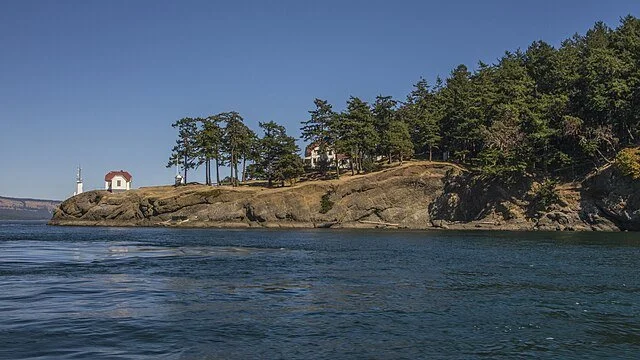
The rocky coast of Orca Island jutting out into the blue sea. Some pine trees around a small quaint building grow on the island.

The coast of Orca Island in the San Juan Islands. Bureau of Land Management, CC0

Only an hour and a half by ferry from the coast of Seattle, Washington, the San Juan Islands are an incredible destination for any wilderness-seeking wanderers. After only a week, I’d seen dozens of whales and porpoises, and explored miles of the main island both on foot and by bicycle. My friends and I still consider this one of our greatest trips! From whale watching and sea kayaking to hiking and ziplining, these islands provide the perfect “surf-and-turf” nature experience.

The small archipelago is by far most famous for its local orca pods. A rarity in American waters, the Northwest's Gulf of Georgia boasts three local pods that feed primarily on salmon, as well as a traveling pod from Canada that feeds on the local harbor seal population. In addition to the orcas, a wide variety of marine mammals can be spotted both along the shoreline and out in the heart of the Gulf. On our first whale watching tour from the main island my companions and I saw humpback whales, Steller sea lions and a variety of dolphins and porpoises keeping pace with our boat.

The archipelago is made up of four main bodies of land: San Juan, Orcas Island, Lopez Island, and Shaw Island. The first, San Juan, is the largest and most visited island in the chain, and is home to the beautiful town of Friday Harbor. In addition to being the ferry’s main landing point and the heart of the archipelago itself, Friday Harbor is the main hotspot for whale watching tours. The guides provide an excellent experience; ours taught us all about the native marine animals and the history of the islands. We spent most of our time on San Juan during our tour, hiking across the hilly terrain to the south for some amazing views.

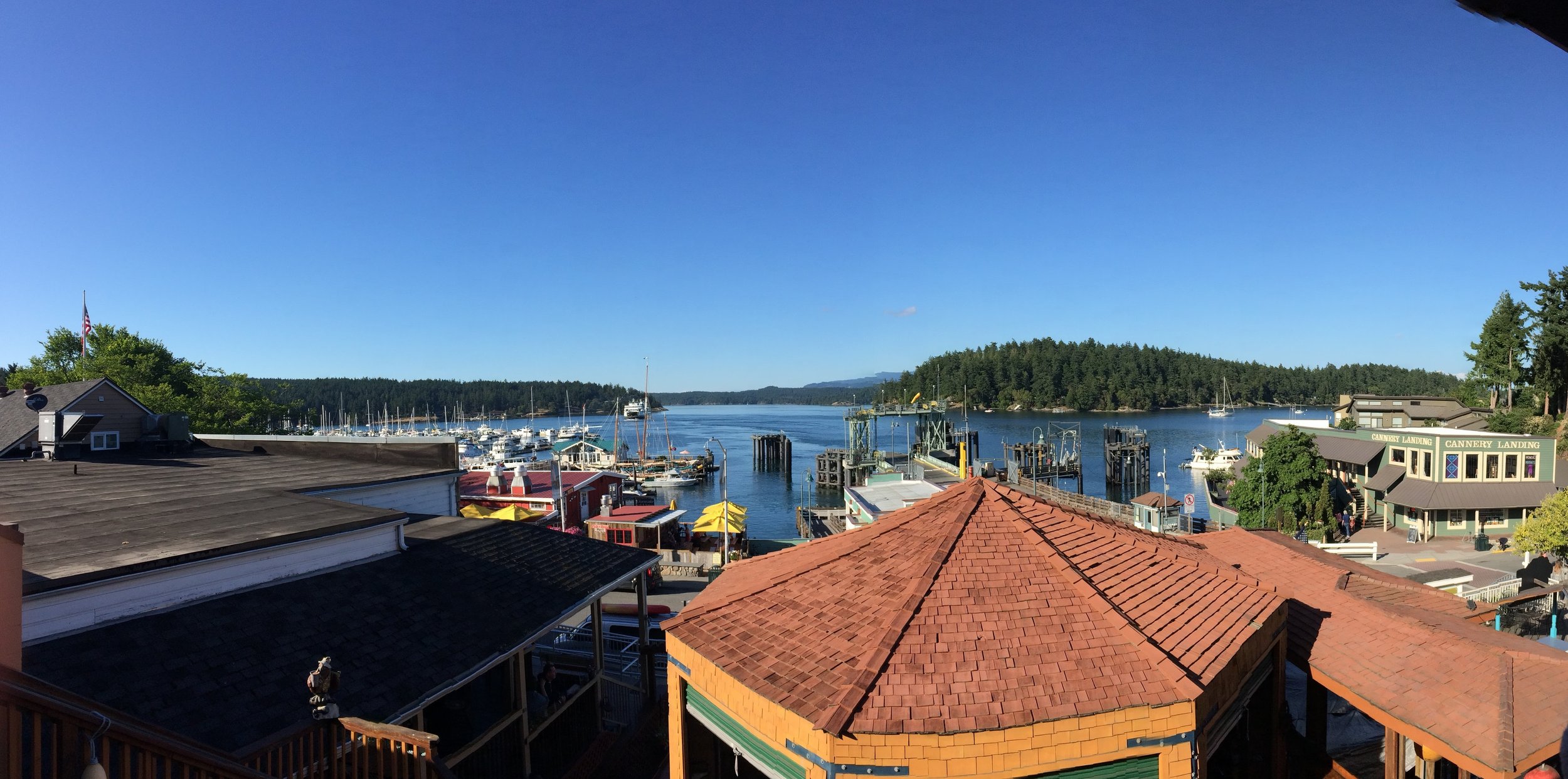
A view from above of Friday Harbor. Sailboats are moored among the peaceful harbor and small businesses line the port.

A view of Friday Harbor from the balcony of a local restaurant. Image from author. Ryan Livingston

But perhaps the best thing about Friday Harbor is the locals. In particular a harbor seal named Popeye, who likes to spend her mornings floating outside of the dockside restaurants in the hopes of getting some handouts. She’s very friendly, and has become something of a mascot for Friday Harbor!

San Juan is also the site of Lime Kiln Point State Park, which is lauded as one of the best whale watching sites in the world. The park is also a hangout spot for the river otter population around the islands. Lime Kiln Point is also an excellent hiking spot, with a trail leading up to a vintage lighthouse that is the park’s main landmark. This lighthouse provides an excellent view of most of the Gulf.

On the latter half of our trip, my friends and I paid Orcas Island a visit. Known for its rich artistic history, it is known locally as the “Gem of the San Juans.” The coastal towns include a variety of sailing, fishing and whale watching charters, as well as a few sea kayaking companies that give tours of the island and its history. With their friendly and informative tour guides, you’ll wind up learning about everything from jellyfish to the islands’ border disputes back in 1949! Orcas Island is also the site of Moran State Park, an excellent site for hiking, biking, camping and boating on the small lakes situated across the landscape.

The other two islands are well worth visiting, although I wound up spending all of my time on San Juan and Orcas. Lopez Island is by far the least hilly of the four, and as a result has been adapted into a fantastic biking location. With trails all over the island and tons of rental shops to choose from, Lopez is the biker’s dream. In addition, for any eco-minded travelers, a visit to Lopez Island can include a variety of volunteer opportunities, including trash pickup, injured and beached animal rescue training and more.

Finally, we have Shaw, the smallest island in the archipelago and home to the one-of-a-kind Our Lady of the Rock Monastery. Built on living in the same traditional lifestyle as its founders, the nuns tend a sprawling farm that, like the monastery itself, is open to the public. Although it does offer worship sessions, the architecture and rich history are reason enough to visit.

Whether you’re looking for an escape into nature or searching for the elusive mammals of the sea, the San Juan Islands are a uniquely beautiful experience. The best times to visit are between May and August, when the salmon runs are at their highest and orca and porpoise sightings are the most common. Whale watching tours can be booked out of any of the four islands at places like San Juan Excursions, and hotel bookings can range from $157 to around $300 a night in the heart of Friday Harbor. Camping in the various state parks is also an excellent option.


Ryan Livingston

Ryan is a senior at The College of New Jersey, majoring in English and minoring in marketing. Since a young age, Ryan has been passionate about human rights and environmental action and uses his writing to educate wherever he can. He hopes to pursue a career in professional writing and spread his message even further.

10 Must-Read Travel Classics Book List

From tales of adventure to memoirs, here are some pages to satisfy wanderlust, whether for the armchair traveler or the seasoned globe-trotter

A man sits focused with a book in hand, and his large backpack lying on the ground in front of him, in a store.

Reading Traveler. Gauthier Delecroix. CC BY 2.0 DEED.

Books hold a unique allure; they allow their readers to experience journeys across continents, cultures and epochs. By digging into pages written by seasoned explorers, we encounter not only vivid adventures but insights into the boundless diversity of our world. This curated collection of travel books ranges from celebrated works such as the classic "Eat, Pray, Love" and voices that continue to redefine the genre.  

In each of these books, the world unfolds, inviting readers to embark on their own journeys, whether on the road or in their imaginations. With glimpses into the art of traveling, let these pages be your passport to discovery.

1. "Bicycle Diaries" by David Byrne

In this captivating exploration of the world through the lens of a bicycle saddle, David Byrne’s offers a distinctive perspective on urban life and culture. As he pedals through cities such as Berlin, Buenos Aires, Istanbul and New York City, he explores the intricacies of urban planning and social dynamics. He is able to paint a portrait of the locale by immersing himself in the rhythm of the streets through the power of the bicycle.

2. "Eat, Pray, Love" by Elizabeth Gilbert

In the classic book about the transformative power of travel, Elizabeth Gilbert chronicles a year-long journey across Italy, India and Indonesia. While she seeks to rediscover herself, Gilbert is immersed in cultures and traditions that show her how to indulge in the pleasures of spirituality and love. Her story intertwines personal growth with the adventures of traveling, inspiring readers to embark on their own quests for self-discovery.

3. "The Slow Road To Tehran" by Rebecca Lowe

This book follows Rebecca Lowe’s solo through Iran, a country that is often misrepresented in Western media. Her narrative is rich with encounters with locals and reflections on the complexities of Iranian society. Through her immersive account of Iran, Lowe challenges stereotypes that perpetuate misunderstandings about Iran, highlighting the potential for travel to bridge cultural divides.

4. "The Catch Me If You Can" by Jessica Nabongo

In this memoir, Nabongo chronicles her quest to become the first black woman to travel to every country. Her adventures offer a glimpse into the diverse cultures and experiences across our globe that illustrates the profound impact of exploration in broadening perspectives. Not only is the transformative nature of travel emphasized, but also Nabongo’s perseverance and courage to explore on her own and embrace the world with open arms, urging readers to embark on their own journeys.

5. "Paris to the Moon" by Adam Gopnik

In this collection of essays, Gopnik recounts his experiences living in Paris with his family during the late 1990s. Through his witty observations and cultural insights he provides a vivid portrait of the City of Light, exploring its charm and timeless allure. Serving as a love letter to the city and a thoughtful narrative on the complexities of expatriate life, it is a must-read for anyone enamored with Paris. 

6. "Blue Latitudes" by Tony Horwitz

In this exploration of James Cook’s voyages through the Pacific Ocean in the 18th century, Horwitz immerses himself in the captain's adventures. Through historical research and storytelling he brings Cook’s expeditions to life while also reflecting on their impact on Indigenous peoples. This blend of travelog and history offers readers a compelling journey through time, as they navigate the expanse of the Pacific alongside Cook and come to understand journeys’ implications for the modern world.

7. "Atlas of Vanishing Places" by Travis Elborough

Through vivid and stunning illustrations, Elborough takes readers on a journey to disappearing landscapes, from sinking islands to vanishing cities. While the book highlights the beauty and cultural significance of these places, it also sheds light on the environmental and societal factors that threaten their existence. As an exploration of some of the world’s most fascinating yet endangered locales, it serves as a reminder of the fragility of our planet and the need for conservation efforts to preserve it.

8. "The Vagabond’s Way" by Rolf Potts

Drawing on his experiences of long-term travel, Potts shares practical advice about the philosophy of wandering and art of living on the road. With engaging storytelling and profound insights, readers are encouraged to embrace a life of adventure and curiosity that offers an enriching existence beyond the confines of conventional living. As a guide for anyone seeking to break free of the constraints of routine and embark on a journey of self-discovery, this book is a must-read.      

9. Imagine a City by Mark Vanhoenacker

Vanhoenacker paints a picture of cities as living, breathing entities that are shaped by their history and culture. Drawing on his experiences as a pilot, Vanhoenacker offers a unique perspective from above that helps to explore the interconnectedness of cities at large. This thought-provoking ode to the power of urban spaces invites readers to reimagine the cities that they inhabit and encourages greater connection with the world around them.

10. "The Geography of Bliss" by Eric Weiner

In his journey across the globe in search of fulfillment, Weiner uses insightful reflections and wit to explore the cultural and geographical factors that shape our perceptions of happiness. Traversing countries ranging from Switzerland to Bhutan, he discovers that the true essence of happiness lies not in material wealth but in the richness of human connections and purposeful living. Weiner’s book offers a heartwarming exploration of the universal quest for joy that holds important meaning for all of us.


Mira White

Mira is a student at Brown University studying international and public affairs. Passionate about travel and language learning, she is eager to visit each continent to better understand the world and the people across it. In her free time she perfects her French, hoping to someday live in France working as a freelance journalist or in international affairs.

May Day Magic: How Different Countries Celebrate

Sixty-six countries around the world recognize May Day, and a variety of different celebrations and traditions can be found throughout Europe.

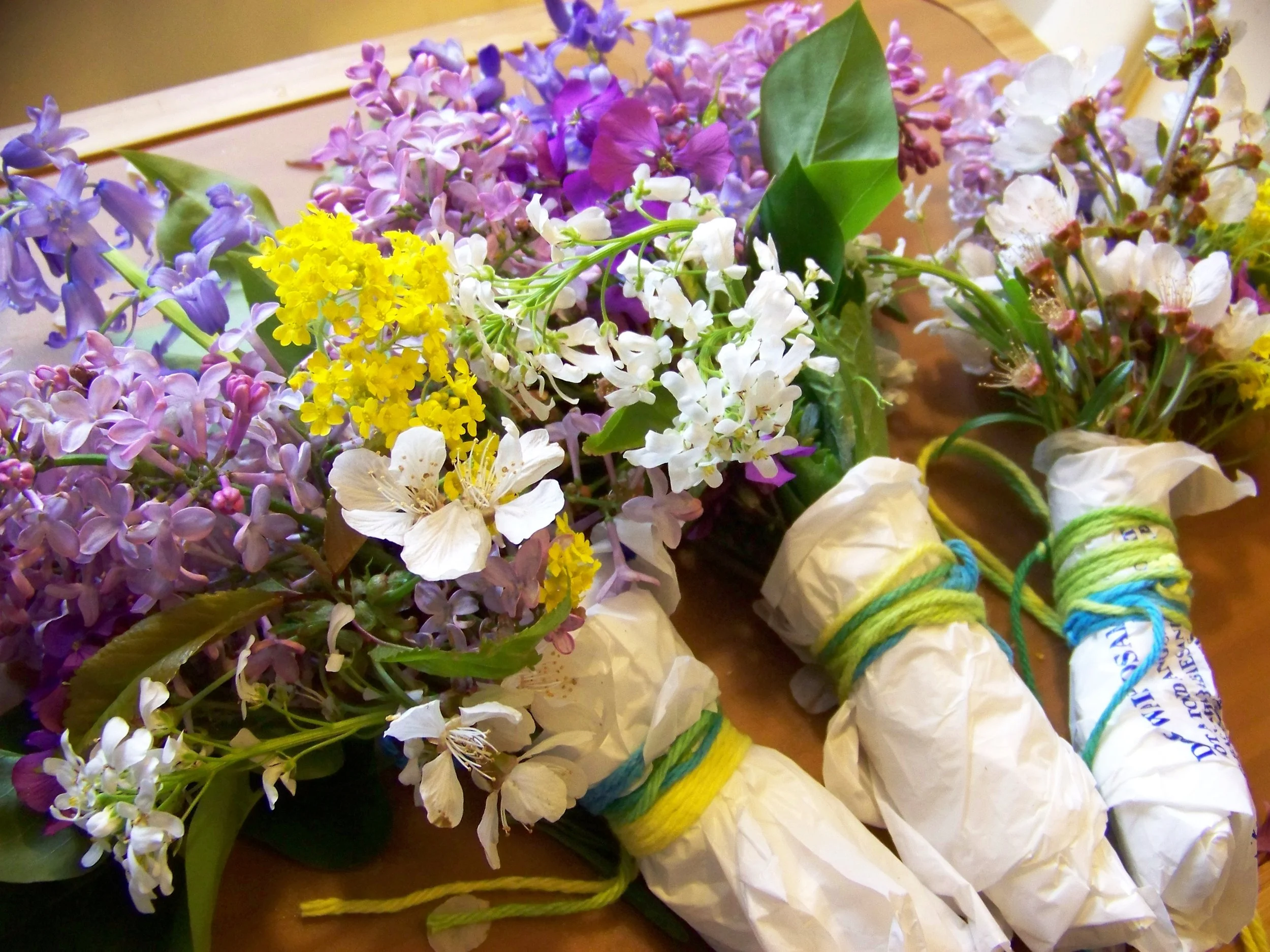
Close-up of bouquets of colorful flowers wrapped in ribbon and paper lying side by side

May Day bouquets. Alyss. CC BY-NC-SA 2.0

The roots of May Day are in the Gaelic Beltane Festival and Roman Floralia. In 1891, the first of May also became recognized as International Workers Day. Over the years, May Day festivities have maintained ancient traditions while evolving to include modern activities from picnics to music festivals.

England

Children dressed in white holding onto colorful strings attached to a central pole, they form circles as they dance around the maypole.

Children performing the Maypole Dance. Pete Ashton. CC BY-NC 2.0

England boasts a long history of May Day celebrations. Traditional Maypole dances can still be seen throughout the country. These dances are often performed by children adorned with flowers who hold ribbons connected to the Maypole. 

The ribbons create a colorful design as the children dance around the maypole. Said to represent the increase of daylight between the winter and summer months, this tradition is around 600 years old.

Beyond witnessing this traditional dance, history enthusiasts can witness re-enactments of conflict between the Vikings and Saxons at Corfe Castle in Dorset. 

Finland

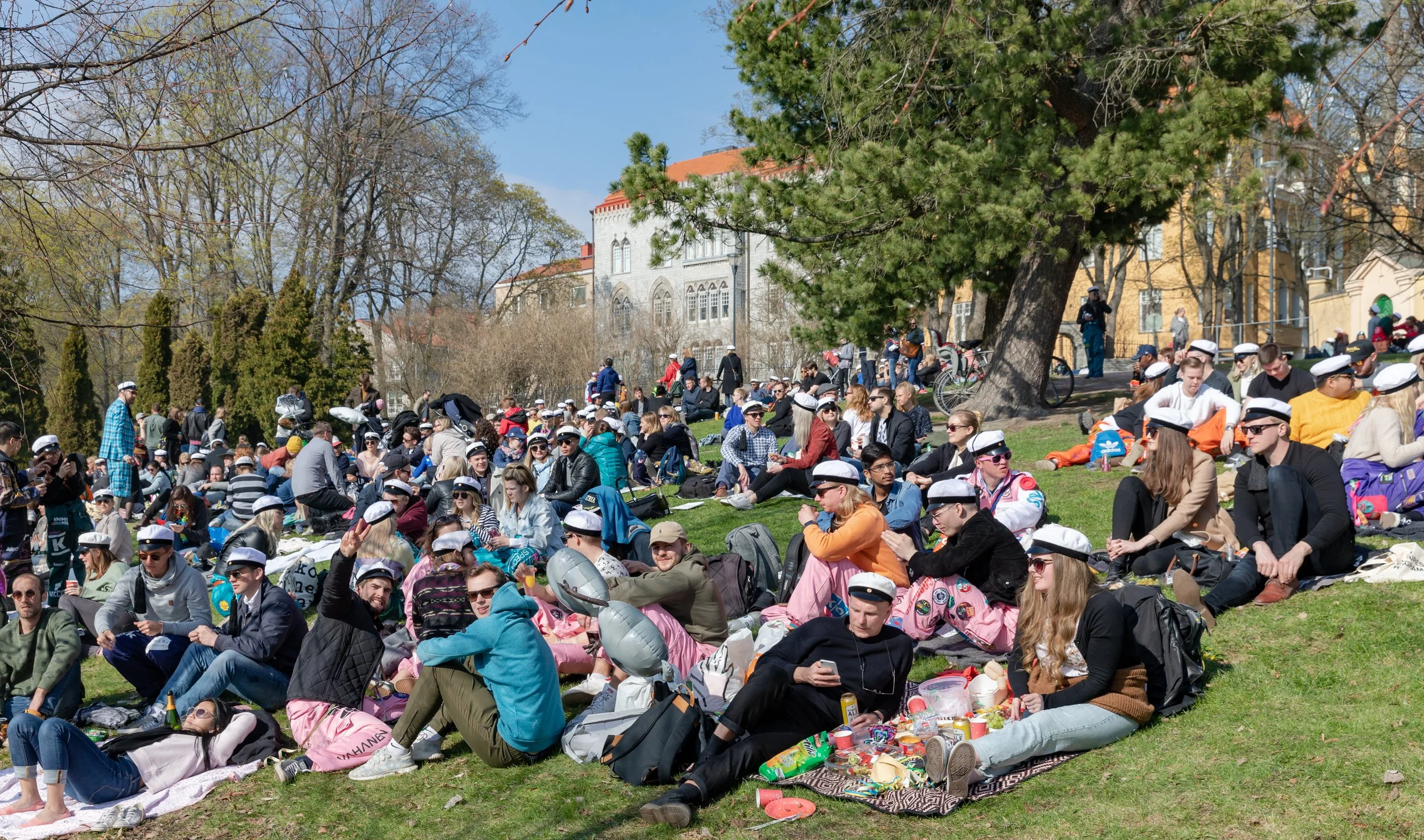
Crowds gather in a park, all wearing special graduation caps and with picnics to celebrate.

May Day picnic in Helsinki, Finland. Ninara. CC BY 2.0

Finnish May Day celebrations are called Vappu, and are celebrated on April 30th and May 1st. During the festivities, travelers can see streets and parks dotted with white hats; these hats are secondary-school graduation caps, which have become a staple of the Vappu celebration. 

During Vappu, Finland is incredibly lively, full of parties, picnics, parades and political speeches. These events are accompanied by several traditional delicacies, including Finnish May Day funnel cakes called Tippaleipa, Finnish donuts called Munkki, and a unique kind of mead called Sima.

France

Close up of a white Lily of the Valley flower in garden.

Lily of the Valley. liz west. CC BY 2.0

In France, May Day is known to be a day of rest when nearly every business is closed in honor of Labour Day, although flower shops and stands are allowed an exception. This is because Lily of the Valley flowers, called Muguet in French, are a staple May Day tradition.

During the holidays, Lilies of the Valley are exchanged between family and friends as a symbol of good luck. During May Day, French streets are strewn with these flowers as this day marks the only time of the year when people are allowed to sell these flowers on the street without requiring a license or taxation.

Germany

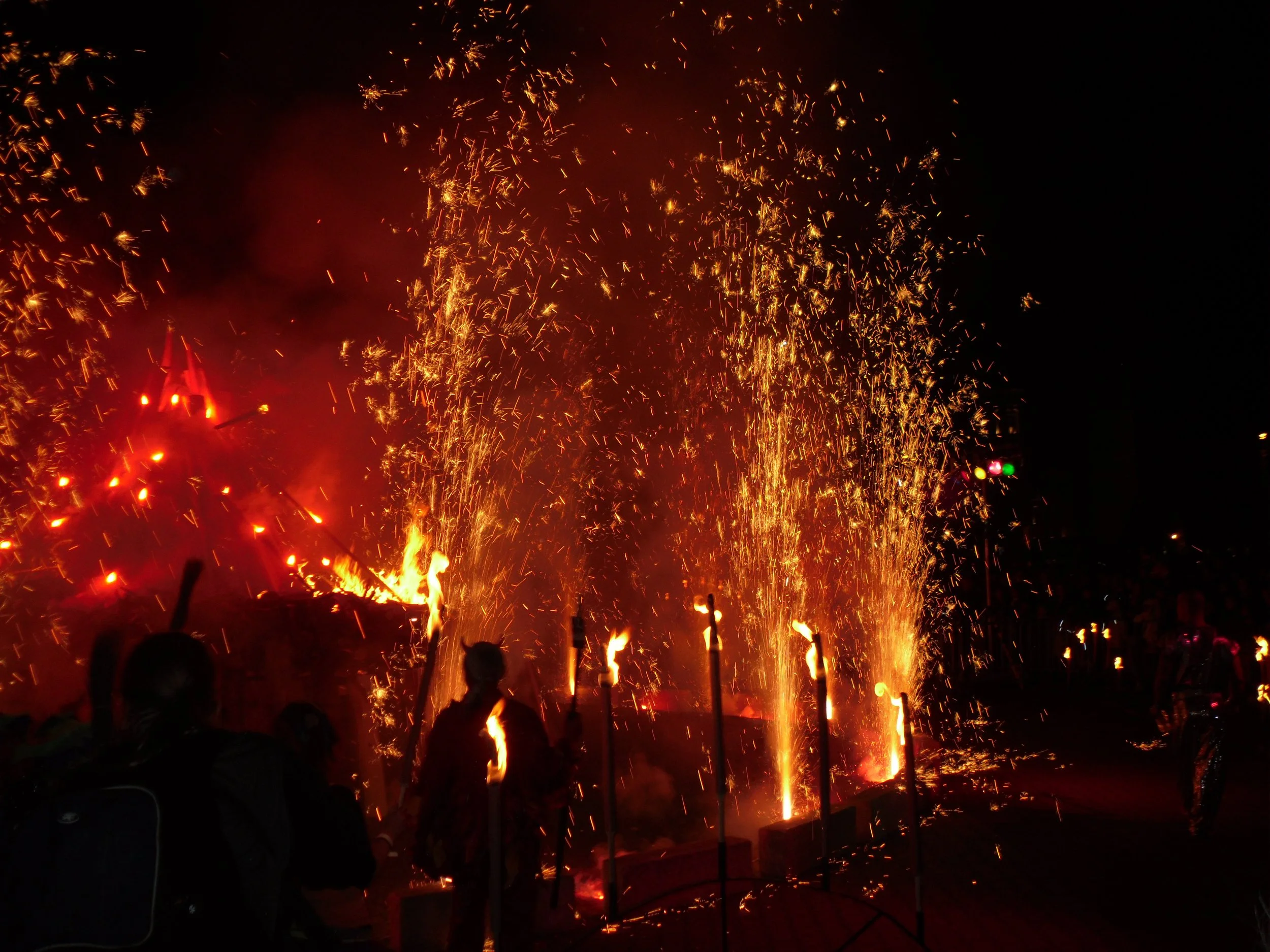
People stand in front of the massive bonfire at night.

Walpurgisnacht celebration, Germany. Michael Panse. CC BY-ND 2.0

On the eve of May Day, Germans celebrate Walpurgisnacht, a spring festival with a history rooted in witchcraft. This tradition has its origin in the belief that witches celebrate the coming of spring on the summit of Blocksberg Mountain. During Walpurgisnacht, festivalgoers can dance around bonfires and indulge in Maibowle, a punch made up of white and sparkling wines and wild woodruff. 

On May Day, parades featuring brass bands make their way through the streets, followed by maypole dances and public gatherings filled with bratwursts and beer. A festival for dark rock and arts has also been celebrated in Leipzig since 1992, drawing goths from around the world.

Greece

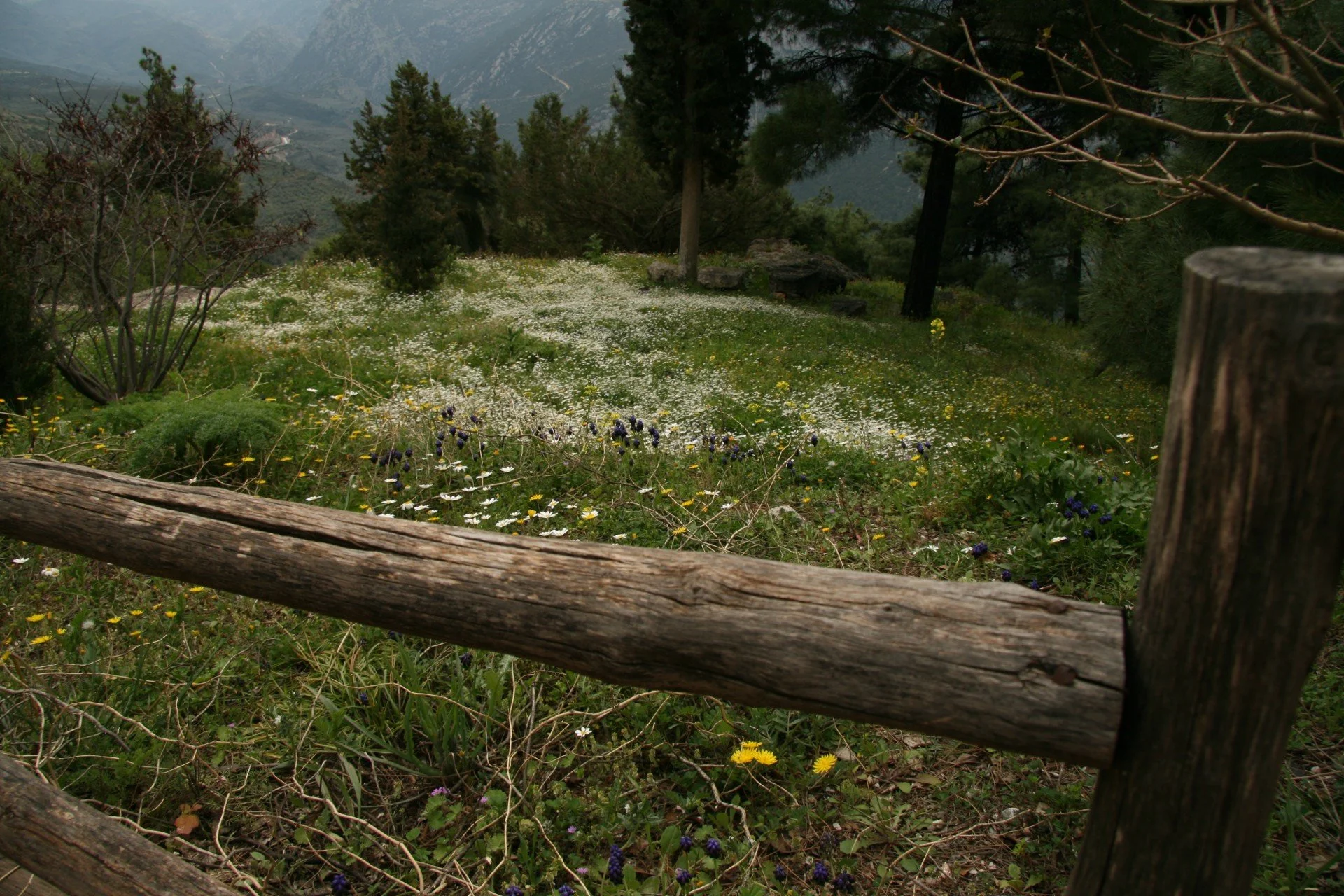
Looking over a wooden fence, a view of a grassy wildflower meadow in the mountains.

Wildflowers in Greece. Kevin Casper. CC0

May Day has been celebrated in Greece long before its association with Labour Day. Protomagia, the traditional Greek May Day celebration, has been a time for Greeks to celebrate rebirth and honor the dead for centuries. 

While traditions vary across regions, many feature lively singing, dancing and rituals. A few of these customs include women singing traditional May Day songs while dancing around bonfires. Children also leap over the bonfires to symbolize the end of winter and banish disease. 

Greenery and flowers have long symbolized vivacity and fertility. In preparation, people collect wildflowers from the countryside and create wreaths. These wreaths can be found on balconies and doors across the country, intended to ward off evil. These wreaths are then preserved and tossed into bonfires during the Feast Day of Aghios Ioannis Klidonas on June 24th.

Ireland

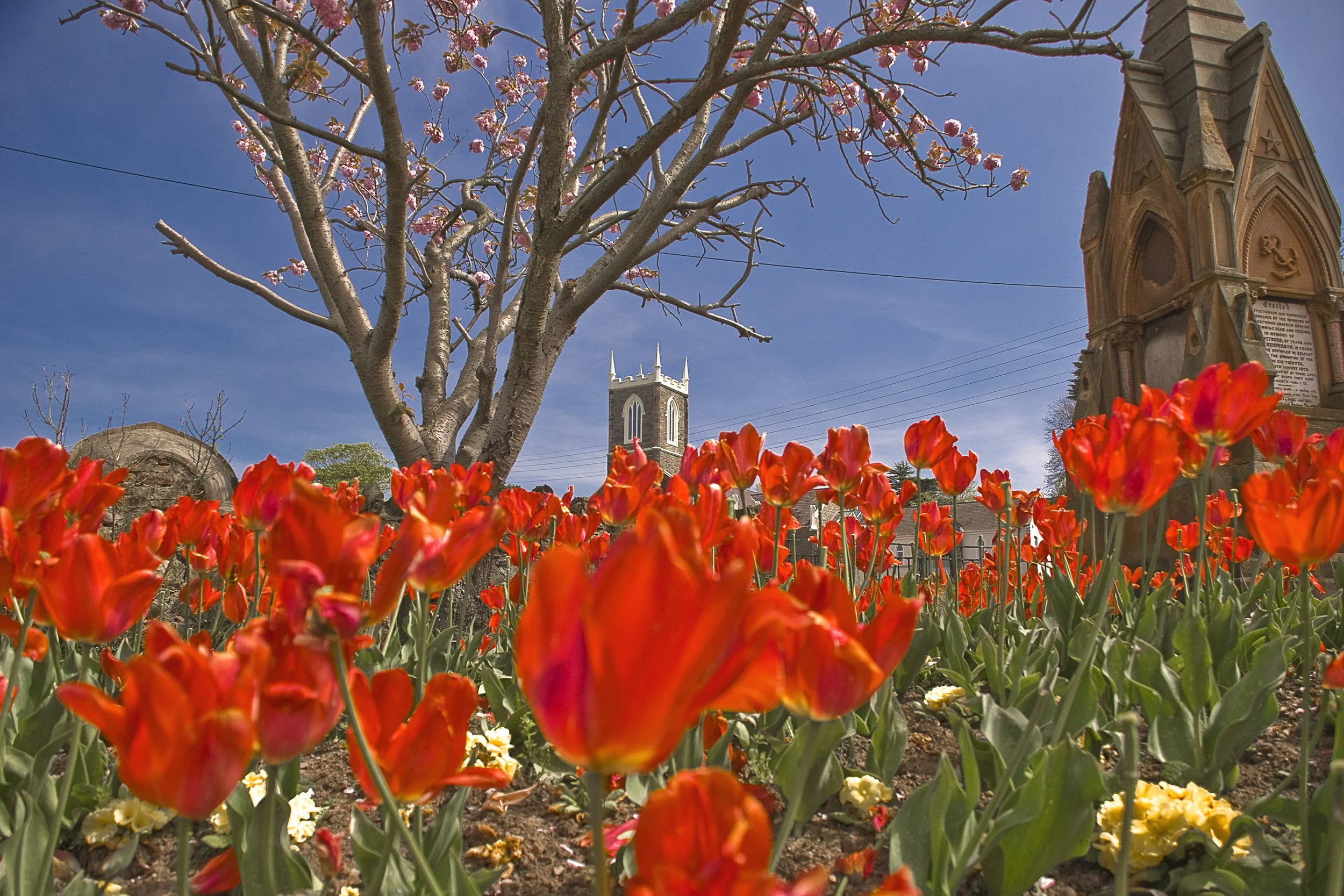
A close up of a field of red flowers, the top of a historical church or building peeks out at the top.

May Day flowers in Northern Ireland. Etrusia UK. CC BY-NC-SA 2.0

Traditionally, Ireland celebrated the Beltane Festival, including Maypoles and May Bushes, which were usually Hawthorn bushes decorated with ribbons and occasionally colored eggshells left over from Easter. 

Children in Dublin would wander the streets in search of money, candles or sweets by approaching people and saying “Long Life, a pretty wife, and a candle for the May Bush”.

While these traditions have largely died out, travelers can still find bonfires in counties like Clare and Limerick. Partygoers celebrate throughout the country, enjoying the holiday with family and friends.

Italy

A sole performer on stage with their microphone in the air under purple lights, surrounded on all sides by massive crowds.

May Day Concert, 2008. Gniliep. CC BY 2.0

For May Day, Italy hosts the largest free music event in Europe. The May Day Concert in Rome's Piazza San Giovanni in Laterano began in 1990 and has drawn thousands of people every year since. At this event, travelers can experience live music and street events.

Beyond the May Day Concert, Italians and visitors alike use the holiday as an opportunity to soak up the sun and indulge in Italy’s rich culture. Italy has many beaches, such as Salento, where people can celebrate the coming of spring along the water. People also flock to San Gimignano, home to incredible wine, architecture, and a UNESCO World Heritage Site at the city center.

Scotland

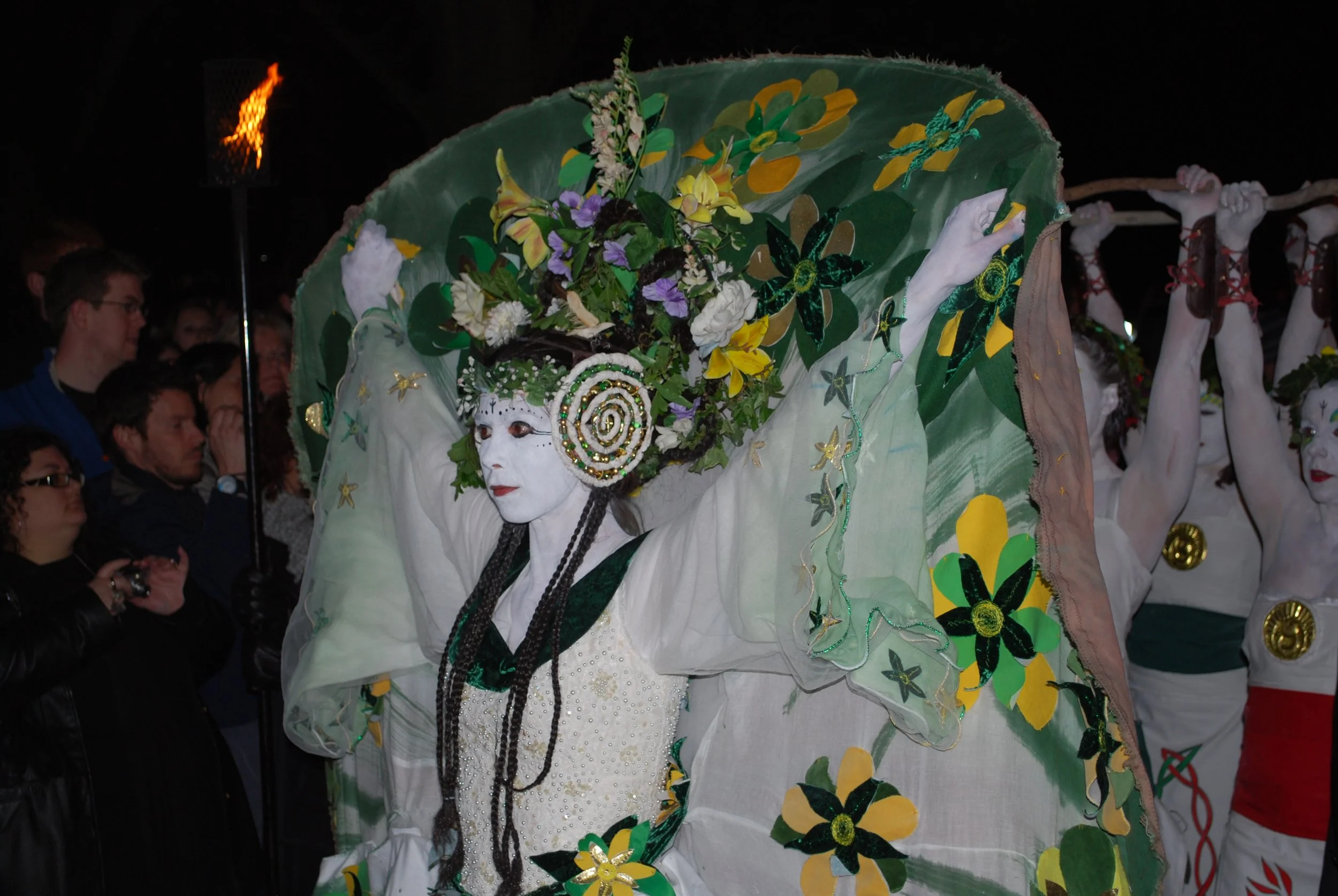
Performers dressed in white, flowers, and green tulle are among a crowd and torches for the May Day Celebration at night.

Performers at the Beltane Fire Festival, 2009. Martin Robertson. CC BY-NC-ND 2.0

Scotland is another destination where the Beltane Festival is celebrated. Since the 1980s, traditional Beltane celebrations have been revived with modern additions. 

One of the most prominent celebrations occurs on April 30th in Edinburgh. Every year, around 10,000 people from around the world are drawn to the Beltane Fire Festival. During the festival, a procession filled with drums travels through the streets, led by traditional May Day characters like the Green Man and the May Queen. 

Following the procession, there is a three-hour stage performance which is concluded by the lighting of a bonfire. At the festival, visitors have the opportunity to immerse themselves in the traditional performances and support local businesses


Madison Paulus

Madison is a student at George Washington University studying international affairs, journalism, mass communication, and Arabic. Born and raised in Seattle, Washington, Madison grew up in a creative, open-minded environment. With passions for human rights and social justice, Madison uses her writing skills to educate and advocate. In the future, Madison hopes to pursue a career in science communication or travel journalism.

Egypt’s Time Capsule: The Fayoum Oasis

A desert adventure that revealed millions of years of history and culture in just one day.

An all-terrain vehicle pulled onto the sandy shore, overlooking the sunset over the oasis

Keriann Slayton

Before the pyramids there were whales, and beyond Cairo there are waterfalls. Once a bounty of prehistoric life, the Fayoum Oasis in Wadi El-Rayan remains rich in resources, culture and history. Cascading water appears as if from nowhere, and dunes and ancient rock rise up to frame the entrance to Wadi El-Hitan, “Whale Valley,” where fossils litter the paths revealing the evolutionary development of massive marine creatures. Describing the region feels like creating an imaginary world for a fantasy novel, yet during my trip there in January 2023, I discovered it to be supremely real and of unique significance in the environmental and cultural memory of Egypt.

The heart-shaped basin spans over 500 square miles and holds stories dating back millions of years. The oasis began forming following the mass drying up of the Mediterranean Sea during the late Miocene period. When the crisis ended and the sea refilled the Nile River ultimately flooded and water flowed into the basin via the Bahr Youssef, transforming the desert expanse into a region of lush vegetation. 

During my visit with my family, I immediately understood why Fayoum was home to the first Egyptians to practice agriculture and exists as one of the world’s longest continuously occupied towns. We met our guide for the day at a restaurant in the village center, which could only be characterized as storybook-esque. The open air dining area overlooked a large garden that supplied fresh herbs and produce for the kitchen, and one of the basin’s many lakes loomed in the distance. The view served as a prime introduction to the rich botanical and marine legacy of Fayoum.

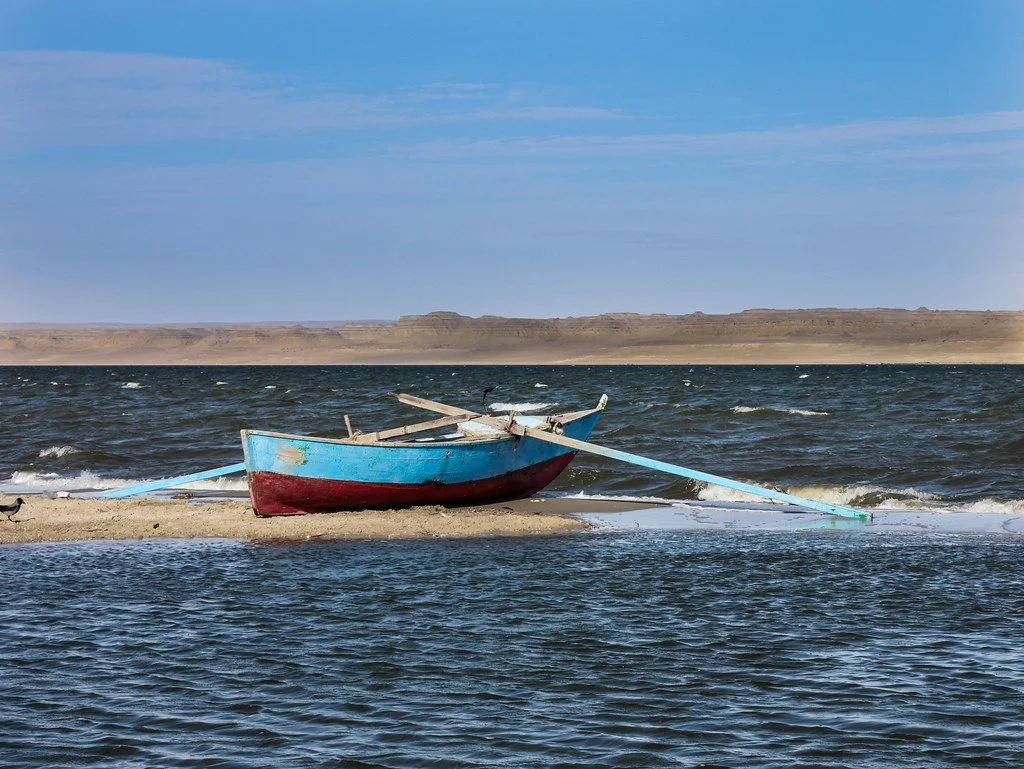
Fayoum entered into a golden era during the years 1817–1860 BCE under King Senusret III. The basin began to yield high volumes of rich produce, attracting growing populations and increasing trade with other regions in Egypt and civilizations abroad. Today, the people of the Fayoum live similarly to their ancient ancestors, farming the land and maintaining its reputation as an agricultural cornucopia and cultural time capsule. I saw donkeys pulling carts carrying fruits, vegetables and people from place to place along dusty dirt roads. Wooden fishing canoes dotted the shores of expansive man-made lakes, which were connected by Egypt’s largest waterfall. The entire basin seemed to have been protected from the clattering machinery and dense fog of industrialization. 

A close up of a small paddle fishing boat, beached on a sandy bit among deeper waters, the Egyptian desert is in the background.

A fishing canoe in Fayoum. Masondan. CC BY-NC-SA 2.0.

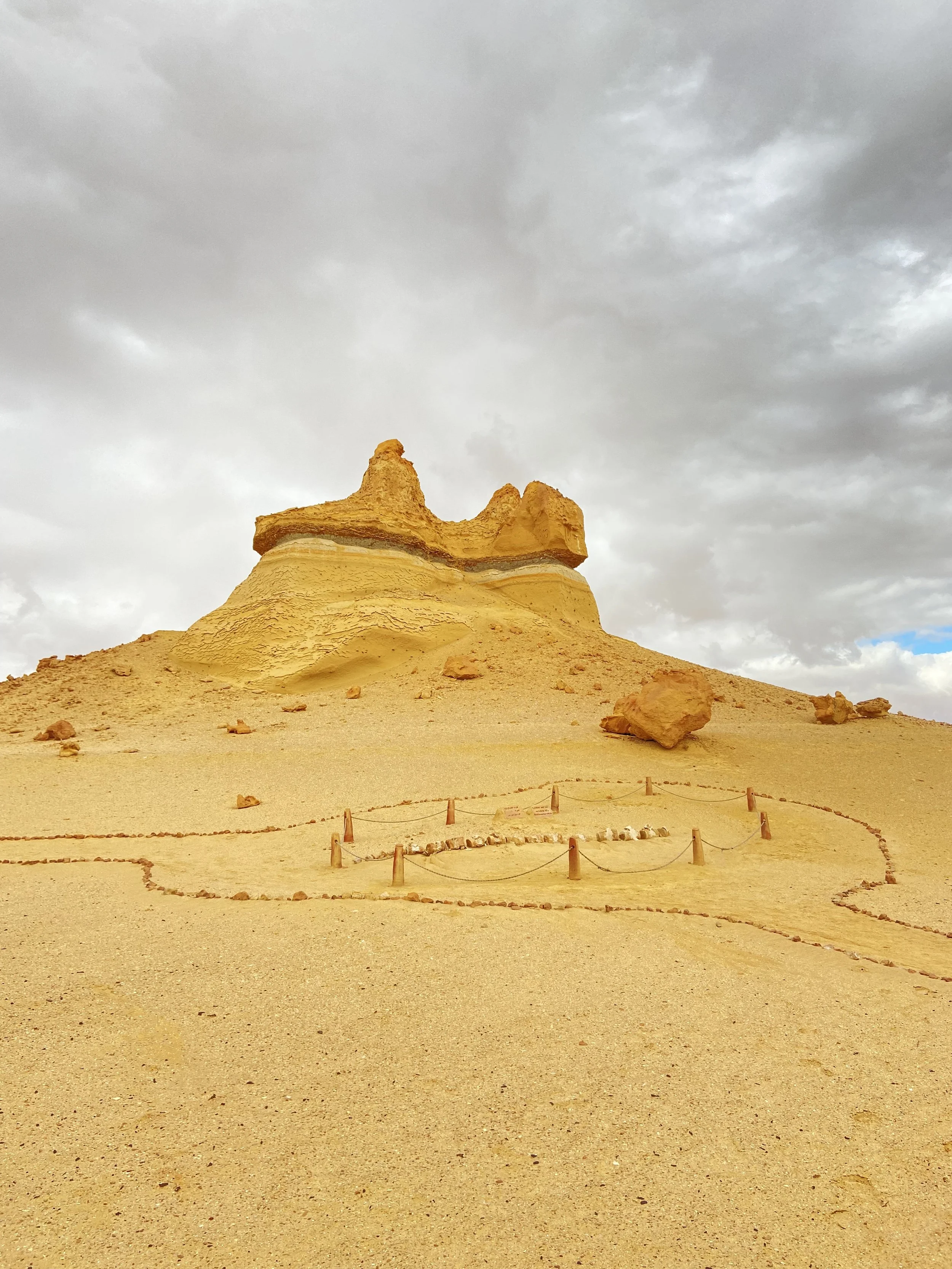
After finishing up at the restaurant, my mother, father, sister and I loaded into a rugged white Jeep that transported us even further back in time. The green farmland and quaint villages soon disappeared in the rearview mirror as we sped deeper into the vast nothingness of the desert, with no visible landmarks to guide our way. Our driver seemed one with the sand, confidently navigating the dunes and never once even hinting at the possibility of getting lost. The Jeep rattled along for quite a while and, for a moment, I thought we may actually reach the edge of the Earth. Eventually, clusters of irregular shapes appeared on the horizon, and we approached the unique rock formations that marked the entrance to Wadi El-Hitan. 
The golden sandy landscape of Fayoum, with a large rock/sandstone structure jutting out above.

Keriann Slayton

Discovered by a team of geologists in 1902, the 37-million-year-old fossils of “Whale Valley” make Senusret III’s reign seem like yesterday. After hopping out of the Jeep for photos in front of a landscape that looked like it was copied and pasted from another planet, we arrived at the visitor’s center, a structure organized as a collection of concrete domes with a relatively bare interior that revealed evolutionary secrets long buried beneath the sand. As we ventured deeper into the UNESCO World Heritage site, we encountered whale skeletons stretching as long as 50 feet, and alongside skulls and spines rested the bones that made up the legs and knees of the prehistoric creatures. The fossils confirmed scientists’ long-held suspicions that whales evolved from terrestrial mammals, transitioning to full-time life in the ocean over the course of millions of years. 

The most intriguing were the snake-like remains of the Basilosaurus, the enormous ancient whale whose bite marks were visible in the skulls of some smaller D skeletons. The fossils expose a history of Egypt that long predates the Pharaohs and their Pyramids, a history that predates the Nile itself. As we trekked up and down the dunes, following the fossil-flanked paths, the spirit of the ancient sea made itself undeniable even in the face of the endless desert—it began to rain. 

The drizzle, so rare in the Wadi, connected me and my family across time and species to the legacy of the massive marine beings so instrumental in evolutionary history. We explored for a few hours, and when we finally emerged from Whale Valley, we piled back into the Jeep and dune-busted our way to a remote lake, arriving just in time for sunset. Our driver built a fire and made traditional Berber tea, which we drank on the shores until darkness threatened our route out of the desert and we had to depart.

I fell asleep quickly on the nearly three hour drive back to Cairo, dreaming of colorfully painted wooden boats, sledding down sand dunes, and whales with legs.


Keriann Slayton

Keriann is studying International Literary and Visual Studies and History at Tufts University, where she is a student athlete on the softball team and writes for the campus newspaper. Journalism allows her to meet fascinating people, engage with her community, and nurture her long-held passion for storytelling.  She loves to fuel her interest in history and culture through travel, and she has visited Spain, Germany, Greece, Egypt, Turkey, and Italy. She hopes to share compelling narratives from around the world in order to better connect humanity across time and cultures

Exploring Iceland’s Westfjords

Delve into the natural beauty and memorable experiences awaiting in Iceland's overlooked northwestern region.

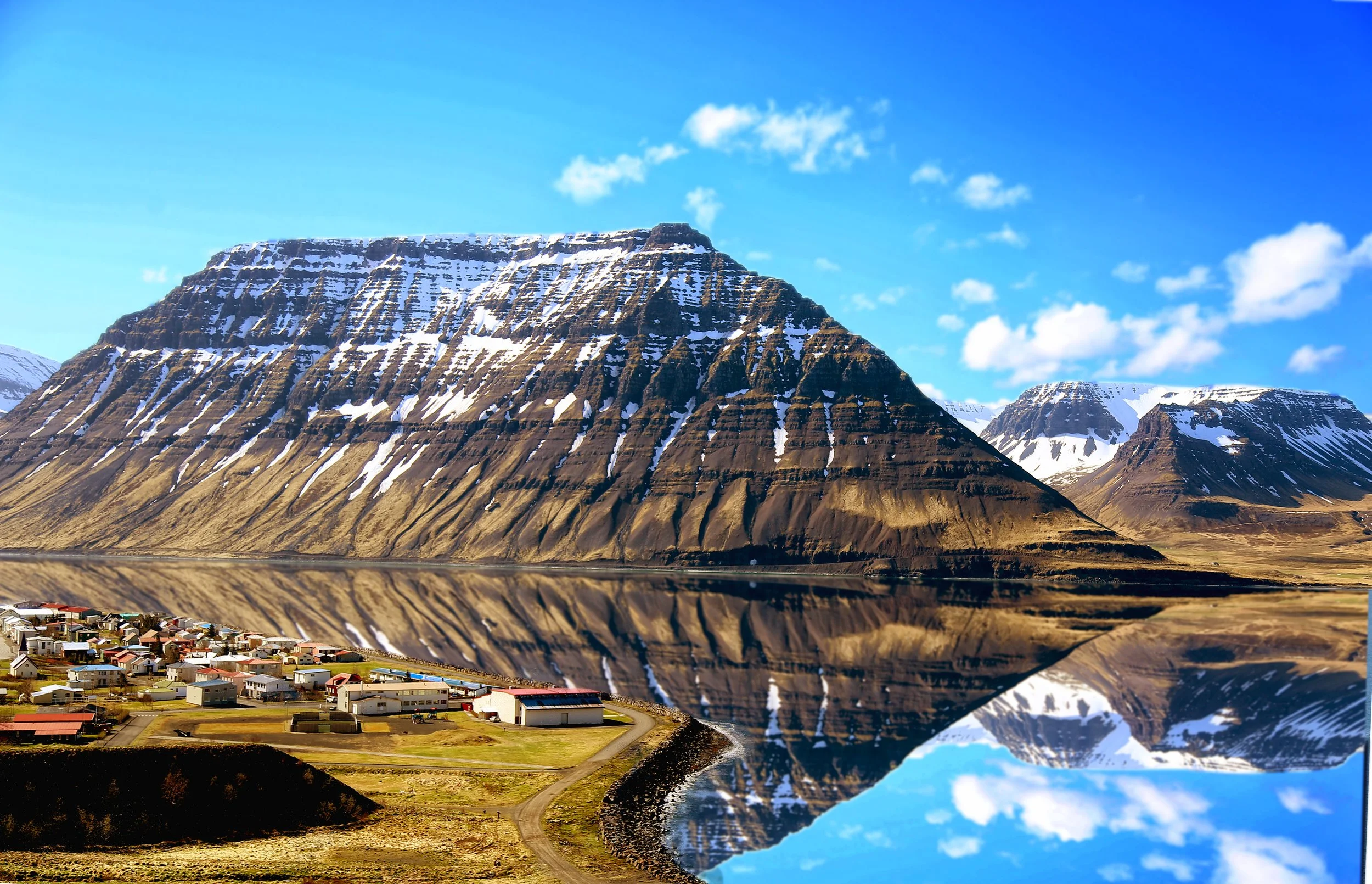
A small town bordering a remote Icelandic snow capped fjord. The water is crystal clear and still, reflecting the mountain and sky.

A small town on a fjord in the Westfjords, Iceland. RaulHudson1986. CC0.

The serene and volcanic landscapes of Iceland have attracted adventurous travelers for many years, especially the popular Golden Circle and Ring Road routes. Yet, both paths exclude one of the most scenic areas of the country, the Westfjords.

The Westfjords of Iceland is a sparsely populated, panoramic region with little geothermal activity that many travelers often overlook. Despite this neglect, there are many amazing experiences here to add to your Icelandic adventure.

1. Dynjandi Fjallfoss Trail  (Arnarfjordur) 

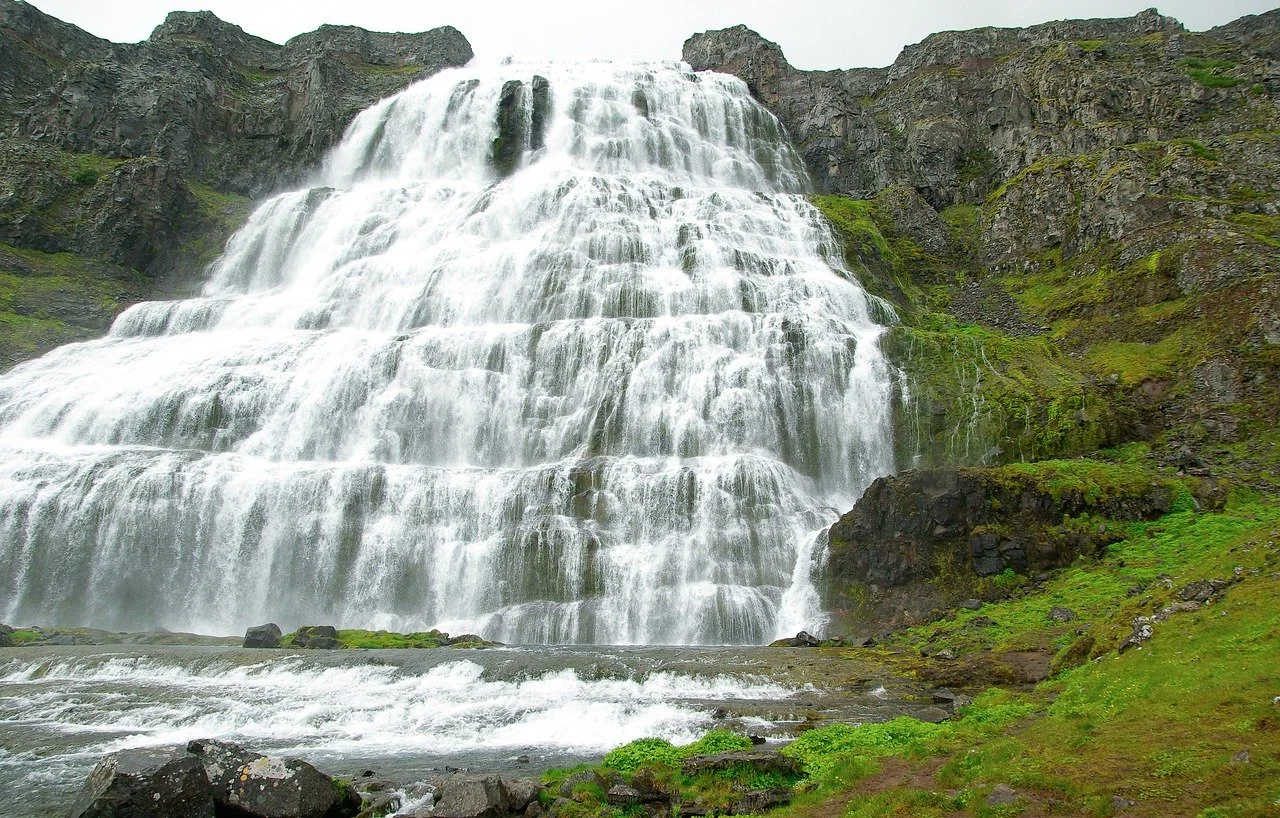
A massive waterfall cascading down the vibrant green mossy rocks and mountainside into river.

Dynjandi Fjallfoss in Arnarfjörður, Iceland. Jacqueline Macou. CC0.

This majestic waterfall is the largest in the region and is frequently referred to as the Westfjords’ most beautiful attraction. It is part of a series of seven waterfalls that unravel down the peak, originating from the waters of Lake Stora-Eyjavatn. The sound that emanates from these falls mimics thunder, and it’s understood why the waterfall’s name, Dynjandi, translates to “thunderous” or “booming." 

From the parking lot, you can hike your way up the seven waterfalls, but take caution as it can be quite slippery and mossy. The average person can do this hike in around 15 minutes, but it is recommended to take your time to enjoy each one. At the peak, you can revel in the mist of the magnificent waterfall, try the fresh glacial water, and look out over the extensive views of the fjord upon your descent. 

2. Museum of Everyday Life–Hversdagssafn (Isafjordur) 

Two women in a dark exhibit in the museum. They smile and look into jars that are attached to a post in the ceiling, all filled with different various object.

Museum guests in the sensory lab in Ísafjörður, Iceland. Courtesy of Hversdagssafn.

This museum provides an intimate perspective on the everyday life of Icelanders that is largely overlooked in mainstream tourism of the island. Founders Vaida and Björg refer to Hversdagssafn as more of an art project under the guise of a museum, one that aims to collect human connection. From exhibits on family histories told through donated books from the old church, short films about the winter seasons and a local distaste of the Northern Lights to heartfelt reflections on being an immigrant in Iceland, this museum is sure to give you a fresh perspective on life in the Westfjords and the pillar of community using all five of your senses. 

3. Hike to Hornstrandir (Hornstrandir)

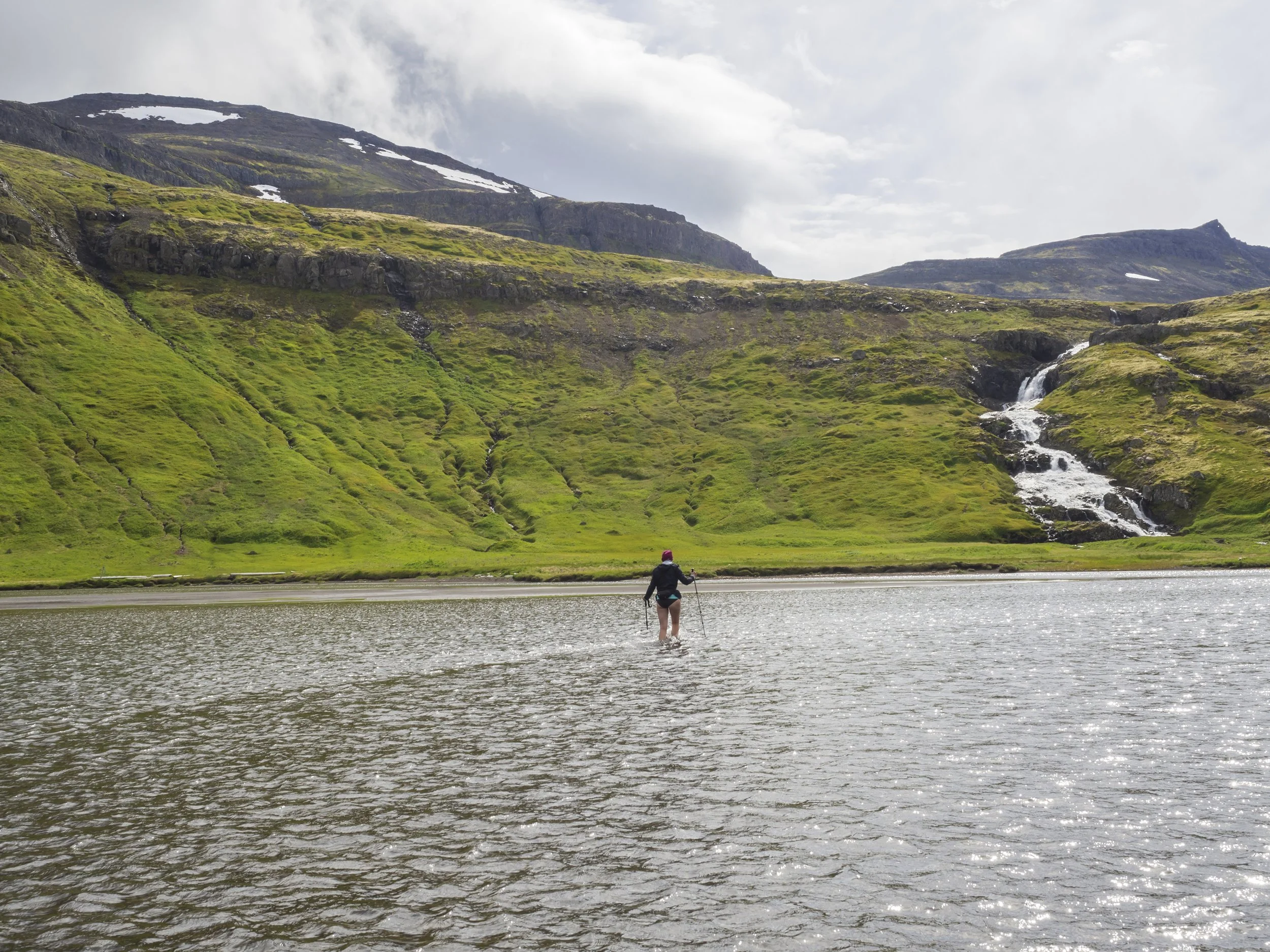
Hiker crossing a wide shallow river. They are surrounded by a sloping wall of bright green grassy mountainside, with still a patch of snow at the peak.

Hiker crossing the river in Hornstrandir on a trek to Hornbjarg cliff. Kristyna Sindelkova. CC0.

Hornstrandir (​​227-sq-mi) is an uninhabited area of the Westfjords that is only accessible by boat during the summer between June and August. It’s frequently called “Europe’s last wilderness” and deemed a “hiker’s paradise.” All of the homes on the peninsula have been restored since the last farmers left in 1952. 

After establishing Hornstrandir as a protected Nature Reserve in 1975, the area’s 250 species of flowering plants and 30 species of nesting birds have thrived. Up to six million birds nest on the cliffs during the summer, with species including the Atlantic puffin, Arctic terns, black guillemots and penguins. It is the only sanctuary for Iceland’s prized native mammal, the Arctic fox. As the region is uninhabited and the animals are protected, the foxes have no fear of travelers and will often raise their kits near campsites. Polar bears have also been known to drift on ice to Hornstrandir from Greenland, though this occurrence is rare. 

The area’s tundras, cliffs, flower fields and ice prove to be exciting hiking routes for self-sufficient adventurers. You can enjoy the vast region through multi-day hikes or day trips where you can eat traditional cuisine at the Old Doctor’s House. You can also do multi-day kayak tours that weave in and out of the fjords and camp overnight in the wilderness or at sleeping bag accommodations. Guided tours are highly recommended, and booking in advance is required. 

4. Tjöruhúsið (Ísafjörður)

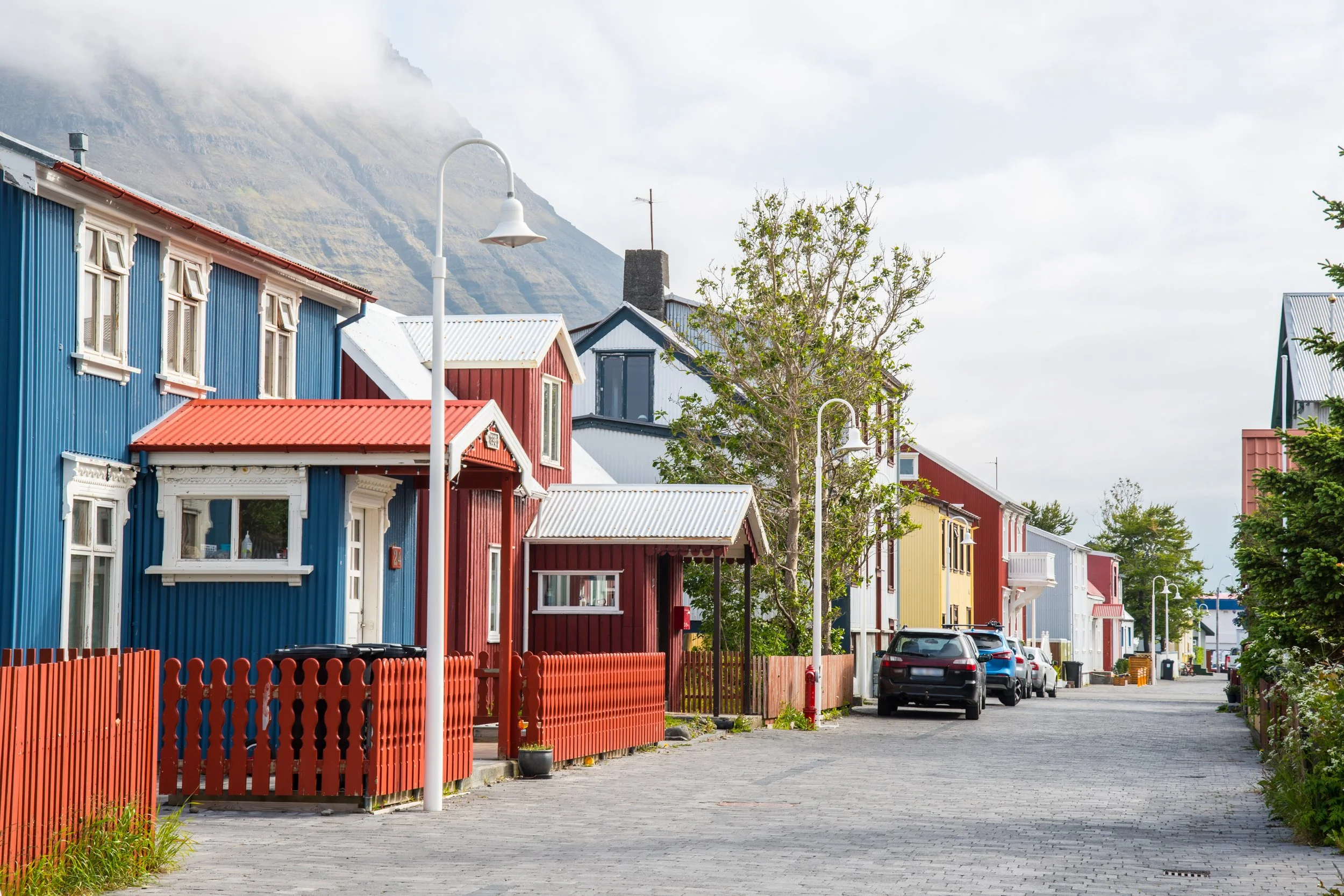
Looking down a residential street in Isafjordur, some houses have bright red picket fences, and are vibrantly painted.

Town of Isafjordur in the Westfjords of Iceland. Gestur Gislason. CC0.

Immerse yourself in this Icelandic fish buffet, only open for dine-in during the summer season, for a communal dining experience with unlimited access to a range of unique platters and local music. It is a family-owned and run restaurant that has no menu, as the restaurant caters to the catch of the day. The atmosphere is warm, welcoming and familial. Plates vary from traditional Icelandic fish stew, to thorskkinnar (cod cheeks), monkfish and more. The restaurant also serves as a meeting space for public events within the community. Reservations for the lunch and dinner serving times during the summer seasons are highly recommended to ensure a seat at the delicious buffet-style gathering.  

5. The Icelandic Museum of Sea Monsters (Bíldudalur)

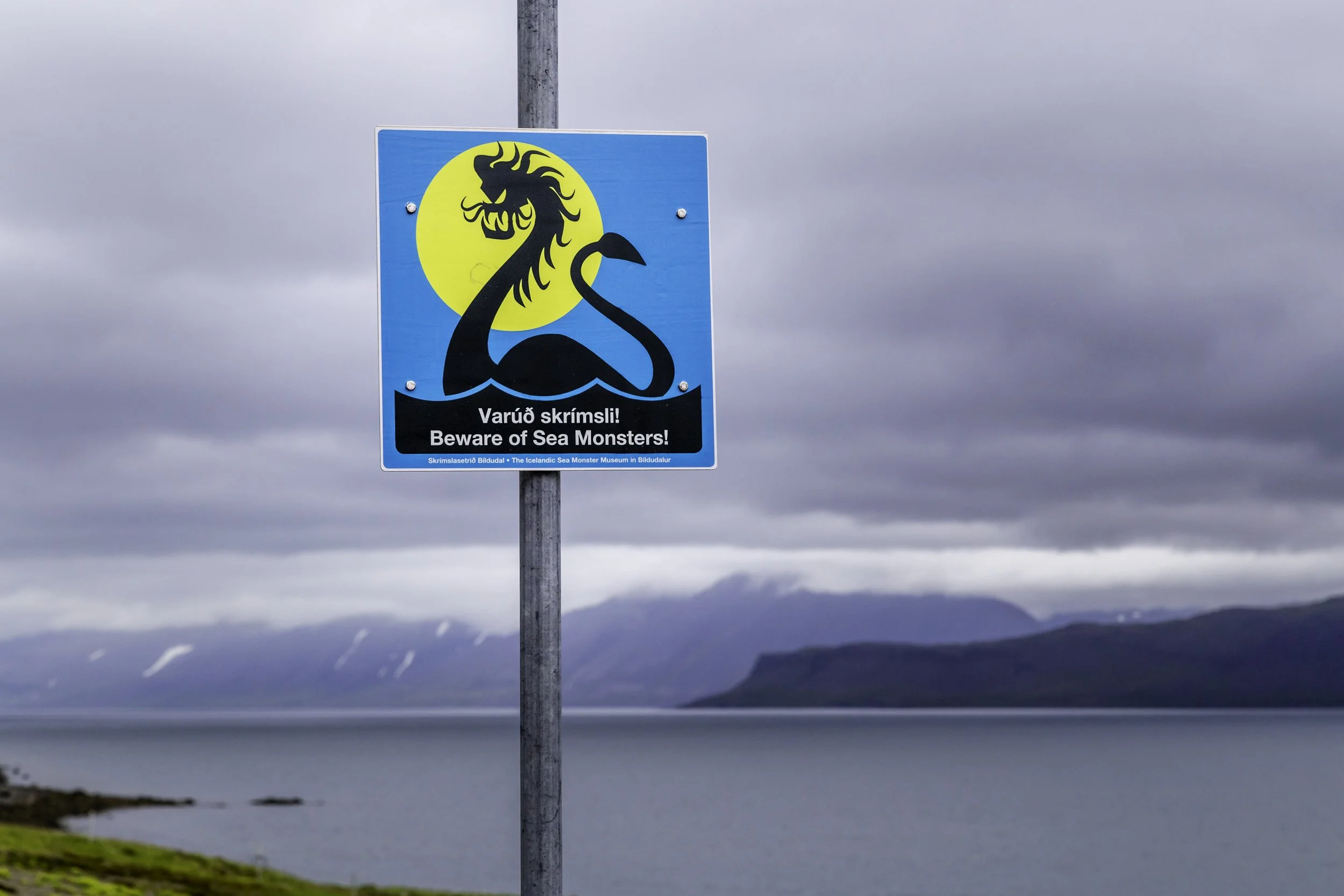
A small caution sign posted with a cartoon image of a sea monster rising out of the water posted in front of the fjord.

A cautionary sign was posted along the road in Iceland. Dendron. CC0.

Take a step back in time and discover old Icelandic lore and legend of the creatures that may or may not have plagued the Nordic seas. This region is known across Iceland for its historic reputation for prolific sea monster activity. At the Icelandic Museum of Sea Monsters, visitors can witness the extraordinary creatures of the deep vividly portrayed through an immersive and interactive blend of language, visuals and videos. Eyewitness testimonies are paired with scholarly insights into the realm of sea monsters, as on-screen narratives and academic perspectives infuse the space. Moreover, an array of relics and artifacts, serving as tangible remnants, color the museum, offering compelling evidence of their existence. The museum also has impressive interactive maps that draw on all kinds of monster legends from around the world.

Additionally, as you visit the museum, a highly recommended pitstop nearby is Reykjafjardarlaug Hot Spring, a geothermal pool just outside of the town for an ideal rest in warmed geothermal waters. 

6. Whale Watching

People holding onto the rails in front, smiling, while on a small whalewatching boat in the fjord.

Whale watchers aboard a RIB boat in Iceland. Courtesy of West Tours. CC0.

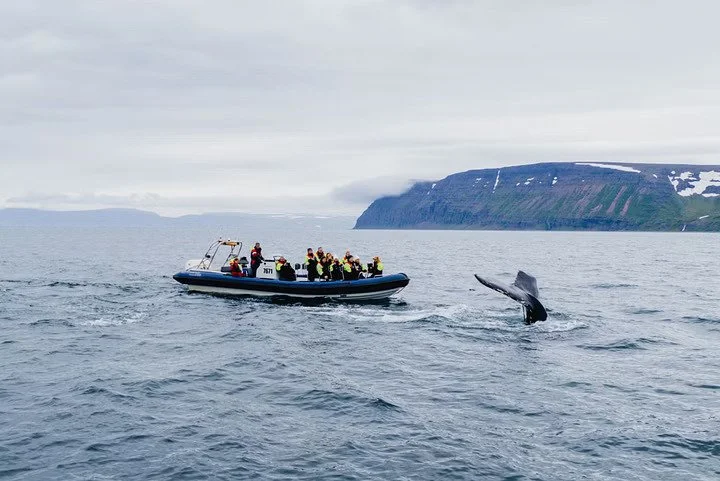
The waters of the Westfjords are home to many arctic species, including up to 20 species of whale. Here you will likely encounter dolphins, humpback whales, beak whales, minke whales and orcas. These polar water tours are frigid and icy and thus can be experienced on more relaxed boat tours. However, if you are looking for a more adventurous and open-air whale-watching tour, you can opt for an open RIB boat safari where you can feel the pulse and spray of the ocean while capturing up-close views of marine life. Most tours depart out of Isafjordur or Holmavik and last two to six hours. Almost all tours guarantee incredible whale and nesting bird sightings. 

A small whalewatching boat in the fjord, as a large whale tail sticks out of the water only a few feet away.

Whale watchers experiencing a whale sighting in Iceland. Courtesy of West Tours. CC0.


Julz Vargas

Julz is a student at Wellesley College studying Anthropology and Spanish. She grew up in Los Angeles, CA, and has studied all around the world in places such as Costa Rica, Greece, Iceland, and Spain. She is passionate about employing writing as a tool to explore human connection and diversity. Julz aspires to foster cross-cultural connections through community-based research, amplifying inclusive and diverse media about global cultures, foods, and people, to encourage individuals to engage more wholly with the world.


Introducing a Travel Brand Dedicated to Positive Social Change: CATALYST PLANET

Are you looking for your next adventure? What about one that you can take from the comfort of your own home? With CATALYST PLANET, you need only your laptop to immerse yourself in cultures and destinations from every corner of the globe. And, if you want to travel, CATALYST PLANET can help with that, too. To get CATALYST PLANET directly to your inbox sign up here.

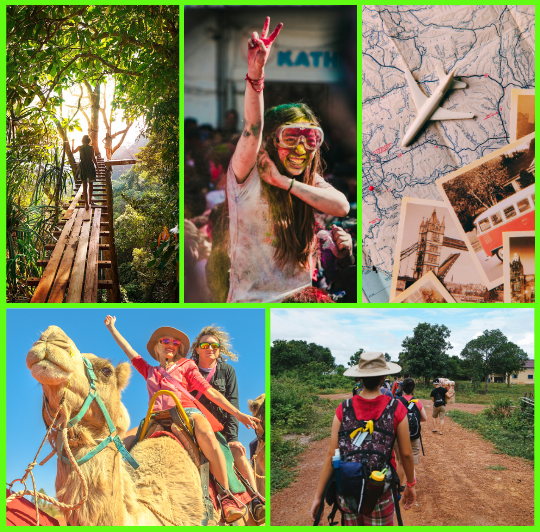
A collage of different travel-related images, including women on a camel in the desert, on a hike in the jungle, color-covered during Holi, and maps.

CATALYST PLANET is a global community of activists, conscious travelers and creators, who share a passion for adventure and activism. As a publication that sheds light on urgent global issues through engaging content and transformative travel experiences, CATALYST PLANET is the future of social impact travel.

If you’re itching to embark on your next journey, CATALYST PLANET’s Travel section is the perfect starting point. As a gateway to exploration, every click leads you to new destinations and articles that are organized by continent. Whether you’re looking to enjoy a literary pilgrimage in Colombia, experience Antarctica’s natural beauty, or even meet penguins in South Africa, the travel section has it all. At CATALYST PLANET, you’re invited to satisfy your wanderlust, where every article is a ticket to a different destination.

With captivating social impact articles that explore topics ranging from climate change to human rights, videos that bring distant cultures to life, and podcasts to challenge your perspective, global citizens will find there is always something, or someplace, new to discover. Dive into the stories of women tuk-tuk drivers as they fight discrimination in Cambodia, famine in Sudan due to climate change and political unrest, and how to authentically experience culture while supporting locals. 

And that’s only the beginning. CATALYST PLANET offers travel tools and tips to ensure traveler satisfaction while keeping the planet and local communities in mind. Here, you’ll find an abundance of practical trip tips and tools designed to enhance your travel experience. Need to score discounted airfare for your international flights? Looking for a digital nomad visa that’s easily accessible? Or do you just want to know what to pack in your bag? Regardless of what you’re looking for, CATALYST PLANET offers invaluable insights into travel tricks to make your journey smooth and empower you every step of the way.

For folks ready to make the switch from armchair traveler to globe-trotter, you’re in luck too. Not only does CATALYST PLANET offer insightful media and immersive content, we know that travelers are frustrated, spending hours searching for trips that align with their future-forward, local-first, eco-friendly and sustainable values. They want to travel and do it right. What sets CATALYST PLANET apart from other travel brands is our community’s commitment to raising the bar on ethics and sustainability. We’ve done the leg work, so you don't have to. By using the Take A Trip tool, individuals can discover over 100+ small group tours that are meticulously curated for travelers devoted to conscious exploration. Trips can be filtered by location, interest, cost, duration and more, so that travelers can easily find journeys that better suit their own budget and values.

Whether you crave eco-travel, volunteer trips, cultural immersion, or a wild adventure, CATALYST PLANET has you covered. Volunteer to help animal shelters in South Africa, explore the beaches and temples of Bali, or ski down the slopes of the Koh e Baba in Afghanistan. Our list of vetted organizations and adventures grows weekly. With CATALYST PLANET, you’ll receive your passport to the next generation of conscious travel and activism.

Are you ready to take the leap to join the next generation of activists and conscious travelers? To learn more about CATALYST PLANET, sign up for our newsletter or give us a follow on social media to stay updated on what could be your next adventure. Start your exploration today to join us in creating a brighter tomorrow through future-forward travel and social action—let's see the planet and change the world together. 

Follow us on social media

A Festival of Flight: Explore Japan’s Hamamatsu Kite Festival

Join more than 1.5 million people in May to celebrate the Hamamatsu Kite Festival.

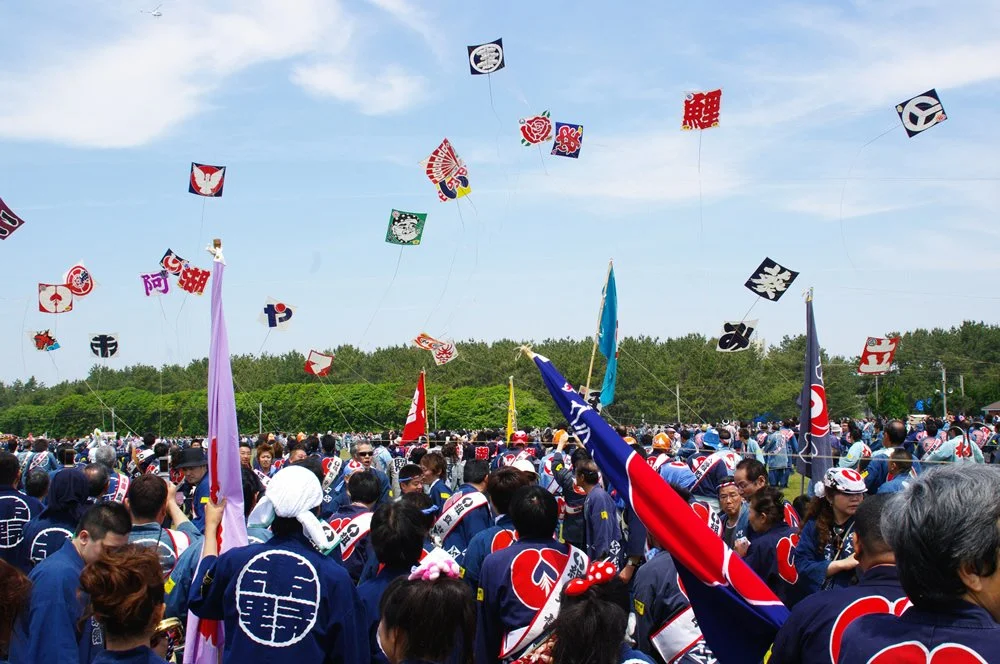
A massive crowd gathers under flying colorful kites at festival in Japan.

Kites flying during the Hamamatsu Kite Festival. Shizuoka Prefectural Tourism Association. CC BY-SA 2.1 JP

The origins of the Hamamatsu Kite Festival date back more than 450 years. In Japan, kites have been used for both practical and celebratory purposes for over 1,000 years. During the Edo era, kites were flown to celebrate the birth of a first-born son. This tradition then developed into the Hamamatsu Kite Festival where all children are celebrated.

At the beginning of May during Golden Week, Hamamatsu’s skies are filled with over 100 vibrant, traditional kites. The designs of the kites in the Hamamatsu Kite Festival symbolize children and traditions from each town in the district of Hamamatsu. The kite fliers then partake in an aerial battle, attempting to sever each other's kite strings.

As dusk falls, the festivities move from the beach to the city center where the streets come alive with dance and musical performances featuring bells and drums. The traditional music follows nearly 100 artfully decorated floats as they travel through the streets of Hamamatsu. The floats carry children in customary clothing and are pulled by cheering adults with lanterns and flags in hand. 

Some floats are over 100 years old, and travelers can learn about their history at the plaza between the JR-Hamamatsu and Shin-Hamamatsu train stations where a few floats are displayed throughout the day. There are three parade routes, so for those hoping to see all the floats it is recommended that they choose a different route each night.

The location of the kite battles on the Pacific coastline allows travelers easy access to other nearby marvels, such as one of three of Japan’s major sand dunes. The Nakatajima Dunes, known as a famous hatching ground for loggerhead sea turtles, can be found near the kite battles, and are surrounded by coastal forests. 

Not only home to its eponymous Kite Festival, the city of Hamamatsu  is a destination known for its diverse landscapes and impeccable craftsmanship. Along with the coastline, Hamamatsu boasts mountains, a river and Lake Hamana, the birthplace of Japan’s eel-farming industry. Energetic travelers can participate in many activities at Lake Hamana, including windsurfing, swimming and biking. 

Nature lovers will feel right at home among thousands of plant species at the Hamamatsu Flower Park. History buffs can learn about the city’s musical history at the Hamamatsu Museum and explore Hamamatsu Castle.

Hamamatsu is easily accessible from Tokyo. Travelers can take a bullet train from Tokyo Station to Hamamatsu Station in as little as 100 minutes.


Madison Paulus

Madison is a student at George Washington University studying international affairs, journalism, mass communication, and Arabic. Born and raised in Seattle, Washington, Madison grew up in a creative, open-minded environment. With passions for human rights and social justice, Madison uses her writing skills to educate and advocate. In the future, Madison hopes to pursue a career in science communication or travel journalism.


Buried Tragedy: The Slums Beneath the Streets of Edinburgh

A long-buried mini-city beneath the streets of Edinburgh sheds light on the lives of its 19th century poor

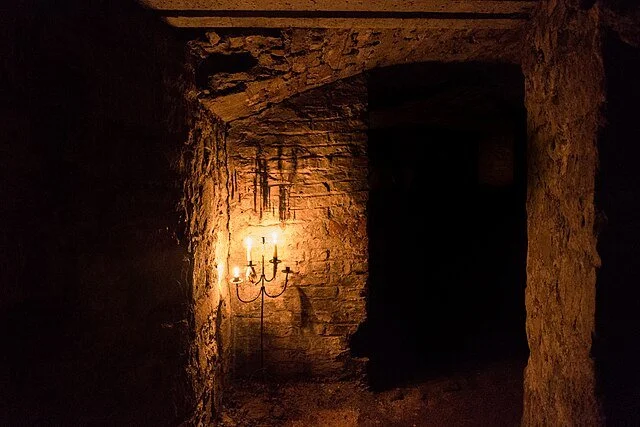
A dark underground tunnel with old brick walls is lit by a tall candelabra in a corner.

The Edinburgh Vaults. fw42, CC BY 2.0

The city of Edinburgh is known for its gorgeous architecture, rich history and fascinating culture, and over many years has become a prime destination for tourists visiting Scotland. But beneath the Royal Mile lie hidden catacombs and an unsettling history of poverty and crime.
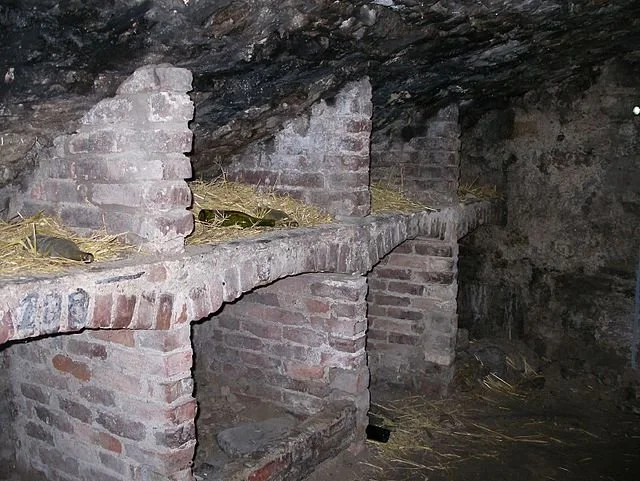
Despite being used as a prime spot for chintzy “ghost tours”, the underground city (referred to varyingly as the Edinburgh Vaults and South Bridge Vaults) has a rich and tragic history. It was constructed back in 1788 as part of the South Bridge Act, which was an attempt to make the rapidly-growing city more traversable. The bridge wasn’t only for travel, however; the arches under the bridge were home to tenement buildings designed to turn the area into a marketplace. The nearly 120 individual vaults became taverns, workshops and storage units for merchants.

An underground storage site of built open shelves into the brick wall sides.

Storage in the Edinburgh Vaults. Kjetil Bjornsrud, CC BY-SA 2.5

However, these vaults were not properly sealed against water and eventually started to flood, leading to most businesses completely abandoning them before the turn of the century. The rooms were left largely empty as the Industrial Revolution swept across Britain, and eventually became slum housing for the city’s poor. As jobs began to be automated, more and more citizens were without income and found themselves unable to pay for their homes, sending them out onto the streets and, eventually, down to the South Bridge Vaults.

Since the vaults were almost totally blocked off, many of them were without air circulation and sunlight. This, coupled with a lack of running water and sanitation, made living down in the vaults a waking nightmare. Over time, the vaults became more and more crowded, with many housing several families at once.

Brick bunks builts into the wall with straw lining the double layers cubbies. The area is dark and damp.

A recreation of living conditions in the Vaults. Shadowgate, CC BY 2.0

The vaults were also entirely avoided by the city police. As a result, they became a hotspot for all kinds of crime, from theft and prostitution to murder and body snatching. Rumors have circulated for years that a pair of notorious serial killers used the vaults to store corpses that they would later sell to medical schools for use in classes. While the killings did occur, there is no evidence that the criminals actually used the vaults to store their victims.

It is unknown exactly when the vaults were finally shut down. At some point, they were cleared out and sealed off with rubble to prevent new inhabitants. The vaults were left completely forgotten underneath the city until being discovered and excavated in the 1980s. In the years since, various clubs and venues have taken up residence in the vaults, but the vast majority are still used for ghost tours.

The history of these vaults is overshadowed by the pop-culture appeal of their supposed hauntings, but their very existence shines a light on the grim conditions faced by the poor in the 19th century. The appalling conditions in which these impoverished people lived is bad enough, but the indifference shown by the city’s government was far worse, letting criminals run rampant and leaving entire families essentially trapped in the sunless, disease-ridden catacombs. Today, the vaults serve as a reminder of the shortcomings of industrialism and the suffering endured by the poor around the world throughout history.

Though much of the vault network is still closed off to the public, there are many different tour companies in the city that guide visitors through the accessible rooms. Despite being billed most often as “ghost tours,” the guides are more than receptive to questions about the vaults’ history and tend to spend just as much time describing the vaults themselves as the ghosts that ostensibly still haunt them. Mercat Tours, a well-regarded historical tour company in Edinburgh, does adults-only evening tours regularly, with ticket prices around $28.


Ryan Livingston

Ryan is a senior at The College of New Jersey, majoring in English and minoring in marketing. Since a young age, Ryan has been passionate about human rights and environmental action and uses his writing to educate wherever he can. He hopes to pursue a career in professional writing and spread his message even further.

Ski Trips Make a Comeback in Afghanistan

Untamed Borders navigates powder and a new administration as adventure enthusiasts transcend cultural and geographical borders

Two people in an open hilly and snowy landscape ski touring.

Tourist Skiing in Afghanistan. Neil Silverton

Afghanistan’s ski slopes have witnessed the return of tourists for the first time since the new Taliban government came into power in 2021. Untamed Borders is a UK based travel company, formed in 2008, that focuses on providing travel opportunities to some of the world's most interesting and inaccessible places. In 2011 it pioneered excursions to Afghanistan, and has recently decided to resume its trips to the non-traditional ski tourism destination.

The group sponsored one trip in the winter of 2024 that lasted from February 22nd to March third. It began in Islamabad, Pakistan and ended in Kabul, Afghanistan. It was a magnet for those looking to experience the region’s rugged yet beautiful landscape. Skiers started in Pakistan, where they received visas, before flying to Kabul and driving to Bamian to spend four days skiing.

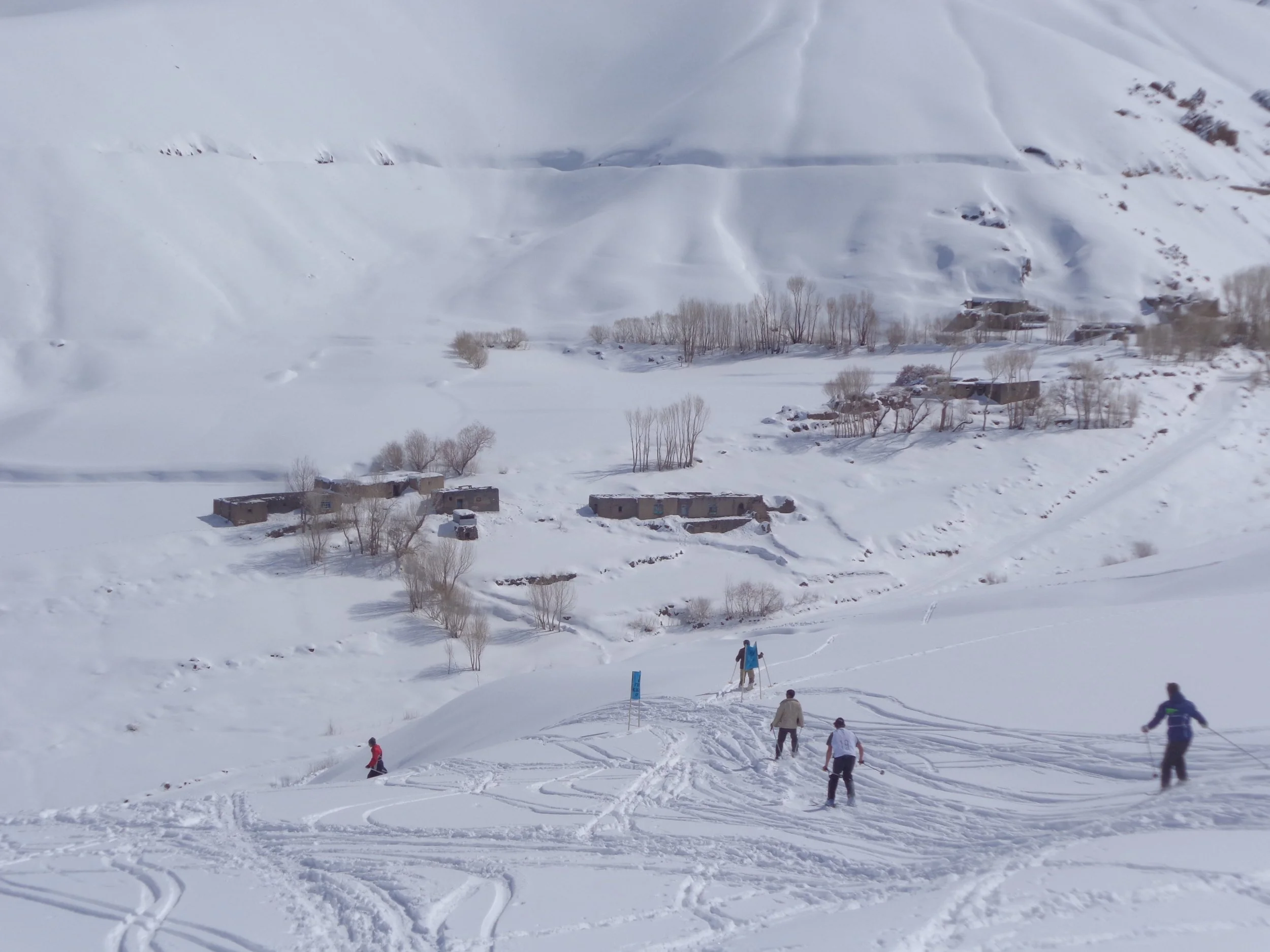
A group downhill skiing through a powder field in the vast snowy landscape.

Group Skiing in Afghanistan. Ana Tasič, Untamed Borders

In 2025, the company is set to continue its trips to Afghanistan. For this upcoming year the trip will be set in the Bamian Province once again, with skiing taking place in the Koh e Baba Mountain range. Similar to past trips, travelers are expected to end in Kabul and begin by venturing through Islamabad and Peshiwar, Pakistan. Skiers will have the opportunity to be led by local guides, who will help them explore Afghanistan’s popular slopes and to experience backcountry skiing on routes that may have never been skied before. Travelers will additionally have the opportunity to visit the remains of Bamian’s famous Buddha statues, the ancient city of Shahr e Zohak and take part in the Afghan Peak Ski Race.

Ana Tasič, an international guide for Untamed Borders, emphasized the beauty of the trip to Bamian Province, highlighting the drive through the outskirts of the snowy Hindu Kush Mountains. She explained that it typically takes around four to six hours to get to the Province but that “the journey through the mountains is spectacular.”

A crowd of people hikes up along the mountainside with their skis in tow.

Afghan Peaks Ski Race. Afghan Peaks Charitable Trust.

Each year, the annual ski trip run by Untamed Borders coincides with Afghanistan’s annual Afghan Peak Ski Race. International groups will be offered the opportunity to take part in it alongside locals. The race typically includes two different types of skiing. One race is for people using wooden skis and the other is for those using conventional skis. The competition allows people of all ages to compete, but has faced some challenges that allow women to participate as a result of the Taliban taking over. Tasič, a former teacher of the ski club for girls, mentioned the changes in government over the past couple of years that have prevented the participation of women.

“We can’t do anything with women in sports anymore, so this has definitely changed but there’s not much that we can do about it. We’re hoping that this changes in the next few years,” she said.

The new regime in Afghanistan has not created the need for Untamed Borders to up security considerations. Because the Taliban now run Afghanistan there is less of a worry over unpredictable attacks than before, although getting into the country has become complicated. While some changes have been made in regards to travel planning, Tasič reassured those considering the trip that although “a lot has changed in the last eight years, one thing that stands out is the hospitality of the people there.” She mentioned how the trip is an opportunity for travelers to not just meet locals but to spend a week with them and get to see how they live.

“We get to experience Afghanistan in a way that most people don’t. It’s not just a ski trip, but it’s also a cultural and hospitality trip,” Tasič said.

TO GET INVOLVED

For the 2025 trip, those interested can find more information on Untamed Borders’ website. The trip to Afghanistan costs $2,850 USD and dates are not yet finalized, but when they are they will be posted to the same site for travelers to easily access.


Mira White

Mira is a student at Brown University studying international and public affairs. Passionate about travel and language learning, she is eager to visit each continent to better understand the world and the people across it. In her free time she perfects her French, hoping to someday live in France working as a freelance journalist or in international affairs.


How to Authentically Experience Culture While Supporting Locals

Getting in touch with locals is the perfect way to engage meaningfully with all a destination has to offer.

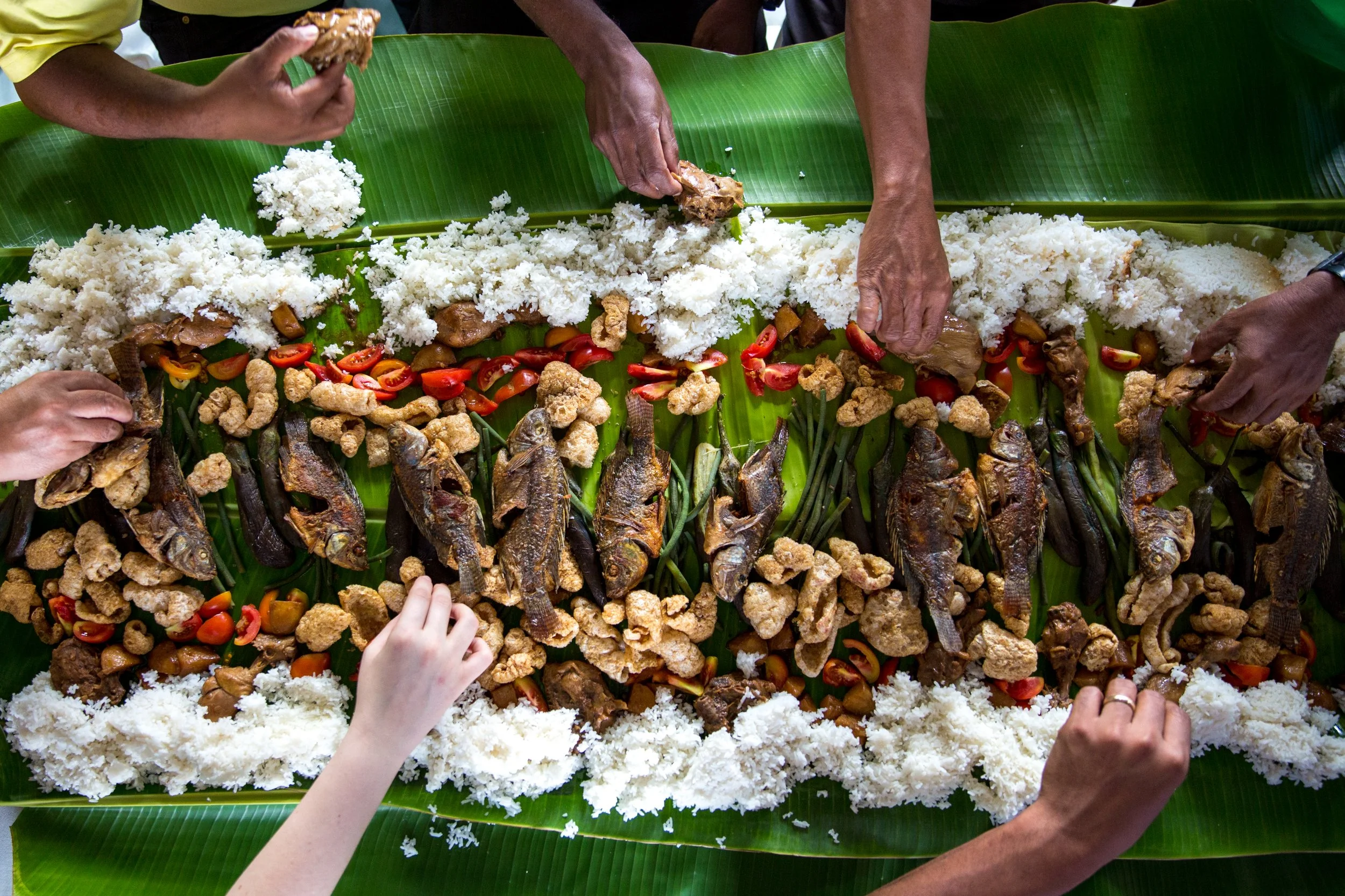
Looking down at a meal of fried fish, rice, and other foods served on a large leaf, multiple hands from every side are grabbing part to eat.

A meal shared in the Philippines. Avel Chuklanov. CC0 1.0

Whether you are growing distrustful of hyped social media recommendations when traveling somewhere new or are merely trying to find a way to support locals on your journey, there are many ways to create an enjoyable trip while experiencing the beauty of a city from the perspective of one of its inhabitants. From sharing meals to discovering the delights of a city beyond mere tourist attractions, engaging with locals is an excellent way to enjoy the unadulterated beauty of a destination.

For many, part of immersing themselves in a culture revolves around the dinner table. Although both dives and upscale restaurants offer a plethora of meal-sharing experiences, there is nothing like enjoying a home-cooked meal. Spanning 6 continents, Traveling Spoon connects travelers with locals hoping to welcome tourists to their culture through the power of food. Whether it be a traditional cooking class using family recipes in Ecuador or gaining new insight into French cuisine through a vinegar tour in Cognac, the website provides a variety of options for travelers to experience a full range of culinary experiences. From market tours to cooking classes, Traveling Spoon cultivates connections and allows those coming from near or far to feel at home when abroad.

Similar to Traveling Spoon, Eat With is a popular sight for travelers looking to get an authentic food experience. While Traveling Spoon offers more destinations, eatwith.com is a good source for those visiting major cities such as New York, Rome and Paris. Both sites offer experiences as low as $15, but some vendors can charge into the hundreds of dollars depending on the city and precise details of the experience.

With 151 destinations spanning 40 countries, the International Greeter Association is a non-profit offering free walking tours around various cities. Started in 1992 in New York City, this free-of-charge service is now expanding again after the Covid-19 pandemic. The greeter network is composed of passionate locals looking to show off what their city has to offer and to provide a friendly face to those visiting.

The not-for-profit nature of the organization makes utilizing the International Greeter Association an excellent way for tourists to engage with a city and its culture from an insider's perspective; learning about local gems, using public transport and discussing the greeter’s personal relationship with their city can be a great way to engage on with a destination on a whole new level, and maybe make a friend along the way.

Although social media is riddled with hyped restaurants and attractions that can make searching for cultural authenticity difficult, following creators that unveil local secrets is an excellent way to leverage new technology. For example, Elizabeth and Sophie Michilli are a mother-daughter duo from Italy who showcase their experiences in Puglia and Rome, highlighting local favorite restaurants and boutiques. Though it can be difficult to navigate through sponsored and algorithmically recommended content, using social media as a tool to engage with local creators can be an effective way to meaningfully tailor your trip to support local establishments.


Nicola DeGregorio

Nicola is studying English Literature at George Washington University, where she also reports for the student newspaper, The Hatchet. Nicola's passion for literature and writing has sparked an interest in exploring the broader context surrounding written texts. Researching and writing for Catalyst Planet allows her to investigate nuanced issues that intersect with her interests in art history, culinary practices, and cultural traditions.

8 Reasons to Visit Oman

Oman is truly a feast of the senses—a remarkable getaway for anyone seeking a fulfilling adventure.

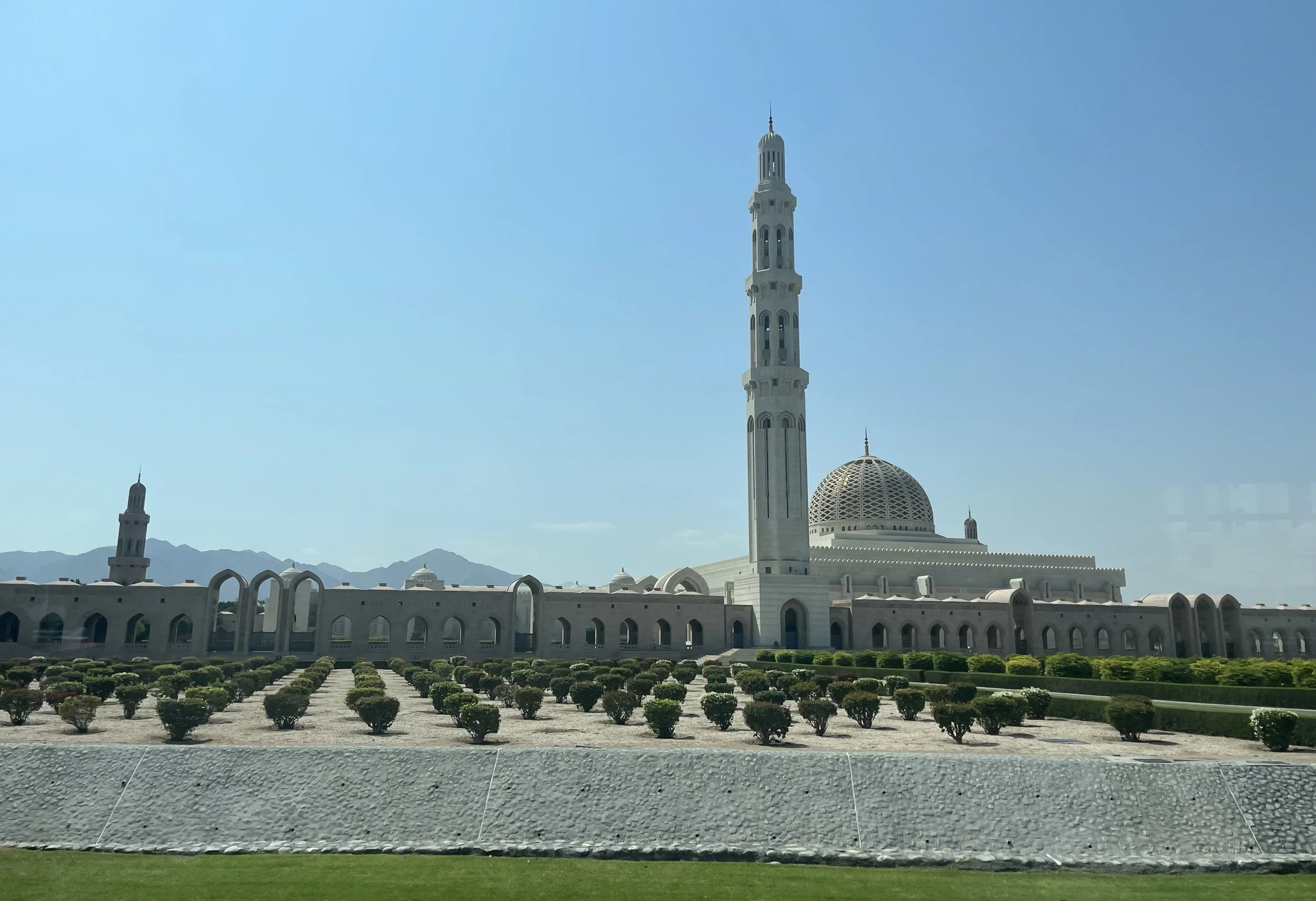
An image of the gran mosque, organized hedge garden, and mountains in the background

The Grand Mosque in Muscat, Oman. Madison Paulus

After returning from study abroad in Oman, I have a newfound admiration for the country’s history, culture, views and activities. The vitality of Omani culture despite outside influence is admirable and I could see it reflected everywhere I went. From the very first day, I felt welcomed and immersed within the Omani lifestyle. This trip was an incredible experience, inspiring me to share eight reasons why you should experience Oman.

1. Rich History 

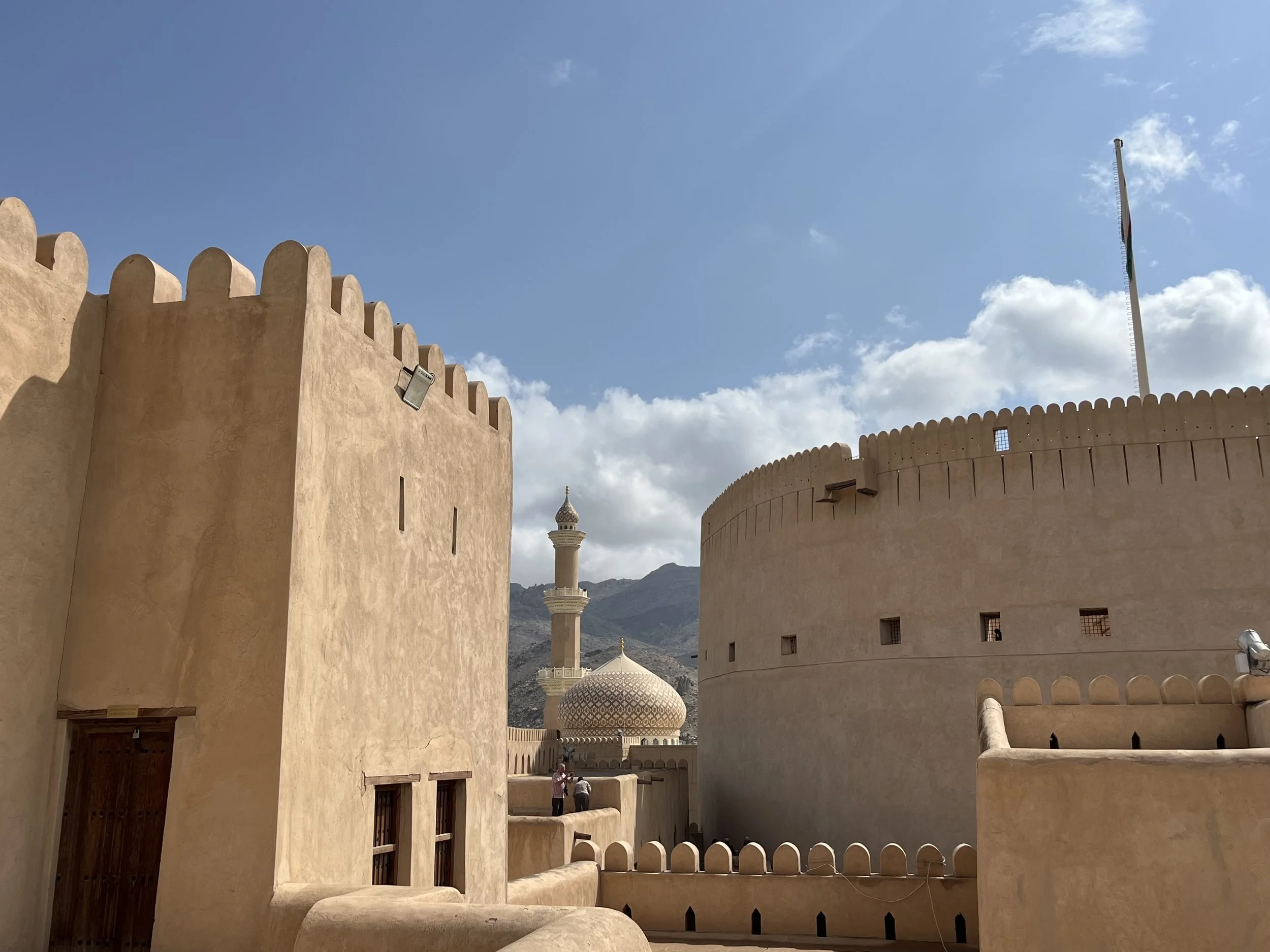
View of a fort, two people stand on a balcony taking a photo over the sandy walls.

View of a mosque from the Nizwa Fort. Madison Paulus

Oman is the oldest independent nation in the region, brimming with about 1,000 well preserved historical sites. While civilization in Oman began around 100,000 years ago, many popular historical sites came about during Portuguese occupation between 1507 and 1650. 

In Muscat, the capital of Oman, explorers can find several forts. The Muttrah Fort, which the Portuguese built in 1507 can be found at the heart of Muscat's coast. Here, travelers can gaze upon 500-year-old lookouts. 

The Mutrah Fort serves as a vantage point for travelers as it is nearby several other must-see spots, including the Mutrah Market, Al Alam Palace and the National Museum of Oman. Many other castles and forts can be found strewn across Oman, including the Nizwa Fort and Jibreen Castle.

2. Fruitful Culture 

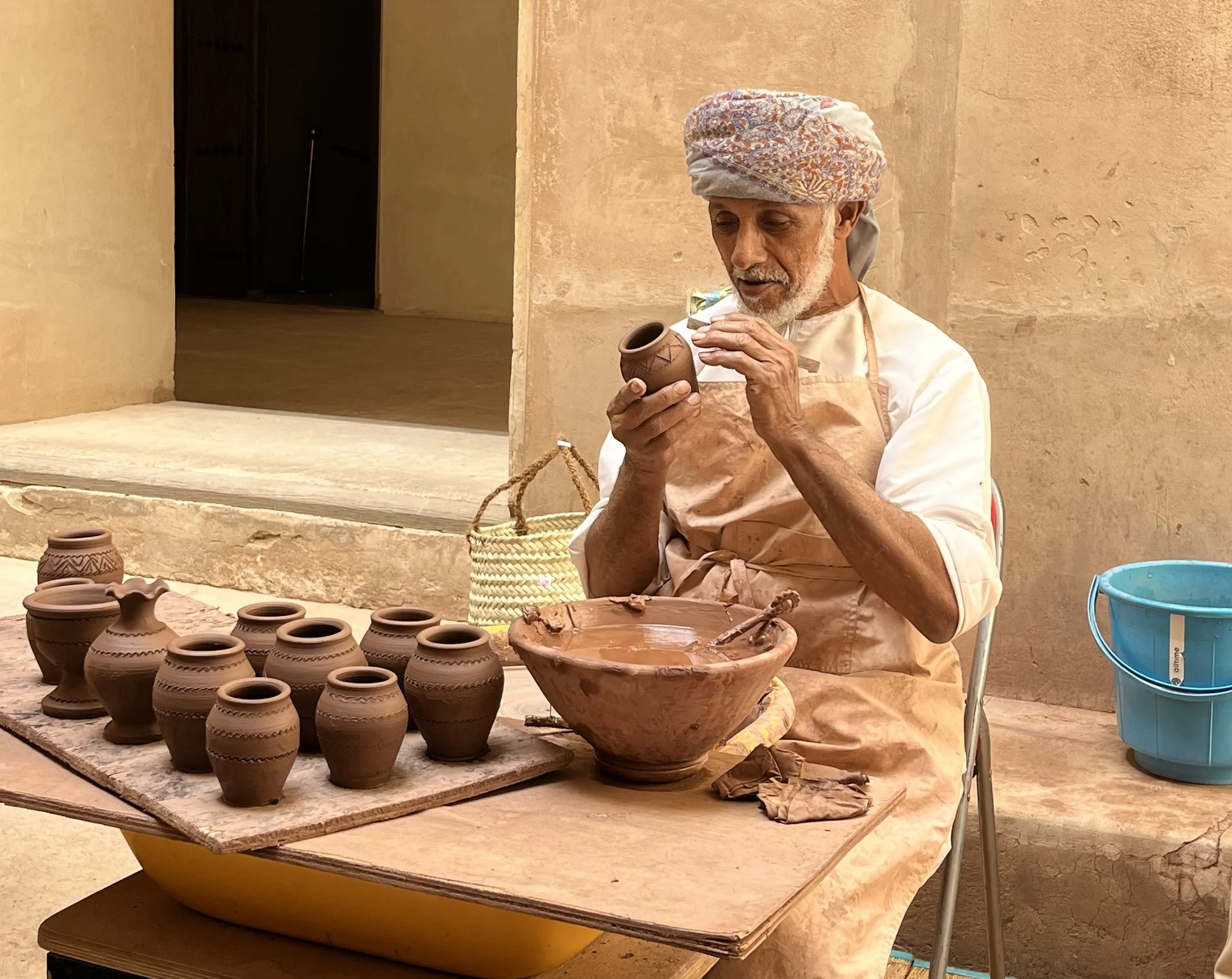
A street vendor man in apron etching a design into handmade clay vase. He has other ornate vase designs on the table in front of him.

A man making pottery at the Jibreen Castle. Madison Paulus

Oman boasts an impressive blend of cultures. The Omani empire once ruled an area spanning from the east coast of Africa up to present-day Oman. Because of the vast territory and major role in trade, African, Arabian and Asian influences can be found embedded within Omani culture.

Home to more than 130 various types of traditional dances and music, Oman’s performance arts delight travelers and locals alike. Omanis are also expressive through their dress. Women can often be seen in vibrant clothing featuring intricate designs that are unique to each region. Men wearing dishdashas dot the streets, sometimes sporting traditional Khanjars (daggers) on special occasions.

Omani hospitality is another key feature of Omani culture. Omanis are known to be warm and welcoming to travelers, sure to offer friendly interactions and generous gifts for guests including coffee, dates and frankincense. For those searching for opportunities to immerse in Omani culture, there are many festivals open to travelers, including the Muscat Festival and the Salalah Festival.

3. Culinary Diversity 

Looking from above at 12 bags of various spices at an Omani market.

A variety of spices at the Nizwa Market. Madison Paulus

As with the culture, Omani food features Arabian, Asian and African influences. Some renowned Omani dishes include Shuwa, Rukhal bread and Halwa. Shuwa is a unique dish saved for special occasions. Meticulously prepared, Shuwa consists of meat cooked in a clay oven underground for up to two days, giving way to a tender, spice-filled delicacy.

Rukhal bread is a delightful addition that can be found accompanying any meal. Traditionally cooked over flaming palm leaves, Rukhal bread is round and thin, often served with honey or date syrup in the morning or sprinkled across meat and rice dishes throughout the rest of the day. 

Halwa is a labor of love, often symbolic of Omani hospitality. A sticky, gelatinous treat, Halwa is usually made by combining water, ghee, corn flour, sugar and additional flavorings such as rose water or saffron in a large copper pot. Beyond the restaurants and markets, an ideal place where explorers can indulge in Omani cuisine is the Muscat Eat Food Festival.

4. Unique Commodities 

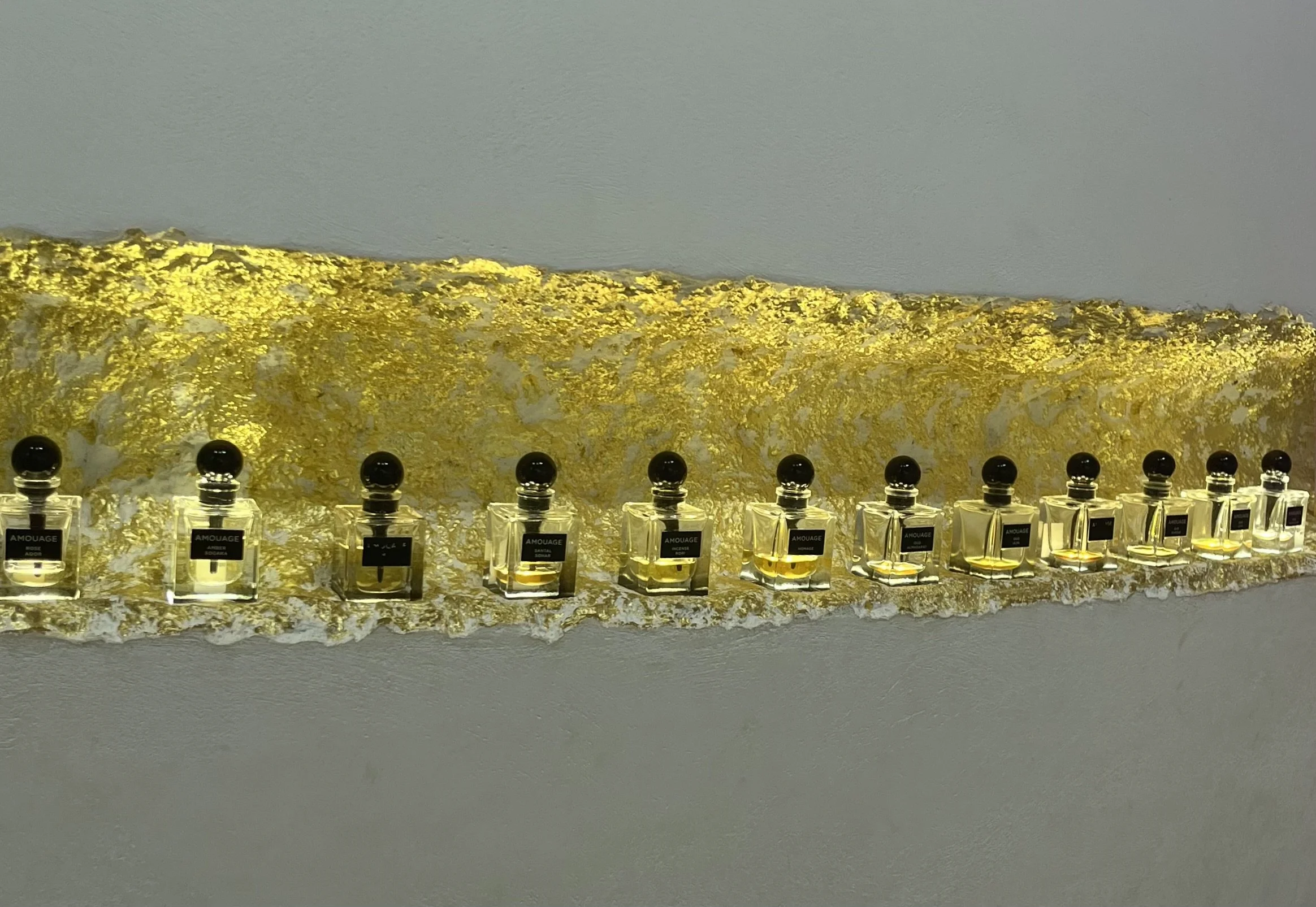
Display of Amouage perfumes lined up on a gold-foiled shelf.

A display of Amouage perfume at the Mall of Oman. Madison Paulus

With an abundance of frankincense and other natural resources, Oman is home to many exceptional goods. Fragrances in particular are an Omani specialty, and Amouage is an exhibition of this expertise. A popular Omani luxury fragrance brand, Amouage draws from Oman’s natural wonders to create enchanting scents, incorporating locally sourced rock roses, ambergris and frankincense. 

While the products aren't budget friendly for many people, travelers can tour the only Amouage factory in the world for free in Muscat, getting a behind-the-scenes look and while sampling their extravagant fragrances along the way. 

If perfumes aren’t your thing, the smell of burning frankincense and oud can be experienced all over the country. For those who wish to bring the essence of Oman home with them, these products, along with traditional burners, can be found easily at shops and markets.

5. Vibrant Art

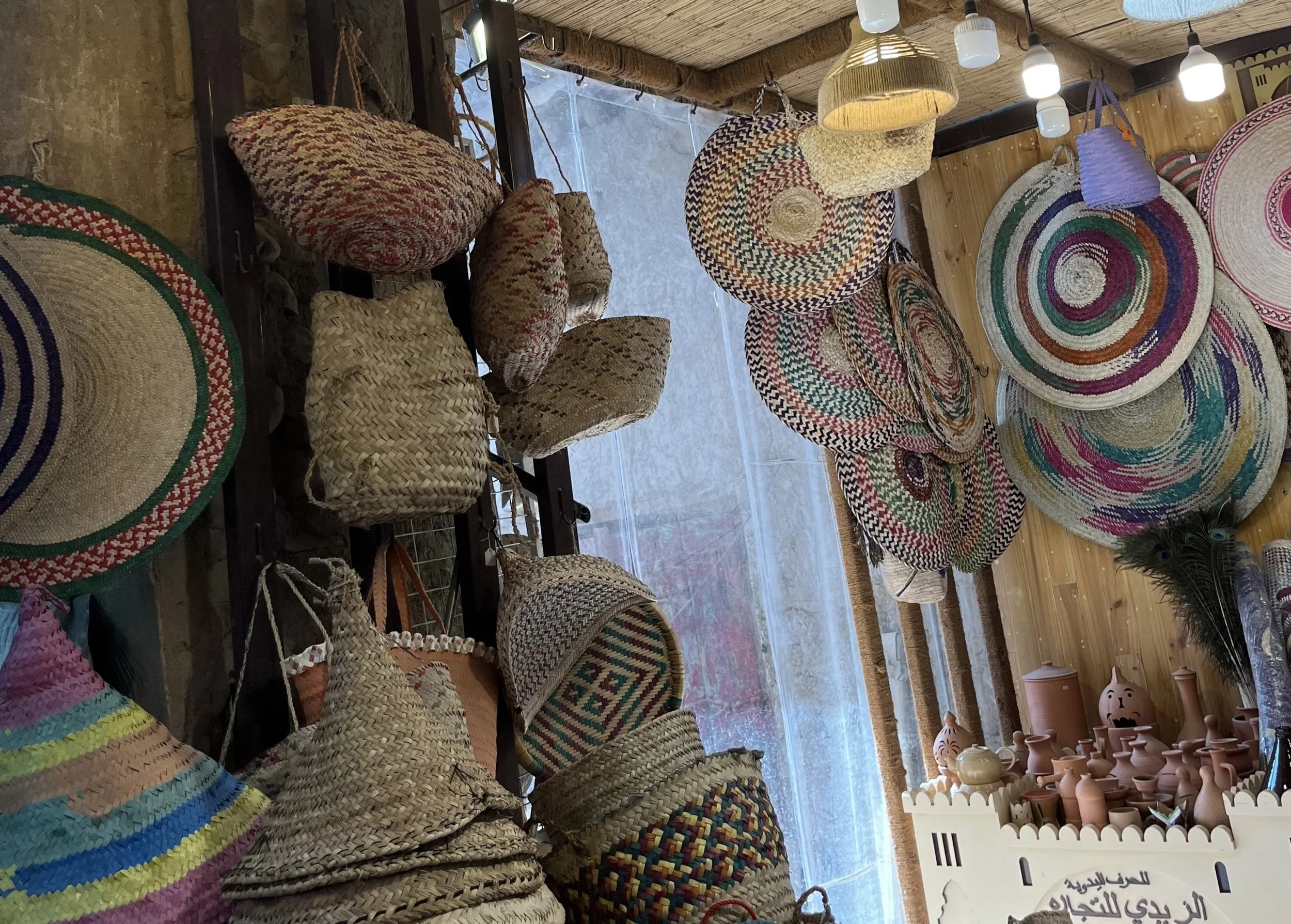
An array of hand-woven bags, hats, and baskets hung from the walls of a small shop.

Hand-woven baskets on display at the Nizwa Market. Madison Paulus

Many art forms have been intertwined with Omani culture for thousands of years. Pottery is a 5,000-year-old tradition in Oman that is still present across the country. Holding great historical value, pottery has been integral in the lives of Omanis for thousands of years. 

While pottery today is often decorative, its historical and cultural value has been maintained here. In the ancient Omani state of Bahla, explorers can buy pottery from local sculptures or even learn how to make their own at the Al Adawi factory. 

Other intriguing Omani handicrafts include basket weaving and silversmithing. Hand-woven baskets made of date palm or other natural fibers can be found in markets across the country, and travelers can witness the process in action at the Nizwa Fort. Silver goods like khanjar (daggers) and jewelry can also be found throughout Oman’s markets, symbolic of Omani heritage and good fortune.

6. Comfortable Climate 

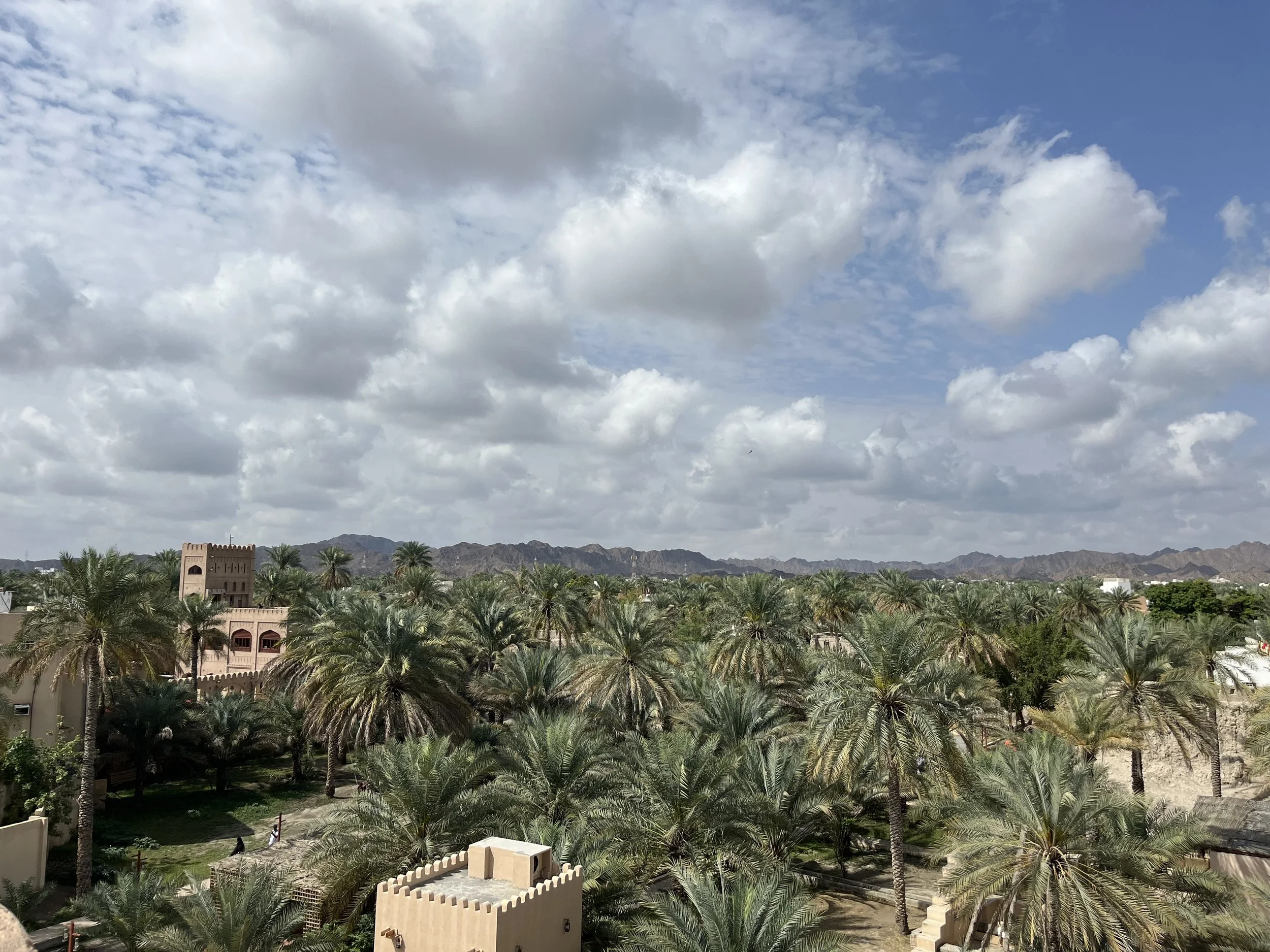
View of the palm-tree covered landscape of Oman.

A view of the landscape from atop the Nizwa Fort. Madison Paulus

Oman’s weather and climate vary significantly by region, easily accommodating travelers’ preferences. With the interior's dry deserts surrounded by southwest summer monsoons and hot, humid coastlines, Oman offers a warm getaway whether you like sun or rain.

Because of this variation, Oman is a year-round destination, with northern Oman attracting many during the months of October through April, and the South drawing explorers most during July, August, and September, according to a presentation by Zahara Tours.

7. Natural Wonders 

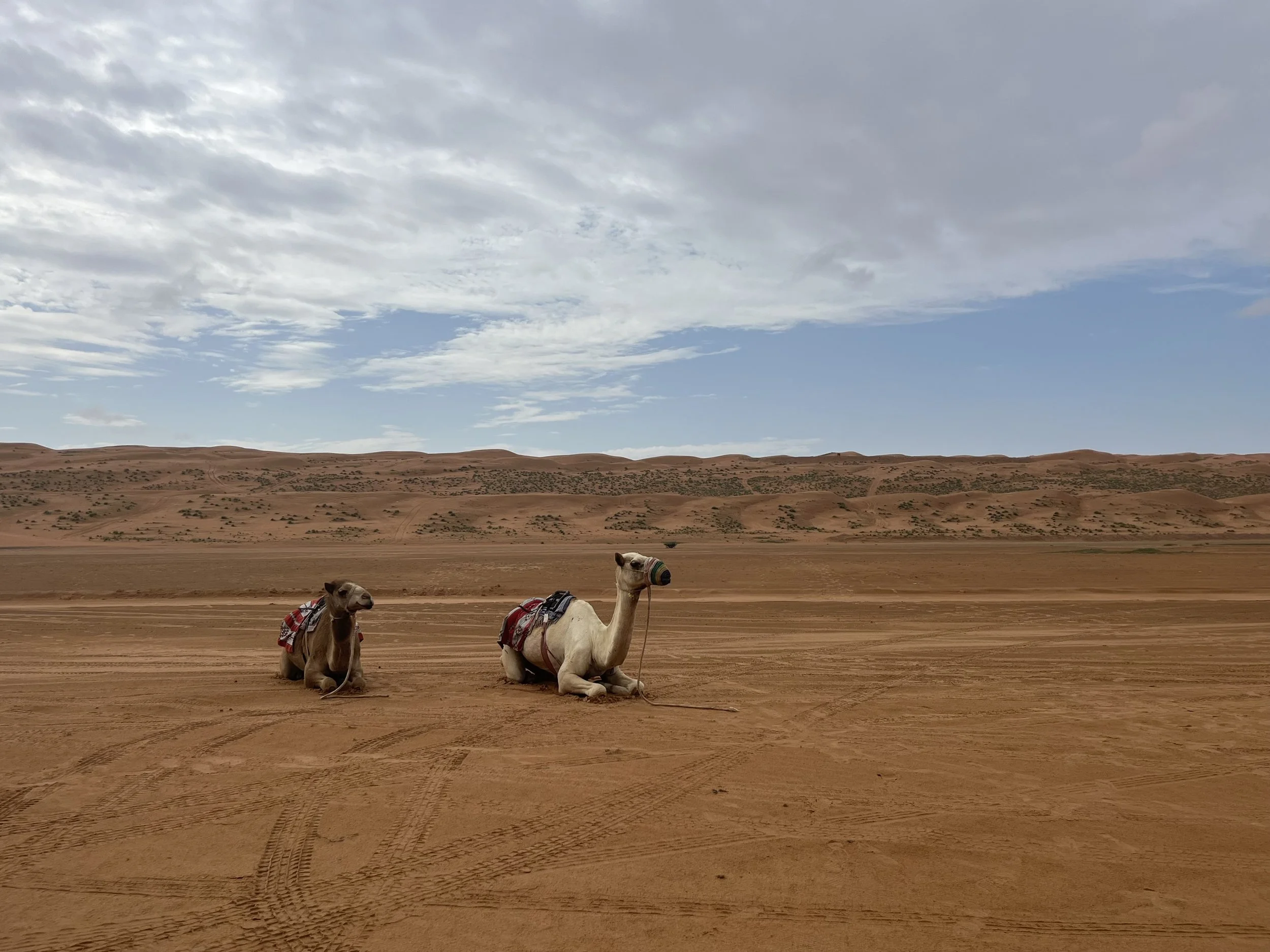
Two camels sitting in the red sand of the Omani desert, red dunes are in the background.

Camels sit in the sand outside the Arabian Oryx Camp. Madison Paulus

Oman’s ecosystems feature a huge diversity of plants and animals, from rock roses and apricots to turtles and camels. With 20 official nature reserves, travelers are offered a wide array of destinations to appreciate Oman’s natural beauty from the mountains to the sea.

Some iconic destinations for explorers to witness nature at its finest include the Al Jinz Turtle Reserve and Daymaniyat Island, where you can swim with whale sharks as they migrate south every summer.

With several caves beneath the earth and many wonders like waterfalls and valleys above, Oman’s astonishing ecology is situated in equally breathtaking natural landscapes. 

8. Adventurous Activities 

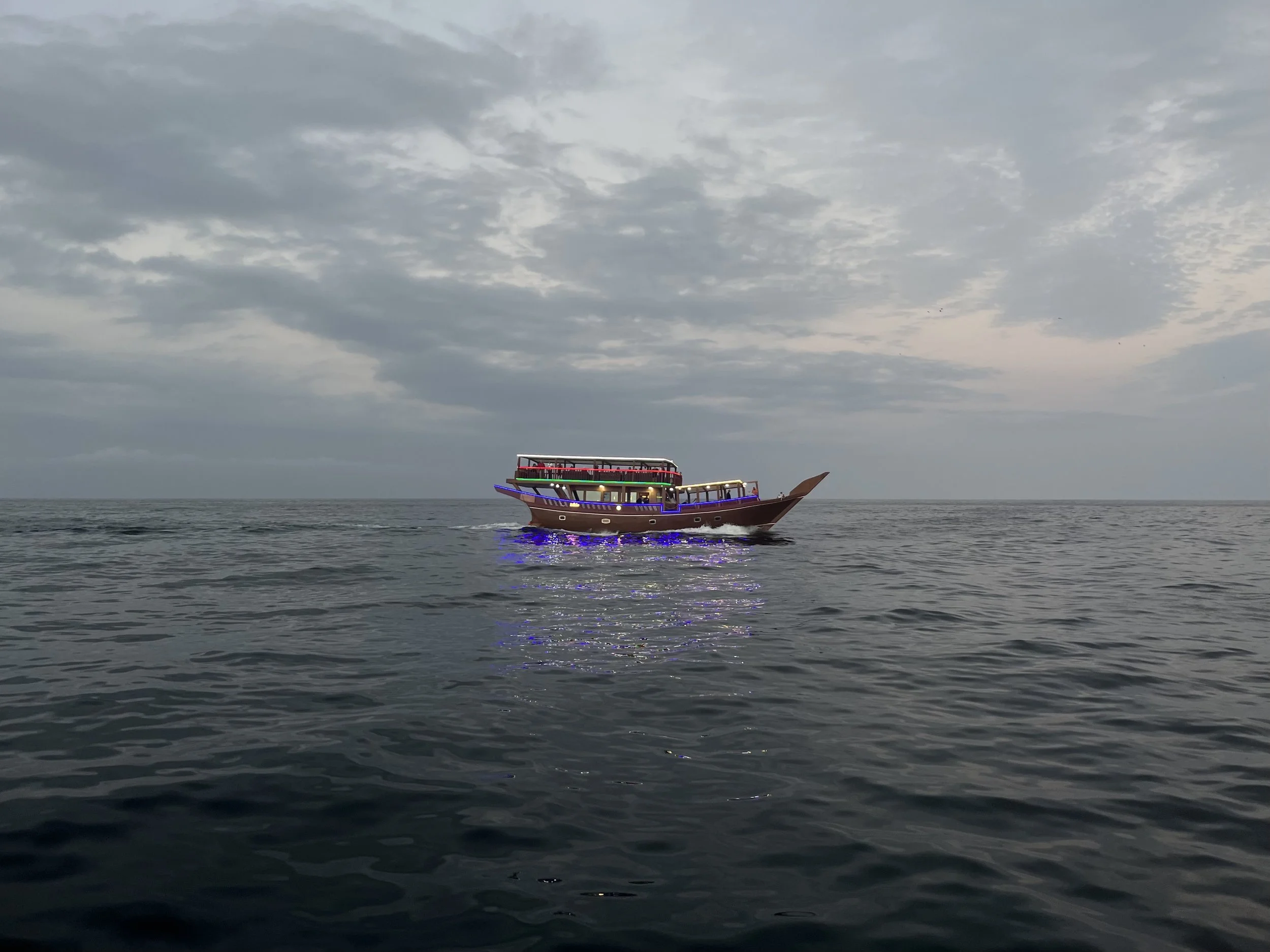
A neon-lit boat navigating the deep blue ocean.

A Dhow boat sailing in the Gulf of Oman. Madison Paulus

Travelers itching for activity have countless options in Oman. Hikers will feel right at home, with many trails at varying levels of difficulty found throughout the Hajar and Musandam mountains. 

Travelers can also explore the desert on camel-back or by riding on ATVs. The Arabian Oryx Camp is a perfect spot for either, in addition to offering Bedouin-style accommodations and authentic Arab cuisine.

For those who prefer to spend time in the water, Oman’s nearly 1,300 miles of coastline offers beaches where travelers can swim and snorkel through blue waters.


Madison Paulus

Madison is a student at George Washington University studying international affairs, journalism, mass communication, and Arabic. Born and raised in Seattle, Washington, Madison grew up in a creative, open-minded environment. With passions for human rights and social justice, Madison uses her writing skills to educate and advocate. In the future, Madison hopes to pursue a career in science communication or travel journalism.

Underwater Paradise: Raja Ampat, Indonesia

With over 70% of the Earth covered by water, it’s only logical for the planet’s greatest beauty to lie beneath the waves. Raja Ampat holds a special place in the hearts of divers and naturalists alike.  

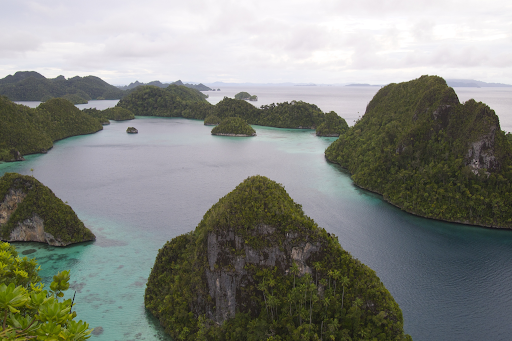
An image of tall limestone islands dotting the turquoise waters and reefs.

Wayang Island within Raja Ampat. Elias Levy. CC BY 2.0.

Situated northwest off of Papua, Indonesia’s most eastern island, the Raja Ampat archipelago is heralded as a top-tier site for scuba diving and marine biodiversity. Raja Ampat comprises over 28,000 square miles of ocean and hundreds of cays and shoals still to be discovered. Plate tectonics exposed ancient limestone seabeds to tidal erosion which yielded a series of islands seeming to levitate above the waves. As the archipelago straddles the Earth’s equator, it naturally experiences a tropical climate. 

But Raja Ampat’s most signature feature is its sheer scope of species diversity. Home to at least 75% of the world’s hard corals and at least 1,500 different species of fish, Raja Ampat is considered the global epicenter of marine animal diversity. Due to a confluence of warm, shallow water and nutrient-rich currents from the Pacific and Indian oceans, Raja Ampat has thrived for decades as a haven for endangered aquatics. A slew of rare sea species from dugongs and blue whales to dolphins and leatherbacks live in relative geographic isolation and pristine marine ecosystems.

  Northern Raja Ampat

A colorful and striped underbelly of a lionfish swimming in the clear waters of Raja Ampat.

Marine biodiversity is unmatched within Raja Ampat. Nazir Amin. CC BY 2.0.

The northern islands of Gam, Kri, Waigeo and Batanta are bounded by the Dampier Strait. It serves as a popular entryway to Raja Ampat thanks to the city of Sorong on the west coast of Papua which hosts its own airport. With mainland access via ferries, most visitors flock to the north to dive at famous sites such as Cape Kri, Blue Magic and Manta Sandy.   

Cape Kri is a renowned hotspot for marine biodiversity. Once recorded as the site with the highest quantity of distinct fish species observed in a single dive, visitors can expect to see reef sharks, moray eels, turtles, Humphead wrasse, cuttlefish, porcupinefish, crevalle jack, snapper and barracuda.

Blue Magic offers a variety of soft and hard coral reefs to check out. Though divers will face strong currents in the water, the struggle is worth the chance to meet dogfish tuna, giant trevally, spanish mackerel, bumphead parrotfish and even octopi.

Manta Sandy is a shallow site teeming with plankton, and of course, ocean manta rays. Divers must try their luck to encounter the rare black manta.

South Raja Ampat

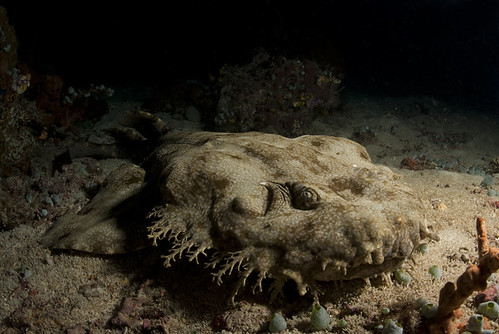
A flat shark camouflaged with the sandy ocean floor.

A Wobbegong shark. Nazir Amin. CC BY 2.0.

South Raja Ampat is noticeably inaccessible to the lay visitor as overnight ferries must be taken from Sorong to reach this remote area. However, the reefs in South Raja Ampat are picturesque, with premier visibility for pygmy seahorses, colorful nudibranchs and other wowing wildlife.

The island of Misool is the pinnacle of biodiversity conservation, as much of the area is protected as part of the Misool Marine Reserve. There’s only one option for overnight lodgings: the Misool Eco Resort, an eco-friendly hotel dedicated to conservation and sustainability. The resort’s founders dedicate a portion of both their profits towards biodiversity recovery; there’s been a 250% increase in local biomass and a doubling of reef fishes within six years. Visitors are welcome to trek or boat to neighboring islands for beautiful beaches, native seabirds and rock petroglyphs dating back 4,000 years.

Hundreds of reef fish are visible from above the water’s edge. Nazir Amin. CC BY 2.0.

Raja Ampat’s natural beauty belies political and economic trouble. 

A brightly spotted fish poking its head out of a coral reef underwater in Raja Ampat

Though visitors will certainly enjoy Raja Ampat’s scenic environments and exotic wildlife, they may feel the effects of local turmoil.

In 1961 the people of West Papua, an area which includes Raja Ampat, voted to become a part of Indonesia in a much disputed referendum. However, a pro-independence movement has emerged throughout Papua, eliciting police and military crackdowns alongside communal tensions. Furthermore, around 9,000 of Raja Ampat residents live in poverty, lacking sanitation facilities and healthcare. Clean drinking water is imported into the islands approximately once a month; there is no electrical or telecommunications infrastructure available for most villagers. Most inhabitants either fish or mine to earn their living, and often incur debts to small businesses for consumer goods and fuel prices. Raja Ampat’s ecotourism industry is partnering with local residents to promote their security and welfare. 


Rohan Ratogi

Rohan is an engineering graduate from Brown University. He is passionate about both writing and travel, and strives to blend critical thinking with creative communication to better understand the places, problems, and people living throughout the world. Ultimately, he hopes to apply his love for learning and story-sharing skills to resolve challenges affecting justice, equity, and humanity.