Unexpected Friends in Amsterdam

August 29, 2015: I was cruising on my bike on a rare sunny day in Amsterdam, weaving in and out of pockets of confused tourists, when I rode past an orange and white sign that read “A’DAM INT’L ART FAIR.” Just two weeks into my four-month long journey of self-discovery in Amsterdam, my one-item agenda on this particular day consisted solely of exploring my new city. In that moment, my explorations led me to Berus van Berlage, a medieval looking building in the city center where the art fair was slated to take place. I secured my bike to a nearby pole and headed inside having neither the intentions of purchasing art, nor the expectations of what fascinating people I might meet inside. 
I took my time strolling up and down each aisle, attempting to take in all of the photographs, sculptures, and paintings hanging on the walls of Berus van Berlage amidst the mixed crowd of intrigued passersbys and veteran art collectors. Eventually I found myself in the far right corner of the hall, where I came across a row of ceramic necklaces next to a sculpture of what appeared to be a naked woman with a severed torso. Nervously, I approached the woman standing next to the display and inquired if she was the artist who created the necklaces. She told me she was not, but the artist who did make the necklaces would be back from lunch in just a few minutes. I wandered aimlessly for a couple of minutes before returning to the far right corner to solicit information from the artist herself about the necklaces. 

Upon my return to the far right corner, I was greeted by a beautiful blonde woman who introduced herself to me as Mirjam (Miriam). Originally born in Turkey, Mirjam had immigrated to The Netherlands at the age of 5, living in different places throughout the country until settling in The Hague, a small city southwest of Amsterdam. From inside her apartment on the beach in Scheveningen, Mirjam creates all different types of art—pottery, paintings, and nearly everything in between—which she then sells at regional art fairs. The only piece she does not sell, but brings to every art show, is her most prized creation: a sculpture she calls “A Tribute to Every Woman in the World,” the woman with the severed torso. 

I then introduced myself as Allie, an American college student studying in Amsterdam for the semester, and asked if I could purchase one of the ceramic necklaces on display. In an exchange that lasted no more than 5 minutes, Mirjam wrapped up the necklace, handed me her card, and invited me to have coffee with her in The Hague should I ever found myself there. I then left the fair, not thinking too much about the encounter I just had with Mirjam. 

The following Wednesday I boarded a train from Amsterdam to The Hague. Mirjam was going to meet me and my friends at the train station, share a bite to eat with us, and then we would be on our separate ways; or at least, that is how I envisioned the day going. When I arrived in The Hague, Mirjam greeted me with a hug so tight you may have thought we had known each other for years having no prior knowledge of our relationship. She treated me and my friends to lunch, showed us the ins and outs of town, and then brought us back to her beachside apartment for snacks and drinks. Before heading back home to Amsterdam, we strolled along the ocean just as the sun was setting and I thanked her for an unforgettable day. On the ride home I replayed moments from the day over and over again in my mind, finding it difficult to process the bond I had just formed with a woman I met at an art fair that I hadn’t even planned on going to.  Though we had just gotten acquainted with one another, Miriam believed that our souls had met one another prior to our first physical encounter, and I could not help but think that she was right. 

Miriam and I kept in touch throughout the remainder of my stay in Amsterdam. Each month we met in a different city in Holland: Rotterdam in October, Amsterdam in November (where she met my family while they were visiting me), and Delft in December. Seeing all of these new places from her perspective made me appreciate them that much more. Every time I met up with her became adventures that I will never forget. When I return to Amsterdam next month, we will surely add another adventure to our list. 

Traveling or spending any significant period of time abroad presents one with unique opportunities to meet people they more than likely would not have met otherwise. While I could have never anticipated meeting Miriam where I did or forming the relationship I have since formed with her, being open to new experiences and meeting new people definitely lends itself to the possibility of forming relationships like the one I have with Miriam. So next time you find yourself at an art fair in Amsterdam, strike up a conversation with an artist you meet; perhaps she’ll become your Dutch mother just like Miriam became for me. 
 

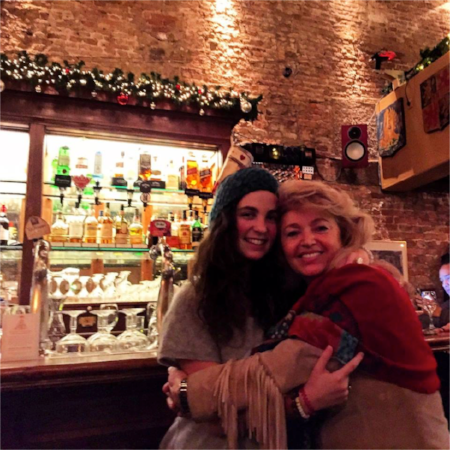
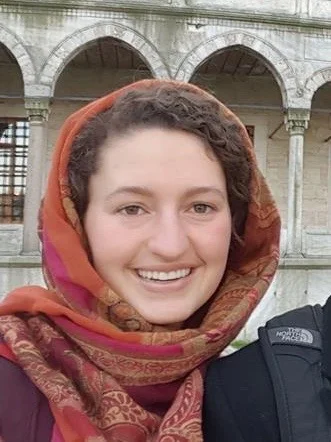
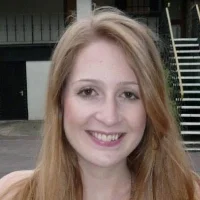
Miriam and I in Delft at Café De Waag, December 2015

ALLIE BLUM

Born and raised just outside of Philadelphia, PA, Allie's love for travel has led her to find that you can call many places "home." While she is primarily based in New Orleans, LA, where she will be completing her undergraduate studies this coming May, Allie has spent significant periods of time traversing the continental US (mostly by car) and Europe, and parts of the Middle East. Allie hopes that her curiosity to understand other cultures will bring her to every continent over the course of her lifetime. When she's not studying or planning her next trip, Allie loves to read, write, and make playlists on Spotify.

Kicking the Habit: Air Travel in the Time of Climate Change

Air travel is neither just nor sustainable. So how can environmental justice activists make a global difference?

We live in a time of far-flung relationships, our families, colleagues, and friends often spread out across continents. These relationships mirror the global nature of many of our most pressing problems, such as global climate change—and they also contribute to those problems.

In Eaarth: Making a Life on a Tough Planet, Bill McKibben likens the biosphere to “a guy who smoked for forty years and then he had a stroke. He doesn’t smoke anymore, but the left side of his body doesn’t work either.” This new world, he says, requires new habits.
And, no doubt, many of us have adopted new habits—trying to use public transportation, buying local foods, rejecting bottled water. But the “savings” from such practices are wiped out by a habit that many of us not only refuse to kick, but also increasingly embrace: flying, the single most ecologically costly act of individual consumption.

Flights of Privilege

A round-trip flight between New York and Los Angeles on a typical commercial jet yields an estimated 715 kilos of CO2 per economy class passenger, according to the International Civil Aviation Organization.
 

Only 2-3 percent of the world’s population flies internationally each year, but the climate impacts are felt by a much larger—and poorer—population.


But due to the height at which planes fly, combined with the mixture of gases and particles they emit, conventional air travel has an impact on the global climate that’s approximately 2.7 times worse than its carbon emissions alone, says the Intergovernmental Panel on Climate Change. As a result, that roundtrip flight’s “climatic forcing” is really 1,917 kilos, or almost two tons, of emissions—more than nine times the annual emissions of an average denizen of Haiti (as per U.S. Department of Energy figures).
Only 2-3 percent of the world’s population flies internationally on an annual basis, but the climate impacts of air travel are felt by a much larger—and poorer—population. It is difficult to illustrate the meaning of such numbers in terms of who among the planet’s citizens pays the costs.

But this is exactly what the 2009 German short film The Bill does in powerfully demonstrating the ecological privilege and disadvantage embodied by flying. In doing so, it shows aviation to be a classic example of how the comparatively well-off privatize benefits of environmental resource consumption (the ability to travel quickly and afar) while socializing the detriments. By making a disproportionate contribution to climate destabilization and associated forms of environmental degradation—biodiversity loss, rising sea levels, and desertification, for instance—air travelers exacerbate the precarious existence of the most vulnerable. In doing so, they contribute to unjust hierarchies (e.g. racism and imperialism) that reflect a world of profound inequality.

Global Organizing—Without Planes

Clearly this presents a huge challenge to social and environmental justice advocates, activists, and organizers from the planet’s relatively wealthy areas who often connect to distant peoples and places by flying. Because the institutions and individuals most responsible for our global predicaments typically exercise mobility and exert their power across great distances, those of us who want to challenge their practices often must also do so. So what to do?

One option is to use transportation that stays on the Earth’s surface, to accept traveling more slowly, and to make flying a very rare exception instead of the rule. Throughout North America, buses—and, in many places, trains—are viable options. And for transoceanic voyages, ships (including freight ones) are a possibility—albeit not typically inexpensive or as common as they need be.
 

Finding Rootedness

In an increasingly vulnerable world, we’re searching for rooted communities—and what we can learn from them.

Another option—indeed an obligation in a time of growing ecological destruction and a degraded resource base—is to stay home more often. Given that “jet travel can’t be our salvation in an age of climate shock and dwindling oil,” McKibben writes, “the kind of trip you can take with a click of a mouse will have to substitute.” In other words, we have to become much better at exploiting the “trips” that the Internet and related technologies afford—by videoconferencing, for example.

While such options present numerous challenges, not least logistical ones, perhaps the biggest obstacle is the particular way of seeing and being common to the small slice of the world’s population that flies regularly. Traveling long distances by bus, train, or ship, for example, necessitates time—and a willingness to expend it in manners that those from the world’s privileged parts and sectors are not used to doing. It doesn’t necessarily entail doing less, but it does mean doing things in different ways.

A New Normal

It also calls for new mechanisms and institutions—and some organizing to bring them about. Take long-distance travel by ship. Less than a century ago, many regular folks traversed the seas—think of immigrants to Angel and Ellis islands. And many well-known organizers and activists—Gandhi, Helen Keller, and W.E.B. Dubois, to name just three—journeyed extensively by ship.

To do so today, of course, is far more difficult as jet travel has greatly weakened the passenger ship option. But what if, for instance, U.S. and Canadian activists and advocates going to Denmark for the Dec. 2009 climate summit had, instead of booking individual flights, organized to travel together by ship—with all promising to get to and from their ports of call by surface-level transportation? And what if they had publicized this effort as a way of setting an example for, and challenging, others?

That such a suggestion will seem unrealistic, if not foolhardy, to many illustrates the way that what we’re used to thinking of as normal can stifle our imaginations, and let us off the political, ecological, and ethical hook. The option is as “realistic” as we make it. In this regard, we need to push and support one another in the effort to make far-reaching alternatives viable.
 

What we’re used to thinking of as normal can stifle our imaginations, and let us off the political, ecological, and ethical hook. The option is as "realistic" as we make it.

Climate science tells us that we need a 90 percent cut in greenhouse gas emissions over the next few decades to keep within a safe upper limit of atmospheric carbon. In light of the great changes such a reduction demands, what is unrealistic and foolhardy is the notion that we can continue flying with abandon.
 

Interested?
    •    We thought we had 20, 30, 50 years to take on the climate crisis. We were wrong. The scary science, smart policies, and critical actions that could still avert disaster.
    •    Bill McKibben imagines himself in the year 2100, looking back at a century of climate chaos and asking: What did it take to save the world?

THIS ARTICLE WAS ORIGINALLY PUBLISHED ON YES MAGAZINE.

JOSEPH NEVINS

Joseph Nevins wrote this article for YES! Magazine, a national, nonprofit media organization that fuses powerful ideas with practical actions. Joseph is a geography professor at Vassar College. Among his books is Dying to Live: A Story of U.S. Immigration in an Age of Global Apartheid (City Lights Books/Open Media).

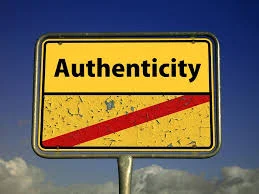
How to Find Authenticity in a Globalized World

Why do we travel? 

For those of us privileged enough to be able to travel voluntarily, reasons often include becoming more fully ourselves and experiencing something genuinely different. This desire for authenticity, in ourselves and in that which we perceive to be other and outside our current experiences, is widespread enough to be noticed and exploited by the tourism industry, with signs reading “experience the REAL Thailand” and “find yourself in Bali”.

Seeking authenticity in our travels comes from a good place. It highlights our desires for genuine interactions with other human beings, for learning about the experiences of those with different life paths and identities, and possibly even for utilizing our privilege to support real people instead of opportunistic corporations removed from the locations in which they operate.

However, as is the case with many good intentions, this desire for authenticity can be harmful. Much of this harm stems from a strict and arbitrary idea of what counts as authentic and the fact that the privileged traveler has the power to decide what makes the cut. For instance, while spending 3 months in Zimbabwe a few years ago, I asked several friends what their cuisine had looked like prior to British colonization.  As their current main foodstuff, a labor-intensive dry porridge called sadza that holds its shape when spooned onto a plate, is made of cornmeal, it couldn’t have existed prior to the transfer of corn to Africa from the Americas.  I’ve had similar questions about Italian, British and South Asian cuisines before tomatoes, potatoes, and chili peppers made a similar journey.  From my perspective, sadza was a colonial by-product, as was the black tea served alongside it.  When I shared this view with my friends, the effect was clear: my strict and arbitrary definition of what could be considered authentically Zimbabwean delegitimized and minimized their identity and emotional ties to the food they knew and loved. 

This highlights a tendency in our search for authenticity - to regard older traditions and cultural forms and those which predate recent cultural exchange as more authentic.  This viewpoint is understandable, especially as a reaction against the infiltration of Western corporations such as Coca Cola into most crannies of the world, including a remote village in eastern Zimbabwe, and the Westernization of many popular tourist destinations, from food offerings to street signs. Yet the reality is that all places and peoples are dynamic.  Historical and current globalization, the movement of people, ideas and things, has fostered cultural exchange and the transformation of traditions over time.  Cultures also evolve without interaction with outside forces. When we define authenticity as similarity of a particular part of a culture to its version at a particular point in history, we mistakenly regard people and places as static, freezing them in time.  

Aside from our tendency to award authentic status to more longstanding traditions, we also withhold this label unless the cultural form feels “other” enough and different enough from our cultural forms to be plausibly untainted by them.  But ironically and cruelly, our globally dominant culture and associated language simultaneously demand conformity for material gain and social acceptance. Without this, the inherent amount of difference between cultures would render many practically inaccessible to travelers.

When we travel in search of authenticity with these unconscious assumptions and unfair expectations lurking in our minds, we often end up unknowingly demanding that locals perform a certain version of their culture for our tourist dollars. The result is a paradox: we want specific historical versions of cultures that are different enough from our own to feel authentic but similar enough to actually understand and enjoy. We travel to search for authenticity, but by traveling we reinforce the global dominance of our culture which demeans and degrades the other cultures we seek to experience. Seeking authenticity obscures it from us.

It also shortchanges us. Traveling with a particular idea of what authentic looks, tastes, smells and sounds like creates expectations and takes our attention away from what is.  When we’re less present with ourselves, where we are, and the people around us, we’re less likely to feel deeply satisfied in addition to being more likely to cause accidental harm.


So, what to do? Here are some guidelines for navigating these realities:

1. Take people and places as they are now

Don’t force them to live up to some idea conjured up by tourist companies, history books, or your own mind as the antithesis to your everyday life. Don’t expect them to be similar enough to be accessible and understandable to you. On the flip side, don’t expect them to be different enough so that you can feel like you’ve escaped your daily grind and your culture.  Manage your expectations or avoid forming them.  Of course, it is very hard to travel with no inkling of what you’re going to find once you arrive, but be honest with yourself.  Why are you drawn to particular places? What expectations do you have?  Find balance - have just enough foresight to plan yet not enough to keep you from accepting what is when you’re there. The best days often come when you're not expecting them. 


2. Only do what you actually want to do

Travel guides and guidance from friends are riddled with “must sees”.  What if nothing on those lists strikes your fancy?  I almost always skip museums when I travel.  While you could argue that I’m missing out on important historical context, I would argue that I’ve never absorbed this information from museums even when I’ve forced myself to go to them. Luckily, each place and culture and even person is unfathomably complex and contains endless dimensions. Engage in the same activities you enjoy in back home and try new ones which feel right.  Do you in a new place. By living your truth while traveling, you’re more likely to find authenticity in the place you’re visiting.


3. Engage other cultures carefully

Cultural exchange can be mutually beneficial but it can also be oppressive.  Acknowledge the power dynamics in your interactions with non-travelers. Be aware that you probably embody and therefore unknowingly reinforce ideals that other people must conform to in order to gain social currency and acceptance.   And make sure your engagement with other cultures doesn’t cross the line into appropriation. Appropriation can take many forms, but it almost always involves travelers benefiting materially from or being praised for a particular cultural form while the people to whom that cultural form belongs are ridiculed, persecuted, or exploited for it. Engage from a place of humility to learn, not to seek validation or make money. Always respect the stated boundaries of engagement, and where appropriate, wait to be invited.

SARAH LANG

Instigated by studies in Sustainable Development at the University of Edinburgh, Sarah has spent the majority of her adult life between 20+ countries.  She is intrigued by the global infrastructure that produces inequality and many interlocking revolutionary solutions to the ills of the world as we know it.  As a purposeful nomad on a journey to eradicate oppression in all its forms, she has worked alongside locals from Sweden to Zimbabwe.  She is a lover of compassionate critique, aligning impacts with intentions, and flipping (your view of) the world upside down. 


The Truth about Socialized Medicine around the World

In 2010, I moved to Australia from the United States and stopped in Thailand to go diving. While walking back to my hotel, I started to have trouble breathing. When it didn’t go away, I took myself and my chest pain to the emergency room. It was sparkling clean and almost empty; the young Thai doctor was thorough and gentle, and I walked away with an EKG, a chest X-ray, and a prescription for antibiotics. The total cost of my visit, for which I had to pay out of pocket due to not being a Thai citizen? About $40 USD.

There is a lot of misinformation passed around in the United States about socialized healthcare. You can wait a year without treatment. There are only two MRI machines in all of Canada. Nobody actually likes the system, or uses it. But the one thing most Americans never do is actually use universal health care. So I asked residents of multiple other countries to tell me what their experiences were like.

ISRAEL

Health care in Israel is universal and participation in a medical insurance plan is mandatory. All Israeli citizens are entitled to basic health care as a fundamental right. 

Abby: “I never used the medical system for emergencies. Doctor’s offices seemed more like walk-in clinics than private practices, but Tel Aviv is very crowded. Even with an appointment, wait times were often 40-60 minutes. 

I paid small co-pays, only to see specialists. Generally, the system was very low-cost and easy to use. I had to pay for prescriptions, but they were very cheap, especially compared to the States. A downside for me was that, while the doctors spoke perfect English, often the receptionists, nurses, and other office workers didn’t, so I had to get my Israeli boyfriend to make the appointments for me.”

ENGLAND

The NHS is the state healthcare provider in the UK. The service is free at the point of use; services are free, and running costs are covered by taxation. Private insurance is used by only 8% of the population of England.

Tim: “I have used the NHS many times, although, where possible, I go to private providers to save resources. Emergency work is almost always done on NHS. My mother was recently diagnosed with lung cancer and the NHS could not have moved faster; she also gets a choice of where she can be treated. She got a biopsy yesterday, the results ought to be back in five days and then treatment will start immediately. You would not receive any better with private insurance (and I say that as Tory).

Going to Emergency (A&E) is usually good, which I know from all my rugby injuries. You can get patched up and sent on your way in a reasonable amount of time. Getting a GP appointment (a general doctor, who will give you a referral), on the other hand, is almost impossible. The waiting time for my area is about three weeks. On the whole, the NHS is a good thing. It still has many flaws, though, and is in desperate need of a restructuring.”

AUSTRALIA

Australia has universal healthcare, called Medicare. It covers all general medical care, but some services are only partially covered and individuals pay a gap fee – this is usually still reasonably affordable, however. Individuals who earn high annual salaries are encouraged to take out private insurance.

Jenny: “I had an abnormal pap smear at my GP’s office, and she sent me a referral onwards to the Royal Women’s Hospital. I’ve had a lot of anxiety about pap smears in the past, and she specifically notified them about these issues. Since my issue was not urgent, she told me to expect a wait of several months for an appointment. The hospital recommended a colposcopy.

I contacted the patient advocacy department at the hospital and asked for assistance with my anxiety and PTSD. On the day of the procedure, all doctors and nurses were helpful and calming, and I managed to get through the experience without too much fear. They recommended that I get laser surgery to remove the abnormal cells from my cervix.

All of this has been totally free -- which is to say, paid for by Medicare. My original appointment for the pap smear was in May, and my laser surgery is scheduled for December...I received the appointment at the hospital in August. The abnormalities that showed in my report were not of an emergency nature; for similar issues, the brochure I received said patients can sometimes wait up to a year for treatment. I really appreciated the personalized care and support I received; it would have been so difficult to worry about payment while trying to deal with my emotional reactions to these procedures.”

FRANCE

All French residents pay compulsory health insurance, which is automatically deducted from paycheques. Patients pay fees at the doctor or dentist, which are then reimbursed 75-80% by the government, except in the case of long-term or expensive illnesses (such as cancer), which is reimbursed at 100%

Aliyah: “My father, who is Kenyan, was on a business trip in Paris. He tripped getting out of the subway and had a nasty gash above his eye. He was rushed to hospital, treated and held overnight for one or two days. When he was released, with medication, I kept bracing for the bill. None came. I told Dad to ask about it and he did. Answer: there is no bill, it is your right to be treated for free under our system.”

SWEDEN

The Swedish health care system is government-funded, although private health care also exists. The health care system in Sweden is financed primarily through taxes levied by county councils and municipalities.

Kelly: “Giving birth, tests, and one ultrasound were free. They charged me for extra ultrasounds and non-essential testing. The only thing they give you at the hospital for the baby is diapers, cream, and formula. 

Generally, in Sweden, the health care works if you are dying or having an emergency. As long as everything's normal, no one will look twice at you or even WANT to see you more often than needed. The drop-in clinics (vårdcentral) never have enough staff or resources, so if you need to see a doctor, you exaggerate your symptoms or they just tell you not to bother coming in.

I have been struggling for 3 months to get a pediatrician for my daughter. Since I started trying, we went to the emergency room once, the nurse’s office 4 times, and I called the helpline a million times. No-one wants to actually see her.”

CANADA

Canada's health care system provides coverage to all Canadian residents. It is publicly funded and administered on a provincial or territorial basis, within guidelines set by the federal government.

“Everything is covered, whether it's something minor or surgery under anaesthetic.  I've had MRIs, CT scans, x-rays, ultrasound, mammograms, you name it. The times I've had to go to emergency, I've received variable treatment, depending on the hospital.  My longest wait was 13 hours. The shortest was ten minutes when I was afraid I had an aneurysm. For that one, I saw a specialist right away, which was also free. When my father had necrotizing fasciitis, he went to the hospital and was treated immediately.  If he'd received treatment even 30 minutes later, he may very well have lost his leg or worse. In Canada, vision and dental are not covered by universal health care, and neither are things like physiotherapy, massage therapy, or alternative medicine like acupuncture, chiropractors, and so on.  That being said, private medical insurance often covers a certain percentage of these things.  Prescription medicine is also not covered by federal system, but between provincial plans and private insurance, can be greatly reduced in price if not free. Flu shots are free every autumn, and I remember getting vaccinated against rubella at school when I was a little kid. If you step on a rusty nail and go to emergency, your tetanus shot is free. Travel vaccinations and more unusual vaccinations, however, cost money. When I planned a trip to South America, I went to a travel clinic. The consultation was free, but I had to pay for my yellow fever and cholera vaccines.
I wish vision, dental, and physio were covered by national health care, but I am so grateful that everything else is covered.  If they weren't, there's a chance I might not have survived as long as I have.”

IN SUMMARY

The United States is one of the only developed countries that doesn’t provide universal health care for its citizens. A friend of a friend had a baby at 28 weeks (extremely premature); the baby was in the NICU for several months. Fortunately, they had very good health insurance and ended up only having to pay $250 of the $850,000 bill -- but they were lucky. The United States healthcare system is a labyrinthine mess where insurance administrators make possibly lifesaving decisions about patient care, rather than doctors. The care you receive is based on what you can afford, not what you need.

Even with these astronomical costs to the consumer, the U.S. government still ends up paying more per capita for healthcare than countries with socialized medicine. Citizens of the U.S. have a life expectancy lower than other developed nations, and more elective surgery at higher costs...and paying more does not mean the service is better, as the U.S. also has fewer doctors than comparable countries. The systems elsewhere are not perfect, but the perfect is the enemy of the good: anything would be better than ending up in debt for the rest of one’s life, or worse, suffering (and dying) in silence because the cost of treatment is too high.


CLAIRE LITTON

Clair Litton was born in Canada, moved to the United States, went to graduate school in Australia, and recently relocated to Sweden. She has written for a series of online and offline magazine, and once had a young adult novel picked up by an agent, who then had to back down due to signing a little book called "Twilight." You can most commonly find Claire arguing about human sexuality and watching her toddler open and close doors.

5 Ways to Make a Positive Impact while Traveling in Bolivia

As one of the poorest countries in Latin America, Bolivia is a nation that, more than most, would benefit from your tourism. However, a historic lack of investment in infrastructure throughout the country and a reputation of political instability has left this nation neglected by foreign visitors. 

Despite being more difficult to explore than neighboring Peru, Argentina or Brazil, Bolivia is a country that shouldn’t be missed. It has a wealth of diversity of natural landmarks, from the soaring Andes Mountains to the huge plains of salt flats to the Amazon jungle, as well as tiny communities inhabited by local, indigenous people ready to share their culture with curious travelers – and who really benefit from the income that responsible, considered tourism brings. 

So here are 5 ways that you can do your bit to make a positive impact when you’re traveling in Bolivia. 

Potosi

1. Go Local

Many of us are more comfortable booking tours ahead of our trip to ensure that our visit runs smoothly and no time is wasted. But it can be difficult to know exactly how much of the money you’re paying is being invested into the country you’re visiting and whether the local people there are actually getting a fair deal. 

Instead, booking tours when you arrive or online with locally-run, sustainable tourism agencies based in Bolivia will insure 100% of your money goes directly to the local people, meaning you’ll have a positive, responsible impact through your tourism. 

Luckily, Bolivia has a growing number of excellent, responsible companies to choose from. Some of the best include: 

Condor Trekkers based in Sucre is a hiking tour agency that leads treks into remote villages in the Andes, with hikes passing along stretches of preserved Inca trail and to landscapes potted with dinosaur footprints. They feed all of their profits back into the communities through which their tours pass to support locally-run, sustainable development projects.  

The San Miguelito Conservation Ranch, a short distance from Santa Cruz, is a private reserve and conservation project that protects a section of wetlands acknowledged as having one of the highest concentration of jaguars in South America. This eco-tourism project runs tours to spot the big cats, birds and other wildlife in the reserve and uses the profits to maintain this important habitat. 

Nick’s Adventures, another company based in Santa Cruz, runs a series of tours throughout the country, including spotting big cats in Kaa Iya National Park, the only park in South America established and administered by indigenous people. This agency supports sustainable development by providing employment to local people as drivers, guides and cooks and replaces any cattle killed by jaguars to stop ranch owners from shooting the cats, thus meaning that no jaguars or other native wildlife have been killed since Nick’s Adventures began this project. 

La Paz on Foot runs walking tours in La Paz itself, as well as hiking trips further afield to indigenous communities. These communities receive much of the profits and La Paz on Foot have established a series of sustainable development and biodiversity conservation projects.

Solace Trekking Tours based in La Paz takes visitors on cultural tours to indigenous communities to take part in workshops about dancing, weaving and other traditional activities, as well as running climbing, biking and hiking trips to remote villages. Some of the profits of these tours are used to support the indigenous communities that are visited, as well as others who are fighting to save their land and water from mining – something that is a real threat to both natural habitats and the livelihoods of local people. 

2. Don’t bargain too hard

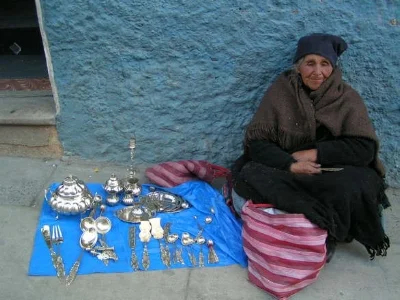
Like many Andean countries in South America, artisanal goods of fluffy llama wool jumpers and delicate jewelry are hawked by locals on their stalls in every city and travelers are always keen to get a good bargain. But unlike parts of Asia and India where haggling hard is par for the course, in most of South America and particularly Bolivia, it’s not always the case.

Yes, you should expect prices to be higher for you; unfortunately, as a foreigner you will be charged an inflated rate. Negotiating a small reduction is sometimes possible, but most of the time, you shouldn’t try and push for prices that are vastly lower. 

Shop around a bit and get a feel for what things cost, but follow your conscience with what you spend. Saving a few dollars on a jumper probably means very little to you in the long run, but in a country where 45% of people live in poverty and earn less than $2 a day, avoiding haggling sellers into the ground is the responsible thing to do. 

3. Get off-the-beaten track

Most travelers in Bolivia stick to the main gringo triangle: La Paz, Sucre and Uyuni. And while these are certainly highlights of the country, other places also need the investment that tourism brings. 

Towns such as Rurrenabaque, the best place in the country to access the Amazon Jungle, really need the support of responsible tourists. Once receiving lots of Israeli visitors (because of an Israeli who got lost in the jungle here a few decades ago and wrote a book about his experiences), numbers have dwindled since the Bolivian government decided to support Palestine and introduced a fee for Israelis entering the country. 

Tourism is currently at a record low in the region and desperately needs travelers who are keen to visit. Check out sustainable operators, such as Mashaquipe Eco Tours, who charge fair prices and work responsibly to protect the jungle.  

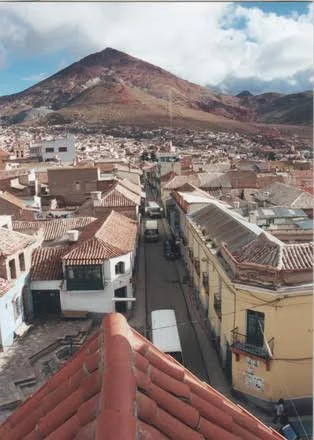
Another under visited location is Potosi. Here you can actually visit Cerro Rico (Rich Mountain), the famed mountain of silver that was plundered by the Spanish conquistadores. 

Potosi is now the poorest city in the country and while many local people still attempt to make a living mining the last remaining minerals in the mountain, tours with ex-miners such as with Potochji tours, located in Calle Lanza, provide another option. Visitors can enter the mountain to see the terrifying conditions and ensure that their money supports ex-miners and the mining unions that now operate there. 

4. Stay and volunteer

One of the most profound ways that you can help to support social development in Bolivia is by staying for a period of time to volunteer with grassroots projects. I’m always hesitant to volunteer for less than at least three months; I know that it takes time to learn about the organization and how best you can support its work. 

In Bolivia, where few people speak English and where the culture is far more reserved than in a lot of other Latin American countries, it can definitely take time to start feeling like you’re making an impact. 

Unfortunately, 90-day visas are the norm for most travelers arriving into the country, which can put a time limit on your volunteering. However, a visa of up to a year is not impossible to come by, but does require you to put a lot of effort into acquiring the necessary papers. 

There are plenty of organizations that need your help, including Up Close Bolivia and Prosthetics for Bolivia in La Paz, Sustainable Bolivia in Cochabamba, Communidad Inti Wara Yassi in the Bolivian Amazon and Biblioworks and Inti Magazine in Sucre. 

5. Or become an ambassador

But if you can’t commit to volunteering, how about becoming an ambassador or fundraiser for a charity based in Bolivia? While travelling in the country, take the opportunity to visit some of the many volunteering organizations to get an idea of what they do. When you’re back home, it’s easy to find a way to support their work. 

You can become an ambassador who promotes the charity to their friends and social media followers, as well as signing up to make a regular donation. You could also volunteer long-distance by supporting fundraising efforts or helping with their social media accounts. Most importantly, you can spread the word about what they’re helping to achieve and find other volunteers or sponsors who can support their efforts. 

Ultimately, Bolivia is a fascinating country to visit and so by traveling responsibly and considering how you can make a positive impact as a foreign tourist will support social development projects in increasing the quality of life for the Bolivian people. 


STEPH DYSON
 

Steph is a literature graduate and former high school English teacher from the UK who left her classroom in July 2014 to become a full-time writer and volunteer. Passionate about education and how it can empower young people, she’s worked with various education NGOs and charities in South America. 


ETHIOPIA: Suspended in Time

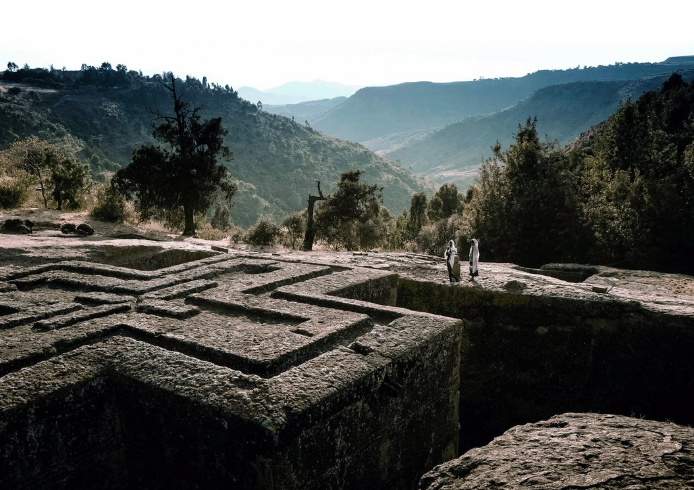
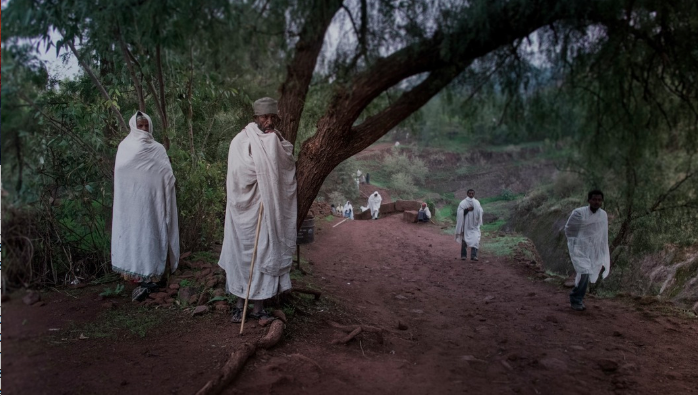
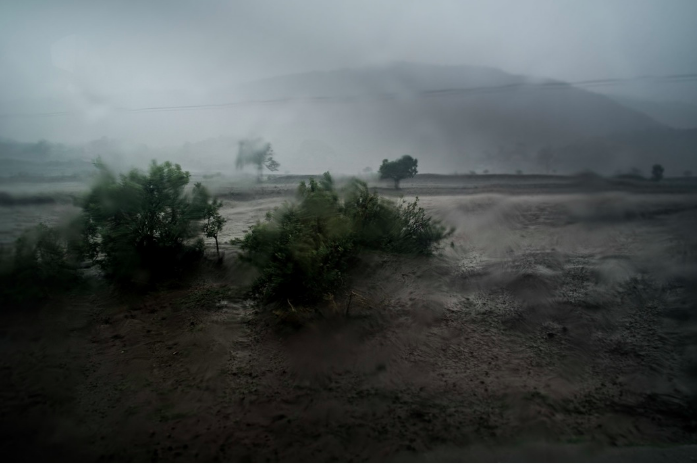
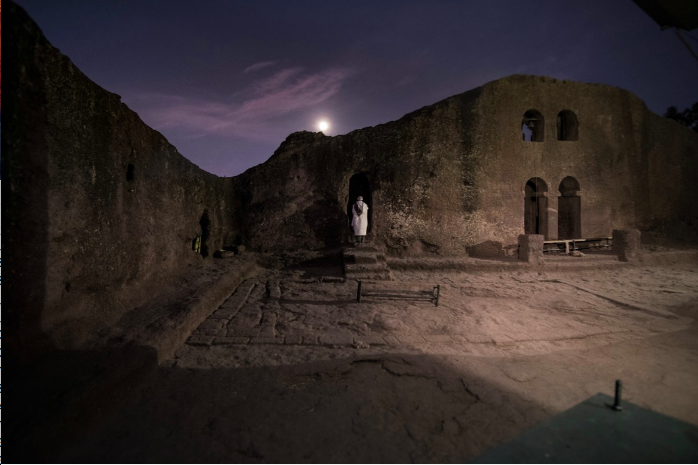
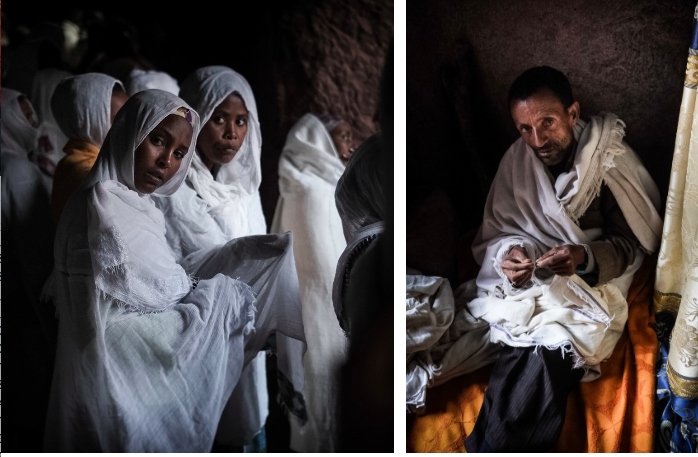
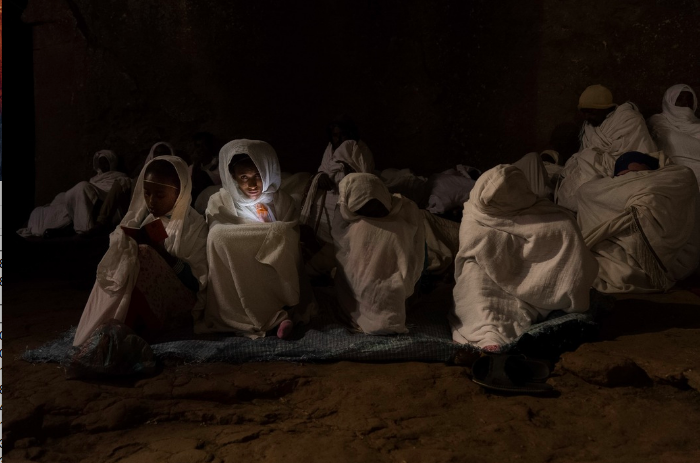
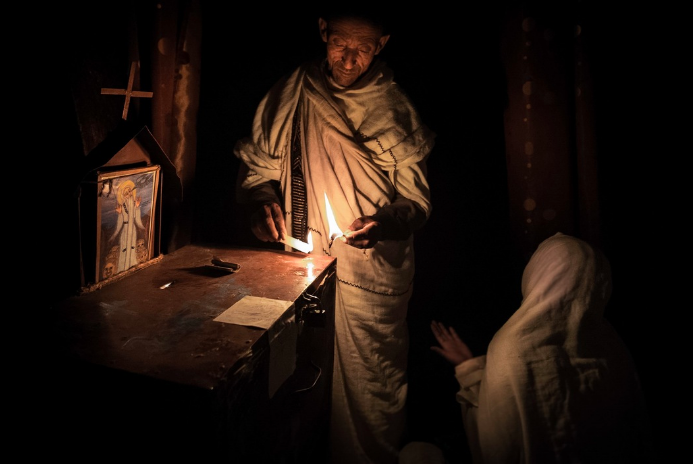
The moon shines brightly, as white robe and candle mark the lines of pilgrims winding their way up the hillside, to reach the ancient rock-hewn churches of Lalibela — a sacred place for those of the Christian faith since the 12th century.

According to the legends, men and angels worked together to construct the remarkable rock-hewn churches of Lalibela — the men working through the day and the angels taking over during the night.

Many historians believe that these great monolithic churches were commissioned during the reign of Saint Gebre Mesqel Lalibela, who ruled Ethiopia in the late 12th century and early 13th century, when the town was known as Roha. When Lalibela, whose name means “the bees recognise his sovereignty” in Old Agaw, was born, it is said that a swarm of bees surrounded him, which his mother took as a sign of his future reign as Emperor of Ethiopia. So the mythos tells us, Lalibela later visited Jerusalem, and after its capture by the Muslim caliphate in 1187 he swore to build another such sacred place of pilgrimage in his own country.

Each of Lalibela’s eleven churches was carved from a single piece of solid rock to symbolize spirituality and humility. The churches seem timeless, painstakingly excavated from the ground itself. It is believed that they were constructed first by digging out a kind of moat and were then hewn from the square rock that remained. The degree of craftsmanship and countless hours of heavy manual labour that it must have taken to carve out these wonders with hand tools alone is astounding. The churches are connected through a labyrinth of tunnels and sit beside a small river, called Jordan, and many other features also have Biblical names.

Just as astounding as the architecture, is that the churches have been in continuous use throughout the centuries since they were built.

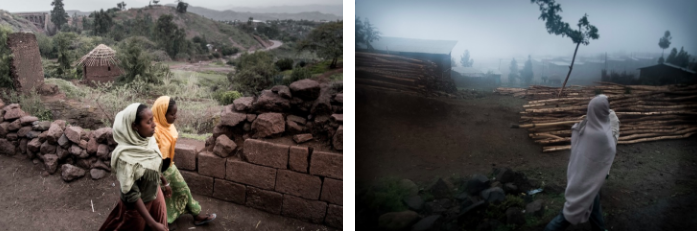
Today, Lalibela is a town of no more than ten thousand people, but over a tenth of those are priests. Ritual and religion are the twin fulcrums upon which life in this place spins. Many times a year, there are processions, fasting, dancing, and the sound of many voices lifted up in song.

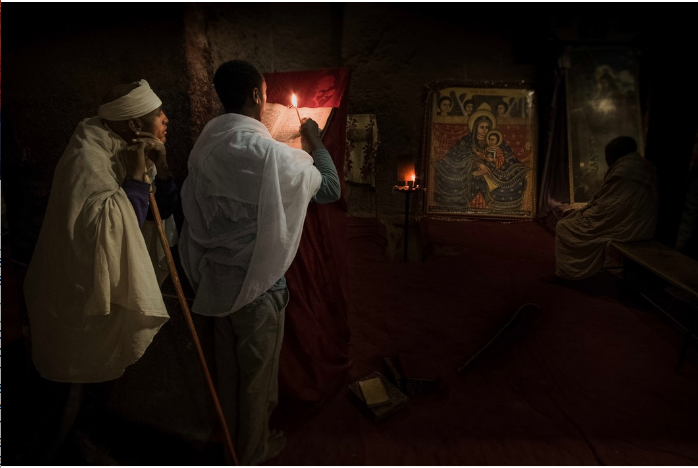
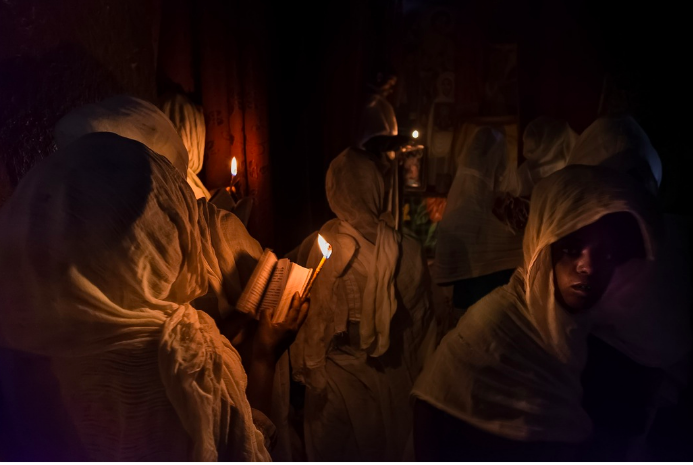
I feel privileged to have been in the holy city of Lalibela on many occasions and it continues to be one of the most fascinating photography trips I take anywhere in the world. It is a jump back in time, a photographic journey beyond compare. With the churches dimly lit by flickering candles, surrounded by faith and roughhewn rock — it is an entire world suspended in the 12th century.

Easter week in Lalibela is the most extraordinary in the year, when many thousands of devotees dressed in white will gather from all over the country, and father afield, to profess their love and Christian faith.

We land, and I arrive at the tiny, ancient airport terminal. To the left is an unmoving, rusted out conveyor belt with no hope of resurrection. Dragging my bags along behind me I reach the famous ‘Shuttle’. We are told to put the bags around back in the trunk. It is jammed, of course.

A few people toss their bags on the roof and the rest keep them on their laps once seated. I find a seat wedged between my bags and the stairwell, ending up intimately, uncomfortably close to my seat-mate. After a flat and long slow climb we reach the town on three and a half wheels.

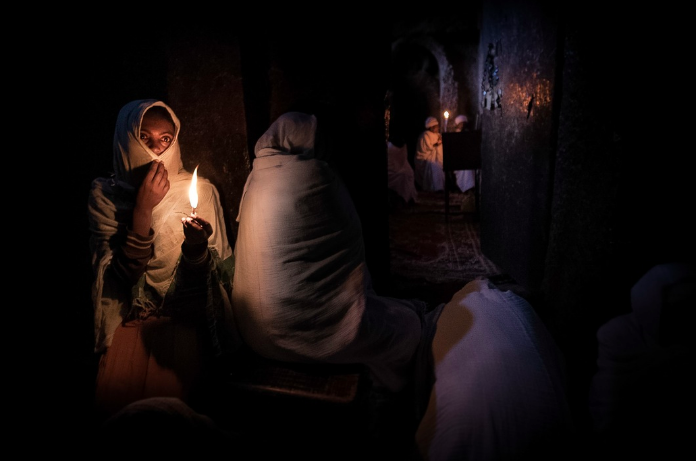
“Ferengui... Ferengui...” (Foreigner... Foreigner...), I hear them murmuring amongst themselves. The time is 5:30 in the morning, and it is still dark. The inside of the church is small, austere, and it is difficult to move around discreetly by oneself let alone with a camera, and no cloak to help me meld with the darkness so thick that the eyes can hardly adjust. There is a candle here and there, occasional light through a tiny upper window, and the sudden glare of an opening door. Precious little else to see by.

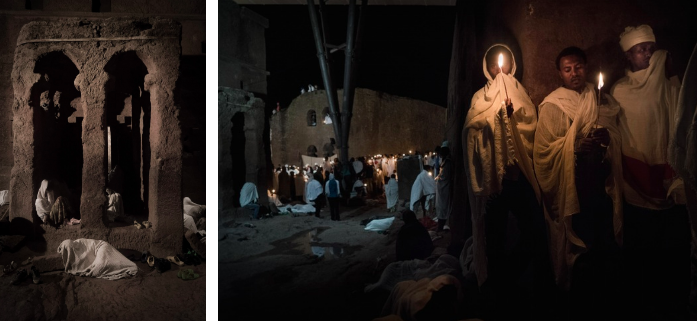
The moon shines brightly over the hillsides and the lines of ascending faithful are seen thanks to the candles they carry up towards the church. In the morning half-light, the first chants begin. Voices lift.

Suspended in a parenthesis of time, I am witness to the rising dawn over the year 1100, as the first light breaks free of the horizon.

Swathed in long white robes, men and women come up the hill in silence. The lines of the path are drawn in the darkness by cloth and candle.

I have found a spot to wait in, where the faithful will have to pass by me. The more timid among them hid their faces in their cloaks, but the less so look at me squarely in the eyes. No aggression. Simply curious, trying to discern what on earth I am doing up here before dawn, if I am not here to pray, and what I am so patiently photographing.

The hours seem like moments, and I am alone, though among many. The fervor of the devotees as I move through the shadowed churches touches me deeply. These scenes, even for a skeptic who tries to stay propped behind his camera and maintaining distance, are magical. Moving.


HARRY FISCH

@NomadXpedition 

Harry Fisch is a travel photographer and leader of photo tours to exotic destinations with my company Nomad Photo Expeditions. He is also a winner and loser of the 2012 World National Geographic Photo Contest.

ORIGINALLY PUBLISHED ON MAPTIA