Canadian Inquiry Comes to a Close, Revealing Systematic Mistreatment of Indigenous Women

Three years in the making, the final report calls on authorities to institute a paradigm shift in policing practices.
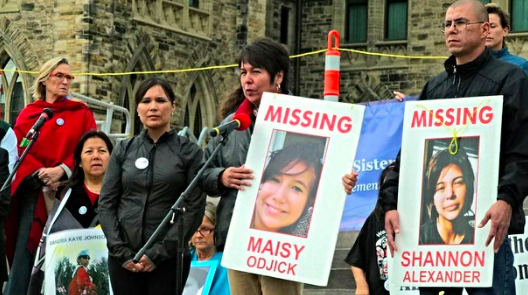
Ottawa vigil for missing and murdered aboriginal women in 2014. Obert Madondo. CC BY-NC-SA 2.0

Over the past three years, Canada has held 24 hearings and events, engaged with more than 2,380 citizens, and spent $92 million on a massive national inquiry into the murders and disappearances of Indigenous women and girls—who make up less than 4 percent of Canada’s female population but a whopping 16 percent of females killed in the country annually. On June 3, the harrowing process came to a close, culminating in a conclusion as decisive as it is unsettling: The Canadian government and civil society is complicit in perpetrating what amounts to genocide.
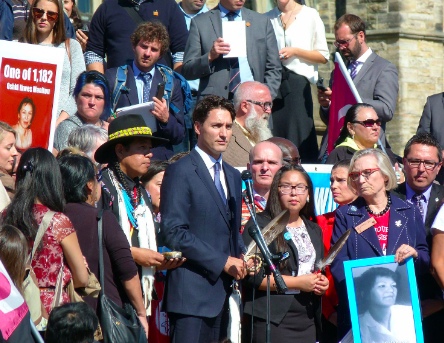
Justin Trudeau giving a speech on missing and murdered Indigenous women in 2016. Delusion23 via Wikimedia Commons. CC BY-SA 4.0

At the closing ceremony in Gatineau, Quebec, Indigenous youth presented the final report, wrapped in a traditional cloth, to Prime Minister Justin Trudeau. All told, the report is over 1,200 pages long and includes 230 recommendations. It describes a historical failure on the part of the police and the criminal justice system, systems that have ignored the concerns of Indigenous women and viewed them “through a lens of pervasive racist and sexist stereotypes”—behavior that has in turn fostered mistrust of the authorities among the Indigenous population. In beginning to mitigate these chronic injustices, the report suggests, authorities should expand Indigenous women’s shelters and improve policing in Indigenous communities; increase the number of Indigenous people on police forces; and empower more Indigenous women to serve on civilian boards that oversee the police.

In addition, it calls for a shift in the criminal code to classify some killings of Indigenous women by spouses with a history of violent abuse as first-degree murder, regardless of premeditation. Addressing the less tangible issue of cultural discrimination, the report also requested that the federal and provincial governments afford Indigenous languages the same status as Canada’s official tongues of English and French.

Regardless of future success in creating a safer and more equitable situation for Indigenous women, helping Canadians understand the historical narrative of violence will remain crucial. As such, the report addresses teachers and post-secondary institutions, asking them to educate the public about missing and murdered Indigenous women and the root causes of their plight, and to bring attention to the state laws, policies, and colonial practices that catalyzed the genocidal conditions. In an interview for Quartz, Carol Couchie, co-chair of the National Aboriginal Council of Midwives, spoke to the lasting effects of structural discrimination: “Family structure has broken up, tribal structure has broken up, leadership has been weakened, the self-esteem has been reduced to on the ground, and these things have all affected our ability to care for young people, to care for women.” Marion Buller, chief commissioner of the inquiry and a retired Indigenous judge, expressed a similar sentiment in her succinct statement to the New York Times: “An absolute paradigm shift is required to dismantle colonialism in Canadian society.”
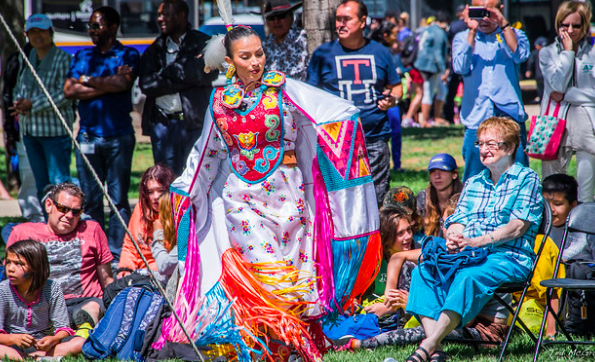
Woman performing at 2017 National Aboriginal Day in Regina. Ted McGrath. CC BY-NC-SA 2.0

Trudeau, for his part, guaranteed a thorough review of the report, and committed to creating a National Action Plan “with Indigenous partners to determine next steps.” Yet even with promises of legislative change, some Indigenous Canadians point to harmful attitudes that may undermine the reality of reform on the ground. For instance, according to the Royal Canadian Mounted Police, most of the violent crimes against Indigenous women are perpetrated by people within their own communities—a statistic that, according to Indigenous author Niigaan Sinclair, “has become the linchpin for arguments that murdered and missing Indigenous women and girls are not a Canadian problem, but an Indigenous one.” In a piece for the Winnipeg Free Press, Sinclair notes that former minister of Aboriginal affairs Bernard Valcourt used this argument to refute the prospect of the inquiry in the first place, and addresses the systemic factors that invalidate Valcourt’s position: “Indigenous women and girls do not join the ranks of the murdered and missing because of Indigenous men, but because of the contexts they are in. Most of these are dangerous situations imposed from circumstances brought on by poverty, abusive cycles and systems, and oppression.”
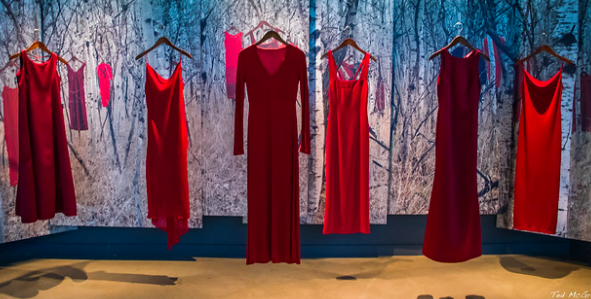
The REDress Project, on display in Winnipeg, serves as a reminder of missing and murdered Indigenous women. Ted McGrath. CC BY-NC-SA 2.0

Still, the very existence of the report and the promises of action it has engendered are cause for optimism, however cautious it might be. In a piece for The Conversation, Margaret Moss describes her disappointment as an American Indian woman who recently moved to Canada and has observed the same racism in the United States’ northern neighbor as she did back home. Yet her viewpoint as an American also lends her perspective and a sense of hope. “[C]ompared to the lack of moral outrage in the U.S. on this issue, I am [made] hopeful by the very fact that in Canada, after much activism, such a committee was formed and a report of the findings were released with a bold statement,” Moss writes. “Maybe this will shake people out of complacency.”


TALYA PHELPS hails from the wilds of upstate New York, but dreams of exploring the globe. As former editor-in-chief at the student newspaper of her alma mater, Vassar College, and the daughter of a journalist, she hopes to follow her passion for writing and editing for many years to come. Contact her if you're looking for a spirited debate on the merits of the em dash vs. the hyphen.




Blue Out on Insta

Blue Out on Instagram: Support for Sudan through Social Media Awareness

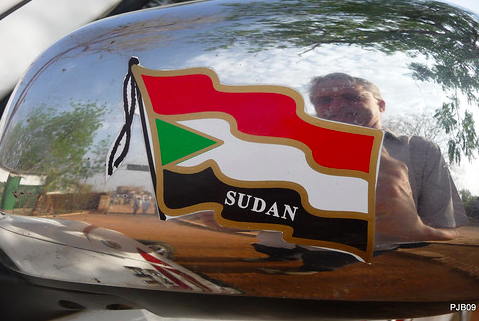
Sudan Flag Sticker on a Car. pjbury. CC BY-NC-ND 2.0

Recently, a specific shade of blue has been popping up around Instagram in the form of profile pictures. This Blue Out was started by Instagram influencer Shahd (@hadyouatsalaam). She is a Sudanese-born, New York City-based activist—or how she likes to identify herself, “a political scientist by degree and a social media influencer by interest”, according to her recent Insta post, introducing herself to her new followers. 

Shahd created this movement for the sole purpose of raising awareness to what is currently going on in Sudan. Protests in Sudan began in December of last year, when there was a price-spike in basic commodities (i.e. bread). It was not until April 11th, after a mass, multi-day sit-in, that the Sudanese people did see the change they wished for. The current President, a man named Omar al-Bashir, and his party were being jailed or put on house arrest. The protestors believed this to be a victory. They were wrong. General Awad Ibn Auf, the Vice President, soon gave a televised statement explaining the new governmental system that was going to be put in place—one run by three separate military factions called the Transitional Military Council (TMC). He stated that they intended to remain in power for two years until the country could elect a new President, also claiming a three-month state of emergency and curfew. The people did not accept these conditions and in under 24 hours, Ibn Auf resigned and General Abdelfattah al-Burhaan become the new chairman.

Since General Abdelfattah al-Burhaan’s new appointment, negotiations between the people and the TMC have been chaotic. Once again being fed up, the Sudaneese people, with the people of the Sudanese Professionals Association (SPA), organized a mass strike from the 28th of May to the 29th. These strikes immediately became violent and the TMC used these mass demonstrations to portray the SPA in a vicious light. On June 3rd, government forces began shooting at the protestors which, reportedly, left 118 dead and many more injured. Since then, an Internet black out has been in place and thus sparked social media outcry.

But why should this matter to us? The answer is simple: because we have the power and the privilege of accessing the Internet with the capable means of shouting loud enough that somebody will listen. Over the past two weeks, because of the uproar on social media, there have been an influx of articles written about what is going on, how long it has been going on, what is the important information that we need to know about the revolution in Sudan. One Instagram user, Rachek Cargle (@rachel,cargle), with the help of “an incredible group of activists” has even composed a masterlist of articles ranging from immediate updates to fundraising efforts, according to her post that calls for any more information to add. 

Unfortunately, with the uproar, there have also been people who cruelly want to capitalize on the movement for clout reasons. Just last week, a post went viral that claimed for every re-post to a page or story, the originators of the account would donate meals to the Sudanese people. Very soon, the page was labeled as a hoax given curious peoples’ inquiries into how they would provide the food, where is the funding coming from, and other questions which the page either did not answer or gave vague responses to. From these instances, it is important to remember that when trying to get information out, there needs to be a more thorough and conscious effort on the part of other social media users to not just mindlessly click-and-post, but rather, do a quick search about what the post is, and then determine whether or not it is legitimate. 

Using the privilege we have—whether it be from simply having the means to repost an article or getting in contact with local government officials so they can talk about what is going on—is a butterfly-effect that will change how the Sudanese revolution will go. Being complacent or a bystander is just as harmful as supporting the violence because inaction is not action, inaction does not bring about change but lets things remain as they are, because they are not directly affecting us. I encourage those of you reading this article to look at the Instagram influencers I have mentioned as well as the hashtag #Iamsudanrevolution. There you will find countless posts, articles, links, and organizations that can inform you, help you, and guide you on how you can help. For immediate action, check out Cargle’s post which is a picture of protestors with SUDAN in bold, blue letters and the subtitle of Information & Support Round Up. There you will find the link to the master document which will provide the beginning of any information you want to know. 

I must repeat—acting as a bystander perpetuates the actions that are harming individuals because it is neglecting them the action they need. Use your privilege for something productive. 


OLIVIA HAMMOND is an undergraduate at Emerson College in Boston, Massachusetts. She studies Creative Writing, with minors in Sociology/Anthropology and Marketing. She has travelled to seven different countries, most recently studying abroad this past summer in the Netherlands. She has a passion for words, traveling, and learning in any form. 


The LGBTQ Migrant Caravan that Sought Asylum in the US

LGBTQ migrants from Central America seeking asylum in the US faced hardship and discrimination not only from gangs that prey on migrants as they travel, but also from their fellow travelers. They were a part of a “caravan” of 3,600 asylum seekers that started to journey from San Pedro Sula, Honduras, in October 2018, traveled through Mexico, and reached the Northern Mexican city of Tijuana, bordering the US, in November 2018. The members of the caravan were escaping all kinds of violence in their home countries of Honduras, Guatemala, and El Salvador.

Read More

5 Social Action Songs about the Most Pressing Issues of 2019

Musicians Use Their Lyrics as Calls to Action

John Legend, singer of “Preach.” Lauren Monaco. CC 2.0.

Throughout the ages, some musicians have used their song lyrics as a tool to impart their political, social, and spiritual beliefs. Musicians have a unique opportunity to reach audiences with their words because unlike politicians and speechmakers or television, radio, or published personalities, musicians have their words sung over and over again by their audience. Their words—and subsequently, their ideas—are repeated with a catchy tune, until they are ingrained in the memories of their listeners.

Think about how John Lennon’s 1971 piece, “Imagine”, or Bob Marley’s 1973 hit “Get Up, Stand Up,” are still being played on the radio, and on playlists, for over 40 years. Their messages live on, even after they have both passed away.

In 2019, there is still much to protest and sing about. Musicians are still taking advantage of their platform to write and produce songs with a mission, or a call to action. Here are some powerful songs written in 2019 by famous musicians:

Madonna, “I Rise”

Madonna makes a statement about protest and gun control in her new single, “I Rise.” The song opens with a clip from a speech that Emma Gonzalez delivered to a gun control rally in Fort Lauderdale, Florida in 2018. Gonzalez became an advocate for gun control after surviving the Marjory Stoneman Douglas High School shooting in 2018.

In her song, Madonna encourages her audience to act like Gonzalez, and “Rise,” in the face of adversity. She sings, “There's nothing you can do to me that hasn't been done

Not bulletproof, shouldn't have to run from a gun.” She recognizes as humans, we are vulnerable, but we also have the power to take action as a group. This is demonstrated by her switch from “I Rise,” to “We Rise,” at the end of her song.

The Killers, “Land of the Free”

In “Land of the Free” The Killers make a scathing critique of American society. Their music video contains clips of migrants trying to cross the border from Mexico to the United States. The video does not omit the barbed wire, security guards, and fences that will greet them. The Killers sing, “Down at the border, they're gonna put up a wall, Concrete and Rebar Steel beams (I'm standing crying), High enough to keep all those filthy hands off, Of our hopes and our dreams (I'm standing crying),People who just want the same things we do, In the land of the free.”

Like Madonna, The Killers also mention gun control. “So how many daughters, tell me, how many sons, Do we have to have to put in the ground, Before we just break down and face it

We got a problem with guns? (Oh oh oh oh), In the land of the free.” They also bring up race and privilege, “ When I go out in my car, I don't think twice, But if you're the wrong color skin (I'm standing, crying), You grow up looking over both your shoulders.”

The Killers are holding up a mirror to their audience and asking them: Is America really the land of the free and home of the brave? How can we change?

John Legend, “Preach”

Ironically, in “Preach,” John Legend sings about how it’s not enough to simply write songs, speak out, or “preach” to an audience. It is more important to take action when things are wrong in society.

He sings, “Every day I wake and, Everything is broken, Turning off my phone just to get out of bed. Get home every evening, And history’s repeating, Turning off my phone cuz it’s hurting my chest.” His music video features clips of police brutality against African Americans, and violence at the border with Mexico, as issues that deeply hurt him.

Yet, Legend knows that action speaks louder than words. “I can’t just preach, baby, preach. And heaven knows I’m not helpless, What can I do? Can’t see the use in me crying

If I’m not even trying to make the change I wanna see.”

Fever 333, “One of Us”

In “One of Us,” rock band Fever 333’s rage is contagious. They are angry about the state of society today. They sing about the people in power, “They gotta isolate, they gotta segregate this. Just to keep us down, to keep us broken down.”

Instead of breaking down under oppression, Fever 333 sends the message that we are all united in taking responsibility for change. In their music video, the band marches on the street among protesters for many types of causes—from environmental, to social.

They scream at their listeners, as a wake up call, to “Stand up or die on your knees.” If we don’t stand up for ourselves, nobody else will.

Yungblud, “Parents”

The desperation and pessimism at an out-of-touch leadership is palpable in Yungblud’s “Parents.” He writes about he, and people in the LGBTQ communtiy suffer at the hands of intolerant and closed-minded people.  He sings, “My daddy put a gun to my head

Said if you kiss a boy, I'm gonna shoot you dead. “

Even though Yungblud’s “high hopes are getting low,” he sings, “I'll never be alone

It's alright, we'll survive. 'Cause parents ain't always right.” Yungblud is hopeful in a new generation of ally leaders.


In 2019, just as in the past, artists continue to try and inspire change, action, and introspection through their words. Who knows which activists and movements they will inspire?


ELIANA DOFT loves to write, travel, and volunteer. She is especially excited by opportunities to combine these three passions through writing about social action travel experiences. She is an avid reader, a licensed scuba diver, and a self-proclaimed cold brew connoisseur. 

The Earth Group Aims to Change the World Through Education and Nourishment

Newly Certified B Corp Collaborates with UN World Food Programme to Help Children Around the Globe.

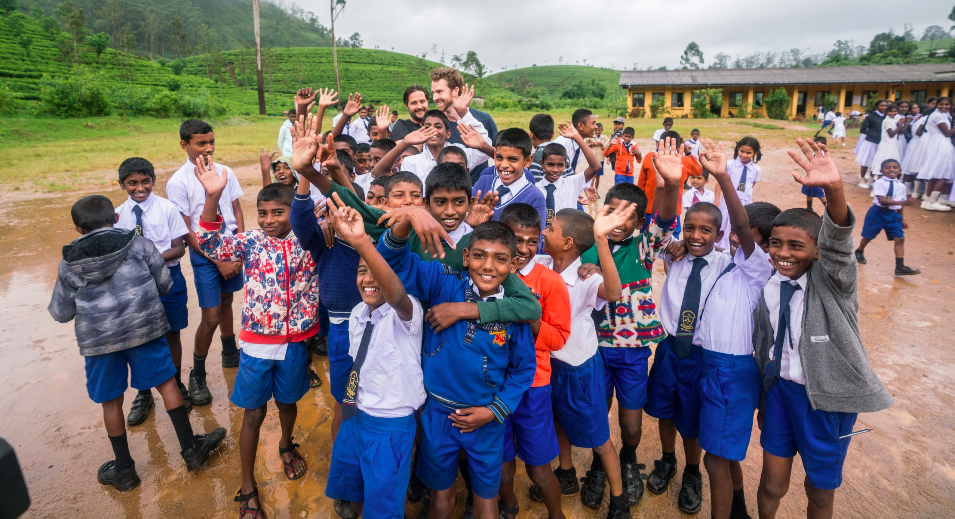
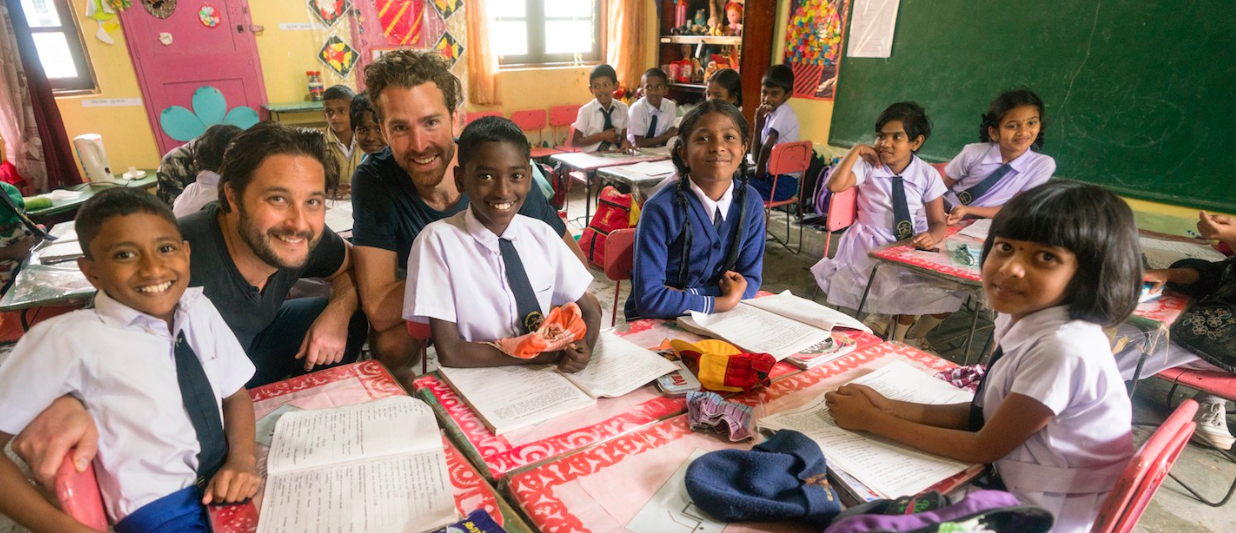
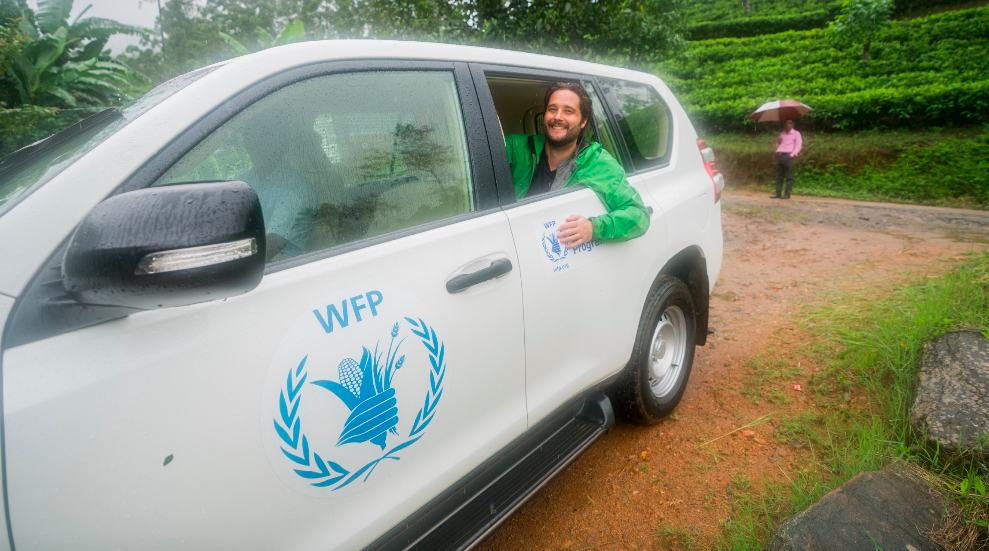
Kori Chilibeck and Matt Moreau at work for The Earth Group and World Food Programme in Sri Lanka. “Becoming a B Corp is an affirmation of what we’ve worked to achieve for so many years.”

The Earth Group is a Certified B Corporation that supports the United Nations World Food Programme (WFP) through donations that provide school meals, drinking water and education to children in the most troubled areas of our world.

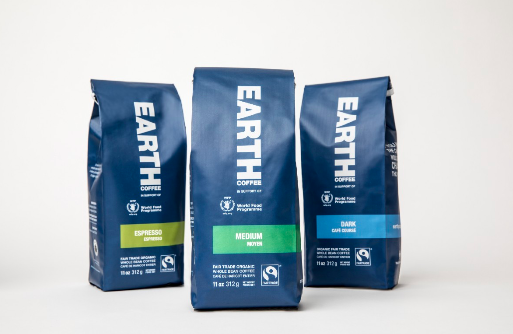
To date, The Earth Group has helped fund more than 3.6 million meals to young school kids while helping them get an education in places like Tajikistan, Madagascar, Sri Lanka, Kenya, Bolivia and the Philippines. The B Corp is dedicated to informing consumers everywhere about the power of their everyday marketplace choices. For example, the simple purchase of a bag of Earth Coffee, one of three consumer products sold by the company, provides a schoolchild with meals for an entire week.

Purchase one bag of Earth Coffee online or in-store to feed one child for one entire week.

When Earth Group founders Matt Moreau and Kori Chilibeck met as fellow employees of a ski shop near the Rocky Mountains 14 years ago, they likely never imagined what lay ahead for them as individuals, new business owners or as proud supporters of the WFP.

Just forging this critical relationship with the WFP seemed daunting enough, but the maze-like process took far longer to realize than anyone could imagine. Eventually, they launched their social enterprise onto the large and complex world stage of fighting hunger, providing clean drinking water and building schools for children where none existed before.

It was at this point that Moreau and Chilibeck realized the real work had begun in earnest for their Canadian B Corp based in Edmonton, Alberta. Seeking to confirm that the aid they worked so diligently to fund would actually make the journey to the end-users, they traveled to Sri Lanka, Bolivia, Tajikistan and the Philippines to see for themselves.

As the photos and videos produced from these expeditions clearly testify, Moreau and Chilibeck landed in their natural element, surrounded by the children and co-workers they had been working so hard to support since creating The Earth Group. The expressions on the faces of not only the children and teachers but of Moreau and Chilibeck and the WFP country managers tell a tale of unselfish dedication.

Kori Chilibeck in Sri Lanka hosted by the UN World Food Programme.

Seeing the Progress

The Earth Group maps its path to success through respect for the cultures they are trying to help. In many of these destinations, it is still frowned upon for female children to attend school. By respecting that posture yet also using the intellectual tools at hand, the company funds projects that often furnish female students with an extra helping of food to take home if they attend school, thereby allowing them to obtain an education, the family to benefit from the food, and the attitudes about females attending school to soften.

Schoolyard antics in Sri Lanka with Matt Moreau and Kori Chilibeck of The Earth Group.

The exhilaration of such remote expeditions reached its peak when the duo traveled to the Philippines, arriving in a volatile region where insurgents had blasted grenades and explosives just the day before. Their in-country WFP handlers changed safety tactics at once, and what was scheduled to be a multi-day trip ended up being a shortened-but-packed day of visiting the children in their classes, touring the school facilities, meeting the support staff and then continuing safely out of this troubled zone.

Back home in Edmonton, Moreau and Chilibeck rolled up their sleeves and focused on making their simple products-with-impact list: Fair Trade coffee from Eastern Africa, Indonesia, Central and South America; glacier-sourced drinking water from Whistler, British Columbia, and Rocky Mountain House, Alberta; and organic Alberta-grown teas, available in as many outlets as possible across Canada and around the world. Their online sales are activewith their triple bottom line—people, planet, profit—always remains in focus.

The Earth Group obtains its drinking water from Canadian glacier spring sources near the communities of Rocky Mountain House and Whistler, and their low-weight recyclable plastic bottles are landfill biodegradable. The Earth Group is also partnered with and supports Plastic Bank efforts to reduce ocean plastic.

Paying their dues during long negotiations with large corporations, Moreau and Chilibeck have now succeeded in signing major chain stores in Canada such as IKEA, Safeway, Sobeys, Whole Foods, Save On Foods, IGA and Metro. They also launched their product line in Japan, another major feat for any business run by two people, one employee and a group of dedicated volunteers.

Chilibeck is just back from the unrivaled adventure of presenting The Earth Group products in Japan to the largest food and beverage show in Asia called FOODEX. A receptive audience was excited to hear Earth Water is already available in their marketplace, with more Earth Group products sure to follow.

Path to Success

During certification in 2018 as a B Corporation, B Lab’s independent Standards Advisory Council confirmed The Earth Group’s three essentials: 1) social and environmental performance, 2) transparency and 3) accountability.

“B Corps values are synonymous with ours and embedded in our culture, so working toward the certification was both a pleasure and a reminder of being mindful of the numerous ways in which our work affects people and planet.”

And so it goes for these two young Canadian entrepreneurs and their “overnight success,” which has only taken them 14 years of collaboration, dedication, no-pay and near bankruptcy to arrive at a point where they can now see the results of their work. Having the blessings of understanding spouses has made it all possible, plus a bit of luck at critical moments.

Business gurus will tell start-up entrepreneurs timing is everything, and while this adage does have merit, the hard work and determination to succeed cannot be underestimated.

When Moreau and Chilibeck hatched their road map to success in a ski shop near the Rocky Mountains 14 years ago to create The Earth Group, at the same time Ben Cohen and Mal Warwick’s book Values-Driven Business: How to Change the World, Make Money, and Have Fun was synthesizing best practices and socially responsible business goals and laying the foundation for what would become the first B Impact Assessment, a process still used to certify B Corps.

B the Change gathers and shares the voices from within the movement of people using business as a force for good and the community of Certified B Corporations. The opinions expressed do not necessarily reflect those of the nonprofit B Lab.


GREGORY B. GALLAGHER is a Writer, Filmmaker, Musician and Producer.

THIS ARTICLE WAS ORIGINALLY PUBLISHED ON MEDIUM

Indigenous Communities in Brazil Protest Encroachment on Land Rights

The annual Free Land protest takes on a new sense of urgency under Bolsonaro’s far-right government.

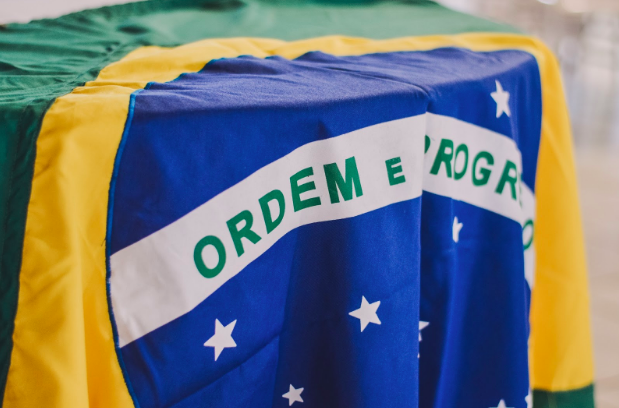
Photo of the Brazilian flag by by Rafaela Biazi on Unsplash.

Last week, more than 4,000 indigenous people from over 300 tribes across Brazil gathered in Brasilia to set up camp in front of government buildings for three days of cultural celebrations and protest.

While the Free Land protest is an annual event, it has taken on a new significance this year under president Jair Bolsonaro and his far-right government’s encroachment on the rights of native people and their territories. Al Jazeera writes that according to The Articulation of the Indigenous People of Brazil (APIB), the central organizer of the gathering, this year the event occurs in a "very grave context".

Recently, Bolsonaro promised to stop the development of new indigenous reserves, and to revoke the protected status of established land reserves. Bolsonaro has even gone so far as to publicly question the need for indigenous reserves at all.

The Guardian writes that among the new far-right government’s projects is a movement to enable commercial farming and mining on indigenous reserves. One of the reserves targeted is the Yanomami territory, Brazil’s largest reserve which already experiences threats from illegal gold miners.

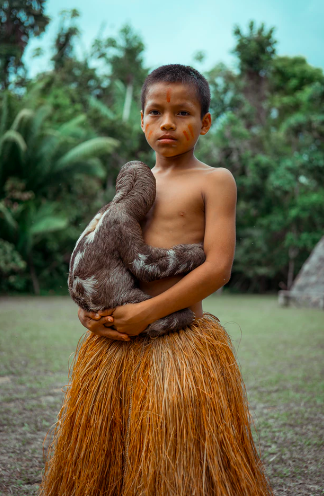
“We are defenders of the land, we are defenders of the Amazon, of the forest,” Alessandra Munduruku, one of the representatives of the Munduruku tribe told the Guardian. “The white man is [...] finishing off our planet and we want to defend it.”

Instead of directly handling the demarcation of Brazil’s indigenous reserves, the government has given the project to the agriculture ministry, a branch controlled by the farming lobby, a powerful organization which has been known to oppose indigenous land rights (Guardian). Joenia Wapichana, the first indigenous congresswoman in Brazil, told Al Jazeera that during her time in office she had become aware of just how deeply the government was to indigenous rights. “The government is completely anti-indigenous,” she said, “[Jair Bolsonaro] is only open to those who defend mining and land grabbing, which is his intention.”

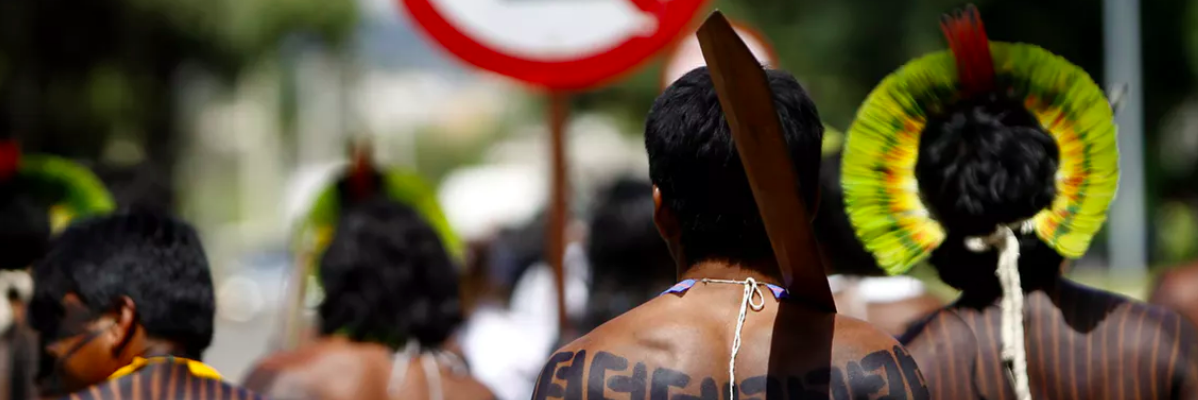
After days of encampment outside government buildings, indigenous groups began their annual march last friday. Protestors wore body paint and feathered headdresses, while beating beating drums and holding bows and arrows (Reuters).

The Guardian writes that last week Bolsonaro’s justice minister Sérgio Moro, requested the presence of Brazil’s national guard at the event, foreshadowing possible clashes with protestors. While Moro said that the guard would be working to “secure the public order and the safety of people and patrimony,” the guard said in a statement to Al Jazeera that it would use force “if necessary” to protect the “safety of the patrimony of the Union and its servers.”

In response to growing concern, the APIB released a statement saying that “our camp has been happening peacefully for the past 15 years to give visibility to our daily struggles. [...] We are not violent, violence is attacking our sacred right to free protesting with armed forces.”

In a statement to Reuters, David Karai Popygua, a native person from the state of Sao Paulo, summed up what is at stake for protestors. “Our families are in danger, our children are under threat, our people are being attacked,” he said. “In the name of what they call economic progress they want to kill our people.”


EMMA BRUCE is an undergraduate student studying English and marketing at Emerson College in Boston. While not writing she explores the nearest museums, reads poetry, and takes classes at her local dance studio. She is passionate about sustainable travel and can't wait to see where life will take her.


The Eerie History and Uncertain Future of Japan’s Rabbit Island

Ōkunoshima and its imperiled bunny population remind us that wildlife and tourism don’t always mix.

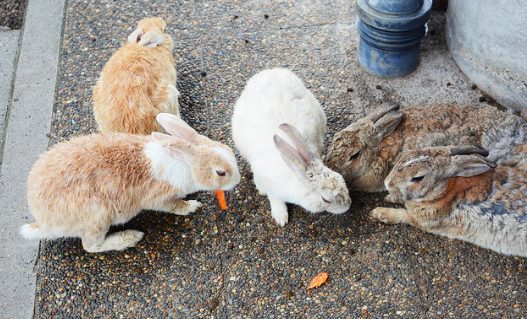
A cluster of bunnies on Rabbit Island. Cindy Pepper. CC BY-NC-ND 2.0

From its many “cat islands,” which boast more feline than human residents, to Jigokudani Monkey Park, where visitors can observe macaques bathing in the naturally occurring hot springs, Japan seems to overflow with fantastical wildlife enclaves. Perhaps the most adorable of all is Ōkunoshima, or “Rabbit Island”—but the cotton-tailed denizens for which this island is known belie its sinister past and ambiguous future.

While Ōkunoshima, located in the Hiroshima Prefecture, is a popular tourist destination for those looking to get their kawaii fix, it was once hidden from maps due to its clandestine status as a World War II military location. Production of chemical weapons in the island’s poison gas factory began in 1929, and apart from factory workers and army higher-ups, few citizens were aware of its existence.

Ōkunoshima was chosen for its location: discreet enough for goings-on there to remain under the radar, and far enough from densely populated cities like Tokyo to prevent mass casualties in case of an accident. The factory there eventually produced more than 6,000 tons of gas—primarily mustard gas and the irritant lewisite—before its closure at the end of the war. Chemicals wereould be shipped to Kitakyushu in the Fukuoka Prefecture to be weaponized, eventually resulting in more than 80,000 casualties (including and more than 6,000 deaths) among Chinese soldiers and civilians.

Despite the fact that Japan was a signatory to the 1929 Geneva Convention banning the use of chemical weapons, none of the country’s citizens were prosecuted for employing poison gas. After Japan’s defeat in the war, most of the Ōkunoshima factory was destroyed, but laboratory buildings, the shell of a power plant, an army barracks, and a few other edifices remain. In 1988, local governmental entities and citizens opened the Poison Gas Museum to pay tribute to this dark and little-known facet of Japanese history. Displays include the ineffective protective gear worn by workers at the factory, which left them vulnerable to exposure and subsequent illness, as well as equipment used to manufacture the gases.

So where did the bunnies enter the equation? We know that a colony of rabbits was brought to the factory during its operational years to test the effects of poisons, but beyond that, theories diverge. Some suggest that the original crop of rabbits was destroyed along with the factory, while others claim that workers set the bunnies free after the war. Another theory asserts that schoolchildren brought eight rabbits to the island in 1971, where they bred until they reached their current population of approximately 1,000.

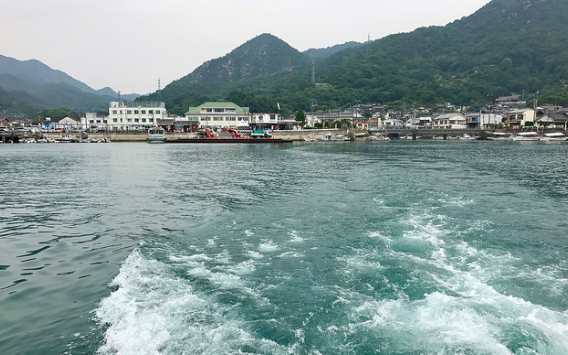
Tadanoumi Port viewed from the ferry to Ōkunoshima. Brian Shamblen. CC 2.0

Today, Ōkunoshima is easily accessible via a 15-minute ferry, and embodies peace, rest, and relaxation for tourists and locals alike. Visitors can easily explore it on foot (the island is less than 2.5 miles in circumference), collect souvenirs, dine, play tennis, swim in the ocean, and bathe in the hot spring—apart from communing with the wildlife, of course. Rabbit Island’s website describes it as a place to seek good fortune for your own family’s fertility, and advertises whipped ice cream and “original rabbit items” for sale, as well as octopus kelp rolls, a local delicacy known to pair well with sake.

Yet even the island’s thriving tourist industry and booming bunny population has a more sinister flip side. The wild rabbits depend on visitors for their food and water, but tourists often come bearing snacks that are harmful to the creatures’ delicate digestive systems—such as cabbage or vegetable peelings, which can cause fatal bloating. And while visitors are keen to share photos of their new fluffy friends online, social media has played a key role in destabilizing the rabbit population: Viral videos and articles have led to a vast influx of tourists in the past decade, and the resultant avalanche of snacks and treats has contributed to a breeding boom that the island’s ecosystem is unable to handle. These factors have combined to lower the bunnies’ life expectancy to only two years, compared to the three-to-five-year lifespan of the average wild rabbit.

The plight of the Ōkunoshima rabbits is just one example of the widespread harm social media has inflicted on wildlife populations across the globe: For instance, viral YouTube videos of slow lorises, wide-eyed nocturnal primates native to Southeast Asia, have led to people taking home lorises from the wild to keep as their own. Unfortunately, captivity is unhealthy for the animals, and they often end up relegated to props in tourist photos—or worse, sold into the illegal pet trade, and possibly slaughtered for use in cuisine or medicinals.

A curious bunny on Ōkunoshima seems to have mistaken the camera for a snack. Brian Shamblen. CC 2.0

Ultimately, bunny lovers need not be deterred from visiting Ōkunoshima, but following the rules is essential in order to treat the creatures kindly and foster their health and wellness. The Rabbit Island website lays out guidelines for responsible rabbit enthusiasts—including “refill water pans” and “check under your car,” as curious bunnies might hide underneath to escape the hot sun—and travelers can use their visit as an opportunity to educate friends and family about the unique perils posed to wildlife in the digital age. Approaching this mystical island mindfully is a small yet important step in helping the myriad diverse populations of the animal kingdom survive and thrive for many years to come.


TALYA PHELPS hails from the wilds of upstate New York, but dreams of exploring the globe. As former editor-in-chief at the student newspaper of her alma mater, Vassar College, and the daughter of a journalist, she hopes to follow her passion for writing and editing for many years to come. Contact her if you're looking for a spirited debate on the merits of the em dash vs. the hyphen.
Students Across Europe Protest in Hopes of a Greener Future

After years of political gridlock surrounding climate change legislation, students emerge as a force for change.

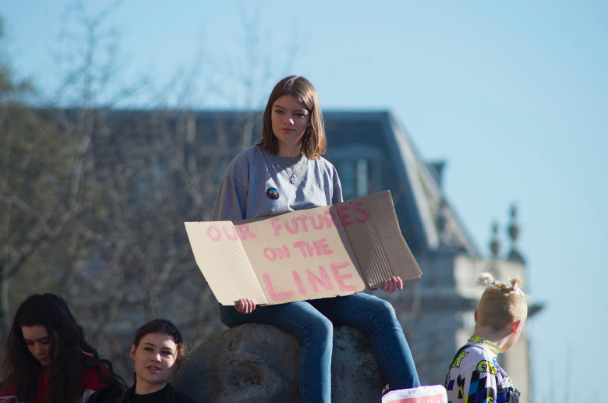
Photo of a student protester. By Josh Barwick on Unsplash.

Thousands of students across Europe left school on Friday, February 15 to protest the lack of action on climate issues in their countries. In what the New York Times called a “coordinated walk out for action on climate issues,” elementary, middle, high school, and undergraduate students came together to demand a greener future. In London, protestors held signs reading “The ocean is rising and so are we” and “Act now or swim later.”

The student-led movement for climate action that is currently taking Europe by storm began with 16-year-old Swedish activist Greta Thunberg. In September, Thunberg started skipping class to stage sit-ins at the Swedish parliament, demanding that her government seriously address climate change. Thunberg’s action inspired teens worldwide, some of whom created the global movement Youth Strike 4 Climate and began organizing protests and walkouts, using social media to coordinate efforts. According to the New York Times, demonstrations have been held in Belgium, Britain, France, Germany, Ireland, Sweden, and Switzerland, among others.

The New York Times writes that the new organization gained even more energy in October of 2018 when a report from the UN’s Intergovernmental Panel on Climate Change disclosed that the world has only twelve years to change its climate policy before the consequences of inaction such as food shortages, rising sea levels, floods and forest fires manifest themselves.

Thunberg remains a notable voice in the movement she inspired, and went on to speak at the global climate-change conference in Poland last December. “You say you love your children above all else — and yet you are stealing their future in front of their very eyes,” she told politicians at the conference. “Until you start focusing on what needs to be done rather than what is politically possible, there is no hope. We cannot solve a crisis without treating it as a crisis.”

In British schools, protesters received mixed reactions from teachers and staff. While some encouraged students, others threatened to punish them for skipping class. “My school was not supportive at the start. They said I would get detention for unauthorized absence,” Anna Taylor, the seventeen-year-old co-founder of the UK Student Climate Network told the New York Times.

Sixteen-year-old Bonnie Morely, who was attending the strike with friends from school, told the New York Times that a head teacher had taken down posters advertising the strike in her school’s common areas. “They’re treating us like we are doing something really wrong,” Morley said. “The future of our planet is looking really bleak, and all the politicians are asleep at the wheel. We have to wake them up, and I think thousands of kids on the streets will do just that.”

Like the teachers, European politicians displayed mixed reactions, with some supporting the students and others going so far as to suggest that the strikes were the product of a secret governmental organization.

According to the New York Times, a spokesperson for British Prime Minister Theresa May said that, “everybody wants young people to be engaged in the issues that affect them most so that we can build a brighter future for all of us. But it is important to emphasize that disruption increases teachers’ workloads and wastes lesson time that teachers have carefully prepared for.”

Thunberg tweeted in response: “British PM says that the children on school strike are ‘wasting lesson time.’ That may well be the case, but then again, political leaders have wasted 30 years of inaction. And that is slightly worse.”

“We don’t miss school because we’re lazy or because we don’t want to go to school,” Jakob Blasel, a high school student who assisted with the organization of an earlier protest in Berlin told the Washington Post. “We can’t go to school, because we have to strike. We have to deliver an uncomfortable message to our leaders that it can’t go on this way.”

Youth for climate is currently planning another round of protests and another global youth strike for March 15. The movement is growing and more students from nations across the world are expected to join.


Emma Bruce

Emma Bruce is an undergraduate student studying English and marketing at Emerson College in Boston. While not writing she explores the nearest museums, reads poetry, and takes classes at her local dance studio. She is passionate about sustainable travel and can't wait to see where life will take her. 

An Island Disappears off the Coast of Japan

It remained unnoticed until local fishermen investigated.

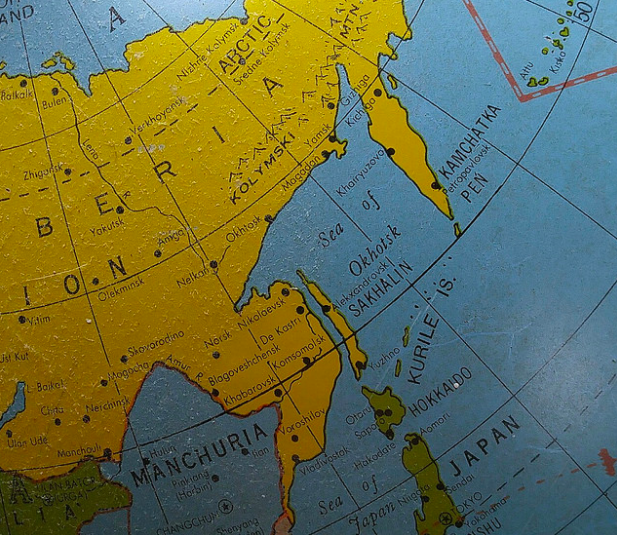
Vintage globe depicting the Sea of Okhotsk. Robin Ottawa. CC BY-SA 2.0

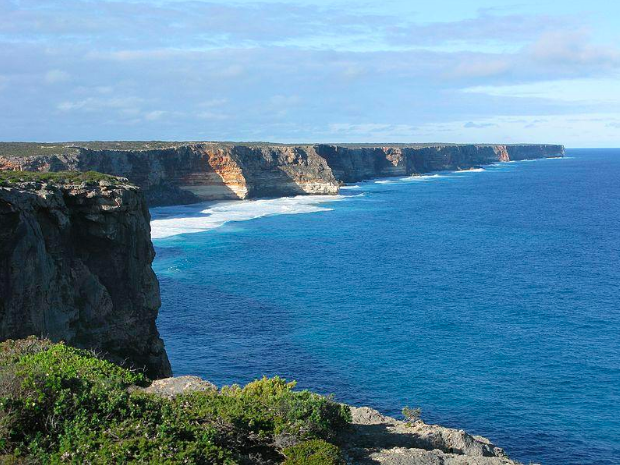
This fall, Esanbe Hamakita Kojima, a tiny island off the northeast coast of Japan dropped out of sight. The island’s disappearance went unnoticed by inhabitants of the nearby village of Sarufutsu, situated on the northern tip of Hokkaido island only 1,640 feet away.

It wasn’t until September, when author Hiroshi Shimizu traveled to Sarufutsu to gather inspiration for his picture book on Japan’s islands, that authorities were notified of the island’s disappearance. Shimizu had been looking for the island but couldn’t locate it. He informed local fisherman who went out to investigate and finally noted that Esanbe was missing.

When Japan’s Coast Guard last surveyed the island in 1987, it was only 4.5 feet above sea level. Authorities could not confirm how large the island had been before the sea rose around it.

Esanbe is west of Japan’s Northern Territories and part of a set of islands that has been long-contested between Japan and Russia. The islands, called the Kurils by Russia, were taken by the Soviets shortly after World War II, but ownership today remains unclear. According to CNN, Esanbe functions as a marker of Japanese ownership in contested waters. But the strategy of claiming islands to maintain the maritime space around them is not exclusive to Esanbe. In fact, according to the Washington Post, Japan owns 158 uninhabited islands that the country named in 2014 so that the sea surrounding them could remain in Japanese control.

Thus, the disappearance of the island may have a slight effect on Japan’s territorial waters, as according to international law, countries can only claim ownership of the sea around an island if that island is visible at high tide. Coast Guard officials in Japan confirmed that Esanbe’s loss, “may affect Japan's territorial waters a tiny bit.” With the island underwater, Japan will have lost approximately 1,640 feet of territorial water.

The island’s disappearance was likely due to erosion by the wind and drift ice common in the Sea of Okhotsk each winter. According to coast guard official Tomoo Fujii, “There is a possibility that the islet has been eroded by wind and snow and, as a result, disappeared,” Asahi Shimbun of the Japanese Daily reported.

According to the Smithsonian, disappearances of land masses in this area of Japan are not unlikely. The good news for Japan’s border, however, is that this phenomenon can occur in reverse. Five years ago, a 1000-foot long island rose out of the sea, prompted by a landslide.


EMMA BRUCE is an undergraduate student studying English and marketing at Emerson College in Boston. While not writing she explores the nearest museums, reads poetry, and takes classes at her local dance studio. She is passionate about sustainable travel and can't wait to see where life will take her.