
Daily life in the Indian holy cities of Rishikesh, Haridwar, and Devprayag. This region lies in the foothills of the Himalayas where the Ganges River descends from the mountains. The beauty of nature and the Hindu ceremonies contrasted with the poverty and suffering on the streets. Filmmaker Brandon Li says the people he met had a high-spirited resilience that seemed to stem from surviving and maintaining their devotion through a challenging life.
TALES OF A FEMALE SOLO ADVENTURER: Getting Off the Beaten Path
I grew up in a loving and somewhat free-spirited Canadian family. Our nomadic wanderings throughout western and northern Canada set the foundation for a life of global adventure, with my first flight from the nest being to the Central African Republic when I was 17. I spent a year there learning the local language and traveling to some of the most remote areas of that beautiful country. That was it. I was hooked on travel. I’m still going strong almost 30 years and four continents later. I relish the freedom of backpacking, but also love really living in another country and planting roots for several years. I enjoy the uniqueness of each place I visit yet what I love even more are the connections that prove the undeniable unity of the human race.

After raising three amazing children across several countries, they have all moved out and I’m solo once again. I’m currently based out of India’s Tamil Nadu state, where I focus my free time on the “3 Ts”: Travel, Trekking and Trail-running. I find solo adventuring so empowering because it allows me to test my limits and see how far I can go. Being a woman on my own I definitely take precautions, but I chose not to live in fear of what might happen. Instead, I focus on the positive and so far it's been a great journey. Photography is a recent hobby. I’m a nature lover who seeks out those “holy shit” moments of beauty that come from getting off the beaten path.
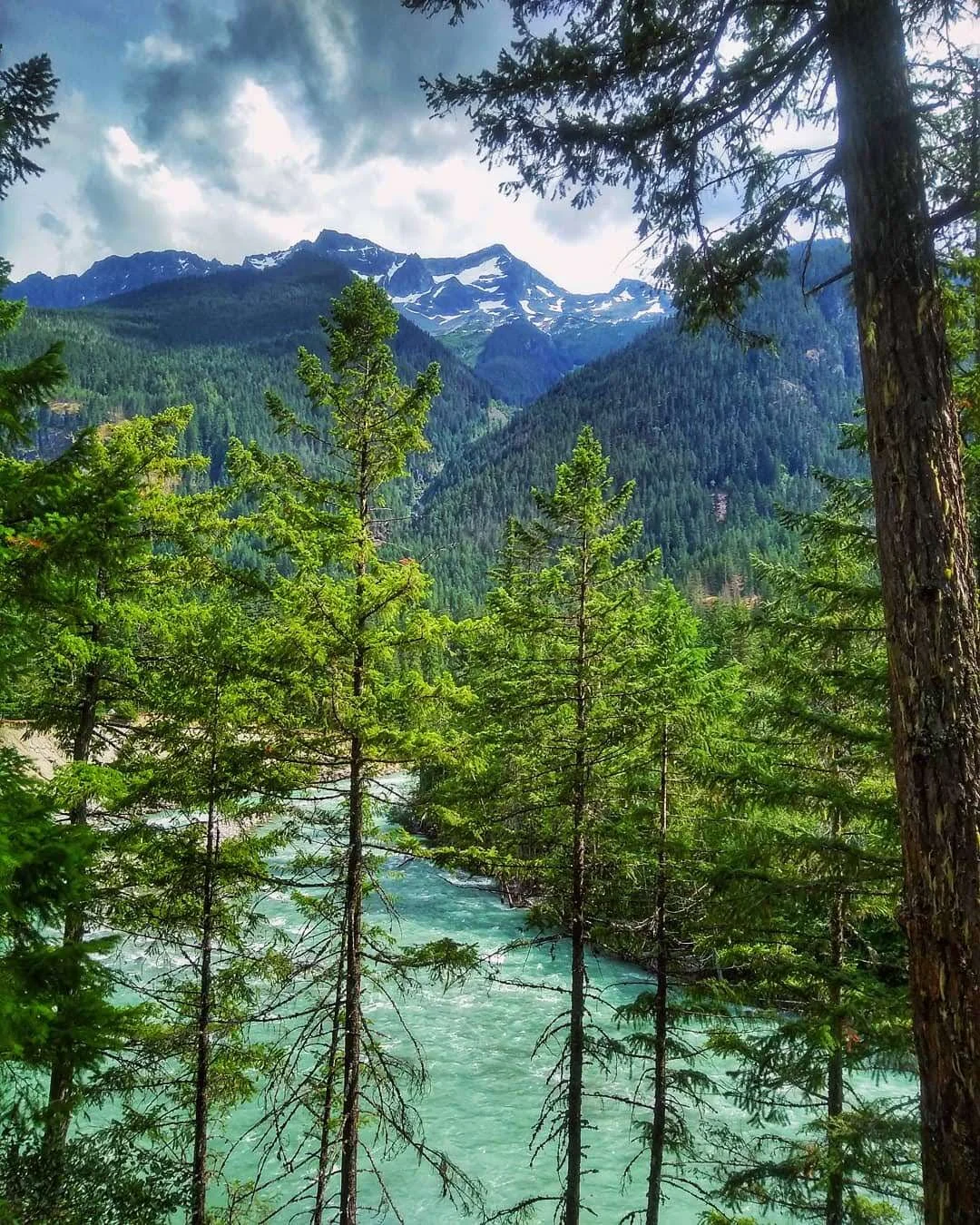
“Home” in western Canada. During my last visit I enjoyed camping and running the trails along the Green River. This area is just a couple hours outside of Vancouver but you couldn’t feel farther from the city. And yes, that water is cold!
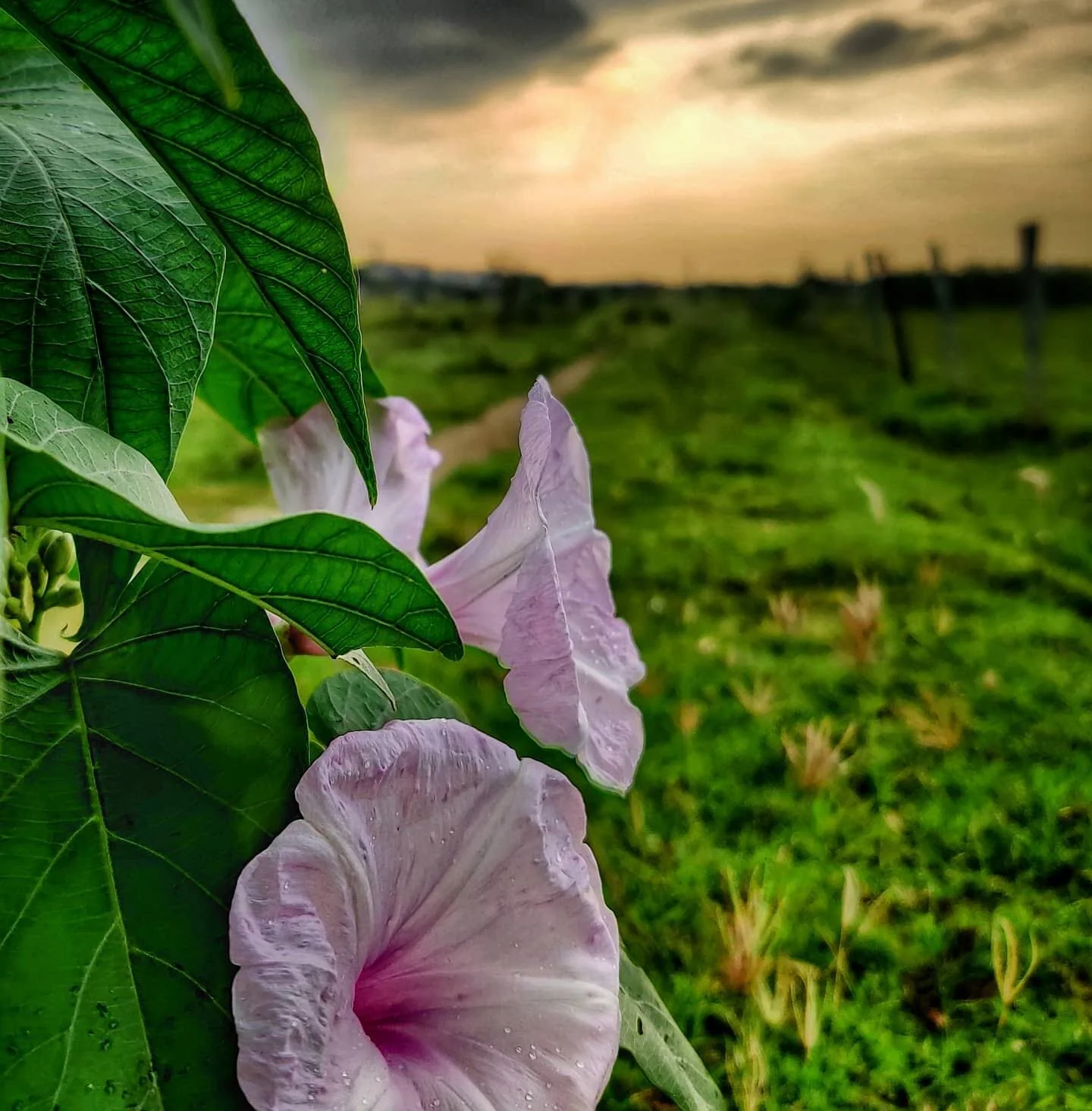
I’m always looking for new trails. I scan Google Maps, throw on my hydration vest and go explore. This is a small track running through rural farmland in Tamil Nadu. When I’m not traveling I’m out there seeing how far my legs will take me.
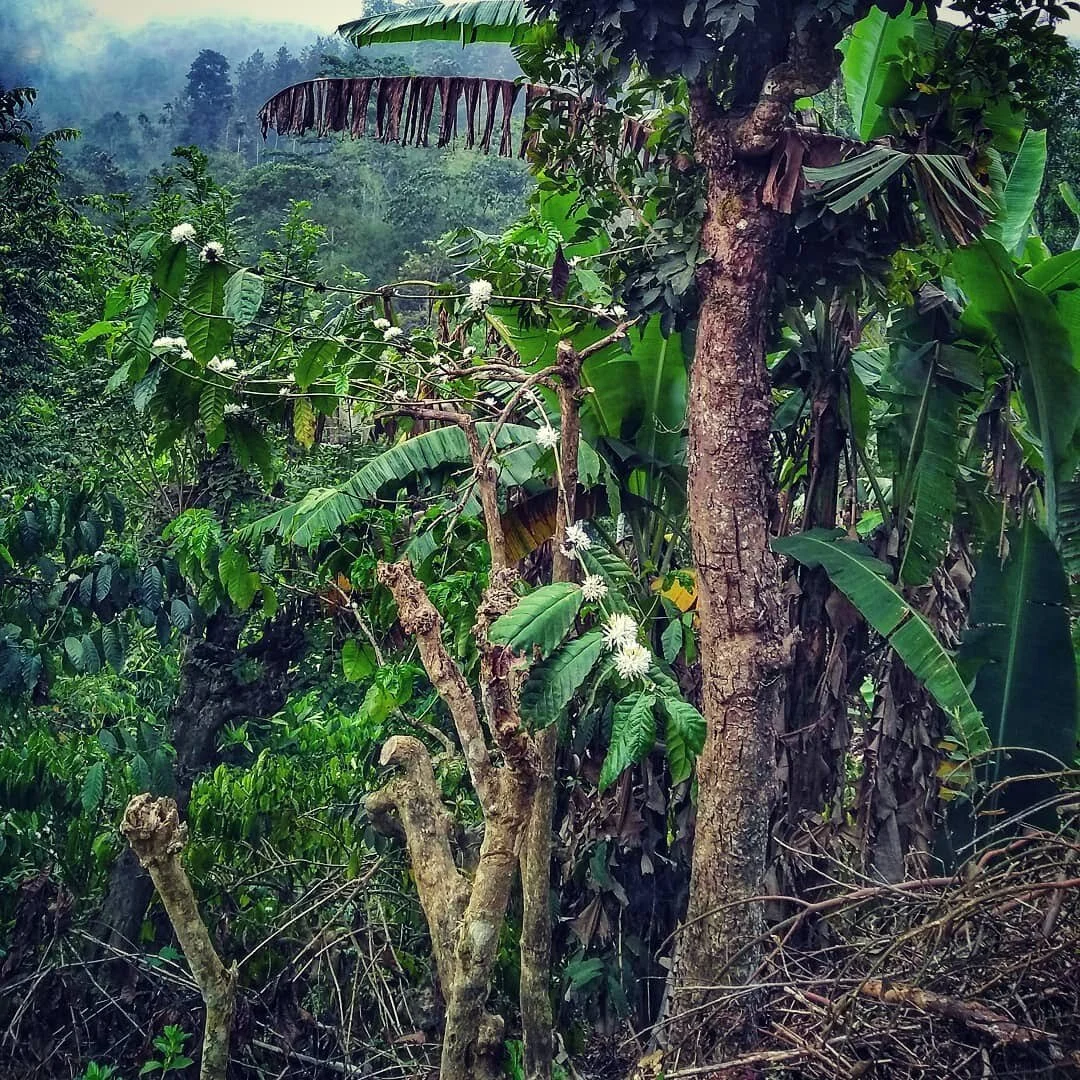
Wayanad in India’s Kerala state is an amazing place to just wander. It is so wild and lush. Every day I was there I would take a local bus and jump out when it looked interesting. Then I would take the trails up to the tea plantations and down into steamy, forested valleys. The great thing about India is that it has a good public transport system. It doesn’t matter how far or which direction my feet carry me; I will eventually find another bus to take me back to where I started.
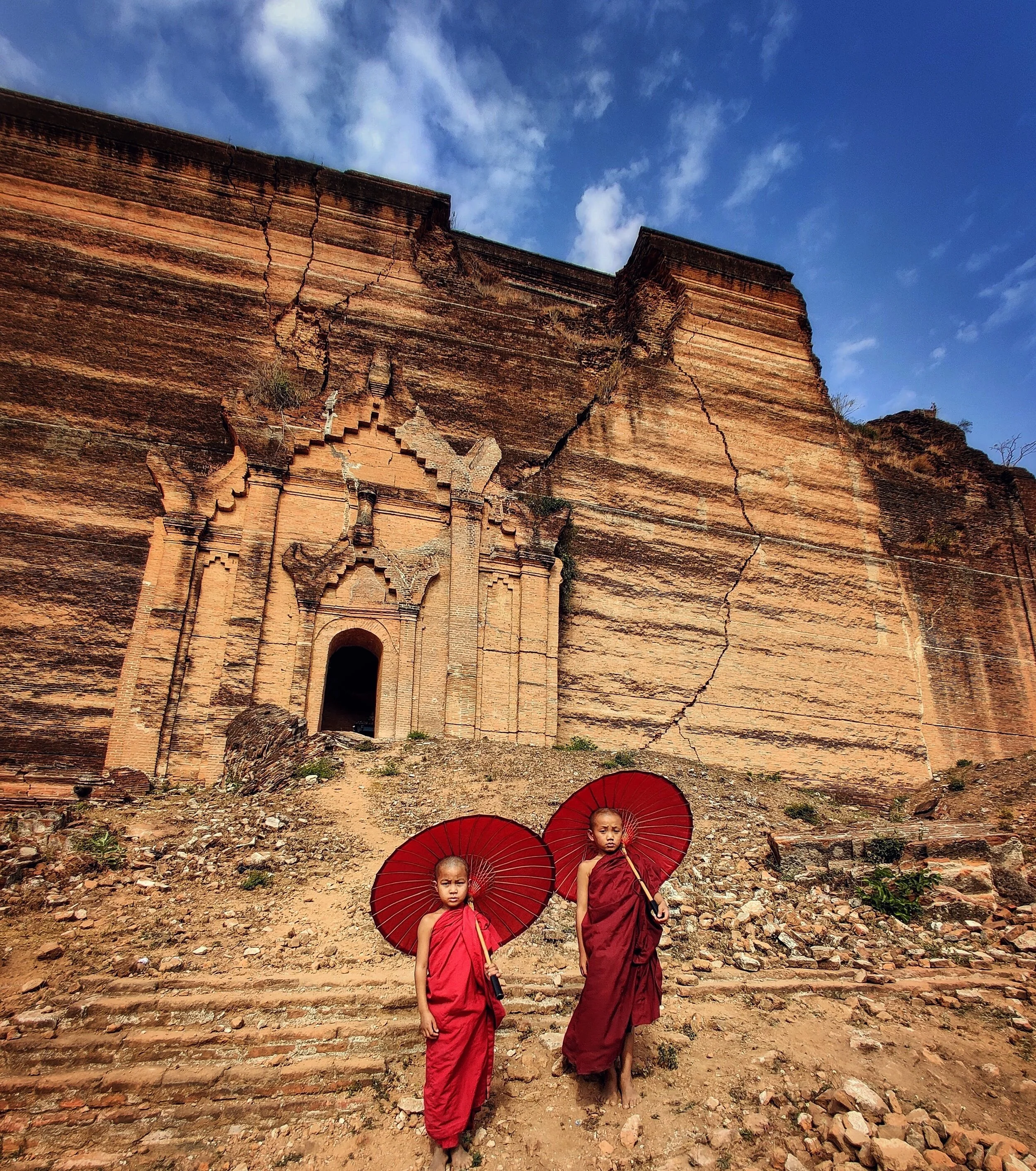
Sometimes when you travel you stumble across the perfect moment. This was one in Mingun, Myanmar.
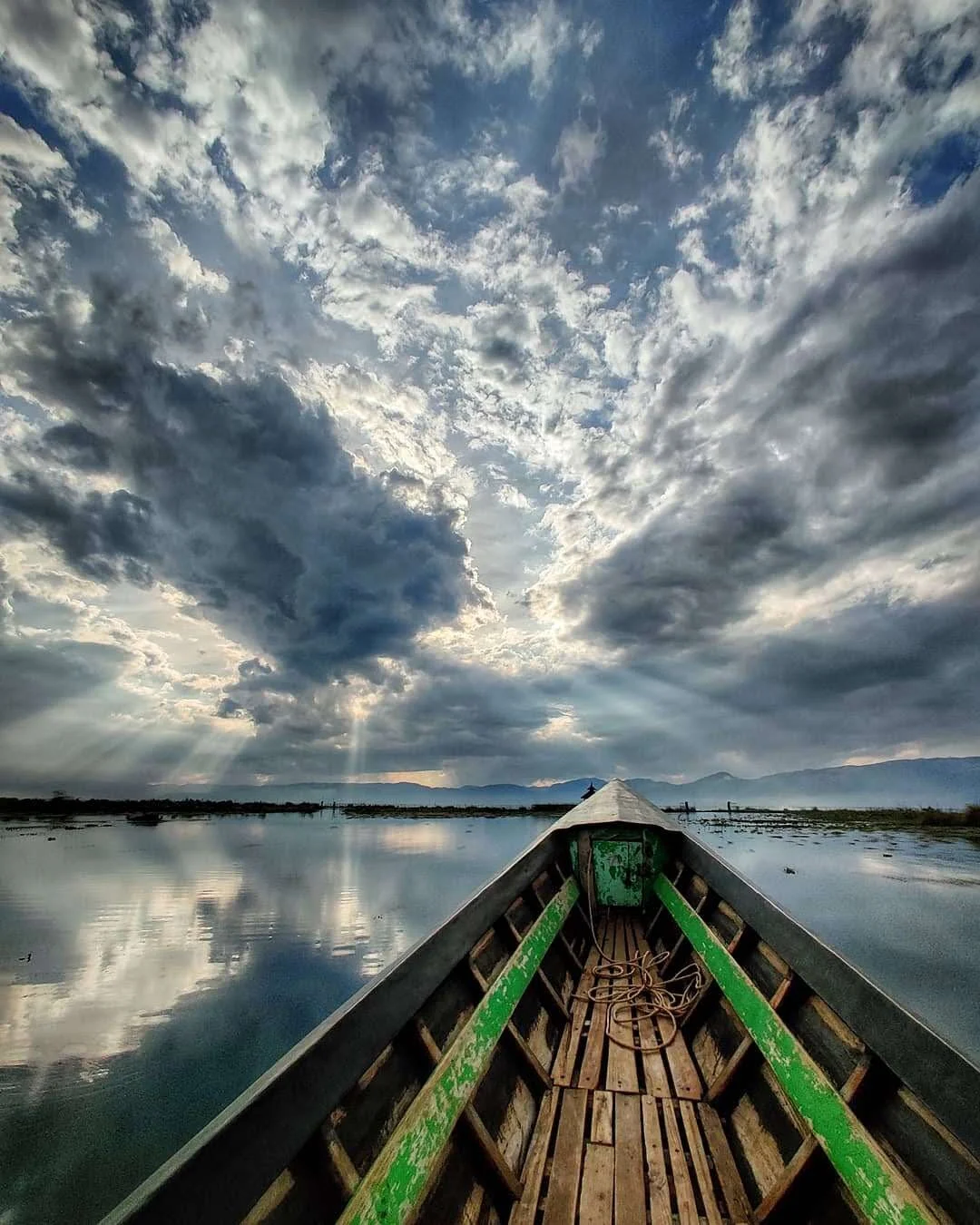
In January 2020 I spent a month exploring Myanmar. This photo was taken at the end of an epic section of trail. I spent three days walking from Kalaw to Inle Lake. Here, I’m taking a longboat across Inle Lake to get from the end of the trail to the nearest town where the luxury of a hot shower awaited me.
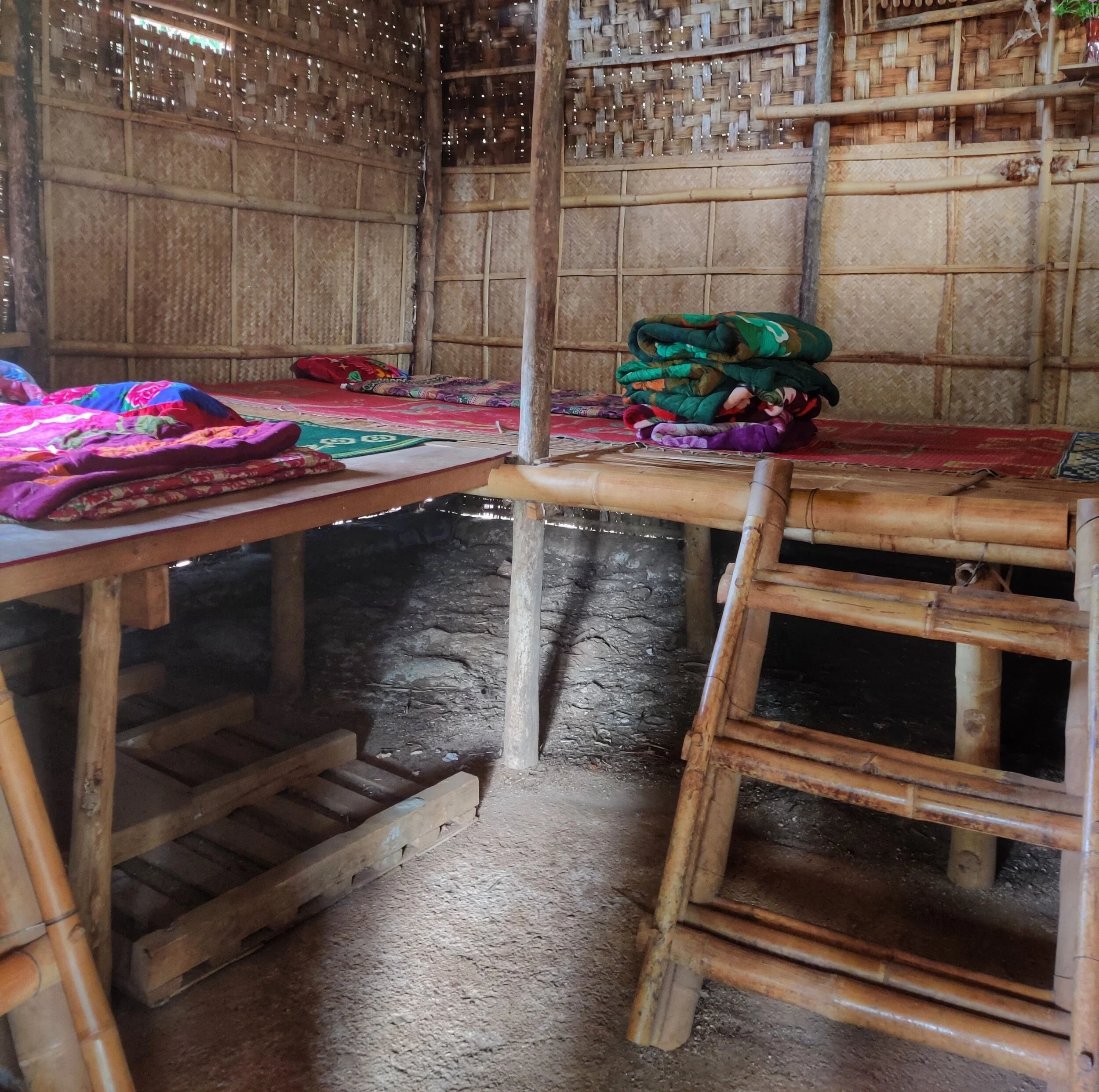
No hotels, no restaurants. I slept in small villages with local families who offered food and shelter. These are communal sleeping quarters up in the mountains of central Myanmar. When you are climbing up and down mountains all day, I can’t tell you how good it feels to be given a hot meal and a place to rest your weary bones.
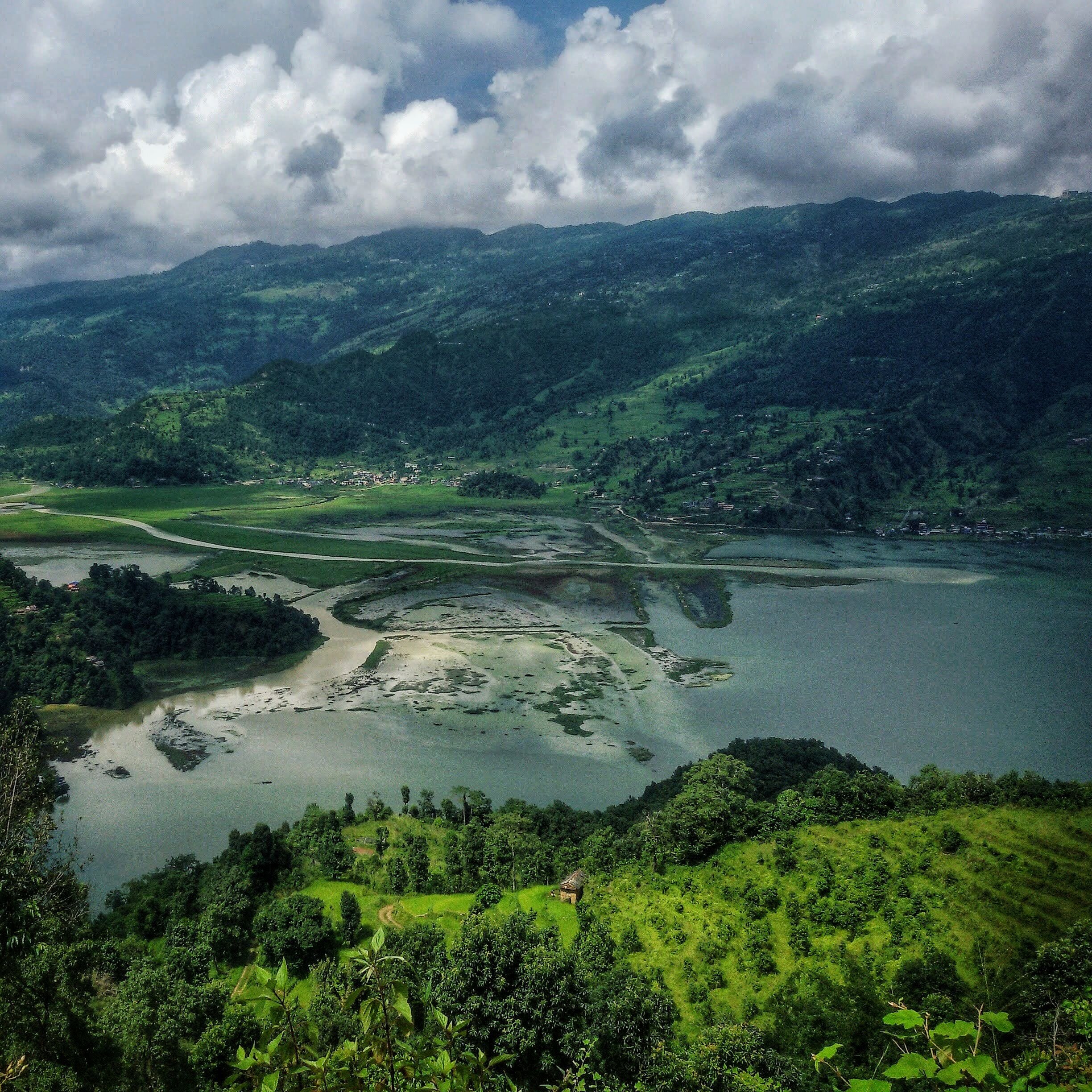
Pokhara, Nepal, is an awesome place to explore even if you opt not to do the big overnight treks in the mountains. I asked many locals and they all told me that you could not circumnavigate Phewa Lake. I kept staring at Google Maps and thinking, “I’m sure I can!” The issue was getting across the valley floor. There is a section where there is no track at all. One day I saw a farmer wade through the rice paddies and I did the same, mud up to my knees in places. Once I got across the valley, as I had seen on Google Maps, there was “trail” all the way around. I arrived back in Pokhara nine hours later, feet full of leeches but with a happy heart.
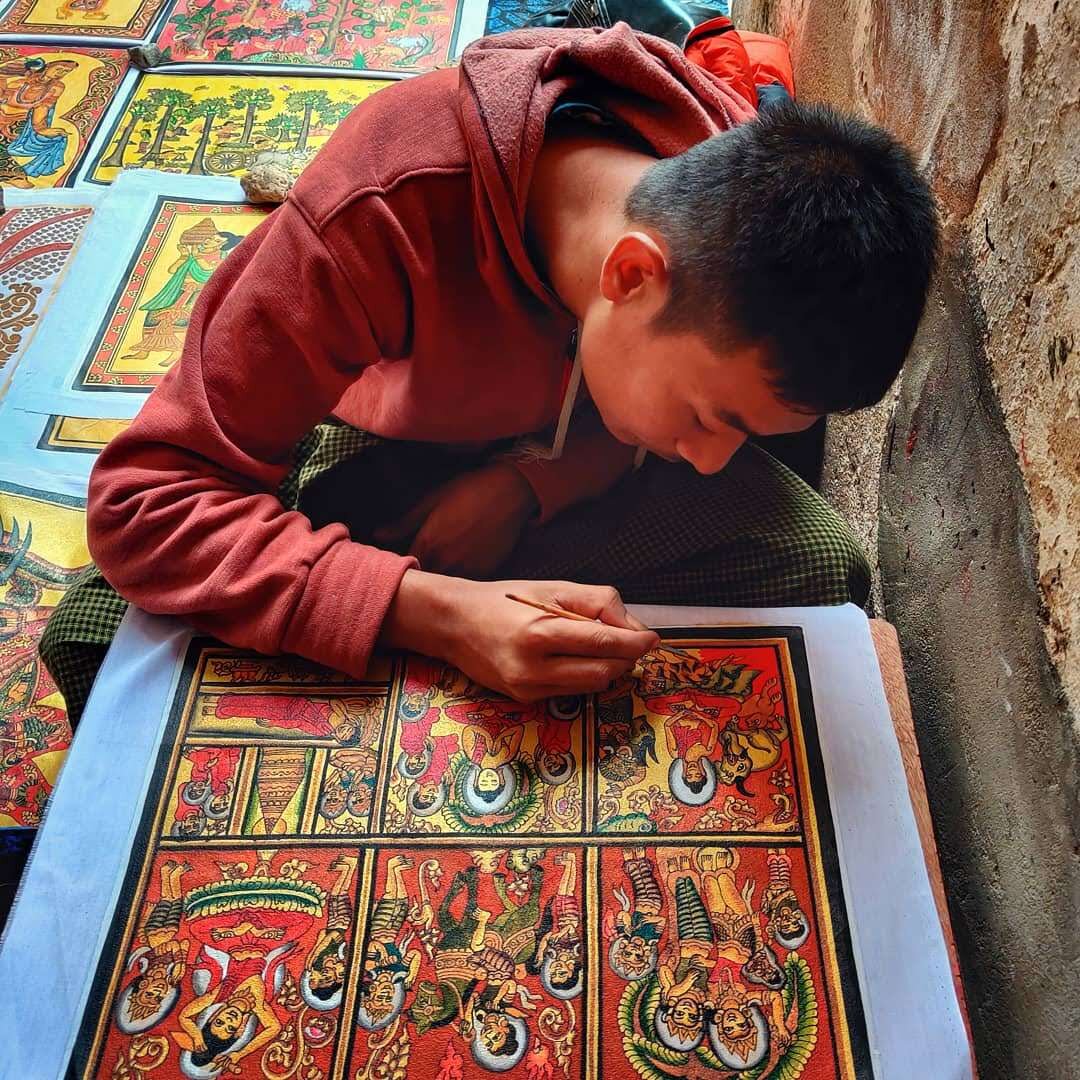
The artist in me gets very excited about local handicrafts. I love seeing creative expression around the world. This teenage boy was oblivious of me as he patiently labored away at this masterpiece in Bagan, Myanmar.
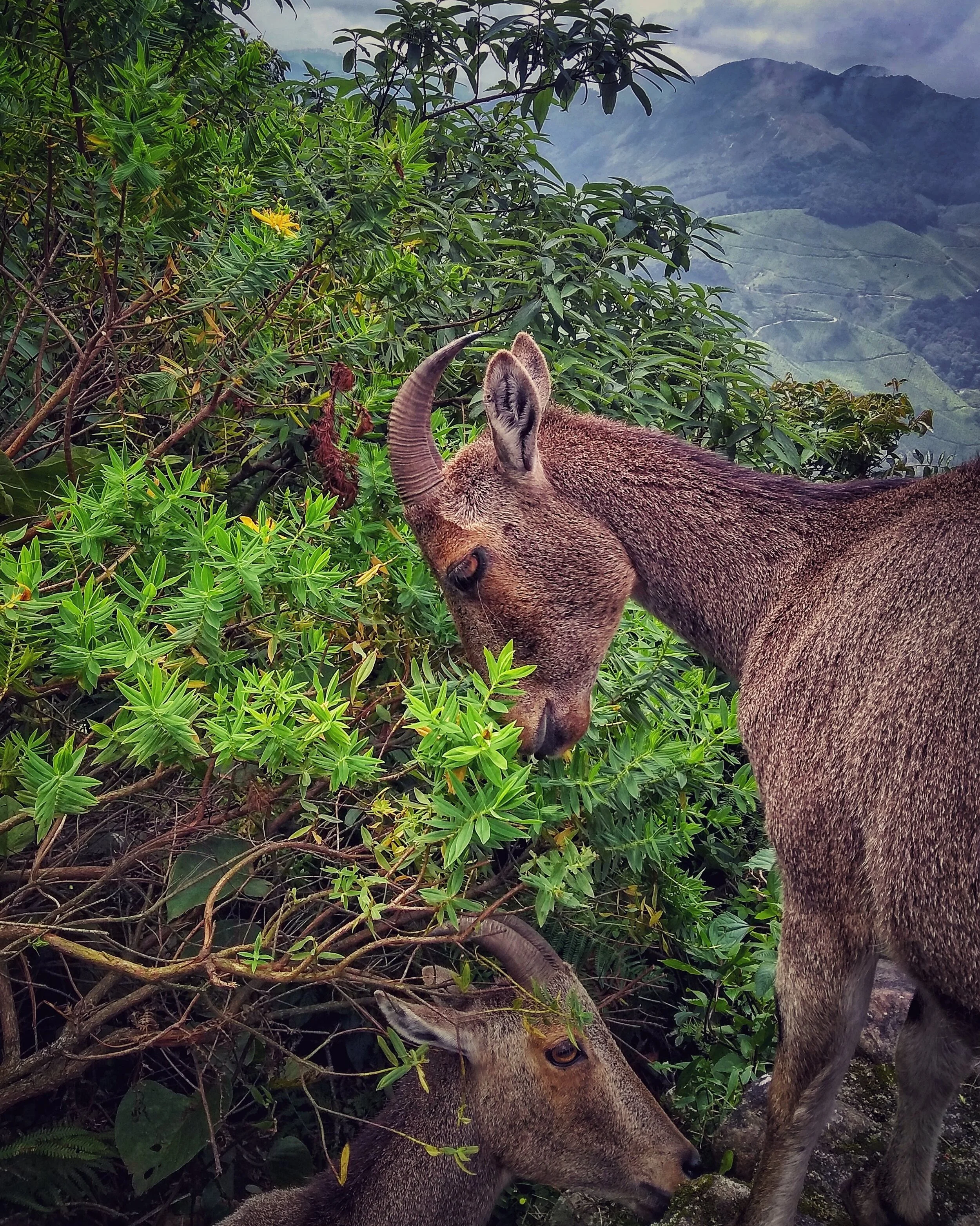
I have been blessed with close encounters with many amazing animals. I never chase after them but enjoy when they approach me. These are Nilgiri tahr, an endangered species that inhabits the Eravikulam National Park in southern India. I was sitting on a rock and they stepped right over me and decided to hang out. I was all by myself up in the hills and it was such a magical moment.
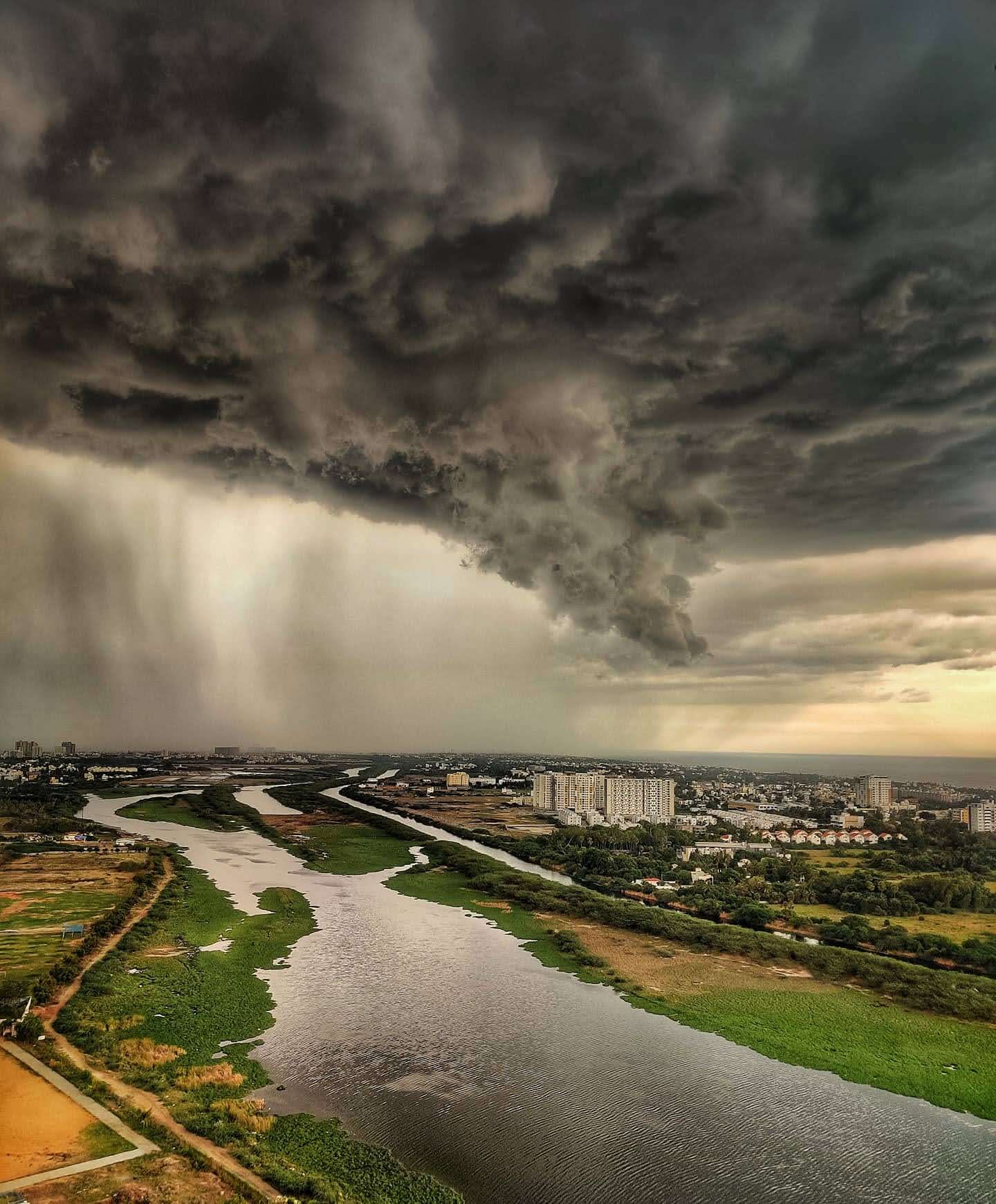
I love a good storm! Something about the energy of the shifting skies is so invigorating. This is on the backwaters just south of Chennai, India, overlooking the Bay of Bengal.
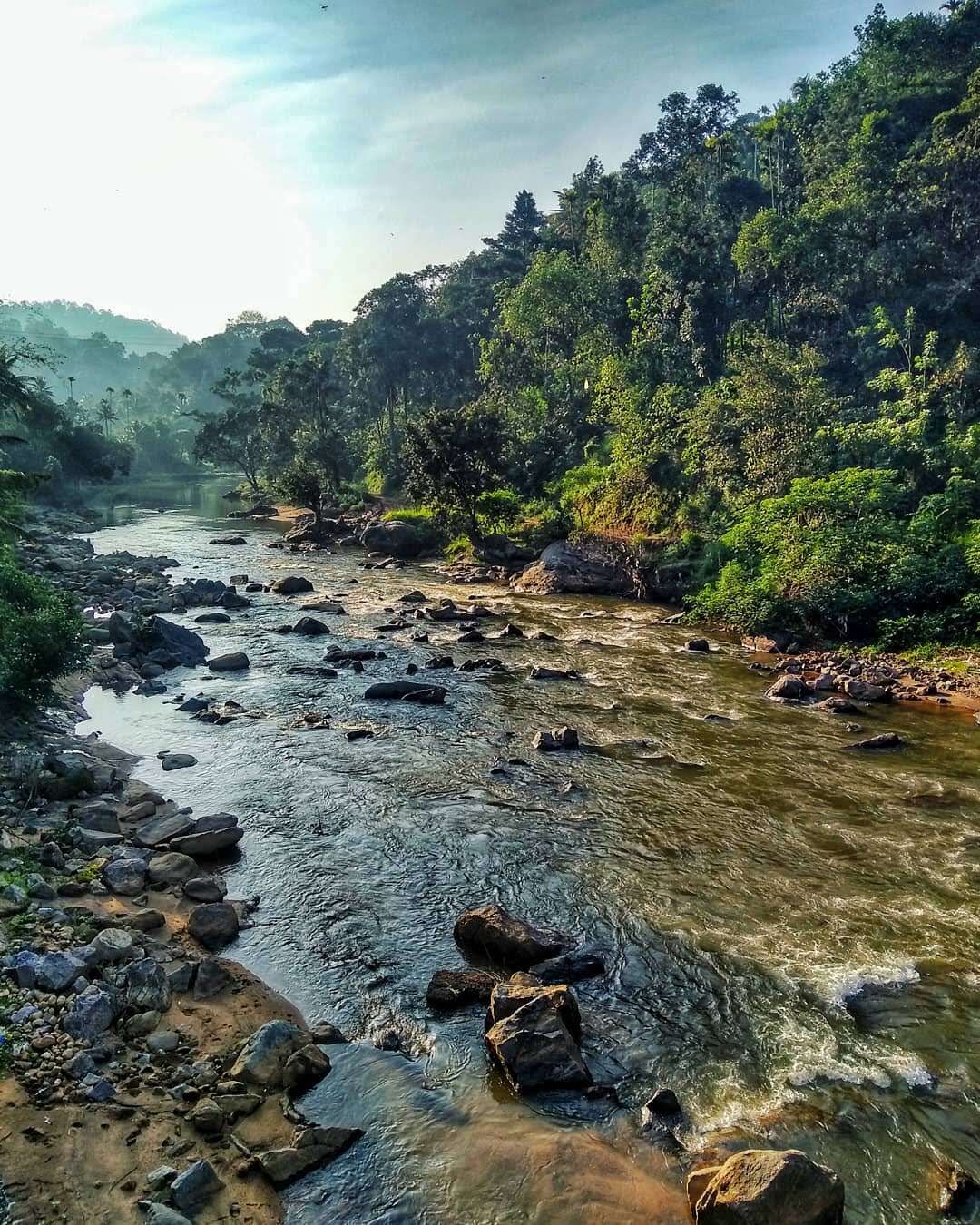
Just outside of Kunchithanny in Kerala, India, I spent a week wandering in the mountains. I talked to locals to scope out good trails and, armed with screenshots from my trusty Google Maps, I headed out early each morning. This is one of my favorite places to trek. I can cover 15 miles by noon. The climbs are steep but well worth it. I met families at my guesthouse who spent three hours in traffic jams to catch a glimpse of the popular waterfalls outside of Munnar; meanwhile, I saw at least 20 falls and had them all to myself. This area is so welcoming. Several families brought me into their homes for food and rest. I can’t wait to go back.

Monks feeding carp in Hpa-An, southern Myanmar. This was such a magical day. First I offered a prayer to all my loved ones atop the rock tower at the pagoda in the middle of this pond. Later that day I did my hardest climb in Myanmar. I climbed to the highest point in the mountains seen in the background. It was an extremely steep vertical climb. Rough steps had been carved out of the rock but they were narrow. In places, I had to lift my leg up higher than my knees to reach the next step. It is typically a three to four hour hike. I wanted to catch the sunset so I powered up it in an hour and 20 minutes. I made it just in time and then descended in 45 minutes. When I finished, my legs were shaking and spasming uncontrollably. It actually felt great having pushed past what I thought my body was capable of.
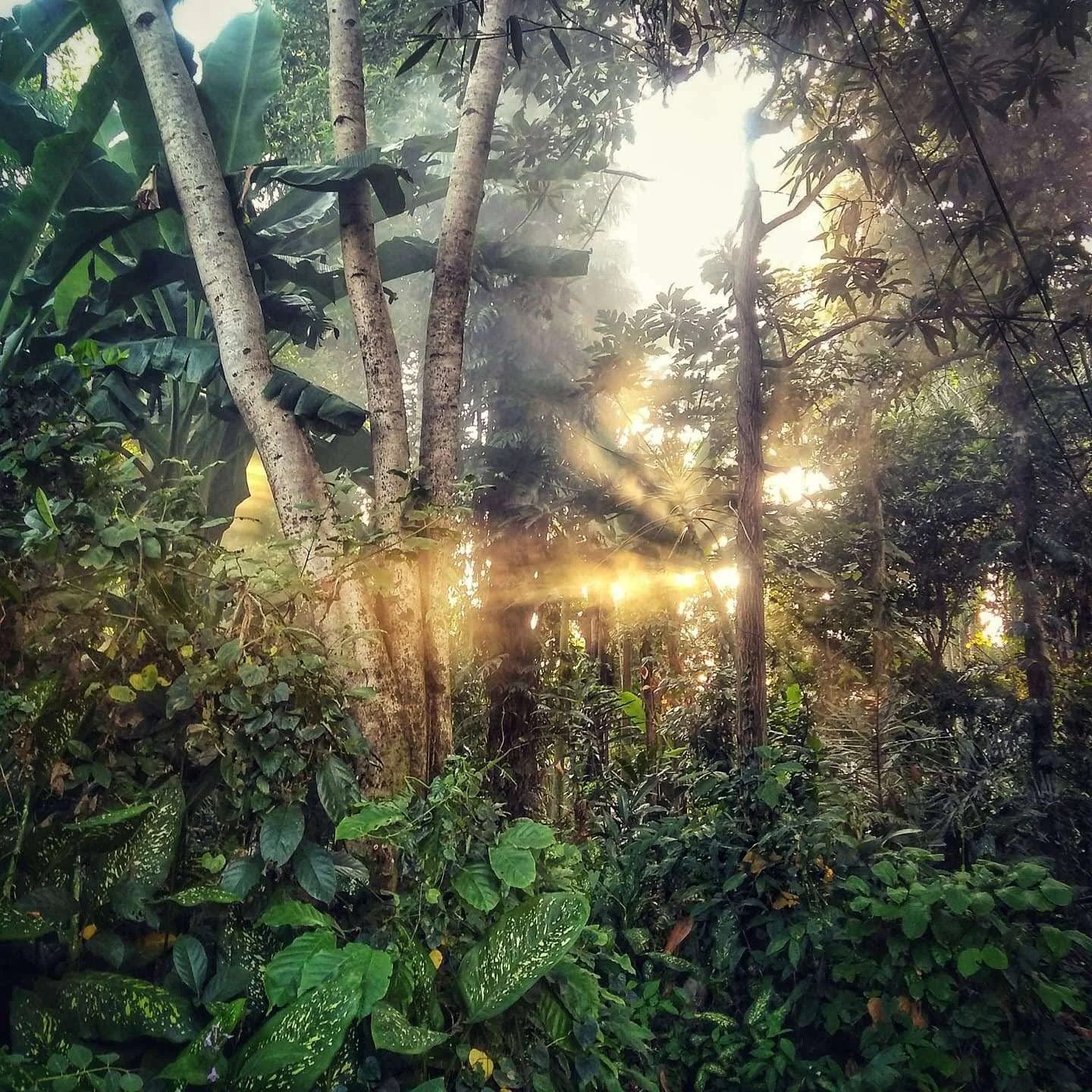
In Ubud on the Indonesian island of Bali I would wake up at 4 a.m. and run up the mountain peaks in the dark to catch the sunrise from the mountaintops. This is where I started really building my confidence running solo in the wilderness. I wish this photo could convey the incredible birdsong that accompanied each daybreak.
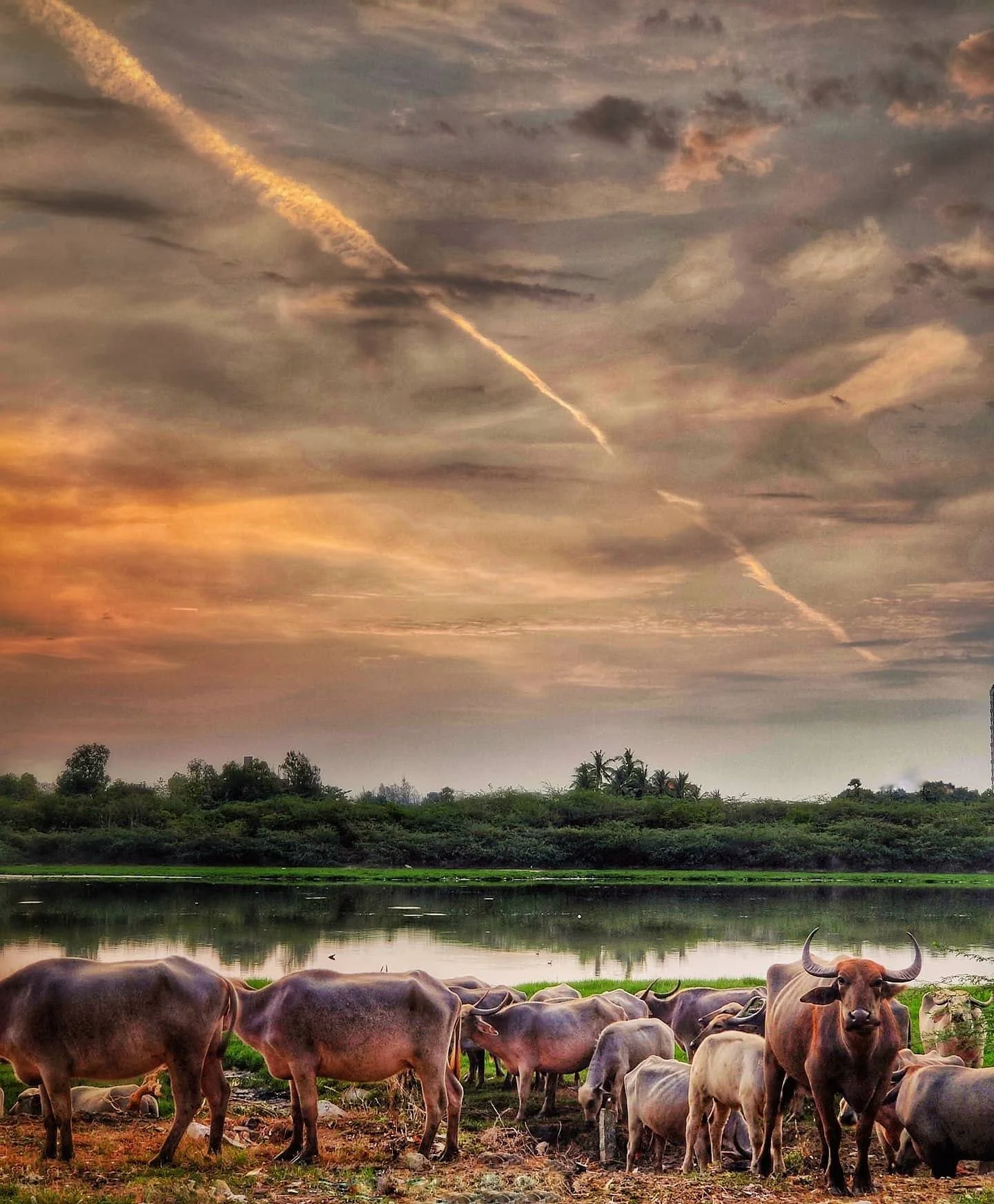
My daily runs here in Tamil Nadu often involve weaving through crowds of these guys. I’m up early to catch the sunrise and enjoy South India in all her beauty.
I have learned to read the landscape, tune into my surroundings and listen to my own body. All of this has given me the freedom to keep living my best life. No regrets.
If you want to keep up to date with my adventures, follow me on Instagram @dawned_onme or check out my blog, bigbeautiful.world, to see more of my past wanderings.

Dawn Lwakila
continually takes the path less trodden, both figuratively and literally. She loves to really live in a place and grow some roots there — as well as a good wander and the freedom to explore. Canada is her homeland, but her heart and soul is scattered across the globe. She has journeyed through over 30 countries and still has an ever-growing bucket list of new places to experience.
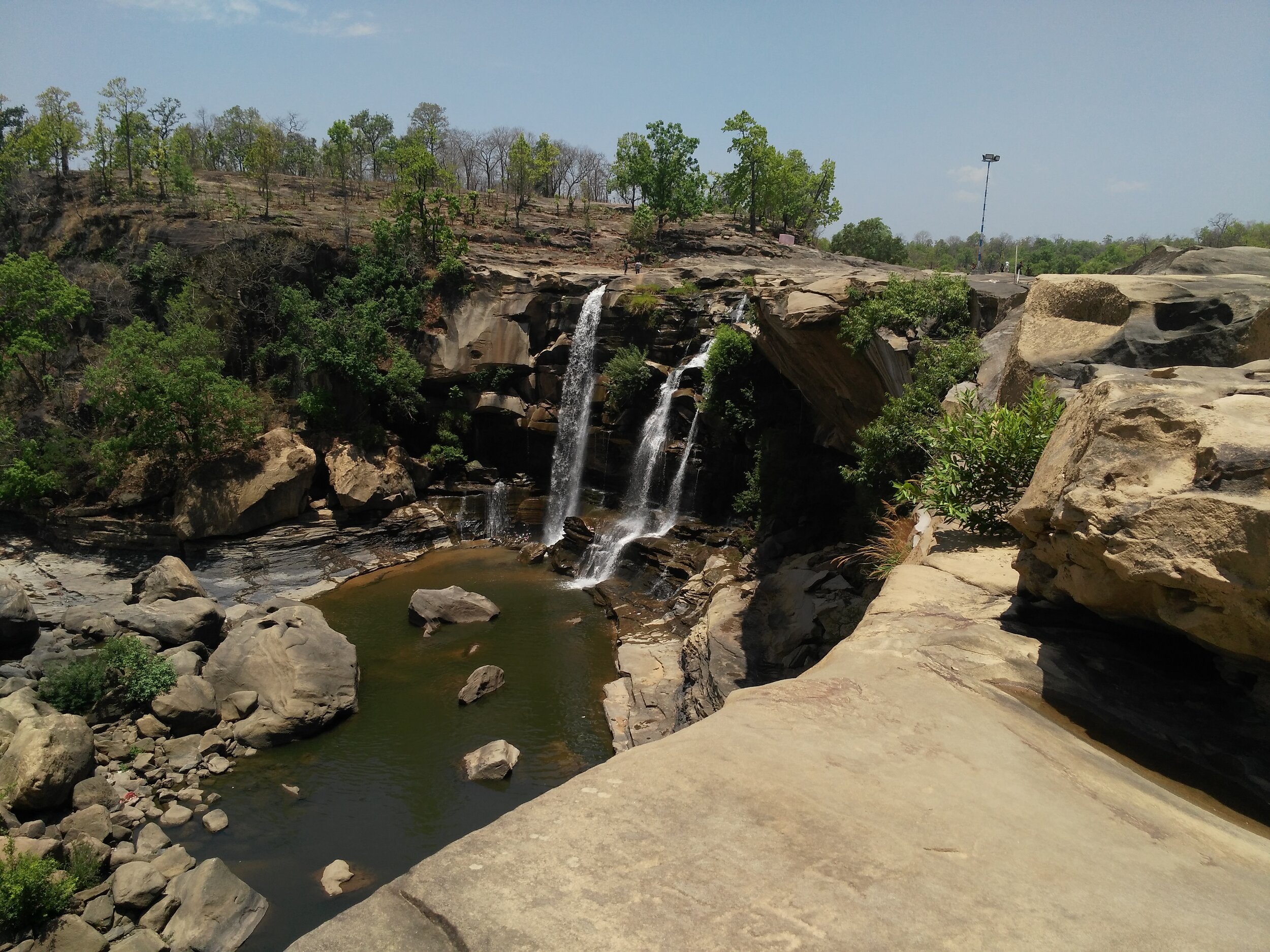
Amritdhara Waterfall in India’s Chhattisgarh state. Umesh. Ratre. CC BY-SA 4.0
Indians Declare Victory in the Fight Against Deforestation — For Now
In today’s world, it is fairly common to see vast forests being torn down to make way for infrastructure; in India’s case, it is a way to make extra money during the COVID-19 pandemic. Last year alone, “3.8 million hectares” of primary forests were torn down and destroyed - “the third highest since the turn of the century.” Just recently, the people of Chhattisgarh’s Hasdeo Arand forest feared that they would suffer the fate of Korba - a region where families were displaced by coal mines. The area was even “identified as a ‘critically polluted area’ by the Central Pollution Control Board.”
The global pandemic that has swept over the world has left lasting impacts on governments everywhere. In India, the central government offered up 41 coal blocks near the biodiverse and coal-rich Hasdeo Arand forest to commercial bidders to increase revenue after the country’s economy took a hit earlier this year. After India sold the first five coal blocks and gave the green light for mining companies to deforest an estimated 6,800 hectares of forest, the surrounding communities and Chhattisgarh state’s government began to push back. This ultimately led to the central government reversing its decision, making the Hasdeo Arand region safe - for now. This comes as a result of an ongoing campaign to prevent what happened to neighboring Korba, where mines forced hundreds out of their homes, threw many into unemployment and caused “respiratory issues ranging from asthma to lung cancer.”
What Happened in Korba?
Korba was once much like Hasdeo Arand - a land filled with lush forests, rivers and over 300 species of wildlife. Mining started in the 1970s and four decades later, people are still suffering from displacement, health concerns and other environmental problems. Korba in particular is home to “the world’s second-largest open-cast mine - Gevra.” This mine has led to nearby streams drying up and becoming filled with waste, killing up to 12 people in Sahli.
The migration patterns of elephants have been impacted as well, leading to human-animal encounters in almost every village. Ash ponds have been dumped into, polluting water in neighboring irrigation fields and destroying crops. Lastly, the villagers have reported an increase in respiratory issues and other health risks directly linked to the area’s coal mines and power plants. Currently, “Korba is the power hub of Chhattisgarh. It has 10 to 12 power plants, which generate nearly 20,000 megawatts of electricity annually.” However, the environmental and social impacts of these coal mines and plants have left citizens homeless, disrupted and often with serious health issues. The locals have learned their lesson and organized to halt the construction of a proposed power plant in the Hasdeo Arand forest itself.
What’s Next?
After the events in Korba, the leaders of the Hasdeo Arand region have done their best to avoid the construction of any more power plants or coal mines. India’s central government gave up on mining in the Hasdeo Arand forest due to strong local resistance to the plans. Campaigns have begun against the central government, asking for a stop to the mining and a greater focus on the villagers who have been displaced. Deforestation occurs all around the world, but sometimes locals hold the power to stop environmental catastrophes in the making.

Elizabeth Misnick
is a Professional Writing and Rhetoric major at Baylor University. She grew up in a military family and lived in Europe for almost half her life, traveling and living in different countries. She hopes to continue writing professionally throughout her career and publish her writing in the future.
Colorism Shows its Face through India’s Skin Whitening Creams
Since 1975, India has had a market advertising products that can achieve being “fair and lovely” by whitening the skin, but what effect has this had on Indian society?
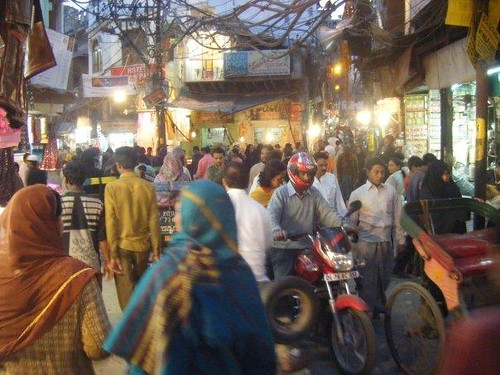
People on the street in India. Craig J Bethany. CC BY-NC-SA 2.0.
On June 26, Unilever made the decision to remove the word “fair” from its whitening creams sold throughout India and parts of Asia. It is assumed that the decision to rename the product was due to the global response to the death of George Floyd and the rise of the Black Lives Matter movement in the United States. For Indians, skin lightening is a painful reminder of their colonized past.
Commercials for whitening creams have advertised the products as the solution to all of life’s troubles. Along with that, they have carried the notion that having darker skin is harmful and will set you back in life. It only perpetuates colorism, when people within the same race discriminate against skin colors. Often, colorism takes on the form of favoritism toward lighter skin shades over darker ones.
Colorism is a byproduct of colonization. From 1858 to 1947, India was under British rule in hopes of extracting the resources that were making India so profitable through the East India Company. Britain took advantage of the wealth by imposing strict policies and limiting government representation across India. However, those that had lighter complexion were favored and often offered more better jobs than those with darker complexions. Britain maintained its control over India until the country’s independence after World War II.
Thus, in 1975, Unilever’s “Fair & Lovely” cream first debuted. Despite a decadeslong appeal toward fair skin, this “luxurious” type of cream would not become popular until the 1990s, when it became more accessible in the form of cosmetic products such as deodorants, creams and at-home treatments. Even though it is a more recent trend, skin lightening still reflects and enforces the mindset of British colonizers. Bollywood even joined the trend by selecting lighter-skinned actors who can “better represent Indian life.” Since the first release of Unilever’s product, the skin lightening industry has become a multimillion dollar market, with some estimates around $4 billion globally, due to the high demands to meet the beauty standards. The highest usage is across Asia and Africa.
Typical usage for skin lightening creams, also known as skin bleaching, is to help reduce the appearance of scars or age spots. In India, though, the products are also used to reduce the melanin levels in one’s skin. Most products must be applied over the course of six weeks to see results. Often, there is a combination of different steroids or chemicals used to help change skin tone.
Research by the World Health Organization has found that mercury is often an active ingredient. Even though it is banned for use in the U.S., other countries do not have much regulation over mercury’s usage. Mercury can cause a range of problems, from neurological to fertility in nature. 1 in 4 skin lightening products made in Asia has been found to contain mercury. Other risks include skin cancer, premature aging of skin, skin thinning and allergic reactions.

Skin lightening treatments at a convenience store. Sophia Kristina. CC-BY-NC-ND 2.0
Additionally, the color of one’s skin in India is critical when it comes to arranged marriages. Often, parents place advertisements in newspapers known as matrimonial ads in order to find potential spouses for their children. Often in these ads, there are descriptions of the child’s skin tone ranging from “fair” to “wheatish,” with “fair” individuals pursued the most. Along those lines, many dating websites for arranged marriages, such as Shaadi.com, allow users to select preferences based on skin tone. However, Shaadi.com representatives did announce earlier this month they were removing the search option.
This is not to say that the skin lightening industry is to blame for colorism today. It has become a deeply-rooted mechanism, with discrimination and racism existing in Indian society since the 1850s. Activists have encouraged the stop of these products’ production, as organizations such as Women of Worth have found that skin lightening practices cause a sharp decrease in self esteem for brown girls.

Eva Ashbaugh
is a Political Science and Gender, Sexuality, and Women's Studies double major at the University of Pittsburgh. As a political science major concentrating on International Relations, she is passionate about human rights, foreign policy, and fighting for equality. She hopes to one day travel and help educate people to make the world a better place.
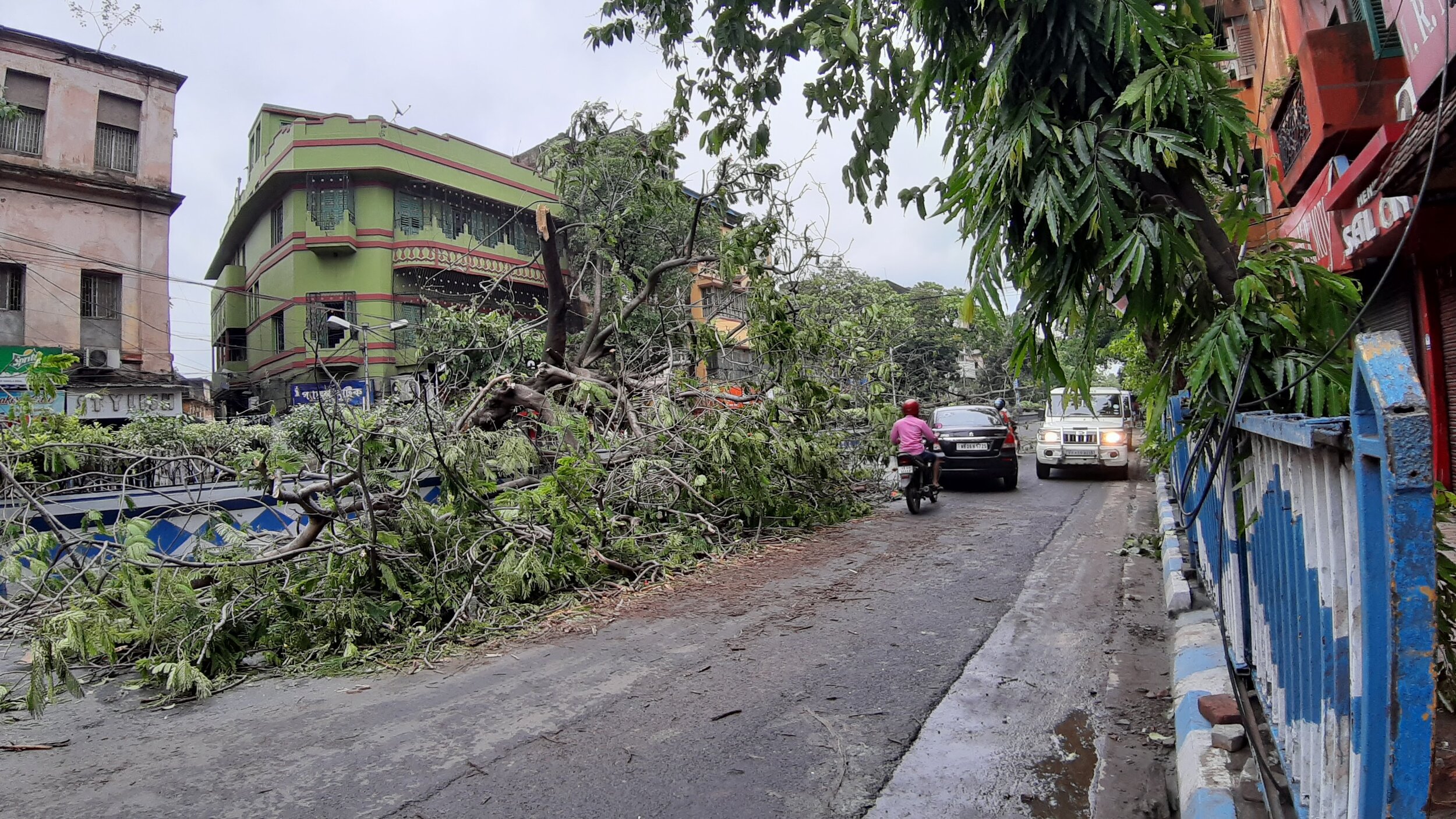
A fallen tree in the streets of Kolkata, India. Santanupyne. CC BY-SA 4.0
Super Cyclone Amphan Ravages East India and Bangladesh
Split trees, washed away bridges, dead livestock—this was the scene following Super Cyclone Amphan, which tore through India’s West Bengal region and Bangladesh. From May 16 to May 21, the Category 5 hurricane whipped through coastal villages, ravaging areas with fierce winds and rain.
One of the most powerful storms ever recorded in South Asia, Super Cyclone Amphan devastated coastal infrastructure, causing millions of people to flee from their homes to packed shelters. These cement block structures and repurposed community spaces have proven safe in past storms, offering respite and relief to displaced villagers. As Amphan gained momentum, officials urged people to leave their homes. Emergency crews lined the beaches, alerting passersby through megaphones. Television stations, text messages and door-to-door pleas also advised evacuation.
Crowded shelters pose a public health threat in the coronavirus pandemic. Physical distancing is unfeasible in the packed, enclosed spaces. Extra isolation rooms, masks, and sanitizers have done little to mitigate the rapidly spreading virus, while the need for social distancing has complicated Amphan relief efforts and shelter capacities. "The coronavirus restrictions have obviously made things much more difficult, especially with regards to evacuation to cyclone shelters," said Azmat Ulla, head of the International Federation of Red Cross and Red Crescent Societies’ office in Bangladesh. On May 20, India reported that it had recorded over 100,000 coronavirus infections.
Refugee camps, held in predominantly flood-prone areas, raised concerns during the cyclone. In Bangladesh, 306 Rohingya were moved from their refugee camp in Bhasan Char, an island in the Bay of Bengal, to mainland cyclone centres. A few years ago, these refugees fled massacres in Myanmar and built makeshift homes on coastal Bangladesh’s muddy hillsides. Amnesty International advised governments to protect Rohingya refugees stranded at sea. “They are in rickety boats; these are fishing trawlers that they use to take a very dangerous route in the hope of a better life. The Bangladesh government and others must do everything to save their lives,” declared Saad Hammadi, Amnesty International’s South Asia campaigner. Fortunately, the cyclone weakened as it made its way down the Bangladeshi coast, unleashing nothing more than heavy rains in the refugee-concentrated city of Cox’s Bazar. The U.N. estimates that, throughout Bangladesh, 10 million people were affected by the storm, and 50,000 people lost their homes. Economic production has been compromised at the region’s croplands and fisheries, striking away people’s long-term livelihoods.
The storm devastated the Sundarbans, the world’s largest mangrove forest and the home to endangered Bengal tigers. According to Belinda Wright, the Executive Director of the Wildlife Protection Society of India, villages on the outskirts of the wildlife refuge have been badly hit. Around 70% of the 4,000-square-mile forest lies at sea level, rendering the animals especially vulnerable to flooding and exacerbating India’s existing wildlife crisis. Urbanization, hunting and illegal animal trade have dwindled the global population of tigers down from 100,000 last century to 4,000 today. In response to the storm, the remaining few hundred Bengal tigers in the Sundarbans have been pushed out of their forest habitats and into human-dominated areas.
Scientists predict that tropical storms like Amphan will increase in strength and quantity going forward due to climate change.

Anna Wood
is an Anthropology major and Global Health/Spanish double minor at Middlebury College. As an anthropology major with a focus in public health, she studies the intersection of health and sociocultural elements. She is also passionate about food systems and endurance sports.

UNESCO World Heritage Site In India Goes Digital
How experts of the Indian Digital Heritage Project went the 3D way to preserve sculptures at the UNESCO World Heritage Site
On a calm March evening, I virtually travel hundreds of kilometres from my home in Mangalore to a temple complex by the Tungabhadra river. Courtesy Google Art, Hampi, the pride of the Vijayanagara empire, comes alive through many frames, some of them panoramic. The project gives you an idea of the scale and scope of the temples: the Vitthala complex looms large as do the Stone Chariot, Bhim’s Gate and the Maha mantapa, among others.
Now, imagine if you could go on a digital walkthrough and see 3D recreations of the sculptures that were damaged, rotate them 360 degrees to appreciate their workmanship better, and understand why Hampi is special. If all goes as per plan, and if the Indian Digital Heritage Project is taken to its logical conclusion, this could well become a possibility in the near future.
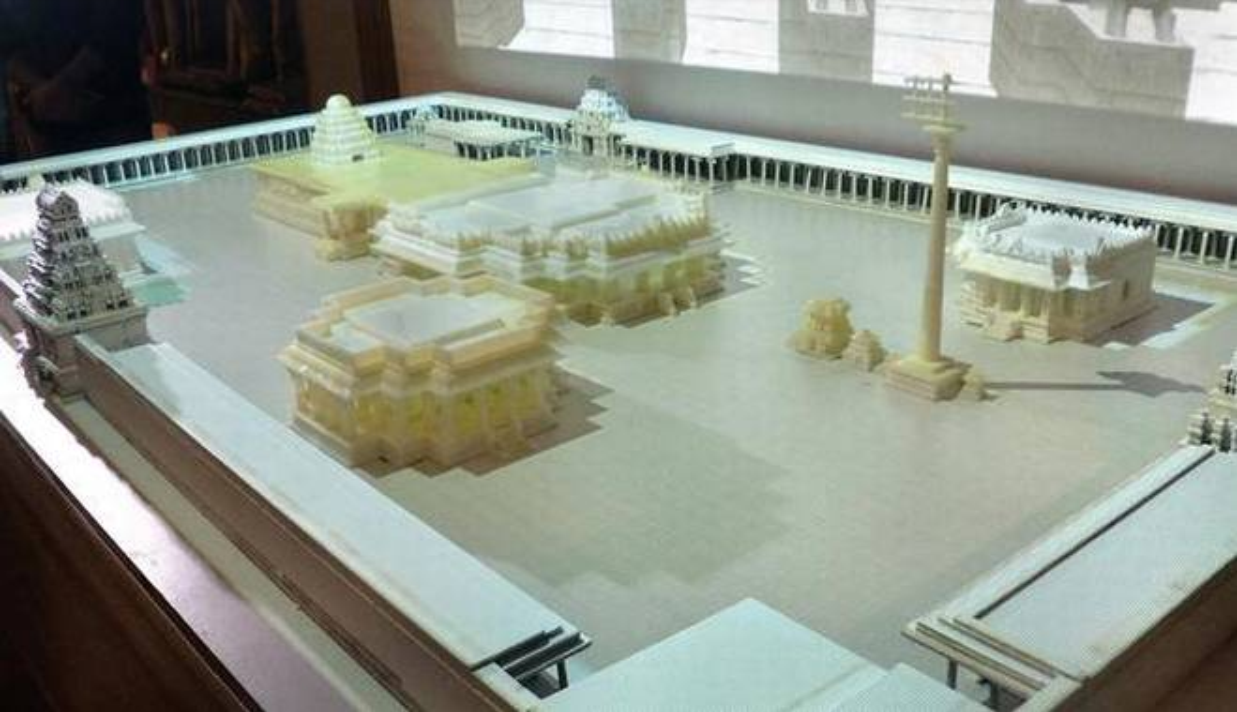
A Department of Science and Technology (DST) initiative, the project that started in 2012 brought together researchers in the areas of technology and humanities for the digital preservation and interpretation of tangible and intangible heritage. The project concluded in 2016 and plans are now afoot to extend it to underwater structures.
Switch to 3D
In 2011, Professor AN Rajagopalan of IIT Madras visited Hampi, where more than 500 monuments dot 26-odd square kilometres. The Chennai resident was familiar with the reasonably well-maintained Pallava-era sculptures by the beach at Mamallapuram. He presumed Hampi would be similar, but was shocked to see the ruins. However, looking beyond the broken noses and smashed-in faces, Rajagopalan could imagine their former magnificence.
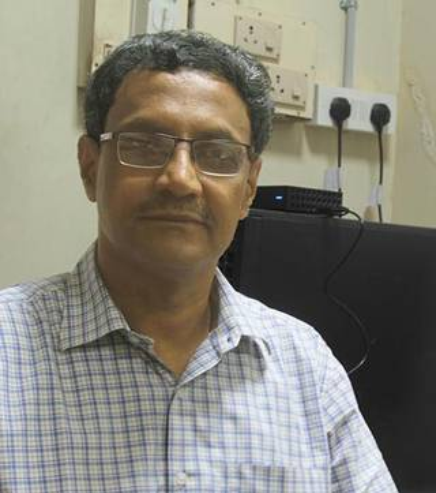
When the IIT Madras team he was a part of had to report on what was possible at the UNESCO World Heritage site, an idea struck him.
He wondered if the image inpainting technique (used to fill in missing information on a two-dimensional photograph or painting, based on the details around the damaged region) could be adapted to 3D, to reimagine the broken sculptures. That is how the digital arm of the project, inspired by Stanford University’s Digital Michelangelo Project and the Google Art project, took shape.
First steps
The team started off by taking extensive photographs and videos of the sculptures from various viewpoints. The hunt then began for similar works — those that could be reworked digitally using references from the other.
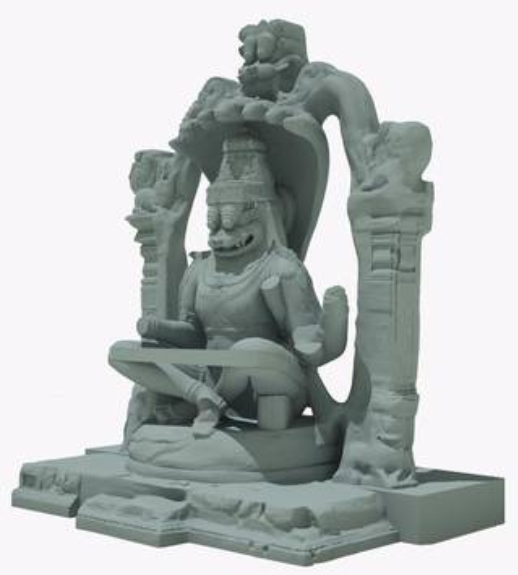
A 3D model was then built. The first sculpture they worked on was of a Narasimha in the Vitthala temple, whose shoulder was damaged. The original measured 1.5 ft by 2.5 ft on a pillar, and it was a recurring motif across the complex.
Printing a pillar
To create models for the walk-through, Rajagopalan printed — what looked like a mythical beast on a pillar (from the Kalyana Mandapa) — on a Polyjet 3D printer using a pale yellow and opaque material called Veroclear. It cost about ₹1,200 per cubic inch. “3D printing is very expensive. What we did was approximately a 1:1,000 scale of the pillar; something you could hold in your hand. While the model will not look like the original — it has the appearance of a candle — you can touch and feel the dips and mounds,” he says.
Group effort
Ensuring this project had the best minds working on it was Sharada Srinivasan of the National Institute of Advanced Studies, Bengaluru. As culture co-ordinator of the IDH Hampi Project, she worked with art historian S Settar and scientist S Ranganathan.
Speaking about why the project is special, she says, “We got together diverse groups from IITs, NGOs and the Crafts Council of Karnataka... It did not stop with the academic circle. A very interesting dialogue emerged and, at some point, we looked at digital renditions,” says Srinivasan, who has worked on South Indian bronzes. Also a dancer, she has choreographed and performed around the musical pillars at Hampi. She explains how as part of the project, groups worked on automatic detection of cracks, inscriptions, digital reconstructions, street mapping and digital 3D printing. “We can’t say this is the definitive attempt at conjectural reconstruction, but it is a major step towards it. This is one approach towards making heritage more accessible and inclusive,” says Srinivasan.
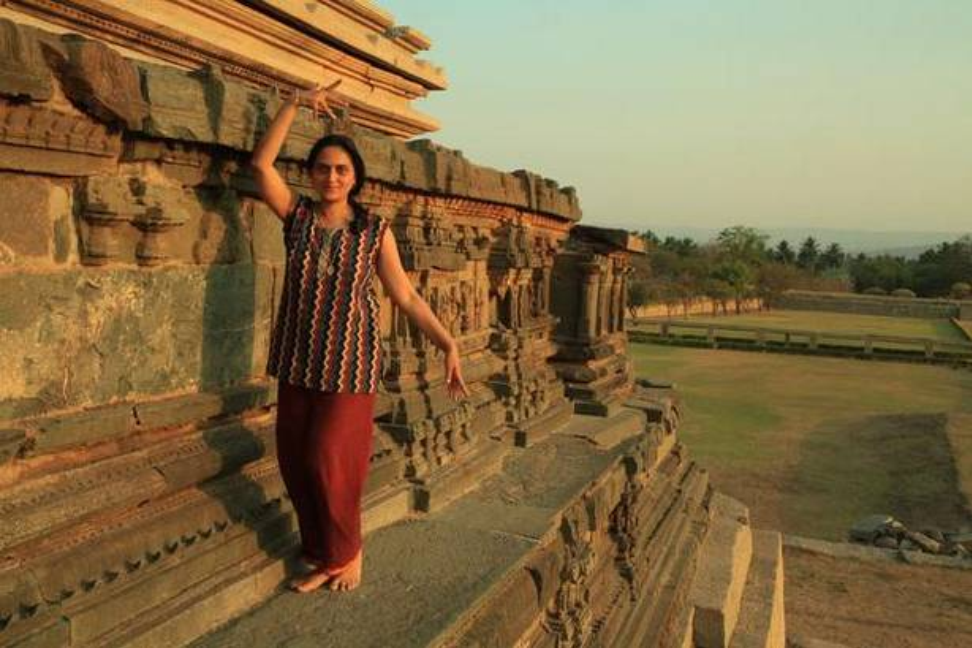
Even now, in its much-damaged state, the UNESCO World Heritage site continues to charm visitors. If things work out, the technology can be used to digitally revive similar structures elsewhere.
By Subha J Rao subha.rao@thehindu.co.in
THIS ARTICLE WAS ORIGINALLY PUBLISH ON THE HINDU

Divyakant Solanki/EPA
In India’s Cities, Life is Lived on the Streets – How Coronavirus Changed That
In India, where the coronavirus lockdown affects 1.3 billion people, the effect is a big contrast to a place where the city streets are normally thronged with life in all its guises.
Read More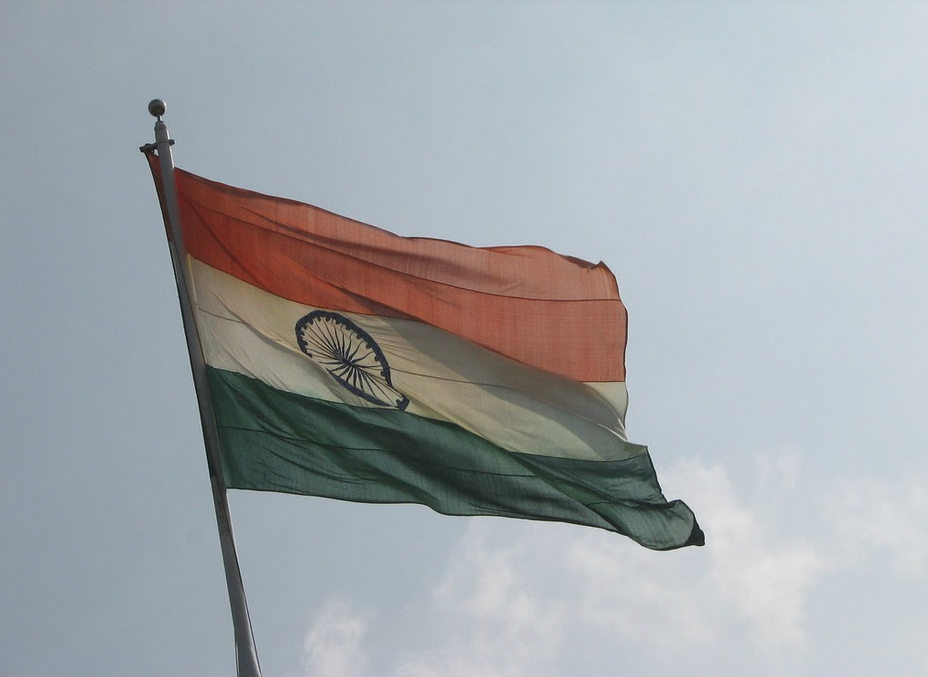
"Indian Flag at Sriperumbdur" by rednivaram is licensed under CC BY-NC-SA 2.0
Delhi Muslims Still Rebuilding Their Lives After Days of Deadly Riots
Almost three weeks after religious violence erupted in Delhi, India, thousands of Muslims are still displaced, most living in relief camps that are overwhelmed by the number of people who have lost everything.
Hindu mobs attacked neighborhoods in the northeast area of New Delhi on Sunday, February 23, 2020. At least 53 people have been killed and more than 200 injured in what is being called the worst violence New Delhi has seen in decades. The three days of violent attacks included the torching and looting of schools, homes, mosques, and businesses. “Mobs of people armed with iron rods, sticks, Molotov cocktails and homemade guns ransacked several neighborhoods, killing people, setting houses, shops and cars on fire”, according to CBS News. The New York Times reported, “Gangs of Hindus and Muslims fought each other with swords and bats, shops burst into flames, chunks of bricks sailed through the air, and mobs rained blows on cornered men.” These attacks came after months of mainly peaceful protests by people of all faiths over changes to citizenship laws that allowed discrimination against Muslims.
The new law, called the Citizenship Amendment Bill, uses a religious test to determine whether immigrants from Afghanistan, Bangladesh, and Pakistan can be considered for expedited Indian naturalization. All of South Asia’s major religions were included—except Islam. According to CBS News, those who oppose the law say, “it makes it easier for persecuted minorities from the three neighboring nations of Pakistan, Afghanistan and Bangladesh to get Indian citizenship - unless they are Muslim.” Kapil Mishra, a local Hindu politician of the Hindu nationalist party, the Bharatiya Janata Party, told India’s police that they needed to break up the protests against the law, or he and others would take it into their own hands.
Doctors at the Mustafabad Idgah camp (one of the largest camps) are reporting that many of the survivors are showing early signs of Post-Traumatic Stress Disorder (PTSD) and depression. The makeshift relief camps are overcrowded and undersupplied, and are lacking in some sanitation amenities. Due to the lack of hygiene amenities, many are suffering from urinary tract infections and skin rashes. The lack of basic hygiene amenities is even more dangerous and deadly amid the global coronavirus pandemic.
Muslims found help from another religious minority in India: Sikhs. A Sikh man, Mohinder Singh, and his son, Inderjit, helped sixty people get to safety by tying turbans around their heads so they would not be recognized as being Muslim. Sikhs themselves experienced large-scale religious violence in October 1984 when 3,000 Sikhs were killed in Delhi after the assassination of then-Prime Minister Indira Gandhi. Khalsa Aid, a non-profit organization founded upon Sikh principles, was one of the first groups to provide aid to the victims. Members of the organization helped by assisting in repairing looted and damaged shops. They also opened a “langar”, a Sikh term for a community kitchen that serves free meals to all visitors—regardless of religion, caste, gender, or ethnicity.

Asiya Haouchine
is an Algerian-American writer who graduated from the University of Connecticut in May 2016, earning a BA in journalism and English. She was an editorial intern and contributing writer for Warscapes magazine and the online/blog editor for Long River Review. She is currently studying for her Master's in Library and Information Science.
@AsiyaHaou
KASHMIR — A Lost Paradise
In one of the most beautiful places on Earth, the conflict in Kashmir – which have been largely forgotten by the world – has raged on since 1947. What was once a paradise, Kashmir Valley is now the forgotten epicenter of war, human-rights violations and a true representation of what it looks like to struggle for peace and freedom. Watch this short video about the beauty and conflict of Kashmir.
Read More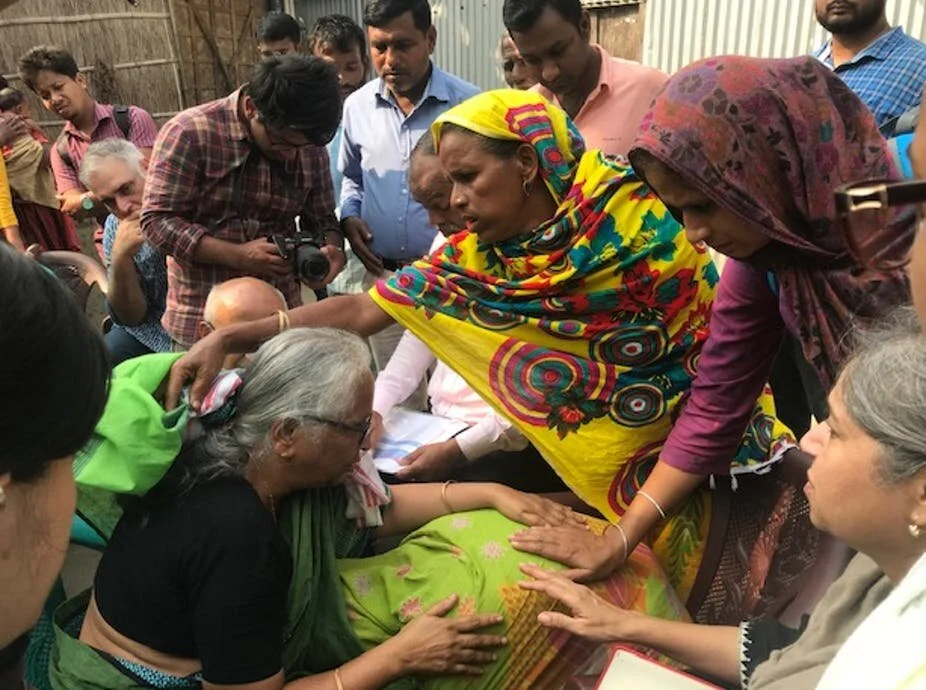
Activists and local volunteers meet and console Assamese villagers who might have lost their Indian citizenship. Anuradha Sen Mookerjee, Author provided
In India’s Assam, a Solidarity Network Has Emerged to Help Those at Risk of Becoming Stateless
The state of Assam in India is currently burning with violent protests against a new citizenship law passed by both houses of the Indian parliament in early December.
The Citizenship Amendment Act (CAA) will ease the Indian citizenship process for undocumented migrants in India who come from Pakistan, Afghanistan and Bangladesh – but only for those who are not Muslim, undermining the promise of equality by the Indian Constitution. The international community criticised the new law, with the UN High Commissioner of Human Rights calling it “fundamentally discriminatory”.
Since its parliamentary approval on December 12, the law has triggered massive protests across India including in the capital Delhi.
Concerns in Assam
Assam is directly affected by the new law. It significantly undermines the National Register of Citizens (NRC), a listing process that has been underway in Assam since 2015 through which residents have to prove their claim to citizenship based on documentary evidence. The NRC is designed to update a first list conducted as an all-India exercise in 1951 to combat illegal immigration flows, primarily from neighbouring Bangladesh.
More than 1.9 million people in Assam – many of whom are Muslim – have failed to make it onto the NRC’s final list which was published on August 31. They now face the risk of statelessness. But at the same time, the large numbers of Hindus who were excluded in the NRC system can now become Indian citizens under the CAA.
The way the CAA is written makes way for Indian citizenship of all non-Muslims who lived in certain areas of Assam, such as the Brahmaputra Valley, before or on December 31 2014, even if they don’t have documentary evidence, and while rendering Muslims stateless. It contradicts the cut-off date for inclusion used by the NRC, which was midnight on March 24 1971.
For the protesters on Assam’s streets, the CAA gives legal rights to the large numbers of undocumented Bengali-speaking Hindus who have migrated from Bangladesh since 1971 and also those currently excluded by the NRC.
Their fear is twofold. First, indigenous Assamese feel that with the inclusion of the Bengali speaking Hindus by the CAA, the composite number of Bengali speaking people (both Hindus and Muslims) will outnumber the Assamese speaking people in the state. Census data shows that the Assamese-speaking people in the state declined from 58% of the population in 1991 to 48% in 2011. Second, the Muslims both excluded by NRC and those who have migrated later, risk becoming stateless.
A journey to the Pampara Char
I’ve seen up close the damage the NRC process has had on communities in Assam. In mid-November, I visited the state with the Indian peace activist Harsh Mandar and several others as part of an initiative called Karwan e Mohabbat, a human caravan of peace, justice, solidarity and consciousness as part of my research on citizenship in the Indian borderlands.
We visited the homes of people who have been excluded from the NRC, particularly from the Muslim community in Lower Assam districts. We listened and learned about their experiences of trauma, suffering and hopelessness with the filing of their documents and how they are coping with their exclusion.
Among the people we met in the Barpeta district of Lower Assam were inhabitants of the Chars, low-lying temporary sand islands formed by silt deposition and erosion. These sand bars, which emerge and submerge in the river beds of Assam’s Brahmaputra river, are uniquely vulnerable to disasters such as floods and cyclones.
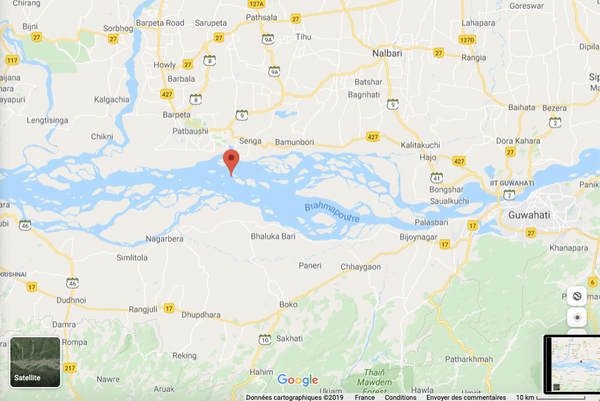
Pampara Char, one of the silt islands on the Brahmaputra river, Barpeta district, Lower Assam. Google Maps
Wild grass, thatched huts and distressed residents
The Pampara Char is a barren wasteland, with wild grass growing all over the place and houses that looked like temporary huts. The only brick building, which was freshly painted in white and blue, was the primary school. It stood distinct from the other houses and seemed sparingly used. The people, toughened by poverty and harsh ecology, were left distraught by their experience of the NRC and gathered around Harsh Mandar and other social activists to share their suffering and tales of horror about the registration process. Many had to go through repeated verification across different drafts of the list.
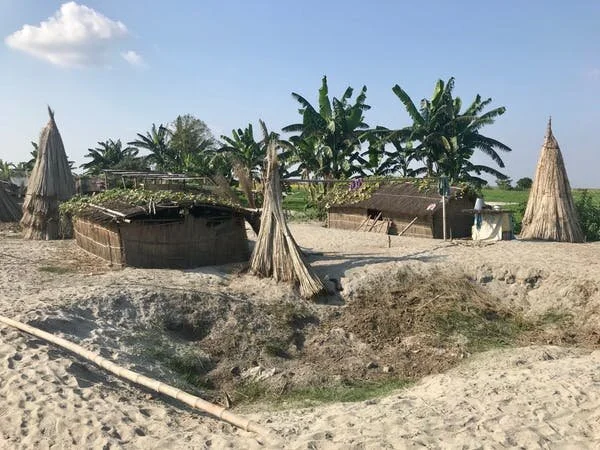
View of the fields in one of the village visited in Pampara Char. Anuradha S.Mookerjee, Author provided
I observed deep anxiety among the people we met, such as the aggrieved 54-year-old Khaled Ali. Illiterate and landless, Ali is a river fisherman who sometimes also works as a daily wage labourer. Like many others he received a notice in early August that he and his 18 other family members needed to submit more documents or they would be excluded from the final NRC list. Their names had been included in two previous versions.
A reverification hearing was scheduled for the next day in the distant town of Golaghat, which is 460km away from the Pamapara Char. Overnight, Ali raised a loan of 30,000 Indian rupees (US$424 or €383) to travel to Golaghat, with all his family members and two witnesses in a hired bus. After an 18-hour trip, they reached Golaghat and were received by local civil society activists who arranged for them to camp at a community centre and also helped them to submit their documents.
After their reverification hearing, Ali and his family members found themselves excluded in the final NRC list. While they have 120 days to appeal against their exclusion, his wife lamented that they lack the money to produce more documents from paralegals to support their cases before the appeal deadline on December 29. Meanwhile, a distraught Ali told us that he still has a loan of 14,000 rupees (US$198 or €178) to repay.
Complex documentation process
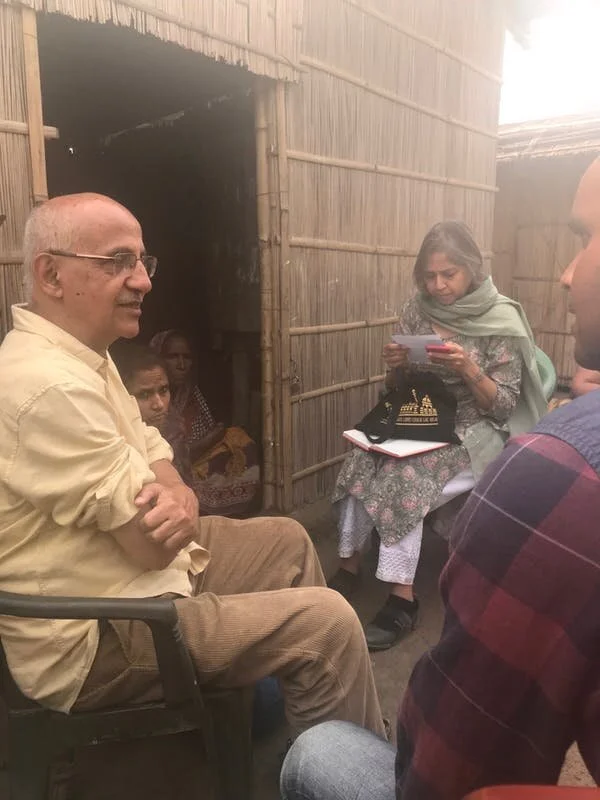
Harsh Mander and other social activists listening to the plea of the Char villagers. Anuradha S.Mookerjee, Author provided
For marginal and illiterate residents of the Chars such as Ali, the NRC and the process of proving citizenship has become a very stressful and expensive burden. As we found out during our home visits, a new parallel economy of document production has flourished. Paralegals charged anywhere between 500 to 1,000 Rupees for each document, a very large sum for these poor people.
The highly complex documentation process, which includes requirement for family trees and residency documents dating back to before March 24 1971, is also to blame for the exclusion of large numbers of people from the final NRC register. The process is extremely insensitive to the difficulties of the large mass of illiterate and poverty-stricken populations who are finding it very difficult to make sense of how to navigate registration on their own.
Processes of verification and reverification have been implemented in a way that firmly establish a hierarchical relation between the state and its citizens, with the complete domination by bureaucrats and public office holders over the rights of the citizens and residents.
‘Citizen-making’ humanitarians of Assam
Many of the marginalised populations in Lower Assam, such as Ali and his family, have needed constant support to be able to file their documents and fight their cases.
Local activists are playing a significant role in helping people deal with the burden of proving their citizenship, understanding the terminology and filling in the application forms and claims. They are also offering guidance about attending case hearings, support in procuring documents for submission from paralegals and also offering psycho-social counselling.
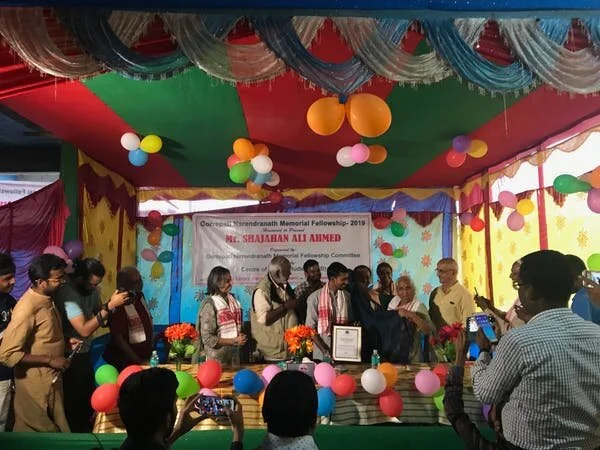
In Barpeta, volunteer Shahjahan Ali Ahmed receives an award from social activist Uma Shankari in recognition of his work helping people left out of the NRC. Anuradha S.Mookerjee, Author provided
Volunteers and human rights groups of Lower Assam have also connected with civil society actors in Upper Assam to help residents commute from Lower to Upper Assam for hearings and verification, and on some occasion even raise money, creating a solidarity network.
Such a humanitarian network is crucial at a time when marginalised people feel threatened with the changing legal regime which seeks to redefine the basis of Indian citizenship. These networks of solidarity in India’s north-eastern borderlands attempt to draw out the real Indian body politic, reinforcing the plural fabric of the Indian constitution.
Anuradha Sen Mookerjee is a Research fellow, Graduate Institute – Institut de hautes études internationales et du développement (IHEID)
THIS ARTICLE WAS ORIGINALLY PUBLISHED ON THE CONVERSATION
A Cafe Run by Heroes
The Sheroes' Hangout is a cafe in India that is operated entirely by acid attack survivors. Located a few minutes from the Taj Mahal, it is a place of self-growth and empowerment for its employees. While many of India's acid attack survivors struggle to find employment, Sheroes' Hangout offers them a job and a supportive community.
How Women Entrepreneurs are Changing Indian Society
In India, the proportion of women in paid work is among the lowest in the world, at just over 23% – a figure which contrasts sharply with the corresponding rate of over 78% for men.
Opportunities for women to enter employment in the country are limited by a range of factors. These include a dominant tradition of female domestic responsibility, and a prevailing social patriarchy.
Deeply entrenched cultural expectations mean that women are more likely to stay at home. And when they do work, it is mainly on an informal basis, without the luxury of secured wages and contracts.
Against this backdrop, the idea of female entrepreneurship in India faces major challenges. Setting up a business can require significant efforts outside of normal work times, and can lead to women being perceived as irresponsible if they dedicate time to entrepreneurial activities.
But it seems as if things may be changing. My research on women entrepreneurs in India reveals they are contesting social, cultural and family pressures to challenge the status quo in Indian society. They are also empowering other women while providing innovative solutions to major social problems.
Some of the women I spoke to greatly inspired me with their stories. One manufacturing business founder, Pinky Maheshwari, was challenged by her son to make environmentally friendly paper. She went on to create handmade paper made out of cotton that is embedded with seeds. These can then be planted and grown into trees when the paper has served its purpose.
Her award-winning ideas have won appreciation and support from the highest levels of Indian government. She is, she told me, motivated by the idea of empowering others, and “hires women from rural and small towns so that they earn a livelihood and get acknowledged for their creativity”.
She added: “I have employed largely women and I support them in any way I can.”
A similar spirit shone through other women entrepreneurs I interviewed. Padmaja Narsipur, the founder of a digital marketing strategy firm, supports women “re-starters” to join her workforce after a break in their working lives.
She said: “Women re-starters are highly qualified and committed. I have been one myself. I have built a workplace where trust in employees, giving flexible hours, work from home options, is built into the DNA and it is paying off.”
The CEO of Anthill creations, Pooja Rai has a vision to create “interactive learning environments in public spaces with a primary focus on sustainability”, by using recycled materials to build accessible play areas in remote parts of India.
These are just some of the many Indian women entrepreneurs I met who are creating businesses of real purpose. Despite the cultural obstacles, they are changing perceptions and creating innovative businesses that have a real impact on their communities and beyond.
Their work is rewriting the rules for business, families and society while challenging the mindset that there is limited scope for them to create good businesses.
With a blend of social purpose and business acumen, Indian women are embarking on a journey to change perceptions and creating prosperity for themselves and for the nation.
This is the new face of women entrepreneurship in India. And there is evidence that public policy is increasingly supportive of this transformation while society is beginning to celebrate their successes.
Indian society is gradually becoming progressively egalitarian with much needed government initiatives such as “Beti Padhao, Beti Bachao” (Save the Daughter, Educate the Daughter) designed to improve the prospects of young girls.
Improved access to social media, education, and social enterprises are all contributing to change. These are giving momentum to the aspirations of women entrepreneurs in India.
MILI SHRIVASTAVA is a Lecturer in Strategy at Bournemouth University.
THIS ARTICLE WAS ORIGINALLY PUBLISHED ON THE CONVERSATION
The Hand Of India
At the height of the Cold War, amidst growing tensions between the US and Russia, Indian Prime Minister, Indira Gandhi traveled to Washington D.C to deliver a pragmatic speech on the subjects of communication, understanding and friendship.
35 years later, with increasing polarization around the globe, her simple yet elegant message has never felt so relevant.
However, it is in India, where Indira Gandhi's message still rings most true; somehow managing to make sense of a beguiling and beautifully chaotic society, with a rich reputation of inspiring swathes of Western visitors.
Shot during a two month backpacking trip, with minimal camera equipment, this is the filmmaker’s (Simon Mulvaney) attempt to communicate the beauty of Indira's home country, along with the resonating themes she touched upon all those years ago.
India - Land of Kings
A journey across the Land of Kings "Rajasthan, India". See the wonders of Agra, Jaipur, Jodhpur & Jaisalmer through the videographer’s eyes.
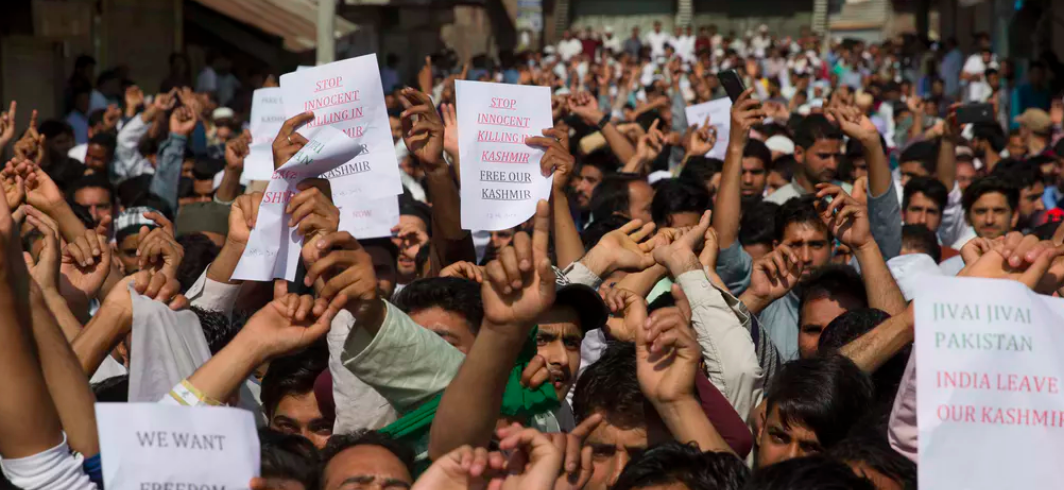
Kashmiri Muslims shout slogans during a protest after Eid prayers in Srinagar. AP Photo/ Dar Yasin
What’s Behind the Protests in Kashmir?
India recently enacted a law which will end a special autonomous status given to the state of Jammu and Kashmir, known in the West as simply “Kashmir.”
Amit Shah, India’s minister for home affairs, announced in Parliamentthat the Bharatiya Janata Party government was revoking Article 370 of the Indian Constitution in the name of bringing prosperity to the region.
Since 1954, this article has governed federal relations between India and Kashmir, India’s only Muslim majority state.
I’m a scholar of South Asian politics and have written extensively on the evolution of the India-Pakistan conflict in Kashmir.
Article 370 is woven into that history.
History of Kashmir’s autonomy
Article 370 originated in the particular circumstances under which the former prince and last ruler of Kashmir acceded to India shortly after the partition of the British Indian Empire into the independent states of India and Pakistan in 1947.
The prince, or maharaja, agreed to have Kashmir become part of India under duress. His rule was threatened by an insurrection supported by Pakistan.
Article 370 was designed to guarantee the autonomy of the Muslim majority state, the only one in predominantly Hindu India. The clause effectively limited the powers of the Indian government to the realms of defense, foreign affairs and communications. It also permitted the Kashmiri state to have its own flag and constitution.
More controversially, Article 370 prohibited non-Kashmiris from purchasing property in the state and stated that women who married non-Kashmiris would lose their inheritance rights.
Changes over time
But the independence of the Kashmiri state has been declining for decades. Beginning in the early 1950s, a series of presidential ordinances, which had swift effect much like American executive orders, diluted the terms of the article.
For example, in 1954, a presidential order extended Indian citizenship to the “permanent residents” of the state. Prior to this decision the native inhabitants of the state had been considered to be “state subjects.”
Other constitutional changes followed. The jurisdiction of the Indian Supreme Court was expanded to the state in 1954. In addition, the Indian government was granted the authority to declare a national emergency if Kashmir were attacked.
Many other administrative actions reduced the state’s autonomy over time. These have ranged from enabling Kashmiris to participate in national administrative positions to expanding the jurisdiction of anti-corruption bodies, such as the Central Vigilance Commission and the Central Goods and Services Act of 2017, into the state.
What it means for India and the world
What has happened as a result of the move to revoke Article 370?
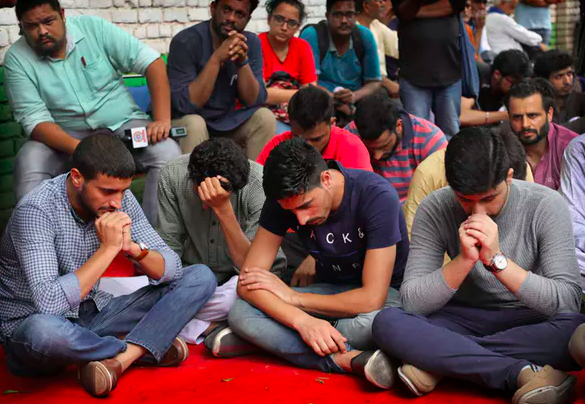
Kashmiris living in New Delhi gather for a function to observe Eid al-Adha away from their homes in New Delhi. AP Photo/Manish Swarup
Kashmiris living in New Delhi gather for a function to observe Eid al-Adha away from their homes in New Delhi. AP Photo/Manish Swarup
The decision has been met with considerable unhappiness and resentment in the Kashmir Valley, which has a Muslim population close to 97% – versus 68% of the population of the state as a whole. The government of Jammu and Kashmir, meanwhile, does not have the legal power to challenge the move.
China and Pakistan have expressed displeasure.
Pakistan has long maintained that it should have inherited the state based upon its geographic contiguity and its demography.
India and Pakistan have fought three wars over Kashmir. While I don’t believe Pakistan will initiate another war with India over this issue at this time, I doubt it will quietly resign itself to the changed circumstances. At the very least, it will seek to draw in members of the international community to oppose India’s action, as it has sought to do in the past.
China, which considers Pakistan to be its “all-weather ally,” has stated that the decision was “not acceptable and won’t be binding.”
SUMIT GANGULY is a Distinguished Professor of Political and the Tagore Chair in Indian Cultures and Civilizations at Indiana University.
THIS ARTICLE WAS ORIGINALLY PUBLISHED ON THE CONVERSATION.
Dynamic Duo: How a Lawyer Couple is Paving the Road for LGBTQ+ Rights in India
Section 377 under the India Penal Code hungover LGBTQ+ lives for years, criminalizing their very existence to exist. Lawyers Menaka Guruswamy and Arundhati Katju fought to change that—and won.

Pride flag in New Delhi, India. Nishta Sharma. Unsplash.
Since 1861, when India was under British colonial rule, there was a section of the India Penal Code that crimilized homosexualtiy as it was “against the order of nature”. In 2013, protestors fought for the code to be recognized as unconstitutional in the eyes of the law, but in a historic case titled Suresh Kumar Koushal vs. Naz Foundation, the Bench stated “We hold that Section 377 does not suffer from… unconstitutionality and the declaration made by the Division Bench of the High Court is legally unsustainable.” Although they would not mark it unconstitutional, the Bench also stated, “Notwithstanding this verdict, the competent legislature shall be free to consider the desirability and propriety of deleting Section 377 from the statute book or amend it as per the suggestion made by Attorney-General G.E. Vahanvati.” To put in more simple terms, the Bench wanted to redirect who made the decision, and stated the matter should be decided by Parliament, itself, not just the judiciary.
In 2016, the case was revisited by three Court members and they decided to pass it on to a five-member court decision. It was not until a year later when the LGTBQ+ community of India saw results. In 2017, in the Puttuswamy case, the Court ruled that “The right to privacy is implicit in the right to life and liberty guaranteed to the citizens of this country by Article 21” - a historic decision which overruled a previous case that said there is no right to privacy in India. The Court also found that “sexual orientation is an essential attribute of privacy. Discrimination against an individual on the basis of sexual orientation is deeply offensive to the dignity and self-worth of the individual. Equality demands that the sexual orientation of each individual in society must be protected on an even platform. The right to privacy and the protection of sexual orientation lie at the core of the fundamental rights guaranteed by Articles 14, 15 and 21 of the Constitution.” Essentially, they condemned discrimintion and give validity to the rights of the LGTBQ+ community.
It wasn’t until September 2018, though, when the Court ruled “in so far as it criminalises consensual sexual conduct between adults of the same sex” in the Navtej Singh Johar v. Union of India case. According to an article in the Guardian, chief justice Dipak Misra stated that “Criminalising carnal intercourse under section 377 Indian penal code is irrational, indefensible and manifestly arbitrary”. Misra goes on to say “Social exclusion, identity seclusion and isolation from the social mainstream are still the stark realities faced by individuals today, and it is only when each and every individual is liberated from the shackles of such bondage … that we can call ourselves a truly free society.”
Now, a year later, two lawyers who worked on dismantling Section 377 came out as a couple. In an interview with CNN’s Fareed Zakaria, Menaka Guruswamy and Arundhati Katju announced that they were a couple. Ms. Guruswamy stated that they fought so hard because "That was when [they] decided that [they] would never let the LGBT Indians be invisible in any courtroom".
The couple’s decision to come out was met with raved support, one user on Twitter congratulated them and added, “Personal is indeed political”. Which is true - queer people anywhere are responsible for queer people everywhere because to fight for the rights the community deserves, the community must do it as a unit, rather than individually.
Menaka Guruswamy and Arundhati Katju’s accomplishments are not limited by the strides they have made with Section 377, but also with the visibility they have given to the LGBTQ+ community - in India and across the world. They represent the strength and power the LBGTQ+ community has when they preserve despite the setbacks.
OLIVIA HAMMOND is an undergraduate at Emerson College in Boston, Massachusetts. She studies Creative Writing, with minors in Sociology/Anthropology and Marketing. She has travelled to seven different countries, most recently studying abroad this past summer in the Netherlands. She has a passion for words, traveling, and learning in any form.

Saving India’s Most Sacred River
Each year, about 8 million tons of flowers are dumped into India’s rivers. As flowers hold a sacred place in Hindu rituals, they are often thrown into the Ganges, India’s holiest river. Unfortunately, pesticides and other chemicals from these flowers are mixing with the water, exacerbating an ecosystem already plagued with pollution. Enter HelpUsGreen, an organization that has begun collecting the waste flowers and upcycling them into products like incense, soap and biodegradable styrofoam. Through the group’s efforts, they’re addressing an environmental threat while giving the flowers a new life.
In India, Grassroots Initiatives Work to Undo the Period Taboo
For many Indians, lack of access to menstrual products is compounded by entrenched societal stigma. Across the country, women are beginning to make a change.
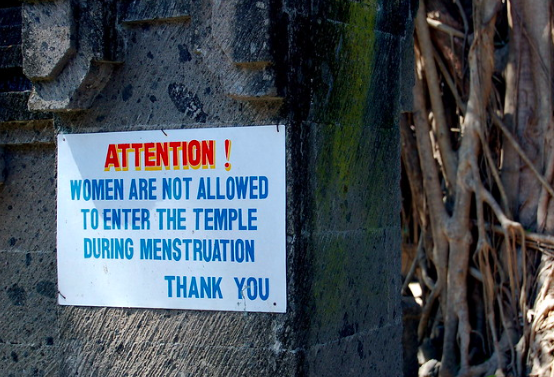
A sign in Bali, Indonesia, demonstrates stigmatization of menstruation in the Global South. dominique bergeron. CC BY-NC-ND 2.0
For most people with periods in the Western world, menstruation is something of an afterthought—annoying and sometimes painful, but easily dealt with, and far from debilitating. In parts of the Global South, however, “that time of the month” is not only a serious health concern and financial impediment but also a source of profound social and cultural tension. Over the past two years, grassroots activists have brought increased attention to the plight of menstruating women in India, and begun to envision a future in which well-being and participation in society is not dictated by one’s reproductive cycle.
Shameful attitudes toward menstruation in India are deeply ingrained, and, especially in rural areas, can be actively harmful to women of all ages. Indian women experiencing their periods can be banned from entering the kitchen and preparing food, separated from family members, and removed from religious ceremonies, sometimes on the grounds of theistic tradition: In 2018, many Indian men were outraged at a ruling by the country’s Supreme Court allowing women of menstruating age to visit Sabarimala, a Hindu temple in Kerala dedicated to Lord Ayyappa, who is seen in traditional mythology to be disgusted by the concept of female fertility. Indignation at the ruling reached a peak in January 2019, when one person died and dozens were injured in protests against the judgment.
Equally dangerous, and highly imbricated with traditional views of menstruation, is the pervasive lack of access to sanitary products, which are crucial to keeping women clean and safe during their periods. An estimated 70 percent of Indian women are unable to afford such products, with 300 million resorting to unhygienic options such as newspapers, dry leaves, and unwashed rags. Menstruation is also a key driver of school dropouts among girls, 23 percent of whom leave their schooling behind upon reaching puberty.

Cost barriers can prevent Indian women from acquiring menstrual products. Marco Verch. CC BY 2.0
In a sociocultural landscape where natural bodily functions are affecting the human dignity of people with periods, education, outreach, and access are crucial. In February 2018, Indian news outlet Daijiworld reported on one person working toward these goals: the so-called “Pad Woman” of Manguluru, who has been leading a group of young students in her southwestern port to create awareness of menstrual hygiene. The Pad Woman, Prameela Rao, is the founder of non-profit Kalpa Trust, which offers students at the Kavoor government First Grade College materials to manufacture sanitary pads for women in rural areas. The completed pads are distributed free of charge to the colonies of Gurupur, Malali, Bajpe, and Shakthinagar, obviating the need for women to purchase prohibitively expensive mainstream menstrual products. The pads are made from donated cotton clothing, which the students wash, iron, cut, and stitch to create the final product.
In the western state of Gujarat, an organization known as the Aga Khan Rural Support Program (AKRSP) is directly targeting period taboos among rural communities. Activists Manjula and Sudha told the Indian magazine The New Leam that, for the girls they have educated in the villages of Karamdi Chingaryia and Jariyavada, confusion and fear regarding menstruation have given way to confidence and clarity. For the AKSRP, which emphasizes gender equality and the societal participation of women, offering rural villagers the ability to make informed choices about their own menstrual health is key. As of The New Leam’s report in April 2019, the non-profit had reached about 60 Indian villages, providing information about sanitary pads of various designs, longevities, and price points.
While pads are a far more hygienic choice than rags or newspaper, they are not the only option: Back in Manguluru, two German volunteers have initiated a menstrual cup project known as “a period without shame.” In their pilot run, Nanett Bahler and Paulina Falky distributed about 70 menstrual cups free of charge to Indian women, as well as leading workshops on effective use for recipients. The cups, which are made of silicone and emptied around twice per day during one’s period, can be used for up to 10 years, making them a hygienic, eco-friendly, and potentially more affordable option for people of all ages.
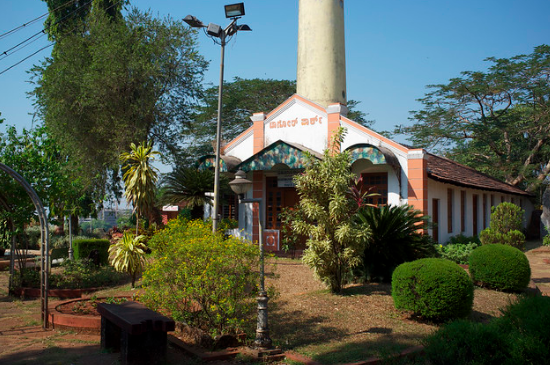
Manguluru, where Indian and German activists are working to provide menstrual products. Aleksandr Zykov. CC BY-SA 2.0
Such grassroots efforts have been instrumental in chipping away at stigma among Indians in certain cities and villages, but broader change is unlikely without widespread publicity. One potential avenue for increased awareness is the newly released documentary Period. End of Sentence., which follows rural Indian women in their battle against period stigma. To create the film, Iranian-American director Rayka Zehtabchi visited small villages outside of Delhi to inquire after women’s menstrual health, and shot extensive footage of women who have learned to create their own sanitary products. The diligent pad-makers, many of whom are housewives who have never before held a full-time job, sell their creations to locals in their area, educating women on proper use and convincing shop owners to stock the products. By the end of the time span covered by the documentary, the women had set up a factory and manufactured 18,000 pads, earning economic self-sufficiency for themselves and an Academy Award nomination for Zehtabchi.
The work of these Delhi entrepreneurs, along with that of the AKSRP and Pad Woman Prameela, has made a positive difference for countless people—but, according to Mumbai-based journalist and author Puja Changoiwala, education and access must rise above the grassroots level and reach the legislative in order to create enduring change in attitudes toward menstruation. In a piece for Self, Changoiwala suggests that the Indian government should distribute free pads and launch an “aggressive nation-wide awareness program,” engaging celebrities and the press to address the dire consequences of long-held stigma. For anyone in India with a period, such a moment cannot come soon enough.
TALYA PHELPS hails from the wilds of upstate New York, but dreams of exploring the globe. As former editor-in-chief at the student newspaper of her alma mater, Vassar College, and the daughter of a journalist, she hopes to follow her passion for writing and editing for many years to come. Contact her if you're looking for a spirited debate on the merits of the em dash vs. the hyphen.

In India, Using Plastic Waste as Tuition at a New School
A school combines accessible education with environmental responsibility through a creative program.
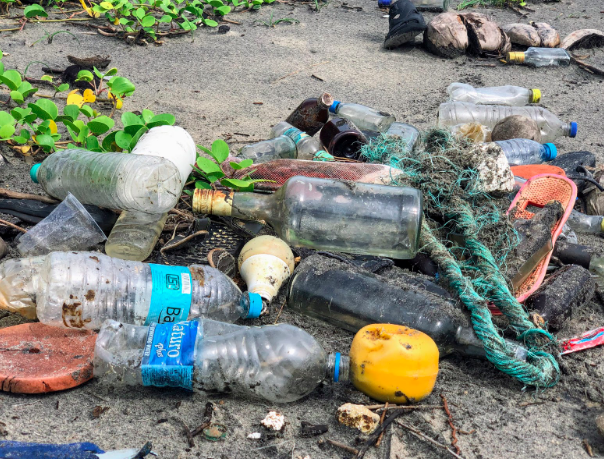
Photo of plastic waste by John Cameron on Unsplash.
In 2016, Parmita Sarma and Mazin Mukhtar founded Akshar School in Assam, a state in northeast India. Initially, the school struggled to enroll many of the children living in the area. Most families could not afford private school tuition, and relied on the $2.50 per day wage their children could make working in the nearby stone quarries.
In the winter months, many families in Assam burned plastic waste to keep warm, unaware of the health and environmental hazard this created. The fumes would often linger in Akshar’s classrooms, and ended up giving Parmita and Mazin the idea that would transform the school.
Instead of tuition, Akshar began requiring students to bring 25 plastic waste items to school every week. “We wanted to start a free school for all, but stumbled upon this idea after we realised a larger social and ecological problem brewing in this area,” Parmita told Better India.
Through the use of plastic waste as tuition, students who would not have been able to attend the school were able to learn, and the surrounding environment benefitted. Under the new tuition system, the school blossomed, and now enrolls 100 students ages 4 to 15. Before the tuition program was implemented, Akshar had only 20 students.
To compensate for the wages that children could be making working in the mines, Akshar established a tutoring program, where older students can help younger ones with their work in exchange for currency tokens that can be used to purchase snacks, toys, shoes, and clothing. The students can even exchange the tokens for real money to purchase items online. But financial compensation isn’t the only rationalization for the tutoring program. Through teaching, older students are able to develop useful life skills, practicing communication, leadership, and compassion.
Tuition isn’t the only unusual aspect of the school. Parmita told Better India that the goal of the school is to break with traditional curriculum. Students take class in open areas, and grades are divided by level rather than age.
“We realised that education had to be socially, economically and environmentally relevant for these children,” Mazin told Better India. That would mean not only providing an accessible education, but one that would enable children to find jobs after graduation. To this end Akshar offers career focused classes alongside traditional ones, enabling students to gain skills in cosmetology, solar paneling, carpentry, gardening, organic farming, electronics, and more. The school is also willing to adapt to create the best education for its students. Mazin told Better India that when the school noticed a spike in landscaping in Assam, they began to draft plans for a sustainable landscaping course.
Mazin and Parmita’s success with Akshar has inspired them to create more schools that follow the same philosophy. They hope to implement the Akshar model in 5 government schools over the next year, and 100 government schools in the next 5 years.
Emma is an undergraduate student studying English and marketing at Emerson College in Boston. While not writing she explores the nearest museums, reads poetry, and takes classes at her local dance studio. She is passionate about sustainable travel and can't wait to see where life will take her.

Gateway to the Ganges
Daily life in the Indian holy cities of Rishikesh, Haridwar, and Devprayag. This region lies in the foothills of the Himalayas where the Ganges River descends from the mountains. I visited not knowing what to expect, and I was both awed and saddened by the experience. The beauty of nature and the Hindu ceremonies contrasted with the poverty and suffering on the streets. The people I met had a high-spirited resilience that seemed to stem from surviving and maintaining their devotion through a challenging life.