Bridging the Inequality Gap for Panama’s Darién Province

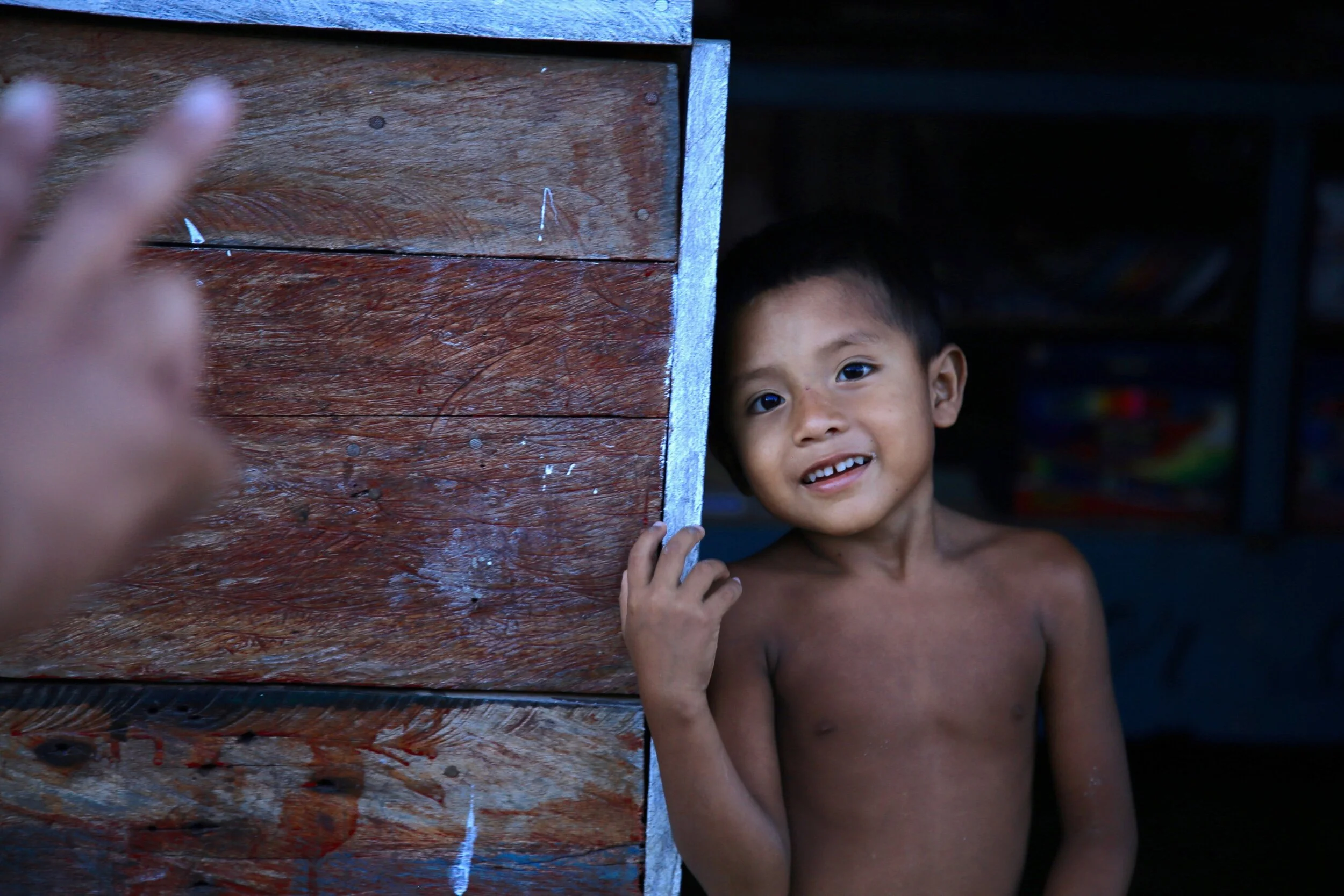
Photo by Katie Chen on Unsplash

The Gallup-Healthways Global Well-Being Index has ranked residents of Panama as the leaders in “well-being” for two consecutive years. However, three weeks in communities of the Darién province exposed me to the destitution and gubernatorial neglect that blankets this eastern region. Inhabitants of the Darién have been stigmatized, leaving them without access to clean water, health care facilities, or economic opportunity. My experience led me not only to question the validity of the Index, but also to consider the ways we can empower a forgotten sub-population.

“A little further down the road, you’ll find that it comes to an end,” my local Panamanian guide remarked while en route to the compound where we reside for the following three weeks. At the time, the idea of a place with no road was beyond comprehension. How could people stay connected? How could they receive supplies? The answer to these questions is simple —they don’t.

Soon after arriving in Panama, I began to comprehend the “Darién Gap” which is a 99-mile swath of undeveloped swampland and forest located within Panama’s Darién province — a symbol of the many development projects that have been discontinued in the region over the past decades. I found that the double-edged sword of indigenous isolation offers cultural preservation on one side, clean water and healthcare deficiencies on the other.

The border between Panama and Colombia is the only one in the world that remains unpaved! While the decision to stop construction of the Pan-American Highway provided benefits to some groups, such as law enforcement officers against drug traffickers and indigenous inhabitants of the Gap who wish to preserve a traditional lifestyle, it also resulted in neglect of an entire region. With the fastest-growing economy in the Americas, Panama now has an opportunity to improve the quality of life for all of its citizens. Yet, despite the recent boom, the nation has the greatest economic inequality in the Americas with nearly 40 percent of the country living in poverty. Many of those who endure economic destitution live in the eastern half of the country, particularly in the Darién. 
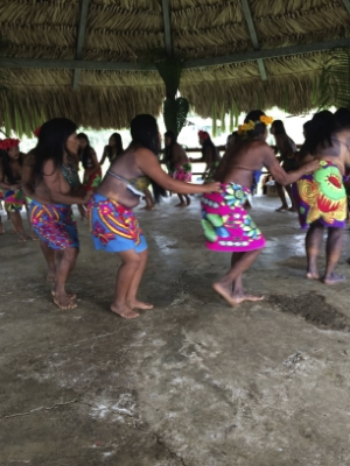
My three weeks in Panama were dedicated to community visits throughout this beleaguered province. We met with officials and members of individual households, and conducted surveys to determine the accessibility to fundamental necessities, such as clean water, health care, and education. I was an intern for a nonprofit based in Panama City, but which conducts most of its projects with American undergraduates serving communities of the Darién. This nonprofit creates partnerships with communities located in proximity to a road or a rocky pathway that Panamanian officials call highway. More indigenous groups are sheltered within the Darién Gap, undisturbed and unacknowledged.

According to community members who responded to our surveys in July 2014, lack of access to clean water is the main problem affecting daily life for an appreciable number of residents in the Darién province. Although the Panamanian government’s Ministry of Health is responsible for water distribution by means of aqueduct systems, complications such as project incompletion, water shortages, pipeline damages, and contamination from pesticides/animals inhibit achievement of the goal. Residents described complex, inconsistent, and seasonally based methods for receiving water. In the past, families might go two months without water when a government-constructed pipeline to a water tank is broken. When water finally arrives, it will sometimes come out dirty or contaminated from passage through farmland. 
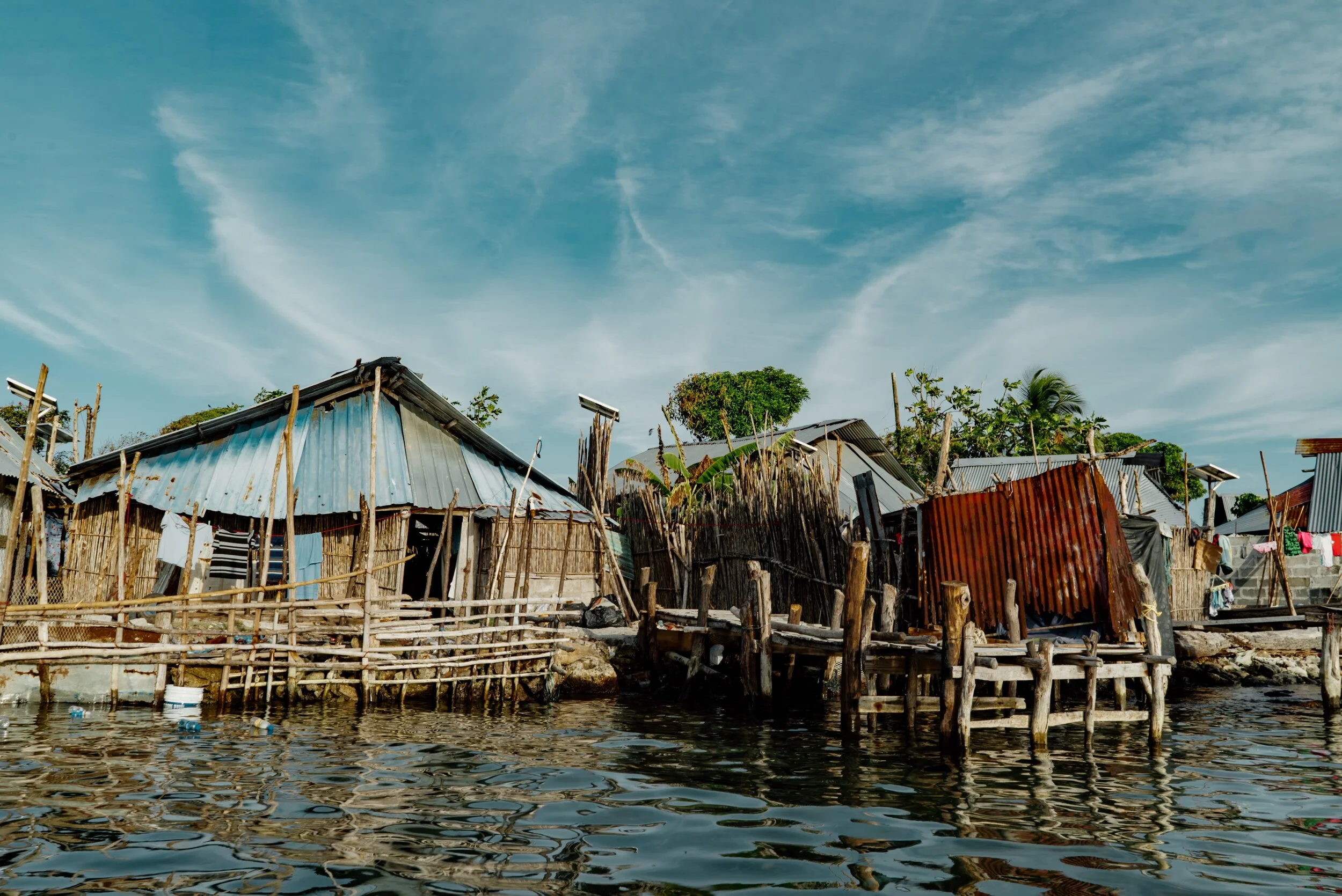
Observation and conversation with members of various communities taught me that collaboration between locals and external, resource-rich groups has been a driver for successful growth in this area. Yet, one person I met described the Darién province as “the temple of abandoned development projects” for the number of missionary and nonprofit groups that have attempted and failed to provide assistance to families in the greatest need. In an indigenous community named Emberá Puru, I noticed little blue water filters strewn about the property. The leaders explained that a missionary group had provided over 100 filters, but not explained how to use them. The group left after a week of what could be described as “voluntourism” — volunteering abroad that resembles a tourism opportunity — and the community was left with pieces of plastic polluting the land.

The neglected Darién province is not a unique case. Panamanians from other parts of the country (like Panama City) expressed surprise and/or distaste when my group revealed we were working in this eastern region. These people hold onto misconceptions, such as the idea that the Darién is filled with dangerous members of drug cartels or that it’s a completely unlivable swampland.

While the “Darién Gap” might lack a constructed road, the population of this area has done its best to overcome deficiency through resiliency. When a government or its people show indifference toward improving the lives of an entire population sector, outside measures need to be taken to reduce inequality. However, these outside measures should also be performed through culturally conscious and responsible mechanisms in order to achieve sustainable success. No clear-cut solution exists to resolve problems such as clean water, healthcare, and education inaccessibility in the Darién province, Panama. However, creative and collaborative efforts have the power to mediate substandard conditions and to catalyze change one household at a time.


SARAH SUTPHIN

Sarah is an undergraduate at Yale University and a content editor for CATALYST. As a traveler who has visited 30 countries (and counting!), she feels passionate about international development through sustainable mechanisms. Sarah has taken an interest in the intersection between public health and theater, and hopes to create a program that utilizes these disciplines for community empowerment. She is a fluent Spanish speaker with plans to take residence in Latin American after graduation. 

A Criminal State of Affairs

THERE ARE ENOUGH LAWS TO TACKLE IT.

THEN WHY IS UNTOUCHABILITY STILL PERPETUATED?

Ten Years ago, I started on a journey to document practices of untouchability across several states and religions of India. 25,000 kilometres, 9,000 minutes of footage and four years later, I put together a documentary called India Untouched. The main reason for making this film was to challenge the belief of most Indians that untouchability is a thing of the past.

In the years since the making of that film, little has changed. We still receive reports of barber shops refusing to shave Dalits. Homeowners unwilling to rent their houses to Dalits. Children segregated and discriminated in schools, women not allowed to draw water from wells, families pushed out of temples. Segregated mosques, churches, even crematoriums. Pervasive violence aimed at those who challenge caste discrimination. Social and economic boycotts for those who dare to transgress caste boundaries. Newly-weds chased and killed because they chose to marry outside their own caste. Rapes. Acid attacks. The list goes on shamelessly.

What is more shameful is that these practices are manifestations of a belief that views certain castes as nothing but an impure sect, which should remain servile and accepting of its lesser status. Our failure is to see this belief as endorsing of and perpetuating criminal behaviour.

Article 17 of the Indian Constitution states that “Untouchability is abolished and its practice in any form is forbidden. The enforcement of any disability arising out of untouchability shall be an offence punishable in accordance with law.” However, society continues to look at untouchability as a social given, grounded in ‘tradition’. Instead, we should see such practices for what they are: criminal acts. If your house were burgled, you would expect the case to be treated as a criminal act/offence. Such a luxury is not afforded, however, to Dalits facing discrimination and persecution. The laws in place to address the scourge of caste-based discrimination may be progressive, but the mechanisms that exist to enforce legislation are regressive.

A large part of the problem is that law enforcement agencies operate in a reactive rather than a proactive manner. Despite the prevalence of caste-based behaviour leading to untouchability (criminal offences) these agencies wait for an aggrieved party to file a complaint — and report violation of Article 17 — rather than do their job in enforcing the law. How else does one explain the fact that police stations and courts have not taken any suo moto cognizance of these everyday events? How else can we understand that there are no public or government campaigns to remind citizens that untouchability has been abolished, and that those practicing it will be treated as criminals? In order to fall in line with the shifted morality and ethics of our time, we need a strong and proactive law enforcement mechanism. We do not have this in India.

On 14 April 2012, we launched a campaign at Video Volunteers (a media and human rights organisation) to draw attention to the issue of untouchability. To date, we have collated 30 videos that document breaches of Article 17. Together with the videos, we collected 2,800 signatures that were sent to the National Commission for Scheduled Castes (NCSC) with an appeal that the videos be taken as evidences of offences, and that those involved be prosecuted. Despite submitting the petition and video evidence twice over, we have not received any sort of acknowledgement — let alone action — from the NCSC. We have now sought answers with an application under the RTI Act. It’s a sign of the times when one needs to file an RTI with the institution responsible for protecting the rights of Scheduled Castes, just to find out what is going on.

As a society, when we hear about untouchability practices, we should feel outraged, as we would with other criminal acts like murder and rape. It’s time we accepted that the practice of untouchability is not the vestigial remains of some backward, social phenomenon or tradition: it’s a criminal offence. Let’s start calling it what it is.

ORIGINALLY PUBLISHED IN TEHELKA.COM


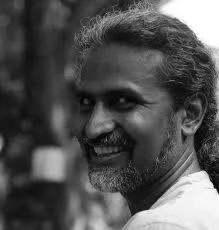
Stalin K. 

@stalink 

Stalin is the Managing Trustee of Video Volunteers India. He is a leading voice in the community media movement in India (including as co-drafter of the government’s recent community radio policy), a human rights activist focused on issues of caste and communal violence, an award-winning filmmaker (screened at Hamptons and winner of the Mumbai International Film Festival and Indo-american Arts Council Film Fest in NY, Earth VIsion Film Festival, Tokyo), and a sought after trainer and guest lecturer in media and human rights at universities around the world. He has produced 25 films on development issues, set up two community radio stations, designed a dozen rights-based campaigns, and conducted over 300 training workshops. Stalin has worked with more than 100 NGOs and regularly distributes his films to over 1000 groups, placing him at the heart of India’s NGO networks.

I Met Bashar Al Assad. He Was Pretty Cool.

In May of 2008, as a 24-year-old student at Harvard's Kennedy School of Government, I went on a two-week, student-led trip to Lebanon and Syria. As part of that trip, we had unprecedented access to Bashar Al Assad and his wife Asma.

The 20 of us on the trip stayed in a boutique hotel in downtown Damascus, a dusty stones' throw from the massive Umayyad Mosque, dating back to the pre-Christian days of Aramea. We spent the first day exploring the chaotic, ancient city. Conde Nast would a year later call Damascus a must-see destination, and our hotel was on their recommendation list.

My family is half Turkish Jews, and a few of my friends and I made our way to the Jewish quarter, where I connected with a group of Jewish Syrians whose families had been living there since the days of Jesus. We took a photo together underneath the domineering gaze of Bashar, his father Hafez, and the early Jewish scholar Maimonedes. The elderly Jewish men and women showed us thousand year-old Torah scrolls, and they described how they felt safe as a tiny minority in a land dominated by Islam. Under Bashar Al Assad, Syrian citizens of all stripes traded privacy for security. These people were oppressed, but they were free and safe to practice their religion openly -- not the case under many other regimes. But the silence and fear were palpable. The oppression showed in their tight smiles, and in the hardened stares behind their eyes.

The morning we met Bashar and Asma, we all put on suits and ties, and boarded a private bus. Surrounded by armored SUVs and stiff looking dudes on 1200 CC motorcycles, we rumbled our way out of downtown Damascus, and up to Bashar's palace. Perched on top of a nearby mountain like a dictatorial acropolis, we passed through multiple checkpoints as we ascended a deserted four-lane road that felt more like a military runway than a driveway. All 20 of us sat in hushed silence as the enormity of both the building, and this opportunity, dawned on us.

The country's more recent past was grim. Bashar's father, Hafez Al Assad took power in 1970. For the next 30 years, he ran the country as if he had trained in the school of torture, death, and oppression. He was an Alawite, a religious minority. He handled the Sunni majority like a sadist. In 1982, he put down a Muslim Brotherhood uprising in the city of Hama by indiscriminately slaughtering 20,000 of its men, women, and children. He then paved over their mangled and mixed remains with concrete in order to avoid being charged with war crimes.

Bashar was studying ophthalmology in London in 1994 when his older brother, the heir to the presidency, died in a car accident. Hafez called Bashar back from the UK, expedited him through the country's military schools, and prepared him to inherit the realm. At Hafez's death in 2000, Bashar became president. His wife Asma Al Assad was generally referred to as a "bright," "energetic," "fashionable," "smart," and "modern" woman. She was born in London to a Syrian cardiologist and his diplomat wife, she drove herself everywhere (rare for a first lady in a conservative regime), and she turned down Harvard Business School (my alma mater) to marry Bashar.

Since taking power eight years prior, Bashar and Asma had done zero non-Arabic interviews. They almost never left Syria. And they certainly had never sat down with a group of American, European and Asian Harvard students prepped to the nines with tough questions. This was an unprecedented opportunity.

We pulled up to Bashar's palace. The structure looked like an enormous Arabian genie had mashed together the Pentagon, Disney's Aladdin, and Saddam Hussein's architectural wet dream. A Middle Eastern Ivan Drago with perfectly coiffed hair dressed in a five thousand dollar custom suit greeted us as we got off the bus. The guy could have been a male model or top-flight investment banker, but I could see the bulge of some weapon system underneath his suit jacket. He calmly asked us to follow him, and our group of 20 wandered into the entrance. No pat down, no metal detector. We just strode right in.

The building was designed by famed Japanese architect Kenzo Tange. The foyer was the size of a football field, with a 10-story gold inverted bowl chandelier hovering over what looked like a school bus-sized terracotta volcano. Eighty-foot tall marble columns reflected off the mirror smooth floor. Ornate tile patterns adorned the walls, and at the far end of the foyer 30-foot-tall bronze doors were shut tight. You couldn't imagine a more perfect dictator's lair.

We were ushered into a side room, all marble, mother of pearl, and intricate tile. Our 20 seats were aligned on two sides of the space, and at the head of the room were two mahogany upholstered thrones. Above the thrones hung a six-foot-tall imperial eagle, also carved out of mahogany. We were served bottled water and some sort of juice from concentrate, but before I could take a preservative-riddled sip, there he was. We all stood as Bashar Al Assad entered the room.

He strode to the thrones, shaking hands with all of us along the way. Smiling, saying "Hello, thank you for coming, nice to meet you" in his nerdy, unobtrusive, borderline lisp. He took his seat.

We spent the next two hours asking him every possible question we could imagine. We started off friendly, asking about development goals, banking reforms, gross domestic product, international trade, and his family. Bashar talked about democracy, raising three children, missing London. We then started playing rough.

"How can you in good conscience preside over a brutal intelligence apparatus?"

"What was your involvement in the murder of Raafik Hariri in Beirut?"

"Why do you support Hezbollah?"

"What is your relationship with Iran?"

We were not friendly. We were downright confrontational.

And he responded to every question with measured, well-reasoned, very convincing answers. He was straight up amazing. He parried our hardest punches, he acknowledged the massacres and pain caused during his father's era, and he eloquently laid out his vision for a reformed Syria, for a modern, healthy, happy Syria. We ate it up.

Two hours into our inquisition, as we lost our venom and began to come around, he brought in Asma. She was beautiful. She wore a fashionable dress that looked like it was made from strips of marble and cloud. She sat in the other throne next to Bashar, and she too answered our questions. She spoke about her passion, the future youth of Syria, bringing Syria's magnificent culture into the twenty-first century. She spoke with an enchanting British accent, about her plans to open local development centers throughout the country, where she would extend education and extracurricular support to the millions of her citizens who needed her help.

We all left the session thrilled. There was hope! These were enlightened monarchs! They just needed to get their story out to the world!

And then, the icing on the cake -- he invited us all to his private box at the opera. That evening we kept on our suits and ties, and we attended the Syrian National Symphony Orchestra's Annual Gala Concert. Bashar and Asma were announced, we all rose, and then our "delegation" from Harvard was announced to the crowd of several thousand in the gilded opera hall. We were all enchanted.

In May 2008, there was no way of knowing that the Arab Spring would erupt, and that it would take down the dictators of Tunisia, Libya, and Egypt. There was no way of knowing that Assad, the nerdy ophthalmologist with a long neck and bad mustache, would kill reportedly over one hundred thousand of Syria's citizens. There was no way of knowing that he would launch SCUD missiles, and chemical weapons, at his own people. There was no way of knowing that he would torture hundreds of thousands more, many of them children.

As Joan Juliet Buck reported:

On April 29, 2011, a chubby 13-year-old boy named Hamza Ali al-Khateeb was arrested during a protest in Saida, near Daraa. On May 24, Hamza's mutilated body was returned to his parents. The report by Al Jazeera said: "The child had spent nearly a month in the custody of Syrian security, and when they finally returned the corpse, it bore the scars of brutal torture: lacerations, bruises and burns to his feet, elbows, face, and knees. Hamza's eyes were swollen and black and there were identical bullet wounds where he had apparently been shot through both arms, the bullets tearing a hole in his sides and lodging in his belly. On Hamza's chest was a deep, dark burn mark. His neck was broken and his penis cut off."

Today I wonder about Asma and Bashar Al Assad. The friendly, smart, kind parents who cared so much about the youth and future of Syria. The English accent, and the unobtrusive lisp. How could they not know what was happening? How could they stand by and do nothing while the Syrian regime mutilated the future?

I'd like to think that Bashar has no power, that it's really his generals who have wrested all control and are tearing apart that beautiful ancient land. I'd like to think that I'm a better judge of character. I'd like to think that there is a part of this story that I'm missing, something that ties it all together so that my time with Bashar Al Assad and his wife makes sense.

But that's not the case. We were duped by a monster.

ORIGINALLY PUBLISHED IN THE HUFFINGTON POST.


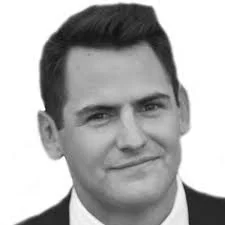
NICK TARANTO

@NickTaranto

Nick is co-founder of Plated.com where he runs all non-technical aspects of the e-commerce gourmet recipe kit delivery business. Nick graduated from Dartmouth College and then started a microfinance institution in Central Java, Indonesia while on a Fulbright grant. Nick is a US Marine Corps infantry officer, and has spent time consulting with McKinsey & Co and as a private wealth advisor with Goldman Sachs. He received his MPA and MBA from the Harvard Kennedy School and Business School. He has six brothers and sisters, is married, and loves peaty whiskey and esoteric endurance sports. 

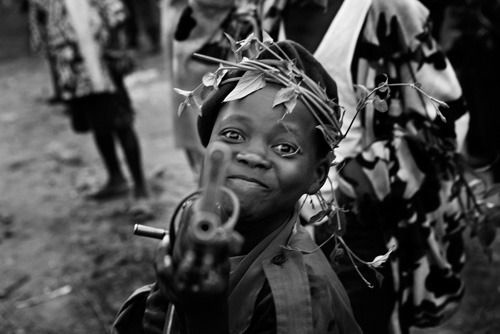
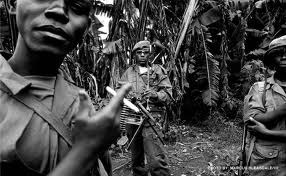
Conflict Zones Through The Lens of Marcus Bleasdale

“This is an exciting time for digital storytellers.”

Truer words have never been spoken. But in the spirit of the commencement of this year’s Social Good Summit, it should be noted that these storytellers also hold a great responsibility to the masses. As a distinguished photographer, Marcus Bleasdale embodies this sense of responsibility in his coverage of conflict areas around the world through the medium of his trusted camera lens. Over the past 15 years, the region of the Democratic Republic of Congo (DRC) has captured his steady attention.

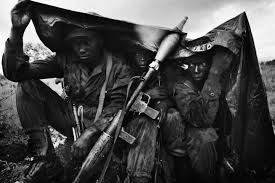
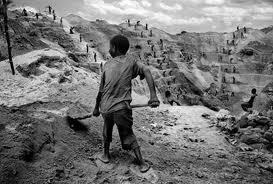
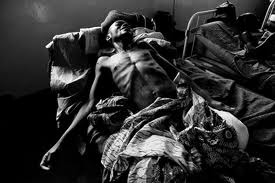
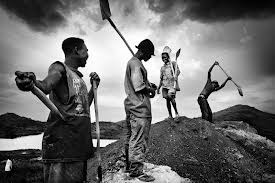
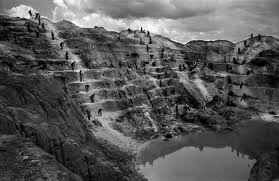
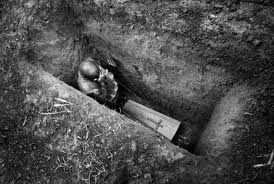
Throughout his time working within the DRC, Bleasdale has gained a first-hand perspective into a nation that, while rich in minerals, has been coerced into a haunting reality of violence, disease, poverty and profound injustice. Children are stripped of their adolescence, forced into militant lives plagued by mindless violence at the behest of their devious superiors. Families are torn apart, displaced, and involuntary bare witness to the perils of life within the misleading comfort of their own backyards. 
More

As the conflict within the borders has continued to run its rampant course over the past 15+ years, 2 million Congolese natives have been displaced, 40,000 women fall victim of sexual violence annually, and over 5.5 million deaths have been recorded as a result of rampant disease, and violence throughout the region. In his Keynote adderess to the Social Good audience, Bleasdale stressed that these are simply the statistics; his images however, are what interpret the reality.

An important distinction however, is how Bleasdale goes about creating a narrative of an area so riddled by conflict for decades. He goes into depth about how he works to construct such a narrative in saying:

“For me, I’m trying to engage in order to enhance the narrative that I’m trying to tell. There are many different aspects of the story to engage with - the mind, the child soldiers, the sexual violence, displacement, horrific health issues that have spread through the DRC. I have to touch on each one of those in each unique situation to try and engage with a subject in a way that will truly hone the message that this should stop.”

He delves deeper in his philosophy toward photojournalism in conflict areas, stating, “Every image cannot be misery, and should not be so difficult to look at that you want to turn away. You have to also try to look for the beauty, and the hope, to show the opportunity that is available that has not necessarily been seized.”

Having covered the Democratic Republic of Congo for more than 15 years now, Bleasdale’s knowledge and wisdom towards his craft should be respected. As for his advice for the brave soul aspiring to photojournalism of this nature; one word came to mind, patience.

“Everything takes time, especially when working within the areas I have. In relation to my work in the DRC, you can’t tell that story in a week, a month. I’ve been telling that story for 15 years now and still I don’t think it’s finished, because it’s still going on.“

An award-winning photographer who has been heralded by the US House of Representatives, The United Nations and the House of Parliament in the UK, Bleasedale will undoubtedly continue to be a respected voice within the realm of photography, specifically within regions of conflict.

He can be followed on twitter @marcusbleasedale.


ANDREW BRIDGE @Bridgin_TheGap

Andrew is Editor-in-Chief of CATALYST's Social Good Summit Daily, and Managing Editor of CATALYST. He is a global enthusiast with a passion for the road less traveled. As a frequent collaborator with World Hip Hop Market and Nomadic Wax, Andrew has worked with numerous socially conscious artists from around the world in the pursuit of inspiring cultural understanding and exchange through entertainment. This fascination with the world at large has taken him to over 20 countries (so far) through studying, volunteering, and writing about his travels, with no signs of slowing.