France Banned Food Waste in Supermarkets

Millions more meals can reach those who need them.

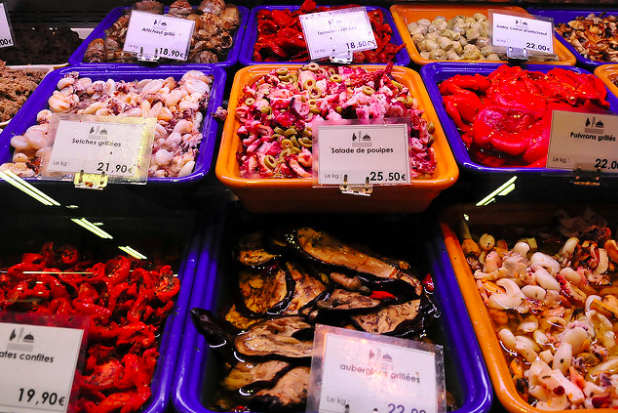
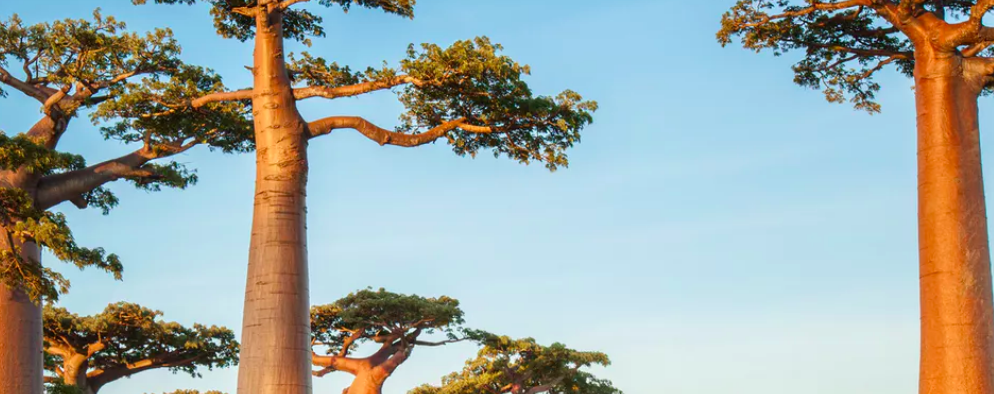
Produce at a market in Nice, France. M-Louis. CC BY-SA 2.0.

In 2016, France banned supermarkets from destroying or discarding unsold food products, requiring them to donate instead to food banks or local charities.

The law was written by Parliamentarian and former food industry minister Guillaume Garot, who believes that food waste is a national health and safety issue, akin to wearing a seatbelt. The campaign itself was the product of a grassroots movement by anti-poverty and food waste activists which eventually became a petition, lead by local councillor Arash Derambarsh.


Now that food waste has been outlawed in French supermarkets, Derambarsh has set his sights on European and ultimately global policy revisions around the issue. “Food is the basis of life, it is an elementary factor in our existence,” he told the Guardian.

While Derambarsh became a councillor to help people, he reports being called “naive and idealistic” because of the policy he hoped to implement surrounding food waste. “Perhaps it is naive to be concerned about other human beings, but I know what it is like to be hungry,” he said.

“When I was a law student living on about €400 a month after I’d paid my rent, I used to have one proper meal a day around 5pm. I’d eat pasta, or potatoes, but it’s hard to study or work if you are hungry and always thinking about where the next meal will come from.”

Now, grocery store managers in France with a 400 sq meter or larger footprint must sign contracts with local charities and food banks promising their edible expired items, or face a €3,750 ($4,500) fine per infringement.

According to Jacques Bailey, head of Banques Alimentaires, a network of french food banks, 5,000 charities rely on food banks, who in turn, receive almost half their donations from grocery stores. Under the law, these food banks are receiving larger amounts of better quality food products, enabling them to better reach the the people they serve. According to Bailey, an increase as small as 15% in donations from supermarkets will result in 10 million more meals served every year.


And yet, required donations are not the only way that France is fighting food waste. In 2014, Intermarche, one of the country’s supermarkets began selling produce that was deemed too “ugly” to sell at other markets. These “ugly” or misshapen produce are perfectly safe to eat, but have blemishes make them less marketable to consumers, resulting in their disposal before even seeing the grocery store isles. This initiative is particularly effective, as fresh fruits and vegetables are the most difficult items for charities and food banks to come by, and are necessary to a healthy diet. Intermarche’s initiative reached 13 million people after only one month of being implemented.


About a third of food produced is wasted worldwide. France has narrowed the food it wastes to 66 pounds per person every year. In comparison, Americans waste 200 billion pounds of food per year - 40% of all food produced in the country. The waste problem in America is partly due to the lack of regulation surrounding expiration dates, which are often selected at random and do not always reflect when items are safe to consume.


The rest of the world has a lot to learn from France’s policy. NPR writes that communities and governments worldwide are now reaching out to Garot, hoping for information that would help them reproduce France’s law in their own countries. Ultimately this change needs to be made, because, as Garot emphasized, supermarkets are not just businesses, they are places where humanity must be respected.


EMMA BRUCE is an undergraduate student studying English and marketing at Emerson College in Boston. While not writing she explores the nearest museums, reads poetry, and takes classes at her local dance studio. She is passionate about sustainable travel and can't wait to see where life will take her. 


Mask off: How Beijing is Managing its Smog Problem

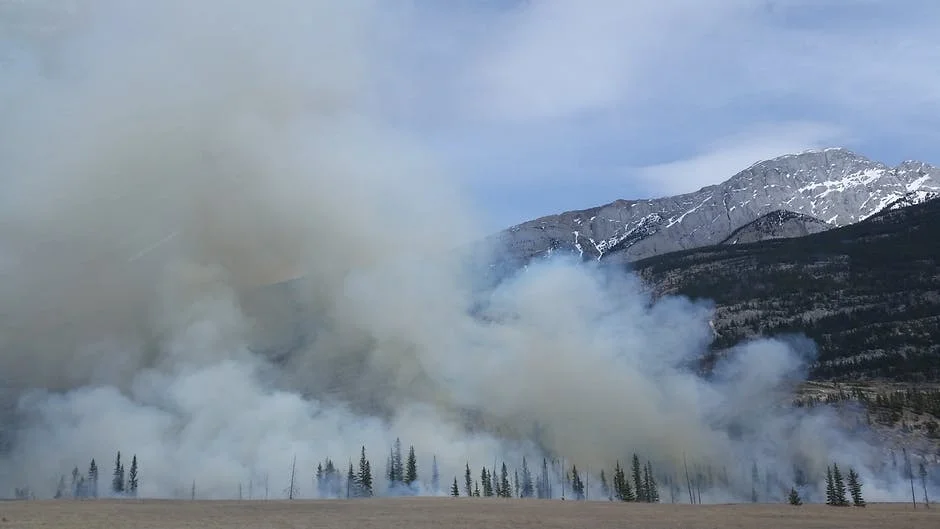
Earlier this month, California made national headlines when the worst wildfire in the state’s history covered parts of it in smoke, creating yet another worry for citizens already vexed by the high cost of living and rising homelessness. Some news stations, hoping to illustrate the seriousness of the matter, stressed that the air quality in California was “worse than Beijing’s,” an announcement that prompted many locals to don the air masks that one often sees in images of the Chinese capital. In media, locally, and abroad, Beijing has become synonymous with bad air. The internet is peppered with images of skyscrapers draped in brown or grey fog. But recent efforts by the government have made some headway in the battle with Beijing’s notorious smog and could give us insight into how to battle this problem at home.

A smoggy day in Beijing. By 螺钉 - Own work, CC BY-SA 3.0, https://commons.wikimedia.org/w/index.php?curid=24944427

Those who have been to Beijing know that air quality is but one of many dangers; crossing an intersection can be like an action movie at times and drinking water out of the tap is generally a bad idea. Smog, however, is the issue most often associated with Beijing in the media. Fortunately, Beijing is aware of its reputation and has taken steps over the last few years to improve its air quality. The city has pledged to shut down 1000 manufacturing factories by 2020 to help reduce smog. It is also experimenting with new technology. Early last year Beijing employed the use a solar-powered air vacuum to help clean up the city’s air. Developed by Dutch designer Daan Roosegaarde, the Smog Free Tower sucks up 30,000 cubic meters of polluted air per hour. The air is then cleaned at a nano level and released back into the city. In a particularly bold move, Beijing's government is investigating the possibility of switching from coal to natural gas as the primary source of heating for millions of households. This shift will be implemented gradually, as concern for the well-being of Beijingers during the winter months supersedes the need for cleaner air.

Dan Roosegaardes's Smog Free Tower. By Bic - Own work, CC BY-SA 4.0, https://commons.wikimedia.org/w/index.php?curid=47801218

People can change, and ideally, their reputations will change as well. Beijing’s efforts to clean its air shows an environmental consciousness that contradicts its reputation as a dirty industrialized city. As smog becomes a more recurrent issue in cities and courtiers around the world, communities that once judged China for its smog may get to learn a thing or two about how to fight it.


JONATHAN ROBINSON is an intern at CATALYST. He is a travel enthusiast always adding new people, places, experiences to his story. He hopes to use writing as a means to connect with others like himself. 

The Cape Town Water Crisis: Delaying Day Zero

In the Broadway musical Urinetown, people line up to use the toilet because a 20 year old drought has made private toilets a thing of the past. And when the protagonist rises up finally and allows unrestricted toilet use, the water supply completely evaporates. The final scenes ominously hint at more worrisome issues for the citizens, who, once concerned only with toilet use, most grapple with dying of thirst among other problems.

Although Urinetown is a satire, residents of Cape Town might see it as a scary prediction of their future if Day Zero arrives. As apocalyptical as it sounds, it does accurately embody the looming doomsday scenario: Day Zero is when the taps run dry. How? An unexpected three year drought, starting in 2014, drastically depleted the six dams that serve Cape Town. Whereas 20 years ago water management in Cape Town could rely on seasonal rainfall patterns and small conservation measures, it is now relying on unreliable rain and big changes.

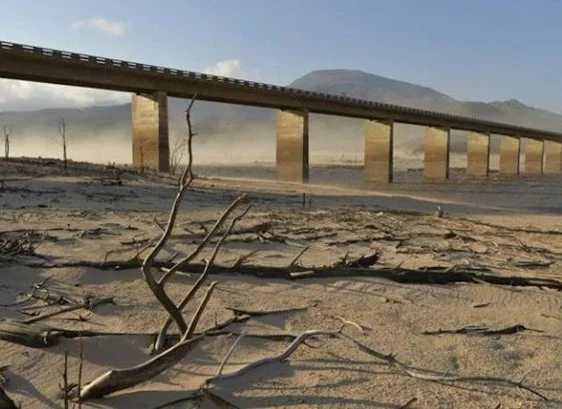
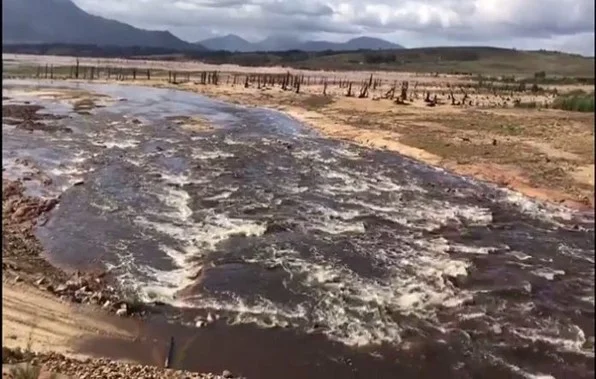
Since Day Zero has been first predicted in early 2018, it has been continuously delayed. Projections now suggest Day Zero will occur in 2019. And in recent weeks, many are rejoicing in water returning to the dry dams. In the words of Anton Bedell, minister of Local Government, Environmental Affairs, and Development Planning:  “It’s…good to see Clanwilliam dam at 20.4%. A few weeks ago the dam was below 6%.” The other dams have reflected similar increases, but the relief is only temporary as the dams await more rain—if it will come.

Theewaterskloof dam in February 2018 (source: 2oceanvibes)

Waters return in early June (source: Storm Report)

The biggest assistance in delaying Day Zero is restrictions implemented on February 1st. The main restriction was the allowance of 50 liters, a little more than 13 gallons, of water per person. Comparatively, the average individual in the United States uses 80-100 gallons of water a day and the average family over 300 gallons a day.  The question of how Americans end up using so much illustrates just how little 13 gallons is for a Capetonian. For example, imagine the average bathroom break. A toilet flush requires at least 1.6 gallons with water efficient models, but if it is an older model it will need up to 4 gallons. Then you will wash your hands with about 3 gallons of water. Considering most people take at least four bathrooms breaks a day, that’s already 18.4 gallons used in one day (on a water efficient toilet): more than what one Capetonian is allowed in a single day.

So it is no wonder people are following the “if it’s yellow, let it mellow” rule and putting reminders in bathroom stalls around Cape Town. Even restaurant and bar washroom taps are shut off. But it is not just in the bathroom that changes are being made. Any use of municipal drinking water for irrigation, watering, hosing down paved surfaces, washing vehicles, or filling a private pool is not allowed. Agricultural users have to decrease water usage by 60% and commercial places by 45% compared to their pre-drought usage in 2015. And for residential units that use too much, you’ll face a fine or have to install water management devices.

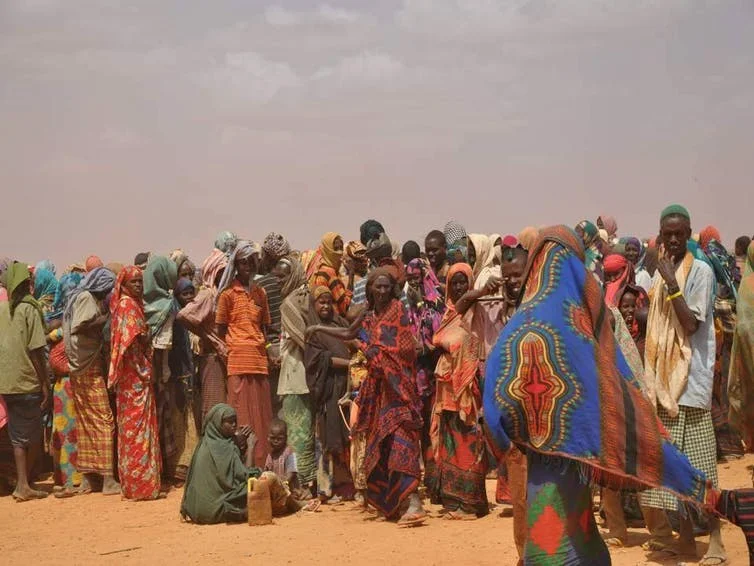
And globally, Cape Town is a sign of the future. As population increases, especially in urban centers, water resources are straining to accommodate.  This is against a backdrop of climate changes that favor extreme weather events like frequent droughts. What might have worked in the past, is not necessarily the solution for the future.  California, Beijing, Sao Paulo, Jakarta, Mexico City are just some cities that may be the next unwilling host of Day Zero. And water shortages lead to other problems such as famine and violence. The International Panel on Climate Change predicts the Middle East and North Africa will face the most severe water shortage problems. And already, many Somalis have become climate change refugees—leaving their rural farms for the capital, Mogadishu, in hope of different sources of income with farming no longer possible. Millions more are projected in the years to come as climate change makes itself even more apparent.

It is a bleak picture, but subtle changes are happening as global leaders are becoming more aware of the looming water crisis. But we can also start at home with our own water usage. Maybe you don’t need to take a long bath after a hard day and use 36 gallons of water simply to unwind. Instead, take a quick shower and find something else to help you relax. The small changes might sound silly but it is the little things that matter as Capetonians will tell you.


TERESA NOWALK is a student at the University of Virginia studying anthropology and history. In her free time she loves traveling, volunteering in the Charlottesville community, and listening to other people’s stories. She does not know where her studies will take her, but is certain writing will be a part of whatever the future has in store.

The Meaning of Travel: A New Guide For Millennials

In today’s highly connected and accessible world, to go anywhere is easy.
But to be a true traveler? That’s the daunting task.

Many of us have taken planes, and have gone to exotic places outside of where we grew up and live. Be it a backpacking trip to India, a short weekend holiday spent in Bali, or a work-related trip to Johannesburg, the act of going somewhere outside of our personal zone of familiarity and comfort is often seen as an opportunity offering some form of inner transformation.

Indeed, the act of exposing ourselves to the foreign and unknown can evoke a plethora of new feelings in us. Sometimes, this experience leads us to new perspective, or even new decisions about ourselves and our lives.

Don’t be mistaken though, not all journeys that we take will lead us to a new self at the end of the road.

More often than not, we return home as the same person as we were before, just with a few more stories to tell and a few more memories to reminisce about during our mundane 9-to-5 job.

So, you may ask, what differentiates a trip that leaves us unchanged, from a travel experience that can potentially transform us from the inside out? How can I make my travels mean more? How do I get more out of them?

Well, there is no one way to achieve it, that’s for sure. We are all different individuals, from different backgrounds and with our own interpretation of the world.

Having said so, we are all similar in so many ways too. A genuine smile, a simple greeting, or an act of kindness may be all it takes for two persons separated by their backgrounds and languages to relate and connect with each other.

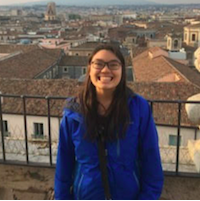
Photo by Laura Grier

Hear someone out. Listen to their story.

To travel is not just to see and to experience, but also to listen. I think many people missed out on that, and therefore, on a great learning opportunity. To listen is to try to empathise, to put yourself in the other person’s shoes.

By listening to the stories of the strangers we meet on the roads, about their lives, about their view of what’s happening in the world, about their dreams for the future, we gained not just the knowledge and viewpoint of another human being, but also learn of the value and validity of our own pre-existing views and beliefs.

“Perhaps travel cannot prevent bigotry, but by demonstrating that all peoples cry, laugh, eat, worry, and die, it can introduce the idea that if we try and understand each other, we may even become friends.”
Maya Angelou

That’s how we gain human perspective I think — not by looking at the endless Himalayan mountain range, or the ebb and flow of the sea by the beach. You’ll never know, sometimes it’s the most unexpected persons who impart us with the most valuable lessons in life.

Photo by Prashant Ashoka

Also, tell your story.

I often hear people say that they travel to feel free again. They explained that traveling helps them escape temporarily from the realities back at home — their old problems, burdens and responsibilities.

True enough, being in a foreign land where nobody knows anything about you does have its unique liberating quality. You can be anybody, and you can be nobody. There, I think, is where you find your most authentic self, and then be it.

“… sometimes one feels freer speaking to a stranger than to people one knows. Why is that? Probably because a stranger sees us the way we are, not as he wishes to think we are.”
Carlos Ruiz Zafón

Photo by Laura Grier

How do you start? Well, relax. Don’t overthink it. Instead, try to enjoy the process of letting go of your insecurities, your fears and inhibitions. What better ways to get things off your chest than to confide in a stranger whom you know you’ll never meet again? There! You just save yourself a costly trip to a therapist.

Jokes aside, it does take time and a few tries before you learn to open yourself up, not just to strangers, but to the world as a whole. But trust me, once you’ve reached that point, you will begin to see the world in a more fearless and unprejudiced manner.

Last but not least, leave your mark.

Make your travel different and more meaningful by contributing to the local cause. And no, I’m not talking about volunteering here. Neither am I talking about donating old clothes, books and stuff that people might not really need.

By contributing, I mean helping locals who want to help themselves. By aiding them in creating a positive outcome that is both tangible and sustainable. That’s what I think a real positive impact entails. That’s how we truly help.

Some local businesses may be starting up or in the process of renovation and need some funding. One easy way to get in touch with these people — the entrepreneurs, designers or small business owners living/working in the area you’re traveling to — is through online crowdfunding platforms like Kickstarter and Indiegogo, which have thousands of projects coming in from all across the globe.

To skip the hassle of searching through the tons of projects which may not be relevant to your needs, you can also try TravelStartera travel-specific crowdfunding platform with a growing array of travel and tourism business projects from different parts of the world.

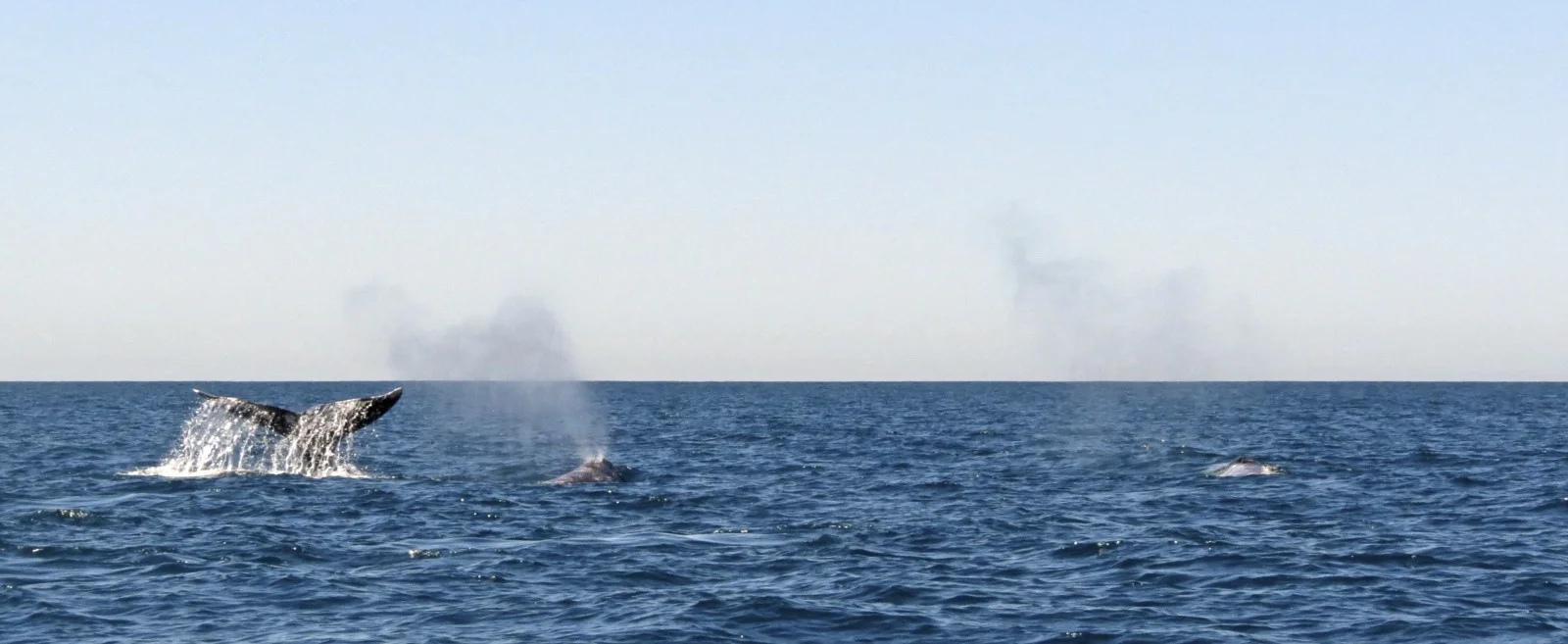
Want to help a Croatian instructor rebuild his sailing boat and be rewarded with a sailing course? Or help a New Zealander living in the Philippines rebuild his Con-Fusion Cafe after typhoon Yolanda destroyed the restaurant? Or are you headed down to San Diego anytime soon? Help a new B&B at Pacific Beach in their funding raising efforts to refurnish the hostel. For a contribution of $80, you will be rewarded with a two-night stay, a three-hour whale watching tour and also a brewery tour!

Photo by San Diego Whales And Dolphins

With the help of platforms like TravelStarter, travelers are encouraged and enabled to engage in more locally instigated experiences.

That’s not only a good way to help somebody, it’s probably the best way to make a local friend too. Definitely an experience that’s worth more than what you fork out of your pocket.

Photo by Ivon Domingo

At the end of the day,

Or at the end of your life, you will realise that it’s not the places you have seen, the crazy adventures you have gone through, or the pictures that you have taken that matters the most.

It’s the people that you have met along the way — those whom you have helped, those whom you have loved, those whose lives you have touched — that really mean the most. They are what made you a true traveler of life.

Lastly, always remember:

“A journey is best measured in friends, rather than miles.”
— Tim Cahill

The world’s waiting for you. Now GO!


THIS ARTICLE WAS ORIGINALLY PUBLISHED ON THE COFFEELICIOUS.


KEAY NIGEL

Keay Nigel is an independent writer/designer currently based in San Francisco. He has lived in the Hongkong, China, India and various parts of the United States. Travel is his passion and he's been documenting his overseas adventures through YouTube videos. Check out more of his writings here.

The Lion Guardians

With human-wildlife conflict on the rise in East Africa, the hunt for a long-term, viable conservation solution is on. From conservancies that benefit the Maasai landowners, to the transformation of their young warriors into lion protectors, to “predator-proofing” livestock, a massive cultural shift is underway.

DAWN IS JUST BREAKING WHEN KAMUNU SAITOTI SETS OUT ACROSS THE AMBOSELI BUSH IN SEARCH OF LIONS.

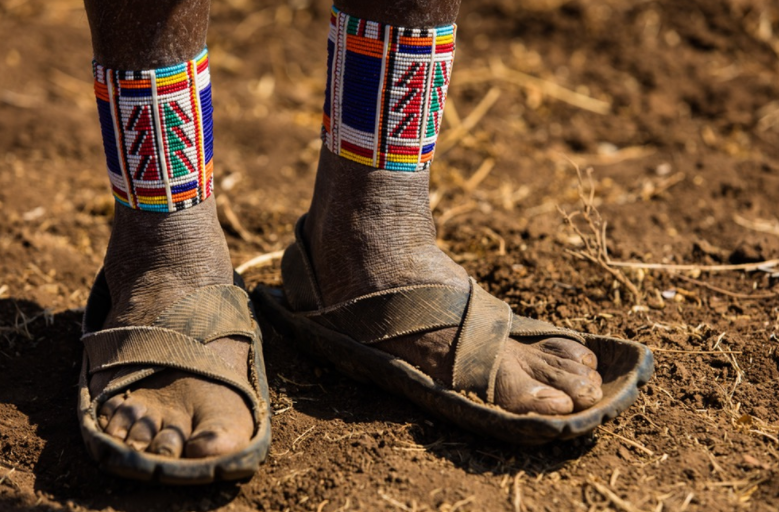
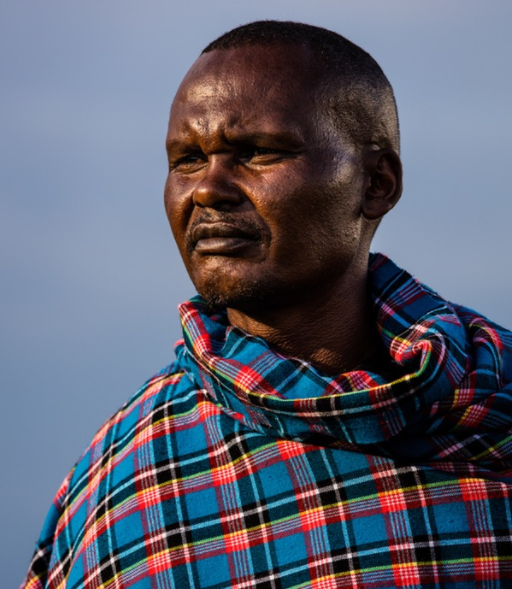
On first glance, he appears much like any other Maasai warrior. Lean and tall, his dark red shuka is wrapped around his torso and waist concealing his only weapon, a long knife with a simple wooden handle. Brightly colored beads adorn Saitoti’s neck, ears, forearms, and ankles, and his feet, far more weathered than the rest of his body, are only partially covered by dusty sandals fashioned from discarded car tires.

“I killed my first lion when I was 21,” Saitoti says as he scans the horizon. In all, he has killed five lions. This, he says, was an integral part of his family history, part of being raised as a moran, a Maasai warrior. “My brother and father have also killed lions.”
 

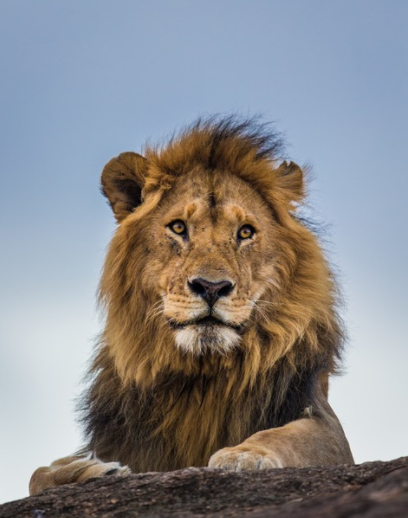
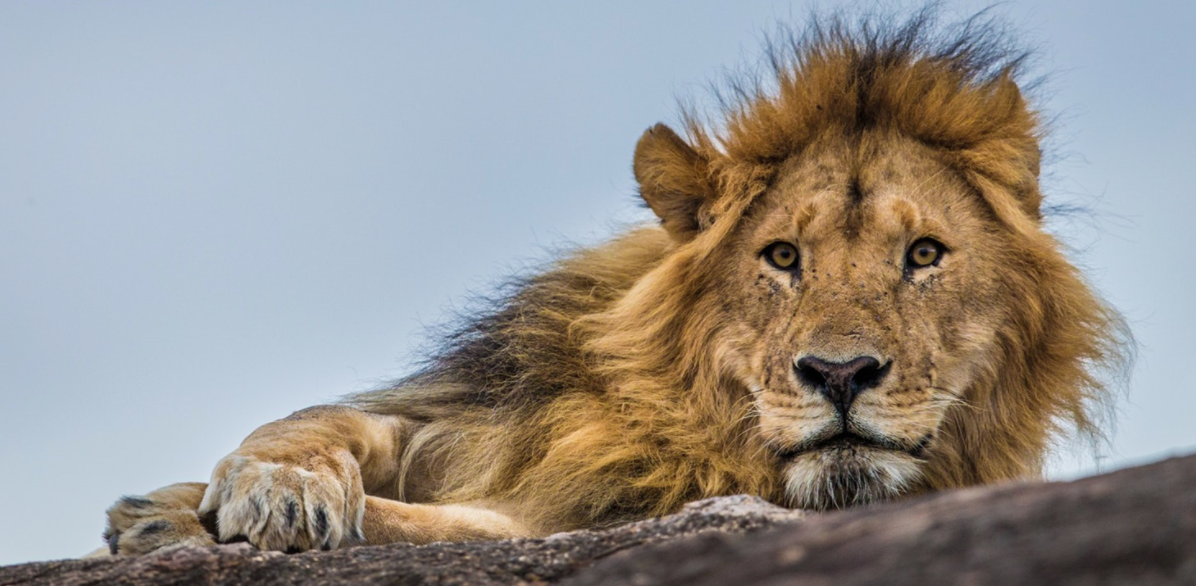
A male lion surveys his territory on the outskirts of Masai Mara National Reserve.

Traditional Maasai beads adorn Saitoti’s ankles.

The Maasai are traditionally a nomadic people subsisting almost exclusively on the milk, blood, and meat of cattle grazed on East Africa’s vast rangeland, once home to endless numbers of wild animals.
In the past, lion killing for the Maasai was as much about cultural tradition as it was about protecting their livestock from predators. To hunt and kill a lion was a critical right of passage known as olamayio — the way in which all young Maasai males became men. The tradition also created a powerful connection between warriors and lions, with each young moran receiving a lion name after his first successful hunt. Saitoti’s lion name, Meiterienanka, means “one who is faster than all the others.”

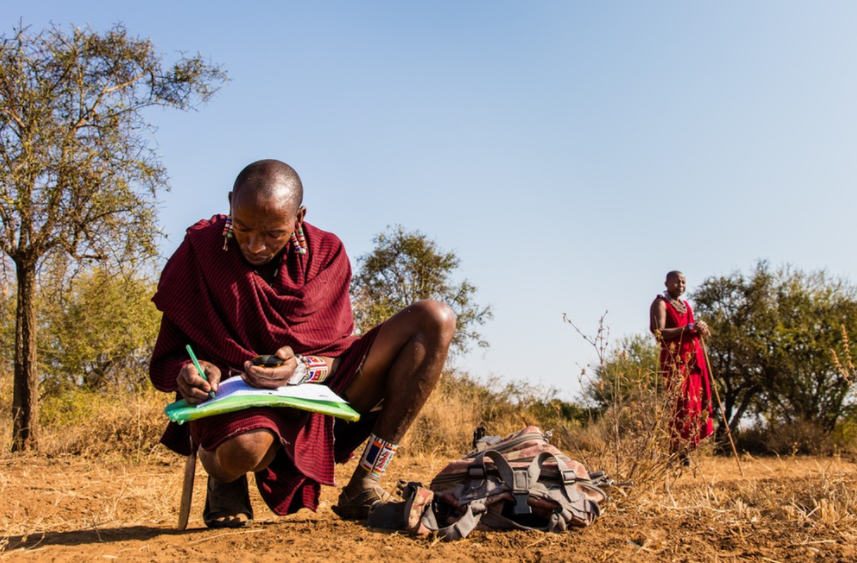
But traditions are beginning to change. On this day, in place of a spear, Saitoti carries a radio telemetry kit. He unfolds the antenna in a manner suggesting he has done this countless times before, and looks around in search of a hill — not an easy task in a landscape as flat as this. He settles for the remnants of an abandoned termite mound and begins to scan for a signal. Once he has a sense of the direction the signal is coming from, he packs away the kit and begins walking, dust trailing his brisk march along the well-used track.
 

Standing on the remains of an old termite mound, Lion Guardian Kamunu Saitoti scans for a signal. A number of the lions in the area have been fitted with radio collars.

For the next three hours, Saitoti stops only to look for signs of lions, or to talk to herders. Most tracks he sees are too old to bother with, but as the sun nears its zenith, he finds a set that elicits visible excitement — a departure from his otherwise solemn demeanor. These are the tracks of lion cubs, young ones, and very fresh. Patience, however, will be required here. The narrow trail leads into a maze of dense shrubs, and that is no place to follow a lioness with cubs — even for someone as experienced as Saitoti is.

At 36, Saitoti is a seven-year veteran, and one of Kenya’s three regional coordinators, of an organization called Lion Guardians. Established in 2007, the program is dedicated to finding ways for Maasai and lions to coexist. At its core is a shift in the relationship between the moran and the lion:

Hunters have become protectors. This profound change in perspective is a critical component of East Africa’s lion conservation efforts.
But the Guardians have a lot of ground to cover — just 45 Maasai warriors patrol a million acres of Kenyan rangelands — and human-wildlife conflict is a bigger problem than one organization, or one approach, can solve.
 

Lion Guardian Kamunu Saitoti takes meticulous notes about his observations, including GPS readings of animal tracks.

Lion Guardians is just one of a number of small- and medium-sized efforts by government officials, NGOs, and locals to reduce human-wildlife conflicts in Kenya and elsewhere in Sub-Saharan Africa. As human populations in the region have exploded, consuming increasing amounts of wildlife habitat in the process, the numbers of some of the region’s most iconic and important species have been in steep decline. Populations of many of Kenya’s large herbivores have fallen by 70 to 90 percent since the late 1970s. And as their prey have become more scarce, so too have lions.

Scientists estimate that lion populations have fallen by more than 40 percent in the past 20 years, and the 20,000 or so wild lions that remain in Africa occupy just 8 percent of the species’ historical range.
In many ways, the need for such intervention has never been greater. Yet, in a region where droughts are common and famine is never completely out of sight, finding a path toward peaceful coexistence between herders and the predators that hunt their livestock will require a great deal of persistence, creativity, and a shift in how the region’s wildlife is valued.
 

For most Maasai, the response to finding a leopard in your goat pen, surrounded by several slain goats, would be simple and quick: Kill the leopard. There would be no repercussions, as Kenya’s wildlife laws allow citizens to dispatch so-called problem animals. One particular young male leopard, who like his mother before him, had been terrorizing the small village of Ngerende, was certainly a good fit for that description.

Known to a number of neighboring communities for years, he had already killed hundreds of goats — losses that are keenly felt in what is one of Kenya’s poorest regions, and a hotbed of human-wildlife conflict. With the leopard’s paw now caught in the fencing of a traditional pen, or boma, as livestock enclosures are called, it seems there can be only one possible outcome. But the owner of this particular boma, Mark Ole Njapit, is no ordinary Maasai.
 

Mark Ole Njapit, who also known as “Pilot,” is a respected elder in the Masaai community of Ngerende.

“I understand the value of wildlife for the future of our people,” says Njapit (48), a Ngerende community elder known by most as “Pilot.”

“Everyone here was very upset and wanted to spear the leopard, but I calmed them down and called KWS (the Kenya Wildlife Service).” Fortunately for the leopard, KWS officers were treating some elephants nearby and responded quickly. After tranquilizing the cat, they were able to cut him free and move him to a new area where he would be less likely to get into trouble.

That was six months ago. Today, Pilot is supervising as members of his village work in partnership with the Anne K. Taylor Fund (AKTF) — an organization working to reduce human-wildlife conflicts  — to  construct his new boma.

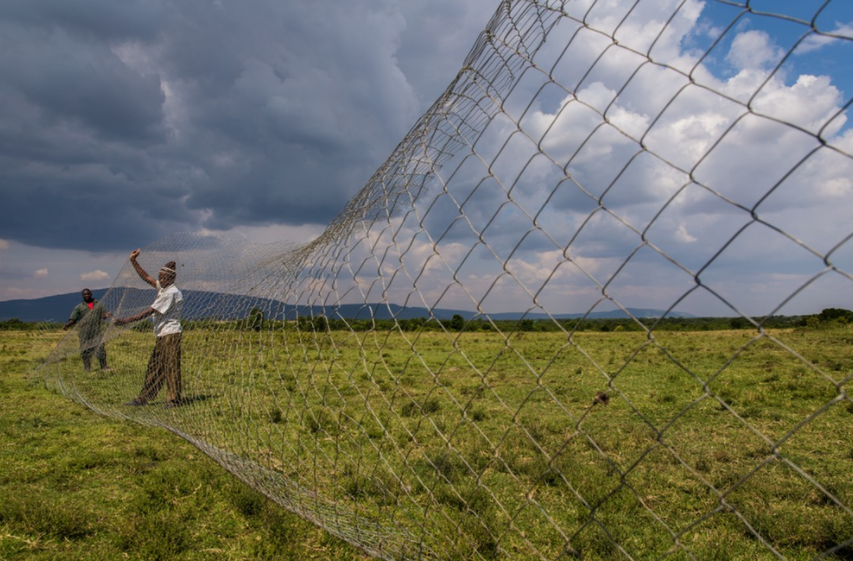
Workers stretch out the chain-link fencing for Pilot’s new ‘boma.’ The process typically takes two days, one for setting the posts in cement, and another for attaching the fencing.

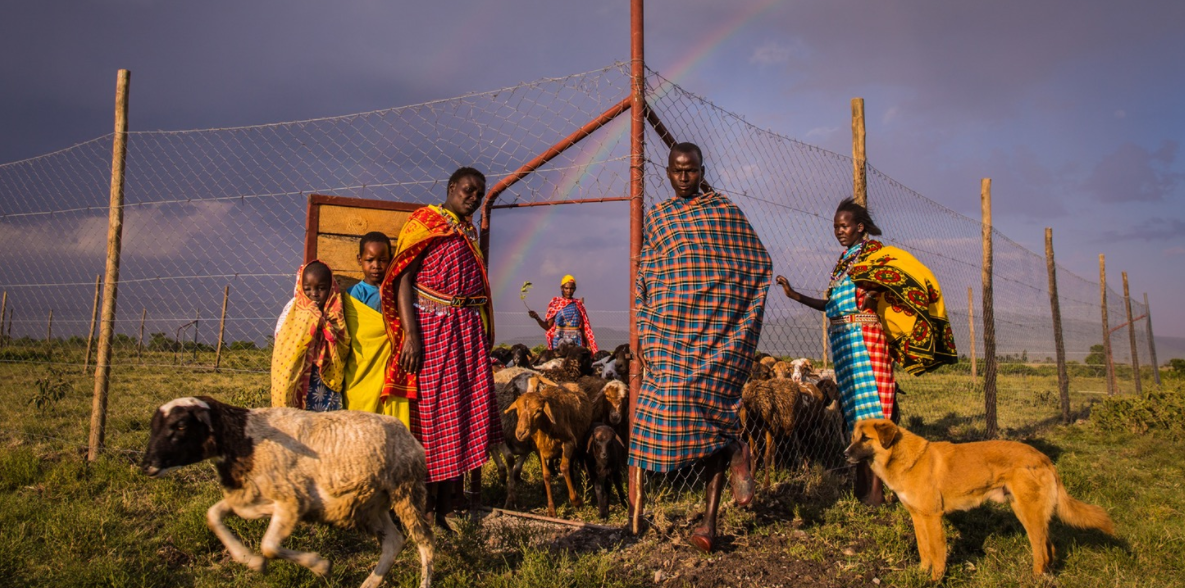
The enclosure that the AKTF team is building is formidable, with welded corner posts interspersed with termite-proof eucalyptus timber poles, all set in concrete. The chain-link fence is stretched tight, seven feet above ground and another foot buried in the soil; the fence is designed to be virtually impossible for a predator to push over, climb, or dig beneath. (While a leopard could easily scale a similar-sized fence constructed entirely of wood, they tend to avoid chain-link fencing.) Today, after more than two years and nearly a hundred of the latest iteration of AKTF bomas constructed, the program’s record remains intact: Not a single livestock animal protected by one of these enclosures has been killed by a wild predator.
 

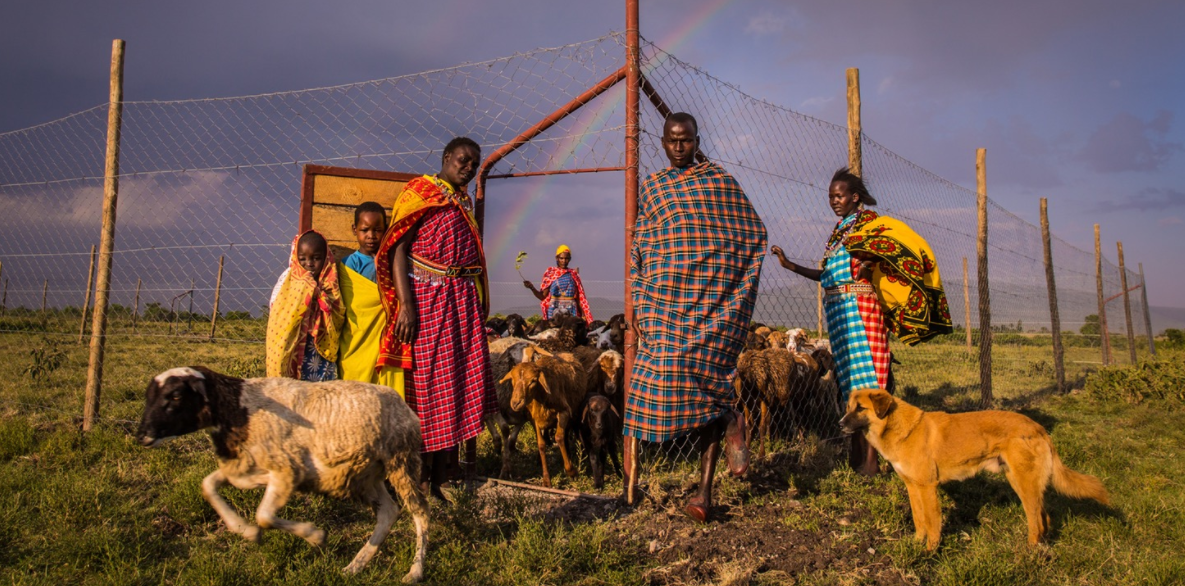
Members of Pilot’s family stand at the gate of his newly constructed predator-proof ‘boma,’ just a few miles from the edge of the Masai Mara National Reserve.

The effectiveness of the new bomas means that they are in high demand among the locals. And while AKTF doesn’t normally work in villages as far north as Ngerende, when Pilot reached out, the program’s construction director, Felix Masaku, decided to make an exception. “Here is a man whose small village loses maybe ten goats a week choosing not to kill the leopard that is doing much of that damage. That is very unusual, and it is important to support this man so others might follow his example.”

In general, AKTF prioritizes cases in which livestock losses have been greatest. “This is about conservation and co-existence,” Masaku continues. “We want to minimize conflict and retaliatory killings. If someone is losing five goats and two cows every week, that person is more likely to try to kill predators than someone who loses maybe one goat a month.”
 

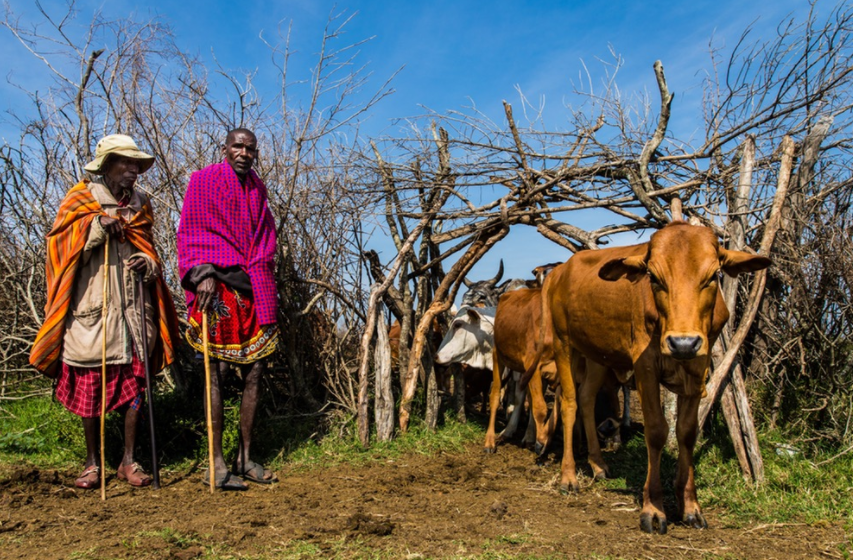
A traditional ‘boma’ that has been constructed of wood and thorny branches.

By reducing the vulnerability of livestock to predation, this program and others like it aim to reduce, if not eliminate, retaliatory killings, known as olkiyioi. This practice poses a grave threat to lions in particular, especially when angry cattle owners turn to poison rather than spears with the intention of wiping out entire prides of lions. In recent years, there have been a number of high-profile killings. For example, several members of the Marsh pride (of BBC Big Cat Diary fame) were deliberately poisoned in the Masai Mara National Reserve (MMNR) in 2015, and six lions, including two cubs, were speared to death outside Nairobi National Park in early 2016.

One troubling detail about the slaughter of the Marsh pride members is that it was carried out by Maasai seeking revenge for cattle killed while being grazed illegally inside the reserve. This practice is not uncommon. In fact, a paper published in the Journal of Zoology in 2011 estimated that by the early 2000s, livestock made up 23 percent of the MMNR’s mammal biomass — up from a mere 2 percent a few decades earlier. Today, this figure greatly exceeds that of any resident wildlife species in the protected area with the exception of buffalo. This is as much a sign of declining wildlife populations as it is of human incursions into the reserve, and it underscores significant challenges both in terms of protecting livestock and preventing human-wildlife conflicts.

As Anne Taylor, the founder of AKTF, put it:

“Inside the bomas is one thing, but keeping cattle or livestock safe if they are literally brought into the lions’ den is virtually impossible.”
 

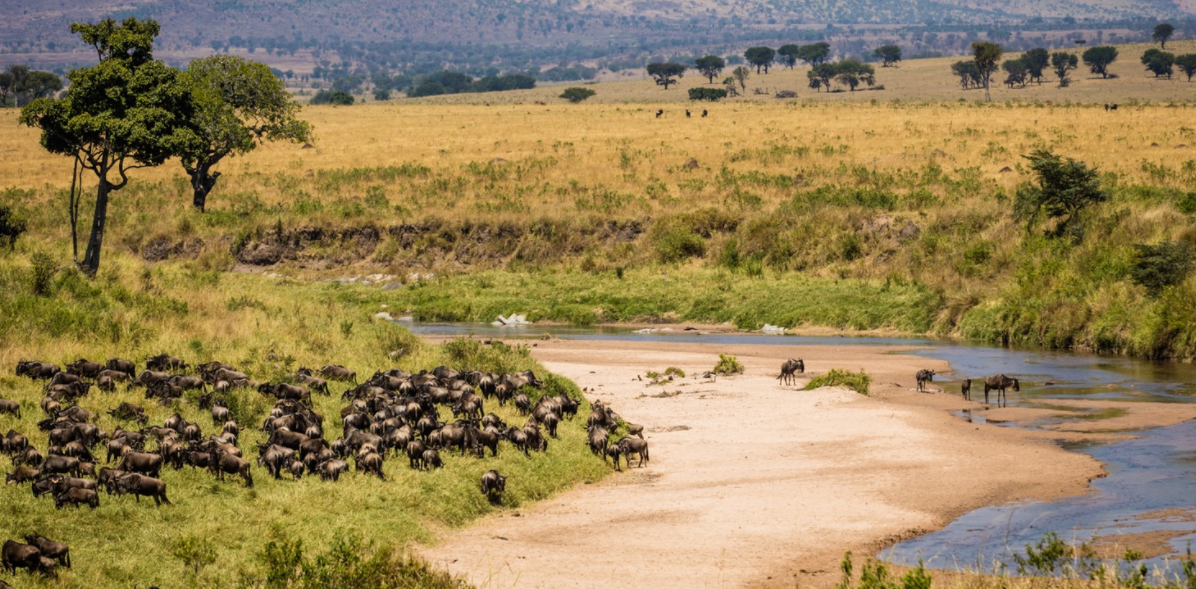
Wildebeest pause before crossing the Sand River. While the Masai Mara’s resident wildebeest are all but gone, their numbers decimated primarily by agricultural expansion, each year, more than a million cross the border from Tanzania’s Serengeti National Park.

For many Maasai today, lions and other predators have become an expensive nuisance at best, and a source of deep-seated resentment at worst. In general, this resentment is not directed toward the predators themselves, but toward a government — and the world at large — which often appears to place more value on the big cats (and the tourism dollars they generate) than on Maasai lives and livelihoods.

National parks and reserves cover a mere 8 percent of Kenya’s land area and support only a third of its wildlife. The remaining two-thirds of the country’s wild animals inhabit private and communal rangelands. This is land that they share with the Maasai, Samburu, and other pastoral people who have been here for thousands of years. Many think it is here, outside of the parks and reserves, that the future of Kenya’s wildlife will be decided.

According to a recent report co-authored by Panthera, WildAid, and the Wildlife Conservation Research Unit, loss of habitat due to agricultural expansion, which invariably pushes wildlife into closer contact with farmers and pastoralists, is the underlying factor of all major threats that lions face.
 

To many, the conversion of unprotected rangelands to agriculture might seem inevitable as the region’s population grows, but Calvin Cottar, a fourth-generation Kenyan whose great-grandfather emigrated from Iowa in 1915 and today runs a safari service in partnership with the Maasai community, disagrees. According to Cottar, it all comes down to economic security.

“We are talking about some of the world’s poorest people,” Cottar says. “For them it is about survival.

“Why should we expect them to care about lions or elephants when they are struggling to put food on the table ... Wildlife is costing them money, not earning them money, and that is what has to change.”
 

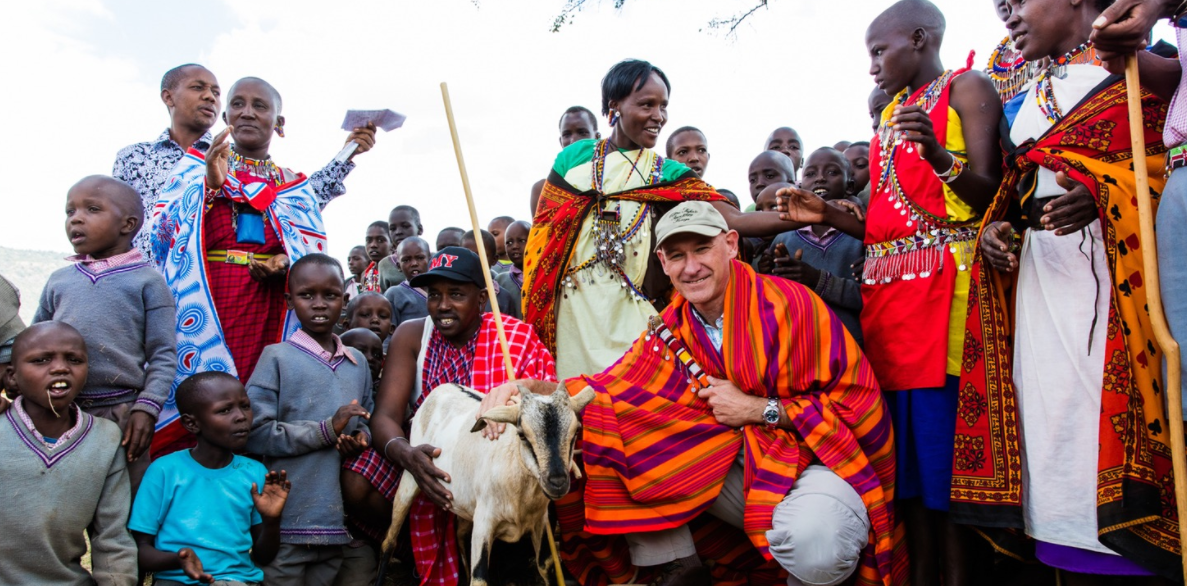
Calvin Cottar is presented with a goat as a token of appreciation for building Olpalagilagi Primary School, as well as funding salaries and meals. In the long run, the hope is that land lease fees will enable locals to fund their own projects, bringing greater autonomy.

Toward this end, while working with the Kenya Wildlife Service (KWS), the Cottars Wildlife Conservation Trust has initiated the formation of several district wildlife associations in an attempt to help local landowners acquire ownership rights to the wildlife residing on their lands. Because all wild animals in Kenya have historically been considered property of the state, benefits to the local communities that have to co-exist with these creatures have generally been few and far between.

Now in his 50s, Cottar says there is much more to be done. He is more convinced than ever that the future of Kenya’s wildlife lies with the people sharing the land with them — and with a shift in government policy.

“It’s really quite simple,” Cottar explains. “We all have to pay for ecosystem services. Pay the Maasai landowners a monthly lease for their land in return for leaving it intact. The problem is that wildlife has no value to them, whereas cattle and commercial agriculture do.”

While removing snares, building livestock enclosures, and monitoring lion populations are all important management practices, Cottar says, they don’t solve the root cause of human-wildlife conflict. Wild animals are basically a nuisance and a liability to the Maasai, he explains.

“We have to make maintaining wildlife the most productive land use, and do this in a way that respects the Maasai lifestyle and culture.”
 

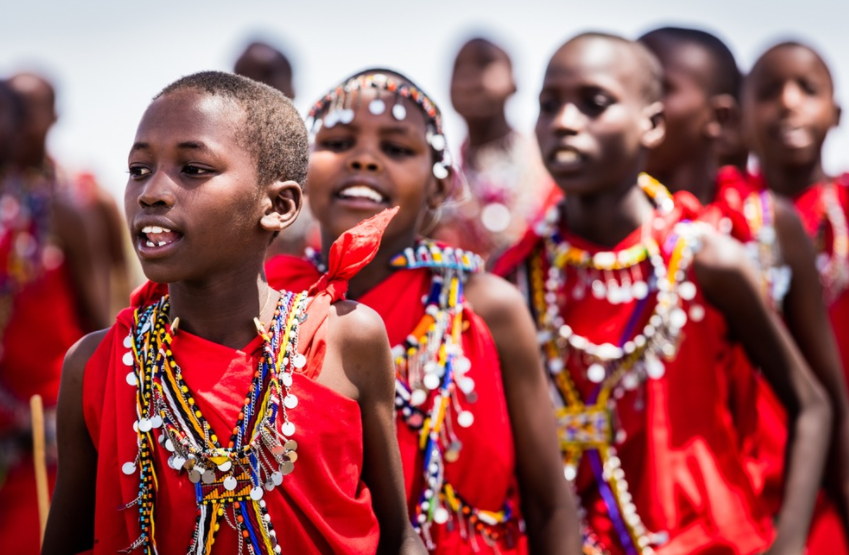
Local schoolchildren perform a traditional Maasai dance to open proceedings at a meeting hosted by Olpalagilagi Primary School.

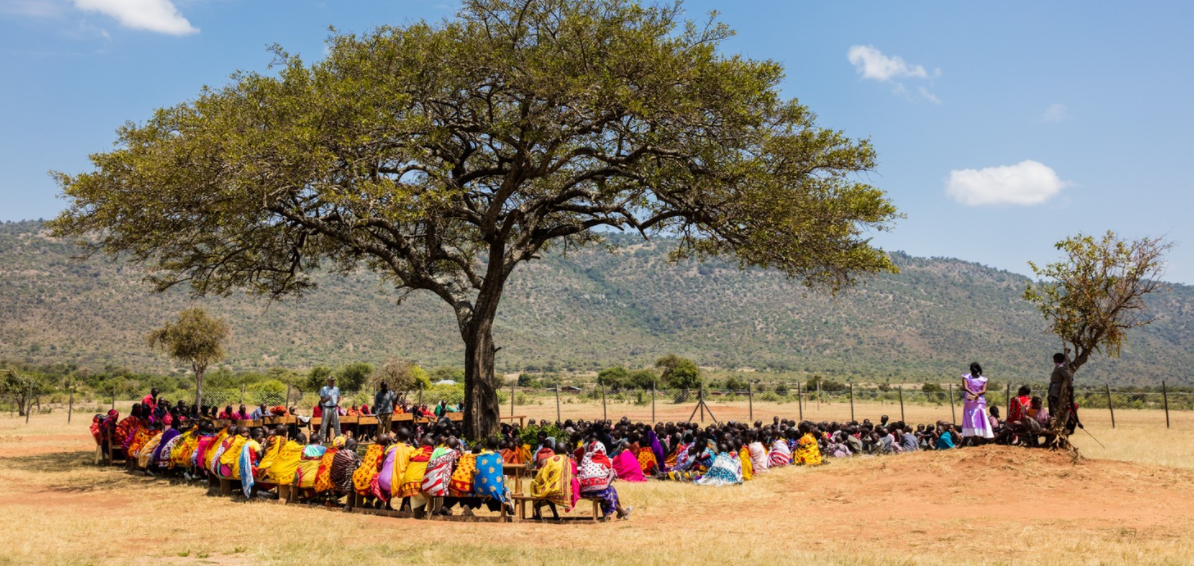
That is why Cottar now finds himself sitting in a circle with perhaps 50 Maasai — young and old, men and women. The topic for discussion, just as it has been for the last three years, is the formation of the Olderkesi Conservancy, on the land where Cottar’s safari camp currently stands.

In general, the conservancy model consists of land being leased directly from its owners for conservation purposes. Olderkesi is slightly different in that the 100,000-hectare ranch is yet to be subdivided, making it the last communally owned ranch left in Kenya. As a result, the land will be leased from a trust representing all 6,000 land owners, and because the agreement involves the Maasai, complete consensus is required before anything can be signed. In Maasailand, patience is not so much a virtue as an absolute necessity.
 

Members of the Maasai community meet at Olpalagilagi Primary School to discuss the formation of the Olderikesi Wildlife Conservancy.

Joining Cottar in the circle is one of the community’s most respected elders, Kelian Ole Mbirikani (58), a member of the Olderkesi Land Committee and Chairman of the Olentoroto land owners group, which holds the deeds to the land immediately surrounding Cottar’s safari camp. Mbirikani is also one of the key driving forces behind the conservancy initiative.

“The Maasai depend almost completely on their cattle,” Mbirikani explains, “so convincing them that it is possible to have both wildlife and livestock at the same time is our biggest challenge. In their experience, when land is set aside for wildlife, all of the cattle disappear. That’s what national parks do.”
 

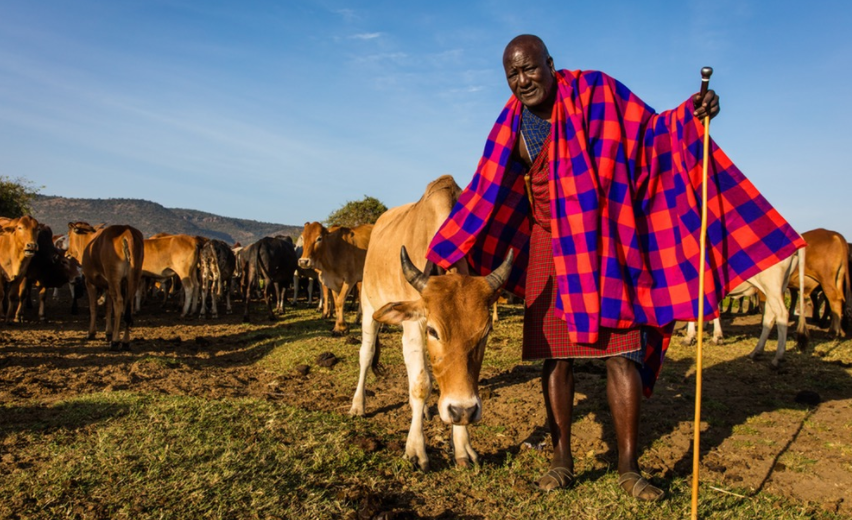
Kelian Ole Mbirikani, a member of the Olderkesi Land Committee and Chairman of the Olentoroto land owners group, with his cattle. 

Mbirikani is convinced the conservancy concept can work, though. He and a group of other Maasai traveled with Cottar recently to conservancies as far north as Samburu. There, they saw wildlife and met landowners who are still able to graze their cattle. “The people are really benefitting,” Mbirikani says. “Their children are being educated all through university level with the money from the conservancies. That is what we want for our people, too.”
 

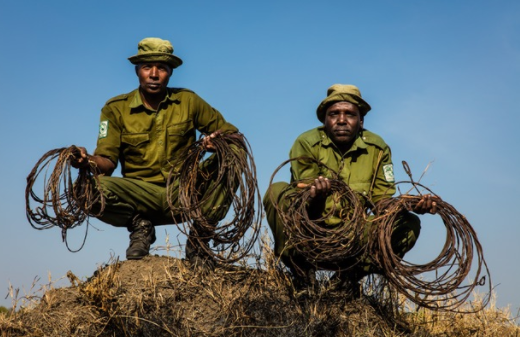
The AKTF team spend much of their time searching for and removing snares from inside the Masai Mara National Reserve. Although the snares are set primarily to catch herbivores they are indiscriminate killers, also trapping lions, leopards, and other predators.

There are nine other conservancies around the MMNR, and a handful more in other parts of the country, which all make regular, direct payments to local landowners. Similar approaches have been employed by Wilderness Safaris in Namibia and the Nature Conservancy in the United States, among others, and while none can be said to offer financial benefits on the same scale as Olderkesi, Cottar is clearly not alone in seeing this as a promising solution.
 

The snares displayed here by the members of the AKTF anti-poaching team were found during a single morning’s patrol in the Masai Mara National Reserve.

Indeed, two studies published last year demonstrate the effectiveness of Kenya’s conservancy approach. According to one of these assessments, despite lack-luster political support conservancies managed to achieve “direct economic benefits to poor landowner households, poverty alleviation, rising land values, and increasing wildlife numbers.” The other study saw a direct positive effect on lion populations within Kenya’s conservancies, with a nearly three-fold increase in just ten years.

However, while these results seem promising, there will always be areas outside conservancy boundaries — borderlands and buffer zones — where human-wildlife conflict are bound to continue. There is simply not enough funding to expand conservancies enough to eliminate these conflict zones.

The question, then, is whether people can learn to co-exist with lions and other wildlife even when there is no monthly payment to be collected.
 

Lion Guardian and accomplished tracker Kamunu Saitoti keeps a lookout.

BACK IN THE BUSH, KAMUNU SAITOTI WAITS PATIENTLY, HOPING TO GLIMPSE THE NEW LION CUBS WHEN THEY FINALLY EMERGE FROM THE THICKET.
He has been joined by a younger Lion Guardian, Kikanai Ole Masarie, and not long after, a battered Land Cruiser arrives with one of the organization’s founders, Director of Science Stephanie Dolrenry. The two warriors pile into the vehicle and they all set off in search of the cubs. “These lions are not like those in the parks,” Dolrenry explains. “There’s no tourism here, so they are not habituated to people or cars. We’ll be lucky if we find them at all. They can be extremely shy, especially with young cubs.”

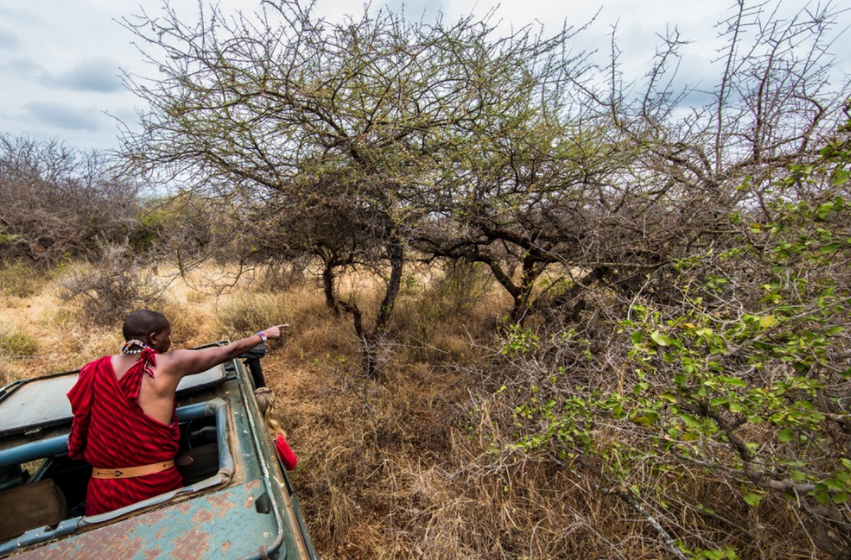
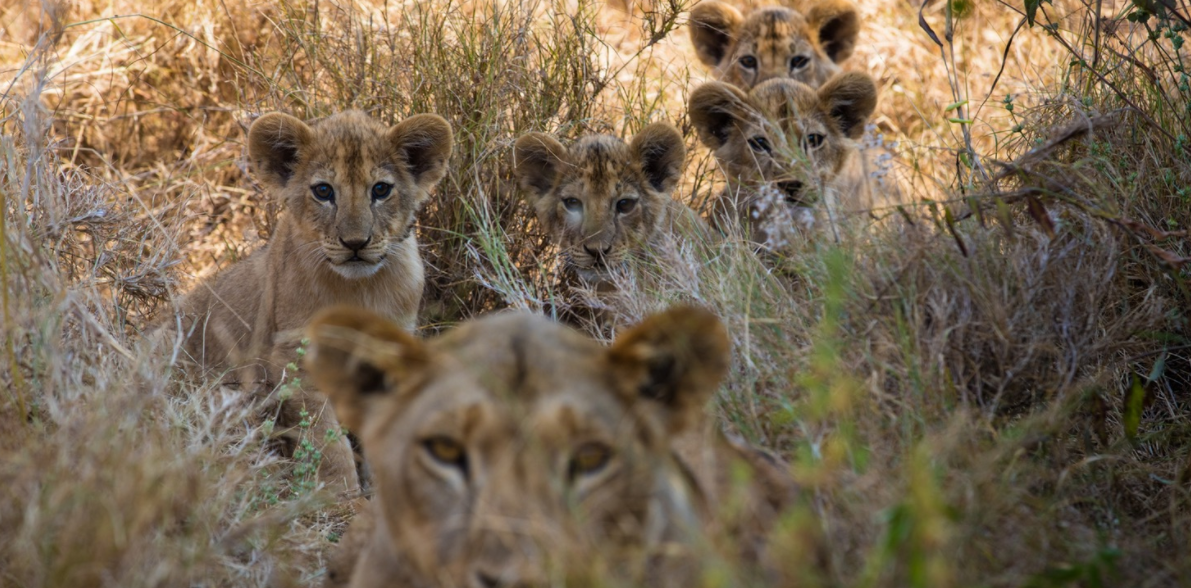
But this is a lucky day, it seems. With thorny acacia bushes screeching against the glass and metal of the bouncing vehicle, the team suddenly finds itself in a veritable crowd of cats. Dolrenry, like the Guardians, is able to identify them all. Mere meters from the car, Meoshi, her three cubs, and her mother, Selenkay, lounge in the shade. A few dozen paces away, but on their way to join them, Meoshi’s sister Nenki with her own four cubs. Much smaller than Meoshi’s, these were the young lions whose tracks Saitoti was following. This is the first time anyone has laid eyes on this new generation.
 

The team’s first sighting of lioness Nenki’s four young cubs.

“Selenkay is a bit of a celebrity around here,” Dolrenry says. “She causes problems like no other lion, but she’s a tough one, and it’s hard not to admire her.” Saitoti nods. Selenkay is his favorite lion — her guile and tenacity are something to be respected. She and her family frequently target cattle and are well known for giving the Guardians plenty of headaches. She has been hunted more times than anyone cares to remember. One of her sisters has fallen victim to poison, and so too has one of her mates, while another sister was killed by spear. She has endured three male takeovers, and has even attacked a Maasai moran to protect her young cubs. Like the owners of the livestock she frequently kills, Selenkay is a true warrior.

Yet Selenkay’s legacy is far greater than her own reputation. Her longevity, itself the result of the unyielding commitment of Saitoti, Masarie, and the other Guardians, combined with the growing tolerance of the Maasai inhabiting these rangelands, has helped to connect populations in vital conservation areas, and has added much-needed genetic diversity to established prides in the region. One of her sons has made it as far north as Nairobi National Park where he is now breeding successfully.
 

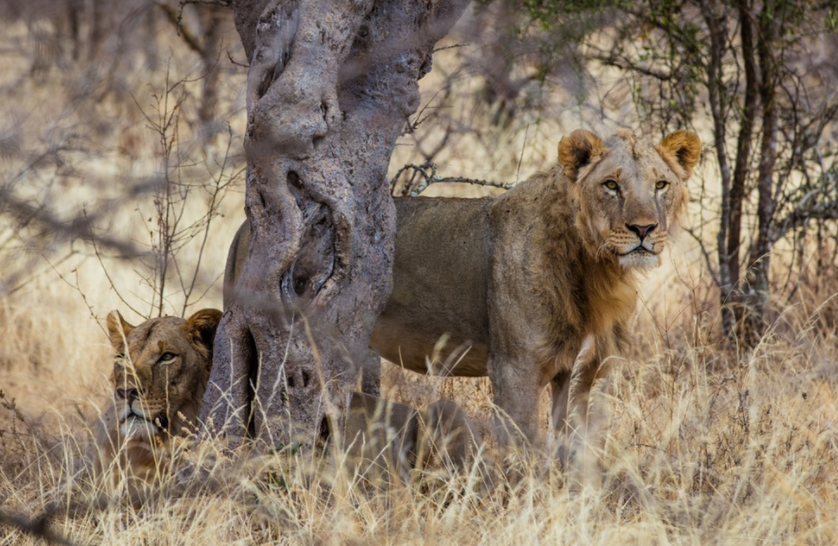
A pair of male lions seeks respite from the heat in the shade of a tree.
 

Saitoti did not become a Guardian because he loved lions. Instead, he was in trouble and needed a job. Arrested for being part of an illegal hunt, his father had to sell three cows to have him released on bail. That made him reconsider his path. Killing lions, despite bringing prestige and honor, also brought hardship. “For the first two years my feelings about lions were the same,” Saitoti says. “This was just a job. But slowly, things began to change. They give food for my family, they help educate my children, I even buy veterinary medicine for my cattle with my salary from the lions.”
 

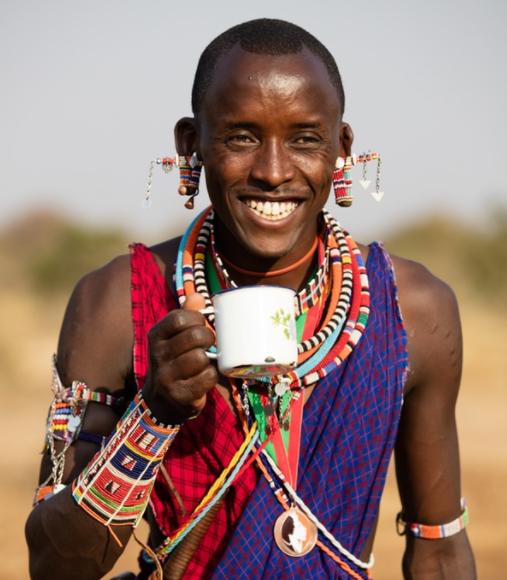
Lion Guardian Kikanai Ole Masarie celebrates the sighting of lioness Nenki’s cubs with a fresh cup of tea. Note the Lion Guardians symbol hung around his neck, alongside his traditional handmade Maasai beads.

“And we still get the girls!” Masarie chips in with a broad smile, referring to the social status that killing lions — and, more recently, protecting lions — can bring to an eligible young Maasai man. At 24, he is part of a younger generation of Guardians, and his words are significant, as they hint at an ability for long-held Maasai beliefs and traditions to change. “The other warriors mostly stay at home, but here we are, close to the lions every day, tracking them and finding lost cattle. The girls know we must be very brave!”

Saitoti smiles and continues, “For me, now, I feel there is no difference between the lions and my cows at home. I care about them equally.”
 

LEARN HOW YOU CAN HELP TODAY

The success of conservancies like Olderkesi, supported by Cottars Wildlife Conservation Trust, indicates their importance as long-term viable solutions for conservation in partnership with the landowners themselves, the Maasai people. Explore more about other Masai Mara Conservancies here.

The Lion Guardians organisation have been conserving lions and preserving cultures since 2007. Learn more about their work and donate to support them at lionguardians.org. The 750 predator-proof bomas constructed by the Anne K. Taylor Fund have saved many lives and you can learn more and support their work at annektaylorfund.org. I hope you will join me in supporting the work of these dedicated organisations!


THIS ARTICLE WAS ORIGINALLY PUBLISHED ON MAPTIA
 

MARCUS WESTBERG

Marcus Westberg is a a Swedish photographer, writer, conservationist, and guide working primarily in Sub-Saharan Africa.