
Evaluating the absence of inclusive representation in a movement that claims to empower all women.
Read MoreThe Life Changing Power of Global Literacy
For the millions of people around the world who cannot read or write, creating educational opportunities for literacy can help close economic and health inequalities.
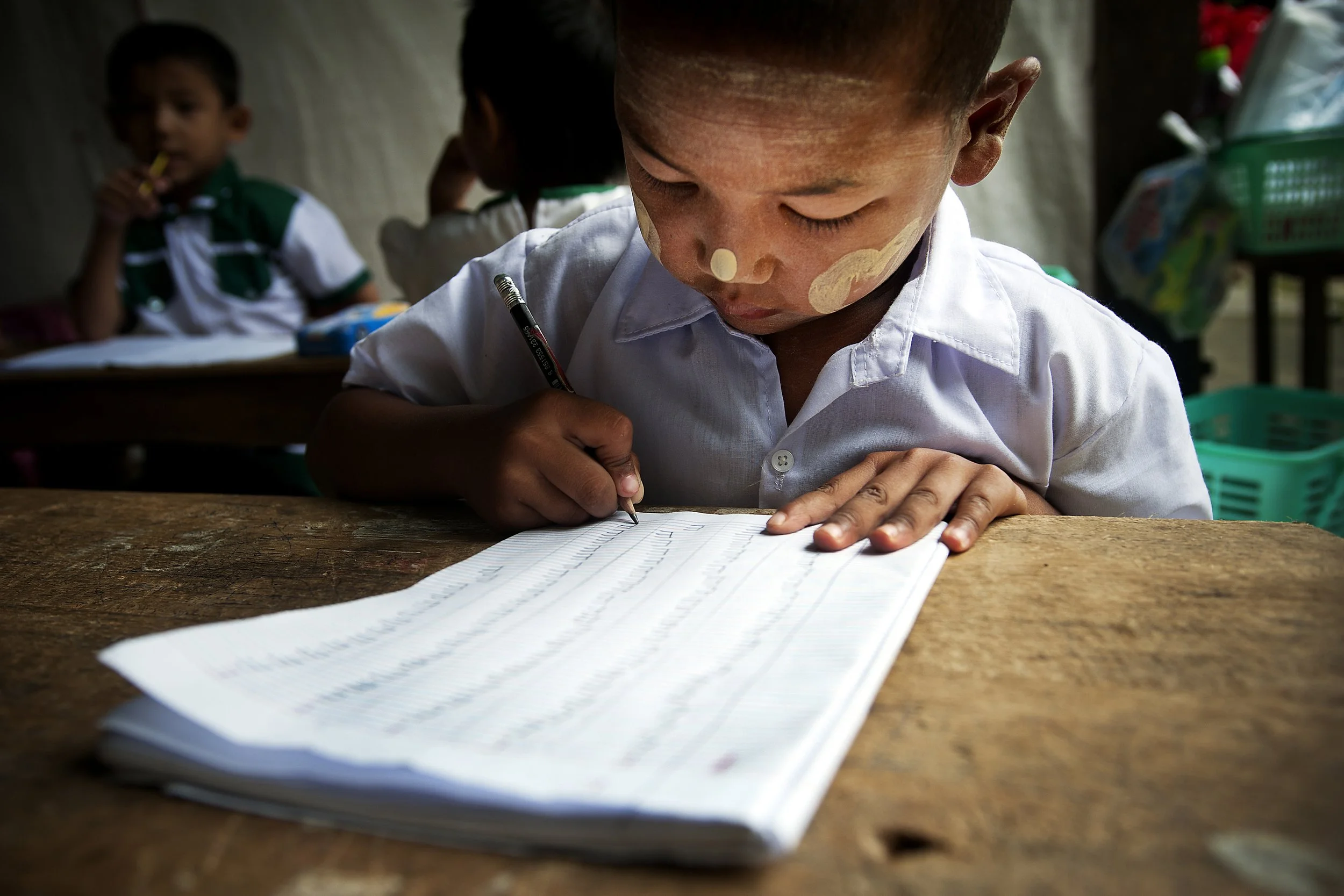
A child practicing writing in Myanmar. United Nations Photo. CC BY-NC-ND 2.0.
Within the last five decades, the world has been reading more. Literacy rates have increased around the world, growing from 67% to 86.8% between 1976 and 2020.
However, despite global improvements, there are still some 781 million people around the world who cannot read or write. These numbers do not exist in a vacuum, but rather are intrinsically tied to economic and gender disparities. About 95% of the world’s illiterate population lives in developing countries, and nearly two-thirds are women. Such statistics reflect global gender disparities in which women are more likely to be defined by traditional domestic roles and childcare, roles that — especially in countries where educational opportunities are already limited — cut off women’s access to literacy.
Child marriages can also derail young girls' education. On Earth today around 650 million women were married before the age of 18. While child marriages rip young girls of education opportunities, access to education itself actively combat rates of child marriage. Each year of secondary education that a girl completes reduces her risk of marrying before the age of 18 by 5%
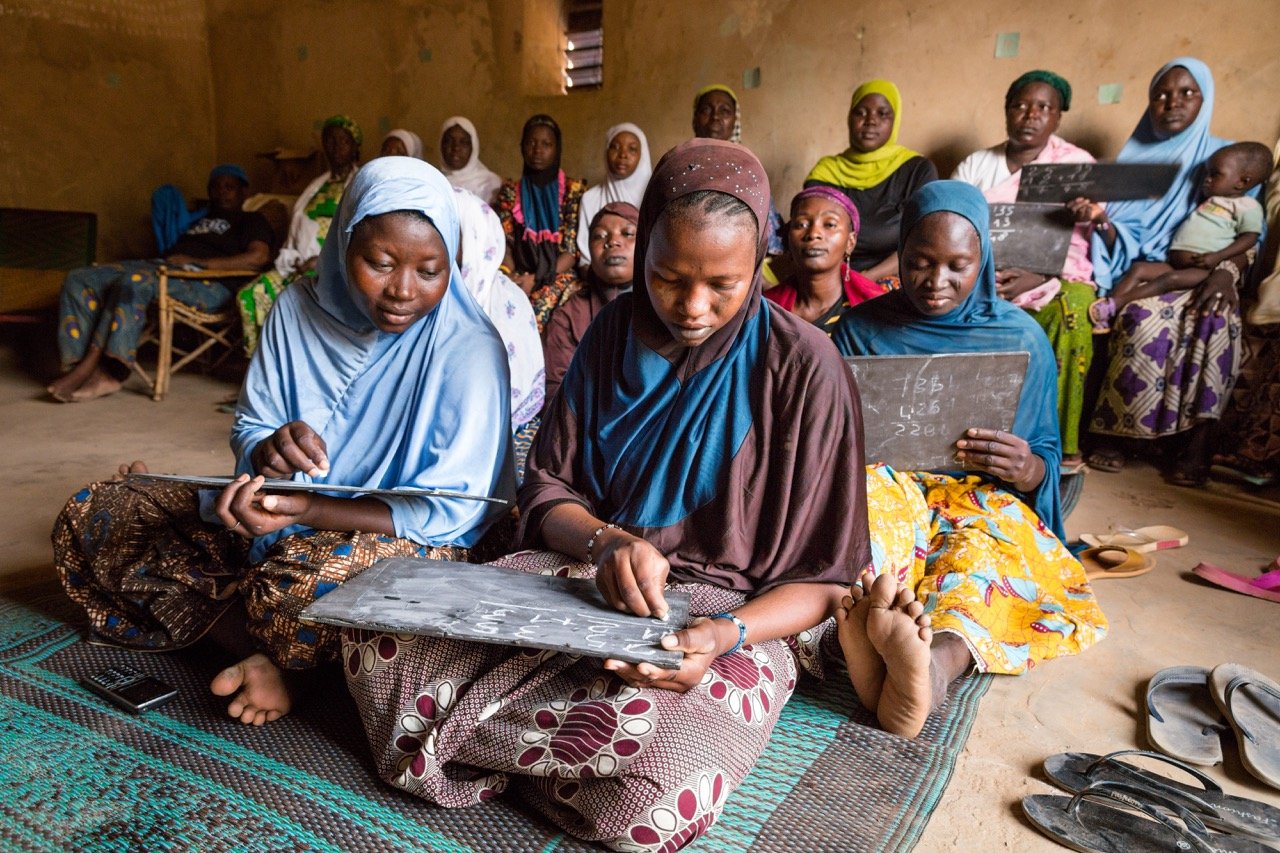
Benefits of ReadingWomen attend school in Niger. Global Partnership for Education - GPE. CC BY-NC-ND 2.0.
The benefits of reading and writing skills extend way beyond the pages, as globally literacy works to make the world a healthier, richer and more democratic place.
Increasing women’s literacy does not just impact lives on an individual level, but entire communities and economies. Every 10% increase of female students in a country leads to a 3% increase in gross domestic product. The real world economic power of literacy plays a crucial role in lifting communities out of poverty. Concern USA estimates that if every student in a low-income country had literacy skills, some 171 million people would escape extreme poverty.
Opening up educational opportunities, specifically for women, creates a ripple effect among communities. Because women are more likely to be the primary caretakers to children, their own literacy influences whether or not they decide to send their children to school.
Increasing access to information through literacy can also have long-standing health benefits. Not only does literacy encourage individuals to read and understand medication and treatment options, but it also empowers individuals to seek out medical attention when necessary.
A study from 2002 found that women in Bolivia who attended literacy programs were more likely to seek out medical help when needed, as well as be more open minded towards receiving vaccinations — both for themselves and their children. Another study found that if a woman was literate she was four times more likely to know how to protect herself from AIDS, while in Nepal literacy has been connected to a more open mind towards family planning.
In measuring the effects of literacy and its economic and health impacts in communities, UNESCO estimated that infant mortality rates decrease 9% for every year of education that women attend.
In addition to increasing access to education and medical knowledge, literacy also strengthens democracy by combating political marginalization and exclusion. Reading and writing are necessary skills for individuals to fill out voting forms necessary in any democratic system, and can also help increase political engagement by granting access to newspapers and written political material.
Education and Empathy
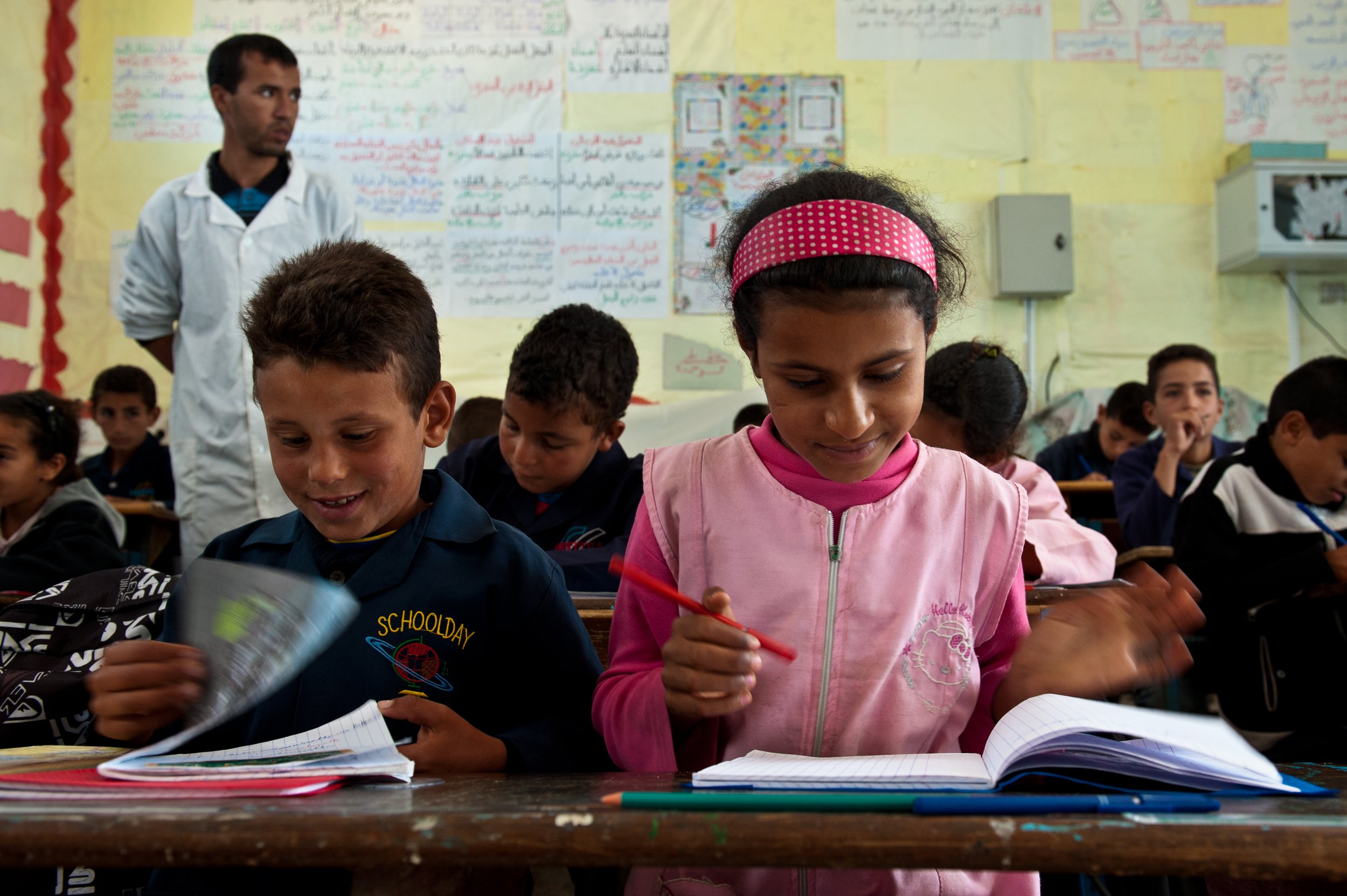
Students reading in a classroom in Sejnane. World Bank Photo Collection. CC BY-NC-ND 2.0.
One of the greatest psychological and social benefits of reading is in the way it builds empathy and fosters opportunities for communication and connection. Fiction in particular has been connected to empathy-building. One study in 2006 found that people who read more fiction scored higher in empathy tests. Another study from 2013 found that those who studied fiction improved on empathy tests that measure one’s ability to understand other people’s beliefs and desires that are different from one’s own.
The effect of fiction on reader’s emotional intelligence stems in part from the way it forces readers to use their imagination and view the world from another’s perspective and life. Fiction writing forces readers to grapple with choices and scenarios that disrupt their expectations and practice empathy towards characters in order to understand their thoughts and actions.
Get Involved
Organizations all around the world are doing their part to make literacy accessible, encouraged, and achievable globally.
The World Bank seeks to combat global illiteracy through educational interventions, with the goal of reducing the number of children who cannot understand a simple story to half of what it is to today by 2030. The World Bank encourages the public to share information on the global literacy crisis, encourage government officials to invest in literacy programs, and understand the impacts of learning poverty around the world.
Save the Children’s Literacy Boost works to increase literacy rates around the world through individual and communal efforts. The program relies on schools and teacher training as well as community initiatives that support literacy through Book Banks, reading clubs and workshops for parents. A Stanford study found the average child who went through Save the Children’s Literacy Boost program in Rwanda scored higher on reading comprehension tests than 63% of children who did not go through the program.
Jessica Blatt
Jessica Blatt graduated from Barnard College with a degree in English. Along with journalism, she is passionate about creative writing and storytelling that inspires readers to engage with the world around them. She hopes to share her love for travel and learning about new cultures through her work.
Suffering in Silence: The Women of South Sudan
An increasing amount of discrimination and violence is targeting Sudanese women.
Read MoreBarbie Across Borders
Around the world, countries censure or celebrate Barbie, a film that violates localized beliefs about feminist expression and the satirization of patriarchy.

Barbie Movie Billboard. Brecht Bug. CC BY 2.0
“Barbie” premiered around the world late last month, quickly becoming a global sensation in the weeks that led up to its release. The film follows protagonist Barbie as she ventures on a journey of self-discovery that causes her to question the values of a patriarchal society. The United States, China, Saudi Arabia and other Middle Eastern countries had mixed reactions to the film, ranging from dissatisfaction with its promotion of women's empowerment to the celebration of female independence and capability.
The film has caused discourse in China, where movies still include considerably outdated gender roles. Media like Mr. Six and Gentlemen From Eastern 8th are reminders of the sexist normalcies that still exist in Chinese entertainment and society, including the objectification and oppression of women in the roles that they play. Barbie has been praised and disparaged for calling attention to these instances of gender inequality with many women appreciating the film’s recognition of such an “objective reality” and depiction of strong rather than objectified women. In recent years, China’s involvement in the political landscape of feminism has been backsliding, with rejections of sexual harassment lawsuits and arrests of those protesting for greater feminist representation. Because of this, China is not entirely dissimilar to the conservative politics in the United States, both of which believe that the film succeeds at emasculating men. Regardless, across the U.S., the debut of the film was largely met by fans with outfits of pink and reviews acknowledging the film as a “cinematic and emotional masterpiece.” Not long after, fans of the film in China also began to express support for the film by wearing pink and complimented the film as the best expression of feminism.
Latin and South American countries have also embraced pink, specifically through food. Vendors in Mexico and Guatemala have sold pink tacos while Venezuela, Chile and El Salvador have created arepas with beet dough for pink coloring. Support for the film has been widespread across the region, as it has reinvigorated radical public protest and prompted movements like “Barbie Buscadora.”
Across countries in the Middle East, “Barbie” has been banned as it was found to promote subversive elements that distort the values of society, namely the protection of public ethics and social traditions. Because of loyalty to these values, the most severe restrictions were issued in Kuwait and Lebanon, where the film was completely banned from theaters as opposed to the more targeted censorship of scenes that challenged social norms around male guardianship and homosexuality. As cultures with heavy importance placed on gender roles within a family, those with a vested interest in the current system find their values contradicted by the film’s feminism. In Lebanon, Mohammed Mortada asked that the film be banned saying that it, “challenges the guidance of the father … ridiculed the role of mothers.”
Despite aversion to the film’s release in Kuwait and Lebanon, “Barbie” premiered in Saudi Arabia and the United Arab Emirates. With men and women alike flooding theaters to view the film, many felt that the movie had important lessons for everyone regarding their roles in the world. Saudi Arabia’s perception of the film has reflected the broader changes occurring in the country’s cultural and entertainment landscape. As a country that is steeped in patriarchal gender traditions, specifically repressive guardianship and the imposition of domestic responsibilities on women, the immersion of Western-influenced media into the nation is expected to be regulated. However, the current reception of the film suggests a society capable of combining tradition and progress.
“Barbie” has brought forward an interplay between cultural normalities and evolving societal attitudes across a variety of countries. In some ways, the film could be perceived as a step towards female empowerment, while conversely approached with caution to avoid disrupting traditional values. As a testament to how global media can challenge and align perspectives, the film is one that illustrates the ability to challenge universal themes despite differences in local interpretations. The global tendency in the 21st century has been to encourage the feminist movement across progressive and conservative countries alike, and with such a broad range of perspectives, it’s a film that has caused considerable ripple effects.
Mira White
Mira is a student at Brown University studying international and public affairs. Passionate about travel and language learning, she is eager to visit each continent to better understand the world and the people across it. In her free time she perfects her French, hoping to someday live in France working as a freelance journalist or in international affairs.
Afghanistan’s Only Female Tour Guide Hosts Virtual Tours
This is the story of 24-year-old Fatima Haidari’s love and dedication to her country — from 3,000 miles away.
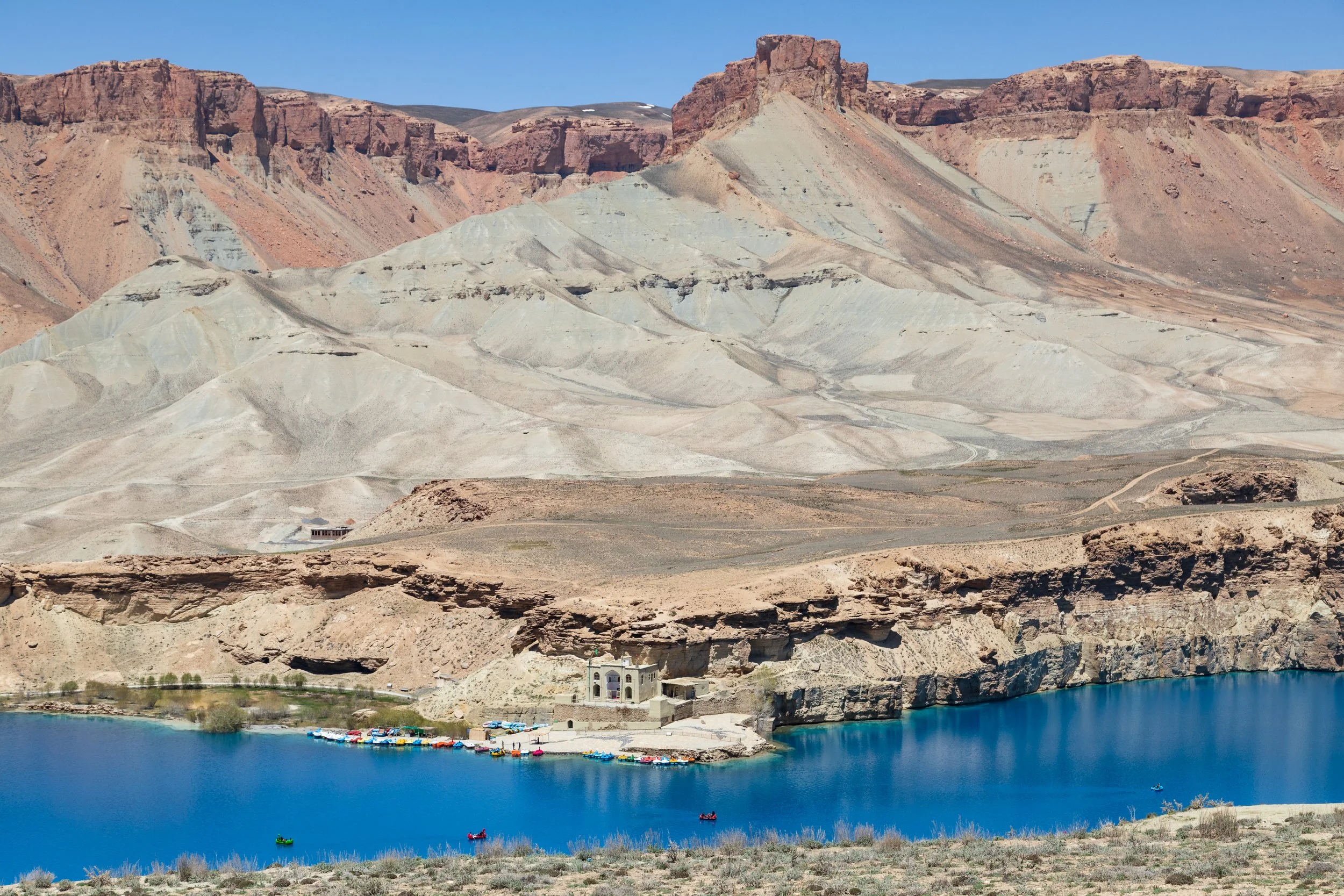
Bamyan Province, Afghanistan. Untamed Borders.
Meet Fatima Haidari: a 24-year-old guide who offers virtual tours of her country, Afghanistan. Forced to flee by the Taliban, Fatima now resides in Milan, Italy and provides a detailed tourist experience through Zoom of the Afghan city of Herat — taking visitors through sites such as the Citadel and the Central Blue Mosque.
Before the Taliban seized power in August 2021, Fatima worked as a local tour guide in Herat, using the job as a means to pay for her education, where she studied journalism and mass communication at university. Fatima is also the first ever female tour guide in Afghanistan, recognized in headlines in 2020. While she is no longer able to offer those in-person tours of her homeland, she continues to do what she can to show Herat off to the world — not just because the city is a beautiful and interesting place to explore, but because she doesn’t want outsiders to associate Afghanistan only with war and terror. Rather, its culture and history are what matter to her, and should take center stage.
But her passion and love for her country isn’t the only place Fatima’s heart lies. Growing up in the mountains in the central region of Ghor, Fatima was the youngest of seven children and was denied a rightful education, because she was a woman and because her family lacked the money. She worked for three years, making items such as traditional clothes to earn her way into an education, and was finally able to convince her parents to allow her to go to university in Herat in 2019, where she studied journalism.
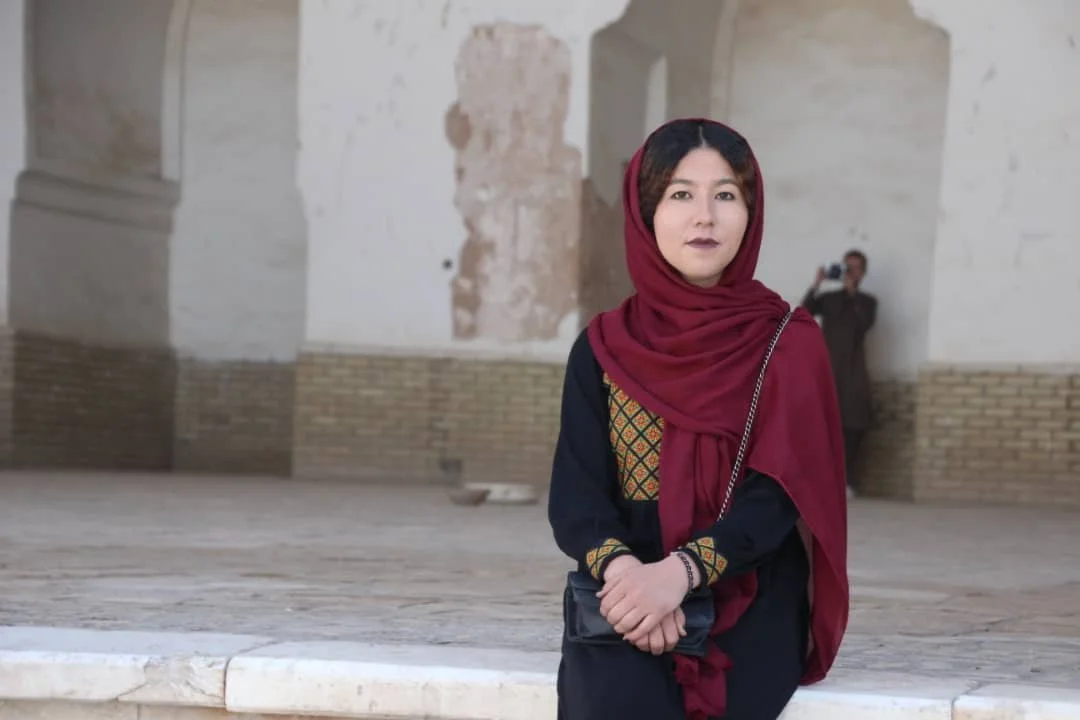
Fatima in Herat. Untamed Borders.
Through years of hard work, Fatima was able to get an education. But many girls back home in Afghanistan do not have the same privilege. Considered one of the lucky ones to have fled, Fatima will use a portion of the money she earns from the Afghan virtual tours to donate to a women's education charity, which currently operates in Afghanistan.
Fatima partners with Untamed Borders — a travel operator dedicated to taking groups to some of the most interesting and inaccessible places — to make these virtual tours possible. The approximately 1.5 hour tour will take guests to see the 1,400-year-old Great Mosque, the Herat Citadel and through the city’s bazaars and traditional teahouses, while Fatima narrates stories about Afghanistan that focus on its people, culture and extensive history.
But this event is a milestone itself. There has never been a virtual tour of Herat, and as Afghanistan’s first-ever female tour guide, this is a groundbreaking step to inspire other women in the nation. As Fatima says, she wants to be a changer, not a victim.
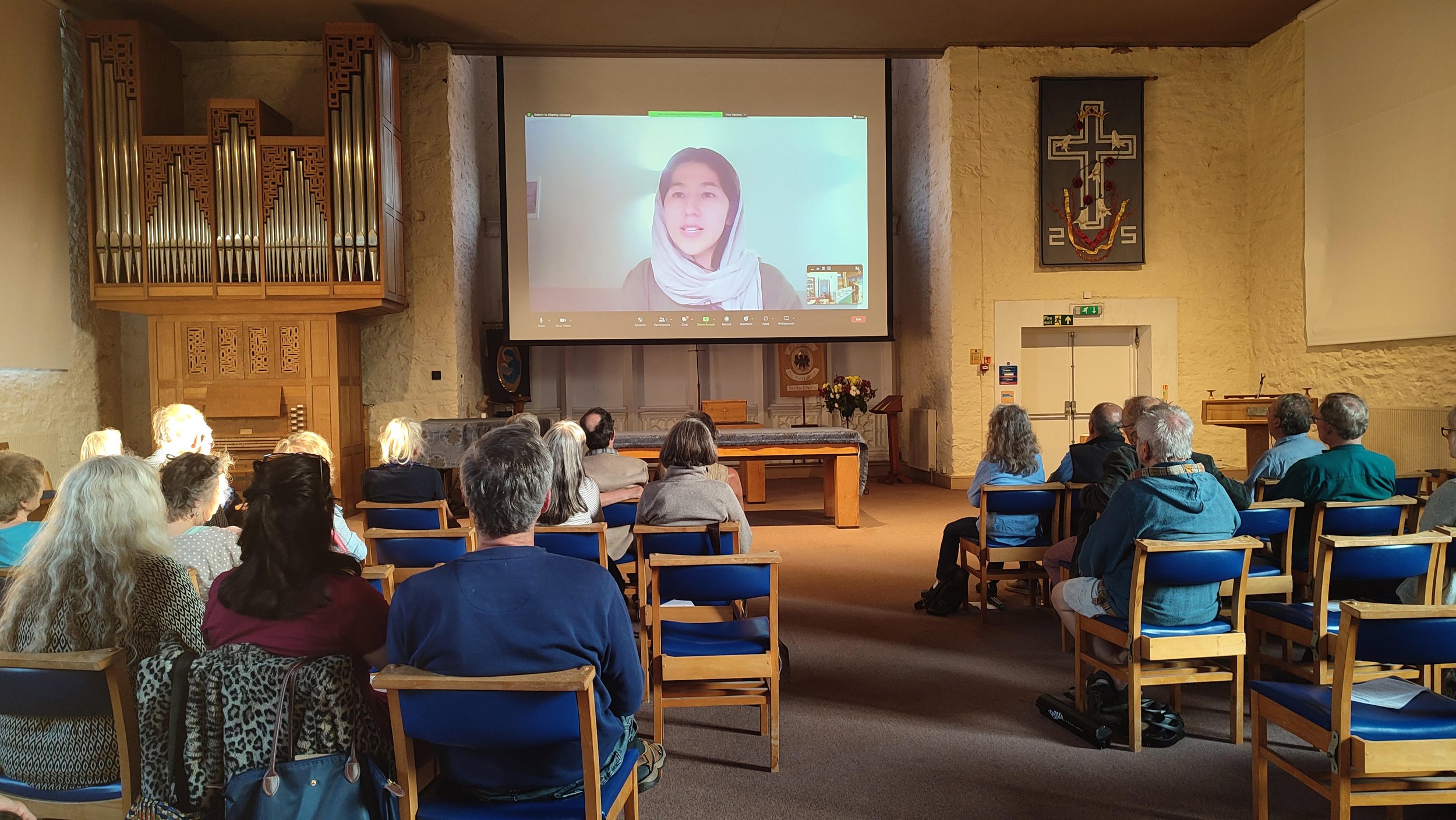
Fatima leading a virtual group tour. Untamed Borders.
And, of course, there can be no frank and open discussion about the people of Afghanistan without mentioning its women. Not only are they denied an education, Fatima has said the reascendant Taliban forces women to marry and perpetrates sexual or physical abuse against them. Things are more expensive for women, even though they are losing their jobs and forced to become housewives. By shining a light on the current situation in Afghanistan, Fatima is able to talk about her homeland while also spreading awareness to those able to make a difference.
Fatima’s next virtual tour will take place on September 12. Guests are able to book through Untamed Borders, and tickets will cost $60.
Through her own personal experiences and ties to a country seized by tyranny, Fatima hopes to share what makes Afghanistan so distinct and worthy of exploration while also fighting for justice, so that the women there will grow up knowing what it’s like to go to school.
Michelle Tian
Michelle is a senior at Boston University, majoring in journalism and minoring in philosophy. Her parents are first-generation immigrants from China, so her love for different cultures and traveling came naturally at a young age. After graduation, she hopes to continue sharing important messages through her work.
Women at the Western Wall
This organization is working to break down traditional gender barriers to create a communal space for women and men to pray together at Jerusalem’s Western Wall.

The Western Wall Chris Yunker. CC BY 2.0
Located in Jerusalem’s ancient Old City, the Western Wall marks a central point of religious and spiritual life for millions of Jews, Christians, and Muslims across the world. The wall is believed to mark the only remaining structure of the Temple Mount, the place of the original Temples for the Jewish people, the first of which was destroyed by the Babylonians in 586 BCE and the Second Temple by the Romans in 70 CE.
The Western Wall is also referred to as the Kotel, which is just the Hebrew word for “wall,” and as the Wailing Wall in reference to the manner in which the Jewish people wept at the site during the Roman domination of the Levant. The Wall remains a pivotal place of Jewish history and religious life, with thousands visiting the site daily and leaving prayer notes in the stone crevices.
However, in recent years, the Western Wall has also been at the center of religious debates concerning traditional gender separation. For generations, men and women have visited and prayed at the Western Wall in separate sections, the measures of which are not equal. Stretching just 12 meters in width, the women’s section 36 meters short of-the male side.
Women of the Wall
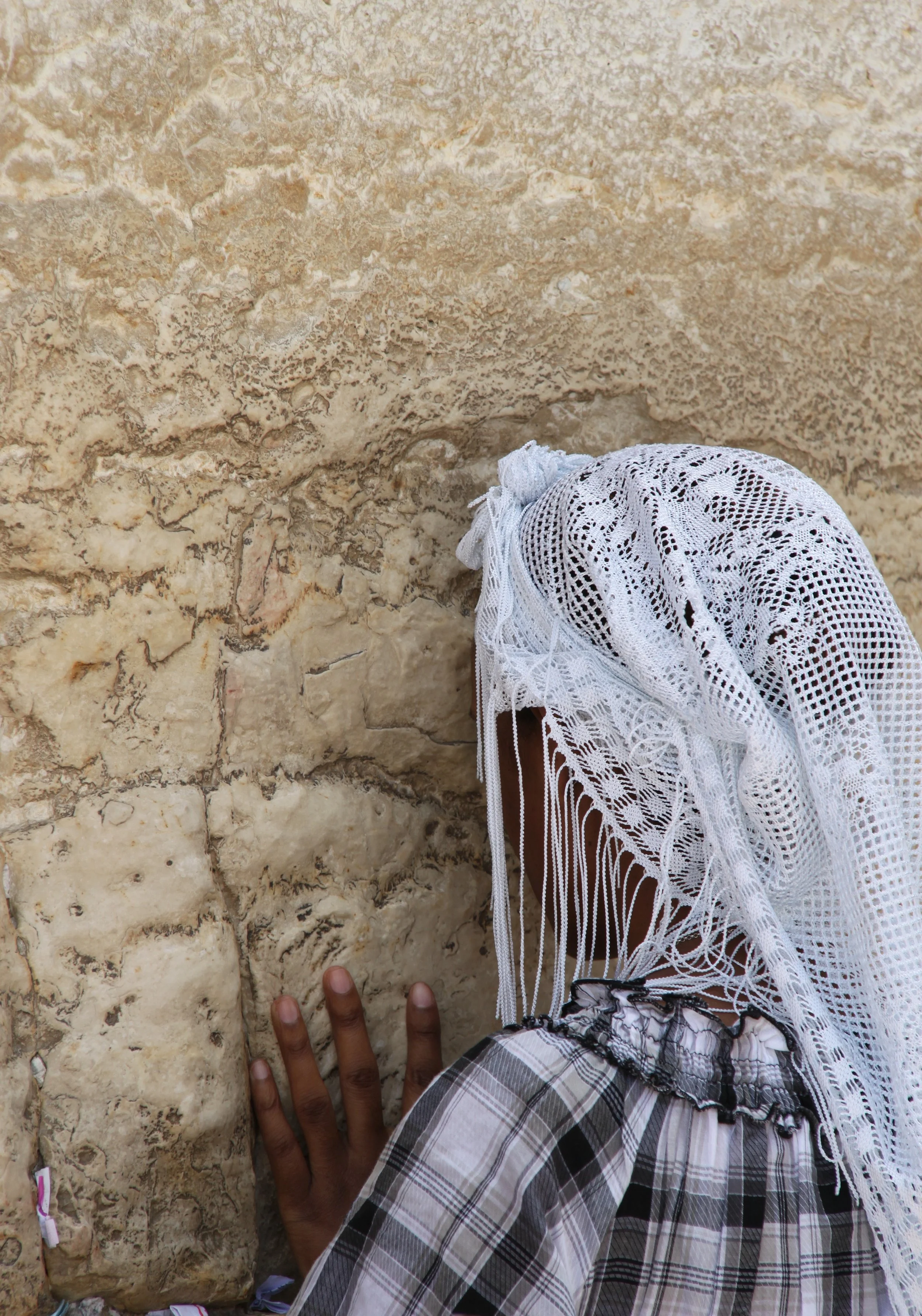
Woman praying at the Wall. it is elisa. CC BY-NC-ND 2.0
An organization called Women of the Wall (WOW) is working to increase women’s rights and equality at the Western Wall. The organization’s first meeting occurred in 1988, with 70 Jewish women gathering at the Western Wall to join together in prayer and the Torah reading, where they were met with stark disapproval and verbal assaults from Orthodox Jewish men and women. The event led to WOW’s founding and beginning of its legal fight to empower women to pray at the Western Wall, going against Orthodox norms.
By drawing on systems of social advocacy, education and empowerment WOW is seeking social and legal acceptance of women’s right to wear prayer shawls and to pray and read aloud from the Torah. The group’s mission advocates for women’s right with regards to the four t’s: the right to say a prayer, or Tefillah, the right to wear traditional leather wraps, or Tefillin, that are inscribed with verses from the Torah, the right to wear prayer shawls known as Tallit, and finally the right to read aloud from the Torah.
Along with its advocacy work, WOW regularly gathers together in community at the Western Wall. The group commemorates Rosh Chodesh, a Jewish holiday that marks the new moon at the beginning of each month in the Hebrew calendar, with a collective morning prayer at the Kotel. The holiday is traditionally connected to a celebration of women, with origins dating back to the time of Moses when wives refused to give up their jewelry to build the golden calf, a symbol of sin and idolatry in the Torah.
While these monthly prayer gatherings are a means of celebrating Jewish women’s spiritual life and collective community, they are often met with violence and aggression. The women of WOW are often double searched at the entrance to ensure that they are not smuggling in a Torah, and the group regularly face physical and verbal aggression from the Ultra Orthodox community, an experience that often leaves them with scars and bruises after their day of prayer.
Members of WOW are accustomed to receiving verbal and physical pushback against their cause, and even being spit on by those who view their message as sacrilegious.
A Legal Battle
In 1988 the Ministry of Religion established The Western Wall Foundation, a government body responsible for the care and administration of the Western Wall. Rabbi Shmuel Rabinovitch has served as chairman of the foundation since 1995 and has been known for his efforts to maintain traditional Orthodox customs at the Wall. Rabbi Rabinowitz has criticized WOW’s work in the past, including in 2014 when he spoke out against activists efforts to smuggle a Torah into the women’s section of the Wall.
In spite of women’s legal right to read the Torah, Rabbi Rabinovitch has created regulations that prevent women from bringing in Torahs into the Plaza. Furthermore, Rabbi Rabinovitch’s regulations prevent women from borrowing one of the 200 Torah scrolls kept within the Plaza, which are freely offered to men.
In April 2013, a decision written by Judge Moshe Sobell in the case of Israel Police v. Lesley Sachs, Bonnie Riva Ras, Sylvie Rozenbaum, R. Valerie Stessin, & Sharona Kramer, found that the Israeli Supreme Court’s 2003 case which prohibited women from wearing prayer shawls or reading from the Torah had been misinterpreted, and could not be applied to WOW. Judge Sobell also found that WOW had not endangered the public peace, nor had it violated the Law of Holy Places governing the Western Wall that demands visitors adhere to the local customs. Instead, the ruling dictated that local customs should be determined by the public through nationalistic and pluralistic lenses in addition to the Orthodox one.
The 2013 court decision helped spur ongoing discussions regarding communal prayer spaces at the Wall. In 2013, Prime Minister Benjamin Netanyahu appointed a committee chaired by Natan Sharansky to resolve the issue of communal prayer at the Wall. Sharansky proposed to extend the Western Wall plaza to an area known as Robinson’s Arch in order to provide a pluralistic prayer space for both men and women. The area can accommodate some 450 people, and was seen in many ways as a temporary solution to the question of mixed-gendered prayer.
In January 2016, the Israeli government approved a plan to set up a communal space in which both men and women could pray together. The plan will also give women who want to pray alone but not in accordance with Orthodox rules the option to set up a temporary barrier.
The new area is expected to double the size of the temporary communal prayer area set up in 2013 under Netanyahu, in order to accommodate 1,200 worshippers.
The fight for communal prayer spaces remains a contentious issue between Orthodox and Reformed communities. Although the plan for a pluralistic prayer space was passed by the Knesset, Israel’s legislature, in 2016, as of 2023 the construction and implementation have not yet begun. The issue remains a top priority for members of WOW, who will continue to pray at the Wall’s women’s section until a pluralistic prayer space is constructed.
Get Involved
Other organizations in Israel have come out in support of WOW and embraced a pluralistic perspective towards religious traditions.
Rabbi Danny Rich, a chief executive of Liberal Judaism, celebrated the decision for a communal prayer space as one that represented Judaism’s inclusivity. Through education opportunities, social action campaigns, collaborative interfaith work, and its provision of programming and library of historical archives, Liberal Judaism engages with social justice issues such as climate change, inequality, and poverty.
The Israel Movement for Reform and Progressive Judaism has also praised the women’s representation at the Western Wall, as an exemplification of pluralism and diversity within Jewish community. The Movement seeks to increase the accessibility of progressive and pluralistic Judaism through education programming as well as legislation changes as part of their Israel Religious Action Center (IRAC). Along with their advocacy work, the IRAC offers resources and publications that engage with modern social issues through a progressive and religious lens.
Jessica Blatt
Jessica Blatt graduated from Barnard College with a degree in English. Along with journalism, she is passionate about creative writing and storytelling that inspires readers to engage with the world around them. She hopes to share her love for travel and learning about new cultures through her work.
The Game of Activism: The Impact of 6 FIFA Women’s World Cup Players
From record-breaking seasons and legendary careers to equal pay activism and supporting girls in sport, these six women are proof that you really can do it all.

Players from the Norwegian and Dutch women’s football teams battle it out on the pitch. Ailura. CC BY-SA 2.0
By far the world’s most popular sport, soccer is enjoyed by over a billion players and spectators. International events such as the Europa League Championship and of course the quadrennial FIFA World Cup draw incredible crowds both in person and digitally, uniting the world in patriotic pride and love for a beautiful game. This year, soccer fans have once again been drawn together by the 9th edition of the FIFA Women’s World Cup, considered to be the biggest women’s sporting event in the world, with more than 30 nations competing during July and August in stadiums across Australia and New Zealand. The importance of this event for advancing and promoting professional female athletes and tournaments, both in soccer and otherwise, can not be understated, especially with equal pay and female representation being such hot button issues in today’s social discourse. As such, in addition to achieving the celebrity of household name status, many of the athletes playing in this year’s tournament are also avid activists when not on the pitch. Here are six Renaissance women to keep an eye out for during the game.
1. Marta, Brazil

Soccer legend Marta taking a penalty against South Korea at the World Cup in 2015. Phillippe Bouchard. CC BY-NC 2.0
This mononymous veteran of the game is playing in her sixth Women’s World Cup this year at 37 years of age. Marta is widely considered to be among the greatest female footballers of all time, as a two-time Olympic medallist, six-time recipient of the FIFA World Player of the Year award and record holder for the most goals in any men’s or women’s World Cup with 17 to her name. In addition to her role as a star player in Brazilian national women’s team, Marta plies her trade for the Orlando Pirates in the National Women’s Soccer League (NWSL). When not scoring goals, she is a strong proponent for increasing female participation in sport and champions equal opportunities for girls to get active from a young age. In July 2018, she was appointed UN Women Goodwill Ambassador for women and girls in sport and has continued to further gender equality and female empowerment, encouraging girls to pursue their dreams and overcome barriers in sport. She was also appointed Sustainable Development Goals Advocate to the UN in May of 2019 and has since worked to raise awareness and call for greater global commitment to achieving the project’s targets by 2030. All of this goes to show that Marta’s footballer status as the GOAT applies to her activism as well.
2. Sam Kerr, Australia

Sam Kerr is considered Australia’s greatest hope at a World Cup title this year. Adam Davy. CC BY-NC-ND 2.0
You might know her for her iconic backflip goal celebration, but Australia’s Sam Kerr has accrued an impressive number of accolades since debuting internationally at the age of 15. She was named Australian Sports Personality of the Year in 2017, and won the NWSL’s Golden Boot award both that year and the following one. Kerr was also nominated for FIFA’s Best Player Award in 2018, and has been nominated for the Ballon d’Or Féminin four times. In short, fans have big expectations for the Australian captain, especially since the World Cup is on her home turf. As determined as she is to cinch the gold, she has also been equally dogged with her support of LGBTQ+ rights, and has been a role model to countless young women and girls as an openly gay athlete, spearheading The Matildas’ partnership with Sydney WorldPride just earlier this year. She spoke publicly for the first time about her new relationship with fellow Sky Blue FC player Nikki Stanton in a pre-World Cup sponsorship video for Nike, and pushed back against the incredible number of hateful comments she received in the aftermath. Kerr continues to speak publicly about her sexuality and the importance of being proud and passionate about who she is in an effort to inspire a sense of community among LGBTQ+ athletes.
3. Asisat Oshoala, Nigeria

Asisat Oshoala playing at the Champions League tournament in 2019 for FC Barcelona. Steffen Prößdorf. CC BY-SA 2.0
Asisat Oshoala is definitively the most successful African female footballer in history, and she is only 28 years old. Aside from being the first African woman to both score in and win the UEFA Women’s Champions League, she is also a two-time nominee for the Ballon d’Or and five-time winner of the African Women’s Footballer of the Year award. After playing at a club level in England, China and Spain, Oshoala joined FC Barcelona in 2019 and has quickly risen the ranks to become a key player on the team. As such, the star forward is acutely aware of how her story has inspired many girls that share her ethnic and religious background. In 2015, Oshoala created her namesake foundation in partnership with Women Win of Germany and Nike that runs a number of sport, humanitarian and educational initiatives for girls across Africa. The most prominent is the Asisat Oshoala Academy, which provides tri-weekly football training sessions for young girls in marginalized communities across Africa. As an ambassador for Nike, Oshoala also founded the Football4girls tournament in Lagos, Nigeria, an annual occurrence which brings together teams from schools across the country to compete for a significant cash prize. Oshoala’s talent and passion for her sport is undeniable, rivaled only by her dedication to social work.
4. Ada Hegerberg, Norway

Ada Hegerberg celebrates on the pitch with her Lyon club team. Steffen Prößdorf. CC BY-SA 2.0
When on the pitch, Norwegian soccer legend Ada Hegerberg plays for both Olympique Lyon in France’s Division 1 Féminine league and Norway’s national team. At just 28 years old, Hegerberg is the all-time highest scorer in the UEFA Women’s Champions League with 59 goals to her name and is also the current record holder for the most goals scored in a UEFA Women’s Champions League season. In 2018, she was the inaugural recipient of the Ballon d’Or Féminin and has been named as BBC Women’s Footballer of the Year twice. Off the pitch, however, Hegerberg is most well known for taking a five year hiatus from the Norwegian national team in protest of the lack of equal pay between the men’s and women’s teams, and the Norwegian Football Federation’s (NFF) poor treatment of female players. Her absence was a huge blow to Norway’s chances of victory, and is recognized as being a significant factor in the NFF’s 2022 decision to give the women’s team equal pay. Hegerberg has also been a vocal supporter of LGBTQ+ rights and raised a rainbow band during a match against New Zealand in June 2022 in solidarity with victims of a shooting at a gay nightclub in the Norwegian capital of Oslo earlier that year. With the rest of the Grasshoppers by her side, Hegerberg will be spearheading Norway’s attack at the World Cup this year.
5. Khadija “Bunny” Shaw, Jamaica

Khadija Shaw is captaining the Reggae Girlz at this year’s World Cup. Jorge Martinez, Mexsport. CC BY-NC 2.0
Khadija Shaw went to her first World Cup at only 21 years of age as part of the first Caribbean team to qualify for a Women’s World Cup, and has returned this year as captain of Jamaica’s national team at the same competition. Khadija, or Bunny as she is affectionately known by her fans, made a smashing debut in Bordeaux back in 2019 tallying a whopping 32 goals in 35 games. She has since continued to build her lead as Jamaica’s all-time leading goal scorer among both the men’s and women’s teams after moving to Manchester City in 2021 where she has also broken the record for most goals scored in a single season. Soon after that fateful World Cup qualification in 2019, however, Shaw took to social media to express her discontentment with the Jamaican Football Federation over not being paid to compete, joining the movement for equal pay rights. She is also a big proponent of encouraging girls to participate in sports, and has been very vocal about the lack of opportunities and role models for young girls in Jamaica and the Caribbean, having faced plenty of challenges in trying to pursue her passion while at home. Shaw and Jamaica’s Reggae Girlz, as the team is fondly known, will be appearing for their second World Cup this year in the hopes of inspiring even more funding and investment in grassroots soccer initiatives in Jamaica.
6. Megan Rapinoe, USA

Megan Rapinoe on the victory tour with the US Women’s National Team in 2019. Lorie Shaull. CC BY-SA 2.0
No list of women soccer players is complete without the iconic colorful-haired Megan Rapinoe. At 38 years of age, Rapinoe is a two-time World Cup champion, an Olympic gold medallist and has also won both the Best FIFA Women’s Player award and the coveted Ballon d’Or Féminin in 2019. She first made headlines in activism when she joined fellow athlete Colin Kaepernick in kneeling during the American National Anthem, which she followed up soon after in her role as an extremely outspoken proponent of the successful fight for equal pay in American soccer led by the US Women’s National Team. Rapinoe has also been a notable critic of the overturning of Roe v. Wade last year, and has publicly called on the Supreme Court to support abortion rights. As one of, if not the most, popular American women’s soccer players of our time, many will be showing their support for Rapinoe after her announcing that this World Cup will be her last, as she plans to retire at the end of the NWSL season. Given her extensive involvement in a variety of activist movements, however, there is no doubt that she will continue to remain involved in the sport even after she leaves the pitch.
Tanaya Vohra
Tanaya is an undergraduate student pursuing a major in Public Health at the University of Chicago. She's lived in Asia, Europe and North America and wants to share her love of travel and exploring new cultures through her writing.
Filming "Beyond the Surface" in India
“Unite those with positive minds and compassionate hearts and good things happen…” I thought to myself, after meeting Emi Koch in San Diego and chatting with Crystal Thornburg-Homcy about her idea to make a unique surf film in India.
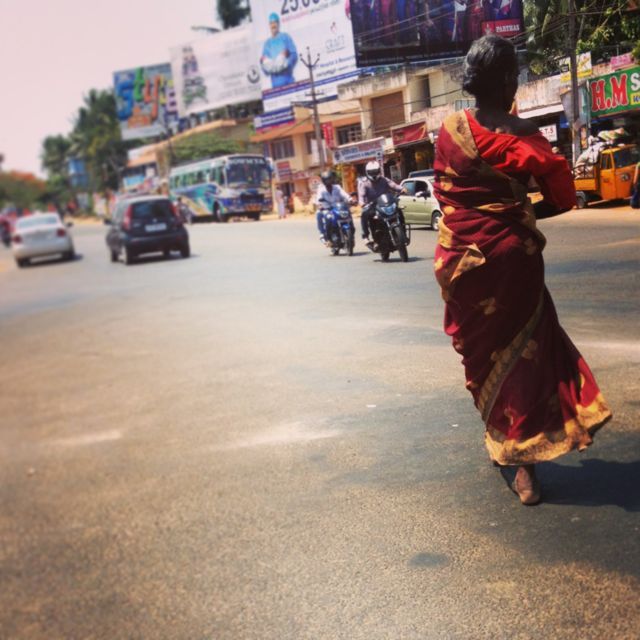
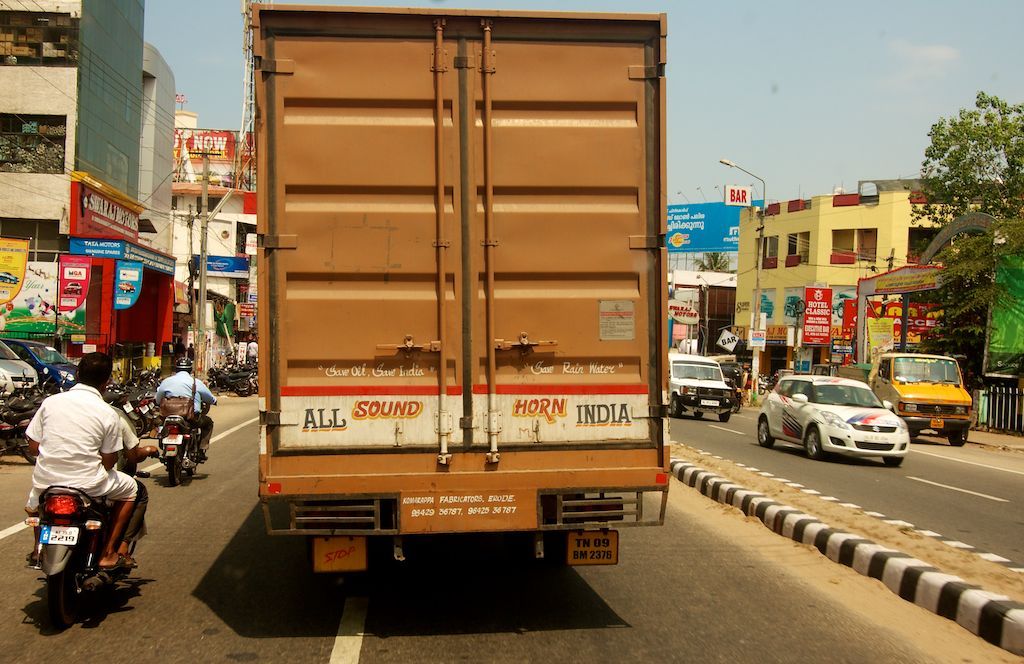
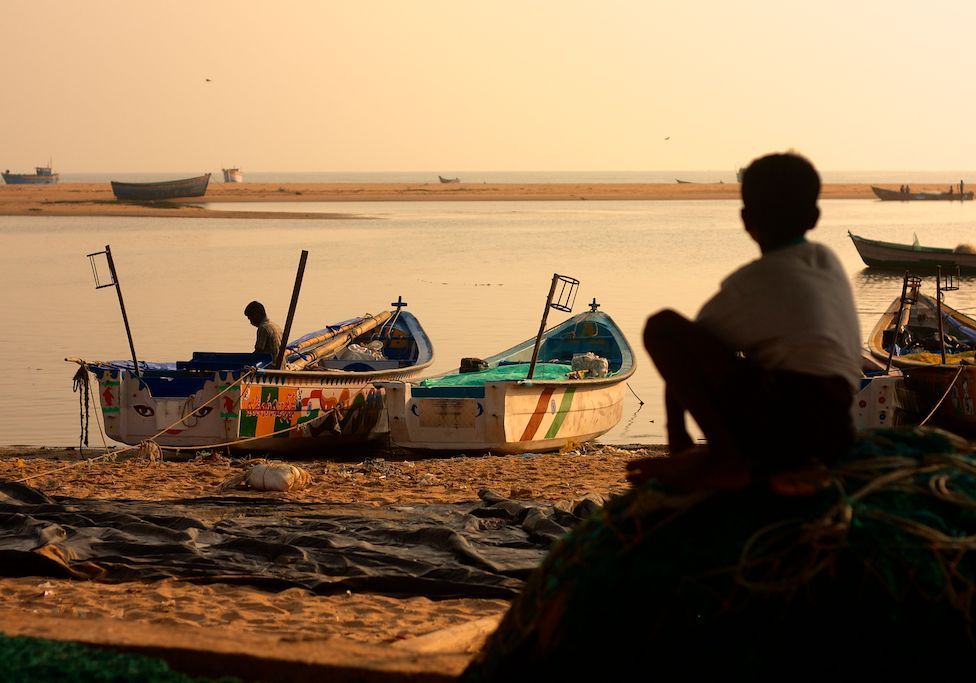
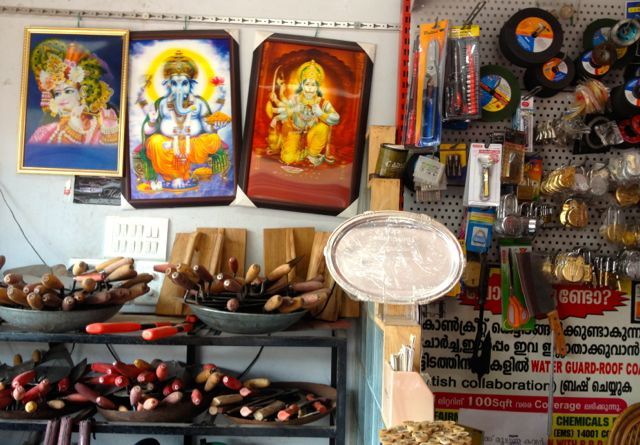
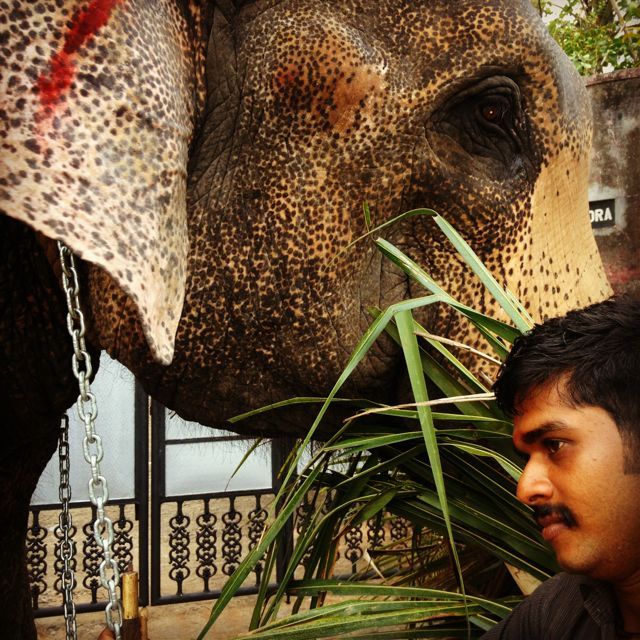
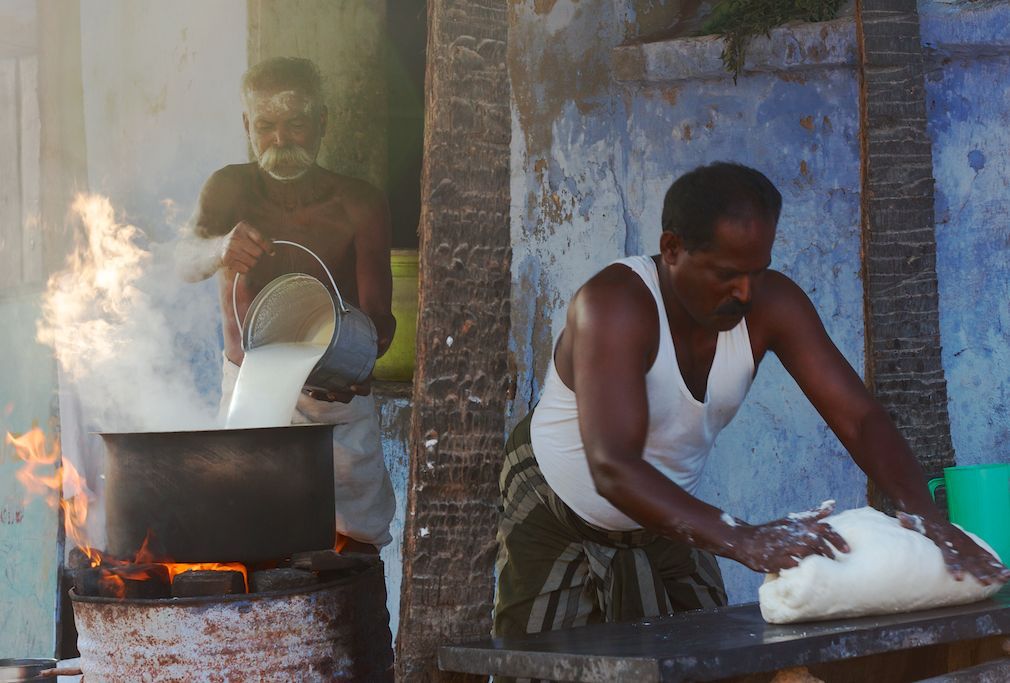
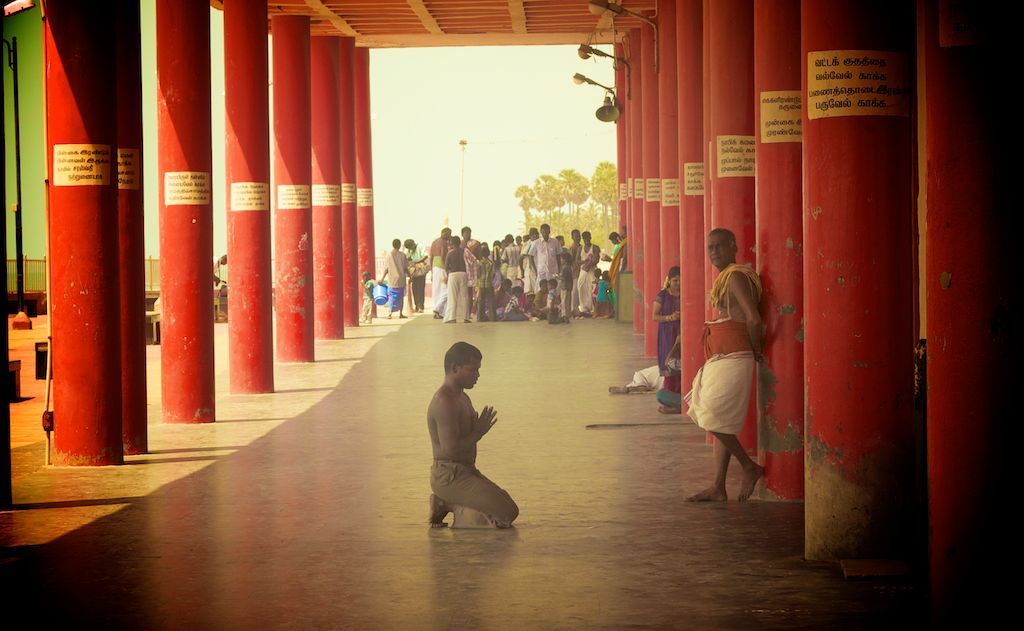
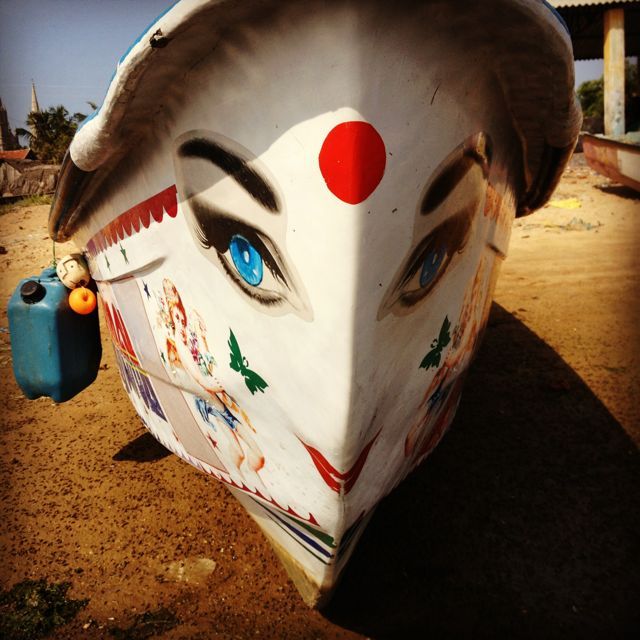
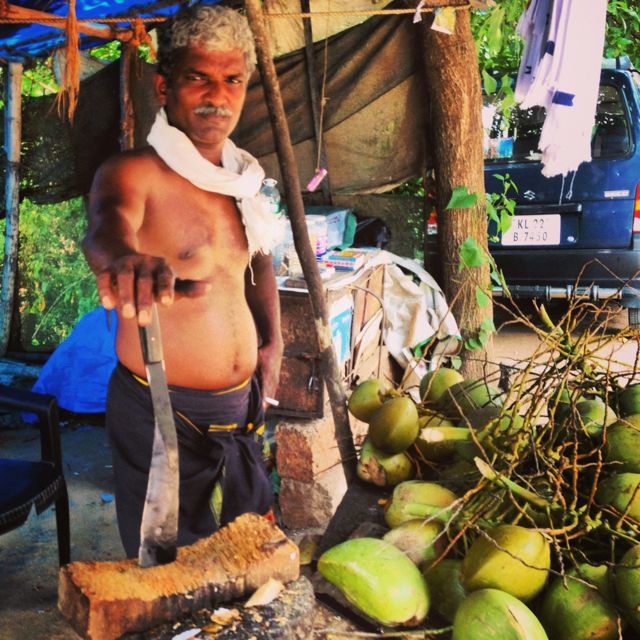
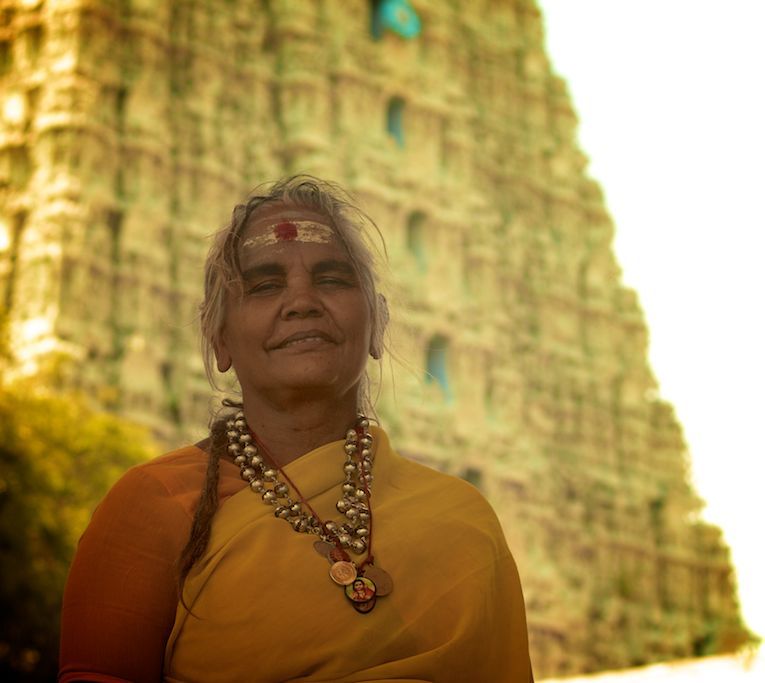
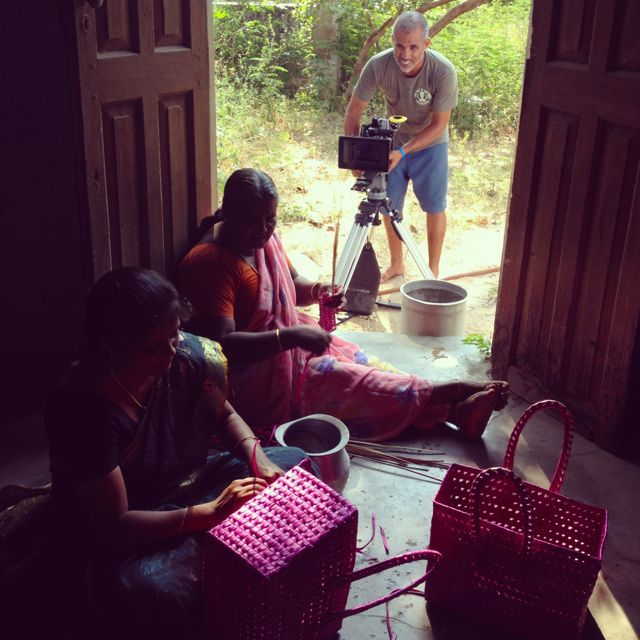
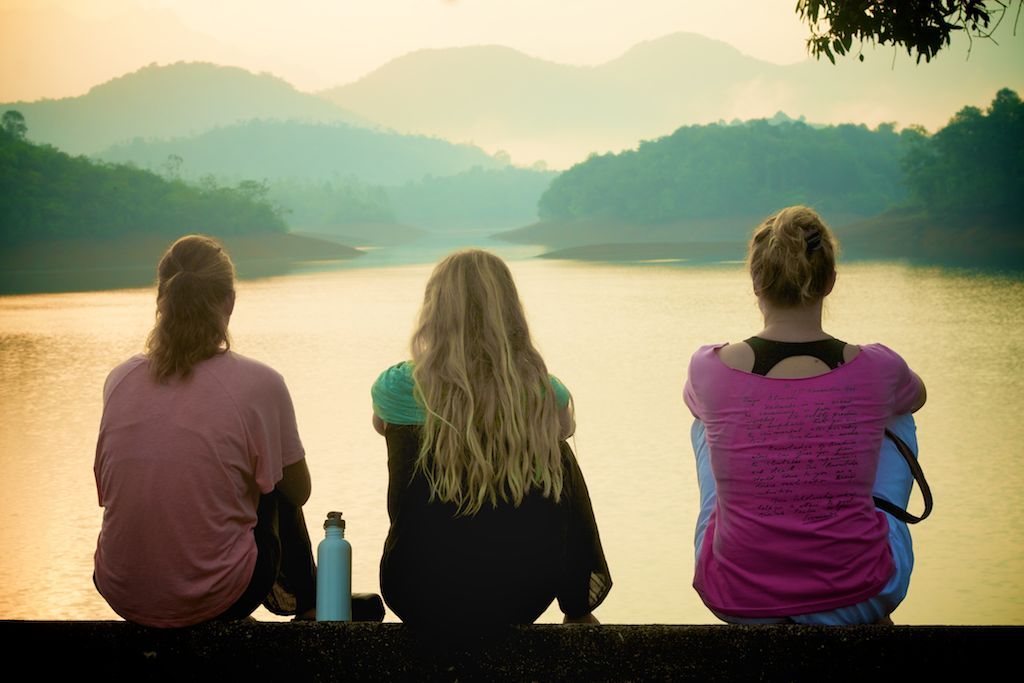
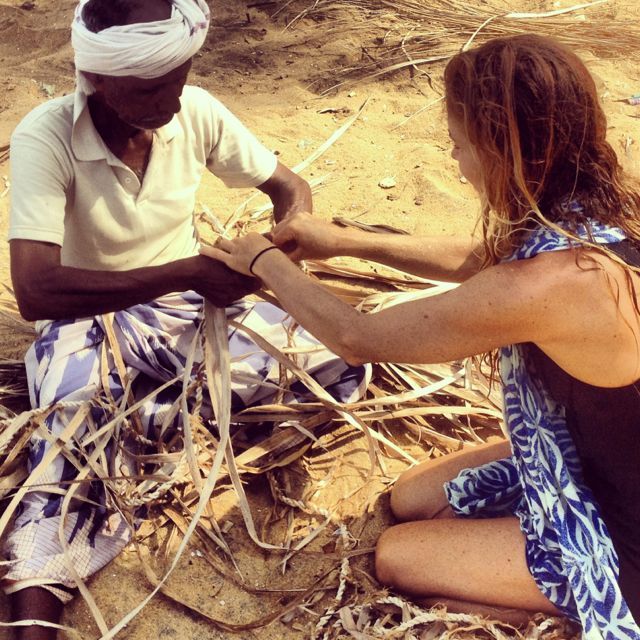
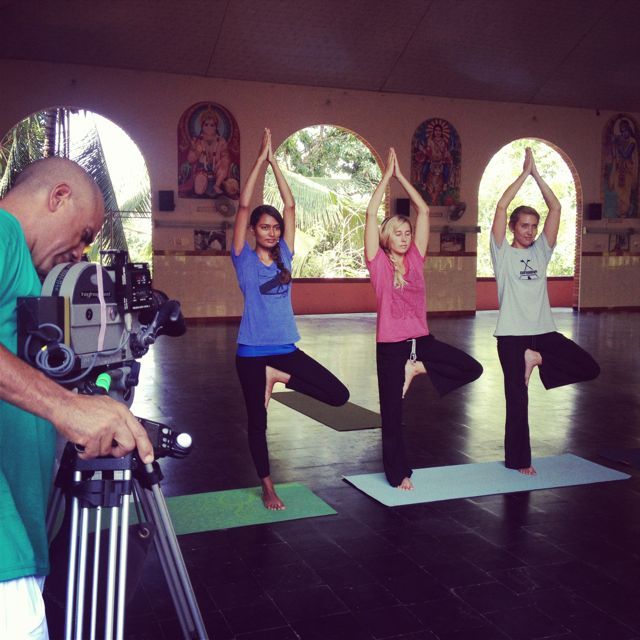
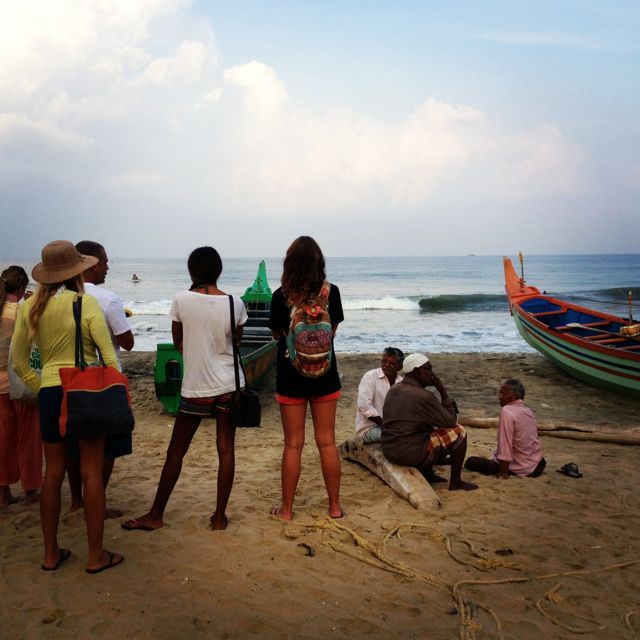

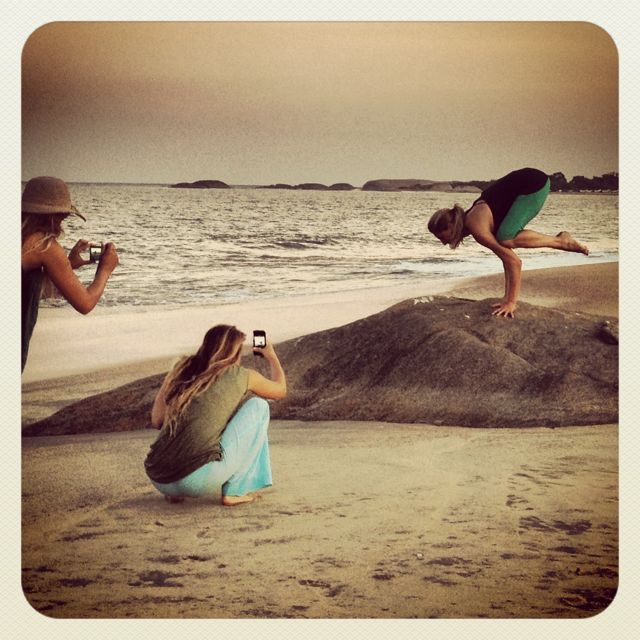


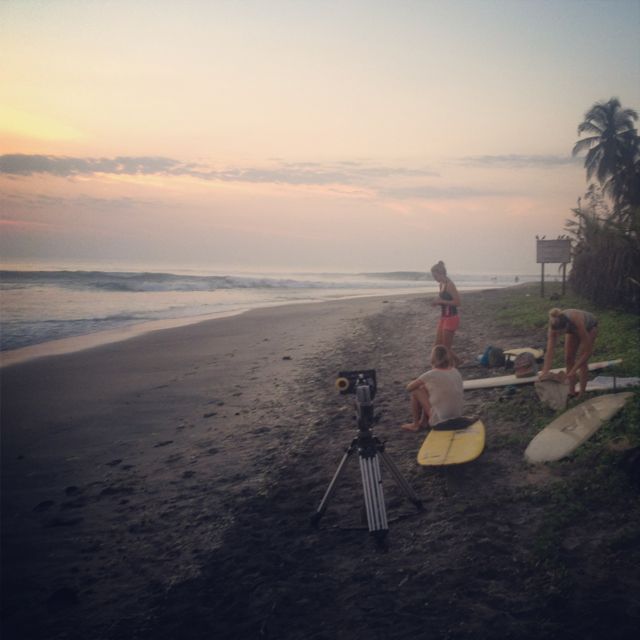
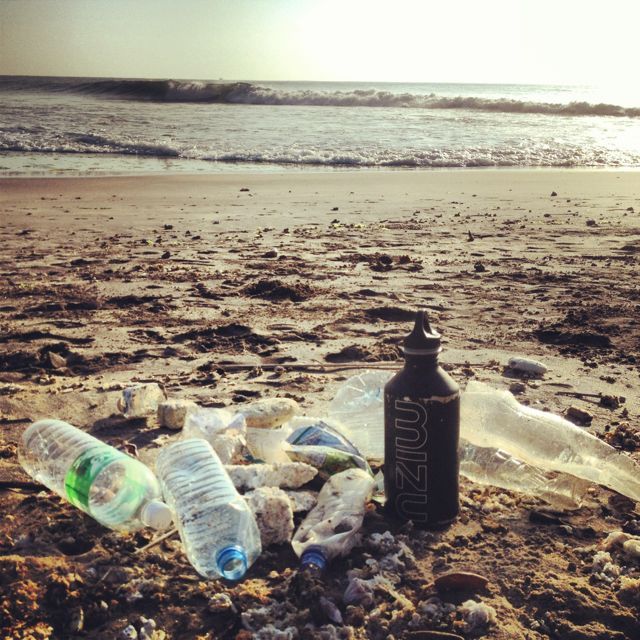
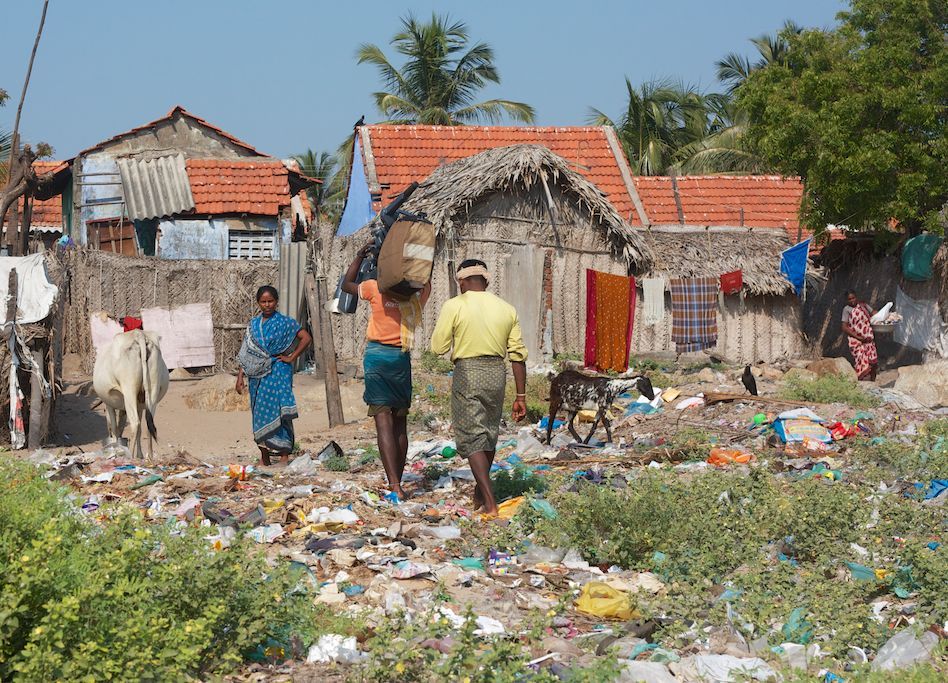
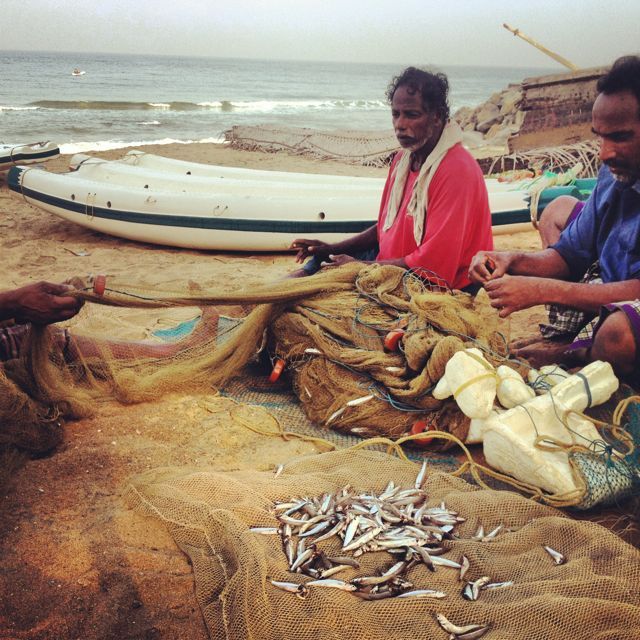
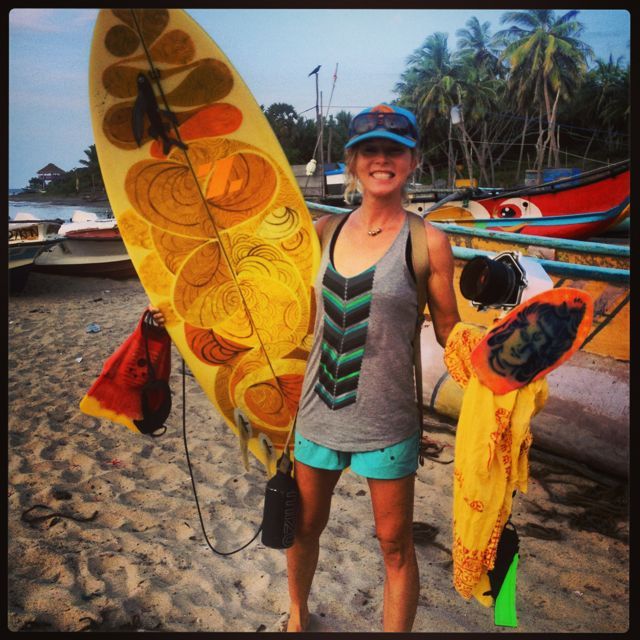
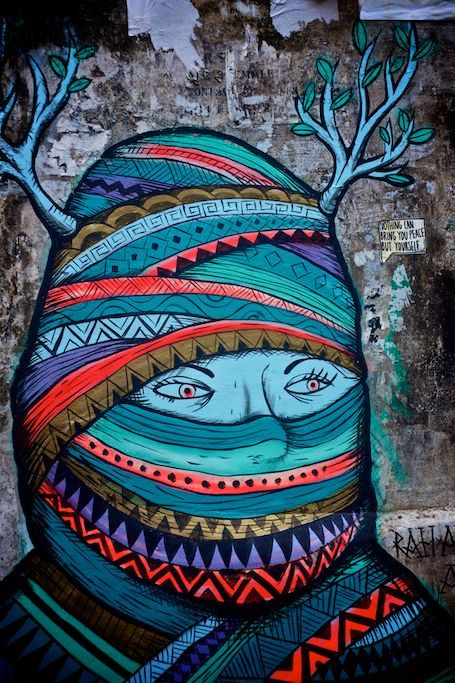
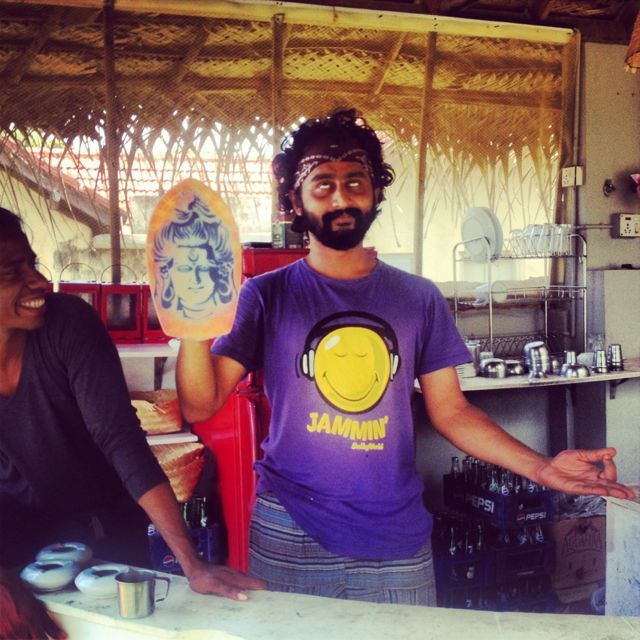
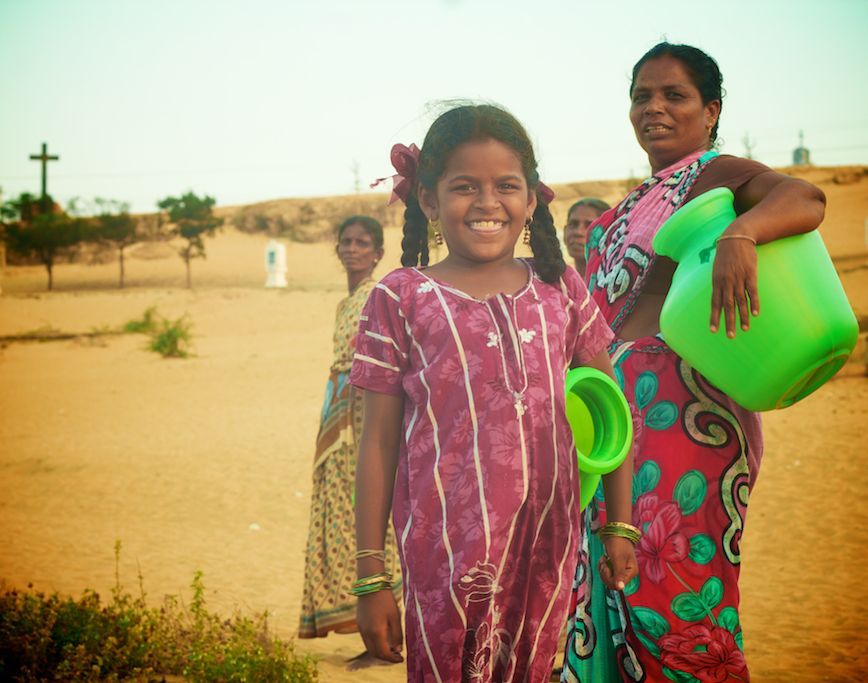
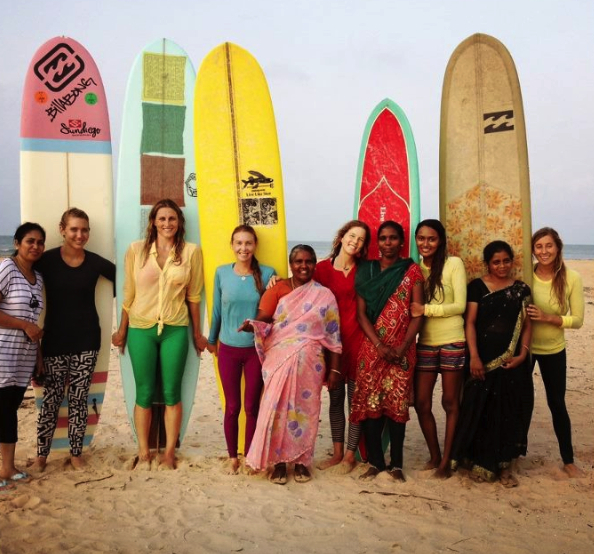
She and her husband, renowned filmmaker, Dave Homcy, planned to document Emi’s work in India under her NGO, Beyond the Surface International, and other inspiring cases of youth and women’s empowerment through surfing, yoga, and ecological creativity.
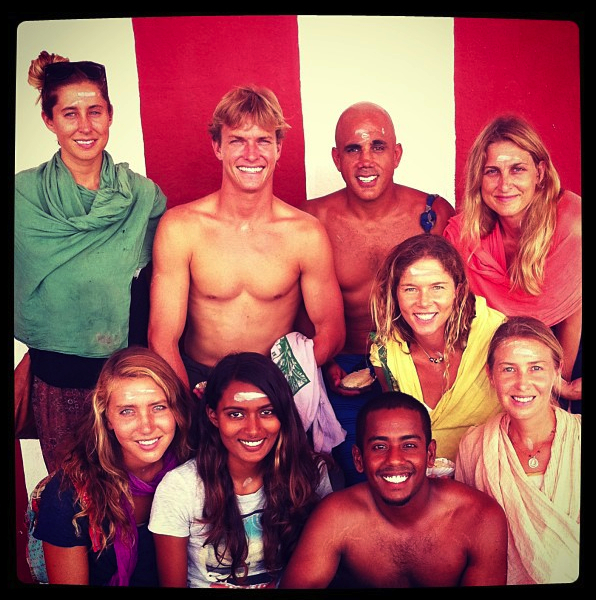
On a scouting mission, they serendipitously met Ishita Malaviya, India’s first female surfer and a powerful voice for Indian women, who happily agreed to accompany us on the adventure. Shortly after, Damian Handisides of Free Theo Productions joined the team and the project’s momentum became unstoppable. I was honored to be a participant, along with Lauren Hill who is the founder of The Sea Kin, and Kate Baldwin, yogini extraordinaire.
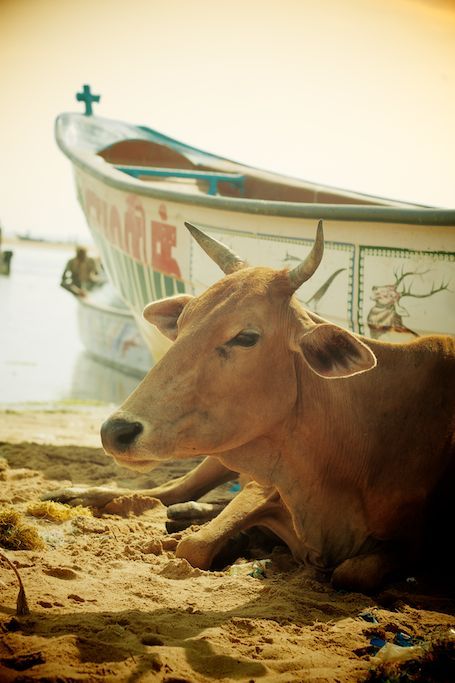
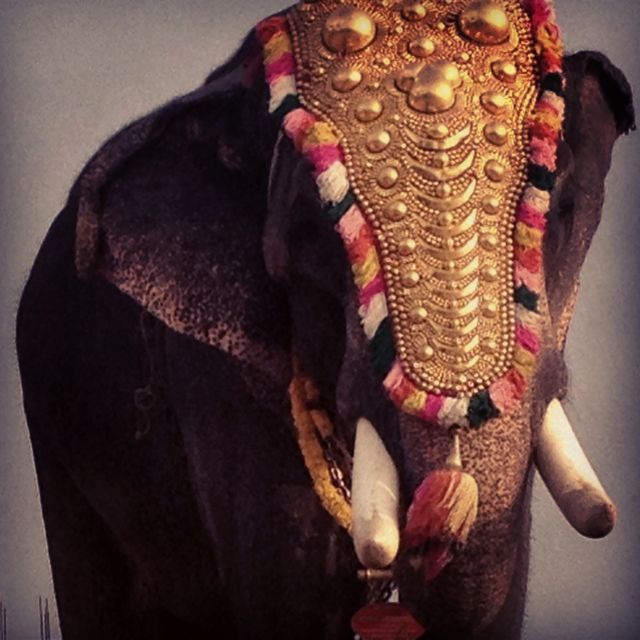
We all met in India from our various points on the globe this past April with the hope of exchanging light and love with the people we met along the way, especially those facing poverty, gender inequality, and social disparity. At the same time, the adventure would be a platform of growth for our own individual paths of self-realization. Our three unforgettable weeks were abound with surprises, beauty, surf, and new friendships while touring and filming in southern India. We explored together in search of a deeper connection to our fellow humans and Mother Nature.
Learn more about Beyond the Surface here.

Liz Clark
Liz is a professional free surfer, writer, environmental activist and adventurer who has captained her 40ft sailboat, Swell, over 18,000 miles on a surfing expedition in the Pacific since 2005. Through her website/blog, she shares her journey with the world in an effort of inspire people to live out their passions, spend more time in nature, engage in self-awareness and personal growth, and develop a consciousness of their everyday planetary impact.
Affirmative Action: An International Perspective
The US Supreme Court struck down affirmative action in college admissions, but across the world other countries maintain programs to diversify higher education.
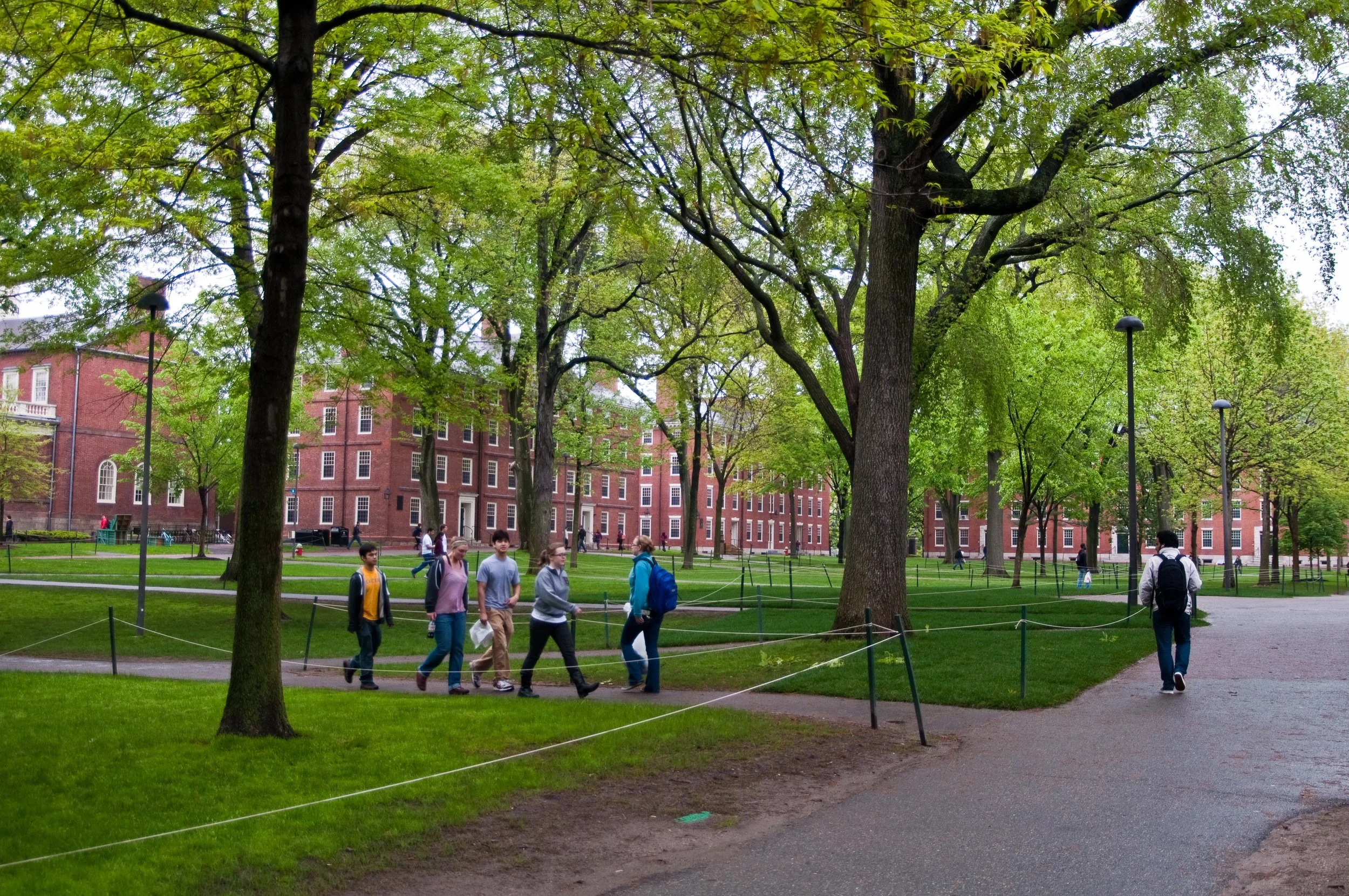
Harvard campus. Anne Helmond. CC BY-NC-ND 2.0
On June 29, 2023, the U.S. Supreme Court, led by a conservative majority, struck down the use of affirmative action in college admissions. The ruling prevents colleges from considering race as a factor when deciding whether to admit applicants. The Supreme Court ruled in favor of The Students For Fair Admission, which sued Harvard and University of North Carolina on the claim that the schools' affirmative action policies discriminate against Asian Americans. The case was seen by supporters of affirmative action as an example of using Asian Americans as a wedge group for a conservative agenda, and a poor representation of the wide spectrum of Asian Americans’ views on affirmative action.
The story of affirmative action in the U.S. is a fraught one, emerging from generations of racial inequality and discrimination. However, it is not a story that exists in a vacuum. About 25% of all countries have some form of affirmative action with the goal of opening up higher education to students from different backgrounds.
History of Affirmative Action in The U.S.
Affirmative action encompasses any program that actively improves job and educational opportunities for minorities or women. The belief was adopted by president Kennedy in 1961 through Executive Order 10925, which sought to use "affirmative action to ensure that applicants are treated equally without regard to race, color, religion, sex, or national origin,” and established the Committee on Equal Employment Opportunity. President Johnson’s 1965 Executive Order 11246 helped cement affirmative action by requiring government and contractors and subcontractors to expand opportunities to minorities.
During the Civil Rights movement, and following the assassination of Dr. Martin Luther King Jr., student groups and advocates implored universities to make education more accessible, and to establish class demographics that were indicative of American society. In the weeks following Dr. King’s death, the Dean of Admissions at Harvard announced his commitment to enroll more Black students, a decision that led to a 76% increase in black students enrolled at Harvard between 1968 and 1969. Harvard’s stance was soon followed by other elite institutions including Princeton, Yale and Columbia.
While universities individually pledged to embrace student diversity and increase enrollment among racial minorities, it wasn’t until a 2003 Supreme Court case that affirmative action became established as a national precedent. The 2003 case of Grutter v. Bollinger determined that affirmative action did not violate the Constitution’s Equal Protection Clause, and created a precedent in which a desire for increasing diversity could be used as a means of using racial preferences within admissions.
India
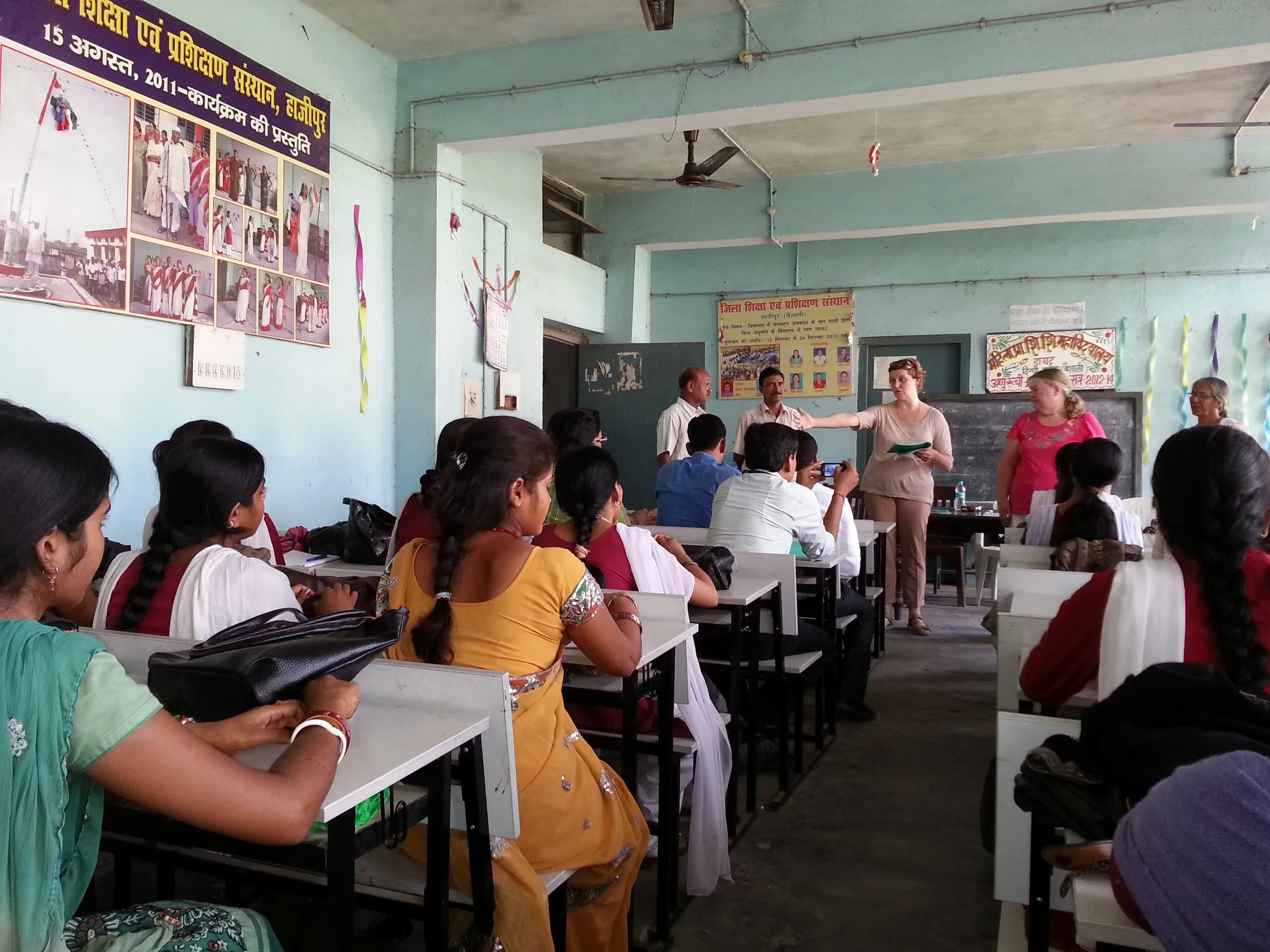
Classroom in Patna, India. TESS India. CC BY-SA 2.0
One of the earliest examples of affirmative action was adopted in India during British colonial rule in the 19th century. Under the programs, reservations were created as a means of establishing educational opportunities for the Dalit, commonly (and offensively) known as the “untouchables.” India’s modern affirmative action program seeks to expand opportunity by reserving 22.5% of all spots in educational institutions for lower caste youth. In 2005 the program was expanded to include private higher education institutions as well. These programs have led enrollment by targeted low caste disadvantaged groups to increase by three times.
India’s affirmative action system has contributed to a national increase in Dalit’s social and economic standing. In 1965, only 1.6% of the most senior service positions were held by Dalits, a number that rose to 11% by 2019, making it more representative of India’s demographics as 25% of the country is Dalit.
France
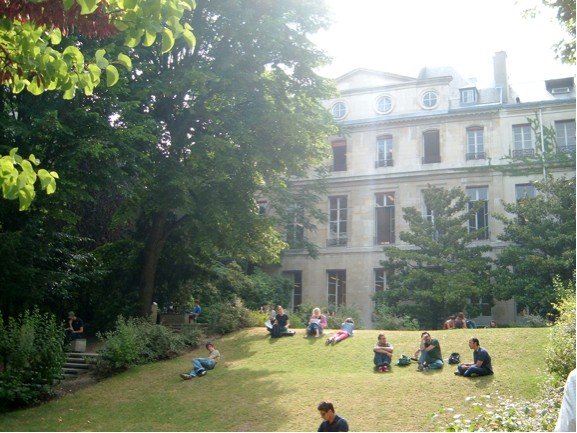
Garden at the Sciences Po. that ambitious girl. CC BY-NC 2.0
In France, affirmative action measures target specific neighborhoods as priority education areas, or Zones d’Education Prioritaires, which are often characterized by low income, many residents of immigrant background, and a high percentage of the population for whom French is a second language. In place of quotas some elite institutions, including Sciences Po, have sought to reach out directly to students coming from these disadvantaged neighborhoods, asking secondary schools in these areas to send over their best applicants, with the university providing necessary financial aid. The program seems to have had limited effects, and since its establishment in the early 2000s only 860 students have been admitted in through this specific channel. However, the number of students on financial aid has increased by roughly 20% in recent years.
Brazil

Students in Brazil. World Bank Photo Collection. CC BY-NC-ND 2.0
In 2012, the Brazilian government adopted a bill to reserve half of the spots in elite federal education institutions for students from state schools. The bill, supported by President Dilma Rousseff, also set up racial quotas for universities to allocate spots for black, mixed race, and indigenous populations according to the demographics of each state. The bill was proposed with the aim of combatting education and economic inequalities, as only about 10% of Brazilian students graduate from the elite private schools that act as feeders for the country’s top universities; the majority of private school students are White, despite the country’s racial diversity.
The use of such affirmative action policies in Brazil have been met with criticism, in part because the country’s demographics are racially mixed, with many seeing themselves unreflected in Black and White binary. Despite this, racial inequality is widespread, and a 2021 survey found that White Brazilians earned an average of 75% more than Black Brazilians and 70% more than Brown Brazilian workers.
In 2023, President Luiz Inácio Lula da Silva signed a decree that reserves 30% of federal government positions for candidates who are Black or of mixed race.
Jessica Blatt
Jessica Blatt graduated from Barnard College with a degree in English. Along with journalism, she is passionate about creative writing and storytelling that inspires readers to engage with the world around them. She hopes to share her love for travel and learning about new cultures through her work.
Where Are All the Women Pastors?
The Southern Baptist Convention’s recent rule to prohibit women ministers is part of a long history of gender exclusion in Christian churches.
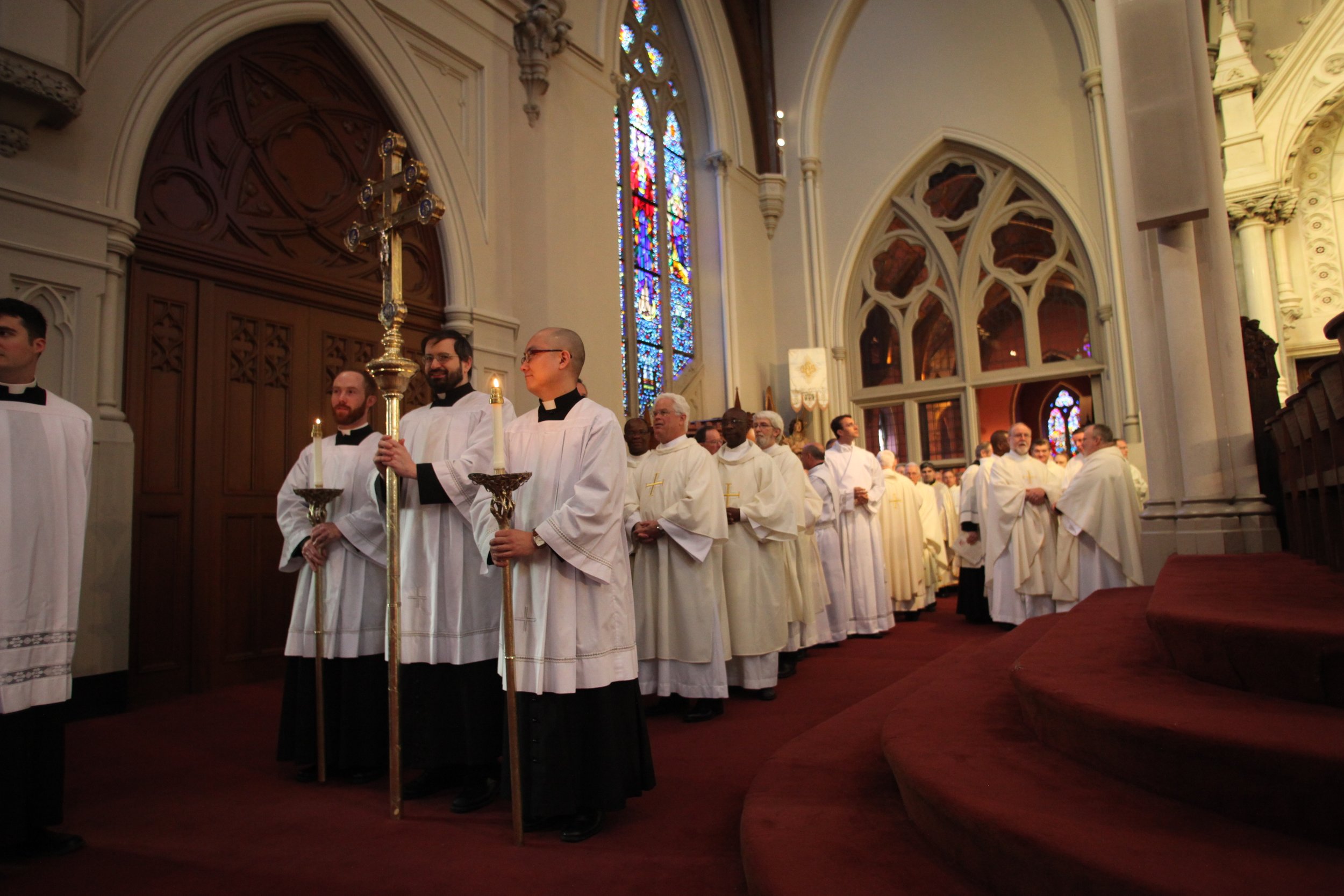
Men being ordained at the Cathedral of the Holy Cross, Boston. Roman Catholic Archdiocese of Boston. CC BY-ND 2.0
On June 14, 2023 the Southern Baptist Convention met in New Orleans for its annual conference and voted in favor of the church’s long-standing prohibition of women serving as pastors. The vote ruled overwhelmingly in favor of upholding the rule, a decision that led two congregations with women pastors to be expelled from the denomination: Saddleback Church in Southern California and Fern Creek Baptist Church in Louisville, Kentucky.
The vote reaffirms the Southern Baptists’ conservative focus and comes at the heels of a 2022 report detailing the church’s attempt to cover up sexual abuse by staff and pastors.
With 47,000 churches and 13.7 million members, the Southern Baptist Convention is the largest Protestant denomination in the United States. However, SBC’s decision to continue its exclusion of women from pastoral roles within the church is not unique within the Christian world. The Roman Catholic Church, along with the Church of Latter Day Saints (commonly called Mormons), and the Orthodox Church, all prohibit women’s ordination.
The question centered at the debate around female ordination is a complicated one. While many women make up a majority of congregants and are often heavily involved in Church life and activities, taking on secondary leadership roles, there remains a stark cut-off in women’s degree of power in these religious spaces, a phenomenon that has been dubbed the “stained-glass ceiling.”
In 2021, Duke University published research examining the reality of these “stained-glass ceilings.” Their findings highlighted a disproportionate lack of female leaders across a survey of Catholic, Evangelical, Black Protestant, Mainline Protestant, and Non-Orthodox Jewish communities. The study found that women lead only 14% of American congregations. The numbers varied across communities, with women leading 30% of white evangelical congregations and 16% of Black Protestant congregations. Contrastingly, within predominantly white Evangelical congregations only 3% were led by women, and only 2% of Roman Catholic Churches had female leadership.
However, even when women are able to serve as church clergy, they lag behind men when it comes to equal pay. Female clergy earn 76 cents to each dollar made by their male counterparts. The Church Law and Tax Compensation Handbook reported that male senior pastors earned a salary that was 40% higher– or $25,000 more– than female senior pastors between 2014 and 2015. While the pay gap appears to be shrinking, it is still present. From 2016 to 2017 men who worked as full-time senior pastors received 27% more earnings and benefits, or approximately $15,000 more, than their female counterparts.
Along with a measurable pay gap, women clergy members also face the same insidious sexism that harasses all women in leadership roles, leaving female clergy in a position of intense scrutiny through which through their authority, intelligence, and ability are routinely questioned and mocked.
Despite being barred from top roles, women play a crucial role in supporting the structures and community of the church. Out of all secondary ministerial staff, 35% of full-time and 46% of part-time staffers were female.
Women have long played a crucial role in religious life, serving as nuns, teachers, religious teachers, and deacons. But the very top positions are still out of reach.
A study found that only four out of nine major U.S. religious organizations that ordain women had a woman in the top leadership role. Those four churches– The American Baptist Churches, The Episcopal Church, The Evangelical Lutheran Church in America, and the United Methodist Church– each had only one woman in a top position.
In many ways women still serve as the backbone of the church, leading the charge behind community organizing, childcare, and volunteer services. When Pope Francis formally allowed women to serve in lay ministerial roles such as lectors and acolytes, he failed to acknowledge that women have been informally taking on the work and responsibilities of these positions for some time. Instead, he emphasized the difference between these positions and the ordained roles open only to men.
While women are the vital essence powering many churches, when it comes to access to the podium or microphone, they face categorical silencing.
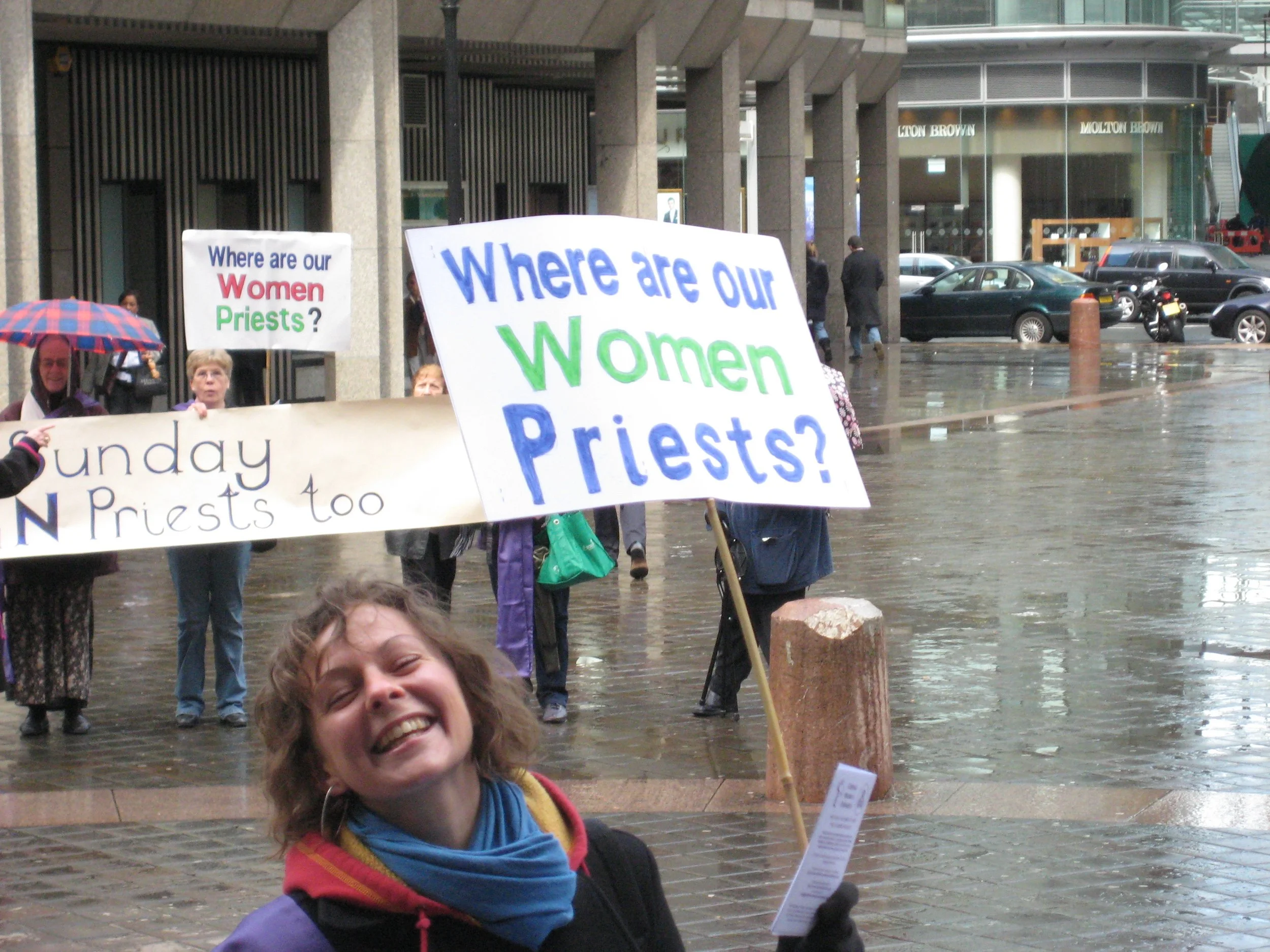
Protest outside Westminster Cathedral. Catholic-womens-ordination.org.uk. CC BY-NC-ND 2.0
Why does female religious leadership matter?
Female leadership in the church not only allows religious spaces to better serve the specific spiritual needs of their congregation, but the opportunity to see examples of women in positions of power and respect also has a significant impact on young girls.
A 2018 study found that the presence of female congregational leaders can lead to better self esteem in the young girls who grow up in their church, an impact that reverberates into adulthood. Compared to women who had grown up with some female clergy members, women who had never had female congregational leaders were 10% less likely to agree and 30% less likely to strongly agree to having high self esteem.
Additionally, the study found a link between young girls' access to female congregational leaders and their future employment opportunities. Women who grew up with a female role model as their most influential leader were just as likely to be employed full time as men, in contrast to those who did not.
Female leadership in church marks an important benchmark of gender equality that extends beyond religious divisions into social and political life as well. Church leaders oftentimes serve as influential figures in their communities, with the opportunity to serve as a powerful voice in discussions on timely social issues, including abortion and LGBTQ+ rights. Elevating women’s pastorship would also elevate women’s roles as community leaders, local activists, and engaged political informers.

Stained glass from from the Basilique de Sacré Couer in Paray-le-Monial. Lawrence OP. CC BY-NC-ND 2.0
Get Involved
Harnessing the power and advocacy of their women congregants, there are many organizations working tirelessly to advocate for women’s ordination and religious empowerment.
Women’s Ordination Conference (WOC) is a grass-roots movement that has been working to increase female leadership opportunities within the Catholic Church since 1975. The activist group advocates for women’s ordination and increased power within the Catholic Church. In 2018, WOC members protested outside the Vatican in order to advocate for women’s right to vote in synods, a body that makes up the advisory board to the Pope. Along with advocacy work, the organization provides a network aimed at building a community of empowerment for young women in the Catholic Church. Working alongside their goals for gender equality, WOC also seeks to dismantle systems of oppression through anti-colonialism and anti-racist work that champions inclusivity.
For over 100 years, the International Association of Women Ministers has been supporting women’s ministry and advocating for women’s ordination, with members across 22 countries. IAWM offers annual assemblies that have been hosted both within the United States and abroad in Canada, England, Cuba, New Zealand, Germany, Scotland, and Hungary, with the mission of cultivating an international forum for female ministers from all backgrounds, countries, and cultures to develop relationships and provide a community of support for women’s professional growth within ministry.
Jessica Blatt
Jessica Blatt graduated from Barnard College with a degree in English. Along with journalism, she is passionate about creative writing and storytelling that inspires readers to engage with the world around them. She hopes to share her love for travel and learning about new cultures through her work.
The Dark Side of Czechia's Thriving Sex Industry
Legal but unregulated, the Czech sex industry leaves workers vulnerable to exploitation, abuse and trafficking.
Read MoreUnderground Schools for Women and Girls in Afghanistan
The Taliban reconquest of Afghanistan brought an education ban for women and girls, but secret schools have emerged.

A burqa-clad woman in Kabul in September 2021, Milad Hamadi for the Tasnim News Agency. Public domain, via Wikimedia Commons
The life of every Afghan citizen changed on August 15, 2021, when Taliban forces seized the capital city of Kabul and, for the first time in decades, were able to impose the group’s severe intolerance on the whole nation. Those most affected have been young girls and women, who are limited in going about their daily lives and barred from many activities that they previously were able to enjoy freely. As the Taliban continue to ban women from schools and universities, a new generation of young Afghan girls are left wondering what their future will look like. Recently underground school operations have opened up, taking place both virtually and in person, allowing many Afghan girls the ability to continue their education despite the repression, keeping hope alive in a society that faces deep political and societal challenges.
According to the Taliban’s Minister for Higher Education, Neda Mohammad Nadeem, women are not allowed to go to school because they weren’t following the rules of how “proper ladies” should act in a public setting, including not adhering to the Emirate’s strict dress code. However, this issue transcends the regime’s hijab policy. The Taliban use religion to justify their strict policies, arguing that it goes against Islamic principles to have girls and women go to school, even stating that the sciences as a whole are no place for them. The Taliban is able to impose its own interpretation of Sharia Law, the traditional Islamic legal code, which is known for including strict guidelines for how girls and women should live. Many professional Muslim scholars have rebutted the Taliban, asserting there is no justification for banning women from having an education, including that “gender-based denial of education has no religious justification.”
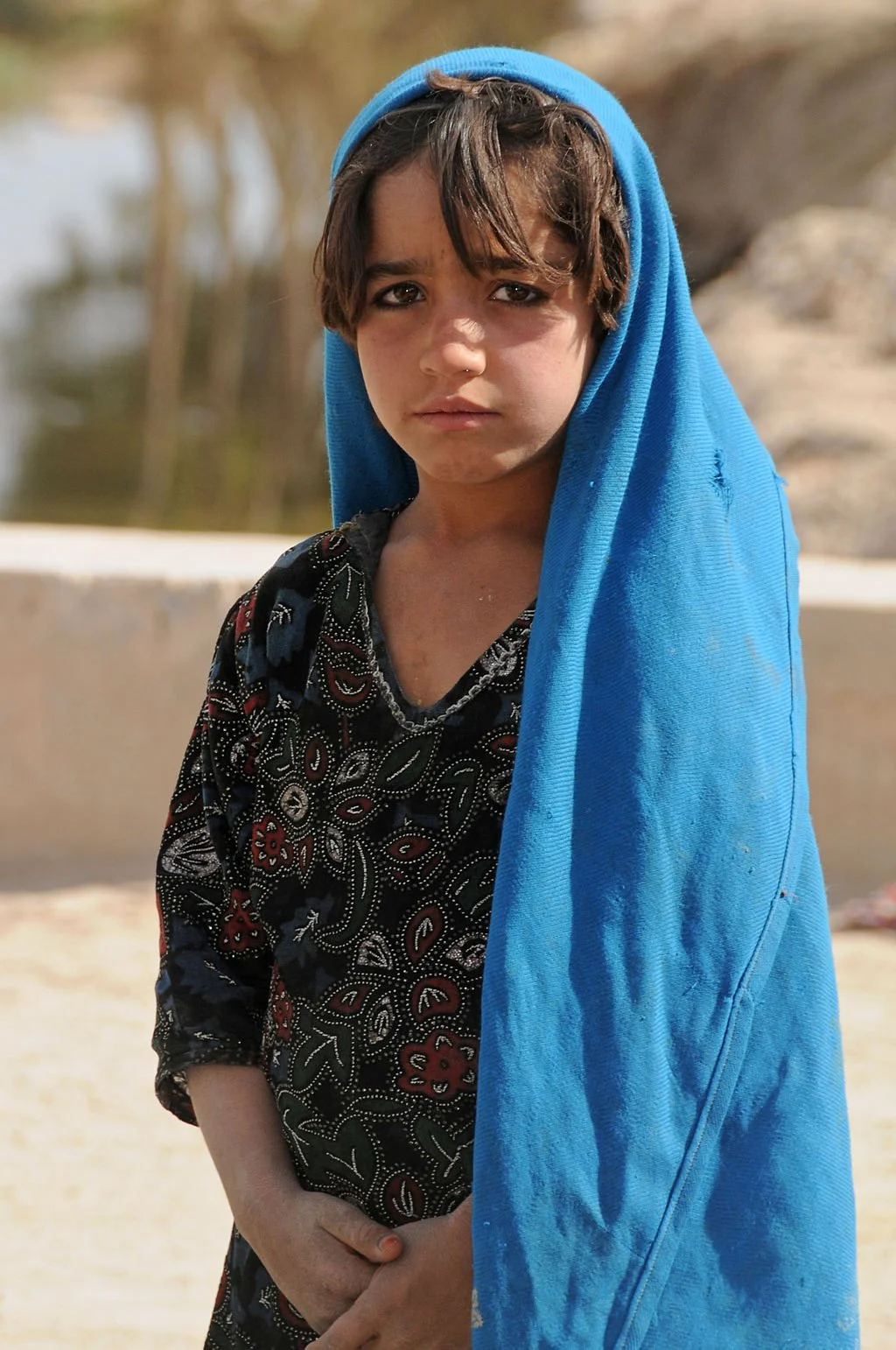
An Afghan girl in Oruzgan Province, John Scott Rafoss. Public domain, via Wikimedia Commons
Despite these obstacles, women and young girls across Afghanistan are fighting for their rights not only to obtain a just education, but to be recognized as important parts of society and claim back their dignity and honor. In an effort to help girls achieve their dreams and achieve literacy, underground schools have started taking shape across the nation, even holding virtual classes. In order to keep an entire generation of young girls thriving, parents are finding alternative means, going as far as risking their lives to create a hidden education system that will serve as primary education and even providing university level courses for older students. One of the pioneer women behind this movement, Sodaba Nazhand, told The Associated Press that “when the Taliban wanted to take away the rights of education and the rights of work from women, I wanted to stand against their decision by teaching these girls.”
While girls and women are able to pursue knowledge and obtain skills through these underground schools, there is much fear among family members and the students themselves, who know the consequences of getting caught disobeying the Taliban. Several of these schools are held virtually for safety and easier access, although not everyone has access to electronics or wifi. Taliban rule has led to widespread poverty across Afghanistan, leaving families and individuals unable to support themselves economically, making internet access unattainable for many. Some schools have even begun to be held in person, as houses become secret classrooms. Nafeesa is a young girl that attends an underground school in her small, rural village in the Eastern part of the country. When asked by reporters how she is able to get away with attending a secret school, she said that “Boys have nothing to do in the kitchen, so I keep my books there. If my brother comes to know about this, he will beat me." Despite the fear that she feels in going against rigidly enforced new social norms, Nafeesa and many others continue to defy the status quo to make a better future for themselves, using education as a portal to freedom.
TO GET INVOLVED
Women For Women International - Women For Women has created an Afghanistan program to help women in the nation discover their power and ways they can pursue a brighter future ahead. For more info, click here.
Malala Fund - Malala Yousafzai has created an Afghanistan fund that provides on-the-ground support to help young girls access education. To learn how you can donate, click here.
Kimberly Hidalgo Hernández
Having obtained a MA in International Policy, Kimberly seeks to bridge the gap between global development and government legislation. Growing up between the United States and Spain, she believes that travel is the best way to discover yourself and understand the world. Her goal is to promote a deeper awareness of the effects of climate change in society and politics.
A Grassroots Youth Movement Is Changing the Political Narrative in Peru
Recent political instability in Peru has resulted in violent uprisings led by the nation’s youth, who are fed up with longstanding corruption.
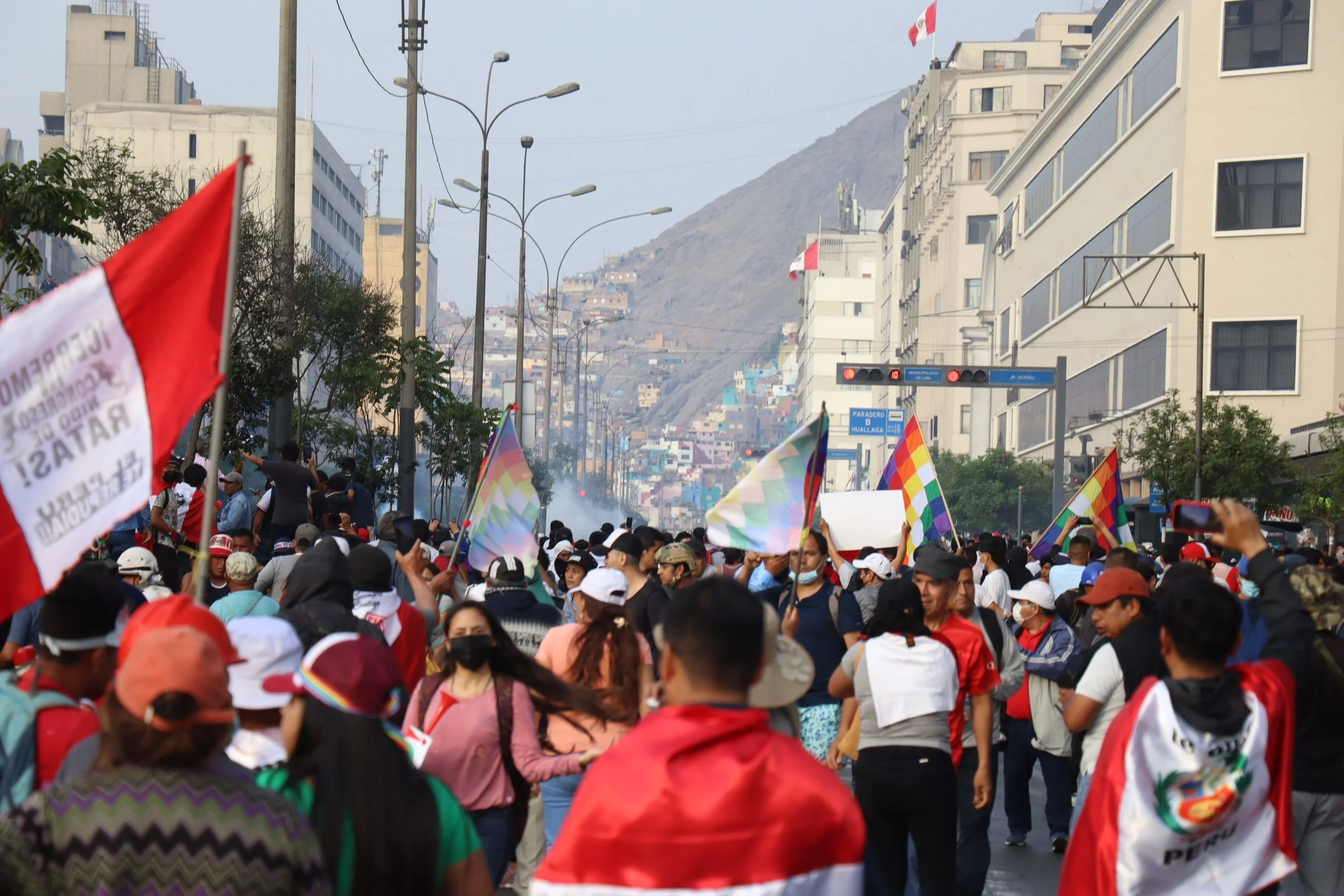
Protesters Take the Streets in Lima, Peru CC BY-SA 4.0
Over the past few months Peru’s political system, and especially its President Dina Boluarte, have come under the scrutiny of protestors demanding fair and just elections. A country that ranks 101 out of 180 on the 2022 Corruption Perceptions Index, Peru is categorized as one of the nations with the most public sector corruption. Facing regional criticism with polarization, impeachment threats, and violent manifestations across the country, Peru’s current turmoil is opening a path towards a new Peruvian identity for young citizens who wish to set their nation on a different course. Seeking democracy and transparency, a group of Peruvian students are increasing awareness of structural changes that they feel must take place in their country.
Former Peruvian President Pedro Castillo was arrested in January 2023 after an attempted coup from above, resulting in the ascension of the then Vice President Dina Boluarte to head of state. Many citizens, however, especially those outside of the capital Lima, felt that this was an attack on their freedom because there was no democratic input in the transition. Throughout the pandemic Peru suffered an economic downturn that reduced access to basic services, especially for health care and education. Triggered by the political unrest, civilians have since taken to the street in violent anti-government protests, demanding that their nation allow transparent elections and eliminate elite privilege.
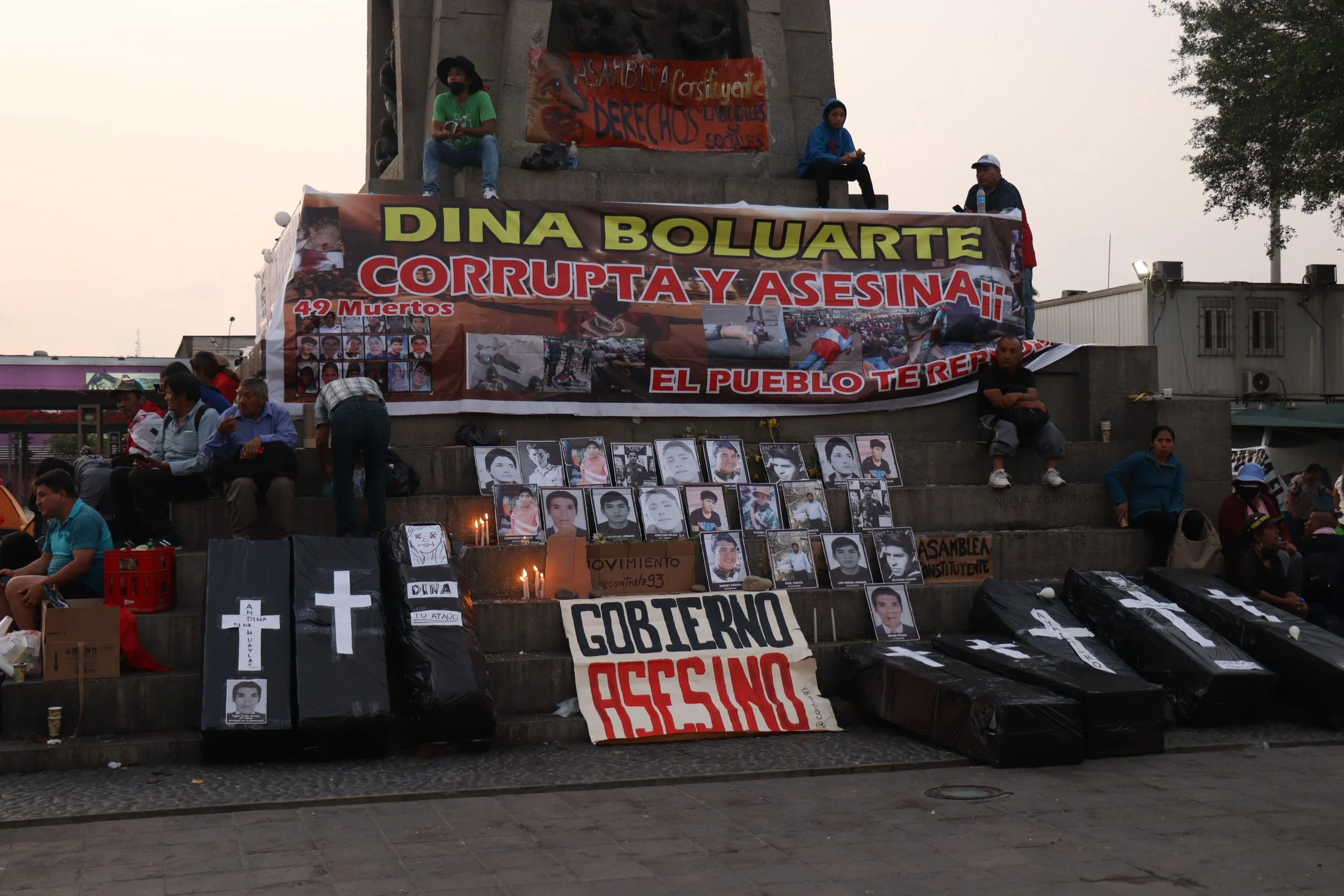
Demonstrations at Plaza Manco Capac following the Ayacucho massacre CC BY-SA 4.0
Peru’s youth have been key to these protests, taking a stand and raising their voices to demand what they view as a better future free of corruption with access to quality basic services. Creating their own slogan, #TheyMessedWithTheWrongGeneration, Peru’s younger population warns authorities that they will not rest, and plan on continuing the fight for an end to systematic dishonesty and fraud. Considered a grassroots movement, the non-partisan group is gaining momentum as even some among the older generations feel that the current government no longer represents them and that their country deserves better. One activist in the movement, a 33-year-old publicist named Diego Cruz, gave the following statement to reporters at a march, “It’s not just one generation marching here, it’s everyone, because we feel outraged that [congress] is carving up the country.”
The youth movement also demands university reform, adherents arguing that access to college is not possible for everyone, especially those that live in rural communities far from the cities. Politicians and traditional political analysts mistook the youth’s dissatisfaction of the old ways for political apathy, a supposition which has now proven woefully false. Members hope that their movement can pave the way to a better, more transparent Peru. It remains to be seen whether they will achieve this.
Kimberly Hidalgo Hernandez
Having obtained a MA in International Policy, Kimberly seeks to bridge the gap between global development and government legislation. Growing up between the United States and Spain, she believes that travel is the best way to discover yourself and understand the world. Her goal is to promote a deeper awareness of the effects of climate change in society and politics.
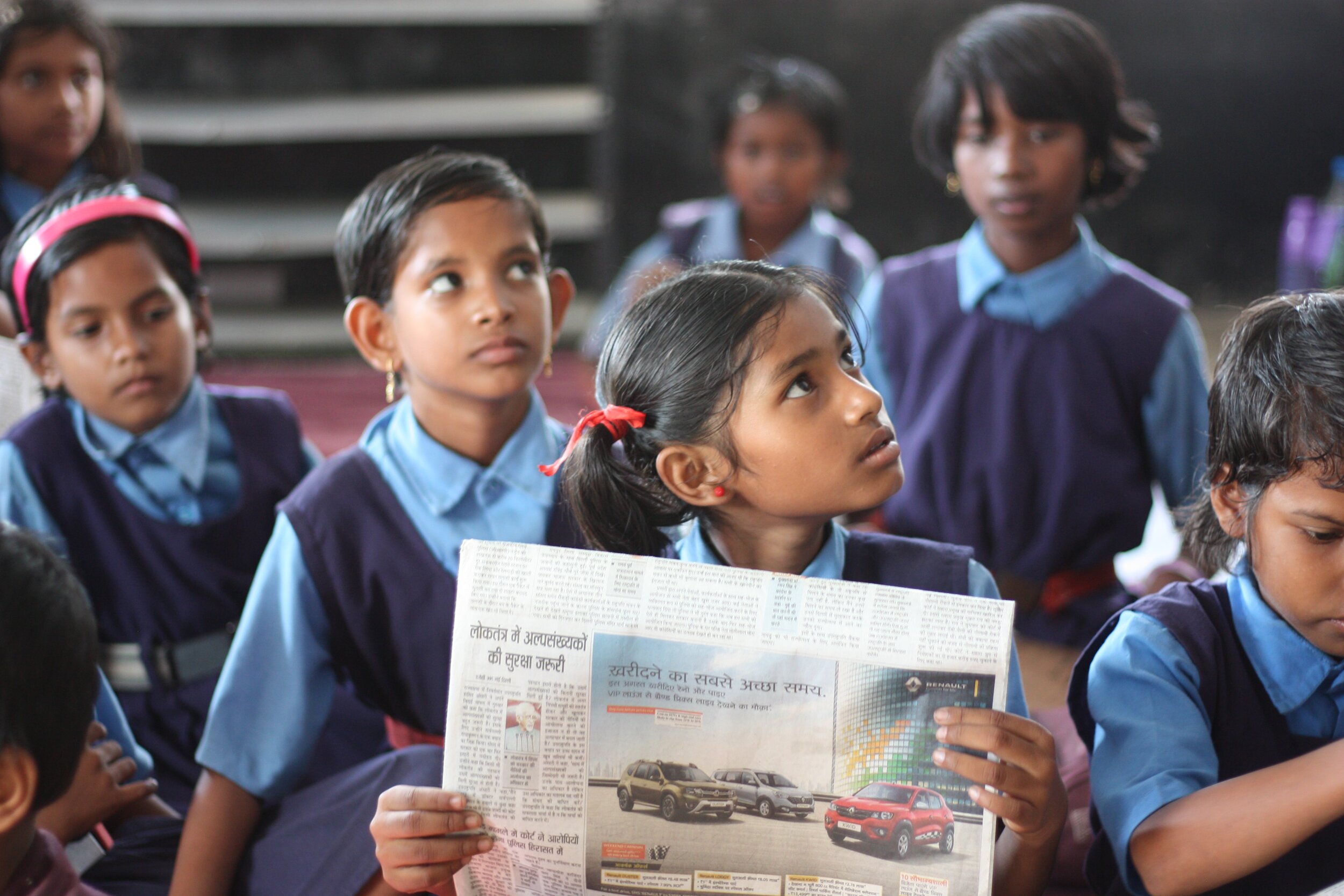
As education increases, more women in rural areas are able to access schooling. Here, young girls in India’s Chhattisgarh state attend government school in their uniforms. Jaikishan Patel. Unsplash.
The Gender Education Gap is Narrowing. Here’s How You Can Help Close It
More girls are enrolling in education than ever before, and the gap between educated women in men is narrowing. Based on a report given by UNESCO, 180 million more girls have enrolled in primary and secondary education since the Beijing Declaration and Platform for Action, a commitment signed in 1995 by 189 countries in which they pledged to advance the rights of girls and women. The report shows that the global enrollment rate for girls in school increased from 73% to 89%, and the biggest improvements are seen in sub-Saharan Africa and South Asia, especially in India. The reasons behind this inequality are historical, social and economic, as barriers like poverty and rigid gender roles place large burdens on accessing schooling.
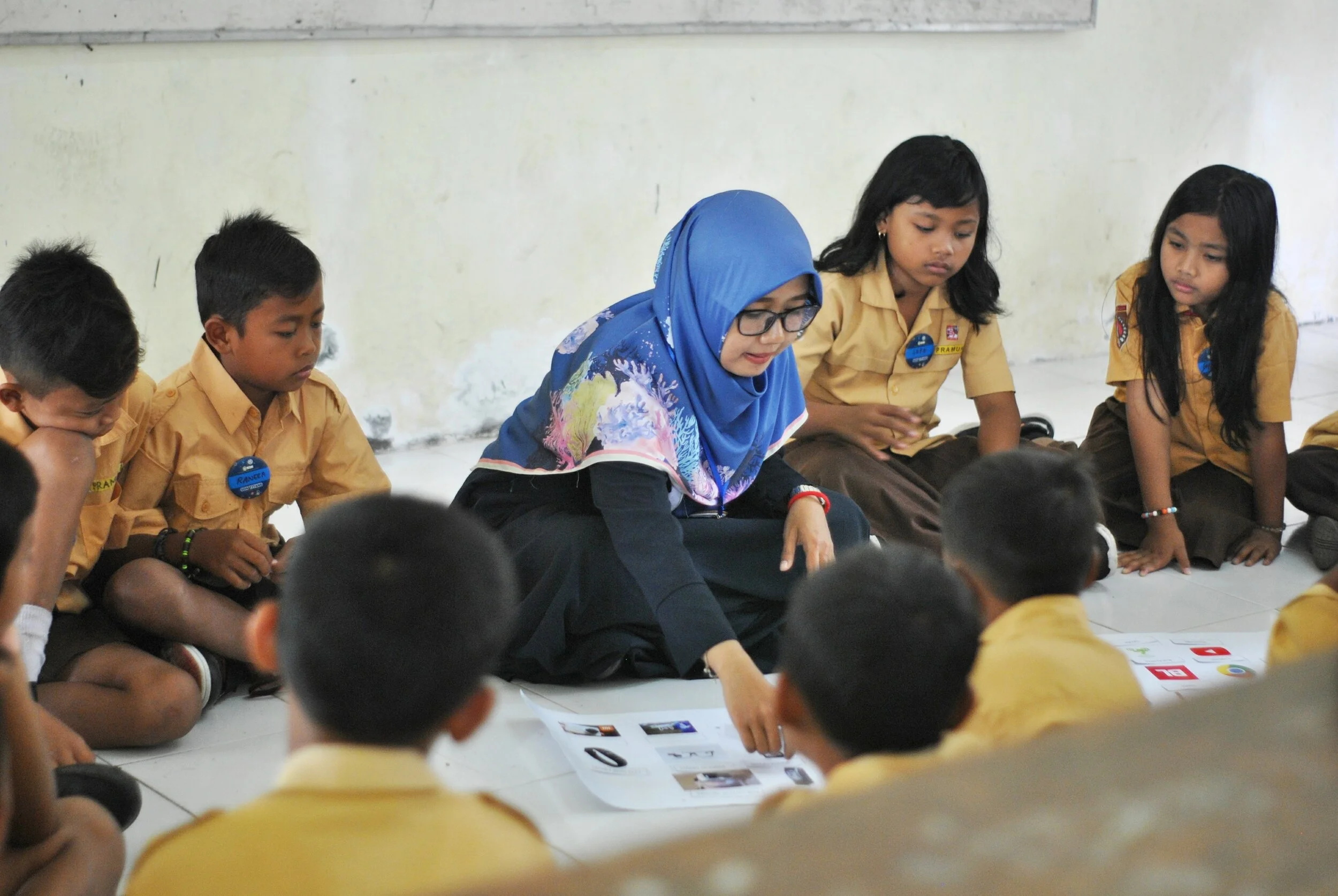
Young men and women studying in the classroom in Klaten, Indonesia. Husniati Salma. Unsplash.
This push for women’s education did not stop at the primary level, with three times more women enrolling in universities than 25 years ago, and the most significant progress is seen in North Africa and Western Asia. Morocco has particularly excelled, reaching enrollment parity in 2017 after more than 20 years of the rate of enrollment being just 30 women for every 100 men. The report found that although women are present in the classroom more frequently, there is still a culture of dismissal revolving around women’s education, so the efforts toward educating women are now focusing on representation and validation.
Ways You Can Get Involved:
In relation to the report, a personal way to involve yourself is to participate in the #Iamthe1stGirl campaign, started by the Global Education Monitoring (GEM) sector of UNESCO. This campaign asks women and girls who were the first of their family to graduate from high school and/or university to share their own stories of education and success. By sharing your own story, you can inspire women and girls to continue fighting for their right to be educated. The stories have been shared on Instagram and Twitter by the GEM account, and while the campaign did not go viral, the social media interactions show girls being inspired to continue their education in real time.
There are several ways to get involved financially, and most involve the direct sponsoring of a woman in the process of getting her education. World Vision has a simple and effective sponsoring process, and your money goes toward not only providing school supplies, but also ensuring that proper sanitation and transportation is offered to women at school.
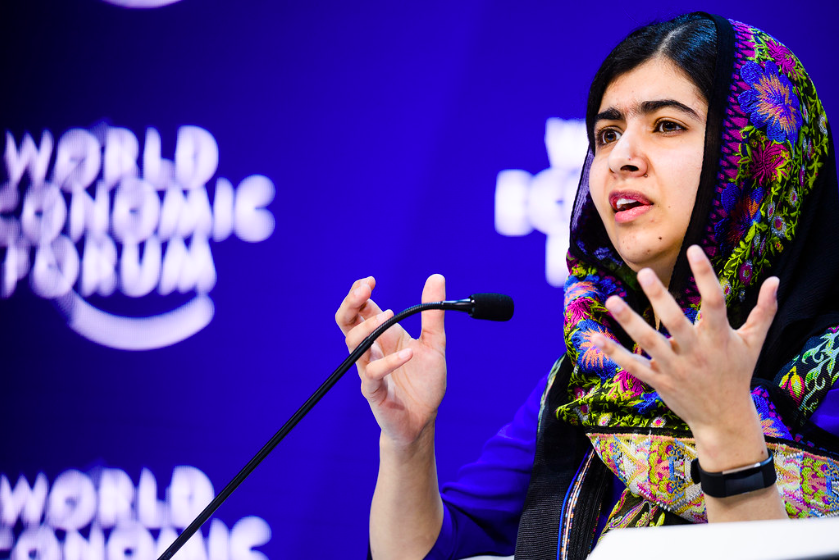
Malala Yousafzai speaking on the creation of a shared future through education and empowerment. World Economic Forum. CC BY-NC-SA 2.0.
A fund with a story you may be familiar with is the Malala Fund, started by Pakistani girls’ education activist Malala Yousafzai in 2013 “to champion every girl’s right to 12 years of free, safe, quality education.” The money in the fund goes toward their board along with the leadership council and staff, championing “the creation of a more equal world by making sure all girls can go to school.”
On a smaller scale, you can ensure the girls and women in your community do not face barriers to their education by creating or participating in school supply and sanitary product drives and by sharing your own story about education.
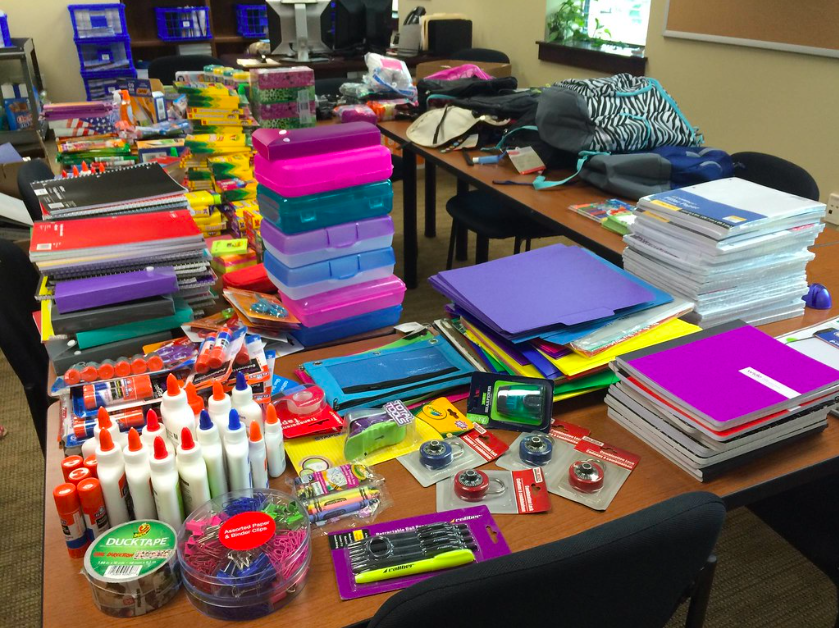
Donations collected during a 2015 school supply drive in Tallahassee, Florida. flguardian2. CC BY-NC-SA 2.0.
There are several ways to get involved in closing the gap. To donate towards causes that sponsor women’s education through providing instructors and supplies, you can visit World Vision or Malala.org.
In order to make sure that menstruation does not interfere with learning, you can donate money and time to several organizations that supply period products like, DoSomething.org. Two other organizations that also supply products are, DayForGirls.org and BintiPeriod.org. Days for girls is a women’s equality organization so it provides other avenues of involvement as well.
To donate school supplies you can visit, Kinf.org to help students in the United States. Another school supply organization, Classroom Central, finds local schools in need of donations. For international involvement, you can directly donate to UNICEF USA.
For those who want to learn more information and sign petitions, Plan International provides both on their website, Plan International. Another petition to sign can be found on One.org where you can pledge to support the closing of the gender education gap. Lastly, you can even start your own fundraiser for school supplies and education funding at Room to Read.
Renee Richardson
Renee is currently an English student at The University of Georgia. She lives in Ellijay, Georgia, a small mountain town in the middle of Appalachia. A passionate writer, she is inspired often by her hikes along the Appalachian trail and her efforts to fight for equality across all spectrums. She hopes to further her passion as a writer into a flourishing career that positively impacts others.
Photo Essay: On the Ground with Waves For Water in the Philippines
While the Philippine Islands were being struck by Super Typhoon Haiyan’s wrath, Jon Rose, Founder of Waves For Water, was already hatching his plan to help.
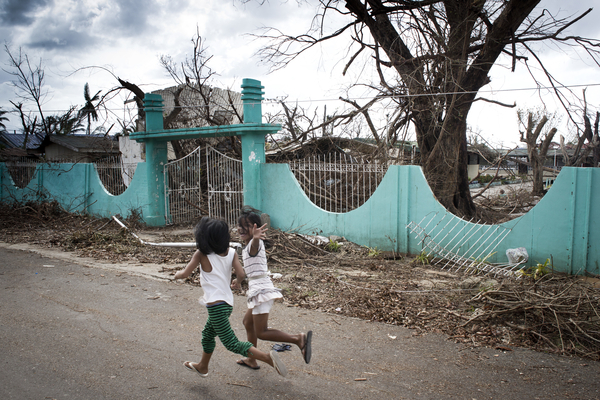
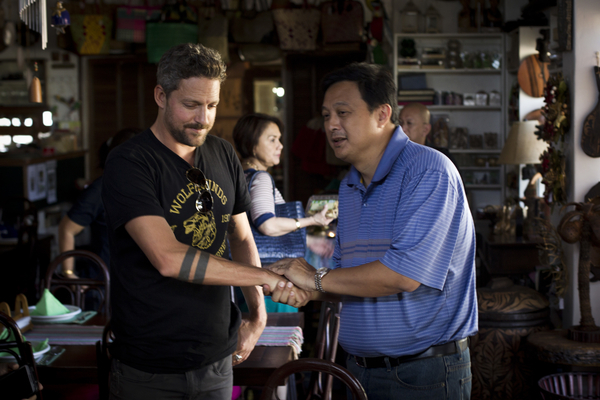
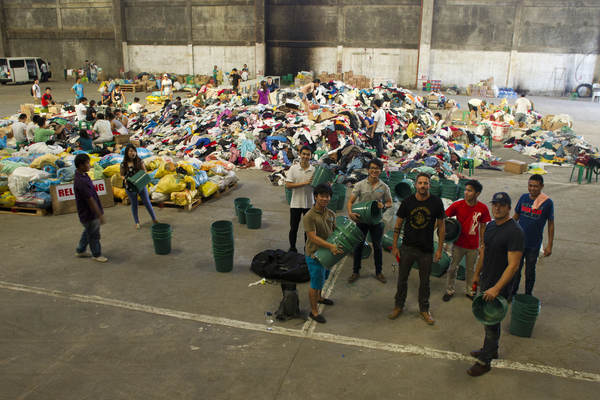
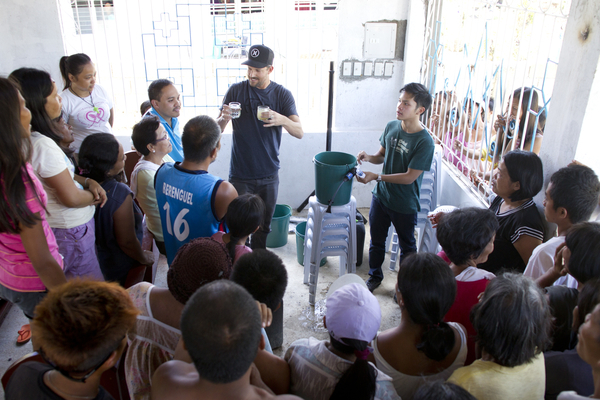
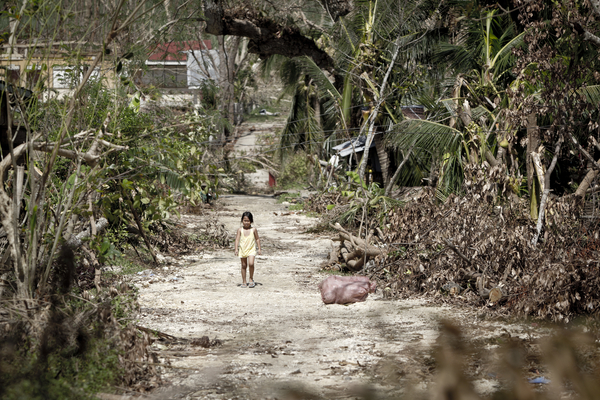
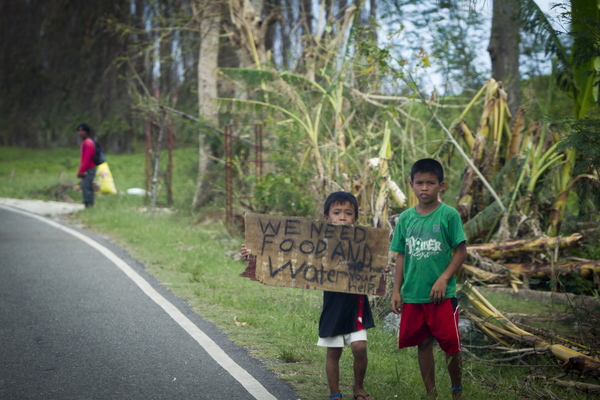
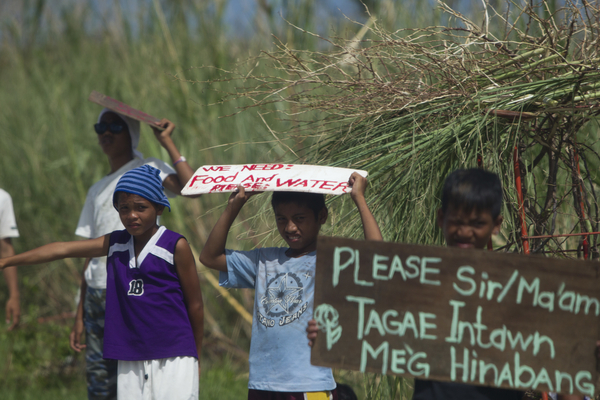
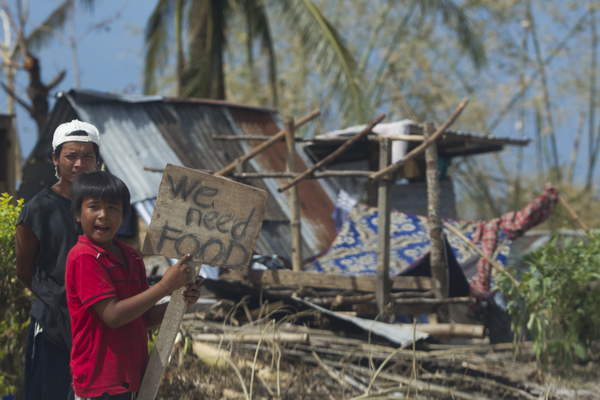
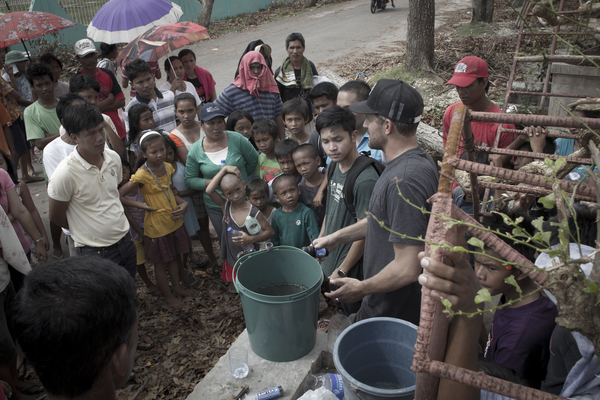
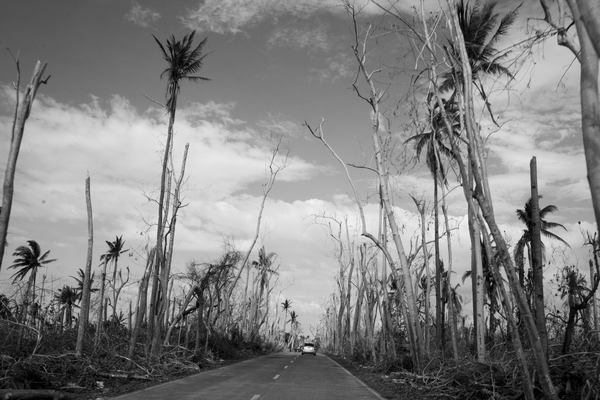
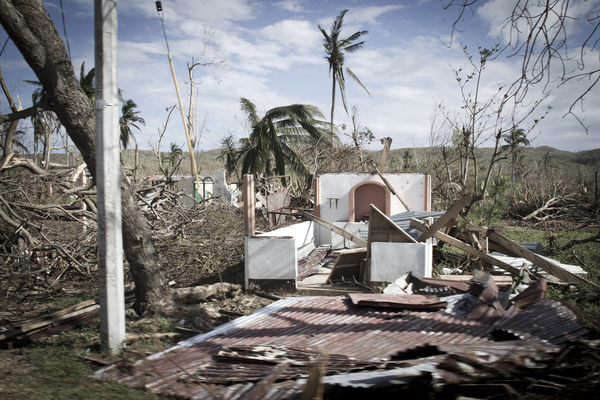
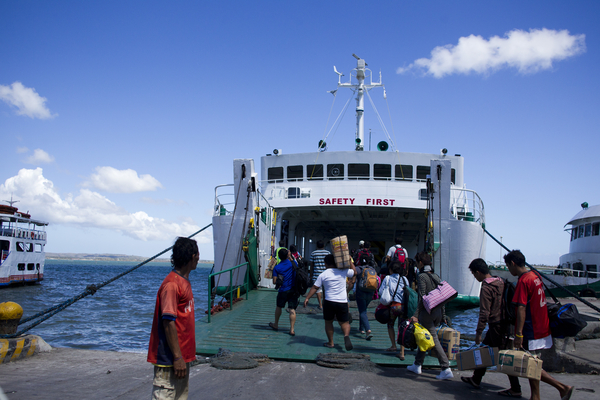
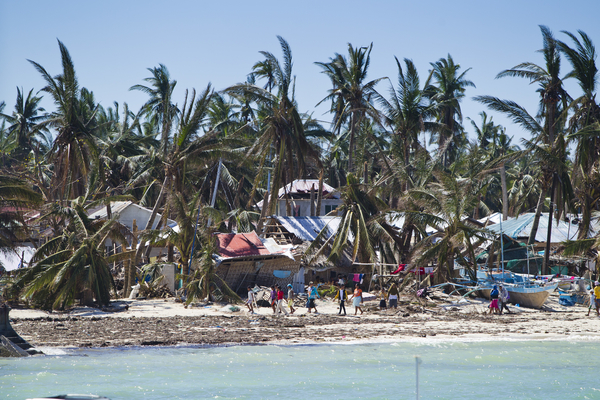
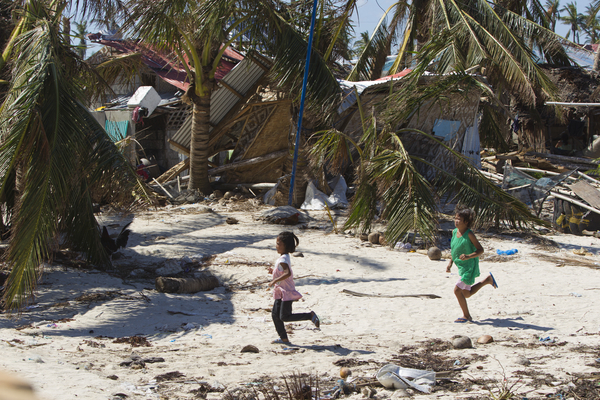
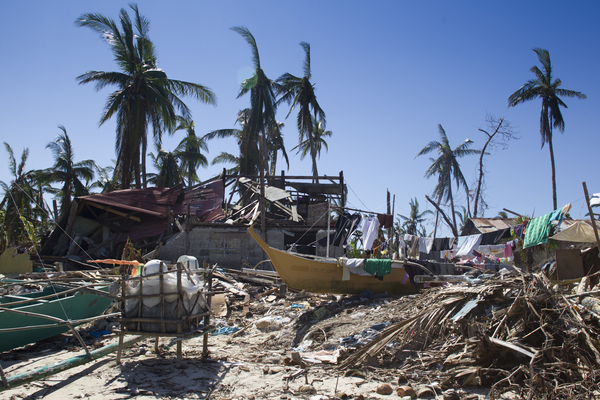
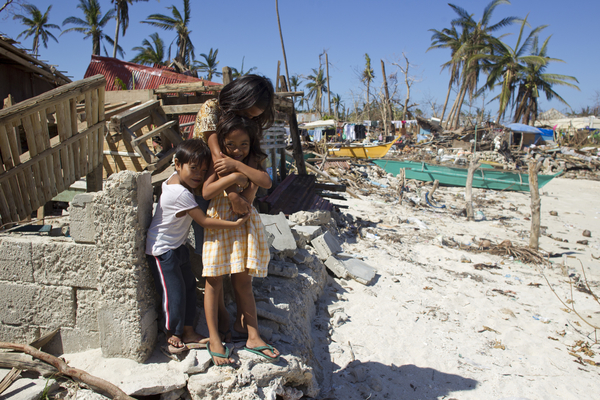
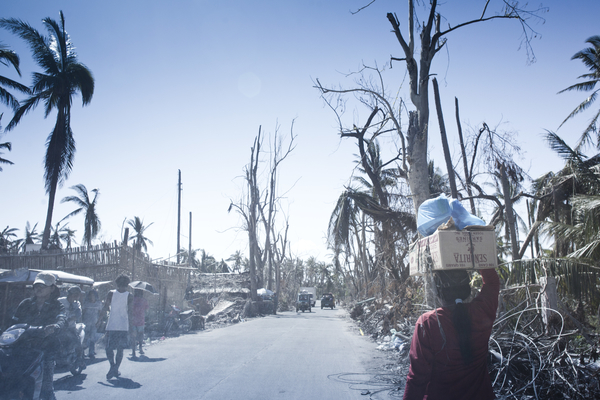
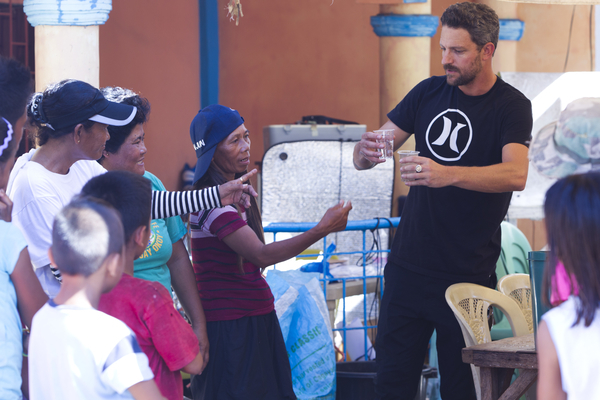
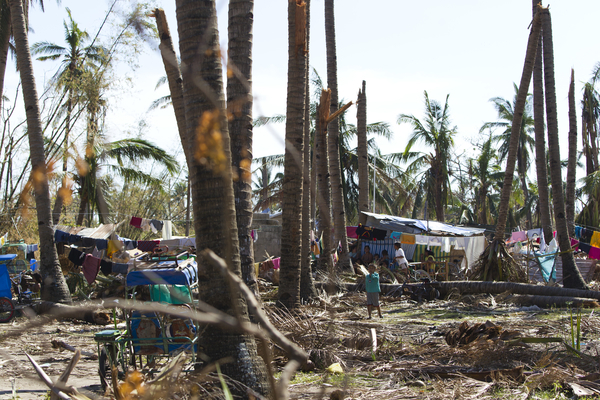
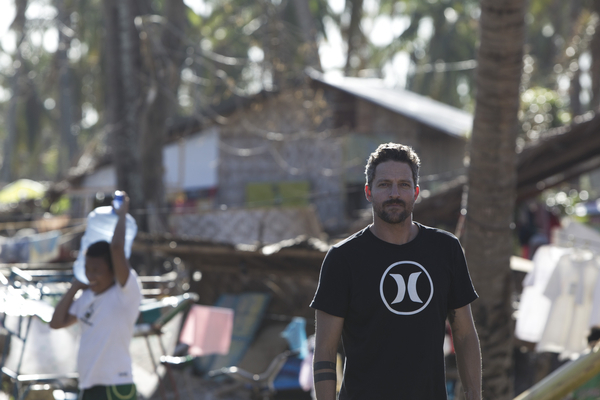
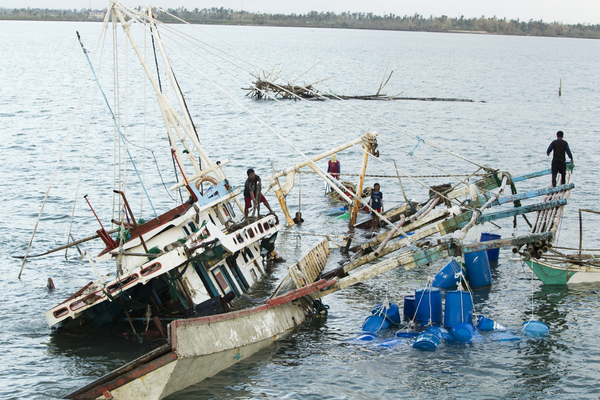
W4W began work in the Philippines in response to Typhoon Haiyan and continues to support areas with water shortages.
In 2013, the Philippines was hit by one of the most devastating typhoons ever recorded: Typhoon Haiyan. The natural disaster affected people throughout Southeast Asia and killed 6,300 people in the Philippines alone. Throughout the country, over 4.3 million people were affected. One major impact of the typhoon was its obstruction of access to clean water.
To address this problem, Jon Rose, founder of Waves for Water (W4W), arrived in the Philippines ready to distribute his organization’s water filters among “forgotten pockets,” communities that were not “the focal point of major relief efforts.” His method of distribution and relief relied on the “train-the trainer, local-based model” in which W4W organizers “empower” and “facilitate” for local people rather than decide “who gets what, when, where and how.” Two years after the typhoon, W4W established an office in the Philippines, where it is currently registered as a non-profit organization. Since 2015, W4W has built 66 rainwater catchment systems and provided over a million Filipinos with access to clean water. In December of 2021, the organization helped to address the devastation caused by Hurricane Odette in Siargao, Philippines through a partnership with Billabong. Currently, W4W is providing aid for those impacted by Tropical Depression Agaton, which has displaced 1.9 million people in Visayas and Mindanao, Philippines. You can contribute to this specific effort here.
W4W’s humanitarian efforts are not limited to the Philippines. Since its inception in 2009, the organization has made an impact in 44 countries, including Mozambique, Ecuador, Sierra Leone and Chile, and has helped 3.75 million people gain reliable access to clean drinking water. W4W currently has 24r active programs helping to address water access issues. These programs seek to provide aid to citizens of Ukraine, Australia, Haiti and Guatemala. You can learn more and help out here.
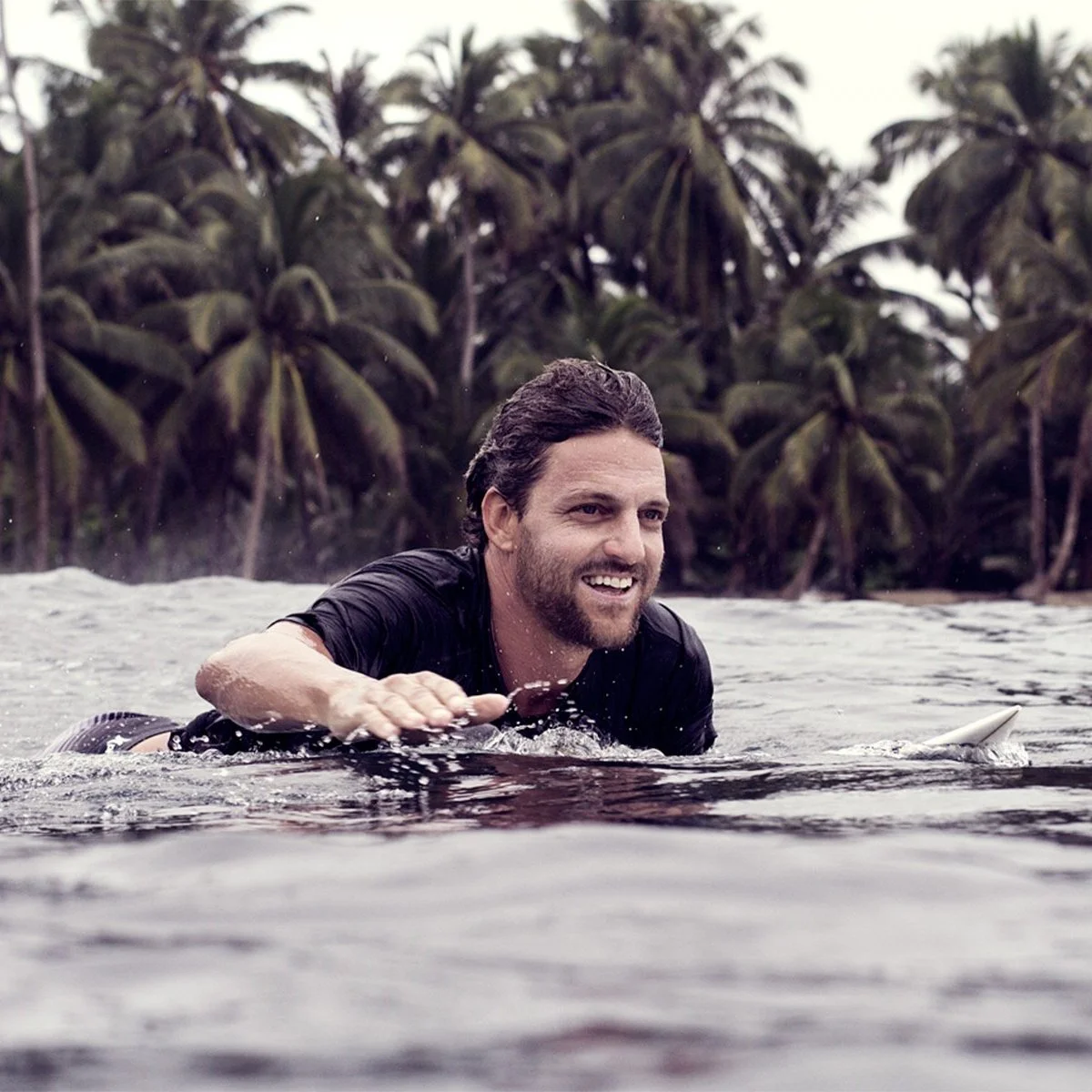
Jon Rose
As a pro surfer of 13 years, Jon Rose traveled the world in pursuit of perfect waves. It was this passion that led him to development of Waves for Water in 2009. He hopes to see W4W enlist and empower travers to help solve the world water crisis.
VIDEO: Ending Global Poverty Begins with Women's Rights
Women compose a disproportionate amount of the world’s poor and uneducated. Two-thirds of the world’s illiterate are women and sixty percent of hungry people are female. We are asked: how do we fight this form of inequality? The answer is straightforward. We can solve the impoverishment of women by fighting for equal rights for women around the globe.
GET INVOLVED
OXFAM is a global organization committed to ending poverty by promoting women’s rights. The organization champions equality, empowerment, inclusiveness, and solidarity as values that can transform the lives of women in poverty. By fighting for economic justice, an end to violence against women and girls, reproductive rights, climate justice and more, OXFAM believes we can change the world for the better. You can contribute by advocating, volunteering, shopping, and donating with OXFAM.
VIDEO: Girl's Education and Global Poverty
Global Citizen provides an array of statistics to demonstrate the power of education for girls in ending global poverty. For example, when 10% more girls attend school, the GDP of a country increases by 3% on average. The film especially focuses on India and explains that education helps to prevent girls from entering early marriages. Two thirds of uneducated children are girls. By providing girls with the education that they need, countries can both improve their economies and their standard of living for girls and women.
GET INVOLVED
Global Citizen is an organization that aims to help end poverty around the world by 2030. The foundation addresses the issues of demanding equity, defending the planet and defeating poverty. According to Global Citizen, 36% of the population currently lives in extreme poverty. To raise awareness and educate yourself about global poverty, click here.
Mama Rwanda
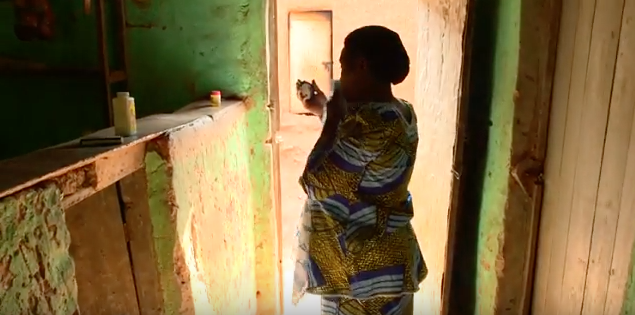
Located at the converging point between the African Great Lakes region and East Africa, the Republic of Rwanda is an environmentally, economically and culturally diverse country rebuilding its identity in the wake of the 1994 Rwandan genocide, in which approximately 800,000 Tutsis were killed by Hutu extremists. The country takes pride in its regional fauna, which includes elephants, gorillas, hippos, giraffes and zebras. Travelers interested in viewing Rwandan wildlife can observe it in three national parks: Volcanoes National Park, Nyungwe Forest National Park and Akagera National Park. “Mama Rwanda” also shows Kigali, the capital of Rwanda and the heart of its economic and cultural life. The city boasts a vibrant marketplace and architecture that combines traditional and modern styles. Outside the city, Rwanda’s expansive coffee growing fields are tended by over 450,000 planters. Basket weaving has been an important aspect of Rwandan culture for centuries and is now being used by women impacted by the Rwandan genocide to pursue greater economic independence as producers within an international market. Hutu and Tutsi women have come together to weave baskets, a practice that is now a symbol of national reconciliation. These businesses sell their wares to both small stores and large department stores like Macy’s. The profits of weaving companies are often used to support Rwandan families in need of food and medicine.
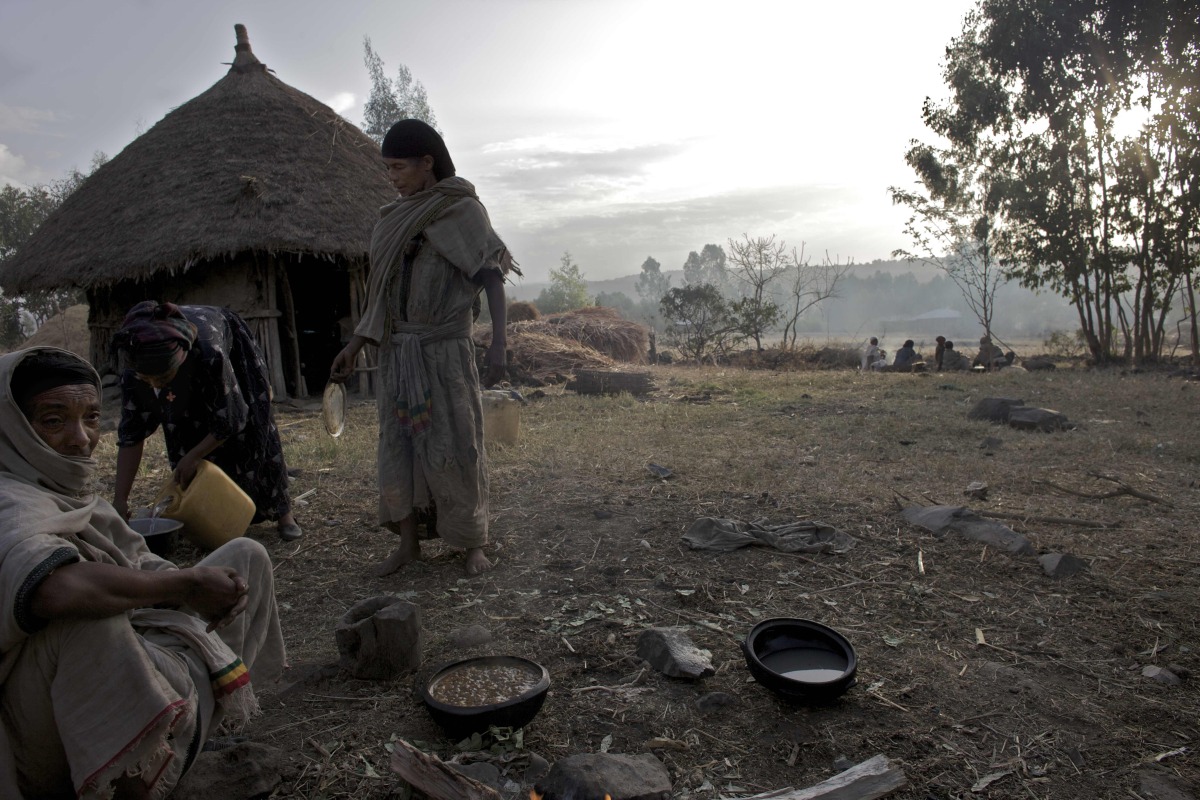
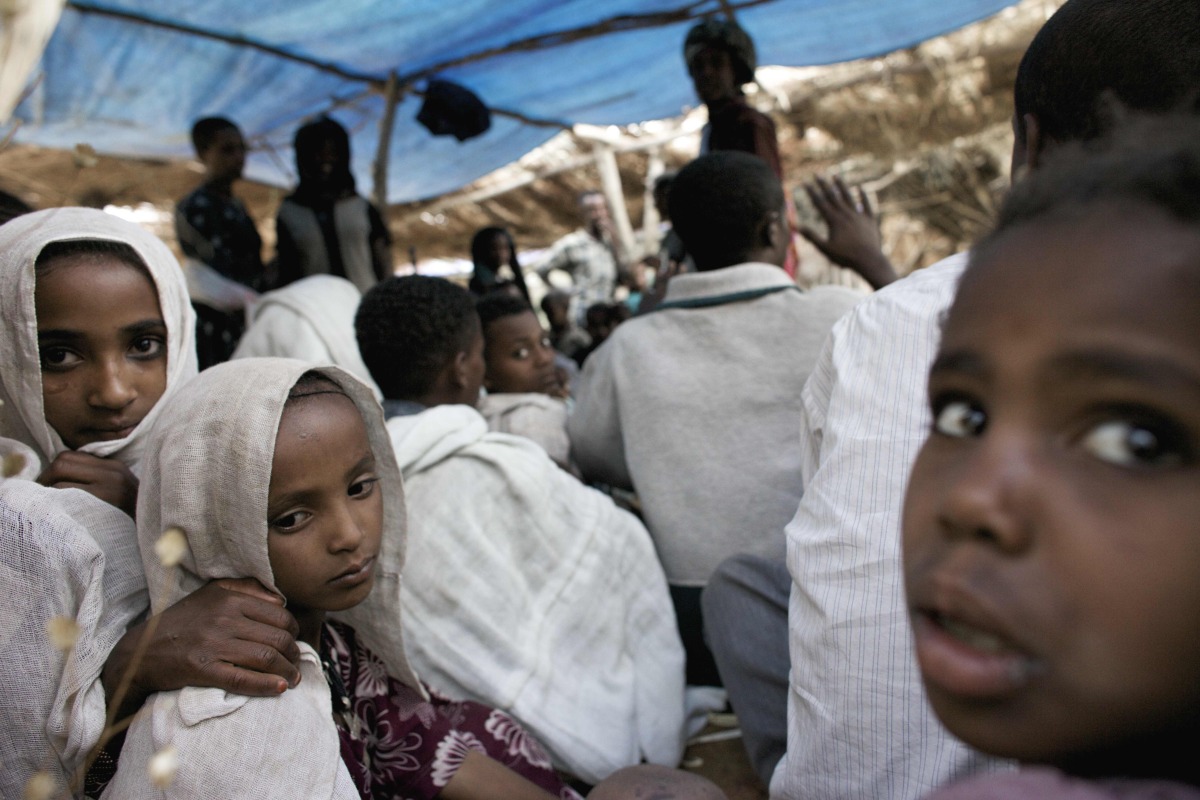
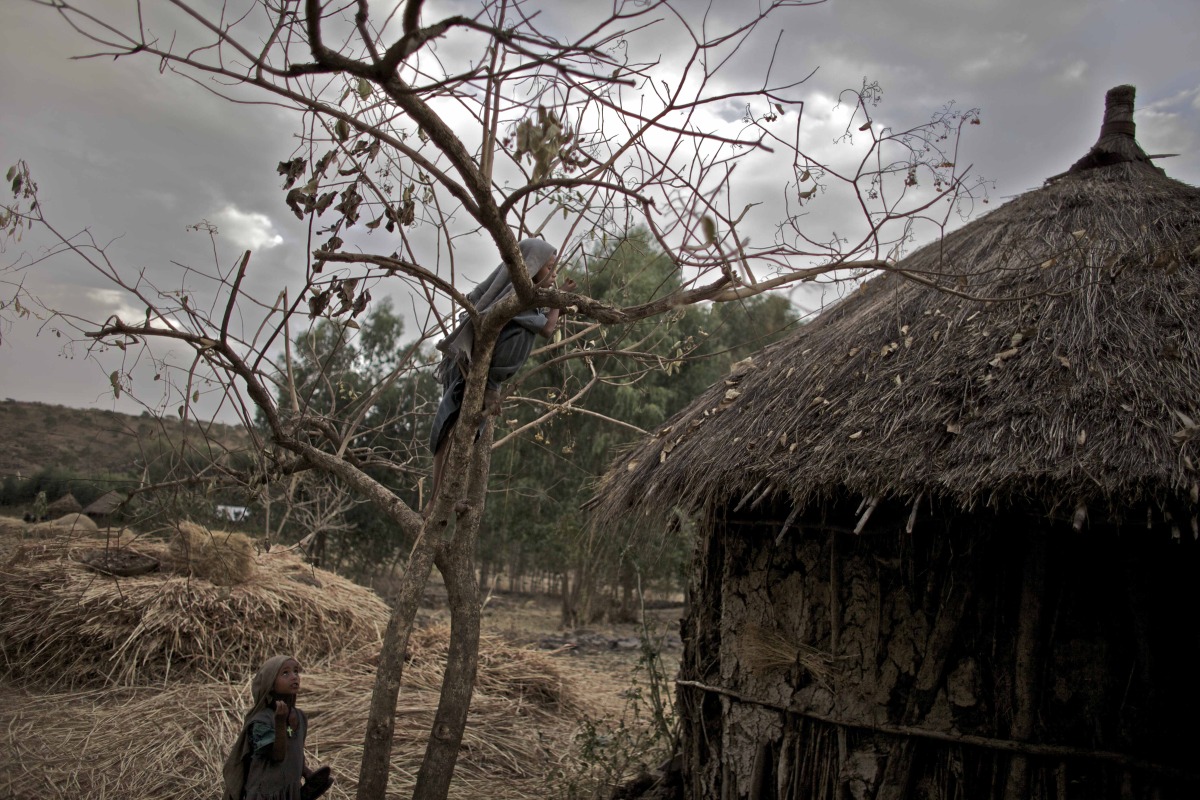
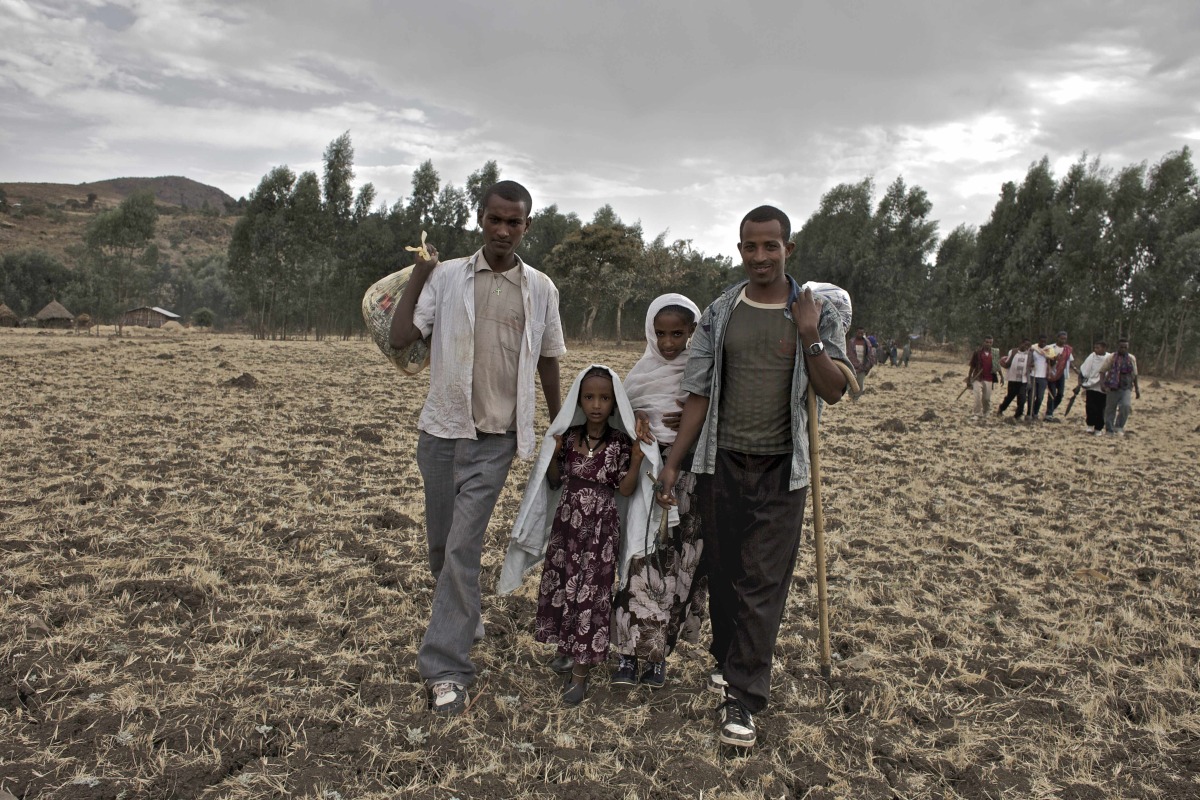
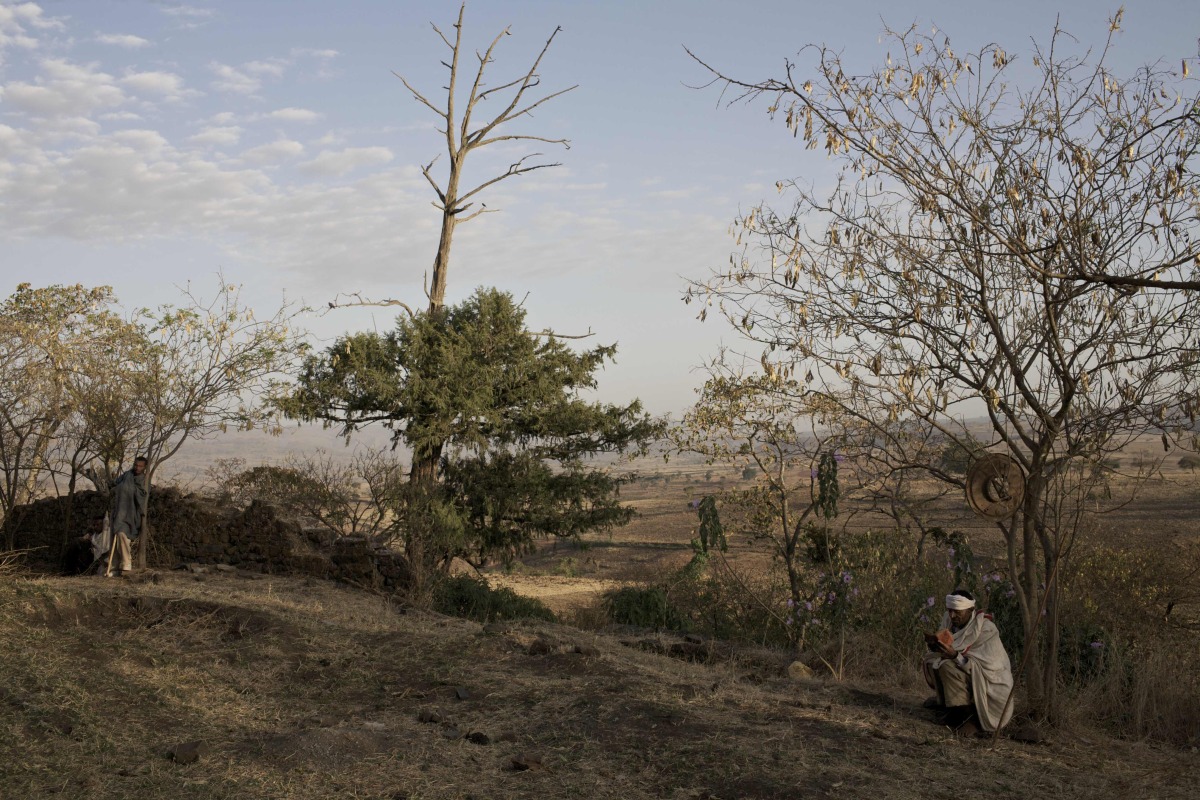
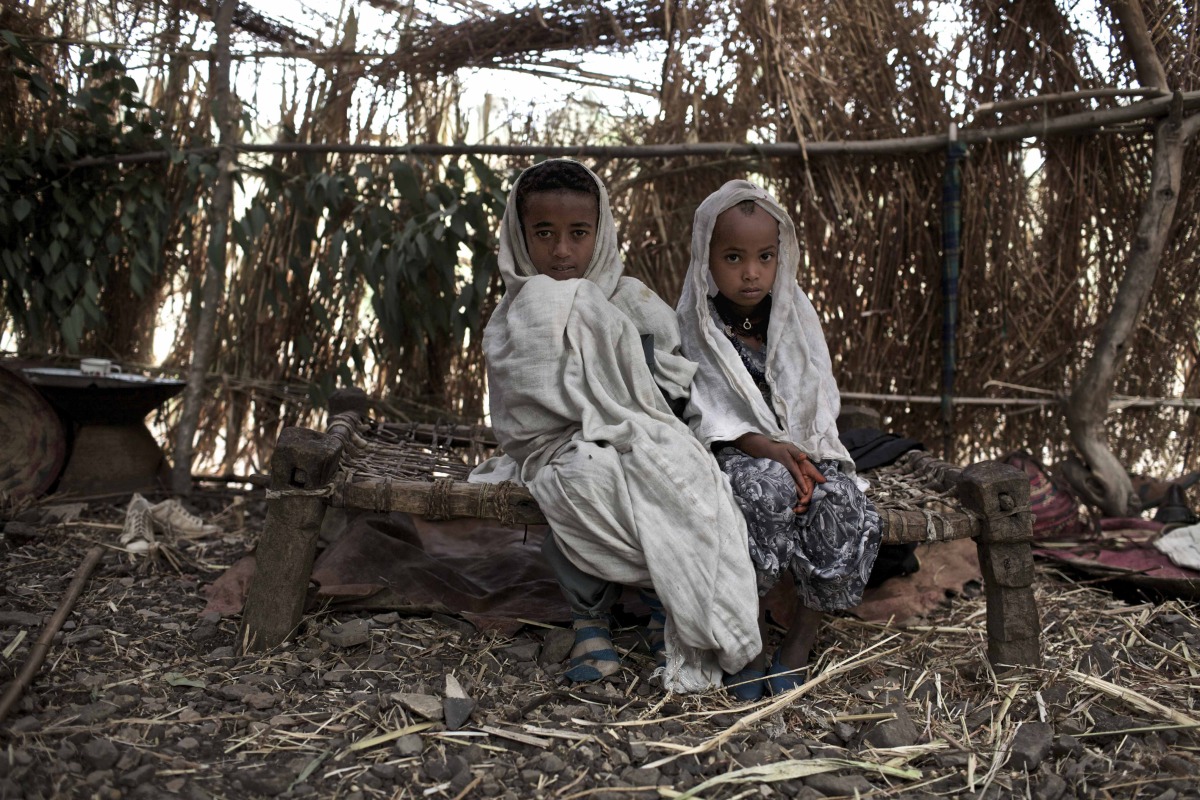
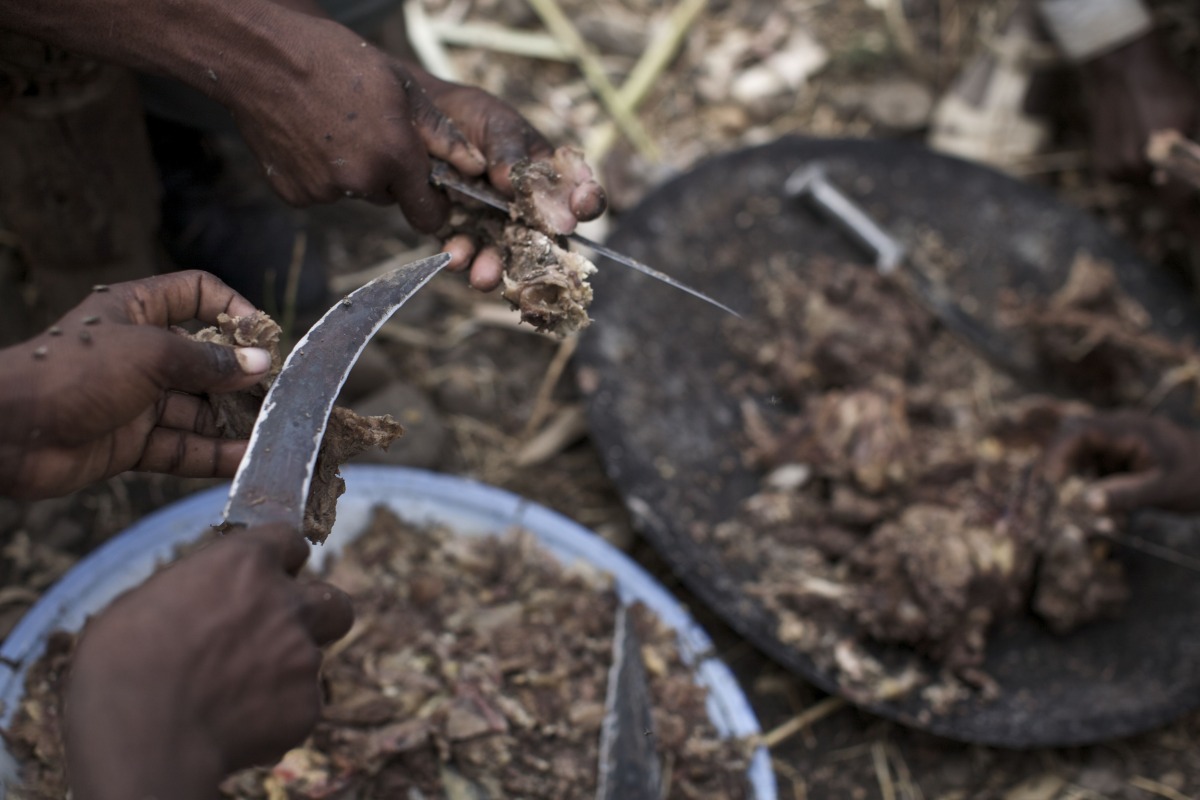
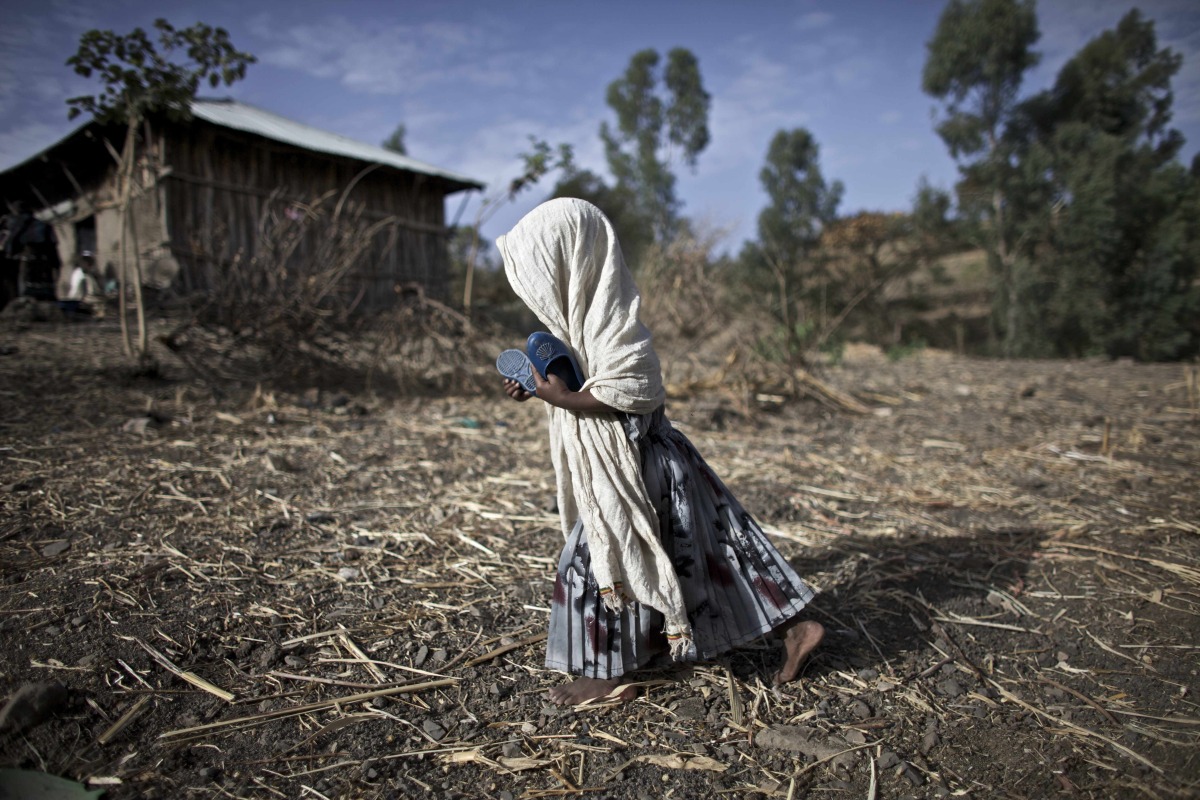
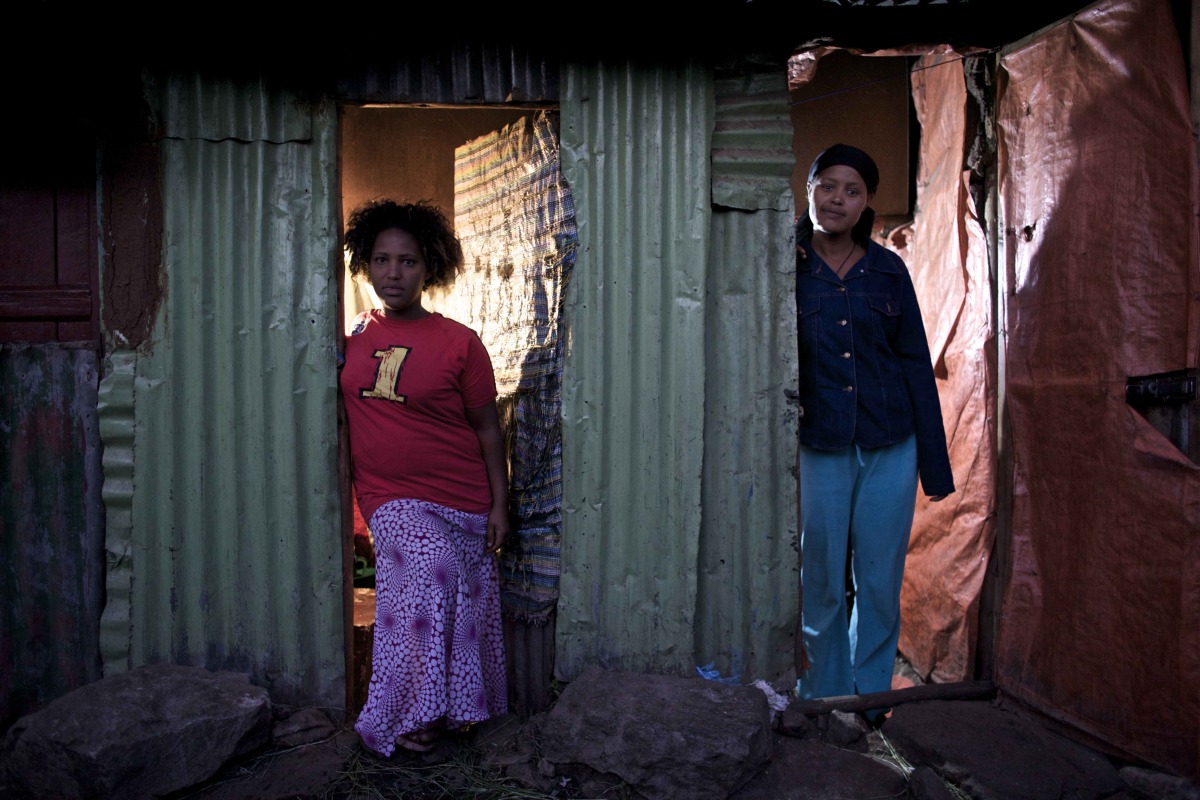
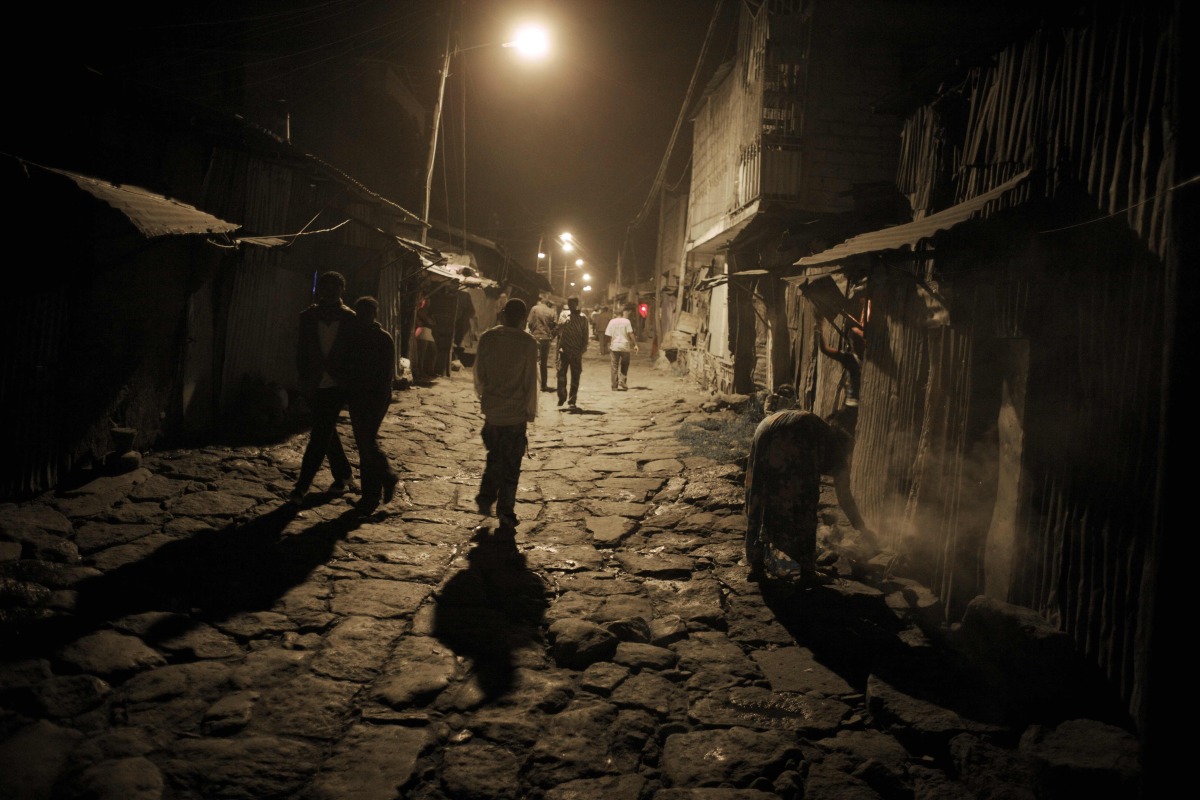
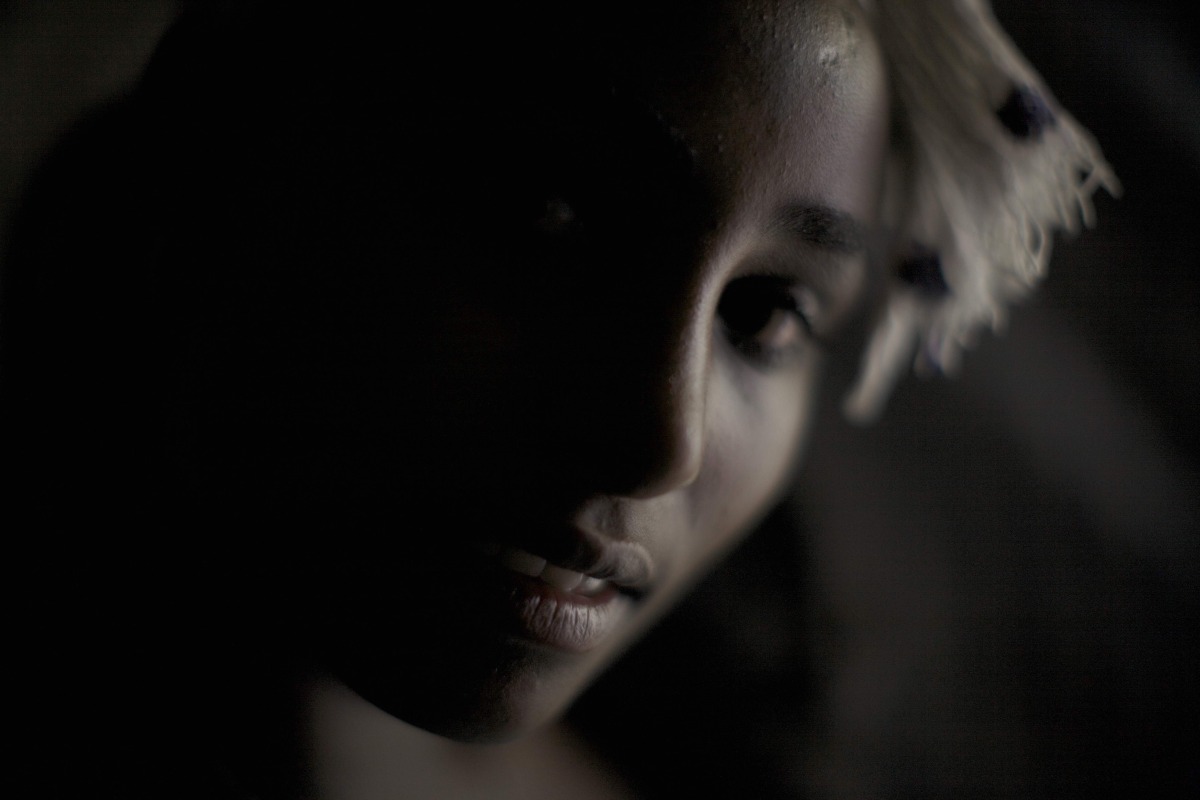
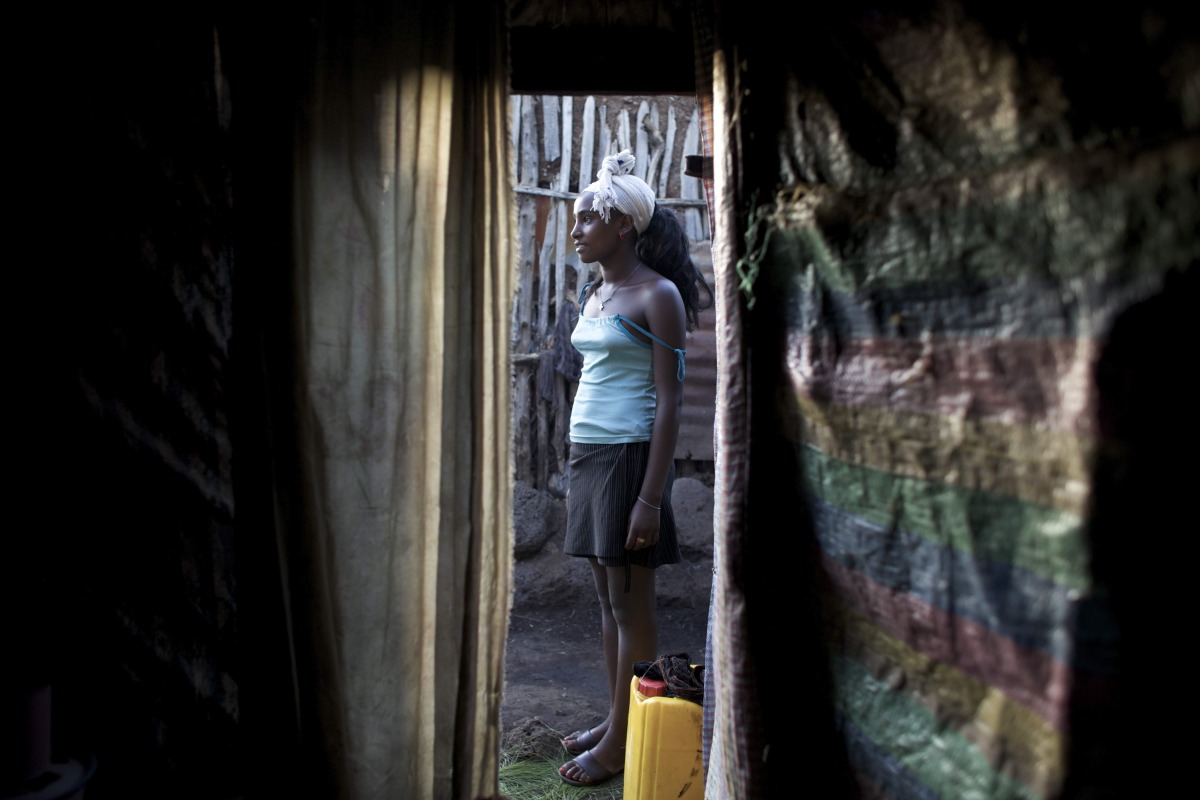
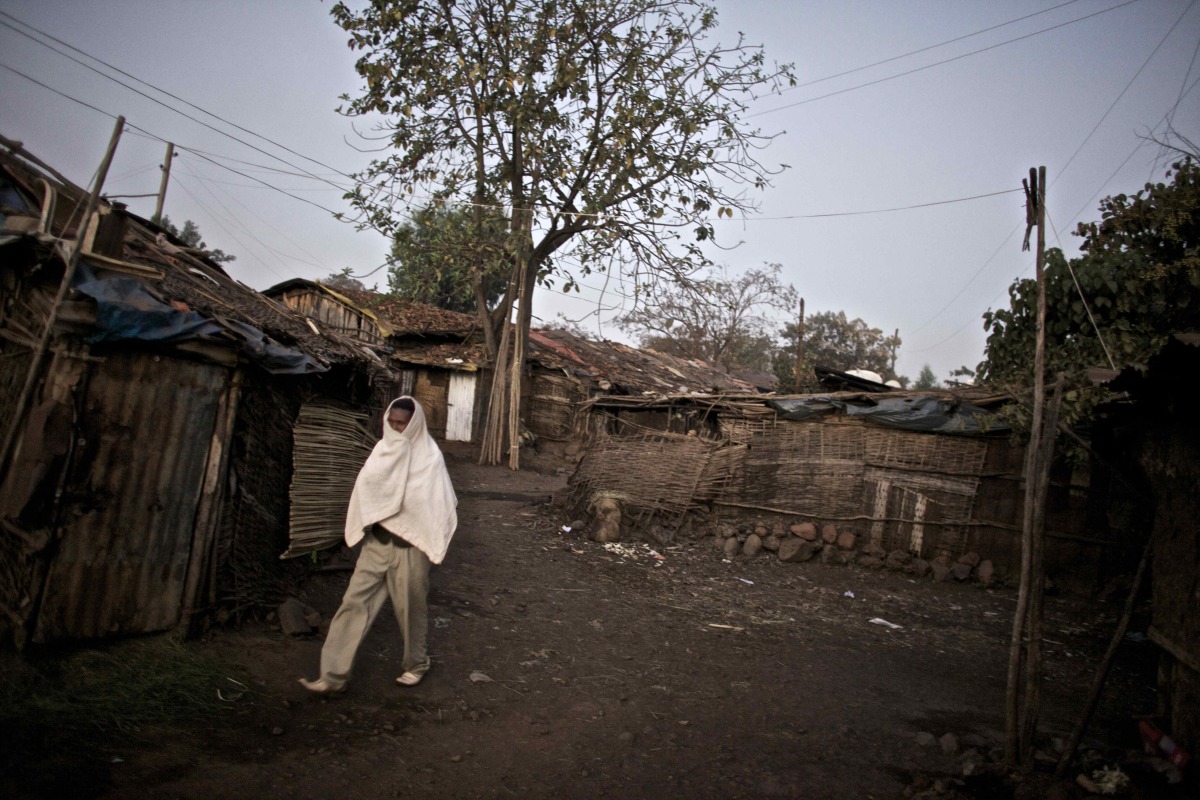
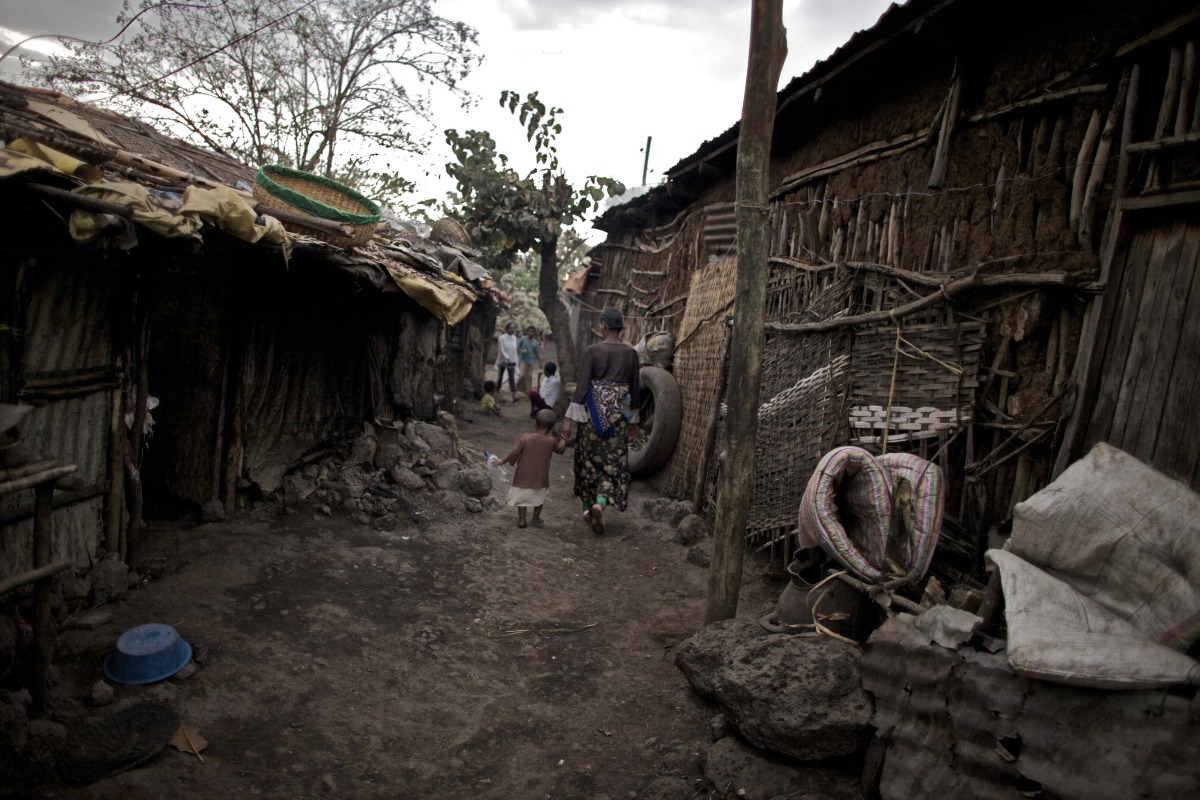
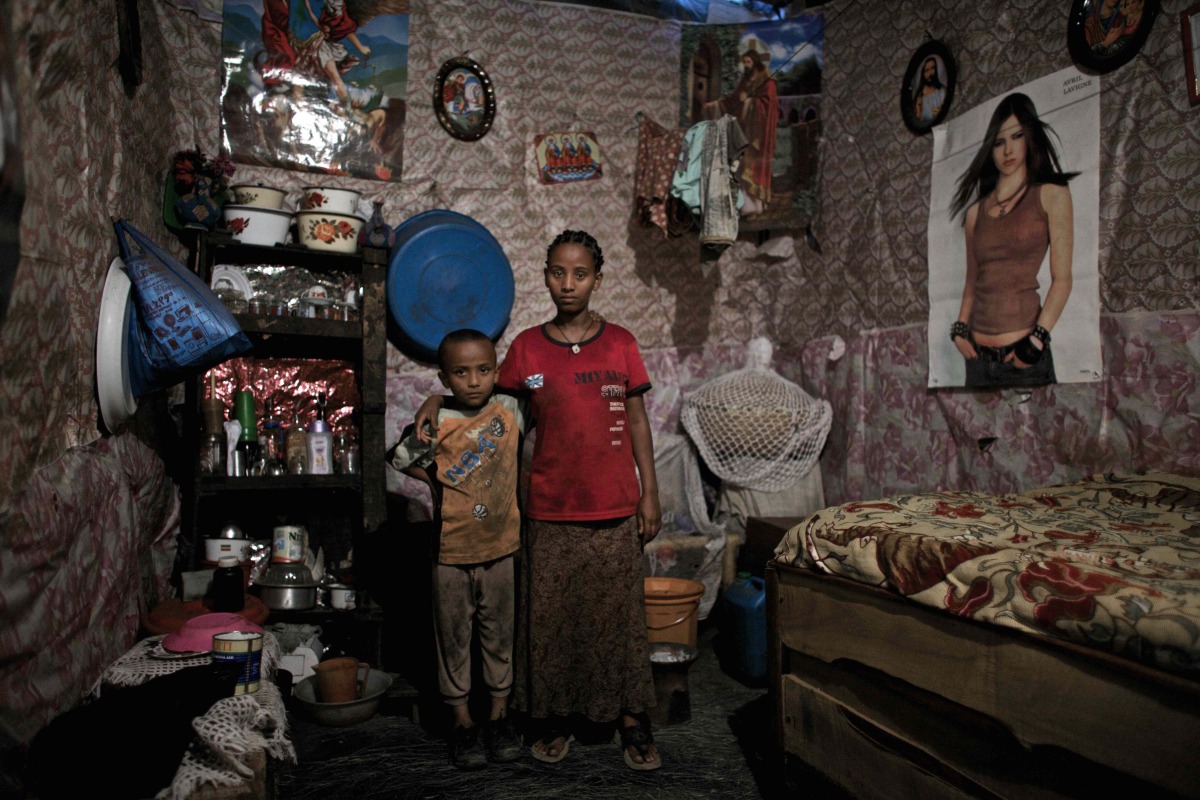
PHOTO ESSAY: Child Marriage in Ethiopia
While it may seem shocking, in Ethiopia girls are married off at ages as young as 5 years old, and 48% of rural women are married before age 15. Photographer Guy Calaf documents these young child brides and their marriages in this photo essay.
Read MoreWhere Children Sleep
Children all over the world live and sleep in very different environments. It is my hope that these photographs will help children, and adults, to think about inequality, within and between societies around the globe, and perhaps to start to figure out how, in their own lives, they may respond.
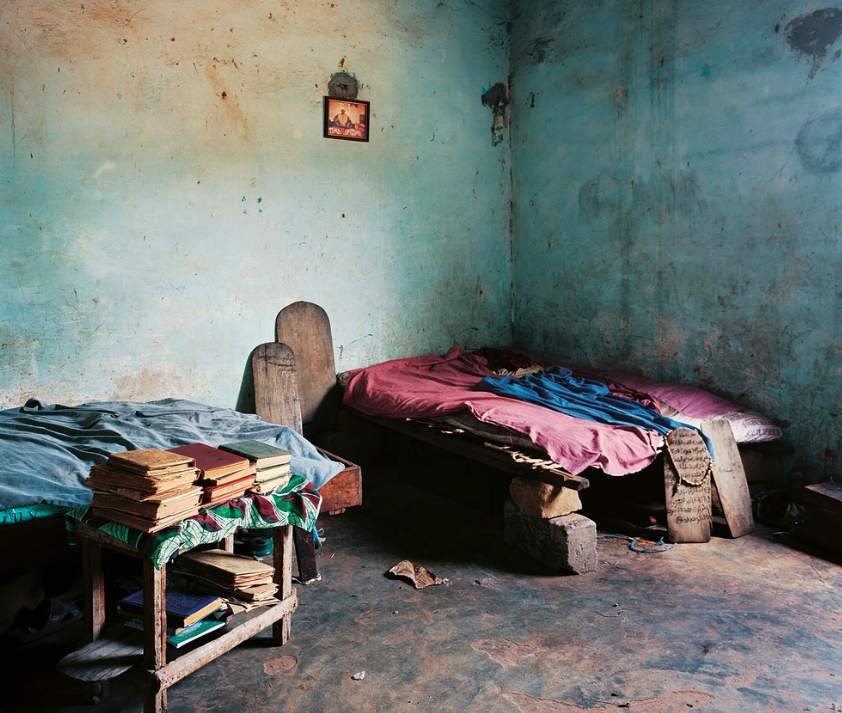
When Fabrica (Benetton’s creative research center) asked me to come up with an idea for engaging with children’s rights, I found myself thinking about my bedroom: how significant it was during my childhood, and how it reflected what I had and who I was — my bedroom was my personal kingdom. It occurred to me that a way to address some of the complex situations and social issues affecting children would be to look at the bedrooms of children in all kinds of different circumstances.
From the start of this project, I didn’t want it just to be about ‘needy children’ living in the developing world, but rather something more inclusive, about children from all types of situations.
It seemed to make sense to photograph the children themselves, too, but separately from their bedrooms, using a neutral background. My thinking was that the bedroom pictures would be inscribed with the children’s material and cultural circumstances — the details that inevitably mark people apart from each other — while the children themselves would appear in the set of portraits as individuals, as equals... just as children.
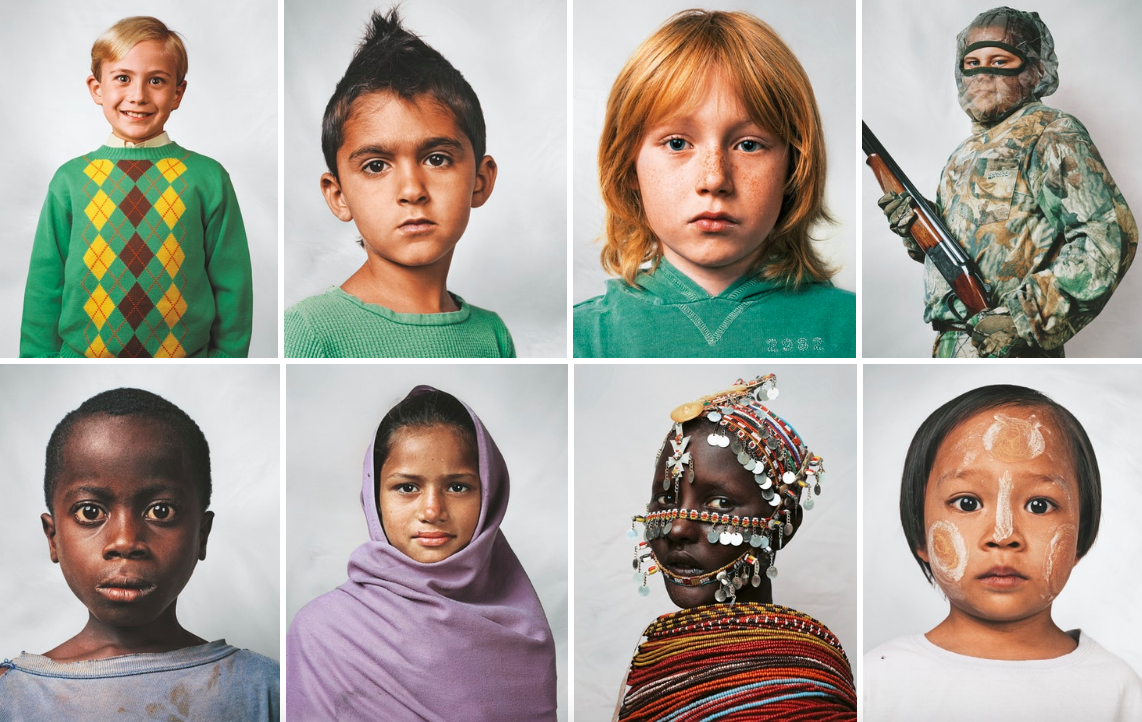
Above: You can see where these children sleep, and read their stories, below.
To begin with, I initially called the project ‘Bedrooms’, but I soon realized that my own experience of having a ‘bedroom’ simply doesn’t apply to so many kids. Millions of families around the world sleep together in one room, and millions of children sleep in a space of convenience, rather than a place they can in any sense call their room.
I came to appreciate just how privileged I had been as a child, to have had a personal kingdom in which to sleep and to grow.
For me, the project became a vehicle to think about issues of poverty and wealth, about the relationship of children to personal possessions, and the power of children — or lack of it — to make decisions about their lives.
However, this photo essay is not a campaign. There’s nothing scientific about the selection of children featured: I travelled where I could, often alongside other projects, and many of the pictures result from chance encounters, following my photographer’s nose. I am not qualified to give anyone a lecture on the state of childhood today, or the future of children’s rights. Although I have relied on the help of Save the Children, Italy, there is no agenda to the project other than my own journey and curiosity, and wanting to share in pictures and words the stories that I found interesting, or that moved me.
In the end, I hope these pictures and stories speak to children. So that lucky children (like I was) may better appreciate what they have.
But more than that, I hope these photographs will help children think about inequality, within and between societies around the world, and perhaps start to figure out how, in their own lives, they may respond.
* * *
Below you can meet twenty-five of the children whose stories and portraits are featured in my final book Where Children Sleep.
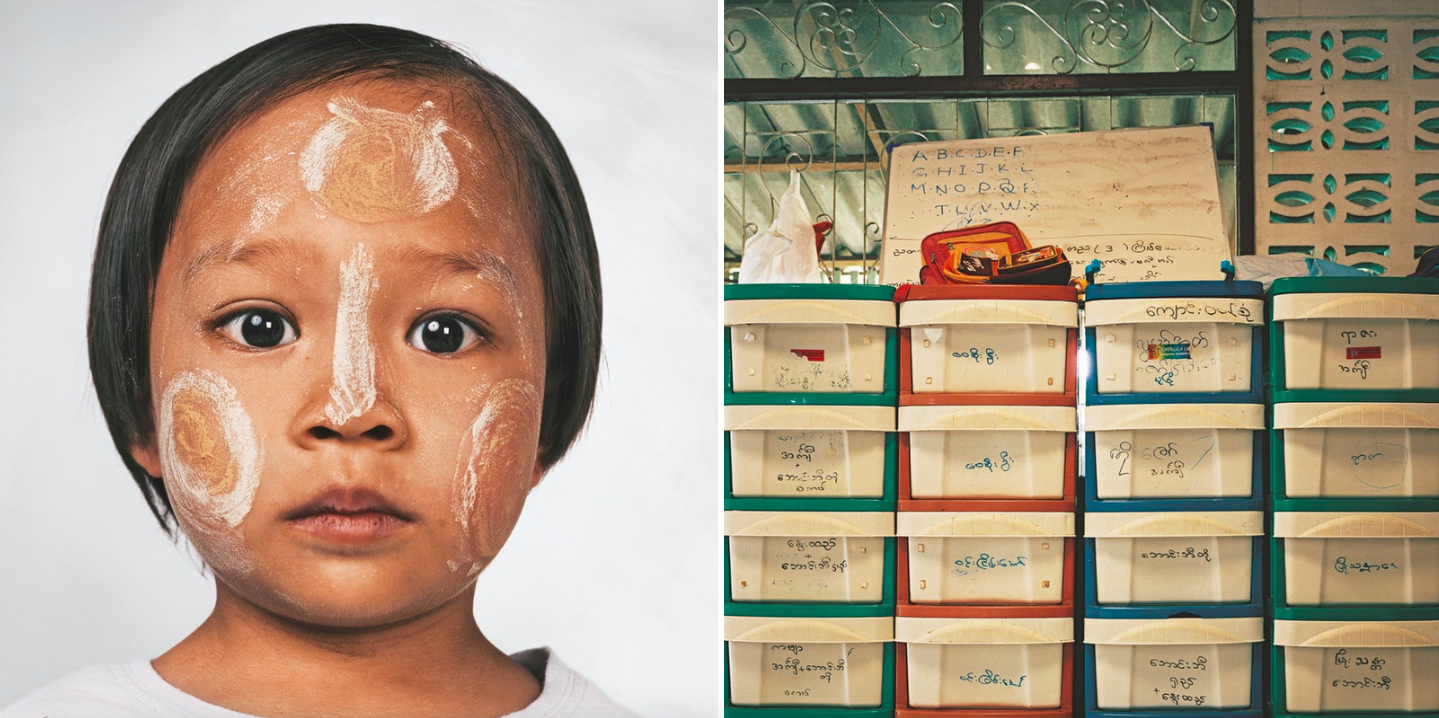
Lay Lay, 4 years old
Mae Sot, Thailand
—
Lay Lay is four years old. The cream she has on her face is made from the bark of the thanaka tree, used to condition and protect the skin. Lay Lay lives in Mae Sot, Thailand, close to the border with Burma. When her mother died, no other members of her family came to claim her, so she was placed in an orphanage. She shares this home with twenty-one other nursery-aged children. The orphanage consists of two rooms. During the day, one room is the classroom and the other is a dining room. At night, these rooms become bedrooms. The tables are pushed to one side and mats are rolled out for the children to sleep on. Each child has one drawer in which to keep their belongings.
Lay Lay does not have many belongings — just a few clothes. All that is known of her background is that she is from an ethnic group of people called the Karen, one of the persecuted minority ethnic groups which make up about forty per cent of the Burmese population. Lay Lay and her mother fled from the brutal Burmese military dictatorship and arrived in Thailand as refugees.
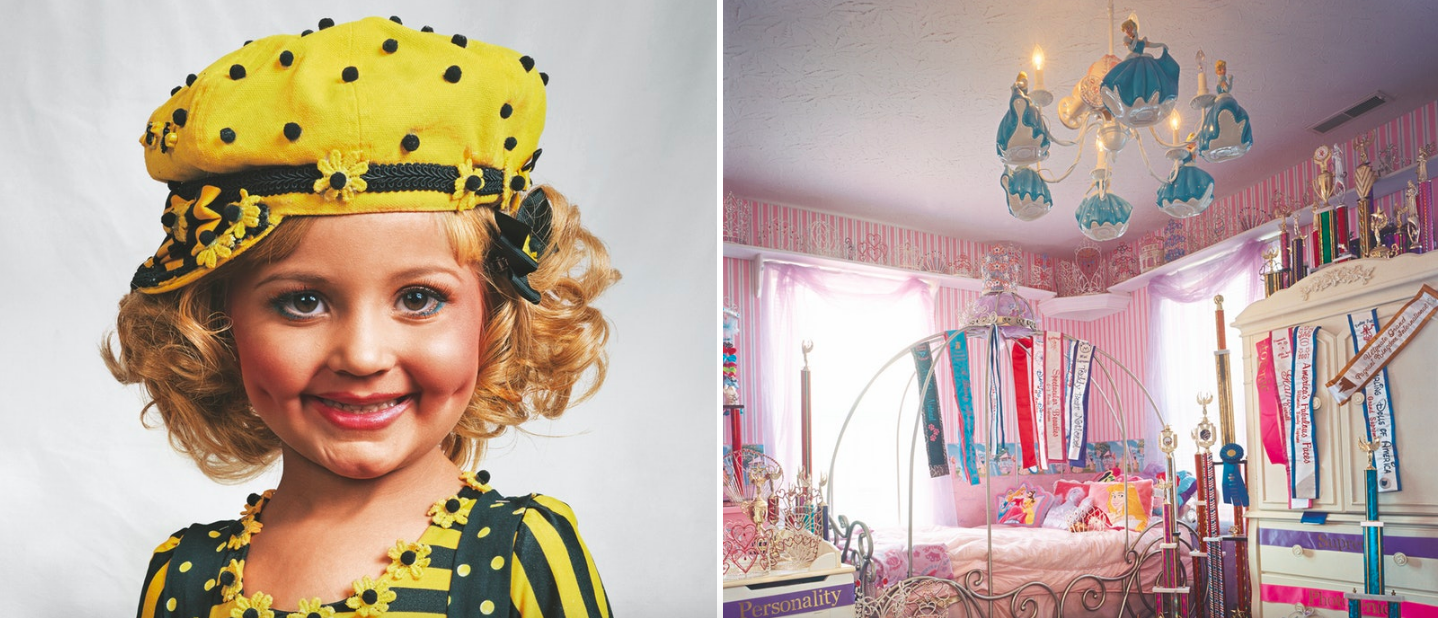
Jasmine, 4 years old
Kentucky, USA
—
Jasmine prefers to be called by her nickname, Jazzy. She lives in a big house in Kentucky, USA, with her parents and three brothers. Her house is in the countryside, surrounded by farmland.
Her bedroom is full of crowns and sashes which she has won in ‘child pageants’. She is only four years old and has already entered over a hundred of these competitions. Her spare time is completely taken up with preparation and rehearsal. She practices her stage routines every day with a trainer who teaches her new steps.
Each weekend, she participates in a different pageant, arriving on Friday afternoon, performing on Saturday, and attending the crowning ceremony on Sunday. By the end of the show, she is quite exhausted. Jazzy enjoys being pampered and treated like a princess — having her hair done and wearing pretty clothes and make-up, with false nails and a fake tan. It is a very expensive hobby and can cost her parents a thousand dollars for each pageant she takes part in. Jazzy would like to be a rock star when she grows up.
4 years old
Rome, Italy
—
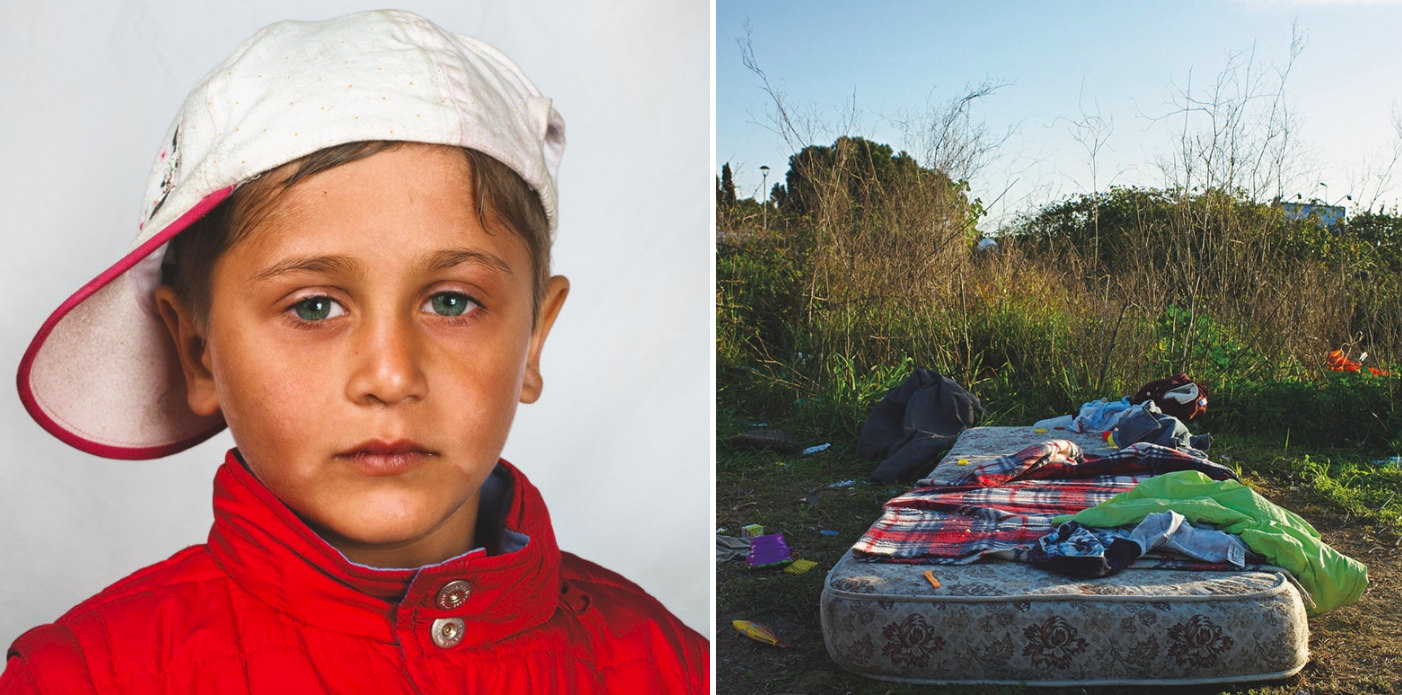
Home for this four-year-old boy and his family is a mattress in a field on the outskirts of Rome, Italy. The family came from Romania by bus, after begging on the streets for enough money to pay for their tickets (€100 per adult and €80 per child).
When they first arrived in Rome, they camped in a tent, but the police threw them off the site because they were trespassing on private land and did not have the correct documents. Now the family sleeps together on the mattress in the open. When it rains, they hastily erect a tent and use umbrellas for shelter, hoping they will not be spotted by the police.
They left Romania without identity documents or work papers and so are unable to obtain legal employment. This boy sits by the curbside while his parents clean car windscreens at traffic lights, earning thirty to fifty cents a time. No one from the boy’s family has ever been to school. His parents cannot read or write.
Jivan, 4 years old
Brooklyn, New York
—
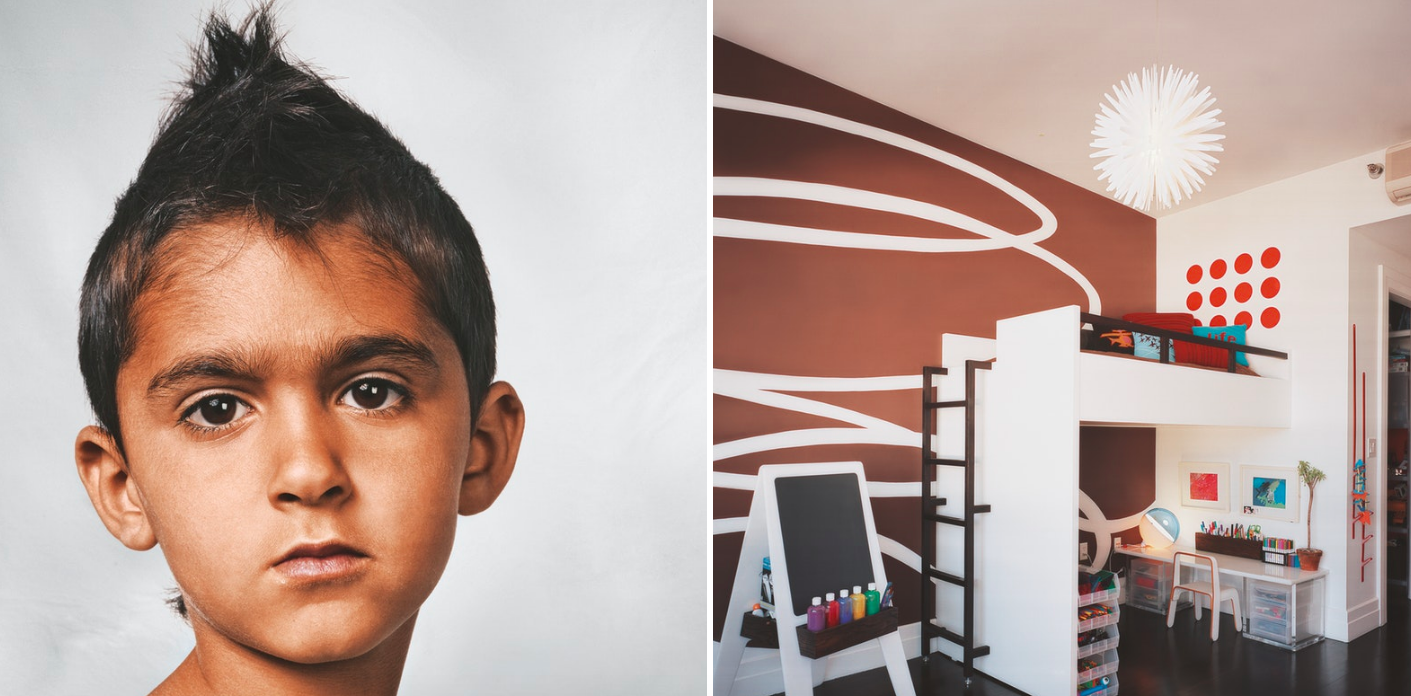
Jivan is four years old. He lives with his parents in a skyscraper in Brooklyn, New York. From his bedroom window, he can see across the East River to New York’s Manhattan Island and the Williamsburg Suspension Bridge which connects it to Brooklyn. Jivan has his own bedroom with an en-suite bathroom and a toy cupboard. The room was designed by Jivan’s mother, who is an interior designer. His father is a DJ and music producer. Jivan’s school is only ten minutes’ walk away.
To gain a place at this school, Jivan had to take a test to prove that he can mix socially with other children. He found this quite stressful as he is a very shy boy. His parents were also interviewed before he was accepted by the school. Jivan’s favorite foods are steak and chocolate. He would like to be a fireman when he grows up.
Kaya, 4 years old
Tokyo, Japan
—
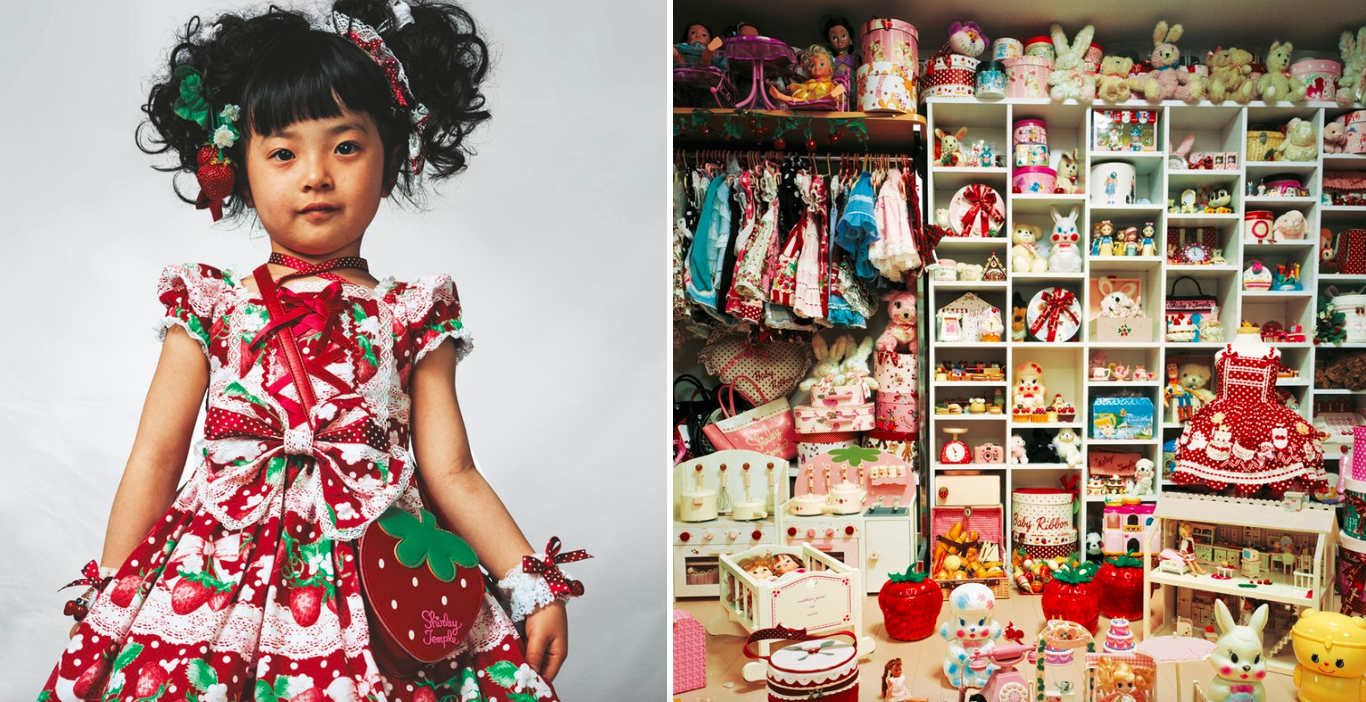
Kaya is four years old. She lives with her parents in a small apartment in Tokyo, Japan. Most apartments in Japan are small because land is very expensive to buy and there is such a large population to accommodate. Kaya’s bedroom is every little girl’s dream. It is lined from floor to ceiling with clothes and dolls.
Kaya’s mother makes all Kaya’s dresses — up to three a month, usually. Now Kaya has thirty dresses and coats, thirty pairs of shoes, sandals and boots, and numerous wigs. (The pigtails in the picture are made from hairpieces.) Her friends love to come round to try on her clothes.
When she goes to school, however, she has to wear a school uniform. Her favorite foods are meat, potatoes, strawberries and peaches. She wants to be a cartoonist when she grows up, drawing Japanese ‘anime’ cartoons.
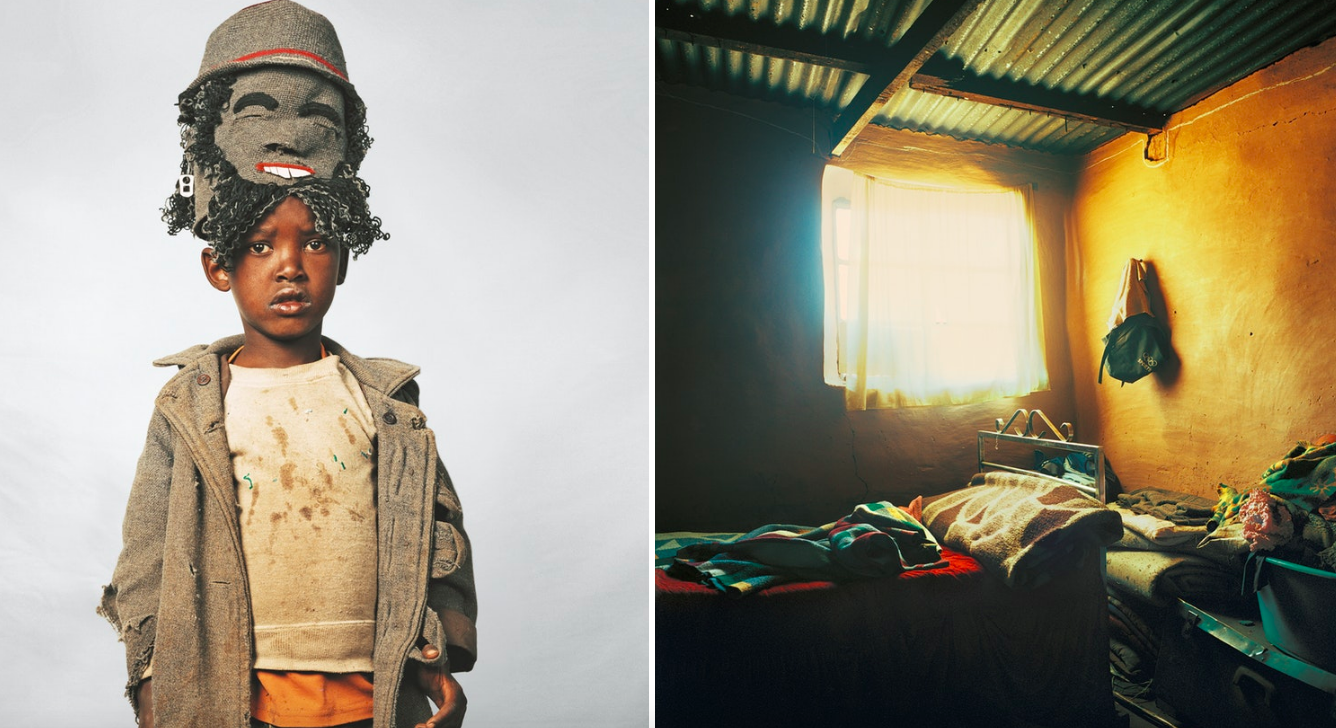
Lehlohonolo, 6 years old
Lesotho
—
Lehlohonolo is six years old. He and his three brothers live in Lesotho, in southern Africa. The boys are orphans — their father died from AIDS some years ago and they have not heard from their mother since she went away in search of work. It is likely that she also died from an AIDS-related illness. It is quite common in Lesotho for mothers and fathers to die as a result of AIDS, and there are growing numbers of orphans.
Lehlohonolo’s sixteen-year-old brother is responsible for looking after the family. The boys live in a mud hut where they sleep together on the floor, cuddling up to each other for warmth during the freezing cold nights. Two of Lehlohonolo’s brothers go to a school eight kilometers away where they are also given monthly rations of food — cereal, pulses and oil. They cannot remember the last time they ate meat.
Sadly, they will probably live in poverty for the rest of their lives because crops are difficult to grow on the infertile land and there are no prospects of employment.

Indira, 7 years old
Kathmandu, Nepal
—
Indira lives with her parents, brother and sister near Kathmandu in Nepal. Her house has only one room, with one bed and one mattress. At bedtime, the children share the mattress on the floor.
Indira is seven years old and has worked at the local granite quarry since she was just three. The family is very poor so everyone has to work. There are 150 other children working at the quarry, some of whom will lose their sight because they do not have goggles to protect their eyes from stone splinters.
Indira works five or six hours a day and then helps her mother with household chores such as cleaning and cooking. Her favorite food is noodles. She also attends school, which is thirty minutes’ walk away. She does not mind working at the quarry but would prefer to be playing. She would like to be a Nepalese dancer when she grows up.
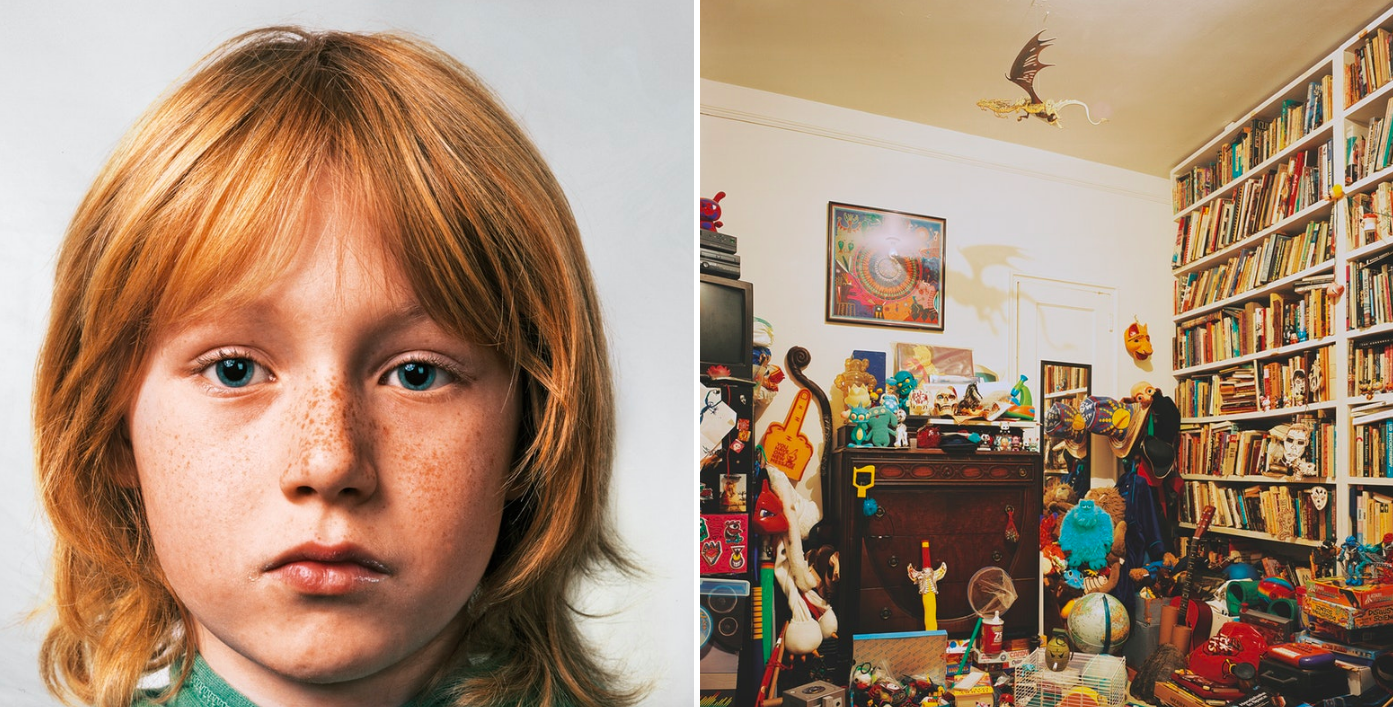
Tristan, 7 years old
Manhattan, New York
—
Tristan is seven years old and is an only child. His mother is a film maker, and his father is a pop cultural writer. They live in a small apartment in Manhattan, New York. They also own a beach house in New Jersey where they go for their summer holiday.
Tristan attends an Eco-School, a state school run on environmental principles, just ten minutes’ walk from his apartment. Here, there are no religious holidays — only the solstices and equinoxes are celebrated. Tristan had to pass several tests before he was accepted at the school, and his parents were also interviewed.
This was the tenth school he had applied to. Competition for school places is fierce in New York. He enjoys school but does not like being told to clean up after lunch. Tristan’s favorite food is bacon, and he has pizza every weekend. He has an unusual ambition for when he grows up — to be a creator of marmalade.
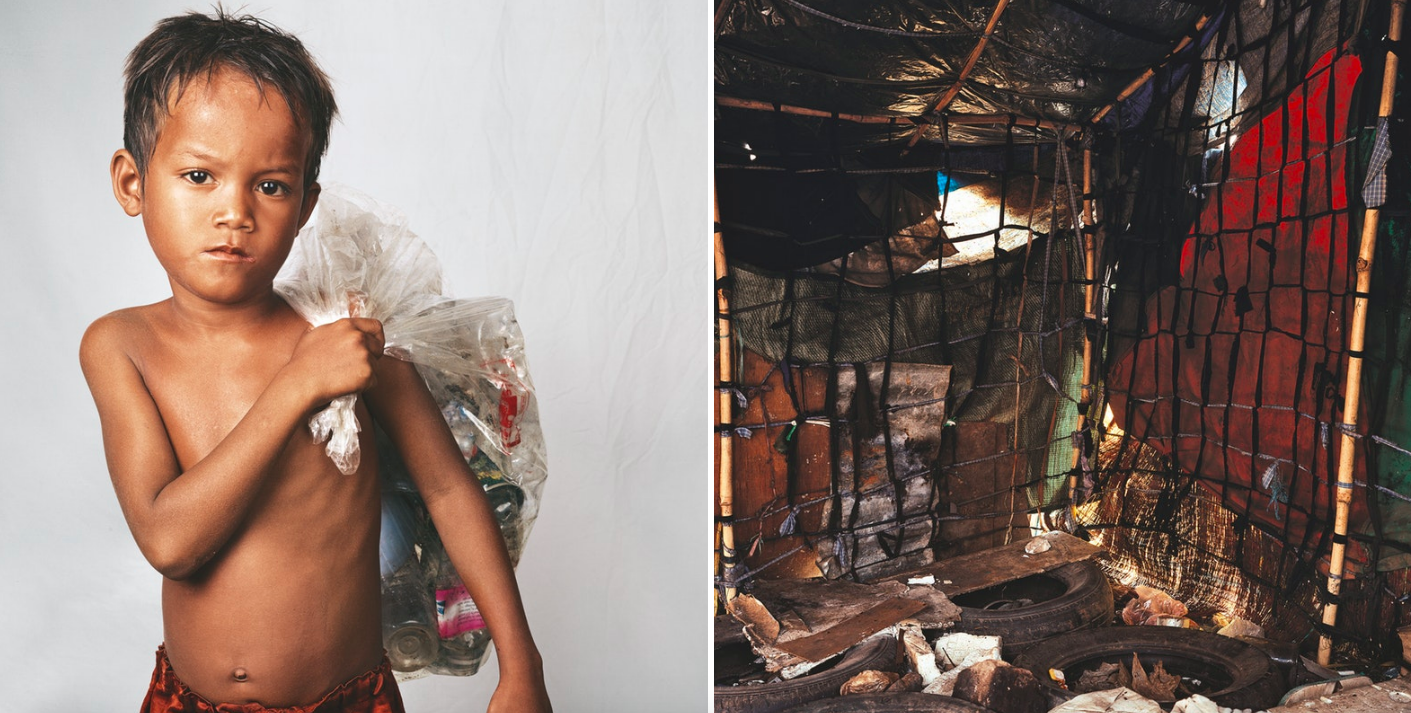
Roathy, 8 years old
Phnom Penh, Cambodia
—
Roathy is eight years old. He lives on the outskirts of Phnom Penh, Cambodia. His home sits on a huge rubbish dump which is swarming with flies. They re-use whatever they can find. Roathy’s mattress, for instance, is made from old tires. The air is thick with the stench of decomposing waste, and the ground underfoot is soft and springy — one wrong step and it gives way to a poisonous black liquid. Five thousand people live and work and pay rent here.
At six o’clock every morning, Roathy and hundreds of other children are given a shower and some breakfast at a local charity centre before they start work, scavenging through the rubbish for cans and plastic bottles which are sold to a recycling company. Breakfast is often the only meal of the day. On one occasion, Roathy’s family suffered food poisoning after eating a chicken which his brother had found on the dump.
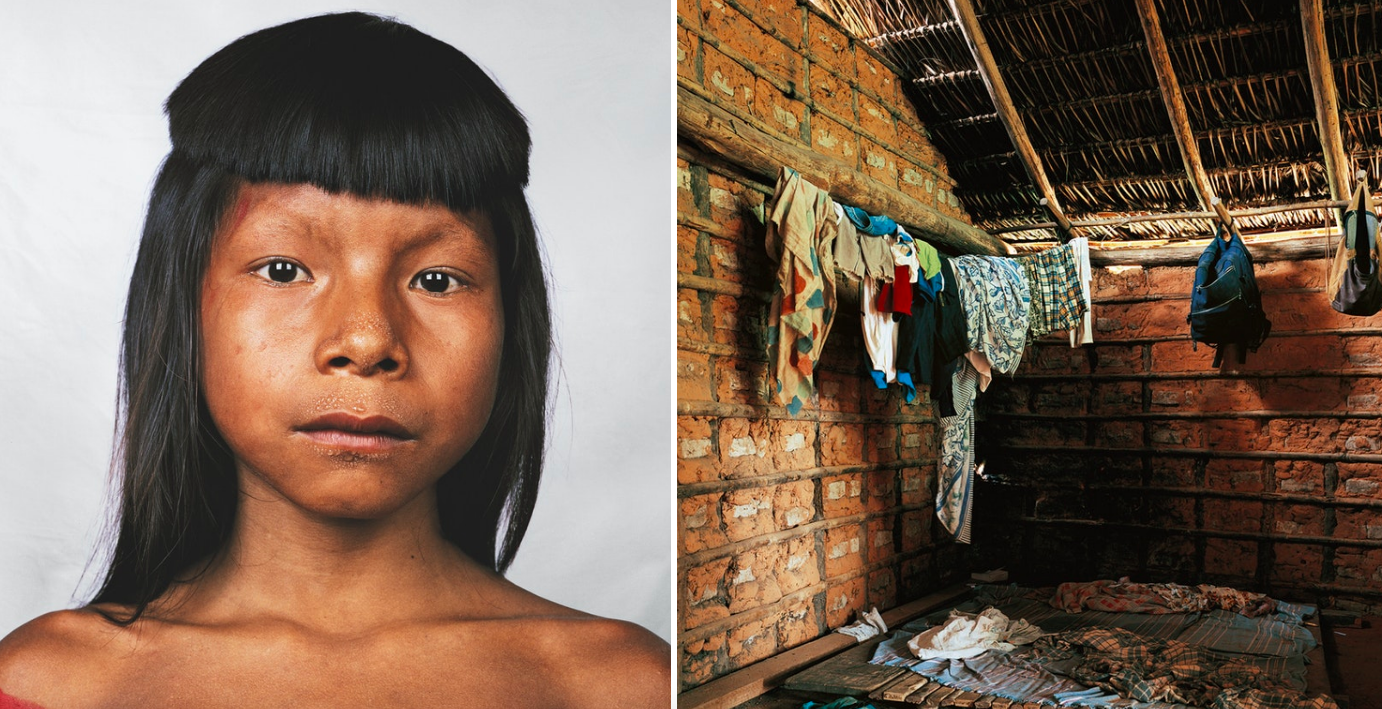
Ahkôhxet, 8 years old
Brazil
—
Ahkôhxet is eight years old and a member of the Kraho tribe, who live in the basin of the river Amazon, in Brazil. There are only 1,900 members of the tribe. The Kraho people believe that the sun and moon were creators of the universe, and they engage in rituals that are many centuries old. The red paint on Ahkôhxet’s chest is from one of his tribe’s rituals.
The elders teach Ahkôhxet’s generation to respect nature and their surroundings. Their huts are arranged in a circle, leaving space in the middle for gatherings and ceremonies to take place. The nearby river provides water for drinking and washing.
The tribe grow half their food in the poor soil using basic tools. They also hunt. The rest of their food is bought using money earned from film crews and photographers who visit their camp. There is one car, shared between the whole tribe.
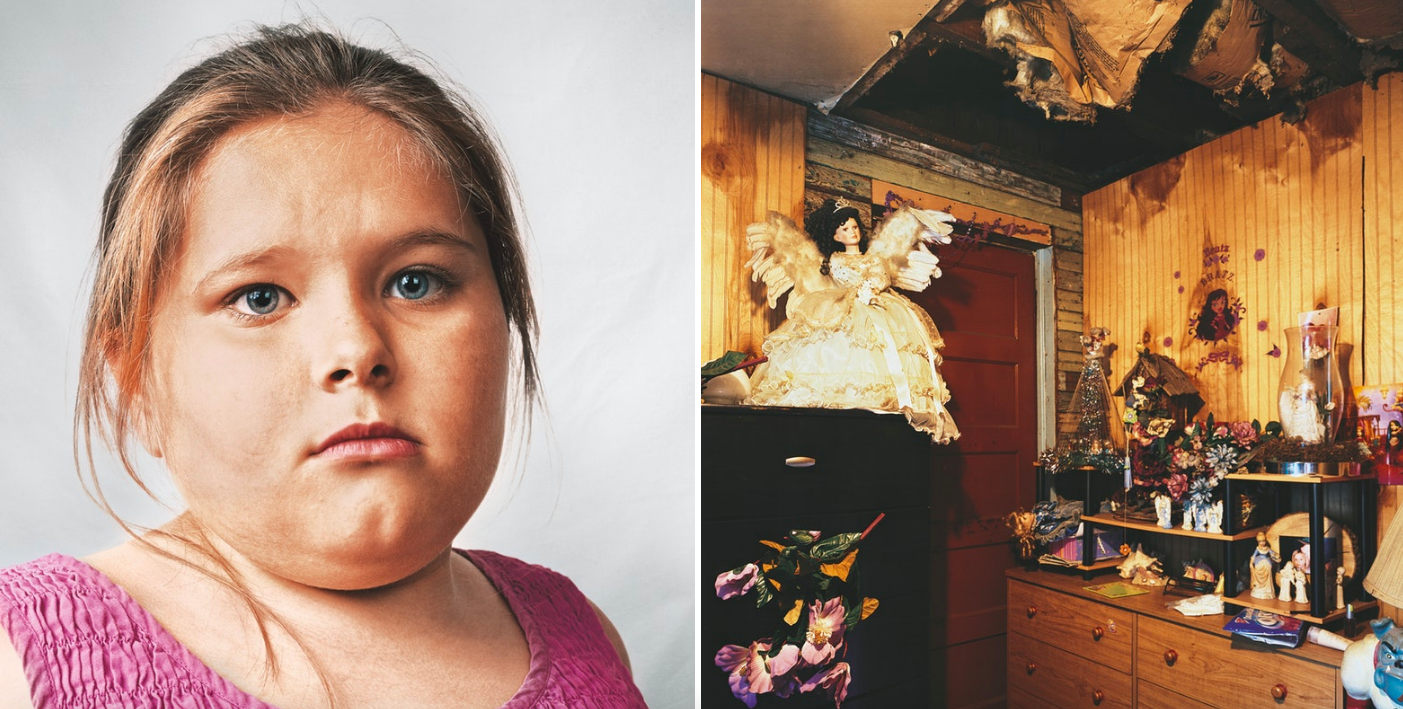
Alyssa, 8 years old
Kentucky, USA
—
Alyssa lives with her parents in Kentucky, USA. She is an only child but her grandmother, uncle and orphaned cousin live close by. It is a beautiful, mountainous region known as Appalachia, but one of the poorest parts of America.
Their small, shabby house, heated only by a wooden stove, is falling apart. The ceiling in Alyssa’s bedroom is beginning to cave in. The family would like to buy a caravan instead, if they could afford it. Alyssa’s mother works at McDonald’s and her father works at Walmart, and everything they earn goes towards bringing up their daughter.
She is lucky that her parents have jobs, even though they earn very little. Many local families are unemployed and have to rely on charity. There is a huge problem with drug misuse in the area, and two of Alyssa’s relatives have already died from drug-related problems.
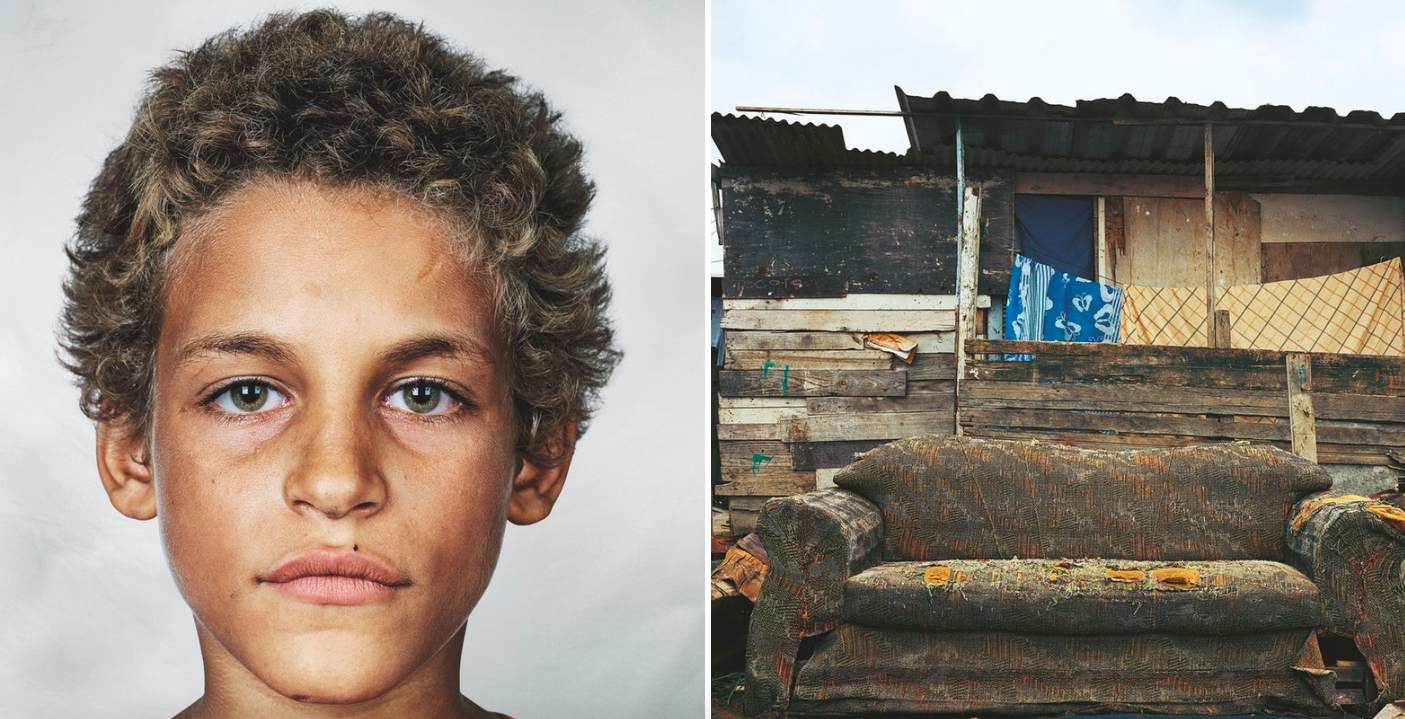
Alex, 9 years old
Rio de Janeiro, Brazil
—
Alex is nine years old. He lives in Rio de Janeiro, Brazil. He does not go to school but spends his time begging on the city streets. He has found that the only way he can survive is to beg or steal.
He admits that he sometimes steals from old people or from drivers waiting at traffic lights. As the drivers lean their arm on the window, Alex snatches the watch from their wrists. He is addicted to sniffing glue.
Most of the time he sleeps outside, on an empty bench or discarded sofa if he can find one — otherwise on the pavement. Alex is still in touch with his family, and occasionally goes to see them to share a meal.
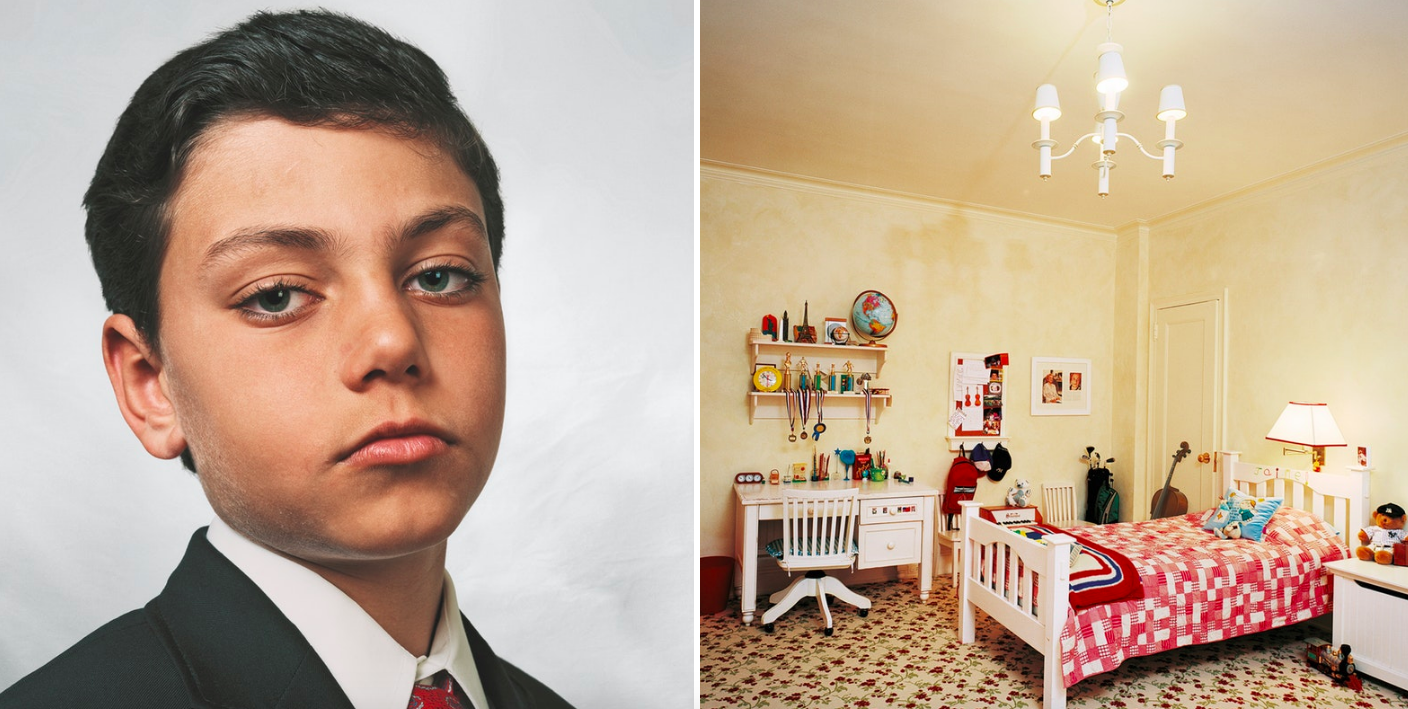
Jaime, 9 years old
Fifth Avenue, New York
—
Jaime is nine years old. He lives in a top-floor apartment on Fifth Avenue in New York. His parents also own luxury homes in Spain and in the Hamptons on Long Island. He has a younger brother and sister who are twins. Places at Jaime’s school are greatly sought after, even though the fees are very high. Jaime had to pass several tests before he was accepted.
He is doing very well at his studies and particularly enjoys computer class, spelling, and woodwork, but not geometry. He has an hour’s homework each night and often finds it hard to fit this in with his other after-school activities.
Wednesdays are particularly busy as he has judo and swimming lessons. In his spare time, apart from playing the cello and kickball, Jaime likes to study his finances on the Citibank website. When he grows up, he would like to be a lawyer like his father.
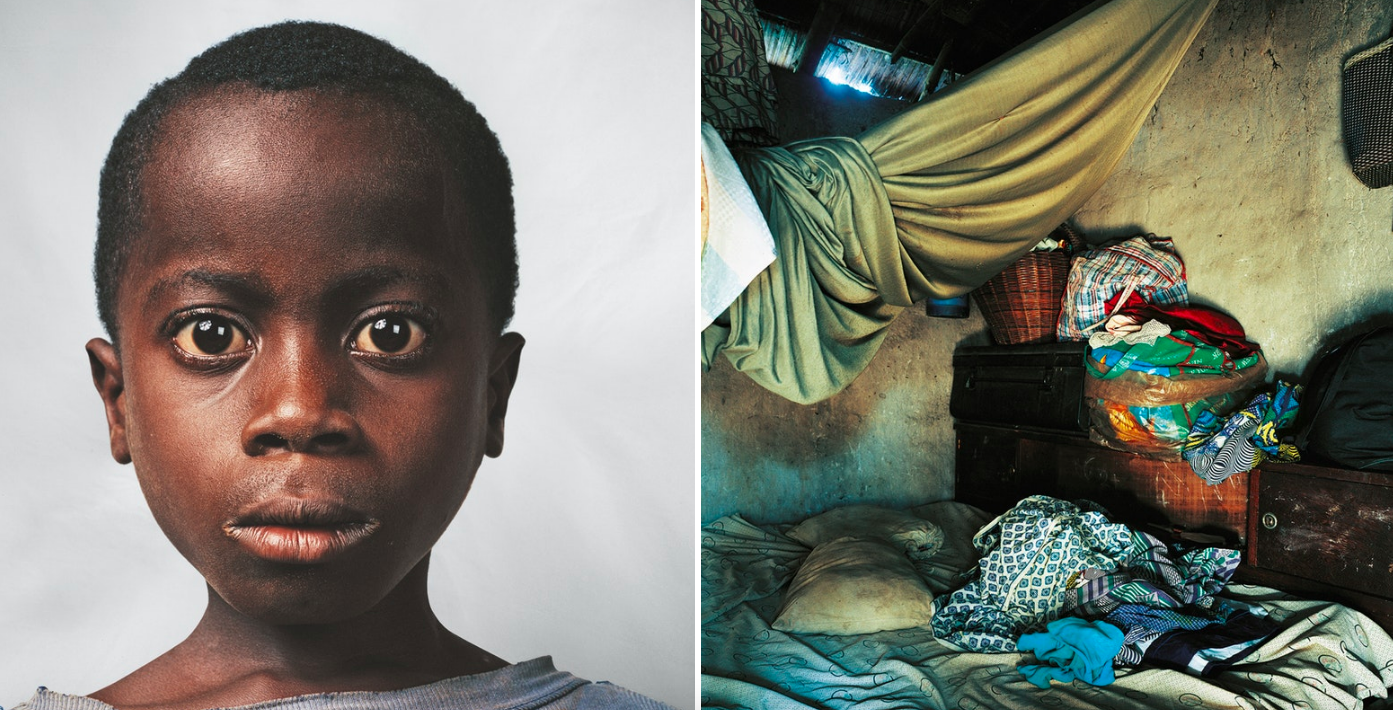
9 years old
Ivory Coast
—
This nine-year-old boy is a refugee from war in Liberia, in western Africa, and goes to a school for ex-child soldiers in Ivory Coast. His name remains a secret in order to protect his identity. If it is revealed, his life could be at risk.
Thousands of young children — many of them orphans — were recruited as soldiers to fight in the violent civil war in Liberia. They were tempted to become soldiers by promises of money, food and clothing. These child soldiers were then moved around the country during the conflict, causing them to lose track of their home villages. They became displaced.
This boy is an orphan and has three brothers. He now lives in a concrete shack alongside other pupils from his school. His favorite food is rice with tomato, meat and fish ground up together. He likes football and would like to be a teacher when he is older.
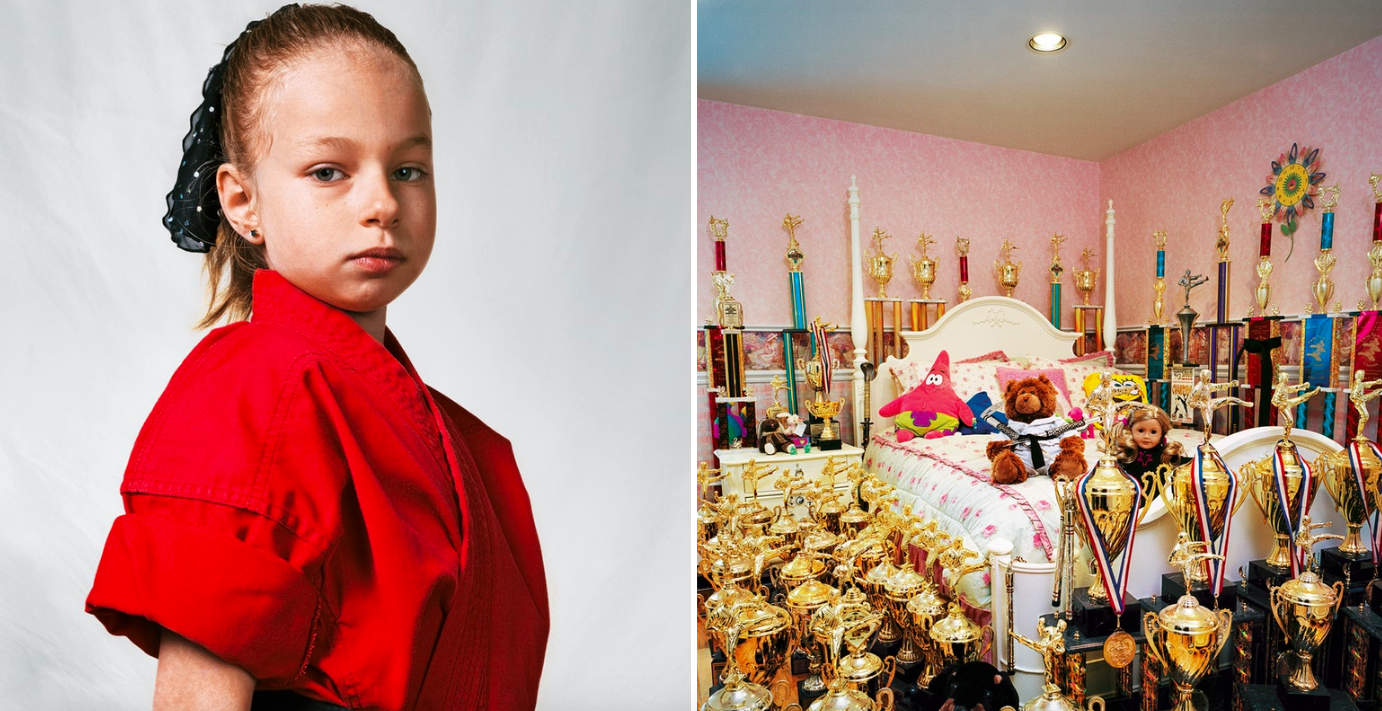
Samantha, 9 years old
Long Island, New York
—
Samantha is nine years old. She lives with her parents, and her guinea pig and fish, in a detached house on Long Island, New York. Samantha has achieved a black belt — the highest level — in karate. She has been world champion three times.
She first became interested at the age of three, when she saw a television advert featuring karate. She pestered her parents to let her learn and took her first lesson when she was four. She has now been in two adverts and a short film, and her bedroom is full of trophies she has won in competitions.
Samantha’s school is one mile away. Her mother takes her by car each morning so that she can have an extra few minutes’ rest in bed. She spends four hours a day practicing karate at the studio and also has an hour and a half of school homework each night. Samantha would like to become a karate movie star.

Tzvika, 9 years old
Beitar Illit, West Bank
—
Tzvika is nine years old and lives in Beitar Illit, an Israeli settlement in the West Bank. It is a gated community of thirty-six thousand Haredi (Orthodox) Jews, who live their lives according to a strict religious code set out in the Jewish holy book, the Talmud. Televisions and newspapers are banned from the settlement.
The average family has nine children, but Tzvika has just one sister and two brothers, with whom he shares his room. Like all good Haredi boys, Tzvika reveres God and wants to become a rabbi when he is older. He lives in a modern apartment block and is taken by car to school, a two-minute drive away.
Religion is the most important subject, followed by Hebrew and maths. Sport is banned from the curriculum. Tzvika goes to the library every day and enjoys reading the holy scriptures. All the books in the library are religious books. Tzvika also likes to play religious games on his computer. His favorite food is schnitzel and chips.
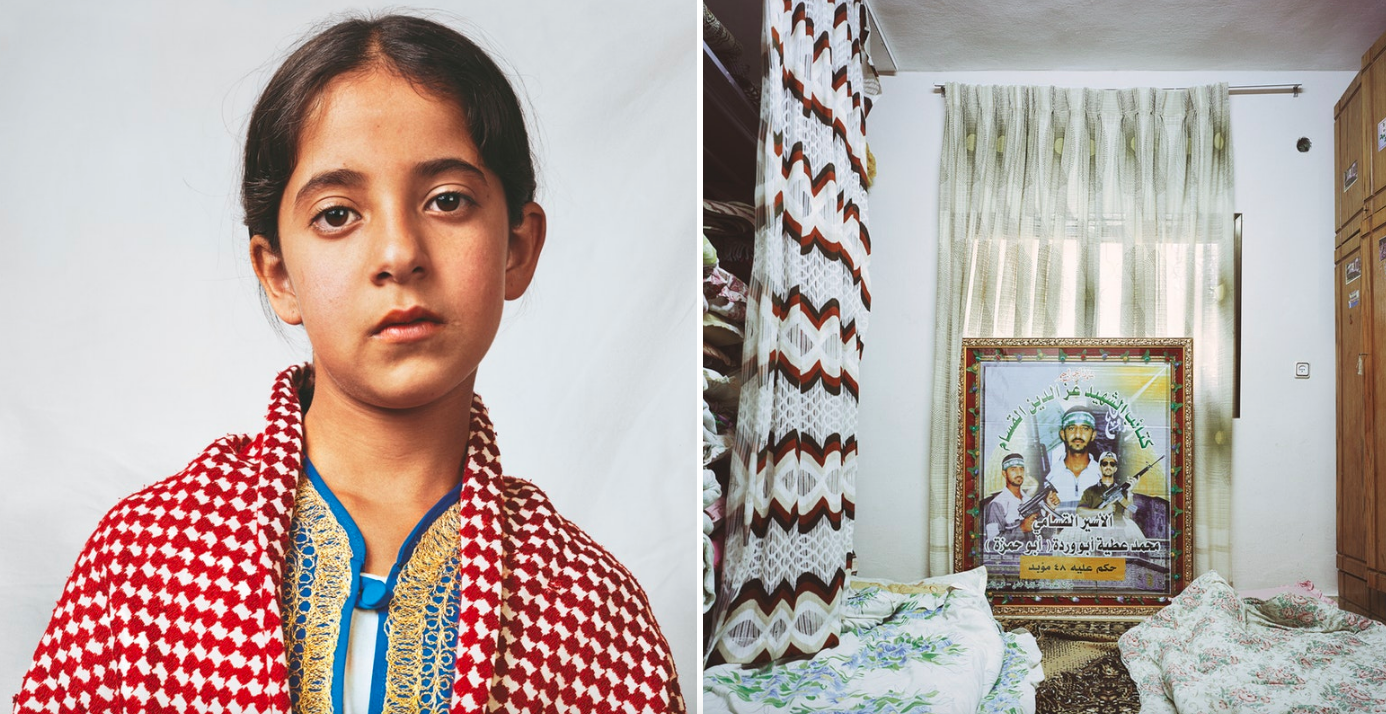
Douha, 10 years old
Hebron, West Bank
—
Douha lives with her parents and eleven siblings in a Palestinian refugee camp in Hebron, in the West Bank. She is ten years old and shares a room with all five of her sisters. The family diet mostly consists of green beans, meat, rice and lentil soup.
Douha attends a school which is ten minutes’ walk away. She works hard because she wants to be a pediatrician when she grows up. Douha’s life has been severely affected by the conflict between Palestine and Israel. Her grandparents fled from their village in 1948, when Israel took over their land, and Douha’s family has lived in refugee camps ever since.
Douha was born in a refugee camp, and there has always been violence around her. Her brother Mohammed killed himself and twenty-three civilians in a suicide bomb attack against the Israelis in 1996. Although no one in her family knew what Mohammed was planning, the whole family was punished for it: immediately after the bombing, the family home — including all their possessions — was destroyed by the Israeli military. Douha has a poster of Mohammed on her bedroom wall.
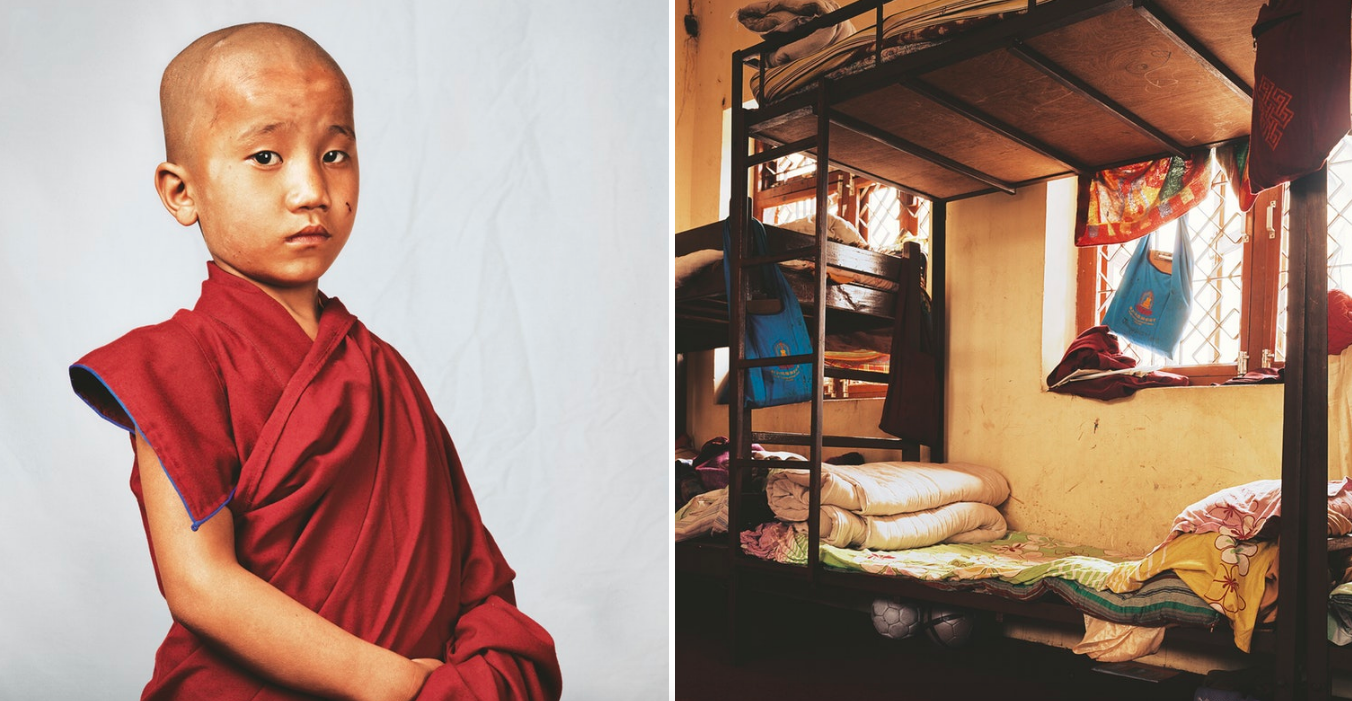
Sherap, 10 years old
Kathmandu, Nepal
—
Sherap is ten years old. He lives in a beautiful Tibetan monastery in Kathmandu, Nepal, and shares a room with seventy-nine other boys training to be monks. The boys all sleep in bunk beds and have very few personal possessions.
Sherap’s parents sent him here because it is believed that good luck comes to families who offer a son to the monastery. It also means they have one less mouth to feed.
Sherap has a long day. He gets up at 5.30 am to study, and finishes the day with an hour of chanting at 9 pm. He usually eats dhal bhat (rice and lentil soup), thukpa (noodle soup) and roti (flat bread). He admires his teacher and would like to be a kempo martial arts teacher one day, but first he must finish school and then study privately for three years and two months.
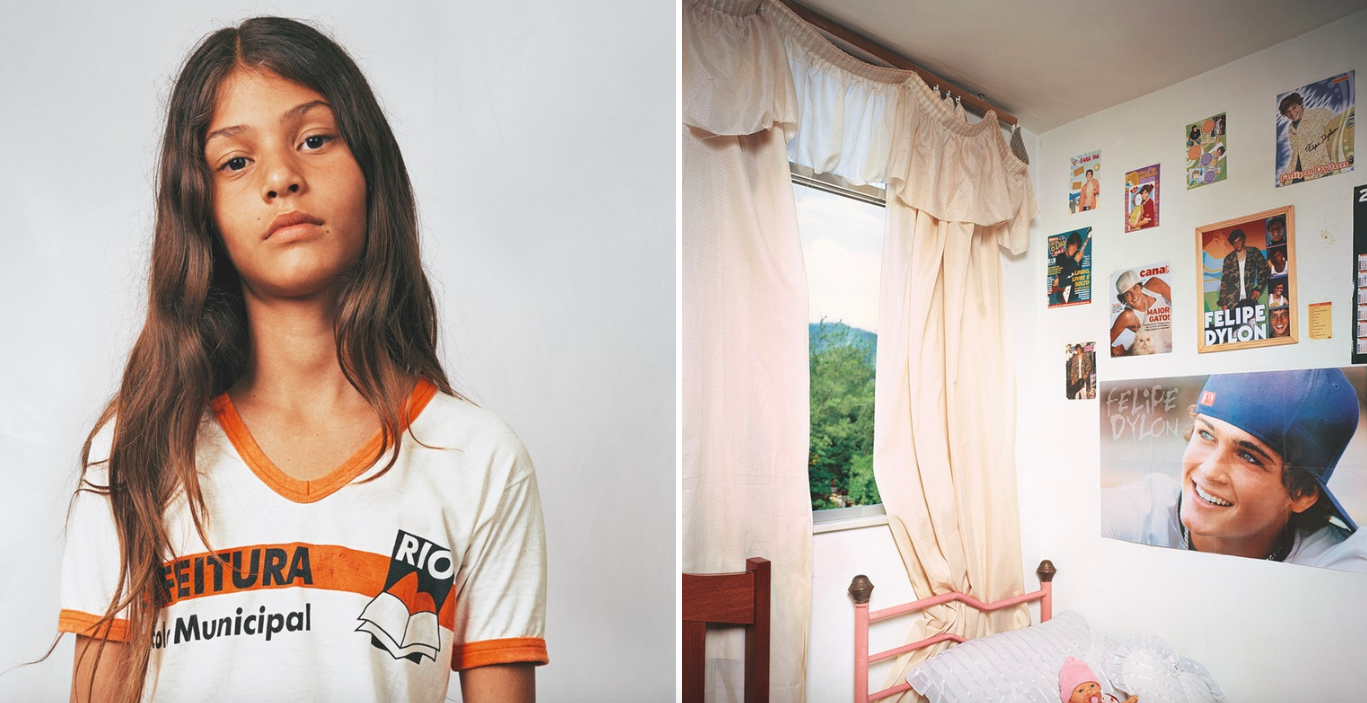
Thais, 11 years old
Rio de Janeiro, Brazil
—
Thais is eleven years old and lives with her parents and sister on the third floor of a block of flats in Rio de Janeiro, Brazil. There are two bedrooms in the flat, so Thais has to share her room with her sister.
They live in the Cidade de Deus (‘City of God’) neighborhood in the western zone of Rio de Janeiro. It used to be a poverty-stricken, crime-ridden area, dominated by gang rivalry and drug abuse, but the 2002 film City of God, which was set in the neighborhood, inspired major improvements. It is now a much safer place to live.
Thais’s parents are not well off but are able to support their family reasonably well. Thais is a great fan of Felipe Dylon, a Brazilian pop singer. She has his posters all over her bedroom wall. She also admires the Brazilian model and actress, Gisele Bündchen, who is thought to be the highest paid model in the world. Thais would like to be a model when she grows up or, alternatively, a pediatrician.
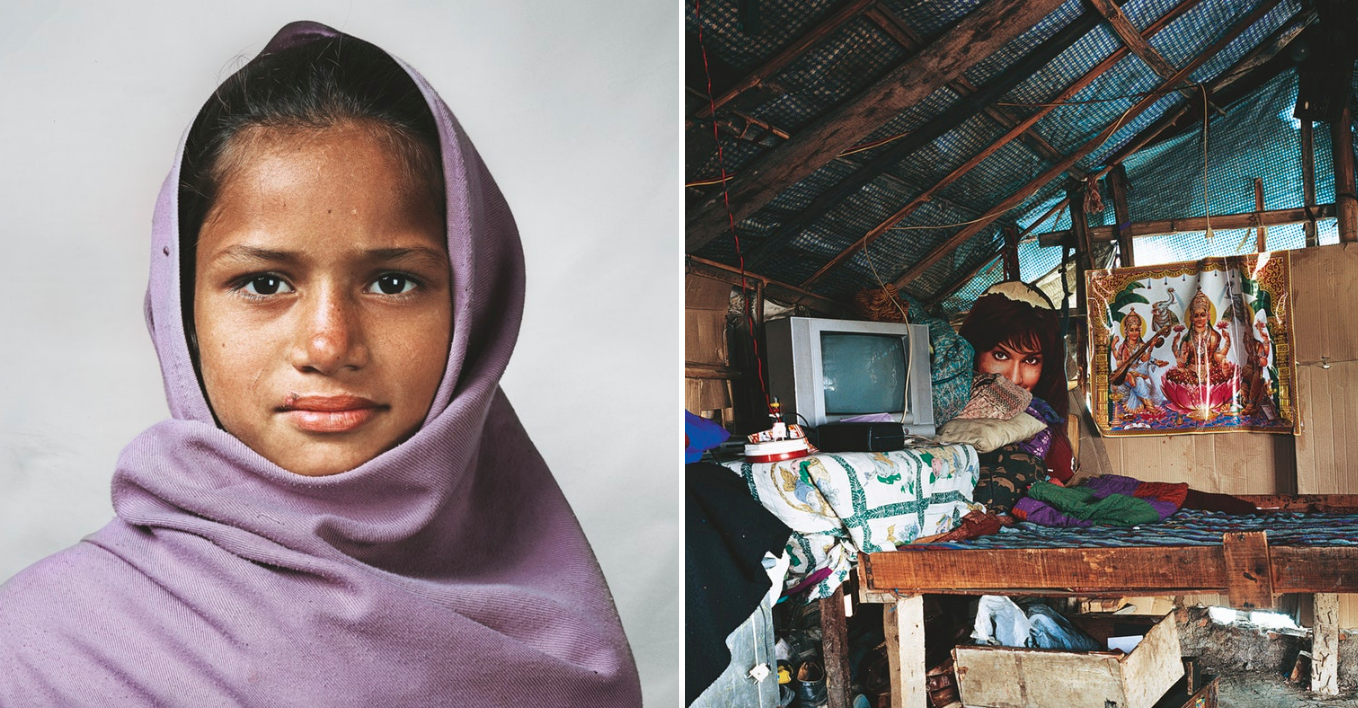
Netu, 11 years old
Kathmandu, Nepal
—
Netu lives in Kathmandu, Nepal, in an area known as ‘Beggars’ City’. She used to live in India with her parents, four sisters and brother. Her parents were unable to support the family and there was not enough food to survive, so they had to send Netu, the eldest, away to live with her aunt. They had hoped for better prospects for their daughter. They spent one week’s salary on the bus fare for Netu to travel to Kathmandu. The journey took three days.
Netu is eleven years old and now has to beg for money on the city’s streets. It is only the tourists who are willing to donate anything and often she goes home with nothing.
Her home is a plastic sheeted shack. The room measures four meters by six meters and contains two beds. Four people sleep in one bed, three in the other, and four people sleep on the floor.
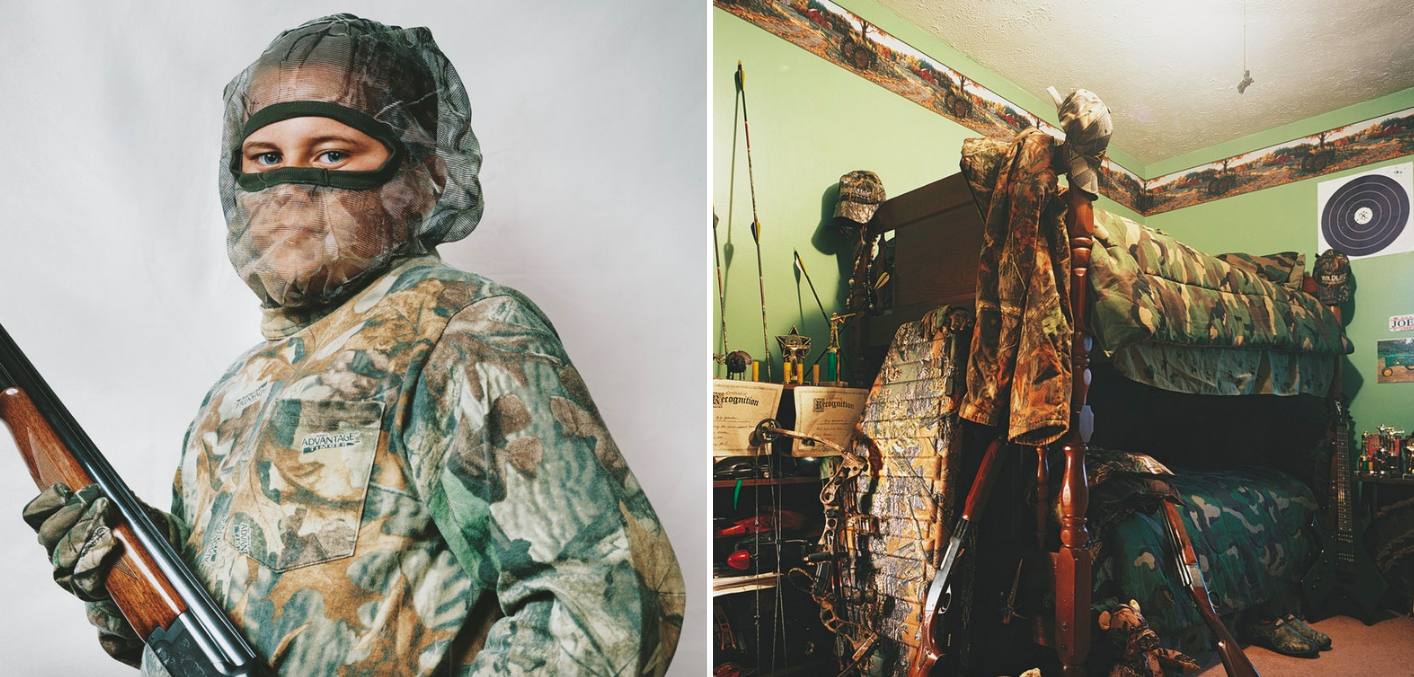
Joey, 11 years old
Kentucky, USA
—
Joey lives in Kentucky, USA, with his parents and older sister. He is eleven years old. He regularly accompanies his father on hunts. He owns two shotguns and a crossbow and made his first kill — a deer — at the age of seven. He is hoping to use his crossbow during the next hunting season as he has become tired of using a gun.
He loves the outdoor life and hopes to continue hunting into adulthood. His family always cook and eat the meat from the animal they have shot. Joey does not agree that an animal should be killed just for sport. When he is not out hunting, Joey attends school and enjoys watching television with his pet bearded dragon lizard, Lily.
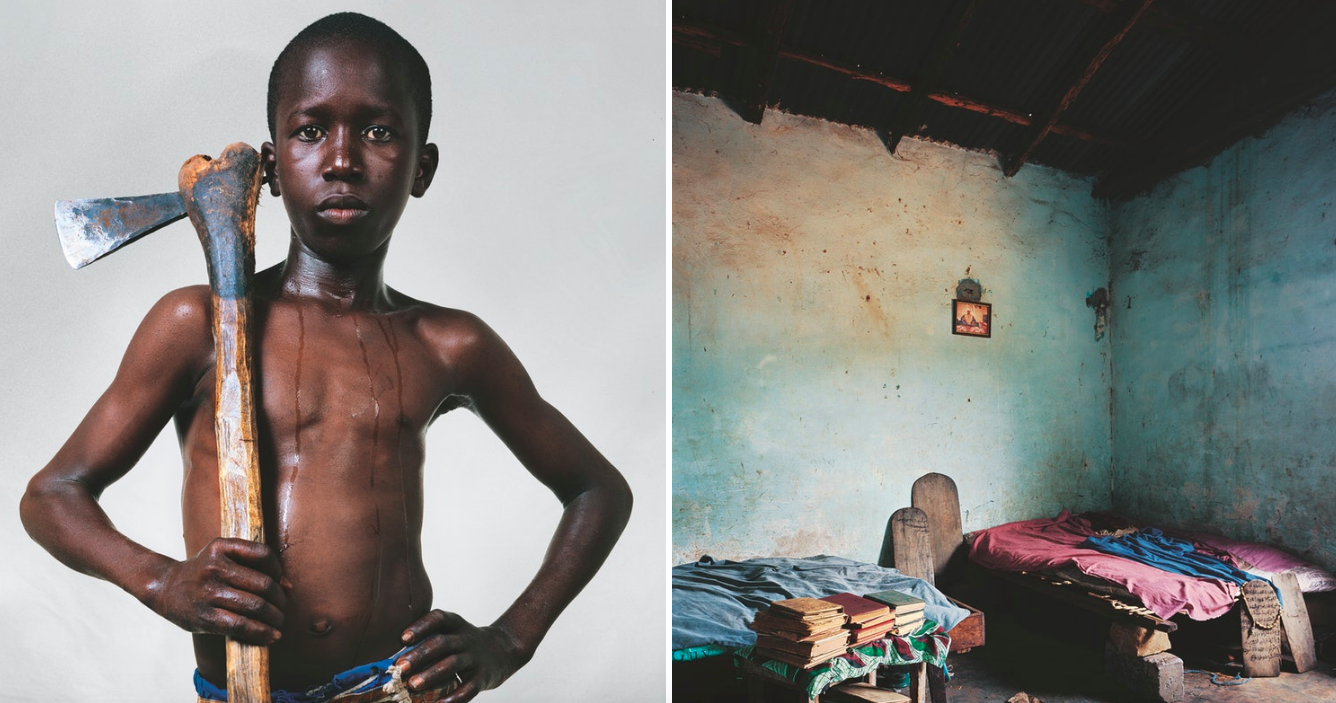
Lamine, 12 years old
Senegal
—
Lamine is twelve years old and lives in a village in Senegal, western Africa. He is a pupil at the village Koranic school, where no girls are allowed. He shares a room with several other boys from the school.
The beds are very basic and uncomfortable, some supported by bricks for legs. At six o’clock every morning, the boys begin work on the school farm. Depending on the season of the year, they are taught digging, harvesting maize or how to plough the fields using donkeys. In the afternoon, they study the Koran, the holy book from which Islam is derived, learning to recite its verses from wooden tablets. They have the same teacher for all their lessons.
Lamine enjoys school but finds the farming lessons hard work and very hot. In his free time, he likes to play football with his friends. When Lamine grows up he would like to be a teacher.
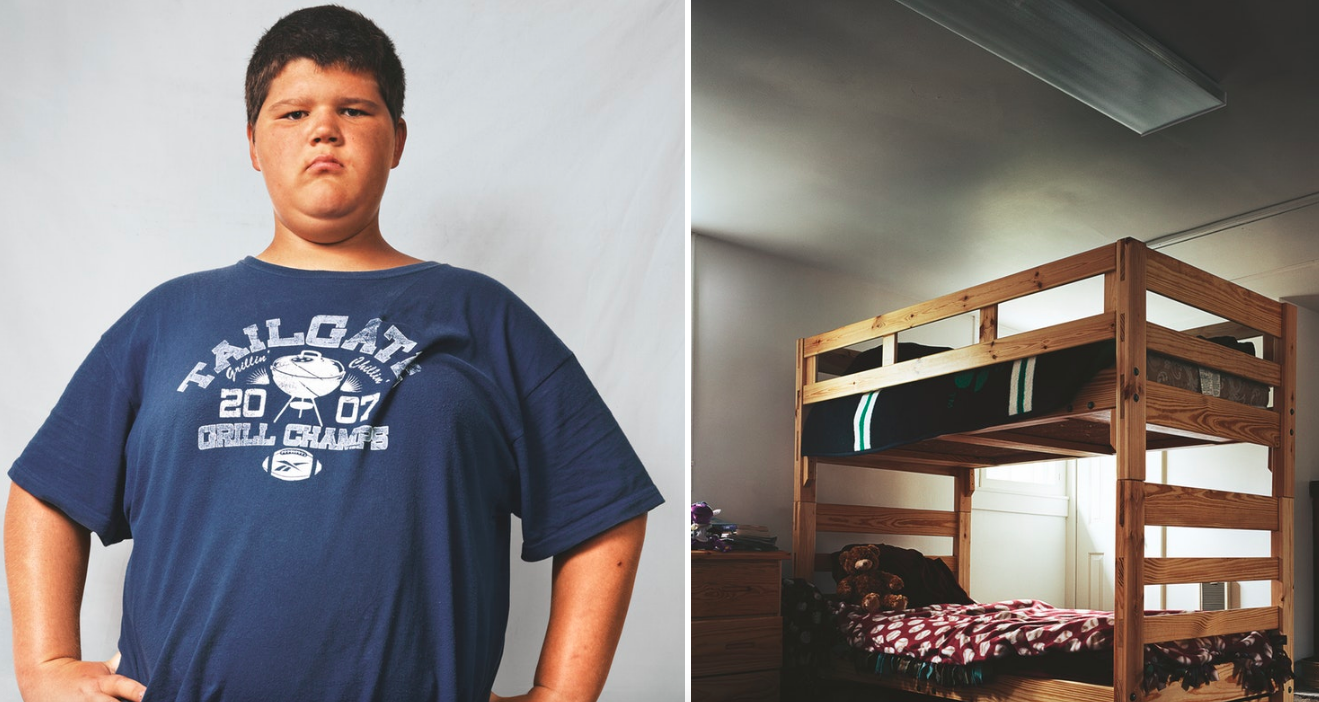
Ryan, 13 years old
Pennsylvania, USA
—
Ryan normally lives with his parents and two sisters in Pennsylvania, USA, but is currently staying at a school for obese children aged eleven to sixteen. Ryan is thirteen years old.
When he was nine, he was found to have a brain tumour. As a result, he now suffers from ‘Prader-Willi Syndrome’, an inherited condition that causes Ryan to have an insatiable appetite. This led Ryan to gain a lot of weight, but since attending the school, he has lost nine kilos. He is determined to lose as much weight as possible so that he can play baseball with his friends again.
Meal times are becoming easier for him because the school provides healthy versions of pizza and spaghetti alongside unlimited amounts of low-calorie foods such as soup, fruit and vegetables. This means he is not always as hungry as he used to be at home. All students have to take ten thousand steps per day.
Ryan would like to be a doctor when he grows up, in gratitude to the medical profession for helping him through his illnesses.
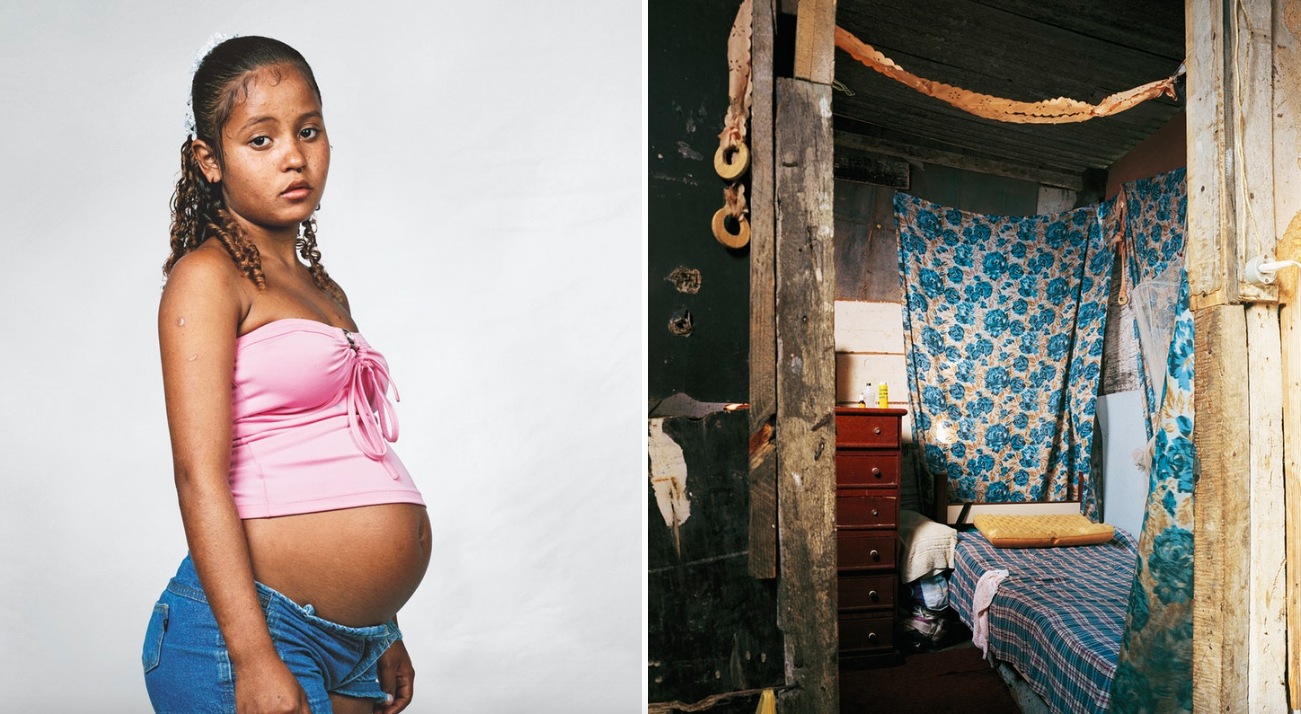
Erlen, 14 years old
Rio de Janeiro, Brazil
—
Erlen is fourteen years old and is pregnant for the third time. She lives in a favela (slum) in Rio de Janeiro, Brazil. Her home is a small shack. She usually sleeps on the floor, but now that she is in the later stages of her pregnancy, her mother has swapped places and allowed her to sleep in the bed. Erlen was twelve when she first became pregnant, but her baby was stillborn. A year later, she lost a second baby soon after its birth. If her new baby survives, Erlen is unlikely to return to school as she will need to stay at home to look after it. She will be a single parent.
The Brazilian government is concerned at the increase in teenage pregnancies despite its efforts to promote contraception. Abortion is illegal and can result in a three year prison sentence. It is also very dangerous — one in five women die while having abortions in illegal back-street clinics. Erlen would like to be a vet when she is older, and to live somewhere else.
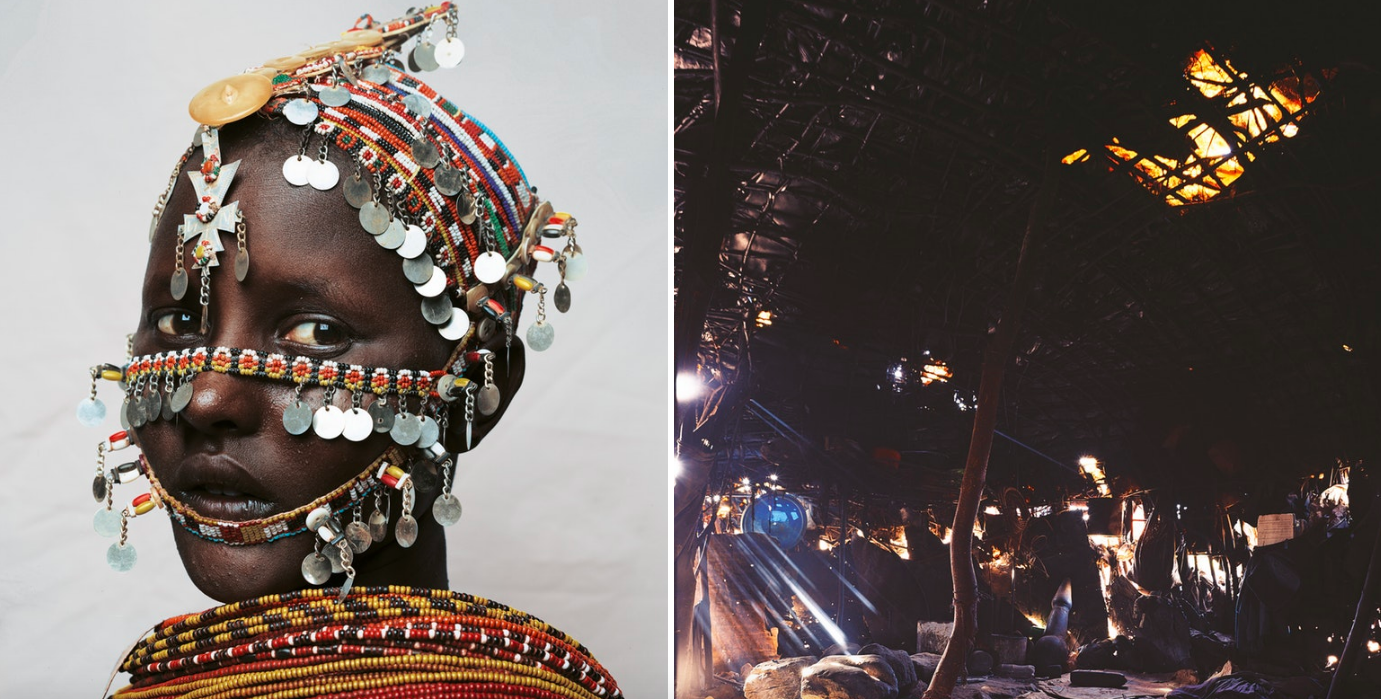
Nantio, 15 years old
Marsabit, Kenya
—
Nantio is fifteen years old and a member of the Rendille tribe in northern Kenya. She has two brothers and two sisters. Her home is a tent-like dome made from cattle hide and plastic, with little room to stand. There is a fire in the middle, around which the family sleep.
Nantio’s household chores include looking after the goats, chopping firewood and fetching water. She went to the village school for a few years but decided not to continue. Nantio is hoping a moran (warrior) will select her for marriage (she has a boyfriend now, but it is not unusual for a Rendille woman to have several boyfriends before marriage).
First, she will have to undergo circumcision, as is the custom. Nantio’s status in life can be seen by the number of necklaces she wears and whether she also wears a white band, indicating that she has a boyfriend or that her menstrual cycles have begun.
* * *
You can explore many other children’s stories and photographs, from all over the world, in my book Where Children Sleep.
THIS ARTICLE WAS ORIGINALLY PUBLISHED ON MAPTIA
JAMES MOLLISON
Kenyan-born, English-raised, Venice-based documentary photographer, jamesmollison.com