CATALYST PLANET’s Best Books of 2024

2024 was a fantastic year for both fiction and nonfiction, with thousands of new and diverse narratives exploding onto the scene from all sides. We’ve collected our top picks below, featuring stories from all across the globe that highlight the struggles and victories of the many cultures that make up our world.

Fiction

1. Wandering Stars

Revisiting one of the most tragic periods in American history, Tommy Orange’s “Wandering Stars” pulls from both past and future to staunchly indict the United States’ genocide against the Native American people. The novel follows both a young survivor of the Sand Creek Massacre forced to conform to white culture at the expense of his heritage and a family struggling to recover from a school shooting that nearly claimed their youngest son’s life in 2018. This brilliant sequel to Orange’s  “There There” expands on the previous novel’s grim reminder of the oppression that Native Americans have faced throughout history, showing how much has — and hasn’t — changed in the centuries since.

2. Martyr

Kaveh Akbar’s “Martyr!” provides readers with an enlightening reflection on the endless search for meaning. Protagonist Cyrus Shams, a displaced Iranian immigrant with an alcohol addiction and a talent for poetry, uncovers his family’s history through his obsession with historical martyrs. This search leads Cyrus to an ailing artist at the end of her life and a painting that seems to raise more questions than answers. Akbar’s humorous and profound debut novel is exactly the kind of explosive new voice the genre has been waiting for.

3. Forest of Noise

Palestinian poet Mosab Abu Toha provides readers with a shocking and brutally honest window into the ongoing siege on Gaza. After the obliteration of his home forced the author to flee with his family, Abu Toha continued to write, crafting poetry confronting the chaos of war. Memories of childhood joy and air raid survival instructions mingle in these incredibly charged poems, revealing the world inside of a battered, war-torn nation.

Forest of Noise: Poems a book by Mosab Abu Toha

4. Ghostroots: Stories

Collecting twelve short stories by Nigerian author ‘Pemi Aguda, “Ghostroots” is a terrifying and gripping horror anthology. In a supernatural Lagos, Nigeria, the living are in a constant battle to escape the vengeful history of the dead. The stories center on mundane everyday events, transforming them into menacing yet gripping narratives that open one’s eyes to Nigerian mythos, history, and culture from a wholly unexpected and refreshingly original angle.


5. Aednan: An Epic

After winning the most prestigious literary award in her home country of Sweden, Linnea Axelsson bursts onto the American scene with an epic novel that spans a century. The novel follows a multigenerational history of Sámi culture, traversing across 100 years. The title, “Aednan” ( Northern Sámi for “the land”, “the earth”, and “mother”), brilliantly encapsulates the flexibility and durability of language, and how the Sámi culture has survived in a world eager to brush it aside.


6. Playground

An eye-opening visualization of humanity’s destructive expansion, Richard Powers’ “Playground” is the story of four separate lives coming together at the precipice of change. As humanity aims to launch completely self-sustaining cities in the open ocean, only the small island of Makatea in French Polynesia can decide whether the project will move forward. Four individuals will be at the forefront of one of the most promising — and possibly destructive — innovations in the history of human colonization. Brilliantly interweaving environmental fears and the endless advance of technology, the Pulitzer Prize-winning author presents an exploration of humanity’s shared nature that no reader should ignore.

7. Someone Like Us

Protagonist Mamush, a former journalist seeking a new life in Paris, finds himself in a failing marriage. Returning to his home in Washington, DC, Mamush reenters the Ethiopian immigrant community of his childhood, discovering his mother and father at the helm. But just after his arrival, Mamush’s good-natured, charming father is found dead. This begins Mamush’s quest to confront the life and memory not only of his late father but of himself. Dinaw Mengestu’s “Someone Like Us” is a vibrantly commanding glimpse into the lives of Ethiopian Americans and how the nation in which they live has treated them.

9. Rakesfall

Sri Lankan author Vaira Chandrasekera crafts a brilliant science-fiction epic that spans infinite lifetimes, where two endlessly repeating souls seek to right the wrongs enacted on their worlds since the beginning of time. Annelid and Leveret met in the wake of a massive war; their souls are bound together and thrust through centuries, continuously reincarnating as they seek to overcome the tyrants that have taken control of reality behind the curtains. A dark and gritty narrative, “Rakesfall” is a shockingly groundbreaking work that has taken its place as one of the contemporary sci-fi greats.

 10. Praiseworthy

An epic story set in northern Australia, Alexis Wright’s “Praiseworthy” is a scathing criticism of the oppression and pain inflicted on Aboriginal peoples. In a village beset by the climate crisis, the members of a fractured family each seek to find solace at the expense of their own people. A father seeks to solve the Aboriginals’ dependency on donkeys. His wife scours the Internet in search of a way to emigrate her half-Chinese family to their other homeland. One son is fixated on ending his own life, while the other goads him on to pursue his own goal of becoming white. Wright’s novel is an impassioned cry of outrage against a world that has forgotten its people and a grim prediction for the end of all.

11. The Silence of the Choir

This expansive and emotional story from award-winning author Mohamed Mbougar Sarr follows the lives of 72 immigrants deposited in the middle of Sicily. Their arrival throws the small town into chaos, as the men are faced with an unfamiliar culture that is struggling to adapt to in turn. With absolutely no control over their new home, the men are forced to simply stand by while the community is thrown into turmoil. Sarr sweeps up a chaotic cacophony of voices and characters that must each reflect on their cultural conflicts and the underlying humanity that connects them all.

12. You Dreamed of Empires

Reinterpreting Aztec history, “You Dreamed of Empires” by Mexican author Alvaro Enrigue reimagines the fate of Tenochtitlan as a colonial revenge story. The invading Hernan Cortés and his army are welcomed into the Aztec capital by the emperor Moctezuma II, who is hopelessly addicted to hallucinogens and awaiting guidance from silent gods. As the time of conquest nears, Enrigue discards history in favor of a fiery, fantastical counter-attack that brilliantly portrays the anti-colonial resilience of the Aztec population.

13. Smoke Kings

Jahmal Mayfield’s “Smoke Kings” invites readers to imagine the consequences of reparations in a world without justice. After Nate Evers witnesses the murder of his cousin, his devasting grief transforms into a desire for vengeance. Evers and three friends embark on a journey of revenge, kidnapping the descendants of those who once committed hate crimes and forcing them to pay reparations. But when the four friends accidentally kidnap the wrong man, they are beset by a white supremacist organization, a corrupt lawyer, and the reality of a nation that still refuses to acknowledge its own mistakes. Mayfield’s work provides a glimpse into the injustice that perpetually faces Black Americans, while also inviting us to imagine what would happen if justice was taken into the hands of a few.

14. Godwin

A novel about a soccer agent seeking out the next Lionel Messi might be the last place one would expect to be confronted with colonialism and the history of transatlantic trade, but Joseph O’Neill’s “Godwin” masterfully combines modern-day sporting with hundreds of years of injustice. Mark Wolfe, a technical writer living in Pittsburgh, is dragged on a cross-continent adventure with his soccer agent half-brother Geoff in search of a well-hidden prospect by the name of Godwin. O’Neill simultaneously examines the history of colonialism, migration, and the ties of family in this masterpiece of global proportions.

15. Behind You is the Sea

Susan Muaddi Darraj’s debut novel presents the world of Palestinian immigrants through the lens of three families in Baltimore. The wealthy Ammar family employs the Baladis to clean up after their teens, as Marcus Salameh struggles to confront his father in his sister’s defense. Brilliantly encapsulating the struggle and conflict between these generations, Darraj confronts stereotypes and prejudices against Palestinian culture. Pulling together a tapestry of family narratives, Darraj reflects an overall sense of unity despite division. Funny, touching, and inspiring, “Behind You is the Sea” is one of the best debut novels of 2024.

Non-Fiction

1. Patriot: A Memoir

A stoic, outspoken, and shockingly resilient critic of Vladimir Putin, Alexei Navalny penned a gritty and enlightening memoir. Following his youth and early marriage to the many attempts on his life by a global superpower intent on silencing him, Navalny’s last words are a passionate reminder that the fight for individual freedoms is one of the most righteous causes in history. Recounting his own triumphs and tribulations for the world to see, Navalny calls for the next generation to pick up where he left off and continue in the fight for freedom.

2. The Message

A collection of three interconnected essays, Ta-Nehisi Coates’s brilliant novel examines the lasting effect of centuries of racism and division. Journeying from Senegal to South Carolina and finally to Palestine, Coates narrates his own journey through various stories surrounding the strained relationship between cultures. Penned at a charged period in global life, Coates’s “The Message” forces readers to confront the reality of history and the world’s resistance to the change.

3. Whiskey Tender: A Memoir

A descendant of the Quechan Nation and the Laguna Pueblo tribe, Deborah Jackson Taffa was born in a California reservation and raised among the Navajo in New Mexico. Her memoir chronicles the path by which she discovered her identity, shaking off her parents’ expectations for her to assimilate. She wrestles with ideas of individualism and assimilation, the dichotomy of belonging and resisting oppression, and the United States government’s endless enterprise to destroy Native culture. While lighthearted and humorous, Taffa’s memoirs are nonetheless a sharp analysis of how the US has treated Indigenous peoples and the struggles inflicted upon them .

4. Madness

Chronicling 93 years of missing history, award-winning journalist Antonia Hylton’s “Madness” offers a glimpse into the struggles of Black mental health patients during the Jim Crow era. Maryland’s Hospital for the Negro Insane has been uninvestigated for over a century; Hylton shines a light on the treatment that its patients endured during their time as essentially slaves to the system. Most importantly, Hylton not only brings to light an unjustly obfuscated history but also invites consideration into how society classifies health and who is and isn’t deserving of treatment.

5. Twenty Years: Hope, War, and the Betrayal of an Afghan Generation

Sune Engel Rasmussen, a correspondent with The Wall Street Journal, collects over a decade of reporting to chronicle the fallout of 9/11 from the view of Afghans growing up in the early 2000s. Freedom and safety were tangible concepts when they were born and disappeared before they had the chance to truly experience them. This novel chronicles the titular twenty years following the initial attack against the United States to the failed pullout of American troops that allowed the Taliban to retake Afghanistan. Rasmussen uses two narrators to tell the story in full: Zahra, who returned to Afghanistan just as the Taliban were regaining control, and Omari, who joins up with the Taliban and is confronted with the trauma of war. Through these characters and others like them, Rasmussen gives us a deep insight into a country betrayed, first by the United States and then by the Taliban.

6. The Sullivanians

In the 1950s, the Sullivan Institute for Research in Psychoanalysis opened in New York City. Seeking to destabilize the nuclear family and promote freedom from societal norms, the institute quickly became a hub of polyamory and creativity among patients. By the 1970s, however, it had devolved into a quasi-cult, with therapists exacting complete control over patients. The Sullivan Institute has long been notoriously secretive, but Alexander Stille’s novel has shone a light on its inner workings. Utilizing interviews and long-forgotten personal papers, “The Sullivanians” provides readers with the untold story of a perfect world’s complete collapse.

6. Private Revolutions

This enlightening glimpse behind China’s propaganda curtain reveals the impacts of the country’s industrial revolution. Massive advancement in the 1980s and ‘90s brought about a market vaguely similar to capitalism, generating tremendous gains for China’s economy. But the rapidly ascending market belied a world of mistreatment, authoritarianism, and financial injustice. Following the lives of four young women, author Yuan Yang compiles seven years’ worth of reporting to display the secret humanitarian cost behind China’s economic growth.

7. The Rebels’ Clinic

Frantz Fanon is one of the most renowned postcolonial activists, providing the framework for radical movements around the world. Adam Shatz’s biography examines Fanon’s shockingly novel-esque life, from his time in the French army during World War II to his work as a strategist and spokesman for the Algerian independence movement. An existentialist who practiced what he termed “dis-alienation,” Shatz’s ensuing works have gone on to influence Black radicalism worldwide. This biography contextualizes Fanon’s writings, informing today’s movement against white supremacy.

8. Everyone Who Is Gone Is Here

A massive, moving epic from New Yorker writer Jonathan Blitzer, “Everyone Who Is Gone Is Here” details the intense and ongoing humanitarian crisis at the United States border with Mexico. Combining stories of Central Americans driven from their homes by violence and those of the government officials directly involved in a hopelessly fraught immigration policy, Blitzer crafts a narrative of resilience in the face of oppression and ostracization. Driven from their homes in the search for freedom and safety, many have been met instead with turbulent and needlessly complex politics, as their stories are inextricably tied up in the future of the nation in which they seek asylum.

9. The Achilles Trap

Best-selling author and historian Steve Coll presents a comprehensive and heavily researched history of one of the most costly and least justified geopolitical conflicts in history. The 2003 invasion of Iraq was initially explained as a means to prevent Saddam Hussein from using weapons of mass destruction and from obtaining nuclear weaponry. After it was discovered that Iraq in fact had no such weapons, the operation was uncovered as an intelligence failure on a global scale. “The Achilles Trap” unravels the impossibly intricate web of power, personality, and persecution that surrounds the invasion and its consequences, striving to answer the one question that has lingered for decades: why did Hussein allow the world to believe he possessed nuclear weapons capability when none existed?

10. Our Kindred Creatures

Just after the Civil War, the United States experienced a massive shift in how it perceived animals. In “Our Kindred Creatures,” New York Times editorial director Bill Wasik and veterinarian Monica Murphy chronicle the rich history of the movement for animal rights. From circuses to meat processing plants, Wasik and Murphy investigate and examine the various stages on which this conflict took place. This moral war that began back in 1866 endures to this day, and never has there been a more comprehensive and enlightening history of the movement and the battles that it spawned for over a century.

11. The Survivors of the Clotilda

The Clotilda was the last slave ship that ever made landfall in the United States, long after the importation of slaves became illegal. Through intensive research by author and historian Dr. Hannah Durkin, readers are presented with the history of the last enslaved people in the United States. The novel documents Black American life during one of the most tumultuous periods in United States history, highlighting the small instances of hope in the face of overwhelming oppression. Dr. Durkin forces readers to look into a historical mirror, acknowledging and confronting the series of injustices that make up American history.

12. Soldiers and Kings

Jason De Leon provides readers with a never-before-seen glimpse into the current world of human smuggling in Latin America. Over seven years, De Leon embedded himself within a community of smugglers in Mexico, shuttling migrants across the country and connecting with the very human individuals at the heart of the market. “Soldiers and Kings” eschews the stereotypical image of smugglers as warlords and bounty hunters in favor of showing the lives of people simply trying to get by, highlighting their humanity. De Leon has created not only the first true examination of the human smuggling trade but also a masterpiece of narrative nonfiction.

13. Hiroshima: The Last Witnesses

A gripping, tense recounting of the events of August 6th, 1945 (the day on which the atomic bomb was dropped on Hiroshima), “Hiroshima: The Last Witnesses” collects the testimonies of the last living witnesses and survivors, known in Japan as hibakusha. Author M. G. Sheftall spent years interviewing hibakusha and collecting their stories to present this minute-by-minute retelling of the dawn of the nuclear age. With stories as personal as they are scarring, “Hiroshima: The Last Witnesses” is an intensely human version of an insurmountable tragedy.

Ryan Livingston

Ryan is a senior at The College of New Jersey, majoring in English and minoring in marketing. Since a young age, Ryan has been passionate about human rights and environmental action and uses his writing to educate wherever he can. He hopes to pursue a career in professional writing and spread his message even further.
Sacred Duty: Religious Groups Fighting Fossil Fuels

As the climate crisis continues to worsen, religious climate justice organizations are taking a stand against environmental degradation.

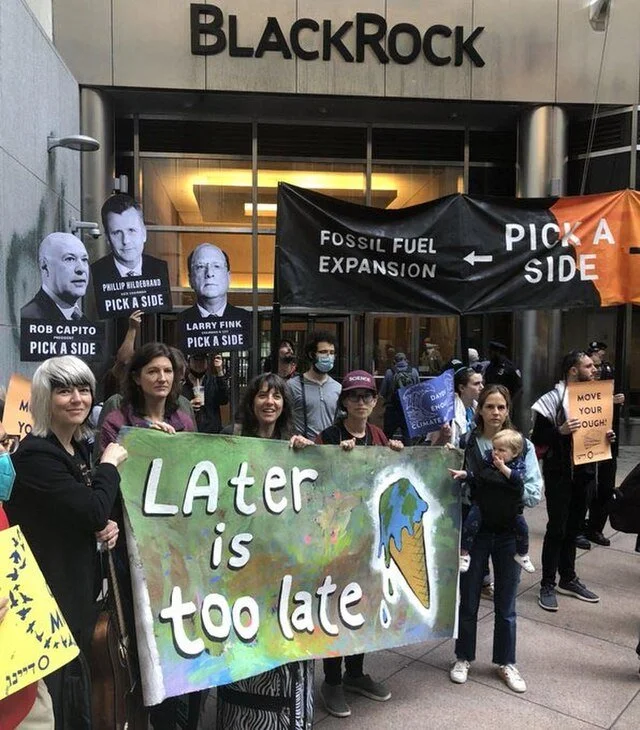
A climate action protest group outside of BlackRock building. In the foreground, the group holds a green banner saying "Later is too late" with a cartoon melting Earth ice cream cone. Signs of executives' faces and names, stating "Pick a side"

GreenFaith protesting outside of BlackRock in 2022. Felton Davis. CC 2.0.

Over the past few years, the environmental crisis has begun to spiral out of control. As droughts and wildfires compete for attention with raging hurricanes across the United States, sometimes it can feel like the world is ending. But in the face of these natural disasters, people have started to come together, calling for an end to policies aggravating the climate crisis.

Religious teachings surrounding the sanctity and sacredness of Earth have long been folded into protests against the warming climate. Since the 1970s, religious organizations in the United States (primarily Christian and Jewish, although a few Islamic groups have also begun to speak out) have decried humanity’s destruction of the planet. Some, like the National Association of Evangelicals, have gone so far as to denounce those engaging in climate change-fueling activities as sinners.

It is important to note that many religious institutions remain largely disconnected from the climate crisis, with several organizations and churches denouncing it as a hoax. The groups mentioned in this article, and those like them, are largely outliers. Climate change continues to be a divisive topic at best in larger religious dialogues, as many consider the crisis a part of God’s plan or even an outright lie. However, religious climate change advocacy has grown in recent years, with small groups cropping up all over the United States.

Over the past few decades, these groups have grown more and more vocal. From organizing movements to protect the Endangered Species Act to founding an interfaith collective for climate justice, religious leaders and organizations across the United States have continued to take environmental action over the past four decades. Recently, in the summer of 2024, Christian and Jewish protesters in New York City made some of the greatest progress so far.

GreenFaith, an interfaith climate justice organization based in New Jersey, spent much of the summer of 2024 on Wall Street protesting against Citigroup. One of the largest banks in the United States, Citigroup released a statement in 2021 pledging to reach net zero emissions in 2050. However, independent researchers have pointed out that in the years since this pledge, the corporation has instead become the second-biggest investor in fossil fuels.

In response, several organizations joined together in the Summer of Heat demonstrations. Forty major protests were held outside Citigroup’s headquarters, led by a collection of religious leaders from  GreenFaith, Dayenu (a Jewish organization comprised of longtime activists), and several other groups. The protests were held according to religious practices — songs replaced chanting, many of the protestors brought candles and demonstrators gathered in the early morning to block the doors of the banks. In an inspiring moment, a group of protestors arrived with signs displaying various religious symbols, representing the star of David, crosses and Islamic peace symbols.

These protests ultimately caught the attention of Citigroup’s administration, culminating in a sit-down between Citigroup’s chief sustainability officer and four leaders of the involved religious groups. According to reports, Citigroup rejected the protester’s proposals outright, refusing to answer whether or not they would change their commitment to funding fossil fuel companies.

However, this rejection does not diminish the Summer of Heat’s influence. These organizations gathered together and staged one of the longest climate protests in recent history. In addition, the actions of GreenFaith, Dayenu and the other involved groups gave a tremendously loud voice to their concerns, capturing the attention of many major news networks and eventually working their way into Citigroup itself. While their efforts may not have produced the results the groups hoped for, the Summer of Heat has nonetheless called an immense amount of attention to the climate crisis and the multicultural, interfaith movements working to protect the planet.


Ryan Livingston

Ryan is a senior at The College of New Jersey, majoring in English and minoring in marketing. Since a young age, Ryan has been passionate about human rights and environmental action and uses his writing to educate wherever he can. He hopes to pursue a career in professional writing and spread his message even further.

5 Stunning Temples in Cambodia

From Hindu to Buddhist, Cambodia is home to some of the most architecturally rustic and traditional temples in the world. 

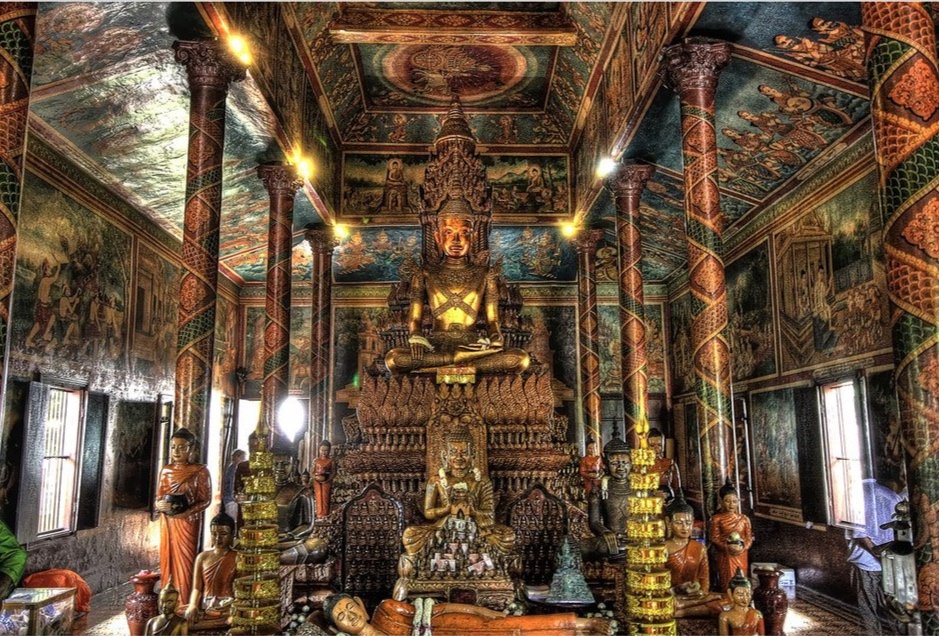
Inside of Wat Phnom temple and a central shrine. The colors are a mix of browns, gold, orange, and teal. There are ornate paintings on the walls and central 6 pillars surrounding many religious sculptures, with one central large gold sculpture

Inside of Wat Phnom. Daniel Mennerich. CC BY-NC-ND 2.0. 

While Angkor Wat is on most traveler’s lists when they visit Cambodia, the country also has many other extraordinary and one-of-a-kind temples which each hold immense historical, cultural, religious and artistic significance. 

1. Banteay Srei 

A stone walkway between temples in Banteay Srei. The rust-colored stone buildings have sets of stairs leading up to them and ornate etchings the walls. Sculptures lining the stairs to the entrance and pillars along the doorway.

Banteay Srei. Uwe Schwarzbach. CC BY-NC-SA 2.0.

The temple Banteay Srei, located in Angkor, Cambodia, is believed to have been built in the tenth century by and for some sort of spiritual guru to a royal, though not much is known about the person themselves. In addition to its fascinating origin, Banteay Srei’s architecture is unique for the area, built almost entirely out of a shining pink sandstone and surrounded by a moat. In terms of the architeccture’s cultural significance, the temple features a large and ornate statue of the Hindu God Shiva. Nowadays, Banteay Srei is primarily known for its meaning to women. Banteay Srei directly translates to “the women’s temple”, and the statue of Shiva is surrounded by other statues of women including Hindu gods and saints. 

2. Ta Prohm

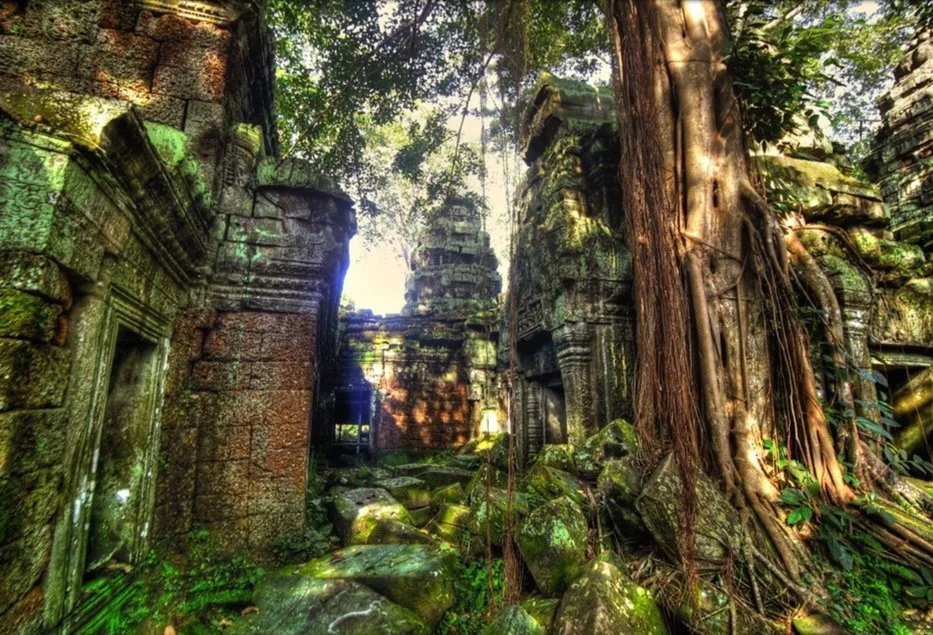
Tree rooted and growing along the side of a building in Ta Prohm. The perspective is in a dark overgrown path between buildings, with rocks and moss. The buildings are gray stone and the architecture is ornate

Tree growing in Ta Prohm. Daniel Mennerich. CC BY-NC-ND 2.0. 

The temple Ta Prohm, located in Krong Siem Reap, Cambodia, is one of few historical sites to have been left untouched by archaeologists and society in general. It was built around the 12th to 13th century, and it was a temple of enormous scale surrounded by a village of an estimated 79,000 people who worked to maintain it.  Unlike Banteay Srei, Ta Prohm was built by a Khmer king. Today, only the ruins of Ta Prohm remain, and its beauty and intrigue have only increased with growing trees surrounding the temple. Visitors can see a tree whose roots have grown over the roof of a corridor, and another stands tall in the middle of a courtyard. While visitors can walk through Ta Prohm, they are no longer permitted to climb on the stone walls, as the temple’s foundation is so old and precarious that damage can easily be done. 

3. Wat Phnom

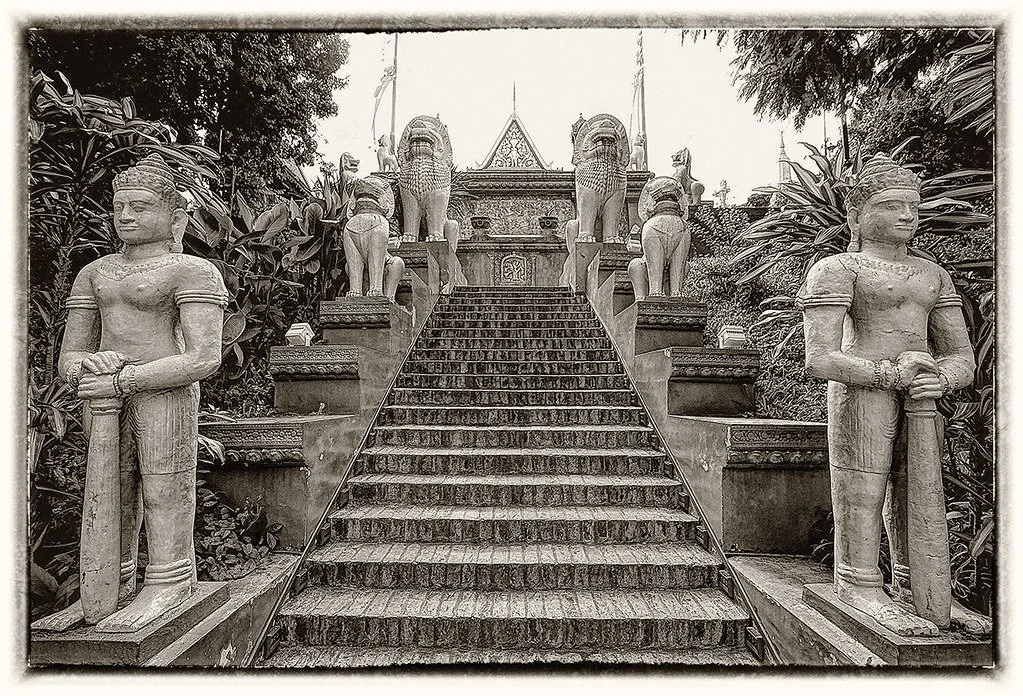
Staircase leading into Wat Phnom temple. The image is in grayscale. There are large sculptures lining the staircase and gardens on either side. The temple at the top of the stairs has a triangular pointed top and covered in designs.

Staircase to Wat Phnom. Daniel Mennerich. CC BY-NC-SA 2.0. 

In contrast to Ta Prohm, which has maintained a rustic look, temple Wat Phnom is located in the major city Phnom Penh, at the top of the only hill in the city. Unlike many other ancient temples, historians know Wat Phnom was built in 1372. A large and ornate staircase lined with animal sculptures such as lions and five-headed snakes leads the way to the temple. The temple is a place of worship, as people go to make wishes, requests and prayers for themselves and their loved ones. Wat Phnom is known to be a bustling and busy center, with vendors selling cold drinks and birds flying through the temple

4. Sambor Prei Kuk

Sambor Prei Kuk temple stands on a hill among a wooded grassy area. The temple is a rust color and appears to be eroded by the elements on the top.

Sambor Prei Kuk temple. Plb06. CC BY-NC-ND 2.0.

The Sambor Prei Kuk temples are unique from the other temples on this list primarily because of their age and striking architecture. Sambor Prei Kuk is a collection of temples built in the 6th to 7th century CE, in the Pre-Angkorean architectural style which favored more natural looking octagonal temple structures that were less outwardly ornate than later temples. Sambor Prei Kuk was named an UNESCO World Heritage Site in 2017 due largely to its architecture, which represents a significant period in the history of Cambodia. The religious symbols inside the temple also reflect the significance of the relatively new cross-continental trade that was emerging at the time in Asia. The inscriptions and statues feature a mix of Buddhist and Hindu figures and messages, as well as displaying the “God-kings” who ruled the region at the time by claiming divine connections

5. Angkor Wat

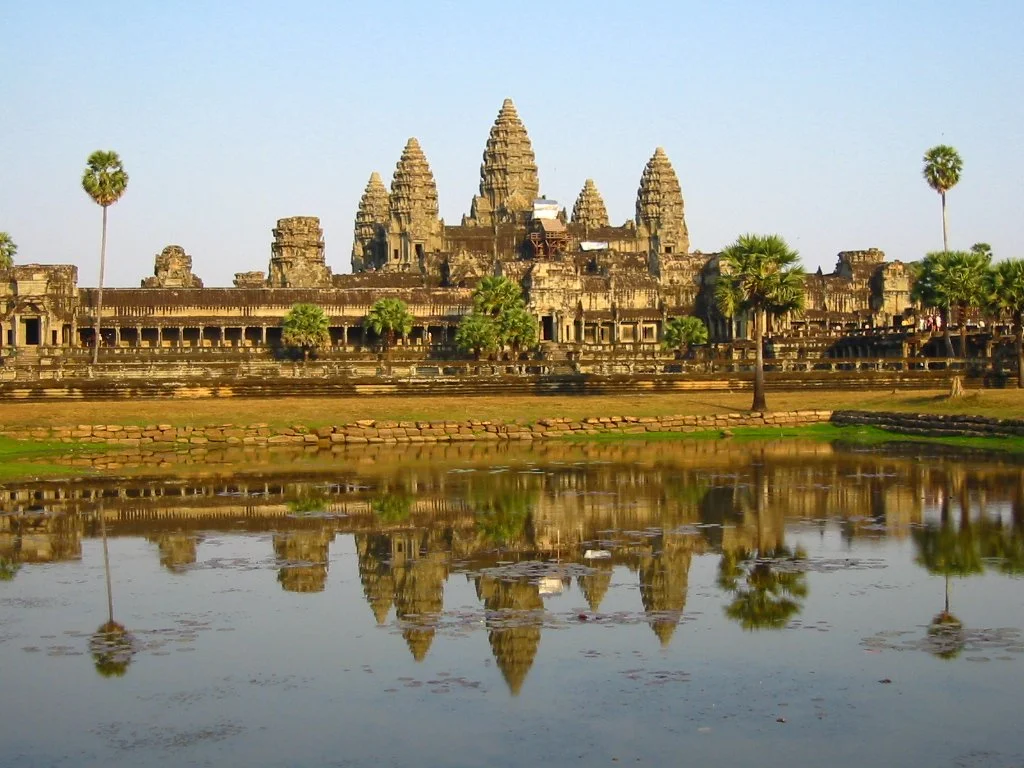
Angkor Wat temple stands in the background, reflected by a pond in the foreground. Grassy meadow between the temple and pond and scattered palm trees. The temple is a mix of gray and brown, with many windows and several towers.

Angkor Wat. Pigalle. CC BY-NC-SA 2.0.

A Cambodian temples list wouldn’t be complete without Angkor Wat. The temple, located in Angkor, was built in the 12th century and is one of the most famous temples in the world, as well as one of Cambodia’s most famous sites. The compound contains hundreds of buildings, and is the largest religious structure globally. Originally, Angkor Wat was a Hindu temple, but in 1177 after losing a battle and thus losing faith in Hinduism, the king at the time (King Jayavarman VII) converted Angkor Wat into a Buddhist temple. In 1992, Angkor Wat became a UNESCO World Heritage Site, and an estimated 500,000 people per year travel to see the historic temple


Calliana Leff

Calliana is currently an undergraduate student at Boston University majoring in English and minoring in psychology. She is passionate about sustainability and traveling in an ethical and respectful way. She hopes to continue her writing career and see more of the world after she graduates. 

Israel and Palestine: Divergent Histories of Travel and War

One year after the Oct. 7 attacks, Israel and Palestine’s respective travel landscapes reveal just how differently the two countries are experiencing the ongoing war.

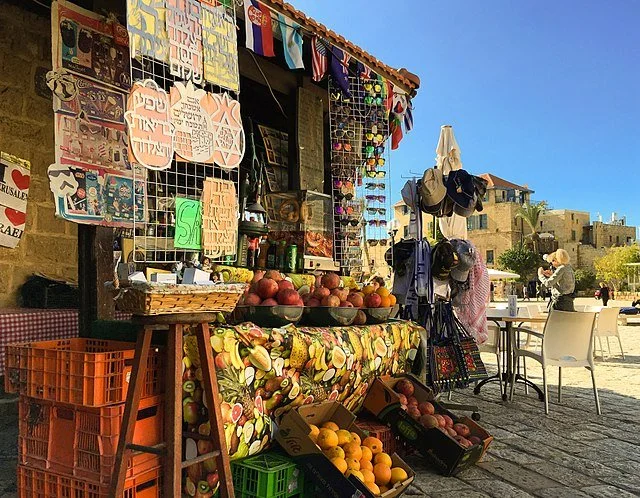
A street vendor, selling a variety of fruits, sunglasses, and souvenirs. It is a bright and sunny day, there are stone buildings in the background and tables set up alongside.

A street vendor in Jerusalem. Ronen Marcus. CC BY 4.0

Boasting ancient holy sites like the Western Wall and natural attractions like the Dead Sea, Israel brands itself as a popular travel destination for both the spiritual and the secular tourist. In 2023, the Israeli Ministry of Tourism reported over 32 million travelers. Palestine, meanwhile, saw 2.5 million visitors between January and early October 2023, according to the Palestinian Ministry of Tourism and Antiquities. While disparate, these numbers reflect a larger pattern in the long history of travel to the region.

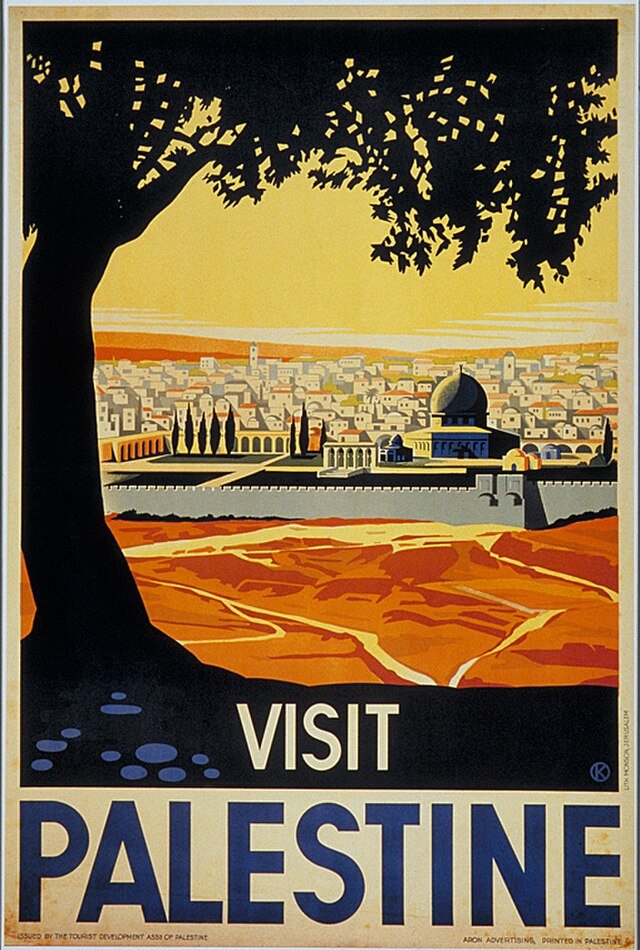
Before the Zionist movement (an effort to create a Jewish state through colonization) emerged in the late 19th century, trips to historic Palestine, “the Holy Land,” were almost exclusively religious in nature. After several failed attempts to create a Jewish state, Zionists set their sights on historic Palestine due to the area’s alignment with the biblical land of Israel. To bolster their efforts, Zionists turned to tourism, recognizing that travel to Palestine could help boost immigration and help establish a Jewish presence in the majority-Arab region. Further, Zionists gathered that if they kept promoting tourism, they could perhaps convince secular visitors that this Jewish presence was inherently more valuable and historic, thereby granting it a perception of legitimacy and therefore protection. Desiring to entrench themselves in Palestine, Zionists spent the early 20th century advertising access to biblical Jewish sites, propaganda that continues to prove effective even after Israel’s establishment in 1948.

A retro style Visit Palestine tourism poster. The poster features a tree in the foreground framing in a view of the city.

Posters promoting travel to historic Palestine. (L) 1936. (R) 1940s. CC BY 4.0

Retro travel poster advertising tourism in Jerusalem and ErezIsrael

Israel enjoys a lucrative tourism industry, seeing more than 32 million travelers and $5 billion in revenue in 2023 alone, according to the Israeli Ministry of Tourism. However, following the immediate aftermath of the Oct. 7 attacks, these numbers plummeted. Flights to Israel were canceled as international airlines and government officials raised safety and security concerns. Traveler rates dropped accordingly. “When the war began, everything stopped,” Israeli tour guide Moshe Benishu said, as reported by The Jerusalem Post. “Not a single tourist arrived in Israel.” Reuters reported 99,000 traveler entries to Israel for the rest of October 2023 and just 39,000 that November. To put this slump into context, the number of monthly entrants into Israel before Oct. 7, 2023, averaged above 300,000. 

In recent months, Israel has seen its traveler rates partially recover, tallying 68,100 tourist entrants in February 2024 and 79,500 in March. “Since the beginning of 2024, 400,000 tourists entered the country,” Keren Setton reported for The Media Line in May 2024. During the same January-May period in 2023, Israel saw two million entrants. But still, the monthly rates of 2024 so far mark an increase compared to the last quarter of 2023. “We Israelis are good at reinventing ourselves,” Benishu said. Slowly but surely, things are returning to form in Israel. The same cannot be said for Palestine. 

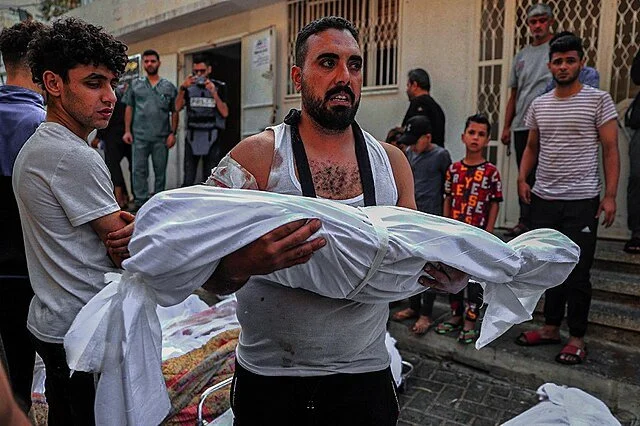
Since the onset of the war, Palestine’s territories, the Gaza Strip and the West Bank, (both occupied by Israel since 1967) have been devastated with next-to-no reprieve. As of Sep. 29, 2024, Palestinian health authorities have attributed more than 41,500 Palestinian deaths to Israel’s air and ground campaign in Gaza alone, though violence in the West Bank has spiked as well. 

A group of distressed civilians stand outside, a doctor and press journalist are among them, as a man carries a body wrapped in cloth out of the crowd.

Casualties in Gaza. Saleh Najm and Anas Sharif. CC BY 4.0

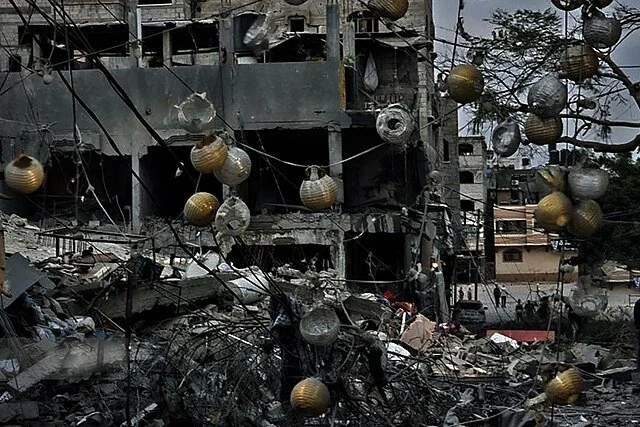
Infrastructure, too, has been decimated in Palestine. With hospitals, water/electric systems, houses and schools reduced to rubble, entire Palestinian communities have been destroyed and families killed in scores. As David Leonhardt summarized for The New York Times, “Israel has dropped 2,000-pound bombs on densely populated neighborhoods” with little consideration for less fatal alternatives. 

A destroyed building, pile of rubble and materials, and collapsed lights. There is a glimpse of the street and people in it in the background

Destruction in Gaza. Saleh Najm and Anas Sharif. CC BY 4.0

As mentioned previously, the West Bank enjoyed a burgeoning tourism industry before Oct. 7. Despite Israel’s control over the flow of travelers, the Palestinian Ministry of Tourism and Antiquities still reported 2.5 million visitors to the occupied enclave between January and early October 2023. Since then, however, the West Bank has not been able to recoup even 1% of this number, with the region’s tourism sector currently experiencing losses of around $2.5 million every day. In Bethlehem especially, where “tourist dollars” are “the cornerstone” of the economy, according to Haaretz, the financial hit has severely strained people’s livelihoods. “Life has been hell,” said Palestinian merchant Mahmoud Falah Sleiman. “The situation was bad even before the war started, but it was better than now. We were able to pay for electricity, food, water.”

In the Gaza Strip, tourism has been virtually nonexistent since 2007 — a consequence of Israel’s land, air and sea blockade imposed after Hamas took root there. Before Israel’s occupation of the region in 1967, Gaza was a hotspot for traveling Egyptians and Lebanese merchants. But after 1967, and especially since the 2007 blockade cut off food, water and humanitarian aid from Gaza’s two million citizens, (conditions some have likened to “collective punishment” and an “open air prison”) there’s been next-to-no tourism. Given the mass destruction of life and infrastructure in Gaza since Oct. 7, there won’t be anytime soon.


Bella Liu

Bella is a student at UC Berkeley studying English, Media Studies and Journalism. When she’s not writing or working through the books on her nightstand, you can find her painting her nails red, taking digicam photos with her friends or yelling at the TV to make the Dodgers play better.

Unknown Specialties: 10 Little-Known Global Dishes

Uncovering some of the best lesser-known cultural foods from around the world.

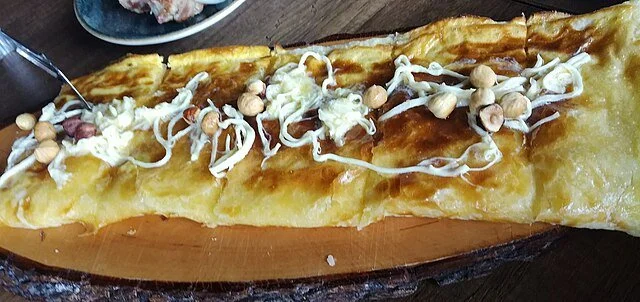
Khachapuri on the end of a wooden table. It is a long piece of cheesy bread, topped with nuts.

Khachapuri served with nuts. Ekkatterrinna. CC BY-SA 4.0

From sushi to falafel to chicken tikka masala, most cultures are represented on the global food stage. But for every well-known cultural classic, hundreds of local delights have never quite made it out of their homeland. This list compiles ten of the best, most unique specialties that most of the world has yet to experience. Each dish will include links to recipes and can be made at home with relative ease.

1. Lahmacun

Turkey

Two lahmacun wraps in branded paper. Out of the wrap sticks some vegetables and a glimpse of sauce. The pita is slightly charred.

A traditionally wrapped lahmacun. Garret Ziegler. CC BY-SA 4.0

Lahmacun is a traditional flatbread variety that incorporates minced meat (usually lamb or beef), tomatoes and red peppers, and a healthy amount of garlic and chili pepper. Despite being commonly referred to as “Turkish pizza”, lahmacun is never prepared with cheese.  Instead, the dish is often served rolled up around other vegetables like pickles or roast eggplant.

2. Kare-kare

The Philippines

A bowl of kare-kare on the dinner table. It is a thick brown stew, with a mix of meat, greens, and vegetables. A serving spoon lays on the bowl. There are glimpses of other foods on the table in background.

A bowl of kare-kare. Maffeth.opiana. CC BY-SA 4.0

Kare-kare is a stew of thick peanut sauce. Typically made with oxtail and occasionally pigs’ or calves’ feet, kare-kare also features vegetables like eggplant and daikon.  Some varieties include seafood (like prawns and squid), while others are entirely vegetarian. This dish has been a part of Filipino culture for hundreds of years and is considered one of the island nation’s staple dishes.

3. Zeljanica

The Balkans

A baking tray of zeljanica. The dish appears to be a flaky golden brown pastry with a mix of feta cheese and spinach or greens inside.

A tray of zeljanica. BiHVolim. CC BY-SA 4.0

Often referred to as “savory spinach pie,” zeljanica is a flaky pastry filled with chopped spinach, egg and white or feta cheese. This particular meal has several options for substitution; just about any white cheese (preferably salted) can be used for the filling, and a variety of pastries can be used to make the outer shell, including phyllo or horiatiko (both of which are specialties in their own right).

4. Pastitsio

Greece

A close up of pastitsio on a white plate with a green herb sprinkled on top. The food appears similar to a lasagna, with a layered pasta, meat and cheese.

A plate of pastitsio. Sam Bailey. CC BY-SA 4.0

While this dish is often referred to as “Greek lasagna,” it takes a few steps outside of the box that sets it apart from its Italian cousin. Pastitsio has evolved over the years, transforming from a phyllo-wrapped meat pasta to a layered dish. The bottom layer is composed of bucatini or similarly-shaped pasta, bound together with cheese or eggs. The second layer features ground beef or pork heavily seasoned with cinnamon and cloves, and the top is a mixture of bechamel and mornay sauce.

5. Cou Cou

Barbados

A close up image of cou-cou on a white plate. A yellow cake of okra and cornmeal.

An example of Cou Cou. KINGBROBLOXZZZ. CC BY-SA 4.0

Cou-cou is widely regarded as the best example of Barbados’ national food: the flying fish. While cou-cou is actually a mixture of cornmeal and okra, it is typically served alongside steamed or fried flying fish. Today, this meal is traditionally served on Friday in Barbados and has spread to Antigua and the Virgin Islands.

6. Khachapuri

Georgia

A brown paper placemat on table. Red plate with large bread bowl with pinched sides and cooked egg in the middle. Brown paper wrapped package beside.

A variety of khachapuri including egg yolk. Rorschach11. CC 2.0

There are many varieties of Georgia’s khachapuri, but the most common (and most popular) is Imeretian khachapuri. This variation is made with yeast dough and filled with salted white cheese. Other varieties incorporate egg yolks, potatoes and a variety of seasonings.

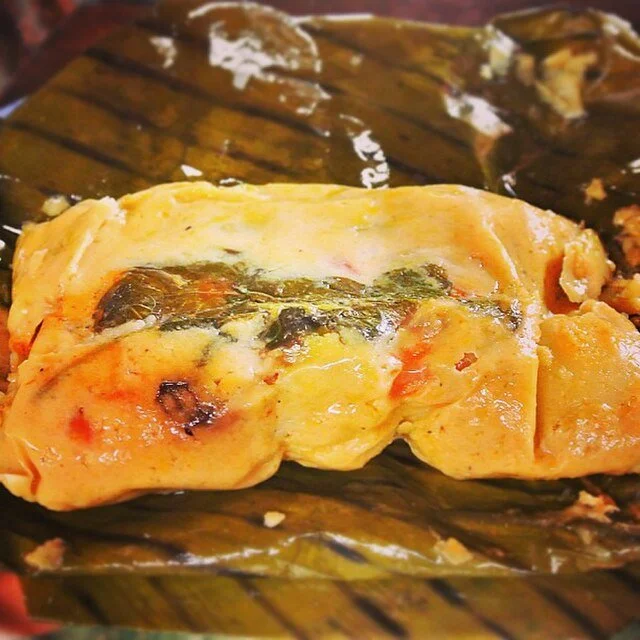
7. Nacatamales

Nicaragua

Close up image of an unwrapped nacatamale. It appears to be steamed with a green vegetable inside.

A finished nacatamal. MiguelRamirez77. CC BY-SA 4.0

Nacatamales were historically made by Nicarao hunters who would wrap and steam herbs, deer and turkey meat in corn husks. Rapidly evolving into a cultural staple after the Spanish conquest of Nicaragua, nacatamales have continued to change throughout the centuries. Today, the dish is commonly wrapped in banana leaf and tinfoil and steamed for up to five hours.

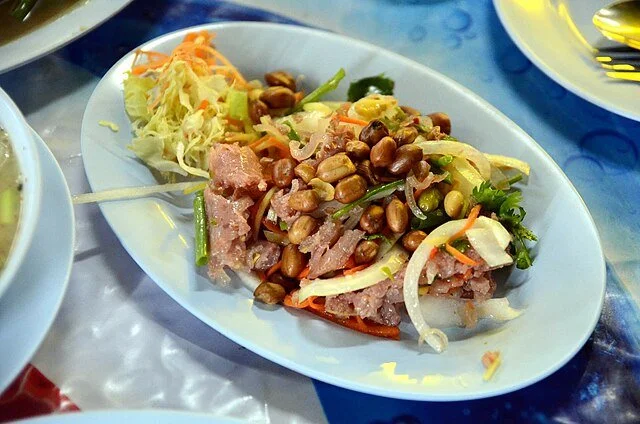
8. Nam Khao

Laos

A white oval plate of Nam Khao on a table. The dish is a mix of a side of chopped lettuce and carrots, and the main mixture of meat, nuts, herbs, and onions.

A pre-wrapped nam khao. Takeaway. CC BY-SA 3.0

Nam khao is a common dish throughout Laos, appearing everywhere from street stalls and potlucks to high-brow restaurants. The meal’s main ingredients include fried rice balls, classic Vietnamese pork sausage, chopped peanuts and other seasonings. Nam khao is unique from traditional salads as ingredients are used to fill a singular lettuce leaf before being topped with chili peppers and herbs.

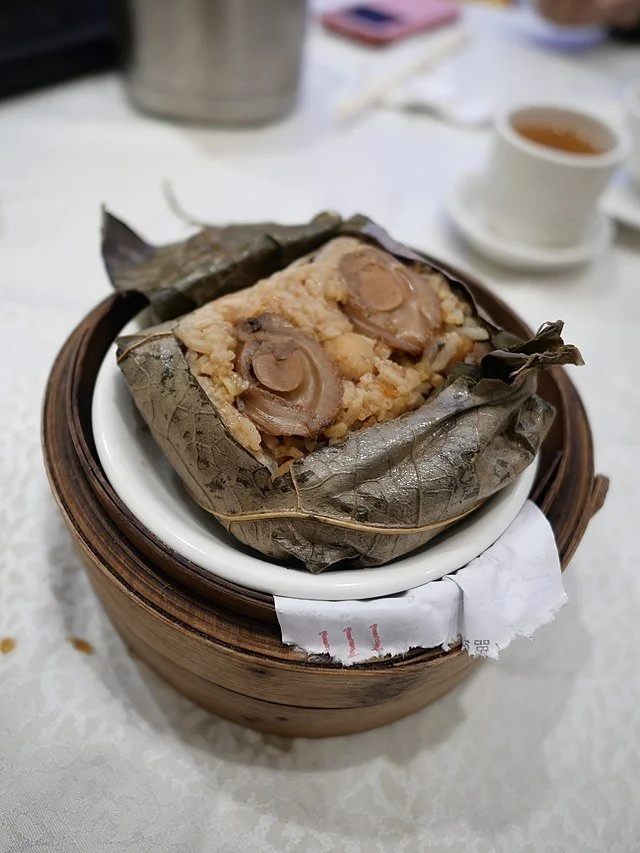
9. Lo Mai Gai

Southern China

Sitting in a bowl atop a steaming basket. Wrapped in a dark leaf and filled with rice and vegetables.

A variety of lo mai gai made with abalone. Peachyeung316. CC BY-SA 4.0

A gluten-rich rice stuffed with chicken, sausage, mushrooms and scallions, the most unique aspect of this variation on the classic dim sum is the method of cooking. Before being steamed, lo mai gai is wrapped in dried lotus leaves — in areas where lotus is not available, banana and grape leaves are frequently substituted.

10. Jollof Rice

West Africa

A plate of jollof. A pile of red-yellow rice, side of sauteed greens, and topped with a hard-boiled egg in a red sauce.

A variety of jollof including vegetables. Segun Famisa. CC BY-SA 4.0

Last but certainly not least is the ever-changing meal known as jollof rice, or jollof for short. This dish has a general ingredient list, but just about every nation in West Africa has its own regional variety, which has led to friendly rivalries between different regions. Typically, jollof is made with long rice grains, incorporating tomatoes, chili peppers, and a variety of spices together into one pot. Variations of the dish can range from different spices to the inclusion of additional vegetables or cuts of meat.

Few of the dishes on this list are available outside of their home country. However, the ingredients for each dish are relatively easy to obtain, so international foodies can find all the materials they need to cook some of these specialties at home.


Ryan Livingston

Ryan is a senior at The College of New Jersey, majoring in English and minoring in marketing. Since a young age, Ryan has been passionate about human rights and environmental action and uses his writing to educate wherever he can. He hopes to pursue a career in professional writing and spread his message even further.
Dry Spell: Drought Endangers Lives Across South America

With rainfall still scarce, Colombia has begun taking drastic measures to conserve what little water they have left.

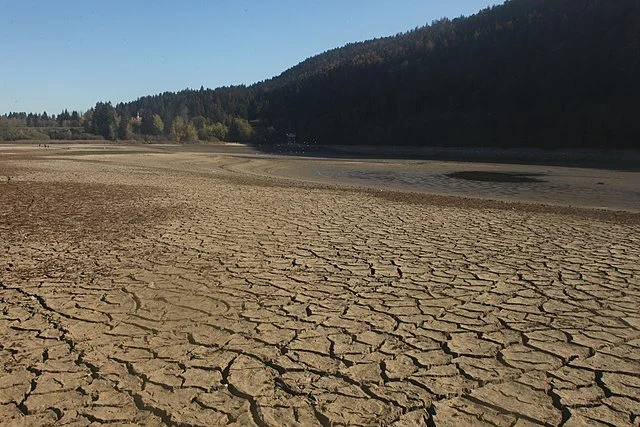
Cracked brown mud and dirt, characteristic of a drought, spans across the image. Hill of dark coniferous trees in the background.

The parched earth characteristic of a drought. Pmau. CC BY-SA 4.0

2024 has been one of the driest years in Colombia’s history. The summer months are usually the rainiest in the country, but this year has seen an alarming lack of precipitation and a drastic reduction in rivers and reservoirs. As the country slowly dries up, officials have started implementing policies to ration water, which will only become more severe as the drought continues.

In the last three months, the Chuza Reservoir (one of the largest in Bogota, Colombia) has lost a huge portion of its water supply. During the 2023 dry season, the reservoir was reduced to 58% capacity; as of mid-September 2024, it dropped to just 36%. This led to the second implementation of water rationing this year (the first was enacted in April 2024) but as rainfall remains scarce, these regulations have grown even more stringent. Currently, citizens are prohibited from washing their cars, irrigating gardens, and using fountains or other water decorations. However, as water supplies continue to dwindle, the city has also enacted a system by which residents will have to spend 24 hours without water once every nine days.

Colombian officials have stated that the nation’s only real hope is the return of regular rainfall. Reservoirs cannot fully recover without precipitation, and without reliable water stores, cities will be forced to reduce their water consumption even further. The severity of this drought has also inspired fears of reaching “Day Zero,” the point at which a city’s water supply falls below the necessary amount to support daily life. As of Oct. 10, 2024, Bogota’s Chuza Reservoir is just 7% above this cutoff point.

Columbia is not the only South American country experiencing drought. The majority of the continent is drying up, generating a variety of other crises, including a drastic increase in wildfires. Additionally, the Amazon River is experiencing an alarming dry spell, jeopardizing the lives of the communities that depend on it for food and water. Endangered species such as river dolphins are also threatened by the mass evaporation, which has reduced the river to about 10% of its previous size.

Although officials have stated that there is little that can be done for Bogota (and Colombia at large), several nonprofits around the world have taken action to provide aid for affected civilians. These include WaterAid, a company that focuses on providing clean water for underprivileged communities. During this drought, their efforts are more needed than ever. Interested parties can donate to their various projects here. Another such organization is Water Fund Bogota, which focuses specifically on restoring and maintaining natural sources of clean water like rivers and lakes.


Ryan Livingston

Ryan is a senior at The College of New Jersey, majoring in English and minoring in marketing. Since a young age, Ryan has been passionate about human rights and environmental action and uses his writing to educate wherever he can. He hopes to pursue a career in professional writing and spread his message even further.
The Direction of Iran’s Woman, Life, Freedom Movement

With tensions high domestically and internationally, women both inside and outside of Iran are cynical that things will change. 

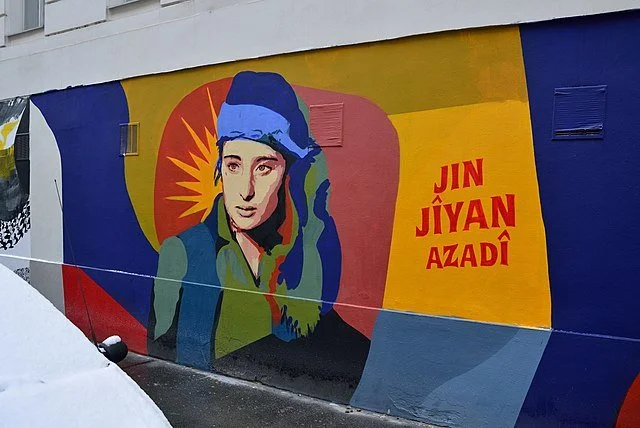
A colorful mural in support of the Jin, Jiyan, Azadi. Those words are written in red text. The mural includes the portrait of a woman with a yellow star sun beam behind her. The mural includes color blocks of blue, white, red, and yellow.

A mural in support of the Jin, Jiyan, Azadi (Woman, Life, Freedom) movement. Herzi Pinki. CC BY 4.0

For many in Iran, history can be broken up into two epochs: before 1979 and after. Women, in particular, find significance in this demarcation because Iran’s 1979 Islamic Revolution brought the expansion — and then constriction — of their rights. These tensions surrounding women’s role in Iranian society came to a head in 2022, when the widespread Woman, Life, Freedom movement put them on global display. But the Woman, Life, Freedom movement didn’t spawn out of nowhere, and it’s important to look at its past when considering its future.

A black and white image of women attending the 1979 International Women's Day protest in Tehran. The women are holding large signs and banners, chanting, and holding their hands in the air.

Women at the 1979 International Women’s Day protests in Tehran. Mohammad Sayad. CC0

Prior to the Iranian Revolution, women saw their rights and opportunities gradually expand as part of the country’s modernization efforts. The state wanted to Westernize itself, and this manifested in women being mandated (sometimes violently) to not veil themselves, per a 1936 decree. But the revolution saw the nation shirk its Western influences  — thanks in large part to women. While some mobilized public demonstrations, others acted as nurses and first responders. Few fought in guerilla conflicts, but many wore hijabs to protest the monarchy's 1936 ban on veils, linking modest dress with the revolution’s vision of a new Iran. 

However, after the revolution succeeded and the pro-Western monarchy was overthrown for an Islamist theocracy, women’s roles became more limited. In an interview I conducted with  Iranian Circle of Women’s Intercultural Network steering committee member Ruja Kia, she affirmed, “Adding the religious components of private life to the law of the land never makes things easier for women.”  

The revolution placed nearly all Iranian state power in the role of “the supreme leader,” where it still remains today. As both a religious and  political authority, the first supreme leader, Ayatollah Ruhollah Khomeini, sought to curb women’s post-revolution rights and professional opportunities in favor of a return to traditional domesticity. Further, after revolutionaries associated modesty with the new Islamic Republic, Khomeini mandated women to cover themselves with hijabs. What had once been a symbol of dissent and autonomy became a violently imposed law. 

The 1979 hijab mandate notably came under international scrutiny in 2022, following the death of Mahsa Amini. Iran’s Guidance Patrol, or morality police, arrested Amini for an “improper hijab.” She died in their custody three days later —  officially of a heart attack but allegedly of police brutality (In our interview, Ruja Kia also noted that Amini was Kurdish, an Iranian ethnic minority that often faces discrimination). 

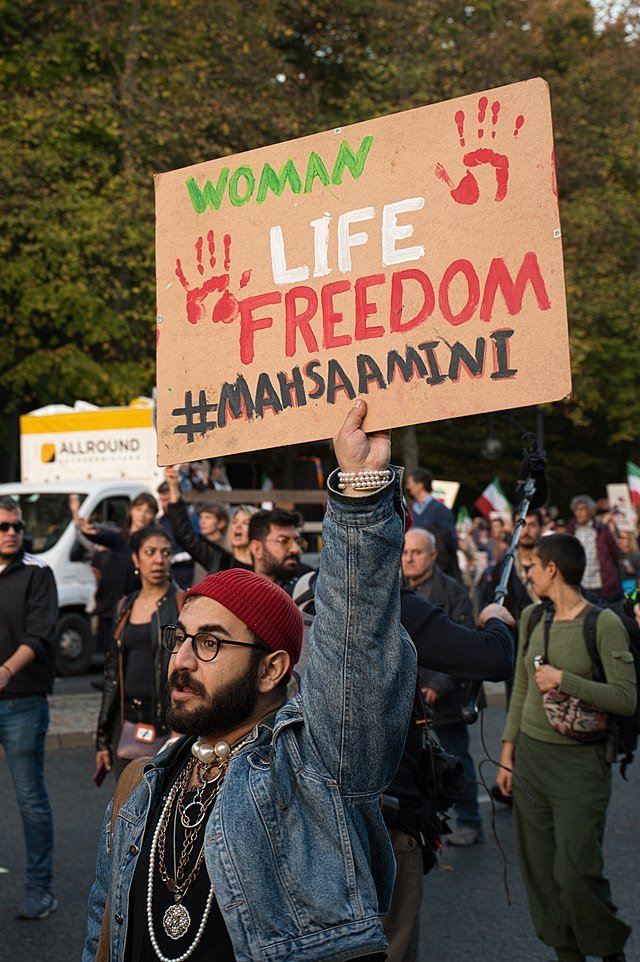
A man protests in support of the Woman, Life, Freedom movement following Amini’s death. Ilias Bartolini. CC BY 2.0

Amini’s death sparked mass protests — not only in Iran but also around the world. Internationally, the rallying cry was “woman, life, freedom,” a translation of the Kurdish feminist slogan “Jin, Jiyan, Azadi.” For its criticisms against the compulsory hijab, the morality police and the Islamic Republic in general, the Woman, Life, Freedom movement has been intensely repressed by Iran’s current supreme leader Ayatollah Ali Khamenei. Iranian security forces have killed more than 500 demonstrators and arrested thousands across the country.

“I say explicitly that these [Woman, Life, Freedom] riots and this insecurity were a design by the US and the occupying, fake Zionist regime [Israel],” Khamenei said in 2022, as reported by Al Jazeera. On a broader scale, Khamenei believes that the hijab is a religious and therefore, moral obligation. He further contended that gender equality is a Western plot designed to weaken Iran: “[The West] feel[s] that [Iran] is progressing towards full-scale power and they can’t tolerate this.” Because of and in spite of Khamenei’s deadly response, the Women, Life, Freedom movement gained international prominence, making the future of women’s rights in Iran an unavoidable and salient issue in the recent election. 

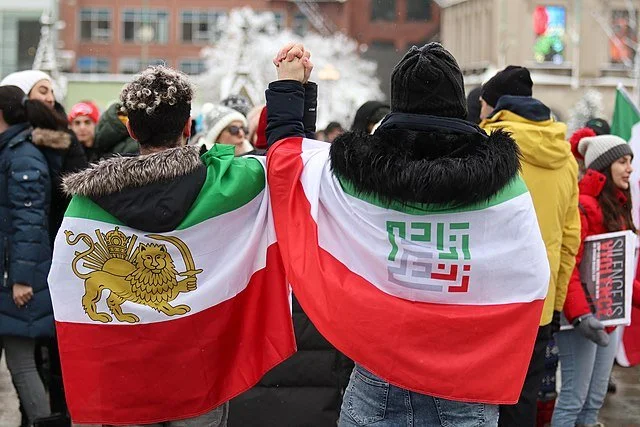
The backs of two women at a protest holding their hands together in the air, both wearing different versions of past Iranian flags.

Two women attend a Woman, Life, Freedom protest wearing past versions of the Iranian flag. Taymaz Valley. CC BY 2.0

Masoud Pezeshkian, Iran’s newest president, campaigned on a reformist platform, asserting a desire to steer the nation toward greater peace. Now, after taking office in July, he has a chance to do so. For many nations that have tensions with Iran, having the moderate Pezeskian in office is cause for cautious optimism. Inside Iran’s borders, however, women are still reeling from the pushback Woman, Life, Freedom received two years ago and are thus more cynical about the promise of Pezeshkian’s election. “Although we might see more moderate approaches in bigger metropolitan areas, women across the rest of Iran will stay controlled by family customs and norms,” said Ruja Kia. 

As the only reformist in a field of six candidates, Pezeshkian’s positions on women’s rights stood out as the most progressive. Frequently invoking his daughter, a chemist, and the memory of his late wife, a gynecologist, he spoke of increasing women’s presence in the professional sector: “A woman is not a servant at home,” Pezeshkian wrote on X

Regarding the mandatory hijab, Pezeshkian has expressed support for relaxing the mandate:  “The behavior of Iranian girls will not change. Just as the previous [1936 laws] could not forcibly remove the hijab from the heads of our women, you cannot force them to wear the hijab by passing a law,” he wrote in another X post. But some, like Kimia Adibi, the President of UC Berkeley’s Iranian Students’ Cultural Organization, believe that  Pezeshkian’s words are empty promises. “[Pezeshkian’s] not actually pushing for women’s freedom and change because if he were, he never would’ve been allowed to run,” Adibi said to me. “Anyone who’s an actual radical reformist and believes in women’s freedom and not forcing the mandatory hijab… like, they’re not even going to make it to the candidacy level.”

Various protesters and their political signs at a Woman, Life, Freedom protest

A woman at a Woman, Life, Freedom protest. Matt Hrkac. CC BY 2.0

Pezeshkian’s parliamentary record shows that he’s supported restrictions on women’s rights in the past, and alongside the posts he made calling for women’s rights, he also posted to X, “All of us move towards dignity and power according [...] to the general policies of the supreme leader.” 

For Iranian feminists, the zeitgeist has not shifted. While it’s not impossible, they say, for Pezeshkian to achieve some reform — “little shifts,” as Adibi put it — so long as religion and politics remain married to an ultimate authority who violently rejects gender equality, women’s rights in Iran will not improve much under the new president. 

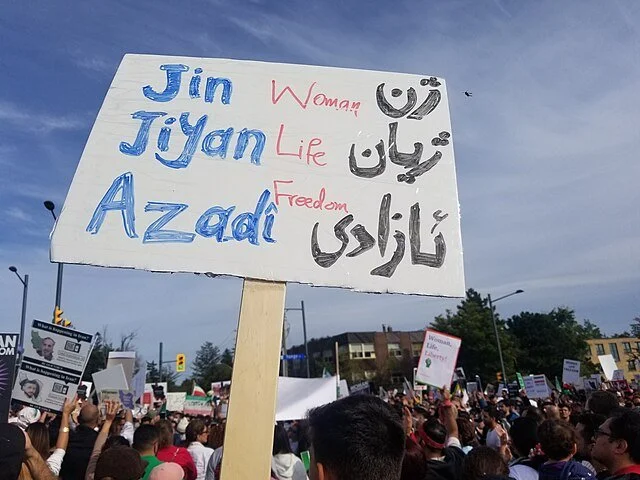
A Woman, Life, Freedom protest sign in Kurdish, English and Persian. Pirehelokan. CC BY 4.0 

“I’ll speak for myself,” Adibi said, “but I think most Iranians are not super optimistic about the direction of women’s rights under this president. And they won’t be under the next president, or the next president, under however many presidents until the supreme leader is removed from power.” 

When speaking with an admin from the Instagram account @irans.feminist.liberation, I found this feeling re-affirmed. “The future for women and minorities in Iran remains bleak,” she said, “unless there is significant internal pressure for change.


Bella Liu

Bella is a student at UC Berkeley studying English, Media Studies and Journalism. When she’s not writing or working through the books on her nightstand, you can find her painting her nails red, taking digicam photos with her friends or yelling at the TV to make the Dodgers play better.

Tourism Set to Reopen in North Korea

The controversial and most isolated country plans to resume tourism this December.

An aerial view of Pyongyang

Panoramic view of Pyongyang. Joseph Ferris III. CC BY 2.0

After five years, North Korea is set to reopen its doors to foreign tourists. The country closed its borders in 2020 due to the COVID-19 pandemic but plans to welcome visitors again starting in December. Currently, only the northern city of Samjiyon will be open. Known for its winter activities, Samjiyon is still undergoing reconstruction. Located near the Chinese border and close to Mount Paektu—a sacred mountain claimed to be the birthplace of Kim Jong-Un’s father—Samjiyon was established in 2019. The town, which Kim describes as an “idealist socialist village”, was likely built with forced labor disguised as “volunteers”, given North Korea’s history of enslavement and trafficking. While Samjiyon is reopening, the capital city of Pyongyang has remained closed to tourists.

U.S. tourism to North Korea has been prohibited since 2017, following the death of Otto Warmbier, a University of Virginia student who was imprisoned in North Korea for stealing a propaganda poster. Warmbier traveled to North Korea with a tour group in 2016 and was sentenced to 15 years of hard labor. He was released 17 months later and died in a U.S. hospital just six days after returning home in June 2017. U.S. law reserves the right to revoke citizens’ passports upon attempted entrance into North Korea. While everyday citizens are forbidden from entering North Korea, visitation is not entirely banned, as the U.S. occasionally grants validation passports to professional journalists, Red Cross representatives and other citizens whose jobs serve national interests. South Koreans are the only nationality directly banned from North Korea, as the neighboring countries have been in a state of war since 1950. Today, approximately 5,000 Western tourists visit North Korea each year. Tourists from Russia and China—countries harboring more “friendly” relations with North Korea—are expected to make up the majority of foreign tourists.

Between 2010 and 2017, Americans could travel to North Korea year-round. Many have shared their experiences in Pyongyang through YouTube videos, articles and blog posts. As noted by several American tourists, self-guided tours are not an option in North Korea; itineraries are strictly followed. A recurring theme throughout these tours is the guides’ continual stress on their solidarity to the country's leaders, particularly Kim Jong-Un. The North Korean government uses tourism as a tool to showcase the country’s self-reliance, prosperity, talent and citizen happiness by guiding visitors through monuments, schools and museums. 

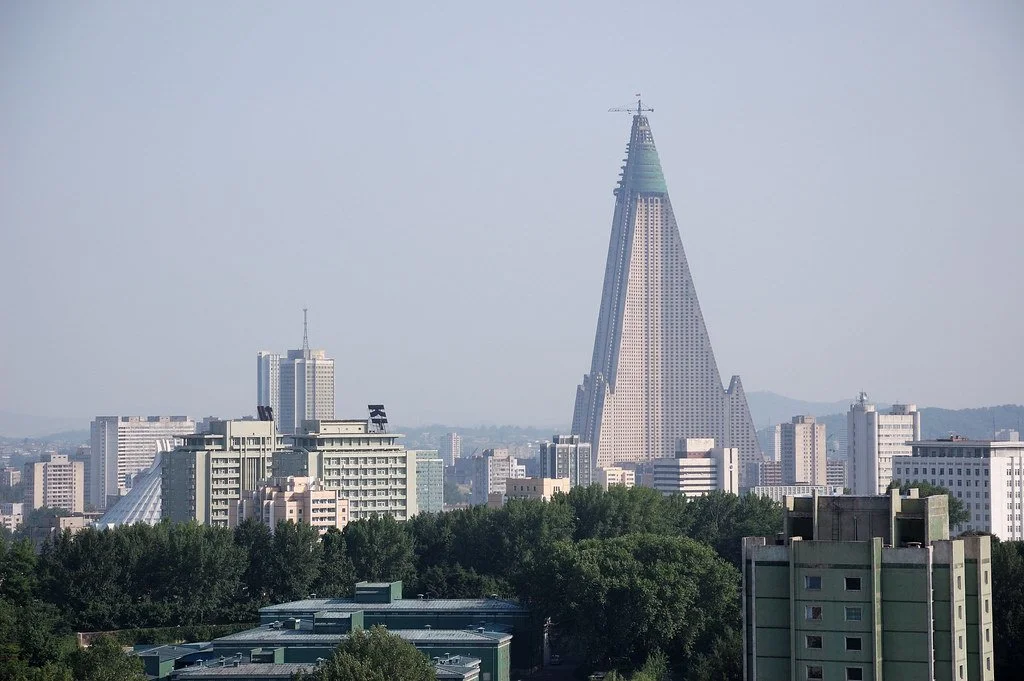
A view of part of the Pyongyang skyline. The triangular silhouette of Ryugyong hotel stands out tall.

View of Ryugyong Hotel in Pyongyang. (stephan). CC BY-SA 2.0

Increased tourism could potentially lead to heightened political tensions. Many countries discourage travel to North Korea, not simply due to the inherent dangers, but because tourism revenue supports Kim Jong-Un’s regime rather than the local population. As of 2020, it was estimated that 60% of North Korea’s population lived below the poverty line. If tourism resumes, North Korea could earn nearly $200 million—a significant amount for a country with an economy largely isolated from international trade and exports. Koryo Tours, the most popular gateway to North Korea, is a travel agency based in Beijing that provides group tours to the country, sharing its history, politics, and culture. The tours are capped at twenty people per group, and tour leaders are claimed to have a “passion and interest for the country.” The debate surrounding the ethics of traveling to North Korea remains ongoing. As of now, we are left to observe what the future holds for one of the world’s most isolated countries.


Agnes Volland

Agnes is a student at UC Berkeley majoring in Interdisciplinary Studies and minoring in Creative Writing, with a research focus on road trip culture in America. She currently writes for BARE Magazine and Caravan Travel & Style Magazine. She is working on a novel that follows two sisters as they road trip down Highway 40, from California to Oklahoma. In the future, she hopes to pursue a career in journalism, publishing, or research.

Just Keep Swimming: 7 Exotic Snorkeling Sites

There are a million places to get a taste of the most beautiful underwater ecosystems on Earth—here are some of the most fascinating.

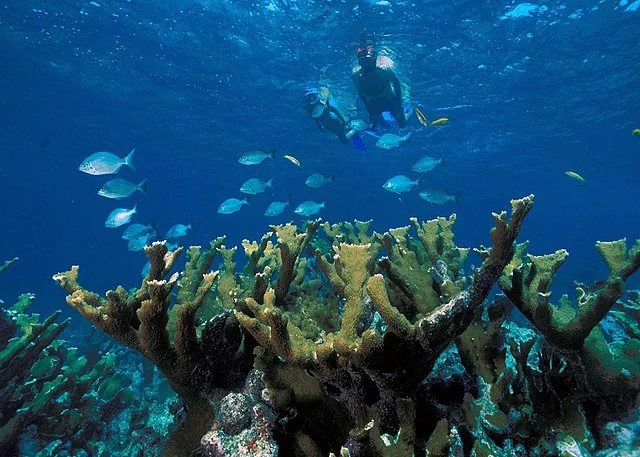
Two snorkelers swimming above a large coral and small group of white fish.

One of the best ways to see the sea. John Brooks. CC 0

There are few environments more captivating than the ocean. Featuring millions of species of life, hundreds of different biomes, and almost infinite ways to experience it, there’s nothing quite like the sea. With a mask, fins and little to no training, snorkeling is the perfect way to see it all.

Of all of the places to snorkel, some are simply unlike any other. This list documents seven of the most mind-blowing experiences you could have underwater and why you should definitely add them to your bucket list.

1. Jellyfish Lake, Palau

The 250-island nation of Palau is dotted with saltwater lakes linked together by a series of underground channels and tunnels. Only one of these lakes can be visited, fittingly named Jellyfish Lake, home to a dizzying number of moon and golden jellyfish. They float around aimlessly in the 1,500-foot lake, bumping and bouncing up against snorkelers like living ping-pong balls. These creatures have evolved in a much different way from their ocean-dwelling cousins— they pose no risk to snorkelers. Unlike most species, they are non-poisonous and have no stinging cells.

Jellyfish Lake provides visitors with the once-in-a-lifetime experience of swimming through an entire world of these unique and fascinating creatures. It is more than worthy of a spot on every ocean lover’s bucket list. Places to stay nearby include the Palau Pacific Resort, priced at around $250 a night. Cheaper options include the Hotel Piccada at $110 a night and LH Porto Rafael Altura Resort at $80 a night.

A snorkeler holding a camera underwater, swimming through a group of many pink jellyfish.

A diver in Jellyfish Lake in Palau. Aquaimages. CC SA 2.5

2. Silfra Fissure, Iceland

Created by an earthquake in 1789, the Silfra Fissure is a massive gap between the North American and Eurasian continental plates filled with glacier meltwater. Snorkelers and divers can simultaneously touch two continents while swimming through gorgeously clear waters, where visibility can reach a mindblowing 393 feet.

This unique ravine is almost totally devoid of fish. Instead, the rock walls are lined with vibrant green algae known as “troll hair.” Between these leafy green plants and the almost impossibly clear blue water, Silfra Fissure is one of the most incredibly colorful and exotic dive sites on Earth. Silfra Fissure’s water is extremely cold, sitting at a chilling 35-39 degrees Fahrenheit. To combat this temperature, snorkelers wear a drysuit, a full-body neoprene suit complete with gloves, boots and a hood.

Nearby places to stay include the Bru Country Estate at around $110 a night, as well as several rentable cottages at around $90 per night.

An underwater rocky fissure, the divide between two plates.

An underwater view at the Silfra Fissure. Josephyoon4. CC BY-SA 4.0

3. Mamanuca Islands, Fiji

Called the soft coral capital of the world, Fiji is an absolutely beautiful diving location. Its Mamanuca Islands are home to almost 400 unique species of coral, most of which are still alive despite the ravages of ocean acidification. Many of the islands themselves are also covered up by water when the tide comes in, combining the surface world and the sea in an incredible panorama. Snorkelers can visit these gorgeous reefs from any of the 13 inhabited islands, each lined with fantastic beaches and surrounded by crystal-clear water.

The island’s  amount of healthy and colorful coral can’t be found anywhere else in the world. As climate change worsens, there’s no guarantee it’ll be around forever. Mamanuca is definitely one for the bucket list. Local hotels include First Landing Beach Resort at around $119 a night and Bluewater Lodge at around $60 a night.

Aerial view of a few tropical mountainous islands dotting the deep blue sea

An aerial view of the Mamanuca Islands. American. CC BY-SA 3.0

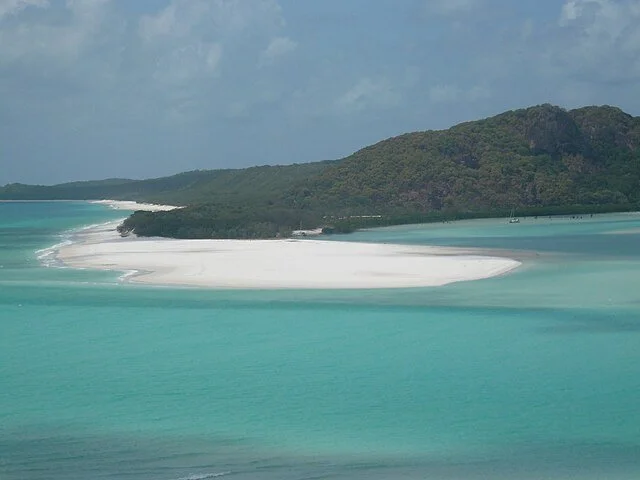
4. Whitsunday Islands, Australia

The Whitsundays, as they are locally known, are a series of 74 islands off the coast of Queensland, Australia. The most fascinating part of snorkeling in the Whitsunday Islands snorkeling is the Stepping Stones, a unique series of flat rock cylinders jutting up from almost 80 feet underwater. Swarming with batfish, wrasses and a wide variety of eels, these rocky structures are absolutely covered in coral.

The Stepping Stones are unlike anything else in the world. Of all the beautiful diving locations on the colossal Great Barrier Reef, there are few quite as unique as this. Local hotels include the Mantra Club Croc at $106 a night and the Kipara Tropical Rainforest Retreat at around $105 a night.

Aerial view of the turquoise water meeting the white sand and deep green mountain landscape

The Whitsunday Islands. eyeintim. CC 2.0

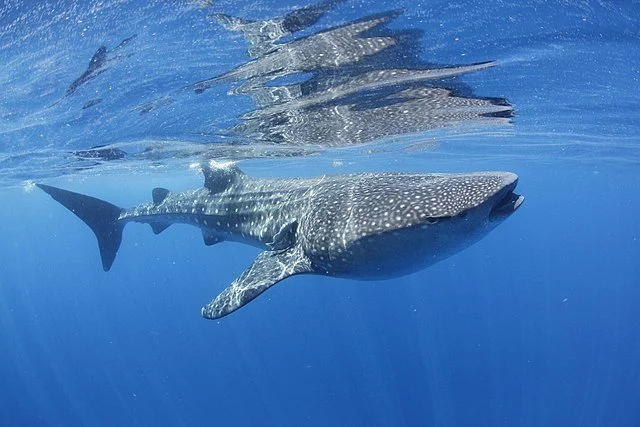
5. Isla Mujeres, Mexico

The biggest shark on Earth and completely harmless to humans, the whale shark swims docilely around feeding on tiny animals filtered through their colossal mouths. There are very few places on Earth where one can swim with these gentle giants, and Isla Mujeres is the best place to do so. Tours of the island are regulated by the government, allowing only a limited number of snorkelers in the water in order to avoid disturbing the creatures.

Isla Mujeres also features the world’s largest underwater museum, with more than 500 sculptures scattered across the ocean floor . From spectral human figures to huge stone grenades and mines, the legendary MUSA Museum provides snorkelers with a once-in-a-lifetime experience that has not been replicated anywhere else on Earth.

Whale sharks are incredible creatures, and Isla Mujeres offers one of the only ways to see them in their natural habitat. Hotels in the area include Hotel La Joya Isla Mujeres at $99 a night and the Ixchel Beach Hotel at around $165 a night.

A whale shark swimming close to the surface of the water

A whale shark off the coast of Isla Mujeres. MarAlliance2018. CC BY-SA 4.0

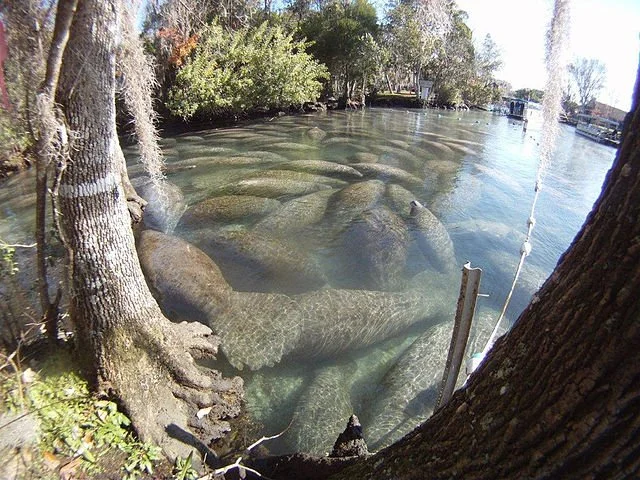
6. Crystal River, Florida

Offering another first-hand experience with marine life, the Crystal River in Florida is the only place in the U.S. where snorkelers can come face-to-face with the endangered manatee. Lucky visitors can swim through hundreds of the bulky mammals as they make their way towards warmer waters for the winter. Many of the animals even choose to remain in parts of the river year-round.

Manatees are one of the most protected aquatic species in the world given how endangered they have become. Tours must be booked in advance through organizations that hold special permits, and snorkelers are strictly forbidden from touching the manatees. However, these animals are as curious as they are goofy— there is every chance that they’ll wind up bumping into you themselves.

There aren’t many manatees left on Earth. Crystal River does its utmost to protect the population that returns to its warm springs every year, and is gracious enough to provide visitors with the chance to meet these amazing creatures. This is a can’t-miss experience for anyone who loves the sea. Local hotels include the Plantation Resort on Crystal River from $113 a night and the Port Hotel and Marina at $105 a night.

Looking down at the river between two trees, a herd of manatees fills up every inch of the clear water

A herd of manatees in Crystal River. U.S. Fish and Wildlife Service Headquarters. CC 2.0

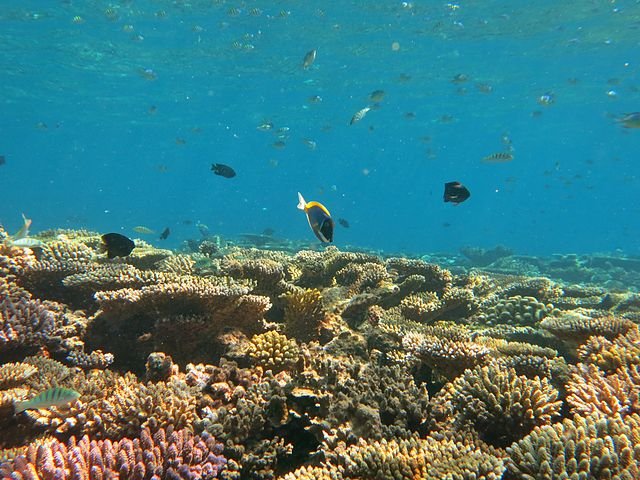
7. Baa Atoll, Maldives

Dubbed a UNESCO World Biosphere Reserve, Baa Atoll is a nearly perfectly preserved reef. Famed for its unbelievably rich ecosystem, the atoll is home to manta rays, whale sharks and several other endangered species which remain safe and secure in this heavily protected environment.

Coral reefs—and the animals that make their homes there—have been hit hard by climate change. Fortunately, humanity has stepped up to protect what we still can. Baa Atoll is a spectacular example of how we can still save our world and is well worth a visit to inspire others to help where they can as well. Local hotels are around $200/night and up.

Colorful coral reefs cover the floor of the image, with many fish swimming around and feeding above.

The spectacular reefs of Baa Atoll. Ahmed Abdul Rahman. CC BY-SA 4.0

Largely still unexplored, the ocean is an entirely different world from the one we live in. The sheer amount of environments, animals and experiences that can be found are unparalleled in variety and beauty. Thanks to snorkeling, you can see some of the most gorgeous sights on Earth up close. In a world that’s constantly turning up new and unbelievable discoveries, there’s no telling what you’ll find on any given snorkeling session, no matter where you are.


Ryan Livingston

Ryan is a senior at The College of New Jersey, majoring in English and minoring in marketing. Since a young age, Ryan has been passionate about human rights and environmental action and uses his writing to educate wherever he can. He hopes to pursue a career in professional writing and spread his message even further.

Before Disney: 5 of the Most Elegant Castles in the World

Majestic castles have been a staple of medieval imagery for centuries. Here are some of the most fantastical to ever have been built.

Gray fairytale castle stood atop a pine tree covered hill, overlooking rolling hills and blue lakes.

Neuschwanstein Castle in Germany. Thomas Wolf. CC BY-SA 3.0

Throughout history, numerous cultures have dedicated abundant money and resources to building castles. From soaring towers on scenic cliffs to utilitarian structures, these majestic buildings mark an astonishing amount of land around the world.

But out of all of these castles, there are a few that stand out for their uniqueness — whether it be for their history, architecture, location or one-in-a-million beauty. This list highlights five of the most incredible castles in the world, all of which should be on every traveler’s bucket list.

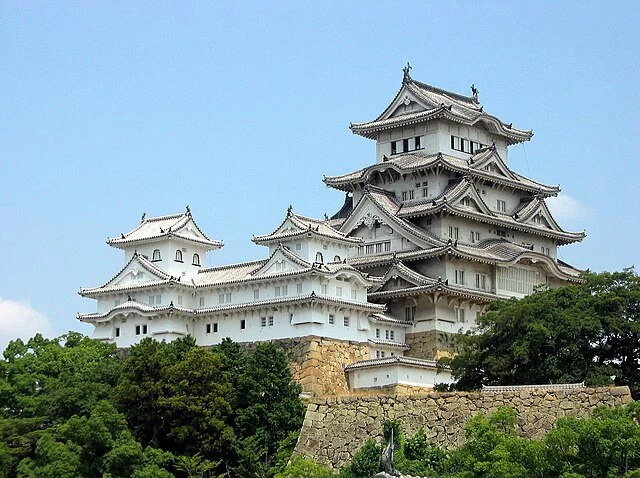
1. Himeji Castle, Japan

A white castle with red roof accents in Japanese style architecture, standing atop a rock wall.

The main structure of Himeji Castle. Gorgo. CC0

Also known as “White Heron Castle,” Himeji Castle is lauded as Japan’s best-preserved and most beautiful palace. Throughout history, wars, sieges and natural disasters have laid waste to almost every castle in Japan. Himeji is one of only twelve castles that have never been destroyed. Its immense, 80-building structure has remained completely intact since its construction in 1609. The main palace, a colossal wooden building of six stories, provides visitors with an incredible view of the sprawling grounds, a labyrinthine maze of winding paths and defensive barracks.

The city of Himeji, which lies at the foot of the castle, is also a popular spot for viewing Japan’s world-famous cherry blossoms. During Golden Week and the summer holiday, wait times to enter Himeji Castle can rise astronomically. Nonetheless, the view from the top is undoubtedly worth the wait during the seasons when these gorgeous trees are in full bloom.

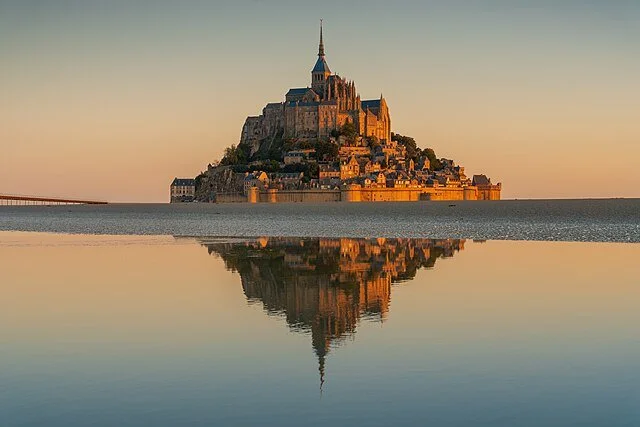
2. Mont Saint-Michel, France

Large walled castle centered and its reflection in body of water during golden hour

Mont Saint-Michel and its reflection in the bay. Lynx1211. CC BY-SA 4.0

Sitting atop an island in the middle of an idyllic bay, Mont Saint-Michel is a destination straight out of a fairy tale. The site was originally built as an abbey, constructed over several centuries with the funds of various French kings and dukes of Normandy. Over time, Mont Saint-Michel attracted monks from all across Europe and continues to remain a major Catholic pilgrimage site. The walls around the base of the island were added in an effort to keep the English out and provide reinforcement against centuries of conflict across the English Channel.

Today, the abbey is open to the public, with its gorgeous architecture and rich history on display. Visitors can explore the monks’ promenade, the refectory in which they took their meals and the glorious central church.

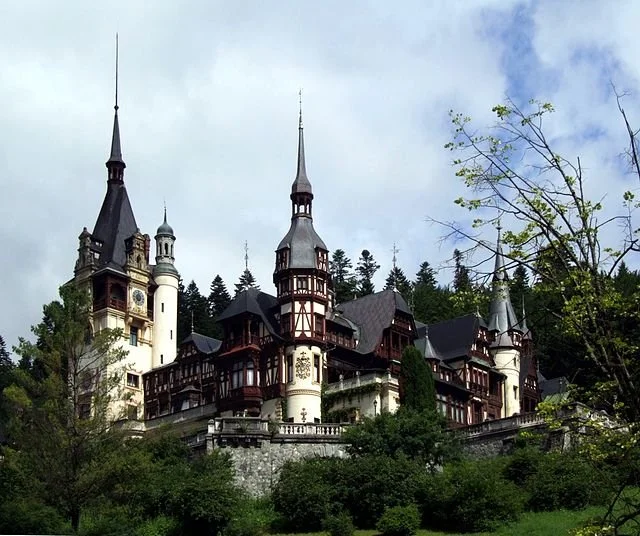
3. Peles Castle, Romania

A brown and white castle, surrounded by the tops of pine trees.

A snapshot of Peles Castle. Marcin Szala. CC BY-SA 3.0

In 1872, the king of Romania purchased roughly two square miles to transform into a royal hunting ground. The next year, the king decided to construct what would become one of the world’s most beautiful castles. Situated in a fairy-tale mountain range, Peles Castle was initially used as a summer home for royalty but is now a museum open to the public.

Peles Castle has received many foreign dignitaries to Romania — including several US presidents — and has been featured in a handful of Hollywood movies. Many of the palace’s 170 rooms are dedicated to different cultures and art styles from over the centuries. Whether you’re interested in the architecture, the artistry or the celebrity guest list, Peles Castle is an unmissable sight that deserves a spot on the bucket list.

4. Prague Castle, Czech Republic

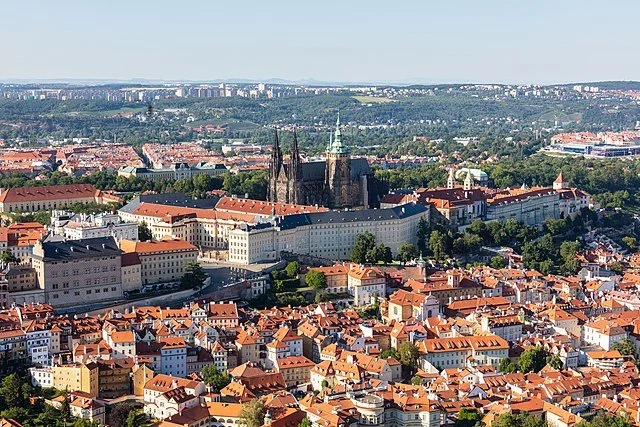
An aerial view of the city of Prague, with the sprawling castle standing out in the skyline.

The massive Prague Castle. Diego Delso. CC BY-SA 4.0

By far the largest ancient castle in the world (a vast 18 square acres), Prague Castle is also one of the most popular tourist destinations in Prague. Construction on the site began back in 870 when the central Church of the Virgin Mary was built. In the 14th century, the grounds were expanded into a fully functional fortress, after which the castle was reconstructed several times. When the nation was divided into the Czech Republic and Slovakia, Communist influence was driven out of the region, and the castle became both the seat of the Head of State and a public museum.

Although visitors can view the grounds on their own, guided tours are the best way to experience Prague Castle. After making a tour reservation well in advance, guests will be taken into the Royal Crypt, the Saint Wenceslas Chapel and a variety of other locations that are normally off-limits.

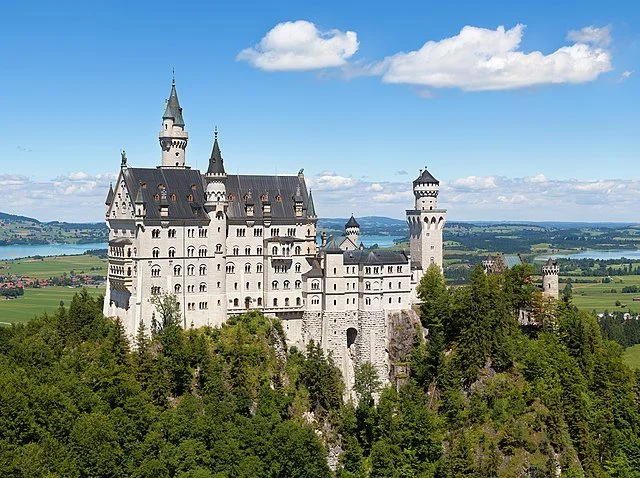
5. Neuschwanstein Castle, Germany

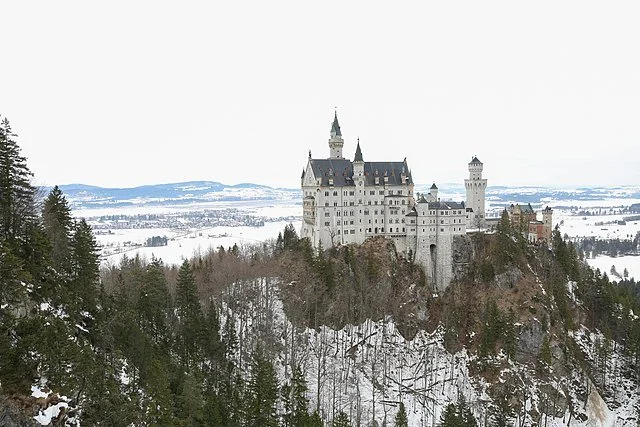
A fairytale white castle with gray roof standing atop a snowy landscape and hill.

Neuschwanstein in the heart of the German winter. Diego Delso. CC BY-SA 4.0

Neuschwanstein Castle, situated just miles from the border between Germany and Austria, is perhaps one of Europe’s most scenic and beautiful castles. Literally translated to “New Swan Stone” in English, Neuschwanstein was initially built both as a summer home and as a tribute to Richard Wagner and his classic opera “Knight of the Swan.” Although the king who commissioned the castle would not live to see its completion, construction continued after his death, and Neuschwanstein became one of the most storied palaces on Earth.

The castle’s biggest claim to fame is its status as the primary inspiration behind Disneyland’s Sleeping Beauty Castle. Due to security reasons, Neuschwanstein can only be accessed through guided tours, and photography of the interior is strictly prohibited. However (speaking from experience), the magnificent beauty of this mountain palace is unforgettable, even without pictures to look back on.

Castles are some of the greatest architectural feats that humanity has ever designed. They retain a majesty and presence that no other architecture can claim, and their status as icons of an entire era of history is unrivaled. If you’ve ever wanted to explore the past or experience the wildest fancies of the royal ruling class, look no further than these incredible destinations.


Ryan Livingston

Ryan is a senior at The College of New Jersey, majoring in English and minoring in marketing. Since a young age, Ryan has been passionate about human rights and environmental action and uses his writing to educate wherever he can. He hopes to pursue a career in professional writing and spread his message even further.
Mistimed Migrations: Climate Change is Disrupting Birds

The rising global temperature is having some strange effects on the migratory patterns of birds around the world.

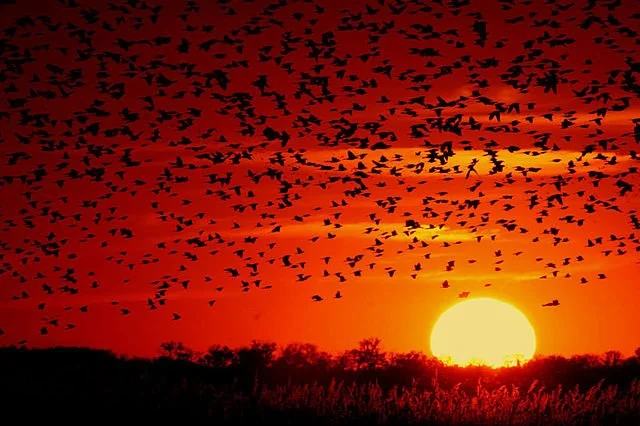
Silhouettes of a flock of birds flying over a red sky and meadow at sunset.

A flock of redwing blackbirds in Kansas. Jerry Segraves. CC0

Warming temperatures, glacial melts, ocean acidification and dozens of other crises are all clamoring for the attention of the global public. Although many are already exhausted by the near-constant onslaught of bad news, there’s still one more factor to add to the pile.

An astonishingly high number of bird species are annual or semiannual migrators, heading from cold to warm weather to follow their insect prey during fall and winter. While far from the only animal to migrate, birds are perhaps the most famous ever to do it. Now, scientists are discovering the ways in which climate change has even managed to wreak havoc on their yearly vacations.

Although birds migrate annually, their departure and arrival times vary based on weather conditions. Their exodus does not follow an arbitrary determination of season but simply begins when the weather turns cold. Scientists have argued that rising global temperatures are causing spring to arrive earlier in the year. This change has a few effects on the more transitive part of the world’s bird populations.

Studies conducted on 90-year-old data have suggested that birds are now leaving later in the year, as warm weather lingers well into the fall. This means that birds frequently arrive too late for peak insect season, missing out on the food they have come to rely on for the winter. This also disrupts their egg-laying patterns, resulting in birds breeding further north and gradually shifting the population.

Other migratory birds have been traveling far from their typical homes, with some traditionally “tropical” birds appearing much further north than they have ever been documented. Between this location shift and delayed egg-laying, scientists have suggested that migratory changes could cause many bird species to run out of land to migrate to in the next few decades.

More recent studies have shown a rising variance in departure times compared to 23 years ago.  Researchers attribute the abnormality on the East Coast to substantial atmospheric disturbances called Rossby waves, which shift warm air from tropical areas up north to the poles while returning cold air down towards the equator. As temperature changes occur worldwide, these waves have become weaker over time as the poles warm.

Other scientists have suggested a connection between the recent increase in severe weather events and migration disruption. In 2023, a pair of flamingos was spotted in a small Ohio town after being blown off-course by a hurricane. These birds typically travel from Cuba to the Yucatan Peninsula, but after being swept up in the storm, around 150 were documented across the southern United States. Similar natural disasters disrupting migratory patterns have cropped up in recent months as what experts have called “the worst hurricane season on record” kicks into high gear.

Birds are one of the most iconic and beautiful animals in the world, and their annual migrations are seen as a symbol of seasonal change and the arrival of autumn. However, with the climate in crisis, even a seemingly consistent rule of nature is thrown into turmoil. In the next few decades, some scientists have hypothesized that birds might run out of room and simply stop migrating altogether.


Ryan Livingston

Ryan is a senior at The College of New Jersey, majoring in English and minoring in marketing. Since a young age, Ryan has been passionate about human rights and environmental action and uses his writing to educate wherever he can. He hopes to pursue a career in professional writing and spread his message even further.

Casting Lines and Breaking Barriers: Women Redefining Fishing

Creating global change by empowering women through fishing.

Woman holding a fish on the line that she caught, while smiling on the boat in the sun.

Woman holding a fish she caught offshore fishing in Rhode Island, USA. Courtesy of Take Me Fishing. 

Many of us have nostalgic memories of learning to fish with our grandparents. They took us to the pond, put the bait on our hook, and gave us our first casting lesson. However, there is a noticeable disparity between male and female children who continue their fishing experiences. According to a study by The Recreational Boating & Fishing Foundation (RBFF), only 19% of female anglers between the ages of 13-17 continue fishing after age 12 opposed to 30% of their male counterparts. Additionally, the RBFF found that only 19% of women “see themselves” represented in the fishing industry. As of 2024, 37% of all anglers in the United States are female-identifying—the highest number on record.

In August 2024, I proudly joined those numbers. I was lucky enough to accompany a crew of fisherwomen on an excursion with Take Me Fishing (TMF) in Rhode Island. TMF is a nonprofit that creates opportunities to introduce women to fishing by providing resources and hosting educational events.

My time on the water was spent learning the ropes of offshore and flyfishing. After cruising ten nautical miles out to sea to try my hand at offshore fishing, I learned some valuable lessons in resilience. Admittedly, I spent a good portion of the day leaning across the vessel, seasick. However, the excitement and upbeat spirit of other eager fisherwomen made it all worth it. By the end of the day, I could confidently set up my own pole, bait a hook, and even handle some of the gnarly-looking sea creatures we caught.

The next day, I swapped my action rod for a fly rod. With instruction from a kind guide, I began getting the hang of flyfishing's active nature. Mimicking the motions of an insect on the water, there was something both peaceful and powerful about handling a rod. I felt I truly could have spent days out on the shore. When it was time to pack up, I realized I could easily see flyfishing becoming a regular part of my life.

After two days on the water, I felt more confident and mentally rested than I had in weeks.

A woman photographing a young girl fishing on the coast.

A young girl fishing in Rhode Island. Courtesy of Take Me Fishing.

Studies provided by the RBFF found that female anglers were 25% more likely to feel that they were in good health than non-anglers. Additionally, 1 in 5 women anglers believed that fishing has allowed them to accomplish anything they put their mind to. Women being excluded from traditionally male-dominated sports has a direct effect on their health and confidence. Nonprofit organizations like Take Me Fishing help to bridge this gap by offering inclusive fishing opportunities for those new to the sport. 

Several women on a fishing boat, maneuvering many rods and checking over the side into the sea.

Women on a fishing boat in Rhode Island. Courtesy of Take Me Fishing. 

It would be remiss to ignore the fishing disparity between races. Of the 57.7 million Americans who went fishing in 2023, only 5.2 million identified themselves as Black and 6.3 million as Hispanic. 

While these numbers are pulled from data taken within the United States, the lessons are transferable worldwide. Women experience inequality in sports around the world. Having personally experienced the immediate benefits of fishing as a woman, I can attest that getting young girls and women out on the water can have a lasting effect on our world. When organizations work to bring opportunities and awareness to these communities, it will help create change on a global scale.

To Get Involved:

Take Me Fishing provides fishing opportunities and events throughout the United States. Further resources can be found with the Recreational Boating & Fishing Foundation, Outdoor Foundation and Sports Fishing Restoration.


Cait Kontalis

Cait is a Chicago-based Greek-American but spends most of her year floating around the globe. She holds a B.A. in Communications and a M.A. in Nonprofit Management. Her favorite destinations include visiting her homeland in Greece and the Black Hills of South Dakota. Cait is also a powderhound, taking to ski slopes in the Rocky Mountains and around the globe.

Go Snorkeling Amongst Archaeological Ruins

At Gaiola Underwater Park in Naples, ancient Roman ruins meet vibrant marine ecosystems. Explore this treasure trove beloved by locals. 

A rocky island of stone building ruins and overgrown vegetation stands above the sea

Gaiola Island. Gianfranco Vitolo. CC BY 2.0

At the foot of Posillipo Hill in Naples, Italy, is a protected marine area stretching over 103 acres. Gaiola Underwater Park was founded in 2002 by Interministerial Decree and is managed by the Gaiola Onlus Interdisciplinary Study Center. Extending from the village of Marechiaro to the Bay of Trentaremi, the park is a treasure trove of biological, historical, and archaeological wonders in one of the most evocative coastal landscapes in the Gulf of Naples.
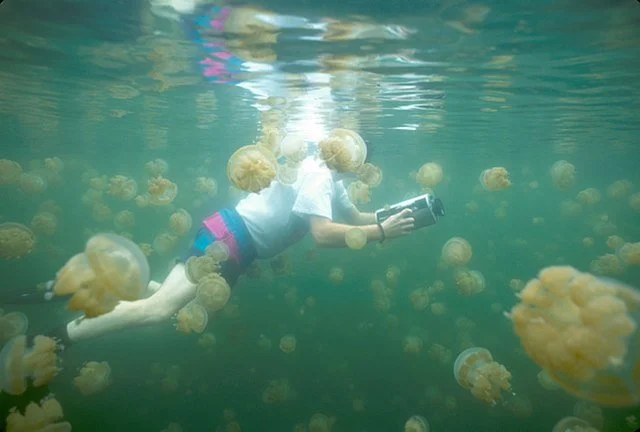
Renowned for its rich marine biodiversity, the park's waters are home to a range of species, some of which are unique to the Mediterranean. The landscape of the seabed and the favorable circulation of marine currents has allowed the settlement of ​​a rich and varied biological community. It provides a habitat for various fish, crustaceans, and algae, contributing to the overall health of the Mediterranean. Octopuses, white breams, damselfish and moray eels swim amongst ancient ruins, polychrome sponges, and beautiful walls of sea daisies. The park's protection ensures that these species can thrive without the pressures of commercial fishing and pollution.

Beyond marine life, the underwater park is also home to archaeological remains dating back to ancient Roman times. Inspired by Posillipo’s beauty, the Roman aristocracy settled along the coast in 100 BCE. The most significant structure was the Villa of Pausilypon, built by the Imperial official Publio Vedio Pollio. The Villa occupied much of the coastal stretch of the current Park. Remains of the Villa’s maritime structures, such as majestic tuff quarries, landings, mosaic floors, nymphaeums, and fish ponds, are still visible along the coast and below the sea surface, thanks to a local volcano-tectonic phenomenon of slow lifting and lowering of the earth's crust known as “bradyseism.”

The Gaiola Underwater Park is a center for scientific research and environmental education. The park plays a vital role in marine conservation efforts, offering a space for researchers to study marine life and ecosystems. Educational programs and workshops are regularly conducted to raise awareness about marine conservation and the importance of preserving the Bay of Naples’ natural and cultural heritage.

Coastline of an Italian city on the sea. There are rock seawalls separating the city from the sea, and some ocean rocks in the blue water.
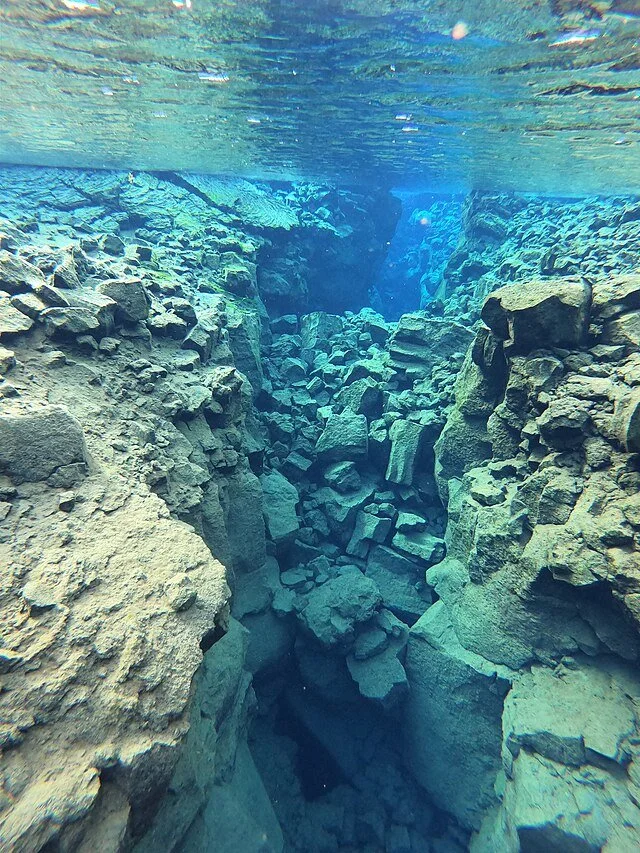
Posillipo Naples. Fiore Silvestro Barbato. CC BY-SA 2.0
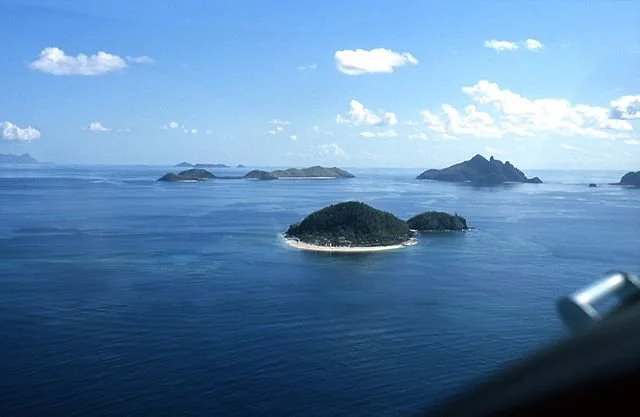
Once, Gaiola was considered a cursed island. According to local legend, the lives of the island’s previous owners ended in suicide, financial disaster or shipwreck. In 1911, a shipskipper, Captain Gaspare Albenga, crashed his boat into the rocks of the island and drowned while he was examining it for potential purchase, although locals say neither body nor ship was ever found. 

In the 1920s, a Swiss businessman, Hans Braun took possession of the island and was subsequently found murdered and wrapped in a rug. Not long after, his wife drowned at sea. ​​The island was then purchased by Otto Grunback, a German perfume dealer. He suffered a heart attack and instantly died at the Villa. These are only a few examples of the many stories that exist about the misfortune that befalls those who attempt to purchase the island.

An aerial view of a rocky and vegetated coastline. On the two promontories appear to be eroded building ruins.

Bay of Trentaremi. Giuseppe Guida. CC BY-SA 4.0

After these tragedies, more legends about the area were born. One of the most famous is that the ghost of a faceless woman haunts the area. According to local fishermen, it is the spirit of a woman who died during the San Giorgio cruiser's shipwreck in 1911. Others believe the specter to be the ghost of Hans Braun's late wife.

The origin of the name “Gaiola” is debated. Officially, the namesake derives from two small islands located in the park off the coast of Posillipo. Some think that the name Gaiola comes from the Latin cavea, meaning cave, corral or grotto. In Neapolitan, the word gajola means cage, recalling the cage-like shape of the archipelago. Cavea can also mean amphitheater. Gaiola hosts its own amphitheater in the ancient Villa. 

Grayscale image of a ruins site above the sea. Many stairs and eroded sea walls, as well as a small building with chipped paint.

Archaeological Park of Pausilypon. Armando Mancini. CC BY-SA 2.0

Visitors can participate in guided tours that offer exciting activities and insight into the park's ecological and historical significance. To visit the Gaiola Underwater Park, it is essential to make a reservation in advance due to the park's commitment to preserving its delicate ecosystems by maintaining a controlled number of visitors. You can enter the park any day with an online reservation, although hours and restrictions vary depending on the season. Aside from guided tours, there are many activities for visitors to take part in, such as glass-bottomed boats, snorkeling, scientific diving, and kayaking.

GETTING THERE

The park is accessible from Naples’ city center by metro, car or bus. The park’s website features detailed information on activities, visitor guides, and the park’s history.


Rebecca Pitcairn

Rebecca studies Italian Language and Literature, Classical Civilizations, and English Writing at the University of Pittsburgh. She hopes to one day attain a PhD in Classical Archeology. She is passionate about feminism and climate justice. She enjoys reading, playing the lyre, and longboarding in her free time. 

The Human Cost of Sustainable Energy

While wealthy nations and corporations benefit from the shift to renewable energy, the poorest and most disenfranchised communities are left to suffer the consequences.

A man crouching next to a deeply dug pit with a large tree branch sticking out. Red light reflecting under a canvas tent and machinery lying around on the ground

Cobalt Mine. Afrewatch. CC BY-NC-ND 2.0

As the demand for renewable energy increases, industrialized countries are racing to obtain metals like lithium, cobalt, zinc, manganese and nickel. These metals are used to make batteries, solar panels and wind turbines—technologies that will ideally enable a transition away from fossil fuels. However, procuring and processing the materials necessary to support these sustainable infrastructures comes with a price that is often overlooked: the human and environmental toll of mining these resources is anything but sustainable for communities worldwide. 

Continents rich in these resources— like Africa, Latin America, and Asia—are facing a surge in mining activities, which has in turn led to widespread human rights violations and environmental degradation, particularly among Indigenous communities. According to the Transition Mineral Tracker, there have been 631 human rights abuse allegations against companies involved in the extraction of transition minerals between 2010 and 2022, with 46% of the allegations originating in South America.

Majestic mountains as a backdrop to heavy machinery digging and creating large piles of a white sandy substance. The image is reflected in the standing water on the salt flats.

Lithium Mine in Argentina. EARTHWORKS. CC BY-NC 2.0

Human Rights Watch has documented a litany of abuses in mining sectors, from child labor and hazardous working conditions to chemical pollution and forced displacement. The Democratic Republic of the Congo (DRC) is the world's biggest producer of cobalt, a critical component of lithium-ion batteries, which power everything from electric vehicles to smartphones. Child labor remains an issue in the DRC, with more than 40,000 children working in the hazardous conditions of the Katanga province’s cobalt mines, according to data from the United Nations.

These children, victims of trafficking and of necessity, are subjected to horrendous conditions, including frequent mine collapses and prolonged exposure to toxic dust. Their work is grueling, often lasting for 12 hours a day, with little to no protective gear. Some children work with their bare hands. Many suffer from chronic health problems, such as respiratory issues and musculoskeletal disorders, as a result of the substandard working conditions.

A group of men working around the mining site under the hot sun in the large grassy and arid expanse.

Cobalt Mining Site. Fairphone. CC BY-NC-SA

Adults suffer in the mines as well, laboring in slave-like conditions. Cobalt mining tunnels often reach lengths and depths far greater than the legal maximum of 98 feet, an already dangerous level. Poor regulation, governance and lack of incentive to adhere to the law means tunnels can reach lengths of up to 295 feet, a level that threatens extreme risk of collapse, landslides and death for miners. 

Conditions underground are hot and dusty, as miners rely on generators for oxygen during their 12-hour shifts, six days a week. Though cobalt is toxic to touch and breathe, miners are constantly exposed to the substance. Exposure to polluted water and air can lead to several health problems, including respiratory illnesses, skin conditions and even cancer. In some mining areas, the rate of birth defects and infant mortalities has increased, raising alarm among local and international health organizations.

Two miners lifting bags among a rocky, dusty, and dry crater-like setting.

Cobalt Miners in the DRC. The International Institute for Environment and Development. CC BY-NC-ND 2.0

The environmental impact of mining is another major concern. The mining industry has ravaged the landscape of the DRC. Millions of trees have been cut down and the air surrounding the mines is hazy with dust and grit. The mining process often involves the use of hazardous chemicals to separate the desired minerals from the ore. These chemicals can seep into the soil and water, contaminating local water supplies and agricultural land. “In this stream, the fish vanished long ago, killed by acids and waste from the mines,” one Congo resident reported of his childhood fishing hole. In some cases, mining operations have dried up rivers and lakes, devastating local ecosystems and the livelihoods of those who depend on them. 

The expansion of mining activities often causes the displacement of entire communities, whether by pollution or force. Data from the Business & Human Rights Resource Center points to widespread violations of Indigenous peoples’ rights—such as forced relocation, water pollution and denial of access to traditional land—as well as attacks on human rights defenders and workers’ rights abuses. In countries like Indonesia, Peru, Columbia and Bolivia, mining operations have displaced Indigenous peoples from their ancestral lands. These displacements not only disrupt the social fabric of communities but also erode cultural identities that are deeply tied to the land. 

In many cases, those who resist displacement or speak out against mining abuses face retaliation. In Indonesia, local officers were accused of breaching police ethics through the use of intimidation tactics, carrying around weapons to compel people to leave their ancestral village. There have been numerous reports of police violence and arbitrary arrests of activists who oppose mining projects. In Colombia, a mine was built within the sacred territory of the Embera people, without any consultation with Indigenous locals. The community faced forced displacements, the territory was militarized, and leaders who spoke out about human rights violations became targets of harassment. 

As the demand for green energy continues to rise, companies that rely on these materials must ensure that supply chains are free from exploitation. This includes due diligence, supporting fair labor practices, and investing in cleaner and more sustainable mining technologies. Governments also have a role in regulating the mining industry and protecting the rights of vulnerable communities. Stronger international regulations, greater transparency and accountability are essential in preventing abuses and ensuring that the beneficiaries of the green energy transition are not limited to corporations.

GET INVOLVED

GoodWeave: Founded in 1994 by Nobel Peace Prize laureate Kailash Satyarthi, GoodWeave is a leading nonprofit organization in the fight to stop child labor in global supply chains. The institution partners with companies and local producer communities to bring visibility to hidden supply chains, protect workers’ rights, provide assurance that products are free of child or forced labor, and support exploited children.

Good Shepherd International Foundation: Good Shepherd International Foundation works to support women, girls and children living in vulnerable and impoverished conditions. They protect and promote the rights of people affected by poverty, human trafficking, child labor, and other human rights violations in over than 30 countries.

Global Witness: Global Witness works to hold companies and governments accountable for ecological destruction and the failure to protect human rights. The organization campaigns to end corporate complicity in environmental and human rights abuses, end corporate corruption,  hold companies in the natural resource sector to the law, and protect activists standing up to climate-wrecking industries.


Rebecca Pitcairn

Rebecca studies Italian Language and Literature, Classical Civilizations, and English Writing at the University of Pittsburgh. She hopes to one day attain a PhD in Classical Archeology. She is passionate about feminism and climate justice. She enjoys reading, playing the lyre, and longboarding in her free time.

test article: title

Author Name

SPONSORED CONTENT


Intro sentence or two. The quick brown fox jumps over the lazy dog. The quick brown fox jumps over the lazy dog.

My Road Trip Across The Balkans

Photographer Laura Grier shares her adventures through Bosnia, Croatia, Montenegro and more.

Two girls walk over a dock to a large platform of small buildings. The water is turquoise, small rafts floating, and stone sea walls around the land.

Macedonia. Laura Grier.

Imagine hitting the road with your best friends, traveling through the breathtaking Balkans, in the heart of the former Yugoslavia. A journey through some of the most stunning landscapes in Europe, this epic road trip was also a personal milestone for me as I celebrated visiting my 100th country along the way.

Although many Americans don’t often travel to this part of the world, Eastern Europe is a hidden gem — safe, welcoming and incredibly affordable. Crossing borders was a breeze, even though we didn’t speak the local languages. Everywhere we went, from bustling cities to quaint villages, we were greeted with warm smiles and genuine hospitality.

The mix of rich history, mouth-watering food and awe-inspiring nature made my trip unforgettable. Whether exploring medieval fortresses perched on cliffs, wandering through picturesque towns, or relaxing by crystal-clear lakes, every moment offered a new adventure. A must-visit destination for any adventurous traveler, this beautiful and often overlooked part of the world is a treasure trove of experiences waiting to be discovered.

1. Bosnia

Mostar Bridge:

The iconic Stari Most, or Mostar Bridge, is both a stunning example of Ottoman architecture and the site of a centuries-old tradition. As a rite of passage in Bosnia, young men often gather on the bridge to prove their bravery by diving 70 feet into the Neretva River which runs below.

Jajce:

The town of Jajce, with its picturesque waterfalls and medieval charm, looks like something out of a fairy tale. Perched high up on a hill between the crossroads of two rivers, this enchanting walled city is also the birthplace of Yugoslavia, making the village as historically significant as it is beautiful.

2. Macedonia

Lake Ohrid:

Lake Ohrid, one of Europe's oldest and deepest lakes, cradles the ancient city of Ohrid. Believed to be the oldest human settlement in Europe, archaeological evidence suggests that the area has been inhabited for over 7,000 years. One of the oldest continuously inhabited cities in Europe, the town itself dates back to at least the 4th century BCE. Featuring serene waters and historic sites, Ohrid is truly a gem amongst UNESCO World Heritage sites.

Bay of Bones:

The Bay of Bones is an extraordinary archaeological site that reconstructs an ancient lake settlement from 1200 B.C.E. The floating village, resting upon Lake Ohrid, offers a glimpse into the life of Macedonia's earliest inhabitants. The actual ruins of the original settlement lie underwater, just beneath the recreated floating village. You can even book a snorkeling or scuba tour to explore them up close!

Matka Lake:

Located in Macedonia’s Matka Canyon, Matka Lake is a haven for nature lovers and adventurers alike. Beyond crystal-clear waters and dramatic cliffs, this stunning natural gorge is also home to hidden caves and medieval monasteries, making it a must-visit in Macedonia. You can hike up the nearby mountain to visit the church at the top and then hike back down to swim and do watersports in the lake. However, it’s important to remember that the water temperature can be as cold as 48 degrees Fahrenheit depending on the season. The lake's cool temperature is due to the depth of the canyon and the icy waters from nearby underground springs, making it feel more like a polar plunge!

3. Croatia

Plitvice Lakes:

Visiting Plitvice Lakes National Park feels like stepping into a fantasy, with its breathtaking wonderland of cascading waterfalls, lush greenery and mesmerizing turquoise lakes. This UNESCO World Heritage site is Croatia's natural treasure, captivating visitors with its otherworldly beauty. Plitvice is home to 16 interconnected lakes, each more stunning than the next. I was obsessed with the beautiful neon green moss that covered everything around them. 

Dubrovnik:

Dubrovnik, often called the "Pearl of the Adriatic," is a city where history comes alive. With ancient stone walls, charming streets and panoramic views of the sparkling sea, this medieval city is a stunning blend of ancient architecture and vibrant culture. In Dubrovnik, "Game of Thrones" fans will recognize numerous filming locations from the series, such as King's Landing. Walking through the town’s streets might just feel like stepping into Westeros!

Split:

In Split, the past and present beautifully collide. Once the site of a Roman emperor's palace, Split is a vibrant blend of ancient history and modern life. With its sprawling complex of ruins, the UNESCO-listed Diocletian's Palace forms the heart of this bustling coastal city. The narrow streets are interconnected and labyrinthine — you will need to allow yourself time to get lost and discover hidden bars and restaurants, some of which haven't changed in centuries!

4. Montenegro

Tara Canyon:

Tara Canyon, the second deepest canyon in the world, is one of Montenegro's most jaw-dropping natural wonders. With dense forests and a crystal-clear river carving through the rugged landscape, the site is a dream come true for adventurers and nature lovers. The Tara River is known as the "Tear of Europe" because of its pure, drinkable waters. If you're into white-water rafting, this canyon also offers some of the best in Europe!

Kotor:

Visiting Kotor felt like time-traveling to the medieval past. Nestled between dramatic mountains and the shimmering Bay of Kotor, the town is a popular stop on European cruises. While it seems impossible for the narrow bay to accommodate cruise ships, these boats nonetheless manage to bring in thousands of tourists. You can spend the day kayaking out to churches on tiny islands, exploring caves, getting lost exploring the cobblestone streets, and visiting impressive fortifications dating back to the Venetian era.

5. Slovenia:

Predjama Castle:

A medieval fortress built into the mouth of a cliff cave, Predjama Castle is truly a sight to behold. This marvel of engineering holds a Guinness World Record as the largest cave castle in the world (which I didn't know was even a thing)! I love exploring secret passageways and caves and was fascinated when I discovered that the castle’s secret hidden tunnel was used by Erasmus of Lueg to sneak out and bring in supplies during a siege. Exploring this castle felt like diving straight into an “Indiana Jones” movie!

Slovenia’s Coastline:

Slovenia’s spectacular coastline may be small, but it packs a punch with its crystal-clear waters and pristine white pebble beaches. It is truly a hidden gem, perfect for those looking to escape the crowds. Piran, a charming coastal town, is often compared to Venice for its Venetian-style architecture and stunning views of the Adriatic Sea.

Slovenia as "Narnia":

If you've ever dreamed of stepping into a fairy tale, then Slovenia is the place for you. The country’s enchanting landscapes, rolling hills and ancient forests are so magical that they served as a backdrop for "The Chronicles of Narnia" films. Driving through Slovenia, every turn reveals a new and breathtaking scene. It felt like Narnia came to life — and I never wanted to leave!

6. Serbia:

Fields of Sunflowers and Agriculture:

Who knew that Serbia was a land of endless sunflower fields and rich agriculture? When I first drove into Serbia, I couldn’t help but feel like I was in the Midwestern United States. Northern Serbia, with its flat terrain, was once an ancient seabed, which is why the soil is so nutrient-rich. This makes it perfect for growing crops that stretch as far as the eye can see, creating stunning golden landscapes in the summer.

Belgrade:

Serbia’s capital, Belgrade, is a city with a rich and tumultuous history. Its most famous landmark, the Belgrade Fortress, has stood the test of time, watching over the Sava and Danube rivers. This fortress has seen everything from medieval battles to World War II skirmishes. Today, it’s a beloved park and museum, offering panoramic views of the city and a peek into the hidden tunnels and bunkers used during World War II. The underground armory inside the castle was even converted into a popular underground disco tech in the ’90s. I love how this region of the world has embraced its tumultuous past and incorporated it into modern life in creative ways.


Laura Grier

Laura is a dynamic Adventure Photographer, Photo Anthropologist, Travel Writer, and Social Impact Entrepreneur. With a remarkable journey spanning 87 countries and 7 continents, Laura's lens captures both the breathtaking landscapes and the intricate stories of the people she encounters. As a National Geographic artisan catalog photographer, Huffington Post columnist, and founder of Andeana Hats, Laura fuses her love for photography, travel, and social change, leaving an impact on the world.