
Get excited for International Dark Sky Week by exploring a few of the best stargazing destinations the world has to offer.
Read MoreFungi: Nature’s Solution to Plastic Waste
With 350 million metric tons of plastic waste flooding the planet every year, fungus and other microorganisms could be a surprising solution.
Read More8 Reasons to Visit Oman
Oman is truly a feast of the senses—a remarkable getaway for anyone seeking a fulfilling adventure.
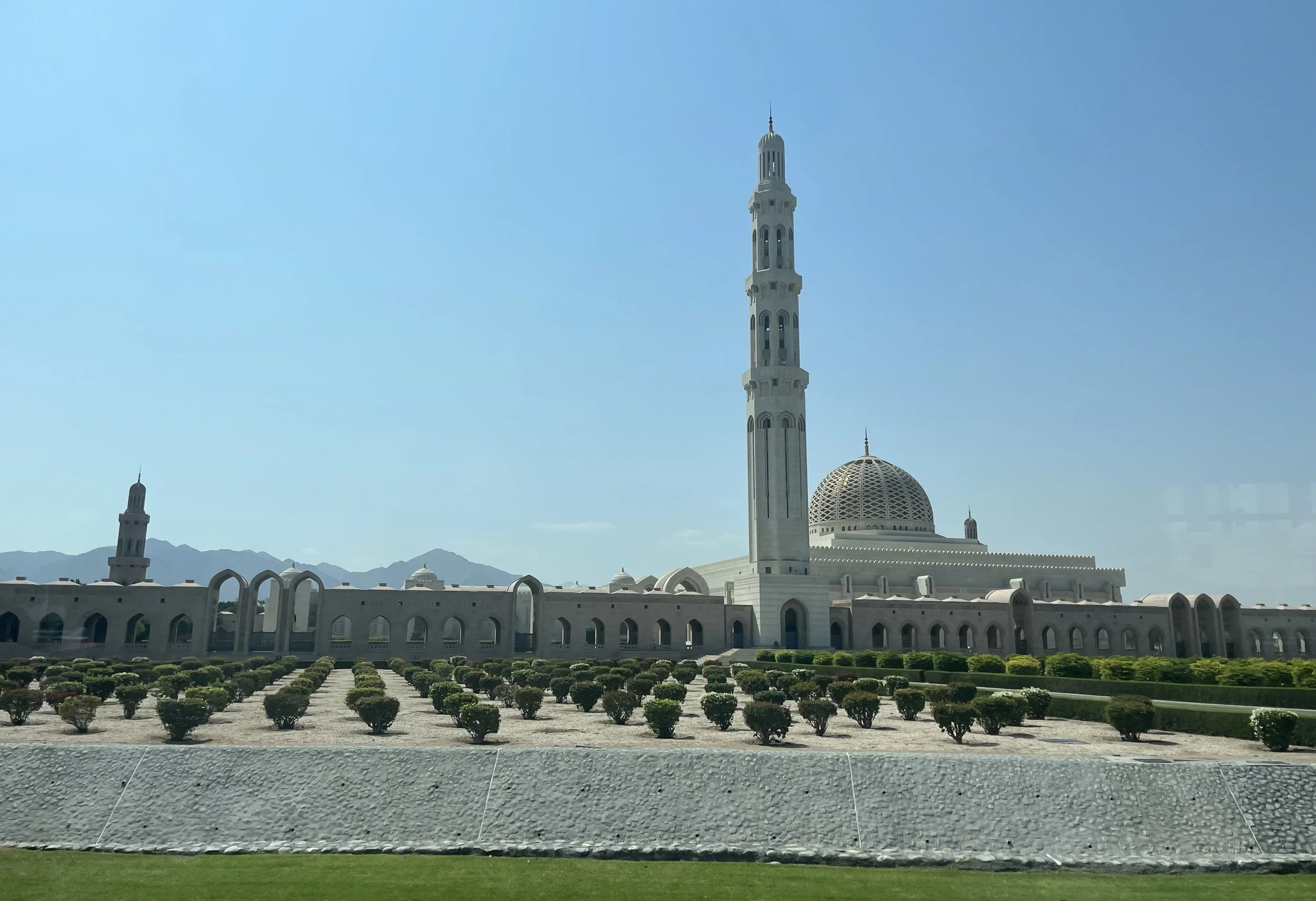
The Grand Mosque in Muscat, Oman. Madison Paulus
After returning from study abroad in Oman, I have a newfound admiration for the country’s history, culture, views and activities. The vitality of Omani culture despite outside influence is admirable and I could see it reflected everywhere I went. From the very first day, I felt welcomed and immersed within the Omani lifestyle. This trip was an incredible experience, inspiring me to share eight reasons why you should experience Oman.
1. Rich History
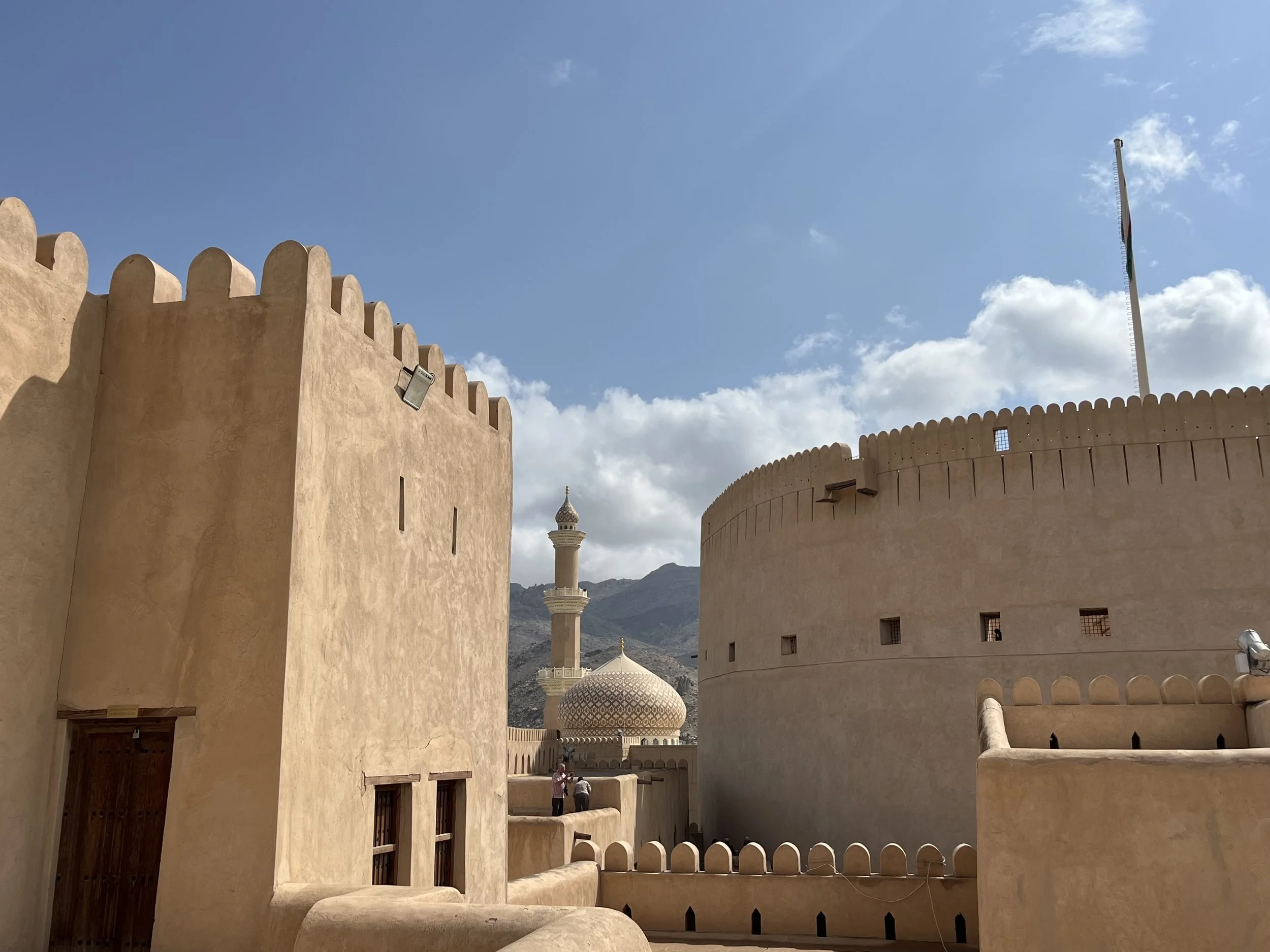
View of a mosque from the Nizwa Fort. Madison Paulus
Oman is the oldest independent nation in the region, brimming with about 1,000 well preserved historical sites. While civilization in Oman began around 100,000 years ago, many popular historical sites came about during Portuguese occupation between 1507 and 1650.
In Muscat, the capital of Oman, explorers can find several forts. The Muttrah Fort, which the Portuguese built in 1507 can be found at the heart of Muscat's coast. Here, travelers can gaze upon 500-year-old lookouts.
The Mutrah Fort serves as a vantage point for travelers as it is nearby several other must-see spots, including the Mutrah Market, Al Alam Palace and the National Museum of Oman. Many other castles and forts can be found strewn across Oman, including the Nizwa Fort and Jibreen Castle.
2. Fruitful Culture
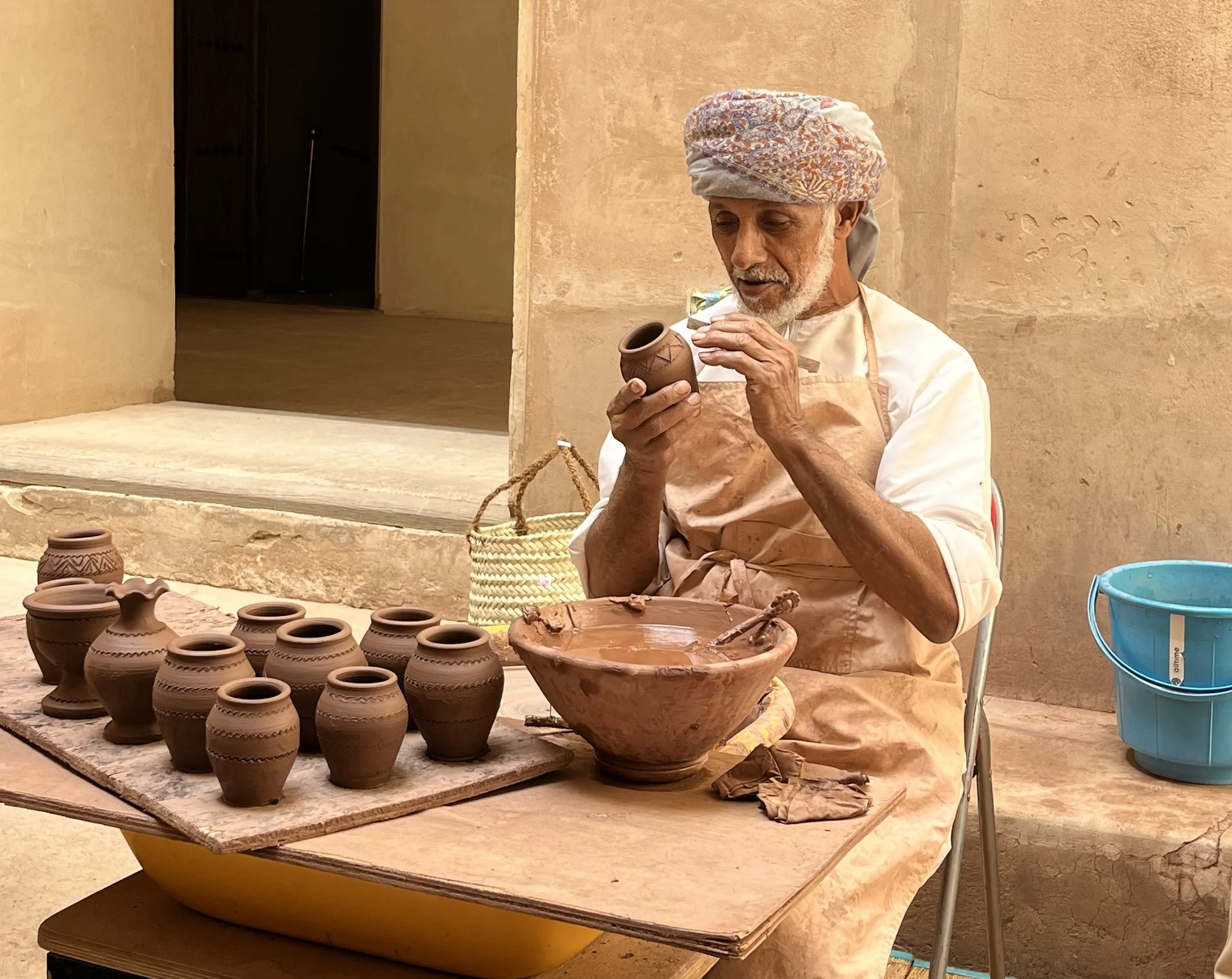
A man making pottery at the Jibreen Castle. Madison Paulus
Oman boasts an impressive blend of cultures. The Omani empire once ruled an area spanning from the east coast of Africa up to present-day Oman. Because of the vast territory and major role in trade, African, Arabian and Asian influences can be found embedded within Omani culture.
Home to more than 130 various types of traditional dances and music, Oman’s performance arts delight travelers and locals alike. Omanis are also expressive through their dress. Women can often be seen in vibrant clothing featuring intricate designs that are unique to each region. Men wearing dishdashas dot the streets, sometimes sporting traditional Khanjars (daggers) on special occasions.
Omani hospitality is another key feature of Omani culture. Omanis are known to be warm and welcoming to travelers, sure to offer friendly interactions and generous gifts for guests including coffee, dates and frankincense. For those searching for opportunities to immerse in Omani culture, there are many festivals open to travelers, including the Muscat Festival and the Salalah Festival.
3. Culinary Diversity

A variety of spices at the Nizwa Market. Madison Paulus
As with the culture, Omani food features Arabian, Asian and African influences. Some renowned Omani dishes include Shuwa, Rukhal bread and Halwa. Shuwa is a unique dish saved for special occasions. Meticulously prepared, Shuwa consists of meat cooked in a clay oven underground for up to two days, giving way to a tender, spice-filled delicacy.
Rukhal bread is a delightful addition that can be found accompanying any meal. Traditionally cooked over flaming palm leaves, Rukhal bread is round and thin, often served with honey or date syrup in the morning or sprinkled across meat and rice dishes throughout the rest of the day.
Halwa is a labor of love, often symbolic of Omani hospitality. A sticky, gelatinous treat, Halwa is usually made by combining water, ghee, corn flour, sugar and additional flavorings such as rose water or saffron in a large copper pot. Beyond the restaurants and markets, an ideal place where explorers can indulge in Omani cuisine is the Muscat Eat Food Festival.
4. Unique Commodities

A display of Amouage perfume at the Mall of Oman. Madison Paulus
With an abundance of frankincense and other natural resources, Oman is home to many exceptional goods. Fragrances in particular are an Omani specialty, and Amouage is an exhibition of this expertise. A popular Omani luxury fragrance brand, Amouage draws from Oman’s natural wonders to create enchanting scents, incorporating locally sourced rock roses, ambergris and frankincense.
While the products aren't budget friendly for many people, travelers can tour the only Amouage factory in the world for free in Muscat, getting a behind-the-scenes look and while sampling their extravagant fragrances along the way.
If perfumes aren’t your thing, the smell of burning frankincense and oud can be experienced all over the country. For those who wish to bring the essence of Oman home with them, these products, along with traditional burners, can be found easily at shops and markets.
5. Vibrant Art
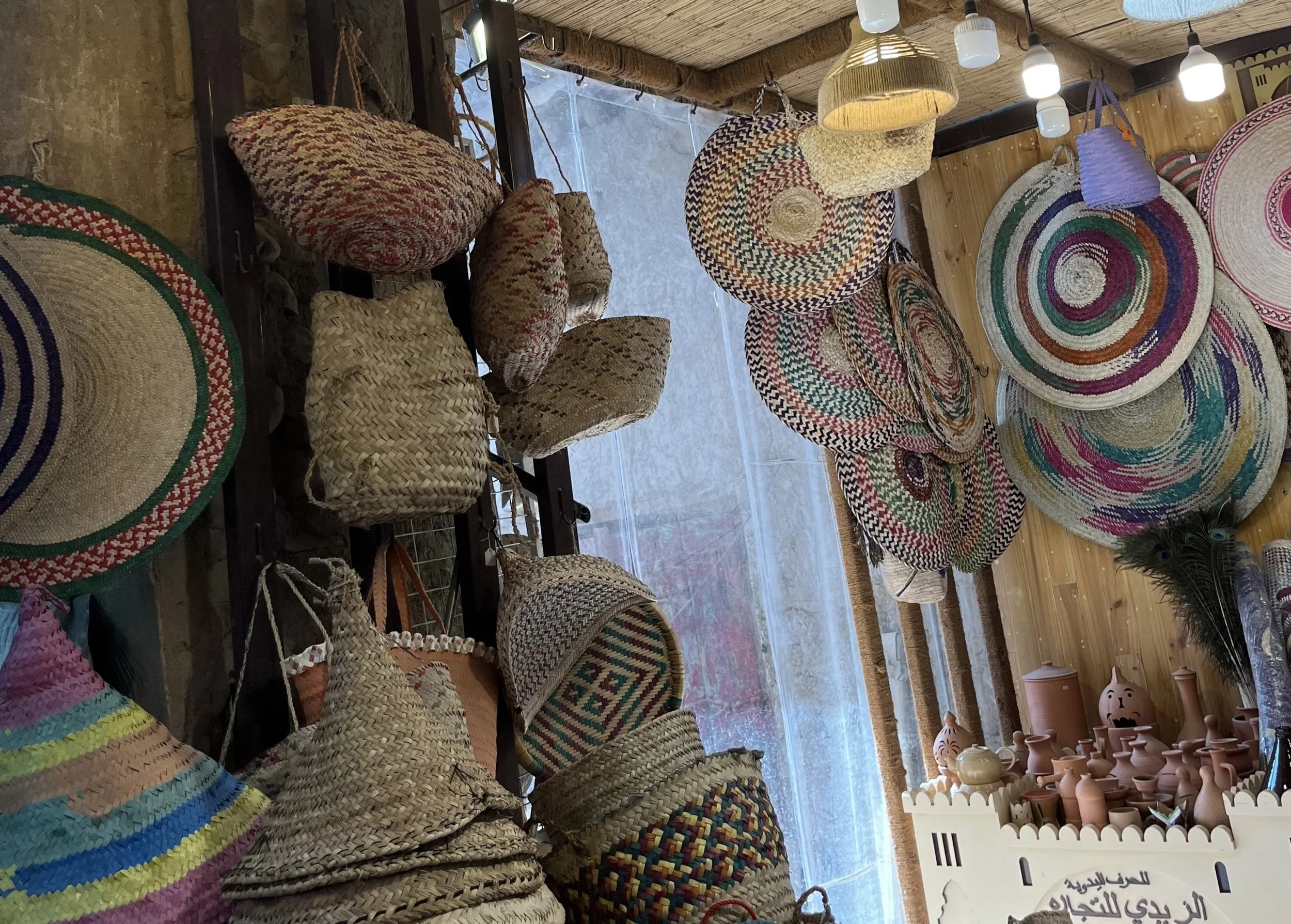
Hand-woven baskets on display at the Nizwa Market. Madison Paulus
Many art forms have been intertwined with Omani culture for thousands of years. Pottery is a 5,000-year-old tradition in Oman that is still present across the country. Holding great historical value, pottery has been integral in the lives of Omanis for thousands of years.
While pottery today is often decorative, its historical and cultural value has been maintained here. In the ancient Omani state of Bahla, explorers can buy pottery from local sculptures or even learn how to make their own at the Al Adawi factory.
Other intriguing Omani handicrafts include basket weaving and silversmithing. Hand-woven baskets made of date palm or other natural fibers can be found in markets across the country, and travelers can witness the process in action at the Nizwa Fort. Silver goods like khanjar (daggers) and jewelry can also be found throughout Oman’s markets, symbolic of Omani heritage and good fortune.
6. Comfortable Climate
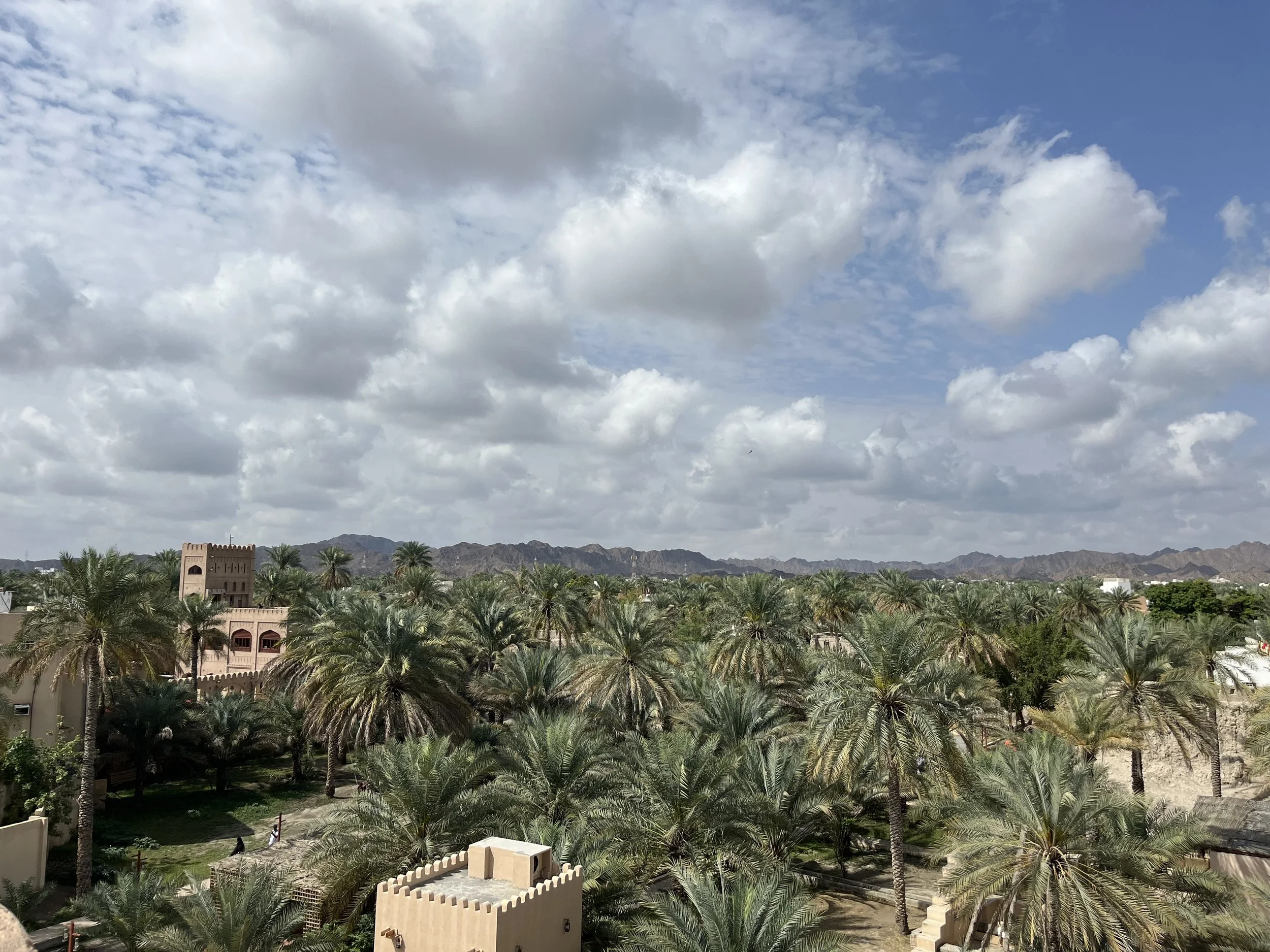
A view of the landscape from atop the Nizwa Fort. Madison Paulus
Oman’s weather and climate vary significantly by region, easily accommodating travelers’ preferences. With the interior's dry deserts surrounded by southwest summer monsoons and hot, humid coastlines, Oman offers a warm getaway whether you like sun or rain.
Because of this variation, Oman is a year-round destination, with northern Oman attracting many during the months of October through April, and the South drawing explorers most during July, August, and September, according to a presentation by Zahara Tours.
7. Natural Wonders
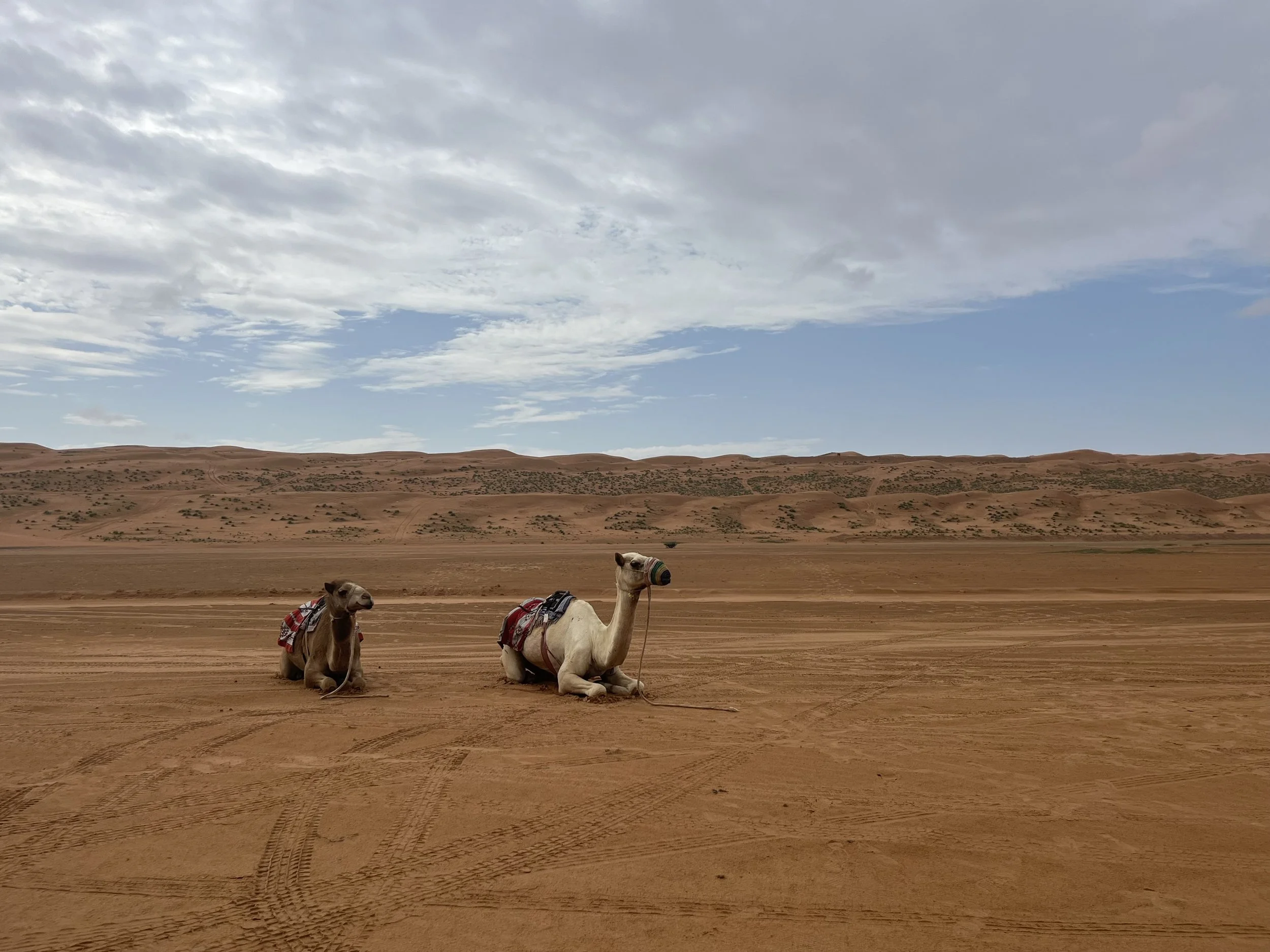
Camels sit in the sand outside the Arabian Oryx Camp. Madison Paulus
Oman’s ecosystems feature a huge diversity of plants and animals, from rock roses and apricots to turtles and camels. With 20 official nature reserves, travelers are offered a wide array of destinations to appreciate Oman’s natural beauty from the mountains to the sea.
Some iconic destinations for explorers to witness nature at its finest include the Al Jinz Turtle Reserve and Daymaniyat Island, where you can swim with whale sharks as they migrate south every summer.
With several caves beneath the earth and many wonders like waterfalls and valleys above, Oman’s astonishing ecology is situated in equally breathtaking natural landscapes.
8. Adventurous Activities
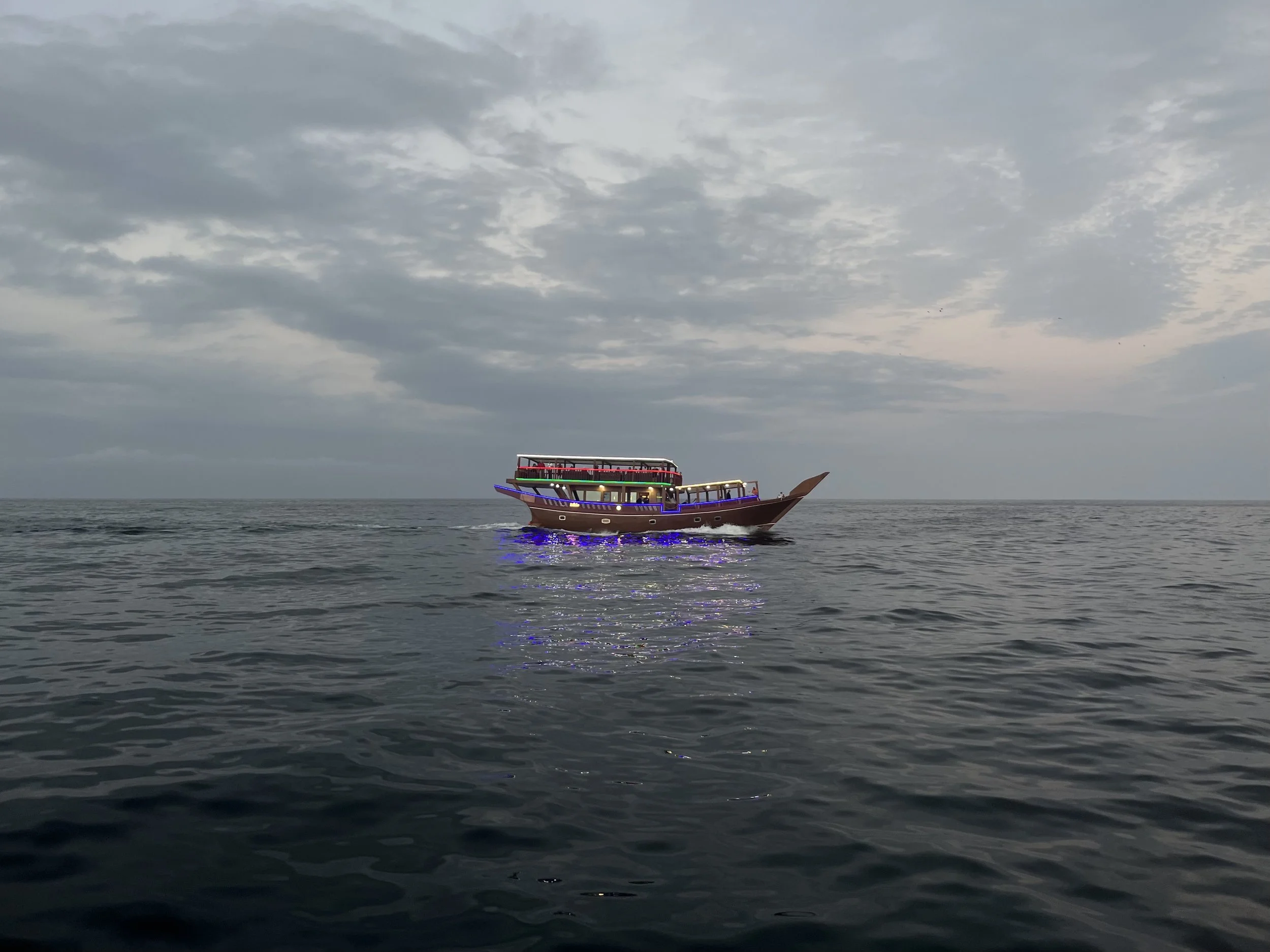
A Dhow boat sailing in the Gulf of Oman. Madison Paulus
Travelers itching for activity have countless options in Oman. Hikers will feel right at home, with many trails at varying levels of difficulty found throughout the Hajar and Musandam mountains.
Travelers can also explore the desert on camel-back or by riding on ATVs. The Arabian Oryx Camp is a perfect spot for either, in addition to offering Bedouin-style accommodations and authentic Arab cuisine.
For those who prefer to spend time in the water, Oman’s nearly 1,300 miles of coastline offers beaches where travelers can swim and snorkel through blue waters.

Madison Paulus
Madison is a student at George Washington University studying international affairs, journalism, mass communication, and Arabic. Born and raised in Seattle, Washington, Madison grew up in a creative, open-minded environment. With passions for human rights and social justice, Madison uses her writing skills to educate and advocate. In the future, Madison hopes to pursue a career in science communication or travel journalism.
Underwater Paradise: Raja Ampat, Indonesia
With over 70% of the Earth covered by water, it’s only logical for the planet’s greatest beauty to lie beneath the waves. Raja Ampat holds a special place in the hearts of divers and naturalists alike.
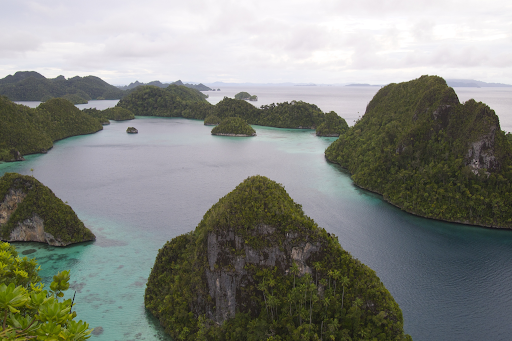
Wayang Island within Raja Ampat. Elias Levy. CC BY 2.0.
Situated northwest off of Papua, Indonesia’s most eastern island, the Raja Ampat archipelago is heralded as a top-tier site for scuba diving and marine biodiversity. Raja Ampat comprises over 28,000 square miles of ocean and hundreds of cays and shoals still to be discovered. Plate tectonics exposed ancient limestone seabeds to tidal erosion which yielded a series of islands seeming to levitate above the waves. As the archipelago straddles the Earth’s equator, it naturally experiences a tropical climate.
But Raja Ampat’s most signature feature is its sheer scope of species diversity. Home to at least 75% of the world’s hard corals and at least 1,500 different species of fish, Raja Ampat is considered the global epicenter of marine animal diversity. Due to a confluence of warm, shallow water and nutrient-rich currents from the Pacific and Indian oceans, Raja Ampat has thrived for decades as a haven for endangered aquatics. A slew of rare sea species from dugongs and blue whales to dolphins and leatherbacks live in relative geographic isolation and pristine marine ecosystems.
Northern Raja Ampat

Marine biodiversity is unmatched within Raja Ampat. Nazir Amin. CC BY 2.0.
The northern islands of Gam, Kri, Waigeo and Batanta are bounded by the Dampier Strait. It serves as a popular entryway to Raja Ampat thanks to the city of Sorong on the west coast of Papua which hosts its own airport. With mainland access via ferries, most visitors flock to the north to dive at famous sites such as Cape Kri, Blue Magic and Manta Sandy.
Cape Kri is a renowned hotspot for marine biodiversity. Once recorded as the site with the highest quantity of distinct fish species observed in a single dive, visitors can expect to see reef sharks, moray eels, turtles, Humphead wrasse, cuttlefish, porcupinefish, crevalle jack, snapper and barracuda.
Blue Magic offers a variety of soft and hard coral reefs to check out. Though divers will face strong currents in the water, the struggle is worth the chance to meet dogfish tuna, giant trevally, spanish mackerel, bumphead parrotfish and even octopi.
Manta Sandy is a shallow site teeming with plankton, and of course, ocean manta rays. Divers must try their luck to encounter the rare black manta.
South Raja Ampat
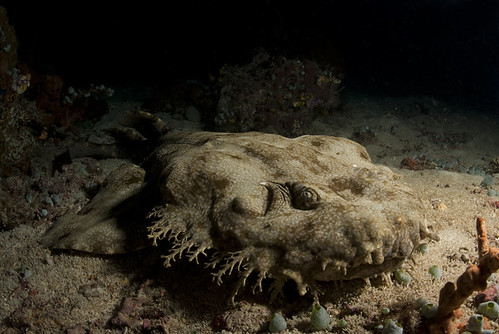
A Wobbegong shark. Nazir Amin. CC BY 2.0.
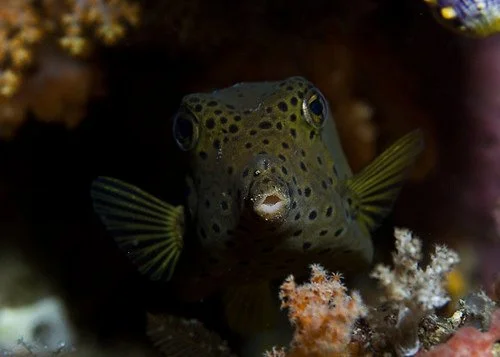
South Raja Ampat is noticeably inaccessible to the lay visitor as overnight ferries must be taken from Sorong to reach this remote area. However, the reefs in South Raja Ampat are picturesque, with premier visibility for pygmy seahorses, colorful nudibranchs and other wowing wildlife.
The island of Misool is the pinnacle of biodiversity conservation, as much of the area is protected as part of the Misool Marine Reserve. There’s only one option for overnight lodgings: the Misool Eco Resort, an eco-friendly hotel dedicated to conservation and sustainability. The resort’s founders dedicate a portion of both their profits towards biodiversity recovery; there’s been a 250% increase in local biomass and a doubling of reef fishes within six years. Visitors are welcome to trek or boat to neighboring islands for beautiful beaches, native seabirds and rock petroglyphs dating back 4,000 years.
Hundreds of reef fish are visible from above the water’s edge. Nazir Amin. CC BY 2.0.
Raja Ampat’s natural beauty belies political and economic trouble.
Though visitors will certainly enjoy Raja Ampat’s scenic environments and exotic wildlife, they may feel the effects of local turmoil.
In 1961 the people of West Papua, an area which includes Raja Ampat, voted to become a part of Indonesia in a much disputed referendum. However, a pro-independence movement has emerged throughout Papua, eliciting police and military crackdowns alongside communal tensions. Furthermore, around 9,000 of Raja Ampat residents live in poverty, lacking sanitation facilities and healthcare. Clean drinking water is imported into the islands approximately once a month; there is no electrical or telecommunications infrastructure available for most villagers. Most inhabitants either fish or mine to earn their living, and often incur debts to small businesses for consumer goods and fuel prices. Raja Ampat’s ecotourism industry is partnering with local residents to promote their security and welfare.

Rohan Ratogi
Rohan is an engineering graduate from Brown University. He is passionate about both writing and travel, and strives to blend critical thinking with creative communication to better understand the places, problems, and people living throughout the world. Ultimately, he hopes to apply his love for learning and story-sharing skills to resolve challenges affecting justice, equity, and humanity.
10 Unique Sports Around the World
From Senegal to Southeast Asia, here are lesser-known sports entrenched in cultural traditions.
Read MoreNature’s Day in Court: Ireland’s Green Revolution
Ireland may become the first European country to constitutionally recognize that ecosystems possess legal rights.
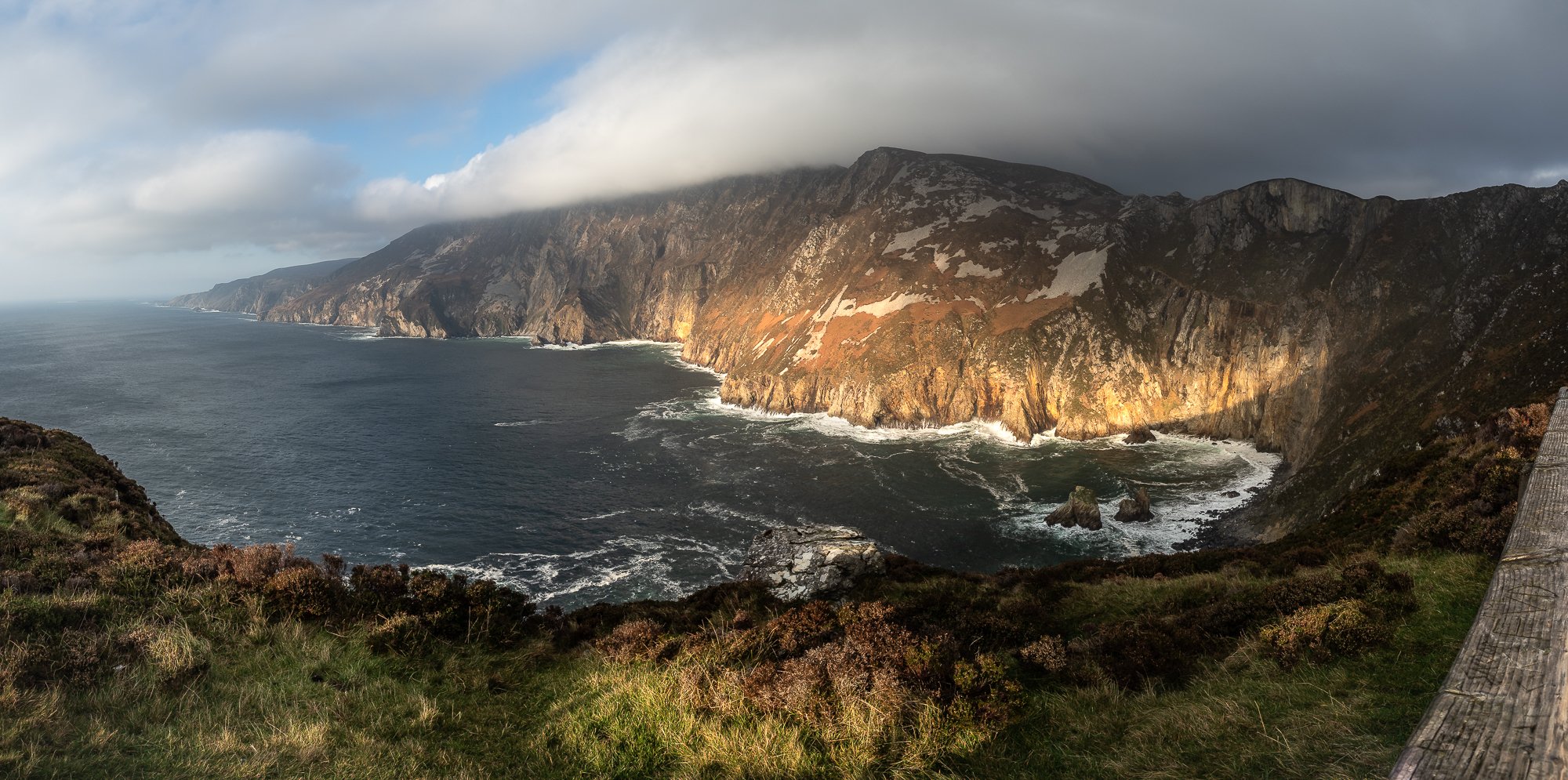
Seascape in Ireland. Giuseppe Milo. CC BY 2.0 DEED
Ireland, a nation renowned for breathtaking landscapes, may become the first European country to enshrine the rights of its nature into the national constitution. In December, the Oireachtas Joint Committee on Environment and Climate Action called on the government to begin steps towards a referendum. The referendum, if successful, would recognize that ecosystems possess legal rights comparable to those of humans and corporations.
In December, the Joint Committee on Environment and Climate Action proposed a series of administrative measures for drafting constitutional amendments to the Irish government. The amendments would bestow nature with inherent rights to existence, perpetuation and restoration. Elements of nature would be seen as having the rights to flourish and be respected. The amendment would additionally recognize that humans have a right to a clean environment and protect the right of any person or organization to defend or enforce those rights on the behalf of nature.
The movement to legislate the rights of nature has grown in recent years. In Ireland, the proposition to amend the constitution emanated from the loss of biodiversity within the country as of 2023. The Citizens’ Assembly on Biodiversity Loss addressed the unprecedented rate at which human activity has driven the mass extinction of plants and animals, with over 1 million more at risk of the same. The danger to Ireland's native species has been attributed to the overall change in its climate.
Similar to Ireland, the ecosystems of other countries have equally felt the effects of climate change. In the Andean plain of Bolivia, reduced precipitation and increased temperatures have facilitated rapid desertification. In Uganda, the pace of species extinctions has accelerated as a result of prolonged periods of drought and erratic rainfall due to deforestation. These countries, among others including Ecuador, New Zealand, and Spain, have a form of national law to recognize the rights of nature, or legal personhood for ecosystems. These laws typically provide a higher level of protection to ecosystems than environmental protection laws alone, although not all are constitutionally bound. Some countries that have written the Rights of Nature include Ecuador, New Zealand, India and Mexico.
Policymakers around the world have begun to embrace a changing idea of how nature itself is treated under law. Several governments have legally bound the ‘rights of nature’ to protect certain land and water from human development. In Bangladesh, all rivers are now under legal protection. In Colombia, the Supreme Court recognized the rights of the Amazon River. Ecuador, the first country in the world to recognize the rights of nature, gives “Mother Earth” legal standing in its constitution. This jurisprudence has prompted a massive shift away from the view of nature as a ‘thing’ that humans have a right to use and eventually destroy. Dr Peter Doran of the School of Law at Queen's University Belfast argued to the Joint Committee in Ireland that granting constitutional protection to nature would not only save species and habitats but also reorient human priorities, which would have much more long term positive consequences.
Despite the good intentions behind giving nature constitutional rights, some have called the law ‘anti-human,’ claiming that it will stop extractive projects such as mining or that the rights for nature are unlikely to provide a plausible solution to the issues environmentalists aim to resolve. Proponents respond that the laws aim to protect the integrity of nature so that it may persist in the future, not abolish the rights that humans have to, among other things, private property.
The Center for Democratic and Environmental Rights appeared before Ireland’s Joint Committee to testify for why the rights of nature should be constitutionally recognized. This next step for Ireland is now in the hands of the government and the Oireachtas (parliament). For legal effect, the amendments must be approved by both houses of the Oireachtas, Dail Eireann and the Seanad, and win a majority of the popular vote in a national referendum.
TO GET INVOLVED:
The Nature Conservancy is an organization focused on creating solutions to climate change and biodiversity loss. By tackling these issues with projects involving clean energy policies, carbon storage and agricultural innovation, there is no shortage of opportunities for the public to help. The organization lists ways to get involved on their website that range from volunteering to taking a pledge to donating.
Global Alliance for Rights of Nature is a global network of organizations made up of people from all walks of life who are committed to the recognition of the Rights of Nature. The group aims to honor the relationship between humans and nature, additionally pursuing the creation of a system that treats nature as a rights-bearing entity, not a resource to be exploited at will. To better emphasize the interconnectedness of humans and their environment, the group offers the opportunity to get involved as a member, donate, or even participate in internships.
Community Environmental Legal Defense Fund aims to build sustainable communities that assist people in asserting their right to local self-governance and the rights of nature. The group assists indigenous peoples, civil societies and communities in advancing laws for the protection of nature that involves providing legislative and policy drafting, legal research, and public engagement and education. With this, the public is able to join the movement, which offers many opportunities to volunteer in a community or help to organize a campaign.
EarthJustice is a nonprofit public interest environmental law organization that is founded on the belief that everyone has the right to a healthy environment. Through projects focusing on defending a right to clean air, clean water and wild places, the group believes that a better future can be built. With 15 offices and 200 lawyers, as well as an impressive total of 500 legal cases it has represented free of charge, there is no shortage of opportunities for the public to participate, whether through signing petitions or donating.
Mira White
Mira is a student at Brown University studying international and public affairs. Passionate about travel and language learning, she is eager to visit each continent to better understand the world and the people across it. In her free time she perfects her French, hoping to someday live in France working as a freelance journalist or in international affairs.
A Literary Pilgrimage: Colombia with Gabriel García Márquez
A travel itinerary for bibliophiles, Gabo fans and adventurers alike

Author Gabriel García Márquez, “Gabo,” as an older man. Sebástian Freire. CC BY-SA 2.0.
Author Gabriel García Márquez, affectionately nicknamed “Gabo,” put his native country of Colombia on the literary map through his novels and short stories.
Critics lauded his novel Love in The Time of Cholera, a tale of romance between social classes, as one of the best love stories of the 20th century. His work One Hundred Years of Solitude, a multi-generational novel about a family from an isolated town, is considered the Bible of magical realism, a genre that describes fantastical events in an otherwise realistic tone.
Adventurous travelers and bibliophiles alike can experience the magic and romance of Colombia through García Marquez's eyes with an itinerary based on his life and literature.

A colorful street scene in Cartagena’s historic center. Joe Ross. CC BY-SA 2.0.
1. Cartagena
In an interview with actor and filmmaker Salvatore Basile, García Márquez said, “I would say that I completed my education as a writer in Cartagena.” With that in mind, Caribbean-flanked Cartagena is the ideal place to begin your Gabo-inspired tour of Colombia.
García Márquez lived in Cartagena for a year as a young man and kept a winter house in the city as an older man. He sets much of Love in The Time of Cholera in Cartagena. During his time in Cartagena, he was known for lingering on the plazas, waiting for something interesting to happen.
To experience the city from Gabo’s perspective, people watch at the lush, lively Plaza Fernandez de Madrid and historic, central Plaza Bolivar. Grab a drink at El Coro, the upscale cocktail bar in The Sofitel Santa Clara hotel, which García Márquez frequented. Visit Gabo’s marble-clad final resting place at La Merced monastery on the University of Cartagena’s campus.
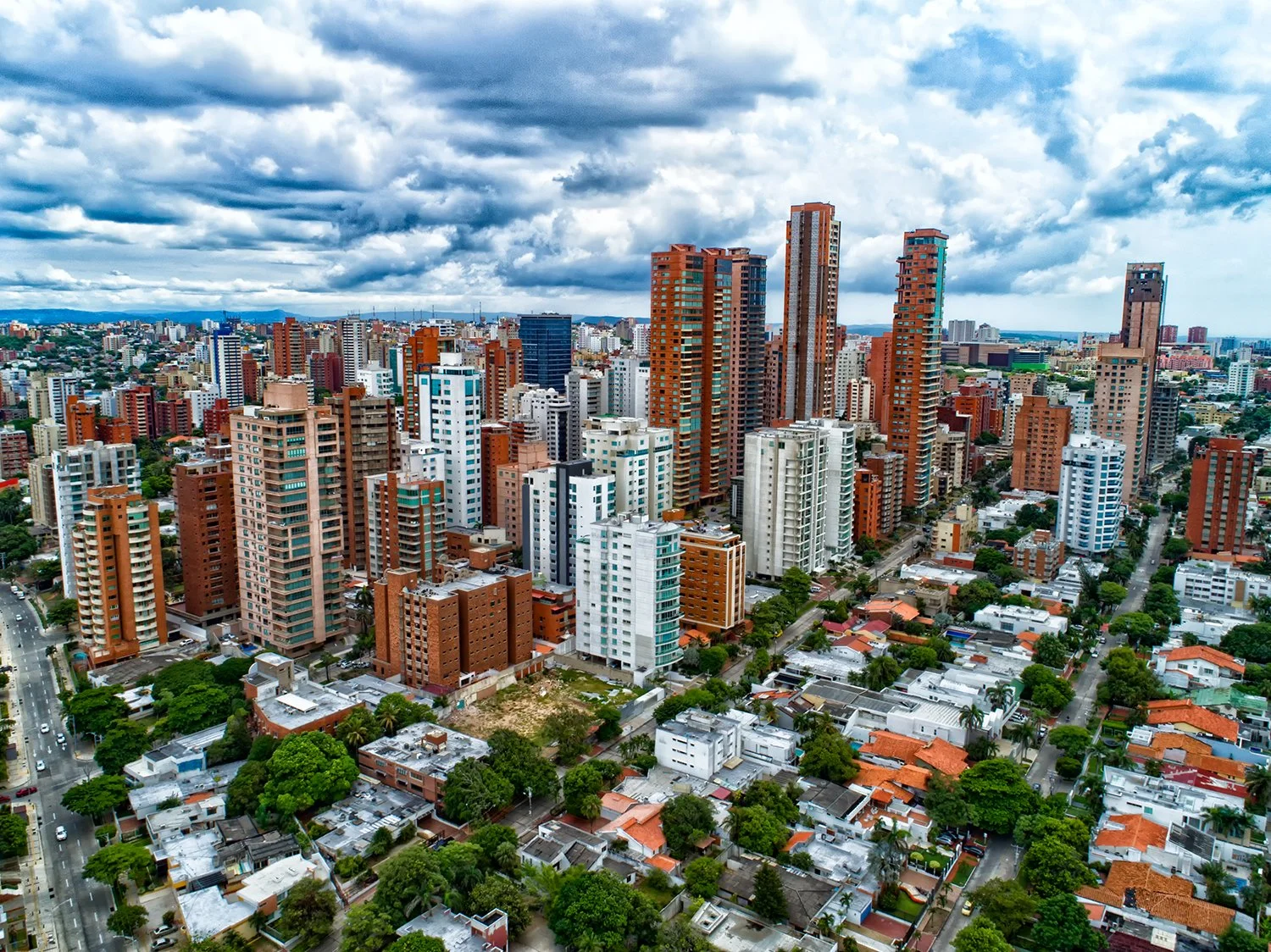
The orange-tinted cityscape of Barranquilla. Fernando Orozco. CC BY-NC-SA 2.0
2. Barranquilla
Following Gabo’s footsteps, travel from Cartagena to Barranquilla, a seaport known as Colombia’s “Golden Gate" because here the Caribbean meets the country’s major Magdalena River. Gabo lived here in the 1950s while he worked as a journalist.
While living in Barranquilla, García Márquez was a part of the Barranquilla Group, a collection of writers, journalists and philosophers who met Barranquilla in the mid-twentieth century. In addition to García Márquez, notable members include Álvaro Cepeda Samudio, Germán Vargas and Alfonso Fuenmayor. Allegedly, Gabo’s relationship with these men inspired the characters of the “four friends of Macondo” in One Hundred Years of Solitude.
Connect with Gabo and his Barranquilla Group friends at La Cueva, a bar where the Barranquilla Group of writers and journalists met. It continues to serve as a hub of cultural activity, serving traditional food like Butifarra ceviche and Cashew rice, as well as supporting Colombian literary magazines. Tour the peach-colored church, Iglesia Nuestra Senora del Perpetuo Socorro, where Gabo married his wife Mercedes Barcha.
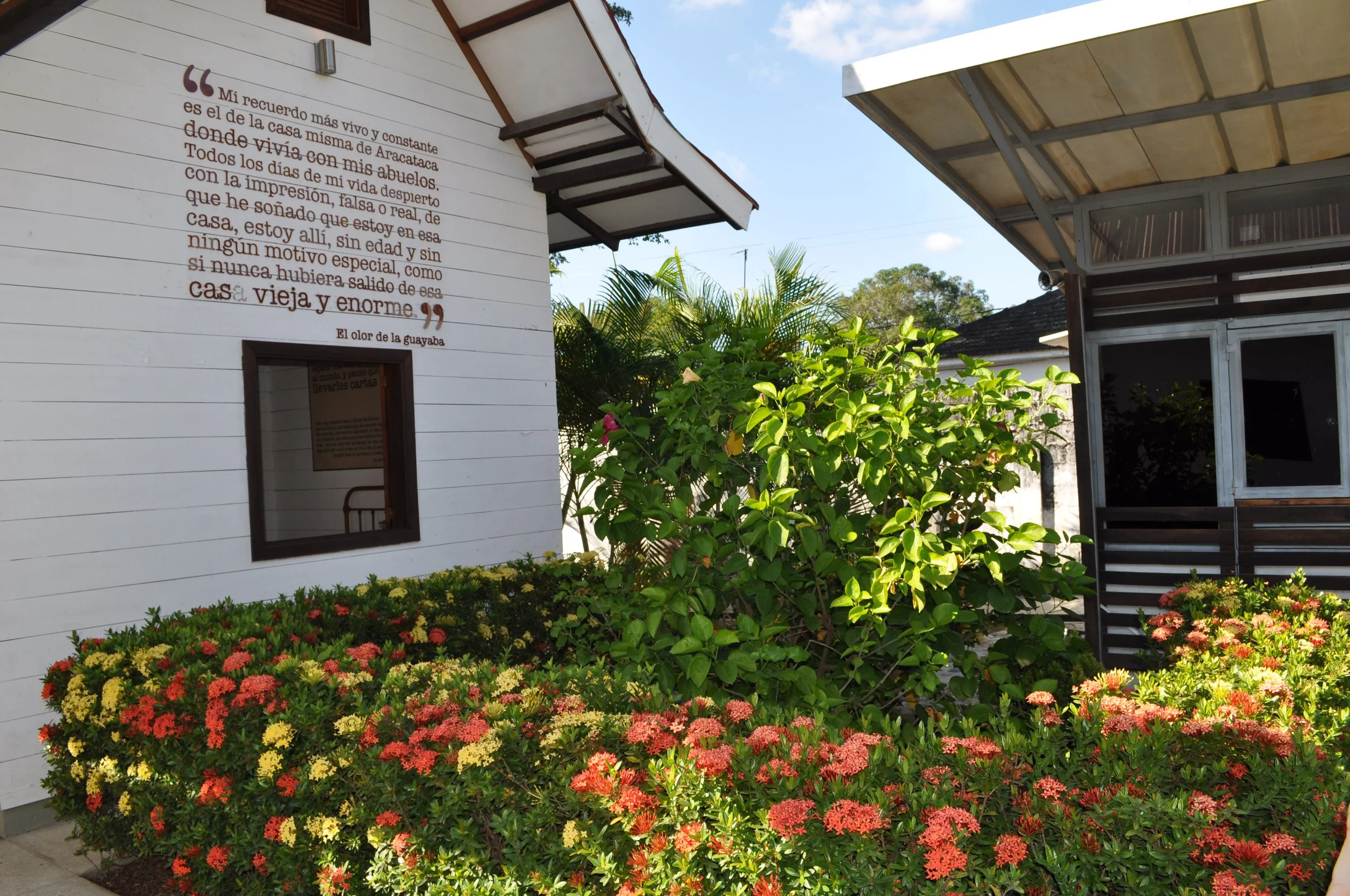
The Casa Museo Gabriel García Márquez, Gabo’s childhood home. Armando Calderón. CC BY-NC-ND 2.0.
3. Aracataca
After connecting with García Márquez’s early days as a writer in Barranquilla and Cartagena, go back to where it all began in Aracataca: Gabo’s steamy, sleepy and tropical hometown. Gabo’s success put Aracataca on the map, rejuvenating the town as small groups of literary tourists trickled in to see where a genius grew up. You can meander through the white house and its verdant garden where García Márquez lived until he was eight, Casa Museo Gabriel García Márquez.
In addition to being the locale of Gabo’s childhood, Aracataca inspired Macondo, the setting for One Hundred Years of Solitude. Stop for a photo opportunity in front of Aracataca’s bright, multicolored welcome sign, which includes an equally vivid Macando welcome sign in smaller letters.
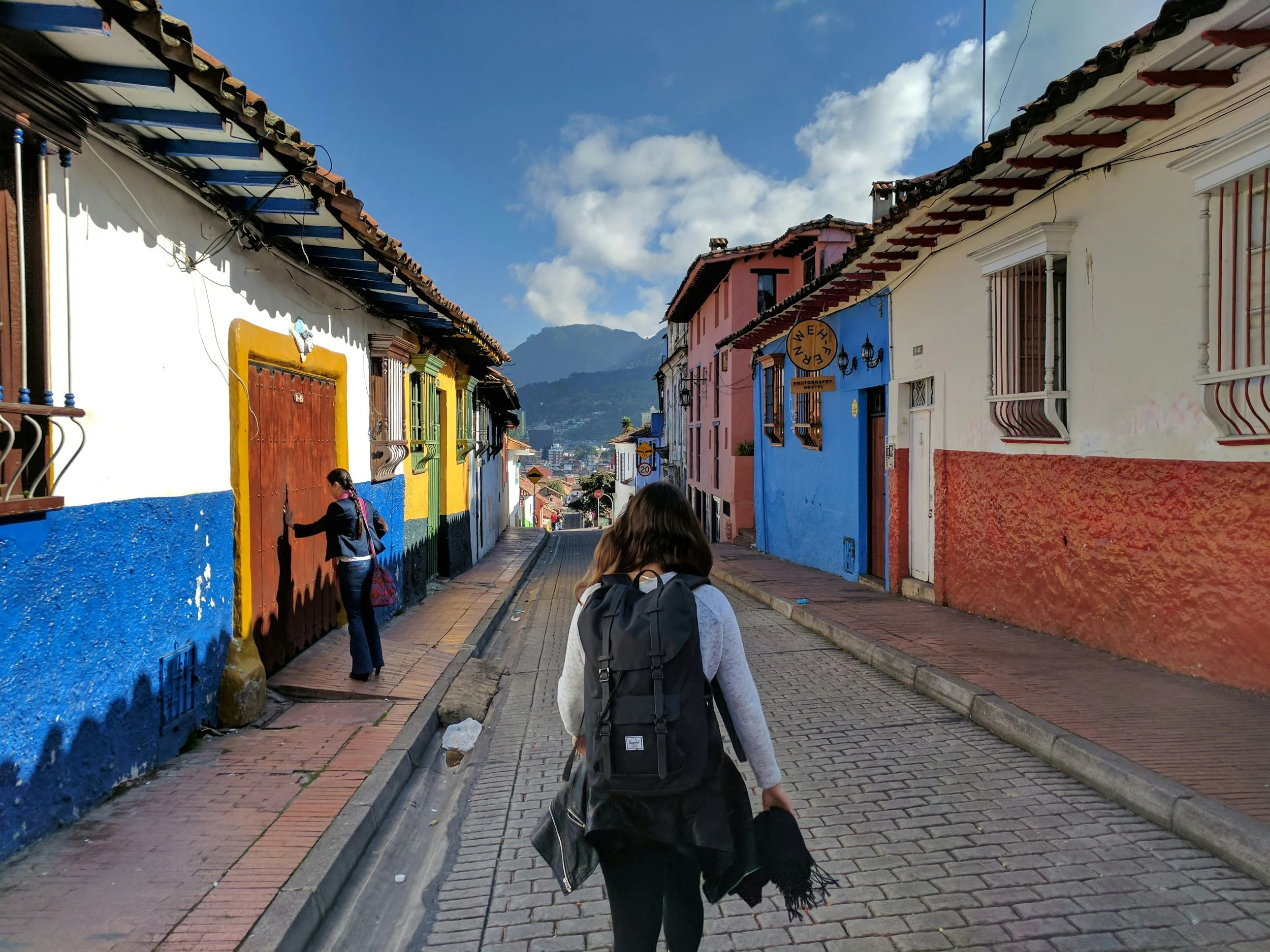
Walking the streets of La Candelaria neighborhood in Bogotá. Michael Barón. CC0.
4. Bogota
Conclude your tour of Gabo’s Colombia in mountainous Bogota. While not Gabo’s favorite city in Colombia, he called it “a remote, lugubrious city where an insomniac rain had been falling since the beginning of the sixteenth century” in his autobiography—it played a crucial role in his education.
García Márquez attended secondary school and earned a law degree in Bogota. He published his work in the city’s newspaper El Espectador. He also lived here temporarily with his wife later in his life, in the colonial neighborhood La Candelaria.
Learn more about his work and life at the Centro Cultural Gabriel García Márquez, a museum and hub of artistic activity in a circular building with its roof offering views of Bogota’s mountains and cityscape. Sip a coffee at Cafe Pasaje, an old-school coffee shop where Gabo allegedly had his java each day when he was a young journalist.

Annie O’Brien
Annie is a third-year student at George Washington University studying English, Creative Writing, and History. From Philadelphia, she is an avid reader, pop-culture enthusiast, and traveler. She’s always eager to talk about her adventures abroad and domestically, whether it's telling about the time she hitch-hiked in Bavaria or offering recommendations for the best bookstores in Key West. She hopes to become a published author one day. Enjoy more of her writing on her Substack.
Women Tuk-Tuk Drivers in Cambodia Fight Discrimination
Women in Cambodia fight discrimination to become Tuk-Tuk drivers as global corporations, such as Uber and Lyft, implement initiatives to promote the safety of female and non-binary drivers and passengers.
Read MoreFairies and Folklore: The Magic of Scotland and England
From castles to coves, uncover destinations steeped in the mythological histories of Scotland and England.
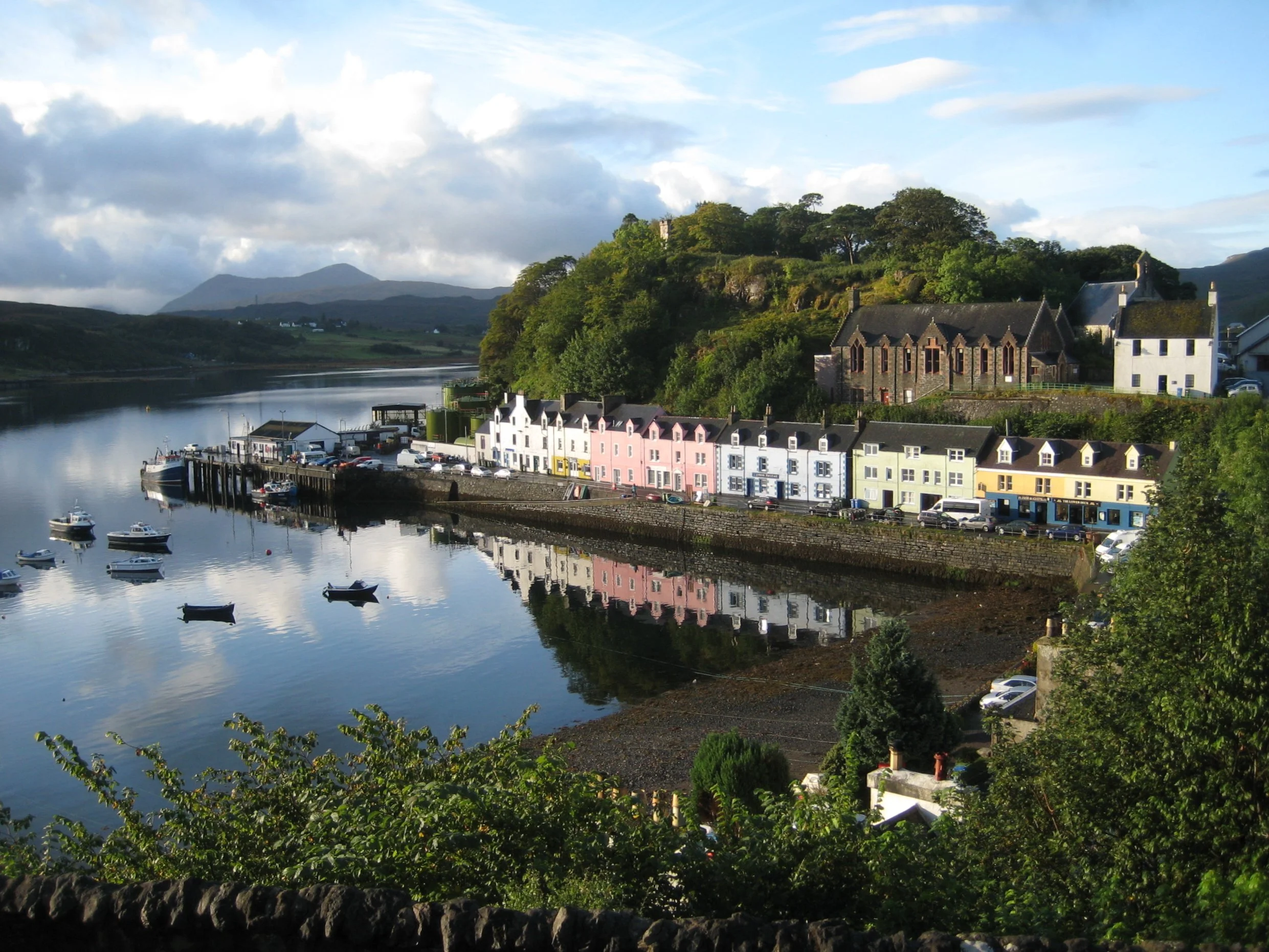
Portree, Isle of Skye’s capital city. CC BY 3.0
Whether your knowledge of fairies comes from nostalgic childhood tales or the well-informed worldbuilding of Tolkein, much of the folklore that has made its way into the popular imagination is embedded deep within the rolling hills of Scotland and England.
While each country has its variations of the myth, taking a tour through the whimsical high grassed countryside and rocky shores is a great way to take in some awe-inspiring views and understand the magic embedded in these countries.
Scotland
Located off of Scotland's northwest coast, the Isle of Skye is full of picturesque villages, cliffed shores and quaint fishing towns. But rather than only enjoying the colorful coastal houses on Portree, the island's capital, extend your adventure and visit various sights around the island boasting mythical pedigrees.
Fairy Pools
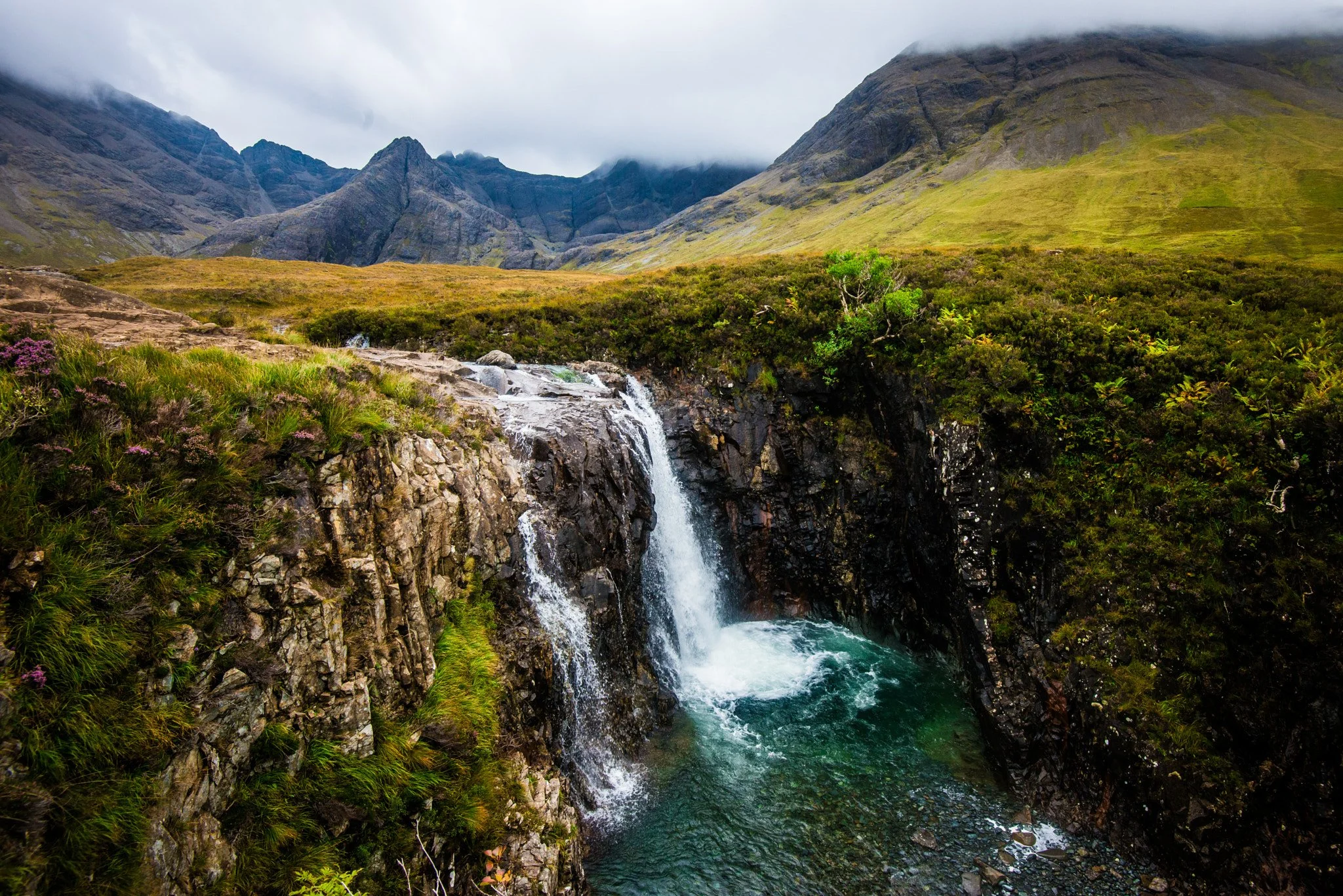
A waterfall at the Fairy Pools on the Isle of Skye. CC BY 3.0
A waterfall phenomenon in Glen Brittle, the falls are surrounded by sky-capped mountains and boast aqua-blue waters of astonishing clarity. Some claim if you’re lucky, you may spot a fae or two amongst the willowing grasses and purple flowers; if not, the red deer, sheep, and rabbits inhabiting the area will have to suffice.
The pool's name comes from the local legend that claims a Clan McLeod Chief married a fairy Princess. Additionally, the pools are said to attract selkies, a group of mythical creatures that spend the day on the coast as seals and then enjoy the pools at night after transitioning to human form.
Despite their charm, the Fairy Pools feature some brutally cold water temperatures, although it may be worthwhile to take a dip; as locals say, holding your head underwater for seven seconds is enough to bless you with the gift of eternal youth.
From the capital city of Portree, the Fairy Pools are a 35-minute drive and can be accessed through various tours operating on the island or of your own volition. The Fairy Pools walk is a 1.5-mile, easy hike to the pools from the parking lot.
Dunvegan Castle and Gardens
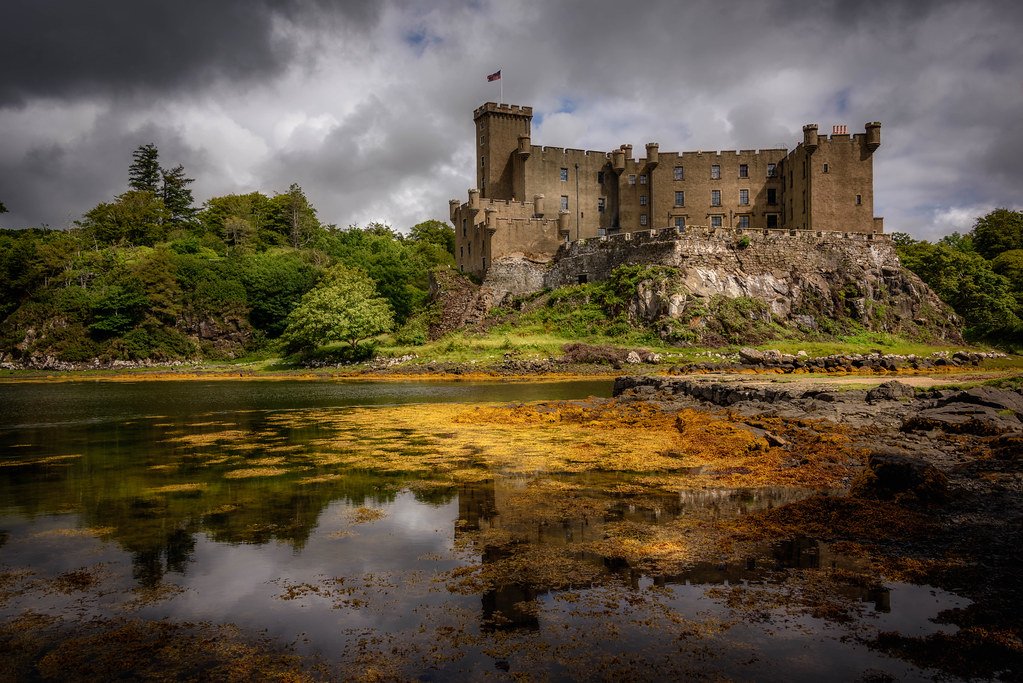
The Dunvegan Castle. CC BY-NC-ND 2.0 DEED
Open from March 29 to October 15, the Dunvegan Castle and Gardens is a medieval fortress dating back to the 1200s. Occupied by the same family for the last 800 years, the Hebridean castle is home to a few pieces of myth. On the Dunvegan property, one can walk across Fairy Bridge while exploring the grounds and even see the Fairy Flag, which is housed in the Castle.
The Fairy Flag is the prized silk scarf woven in the 4th century AD, either in Syria or Rhodes, and is said to possess miraculous powers instrumental in MacLeod’s battle victories. While there are two points of origin, a fairy origin and a crusader origin, the Fairy Bridge and Tower versions give the flag roots in folklore.
The Fairy Tower myth tells the tale of a restless MacLeod chief’s baby who was comforted one night by a fairy. The Fairy Bridge myth relates to the previously mentioned story of the MacLeod Chief and Fairy Princess; the story goes that the two parted ways on Fairy Bridge at Dunvegan, and the banner was his gift.
An astounding horticultural destination, Dunvegan boasts multiple gardens and woodland trails. The landscape and fauna are a wonder unto themselves. The gardens also feature lily ponds, gazebos and rare artifacts, such as a 17th-century sundial.
Located a 30-minute drive from Portree, the castle makes for an excellent excursion when visiting Scotland. While the Dunvegan Castle and Gardens offers visitor tours daily and make for a great day trip, the property's five holiday cottages allow visitors to enjoy an enchanting multi-day stay on the secluded property.
Fairy Glen
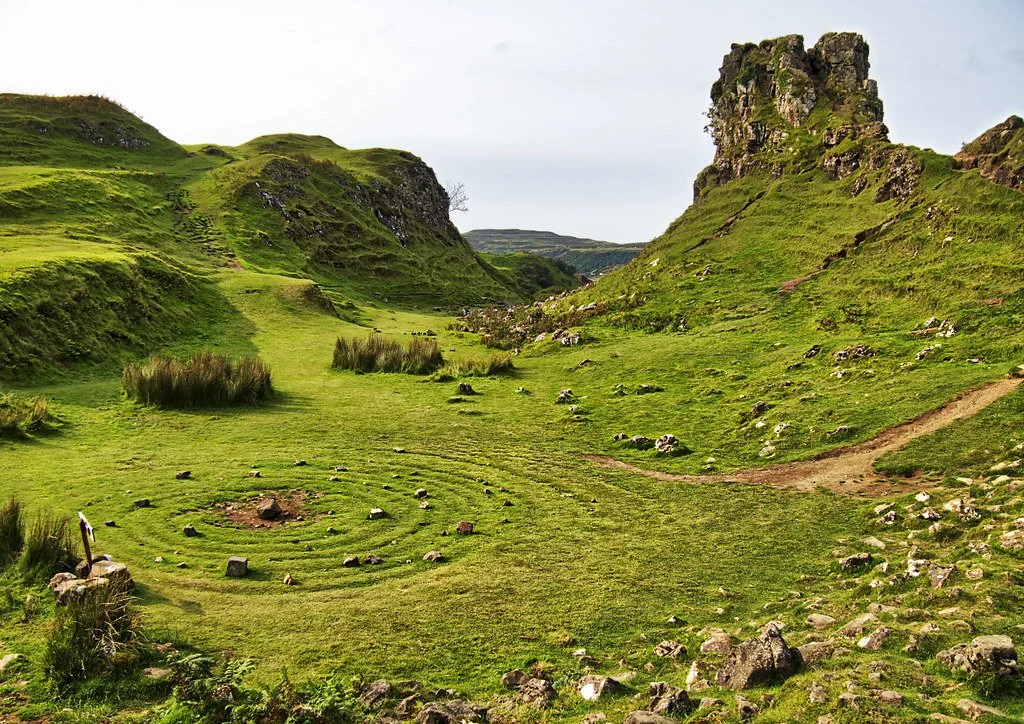
The labyrinth and peak at Fairy Glen on the Isle of Skye. CC BY NC-2.0
Protruding from the surrounding farmlands, Fairy Glen is a geographical landscape formed by an ancient landslide. The craggy formations and valleys are blanketed by a lush layer of green and are rumored to be home to the fae.
Climbing up Fairy Glen’s peak or walking beneath the cover of moss-engulfed trees will make anyone feel like they are walking amongst the faeries. Be sure to stop and make a wish at the stone labyrinth when you are making your way through.
Fairy Glen is about a 25-minute drive from Portree, and various tours include this location as a stop. From the destination's parking lot there is a one-mile walking circuit that showcases the grounds, but feel free to adventure on your own and enjoy this majestic landscape.
England
On the rugged Southwestern tip of England, Cornwall is home to many of the country's mythical and folktales. Cornwall has its own variety of fairies, the Piskeys, a lively and mischievous people who originated from tales of a Pygmy race in Cornwall during the Neolithic period. More than just fairies, Cornwall is rumored to be home to mermaids, giants, and various King Arthur myths.
Sennen Cove
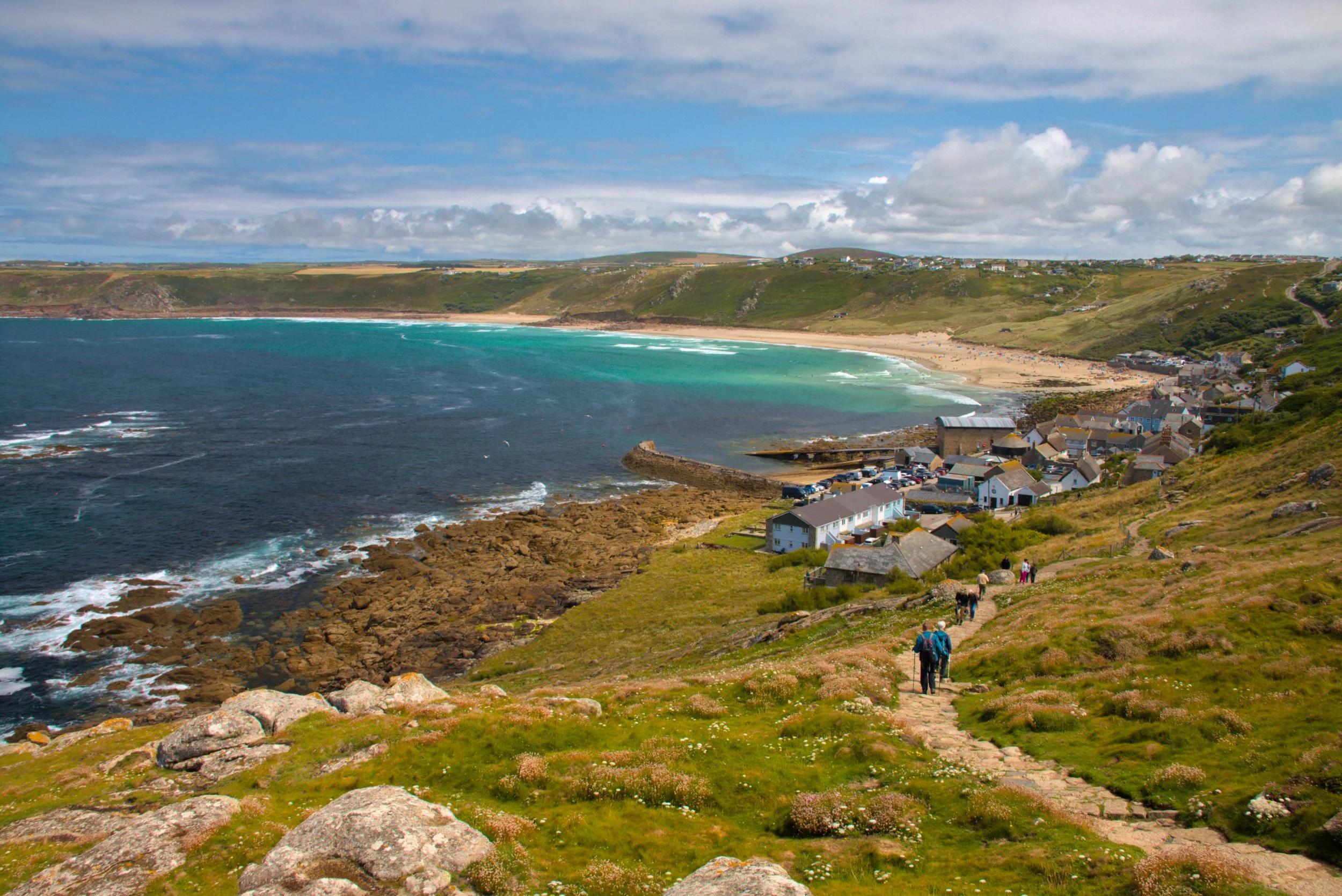
The coastline and surrounding shore at Sennen Cove. CC BY-SA 4.0 DEED.
England’s most westerly beach, Sennen Cove, is a white sand beach renowned for its excellent surfing conditions. In the early 20th century, American Anthropologist Walter Evan Wentz published "The Fairy Faith In Celtic Countries", conducting some of his research at Sennen Cove by speaking to locals about the dancing fairies. A study published at a similar time in the Journal of the Society for Psychic Research tells the story of Grace Penrose as written by E. Westlake. She speaks of miniature people in white dancing in the moonlight before being frightened and disappearing into a rock face along the shore.
To get to Sennen Cove, visitors can take a bus that leaves every two hours from Penzance or make the 20-minute drive themselves. Once at the Cove, you can enjoy Whitesands Bay, the stretch of white sand beach on the Cove’s coast. Overlooking the cove, stop at the Old Success Inn, a pub dating back to the 17th century, for lunch and drink. The Inn has a rich history in Sennen Cove and is rumored to be a site for mermaid sightings.
Elusive in nature, when visiting Sennen Cove, you may not stumble upon any fairies in the moonlight or catch a glimpse of mermaid tales ducking under the blue waves, but the Cove is perfect for a beach getaway anyway.
St. Michael’s Mount
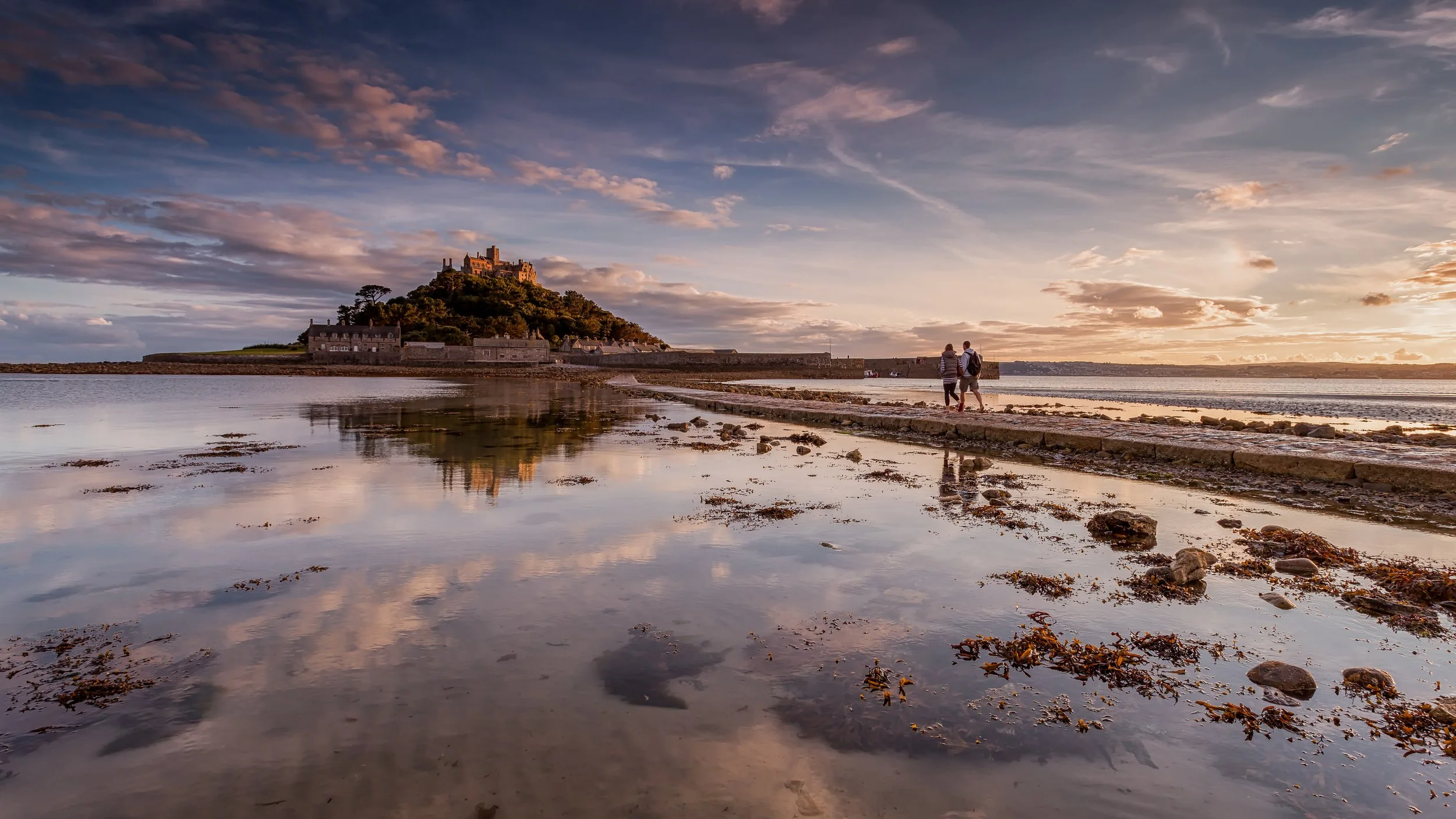
The castle and causeway leading up to St. Michael’s Mount. CC BY-SA 3.0 DEED
A tidal island in Cornwall’s Mount Bay, St. Michael’s Mount is home to one of England’s most famous legends. Rumors of mermaids luring sailors to the island’s shores date as far back as 495 AD, but even more prominent is the Cornish tale of Jack the Giant Killer. With the island as his home, the evil Cormoran was defeated by none other than Jack after a long reign of terror. Per the legend, when visiting, be sure to hike up the mountain and around the island in search of the giant's missing stone heart.
Outside of folklore, the site is also a religious destination. Archangel Michael was rumored to have guided sailors to safety at the current location of the castle’s entry. Named after that patron saint of fishermen, St. Michael’s causeway allows travelers and pilgrims alike to walk from the mainland to the island during low tide.
To reach the island, walking over the causeway is one option; however, if it happens to be high tide, from March 29 to October 31 there are boats running from Marazion Beach to the island. Riddled with history, the castle, church and surrounding gardens offer a fusion of folk and faith, making Mount St. Michael a beautiful, enchanting destination on a Celtic fairytale tour.
Nicola is studying English Literature at George Washington University, where she also reports for the student newspaper, The Hatchet. Nicola's passion for literature and writing has sparked an interest in exploring the broader context surrounding written texts. Researching and writing for Catalyst Planet allows her to investigate nuanced issues that intersect with her interests in art history, culinary practices, and cultural traditions.
Nicola is studying English Literature at George Washington University, where she also reports for the student newspaper, The Hatchet. Nicola's passion for literature and writing has sparked an interest in exploring the broader context surrounding written texts. Researching and writing for Catalyst Planet allows her to investigate nuanced issues that intersect with her interests in art history, culinary practices, and cultural traditions.
Nicola is studying English Literature at George Washington University, where she also reports for the student newspaper, The Hatchet. Nicola's passion for literature and writing has sparked an interest in exploring the broader context surrounding written texts. Researching and writing for Catalyst Planet allows her to investigate nuanced issues that intersect with her interests in art history, culinary practices, and cultural traditions. Nicola is studying English Literature at George Washington University, where she also reports for the student newspaper, The Hatchet. Nicola's passion for literature and writing has sparked an interest in exploring the broader context surrounding written texts. Researching and writing for Catalyst Planet allows her to investigate nuanced issues that intersect with her interests in art history, culinary practices, and cultural traditions.

Nicola Degregorio
Nicola is studying English Literature at George Washington University, where she also reports for the student newspaper, The Hatchet. Nicola's passion for literature and writing has sparked an interest in exploring the broader context surrounding written texts. Researching and writing for Catalyst Planet allows her to investigate nuanced issues that intersect with her interests in art history, culinary practices, and cultural traditions.
Graffiti Capitals: 9 of the World’s Best Cities for Street Art
From Argentina to Estonia, artists around the world commemorate and contribute to city culture through street art.
Read MoreThe Dark Side of Light Pollution
As light pollution engulfs over 80 percent of the world's skies, artificial light has demonstrated its detrimental impacts on the health of humans, ecosystems and the planet.

Light pollution in Los Angeles. Erik Levin. CC BY-NC 2.0
Artificial lighting fixtures like street lights and billboards have become commonplace for billions across the globe. While artificial light has been in use for centuries, light pollution has dramatically increased over the past few decades. Considering the global urban population is projected to rise by up to 68 percent in the next 25 years, the demand for artificial light is unlikely to subside.
Light is integral to life on Earth, influencing the planet's creatures down to their DNA. From reproduction to protection from predators, many life-sustaining behaviors rely on the cycle of day and night. Artificial light has been shown to disrupt life in many kinds of ecosystems. In the wetlands, artificial light interferes with nocturnal mating rituals. Starlight and the Sun's rays also serve as important navigation devices for many animals and insects. When artificial light disrupts these natural signals animals like baby sea turtles and birds can be drawn to their demise.
Within ecosystems, seemingly small changes brought by the presence of artificial light can have cascading effects. For example, some predators have evolved to target insects swarming artificial light. As vital members of the food chain, the decline of insect populations poses a threat to everything in the food web.
The reach of artificial light is not limited to urban areas, as it has been found to seep below the soil and into the oceans. Artificial light hinders the ability of microorganisms in the dirt to use carbon. Meanwhile, artificial light in the oceans has been found at depths of more than 66 feet, affecting the life-sustaining activities of many marine species.
The negative effects of artificial light are not always direct. The electricity required to sustain the current consumption of artificial light mostly comes from coal-fueled power plants. This production emits 15 million tons of carbon dioxide into the atmosphere every year, contributing to climate change and posing further threats to ecosystems.
People are not immune to the negative effects of their own creations. A mere 15 minutes of exposure to bright artificial light has the power to halt melatonin production. Due to its disruptive effects on circadian rhythms, artificial light can contribute to health conditions ranging from sleep disorders to heart disease. While artificial light is often used as a tool for safety and security, it can have the opposite effect. For example, glaring light can cause poor visibility.
While artificial light may be necessary for people to function at night, nearly one-third of all lighting is unnecessary, leaving ample room to cut down on its negative effects. Scholars propose prioritizing dark sky conservation in electric lighting design, using warm-colored light, and avoiding blue-colored light. Blue-colored light is particularly harmful for people and ecosystems alike because it scatters farther than warm-colored light. People can limit their light pollution by shielding, dimming, and turning off lights. Advocacy organizations suggest keeping light pollution in mind when shopping for lighting products. Environmentally friendly models will have adequate shielding to prevent glare and limit the amount of light escaping into surrounding areas.
TO GET INVOLVED
To advocate for limiting light pollution, get involved in non-profits like DarkSky and Light Justice, which offer opportunities for advocacy and education.
Madison Paulus
Madison is a student at George Washington University studying international affairs, journalism, mass communication, and Arabic. Born and raised in Seattle, Washington, Madison grew up in a creative, open-minded environment. With passions for human rights and social justice, Madison uses her writing skills to educate and advocate. In the future, Madison hopes to pursue a career in science communication or travel journalism.
Rural Roots, Green Future: Forest Conservation in Romania
With the loss of centuries-old trees, Romania looks to the preservation of its ecosystem to protect both past and future.
Read More10 Best Places to Travel in the US this Spring
A guide to the most beautiful spots to experience in the springtime
Read MoreChile’s Forest Fires: A Glimpse Through the Smoke
Wildfires are engulfing Chile, claiming the lives of about 130 people so far and sparking questions about potential causes and solutions.
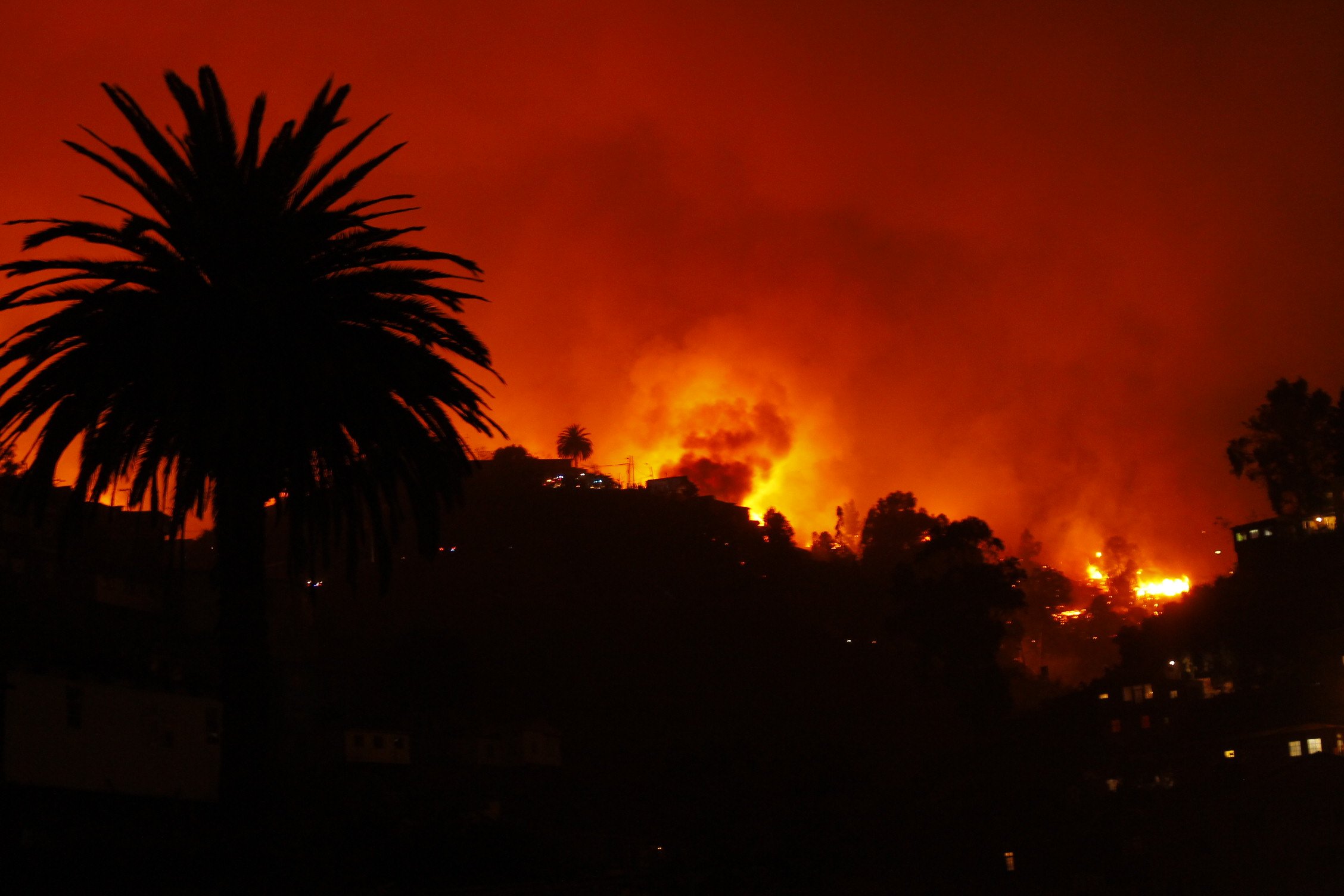
A 2014 forest fire in the Valparaíso region of Chile. Gabriela. CC BY-NC 2.0
As of February 9, 2024, nearly 5,000 people have been affected by what appear to be Chile’s deadliest forest fires on record. These devastating waves of flame follow the planet's hottest year and hottest January to date. Chile is not the only South American country to face an inferno following a scorching January, with forest fires reported in Colombia and Argentina as well.
Fires and climate change are in a feedback loop, amplifying each other. Consequences of climate change, including higher temperatures and heat waves, contribute to drier conditions and longer fire seasons. The fires create areas of dead, dry vegetation at greater risk of future fires, while the smoke from the fires pumps carbon dioxide to the atmosphere, further warming the planet.
As the planet continues to warm, natural phenomena such as El Nino are intensified, resulting in hotter heat waves accompanied by dry spells, particularly affecting countries in northern South America such as Colombia and Venezuela. As recorded in 2018, about 21% of Chile is forest. The nation's tree cover, paired with its long dry season and heat waves, has proved to be a deadly combination. Forest fires in Chile have contributed to a range of destructive consequences throughout the years, including the loss of lives and biodiversity.
Chile’s government has made strides to address climate change as a member of 20 international environmental agreements. Chile’s Forestry Service (CONAF) collaborates with the private forestry sector to implement preventative measures. In 2021, former Chilean President Sebastián Piñera presented the National Forest Fire Protection Plan. This plan allocated necessary resources to fire prevention and management, including firefighters, vehicles and technologies to predict and monitor fires. Despite these efforts, forest fires have continued in the country.
Scholars have identified that preventative measures are necessary in addressing forest fires. For example, controlled burns have been used by Indigenous People in North America for millenniums. Controlled burns are meticulously planned fires intentionally set to improve the health of a forest and reduce the risk of large-scale forest fires by decreasing the presence of dry vegetation. Other innovative measures to prevent forest fires include a gel-like fire retardant developed by researchers at Stanford University and technologies that can predict wildfires like Chile’s “Red Button” program.
Despite the issue of wildfires being amplified by climate change, about 99% of forest fires in Chile are caused by people, which is why education is another critical preventative measure. Tactics people can employ to prevent forest fires include taking steps to avoid creating sparks or fire when the area is hot, dry and windy and to refrain from driving over dry vegetation, as vehicle exhaust can reach temperatures over 1,000 degrees Fahrenheit.
Currently, the Chilean government is working tirelessly to combat the ongoing forest fires. For those looking to support these efforts, nonprofits like GlobalGiving provide platforms to donate to those affected, and social media offers a way for everyone to raise awareness.
Madison Paulus
Madison is a student at George Washington University studying international affairs, journalism, mass communication, and Arabic. Born and raised in Seattle, Washington, Madison grew up in a creative, open-minded environment. With passions for human rights and social justice, Madison uses her writing skills to educate and advocate. In the future, Madison hopes to pursue a career in science communication or travel journalism.
The Rules of War in the Israel-Hamas Conflict
Human rights organizations report on dire humanitarian conditions in Israel and Palestine, alleging violations of international law.
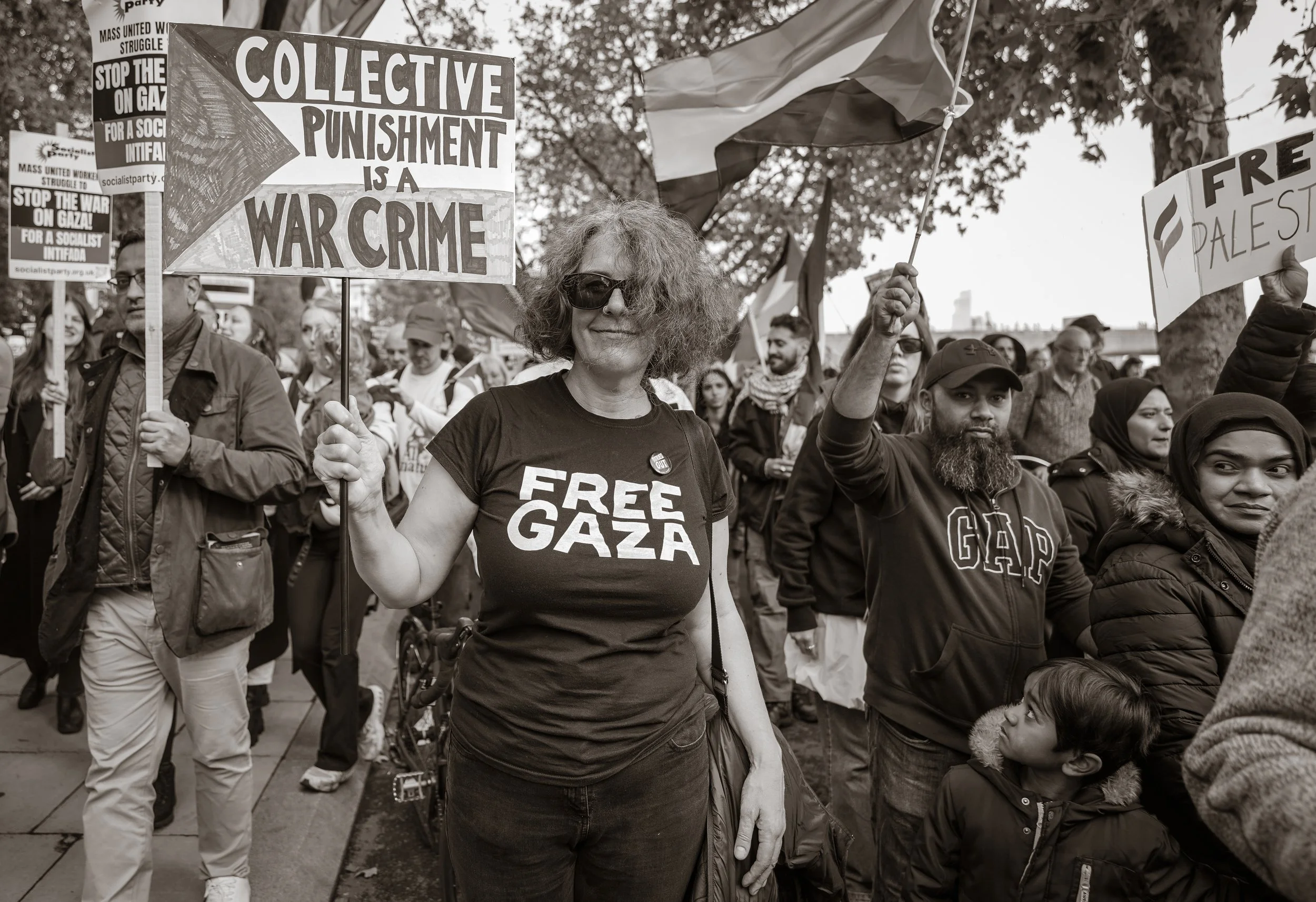
London Demonstration for Palestine. Alisdare Hickson. CC BY-SA 2.0 DEED
Since the escalation of violence in the conflict between Israeli forces and Palestinian armed factions, alleged violations of International Humanitarian Law (IHL) have surfaced. Both sides have faced criticism regarding allegations that may constitute a breach of IHL.
The United Nations Office for the Coordination of Humanitarian Affairs (OCHA) describes IHL law designed to safeguard civilians and prohibit indiscriminate attacks against them. This provision is binding on all armed groups involved in a conflict, regardless of reciprocal actions. The OCHA, with this law in mind, has drawn up potential allegations against Israeli and Palestinian combatants, which take aim at Israeli military tactics and use of prohibited weapons as well as Palestinian armed groups’ conduct.
With the intensification of the violence and the number of Palestinians who have been displaced, there has been rising criticism regarding the weaponry and tactics that Israel has employed against Palestine. More serious allegations include the use of white phosphorus in well-populated areas of Gaza, which has harmful effects on human tissue. This, among other tactics such as blockades and airstrikes, have resulted in high civilian casualties, raising questions with regard to the potential for indiscriminate suffering and collective punishment.
Palestinian actors have also breached rules of IHL. Human Rights Watch reports that armed groups, such as Hamas, have used indiscriminate rocket firing into Israeli territories, giving reason to accuse those involved of targeting Israeli civilians specifically, warranting a war crime.
Apart from OCHA, other human rights organizations have also begun to contend the violence as war crime and collective punishment. Amnesty International, an organization focused on human rights, has found Israel’s system of governing Palestinians in Israel and the Occupied Palestinian Territories to be oppressive and discriminatory. Citing the forced eviction of thousands of Palestinians, use of arbitrary detention by Israeli authorities and torture or ill-treatment of civilians, Amnesty has expressed the belief that Israel’s actions constitute a system of aparthied under international law.
The International Federation For Human Rights (FIDH) has additionally expressed concern over the targeting of civilians and human rights violations in Israel and the occupied territories. From the gathered evidence of human rights abuses, FIDH has acknowledged a tightened system of apartheid by Israel, involving the displacement of Palestinians in the West Bank, denial of freedom of movement and incidents of torture, all amounting to crimes against humanity. As of November 2023, Israel held close to 7,000 Palestinians that, with restrictions on water and overcrowded conditions, subjected detainees to what is now being considered ill-treatment and collective punishment. Tal Steiner, executive director of the Public Committee Against Torture in Israel, commented on the treatment of Palestinian detainees, saying that “Punitive detention conditions, arbitrary violence and humiliation of detainees and the intentional infliction of torture, should all be absolutely prohibited and unacceptable.”
The International Criminal Court (ICC) has become involved with the conflict as a potential route for prosecuting those accused of war crime and human rights abuses. Israel has argued that the ICC does not have jurisdiction because of its views regarding Palestine’s statehood, however, the mandate by ICC has gathered international support as viable protection against war crimes. The collection of evidence gathered by human rights organizations has aided in the investigation by the ICC, and the pursuit of accountability in this current situation has been viewed as one of the most crucial steps in ending the violence.
Both the Israeli and Palestinian governments and terrorist organizations like Hamas are responsible for upholding human rights, regardless of the applicability of international law in the case of the conflict between the two. Those infractions adjudicated as war crimes may be subject to legal repercussions, but as the international community awaits further development, accountability as an avenue for resolution remains integral.
Mira White
Mira is a student at Brown University studying international and public affairs. Passionate about travel and language learning, she is eager to visit each continent to better understand the world and the people across it. In her free time she perfects her French, hoping to someday live in France working as a freelance journalist or in international affairs.
Dive into Songkran: The Thai New Year Festival
Want to experience a month-long celebration featuring water battles in the streets and other amazing festivities? Discover the Thai Songkran Festival.
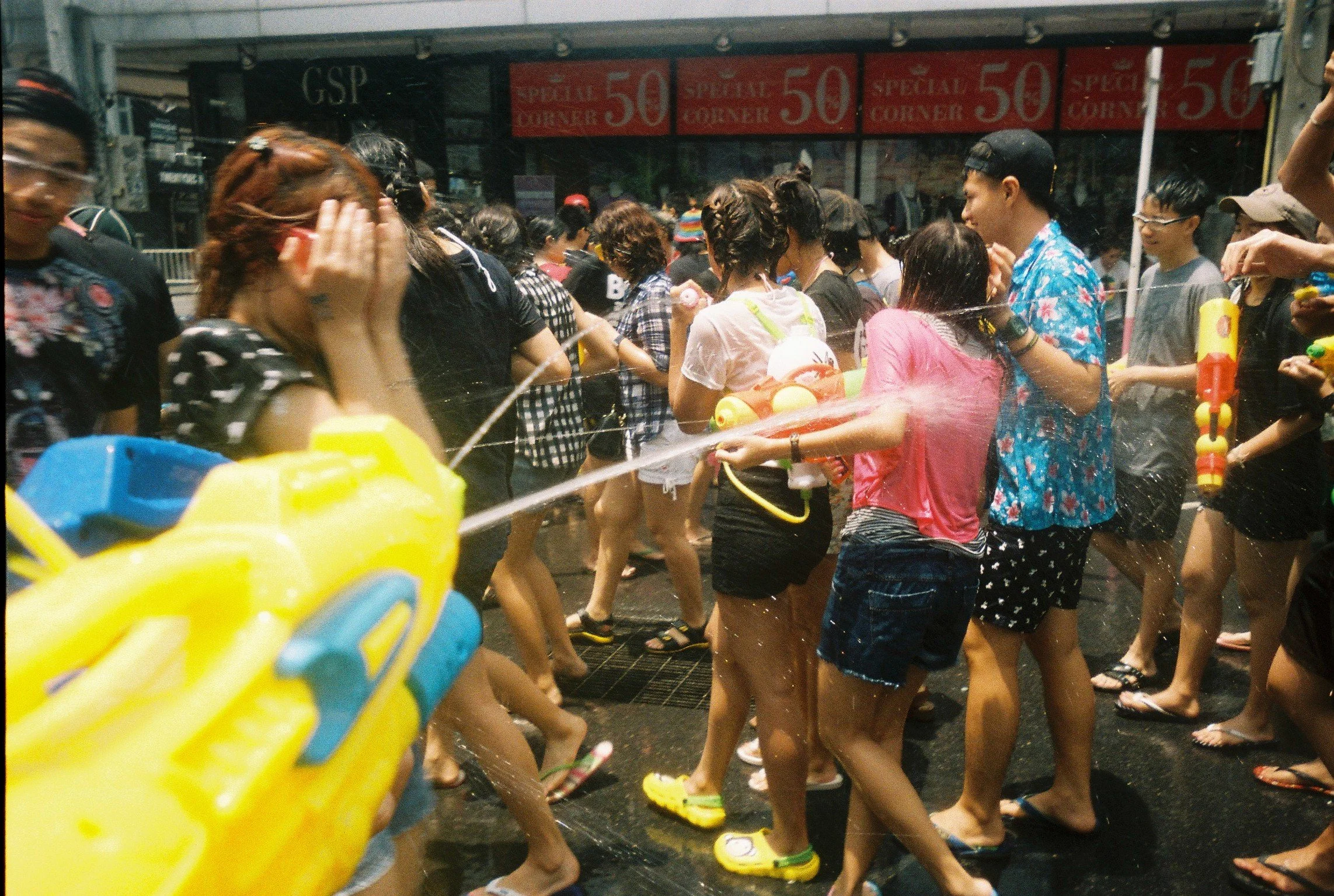
A water fight during the 2015 Songkran Festival in Thailand. Sano Rin. CC BY-NC 2.0
Thousands of international travelers are drawn to Thailand each year to celebrate the Songkran Festival, also known as Thai New Year. Songkran has been celebrated for thousands of years, but this year is special. In 2023, UNESCO (United Nations Educational, Scientific and Cultural Organization) added the festival to the Intangible Cultural Heritage of Humanity list. In honor of this recognition, the Thai government plans to hold Songkran festivities for the entire month of April 2024, instead of the usual three-day period between April 13th and 15th.
The Songkran Festival has evolved over the years. The first recorded reference to the holiday dates back to the 15th century, with some scholars theorizing that it was derived from the Indian Holi Festival. The Sanskrit word for “movement” is the root of the term “Songkran,” which refers to the movement of the sun from the astrological months of Pisces to Aries during April.
Water is a focal point of many Songkran Festival traditions, symbolizing cleansing and good fortune for the coming year. Rod Nam Dam Hua is a tradition in which youngsters pour scented water on their elders' hands to express gratitude. Scented water is also sprinkled on Buddha statues to bring prosperity, and respect for ancestors is shown by bathing their urns. According to some scholars, the notorious water battles began to promote tourism during the 20th century. Other traditions include offering food to Buddhist monks and bringing sand pagodas to local temples to replenish the sand tracked out of the temples throughout the year.
April is the hottest part of the year in Thailand. If you want to beat the heat by getting soaked during the water battles, check out streets like Khao San Road in Bangkok, or other popular walking streets in cities like Pattaya or Chiang Mai. As locals and tourists drench each other with buckets and colorful squirt guns, music and the aromas of street foods like Thai fried chicken (called Gai Tod) fill the air.
If water fights aren’t your thing, April is still a great time to experience Thailand. Travelers can experience a variety of activities from Thai beauty pageants to boat races. Thailand's natural environments boast breathtaking destinations from white sand beaches featuring coral reefs to lush hiking trails. For those yearning to see some historical wonders, Thailand offers ancient destinations like the city of Ayutthaya and the Phanom Rung temple complex. You can then recover from a long day of fun with revitalizing Thai dishes such as beef curried noodles, called Christao Khao Soy Nuea, or Bangkok Glutton Som Tum, a Green Papaya salad.
As Thais gear up for this year's Songkran Festival, it is important for travelers to stay up to date on Covid-related travel protocols and other ways to be respectful during the celebrations. For all the water-loving cultural fanatics, the 2024 Songkran Festival awaits you.
Madison Paulus
Madison is a student at George Washington University studying international affairs, journalism, mass communication, and Arabic. Born and raised in Seattle, Washington, Madison grew up in a creative, open-minded environment. With passions for human rights and social justice, Madison uses her writing skills to educate and advocate. In the future, Madison hopes to pursue a career in science communication or travel journalism.
The First Documentary? Or an Utter Falsehood?: "Nanook of the North"
Cemented as a piece of cultural iconography of the Inuit Peoples, "Nanook of the North" exemplifies how art and exploitation can coexist.
Read MoreJourney through the Wind and Waterfalls of South America
A group of friends started a journey to Argentina, Chile, Bolivia, Uruguay, Paraguay and Southern Brazil in their old and rusty Land Rover. They encountered lots of winds, emptiness, pampas, bustling cities, animals, deserts and waterfalls—all wrapped up in just under 6 minutes. Enjoy the ride!
CONNECT WITH VINCENT URBAN
Love is Universal: 7 Romantic Traditions from Across the Globe
Exploring the unique ways different cultures express love.
Read MoreThe War on Journalists in the Israel-Hamas War
The Israel-Hamas War is the deadliest conflict for journalists in 30 years, at least 83 journalists have been confirmed dead.
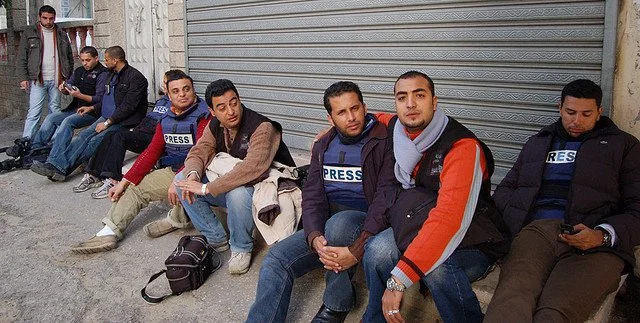
Al Jazeera’s Gaza crew and journalists. Global Panorama. CC BY-SA 2.0 DEED
Since the start of the Israel-Hamas war on October 7, there has been an unprecedented amount of journalist death and injury. Facing high risks to cover the unfolding conflict without guaranteed safety, this war has claimed more journalists than any other in the last 30 years.
As of January 24, at least 83 journalists and media workers have been confirmed dead. Among them, 76 were Palestinian, four Israeli and three Lebanese, according to the Committee to Protect Journalists (CPJ). Similarly, the International Federation of Journalists (IFJ) reported an estimated 94 journalists that have been killed and 400 others imprisoned. IFJ has called on the International Criminal Court (ICC) prosecutors to investigate the deaths of these journalists, though Israel has argued that the ICC has no jurisdiction in the conflict because the Palestinian territories are not an independent sovereign state.
The Israel-Gaza war has become the most deadly conflict for members of the press. In 2022, 15 journalists were killed in Ukraine, 30 in Latin America and at least five in Haiti, making the amount of journalists killed in Gaza in just a few months of war greater than all of those killed worldwide in 2022. Because of such an increase, some believe that journalists are being explicitly targeted for the information that they aim to provide to the public.
On November 21, correspondent Farah Omar and cameraman Rabih al-Maamari were killed in Lebanon by two missiles fired by an Israeli warplane. The Al-Mayadeen TV channel that the broadcasters worked for announced that they were covering back and forth fire on the Tayr Harfa/Al-Jebin triangle in Southern Lebanon between Israeli forces and Hezbollah when they were hit. In a statement, the TV channel said that it believes its journalists were deliberately targeted for its — the channel’s — pro-Palestinian views. In a separate statement, Lebanese Prime Minister Najib Mikati alleged that the Israeli strike was an attempt to silence the media.
Consequently, the CPJ has accused the Israeli military of targeting journalists in Gaza. One instance includes Al Jazeera camera operator Samir Abudaqa, who was injured during a drone strike and forced to take shelter in a UN school. Those who tried to help Abudaqa to get him to safety were shot and Abudaqa died due to his injuries.
Other journalists have reported similar instances, but where their families have been targeted. Anas Al-Sharif, Al Jazeera journalist, told the news channel of phone calls that he had received from the Israeli army instructing him to cease his news coverage and leave Gaza. Following these threats, Al-Sharif’s father was killed by an Israeli airstrike on his home. Such death and violence resulted in a report last May by the CPJ that documented a “deadly pattern” of journalists deaths by Israeli forces; a pattern of killing journalists that was observed even before the latest conflict in Gaza.
Across global media there has been outrage over a lack of accountability of Israel’s killing of journalists in Gaza. In the United States some journalists have held vigils for fallen colleagues, but there has been an overall lack of public commentary from journalistic institutions themselves. Staff at the Los Angeles Times displayed their solidarity with fellow journalists in Gaza by signing an open letter condemning the killings and criticizing Western media’s lack of coverage of Israel’s actions. The paper subsequently suspended these staff members from coverage of the war for what LA Times cited as a violation of its ethics policy. This outcome has caused some journalists to remove their names from the letter, fearing reprisal from their workplaces, and left others questioning the Biden administration's support of press freedom and Israeli accountability.
Journalists have additionally reported feeling less safe wearing a press vest and that being identified as a member of the fourth estate could make them or their families targets for Israeli forces.
These patterns of violence have left journalists in a precarious situation that has broader global implications. Without being able to report what is going on in Gaza, the role of these journalists only becomes more vital. Millions of people have relied on the accurate information provided by journalists to understand this conflict, and without them are left only with misinformation that may instead fuel it further.
Mira White
Mira is a student at Brown University studying international and public affairs. Passionate about travel and language learning, she is eager to visit each continent to better understand the world and the people across it. In her free time she perfects her French, hoping to someday live in France working as a freelance journalist or in international affairs.