Chasing Aurora: Where To See The Northern Lights

From Norway to New Zealand, these five spots are perfect for experiencing the elusive beauty of the Aurora Borealis.

The Northern Lights as seen from the southern coast of Iceland. Cameron Pickett. CC BY 2.0.

The Aurora Borealis, better known as the Northern Lights, is one of the most magical natural phenomena to witness in person. It is caused by electrical interactions in the upper atmosphere that release waves of normally green and yellow light depending on which elements have reacted. Environmental conditions need to be perfect in order to properly experience the true beauty of the elusive lights, but there are a few locations near the Arctic Circle from which they are easier to spot. Here are five locations with an exceptionally good view for those who are trying to catch a glimpse of the lights, adjusted for the current astronomical layout of the planets and stars.

1. Rovaniemi, Finland

The Northern Lights shining down on the Santa Claus Village in Rovaniemi, Finland. Santa Claus Village. CC BY-NC-ND 2.0.

The city of Rovaniemi is the capital of Lapland, and is also well publicized as being the hometown of Santa Claus. Situated right on the Arctic Circle, it is most easily reachable by plane from Helsinki, though it is also accessible by local trains and buses. Rovaniemi is famous for its natural beauty -- its northern latitude makes it perfect for those wanting to experience the ‘midnight sun’ phenomenon, where our star is visible for a whole 24 hours. The city is the perfect destination for travelers looking to enjoy the Northern Lights, with the optimum viewing times occurring between August and April.

2. Yukon, Canada

The Northern Lights over Kluane Lake, Yukon. Keith Williams. CC BY-NC 2.0.

Located in the north east corner of Canada, the Yukon territory is home to almost 22,000 square kilometers (around 8,500 square miles) of protected land as part of the Kluane National Park and Reserve. Visitors can reach the park by plane, boat or car to visit the country’s largest ice field, an incredible grizzly bear population, and even Mount Logan, Canada’s highest peak, which stands just under 6,000 meters (around 19,685 feet) tall. While the Northern Lights can be seen from most of Canada’s provinces, the display is visible to those in the Yukon from August to April, making it one of the longest viewing seasons in the country.

3. Reykjavík, Iceland
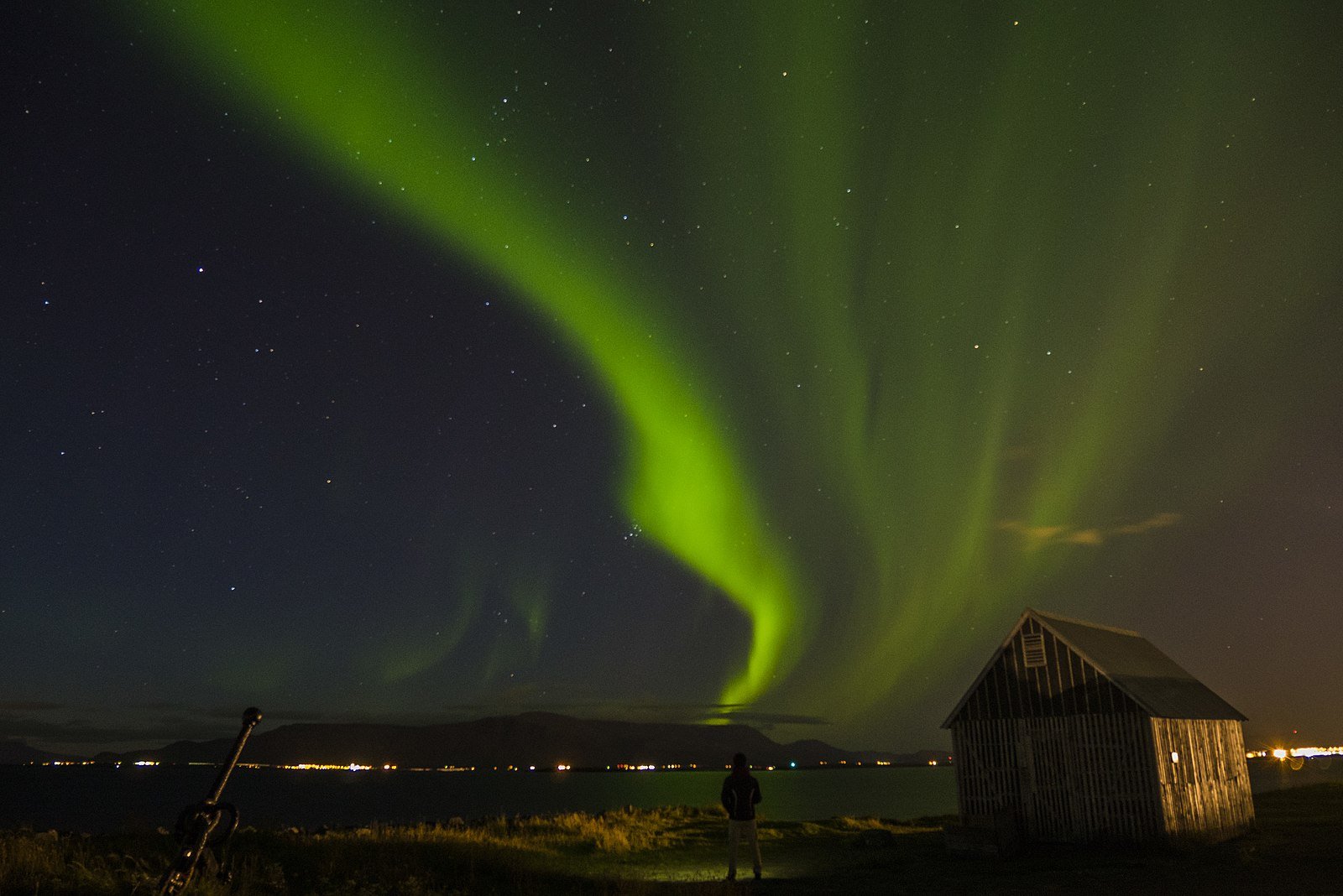
The Northern Lights seen from a small cabin just outside of Reykjavík, Iceland. Davide Cantelli. CC0.

The Icelandic capital of Reykjavík is by far the largest city in the country and is also one of the best places to watch the Northern Lights. Just a few degrees south of the Arctic Circle, many residents of the city claim to see the display from their windows on especially bright nights. Visitors can fly directly into the city’s airport and enjoy various other outdoor activities including icy glacier hikes, swimming in natural hot springs during the day and venturing to Thingvellir National Park, which is just a short drive from the city to see the aurora. Though brighter auroras can be seen from the city, avoiding light pollution makes it much easier to experience the full display between September and April.

4. Tromsø, Norway

The Northern Lights shining over the mountains in Tromsø, Norway. Maria Wulff Hauglann. CC BY-NC 2.0.

Located in the heart of the northern aurora zone, the Norwegian city of Tromsø is most well-known for its view of the Northern Lights. Visitors can book one of the many available aurora tours hosted by guides who have expert knowledge of the best local sites from which to watch the display. Many of these base camps offer excellent viewing of the lights from September all the way till April. Tromsø is just a quick 3.5 hour flight from London for those wanting to experience the local Sami culture, or for those simply looking to indulge themselves in the city with the most bars per capita than any other in Norway.

5. Kiruna, Sweden

The Northern Lights as seen from the town of Kiruna in Swedish Lapland. Martin Eklund. CC0.

The wilderness of Swedish Lapland is perfect for those looking to enjoy the Northern Lights away from other tourists. Additionally, the complete lack of light pollution allows for a particularly vibrant viewing. As the northernmost city in Sweden, Kiruna is located well within the Arctic Circle and is home to the largest underground iron ore mine in the world. The town also neighbors Jukkasjärvi, a town made recently famous for its hotel made entirely of ice. Visitors who stay here can typically enjoy the lights between September and March, though the season can often begin slightly earlier and end slightly later.

Bonus: Queenstown, New Zealand
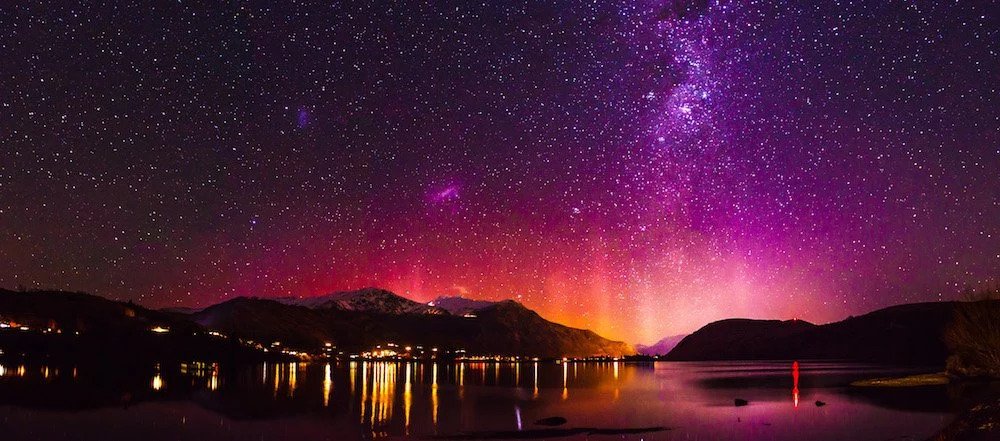
The Southern Lights captured near Queenstown, New Zealand. Bec Potter. CC BY-NC-ND 2.0.

This final destination highlights the resort town of Queenstown on New Zealand’s South Island. Unlike the other places on this list, it is a perfect place to experience the natural phenomena known as the Aurora Australis or the Southern Lights. This aurora is similarly caused by interactions between molecules in the upper atmosphere, which release waves of light across the night sky, though the Southern Lights tend to appear red and pink. This is due to the types of gas that are interacting and the atmospheric height at which the interactions take place. Visitors can fly straight into Queenstown’s international airport and enjoy the natural beauty of the nearby Lake Wakatipu during the day, before settling in to watch the display at night.



Tanaya Vohra

Tanaya is an undergraduate student pursuing a major in Public Health at the University of Chicago. She's lived in Asia, Europe and North America and wants to share her love of travel and exploring new cultures through her writing.
The Great Pacific Garbage Patch

In the middle of the Pacific Ocean, plastic debris gets caught in ocean currents that drag it all together, creating a massive island of trash double the size of Texas

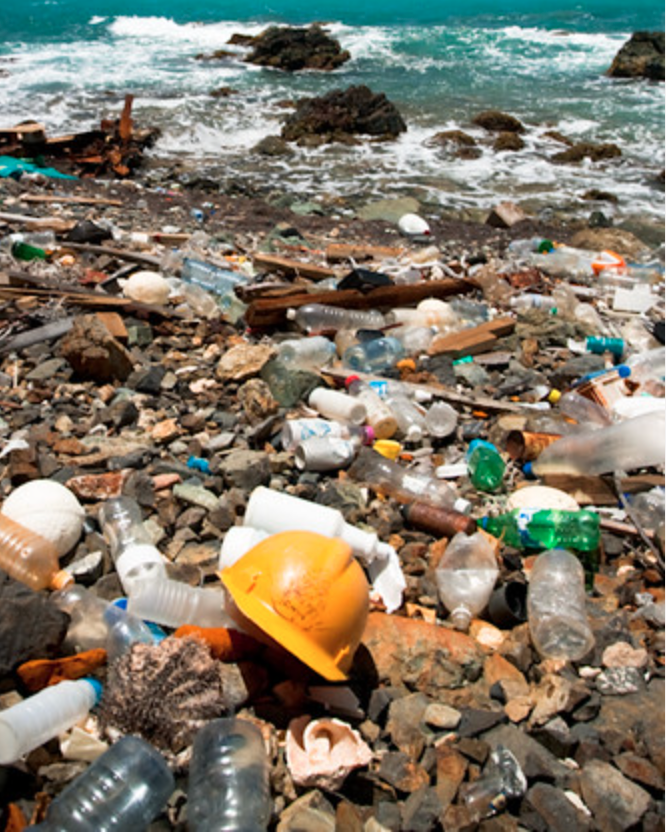
Plastic from the Ocean. Kevin Krejci. CC BY 2.0

In the Pacific Ocean lie two massive islands of garbage, known as the Great Pacific Garbage Patch. The Western Garbage Patch is located near Japan, and the Eastern one is in the waters between Hawaii and California. Combined, both patches are estimated to span 1.6 million square kilometers (over 620,000 square miles). This is equivalent to twice the size of Texas, the second largest state in the United States in terms of land, and it is not even an exact measurement. Due to the fact that a lot of marine debris sinks to the ocean floor, the exact size of the patches is unknown. Trillions of pieces of plastic have all found their way into the ocean and were carried to these island patches by various ocean currents.

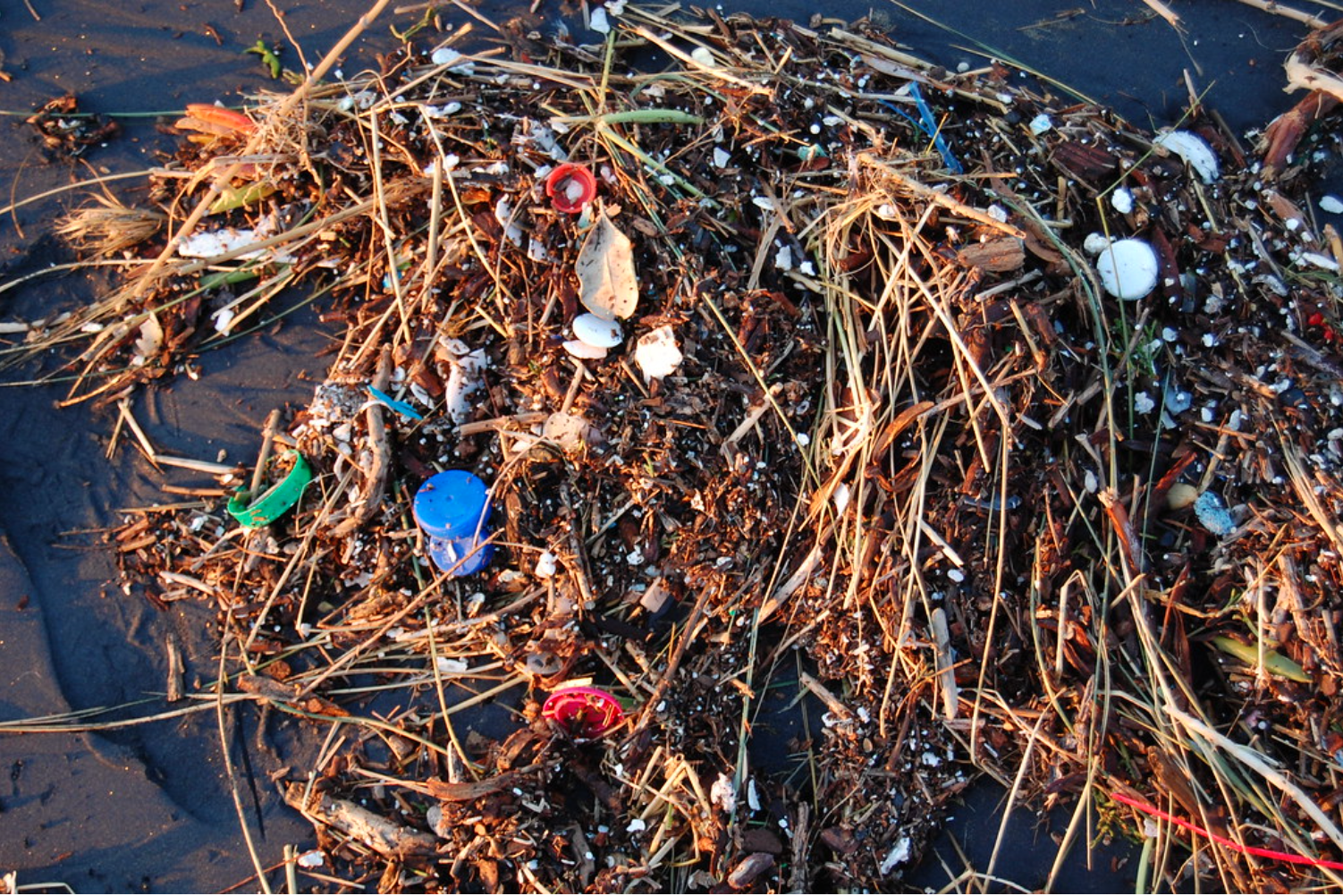
Washed up plastic. Fabi Fliervoet. CC BY-NC-ND 2.0.

Part of that problem is because much of the debris consists of microplastics, small pieces of plastic 5 millimeters or less that have flaked off from larger items. These microplastics are also easily ingested by fish and other marine life, which is absolutely damaging to them. The chemicals in the plastic will affect the animals, which can start affecting the food chain as the smaller ones get eaten, and it could eventually make its way up to humans. It is hard to determine the full extent of the effects of them in human bodies due to the fact that we don’t know how long microplastics stay in our bodies, but studies show microplastics harm cells. Microplastics are the most dangerous and harmful part of all the litter in the ocean due to these effects.

Besides humans, the litter in the ocean is harmful to marine life. There are turtles that ingest plastic bags, thinking they are jellyfish, birds that mistake some bits for fish eggs and feed it to their chicks, causing their organs to rupture and other sea animals that die of starvation because their stomach is full of plastic that has no nutrients. Beyond that, some plastics will release methane and ethylene when exposed to sunlight, both of which are greenhouse gasses that contribute to global warming. In addition, the microplastics affect the efficiency of photosynthesis in plankton, which in turn affects the ocean’s ability to absorb carbon dioxide in the atmosphere. Microplastic negatively impacts so many parts of life and the environment.

Cleaner beaches. Paul van de Velde. CC BY 2.0

To Get Involved

There are many organizations that fight plastic pollution in the ocean. As most plastic ends up in the ocean, a lot of them are focused on helping reduce the amount there, but there are organizations that aim to reduce the use of plastic in the world overall. For example, the Oceanic Society lowers plastic use by raising awareness of its effects, reducing usage in tourism practices and by supporting coastal communities. The Plastic Soup Foundation based in the Netherlands aims to prevent plastic from entering the environment in the first place. By sharing knowledge and monitoring research related to plastic pollution, the Plastic Soup Foundation educates people and formulates projects to aid in their goal. It also advocates for diminishing individual plastic usage and creating regulations and legislations for decreasing plastic.

To learn more about the Oceanic Society, click here.

To learn more about the Plastic Soup Foundation, click here

To learn more about the Plastic Pollution Coalition, click here.


Katherine Lim

Katherine Lim is an undergraduate student at Vassar College studying English literature and Italian. She loves both reading and writing, and she hopes to pursue both in the future. With a passion for travel and nature, she wants to experience more of the world and everything it has to offer.

Dust Storms: Syria and Iraq’s Orange Skies

Syria and Iraq are experiencing dark orange skies due to an uptake in dust storms these past few months.

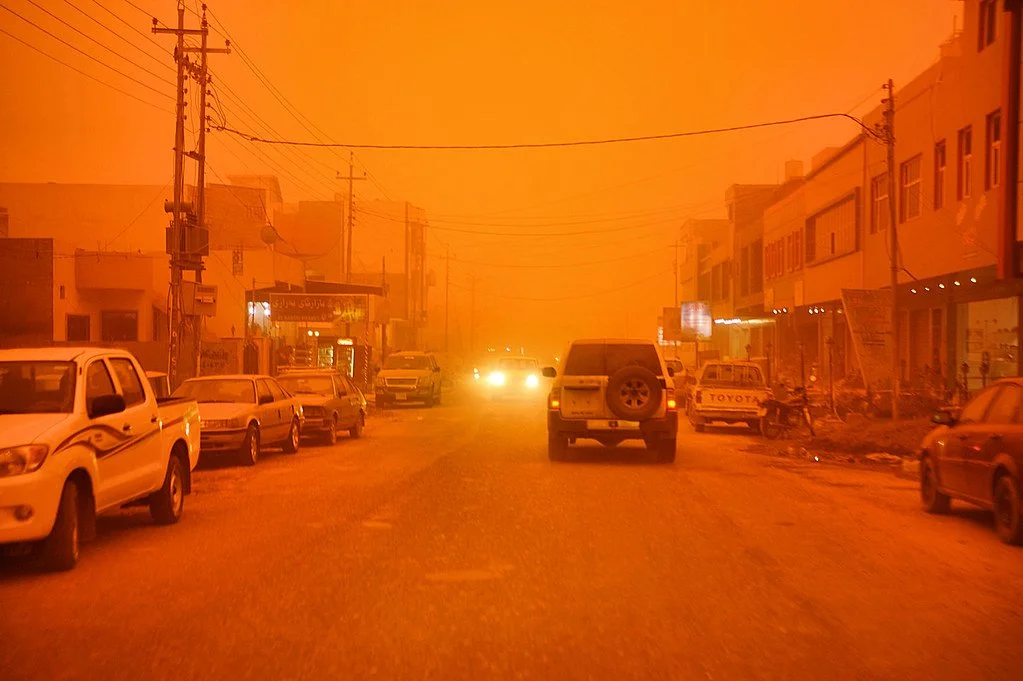
Orange dust air in Kurdistan. Lachica Photo. CC BY NC-ND 2.0.

Since March, the Middle East has been plagued with dust storms that have continued into early June. Accredited to climate change, these severe dust storms have been causing mass destruction around the Middle East, forcing the closing of schools and places of work, reducing the air quality over extended periods of time and even sending people to the hospital. With citizens unable to breathe outside their homes and damage being done to property and people, the Middle East is in a state of emergency.

The Middle East is a region familiar with dust storms. Dubbed “Shamal Winds”, the northern wind current that often rips through Middle Eastern areas like Iraq has sent storms to the area for decades. However, the instances taking place this year are said to be far too frequent compared to previous national averages, and climate change is to blame. Typically, the Middle East will face on average around 270 dust storms a year. The Ministry of Environment of Iraq believes that number is predicted to rise to around 300 storms by 2050.

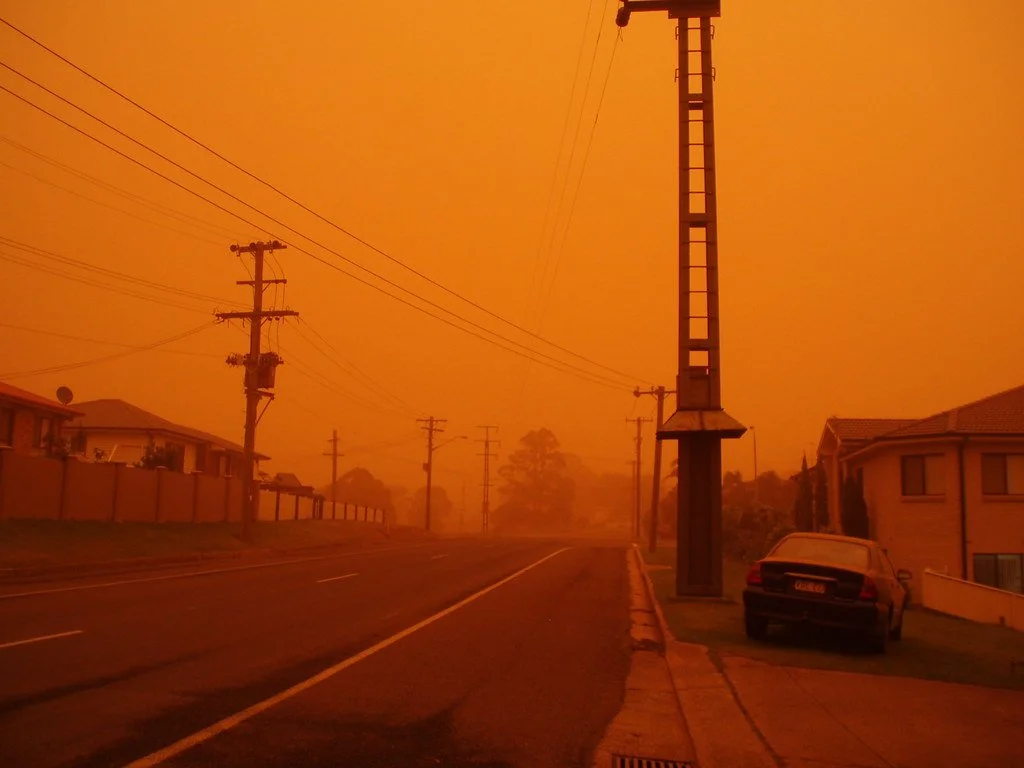
Orange sky after dust storms. Kaptain Kobold. CC BY-NC-SA 2.0.

The main effects of climate change on both the frequency and severity of dust storms have been linked to drought and the “desertification” of large land masses. Dust storms frequently affect arid or semi-arid lands; arid lands describe lands that lack water and become exceptionally dry. The Middle East is experiencing a time of excessive drought and declining rainfall rates. Brookings Institute states that the Middle East is a region listed 12th out of 17 for the most water scarcity, and the rate of rainfalls in the region have declined over the last few decades. 

These findings are heavily affecting the ability for northern currents like the Shamal Winds to pick up sand and dust particles from dry hot land, sending them sweeping across the skies of the Middle East. Because such large areas of the Middle East are drying out, strong currents are now able to pick up the dry sand and dust particles into the air, increasing not only the frequency of these dust storms because they are easier to create with progressively dry lands, but also increasing the severity due to particle-heavy air. These particles are also what create the dark orange tint to the air and sky.

Dust storm over the Middle East. Nasa Earth Observatory. CC BY 2.0.

With the air so packed with dust and sand, and with the temperatures rising as summer closes in, the Middle East is suffering. The air quality has now sent thousands to the hospital looking for reprieve from the unbreathable air, suffering from illnesses like asthma, breathing trouble and even lung congestion. Additionally, four deaths in Iraq and Syria have been attributed to the orange air. 

As of June, The Weather Channel reported there had been more than 10 dust storms in both April and May, and The Guardian stated that Saudi Arabia had already experienced 35 dust storms in only the first four months of 2022. Scientists and climate activists alike are concerned with the way these dust storms have been ravaging the Middle East, and fear the far-reaching impacts of the severe natural weather. 

The Dean of the School of Public Health at the University of Nevada spoke with The Guardian and stated that, “The impact of dust storms exceeds regional and continental boundaries,” making this problem something every country should be concerned about. Greatly linked to climate change and unconcerned with borders, dust storms may be an indication of what is to come for the rest of the globe with rising temperatures drying out massive areas of land.


Ava Mamary

Ava is an undergraduate student at the University of Illinois, double majoring in English and Communications. At school, she Web Writes about music for a student-run radio station. She is also an avid backpacker, which is where her passion for travel and the outdoors comes from. She is very passionate about social justice issues, specifically those involving women’s rights, and is excited to write content about social action across the globe. 

The Most Endangered Species of Penguin

The yellow-eyed penguins of New Zealand are the rarest species of penguins in the world.

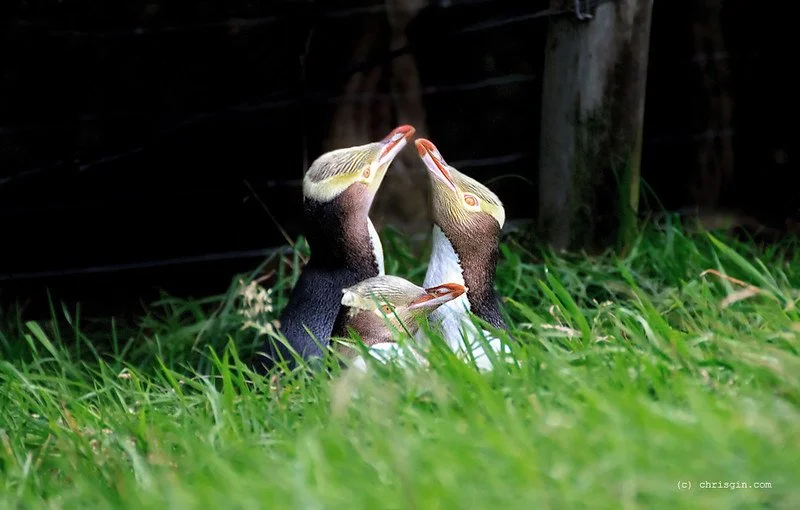
Group of Yellow-Eyed Penguins. Chris Gin. CC BY-NC-ND 2.0

Known as hoiho penguins in the Māori language of New Zealand, yellow-eyed penguins are the most endangered penguin species. There are estimates of fewer than 3000 of them left in the wild. In the past 30 years alone, the population has decreased by 50-75%. 
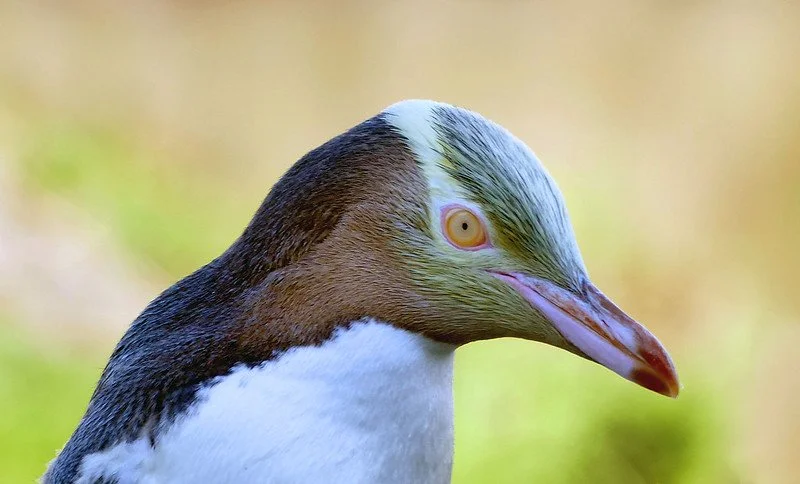
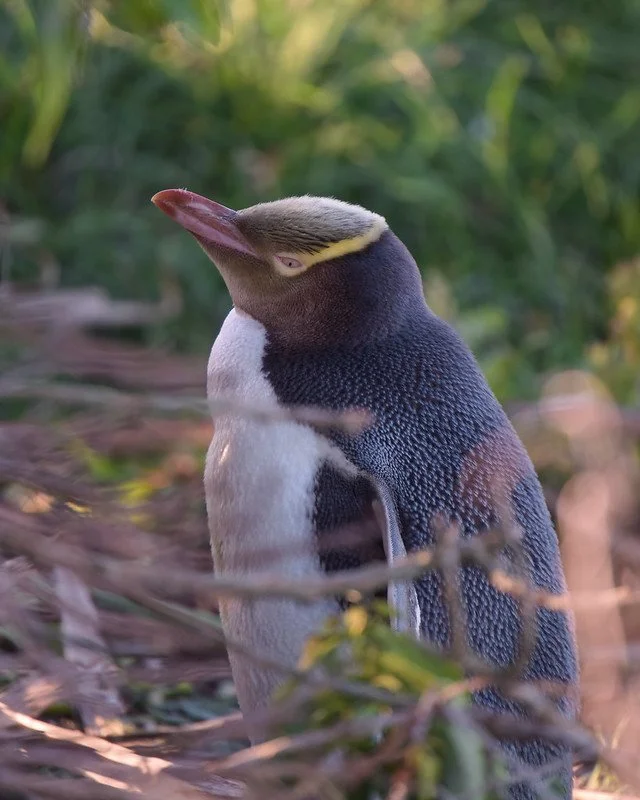
Yellow-eyed penguins are easily identifiable, as they have yellow feathers around their eyes. It is a unique trait they have, along with the band of yellow that extends around their heads. Like other penguins, yellow-eyed penguins are predators, eating mostly fish and crustaceans. Adult birds generally have no land predators, but the chicks and eggs are in danger from animals like cats, dogs, ferrets and stoats. This is also common in Antarctica, where penguin chicks and eggs are vulnerable to other Antarctic birds, but the adults have almost nothing to fear from the other animals. In the water, however, yellow-eyed penguins are in danger from large marine predators, such as sharks and seals. Penguins have no defense mechanisms, so they mostly rely on their speed and maneuverability in the water to survive. Yellow-eyed penguins can swim up to 12.4 miles per hour. In comparison, the average human can swim around 2 miles per hour. If necessary, penguins also avoid ocean predators by jumping up on land. Like every other species, yellow-eyed penguins have a black back and white stomach to camouflage underwater. Their backs blend in with the dark depths for creatures above looking down on them, and their stomachs blend in with the surface for creatures looking up at them. 

Yellow-Eyed Penguin. Bernard Spragg. CC0 1.0.

Yellow-eyed penguins mate for life and breed two eggs a year. Their average lifespan is 23 years, and these penguins start breeding at different times. They reach sexual maturity around two years of age, and most females begin breeding then. With males, however, it is more common to start breeding at three. The parents will incubate the eggs until they hatch, and then raise the chicks for around twelve months. Their nesting sites are in the bushes and shrubs along New Zealand’s coast, though deforestation has become a major threat to them. Humans have been clearing out land to make room for new houses or grazing fields for their animals, so the penguins have been forced to find new homes. The loss of their natural nesting habitat and the introduction of predators such as dogs and cats have contributed a lot towards why yellow-eyed penguins are endangered. There is also a high chick mortality rate, and some penguins get caught in gillnets, which lead to their deaths. The other major contribution to their decline is the food shortage due to global warming. 
There are two main yellow-eyed penguin populations: the northern and southern ones. The size of each population is determined by how many breeding pairs there are, and in 1991, the northern population had 741 pairs. By 2020, it has decreased into a population of 233 breeding pairs. This decline has been mostly due to lack of food, diseases and predators. The northern population is spread out over ​​South Island, Stewart Island and various other ones near to them.
The southern population, on the other hand, has been doing much better. In 1992, the estimated number of breeding pairs was 400, and in 2017, the number increased to 570. The southern population is divided into two colonies, one on Auckland Island and the other on Campbell Island. Though the penguins on these islands are doing much better than their northern counterparts, the overall population of yellow-eyed penguins is still decreasing. 

Solitary Yellow-Eyed Penguin. Ben. CC BY-ND 2.0

To Get Involved:

There are multiple conservation organizations that exist in order to protect these penguins. One such organization is The Yellow-Eyed Penguin Trust, specifically focused on protecting the habitats and livelihoods of these birds. The easiest way to help them is by donating to them through their website, but it is possible to volunteer for them, if you live in New Zealand. Their office is based in Dunedin, but there are penguin preserves in other parts of the country. To learn more about the Yellow-Eyed Penguin Trust, click here
Penguin Place is another organization dedicated to helping yellow-eyed penguins. They are the first conservation program funded entirely by tourism. They do take donations on their website, but most of their funds come from tours. Their funding comes from guided tours on penguin reserves and the money goes to preserving their habitats, helping sick or wounded penguins and controlling predators. To learn more about Penguin Place, click here.


Katherine Lim

Katherine Lim is an undergraduate student at Vassar College studying English literature and Italian. She loves both reading and writing, and she hopes to pursue both in the future. With a passion for travel and nature, she wants to experience more of the world and everything it has to offer.

Crazy Rock Formations, Lofty Cliffs and Sea Views: 5 Sites to Visit in Ireland

Ireland has an endless array of once-in-a-lifetime natural sites to visit, and here are the top five to add to your list. 

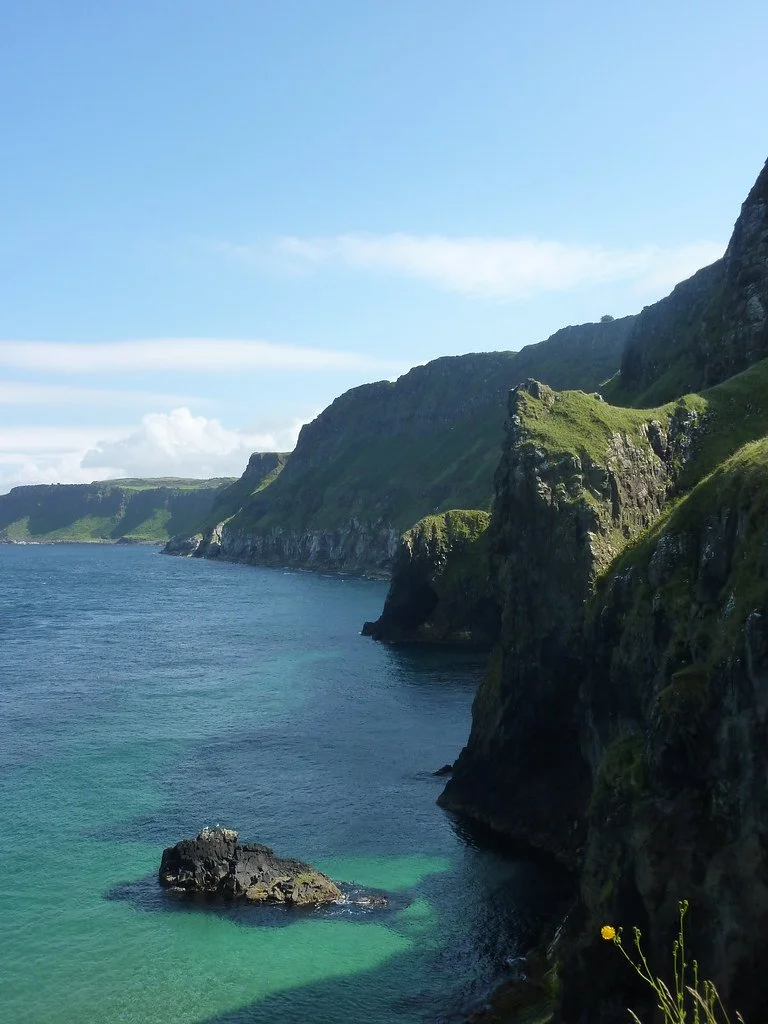
Giant’s Causeway, Northern Ireland. Sean MacEntee. CC BY 2.0. 

Ireland has several natural sites that beautifully reflect almost unbelievable geographical occurrences from hundreds to thousands of years ago. Some of these sites include towering cliffs overlooking the Atlantic Ocean and rock formations created by causes ranging from volcanic activity to major storms on the sea. Below are five of the most stunning natural sites that Ireland has to offer, and the unique features of each one. 

1. Giant’s Causeway

Giant’s Causeway. Sean MacEntee. CC BY 2.0.

Giant’s Causeway is the only UNESCO World Heritage site in Northern Ireland, boasting a cliff made up of around 40,000 basalt columns overlooking the sea. These columns are believed to have been formed 50-60 million years ago as the result of volcanic activity. The columns are especially impressive, as in certain places they line up almost perfectly to create the appearance of a flat pavement. While scientists know the true story of how Giant’s Causeway was formed, a famous legend attributes the columns to a feud between an Irish and Scottish giant. The legend states that the Scottish giant created a stone pathway to cross the sea to Scotland, and the Irish giant destroyed the pathway, creating Giant’s Causeway. In terms of accessibility to travelers, Giant’s Causeway is a good destination because it is free to hike, unless one wants to use certain visitor’s services such as parking. 

2. The Cliffs of Moher

Cliffs of Moher. Martin Abegglen. CC BY-SA 2.0. 

The Cliffs of Moher, spanning a massive 14 kilometers, are famous for their abrupt edge, which falls vertically into the Atlantic Ocean. The Cliffs of Moher offer many beautiful views and experiences such as stunning sunsets, a look-out tower from the 1800s and walking trails throughout. Some even recommend viewing the cliffs from below, by boat. Unlike Giant’s Causeway, the Cliffs of Moher are not free to enter, but only cost eight euros for adults. A fun fact about the Cliffs of Moher is that a scene in the sixth Harry Potter movie was shot there, which emphasizes how striking and magical these cliffs are.  

3. Sliabh Liag

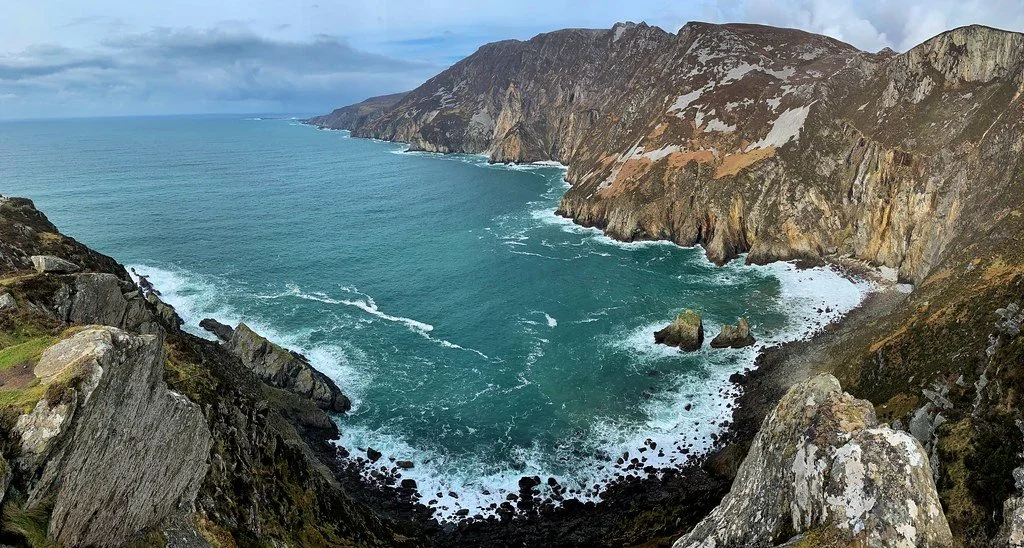
Sliabh Liag. Greg Clarke. CC BY 2.0. 

Sliabh Liag (pronounced “sleeve league”) is another set of cliffs in Ireland overlooking the Atlantic Ocean. The Sliabh Liag cliffs are less famous than the Cliffs of Moher, but they are just as stunning. In fact, they are Ireland’s highest cliffs overlooking the sea — almost three times as tall as the Cliffs of Moher — despite being less well-known. The cliffs have both driving and hiking routes and are free to visitors

4. Carrauntoohil

Carrauntoohil. Tom Fahy. CC BY-NC-ND 2.0. 

Carrauntoohil is Ireland’s highest mountain, standing at 1038 meters (3,407 feet). Carrauntoohil is a popular destination for hikers and rock climbers, with several different trails of differing difficulty to choose from. Like Sliabh Liag, it is also a free destination. There are four main trails: Brother O’Shea’s Gully Trail, Devil’s Ladder Trail, the Caher Trail and Coomloughra Horseshoe Loop. These trails have combinations of climbing and hiking, and on average take between four and eight hours to complete. While Carrauntoohil is a popular destination, it is considered difficult to complete one of the trails, and hiking experience is recommended. Travelers are also advised to plan well for their hike, bringing ample food and water, checking the weather and going with a tour group or guide if they are inexperienced. 

5. Dun Briste

Dun Briste. Diego Sideburns. CC BY-NC-ND 2.0. 

Dun Briste is an incredible naturally occurring rock formation that stands straight up out of the sea. It is commonly referred to as a “sea stack” due to its unusual shape and is thought to have been formed in 1393, which is extremely recent for a rock formation to have been formed. It is believed that there was an archway connecting Dun Briste to land which collapsed. The rock formation is a one-of-a-kind naturally occurring site and is also a haven for birds, as animals that don’t fly aren’t able to reach it. Thus, birdwatching is one of the most popular activities for travelers viewing Dun Briste.


Calliana Leff

Calliana is currently an undergraduate student at Boston University majoring in English and minoring in psychology. She is passionate about sustainability and traveling in an ethical and respectful way. She hopes to continue her writing career and see more of the world after she graduates. 

The Trans-Siberian Railway and the Lost Art of Train Travel

The Trans-Siberian Railway, the longest railroad  line in the world, is an example of the joy that train travel can bring.

The Trans-Siberian Railway passes through Dornogovi, Mongolia. Boccaccio1. CC BY-NC-SA 2.0.

The popularity of railroad travel has diminished in the modern age. Cars allow for a freedom of movement that would be impossible on a train, and airplanes take the traveler farther and faster than railroads could dream of. The role of trains in the last 75 years has seemingly become filling in the gaps left by other forms of transportation. Stiff and awkward journeys of a few hours, connecting two cities with sterile cars and rusty tracks, are far too common, at least in the United States. But the beauty of a train trip is still attainable. Travelers can get a Eurail pass and travel across Europe, or take a private railway through rural Japan. Or they can do one better, and take the Trans-Siberian Railway.

Although it is actually a single collection of routes within the massive Russian rail network, the Trans-Siberian Railway is famous in its own right. It is the longest railway line in the world, with its longest route connecting Moscow and Vladivostok over 5,772 miles. It is also historic; the railway’s construction began in 1891 when Russia was still a Tsarist state, and it continues to be developed today.

Russia, especially Siberia, is not a place noted for its tourism. Yet the Trans-Siberian stands as a shining light in the nation’s wintery darkness. The railway is cheap, comfortable and most importantly, gives you that rollicking, adventurous spirit that only good train trips can.

A Trans-Siberian trip is also extremely flexible. One can start at St. Petersburg or Moscow and head east, or start in the east at Vladivostok or Beijing. Trains from Europe connect to the Trans-Siberian in St. Petersburg and Moscow, which means that it is possible to take a train trip from Paris all the way to the eastern coast of Asia.

The Trans-Siberian Railway in Irkutsk. Wazari Wazir. CC BY-NC-SA 2.0.

Something that differentiates railways from other modes of travel is that you can, and are supposed to, get off. The Trans-Siberian is no different. There are incredible landmarks at every stop on the journey; it’s easy to arrange to check out the ice lakes in Irkutsk or to visit the Naadam festival in Ulaanbaatar over the course of your trip.

Stepping off the train and seeing Siberia is part of the fun, and every traveler who rides the Trans-Siberian is encouraged to at least walk around a bit while the train is stopped at each station. But the train itself is an enjoyable space to live in. There are a few different options to choose from when buying tickets: most travelers choose second class (known as “kupé”), which reserves a spot in an air-conditioned car with four beds, but there is also the pricier first class (“spalny vagon”), a car with two beds, and third class (“platskartny”), an open car stuffed with fifty-four bunks. Travelers are sure to meet people in whatever class they choose, as late nights spent in the restaurant car playing cards and drinking vodka are common. Platskartny is probably the most genuine Trans-Siberian experience, as you will be surrounded by Russian commuters and travelers. But platskartny is also quite cramped and noisy, and the privilege of having a semi-private bathroom is lost. It is something to consider before you snap up a super-cheap ticket.

The Trans-Siberian Railway is not a tourist line; it is a real, historic railway that people around Asia use to see their families and take vacations themselves. As such, one should treat it and the people on it with respect. One should also do some more research about the train before planning a trip; there are many helpful websites with information about the Trans-Siberian, such as Seat 61’s extensive article

The Trans-Siberian Railway, overlooked to many outside Asia, is perhaps the last vestige of old-fashioned rail travel. As a consequence, it has a unique effect on the land it passes through. The secrets of Siberia would stay unseen on an airplane over 30,000 feet in the air. But n the railway, the place has no choice but to reveal itself. 


Finn Hartnett

Finn grew up in New York City and is now a first-year at the University of Chicago. In addition to writing for Catalyst, he serves as a reporter for the Chicago Maroon. He spends his free time watching soccer and petting his cat.

Food Deserts, Food Swamps and Food Apartheid

Around 2.2 percent of all U.S. households live in areas without access to inexpensive healthy foods, leading to higher rates of obesity. These “food deserts” stem from a history of racism and inequality. 

Food deserts are areas where residents don’t have easy access to healthy, affordable food. Instead, they may be overrun with fast food options. Mike Mozart. CC BY 2.0 

Approximately 23.5 million Americans live in areas with limited or no access to affordable, healthy foods—especially fresh fruit and vegetables. These areas are commonly known as “food deserts” and are disproportionately found in low-income, minority communities. 

Food deserts occur when there are few or no grocery stores within convenient distance; for example, a survey by the U.S. Department of Agriculture found that 2.3 million people live more than one mile away from a grocery store and do not have a car. In urban areas, the nearest grocery store might be a long trip away via public transportation, and not everyone is able to take time out of their day to make the trek, especially those in low-income neighborhoods who may be working more than one job. 

Despite common misconceptions, living in a food desert does not necessarily mean that a person is food insecure. In fact, food deserts are often flooded with food choices—just not ones that are both healthy and affordable. A food desert may have plenty of smaller stores to buy food from, but these stores typically have limited options compared to  grocery stores, specifically in the availability of fresh produce. Without  easy access to grocery stores, people living in food deserts must turn to more convenient and affordable options, namely fast food. 

Experts have coined the term “food swamp” to describe areas that are oversaturated with unhealthy food options. A study by the University of Connecticut’s Rudd Center for Food Policy and Obesity found that an average food swamp has four unhealthy eating options for every one healthy option. 

Because people living in food deserts and food swamps have easier access to unhealthy food than healthy options, these areas also suffer from higher obesity rates. Studies have shown that food swamps may be a more accurate predictor of obesity rates than food deserts. However,food swamps and deserts tend to occur in the same areas, and more often than not these areas are low-income, minority communities. 

The USDA has identified over 6,500 of what they refer to as “food desert tracts” based on census data and data about the locations of large grocery stores. In a 2012 study about the characteristics and causes of food deserts, the USDA found that areas with greater levels of poverty were more likely to be—or to become—food deserts. The study also concluded that “food desert tracts have a greater concentration of all minorities” than tracts that are not considered food deserts. 

Because of the way that food deserts disproportionately impact minority communities, some food justice activists, like Karen Washington, prefer the term “food apartheid,” as it better captures the racial and economic nuances of the situation. Washington points out that “food desert” brings to mind “an empty, absolutely desolate place” with no food to be found, but this is not what a community with poor access to healthy food looks like. Nina Sevilla, another food justice activist, notes that “desert” implies that these areas are naturally occurring, which is not the case. 

“Food deserts” are the result of decades of systemic racism that led to housing segregation; under the Federal Housing Administration starting in the 1930s, middle and lower-class white families migrated to the suburbs while minority families remained in urban housing projects. Redlining policies prevented minority groups from moving into what were seen as white neighborhoods. As white middle-class residents shifted to the suburbs, so did new supermarkets, leaving minority neighborhoods without easy access to a wide variety of food. 

The term “food apartheid” highlights how these racist policies shaped low-income minority communities’ access to healthy food. 

Since food inequality and so-called food deserts and food swamps are so rooted in racism, they are not an easy problem to address. However, there are many organizations working on different solutions to food apartheid, from championing policy reform to building alternative food systems, such as urban and small-scale farming and affordable organic grocery stores. 

To Get Involved: 

To learn more about where “food deserts” in the U.S. are located, look at  the USDA’s Food Access Research Atlas here.

For a comprehensive policy platform on food, visit the HEAL Food Alliance here.


Rachel Lynch

Rachel is a student at Sarah Lawrence College in Bronxville, NY currently taking a semester off. She plans to study Writing and Child Development. Rachel loves to travel and is inspired by the places she’s been and everywhere she wants to go. She hopes to educate people on social justice issues and the history and culture of travel destinations through her writing.

A Country Divided: Marking the 75th Anniversary of the Indian Partition

Decades after India and Pakistan gained their independence in 1947, the cultural and political ramifications of partition continue to shape the lives of the new generation.

India celebrated their 75th Independence Day on August 15, 2022. Sanstuthi Nath. CC BY-NC 2.0.

2022 marks 75 years since British colonizers divided up the Indian subcontinent, officially declaring India and the Islamic Republic of Pakistan as sovereign states and leaving a trail of violence in their wake. Unlike the 50th anniversary of the event celebrated back in 1997, many, if not most, of the generation who lived through the horrors of partition have aged or gone, leaving fewer and fewer with first-hand memories of the difficult time. Despite this, discussions of South Asian affairs continue to be inextricably linked to the birth of Pakistan, the idea of an unified Indian nation, and the difficulties of birthing a new democracy in the wake of such upheaval.

Refugees desperate to escape massacre cram themselves onto trains during partition. Derek Barry. CC BY-NC-ND 2.0.

The pro-independence movement in India had long preceded partition, gaining most of its following in the years just after World War II. By this time, the country had been under British colonial rule for just under a century, and the country, while still heavily divided by caste, religion and ethnicity, largely agreed upon their desire to be self-governed. The newly elected British government at the time also appeared to be on the same page, but their exercises in subjugating the Indian population, in order to maintain control over them, had the unexpected consequence of inter-group violence, specifically when it came to deciding who would inherit the British Raj’s political power. This was especially true among religious groups: influential Hindu, Sikh and Muslim groups in politics were unable to agree on their vision for the new India with one such failed conference in 1946, resulting in Muhammed Ali Jinnah, head of the Muslim League, demanding the creation of a Muslim state. This call to action incited violence all over the country which the British decided would only end by partitioning the country into a  Hindu-majority India and a Muslim-majority Pakistan. Their minimal logistical support, however, resulted in even more violence and ethnic cleansing, causing millions of people to flee their homes after discovering they were on the wrong side of the border. A million people perished in the refugee crisis and fifteen million were forced from their homes. 

The Beating the Retreat ceremony is performed by Indian Border Security Forces and Pakistani Rangers at a border post. AFP Photo. CC BY-NC 2.0.

The ramifications of partition, 75 years after its occurrence, are still prevalent in many aspects of life for the younger Indian and Pakistani generations that may not even realize it. Their experiences of partition, unlike those of their grandparents, are largely based on knowledge learned in school and second-hand accounts from elder relatives. To those interested in the rapidly diminishing value of independence in an increasingly globalized society, the younger generation’s lack of connection to the event, which single-handedly birthed the modern nation of India as we know it, is placing a much larger burden on other institutions -- the media in particular -- to ensure an accurate historical memory of partition. In light of the waves of recent cultural, political, religious, gender and border conflict that have reignited across the subcontinent, remembering the sacrifices and hardships endured by those who fought for a unified India could provide a useful point of mediation.

Millions of displaced peoples set up refugee camps after being forced to flee their homes due to religious violence. The Guardian. CC-BY-SA 2.0.

If nothing else, celebrating 75 years of Indian independence has caused a lot of stories to resurface. Younger generations are making more of an effort to retrace their family histories across time and borders, digging into family archives and questioning their relatives before they are lost to time. The decades have done nothing to erase the history and emotions of what happened, and it is becoming increasingly common among those who have inherited the burden from their parents and grandparents to rediscover these narratives, both sweeping and personal, in the name of developing a personal identity. By posting these stories and sharing them online, young Indians and Pakistanis are building a community of their own and collectively defining what partition means to them. Hopefully, it will also be these communities that can overcome the legacy of pain and trauma that has followed the event through the years, and turn it into a new foundation of strength of unity for future generations of Indian and Pakistanis to come.


Tanaya Vohra

Tanaya is an undergraduate student pursuing a major in Public Health at the University of Chicago. She's lived in Asia, Europe and North America and wants to share her love of travel and exploring new cultures through her writing.

Freedom at Risk: Religious Persecution Around the World

Religious persecution still exists throughout the world, affecting people of all religions.

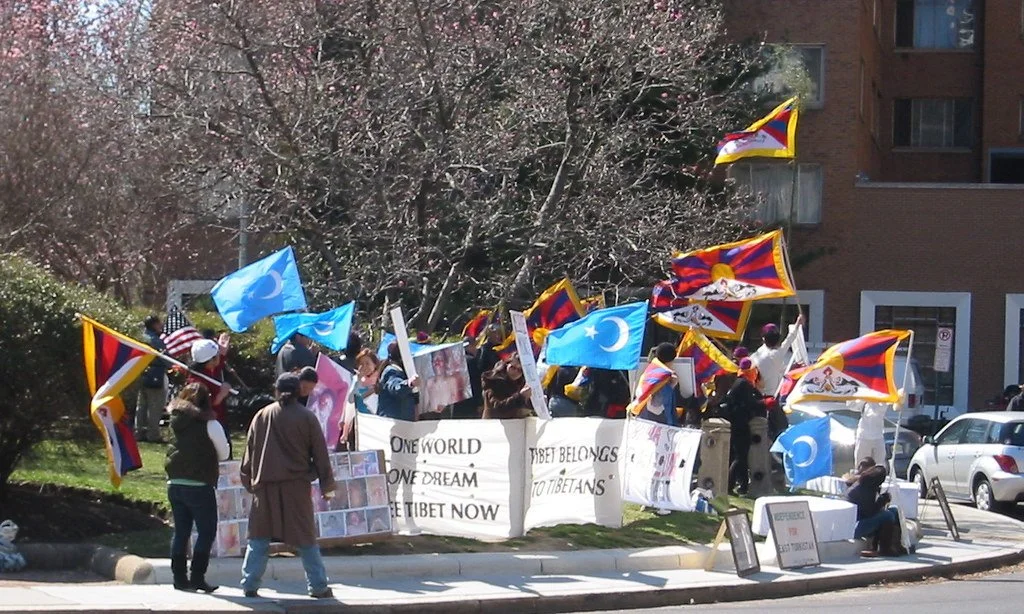
A protest at a Chinese embassy advocating for freedom of religion for Tibetan Buddhists and Uyghur Muslims. futureatlas.com. CC BY 2.0.

In April 2021, the United States announced that it would withdraw all troops from Afghanistan. In his reasoning to withdraw, President Joe Biden said that it is “the right and responsibility of the Afghan people alone to decide their future”. That future, however, is compromised as the Taliban quickly took over the country and imposed laws that undermine the rights of women and religious minorities.

Religious minorities in Afghanistan have “faced harassment, detention and even death due to their beliefs”, according to the U.S. Commission on International Religious Freedom. The commission has recommended Afghanistan be included in the State Department’s list of “countries of particular concern” in terms of religious liberty. Many Jewish, Hindu and Sikh Afghans have been forced to flee the country and Ahmadiyya Muslims, Baha’i’s and Christians have been worshiping in secret in fear of persecution.

While many people think that the world is now much more enlightened than before, religious persecution is not a practice of the past. Conflicts are still being fought over religion. Religion is the key of freedom of conscience, which makes up a key part of the human being. Totalitarian regimes, that attempt to claim the whole person, are intent on suppressing religion, with  controlling  the individual as the end goal. However,  religious persecution is not just limited to authoritarian states, as a 2018 report claims that harassment of religious groups occurs in 90% of all countries.

With authoritarian regimes on the rise in countries like China, religion is being suppressed there. In China, Xi Jinping is embarking on a campaign against religion in general and sending countless Uyghur, Kazakh and Kyrgyz Muslims to concentration camps. In addition, the Chinese government is trying to impose forced assimilation of Tibetan Buddhists and closed many Protestant churches.

Though officially a secular democracy, Prime Minister of India, Narendra Modi, and his Hindu nationalist party the Bharatiya Janata Party (BJP) has led a fierce anti-Muslim campaign in India. The Indian government has recently moved to limit the rights of Muslims, including a new law that allows for fast-tracked citizenship of non-Muslim immigrants from nearby countries. There has also been an increase in violence against Muslims in India during Modi’s time in office.

Religious persecution in India is not just limited to Muslims, however. Christians are also facing animosity in India. Hindus are committing violence against Christians under the pretext of the country’s anti-conversion law, which prohibits missionary activity. To Hindu nationalists, the notion that some Hindus are willing to convert to Christianity throws a dent in their plans for a purely Hindu nation. The only problem is, that the Christians under the threat of vigilante violence are not engaging in conversions. Instead, the anti-conversion law is used as an excuse to justify violence against Christian communities in India.

There are countless other examples of religious persecution around the world that are not getting much attention. According to Open Doors, an organization that advocates for persecuted Christians, more than 360 million Christians across 76 countries suffer high levels of discrimination, with Christians in the Middle East and Africa under particular threat. In Kenya, six Christians were killed in early 2022 by Al-Shabaab, an Al-Qaeda aligned terrorist group. Even in Uganda, where 82% of the population is Christian, a Muslim hanged his wife and children in January 2022 because they converted to Christianity.

Even Western countries, which are generally considered more tolerant, are not bereft of instances of religious persecution. France in recent years instituted a “burqa ban”, prohibiting some people from wearing their religious garments. While some justified the ban as an embrace of secularism and public safety, France also instituted a compulsory mask mandate during the Coronavirus pandemic without reversing the “burqa ban”, showing that Islamophobia was the driving force behind the ban.

These instances of religious persecution are a direct affront to human rights. Article 18 of the United Nation Universal Declaration of Human Rights establishes the freedom of religion to be a fundamental human right. While the world may not be the most tolerant place currently, there are numerous organizations and individuals working to change that.

To Get Involved

There are plenty of organizations that fight for religious freedom around the world. The Religious Freedom Institute is working to convince stakeholders around the world that religious freedom can help them achieve their goals. The International Association for Religious Freedom promotes the work of individuals fighting for religious freedom. Other organizations advocating for religious tolerance can be found here.


Bryan Fok

Bryan is currently a History and Global Affairs major at the University of Notre Dame. He aims to apply the notion of Integral Human Development as a framework for analyzing global issues. He enjoys hiking and visiting national parks.

7 Real Life Locations In Great Works of Art

It is not necessary to go to a museum to experience the awe of a painting—try visiting the actual locations they were based on instead.

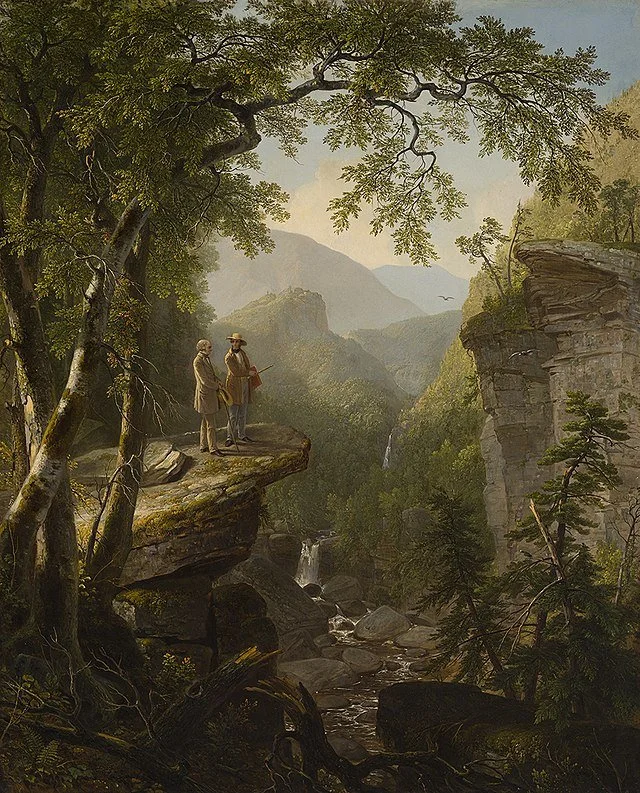
Kindred Spirits by Asher Brown Durand is a painting set in the Catskill Mountains of New York. Asher Brown Durand. CC0 1.0.

Museums and galleries are prime places to see great works of art. There are long lines at the Louvre in Paris, the Metropolitan Museum of Art in New York and the Uffizi Galleries in Florence. But you do not need to be in a museum to experience a painting. Many famous works of art are based on real life locations that visitors can explore for themselves.  It is often possible to experience the same emotions that the original artist felt when painting the subject. Here are 7 real life locations of famous paintings that you can visit.

1. The Dibble House, Iowa, United States

American Gothic. mark6mauno. CC BY 2.0.

Dibble House. photo librarian. CC BY-NC-ND 2.0.

In the summer of 1930, Grant Wood was driving around Eldon, Iowa when he noticed the Dibble House. It was not a beautiful house to Wood, but he found it captivating due to the absurdity of putting a gothic-style window in such a flimsy house. He made a sketch of the house and the final product became “American Gothic”, a famed work illustrating small-town America. Today, visitors are welcome to visit the house and have their photo taken outside, usually with the provided jackets to make it look like a reenactment of the famous painting. Next door is also the American Gothic House Center, which hosts exhibits on the famous painting.

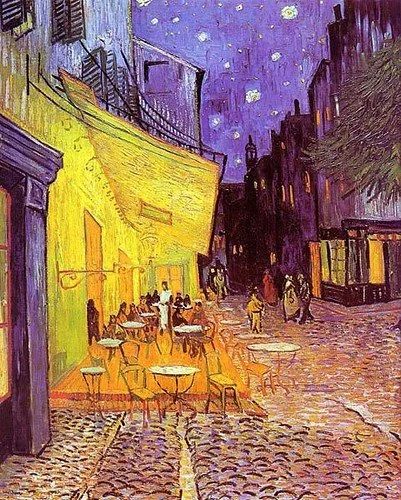
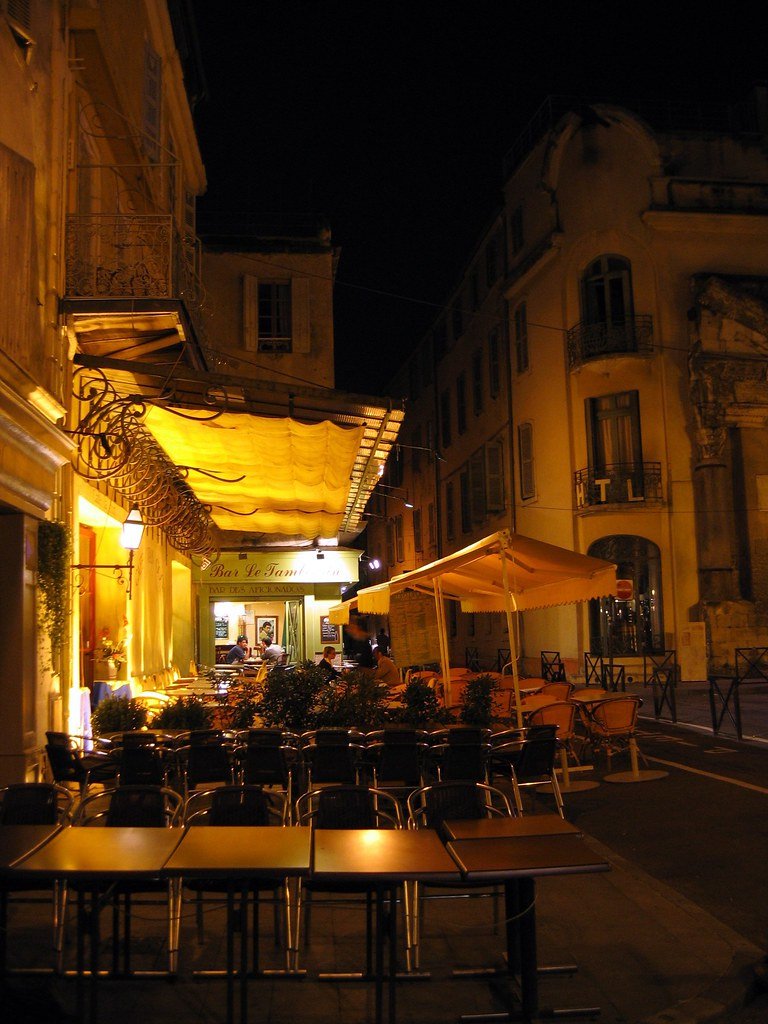
2. Arles Cafe, France

Cafe Terrace at Night. Greg_e. CC BY-NC-SA 2.0.

Arles cafe. Greg_e. CC BY-NC-SA 2.0.

Arles is the town most closely associated with Vincent Van Gogh. He lived there from 1888 to 1889, where he painted some of his most famous post-impressionist pieces, including the “Cafe Terrace at Night”. The setting of that work is the Cafe du Forum and is now called the Cafe La Nuit, which still exists today on the Place du Forum in Arles. That cafe was refurbished so that it looks exactly like how Van Gogh would have seen it. Gas lamps still light the site. Van Gogh also painted a companion piece of the interior of the same cafe. Today, visitors can experience the cafe and Arles much like how Van Gogh would have seen it.

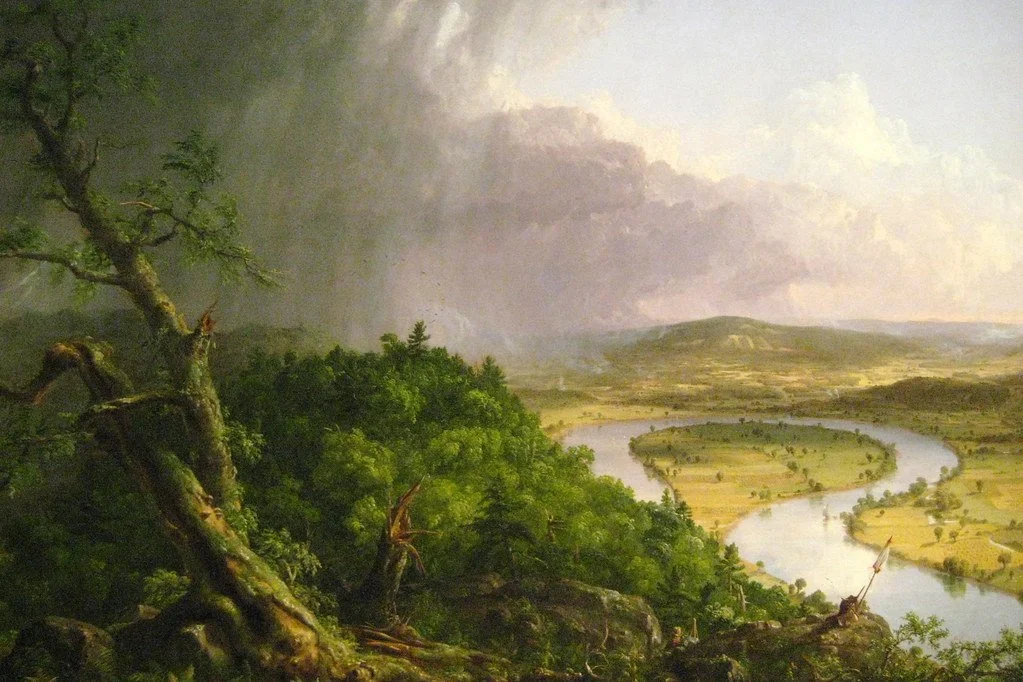
3. Mount Holyoke, Massachusetts, United States

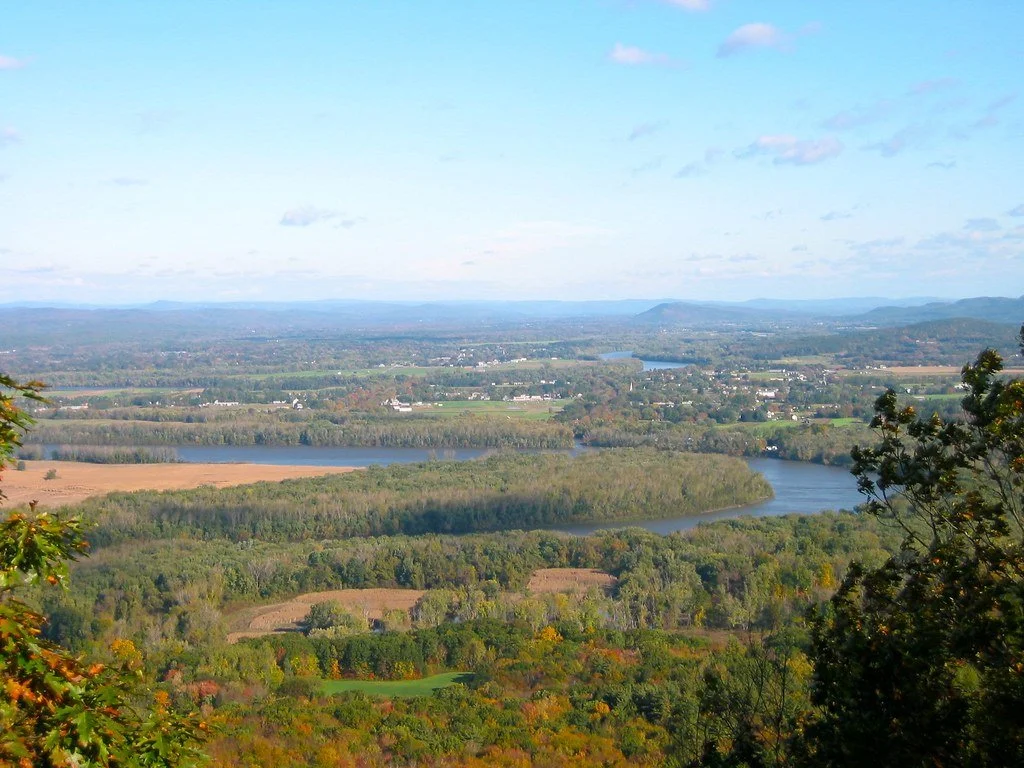
The Oxbow. wallyg. CC BY-NC-ND 2.0.

Mount Holyoke. pecooper98362. CC BY-NC 2.0.

Thomas Cole was one of the chief proponents of the Hudson River School, a school of art that specialized on landscape paintings in the early American republic. At that time, a uniquely American art-style was being created, and in his work “The Oxbow”, exemplifies that. That painting shows Mount Holyoke and a view that shows Americans conquering the wilderness. The view from the mountain today is much different than the one in Cole’s painting, as the area around it is much more built up, but the mountain itself is part of Skinner State Park. A road brings visitors up the mountain in the summer months and a number of hiking trails criss-cross the mountain.

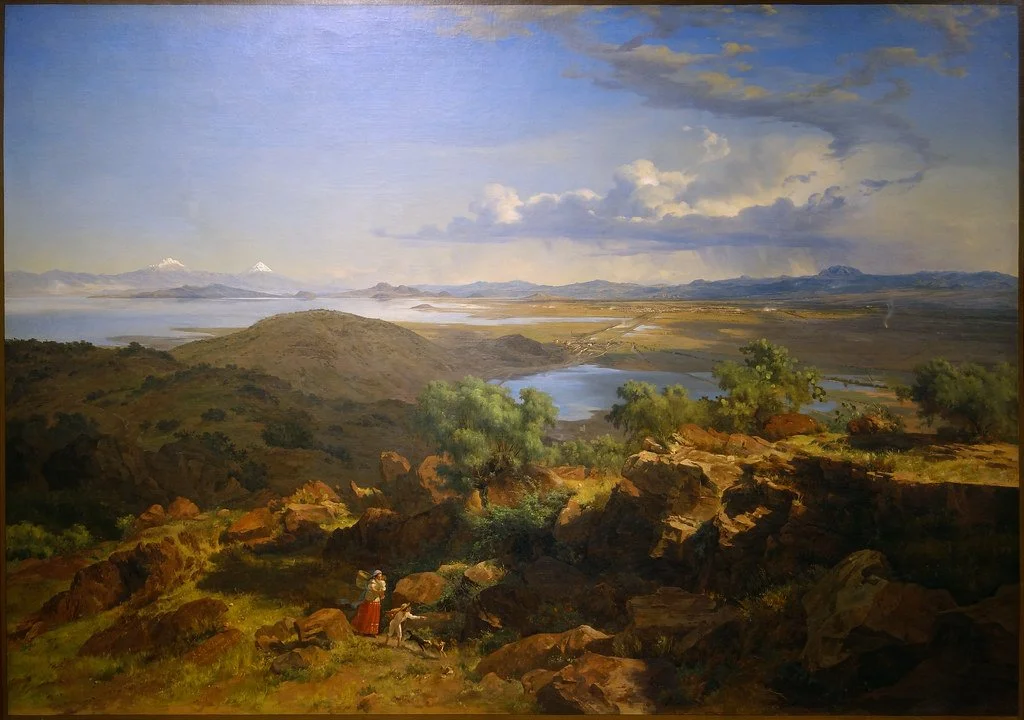
4. Valley of Mexico, Mexico

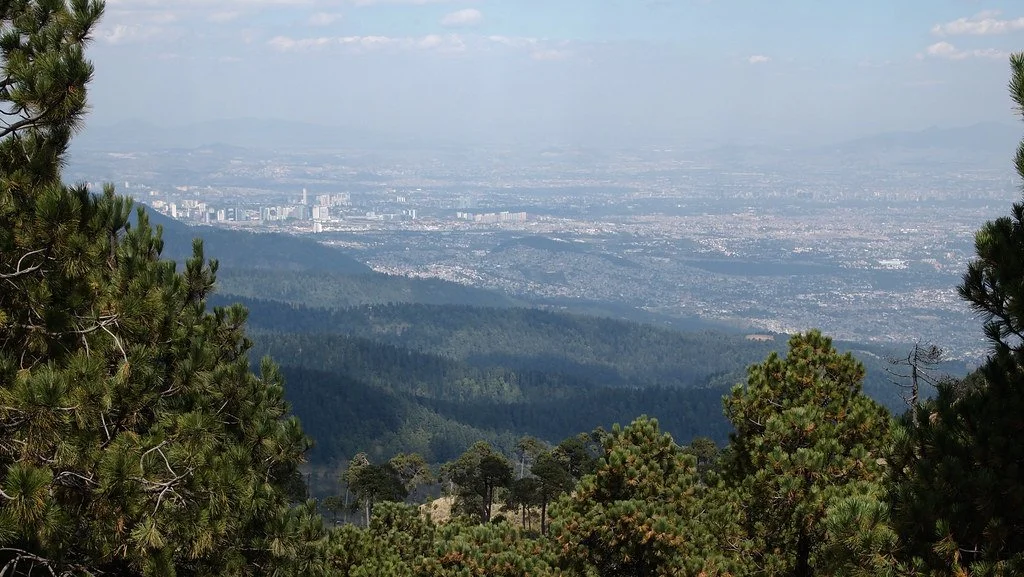
The Valley of Mexico from the Hillside of Santa Isabel. profzucker. CC BY-NC-SA 2.0.

The Valley of Mexico. Gary Denness. CC BY-NC-SA 2.0.

Similar to the Hudson River School, art in Latin America during the 19th century was also used to inspire nationalism. Jose Maria Velasco painted a landscape of the Valley of Mexico from the hillside of Santa Isabel to exemplify that nationalism. That landscape combines pre-Columbian symbols to represent a shared Mexican heritage. That valley today is built up as it is the location of the sprawling Mexico City. However, the hills above the valley offer stunning views of the area. Desierto de los Leones National Park, located 3.2 kilometers southwest of the city, offers panoramic views that gives a glimpse of what Velasco saw when he painted “The Valley of Mexico from the Hillside of Santa Isabel”.

5. Giverny Gardens, France

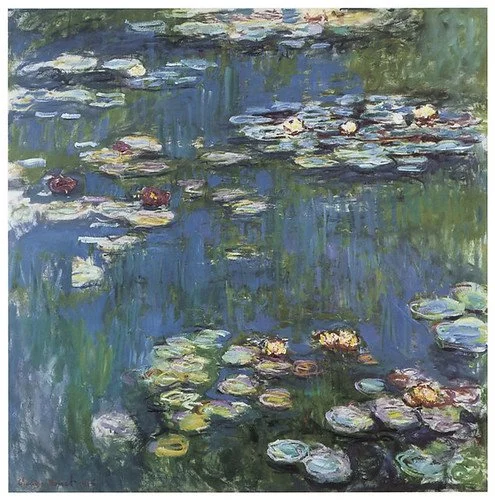
Waterlilies. Art That Inspires. CC BY-NC 2.0.

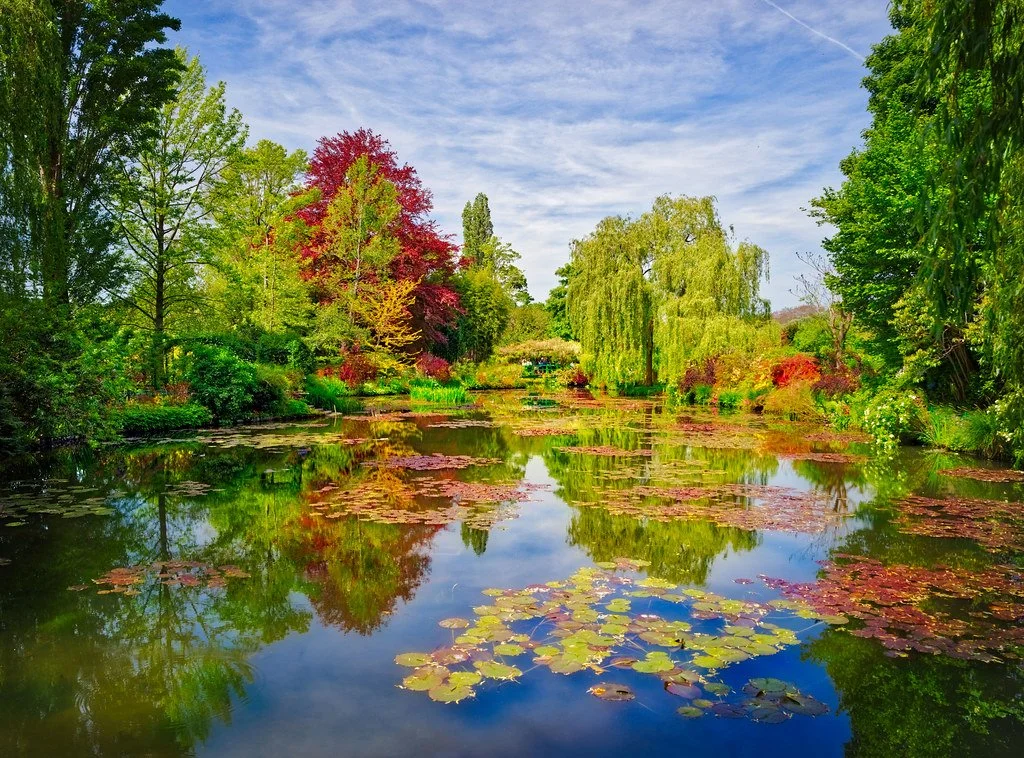
Giverny gardens. Trey Ratcliff. CC BY-NC-SA 2.0.

Claude Monet was the pioneering impressionist painter, shocking the art world with his visible brush strokes. One of his most famous works is “Water Lilies”, a collection of paintings of waterlilies in his garden in Giverny, France. Today, Monet’s home and gardens in Giverny can be toured by visitors. He had a garden called the Clos Normand in front of his home and a Japanese-inspired garden across the street, where visitors can admire its natural beauty. Much of his paintings from the “Water Lilies” series are based on his Japanese garden. 

6. Mount Fuji, Japan

The Great Wave Off Kanagawa. kendo_. CC BY-NC-ND 2.0.

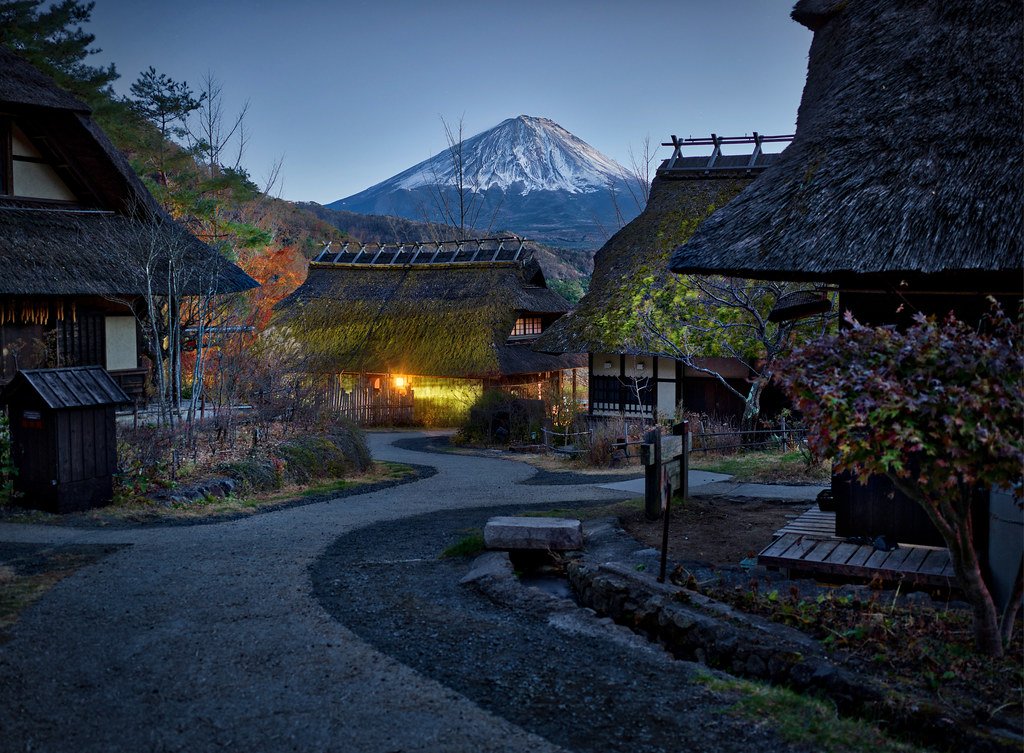
Mount Fuji. Trey Ratcliff. CC BY-NC-SA 2.0.

“The Great Wave Off Kanagawa” is arguably one of the most well-known Eastern works of art, but most people do not know that it is part of the series 36 Views of Mount Fuji by Katsushika Hokusai. While in “The Great Wave, Mount Fuji only appears as a small cone in the horizon, almost blending in with the other wave crests, in other prints of the series, Mount Fuji gets a more pronounced position. Being the highest mountain in Japan and holding a special place in Japanese culture, Mount Fuji is easily accessible to visitors. The mountain is easily viewable from the shinkansen between Tokyo and Nagoya, but for a closer look, visitors can head to the Fuji Five Lake region at the northern base of the mountain. Mount Fuji is open to climbing in the summer months on some seasonal routes.

7. The Delft House, Netherlands

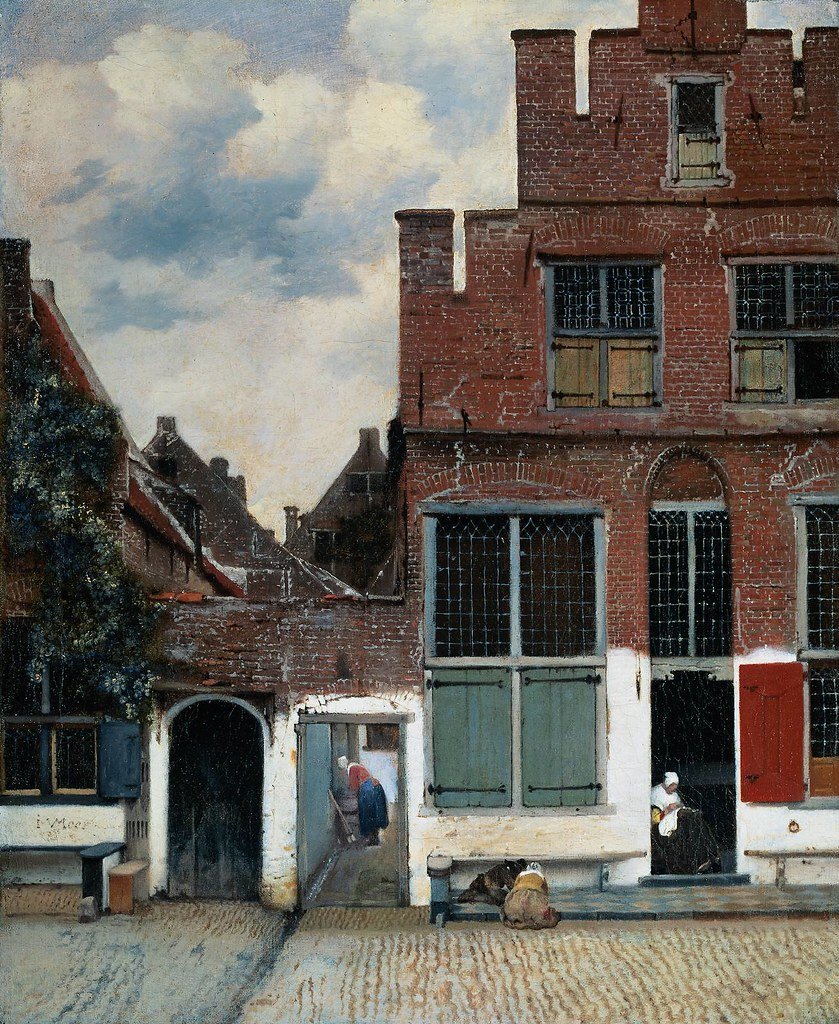
The Little Street. Gandalf’s Gallery. CC BY-NC-SA 2.0.

Delft House. 1Veertje. CC BY-SA 3.0.

Johannes Vermeer only has less than 40 paintings still in existence, but he is still considered one of the greatest Dutch painters. His painting “The Little Street” attracted researchers trying to pinpoint its exact location for centuries. Now, art historians and other researchers believe that the site of 40-42 Vlamingstraat, in Delft, Netherlands, is the location of the work. Researchers used tax records to narrow down the location in Vermeer’s hometown of Delft. The original buildings in the painting no longer exist, but a gate still exists. It is not possible to enter the buildings, but visitors can still imagine what the area was like in the 17th century when Vermeer worked.


Bryan Fok

Bryan is currently a History and Global Affairs major at the University of Notre Dame. He aims to apply the notion of Integral Human Development as a framework for analyzing global issues. He enjoys hiking and visiting national parks.

Electric Planes: The Future of Air Travel?

United Airlines and Mesa Airlines are buying electric aircrafts from a Swedish startup, to make air travel more eco-friendly.

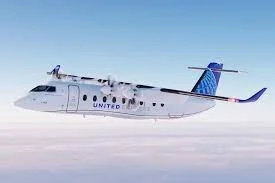
United ES-19. Wikimedia Commons. CC BY-SA 4.0.

In July, United Airlines announced that they would be buying ES-19 planes. They plan on purchasing 100 of these 19 seat, zero emission planes from a Swedish company called Heart Aerospace. United plans on being able to use these planes by 2026. Since they can only carry a small amount of people, these planes would be used mostly for short distance flights. They have routes planned from their major hubs, such as from Chicago O’Hare International Airport to Purdue University Airport and another route from San Francisco International Airport to Modesto City-County Airport. Heart Aerospace claims that around 4% of emissions around the world come from flights that are less than 200 kilometers (124 miles), and 9% are from flights less than 400 kilometers (250 miles). Using electric planes for these shorter distances would be beneficial in lowering these emissions, which is United Airlines’ plan. They have a goal to reduce 100% of their greenhouse gas emissions by 2050. They also want to achieve this without using the traditional carbon offsets, which are projects for reducing a person’s carbon footprint. These offsets are projects like planting a certain number of trees, improved forest management or capturing greenhouse gas emissions coming from a landfill. There are online calculators that calculate how much carbon dioxide a person is producing by going on a plane somewhere and estimating how much they need to do to cancel it out. United Airlines’ goal is to significantly reduce their carbon emissions without resorting to projects like these. 

They are not, however, the only airline that wants to reduce their emissions. Mesa Airlines, a regional American airline, has partnered with them and has purchased the same amount of ES-19s. The CEO of Mesa Airlines, Jonathan Ornstein, has spoken about the opportunities of the electric aircrafts and that it should cost less to operate. Some areas are too small and too close to large cities to have flights, but they  can operate profitably with electric planes.Since these electric planes are so small and will cost less to operate, it can become a viable method of transportation to these smaller cities, making it easier to bring people into these areas. 

Heart Aerospace, the company manufacturing the ES-19s, believes that electric aircrafts are the solution to lowering carbon emissions caused by air travel. Those emissions make up around 2% of global emissions overall, and by 2050, that number is expected to increase to between 12%-27%, and eliminating the emissions caused from short distance flights with electric planes can prevent that. Since the planes are small, they can use small runways that are more common in smaller cities, and it will be beneficial to them as it will be easier for people to travel. Also, like Ornstein said, the planes will be much cheaper to maintain as the electric motors reduce the cost of maintenance by 90%, and fuel costs will decrease between 50%-70%.

Beyond Heart Aerospace, there are other companies developing electric planes. Wright Electric is one of them, and they are developing a 100 seater plane to be released in 2026. They are also developing one that will have 186 seats and will be able to fly 800 miles, but that is estimated to be completed in 2030. Many other companies are researching electric aviation, as they believe it to be the future of air travel. Even NASA has been researching this, having developed and begun flying their X-57 electric airplane. Airline companies are conscious of their large environmental impact, and many large ones have agreed to participate in the UN’s plan to have net-zero carbon emissions by 2050. The use of electric aircrafts would help these companies a lot in reaching this goal, and because of this, the Swiss Bank USB believes that by 2035, a quarter of air travel will be electric.


Katherine Lim

Katherine Lim is an undergraduate student at Vassar College studying English literature and Italian. She loves both reading and writing, and she hopes to pursue both in the future. With a passion for travel and nature, she wants to experience more of the world and everything it has to offer.

10 of the World’s Best Ecotourism Destinations

Ecotourism aims to preserve the environment while allowing travelers to get a glimpse of the natural world. These 10 destinations are sustainable travel options that will broaden visitors’ understanding of the environment along with other cultures. 

Sustainable tourism seeks to strike a balance between the environmental, cultural and economic impacts of tourism, and many destinations around the world are moving toward the model. Ecotourism is a subset of sustainable tourism that focuses specifically on the environment. The International Ecotourism Society defines ecotourism as “responsible travel to natural areas that conserves the environment, sustains the well-being of the local people, and involves interpretation and education.” Ecotourism is not just about seeing stunning parts of the natural world, but about trips that curate awareness of and respect for the global environment and cultures. These 10 destinations are sure to provide memorable travel experiences while heightening visitors’ understanding of the social, political and environmental climates of the places they’re exploring. 

1. Galapagos Islands, Ecuador

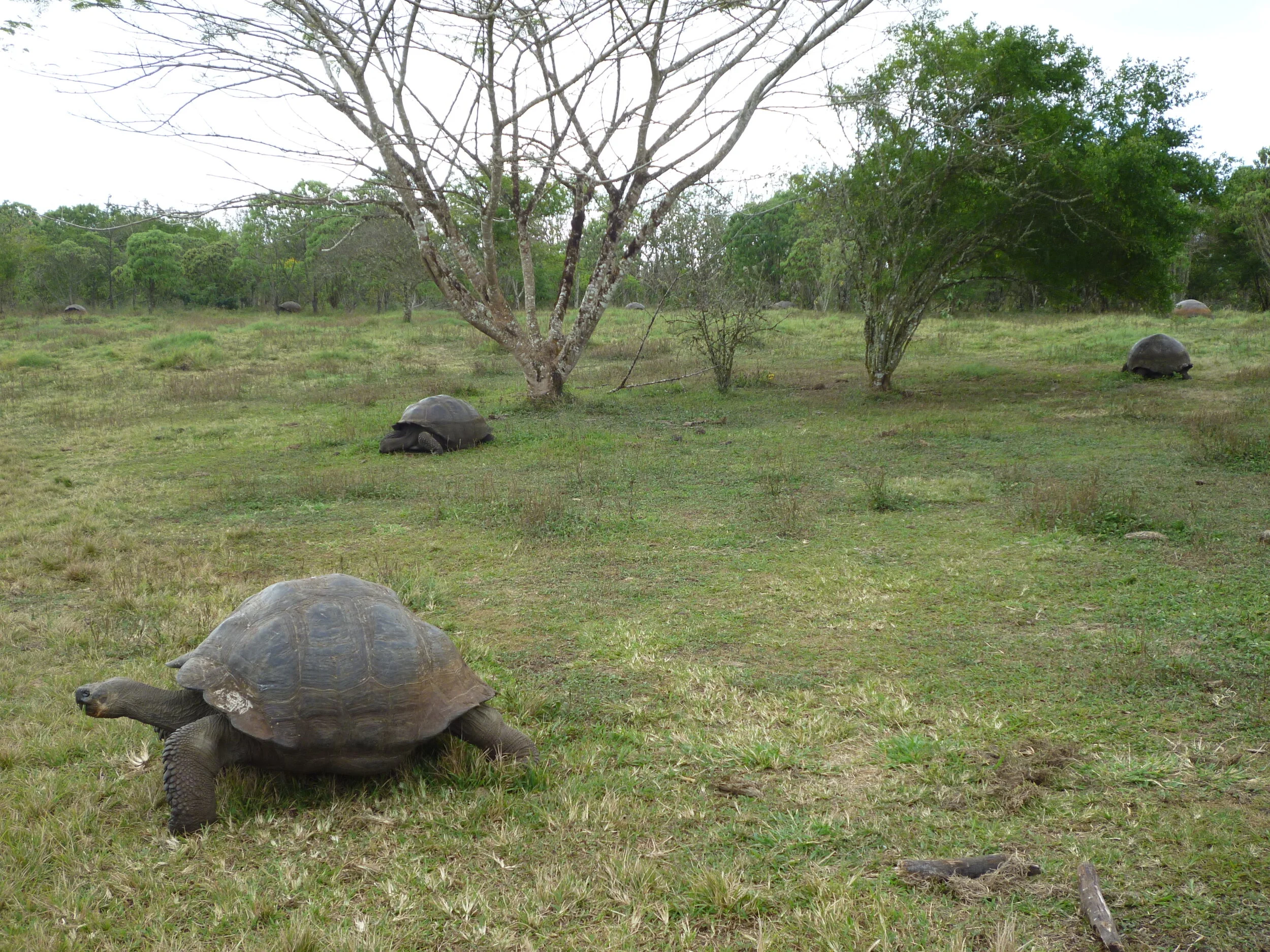
In 1978, the Galapagos Islands became one of the world’s first UNESCO World Heritage Sites, protected for their unusual plant and animal life that famously inspired Charles Darwin’s theory of evolution. The 19 islands, located about 600 miles off the coast of Ecuador, are home to giant tortoises, land iguanas and many subspecies of finches, as well as huge cactuses and trees unique to the islands. Ninety-seven percent of the islands have been part of a national park since 1959, and human settlement, including tourism infrastructure, is restricted to the remaining 3%. The islands are a paradise of natural beauty, and over 150,000 travelers visit annually. The Galapagos National Park Directorate and the Ecuadorian Ministry of Tourism have implemented regulations that ensure visitors get to explore the islands without harming the environment. The entrance fee that visitors pay for the national park is used to fund conservation projects, the number of tourists at each site at a given time is limited and all travelers are required to have a guide with them as they admire the islands. These guides are trained to educate the visitors and protect the sites, and are often local people, which ensures that travel benefits the local economy. 

Social issues: A current issue faced by the local population is the islands’ limited health care system, which consists widely of small, understaffed clinics. Ecuador is preparing for a runoff election for the presidential race, which will take place on April 11. Young people and women are major voter blocs in the election, hoping for policies that will address Ecuador’s economic crisis, inequality and rise in violence toward women. 

2. Costa Rica

Over a quarter of Costa Rica’s land is protected from future development. Costa Rica boasts incredible biodiversity, with thousands of different plant and animal species. The journey toward ecotourism in Costa Rica began in 1963 with the establishment of the Cabo Blanco National Reserve. The establishment of national parks quickly followed, and today Costa Rica has 70 separate entities within its park system. Visitors to Costa Rica will see a variety of ecosystems including cloud forests, rainforests, wetlands and coastal marine areas, all bursting with breathtaking plant and animal life. Places to visit include Arenal Volcano National Park, Cano Island Biological Reserve, Monteverde Cloud Forest Reserve and Ballena Marine National Park, though these are only a few of Costa Rica’s many stunning natural destinations. Most of these protected areas limit the number of visitors inside at any given time in order to prevent damage to the environment. The Costa Rican Tourism Board has introduced the Certificate for Sustainable Tourism (CST), which rates businesses, such as tour operators and hotels, on a scale of 0 to 5 based on their environmental, social and economic involvement and impact. The CST system allows tourists to make informed decisions and ensure that their trip is a sustainable one. 

Social Issues: A 2020 report revealed that Costa Rica was facing political fragmentation, economic slowdown and increased inequality.  Costa Rica’s two major political parties, the National Liberation Party and the Social Christian Unity Party, both recently suffered splits, creating more competing parties. Economic growth has declined, leading to an increase in unemployment rates, and the COVID-19 pandemic has only worsened the situation. The drug trafficking issues that have faced other Central American countries like Honduras and El Salvador have crept into Costa Rica, spurring an increase in violent crimes. 

3. Sabah, Malaysia

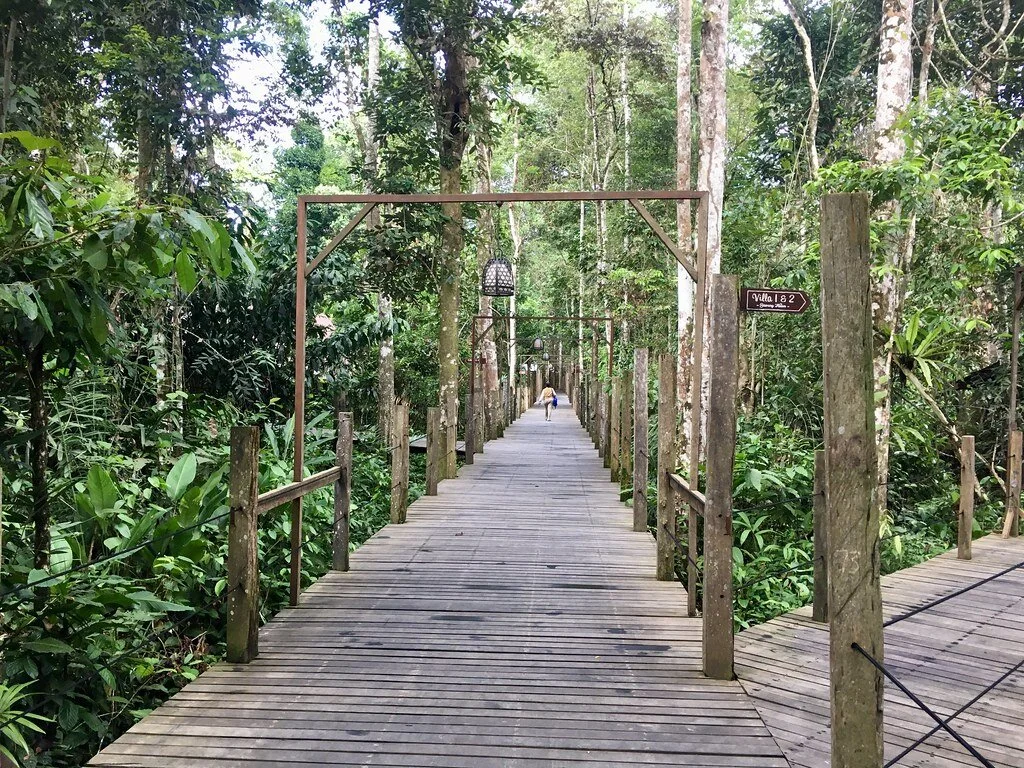
Sandakan, in Malaysia’s Sabah state, is home to the Sukau Rainforest Lodge, a lodge designed to be as eco-friendly as possible while still offering guests a comfortable and memorable experience. The lodge opened in 1995 and was the first in the area built on ecotourism principles. It is known as an ecolodge, a lodge which embodies the principles of ecotourism: protection and conservation of nature, benefiting the local community and offering programs to educate travelers about the natural and cultural environments they are visiting. A few of Sukau’s eco-friendly practices include rainwater harvesting, which makes the lodge 100% self-reliant for water, no radio or television in the rooms to eliminate some noise pollution and let guests focus on nature, employing a staff made up of 90% Indigenous people, and contributing $16,400 annually to conservation projects in addition to conservation levies collected from guests. A full list of Sukau’s sustainable policies can be found here on the lodge’s website. The lodge rises on stilts over the bank of the Kinabatangan River in Borneo, immersed in nature. Visitors to the lodge will have ample opportunities to spot orangutans, pygmy elephants, proboscis monkeys and hornbills in their natural habitat. Sukau offers a number of tour packages to explore Borneo by land or boat and experience its unique landscapes. 

Social Issues: In 2020, Malaysia’s government, headed by Prime Minister Muhyiddin Yassin, cracked down on protests and critical speech, began regulating freedom of expression and started taking a harsh stance on refugees, saying that they have no status or rights within the country. 

4. Rwanda

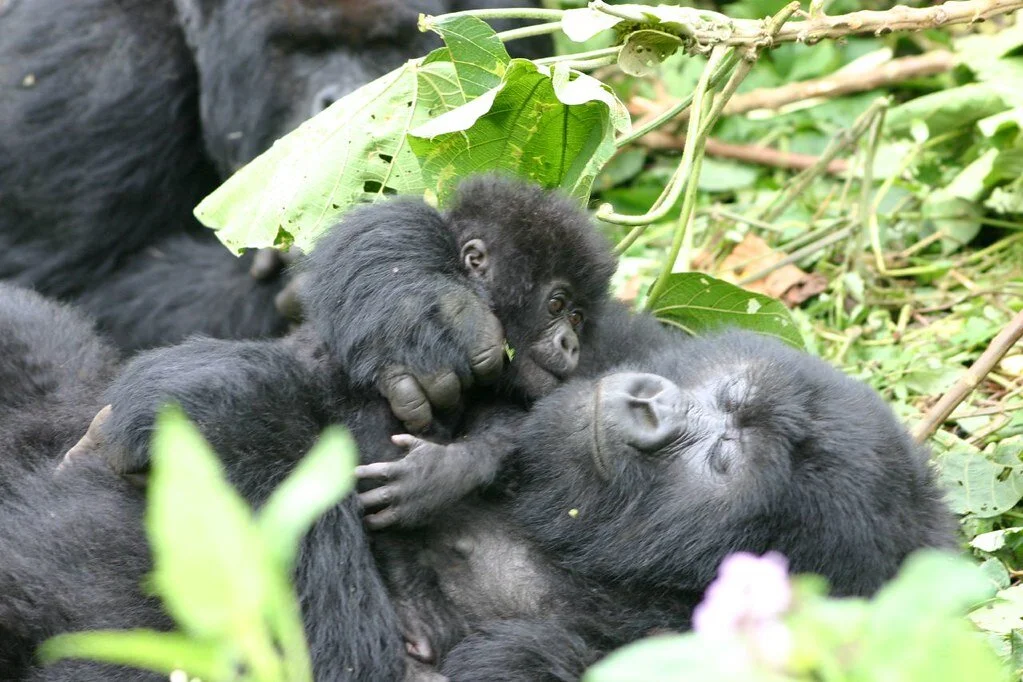
Rwanda has enjoyed a major tourism boom in recent years, and the country has made a strong effort to promote ecotourism. Known as “the land of a thousand hills,” Rwanda is full of beautiful, green landscapes, bamboo forests, volcanoes and incredible animal life, such as the endangered mountain gorilla. A number of new ecolodges have been constructed and are helping to fund reforestation efforts for indigenous trees. Rwanda’s number one ecotourism attraction is Volcanoes National Park, which is home to the mountain gorilla population. The park protects the Virunga Mountains, a chain of dormant volcanoes in the far northwestern corner of the country. The park encompasses a wealth of ecosystems, including evergreen and bamboo forests, sprawling grasslands and swamps. Visitors to the park can purchase tracking permits that allow them to go on mountain gorilla safaris and surround themselves with these amazing animals. The proceeds from the tracking permits go to improving the community development of areas around the park. There are a number of other locations for sustainable wildlife safaris in Rwanda, like Nyungwe Forest National Park and Akagera National Park. Visitors seeking to immerse themselves in local culture should explore the Iby’Iwacu Cultural Village, a traditional Rwandan village located within Volcanoes National Park. Stays in the village can be booked through Gorilla Guardians, a nonprofit organization that aims to improve the lives of reformed poachers and communities around the park. Visitors must abide by a set of sustainable living guidelines as they receive guided tours of the community from locals, learn about the area’s history and experience traditional arts practices, in order to ensure that travel is beneficial to both the tourists and the local community. 

Social Issues: Rwanda was the site of mass genocide in 1994, when members of the Hutu ethnic majority murdered around 800,000 people, mostly members of the Tutsi minority. As of 2020, the masterminds of the Rwanda genocide were still being brought to justice in international courts. In 2018, Rwanda implemented major legislative reforms, including a revised penal code, a new code of criminal procedure, and counterterrorism legislation. The country still faces strong limits of freedom of expression, with critical speech resulting in incarceration and even enforced disappearances. 

5. Bocas del Toro, Panama

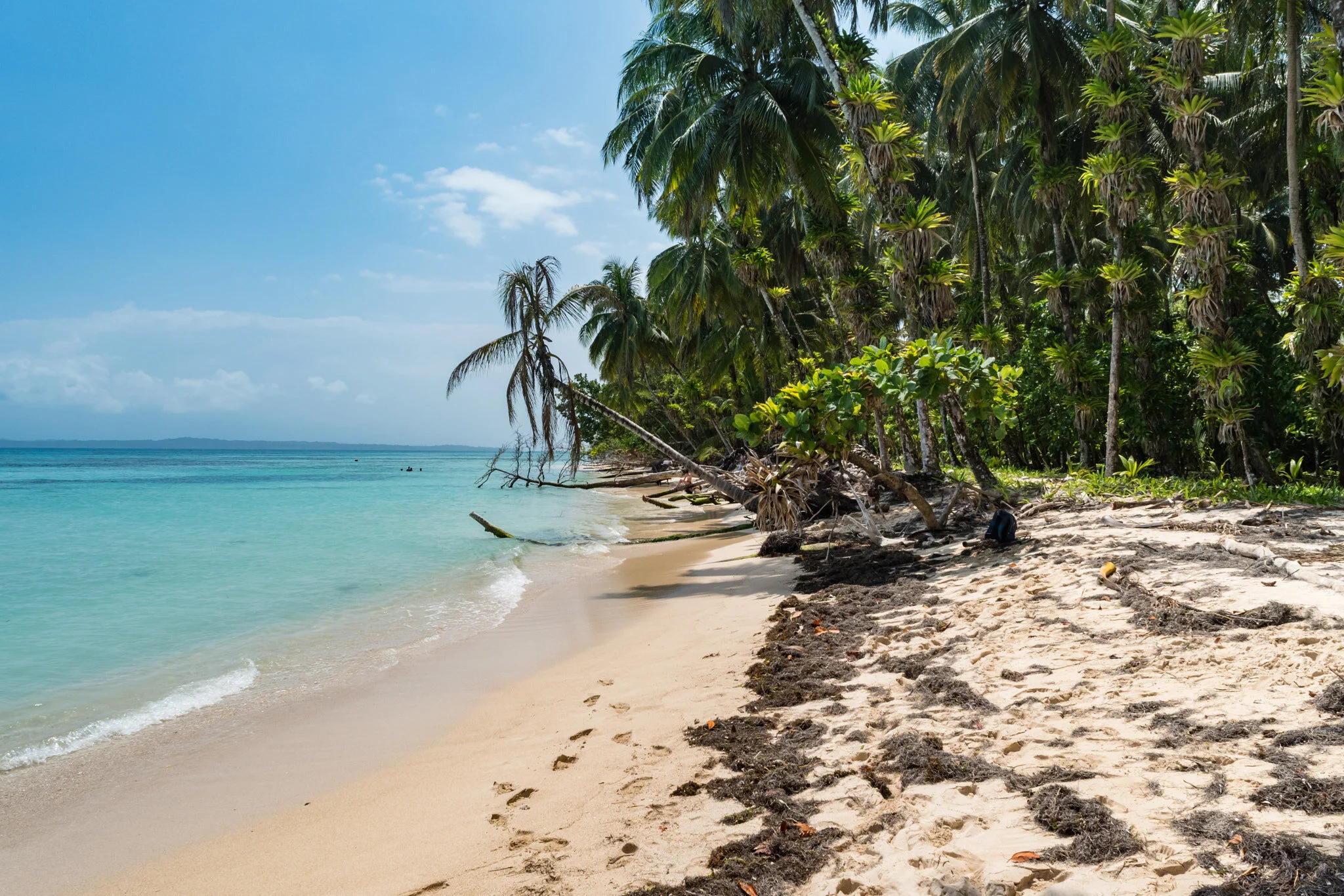
Sometimes called the “Galapagos of the Caribbean,” Bocas del Toro, off the northern coast of Panama, is a haven of biological diversity and spectacular scenery. Made up of nine islands, the archipelago is home to Isla Bastimentos National Park, Panama’s first national marine park. Visitors to Bocas del Toro can zip line through the rainforest, scuba dive in tropical coral reefs, swim with manatees, learn to surf in the Caribbean and sail from island to island to see what each has to offer. Playa Larga on Isla Bastimentos is an annual nesting site for four endangered species of sea turtles. Isla Bastimentos National Park also protects diverse forests, 28 species of amphibians and reptiles, monkeys, sloths and crocodiles. Visitors can go on tours of the islands led by members of Bocas del Toro’s Indigenous tribe, known as the Ngobe-Bugle, to learn more about the area’s history and culture while admiring the plant and animal life. 

Social Issues: A significant issue in Panama is poverty. There is a large wealth gap between urban and rural areas; rural areas are less aided by economic booms and have worse access to good health care and education. Rural areas that are largely inhabited by the Indigenous population are especially impacted by this wealth gap, with 86% of Panama’s Indigenous population living in poverty. 

6. Sorsogon, Philippines

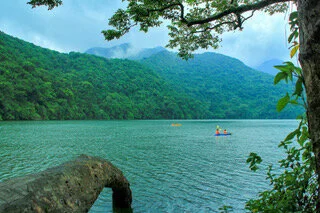
Located in Sorsogon province in the Philippines, Bulusan Volcano Natural Park is home to a wide range of natural features that make it a great destination for nature lovers. The park surrounds the active Bulusan Volcano and includes lush rainforest, two gorgeous lakes and two large mountain peaks. Visitors can kayak, hike, climb, see indigenous plants and animals, and visit local villages within the park. A number of local communities still flourish in the park, using the lower slopes of the mountains as agricultural lands. Many Indigenous people in the Bulusan Volcano Natural Park area have been trained as guides, allowing visitors to get a firsthand perspective of the park’s culture and environment and providing income for local communities. While in Sorsogon, visitors can also arrange to visit Donsol, where they can see whale sharks up close.

Social Issues: The government of the Philippines is still engaged in its violent “war on drugs,” which began in 2016. The campaign targets mainly impoverished Filipinos in urban areas, and killings by the police related to the “war on drugs” are rampant. Freedom of speech is limited, as those critical of the government face harassment and a number of journalists have been murdered in work-related attacks. 

7. Raja Ampat, Indonesia

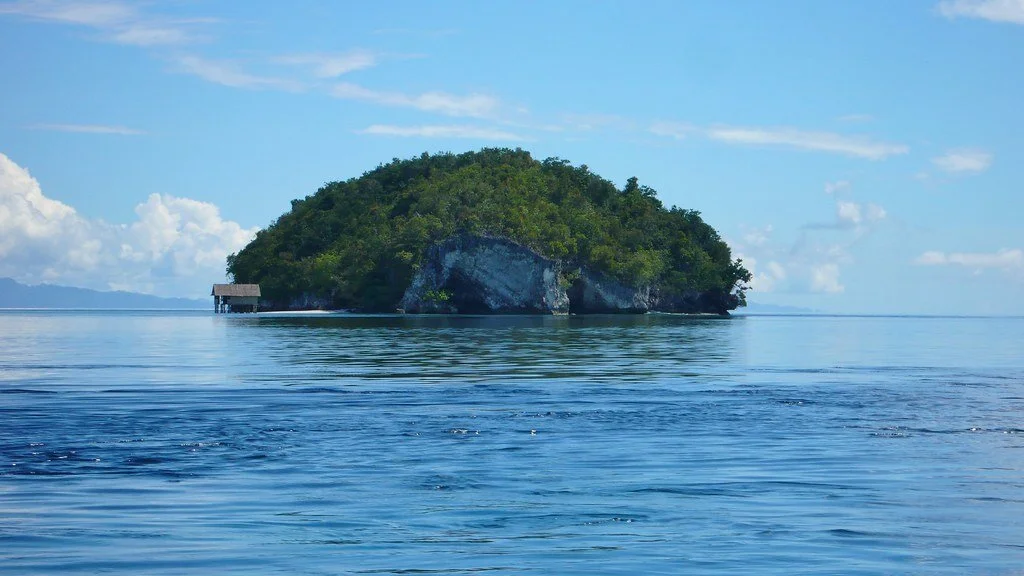
The Raja Ampat archipelago, located just off the tip of Bird’s Head Peninsula in the West Papua province of Indonesia, consists of more than 1,500 islands. Raja Ampat is extremely remote, meaning it has remained in nearly pristine condition, with white sand beaches, sparkling blue waters, interesting caves and jungle-covered hills that make it known as one of the most beautiful archipelagos in the world. Raja Ampat is also a biological hot spot, rife with varied marine life. The area’s extensive coral reef makes it a major attraction for divers and other visitors who want to experience the natural majesty of the islands. As tourism began to rise in the formerly remote area, the government and nonprofit conservation organizations recognized the necessity of protecting the area’s incredible biodiversity and quickly implemented sustainable ecotourism policies. Numerous programs about Raja Ampat’s ecosystem were developed to educate visitors and locals alike about the need for conservation. The tourism industry is also mainly staffed by local islanders, allowing them to share their culture with visitors while advancing their livelihoods. Tourists can choose from a number of ecolodges to stay in and tour with, such as Papua Explorers. 

Social Issues: LGBTQ+ rights have long been under fire in Indonesia, used as a rallying cry and platform for conservative social and political groups. The rights to freedom of expression and peaceful assembly are limited, and human rights defenders are often criminalized. 

8. Mai Chau, Vietnam

In the Mai Chau Valley, located roughly 90 miles outside of Vietnam’s capital of Hanoi, traditional villages lie among rice paddy fields and border towering mountains. Mai Chau is full of functional communities and is a popular destination for visitors seeking to immerse themselves in local culture while surrounded by some of Vietnam’s most remarkable scenery. Mai Chau is home to multiple homestay villages, where visitors can stay overnight in stilt houses around Hieu village. Those staying in Mai Chau homestays will eat home-cooked meals and can explore the villages and purchase local crafts. The valley has no shortage of day hikes, and travelers can even rent bicycles to ride from village to village. Mai Chau is located near Hoa Binh Lake and the Pu Luong Nature Reserve, where visitors can see even more of the beautiful ecosystems Vietnam has to offer. Tourism in the Mai Chau Valley is sustainable because it educates visitors about the local culture and environment and stimulates the local economy while having very few negative impacts on the region. 

Social Issues: Vietnam has harsh restrictions on freedom of expression, peaceful assembly, association, movement and religion. Political detainees are often held for months without access to legal counsel, and the treatment they face in custody is often violent. Vietnam’s cybersecurity laws allow the government to block websites critical of the ruling party. 

9. St. John, U.S. Virgin Islands

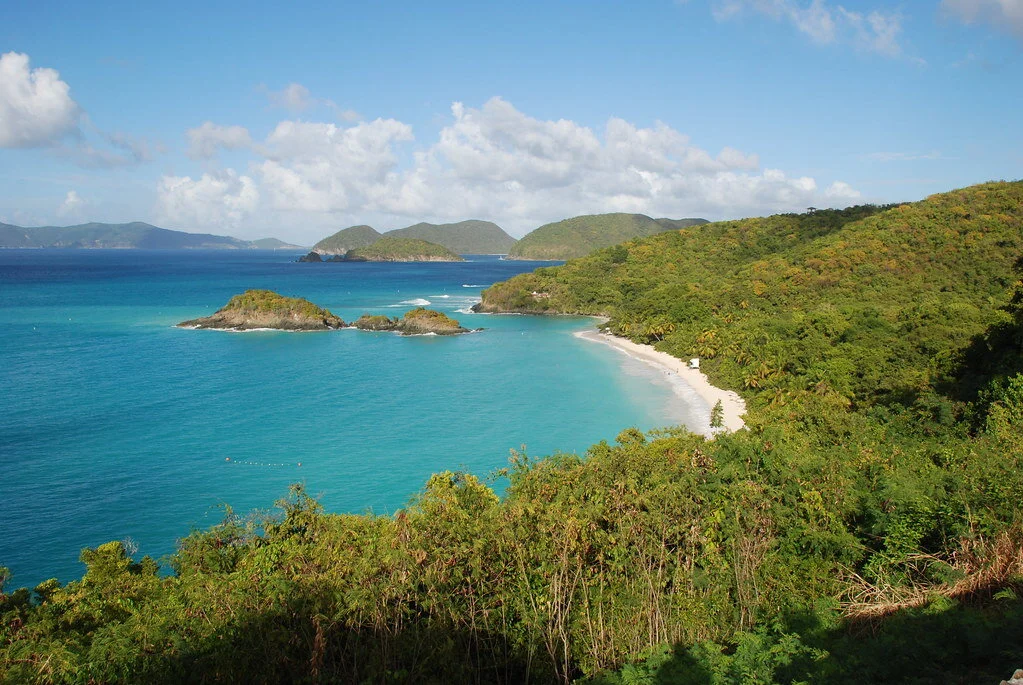
In the Caribbean Sea, about 1,000 miles southeast of Florida, are the U.S. Virgin Islands. One of the islands in the group, St. John, is a pioneer of ecotourism. Two-thirds of St. John’s surface area and shoreline waters are set aside as the Virgin Islands National Park, making it the best preserved of the U.S. Virgin Islands. In the water surrounding the island are hundreds of coral gardens, which make up the Virgin Islands Coral Reef National Monument and are protected by strictly enforced laws to prevent damage to the coral. St. John has very little commercial development; the island has no airport, no large cruise dock and no high-rise buildings. The natural integrity of the island is nearly untouched, making it one of the best places in the world to get a real ecotourism experience. Visitors to St. John can explore the national park and learn about the area’s history, seeing petroglyphs carved by the Taino people and the sites of former sugar plantations. Visitors can also relax on pristine beaches, snorkel among the reefs, hike through historic ruins, and sail on crystal-clear waters. There are a number of eco-friendly resorts to choose from in St. John, many of which are campgrounds that offer tents and small cabins. 

Social Issues: The U.S. Virgin Islands are fairly dependent on tourism to support their economy. In 2017, two devastating hurricanes, Irma and Maria, hit the islands, inflicting extensive damage and leading to a decrease in revenue which the islands are still trying to recover from. 

10. Auroville, India

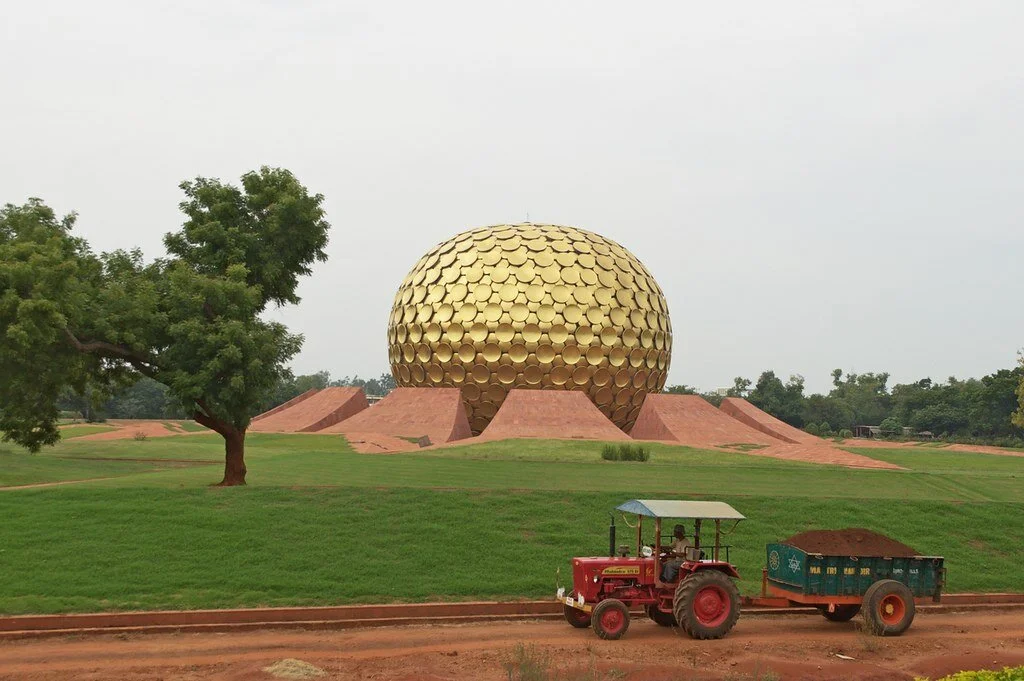
Auroville, in the Tamil Nadu state of India, is a very unique destination. Auroville is an experimental township that aims to be a “universal town,” where people of all backgrounds can live together in harmony with each other and with nature. Auroville was founded in 1968 by Mirra Alfassa, who is referred to as “The Mother,” and was designed by architect Roger Anger. The township runs on green practices, such as renewable energy, growing some of its own food through farming, recycling wastewater and working to protect the environment with a successful reforestation campaign. The township is financed partially by the government of India, which mostly gives money for education and projects, and partially by nongovernmental organizations, tourists and donors from around the world. Around half of the residents of Auroville are foreign, but they take care not to impose their culture on India, instead hoping to learn about the local culture. They also share their developments in farming with the villages around Auroville. 

Visitors to Auroville can book tours to experience life in the town, or stay for longer in one of Auroville’s guest houses. Those who come are strongly encouraged to acquaint themselves with the local culture of areas around Auroville to ensure that their visit is respectful. Auroville also runs a number of volunteer programs, where people from all over stay in the town and work on projects that include farming, animal care, education and renewable energy. 


Social Issues: In 2020, hundreds of people remained detained without charge in Jammu and Kashmir, under an Indian law that allows detention without trial for up to two years. Freedom of expression is limited, and journalists often face threats, criminal cases and even assault.


Rachel Lynch

Rachel is a student at Sarah Lawrence College in Bronxville, NY currently taking a semester off. She plans to study Writing and Child Development. Rachel loves to travel and is inspired by the places she’s been and everywhere she wants to go. She hopes to educate people on social justice issues and the history and culture of travel destinations through her writing.

A Cycle of Dependency: How Donations Worsen Income Inequality

Regardless of the good intentions behind donations, the short-term gain experienced by poor communities often leads to the persistence of income inequality and an endless cycle of dependency. 
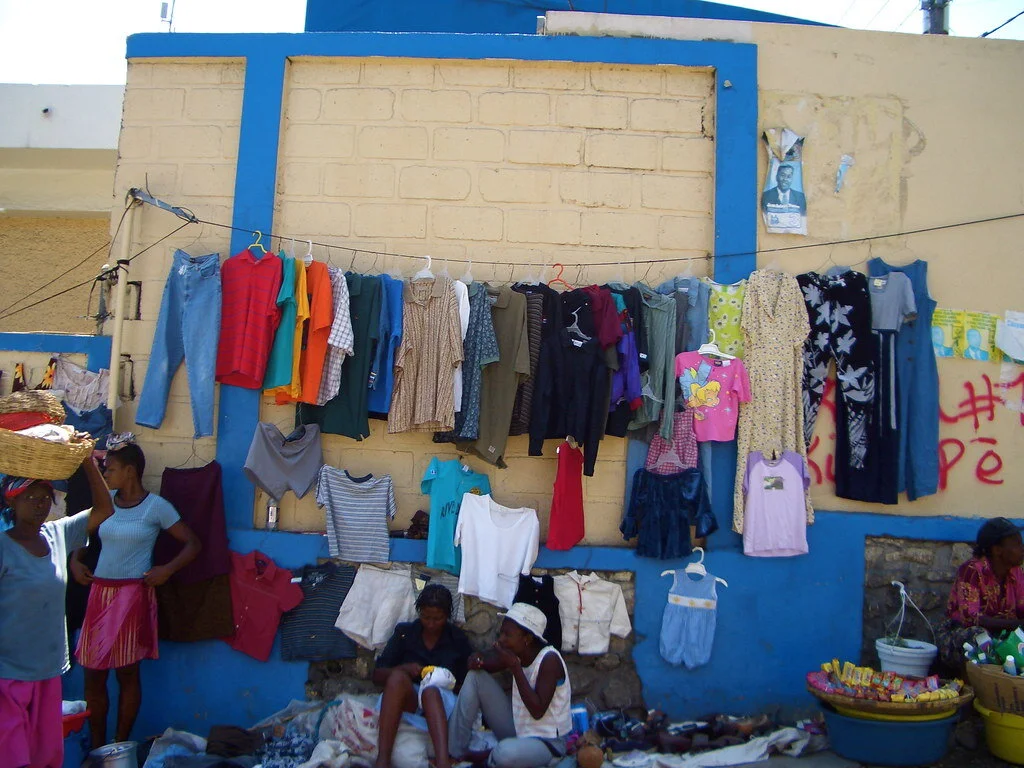
Secondhand clothing in Haiti. Vanberto. CC BY-NC-SA 2.0 

Donations are often associated with a positive image of helping destitute populations get the resources they lack. Yet, this short-term aid often results in far-reaching consequences detrimental to a country’s economy, which leads to the persistence of income inequality.

The donation of money that goes toward buying resources for impoverished communities often creates an endless cycle of dependency, especially if such service is repeatedly conducted through organizations or companies. First, the repeated nature of such service creates a false assumption among receivers that there will always be a supply of that resource without work, making them reliant on such aid. Moreover, the organizations themselves are indirectly relying on marginalized areas to promote their businesses’ charitable work. For instance, back in 2006, when TOMS started its “one for one” program, it would donate a pair of shoes for every pair that was purchased. Although the company’s motive seemed to be pure, it relied on underprivileged populations’ need for shoes to increase its business revenue

84% of unwanted clothing is thrown into landfills

When donations are consistently provided, those living in poverty often learn to become dependent on the donors as they see less reason to get out of their current situation. Local businesses also shut down, as the need to produce items goes away when high-quality donations are provided at a minimal price from external sources. Although that may come as great news for citizens of developing countries, most of the profit in this exchange goes to the exporters. A 2006 report found that, “textile and clothing employment in Ghana declined by 80% from 1975 to 2000; in Zambia it fell from 25,000 workers in the 1980s to below 10,000 in 2002; and in Nigeria the number of workers fell from 200,000 to being insignificant.” Such statistics imply that despite the good nature of external aid, it often comes at the expense of the receiving countries.

Haiti is a common dumping ground for secondhand clothing primarily from the United States, and due to its regular occurrence, locals have given this process the name “Pepe.” The Netflix documentary “The True Cost” elaborates on how Haiti’s textile industry is suffering due to the widespread popularity of Pepe, leading the country’s local clothing industry to disappear. For this reason, some countries have started to refuse the import of secondhand clothing, and more of it ends up in recycling facilities. Yet according to Newsweek, 84% of unwanted clothing is thrown into landfills. 

To combat waste, then, the fast-fashion industry needs to start recycling its own goods, minimize seasonal sales, make more durable products and normalize wearing recycled apparel. Additionally, governments need to start promoting the creation of more jobs for impoverished communities, so that all the necessary resources are available in the market at reasonable prices. Finally, donors should remember that regardless of good intentions, deprived communities may suffer long-term consequences due to misunderstood charity work.


Swati Agarwal

Swati Agarwal is a sophomore at University of California, San Diego, where she is studying Environmental Sciences and Theatre. Although born in India, she was raised in Tokyo, which gave her the opportunity to interact with diverse people from distinct cultures. She is passionate about writing, and hopes to inspire others by spreading awareness about social justice issues and highlighting the uniqueness of the world.