Vienna Rocks On at the World’s Largest Music Festival

Austria’s Danube Island Festival attracts around 3 million visitors annually. The festival spans three days, offers all kinds of music, and is completely free to attend. 

Each year at the end of June, millions of people flock to an island in Vienna for a three-day musical event. The Danube Island Festival, as the event is known, is the world’s biggest open-air music festival, attracting over 3.3 million visitors every year. The festival hosts more than 2,000 musicians across three days and 19 stages, contains numerous food and souvenir stalls, and essentially turns the island into a giant, booming party—and admission is free. 

The Danube Island Festival is held on Danube Island, a 13-mile man-made island located between the Danube River and a parallel, excavated channel known as the New Danube. When the island was created in 1972, its primary function was to serve as part of Vienna’s flood prevention system; the Danube crosses the city, so flooding is a major concern. Now Danube Island is a hub of recreation, complete with beaches, a trampoline center, a climbing park, a network of trails, and a few bars and restaurants. Danube Island is also full of wide green spaces, which easily become the venues for the Danube Island Festival. The island is located only a few minutes away from Vienna’s city center, making it a wonderful venue, as festivalgoers can stay in the city and sightsee while still having quick access to the festival grounds. 

What would grow into the world’s biggest music festival began as a promotional event for Danube Island. In 1983, Austrian politician Harry Kopietz introduced the idea of a one-day party on Danube Island to demonstrate its value as a recreational area. Event organizers expected around 15,000 people to show up and were stunned when the party had over 160,000 attendees. Since the event was wildly successful, it was held again the following year, and the number of visitors nearly doubled. The Danube Island Festival has been an annual event ever since, and has steadily grown in popularity to reach the millions of visitors it has today. The festival also increased in length from one day to three, to accommodate the number of visitors and to provide more performances. 

The festival offers music for everyone, from little-known local bands to world-famous headliners and everything in between, in a multitude of genres. In past years, there have even been performances from the Vienna Symphony Orchestra. Headliners have also included the Backstreet Boys and Simple Minds, as well as a number of artists famous among German speakers. 

Even the COVID-19 pandemic couldn’t put a stop to the Danube Island Festival, which occurred in alternate form in 2020. Instead of one large three-day event, the 2020 festival took place over 80 days and throughout Vienna; a double-decker bus with an open-air stage on top toured the city, bringing over 200 live performances to the Viennese people. For 2021, the festival is scheduled to take place from Sept. 17-19 in a hybrid format. The double-decker performance bus will be back roaming the city from August to September, and festival organizers hope to hold a scaled-down version of the festival with mostly local acts if public health permits. 


Rachel Lynch

Rachel is a student at Sarah Lawrence College in Bronxville, NY currently taking a semester off. She plans to study Writing and Child Development. Rachel loves to travel and is inspired by the places she’s been and everywhere she wants to go. She hopes to educate people on social justice issues and the history and culture of travel destinations through her writing.

5 Places to Visit for Lovers of Philosophy and Literature

For travelers who enjoy a good book or like to study the teachings of ancient thinkers, experiencing the places where those writers and philosophers lived (or died) is often at the top of their bucket lists. Here are five places to visit if you love philosophy, literature or both. 

1. Davy Byrne’s Pub, Dublin, Ireland

The exterior of Davy Byrne’s pub in Dublin. Flickr. John Logue. CC BY-NC-SA 2.0

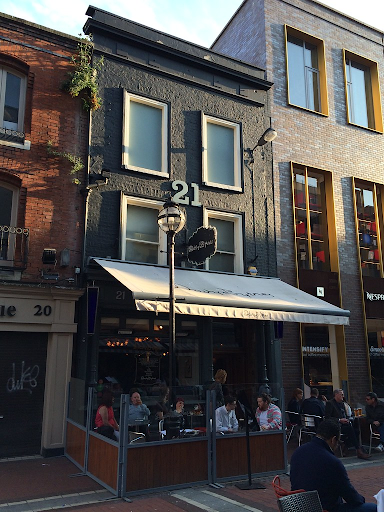
The Irish capital has always been a popular European destination for visitors. Some come to Dublin to take in its historic architecture, while others go on journeys to trace their Irish ancestry. Some literature enthusiasts come for the city’s connection to James Joyce, the famed Irish author best known for his 1922 modernist novel “Ulysses.” The novel follows the story of Leopold Bloom as he wanders the streets of Dublin in a manner reminiscent of Odysseus’ journey in Homer’s “Odyssey.” In Chapter 8 of the novel, Bloom visits Davy Byrne’s pub for a Gorgonzola sandwich and some Burgundy before returning to his travels through Dublin. While Bloom is a character of fiction, the pub is not, and is still operating to this day. According to the pub’s website, Joyce frequently visited and was close to the pub’s founder, Davy Byrne. Joyce fans still stop by the pub while traveling through Dublin, enjoying a sandwich and some wine during their own Irish odyssey. 

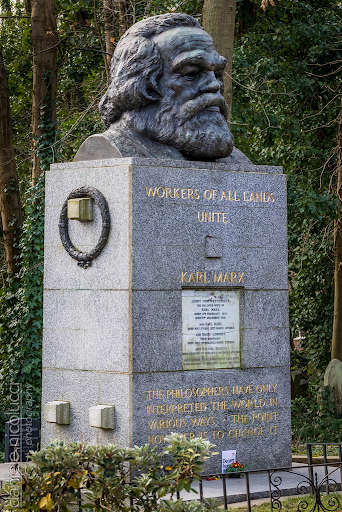
2. The Tomb of Karl Marx, London, England

The headstone of Karl Marx’s grave in Highgate Cemetery, which reads “Workers of all lands unite.” Flickr. Daniele Nicolucci. CC BY-NC-ND 2.0

Cemeteries aren’t usually at the top of travelers’ bucket lists, especially of those visiting London. Yet, Highgate Cemetery in north London is visited by philosophy lovers for being the resting place of one notable 19th-century thinker— Karl Marx, the controversial German philosopher best known for writing “The Communist Manifesto” and “Das Kapital.” Almost 140 years after his death, his grave is sought out by fans of his work and of the school of thought that he inspired. However, the tomb of Karl Marx is also targeted by those who disagree with his philosophy, often being subject to acts of vandalism.


3. Kurt Vonnegut Museum and Library, Indianapolis, United States

The entrance to the Kurt Vonnegut Museum and Library in Indianapolis. Flickr. Martin Kalfatovic. CC BY-NC-SA 2.0

American novelist and satirist Kurt Vonnegut is known for his darkly humorous yet oddly lighthearted stories filled with eccentric characters representative of post-World War II America. Vonnegut, who was born and raised in Indianapolis, often referenced his home state in his novels. The Rosewaters, a fictitious American political family at the center of Vonnegut’s 1965 novel “God Bless You, Mr. Rosewater,” are even from Indiana. Fitting for a Midwesterner at heart, the Kurt Vonnegut Museum and Library is located in Indianapolis and is dedicated to his life and works. Vonnegut fans can sit in front of a model of the typewriter he used to write his stories with, look at pictures of his life and family, and even read his numerous rejection letters from editors. 

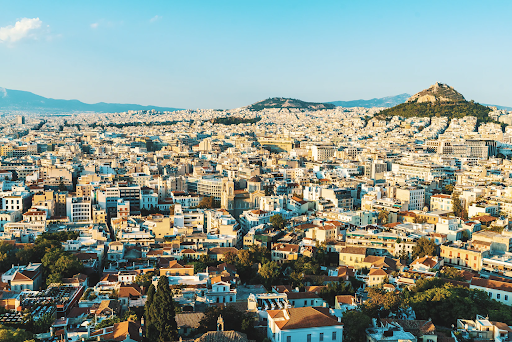
4. Plato Academy Digital Museum, Athens, Greece

The Athens skyline. Unsplash. Evan Wise.

For those with a passion for classical history, ancient epics and philosophy, there’s no city with a connection to all three like the Greek capital of Athens. The city is considered the birthplace of many philosophical schools of thought and traditions, and was home to some of humanity’s most important thinkers. Yet one museum, dedicated to the philosopher Plato, is making ancient teachings accessible for a 21st-century audience. The Plato Academy Digital Museum was built in 2015 on the ancient grounds of Plato’s academy in Athens, and features interactive installations where visitors can learn about the teachings of Plato and his role in shaping Western philosophy. One can even take a quiz to see if they have what it takes to be a student of Plato. 

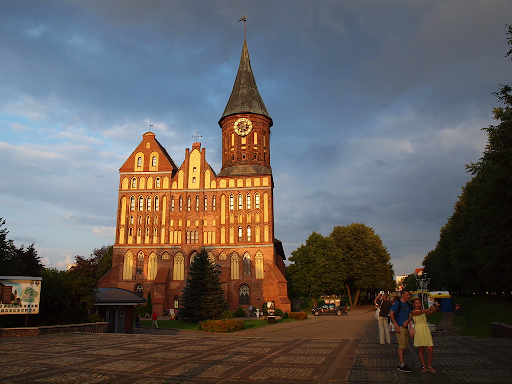
5. Konigsberg Cathedral, Kaliningrad, Russia

Konigsberg Cathedral, where Immanuel Kant is buried. Flickr. Anita. CC BY-NC-ND 2.0

Located in the Russian exclave of Kaliningrad, this Gothic cathedral looms over the surrounding city, a reminder of the region’s Prussian history. It is also the resting place of German philosopher Immanuel Kant, best known for his contributions to the fields of ethics, aesthetics and metaphysics, who was born in the city when it was still part of the kingdom of Prussia. Much of Kaliningrad, which was called Konigsberg when it was part of Prussia, was destroyed during Allied air raids in World War II. The cathedral was also heavily damaged during the war, before reconstruction efforts began in the early 1990s. Kant was buried inside the cathedral after his death in 1804, and now rests in a mausoleum located to the side of the building. 


Aerex Narvasa

Aerex is a current student at Occidental College majoring in Diplomacy and World Affairs with a minor in East Asian Studies. He is passionate about sharing people’s stories through writing, and always strives to learn about new places and cultures. Aerex loves finding new music and exploring his hometown of Los Angeles in his free time.

The Immense Impact of COVID-19 on Global Poverty

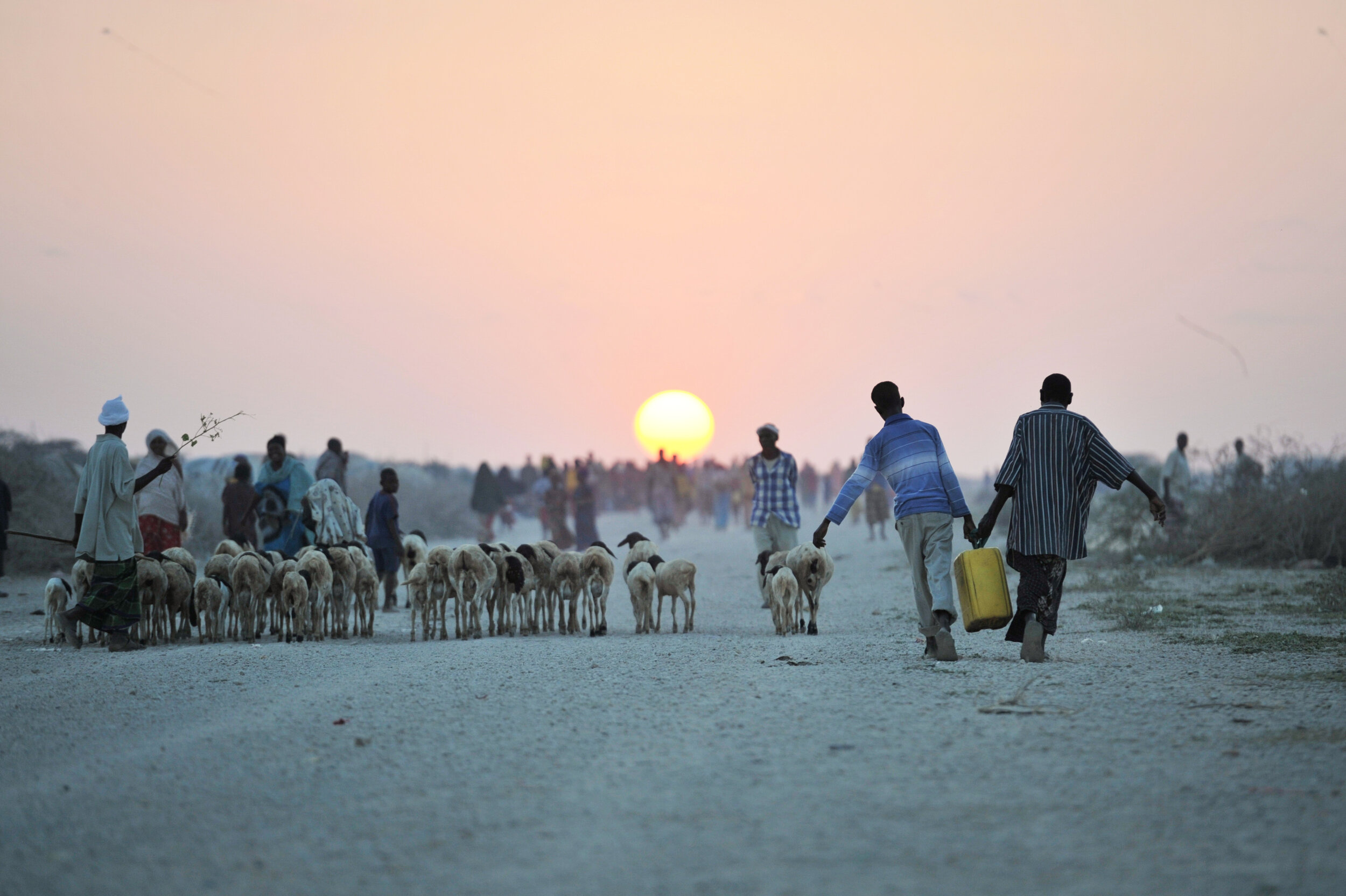
A pair of boys carry water near a refugee camp in Jowhar, Somalia. The COVID-19 pandemic has made conditions for marginalized groups such as refugees more dire. World Humanitarian Summit. CC BY-NC-ND 2.0

For the past 30 years, the world has been able to make immense progress in international development, with the amount of people living in extreme poverty (making below $1.90 a day) declining from 36% in 1990 to just 10% in 2015. The COVID-19 pandemic is reversing that. For the first time in three decades global poverty is on the rise, and up to half a billion people are now at risk of falling into poverty due to the coronavirus. Even more concerning is the matter of where the economic impacts of the virus are being felt the hardest, with the “global south” countries facing the highest risk of increased poverty for what could be years to come. 

In 2015, the U.N. adopted the 2030 Agenda for Sustainable Development, which included 17 goals acting as guidelines for the sustainable and equitable development of all member states. Known as the “sustainable development goals” (SDGs), the international community hoped that they would act as a framework for reducing inequality and promoting economic development. Poverty reduction is at the forefront of this initiative, with SDG 1 calling for the end of global poverty. That goal will most likely not be achieved by 2030. 

Even before the spread of the coronavirus, countries were not on track to completely eliminate poverty, with the U.N. estimating that 6% of the world population will still live in extreme poverty in 2030. Furthermore, the effects of the COVID-19 pandemic have made that goal even more difficult. In 2020 alone, more than 71 million people have fallen into extreme poverty, and millions more worldwide will likely fall into the same trap as the economic disruptions of the pandemic linger for years to come. 

(T)he number of school-age children facing food insecurity has increased by more than 320 million

The aggregate numbers do not portray the full extent of the impacts of COVID-19 on international development. Regions already susceptible to extreme poverty are being hit hardest by the economic impacts of the pandemic. According to the United Nations University, a 10% contraction in global per capita income would cause between 180 and 280 million people to fall into extreme poverty. However, the situation becomes more dire when one considers where people are expected to face increased rates of extreme poverty. Again assuming a 10% contraction, it is estimated that up to 85% of those newly living in poverty would be located in sub-Saharan Africa or South Asia alone. These regions already face disproportionate levels of poverty relative to their populations. For example, the African continent accounts for only 13% of the world population yet makes up over half of those living in extreme poverty

Those who were already at an increased risk for poverty, such as refugees, informal workers and those living in underdeveloped rural communities, are especially vulnerable to economic disruptions caused by the virus. The International Labor Organization estimates that between 5 and 25 million people could lose their jobs, which would create severe impacts for marginalized workers such as women and migrants. Additionally, the number of school-age children facing food insecurity has increased by more than 320 million according to the World Food Program.

The data shows a worrying trend that the international community must contend with to eliminate global poverty. Since the 1990s, the world has worked together to lift billions of people out of poverty and increase the global standard of living. Now, the COVID-19 pandemic has once again created a barrier to making a poverty-free future possible. The full extent of the virus’s impact has yet to be seen. However, what is already known is its effect on human livelihood, especially for those who are most at risk. The pandemic has created a new challenge for the international community if it wants to make extreme poverty a thing of the past. Yet, what can be achieved with global cooperation is immense, and the world’s vision for a sustainable future is still possible; it just might take a little bit longer than hoped for.


Aerex Narvasa

Aerex is a current student at Occidental College majoring in Diplomacy and World Affairs with a minor in East Asian Studies. He is passionate about sharing people’s stories through writing, and always strives to learn about new places and cultures. Aerex loves finding new music and exploring his hometown of Los Angeles in his free time.

Swiss Voters Support Burqa Ban Ahead of Nationwide Vote

A proposed referendum would ban full-face coverings in public spaces in Switzerland. Polls show that 63% of Swiss voters support the ban. 

On March 7, Swiss citizens will vote on a referendum that would ban full-face coverings, like burqas and niqabs, from being worn in public. Polls show that 63% of Swiss voters support the ban and plan to vote in favor of it. The text of the ban, supported by members of Switzerland’s right-wing Swiss People’s Party, does not specifically mention Muslim veils, but the ban is widely seen as targetting face coverings worn by Muslim women. 

The Swiss government has urged voters to reject the proposed ban, with officials saying that the decision to ban full-face coverings should be left up to individual cantons. Officials worry that a nationwide ban would “undermine the sovereignty of the cantons,” several of which have already banned such coverings in regional votes. In its statement, the government also noted that a ban on full-face coverings could harm Switzerland’s tourism industry. According to official statistics, only about 5% of the Swiss population is Muslim, and officials claim that the majority of women who wear facial coverings in Switzerland are visitors. For this reason, the Swiss government has deemed the burqa ban “unnecessary.” The government’s statement makes no mention of the potential for Islamophobia or anti-Muslim rhetoric to arise. 

Despite the government’s lack of support for the burqa ban, the results of the referendum are directly in the hands of the Swiss people. Switzerland operates under a unique system of direct democracy. All Swiss citizens over the age of 18 have the right to vote in all elections and on all referendums. Citizens can also propose a referendum or an amendment to the constitution by getting 100,000 signatures of voters in support of the proposal within 18 months, a facet of direct democracy called a popular initiative. If the goal of 100,000 signatures is reached, the proposal will go to a nationwide popular vote. The proposal that would ban full-face coverings underwent this process and is now awaiting a vote. 

The government cannot prevent a popular initiative from going to a vote, but it can offer a direct counterproposal in the hopes that a majority of the people and cantons will vote for it instead. In place of the burqa ban, the government has proposed a law that would require people wearing a facial covering to reveal their face for identification purposes at administrative offices or on public transport. 

Those who refuse to remove their facial coverings would face fines of up to 10,000 Swiss francs ($11,200). If the proposed ban is rejected on March 7, the government’s counterproposal will go into effect. 


Rachel Lynch

Rachel is a student at Sarah Lawrence College in Bronxville, NY currently taking a semester off. She plans to study Writing and Child Development. Rachel loves to travel and is inspired by the places she’s been and everywhere she wants to go. She hopes to educate people on social justice issues and the history and culture of travel destinations through her writing.

Locals Tackle Malnutrition by Bartering Books in Guatemala

There is a strong relationship between educational advances and communities being lifted out of poverty. In the case of Guatemala during the COVID-19 pandemic, this link has manifested itself much more directly. 

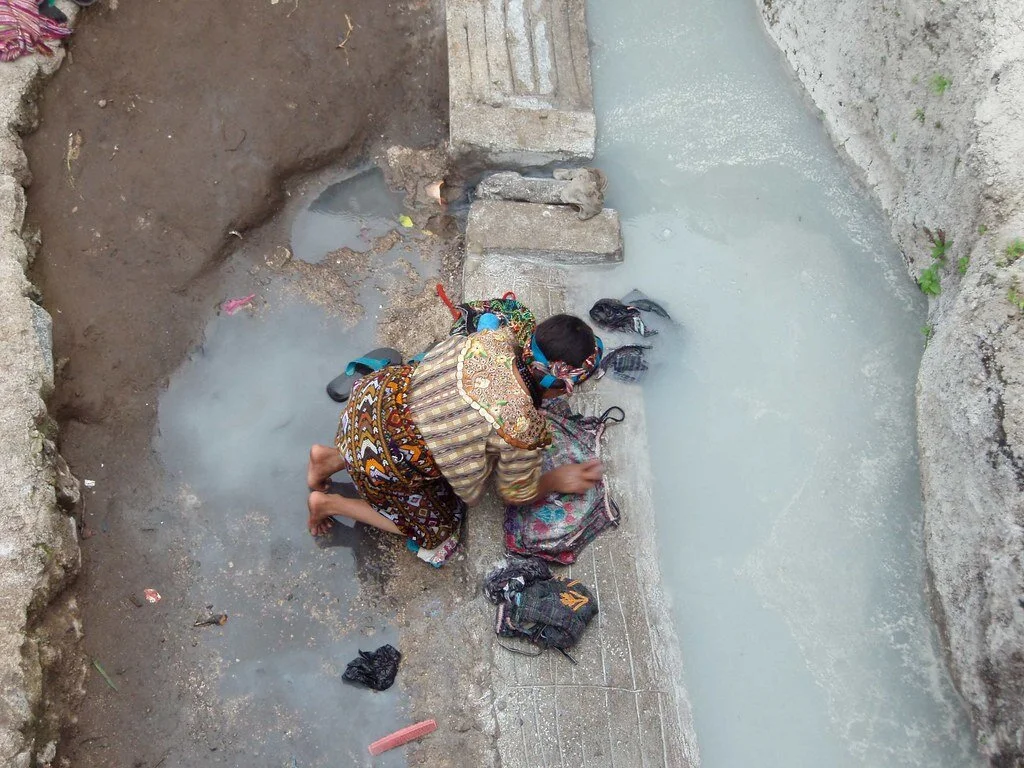
Clothes washing in Quetzaltenango. Lon&Queta. CC BY-NC-SA 2.0. 

Guatemala, boasting a distinctly Mayan heritage and a landscape peppered with volcanoes, offers an inspiring experience to the open-minded traveler. However, despite the bright and bustling aspects of the nation, a substantial portion of Guatemala’s residents live in poverty. Standing as the fifth-poorest country in Latin America, Guatemala has taken a particular hit with COVID-19 regulations restricting economic functions. In addition, Guatemala has the sixth-highest rate of chronic malnutrition in the world; nearly half of the population of children suffers from stunting due to malnourishment. The statistic increases notably in rural areas with a malnourishment rate reaching 70%. 

The COVID-19 pandemic has only aggravated the poverty predicament, with Indigenous populations facing the bulk of the damage. The government has fallen dramatically short on providing health care and financial support, causing the creatively resilient Guatemalan people to snap into action. In Quetzaltenango, resident Bonifaz Díaz has created an innovative method to provide support to his neighbors in need: he set up a book-barter system. Every day, Díaz bikes with hefty sacks of books donated to his organization, 32 Volcanoes, and trades them for food donations from food secure families. Although a simple concept, this has been no easy task. The arduous job surely keeps Díaz in shape; he has cycled over 1,200 miles feeding families, and has traveled as far as 37 miles for a single delivery. 

Stay-at-home orders have diminished the town’s morale, but Díaz is determined to hold up hope. The number of children supported by his project has tripled during the pandemic, but luckily two more bikers have offered their help. Most families offer a bag of Incaparina, an inexpensive but protein-packed cereal mix made from corn and soy. A bag provides about a week’s worth of servings, but the low price point is still out of reach for many. About 97% of residents live on a dollar a day or less, so even cheap food made to fight malnourishment cannot completely solve the problem. The bright-red Incaparina bags are commonly the only source of nutrients on families’ shelves, but it has proven to keep malnourishment at bay for some. 

By creating a system that allows families to benefit themselves while helping others, many hope that this program will continue to bear far-reaching results. The poverty problem cannot be solved by a single person or fixed in one day, but with every resident lending a hand, considerable headway can be made. 


Ella Nguyen

Ella is an undergraduate student at Vassar College pursuing a degree in Hispanic Studies. She wants to assist in the field of immigration law and hopes to utilize Spanish in her future projects. In her free time she enjoys cooking, writing poetry, and learning about cosmetics.

A Trippy Trip: The Psychedelic Salt Mines of Russia 

The salt mines of Russia are as dizzying in person as they appear in photos. Although a visit is not for the faint of heart, the mines stand as yet another testament to the gentle, artistic hand of nature. 

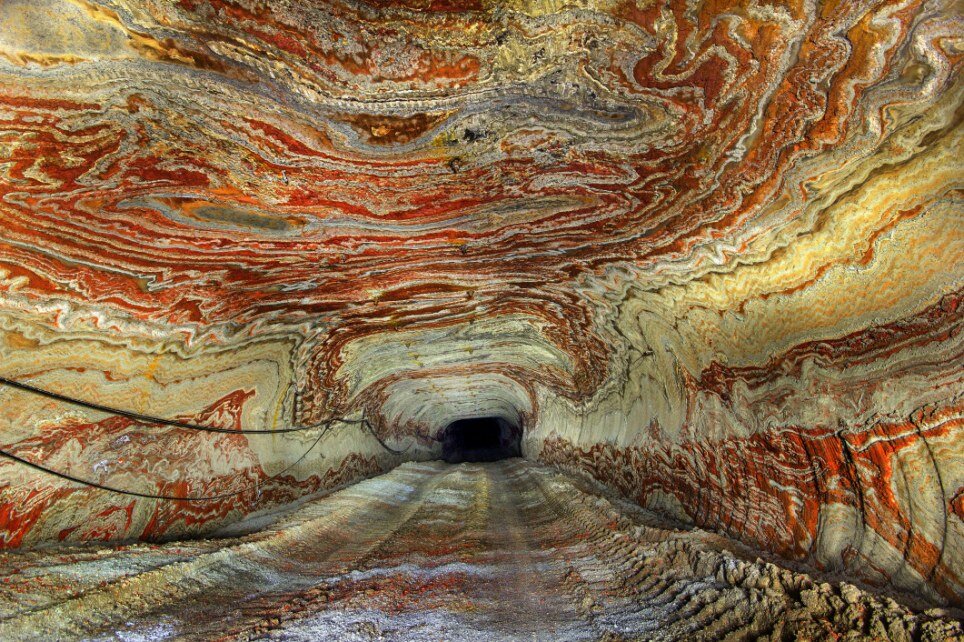
Red swirls cover the walls of this Russian salt mine. Mikhail Mishainik. Daily Mail. 

Along the eastern edge of Russia’s Ural Mountains lies the city of Yekaterinburg, an industrial giant currently experiencing an explosion in population and construction. Although the city itself overflows with its buzzing nightlife scene and hectic economic sector, a nearby site also attracts curious eyes and aspiring photographers. 650 feet below Yekaterinburg lies a peculiar system of salt mines often known as the “psychedelic salt mines.” 

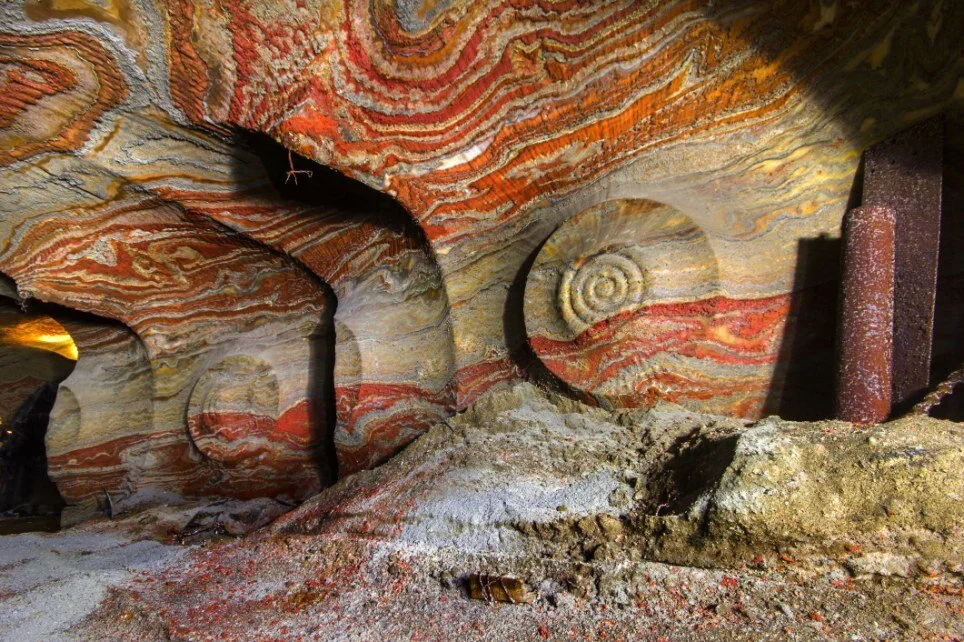
These mines earned the name “psychedelic” for the hypnotizing pattern that covers the entirety of the caves. Any visitor would be easily mesmerized by the sight; the walls display a magnificent swirling pattern that mimics sound waves or animated gusts of wind. How the caves came to be such a fascinating art show is equally interesting, as the rich, almost electric swirls of blue, yellow, red and orange are entirely natural. They exist due to large deposits of the mineral carnallite, which is commonly used in fertilizer. The mineral showcases its vibrant range in the caves, but can also be found in a colorless state. Unlike most popular caves, the psychedelic salt mines are not narrow passages requiring extreme flexibility to squeeze through; the winding channels stretch for many miles and are truly spacious. 

Cave walls underneath Yekaterinburg. Mikhail Mishainik. Daily Mail. 

The caves date back 280 million years to the Permian period, and are a result of the Perm Sea having dried up. These rich salt deposits were largely forgotten for many years until around the second millennium B.C., when Russia began salt mining. 

Additionally, only recently have photos of the cave even been shown to the public. Although the attractive site seems ideal for family-friendly adventures and novice photographers, the caves are closed off to the public. Only a small section of the caves are still in use, and the other parts require a special government permit to access. 

However, a photographer named Mikhail Mishainik is credited with the awe-inspiring photos we now see. Along with some friends, Mishainik spent many hours exploring the caves, being sure to capture the magnificence of their artwork along the way. Mishainik stayed overnight in the pitch-black caves and chronicled his uncomfortable yet exciting experience. Due to the mineral deposits, the air inside is salty and dry, creating a constant feeling of unquenchable, perpetual thirst. Mishainik also claims that the lingering sense of instability in the caves is part of the excitement, since the caves face the threat of gas leaks and landslides. 

It is uncertain whether any more than a select few will ever lay their eyes on the rainbow swirls of these caves, but one thing is sure: if such magnificence lies hidden under this one city, there are limitless other gems waiting to be uncovered by unsuspecting travelers. 


Ella Nguyen

Ella is an undergraduate student at Vassar College pursuing a degree in Hispanic Studies. She wants to assist in the field of immigration law and hopes to utilize Spanish in her future projects. In her free time she enjoys cooking, writing poetry, and learning about cosmetics.

The Mexican Street Cart: A Culinary World on Wheels 

Mexican street foods, like birria tacos and elote, have gained widespread attention on social media recently for their complex flavors and vivid colors. Some dishes have gone so viral that Americans are driving hours in search of truly authentic carts! Mexican street carts are essential to the people of Mexico, providing a convenient meal during a busy day, and more are popping up all over the United States as well. 

Read More

Poverty-Stricken Yemen Faces Climate Change Consequences

Yemen, the most impoverished and water insecure country in the Middle East, faces serious risks from climate change, including unpredictable rainfall patterns amid a hot and dry climate.

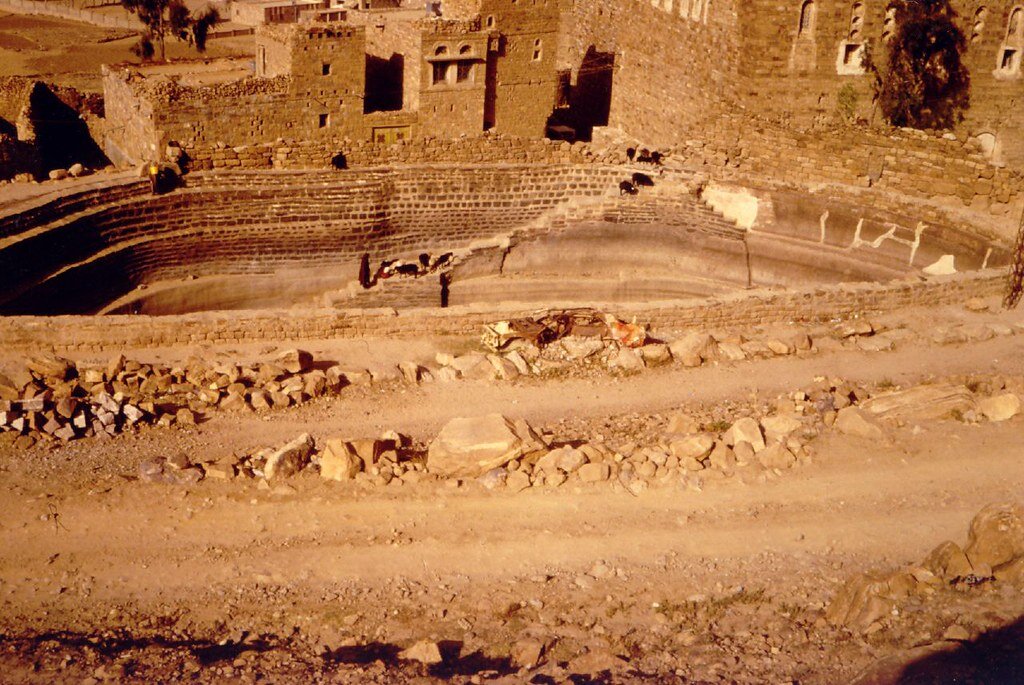
Yemen’s capital, Sanaa. Hiro Otake. CC BY-NC-ND 2.0

Climate change poses a serious threat to countries all across the world, but Yemen in particular is extremely vulnerable. According to the United Nations Development Program, three main sectors of Yemen are especially at risk: water resources, agriculture and coastal zones.

Water Resources

Yemen’s natural sources of clean freshwater are drying up, and its reservoirs are nearly drained. Yemenis say that rising average temperatures, which could increase by 2.2 to 6 degrees Fahrenheit, are causing 10 future generations’ worth of water to be used up now. In addition, Yemen’s rapidly growing population—currently at 29 million—means less water per person.

Water shortages are also leading to social tensions and local conflicts in Yemen’s poor cities. The impacts of climate change—increased temperatures, drought and rising sea levels—will continue to remove access to safe drinking water, spark conflict over water, and cause saltwater intrusion of groundwater sources.

Since the Yemeni government has struggled to establish a modern water governance framework, the water shortage is being met by modern tube wells and boreholes, which drain reserves of underground water. Many independent households are also piping and fetching their own water.

Further depletion of water resources is expected to reduce agricultural productivity by 40%. Yemen’s agricultural sector is another that will face the harsh impact of climate change.

Agriculture

The agricultural sector employs the majority of Yemen’s workforce, cultivating crops of fruit, vegetables, fodder and more. Due to climate change, rainfall on these farms often leads to floods that cause soil erosion and loss of land. In other months, dry periods and droughts lead to desertification, accounting for an estimated 3-5% annual loss in fertile land.

In addition, the cultivation of qat—a shrub whose leaves have a narcotic effect—has worsened Yemen’s water problems, covering 38% of Yemen’s irrigated areas and consuming 40% of available water resources. Sea levels are also expected to increase by 1 to 1.75 feet by 2100, which could cause water to leak into coastal freshwater aquifers and make soil brackish.

Not only could Yemen’s economy considerably decline due to a lack of natural rural resources, but food insecurity will also skyrocket and increase the country’s need for imported grains. Moreover, 75% of the population is rural and engaged in farming. Therefore, Yemenis are highly dependent on a good climate for their livelihoods, something that climate change is making almost impossible.

Coastal Zones

Due to increased storm surges and sea level rise, Yemen is extremely susceptible to coastal zone damage. As one of the top 10 low-income countries most vulnerable to coastal damage, Yemen’s ecosystems and communities are threatened by rising sea levels, erosion, floods, mass displacement and economic disorder. For example, in 2008, floods in southeastern Yemen caused $1.6 billion in damages and losses, which was the equivalent of 6% of the country’s gross domestic product.

The projected impacts of climate change in Yemen will intensify the social, economic and political issues that its citizens already face from the country’s ongoing civil war. In order to help Yemenis, world leaders say it is imperative to pursue viable environmental solutions, such as carbon pricing, clean public transport, renewable energy, sustainable agricultural programs and efficient workspaces. Without transformative change, countries such as Yemen face potentially catastrophic consequences.


Isabelle Durso

Isabelle is an undergraduate student at Boston University currently on campus in Boston. She is double majoring in Journalism and Film & Television, and she is interested in being a travel writer and writing human-interest stories around the world. Isabelle loves to explore and experience new cultures, and she hopes to share other people's stories through her writing. In the future, she intends to keep writing journalistic articles as well as creative screenplays.

America’s Prison Abolition Movement Fights On

The United States is home to nearly 25% of the world’s prison population. Activists are fighting to dismantle the prison system, hoping to strengthen communities instead. 

Protest against police brutality in Minnesota, 2013. Fibonacci Blue. CC BY 2.0   

The United States maintains the highest prison population rate in the world. Despite making up only 5% of the world’s population, the United States is home to 25% of the world’s prisoners. There is no question that the United States has a mass incarceration problem. For decades, activists have argued that the prison system perpetuates racism, sexism and inequality, leading to what is often seen as a radical solution: prison abolition. 

In the wake of the recent stream of anti-police brutality protests, discussion has turned toward prison abolition. Prison abolition is not just about getting rid of physical prisons; abolitionists aim to undo societal structures that lead to incarceration, known as the prison-industrial complex. The prison-industrial complex is a term used to describe “the overlapping interests of government and industry that use surveillance, policing and imprisonment as solutions to economic, social and political problems.” Prison abolition is really the abolition of the prison-industrial complex, with the ultimate goal being to eliminate policing, imprisonment and surveillance and to redistribute government spending from these industries to support housing, education, jobs and health care. 

The concept of prison abolition has been around since the 1980s. Following the war on drugs, which increased prison sentences for both drug dealers and users and more than doubled the prison population from 1980 to 2000, activists began protesting the prison system. They argued that too many nonviolent offenders were being incarcerated, that wealth inequality was a major factor in who was locked up, and that people of color were disproportionately imprisoned. Black and Hispanic people in the U.S. are still incarcerated at higher rates than White people, data shows. The movement gained prominence in the 1990s, when Angela Davis and Ruth Wilson Gilmore co-founded Critical Resistance, a national anti-prison organization with a focus on the prison-industrial complex and abolition. In 1998, Critical Resistance hosted a three-day conference to examine and challenge the prison-industrial complex. The conference was considered a success, but made clear how much work still had to be done to undo a society that maintains mass incarceration. 

“The abolition movement focuses on preventive rather than punitive measures.”

Skeptics of the abolition movement often ask what will happen to violent offenders, like murderers and rapists, if prisons are shut down. The movement’s supporters have two responses. First, abolition activists ask: is the current prison-industrial complex actually effectively addressing the issues behind rape and murder? Most activists say no. Despite the copious amounts of money funneled into supporting the prison-industrial complex annually, the threats of sexual assault and murder, among other crimes, are still sources of concern across the country. The prison-industrial complex locks criminals up, but has not actually addressed the root of the crimes in society. Plus, as prison abolition activist Woods Ervin points out, the prison-industrial complex itself perpetuates some crimes, like when prison guards sexually assault incarcerated people. Second, supporters point out that abolitionists want to help communities address underlying issues, like wealth inequality, that contribute to the rise of crime in the first place. Abolitionists want to build up infrastructures in communities in order to reduce interpersonal issues and create a world where people don’t feel driven into committing crimes. The abolition movement focuses on preventive rather than punitive measures. Ultimately, how crime is dealt with after prison abolition “is going to depend on each scenario,” Ervin says, and on the community in which it takes place. 

Prisons won’t be shut down tomorrow, but activists in the abolition movement are fighting to ensure that prisons will one day be obsolete, and communities will have a stronger foundation to deal with eliminating inequality. The recent killings by police officers and subsequent anti-police brutality protests have illuminated some of the issues with the prison-industrial complex, and highlight the need for a new system. 

To Get Involved: 

To locate your local chapter of Critical Resistance, the national anti-prison organization, and find information on volunteer opportunities or how to become a member, click here.


Rachel Lynch

Rachel is a student at Sarah Lawrence College in Bronxville, NY currently taking a semester off. She plans to study Writing and Child Development. Rachel loves to travel and is inspired by the places she’s been and everywhere she wants to go. She hopes to educate people on social justice issues and the history and culture of travel destinations through her writing.

Trapped in Time: Antarctica’s Secret Blood Falls 

With technology advancing at a record pace, few wonders remain that puzzle scientists. However, deep in the frigid tundra of Antarctica lies one marvel that has attracted photographers and skeptics alike. 

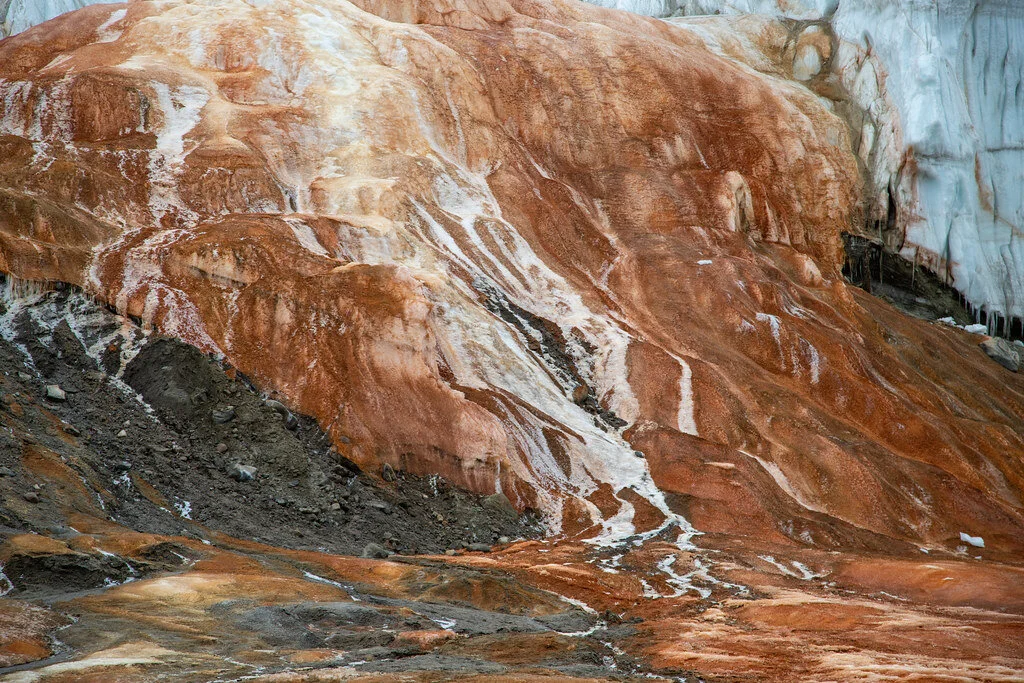
Antarctica’s Blood Falls. arielwaldman. CC BY-NC 2.0. 

In the Taylor Valley of Antarctica lies a mighty natural wonder called the Taylor Glacier. Although a spectacle in and of itself, the glacier is only an opening to an even more magnificent miracle. Sandwiched between Taylor Glacier and the underlying bedrock is a “lake” that leads to a “waterfall” known as Blood Falls. The spectacle earned its name due to the deep, murky red color of the water; the glacier releases a beautiful, bloody fountain where it has burst open. Photos of the site capture winding streams of water, which are painted with endless stripes of crimson and cream, flowing over the rocky landscape. 

Geologist Thomas Griffith Taylor, for whom the Taylor Valley is named, first discovered the Blood Falls on a voyage in 1911; he was alarmed by the scarlet hue spilling from what is normally a monochrome, colorless landscape. For the remainder of the 20th century, explanations for the vermilion wonder came up short. It was not until 2015 that scientists finally concluded that the waterfall’s maroon color is due to the presence of iron oxides. Cracks in the glacier expose the iron to oxygen, causing it to turn red in the same way rusting bike spokes produce a brick-red hue. Previously, the long-standing theory for the coloring had been the presence of reddish algae, although the theory lacked sufficient evidence. 

Taylor Glacier. Mike Martoccia. CC BY-SA 2.0. 

However, Blood Falls still presented two seemingly insurmountable scientific dilemmas: how did the water get there in the first place, and why did the water not freeze under the weight of an enormous glacier? Luckily, researchers at the University of Alaska Fairbanks soon answered these questions: water channels brought it from an underground reservoir, and the heat released from the freezing of the glacier kept the lake in a liquid state. 

In addition to the striking red color, researchers found the water to be very salty, but the source of this brine truly stumped scientists. 

The team applied radio-echo sounding, the use of sound waves to measure the location of a distant object, to construct an extensive map of underground water channels. They concluded that the brine reached the falls through the channels after about 1.5 million years. The “lake” from which the brine is sourced was found to sit underneath the glacier, and has slowly absorbed iron from the bedrock. The brine seeps into the ice due to the high pressure of the glacier’s weight. Researchers concluded that the concealed lake never froze over due to the heat produced from the process of glacial freezing. 

Finally, scientists stumbled upon a remarkable discovery: the lake houses microbial ecosystems that live off of sulfate in the water’s oxygen-depleted environment. The presence of the ecosystem gives scientists a vital clue to the processes of Earth’s early life forms, and provides a picture of what life could be like on oxygen-depleted planets. 

To the untrained eye, Antarctica’s Blood Falls may appear to be just another facet of Mother Nature’s artistry, but any digging quickly reveals a complicated puzzle that scientists are still working to piece together.


Ella Nguyen

Ella is an undergraduate student at Vassar College pursuing a degree in Hispanic Studies. She wants to assist in the field of immigration law and hopes to utilize Spanish in her future projects. In her free time she enjoys cooking, writing poetry, and learning about cosmetics.

Canada Suspends Flights to Vacation Destinations as COVID Continues to Spread

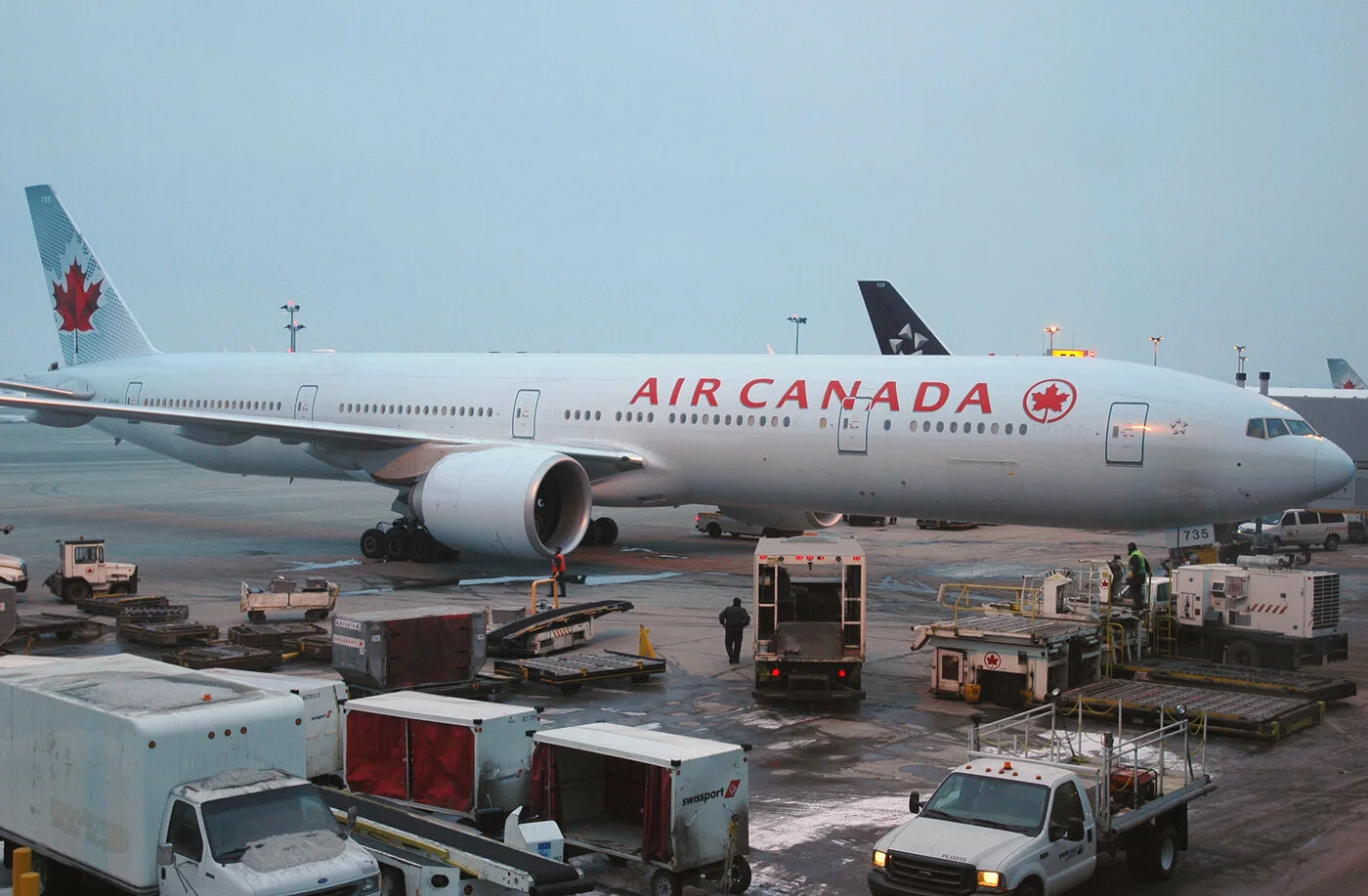
An Air Canada plane at Montreal-Trudeau International Airport. Caribb. CC BY-NC-ND 2.0

On Jan. 29, Canadian Prime Minister Justin Trudeau announced that the government had reached an agreement with major airlines to suspend all flights to Mexico and the Caribbean until April 30, and updated COVID-19 safety precautions for returning travelers. Canada reported 4,690 daily cases nationwide on the day of the announcement, the majority of which came from Ontario and Quebec, the country’s two most populous provinces.

The suspension of flights was agreed upon by Air Canada, WestJet, Sunwing Airlines and Air Transat, representing four of the country’s largest carriers.

Trudeau likewise outlined new pandemic safety guidelines for travelers returning to the country. Starting the week of Feb. 1, all international passenger flights were restricted to arriving only in Vancouver, Toronto, Calgary and Montreal. Travelers also must take a PCR test upon arrival to Canada, and need to quarantine for up to three days in an approved hotel at their own expense while waiting for their test results.

The prime minister also alluded to further restrictions to be announced as soon as the end of the month.

“We will also, in the coming weeks, be requiring nonessential travelers to show a negative test before entry at the land border with the U.S., and we are working to stand up additional testing requirements for land travel,” Trudeau said.

Before the announcement, Canada already required that everyone arriving in the country present a negative COVID-19 test taken within three days of travel and self-isolate for 14 days.

The new changes come as travel between Canada and popular vacation destinations has continued despite the ongoing pandemic. The trend has been even more apparent in the U.S., where a number of major carriers have expanded flights to the Caribbean and Mexico in response to increased demand to the region at a time when airlines have closed routes to other parts of the country.

“[T]he safety of flying during the pandemic remains largely unknown”

Throughout 2020, travelers continued to vacation in Mexico and the Caribbean, evading pandemic safety guidelines and in some cases, such as with American college student Skylar Mack, violating quarantine laws in the destination countries.

To the government’s credit, the U.S. did begin requiring negative COVID tests for entry into the country on Jan. 26. However, the government has yet to limit flights out of the country to popular vacation destinations as Canada has done.

According to Vox journalist Abraar Karan, the safety of flying during the pandemic remains largely unknown, as data on in-flight spread is not readily available a year into the ongoing COVID-19 pandemic.

“In Canada, infections and exposures on flights are far more readily documented, with a nearly daily list of flights that had infected passengers,” Karan writes. “The U.S. would benefit from doing the same, although this needs to be coupled with rapid contact tracing as well.”

It is unclear yet as to whether or not the U.S. will follow Canada’s lead and adopt stricter pandemic travel policies. The State Department recommended on Jan. 26 that Americans limit their travel abroad, but stopped short of a full suspension.

“The Department of State is committed to helping U.S. citizens overseas who find themselves in dire situations, but that assistance is likely to be limited,” Bureau of Consular Affairs Acting Assistant Secretary Ian Brownlee said on Jan 26. “Our goal is to help people avoid those dire straits in the first place.”

Travel is expected to pick up around the globe as more people receive vaccines, many of which have begun to be distributed in the global north. For now, however, travelers from any country are highly recommended to evaluate the safety and necessity of their travel before leaving.



Jacob Sutherland

Jacob is a recent graduate from the University of California San Diego where he majored in Political Science and minored in Spanish Language Studies. He previously served as the News Editor for The UCSD Guardian, and hopes to shed light on social justice issues in his work.

‘Israel’s Most Racist Soccer Club’ Gets an Arab Owner

Fans are none too pleased. Beitar Jerusalem faces a tough fight against bigotry in its ranks.

A Beitar Jerusalem player, right, tries to keep up. Steindy. CC BY-SA 3.0. 

Most sports fans would rejoice at such a deal. Beitar Jerusalem, an Israeli soccer team, got a new owner who pledged a $100 million investment in the team over the coming 10 years. Such a whopping sum of money could buy plenty of talent to buoy the team, which hasn’t won the Israeli Premier League since 2008. Instead of glee, though, many fans felt rage. One diehard spray-painted on the team’s stadium wall, “The war has just begun.” The reason was simple: the new owner was Sheikh Hamad bin Khalifa Al Nahyan, an Arab Muslim, and the team was Beitar Jerusalem, notoriously known as “the most racist team in Israel.” 

Heckling Arab players is part and parcel of the stadium experience. Fans regularly shout “terrorist” at rival Arab players. The team remains ethnically homogeneous since it has never signed an Arab player. This flies in the face of statistical probability given that Israel’s population is 21% Arab. The team’s racial uniformity keeps with the team’s motto: “Forever Pure.”

A Beitar Jerusalem bumper sticker. zeeveez. CC BY 2.0.

To understand why Sheikh Hamad bought a 50% stake, it is necessary first to look at Moshe Hogeg, formerly the team’s sole owner. He made his fortune trading cryptocurrency and bought Beitar Jerusalem, along with its debt, for $7.2 million in 2018. His reasons were clear, ambitious and abrasive to many Beitar fans: “I saw this problem that reflects bad not only on the club, but also on Israel,” Hogeg said. “I love football, and I thought it was the opportunity to buy this club and to fix this racist problem. And then I could do something that is bigger than football.” Before he can even dream of something bigger, though, he’ll first have to address the bigotry already present in the team’s fan base. 

Beitar Jerusalem’s self-avowed racist identity comes from a right-wing section of the fan base known as La Familia. Comprising roughly 20% of the team’s fans, they are a loud, vociferous and sometimes violent minority. When the team signed two Muslim players from Chechnya in 2013, members of La Familia burned down the team’s headquarters in retaliation. Fans routinely heckled the players during games. When one player scored his first goal, many fans, led by La Familia, left the stadium. 

The tumultuous 2013 season was chronicled in the documentary “Forever Pure.”

Under pressure. Steindy. CC BY-SA 3.0.

The deal with Sheikh Hamad comes on the heels of the Abraham Accords, a set of agreements between Israel and the United Arab Emirates, brokered by the United States, that normalized relations between the two countries. Thousands of Israelis traveled to the UAE shortly after the agreements came into effect. Instagram influencers posted stories of themselves lounging in hotel suites in Dubai. Sheikh Hamad’s purchase of Beitar Jerusalem’s stake provoked very little attention in the UAE. Israeli football is not internationally popular, so the outcry was limited solely to Israel. 


Beitar Jerusalem’s training ground, site of many racist chants. zeevveez. CC BY 2.0.

Sheikh Hamad is as hopeful as Moshe Hogeg about purging the team of its racist elements. “The deal is meant to show the nations that the Jewish and the Muslim can work together and be friends and live in peace and harmony,” Hamad said in December. However, peace and harmony still seem a long way away. Beitar Jerusalem’s decadeslong right-wing identity defines much of the team’s fan base. As embarrassed and ashamed as most fans are of La Familia’s overt bigotry, the group still holds immense sway. Only time will tell if their brand of hatred will win out. Hogeg and Sheikh Hamad’s anti-racism campaign will face fierce opposition. When asked if his decision to invest was related to La Familia, Sheikh Hamad only responded, “Challenge accepted.”


Michael McCarthy

Michael is an undergraduate student at Haverford College, dodging the pandemic by taking a gap year. He writes in a variety of genres, and his time in high school debate renders political writing an inevitable fascination. Writing at Catalyst and the Bi-Co News, a student-run newspaper, provides an outlet for this passion. In the future, he intends to keep writing in mediums both informative and creative.


All the Way to Timbuktu: Exploring the Cultural Riches of Mali 

Look beyond what the Western media says to appreciate Mali’s rich cultural heritage.

WARNING: As of February 2021, the U.S. Department of State advises against all travel to Mali due to risk of crime, terrorism and kidnapping. For the time being, enjoy the country from your computer screen. Do not visit Mali.
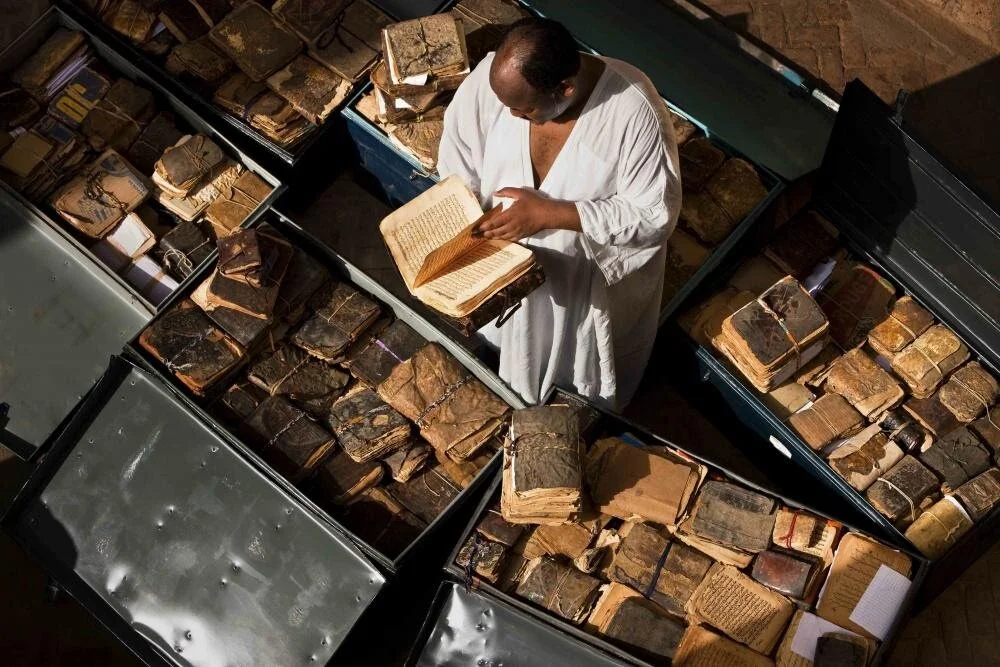
A man reading historical manuscripts from West Africa. Jermaine Johnson. CC2.0

Mali is a landlocked country located in the heart of West Africa. Mali’s rich history dates back to the 11th century, when the empire of Mali controlled vast swaths of the Niger River valley. Known as a beacon for Islamic scholarship and trade from the 13th to the 16th century, things took a turn when the French colonized the country in 1898. Since achieving independence in 1960, Mali has suffered from coups, droughts, corruption and insurgencies by Islamic extremists in the country’s north

Despite Mali’s negative reputation in Western media coverage, the country has a fascinating history and vibrant culture that deserves to be celebrated—from afar, until safety returns. Here are some of the stunning historical and cultural sites in Mali: 

Djenne

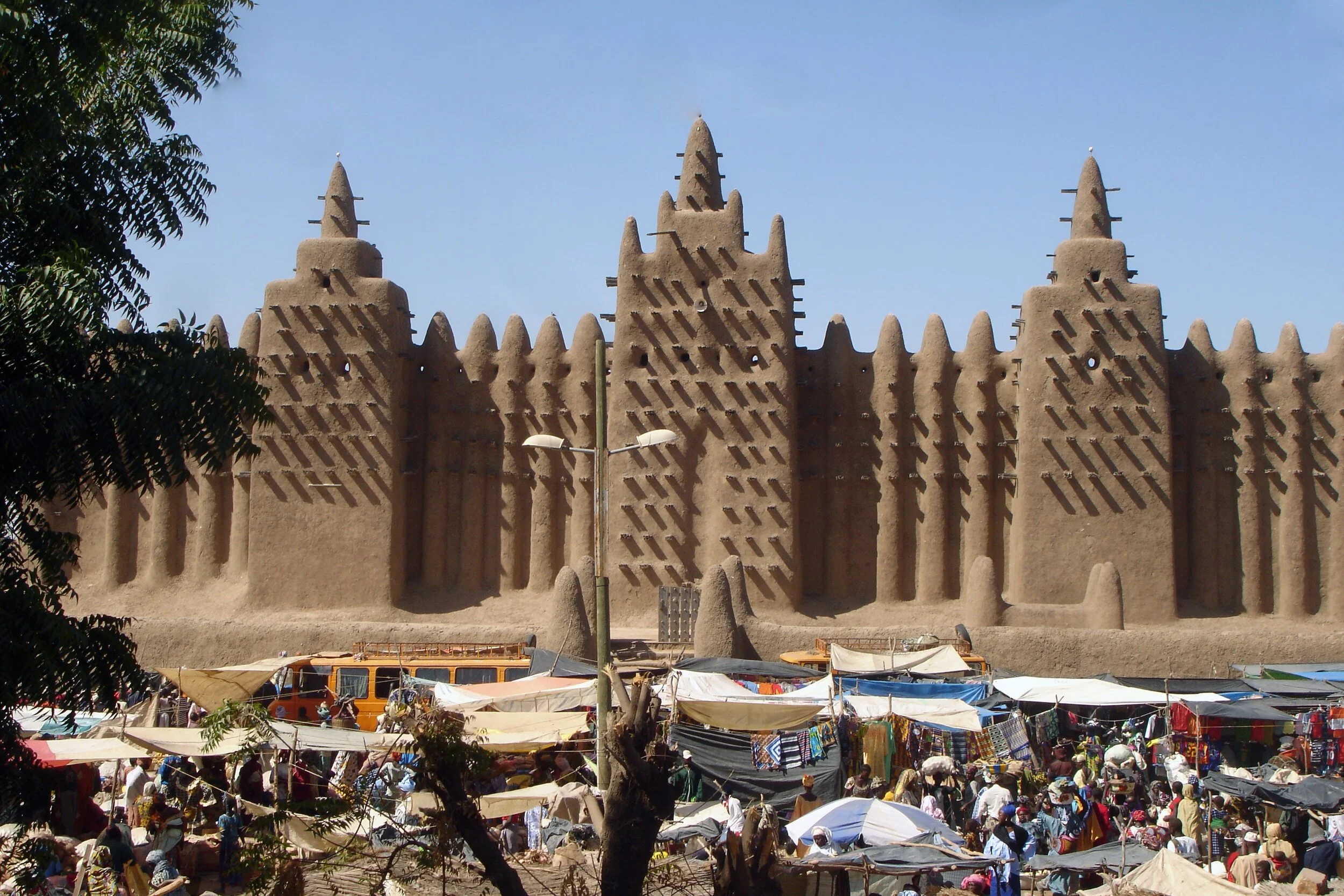
The Great Mosque and market in Djenne, Mali. Carsten ten Brink. CC2.0

Located in central Mali on a seasonal island in between the Niger and Bani rivers, Djenne is one of sub-Saharan Africa’s oldest towns and has been inhabited since 250 B.C. The town was a stopping point for traders in the trans-Saharan gold trade and was known as a hub of Islamic learning during the 15th and 16th centuries. The stunning Great Mosque in Djenne is the world’s largest adobe structure, containing three turrets. Interestingly, adobe structures are very common in Mali due to the lack of wood in the desert. The area in front of the mosque makes a great spot for people-watching and is the site of a colorful market every Monday. 

Cliffs of Bandiagara

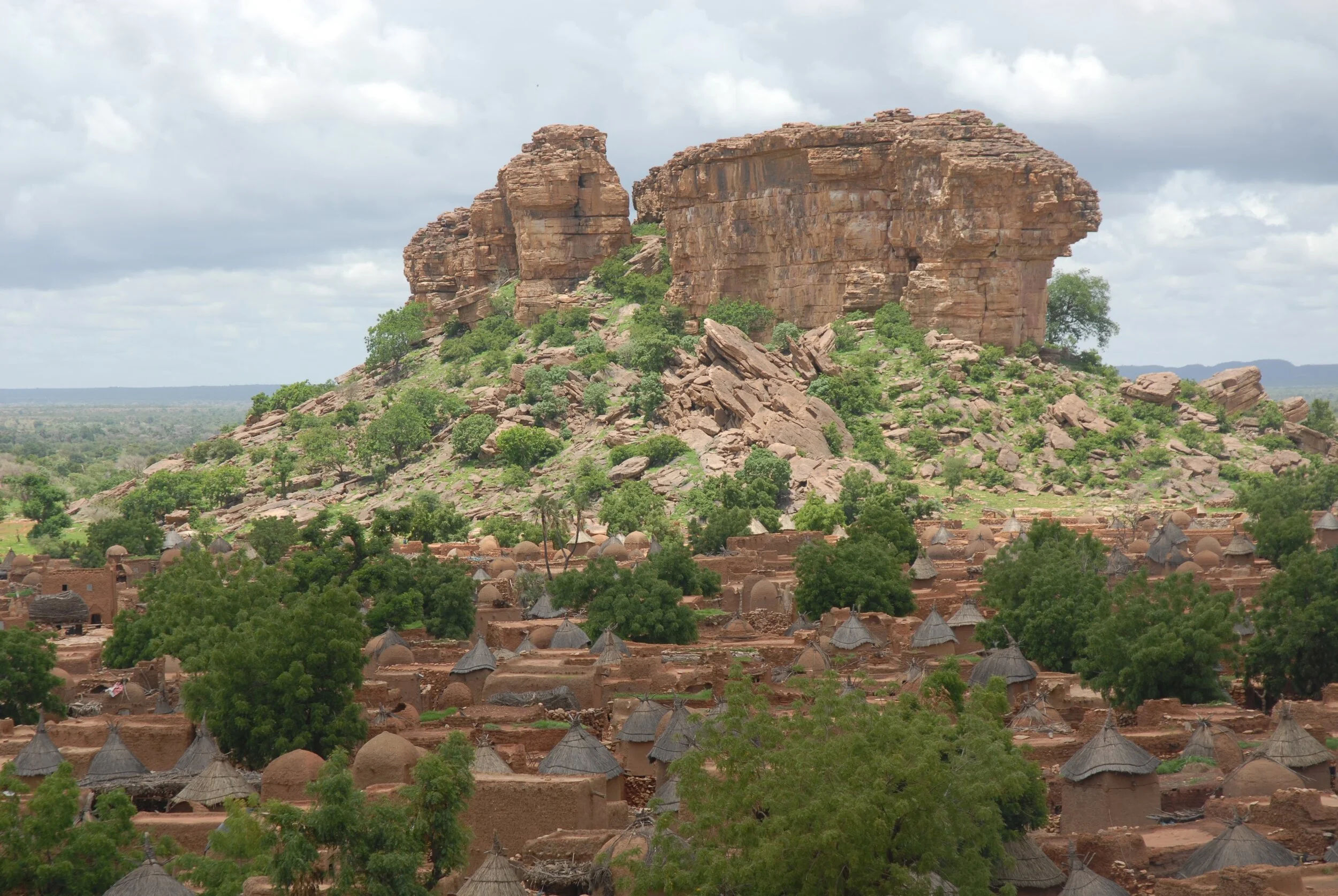
A village in Mali’s Dogon region. Emilio Labrador. CC2.0

A UNESCO World Heritage Site, the cliffs of Bandiagara are home to the Dogon people, who continue to carry on age-old traditions. Carved into tall sandstone cliffs, the Dogon region stretches for over 125 miles and provides a fascinating place for travelers. Due to the region’s remote nature, the culture of the Dogon people has been mostly left unchanged for centuries. Dogon cultural festivals take place from April to May and contain beautiful Dogon masks, dance and art. Travelers in the Dogon region often stay overnight in Mopti, a town located along the Niger River. 

Timbuktu

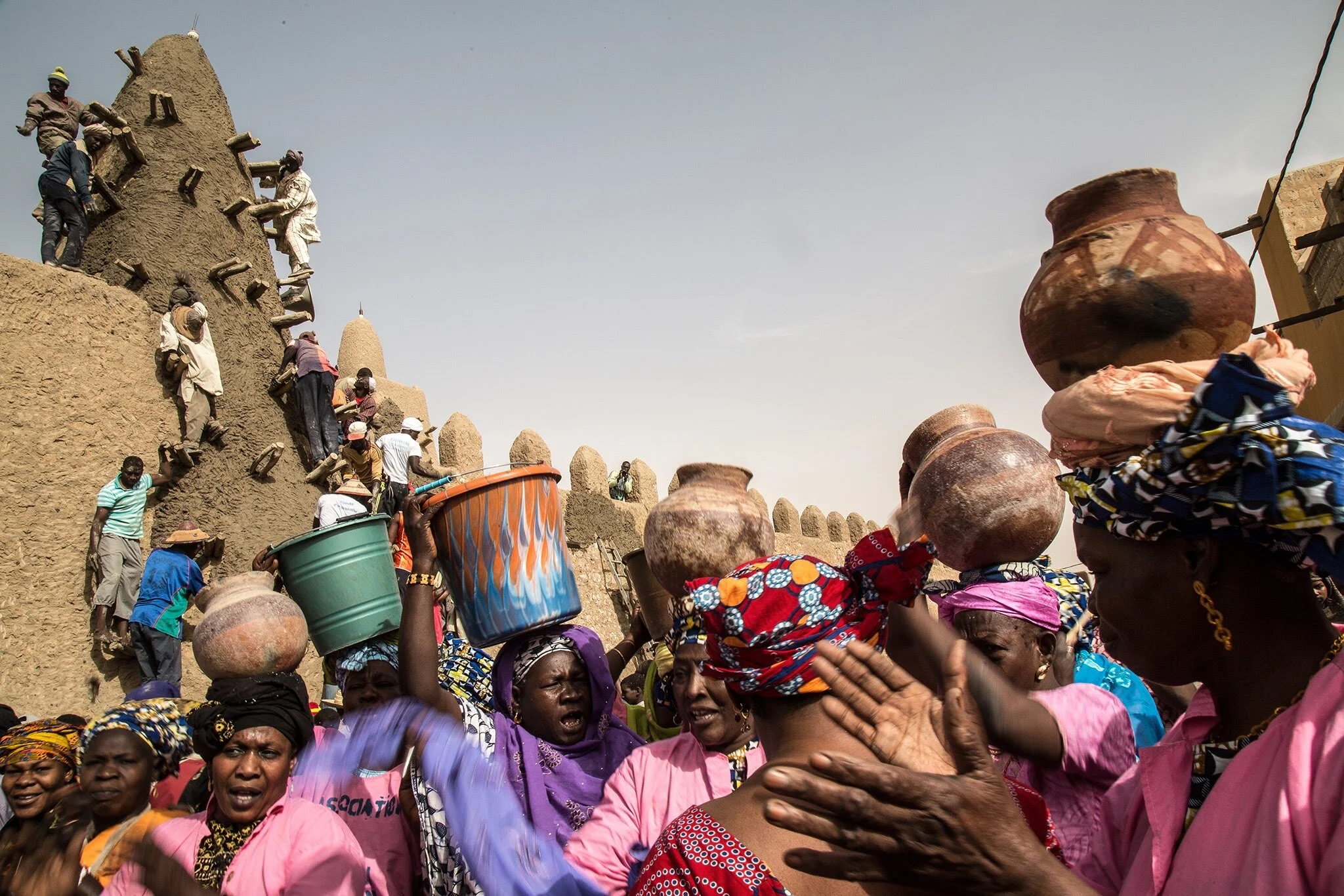
Conducting maintenance at Djingareyber Mosque in Timbuktu. United Nations. CC2.0

A city fabled for its rich heritage as a trading center, Timbuktu is still a crucial point for salt caravans traveling across the Sahara desert. From the 13th to 16th centuries, Timbuktu was a center of Islamic scholarship, with its teachings and sacred texts disseminated across the Muslim world as far as Cairo, Persia and Baghdad. The city was home to a 25,000-student university and several magnificent mosques, including Djingareyber, Sankore and Sidi Yahia. Many manuscripts are now in danger of falling apart or being sold on the black market. Due to recent conflicts in northern Mali, Timbuktu was proclaimed an endangered World Heritage Site by UNESCO in 2012. Thus, preserving Timbuktu’s historical legacy is of utmost concern. 

Bamako

A market in Bamako. Aene gespinst. CC2.0

Mali’s capital is a vibrant city located on the Niger River in the southern part of the country. Translated as “crocodile river” in the Bambara language, it is an exciting place to acclimate to Malian life and culture, whether by trying the local cuisine, visiting bustling markets or exploring Mali’s music scene, which is well known throughout Africa. 

Mali’s rich historical legacy is often overshadowed in the Western media by stories of violence caused by religious extremists, but there is much more to the story. One must be willing to look beyond the country’s negative portrayal to appreciate Mali’s true cultural heritage.


Megan Gürer

Megan is a Turkish-American student at Wellesley College in Massachusetts studying Biological Sciences. Passionate about environmental issues and learning about other cultures, she dreams of exploring the globe. In her free time, she enjoys cooking, singing, and composing music.

Uncertainty Reigns in Myanmar Amid Military Coup

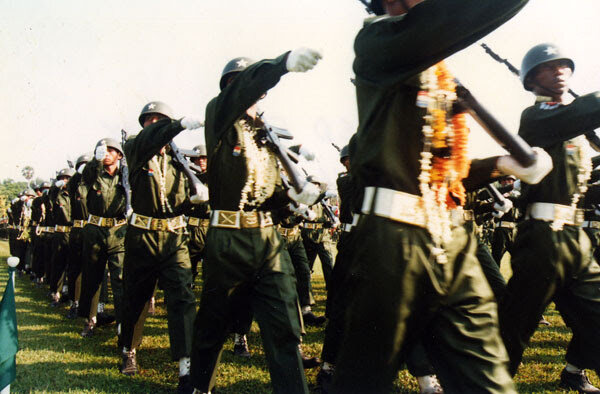
Soldiers in Myanmar’s military. Stephen Brookes. CC2.0

On Feb. 1, the military opposition in Myanmar staged a coup detaining State Counsellor Aung San Suu Kyi due to election results in favor of her challenging National League for Democracy (NLD) party. Since then, the military in Myanmar has detained hundreds of political officials and declared a state of emergency for up to one year. An active restructuring of power continues, with 24 government officials already having been replaced.

As of Monday evening, Suu Kyi was released from detention but placed under house arrest. Charges by the military accuse Suu Kyi of illegally importing walkie-talkies. President U Win Myint also faces charges for disobeying coronavirus restrictions. Although these accusations are most likely illegitimate, a criminal offense on the record in Myanmar can prevent politicians from running for reelection. In this way, the military continues to threaten the rise of democracy in Myanmar, placing the country’s political future in jeopardy. 

Introducing Myanmar’s Fraught Political Situation

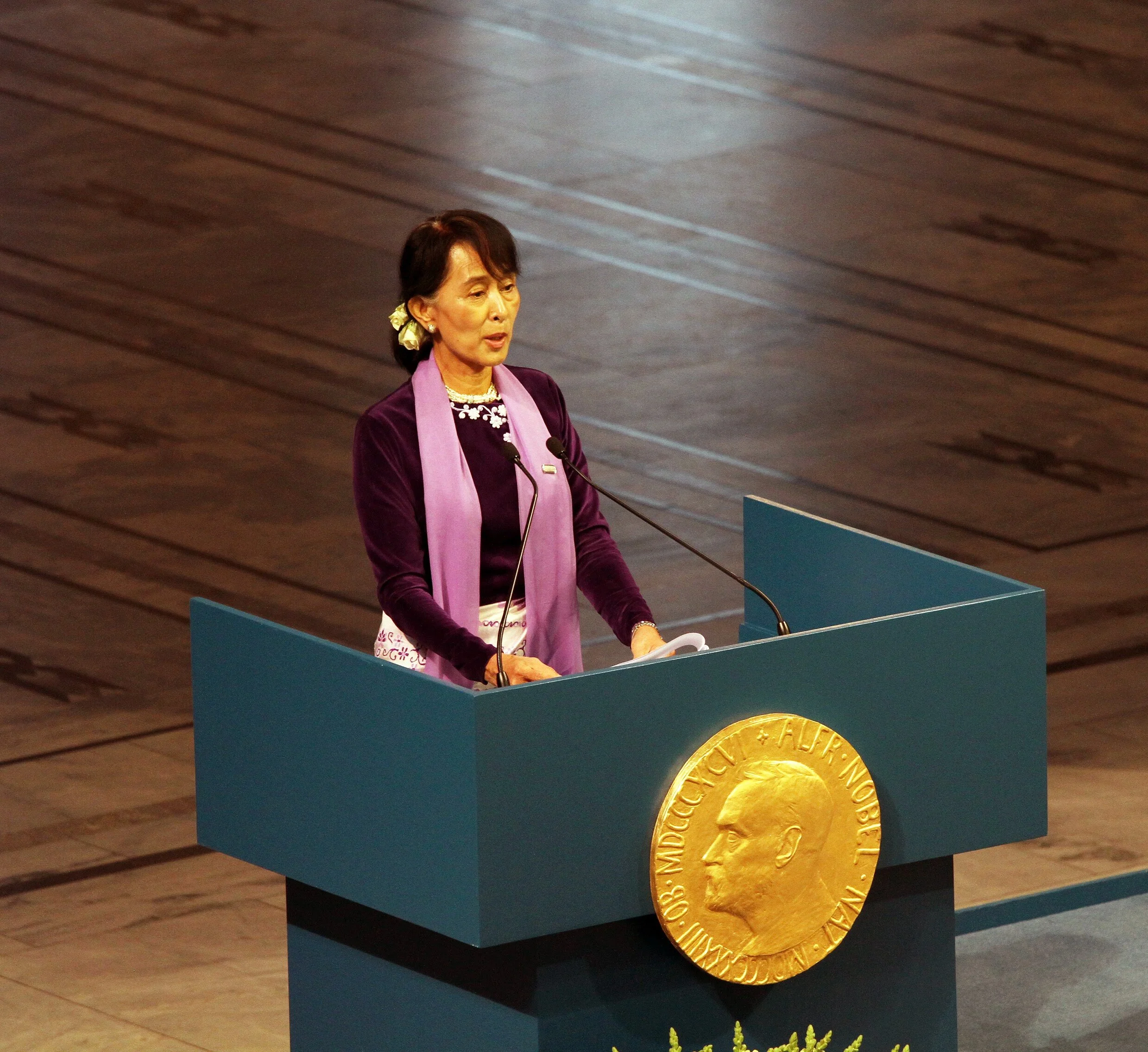
Myanmar’s State Counsellor Aung San Suu Kyi. Utenriksdepartementet UD. CC2.0

Myanmar, formerly known as Burma, is a country located in Southeast Asia known for its myriad of cultural and ethnic groups. Though the country achieved independence from Britain in 1948, an oppressive military regime came to power in 1962 that ruled for almost the next five decades. Military rule plunged the country deep into poverty and resulted in severe crackdowns on journalists, artists and activists. The country's government began to liberalize after the military started to loosen its grip in 2011. 

Activist and political leader Aung San Suu Kyi is well known for her nonviolent movements toward democracy in Myanmar. She received the Nobel Peace Prize in 1991 while being held under house arrest from 1989 to 2010. Suu Kyi founded the National League for Democracy (NLD), which led the first civilian government in the country’s history after winning a landslide election in 2015. Since then, Suu Kyi has remained the head of Myanmar’s government. 

However, Suu Kyi’s record remains tarnished. Her government has received international condemnation for human rights abuses against ethnic minorities in Myanmar. In 2017, the military forced a crackdown on the Rohingya Muslim population in Rakhine state, causing over 700,000 refugees to flee to neighboring Bangladesh. Myanmar claims the Rohingya are illegal immigrants from Bangladesh and refuses to offer them citizenship and basic human rights. Suu Kyi appeared before the International Court of Justice in 2019, where she denied that the crimes committed against the Rohingya counted as genocide. 

In November 2020, national elections predicted a landslide win for Suu Kyi’s NLD. The military government claims election fraud, although this has been disproven by Myanmar’s election committee. Dissatisfied with the election results, the military seized power on Feb. 1 as parliament was about to open. Executive power has been granted to long-standing military leader Min Aung Hlaing. International flights, the internet and social media were all shut down amid the coup. Even a few days later, Wi-Fi access remains spotty in parts of the country. 
International Reaction and Opposition

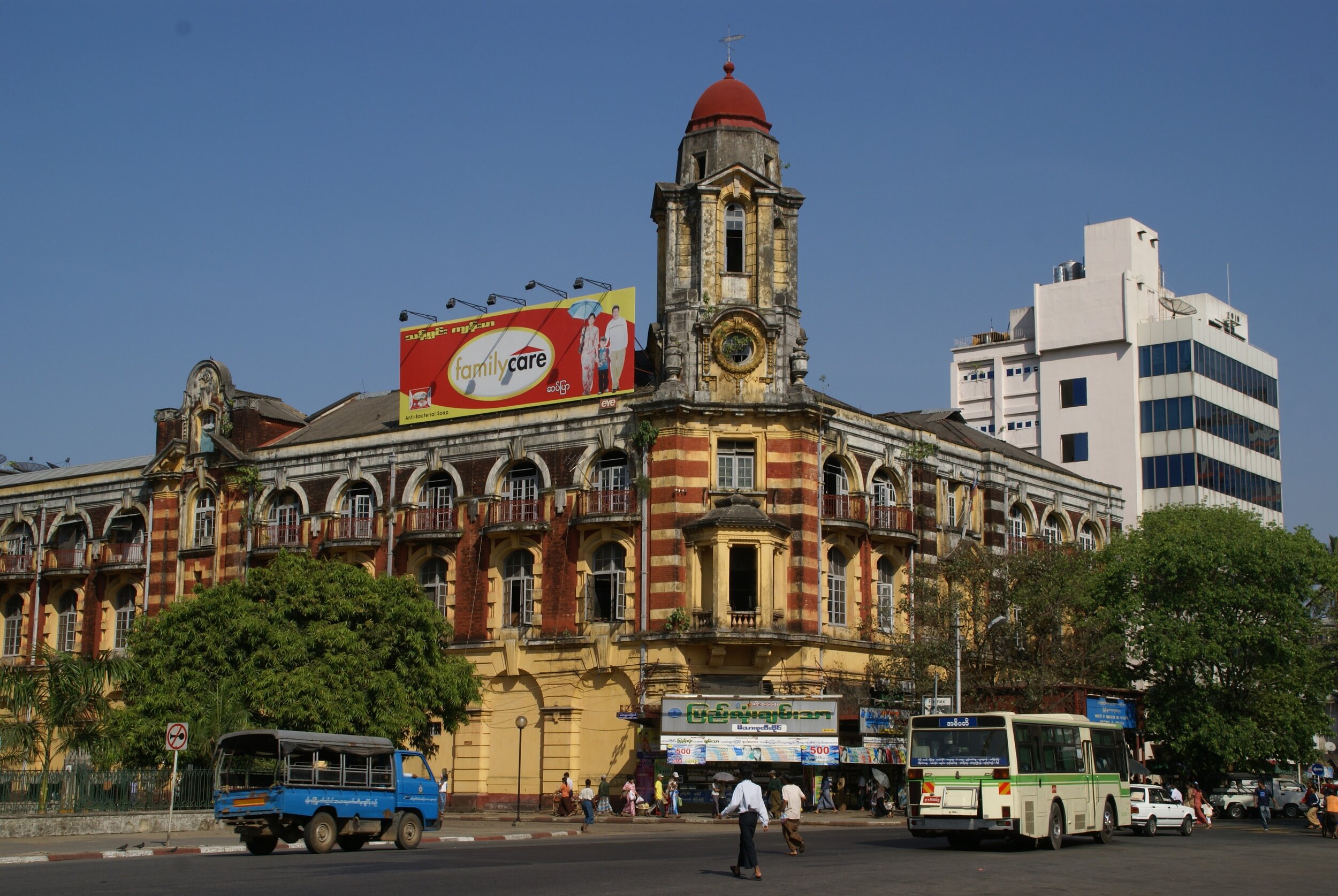
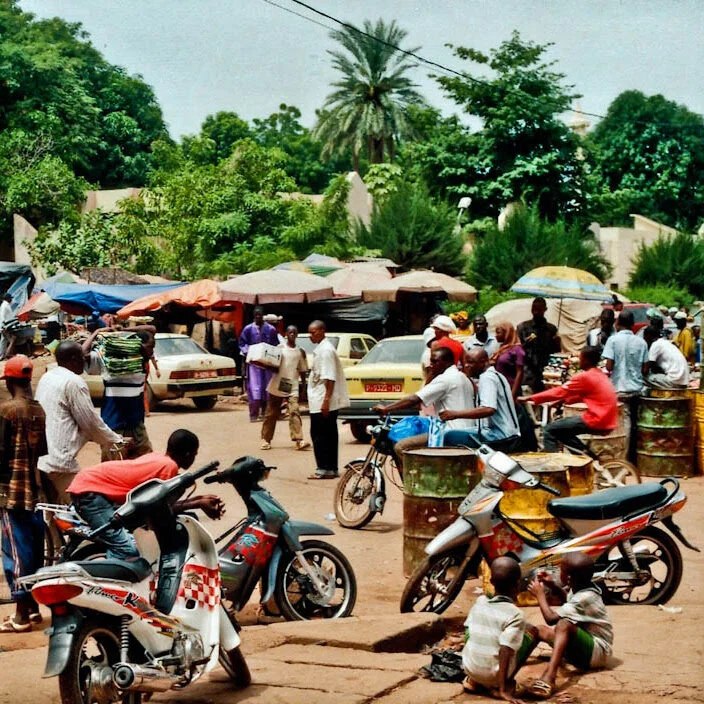
Street in Yangon, Myanmar. Loeff. CC2.0

The coup has received harsh international condemnation, with U.N. Secretary-General Antonio Guterres calling the military’s actions a "serious blow to democratic reforms." The U.N. Security Council held an emergency meeting after the coup but took no action as China and Russia refused to denounce it. Other Southeast Asian countries, such as Thailand, Cambodia and the Philippines, claim that the coup is an “internal matter” and do not want to meddle in Myanmar’s political affairs. 

Resistance to the coup in picked up on Feb. 7, as tens of thousands of protesters crowded the streets of Yangon, Myanmar’s largest city. Many people have banged pots and pans denouncing the coup, while medical workers have walked out and posted photos standing together in solidarity wearing ribbons

Recent events in Myanmar and around the world reveal the fragility of democracy. Only time will reveal the resounding effects of the coup on Myanmar’s political story. 


Megan Gürer

Megan is a Turkish-American student at Wellesley College in Massachusetts studying Biological Sciences. Passionate about environmental issues and learning about other cultures, she dreams of exploring the globe. In her free time, she enjoys cooking, singing, and composing music.