Canada Suspends Flights to Vacation Destinations as COVID Continues to Spread

An Air Canada plane at Montreal-Trudeau International Airport. Caribb. CC BY-NC-ND 2.0

On Jan. 29, Canadian Prime Minister Justin Trudeau announced that the government had reached an agreement with major airlines to suspend all flights to Mexico and the Caribbean until April 30, and updated COVID-19 safety precautions for returning travelers. Canada reported 4,690 daily cases nationwide on the day of the announcement, the majority of which came from Ontario and Quebec, the country’s two most populous provinces.

The suspension of flights was agreed upon by Air Canada, WestJet, Sunwing Airlines and Air Transat, representing four of the country’s largest carriers.

Trudeau likewise outlined new pandemic safety guidelines for travelers returning to the country. Starting the week of Feb. 1, all international passenger flights were restricted to arriving only in Vancouver, Toronto, Calgary and Montreal. Travelers also must take a PCR test upon arrival to Canada, and need to quarantine for up to three days in an approved hotel at their own expense while waiting for their test results.

The prime minister also alluded to further restrictions to be announced as soon as the end of the month.

“We will also, in the coming weeks, be requiring nonessential travelers to show a negative test before entry at the land border with the U.S., and we are working to stand up additional testing requirements for land travel,” Trudeau said.

Before the announcement, Canada already required that everyone arriving in the country present a negative COVID-19 test taken within three days of travel and self-isolate for 14 days.

The new changes come as travel between Canada and popular vacation destinations has continued despite the ongoing pandemic. The trend has been even more apparent in the U.S., where a number of major carriers have expanded flights to the Caribbean and Mexico in response to increased demand to the region at a time when airlines have closed routes to other parts of the country.

“[T]he safety of flying during the pandemic remains largely unknown”

Throughout 2020, travelers continued to vacation in Mexico and the Caribbean, evading pandemic safety guidelines and in some cases, such as with American college student Skylar Mack, violating quarantine laws in the destination countries.

To the government’s credit, the U.S. did begin requiring negative COVID tests for entry into the country on Jan. 26. However, the government has yet to limit flights out of the country to popular vacation destinations as Canada has done.

According to Vox journalist Abraar Karan, the safety of flying during the pandemic remains largely unknown, as data on in-flight spread is not readily available a year into the ongoing COVID-19 pandemic.

“In Canada, infections and exposures on flights are far more readily documented, with a nearly daily list of flights that had infected passengers,” Karan writes. “The U.S. would benefit from doing the same, although this needs to be coupled with rapid contact tracing as well.”

It is unclear yet as to whether or not the U.S. will follow Canada’s lead and adopt stricter pandemic travel policies. The State Department recommended on Jan. 26 that Americans limit their travel abroad, but stopped short of a full suspension.

“The Department of State is committed to helping U.S. citizens overseas who find themselves in dire situations, but that assistance is likely to be limited,” Bureau of Consular Affairs Acting Assistant Secretary Ian Brownlee said on Jan 26. “Our goal is to help people avoid those dire straits in the first place.”

Travel is expected to pick up around the globe as more people receive vaccines, many of which have begun to be distributed in the global north. For now, however, travelers from any country are highly recommended to evaluate the safety and necessity of their travel before leaving.



Jacob Sutherland

Jacob is a recent graduate from the University of California San Diego where he majored in Political Science and minored in Spanish Language Studies. He previously served as the News Editor for The UCSD Guardian, and hopes to shed light on social justice issues in his work.

‘Israel’s Most Racist Soccer Club’ Gets an Arab Owner

Fans are none too pleased. Beitar Jerusalem faces a tough fight against bigotry in its ranks.

A Beitar Jerusalem player, right, tries to keep up. Steindy. CC BY-SA 3.0. 

Most sports fans would rejoice at such a deal. Beitar Jerusalem, an Israeli soccer team, got a new owner who pledged a $100 million investment in the team over the coming 10 years. Such a whopping sum of money could buy plenty of talent to buoy the team, which hasn’t won the Israeli Premier League since 2008. Instead of glee, though, many fans felt rage. One diehard spray-painted on the team’s stadium wall, “The war has just begun.” The reason was simple: the new owner was Sheikh Hamad bin Khalifa Al Nahyan, an Arab Muslim, and the team was Beitar Jerusalem, notoriously known as “the most racist team in Israel.” 

Heckling Arab players is part and parcel of the stadium experience. Fans regularly shout “terrorist” at rival Arab players. The team remains ethnically homogeneous since it has never signed an Arab player. This flies in the face of statistical probability given that Israel’s population is 21% Arab. The team’s racial uniformity keeps with the team’s motto: “Forever Pure.”

A Beitar Jerusalem bumper sticker. zeeveez. CC BY 2.0.

To understand why Sheikh Hamad bought a 50% stake, it is necessary first to look at Moshe Hogeg, formerly the team’s sole owner. He made his fortune trading cryptocurrency and bought Beitar Jerusalem, along with its debt, for $7.2 million in 2018. His reasons were clear, ambitious and abrasive to many Beitar fans: “I saw this problem that reflects bad not only on the club, but also on Israel,” Hogeg said. “I love football, and I thought it was the opportunity to buy this club and to fix this racist problem. And then I could do something that is bigger than football.” Before he can even dream of something bigger, though, he’ll first have to address the bigotry already present in the team’s fan base. 

Beitar Jerusalem’s self-avowed racist identity comes from a right-wing section of the fan base known as La Familia. Comprising roughly 20% of the team’s fans, they are a loud, vociferous and sometimes violent minority. When the team signed two Muslim players from Chechnya in 2013, members of La Familia burned down the team’s headquarters in retaliation. Fans routinely heckled the players during games. When one player scored his first goal, many fans, led by La Familia, left the stadium. 

The tumultuous 2013 season was chronicled in the documentary “Forever Pure.”

Under pressure. Steindy. CC BY-SA 3.0.

The deal with Sheikh Hamad comes on the heels of the Abraham Accords, a set of agreements between Israel and the United Arab Emirates, brokered by the United States, that normalized relations between the two countries. Thousands of Israelis traveled to the UAE shortly after the agreements came into effect. Instagram influencers posted stories of themselves lounging in hotel suites in Dubai. Sheikh Hamad’s purchase of Beitar Jerusalem’s stake provoked very little attention in the UAE. Israeli football is not internationally popular, so the outcry was limited solely to Israel. 


Beitar Jerusalem’s training ground, site of many racist chants. zeevveez. CC BY 2.0.

Sheikh Hamad is as hopeful as Moshe Hogeg about purging the team of its racist elements. “The deal is meant to show the nations that the Jewish and the Muslim can work together and be friends and live in peace and harmony,” Hamad said in December. However, peace and harmony still seem a long way away. Beitar Jerusalem’s decadeslong right-wing identity defines much of the team’s fan base. As embarrassed and ashamed as most fans are of La Familia’s overt bigotry, the group still holds immense sway. Only time will tell if their brand of hatred will win out. Hogeg and Sheikh Hamad’s anti-racism campaign will face fierce opposition. When asked if his decision to invest was related to La Familia, Sheikh Hamad only responded, “Challenge accepted.”


Michael McCarthy

Michael is an undergraduate student at Haverford College, dodging the pandemic by taking a gap year. He writes in a variety of genres, and his time in high school debate renders political writing an inevitable fascination. Writing at Catalyst and the Bi-Co News, a student-run newspaper, provides an outlet for this passion. In the future, he intends to keep writing in mediums both informative and creative.


All the Way to Timbuktu: Exploring the Cultural Riches of Mali 

Look beyond what the Western media says to appreciate Mali’s rich cultural heritage.

WARNING: As of February 2021, the U.S. Department of State advises against all travel to Mali due to risk of crime, terrorism and kidnapping. For the time being, enjoy the country from your computer screen. Do not visit Mali.

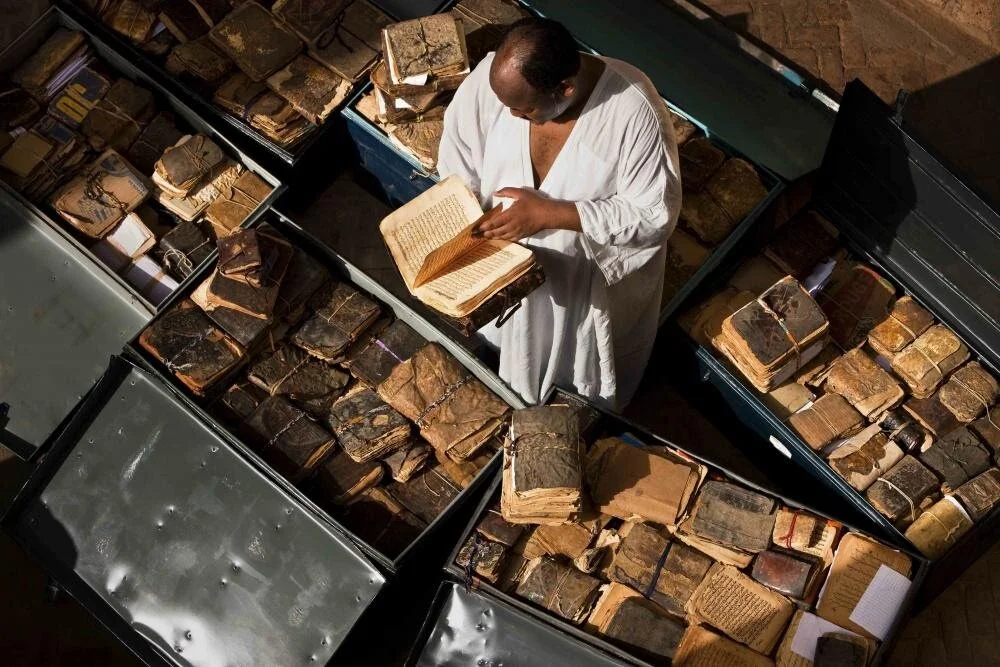
A man reading historical manuscripts from West Africa. Jermaine Johnson. CC2.0

Mali is a landlocked country located in the heart of West Africa. Mali’s rich history dates back to the 11th century, when the empire of Mali controlled vast swaths of the Niger River valley. Known as a beacon for Islamic scholarship and trade from the 13th to the 16th century, things took a turn when the French colonized the country in 1898. Since achieving independence in 1960, Mali has suffered from coups, droughts, corruption and insurgencies by Islamic extremists in the country’s north

Despite Mali’s negative reputation in Western media coverage, the country has a fascinating history and vibrant culture that deserves to be celebrated—from afar, until safety returns. Here are some of the stunning historical and cultural sites in Mali: 

Djenne

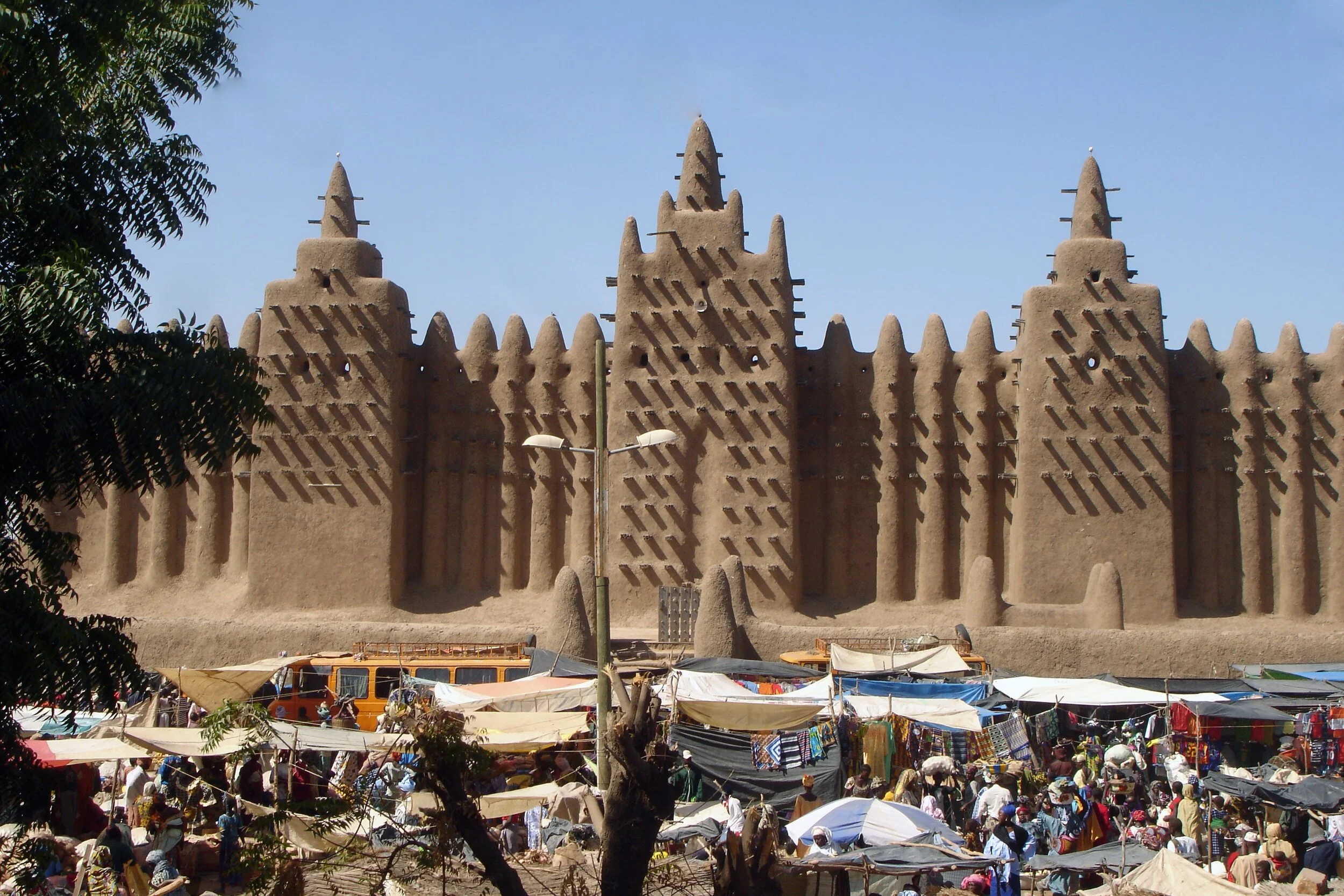
The Great Mosque and market in Djenne, Mali. Carsten ten Brink. CC2.0

Located in central Mali on a seasonal island in between the Niger and Bani rivers, Djenne is one of sub-Saharan Africa’s oldest towns and has been inhabited since 250 B.C. The town was a stopping point for traders in the trans-Saharan gold trade and was known as a hub of Islamic learning during the 15th and 16th centuries. The stunning Great Mosque in Djenne is the world’s largest adobe structure, containing three turrets. Interestingly, adobe structures are very common in Mali due to the lack of wood in the desert. The area in front of the mosque makes a great spot for people-watching and is the site of a colorful market every Monday. 

Cliffs of Bandiagara

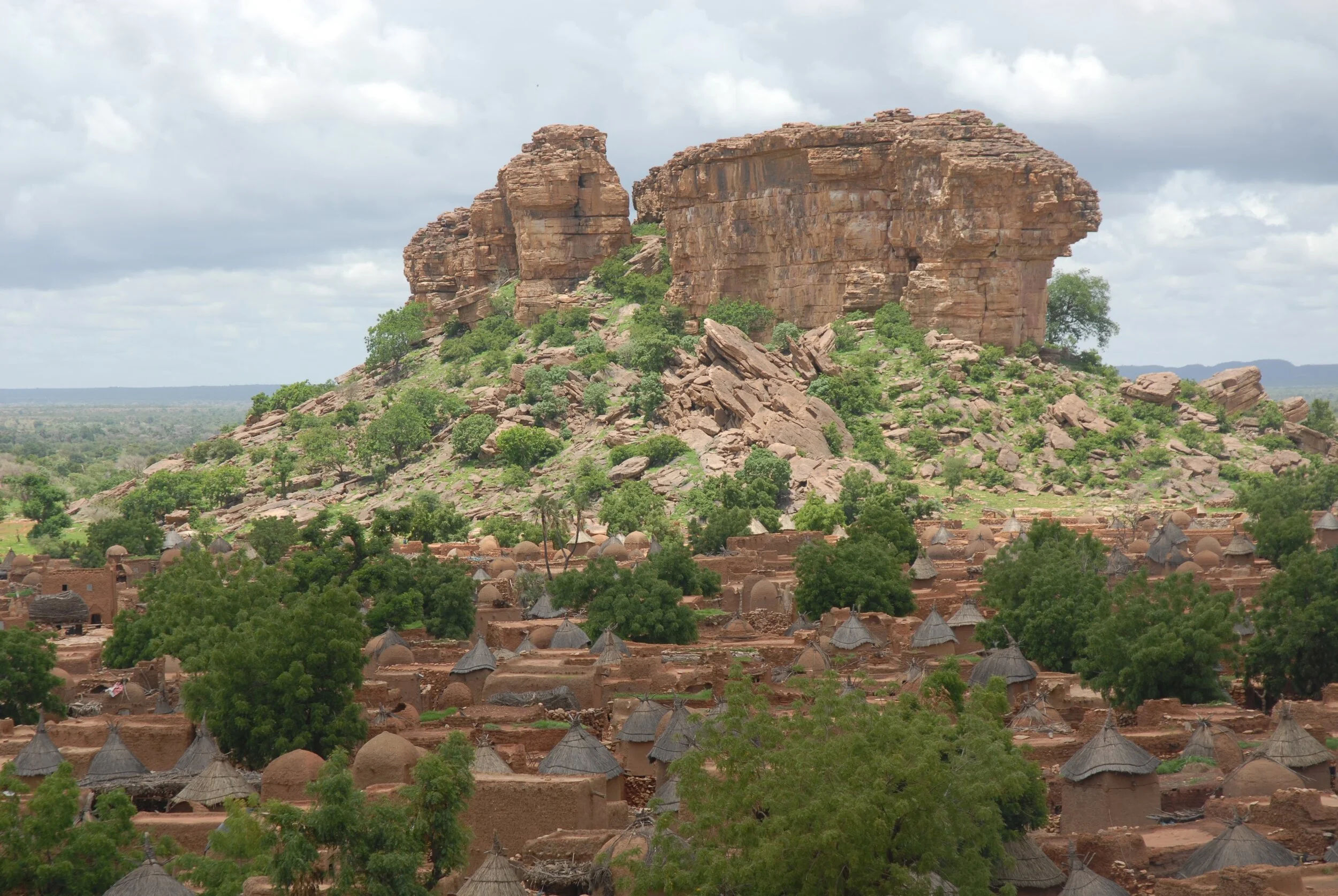
A village in Mali’s Dogon region. Emilio Labrador. CC2.0

A UNESCO World Heritage Site, the cliffs of Bandiagara are home to the Dogon people, who continue to carry on age-old traditions. Carved into tall sandstone cliffs, the Dogon region stretches for over 125 miles and provides a fascinating place for travelers. Due to the region’s remote nature, the culture of the Dogon people has been mostly left unchanged for centuries. Dogon cultural festivals take place from April to May and contain beautiful Dogon masks, dance and art. Travelers in the Dogon region often stay overnight in Mopti, a town located along the Niger River. 

Timbuktu

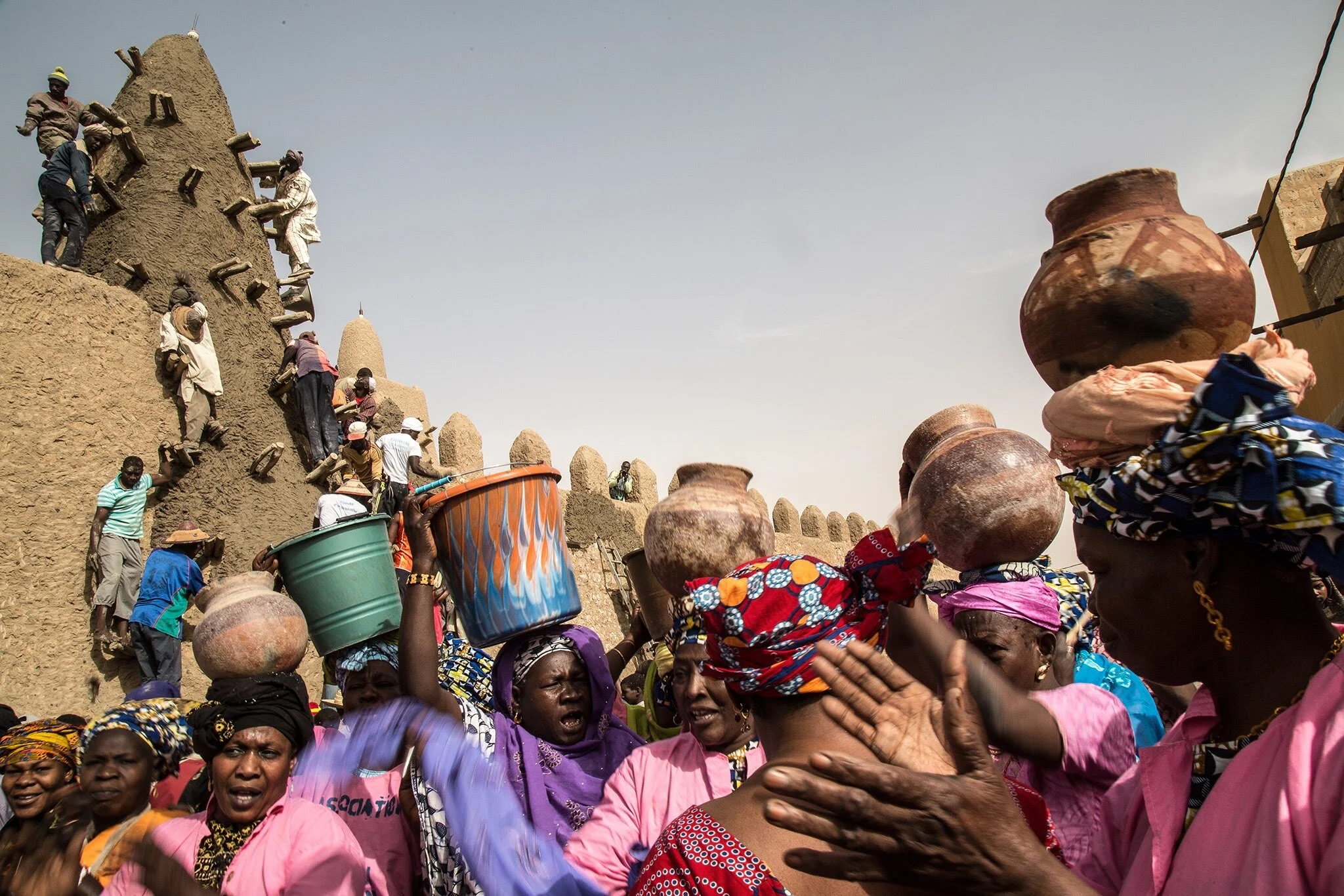
Conducting maintenance at Djingareyber Mosque in Timbuktu. United Nations. CC2.0

A city fabled for its rich heritage as a trading center, Timbuktu is still a crucial point for salt caravans traveling across the Sahara desert. From the 13th to 16th centuries, Timbuktu was a center of Islamic scholarship, with its teachings and sacred texts disseminated across the Muslim world as far as Cairo, Persia and Baghdad. The city was home to a 25,000-student university and several magnificent mosques, including Djingareyber, Sankore and Sidi Yahia. Many manuscripts are now in danger of falling apart or being sold on the black market. Due to recent conflicts in northern Mali, Timbuktu was proclaimed an endangered World Heritage Site by UNESCO in 2012. Thus, preserving Timbuktu’s historical legacy is of utmost concern. 

Bamako

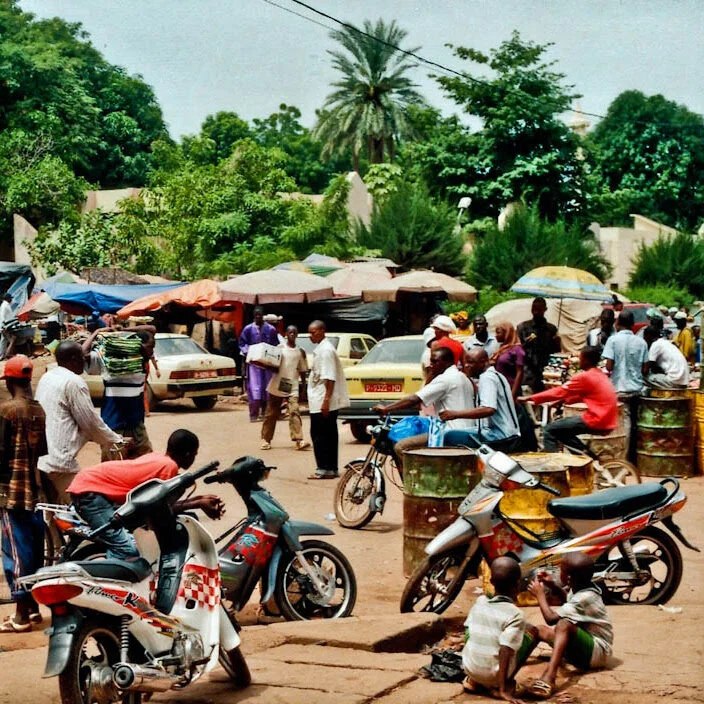
A market in Bamako. Aene gespinst. CC2.0

Mali’s capital is a vibrant city located on the Niger River in the southern part of the country. Translated as “crocodile river” in the Bambara language, it is an exciting place to acclimate to Malian life and culture, whether by trying the local cuisine, visiting bustling markets or exploring Mali’s music scene, which is well known throughout Africa. 

Mali’s rich historical legacy is often overshadowed in the Western media by stories of violence caused by religious extremists, but there is much more to the story. One must be willing to look beyond the country’s negative portrayal to appreciate Mali’s true cultural heritage.


Megan Gürer

Megan is a Turkish-American student at Wellesley College in Massachusetts studying Biological Sciences. Passionate about environmental issues and learning about other cultures, she dreams of exploring the globe. In her free time, she enjoys cooking, singing, and composing music.

Uncertainty Reigns in Myanmar Amid Military Coup

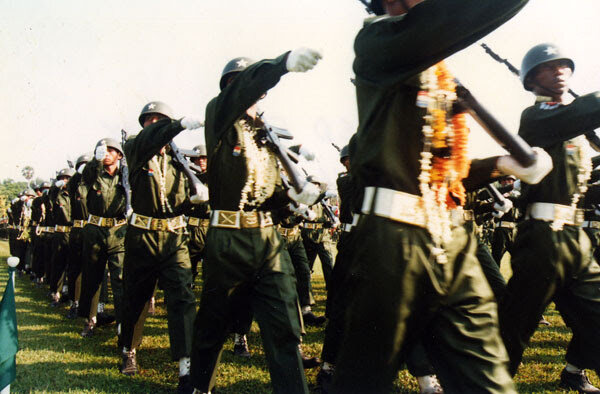
Soldiers in Myanmar’s military. Stephen Brookes. CC2.0

On Feb. 1, the military opposition in Myanmar staged a coup detaining State Counsellor Aung San Suu Kyi due to election results in favor of her challenging National League for Democracy (NLD) party. Since then, the military in Myanmar has detained hundreds of political officials and declared a state of emergency for up to one year. An active restructuring of power continues, with 24 government officials already having been replaced.

As of Monday evening, Suu Kyi was released from detention but placed under house arrest. Charges by the military accuse Suu Kyi of illegally importing walkie-talkies. President U Win Myint also faces charges for disobeying coronavirus restrictions. Although these accusations are most likely illegitimate, a criminal offense on the record in Myanmar can prevent politicians from running for reelection. In this way, the military continues to threaten the rise of democracy in Myanmar, placing the country’s political future in jeopardy. 

Introducing Myanmar’s Fraught Political Situation

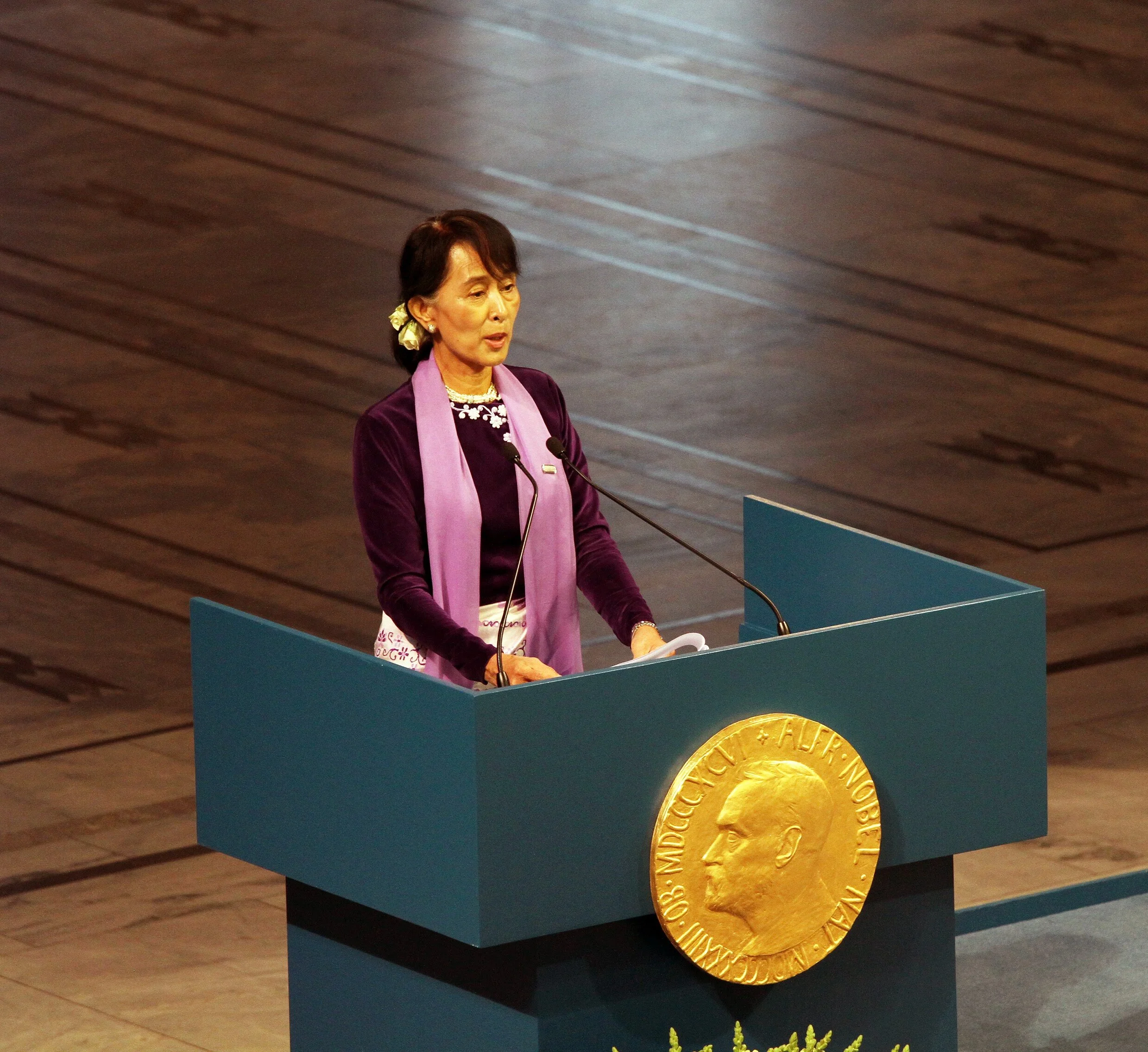
Myanmar’s State Counsellor Aung San Suu Kyi. Utenriksdepartementet UD. CC2.0

Myanmar, formerly known as Burma, is a country located in Southeast Asia known for its myriad of cultural and ethnic groups. Though the country achieved independence from Britain in 1948, an oppressive military regime came to power in 1962 that ruled for almost the next five decades. Military rule plunged the country deep into poverty and resulted in severe crackdowns on journalists, artists and activists. The country's government began to liberalize after the military started to loosen its grip in 2011. 

Activist and political leader Aung San Suu Kyi is well known for her nonviolent movements toward democracy in Myanmar. She received the Nobel Peace Prize in 1991 while being held under house arrest from 1989 to 2010. Suu Kyi founded the National League for Democracy (NLD), which led the first civilian government in the country’s history after winning a landslide election in 2015. Since then, Suu Kyi has remained the head of Myanmar’s government. 

However, Suu Kyi’s record remains tarnished. Her government has received international condemnation for human rights abuses against ethnic minorities in Myanmar. In 2017, the military forced a crackdown on the Rohingya Muslim population in Rakhine state, causing over 700,000 refugees to flee to neighboring Bangladesh. Myanmar claims the Rohingya are illegal immigrants from Bangladesh and refuses to offer them citizenship and basic human rights. Suu Kyi appeared before the International Court of Justice in 2019, where she denied that the crimes committed against the Rohingya counted as genocide. 

In November 2020, national elections predicted a landslide win for Suu Kyi’s NLD. The military government claims election fraud, although this has been disproven by Myanmar’s election committee. Dissatisfied with the election results, the military seized power on Feb. 1 as parliament was about to open. Executive power has been granted to long-standing military leader Min Aung Hlaing. International flights, the internet and social media were all shut down amid the coup. Even a few days later, Wi-Fi access remains spotty in parts of the country. 

International Reaction and Opposition

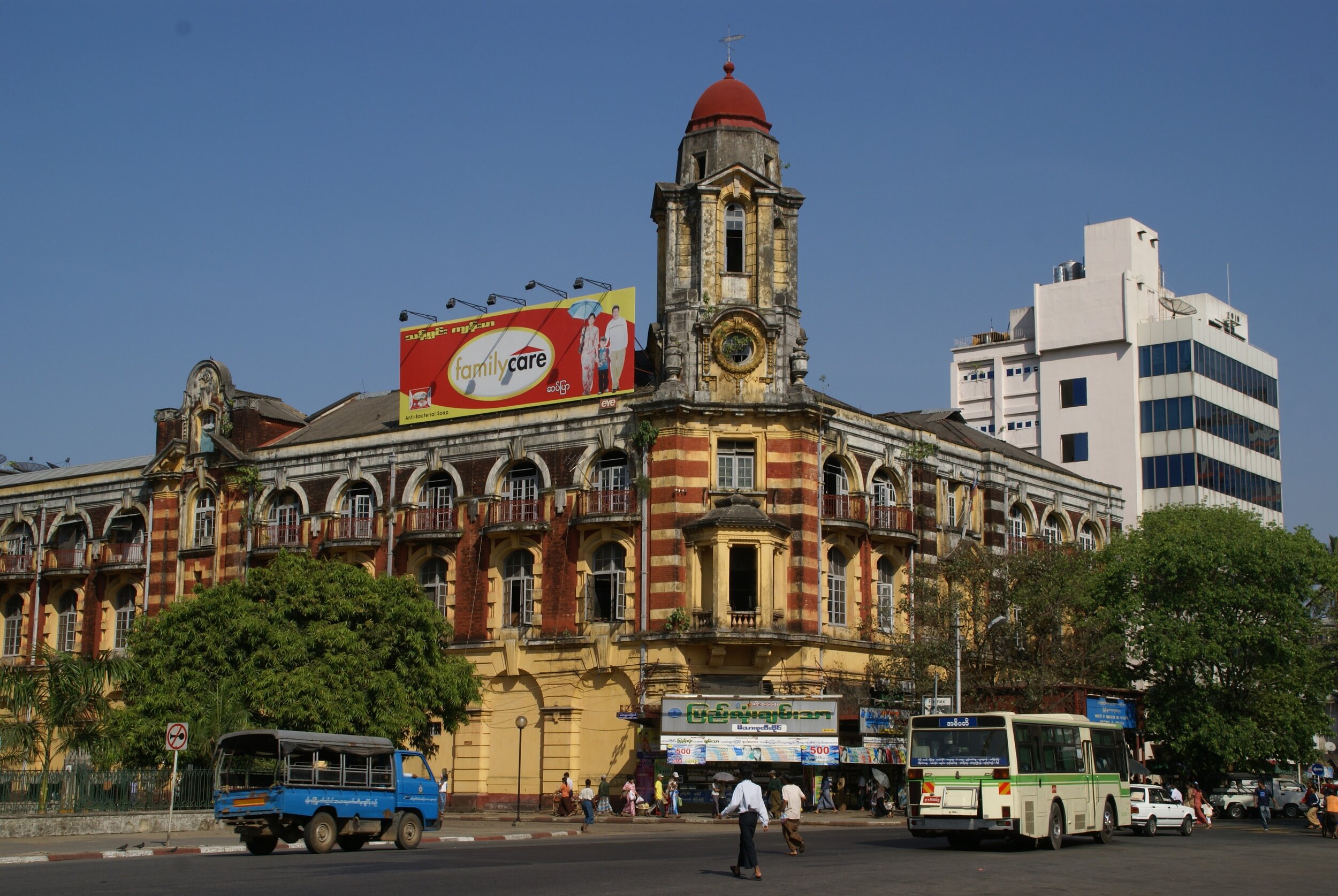
Street in Yangon, Myanmar. Loeff. CC2.0

The coup has received harsh international condemnation, with U.N. Secretary-General Antonio Guterres calling the military’s actions a "serious blow to democratic reforms." The U.N. Security Council held an emergency meeting after the coup but took no action as China and Russia refused to denounce it. Other Southeast Asian countries, such as Thailand, Cambodia and the Philippines, claim that the coup is an “internal matter” and do not want to meddle in Myanmar’s political affairs. 

Resistance to the coup in picked up on Feb. 7, as tens of thousands of protesters crowded the streets of Yangon, Myanmar’s largest city. Many people have banged pots and pans denouncing the coup, while medical workers have walked out and posted photos standing together in solidarity wearing ribbons

Recent events in Myanmar and around the world reveal the fragility of democracy. Only time will reveal the resounding effects of the coup on Myanmar’s political story. 


Megan Gürer

Megan is a Turkish-American student at Wellesley College in Massachusetts studying Biological Sciences. Passionate about environmental issues and learning about other cultures, she dreams of exploring the globe. In her free time, she enjoys cooking, singing, and composing music.

By Refusing an Apology to Algeria, France Shows Colonialism is Far from Over

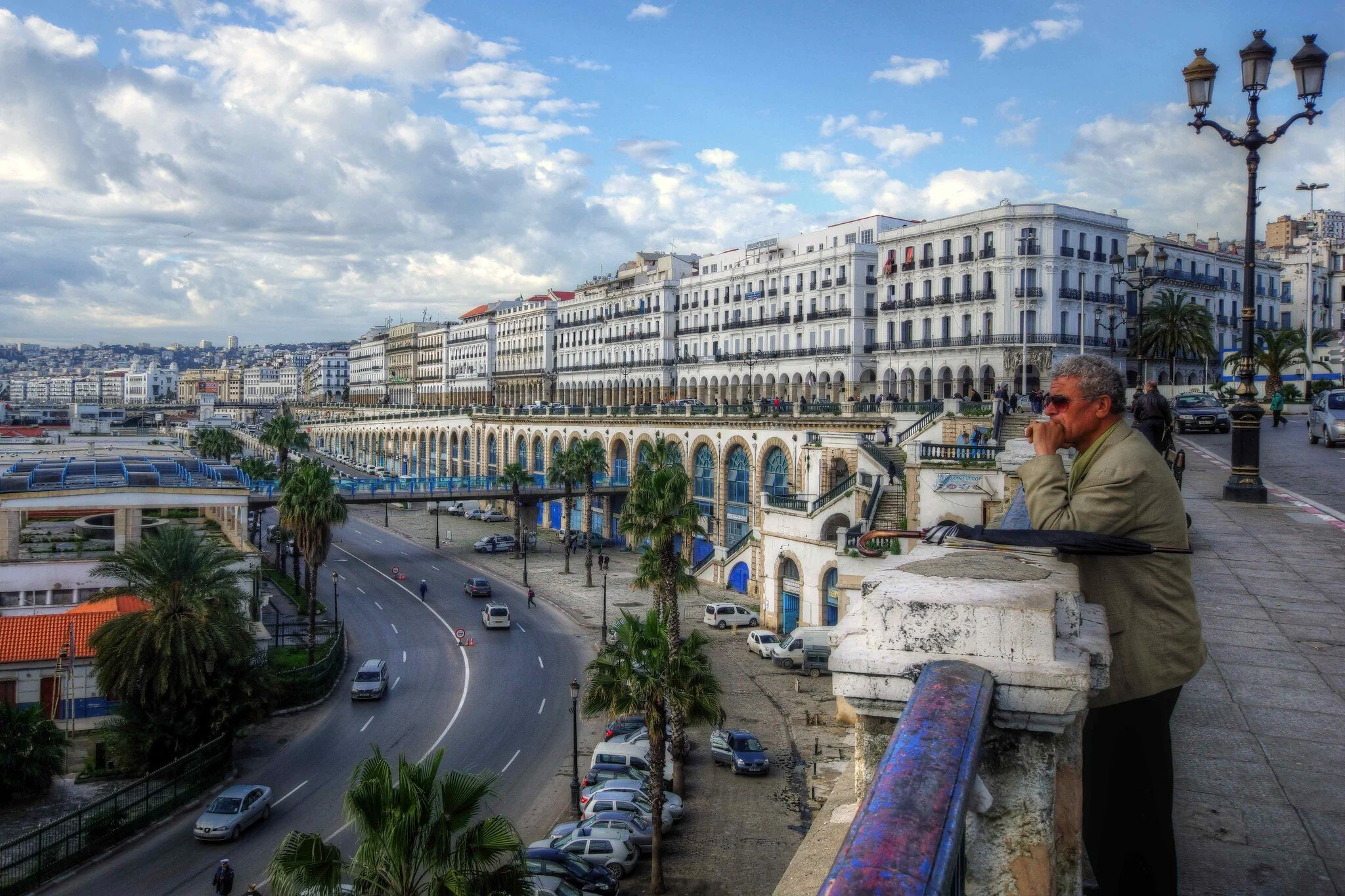
Algerian architecture reflects continued French influence post-decolonization. mariusz kluzniak. CC BY-NC-NC 2.0.

French President Emmanuel Macron announced on Jan. 20 that he has ruled out issuing an official apology to the country of Algeria for past colonial abuses. This follows 59 years of tense relations between the two nations after the conclusion of the Algerian War in 1962, which marked the end of official French colonialism in the North African country.

The announcement comes as a result of a highly anticipated report on the matter of French-Algerian relations commissioned by Macron in 2020. Rather than a formal apology, the report recommends a “memories and truth” commission to review French colonialism in Algeria. Macron committed to setting up the commission in a statement.

The French occupation of Algeria began with an invasion in 1830, and lasted up until 1962 with the end of the Algerian War, which led to independence. During the 132 years of colonial rule, the French committed a number of atrocities against Algerians, including the massacre of an estimated 500,000 to 1 million Algerians throughout the first three decades of conquest, the forced deportation of native Algerian groups and the use of systematic torture against Algerians during the country’s war for independence.

Since Algeria gained independence, the French government has largely remained silent in regard to the atrocities inflicted during the colonial era. In fact, Macron was the first French president to acknowledge the use of torture during the war for independence when he did so in 2018. Macron has since gone on to demand further accountability, including calls for all archives detailing the disappearance of Algerians during the war. However, the Jan. 20 announcement signals that an official apology remains out of the realm of possibilities for the time being.

Decolonization Efforts Remain a Global Necessity

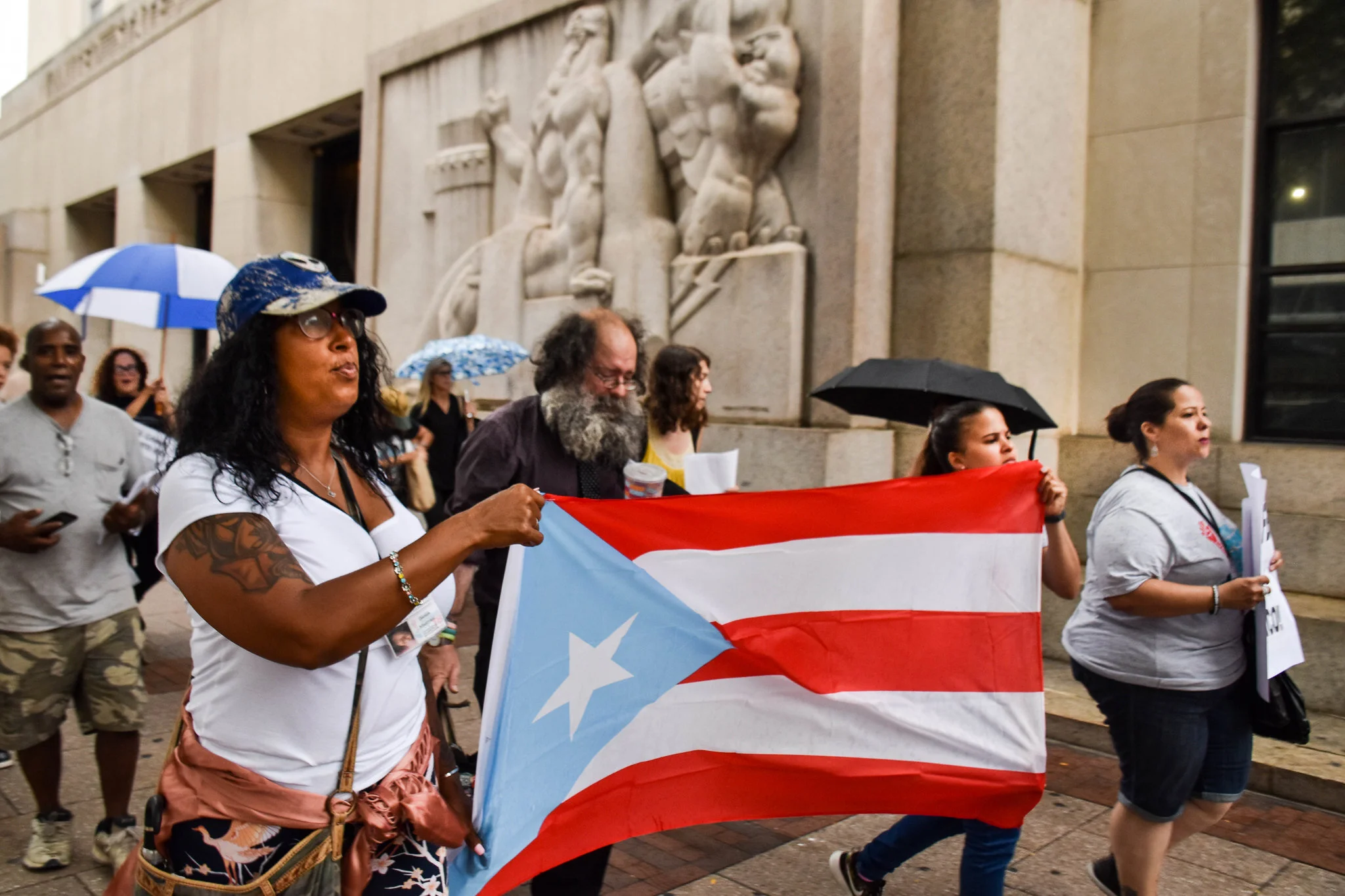
Protesters marching in Philadelphia in support of Puerto Rican independence in 2018. Joe Piette. CC BY-NC-SA 2.0.

Macron’s announcement is the latest reminder of the continued stains of colonialism which remain in the 21st century. While many former colonial powers like France have largely dismantled their empires and relinquished control to local populations, colonialism and the occupation of Indgenous lands still persists to this day around the world.

Both France and the United Kingdom notably retain overseas territories which are remnants of the heights of their empires. France retains varying administrative control in 11 regions outside of Europe, with a combined population of nearly 2.8 million. Conversely, the British control 14 territories which do not form a part of the United Kingdom itself or its European crown dependencies, representing a combined population of approximately 250,000.

Colonialism, however, is by no means limited to European powers, nor is the process itself a relic of the past. The United States, a country whose foundation is rooted in settler colonialism, retains control over five inhabited territories spread across the Pacific and Atlantic oceans which have a combined population of just over 3.5 million, all of whom are ineligible to vote in federal elections. Likewise, Hawaii’s inclusion in the United States as a state is a result of colonialism in the region where the U.S. systematically undermined native rule throughout the 1800s. 

Japan, a country which saw the height of its empire come to an end during World War II, retains control over Hokkaido and Okinawa, two islands with distinct Indigenous populations which have both seen independence movements throughout their time with the country.

China is an example of contemporary colonialism: while not specifically setting up colonies in overseas regions, the country invests billions of dollars in projects to develop African nations on largely unfavorable terms, creates artificial islands in the South China Sea to exercise dominance in the region, and continues to squash independence movements in Tibet and Hong Kong.

While movements for independence, apologies and reparations exist to varying extents in all of these regions, the scars of colonialism persist to this day and remain a contemporary issue unlikely to be resolved in the near future.


Jacob Sutherland

Jacob is a recent graduate from the University of California San Diego where he majored in Political Science and minored in Spanish Language Studies. He previously served as the News Editor for The UCSD Guardian, and hopes to shed light on social justice issues in his work.

50 Countries Vow to Protect 30% of Earth’s Land and Water by 2030

Research shows that half of the planet must be protected to stop climate crises and the loss of biodiversity. Over 50 countries have pledged to protect 30% of the land and oceans by 2030, a major milestone in the ultimate goal of conservation. 

A coalition of over 50 countries, chaired by France, Costa Rica and the United Kingdom, have pledged to conserve 30% of Earth’s land and oceans by the end of the decade. Known as 30x30, the plan was established in order to stop the loss of biodiversity and to protect essential resources. The agreement is ambitious, but studies show that protecting at least 30% of the planet is necessary to stimulate the economy and retain the current quality of life. 

Current estimates suggest that only 15% of the world’s land and 7% of the ocean has some degree of protection.

On Jan. 11, over 50 countries entered the agreement, championed by the High Ambition Coalition (HAC), at the One Planet Summit for Biodiversity in Paris. The summit was organized by France in cooperation with the United Nations and World Bank and aimed to “advance the protection of nature,” with a focus on preserving biodiversity and key ecosystems. The summit was sparked by the COVID-19 pandemic, which the One Planet statement says serves as a reminder of how important nature is to daily life and to the world economy. A variety of world leaders, including heads of state, financial institutions, NGOs, companies and international organizations, gathered via videoconference to discuss protecting land and the oceans, promoting agroecology, mobilizing financial resources to promote biodiversity and protecting human health. 

Though the summit as a whole focused on broader topics, the HAC presented specific goals, backed by research, to “ignite transformative change for the future of all life on Earth.”  The HAC existed prior to the One Planet Summit, but was officially launched during the event. The HAC advocates for

  • The effective conservation of at least 30% of Earth’s land and oceans by 2030.

  • Effective management of protected and conserved areas.

  • Increased financing to ensure effective management long term.

  • Implementation mechanisms to put nature on a path to recovery, also by 2030. 

Human well-being depends on protecting natural systems, which provide resources such as clean water and help to stabilize the climate. These natural systems are threatened by biodiversity loss and climate change. Research has shown that to successfully address the Earth’s environmental crises, half of the planet must be kept in a natural state. Thus, the HAC’s 30x30 plan is just the beginning of stopping environmental degradation. Research has also shown that conserving 30% of the Earth by 2030 is a necessary interim goal on the path to ultimately protecting the planet and maintaining human life.  

Protecting 30% of the world’s land and oceans by 2030 is no small task. Current estimates suggest that only 15% of the world’s land and 7% of the ocean has some degree of protection. To achieve the 30x30 goal, the HAC intends to promote Indigenous-led conservation, emphasize environmentally critical areas and prioritize intact ecosystems. In addition to the areas that are already protected, the HAC has identified areas that should be conserved moving forward. The HAC is working to create a new global framework for conservation, which will include the 30x30 goal. This framework is set to be finalized and put into action in May 2021, at a U.N. summit in China. 


Rachel Lynch

Rachel is a student at Sarah Lawrence College in Bronxville, NY currently taking a semester off. She plans to study Writing and Child Development. Rachel loves to travel and is inspired by the places she’s been and everywhere she wants to go. She hopes to educate people on social justice issues and the history and culture of travel destinations through her writing.

7 Dazzling Light Festivals 

What better time to explore a new city than during a magnificent festival of lights? These seven festivals are annual events sure to immerse visitors in vivid lights and unique cultures. 

Lights are an important part of culture and art around the world. They symbolize new beginnings, celebrate historic traditions and are glimmering, eye-catching sources of entertainment. Many countries host annual festivals with lights at their center. These seven light festivals display floating lanterns, light sculptures, intricate projections and even raging bonfires. The lights on display vary from festival to festival, as does the history behind each event, but every event is sure to dazzle visitors. 

1. Las Fallas de Valencia, Spain

Each year over a million revelers gather in Valencia, Spain, for this five-day fire festival. Las Fallas begins on March 15, when more than 700 “ninots,” towering statues made of cardboard, papier mache, wood or plaster, are set up around the city. The ninots are eye-catching: often multiple stories tall, colorful and exaggerated depictions of current events and satirical scenes. Las Fallas originates from an old carpenter's tradition of burning materials on March 19 to celebrate the arrival of spring. The carpenters’ bonfires of old wood and rags developed into the elaborate ninots seen today. On the final day of the festival, March 19, all but one of the ninots are set ablaze in the festival's dramatic climax. The ninot that is spared from the fire, known as the “ninot indultat,” is chosen by popular vote and preserved in Valencia’s Fallas Museum alongside ninot indultats from years past. While the ninots and their burning are the festival’s main attraction, they are far from all that Las Fallas has to offer. Daily firework shows light up the sky, and music, parades and delicious authentic food are sure to keep visitors entertained. 

2. Festival of Lights, France

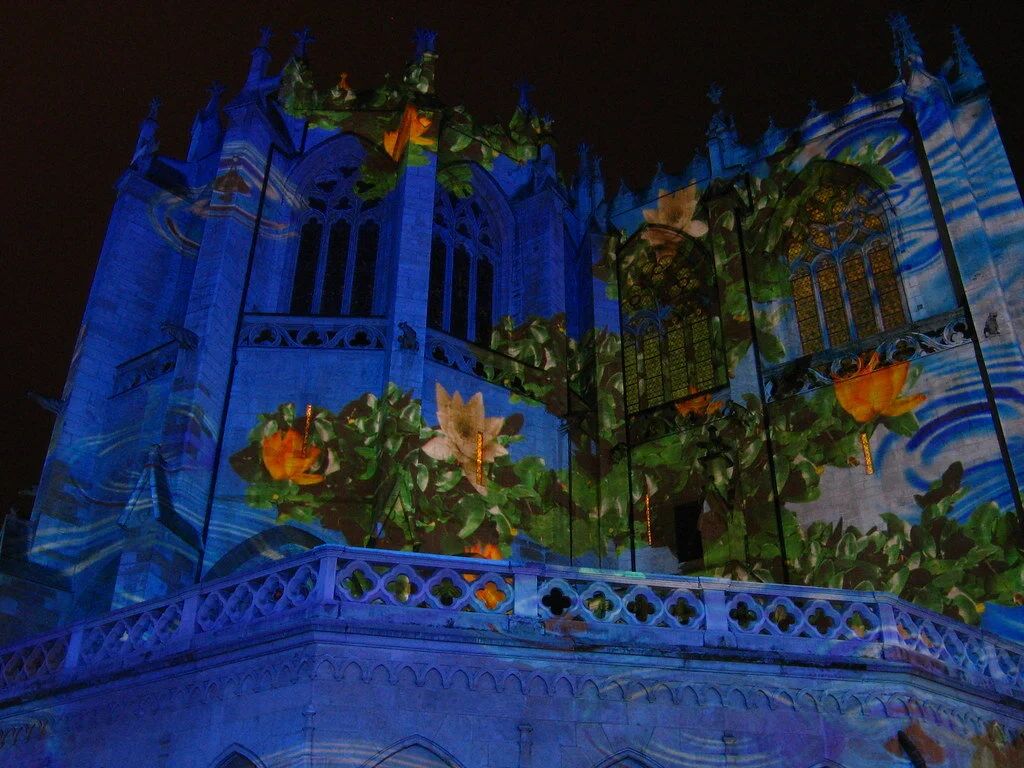
France’s Festival of Lights, a tradition in the city of Lyon, is a pre-Christmas celebration dating back to 1852. In 1852, a statue of the Virgin Mary was scheduled to be erected on Sept. 8, but the statue’s delivery was delayed by flooding. The event was postponed to Dec. 8, the date of the Feast of the Immaculate Conception. Due to inclement weather, the official ceremonies again had to be postponed. But as night fell, the weather cleared, and citizens of Lyon placed lit candles on their windowsills and balconies in a show of unity. Since then, Dec. 8 has become a day known for illumination in Lyon. The tradition escalated in the 1960s, when shops began window-lighting competitions, making the lights in Lyon more elaborate and widespread. The illumination of the city has spread in the years since, and every year around Dec. 8, light displays spotlight city squares, streets, bridges and even rivers. Much of the light at the festival comes in the form of projections on building facades, created by visual artists, that transform Lyon into a dreamlike world of glittering color. 

3. Lantern Festival, China

China’s Lantern Festival, held on the 15th day of the first lunar month, typically falling in February or March, marks the end of the Chinese New Year (Spring Festival). As the name suggests, glowing lanterns are the centerpiece of the festival. During the festival, lanterns in all shapes and sizes adorn China’s cities. The lanterns display artwork depicting traditional Chinese images like animals, fruits, flowers and people. The lighting of lanterns represents illuminating the future. The Lantern Festival dates back over 2,000 years, to the Western Han dynasty. Emperor Wen made the 15th a national holiday in celebration of the return to peace, and every household began to light candles and lanterns. A later ruler, Emperor Ming of the Eastern Han, was a devout Buddhist, and learned that monks would light candles for the Buddha on the 15th. Emperor Ming ordered that the palace and temples light candles on the 15th as well, and that citizens hang lanterns. The two events combined to form the Lantern Festival that is celebrated today. In addition to the lighting and admiration of the lanterns, visitors to China’s Lantern Festival can watch lion dances, eat “tangyuan” traditional dumplings, and try to solve riddles affixed to lanterns in order to win a prize. 

4. St. Martin’s Day, Netherlands

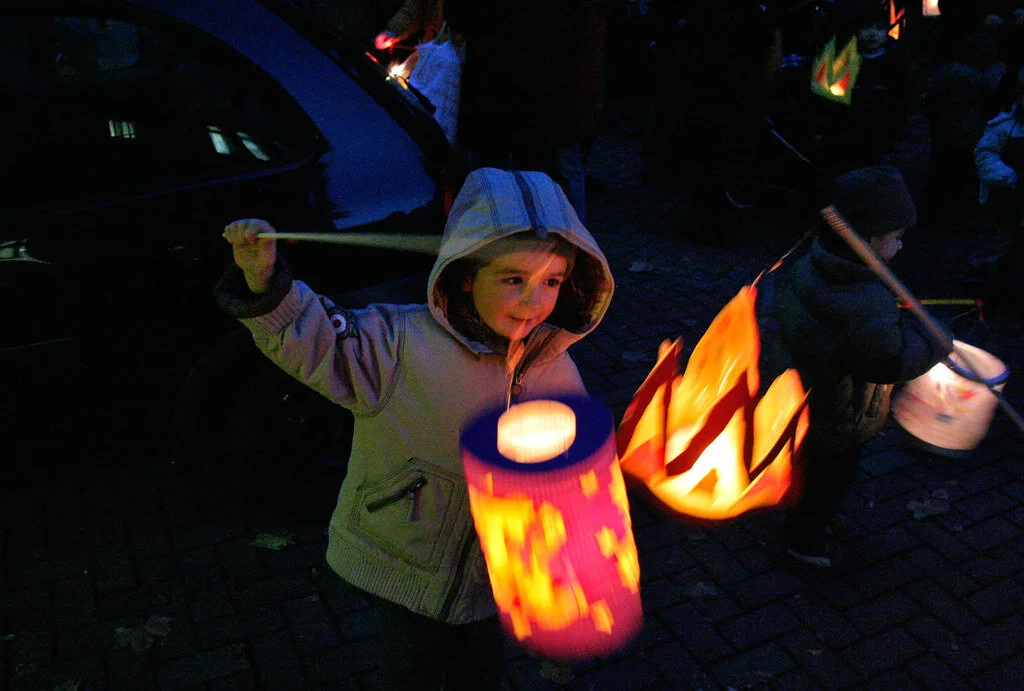
St. Martin’s Day is a children’s festival celebrated every Nov. 11 in honor of St. Martin, who was traditionally regarded as the patron saint of the poor and a friend to children. Nov. 11 is the day of St. Martin’s passing, but the atmosphere of the festival is joyful, not somber. The festival is similar to American Halloween, with children going door to door to collect treats such as candy, fruits or pancakes. Unlike Halloween, however, children do not dress up in costumes. Instead, they carry lanterns and parade around the neighborhood. Adults place similar lanterns outside their homes to show that they are offering treats to the revelers. Historically, children’s lanterns were made out of hollowed-out turnips and sugar beets hanging from a stick. These days, most children make and decorate their own paper lanterns at home or school, or lanterns can be purchased at grocery stores. Rather than saying “trick or treat,” children in the Netherlands sing songs to earn their treats. There are a few common songs for the festival, but children can sing any song they like, even ones of their own creation. 

5. Loi Krathong, Thailand

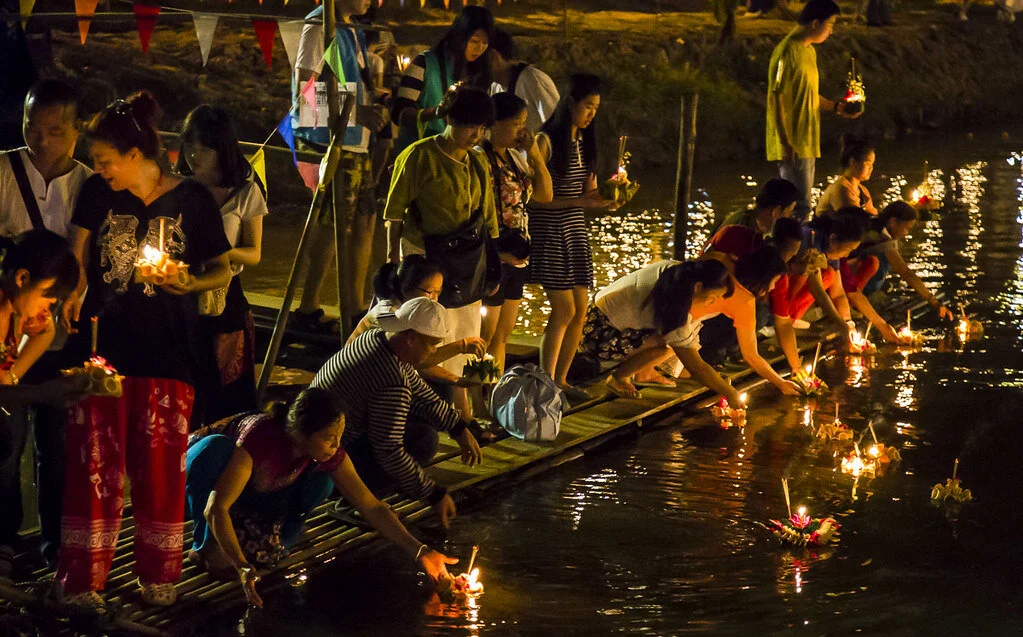
On the evening of the 12th lunar month, which usually falls toward the beginning of November, the whole country celebrates Loi Krathong, Thailand's Festival of Lights. Loi Krathong translates to “floating basket,” and it is a celebration of renewal, leaving behind the old and welcoming in the new. Thousands of lotus-shaped boats made from banana leaves called “krathong” are lit with candles and set afloat in waterways. In the north of Thailand, the krathong are joined by lanterns released into the sky for another light festival, Yi Peng, which often coincides with Loi Krathong. Most Loi Krathong celebrations are concentrated around waterways, since they are necessary to float the krathong. According to legend, Loi Krathong originated with Nang Nopphamat, a beautiful lady of the court in an ancient city. Wanting to catch the attention of the king, Nopphamat constructed a boat out of lotus leaves, placed a candle inside, and floated it down the river, creating the krathong. Today, the festival includes beauty contests in honor of Nopphamat, as well as parades, fireworks and, of course, the floating of the krathong

6. Bonfire Night, England

This celebration, also known as Guy Fawkes Day, takes place each year on Nov. 5. Bonfire Night marks the anniversary of the discovery of the Gunpowder Plot of 1605, a plan by Catholic conspirators to blow up the British Houses of Parliament. Guy Fawkes was one of the conspirators. He was captured and taken into custody the night before the attack and eventually tried, convicted and executed. The other conspirators met the same fate, or were killed resisting arrest. Today, Guy Fawkes Day is celebrated with fireworks, food, parades and bonfires, hence why the celebration is also called Bonfire Night. Effigies of Guy Fawkes, made from old clothes stuffed with paper and straw and commonly called “The Guy,” are thrown on the bonfires. The bonfires are also used to heat soup and cook potatoes to feed the crowds that gather to watch the brilliant fireworks displays. 

7. Vivid Sydney, Australia

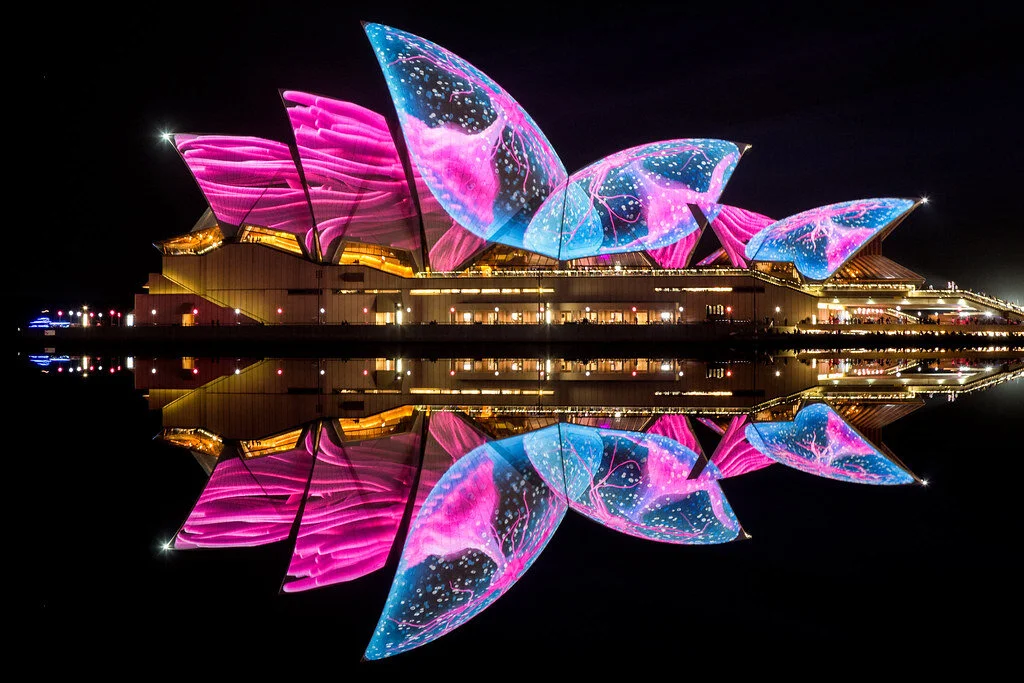
Vivid Sydney is billed as a festival of light, music and ideas. Each year, more than 2 million visitors flock to Sydney to watch live music performances, attend creative workshops, talks and conferences, and see some of the city’s historic sites go up in lights. The festival lasts for 23 days, and the Sydney Opera House, Customs House and Taronga Zoo, among others, are all illuminated nightly at 6 p.m. Over the course of the festival, Sydney becomes a work of art, displaying light sculptures, large-scale projections and light installations. To best take in the massive array of lights, visitors to Vivid Sydney can follow the Vivid Light Walk, a route that stretches from The Rocks, a historic neighborhood by the Sydney Harbour Bridge, to the Sydney Opera House, winding through a number of attractions on the way. Several of the light installations are typically interactive, adding another dimension to the fun.


Rachel Lynch

Rachel is a student at Sarah Lawrence College in Bronxville, NY currently taking a semester off. She plans to study Writing and Child Development. Rachel loves to travel and is inspired by the places she’s been and everywhere she wants to go. She hopes to educate people on social justice issues and the history and culture of travel destinations through her writing.

Beyond Bora Bora: 7 Lesser-Known Islands in French Polynesia

Although French Polynesia conjures up images of honeymooners and overwater bungalows, the region’s less-visited islands abound in natural beauty and warm hospitality.

Stunning views in French Polynesia. Dany13. CC2.0

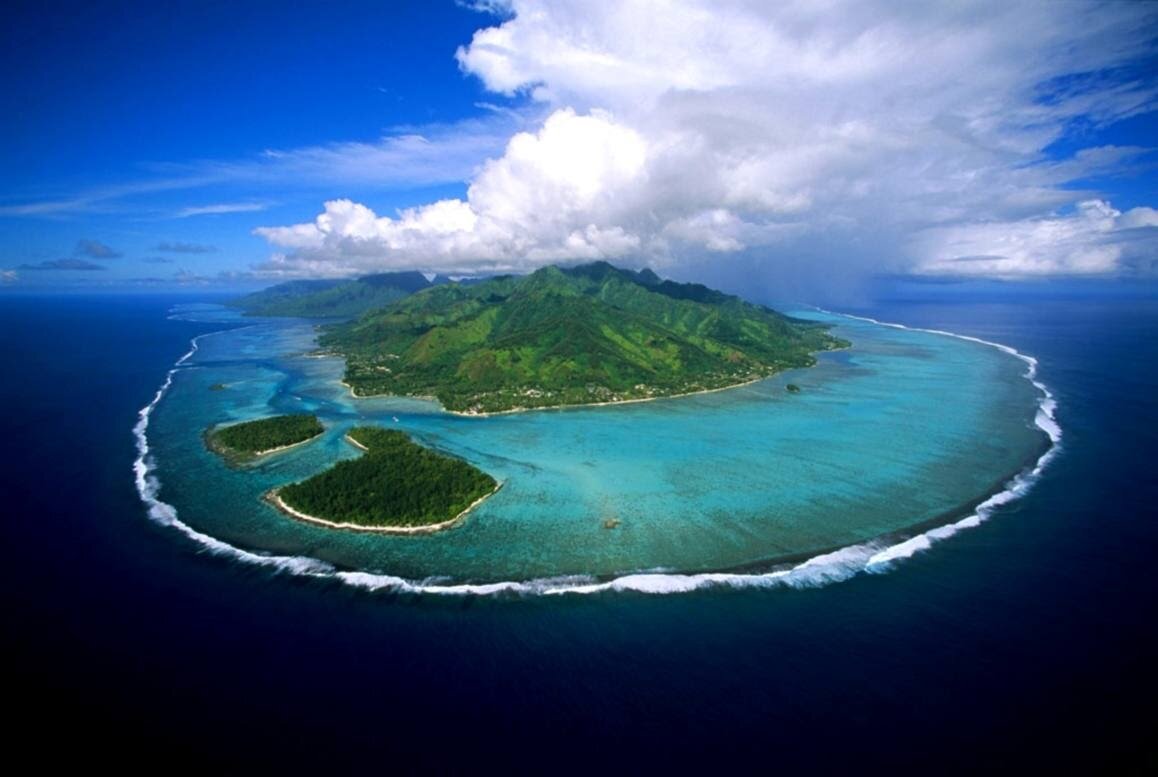
French Polynesia is a South Pacific collectivity under French jurisdiction made up of five island groups: the Society, Tuamotu, Marquesas, Austral and Gambier islands. The region’s history goes back as early as 500 B.C., when Polynesians traveling east from Tonga and Samoa reached the islands. Once explorers arrived in the 16th century, European fascination with the South Pacific began to grow. As a result, the islands became a French colony in 1880. French Polynesia developed quickly in the 1960s and eventually gained more political autonomy, becoming an autonomous overseas country of France in 2004

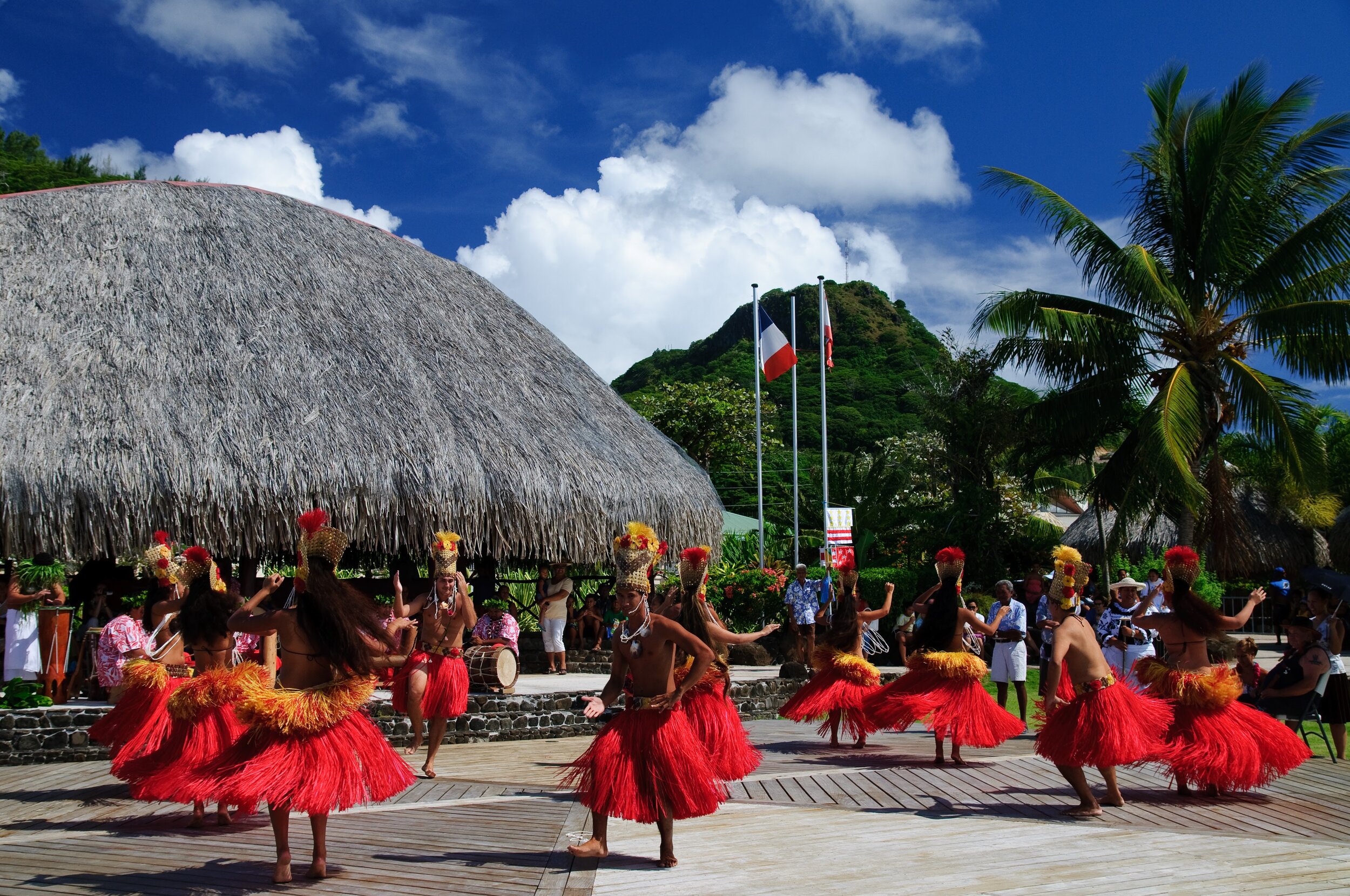
Polynesian culture and traditions are an essential part of life on the islands. Locals appreciate their heritage and proudly showcase their vibrant culture to visitors. Examples of exemplary Polynesian craftsmanship include wood carving, weaving and tattooing, a practice deeply rooted in Polynesian mythology. Mesmerizing songs and dance embody the Polynesian spirit and allow islanders to pass down their culture and history from generation to generation. 

The islands of Tahiti, Moorea and Bora Bora are the most sought-after destinations in French Polynesia due to their world-renowned resorts with overwater bungalows. However, there is much more to the islands than simply a luxury vacation. Visiting these seven French Polynesian islands will allow travelers to gain an insight into Polynesian life and the islands’ rich culture.

Polynesian dancers in Raiatea. Caproni. CC2.0

Raiatea

Known as the “sacred island,” Raiatea is the birthplace of Polynesian culture. Polynesians first gathered at the marae of Taputapuatea, as the sacred site was the political and religious center of Polynesia in ancient times. From Taputapuatea, Polynesians set off in outrigger canoes traveling west to New Zealand and north to Hawaii. Taputapuatea is a UNESCO World Heritage Site and can be visited with the accompaniment of a guide. Communities from Hawaii, New Zealand and the Cook Islands travel here as part of a pilgrimage to connect with their rich cultural heritage. 

Raiatea is also the only place in the world where the tiare apetahi grows. A beautiful white flower with five petals, it has become a symbol of the island itself. Faaroa River on Raiatea is French Polynesia’s only navigable river and was said to be the starting point for outrigger canoes heading across the ocean. Raiatea is also one of the top yachting destinations in French Polynesia with a vast lagoon and excellent sailing conditions. 

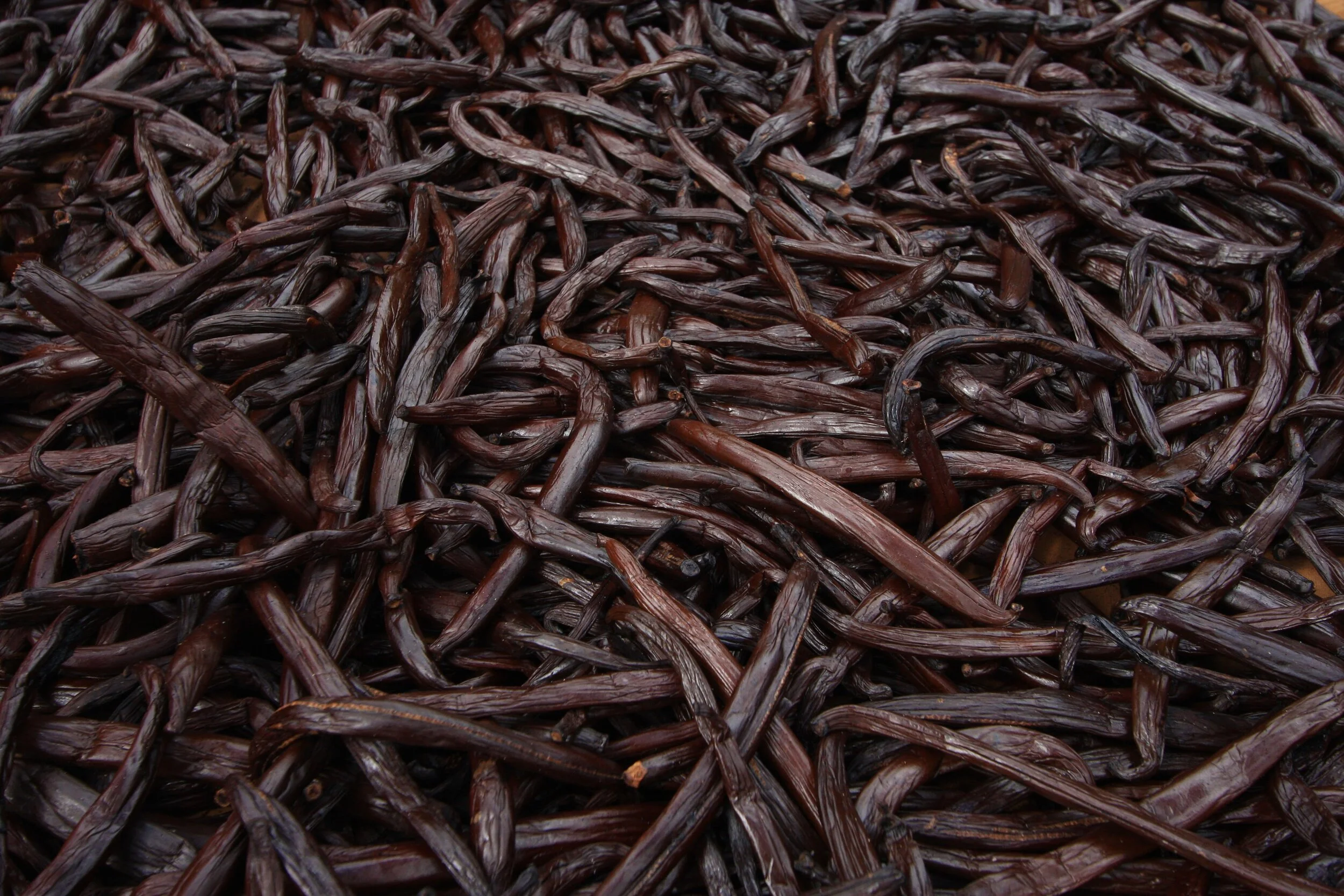
Vanilla pods. Hcabral. CC2.0

Tahaa

Accessible by ferry from neighboring Raiatea, Tahaa is one of the most beautiful of French Polynesia’s islands. The island has a rugged and untouched feel, dotted with lush tropical greenery and tiny villages. Known as the “vanilla island,'' Tahaa produces more than 70% of French Polynesian vanilla. Travelers can check out La Vallee de la Vanille, which is the only organic vanilla production on the island. Tahaa’s lagoons have many small islets (known as motus) which provide numerous opportunities for snorkeling in vibrant coral gardens. Tahaa also provides stunning views of neighboring Bora Bora, especially at sunset. 

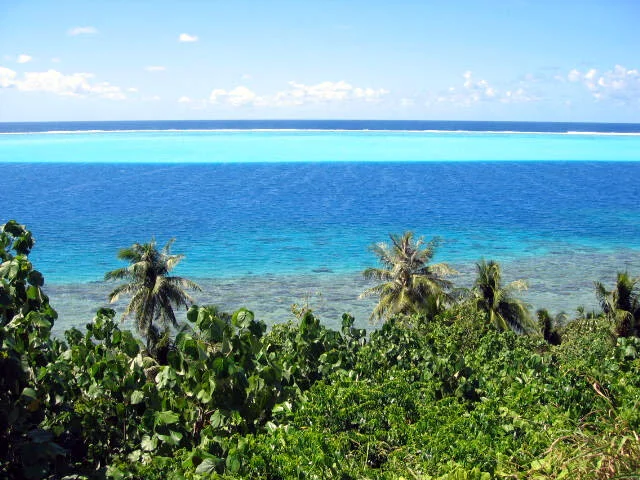
Views of Huahine’s lagoon. Tiarescott. CC2.0

Huahine

Huahine is one of French Polynesia’s least-visited islands, often referred to as “the secret island.” Containing Huahine Nui (Big Huahine), Huahine Iti (Little Huahine) and eight villages, Huahine provides a break from the stresses of the modern world. As the island receives few tourists, visitors can expect to be welcomed to Huahine with great hospitality. The island is known for its lush greenery and landscape dotted with fruit and vanilla plantations. Huahine abounds in cultural sites, containing the largest number of marae temples in all of Polynesia. Huahine is also home to blue-eyed eels, sacred fish ranging from 4 to 6 feet long that live in a stream near the village of Faie. 

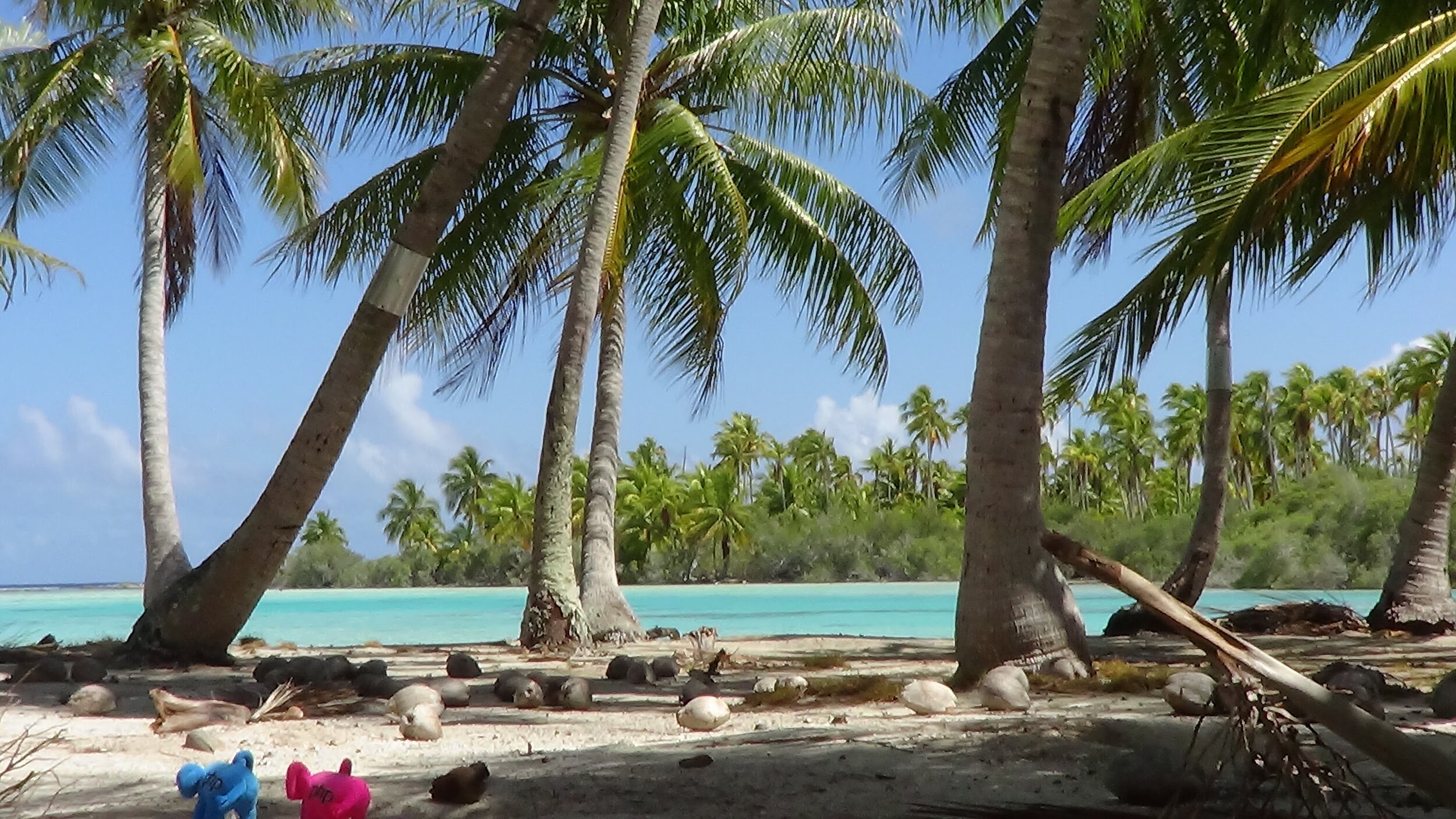
Palm trees in Fakarava. Villenueve. Public domain

Fakarava

Located in the Tuamotu archipelago, the largest group of atolls in the world, Fakarava is known throughout French Polynesia for its stunning natural beauty. Meaning “beautiful” or “making things superb” in Tahitian, Fakarava is a designated UNESCO Biosphere Reserve for its abundant marine life. There are many conservation efforts underway here, including educational outreach programs and monitoring of the island’s flora and fauna. The French artist Henri Mattise visited Fakarava in 1930 and was said to be blown away by the countless shades of blue in the lagoon, inspiring many of his later creations. 

Rangiroa atoll from the air. Keats. CC2.0

Rangiroa

Also located in the Tuamotu archipelago, Rangiroa is the second-largest atoll in the world. Containing over 240 islets surrounding an enormous lagoon, there is no shortage of places to visit. The Rangiroa atoll is also one of the best places in the world for scuba diving. The waters near the villages of Tiputa and Avatoru provide excellent opportunities to see sharks, dolphins, manta rays and more. Other noteworthy sights in Rangiroa include Le Sable Roses, a pink sand beach located on the atoll’s southern rim, and Blue Lagoon, a spot that’s often referred to as a natural aquarium for its abundance of fish. 

Manihi’s lagoon. Cyriljouin. CC4.0

Manihi

With less than 1,000 residents, the island of Manihi provides an opportunity for travelers to experience slow-paced island life. The first black pearl farm in French Polynesia began in Manihi in 1965, a practice that has since become widespread across the islands. Today, pearl farming remains a crucial part of Manihi’s economy and culture. Travelers can visit these farms to learn about this fascinating process while supporting local businesses.

Views of Rurutu. Burckel. CC2.0

Rurutu

Rurutu is in French Polynesia's Austral Islands about 370 miles south of Tahiti. The island has stunning mountains and fertile landscapes dotted with fruit and coffee plantations. Humpback whales are Rurutu’s main attraction and can be found from August to October. Moerai, the largest village and home to most of Rurutu’s 2,400 people, provides a great insight into the island’s unique culture. Skilled female artisans known as mamas are renowned for their exquisite handwoven goods, including hats, mats and patchwork blankets called “tifaifai.” Moerai was also home to the famous Tiki statue of Aa, although only a replica remains on the island. The original statue is in the British Museum in London. 

In this time of global uncertainty, small island nations that depend heavily on tourism feel the impacts of the pandemic the hardest. By appreciating the unique customs and cultures of small island communities such as those in French Polynesia, their way of life can be preserved for generations to come. 


Megan Gürer

Megan is a Turkish-American student at Wellesley College in Massachusetts studying Biological Sciences. Passionate about environmental issues and learning about other cultures, she dreams of exploring the globe. In her free time, she enjoys cooking, singing, and composing music.

South Sudan Faces Severe Flooding Due to Climate Change

The consequences of climate change have already ravaged communities across the globe, with the poor dealing with the brunt of the damage. Record-breaking floods in South Sudan have proven that the young nation is no exception. 

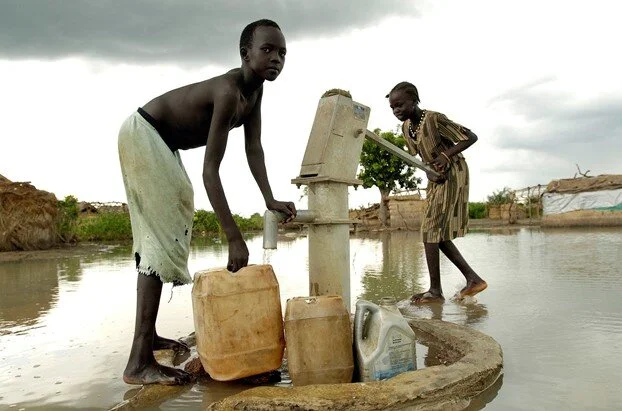
Children fetching water during flooding. United Nations. CC BY-NC-ND 2.0. 

Devastated by the repercussions of civil war and an acute poverty problem, South Sudan faces yet another alarming episode in its ongoing humanitarian crisis. For the past six months, South Sudan has faced the worst flooding that the region has seen in 100 years. Since June 2020, the nation has been overwhelmed by rapid flooding of the Nile, Pibor and Sobat rivers. Humanitarian experts found that over 1 million people have been affected, with nearly half of these victims originating in Jonglei state. 

Jonglei has easily become the worst area hit by these floods, with entire villages submerged if not entirely washed away. So far, the count for those displaced is nearing 500,000. The floods have ruined farmland and drowned cattle, causing both short- and long-term threats to communities; nearly 90% of South Sudanese rely on farming for income. The displaced have been left to swim through chest-deep waters in search of aid to fight famine or waterborne diseases that are exacerbated by the floods. Those affected now wait eagerly for medical aid by humanitarian agencies, taking themselves and their families to higher and drier land. 

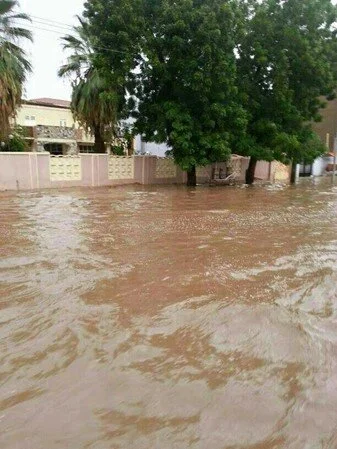
Street flooding. nafeersudan. CC BY 2.0. 

Although South Sudan has always experienced a dramatic rainy season, weather data shows that climate change has profoundly contributed to the record-breaking floods of this past year. Increased precipitation found in nearby areas increased the water flowing through the nation’s rivers, thereby increasing the flooding that ravages the country. Not only has climate change increased the severity of the flooding, but it has reduced the communities’ abilities to recover. Since 1980, an increased annual temperature has rendered the nation’s dry season even drier, which has fed into the area’s social, political and economic instability. With unprecedented flooding now in full swing, the nation’s weak infrastructure has now broken under the pressure. 

The COVID-19 pandemic has also aggravated both the damage among villagers as well as aid availability. Pandemic regulations have restricted help from other countries; due to lack of funding, victims are unable to decipher which disease they are suffering from. Relief packages by humanitarian agencies such as Cordaid have arrived in Bor, the capital of Jonglei state. Aid workers have expressed extreme stress with the current situation, many voicing concerns that an inability to meet long-term solutions will result in harsh consequences. For instance, aid workers have advised that a reliable clean water supply is essential; otherwise the availability of drinking water will continue to diminish rapidly. 

A battle between climate change and humanitarian efforts has characterized the history of this new nation. South Sudan has a long road ahead, but there is hope that stability will be regained and long-awaited peace will finally be restored. 


Ella Nguyen

Ella is an undergraduate student at Vassar College pursuing a degree in Hispanic Studies. She wants to assist in the field of immigration law and hopes to utilize Spanish in her future projects. In her free time she enjoys cooking, writing poetry, and learning about cosmetics.

China Weaponizes Tourism to Erase Uyghur Culture

8,000 Uyghur mosques have been destroyed, and cafes and bars have taken their place, as China’s Han majority ethnic group flock to Xinjiang for its natural beauty. Mosques left standing have become museums catering to Han visitors, and religious pilgrims are turned away.

Read More

Zimbabwean Teens Kick Away Child Marriage with Taekwondo

One town in Zimbabwe has learned to bear the weight of history by “kicking” child marriage customs away. 

Zimbabwean woman. ScotchBroom. CC BY-NC 2.0. 

In the small settlement of Epworth southeast of Harare, Zimbabwe’s capital, is a growing community of taekwondo enthusiasts. One member, 17-year-old Natsiraishe Maritsa, has taken it upon herself to organize taekwondo classes for the girls of her community. The participants of her classes are underage girls, some as young as 10, who have been subjected to the harrowing practice of child marriage that plagues Zimbabwe. 

The Statistics

Child marriage is a tradition practiced all around Zimbabwe, but it runs particularly rampant in rural areas. The Zimbabwean countryside was found to have a child marriage rate of about 40% compared to the urban areas that show a rate of 19%. 

In Zimbabwe, 34% of girls are married off before the age of 18, while another 5% are married before the age of 15. The issue of child marriage, although an occurence involving mostly underage women, affects more than just women. About 2% of boys are forced into the practice before the age of 18. 

Complications of Elimination

The task of eliminating child marriage has proven to be especially difficult due to the many conditions and societal beliefs that worsen girls’ ability to escape the practice. There are four main reasons that girls are easily trapped in the tradition: 

First, gender inequality ranks women as inferior to men, thereby allowing the men of the family to force the women into submission. 

Second, and a particularly large piece of the problem, is poverty. The practice of child marriage is often used as an economic tool; the price for a bride is used to cover household expenses. Because marrying off daughters of the family can be the decision between life and death, the pressure to commit these practices is often insurmountable. With poverty increasing due to COVID-19, this problem has become particularly difficult. 

Third, the need to avoid shame causes many families to marry off their daughters. In Zimbabwe, the act of a daughter committing premarital sex is seen as shameful to the family, so it is resolved by forcing the daughter to marry her boyfriend. The girls will submit to these demands, especially if they became pregnant, in order to avoid abuse by their family members. 

Fourth, a lack of education pushes girls into the trap of child marriage. Many poorer households are unable to pay for their daughters to attend school, which increases the risk that they will be forced into a marriage. 

It is an oppressive cycle. Studies find that poverty causes child marriage, and in return, child marriage feeds into poverty. 

Seventeen-year-old Maritsa has chosen to use taekwondo education to empower the girls of her community, hoping they can use their newfound confidence and skills to reshape their futures. She holds classes in a small dirt yard in front of her house, while her parents use their small income to supply some food for the attendees. 

Maritsa’s class has proven to be empowering, with each class used as a safe space for girls to talk about the physical, mental and emotional abuse they endure from their husbands. 

She has proven that although oppressive practices are formidable opponents, the power of education and community can undo even the most controlling traditions. 

To Get Involved

Nonprofit organization FORWARD is led by African women seeking to end violence and the oppression of women in Africa, including child marriage. To read more about how to lend a hand, click here

Global partnership Girls Not Brides has combined the efforts of over 300 organizations dedicated to empowering women on nearly every continent. To see how you can support bills and other legislation they are pushing, click here


Ella Nguyen

Ella is an undergraduate student at Vassar College pursuing a degree in Hispanic Studies. She wants to assist in the field of immigration law and hopes to utilize Spanish in her future projects. In her free time she enjoys cooking, writing poetry, and learning about cosmetics.

Fighting for Freedom: Uganda’s Election and the Internet Shutdown 

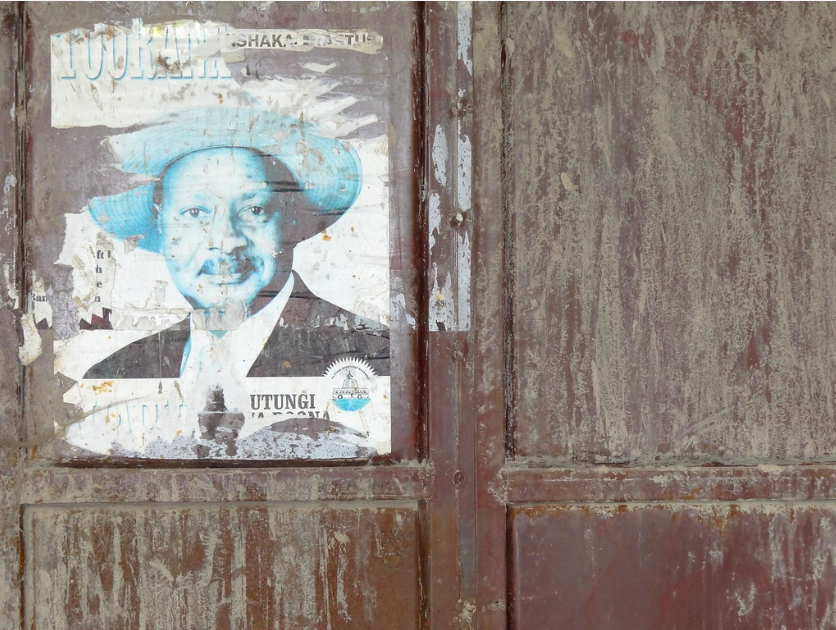
In southwestern Uganda, a wall with a faded poster of President Yoweri Museveni represents how long his presidency has continued. Adam Jones, Ph.D. - Global Photo Archive. CC BY-SA 2.0

In Uganda, a tumultuous victory for President Yoweri Museveni was declared on Jan. 17. This victory comes after weeks of tension and strife surrounding the election and its validity. Museveni won his sixth term in office at the age of 76 against Ugandan pop singer Robert Kyagulanyi who goes by the stage name “Bobi Wine.” Wine, 38, claims he ran as a voice for the youth, a significant position in the country as its median age is 16.   

Wine does not believe the electoral results were fair, despite the president claiming this election to be the “most cheating-free” in Uganda’s history. The claims of fraud are not a surprise as Museveni is notorious for his actions against opponents including jailing them and arresting protesters. The current suspicions around this election’s validity lie in two major factors: the large military and police presence during voting as well as the mass internet and social media shutdown in days leading up to the election. 

This is not the first time during elections that Museveni has shut down the internet or blocked messaging applications like WhatsApp. This internet shutdown severely damaged Wine’s campaign as he did not have access to campaigning through traditional outlets controlled by Museveni. Not only did it cost Wine his campaign, but it cost Uganda itself over $9 million according to Netblocks, an internet freedom monitor. CIPESA, an African internet nongovernmental organization, reports that both biometric voting systems and mobile money—a payment form relied upon by many Ugandans—were disrupted by the shutdown as well.                                      

Luyimbazi Nalukoola, a legal adviser, speaks with Bobi Wine. Mbowasport. CC BY-SA 4.0

Beyond the blocking of the internet come the physical barriers to voting put in place by Museveni. In a telephone interview with BBC World Service, Bobi Wine said he and his wife were being kept in their home by soldiers, with no allowance to leave. He said, "Nobody is allowed to leave or come into our house. Also, all journalists—local and international—have been blocked from accessing me here at home.” Members of Wine’s party are also experiencing this. One of the party’s Parliament members, Francis Zaake, was violently arrested on Friday while trying to access their Wine’s compound. He was beaten by security forces so badly that hospitalization was required, according to party spokesman Joel Ssenyonyi. 

Even Ugandan voters could not safely vote out of harm's way as the BBC's Patience Atuhaire reports from the capital, Kampala, that “as vote counting began, lorries carrying soldiers drove through the city and police and local defense units were also seen patrolling.” 

A group of men and women protesting the election in Uganda. DW Africa. YouTube

Many believe that this is life under an authoritarian regime, as Museveni’s presidency has often been called, and the utilization of internet blocks and physical force to suppress votes and muddy elections confirms this. So far, despite the turmoil, Ugandan people have not received assistance from international organizations designed to protect elections. African organizations are reporting conflicting observations as well, making it difficult to determine if intervention is appropriate. One group, the Africa Elections Watch coalition, said their 2,000 poll observers did observe irregularities, but the East African observer missions and those from the African Union said voting was largely peaceful. 

What is apparent is the suppression of Ugandan votes leading up to this election even if not witnessed firsthand by organizations. This is known to be true because in November, The Associated Press noted that at least 37 had died while protesting the election, and the number has grown but remained unconfirmed since. Now, many Ugandans continue their fight against an election result that is still unconfirmed to them despite their president’s claims. 


Renee Richardson

Renee is currently an English student at The University of Georgia. She lives in Ellijay, Georgia, a small mountain town in the middle of Appalachia. A passionate writer, she is inspired often by her hikes along the Appalachian trail and her efforts to fight for equality across all spectrums. She hopes to further her passion as a writer into a flourishing career that positively impacts others.

New Brunswick Provides Unique Experiences on the Road Less Traveled

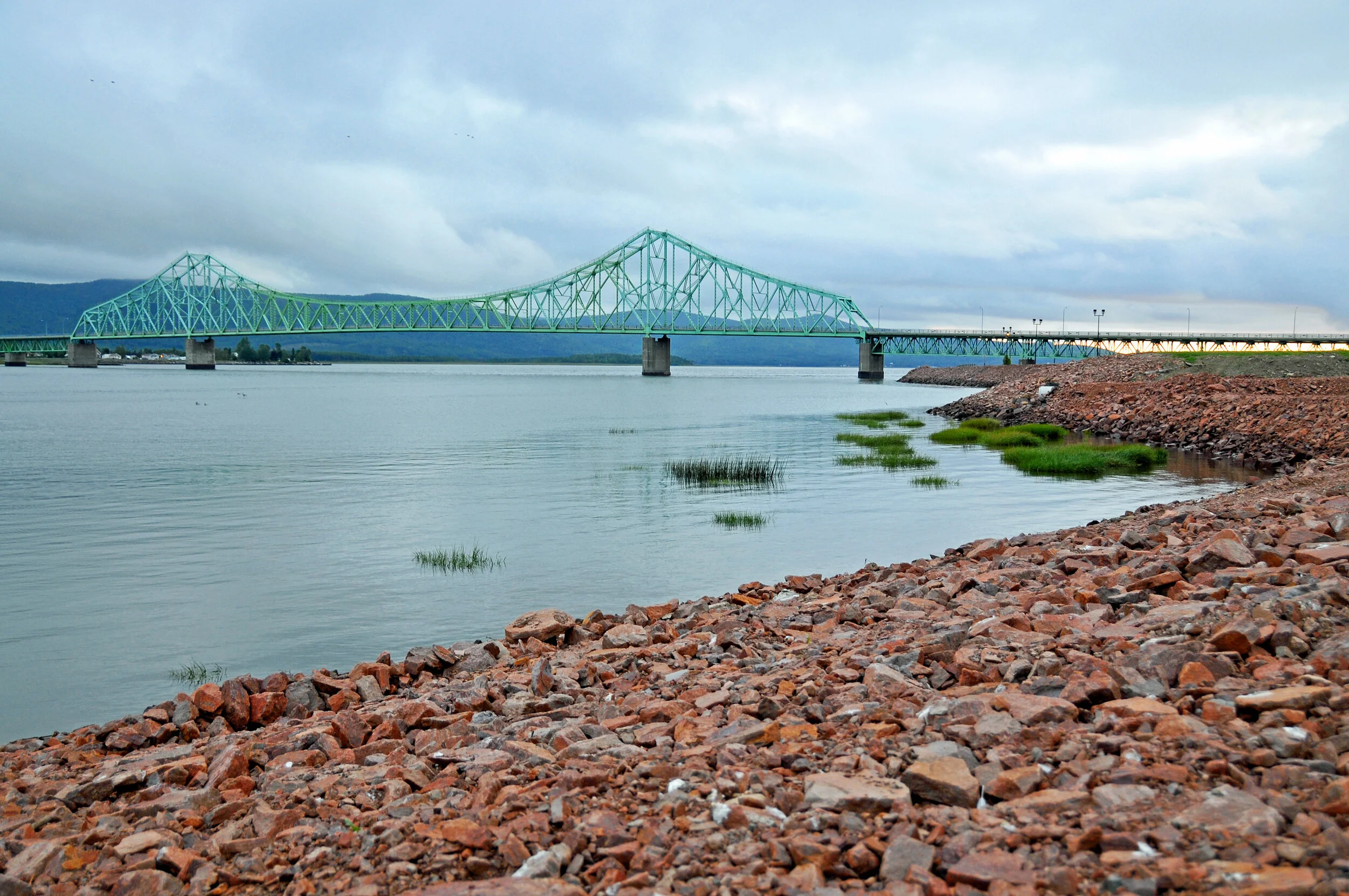
The J.C. Van Horne Bridge in Campbellton, New Brunswick. Dennis Jarvis. CC BY-SA 2.0.

When visiting Canada, travelers often opt for the cosmopolitan scenes of Toronto, the French culture of Quebec, or the beauty of Vancouver. But when planning a post-pandemic trip up north, one would be remiss to overlook the Maritime province of New Brunswick.

Located on the Eastern Seaboard between Nova Scotia and Quebec, and immediately north of Maine, is New Brunswick. The province of roughly 780,000 is Canada’s only officially bilingual province, with roughly two-thirds of New Brunswickers speaking English, one-third speaking French, and 34% being bilingual. This split is physically noticeable, with the English speakers living predominantly in the south and the French speakers living predominantly in the north.

The province is home to a rich cultural history as well as a number of world-renowned parks, beaches, and food and entertainment options.

A Brief History of Acadian Expulsion

A painting by Thomas Davies depicting the burning of the city of Grimross, a pivotal moment in the mass deportation of the Acadians by the British. Public Domain

The cultural split in New Brunswick is due to the province’s history of colonialism. In 1604, the first French colonizers arrived in what is now modern-day Nova Scotia and New Brunswick. The region became known as “Acadia,” and ownership was contested for several decades due to the growing influence of British provinces in New England, Prince Edward Island and the northernmost part of modern-day Nova Scotia.

After numerous wars, the British took control of Acadia in 1710. Many Acadians, descendents of the original French colonizers, were expelled from the region beginning in the 1750s after refusing to swear an oath of loyalty to the British monarchy. Many were deported back to France, while others were expelled to Louisiana and the Caribbean.

Many descendants of the original Acadians would slowly return to what is now New Brunswick throughout the following centuries, primarily in the villages along the province’s northern coast. In 2003, at the urging of Acadian representatives, Queen Elizabeth II issued a proclamation acknowledging the mass deportation, and established July 28 as a commemoration of what is now referred to as the Great Upheaval.

A Plethora of Experiences for All to Enjoy

A view of Centennial Park in Moncton, New Brunswick. James Mann. CC BY 2.0.

One of the most popular attractions in New Brunswick is the Acadian Coastal Drive. This roughly 450-mile route is marked with signs depicting an image of a sea star, an homage to the sea creatures that live in the warm waters off the Acadian Coast.

In driving along the route, travelers will be able to satisfy their wanderlust to its full extent. A stop at the Kouchibouguac National Park brings beaches with the warmest saltwater north of Virginia. The Village Historique Acadian is a large, open-air museum that showcases Acadian history for the French Canadians who historically resided in New Brunswick and neighboring Nova Scotia.

Additionally, no trip along the Acadian Coastal Drive would be complete without a stop for seafood. Lobster rolls at La Homard Mobile, raw oysters at La Maison Beausoleil and sushi at Mitchan Sushi provide some of the best food in the province.

But the Acadian Coastal Drive is merely one of many amazing experiences available to travelers in New Brunswick. The province is home to some of Canada’s best performing arts outlets, including Music New Brunswick, an organization that hosts concerts and festivals around the province, Symphony New Brunswick, an orchestra that has run for 36 seasons, and Theatre New Brunswick, one of Canada’s most prominent regional theater companies.

A visit to the Mount Carleton Provincial Park in New Brunswick’s interior is a must for any nature lover. The park’s 42,000 acres of untouched wilderness are home to over 100 species of birds and 30 species of mammals, as well as a number of rare plants. The park is also a popular spot for hiking, with Mount Carleton, Mount Head and Mount Sagamook being the highest peaks in Canada’s Maritime provinces.

Further south is the city of Saint John. Located along the Bay of Fundy, Saint John has historically been the cultural hub of New Brunswick. The city is home to a number of performing arts venues, including the aforementioned Symphony New Brunswick, and numerous museums such as the New Brunswick Museum and the Saint John Jewish Historical Museum. It also houses historical sites including the Carleton Martello Tower, one of the oldest buildings in the city, and Fort Howe, a British fort constructed during the American Revolutionary War.

Another historical site, the Saint John City Market, is a popular spot for food lovers. Visitors to the market can try fresh naan from Naan-ya Business, fresh lobster, oysters and crab from Billy’s Seafood Company, and the ever-popular Canadian treat poutine from North Market Seafood.

While often overlooked for the more populated provinces, New Brunswick represents a new frontier for travelers eager to find an alternative spot in Canada. The province’s history, nature, culture and food offerings allow everyone who visits to have a memorable journey.


Jacob Sutherland

Jacob is a recent graduate from the University of California San Diego where he majored in Political Science and minored in Spanish Language Studies. He previously served as the News Editor for The UCSD Guardian, and hopes to shed light on social justice issues in his work.

Middle Eastern Countries Combat Stigma Surrounding Mental Health

While the stigmatization of mental health issues is common worldwide, sociocultural factors specific to the Middle East often prevent individuals from seeking treatment.

A drawing depicting mental health issues. Pixabay.

Mental health services are more urgently needed now than ever before. The world is currently facing a mental health epidemic, with over 264 million people struggling with depression in 2019. The additional stress and uncertainty caused by the COVID-19 pandemic have caused anxiety and depression levels to skyrocket. For many individuals, it has become even harder to participate in counseling programs. According to the World Economic Forum, over 93% of countries have reported a disruption in their mental health services since the pandemic started. 

In the Middle East, mental health awareness continues to rise, especially in the Gulf countries among the nations’ youth. A recent poll conducted in the Gulf region reported that 62% of youth agree that mental health issues are important. Even so, a recent survey in Saudi Arabia revealed that 80% of people struggling with severe mental health issues do not seek treatment. Similarly, this year’s Arab Youth Survey, which interviewed 4,000 young adults ages 18-24 from 17 Arab countries, revealed that mental health issues are rampant, with the number of people affected continuing to rise. 

Difficulties in Obtaining Proper Mental Health Care

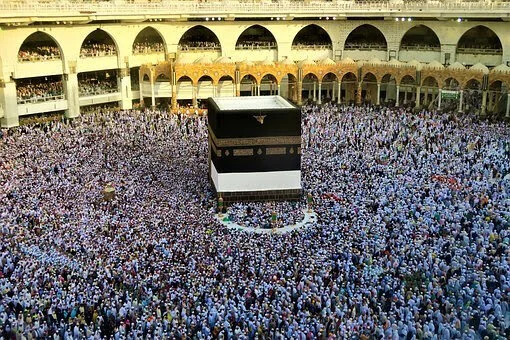
The Kaaba in Mecca, Saudi Arabia, the holiest site in Islam. Konevi, Pixabay.

A prevalent culture of stigmatization in Middle Eastern countries prevents many individuals from seeking treatment in the first place. Due to the shame associated with mental health issues, privacy between the client and their mental health professional is of utmost concern. In many cases, mental health issues place a burden on a family’s reputation and social status. Rania Raine, a 43-year-old British-Egyptian art teacher who struggles with mental health, states that, “It’s the ‘shame’ families have, that their child isn’t perfect, that their lives are not perfect and what will people say, what will the neighbors say, society say–and then it all leads to marriage, how no one will marry the child who has a mental health condition, or worse still, ruin the chances of marriage of the other siblings.” 

Although the stigmatization of mental health conditions is common in Muslim communities, Ph.D. researcher Mounira al-Dousari states that they are “reflections of cultural practices and discourse.” There is a growing movement among mental health professionals to include faith in therapy, which results in a faster recovery for some clients. It’s also important to note that many forms of therapy use predominantly Western practices, which need to be diversified to appeal to a larger audience. According to Dousari, “When it comes to Islam, Muslim scholars and those working in the mental health field are working harder than ever to establish well-structured Islamically integrated psychotherapy models.”

Additionally, the financial burdens of seeking mental health treatment raise another concern. Even though mental health care is free in some public hospitals, many people do not trust them due to privacy concerns. Prices for private mental health care sessions are quite expensive. For example, Dousari’s research sessions cost $225 an hour, a large sum even for well-off families. 

Historic Treatment of Mental Illness in the Middle East

An entrance to the Moristan of Kala’oon, a mental health hospital in Egypt, 1878. Werner. CC2.5

Although mental health remains a prevalent issue in the region, the Middle East was well known for mental health treatment during the Islamic Golden Age. The term bimaristan, Persian for “home for the sick,” refers to entire psychiatric hospitals where a patient’s mind, body and soul were considered part of the treatment process. First opened in Fez, Morocco, and in Baghdad in the eighth century and later in Cairo, Damascus and Aleppo in the ninth, the practice was initially introduced by physician Ahmed ibn Sahl al-Balkhi. A famous manuscript written by Balkhi called “Sustenance for Bodies and Souls” was written in clear, understandable language and helped make mental health education more accessible to the public. Unfortunately, the practice declined throughout the centuries and does not occur in the mainstream today. 

Additionally, Dr. Mamoun Mobayed, director of the treatment and rehabilitation department at Behavioral Healthcare Center in Qatar, emphasizes that the stigmatization of diseases is a global phenomenon. “Any disease thought to be infectious or bizarre-looking, like leprosy, has always been stigmatized. Even with COVID-19, there have been cases where paramedics working with COVID-19 patients have been avoided due to the fear and stigma attached to the virus.”

In recent years, mental health awareness in the Middle East has become a top priority, with many countries starting their own wellness initiatives and campaigns. 

Qatar Paves the Way in the Gulf

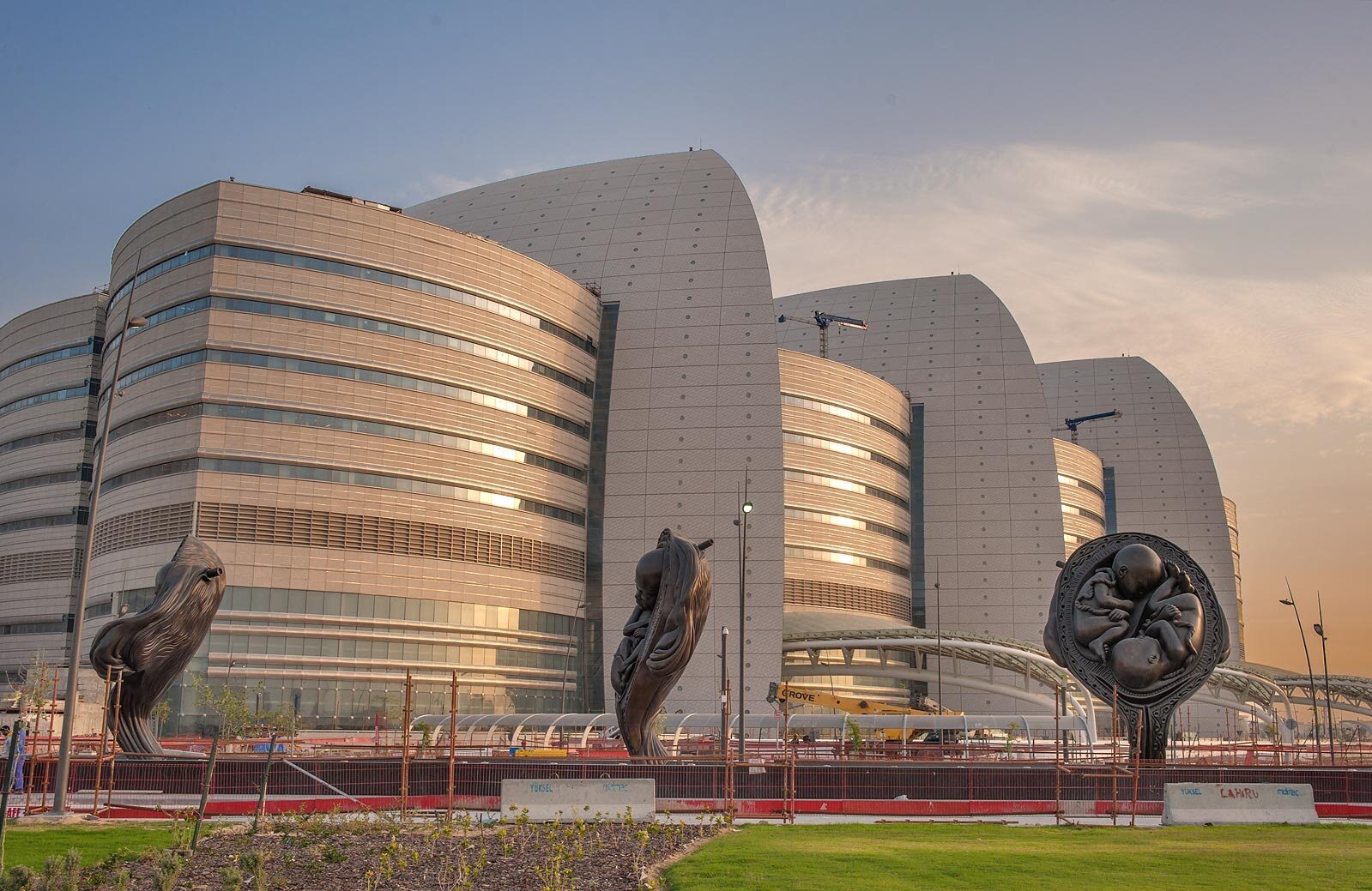
Sidra Medical and Research Center in Qatar. Sergeev. CC3.0

Qatar launched a new mental health program in conjunction with World Mental Health Day. Being the first country in the Gulf to start such an initiative, the Wellness Ambassadors program aims “to promote mental health support and break the stigma attached to mental health conditions at school level.” Program ambassadors received comprehensive training on mental health issues such as anxiety, depression and bullying while breaking cultural misconceptions surrounding mental health. Dr. Mobayed states that educating individuals about mental health issues serves “to remove the barriers associated with mental health and know they are normal humans with a disorder in the mind.” 

Turkish Counseling Services Provide Assistance

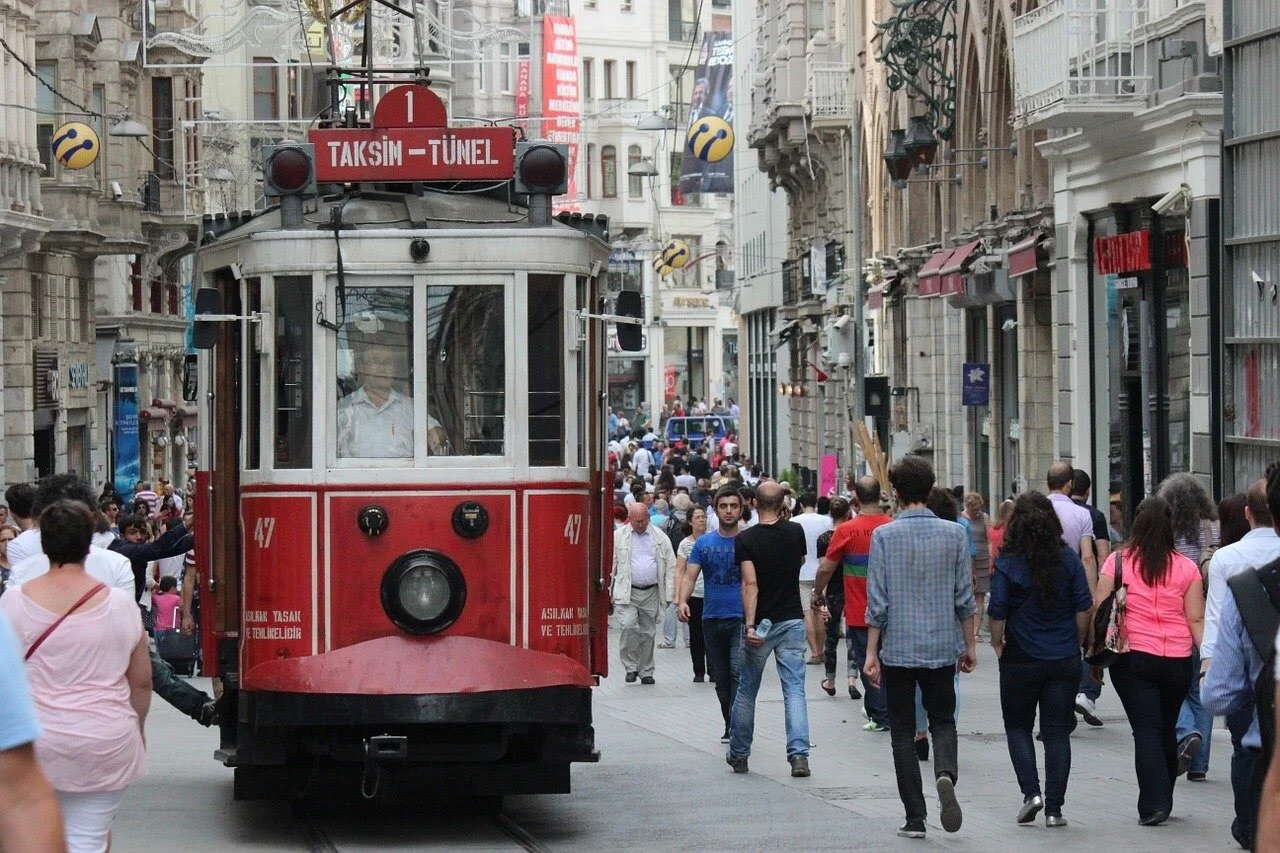
Taksim Square in Istanbul. Pixabay.

A crisis helpline in Turkey helps those struggling with mental health issues during the pandemic. Supported by the World Health Organization, the service is accessible in all of Turkey’s 81 provinces and consists of 418 staff members trained in helping individuals manage stress and access mental health resources. So far, the service has offered more than 80,000 consultations since its inception. 

Social Media Campaigns in Kuwait Lead to Legislative Action

Youth in Kuwait. Wikimedia Commons. CC2.0

Kuwait enacted its first mental health law in 2019, which passed unanimously through the national assembly. Instrumental to this success were numerous social media campaigns led by youth, artists and mental health advocates. The founder of ASAP Beauty, Sheika Majda al-Sabah, credits her involvement in the campaign to her own struggles with depression. Other campaigns include “Mind Me”, “Human Line Organization” and “Taqabal”, with trending hashtags such as #noshame working to spread awareness. Outreach events helped to create a welcoming climate where people could speak more openly and denounce negative stereotypes surrounding mental illness. Since the onset of the COVID-19 pandemic, an online program called Corona Care provides mental health services for those in need. Additionally, the Gulf Program for Mental Health encourages countries to develop comprehensive mental health programs that adhere to international standards. 

Although there is still work needed to break down barriers surrounding mental health treatment, Middle Eastern countries seem ready to rise to the challenge. 

To Get Involved: 

Check out social media campaign pages “Mind Me”, “Human Line Organization” and “Taqabal” working toward mental health awareness in Kuwait. Visit the website of the Institute for Muslim Mental Health, which focuses on providing support for Muslims in the United States. The Journal of Muslim Mental Health is an excellent resource to learn about issues affecting the Muslim community in the United States and globally. 


Megan Gürer

Megan is a Turkish-American student at Wellesley College in Massachusetts studying Biological Sciences. Passionate about environmental issues and learning about other cultures, she dreams of exploring the globe. In her free time, she enjoys cooking, singing, and composing music.

A Glimpse at Ethiopia’s Medieval Rock-Hewn Churches 

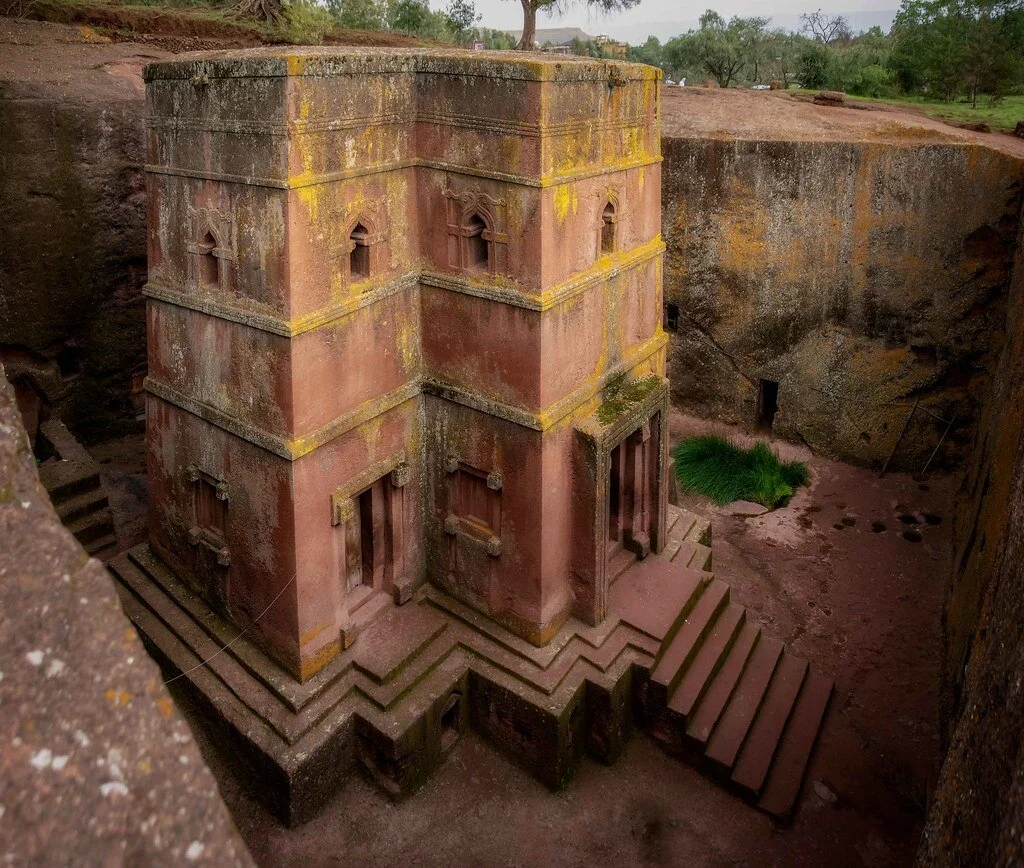
A group of 11 churches in Lalibela, Ethiopia, has been known for centuries as the “New Jerusalem.” The churches were carved from the natural rock of the landscape during medieval times and are a popular pilgrimage site for Ethiopian Orthodox Christians. 

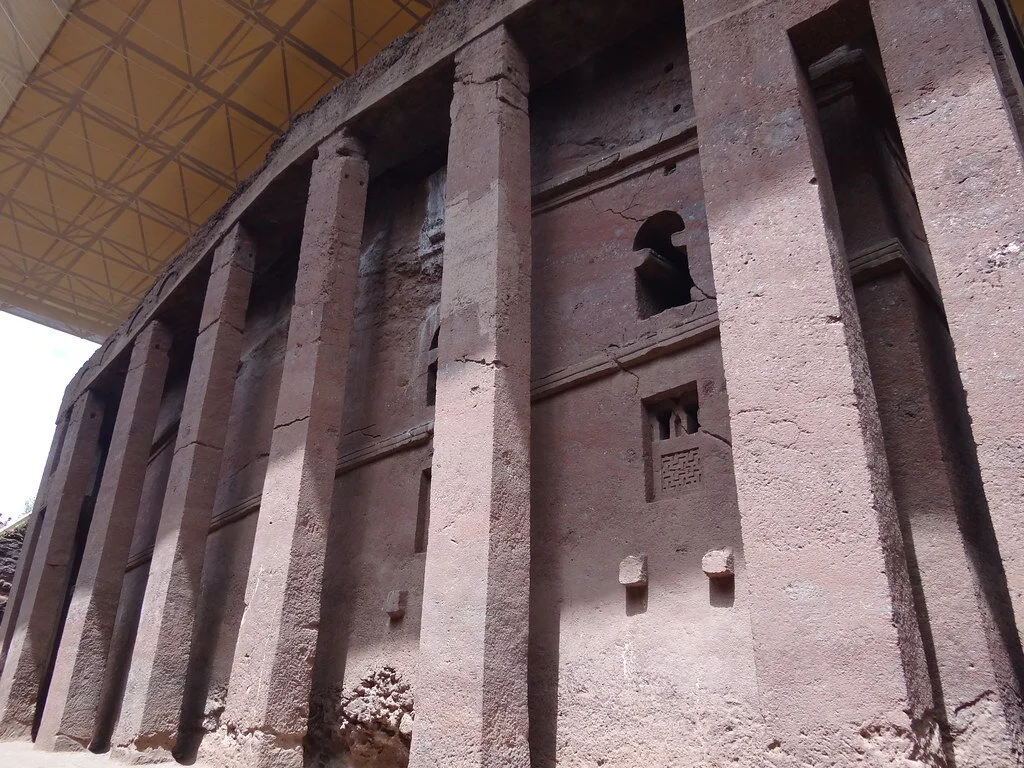
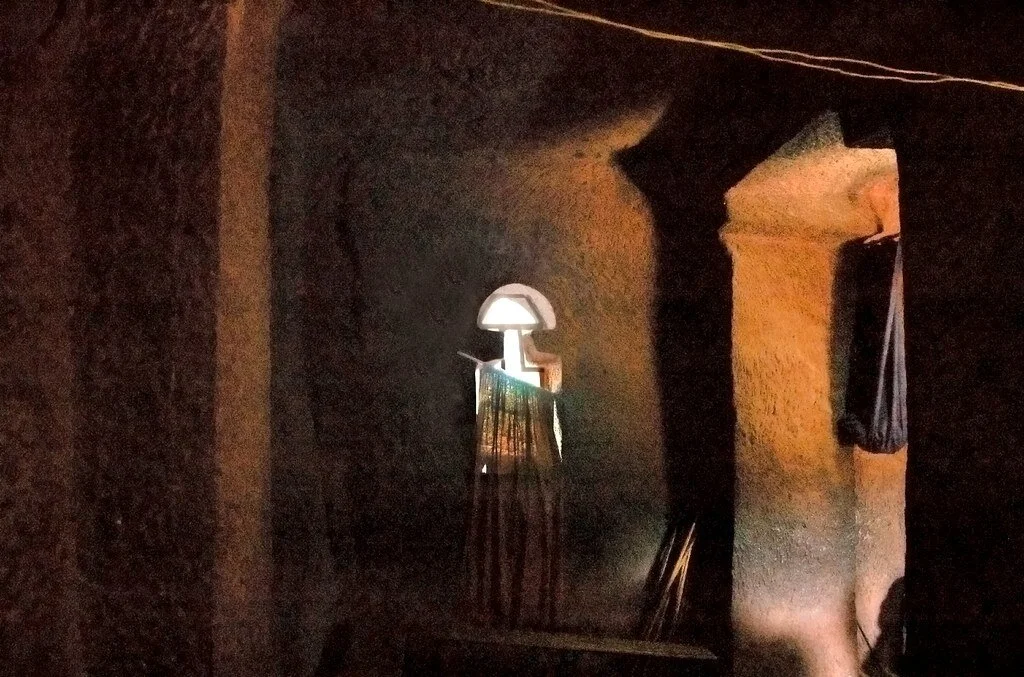
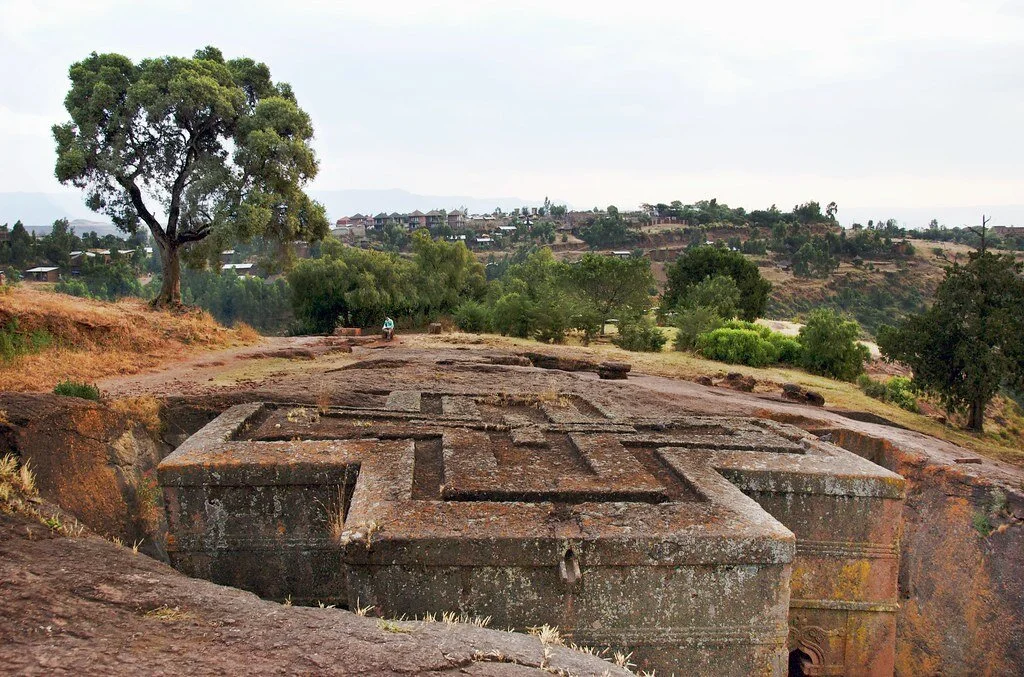
Lalibela, located in the northern highlands of Ethiopia, is home to 11 monolithic churches, each carved from the rocky landscape. The square and rectangular churches burrow more than 150 feet into the ground. Tall walls of rock rise around the churches on all sides, with their roofs sitting at the height of the natural rock. Worshippers and visitors at the churches access them through narrow, sloping staircases, and series of tunnels and passageways connect the churches to each other and to other religious areas like catacombs. Everything in each church is carved from the same rocky mass, including windows, doors, pillars, stairways and all decorative elements. Ethiopia is home to over 200 rock-hewn churches, but these 11, which make up a UNESCO World Heritage Site, are some of the best maintained and most impressive examples of this type of architecture.
Lalibela’s churches are intricate, awe-inspiring structures. Situated at the base of Mount Abuna Yosef is a rocky massif, a large, rigid section of the Earth’s crust. Ancient workers carved the 11 churches out of the rock from the top down, first isolating the outline of each structure and then sculpting the inside and the fine, ornamental details of the outer walls. The Lalibela church complex is divided into two sections of five churches separated by the River Jordan, one group on the north side and one on the south, and a lone church farther to the west. The churches date to the medieval era, and scholars agree that they were likely constructed in four or five phases between the seventh and 13th centuries. 

Ethiopian tradition credits King Lalibela, who ruled during the 12th century, with the creation of the churches. In the king's laudatory biography, it is written that angels helped him carve the churches over a period of 24 years. According to tradition, King Lalibela ordered the construction of the churches as a “New Jerusalem.” He is said to have visited Jerusalem just before the city was overtaken by Muslim forces, halting Christian pilgrimages to the Holy Land. Ethiopia has been officially Christian since 330 A.D. and claims to be the oldest Christian country in the world, so the story of King Lalibela and the rock-hewn churches fits into the country’s history. 

In reality, the earlier structures in the Lalibela complex were most likely constructed for civic rather than religious purposes, serving as royal palaces or fortresses before later being converted into churches. Though not all of the Lalibela churches initially served as churches, the complex became known as a “New Jerusalem” and has been a popular pilgrimage site since the late 12th century. The churches remain a pilgrimage site today, and host daily religious services

 Aside from the large numbers of worshippers that gather each day, Lalibela’s phenomenal churches draw curious visitors. Guided tours of the complex are available, and travelers can also explore on their own. The most popular church among visitors to Lalibela is Bete Giyorgis, the Church of St. George, which forms the shape of a cross when viewed from above. Bete Giyorgis is the church that stands alone, not part of the northern or southern groups, but it can be accessed from the other churches through the system of carved passages. The wonders of Lalibela’s 11 churches contain centuries of Ethiopian history and remain magnificent examples of a very unique architectural feat. 


Rachel Lynch

Rachel is a student at Sarah Lawrence College in Bronxville, NY currently taking a semester off. She plans to study Writing and Child Development. Rachel loves to travel and is inspired by the places she’s been and everywhere she wants to go. She hopes to educate people on social justice issues and the history and culture of travel destinations through her writing.

10 Nigerian Artists Redefining Africa’s Music Scene

From influencing the #EndSARS protests to confronting the commodification of African culture, these artists have unique approaches to their art.

DaVido performing. Wikimedia user Rasheedrasheed. CC BY-SA 4.0.

Nigerian musicians have been spreading their influence all over the world for the past few decades. Following in the footsteps of Fela Kuti, contemporary artists experiment with a plethora of genres, fine-tuning their style as they progress. Renowned artists such as Burna Boy, DaVido and Cruel Santino are the driving forces of the Afrobeats movement, which combines African subgenres, American hip-hop, and R&B. Here are 10 influential Nigerian musicians to listen to.

1. Tony Allen

Tony Allen. Pierre Priot. CC BY-NC-ND 2.0.

Tony Allen is the father of the Afrobeat genre. Allen passed away in April 2020 after releasing his final album, “Rejoice,” in collaboration with the late South African jazz artist, Hugh Masekela. Allen’s polyrhythmic drumming complements Masekela’s trumpet in this riveting jazz album. From his earlier days of performing with Fela Kuti to his more recent collaborations with Skepta and Oumou Sangare, Allen has pioneered the combination of American jazz with African beats. After a career which explored a multitude of scenes in the music world, Allen falls back into his Afrobeat roots in his very last album.


2. Naira Marley

Rapper Naira Marley is a contentious figure in Nigeria. Marley is known as a founder of the genre Afro-bashment, a combination of Caribbean influences, American trap rap, West African beats and British rap. Naira Marley is known for his controversial beliefs and ideas; in “Am I a Yahoo Boy,” he offers an unabashed critique of the Nigerian government, higher education and social conservatism. His single “Koleyewon,” which was released in December 2020, is a fast-paced trap song in Yoruba. 

3. DaVido

DaVido performing. Wikimedia user Rasheedrasheed. CC BY-SA 4.0.

American-born musician DaVido is a world-renowned Afrobeats artist who synthesizes elements of R&B, rap and Afropop to build up his discography. His heavily auto-tuned vocals and his simple audio production make up his signature sound. DaVido’s most recent album, “A Better Time,” featured Nicki Minaj, Chris Brown and Lil Baby. Despite its famous featured artists, the album’s first track, “FEM,” received the most attention globally. “FEM,” which means “shut up” in Nigerian slang, was labeled the anthem of the #EndSARS protests in Nigeria, which called for the dissolution of the Special Anti-Robbery Squad. Although the artist himself didn’t intend to express a politically charged message, he was nonetheless impassioned by his country’s fight against police brutality.  

4. Cruel Santino

Up-and-coming musician Cruel Santino came to the world stage in 2019 with his debut album “Mandy & The Jungle.” Although he is one of the younger artists of the Nigerian music renaissance, Cruel Santino offers an impressive range of styles in his first album. The mellow, laid-back beat of “Sparky” contrasts with the country twang of “Diamonds / Where You Been.” His new single “End of The Wicked” showcases his maturation as a musician and an artist: the solemn piano is redeemed by a syncopated jungle beat, which accompanies his verbose rap. 

5. Odunsi (The Engine)

Odunsi (The Engine) is a master of his craft. His discography is all-encompassing: church choirs and spoken word start off his 2018 album “Rare”; an orchestra plays over his verse in his greatest hit “Tipsy”; a vaporwave synth paints “Luv In a Mosh” blue. Odunsi (The Engine)’s album covers visually harmonize with his music. The ethereal blue moon in “Everything You Heard Is True,” which was released in May 2020, mirrors Odunsi’s experimentation with atonal melodies and distortions. On top of this hypnotic album, the musician released two singles in 2020: “Decided” and “Fuji 5000.” Both are dramatically different from each other; the only constant is Odunsi’s effortless flow.

 6. Simi

Simi at NdaniTV. NdaniTV. CC BY 3.0.

Simi’s distinctly sweet voice is the honey that binds her music together. Less is more in her 2017 album “Simisola,” where her vocals and the acoustic guitar are the only elements that matter. The Nigerian singer started off as a gospel singer in 2008, but transformed her career in 2014 after the success of her singles “Tiff” and “E No Go Funny.” Simi released “Restless II” in 2020, which is a change of pace from her slow crooning. In an interview with OkayAfrica, the singer admits that, “This project is a risk as well, it’s even more of a risk because it’s R&B and Nigeria is not necessarily the biggest R&B market.” As Simi continues to dabble in hip-hop, she  comes out with more powerful hits like “No Longer Beneficial” and “There for You.” 

7. Niniola

Niniola. Wikimedia user Naijareview. CC BY-SA 4.0.

Often regarded as the “Queen of Afro-House,” Niniola is a global star who fights to find her footing as an empowered Yoruba woman. Niniola rose to fame from her 2017 hit “Maradona,” a seemingly light pop tune which dealt with the traumas of her upbringing. As a girl growing up in a polygamous household, Niniola experienced the double standards of a patriarchal family. Reckoning with her womanhood, Niniola recounts the experiences of a woman who is cheated on by her husband, woes which are usually kept secret. With an album and a couple of huge hits under her belt, Niniola comes back strong with her new album “Colours and Sounds,” which includes a refreshing take on reggae, pop and dancehall. 

https://youtu.be/lRpBLAwIbeA 


8. Burna Boy

Burna Boy’s album “Twice as Tall” covers a variety of topics, from how the artist grapples with the reality of colonialism to the frenzy of a night out. Burna Boy is a household name in the music industry, and this album attests to the singer’s mastery over songwriting and producing. In his song “Monsters You Made,” Burna Boy addresses Western imperialism and how its consequences are still felt today. His song “Alarm Clock” begins with voice recordings, opera and a saxophone, and quickly switches to an upbeat rap song.

9. Deto Black

Model and rapper Deto Black refuses to be labeled as an Afrobeats musician. The feminism and sex positivity of her music is obvious and brought to the forefront of her message as an “alté,” or alternative, artist. As a Lagos-based rapper who lived in the U.K. and the U.S. growing up, Deto Black navigates the different worlds by calling for gender equality in Nigeria.  


10. Zlatan Ibile

Zlatan is a new Nigerian singer and dancer who found fame through his viral song “Zanku” (Legwork), which was accompanied by a famous dance. Since 2019, the singer has released three albums, started a record label, and released the successful single “Lagos Anthem.” “Lagos Anthem” is an energetic dance song with darker lyrics criticizing the government for its flawed policies. 


These Nigerian musicians are beginning to impact American and British pop music. Although each of these individuals comes from a different discipline and background, they all have a commitment to experimenting in their craft. Some thrive in and renovate the Afrobeats movement, while others resist the umbrella term. The common ground between alté musician Deto Black’s tackling of gender inequality and DaVido’s propelling of the #EndSARS revolution is their commitment to the well-being of Nigeria. 


Heather Lim

Heather recently earned her B.A. in Literatures in English from University of California, San Diego. She was editor of the Arts and Culture section of The Triton, a student-run newspaper. She plans on working in art criticism, which combines her love of visual art with her passion for journalism.