
What we wear says a lot about us. Fashion is more than just trends, it’s culture and self-expression. From Brooklyn’s green queen, to Mexico’s pachucos, we’ve got all the looks. Strut your stuff as we celebrate a decade in fashion.
This Man Runs a Micronation of 32 People
Welcome to the Republic of Molossia: Population 32. Although not officially recognized by the United States, Molossia is a self-declared nation in the middle of the Nevada desert. This micronation has its own post office, bank and space program. Its president (and benevolent dictator), Kevin Baugh, has found the perfect way to combine politics with a sense of humor.
In Tanzania, a Garden That Feeds Bellies and Brains
For O’Brien School for the Maasai teacher Saphi Yohana, growing a garden isn’t just a nice thing to do—it’s a way keep kids in the classroom. Most of the school’s students come from the Maasai tribe, once an exclusively nomadic people who traditionally eat milk, meat, blood and fat. As increased droughts have made this diet less and less attainable, malnourishment has spread. By providing two veggie-based meals a day, the O’Brien School is now greeting energized, happy students each morning and sending them home each afternoon to spread a passion for produce.
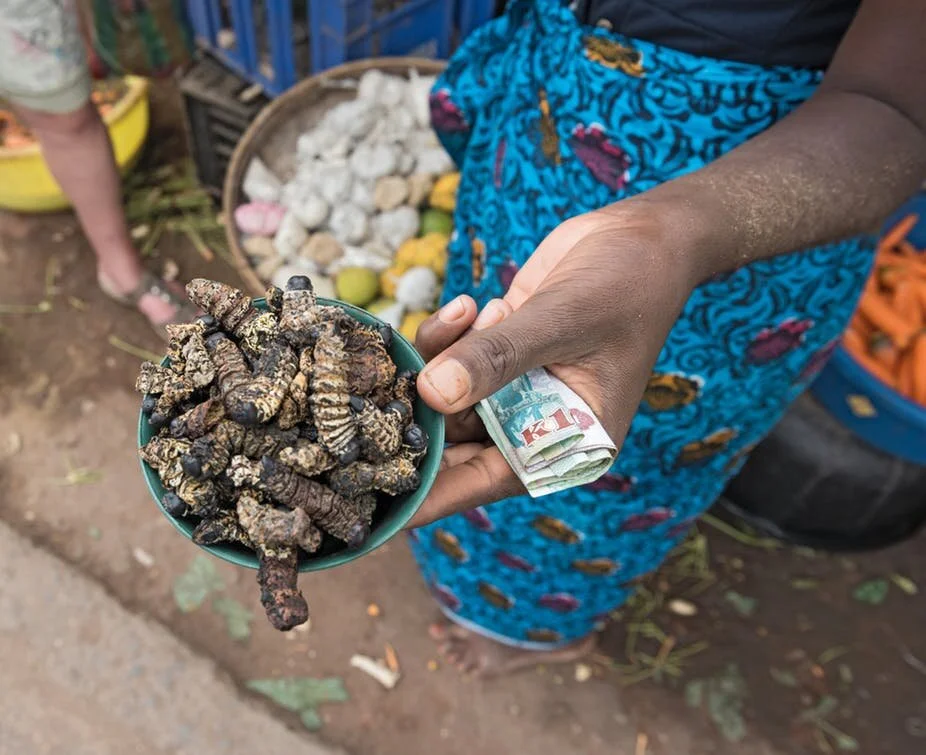
The development of an industry in edible insects such as these mopane caterpillars has been slow. Shutterstock
Why We’re Involved in a Project in Africa to Promote Edible Insects
There is a wealth of indigenous knowledge about capturing and eating insects in sub-Saharan Africa. But the development of edible insects as a food industry has been very slow, despite its many potential benefits.
Sustainability is one. Insects have a small carbon and water footprint. Studies show that insect farming emits less carbon and methane gas than large livestock like cattle and pigs. Much less water is needed to produce the same amount of protein. Insects use feed more efficiently than other sources of animal protein. Farming them could be a new source of jobs and income.
There should be more awareness and promotion of insects as food for humans and as feed for animals, especially at the policy, legislative and business level. In most African nations, edible insects are still viewed as an insignificant source of food and even, in some instances, as food for the poor. There are very few success stories of large-scale insect farming and industrial use in Africa.
We have been involved in a project to promote the integrated use of insects as food in urban areas in Zimbabwe and the Democratic Republic of Congo. Our project works on the edible insect value chain and discovered that the seasonal supply of insects and poor hygiene standards made the market unstable and unattractive to consumers. Traders sold insects in an informal setting and had little interaction with farmers.
We carried out training among farmers, traders, municipalities and others with an interest in this emerging industry. The training included how to handle and process insects after they were harvested, food safety along the value chain and farming crickets (Acheta domesticus and Gryllus bumaculatus).
The trainees have learnt how to rear and sell insects better and have become more aware of what a sustainable value chain should look like. For example, market facilities have to be clean and there must be a steady supply of insects. The training also created awareness of the need to farm insects rather than catching them in the wild. Catching insects can reduce insect populations dramatically when consumption increases. And there are no food safety standards for wild insects.
Together with the urban council in the town of Chinhoyi in Zimbabwe we built a model market structure where traders are selling their insects. Traders are selling some of the most popular edible insects; wild harvested mopane worms (Gonimbrasia belina), termites (Macrotermes natalensis) and wild harvested crickets. Farmers are still building stocks of farmed crickets, but the plan is to sell farmed crickets in the near future. It is still too early to see the impact but one notable improvement is hygiene. The market has also helped women traders, who are the main group selling insects there. They have become more organised about their business.
We hope this will lead to an increase in consumer willingness to buy edible insects, and demonstrate best practice to other regions of Zimbabwe and beyond. Through our project, we have also helped insect traders and farmers to form industry associations.
Why insects are valuable
Insects are highly nutritious and contain protein, fat and energy in proportions similar to grains, vegetables and seeds. They are rich in macro minerals like calcium, sodium and magnesium and micro minerals like zinc, manganese, iron and copper, all of which should be part of a healthy diet. In many parts of sub-Saharan Africa, these minerals come from fruits and vegetables, most of which are farmed seasonally. Edible insects could supply these minerals during seasons where there is less fruit and vegetable production.
They contain essential amino acids such as threonine, cysteine, valine, methionine and isoleucine. The recommended daily minimum intake of amino acids can be consumed by eating just 100 grams of the edible stink bug (Encosternum delegorguei), for example.
Earlier this year, parts of eastern and southern Africa were ravaged by Cyclone Idai. The cyclone destroyed crops and livestock, causing severe food shortages. We believe that in disaster-struck areas, edible insects can build resilience by being a food resource in recovery programmes and an alternative to traditional smallholder farming. There is an excellent example of that in the Democratic Republic of Congo, where orphanages have started insect farms to grow their own protein. The farms have helped decrease hunger and improve health among the orphans.
Read more: Economic chaos is causing a food security and humanitarian crisis in Zimbabwe
What needs to happen?
We were involved in setting up an international conference in Zimbabwe to discuss ways to foster the edible insects industry.
Research is required so that policy makers and those involved in the sector – farmers, processes, marketers and consumers – can make evidence-based decisions. This must happen across disciplines. Researchers should work with farmers and people in business to foster skills, innovation and enterprise. For example, they could develop business cases and scenarios.
Policy makers must understand that the sector is unique. Edible insects have not been categorised under any agricultural sub-sector such as crop or animal farming. On the African continent, they have not previously been farmed and treated as a commodity. That is why it would be helpful to establish and coordinate platforms such as meetings, workshops, exhibitions, magazines and websites.
Policy should also allow innovation and investment to happen at national, regional and international levels. Industry participants will need access to markets and credit.
Farmers, food and feed processors, traders and marketers must seize opportunities to invest and enter niche markets. They can also contribute to policy development and share knowledge about traditional ways of producing and eating insects.
There is momentum generated by several research and business initiatives that have been ignited in sub-Saharan Africa. And there is growing enthusiasm for using edible insects as alternative sources of protein and to build resilience against climatic shocks. It’s an essential step towards improving food security in the region.
Robert Musundire is a Associate Professor of Entomology in the Department of Crop Science and Post-Harvest Technology, Chinhoyi University of Technology
THIS ARTICLE WAS ORIGINALLY PUBLISHED ON THE CONVERSATION
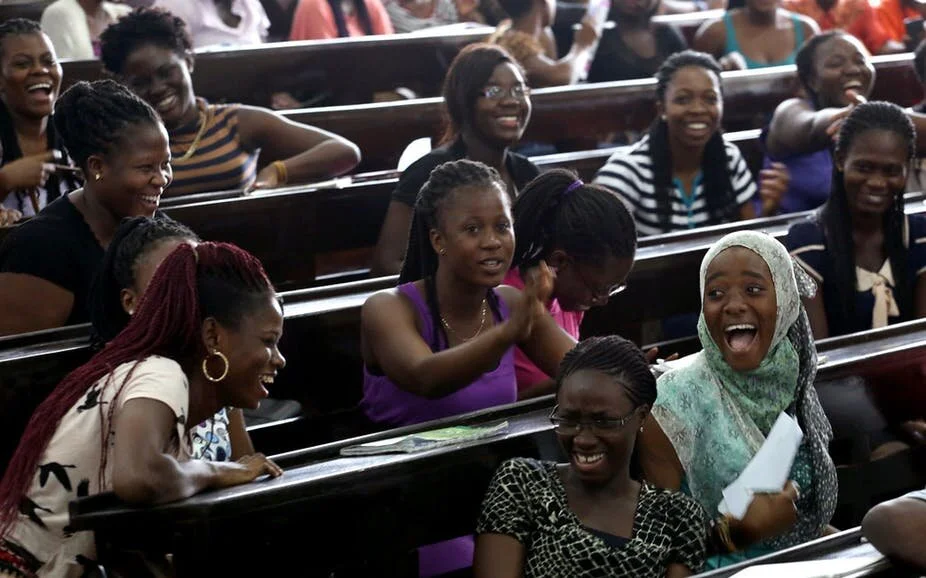
University students have different motivations for their social media use. Wikimedia Commons
How New Media Can Be Used to Spark Interest in Elections Among Young Ghanaians
There has been growing evidence around the world that young people are increasingly becoming apathetic about taking part in events such as elections, according to Ceron in a study conducted in 2015. Given that university students are also increasingly using social media, scholars have started to look at how it can be used to invigorate their diminishing interest in governance as well as in elections.
We conducted research on how students in Ghana used new media. The aim was to understand the motivations and political information needs that influenced them to use new media technologies for elections.
We found that young people were drawn to use new media technologies to have conversations on elections. Posts going viral gave them a sense of relevance and empowerment. Another reason was that it gave them the opportunity to engage in the comfort of their private spaces – offline.
The findings should enable more strategic targeting of university students by political actors and institutions. This could be in terms of turn out efforts, political messaging, communication as well as political campaigning. This has already been done successfully in a number of countries.
How it’s been done elsewhere
New media technologies have been used in a myriad of ways to mobilise people to vote in various countries. For example, in Italy in 2014, Sweden in 2010 and in the 2010 British elections.
Astute use of technologies was also evident in Barack Obama’s campaigns for the US presidency in 2008 and 2012.
In Africa, social media was used during the mass protests of 2011 in Egypt, Tunisia and Morocco. In all three cases, people uploaded photographs of the protests which then went viral. This reinforced global appreciation of the need for democratic change in the countries.
Social media has also been used to monitor elections and disseminate results. For instance in Nigeria, young Nigerians embarked on the “Enough is Enough” campaign on election vigilance to hold politically elected leaders accountable.
In Ghana, some civil society groups launched the “the Voter Decides” campaign in 2012. This sought to track the process of voting, monitor collation of results and ensure that the right results were announced.
But the deployment of various new media technologies by political actors for elections and other civil engagements hasn’t necessarily translated into reversing the dwindling interest in politics. This is clear from research by communication scholars like Christian Vaccari.
It raises the question: what motivates the young new media user to deploy the technologies from an informational and communications perspective?
Why Ghanaian Students use new media technologies
In our research on Ghanaian students, our main findings were that:
Students are drawn to deploying new media technologies for the currency and breadth of information they can access.
They are both consumers and producers of media content.
They are able to navigate their way around the gatekeeping or filtration process conducted by editors.
The opportunity to go viral or become virtual celebrities in seconds when they click the “enter” or “send” button is an experience they relish.
The virtual space is a safe haven for many.
They spend a great deal of time on social media. This is attested to when a student asserts: “my world is on the mobile phone.”
The potency of social media
Our findings reinforce the view that social media is a viable resource that can be relied on for voter mobilisation, campaigning and voting. Students suggest that political candidates must find ways to woo Ghanaian students into conversations before election fever catches on. If the candidates delay, their efforts will be perceived by the youth as self-serving.
Practically, many young people want to be part of the process of constructing political narratives offline rather than on campaign platforms. They want to be in their safe haven – online and anonymous – where they can’t be reproached for their youthful exuberance.
These kinds of conversations have the potential of reducing apathy and getting young people involved in the political process.
Political actors and candidates should seriously look at how media technologies can be used for effective reciprocal political communication with university students. If they understand what motivates and influences students to use new media technologies for conversations on the elections, political actors are much more likely to be able to count on the involvement of young people in conversations on the elections and participation in the electoral process.
Adwoa Sikayena Amankwah is a Senior Lecturer of Communication Studies, University of Professional Studies Accra
THIS ARTICLE WAS ORIGINALLY PUBLISHED ON THE CONVERSATION
Bringing Humanity to Asylum Seekers' Journey
Sra. Sánchez’s Albergue del Jesus el Buen Pastor has offered medical care and support to asylum seekers who have fallen ill or become injured during the dangerous trek to the U.S. Sánchez aids hundreds of individuals each month, and for her service has been recognized by a number of human rights organizations.
Read MoreDuring Floods, Floating Schools Bring the Classroom to Students
Each year, over one-fifth of Bangladesh suffers from flooding. And when water overtakes already struggling roads, much of life is put on hold—including kids’ education. But if children can’t travel to the classroom, architect and entrepreneur Mohammed Rezwan thought, why not have it travel to them? Welcome aboard the Shidhulai Swanirvar Sangstha floating school—a network of boats that’s both school bus and schoolhouse for students ages six to ten in Northern Bangladesh.
Putting Kenya’s Slums on the Map
These days, the Internet makes it possible to travel much of the world with a simple click of a mouse. But not every place where life gets lived is cartographically represented. This leaves entire communities, particularly slums and other “informal settlements,” invisible from state actors who could implement vital infrastructure like electricity and clean water. Using their feet, GPS technology and a lot of dedication, Primož Kovačič, Isaac Motisiamosa and their teams are collaborating to put Mathare, Kenya’s second largest slum, and its people on the map.
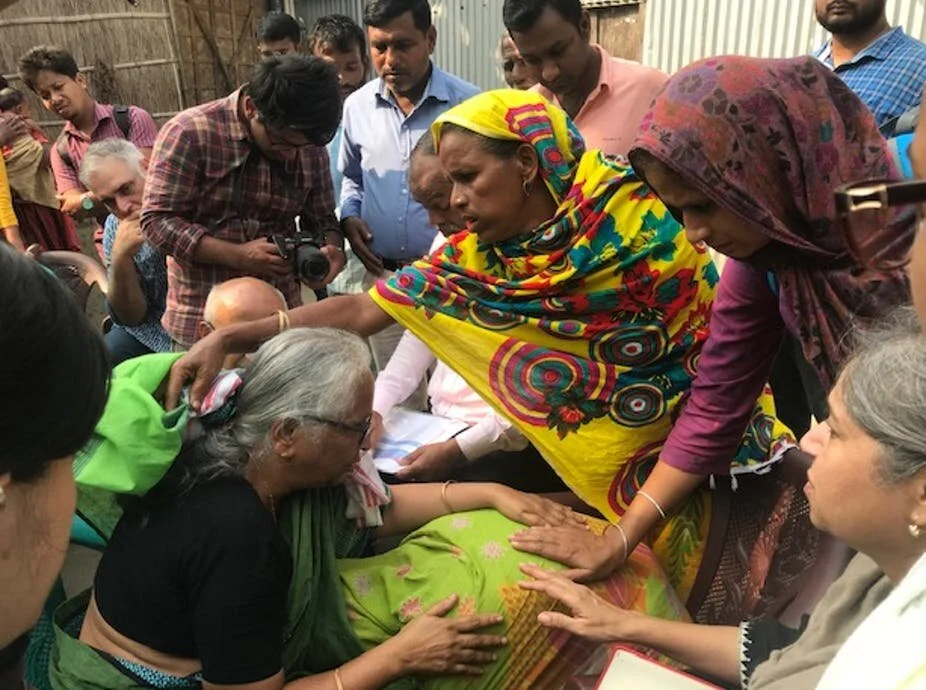
Activists and local volunteers meet and console Assamese villagers who might have lost their Indian citizenship. Anuradha Sen Mookerjee, Author provided
In India’s Assam, a Solidarity Network Has Emerged to Help Those at Risk of Becoming Stateless
The state of Assam in India is currently burning with violent protests against a new citizenship law passed by both houses of the Indian parliament in early December.
The Citizenship Amendment Act (CAA) will ease the Indian citizenship process for undocumented migrants in India who come from Pakistan, Afghanistan and Bangladesh – but only for those who are not Muslim, undermining the promise of equality by the Indian Constitution. The international community criticised the new law, with the UN High Commissioner of Human Rights calling it “fundamentally discriminatory”.
Since its parliamentary approval on December 12, the law has triggered massive protests across India including in the capital Delhi.
Concerns in Assam
Assam is directly affected by the new law. It significantly undermines the National Register of Citizens (NRC), a listing process that has been underway in Assam since 2015 through which residents have to prove their claim to citizenship based on documentary evidence. The NRC is designed to update a first list conducted as an all-India exercise in 1951 to combat illegal immigration flows, primarily from neighbouring Bangladesh.
More than 1.9 million people in Assam – many of whom are Muslim – have failed to make it onto the NRC’s final list which was published on August 31. They now face the risk of statelessness. But at the same time, the large numbers of Hindus who were excluded in the NRC system can now become Indian citizens under the CAA.
The way the CAA is written makes way for Indian citizenship of all non-Muslims who lived in certain areas of Assam, such as the Brahmaputra Valley, before or on December 31 2014, even if they don’t have documentary evidence, and while rendering Muslims stateless. It contradicts the cut-off date for inclusion used by the NRC, which was midnight on March 24 1971.
For the protesters on Assam’s streets, the CAA gives legal rights to the large numbers of undocumented Bengali-speaking Hindus who have migrated from Bangladesh since 1971 and also those currently excluded by the NRC.
Their fear is twofold. First, indigenous Assamese feel that with the inclusion of the Bengali speaking Hindus by the CAA, the composite number of Bengali speaking people (both Hindus and Muslims) will outnumber the Assamese speaking people in the state. Census data shows that the Assamese-speaking people in the state declined from 58% of the population in 1991 to 48% in 2011. Second, the Muslims both excluded by NRC and those who have migrated later, risk becoming stateless.
A journey to the Pampara Char
I’ve seen up close the damage the NRC process has had on communities in Assam. In mid-November, I visited the state with the Indian peace activist Harsh Mandar and several others as part of an initiative called Karwan e Mohabbat, a human caravan of peace, justice, solidarity and consciousness as part of my research on citizenship in the Indian borderlands.
We visited the homes of people who have been excluded from the NRC, particularly from the Muslim community in Lower Assam districts. We listened and learned about their experiences of trauma, suffering and hopelessness with the filing of their documents and how they are coping with their exclusion.
Among the people we met in the Barpeta district of Lower Assam were inhabitants of the Chars, low-lying temporary sand islands formed by silt deposition and erosion. These sand bars, which emerge and submerge in the river beds of Assam’s Brahmaputra river, are uniquely vulnerable to disasters such as floods and cyclones.
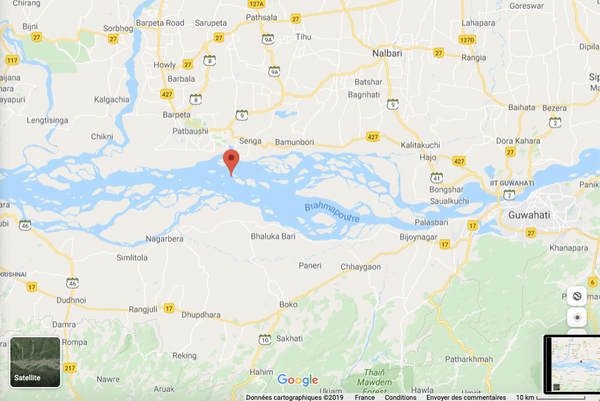
Pampara Char, one of the silt islands on the Brahmaputra river, Barpeta district, Lower Assam. Google Maps
Wild grass, thatched huts and distressed residents
The Pampara Char is a barren wasteland, with wild grass growing all over the place and houses that looked like temporary huts. The only brick building, which was freshly painted in white and blue, was the primary school. It stood distinct from the other houses and seemed sparingly used. The people, toughened by poverty and harsh ecology, were left distraught by their experience of the NRC and gathered around Harsh Mandar and other social activists to share their suffering and tales of horror about the registration process. Many had to go through repeated verification across different drafts of the list.
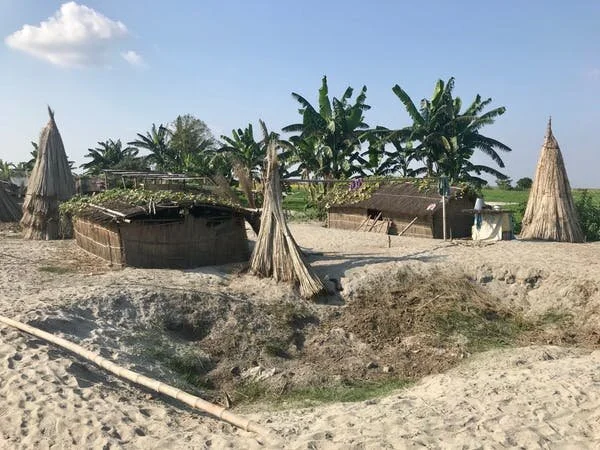
View of the fields in one of the village visited in Pampara Char. Anuradha S.Mookerjee, Author provided
I observed deep anxiety among the people we met, such as the aggrieved 54-year-old Khaled Ali. Illiterate and landless, Ali is a river fisherman who sometimes also works as a daily wage labourer. Like many others he received a notice in early August that he and his 18 other family members needed to submit more documents or they would be excluded from the final NRC list. Their names had been included in two previous versions.
A reverification hearing was scheduled for the next day in the distant town of Golaghat, which is 460km away from the Pamapara Char. Overnight, Ali raised a loan of 30,000 Indian rupees (US$424 or €383) to travel to Golaghat, with all his family members and two witnesses in a hired bus. After an 18-hour trip, they reached Golaghat and were received by local civil society activists who arranged for them to camp at a community centre and also helped them to submit their documents.
After their reverification hearing, Ali and his family members found themselves excluded in the final NRC list. While they have 120 days to appeal against their exclusion, his wife lamented that they lack the money to produce more documents from paralegals to support their cases before the appeal deadline on December 29. Meanwhile, a distraught Ali told us that he still has a loan of 14,000 rupees (US$198 or €178) to repay.
Complex documentation process
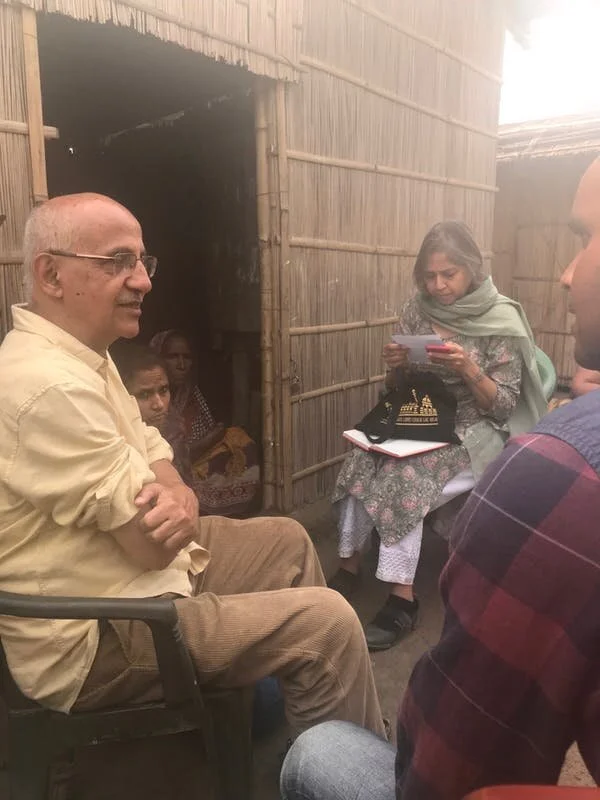
Harsh Mander and other social activists listening to the plea of the Char villagers. Anuradha S.Mookerjee, Author provided
For marginal and illiterate residents of the Chars such as Ali, the NRC and the process of proving citizenship has become a very stressful and expensive burden. As we found out during our home visits, a new parallel economy of document production has flourished. Paralegals charged anywhere between 500 to 1,000 Rupees for each document, a very large sum for these poor people.
The highly complex documentation process, which includes requirement for family trees and residency documents dating back to before March 24 1971, is also to blame for the exclusion of large numbers of people from the final NRC register. The process is extremely insensitive to the difficulties of the large mass of illiterate and poverty-stricken populations who are finding it very difficult to make sense of how to navigate registration on their own.
Processes of verification and reverification have been implemented in a way that firmly establish a hierarchical relation between the state and its citizens, with the complete domination by bureaucrats and public office holders over the rights of the citizens and residents.
‘Citizen-making’ humanitarians of Assam
Many of the marginalised populations in Lower Assam, such as Ali and his family, have needed constant support to be able to file their documents and fight their cases.
Local activists are playing a significant role in helping people deal with the burden of proving their citizenship, understanding the terminology and filling in the application forms and claims. They are also offering guidance about attending case hearings, support in procuring documents for submission from paralegals and also offering psycho-social counselling.
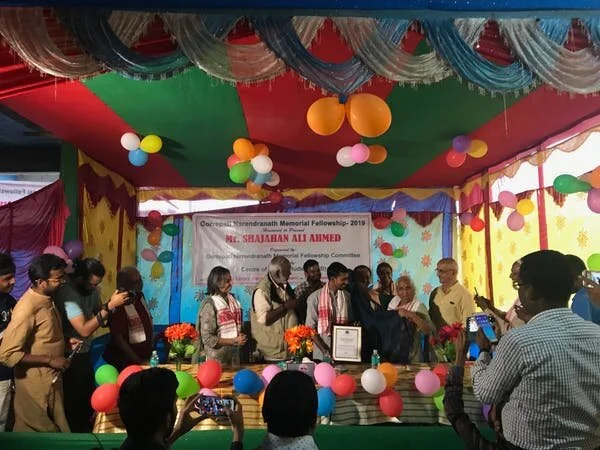
In Barpeta, volunteer Shahjahan Ali Ahmed receives an award from social activist Uma Shankari in recognition of his work helping people left out of the NRC. Anuradha S.Mookerjee, Author provided
Volunteers and human rights groups of Lower Assam have also connected with civil society actors in Upper Assam to help residents commute from Lower to Upper Assam for hearings and verification, and on some occasion even raise money, creating a solidarity network.
Such a humanitarian network is crucial at a time when marginalised people feel threatened with the changing legal regime which seeks to redefine the basis of Indian citizenship. These networks of solidarity in India’s north-eastern borderlands attempt to draw out the real Indian body politic, reinforcing the plural fabric of the Indian constitution.
Anuradha Sen Mookerjee is a Research fellow, Graduate Institute – Institut de hautes études internationales et du développement (IHEID)
THIS ARTICLE WAS ORIGINALLY PUBLISHED ON THE CONVERSATION
Reinventing Electronic Music With Dubai’s Cellist DJ
When classical cellist Aaron Kim was diagnosed with critical hearing loss, he had two choices: to keep creating music or to stop altogether. Kim chose the former and has since discovered a passion for electronic music. Combining his classical training with new sounds, Kim produces unconventional electronic beats for the emerging underground music scene in Dubai. The freedom to create music on his own terms, without any rules or structures, has helped Kim break and overcome barriers that once held him back.
How Curious George Escaped Nazi Germany
Curious George is the mischievous child that still lives inside us all, a swinging catastrophe with an envious joie de vivre. But everyone’s favorite chimp almost didn’t make it to the page. The story goes way back to 1940 as Nazi forces prepared to invade France. German-Jewish artists H.A. and Margret Rey fled Paris by bicycle, carrying the original manuscript that would later become “Curious George.” From there George traveled the globe, trekking down to Lisbon, sailing across the pond to Rio de Janeiro, finally making his home in New York. The rest, of course, is history, as our primate protagonist climbed his way into our hearts and onto the world’s stage.
Battle Rap’s First LGBTQ League
Bronx-born Sara Kana is a child of hip-hop and the mother of Prism Battle League. First launched in 2016, Prism is a platform for emcees in the LGBTQ community to compete in a battle of words, wise and wit. Painfully familiar with homophobia in and beyond hip-hop, Sara hopes for Prism to be a safe, inclusive space that allows battle rap talent to flourish—so much so, she funds it herself.
World’s Youngest Prime Minister Will Head Women-Led Government in Finland
FINLAND IS GETTING a new prime minister, and she’s about to become the world’s youngest leader. Not only that, but she will also head a coalition government of five parties, all of them led by women. Sanna Marin, 34, was nominated by her party on Sunday and will be sworn as prime minister later this week.
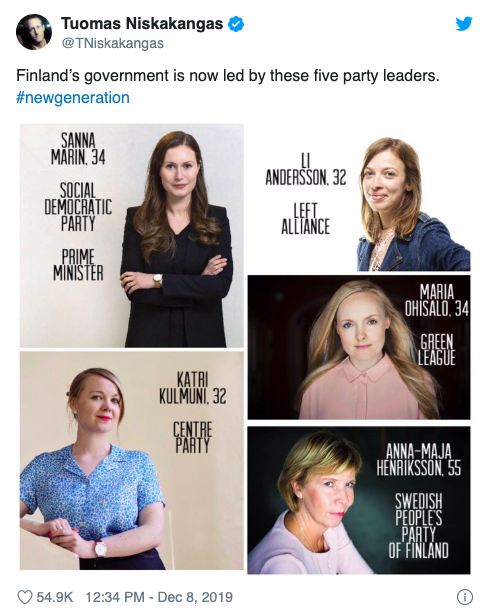
Finland’s previous government resigned last week after the Centre Party lost confidence in then-Prime Minister Antti Rinne’s handling of a postal strike.“I myself have never thought about my age or gender,” said Marin, “but rather about the issues for which I took on politics and about the reasons for which we were trusted in the elections.”
For many countries, like the US, electing its first female leader would be a historic occasion. For Finland, however, this isn’t exactly news — the first Finnish female prime minister was elected in 2003 and after elections this year, women make up 47 percent of its parliament.
Eben Diskin is a staff writer for Matador Network
THIS ARTICLE WAS ORIGINALLY PUBLISHED ON MATADOR NETWORK
Pope Affirms Catholic Church’s Duty to Indigenous Amazonians Hurt by Climate Change
The Catholic Church “hears the cry” of the Amazon and its peoples. That’s the message Pope Francis hopes to send at the Synod of the Amazon, a three-week meeting at the Vatican that ends Oct. 27.
Images from Rome show tribal leaders in traditional feather headdresses alongside Vatican officials in their regalia. They are gathered with hundreds of bishops, priests, religious sisters and missionaries to discuss the pastoral, cultural and ecological struggles of the Amazon.
The densely forested region spans nine South American countries, including Brazil, Colombia and Peru. Its more than 23 million inhabitants include 3 million indigenous people.
The Amazon meeting is part of Pope Francis’s efforts to build a “Church which listens.” Since taking office in 2013, Francis has revitalized the Catholic Church’s practice of “synods” – a Greek word meaning “council” – expanding decision-making in the church beyond the Vatican bureaucracy to gather input from the entire church, including from laypeople.
Voting on synod decisions, however, remains restricted to bishops and some male clergy.
The Amazon synod is the first such meeting to be organized for a specific ecological region. Media coverage of this event has emphasized its more controversial debates – such as the possibility of easing celibacy requirements in the rural Amazon, where priests are in extremely short supply.
But its focus is much broader: listening to the suffering of the Amazon – particularly the environmental challenges facing the region – and discerning how to respond as a global church.
Amazon in crisis
After more than a decade of environmental policies that successfully slowed deforestation in the Amazon, logging and agricultural clearing have begun to increase rapidly again. The fires in the Brazilian rainforest that captured headlines in early September are symptoms of much broader destruction.
Up to 17% of the Amazon rainforest has already been eliminated – dangerously close to the 20% to 40% tipping point that experts say would lead the entire ecosystem to collapse.
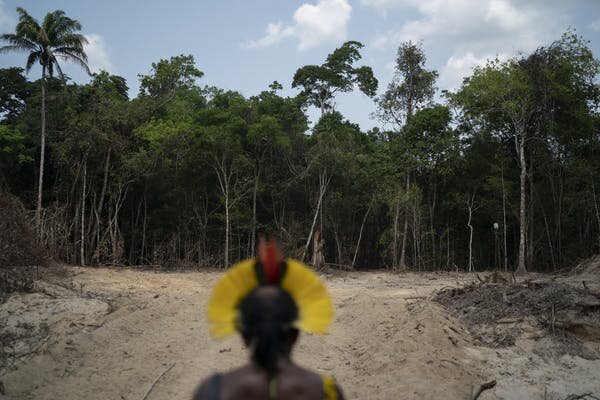
Deforestation of the Amazon is rapidly approaching the tipping point that, experts say, could lead to total collapse of the rainforest ecosystem. AP Photo/Leo Correa
Stories of deforestation can seem insignificant against the vastness of the Amazon, a region two-thirds the size of the lower 48 United States.
But for the 390 indigenous ethnic groups who inhabit the region, each burned forest grove, polluted stream or flooded dam site may mark the end of a way of life that’s survived for thousands of years.
Deprived of their land, many indigenous Amazonians are forced into an exposed life on the edge of frontier towns, where they are prey to sex trafficking, slave labor and violence. In Brazil alone, at least 1,119 indigenous people have been killed defending their land since 2003.
The Catholic Church recognizes that it still has to address the “open wound” of its own role in the colonial-era violence that first terrorized the indigenous peoples of the Americas, according to the synod’s working document. The church legitimated the colonial confiscation of lands occupied by indigenous peoples and its missionaries often suppressed indigenous cultures and religions.
For this reason, according to the Vatican, organizers of the synod have sought input through 260 listening events held in the region that reached nearly 87,000 people over the past two years. Indigenous leaders have been invited as observer participants in the meeting itself.
Learning from indigenous peoples
As a theologian who studies religious responses to the environmental crisis, I find the pope’s effort to learn from the indigenous people of the Amazon noteworthy.
The Vatican sees that the Amazon’s traditional residents know something much of humanity has long forgotten: how to live in ecological harmony with the environment.
“To the aboriginal communities we owe their thousands of years of care and cultivation of the Amazon,” the 58-page synod working document reads. “In their ancestral wisdom they have nurtured the conviction that all of creation is connected, and this deserves our respect and responsibility.”
Pope Francis has expressed his respect for indigenous peoples before.
At a meeting of indigenous leaders in Peru in January 2018 he said, “Your lives cry out against a style of life that is oblivious to its own real cost. You are a living memory of the mission that God has entrusted to us all: the protection of our common home.”
Global problems, local solutions
Environmental destruction isn’t the synod’s only concern.
Catholicism – long the dominant religion in Latin America – is rapidly losing members to evangelical Protestantism. Evangelicals are projected to eclipse Catholics in Brazil by 2032.
One advantage evangelical churches have in Amazonian countries is that they can appoint local indigenous pastors to minister to their communities. Meanwhile, with less than one priest per 8,000 Catholics in the Amazon, some isolated communities might see a priest only once a year.
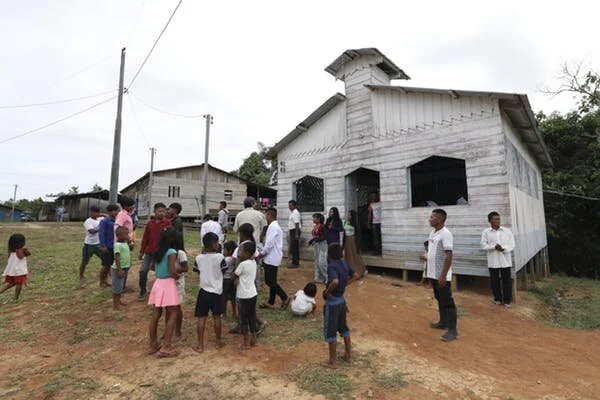
Catholic churches are in short supply in rural Brazil, where many people will go a year without seeing a priest. AP Photo/Fernando Vergara
The scarcity of priests in rural Latin America is behind a proposal to the synod to ordain older married men as priests in isolated Amazonian communities.
In the the U.S., the celibacy question is easily mapped onto a familiar divide. Progressive Catholics argue that clerical celibacy should be optional, while conservative Catholics insist this discipline is fundamental to the faith.
The issue is far less politicized in the Amazon, where, in the words of one bishop, the Catholic Church remains a “visiting church” with limited day-to-day presence in indigenous communities.
Some might dismiss this synod as just a meeting. But, in my judgment, it is an attempt to apply Francis’ vision of a “listening Church” to the environmental crisis. The Synod of the Amazon marks a significant shift from high-minded papal exhortations about taking climate action to a global religious community that gives voice to those living on the front lines of ecological destruction.
Vincent J. Miller is a Professor of Religious Studies, University of Dayton
THIS ARTICLE WAS ORIGINALLY PUBLISHED ON THE CONVERSATION
The Eco-Friendly Genius of 'Earthships' | That's Amazing
The New Mexico desert is a landscape of harsh extremes: brutally hot in the summer, frigid in the winter. It was the perfect testing ground for architect Mike Reynolds' "earthships"—houses of unconventional design material and utility that are completely self-sustained. They're built with used tires and empty glass bottles and produce their own electricity, water and food. For Reynolds, sustainable houses are the key to making a home in a better future—and now, the rest of the world is catching on to Reynolds' eco-friendly designs.
The Dangers of Depicting Greta Thunberg as a Prophet
She came from obscurity and ignited a global movement. Beginning with a small but persistent act of protest outside the Swedish parliament, she inspired millions to join her. Her fiery speech to the United Nations in September 2019 warned of the end of the world. Her unfailing determination and passion makes her appear otherworldly, even uncanny, an affect largely attributed to her diagnosis of Asperger’s syndrome.
So it’s no surprise that many people – along with media outlets like The Irish Times, The Telegraph and The Washington Times – have cast Greta Thunberg as a prophet.
When Time announced her as “Person of the Year,” it continued the trope, using an evocative photograph of Thunberg standing on a rocky shoreline, staring at the heavens, for the cover.

As a researcher on the history of childhood, I’ve been disturbed to see Thunberg described and depicted as a prophet. To me, it risks distorting her message. And it can easily be exploited by climate deniers seeking to counter the appeal of her activism.
Is a climate messiah even necessary?
To some, Thunberg resembles Joan of Arc, the teenage visionary who led the French army into battle in the 15th century and was later canonized as a saint.
To others, Thunberg exemplifies the Judeo-Christian tradition of prophets who speak truth to power; according to one Christian blogger, she offers “a prophetic voice to shake us out of our complacency.”
Yet presenting Thunberg as a prophet is deeply misleading. Classically, prophets are messengers who communicate the voice of God. They convey divine revelation that was previously unknown or misunderstood. Ezekiel predicted the destruction and restoration of Jerusalem. Moses received the Ten Commandments. Muhammad revealed the Quran. Prophets, in other words, see truths that others cannot. They bring us messages that often defy human comprehension.
Thunberg, on the other hand, is simply telling us what we already know. Within the scientific community, there is an overwhelming consensus – going back decades – that humans are causing global warming.
Framing her as a prophet has opened the floodgates to all sorts of messianic theories. This recently took a bizarre turn when a 120-year-old photo with a girl resembling Thunberg surfaced. Now conspiracy theorists are calling Thunberg “a time traveler sent to save us.”
Depictions like this are fodder for her opponents who dismiss what they call her “doomsday activism.” To them, she is a false prophet, and they can portray the people inspired by her as brainwashed cult followers. David Koresh, the leader of the Branch Davidians who died alongside his followers in Waco, Texas in 1993, after all, called himself a prophet. So did Jim Jones, the founder of the Peoples Temple and orchestrator of the 1978 Jonestown Massacre.
To Thurnberg’s credit, even she recoils at the idea that she should be viewed as some sort of savior.
“I don’t want you to listen to me,” she told Congress in September. “I want you to listen to the scientists.”
Being a kid carries enough weight
I would argue that the best way to think of Thunberg is to simply think of her as a child.
This is not demeaning. Far from it. In recent years, young people have offered numerous examples of their ability to exercise independent thought, visionary thinking and leadership. Melati and Isabel Wijsen were 10 and 12 when they began a successful campaign to ban single-use plastics in their native Bali. Malala Yousafzai was 11 when she began to advocate against the Taliban for girls’ right to education. The list goes on: Jazz Jennings, Xiuhtezcatl Martinez, the Parkland activists. Like Thunberg, they challenge our culture’s view of children as powerless and dependent.
Thunberg memorably began her September 2019 UN speech with the words, “This is all wrong. I shouldn’t be up here. I should be back in school on the other side of the ocean.” As Thunberg well knows, the fact that a child needs to scold grown-ups to act on an issue that threatens all of humanity is a powerful example of a political system gone horribly wrong.
Even more critically, focusing on Thunberg’s youth highlights a central tenet of her message: fairness. As any parent can tell you, children tend to view the world in terms of moral absolutes – good and bad, right and wrong, fair and unfair. Indeed, researchers have recently shown that expectations of fairness are deeply ingrained in children, appearing in infants as young as 12 months old.
Ideas of fairness underlie many aspects of Thunberg’s message, from her emphasis on how climate change will affect the poor and marginalized, to her comments about how unjust it is to expect young people to fix a catastrophe caused by generations of political inertia. Her forceful call – “How dare you!” – is not the enraged cry of a petulant child. It is the determined statement of a girl who has not yet developed the moral flexibility that is so often the refuge of adult inaction.
Thunberg is not unraveling the mysteries of our era, or a time traveler sent to stop climate change. Rather, she is a child admonishing selfishness and pleading for fairness.
That’s not prophetic. It’s common sense.
Ellen Boucher is an Associate Professor of History, Amherst College
THIS ARTICLE WAS ORIGINALLY PUBLISHED ON THE CONVERSATION
Living Beyond the Gender Binary for Centuries
In Tehuantepec, a town in the Mexican state of Oaxaca, Lukas Avendaño and fellow muxes live beyond the gender binary. A muxe is an individual assigned male at birth who behaves outside roles traditionally associated with masculinity. Sometimes referred to as a third gender, muxe identity pre-dates Spanish imperialism in the Zapotec region. For Lukas, dressing in feminine Zapotec clothing is a political act, giving everybody the power and the liberty to decide who they want to be.
Read MoreHow This Women's Biker Club is Helping Babies in Need
The Sirens Women's Motorcycle Club in New York City is more than a group of women riding choppers. And that's a really good thing for nursing babies who need donated breast milk to survive. The club, which focuses on women's health issues, teamed up with The New York Milk Bank to deliver donor milk to mothers and babies who need it — all for free.
Soaring Over Dubai With a Paralyzed Skydiver
The best way to take in the spectacular Dubai landscape is from 10,000 feet in the air—at least, according to skydiver Jarrett Martin. With over 1,000 jumps in the city under his belt, he should know. After an accident left him without use of his legs, Jarrett didn’t let his love of skydiving wane. Thanks to adaptations made to his landing style and modified equipment, Jarrett is still able to fly high and free.
Sylbo, The Last Speakers of the Lost Whistling Language
In the age of mobile phones, the remaining "speakers" of a dying whistling language try to preserve a vital means of communication over vast distances.