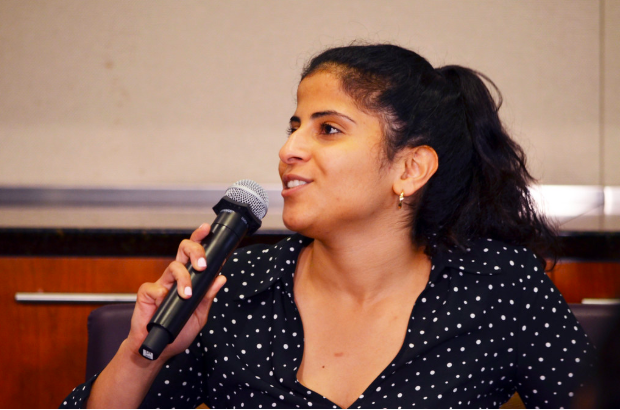
World’s Youngest Prime Minister Will Head Women-Led Government in Finland

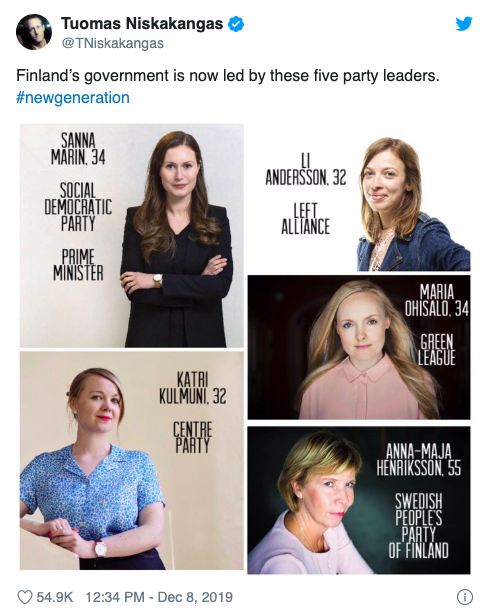
FINLAND IS GETTING a new prime minister, and she’s about to become the world’s youngest leader. Not only that, but she will also head a coalition government of five parties, all of them led by women. Sanna Marin, 34, was nominated by her party on Sunday and will be sworn as prime minister later this week.

Finland’s previous government resigned last week after the Centre Party lost confidence in then-Prime Minister Antti Rinne’s handling of a postal strike.“I myself have never thought about my age or gender,” said Marin, “but rather about the issues for which I took on politics and about the reasons for which we were trusted in the elections.”

For many countries, like the US, electing its first female leader would be a historic occasion. For Finland, however, this isn’t exactly news — the first Finnish female prime minister was elected in 2003 and after elections this year, women make up 47 percent of its parliament. 

Eben Diskin is a staff writer for Matador Network

THIS ARTICLE WAS ORIGINALLY PUBLISHED ON MATADOR NETWORK

Pope Affirms Catholic Church’s Duty to Indigenous Amazonians Hurt by Climate Change

The Catholic Church “hears the cry” of the Amazon and its peoples. That’s the message Pope Francis hopes to send at the Synod of the Amazon, a three-week meeting at the Vatican that ends Oct. 27.

Images from Rome show tribal leaders in traditional feather headdresses alongside Vatican officials in their regalia. They are gathered with hundreds of bishops, priests, religious sisters and missionaries to discuss the pastoral, cultural and ecological struggles of the Amazon.

The densely forested region spans nine South American countries, including Brazil, Colombia and Peru. Its more than 23 million inhabitants include 3 million indigenous people.

The Amazon meeting is part of Pope Francis’s efforts to build a “Church which listens.” Since taking office in 2013, Francis has revitalized the Catholic Church’s practice of “synods” – a Greek word meaning “council” – expanding decision-making in the church beyond the Vatican bureaucracy to gather input from the entire church, including from laypeople.

Voting on synod decisions, however, remains restricted to bishops and some male clergy.

The Amazon synod is the first such meeting to be organized for a specific ecological region. Media coverage of this event has emphasized its more controversial debates – such as the possibility of easing celibacy requirements in the rural Amazon, where priests are in extremely short supply.

But its focus is much broader: listening to the suffering of the Amazon – particularly the environmental challenges facing the region – and discerning how to respond as a global church.

Amazon in crisis

After more than a decade of environmental policies that successfully slowed deforestation in the Amazon, logging and agricultural clearing have begun to increase rapidly again. The fires in the Brazilian rainforest that captured headlines in early September are symptoms of much broader destruction.

Up to 17% of the Amazon rainforest has already been eliminated – dangerously close to the 20% to 40% tipping point that experts say would lead the entire ecosystem to collapse.

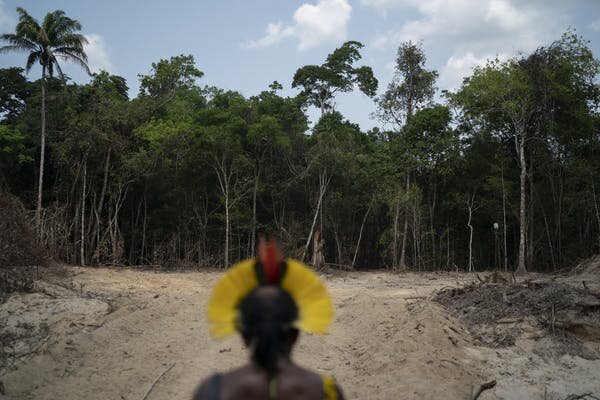
Deforestation of the Amazon is rapidly approaching the tipping point that, experts say, could lead to total collapse of the rainforest ecosystem. AP Photo/Leo Correa

Stories of deforestation can seem insignificant against the vastness of the Amazon, a region two-thirds the size of the lower 48 United States.

But for the 390 indigenous ethnic groups who inhabit the region, each burned forest grove, polluted stream or flooded dam site may mark the end of a way of life that’s survived for thousands of years.

Deprived of their land, many indigenous Amazonians are forced into an exposed life on the edge of frontier towns, where they are prey to sex trafficking, slave labor and violence. In Brazil alone, at least 1,119 indigenous people have been killed defending their land since 2003.

The Catholic Church recognizes that it still has to address the “open wound” of its own role in the colonial-era violence that first terrorized the indigenous peoples of the Americas, according to the synod’s working document. The church legitimated the colonial confiscation of lands occupied by indigenous peoples and its missionaries often suppressed indigenous cultures and religions.

For this reason, according to the Vatican, organizers of the synod have sought input through 260 listening events held in the region that reached nearly 87,000 people over the past two years. Indigenous leaders have been invited as observer participants in the meeting itself.

Learning from indigenous peoples

As a theologian who studies religious responses to the environmental crisis, I find the pope’s effort to learn from the indigenous people of the Amazon noteworthy.

The Vatican sees that the Amazon’s traditional residents know something much of humanity has long forgotten: how to live in ecological harmony with the environment.

“To the aboriginal communities we owe their thousands of years of care and cultivation of the Amazon,” the 58-page synod working document reads. “In their ancestral wisdom they have nurtured the conviction that all of creation is connected, and this deserves our respect and responsibility.”

Pope Francis has expressed his respect for indigenous peoples before.

At a meeting of indigenous leaders in Peru in January 2018 he said, “Your lives cry out against a style of life that is oblivious to its own real cost. You are a living memory of the mission that God has entrusted to us all: the protection of our common home.”

Global problems, local solutions

Environmental destruction isn’t the synod’s only concern.

Catholicism – long the dominant religion in Latin America – is rapidly losing members to evangelical Protestantism. Evangelicals are projected to eclipse Catholics in Brazil by 2032.

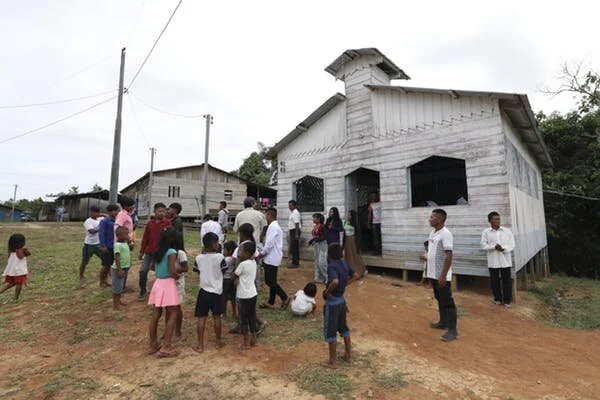
One advantage evangelical churches have in Amazonian countries is that they can appoint local indigenous pastors to minister to their communities. Meanwhile, with less than one priest per 8,000 Catholics in the Amazon, some isolated communities might see a priest only once a year.

Catholic churches are in short supply in rural Brazil, where many people will go a year without seeing a priest. AP Photo/Fernando Vergara

The scarcity of priests in rural Latin America is behind a proposal to the synod to ordain older married men as priests in isolated Amazonian communities.

In the the U.S., the celibacy question is easily mapped onto a familiar divide. Progressive Catholics argue that clerical celibacy should be optional, while conservative Catholics insist this discipline is fundamental to the faith.

The issue is far less politicized in the Amazon, where, in the words of one bishop, the Catholic Church remains a “visiting church” with limited day-to-day presence in indigenous communities.

Some might dismiss this synod as just a meeting. But, in my judgment, it is an attempt to apply Francis’ vision of a “listening Church” to the environmental crisis. The Synod of the Amazon marks a significant shift from high-minded papal exhortations about taking climate action to a global religious community that gives voice to those living on the front lines of ecological destruction.


Vincent J. Miller is a Professor of Religious Studies, University of Dayton

THIS ARTICLE WAS ORIGINALLY PUBLISHED ON THE CONVERSATION

The Dangers of Depicting Greta Thunberg as a Prophet

She came from obscurity and ignited a global movement. Beginning with a small but persistent act of protest outside the Swedish parliament, she inspired millions to join her. Her fiery speech to the United Nations in September 2019 warned of the end of the world. Her unfailing determination and passion makes her appear otherworldly, even uncanny, an affect largely attributed to her diagnosis of Asperger’s syndrome.

So it’s no surprise that many people – along with media outlets like The Irish TimesThe Telegraph and The Washington Times – have cast Greta Thunberg as a prophet.

When Time announced her as “Person of the Year,” it continued the trope, using an evocative photograph of Thunberg standing on a rocky shoreline, staring at the heavens, for the cover.

As a researcher on the history of childhood, I’ve been disturbed to see Thunberg described and depicted as a prophet. To me, it risks distorting her message. And it can easily be exploited by climate deniers seeking to counter the appeal of her activism.

Is a climate messiah even necessary?

To some, Thunberg resembles Joan of Arc, the teenage visionary who led the French army into battle in the 15th century and was later canonized as a saint.

To others, Thunberg exemplifies the Judeo-Christian tradition of prophets who speak truth to power; according to one Christian blogger, she offers “a prophetic voice to shake us out of our complacency.”

Yet presenting Thunberg as a prophet is deeply misleading. Classically, prophets are messengers who communicate the voice of God. They convey divine revelation that was previously unknown or misunderstood. Ezekiel predicted the destruction and restoration of Jerusalem. Moses received the Ten Commandments. Muhammad revealed the Quran. Prophets, in other words, see truths that others cannot. They bring us messages that often defy human comprehension.

Thunberg, on the other hand, is simply telling us what we already know. Within the scientific community, there is an overwhelming consensus – going back decades – that humans are causing global warming.

Framing her as a prophet has opened the floodgates to all sorts of messianic theories. This recently took a bizarre turn when a 120-year-old photo with a girl resembling Thunberg surfaced. Now conspiracy theorists are calling Thunberg “a time traveler sent to save us.”

Depictions like this are fodder for her opponents who dismiss what they call her “doomsday activism.” To them, she is a false prophet, and they can portray the people inspired by her as brainwashed cult followersDavid Koresh, the leader of the Branch Davidians who died alongside his followers in Waco, Texas in 1993, after all, called himself a prophet. So did Jim Jones, the founder of the Peoples Temple and orchestrator of the 1978 Jonestown Massacre.

To Thurnberg’s credit, even she recoils at the idea that she should be viewed as some sort of savior.

“I don’t want you to listen to me,” she told Congress in September. “I want you to listen to the scientists.”

Being a kid carries enough weight

I would argue that the best way to think of Thunberg is to simply think of her as a child.

This is not demeaning. Far from it. In recent years, young people have offered numerous examples of their ability to exercise independent thought, visionary thinking and leadership. Melati and Isabel Wijsen were 10 and 12 when they began a successful campaign to ban single-use plastics in their native Bali. Malala Yousafzai was 11 when she began to advocate against the Taliban for girls’ right to education. The list goes on: Jazz JenningsXiuhtezcatl Martinezthe Parkland activists. Like Thunberg, they challenge our culture’s view of children as powerless and dependent.

Thunberg memorably began her September 2019 UN speech with the words, “This is all wrong. I shouldn’t be up here. I should be back in school on the other side of the ocean.” As Thunberg well knows, the fact that a child needs to scold grown-ups to act on an issue that threatens all of humanity is a powerful example of a political system gone horribly wrong.

Even more critically, focusing on Thunberg’s youth highlights a central tenet of her message: fairness. As any parent can tell you, children tend to view the world in terms of moral absolutes – good and bad, right and wrong, fair and unfair. Indeed, researchers have recently shown that expectations of fairness are deeply ingrained in children, appearing in infants as young as 12 months old.

Ideas of fairness underlie many aspects of Thunberg’s message, from her emphasis on how climate change will affect the poor and marginalized, to her comments about how unjust it is to expect young people to fix a catastrophe caused by generations of political inertia. Her forceful call – “How dare you!” – is not the enraged cry of a petulant child. It is the determined statement of a girl who has not yet developed the moral flexibility that is so often the refuge of adult inaction.

Thunberg is not unraveling the mysteries of our era, or a time traveler sent to stop climate change. Rather, she is a child admonishing selfishness and pleading for fairness.

That’s not prophetic. It’s common sense.

Ellen Boucher is an Associate Professor of History, Amherst College

THIS ARTICLE WAS ORIGINALLY PUBLISHED ON THE CONVERSATION
The Environmental Cost of Entertainment

We often look forward to when we can slip from reality into the atmosphere provided by a movie, concert, or football game. But what is the real cost behind the $60 ticket?

As the COP25 summit comes to an inconclusive close and the number of scientific reports being released on the urgency behind climate change continue to increase, action is necessary or disaster is imminent. Some activities are more glaringly environmentally unfriendly. You know driving your car releases pollutants, you can even see it leaving your vehicle. But there is a whole industry built around letting us all escape, being entertained through sports, or movies and music, so we don’t have to think about our problems for a moment. Only these activities have a huge environmental cost.

 Hollywood is an obvious place to start. Movies not only cost millions of dollars to make but are extremely resource dependent. A study found that a single hour of television produced in the UK emits 13 metric tons of carbon dioxide. That is just carbon emissions, separate from food waste from catering, large energy uses on generators, resources used in building sets, and environmental degradation from filming in remote locations. For example, sets are often made out of lauan, a lightweight plywood that is harvested from rainforests. A UCLA study in 2006 found that a single sound stage results in the destruction of 4000 hectares of rainforest. In the US, over 1200 films and television series are produced in a single year. Solutions exist. Non-resources intensive options could be redistributing waste though donations, recycling, and composting. Reducing energy use or finding alternatives, minimizing transportation, and reusing wastewater. Even getting rid of plastic water bottles on film sets would decrease the environmental footprint.

 The music and sport industries do little better. Events that revolve around stadiums, world-class concerts, super bowls, even your average Saturday afternoon college football game, leave wakes of endless energy use, transportation fumes, and trash cans full of uneaten hotdogs and coke cans. A study done by Julie’s Bicycle found that 43% of the music industry’s environmental impact is from audience transportation to the venue. This is even more true at music festivals or sporting events that span multiple days or even weeks. Estimations say that average numbers for a well-attended music festival produce 212,000 pounds of waste per day, use upwards of 16,000 gallons of fuel just to power generators, and over 78,000 metric tons of CO2 emissions just in attendee travel (could be doubled if included staff, artist, vendors, engineering etc.).  For sports, the Olympics are a major environmental question. Not only do more than a half million people travel to one location from every corner over the world, cities take on major reconstruction projects for one event. In Rio, the 2016 Olympics emitted over 3.5 million tons of C02, not including the 7 years of construction, and had major issues with water pollution.

 Even entertainment in our own homes can have a negative environmental effect. Studies show that watching 30 minutes of Netflix is equivalent to driving almost 4 miles. That might not seem like a lot, but if you binge watch all of Harry Potter, that is almost 20 hours of screen time or 160 miles. Maybe on average you stream an hour of television every day that is almost 3000 miles in one year or the equivalent of driving all the way across the US. Spotify is not much better. Transmitting music to streaming sites is thought to generate between 200 to 350 million kilograms of greenhouse gases.  A large portion of Spotify’s carbon footprint comes from data centers, basically the energy that powers the internet. They have recently reduced their emissions by relocating servers to the Google Cloud which uses more renewable energy and buys carbon offsets. Even so, data centers as a whole account for 2 percent of the world’s greenhouse gas emissions.

 The entertainment industry is only growing. The increase in access to movies and music through streaming services has dramatically changed the culture surrounding live events. Let’s be conscious about how we choose to consume entertainment. 

DEVIN O’DONNELL’s interest in travel was cemented by a multi-month trip to East Africa when she was 19. Since then, she has continued to have immersive experiences on multiple continents. Devin has written for a start-up news site and graduated from the University of Michigan with a degree in Neuroscience.

Why Food Waste is a Major Issue

And what you can do about it.

Produce is commonly wasted as there is a high preference to purchase based on aesthetics. David Schofield. CC BY-NC-SA 2.0.

Globally, one-third of all food that is produced goes to waste. That is equivalent to 1.3 billion tons of food a year. This is food that is still edible yet is disposed at many points in the supply chain. Food can be commonly lost during harvesting due to lack of infrastructure, poor storage, or unfavorable weather. This is more common in developing countries. In most Western countries the opposite is true, with a higher percentage of losses at the consumer and retail level.

 Consumer losses in the US are often due to inconsistencies in food labeling, improper storage or over-purchasing. The dates placed on food products, often accompanied by a “best by” or a “use by” label, are not regulated by the FDA and vary greatly between states. Often these dates are promoting a level of food quality not food safety, meaning that the food is still safe to eat after the date; it just won’t be at its peak quality. A study done by the Harvard Food Law and Policy Clinic found that more than a third of people always dispose of food by the date and up to 84% occasionally do. A different study estimates that having a standardized food labeling system could reduce food waste in the US by 400,000 tons a year. Additionally, about half of states have restrictions or completely prevent food donations after the “best by” date leading to even more waste from grocery stores with no choice but to discard food. A federal bill first introduced in 2016 would change both of these, if it could get passed into law.

 Another major area of waste in the US is the prepared food industry. This spans past restaurants to include other institutions such as hotels, college cafeterias, and hospitals. A single restaurant makes between 25,000 to 75,000 pounds of waste in a year. 84% of this waste ends up in landfills instead of composting or food donations. In addition, $57 billion is lost by consumer-facing businesses due to food waste.  

 A goal introduced by the UN to cut food waste in half by 2030 would help carbon emissions considerably. Food waste globally contributes to 8% of GHG emissions, putting it on par with road transportation. Cereals, vegetables, and meat have the highest potential for change on a consumer level based on the combined value of carbon footprint and waste percentage. This is especially true in high-income countries. The US has the second highest GHG emissions in the world. Putting in an effort to buy less food, cook less food, and compost waste is an easy way to make a difference on an individual level. As well as supporting organizations that work to redistribute food and restaurants that follow more sustainable practices.

 Food waste is a problem on many levels. It is not just left-over food, but also the accumulation of all the energy, labor, and emissions that went into the product. It is wasted money and lack-of-profit for businesses and the economy. It is food that is not reaching those that need it and it is a major contributor to climate change, but it doesn’t have to be. 

DEVIN O’DONNELL’s interest in travel was cemented by a multi-month trip to East Africa when she was 19. Since then, she has continued to have immersive experiences on multiple continents. Devin has written for a start-up news site and graduated from the University of Michigan with a degree in Neuroscience.

As More Developing Countries Reject Plastic Waste Exports, Wealthy Nations Seek Solutions at Home

Less than two years after China banned most imports of scrap material from abroad, many of its neighbors are following suit. On May 28, 2019, Malaysia’s environment minister announced that the country was sending 3,000 metric tons of contaminated plastic wastes back to their countries of origin, including the United States, Canada, Australia and the United Kingdom. Along with the Philippines, which is sending 2,400 tons of illegally exported trash back to Canada, Malaysia’s stance highlights how controversial the global trade in plastic scrap has become.

Malaysia, Thailand and Vietnam are all halting flows of plastics that once went to China but were diverted elsewhere after China started refusing it. They are finding support from many nations that are concerned about waste dumping and marine plastic pollution. At a meeting in Geneva in May 2019, 186 countries agreed to dramatically restrict international trade in scrap plastics to prevent plastics dumping.

As I show in my forthcoming book, “Waste,” scrap material of all kinds is both a resource and a threat. The new plastics restriction allows less-wealthy countries to exercise their sovereign right not to accept materials they are ill-equipped to handle. This narrows options for wealthy countries that used to send much of their plastic and paper scrap abroad, and is a small but symbolic step toward curbing plastic waste.

Single-stream recycling in the U.S. has increased resource collection, but it generates contaminated materials that cost more to recycle.

A trade with few rules

The Basel Convention, which governs the international waste trade, was adopted in 1989 in response to egregious cases of hazardous waste dumping on communities in Africa, the Caribbean and Asia. Many of its goals remain unfulfilled, including a ban on shipments of hazardous waste from wealthy to less-wealthy nations for final disposal, and a liability protocol that would assign financial responsibility in the event of an incident. And the agreement has largely failed to encompass newer wastes, particularly discarded electronics.

The new provision, proposed by Norway with broad international support, takes a more aggressive approach. It moves plastic scrap from one category – wastes that can be traded unless directly contaminated – to another group of materials that are not deemed hazardous per se, but are subject to the same trade controls as those classified as hazardous. Now these plastics can be shipped overseas for disposal or recycling only with the express consent of the importing country.

The United States signed the treaty in 1989, but never ratified it and is not bound by the treaty’s terms. However, Basel Convention member countries cannot accept any restricted waste imports from the United States unless they have reached a bilateral or regional agreement that meets Basel’s environmental provisions. The U.S. already has such an agreement with fellow OECD member countries.

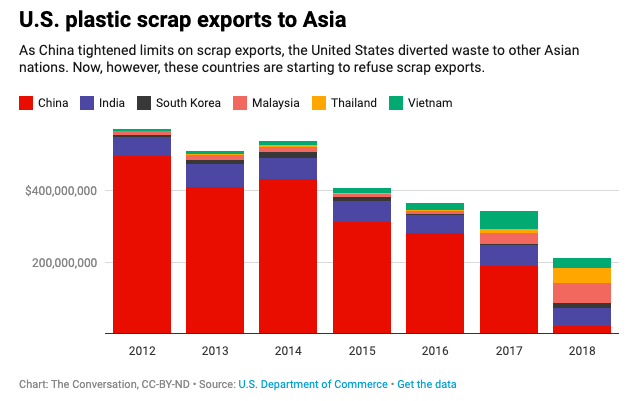
Operation National Sword, China’s policy restricting imports of post-consumer scrap, was a major driver for updating the treaty. Before the ban China imported nearly half of the world’s scrap plastic and paper. Now scrap exporters in wealthy nations are struggling to find alternate markets overseas and boost domestic recycling.

Crisis and opportunity for US recyclers

Trends in the United States illustrate these wrenching shifts. Plastic scrap exports to China plummeted from around 250,000 tons in the spring of 2017 to near zero in the spring of 2019. Overall, U.S. exports of plastic waste to all countries fell from 750,000 tons to 375,000 tons over the same period.

Most U.S. waste and recycling policies are made at the local level, and the past year has been a transformative period. Without ready markets abroad for scrap, recyclers are raising prices, which in turn is leading some municipalities to reduce or eliminate curbside recycling programs. Many plastic products in groups 3-7, the least recyclable types, are being sent to landfills.

More positively, recycling authorities have launched public education campaigns, and investment in recycling infrastructure is on the rise. There is palpable energy at trade meetings around improving options for plastics recycling. Chinese companies are investing in U.S. pulp and paper recycling plants, and may extend into plastics.

The Oregonian✔@Oregonian

Here's what you can and can't #recycle in Portland.

23

5:06 PM - May 27, 2019

Twitter Ads info and privacy

22 people are talking about this

Green-leaning states and cities across the nation have passed strict controls on single-use consumer plastics. However, businesses are pushing back, and have persuaded some U.S. states to adopt preemptive measures barring plastic bag bans.

The greatest immediate pressure is on international scrap dealers, who are most immediately affected by the Norway Amendment and vocally opposed it. They are also under stress from the U.S.-China tariff wars, which could make it difficult for them to send even clean, commercially valuable scrap to China.

Waste or scrap?

Under the Norway Amendment, nations can still export plastic scrap if it is clean, uncontaminated and of high quality. The measure effectively distinguishes between waste – which has no value and is potentially harmful – and scrap, or discarded materials that still have value.

This bifurcation matters for the U.S. and other countries that formerly outsourced their recycling to China and are having trouble creating domestic demand for recovered plastics, because it makes a legitimate trade in plastic and other marginal scrap possible. However, there is still no guarantee that this scrap can be reprocessed without harm to workers or the environment once it has reached the importing country.

Nor will the Norway Amendment do much to reduce marine plastic pollution directly. Only a tiny fraction of ocean plastics originate from shipped plastic scrap from rich countries. Most come from items that are used and discarded on land and never enter a recycling system.

Curbing plastic pollution will require broader action, with a focus on coordinating scattered global initiatives and building up relevant international law. Implementing extended producer responsibility for plastics, which could require manufacturers to take plastic products back at their end of life and dispose of them in approved ways, would be a useful step. However, it should not supplant ongoing efforts to reduce production and use of plastics, which contribute to climate change as well as waste.

Solutions may come from the top down in European nations or the bottom up in the United States. But as one Asian country after another shuts the door on scrap exports, it is becoming increasingly clear that business as usual will not solve the plastic pollution challenge.

Kate O'Neill is an Associate Professor, Global Environmental Politics, University of California, Berkeley

THIS ARTICLE WAS ORIGINALLY PUBLISHED ON THE CONVERSATION
Following the Removal of Evo Morales, Anti-Indigenous Sentiment Explicit in Bolivia

In the aftermath of the ouster of former President of Bolivia, Evo Morales, many suspected a right-wing coup had taken place. Now, a month later, the status of Indigenous peoples in Bolivia hangs in the balance.

Read More

ClimbAID Fosters Growth in Refugee Children Through Rock Climbing

The organization started in 2016 and now has projects in Switzerland and Lebanon.

The physical and mental challenge of climbing can have many therapeutic benefits. Pablo Benedito. CC BY-NC 4.0.

ClimbAID, a non-profit organization that works with refugees, operates a moving rock wall in Lebanon. The project, A Rolling Rock, was unleashed in a pilot session in 2017 and has shown great promise. Using climbing as an alternative therapy is not all that new but is often limited due to lack of access to climbing areas. The prevalence of gyms and surge of support for indoor climbing and bouldering is making climbing more accessible, but only for those that can afford it. A Rolling Rock fixes this by bringing the climbing directly to the kids. Because it is bouldering it requires less gear than top-rope climbing allowing for lower costs. In addition, it removes barriers of transporting children without papers through military controlled regions.

One-third of Lebanon’s population is refugees. Since the Syrian war started in 2011, 1.5 million Syrian refugees remain in the country. Lebanon’s security is a balance of political and cultural importance. After their own 15-year civil war mostly spurred by unequal representation of the three main religious groups in the country, Lebanon found a solution that works only with equal populations of Sunni Muslims, Shiite Muslims, and Christians. It has functioned this way since the 1990s. The 2 million refugees now residing within Lebanon’s boarders are almost all Sunni Muslim, having fled Syria or Palestine. If the refugees can never return home, this would greatly upset the delicate balance currently supporting the government. Additionally, the country is facing an extreme economic downfall, much of which is blamed on Syrian refugees. The country even started deporting refugees for the first time this past May.

ClimbAID hopes that by providing an outlet for refugee children, most of whom are not in school, and to encourage common ground and bonding between different groups in Lebanon, that the xenophobia might begin to decrease. Additionally, climbing has been found to be beneficial in fighting mental health issues and trauma. A study done in 2005 found that climbing reduced symptoms of anxiety, depression, and PTSD. Climbing has been incorporated into wilderness-based therapy programs and small non-profits in the US such as Sacred Rok, an organization working in Yosemite Valley with at-risk youth. Their potential is still being researched but many studies have continued to release positive results.

ClimbAID’s program in Switzerland has seen good results as well. In 2018, they had on average six climbing sessions a week. They too have faced issues with decreases in government support to refugees. There is now a gap of social integration programs for refugees within Switzerland. Climbing can help fill the hole left by changes in governmental policies and can encourage bonding and German language skills.

Most importantly, though, ClimbAID provides a space where children that have been displaced, have experienced deep trauma, and now live well below the poverty line in a country where they are not completely welcomed, are accepted, where they can have fun, and a place where they can excel. This is extremely beneficial in building confidence and social skills that are necessary for having a promising future.

DEVIN O’DONNELL’s interest in travel was cemented by a multi-month trip to East Africa when she was 19. Since then, she has continued to have immersive experiences on multiple continents. Devin has written for a start-up news site and graduated from the University of Michigan with a degree in Neuroscience.

Why Don’t More Women Win Science Nobels?

All of the 2019 Nobel Prizes in science were awarded to men. 

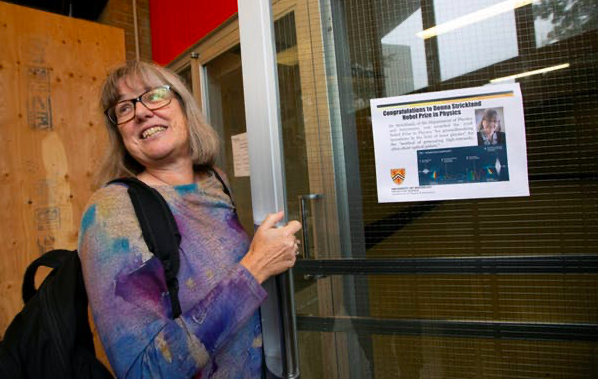
That’s a return to business as usual, after biochemical engineer Frances Arnold won in 2018, for chemistry, and Donna Strickland received the 2018 Nobel Prize in physics

Strickland was only the third female physicist to get a Nobel, following Marie Curie in 1903 and Maria Goeppert-Mayer 60 years later. When asked how that felt, she noted that at first it was surprising to realize so few women had won the award: “But, I mean, I do live in a world of mostly men, so seeing mostly men doesn’t really ever surprise me either.”

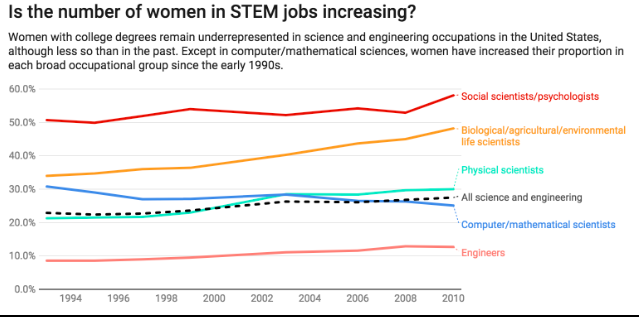
The rarity of female Nobel laureates raises questions about women’s exclusion from education and careers in science. Female researchers have come a long way over the past century. But there’s overwhelming evidence that women remain underrepresented in the STEM fields of science, technology, engineering and math.

Studies have shown those who persist in these careers face explicit and implicit barriers to advancement. Bias is most intense in fields that are predominantly male, where women lack a critical mass of representation and are often viewed as tokens or outsiders.

When women achieve at the highest levels of sports, politicsmedicine and science, they serve as role models for everyone – especially for girls and other women. 

As things are getting better in terms of equal representation, what still holds women back in the lab, in leadership and as award winners?

Good news at the start of the pipeline

Traditional stereotypes hold that women “don’t like math” and “aren’t good at science.” Both men and women report these viewpoints, but researchers have empirically disputed them. Studies show that girls and women avoid STEM education not because of cognitive inability, but because of early exposure and experience with STEM, educational policy, cultural context, stereotypes and a lack of exposure to role models. 

For the past several decades, efforts to improve the representation of women in STEM fields have focused on countering these stereotypes with educational reforms and individual programs that can increase the number of girls entering and staying in what’s been called the STEM pipeline – the path from K-12 to college to postgraduate training.

These approaches are working. Women are increasingly likely to express an interest in STEM careers and pursue STEM majors in college. Women now make up half or more of workers in psychology and social sciences and are increasingly represented in the scientific workforce, though computer and mathematical sciences are an exception. 

According to the American Institute of Physics, women earn about 20% of bachelor’s degrees and 18% of Ph.D.s in physics, an increase from 1975 when women earned 10% of bachelor’s degrees and 5% of Ph.D.s in physics.

More women are graduating with STEM Ph.D.s and earning faculty positions. But they encounter glass cliffs and ceilings as they advance through their academic careers.

What’s not working for women

Women face a number of structural and institutional barriers in academic STEM careers.

In addition to issues related to the gender pay gap, the structure of academic science often makes it difficult for women to get ahead in the workplace and to balance work and life commitments. Bench science can require years of dedicated time in a laboratory. The strictures of the tenure-track process can make maintaining work-life balance, responding to family obligations and having children or taking family leave difficult, if not impossible.

Additionally, working in male-dominated workplaces can leave women feeling isolatedperceived as tokens and susceptible to harassmentWomen often are excluded from networking opportunities and social events, left to feel they’re outside the culture of the lab, the academic department and the field.

When women lack a critical mass in a workplace – making up about 15% or more of workers – they are less empowered to advocate for themselves and more likely to be perceived as a minority group and an exception. When in this minority position, women are more likely to be pressured to take on extra service as tokens on committees or mentors to female graduate students.

With fewer female colleagues, women are less likely to build relationships with female collaborators and support and advice networks. This isolation can be exacerbated when women are unable to participate in work events or attend conferences because of family or child care responsibilities and an inability to use research funds to reimburse child care.

Universities, professional associations and federal funders have worked to address a variety of these structural barriers. Efforts include creating family-friendly policies, increasing transparency in salary reporting, enforcing Title IX protections, providing mentoring and support programs for women scientists, protecting research time for women scientists and targeting women for hiring, research support and advancement. These programs have mixed results. 

For example, research indicates that family-friendly policies such as leave and onsite child care can exacerbate gender inequity, resulting in increased research productivity for men and increased teaching and service obligations for women.

People haven’t really updated their mental images of what a scientist looks like since Wilhelm Roentgen won the first physics Nobel in 1901. Wellcome Collection, CC BY

Implicit biases about who does science

All of us – the general public, the media, university employees, students and professors – have ideas of what a scientist and a Nobel Prize winner looks like. That image is predominantly male, white and older – which makes sense given 97% of the science Nobel Prize winners have been men.

This is an example of an implicit bias: one of the unconscious, involuntary, natural, unavoidable assumptions that all of us – men and women – form about the world. People make decisions based on subconscious assumptions, preferences and stereotypes– sometimes even when they are counter to their explicitly held beliefs.

Research shows that an implicit bias against women as experts and academic scientists is pervasive. It manifests itself by valuing, acknowledging and rewarding men’s scholarship over women’s scholarship. 

Implicit bias can work against women’s hiring, advancement and recognition of their work. For instance, women seeking academic jobs are more likely to be viewed and judged based on personal information and physical appearance. Letters of recommendation for women are more likely to raise doubts and use language that results in negative career outcomes.

Implicit bias can affect women’s ability to publish research findings and gain recognition for that work. Men cite their own papers 56% more than women do. Known as the “Matilda Effect,” there is a gender gap in recognition, award-winning and citations

Women’s research is less likely to be cited by others, and their ideas are more likely to be attributed to men. Women’s solo-authored research takes twice as long to move through the review process. Women are underrepresented in journal editorships, as senior scholars and lead authors and as peer reviewers. This marginalization in research gatekeeping positions works against the promotion of women’s research.

When a woman becomes a world-class scientist, implicit bias works against the likelihood that she will be invited as a keynote or guest speaker to share her research findings, thus lowering her visibility in the field and the likelihood that she will be nominated for awards. This gender imbalance is notable in how infrequently women experts are quoted in news stories on most topics.

Donna Strickland, outside her lab at the University of Waterloo, won her Nobel in 2018 as an associate professor.Reuters/Peter Power

Women scientists are afforded less of the respect and recognition that should come with their accomplishments. Research shows that when people talk about male scientists and experts, they’re more likely to use their surnames and more likely to refer to women by their first names

Why does this matter? Because experiments show that individuals referred to by their surnames are more likely to be viewed as famous and eminent. In fact, one study found that calling scientists by their last names led people to consider them 14% more deserving of a National Science Foundation career award.

Seeing mostly men has been the history of science. Addressing structural and implicit bias in STEM will hopefully prevent another half-century wait before the next woman is acknowledged with a Nobel Prize for her contribution to physics. I look forward to the day when a woman receiving the most prestigious award in science is newsworthy only for her science and not her gender.

Mary K. Feeney is a Professor and Lincoln Professor of Ethics in Public Affairs and Associate Director of the Center for Science, Technology and Environmental Policy Studies, Arizona State University

THIS ARTICLE WAS ORIGINALLY PUBLISHED ON THE CONVERSATION
Saudi Women Protesting Driving Ban Remain Jailed, Details of Trial Unclear

In 2017, the driving ban was lifted for Saudi women. However, the women who vocally protested the ban have been jailed, subjected months of torture and unable to communicate with their families.

Lina Al-Hathloul speaking about the imprisonment of her sister, Loujain. POMED. CC BY 2.0

June 24th, 2018 marked the first day women in Saudi Arabia could legally obtain drivers licenses, following an announcement by King Salman in September that women driving would be considered acceptable under sharia law. By March of 2019, more than 70,000 Saudi women had received a license. Under the interpretation of sharia law enforced by the Saudi government, women are effectively minors, subject to guardianship by their fathers, husbands, or even their sons should their husbands pass away or become otherwise unable to fulfill the role of guardian. Women must receive permission to enroll in school, open bank accounts, sign contracts, or acquire a passport, to name a few of the many restrictions women face under guardianship laws.

Regarding the announcement of the end of the driving ban, Eman al-Nafjan writes in her blog, “Initially I was overwhelmed with my own powerlessness as a woman living in a patriarchal absolute monarchy. Were our efforts the reason the ban was lifted? Or was it a decision that had been made regardless of our struggles?” Dr. al-Nafjan is one of eleven women who was detained, subject to torture, solitary confinement, and threats of rape and death—more than once by Crown Prince Mohammed bin Salman himself—in 2018 as a result of their protests against the ban. The protests against the driving ban began in 1990, and have lead to the arrest, imprisonment, and severe punishment of many individuals. Of the eleven arrested in May-June 2018, some were released on bail. Al-Nafjan, as well as two other women, Loujain al-Hathloul and Nouf Abdulaziz, have borne the brunt of cruelty at the hands of the Saudi government, and as a result have received the most media attention. Their trials began in late March of 2019, however little is known of their current situation.

Nouf Abdulaziz, one of the women held in prison, writes in a letter sent during her detainment: “Hello my name is Nouf, and I am not a provoker, inciter nor a wrecker, nor a terrorist, nor a criminal nor a traitor.” The women imprisoned have sought justice for their fellow women, and we must honor their work by seeking justice on their behalf. There exists a clear duplicity in the West’s reaction to these human rights violations: although outwardly supportive of human rights, the U.S., France, and the U.K. have been complicit in the Saudi regime’s actions by maintaining close economic and security ties with Saudi Arabia. At the end of her letter, Abdulaziz implores her readers: “if what is happening does not please you, help our people to see clearly that our sister in the homeland is mistreated and she does not deserve other than her freedom, to maintain her dignity and to have the warmth in her parents [sic] arms, that has been taken away from her.” Many human rights organizations have spoken up on behalf of these activists, and Abdulzaziz, al-Hathloul, and al-Nafjan were awarded the 2019 PEN Freedom to Write Award for their work. 

In this vein, Amnesty International marked May 2018-May 2019 a “year of shame for Saudi Arabia” due especially to its treatment of women’s rights activists and the assassination of Jamal Khashoggi, a dissident Saudi journalist. Although Crown Prince Salman, accepting the position of Crown Prince in 2017, labeled himself a reformer, he immediately launched a campaign to repress dissenters of the regime. In this way, the worries expressed by Nafjan were prescient: the Saudi government lifted the driving ban in an effort to improve international opinion, as well as increase the number of women working in Saudi Arabia’s flagging private sector, not with genuine progressive intent. Those who most vehemently spoke up for the rights of women were made examples of for other dissenters. While ultimately a victory for the greater female Saudi population, the patriarchal regime insisted upon a last word—in the form of human rights violations against the very women who created the momentum for the lifting of the ban. 

HALLIE GRIFFITHS is an undergraduate at the University of Virginia studying Foreign Affairs and Spanish. After graduation, she hopes to apply her passion for travel and social action toward a career in intelligence and policy analysis. Outside of the classroom, she can be found, quite literally, outside: backpacking, rock climbing, or skiing with her friends.