
Just over 30 miles northwest of the Slovenian capital Ljubljana, you’ll find an alpine lake that looks straight out of a fairytale. With a cliff-side castle, an emerald green, fresh water lake and some of the best views of the Julian Alps, you’d be forgiven for mistaking Lake Bled and its island church for a storybook cover. And as you cross the lake in a traditional wooden boat, learn the legend of the bell that lies below these emerald green waters.
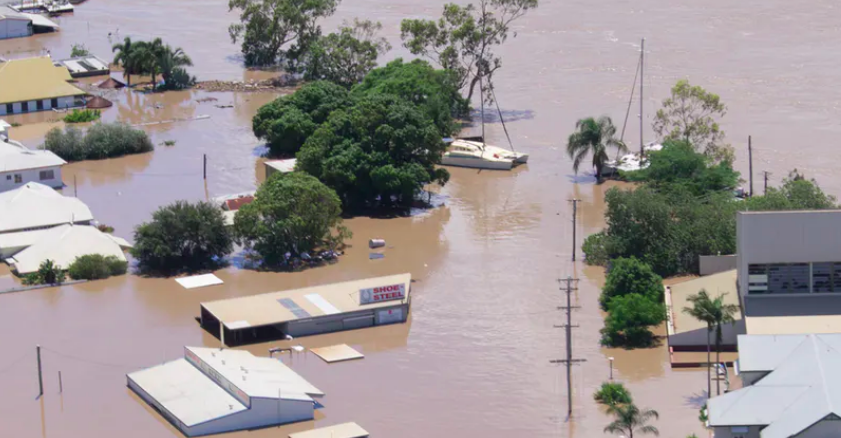
Flood damage in Bundaberg, Queensland, in 2013. Most communities are at some risk from extreme events, but repeated disasters raise the question of relocation. srv007/Flickr, CC BY-NC
‘Climigration’: When Communities Must Move Because of Climate Change
Climate change increasingly threatens communities all over the world. News of fires, floods and coastal erosion devastating lives and livelihoods seems almost constant. The latest fires in Queensland and New South Wales mark the start of the earliest bushfire season the states have ever seen.
What happens when climate change causes extreme events to become chronic, potentially rendering some communities unviable? This question is fuelling a new strand of global research focused on “climigration”. Climigration is the planned relocation of entire communities to new locations further from harm. And it has already begun.
It takes a lot to convince a community to move. But extreme events disrupt communities socially, economically and physically. Buildings and infrastructure are damaged, as are community cohesion and morale. Lives may be lost; many others are changed forever.
When extreme events disrupt communities, responses usually occur in one of two ways. We can try to repair damage and continue as before, which is known as resilience. Or we try to repair and fortify against future damage in a process of adaptation. Climigration is an extreme form of climate change adaptation,
This article draws on our recently published research, which investigated how land-use and strategic planning frameworks can prepare for climigration.
From imagination to reality
Climigration is no longer a concern for the future; it is a challenge today. The notion of strategically relocating entire communities has quickly moved from imagination to reality.
For instance, in 2016 the US Department of Housing and Urban Development provided US$1 billion to help communities adapt to climate change in 13 states. The grants included the first direct allocation of federal funding to move an entire community.
Isle de Jean Charles in Louisiana is the first US community to undergo federally sanctioned climigration. The move has been forced by the loss of coastal land to rising seas and storm surges. Last December, the state bought land at residents’ preferred site to develop their new community.
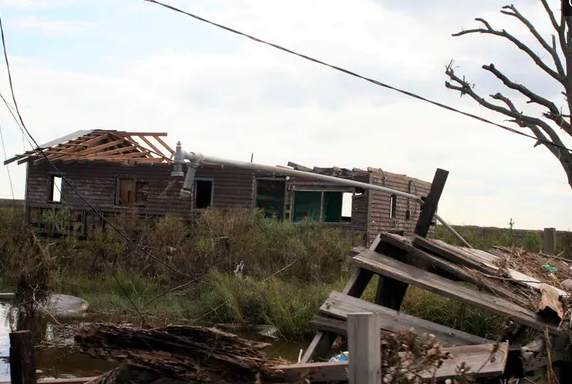
Property damaged by extreme weather and later abandoned on Isle De Jean Charles. Maitri/Flickr, CC BY-NC-SA
Climigration options were previously considered in Alaska. Climate-induced coastal erosion has threatened the viability of the village of Newtok for many years. Its residents voted in 2003 to relocate to higher ground but the relocation looks unlikely to be completed before 2023.
In Australia, more than 100 households in Grantham, Queensland, were relocated to higher ground with government assistance after devastating floods caused by an exceptionally strong La Niña in 2011.
Critical factors in climigration
Climigration is, of course, not a phenomenon restricted to the US and Australia. It is a growing concern for many countries.
Our research sought to establish a framework for effective climigration planning. We systematically reviewed international case studies of community relocations undertaken because of environmental hazards. As part of this we developed a hierarchy of influencing factors in planning for climigration.
We found that the degree to which a community agrees on the need to relocate is a crucial influence. Consensus generates social capital, which supports action and improves the prospects of successful outcomes.
Perception of the timing and severity of risks is another critical factor. Immediate, obvious risks are more likely to motivate action. Motivation can be low if risks are seen as a problem for the distant future, even if impacts may eventually be devastating.
Political, economic and logistical support from government moderately influences the success of community relocation. Relocation may still occur without government support, but this is not preferable and the chances of success are lower.
Strong local leadership can improve the capacity of communities to face the reality of relocation and then to resettle. Strategic leadership from outside agencies is a complement to local leadership, not a substitute.
How to plan successfully for climigration
Strategic and land-use planning systems will be central public agencies in many climigration cases.
Planners already have relevant skills and training. These include community consultation, mediation and stakeholder engagement. Planners can coordinate land acquisition and development applications. They can provide temporary housing, infrastructure and transportation.
Planning for climigration also requires other professional input, including disaster management, social psychology and engineering.
Strategic planning for climigration should begin as early as possible. Vulnerable communities can be identified using risk mapping.
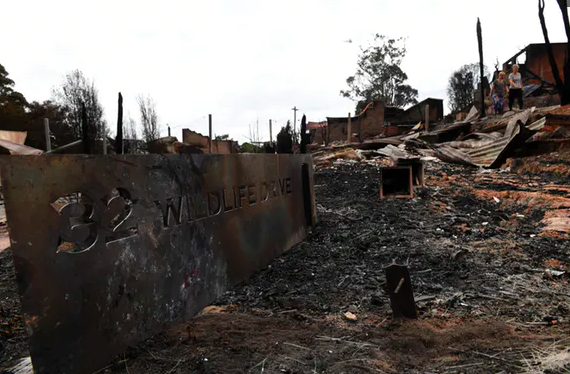
Residents of bushfire-prone areas that become impossible to defend might have to consider moving. Dean Lewins/AAP
Alternative sites can then be shortlisted and potential logistical demands identified.
Securing land for relocation may place planners in the middle of competing forces. They need to be careful and deliberative to balance the expectations of residents, government, and the market.
Consultation is vital to secure community consensus in the event of climigration. It is a key tool for planners to explain risks and engage residents in crucial decisions.
Specific policy frameworks for climigration are preferable but not essential. When used, they can improve coordination and reduce the risk of negative outcomes.
A confronting concept
While climigration is not yet a common planning issue, it is likely to become an increasingly urgent agenda. Climigration events like those in Louisiana, Alaska and Queensland are just the first wave.
There are limits to the feasibility of climigration. It might only be viable for small towns and villages. Undoubtedly there will be cases where climigration is rejected as too much of challenge.
Triage-based planning could be helpful in deciding which communities to relocate.
Accepting the notion of climigration may be the biggest challenge for planners. The idea that the only viable future for a community is to be relocated elsewhere is unusual and confronting. Managing climigration through planning practice may prove more straightforward than adjusting to the idea in the first place.
TONY MATTHEWS is Senior Lecturer in Urban and Environmental Planning at Griffith University.
THIS ARTICLE WAS ORIGINALLY PUBLISHED ON THE CONVERSATION

How Women Entrepreneurs are Changing Indian Society
In India, the proportion of women in paid work is among the lowest in the world, at just over 23% – a figure which contrasts sharply with the corresponding rate of over 78% for men.
Opportunities for women to enter employment in the country are limited by a range of factors. These include a dominant tradition of female domestic responsibility, and a prevailing social patriarchy.
Deeply entrenched cultural expectations mean that women are more likely to stay at home. And when they do work, it is mainly on an informal basis, without the luxury of secured wages and contracts.
Against this backdrop, the idea of female entrepreneurship in India faces major challenges. Setting up a business can require significant efforts outside of normal work times, and can lead to women being perceived as irresponsible if they dedicate time to entrepreneurial activities.
But it seems as if things may be changing. My research on women entrepreneurs in India reveals they are contesting social, cultural and family pressures to challenge the status quo in Indian society. They are also empowering other women while providing innovative solutions to major social problems.
Some of the women I spoke to greatly inspired me with their stories. One manufacturing business founder, Pinky Maheshwari, was challenged by her son to make environmentally friendly paper. She went on to create handmade paper made out of cotton that is embedded with seeds. These can then be planted and grown into trees when the paper has served its purpose.
Her award-winning ideas have won appreciation and support from the highest levels of Indian government. She is, she told me, motivated by the idea of empowering others, and “hires women from rural and small towns so that they earn a livelihood and get acknowledged for their creativity”.
She added: “I have employed largely women and I support them in any way I can.”
A similar spirit shone through other women entrepreneurs I interviewed. Padmaja Narsipur, the founder of a digital marketing strategy firm, supports women “re-starters” to join her workforce after a break in their working lives.
She said: “Women re-starters are highly qualified and committed. I have been one myself. I have built a workplace where trust in employees, giving flexible hours, work from home options, is built into the DNA and it is paying off.”
The CEO of Anthill creations, Pooja Rai has a vision to create “interactive learning environments in public spaces with a primary focus on sustainability”, by using recycled materials to build accessible play areas in remote parts of India.
These are just some of the many Indian women entrepreneurs I met who are creating businesses of real purpose. Despite the cultural obstacles, they are changing perceptions and creating innovative businesses that have a real impact on their communities and beyond.
Their work is rewriting the rules for business, families and society while challenging the mindset that there is limited scope for them to create good businesses.
With a blend of social purpose and business acumen, Indian women are embarking on a journey to change perceptions and creating prosperity for themselves and for the nation.
This is the new face of women entrepreneurship in India. And there is evidence that public policy is increasingly supportive of this transformation while society is beginning to celebrate their successes.
Indian society is gradually becoming progressively egalitarian with much needed government initiatives such as “Beti Padhao, Beti Bachao” (Save the Daughter, Educate the Daughter) designed to improve the prospects of young girls.
Improved access to social media, education, and social enterprises are all contributing to change. These are giving momentum to the aspirations of women entrepreneurs in India.
MILI SHRIVASTAVA is a Lecturer in Strategy at Bournemouth University.
THIS ARTICLE WAS ORIGINALLY PUBLISHED ON THE CONVERSATION
Sri Lanka’s First All-Female Surf Club
Shamali Sanjaya is president of Sri Lanka’s first all-female surf club. Initially the club’s first 12 members struggled with the public perception that women should not be surfing, but now the club is growing strong.
Read More
Thunberg during her impassioned speech to world leaders at the UN’s 2019 Climate Action Summit. Justin Lane/EPA
Greta Thunberg’s Voice Speaks Just as Loud as Her Words
“Do you think they hear us? We’ll make them hear us!”. This was the rallying call Greta Thunberg gave to 250,000 people in New York’s packed streets, and millions worldwide who were taking part in the largest climate protest in history. In political chambers and on the streets, her cutting and inspiring words have awakened countless people to the climate and ecological emergencies. But beyond them, her voice contains a message that’s just as powerful.
The sound of Thunberg’s voice has become as distinctive as her bluntly precise rhetoric and diminutive figure, as evidenced by her recent uncredited opening monologue on indie rock band The 1975’s album, A Brief Inquiry Into Online Relationships.
There’s a certain poetic justice here. After first learning of the environmental crisis facing the planet, Thunberg was diagnosed with Asperger’s syndrome, depression, and selective mutism, and describes herself as “only talking when necessary”. The very presence of her voice in the public sphere alone therefore signals the urgency of the climate and ecological crises.
And in making her voice heard, its unique characteristics tell their own important story.
The sonic fingerprint
The human voice is like a fingerprint made of sound waves. Unique to each speaker, its composition is determined by an array of factors ranging from the size, age and sex of the speaker’s body to their emotional state and social background.
As a result, when a person vocalises, the voice connects the individual to the collective. When we speak, we carry and communicate our own personal identity to the community we enter. When we listen, we’re listening not only to the meaning of the words spoken but also the non-linguistic information communicated by the speaker’s sonic fingerprint.
The most salient characteristic of Thunberg’s vocal fingerprint is perhaps her age. Just as Malala Yousafzai’s youthful tones gave her drive for female education such sway, Thunberg’s voice is a clear reminder of her 16 years – and by extension, the adolescence of the thousands of school strikers she has galvanised. She frequently frames the climate crisis as a generational conflict between the adults who are exacerbating the problem and the children who will pay the price. It is the youth in her voice, over and above her chastising words, that makes this role reversal so powerful.
The political landscape surrounding the climate and ecological crises is constantly changing. So is the human voice. How she alters her approach to public speaking as her voice shifts into adulthood could be important if she is to keep having an impact – she will only sound like a student for so long.
A voice through a crowd
The wide reach of Thunberg’s public speeches also turn an issue too often expressed with faceless statistics and global trends into a human one.
On paper, it would be easy to write off Greta’s words as another opinion among many. But as well as physical characteristics, our voices communicate our emotions. Thunberg’s terse and sombre monotone makes tangible the emotional significance of the deepening crisis facing her generation.
In embodying the issue of climate breakdown, Thunberg’s voice also makes it personal. When she speaks, we are reminded that she is one individual – and that her actions alone inspired hundreds of thousands to join her. As the title of her recent collection of speeches says, No One Is Too Small to Make a Difference.
Thunberg and her followers argue for systems change, but they do so as a chorus of individual voices. The quarter-million strong unified chant of Thunberg’s name at New York’s climate strikes reminds us that when individuals are empowered and brought together, they can each play an important part in tackling climate and ecological breakdown.
The voice is not just a vehicle for language. The unique sounds of every human voice tell their own story alongside the words they carry. For Thunberg, this is the story of a generation let down and determined to effect change – whether leaders like it or not.
As the movement she started continues to gain momentum, this message will underpin everything she and her followers say. Whether people are listening is another story.
DAMIEN POLLARD is a PhD Candidate, University of Cambridge Centre for Film & Screen at the University of Cambridge.
THIS ARTICLE WAS ORIGINALLY PUBLISHED ON THE CONVERSATION
The Hand Of India
At the height of the Cold War, amidst growing tensions between the US and Russia, Indian Prime Minister, Indira Gandhi traveled to Washington D.C to deliver a pragmatic speech on the subjects of communication, understanding and friendship.
35 years later, with increasing polarization around the globe, her simple yet elegant message has never felt so relevant.
However, it is in India, where Indira Gandhi's message still rings most true; somehow managing to make sense of a beguiling and beautifully chaotic society, with a rich reputation of inspiring swathes of Western visitors.
Shot during a two month backpacking trip, with minimal camera equipment, this is the filmmaker’s (Simon Mulvaney) attempt to communicate the beauty of Indira's home country, along with the resonating themes she touched upon all those years ago.
VIETNAM: The Road Story
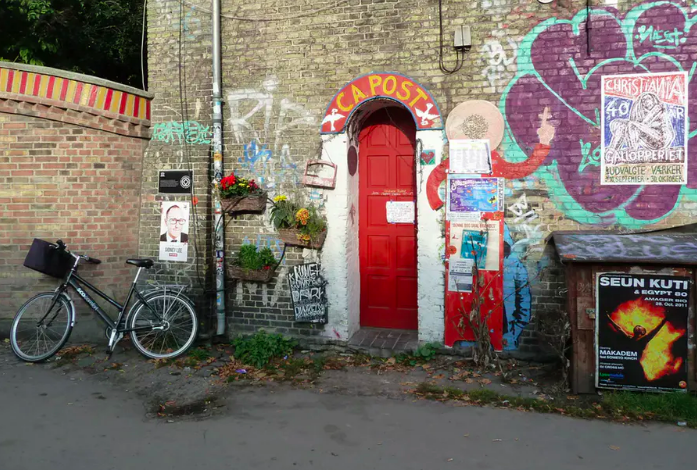
Community post office, Freetown Christiania. Helen Jarvis. , Author provided
Degrowth and Christiania – I saw How Copenhagen’s Collective Living Experiment Can Work
Since the first squatters arrived in 1971, the self-proclaimed Freetown of Christiania has inspired radical thinking and social experimentation. Affectionately described as “loser’s paradise”, the squat became a haven for young people unable to access affordable housing in Copenhagen, and activist pioneers from all over the world.
In July 2012, Christiania struck a deal with the Danish state to “normalise” its status. The change was fraught: after 40 years of illegal occupation, a community of activists fiercely opposed to the idea of private property had to establish a foundation and purchase the entire site, with the exception of some features, which were heritage listed.
The deal enabled Christiania to buy itself free of speculation, as a common resource for everybody and nobody. Today, Christiania receives hundreds of thousands of visitors each year, making it the most popular tourist destination in Copenhagen after Tivoli Gardens and the statue of The Little Mermaid.
Growth and the good life
It’s considered normal for cities and states to measure success in terms of economic growth. But critics point to the treadmill of addictive consumption, property speculation, long working hours, debt, waste, one-upmanship, fast food and short-lifespan technologies that unending growth sets in motion. Opposing this trend, communities such as Christiania pursue “degrowth” by prioritising human relations over market relations; maximising sharing, togetherness, social justice and the health of the planet.
The pressures to conform with mainstream society can be divisive for the 800 or so residents managing their lives communally in Christiania. Big decisions are made through a decentralised democratic structure: 14 area meetings and a “common meeting” must reach consensus between artists, activists and cannabis dealers on Pusher Street.
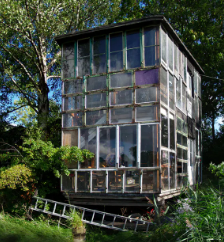
A self-built home. seier+seier/Flickr., CC BY
In 2012, a minority of residents wanted to be allowed to buy and sell homes that they had built or renovated for themselves. The final deal with the Danish state prevented this. Residents have the right to occupy, but not to buy or sell their homes or businesses. The whimsical variety of domestic architecture that has evolved makes Christiania visibly distinct from surrounding up-market neighbourhoods.
The residents’ resistance
I know from my brief time living in Christiania as researcher in residence in 2010 that degrowth values were practised there long before this term became associated with a broad movement of alternative, ethical and ecological actions.
From the outset, it was the Christiania way to renovate and adapt rather than to tear down existing buildings, and to build with reclaimed materials at minimum costs. This also made it possible to get by on a low income, with reduced hours in paid employment, giving residents a way to resist the earn-to-spend treadmill.
Christiania is known as a place where nothing goes to waste. Numerous craft skills and social enterprises thrive on a culture of making do and mending. Elsewhere in Copenhagen similar local livelihoods fail to flourish under profit maximising conditions. The community has won prizes for comprehensive garbage collection and recycling. The collectively run Green Hall trades in salvaged and repurposed building materials.
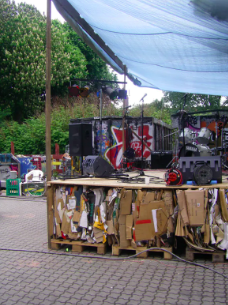
Stage made from compressed cardboard for ‘Dancing at the Trasher’, 2010. Helen Jarvis.
Six years on
This summer, Christiania hosts a festival of degrowth, to show that it is ethical and green to resist the burden of conspicuous consumption. The festival coincides with an exhibition of archives on the history of the place, which forms part of the sixth International Degrowth Conference taking place just across the Öresund Bridge in Malmö, Sweden.

Social investment with the Christiania people’s share. Helen Jarvis.
One example of grassroots degrowth since 2012 is the 12.8m Danish Kroner (£1.5m) raised from a social model of investment: the “People’s Christiania Share”. The scale of this crowdfunding (shares are symbolic and have no financial value) outstrips previous experiments with alternative currency. These include payment of a Christiania wage for community jobs – for example, working in the bakery, gardens, laundry, waste collection or machine hall – which functions much like the degrowth policy of basic income, where everyone is paid a minimum stipend.
By comparison, police estimate the cannabis market on Pusher Street to be worth 635m Danish Kroner (£74m) annually. While social models of investment benefit Christiania, profits from the hash market drive growth and speculation elsewhere. Recognising this conflict, residents chose in May this year to shut down Pusher Street temporarily. Younger residents are driving this shift from individual freedom (to profit from criminal activity) to mutual responsibility (for future generations and the planet). This coincides with broad based support for the recent crackdown on intimidating cannabis markets in Christiania.
The festival of degrowth will introduce visitors to a “village of alternatives”. My research shows that Christiania is an inspirational space to think differently about conventional standards of living, precisely because of the absence of private property. A collective shift in mindset can be achieved here, which would not be possible in neighbourhoods of conventional single family homes.
Making the magic
Yet puzzles remain, when it comes to practising sustainable degrowth at scale. One reason why Christiania’s car-free landscape is so “magical” is that residents live at remarkably low density: at first glance, they seem to live in a public park.
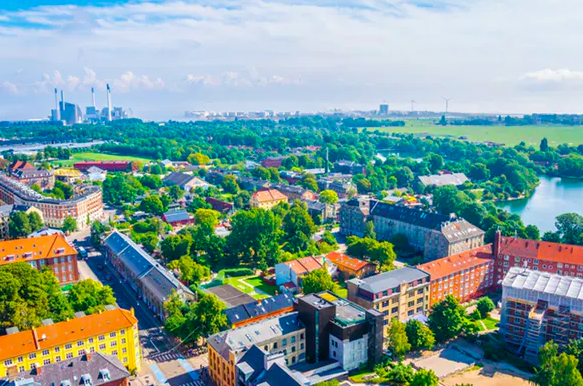
Low-density living. Shutterstock.
While this site might otherwise be expected to accommodate several thousand people in high density social housing, the legal safeguards of the 2012 deal endow Christiania exceptional experimental status. This allows residents to take risks with living creatively on a low income, enjoying close friendships in place of material consumption.
There are lessons here for places where degrowth is dismissed as impossibly Utopian, limited to fringe green debates and reduced goals of “sufficient living standards”. In the UK, state sponsored private property and ownership impose smaller private homes, rather than collective ownership of private and shared spaces.
But from Christiania, we learn that smaller private spaces only benefit sustainable degrowth when combined with collective ownership and generous community space for shared use: people come together to share skills and collectively manage scarce resources to reduce consumption. The hope is that as young green activists gather in Christiania this summer, thousands of visitors will look favourably upon collective living as the new normal.
HELEN JARVIS is a Reader in Social Geography at Newcastle University.
THIS ARTICLE WAS ORIGINALLY PUBLISHED ON THE CONVERSATION
How Solar Energy Is Bringing Power Back to Puerto Rico
After watching Hurricane Maria devastate his native Puerto Rico, New York City-based architect Jonathan Marvel knew he needed to do anything he could to give back. He banded together a group of friends to launch Resilient Power Puerto Rico, hoping to use the strength of renewable, solar energy to provide a steady source of electricity back to the island.
Just two weeks after the ambitious initiative was born, Marvel was back in Puerto Rico installing solar panels and batteries on the rooftops of community centers. The storm had wiped out power lines and had left people without electricity. Solar-powered energy would allow them to live and operate off the grid, without reliance on fossil fuel-burning power plants. Suddenly, these solar-powered community centers were able to provide spaces where people could refrigerate medication, filter water and gather together to rely on one another in the midst of a humanitarian crisis.
At last count, Marvel and Resilient Power Puerto Rico were able to bring solar power to 20 community centers across the island—helping over 100,000 people in the process.
Still, Marvel’s work is far from over. It took nearly a year before the Puerto Rico Electric Power Authority restored power to most of the island’s residents, and, according to reports, the electricity system is in not in a much better state than it was before Maria wiped out the island.
Longer term, Marvel dreams of a day when Puerto Rico is able to shift to 100-percent renewable energy sources. He believes it is an achievable goal, and Resilient Power Puerto Rico is working to make it a reality.
“We can no longer rely on large fossil fuel burning power plants distributing energy and wires that are going to get blown down every year,” Marvel says. “We have all this power from the sun that needs to be harnessed.”
The Blind Astronomer of Nova Scotia
Tim Doucette is legally blind, yet he sees the stars better than most people. A childhood diagnosis of congenital cataracts forced doctors to remove Doucette's lenses and widen his pupils. That left the amateur astronomer with only about 10 percent of his eyesight, but it also allows his pupils to pick up more light at night. You've never seen the night sky quite like Doucette.
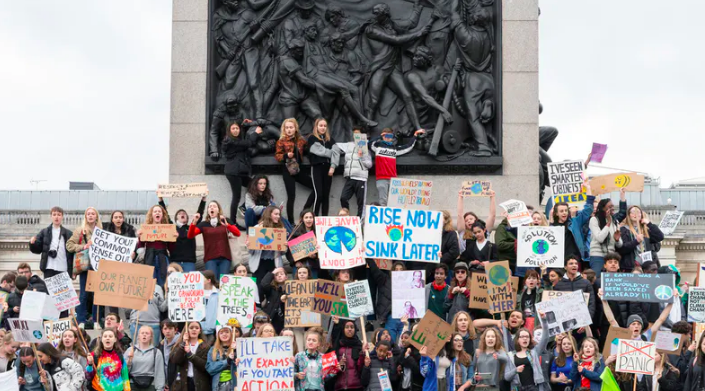
Climate Change: Children are Carving Out a Place in Politics – Now Adults Must Listen and Act
There is no doubt that young people are driving action on climate change. The #FridaysForFuture school strikes are arguably the most dedicated and sustained direct action in a generation. But will it make a difference?
Read MoreLost in Kyrgyzstan
Sara Izzi and Timur Tugalev, digital nomads and authors of the Travel blog The Lost Avocado.com document for the first time incredible country of Kyrgyzstan. The dreaming sceneries of the lake of Song Köl, from Orto Tokoy, a reservoir of turquoise water in the Kochkor District, up to Issik Kul, UNESCO Biosphere Reserve, and Karakol, with its canyons, wild parks and colourful markets.
Welcome to Hong Kong
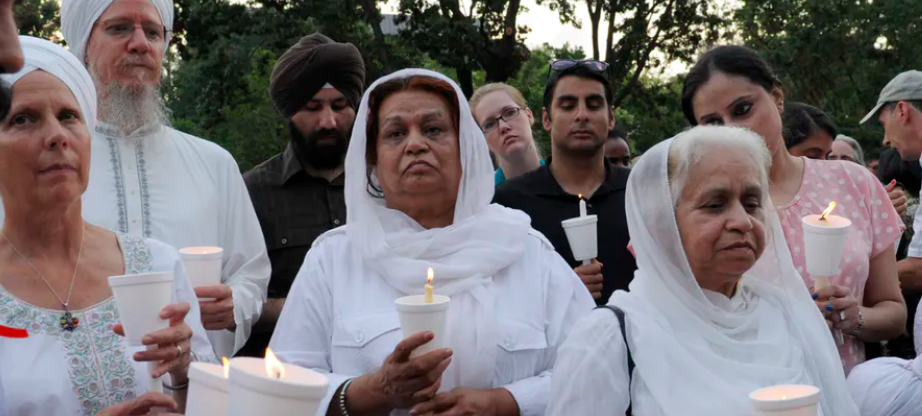
People participate in a candlelight vigil near the White House to protest violence against Sikhs in 2012. AP Photo/Susan Walsh
Why Sikhs Wear a Turban and What it Means to Practice the Faith in the United States
An elderly Sikh gentleman in Northern California, 64-year-old Parmjit Singh, was recently stabbed to death while taking a walk in the evening. Authorities are still investigating the killer’s motive, but community members have asked the FBI to investigate the killing.
For many among the estimated 500,000 Sikhs in the U.S., it wouldn’t be the first time. According to the Sikh Coalition, the largest Sikh civil rights organization in North America, this is the seventh such attack on an elderly Sikh with a turban in the past eight years.
As a scholar of the tradition and a practicing Sikh myself, I have studied the harsh realities of what it means to be a Sikh in America today. I have also experienced racial slurs from a young age.
I have found there is little understanding of who exactly the Sikhs are and what they believe. So here’s a primer.
Founder of Sikhism
The founder of the Sikh tradition, Guru Nanak, was born in 1469 in the Punjab region of South Asia, which is currently split between Pakistan and the northwestern area of India. A majority of the global Sikh population still resides in Punjab on the Indian side of the border.
From a young age, Guru Nanak was disillusioned by the social inequities and religious hypocrisies he observed around him. He believed that a single divine force created the entire world and resided within it. In his belief, God was not separate from the world and watching from a distance, but fully present in every aspect of creation.
He therefore asserted that all people are equally divine and deserve to be treated as such.
To promote this vision of divine oneness and social equality, Guru Nanak created institutions and religious practices. He established community centers and places of worship, wrote his own scriptural compositions and institutionalized a system of leadership (gurus) that would carry forward his vision.
The Sikh view thus rejects all social distinctions that produce inequities, including gender, race, religion and caste, the predominant structure for social hierarchy in South Asia.

A community kitchen run by the Sikhs to provide free meals irrespective of caste, faith or religion, in the Golden Temple, in Punjab, India. shankar s., CC BY
Serving the world is a natural expression of the Sikh prayer and worship. Sikhs call this prayerful service “seva,” and it is a core part of their practice.
The Sikh identity
In the Sikh tradition, a truly religious person is one who cultivates the spiritual self while also serving the communities around them – or a saint-soldier. The saint-soldier ideal applies to women and men alike.
In this spirit, Sikh women and men maintain five articles of faith, popularly known as the five Ks. These are: kes (long, uncut hair), kara (steel bracelet), kanga (wooden comb), kirpan (small sword) and kachera (soldier-shorts).
Although little historical evidence exists to explain why these particular articles were chosen, the five Ks continue to provide the community with a collective identity, binding together individuals on the basis of a shared belief and practice. As I understand, Sikhs cherish these articles of faith as gifts from their gurus.
Turbans are an important part of the Sikh identity. Both women and men may wear turbans. Like the articles of faith, Sikhs regard their turbans as gifts given by their beloved gurus, and their meaning is deeply personal. In South Asian culture, wearing a turban typically indicated one’s social status – kings and rulers once wore turbans. The Sikh gurus adopted the turban, in part, to remind Sikhs that all humans are sovereign, royal and ultimately equal.
Sikhs in America
Today, there are approximately 30 million Sikhs worldwide, making Sikhism the world’s fifth-largest major religion.

‘A Sikh-American Journey’ parade in Pasadena, Calif. AP Photo/Michael Owen Baker
After British colonizers in India seized power of Punjab in 1849, where a majority of the Sikh community was based, Sikhs began migrating to various regions controlled by the British Empire, including Southeast Asia, East Africa and the United Kingdom itself. Based on what was available to them, Sikhs played various roles in these communities, including military service, agricultural work and railway construction.
The first Sikh community entered the United States via the West Coast during the 1890s. They began experiencing discrimination immediately upon their arrival. For instance, the first race riot targeting Sikhs took place in Bellingham, Washington, in 1907. Angry mobs of white men rounded up Sikh laborers, beat them up and forced them to leave town.
The discrimination continued over the years. For instance, when my father moved from Punjab to the United States in the 1970s, racial slurs like “Ayatollah” and “raghead” were hurled at him. It was a time when 52 American diplomats and citizens were taken captive in Iran and tension between the two countries was high. These slurs reflected the racist backlash against those who fitted the stereotypes of Iranians. Our family faced a similar racist backlash when the U.S. engaged in the Gulf War during the early 1990s.
Increase in hate crimes
The racist attacks spiked again after 9/11, particularly because many Americans did not know about the Sikh religion and may have conflated the unique Sikh appearance with popular stereotypes of what terrorists look like. News reports show that in comparison to the past decade, the rates of violence against Sikhs have surged.
Elsewhere too, Sikhs have been victims of hate crimes. An Ontario member of Parliament, Gurrattan Singh, was recently heckled with Islamophobic comments by a man who perceived Singh as a Muslim.
As a practicing Sikh, I can affirm that the Sikh commitment to the tenets of their faith, including love, service and justice, keeps them resilient in the face of hate. For these reasons, for many Sikh Americans, like myself, it is rewarding to maintain the unique Sikh identity.
SIMRAN JEET SINGH is a Henry R. Luce Post-Doctoral Fellow in Religion in International Affairs Post-Doctoral Fellow at New York University.
THIS ARTICLE WAS ORIGINALLY PUBLISHED ON THE CONVERSATION
China’s Architectural Wonder Has Been Standing for 700 Years
The Guanyin Pavilion was built to last. And last. And last. This temple has sat atop a large reef rock in the middle of China’s Yangtze River in Ezhou for 700 years. When the water rises and covers the foundation, it looks like the structure is floating. Also known as the Goddess of Mercy Pavilion, the temple isn’t open to the public nowadays. But we’ve captured a glorious bird’s eye view of this historical treasure, holding its own against the swirling current.

Grid, glorious grid. Kaspars Upmanis/Unsplash., FAL
Superblocks: Barcelona’s Car-Free Zones Could Extend Lives and Boost Mental health
The world’s biggest cities have larger populations and higher economic outputs than some countries. But as they grow in size and complexity, cities are also facing thorny challenges that threaten the health and happiness of residents. Congestion, pollution and a lack of community spaces have become major drags on people’s aspirations and experiences of urban living.
In response, cities must manage their resources and priorities to create sustainable places for visitors and residents, and foster innovation and growth. Enter Barcelona – the capital of Catalonia, in Spain – where a bold stroke of urban planning first introduced “superblocks” in 2016.
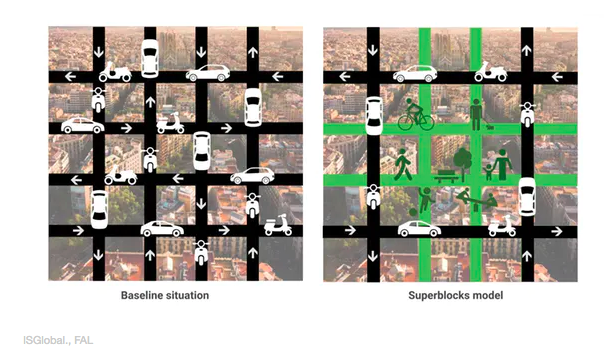
Superblocks are neighbourhoods of nine blocks, where traffic is restricted to major roads around the outside, opening up entire groups of streets to pedestrians and cyclists. The aim is to reduce pollution from vehicles, and give residents much-needed relief from noise pollution. They are designed to create more open space for citizens to meet, talk and do activities.
Health and well-being boost
There are currently only six superblocks in operation, including the first, most prominent one in Eixample. Reports suggest that – despite some early push back – the change has been broadly welcomed by residents, and the long-term benefits could be considerable.
A recent study carried out by the Barcelona Institute for Global Health estimates that if, as planned, 503 potential superblocks are realised across the city, journeys by private vehicle would fall by 230,000 a week, as people switch to public transport, walking or cycling.
The research suggests this would significantly improve air quality and noise levels on the car-free streets: ambient levels of nitrogen dioxide (NO₂) would be reduced by a quarter, bringing levels in line with recommendations from the World Health Organisation (WHO).
The plan is also expected to generate significant health benefits for residents. The study estimates that as many as 667 premature deaths from air pollution, noise and heat could be prevented each year. More green spaces will encourage people to get outdoors and lead a more active lifestyle.
This, in turn, helps to reduce obesity and diabetes and ease pressure on health services. The researchers claim that residents of Barcelona could expect to live an extra 200 days thanks to the cumulative health benefits, if the idea is rolled out across the city.

Space to play. Mosa Moseneke/Unsplash., FAL
There are expected to be benefits to mental health, as well as physical health. Having access to such spaces can stave off loneliness and isolation – especially among elderly residents – as communities form stronger bonds and become more resilient.
Stumbling blocks
It was Salvador Rueda, director of the Urban Ecology Agency of Barcelona, who first championed the introduction of superblocks – and he argues that the idea could be used in any city. Even so, authorities looking to expand the concept in Barcelona or beyond will need to be mindful of some concerns.
Changes like these require capital investment. Even as the car-free streets are transformed with urban furniture and greenery, the remaining major roads will likely have to accommodate heavier traffic.
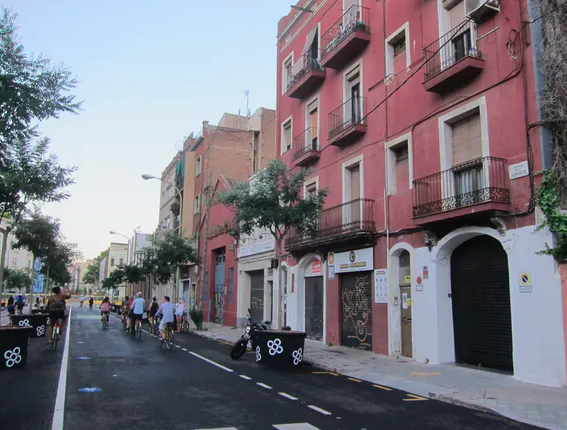
Nothing comes for free. Zvileve/Flickr., CC BY-SA
Further investments in local infrastructure – such as improving surrounding roads to deal with more traffic, or installing smart traffic management system – could be required to prevent serious congestion. Then the question remains, how to finance such investments – a higher tax rate is unlikely to be popular.
What’s more, whenever a location becomes more desirable, it leads to an increase in property demand. Higher prices and rent could create pockets of unaffordable neighbourhoods. This may lead to use of properties for investment purposes and possibly, displacement of local residents.
It’s also worth noting that Barcelona is an old and relatively well-planned European city. Different challenges exist in emerging global cities across Asia, Africa and Latin America – and in younger cities in the US and Australia. There is a great deal of variation in scale, population density, urban shape and form, development patterns and institutional frameworks across the cities. Several large cities in the developing world are heavily congested with uncontrolled, unregulated developments and weak regulatory frameworks.
Replicating what’s been done in Barcelona may prove difficult in such places, and will require much greater transformations. But it’s true that the basic principles of superblocks – that value pedestrians, cyclists and high quality public spaces over motor vehicles – can be applied in any city, with some adjustments.
Leading the way
Over the history of human civilisation, great cities have been at the forefront of innovation and social progress. But cities need a robust structure of governance, which is transparent and accountable, to ensure a fair and efficient use of resources. Imposing innovation from the top down, without consultations and buy-in, can go squarely against the idea of free market capitalism, which has been a predominant force for modern economies and can lead push-back from citizens and local businesses.
Citizens must also be willing to change their perspectives and behaviour, to make such initiatives work. This means that “solutions” to urban living like superblocks need to have buy-in from citizens, through continuous engagement with local government officials.

A man speaks at a public consultation on the Eixample superblock in Barcelona. Ajuntament Barcelona/Flickr., CC BY-ND
Successful urban planning also needs strong leadership with a clear and consistent vision of the future, and a roadmap of how that vision can be delivered. The vision should be co-developed with the citizens and all other stakeholders such as local businesses, private and public organisations. This can ensure that everybody shares ownership and takes responsibility for the success of local initiatives.
There is little doubt that the principles and objectives of superblocks are sound. The idea has the potential to catch on around the world – though it will likely take a unique and specific form in every city.
ANUPAM NANDA is the Professor of Urban Economics and Real Estate at the University of Reading.
THIS ARTICLE WAS ORIGINALLY PUBLISHED ON THE CONVERSATION
Scotland In Motion
Experience a beautiful timelapse journey through the amazing landscapes of Scotland. In this film about the Scottish Highlands you will experience places like Glencoe, The Storr, Quiraing, Fairy Pools and many other places on the Isle of Skye.

Corals release millions of sperm and eggs in synchrony to reproduce. Rich Carey/Shutterstock
Coral Reefs: Breakdown in Iconic Spawning Puts Species at Risk of Extinction – New Research
It’s rather tricky to reproduce if you’re stuck to the floor – unless you’re a coral. Their spectacular spawning events are a beautiful sight to behold. Once a year, they spill billions of sperm and eggs into the sea, peppering the deep blue with a palette of vivid reds, yellows, oranges, and whites.
But according to new research, some corals are no longer reproducing with the same clockwork timing, adding yet another survival threat to the long list already befalling reefs.
Corals are unlike any other animal on the planet. Thousands of polyps, each resembling an upside down jellyfish, live with each other in beds of limestone attached to the seabed. As they grow, they create the unified limestone skeleton we see as coral from the outside. Many of these coral colonies together create a complex three-dimensional reef structure that in turn creates a home for thousands of other plants and animals.
Corals release so many sperm and eggs that the slicks can often be seen from the air. LBM1948/Wikimedia Commons, CC BY-SA
To get around their firm attachment to the seabed, most coral species reproduce by the mass release of sperm and eggs directly into the water at the same time. This annual mass spawning is one of nature’s most iconic events – rising underwater snowstorms so thick that they create brightly coloured slicks on the sea surface, visible from high above.
Astonishingly, corals synchronise their reproduction despite not having a brain, nor any direct way of communicating between colonies. Sperm and eggs can only survive in the water for a few hours, so in the vast ocean space this synchrony is essential for a good chance of fertilisation.
Until recently, little more than this was known about the intricacies of coral reproduction. But in the context of rapid coral decline, researchers have started applying genetic and reproductive research techniques to understand how environmental conditions are impacting coral fertilisation.
Read more: Explainer: mass coral spawning, a wonder of the natural world
The new research monitored mass spawnings on corals reefs in the northern Red Sea. The researchers compared spawning timings of five coral species between 2015 and 2018 to results from two other studies conducted on the same species in the 1980s. In the species Acropora eurystoma, they also measured various reproductive traits, such as the number of sperm and eggs within a colony, the number of colonies reproducing in a given area and the size of coral colonies in the area – an index of their age.
In the 1980s, all the coral species monitored had one or two well-defined periods of spawning, where eggs and sperm were released within a few days of each other. But by the 2010s, some species released them over as many as a couple of months. With a lower concentration of eggs and sperm in the water at any one time, fertilisation becomes much rarer.


Although visually the coral reefs appeared in overall good health, the researchers found that the corals that weren’t spawning at the same time had no baby corals. This means that affected species can appear to be abundant, but in reality be nearing extinction through reproductive failure.
Threat and opportunity
This is the first study to compare current spawning behaviour with historical data, providing evidence of increased desynchrony over time. Of course, there are many, many more coral species than the five measured in the current study, so we must be cautious of drawing general conclusions at this stage. However, evidence (without historical data for comparison) suggests that the same may be happening in other parts of the world too.
Unfortunately, it’s not yet known exactly what is causing the apparent decline in spawning synchrony, making it difficult to put forward a solution to the problem. Increases in light pollution from coastal development and hormone pollution from contraceptive pills have recently been shown to disrupt the natural triggers for coral spawning. The same is true of water temperature, which has increased by 1.2℃ at the test site since the 1980s. However, further research is needed to establish whether these factors are causing corals to reproduce out of sync with each other.
While these new advances in the understanding of coral reproductive biology are worrying, they also present opportunities. If we can identify why some corals are reproducing well and others not, we may be able to innovate new conservation methods that protect corals before they show signs of dying off. Using selective breeding techniques, for example, we may be able to imbue corals with greater resilience to the factors causing spawning desynchrony.
Read more: Heat-tolerant corals can create nurseries that are resistant to bleaching
In the meantime though, all we can do to keep the glimmer of hope alive for reefs is redouble international efforts to tackle climate breakdown, and manage coastal areas responsibly. Without such intervention, these ecosystems rich in economic, ecological and cultural value will soon succumb to the multiple threats it faces.
HEIDI BURDETT is a Research Fellow, Lyell Centre for Earth and Marine Science and Technology, Heriot-Watt University.
THIS ARTICLE WAS ORIGINALLY PUBLISHED ON THE CONVERSATION
Fighting to End Child Marriage in Lebanon
Ghassan Idriss knows firsthand the harmful effects of child marriage on society. Having married at a young age to a woman even younger than himself, Idriss and his wife faced struggles that so many other couples in his home country of Lebanon grapple with. Now, with three daughters of his own, Idriss is doing everything he can to educate those around him about the dangers of this antiquated institution. By hosting talks, he’s using his voice to spark change within his community.
The Women Taking on the Macho World of Mariachi
Mariachi is a folkloric tradition as macho as it is Mexican. Eight years ago, Mireya Ramos and Shae Fiol sought to up-end convention and founded Mariachi Flor de Toloache, New York City’s first all-female mariachi band.
Read More