Five decades after the assassination of Martin Luther King Jr., many carry on his legacy through the struggle for racially integrated schools. Yet as King put it in a 1968 speech, the deeper struggle was “for genuine equality, which means economic equality.” Justice in education would demand not just racially integrated schools, but also economically integrated schools.
The fight for racial integration meant overturning state laws and a century of history – it was an uphill battle from the start. But economic integration should have been easier. In the mid-18th century, when education reformers first made the case for inclusive and taxpayer-supported education, they argued that “common schools” would ease the class differences between children from different backgrounds.
As Horace Mann, the most prominent of these reformers, argued in 1848, such schools would serve to counter the “domination of capital and the servility of labor.” Learning together on common ground, rich and poor would see themselves in common cause – a necessity for the survival of the republic.
More than 150 years later, the nation has yet to realize this vision. In fact, it has been largely forgotten. Modern Americans regularly scrutinize the aims and intentions of the Founding Fathers; but the early designs for public education – outlined by Mann, the first secretary of education in Massachusetts, as well as by leaders like Henry Barnard, Thaddeus Stevens, and Caleb Mills – are mostly overlooked. Today, the average low-income student in the U.S. attends a school where two-thirds of students are poor. Nearly half of low-income students attend schools with poverty rates of 75 percent or higher.
Education historians, like myself, have generally focused their research and attention on racial segregation, rather than on economic segregation. But as income inequality continues to deepen, the aim of economically integrated schools has never been more relevant. If we are concerned with justice, we must revitalize this original vision of public education.
Shared community
Early advocates of taxpayer-supported common schools argued that public education would promote integration across social classes. They thought it would instill a spirit of shared community and open what Horace Mann called “a wider area over which the social feelings will expand.”
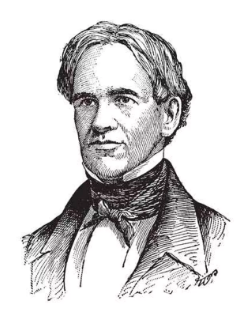
Horace Mann (1796-1859) was an early advocate of public education in the U.S. Fotolia/AP
And, generally speaking, it worked. The ultra-rich mostly continued to send their children to private academies. But many middle- and upper-income households began to send their children to public schools. As historians have shown, economically segregated schools did not systematically emerge until the mid-20th century, as a product of exclusionary zoning and discriminatory housing policies. Schools weren’t perfectly integrated by any means, particularly with regard to race. They were, however, vital sites of cross-class interaction.
Many prominent Americans – including U.S. presidents – were products of the public schools. Commonly, they sat side by side in classrooms with people from different walks of life.
But over the past half-century, students have been increasingly likely to go to school with students from similar socioeconomic backgrounds. Since 1970, residential segregation has increased sharply, with twice as many families now living in either rich or poor neighborhoods – a trend that has been particularly acute in urban areas. And segregation by income is most extreme among families with school-age children. Poor children are increasingly likely to go to school with poor children. Similar economic isolation is true of the middle and affluent classes.
Contemporary Americans commonly accept that their schools will be segregated by social class. Yet the architects of American public education would have viewed such an outcome as a catastrophe. In fact, they might attribute growing economic inequality to the systematic separation of rich and poor. As Horace Mann argued, it was the core mission of public schools to bring different young people together – to consider not just “what one individual or family needs,” but rather “what the whole community needs.”
Many parents do continue seek out diverse schools. A number of school districts have worked to devise student assignment plans that advance the aim of integration. And some charter schools are reaching this market by pursuing what has been called a “diverse-by-design” strategy. As demonstrated by research, diverse schools can and often do improve achievement across a range of social and cognitive outcomes, such as critical thinking, empathy and open-mindedness.
Largely overlooked, however, has been the political benefit of integrated schools. One rarely encounters the once-common argument that the health of American democracy depends on rich and poor attending school together. This is particularly surprising in an age of tremendous disparities in wealth and power. Members of Congress, on average, are 12 times wealthier than the typical American. Moreover, lawmakers are increasingly responsive to the privileged, even at the expense of middle-class voters.
If elites are isolated from their lower- and middle-income peers, they may be less likely to see a relationship of mutual commitment and responsibility to those of lesser means. As scholars Kendra Bischoff and Sean F. Reardon have argued, “If socioeconomic segregation means that more advantaged families do not share social environments and public institutions such as schools, public services, and parks with low-income families, advantaged families may hold back their support for investments in shared resources.”
What can be done?
Today more than 100 school districts or charter school chains work to integrate schools economically. Cambridge, Massachusetts, for instance, has four decades of experience balancing enrollments by social class, seeking to match the diversity of the city as a whole in each school.
This, of course, is only possible in a diverse place. Median family income in Cambridge is roughly US$100,000, while 15 percent of city residents live below the poverty line. It is also made possible through heavy investments in public education in the city. After all, it is far easier to convince middle-class and affluent parents to send their children to the public schools when per-pupil expenditures rival the highest-spending suburbs, as they do in Cambridge.
But not every district has Cambridge’s advantages. Nor does every district have similar political will.
The latter of those two constraints, however, may soon begin to change. Faced with a growing divide between rich and poor, Americans may begin to demand schools that not only serve young people equally from a funding standpoint, but also educate them together in the same classrooms.
Common schools by themselves are not enough to solve the problem of economic inequality. Yet if Americans seek to create a society in which the rich and the poor see themselves in common cause, common schools may be a necessary – and long overdue – step. We must come to see, in the words of Martin Luther King, that, “We are caught in an inescapable network of mutuality, tied in a single garment of destiny.”
Jack Schneider is an Assistant Professor of Education at the University of Massachusetts Lowell.
THIS ARTICLE WAS ORIGINALLY PUBLISHED ON THE CONVERSATION