This video was shot over a 5 day trip to Tokyo in January 2016. It was Christoph Gelep’s (videographer) first time visiting Japan, a place he had always wanted to see. With a population of 35 million, Tokyo is the largest metropolitan area in the world. Due to this, Christophe soon realized how lively and energetic this city really is.
VIDEO: Hello Tokyo
Americans and Mexicans Living at the Border are More Connected Than Divided
In 2002, I began traveling the entire length of the U.S.-Mexico border on both sides. From the Pacific Ocean to the Gulf of Mexico, the border measures almost 2,000 miles.
Read MoreIn France, This Chapel Rises From a Volcano
If you want to visit the Chapel of Saint-Michel d'Aiguilhe, aka, “Saint Michael of the Needle,” you’ll have to climb up—way up. Located in France, the chapel is perched atop a distinct volcanic plug rising nearly 300 feet in the air. Dedicated to Michael the Archangel, the church was commissioned in 951 by a bishop who wanted to commemorate his 1,000-mile journey back from the Pyrenees Mountains. Today, thousands of visitors make the trek up 268 steps to witness the chapel and its stunning panoramic views.
Dominican Republic
This video depicts shots of the Dominican Republic, a Caribbean nation that is known for its beaches, resorts and golfing. The video includes shots of the rainforest-covered karst mountains at Los Haitises National Park, one of the most stunning protected areas of the Caribbean. Additionally, Dominican cities and daily life are portrayed, such as cities like Santon Domingo and Santiago de los Caballeros.
Searching Japan's Ghost Island
Hashima (“battleship” in Japanese) Island is a 16-acre abandoned island about 10 miles off the coast of Nagasaki. With crumbling concrete buildings, abandoned undersea coal mines and a dramatic surrounding sea wall, the island is an eerie testament to Japan’s period of rapid industrialization. It is also a stark reminder of its dark history as a site of forced labor during World War II.
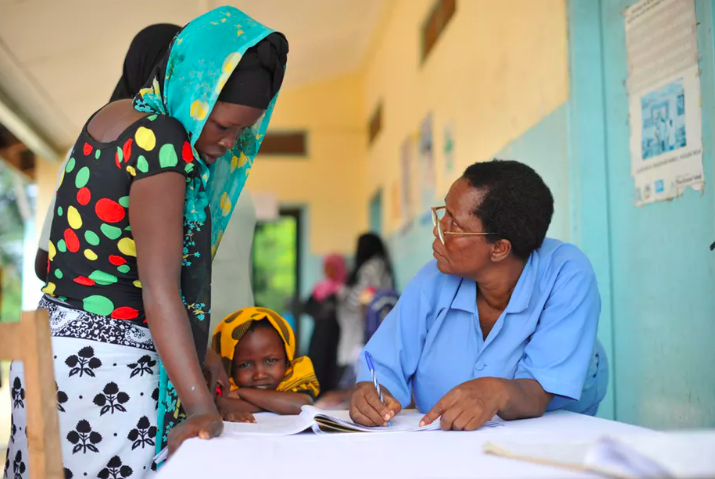
Tanzania was one of the first sub-Saharan African nations to embrace family planning as a national development priority. US Air Force, CC BY-SA
Tanzanian President Bluntly Attacks Contraception, Saying High Birth Rates are Good for Economy
Tanzanian President John Magufuli has suspended advertising by family planning organizations until further review, raising outcry among human rights groups and causing unrest within Tanzania’s health ministry.
The move came weeks after Magufuli made international headlines for inflammatory comments calling women who use contraception “lazy” and saying that he does “not see any need for birth control in Tanzania,” one of the world’s fastest-growing countries.
Amnesty International denounced Magufuli’s stance as an attack on the sexual and reproductive rights of Tanzanian women.
Tanzania has a history of promoting family planning, making Magufuli’s sudden opposition to birth control surprising.
But, as my demographic research shows, Magufuli is not the only world leader questioning longstanding population control policies.
Development and fertility
Magufuli, who took office in 2015, earned the nickname “The Bulldozer” during his previous two decades in Tanzanian politics.
His administration garnered early popular support in the East African nation for dismissing corrupt public officials and reorienting government spending, particularly toward anti-cholera operations and other public health services.
But he has also made undemocratic moves, shutting down newspapers critical of his administration and undermining judicial independence.
Many Tanzanians, especially young people and urbanites, have lost patience with his strongman tactics, polling shows.
Now his sudden opposition to birth control has raised concern that Tanzanian women could lose access to contraception.
Since the Industrial Revolution, economic development worldwide has closely correlated with lowering birth rates.
In Africa, the United Nations has documented a relationship between high population growth and lower quality of life. High fertility can exacerbate poverty and strain resource-strapped governments’ ability to provide public services like health care and education.
African leaders have generally acknowledged the connection between demography and development, though their demographic policies have varied. Tanzania, a British colony until 1961, was one of the first countries in sub-Saharan Africa to embrace family planning.
In 1959, the Family Planning Association of Tanzania – now a member of the International Planned Parenthood Federation – was founded to offer sexual education and contraception, though not abortion services.
At the time, the average Tanzanian woman had almost seven children. Cultural attitudes varied among the country’s 100-plus ethnic groups, but children were generally seen a status symbol and a source of labor for the majority who practiced subsistence farming and herding.
Tanzania’s first president, Julius Nyerere, emphasized social and economic development as the basis for his policy agenda. He called his plan “Ujamaa,” which means “familyhood” in Swahili, Tanzania’s national language.
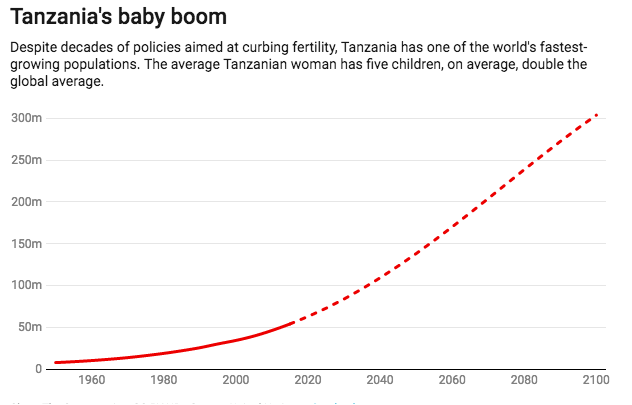
Chart: The Conversation, CC-BY-ND Source: United Nations Get the data
By choosing that term, Nyerere wanted to stress the connection between the newly sovereign nation and the families at its core.
In a 1969 speech introducing his blueprint for development in Tanzania, Nyerere urged citizens to “put emphasis on caring for children and the ability to look after them properly, rather than thinking only about the numbers of children and the ability to give birth.”
Tanzania’s Catholic champion of birth control
President Nyerere was Catholic, like roughly one-third of Tanzania’s population. Then, as now, the Vatican officially opposed birth control.
But Nyerere rallied prominent local Catholic bishops around his efforts to link development and family planning.
“Nobody should have a single child unless he or she is able to take care of it,” said the late Tanzanian Bishop Fortunatus Lukanima in an interviewafter his retirement in 1998. “Let’s discuss family planning, condoms, birth control and so on.”
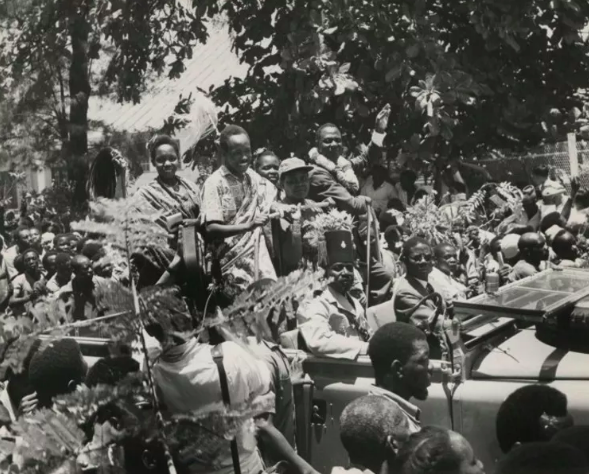
Tanzania’s first president, Julius Nyerere (center) saw reduced fertility as key to Tanzania’s future as a sovereign nation. UK National Archives, CC BY
Nyerere’s government also enlisted Muslim religious leaders to promote family planning in Tanzania’s predominantly Muslim coastal areas.
After he stepped down in 1985, consecutive administrations have continued to support family planning and pass national population policies aimed at lowering Tanzania’s fertility rates.
Despite these efforts, Tanzania still has one of the world’s highest birth rates. The average Tanzanian woman has five children, double the global average.
Tanzania’s population has grown from around 10 million at independence in 1961 to almost 60 million today. That’s triple the growth rate of the United States, double that of China and above even Nigeria, Africa’s most populous country.
Is population growth a problem?
This contradiction is seen across Africa.
Family planning programs have nearly universal government support. Yet the continent is still projected to account for 82 percent of the world’s population growth between now and 2100.
Common wisdom sees rapid population growth as a problem for low-income countries. If economic growth doesn’t keep pace, governments struggle to adequately provide services like housing, health care and education.
But the relationship between population growth and economic development is murkier than international organizations like the UN have long thought. And it’s changing with the times.
With fertility rates in Western Europe perilously low – in Spain, two people die for every one person born – some developing countries believe that a huge workforce and consumer pool could give them a global advantage.
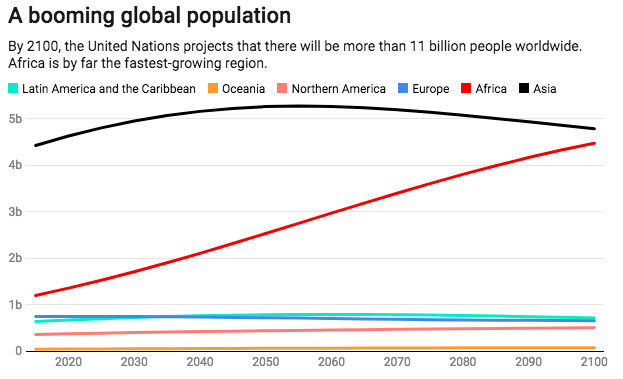
Chart: The Conversation, CC-BY-ND Source: United Nations Get the data
China and Russia recently reversed long-standing population-control policies, citing economic reasons.
Ugandan President Yoweri Museveni also sees population growth as a boon to Africa – and global markets.
Magufuli’s anti birth-control comments came in this context. Emboldened by optimistic projections of economic growth in East Africa, he says a booming population could actually benefit Tanzania.
Tanzania has US$10 million earmarked for family planning next year. Magufuli seems to be considering redirecting this money to pay for education, health care and other social programs with a more tangible socioeconomic impact.
Choosing a demographic destiny
Most demographers agree that African countries will eventually experience the same drop in fertility rates that high-income Western democracies in the 20th century.
So far, there is little evidence that government policies promoting women’s reproductive choice and access to contraception will spur that process.
If Magufuli’s rejection of family planning becomes policy, it would be a major setback for Tanzanian women’s rights.
But he is not alone in questioning long-accepted wisdom on population control.
KRISTEN CAREY is a PhD Candidate in History at Boston University.
THIS ARTICLE WAS ORIGINALLY PUBLISHED ON THE CONVERSATION
Threads of Hope and Beauty: Capturing the Resilience of Life and Culture
For more than two decades, through the lens of my camera, I have sought out the hope and beauty woven into the fabric of all life and all peoples, from forest to ocean. In the face of the myriad unrecognized plights and urgent truths of our shared human and planetary condition, these shimmering threads promise change.
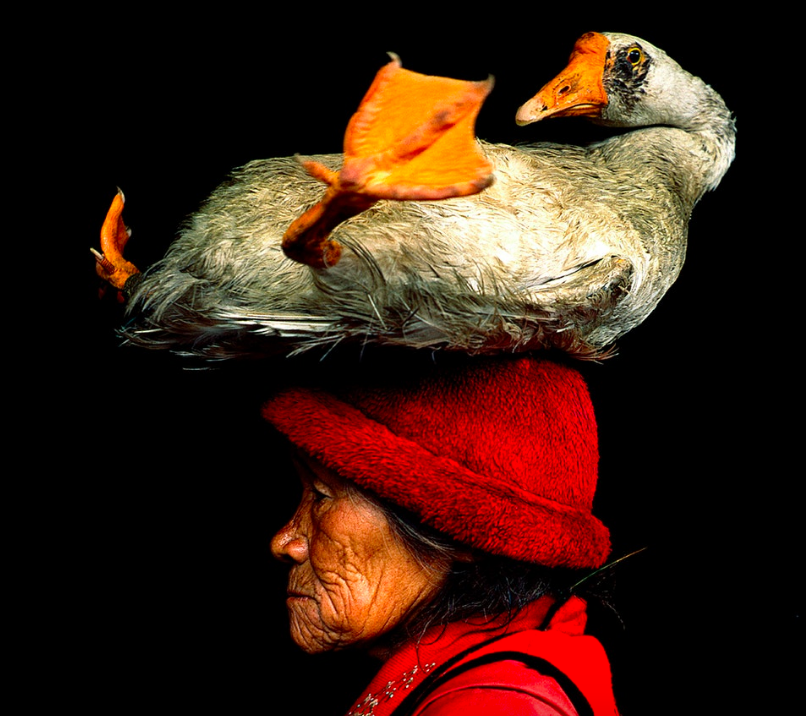
Images / Words © Cristina Mittermeier / Words © Kim Frank
National Geographic photographer and co-founder of SeaLegacy, Cristina Mittermeier, releases her new book this month, Amaze, published by teNeues. An intimate collection of over 25 years, Amaze combines impassioned poetic storytelling, indigenous wisdom, and an urgent plea to protect our planet. Amaze takes you on a insightful and hope-filled journey where the human spirit lifts from every page. Here is a glimpse into the book’s luminous world.
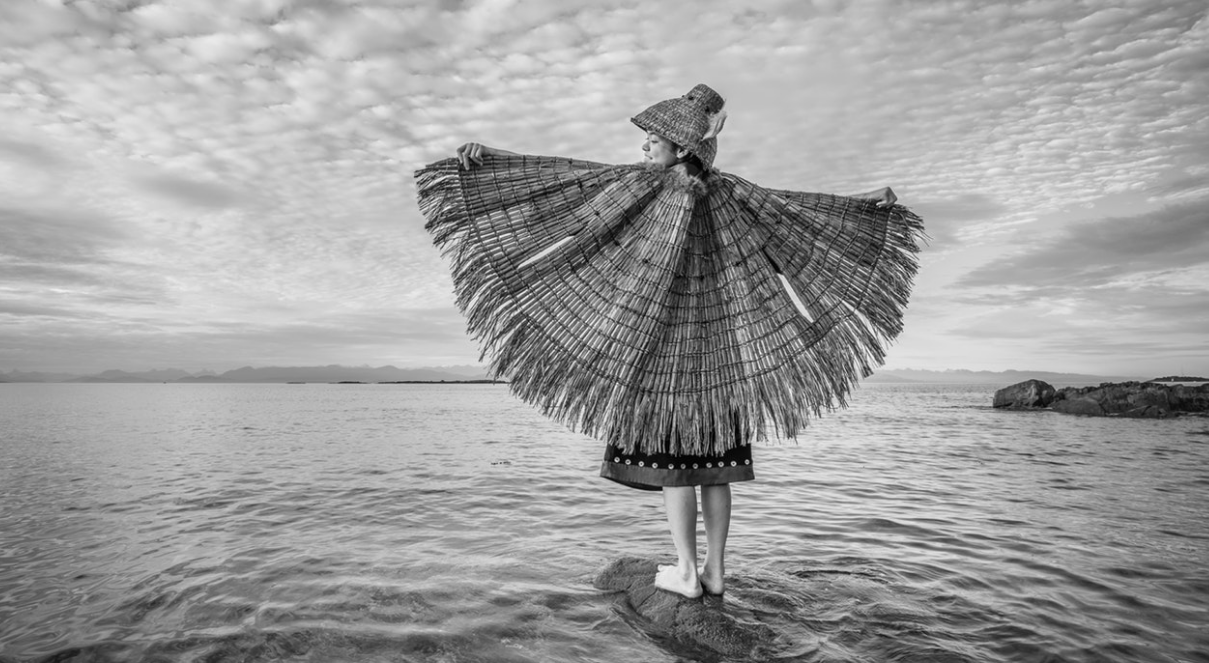
Ta’kaiya Blaney, a singer, songwriter, and drummer for her people, the Tla’amin First Nation of British Columbia, is seen in a cedar cape. The youngest speaker at the United Nations Indigenous Forum, she is a fierce advocate of indigenous rights and environmental protection.
AS WITH MANY IMPASSIONED JOURNEYS, MY LIFE AS A CONSERVATIONIST AND ARTIST BEGAN WITH A LESSON.
A lesson that rattles in my soul like a grain of sand in a chambered nautilus shell. Urging me onwards; reminding me why I do this work. Curled deep within this hidden spiral is the unwavering memory of one of the most powerful photographs I never took.
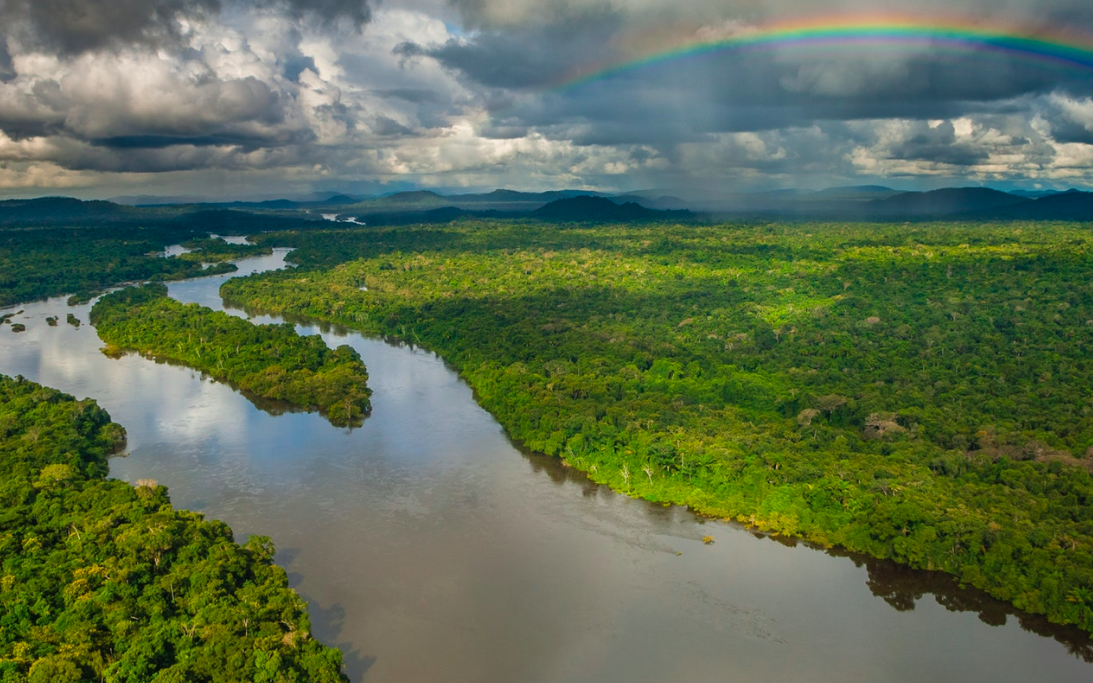
The densely knit Amazon rainforest; home to countless indigenous peoples and the once-mighty Xingú River, now forever tamed.
When I was a young and inexperienced photographer, I was sent on an assignment to a remote corner of the Brazilian Amazon. Flying from town to town, over vast stretches of rainforest, and in increasingly small airplanes, I finally arrived at the Kayapó village of Kendjam; home to one hundred and fifty individuals. My mission was to give a face and a name to the thousands of indigenous people whose lives were soon to be impacted by the construction of the Belo Monte dam.
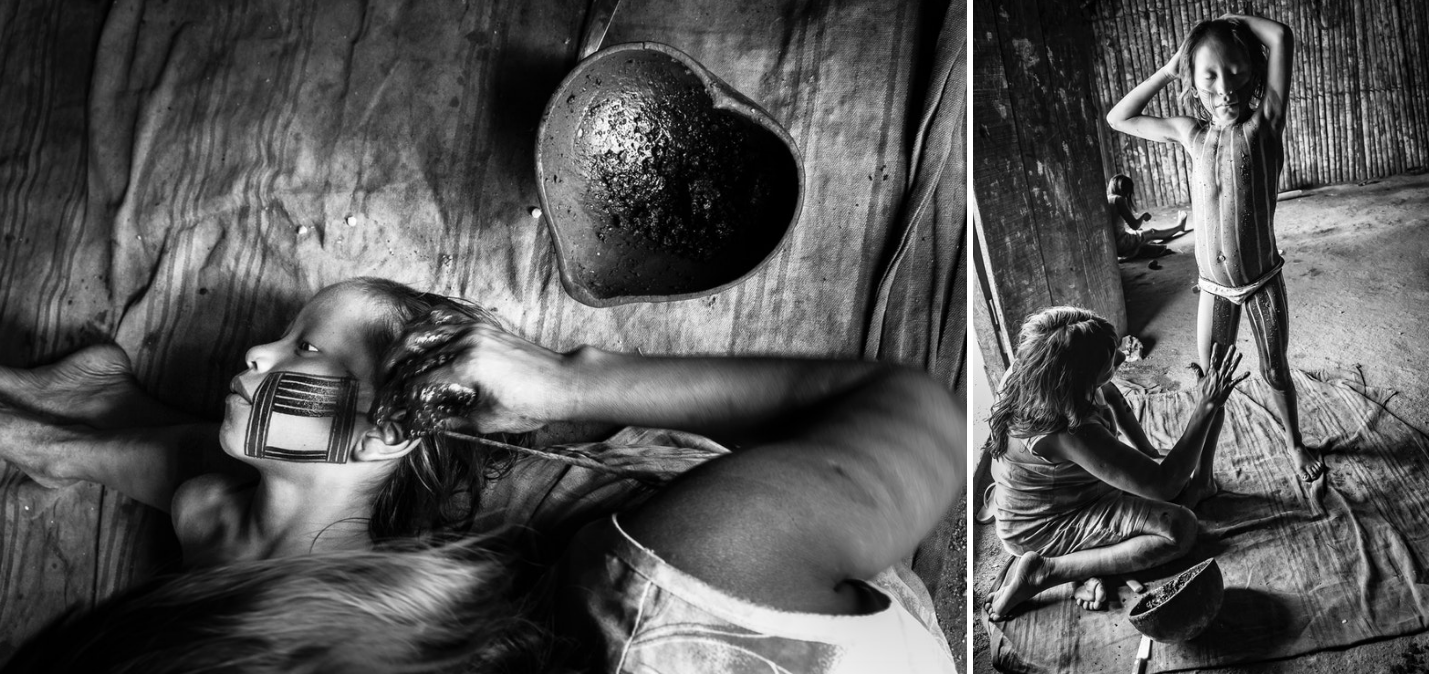
Young Kayapó children will sit or stand patiently for hours, as their mothers paint their bodies with genipap, a dye made from a forest fruit of the same name. Being painted, and painting others, is a very important form of social bonding in these remote Amazonian villages.
Late one afternoon, I saw a group of women coming up from the river; one of them carrying a tiny baby in her arms. It dawned on me that they had just given this newborn his first bath in the river; a vital ritual bath that ties a person’s fate to the fate of the river. And I had missed it. I consoled myself, naively thinking I that could find the mother in the morning and ask her to bring her baby back down to the water, hoping to recreate what I had missed. Tragically, we woke to the news that the infant had not lived through the night. By the time I had figured out what was happening, the women had already buried the tiny body, and I had missed that ritual as well.
Dismayed, I began to wonder if I was up to the challenge of this assignment, wishing the editors had sent a more experienced photographer, when out of the corner of my eye I saw a figure approaching. It was the mother of the baby, walking straight towards me and bawling. Nobody was going near her. As she came closer, I saw that she was cradling a dirty bundle.
In her sorrow, she had dug out the body of her dead child, and was carrying him around. Clutching a machete in her hand, she was hitting her forehead with the blunt edge as she screamed out her sorrow. Her face, her dress, her dead son; all were covered in mud and blood.
I stood there, gripping my camera with frozen fingers; paralyzed.
I could think only of my children back home and how I would feel if a stranger shoved a camera in my face just after I had lost my child. I am ashamed to admit that I did not take any photos.
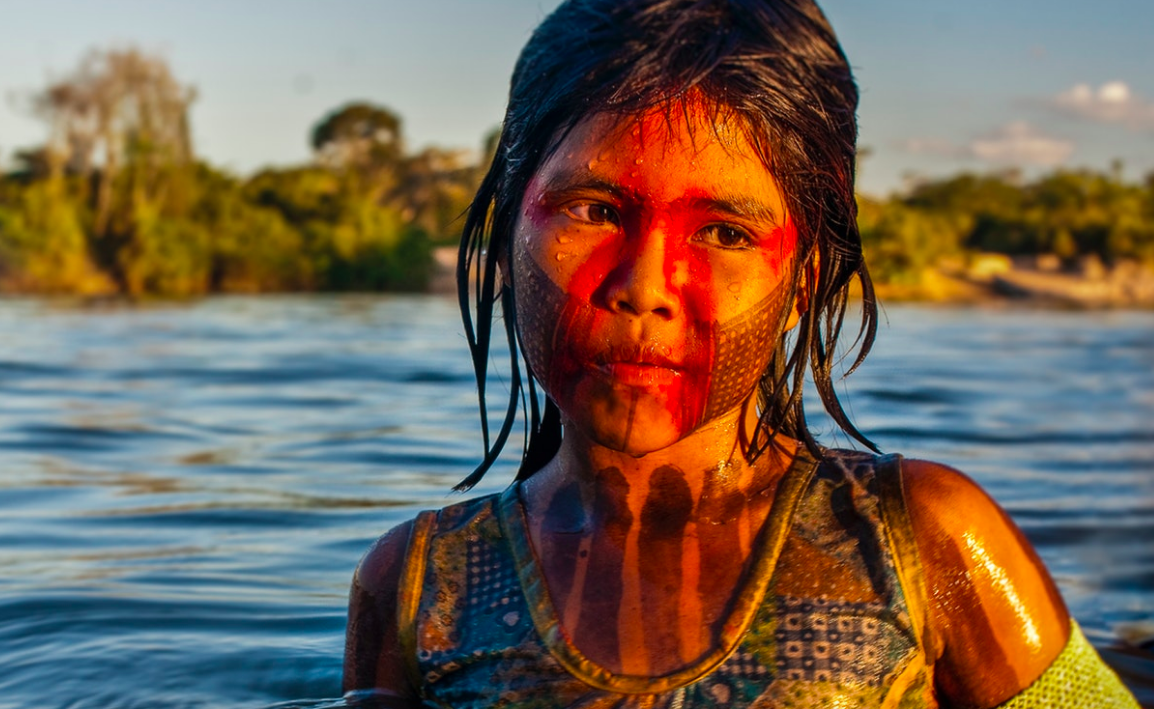
The Xingú river is intimately woven into the fabric of Kayapó life. This young girl’s eyes speak of a beloved waterway about to be dammed forever, of pride in her people’s traditions, of fear for a future unknown, and of the innocence that every child deserves to live with.
A few months later we learned that the dam had been approved and construction was to begin immediately. I thought about the beautiful, generous people I had met and how their lives would be changed forever.
To this day, I am haunted by this question:
Would their fate have been been different if I had dared to do my job and take those difficult photographs? What if my images had been beautiful enough, or dramatic enough, to change the conversation?
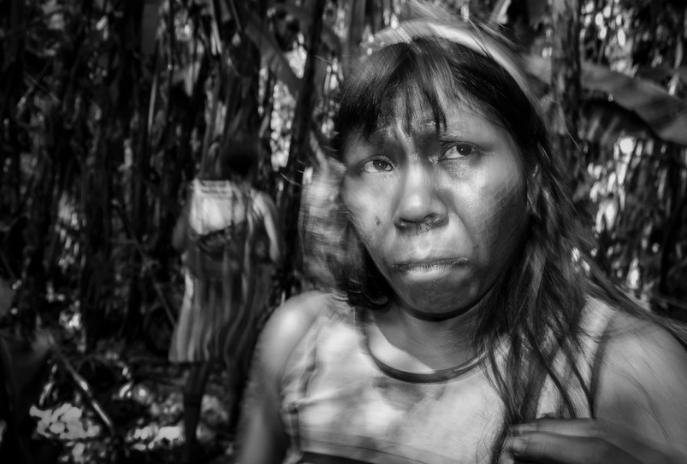
The Kayapó people believe that if they are good to the forest and to the river, they will be provided with everything they need to sustain themselves.
I will never know, because that day I lacked the courage to press the shutter: a mistake I never made again. From that moment forwards, I pledged never to hesitate and to make images that matter.
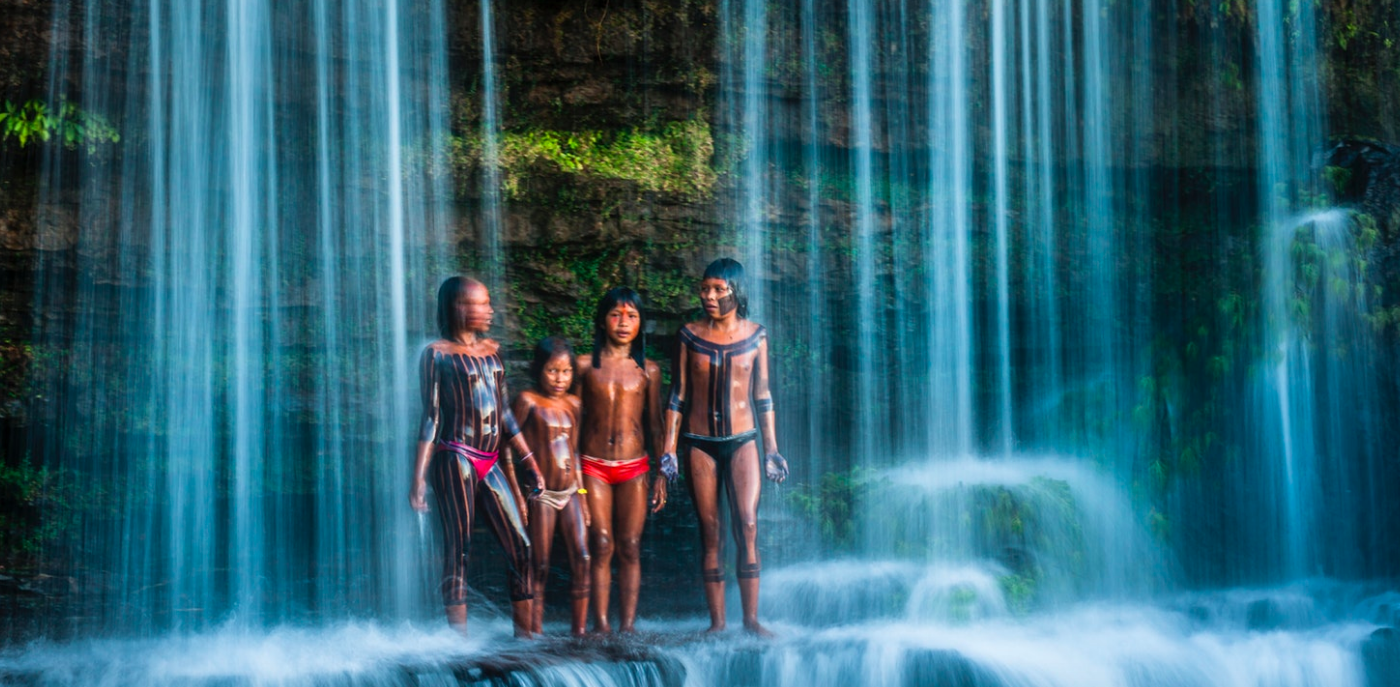
For centuries the Kayapó way of life has been deeply entwined with the rivers that flow through the forest. For me, this image is a powerful symbol of nature’s familial hold on the human spirit, reminding us that nature is so much more than a commodity to exploit.
Over the course of my career I have witnessed photography’s ability to shape perceptions, help societies pause and reflect, and inspire change. Being a photographer allows me to share my deepened understanding of the truth that all things in nature are part of one vast ecosystem.
Unlike people, the Earth’s diverse waterways, wildlife, and forests are intricately woven into the fabric of the whole; not claiming a separate existence. My hope is that my images will inspire a stronger connection with the nature that lies within and around us, as it is infinitely worthy of our deepest respect and care.
In a raw world that seems to bleed everyday with shriveling resources, human tragedy, and environmental ruin. Where every moment with a press of a button or a swipe of a screen, we are assaulted with distressing news, stories and images that threaten our sense of security and dim our lights, we must find ways to remain optimistic.
We must work to remove the physical and metaphorical barriers that block our meaningful connection to one another and to our planet. In my twenty five years documenting remote tribal communities around the world I have learned important lessons from their collective wisdom.
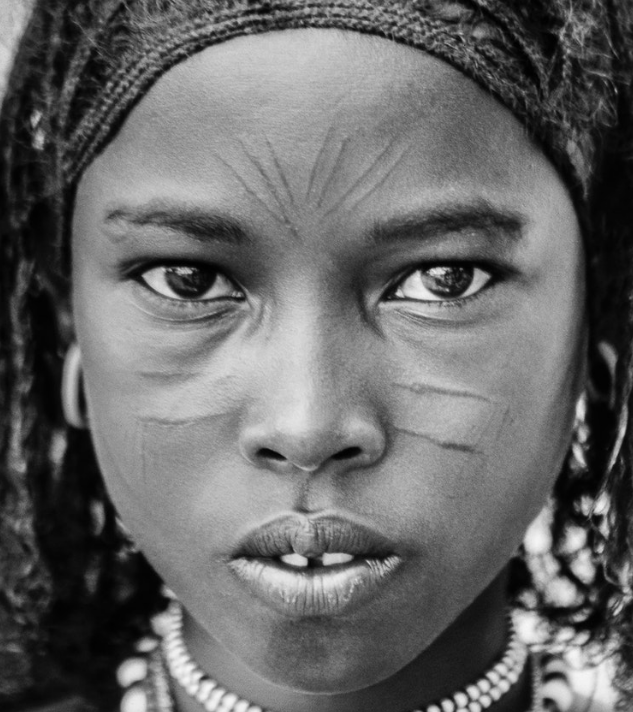
A young girl of the Afar tribe, from Ethiopia. Her people are fiercely proud and independent, having lived forever in the harsh deserts of the Horn of Africa, as semi-nomadic cattle and camel herders.
Spending time with Indigenous peoples has taught me that abundance is not measured in the things that we own, but in the strength of our human spirit, and in the depth of our connection to the natural world.
From the Amazon to the Arctic, these communities nurture an intimate awareness of the web of relationships that have sustained them in harmony with nature, for millennia. I have long thought about how I could share my own interpretation of this intuitive wisdom. Among the Kayapó, the Gitga’at, the Inuit, and the many other Indigenous communities I have photographed, I have witnessed a myriad of common strands — spiritual and physical; past and future. Woven together, they become the exquisite and universal fabric of something that I have come to call “enoughness”.
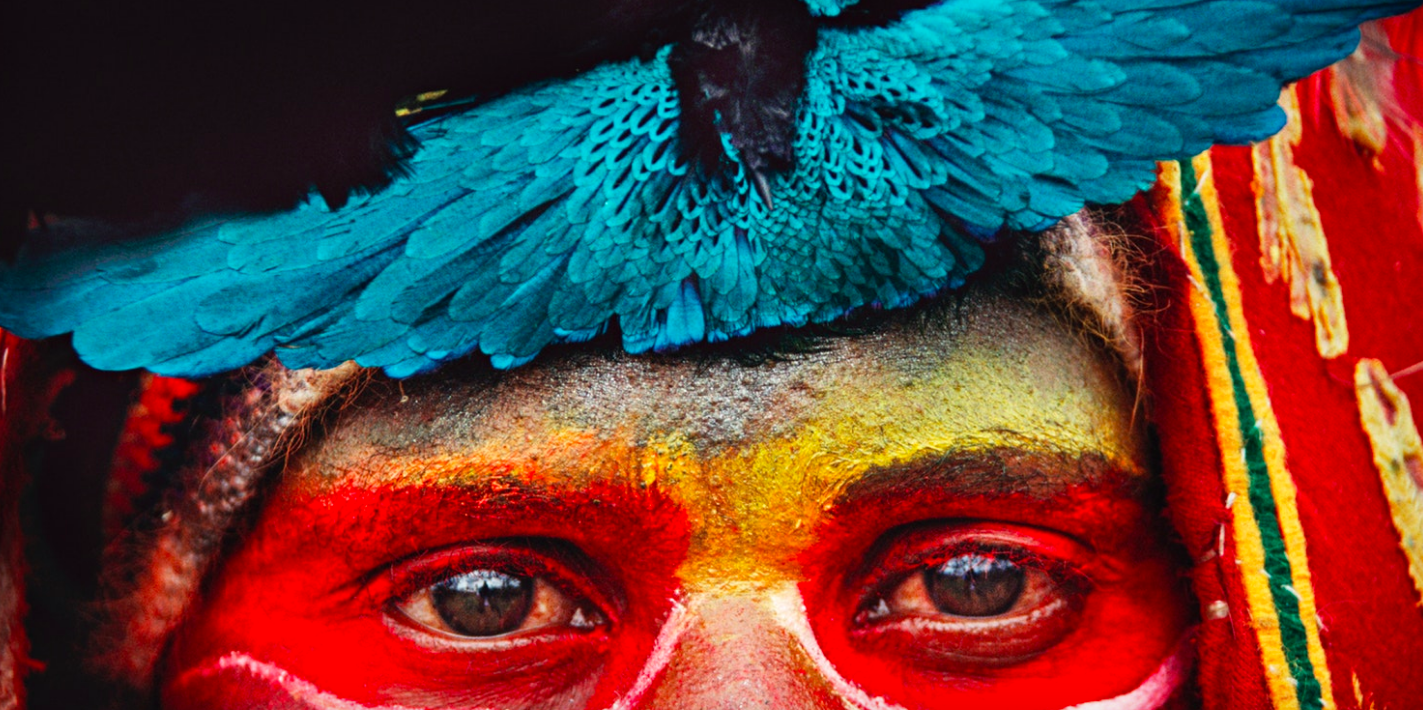
Made from the feathers of birds of paradise, the Indigenous peoples in the highlands of Papua New Guinea pride themselves on elaborate personal decoration. This woman’s spectacular headdress had been passed down from generation to generation.
My personal true north for navigating the complexities and contradictions of modern life with more planetary integrity, I search for these threads of enoughness: belonging, purpose, sacred ecology, spirituality, and creative expression in the people I meet, and the experiences I have.
I describe and show enoughness within the words and images in the first part of my book, Amaze, and I share an excerpt with you here. It is my hope that enoughness can be recognized as a path to a more fully expressed life, as we seek to entwine these threads more deeply into our own personal tapestry.
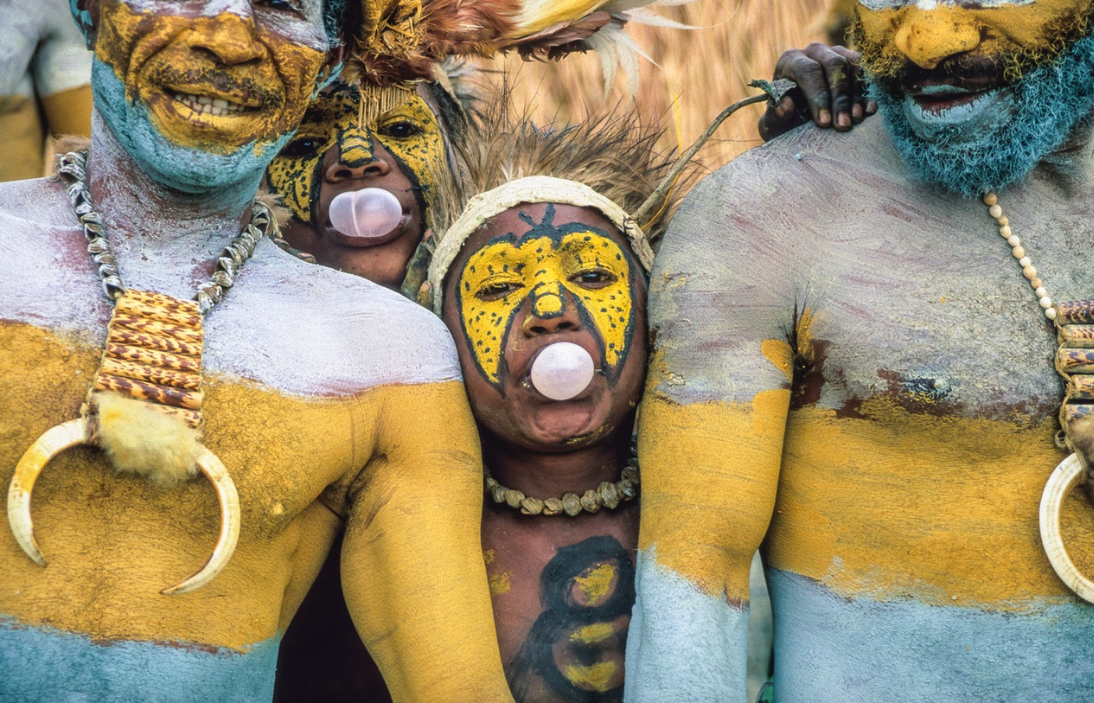
I am often asked if I gave gum to these boys from the highlands of Papua New Guinea, but the answer is no. They were at the Mount Hagen Sing-Sing, a festival that celebrated the most culturally-intact tribe, and delighted in surprising me with their bubbles.
We all yearn to belong, whether it be to a people, or to a place.
On the spray-soaked shorelines of the Pacific Northwest, a part of the world that I am now fortunate enough to call home, the Sundance Chief of the Tsleil-Wuatuth First Nation shared with me what belonging means to him. For his people, the land is not something that you own, nor is it a commodity to be bought and sold. Instead, it is something that you belong to.
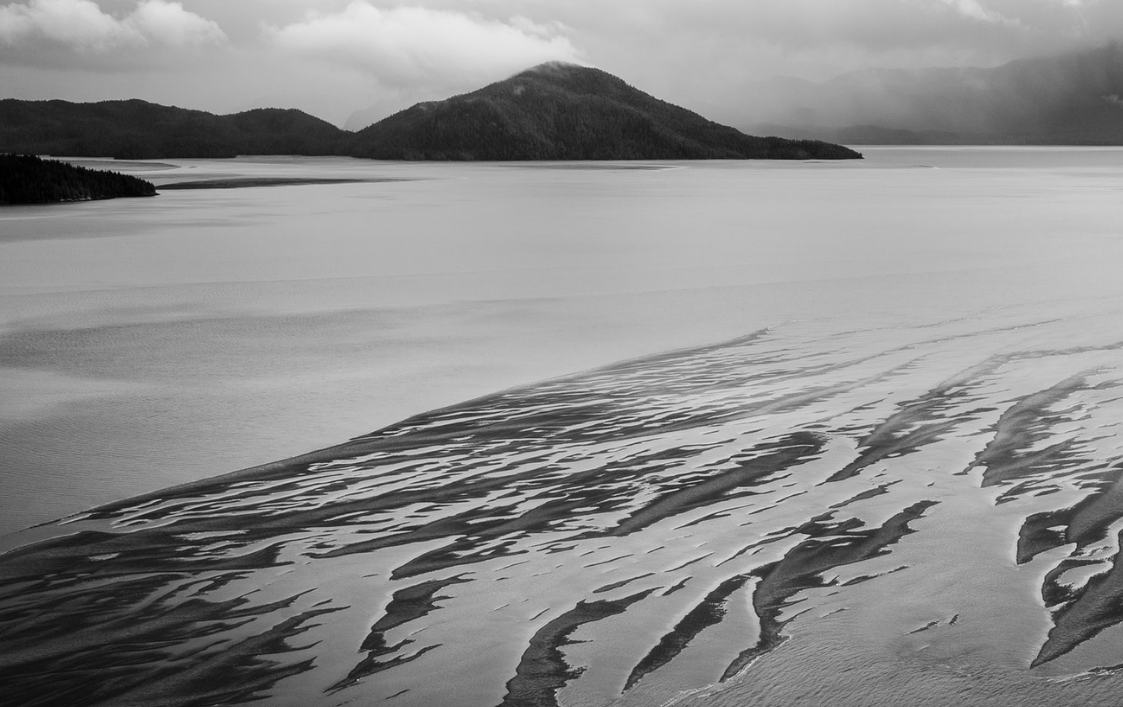
For over 30,000 years the Tsleil-Waututh First Nation and their ancestors have lived in the region we now call Burrard Inlet.
Rock, tree, river, or hill, crow, bear, or human, all were formed from the same elements by the Ancestors long ago. Their land is alive with relations, no matter the shape that relation may take. When you love, need, and care for the land, in return, the land will love, need, and care for its people. For the Tsleil-Waututh, the land is both family and self.
It is the ultimate expression of belonging.

Wearing his people’s traditional headdress, Will George, of the Tsleil-Waututh First Nation, screams out his frustration at the Canadian government for allowing the expansion of another destructive oil pipeline across his people’s ancestral lands.
Over the years I have observed that irrespective of culture and our place within the world, the path to true fulfillment often lies in finding joy and meaning through purpose. Living a life of purpose may mean intentionally raising your children wholeheartedly as compassionate, courageous citizens, of planet Earth, or it may mean developing your unique skill or talent so that you can contribute to your community. For me, it is the feeling that my passion lines up with what the world needs. Regardless, it is about recognizing your own inner value.
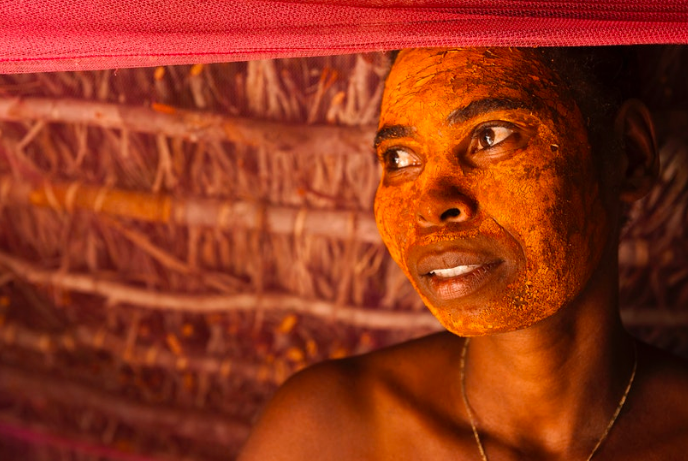
Seeking shelter from the relentless sun, I was invited in by this beautiful Antandroy woman, who was wearing a traditional mask made of powdered bark, a natural mosquito repellent and sunblock. She too was feeling unwell and I was moved by her humble hospitality and grace.
I marvel at how when we treat one another with compassion, and respect the creatures and land we rely on, our sense of personal nourishment grows in direct relationship. The elements that make up enoughness help us cultivate fulfillment from within. Rather than needing or expecting the world to give us something, enoughness naturally inspires us to give back, to others and to the planet. Cultivating a sense of belonging, embracing spirituality, and intentionally finding purpose. Tapping into existing sacred ecologies and embracing our natural gifts for creative expression. This is how we can nurture enoughness, as individuals, and as an intimately connected global community.
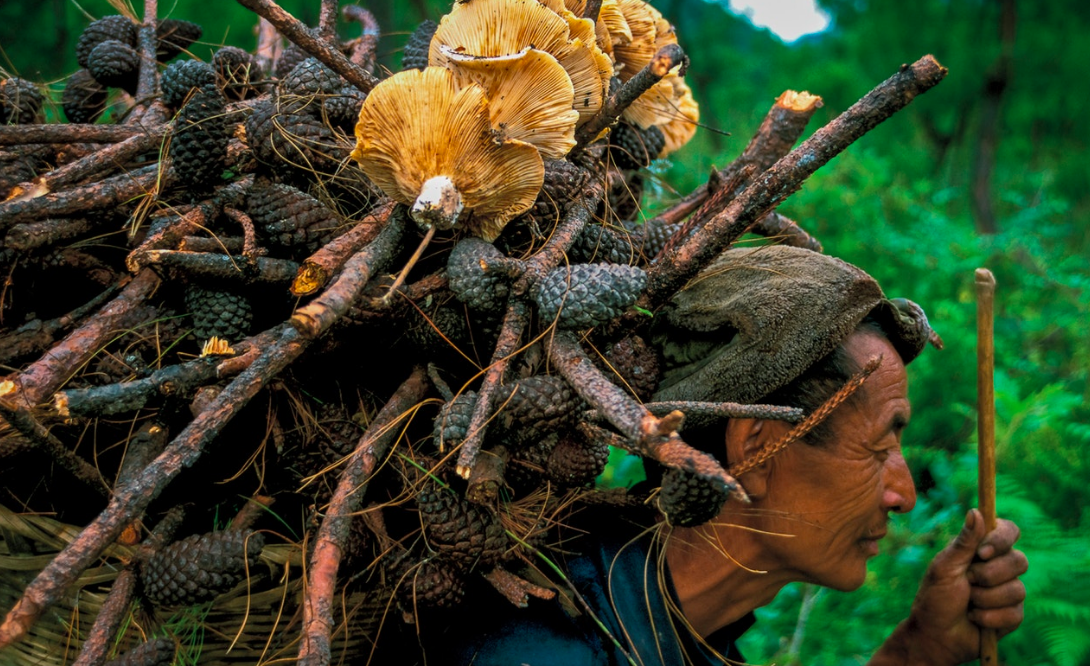
In northwestern Yunnan, each village has a sacred forest where the locals believe the gods reside, along with the spirits of their ancestors. People are not allowed to cut down trees, but they can collect fallen branches, mushrooms, and medicinal plants.
Enoughness is the feeling of something central being restored. It is a luminous path to a fully expressed life.
What a joy it has been to find the purposeful focus of living from enoughness in my own life; by looking carefully and listening closely to the lessons shared with me by the people who still live close to the land and who know how to carve a living from the Earth without destroying it.
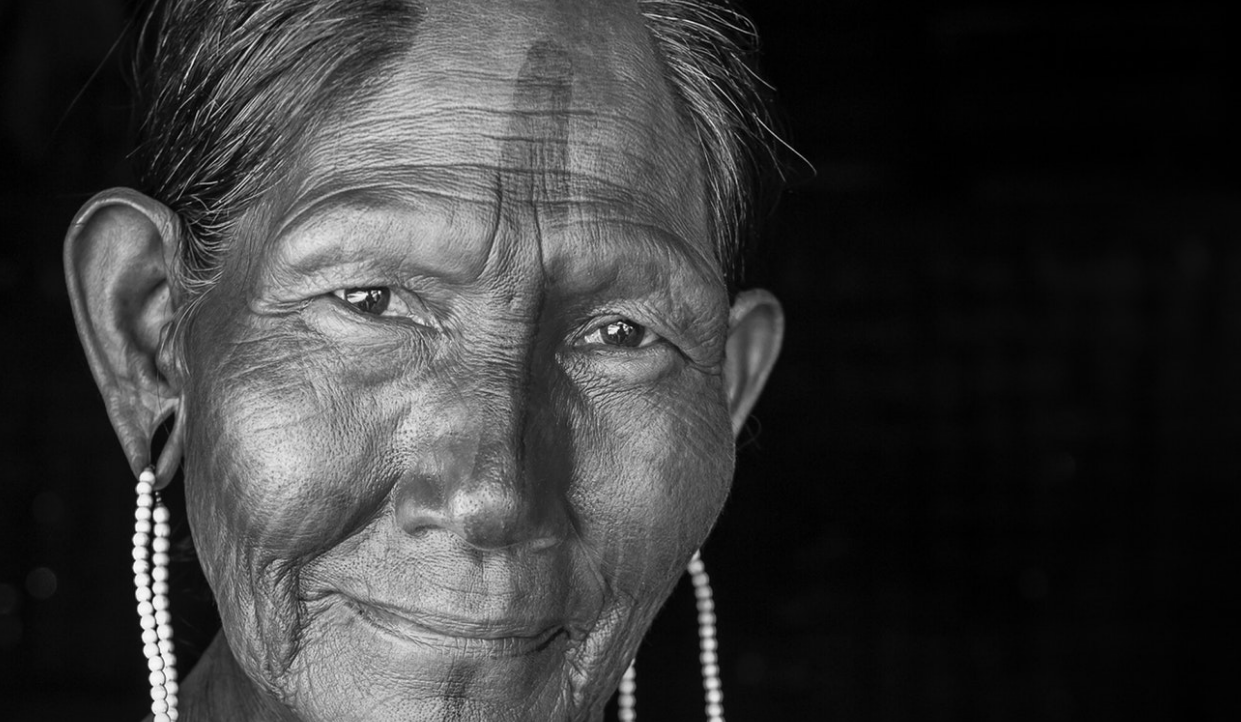
The embodiment of strength, knowledge, and the rich cultural heritage of her people, who have lived in the rainforests of Brazil for millenia, this Kayapó elder is a leader in her community and a proud keeper of their traditional knowledge.
Eyes on the horizon, Miracle, Virtuous, and Heavenly Kaahanui float with their surfboards, waiting for the next set of waves to roll in. For centuries their ancestors have practiced this art, perfecting their prowess in the water, and nurturing a deep connection with the life-giving grace of the sea. In that moment, soaked in the glittering spray of the vast Pacific Ocean once again, I know for certain that long-lasting change will only come when we feel more connected to the surge of life that is beating on our shores.
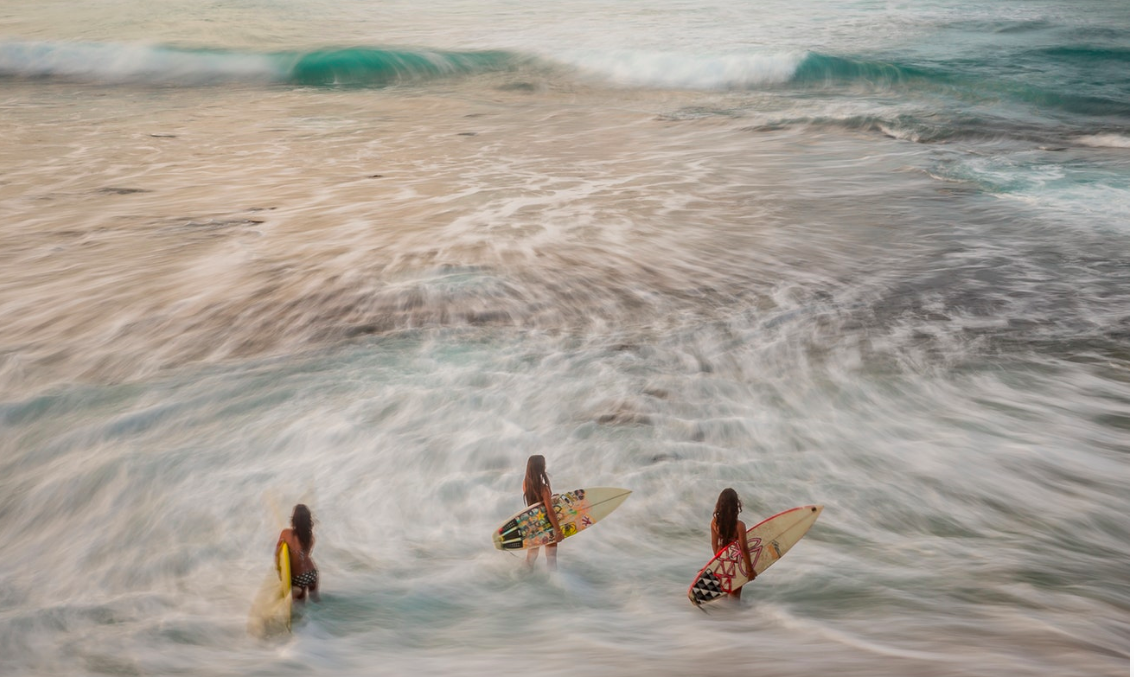
Three Hawaiian sisters wait for the waves in Makaha Beach, Oahu.
Over millennia, the tireless swing of the tides has given shape to the continents and character to our coasts; morphed and bent to the will of the sea. Every day, for a few precious hours, the shore belongs to the land. Then under the gravitational spell of the moon, it is once again reclaimed by the waves. To us, however, it never truly belongs.
There is an invisible line between the familiar feeling of our feet on solid ground and the inky abyss, often foreign and fearsome, where creatures with gills, scales, and fins are better suited to survive.
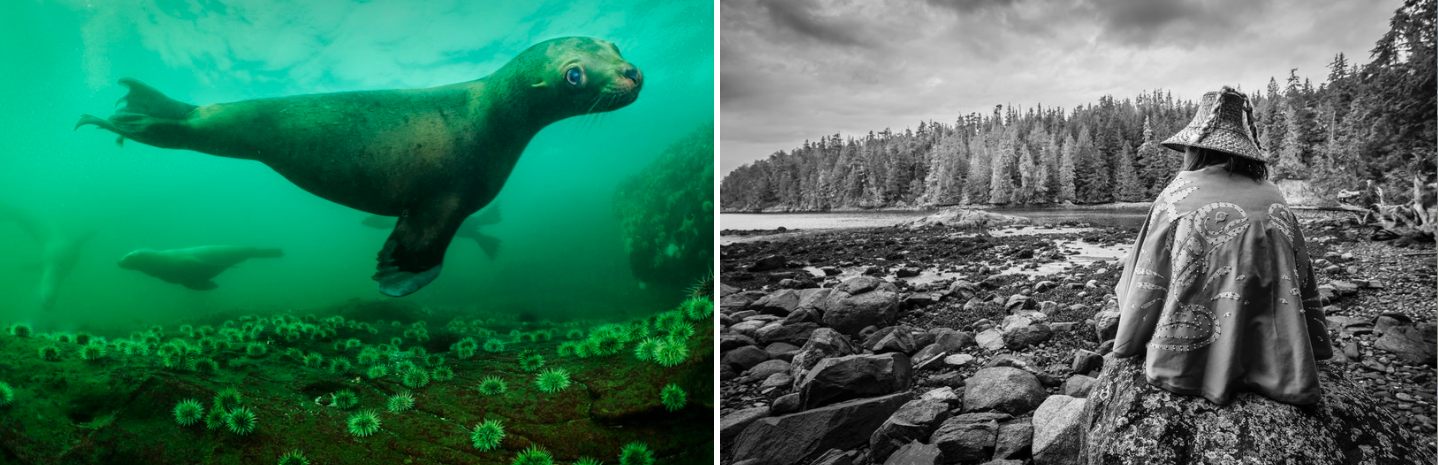
[1] A curious Stellar sea lion in the rich waters of the Salish Sea. [2] Molina Dawson, a young Musgamagw Dzawada’enuxw warrior, is occupying the polluting open-net fish farm that was placed in her people’s ancestral territory without their consent.
Though bound to the land, humans have benefited from the riches of the sea since the beginning of time. We should know by now that if our oceans thrive, so do we. Why then, are we collectively failing to nurture and protect the cornerstone of all life on Earth?
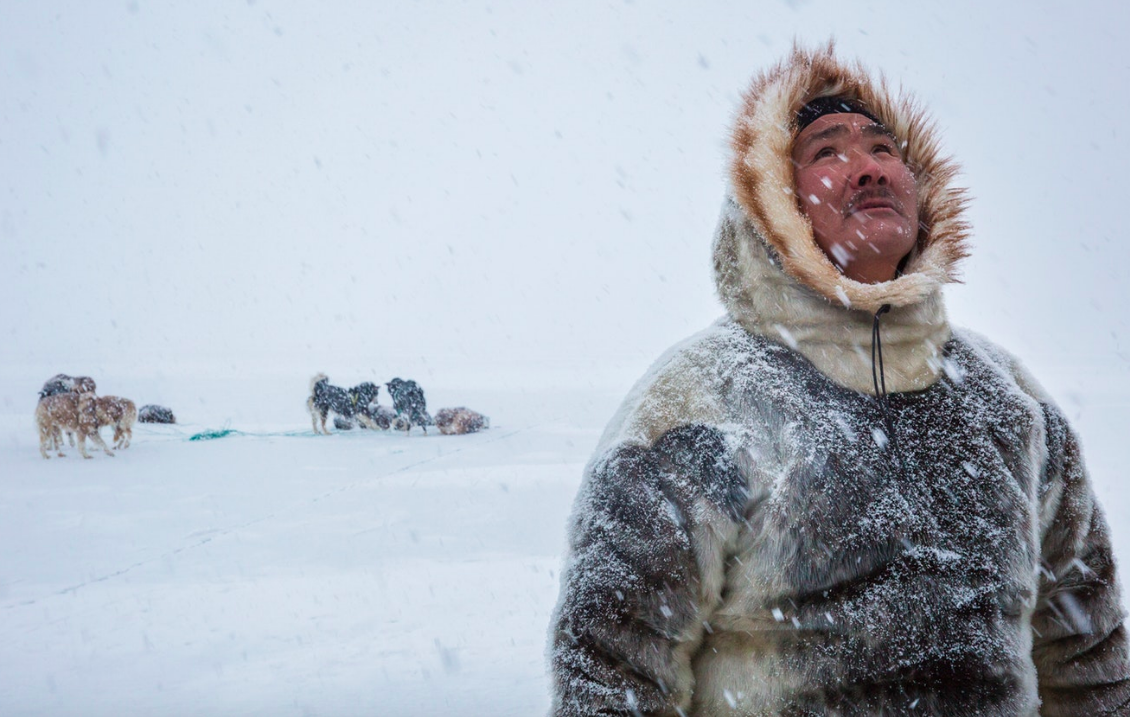
As he lifts his eyes to the falling snowflakes, Naimanngitsoq Kristiansen, a traditional Inuit hunter from Greenland, reminds me that nature is a spiritual sanctuary, made all the more hallowed by the first flurry of snow in Spring.
Knowingly or not we have abused the generosity of the sea. Perhaps we have been walking on land for so long, we have forgotten that our very existence depends on a healthy ocean. Every second breath we take comes from the sea; the oceans are the watery lungs of our planet, producing vast amounts of oxygen and absorbing countless tons of carbon dioxide.
One billion people, including many of the world’s poor, rely on fish for their daily protein. The rain and snow that falls over distant mountains, irrigating fields many miles from the shore, originates at sea. Immense ocean currents regulate our planetary climate, maintaining the perfect conditions for our fragile existence. Today, human-induced global warming and exploitation of our environment are threatening to destabilize all of this.
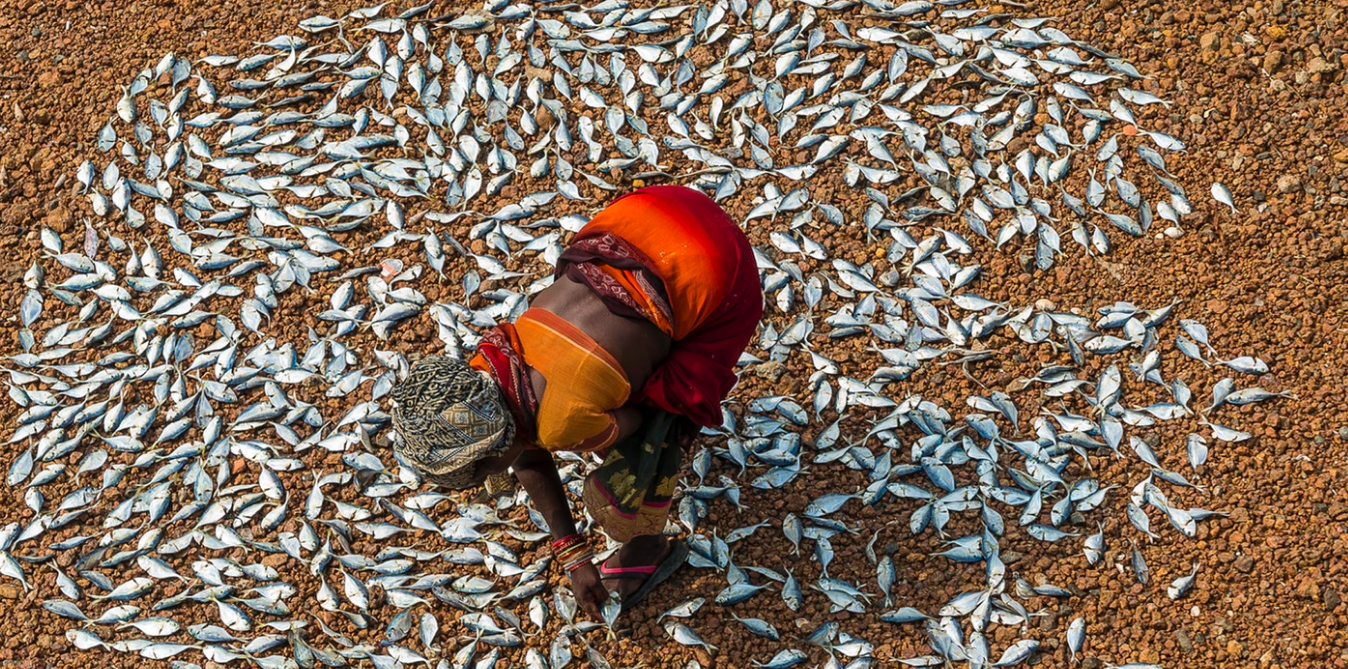
On a three-week long expedition from the southernmost tip of India to Chennai, I stopped in every coastal town to see what the fishermen were bringing in. The women I met told me that the fish are getting smaller and smaller, and many species are disappearing.
HOWEVER, ALL IS NOT LOST. WE STILL HAVE TIME TO NURTURE THE OCEAN’S INCREDIBLE RESILIENCE.
From Mexico to the Pacific Northwest, I have witnessed entire ocean ecosystems spring back to life when local communities are empowered to sustainably manage and restore their waters. Slowly but surely, communities around the world are harnessing the political will necessary to bring our oceans back to health. When we act together, we can inspire great change. This is why I co-founded SeaLegacy with my life partner, Paul Nicklen.

Zah, an artisanal fisherman, harpoons fish in the Abrolhos Reef to feed his family. Because they live in a Marine Protected Extractive Area, fishermen like Zah are committed to complying with fishing regulations and no-take zones, which benefit their local ecosystem.
With a mission to create healthy and abundant oceans for our planet, SeaLegacy is a strong, collective voice of organizations, social media influencers and individuals working together to spark the kind of global conversation that inspires people to act. Through powerful media and art we deliver hope — the kind of hope that empowers and generates solutions. Hope can be a game changer, and hope for our planet is empowering.
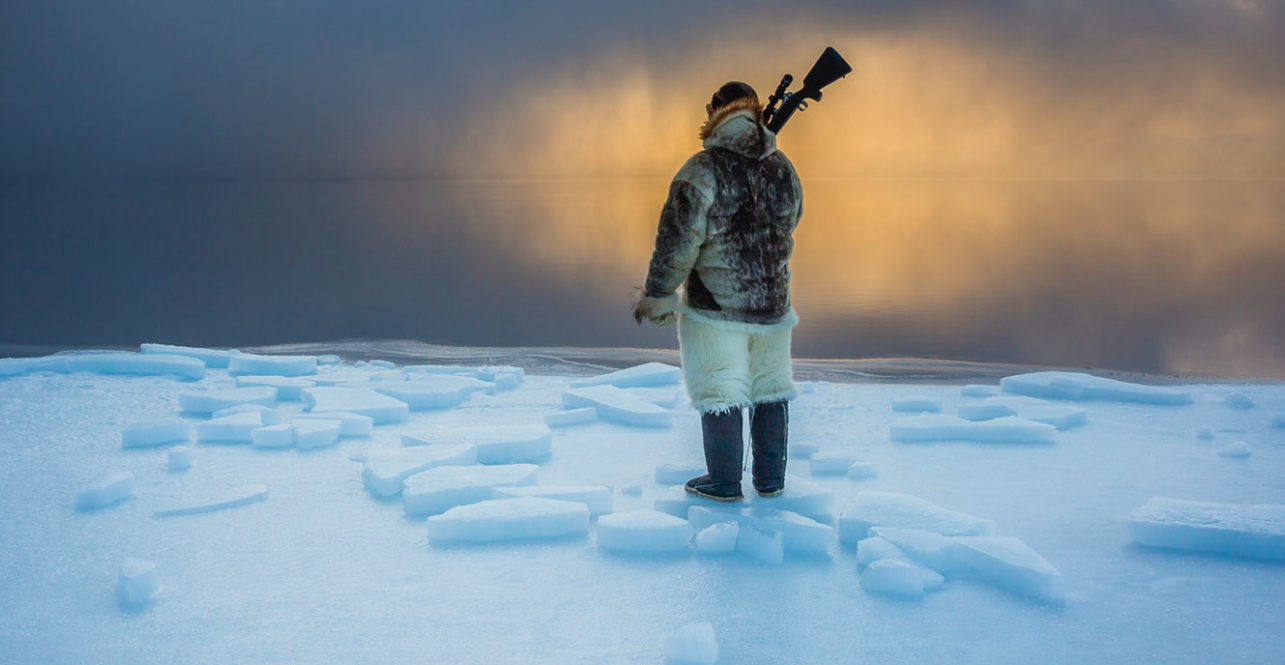
I watched as the sun dipped below the horizon, and the molten gold of sunset saturated the twilight. Just as his ancestors have done for centuries before him, Naimanngitsoq Kristiansen waits patiently for harp seal or walrus at the ice edge.
Extraordinary opportunities exist to restore and thoughtfully develop our oceans in order to protect them and sustain life on this planet.
Our team at SeaLegacy works with an international council of experts to identify projects that are helping to create healthy and abundant oceans. We engage a groundswell social audience of over six million followers with compelling storytelling and invest in community-centered solutions, rallying global support through our massive media network.
Through vibrant digital campaigns, we take on projects such as influencing policy makers to protect whale habitats in the Norwegian fjords, filmmaking to show the critical ecological value of keeping the Antarctic Peninsula wild and free, and partnering with indigenous First Nations communities to ban harmful fish farming in northern Vancouver Island, Canada.
Every day, through our vital work, I experience hope in action. Co-founding SeaLegacy gifts me with the ability to align the rich elements of enoughness with my deep concern for life beneath the thin blue line of our ocean.
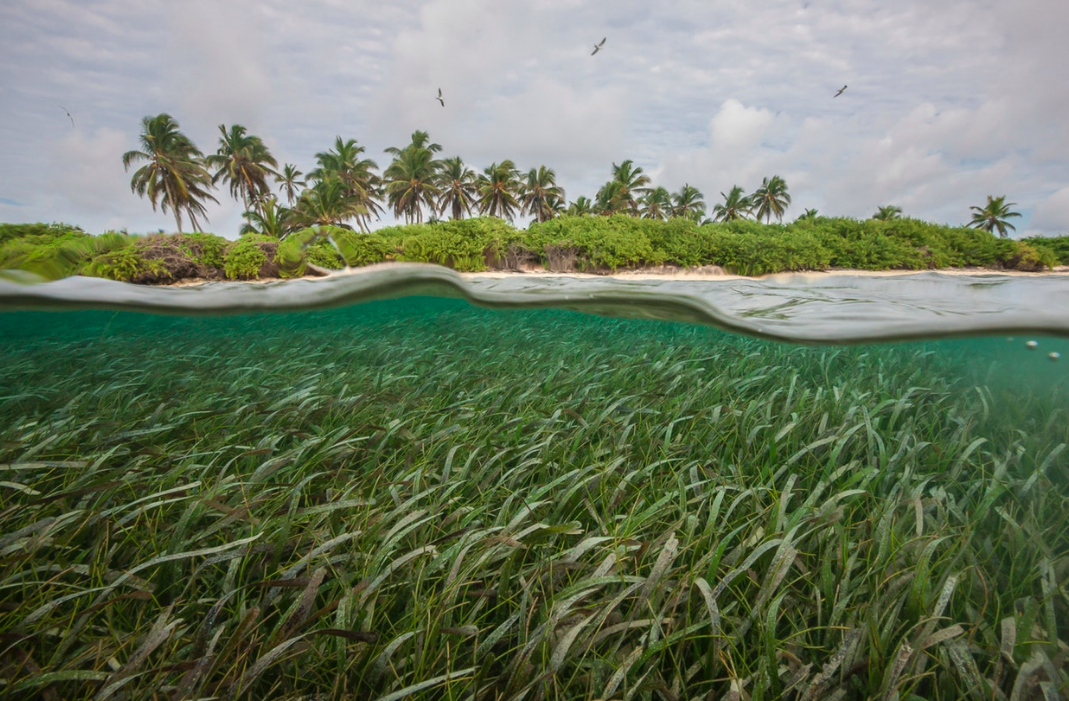
From the air we breathe, to the food we eat, to the climate we live in, we all depend on our oceans. Today, they are more important than ever. Healthy oceans absorb vast amounts of carbon from our atmosphere and help reduce the impact of climate change.
On nights when the opalescent moon brings waves crashing against the rocky shoreline of the coast that I call home, I rejoice in the pungent scent of saltwater. The sea is like a forgotten womb from which all life emerged. It is here, at the water’s edge, that my heart beats its loudest.
Perhaps it is the reassuring cadence of the tidal rhythms or the way that the waves roll in from the open ocean with playful, operatic grace, carrying dreams of faraway underwater kingdoms. Or perhaps it is the way that the ocean’s low, sacred rumble rests in my soul, long after the last grain of sand has washed from between my toes.
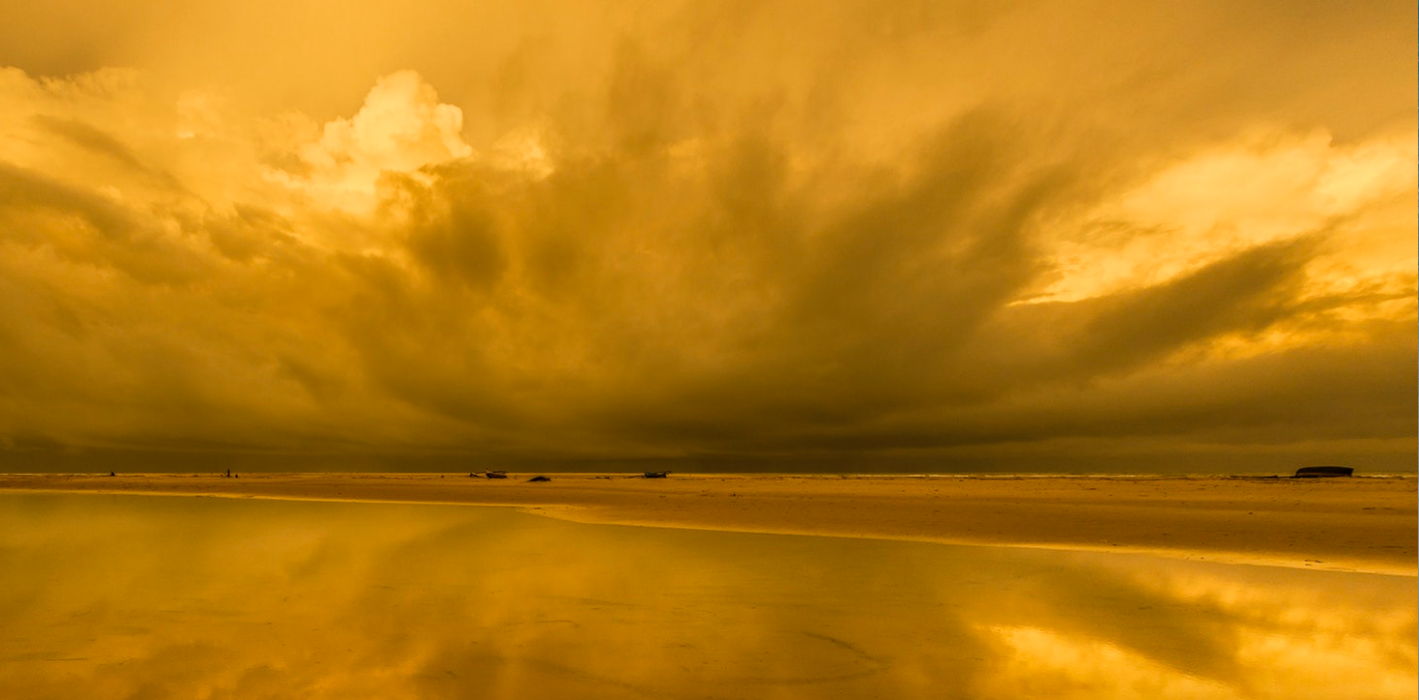
A shimmering sunset is reflected in these shallow waters, as traditional Vezo fishermen draw up their boats for the night.
As a photographer, I feel an urgency to remind my fellow humans that our destiny is inexorably tied to the fate of the sea. As a scientist, I am motivated by the knowledge that continuing to ignore the failing health of our oceans now, while we ponder the consequences later, is an invitation for disaster.
Combining the two, I am a fierce advocate for our planet and strive every day to make a tangible difference. With hope as a beacon, my dream is that together we can turn the tide and achieve healthy, abundant oceans for all.
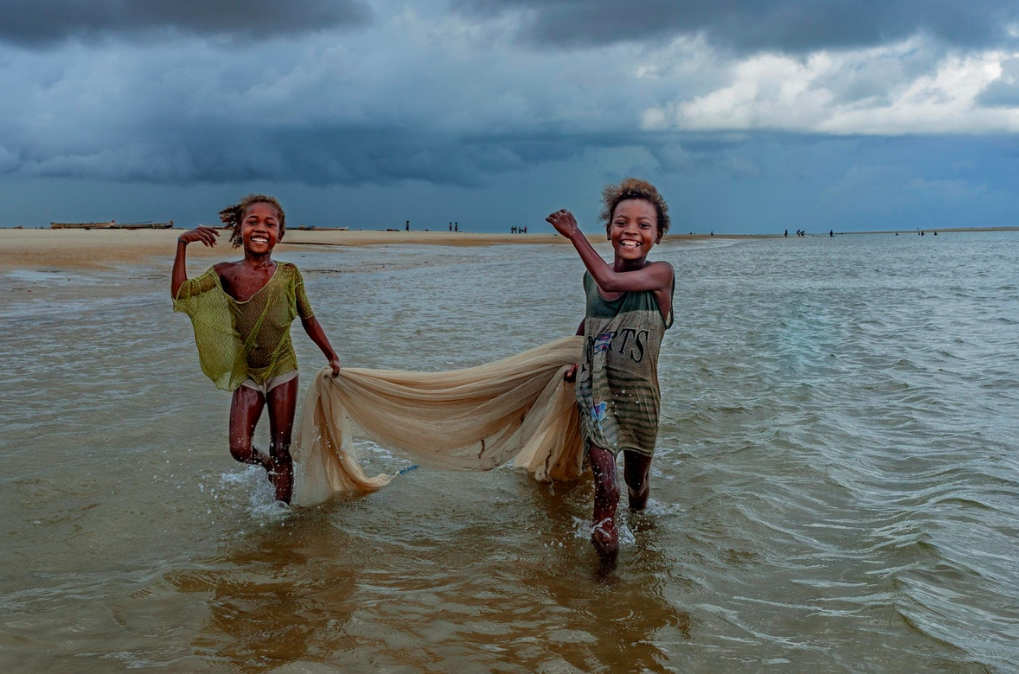
Two young Vezo girls, like water nymphs more at home in the ocean than on land, gather fish for their family’s dinner.
CRISTINA MITTERMEIER is a photographer, writer and conservationist documenting the intersection of wild nature and humans. Co-founder at SeaLegacy.
THIS ARTICLE WAS ORIGINALLY PUBLISHED ON MAPTIA
Video: Antarctica's Natural Wonders
The video starts in Ushuaia, Argentina and transitions to Port Williams, Chile, then rounded up Cape Horn and crossed the Drake Passage towards the Melchior Islands in Antarctica. The videographers spent 16 days in the Antarctic and got to experience the most amazing scenery and wildlife before they returned back to Ushuaia.
Abstract Australia from Above
“The real voyage does not consist in seeking new landscapes, but in having new eyes.” — MARCEL PROUST
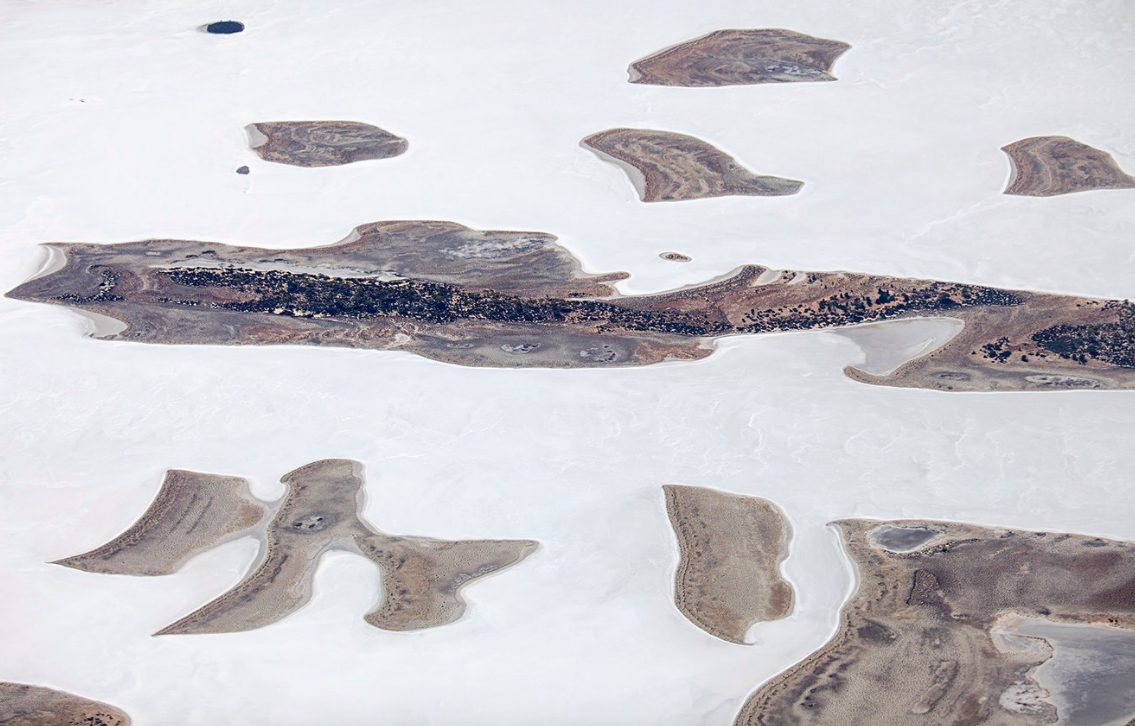
Islands on natural salt lake, Lake Johnston, north of Esperance, in Western Australia. (Taken 2014)
I have been attracted to the Australian landscape because of its size and subtle differences — a sense of wonderment, how it all came about, the evolution of the landscape. Like the rest of the world it has gone through many stages to be what it is today — uniquely Australian. But it also is a very old landscape. It is the flattest and driest continent, which compared with other countries, does not manifest itself in grandeur as we know it; large rivers, large mountains and the dramatic changes of the seasons.

The Pinnacles. Limestone formations, Nambung National Park. (Taken 2009)
However, I found that by looking at the landscape from the air, many natural characteristics revealed themselves much better, showing the evolution and the geographical variations. Nature is a great teacher. Observing and experiencing it can stimulate our creative senses which in turn is beneficial to ourselves and our environment.
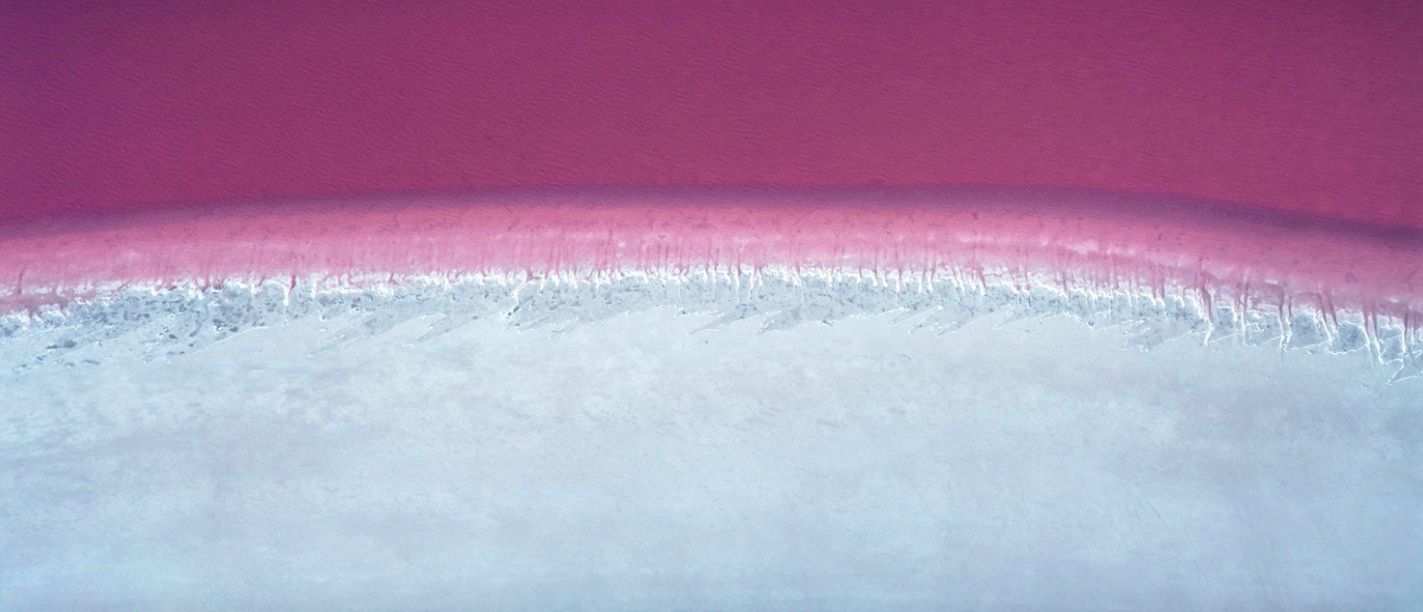
Pink Lake, north-west of Esperance, Western Australia. This is the natural colouration of the salt lake. (Taken 1988)
It was in 1955 that I bought my first camera, and this was the beginning of a long association with photography. Intrigued by the unusualness of the Australian landscape, I became a landscape photographer with a strong bias for aerial photography, which I felt captured the vastness of the outback best — each flight became a flight of discovery.
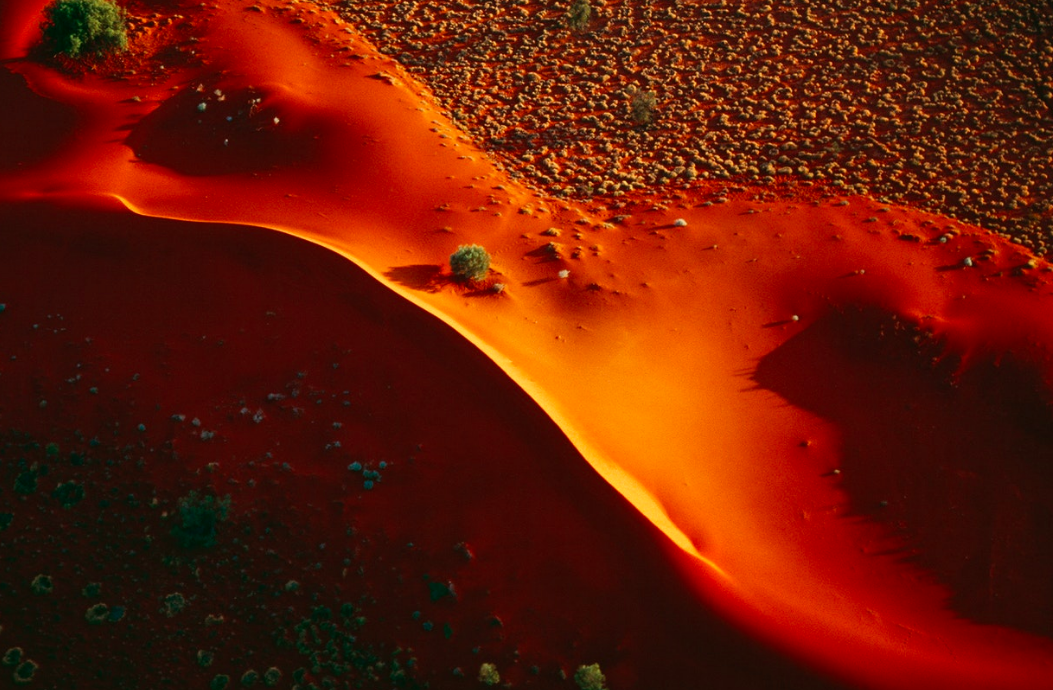
Late light on a drifting sand dune, Windorah, south east Queensland. (Taken 1994)
There are so many Australian landscapes worthy of consideration whether they be rivers, coastal plains or deserts — all of which vary seasonally and at different times of the day. As much as possible I like to be inspired by what I see and this is where I experience a sense of wonderment of a world so complex, varied and beautiful.
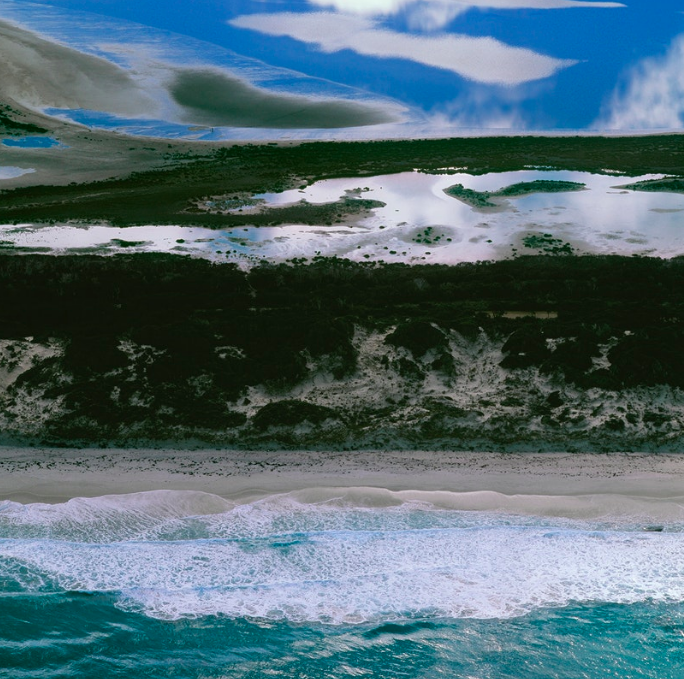
Coastline between Esperance and Cape Arid, in Western Australia. This shows the reflection of the clouds in the lake, with the beach and ocean in the foreground. (Taken 2006)
Of course there are many ways to appreciate the landscape. My own involvement is to photograph the highlights and to interpret them with the camera in a painterly way. I emphasise these highlights by pointing the camera down and focussing on the subject, excluding the horizon so one looses a point of reference and the reality often takes on an abstract view. I hope that the character of the subject is enhanced and that it reveals more through isolation by the camera angle.
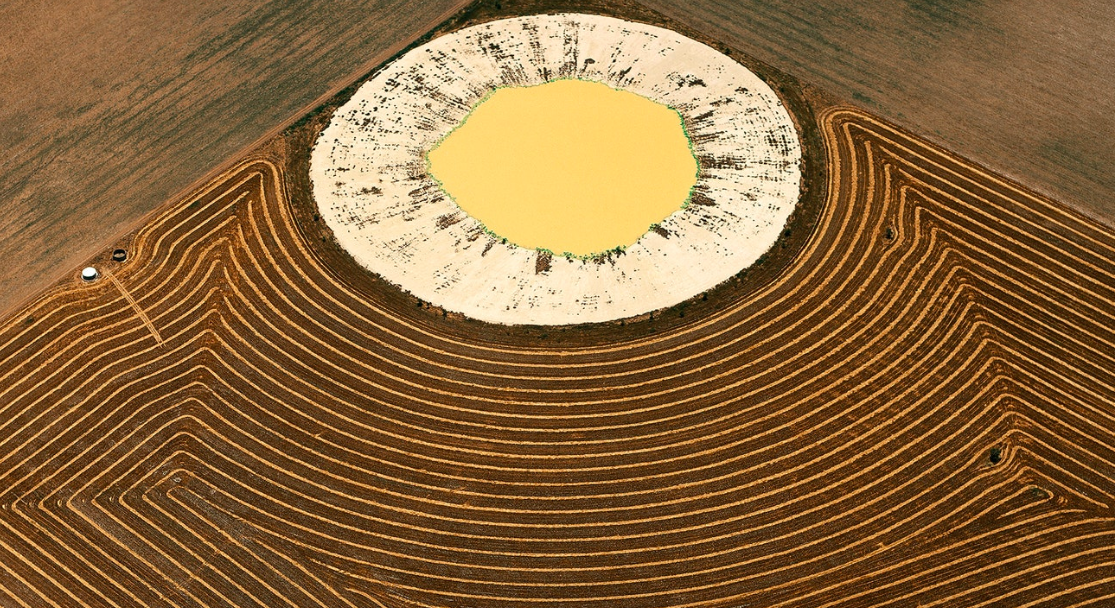
A turkey nest dam near Newdegate, Western Australia, contrasts against the ploughed fields. (Taken 1994)
The aerial point of view also allows us to examine the impact of humanity on Earth. There is a beauty in the man made landscape which takes on a relationship beyond the form as we know it. Certain subjects such as mining dumps, industry and farming look mundane at ground level, but from above my eye begins to recognise a gratifying order in the chaos — crops, paddocks and ploughed fields become masterpieces in abstraction often unknown to their creators. Simultaneously, the aerial perspective can also indicate the abuse and destruction that has taken place.
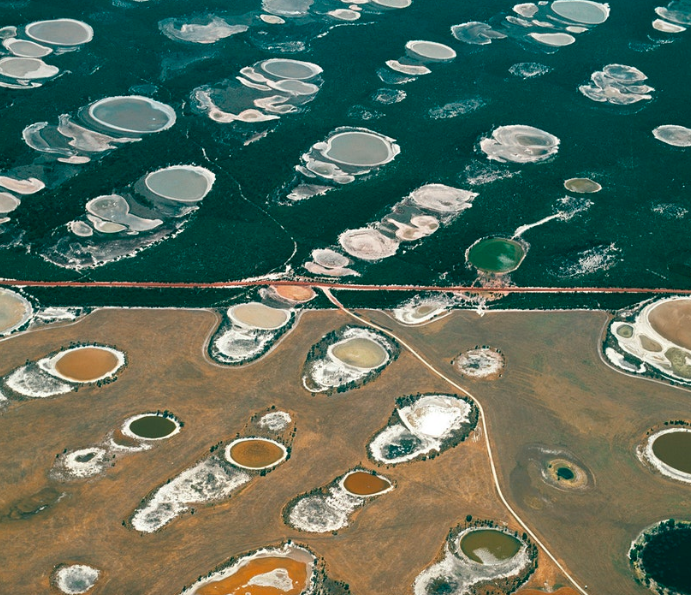
Salt lakes surrounded by wheat fields, 50 kilometers north east of Esperance, Western Australia. (Taken 1994)
At all times, I take a very personal approach to my work, but I also take great care to retain the optical reality. There are a million pictures out there. I am the only limitation. I can tune in and absorb the reality of the variations, combined with my way of seeing and my attitude. The older I get the harder it becomes, and the more I am drawn to nature. It is the creation of all life and matter that appeals to me now. Maybe I can make a small contribution to its well being which is in jeopardy. If beliefs in eternity are formed, nature is a great catalyst. I often feel intimidated by a great outback landscape, but also inspired by it.
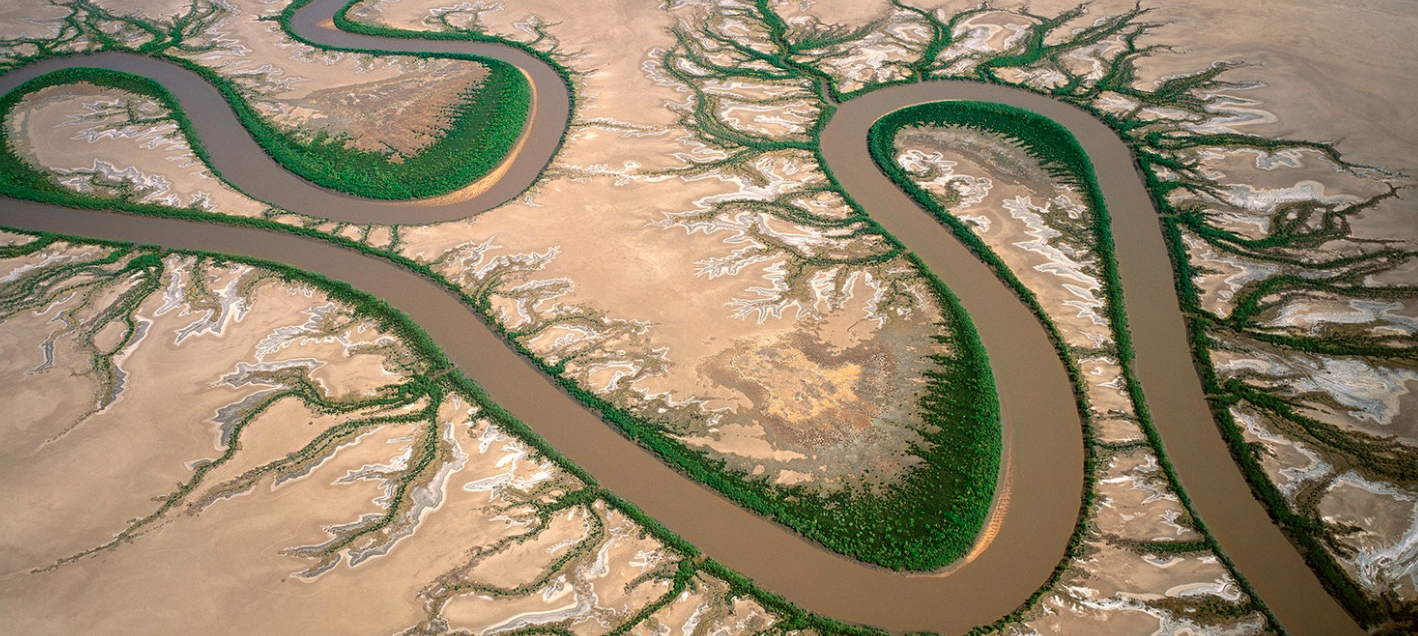
Forrest River, Kimberley, Western Australia. A tidal river system, north-west of Wyndham. (Taken 2003)
We now have more technical gadgetry at our disposal and there is no doubt it can help us to get a better photograph. But that in itself means little unless it enhances our understanding of the world around us. It is more important to use our creative spirit and gain wisdom than purely use it as a tool. Today in our digital age we have Photoshop with its possibility to enhance or to completely distort or create our own image using photographic components. We have become so image conscious that we often forget the beauty of reality.

Ocean between Ningaloo Reef and Coral Bay, Western Australia. The blue variation is due to the ocean’s floor level. (Taken 2006)
The subject of photography can either be concrete or intangible. In the first case the picture is basically realistic, where as in the latter case it is essentially abstract. But what makes photography so interesting is that by combining both we can introduce creativity in the subject and have the best of both worlds.
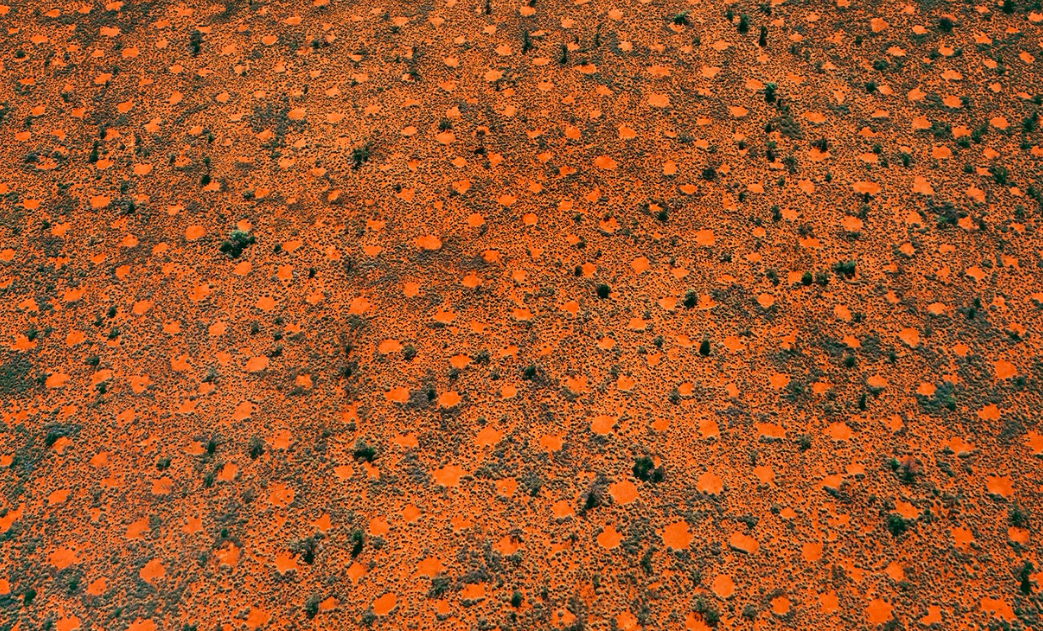
Ant clearings approx. 4–5 metres across, Great Sandy Desert, Pilbara, Western Australia. (Taken 2003)
Although many photographers can take photographs and do it well, it is work done in the full utilization of that creative spirit that stands out. It should be influenced by the subject itself and come from within oneself.
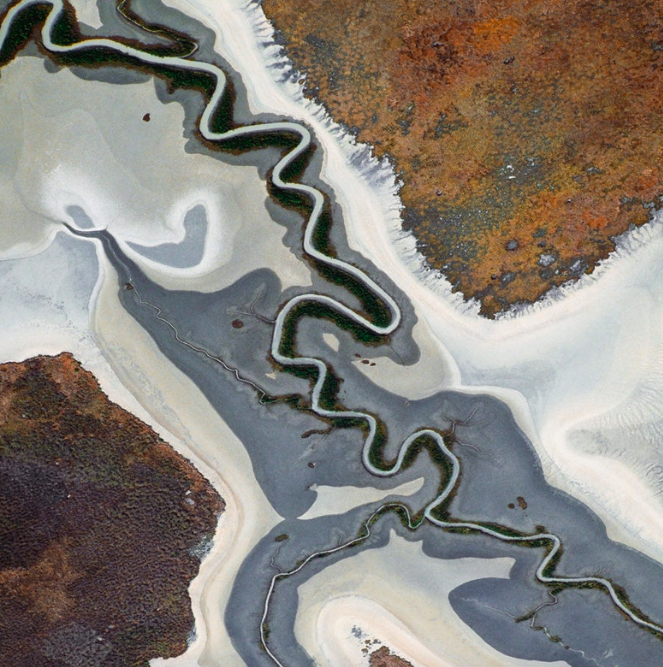
Tidal variations result in a coastal river pattern, Northern Territory. (Taken 2004)
“I still can’t find any better definition for the word Art, than this. Nature, Reality, Truth, but with a significance, a conception, and a character which the artist brings out in it and to which he gives expression, which he disentangles and makes free.” — VINCENT VAN GOUGH
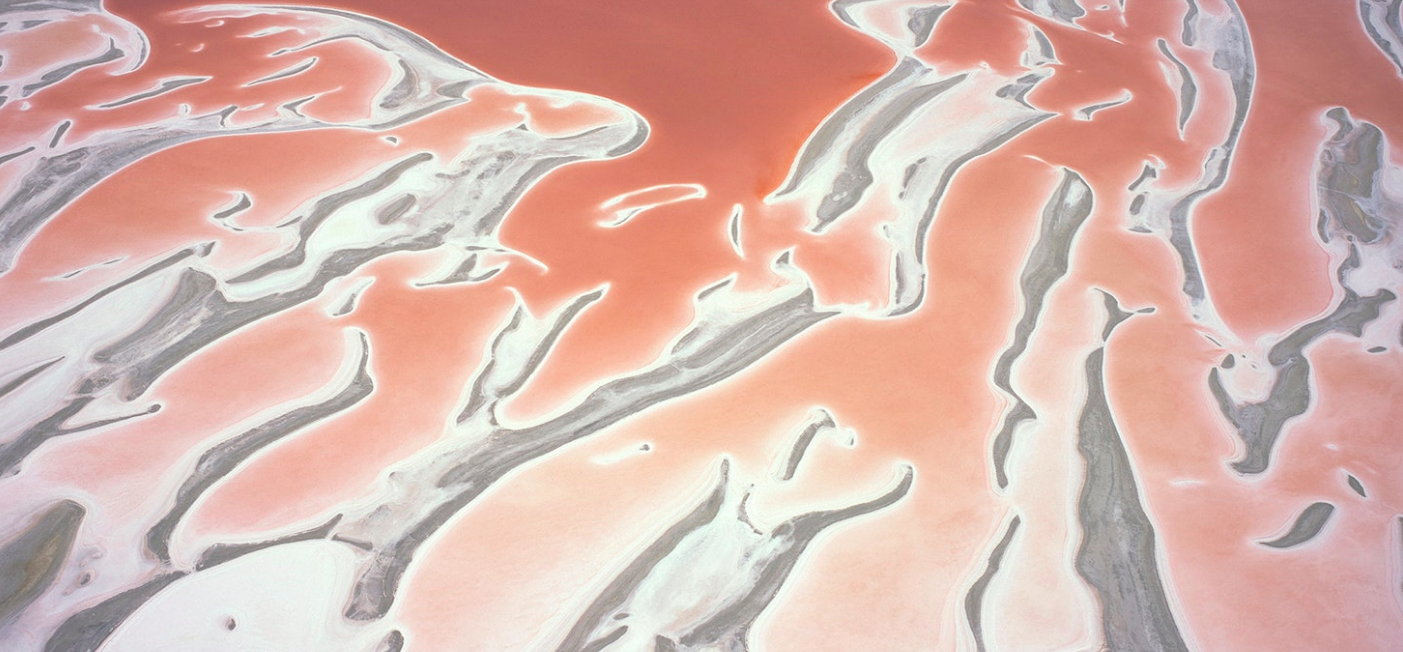
Lake Dumbleyung, Wagin, Western Australia. Affected by farming this natural lake has become saline. After the first rains, it turns pink. (Taken 2005)
We do not always appreciate the aerial point of view. People regard the landscape as something you fly over. But in reality it is an opportunity to see the landscape from a different perspective. I never cease to marvel at the natural variations in the Australian landscape and although I value what is there photographically, in the end it is the observation and appreciation of the diversity that is the reward.
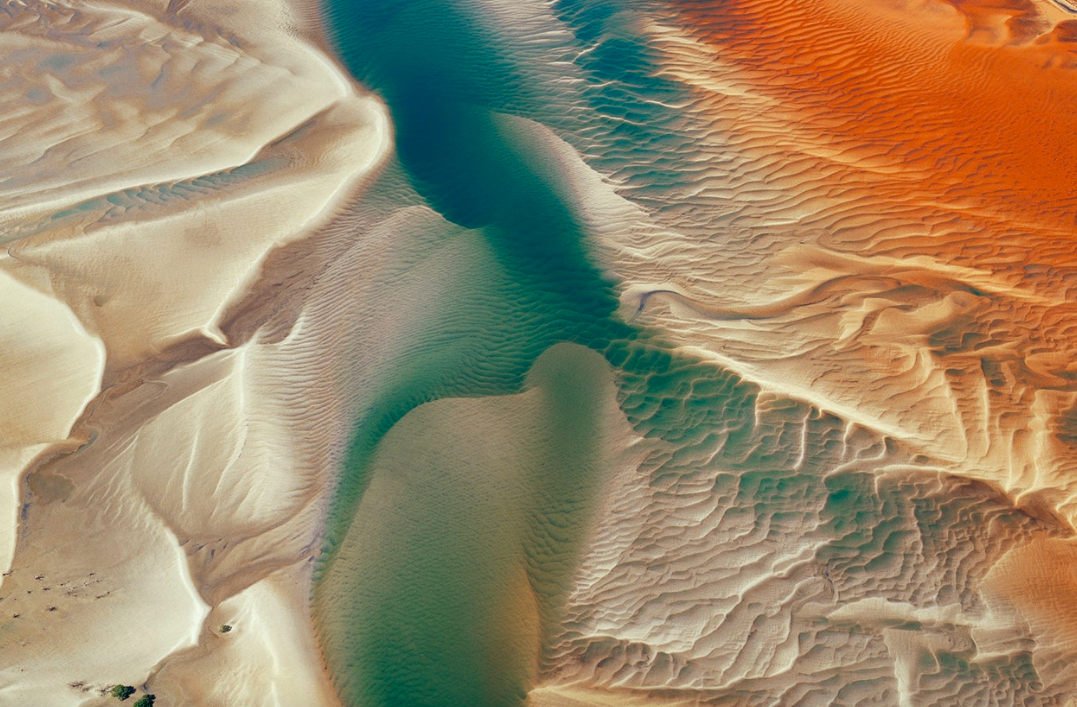
Top of Curtis Island, Cape Capricorn, north-east of Gladstone, Queensland. An estuary with sand banks. (Taken 1997)
Postscript — All of my photographs are as seen from the air and are not manipulated. I feel that the beauty, colours, and uniqueness of the Australian landscape is complete and needs no enhancing.
RICHARD WOLDENDORP is a Dutch-born Australian landscape photographer, with a focus on the aerial perspective. Appointed the Order of Australia in June 2012, “For service to the arts as an Australian landscape photographer.”
THIS ARTICLE WAS ORIGINALLY PUBLISHED ON MAPTIA
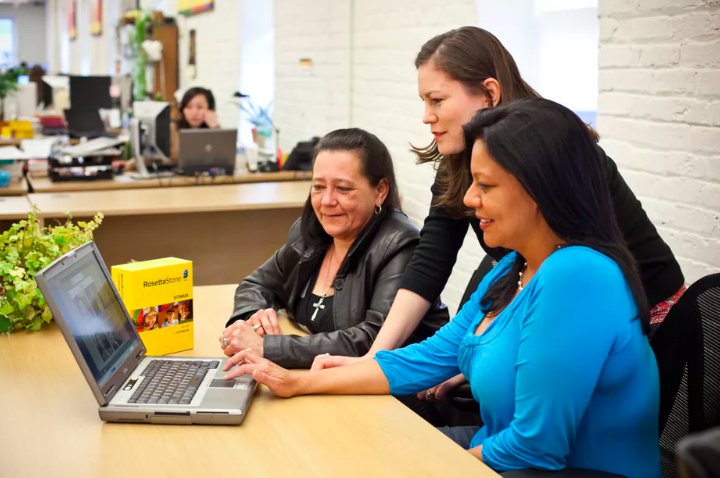
Members of the Chitimacha language team (from left to right) Sam Boutte, Kim Walden and Rachel Vilcan use the new language software for the first time. Author provided
Renaissance on the Bayou: The Revival of a Lost Language
In the summer of 1930, at the dawn of the Great Depression, a 21-year-old linguist named Morris Swadesh set out for Louisiana to record the area’s Native American languages, which were disappearing rapidly.
Morris and his peers were in a race against time to document them, and in the small town of Charenton on the Bayou Teche, he encountered Benjamin Paul and Delphine Ducloux, members of a small tribe called Chitimacha – and the last two speakers of their language.
But today, if you visited the Chitimacha reservation, you’d never know that their language went unspoken for half a century.
Over the past several decades, many Native American tribes have participated in what has become a robust language revitalization movement. As their populations of fluent speakers dwindle and age, tribes want to ensure that their heritage languages are passed on to the next generation – before it’s too late.
But because the Chitimacha tribe had no living speakers for a number of decades, it made the challenge that much greater. In the end, the story of the language’s decline, loss and rebirth is a remarkable example of cultural survival.
Why document a language?
Unlike some other cultural legacies, languages leave no trace in the archaeological record. There’s often no trace in the written record, either.
Only a small portion of the world’s estimated 7,000 languages are well-documented in places like dictionaries and grammar books. Those that are least well-documented are the most endangered.
Many dead or dying languages contain exotic features of verbal and written communication. Chitimacha, for example, doesn’t use a word “be” in phrases like “she is reading.” Instead, speakers must use a verb of position, such as “she sits reading” or “she stands reading.” These are things that challenge linguists’ understanding of how language works.
By working with Ben and Delphine, Morris was trying to capture a small piece of that linguistic diversity before it vanished.
One day, with Morris sitting on Ben’s porch dutifully scribbling down his every word in a composition notebook, Ben finished a story (a riveting tale of how the Chitimacha first acquired fire by stealing it from a mythical old blind man in the west). He then went on to tell Morris:
There were very many stories about the west. I believe I am doing well. I have not forgotten everything yet. When I die, you will not hear that sort of thing again. I am the only one here who knows the stories.
Ben passed away three years later, and Delphine not long thereafter. After their deaths, it seemed the Chitimacha language was doomed to silence.
Why do languages die?
How does a language come to have only two speakers? Why have so many Native American languages become endangered? The causes are manifold, but there are two main ones: sharp reductions in the population of the community that speaks the language, and interruptions in the traditional means of transferring the language from one generation to the next.
In the past, the former caused the most damage. Native American peoples were decimated by European diseases and subject to outright warfare.
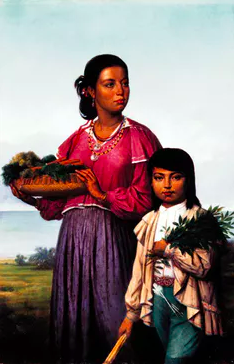
A portrait of two Chitimacha by French-born painter François Bernard (1870). Wikimedia Commons
Prior to European contact, the Chitimacha were lords of the bayou, with a territory stretching from Vermillion Bay in the west to present-day New Orleans in the east. They were expert canoe-makers and wielded extensive knowledge of the region’s labyrinthian network of waterways.
But by the time the French arrived in present-day Louisiana in 1699, the tribe’s numbers had dwindled to around 4,000, their communities gutted by European diseases that spread faster than the Europeans themselves.
After a protracted war with the French, they retreated deep into the bayou, where the their reservation at Charenton sits today. The 1910 census recorded just 69 people living there.
Only later did the second cause of language decline occur, when children on the reservation were sent to the infamous Carlisle Indian School in Pennsylvania, which interrupted the transmission of the language to the next generation.
Ben and Delphine, born in the latter half of the 1800s, were part of the last generation to learn the language at home. Eventually their parents and many of their peers passed away, leaving them as the last two speakers of the language.
Renaissance on the bayou
Ben probably never imagined that the efforts of him and Delphine would spark the tribe’s linguistic renaissance, awakening their language from 60 years of silence.
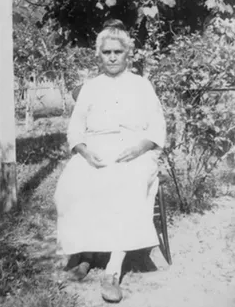
Delphine Ducloux was one of the two last speakers of the Chitimacha language, prior to its revival. State Library of Louisiana
In the early 1990s, cultural director for the tribe Kim Walden received a call from the American Philosophical Society Library informing her that they had all of Morris’ notebooks, and even his drafts for a grammar manual and dictionary, which totaled hundreds of pages in all. Thus began the herculean effort to revive the language.
The tribe put together a small-but-dedicated team of language experts, who set out to learn their language as quickly as possible. They began to produce storybooks based on Ben and Delphine’s stories, and word lists from the dictionary manuscript.
In 2008, the tribe partnered with the software company Rosetta Stone on a two-year project to create computer software for learning the language, which today every registered tribal member has a copy of. This is where I came in, serving as editor and linguist consultant for the project, a monumental collaborative effort involving thousands of hours of translating, editing, recording and photographing. We’re now hard at work finishing a complete dictionary and learner’s reference grammar for the language.
Today, if you stroll through the reservation’s school, you’ll hear kids speaking Chitimacha in language classes, or using it with their friends in the hall. At home they practice with the Chitimacha version of Rosetta Stone, and this past year the tribe even launched a preschool immersion program.
The kids even make up slang that baffles adult ears, a sure sign that the language is doing well – and hopefully will continue to thrive, into the next generation and beyond.
Author Danny Hieber presents the story of the Chitimacha language at the University of California’s Grad Slam competition.
DANIEL W. HIEBER is a PhD Candidate in Linguistics at the University of California in Santa Barbara.
THIS ARTICLE WAS ORIGINALLY PUBLISHED ON THE CONVERSATION
The Mystical Boiling River of the Amazon
When Andrés Ruzo was a boy, his grandfather would tell him tales of a mythical city of gold deep in the heart of the Peruvian jungle. Though never believing the stories to be true, the legend of the lost city stuck with him into adulthood. Years later, as a geothermal scientist, Ruzo decided to investigate. To his surprise, he discovered an incredulous river deep in the Amazon, with water hot enough to kill a human. Historically a place of pilgrimage for shamans and sorcerers, the river now faces increasing threats from poachers, loggers and squatters. Now, Ruzo is working hard to protect it.
Botswana
These footages were taken during a trip through Botswana in Africa. The videographer, Erwin Olmos, recalls it being “a tough trip, but at the same time a great experience.” Some places that are featured are Serowe Rhino reserve, Moremi National Park, Chobe River and Chobe National Park, Amazing Okavango Delta and many towns.
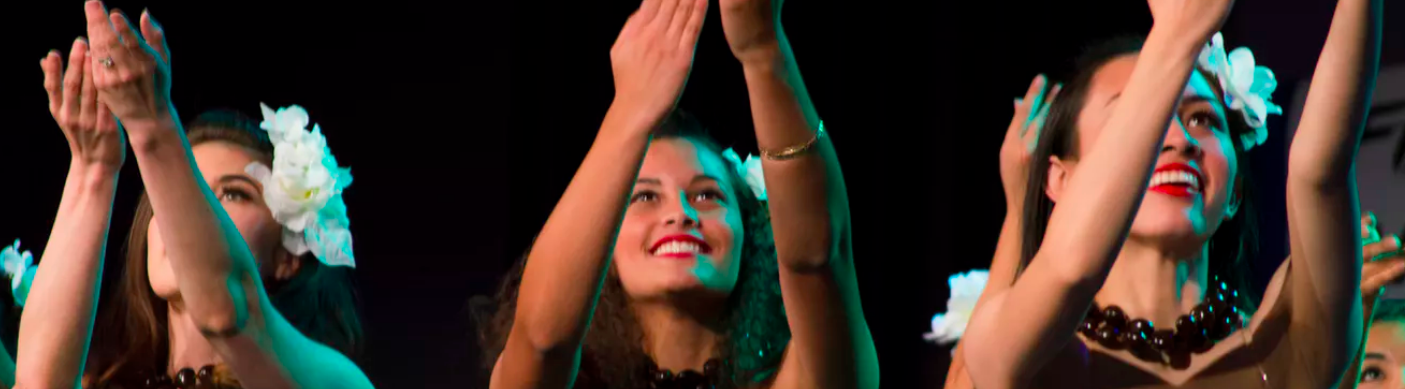
Dance is a unique way of passing on cultural stories to a younger generation. Aaron Hawkins/Flickr.com, CC BY-ND
How the Loss of Native American Languages Affects our Understanding of the Natural World
Alaska has a “linguistic emergency,” according to the Alaskan Gov. Bill Walker. A report warned earlier this year that all of the state’s 20 Native American languages might cease to exist by the end of this century, if the state did not act.
American policies, particularly in the six decades between the 1870s and 1930s, suppressed Native American languages and culture. It was only after years of activism by indigenous leaders that the Native American Languages Act was passed in 1990, which allowed for the preservation and protection of indigenous languages. Nonetheless, many Native American languages have been on the verge of extinction for the past many years.
Languages carry deep cultural knowledge and insights. So, what does the loss of these languages mean in terms of our understanding of the world.
Environmental knowledge
Embedded in indigenous languages, in particular, is knowledge about ecosystems, conservation methods, plant life, animal behavior and many other aspects of the natural world.
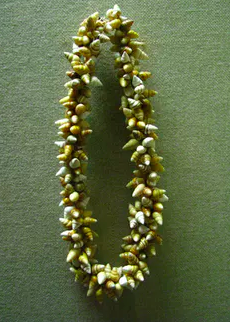
The shell necklace of Queen Liliʻuokalani. David Eickhoff/Flickr.com, CC BY
In Hawaiian traditions and belief systems,for example, the tree snails were connected to “the realm of the gods.” Hawaiian royalty revered them, which protected them from overharvesting.
The Bishop Museum in Honolulu holds a shell necklace, or lei, of Queen Lili‘uokalani, the last monarch of the Kingdom of Hawaii. It is made from tree snail shells, which signifies the high rank of female royalty. Wearing a shell was believed to provide “mana,” or spiritual power and a way to understand ancestral knowledge.
Many of these snails are now extinct and those remaining are threatened with extinction. Scientists are working with Hawaiian language experts to learn about the belief systems that once helped protect them and their habitats.
A tool for doctors
Words in indigenous languages can have cultural meanings, that can be lost during translation. Understanding the subtle differences can often shift one’s perspective about how indigenous people thought about the natural world.
For example, as an indigenous scholar of the environment, I led a team some years ago of language experts, elders and scholars from Montana and Alberta, Canada, to create a list of Blackfeet words, called a lexicon, of museum objects. The elders I worked with noted that the English word “herb,” which was used to describe most plant specimens within museums, did not have the same meaning in Blackfeet.
In English, the word “herb” can have numerous meanings, including a seasoning for food. The closest English word to herb in Blackfeet is “aapíínima’tsis.” The elders explained this word means “a tool that doctors use.”
The hope is that the lexicon and audio files recorded in the Blackfeet language that our research helped create, might assist future scholars access the embedded meanings in languages.
Blackfeet Word of the Day. Blackfeet History, Language and Environmental Knowledge.
Saving vanishing languages
Many Native American communities in the United States are now working to save these cultural insights and revitalize their languages.
In Wisconsin, an Ojibwe language school called “Waadookodaading,”translated literally as “a place where people help each other,” immerses its students in the environmental knowledge embedded in the language.
The Ojibwe believe that theirs is a language of action. And the best way for children to learn is by doing and observing the natural world. Each spring, for example, the students go into the woods to gather maple sap from trees, which is processed into maple syrup and sugar. These students learn about indigenous knowledge of plants, their habitats and uses.
Language loss can be considered as extreme as the extinction of a plant or an animal. Once a language is gone, the traditional knowledge it carries also gets erased from society.
Efforts are now underway worldwide to remind people of this reality. The United Nations has designated 2019 as the “International Year of Indigenous Languages” in order to raise awareness of indigenous languages as holders of “complex systems of knowledge” and encourage nation states to work toward their revitalization.
The loss of indigenous languages is not Alaska’s concern alone. It affects all of us.
ROSALYN R. LAPIER is an Associate Professor of Environmental Studies at The University of Montana.
THIS ARTICLE WAS ORIGINALLY PUBLISHED ON THE CONVERSATION
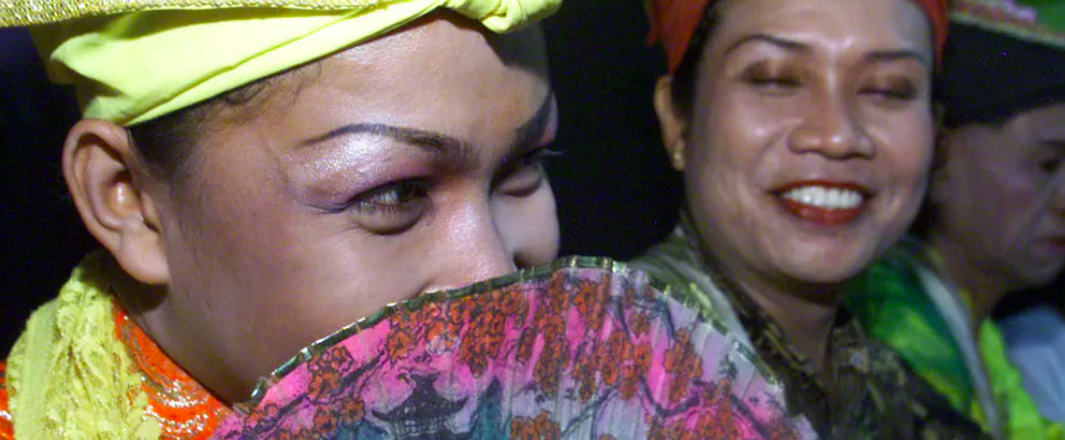
Bissu, or transgender priests, are one of five genders recognized by the Bugis. Reuters
What We Can Learn From an Indonesian Ethnicity that Recognizes Five Genders
On June 13, when a judge in Oregon allowed a person to legally choose neither sex and be classified as “nonbinary,” transgender activists rejoiced. It’s thought to be the first ruling of its kind in a country that, until now, has required that people mark “male” or “female” on official identity documents.
The small victory comes in the wake of a controversial new law in North Carolina that prevents transgender people from using public restrooms that do not match the sex on their birth certificates.
The conflict rooted in these recent policies is nothing new; for years, people have been asking questions about whether the “sex” we are born with should dictate things like which public facilities we can use, what to tick on our passport application and who’s eligible to play on particular sports teams.
But what if gender were viewed the same way sex researcher Alfred Kinsey famously depicted sexuality – as something along a sliding scale?
In fact, there’s an ethnic group in South Sulawesi, Indonesia – the Bugis – that views gender this way. For my Ph.D. research, I lived in South Sulawesi in the late 1990s to learn more about the Bugis’ various ways of understanding sex and gender. I eventually detailed these conceptualizations in my book “Gender Diversity in Indonesia.”
Does society dictate our gender?
For many thinkers, such as gender theorist Judith Butler, requiring everyone to choose between the “female” and “male” toilet is absurd because there is no such thing as sex to begin with.
According to this strain of thinking, sex doesn’t mean anything until we become engendered and start performing “sex” through our dress, our walk, our talk. In other words, having a penis means nothing before society starts telling you that if you have one you shouldn’t wear a skirt (well, unless it’s a kilt).
Nonetheless, most talk about sex as if everyone on the planet was born either female or male. Gender theorists like Butler would argue that humans are far too complex and diverse to enable all seven billion of us to be evenly split into one of two camps.
This comes across most clearly in how doctors treat children born with “indeterminate” sex (such as those born with androgen insensitivity syndrome, hypospadias or Klinefelter syndrome). In cases where a child’s sex is indeterminate, doctors used to simply measure the appendage to see if the clitoris was too long – and therefore, must be labeled a penis – or vice versa. Such moves arbitrarily forced a child under the umbrella of one sex or the other, rather than letting the child grow naturally with their body.
Gender on a spectrum
Perhaps a more useful way to think about sex is to see sex as a spectrum.
While all societies are highly and diversely gendered, with specific roles for women and men, there are also certain societies – or, at least, individuals within societies – who have nuanced understandings of the relationship between sex (our physical bodies), gender (what culture makes of those bodies) and sexuality (which kinds of bodies we desire).
Indonesia may be in the press for terror attacks and executions, but it’s actually a very tolerant country. In fact, Indonesia is the world’s fourth-largest democracy, and furthermore, unlike North Carolina, it currently has no anti-LGBT policy. Moreover, Indonesians can select “transgender” (waria) on their identity card (although given the recent, unprecedented wave of violence against LGBT people, this may change).
The Bugis are the largest ethnic group in South Sulawesi, numbering around three million people. Most Bugis are Muslim, but there are many pre-Islamic rituals that continue to be honored in Bugis culture, which include distinct views of gender and sexuality.
Their language offers five terms referencing various combinations of sex, gender and sexuality: makkunrai (“female women”), oroani (“male men”), calalai (“female men”), calabai (“male women”) and bissu (“transgender priests”). These definitions are not exact, but suffice.
During the early part of my Ph.D. research, I was talking with a man who, despite having no formal education, was a critical social thinker.
As I was puzzling about how Bugis might conceptualize sex, gender and sexuality, he pointed out to me that I was mistaken in thinking that there were just two discrete sexes, female and male. Rather, he told me that we are all on a spectrum:
Imagine someone is here at this end of a line and that they are, what would you call it, XX, and then you travel along this line until you get to the other end, and that’s XY. But along this line are all sorts of people with all sorts of different makeups and characters.
This spectrum of sex is a good way of thinking about the complexity and diversity of humans. When sex is viewed through this lens, North Carolina’s law prohibiting people from choosing which toilet they can use sounds arbitrary, forcing people to fit into spaces that might conflict with their identities.
SHARYN GRAHAM DAVIES is an Associate Professor of Social Sciences at Auckland University of Technology.
THIS ARTICLE WAS ORIGINALLY PUBLISHED ON THE CONVERSATION
Swimming with Whale Sharks in Mexico: Ecotourism or Exploitation?
Whale Shark ecotourism in Cancun, with tour companies recruiting the very fishermen who killed sharks in the past as tour operators working toward their preservation.
Read MoreLights of the Medina
This video depicts the famous medinas in Marrakesh, Morocco. The medinas are huge hubs of commerce for locals and tourists. Every sort of product can be found in the medinas, such as food, clothes, souvenirs, performances, etc.
Read More