
Polio is still a critical problem in Pakistan where vaccination efforts have stalled. Khalida Nasreen is on a mission to change that. Every morning at 5 a.m., she hops on a motorbike and makes her way around Karachi, going door-to-door to inoculate the children in town. It’s a dangerous job as healthcare workers have lost their lives in the same pursuit, but that doesn’t stop Khalida. Thanks to her efforts, the prevalence of polio in town has decreased, building a brighter future for the next generation of Pakistani children.
Sumo Soup: Living Large with Chanko Nabe
Want to bulk up like a sumo wrestler? Try chanko nabe, an ancient Japanese dish that is synonymous with sumo culture. While the average wrestler eats about 10 bowls of it per day, non-wrestlers can enjoy this traditional soup at any number of chanko restaurants, including Kotogaume.
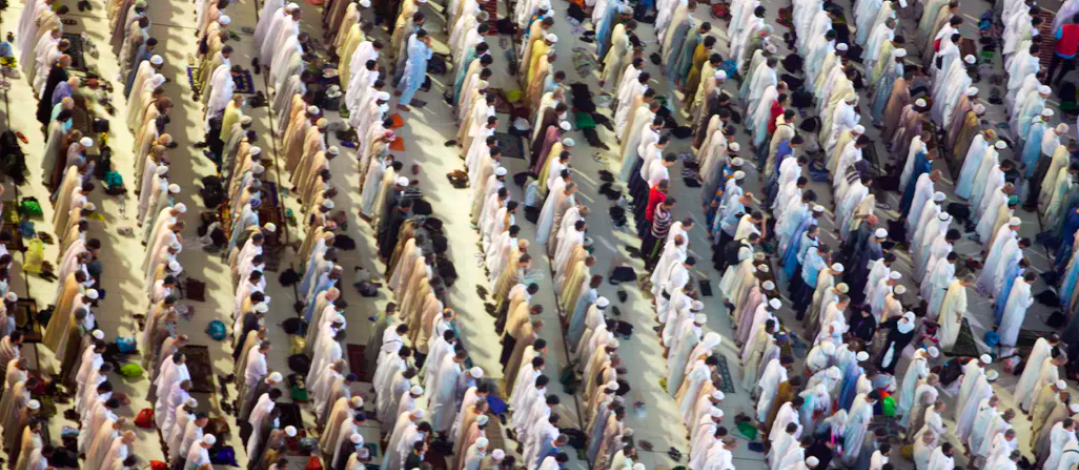
Muslim pilgrims pray at the Grand Mosque, ahead of the annual Hajj pilgrimage in Mecca, Saudi Arabia, in August 2017. AP Photo/Khalil Hamra
What is the Hajj?
Nearly 2 million Muslim pilgrims are gathering in the holy city of Mecca in Saudi Arabia for the Hajj. This five-day pilgrimage is a once-in-a-lifetime obligation for all Muslims who have the physical and financial ability to undertake the journey.
What is the religious and political significance of this annual pilgrimage?
The fifth pillar
Millions of Muslims come from countries as diverse as Indonesia, Russia, India, Cuba, Fiji, the United States and Nigeria – all dressed in plain white garments.
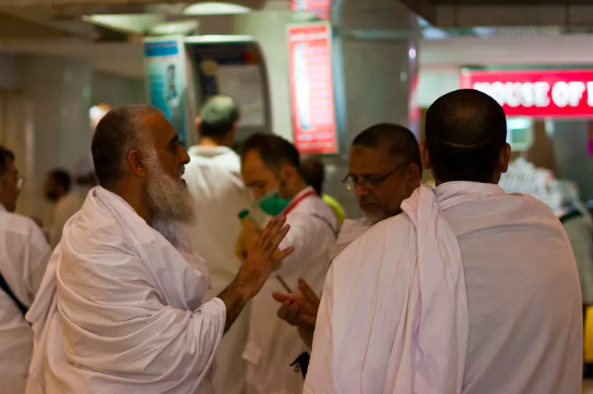
Pilgrims dressed in white garments. Al Jazeera English, CC BY-NC
Men wear seamless, unstitched clothing, and women, white dresses with headscarves. The idea is to dress plainly so as to mask any differences in wealth and status.
The pilgrimage is considered to be the fifth pillar of Islamic practice. The other four are the profession of faith, five daily prayers, charity and the fast of Ramadan.
The first day of the Hajj
The rites of the Hajj are believed to retrace events from the lives of prominent prophets such as Ibrahim and Ismail.
Pilgrims start by circling the “Holy Kaaba,” the black, cube-shaped house of God, at the center of the most sacred mosque in Mecca, seven times. The Kaaba occupies a central place in the lives of Muslims. Muslims, all over the world, are expected to turn toward the Kaaba when performing their daily prayers.
The Quran tells the story of Ibrahim, who when commanded by God, agreed to sacrifice his son, Ismail. Muslims believe the Kaaba holds the black stone upon which Ibrahim was to carry out his oath.
Pilgrims are bound by specific rules regarding going around the Kaaba. They may kiss, touch or approach the Kaaba during the pilgrimage as a sign of their devotion.
In performing these rituals, they join a long line of pilgrims to Mecca – including Prophet Muhammad, who circled the Kaaba.
Pilgrims then proceed to a ritual walk – about 100 meters from the Kaaba – to hills known as “Safa” and “Marwah.” Here they re-create another significant event recorded in the Quran.
The story goes that Ibrahim was granted a son by God through his Egyptian slave girl Hajar. After the birth of Ismail, God instructed Ibrahim to take Hajar and her newborn son out into the desert and leave them there. Ibrahim left them near the present-day location of the Kaaba. Ismail cried out with thirst and Hajar ran between two hills, looking for water until she turned to God for help.
God rewarded Hajar for her patience and sent his angel Jibreel to reveal a spring, which today is known as “Zamzam Well.” Pilgrims drink water from the sacred well and may take some home for blessings.
The second day of the hajj
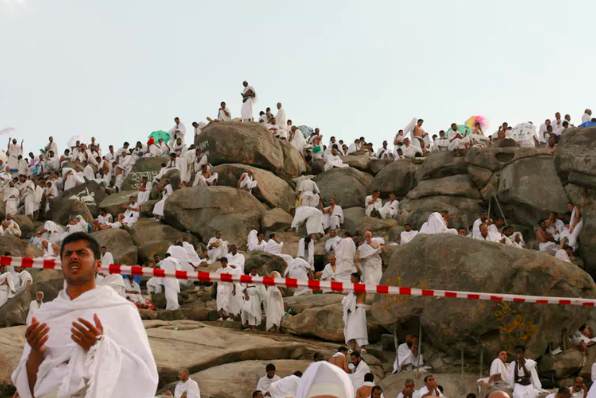
Pilgrims praying on Arafat. Al Jazeera English, CC BY-SA
The hajj “climaxes” with a sojourn in the plains of Arafat near Mecca. There, pilgrims gather in tents, spend time with one another and perform prayers. Some pilgrims will ascend a hill known as the “Mount of Mercy,” where Prophet Muhammad delivered the farewell sermontoward the end of his life.
They then proceed to an open plain near Mecca, often a highlight of the journey for many pilgrims. Muslims believe that the spirit of God comes closer to Earth in this place at the time of the pilgrimage.
As a scholar of global Islam, during my fieldwork I have interviewed those who have gone on the Hajj. They have described to me their personal experiences of standing in the plains of Arafat or circling the Kaaba with fellow Muslims and feeling a close communion with God.
Final three days
Afterwards, pilgrims move to Mina, also known as the Tent City where more than 100,000 tents house the millions of pilgrims about 5 kilometers from the holy city of Mecca.
Here they recall how Satan tried to tempt Ibrahim to disobey God’s call to sacrifice Ismail. Ibrahim, however, remained unmoved and informed Ismail, who was willing to be offered to God. To reenact Ibrahim’s rebuff of Satan’s temptation, pilgrims throw small stones at a stone pillar.
They then proceed to follow Ibrahim in the act of sacrifice. The Quran says just as Ibrahim attempted to kill his son, God intervened and a ram was killed in place of Ismail. In remembrance, Muslims all over the world ritually slaughter an animal on this day. The “festival of the sacrifice” is known as Eid al-Adha.
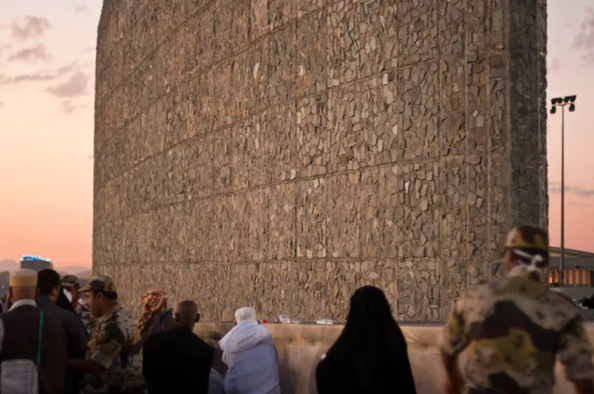
Pilgrims stoning the devil in Mina. Al Jazeera English, CC BY-SA
Many pilgrims spend the next few days in Mina, where they repeat some of the rituals. It is where they start to transition to their worldly life by putting on their everyday clothes.
Muslims believe that a proper performance of the Hajj can absolve them of any previous sins. However, they also believe that just undertaking the pilgrimage is not enough: It is up to God to judge, based on the intention of those undertaking the pilgrimage.
Creating one Muslim community
Of course, the pilgrimage does not take place in a political void. The Hajj is a massive organizational project for the Saudi authorities. Issues concerning crowd management, security, traffic and tensions constantly plague the successful organization of the event. A tragic stampede in 2015 left over 700 dead. Since then Saudi authorities review preparations even more carefully.
There are other tensions too that come up at this time: Some Shiagovernments such as Iran, for example, have leveled charges alleging discrimination by Sunni Saudi authorities.
This year, Muslims from Canada are concerned about logistics traveling back from the Hajj. Saudi Arabia has suspended all direct flights to Canada in a diplomatic feud sparked by tweets related to the Kingdom’s human rights violations.
To address such issues, Muslims in the past have called to put together an international, multi-partisan committee to organize the pilgrimage. Perhaps that could help avoid regional or sectarian conflicts. The Hajj, after all, is any individual Muslim’s single most symbolic ritual act that reflects the ideal of unity.
By requiring Muslims to don the same clothes, pray in the same space and perform the same rituals, the Hajj has the potential to unite a global Muslim community across national and class boundaries.
KEN CHITWOOD is a Ph.D. Candidate of Religion in the Americas and Global Islam at the University of Florida
THIS ARTICLE WAS ORIGINALLY PUBLISHED ON THE CONVERSATION
Rio
A year ago, Yury Sharov was asked to go to Rio with a couple of musicians from London to make a music video for their song, capturing their holidays on the IPanema beach. After the video was done, Yury had a lot of material that was not used and decided to make this short video about all the sides of Rio.
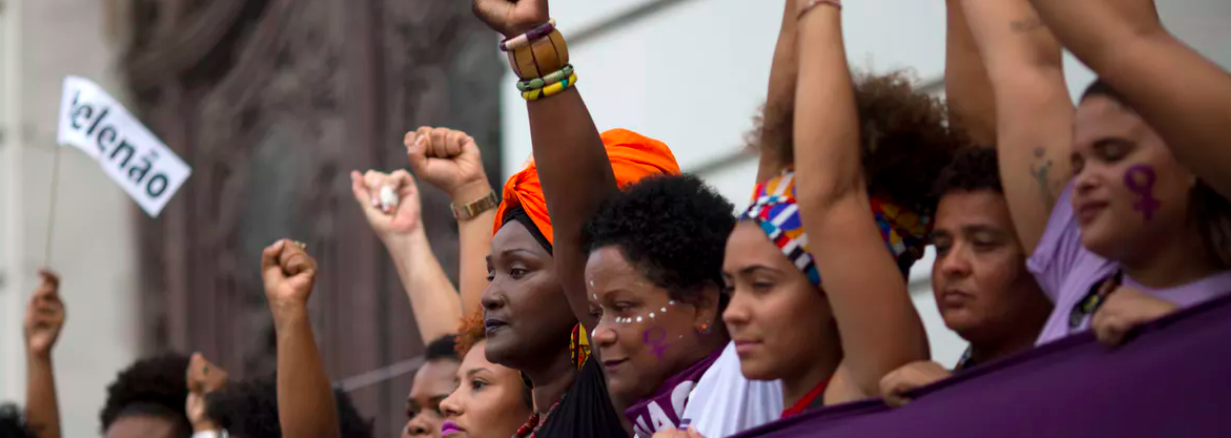
Black women in Brazil protest presidential frontrunner Jair Bolsonaro, who is known for his disparaging remarks about women, on Sept. 29, 2018. AP Photo/Silvia Izquierdo
Sexism, Racism Drive More Black Women to Run for Office in Both Brazil and US
Motivated in part by President Donald Trump’s disparaging remarks about women and the numerous claims that he committed sexual assault, American women are running for state and national office in historic numbers. At least 255 women are on the ballot as major party congressional candidates in the November general election.
The surge includes a record number of women of color, many of whom say their candidacies reflect a personal concern about America’s increasingly hostile, even violent, racial dynamics. In addition to the 59 black female congressional candidates, Georgia’s Stacey Abrams hopes to become her state’s first black governor.
The U.S. is not the only place where the advance of racism and misogyny in politics has has spurred black women to run for office at unprecedented levels.
In Brazil, a record 1,237 black women will be on the ballot this Sunday in the country’s Oct. 7 general election.
Brazilian women rise up
I’m a scholar of black feminism in the Americas, so I have been closely watching Brazil’s 2018 campaign season – which has been marked by controversy around race and gender – for parallels with the United States.
Last weekend, hundreds of thousands of Brazilian women marched nationwide against the far-right presidential frontrunner Jair Bolsonaro, under the banner of #EleNao – #NotHim.
Bolsonaro, a pro-gun, anti-abortion congressman with strong evangelical backing, once told a fellow congressional representative that she “didn’t deserve to be raped” because she was “terrible and ugly.”
Bolsonaro has seen a boost in the polls since he was stabbed at a campaign rally on Sept. 8 in a politically motivated attack.
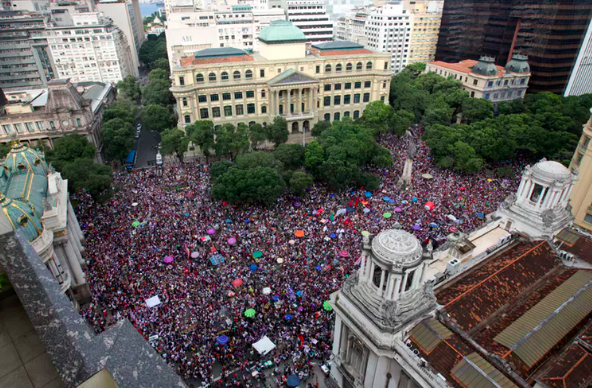
Protests in Rio de Janeiro against Jair Bolsonaro on Sept. 29, organized under the hashtag #EleNao (#NotHim). AP Photo/Silvia Izquierdo
Brazil has shifted rightward since 2016, when the left-leaning female president Dilma Rousseff was ousted in a partisan impeachment process that many progressives regard as a political coup.
Her successor, then-Vice President Michel Temer, quickly passed an austerity budget that reversed many progressive policies enacted under Rousseff and her predecessor, Workers Party founder Luís Inácio “Lula” da Silva.
The move decimated funding for agencies and laws that protect women, people of color and the very poor.
Racism in Brazil
In Brazil, these three categories – women, people of color and the very poor – tend to overlap.
Brazil, which has more people of African descent than most African nations, was the largest slaveholding society in the Americas. Over 4 million enslaved Africans were forcibly taken to the country between 1530 and 1888.
Brazil’s political, social and economic dynamics still reflect this history.
Though Brazil has long considered itself colorblind, black and indigenous Brazilians are poorer than their white compatriots. Black women also experience sexual violence at much higher rates than white women – a centuries-old abuse of power that dates back to slavery.
Afro-Brazilians – who make up just over half of Brazil’s 200 million people, according to the 2010 census – are also underrepresented in Brazilian politics, though sources disagree on exactly how few black Brazilians hold public office.
Three Afro-Brazilians serve in the Senate, including one woman. In the 513-member lower Chamber of Deputies, about 20 percent identify as black or brown. Women of color hold around 1 percent of seats in the Chamber of Deputies.
Black women step into the fray
That could change on Sunday.
This year, 9,204 of the 27,208 people running for office across Brazil are women, which reflects a law requiring political parties to nominate at least 30 percent women. About 13 percent of female candidates in 2018 are Afro-Brazilian.

A campaign ad for Rio city council member Talíria Petrone, who is running for Congress.Facebook
In most Brazilian states, that’s a marked increase over Brazil’s last general election, in 2014, according to the online publication Congresso em Foco.
In São Paulo, Brazil’s most populous state, 105 black women ran for office in 2014. This year, 166 are. In Bahia state, there are 106 black female candidates for political office, versus 59 in 2014. The number has likewise doubled in Minas Gerais, from 51 in 2014 to 105 this year.
As in the United States, Brazil’s black wave may be a direct response to alarming social trends, including sharp rises in gang violence and police brutality, both of which disproportionately affect black communities.
But many female candidates in Rio de Janeiro, Brazil’s second largest city, say one specific event inspired them to run.
In March, Marielle Franco, an Afro-Brazilian human rights activist and Rio de Janeiro city councilwoman, was assassinated – the 11th Brazilian activist to be murdered since November 2017.
Franco’s murder remains unsolved, but she was an outspoken critic of the military occupation of Rio’s poor, mostly black favela neighborhoods. The ongoing police investigation has implicated government agents in the shooting, which also killed her driver.
Her death unleashed an avalanche of activism among black women in Rio de Janeiro, with new groups offering fundraising and political training for female candidates of color.
On Sunday, 231 black women from Rio de Janeiro state will stand for election in local, state and federal races – more than any other state in Brazil and more than double the number who ran in 2014.
Black representation from Rio to Atlanta
Black women may have been historically excluded from Brazil’s formal political arena, but they have been a driving force for social and political change since the country’s transition from dictatorship to democracy in 1985.
Decades before #MeToo, Brazilian women of color were on the front lines of activism around issues like gender-based violence, sexual harassment and abortion.
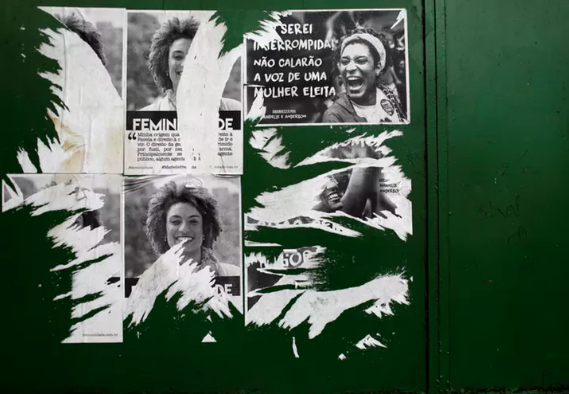
The March 2018 assassination of Rio de Janeiro city councilwoman, Marielle Franco, spurred a wave of black women running for local and federal office in Brazil. Reuters/Ricardo Moraes
Brazil has hundreds of black women’s groups. Some, including Geledes, a center for public policy, are mainstays of the Brazilian human rights movement. The founder of the Rio de Janeiro anti-racism group Criola, Jurema Werneck, is now the director of Amnesty International in Brazil.
The fact that thousands of black women, both veteran activists and political newcomers, will appear on the ballot on Sunday is testament to their efforts.
As in the United States, black Brazilian women’s demand for political representation is deeply personal. They have watched as their mostly male and conservative-dominated congresses chipped away at hard-won protections for women and people of color in recent years, exposing the fragility of previous decades’ progress on race and gender.
Black women in Brazil and the U.S. know that full democracy hinges on full participation. By entering into politics, they hope to foster more inclusive and equitable societies for all.
KIA LILLY CALDWELL is a Professor of African, African American, and Diaspora Studies at the University of North Carolina at Chapel Hill.
THIS ARTICLE WAS ORIGINALLY PUBLISHED ON THE CONVERSATION
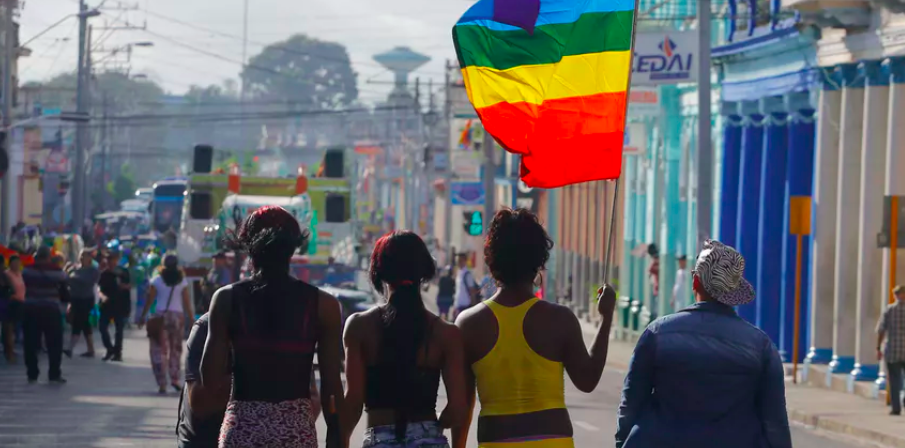
As gay Cubans gain more rights, opposition is also growing. AP Photo/Desmond Boylan
As Cuba Backs Gay Marriage, Churches Oppose the Government’s Plan
Cubans are debating a constitutional reform that, among other legal changes, would open the door to gay marriage. It would also prohibit discrimination against people based on sex, gender, sexual orientation and gender identity in the communist nation.
The proposed new Constitution, drafted by a special commission within Cuba’s National Assembly, was unveiled in July. If the National Assembly and President Miguel Díaz-Canel approve the document after a Feb. 24, 2019 public referendum, marriage would be defined as a “union between two people.”
Cuba’s 1976 Constitution, known as the Carta Magna, defines marriage as a union between a man and a woman. And it does not fully protect private enterprise, freedom of association or allows for same-sex marriage – despite growing social acceptance and political tolerance for such rights.
Emigrés who retain Cuban nationality have been invited to participate in Cuba’s public debate on the constitutional reform – though not to vote on it – via a digital forum run by the Foreign Ministry – a level of citizen outreach that’s “unprecedented” in Cuba, says Ernesto Soberón, the ministry’s director of consular affairs and Cubans residing overseas.
Cuba’s political process opens up
This lively, broad-based debate is a sign of how much Cuba – a main subject of my research as a professor of literature and cultural studies – has changed in recent years.
President Raúl Castro, who took over for his ailing older brother Fidel in 2006, began to open Cuba’s economy to foreign investment and normalized diplomatic relations with the United States, which has maintained its economic embargo on the Communist island since 1962.
Raúl Castro also worked with President Barack Obama to ease some economic restrictions on Cuba.
Castro stepped down in April 2018, handing power over to the much younger Díaz-Canel.
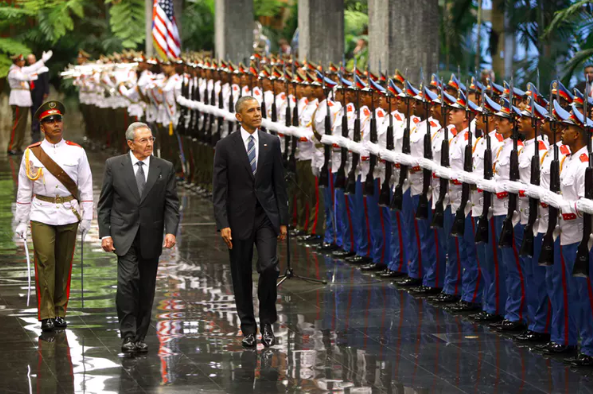
Presidents Barack Obama and Raúl Castro met in Havana in 2016, the culmination of the diplomatic ‘normalization’ process between the U.S. and Cuba. Reuters/Jonathan Ernst
Cuba has moderately amended its Carta Magna just three times. A 1978 constitutional reform created an official channel for youth political participation, for example, while that of 1992 liberalized elements of Cuba’s socialist economic model to revitalize Cuba’s economy.
Today’s proposed reform is a complete overhaul. It would add 87 articles, change 113 and eliminate 13, even a section of Article 5 affirming Cuba’s “advance toward a Communist society.”
Beyond legalizing gay marriage, the new Constitution would protect private property, limit the presidential term to five years and introduce the role of prime minister.
Intense debate has surrounded the possibility of marriage equality in Cuba, and not just within the government’s official public meetings. Cubans are also discussing and debating gay marriage with neighbors and friends, in the streets and online – a departure from Cuba’s traditionally more top-down style of government.
The rise of gay rights in Cuba
Cuba’s nascent LGBTQ rights movement also began under Raúl Castro, thanks in large part to the leadership of his daughter Mariela Castro, a National Assembly member and president of the semi-governmental Centro Nacional de Educación Sexual, founded in 1987 to advance sexual awareness in Cuba.
A lack of opinion polling makes it difficult to measure Cuban public support for gay marriage. But acceptance of homosexuality, both within the government and in civil society, has grown appreciably.
During the 1960s and 1970s, homosexuality was considered incompatible with Cuba’s model of the revolutionary man: atheist, heterosexual and anti-bourgeoisie. Gay people, active Christians and others who defied these ideals were sent to military work camps to “strengthen” their revolutionary character.
Today, the Cuban government appears to accept homosexuality as part of socialist society. In 2008 the National Assembly approved a law allowing sexual reasignment surgery.
La Habana holds annual marches against homophobia and transphobia and cities across the island celebrate the Gay Pride parade.
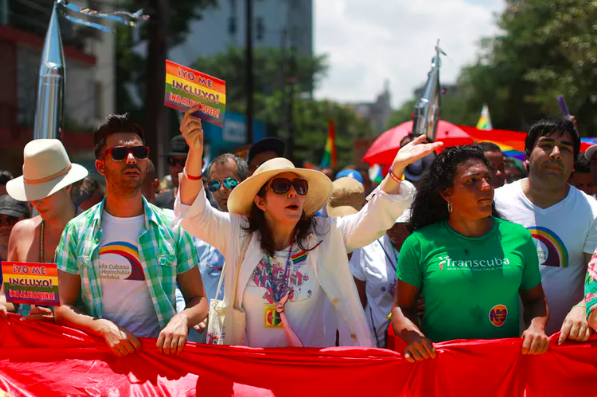
Mariela Castro (center), daughter of former president Raúl Castro, is a leader in Cuba’s LGBTQ movement.Reuters/Alexandre Meneghini
But legacies of intolerance remain.
The Assembly of God Pentecostal Church, the Evangelical League and the Methodist Church of Cuba, among other Christian churches, have issued a joint statement opposing gay marriage.
Traditionally, religion has taken a back seat to politics in Cuba. AP Photo/Cristobal Herrera
Their public letter, published on June 8, argues that such “gender ideology” has “nothing whatsoever to do with our culture, our independence struggles nor with the historic leaders of the Revolution.”
Cuba is a secular country where political ideology has historically trumped religion. Religious opposition to a government proposal is rare.
It is even more unusual for the church to attempt to mobilize the Cuban public, as some Christian leaders are trying to do now.
According to the Cuban magazine La Jiribilla, preachers on the streets have been handing out fliers saying gay marriage defies God’s “original design” for the family.
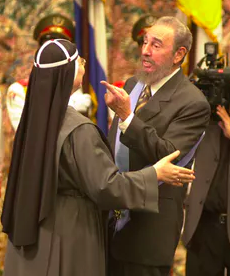
Traditionally, religion has taken a back seat to politics in Cuba. AP Photo/Cristobal Herrera
LBGTQ activists answer
Gay rights groups and feminists are responding with a creative show of force.
Clandestina, Cuba’s first online store, and the tattoo studio La Marca are spearheading a campaign called “Cuban design,” celebrating a “very original family” – phrasing that rebuts Christian claims about God’s design.
“More than anything, this is an issue of free expression,” Roberto Ramos Mori, of La Marca, said in an email. “The way to push back against hate is calmly, with intelligence – and, of course, humor.”
Cubans with internet access use the hashtag #mifamiliaesoriginal to signal their support for LGBTQ rights on social media.
The church’s powerful opposition to marriage equality reflects a strategy commonly deployed across Latin America, says the Cuban feministAilynn Torres Santana.
Catholic and evangelical groups in Ecuador used similar language, for example, to oppose a 2017 law allowing citizens to choose their own gender identifier, she says. In response to the legislation – which recognized gender as “a binary that is socially and culturally created, patriarchal and heteronormative” – churches called for “citizens to live in harmony with nature.”
Similar scenes played out when both Colombia and Brazil advanced LGBTQ rights, with Christian groups dismissing any attempt to change traditional gender roles as the “result” of what they pejoratively call “gender ideology.”
What’s next for Cuba
Gay marriage is not the only battlefield for Cuba’s newly empowered churches.
Abortion, illegal in most of Latin America, has been a woman’s right in Cuba since 1965. Traditionally, not even Cuba’s Catholic church publicly opposed it.
Recently, though, Christians in Cuba have begun publicly advocatingagainst abortion.
If conservative religious groups manage to prevent gay marriage in Cuba, I believe it would be a setback for social progress on the island.
But the mere existence of alternative voices in Cuba’s public sphere – including that of its churches – is, itself, proof that the country has already changed.
MARÍA ISABEL ALFONSO is a Professor of Spanish at St. Joseph's College of New York.
THIS ARTICLE WAS ORIGINALLY PUBLISHED ON THE CONVERSATION
Female Saudi Arabian Activist on Death Row for Peaceful Protest
On August 21, 2018, Saudi Arabian public prosecutors announced that they were considering the death penalty for five Saudi Shia activists. One of the five is Israa al-Ghomgham, a female activist who could become the first woman sentenced to death in Saudi Arabia. Ghomgham, along with four other Saudi Shia activists including her husband, engaged in peaceful demonstrations for Shia rights beginning in 2011 during the rise of the Arab Spring, which led to their 2015 arrests.
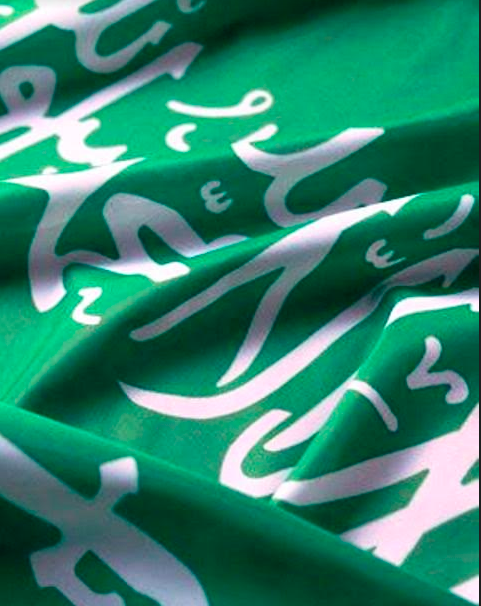
Saudi Arabian Flag. Iqbal Osman. Wikimedia Commons
“Any execution is appalling, but seeking the death penalty for activists like Israa al-Ghomgham, who are not even accused of violent behavior, is monstrous,” said Sarah Leah Whitson, who directs the Middle East sector of Human Rights Watch. “Every day, the Saudi monarchy’s unrestrained despotism makes it harder for its public relations teams to spin the fairy tale of ‘reform’ to allies and international business.”
Responding to peaceful protests with the death penalty is compromising both to proponents of human decency and order, and these actions are symptomatic of a larger illness. If Saudi Arabia is to continue to suppress and murder its own citizens, its actions could lead to its internal combustion. To preserve its tenuous position of prosperity, the Saudi Arabian government must honor the voices of its insurgents—or at least allow them to live.
Saudi Arabia, a desert country in the Middle East said to be the birthplace of Islam, holds a complex position at the pinnacle of capital and culture. It has the world’s third highest national total estimated value of natural resources. It is home to the world’s largest oil company, and it has been the proponent of various reform agendas, significant amount of money invested in solar energy. It is also ruled by the ultraconservative Wahhabi religious movement, which is part of Sunni Islam.
It has shown support for counterterrorism and revolutionary liberal and Arab Spring ideals and has supported rebel forces in Syria and Yemen, but internally it has been a breeding ground for violent forms of radical Islam, placing it at a crux between the most progressive and oppressive sides of the ideological spectrum. The nation’s 32-year-old king, Mohammed bin Salman, has been pushing to modernize his country, opening movie theatres and allowing women to drive for the first time—but his actions towards protestors despite his presentation of liberalism rings eerily close to the actions of Bashar al Assad, Syrian president who also began his reign by encouraging Westernization in Syria before cracking down on protestors and unleashing a bloody civil war. Under Salman, critics of the Saudi Arabian regime have been arrested in scores, and 58 people are currently on death row. Many of these prisoners are women, often arrested for protesting the country’s guardianship system, which places Saudi Arabian men in almost complete control of their daughters’ or wives’ lives.
Israa al-Ghomgham and her husband were arrested on December 5, 2015, and are on trial at the Specialized Criminal Court, which Saudi Arabia installed in 2008 and which has drawn expense criticism from human rights activists, sentencing eight protestors to death in 2014 and 14 in 2016. Currently human rights campaigners are working to secure her freedom and life.
EDEN ARIELLE GORDON is a writer, musician, and avid traveler. She attends Barnard College in New York.

The Truth About Where Hair Extensions Come From
This video takes us into the underground world of human hair trafficking. Wigs and extensions are often made of real human hair, but the hair is usually sourced from human trafficking.
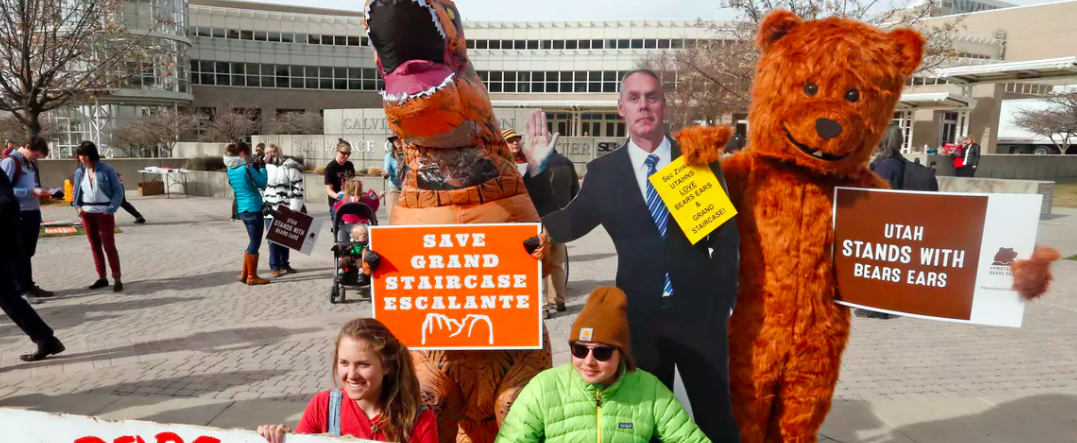
People protest the shrinking of Bears Ears National Monument. AP Photo/Rick Bowmer
Why Native Americans Struggle to Protect Their Sacred Places
Forty years ago the U.S. Congress passed the American Indian Religious Freedom Act so that Native Americans could practice their faith freely and that access to their sacred sites would be protected. This came after a 500-year-long history of conquest and coercive conversion to Christianity had forced Native Americans from their homelands.
Today, their religious practice is threatened all over again. On Dec. 4, 2017, the Trump administration reduced the Bears Ears National Monument, an area sacred to Native Americans in Utah, by over 1 million acres. Bears Ears Monument is only one example of the conflict over places of religious value. Many other such sacred sites are being viewed as potential areas for development, threatening the free practice of Native American faith.
While Congress created the American Indian Religious Freedom Act to provide “access to sacred sites,” it has been open to interpretation. Native Americans still struggle to protect their sacred lands.
Land-based religions
Native Americans have land-based religions, which means they practice their religion within specific geographic locations. As Joseph Toledo, a Jemez Pueblo tribal leader, says, sacred sites are like churches; they are “places of great healing and magnetism.”
Some of these places, as in the case of Bears Ears National Monument, are within federal public lands. As a Native American scholar, I have visited many of these places and felt their power.
For thousands of years, tribes have used Bears Ears for rituals, ceremonies and collecting medicines used for healing. The different tribes – the Hopi, Navajo, Ute Mountain Ute, Ute Indian Tribe and the Pueblo of Zuni – have worked to protect the land. Together they set up a nongovernmental organization, the Bears Ears Inter-Tribal Coalition to help conserve the landscape in 2015.

Native American tribes believe Bears Ears is the last of undisturbed sacred lands. Mark Stevens, CC BY-NC-SA
The tribes believe Bears Ears is one of the last large undisturbed areas in the lower 48 states and contains the spirits of those who once lived there. Bears Ears Navajo elder Mark Maryboy emphasized, “It’s very important that we protect the earth, the plants, and special ceremonial places in Bears Ears for future generations — not just for Native Americans, but for everybody.”
Sacred landscape
My great-grandparents, Páyotayàkχkumei and Kayetså’χkumi, (translated as Aims-while-flying-through-the-air and Hollering-in-the-air), were well-known religious leaders on the Blackfeet reservation. They lived in the foothills of the south side of the reservation. However, they went into the mountains and onto public lands in an area now called the Badger-Two Medicine in northcentral Montana to practice their religion.
My great-grandfather traveled into Badger canyon to trap eagles and gather their feathers which he used in ceremonies and for divine protection. My great-grandmother gathered medicinal plants used in healing ceremonies. Together they prayed and sought solitude in this sacred landscape.
Similar to Bears Ears, the Badger-Two Medicine, a 130,000-acre area within the Lewis and Clark National Forest, became embroiled in a controversy over potential natural resource development between 1982 and 2017. The Blackfeet tribe argued that these lands were sacred. And that tribal members, such as my great-grandparents, had used these lands for years for spiritual purposes.
The Blackfeet tribe ultimately succeeded in stopping development, but only after a 35-year-long fight with the Department of Interior, which initially approved almost 50 oil and gas leases. In 2017 Interior Secretary Jewell canceled the last of these leases. This means these public lands will not be used for natural resource development in the future.
Now my family and other Blackfeet, who have used the Badger-Two Medicine for millennia, can use these public lands for their religious practice in solitude.
Forty years later
The reality is, however, that not every dispute between tribes and the U.S. government ends up in favor of the tribes. Historically, Native American tribes have struggled to explain why certain landscapes are sacred for them.
In 1988, just 10 years after the passage of the American Indian Religious Freedom Act, the Supreme Court considered a case involving the construction of a U.S. Forest Service road through undeveloped federal lands sacred to northern California tribes in the Six Rivers National Forest.
The lower court had ruled in favor of the Yurok, Karok and Tolowa tribes stating the road would impact their religious practice.
However, the Supreme Court reversed the decision, ruling that building a road through a sacred landscape would not prohibit the tribes “free exercise” of religion.
The tribes lost, because the Supreme Court viewed the American Indian Religious Freedom Act as a policy and not a law with legal protections.
Ultimately, the road was not built because Congress stepped in and added this sacred area to the existing Siskiyou Wilderness, which is a protected area by federal law.
What was noteworthy in the SCOTUS deliberations, though, was the dissenting opinion of Justice William Brennan, who defended land-based religions. He said,
“Native American faith is inextricably bound to the use of land. The site-specific nature of Indian religious practice derives from the Native American perception that land is itself a sacred, living being.”
Indeed, religion scholars such as Yale professor Tisa Wenger point outthat “the most important religious freedom issues for Native Americans” center around protecting their sacred places.
At a time when the Trump administration has created a new task force to address discrimination against certain religious groups, the exclusion of Bears Ears and other places of religious significance from these discussions raises important questions about religious freedom in the United States and also the legacy of the American Indian Religious Freedom Act.
ROSALYN R. LAPIER is an Associate Professor of Environmental Studies at The University of Montana.
THIS ARTICLE WAS ORIGINALLY PUBLISHED ON THE CONVERSATION
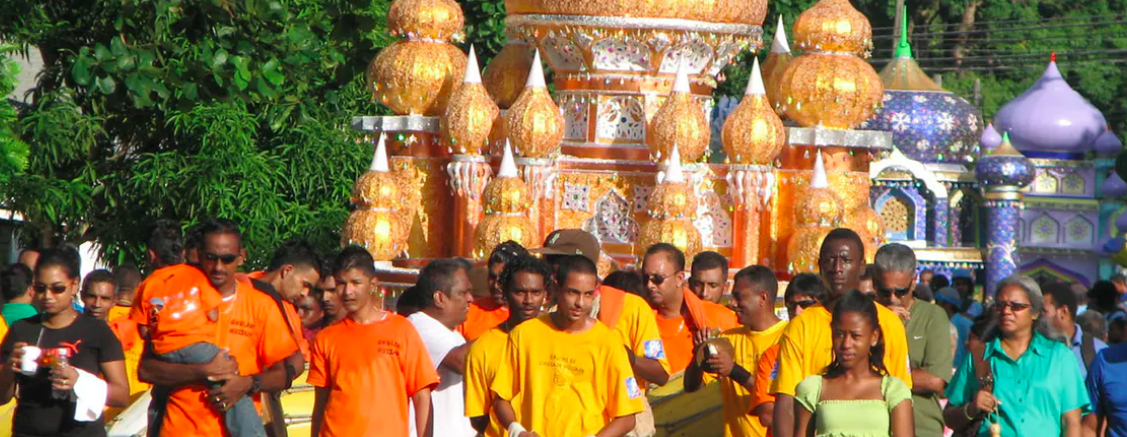
Hosay procession in St. James. Nicholas Laughlin, CC BY-NC-SA
How an Ancient Islamic Holiday Became Uniquely Caribbean
A throng of Trinidadians line up along the streets of St. James and Cedros to admire the vibrant floats with beautifully bedecked models of mausoleums. Their destination is the waters of the Caribbean, where the crowds will push them out to float.
This is part of the Hosay commemorations, a religious ritual performed by Trinidadian Muslims, that I have observed as part of the research for my forthcoming book on Islam in Latin America and the Caribbean.
What fascinates me is how a practice from India has been transformed into something uniquely Caribbean.
Re-enacting tragedy
During the 10 days of the Islamic month of Muharram, Shiite Muslims around the world remember the martyrdom of Hussein, Prophet Muhammad’s grandson, who was killed in a battle in Karbala, today’s Iraq, some 1,338 years ago. For Shiite Muslims Hussein is the rightful successor to Prophet Muhammad.
Ashura, the 10th day of Muharram, is marked by public mourning and a re-enactment of the tragedy. Shiite Muslims put on passion plays that include inflicting suffering, as a way to remember Hussein. In Iraq, Shiite are known to beat themselves with swords. In India, mourners whip themselves with sharp blades. Some Shiite also visit Hussein’s shrine in Iraq.
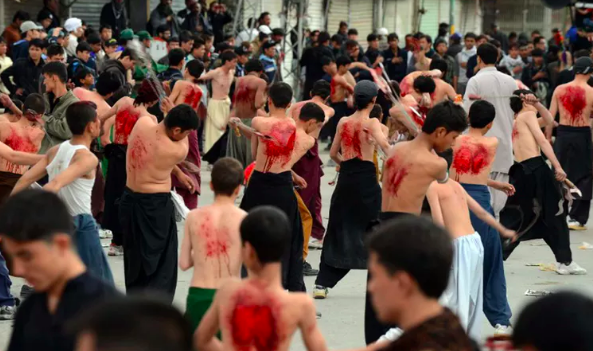
Ashura procession in Pakistan. Diariocritico de Venezuela, CC BY
The commemoration has also become a symbol for the broader Shiite struggle for justice as a minority in the global Muslim community.
Early history
In Trinidad, the 100,000 Muslims who make up 5 percent of the island’s total population, celebrate the day of Ashura, as Hosay – the name derived from “Hussein.”
The first Hosay festival was held in 1854, just over a decade after the first Indian Muslims began to arrive from India to work on the island’s sugar plantations.
But Trinidad at the time was under British colonial rule and large public gatherings were not permitted. In 1884, the British authorities issued a prohibition against Hosay commemorations. Approximately 30,000 people took to the streets, in Mon Repos, in the south, to protest against the ordinance. Shots fired to disperse the crowd killed 22 and injured over 100. The ordinance was later overturned.
The “Hosay Massacre” or “Muharram Massacre,” however, lives in people’s memories.
Colorful floats of Trinidad
These days, Hosay celebrations in St. James and Cedros not only recall Hussein, but also those killed during the 1884 Hosay riots. Rather than recreate the events through self-flagellation or other forms of suffering, however, people in Trinidad create bright and beautiful floats, called “tadjahs,” that parade through the streets to the sea.
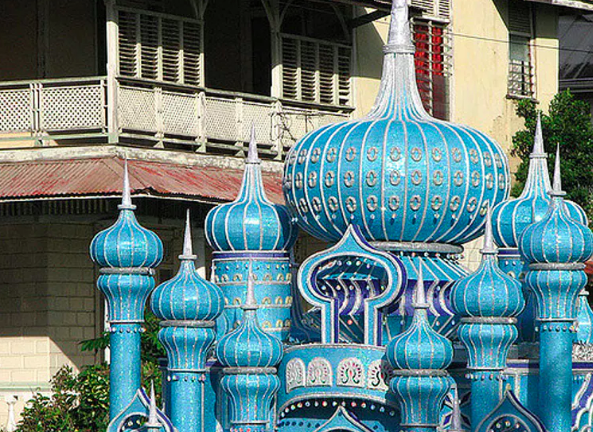
The tadjah, a colorful model of a mausoleum. Nicholas Laughlin, CC BY-NC-SA
Each tadjah is constructed of wood, paper, bamboo and tinsel. Ranging from a height of 10 to 30 feet, the floats are accompanied by people parading along and others playing drums, just as is the practice in India’s northern city of Lucknow. Meant to reflect the resting place of Shiite martyrs, the tadjahs resemble mausoleums in India. To many, their domes might be a reminder of the Taj Mahal.
Walking ahead of the tadjahs are two men bearing crescent moon shapes, one in red and the other in green. These symbolize the deaths of Hussein and his brother Hassan – the red being Hussein’s blood and the green symbolizing the supposed poisoning of Hassan.
The elaborateness of the tadjahs continues to increase each year and has become somewhat of a status symbol among the families that sponsor them.
A bit carnival, a bit Ashura
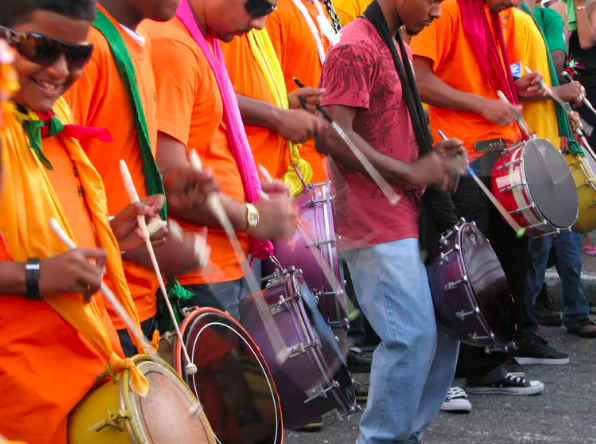
Trinidad’s Hosay brings in a more carnival-like joy to a somber remembrance. Nicholas Laughlin, CC BY-NC-SA
While the festival is certainly a somber one in terms of its tribute, it is also a joyous occasion where families celebrate with loud music and don festive attire. This has led some to compare Hosay to Trinidad’s world-famous carnival with its accompanying “joie de vivre.”
But there are also those who believe that the occasion should be a more somber remembrance of the martydom of Hussein. More conservative Muslims in Trinidad have made attempts to “reform” such celebrations. These Muslims believe local customs should be more in line with global commemorations like those in Iraq or India.
What I saw in the festival was an assertion of both the Indian and Trinidadian identity. For Shiite Muslims, who have dealt with oppression and ostracism – both in the past and in the present – it is a means of claiming their space as a minority in Trinidadian culture and resisting being pushed to the margins. At the same time, with its carnival-like feel, the festival could not be more Trinidadian.
Indeed, the celebrations each year illustrate how Indian and Trinidadian rituals and material culture merged to create a unique festival.
KEN CHITWOOD is a Ph.D. Candidate in Religion in the Americas and Global Islam at the University of Florida
THIS ARTICLE WAS ORIGINALLY PUBLISHED ON THE CONVERSATION
Nigeria’s First Female Car Mechanic Is Changing the World
Sandra Aguebor is the first female mechanic in Nigeria and the founder of the Lady Mechanic Initiative, an organization that teaches women from diverse backgrounds how to fix cars and become financially independent. In Aguebor's garage, you’ll find tools to fix cars and so much more.
Sudden Death Among Oldest Baobab Trees
Researchers link the 1,000 year old trees deaths to climate change.
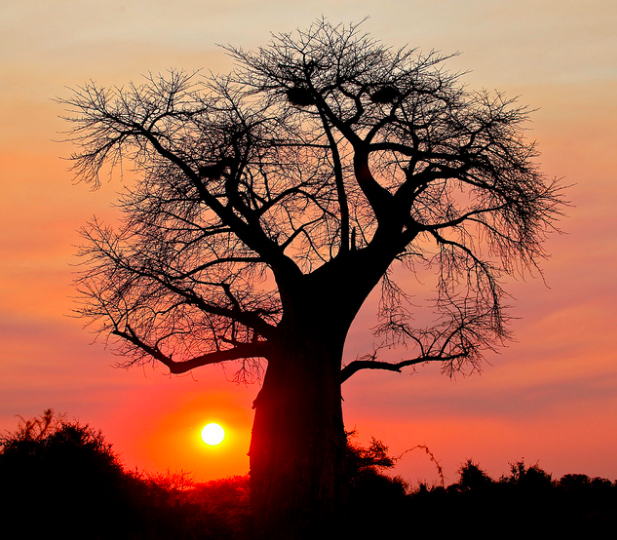
Baobab tree silhouetted against a Botswana sunset. Steve Jurvetson. CC 2.0
Over the past few decades many baobab trees have died suddenly in South Africa.
The baobab is a tall bulbous tree native to the savanna region in Africa and is known for being the largest and longest living flowering tree. While its usual lifespan is between 1,100 and 2,500 years, baobabs can survive for up to 3,000 years. The fruit of the tree is edible and extremely nutritious, containing 10 times the vitamin C of an orange. The leaves of the baobab can also be consumed and its bark can be used for robe, musical instrument strings, baskets, and waterproof hats.
With their incredible thousand year lifespan baobab trees are normally “very difficult to kill,” according to Kruger Park, a natural habitat for the tree in South Africa. The park also stated that the trees “can be burnt, or stripped of their bark, and they will just form new bark and carry on growing. When they do die, they simply rot from the inside and suddenly collapse, leaving a heap of fibres.”
Although more analysis is needed to solidly prove their hypothesis, many researchers believe that the sudden deaths of many baobabs is due at least in part to climate change. According Adrian Patrut, a chemist at Babeș-Bolyai University in Romania who co-authored a study on baobabs, the “trees are under pressure by temperature increases and drought,” likely do to the effects of climate change.
“Such a disastrous decline is very unexpected, Patrut told NPR. “It's a strange feeling, because these are trees which may live for 2,000 years or more, and we see that they're dying one after another during our lifetime. It's statistically very unlikely.”
Among the trees that have died are four of the biggest baobabs and nine of the oldest.
But the recent demise of the baobabs is not only an environmental problem. Baobabs have immense cultural significance in communities in southern Africa and are often used as shrines and meeting places. There is an indigenous myth that the first baobabs were arrogant about their size and lorded over the smaller plants. As a punishment they were torn from the ground by the gods who planted them wrong side up with their roots in the air. According to legend, evil spirits now haunt the plant’s white flowers and anyone who plucks one will be killed by a lion.
In another story a hollow baobab in Zambia was home to a giant python who was worshipped by the local people and answered their prayers for rain, good crops and hunting. Later, a white hunter came and shot the python leading to terrible consequences. According to the story the python’s ghost still haunts the tree.
While the future for baobabs certainly looks grim, there is hope that the current increase in awareness surrounding baobab death will result in monitoring of the trees which in turn will do more to ensure their health and survival.
EMMA BRUCE is an undergraduate student studying English and marketing at Emerson College in Boston. While not writing she explores the nearest museums, reads poetry, and takes classes at her local dance studio. She is passionate about sustainable travel and can't wait to see where life will take her.

Scotland Creates £5.2m Initiative for Free Sanitary Products
As part of the growing effort to end period poverty, Scotland provides students with free sanitary products.
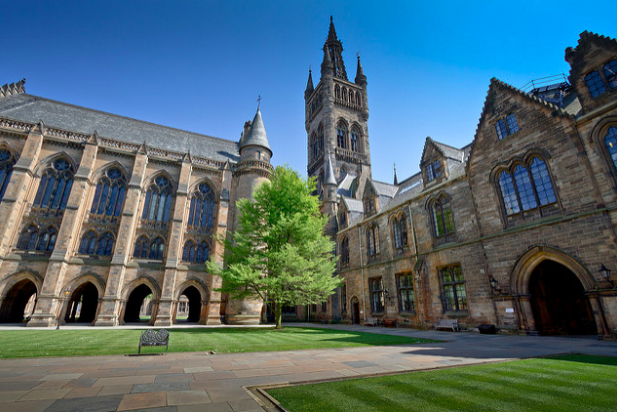
University of Glasgow is one of the universities in Scotland now providing free sanitary products to students. Michael D. Beckwith. CC0 1.0
Only a few weeks ago, the Scottish government announced a £5.2 million ($6.4 million) initiative to provide students with free sanitary products. The scheme is part of a national effort to “banish the scourge of period poverty” by ensuring that no student’s health, studies, or wellbeing are affected by not having adequate access to sanitary products.
Scotland’s action is a first in world history and will provide all of the country’s 395,000 students with free pads and tampons beginning this September.
According to a survey of 2,000 by Young Scot, 1 in 4 people at schools and universities across Scotland have difficulty purchasing sanitary products. Another study by Women for Independence showed that one in five women go through period poverty. Because of this lack of access to period products, thousands miss school or have to make their own sanitary products using rags or newspapers, according to Plan International UK.
In a statement, Communities secretary Aileen Campbell said that, “In a country as rich as Scotland it’s unacceptable that anyone should struggle to buy basic sanitary products.
“I am proud that Scotland is taking this world-leading action to fight period poverty and I welcome the support of local authorities, colleges and universities in implementing this initiative. Our £5.2m investment will mean these essential products will be available to those who need them in a sensitive and dignified way, which will make it easier for students to full focus on their studies.”
The government is partnering with the Convention of Scottish Local Authorities (Cosla), Colleges Scotland, Universities Scotland, and the Scottish Funding Council, to make the initiative a reality. Hey Girls, a social enterprise company, is serving as the provider for the scheme. The company’s founder, Celia Hodson, told the Guardian that the initiative is “a real milestone in the fight against period poverty.”
While ultimately the initiative will only be able to serve students, according to Cosla president Alison Evison, “it will also contribute to a more open conversation and reducing the unnecessary stigma associated with periods.”
“Periods are a part of life, they shouldn’t be a point of inequality, compromise someone’s quality of life or be a distraction from making the very most of time spent at university, so this is a positive step,” Susannah Lane, the head of public affairs at Universities Scotland.
Monica Lennon, Scottish Labour MSP and the member responsible for a bill creating a statutory duty for free feminine hygiene products told the press that, “This is another great step forward in the campaign against period poverty. Access to period products should be a right, regardless of your income, which is why I am moving ahead with plans for legislation to introduce a universal system of free access to period products for everyone in Scotland.
“No one should face the indignity of being unable to access these essential products to manage their period.”
EMMA BRUCE is an undergraduate student studying English and marketing at Emerson College in Boston. While not writing she explores the nearest museums, reads poetry, and takes classes at her local dance studio. She is passionate about sustainable travel and can't wait to see where life will take her.

Border Crisis: Where American Myth Meets Reality
Once upon a time, there was a highway that stretched 2,448 miles across the American landscape, from Chicago, Illinois to Santa Monica, California. Constructed in 1926, Route 66 actually no longer exists—having been replaced by the Interstate Highway System over the years. This ghostly road, which exists only in historical snapshots, relics, and memories, once represented the heart of American folklore.
Read MoreAcid Attacks: A Regional or Global Phenomenon?
Many assume acid attacks are typical of Southeast Asia, but studies show they occur globally.
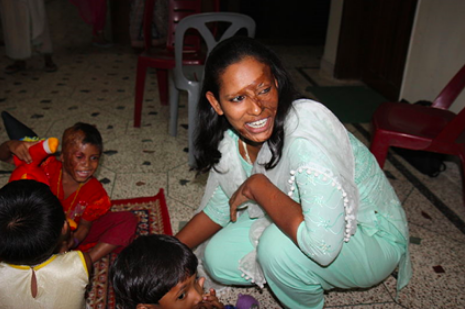
Acid attacks survivors in Bangladesh (Source: Photograph by Narayan Nath/FCO/Department for International Development). CC-BY-2.0.
What do you think of when you see an acid attack report in the news? Likely you think of a woman in Southeast Asia who was attacked by a man.
Unfortunately this immediate association many of us make with Southeast Asia, obscures a global trend that encompasses both developing and industrialized nations. Notably in 2016 most cases of acid attacks were actually in the United Kingdom, where 454 cases were reported compared to 300 in India. The United Kingdom is also one of the few areas where acid attacks are directed against other men, usually because of gang violence, rather than women.
Still there is some truth to the regional associations some might make. Around “90% of global burn injuries occur in developing countries” according to research presented by Acid Survivors Trust International (ASTI). The other truth is the disproportionate targeting of women. ASTI estimates that out of 1,500 cases of gender violence each year, 80% of cases are women. Considering 60% of cases go unreported according to ASTI, it is clear that acid attacks are not a rare event.
The major motive for acid attacks is a desire to disfigure the victim and take away their chance for a future; especially with women, perpetrators often hope to take away their beauty. According to a 2011 study sponsored by programs at Cornell University Law, acid was also viewed as a punishment against women who stepped outside traditional gender roles in patriarchal societies. Other reasons included rejected love, disagreements over land, or marriage disputes (dowry issues).
For Nepalese victim Sangita Magar, gender violence is particularly relevant. Her perpetuator, Jiwan B.K., attacked Magar—who almost lost her eyesight in addition to the scarring—after arguing with her brother over their apartment complex’s shared bathroom. Like most survivors she required extensive treatment.
However when she was attacked in 2015, Nepalese law provided no compensation for her injuries. The required treatment was also not included in the free care the Nepalese government provides it citizens.
So in 2017 Magar and a fellow plaintiff challenged the law in a public interest case to benefit future victims. They successfully brought about financial support for treatment to victims and stronger punishments for perpetrators with a minimum prison sentence of five years as well as fines ranging between 100,000 and 500,000 rupees, dependent on the victim’s injuries. Although the regulation of acid sales has yet to take effect, Nepal’s Supreme Court implemented the other measures in August 2018.
Many hope these changes will help decrease the number of acid attacks in Nepal, where around 40 cases are reported every year according to local NGO Burns Violence Survivors. Indeed, many look to the example of Bangladesh. Following changes in the law in 2002 and regulation of acid sales, reported cases dropped from 494 in 2002 to only 44 reported cases in 2016.
And it is the availability of acid that underlies the global trend. Where guns are not as readily accessible, acid is an easy choice. Acid is easily found in areas that utilize it in agriculture or produce it. But even if an area does not use or produce it, acid is found in household cleaners and paint.
Most places also do not regulate the sale of acid: Europe is one of them. However Belgian Patricia Lefranc, whose ex-lover attacked her in 2009, is leading a campaign to push for identity card checks to regulate acid sales within the European Union.
Currently, the main voice for change is London-based NGO Acid Survivors Trust International., founded in 2002. ASTI strives to “mobilise resources to support in-country partners to assist survivors” with medical treatment as well as therapy for psychological trauma. ASTI also promotes education, advocates policy changes, trains medical professionals, and funds research.
Most importantly, as outlined by the UN in 1992 under the Convention on the Elimination of All Forms of Discrimination Against Women, ASTI is holding countries accountable to their obligation to protect individuals from gender violence and provide services to victims. Their successes reflect this: ASTI helped change Cambodia’s acid laws and reached 6,360 community members in Nepal and Pakistan in an awareness campaign about acid attacks, among other successes.
And it is awareness of the global scope of acid attacks that gives space for all survivors to speak out, if they wish. Awareness also supports NGOs that have been pushing for change. In other words, being aware shows that survivors and their advocates have been heard.
TERESA NOWALK is a student at the University of Virginia studying anthropology and history. In her free time she loves traveling, volunteering in the Charlottesville community, and listening to other people’s stories. She does not know where her studies will take her, but is certain writing will be a part of whatever the future has in store.
Daydream in the Philippines
Visiting the Philippines has always been on the list of places Pete R. wanted to go to and since he was back in Asia during the whale shark season, he decided to take the opportunity and traveled to the Philippines for 2 weeks. His plan was to spend the first week exploring the volcano part of the Philippines and last week in the islands.
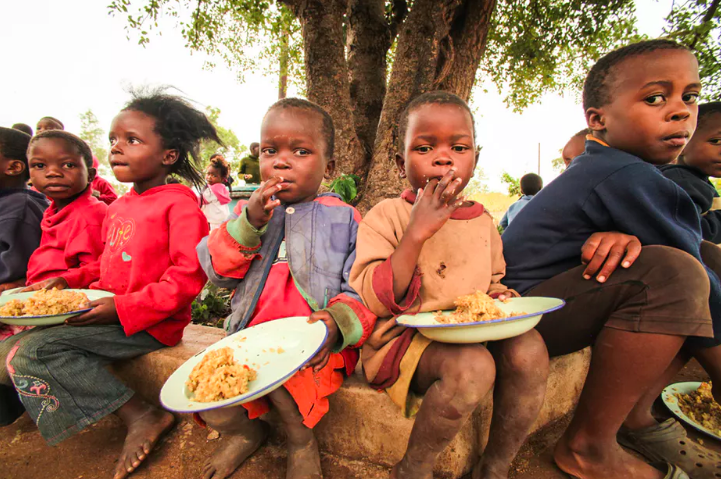
How can photographers be more sensitive towards their subjects? Feed My Starving Children (FMSC), CC BY
Images of Suffering Can Bring About Change – But Are They Ethical?
In a series of provocative photographs, poor children in India were made to pose in front of fancy tables covered with fake food. A prize-winning Italian photographer, Alessio Mamo, took these pictures in 2011, as part of a project called “Dreaming Food.” After the World Press Photo Foundation shared the photos on Instagram, they sparked a bitter controversy. Many considered them unethical and offensive.
In his apology, Mamo described his desire to show to a Western audience “in a provocative way, about the waste of food.” He was attacked for lacking cultural sensitivity and violating 21st-century photographic ethics.
Despite such risks, as a public law scholar, I am aware that images of suffering are often part of human rights campaigns. And freedom of expression, including visual representation, is protected by a United Nations treaty and many national constitutions.
At the same time, however, I argue for ethical limitations on the right to take pictures.
Moral questions
The controversy around Mamo’s so-called “poverty porn” images is not the first time that such questions have been raised.
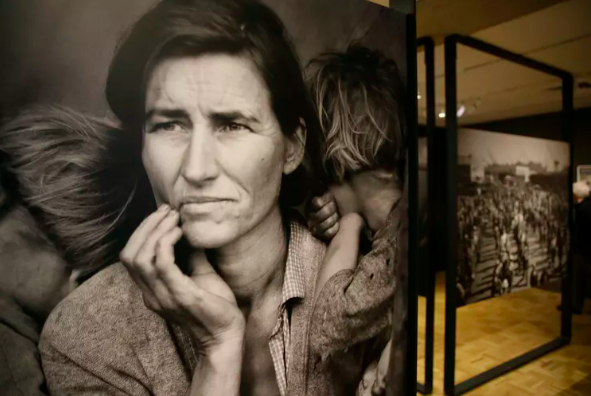
The iconic photograph ‘Migrant Mother’ by Dorothea Lange, on display at the Oakland Museum of California. AP Photo/Eric Risberg
One such case was that of the 1936 black-and-white photograph of Florence Owens Thompson that became the iconic image of the “Migrant Mother” during the Depression. Photographer Dorothea Lange took the picture for Resettlement Administration, a New Deal agency tasked with helping poor families relocate. It showed Thompson, with her children, living in poverty.
The family survived on frozen vegetables and birds they hunted. The photo was intended to build support for social welfare policies.
The photo raised some moral questions.
While Lange shot to fame, no one knew the name of the woman. It was only decades later that Thompson was tracked down and agreed to tell her story. As it turned out, Thompson didn’t profit from “Migrant Mother” and continued to work hard to keep her family together. As she said later,
“I didn’t get anything out of it. I wish she hadn’t taken my picture. … She didn’t ask my name. She said she wouldn’t sell the pictures. She said she’d send me a copy. She never did.”
Thompson felt “bitter, angry and alienated,” over the “commodification” of her image, wrote scholars Robert Hariman and John Louis Lucaites, in their study of powerful images.
Thompson was the poster child for the Depression, and she did take some pride in that. Her photo benefited many. But, as she asked a reporter, “what good’s it doing me?”
What’s the role of a photographer?
Another striking example is a 1993 photo by South African photographer Kevin Carter showing a young Sudanese girl, with a vulture perched near her. The iconic image captured public attention by focusing on the plight of children during a time of famine.


Kevin Carter’s photo shows a starving girl with a vulture next to her. Cliff
Unlike other images depicting starving children with “flies in the eyes,” this one highlighted the predicament of a vulnerable famine victim, crawling to a food station in Ayod, in South Sudan.
The picture won Carter a Pulitzer Prize in 1994, but also precipitated an avalanche of criticism. Although Carter scared the vulture away, he did not carry the girl to the nearby food station. The fate of the girl remained unknown.
In a critical essay about the image, scholars Arthur and Ruth Kleinman asked: Why did the photographer allow the predatory bird to move so close to the child? Why were her relatives no where to be seen? And, what did the photographer do after he took the picture?
They also went on to write that the Pulitzer Prize was won “because of the misery (and probable death) of a nameless little girl.” Some others called Carter “as much a predator as the vulture.”
Two months after receiving the Pulitzer, in July 1994, Carter took his own life. Apart from his own challenging personal circumstances, his suicide note revealed that he was haunted by the vivid memories of the suffering that he witnessed.
Pictures for charity
Admittedly, famine, poverty and disasters need attention and action. The challenge for journalists, as scholar David Campbell notes, is to mobilize public reactions before it is too late.
These catastrophes require prompt intervention by government and relief agencies, through, what human rights scholar Thomas Keenan and others call, “mobilizing shame” – a way of exerting pressure on states to act to rescue those in dire circumstances.
Such an effort is often more effective if images are used. As Rakiya Omaar and Alex de Waal, co-directors of African Rights, a new human rights organization based in London, note,
“The most respectable excuse for selectively presenting images of starvation is that this is necessary to elicit our charity.”
The truth is, these images do have an impact. When James Nachtwey, an American photographer, took photos of the famine in Somalia, the world was moved. The Red Cross said public support resulted in what was then its largest operation since WWII. It was much the same with Carter’s image, which helped galvanize aid to Sudan.
Nonetheless, as Campbell contends, media coverage can reinforce negative stereotypes through an iconography of famine or images of those starving in “remote” places like Africa. His argument is that individuals continue to present people in what the Kleinmans call the “ideologically Western mode.”
In this framing, the individual appears without context, usually alone, and without the ability to act independently.
Changing representations
Greater awareness of the power of images in different contexts has exerted pressure on NGOs and journalists to shift from a “politics of pity” to a “politics of dignity.”
In 2010 Amnesty International issued photo guidelines, regarding rules for images that show suffering. Save the Children also drafted a manual after conducting research on image ethics in various parts of the world.
Explicit rules include not posing subjects, avoiding nudity and consulting subjects about the way they believe the narrative ought to be presented visually. A major concern has been how sometimes the subjects and scene might be manipulated to orchestrate an image.
What this reflects is a desire to show greater sensitivity to the precarious status of some subjects in photographs.
But this is easier said than done. Recognizing that voyeuristic interpretation of distant suffering is offensive does not necessarily mean this practice will cease. The real challenge ultimately is that the ethically problematic images that present “pitiful” victims to the world are often the ones that capture public attention.
Eventually, much rests on the stringent ethical standards that photographers set for themselves. What they do need to remember, is that often, good intentions do not justify the use of questionable images of suffering.
ALISON DUNDES RENTEIN is a Professor of Political Science, Anthropology, Public Policy and Law at the University of Southern California – Dornsife College of Letters, Arts and Sciences.
THIS ARTICLE WAS ORIGINALLY PUBLISHED ON THE CONVERSATION
Fighting Plastic Pollution on Easter Island’s Shores
When Francis Picco traveled to Easter Island for vacation in 1989, he fell in love—both with the woman who would become his wife and with the breathtaking landscape. Over time, he began to notice a troubling addition to the rocky shores: plastic waste, most of it from commercial fishing vessels. Determined to give back to the island that has given him so much, Picco spends hours each week picking up refuse by hand.
SARDINIA: Spinning Silk from the Sea
For over a thousand years, Chiara Vigo’s family has been keeping up an ancient tradition, spinning silk from the sea. Creating the sea silk, or byssus, involves an intricate process shrouded in secrecy. Living on the Sardinian coast, Chiara follows in her family’s footsteps as a master weaver—perhaps the last remaining on Earth.
CROATIA: Aging Wine at the Bottom of the Sea
In the southern part of Croatia, in the peninsula of Pelješac, one winery is taking their love of wine *deep*—75 feet below the Mediterranean Sea's surface. Wanting to combine his two favorite pastimes, winemaker and scuba diver Edi Bajurin built an underwater winery, with custom cages and secure clay amphora that store the bottles for a year and a half. But why underwater? For Edi, the ocean’s “silence” bestows and blesses wine with a certain richness unlike anything found above ground.