A Cycling Revelation

JULY 2012, TAJIKISTAN

Traveling through Central Asia, a predominately Muslim part of the world, I had noticed that when accompanied by a man I don’t have opportunities to talk and interact with locals, as all conversation is directed to the men. Descending into a valley together with a new and temporary cycling partner by the name of Chris-Alexandre, we would part ways around 10 am in the morning.

The morning Pamiri sunrise from camp, looking over Chris-Alexandre peacefully sleeping.

Chris-Alex, whom I had met in Uzbekistan and planned to meet in Dushanbe, Tajikistan, would wish me luck after three days of cycling together towards the famous Pamir Highway. We promised to stay in contact through our intermittent cell phone signals and meet up ahead. I was now on my own again, something I know so well after two years and close to 25,000 km cycled solo.

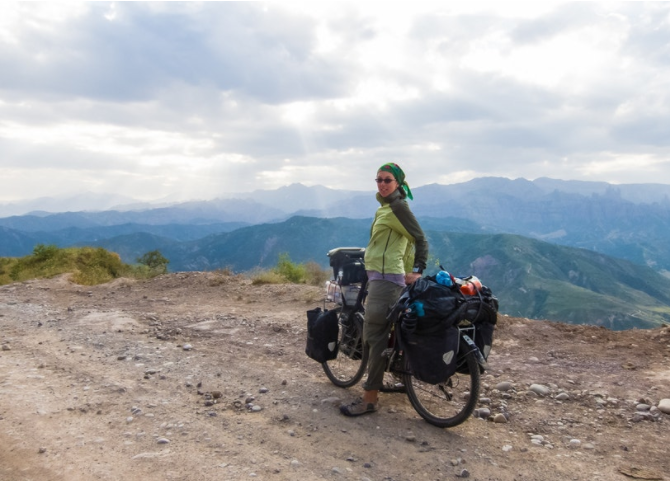
Beginning the ride for the day, little would I know what lied ahead of me. Photograph by Chris-Alexandre of the “All School Project”.

Spending the day riding through a hot and arid valley, but where the small villages are tree lined, I pull over to rest under some trees on the western edge of a village in the late afternoon.

It’s currently Ramadan, which explains the quiet and calm through the days. At sunset, Muslims will quit fasting and have a meal together. It’s considered rude to eat and drink in front of fasting Muslims and I take consideration in hiding myself a bit when eating on the side of the road. At this resting point, I’m not eating but rather just sipping my water and trying to figure out what my plan will be for the night as it’s nearing 6 pm.

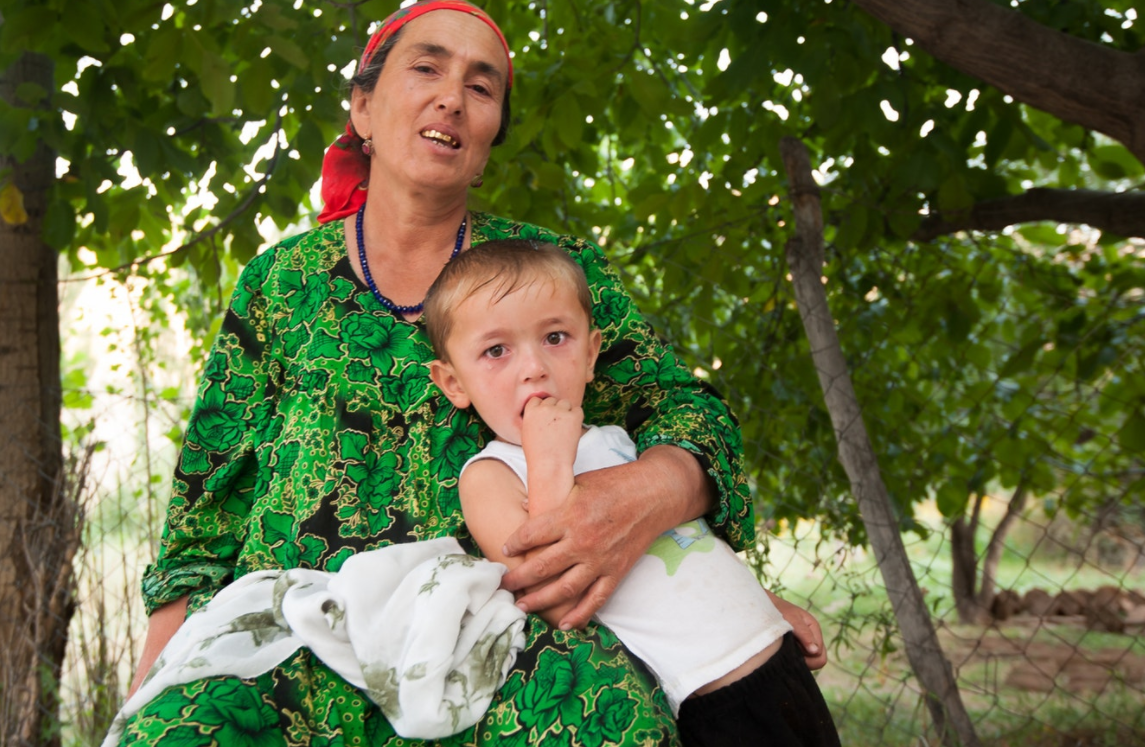
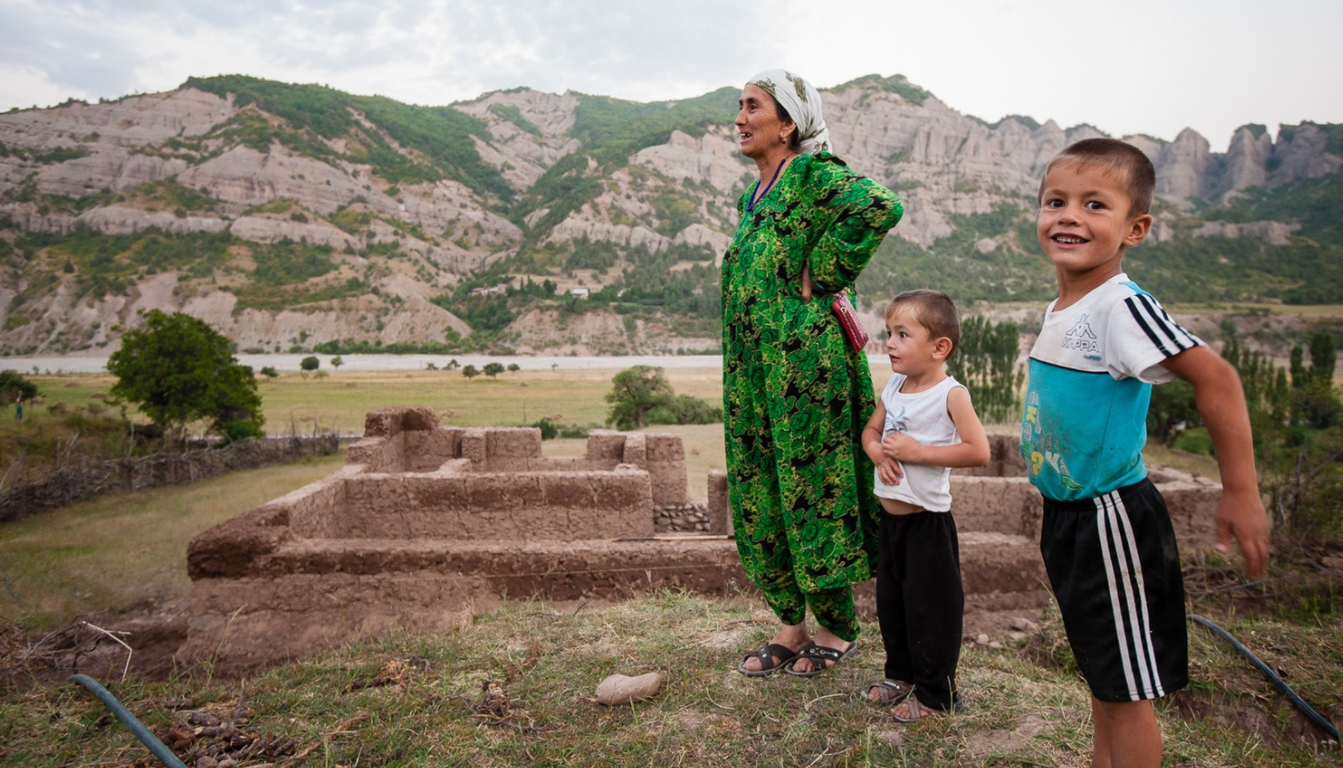
There is a fence separating me from a front yard with trees and between the house and trees is a small garden. An older woman wearing a traditional Tajik dress and pants, similar to an Indian styled shalwar kameez, as vivid green as the short trees surrounding me, walks over with a young blonde boy holding her hand.

Exchanging smiles, her mouth of gold glistening in the Pamiri sun as she says “aleikum asalaam” after my greeting of “asalaam alkeium.” She looks at me and my bicycle and directs me to bring my bike and to return to her home down the dirt road that leads behind the garden.

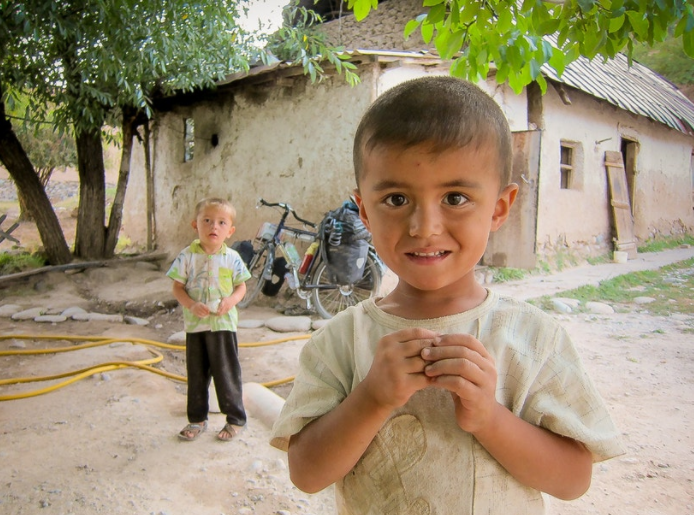
The matriarch of the homestead and her blonde grandson at the home I would spend the evening in.

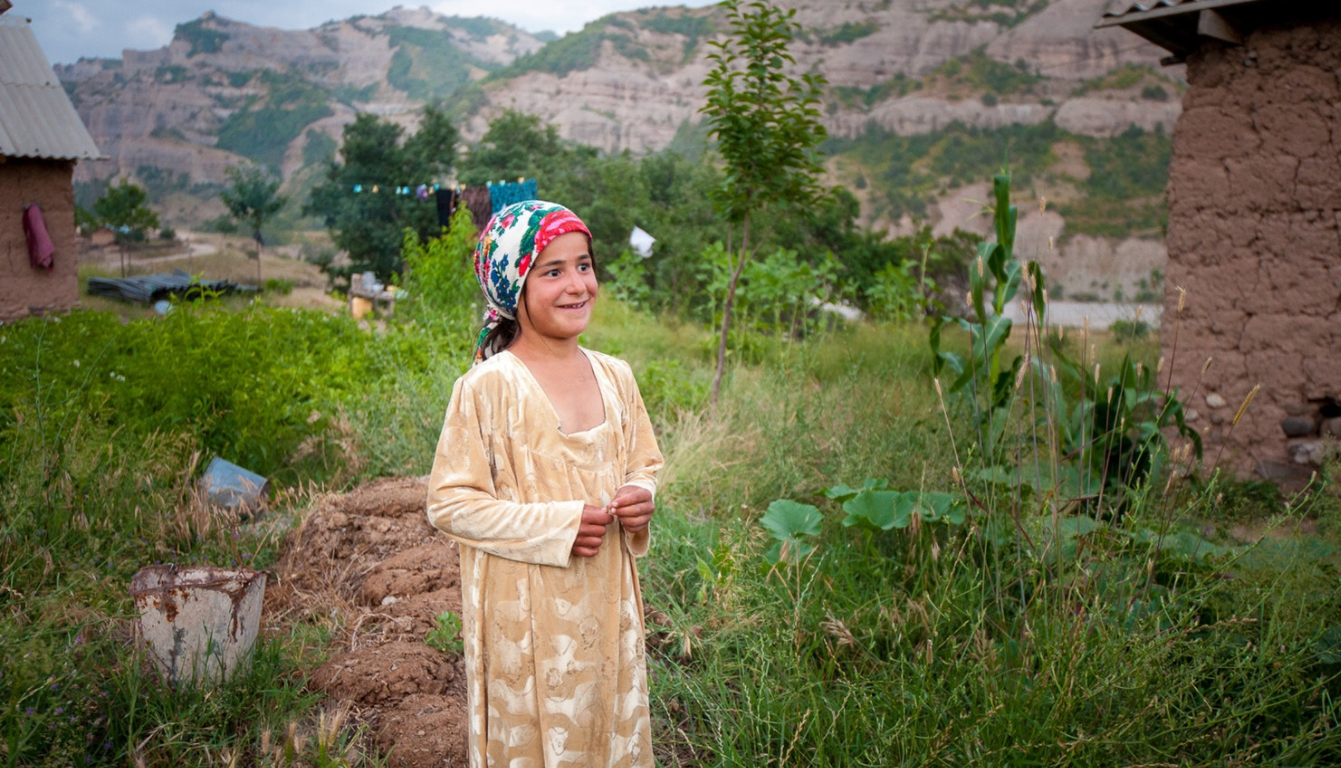
I would be greeted with children and one of the most beautiful Tajik girls I’d ever seen with her perfectly henna-dyed eyebrow. She is all smiles and I can feel the love among the women while the children are still apprehensive about the lonesome traveling woman.

Many villages through Tajikistan have few men. I have learned that many men work in Russia, and often they will have a second family in Russia, in addition to their family here in Tajikistan. Images of hippie communes flood my imagination here in Tajikistan—happy, beautiful women together with their children living off the land.

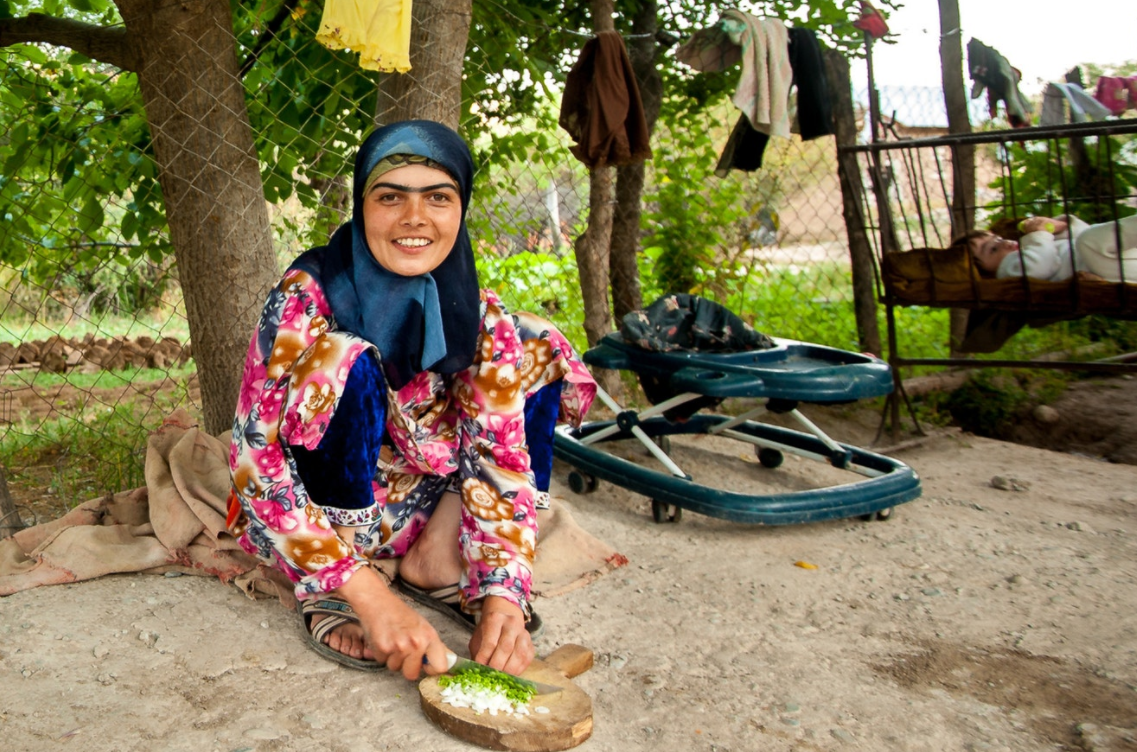
Children running around playing in the dirt, a toddler in a crib made of crudely welded steel you would see about construction sites, and the young woman chopping fresh vegetables from their garden. This might just be “the life”…

A young Tajik woman chops the fresh vegetables in preparation for the Ramadan feast after nightfall.

The gold-toothed older woman in a traditional Tajik dress and pants, with the most elegant camouflage fabric print I’ve ever seen, begins to pantomime to me about taking a shower and washing my clothes. It has been awhile and I’m wondering if she can smell the odor of travel, woman, and just the scent of a foreigner.

It’s a hot afternoon, where temperatures can get close to 50°C in the sunshine during midday, and I’m not going to deny a cool bath. After a few minutes trying to communicate she lets me know she will heat up some water for the bath. Then I’m led to a corner of a mud packed building, where my bike leans against.

Following her out of the shade and into the cooling Tajikistan air, I’m led into a dark room with light entering from a single window and she directs me to undress and get into the tub. I remove all my clothing except for my knickers and tank top I use for a daily base layer. She looks at me, not even flinching and somewhat serious with no concern, directing me to remove EVERYTHING.

I look into her eyes and I know in my heart she’s a good woman and mother just seeking to help and accommodate the strange traveler that has fallen into her life. Taking a deep breath, I drop all my clothing along with my modesty and step naked into the tub. She pours water over me that is the perfect temperature for this hot July afternoon and she uses the bar of soap that’s splitting to wash my back and hair.

I have gone years without an affectionate, and innocent, human touch and I feel my body slump over in ease and enjoy the gentle and intimate touch of her hands running through my hair and over my shoulders.

Stepping out refreshed, I follow her into the garden where more women are arriving and I’m handed fresh vegetables such as cucumbers from the garden to eat. Cooled down, clean, snacking on vegetables and being served a never ending supply of chai.

Children greet me at the homestead, my bicycle in the background leaning against the building where my glorious sponge bath would occur.

There is a woman who appears to be around my age, and she is. It turns out that she used to be a teacher and can speak a little English along with some Russian so we can communicate a little bit.

She explains her husband lives in Dushanbe and that she is childless… I can’t imagine what that must be like to live in an area where child-bearing and raising is of the utmost importance to the culture. I take an immediate liking to her, her warm and comforting brown eyes, and I watch her tend to the children as they are her own.

Shortly after her brief explanation to the other women about me, we go inside the main house, passing a teenage boy sitting near the entrance. We enter a room directly off the side where I’m accompanied by a few young male toddlers and about a half a dozen women. The woman with the henna eyebrows is in the room, along with five or six more, and is accompanied by another younger woman carrying the brunette baby from the yard.

It’s explained that they are married to the same man, and along with the gold tooth matriarch, they invite me to become the third. Hysterical laughter breaks out when I smile and nod my head “no.” But after months in Central Asia, and my first time among a commune of women, the thought of sister wives doesn’t seem like such a horrible idea.

After the joking and the conversation, as women slouch against the wall pulling up their pants and dresses to cool down, the matriarch shouts to the teen in the other room to turn up the music. She shuts the door and begins dancing as any beautiful Tajik woman does.

I’m pulled up off the floor and it feels as if I’ve returned to a dance party from my university years. Talking, dancing, laughter… the children are enjoying themselves as well.

There is an advantage being a woman traveling alone.

A young Tajik girl watches the boys play before she joins in the fun.

I have been allowed to see and experience moments that are usually behind closed doors or in the kitchen. We have jokes in the West about women being barefoot in the kitchen.

Well, as a feminist, I’ll tell you I wouldn’t want to be anywhere else besides behind those doors or kitchens…it’s where all the fun happens...and gossip…and just behaving like all women around the world.

The matriarch, blonde boy, and I take a nap in the room after the dance party and neighbors leave. Around 7 pm we get up and she takes me for a walk around her land, showing me a new storage building that’s being built out of stones and through the gardens. The children play and we go to a fence dividing the neighbors where I meet a young girl. The adults shout back and forth to one another, along with explanations of who their visitor is.

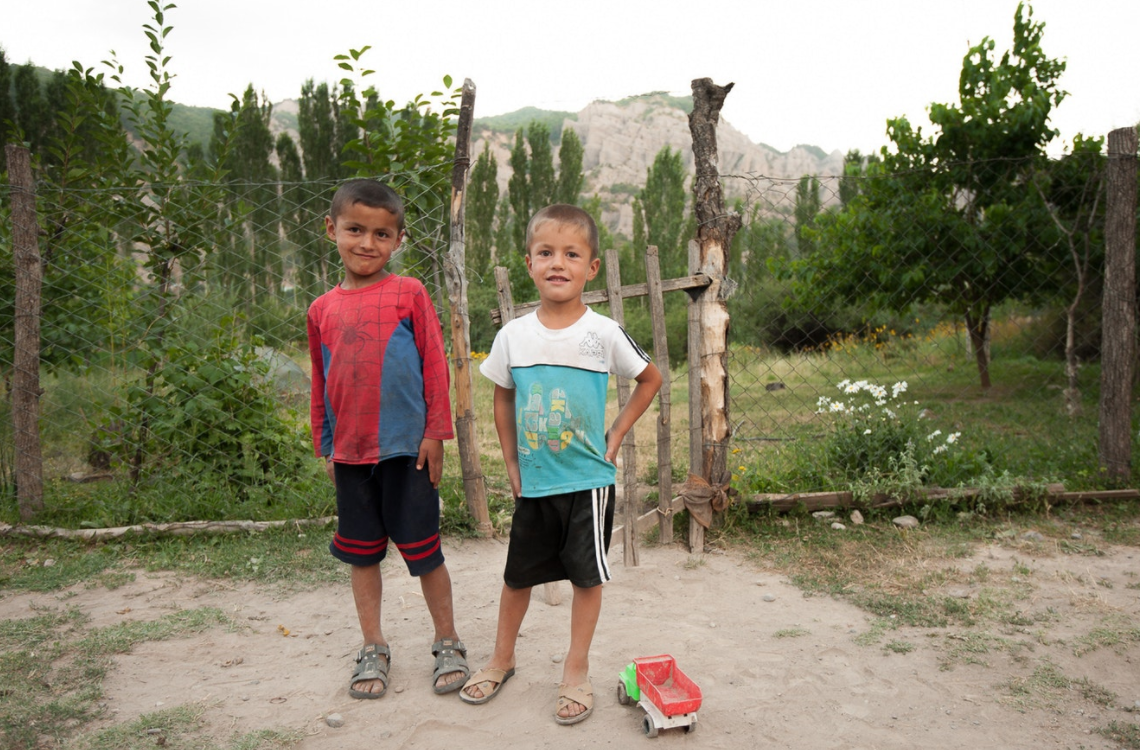
Boys play outside before the fast breaks at sunset for the evening Ramadan feast.

The sun is setting and we return to the woman’s home where the two sister wives are preparing food and the teenage boy is still listening to music acting indifferent to the entire situation. The matriarch serves me food separately from the family unit and then they begin to share a large platter of “polo”/”plov”, a traditional rice and mutton dish of Central Asian, eating with their hands which is the traditional and standard way. The daily fast has ended and they will eat and then pray. The teacher that I warmed up to returns, the television is on and we all lazily lounge around having a very gentle conversation.

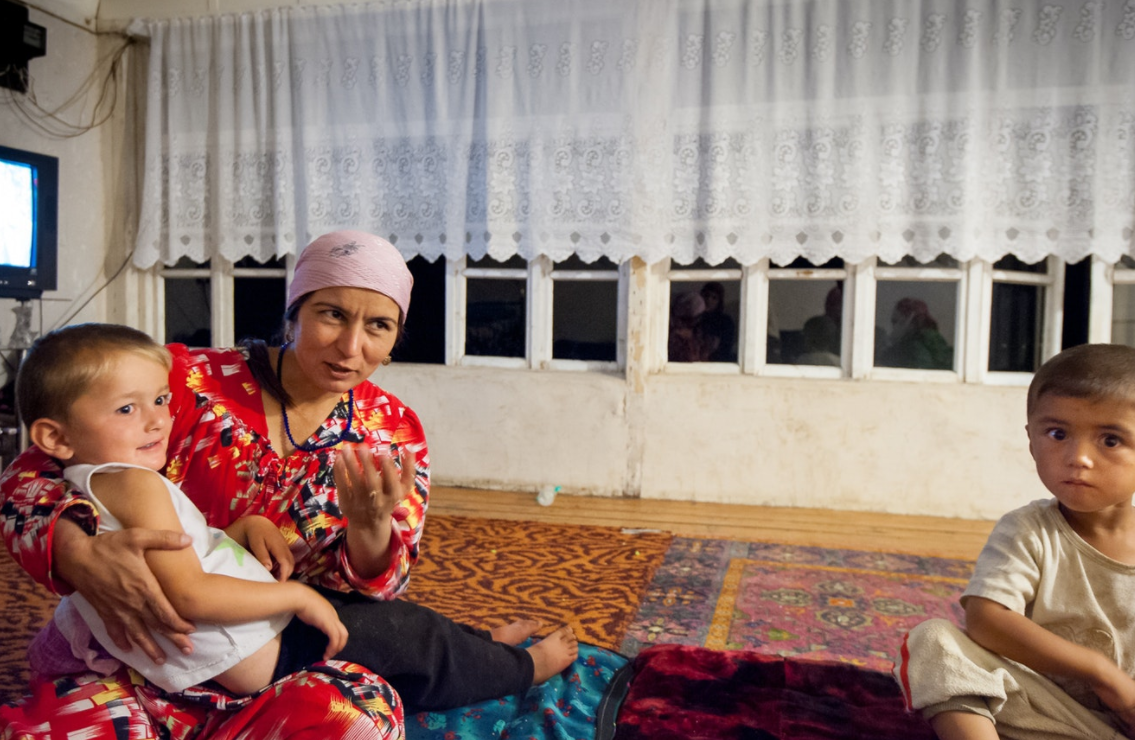
The teacher speaks to the room of women and children after dinner, as the television plays in the background.

They will see my exhaustion and offer me to my sleeping mat as they will stay up later to continue eating and praying. I’m led back to the room where the dancing happened earlier in the day and directed on the mat next to the wall, furthest from the door. I will be sharing it with the matriarch and the small blonde boy that never leaves her side.

Little would I know what the next day would bring…

Awakening the next day with heavy eyes as the cool dawn begins to break into the early morning heat. The aches and pains are extremely acute as I roll off my sleeping mat, as if an invisible force is nudging me to get out into the bright sunshine, onward through the beautiful and majestic valleys of Tajikistan. I’m more groggy than usual, as dogs barking throughout the night kept me awake. Careful not to disturb the old woman and small child sleeping, I move to the window to check on my bicycle and the four bags attached to her sides and top.

The house begins to take on life, as women’s voices break the silence, and I dress and prepare to depart. The old woman asks me to stay for breakfast but I kindly insist I must carry on. Generally breakfast will take a few hours and it’s never been a eat and run type of an affair. Using those early morning hours to cycle will make the difference of 50-70 km a day, and being able to end with a full belly of traditional Muslim food and a long nap under an apricot tree.

Saying my thanks with “rexmet”, speaking in a native tongue based upon Turkish, I exit the mud packed home into the chilled morning light to continue on.

The sun gets intense, and heat unbearable where it sometimes reaches 48 degrees, so I need to make as much progress as possible.
Yesterday had been a short day and I remind myself that I must make up for lost time.
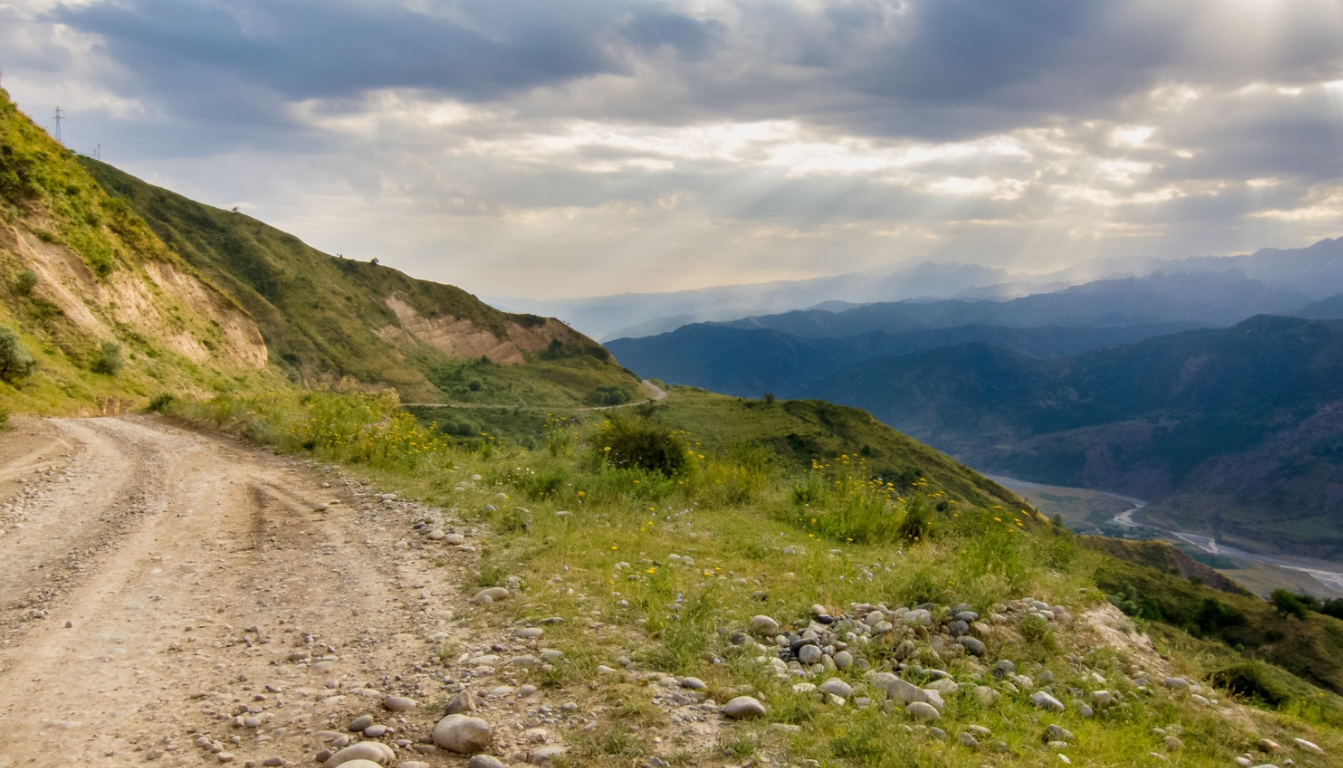
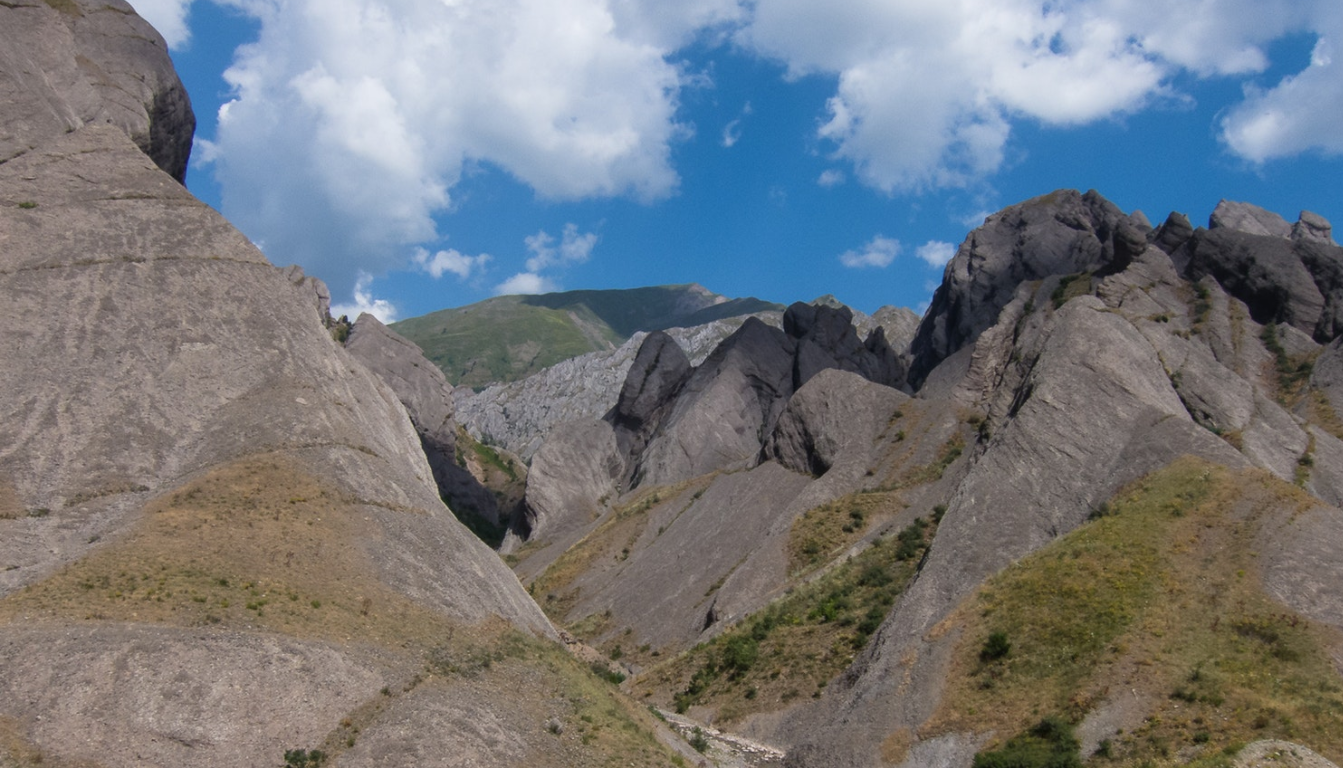
Traversing along a single lane, with deep crevasse jeep tracks, I go slowly up a valley. I lost asphalt nearly two days ago as I had chosen to take a route that most people don’t ride. I had debated about the route as no one could give me an accurate description of the area and there is a missing section of road on the map. Like usual, I was not quite sure what to expect but I knew that I wouldn’t see dozens of cyclists. Having already spent over 20,000 km cycling through China where I can speak the language, I am notorious for pulling myself off well-traveled routes to see what else the world has to offer...but...sometimes there is a reason a particular route is not taken by the masses.

Stopping about fifteen kilometers on from the community I had stayed in the previous night, I stop for breakfast and supplies. Far from a proper town, supplies are limited but I make do with sodas, naan, and sugar-glazed cookies filled with an apricot jelly.

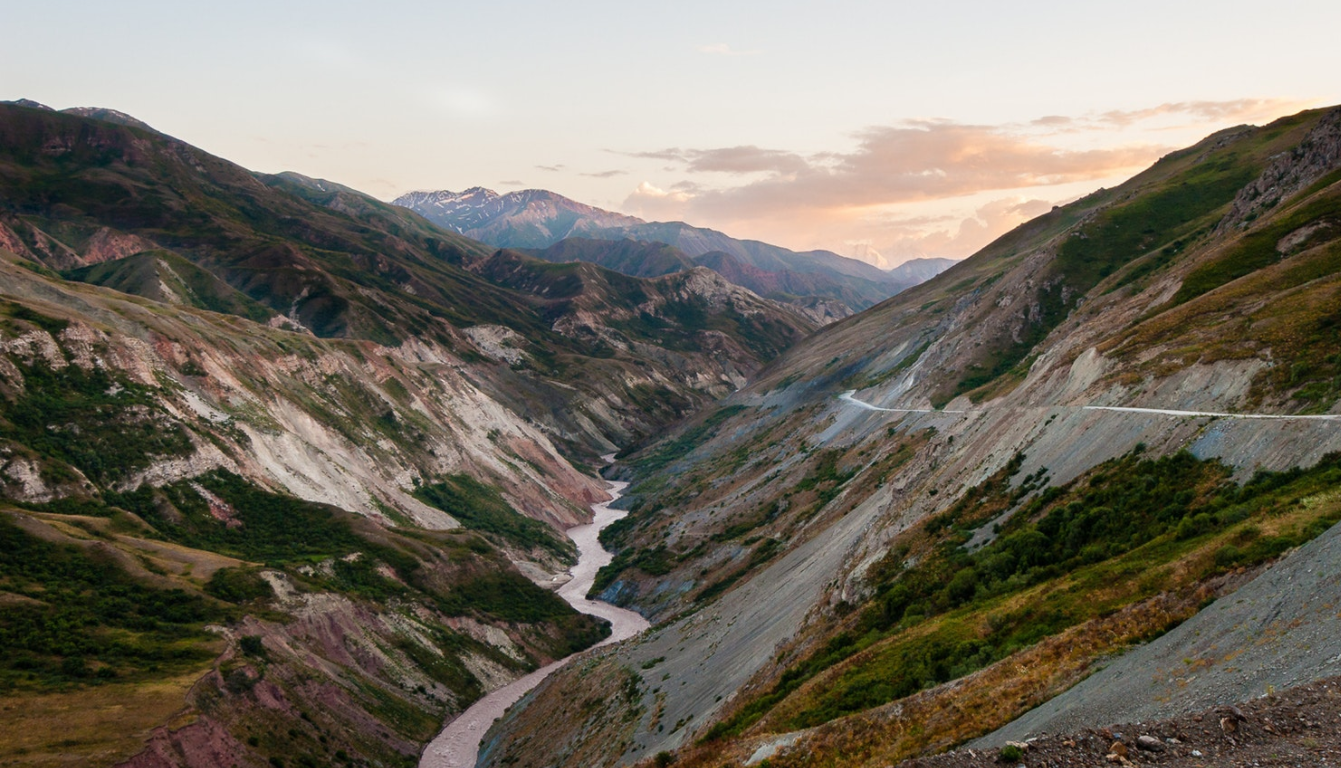
Thankful for the dark storm clouds rolling in and the cool breeze on my skin, I know this will cut down immensely on the heat. I will be able to cycle through the early afternoon without a break. The trees are disappearing and it’s becoming rock mines along a raging brown river. I had been warned of the rivers and glacier melts during the summers, and I would later learn that they were higher than average this summer. The water is angry and completely out of control, I could hear this river beating against the stone banks and walls. Such a contrast to the cool breeze, gentle rolling clouds, and the steady and calm beat of my heart.

There have only been one or two Land Rovers driving in the opposite direction since leaving the last town about four hours earlier. It’s becoming lifeless except for the massive rusted mining machines and mounds of gray stones. The road is more difficult now and the stones cause me to lose my balance at times…tipping sideways a few times, causing my right foot to try and find traction among the broken stones.

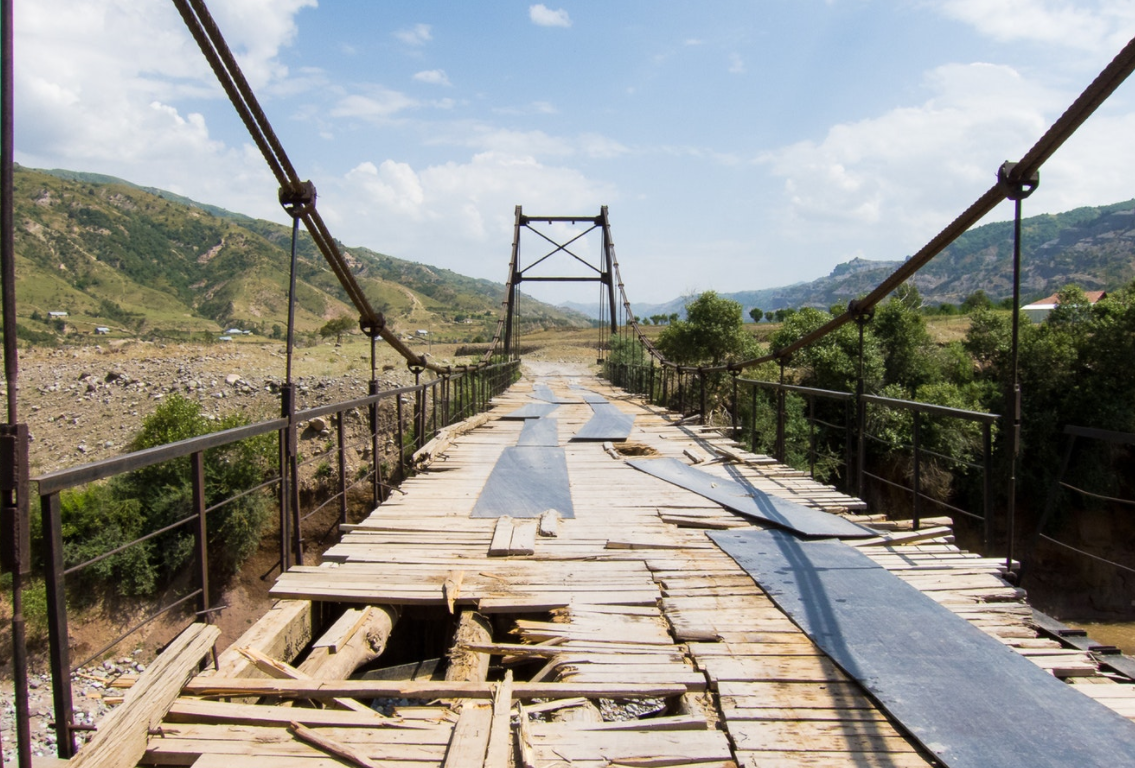
Broken bridges and roadways because of the heavy mining machinery traveling through the area.

Spotting a small pond where the water was flowing clear and shade provided by some short trees, I decide to push over to watch the direction of the storm and to repair a snapped bolt on the front rack. There is no one around and I decide to wash my clothes, feeling guilty that I now have a clean body living in the filthy and salt-marked cycling clothes. Although my hair had been washed yesterday with bar soap, it seemed to make my oily hair even worse, so a proper shampooing was in order.

One man stops to speak with me, only to return to give me some strawberry cookies he had in his Land Rover. He begins to get a little closer and asks me more questions than I bargained for and realize I have to back him off. I’ve had enough men make assumptions about a single American woman in Central Asia and knew I needed to ward off any preconceived ideas.

“Is he your friend?” the man asks me in Russian and points to a blonde Tajik boy with a knapsack and dog. It took me a second to figure out if this kid was another traveler just choosing to walk, but I realized he was a local. Deciding that an innocent lie was in order for this moment I said, “No, my friend is ahead.” This usually confuses them because they assume friends should always be together. The man drove off after putting some water in his radiator and the boy went towards the cliff across the road from my trees.

After washing my clothes and hair, I put on some traditional Tajik Atlas printed pants that were made in Dushanbe and hang my wet clothes up in the trees, needing to secure them as the storm is making it’s way closer. My hair tied and wrapped up on my head, I attempt to fix the snapped bolt. The best I can do is to use pliers to tighten the headless screw into the eyelet threads.

The vivid blue sky has now been completely grayed out, and it begins to rain upon me and my damp clothes. I put on rain gear to cut down on my chills and to cover up my wet, yet clean hair. Thinking it’s probably best to stay under this tree for a little bit of coverage, I begin to organize my panniers, as I had dumped everything out digging for soaps and tools.

There is a sound in the bushes behind me…like the sound of something hard falling into dried grass. I stop, there is no one around…what was it, who is it? Another. Then another but it comes through the two meter high trees I’m standing under.

Rocks!? Why are there rocks falling from the sky?

Walking out from under the trees to straighten up, I look around. My left arm is hit with a piece of gravel then “crash” and another “crash”, these are fist-size stones if not bigger.

Across the gravel road and about 15 meters from me there is a cliff, approximately 50 meters high. I see the blonde boy and his dog. The sky is dark and I can barely make him out as he begins to launch another rock, then another.

“Hey! You, I see you!” I shout in English. I had studied Russian for three weeks in Bishkek but when you begin to feel your blood boil it’s not so easy to squeeze out the translated words.

He launches another and begins to pick up another rock. The rocks are getting bigger; the heaved stones have less time between them. His aim is definitely improving too. I again repeat that I see him and he needs to stop while choosing a few four letter words that are understood throughout the world.

The dog is barking and running back and forth along the edge of the cliff. Rocks continue to rain from the sky, overtaking the harmless precipitation that had previously been speckling my body.

During my first few months of tour I learned my “War Cry”, something I didn’t even know existed until it had to be used to remove a man’s body lying atop of me. It came to surface because it’s all I had to fight with. The shrill death cry coming from a woman who feels her existence being shattered from within. This moment wasn’t as frightful as some of my previous battles so I knew it must be conjured up like a masterful magician, or rather a resourceful sorceress.

Now intense feelings, deep buried memories, frustrations are brought to the surface; I allow myself to feel vulnerable and scared. Opening my mouth to inhale has much air as my lungs can take to push the call of anger from my cracked and sunburned lips. As my breathe moves from my guts, I keel over at the waist to make sure that all of these emotions have found their way out of my soul. I let out another and another. Sometimes it feels difficult to stop, releasing emotions that have been shoved deep within my mind for the simple act of survival.

The boy and the dog have now disappeared. I pack up my bike and know it’s time to get out of here as fast as possible. Slightly damp and clean clothes are put back on my shivering body and my clean hair braided, I assumed I would be leaving danger behind.

I had rested my bicycle on her drive-train side, so I could manage repairs. I’m a bit uncomfortable pulling her from the other side so the tire slips down the damp soil. The sharp silver teeth from the triple crank puncture deeply in the front of my right ankle. Water nearby is turning bright red from the blood rushing from my body. There is nothing to do but remain calm.

All I can question at the moment is,

“Did I puncture something important under the skin, deep into my body…I hope this stops…and I don’t bleed out here in the middle of nowhere Tajikistan.”

I’m splashing water on it from the stream, which I know isn’t the best antiseptic to be cleaning an open wound. Especially since I had been watching the cattle bathe and drink from the same water a few meters away, my little pond only separated by a few inches of mud. The bleeding continues…and it’s not letting up.

A Tajik woman is now watching me from the cliff. Too many people are aware of me, I’ve let out the crazy woman “war cry”, and the boy has also returned. I hate, and avoid, confrontation or really any uncomfortable situations in unknown territories. Especially when I can barely speak a few words of the language. In China, I’m more than willing to argue and reprimand as I can speak and understand the culture after living there for more than four years.

I push the bike to the road keeping my eyes on my foot, watching the blood stream down my leg and the dark red beads of blood stream down into my sandals. Another battle scar.

Deciding to walk the bike after the injury, the rocks, the scream, and the storm…just get the hell out of here and to allow myself to find calm physically and mentally. There had been days like this before, when I did not take notice of the omens.

Around the cliff and continuing up stream I am met by an older Uzbek man carrying a stack of newspapers. We communicate through broken sentences and some pantomiming. He has me write my name down on a notebook and invites me to stay at his home for the night, as it’s storming. I politely decline, as his home is about three kilometers downstream. Rarely do I backtrack and I had made little progress over the past 24 hours. We parted with smiles and I continue to walk my bike over the road which had now become loose stones. Experience was telling me I was finding my way off the beaten path.

The next two hours I would be alternating between riding and pushing through loose gravel, slowly going up, then navigating some rocky and steep descents. Once passing a mining community I saw a village inset up in the mountains about ten kilometers away. I would be going over a pass and I was hoping that was not it because of the infinite switch backs for endless miles, or so it seemed. I told the men banging away at new homes where I was headed and they directed me at the fork of the road.

Continuing upstream, I pass a man lounging a top a mound of stones nearly five meters high and he lazily assures me I’m headed in the correct direction. There are many roads branching off this mining road and doubt is beginning to grow within me, with a nagging hint of anxiety. Traversing through mounds of stones, old rusted mining machines and equipment, the road is going up and down and crossing paths with a few massive trucks, so I assume that if I was going in the wrong direction, someone would alert me.

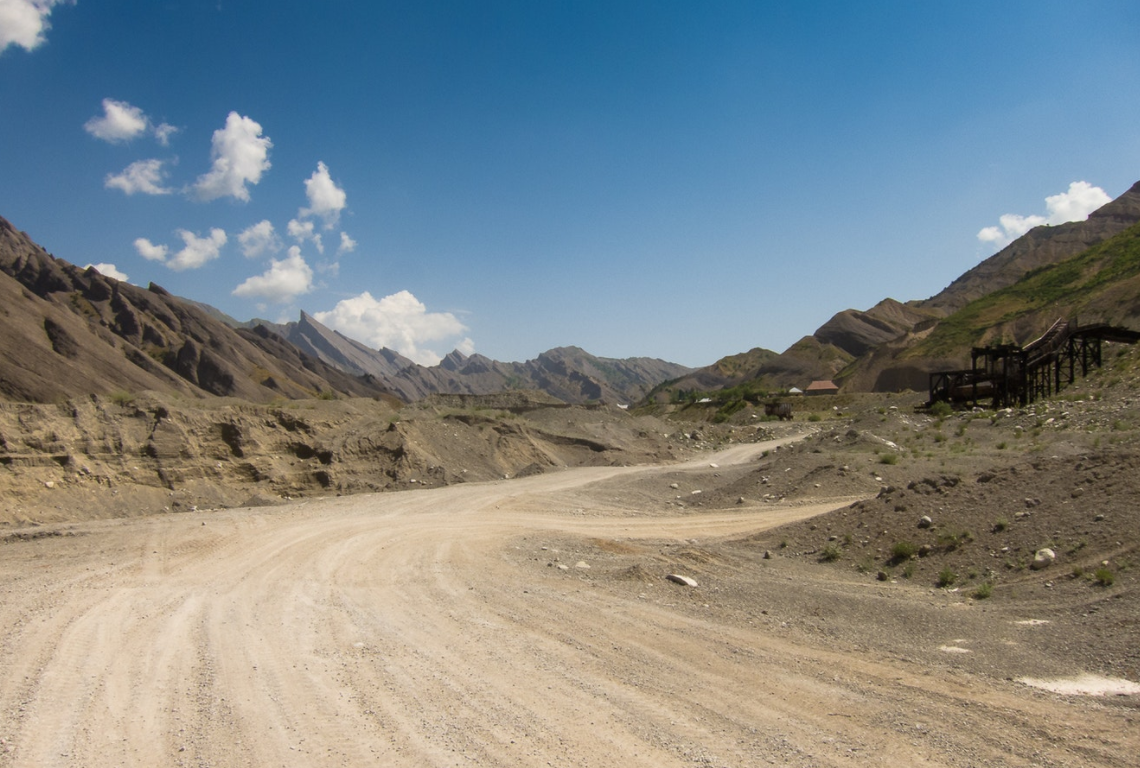
Intense Tajikistan heat and sunshine along the route thorough abandoned, and a few active, mining towns.

Around three o’clock I find myself looking across the raging river that was the source for the water I had been cycling along for the day. The water is coming from the mountains, my right side and snaking to my left and continuing down through the villages I traveled through earlier. There are some trucks to my right, so before deciding to cross the water, I ride the two kilometers up a hill to find someone to speak with or to find an alternative route.

Riding through a few switchbacks and passing a shepherd and his cattle, I arrive in a small work community where mining trucks and Land Rovers are in a parking lot with a few old aluminum-sided buildings. I pass through the checkpoint before two men stop me and tell me it’s the wrong way. With arm movements and finger pointing, they communicate that I must cross the water.

Backtracking to the bank of the water, gulping the hints of fear and anxiety down, I know that if I were to set up camp and wait until sunrise the water would perhaps be lower.

Standing on the edge of the riverbank, created out of massive stones and gravel, my thoughts and apprehension is drowned out by the water beating against the stones and cliffs. The opposite side of the bank is about fifteen meters across and turns into a field of gravel and stones. No sight of a road or tracks. The miners told me this was it; I can’t doubt the directions of locals.

I apprehensively lay the bike on her side, briefly examining the dried blood all over my ankle and foot while noticing the flies enjoy taking a brief rest on the wounds. The water is rough, muddy…it’s bad, nothing I’ve encountered before and I look up into the mountains standing silently, innocently, and curse their summer ice melt.

My recent riding partner, Chris-Alexandre, is about 30 centimeters shorter than I am, so I reassure myself with “if HE can do it, I CAN do it!” Heck, and I’ve been on the road longer and am a well-seasoned veteran. This isn’t a big deal.

“Moseman, you can do this…you’ve been through hell and back, there isn’t anything you can’t defeat.”

Taking a deep breath, standing with my bike to my right and holding the handlebars with a white knuckled grip, I give a good push into the water and the front wheel rolls forward. The front of the bike drops so far down that the water is nearly rushing over my front panniers. The tire doesn’t hit the bottom so I’m pulled further into the water than I anticipated.

My heart skips and stalls when I realize that I’m well over my head in this situation. Water is now brushing along the bottom of the rear panniers and up to my knees. I can feel the front of the bike wanting to be whipped down the river, giving no consideration to the woman between it and the wall of stone further down. The bicycle behaves like a buoy and I think if I can press the front down it will surely help stabilize.

Taking all my might while trying to prevent my body from trembling with fear, this technique doesn’t work. The further the front goes down the greater pressure I feel from my bike, as mother nature’s force is not going to take mercy on me.

Two helicopters are above me, as I had noticed them circling the area all day. I thought maybe they were surveying the high waters. (I would learn the following day that the reason for the helicopters was because a Civil War had erupted in the Pamirs that morning.) I look up, now one is hovering over me. Do they see me, and are they worried for my safety?

The next few minutes would feel like hours, a lifetime, an eternity.

I trudge further into the water so I’m standing next to the left front pannier, pressing my body against the bag with the hope of steading the bike and pushing her back up to the bank. Looking up into the sky, watching the helicopter hover above me, I realize my body isn’t going to be able to stand against this pressure for much longer. What do I need to do to survive this situation to the best of my ability?

It’s very difficult to make a fast, drastic, life-altering decision when fear has taken over your senses. Colors are more vivid, sounds more intense; your heartbeat is pounding in your head while your mind is sitting in the bottom of your guts. Your reality, and world, is spinning out of orbit and you have no idea where you will land or how you will fall. One is left, merciless, to innate instinct; I could only hope that a mere 30 years of existence in this lifetime have taught me a few things for survival.

Traveling upstream towards the raging river.

I realise that continually trying to push the bike up the bank, from the side, is not going to work. Gripping for dear life on the handlebars, knuckle bones, tendons, muscles wanting to break through my sun cured, leathered, skin from the desert sun. I move my body very slowly and carefully to the front of the bike.

Attempting to awkwardly straddle the front wheel between my thighs, but still a bit lopsided to the left. The water is well up to my waist, as I stand at 6’ tall. Breathe, relax, concentrate, PUSH.

NO.

Looking up. Am I praying for the helicopter to drop a ladder like I’ve watched on those rescue shows or for the Gods in the heavens to save me? Wanting to raise my arms to wave for help, I know this is impossible as I will lose the bike, my stance, and that I will be swept away before my palms leave the handlebars.

Do I let go of the bike? Do I sacrifice all my gear and let her go? The only possessions in my life for years to be swept away simply because of a completely ignorant and irrational decision?

Did Ego come to play with me by the river that afternoon?

The camera! Just not the camera…my digital files! A year of photos and files are in that back rack bag. The water is not over the rear bags, yet, but if I press my front wheel down the water rushes against my bar bag that has my DSLR, passport, and cell phone.

I look downstream where the river crashes against stone cliffs and then turns left at a nearly 90 degree angle.

Turning my face to the sky and scream “HELP!!” like I’ve never screamed in my entire life. I suddenly realise that I am going to die…my life is going to end, right here, NOW. There is no way my body will survive that abrupt bend in the river. I imagine my body hanging onto the floating bike until it crashes against the stones. How long would I go down the river with my bike…imagining my greatest possessions in life being bashed against stones, thrown around the river, until my lifeless body gives up and nothing would be recognizable?

Long, loud, and wailing screams of help are being released into the canyon, echoing and bouncing around the mountaintops. Finally I see three men watching from the mining area I had been earlier.

“Please, help me, I’m going to die!!!! Help me, PLEASE!!!”

They stand there watching and I know there is no way I can hold this up even if they do come to help.

“PLEEEEEEEEEEEEEEAAAAAAAAAAASE!!! HELP ME!!!!!!” I had tried to bring up my Russian to clarify my meaning but I couldn’t grab the necessary words from the air spilling from my terrified body.

I begin to have images of my mother and father. There is a feeling rushing over me, almost like their presence is near. The images alternate between them; my childhood home and town. It’s more a feeling than imagery. I am going to die, this is the end. With another near death experience in my past because of a car wreck, I know this feeling and it’s growing stronger every moment.

My personal fears are overtaken with the realization my parents will NEVER see me again. They will never be able to say goodbye; not one last hug or kiss. The crashing water will dismantle my undernourished body and they will never see the physical presence of what they had created. I am not fearing my disappearance but the pain I will cause my dear mother and father. Losing my life WILL kill them. I must figure this out, not for my own livelihood but for the sake of those that made the sacrifice of their own lives for mine.

It’s guilt that overwhelms my consciousnesses during those last moments of life. I’ve been selfish. Leaving my friends years ago, ending a long love affair, and not being closer to my parents. Not being a better daughter, sister, friend, girlfriend…a better person.

This would be the ultimate act of selfishness, to let my life be taken away and leave those behind to suffer.

What’s the most important thing on my bike? I’m going to have to try and remove the bags and throw them up on the bank and hopefully lighten the pressure of nature beating against me.

The bar bag: it holds my passport, camera, cell phone, and money. How am I going to manage this balancing act and release the bag to toss onto the river bank? Am I even going to be able to get enough force behind the launch of these essential items? I’m no longer even thinking about the hard drive and year’s worth of files in the back bag. Thousands of photographic images of the persecuted Uyghur minority of Xinjiang, would now be lost and destroyed forever.

A split second after I release my hand to reach for the bar bag release, the bike is thrown on top of me and I’m pinned under the freezing water with the top tube against my collarbones.

All my gear is completely submerged and I visualize my photo gear and files being flooded by the brown silt-filled water. The current turns me counterclockwise and I’m facing my death, heading straight towards the bend in the river and the unforgiving stone wall.

My parents are now standing before me in a grayish and hazy cloud, arm in arm as I remember them from my childhood. This is the end, you will never see me again. It’s over. This is going to kill you both, so much more pain for you two and I will realize none of it.

I can’t…it just can’t happen this way.

Two meters down the river and somehow I’m pulling myself out on my back, with my eyes finally opening, I crawl onto the bank with my face to the sky and the bike still on top of me.

The plastic bin that holds my food, cooking supplies, and a book had been pushed out from a tight bungee cord and are now moving swiftly down the river.

Within a few more seconds the bike is clearly out of the water and I’m examining myself for serious wounds and seeing the water line on my shirt nearly hitting my shoulders.

There is no time to cry, no time to panic, not even a chance for recovery and to smack myself to see if I’m actually still ALIVE because the bags have been flooded and I have to get my gear out to dry.

Unloading the bags trembling, shaking, teeth chattering, absolutely exhausted. This shouldn’t be happening, but it has and it’s my fault. I should have known better, I’m an idiot. Beginning to cry, the first in years…not heavy and heaving because I’m too exhausted...but silently with big crocodile tears rolling down my sunburned cheeks.

Drying all the gear after being soaked in the muddy river.

A coal mining truck eventually comes to my rescue and takes me across the water explaining to me that they saw my friend earlier. They would leave me at the base of the pass that was a meter wide stone path. Pointing up, telling me that’s the direction I must go.

We unload and they leave, after plenty of “rexmet” and my right hand over my heart. The first friends, a meeting of souls, I would have for this second chance at living. Or, were they simply angels that had descended that mountain in a steel chariot on massive wheels to only escort me safely over Sytx to the “other side”? These days, dreams and reality intermingle too much for me to ever make sense of the dividing lines.

Dumping all my bags next to a pile of rusted mining equipment for the hot Tajikistan sun to dry, I let it out. The tears are running down my face, all over my shirt, losing my breath because of exhaustion of nearly drowning and now the emotional melt down.

There is no longer a fear of death, was there ever? Perhaps my fear has been more directed at living? What do I fear? Fear prevents movement, progress, growth...this is not me. Maybe I don’t define and experience fear as many do.

I’ve pushed the limits, and beyond, more than most will ever in an entire lifetime. My fear is of the torment I would cause others; I nearly lost my life only to cause others a life-long mental and emotional death. Near-death stories often tell how the hero sees fleeting images of his lover, his children, and his close friends and feels grief stricken that he will never see them again. This was not the case. I saw the only two people who gave me life out of love, lose one of the greatest things that they’ve created and nurtured in their lifetimes.

Sunset looking back into the Pamirs from the Kyrgyzstan and Tajikistan border, “no man’s land”.

Momma and Pops raised me to believe that I must live life for myself, but I have learned that one of my responsibilities is to hold onto this life for those who love and need me.

This simple existence and lifetime isn’t for my benefit, but for those who my soul has intermingled with. I vow then to continue to travel within this life, full of passion and conviction, using my personal power and inner strength to overcome whatever obstacle may stand in my way.

Whether man, beast, machine, or my own inner demons...I must go on for there are those who are counting on me, and my many safe returns.


THIS ARTICLE WAS ORIGINALLY PUBLISHED ON MAPTIA.


ELEANOR MOSEMAN

Photographer. Storyteller. Exploring spectacular lands and sharing the stories of the beautiful, and mystical, inhabitants of Asia. www.eleanormoseman.com

Brooklyn Rapper Rides Bicycle 4000+ Miles Performing Shakespeare

Ralf Jean-Pierre aka Precious Gorgeous

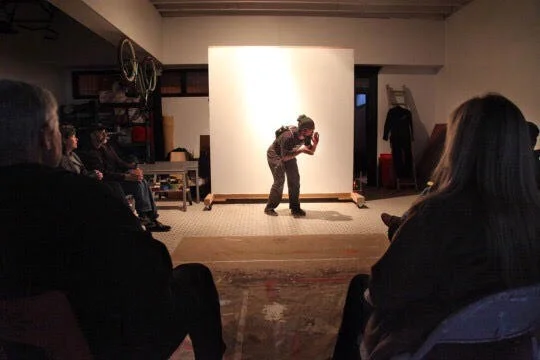
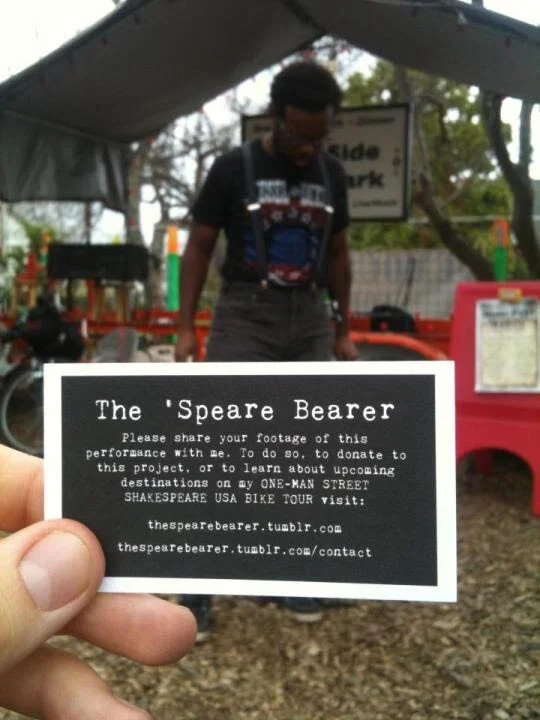
In 2012, after the sudden death of his best friend, actor and musician Ralf Jean-Pierre aka Precious Gorgeous was determined to conquer his fears by doing the thing that scared him most. Alone on his Surly Long Haul Trucker bicycle, Ralf circled America, riding over 4000 miles in eight months while performing his favorite Shakespeare scenes for unsuspecting audiences.

The guerrilla performances and miles of solitude proved therapeutic, inspiring an album’s worth of songs and one-man show, What Should Be The Fear. The Hamlet reference is not only the title of the show and accompanying album, it is the central theme of his unequivocal adventure.

If Alexander Supertramp rode Neil Young’s Crazy Horse into the Elizabethan era while singing Jay Z you’d get something resembling What Should Be The Fear.

NL: Riding a bicycle around America alone, performing Shakespeare, where did the idea even come from?

PG: It came from so many directions. I moved to New York right after I graduated from Savannah College of Art and Design in 2007. I was living in my Dad’s Stepmom’s house for a couple months and I didn’t have much to do but watch DVD’s from Blockbuster and walk around to try and reacquaint myself with the city. I did two specific things during that time, when I moved back to New York, I read Steve Martin’s Born Standing Up and I watched Into The Wild, the Sean Penn directed film based on Jon Krakauer’s book about Christopher McCandless who left his life and walked around the United States as a way to have an adventure and seek his freedom away from the materialistic, soulless life that he was afraid of having.

NL: Was adventure something that you always dreamt of or was it a new idea?

PG: It was the first time that I thought about doing something just for myself rather than for my career. Up until that point I’d never really thought about anything beyond wanting to be an artist. That was all that was ever important to me. Wanting to have an adventure was a new feeling that I never really grasped before.

NL: How does Steve Martin fit into that?

PG: Born Standing Up detailed the development of an artist, a style, a process, a point of view — the depths it takes to become the kind of artist that you want to be. Steve Martin talks about his first successful appearance on the Johnny Carson Show, when its still early in Steve’s ascent to becoming Steve Martin. During a commercial break Johnny leans over to him and says, “You’ll use everything you’ve ever learned.” Steve eventually found that to be true — he started off as a musician, a banjo player, and he eventually used all those things in his act. Steve Martin was the first rock star stand-up comedian.

NL: Those artistic influences in 2007 were the impetus for taking this journey?

PG: Those things, in 2007, set me on the path to doing this tour. The third biggest thing was reading Free for All: Joe Papp, The Public, and the Greatest Theater Story Ever Told. I was rocked by that biography, and his life, what he thought about Shakespeare, theater, and his life as a first generation American born in Brooklyn. (1) I just fell in love with Joseph Papp. That was actually the biggest thing that set me on the path of doing this tour.

(1) Note: Precious Gorgeous is a first generation Haitian/American born in Brooklyn, NY.

NL: Is that how performing Shakespeare on the street became part of the adventure?

PG: It moved it to the central focus, but I’ve always been a bit of an elitist. I always thought of Shakespeare as some of the most interesting, difficult and challenging work that an actor can do. I always appreciated it as a challenge for an actor.

NL: If the performances were fueled by Steve Martin and Joseph Papp, the adventure by Christopher McCandless, what inspired the musical approach?

PG: That same year, 2007, when I discovered Born Standing Up and Into The Wild, I listened to two albums that became as important as anything else in my musical development, D’angelo’s Voodoo and Harvest by Neil Young.

Precious Gorgeous performing scenes from WSBTF

NL: Those two albums are exactly how I‘d describe the album and musical portion of your show.

PG: Those albums expanded my thoughts on what kind of music I wanted to make, what kind of feelings and emotions that I wanted to evoke — it expanded my thoughts about what a rapper can be. Voodoo really gave me an appreciation for black music that wasn’t Hip Hop. I really didn’t have an appreciation for it before then. Harvest helped me appreciate rock n’ roll beyond the indie rock and art rock that I was exposed to in art school. It brought me much closer to something more essential and based on soul and emotion, not so much quirky invention and precociousness.

NL: Exposure to new things, removing limitations and redefining genres are themes that emerge throughout this project.

PG: Yes, I mean, I call myself a singer-songwriter, but I’m also a rapper and an actor. U2’s Joshua Tree was another, I read that somebody called it a road album. Into The Wild was still bouncing around my head and the idea of making the first Hip Hop road album started to develop.

NL: Was making an album part of the original idea for the project or was it more about going on an adventure and creating a one-man show?

PG: I was sitting in my Pastor’s basement in Brooklyn, my best friend had just passed a couple months earlier, I wasn’t sure what to do next and it was really plaguing me. I remember the night the idea fell on me and I think it all happened at once.

“I am going to travel the country and perform one-man Shakespeare scenes — where I play all the characters myself — and I’m going to take it from place to place on my bicycle.”

PG: I am going to travel the country and perform one-man Shakespeare scenes — where I play all the characters myself — and I’m going to take it from place to place on my bicycle. If I live through it, I’m going to make a one-man show about it. I was almost back to New York when the idea to make the album came.

NL: Was busking new to you? Had you performed on the street as an actor or musician in the past?


PG: No, I hadn’t. Besides just being crazy and yelling on the street to be funny. I’d always wanted to, I saw street performers all over New York and I was becoming envious of their freedom. I was in New York and trying to get auditions, but I’ve never really been that savvy. I wasn’t able to get equity points in the theater, or able to find an agent or anything like that. I am always performing music, acting, doing improv, working at being better at the things rather than focusing on getting to know people and networking professionally. So I always had to produce my own projects to get to do them since people weren’t hiring me. Street performers were free from that.

NL: As an artist, there is something beautiful and liberating about the hobo freedom of busking — especially in New York.

PG: I became so fascinated with guys that just have an act in their pocket, like Vaudeville. They can go around the country and just perform anywhere they want. Nobody can tell them what to do or what to perform. They are completely autonomous and have total agency and they have an act that nobody can take away from them.

NL: Vaudeville, DIY Punk, and underground Hip Hop all championed artists who figured out how to exist with complete independence, at least for a time.

PG: I was more and more envious of that, and I just love the freedom of that. I would busk singing songs if I could, but I don’t play an instrument.

NL: How do you go from thinking, “I should ride my bike around the country performing Shakespeare on the street” to actually doing it?

PG: First I tried to talk myself out of it and then I talked myself into it. I’d never done a long distance bicycle trip. I’d never been camping. I wouldn’t consider myself a super brave person. I’d spent a couple years forcing myself to do things that scared me, if I was scared to talk to a girl on the subway, or jump over something that was high, I would force myself to do it. I forced myself to do things that I was afraid of just because I hated that about myself. I did that for a couple years.

NL: You had been acclimating yourself to fear?

PG: I was on a personal crusade. I realized that because I was afraid I had to do it, and I knew my buddy who passed would want me to do it. It was just too good of an idea not to do. I talked to my friend, Jolie Tong (Professor at Brooklyn College) and said, you are the only person who doesn’t think I’m crazy, you have to direct this project. She tried to run away from it at first, but eventually said that she needed to do it. So we started reading Shakespeare, picking scenes, and I launched a Kickstarter to raise the money to buy a bike.

NL: How long was it from the time that you had the idea to when you left?

PG: I had the idea in July of 2011. I flew to Florida in December and by the first day of February 2012 I was on my bicycle.

The Tour Route: Precious Gorgeous started in Florida, riding across the south to San Diego, California and then up to Washington. Catching a flight across the rockies, he flew from Seattle to Chicago before peddling back to New York City.

NL: As you peddled away from your friend’s house in Tampa, Florida what was going through you head?

PG: I was afraid that I would die. I was afraid that it wouldn’t work, that I couldn’t ride that distance. And I was afraid that I wasted everyone’s time and that I wouldn’t have the stamina. I left from my friend’s house 100 miles away from my Mom’s because I knew that there was less of a chance that I would quit if I was already 100 miles away.

NL: How far did you ride that first day?

PG: It’s kind of crazy, I rode like 40 miles on the very first day, its in the show. I tried to camp in this town, and I had no idea what I was doing, no idea. I tried to camp in the back of this church and I was thinking nobody could see me, but it was like 6pm and the sun was still pretty much up. I was surrounded on three sides by residences, but for some reason I thought nobody would see me. I didn’t know how to pack my bags yet so my sleeping bag was at the bottom and I was unpacking everything in this lot behind this church, it was just a mess. Within 20 minutes a cop showed up and was just like, “You can’t do this.” Then I tried to sleep in front of this guy’s yard, but I was so terrified because all these dogs were barking, so I packed everything up and just kept riding. I was so terrified that the first 48 hours of my trip I didn’t sleep, I rode 100+ miles from my friend’s house in Tampa to my cousin’s house. I stayed there for four days, I performed once, I got my metal up and my cousins really helped me get my nerve up.

NL: Was that the first time you performed?

PG: No, I performed in Tampa when I was hanging out with my friend Erica, who was the roommate of my friend Tommy that passed. Those weren’t great performances, the first couple, I didn’t know what I was doing.

NL: How long did it take you to get out of Florida?

PG: I was staying with my sisters in Tallahassee, it took me about 3 weeks to get out of Florida.

NL: Crossing the first state line had to feel good.

PG: It was a big deal, but it already felt like I’d been riding for a while. It wasn’t until I got to Texas that I thought, “Ok I can do this.” But even so, there were days when the riding was so bad that I thought, “I just can’t do this.” Maybe by California I thought, “I am going to get to the end.”

NL: The tour lasted eight months, how much made it into the show?

PG: I tell a lot of the story. I met a girl and we hung out in a couple cities and I fell in love for the first time. I made a lot of sense to her, and she to me, so I tell a lot of that story. A lot of the things that aren’t in the show are just the crazy people that I got to meet, a lot of weird characters. I performed for Ethan Hawke in Austin, TX. He is known for being big on Shakespeare, and I got to perform for him at a food truck. That same day I met Solange, but I didn’t perform for her.

NL: Did Ethan Hawke enjoy the performance?

PG: Yeah, he was very complimentary and kind. I did a Romeo and Juliet scene and he was like, “Man you could perform the whole play that way, it was great!” But so much crazy stuff happened that meeting and performing for Ethan Hawke didn’t make it into the one-man show. I also met Kevin Klein, he just happened to be doing a Shakespeare show in Mesa, Arizona while I was there. We talked about Joe Papp because he worked with him, but that isn’t in the show either because there were so many more crazy things that happened than that. I didn’t get to perform for Kevin, but I got to shake hands with somebody who knew Joe Papp.

NL: Its amazing how the influences that inspired the journey were so prevalent in it.

PG: Well I also got to hang out with Hall of Famer Bill Walton a bit.

NL: (Laughing) That’s awesome. How many performances did you do on the tour?

PG: It was probably 40 or so. I would be surprised if it was more than that.

NL: What was the reacclimation process like? I know even coming back from a short tour is a bit like stepping off the pirate ship, and you were out for eight months — alone.

PG: It was difficult. When I got back everything was so confusing. I left because a tragedy had struck and my best friend in the city had passed. I sort of found that people had moved on without me and I don’t think they were that keen on seeing me afterwards because I think I was a reminder of that tragedy. I had a lot less friends. As grueling as the trip was in the beginning, by the end I’d become a bit of a machine. I would get up, eat, ride, find a place to perform and a place to sleep. Even in the one-man show, there aren’t many stories from the last quarter of the tour because there wasn’t much left to overcome. I was just a machine, so there weren’t really new experiences. Then, two weeks after I got home, my bike was stolen, so the tour was really over.

Precious Gorgeous on his first day back in Brooklyn after the most intense year of his life.

NL: Did the solitary nature and accomplishment of your journey alienate your peers?

PG: For some reason I thought I was going to come home to all this fanfare and people couldn’t care less. I mean people do care, but it wasn’t received the way I thought it would be. I really had to find my bearings and I spent a year and a half devoting my life to comedy. I interned at The Peoples Improv Theater, took a bunch of classes, watched a lot of comedy specials, listened to a lot of podcasts. I was burnt out on Shakespeare, me and my collaborator didn’t start writing the one-man show for months. I wanted nothing to do with Shakespeare and drama for a while.

NL: Was diving into comedy ultimately a good thing?

PG: It was a good thing. The one-man show, I can pretty much call it comedy. There are a lot more jokes in it than you would probably think given the subject. There is just so much intensity in Shakespeare that my immediate instinct was to go the other way.

NL: Do feel closer to knowing what should be the fear?

PG: I think you can trace 99% of every evil thing people do to fear. I don’t have anything profound to say about it, but I’m learning that a lot of times in life, when you are afraid of something it is probably a sign that that’s what you should be doing. I try to treat fear as a compass.

NL: The fear is what you should be doing?

PG: Yeah, that’s what Hamlet really was saying in that line. He was trying to go after the ghost of his father, and his friends were the ones who told him to go see the ghost. Hamlet was like, “I’m going to go talk to this ghost” and his friends were like, “No, we just wanted you to see it, don’t go talk to it.” Hamlet says, “Why, what should be the fear? I do not set my life at a pin’s fee, and for my soul, what can it do to that, being a thing immortal as itself?” Meaning, to me, what is there to be afraid of? How can being scared overpower your curiosity to talk to a ghost? If it kills me, it kills me. If it doesn’t I have more information and experience. It can’t do anything to my soul. It can’t send me to hell. It can’t damn me. I am going to die. Its not the best reason not to do something.

NL: Five years later, does your curiosity still overcome your fears?

PG: The year I went on the tour was an election year. Obama and Romney. I spent a lot of time riding through the South, and not just the South, places like Northern inland California, places that are definitely more red than blue. It is a theme in the show, we talk about it. I am a black man by myself riding through the country. Even then I felt like, “Hmm, this isn’t hairy but it could be.” I don’t know if I could do that now, with Trump being President, the way the climate has been and Black Lives Matter emerging. The month that I left on the tour, that was the month that Trayvon Martin was shot in Florida. I was alone, riding my bike through Florida the month that Trayvon was shot. It was crazy then but I think things have only become more intense now. I don’t know if I could do the tour now and come out unscathed like I did. I didn’t have much faith in it then, and I have even less now.

NL: Did the trip affirm or dispel your fears of how you would be treated?

PG: I don’t feel like I had too many, people around me certainly did, and it certainly dispelled some of them because I really only came across kindness and people wanting to be helpful. And even people being more interested in Shakespeare than I thought they would be. The trip did a lot to add to the faith that I had in America. I don’t have any illusions about it. This is a racist country and a country that can be backwards in a lot of ways. But there are also a lot of very kind, very generous, very hopeful, very adventurous, very thoughtful people.

“Why, what should be the fear? I do not set my life at a pin’s fee, and for my soul, what can it do to that, being a thing immortal as itself?” — Hamlet

NL: Would you consider doing another bicycle tour?

PG: Yes, I would love to do another bike tour. I imagine, if the one-man show is successful and colleges and places want to book it, I would ride from one show to the next. I would love to do another bike tour, it was grueling and horrible, but it was exhilarating and I miss it.

Precious Gorgeous — Survive Your Dreams featuring Crimdella and Shelbi Bennett


THIS ARTICLE WAS ORIGINALLY PUBLISHED ON MEDIUM.


NOAH C LEKAS

An endurant traveler and Midwestern expat, Noah C Lekas is a music journalist, outdoor writer, essayist, poet and the Senior Writer at The Lambesis Agency. 

Links:

twitter.com/noahclekas

instagram.com/noahclekas

Wolves of the Sea

INTRODUCTION

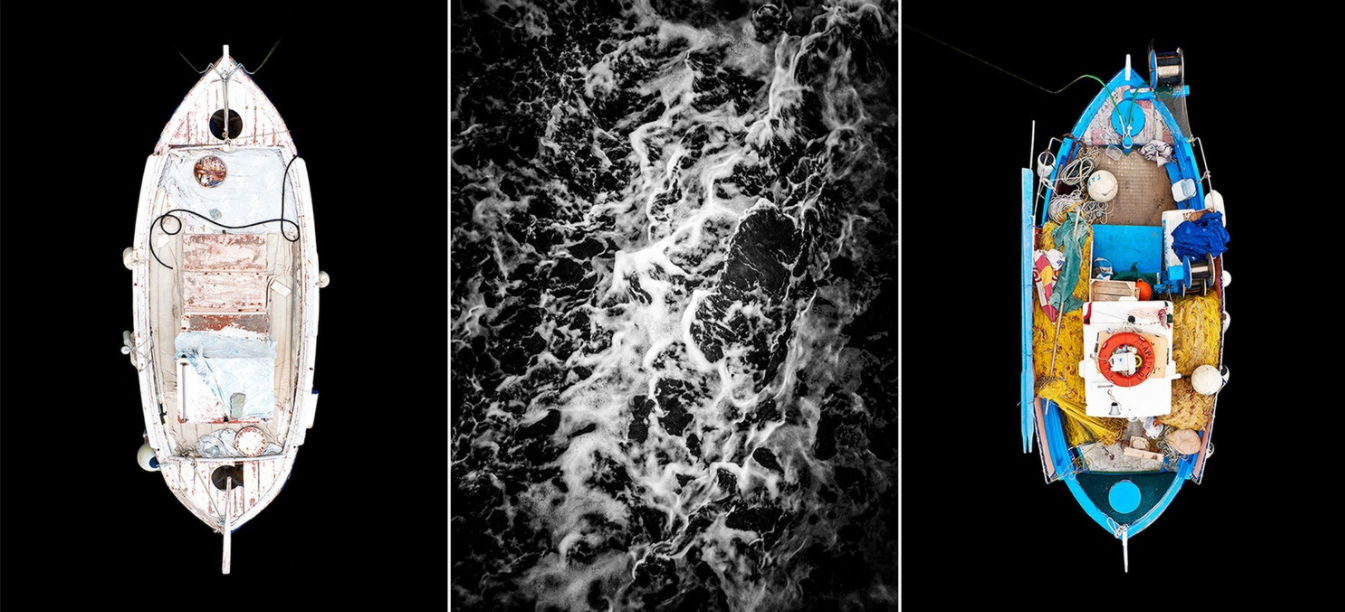
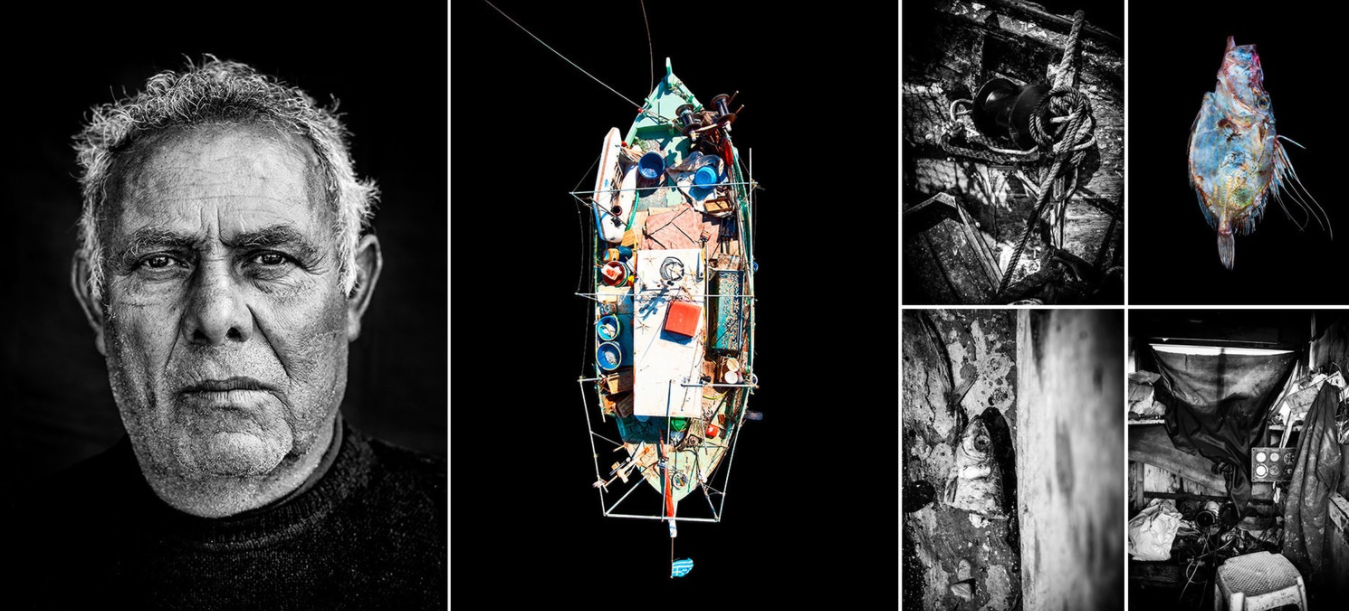
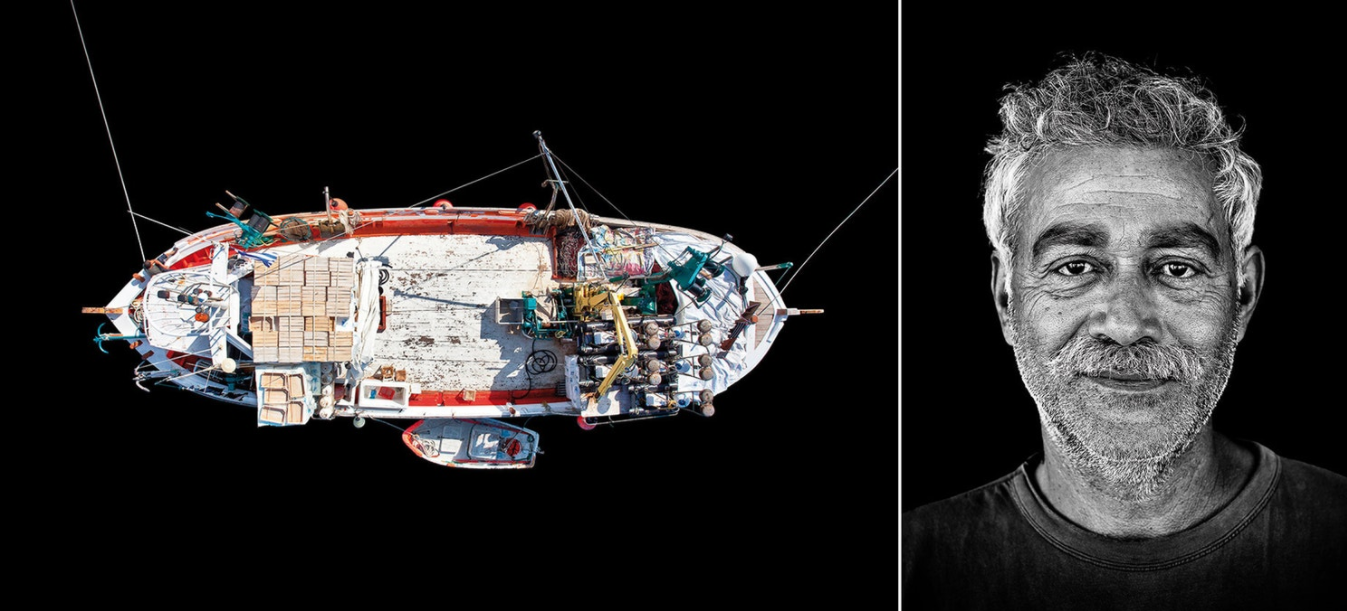
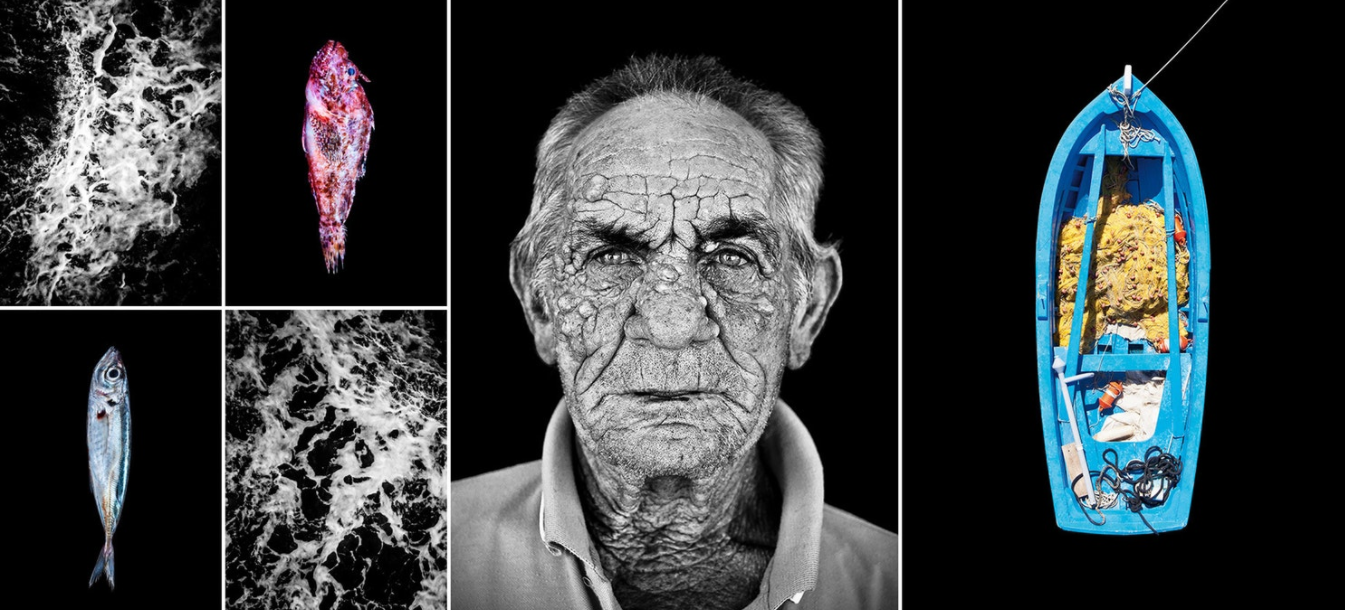
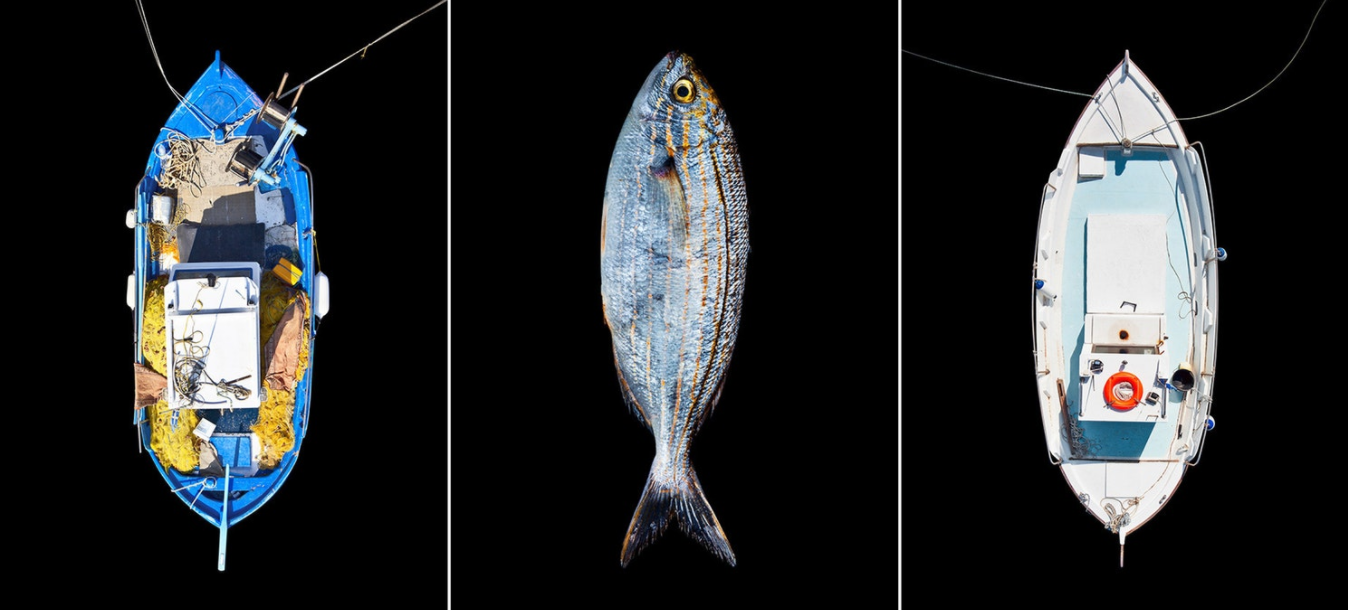
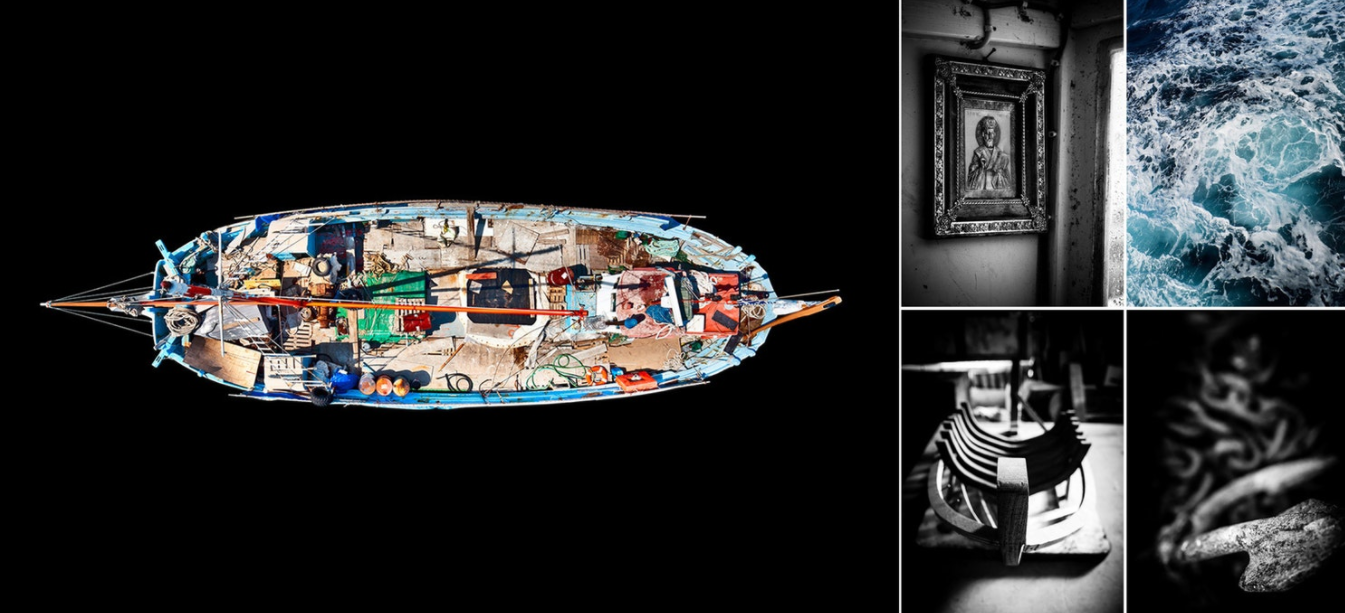
The photo documentary ‘LUPIMARIS, Wolves of the Sea’ began in 2010 with an art project on Paros, a small Greek Island. I had always been fascinated by the islanders’ traditional, wooden Greek fishing boats, or Kaïkis, and I wanted to photograph them from a new perspective.

In 2013 I returned Paros again and realized that half of the boats I had photographed in 2010 did not exist anymore. They had all been destroyed, abandoned, or sold to tourists. The few boats that are left today will soon be gone too, not only on Paros, but across all of the Greek islands. None of today’s younger generation are interested in becoming fishermen, and the traditional Greek fishing craft, a millennia-old practice, is dying.

During October of 2014 I traveled to Paros with a camera crew. We captured the work and life of the fishermen — the ‘wolves of the sea’ — and spent time with the only remaining boat builder on the island. I took thousands of photos, collected hours of interviews, and shared many moments with the old fishermen on Paros, listening to their stories. These fishermen really are the last of their kind. They are threatened with extinction.

I hope that LUPIMARIS will create a lasting memory of the Greek fishermen and their traditional colourful wooden boats, the Kaïkis, and help to preserve this history and stories for future generations.

In this story I will share some of the images that capture the lifestyle, the traditions, the adventures, and the endangered future of these last Wolves of the Sea. You can explore the full book at www.lupimaris.com.

BOAT NAMES

Greek fishermen have a special relationship with their boats, and they are traditionally often given the name of their wife or daughter. A logical consequence, because the Greek word for boat, βάρκα, is female. It is also common to give the name of a saint. These names have an extraordinary importance for the fishermen, and reflect a special relationship with their spiritual namesakes, or honour the memory of an important person.

MYTHS, LEGENDS, STORIES, LIES

The life of Greek fishermen is full of fantasy. They spend days, weeks, or even months with the same visual and auditory impressions in permanent solitude on the seas. This stimulates the imagination. The myths and legends they tell develop on one hand from their need to come to terms with dramatic and traumatic experiences at sea, while on the other hand it is often an attempt to explain or idealize their intimate relationship with nature.

It is common for the fishermen to describe their fellow fishermen as untrustworthy daydreamers or even liars. The results are usually funny or naughty defamatory nicknames, but are sometimes meant more unkindly. Nevertheless, there is a strong code of honour. Older fishermen who have more experience are respected and their stories will not be questioned.

FAITH & SUPERSTITION

No matter which religion or which country, fishing and Faith have always been close-knit. Greece is no exception, and rumour says that the islanders are generally more religious than their fellow residents on the mainland. The majority of fishermen from Paros are religious and this is reflected in the plethora of icons and crosses found on their fishing boats. Icons of Saint Nicholas, the patron saint of sailors, and Saint Andrew, the patron saint of fishermen, can be seen on many boats.

The most impressive monument to their faith can be found at the entrance to the Bay of Paroikia, where the fishermen of Paros built the church of Aghios Fokas. In addition to faith, superstition also plays a big role in their day-to-day lives. Certain events are interpreted as good or bad omens for a trip out to sea and will often influence the decisions of the fishermen.

NATURAL ENEMIES

There are enormous problems with dolphins, seals and migrant fish. Dolphins and seals have always existed here, but due to the over-fishing of the Aegean Sea they often tear fish from the nets and damage the nets or themselves, so that the fishermen not only lose their catch but also have additional expenses such as laborious net-repairs that must be made.

In the past fishermen hunted the animals with guns or dynamite. Today, this practice has been discontinued due to the efforts of environmental and animal welfare groups, so that the populations have recovered and even more dolphins and seals will hunt for prey in the fishermen’s nets.

Another threat are migrant fish species such as the silver-cheeked toadfish (lagocephalus sceleratus) which came into the Mediterranean through the Suez Canal. This particular fish is toxic and strong enough to damage the nets. Since it has no natural enemies, it can multiply unchecked — at a great cost to the local fish population and fishermen.

DESTRUCTION

Greece has the largest number of fishing boats in the EU — mainly due to the numerous individual fishermen. However, by European standards, the catches they make on each trip to sea are rather low.

The collective fishing fleet of the EU member countries is too simply large compared to the fish available to be caught in European waters and their capacity exceeds a number that would result in a sustainable maintenance of resources. One of the central elements of the Common Fisheries Policy was the reduction and rejuvenation of the fleet.

The self disarmament of national fleets was a key element of the European fisheries policy. The EU developed programmes and put money at their disposal. The precise implementation was determined by each country. The Greek Government developed incentives for handing over fishing licenses (mainly for amateur fishing) and at the same time fishermen had to destroy their boats. As a result, thousands of boats have been destroyed since the 1990s, mainly the traditional wooden boats owned by individual fishermen.

In reality, what all fishermen want instead is the maintenance of these boats. There were at times programs aimed at the preservation of selected boats (for example, special boats with a socio-historical value) but the results were rather sobering and there was no significant implementation of these projects. Instead of destroying the boats they could also have been converted for tourism purposes, but this practice too was hardly implemented.

The Greek reality, and the Greek bureaucracy, has led to the destruction of many traditional wooden boats and to a part of national identity.

BOATYARD

An interview with Petros Aliprantis, the owner of the boatyard Naoussa.

“I have built seventy-eight boats. These are all my boats. Although I have sold them, I still call them my boats because I built them. They are all in the Cyclades, some in Crete. I do not use plans, it’s all in my head. I learned the craft from my father and my grandfather. There are no offices and no ties. If you want to make a living out of it, you have to work day and night.

But there is no interest in such boats anymore. This has something to do with the crisis, but I have seen it coming for some time that we will not survive much longer. Most people buy plastic boats. Besides that, there are no young people interested in learning this craft.

It’s hard work, without rosy perspectives and without support from the state. When I retire, it’s over with the shipyard.

There are only a few of us left, and also only a few wooden boats.

Now come the plastic boats.”


You can find the full book, which captures a total of 99 traditional boats and 31 fishermen, at www.lupimaris.com. The research and text in this story (with the exception of the introduction) is by Giannis Mavris.


THIS ARTICLE WAS ORIGINALLY PUBLISHED ON MAPTIA.


CHRISTIAN STEMPER

Christian's great passion is to tell stories photographically reinterpreted. “LUPIMARIS, Wolves of the Sea” is one such photo project, and you can learn more at www.lupimaris.com

What I Couldn’t Admit Until Now After Months Of Traveling While Black

I’ve been trying to find a way to write this since I’ve gotten back to the United States with a single backpack and next to no money. For the four months that I was away, the United States of America seemed to unravel in a way that I hadn’t seen before and my bones felt so excited, so prepared to come back.

Starting in December 2016, I traveled throughout the Philippines for three months and spent another month in South Korea. This trip was integral, influential in so many ways to me. I dove headfirst into a new region of the world that I’d previously not given much thought to and I can still recall sitting in this bedroom only a week or two before that trip began and thinking, “What am I getting myself into?” as I researched the ins and outs of some of the things that I might experience.

Sometimes I feel that there is a switch in black people specifically. We tread through the world as flawlessly or strongly as possible. We climb ladders, break glass ceilings, win athletic events, and do so in the name of a lineage that has been stripped away from us. The black experience in the United States is so unique and tortured and real in ways that is still hard to express to people who haven’t been born into it or have spent their entire lives trying to contextualize it.

I believe this switch in each black person is a way to protect us, push us forward, and allow us to navigate spaces that we are not always readily welcomed into. As I traveled through the Philippines more specifically, this switch was turned on all the time. From the very first days of stepping off the plane and meeting people of different backgrounds and classes and political ideas, I was faced with a wave of self protection that was layered into how I interacted with anyone that I met.

Kids would follow me in the streets and point. Some people would ask to take photos. Others would ask questions about my dreadlocks. One time in Chinatown, my friend exclaimed behind me, “Wow, a black person!” because as he walked behind me in the crowded city streets of Manila, it became so obvious that people just didn’t stare as I walked by. They gawked. Kids sometimes called me the N-word because it was probably what they’d seen black people call each other in rap videos or movies.

“Wassup my brother?” was also a common thing for kids to say to me.

I had moments where I had to explain the basics of anti-blackness in the United States to some Filipinos. One time a woman told me that my hair looked crazy. One night I was lost while trying to meet friends and at a club. Filipino cops stopped me and asked if I needed help. During their gracious car ride, they asked me if it was true that black men had bigger penises.

Layer all of this with the fact that I am queer and understand that much of the world has a complicated relationship/ideal of acceptance towards the LGBT community; you can begin to guess why this guardedness was a part of how I interacted with people.

As a black person, I have learned to demand presence in so many spaces that I step into. As an activist, I try to be intersectional and aware of the political context of spaces that I enter. I could never go wholeheartedly into another country as an American and expect everyone to be educated on the nuances of life as queer, black male in the United States. Culture is deep and can be changed in an instant or over the course of decades, centuries.

But with this deep need to understand things as they come, feelings often get muddled. In South Korea and the Philippines, I would let people touch my hair, something that’s sort of an unspoken violation of respecting black folks and their bodies. At the time, I chalked it up to exhaustion, a lack of willingness to fight for respect for my racial experience at all times. Now that I am faced with the prospect of wondering if I should go back to the region of SE Asia for another trip, I am finally able to realize the whopping truth of what I often felt.

Humiliation

I felt humiliated and tried to stuff it inside of myself, wake up every day and face the adventure of being a backpacking entrepreneur on the other side of the world, something that is a privilege of it’s own. But the truth was that I’d drained my bank account to be there. I constantly thought,

“Why the fuck did I travel across the world to deal with this racist bullshit?”

Most of the time I was too afraid to express these feelings to Filipino people, almost in the same web of anxiety that I used to have when censoring myself when around white folks here in the States. In fall of 2016, I helped organize a memorial for Ty’re King, a 13 year old boy shot and killed by Columbus Police. At the memorial, a white guy came over and expressed his condolences. Then he compared the 13 year old boy to Osama Bin Laden and tried to spew his white privilege and fragility all over a space meant to show respect for black pain and this boy’s life.

I remember being angry, telling the guy to get the fuck away from me and how hot and immediate my body felt. So much of the past three years to me has been trying to dig into the power that allows myself to believe, “It’s okay to be angry. It’s okay to admit that you were humiliated. It’s okay to pop off.”

As black folks, we are so often used to being told that we hold the weight of our entire community on our backs. This is a reinforced ideal, that for black folks, is so different than the language around other racial groups. If you are black, how many times have you heard the following?

Don’t be hanging with those white folks and thinking you can do all the things that they do.

You gotta work twice as hard to get half of what they do.

Those white folks will be watching you.

I took care of you so you could hopefully take care of me and your father one day.

All of these are signifiers of the complicated bridge that weaves the black experience. We want to be seen and heard, but when we are denied representation, we claw our way into spaces and tell ourselves that we are “unapologetically black”.

Issa Rae, the creator of the show Insecure, recently said, “So much of the media presents blackness as fierce and flawless. I’m not.” This statement immediately made sense to me because the Strong Black Woman stereotype has been around for a reason. Self care is discussed, but how do we exercise it? Why are black people often left with the burden of contextualizing how racism and stereotypes continue to exist and hurt us? Why do we believe that we have to be so damn strong, so damn resilient all the time? What would break if we let the dam loose, let the world know how we really feel?

Is it because if we are afraid that the world would aim to destroy us once more if we were honest?

The answer could be in afro-pessimism and what Frank B. Wilderson III describes in an interview:

Normally people are not radical, normally people are not moving against the system: normally people are just trying to live, to have a bit of romance and to feed their kids. And what people want is to be recognized, to be incorporated. And when we understand that recognition and incorporation are generically anti-Black, then we don’t typically pick up the gun and move against the system, even though that’s impossible. And I think that our language is symptomatic of that when we say that ‘I don’t like police brutality’. Because, here we are saying to the world, to our so-called ‘people of color allies’ and to the white progressives, ‘we’re not going to bring all the Black problems down on you today. If you could just help us with this little thing, I won’t tell you about the whole deal that is going on with us.’
*
What freaks them out about an analysis of anti-Blackness is that this applies to the category of the Human, which means that they have to be destroyed regardless of their performance, or of their morality, and that they occupy a place of power that is completely unethical, regardless of what they do. And they’re not going to do that. Because what are they trying to do? They’re trying to build a better world. What are we trying to do? We’re trying to destroy the world. Two irreconcilable projects.

Maybe self care starts with recognizing the disappointment I felt every time in the Philippines when I’d be informed that I was “the first black person” to frequent a particular business or area of the country. Not only was my mind mangled by trying to contextualize all of the racist/stereotyping attempts by people I’d met trying to get to know me, but I was also faced with the fact that, once again, I was one of few to explore in certain ways.

So I’ll say it again. I felt humiliated and as I sit here, I find it hard to come up with many reasons to go back for the foreseeable future. When I admit this, a deeper anxiety slips in that I refuse to really indulge. This anxiety says, “Well, if you’re a traveler and you’re black, does this mean you’ll never really find a home in the world? A place that gets what it’s like to be you?”

As for the answer to this question, I don’t know, but the hopeful part of me says that I need to keep searching on my own terms before I allow my already short life of 23 years to be marred by a belief that the world is wholly inaccessible to me, a black person that wants a world where different identities are respected, but never vital to someone’s value.

If I wanted to put these horrible realizations to deeper use, I would ask myself the question, “Well, what would I feel if I just went back? And got over it?”

Maybe I’d be attempting to actualize a stronger version of myself that can deal with being stared at all the time, asked if I play basketball and told I should put my sexuality (which is fetishized by white supremacy) to good use. That version of myself, I don’t think I would like very much. That version of myself would lessen the vulnerability that I feel is so integral to creating compelling art and embodying the kind of blackness that acknowledges the strength of who we are/what we are capable of while not stripping myself of the ability to feel pain, anxiety, anguish, and humiliation.

This vulnerable version of myself is what I believe is the ideal reality to struggle towards. One where walls and borders and barriers that are physical become as obsolete as the one in our minds, but maybe that reality is only possible with people like me (and hopefully you), who face the turmoil as it comes and uses it as a way to inform how we go into the world next time around.


THIS ARTICLE WAS ORIGINALLY PUBLISHED ON FUTURE TRAVEL.


PRINCE SHAKUR

Pro-black, feminist, lover of locs and queer with restless feet.


Bear Dance

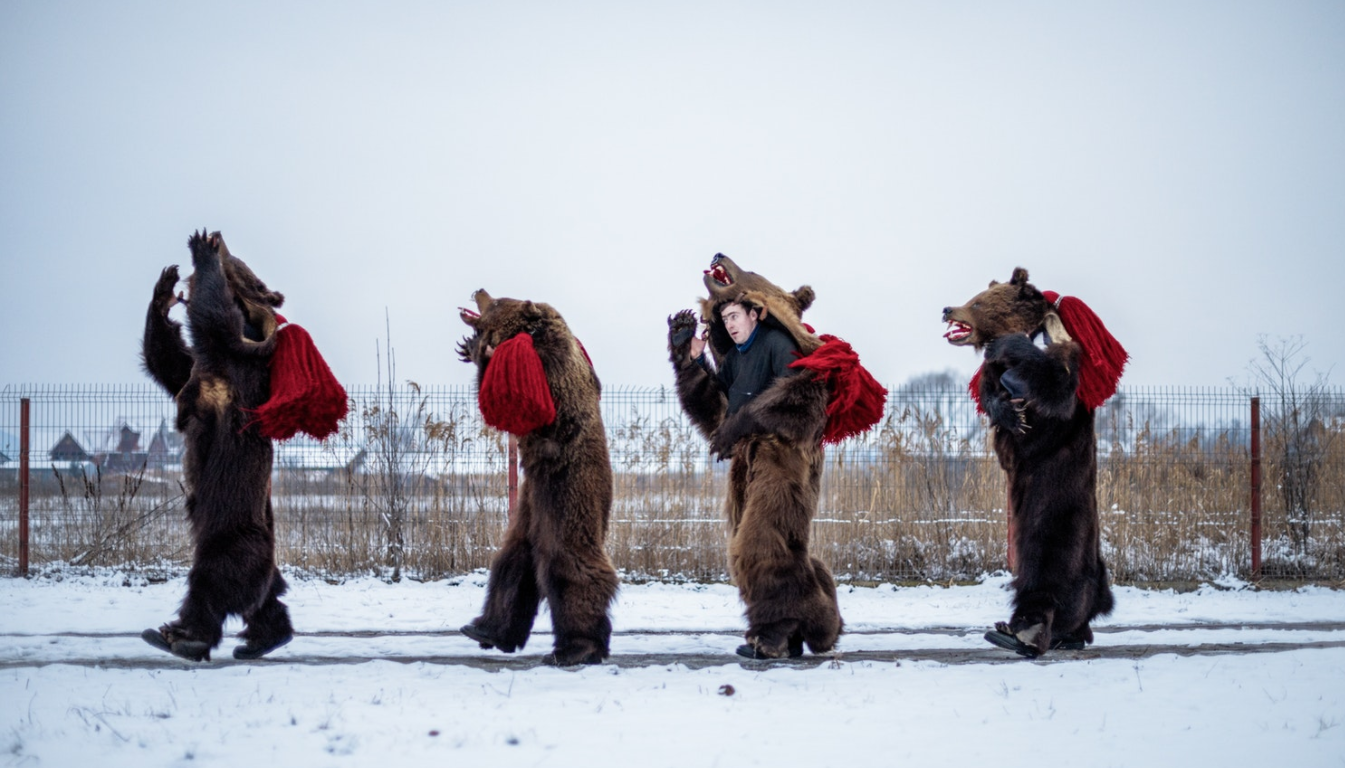
One of my most vivid memories growing up as young child in Romania is watching loud, drunken bears dancing wildly around my grandparents’ living room. Electrifying, enchanting, and at times also quite scary, the annual “bear dance” was always one of the highlights of our holiday season, especially given the strict era of Communist rule.

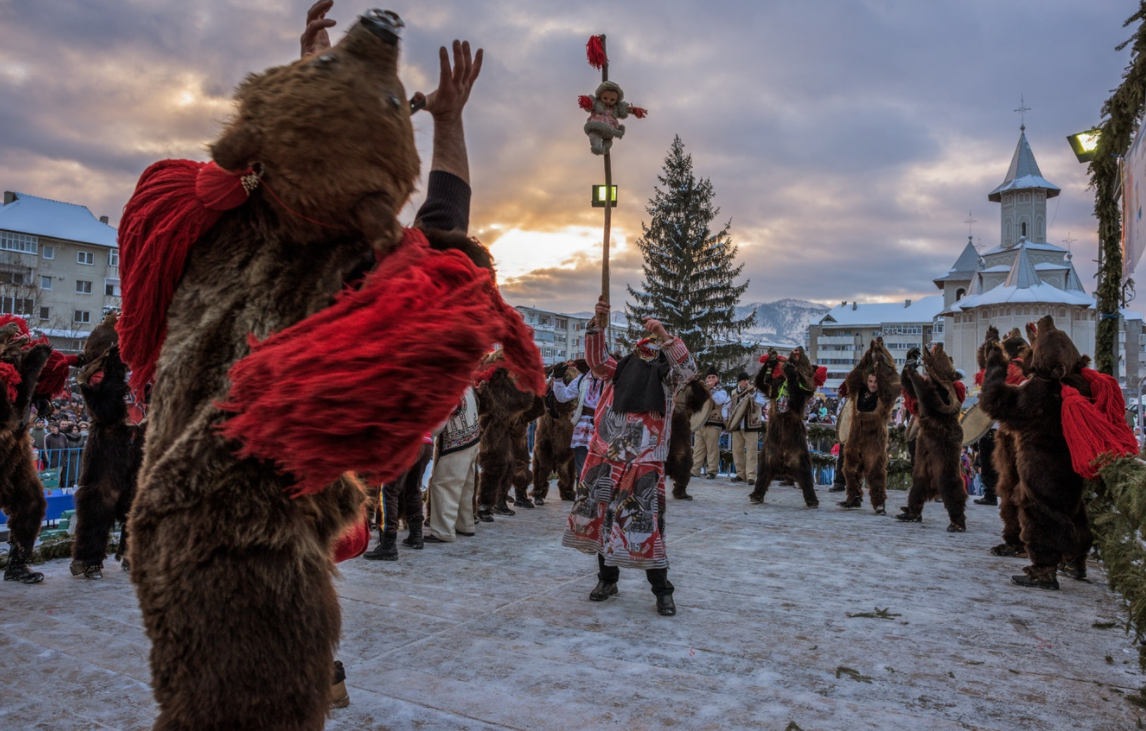
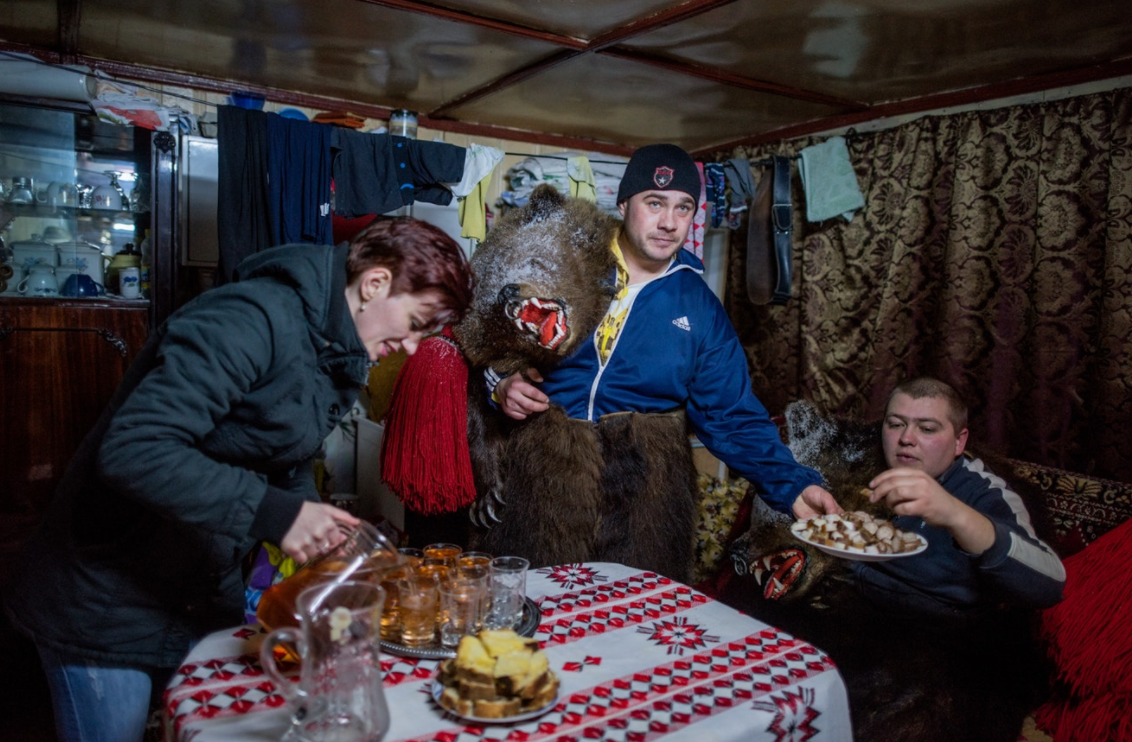
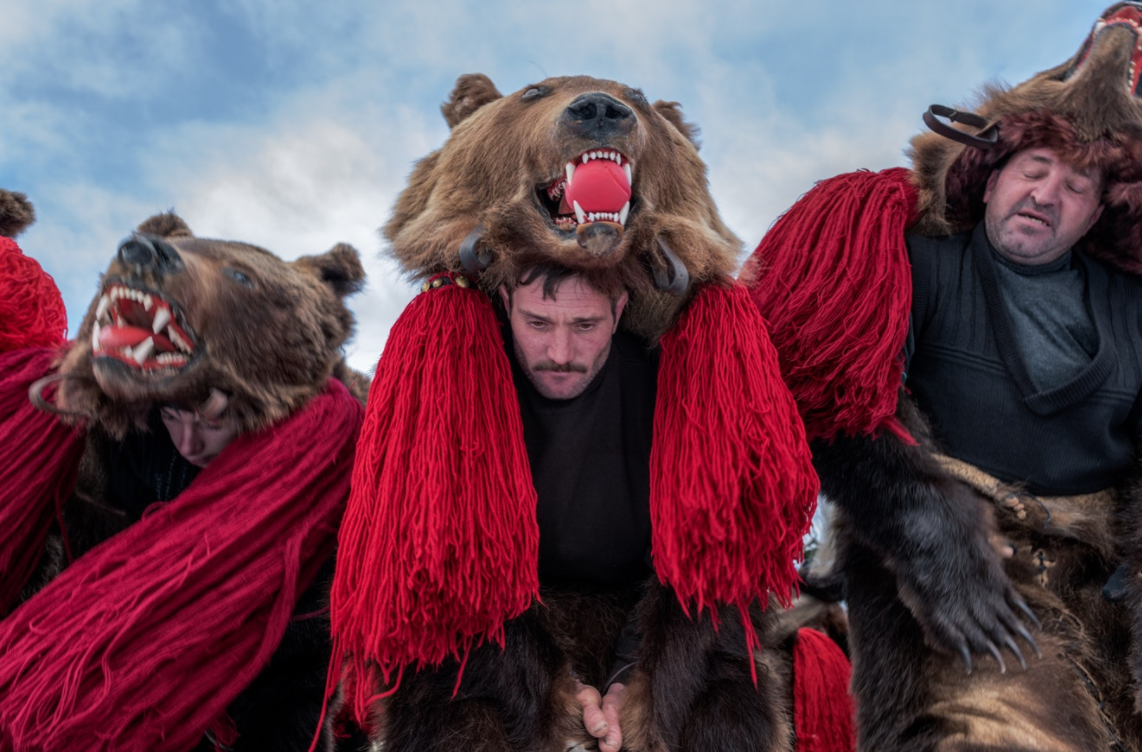
Every year, in a handful of towns and villages along the Trotus Valley of Romania, troupes of “dancing bears” — men and women of all ages wearing real bear skins — tour villages and visit people’s homes between Christmas and the start of January. This traditional folk ritual, where raucous packs of bears dance and play music for tips, liquor, and cubes of pig fat, is believed to chase away bad spirits from the previous year.

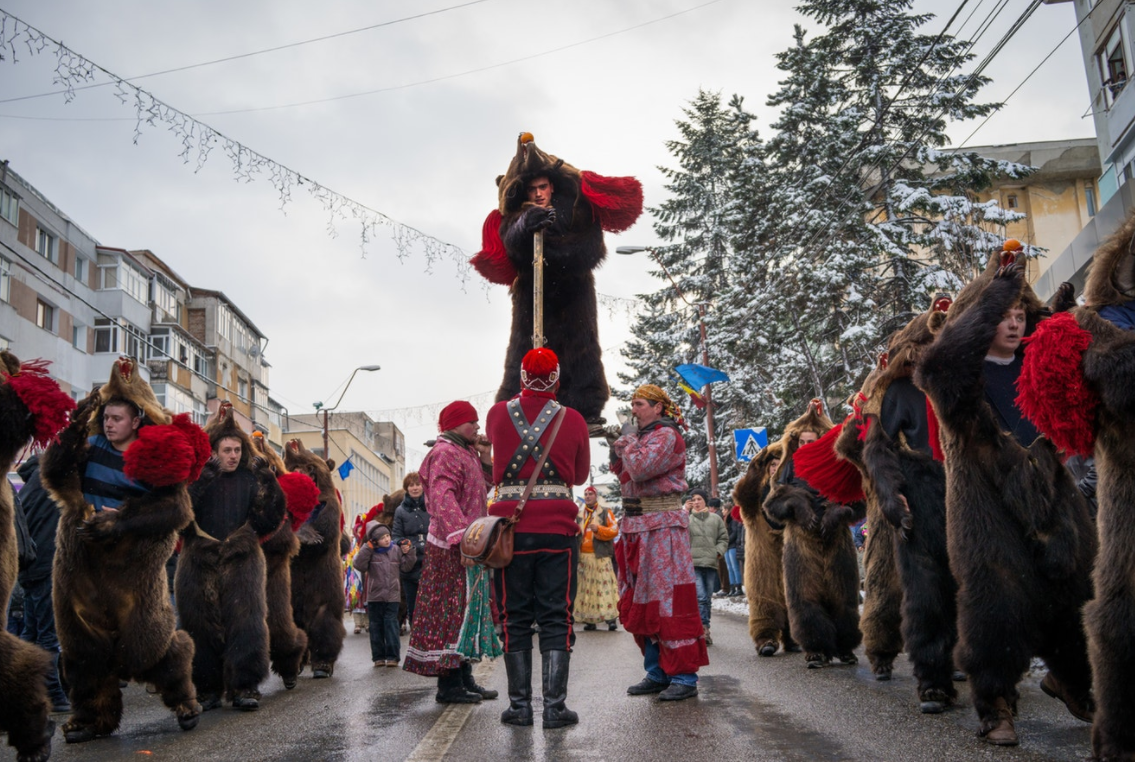
A troupe of bears performs in central Comăneşti during its annual Bear Parade and competition. The mayor organizes the event and offers a cash prize to the best bear troupe. Comănești, Bacău, Romania

When I was only eight years old, my family left Romania behind, and we became political refugees in Yugoslavia. After initially resettling in Canada, we then moved to New York when I was 16. I later went on to study Economics, Neuroscience, and International Development, and eventually returned overseas when I took up a career in humanitarian aid, often working with displaced populations, much like my family and I once were.

In 2013, I decided quit aid work and fully pursue a career as a photographer. I continued to spend most of my time in areas experiencing social unrest or humanitarian emergencies, but now I had a camera in hand. Last year, however, I took a week to return to Romania and visit my ailing grandmother — and to see the dancing bears again.

A troupe of bears dance through Comăneşti, stopping at homes where they have been invited to perform. Comănești, Bacău, Romania

My mother’s childhood friends introduced me to Dumitru Toloaca and his troupe of men, women and children clad in bearskins. I spent a few freezing days photographing them as they performed in the main square of Comăneşti, and then danced their way into the night, through villages like Asău, on their way to private homes where they had been invited to perform.

It’s not unusual for roads to be blocked by bear troupes towards the end of the year.

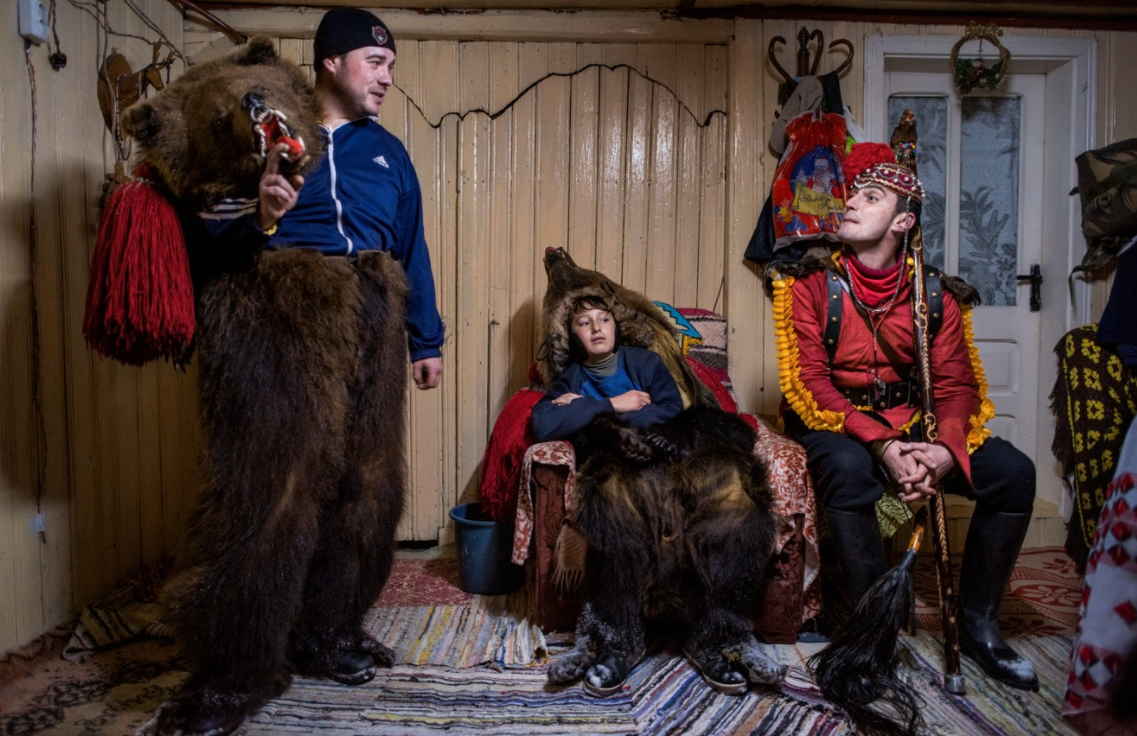
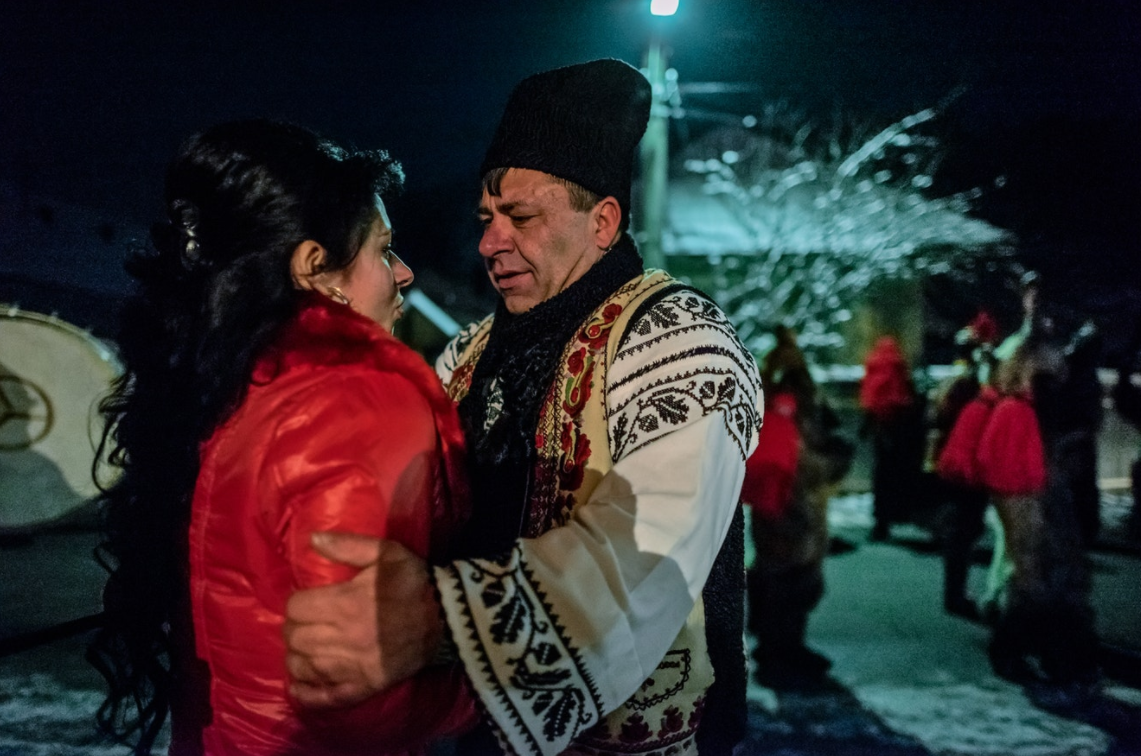
Cătălin Apetroaie chats with a young bear and the ‘bear tamer’ seated on his porch. He and the rest of Toloacă’s troupe have just finished performing for Apetroaie’s family.

There were so many times that I wanted to put my camera down, put on a bearskin, and join them. It was magical, like going into a fairy tale.

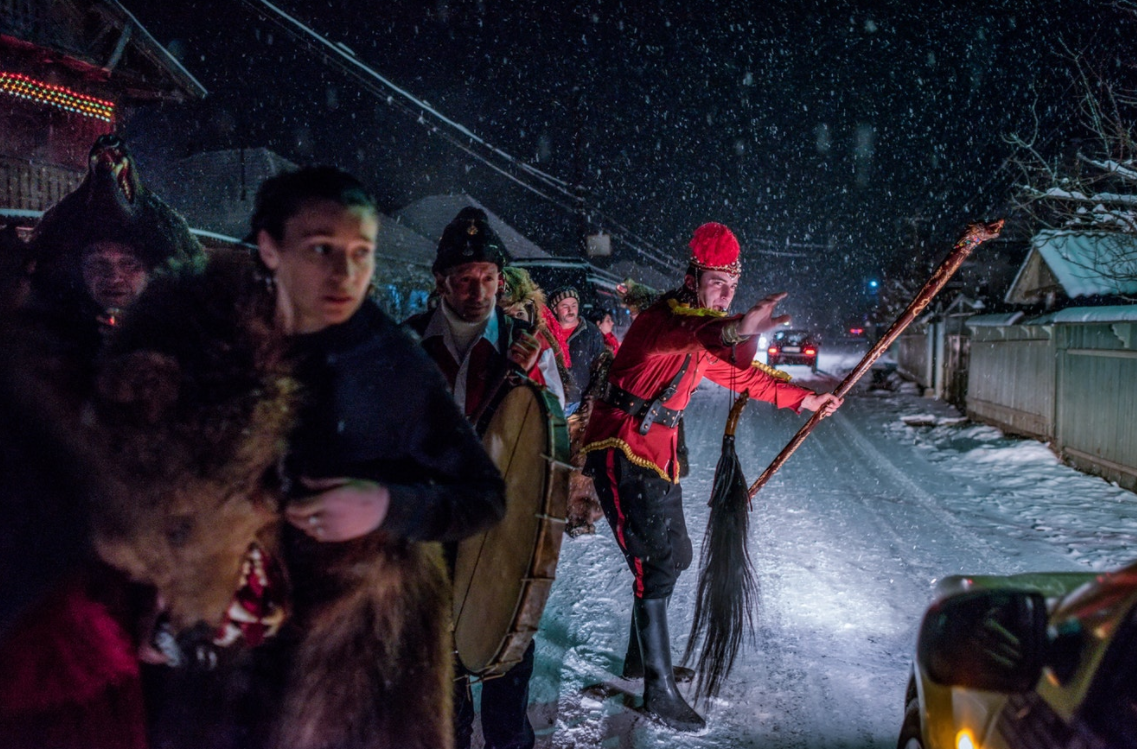
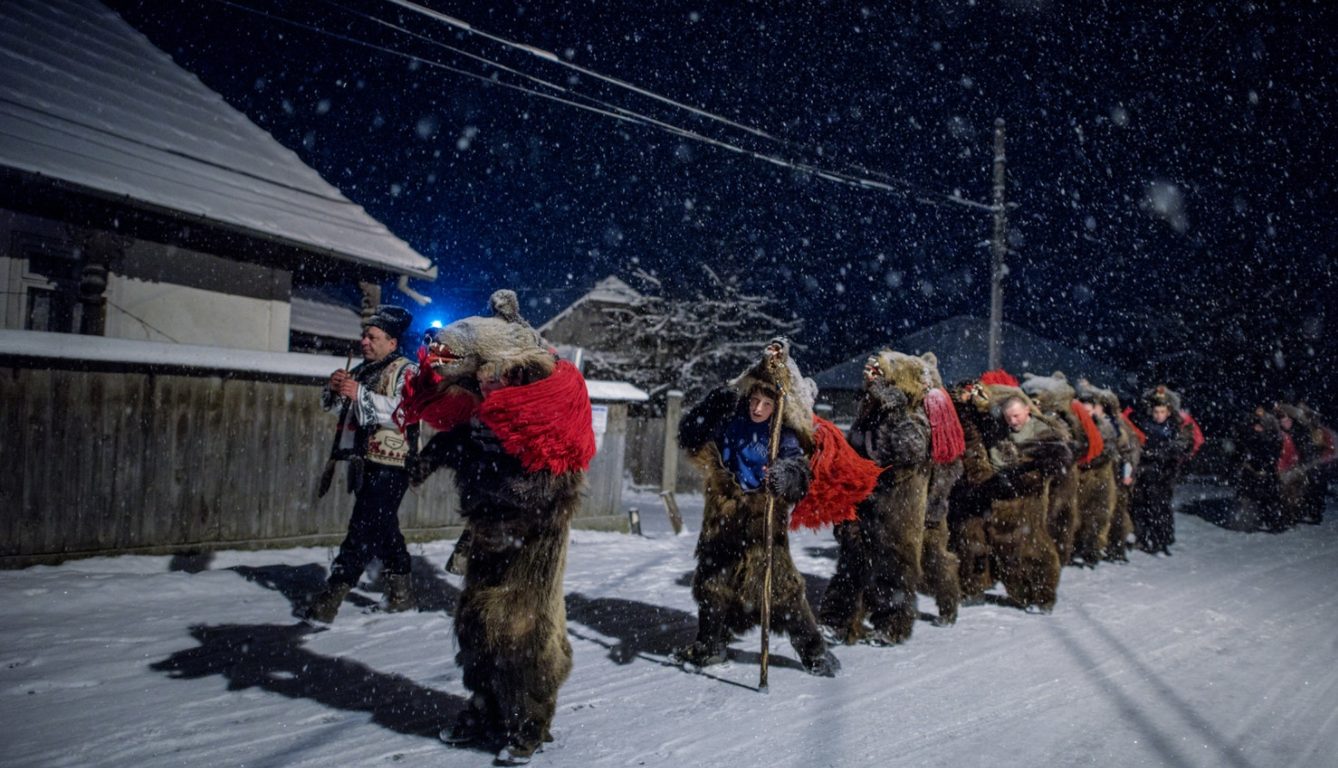
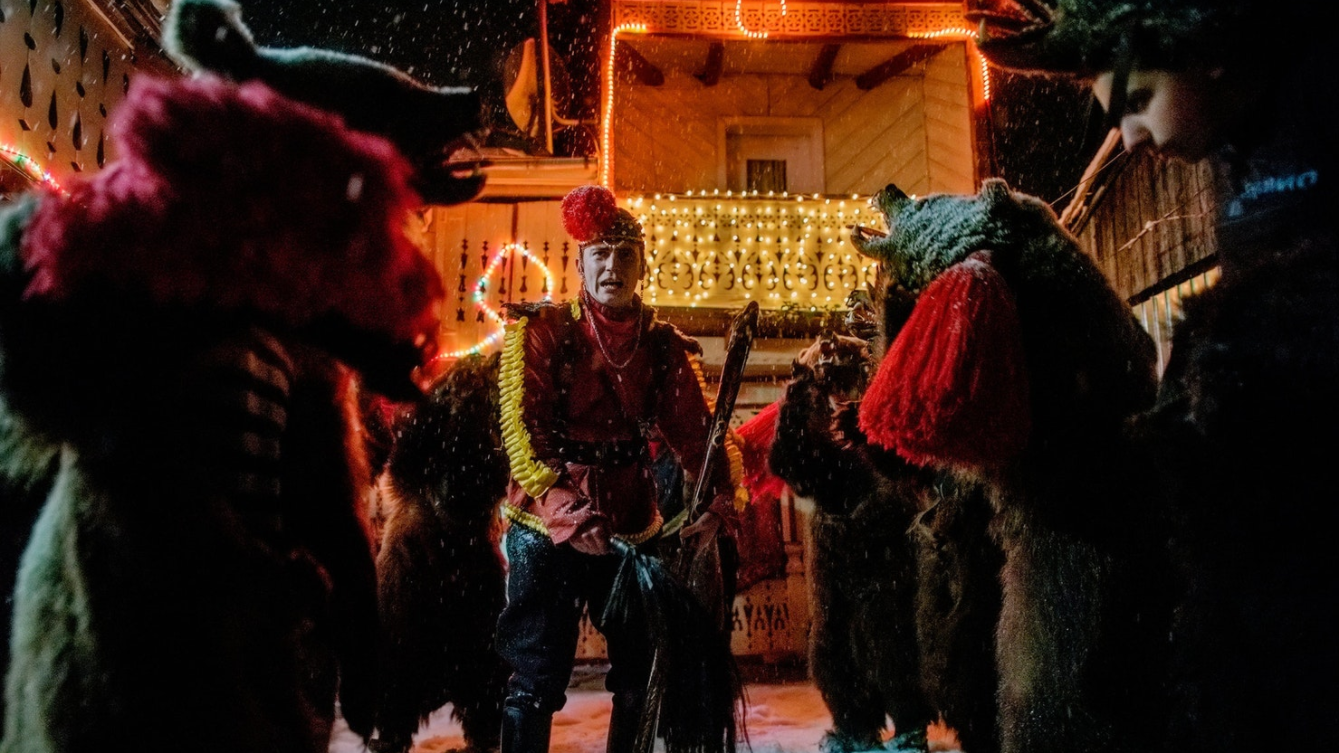
At first, you can’t see much because it’s so dark. You just hear the crunch of the bear-claw boots on the snow and then, all of a sudden, drumbeats break out and you hear the sound of flutes echoing through the alleyways. Then the dancers pass under a streetlamp, and you see bears caught in a snowstorm!

Toloaca’s troupe of bears dance through the night, making their way to the homes where they’ve been invited to perform. Asău, Bacău, Romania

As a child I remember how beautiful it was to wake up filled with anticipation on a snowy December morning and to hear drumbeats and chanting echoing through the valley. The bear troupes would come door to door and everyone would let them in. They were quite rambunctious, swinging their heads around and causing a mess as the snow on them melted.

Catalin Apetroaie, a bear in Toalaca’s troupe, serves his fellow bears a refueling of pig fat at his home in Laloaia where they have just performed. His wife fills up glasses of homemade palinka liquor.

The origins of Romania’s bear dance date back to the 1930s when the Roma, or gypsies, would descend from the surrounding mountains with bear cubs on leashes, and visit the homes of villagers. My grandmother still recalls how gypsies would be given a tip in exchange for the bear cub walking on the backs of the villagers, said to alleviate back pain.

Once a bear aged, the Roma would then employ it for a different purpose when visiting households — they would set the bear to walk on hot metal sheets, which would cause the bear to “dance” or skitter about on the metal to avoid the burning sensation beneath its feet.

Between visits to houses where they have been invited to perform, Toloaca’s troupe of bears stops at a bar for some rest, drinks and more celebrating. Asău, Bacău, Romania

No one really knows when the Roma began wearing bear skins and imitating their dancing bears, or when ethnic Romanians then adapted the ritual, but the gypsy origins are still clearly discernible in the lyrics sang by the “bear tamer” as well as the more traditional costumes sometimes worn, often complete with black stove grease or soot smeared onto the tamer’s face, to imitate the darker skin of a gypsy.

A troupe of bears performs down the main street in Moinesti, during the town’s annual bear parade. Moinești, Bacău, Romania

Today, the Roma are largely excluded from the tradition of bear dancing. Reasons include widespread discrimination against the Roma, as well as the increased cost of bear skins — as bear hunting in Romania has been strictly regulated for some time now, one skin can fetch up to 2,000 Euros.

A lady bear in Toloaca’s troupe plays with the young son of Catalin Apetroaie, a bear dancer himself, after a performance at his home. The child’s grandmother scurries by while his great-grandmother peers at the bears from inside the house. Asău, Bacău, Romania

In today’s post-communist era, modernization and westernization have created a new generation of youth more interested in video games than folk traditions . Moreover, most young adults move to nearby countries or larger cities, in search of work, leaving the rural areas populated by only the elderly or very young. It’s difficult to find people that will carry on the tradition. Coupled with the increasing financial struggles of rural households — after the the fall of communism, rural areas became poorer while urban ones became wealthier — the bear dance tradition is now at risk of disappearing.

A troupe of bears from Asău village performs in central Comăneşti during the town’s annual Bear Parade and Competition.

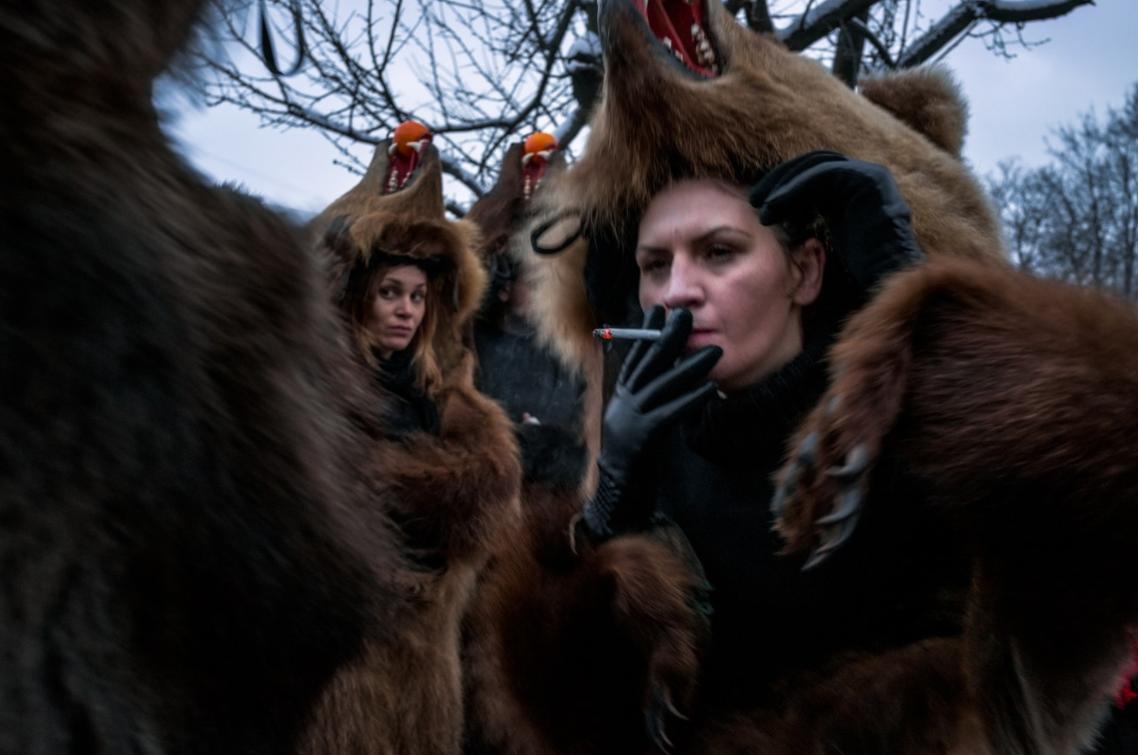
Although in the minority, female bears can be found in nearly every troupe. Comănești, Bacău, Romania

So far, Romania’s bear dance has survived largely due to the efforts of local governments who throw parades and competitions to incentivize the organization of bear troupes, as well as to recognize and celebrate the individual efforts of dedicated and passionate troupe leaders like Dumitru Toloaca. Like most of the other troupe leaders in the area, Toloaca grew up with the tradition as a boy and holds it close to his heart.

Dumitru Toloaca embraces his daughter, Roxana, as his troupe dances to the beat of the drummers and the lyrics of his bear tamer. Roxana, an only child, is his only hope for his bear troupe to carry on into the next generation. Asău, Bacău, Romania

About a year ago, at the urging of concerned local governments, UNESCO initiated a process that may result in Romania’s bear dance being included on its official “List of Intangible Cultural Heritage in Need of Urgent Safeguarding,” an international measure for the protection of cultural practices that are in danger of disappearing. This process takes at least two years to complete, and acceptance is not guaranteed.

Toloaca’s bears dance and encircle their tamer, Gabriel Hanganu. After winning first place at Comanesti’s annual Bear Parade, Toloaca‘s troupe celebrated in the streets, singing, dancing and toasting with homemade palinka liquor handed out by residents. Asău, Bacău, Romania


THIS ARTICLE WAS ORIGINALLY PUBLISHED ON MAPTIA.


DIANA ZEYNEB ALHINDAWI

Diana is a photographer working internationally on stories about humanitarian, human rights, or cultural issues.