
Joshua Morin and his team worked on this film for Matador Network and the Jordan tourism board. Featured in this short film is the beautiful scenery of both rural and urban Jordan. GO Jordan is a short adventure through Jordan's vast desert landscapes and its city streets filled with markets, music, and street food.
Future Memories
Photographer Max Rive traveled to Southern Greenland to record these beautiful glaciers. The title, "Future Memories," reflects how these images will just be memories in our future with the onset of climate change. Some of the glaciers you will see will literally be gone in 5 to 10 years from now.
The Furnace of Broken Dreams
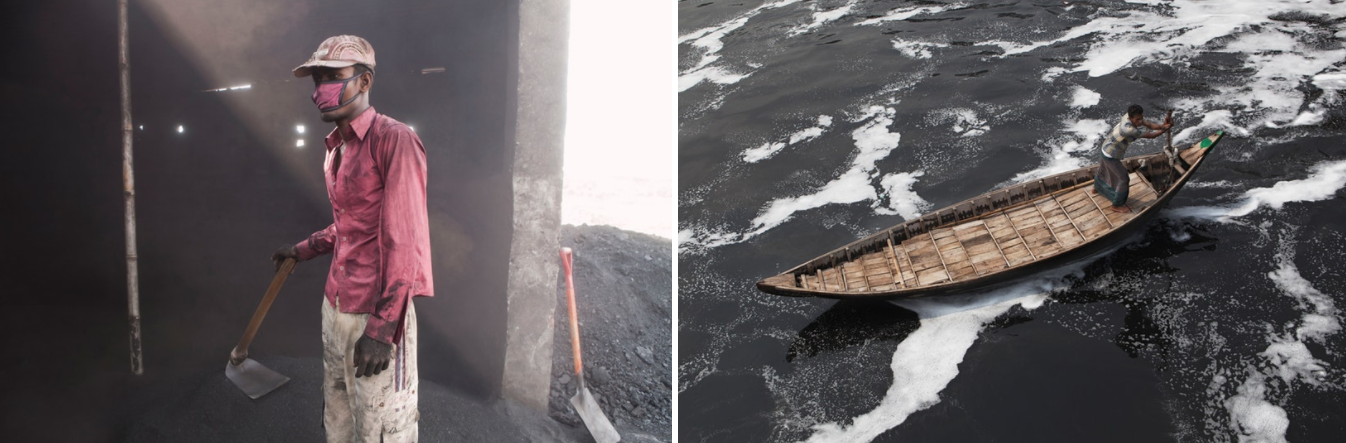
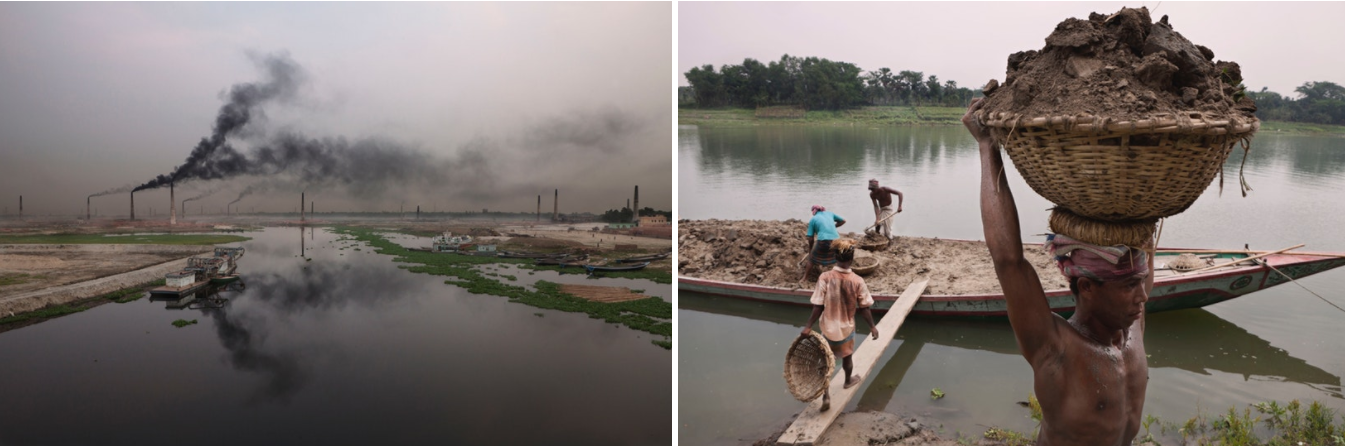
On the outskirts of Dhaka you will find hundreds of small brick factories.
The majority of these factories are considered illegal by the Bangladeshi government because the chimney stacks are too low and because they still use coal as their main fuel. Burning wood in kilns has also been illegal since 1989, but nearly two million tons of firewood are burned in ovens annually. The toxic fumes that these countless factory sites emit cause almost half of all the air pollution in the city.
Beside each factory are the makeshift villages or camps, where the workers live. Whole families are forced to labour for twelve hours a day, without rights and with a salary that barely allows them to survive.
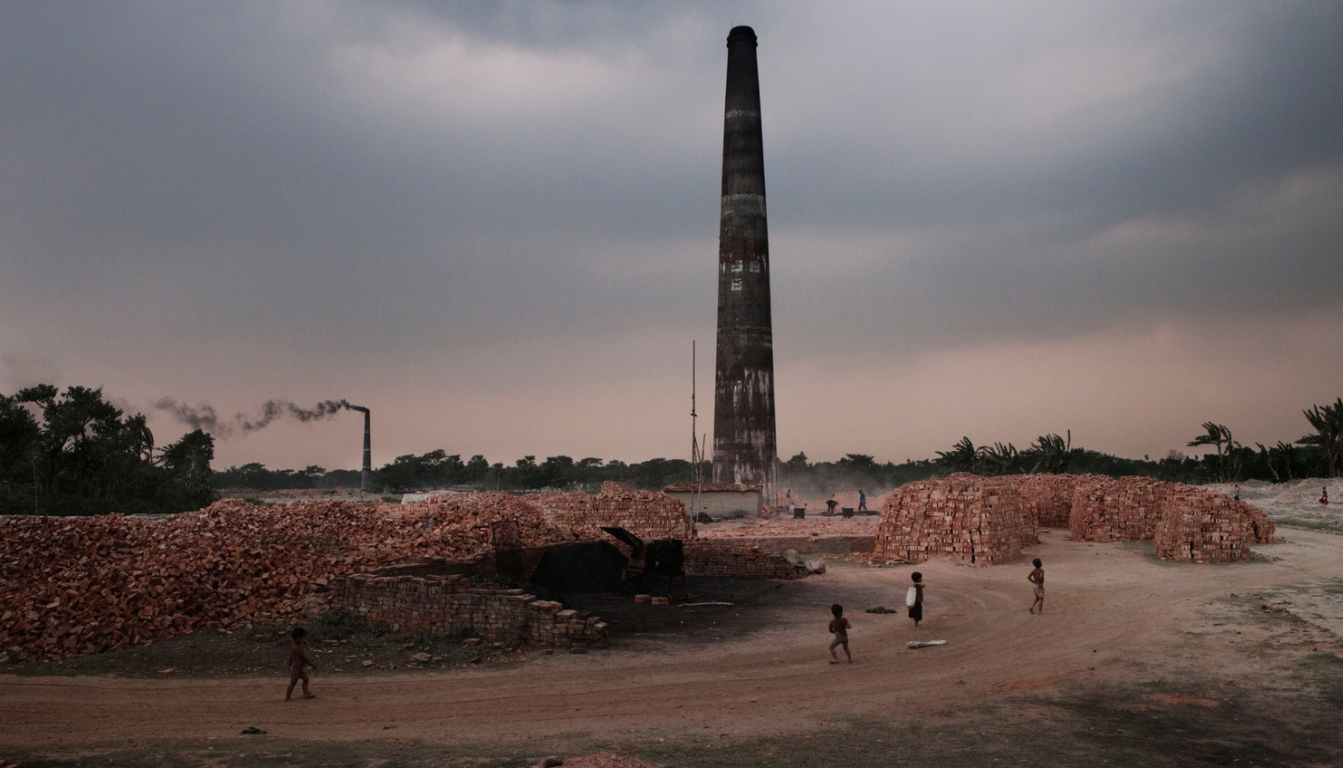
The workers rise before dawn, heading up to the furnace in the half darkness. At 9 o’clock they are permitted to take a half hour break from their work. Most return quickly to their homes, wake up their youngest children who still are sleeping, and prepare breakfast for their families.
It is then back to work until 2 o’clock, when they may take another half hour break for lunch. Below you see Imran Uddin, 24 years old, a few minutes before a tropical storm hit the factory site where he was working with his brothers. None of the workers stopped during the storm.
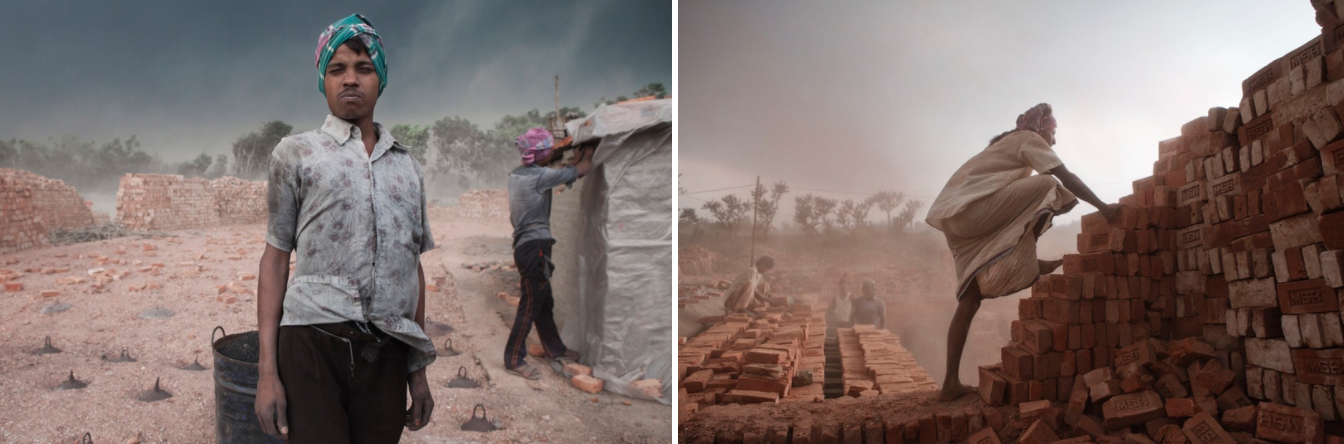
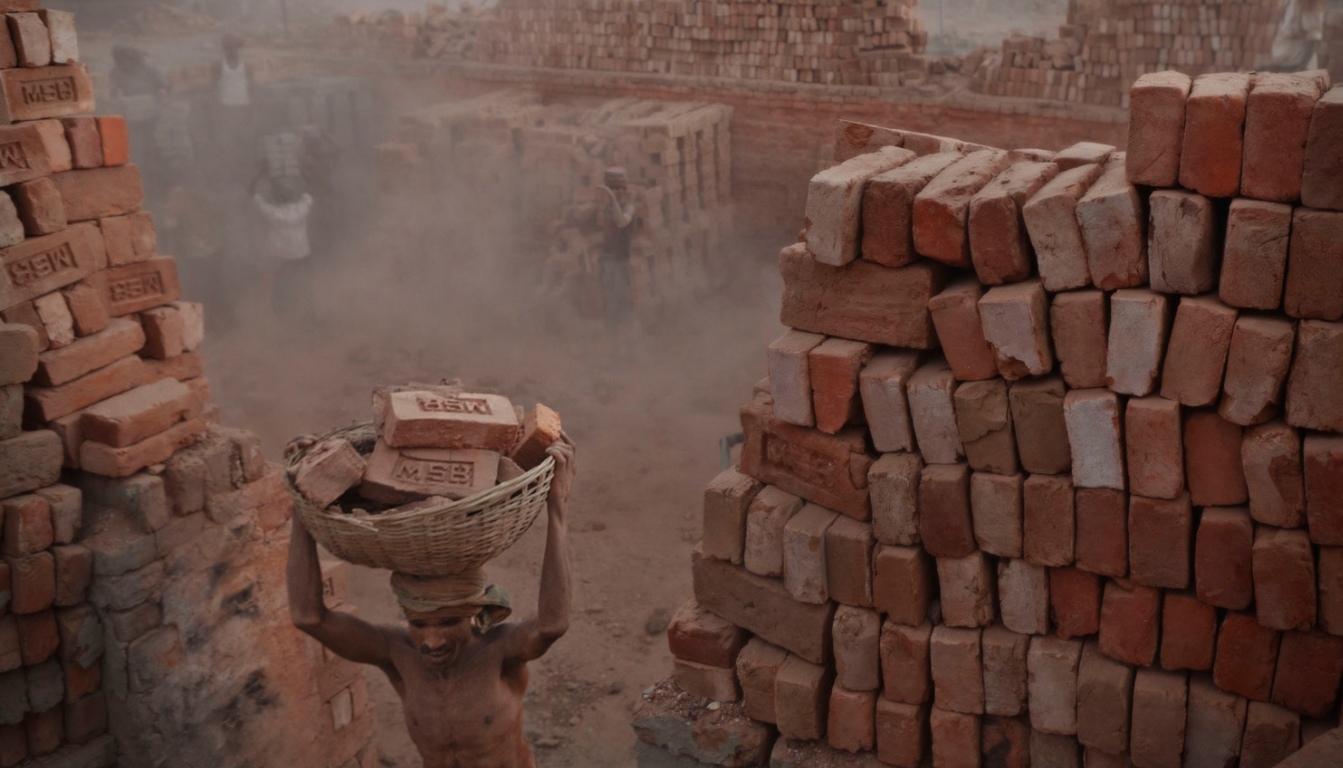
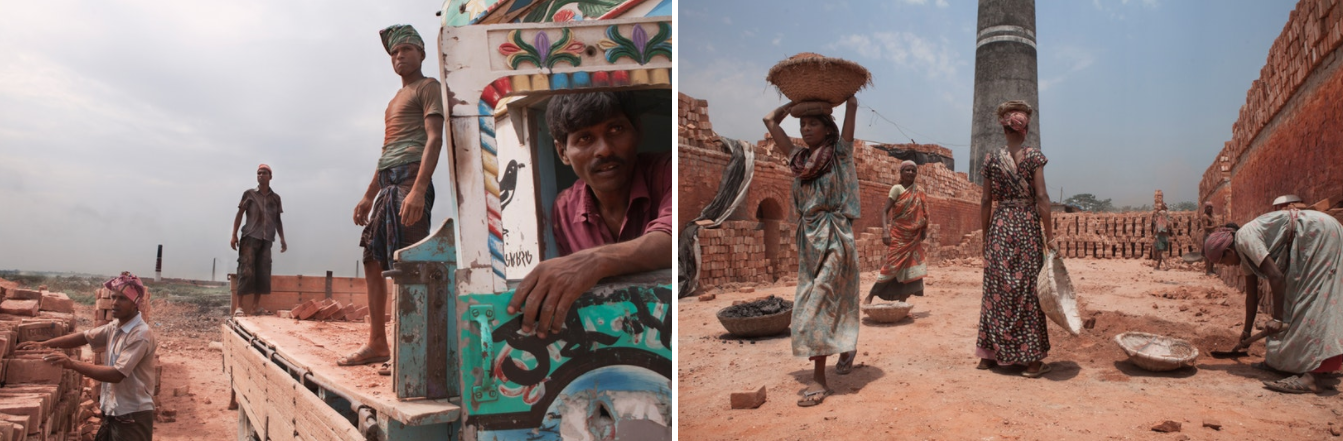
Most of the workers in the furnace are families, including the elderly and also their children, who will begin to work alongside their parents when they are around six years old. The children’s pay is equal to that of adults, and is based on the amount of bricks transported daily. Younger children will spend the day wandering in the camps or around the furnace.
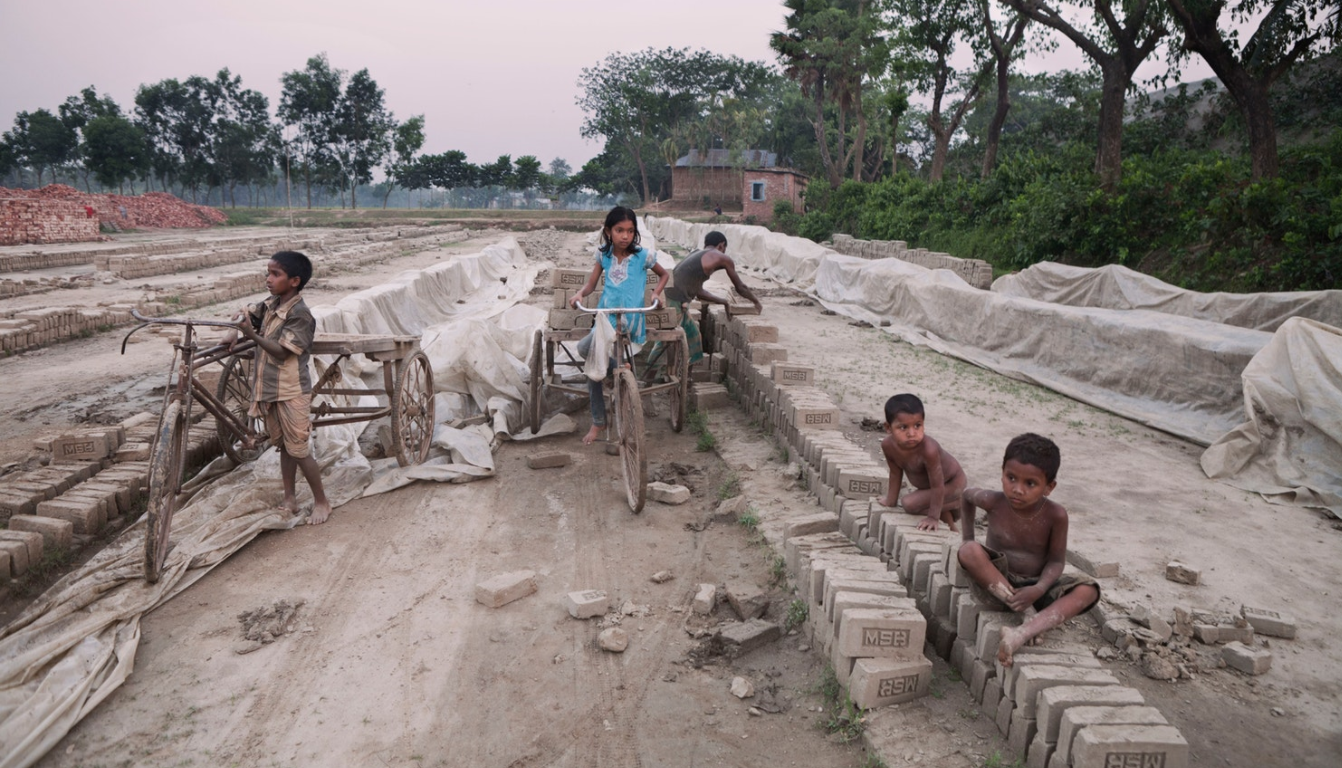
The work day only ends as darkness falls, when the workers will head to the nearest lake or river to wash the grime and dust from their faces and clothes. Returning to their homes, they prepare dinner and fall into an exhausted sleep. It is very rare for a home to have electricity. I was surprised to find that their days were marked only by the rhythm of work, no time even for prayer. They work six and a half days each week.
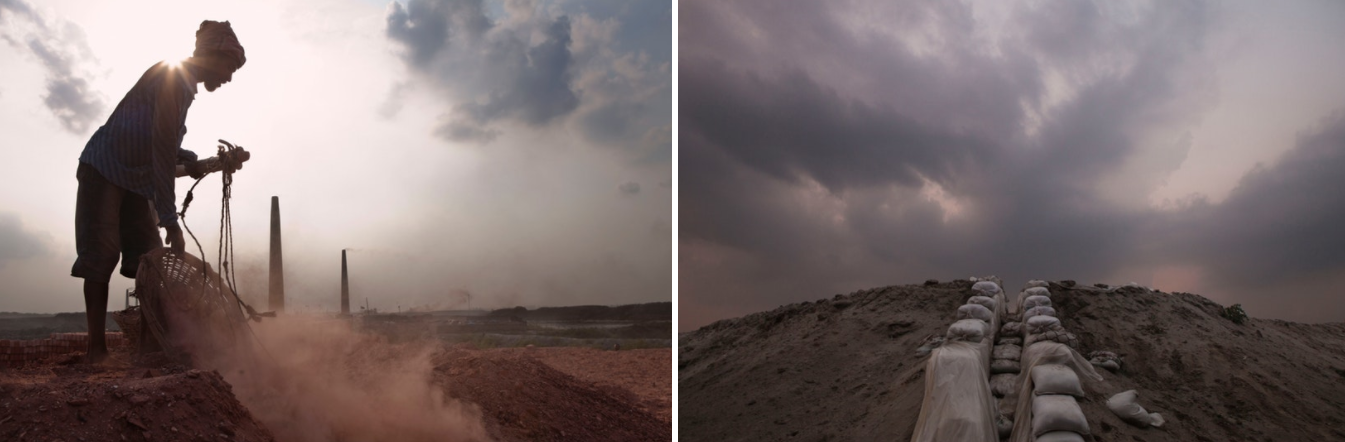

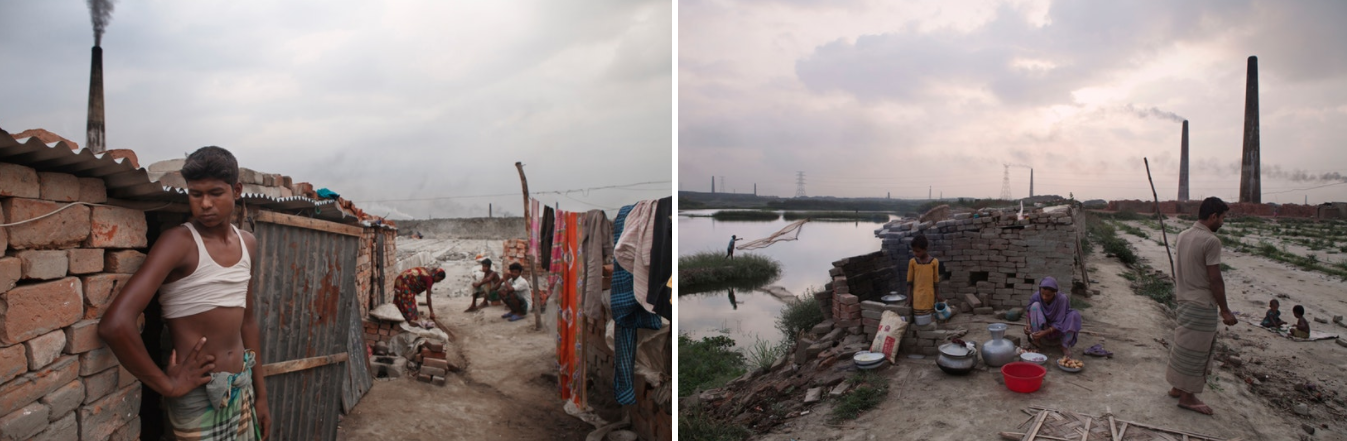
Most of the workers who we talked with were friendly, despite their fatigue and tiredness, and were glad to speak with someone. They also offered us their hospitality, as best they could, even though some of them told us that they felt ashamed of the conditions they lived in.
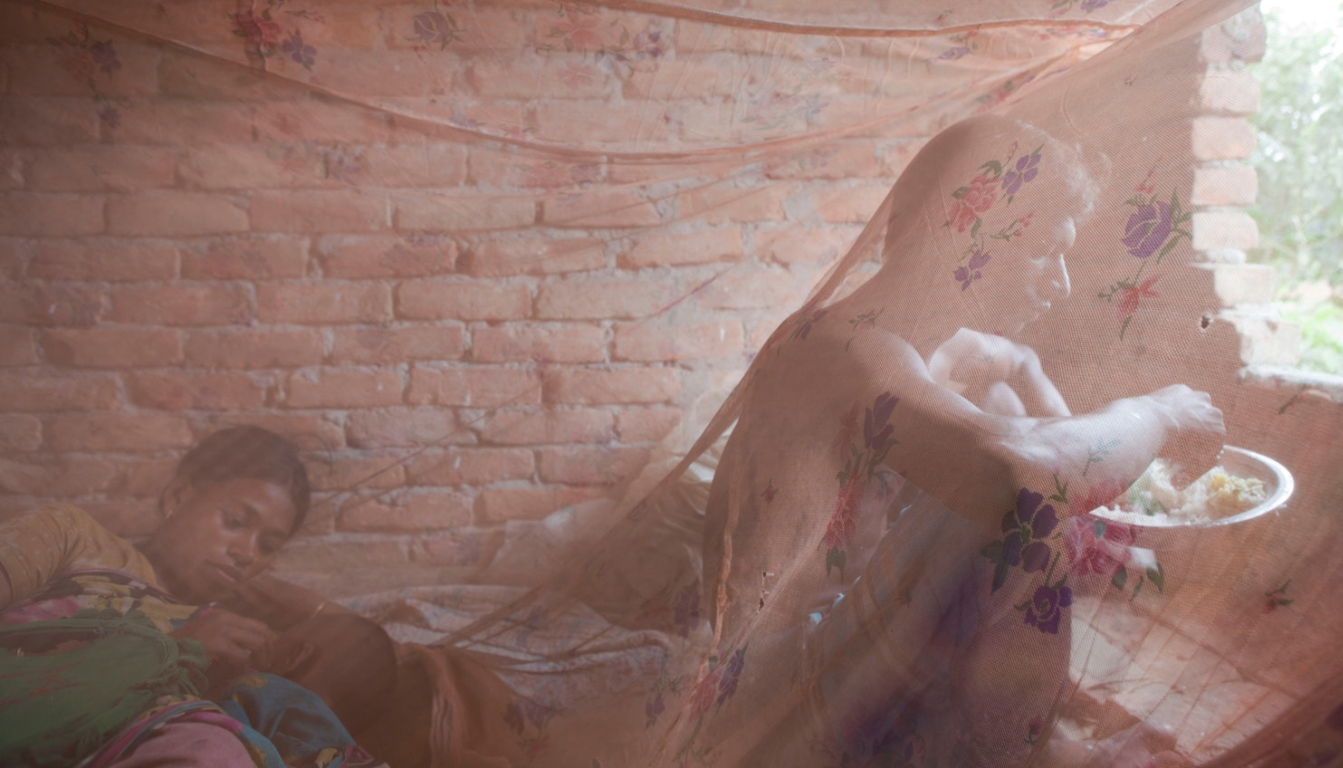
Sometimes we spoke with someone who was fearful. Some of the workers were afraid that if the boss knew they had talked to us, they might lose their job. In general, the workers were preoccupied with maintaining a relentless pace of bricks being loaded onto their heads or into the carts.
One of the young men we met, Shakir Kander, was 16 years old. Day in, day out, Shakir shovelled the dusty coal to fuel the hungry brick-baking furnace, from six o’clock in the morning until nightfall.
As with all the other workers, Shakir is allowed only half a day of rest each week. Also below you see a boatman crossing the Bouriganga river, which is considered among the top three most polluted rivers in the world. The many waterways surrounding Dhaka are essential for the transport of materials that are be used in the manufacture of bricks.
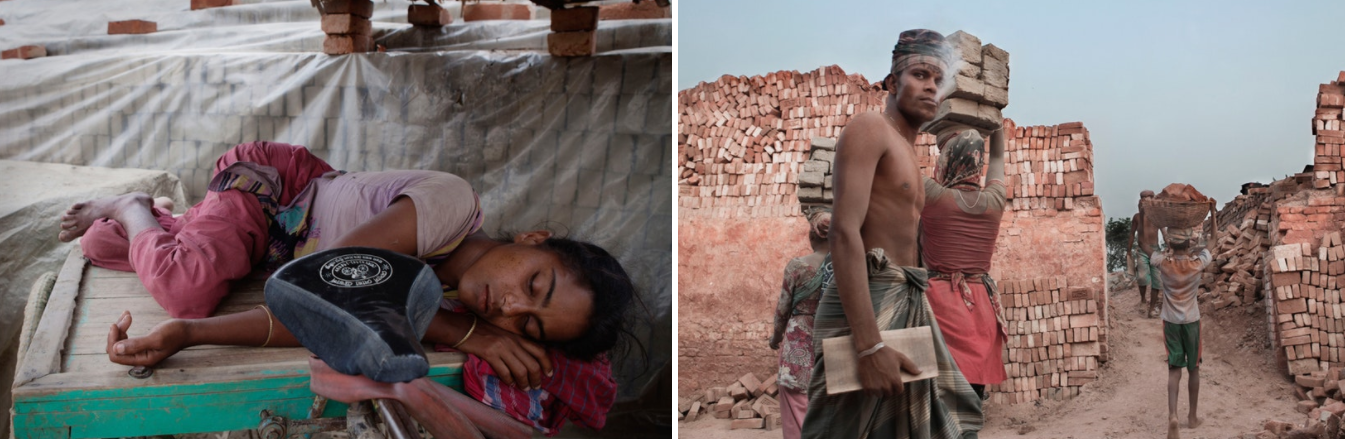
Above you see Shamina, thirteen years old, sleeping on the back of her bicycle — used for transporting bricks — during her short lunch break. During my time in Bangladesh, I visited perhaps thirty factories in two months, and met many individuals like Shamina. When embarking on this project, I believed that it was crucial to spend several days at each factory, so that I might more thoroughly capture their moments of everyday life outside of work. Sadly, factory after factory, it became apparent that the daily free time I had imagined for the workers, simply did not exist. Their schedule did not even permit them time to pray before sunrise, and days seemed to pass with an ineluctable cyclicality.
The sun beat down from above, the sweltering furnaces were burned constantly, and the air was always filled with dust and smoke.
I went away upset, with a bitter taste in my mouth. Away from these hellish workplaces, I gratefully breathed great gulps of fresh air, and yet the fate of the workers and their children would remain unchanged.

It was after reading author Kevin Bales’ powerful works on modern slavery and other similar studies, that I felt compelled to move to Bangladesh to tell this story. When I first arrived into Dhaka’s industrial area, and saw the forest of factory chimneys engulfed by thick black smoke, I knew that I had made the right decision. I had to document this. I had to share it with as many people as I could. And so I began.
In the end, what has stayed with me most about these factories, is our remarkable human capacity to somehow find the will to adapt and survive in adverse circumstances, whether environmental, social or economic. Living alongside the workers was, in its own way, a privilege, as I tried to understand and document the depth and truth of their lives.
THIS ARTICLE WAS ORIGINALLY PUBLISHED ON MAPTIA.
RAFFAELE PETRALLA
Raffaele is a documentary photographer focusing on social, environmental, and anthropological issues.
The Old Ways - A Journey to Northwest Vietnam
This is a short film in Northwest Vietnam, one of important sub-regions of Vietnam. This region plays a crucial role in Vietnam defense and security. Northwest Vietnam is always characterized by untouched beauty of landscapes and local people. Locations featured in this film are Tu Le, Mu Cang Chai, Sapa, Bac Ha, Hoang Su Phi, and Ban Phung village.
Lands of Wind: A Journey Across Peru and Bolivia
A two months journey across Peru and Bolivia, from countrysides to cities, passing by jungle and mountains, capturing lives and landscapes of these two wonderful and inspiring countries.
Directed and edited by Baptiste Lanne.
PHOTOESSAY: The Young Men of the Free Syrian Army
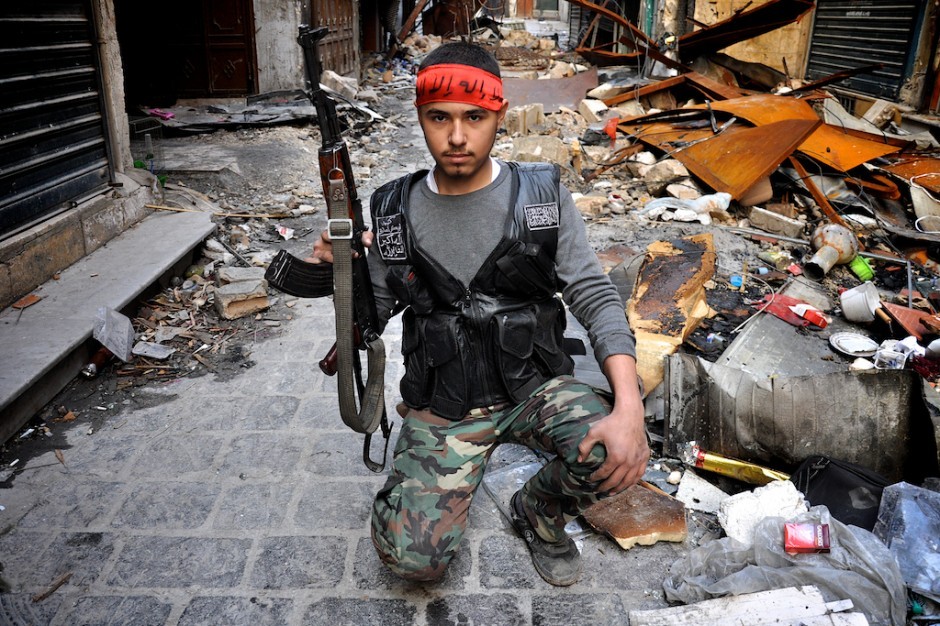
The front lines of the Syrian Civil War trace through alleys and ancient streets in the Old City of Aleppo. Defending these lines are young men, most less than two decades old, carrying AK-47s and homemade grenades.
They have no military training and will not wear body armor for fear of delaying the time of death anointed for them by Allah. They are kids and recent college graduates who picked up guns for their country and, most of all, for revenge. All have lost friends and family to Assad. "These young men are warmhearted and hospitable, but daily burdened and degraded by the fighting. Every fighter I met had a different story that brought him to Aleppo; this project attempts to tell those stories.” — Cengiz Yar.




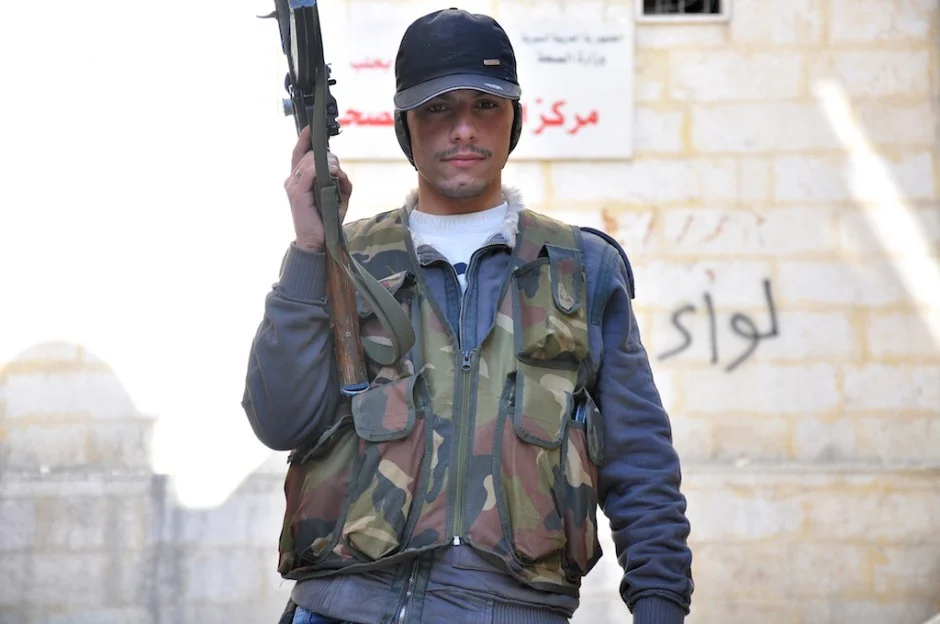

![[Name withheld] - 20](https://images.squarespace-cdn.com/content/v1/638a651ad5f9324e20972bf2/1670014524351-36X8BO8GD9MSYFTOO5G8/11+syria11youngmen-11aleppo-syria-matador-seo-940x624.jpg)

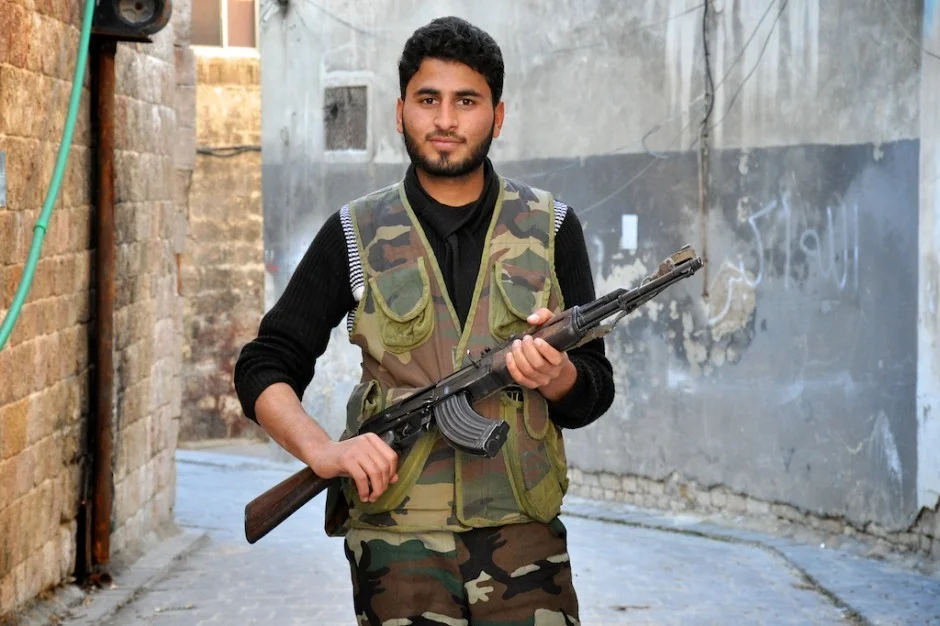


CENGIZ YAR @cengizyar
Based out of Chicago, Cengiz is a documentary photographer and freelance photojournalist whose work has been featured in publications around the world. His photography focuses on human conflicts, both violent and peaceful, and aims to encourage understanding by fostering interest and making the alien familiar.
My Life in North Korea vs. South Korea
One year ago, Jacob Laukaitis went on a strictly guided 7 day-tour in North Korea where they took away his passport and did not allow him to explore anything on his own. Laukaitis kept wondering what life was like in the neighboring South Korea, because it used to be the same country just over 60 years ago. To answer this question, this year he traveled to South Korea and made this video, where he compares his time in the North and his time in the South. He still have a lot of questions about the whole situation, but one thing was clear - the daily lives of the Korean people couldn't be any more different than they are right now.
Kenyans Face Up to 4 Years In Prison For Using Plastic Bags
Beginning today, plastic bags will no longer be found in Kenya. If someone is found using one, then they will face a $38,000 fine or potential four-year jail sentence.
It’s officially the world’s harshest plastic bag deterrent.
A full ban on producing, selling, or using plastic bags went into law Monday after a court rejected challenges brought by two large plastic bag importers. The new law was successfully implemented on the third time around, after the first bag-ban in Kenya was proposed over 10 years ago.
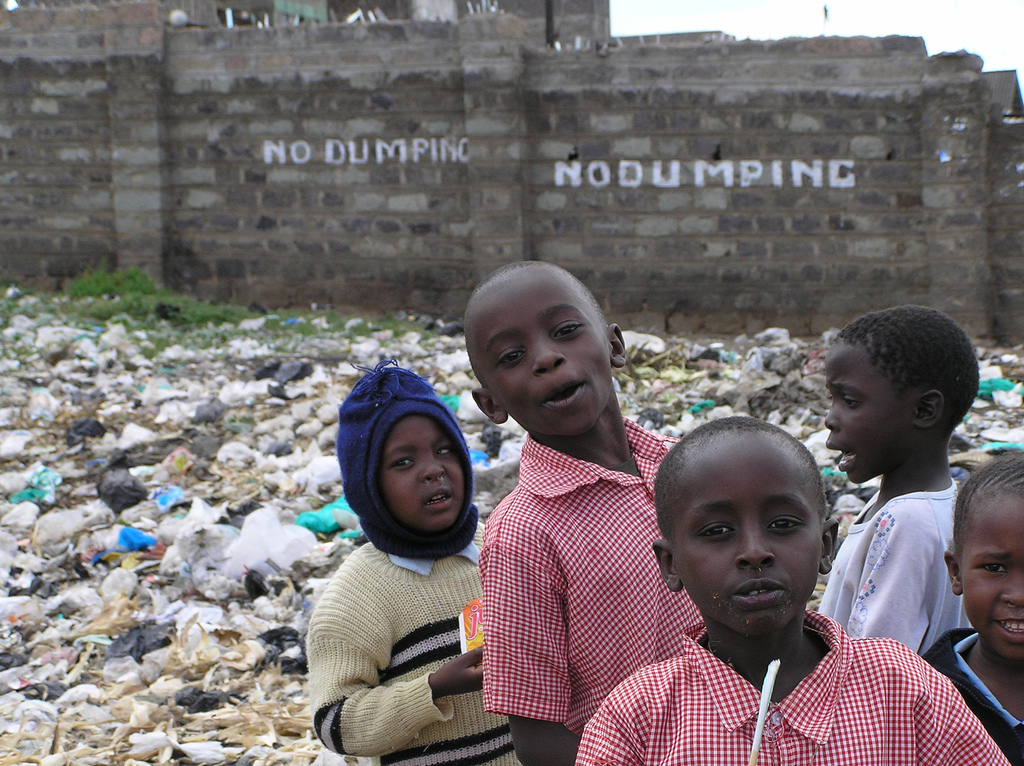
Plastic bag pollution is a persistent problem in Kenya. It is not uncommon to see large piles of the single use bags littering the streets of urban centers, where vendors and customers frequently use them to sell and transport items.
Though the bags are convenient, the ultimate cost to the environment is astounding.
"Plastic bags now constitute the biggest challenge to solid waste management in Kenya,” said Kenya's Environment Minister Judy Wakhungu in an interview with the BBC. “This has become our environmental nightmare that we must defeat by all means.”
According to Wakhungu, plastic bags can last anywhere from 20 to 1,000 years in a landfill before they biodegrade. In the meantime, they pose environmental hazards to the communities they end up in.
Serious concerns were raised about the safety of bag disposal when rements of plastic bags were found in the stomach of cows who were to be slaughtered for human consumption. Leaching of plastics into beef destined for supermarkets pose a worrying health risk, according to local veterinarian Mbuthi Kinyanjui.
“This is something we didn’t get 10 years ago but now it’s almost on a daily basis,” he told the Guardian.
Scientists are concerned that the pile up of plastic bags is having a similar negative effect on the marine food chain, where plastic particles can easily make their way into the fish humans eat. The bags also threaten sea life not consumed by humans, such as dolphins, whales, and turtles.
In a country that uses an estimated 24 million plastic bags per month, many see the move as a victory for the environment.
However, some people in the business community worry that the ban will ultimately harm economic prosperity, and generally make life more difficult for the average Kenyan.
Kenya is a major exporter of plastic bags in Africa.
In an interview with the Guardian, spokesman for the Kenyan Association of Manufacturers Samuel Matonda said the ban would eliminate 60,000 jobs and cause 176 manufacturers to close.
“The knock-on effects will be very severe,” Matonda said. “It will even affect the women who sell vegetables in the market – how will their customers carry their shopping home?”
Right now, Kenyans discovered using bags will only have them confiscated with a warning. Soon, they could face the penalties of what is being called the “world’s toughest law against plastic bags.”
Several other African nations have already enacted similar bans or fines on plastic bag use, as have more than 40 countries around the world including China, France, and Italy.
THIS ARTICLE WAS ORIGINALLY PUBLISHED ON GLOBAL CITIZEN.

ANDREW MCMASTER
Andrew McMaster is an editorial intern at Global Citizen. He believes that every voice is significant, and through thoughtful listening we can hear how every person is interrelated. Outside of the office he enjoys cooking, writing, and backpacking.
The Thorny Issue of Orphanage Volunteering
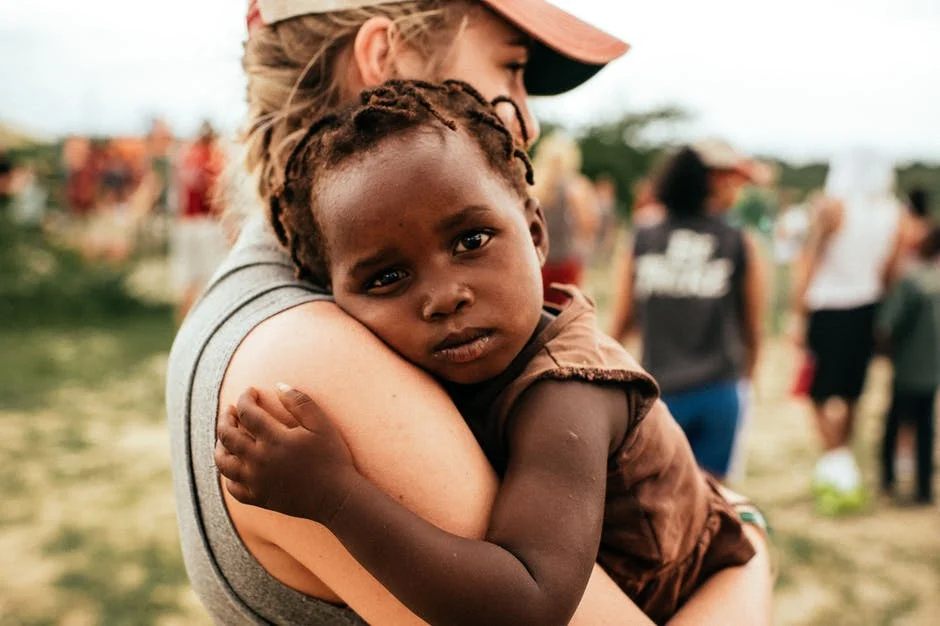
Well-founded criticisms tangle with on-the-ground realities. Should volunteers be part of the mix?
In a barrage of tweets last year, JK Rowling didn’t mince words when it came to her feelings about orphanage volunteering. Taking to Twitter, the Harry Potter author said she would never support the growing phenomenon of individuals travelling to developing countries to carry out volunteer work—especially when it comes to orphanages.
“#Voluntourism is one of [the] drivers of family break-up in very poor countries. It incentivizes 'orphanages' that are run as businesses,” she wrote.
While Rowling brought new attention to the subject, her criticism is not original. For decades, working at orphanages has been a popular volunteer abroad activity. However, recently the criticism has intensified as the industry has grown. Many countries, including Nepal, Uganda and Cambodia have witnessed an increase in the number of orphanages—one that coincides with a rise in foreign volunteers.
Social support or dodgy business?
For Hanna Voelkl, a social worker, volunteering in orphanages is an absolute no-go.
“Voluntourism in orphanages is a business basically playing with the emotions of people and using vulnerable children in poverty to do so. They are not sustainable at all and do a lot of harm,” she says.
As part of her Master’s research, Voelkl spent two months in an orphanage in Ghana conducting a qualitative case study of the experiences of orphans who interacted with international volunteers there. Her research was one of the first studies that approached the issue from a child’s perspective.
Her conclusion? The children associated the volunteers mainly with giving and receiving material goods. Voelkl believes volunteering in orphanages only serves to perpetuate stereotypes of Western volunteers as “saviours”, without focusing on the needs of the children or empowering communities to help them.
During her research, Voelkl became sceptical that money being sent to the orphanage even reached the children. When she first arrived, the number of children who didn’t have shoes, toothbrushes, mosquito nets, beds or educational materials shocked her. While she was not able to verify it, she believes this may have been a strategy to create the impression that the orphanage needed funds in order to solicit more donations as a source of income for those who run it.
When she overheard Ghanaians talking about starting orphanages as profitable businesses, her suspicions were raised further—and they may not be unfounded. UNICEF has expressed concern that orphanages in Cambodia are turning to tourism to attract money. As a result, children are put at risk for abuse and neglect, and well-meaning tourists are unwittingly funding a system that separates children from their families. Cambodia has seen a 75 per cent increase in orphanages since 2005. Over that same period, foreign arrivals increased by 250 per cent.
This same trend can been seen in Nepal, where there are 743 children’s homes; a number that has “mushroomed” in recent years, according to a Arjun Garigain, a researcher on orphan care in Nepali communities.
This is a change that Claire Bennett, co-founder of Learning Service, an organization that teaches people about responsible volunteering, has witnessed firsthand living in Nepal.
“There were very few orphanages until money started coming from foreign donors,” says Bennett. “The more that foreign volunteers and donors support orphanages, the more children are separated from their families or their communities in order to fill them.”
A lack of alternatives
American Linda Unsicker, 68, says that in all her years of volunteering that’s never been her impression. She and her late husband spent 11 years giving their time in various countries around the world. Her most recent solo venture was with a children’s orphanage in Rabat, Morocco, where she’s now been three times.
“The volunteer's function is to give some one-on-one time to the children to help the fantastic staff also have more time with them,” she says.
Bennett acknowledges that children in orphanages are crying out for attention, but she doesn’t believe the problem can be solved with “a conveyor belt of untrained foreign volunteers.”
“As harsh as this sounds, it is a little selfish to go abroad to interact with vulnerable children because it feels good to you, when there is a lot of research to say that this damages children,” says Bennett. She says that high volunteer turnover has the potential to fuel attachment disorders. What the kids ultimately need are trained, long-term caregivers with whom they can form healthy relationships.
Farhana Rehman-Furs, Chief Program Officer at Cross-Cultural Solutions (CCS), a volunteer-sending organization that includes assisting at orphanages among its programs, acknowledges that in some regions of the world, “a handful of bad seeds in the industry have negatively affected certain orphanages." But she says this could be avoided if prospective volunteers were better informed and were more careful to choose placements through organizations that follow best practices for sustainable development, such as having strict vetting policies for establishing international partnerships and thorough monitoring and evaluation of programs.
“We agree with child development experts that children benefit most developmentally from a secure family environment. [However] the reality on the ground in many of our countries is simply not conducive or developed to institute adoption and fostering as a possibility,” wrote Rehman-Furs in a response to Rowling’s tweets. “We support the campaign by experts to combat ‘pop-up’ profit-making orphanages, yet we also know from experience that for many children, orphanages are the only alternative.”
As the only alternative, volunteers can play a role in the day-to-day operations. In partnership surveys and evaluations conducted by CCS, orphanage staff reported that international volunteers helped not only in providing care to children, but also in “combatting pervasive stereotypes.”
Another volunteer-sending organization, Pod Volunteer, takes a similar stance. “Local [orphanage] staff are often overstretched and volunteers help with the general workload and day-to-day running of the orphanages with tasks such as maintenance, cleaning and laundry enabling there to be more time and opportunity for the local staff to spend directly with the children,” they state on their website.
Ultimately, Rehman-Furs points out that it's the volunteer-sending organization's responsibility to take the protection of children seriously. She adds that CCS has worked with most of their orphanage partners for more than a decade and when a volunteer is assigned a placement, money is never sent to the orphanage. As a result, there is no direct financial benefit for the orphanage to host volunteers. The volunteers' placement fees cover their accommodation, food and the salaries of CCS's in-country staff, who ensure that volunteers are properly trained and are not engaging in any activities that they're not qualified to do.
Support in all the wrong places
It's been widely reported that the majority of children in orphanages are not, in fact, orphans; most have at least one surviving parent and likely other living relatives, as well. In Cambodia, for example, UNICEF puts the number of "non-orphans" in institutional care at 77 per cent. In other countries, it's even higher.
But does this mean the majority of children in orphanages don't really need support and care? Quite the opposite, in fact. The prevailing reason vulnerable children are placed in orphanages by their families is because they are desperately poor and, in the absence of other supports, feel it is the only way for a child to have adequate food and the possibility of an education.
In the aftermath of the December 2004 tsunami in the Indian Ocean, there were reports that thousands of children had been orphaned. In response, the Indonesian government invested in institutional care to protect these vulnerable children. Foreign money poured in—to the tune of $5.4 million between 2005 and 2007—and many new children’s residences were built. But a 2006 case study, conducted by Save the Children-UK and the Indonesian Ministry of Social Affairs, determined that more than 97 per cent of the "tsunami orphans" had, in fact, been placed in care by their families.
The destruction caused by the tsunami—and the crippling poverty that ensued—meant that families could no longer afford education for their children. Residential care was seen as their only option.
But what if that money had been directed toward supporting families and communities instead of building more residential care facilities? It's entirely probable that the majority of those children would have remained with their families.
Is there a legitimate role for volunteers?
Institutional care can expose children to abuse and neglect and, particularly with children under the age of three, causing significant psychological harm. It’s been widely documented that children fare better in a family-like setting. But are there situations where residential care is a valid solution? UK-based charity, Save the Children, says "yes"—but it is an emphatically limited yes.
They acknowledge that in some situations, placing a child in short-term institutional care might be the only option—for example, children requiring specialized care for severe disabilities or teenagers temporarily awaiting a more suitable long-term alternative. But otherwise, they stress that all other family-based options should be explored (fostering or adoption, for example). They also stress that in situations where residential care is the only option for a child, it should be in the form of a group home, with a small number children and consistent adult care in a family-like setting.
Is there a role for volunteers in these cases? Bennett argues that even highly skilled volunteers—such as early childhood educators—shouldn’t be involved directly with children. Instead, their skills are better put to use running capacity building programs with permanent local staff.
Mark Riley is the director and a co-founder of Alternative Care Initiatives, an organization working with the Ugandan government and others on child welfare reforms in Uganda and east Africa. In a 2016 article for the Guardian he says orphanages don't address the underlying problems causing children to be separated from their families and, in many cases, they contribute to the problem. "Orphanages are an intervention without an exit strategy," he writes.
But he also points out that with increasing awareness of the negative impacts orphanages can have, many traditional supporters of orphanages are changing their tack.
"Some of these organizations receive foreign volunteers and mission trips, [but] their emphasis is on supporting families and alternative family-based care, with good social work practices at the centre."
This article was originally published in the Winter 2017 issue of Verge Magazine - Travel With Purpose®

SAM MEDNICK
Sam Mednick is a Canadian journalist currently based in South Sudan. Over the past 12 years she’s reported on humanitarian, human interest and conflict stories from around the world. Sam’s work has taken her to the Middle East, Africa, Asia, South America and Europe, writing for VICE, the Associated Press, Devex, Barcelona Metropolitan, iPolitics amongst others. Sam also produces and hosts the Happy Melly Podcast, interviewing authors, speakers and thought leaders about what it takes to live productive and fulfilling lives. Previously, Sam lived in Barcelona for almost 10 years and hosted its first English weekly radio show, Fuel4Fridays.
INDIA: Varanasi - Beyond Life
Varanasi, The spiritual capital of India - a place where people come from all over the country to breathe their last, and immerse the ashes in the holy Ganges for the beginning of a new life.
Narration by Alan Watts.

When you travel often, you will be addicted to it forever.
INDIA: Timelapse in Mumbai and Bangalore
This short film is a timelapse throughout Mumbai and Bangalore. The film shows India's cultures in the cities and beaches. Through aerial shots and video on the ground, the video shows India to all viewers.
Gulf of Thailand
A travel to the islands of the Gulf of Thailand, discovering 3 contrasting places : Koh Samui, Koh Phangan and Koh Tao. Three islands with immaculate beaches, jungle, venerated temples, great aquatic life and of course the smile of Thai people.
Filmed & Edited by Gilles Havet
Ethiopia
Filmmaker Leo Plunkett takes viewers around Ethiopia through shots of the mountains, farmland, and red rocks. The short film shows the natural beauty of Ethiopia and captures many different areas of the country. Music by Jon Hopkins.

Peculiar travel suggestions are dancing lessons from God.

It always seems impossible until it’s done.
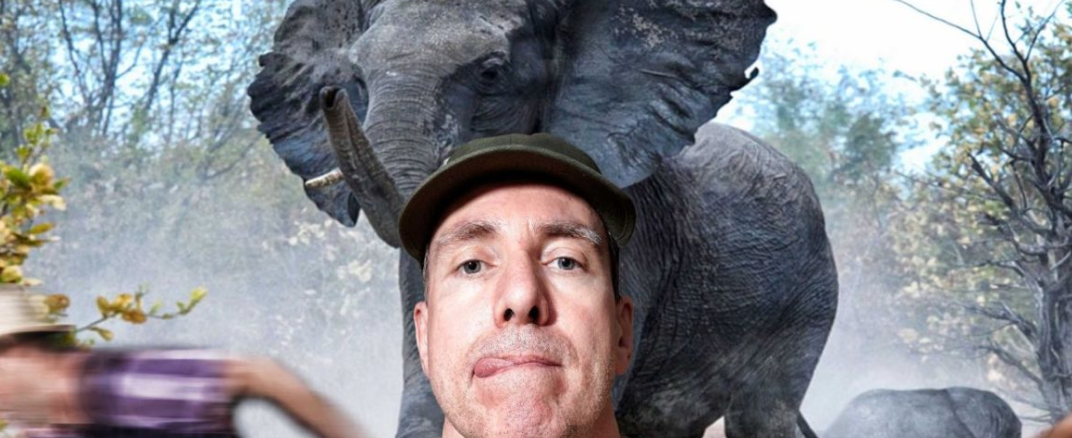
Photo by David Blackwell.
5 Terrible Things You Do When You Travel (That Don’t Seem That Bad)
THE CURSE OF LIVING IN THE MODERN world is that evil acts are not required for evil things to happen. A mother looks away from her 3-year-old son for a few seconds, and a gorilla gets killed. Tourists see a calf that looks cold, try to help it, and inadvertently ensure its death. A 21-year-old student takes an ill-advised souvenir in North Korea and becomes an imprisoned pawn in an ongoing diplomatic fight.
Small acts can have huge repercussions, and you don’t need to act maliciously to cause serious harm. The problem, of course, is that most of this harm is caused by innocent ignorance, and human ignorance is almost limitless.
So not doing harm can seem like an uphill battle. Here are a few things you do regularly while traveling that cause more harm than you realize.
1. You wear sunscreen while swimming in the ocean.
I know: Baz Luhrmann told you to always wear sunscreen. And he wasn’t wrong: UV damage sucks, and can cause some serious health problems. But if you’re going to go swimming in the ocean, you want to make sure you’re wearing the right type of sunscreen.
Most regular sunscreens contain a chemical called oxybenzone, which can disrupt coral growth. Coral reefs are the most important aquatic ecosystems, and are dying off around the world thanks to climate change and overfishing. But oxybenzone in sunscreen isn’t helping either: a single drop of it in an Olympic swimming pool-sized body of water can have harmful effects on coral reefs. So instead, buy and use a reef-friendly sunscreen.
2. You give money to child beggars.
Helping a child is maybe one of the most noble impulses a human being can have. Unfortunately, that makes it really easy to exploit. Especially in developing countries like India, “organized begging” is a serious problem. Children are recruited by violent thugs and are forced to beg. And since disabled children make more money as beggars, the thugs will sometimes mutilate the kids. Some kids are intentionally hooked on drugs, so they won’t run away from their criminal syndicate supplier. And the money ends up in the pockets of the criminals, not helping the actual children.
Instead of giving money to kids, set aside money for a worthy organization. Here are a few that help the poor:
Oxfam
UNICEF
Population Services International
Free the Slaves
Save the Children
3. You participate in orphanage tourism.
Another entry in the “awful things that are done in the name of helping children” is the terrible orphanage tourism industry. This isn’t to say that orphanages that accept tourist visitors are all terrible places, but some are.
Intrepid Travel did a great piece on this a few weeks ago. They pointed out that orphanage tourism perversely makes orphans into an in-demand commodity, and that often, the kids actually have families. Orphans are not zoo animals, and in a just world, they would not be a commodity. If you really want to help, don’t feed the orphanage tourism industry.
4. You volunteer in not-very-helpful ways.
If you’re a doctor or a construction worker, you may have skills that could be very helpful in a foreign country. If you have those skills, you should volunteer abroad. But if you don’t have a very specific set of skills, then often, your help with, say, building a house, isn’t going to be all that valuable.
Voluntourism comes from a very noble impulse, but it’s super tricky. Before going abroad to volunteer, ask yourself: “Am I the best person to help out here? Am I properly trained to do this work? Will I really be helping?”
If you aren’t sure, the better choice may be to donate money instead.
5. You go a little too far in trying to take a picture with wild animals.
2016 has been the year of the harmful animal selfie. There’s the woman who got her clock cleaned when she tried to take a picture of an elk. There are the horrifying discoveries that have accompanied the closing of Thailand’s “Tiger Temple.” And seal calfs keep getting abandoned by their mothers after tourists take selfies with them.
Look: it’s understandable. You want to take a picture with the cute animal. But there are a few simple rules you can follow if you don’t want to do harm:
Do not approach wild animals. They are wild animals, and unless you really know what you’re doing, you can harm them, and they can harm you.
If you see a tourist attraction that allows you to interact with animals that it would normally be dangerous for humans to interact with, then the animals are probably being kept sedated. So don’t hang out with lion and tiger cubs, as irresistibly cute as they may be.
If you want to see the wildlife, the best place to see it is in its natural environment. This will require that you be patient, and it may mean you don’t see everything you want to see. But it’s better for the animals, and it’s ultimately more rewarding.
Animals aren’t humans. Don’t assume that their behaviors will be the exact same as human behaviors, or that they do things for human reasons.
These aren’t the only ways in which ignorance can do a good amount of harm, but they’re a good place to start. If you want to do more good than harm when you travel, do your research ahead of time. It’s natural to want to help, but you should know how to help before you start helping. Otherwise, it’s very likely you’ll do more harm than good.
THIS ARTICLE WAS ORIGINALLY PUBLISHED ON MATADOR NETWORK.
MATT HERSHBERGER
Matt Hershberger is a writer and blogger who focuses on travel, culture, politics, and global citizenship. His hobbies include scotch consumption, profanity, and human rights activism. He lives in New Jersey with his wife and his Kindle. You can check out his work at the Matador Network, or over at his website.
The Lion Guardians
With human-wildlife conflict on the rise in East Africa, the hunt for a long-term, viable conservation solution is on. From conservancies that benefit the Maasai landowners, to the transformation of their young warriors into lion protectors, to “predator-proofing” livestock, a massive cultural shift is underway.
DAWN IS JUST BREAKING WHEN KAMUNU SAITOTI SETS OUT ACROSS THE AMBOSELI BUSH IN SEARCH OF LIONS.
On first glance, he appears much like any other Maasai warrior. Lean and tall, his dark red shuka is wrapped around his torso and waist concealing his only weapon, a long knife with a simple wooden handle. Brightly colored beads adorn Saitoti’s neck, ears, forearms, and ankles, and his feet, far more weathered than the rest of his body, are only partially covered by dusty sandals fashioned from discarded car tires.
“I killed my first lion when I was 21,” Saitoti says as he scans the horizon. In all, he has killed five lions. This, he says, was an integral part of his family history, part of being raised as a moran, a Maasai warrior. “My brother and father have also killed lions.”
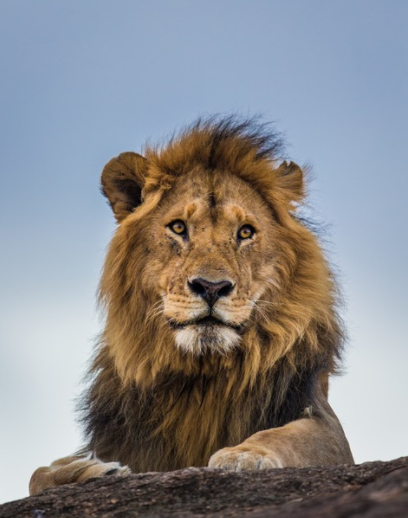
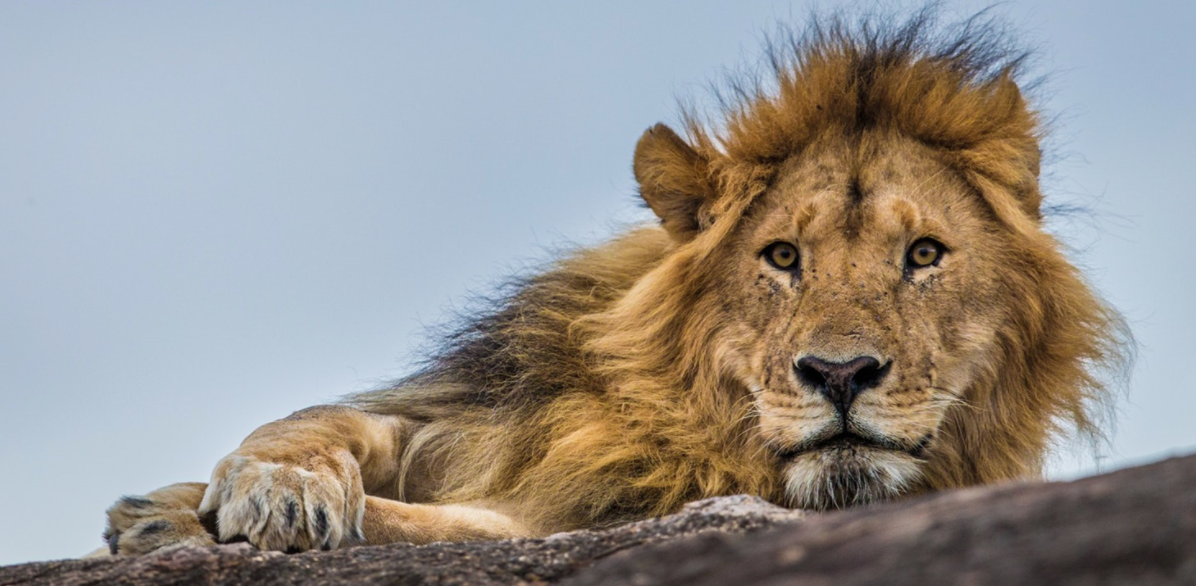
A male lion surveys his territory on the outskirts of Masai Mara National Reserve.
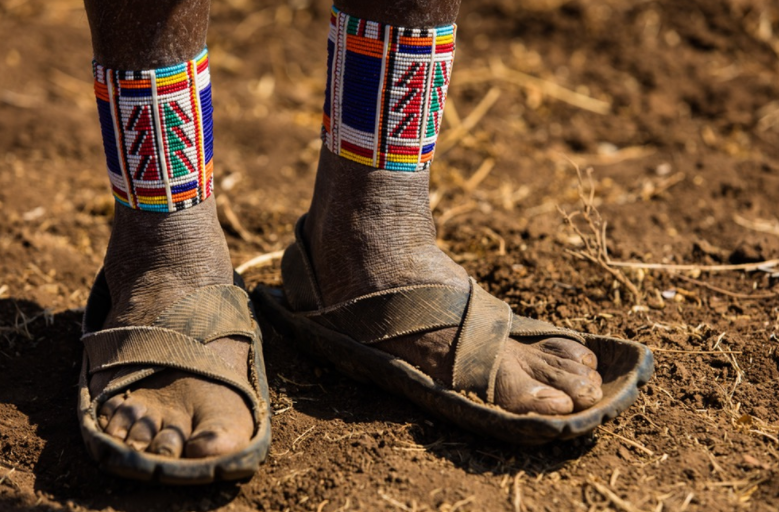
Traditional Maasai beads adorn Saitoti’s ankles.
The Maasai are traditionally a nomadic people subsisting almost exclusively on the milk, blood, and meat of cattle grazed on East Africa’s vast rangeland, once home to endless numbers of wild animals.
In the past, lion killing for the Maasai was as much about cultural tradition as it was about protecting their livestock from predators. To hunt and kill a lion was a critical right of passage known as olamayio — the way in which all young Maasai males became men. The tradition also created a powerful connection between warriors and lions, with each young moran receiving a lion name after his first successful hunt. Saitoti’s lion name, Meiterienanka, means “one who is faster than all the others.”
But traditions are beginning to change. On this day, in place of a spear, Saitoti carries a radio telemetry kit. He unfolds the antenna in a manner suggesting he has done this countless times before, and looks around in search of a hill — not an easy task in a landscape as flat as this. He settles for the remnants of an abandoned termite mound and begins to scan for a signal. Once he has a sense of the direction the signal is coming from, he packs away the kit and begins walking, dust trailing his brisk march along the well-used track.

Standing on the remains of an old termite mound, Lion Guardian Kamunu Saitoti scans for a signal. A number of the lions in the area have been fitted with radio collars.
For the next three hours, Saitoti stops only to look for signs of lions, or to talk to herders. Most tracks he sees are too old to bother with, but as the sun nears its zenith, he finds a set that elicits visible excitement — a departure from his otherwise solemn demeanor. These are the tracks of lion cubs, young ones, and very fresh. Patience, however, will be required here. The narrow trail leads into a maze of dense shrubs, and that is no place to follow a lioness with cubs — even for someone as experienced as Saitoti is.
At 36, Saitoti is a seven-year veteran, and one of Kenya’s three regional coordinators, of an organization called Lion Guardians. Established in 2007, the program is dedicated to finding ways for Maasai and lions to coexist. At its core is a shift in the relationship between the moran and the lion:
Hunters have become protectors. This profound change in perspective is a critical component of East Africa’s lion conservation efforts.
But the Guardians have a lot of ground to cover — just 45 Maasai warriors patrol a million acres of Kenyan rangelands — and human-wildlife conflict is a bigger problem than one organization, or one approach, can solve.
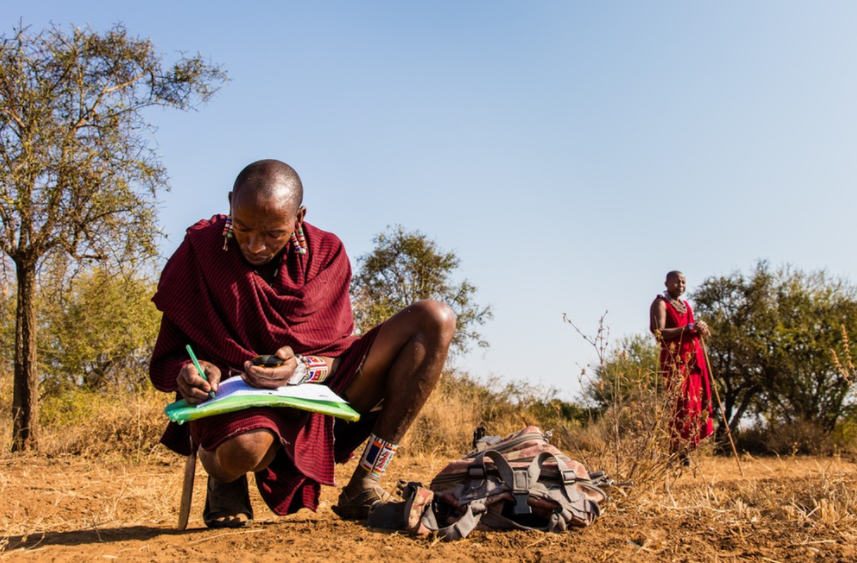
Lion Guardian Kamunu Saitoti takes meticulous notes about his observations, including GPS readings of animal tracks.
Lion Guardians is just one of a number of small- and medium-sized efforts by government officials, NGOs, and locals to reduce human-wildlife conflicts in Kenya and elsewhere in Sub-Saharan Africa. As human populations in the region have exploded, consuming increasing amounts of wildlife habitat in the process, the numbers of some of the region’s most iconic and important species have been in steep decline. Populations of many of Kenya’s large herbivores have fallen by 70 to 90 percent since the late 1970s. And as their prey have become more scarce, so too have lions.
Scientists estimate that lion populations have fallen by more than 40 percent in the past 20 years, and the 20,000 or so wild lions that remain in Africa occupy just 8 percent of the species’ historical range.
In many ways, the need for such intervention has never been greater. Yet, in a region where droughts are common and famine is never completely out of sight, finding a path toward peaceful coexistence between herders and the predators that hunt their livestock will require a great deal of persistence, creativity, and a shift in how the region’s wildlife is valued.
For most Maasai, the response to finding a leopard in your goat pen, surrounded by several slain goats, would be simple and quick: Kill the leopard. There would be no repercussions, as Kenya’s wildlife laws allow citizens to dispatch so-called problem animals. One particular young male leopard, who like his mother before him, had been terrorizing the small village of Ngerende, was certainly a good fit for that description.
Known to a number of neighboring communities for years, he had already killed hundreds of goats — losses that are keenly felt in what is one of Kenya’s poorest regions, and a hotbed of human-wildlife conflict. With the leopard’s paw now caught in the fencing of a traditional pen, or boma, as livestock enclosures are called, it seems there can be only one possible outcome. But the owner of this particular boma, Mark Ole Njapit, is no ordinary Maasai.
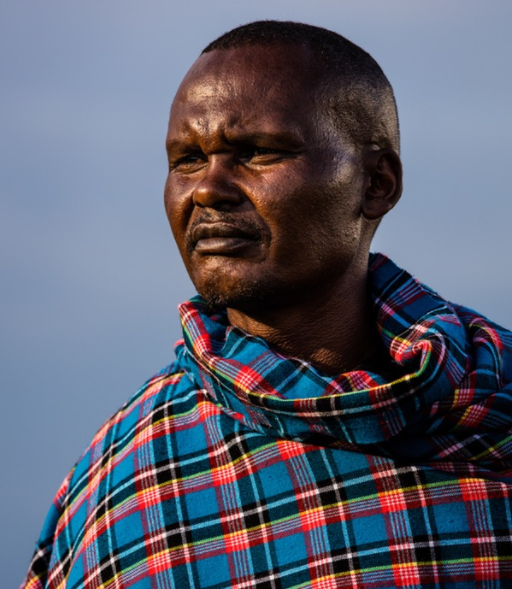
Mark Ole Njapit, who also known as “Pilot,” is a respected elder in the Masaai community of Ngerende.
“I understand the value of wildlife for the future of our people,” says Njapit (48), a Ngerende community elder known by most as “Pilot.”
“Everyone here was very upset and wanted to spear the leopard, but I calmed them down and called KWS (the Kenya Wildlife Service).” Fortunately for the leopard, KWS officers were treating some elephants nearby and responded quickly. After tranquilizing the cat, they were able to cut him free and move him to a new area where he would be less likely to get into trouble.
That was six months ago. Today, Pilot is supervising as members of his village work in partnership with the Anne K. Taylor Fund (AKTF) — an organization working to reduce human-wildlife conflicts — to construct his new boma.
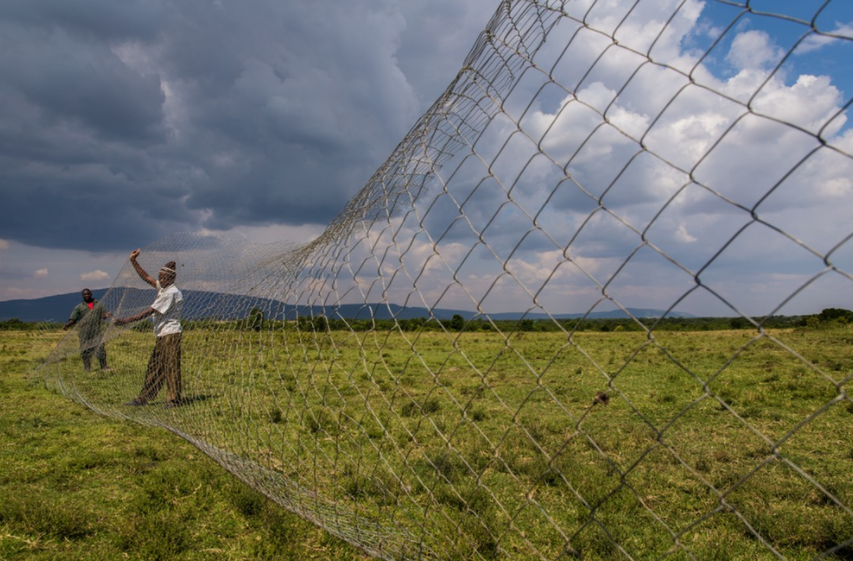
Workers stretch out the chain-link fencing for Pilot’s new ‘boma.’ The process typically takes two days, one for setting the posts in cement, and another for attaching the fencing.
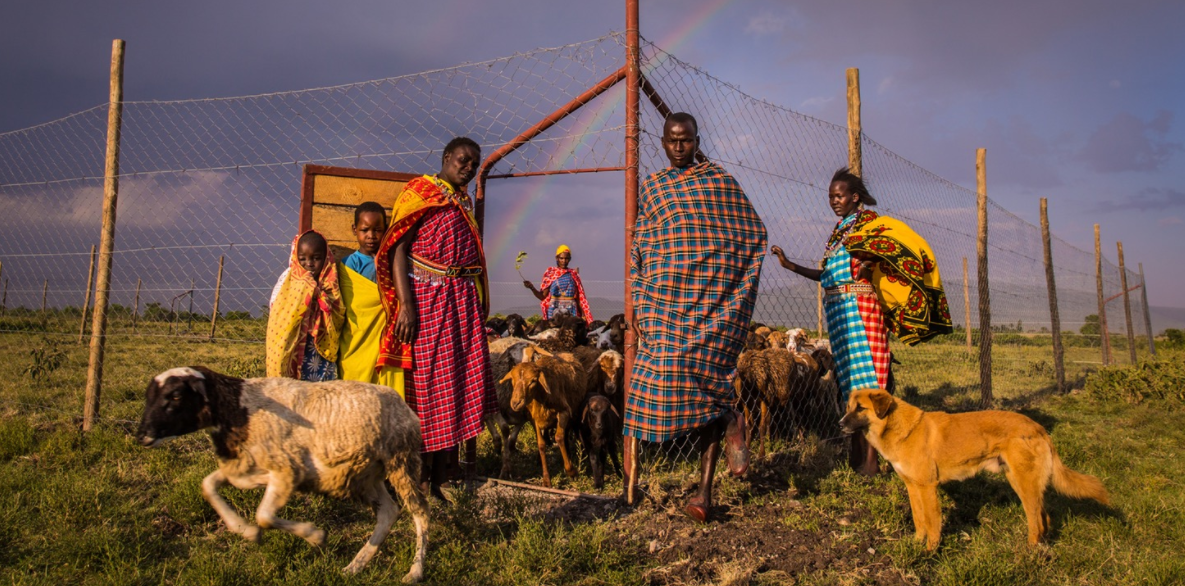
The enclosure that the AKTF team is building is formidable, with welded corner posts interspersed with termite-proof eucalyptus timber poles, all set in concrete. The chain-link fence is stretched tight, seven feet above ground and another foot buried in the soil; the fence is designed to be virtually impossible for a predator to push over, climb, or dig beneath. (While a leopard could easily scale a similar-sized fence constructed entirely of wood, they tend to avoid chain-link fencing.) Today, after more than two years and nearly a hundred of the latest iteration of AKTF bomas constructed, the program’s record remains intact: Not a single livestock animal protected by one of these enclosures has been killed by a wild predator.
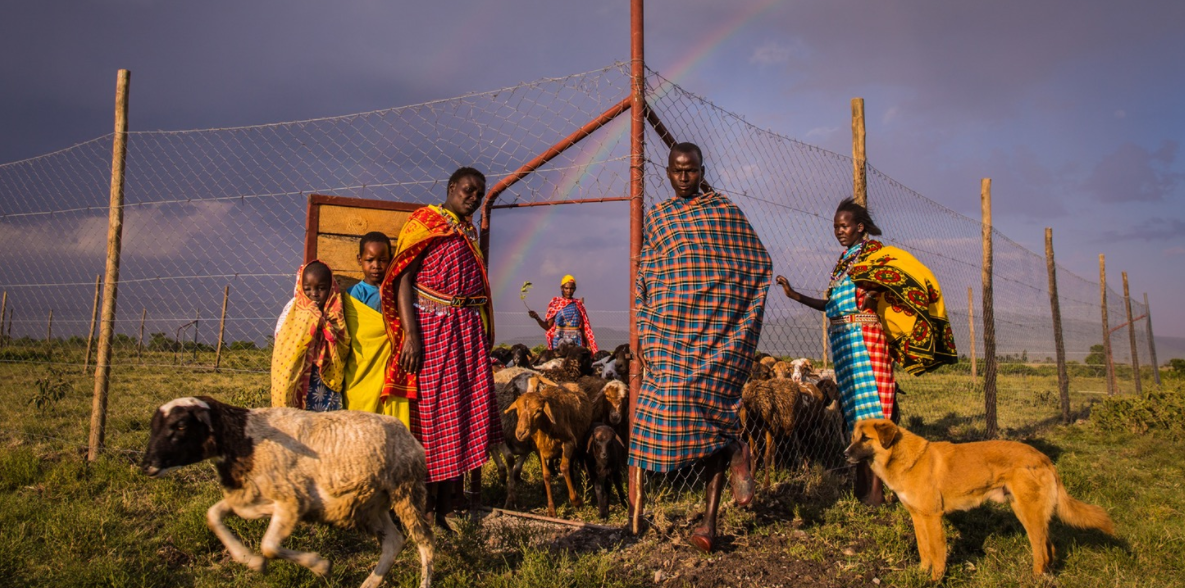
Members of Pilot’s family stand at the gate of his newly constructed predator-proof ‘boma,’ just a few miles from the edge of the Masai Mara National Reserve.
The effectiveness of the new bomas means that they are in high demand among the locals. And while AKTF doesn’t normally work in villages as far north as Ngerende, when Pilot reached out, the program’s construction director, Felix Masaku, decided to make an exception. “Here is a man whose small village loses maybe ten goats a week choosing not to kill the leopard that is doing much of that damage. That is very unusual, and it is important to support this man so others might follow his example.”
In general, AKTF prioritizes cases in which livestock losses have been greatest. “This is about conservation and co-existence,” Masaku continues. “We want to minimize conflict and retaliatory killings. If someone is losing five goats and two cows every week, that person is more likely to try to kill predators than someone who loses maybe one goat a month.”
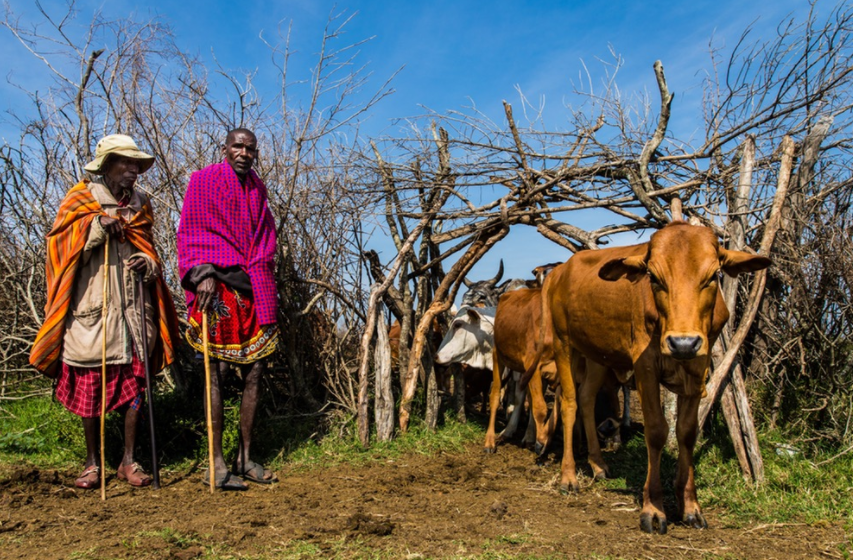
A traditional ‘boma’ that has been constructed of wood and thorny branches.
By reducing the vulnerability of livestock to predation, this program and others like it aim to reduce, if not eliminate, retaliatory killings, known as olkiyioi. This practice poses a grave threat to lions in particular, especially when angry cattle owners turn to poison rather than spears with the intention of wiping out entire prides of lions. In recent years, there have been a number of high-profile killings. For example, several members of the Marsh pride (of BBC Big Cat Diary fame) were deliberately poisoned in the Masai Mara National Reserve (MMNR) in 2015, and six lions, including two cubs, were speared to death outside Nairobi National Park in early 2016.
One troubling detail about the slaughter of the Marsh pride members is that it was carried out by Maasai seeking revenge for cattle killed while being grazed illegally inside the reserve. This practice is not uncommon. In fact, a paper published in the Journal of Zoology in 2011 estimated that by the early 2000s, livestock made up 23 percent of the MMNR’s mammal biomass — up from a mere 2 percent a few decades earlier. Today, this figure greatly exceeds that of any resident wildlife species in the protected area with the exception of buffalo. This is as much a sign of declining wildlife populations as it is of human incursions into the reserve, and it underscores significant challenges both in terms of protecting livestock and preventing human-wildlife conflicts.
As Anne Taylor, the founder of AKTF, put it:
“Inside the bomas is one thing, but keeping cattle or livestock safe if they are literally brought into the lions’ den is virtually impossible.”
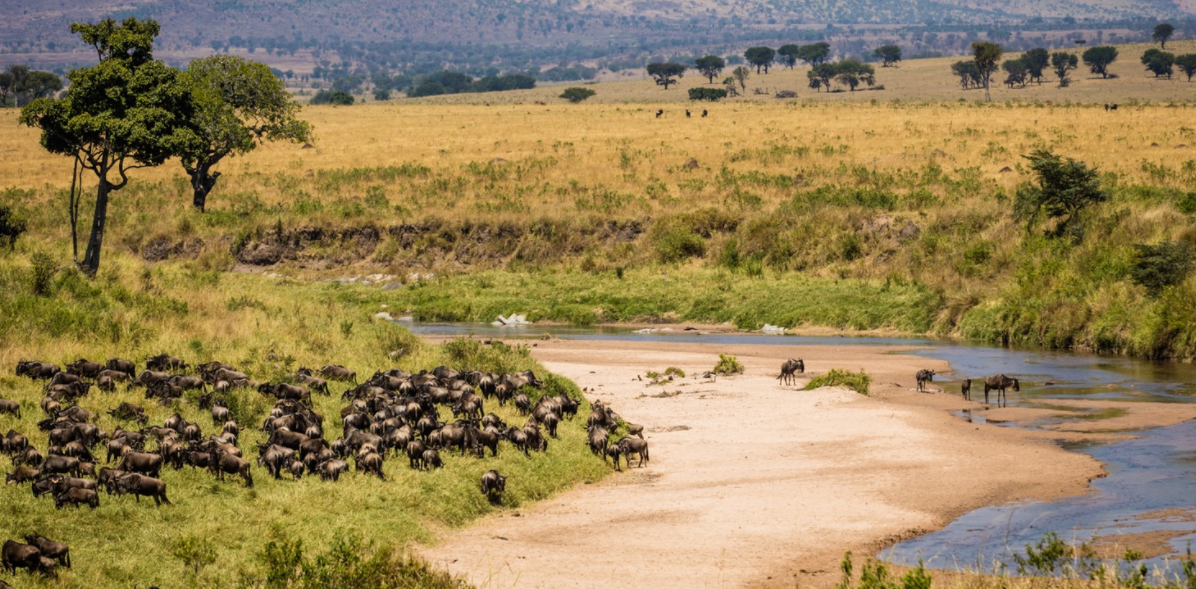
Wildebeest pause before crossing the Sand River. While the Masai Mara’s resident wildebeest are all but gone, their numbers decimated primarily by agricultural expansion, each year, more than a million cross the border from Tanzania’s Serengeti National Park.
For many Maasai today, lions and other predators have become an expensive nuisance at best, and a source of deep-seated resentment at worst. In general, this resentment is not directed toward the predators themselves, but toward a government — and the world at large — which often appears to place more value on the big cats (and the tourism dollars they generate) than on Maasai lives and livelihoods.
National parks and reserves cover a mere 8 percent of Kenya’s land area and support only a third of its wildlife. The remaining two-thirds of the country’s wild animals inhabit private and communal rangelands. This is land that they share with the Maasai, Samburu, and other pastoral people who have been here for thousands of years. Many think it is here, outside of the parks and reserves, that the future of Kenya’s wildlife will be decided.
According to a recent report co-authored by Panthera, WildAid, and the Wildlife Conservation Research Unit, loss of habitat due to agricultural expansion, which invariably pushes wildlife into closer contact with farmers and pastoralists, is the underlying factor of all major threats that lions face.
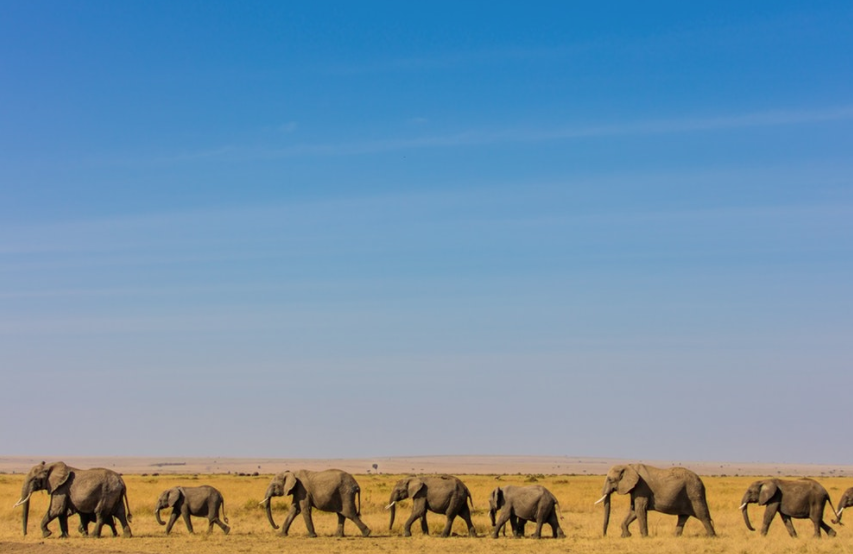
To many, the conversion of unprotected rangelands to agriculture might seem inevitable as the region’s population grows, but Calvin Cottar, a fourth-generation Kenyan whose great-grandfather emigrated from Iowa in 1915 and today runs a safari service in partnership with the Maasai community, disagrees. According to Cottar, it all comes down to economic security.
“We are talking about some of the world’s poorest people,” Cottar says. “For them it is about survival.
“Why should we expect them to care about lions or elephants when they are struggling to put food on the table ... Wildlife is costing them money, not earning them money, and that is what has to change.”
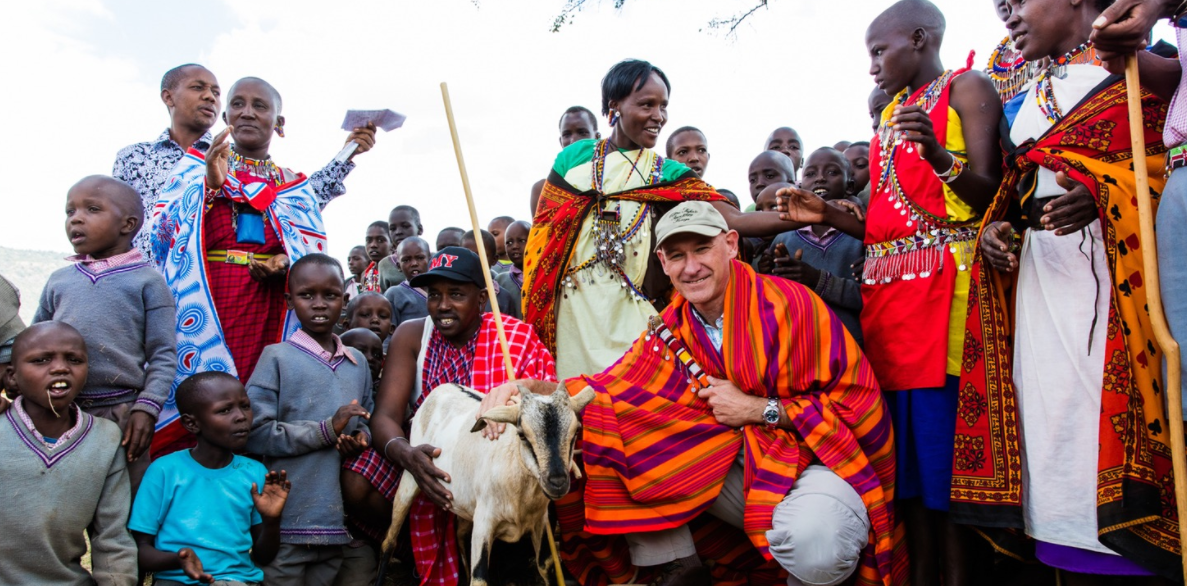
Calvin Cottar is presented with a goat as a token of appreciation for building Olpalagilagi Primary School, as well as funding salaries and meals. In the long run, the hope is that land lease fees will enable locals to fund their own projects, bringing greater autonomy.
Toward this end, while working with the Kenya Wildlife Service (KWS), the Cottars Wildlife Conservation Trust has initiated the formation of several district wildlife associations in an attempt to help local landowners acquire ownership rights to the wildlife residing on their lands. Because all wild animals in Kenya have historically been considered property of the state, benefits to the local communities that have to co-exist with these creatures have generally been few and far between.
Now in his 50s, Cottar says there is much more to be done. He is more convinced than ever that the future of Kenya’s wildlife lies with the people sharing the land with them — and with a shift in government policy.
“It’s really quite simple,” Cottar explains. “We all have to pay for ecosystem services. Pay the Maasai landowners a monthly lease for their land in return for leaving it intact. The problem is that wildlife has no value to them, whereas cattle and commercial agriculture do.”
While removing snares, building livestock enclosures, and monitoring lion populations are all important management practices, Cottar says, they don’t solve the root cause of human-wildlife conflict. Wild animals are basically a nuisance and a liability to the Maasai, he explains.
“We have to make maintaining wildlife the most productive land use, and do this in a way that respects the Maasai lifestyle and culture.”
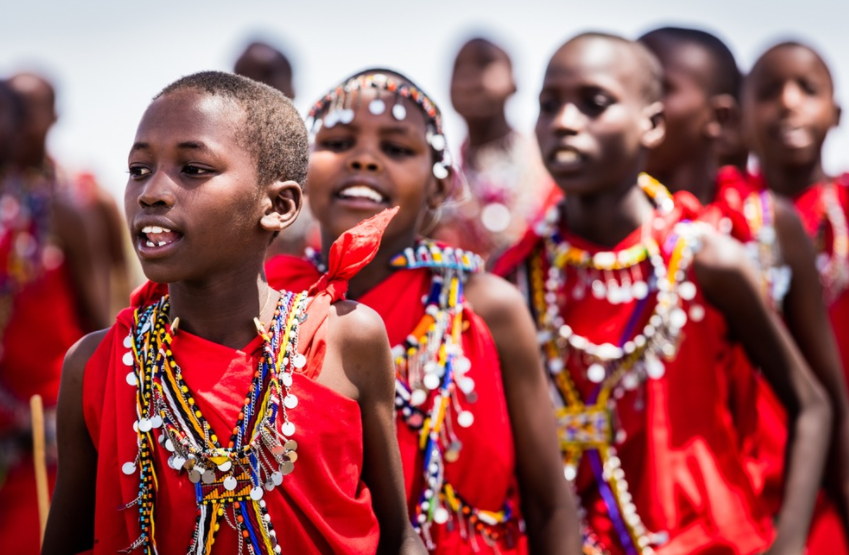
Local schoolchildren perform a traditional Maasai dance to open proceedings at a meeting hosted by Olpalagilagi Primary School.
That is why Cottar now finds himself sitting in a circle with perhaps 50 Maasai — young and old, men and women. The topic for discussion, just as it has been for the last three years, is the formation of the Olderkesi Conservancy, on the land where Cottar’s safari camp currently stands.
In general, the conservancy model consists of land being leased directly from its owners for conservation purposes. Olderkesi is slightly different in that the 100,000-hectare ranch is yet to be subdivided, making it the last communally owned ranch left in Kenya. As a result, the land will be leased from a trust representing all 6,000 land owners, and because the agreement involves the Maasai, complete consensus is required before anything can be signed. In Maasailand, patience is not so much a virtue as an absolute necessity.
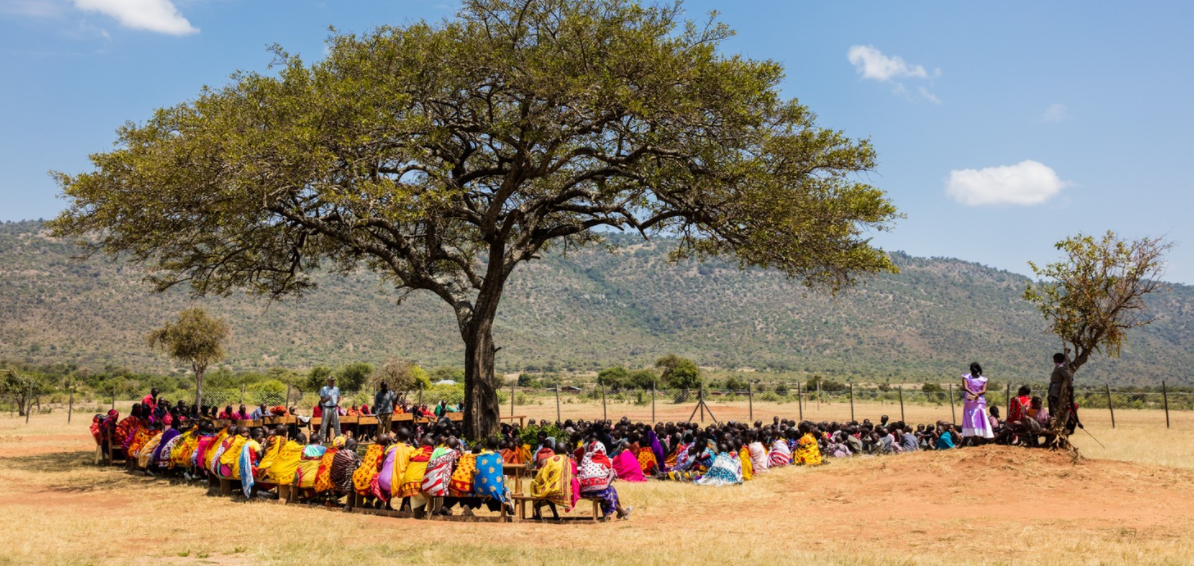
Members of the Maasai community meet at Olpalagilagi Primary School to discuss the formation of the Olderikesi Wildlife Conservancy.
Joining Cottar in the circle is one of the community’s most respected elders, Kelian Ole Mbirikani (58), a member of the Olderkesi Land Committee and Chairman of the Olentoroto land owners group, which holds the deeds to the land immediately surrounding Cottar’s safari camp. Mbirikani is also one of the key driving forces behind the conservancy initiative.
“The Maasai depend almost completely on their cattle,” Mbirikani explains, “so convincing them that it is possible to have both wildlife and livestock at the same time is our biggest challenge. In their experience, when land is set aside for wildlife, all of the cattle disappear. That’s what national parks do.”
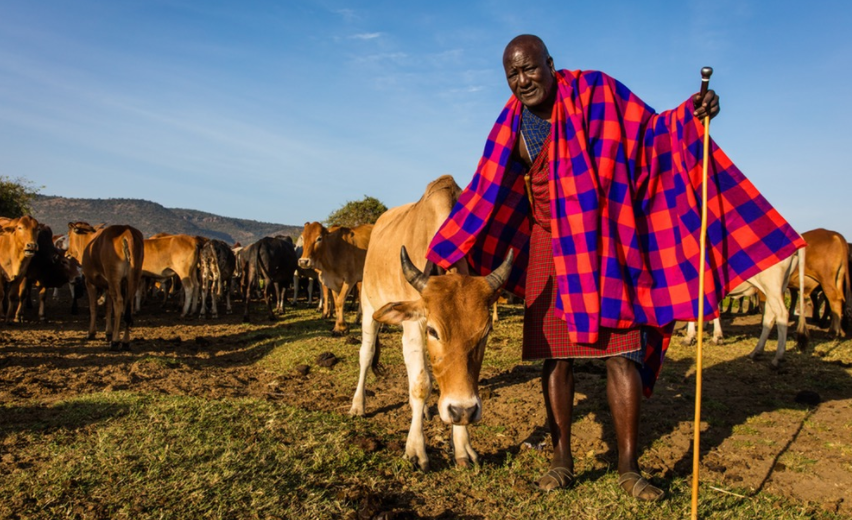
Kelian Ole Mbirikani, a member of the Olderkesi Land Committee and Chairman of the Olentoroto land owners group, with his cattle.
Mbirikani is convinced the conservancy concept can work, though. He and a group of other Maasai traveled with Cottar recently to conservancies as far north as Samburu. There, they saw wildlife and met landowners who are still able to graze their cattle. “The people are really benefitting,” Mbirikani says. “Their children are being educated all through university level with the money from the conservancies. That is what we want for our people, too.”

The AKTF team spend much of their time searching for and removing snares from inside the Masai Mara National Reserve. Although the snares are set primarily to catch herbivores they are indiscriminate killers, also trapping lions, leopards, and other predators.
There are nine other conservancies around the MMNR, and a handful more in other parts of the country, which all make regular, direct payments to local landowners. Similar approaches have been employed by Wilderness Safaris in Namibia and the Nature Conservancy in the United States, among others, and while none can be said to offer financial benefits on the same scale as Olderkesi, Cottar is clearly not alone in seeing this as a promising solution.
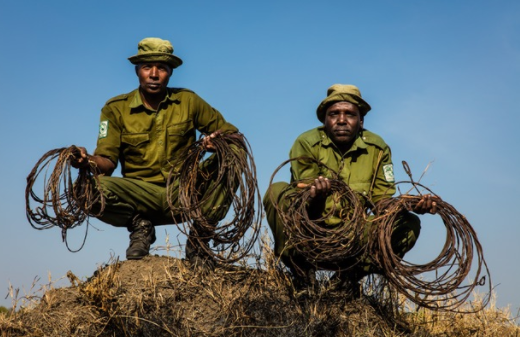
The snares displayed here by the members of the AKTF anti-poaching team were found during a single morning’s patrol in the Masai Mara National Reserve.
Indeed, two studies published last year demonstrate the effectiveness of Kenya’s conservancy approach. According to one of these assessments, despite lack-luster political support conservancies managed to achieve “direct economic benefits to poor landowner households, poverty alleviation, rising land values, and increasing wildlife numbers.” The other study saw a direct positive effect on lion populations within Kenya’s conservancies, with a nearly three-fold increase in just ten years.
However, while these results seem promising, there will always be areas outside conservancy boundaries — borderlands and buffer zones — where human-wildlife conflict are bound to continue. There is simply not enough funding to expand conservancies enough to eliminate these conflict zones.
The question, then, is whether people can learn to co-exist with lions and other wildlife even when there is no monthly payment to be collected.
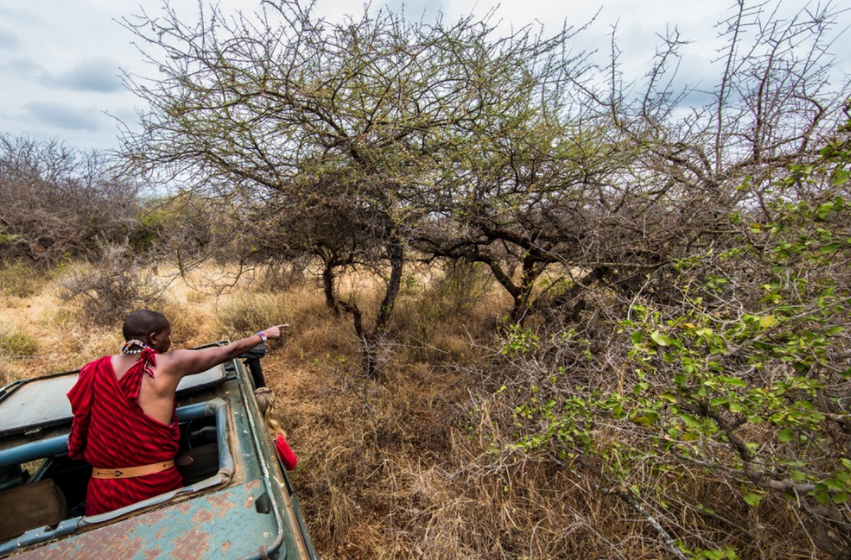
Lion Guardian and accomplished tracker Kamunu Saitoti keeps a lookout.
BACK IN THE BUSH, KAMUNU SAITOTI WAITS PATIENTLY, HOPING TO GLIMPSE THE NEW LION CUBS WHEN THEY FINALLY EMERGE FROM THE THICKET.
He has been joined by a younger Lion Guardian, Kikanai Ole Masarie, and not long after, a battered Land Cruiser arrives with one of the organization’s founders, Director of Science Stephanie Dolrenry. The two warriors pile into the vehicle and they all set off in search of the cubs. “These lions are not like those in the parks,” Dolrenry explains. “There’s no tourism here, so they are not habituated to people or cars. We’ll be lucky if we find them at all. They can be extremely shy, especially with young cubs.”
But this is a lucky day, it seems. With thorny acacia bushes screeching against the glass and metal of the bouncing vehicle, the team suddenly finds itself in a veritable crowd of cats. Dolrenry, like the Guardians, is able to identify them all. Mere meters from the car, Meoshi, her three cubs, and her mother, Selenkay, lounge in the shade. A few dozen paces away, but on their way to join them, Meoshi’s sister Nenki with her own four cubs. Much smaller than Meoshi’s, these were the young lions whose tracks Saitoti was following. This is the first time anyone has laid eyes on this new generation.
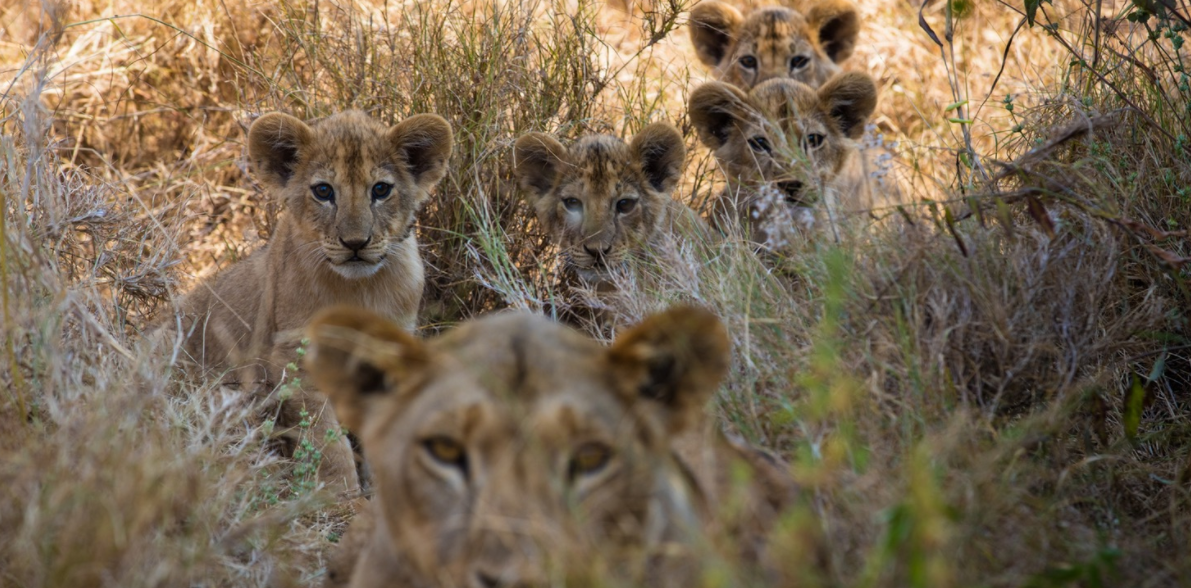
The team’s first sighting of lioness Nenki’s four young cubs.
“Selenkay is a bit of a celebrity around here,” Dolrenry says. “She causes problems like no other lion, but she’s a tough one, and it’s hard not to admire her.” Saitoti nods. Selenkay is his favorite lion — her guile and tenacity are something to be respected. She and her family frequently target cattle and are well known for giving the Guardians plenty of headaches. She has been hunted more times than anyone cares to remember. One of her sisters has fallen victim to poison, and so too has one of her mates, while another sister was killed by spear. She has endured three male takeovers, and has even attacked a Maasai moran to protect her young cubs. Like the owners of the livestock she frequently kills, Selenkay is a true warrior.
Yet Selenkay’s legacy is far greater than her own reputation. Her longevity, itself the result of the unyielding commitment of Saitoti, Masarie, and the other Guardians, combined with the growing tolerance of the Maasai inhabiting these rangelands, has helped to connect populations in vital conservation areas, and has added much-needed genetic diversity to established prides in the region. One of her sons has made it as far north as Nairobi National Park where he is now breeding successfully.
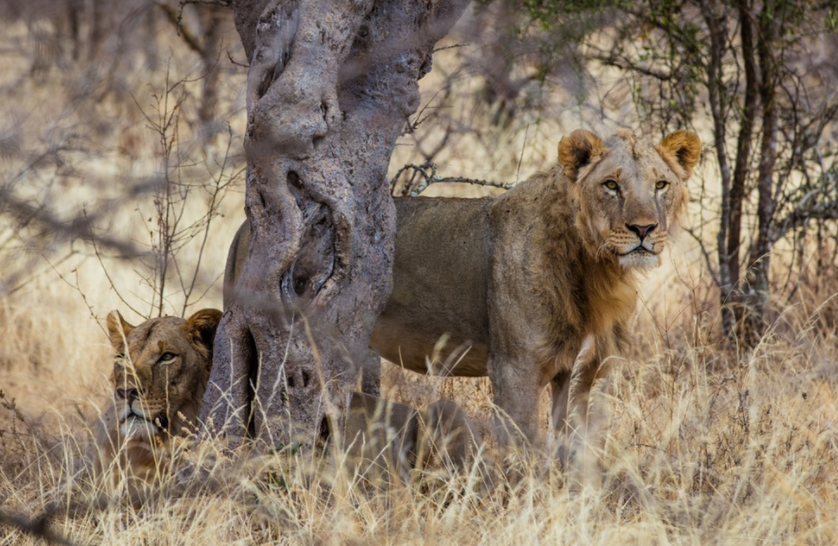
A pair of male lions seeks respite from the heat in the shade of a tree.
Saitoti did not become a Guardian because he loved lions. Instead, he was in trouble and needed a job. Arrested for being part of an illegal hunt, his father had to sell three cows to have him released on bail. That made him reconsider his path. Killing lions, despite bringing prestige and honor, also brought hardship. “For the first two years my feelings about lions were the same,” Saitoti says. “This was just a job. But slowly, things began to change. They give food for my family, they help educate my children, I even buy veterinary medicine for my cattle with my salary from the lions.”
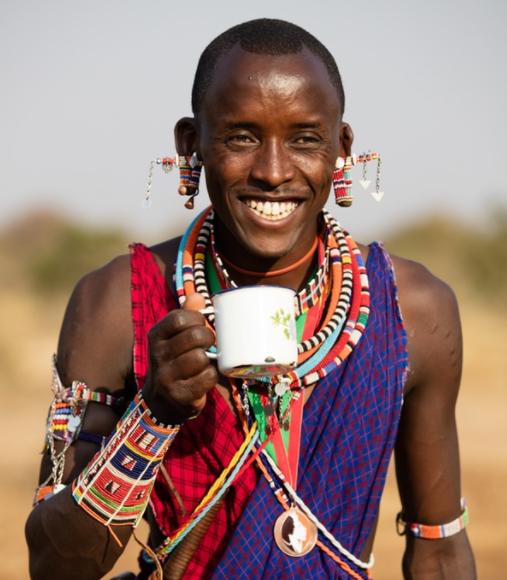
Lion Guardian Kikanai Ole Masarie celebrates the sighting of lioness Nenki’s cubs with a fresh cup of tea. Note the Lion Guardians symbol hung around his neck, alongside his traditional handmade Maasai beads.
“And we still get the girls!” Masarie chips in with a broad smile, referring to the social status that killing lions — and, more recently, protecting lions — can bring to an eligible young Maasai man. At 24, he is part of a younger generation of Guardians, and his words are significant, as they hint at an ability for long-held Maasai beliefs and traditions to change. “The other warriors mostly stay at home, but here we are, close to the lions every day, tracking them and finding lost cattle. The girls know we must be very brave!”
Saitoti smiles and continues, “For me, now, I feel there is no difference between the lions and my cows at home. I care about them equally.”
LEARN HOW YOU CAN HELP TODAY
The success of conservancies like Olderkesi, supported by Cottars Wildlife Conservation Trust, indicates their importance as long-term viable solutions for conservation in partnership with the landowners themselves, the Maasai people. Explore more about other Masai Mara Conservancies here.
The Lion Guardians organisation have been conserving lions and preserving cultures since 2007. Learn more about their work and donate to support them at lionguardians.org. The 750 predator-proof bomas constructed by the Anne K. Taylor Fund have saved many lives and you can learn more and support their work at annektaylorfund.org. I hope you will join me in supporting the work of these dedicated organisations!
THIS ARTICLE WAS ORIGINALLY PUBLISHED ON MAPTIA.
MARCUS WESTBERG
Marcus Westberg is a a Swedish photographer, writer, conservationist, and guide working primarily in Sub-Saharan Africa.
Ladakh : Breaking Stereotypes
Ladakh is that one place, which is by default on everyone's Bucket List.
But what happens, when a pristine land becomes a tourist hotspot?
The filmmaker went on a trip to Ladakh. They made positive memories but also learned about the way that Ladakhi people live. There is a lot to learn from Ladakh and its age-old sustainable practices and this short documentary talks about the same.
Little White Girls Aren't the Problem with Voluntourism, Privilege Is.
“Isn’t race only an issue for those who make it one?” a British woman at Tourism Concern’s International Volunteering Conference asked. “Americans are, after all, obsessed with race,” she added. This wasn’t said as a compliment; it was posed with a hint of derision, as if our attempts at open dialogues on race are only one of a slew of problematic traits that she could point out. Now, I can’t say that we have the whole “talking about race” thing down in any way. Most of the time we suck at it, but while the questioner was wrong her query brought up a good point.
Race dynamics are an important factor in voluntourism, but they aren’t everything.
When it comes to the power dynamics of voluntourism, it is all about privilege. Privilege comes in a multitude of forms and is sometimes hard to identify. There is racial privilege, then there is economic privilege, educational privilege, geographic privilege, gender privilege, religious privilege, privilege that comes with adhering to heteronormative standards, skinny privilege, and a million more that have yet to be recognized or that I just do not know.
Privilege is, at its core, easy to identify but difficult to own up to. Those who experience it, myself included, struggle to openly recognize its existence as we hope beyond hope that our kind intentions and good will are enough to overcome it. But they aren’t. Intentions are not enough. The specter of privilege is unshakable and those who wish to deny it, those who say that race and other forms of privilege only matter when we bring them up, are naïve.
This is not to say that those who are privileged cannot do good work. Rather, their privilege, especially educational privilege, can be an asset in volunteering. Having a particular skill to offer can be priceless. Engineers can create solutions for regional water issues, doctors can train local physicians in new techniques, and educators can teach their local peers new styles resulting in better-educated students. Having specialized skills is awesome and often very helpful.
But privilege isn’t always an asset and often times in order to do aid right, volunteering shouldn’t even be a part of the equation.
This is specifically true for young would-be volunteers. Developing countries are, by and large, resource poor. One resource that they have more than enough of is unskilled labor. So why are we exporting unskilled labor to them by the millions?
To think that the only way to provide aid is to volunteer is to ignore the opportunities that exist for people to actively stimulate economies through ethical tourism. With voluntourism, those looking to volunteer carry their donations and privilege thousands of miles and an unbalanced give-and-take relationship is almost always inevitable. Accepting ones role as a tourist by supporting locally owned businesses is a form of stimulus sure to last much longer than a wall you spent three days painting in Honduras.
So this isn’t really about little white girls. It’s about everyone.
It’s about unrecognized privilege and it’s about an unequal exchange where volunteers benefit greatly and those who are meant to benefit rarely do so in a sustainable and long-term manner. More than anything, it’s about learning to help without having to hold the title of volunteer.
Travel as much as you possibly can. Experience cultures and get involved with communities, but do so in a way that economically invests in the places you care about and want to see made even better. Do this by staying in locally owned hotels, eating at locally owned restaurants, and frequenting locally owned businesses. Sometimes that means doing the hard work yourself, but there are some great companies and non-profits that are can do the work for you. Tourism Concern offers a number of options and Onwards started running trips in the spring.
Recognize privilege, open a dialogue, and accept that what you can offer comes with limitations.
Most importantly, don’t just volunteer in communities; invest in communities.
Quotes are paraphrased.
THIS ARTICLE WAS ORIGINALLY PUBLISHED ON PIPPABIDDLE.COM.

PIPPA BIDDLE
Pippa Biddle is a writer. Her work has been published by The New York Times online, Antillean Media Group, The FBomb, MTV, Elite Daily, Go Overseas, Matador Network, and more. She is a graduate of Columbia University with a degree in Creative Writing. Twitter: @PhilippaBiddle