My Unconventional Cambodian Christmas

Megan participated in the 2013 PEPY Ride by PEPY Tours. She and her group biked through Cambodia, from Siem Reap to Phnom Penh, and this her story.
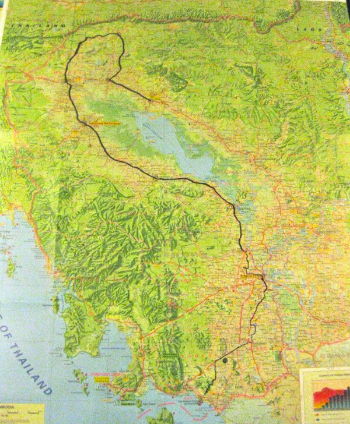
The route

Christmas for me normally consists of the following things: flying home to good old England, walking through the door, receiving a suffocating hug from my parents (suffocating is, of course, meant in the most affectionate way possible) and then eating. The eating generally doesn’t ever stop, just ebbs and flows like the tide. So when Christmas 2013 rolled around and I found myself facing a 1000km bike ride across Cambodia — and a whole lot of rice — needless to say I was ever so slightly nervous.

Maybe you’re wondering what on earth drove me to forego the usual food-based festivities in favor of risking a month of inevitable, interminable muscle pain. The honest answer is adventure. I wanted to see something new. To smell something new. To taste something new. But when I signed up for the PEPY Ride XI, I never imagined that, above all of the things I just mentioned, I would feel something new. And that something, whatever it was, has more or less changed the way I look at the world and all of the funny, strange, sad, glorious, confusing and downright brilliant things in it.
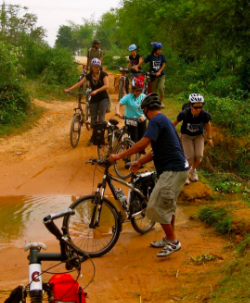
Megan's group in action

A 1000km bike ride is in itself one such downright brilliant thing; getting up before the crack of dawn, hopping on the bike and watching the world wake up is unlike anything I’ve ever experienced. It’s like looking at hundreds of different photos for less than a second at a time-the split second you whizz past someone, you get this teeny, tiny snapshot of their life and it’s pretty amazing. Sometimes it’d be a gaggle of kids messing around on the way to school, sometimes an older chap watching us with great bemusement as we blitzed past him, waving and grinning like lunatics, or maybe a group of men herding ducks into a roadside stream (yes, you read that right, duck herding).

Whoever it was, one thing is for sure: Cambodians like to say hello to people on bikes. Every day, and I really mean every day, as we were cycling merrily along, seemingly in the middle of nowhere, and a couple of kids would suddenly come racing out of thin air and ambush us, screaming 'hellohellohellohellohellohello.' This would start a kind of chain reaction and the next half hour would pass in a frenzy of shouting and waving, which is quite dangerous on a road full of potholes. 

But potholes aside, traveling through a country by bike is a very unique experience. Of course, there were times when I debated whether or not it was possible for just my rear end to die, independently from the rest of my body, such was the level of numbness, but there is really no comparison to the feeling of freedom you get from cycling. We saw corners of Cambodia that are more than a world away from our normal lives, corners where the tourist buses or the hoards of backpackers that come with them can’t get to.. Nothing against backpackers, but sometimes it’s nice to escape the masses.
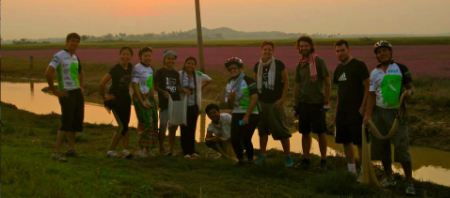
Megan's group

Ok, a three week bike ride is indeed a rather incredible feat, but was it really a life-changing experience? I can almost smell your scepticism! The truth is, it really was. Not in the “I’m going to sell all my worldly possessions and wander the world, touching the lives of everyone I meet” kind of way, it was quieter than that. It wasn’t so aggressively do-goody. It just kind of made me want to smile more. I don’t know about other people, but I am definitely guilty of letting the little things stress me out too much in my so-called normal life.
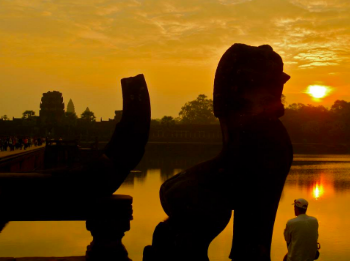
Sunrise in Angkor

Spending three weeks in one of the poorest nations in South East Asia, with its unfathomably devastating recent history, certainly shook me up and made me realise that I have it pretty good. All the daft little problems which I worry about suddenly weren’t problems anymore. What’s the use in using all that energy on something that, in all likeliness, won’t change, no matter how much you kick and scream and tear your hair out? Cambodia is a country on the mend, or at least that’s the impression I had, and sometimes it was all too easy to forget that behind the smiles, many people have seen more ugliness and pain than you or I could ever imagine. Yet, despite the horrors this country has lived through, it seems to radiate an energy and spirit like no other place I’ve ever visited.

I think it’s easy to become disillusioned with the world: You watch the news and you feel a bit hopeless because really, how on earth can you help? To be honest, I don’t know the answer to that question. But Cambodia gave me hope for, well, hope. I know that sounds horrendously schmaltzy, but I can’t describe it in any other way. After seeing all these incredibly cool and inspiring projects, only someone with a heart of stone could refuse to be touched by the optimism. There’s always going to be good and bad in the world, for sure, but now my eyes and heart are more open to the good stuff.

Find out more about how you can participate in a PEPY Ride here!


Megan Skinner

Meg is earning her keep as a freelance English teacher, translator and interpreter in the tropical climes of Northern Germany. As exciting as the world of patent translations is, her mind often wanders to adventures in more exotic locations. Or food. Or both.
TRIP REVIEW: Surfing South Africa to Help Out

The downfall of many volunteer organizations is cost. All too often there will be a $1000+ price tag on a trip that lasts only a week or two, not included airfare. This isn’t news, so it should come as no surprise that there are people out there who are working to fix this. One of these people is Daniel Radcliffe (no, not the actor). After collecting a Masters of Business, Daniel decided that it was time to give back to the world. He began to research volunteer trips. He too ran into this roadblock, but unlike someone like me who will simple notice the problem and then write about it, Daniel decided to do something. International Volunteer HQ was founded upon his return to New Zealand in 2007. “IVHQ was born with the goal of providing safe, affordable and high quality placements in areas where there is a real need for volunteers.” One of these places is South Africa.

It’s easy to read a statistic or to watch a documentary and think that we understand. Sure, we have problems here in the United States, there’s inequality and poverty everywhere, but, honestly, we cannot imagine what some citizens of the world live through. In South Africa the average life expectancy of a white South African is 71 years. The average life expectancy for the black population is 48 years. In 2005 it was estimated that 31% of the female population was infected with HIV, most of them black. There are 1,200,000 orphans. These are numbers and statistics, I could throw them onto a graph and you would see the vast differences, but you still wouldn’t know, you would still be using your imagination. Over there, it’s a reality. South Africa needs help and, if you feel so inclined, you can give it.

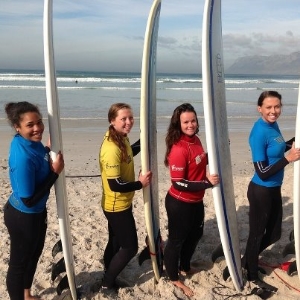
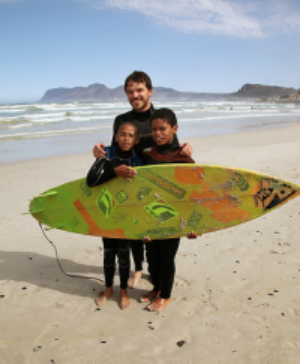
IVHQ sends volunteers to South Africa on the first and third Monday of each month. They normally arrive in groups of twenty to fifty people and the assist the community in an astounding variety of ways. Participants can involve themselves in a teaching project, in childcare, computer training, sports development and, an organization after my own heart, a surf outreach program.

Maybe you’re wondering what good a surf outreach program would do for children when they could be receiving extra medical attention or extra food and shelter. In the words of Ellen Varoy, Marketing and Media Coordinator for IVHQ, “The Surf Outreach program is designed to provide these children with an after school activity, keeping them off the streets of Cape Town and placing them in a safe and encouraging environment. Through the program, these children have the opportunity to learn new skills, take up new challenges, gain confidence and interact with our international volunteers, who the children look up to as role models.” It’s not about whether or not these kids learn to surf. It’s about showing them that there are people who care. It’s about being a ray of light on an otherwise bleak horizon. As a surfer would say, it’s about sharing the stoke. Would these children benefit more from help that focused on their health and nourishment? On the spreadsheet, probably, but where would they go after that? I say give them role models, give them hope and teach them that they can overcome. That, in my opinion, will last much longer than a loaf of bread.

The cost of IVHQ trips is one of the things that makes this organization so great. Prospective volunteers for the surf outreach program only have to pay $320 for one week. Longer periods of time require more money, being capped off at six months for $4580. This does not included airfare or visas or spending money. Also, if you want to participate in the surf outreach program you must know how to swim. I just thought I would point that out. If you are interested in any of the other programs offered for South Africa, you can find more information here

IVHQ is a fantastic option for people who want to volunteer for an affordable price. A full range of trips can be found at their website, http://www.volunteerhq.org/. As usual, if you were interested in the trip, but don’t think it’s for you, check back with Mission.tv next week for the next article in our series of trip reviews.

For testimonials by volunteers who completed the surf outreach program, check out: Testimonials  

To check out a video from the trip click here.

LEARN MORE ABOUT IVHQ


KINO CROOKE spent the last three years juggling school and travel. He most recently spent the last two months traveling across Spain before moving to New York to work with CATALYST.

Who Is Anonymous Street Artist and Parisian, JR?

Not much is known about the semi-anonymous artist who calls himself "JR." We know that he is young — flirting with age 30 — French, and presumably has a name involving the letters "JR."

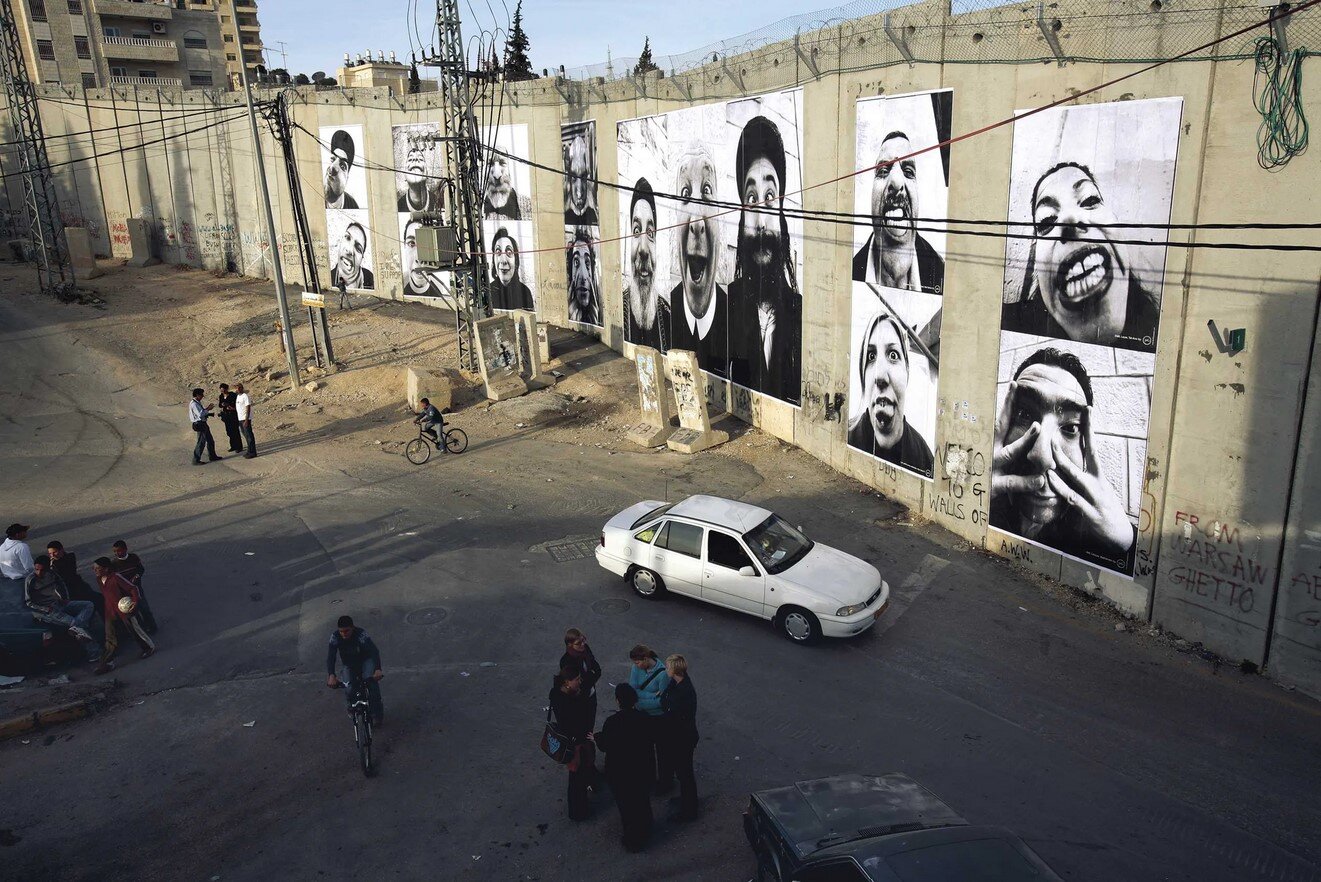
28 Millimètres, Face 2 Face, Separation wall, security fence, Israeli side, Abu Dis, Jerusalem, 2007

However, little else is known about the enigmatic past of the artist who has emerged on the world stage as the most lauded street artist since Banksy. Who Is Anonymous Street Artist and Parisian, JR?

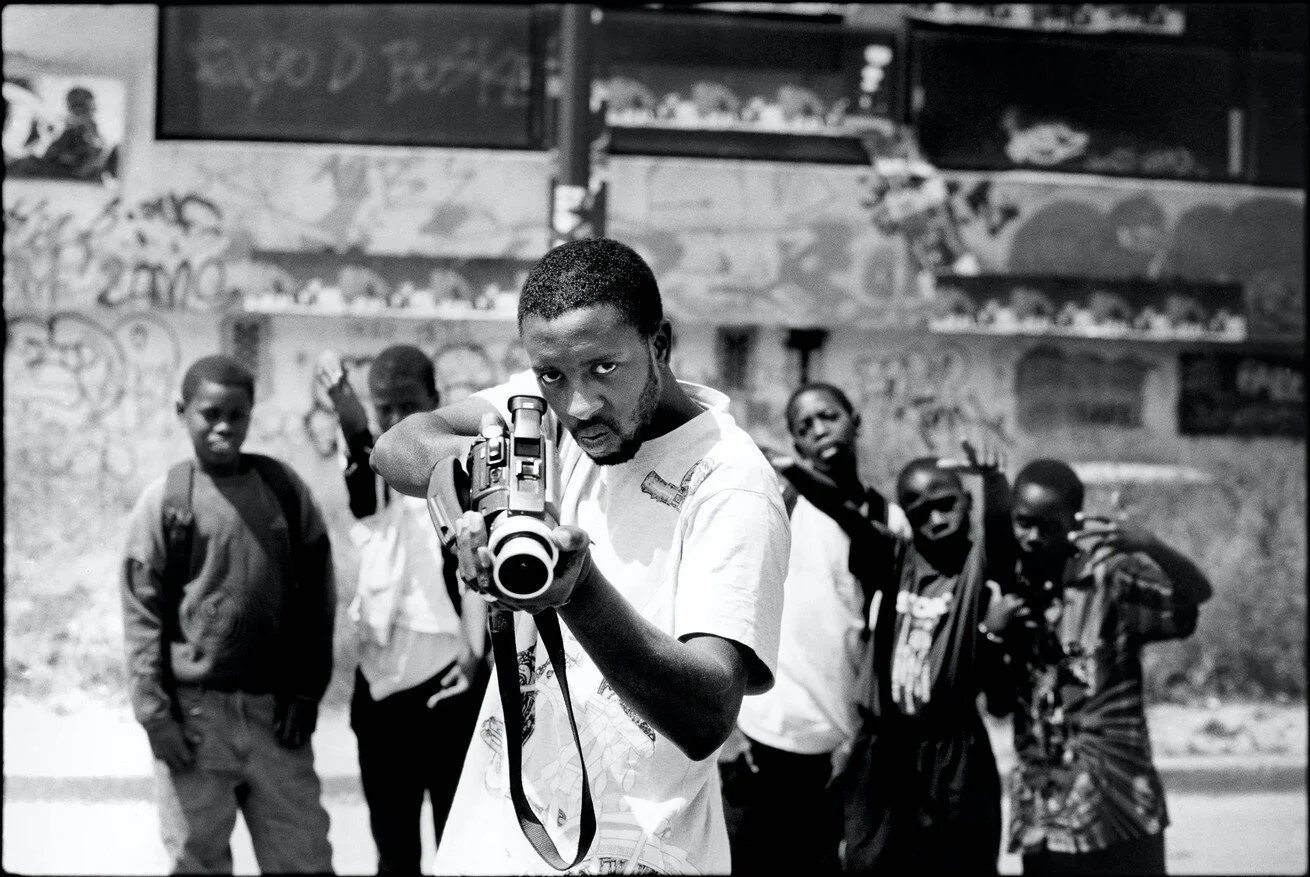
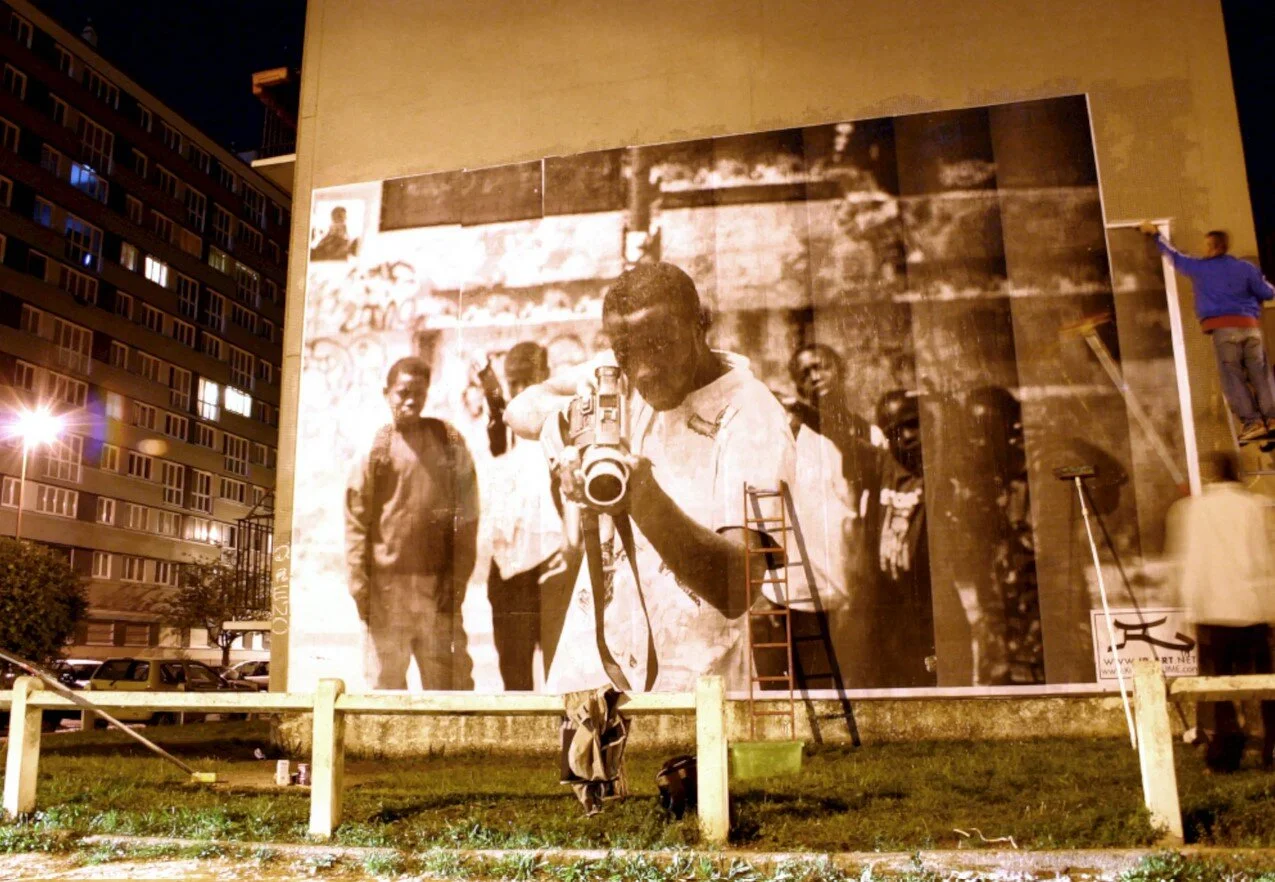
When people hear the words "street art," they immediately picture graffiti: spray-painted images, slogans, or "tags," illegally marked onto the side of derelict urban buildings. This idea of street art must be abandoned when examining the oeuvre of JR. While it is true that JR began as a traditional street artist, using aerosol spray cans to paint on buildings around his native Paris, his artwork and his vision drastically changed when he discovered a camera that had been lost on the Paris metro. He began to document his artistic escapades and those of his friends, and he eventually abandoned traditional graffiti for something more easily duplicable: photocopies of the pictures themselves. Thus began the principle act of JR's craft, the pasting of large copies of his photographs on the sides of buildings. As with most street art, this started out as an illegal act, and one that mainly took place on the sides of run-down urban structures.

28 Millimeters, Portrait of a Generation, Hold-up, Ladj Ly by JR, Les Bosquets, Montfermeil, 2004

But then something happened: JR's art started to capture things that were extremely relevant to the general public, and capture them in extraordinary ways. His exhibit, Portraits of a Generation spanned the 2006 youth protests and riots, a turbulent period in recent French history. It would've been easy for JR to capture scenes of burning cars, looted stores, or angry teenagers holding weapons — the essential stock photographs of a small-scale revolution, material that would surely gain him some acclaim and media attention. But JR did the opposite: in a time where there was rhetoric about the pervasive lines drawn by race and class in modern French society, JR chose to challenge the paradigms and media representations of the rioting youth. He visited friends in housing projects and captured them in a way the media had not. He captured, perhaps, what the media chose not to: black French youth making funny faces, teenagers of Middle Eastern origin crossing their eyes at the camera, images that were unexpected, light-hearted, honest and above all else, human.

28 Millimeters, Portrait of a Generation, Pasting of Ladj Ly by JR, Montfermeil, Les Bosquets, 2004

JR blew up the photos to huge formats, and pasted them on the walls of the most bourgeois areas of Paris. It was all very illegal… at first. But there was something unmistakably powerful about JR's art: these were giant images of individuals previously viewed to be dangerous thugs, but here they were as kids, fooling around, unthreatening. JR's images worked to diminish the tension inherent in interactions between Parisians in the mainstream and in the margins. And then something happened: His images were wrapped around the buildings of the Paris City Hall. This made JR's street art "official," although he would have continued even if it hadn't.

28 Millimètres, Women Are Heroes, Action in Favela Morro da Providencia, Favela by day, Rio de Janeiro, 2008

From Paris, JR began to work on the largest canvas on earth: the world itself. His work has taken him all around the globe, from his famous Face 2 Face exhibition where he posted pictures of Palestinians and Israelis face to face in a number of Palestinian and Israeli cities and on the Wall itself, to the most dangerous favelas of Rio de Janeiro, Brazil, or the space above the High Line in New York City. His work captures the faces of the world's marginalized groups and populations: women, the extremely poor, the indigenous. He takes those who are often off the radar and makes them a large and profound part of the everyday experience of cities. His art does more than turns heads, it changes perceptions.

JR’s work has won wide international acclaim, even winning him the 2011 TED Prize. At first, he was put off at the notion that he was supposed to save the world, JR sighed when the mandate was clarified: change the world, not save the world. “Oh, alright,” he said. “That’s cool.” In a TED Talk later in 2011, he continued by saying, “Art is not supposed to change the world, to change practical things, but to change perceptions. Art can change the way we see the world.” And his art really has.


Calah Singleton

Calah recently graduated from Yale, where she majored in Political Science. Her interests include urban studies, international development, and learning new languages.

INDIA: 20 Tips on Ashram Life from a NYC Perspective

Traveling to India? AWESOME. 

India is a beautiful country deeply rooted in tradition and culture. Most of my friends travel to India for a spiritual experience… and well, that’s because most of my friends are yogis. Go figure.

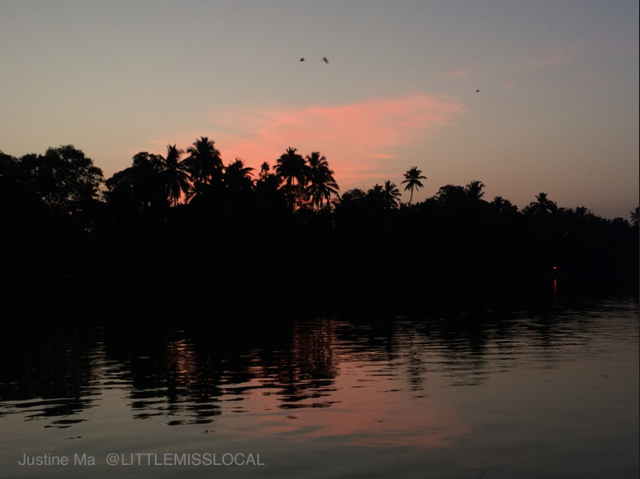
Most yogis who travel to India stay at ashrams, which are spiritual monasteries (and really, really, really cheap places to sleep). When I traveled Southern India (Kerala) this past March, I stayed at an Ayurvedic Ashram known worldwide as Amma’s Ashram.

Amma (meaning Mother) is a living saint (yes, a real person) who has the stamina to bless and hug people for 16hrs straight sans lunch or dinner. It’s kind of her thing and she’s been doing it for decades. Her ashram is open to everyone: locals, backpackers, yogis, devotees, travelers, etc. So for my first trip to India, I was looking forward to receiving one massive hug, yoga at sunrise, and one dosa a day. However, my time at Amma’s proved to be more challenging than initially expected.

Sidenote: Dosas are thin crepes that are made of fermented beans, stuffed with spicy potatoes, cooked in ghee, and topped with coconut chutney.

It is imperative that you are aware of this street food item because dosas will lead you to happiness. Or at least it does for me.

If you’re planning to stay at Amma’s Ashram (amma.org) in Kerala, I’ve compiled a list of “need to know info” that you will not find on the main website. These tips will mentally prepare you for your upcoming journey and (hopefully) allow you to embrace life at Amma’s. Please keep in mind that the ashram lifestyle isn’t for everyone but it is an experience that I highly recommend experiencing.

HOW A NEW YORKER PREPARES FOR AMMAS:

 1. Bring toilet paper, buy toilet paper. Carry a fanny pack stocked with toilet paper, tissues, and hand sanitizer. Throw a few bottles of water in there too. Just do it.

 2. What to wear? Most people wear loose white clothing as a statement of simplicity. I wore a typical NY outfit — black on black on black—Amma still embraced me.

3. Avoid a potential argument. Every roommate should have their own key to access their room — pick up extras at the International Center.

4. FACT: Half a year's rent in NYC (or less) will last you a lifetime at Amma's.

5. In the word's of Amma, "some people who come to the ashram are crazy," so just acknowledge that for a sec.

6. You'll find that most people at the ashram are living in savasana and will walk straight into you sans apology. Don't get all NY on them, just smile and move on.

7. Public Service Announcement: The ashram uses communal spoons, plates and cups. After you use your utensils, you are responsible for washing these items in cold water and cheap, watered down soap. Consider buying your own spoon (15 rupees), a food container (180 rupees) and cup (20 rupees) from the shop located inside the ashram. Basically, keep yo' germs to yo'self!

8. On a similar note, avoid contact with ALL left hands at ALL times in India (even expats)... if you don't know what I am talking about, google it.

9. FACT: The ashram provides one sheet, one pillow and one pillow cover for your cot. The room is the same size as a NYC studio apartment.

10. FACT: When you take a shower, hot water is not available. And you’ll need to bring your own towel. If this is a potential problem for you, bring dry shampoo and deodorant.

11. FACT: The shower is positioned directly above the western toilet… so forget the towel, just double up on the dry shampoo and deodorant.

12. Sign up for seva (service) at the office. If you don’t feel like waiting at the seva office, there are plenty of opportunities to volunteer throughout the ashram. No one will refuse your help. They’re uncomfortably kind and welcoming.

13. Seva is optional. You are not obligated to clean toilets. I chopped vegetables and enjoyed it.

14. Dosas are available on-site at the Indian canteen.

15. In case you’re not interested in the complimentary Indian food, there’s a western café where you can purchase grilled cheese, handmade pizza, egg sandwiches, toast, spirulina bars, etc. However, I was told they’ve run out of tator tots until October.

16. NY’ers walk a lot so if you find yourself strolling outside of the ashram walls, you can easily find Amrita University just over the bridge. Keep in mind, this state-of-the-art building does not have western toilets, soap or toilet paper. Hence, fanny pack.

17. Head straight to the beach, just don’t go in for a swim. Their rules, not mine.

18. Take probiotics daily. I recommend hitting up your local JUICE PRESS at least one month before you arrive in India.

19. The ashram is awesome; participate as much as possible.

20. Two full days and one night will give you the opportunity to experience everything… or you can stay for 18 years, your choice. 


JUSTINE MA

@littlemisslocal

Justine is a NYC food & lifestyle blogger who has eaten her way around the world to understand the connection between local culture and cuisine. Follow Justine at LittleMissLocal.com as she explores local food, travel, health and wellness.