
As urban spaces dominate more and more of the world, it is important to remember the natural beauty the Earth has to offer. Here is a list of 7 less popular but equally enchanting wonders.
Read MorePhotographing the World With Laura Grier
Zoe Lodge
A peek into the fascinating life and career of a travel photographer.
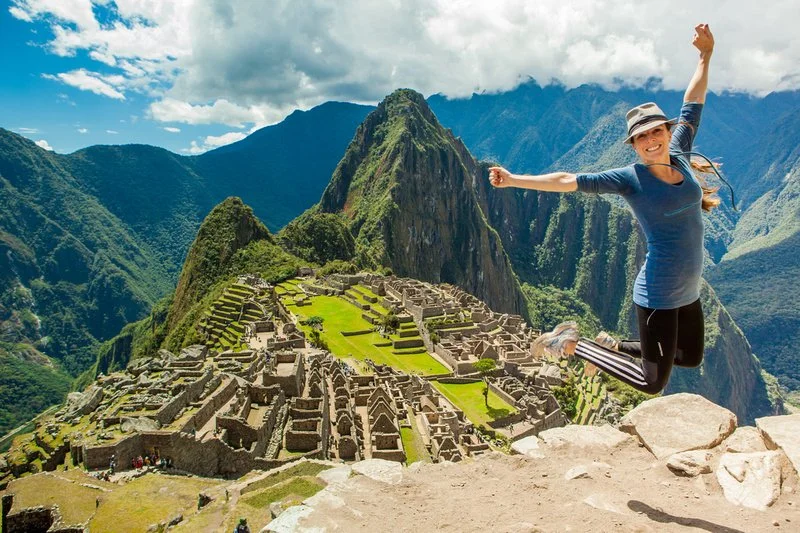
Laura Grier in Peru. Courtesy of Laura Grier.
Having visited over 100 countries across all seven continents, photographer Laura Grier has hardly been chained to a desk throughout her career. Raised by two parents in the CIA, Grier was exposed to global travel at a young age. She spent part of her youth living in Jakarta, Indonesia, where her parents encouraged her to embrace travel and global living. She always knew that she didn’t want to spend her life in an office, and her dream career was something of a treasure hunter. “I was always interested in being sort of an Indiana Jones-like archaeologist, or a Jacques Cousteau marine biologist,” Grier said. “I’ve always been really interested in exploring the world and knowing more about it in general.” Her avenue to do so ended up being photography, which has enabled Grier to visit 101 countries and all seven continents to date. She hit the 100 mark last year, visiting 10 new countries on a road trip through Eastern Europe, primarily the former countries of Yugoslavia. Now, Grier’s work is concentrated around her social enterprise, Andeana Hats, and leading philanthropic group trips. “I’m bringing a group in September to Greenland and Iceland, meeting about 25 people, doing thought-provoking conversations, fun adventures, and photo shoots along the way.”
Grier discovered her passion for photography at 13 years old, after realizing she disliked being confined to a lab in science class. Encouraged by her mother, she pursued photography as a creative outlet and career path, eventually earning a dual degree in photojournalism and art photography from Syracuse University. Studying abroad in London and Florence deepened her love for travel, and she began photographing weddings in Europe while visiting her sisters. Offered a CIA job after college, she instead moved to Los Angeles, working at a photography studio and bartending to support side shoots. She launched a wedding photography division, eventually breaking into celebrity and destination weddings, which propelled her career into extensive global travel. “I love it because it's never the same thing. Like, that whole idea where I can't be stuck in an office and do the same thing every day—this is definitely the perfect kind of job for me,” she said. “It's never the same assignment or place you're going to or whatever, but it is a hustle.”
National Geographic brought Grier to Peru, which she noted as being one of her favorite destinations due to the country’s diversity, both in landscape and culture. “There are not many places in the world I like going back to, and I go back to Peru over and over,” Grier said. “It has anything you could possibly want. There are mountains that look like the Swiss Alps, the Amazon jungle, the most incredible ruins and culture, and deserts that look like the Sahara.” She recounted her first visit to Peru, where she had a “magical experience” swimming with pink Amazon river dolphins and piranhas at the Treehouse Lodge, nestled deep in the Amazon rainforest.
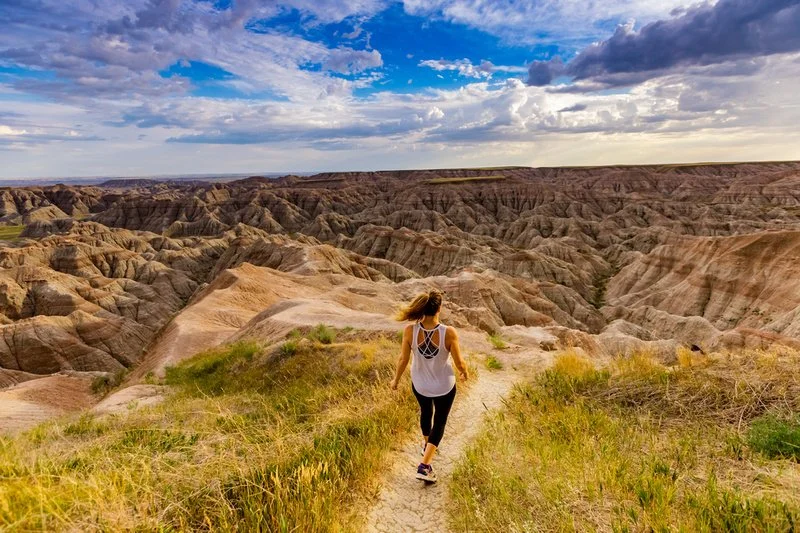
Laura Grier on a hike in her travels. Courtesy of Laura Grier.
Grier also holds a certain fondness for the places she has visited that are virtually untainted by human development, such as the Galapagos Islands or Antarctica. “Going to Antarctica was really, really special for me,” she said. “It was so mountainous and so pristine and the water was like nothing I’ve ever seen anywhere else in the world. It’s kind of magical to see that much vast, untouched land.” Grier visited Antarctica on a cruise, joining a small fraction of the population who have visited the remote continent. “There aren’t many places left on the planet where animals aren’t afraid of you,” she said, impressed by the almost complete lack of human impact. She had a similar experience when visiting the Galapagos Islands, saying, “It’s that same feeling [as visiting Antarctica] where you’re really part of nature.”
Upon establishing herself as a travel photographer, Grier reconnected with National Geographic, where she had previously worked. She began shooting for Novica, National Geographic’s artisan catalog, sparking her next big project, shooting “vanishing crafts” worldwide. Her work with artisans through National Geographic led her to an entirely new endeavor in Peru, which has become one of the most impactful places that Grier has visited in her career. Seeing an opportunity to share a cultural craft with the world, Grier and a friend launched a social enterprise called Andeana Hats to support female artisans in Sacred Valley, Peru, who have limited income opportunities, selling their handcrafted hats abroad and returning a much more significant profit to the artisans than they would have received through National Geographic or other large-scale artisan catalogs.
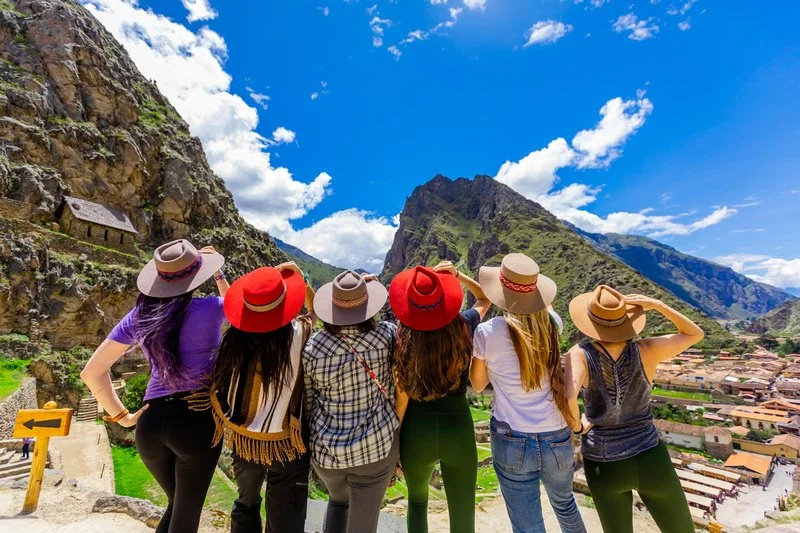
A group wearing hats and intention bands in Peru. Courtesy of Laura Grier.
The hats and their “intention bands,” which are decorative bands that carry unique designs and meanings derived from the Quechua language, help keep Indigenous Peruvian culture and history alive. “It first started off as what I thought would be a pretty simple passion project, and now it's taking over my house and my…everything,” she said. “I'm flying all over the world and doing markets and schlepping hats and meeting with artisan groups and it's really fun, but it's a lot of work.” Despite the challenges, Grier finds fulfillment in her work, knowing it creates a positive impact by benefitting these female artisans directly. Through it all, her career seems to keep circling back to National Geographic, the organization that shaped her path early on. “It’s funny because it just keeps on coming back full circle to National Geographic.”

Zoe Lodge
Zoe is a student at the University of California, Berkeley, where she is studying English and Politics, Philosophy, & Law. She combines her passion for writing with her love for travel, interest in combatting climate change, and concern for social justice issues.
The Case for Slow Travel
While many travelers hope to get the most out of their journey with faraway plane rides, consider slowing down and finding your way to the road less traveled.
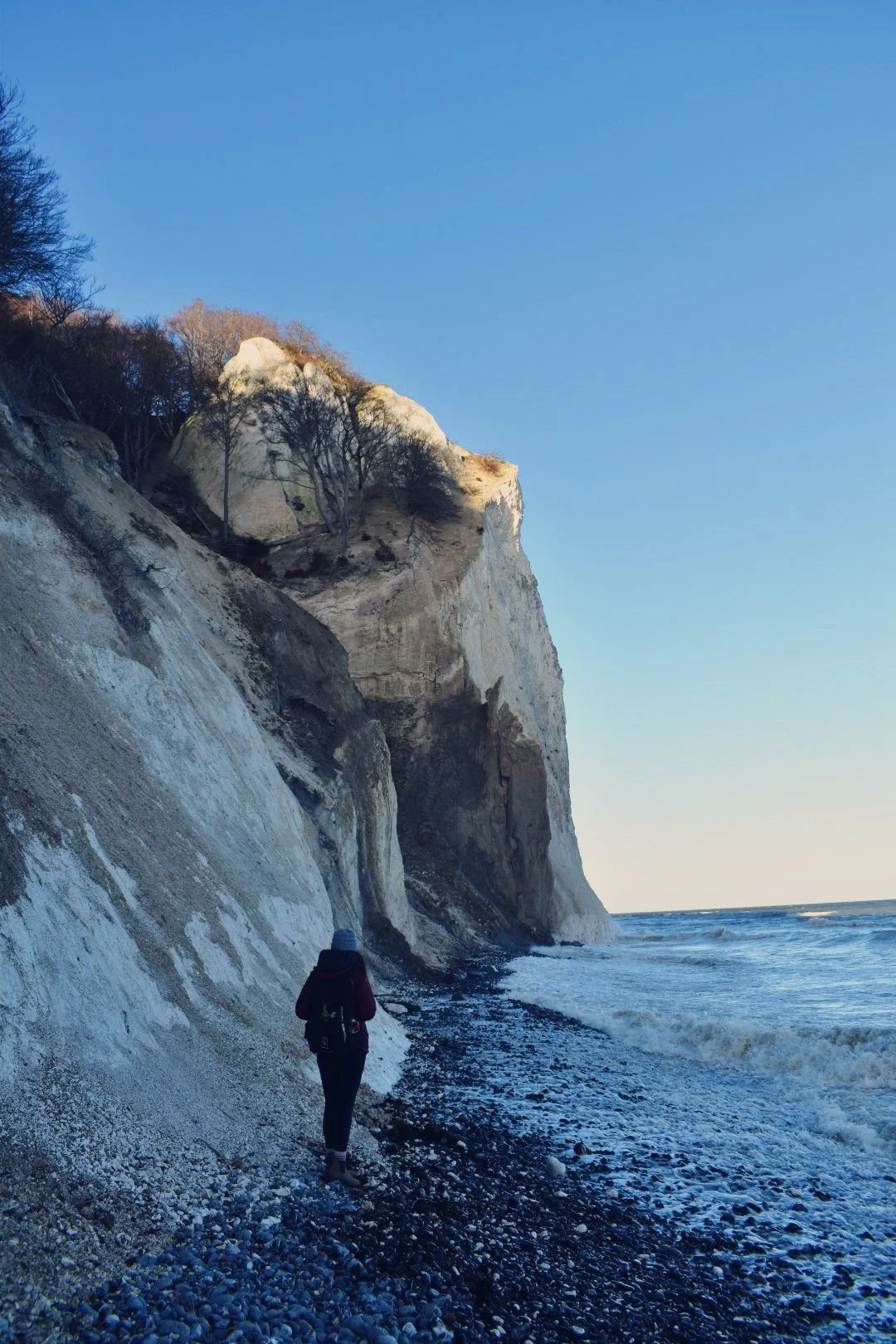
Walking on the beach at Møns Klint. Libby Scaperotta.
In the spring of 2022, I studied abroad in Copenhagen. My friends and I took advantage of the amazing public transit and metro system to get nearly everywhere. So, when it came time to plan an adventure to the limestone cliffs of Mons Klint, we didn’t even consider renting a car. Instead, we quickly opened our phones to the public transit app to route our trip the night before.
It’s the next morning, and the clock strikes 4:55 a.m. My roommate and I bounced out of bed, hopping into the clothes we had laid out the night before and grabbing our pre-packed bags before heading next door to knock on the neighbor’s apartment. With some begrudging groans from the boys next door, in under 10 minutes we were out the front door and headed toward the metro station.
Our journey began with a metro ride, two trains and two buses. After being dropped off and walking a short distance to the next bus stop, we waited patiently for what we thought would be the last leg of our trip, which never came. We had miscalculated a seasonal closure of part of the route’s timing. This led to the eight of us walking the last three kilometers of the trip on a beautiful sunny day in the Danish countryside. We walked among neighborhoods with quaint homes, beside farm animals and through pastures until we were dropped off at the magnificent cliffside of Mons Klint.

A friend walking along the backroad in the Danish countryside during our adventure to Mons Klint. Libby Scaperotta.
We repeated this process backward at the end of the day. But, as we waited at bus stops and train stations while the sun set, we giggled, shivered, danced and dreamed of a large pizza.
Although this journey to Mons Klint would have taken probably a quarter of the time had we just rented two cars for the group, the day’s adventure was unforgettable.
When traveling, we often try to maximize our two weeks of paid time off with ambitious plans to travel far by plane or private vehicle.
Yet, I am here to convince you to try slower travel. Try taking public transit instead of driving and see where the adventure may lead you. Or, try slowing down on your backpacking trip and volunteer in an area instead of packing up so quickly.
Traveling slowly is not only less costly for your wallet but also for the environment. My first introduction to a flight emissions calculator was a deeply upsetting experience that made me reconsider how I fly. Slower travel, which emphasizes public transport or staying in one place, may be a better option for eco-conscious travelers who hope to explore while still being mindful of their carbon footprint.
If you are interested in slowing down your travels, I highly recommend a volunteer experience or work exchange. These will allow you to stay in one place and save on accommodation and meals while immersing yourself in an area’s pace of life and community. From there, you may be able to take short day trips or weekends away in areas that you may have never otherwise explored. There are several platforms that my friends and I have used to find and plan work exchanges: WWOOF, Workaway and Worldpackers.
You can even integrate slow travel into your daily life. Grab your local public transit card and explore the destinations you may get to by bus or train! You might find a sweet town, a new beach or an adventure within arm’s reach.
Slowing down can be good for you and the earth. And, it may even allow you to decide for yourself if exploring the road less traveled does make all the difference.

Libby Scaperotta
Libby is a recent graduate from Middlebury College, where she studied Environmental Policy and Geography. She enjoys travel, photography, and spending time outdoors with people she loves. She plans to pursue a career dedicated to environmental work and wishes to share important stories that may inspire action.
Switzerland: A Hub of Sustainable Travel
Experience the best of Switzerland’s stunning landscapes and sustainable travel options through its extensive and efficient public transportation network, offering seamless access to scenic destinations while minimizing environmental impact.
Read MoreAdventure in the World’s Coldest Continent
Antarctica offers a unique travel experience with its diverse wildlife, extreme climate, and stunning landscapes, making it a must-see destination for adventurous travelers.
Read More7 Sustainable Alternatives to Overtouristed Destinations
Discover seven sustainable alternatives to over-touristed destinations where you can enjoy nature and culture while supporting eco-friendly practices.
Read MoreSolo Female Travel: The Rise and Rage of Traveling Alone
Learn a few tips on how to stay safe as a solo female traveler.
Read More4 Destinations That Are a Bookworm’s Dream
Explore four enchanting destinations where book lovers can step into the pages of their favorite stories, from the misty hills of Hobbiton to the eerie halls of Dracula’s Castle. Whether retracing Mrs. Dalloway’s London stroll or riding the luxurious Orient Express, these literary-inspired journeys bring iconic settings to life.
Read MoreLive Like a Local in Madrid
Skip the tourist traps in this fantastic Spanish city with advice from a traveler who has food, wine, sunset, bars, and dancing recommendations in the city of Madrid.
Read More5 Ancient Pilgrimages You Can Still Hike Today
Five ancient pilgrimages around the world you can still hike today! Visit them in Spain, Japan, Peru, the Middle East, and Sri Lanka.
Read More6 Tropical Countries To Escape the Winter Chill
Avoid the cold temperatures of winter by taking off to these six tropical destinations around the world, each offering a lush climate and magical adventures.
Read MoreNorth-East India’s Women-Only Market
Manipur’s Mothers’ Market is a world of resilience and resistance, where tradition, activism, and community converge in unexpected ways.
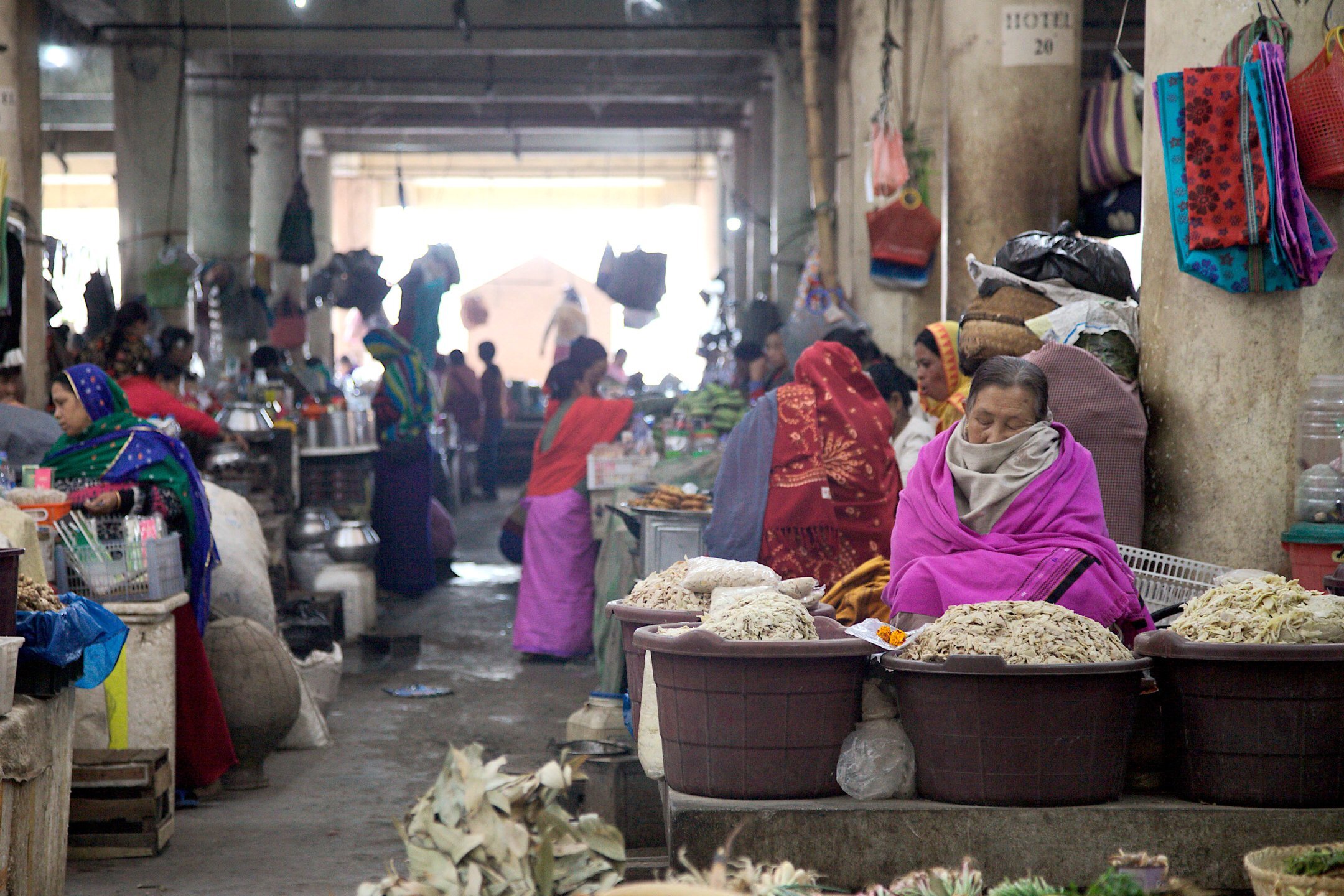
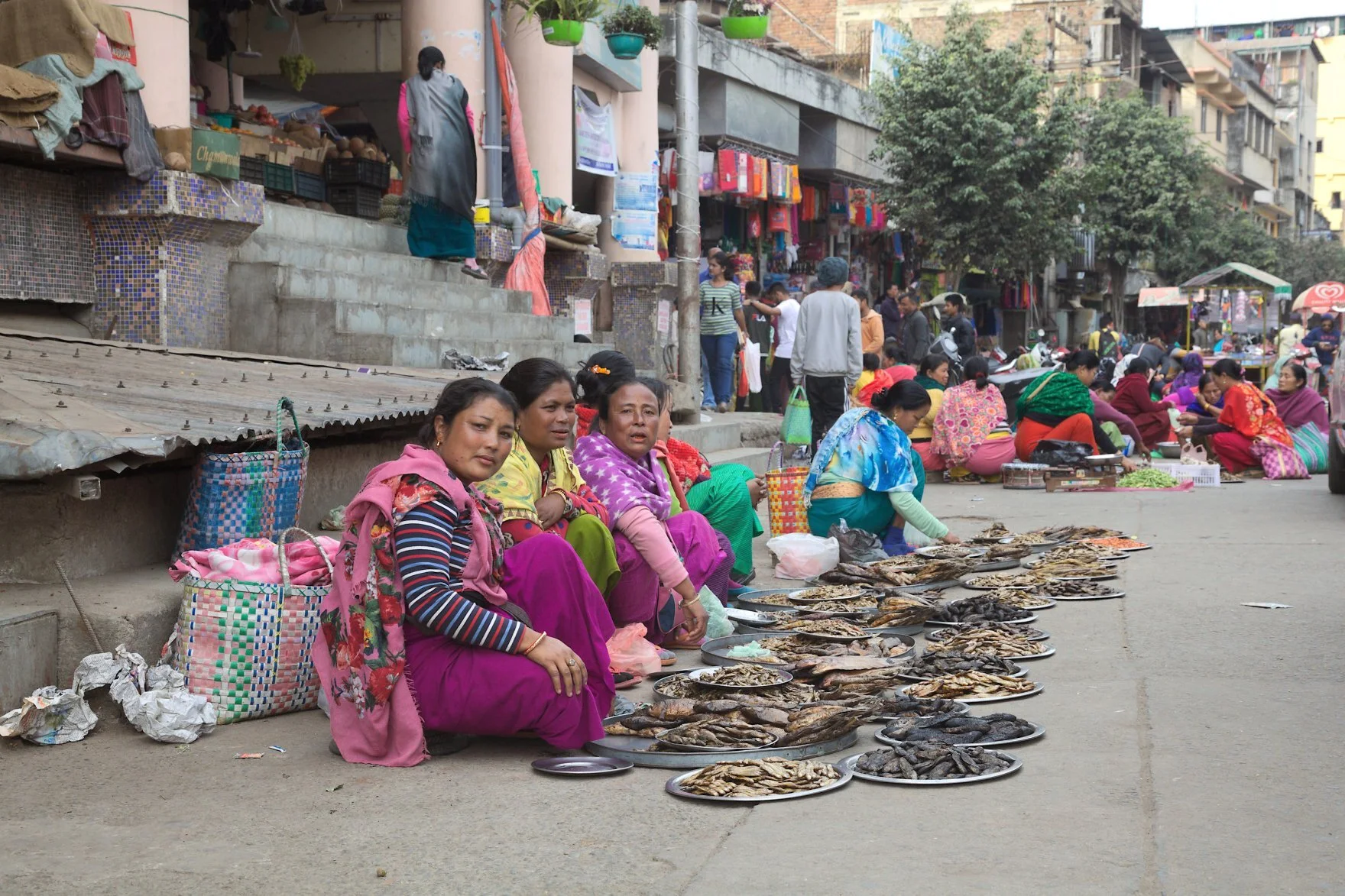
I decide on the Ima frying whiteish dough balls over a stand-alone stove and gas canister. ‘Aloo,’ she smiles and gestures to the wooden bench next to a young man slurping a leafy soup. Seconds later, this plump woman serves me a lunch of grilled fish, unidentifiable green veg, those fried potato balls, banana leaf, rice, and then, despite my protests, several second helpings.
The Imas are lined up behind their gas stoves, enticing the locals with their jokes and salty fish dishes. Sitting opposite, in front of stacked ceramic pots, are two more, warming their hands over the burning embers of a square metal pot. My host, Suporna Devi, is one of over 4000 women who congregate daily, in Ima Keithel, Manipur’s main market, selling everything from temple paraphernalia to locally-caught eels.
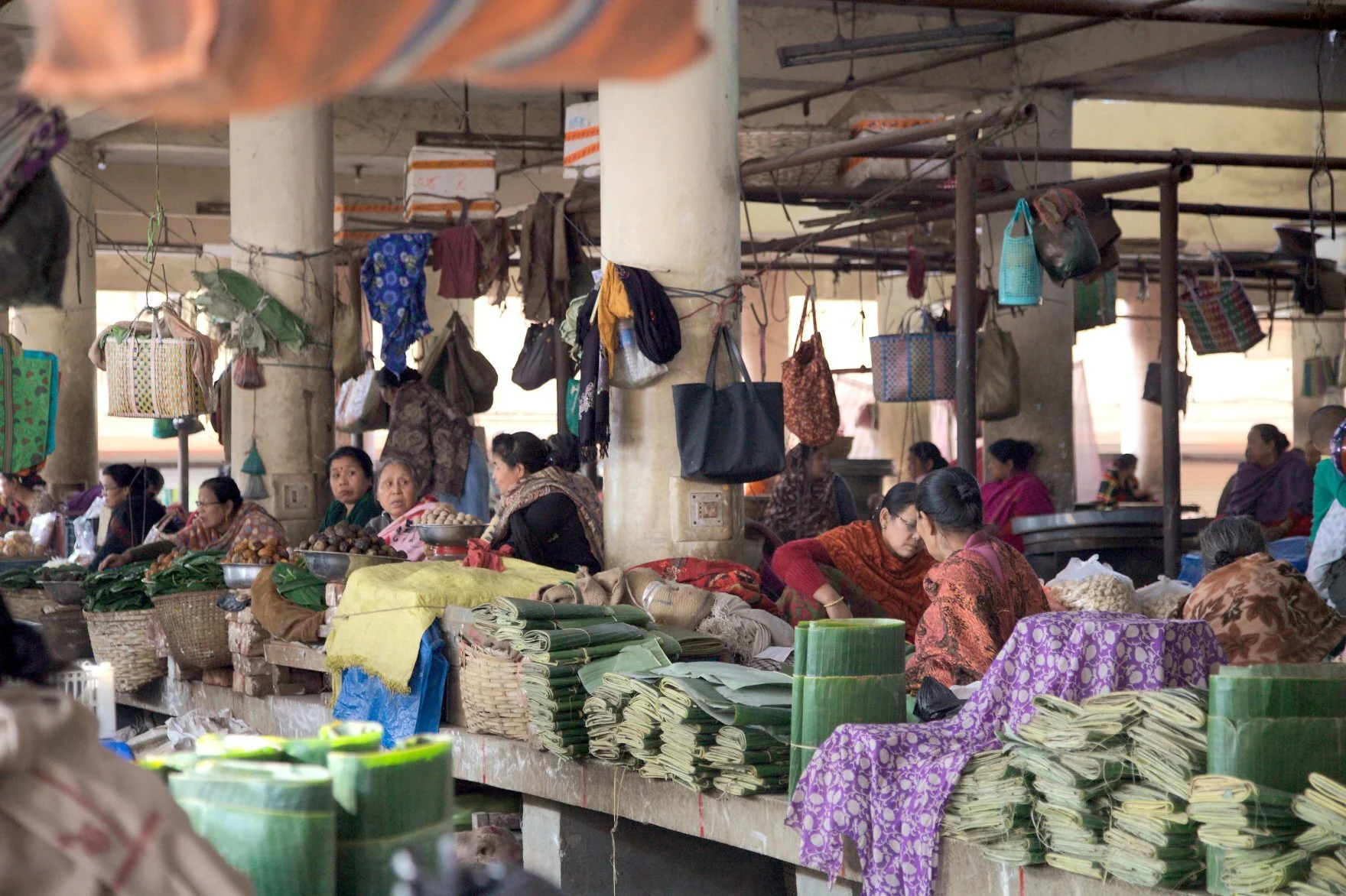
But, unlike the rest of India, here men are forbidden from trading. Passed down the generations, a stall at Ima Keithel, meaning ‘Mothers’ Market’, is highly coveted and provides the local Imas with an important source of income. Spilling out of the market buildings, encroaching on the roads, under the concrete flyovers, women are everywhere, selling produce. Some are eating, some reading, some sleeping. Many are chatting.
Believed to date back to the 16th century, the origins of Ima Keithel are unclear. Sandwiched between Myanmar and the Indian state of Assam, Manipur has long been forced to fight the Burmese and Chinese to retain its autonomy. A forced labour system, called Lallup Kaba, sent the men far from home to fight these wars, leaving the women at home to cultivate the land and sell the produce, possibly fostering this peculiar phenomenon.
For thousands of years Manipur remained an independent kingdom and a crossroads of trade and cultural exchange until it was conquered by the British in 1891. The golden, oval valley fringed by misty blue hills was famously called ‘the Jewel of India’ by India’s first prime minister. It is home to a diverse mix of tribes, who ethnically share more with groups in Burma than with the rest of India. Several hard day’s travel from Delhi, Manipur feels like a faraway land compared to India I’ve come to know; somewhat familiar, but yet not. A unique language and alphabet add to my disorientation.
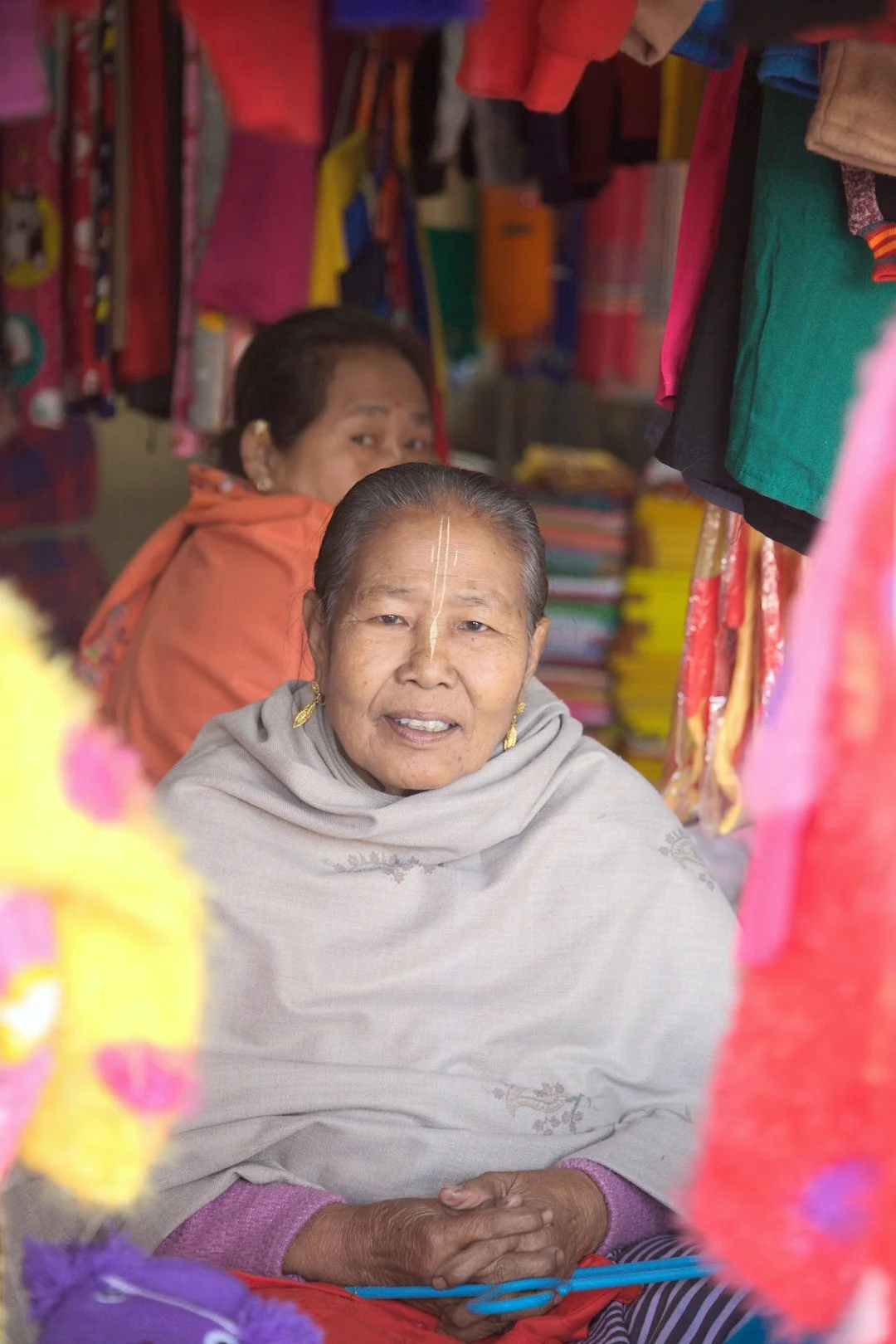
The two large market buildings sit in the commercial heart of Imphal, a dusty, grey city, home to as many motorbikes as people. Mornings see the city enveloped in a heavy, December mist, which she usually manages to shed by lunchtime. Most ladies are sitting under bright shawls: many baring two pale vertical lines on their foreheads, meeting on the nose: the mark of local Hindus. I feel the weight of eyes as I circle the floor. But smiles are soon reciprocated with smiles, and many proudly remove their glasses to strike a poise for my camera. Before long, I fall foul of the sly sales pitch of an unassuming mother and daughter. Several tea-towels later, I note to myself this is still India.
When I reach Suporna Devi’s stall, I am thankful for the rest, and we are soon conversing, in a broken fashion, through Hindi, her third language. She has worked here for over 20 years, she tells me, inheriting the pitch from her aunt. Pointing to a poster, emblazoned with hammer and sickle, she exclaims, “this is not just a marketplace, but also a place of protest!”
The revolutionary slogans spray-painted to the outer walls point to a more complex story, and I have started to research Manipur’s matriarchal society. Since at least the early 20th century, the Manipuri women have been wielding a strong influence over political and social matters of the state, with Ima Keithal at the centre of the movement. The market developed as a place not only of trade, but as a centre for gathering, a source of the latest news, a place to discuss ideas. The mothers of Ima Keithel started credit unions, lending to women who wanted to started businesses, and mentored them in the process.
As she ladles yet more rice onto my plate, Suporna suggests I visit the Nupi Lal (Women’s War) monument in another part of central Imphal. This is a memorial to Imas who fought the British rulers in the 1930s over attempts to export local rice to British battalions in other territories. Locally rice became scarce, the price spiralled and the Manipuris began to suffer. The Imas protested, peacefully, but were met with attempts to sell the market buildings. They refused to relent and eventually military and police forces were unleashed against the unarmed females. Although the export policy was eventually repealed, many women lost their lives in the struggle.
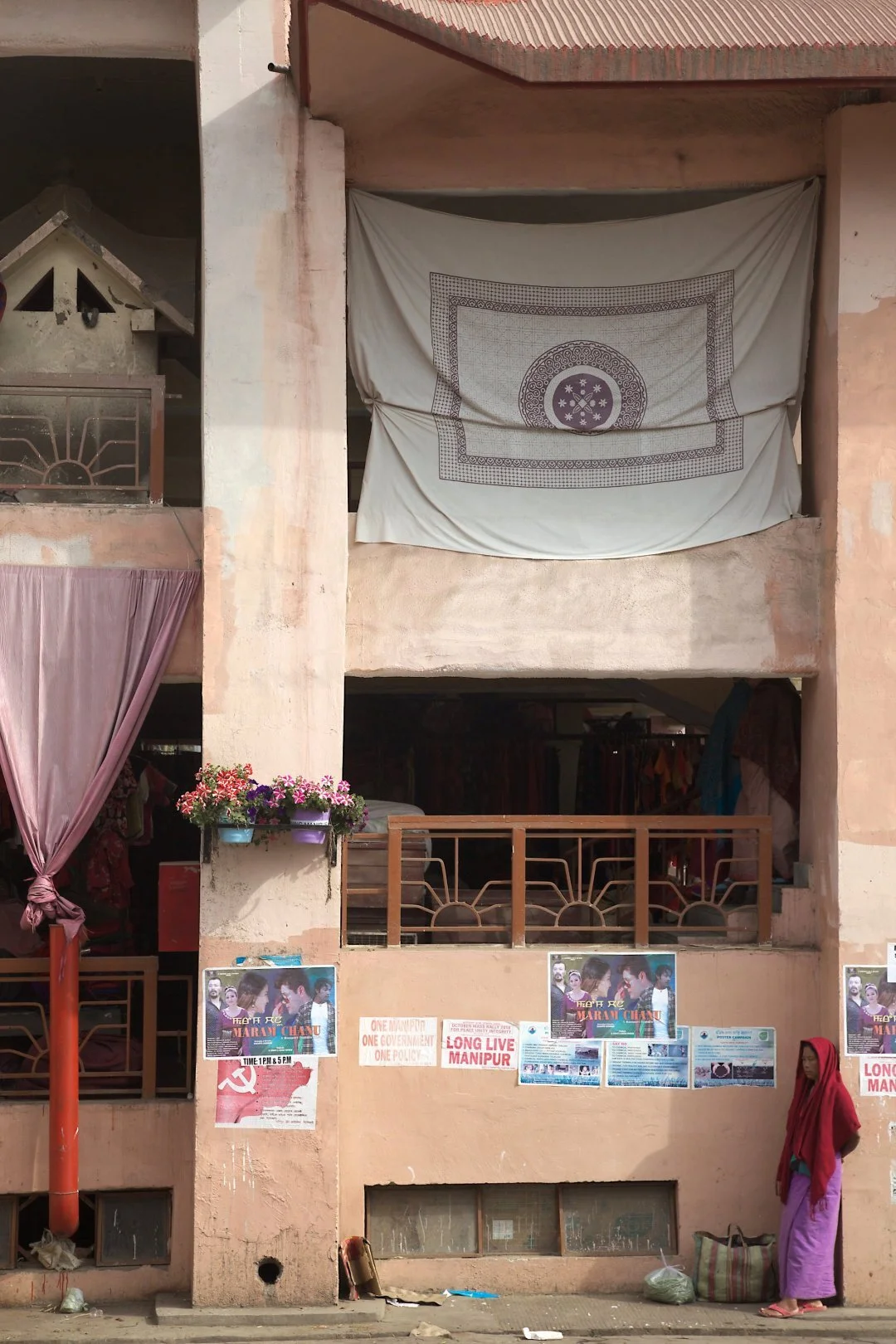
During the Second World War, Manipur became a battleground for the war between the British and Japanese: this part of India is scarred with war graves. With the independence of India, a ravaged Manipur was absorbed into the new country, unleashing a seemingly indefinite cycle of violence and insurgency as anti-Indian and ethnic groups fought over differing visions for the state’s future. From 1980 until today, most of the state has been classified as a ‘disturbed region’ by the Indian government, a ruling designed to give the Indian Army additional powers to help them maintain public order. In practice, it has granted them immunity from prosecution for a range of heinous crimes.
Despite the departure of the British, for the Imas of Manipur, the oppression continues and their imaginative responses evolve. From torching liquor stores and fining drunk men, to protesting, naked, outside an Indian army base against a case of rape and murder by the armed forces, their actions are undoubtedly radical in a country where the majority of women have little say in domestic or societal affairs. Today, they are continuing to hold out against the talons of globalisation: recent attempts by the local government to replace the market with a modern supermarket were derailed by round-the-clock sit-ins by the Imas. Again they succeeded.
After a few days of loitering around Imphal, chatting and drinking chai, I decide it is time to leave the Imas. Several check where I am going, who with, and most importantly, have I eaten yet? I gesture to the fish section at the back of the market and they nod approvingly. After my last meal, I ask Suporna if she enjoys her work in the market. She smiles and says, “This is not just my work. This is my life.” I tell her I am leaving. “Vapis ana,” (come again) she says, and goes on frying her potato balls. I heave on my backpack and head for the bus.
How to get there: I took the bus from Guwahati, Assam. It was an uncomfortable, although beautiful journey that crossed through the hills of Nagaland on the way. There are also direct flights from Delhi, Calcutta and Guwahati. Imphal makes a convenient stop if travelling overland from North-East India into Myanmar through the recently opened Moreh-Tamu border crossing.
Where to stay: The Hotel Nirmala has decent rooms starting at 850 INR. Aheibam Homestay is a good budget option.
Where to eat: The stalls of Ima Keithel, of course. And the Luxmi Kitchen does a mean thali.

Eileen McDougall
After a decade working in London, Eileen swapped flashy buildings for a notepad and camera and set off for Asia. She fell in love with India, and it was here she started to write about her travels and the culture she was becoming immersed in. She is at her happiest on a bus alone heading off to somewhere new but seems to spend most of her time near mountains, mainly the Himalayas.
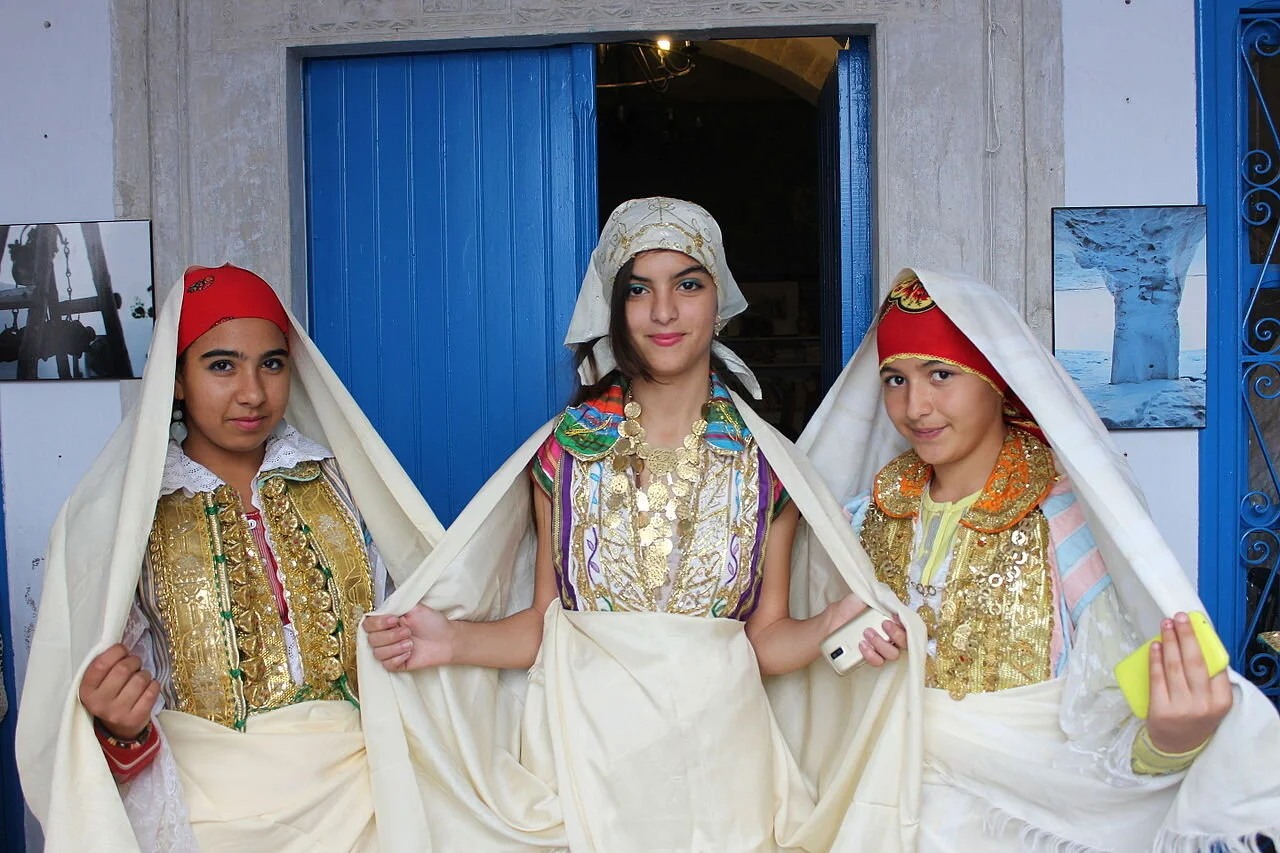
Tunisian girls wearing traditional Tunisian dress including the sefseri, a white veil made of silk or wool. Sami Mlouhi. CC BY-SA 4.0.
6 Treasures of Tunisia, From 'Star Wars' to Desert Oases
Tunisia is a country in North Africa, a region known as the Maghreb, that is similar in culture, history and religion to Morocco and its neighbor, Algeria. Tunisia is one of the most visited countries in Africa – it is a popular vacation destination for Libyans, Algerians, the French, Germans and the British. The country’s official language is Arabic, but the local Tunisian Arabic dialect,darija,, and French are also commonly used. The majority of Tunisians are Muslim, though a small Jewish community lives on Djerba, North Africa’s largest island.
The tiny country offers a variety of landscapes – beaches, mountains, the desert, woods and salt pans – that are sure to appeal to all types of travelers. The museums and ancient Roman ruins are sure to appeal to history buffs, and die-hard “Star Wars” fans will be interested to know that many scenes on the planet Tatooine were filmed in Tunisia. Be ready to enjoy dishes flavored with harissa, a spicy red pepper paste that has recently become popular in the U.S., along with plenty of seafood and Maghrebi staples such as couscous and syrupy doughnut-like bambalouni and zlebia.
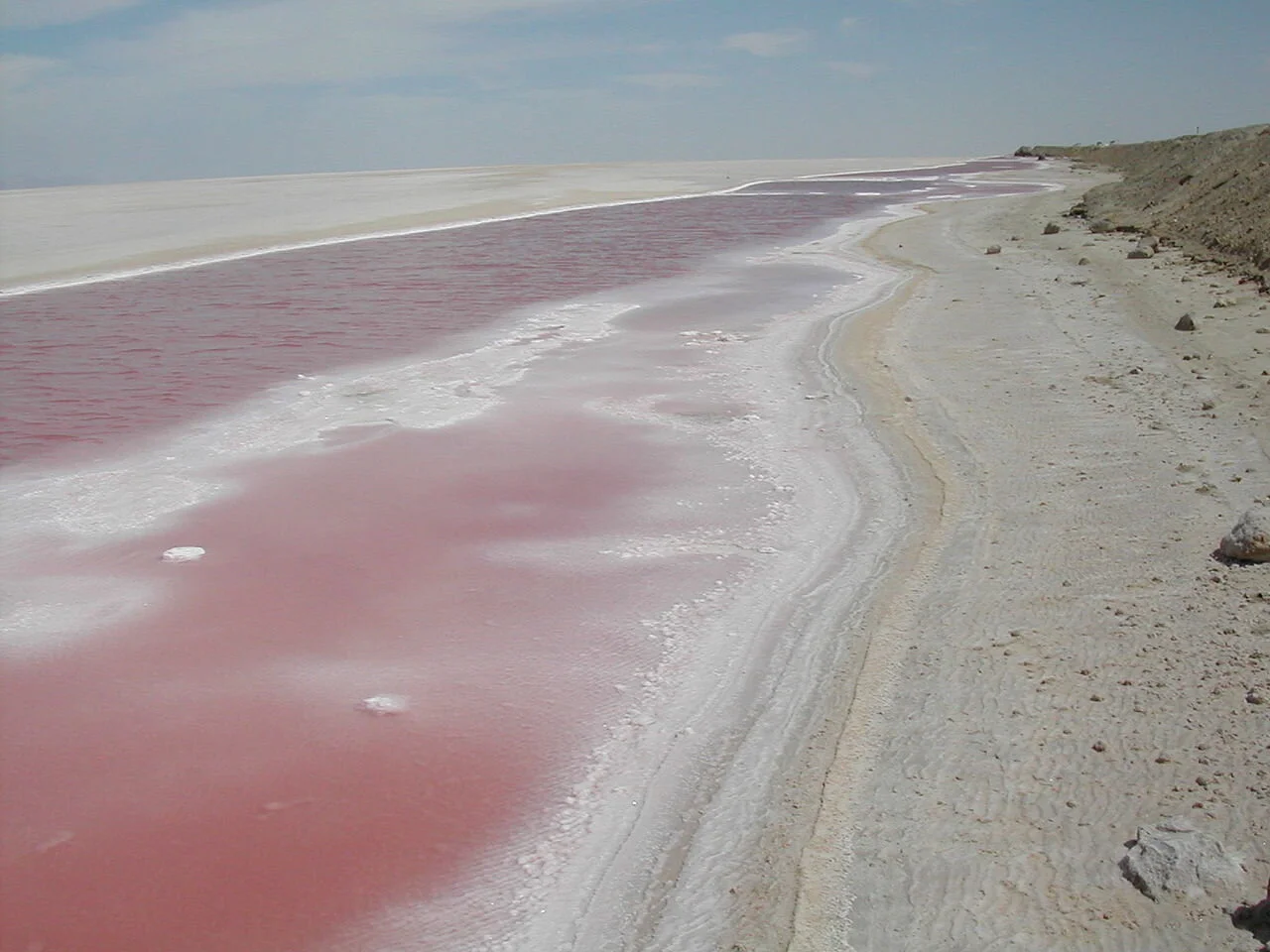
Minerals from Atlas Mountain runoff give Chott el Djerid its pink hue. Vinzenz Mühlstein. Public Domain. CC0
1. Chott el Djerid
The fictional planet Tatooine from the “Star Wars” saga was named after Tataouine, a desert city in Tunisia. Although no scenes were filmed in the real Tataouine, many of the first “Star Wars” film’s scenes were filmed in cities all over Tunisia. One of the most notable scenes of Tatooine is of Luke Skywalker’s home, the exterior of which was filmed in Chott el Djerid, the Sahara’s largest salt pan. A chott, or salt lake, stays dry for the majority of the year but fills intermittently from infrequent rainfall and during the spring thaw when water runoff from the Atlas Mountains floods the basin. The dissolved minerals from the Atlas Mountains give Chott el Djerid its otherworldly cotton candy pink color.
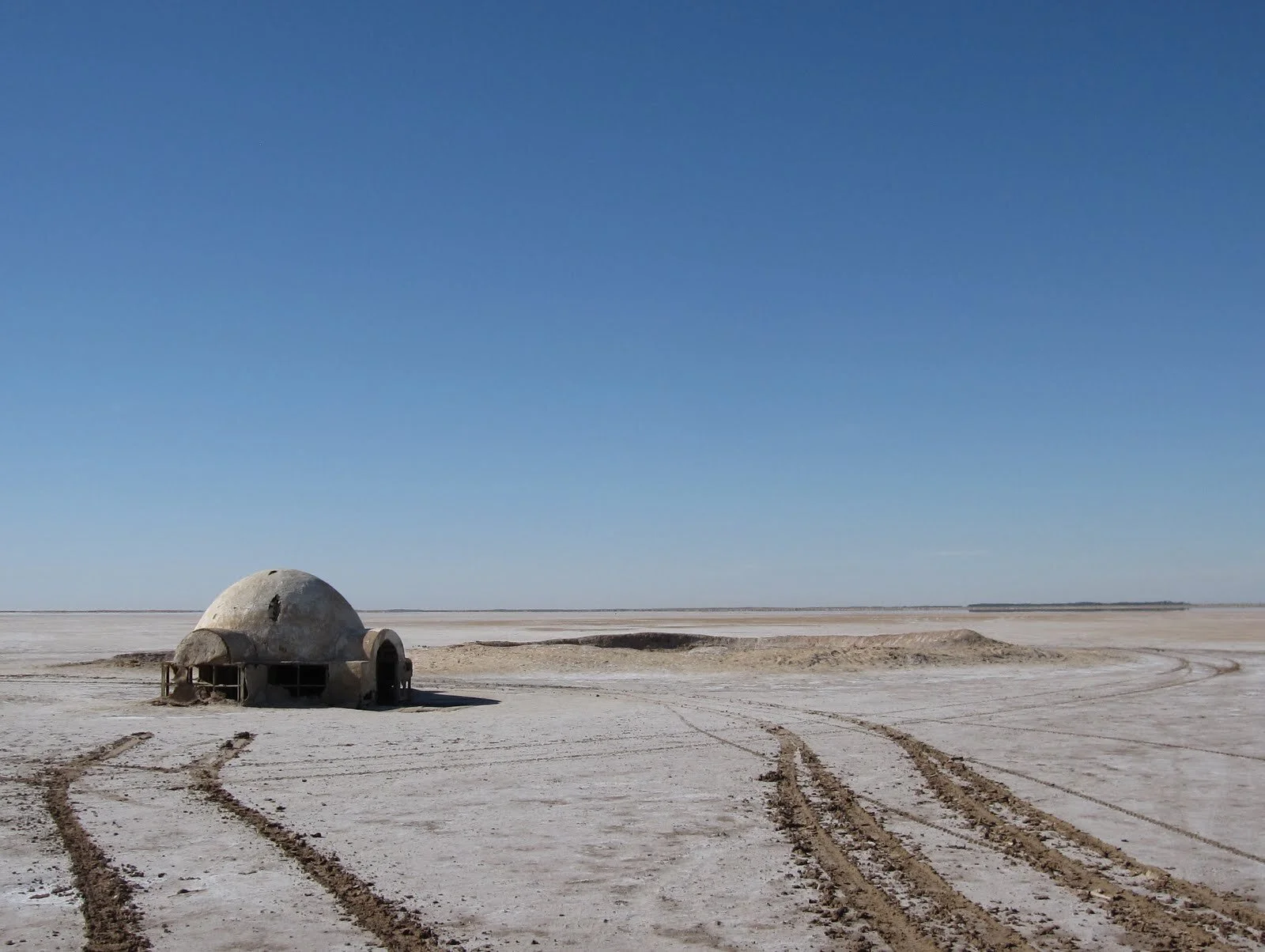
Remains of the Lars Homestead on one of the “Star Wars” movie sets in Chott el Djerid. Stefan Krasowski. CC BY 2.0.
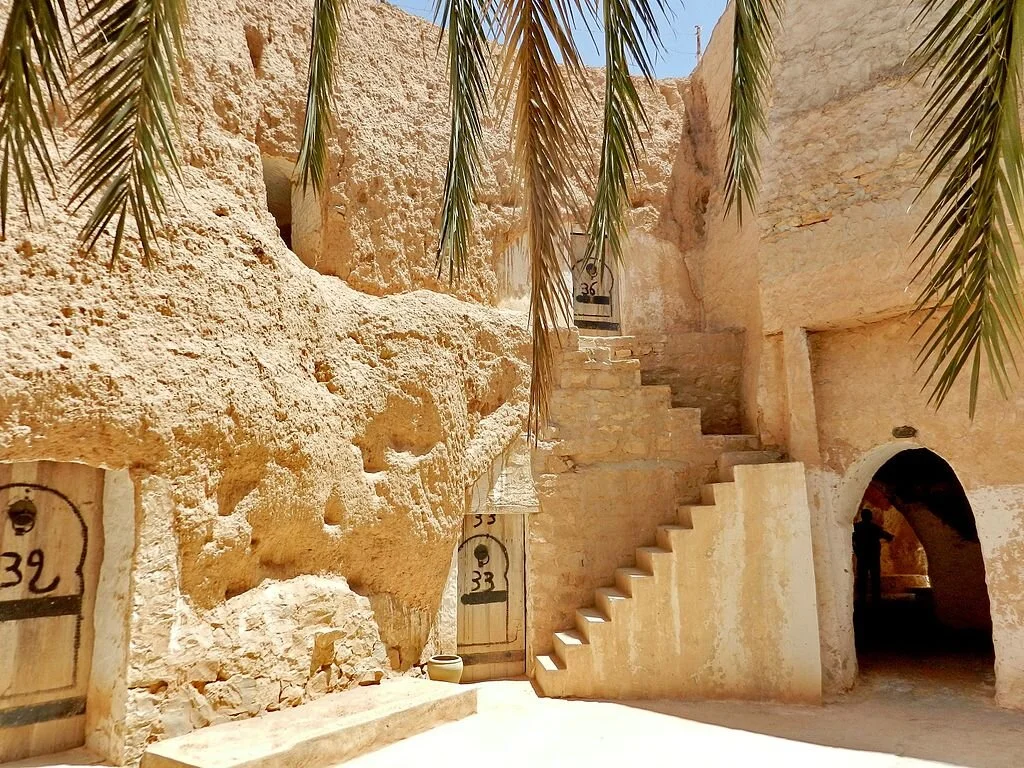
Ancient Berber underground homes in Matmata, Tunisia. Tanya Dedyukhina. CC BY 3.0.
2. Matmata
When “Star Wars: A New Hope” was released in 1977, Matmata, a small Berber village in southern Tunisia, became famous for its underground cavelike homes where some of the local residents still live. (The Berber, or Amazigh, are an ethnic group native to Northwest Africa, particularly the Maghreb.) The interior of Luke Skywalker’s home was filmed in the courtyard of Hotel Sidi Idriss, an underground hotel in Matmata. The hotel is open year-round, and is a must-visit for any die-hard “Star Wars” fan. For those who are not “Star Wars” fans but still want to visit the cave dwellings, the Musée Berbère de Tamezret (about six miles from Matmata) is a great alternative option.
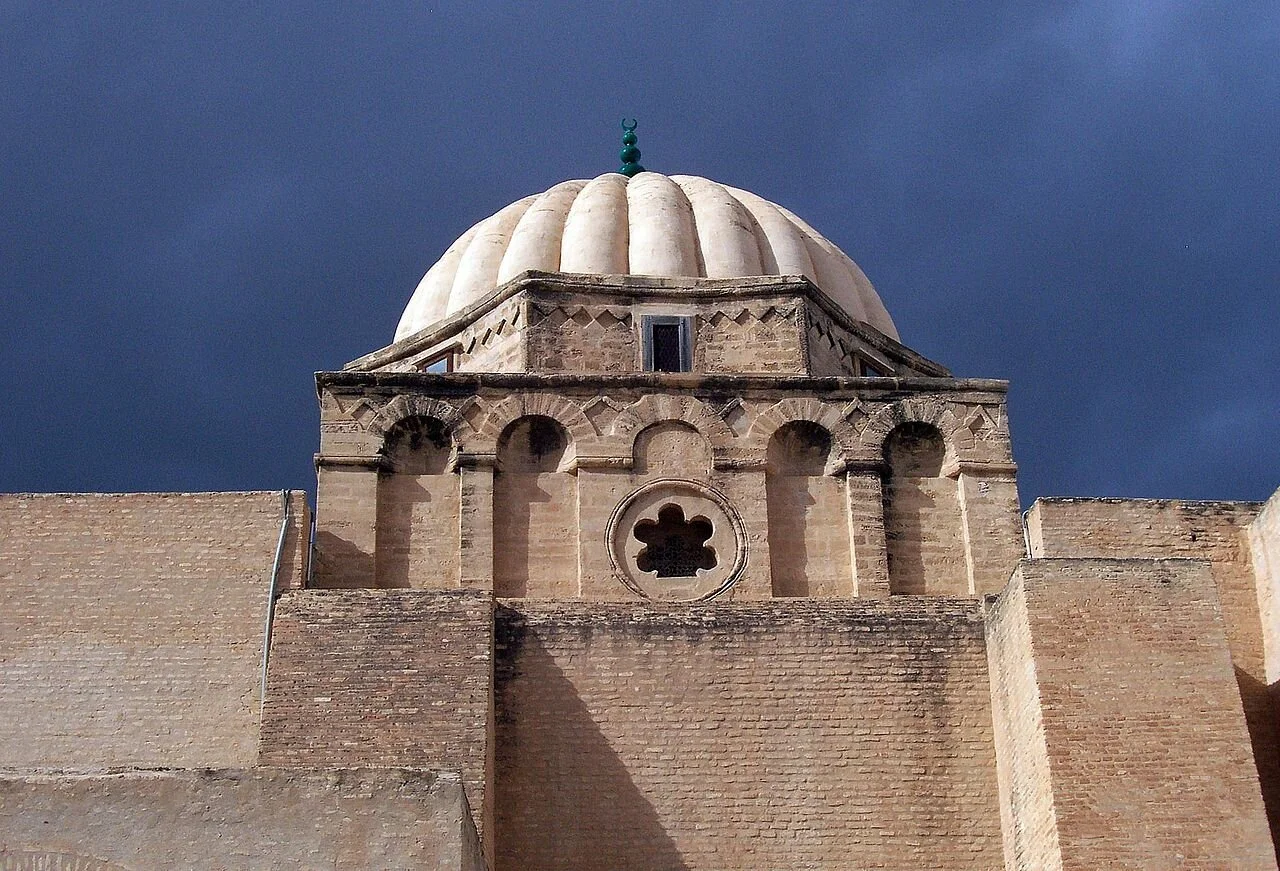
The dome of the Great Mosque of Kairouan houses the mihrab, or structure that points out the direction in which Muslims pray. Colin Hepburn. CC BY-SA 2.0.
3. Kairouan
Kairouan, a UNESCO World Heritage Site, is considered by some to be the fourth holiest site in Islam, after Mecca, Medina and Jerusalem. The city, founded by the Umayyads in 670, is the most ancient Arab-Muslim center in the Maghreb. Kairouan began as a military camp, but soon became an important center for Islamic scholarship, religious sciences, and art. The city contains many mosques, but the most important is the Great Mosque of Kairouan, also known as the Great Mosque of Uqba. The mosque contains a courtyard and a prayer hall, as well as a 105-foot minaret that bears resemblance to a Syrian bell tower or an ancient Roman lighthouse.
Another site that cannot be missed when visiting Kairouan are the Aghlabid Basins, a sophisticated feat of engineering and the largest hydraulic installation of the Middle Ages. Originally, there were 16 pools that provided water for Kairouan, but today only two reservoirs remain. Nearby, Kairouan’s souk has countless vendors who sell everything from snacks and jewelry to carpets and leather goods.
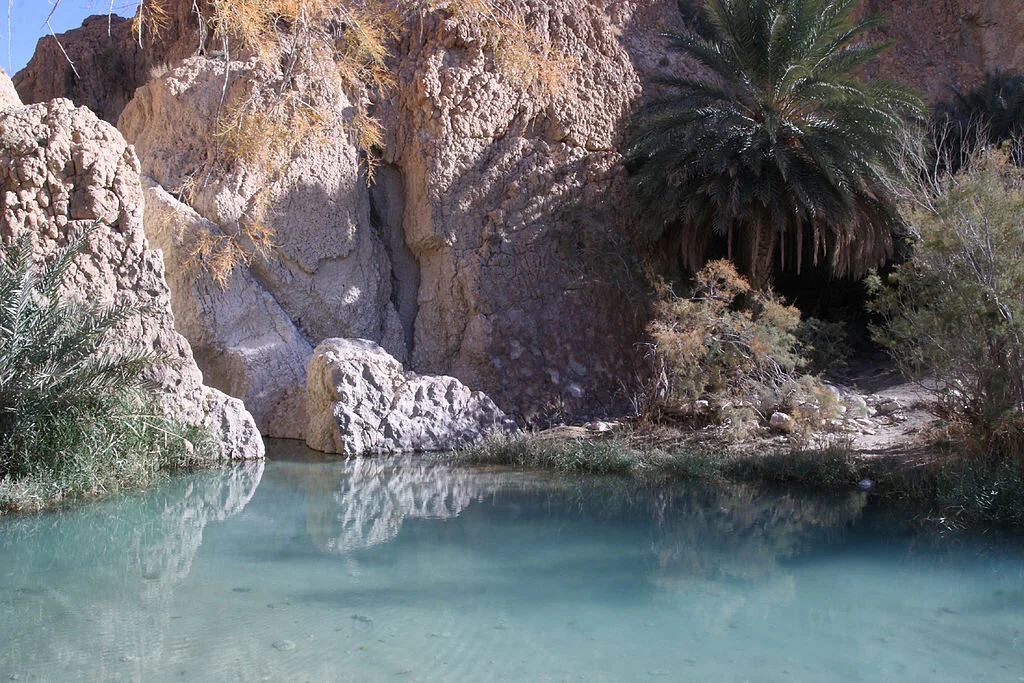
The Chebika oasis lies at the bottom of the Djebel el Negueb Mountains. Remi Jouan. CC BY-SA 3.0.
4. Chebika
Built on what was once a Roman military post, Chebika is a small village that sits right above a palm oasis at the foot of the Djebel el Negueb, which are part of the Atlas Mountains. At the top of the mountain, one can see the oasis, the village, and Chott el Gharsa, a salt lake that lies near the Algerian border (and served as a movie set for “Star Wars: The Phantom Menace” and “The English Patient”). Visitors can hike up the canyon to a small waterfall where they will be greeted by a beautiful view of bright green palm trees standing starkly against the mountainside.
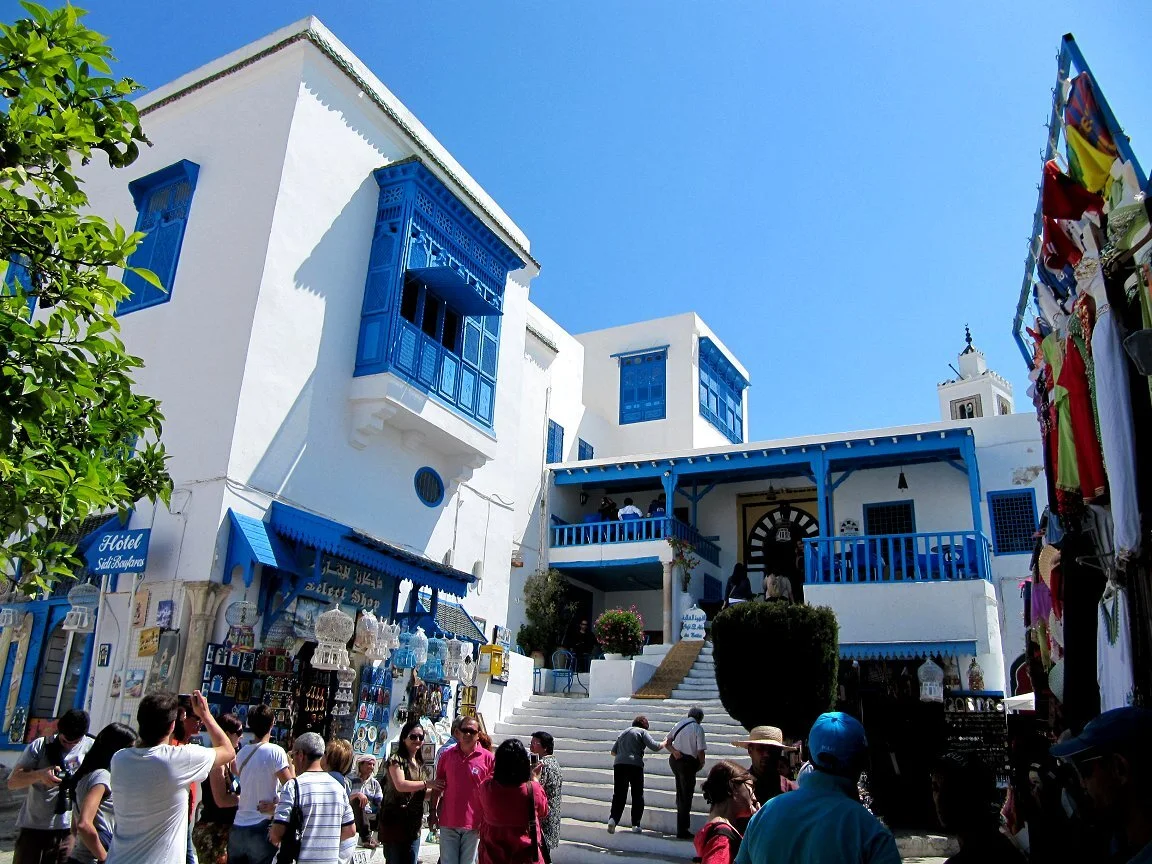
Hôtel Bou Fares and storefront in Sidi Bou Said. Allain Muller. CC BY-SA 2.0.
5. Sidi Bou Said
Sidi Bou Said is known for its blue and white theme, common to other Mediterranean-region cities and towns. The beautiful cerulean doors, shutters, gates and decorative balconies against the whitewashed buildings mirror the bright sky and the Mediterranean Sea which lies below the cliffside town. Sidi Bou Said was established as a religious sanctuary in the 13th century by Abu Said al-Baji, after whom the town was named. The palace Ennejma Ezzahra, finished in 1921 by French painter and musicologist Rodolphe d’Erlanger, is now a museum one can visit to see the beautiful architecture, view paintings by the baron, and see a treasure chest that was reportedly once owned by Suleiman I of the Ottoman Empire. Within the palace is the Centre des Musiques Arabes et Méditerranéennes (Center for Arab and Mediterranean Music), which houses a collection of musical instruments and art, and acts as a concert venue.
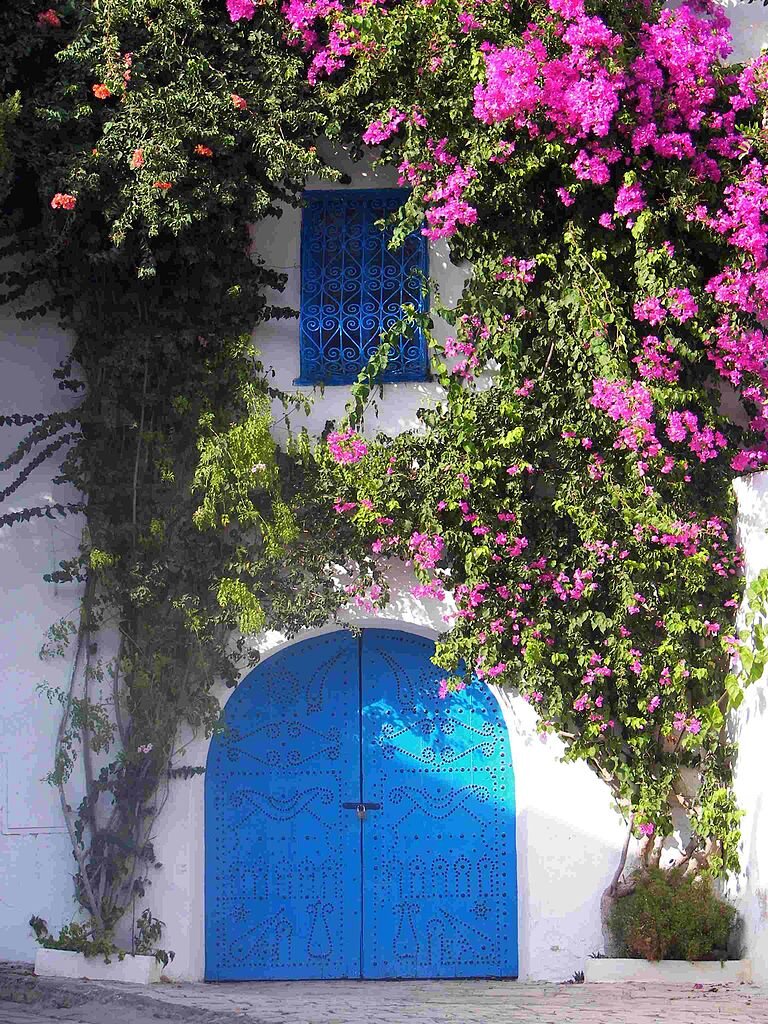
Traditional blue door in Sidi Bou Said surrounded by purple bougainvillea. Benrais. CC BY-SA 3.0.

Korbous was frequented by the ancient Romans of Carthage as a health resort. Patrick Giraud. CC BY 3.0.
6. Korbous
If you enjoy spas and natural hot springs, head for Korbous – a single street clinging to a cliff face on the west coast of Cap Bon. The mineral-rich hot springs of Korbous have been a popular spa and health resort since the time of the ancient Romans of Carthage, as evidenced by an inscription on display in the National Bardo Museum in Tunis. Korbous was not a popular spa destination until the 19th century, when Ahmed Bey, the last Ottoman leader of Constantine, had the hammam, or Turkish bath, built. In addition to the hot springs, mud from Aïn Kanassira, rich with minerals, is used to treat arthritis, various skin diseases and other health issues.
Asiya Haouchine
Asiya is an Algerian-American writer who graduated from the University of Connecticut in May 2016, earning a BA in journalism and English. She was an editorial intern and contributing writer for Warscapes magazine and the online/blog editor for Long River Review. She is currently studying for her Master’s in Library and Information Science. @AsiyaHaou
Beyond the Caribbean, 10 Tropical Escapes the World Over
For those looking to escape frigid winter temperatures, these 10 destinations will satisfy wanderlust while offering tropical climates, beaches, diverse cultures and more.
Read MoreWander Women: 6 of the Safest Destinations for Solo Female Travelers
Around the world, solo trips are becoming increasingly popular. Here are some of the safest places for women to explore on their own.
Read MoreThe Northern Lights: The 6 Best Viewing Destinations
Exploring the top locations around the world for an unforgettable aurora experience.
Read MoreTravel Through Time in the Canadian Rockies
Explore millions of years of natural history from ghost towns to Indigenous communities.
Read MoreBefore Disney: 5 of the Most Elegant Castles in the World
Majestic castles have been a staple of medieval imagery for centuries. Here are some of the most fantastical to ever have been built.
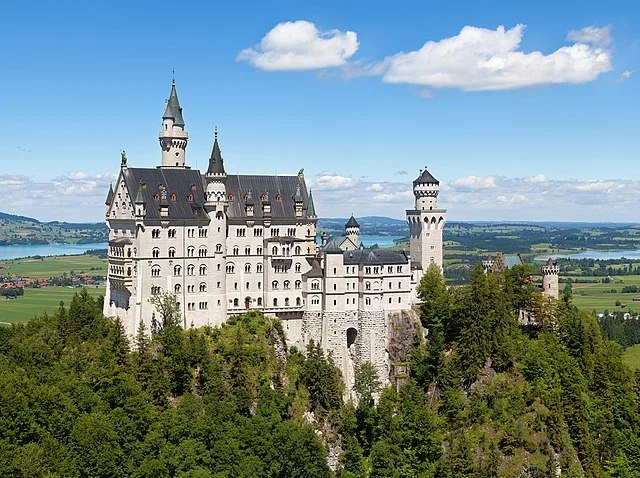
Neuschwanstein Castle in Germany. Thomas Wolf. CC BY-SA 3.0
Throughout history, numerous cultures have dedicated abundant money and resources to building castles. From soaring towers on scenic cliffs to utilitarian structures, these majestic buildings mark an astonishing amount of land around the world.
But out of all of these castles, there are a few that stand out for their uniqueness — whether it be for their history, architecture, location or one-in-a-million beauty. This list highlights five of the most incredible castles in the world, all of which should be on every traveler’s bucket list.
1. Himeji Castle, Japan
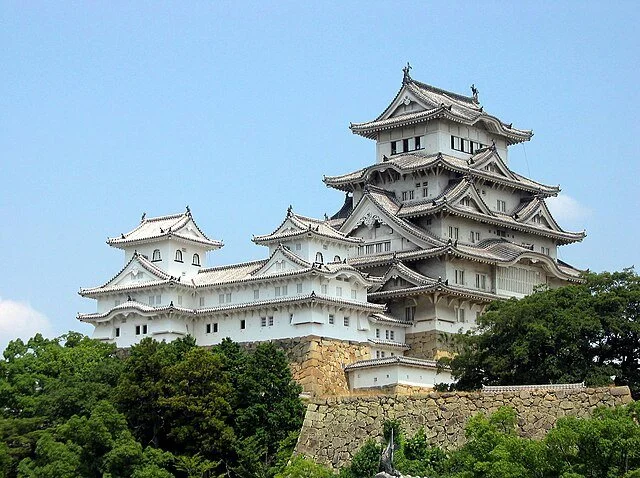
The main structure of Himeji Castle. Gorgo. CC0
Also known as “White Heron Castle,” Himeji Castle is lauded as Japan’s best-preserved and most beautiful palace. Throughout history, wars, sieges and natural disasters have laid waste to almost every castle in Japan. Himeji is one of only twelve castles that have never been destroyed. Its immense, 80-building structure has remained completely intact since its construction in 1609. The main palace, a colossal wooden building of six stories, provides visitors with an incredible view of the sprawling grounds, a labyrinthine maze of winding paths and defensive barracks.
The city of Himeji, which lies at the foot of the castle, is also a popular spot for viewing Japan’s world-famous cherry blossoms. During Golden Week and the summer holiday, wait times to enter Himeji Castle can rise astronomically. Nonetheless, the view from the top is undoubtedly worth the wait during the seasons when these gorgeous trees are in full bloom.
2. Mont Saint-Michel, France
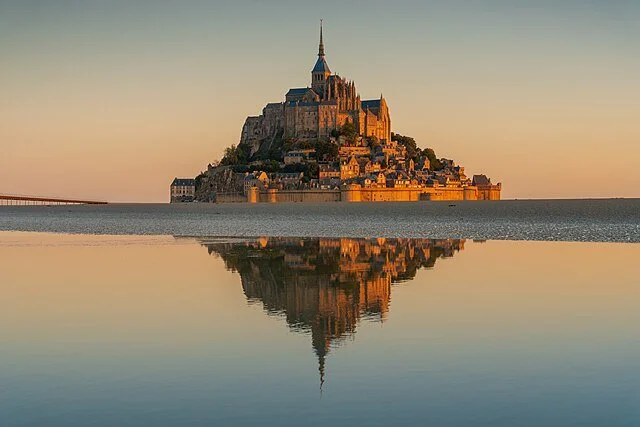
Mont Saint-Michel and its reflection in the bay. Lynx1211. CC BY-SA 4.0
Sitting atop an island in the middle of an idyllic bay, Mont Saint-Michel is a destination straight out of a fairy tale. The site was originally built as an abbey, constructed over several centuries with the funds of various French kings and dukes of Normandy. Over time, Mont Saint-Michel attracted monks from all across Europe and continues to remain a major Catholic pilgrimage site. The walls around the base of the island were added in an effort to keep the English out and provide reinforcement against centuries of conflict across the English Channel.
Today, the abbey is open to the public, with its gorgeous architecture and rich history on display. Visitors can explore the monks’ promenade, the refectory in which they took their meals and the glorious central church.
3. Peles Castle, Romania
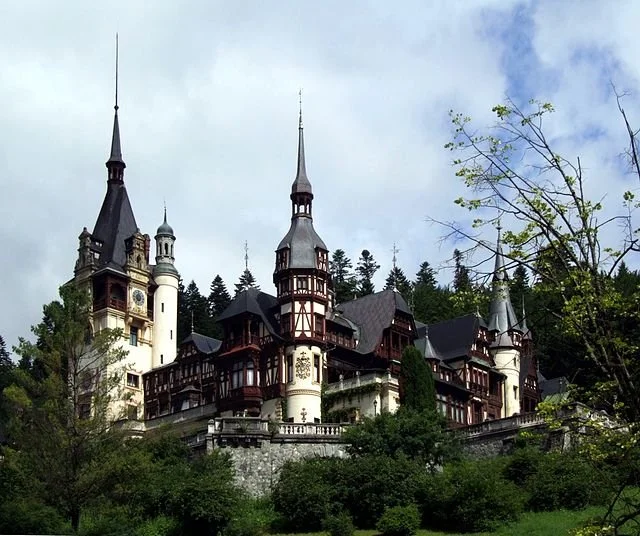
A snapshot of Peles Castle. Marcin Szala. CC BY-SA 3.0
In 1872, the king of Romania purchased roughly two square miles to transform into a royal hunting ground. The next year, the king decided to construct what would become one of the world’s most beautiful castles. Situated in a fairy-tale mountain range, Peles Castle was initially used as a summer home for royalty but is now a museum open to the public.
Peles Castle has received many foreign dignitaries to Romania — including several US presidents — and has been featured in a handful of Hollywood movies. Many of the palace’s 170 rooms are dedicated to different cultures and art styles from over the centuries. Whether you’re interested in the architecture, the artistry or the celebrity guest list, Peles Castle is an unmissable sight that deserves a spot on the bucket list.
4. Prague Castle, Czech Republic
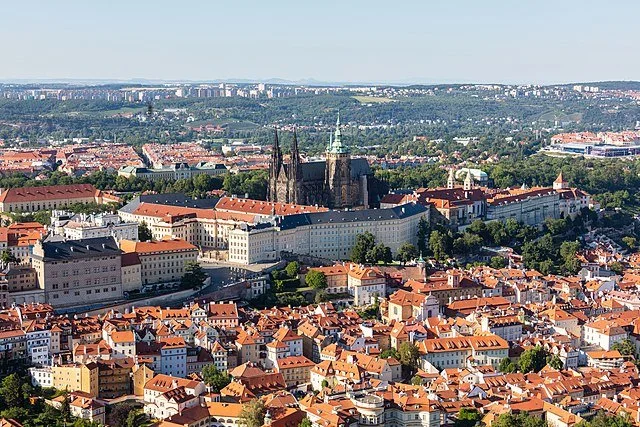
The massive Prague Castle. Diego Delso. CC BY-SA 4.0
By far the largest ancient castle in the world (a vast 18 square acres), Prague Castle is also one of the most popular tourist destinations in Prague. Construction on the site began back in 870 when the central Church of the Virgin Mary was built. In the 14th century, the grounds were expanded into a fully functional fortress, after which the castle was reconstructed several times. When the nation was divided into the Czech Republic and Slovakia, Communist influence was driven out of the region, and the castle became both the seat of the Head of State and a public museum.
Although visitors can view the grounds on their own, guided tours are the best way to experience Prague Castle. After making a tour reservation well in advance, guests will be taken into the Royal Crypt, the Saint Wenceslas Chapel and a variety of other locations that are normally off-limits.
5. Neuschwanstein Castle, Germany
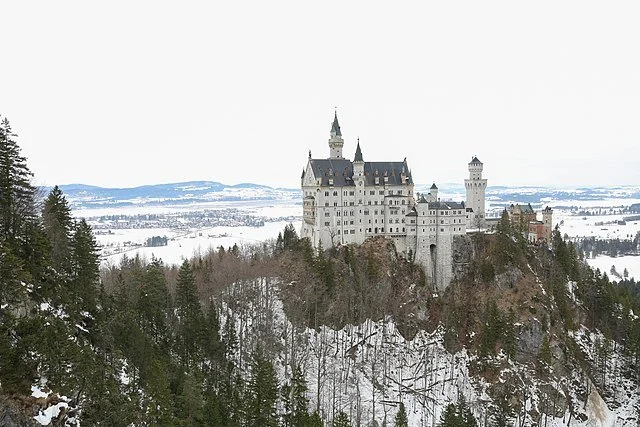
Neuschwanstein in the heart of the German winter. Diego Delso. CC BY-SA 4.0
Neuschwanstein Castle, situated just miles from the border between Germany and Austria, is perhaps one of Europe’s most scenic and beautiful castles. Literally translated to “New Swan Stone” in English, Neuschwanstein was initially built both as a summer home and as a tribute to Richard Wagner and his classic opera “Knight of the Swan.” Although the king who commissioned the castle would not live to see its completion, construction continued after his death, and Neuschwanstein became one of the most storied palaces on Earth.
The castle’s biggest claim to fame is its status as the primary inspiration behind Disneyland’s Sleeping Beauty Castle. Due to security reasons, Neuschwanstein can only be accessed through guided tours, and photography of the interior is strictly prohibited. However (speaking from experience), the magnificent beauty of this mountain palace is unforgettable, even without pictures to look back on.
Castles are some of the greatest architectural feats that humanity has ever designed. They retain a majesty and presence that no other architecture can claim, and their status as icons of an entire era of history is unrivaled. If you’ve ever wanted to explore the past or experience the wildest fancies of the royal ruling class, look no further than these incredible destinations.

Ryan Livingston
Ryan is a senior at The College of New Jersey, majoring in English and minoring in marketing. Since a young age, Ryan has been passionate about human rights and environmental action and uses his writing to educate wherever he can. He hopes to pursue a career in professional writing and spread his message even further.
My Road Trip Across The Balkans
Photographer Laura Grier shares her adventures through Bosnia, Croatia, Montenegro and more.
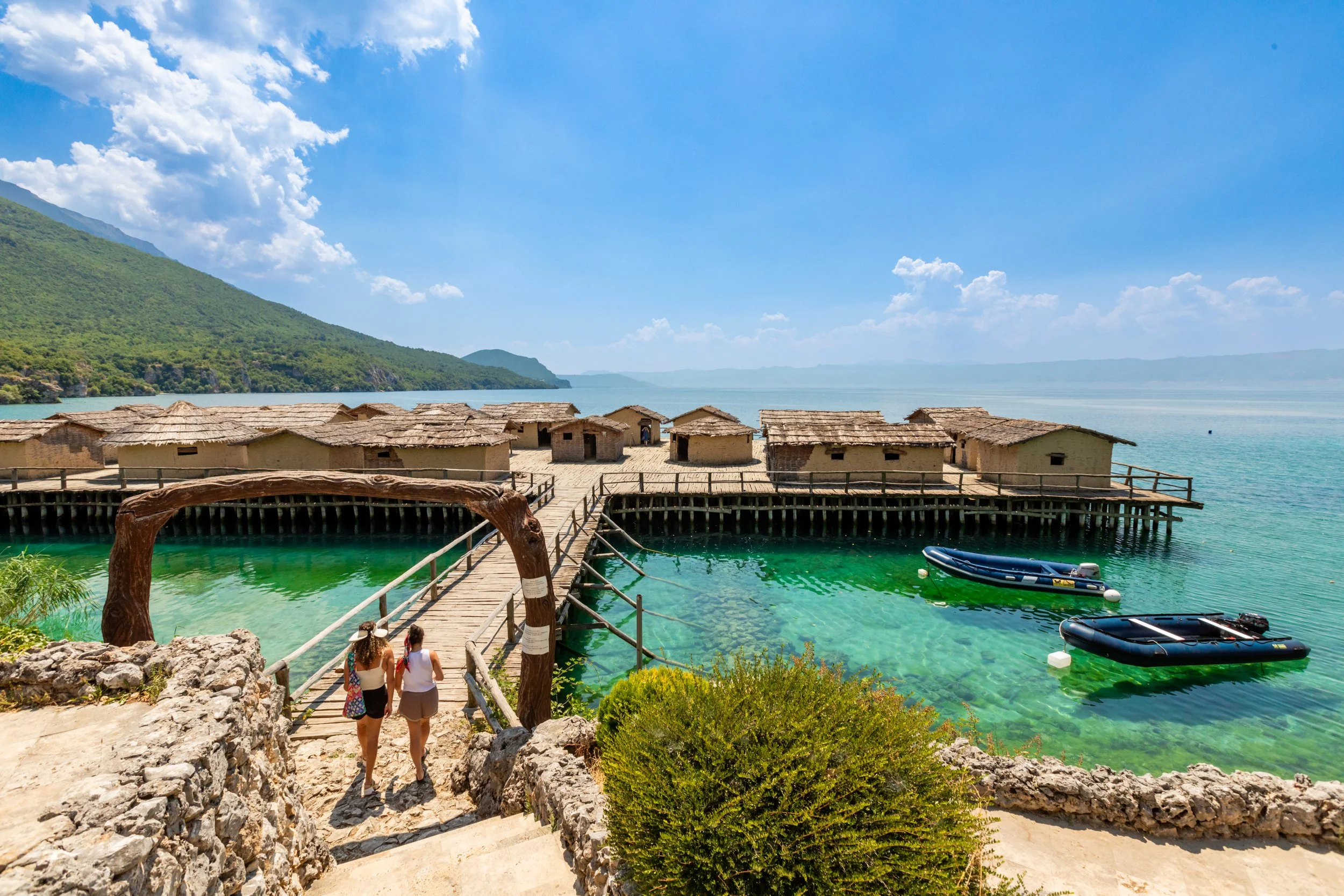
Macedonia. Laura Grier.
Imagine hitting the road with your best friends, traveling through the breathtaking Balkans, in the heart of the former Yugoslavia. A journey through some of the most stunning landscapes in Europe, this epic road trip was also a personal milestone for me as I celebrated visiting my 100th country along the way.
Although many Americans don’t often travel to this part of the world, Eastern Europe is a hidden gem — safe, welcoming and incredibly affordable. Crossing borders was a breeze, even though we didn’t speak the local languages. Everywhere we went, from bustling cities to quaint villages, we were greeted with warm smiles and genuine hospitality.
The mix of rich history, mouth-watering food and awe-inspiring nature made my trip unforgettable. Whether exploring medieval fortresses perched on cliffs, wandering through picturesque towns, or relaxing by crystal-clear lakes, every moment offered a new adventure. A must-visit destination for any adventurous traveler, this beautiful and often overlooked part of the world is a treasure trove of experiences waiting to be discovered.
1. Bosnia
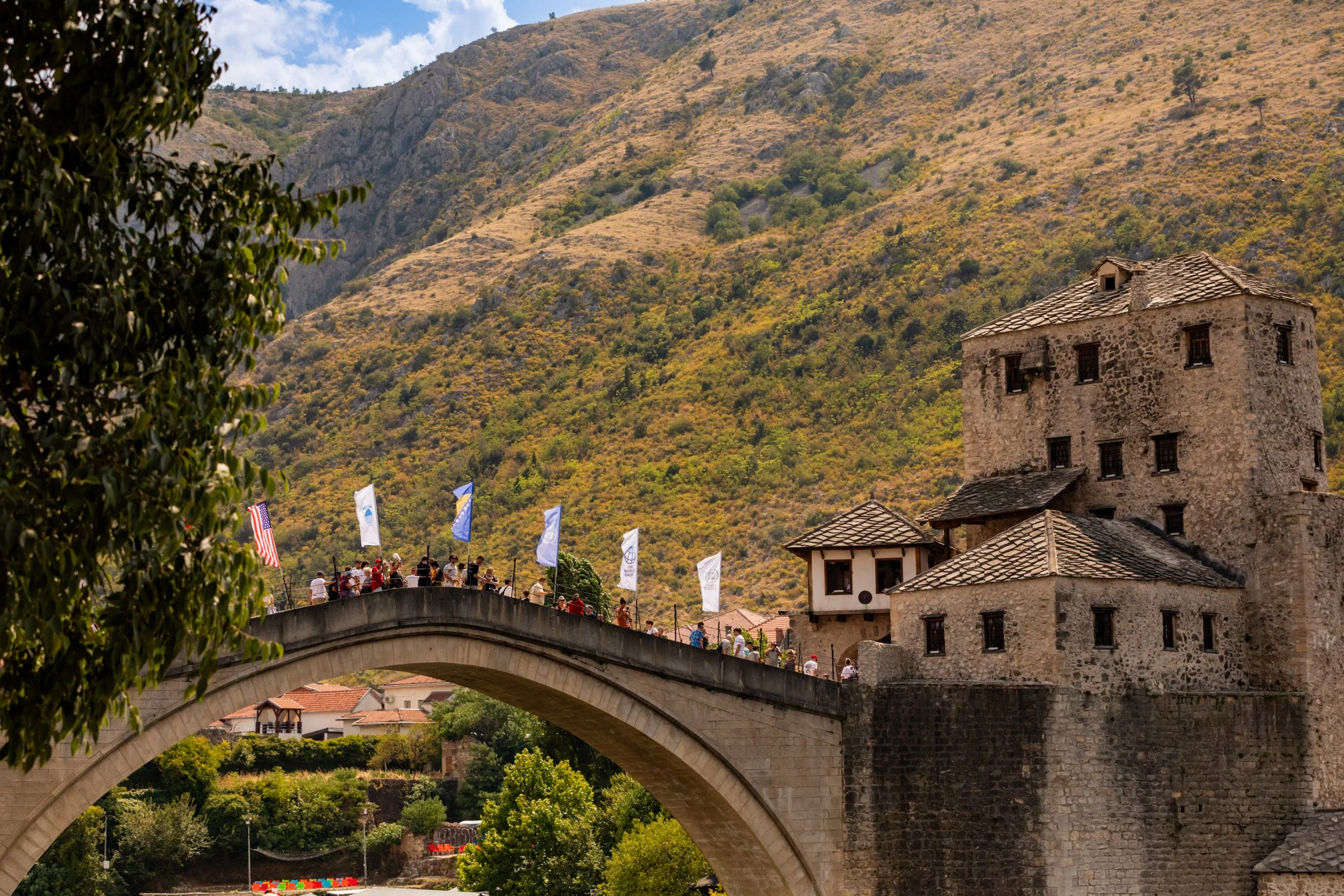
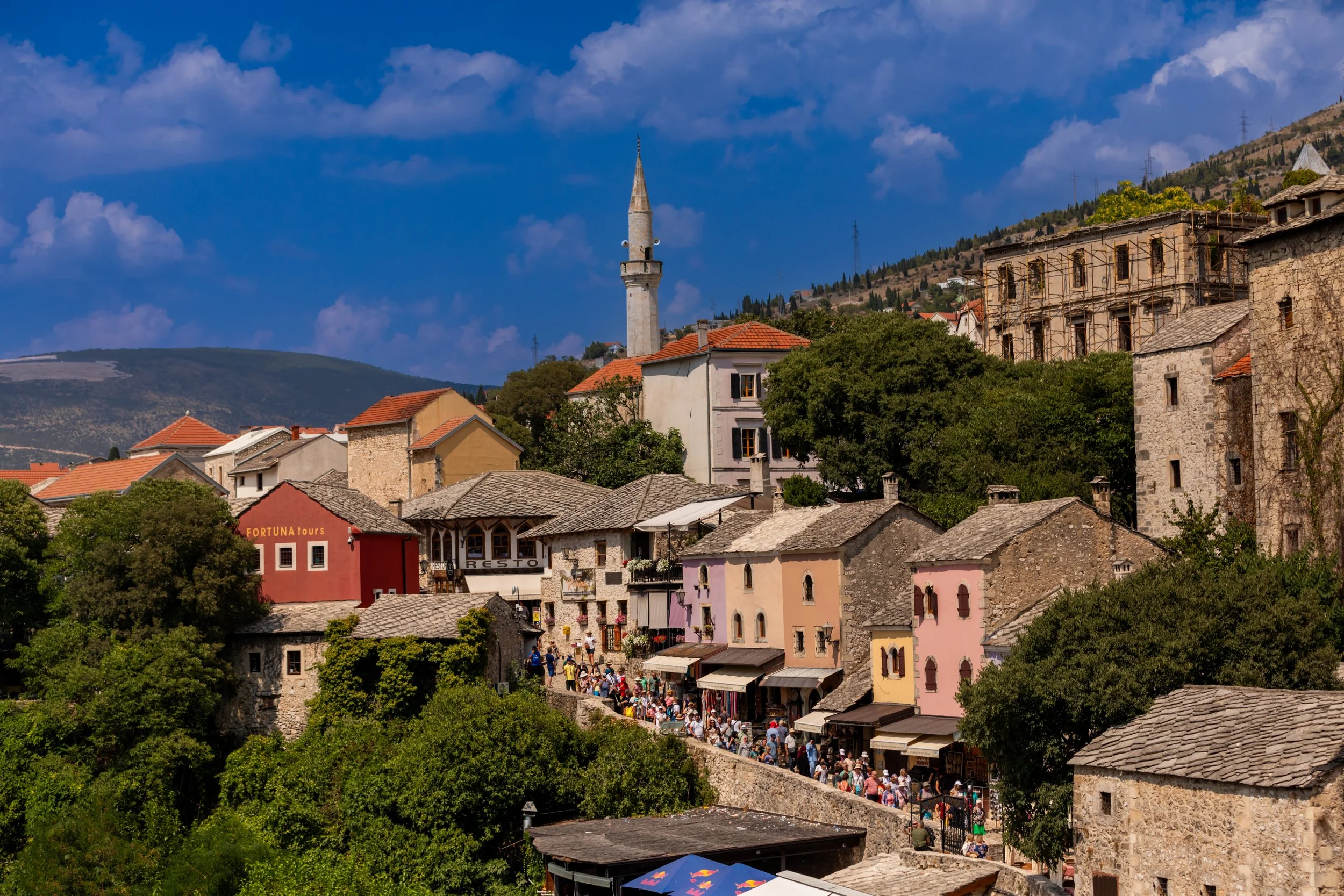
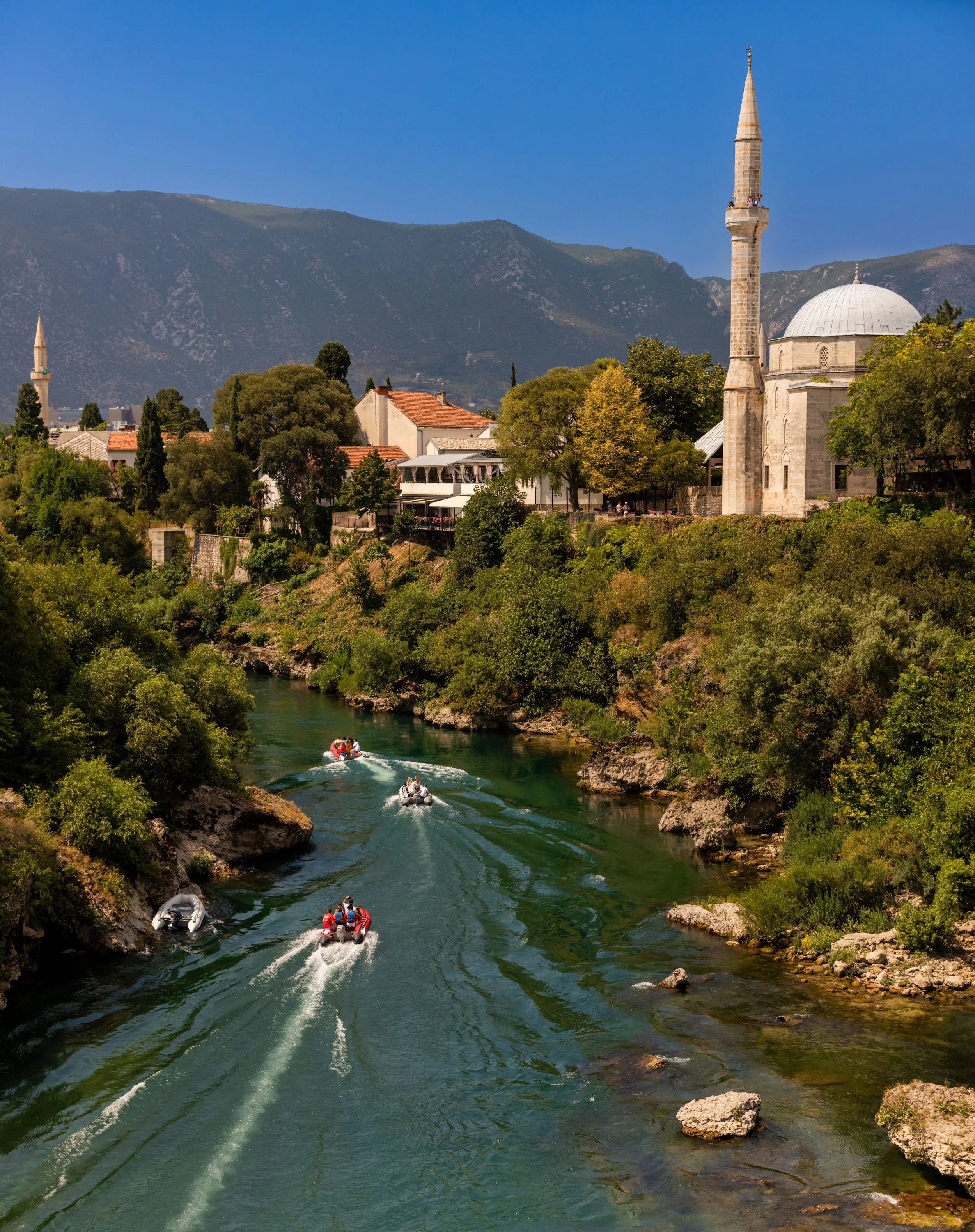

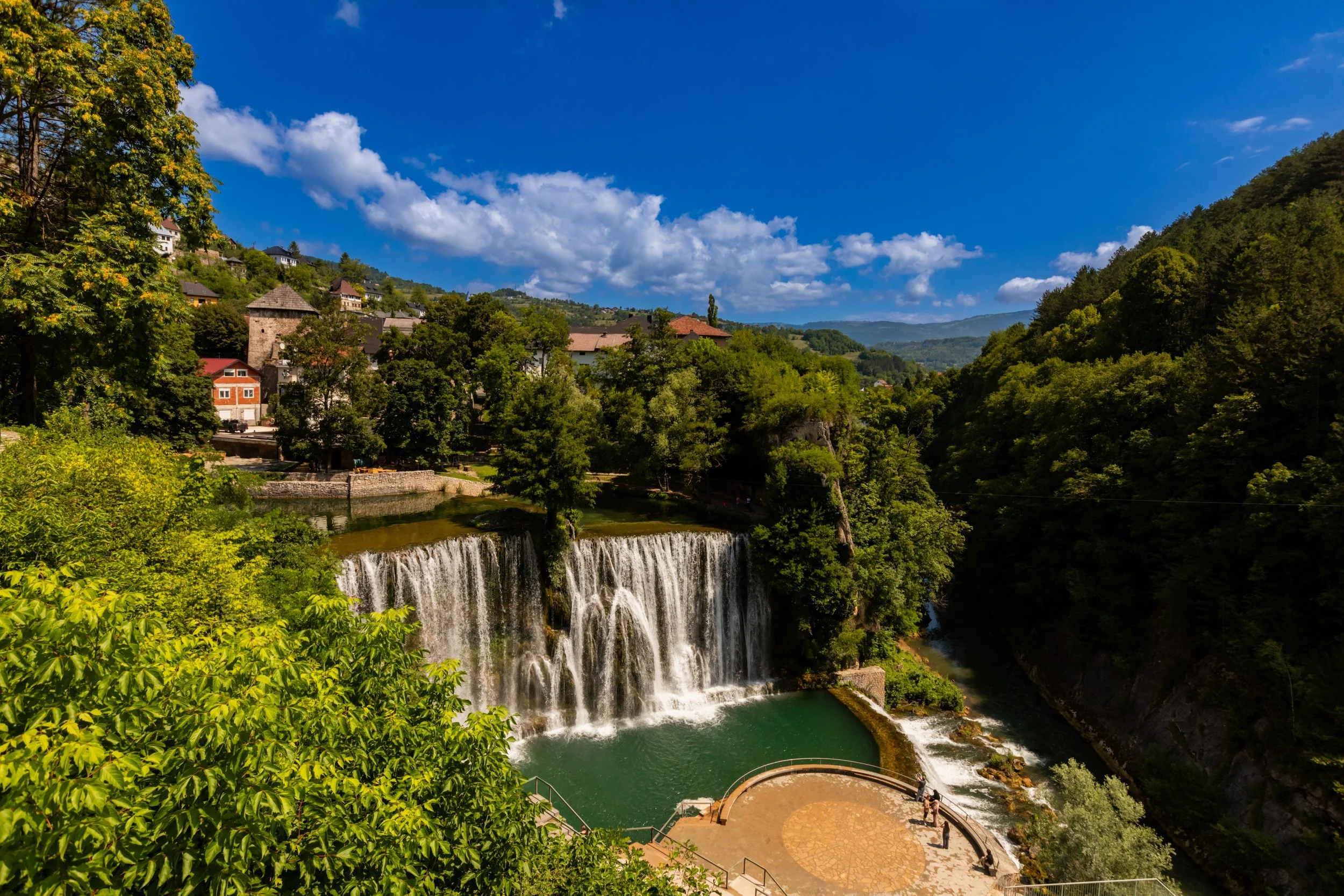
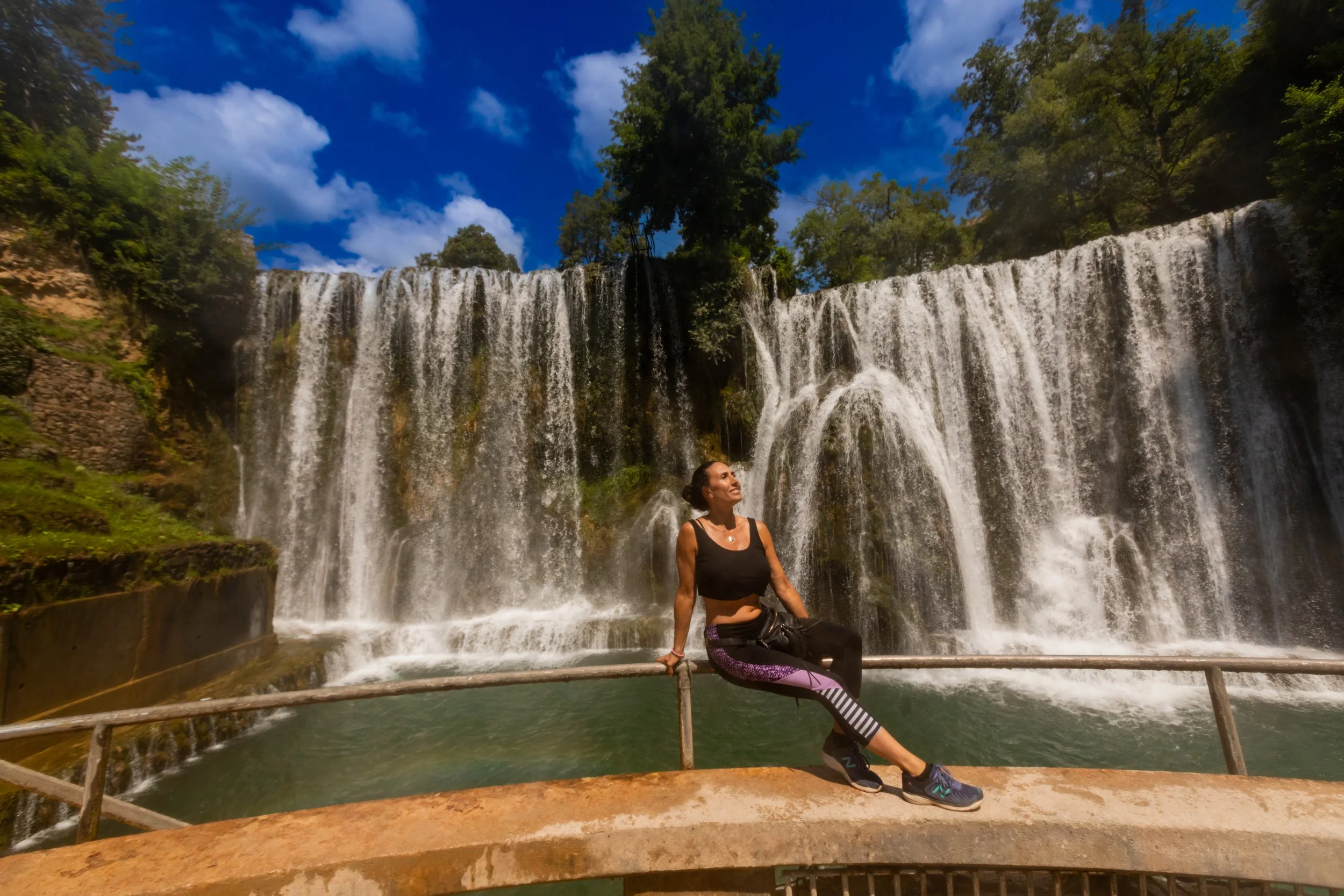
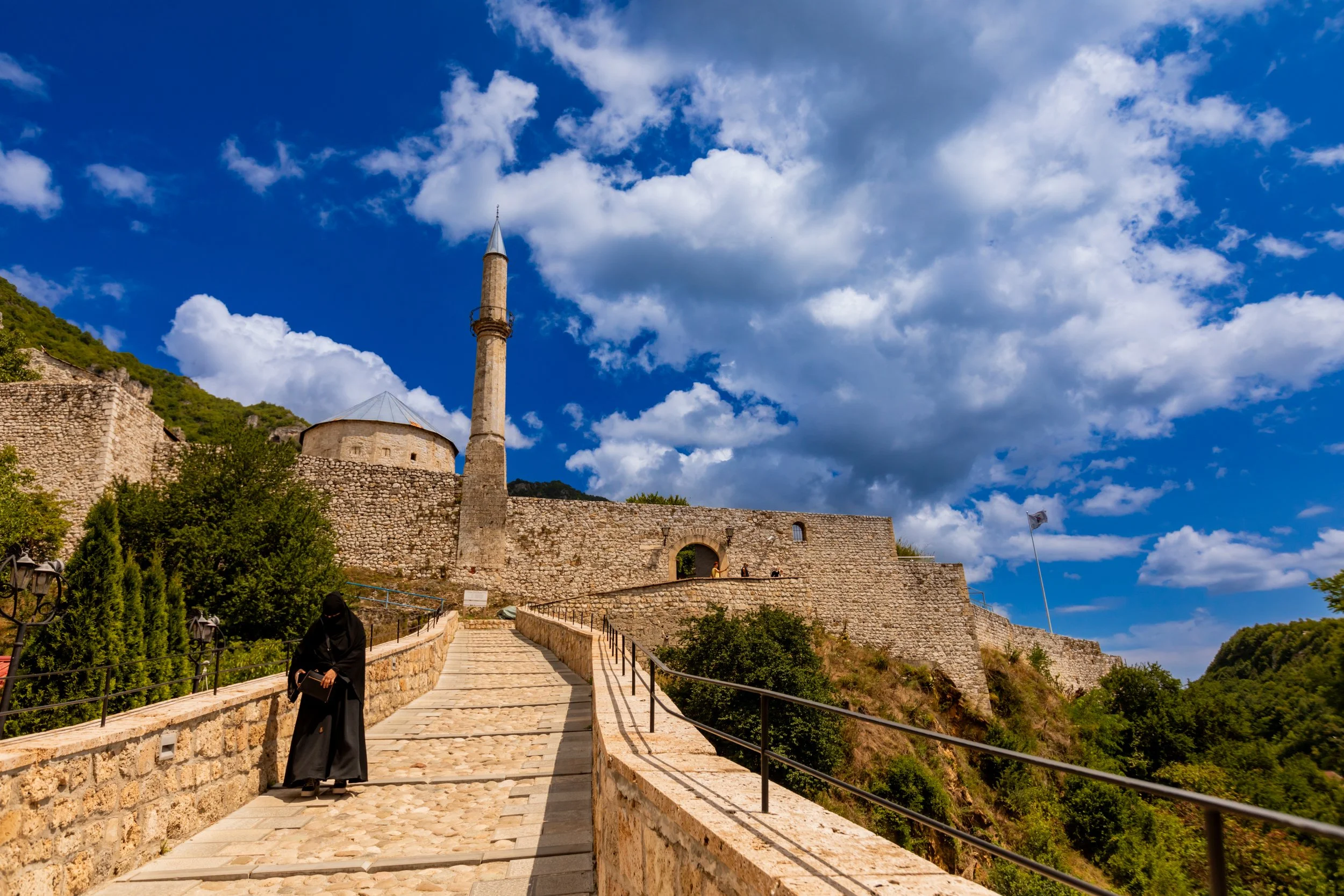
Mostar Bridge:
The iconic Stari Most, or Mostar Bridge, is both a stunning example of Ottoman architecture and the site of a centuries-old tradition. As a rite of passage in Bosnia, young men often gather on the bridge to prove their bravery by diving 70 feet into the Neretva River which runs below.
Jajce:
The town of Jajce, with its picturesque waterfalls and medieval charm, looks like something out of a fairy tale. Perched high up on a hill between the crossroads of two rivers, this enchanting walled city is also the birthplace of Yugoslavia, making the village as historically significant as it is beautiful.
2. Macedonia
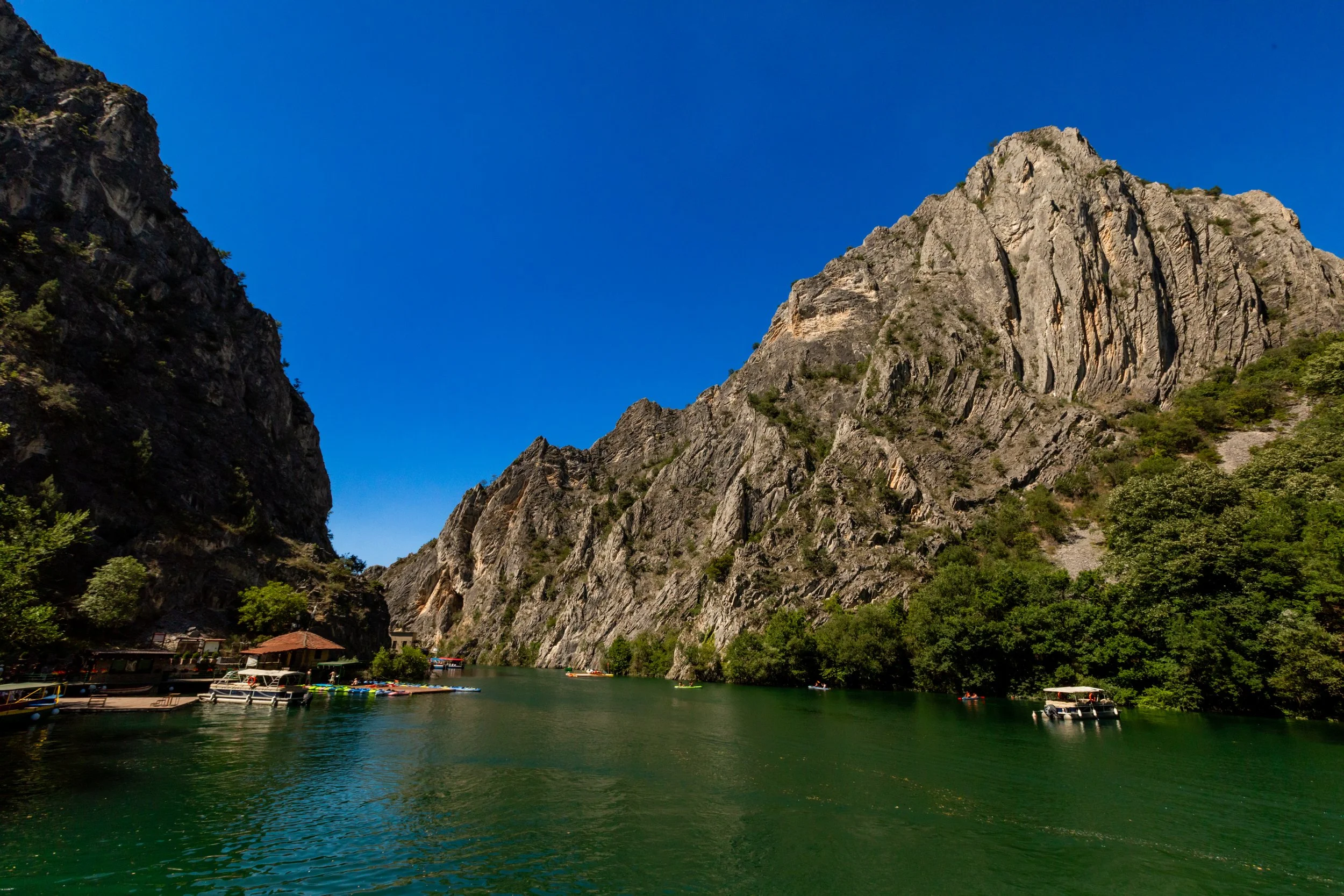
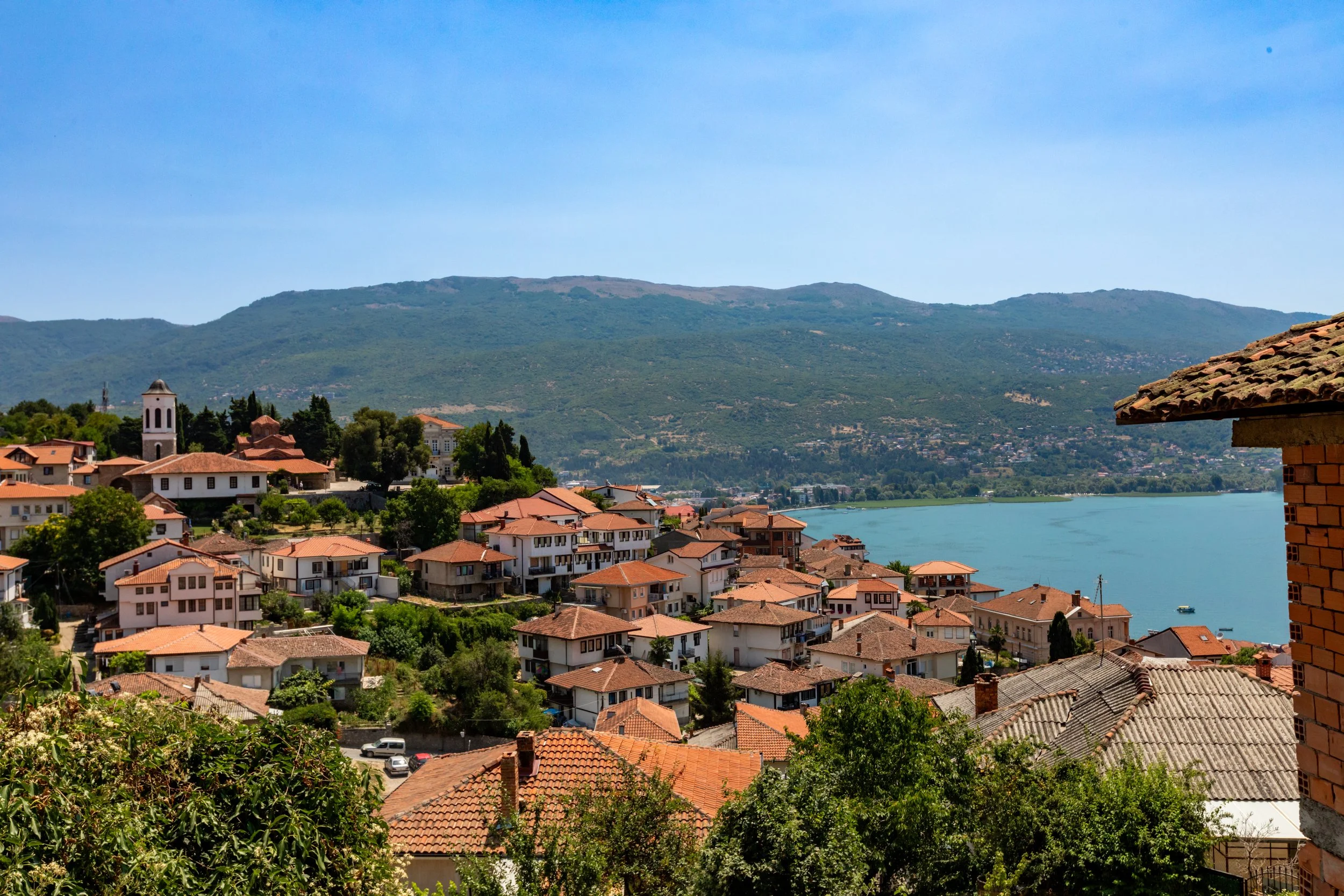
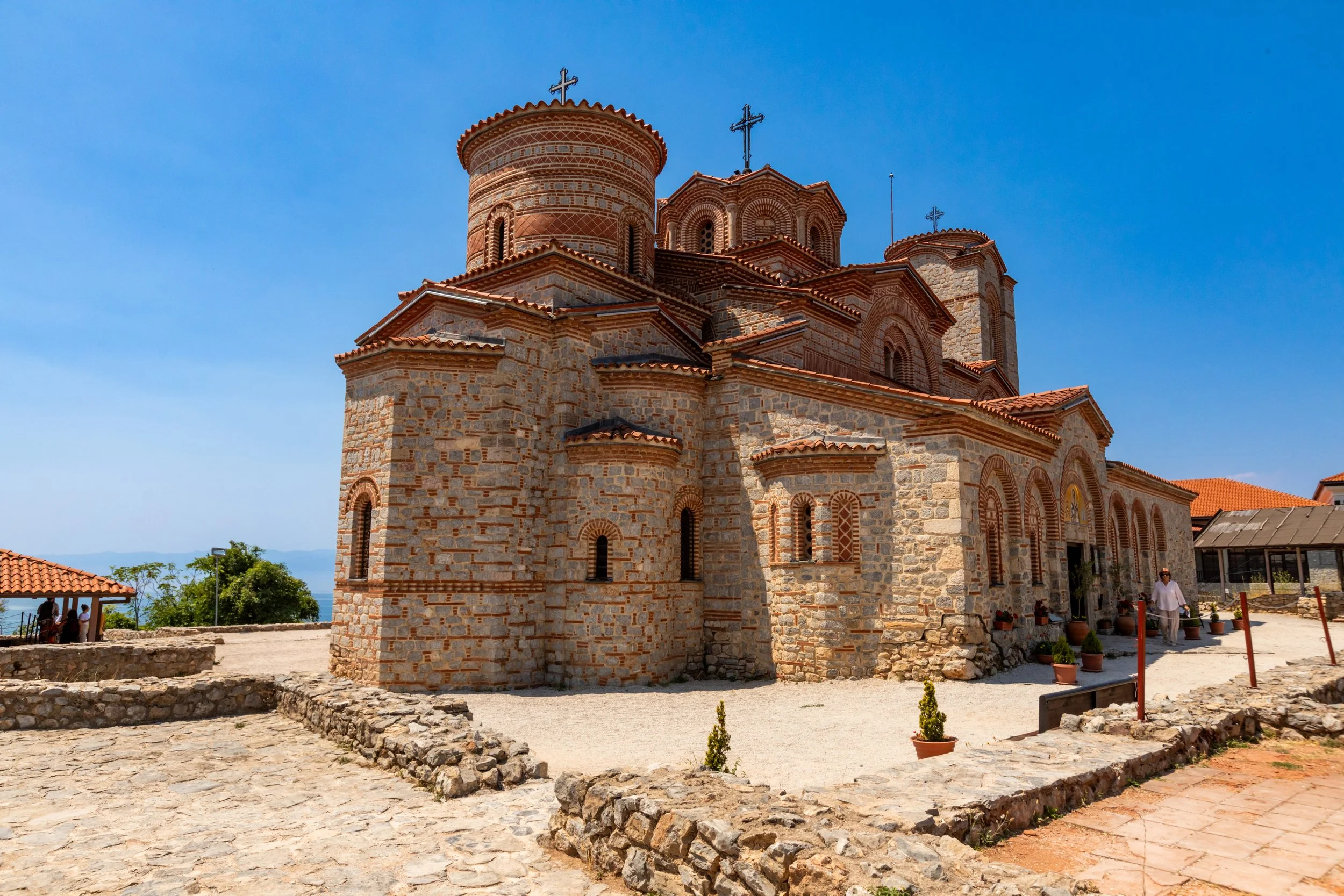

Lake Ohrid:
Lake Ohrid, one of Europe's oldest and deepest lakes, cradles the ancient city of Ohrid. Believed to be the oldest human settlement in Europe, archaeological evidence suggests that the area has been inhabited for over 7,000 years. One of the oldest continuously inhabited cities in Europe, the town itself dates back to at least the 4th century BCE. Featuring serene waters and historic sites, Ohrid is truly a gem amongst UNESCO World Heritage sites.
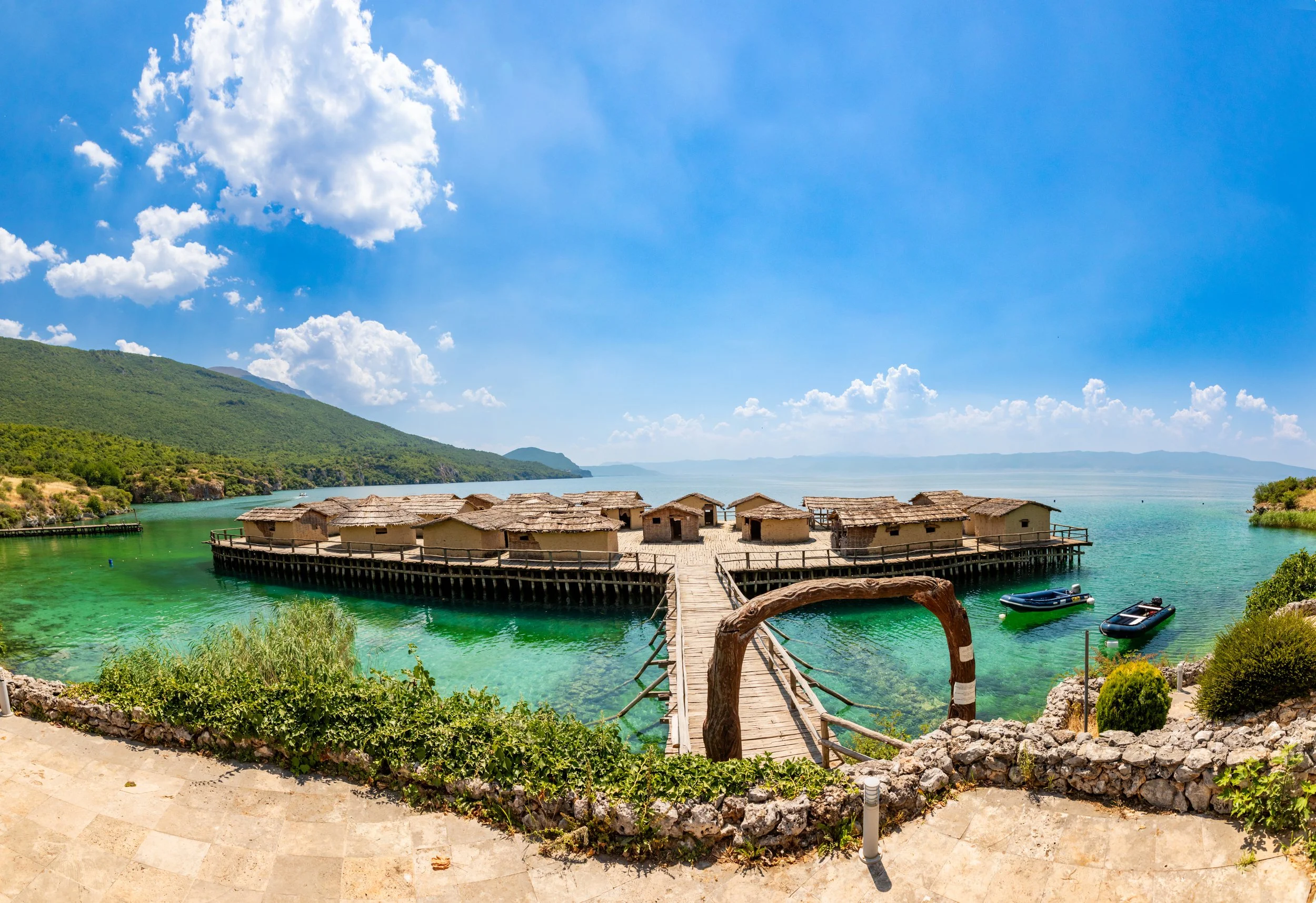
Bay of Bones:
The Bay of Bones is an extraordinary archaeological site that reconstructs an ancient lake settlement from 1200 B.C.E. The floating village, resting upon Lake Ohrid, offers a glimpse into the life of Macedonia's earliest inhabitants. The actual ruins of the original settlement lie underwater, just beneath the recreated floating village. You can even book a snorkeling or scuba tour to explore them up close!
Matka Lake:
Located in Macedonia’s Matka Canyon, Matka Lake is a haven for nature lovers and adventurers alike. Beyond crystal-clear waters and dramatic cliffs, this stunning natural gorge is also home to hidden caves and medieval monasteries, making it a must-visit in Macedonia. You can hike up the nearby mountain to visit the church at the top and then hike back down to swim and do watersports in the lake. However, it’s important to remember that the water temperature can be as cold as 48 degrees Fahrenheit depending on the season. The lake's cool temperature is due to the depth of the canyon and the icy waters from nearby underground springs, making it feel more like a polar plunge!
3. Croatia
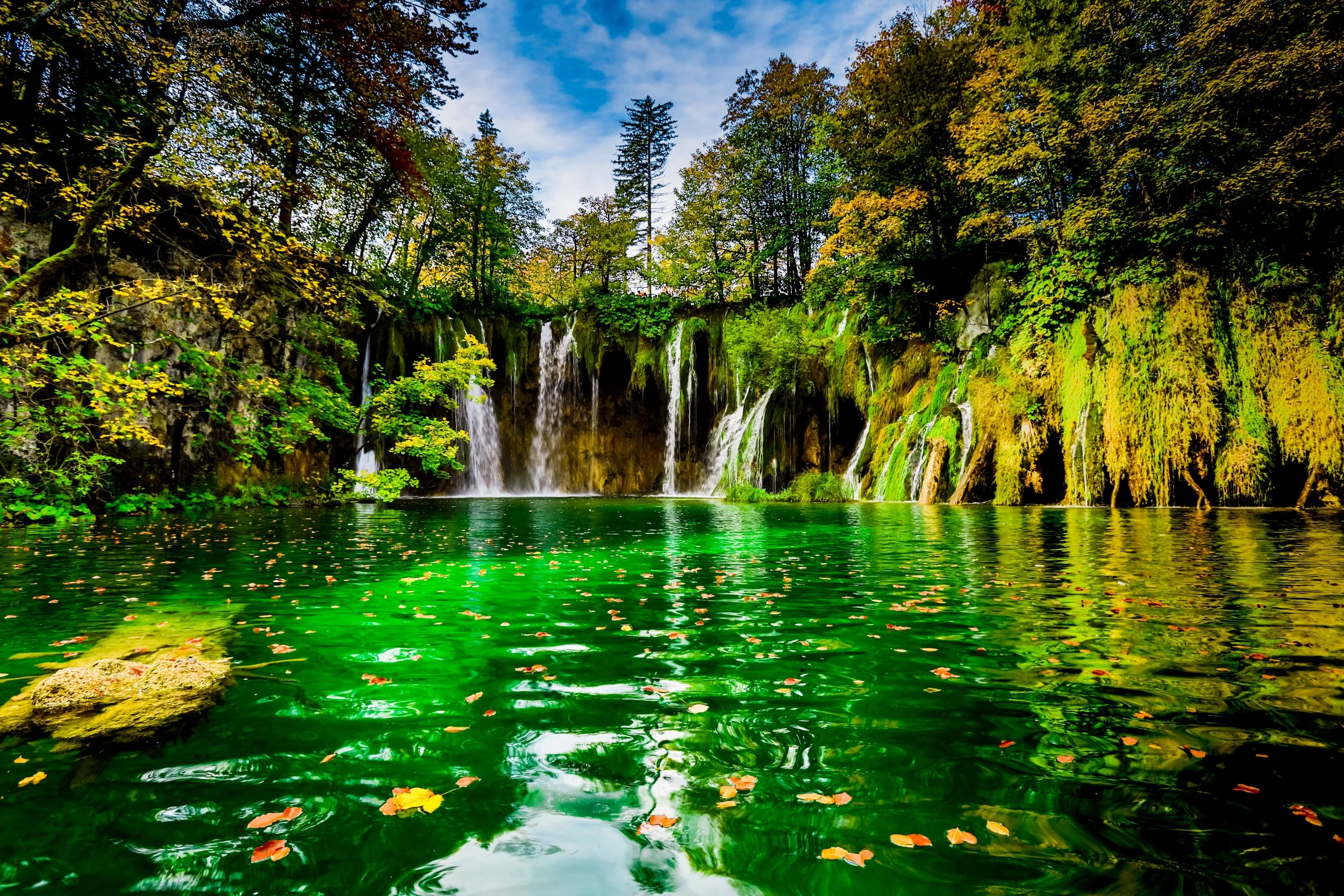

Plitvice Lakes:
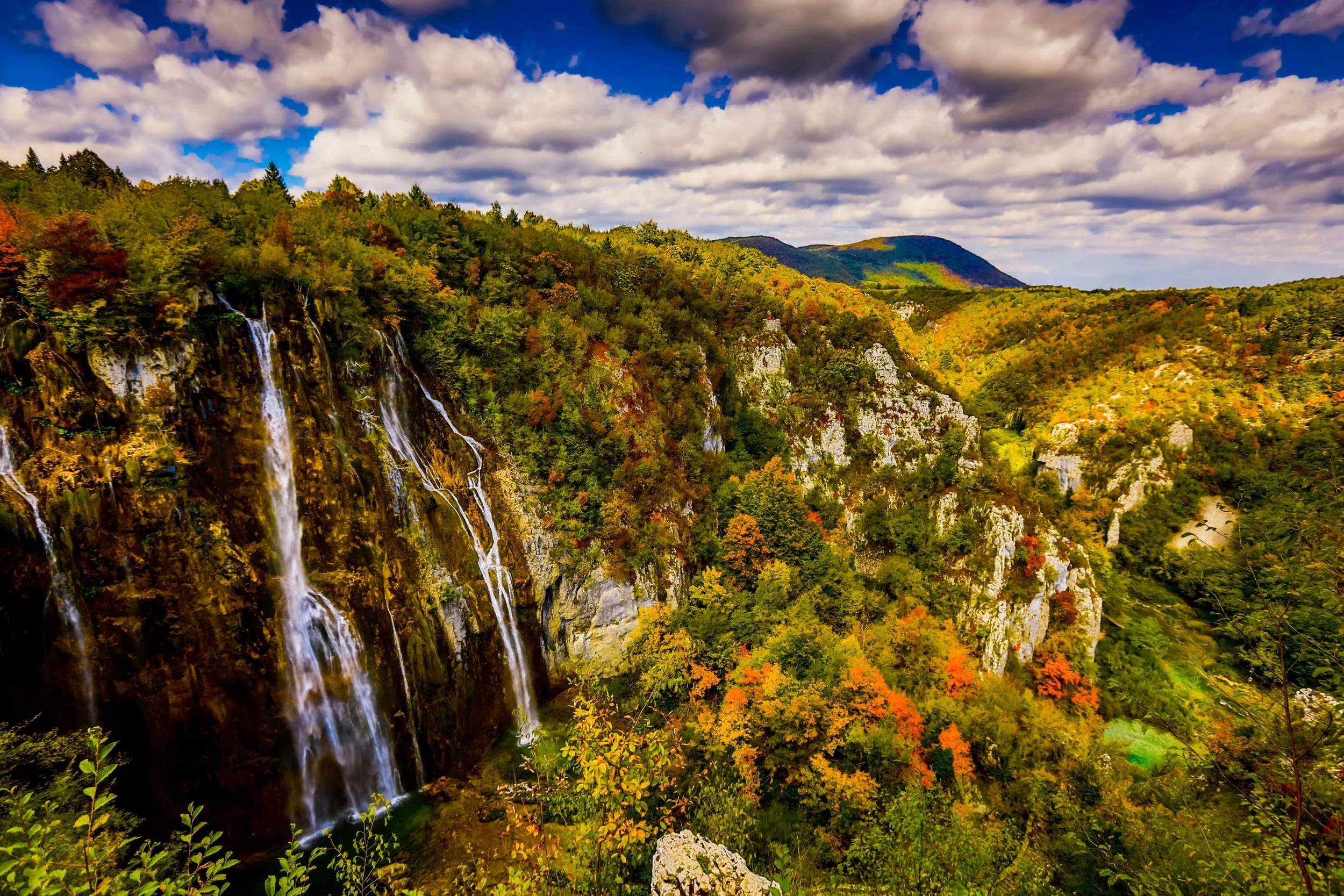
Visiting Plitvice Lakes National Park feels like stepping into a fantasy, with its breathtaking wonderland of cascading waterfalls, lush greenery and mesmerizing turquoise lakes. This UNESCO World Heritage site is Croatia's natural treasure, captivating visitors with its otherworldly beauty. Plitvice is home to 16 interconnected lakes, each more stunning than the next. I was obsessed with the beautiful neon green moss that covered everything around them.
Dubrovnik:
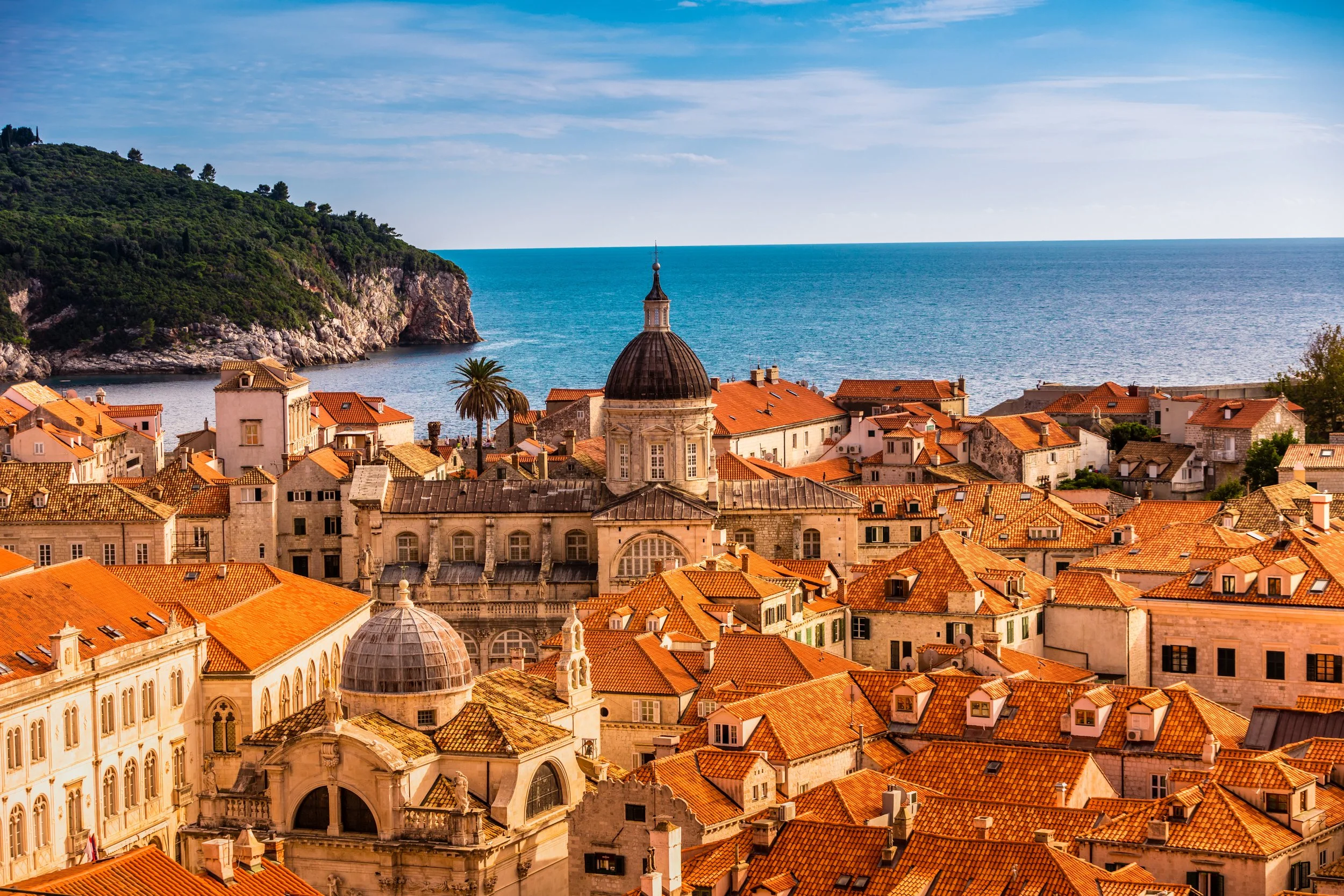
Dubrovnik, often called the "Pearl of the Adriatic," is a city where history comes alive. With ancient stone walls, charming streets and panoramic views of the sparkling sea, this medieval city is a stunning blend of ancient architecture and vibrant culture. In Dubrovnik, "Game of Thrones" fans will recognize numerous filming locations from the series, such as King's Landing. Walking through the town’s streets might just feel like stepping into Westeros!
Split:
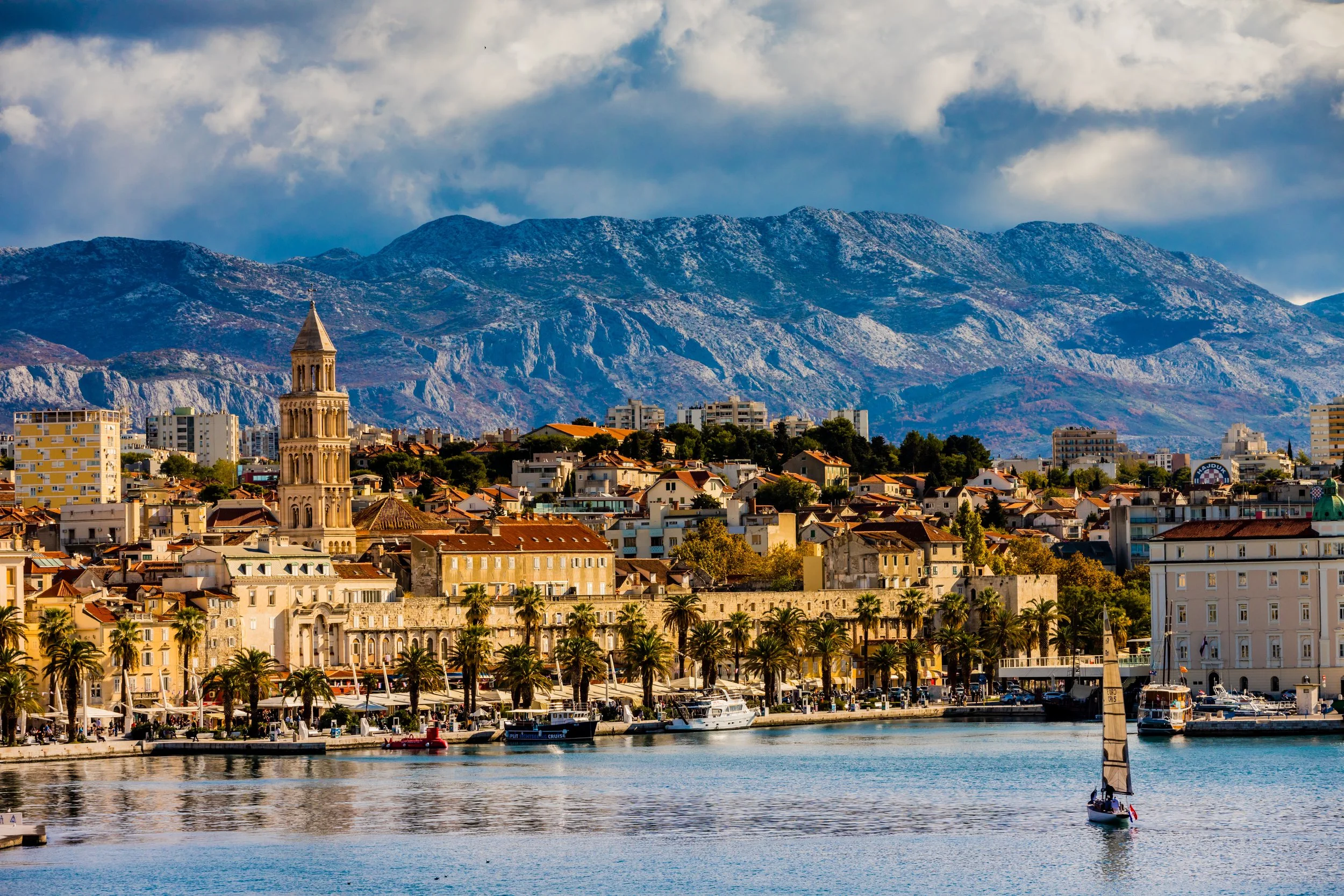
In Split, the past and present beautifully collide. Once the site of a Roman emperor's palace, Split is a vibrant blend of ancient history and modern life. With its sprawling complex of ruins, the UNESCO-listed Diocletian's Palace forms the heart of this bustling coastal city. The narrow streets are interconnected and labyrinthine — you will need to allow yourself time to get lost and discover hidden bars and restaurants, some of which haven't changed in centuries!
4. Montenegro
Tara Canyon:
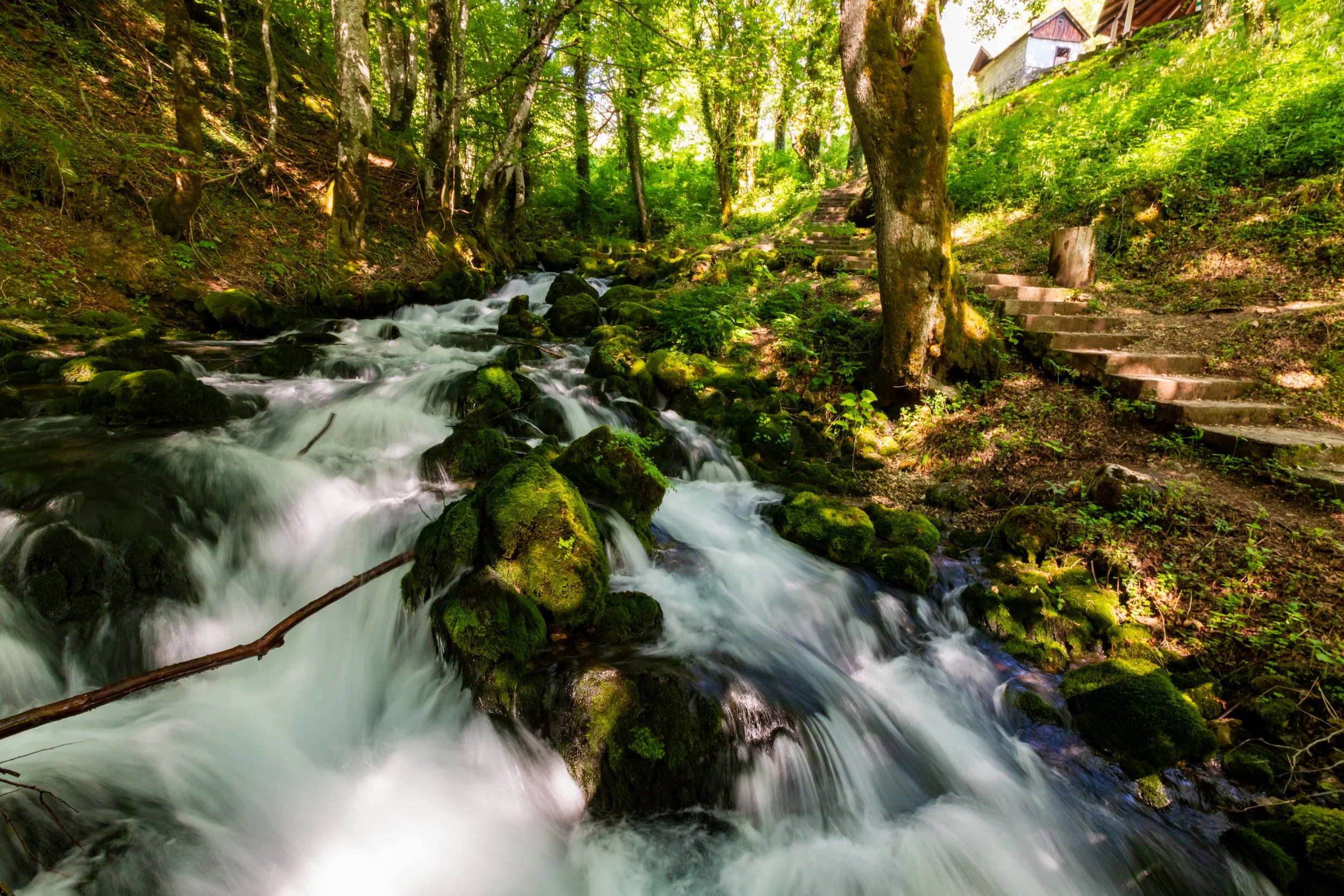
Tara Canyon, the second deepest canyon in the world, is one of Montenegro's most jaw-dropping natural wonders. With dense forests and a crystal-clear river carving through the rugged landscape, the site is a dream come true for adventurers and nature lovers. The Tara River is known as the "Tear of Europe" because of its pure, drinkable waters. If you're into white-water rafting, this canyon also offers some of the best in Europe!
Kotor:
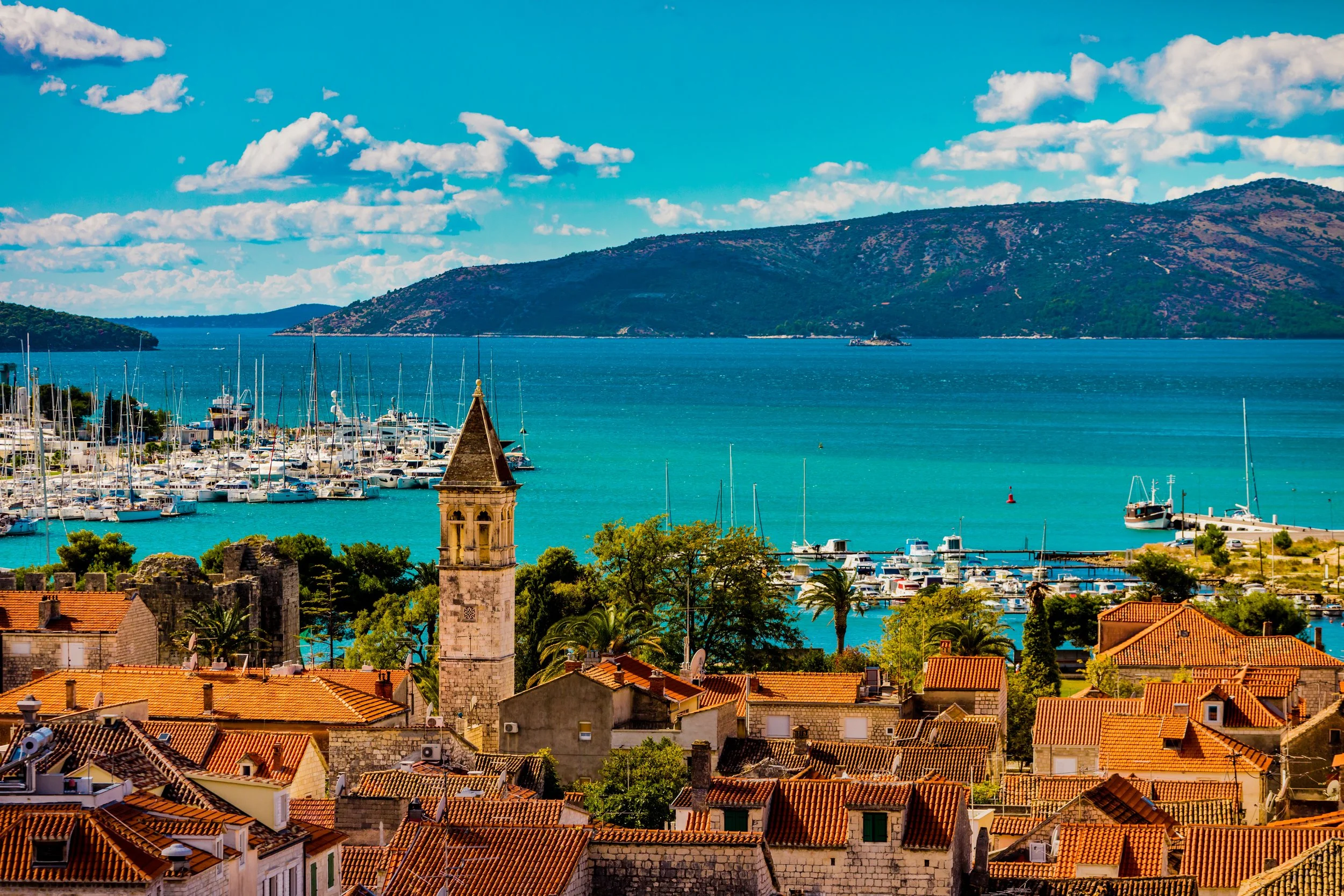
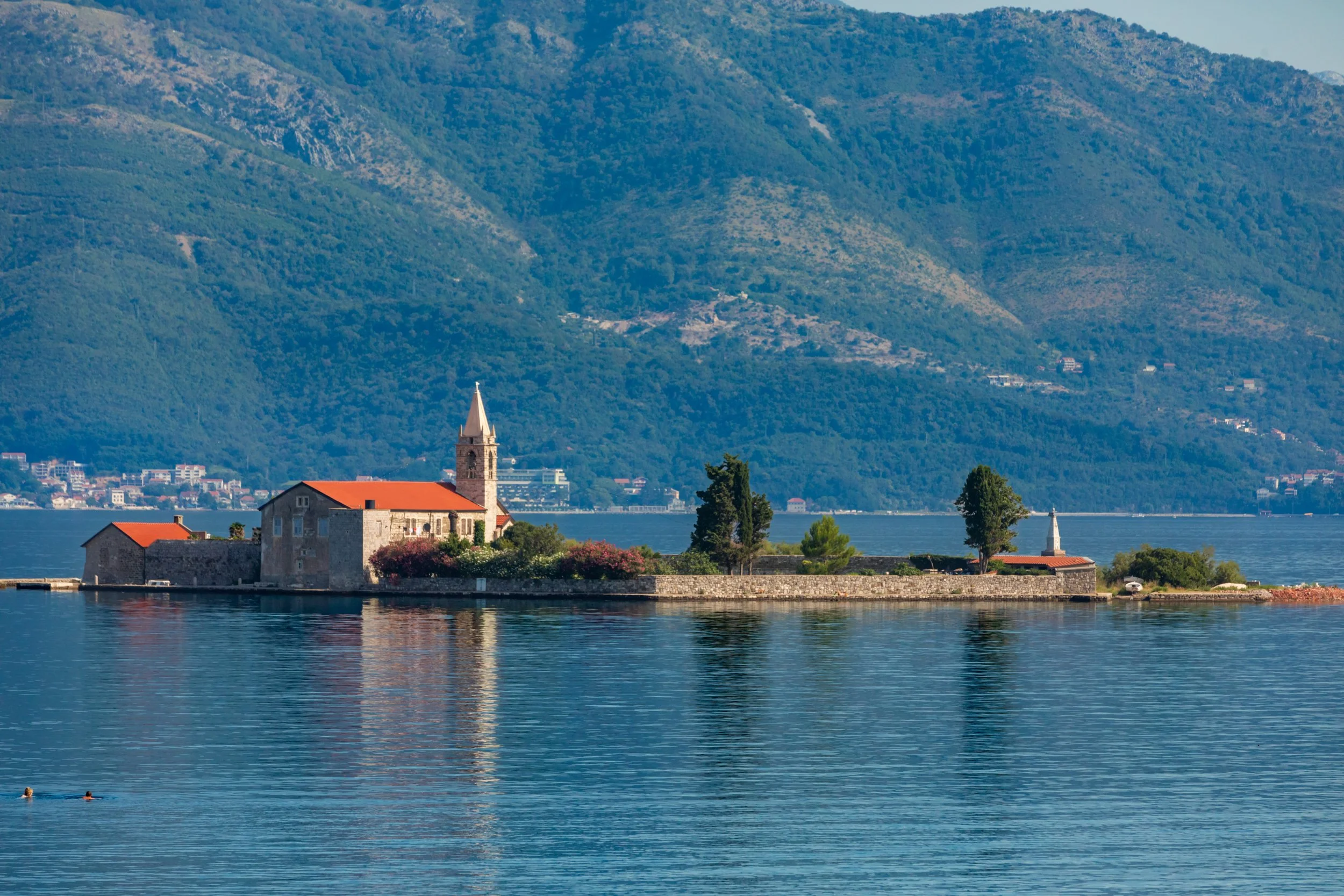
Visiting Kotor felt like time-traveling to the medieval past. Nestled between dramatic mountains and the shimmering Bay of Kotor, the town is a popular stop on European cruises. While it seems impossible for the narrow bay to accommodate cruise ships, these boats nonetheless manage to bring in thousands of tourists. You can spend the day kayaking out to churches on tiny islands, exploring caves, getting lost exploring the cobblestone streets, and visiting impressive fortifications dating back to the Venetian era.
5. Slovenia:
Predjama Castle:
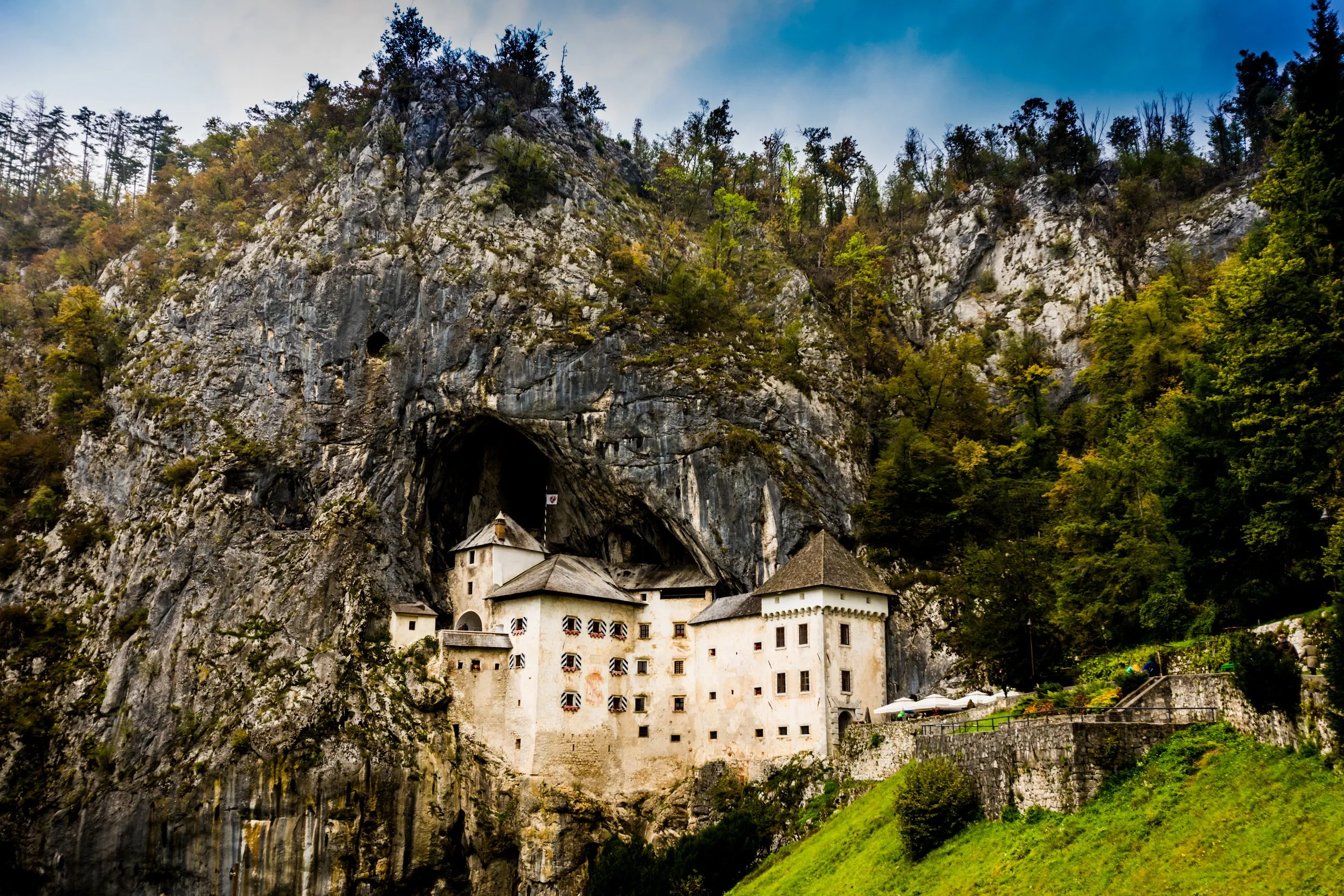
A medieval fortress built into the mouth of a cliff cave, Predjama Castle is truly a sight to behold. This marvel of engineering holds a Guinness World Record as the largest cave castle in the world (which I didn't know was even a thing)! I love exploring secret passageways and caves and was fascinated when I discovered that the castle’s secret hidden tunnel was used by Erasmus of Lueg to sneak out and bring in supplies during a siege. Exploring this castle felt like diving straight into an “Indiana Jones” movie!
Slovenia’s Coastline:
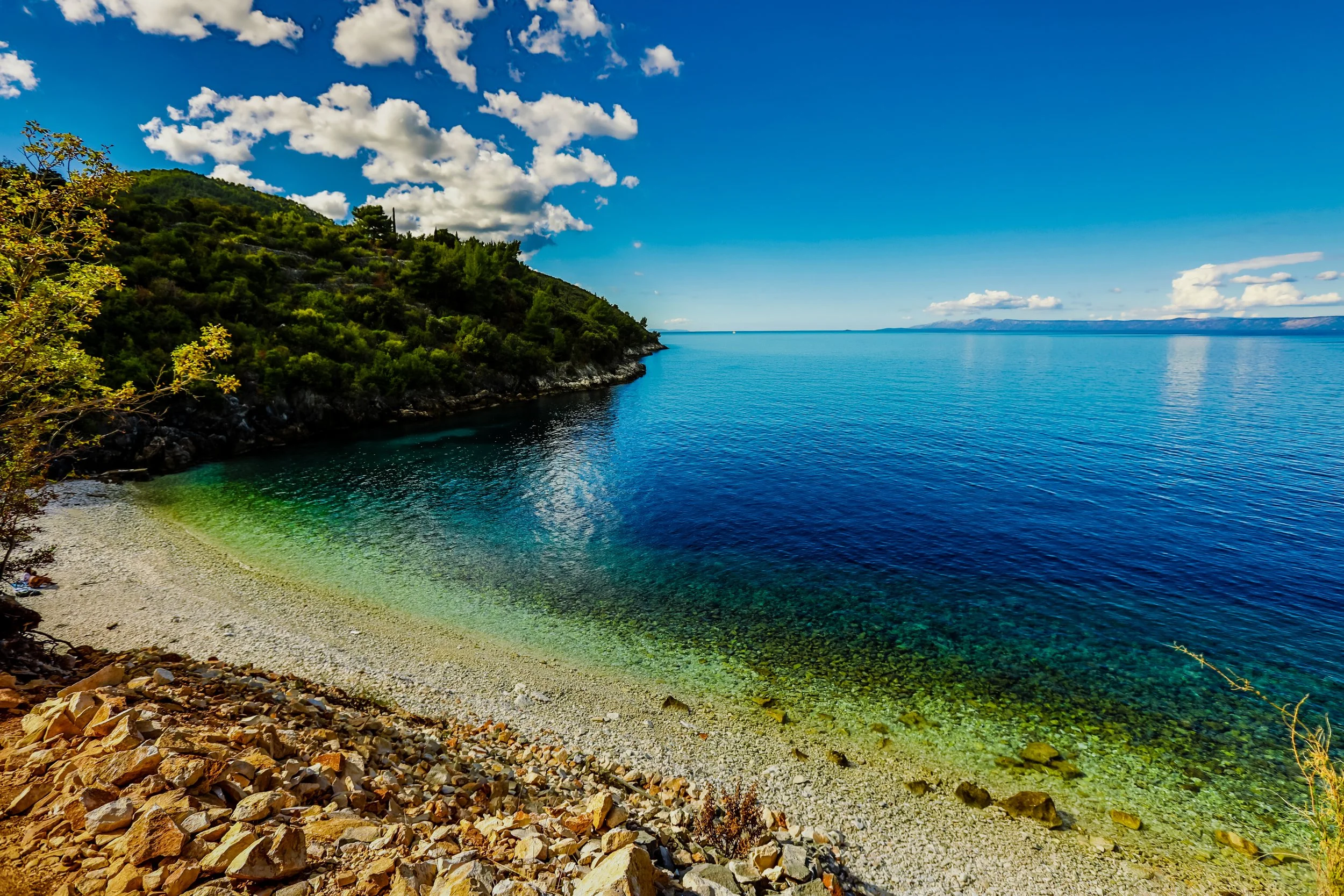
Slovenia’s spectacular coastline may be small, but it packs a punch with its crystal-clear waters and pristine white pebble beaches. It is truly a hidden gem, perfect for those looking to escape the crowds. Piran, a charming coastal town, is often compared to Venice for its Venetian-style architecture and stunning views of the Adriatic Sea.
Slovenia as "Narnia":
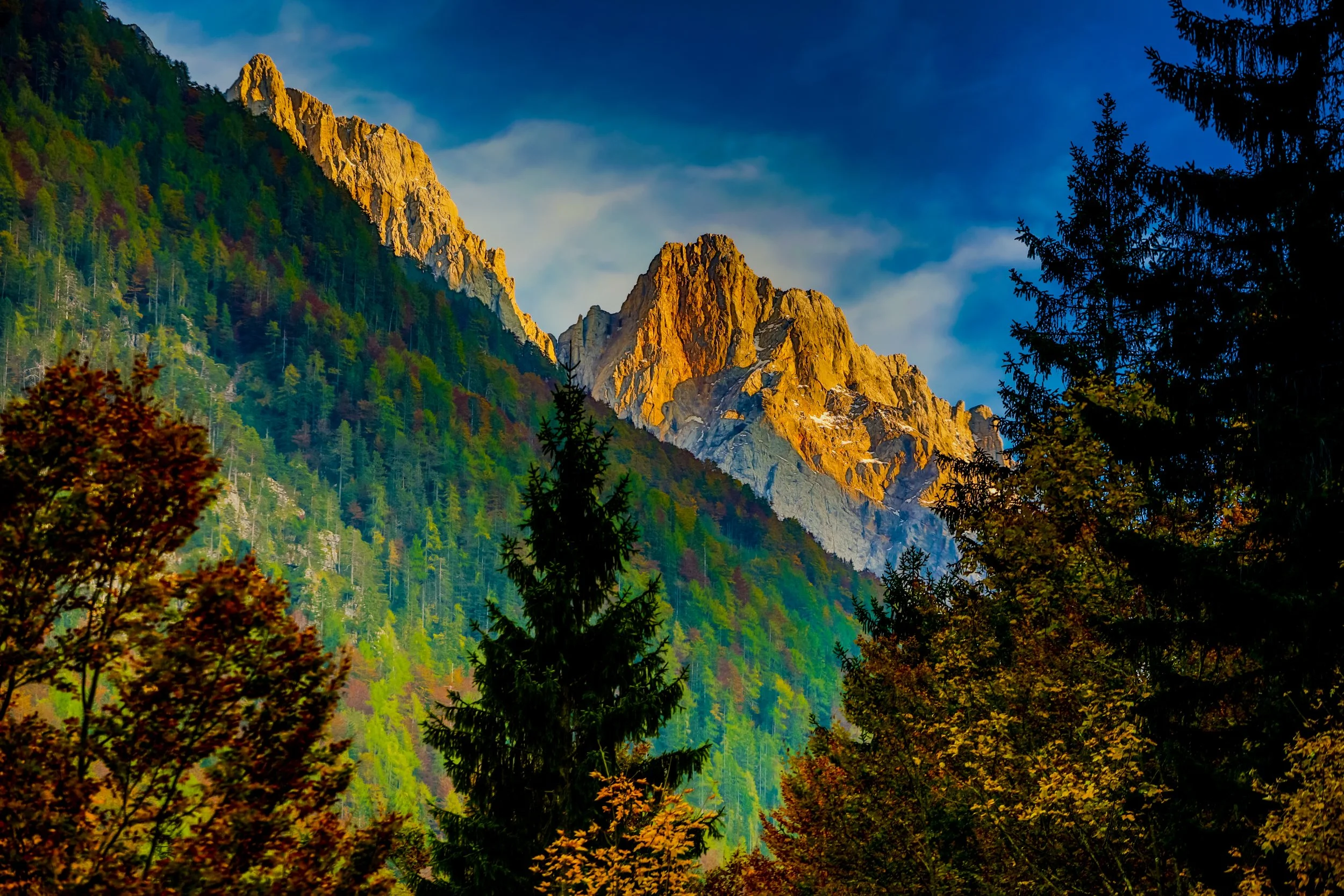
If you've ever dreamed of stepping into a fairy tale, then Slovenia is the place for you. The country’s enchanting landscapes, rolling hills and ancient forests are so magical that they served as a backdrop for "The Chronicles of Narnia" films. Driving through Slovenia, every turn reveals a new and breathtaking scene. It felt like Narnia came to life — and I never wanted to leave!
6. Serbia:

Fields of Sunflowers and Agriculture:
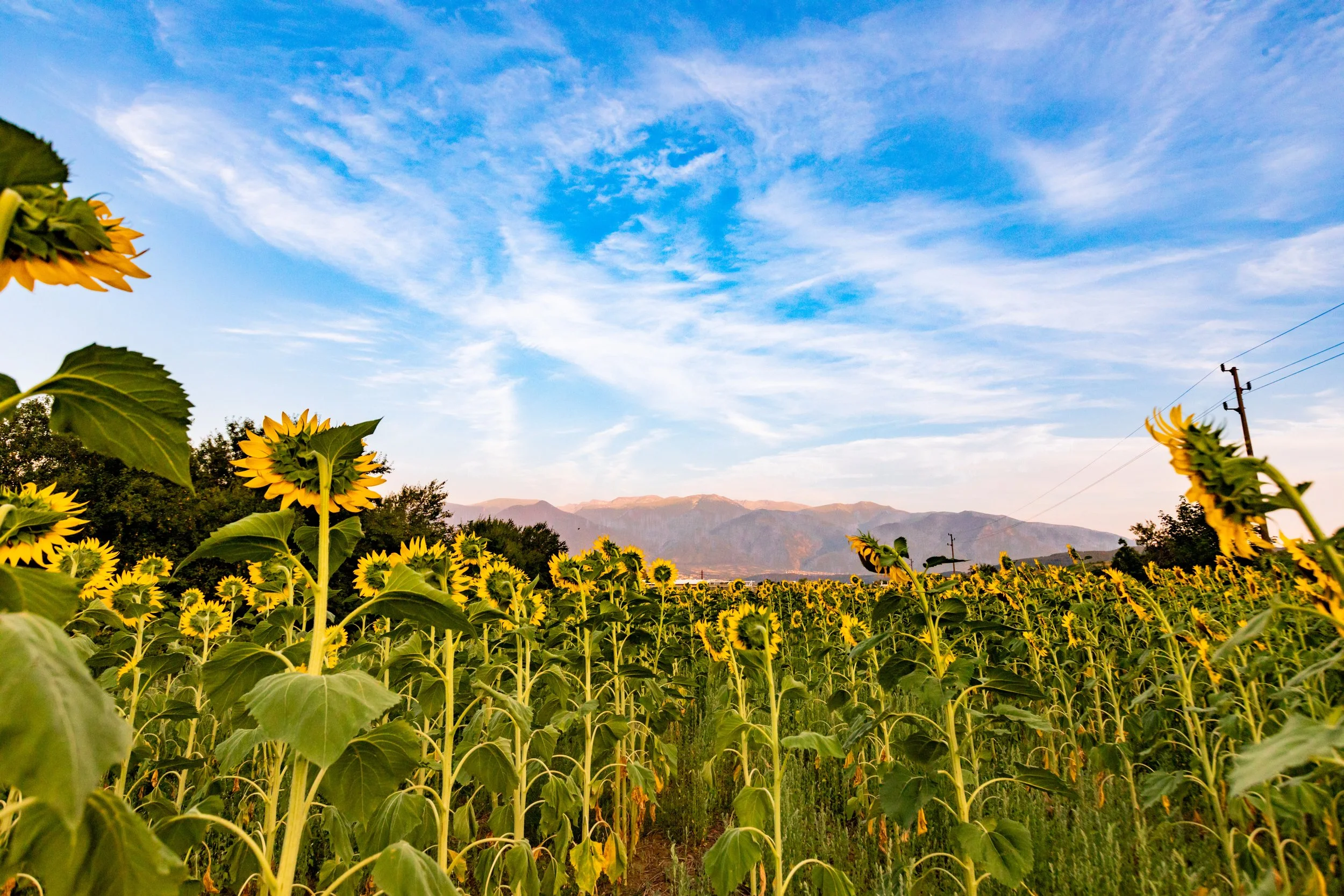
Who knew that Serbia was a land of endless sunflower fields and rich agriculture? When I first drove into Serbia, I couldn’t help but feel like I was in the Midwestern United States. Northern Serbia, with its flat terrain, was once an ancient seabed, which is why the soil is so nutrient-rich. This makes it perfect for growing crops that stretch as far as the eye can see, creating stunning golden landscapes in the summer.
Belgrade:
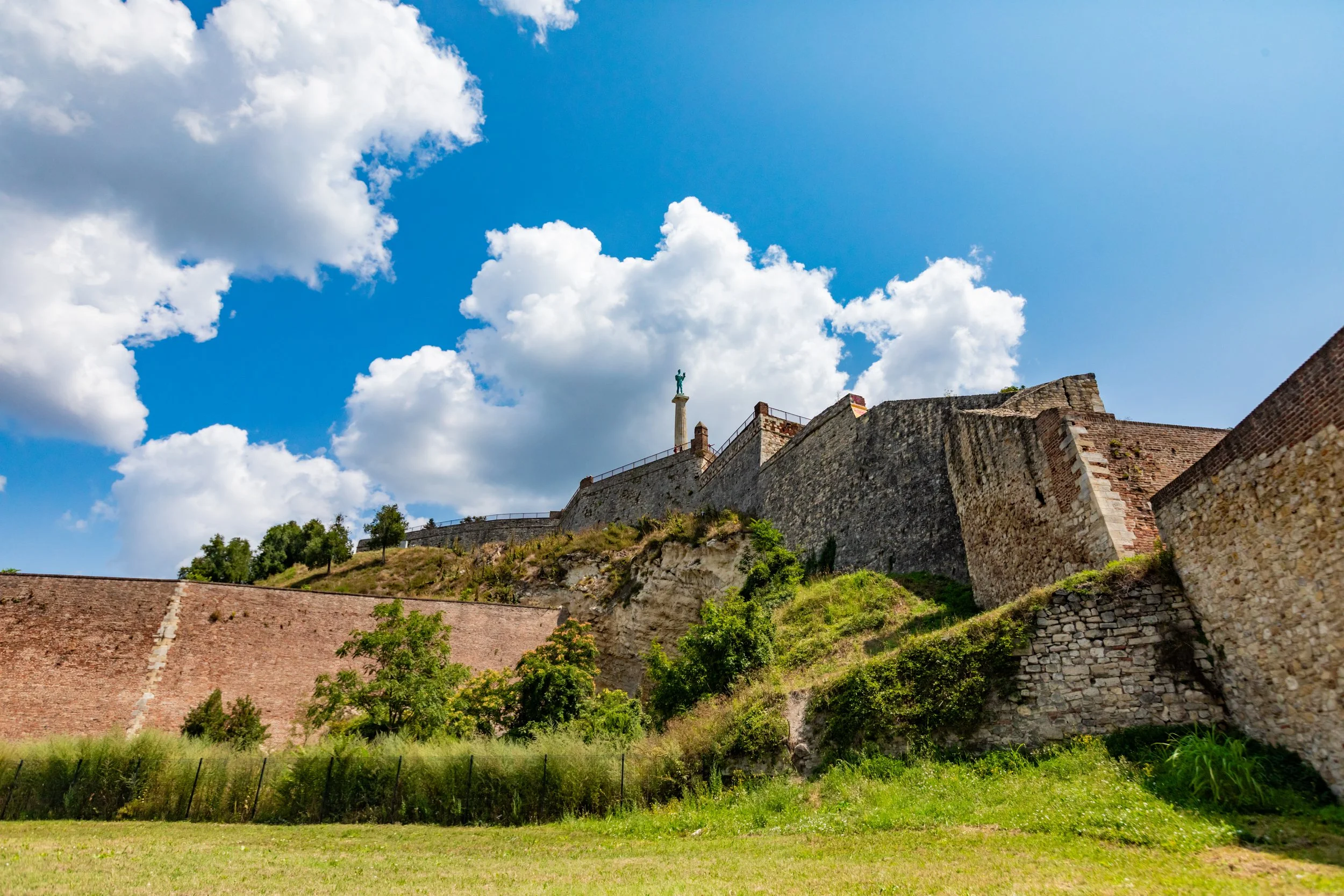
Serbia’s capital, Belgrade, is a city with a rich and tumultuous history. Its most famous landmark, the Belgrade Fortress, has stood the test of time, watching over the Sava and Danube rivers. This fortress has seen everything from medieval battles to World War II skirmishes. Today, it’s a beloved park and museum, offering panoramic views of the city and a peek into the hidden tunnels and bunkers used during World War II. The underground armory inside the castle was even converted into a popular underground disco tech in the ’90s. I love how this region of the world has embraced its tumultuous past and incorporated it into modern life in creative ways.

Laura Grier
Laura is a dynamic Adventure Photographer, Photo Anthropologist, Travel Writer, and Social Impact Entrepreneur. With a remarkable journey spanning 87 countries and 7 continents, Laura's lens captures both the breathtaking landscapes and the intricate stories of the people she encounters. As a National Geographic artisan catalog photographer, Huffington Post columnist, and founder of Andeana Hats, Laura fuses her love for photography, travel, and social change, leaving an impact on the world.
Autumn Around the World: The Best Fall Foliage
From hiking trails to botanical gardens, these five destinations exhibit the true beauty of autumn.
Read More