
A journey across the Land of Kings "Rajasthan, India". See the wonders of Agra, Jaipur, Jodhpur & Jaisalmer through the videographer’s eyes.
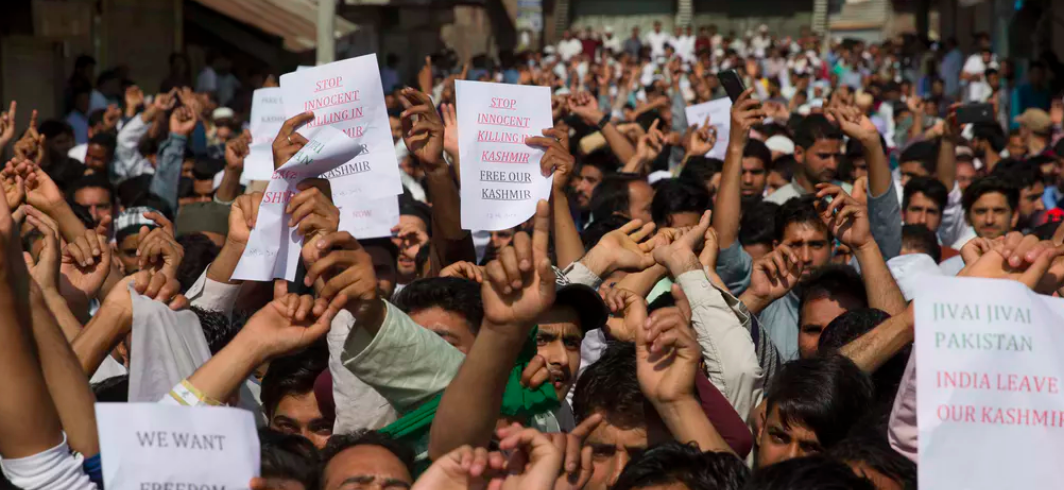
Kashmiri Muslims shout slogans during a protest after Eid prayers in Srinagar. AP Photo/ Dar Yasin
What’s Behind the Protests in Kashmir?
India recently enacted a law which will end a special autonomous status given to the state of Jammu and Kashmir, known in the West as simply “Kashmir.”
Amit Shah, India’s minister for home affairs, announced in Parliamentthat the Bharatiya Janata Party government was revoking Article 370 of the Indian Constitution in the name of bringing prosperity to the region.
Since 1954, this article has governed federal relations between India and Kashmir, India’s only Muslim majority state.
I’m a scholar of South Asian politics and have written extensively on the evolution of the India-Pakistan conflict in Kashmir.
Article 370 is woven into that history.
History of Kashmir’s autonomy
Article 370 originated in the particular circumstances under which the former prince and last ruler of Kashmir acceded to India shortly after the partition of the British Indian Empire into the independent states of India and Pakistan in 1947.
The prince, or maharaja, agreed to have Kashmir become part of India under duress. His rule was threatened by an insurrection supported by Pakistan.
Article 370 was designed to guarantee the autonomy of the Muslim majority state, the only one in predominantly Hindu India. The clause effectively limited the powers of the Indian government to the realms of defense, foreign affairs and communications. It also permitted the Kashmiri state to have its own flag and constitution.
More controversially, Article 370 prohibited non-Kashmiris from purchasing property in the state and stated that women who married non-Kashmiris would lose their inheritance rights.
Changes over time
But the independence of the Kashmiri state has been declining for decades. Beginning in the early 1950s, a series of presidential ordinances, which had swift effect much like American executive orders, diluted the terms of the article.
For example, in 1954, a presidential order extended Indian citizenship to the “permanent residents” of the state. Prior to this decision the native inhabitants of the state had been considered to be “state subjects.”
Other constitutional changes followed. The jurisdiction of the Indian Supreme Court was expanded to the state in 1954. In addition, the Indian government was granted the authority to declare a national emergency if Kashmir were attacked.
Many other administrative actions reduced the state’s autonomy over time. These have ranged from enabling Kashmiris to participate in national administrative positions to expanding the jurisdiction of anti-corruption bodies, such as the Central Vigilance Commission and the Central Goods and Services Act of 2017, into the state.
What it means for India and the world
What has happened as a result of the move to revoke Article 370?
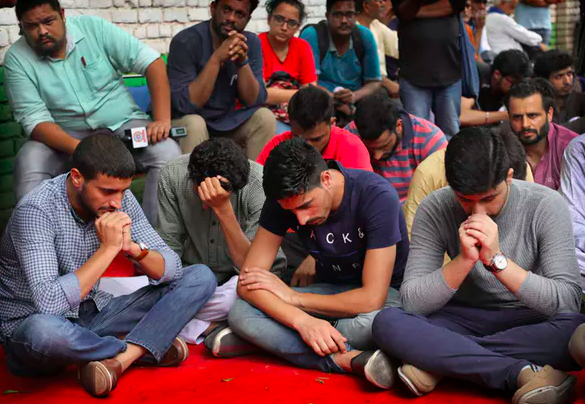
Kashmiris living in New Delhi gather for a function to observe Eid al-Adha away from their homes in New Delhi. AP Photo/Manish Swarup
Kashmiris living in New Delhi gather for a function to observe Eid al-Adha away from their homes in New Delhi. AP Photo/Manish Swarup
The decision has been met with considerable unhappiness and resentment in the Kashmir Valley, which has a Muslim population close to 97% – versus 68% of the population of the state as a whole. The government of Jammu and Kashmir, meanwhile, does not have the legal power to challenge the move.
China and Pakistan have expressed displeasure.
Pakistan has long maintained that it should have inherited the state based upon its geographic contiguity and its demography.
India and Pakistan have fought three wars over Kashmir. While I don’t believe Pakistan will initiate another war with India over this issue at this time, I doubt it will quietly resign itself to the changed circumstances. At the very least, it will seek to draw in members of the international community to oppose India’s action, as it has sought to do in the past.
China, which considers Pakistan to be its “all-weather ally,” has stated that the decision was “not acceptable and won’t be binding.”
SUMIT GANGULY is a Distinguished Professor of Political and the Tagore Chair in Indian Cultures and Civilizations at Indiana University.
THIS ARTICLE WAS ORIGINALLY PUBLISHED ON THE CONVERSATION.
Dynamic Duo: How a Lawyer Couple is Paving the Road for LGBTQ+ Rights in India
Section 377 under the India Penal Code hungover LGBTQ+ lives for years, criminalizing their very existence to exist. Lawyers Menaka Guruswamy and Arundhati Katju fought to change that—and won.

Pride flag in New Delhi, India. Nishta Sharma. Unsplash.
Since 1861, when India was under British colonial rule, there was a section of the India Penal Code that crimilized homosexualtiy as it was “against the order of nature”. In 2013, protestors fought for the code to be recognized as unconstitutional in the eyes of the law, but in a historic case titled Suresh Kumar Koushal vs. Naz Foundation, the Bench stated “We hold that Section 377 does not suffer from… unconstitutionality and the declaration made by the Division Bench of the High Court is legally unsustainable.” Although they would not mark it unconstitutional, the Bench also stated, “Notwithstanding this verdict, the competent legislature shall be free to consider the desirability and propriety of deleting Section 377 from the statute book or amend it as per the suggestion made by Attorney-General G.E. Vahanvati.” To put in more simple terms, the Bench wanted to redirect who made the decision, and stated the matter should be decided by Parliament, itself, not just the judiciary.
In 2016, the case was revisited by three Court members and they decided to pass it on to a five-member court decision. It was not until a year later when the LGTBQ+ community of India saw results. In 2017, in the Puttuswamy case, the Court ruled that “The right to privacy is implicit in the right to life and liberty guaranteed to the citizens of this country by Article 21” - a historic decision which overruled a previous case that said there is no right to privacy in India. The Court also found that “sexual orientation is an essential attribute of privacy. Discrimination against an individual on the basis of sexual orientation is deeply offensive to the dignity and self-worth of the individual. Equality demands that the sexual orientation of each individual in society must be protected on an even platform. The right to privacy and the protection of sexual orientation lie at the core of the fundamental rights guaranteed by Articles 14, 15 and 21 of the Constitution.” Essentially, they condemned discrimintion and give validity to the rights of the LGTBQ+ community.
It wasn’t until September 2018, though, when the Court ruled “in so far as it criminalises consensual sexual conduct between adults of the same sex” in the Navtej Singh Johar v. Union of India case. According to an article in the Guardian, chief justice Dipak Misra stated that “Criminalising carnal intercourse under section 377 Indian penal code is irrational, indefensible and manifestly arbitrary”. Misra goes on to say “Social exclusion, identity seclusion and isolation from the social mainstream are still the stark realities faced by individuals today, and it is only when each and every individual is liberated from the shackles of such bondage … that we can call ourselves a truly free society.”
Now, a year later, two lawyers who worked on dismantling Section 377 came out as a couple. In an interview with CNN’s Fareed Zakaria, Menaka Guruswamy and Arundhati Katju announced that they were a couple. Ms. Guruswamy stated that they fought so hard because "That was when [they] decided that [they] would never let the LGBT Indians be invisible in any courtroom".
The couple’s decision to come out was met with raved support, one user on Twitter congratulated them and added, “Personal is indeed political”. Which is true - queer people anywhere are responsible for queer people everywhere because to fight for the rights the community deserves, the community must do it as a unit, rather than individually.
Menaka Guruswamy and Arundhati Katju’s accomplishments are not limited by the strides they have made with Section 377, but also with the visibility they have given to the LGBTQ+ community - in India and across the world. They represent the strength and power the LBGTQ+ community has when they preserve despite the setbacks.
OLIVIA HAMMOND is an undergraduate at Emerson College in Boston, Massachusetts. She studies Creative Writing, with minors in Sociology/Anthropology and Marketing. She has travelled to seven different countries, most recently studying abroad this past summer in the Netherlands. She has a passion for words, traveling, and learning in any form.

Saving India’s Most Sacred River
Each year, about 8 million tons of flowers are dumped into India’s rivers. As flowers hold a sacred place in Hindu rituals, they are often thrown into the Ganges, India’s holiest river. Unfortunately, pesticides and other chemicals from these flowers are mixing with the water, exacerbating an ecosystem already plagued with pollution. Enter HelpUsGreen, an organization that has begun collecting the waste flowers and upcycling them into products like incense, soap and biodegradable styrofoam. Through the group’s efforts, they’re addressing an environmental threat while giving the flowers a new life.
In India, Grassroots Initiatives Work to Undo the Period Taboo
For many Indians, lack of access to menstrual products is compounded by entrenched societal stigma. Across the country, women are beginning to make a change.
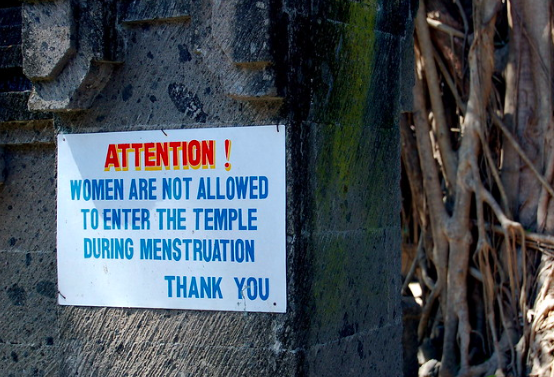
A sign in Bali, Indonesia, demonstrates stigmatization of menstruation in the Global South. dominique bergeron. CC BY-NC-ND 2.0
For most people with periods in the Western world, menstruation is something of an afterthought—annoying and sometimes painful, but easily dealt with, and far from debilitating. In parts of the Global South, however, “that time of the month” is not only a serious health concern and financial impediment but also a source of profound social and cultural tension. Over the past two years, grassroots activists have brought increased attention to the plight of menstruating women in India, and begun to envision a future in which well-being and participation in society is not dictated by one’s reproductive cycle.
Shameful attitudes toward menstruation in India are deeply ingrained, and, especially in rural areas, can be actively harmful to women of all ages. Indian women experiencing their periods can be banned from entering the kitchen and preparing food, separated from family members, and removed from religious ceremonies, sometimes on the grounds of theistic tradition: In 2018, many Indian men were outraged at a ruling by the country’s Supreme Court allowing women of menstruating age to visit Sabarimala, a Hindu temple in Kerala dedicated to Lord Ayyappa, who is seen in traditional mythology to be disgusted by the concept of female fertility. Indignation at the ruling reached a peak in January 2019, when one person died and dozens were injured in protests against the judgment.
Equally dangerous, and highly imbricated with traditional views of menstruation, is the pervasive lack of access to sanitary products, which are crucial to keeping women clean and safe during their periods. An estimated 70 percent of Indian women are unable to afford such products, with 300 million resorting to unhygienic options such as newspapers, dry leaves, and unwashed rags. Menstruation is also a key driver of school dropouts among girls, 23 percent of whom leave their schooling behind upon reaching puberty.

Cost barriers can prevent Indian women from acquiring menstrual products. Marco Verch. CC BY 2.0
In a sociocultural landscape where natural bodily functions are affecting the human dignity of people with periods, education, outreach, and access are crucial. In February 2018, Indian news outlet Daijiworld reported on one person working toward these goals: the so-called “Pad Woman” of Manguluru, who has been leading a group of young students in her southwestern port to create awareness of menstrual hygiene. The Pad Woman, Prameela Rao, is the founder of non-profit Kalpa Trust, which offers students at the Kavoor government First Grade College materials to manufacture sanitary pads for women in rural areas. The completed pads are distributed free of charge to the colonies of Gurupur, Malali, Bajpe, and Shakthinagar, obviating the need for women to purchase prohibitively expensive mainstream menstrual products. The pads are made from donated cotton clothing, which the students wash, iron, cut, and stitch to create the final product.
In the western state of Gujarat, an organization known as the Aga Khan Rural Support Program (AKRSP) is directly targeting period taboos among rural communities. Activists Manjula and Sudha told the Indian magazine The New Leam that, for the girls they have educated in the villages of Karamdi Chingaryia and Jariyavada, confusion and fear regarding menstruation have given way to confidence and clarity. For the AKSRP, which emphasizes gender equality and the societal participation of women, offering rural villagers the ability to make informed choices about their own menstrual health is key. As of The New Leam’s report in April 2019, the non-profit had reached about 60 Indian villages, providing information about sanitary pads of various designs, longevities, and price points.
While pads are a far more hygienic choice than rags or newspaper, they are not the only option: Back in Manguluru, two German volunteers have initiated a menstrual cup project known as “a period without shame.” In their pilot run, Nanett Bahler and Paulina Falky distributed about 70 menstrual cups free of charge to Indian women, as well as leading workshops on effective use for recipients. The cups, which are made of silicone and emptied around twice per day during one’s period, can be used for up to 10 years, making them a hygienic, eco-friendly, and potentially more affordable option for people of all ages.
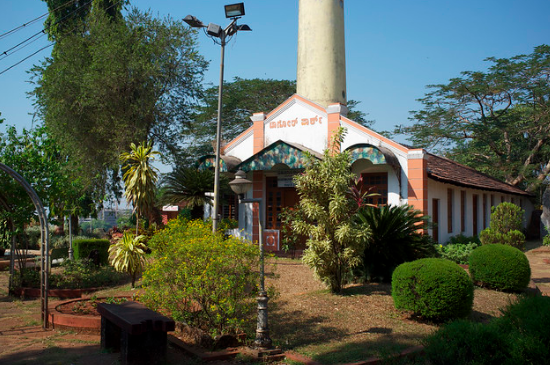
Manguluru, where Indian and German activists are working to provide menstrual products. Aleksandr Zykov. CC BY-SA 2.0
Such grassroots efforts have been instrumental in chipping away at stigma among Indians in certain cities and villages, but broader change is unlikely without widespread publicity. One potential avenue for increased awareness is the newly released documentary Period. End of Sentence., which follows rural Indian women in their battle against period stigma. To create the film, Iranian-American director Rayka Zehtabchi visited small villages outside of Delhi to inquire after women’s menstrual health, and shot extensive footage of women who have learned to create their own sanitary products. The diligent pad-makers, many of whom are housewives who have never before held a full-time job, sell their creations to locals in their area, educating women on proper use and convincing shop owners to stock the products. By the end of the time span covered by the documentary, the women had set up a factory and manufactured 18,000 pads, earning economic self-sufficiency for themselves and an Academy Award nomination for Zehtabchi.
The work of these Delhi entrepreneurs, along with that of the AKSRP and Pad Woman Prameela, has made a positive difference for countless people—but, according to Mumbai-based journalist and author Puja Changoiwala, education and access must rise above the grassroots level and reach the legislative in order to create enduring change in attitudes toward menstruation. In a piece for Self, Changoiwala suggests that the Indian government should distribute free pads and launch an “aggressive nation-wide awareness program,” engaging celebrities and the press to address the dire consequences of long-held stigma. For anyone in India with a period, such a moment cannot come soon enough.
TALYA PHELPS hails from the wilds of upstate New York, but dreams of exploring the globe. As former editor-in-chief at the student newspaper of her alma mater, Vassar College, and the daughter of a journalist, she hopes to follow her passion for writing and editing for many years to come. Contact her if you're looking for a spirited debate on the merits of the em dash vs. the hyphen.

In India, Using Plastic Waste as Tuition at a New School
A school combines accessible education with environmental responsibility through a creative program.
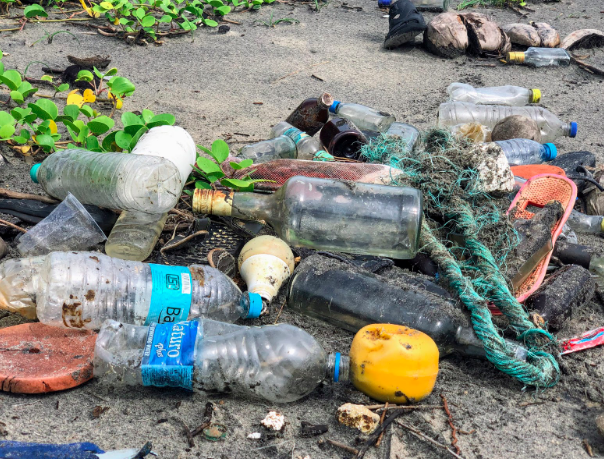
Photo of plastic waste by John Cameron on Unsplash.
In 2016, Parmita Sarma and Mazin Mukhtar founded Akshar School in Assam, a state in northeast India. Initially, the school struggled to enroll many of the children living in the area. Most families could not afford private school tuition, and relied on the $2.50 per day wage their children could make working in the nearby stone quarries.
In the winter months, many families in Assam burned plastic waste to keep warm, unaware of the health and environmental hazard this created. The fumes would often linger in Akshar’s classrooms, and ended up giving Parmita and Mazin the idea that would transform the school.
Instead of tuition, Akshar began requiring students to bring 25 plastic waste items to school every week. “We wanted to start a free school for all, but stumbled upon this idea after we realised a larger social and ecological problem brewing in this area,” Parmita told Better India.
Through the use of plastic waste as tuition, students who would not have been able to attend the school were able to learn, and the surrounding environment benefitted. Under the new tuition system, the school blossomed, and now enrolls 100 students ages 4 to 15. Before the tuition program was implemented, Akshar had only 20 students.
To compensate for the wages that children could be making working in the mines, Akshar established a tutoring program, where older students can help younger ones with their work in exchange for currency tokens that can be used to purchase snacks, toys, shoes, and clothing. The students can even exchange the tokens for real money to purchase items online. But financial compensation isn’t the only rationalization for the tutoring program. Through teaching, older students are able to develop useful life skills, practicing communication, leadership, and compassion.
Tuition isn’t the only unusual aspect of the school. Parmita told Better India that the goal of the school is to break with traditional curriculum. Students take class in open areas, and grades are divided by level rather than age.
“We realised that education had to be socially, economically and environmentally relevant for these children,” Mazin told Better India. That would mean not only providing an accessible education, but one that would enable children to find jobs after graduation. To this end Akshar offers career focused classes alongside traditional ones, enabling students to gain skills in cosmetology, solar paneling, carpentry, gardening, organic farming, electronics, and more. The school is also willing to adapt to create the best education for its students. Mazin told Better India that when the school noticed a spike in landscaping in Assam, they began to draft plans for a sustainable landscaping course.
Mazin and Parmita’s success with Akshar has inspired them to create more schools that follow the same philosophy. They hope to implement the Akshar model in 5 government schools over the next year, and 100 government schools in the next 5 years.
Emma is an undergraduate student studying English and marketing at Emerson College in Boston. While not writing she explores the nearest museums, reads poetry, and takes classes at her local dance studio. She is passionate about sustainable travel and can't wait to see where life will take her.

Gateway to the Ganges
Daily life in the Indian holy cities of Rishikesh, Haridwar, and Devprayag. This region lies in the foothills of the Himalayas where the Ganges River descends from the mountains. I visited not knowing what to expect, and I was both awed and saddened by the experience. The beauty of nature and the Hindu ceremonies contrasted with the poverty and suffering on the streets. The people I met had a high-spirited resilience that seemed to stem from surviving and maintaining their devotion through a challenging life.
INDIA: Phoolon Wali Holi
Holi, known as the Festival of Colors, is a popular Hindu festival celebrated in India and surrounding areas. Colors and water are thrown on each other, amidst loud music and drums to celebrate. Kieran Mellor, the videographer, comments on his work “Since witnessing the insane celebrations of Holi inside Banke Bihari Temple in Vrindavan, I knew that these celebrations deserved their own little film. Hours before the temple doors open, thousands upon thousands of devotees gather to take part in the 20 minute flower and colour throwing celebration of Phoolon Wali Holi. As the doors open, an unstoppable surge begins as the crowd funnels inside and the chanting and applause becomes thunderous. Many people carry offerings which they will bring to the front of the temple to devote to the deities, others pray as they enter through stone archways. For me, however, the most intense part comes when the entire temple unites in raising their hands, and yelling in unison as colours and flowers surround them.”
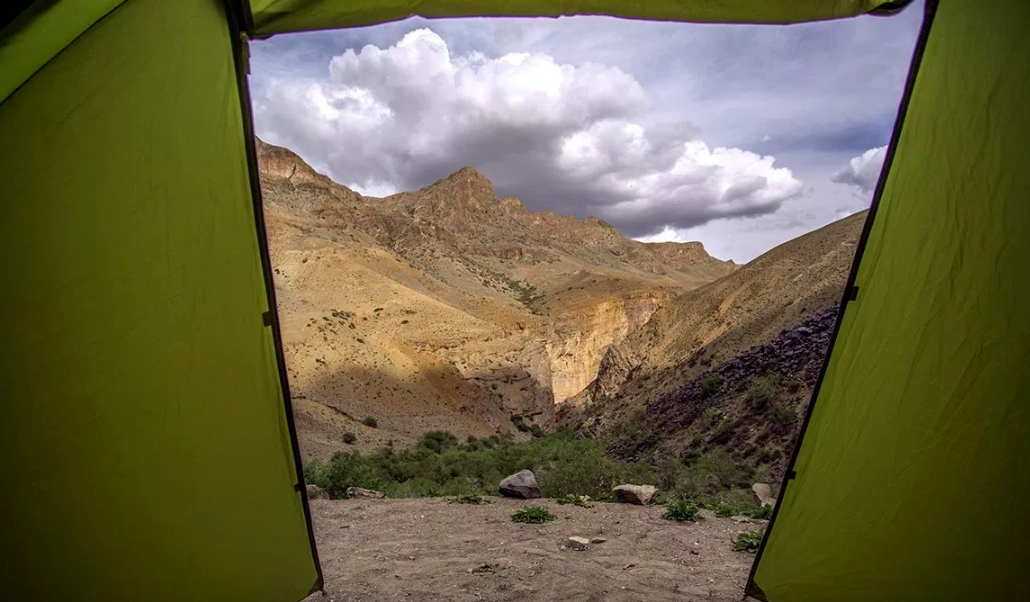
INDIA: The Landscapes and Cultures of the Chadar Trek
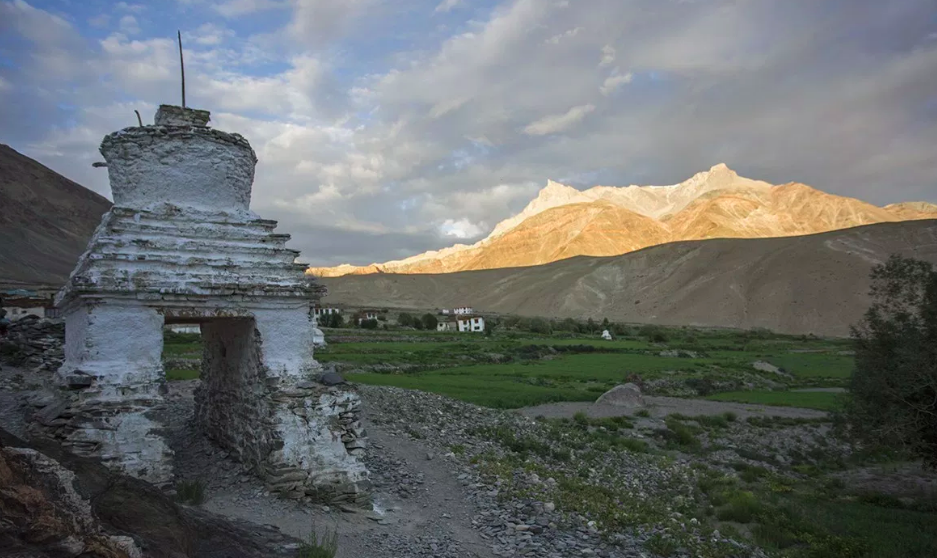
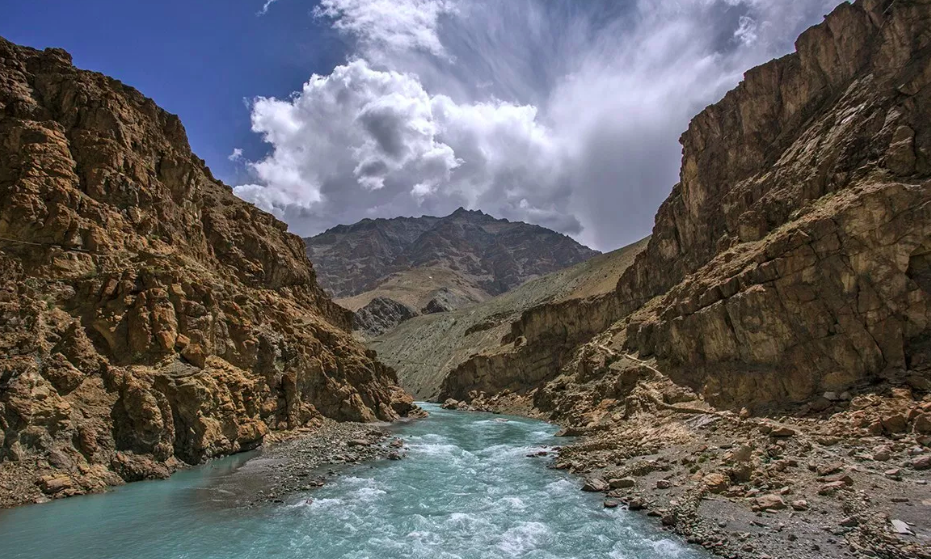
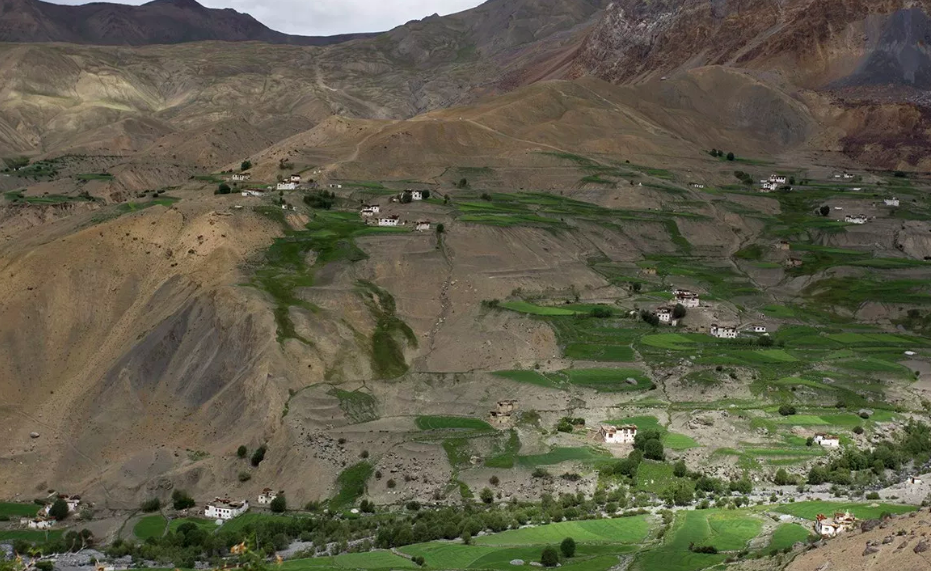
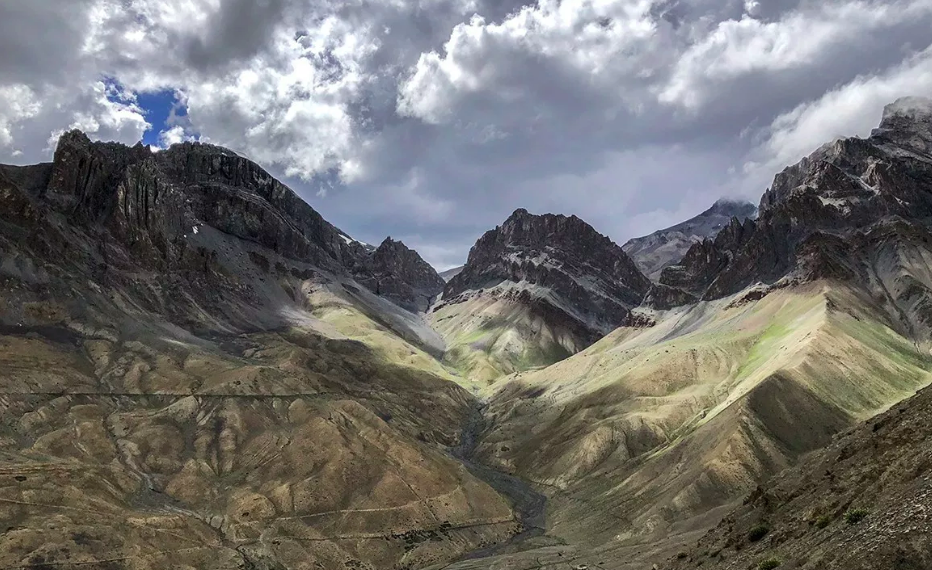
Home to the legendary, yet treacherous, Chadar Trek, the Zanskar region of Ladakh has earned the reputation of a trekker’s delight.
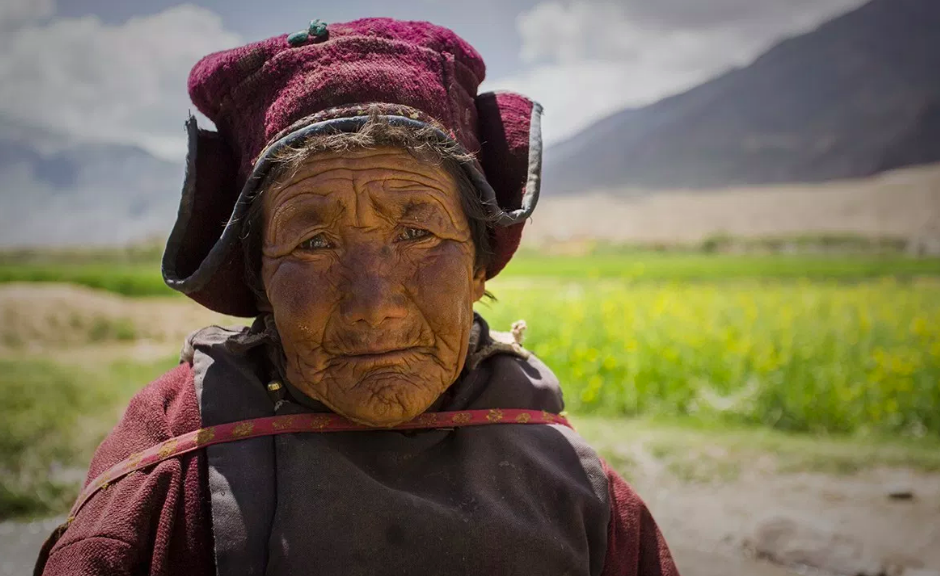
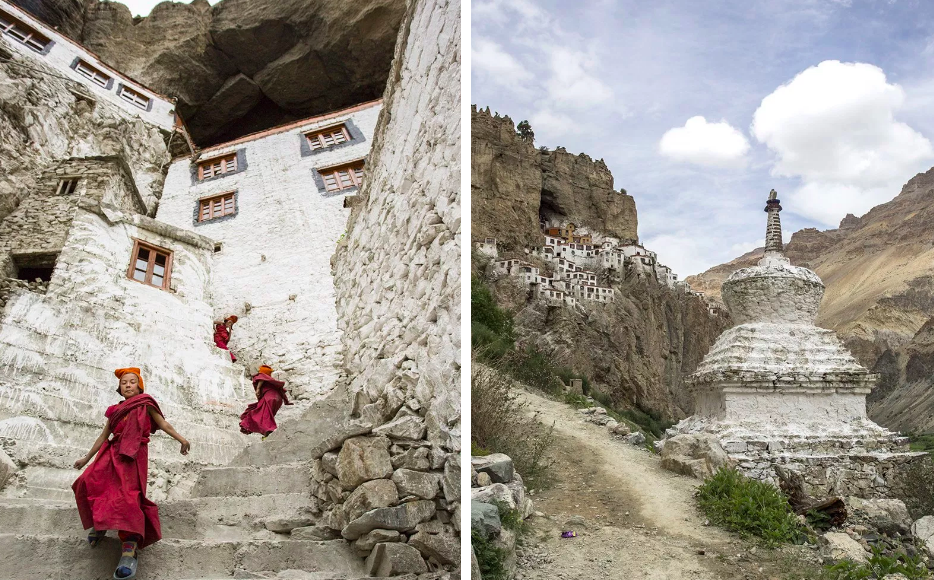
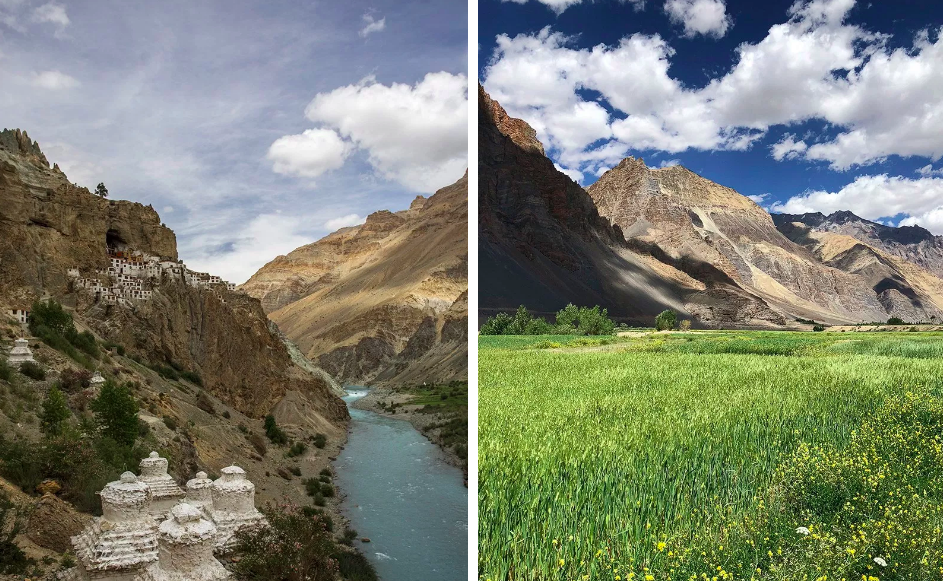
Stirring images of the Phugtal Monastery, and the river, both in full spate and frozen, of the lush valleys and the Zanskari people have enticed me from the time I was at school and this year, I finally managed to do the trek for myself.
The trek usually begins at Lingshed and culminates in Phugtal, but I undertook it the other way around. In fact, I was able to reduce two days travel time to two hours by chartering a helicopter to my starting off point. It all began at Padum from where we headed to Phugtal and then across the Zanskar through Pishu, Hannmur, ending finally at Lingshed.
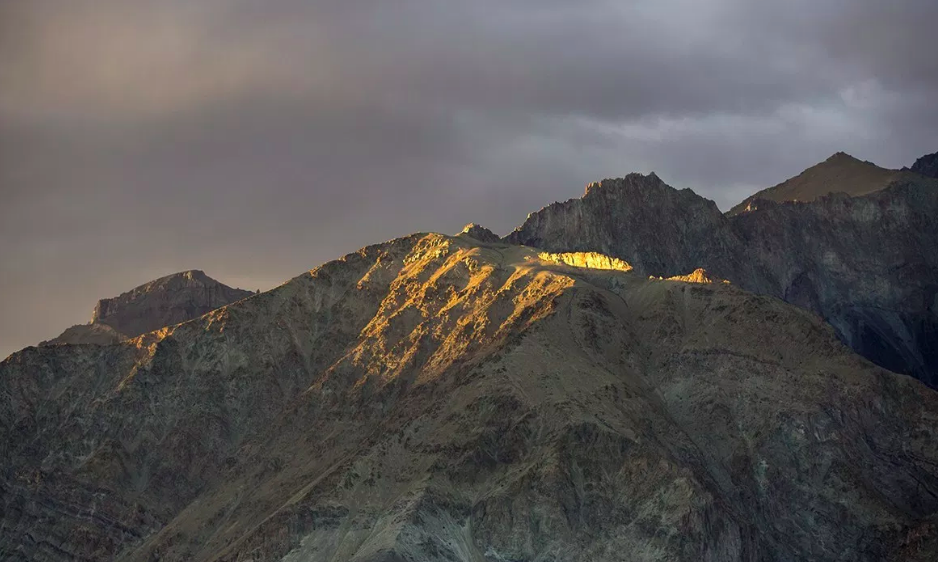
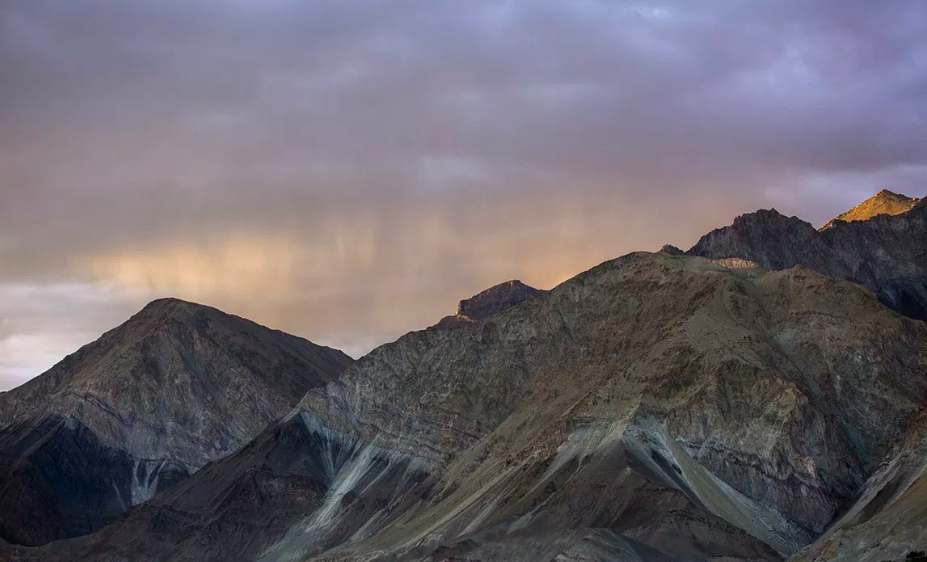
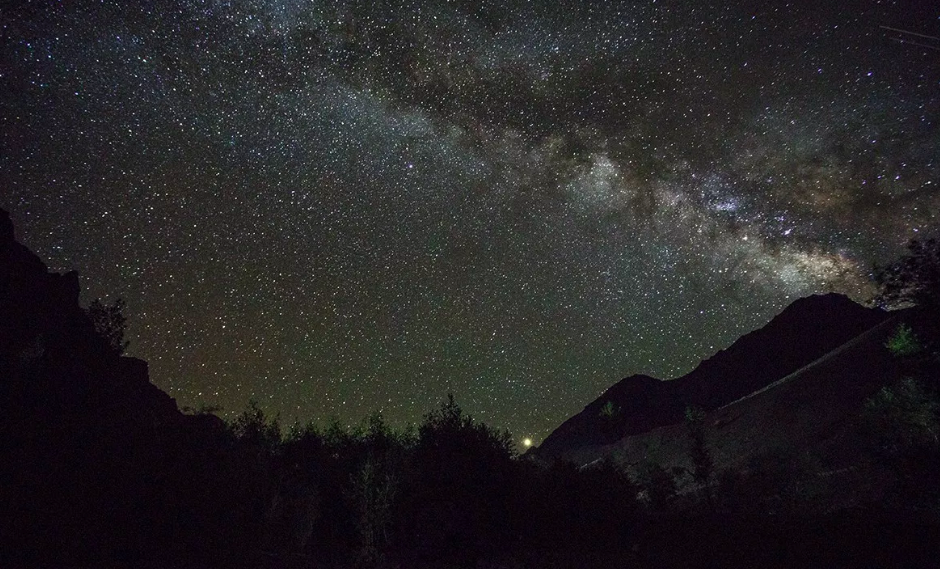
The experience was phenomenal. From traversing the most treacherous paths and crossing deep gorges and valleys to witnessing rivers of the most unreal blue and sleeping under the milky way, the entire trek was really something else; the delight of a hot shower at the end of those ten days made it sweeter still. It wasn’t all milk and honey though. Ascending nearly 16,000 feet at some passes and walking at least 20 kilometres a day, the trek tested my wits and guts, making me question why I embarked on this adventure in the first place.
In retrospect though, I can say without a shred of doubt that it was well worth it. Not only did I witness first-hand the glories of a phenomenal terrain, but I also met some wonderful people and experienced inspirational no-waste lifestyles. More than anything else, I learned what I myself am capable of enduring both physically and mentally; that when push comes to shove the human body and mind can surprise us in more ways than one.

HAJRA AHMAD studied photography in Ooty, a small hill town in South India. She became inspired by the darkroom and now specializes in travel and wildlife photography as well as often shooting hotels and interiors. Her photography has enabled her to travel to many new places and her work continues to evolve with each shoot.
THIS ARTICLE WAS ORIGINALLY PUBLISHED ON ROAM MAGAZINE
Mombasa Cityscape
This video portrays the city of Mombasa, which is is a seaport city on the coast of Kenya, along the Indian Ocean. It is the country's oldest and second-largest city, with an estimated population of about 1.5 million people in 2017.
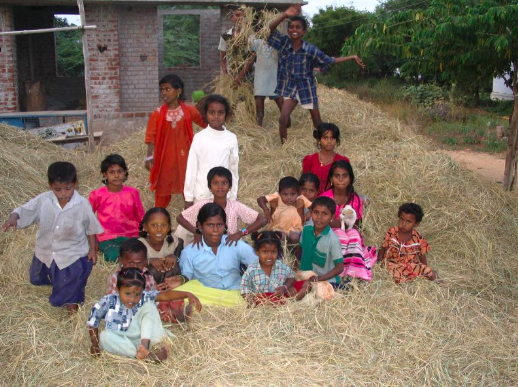
For centuries, Dalits occupied the lowest rung of Indian society. Flickr user The Philosophy of photography - https://www.flickr.com/photos/matteo-gianni/109971376/. CC BY 2.0.
“Untouchables” Still Struggle for Equality in Indian Society
With 1.2 billion citizens India is the second most populous country in the world, and while today’s India is governed by a parliamentary system, for more than three millennia, India’s massive population lived under a rigid caste system that forced many Indians into occupational roles with no hope of advancement. Though modern India has officially done away with castes, the old system’s influence is still felt, particularly among those formerly identified as “untouchables”.
According to Hindu texts, the caste system was brought to India by the creator god Brahma. The top caste was occupied by Brahmins, India’s priests and teachers. Next came Kshatriyas, who were warriors and rulers. Below them, Vaisyas made up the middle class of merchants and traders while Sudras were unskilled workers or peasants. Dalits were “untouchables,” outcasts who existed outside of the caste system entirely and were often relegated to undesirable tasks like street sweeping, toilet cleaning, and disposing of dead animals. A person’s surname identified to which caste they belonged., While one could never hope to ascend to a higher caste in a single lifetime, it was believed that through dedication to one’s Dharma, or caste-specific duty, one could earn a higher position in the next life.
In 1950, the caste system was abolished, creating new opportunities for social mobility and intermingling between India’s various social groups. India even elected a Dalit president, K.R. Narayanan, who served from 1997 until 2002. Tensions remain, however, as Dalits, still identifiable by their surnames, continually find themselves subject to discrimination, harassment, assaults, and rapes. Many attacks go unreported, and local police tend to show leniency to the attackers.
India’s caste system has been likened to South African apartheid or the Jim Crow laws, both of which required many years of legislation and social pressure to affect changes which could be embraced by the general populace—if they were ever fully embraced at all. As India wrestles with its own history of social stratification, the future of its Dalits remains unclear. But it is clear that Dalits, who make up a quarter of India’s population, are an integral part of Indian history, culture, and society, and they won’t be leaving any time soon. Greater equality could be vital to India’s overall health as a country.
JONATHAN ROBINSON is an intern at CATALYST. He is a travel enthusiast always adding new people, places, experiences to his story. He hopes to use writing as a means to connect with others like himself.

This Mega Kitchen Serves 40,000 People Each Day
With one of the largest kitchens in Asia, the Shri Saibaba temple in Shirdi, India, prepares, cooks and serves quantities of food that are nearly unimaginable. The kitchen dishes out as many as 40,000 meals per day, every day, all year long. It takes 600 people working in two daily shifts to prepare all this food. Yet despite all the effort, meals are free to the public. Why? The temple believes that those who are hungry deserve to be fed, and those who are thirsty deserve to be given a drink.
Gay Sex Decriminalized in India
The supreme court’s decision removed a 150 year old clause created by the British colonial government.
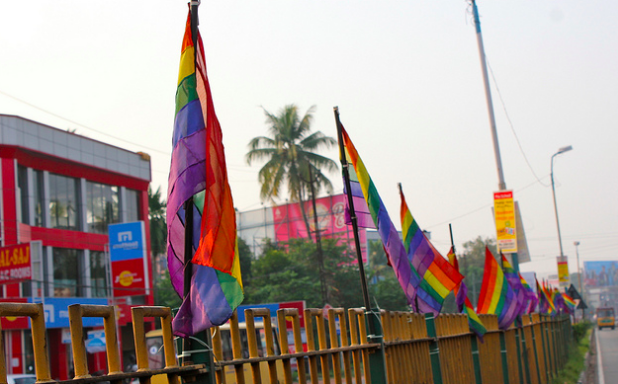
Rainbow flags in Alvula, India. Kandukuru Nagarjun. CC 2.0
Last Thursday the Indian supreme court voted to dismiss section 377 of the Indian Penal Code which made gay sex illegal. The law, labeling gay sex as “against the order of nature” was created in 1860 by the British colonial government and was in existence for 150 years before being struck down last week. While the section was briefly dismissed in 2009, it was reinstated four years later due to appeals filed at the supreme court. It was the supreme court’s decision a few days ago that removed the law once and for all.
The dismissal of the law was due in part to the tireless efforts of many LGBTQ activists who risked reprecutions of up to life imprisonment for publicizing their sexuality in order to petition and protest for the removal of the law. They represent the many gay and trans people who have suffered blackmail, intimidation, and abuse because of the section.
“History owes an apology to members of the community for the delay in ensuring their rights,” Justice Indu Malhotra said in a statement.
The supreme court went further than merely decriminalizing gay sex: as part of the repeal of section 377, gay people in India will finally receive all the protections of their constitution.
The law, called “irrational, indefensible and manifestly arbitrary” but Chief Justice Dipak Misra, was defeated in part because it conflicted with a recent law granting privacy as a constitutional right. It was also largely perceived out of step with modern India. In their decision, the justices referenced the fact that the Indian constitution is not “a collection of mere dead letters”, but a document open to evolving with time and social attitudes.
According to Menaka Guruswamy, one of the main lawyers representing gay petitioners, the court's decision not to discriminate based on sexual orientation has created a “very powerful foundation.” It represents a public acknowledgement that as a gay person, “You are not alone. The court stands with you. The Constitution stands with you. And therefore your country stands with you.”
In excitement over the law it is important to acknowledge that India is not in any way “catching up” to the west in LGBTQ rights. Instead, the removal of this oppressive law is an example of India decolonizing. Many Hindu temples show images of people of the same sex embracing erotically. In the temples of Khajuraho there are depictions of women embracing and men showing their genitals to each other. There are Hindu myths in which men become pregnant and in which transgender people are awarded with special ranks. India Today writes that “In the Valmiki Ramayana, Lord Rama's devotee and companion Hanuman is said to have seen Rakshasa women kissing and embracing other women.”
In response to the law’s framing of homosexuality as unnatural, Anil Bhanot wrote in the Guardian that “the ancient Hindu scriptures describe the homosexual condition to be a biological one, and although the scripture gives guidance to parents on how to avoid procreating a homosexual child, it does not condemn the child as unnatural.”
The removal of the law represents a shift toward a more progressive future while also returning to India’s pre colonial attitudes.
EMMA BRUCE is an undergraduate student studying English and marketing at Emerson College in Boston. While not writing she explores the nearest museums, reads poetry, and takes classes at her local dance studio. She is passionate about sustainable travel and can't wait to see where life will take her.

India Scraps Tax on Sanitary Products after Protests
India joins Ireland, Kenya, and Canada as one of the four countries worldwide with tax free menstrual products.
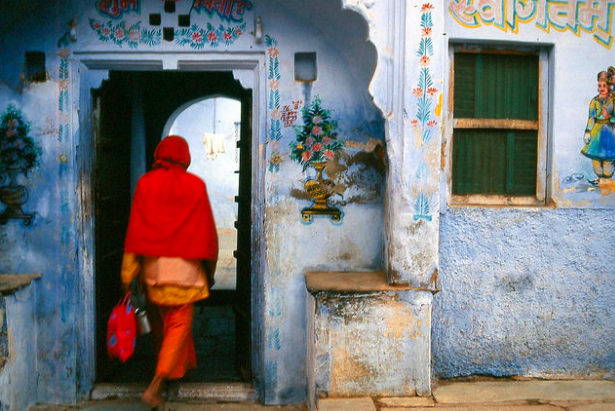
Image Credit: Nick Kendrick. CC BY 2.0
Almost a month ago, in response to widespread protests, India declared sanitary pads tax-free.
"This was a most-awaited and necessary step to help girls and women to stay in school, their jobs, to practise proper menstrual hygiene,” Surbhi Singh, founder of Sachi Saheli, a menstrual health charity, told the Thomson Reuters Foundation.
The decision to tax menstrual products was made over a year ago under the new national goods and services tax that united all India’s states in a single tax system with the same rates for the whole country. Under the new tax tampons were taxed 12% - the same amount as many luxury items. This was despite the fact that many contraceptives as well as condoms were exempt.
The tax sparked widespread protests and inspired the organization She Says to coin the slogan #lahukalagaan - Hindi for tax on blood. One petition by lawmaker Sushmita Dev to revoke the tax received 400,000 signatures. “Clearly the government had put forth frivolous arguments for one year and then delayed it,” Dev tweeted in response to the tax.
After over a year of protests, petitions, and widespread outrage, the tax was finally repealed late this July. Finance minister Piyush Goya told reporters that India’s “sisters and mothers will be happy to hear that sanitary pads have been given a 100% exemption and brought down to a tax rate of zero. Now there will be no [tax] on sanitary pads.”
Despite their new tax exempt status, it is incredibly hard for Indian women in rural areas to acquire sanitary products—according to the BBC four out of five women in India lack proper resources for menstrual care. Sanitary pads cost between five to twelve rupees each, meaning that often rags, ashes, leaves, and even sawdust are the only options for girls and women. The lack of sanitary care is tied to dramatically increased rates of infection, but is also linked to girls missing or dropping out of school.
India’s decision to exempt sanitary pads from taxes is adding the the global conversation surrounding period poverty. The charity Plan International UK released information that 1 in 10 girls and women under 21 can’t afford to purchase sanitary products. Women, as well as transgender and nonbinary people who menstruate, have their period for an average of 2,535 days of their lives. For those without access to sanitary products, that’s almost seven years of struggling to attend school or work without necessary products. Even people who can afford pads or tampons often experience anxiety around setting aside enough money to afford them each month.
According to Jo Feather, the ActionAid senior policy advisor, the issue is tied to gender inequality. She told the Independent that, “to solve period poverty globally we need to collectively address the issue of gender inequality at its root. We must not allow women and girls to be identified primarily by their biological functions and ensure their periods are celebrated, not ashamed, and can be a positive step in exercising empowerment.”
A significant aspect of period poverty is the stigma in many countries surrounding the topic. Often this taboo silences women, and keeps lawmakers from passing the necessary legislation that could make sanitary pads and tampons available to all women.
EMMA BRUCE is an undergraduate student studying English and marketing at Emerson College in Boston. While not writing she explores the nearest museums, reads poetry, and takes classes at her local dance studio. She is passionate about sustainable travel and can't wait to see where life will take her.

Did 4 Million in India Actually Become Stateless Overnight
A released list of citizens has many worried about the future citizenship status of those excluded.
On July 30th a three year effort in India to update Assam, India’s National Register of Citizens (NRC), overseen by the Indian Supreme Court, released its final draft list. It is the first update since 1951 when the NRC was first carried out to count citizens and their holdings. Critics view the list as a reflection of the Hindu-nationalist Bharatiya Janata Party’s policies as many of the four million excluded are Muslims, who make up ⅓ of Assam’s 32 million.
And because of the increased discrimination against Muslims in Assam, the intentions of the NRC update are under question. Many see the proposed 2016 Citizenship Amendment Bill as an embodiment of the discrimination. The amendment, were it to be passed, would grant citizenship to Hindus who fled Pakistan, Afghanistan, or Bangladesh—but not Muslims. Considering this, UN human rights experts have voiced the opinion that “local authorities… are deemed to be particularly hostile.”
The main concern though for international organizations is that even with legitimate documents, many officials are faulting individuals for minor technical issues. These errors include spelling errors, age inconsistencies, or confusion caused by various names. Aakar Patel, Executive Director of Amnesty International India, addressed such potentially misguided intentions by cautioning the government that the “NRC should not become a political tool.”
But how does one prove their citizenship? Each individual and every member of their family must provide two forms of documentation. The first is considered List A: documentation of an individual’s ancestors who were either on the 1951 NRC or any voter lists between 1951 and March 24, 1971. The cut-off date is in accordance with the 1985 Assam Accords, which stated any individuals who fled violence after Bangladesh declared independence a foreigner.
Then the individual most prove their connection to their legacy person through List B documents, such as a birth certificate. Still, both set of documents are difficult to obtain as many are poor illiterate families who either cannot access historical records or simply do not have the relevant documents.
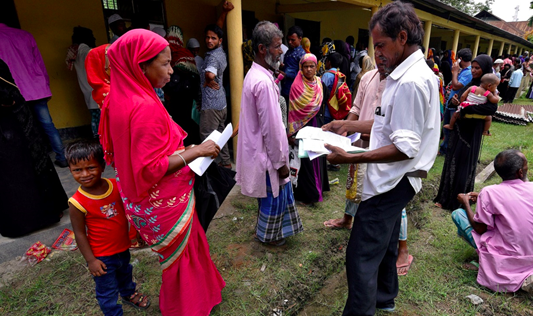
Villagers wait outside their local NRC Center to verify their documents (Source: Reuters).
And for those not on the final list, they will be left with only those rights “guaranteed by the UN” according to Chief Minister of Assam, Sarbananda Sonowal. In other words, these individuals would be stateless: losing land rights, voting rights, and even access to welfare. For those individuals, the state has mentioned foreigners returning to Bangladesh; but Bangladesh has said it is not aware of any of its citizens living in Assam. And even though many news platforms have noted the construction of a new detention center to better process foreigners, Sonowal has said no one will be sent to detention centers
Considering this, South Asian director of the Human Rights Watch, Meenakshi Ganguly said the government must “ensure the rights of Muslims and other vulnerable communities.” And for many human rights activists, such protections are crucial to preventing a parallel to the Rohingya’s loss of citizenship in 1982.
Currently, officials are reaching out to individuals not on the list and educating them on how they can file claims and objections to their status. Members of the Supreme Court have also emphasized that the list “can’t be the basis for any action by any authority” in its current draft form. Although the “legal system will [ultimately] take its own course” according to Siddhartha Bhattacharya, Minister of Law and Justice.
TERESA NOWALK is a student at the University of Virginia studying anthropology and history. In her free time she loves traveling, volunteering in the Charlottesville community, and listening to other people’s stories. She does not know where her studies will take her, but is certain writing will be a part of whatever the future has in store.

India’s Holiest City Tried ‘Pro-Poor’ Tourism
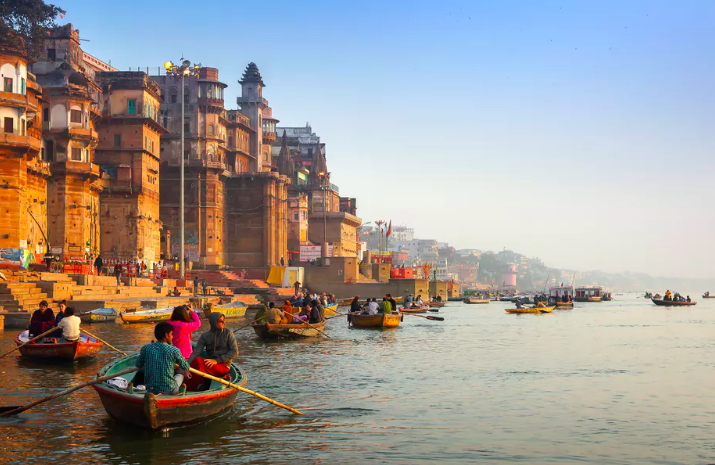
Anmol, 17, slips 500 rupees into his pocket as he swaggers down the stairs on bowed legs, after escorting American tourists to the pizzeria in Assi. Anmol reads faces to survive. If a tourist has a good face, he approaches, tests the waters in his broken English, and buys them a chai. “Trust is most important because tourists don’t trust you fast,” explains Anmol.
In Assi, a neighbourhood of bustling cafes and temples in Varanasi – India’s most holy city – most people depend on tourism to make a living: building up that trust allows them to eat. According to the Uttar Pradesh Department of Tourism in 2017, over 300,000 foreign and 5m domestic travellers visited Varanasi. During the peak tourist season between October and March, Anmol earns between 2,000 to 7,000 rupees as a guide (that’s £22 to £77). In the low season, he earns little or nothing.
“I also know how to do ceremony,” says Anmol, pulling out his smartphone to show shots of himself waving a lamp in front of a goddess. For a few hours, he helps his father, a priest, at a shrine, earning 50 rupees a day. Now, he has hatched another plan with advice from his Peruvian friend on Facebook – to learn how to play traditional tabla drums, so that he can make a little money teaching tourists keen on Indian culture. If all else fails, he will get a driver’s license.
Who benefits?
Like many others his age, Anmol is struggling to claw his way out of poverty. The average monthly income he cobbles together is just above the World Bank’s poverty line of US$1.90 a day. Anmol is trying to acquire valued skills, and he is not among the “abject poor”, nor accounted for in government statistics about poverty. Yet he remains vulnerable, at constant risk of slipping backwards.
When Anmol moved to Varanasi nine years ago from Bihar, his family circumstances were so strained that he had to choose between education and food. The locals have a cautionary saying about Biharis like him: “Ek bihari sau pe bari” – one Bihari is shrewder than hundred local people. Largely disdained by locals for corrupting their culture, most Bihari migrants in Assi work in the informal economy.
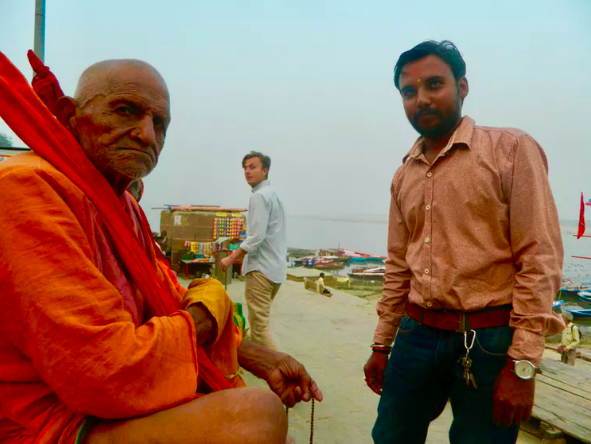
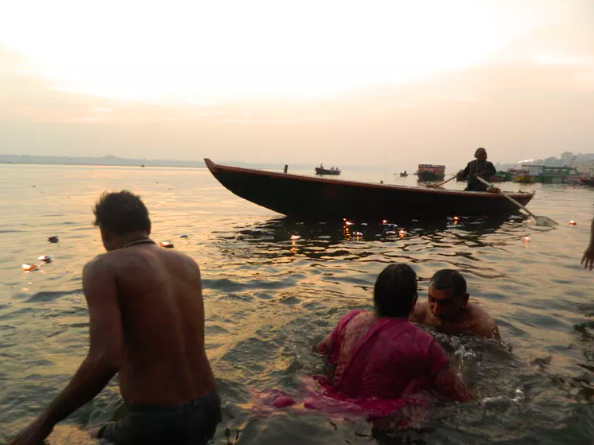
When I ask Anmol who benefits from economic development, he replies, “Everybody benefits, but especially the hotel-wallah, restaurant-wallah, boat-wallah”. Those who own prime real estate, or are directly tied to the tourist industry – such as the boatmen who ferry visitors to watch the sunrise – have gained the most. But there has been no systematic effort to document who benefits from tourism, and in what ways.
Pro-poor tourism
Across India, tourism accounts for nearly 10% of the GDP, and is the third largest foreign exchange earner. One advantage of the tourism industry is that it can absorb even unskilled workers. The UN World Tourism Organisation has long held that tourism can be a key agent in the fight against poverty. But some experts are more sceptical, arguing that tourism’s value is overstated: it creates menial, seasonal jobs and mainly benefits the skilled elite.
Inclusive “pro-poor” tourism, which creates employment for vulnerable residents is a priority in the government of Uttar Pradesh’s 2016 tourism policy and India’s 12th five-year plan. Yet there is a lack of clarity around what “pro-poor” tourism should actually achieve. For Avinash Mishra, joint director of Uttar Pradesh Tourism, it means building skills for those in the sector. For others, tourism is only “pro-poor” if it reduces absolute poverty or inequality.
The local government has not thoroughly mapped how much money from tourism goes to the poor in Varanasi, or other areas. Nor has it identified the bottlenecks preventing the poor from earning a greater share, which vary from one destination to another. A “value chain analysis” – which describes the full range of activities required to bring goods or services from conception to completion – could help the government decide whether to invest in skills development or marketing, strengthen local food supply chains or reform local laws.
Dreaming big
Research by the Overseas Development Institute, an international development think tank based in the UK, suggests that there are many ways to help spread benefits of tourism. In general, the poor do better when tourists spend on local products, rather than “big ticket” items such as accommodation and tour operators. They also benefit when tourist establishments buy supplies locally, and when they can get jobs where the wages are set relatively high. Enforcing a minimum wage can ensure the benefits are more widespread.
According to Mishra, in Varanasi nearly half of foreign tourists come through package tours, so much of the profit will never reach local communities. Foreigners travelling independently are more helpful to locals. It is hard to regulate private sector development, says Mishra, but government intervention comes with its own issues.
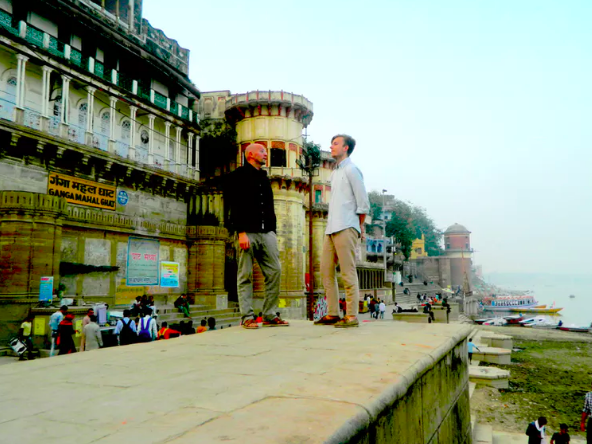
“Once the government comes in, there’s corruption. So we have the principle of the survival of the fittest,” he told me. A family of upper-caste priests, who own much of the local land, are well-equipped for competition. But young people such as Anmol must fend for themselves; if they survive, it’s because of their own ingenuity, resilience and risk-taking.
Many of the young men who came of age in the wake of India’s economic liberalisation now find that the opportunities and lifestyles represented on the internet and television linger just beyond their reach. They are often more educated than their parents, yet they lack the connections and money which could enable them to fulfil their aspirations.
Globalisation and tourism has opened up their imaginations to a world beyond Assi. One day Anmol hopes to go Australia. “I like Australia because the weather is good there. They also play cricket. I can survive there, but it will take a little time to adjust. I used to be scared when I first moved here too.”
THIS ARTICLE WAS ORIGINALLY PUBLISHED ON THE CONVERSATION
INDIA: Sadhu: Beyond the World of Illusion
When a rare outside viewpoint gives context to your own life, you can’t help but feel the mold within you bend and twist into something new. In Varanasi, one of the oldest inhabited cities on Earth, I came to know India’s holy men, the Sadhu
Derived from the Greek asketes, meaning “monk” or “hermit,” ascetics are individuals who chose a life characterized by severe self-discipline and abstinence from all forms of indulgence. Almost every major religion breeds ascetics, and for many thousands of years, there have been wandering monks who have renounced all earthly possessions, and chosen to dedicate their lives to the pursuit of spiritual liberation. For many of these individuals, reality is dictated only by the mind, not material objects. India’s holy men, the Sadhu, are one such example.
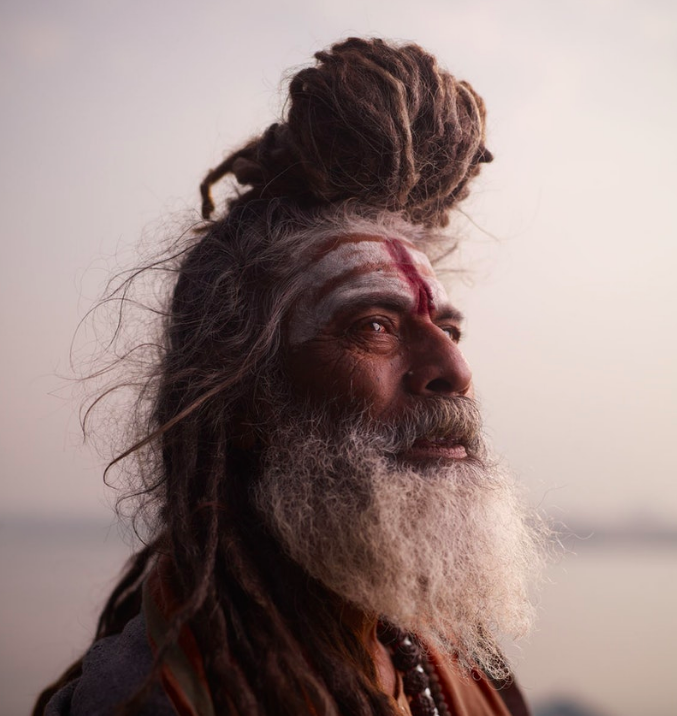
Above: Portrait of Baba Nondo Somendrah in Varanasi.
Varanasi is one of the oldest inhabited cities in the world, and it is thought that people may have lived in this place for about 3,000 years or longer. As the epicenter of Hindu faith, it is similar to Jerusalem for Christians and Mecca for Muslims. The images in this story are part of my “Holy Men” series, featuring religious ascetics from around the world.
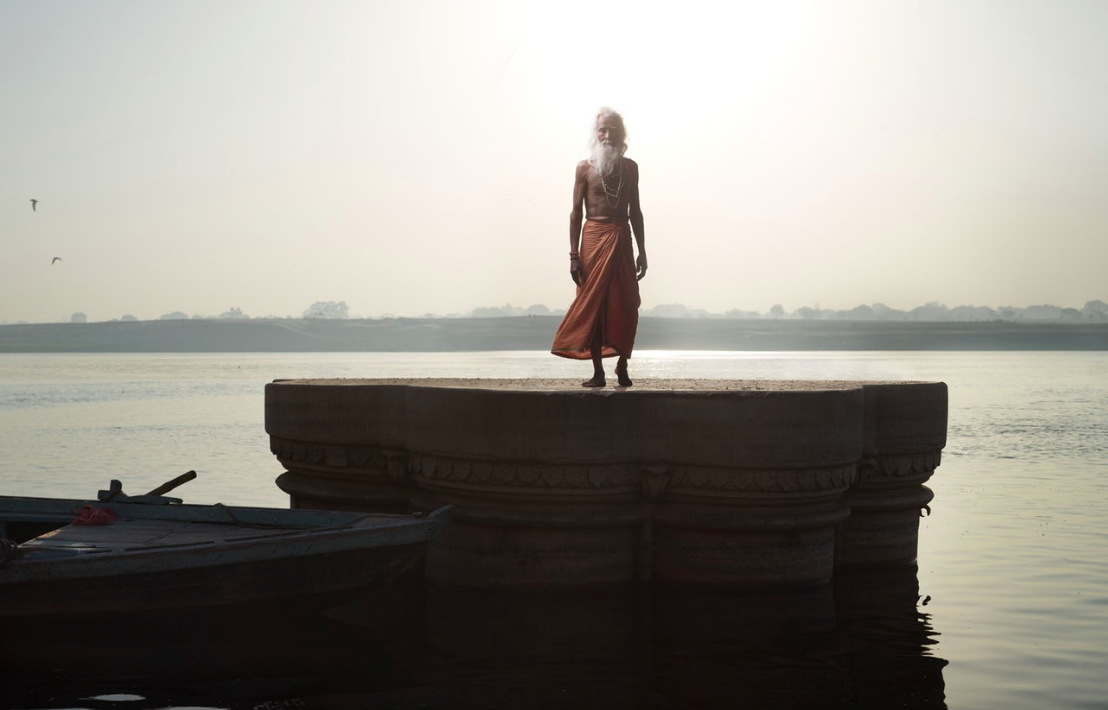
Above: Shiv Ji Tiwari stands on a sunken temple in Varanasi.
I first began this collection with a photo series from the North of Ethiopia focusing on Coptic Christianity. Although Coptic Christian monks and Sadhus live in different corners of the world, the connection all of these subjects have to each other is profound. I have been working with some of the same sadhus from Varanasi since I was 16 years old, and coming to know these individuals has truly been a life changing experience.
When a rare outside viewpoint gives context to your own life, you can’t help but feel the mold within you bend and twist into something new.
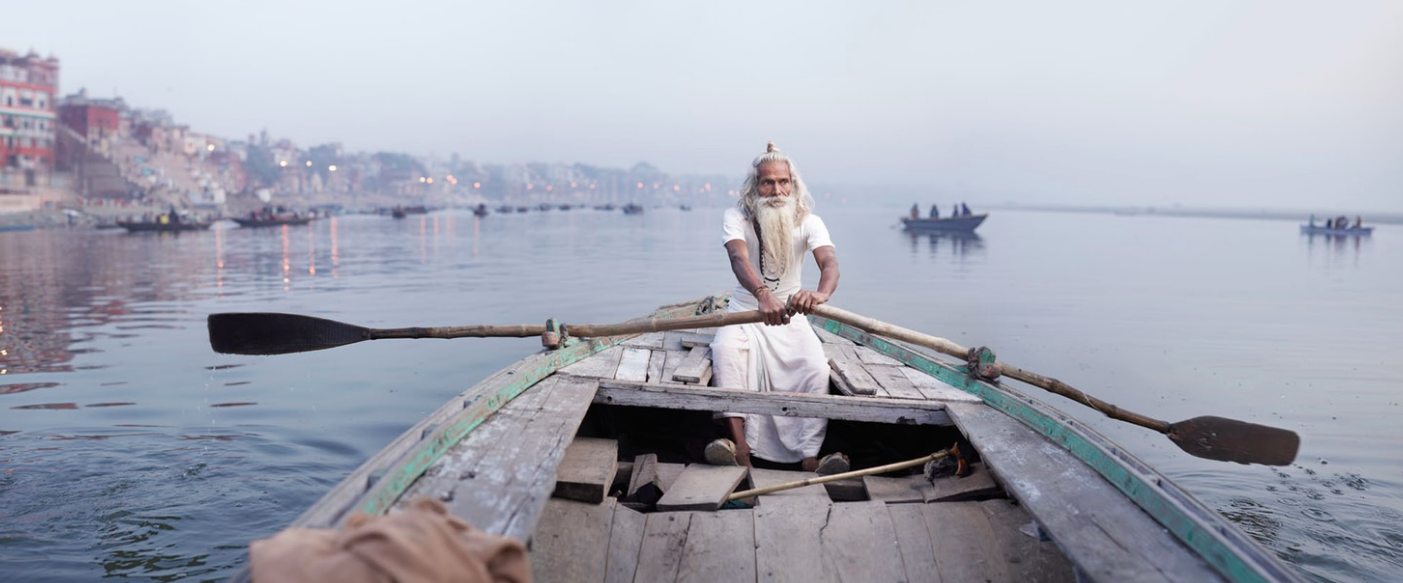
Above: Ascetic priest Baba Vijay Nund rows a boat along the Ganges River.
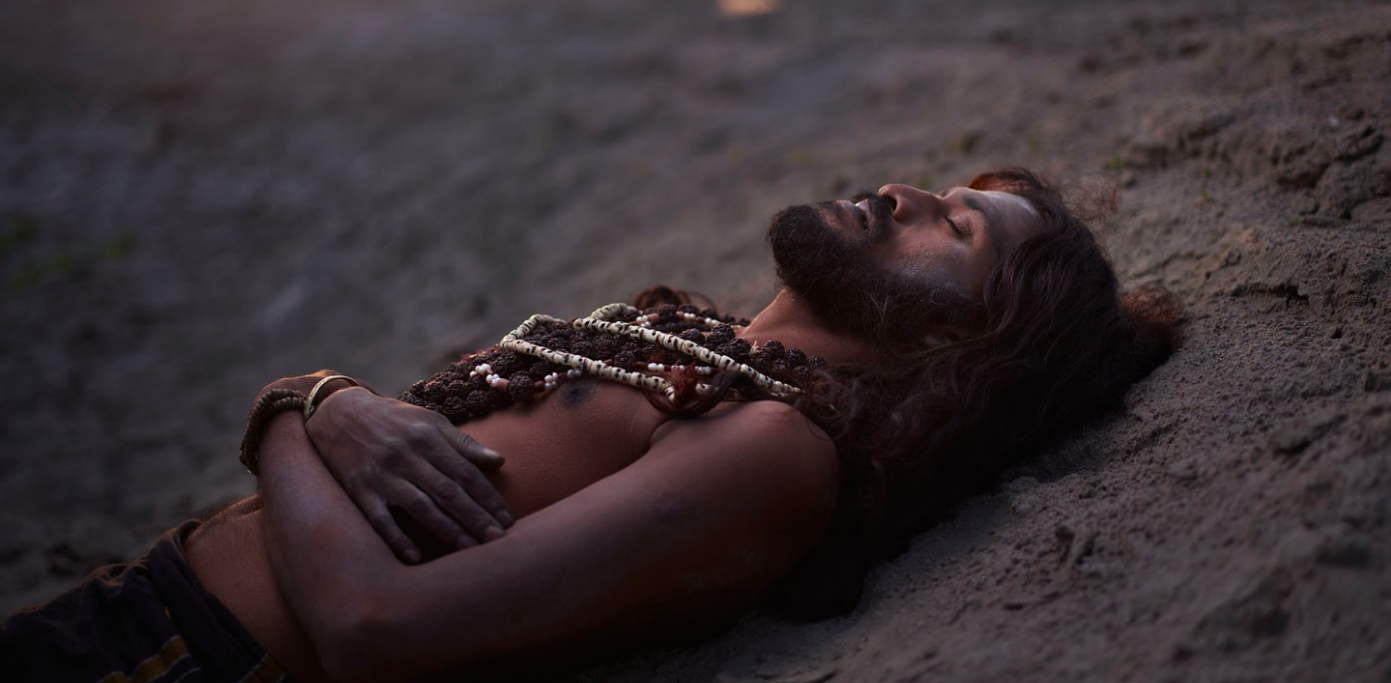
In particular, I came to know some members of the Aghori, an intense sect of Sadhu infamous for overcoming all things taboo. For instance, they may meditate on corpses, even eat human flesh as part of a sacred ritual, or keep a skull as a reminder of the impermanence of life.
The Aghori have a profound connection with the dead. Death is not a fearsome concept, but a passing from the world of illusion.
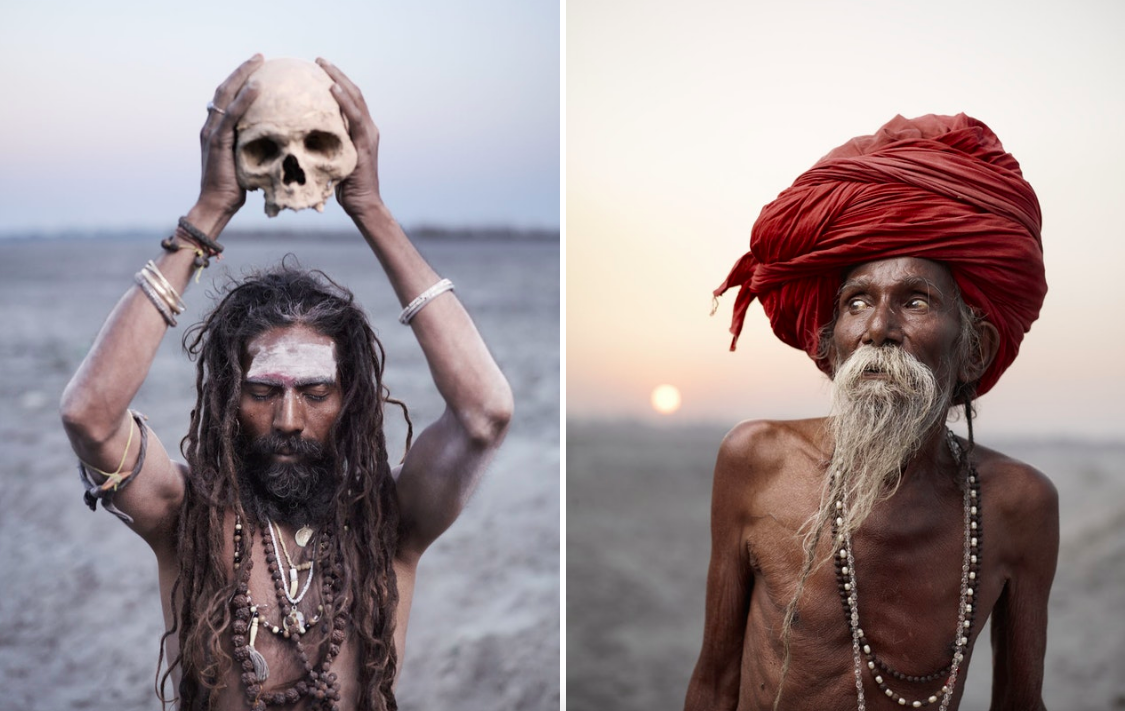
Sadhus live a very different life from most of us. A sadhu renounces his earthly life, all his worldly attachments, and leaves home and family. As part of this renunciation, they also leave behind their clothes, food and shelter, and live on the generosity of others. Another part of renouncing your former life is to attend your own funeral and die to yourself, and be reborn into your new life as a sadhu. Below you see Magesh, who left a well paid job as an IT computer consultant to pursue to path of Aghora. After years of practice, he finds no temptation to return to his old life.
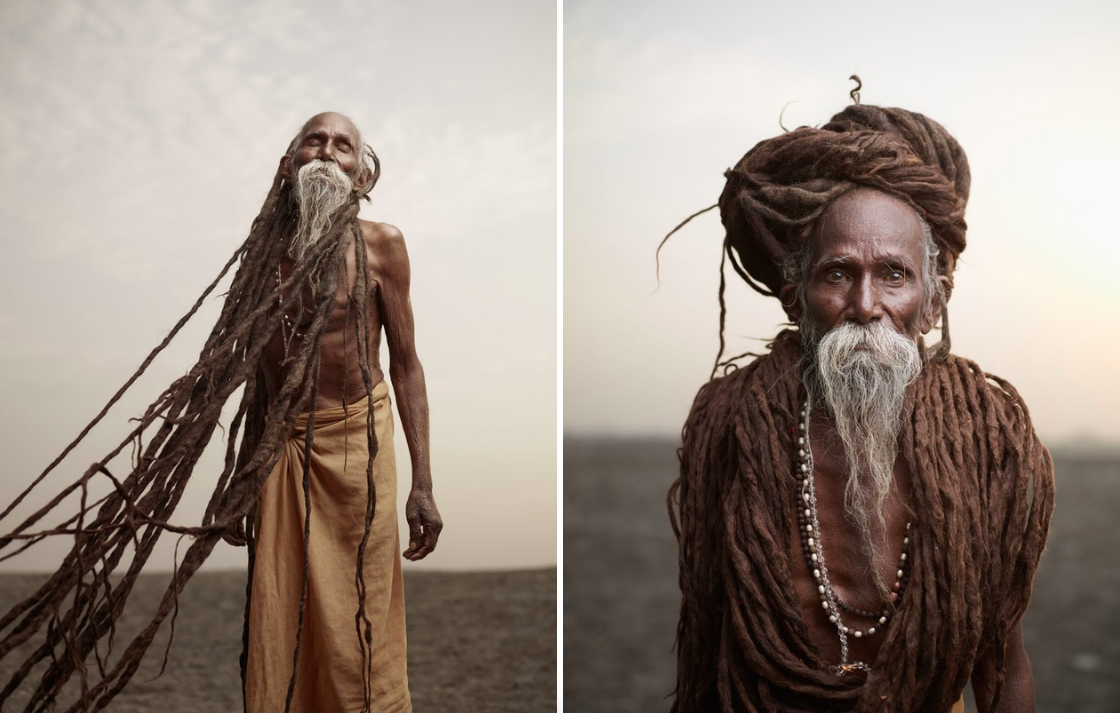
When he was young, Lal Baba’s parents arranged a marriage for him. Uncertain about his future, he ran away from home in Bihar Siwan and took up the lifelong task of becoming a sadhu. He has dreadlocks (jatas) several meters long, which have been growing for over 40 years. For sadhus, jatas are a sign of renunciation and a life dedicated to spirituality.
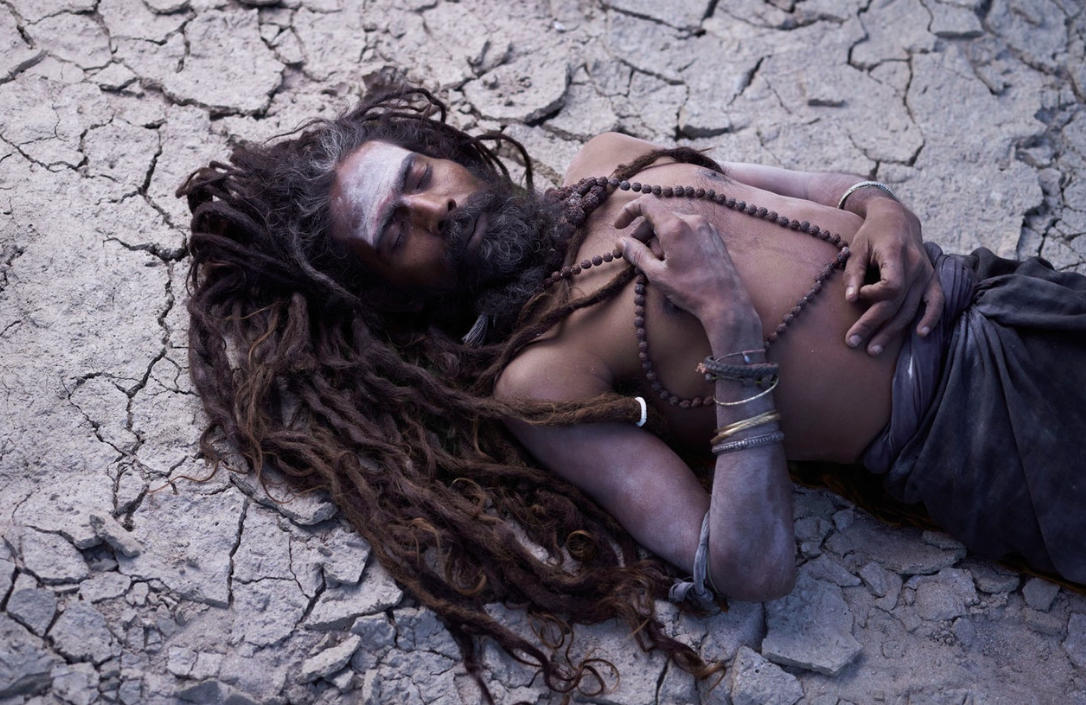
Another important and sacred ritual for Aghori sadhus, is covering themselves with human ash, which is the last rite of the material body.
To many Hindus, Sadhus serve as an earthly reminder of the divine, and may take on the role of a healer as someone who can help to rid others of negative energies. As a part of their daily routines, sadhus will arise before sunrise and bathe in cold water, before starting their daily prayers.
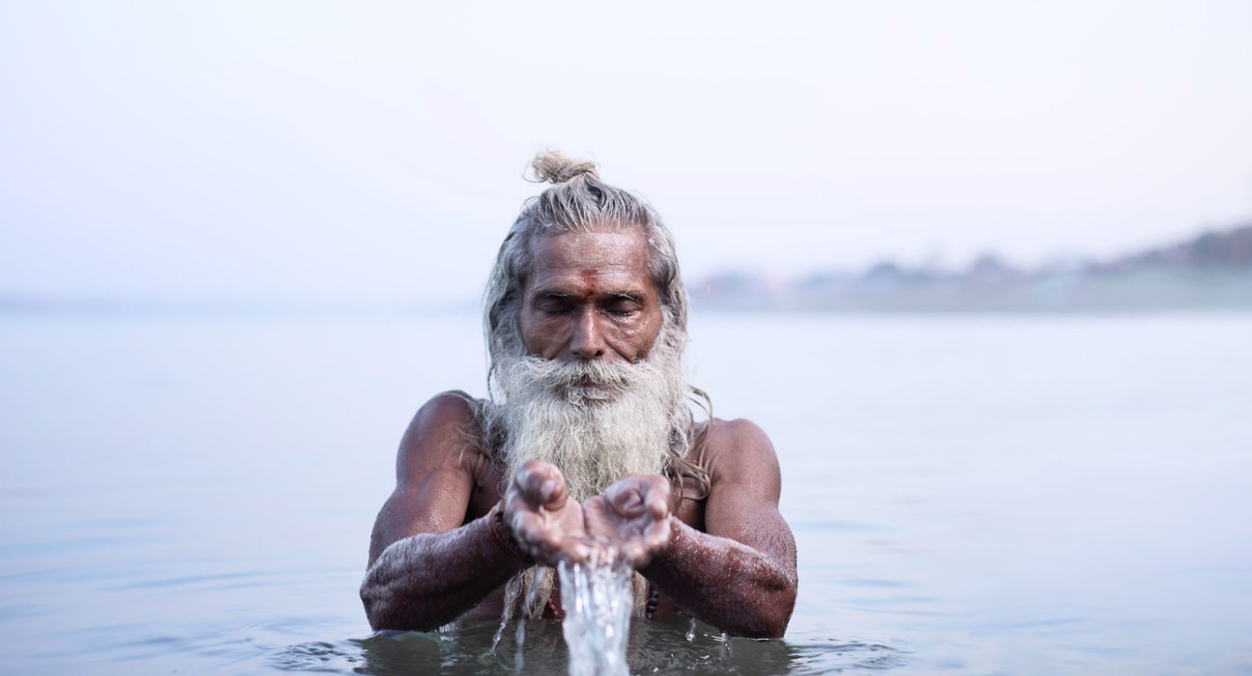
Above: Vijay Nund performing morning rituals in the Ganges River, the most sacred river in Hinduism.
The Ganges River is an important subject in this photo series, creeping into the background, giving the holy men and their students a sense of environment. In the Hindu faith and Indian society, the Ganges River holds a prominent, special, and sacred place. Hindus believe that the Ganges is divine, in part, because it flows from the heavens. This is understandable when you realize that the Ganges is primarily composed of Himalayan meltwater, which falls from the heavens as snow.
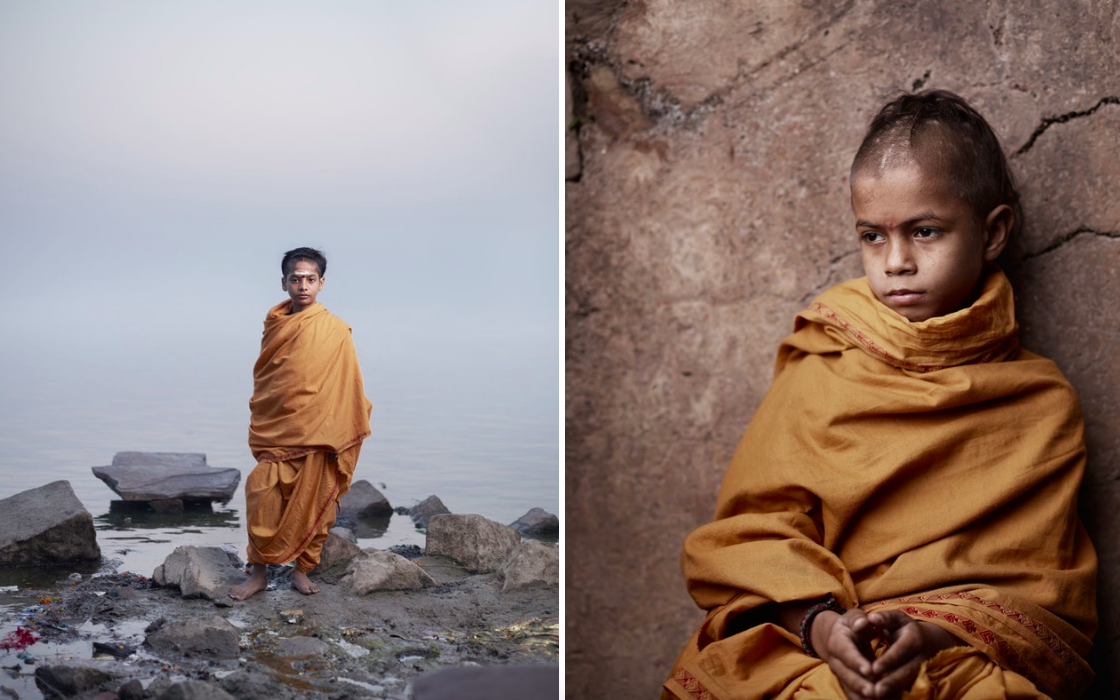
Above: Saurav Kumar Pandey and Amit Byasi, Batuk students in Varanasi.
One of the most sacred aspects of the Ganges is that Hindus believe that bathing in the Ganges reduces a person’s sins and increases the chances for eternal liberation from the cycle of life, death and rebirth.
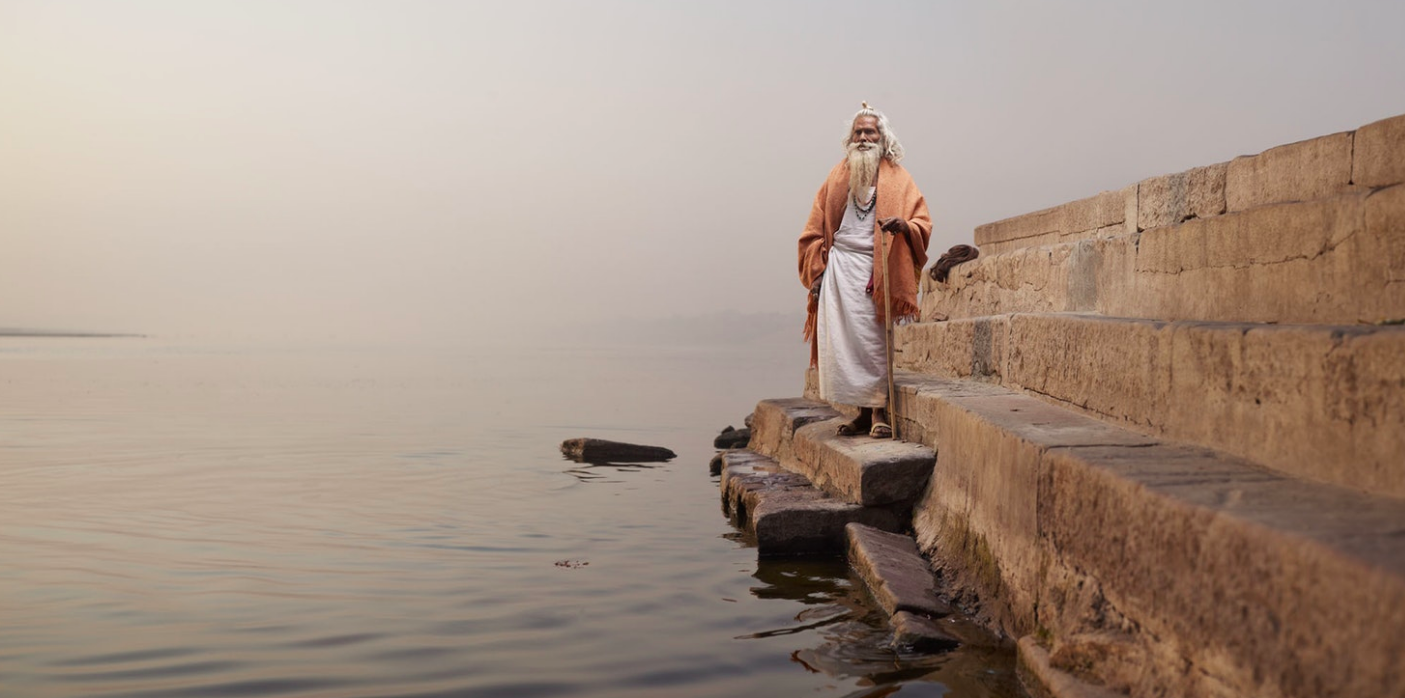
Above: Baba Vijay Nund on the steps of Chet Singh Ghat on the banks of the Ganges River.
Although considered extremely polluted with human waste, garbage and industrial waste, the Ganges is still considered sacred, and some believe there’s nothing that can be done to diminish its holiness. The Ganges has been the spiritual and physical lifeblood of northern India for ages.
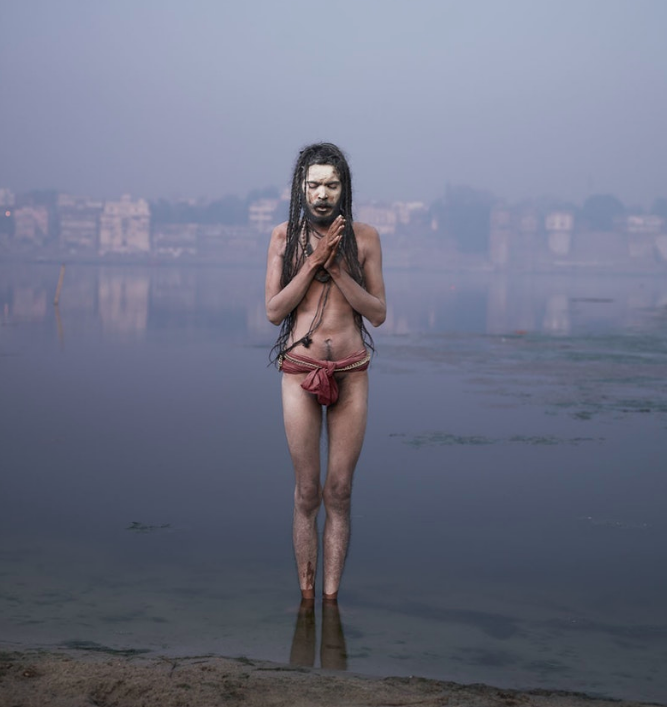
Above: Baba Mooni conducting Aghori Puja in the Ganges river.
The unique perspectives of the Sadhu, and other ascetics like them, challenge the way we interpret the world around us. There are so many places to explore and people to photograph, it keeps me up at night.
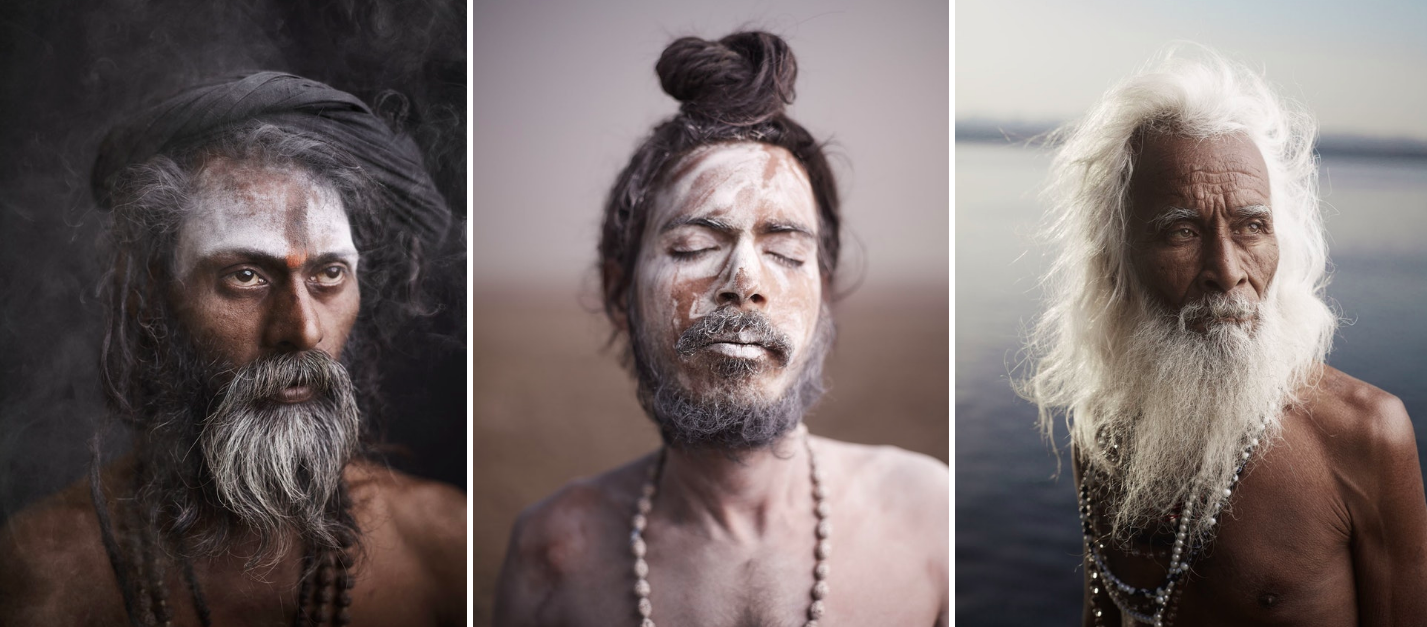
Above: Portraits of Baba Mooni and Shiv Ji Tiwari.
INDIA: In Her Shoes
Rani is a 17-year-old in Mumbai. Like most girls her age, she likes Instagram, boys and good food. But Rani is also the daughter of a sex worker, and she grew up hearing, “a whore’s daughter can only be a whore.” Follow filmmakers Doree Simon and Caz Tanner Film as they explore women’s empowerment efforts around the world in a new original series, In Her Shoes. Episode one features a-day-in-the-life of Rani — who is transcending her circumstances and helping her community along the way.
INDIA: The Rickshaw Adventure
A group of Americans meet up in Trivandrum, India to embark on an adventure across the country by rickshaw. After a quick night of rest they check out their Tuk Tuk (rickshaw) for the first time. These manual two-stroke engines take them a little while to figure out, but by the end of the day, they were confident... or so they thought.
INDIA: Valleys in the Sky
'Valleys in the Sky' takes you on a journey to one of the highest altitude and least populated regions in the world, located in the Indian Himalayas. Experience the beauty and magnificence of this remote area and witness the incredibly rare celebration and arrival of his Holiness the high Lama, to the small town of Mudh for the first time during "this life's incarnation".