NAMIBIA: Colors of a Country

Namibia is a land of contrasts and extremes. Situated between the Namib and the Kalahari deserts, Namibia gets less rain than any other country in sub-Saharan Africa. Namibia’s coastal desert is one of the planet’s oldest, with powerful offshore winds sculpting the highest sand dunes in the world, in some places rising more than 1,000 feet.

Water — or more to the point, its absence — defines life in Namibia.
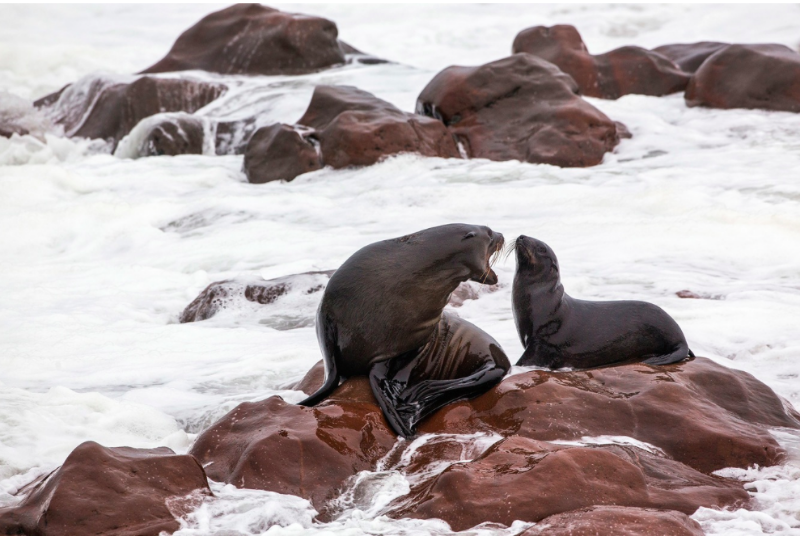
Hot and arid in the interior, Namibia’s coast is surprisingly cool and moist, the product of the cold Atlantic colliding with Africa’s warm and dry southern tip. Seals and sea birds come by the thousands to congregate in this narrow temperate zone.
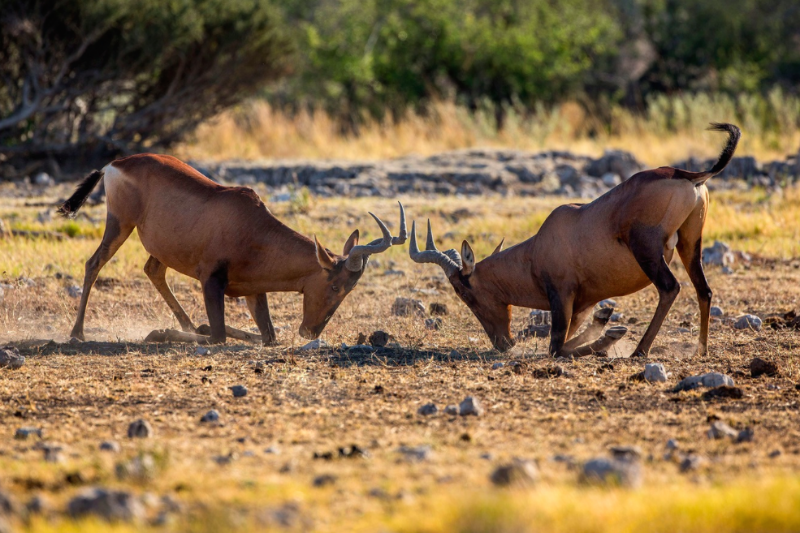
In the rest of the country, only where there is water is there life. Here is my vision of this untouched and primal land, with its towering red sand dunes, vast deserts, and wild animals struggling to survive. 
KOLMANSKOP

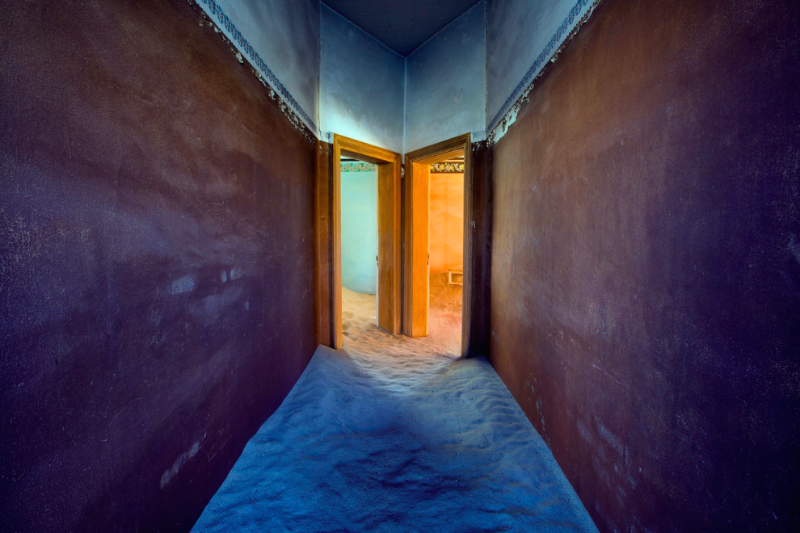
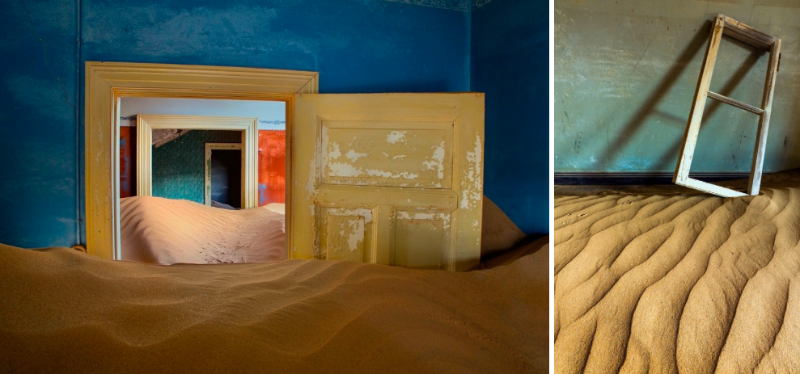
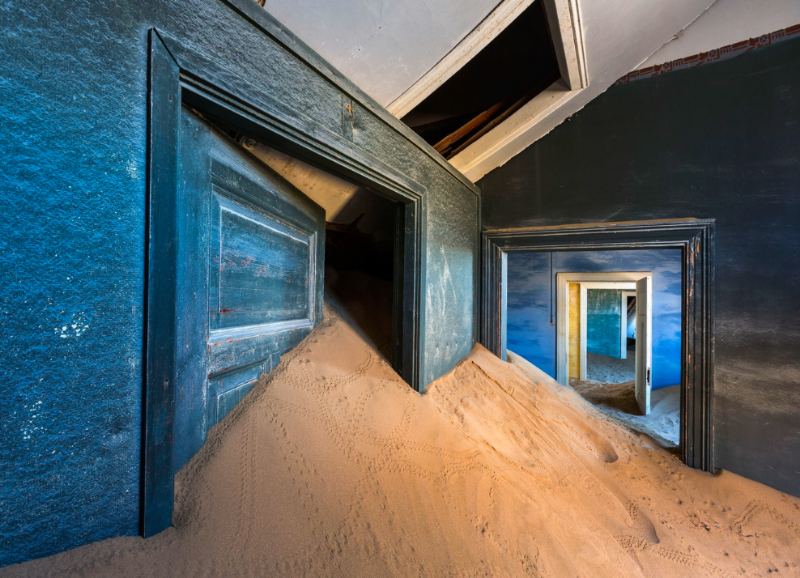
Kolmanskop is a deserted German mining settlement located in Namibia. The town was abandoned in the 1950s, and the desert has been reclaiming it ever since, creating an interesting mix of colorful painted walls and sweeping sand dunes engulfing entire rooms.
QUIVER TREE FOREST

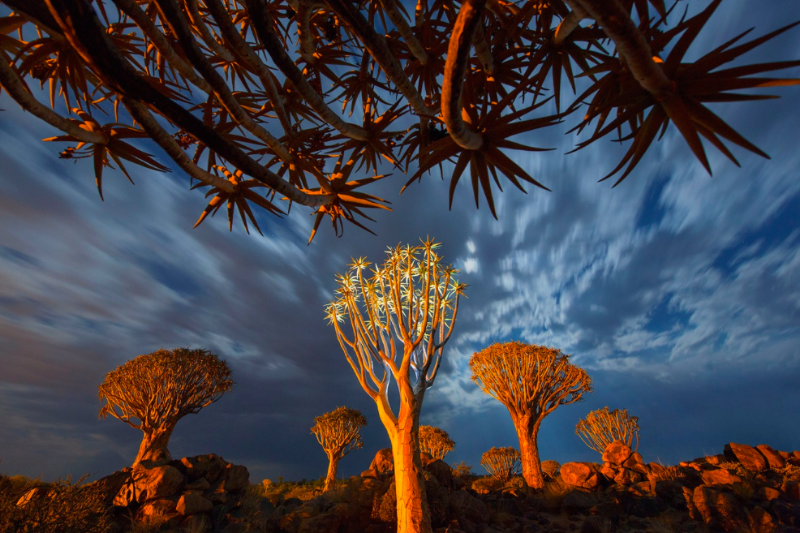
The Quiver Tree Forest, near Keetmanshoop, contains a collection of the so-called “quiver trees” which aren’t really trees at all, but rather a species of aloe, a flowering succulent plant.
NAMIB-NAUKLUFT NATIONAL PARK

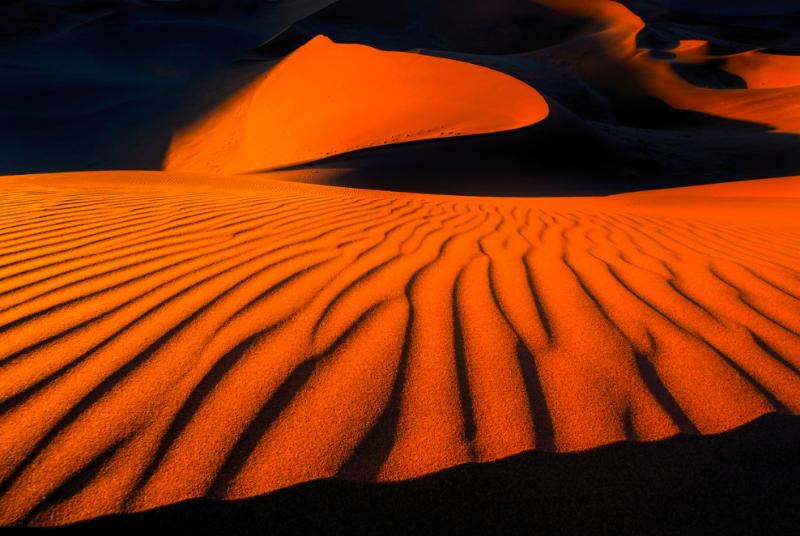
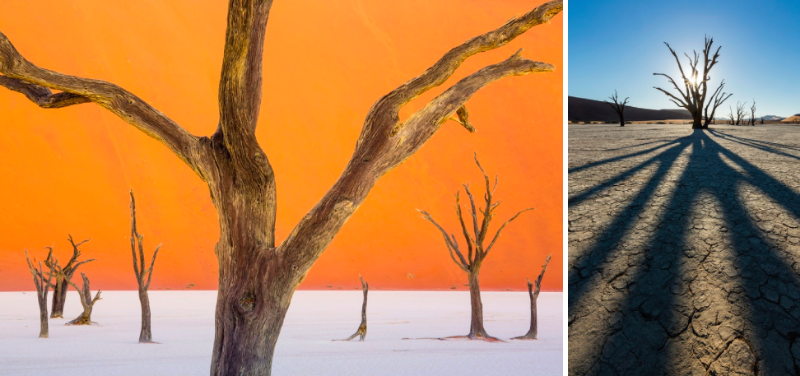
Namib-Naukluft National Park preserves part of the extensive Namib Desert. The most famous area of the park is called Sossusvlei, which contains the tallest sand dunes in the world, rising more than 1,000 feet above the desert floor. Oxidization of iron in the sand gives them a reddish-orange color, which becomes especially intense when bathed in the warm light of sunrise and sunset.
One of the most stunning places in Sossusvlei is known as Deadvlei (which means “dead marsh”). The area used to be wet and covered in trees, but 600 or 700 years ago the water dried and the trees died, their eerie skeletons preserved by the dry air.
ETOSHA NATIONAL PARK

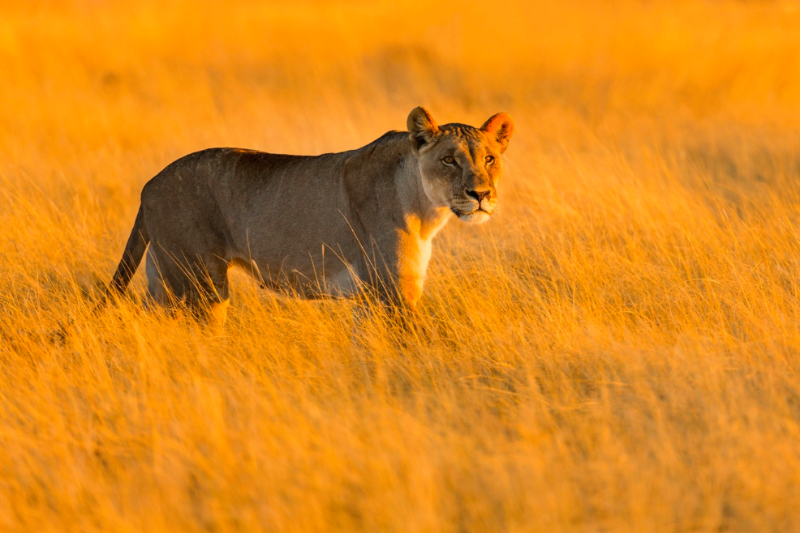
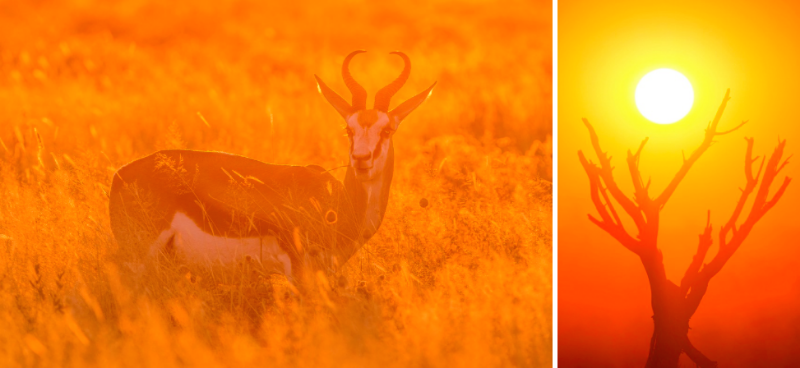
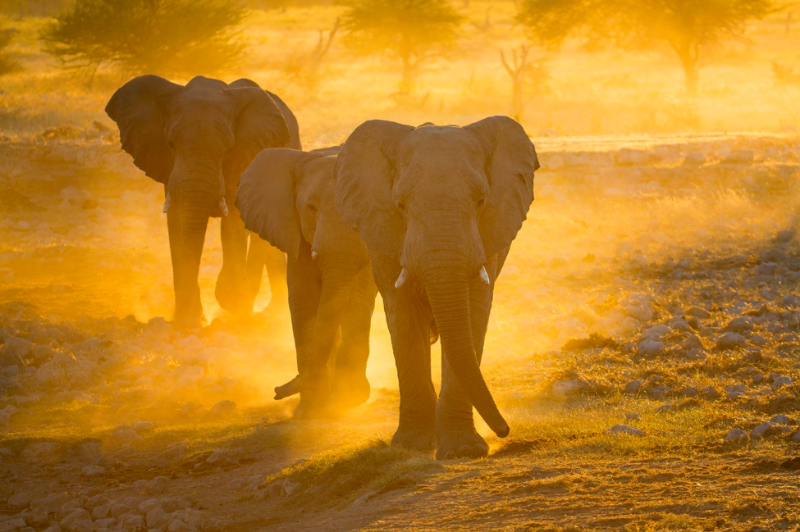
Etosha National Park is a beautiful national park in northwestern Namibia, known for its abundance of large game animals, including elephant, lion, rhino, giraffe, cheetah, zebra, and many more. What amazes me most about Etosha is the clear, strong light at sunrise and sunset, bathing animals and landscapes in warm color.
 

ORIGINALLY PUBLISHED ON MAPTIA 


IAN PLANT

@IanPlantPhoto 

World-renowned professional photographer, writer, and adventurer Ian Plant is a frequent contributor to and blogger for Outdoor Photographer Magazine, a Contributing Editor to Popular Photography Magazine, a monthly columnist for Landscape Photography Magazine, and a Tamron Image Master. Ian is also the author of numerous books and instructional videos. See more of his work at www.ianplant.com
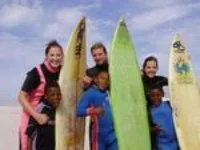
TRIP REVIEW: Surfing South Africa to Help Out

The downfall of many volunteer organizations is cost. All too often there will be a $1000+ price tag on a trip that lasts only a week or two, not included airfare. This isn’t news, so it should come as no surprise that there are people out there who are working to fix this. One of these people is Daniel Radcliffe (no, not the actor). After collecting a Masters of Business, Daniel decided that it was time to give back to the world. He began to research volunteer trips. He too ran into this roadblock, but unlike someone like me who will simple notice the problem and then write about it, Daniel decided to do something. International Volunteer HQ was founded upon his return to New Zealand in 2007. “IVHQ was born with the goal of providing safe, affordable and high quality placements in areas where there is a real need for volunteers.” One of these places is South Africa.

It’s easy to read a statistic or to watch a documentary and think that we understand. Sure, we have problems here in the United States, there’s inequality and poverty everywhere, but, honestly, we cannot imagine what some citizens of the world live through. In South Africa the average life expectancy of a white South African is 71 years. The average life expectancy for the black population is 48 years. In 2005 it was estimated that 31% of the female population was infected with HIV, most of them black. There are 1,200,000 orphans. These are numbers and statistics, I could throw them onto a graph and you would see the vast differences, but you still wouldn’t know, you would still be using your imagination. Over there, it’s a reality. South Africa needs help and, if you feel so inclined, you can give it.

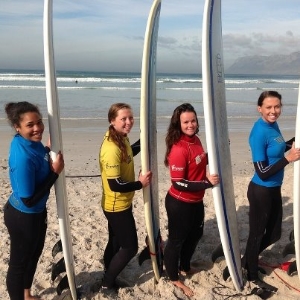
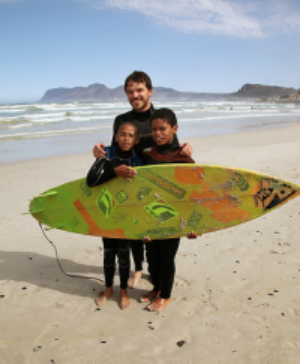
IVHQ sends volunteers to South Africa on the first and third Monday of each month. They normally arrive in groups of twenty to fifty people and the assist the community in an astounding variety of ways. Participants can involve themselves in a teaching project, in childcare, computer training, sports development and, an organization after my own heart, a surf outreach program.

Maybe you’re wondering what good a surf outreach program would do for children when they could be receiving extra medical attention or extra food and shelter. In the words of Ellen Varoy, Marketing and Media Coordinator for IVHQ, “The Surf Outreach program is designed to provide these children with an after school activity, keeping them off the streets of Cape Town and placing them in a safe and encouraging environment. Through the program, these children have the opportunity to learn new skills, take up new challenges, gain confidence and interact with our international volunteers, who the children look up to as role models.” It’s not about whether or not these kids learn to surf. It’s about showing them that there are people who care. It’s about being a ray of light on an otherwise bleak horizon. As a surfer would say, it’s about sharing the stoke. Would these children benefit more from help that focused on their health and nourishment? On the spreadsheet, probably, but where would they go after that? I say give them role models, give them hope and teach them that they can overcome. That, in my opinion, will last much longer than a loaf of bread.

The cost of IVHQ trips is one of the things that makes this organization so great. Prospective volunteers for the surf outreach program only have to pay $320 for one week. Longer periods of time require more money, being capped off at six months for $4580. This does not included airfare or visas or spending money. Also, if you want to participate in the surf outreach program you must know how to swim. I just thought I would point that out. If you are interested in any of the other programs offered for South Africa, you can find more information here

IVHQ is a fantastic option for people who want to volunteer for an affordable price. A full range of trips can be found at their website, http://www.volunteerhq.org/. As usual, if you were interested in the trip, but don’t think it’s for you, check back with Mission.tv next week for the next article in our series of trip reviews.

For testimonials by volunteers who completed the surf outreach program, check out: Testimonials  

To check out a video from the trip click here.

LEARN MORE ABOUT IVHQ


KINO CROOKE spent the last three years juggling school and travel. He most recently spent the last two months traveling across Spain before moving to New York to work with CATALYST.

Conflict Zones Through The Lens of Marcus Bleasdale

“This is an exciting time for digital storytellers.”

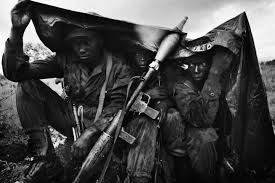
Truer words have never been spoken. But in the spirit of the commencement of this year’s Social Good Summit, it should be noted that these storytellers also hold a great responsibility to the masses. As a distinguished photographer, Marcus Bleasdale embodies this sense of responsibility in his coverage of conflict areas around the world through the medium of his trusted camera lens. Over the past 15 years, the region of the Democratic Republic of Congo (DRC) has captured his steady attention.

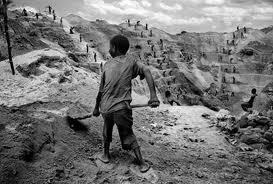
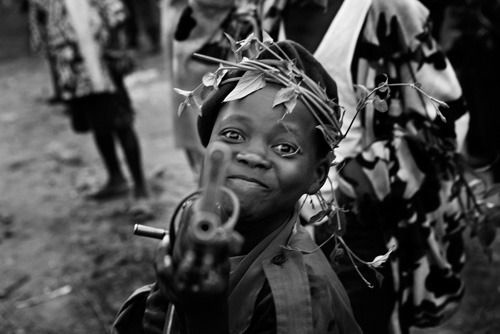
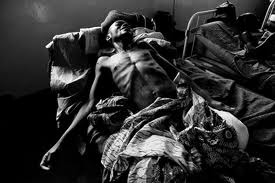
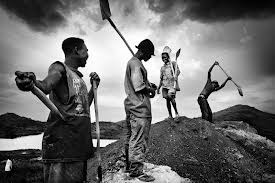
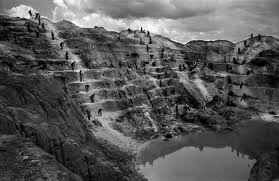
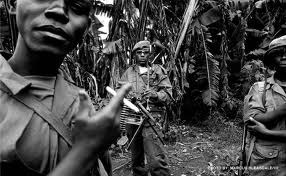
Throughout his time working within the DRC, Bleasdale has gained a first-hand perspective into a nation that, while rich in minerals, has been coerced into a haunting reality of violence, disease, poverty and profound injustice. Children are stripped of their adolescence, forced into militant lives plagued by mindless violence at the behest of their devious superiors. Families are torn apart, displaced, and involuntary bare witness to the perils of life within the misleading comfort of their own backyards. 
More

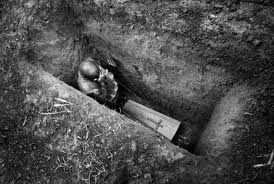
As the conflict within the borders has continued to run its rampant course over the past 15+ years, 2 million Congolese natives have been displaced, 40,000 women fall victim of sexual violence annually, and over 5.5 million deaths have been recorded as a result of rampant disease, and violence throughout the region. In his Keynote adderess to the Social Good audience, Bleasdale stressed that these are simply the statistics; his images however, are what interpret the reality.

An important distinction however, is how Bleasdale goes about creating a narrative of an area so riddled by conflict for decades. He goes into depth about how he works to construct such a narrative in saying:

“For me, I’m trying to engage in order to enhance the narrative that I’m trying to tell. There are many different aspects of the story to engage with - the mind, the child soldiers, the sexual violence, displacement, horrific health issues that have spread through the DRC. I have to touch on each one of those in each unique situation to try and engage with a subject in a way that will truly hone the message that this should stop.”

He delves deeper in his philosophy toward photojournalism in conflict areas, stating, “Every image cannot be misery, and should not be so difficult to look at that you want to turn away. You have to also try to look for the beauty, and the hope, to show the opportunity that is available that has not necessarily been seized.”

Having covered the Democratic Republic of Congo for more than 15 years now, Bleasdale’s knowledge and wisdom towards his craft should be respected. As for his advice for the brave soul aspiring to photojournalism of this nature; one word came to mind, patience.

“Everything takes time, especially when working within the areas I have. In relation to my work in the DRC, you can’t tell that story in a week, a month. I’ve been telling that story for 15 years now and still I don’t think it’s finished, because it’s still going on.“

An award-winning photographer who has been heralded by the US House of Representatives, The United Nations and the House of Parliament in the UK, Bleasedale will undoubtedly continue to be a respected voice within the realm of photography, specifically within regions of conflict.

He can be followed on twitter @marcusbleasedale.


ANDREW BRIDGE @Bridgin_TheGap

Andrew is Editor-in-Chief of CATALYST's Social Good Summit Daily, and Managing Editor of CATALYST. He is a global enthusiast with a passion for the road less traveled. As a frequent collaborator with World Hip Hop Market and Nomadic Wax, Andrew has worked with numerous socially conscious artists from around the world in the pursuit of inspiring cultural understanding and exchange through entertainment. This fascination with the world at large has taken him to over 20 countries (so far) through studying, volunteering, and writing about his travels, with no signs of slowing.