
From Argentina to Estonia, artists around the world commemorate and contribute to city culture through street art.
Read MoreThe Dark Side of Light Pollution
As light pollution engulfs over 80 percent of the world's skies, artificial light has demonstrated its detrimental impacts on the health of humans, ecosystems and the planet.

Light pollution in Los Angeles. Erik Levin. CC BY-NC 2.0
Artificial lighting fixtures like street lights and billboards have become commonplace for billions across the globe. While artificial light has been in use for centuries, light pollution has dramatically increased over the past few decades. Considering the global urban population is projected to rise by up to 68 percent in the next 25 years, the demand for artificial light is unlikely to subside.
Light is integral to life on Earth, influencing the planet's creatures down to their DNA. From reproduction to protection from predators, many life-sustaining behaviors rely on the cycle of day and night. Artificial light has been shown to disrupt life in many kinds of ecosystems. In the wetlands, artificial light interferes with nocturnal mating rituals. Starlight and the Sun's rays also serve as important navigation devices for many animals and insects. When artificial light disrupts these natural signals animals like baby sea turtles and birds can be drawn to their demise.
Within ecosystems, seemingly small changes brought by the presence of artificial light can have cascading effects. For example, some predators have evolved to target insects swarming artificial light. As vital members of the food chain, the decline of insect populations poses a threat to everything in the food web.
The reach of artificial light is not limited to urban areas, as it has been found to seep below the soil and into the oceans. Artificial light hinders the ability of microorganisms in the dirt to use carbon. Meanwhile, artificial light in the oceans has been found at depths of more than 66 feet, affecting the life-sustaining activities of many marine species.
The negative effects of artificial light are not always direct. The electricity required to sustain the current consumption of artificial light mostly comes from coal-fueled power plants. This production emits 15 million tons of carbon dioxide into the atmosphere every year, contributing to climate change and posing further threats to ecosystems.
People are not immune to the negative effects of their own creations. A mere 15 minutes of exposure to bright artificial light has the power to halt melatonin production. Due to its disruptive effects on circadian rhythms, artificial light can contribute to health conditions ranging from sleep disorders to heart disease. While artificial light is often used as a tool for safety and security, it can have the opposite effect. For example, glaring light can cause poor visibility.
While artificial light may be necessary for people to function at night, nearly one-third of all lighting is unnecessary, leaving ample room to cut down on its negative effects. Scholars propose prioritizing dark sky conservation in electric lighting design, using warm-colored light, and avoiding blue-colored light. Blue-colored light is particularly harmful for people and ecosystems alike because it scatters farther than warm-colored light. People can limit their light pollution by shielding, dimming, and turning off lights. Advocacy organizations suggest keeping light pollution in mind when shopping for lighting products. Environmentally friendly models will have adequate shielding to prevent glare and limit the amount of light escaping into surrounding areas.
TO GET INVOLVED
To advocate for limiting light pollution, get involved in non-profits like DarkSky and Light Justice, which offer opportunities for advocacy and education.

Madison Paulus
Madison is a student at George Washington University studying international affairs, journalism, mass communication, and Arabic. Born and raised in Seattle, Washington, Madison grew up in a creative, open-minded environment. With passions for human rights and social justice, Madison uses her writing skills to educate and advocate. In the future, Madison hopes to pursue a career in science communication or travel journalism.
Rural Roots, Green Future: Forest Conservation in Romania
With the loss of centuries-old trees, Romania looks to the preservation of its ecosystem to protect both past and future.
Read More10 Best Places to Travel in the US this Spring
A guide to the most beautiful spots to experience in the springtime
Read MoreChile’s Forest Fires: A Glimpse Through the Smoke
Wildfires are engulfing Chile, claiming the lives of about 130 people so far and sparking questions about potential causes and solutions.

A 2014 forest fire in the Valparaíso region of Chile. Gabriela. CC BY-NC 2.0
As of February 9, 2024, nearly 5,000 people have been affected by what appear to be Chile’s deadliest forest fires on record. These devastating waves of flame follow the planet's hottest year and hottest January to date. Chile is not the only South American country to face an inferno following a scorching January, with forest fires reported in Colombia and Argentina as well.
Fires and climate change are in a feedback loop, amplifying each other. Consequences of climate change, including higher temperatures and heat waves, contribute to drier conditions and longer fire seasons. The fires create areas of dead, dry vegetation at greater risk of future fires, while the smoke from the fires pumps carbon dioxide to the atmosphere, further warming the planet.
As the planet continues to warm, natural phenomena such as El Nino are intensified, resulting in hotter heat waves accompanied by dry spells, particularly affecting countries in northern South America such as Colombia and Venezuela. As recorded in 2018, about 21% of Chile is forest. The nation's tree cover, paired with its long dry season and heat waves, has proved to be a deadly combination. Forest fires in Chile have contributed to a range of destructive consequences throughout the years, including the loss of lives and biodiversity.
Chile’s government has made strides to address climate change as a member of 20 international environmental agreements. Chile’s Forestry Service (CONAF) collaborates with the private forestry sector to implement preventative measures. In 2021, former Chilean President Sebastián Piñera presented the National Forest Fire Protection Plan. This plan allocated necessary resources to fire prevention and management, including firefighters, vehicles and technologies to predict and monitor fires. Despite these efforts, forest fires have continued in the country.
Scholars have identified that preventative measures are necessary in addressing forest fires. For example, controlled burns have been used by Indigenous People in North America for millenniums. Controlled burns are meticulously planned fires intentionally set to improve the health of a forest and reduce the risk of large-scale forest fires by decreasing the presence of dry vegetation. Other innovative measures to prevent forest fires include a gel-like fire retardant developed by researchers at Stanford University and technologies that can predict wildfires like Chile’s “Red Button” program.
Despite the issue of wildfires being amplified by climate change, about 99% of forest fires in Chile are caused by people, which is why education is another critical preventative measure. Tactics people can employ to prevent forest fires include taking steps to avoid creating sparks or fire when the area is hot, dry and windy and to refrain from driving over dry vegetation, as vehicle exhaust can reach temperatures over 1,000 degrees Fahrenheit.
Currently, the Chilean government is working tirelessly to combat the ongoing forest fires. For those looking to support these efforts, nonprofits like GlobalGiving provide platforms to donate to those affected, and social media offers a way for everyone to raise awareness.
Madison Paulus
Madison is a student at George Washington University studying international affairs, journalism, mass communication, and Arabic. Born and raised in Seattle, Washington, Madison grew up in a creative, open-minded environment. With passions for human rights and social justice, Madison uses her writing skills to educate and advocate. In the future, Madison hopes to pursue a career in science communication or travel journalism.
The Rules of War in the Israel-Hamas Conflict
Human rights organizations report on dire humanitarian conditions in Israel and Palestine, alleging violations of international law.

London Demonstration for Palestine. Alisdare Hickson. CC BY-SA 2.0 DEED
Since the escalation of violence in the conflict between Israeli forces and Palestinian armed factions, alleged violations of International Humanitarian Law (IHL) have surfaced. Both sides have faced criticism regarding allegations that may constitute a breach of IHL.
The United Nations Office for the Coordination of Humanitarian Affairs (OCHA) describes IHL law designed to safeguard civilians and prohibit indiscriminate attacks against them. This provision is binding on all armed groups involved in a conflict, regardless of reciprocal actions. The OCHA, with this law in mind, has drawn up potential allegations against Israeli and Palestinian combatants, which take aim at Israeli military tactics and use of prohibited weapons as well as Palestinian armed groups’ conduct.
With the intensification of the violence and the number of Palestinians who have been displaced, there has been rising criticism regarding the weaponry and tactics that Israel has employed against Palestine. More serious allegations include the use of white phosphorus in well-populated areas of Gaza, which has harmful effects on human tissue. This, among other tactics such as blockades and airstrikes, have resulted in high civilian casualties, raising questions with regard to the potential for indiscriminate suffering and collective punishment.
Palestinian actors have also breached rules of IHL. Human Rights Watch reports that armed groups, such as Hamas, have used indiscriminate rocket firing into Israeli territories, giving reason to accuse those involved of targeting Israeli civilians specifically, warranting a war crime.
Apart from OCHA, other human rights organizations have also begun to contend the violence as war crime and collective punishment. Amnesty International, an organization focused on human rights, has found Israel’s system of governing Palestinians in Israel and the Occupied Palestinian Territories to be oppressive and discriminatory. Citing the forced eviction of thousands of Palestinians, use of arbitrary detention by Israeli authorities and torture or ill-treatment of civilians, Amnesty has expressed the belief that Israel’s actions constitute a system of aparthied under international law.
The International Federation For Human Rights (FIDH) has additionally expressed concern over the targeting of civilians and human rights violations in Israel and the occupied territories. From the gathered evidence of human rights abuses, FIDH has acknowledged a tightened system of apartheid by Israel, involving the displacement of Palestinians in the West Bank, denial of freedom of movement and incidents of torture, all amounting to crimes against humanity. As of November 2023, Israel held close to 7,000 Palestinians that, with restrictions on water and overcrowded conditions, subjected detainees to what is now being considered ill-treatment and collective punishment. Tal Steiner, executive director of the Public Committee Against Torture in Israel, commented on the treatment of Palestinian detainees, saying that “Punitive detention conditions, arbitrary violence and humiliation of detainees and the intentional infliction of torture, should all be absolutely prohibited and unacceptable.”
The International Criminal Court (ICC) has become involved with the conflict as a potential route for prosecuting those accused of war crime and human rights abuses. Israel has argued that the ICC does not have jurisdiction because of its views regarding Palestine’s statehood, however, the mandate by ICC has gathered international support as viable protection against war crimes. The collection of evidence gathered by human rights organizations has aided in the investigation by the ICC, and the pursuit of accountability in this current situation has been viewed as one of the most crucial steps in ending the violence.
Both the Israeli and Palestinian governments and terrorist organizations like Hamas are responsible for upholding human rights, regardless of the applicability of international law in the case of the conflict between the two. Those infractions adjudicated as war crimes may be subject to legal repercussions, but as the international community awaits further development, accountability as an avenue for resolution remains integral.

Mira White
Mira is a student at Brown University studying international and public affairs. Passionate about travel and language learning, she is eager to visit each continent to better understand the world and the people across it. In her free time she perfects her French, hoping to someday live in France working as a freelance journalist or in international affairs.
Dive into Songkran: The Thai New Year Festival
Want to experience a month-long celebration featuring water battles in the streets and other amazing festivities? Discover the Thai Songkran Festival.

A water fight during the 2015 Songkran Festival in Thailand. Sano Rin. CC BY-NC 2.0
Thousands of international travelers are drawn to Thailand each year to celebrate the Songkran Festival, also known as Thai New Year. Songkran has been celebrated for thousands of years, but this year is special. In 2023, UNESCO (United Nations Educational, Scientific and Cultural Organization) added the festival to the Intangible Cultural Heritage of Humanity list. In honor of this recognition, the Thai government plans to hold Songkran festivities for the entire month of April 2024, instead of the usual three-day period between April 13th and 15th.
The Songkran Festival has evolved over the years. The first recorded reference to the holiday dates back to the 15th century, with some scholars theorizing that it was derived from the Indian Holi Festival. The Sanskrit word for “movement” is the root of the term “Songkran,” which refers to the movement of the sun from the astrological months of Pisces to Aries during April.
Water is a focal point of many Songkran Festival traditions, symbolizing cleansing and good fortune for the coming year. Rod Nam Dam Hua is a tradition in which youngsters pour scented water on their elders' hands to express gratitude. Scented water is also sprinkled on Buddha statues to bring prosperity, and respect for ancestors is shown by bathing their urns. According to some scholars, the notorious water battles began to promote tourism during the 20th century. Other traditions include offering food to Buddhist monks and bringing sand pagodas to local temples to replenish the sand tracked out of the temples throughout the year.
April is the hottest part of the year in Thailand. If you want to beat the heat by getting soaked during the water battles, check out streets like Khao San Road in Bangkok, or other popular walking streets in cities like Pattaya or Chiang Mai. As locals and tourists drench each other with buckets and colorful squirt guns, music and the aromas of street foods like Thai fried chicken (called Gai Tod) fill the air.
If water fights aren’t your thing, April is still a great time to experience Thailand. Travelers can experience a variety of activities from Thai beauty pageants to boat races. Thailand's natural environments boast breathtaking destinations from white sand beaches featuring coral reefs to lush hiking trails. For those yearning to see some historical wonders, Thailand offers ancient destinations like the city of Ayutthaya and the Phanom Rung temple complex. You can then recover from a long day of fun with revitalizing Thai dishes such as beef curried noodles, called Christao Khao Soy Nuea, or Bangkok Glutton Som Tum, a Green Papaya salad.
As Thais gear up for this year's Songkran Festival, it is important for travelers to stay up to date on Covid-related travel protocols and other ways to be respectful during the celebrations. For all the water-loving cultural fanatics, the 2024 Songkran Festival awaits you.
Madison Paulus
Madison is a student at George Washington University studying international affairs, journalism, mass communication, and Arabic. Born and raised in Seattle, Washington, Madison grew up in a creative, open-minded environment. With passions for human rights and social justice, Madison uses her writing skills to educate and advocate. In the future, Madison hopes to pursue a career in science communication or travel journalism.
The First Documentary? Or an Utter Falsehood?: "Nanook of the North"
Cemented as a piece of cultural iconography of the Inuit Peoples, "Nanook of the North" exemplifies how art and exploitation can coexist.
Read MoreJourney through the Wind and Waterfalls of South America
A group of friends started a journey to Argentina, Chile, Bolivia, Uruguay, Paraguay and Southern Brazil in their old and rusty Land Rover. They encountered lots of winds, emptiness, pampas, bustling cities, animals, deserts and waterfalls—all wrapped up in just under 6 minutes. Enjoy the ride!
CONNECT WITH VINCENT URBAN
Love is Universal: 7 Romantic Traditions from Across the Globe
Exploring the unique ways different cultures express love.
Read MoreThe War on Journalists in the Israel-Hamas War
The Israel-Hamas War is the deadliest conflict for journalists in 30 years, at least 83 journalists have been confirmed dead.
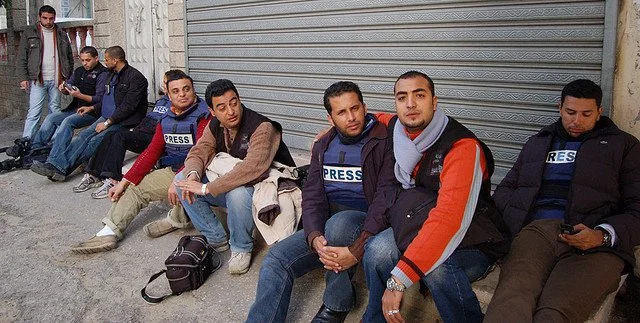
Al Jazeera’s Gaza crew and journalists. Global Panorama. CC BY-SA 2.0 DEED
Since the start of the Israel-Hamas war on October 7, there has been an unprecedented amount of journalist death and injury. Facing high risks to cover the unfolding conflict without guaranteed safety, this war has claimed more journalists than any other in the last 30 years.
As of January 24, at least 83 journalists and media workers have been confirmed dead. Among them, 76 were Palestinian, four Israeli and three Lebanese, according to the Committee to Protect Journalists (CPJ). Similarly, the International Federation of Journalists (IFJ) reported an estimated 94 journalists that have been killed and 400 others imprisoned. IFJ has called on the International Criminal Court (ICC) prosecutors to investigate the deaths of these journalists, though Israel has argued that the ICC has no jurisdiction in the conflict because the Palestinian territories are not an independent sovereign state.
The Israel-Gaza war has become the most deadly conflict for members of the press. In 2022, 15 journalists were killed in Ukraine, 30 in Latin America and at least five in Haiti, making the amount of journalists killed in Gaza in just a few months of war greater than all of those killed worldwide in 2022. Because of such an increase, some believe that journalists are being explicitly targeted for the information that they aim to provide to the public.
On November 21, correspondent Farah Omar and cameraman Rabih al-Maamari were killed in Lebanon by two missiles fired by an Israeli warplane. The Al-Mayadeen TV channel that the broadcasters worked for announced that they were covering back and forth fire on the Tayr Harfa/Al-Jebin triangle in Southern Lebanon between Israeli forces and Hezbollah when they were hit. In a statement, the TV channel said that it believes its journalists were deliberately targeted for its — the channel’s — pro-Palestinian views. In a separate statement, Lebanese Prime Minister Najib Mikati alleged that the Israeli strike was an attempt to silence the media.
Consequently, the CPJ has accused the Israeli military of targeting journalists in Gaza. One instance includes Al Jazeera camera operator Samir Abudaqa, who was injured during a drone strike and forced to take shelter in a UN school. Those who tried to help Abudaqa to get him to safety were shot and Abudaqa died due to his injuries.
Other journalists have reported similar instances, but where their families have been targeted. Anas Al-Sharif, Al Jazeera journalist, told the news channel of phone calls that he had received from the Israeli army instructing him to cease his news coverage and leave Gaza. Following these threats, Al-Sharif’s father was killed by an Israeli airstrike on his home. Such death and violence resulted in a report last May by the CPJ that documented a “deadly pattern” of journalists deaths by Israeli forces; a pattern of killing journalists that was observed even before the latest conflict in Gaza.
Across global media there has been outrage over a lack of accountability of Israel’s killing of journalists in Gaza. In the United States some journalists have held vigils for fallen colleagues, but there has been an overall lack of public commentary from journalistic institutions themselves. Staff at the Los Angeles Times displayed their solidarity with fellow journalists in Gaza by signing an open letter condemning the killings and criticizing Western media’s lack of coverage of Israel’s actions. The paper subsequently suspended these staff members from coverage of the war for what LA Times cited as a violation of its ethics policy. This outcome has caused some journalists to remove their names from the letter, fearing reprisal from their workplaces, and left others questioning the Biden administration's support of press freedom and Israeli accountability.
Journalists have additionally reported feeling less safe wearing a press vest and that being identified as a member of the fourth estate could make them or their families targets for Israeli forces.
These patterns of violence have left journalists in a precarious situation that has broader global implications. Without being able to report what is going on in Gaza, the role of these journalists only becomes more vital. Millions of people have relied on the accurate information provided by journalists to understand this conflict, and without them are left only with misinformation that may instead fuel it further.
Mira White
Mira is a student at Brown University studying international and public affairs. Passionate about travel and language learning, she is eager to visit each continent to better understand the world and the people across it. In her free time she perfects her French, hoping to someday live in France working as a freelance journalist or in international affairs.
Confronting Houselessness Crisis Worldwide
With the 2023 Supreme Court case of City of Grants Pass, Oregon v. Gloria Johnson circulating the headlines and threatening the rights of 653,104 unhoused people in the United States, understanding how other countries are addressing the issue of houselessness can help provide perspective.

A person sits on a bench with their belongings. Grego. CC0 1.0
In 2020, the world denied an estimated 1.6 billion people the human right to adequate housing. Societies often stigmatize houselessness, leading to discrimination against unhoused people. This stigma often contributes to the criminalization of houselessness.
Houselessness is criminalized when laws can punish people for partaking in life-sustaining activities in public spaces. Examples of these laws include prohibitions on panhandling or allowing the confiscation of personal property, often referred to as “sweeping.”
The Supreme Court's decision in the City of Grants Pass, Oregon v. Gloria Johnson case will determine whether it is constitutional for states to fine or arrest people for sleeping outside, even when adequate shelter is unavailable. This comes at a time when houselessness is on the rise across the U.S., with a 12 percent increase between 2022 and 2023. Los Angeles and New York City are home to about a quarter of America's unhoused population.
In the U.S., houselessness is a highly politicized issue. The 2020 Democratic platform endorsed a Housing First policy that prioritizes accessible permanent housing, stating that, “Having a stable and safe place to live is essential to helping a person tackle any other challenges.” In contrast, Republicans on the Joint Economic Committee released a report in 2022 criticizing Housing First policy for failing to “to address deeper problems that often drive homelessness”. The lawmakers proposed that Housing First policy be replaced with policy that prioritizes health and employment resources. The debate over solutions persists as houseless populations rise.
The City of Grants Pass, Oregon v. Gloria Johnson case is not the first time laws explicitly criminalizing houselessness have been on the global radar. In 2018, Hungary enacted a new constitutional provision that put houseless people sleeping in public spaces at risk of fines or arrest. Since the passage of this law, the number of houseless people in Hungary has not changed, with an estimated 30,000 houseless people in both 2018 and 2024.
Hungary is far from the only country to combat houselessness with criminalization. Many governments have turned to this strategy, from the forced institutionalization of houseless children in Brazil to laws authorizing the arrest of people loitering in Sierra Leone and Nigeria.
Other countries have taken a different route in tackling this crisis by increasing accessible housing and resources. Finland’s Housing First Policy focuses on providing people with housing and addressing underlying conditions and factors contributing to their houselessness. Since the Housing First policy began in 2008, the number of long-term houseless people in Finland decreased by more than 35 percent. Some policies combine punitive and welfare measures. The government in Tokyo, Japan has combined these strategies by punishing people for residing in public spaces while redirecting them to welfare resources.
Beyond policy, technological innovations present potential solutions for this issue. In India, Tvasta Manufacturing Solutions collaborated with Habitat for Humanity to create 3D-printed homes. These homes can be built in five days or less, are about 30 percent cheaper than traditional construction and create less waste. The 3D-printed homes industry is now present across the globe from Africa to Mexico.
Beyond the world of policy and technology, everyday people can directly take action to help address houselessness. Destigmatization is an important step in addressing this issue. Experts recommend advocacy and creating public education campaigns to help people understand and empathize with unhoused people. Attending educational opportunities such as events hosted by the UN Working Group to End Homelessness is a great way to learn and engage with people fighting for the right to adequate housing.
For those looking to make an impact on a local scale, there are many volunteering opportunities with organizations such as CaringWorks or the National Coalition for the Homeless. With an estimated 1.6 billion people expected to be impacted by the housing crisis in 2025 and an estimated two billion people fearing climate-related displacement, the time to act is now.
Madison Paulus
Madison is a student at George Washington University studying international affairs, journalism, mass communication, and Arabic. Born and raised in Seattle, Washington, Madison grew up in a creative, open-minded environment. With passions for human rights and social justice, Madison uses her writing skills to educate and advocate. In the future, Madison hopes to pursue a career in science communication or travel journalism.
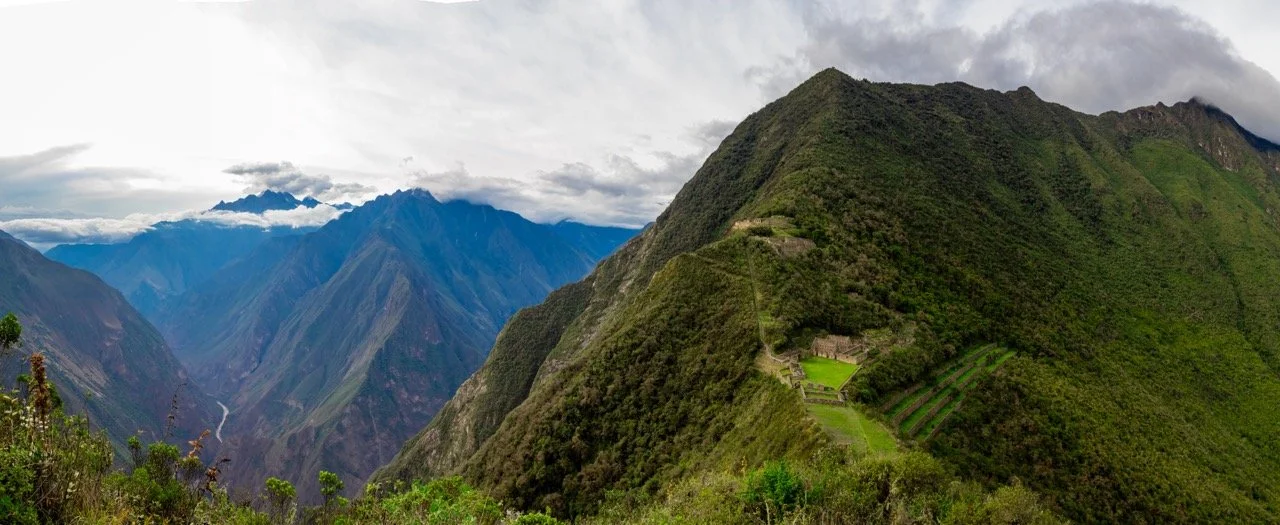
A panoramic view of Choquequirao. Laura Grier
Choquequirao: The Unknown Inca Trail
Deep in Peru's Apurimac Valley, the Incan citadel of Choquequirao exudes an aura of mystery and intrigue, owing to both its challenging journey to reach and its enigmatic history.
Read More5 Animals at Risk of Extinction
The risk of depleting ocean resources and the practice of poaching is driving many vulnerable species to extinction.

Two elephants playing in a forest scene. Future Kiiid. CC0.
A growing number of the planet's animals are teetering on the brink of extinction. These critically endangered species face an uncertain future due to the dire effects of poaching, habitat loss, climate change and other environmental pressures. Wildlife populations of a variety of species have been declining in recent years in a phenomenon known as the Global Extinction Crisis. The risks this entails are a drop in biodiversity as well as decreased resource availability for people. Efforts to combat this trend include the protection of natural habitats, reduced pollution and the enactment of measures to restrict or eliminate overfishing and overhunting.
Blue Whale
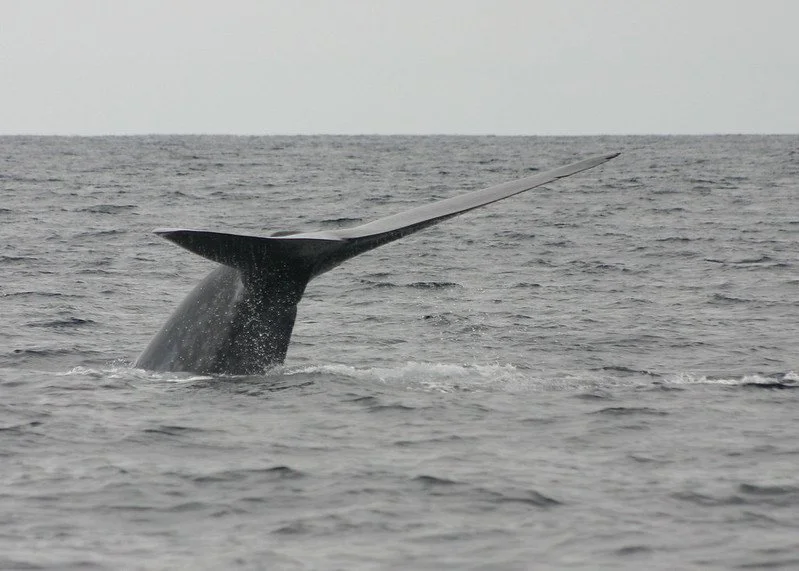
Blue Whale Tail Deep Dive. Seabass London. CC by 2.0.
The blue whale, or Balaenoptera musculus, is the largest creature on Earth and a symbol of oceanic grandeur. Despite their colossal size, blue whales are surprisingly vulnerable due to various human-induced factors. Collisions with large vessels and entanglement in fishing gear pose grave risks to their survival. Furthermore, the pervasive issue of climate change has disrupted the availability of their primary prey, krill, as warming oceans alter the distribution of these tiny crustaceans. Efforts such as establishing marine protected areas, restricting boat speed and advocating for sustainable fishing practices are crucial steps to safeguard the future of blue whales.
Black Rhino
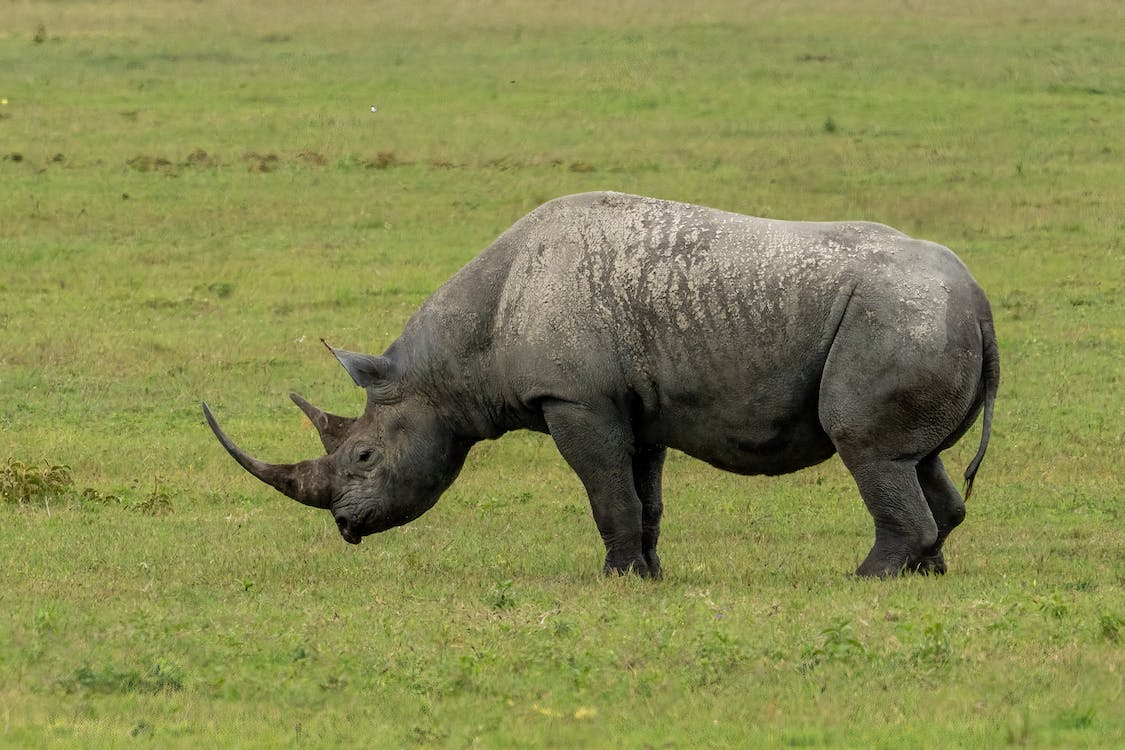
Black Rhino in the Savannah. Chris Clark. CC0.
The black rhinoceros, alternately diceros bicornis in scientific Latin, resides in climatically warm eastern and southern Africa in countries like Kenya and Zambia. They are the smaller of the two main African rhino species, the other being the white rhino, but just as threatened. Overall, the species is listed as “critically endangered”, but three subspecies of the rhinoceros, including the western and southern black rhino, have already been declared extinct. By the International Union for Conservation of Nature’s (IUCN) approximation, there are just under 6,500 black rhinos in Africa, a number currently increasing due to conservation efforts.. Despite this, they are threatened by habitat reduction and poaching, the animals long being prized for their famous horns. Between 1960 and 1995, the population suffered severe reduction in its numbers and survival rates because of this brutal practice. Conservation efforts, such as anti-poaching laws, community measures and habitat awareness are critical to preventing the complete disappearance of the black rhino from our planet.
Yangtze Finless Porpoise
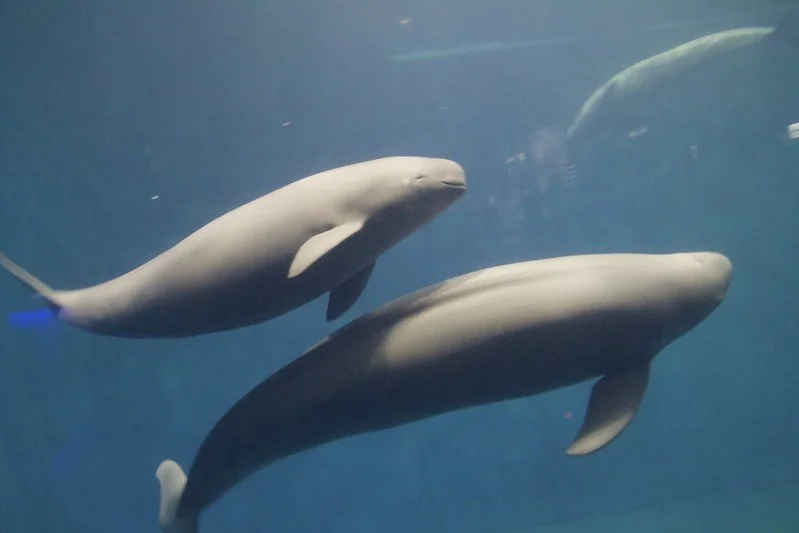
Finless Porpoises Swimming. Foooomio. CC by 2.0.
The Yangtze Finless Porpoise (Neophocaena asiaeorientalis) inhabits the Yangtze River in China, and is the only living freshwater porpoise in the world. Members of this species are sleek and snoutless, with no fin on their dorsal ridge, the latter giving them their name. These aquatic creatures have adapted to the turbulent and often complex environment of the river, but they are still struggling; They are primarily threatened by overfishing, pollution, dam construction along the Yangtze and accidental entanglement in fishing nets and equipment. This reduces the population very quickly, so much that there are only between 1,000 and 1,500 viable cetaceans remaining currently. In order to combat the increasing annual decline, China has established finless porpoises as “first level protected species,” the highest level of protection the country offers.
Sumatran Elephant

Sumatran elephant in Tesso Nilo National Park, Indonesia. NonprofitOrgs. CC by 2.0.
The Sumatran Elephant (Elephas maximus sumatranus) is one of three subspecies of Asian elephants, native to the island of Sumatra in Indonesia. They have a smaller build than an African elephant and sometimes possess a curved back. The unfortunate fact about their population in the wild is that it has declined by four fifths 80% in the past three elephant generations. This is due to the illegal poaching for their ivory and their body parts, which further compounds the threats faced by the Sumatran elephant. Also because of deforestation and logging, a large portion of the forest in which they live is too small to contain a significant population. Because of the fragmentation of their habitats, the elephants stray into agricultural areas in search of food, which worsens elephant and human contact. Due to these factors, there are an estimated 2,800 elephants residing on all of Sumatra. Collaborative initiatives pertaining to reforestation and involving both the government and communities would be the best course of action in preserving the Sumatran elephant.
Hawksbill Turtle
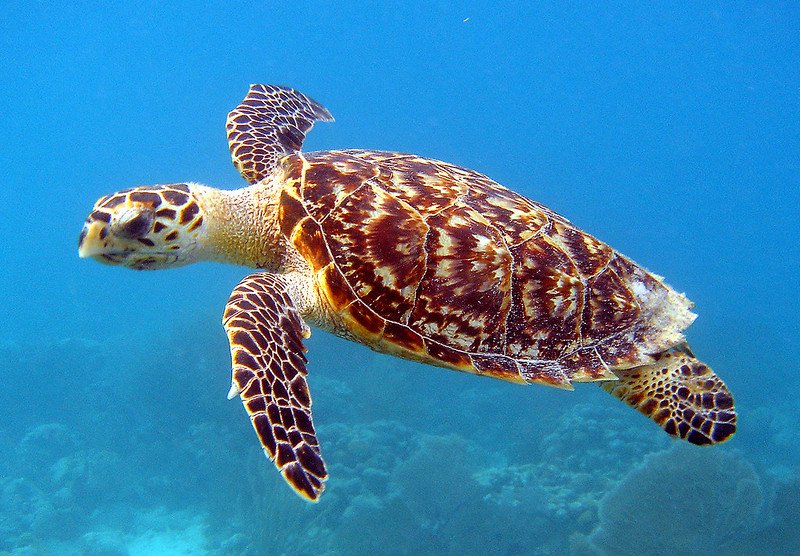
Hawksbill Sea Turtle at Carey de Concha. USFWS/Southeast. CC0.
The Hawksbill Turtle, or Eretmochelys imbricata, is mainly found in subtropical/tropical areas of the ocean. It is distinguished by its flatter body shape and beakish sharp mouth. Hawksbill turtles play a huge role in maintaining the health of coral reef systems by controlling sponge populations. Like many iconic creatures, hunting represents the biggest encroachment on the reptile's livelihood, with poachers targeting the turtles for their eggs, skin and shells. Their beautifully patterned shells fetch an unfortunately high price on the black market. In the last 30 years, turtle populations have declined by 80% because of other causes like climate change, plastic pollution, rising sea levels, and accidental capture in fishing gear. Because of these significant factors, there are possibly only 57,000 Hawksbill turtles left.
So how can we help? People can support conservation organizations by volunteering their time to the protection of endangered species. Your involvement or donations can help fund critical conservation projects. People can practice responsible tourism, choosing eco-friendly and ethical wildlife tourism options that do not harm natural habitats. Thirdly, you can advocate for and support initiatives that intend to restore habitats for endangered species, such as reforestation efforts and marine-protected areas. Finally, we can work to make pollution less of a concern by recycling and supporting clean energy to mitigate climate change.
TO GET INVOLVED
Find out more about the World Wildlife Fund, which works to eliminate the worst effects on animals remaining in the world and protect diverse species.
Discover SeeTurtleOrg’s mission, which includes volunteering trips and organizations that dedicate their resources to saving marine life, specifically sea turtles.
Find out about the Defenders of Wildlife, which works to prevent animals and their habitats from becoming vulnerable or imperiled, as well as aims to protect the health of susceptible species.

Riley Baker
Riley Baker is a first-year student at James Madison University majoring in Writing, Rhetoric, and Technical Communication. She enjoys elements of storytelling and creative writing and likes listening to music. In addition, she is interested in journalistic-style writing and editing and intends to focus on writing articles about lesser-known travel locations and impactful world topics.
Miles4Migrants' Pledge to Reunite 70,000 Families
Through the donation of unused travel rewards, Miles4Migrants has leveraged $17 million worth of donated frequent flier miles to reunite vulnerable individuals affected by war, persecution or climate disaster with their families.

Courtesy of UNHCR.
Founded in 2016 by Seth Stanton, Nick Ruiz and Andy Freedman, Miles4Migrants (M4M) emerged as a philanthropic force dedicated to the cause of preventing families from being torn apart by displacement. With a resolute focus on leveraging donated frequent flyer miles and points, the non-profit organization strategically orchestrates flights, intricately navigating global airline alliances, airline routes and immigration regulations for families who have received legal approval for relocation.
Donors are asked to commit a minimum of 1,000 to 47,500 points or miles, depending on the program. After pledging, the flight booking team at M4M will match the donated miles with an individual or family seeking asylum or with refugee status but who cannot afford airfare to relocate. The matching process looks at which itinerary will get the most out of a donation, which case will keep the most family members together on the same reservation, the fastest flight route, and the least booking friction for the donor. The matching process may take several weeks, and M4M will keep donors informed, providing the recipient's photo(s) and a story detailing how their contribution has made a difference. In addition to frequent flyer miles, donors can contribute travel vouchers and cash. Miles4Migrants presently accepts a wide range of vouchers, including those from Alaska Airlines, American Airlines, United Airlines, Delta Air Lines, Southwest Airlines, JetBlue, Allegiant Air and others.
Miles4Migrants has achieved remarkable feats since its inception, facilitating travel for an impressive 43,187 individuals spanning 98 countries. This commendable endeavor, valued at an astounding $17 million, has been made possible by redeeming an impressive 775 million miles, courtesy of generous donors.
The organization's recent appearance at the UNHCR Global Refugee Forum in Geneva underscored its commitment to an innovative and ambitious strategy. M4M’s Executive Director Glaydon de Freitas revealed a visionary multi-currency system, integrating money, frequent flyer miles, credit card points, and travel vouchers. This multi-faceted approach, coupled with M4M's expertise in flight booking and strategic partnerships with major airlines, ensures a cost-effective and efficient procurement of airline tickets.
During the forum, Miles4Migrants boldly pledged to reunite 70,000 forcibly displaced individuals with their families by 2030, with an initial goal of reuniting 10,000 families in the upcoming year. This resolute commitment aligns seamlessly with Global Compact On Refugee’s Roadmap 2030 on third-country solutions for refugees and the broader multi-stakeholder initiative to reunite at least 1 million refugee families by 2030.
To achieve these tremendous family reunification goals, Miles4Migrants has meticulously outlined specific strategies. These include identifying the most value-efficient flight options across all airlines, proactively mobilizing resources, utilizing a comprehensive database system for efficient tracking, providing post-booking support to NGO partners, and fostering crucial partnerships with airlines and corporations.
In fact, corporate partnerships and long-term sponsorships have emerged as linchpins in Miles4Migrants' operation. The Shapiro Foundation, led by President Ed Shapiro, stands as a keystone partner, generously committing to funding 500 flights in 2024, contributing significantly to the nonprofit's goal of reuniting 70,000 families by 2030. A recent collaboration with The Points Guy (TPG), a prominent name in the travel industry, further exemplifies the importance of corporate support. TPG became an official corporate sponsor and pledged to match cash donations of up to $15,000. At the end of its five-week campaign, TPG raised 5,561,479 miles (worth nearly $120,000), receiving more than $1,487 in flight vouchers, and—thanks to TPG and Lonely Planet matches—raised $30,275 in cash donations. Miles4Migrants said it was the second-highest number of miles contributed from any partner campaign and also one of the highest cash amounts it has been able to raise. The donations were enough to fly around 500 people to safety.
Get Involved
The call to action is clear—dormant travel rewards can catalyze change. Miles4Migrants implores individuals to consider donating unused frequent flyer miles, credit card points or travel vouchers to play a pivotal role in reuniting families and offer fresh starts to those in need. The organization encourages supporters to amplify its cause through social media, whether that be through sharing impactful stories, motivating friends and family to contribute unused rewards, or organizing local events to bolster collective efforts.

Raeann Mason
Raeann is a traveler, digital storyteller, and guide writer with a Mass Communication & Media degree from the Walter Cronkite School of Journalism. She is passionate about a/effective journalism and cultural exchange and advocates for international solidarity and people's liberation. Her work at CATALYST focuses on reshaping the culture of travel and hospitality to be more ethically sound and sustainable.
8 Ways to Surf Sustainably
Dive into the world of sustainable surfing and learn how to ride the waves without harming our oceans.
Read More7 Tombs to Visit Besides the Great Pyramids
The Great Pyramids are probably the world’s most well-known tombs, but they are far from the only ones. These seven tombs are impressive and fascinating.
Read MoreThe Rise of Cat Cafes: Popularity and Pitfalls
While they have a rich history and are fun for humans, cat cafes are a hot topic in animal rights ethics.
Read MoreGuatemala’s ‘Forest Guardians’ Save their Homeland, Providing a Conservation Model for the World
Indigenous guardians in Guatemala's Maya Biosphere Reserve combat deforestation, protecting biodiversity and cultural heritage.
Read MoreGlitches in Nature: Poland’s Crooked Forest and Moving Sand Dunes
Did you know that there are some fascinating natural wonders in Poland to explore? From bending forests to moving sand dunes, learn more about the nature in this European country.
Read More