In India, Grassroots Initiatives Work to Undo the Period Taboo

For many Indians, lack of access to menstrual products is compounded by entrenched societal stigma. Across the country, women are beginning to make a change.

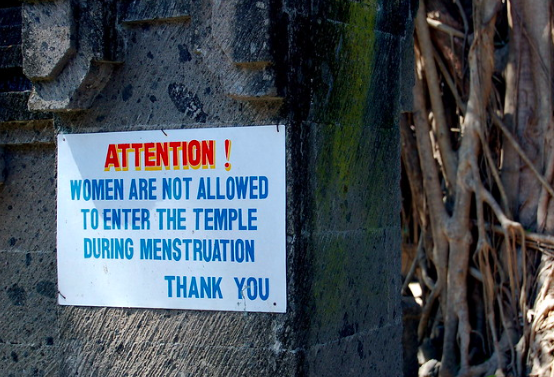
A sign in Bali, Indonesia, demonstrates stigmatization of menstruation in the Global South. dominique bergeron. CC BY-NC-ND 2.0

For most people with periods in the Western world, menstruation is something of an afterthought—annoying and sometimes painful, but easily dealt with, and far from debilitating. In parts of the Global South, however, “that time of the month” is not only a serious health concern and financial impediment but also a source of profound social and cultural tension. Over the past two years, grassroots activists have brought increased attention to the plight of menstruating women in India, and begun to envision a future in which well-being and participation in society is not dictated by one’s reproductive cycle.

Shameful attitudes toward menstruation in India are deeply ingrained, and, especially in rural areas, can be actively harmful to women of all ages. Indian women experiencing their periods can be banned from entering the kitchen and preparing food, separated from family members, and removed from religious ceremonies, sometimes on the grounds of theistic tradition: In 2018, many Indian men were outraged at a ruling by the country’s Supreme Court allowing women of menstruating age to visit Sabarimala, a Hindu temple in Kerala dedicated to Lord Ayyappa, who is seen in traditional mythology to be disgusted by the concept of female fertility. Indignation at the ruling reached a peak in January 2019, when one person died and dozens were injured in protests against the judgment.

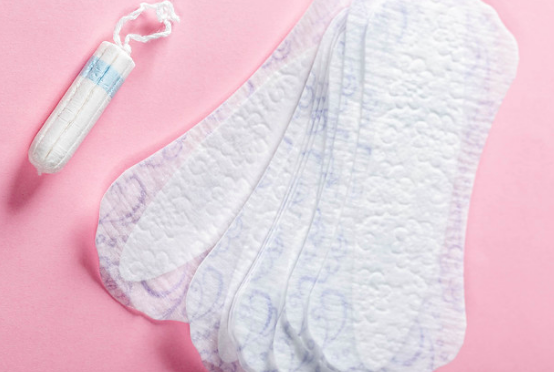
Equally dangerous, and highly imbricated with traditional views of menstruation, is the pervasive lack of access to sanitary products, which are crucial to keeping women clean and safe during their periods. An estimated 70 percent of Indian women are unable to afford such products, with 300 million resorting to unhygienic options such as newspapers, dry leaves, and unwashed rags. Menstruation is also a key driver of school dropouts among girls, 23 percent of whom leave their schooling behind upon reaching puberty.

Cost barriers can prevent Indian women from acquiring menstrual products. Marco Verch. CC BY 2.0

In a sociocultural landscape where natural bodily functions are affecting the human dignity of people with periods, education, outreach, and access are crucial. In February 2018, Indian news outlet Daijiworld reported on one person working toward these goals: the so-called “Pad Woman” of Manguluru, who has been leading a group of young students in her southwestern port to create awareness of menstrual hygiene. The Pad Woman, Prameela Rao, is the founder of non-profit Kalpa Trust, which offers students at the Kavoor government First Grade College materials to manufacture sanitary pads for women in rural areas. The completed pads are distributed free of charge to the colonies of Gurupur, Malali, Bajpe, and Shakthinagar, obviating the need for women to purchase prohibitively expensive mainstream menstrual products. The pads are made from donated cotton clothing, which the students wash, iron, cut, and stitch to create the final product.

In the western state of Gujarat, an organization known as the Aga Khan Rural Support Program (AKRSP) is directly targeting period taboos among rural communities. Activists Manjula and Sudha told the Indian magazine The New Leam that, for the girls they have educated in the villages of Karamdi Chingaryia and Jariyavada, confusion and fear regarding menstruation have given way to confidence and clarity. For the AKSRP, which emphasizes gender equality and the societal participation of women, offering rural villagers the ability to make informed choices about their own menstrual health is key. As of The New Leam’s report in April 2019, the non-profit had reached about 60 Indian villages, providing information about sanitary pads of various designs, longevities, and price points.

While pads are a far more hygienic choice than rags or newspaper, they are not the only option: Back in Manguluru, two German volunteers have initiated a menstrual cup project known as “a period without shame.” In their pilot run, Nanett Bahler and Paulina Falky distributed about 70 menstrual cups free of charge to Indian women, as well as leading workshops on effective use for recipients. The cups, which are made of silicone and emptied around twice per day during one’s period, can be used for up to 10 years, making them a hygienic, eco-friendly, and potentially more affordable option for people of all ages.

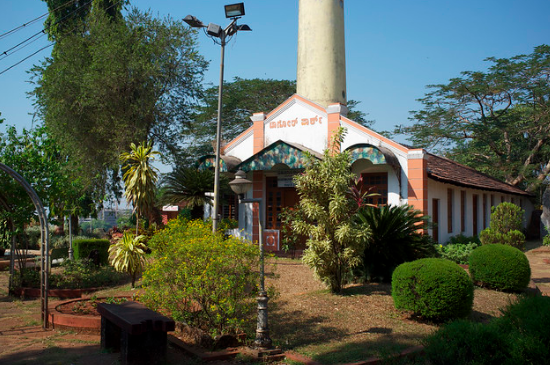
Manguluru, where Indian and German activists are working to provide menstrual products. Aleksandr Zykov. CC BY-SA 2.0

Such grassroots efforts have been instrumental in chipping away at stigma among Indians in certain cities and villages, but broader change is unlikely without widespread publicity. One potential avenue for increased awareness is the newly released documentary Period. End of Sentence., which follows rural Indian women in their battle against period stigma. To create the film, Iranian-American director Rayka Zehtabchi visited small villages outside of Delhi to inquire after women’s menstrual health, and shot extensive footage of women who have learned to create their own sanitary products. The diligent pad-makers, many of whom are housewives who have never before held a full-time job, sell their creations to locals in their area, educating women on proper use and convincing shop owners to stock the products. By the end of the time span covered by the documentary, the women had set up a factory and manufactured 18,000 pads, earning economic self-sufficiency for themselves and an Academy Award nomination for Zehtabchi.


The work of these Delhi entrepreneurs, along with that of the AKSRP and Pad Woman Prameela, has made a positive difference for countless people—but, according to Mumbai-based journalist and author Puja Changoiwala, education and access must rise above the grassroots level and reach the legislative in order to create enduring change in attitudes toward menstruation. In a piece for Self, Changoiwala suggests that the Indian government should distribute free pads and launch an “aggressive nation-wide awareness program,” engaging celebrities and the press to address the dire consequences of long-held stigma. For anyone in India with a period, such a moment cannot come soon enough.


TALYA PHELPS hails from the wilds of upstate New York, but dreams of exploring the globe. As former editor-in-chief at the student newspaper of her alma mater, Vassar College, and the daughter of a journalist, she hopes to follow her passion for writing and editing for many years to come. Contact her if you're looking for a spirited debate on the merits of the em dash vs. the hyphen.


In India, Using Plastic Waste as Tuition at a New School

A school combines accessible education with environmental responsibility through a creative program.

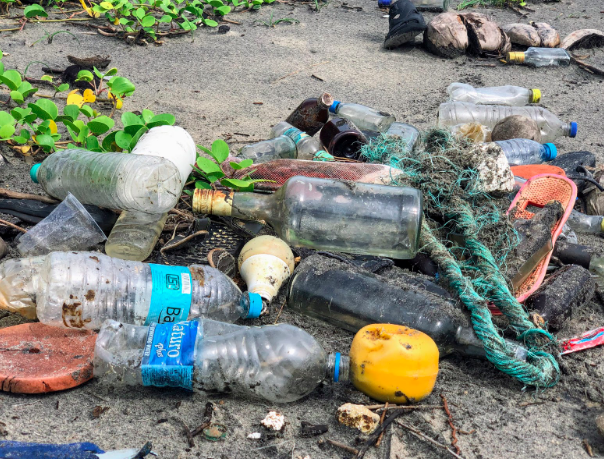
Photo of plastic waste by John Cameron on Unsplash.

In 2016, Parmita Sarma and Mazin Mukhtar founded Akshar School in Assam, a state in northeast India. Initially, the school struggled to enroll many of the children living in the area. Most families could not afford private school tuition, and relied on the $2.50 per day wage their children could make working in the nearby stone quarries.

In the winter months, many families in Assam burned plastic waste to keep warm, unaware of the health and environmental hazard this created. The fumes would often linger in Akshar’s classrooms, and ended up giving Parmita and Mazin the idea that would transform the school.

Instead of tuition, Akshar began requiring students to bring 25 plastic waste items to school every week. “We wanted to start a free school for all, but stumbled upon this idea after we realised a larger social and ecological problem brewing in this area,” Parmita told Better India.

Through the use of plastic waste as tuition, students who would not have been able to attend the school were able to learn, and the surrounding environment benefitted. Under the new tuition system, the school blossomed, and now enrolls 100 students ages 4 to 15. Before the tuition program was implemented, Akshar had only 20 students.

To compensate for the wages that children could be making working in the mines, Akshar established a tutoring program, where older students can help younger ones with their work in exchange for currency tokens that can be used to purchase snacks, toys, shoes, and clothing. The students can even exchange the tokens for real money to purchase items online. But financial compensation isn’t the only rationalization for the tutoring program. Through teaching, older students are able to develop useful life skills, practicing communication, leadership, and compassion.

Tuition isn’t the only unusual aspect of the school. Parmita told Better India that the goal of the school is to break with traditional curriculum. Students take class in open areas, and grades are divided by level rather than age.

“We realised that education had to be socially, economically and environmentally relevant for these children,” Mazin told Better India. That would mean not only providing an accessible education, but one that would enable children to find jobs after graduation. To this end Akshar offers career focused classes alongside traditional ones, enabling students to gain skills in cosmetology, solar paneling, carpentry, gardening, organic farming, electronics, and more. The school is also willing to adapt to create the best education for its students. Mazin told Better India that when the school noticed a spike in landscaping in Assam, they began to draft plans for a sustainable landscaping course.

Mazin and Parmita’s success with Akshar has inspired them to create more schools that follow the same philosophy. They hope to implement the Akshar model in 5 government schools over the next year, and 100 government schools in the next 5 years.


Emma is an undergraduate student studying English and marketing at Emerson College in Boston. While not writing she explores the nearest museums, reads poetry, and takes classes at her local dance studio. She is passionate about sustainable travel and can't wait to see where life will take her. 


In Honor of Pride Month, an Overview of LGBTQ+ Triumphs and Setbacks Across the Globe

From Taiwan to Kenya to the United States, LGBTQ+ individuals face profound discrimination and tirelessly advocate for equality.

DC Capital Pride Parade in the United States. Bossi. CC BY-NC-SA 2.0

June is Pride Month in the United States, and lesbian, gay, bisexual, trans, and queer individuals across the country are commemorating the anniversary of the historic 1969 Stonewall Riots, recognized as a turning point for the LGBTQ+ liberation movement. Yet around the globe, simply existing as a sexual or gender minority can be profoundly dangerous and even life-threatening—and even amongst celebration in the US, legislative developments threaten to undo the decades of progress that have afforded LGBTQ+ individuals their rights to live with dignity and respect.

Recently in the news for LGBTQ+ discrimination is Russia, whose grim record of intolerance based on sexuality is particularly pronounced in the region of Chechnya. Located in the North Caucasus, Chechnya experienced a vicious anti-gay purge in February 2017, and one that is now tragically recurring. In early May, Human Rights Watch reported that Chechen police were rounding up men presumed to be gay or bisexual, proceeding to detain them at the Grozny Internal Affairs Department, where they were humiliated, raped, and brutally beaten. Activists with the Russian LGBT Network asserted that at least 23 men were detained between December and April due to their sexuality. Chechen authorities have denied reports of the persecution, and Russian federal authorities have neither commented nor launched an investigation.

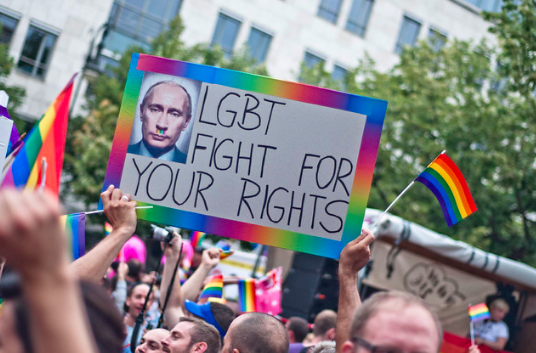
Demonstrating against Russian homophobia. Marco Fieber. CC BY-NC-ND 2.0

Perhaps even more shocking than the negligence of the Russian authorities, some governments have actively ratified discriminatory treatment of LGBTQ+ individuals: Across the globe, 76 countries still place criminal sanctions on homosexuality. One such country is Brunei, a small nation located on the coast of the island of Borneo, whose Syariah Penal Code went into effect on April 3 of this year. The code calls for a wide range of barbaric punishments affecting LGTBQ+ individuals, including death by stoning for anal sex and 40 lashes with a whip for lesbian sex. It prohibits consensual same-sex conduct, broadly discriminates against women and sexual and gender minorities, and infringes upon freedom of expression and religion. In response to international outcry, Sultan Hassanal Bolkiah, who holds absolute power in Brunei, has put forth a de facto moratorium on capital punishment, but the ban could be lifted at any time and does little to mitigate the dire rights offenses of the penal code.

Later that month, in Kenya, the High Court upheld similarly anachronistic laws criminalizing consensual acts between same-sex adults. The laws are a relic of colonialism, first put forth by British settlers in 1897; while they are rarely enforced, they nevertheless validate a climate of prejudice and violence, and are used to justify police harassment, employment and housing discrimination, expulsion from schools, and artistic censorship. The court case that concluded on May 24 addressed a 2016 petition by three Kenyan human-rights organizations, which asserted that the criminalization of same-sex conduct violated various rights—including equality, privacy, and human dignity—enshrined in Kenya’s constitution.

Just that same day, across the ocean in the United States, LGBTQ+ rights sustained a blow with the proposition of a new rule by President Trump’s administration. The rule would remove nondiscrimination protections for transgender people under the Affordable Care Act, erecting further barriers to wellness for a community that already faces difficulty in accessing healthcare. Protection on the state level is of little consolation, given that only 14 of out 50 US states prohibit health insurance discrimination based on gender identity, and 10 specifically exclude transgender-related care under Medicaid policy.

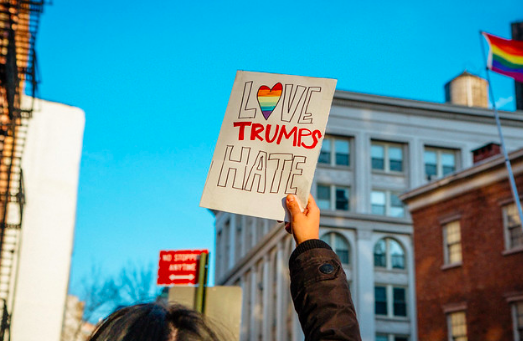
Protesting the Trump administration’s anti-LGBTQ+ policies. mathiaswasik. CC BY-SA 2.0

Within a sea of devastating setbacks for the global LGTBQ+ community, instances of progress and activism stand out as beacons of hope. In the deeply Catholic Mediterranean archipelago of Malta, a transgender woman named Joanne Cassar was recently allowed to marry, representing the culmination of her nine-year legal battle. The following day, on April 1, the Maltese government passed a gender recognition law, which came into existence largely due to Cassar’s efforts, and which acknowledges that “gender identity is considered to be an inherent part of a person which may or may not need surgical or hormonal treatment or therapy.” The law also initiates a working group on transgender healthcare to research international best practices, with one-third of the group mandated as being experts in the field of human rights.

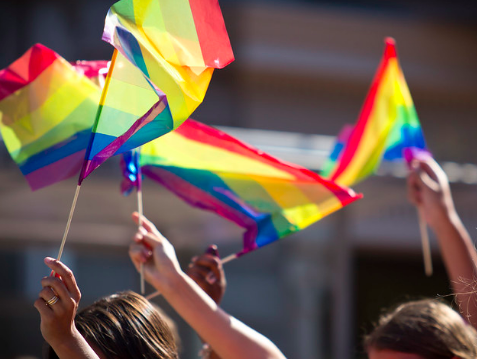
In May, another historic ruling made Taiwan the first country in Asia to legalize same-sex marriage, effective from the 24th of the month. “Today, we can show the world that #LoveWins,” tweeted Taiwan’s president, Tsai Ing-wen, the morning of the ruling, celebrating the same sentiment as the crowds that turned out in the streets, cheering, weeping, and waving rainbow flags as news of the decision spread. There is still room for legislative improvement, particularly given that the law does not provide equal adoption rights for same-sex couples, but the events of May 17 nevertheless represent an impressive step forward for the East Asian region.

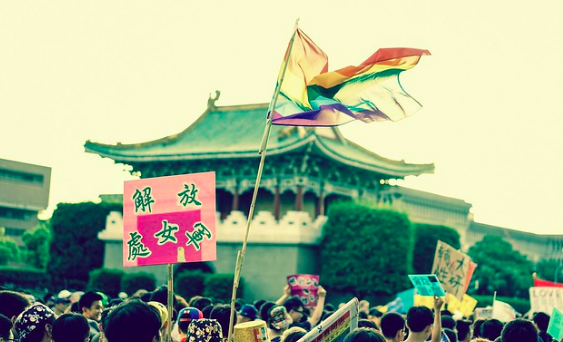
Appeal for Rights parade in Taipei, Taiwan. Luke,Ma. CC BY 2.0

While legislative strides are crucial to affording LGBTQ+ individuals the rights they deserve, grassroots activism can be an incredibly powerful driver of official change—such as in the case of Joanne Cassar, or of the LGBTQ+ organizers who recently marched in Honduras to celebrate the International Day against Homophobia, Biphobia, and Transphobia. The activists’ demands included an end to pervasive violence against LGBTQ+ people, legal recognition of trans identities, and curtailing prohibitions on same-sex marriage and adoption. Currently, two petitions brought forth by the leaders of activist groups—one pushing for a process allowing official name and gender changes for trans people, and one encouraging equality of marriage and adoption—are pending before Honduras’ Supreme Court, and various other LGBTQ+ rights cases are afoot in Congress and in the Inter-American Commission on Human Rights.

Like any human-rights movement, seeking legislative and societal parity for LGBTQ+ individuals will doubtless continue to be an arduous battle fraught with discouraging defeat—particularly considering the vast disparities between rights in different countries, as celebration of one victory in one nation is dampened by news of horrifying injustice in another. Yet with the efforts of LGBTQ+ community members and allies, and the renewed conviction offered by recent progress in Taiwan and Malta, the international community can continue to hope that each Pride Month will bring more to celebrate than the last.


TALYA PHELPS hails from the wilds of upstate New York, but dreams of exploring the globe. As former editor-in-chief at the student newspaper of her alma mater, Vassar College, and the daughter of a journalist, she hopes to follow her passion for writing and editing for many years to come. Contact her if you're looking for a spirited debate on the merits of the em dash vs. the hyphen.


The Earth Group Aims to Change the World Through Education and Nourishment

Newly Certified B Corp Collaborates with UN World Food Programme to Help Children Around the Globe.

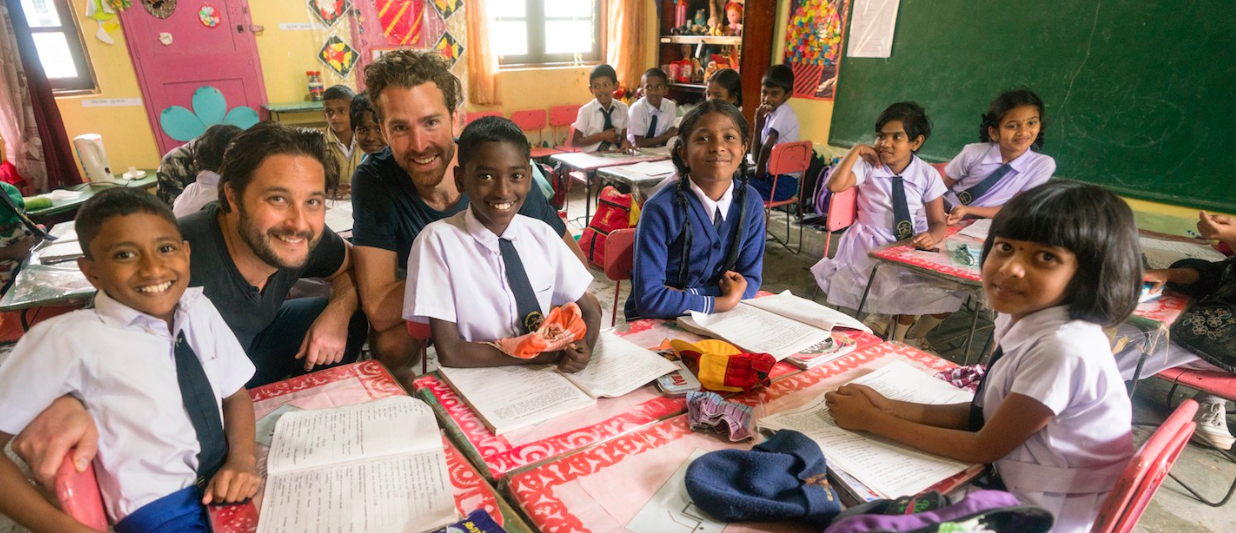
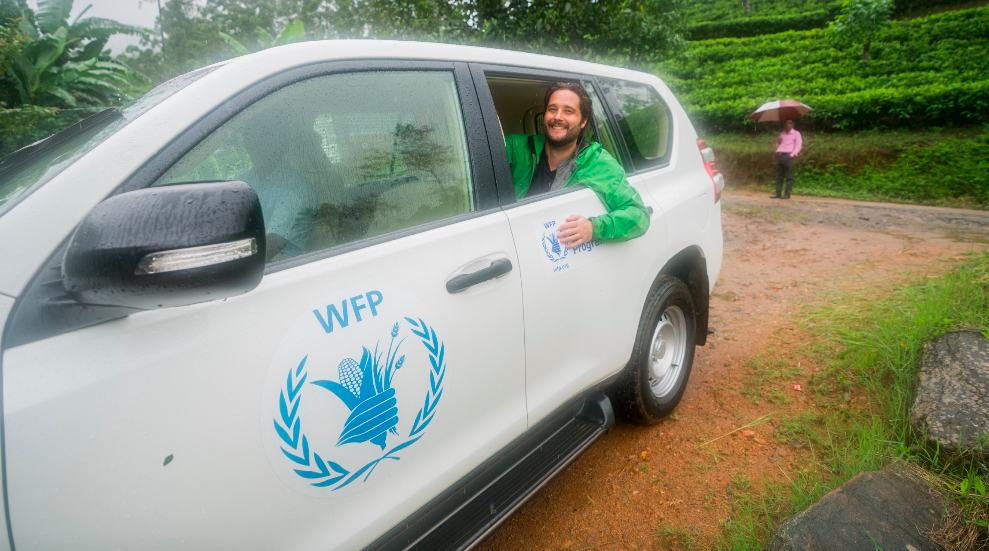
Kori Chilibeck and Matt Moreau at work for The Earth Group and World Food Programme in Sri Lanka. “Becoming a B Corp is an affirmation of what we’ve worked to achieve for so many years.”

The Earth Group is a Certified B Corporation that supports the United Nations World Food Programme (WFP) through donations that provide school meals, drinking water and education to children in the most troubled areas of our world.

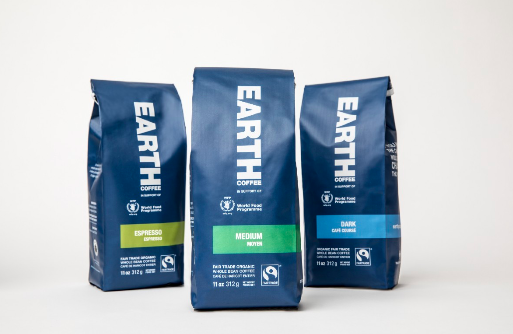
To date, The Earth Group has helped fund more than 3.6 million meals to young school kids while helping them get an education in places like Tajikistan, Madagascar, Sri Lanka, Kenya, Bolivia and the Philippines. The B Corp is dedicated to informing consumers everywhere about the power of their everyday marketplace choices. For example, the simple purchase of a bag of Earth Coffee, one of three consumer products sold by the company, provides a schoolchild with meals for an entire week.

Purchase one bag of Earth Coffee online or in-store to feed one child for one entire week.

When Earth Group founders Matt Moreau and Kori Chilibeck met as fellow employees of a ski shop near the Rocky Mountains 14 years ago, they likely never imagined what lay ahead for them as individuals, new business owners or as proud supporters of the WFP.

Just forging this critical relationship with the WFP seemed daunting enough, but the maze-like process took far longer to realize than anyone could imagine. Eventually, they launched their social enterprise onto the large and complex world stage of fighting hunger, providing clean drinking water and building schools for children where none existed before.

It was at this point that Moreau and Chilibeck realized the real work had begun in earnest for their Canadian B Corp based in Edmonton, Alberta. Seeking to confirm that the aid they worked so diligently to fund would actually make the journey to the end-users, they traveled to Sri Lanka, Bolivia, Tajikistan and the Philippines to see for themselves.

As the photos and videos produced from these expeditions clearly testify, Moreau and Chilibeck landed in their natural element, surrounded by the children and co-workers they had been working so hard to support since creating The Earth Group. The expressions on the faces of not only the children and teachers but of Moreau and Chilibeck and the WFP country managers tell a tale of unselfish dedication.

Kori Chilibeck in Sri Lanka hosted by the UN World Food Programme.

Seeing the Progress

The Earth Group maps its path to success through respect for the cultures they are trying to help. In many of these destinations, it is still frowned upon for female children to attend school. By respecting that posture yet also using the intellectual tools at hand, the company funds projects that often furnish female students with an extra helping of food to take home if they attend school, thereby allowing them to obtain an education, the family to benefit from the food, and the attitudes about females attending school to soften.

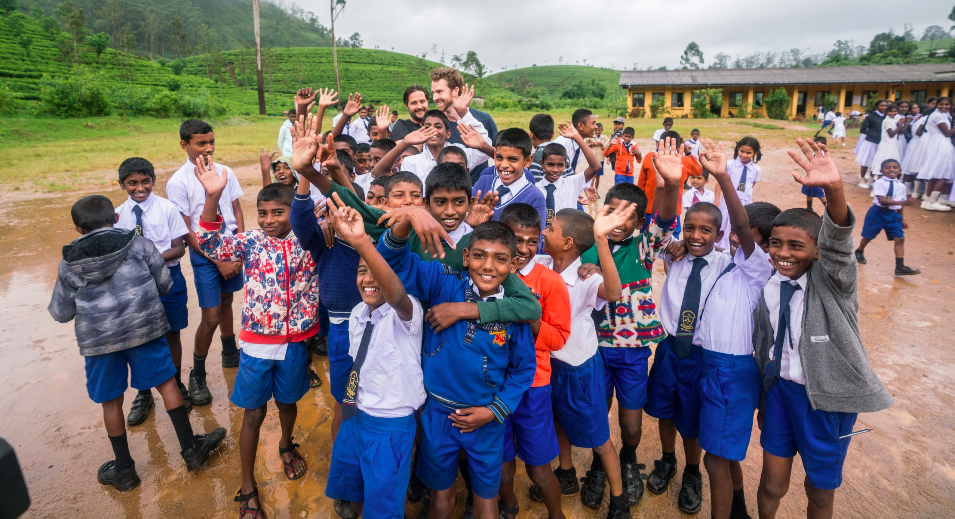
Schoolyard antics in Sri Lanka with Matt Moreau and Kori Chilibeck of The Earth Group.

The exhilaration of such remote expeditions reached its peak when the duo traveled to the Philippines, arriving in a volatile region where insurgents had blasted grenades and explosives just the day before. Their in-country WFP handlers changed safety tactics at once, and what was scheduled to be a multi-day trip ended up being a shortened-but-packed day of visiting the children in their classes, touring the school facilities, meeting the support staff and then continuing safely out of this troubled zone.

Back home in Edmonton, Moreau and Chilibeck rolled up their sleeves and focused on making their simple products-with-impact list: Fair Trade coffee from Eastern Africa, Indonesia, Central and South America; glacier-sourced drinking water from Whistler, British Columbia, and Rocky Mountain House, Alberta; and organic Alberta-grown teas, available in as many outlets as possible across Canada and around the world. Their online sales are activewith their triple bottom line—people, planet, profit—always remains in focus.

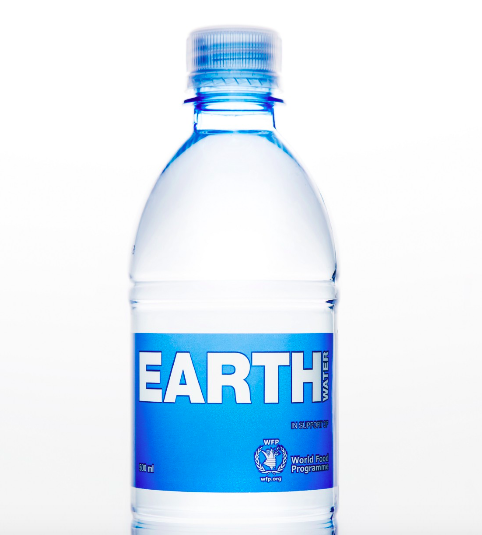
The Earth Group obtains its drinking water from Canadian glacier spring sources near the communities of Rocky Mountain House and Whistler, and their low-weight recyclable plastic bottles are landfill biodegradable. The Earth Group is also partnered with and supports Plastic Bank efforts to reduce ocean plastic.

Paying their dues during long negotiations with large corporations, Moreau and Chilibeck have now succeeded in signing major chain stores in Canada such as IKEA, Safeway, Sobeys, Whole Foods, Save On Foods, IGA and Metro. They also launched their product line in Japan, another major feat for any business run by two people, one employee and a group of dedicated volunteers.

Chilibeck is just back from the unrivaled adventure of presenting The Earth Group products in Japan to the largest food and beverage show in Asia called FOODEX. A receptive audience was excited to hear Earth Water is already available in their marketplace, with more Earth Group products sure to follow.

Path to Success

During certification in 2018 as a B Corporation, B Lab’s independent Standards Advisory Council confirmed The Earth Group’s three essentials: 1) social and environmental performance, 2) transparency and 3) accountability.

“B Corps values are synonymous with ours and embedded in our culture, so working toward the certification was both a pleasure and a reminder of being mindful of the numerous ways in which our work affects people and planet.”

And so it goes for these two young Canadian entrepreneurs and their “overnight success,” which has only taken them 14 years of collaboration, dedication, no-pay and near bankruptcy to arrive at a point where they can now see the results of their work. Having the blessings of understanding spouses has made it all possible, plus a bit of luck at critical moments.

Business gurus will tell start-up entrepreneurs timing is everything, and while this adage does have merit, the hard work and determination to succeed cannot be underestimated.

When Moreau and Chilibeck hatched their road map to success in a ski shop near the Rocky Mountains 14 years ago to create The Earth Group, at the same time Ben Cohen and Mal Warwick’s book Values-Driven Business: How to Change the World, Make Money, and Have Fun was synthesizing best practices and socially responsible business goals and laying the foundation for what would become the first B Impact Assessment, a process still used to certify B Corps.

B the Change gathers and shares the voices from within the movement of people using business as a force for good and the community of Certified B Corporations. The opinions expressed do not necessarily reflect those of the nonprofit B Lab.


GREGORY B. GALLAGHER is a Writer, Filmmaker, Musician and Producer.

THIS ARTICLE WAS ORIGINALLY PUBLISHED ON MEDIUM