Reasons to Decrease Your Meat Intake

What you eat affects your world.

By Michael McCullough. May 1, 2010.

Due to the advent of trendy vegan and vegetarian restaurants it is easy to dismiss the vegan diet as little more than a food fad — a here-today-gone-tomorrow movement with little scope beyond the instagrams of teenagers. And yet, this popular misconception allows many to dismiss the movement without ever really considering the many ethical reasons for going meatless. The truth is that the meat industry, especially in America, is a contributing factor to many of the environmental problems we face today.

Much of the problem lies in an overconsumption of meat. According to the New York Times, Americans eat about 8 ounces of meat a day — almost twice the global average. Americans also consume 110 grams of protein per day (75 of which are from animal protein) which is twice the level recommended by medical professionals. This overconsumption does not come without a cost. According to the UN’s food and agriculture organization, 30% of the earth’s ice-free surface is now dedicated to livestock production. The same study also says that the livestock industry is responsible for a fifth of the world's greenhouse gases, more than the entire transportation industry.

The meat industry also uses far too much water. One cow can drink up to 50 gallons of water per day and it takes 2,400 gallons of water to produce one pound of beef. (Compare this to the 244 gallons of water needed to produce a pound of tofu.) Run-off from factory farms is also a significant factor in river and pollution within the United States. Often factory farms dispose of animal waste by spraying it in a mist over fields, allowing the toxins and pathogens in the waste to permeate the surrounding environment.

In addition, while 800 million people worldwide suffer from hunger and malnutrition, most of the corn and soy grown goes to feed chickens, pigs, and livestock. This is despite the fact that it takes 5 times more land and 12 times more water to produce animal protein as opposed to plant protein. If meat production were decreased and crops of plant based proteins increased, hunger could be reduced.

There are many possible solutions to the meat problem. A good first step would be to eliminate the government subsidies which make up 31% of the global income of livestock companies. Another step could be to reduce meat intake by simply by eating less of it. It should be stressed that it is not necessary to become a vegetarian to reduce meat-related emissions. Merely cutting back on our daily meat intake can have a powerfully positive effect on the environment. Researchers at Oxford have found that reducing meat intake to levels prescribed by dietary professionals could help reduce food-related emissions by a third by 2050, while vegetarianism could cut emissions by 63%.

In America’s capitalist society, the best way to vote is with your money. By becoming a vegetarian, or merely reducing your meat intake you have the power to create a healthier, greener planet. Dr. Marco Springmann, lead author of the Oxford study put it best when he said, “We do not expect everybody to become vegan. But the climate change impacts of the food system will require more than just technological changes.” Adopting healthier and more environmentally sustainable diets can be a large step in the right direction.

EMMA BRUCE is an undergraduate student studying English and marketing at Emerson College in Boston. She has worked as a volunteer in Guatemala City and is passionate about travel and social justice. She plans to continue traveling wherever life may take her.


Literacy… for Whom?

The significance of the Gary B. v. Snyder lawsuit dismissal.

Detroit students opened up the conversation on who has the right to education (Source: Steve Neavling).

On June 29, 2018 US District Judge Stephen J. Murphy III dismissed a federal class-action lawsuit, Gary B. v. Snyder. The lawsuit, filed in 2016 by Public Counsel and Sidley Austin LLP on behalf of a class of students, claimed the plaintiffs were deprived of the right to literacy. The decision will be appealed at the US Sixth Circuit Court of Appeals.

Although Judge Murphy agreed a degree of literacy is important for such matters as voting and job searching, he did not say it was fundamental: constitutional.  The central reasoning for the dismissal of the case was the suit failed to show overt racial discrimination by the defendants in charge of the Detroit Public Schools: the state of Michigan. The other reasoning Judge Murphy provided was that the 14th amendment’s due process clause does not require Michigan provide “minimally adequate education.”

Meanwhile the case brings up an important question its initial filing gave rise to: is literacy a constitutional right? One could argue the importance of literacy goes back to Reconstruction. According to Professor Derek Black, Southern states had to rewrite their constitutions with an education guarantee in addition to passing the 14th amendment before they could be readmitted into the US. Black states “the explicit right of citizenship in the 14th  Amendment included an implicit right to education.”

The theme of education and citizenship is a central component to the complaint’s argument for literacy as a fundamental right. It appeared in the 1954 Brown v. Board of Education case too, which emphasized that education was “the very foundation of good citizenship.” The complaint drew on this citizenship theme to argue the importance of establishing elementary literacy tools—about the equivalent of a 3rd grade reading level. These can then develop into adolescent literacy skills, which allow an individual to comprehend and engage with words. Such engagement is what democratic citizens need when they are making decisions on who to vote; even more importantly, literacy is essential to understanding the often complex ballots voting requires. Further, literacy allows one to take part in political conversations.

The schools in question also “serve more than 97% children of color,” according to the complaint. Many of these students also come from low income families. On the 2017 Nation’s Report Card the average score out of 500 for reading was 182 for Detroit 4th graders, compared to the national average of 213 in other large city school districts. If the 1982 Pyler v. Doe case argued children could not be denied free public education that is offered to other children within the same state—in line with the 14th amendment—then why the disparity in scores?

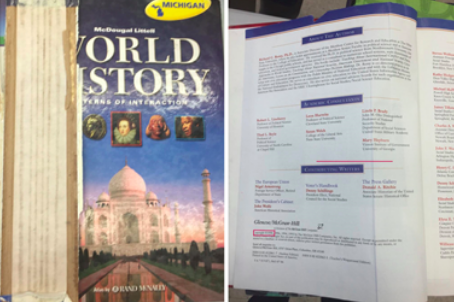
The plaintiffs believe the disparity lies in deeply rooted issues in the Detroit Public Schools. They argue literacy tools that are first taught in elementary school are not only unavailable to them but that their schools are also not adequate environments for fostering education.The complaint mentions unsanitary conditions, extreme classroom temperatures, and overcrowded classrooms as environmental stressors. They also mention inadequate classroom materials as well as outdated and overused textbooks.

Worn history textbook from 1998 (source: Public Counsel).

Not only is the school environment not conducive to learning for these students but their teachers are often not the proper facilitators for learning. The complaint mention such issues as high teacher turnover, frequent teacher absences, lack of short term substitute teachers, inadequate teacher training, and allowance of non-certified individuals.  The complaint also states students at these schools may also have unaddressed issues related to trauma teachers are not trained for.

And the solution to these discrepancies could very well be what the plaintiffs are arguing for: make literacy, education, a fundamental right. In a 2012 Pearson study on global education systems, the US was number 17. All the countries ahead of the US had either a constitutional guarantee of education or a statue acknowledging the role of education. According to Stephen Lurie, this creates a baseline ruling of what education entails: a culture of education around which laws can form.

Such a baseline ensures education is not a question of privilege. Indeed such conditions as the complaint mentions, as lawyer Mark Rosenbaum stated, would be “unthinkable in schools serving predominantly white, affluent student populations.”  What Gary B. v. Sanders is asking for is a safe school environment, trained teachers, and basic instructional materials. It is asking that Detroit students are guaranteed a minimum of education that will at least give them the chance other students in Michigan have at becoming informed citizens and adults.


Teresa Nolwalk

Teresa Nolwalk is a student at the University of Virginia studying anthropology and history. In her free time she loves traveling, volunteering in the Charlottesville community, and listening to other people’s stories. She does not know where her studies will take her, but is certain writing will be a part of whatever the future has in store.

What Does the #MeToo Movement Look Like in France?

The sexual assault debate in the City of Love.

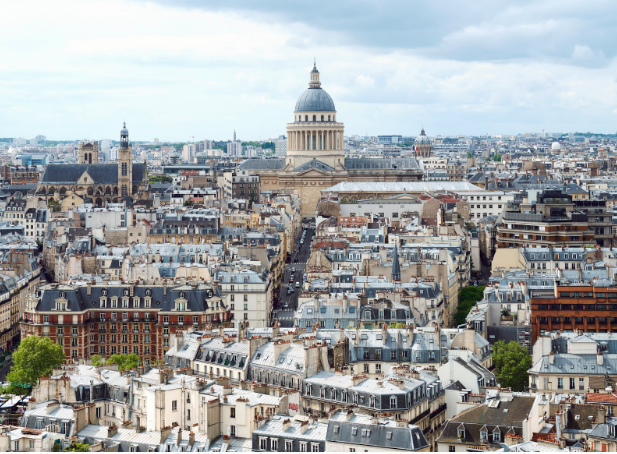
From the top of Notre-Dame Cathedral. By Pedro Szekely. April 28, 2018.

Last October in the US, a media firestorm erupted in response to many prominent actresses coming forward to accuse producer Harvey Weinstein of sexual assault. In the days after the story broke, women across the world were invited to share their stories of sexual assault and harassment using the hashtag #MeToo. In the safety of numbers, inumerable women came forward to share their experiences, exposing their bosses, CEO’s, and elite, powerful men to the scrutiny of society. But this is all old news. While the movement has had incredible success in America, it has had a different reception in other cultural climates, namely, France.

The French have historically taken a different perspective on sexual allegations than Americans. Take, for instance, the shock and horror Americans expressed when news of President Clinton’s affair with Monica Lewinsky broke, versus the “c’est la vie” air expressed by the French in response to President Mitterand's affair with actress Julie Gayet.

In early January, French actress Catherine Deneuve joined 99 other well-known French women in an open letter to the #MeToo movement. The letter posed a critique of #MeToo, comparing it to a Stalinist “thought police,” and arguing that “what began as freeing women up to speak has today turned into the opposite – we intimidate people into speaking ‘correctly’, shut down those who don’t fall into line, and those women who refused to bend [to the new realities] are regarded as complicit and traitors.” To the crafters of the letter, #MeToo represents a “hatred of men and sexuality,” an American brand of anti-feminine, anti-male feminism. The letter also included an unfortunate phrase regarding men’s right to “pester women.” To some in France, the #MeToo movement seems like little more than a wave of American puritanism, an encore to the McCarthy era witch hunts.

Not surprisingly, the letter exploded on social media where it was condemned as an example of internalized misogyny or, more extremely, rape-apology. Devenue and other signers were largely viewed as out of touch with reality, as glamorous older women whose privilege allows them to forget the fraught workplaces of millenials, or the students who walk home alone at night.

While the writer’s statements do pose a kind of reality check to the #MeToo movement, their statements on men’s so-called right to “pester women” and emphasis on men's role as the seducer, emphasize their experience of an older culture in which male subjectivity was a natural right. While the writers paint a rosy picture of sexual freedom apart from what they see as an American-inspired wave of “puritanism,” the emphasis on female objectivity and passivity, of being pursued, has no point of reference in the worlds of ordinary French women. Sure, women enjoy to flirt and be flirted with (as do men), but to claim a grey line between this and assault smacks of the predatory sexism that sparked the #MeToo movement in the first place. “If that’s your fetish, if that turns you on, there’s a problem," Rania Sendid, a medical student at Sorbonne University told NBC. "She doesn’t speak for me.”

Nevertheless, according to feminist and historian Michelle Perrot, the writers, “are triumphant free women who show a certain lack of solidarity with the #MeToo victims … But they say what they think, and many people share their point of view. The debate is real and must be recognised.” Despite being hailed as outdated or out of touch, the Devenue letter was signed by many millenials. Thus, the divide seems as much ideological as generational.

While the letter was perhaps poorly expressed, it did draw on the fear of many French women that #MeToo represents a brand of moralist, antisexual thinking that is more oppressive than freeing. In some eyes, the movement seems to have morphed from assault victims seeking justice into a culture of revisionism. In an interview with the Atlantic, 55 year old event organizer Jean-Julien Pascalet said that, “we suffered for a long time from religion, which imposed a moral order — saying, 'that’s good, that’s bad.' If we go back to that … it would be terrible, it would be an Orwellian society.” Others object to the trial-via-media occuring in America, saying that disagreements belong in court, not a public blacklist.

In opposition to these points of view are those who recognize that the media blitz of #MeToo was a last resort for women. Due to the statute of limitations, threats, or simply a lack of resources, it is incredibly difficult to even get a rape or sexual harassment case before a court, let alone receive a favorable verdict. Activist Rebecca Amsellem told NBC that the writers of the letter, “don’t represent all women in France,” saying that, “the problem is that the legal system has failed women and has failed victims.” Pauline Verduzier, a French journalist specializing in gender issues, told NBC that, “The statement said if men don’t have the right to be pushy or flirty without asking, without making sure that it’s OK, it’s the end of seduction because seduction is based on men conquering women," she said. "This is not the future; this is the past. This is wrong. Everything in this statement is not for freedom, it’s the opposite.”

The often-overlooked initiator of the public letter, Abnousse Shalmani, is a 41 year old French-Iranian who grew up in Tehran until her parents were forced to immigrate to Paris in the mid 80’s. She is also a rape survivor. In the midst of the uproar over the letter, Shalmani appeared on radio to say that, “we do not dismiss the many women who had the courage to speak up against Weinstein. We do not dismiss either the legitimacy of their fight. We do, however, add our voice, a different voice, to the debate.”

EMMA BRUCE is an undergraduate student studying English and marketing at Emerson College in Boston. She has worked as a volunteer in Guatemala City and is passionate about travel and social justice. She plans to continue traveling wherever life may take her.

Pride or Prejudice

A look at the countries where LGBTQ+ is not something celebrated

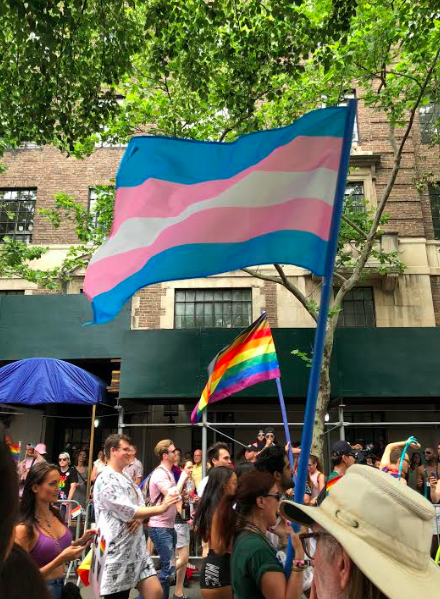
Pride NYC, photo credit: Anna Lopez

June is LGBTQ+ Pride Month. That means parades, celebrations, self-expression, and acknowledgment. At least, in the US that is. While people in the LGBTQ+ community still face struggles every day all over the world, the United States included, it is sometimes easy to forget that there are some places in the world where being a part of the LGBTQ+ community can mean imprisonment, and in some cases, death.

There are an abundance of places that have criminalized same-sex relations around the world. In Liberia, the penalty for same-sex intercourse can be a maximum of one year in prison, and/or a fine of $1,000. In 2012, a direct quote from the Speaker of the House of Representatives named Alex Tyler was “I am a Methodist and traditionalist. I will never support a gay bill because it is damaging to the survival of the country.” And he is not alone in his stance. According to 76crimes.com, there are 74 countries as of April of this year that have laws against people in the LGBTQ+ community. In some cases, such as in Afghanistan, LGBTQ+ people can be put to death for who they are.

Many of the countries that have anti-LGBTQ+ laws are located in the Eastern hemisphere, condensed to many parts of Africa and southern Asia, and there is also a lot of discrimination in the Middle East. A well-known place for discrimination against LGBTQ+ people is Russia. While same-sex intercourse was finally legalized in 1993, and gender identity and expression laws, specifically legal gender change, were finalized in 1997, there are no legal discrimination protections in place. The anti-LGBTQ+ sentiment in Russia is well known around the world, and is periodically brought up in the news and online. Years ago, there was a few images circulating the web of Vladimir Putin with rainbow flags and drag makeup. These images were popular in 2013 after the Russian government prohibited propaganda that showed “non-traditional sexual relationships” being given to children.

It is undeniable that people in the LGBTQ+ community are met with hate and prejudice in the United States despite the strides that have been made here, and those acts of hate and violence should not be forgotten or swept under the rug. However, this Pride Month let us not forget about those who don’t have a voice to go against or speak out against their oppressors. Celebrate those who cannot celebrate themselves due to the unjust and violent laws they may face in their homelands.


ANNA LOPEZ is a rising sophomore at Ithaca college. She is a writing major with aspirations of heading to law school after completing her undergraduate years. She loves animals, art, and travel; she can't wait to see where writing takes her!

Exiting the World Stage: The Implications of US Withdrawal from the UN Human Rights Council

The implications of US Withdrawal from the Human Rights Council

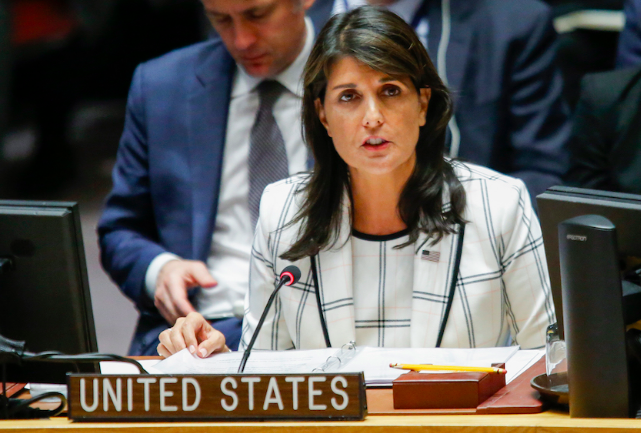
The US has made yet another move against a multilateral approach to global affairs. On Wednesday, June 20th, Nikki Haley US Ambassador to the UN announced the withdrawal of the US from the Human Rights Council (HRC) due to its inefficiency and bias. This decision has severe symbolic and practical effects.


Haley claims that the Trump administration had been considering this move since 2016 but has worked for the past 17 months towards institutional reform, demanding essential changes intended to mitigate the protection of abuse and political bias. However, such demands were not
met and other likeminded countries on the council were unwilling to take a stand against the HRC.


The Trump administration argues that US withdrawal is not a threat to human rights, rather it’s an attempt to strengthen the promotion and protection of human rights around the world. Critics of this decision argue that while the HRC is flawed, withdrawing from it is not an effective solution. Rosa Freedman, professor at the University of Reading, claims that reform was bound to fail as the US tried passing resolutions without any cosponsors or support from other member states. Mohammed Cherkaoui, professor at George Mason University, suggests that the US had been looking for an excuse to withdraw. Haley condemned the lack of action taken regarding Venezuelan human rights abuses, yet the US never called for a special session on Venezuela even when they had the chance.


In 2017, the HRC membership election sparked controversy. Member states, including the US, condemned the election of the Democratic Republic of Congo (DRC) to the council. Despite great opposition, the election of African states to the council is not competitive, so a spot for the
DRC was practically guaranteed. The inclusion of states which are known for violating human rights on the council causes concern among many members of the HRC, and the US declared this primary reason for leaving the council. Another such reason is the council’s stance toward Israel, that the Trump administration perceives as a negative bias. Still, the US withdrawing from the HRC does not undermine the power of the institution. Since Trump’s election, the US has gradually backed out of agreements and decreased funding, signaling to the world that its withdrawal was imminent. During that time, other countries have picked up the slack to ensure
that the withdrawal of the US would have minimal negative effects on the institution as a whole.
However, without the US on the council it will be more difficult to hold countries like Russia, North Korea, and Syria accountable for human rights abuses.


On the surface, the ideas behind US withdrawal seem to be in favor of human rights. However, the US no longer has an official, binding declaration promising to protect human rights or enforcement mechanisms to hold it accountable on the world stage. The symbolic implications are bleak.

No institution is perfect; a multilateral push for reform is necessary for improving the system. In 2020, the HRC is due for organized institutional reform. Now that the US is no longer a member, they have no say in the changes that will take place in the next couple of years.


SARAH MILLER is a senior at Temple University studying Political Science. With a passion for social activism, she hopes to improve the political nature of communities and governments around the world. She believes it is our duty as human beings to use our voices to create positive change.

Unraveling the Fashion Industry

The fashion industry’s unsustainable practices are increasingly under scrutiny.

A snapshot of the 26 billion pounds of textile waste (source: Planet Aid).

The environmental impact of the fashion industry has become a matter of Parliamentary concern in the United Kingdom. The Commons Environmental Audit Committee is launching an investigation into the fashion industry to assess just how unsustainable it is and how the industry might become more sustainable for the future. The inquiry reflects growing concern over the fashion industry’s fast fashion phenomenon that rapidly mass produces clothes for consumption.

Fast fashion is a recent phenomenon that is part of the evolution of the fashion industry. Traditionally clothing was a household endeavor. Changes began with advancements of the Industrial Revolution that introduced ready-made clothing, or clothes sold in a variety of sizes. Yet the changes were selective and mostly reserved for the middle-class individuals who could afford it. Changes continued to occur throughout the 20th century, but it was not till World War II that standardized clothing was widely accepted.  However, the signal for today’s fashion driven world was the 1960s: when the younger generation embraced cheaply made clothes.

Companies responded to increased demand by outsourcing labor to developing countries—much as it is done today. The low quality, high quantity mentality of today’s fashion industry can be seen as a natural development of shifts over the years to more affordable clothing. 

The drive for affordability has led to certain practices that many question for the waste
produced. Instead of the traditional two seasons—Spring/ Summer and Fall/Winter—in
which designers launched the next fashion trend, there are now about 52 micro-seasons in which new fashion is constantly being churned out. Further, popular retailers are often receiving weekly  shipments of new clothing. What this does is make the consumer feel like they are always out-of-date and compel them to keep buying clothing so they can keep up with current trends. Another factor that encourages waste is that most clothes today are made out of lower quality fabrics. Plus, retailers may even disguise such lower quality clothes with “discounts” to convey an illusion of high quality goods. These practices, focused on getting the consumer to consume, only create more waste.

Eco-fashion activist Livia Firth is known for saying in 2015 that “Disposable clothes…stay in a woman’s closet for an average of just five weeks, before being thrown out.”

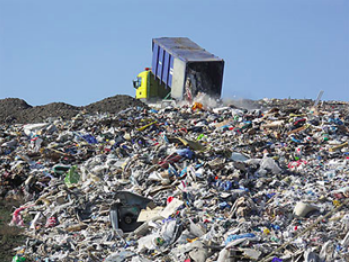
Indeed, a 2016 survey concluded that the average American throws away around 82 pounds of clothing a year: 26 billion pounds of textiles. Of that 26 billion pounds, according to the nonprofit Council for Textile Recycling, only 15% is donated and 85%, or about 70 pounds per person, ends up in the landfills. This waste is a result of a cycle of “careless production and endless consumption” as stated in the 2015 True Cost documentary.

And it’s not just the landfills that are feeling fast fashion’s impact—fast fashion is criticized for its water pollution, use of toxic chemicals, and its treatment of workers. The Parliament’s inquiry into the UK fashion industry will provide a necessary glimpse into how the global fashion industry might be able to change for the better. But is also a responsibility of individuals to be conscious consumers of what they wear.


TERESA NOWALK is a student at the University of Virginia studying anthropology and history. In her free time she loves traveling, volunteering in the Charlottesville community, and listening to other people’s stories. She does not know where her studies will take her, but is certain writing will be a part of whatever the future has in store.

Living in the Netherlands’ Futuristic Homes

Located about an hour outside Amsterdam is a village of spherical homes straight out of your futuristic fantasies. From a distance, Bolwoningen’s domes appear to be a set of golf balls, but up close, they are the architectural masterpiece of Dutch artist and sculptor Dries Kreijkamp. Built in 1984, each home contains three levels with round windows that give view to the scenic canal. The intent of the complex was to bring residents closer to nature. Although the designer has since passed, his legacy continues to live on in.

Celebrating World Refugee Day

Remembering Dr. Ho Fengshan and the Jewish Immigrants to Shanghai

Two seconds isn’t much time. It’s a blink of an eye, really—but in that blink, another person became a refugee according to UNHCR. And in a world where one out of every 110 people is a refugee, you might not want to blink. Indeed, take a moment—if you haven’t already—to admire refugees and their unique experience. They epitomize strength and courage in the face of adversity. They leave for better, even when that better is increasingly closed off from them as both their countries and other countries push back. And on World Refugee Day, celebrated this past year on June 20th for the 18th time, the refugee is celebrated for their resilience that is often lost amidst the politics.

Even though World Refugee Day is relatively new, the refugee is not. Since 1950, the UNHCR has worked with refugees—from the early days working with those displaced by World War II to today’s 22.5 million. But what happened before the UNHCR? During World War II the refugee crisis was largely dealt with by countries directly. However these efforts were mostly unsuccessful: the Evian conference failed to find a solution for what was then termed the “Jewish Refugee Problem.” Out of the 32 countries that convened in July 1938, only the Dominican Republic was willing to take in 100,000 refugees. Leaving thus required the kindness of others, especially that of diplomats.

One such diplomat was Dr. Ho Fengshan, who was the consul general of the Chinese Consulate in Vienna, Austria from 1938-1940. He helped issue thousands of “lifesaving visas” against his superior’s orders to help Jews migrate to Shanghai, which was then an open port city with no immigration controls. Some used the Shanghai visa to obtain a transit visa to other destinations. One professor estimates Dr. Ho Fengshan helped save over 5,000. His efforts earned him the posthumous title “Righteous Among the Nations,” a civil honor bestowed by Israel, and the nickname the “Chinese Schindler.”

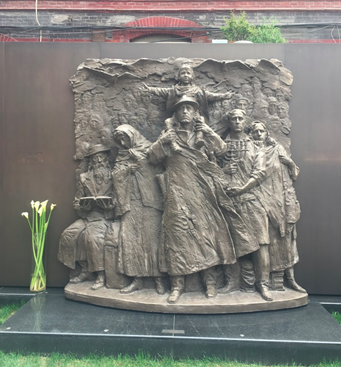
And in Shanghai the impact of Dr. Ho Fengshan’s action can still be seen at the Jewish Refugee Museum housed in the former Ohel Moshe Synagogue in the Hongkou neighborhood. A memorial spans a back wall with the names of the some 18,000 who found refuge there. Interspersed amongst the Goldsteins, Roths, and Schwartzs are quotes that speak to the refugee experience. Rena Krasno referenced tough beginnings, “the refugees found it very hard to adjust to local conditions,” while Nina Admoni looked on her time as a refugee as an “emotional experience.” Most remarkable is  the absence of prejudice on the walls—rather it is a sense of camaraderie seemed to have formed between the Chinese and Jews in Hongkou. A kinship that later became founded on a shared pain from the Japanese occupation.

The start of the memorial wall at the Jewish Refugee Museum (62 Changyang Road Shanghai, China)

Looking back at the Jewish refugees in Shanghai provides a glimpse of refugees today: a mix of personal perseverance and external kindness. For many of the Jews in Shanghai, Dr. Ho Fengshan was a boost to their internal determination and shows the power of a small act of kindness. And as we celebrate the courage of refugees this week, we must ask ourselves how we can lend a helping hand. Maybe it is something small, like being a welcoming neighbor to resettled refugees, or something as big as  volunteering with the International Rescue Committee. Whatever it may be, focus on the individual and their story.

TERESA NOWALK is a student at the University of Virginia studying anthropology and history. In her free time she loves traveling, volunteering in the Charlottesville community, and listening to other people’s stories. She does not know where her studies will take her, but is certain writing will be a part of whatever the future has in store.

The Cape Town Water Crisis: Delaying Day Zero

In the Broadway musical Urinetown, people line up to use the toilet because a 20 year old drought has made private toilets a thing of the past. And when the protagonist rises up finally and allows unrestricted toilet use, the water supply completely evaporates. The final scenes ominously hint at more worrisome issues for the citizens, who, once concerned only with toilet use, most grapple with dying of thirst among other problems.

Although Urinetown is a satire, residents of Cape Town might see it as a scary prediction of their future if Day Zero arrives. As apocalyptical as it sounds, it does accurately embody the looming doomsday scenario: Day Zero is when the taps run dry. How? An unexpected three year drought, starting in 2014, drastically depleted the six dams that serve Cape Town. Whereas 20 years ago water management in Cape Town could rely on seasonal rainfall patterns and small conservation measures, it is now relying on unreliable rain and big changes.

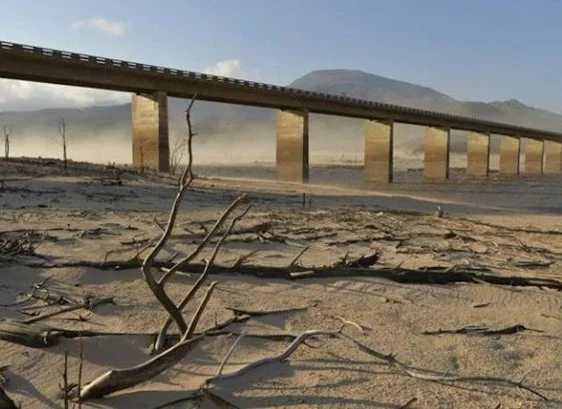
Since Day Zero has been first predicted in early 2018, it has been continuously delayed. Projections now suggest Day Zero will occur in 2019. And in recent weeks, many are rejoicing in water returning to the dry dams. In the words of Anton Bedell, minister of Local Government, Environmental Affairs, and Development Planning:  “It’s…good to see Clanwilliam dam at 20.4%. A few weeks ago the dam was below 6%.” The other dams have reflected similar increases, but the relief is only temporary as the dams await more rain—if it will come.

Theewaterskloof dam in February 2018 (source: 2oceanvibes)

Waters return in early June (source: Storm Report)

The biggest assistance in delaying Day Zero is restrictions implemented on February 1st. The main restriction was the allowance of 50 liters, a little more than 13 gallons, of water per person. Comparatively, the average individual in the United States uses 80-100 gallons of water a day and the average family over 300 gallons a day.  The question of how Americans end up using so much illustrates just how little 13 gallons is for a Capetonian. For example, imagine the average bathroom break. A toilet flush requires at least 1.6 gallons with water efficient models, but if it is an older model it will need up to 4 gallons. Then you will wash your hands with about 3 gallons of water. Considering most people take at least four bathrooms breaks a day, that’s already 18.4 gallons used in one day (on a water efficient toilet): more than what one Capetonian is allowed in a single day.

So it is no wonder people are following the “if it’s yellow, let it mellow” rule and putting reminders in bathroom stalls around Cape Town. Even restaurant and bar washroom taps are shut off. But it is not just in the bathroom that changes are being made. Any use of municipal drinking water for irrigation, watering, hosing down paved surfaces, washing vehicles, or filling a private pool is not allowed. Agricultural users have to decrease water usage by 60% and commercial places by 45% compared to their pre-drought usage in 2015. And for residential units that use too much, you’ll face a fine or have to install water management devices.

And globally, Cape Town is a sign of the future. As population increases, especially in urban centers, water resources are straining to accommodate.  This is against a backdrop of climate changes that favor extreme weather events like frequent droughts. What might have worked in the past, is not necessarily the solution for the future.  California, Beijing, Sao Paulo, Jakarta, Mexico City are just some cities that may be the next unwilling host of Day Zero. And water shortages lead to other problems such as famine and violence. The International Panel on Climate Change predicts the Middle East and North Africa will face the most severe water shortage problems. And already, many Somalis have become climate change refugees—leaving their rural farms for the capital, Mogadishu, in hope of different sources of income with farming no longer possible. Millions more are projected in the years to come as climate change makes itself even more apparent.

It is a bleak picture, but subtle changes are happening as global leaders are becoming more aware of the looming water crisis. But we can also start at home with our own water usage. Maybe you don’t need to take a long bath after a hard day and use 36 gallons of water simply to unwind. Instead, take a quick shower and find something else to help you relax. The small changes might sound silly but it is the little things that matter as Capetonians will tell you.


TERESA NOWALK is a student at the University of Virginia studying anthropology and history. In her free time she loves traveling, volunteering in the Charlottesville community, and listening to other people’s stories. She does not know where her studies will take her, but is certain writing will be a part of whatever the future has in store.

A World Cup for the Overlooked

CONIFA Offers a Humanitarian Alternative to FIFA.

Conifa World Cup, Group C, Padania v Székely Land, Bedfont Sports Centre, London/England. By Ungry Young Man from Vienna, Austria. 3 June 2018. Photo Credit: Confifa

Soon, the eyes of the world will be on the FIFA World Cup. There will be all the usual pomp and spectacle, feats of athleticism, and celebration of unity. And yet, FIFA’s large-scale corruption is no secret to fans and players alike. Recurring scandals have tainted the name of soccer’s governing international organization, culminating in the arrest of seven top officials for claims of corruption in 2015. But FIFA also has a somewhat less known history of excluding the many teams that do not meet its participation requirements. To play in FIFA, the team’s nation must be recognized by the international community, and only one football team from each country is allowed to participate.

In 2013, the Confederation of Independent Football Associations, otherwise known as CONIFA, was formed with the intention of providing a world stage for these unrecognized teams to compete on. In a poetic opposition to FIFA, CONIFA was founded as a non-profit and represents teams comprised of people without a state, unrecognized nations, minorities, people who prefer representing their cultural identity over country of birth, and anyone else who cannot, or prefers not to meet FIFA’s requirements. CONIFA now includes 47 member teams and represents 334 million people worldwide. “We have nothing against FIFA,” CONIFA General Secretary Sascha Düerkop told the press shortly before the opening of the CONIFA World Football Cup, “They are very great to learn how not to do things.”

The 2018 CONIFA World Football Cup opened on May 31 in South London, and was hosted by the London-based Barawa team of Somali refugees. Among those represented at the cup was the Pandania team, comprised of players from eight different regions of northern Italy, and winners of the past two CONIFA European Football Cups as well as ending fourth in the 2016 World Football Cup. Another notable team is Abkhazia, the former title holders representing their semi-recognized Eastern European state. Representing Matabeleland, a war-torn area in western Zimbabwe, are the Warrior Birds, who successfully raised the 25,000 dollars necessary to make the trip to England entirely through crowd funding and selling jerseys. “No one ever believed we would make it to London but we made it,” said captain Praise Ndlovu, “I'd like to say thank you to everyone.”

The final match of game was between Northern Cyprus, a state recognized only by Turkey, and Karpatalya, representing the Hungarian minority in Ukraine. While in the end, Karpatalya won the match 3-2, CONIFA is about more than just winning, it’s about inclusivity, about allowing everyone to participate on the world stage.

“As long as FIFA has existed, there has always been a non-FIFA world of teams who want to play on a global stage but can’t for a variety of reasons,” Per-Anders Blind, the president of CONIFA, told The New Yorker. “What we have done is fill a gap, a white spot on the map that nobody cared about.” CONIFA represents a more honest, somewhat purer version of football, which has returned to FIFA’s original intention of supporting the world-wide football community and organizing truly international competitions.

EMMA BRUCE is an undergraduate student studying English and marketing at Emerson College in Boston. She has worked as a volunteer in Guatemala City and is passionate about travel and social justice. She plans to continue traveling wherever life may take her.

ICE’s Wandering Children

Where Are They? Are They Really Gone?

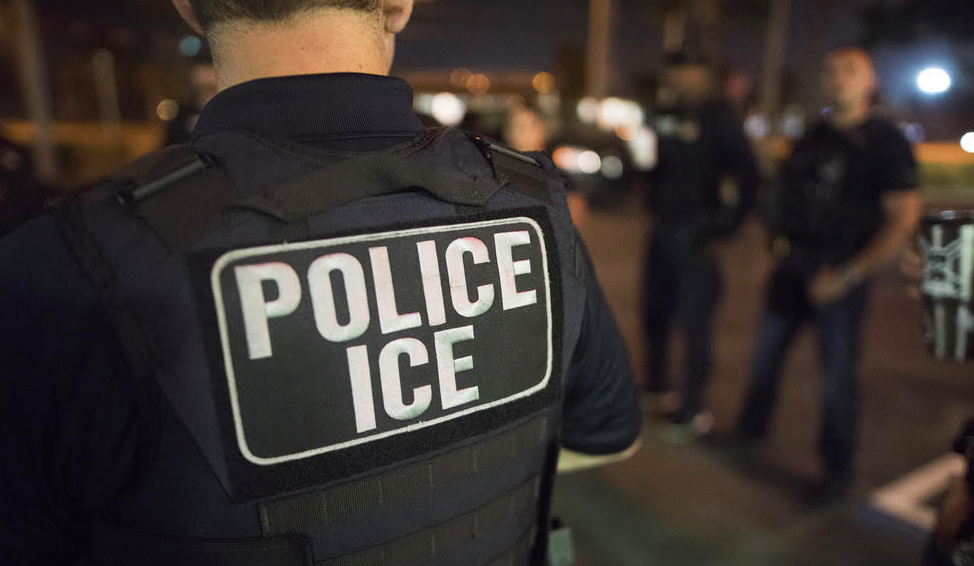
Recently the news that ICE lost track of nearly 1,500 children stormed headlines on news and social media. At a glance, the way this news was being pushed to the front lines of every outlet made it seem that this was something very recent and nobody had known about it until now; however, that is not the case. The most minor of internet searches will show that this actually happened in the last few months of 2017, and it has only become major news as of late. Why? Nobody is completely sure, but what remains known is that this is something important and regardless of why it has suddenly come to light, it cannot be ignored.

The current administration has a known stance on immigration, and it is no secret that they hold fast to a virtually nonexistent tolerance policy for people in the United States illegally; yes, children too. An article from CNN written by Dakin Andone states that, “The federal government has placed thousands of unaccompanied immigrant children in the homes of sponsors, but last year it couldn't account for nearly 1,500 of them.” These children that were taken by the government and placed with sponsors were unaccompanied by adults or separated from their family when they crossed into the United States. The children were brought to sponsors that were typically people that had ties to the children specifically, whether it be by blood or otherwise. However, in and after the process of all of this being done, around 1,500 children became unaccounted for. 

These children were dismissed by officials as not legally their problem to deal with, and claimed some of them were merely runaways. The same article from CNN by Dakin And one states, “An additional 28 had run away” after quoting Steven Wagner, who is said in the article to be an official in the department of Health and Human Services, on his stance on the situation. When this headline broke out recently, a lot of people talking on the subject on social media heavily suggested that some sort of trafficking issue could be at play here. The idea that the government had purposefully lost these children was becoming more and more talked about with each day, but there was never any concrete evidence to back these theories, just thoughts and ideas rooted in past government activity. 

While the whole truth has yet to be concretely proven, one can only wonder just how much is at play here, and what will happen next with this story.

ANNA LOPEZ is a rising sophomore at Ithaca college. She is a writing major with aspirations of heading to law school after completing her undergraduate years. She loves animals, art, and travel; she can't wait to see where writing takes her!