Unexpected Friends in Amsterdam

August 29, 2015: I was cruising on my bike on a rare sunny day in Amsterdam, weaving in and out of pockets of confused tourists, when I rode past an orange and white sign that read “A’DAM INT’L ART FAIR.” Just two weeks into my four-month long journey of self-discovery in Amsterdam, my one-item agenda on this particular day consisted solely of exploring my new city. In that moment, my explorations led me to Berus van Berlage, a medieval looking building in the city center where the art fair was slated to take place. I secured my bike to a nearby pole and headed inside having neither the intentions of purchasing art, nor the expectations of what fascinating people I might meet inside. 

I took my time strolling up and down each aisle, attempting to take in all of the photographs, sculptures, and paintings hanging on the walls of Berus van Berlage amidst the mixed crowd of intrigued passersbys and veteran art collectors. Eventually I found myself in the far right corner of the hall, where I came across a row of ceramic necklaces next to a sculpture of what appeared to be a naked woman with a severed torso. Nervously, I approached the woman standing next to the display and inquired if she was the artist who created the necklaces. She told me she was not, but the artist who did make the necklaces would be back from lunch in just a few minutes. I wandered aimlessly for a couple of minutes before returning to the far right corner to solicit information from the artist herself about the necklaces. 

Upon my return to the far right corner, I was greeted by a beautiful blonde woman who introduced herself to me as Mirjam (Miriam). Originally born in Turkey, Mirjam had immigrated to The Netherlands at the age of 5, living in different places throughout the country until settling in The Hague, a small city southwest of Amsterdam. From inside her apartment on the beach in Scheveningen, Mirjam creates all different types of art—pottery, paintings, and nearly everything in between—which she then sells at regional art fairs. The only piece she does not sell, but brings to every art show, is her most prized creation: a sculpture she calls “A Tribute to Every Woman in the World,” the woman with the severed torso. 

I then introduced myself as Allie, an American college student studying in Amsterdam for the semester, and asked if I could purchase one of the ceramic necklaces on display. In an exchange that lasted no more than 5 minutes, Mirjam wrapped up the necklace, handed me her card, and invited me to have coffee with her in The Hague should I ever found myself there. I then left the fair, not thinking too much about the encounter I just had with Mirjam. 

The following Wednesday I boarded a train from Amsterdam to The Hague. Mirjam was going to meet me and my friends at the train station, share a bite to eat with us, and then we would be on our separate ways; or at least, that is how I envisioned the day going. When I arrived in The Hague, Mirjam greeted me with a hug so tight you may have thought we had known each other for years having no prior knowledge of our relationship. She treated me and my friends to lunch, showed us the ins and outs of town, and then brought us back to her beachside apartment for snacks and drinks. Before heading back home to Amsterdam, we strolled along the ocean just as the sun was setting and I thanked her for an unforgettable day. On the ride home I replayed moments from the day over and over again in my mind, finding it difficult to process the bond I had just formed with a woman I met at an art fair that I hadn’t even planned on going to.  Though we had just gotten acquainted with one another, Miriam believed that our souls had met one another prior to our first physical encounter, and I could not help but think that she was right. 

Miriam and I kept in touch throughout the remainder of my stay in Amsterdam. Each month we met in a different city in Holland: Rotterdam in October, Amsterdam in November (where she met my family while they were visiting me), and Delft in December. Seeing all of these new places from her perspective made me appreciate them that much more. Every time I met up with her became adventures that I will never forget. When I return to Amsterdam next month, we will surely add another adventure to our list. 

Traveling or spending any significant period of time abroad presents one with unique opportunities to meet people they more than likely would not have met otherwise. While I could have never anticipated meeting Miriam where I did or forming the relationship I have since formed with her, being open to new experiences and meeting new people definitely lends itself to the possibility of forming relationships like the one I have with Miriam. So next time you find yourself at an art fair in Amsterdam, strike up a conversation with an artist you meet; perhaps she’ll become your Dutch mother just like Miriam became for me. 
 

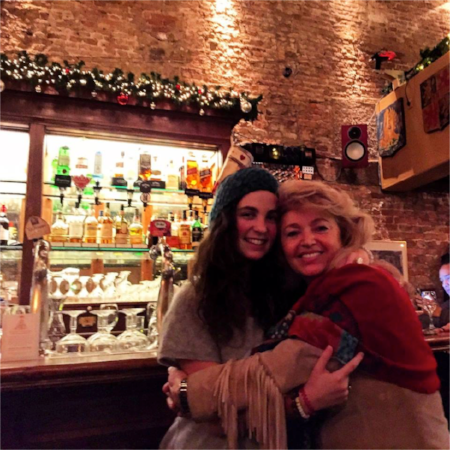
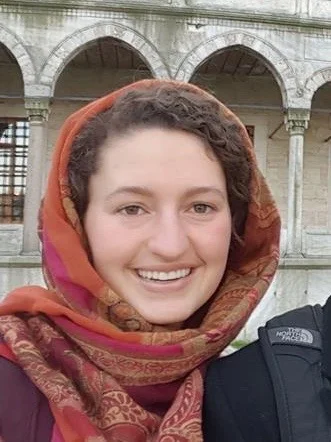
Miriam and I in Delft at Café De Waag, December 2015

ALLIE BLUM

Born and raised just outside of Philadelphia, PA, Allie's love for travel has led her to find that you can call many places "home." While she is primarily based in New Orleans, LA, where she will be completing her undergraduate studies this coming May, Allie has spent significant periods of time traversing the continental US (mostly by car) and Europe, and parts of the Middle East. Allie hopes that her curiosity to understand other cultures will bring her to every continent over the course of her lifetime. When she's not studying or planning her next trip, Allie loves to read, write, and make playlists on Spotify.

Kicking the Habit: Air Travel in the Time of Climate Change

Air travel is neither just nor sustainable. So how can environmental justice activists make a global difference?

We live in a time of far-flung relationships, our families, colleagues, and friends often spread out across continents. These relationships mirror the global nature of many of our most pressing problems, such as global climate change—and they also contribute to those problems.

In Eaarth: Making a Life on a Tough Planet, Bill McKibben likens the biosphere to “a guy who smoked for forty years and then he had a stroke. He doesn’t smoke anymore, but the left side of his body doesn’t work either.” This new world, he says, requires new habits.
And, no doubt, many of us have adopted new habits—trying to use public transportation, buying local foods, rejecting bottled water. But the “savings” from such practices are wiped out by a habit that many of us not only refuse to kick, but also increasingly embrace: flying, the single most ecologically costly act of individual consumption.

Flights of Privilege

A round-trip flight between New York and Los Angeles on a typical commercial jet yields an estimated 715 kilos of CO2 per economy class passenger, according to the International Civil Aviation Organization.
 

Only 2-3 percent of the world’s population flies internationally each year, but the climate impacts are felt by a much larger—and poorer—population.


But due to the height at which planes fly, combined with the mixture of gases and particles they emit, conventional air travel has an impact on the global climate that’s approximately 2.7 times worse than its carbon emissions alone, says the Intergovernmental Panel on Climate Change. As a result, that roundtrip flight’s “climatic forcing” is really 1,917 kilos, or almost two tons, of emissions—more than nine times the annual emissions of an average denizen of Haiti (as per U.S. Department of Energy figures).
Only 2-3 percent of the world’s population flies internationally on an annual basis, but the climate impacts of air travel are felt by a much larger—and poorer—population. It is difficult to illustrate the meaning of such numbers in terms of who among the planet’s citizens pays the costs.

But this is exactly what the 2009 German short film The Bill does in powerfully demonstrating the ecological privilege and disadvantage embodied by flying. In doing so, it shows aviation to be a classic example of how the comparatively well-off privatize benefits of environmental resource consumption (the ability to travel quickly and afar) while socializing the detriments. By making a disproportionate contribution to climate destabilization and associated forms of environmental degradation—biodiversity loss, rising sea levels, and desertification, for instance—air travelers exacerbate the precarious existence of the most vulnerable. In doing so, they contribute to unjust hierarchies (e.g. racism and imperialism) that reflect a world of profound inequality.

Global Organizing—Without Planes

Clearly this presents a huge challenge to social and environmental justice advocates, activists, and organizers from the planet’s relatively wealthy areas who often connect to distant peoples and places by flying. Because the institutions and individuals most responsible for our global predicaments typically exercise mobility and exert their power across great distances, those of us who want to challenge their practices often must also do so. So what to do?

One option is to use transportation that stays on the Earth’s surface, to accept traveling more slowly, and to make flying a very rare exception instead of the rule. Throughout North America, buses—and, in many places, trains—are viable options. And for transoceanic voyages, ships (including freight ones) are a possibility—albeit not typically inexpensive or as common as they need be.
 

Finding Rootedness

In an increasingly vulnerable world, we’re searching for rooted communities—and what we can learn from them.

Another option—indeed an obligation in a time of growing ecological destruction and a degraded resource base—is to stay home more often. Given that “jet travel can’t be our salvation in an age of climate shock and dwindling oil,” McKibben writes, “the kind of trip you can take with a click of a mouse will have to substitute.” In other words, we have to become much better at exploiting the “trips” that the Internet and related technologies afford—by videoconferencing, for example.

While such options present numerous challenges, not least logistical ones, perhaps the biggest obstacle is the particular way of seeing and being common to the small slice of the world’s population that flies regularly. Traveling long distances by bus, train, or ship, for example, necessitates time—and a willingness to expend it in manners that those from the world’s privileged parts and sectors are not used to doing. It doesn’t necessarily entail doing less, but it does mean doing things in different ways.

A New Normal

It also calls for new mechanisms and institutions—and some organizing to bring them about. Take long-distance travel by ship. Less than a century ago, many regular folks traversed the seas—think of immigrants to Angel and Ellis islands. And many well-known organizers and activists—Gandhi, Helen Keller, and W.E.B. Dubois, to name just three—journeyed extensively by ship.

To do so today, of course, is far more difficult as jet travel has greatly weakened the passenger ship option. But what if, for instance, U.S. and Canadian activists and advocates going to Denmark for the Dec. 2009 climate summit had, instead of booking individual flights, organized to travel together by ship—with all promising to get to and from their ports of call by surface-level transportation? And what if they had publicized this effort as a way of setting an example for, and challenging, others?

That such a suggestion will seem unrealistic, if not foolhardy, to many illustrates the way that what we’re used to thinking of as normal can stifle our imaginations, and let us off the political, ecological, and ethical hook. The option is as “realistic” as we make it. In this regard, we need to push and support one another in the effort to make far-reaching alternatives viable.
 

What we’re used to thinking of as normal can stifle our imaginations, and let us off the political, ecological, and ethical hook. The option is as "realistic" as we make it.

Climate science tells us that we need a 90 percent cut in greenhouse gas emissions over the next few decades to keep within a safe upper limit of atmospheric carbon. In light of the great changes such a reduction demands, what is unrealistic and foolhardy is the notion that we can continue flying with abandon.
 

Interested?
    •    We thought we had 20, 30, 50 years to take on the climate crisis. We were wrong. The scary science, smart policies, and critical actions that could still avert disaster.
    •    Bill McKibben imagines himself in the year 2100, looking back at a century of climate chaos and asking: What did it take to save the world?

THIS ARTICLE WAS ORIGINALLY PUBLISHED ON YES MAGAZINE.

JOSEPH NEVINS

Joseph Nevins wrote this article for YES! Magazine, a national, nonprofit media organization that fuses powerful ideas with practical actions. Joseph is a geography professor at Vassar College. Among his books is Dying to Live: A Story of U.S. Immigration in an Age of Global Apartheid (City Lights Books/Open Media).

Flip Your Map and Up Your Impact

Part 1 of a 2-part series on Maps

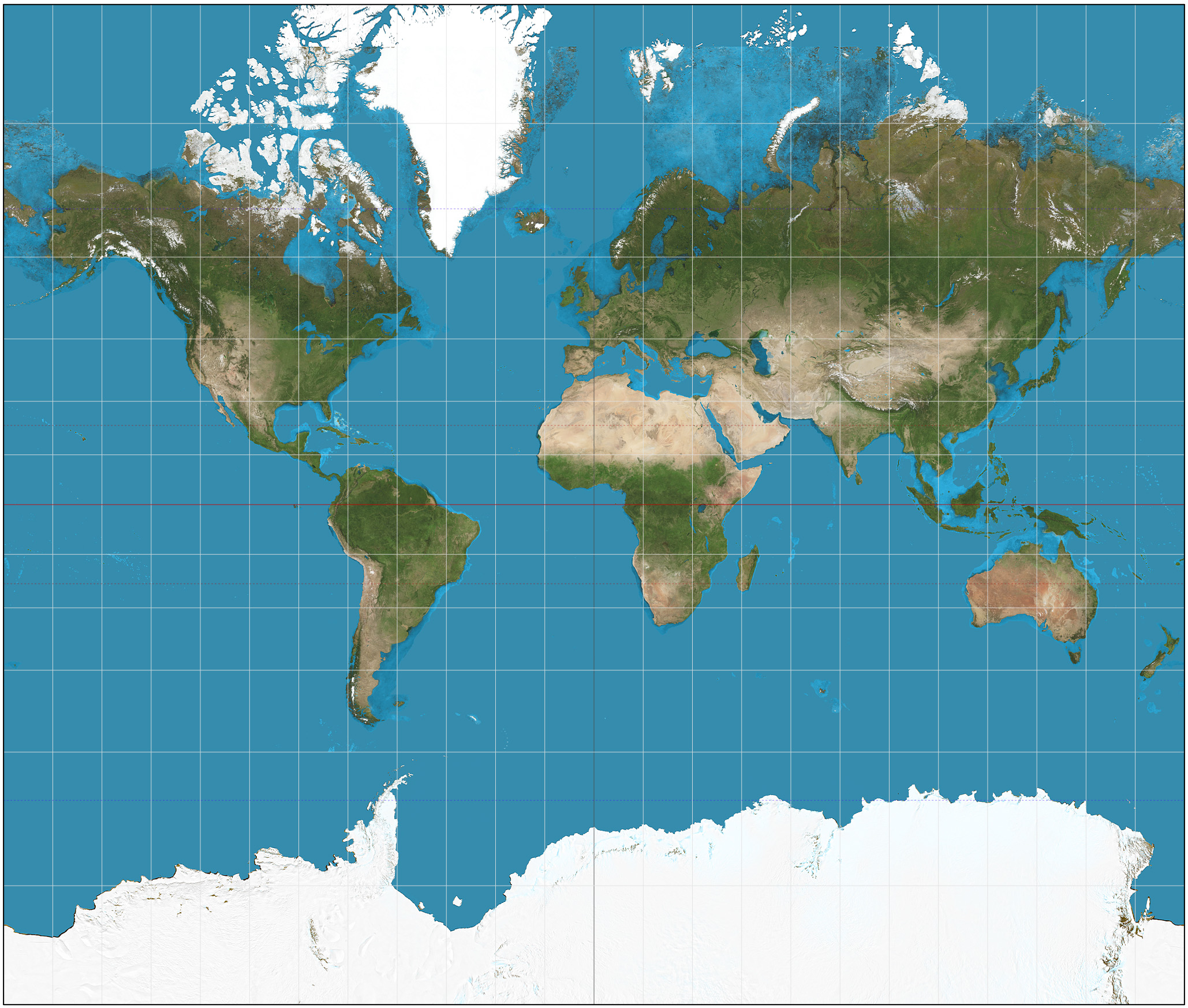
The map of the world.

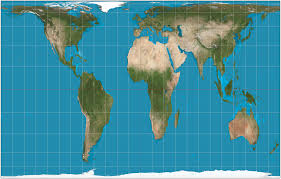
When we look at the most commonly-seen map of the world, we assume that it depicts the earth as it truly is. But this particular projection of the world, like all others in existence, isn’t completely accurate, as it is impossible to avoid distortions when translating three dimensions into two.  Known as the Mercator projection, this map was designed for navigation but distorts relative size, artificially enlarging land masses further from the equator.  The result is more severe than you might imagine: Africa appears smaller than Greenland, when it is actually fourteen times larger. See this for yourself here.


There are many other, less common projections which you can explore here.  Some are equal area projections, such as Gall-Peters, which manage to avoid the relative size distortion of Mercator but are then much less useful for navigation and less accurate with regard to shape. While the Mercator projection has been abandoned by atlases in favor of projections with more balanced distortion profiles, it is still used by popular online navigation tools such as Google Maps given its navigational prowess (unless you happen to be exploring one of the poles, where it is practically useless).
 

Gall-Peters Projection

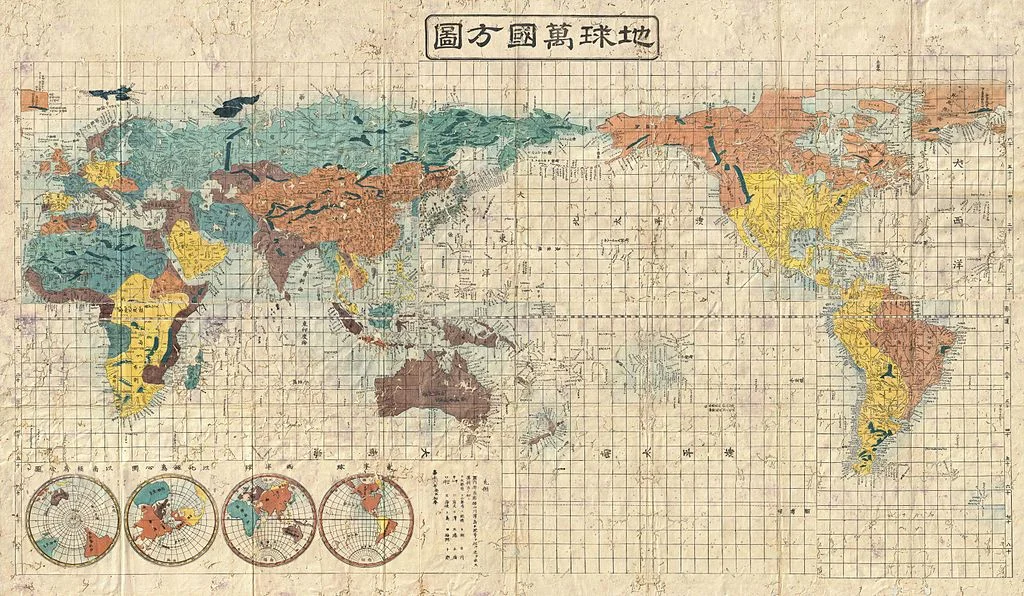
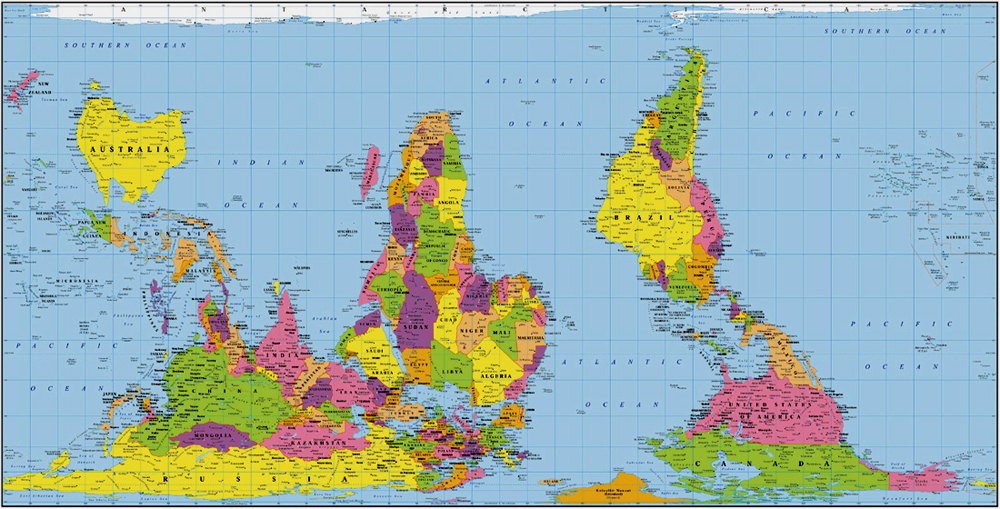
The most commonly-seen map of the world also has a particular orientation and center: north-up and the Atlantic.  Yet this framing is neither inevitable nor inherently more correct. Medieval maps were often East-up, Pacific-centered maps pop up in Asia, and a National Geographic feature on the world’s oceans opted to carve up continents instead of bodies of water.

As a result of the complex politics of map-making over time and the inertia of convention, the north-up, Atlantic-centered Mercator projection is the most prevalent, making it not only a navigation tool, but also the image of the world in our mind’s eye. But why does this matter? If all projections are distorted in some way, and orientation, although heavily influenced by historical political jockeying, is ultimately arbitrary, can’t we just continue using it? 
 

There is a big reason why this is not such a great idea: where things are on the map and how big they are in relation to other things affects what we think of them.

Research has shown that we (English-language users) tend to associate up with goodness and down with badness; think about upper and lower class, movement along the socio-economic ladder, “started from the bottom now we’re here”, the assumed location of heaven and hell, and the connotations of uptown and downtown.  It has also shown that we tend to associate up with north and down with south (“up north”, “down south”) despite the fact that up/down is an orientation to gravity while cardinal direction is an orientation to the poles. When we are repeatedly exposed to the north-up world map, it reinforces the association of up with north and down with south, and therefore strengthens the association of north with the positive qualities associated with up, and south with the negative qualities associated with down. The popularity of the north-up map makes us more readily associate positive things with northern places.

We also tend to associate things in the center of an image with importance, and large objects with importance and strength. Overall, this means that we tend to equate things that occupy large, upper (northern), central places on the map with goodness, importance and strength; and things that occupy smaller, lower (southern) and peripheral places with badness, insignificance and weakness.  It is therefore not surprising that some Australians, Asian states, geographers, educators, and even people on The West Wing have pushed for south-up, Pacific-centric and non-Mercator maps.

Now you might be thinking, but I know that those things don’t always match up!   Rwanda has a higher percentage of female Members of Parliament than any other country on earth even though it’s in the Global South! China is hugely important in the global economy even though it’s on the periphery of the map! Israel is powerful even though its relatively small size is exaggerated by its proximity to the equator!

But these mental links, also called implicit associations, are mostly unconscious, and they show up in many areas of our lives even when we consciously know and believe that they aren’t correct.  In other words, stereotypes and generalizations affect our decisions and behaviors even though we know they aren't always true.  This insight comes from implicit association tests, which show that we are quicker and more accurate at sorting things into bins when the bins match up with unconscious associations in our brains, even when we report not having these associations. For example, when sorting words or images that are often perceived as fitting into just one of four categories -  fat, skinny, good, bad -  we tend to be faster and more accurate when we are putting items that we perceive as fat or bad into one box, and items that we perceive as skinny or good into the other box. We are on average slower and more likely to mess up when we instead have to sort into a box for skinny or bad items, and a box for fat or good items. And this happens even when we report that we don’t believe fatness is inherently associated with badness, or skinniness with goodness. See this for yourself by taking multiple versions of this test.

The most probable explanation for this phenomenon is that it's an evolutionary remnant, which in the earlier days of humanity helped to keep us alive by allowing us to quickly distinguish between safe and unsafe through stereotyping. But the modern-day implication is clear: even if we don't explicitly think that northern, central, or large countries are better, stronger and more important, associations between these categories probably lurk in our psyches.  Where things are on the map and how big they are in relation to other things affects what we think of them regardless of whether or not we realize it’s happening. We don’t just shape maps, maps shape us.

These mental links may seem harmless, but researchers have suggested that implicit associations in general contribute to everything from childcare expectations for different genders to police brutality against people of color. They affect decisions like whether or not to cross the street when we see someone walking towards us, where to travel, and which deaths from terrorist attacks to change our profile pictures for. 

The particular mental links created and reinforced by this map aren’t harmless either, as they correlate with current and historical global patterns. And when these mental links line up with what’s happening in the world, they perpetuate each other.  Although it is sometimes quite handy that associations from our dominant map match reality, it is also limiting, as we tend to see characteristics of certain places as natural and normal, and the resulting global power dynamic as inevitable. For instance, this map and the associations it fortifies make it harder for us to imagine a world where the West (a confusing term generally used to refer to Northwestern Europe, the US and Canada) isn’t the most powerful and important group of countries. When we see things as inevitable and can’t fathom a different reality, we are less likely to intervene to change the course of history.  We cannot go somewhere that we have not first traveled in our minds, and with maps reinforcing the status quo instead of igniting our imagination of how the world could be, we are more likely to perpetuate global systems of oppression. 


The mental links reinforced by repeated exposure to this map don't just prevent us from taking action, they can also lead us to take part in less-than-ideal action. For example, this particular map reinforces the belief that the West is inherently good and that all countries should strive for our way of life. This belief then informs actions in many sectors, from foreign policy to international development, often resulting in detrimental outcomes for people and planet. Individually, we are encouraged to engage in well-intentioned efforts such as teaching English, which, instead of indisputably beneficial, can be seen as an effort to make “them” more like “us”. Beliefs arising from the associations this particular map reinforces don’t just prevent us from changing things, they support harmful things happening right now.   

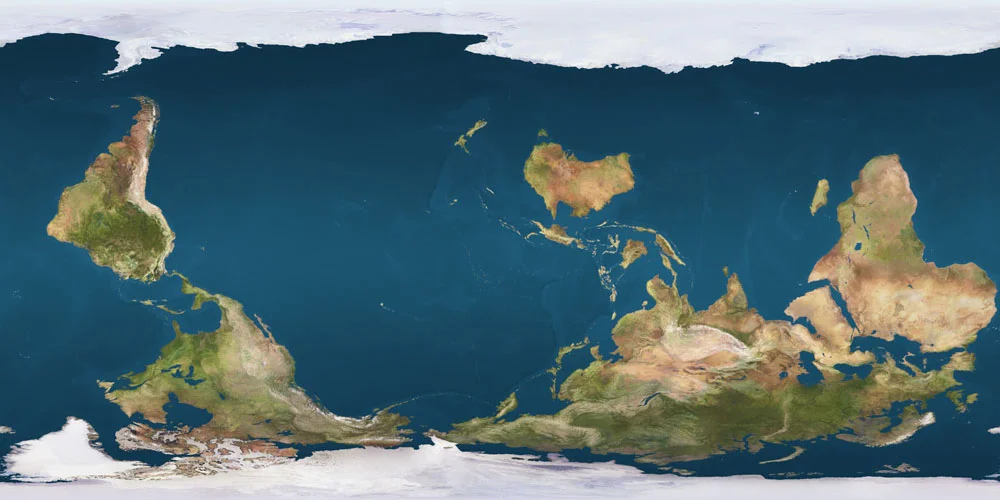
Instead of being held back by exclusive familiarity with only one of an infinite number of possible projections of earth, we can improve our chances of having a genuinely positive impact by changing our maps.  We can continue to use Mercator projections for navigational purposes, but we should switch it up for non-navigational purposes.  When hunting down the exact location of a current event you’re reading about, scroll over a pole in Google Earth to flip the world upside down. If you’re buying a world map poster to plan your next trip or track where you’ve been, consider a Gall-Peters projection, south-up or Pacific-centered map; all are relatively easily to find online. 

Over time, as you expose yourself to different maps, your mental maps will shift, decreasing the power of certain associations and helping you combat your unconscious internal bias. While daily exposure to our culture and language makes it very hard to de-link up from good, and large and center from important and powerful, changing your maps can delink north from goodness, Africa from weakness, and Small Island States from insignificance (they are, after all, a key climate change frontline).  Switching between maps will also remind you that the map is not the territory, and that all maps simultaneously obscure and illuminate.  We can also expose ourselves to stories and other media that contradict these associations, a tactic which has been shown to reduce bias when measured with implicit association tests. Purposefully and regularly exposing yourself to other perspectives is also a good life practice, especially for people of privilege, and one of the things travel is perfect for. 


SARAH LANG

Instigated by studies in Sustainable Development at the University of Edinburgh, Sarah has spent the majority of her adult life between 20+ countries.  She is intrigued by the global infrastructure that produces inequality and many interlocking revolutionary solutions to the ills of the world as we know it.  As a purposeful nomad on a journey to eradicate oppression in all its forms, she has worked alongside locals from Sweden to Zimbabwe.  She is a lover of compassionate critique, aligning impacts with intentions, and flipping (your view of) the world upside down. 

Less than Two Gallons a Day in Ethiopia

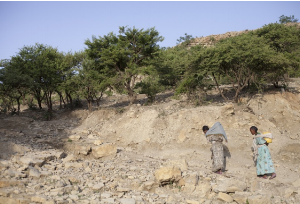
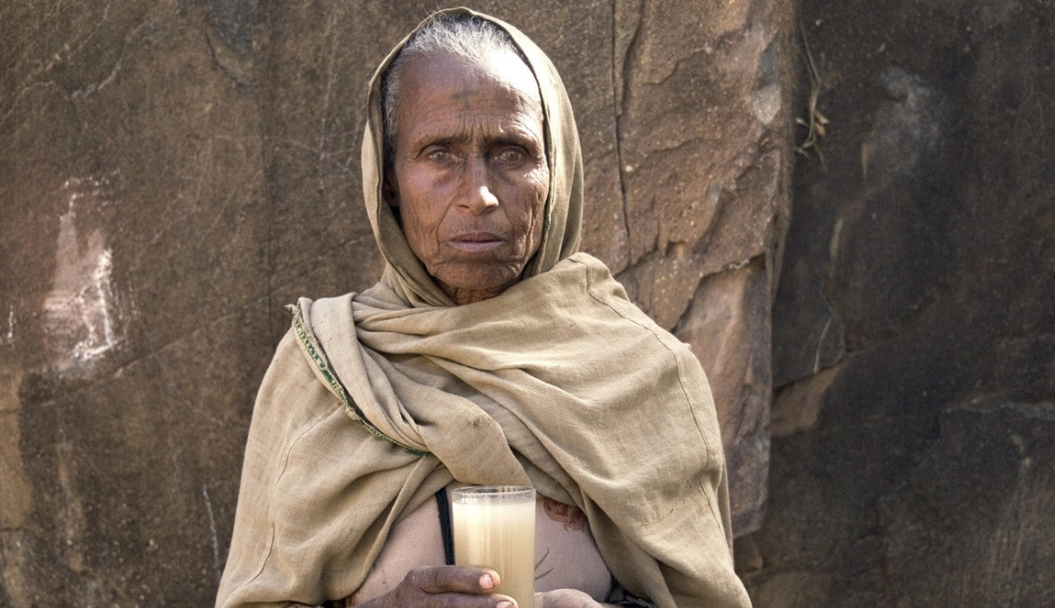
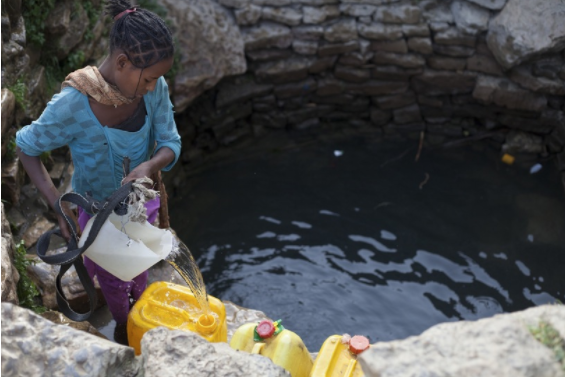
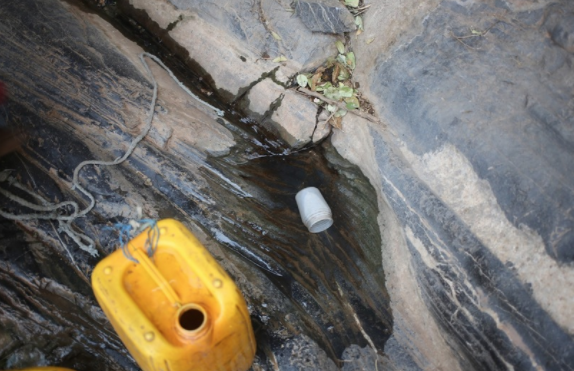
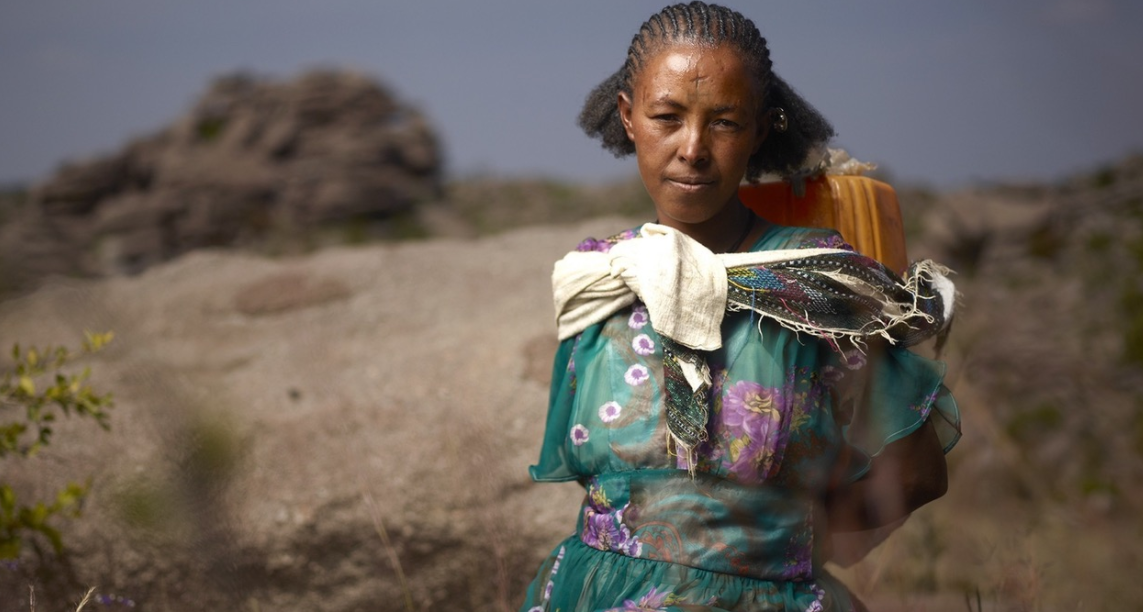
In rural Ethiopia, water is so scarce that many families survive on less than two gallons per day and walk up to four hours to find it.

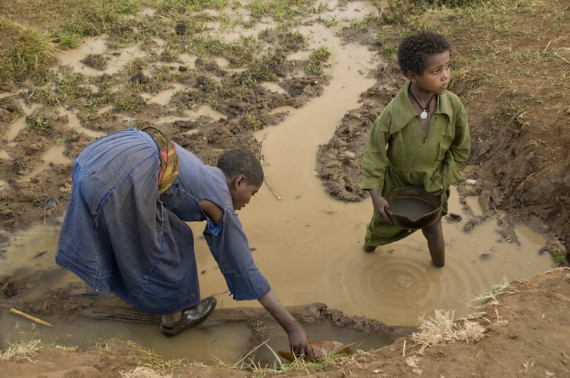
Their water sources, often nearly-dry river beds or muddy holes that communities have dug together, offer water that sometimes needs to be poured through cloth to filter out leeches and debris.

Since 2007 charity: water has been working in the Tigray region of Ethiopia with the government and local water partners working towards a vision of 100% clean water coverage.

With the help of hundreds of thousands of supporters from around the world — like Noah, who taught his classmates how to weave and sold enough hand-made art to fund hand-dug wells — we’ve now funded more than 3,000 water projects in Tigray that will serve over 1.1 million people with clean and safe water near their homes. Not only that, but the community has also been trained by our local partners on safe hygiene practices and basic maintenance of their water project.

Take yourself on the charity: water journey into the heart of Ethiopia in this video series following our Content Strategist, Tyler, as he experiences life without water and meets the incredible people of Ethiopia.

THIS ARTICLE WAS ORIGINALLY PUBLISHED ON MAPTIA.