On the Rocks, Please: Exploring Spain’s Setenil de las Bodegas

Spain’s cliffside town of Setenil de las Bodegas stands as a prime example of how humans can dance harmoniously with the rugged wonders of Mother Nature. 
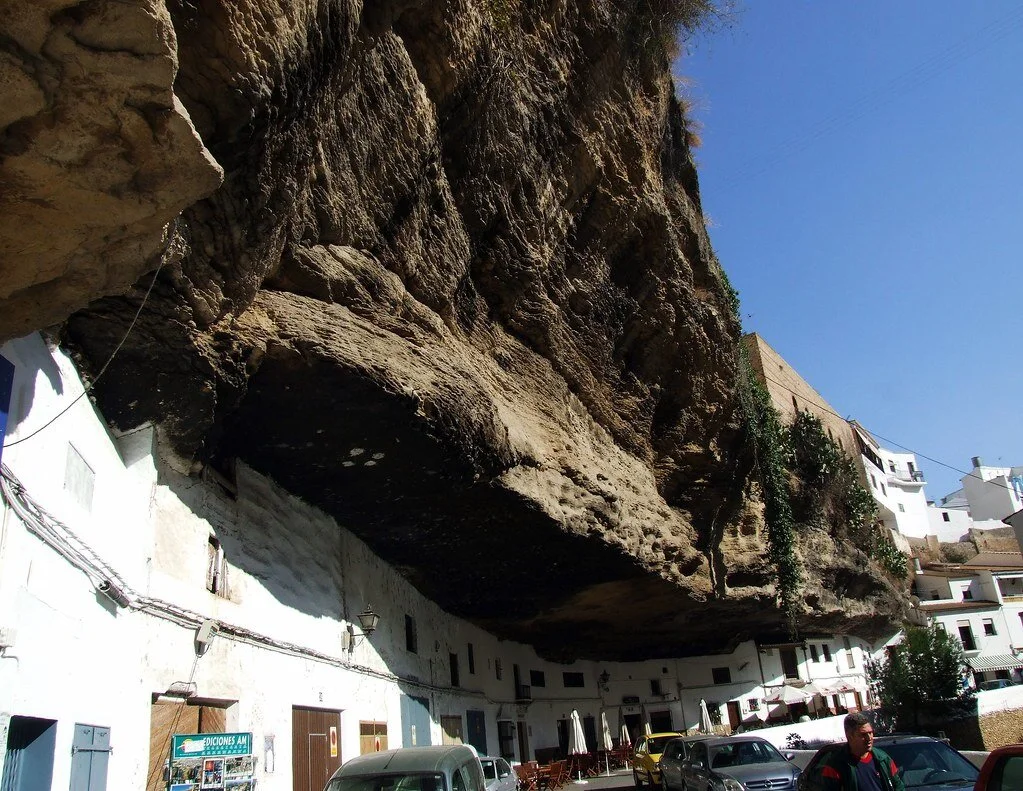
Rocks on top of the Spanish town of Setenil de las Bodegas. maesejose. CC BY 2.0.

Often the media finds itself focusing on hot-topic debate frenzies; climate change is a primary theme. . Usually hidden, though, are the situations in which humans and nature work together. Spain’s southern region of Andalusia houses one such place, a town known as Setenil de las Bodegas. 
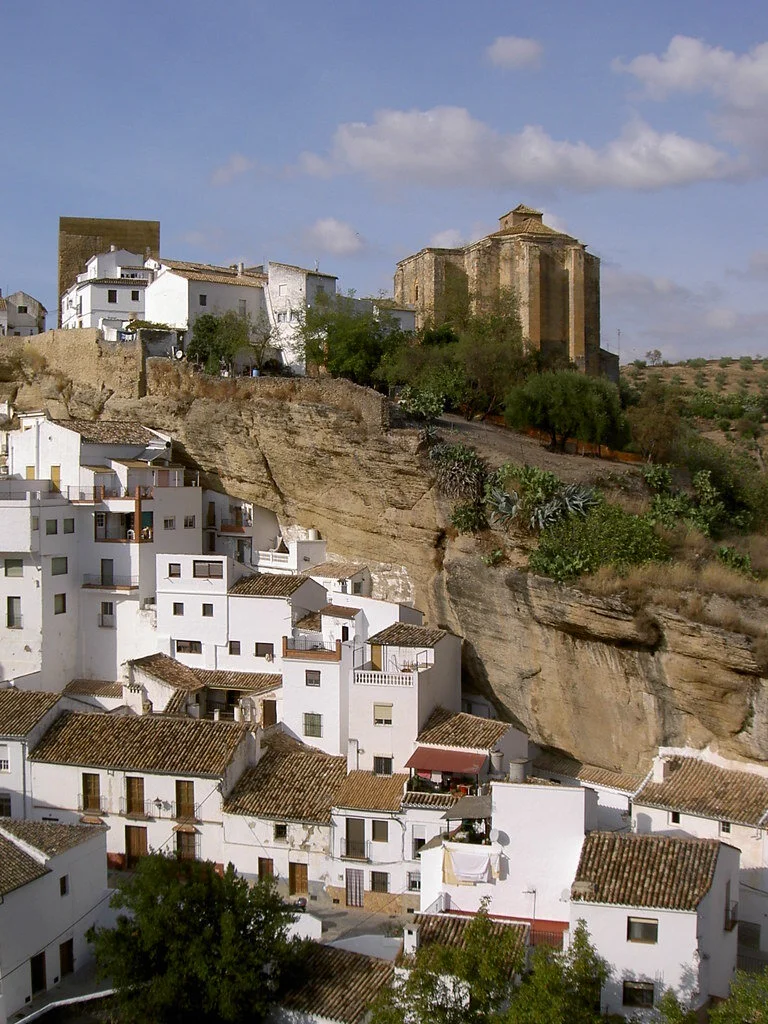
View of the rocky hillside. manuelfloresv. CC BY 2.0. 

At first glance, photos of the town communicate quaint and quiet living—whitewashed buildings sit nestled within rocky hillsides. Upon closer inspection, however, it becomes apparent that the construction of Setenil de las Bodegas is unique. The town is not built on the rocks of the mountain, but rather among the gargantuan boulders themselves. The large stones sit atop the buildings, acting as roofs and providing massive cooling canopies to the streets below. The small town of about 3,000 residents has found a peculiar haven, believing that the practicality of construction that nature provided makes it worth settling in the region.

Although Setenil de las Bodegas’ population is small, the town possesses a deep history and equally rich cultural activities. The town’s name itself holds a fascinating story; the word “setenil” meaning “seven times nothing” refers to the seven times it took for Spain to recapture this area from the Moors. The other part of the name, “de las bodegas,” refers to the way the boulders acted as a reliable cooling function for the town’s early wineries. Now, the town holds some of the best wine in Andalusia, alongside other rich delicacies of the region such as honey and chorizo. A few times a year, visitors can expect lively street parades filled with local cuisine, concerts and flamenco dancing. 

Setenil de las Bodegas endures blisteringly hot summers but enjoys moderate winters, providing most visitors with a relatively pleasurable climate to enjoy the town. 

Every once in a while, humans find a way to become one with nature instead of fighting against it. In Setenil de las Bodegas, this idea is not just a reason to visit, but rather plays a major role in the very lifeblood of the town. 



Ella Nguyen

Ella is an undergraduate student at Vassar College pursuing a degree in Hispanic Studies. She wants to assist in the field of immigration law and hopes to utilize Spanish in her future projects. In her free time she enjoys cooking, writing poetry, and learning about cosmetics.

Belgium’s Centuries-Old Procession of the Holy Blood Suspends its March

For over 700 years, Catholics have been gathering in Belgium to watch the Procession of the Holy Blood. The event features reenactments of biblical stories and centers around a holy relic, a scrap of cloth said to be stained with the blood of Christ. 

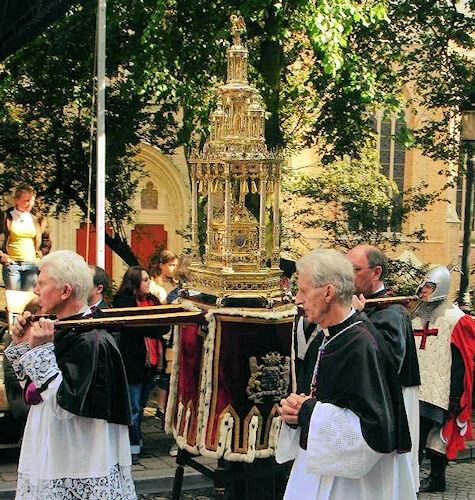
Each spring, thousands gather in the streets of Bruges, Belgium, to witness the Procession of the Holy Blood. The procession centers around a vial containing an ancient cloth said to be stained with the blood of Christ, which is paraded through the streets by more than 1,700 religious leaders who sing, dance and act out biblical scenes. 

The “Relic of the Holy Blood,” as the cloth is known, has been kept in Bruges’ Basilica of the Holy Blood since the 1200s. According to legend, the blood liquefies on Fridays, the day of the crucifixion. The church is open on Fridays for believers to come through and worship. Once a year, the relic is removed from the church and paraded through the streets. 

The Procession of the Holy Blood takes place 40 days after Easter, on Ascension Day, which is marked by Christians as the day that Christ ascended to heaven before his disciples. The first Procession of the Holy Blood took place in 1304, and the story of the relic itself dates back even further, to when the cloth stained with Christ’s blood is said to have come to Bruges. 

According to the story, Joseph of Arimathea used a cloth to wipe drops of blood from Christ’s body at the crucifixion. During the Second Crusade, Count Thierry of Flanders came into possession of the bloodstained cloth and brought it back to Bruges in around 1150. There is no record of the relic until the mid-1200s, however, leading some to believe that it actually came to Bruges following the sack of Constantinople by the army of Count Baldwin IX. Regardless of how the relic made its way to Bruges, it has become the heart of an annual procession for over 700 years. 

In modern times, the Procession of the Holy Blood is divided into four parts, intended to tell the story of the holy relic to observers. First, volunteers perform stories from the Old Testament, then from the New Testament. The third part of the procession details how the holy blood came to Bruges. Finally, at the end of the procession comes the Relic of the Holy Blood itself, held in a shrine and accompanied by the members of the Noble Brotherhood of the Holy Blood. 

Though the subject matter of the procession is somewhat somber, the event itself is a festive one, with costumes and music reminiscent of medieval times. The Procession of the Holy Blood draws anywhere from 30,000 to 45,000 spectators from around the world eager to catch a glimpse of an important religious relic. In 2009, the procession was added to the UNESCO List of the Intangible Cultural Heritage of Humanity. 

In 2021, for the second consecutive year, the centuries-old Procession of the Holy Blood did not take place. Though the event was initially scheduled for May 13, it was canceled due to the ongoing pandemic and the large crowds the procession typically attracts. The last time the procession was unable to proceed for more than a year at a time was during World War II. 


Rachel Lynch

Rachel is a student at Sarah Lawrence College in Bronxville, NY currently taking a semester off. She plans to study Writing and Child Development. Rachel loves to travel and is inspired by the places she’s been and everywhere she wants to go. She hopes to educate people on social justice issues and the history and culture of travel destinations through her writing.

Mud Madness: Getting Down and Dirty at South Korea’s Mud Festival

South Korea’s Boryeong Mud Festival is popularly known for the mud’s enriching properties for skin, resulting in a messy yet enjoyable experience for all its visitors. 

Giant mud bath at the Boryeong Mud Festival. Hypnotica Studios Infinite. CC BY 2.0

Although South Korea is widely renowned for its frenetic cities and for birthing K-pop, many people may not know that it's also home to many unusual festivals, from body painting to bullfighting to ice fishing. However, among them all, the Boryeong Mud Festival, better known as the “Mudfest,” stands out as one of the most popular.

This festival was first established in 1998, when it was meant to spread awareness about the unique qualities of the mud at Daecheon Beach. Although initially intended to promote beneficial skin care products made from the mud, the festival’s mission soon transitioned from a marketing scheme to a more pleasurable and exciting experience.

Inflatable playground at the mud festival. Hypnotica Studios Infinite. CC BY 2.0

The mudfest takes place in the city of Boryeong on the western coast of South Korea, and can be experienced across two weeks in mid-July. With an amusement park-like vibe, visitors can purchase a one-day ticket where they can experience everything: “mud pits, mud fountains, mud pools, mud massage zones and even a mud prison.” On top of this, attendees can enjoy obstacle courses, mudslides and races, and even inflatable playgrounds. In the mud self-massage zone, visitors apply mud on themselves and wash it off after 10 minutes once the mud turns white. Applying the mud onto one’s body is believed to result in more radiant and clean skin. The mudslide, on the other hand, provides visitors with a thrilling experience which can be accentuated by applying mud on one’s body beforehand to increase speed. 

For those looking to further show off their athleticism, the Beach Mud Football Competition is an event held at the Citizen’s Tower beach on a specific day every July, where one can put their soccer skills to the test while fighting through the mud. However, as a break from all this mud madness, visitors can also enjoy the beautiful fireworks show and live performances during the festival’s opening and closing ceremonies


Swati Agarwal

Swati is a sophomore at University of California, San Diego, where she is studying Environmental Sciences and Theatre. Although born in India, she was raised in Tokyo, which gave her the opportunity to interact with diverse people from distinct cultures. She is passionate about writing, and hopes to inspire others by spreading awareness about social justice issues and highlighting the uniqueness of the world.

A Look at Germany’s Quirky but Quaint Ore Mountains

Germany’s Ore Mountains offer bucolic scenery and countless Christmas traditions, all wrapped up into one charming package.

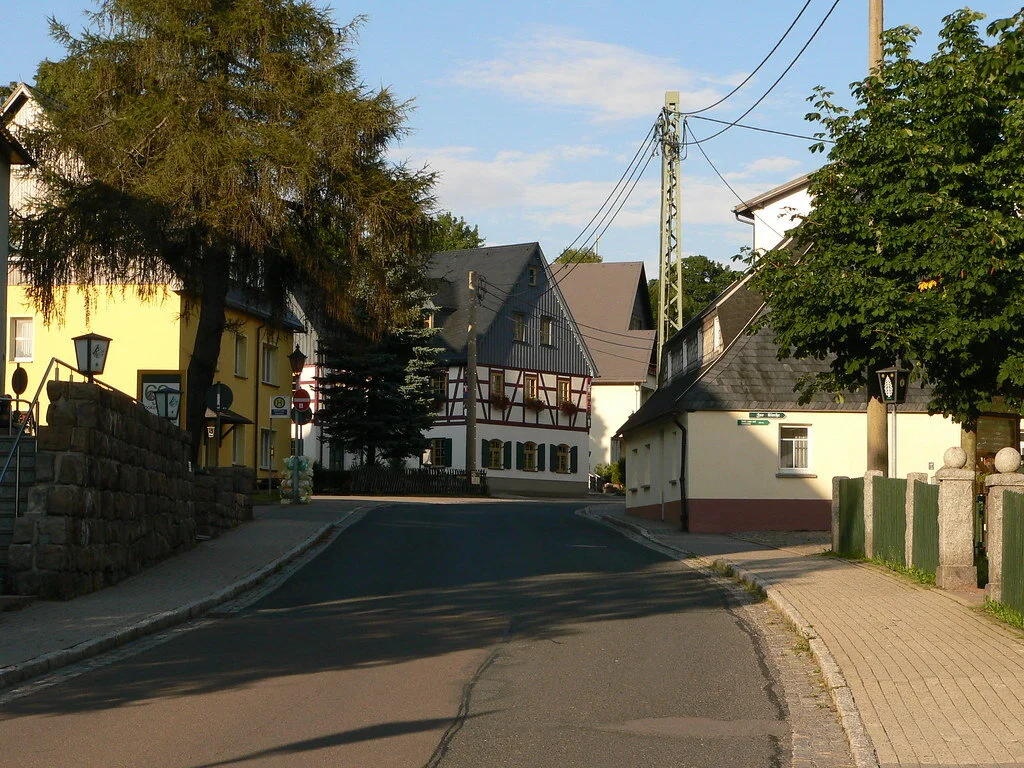
Seiffen, Germany. abejorro34. CC BY-NC 2.0. 

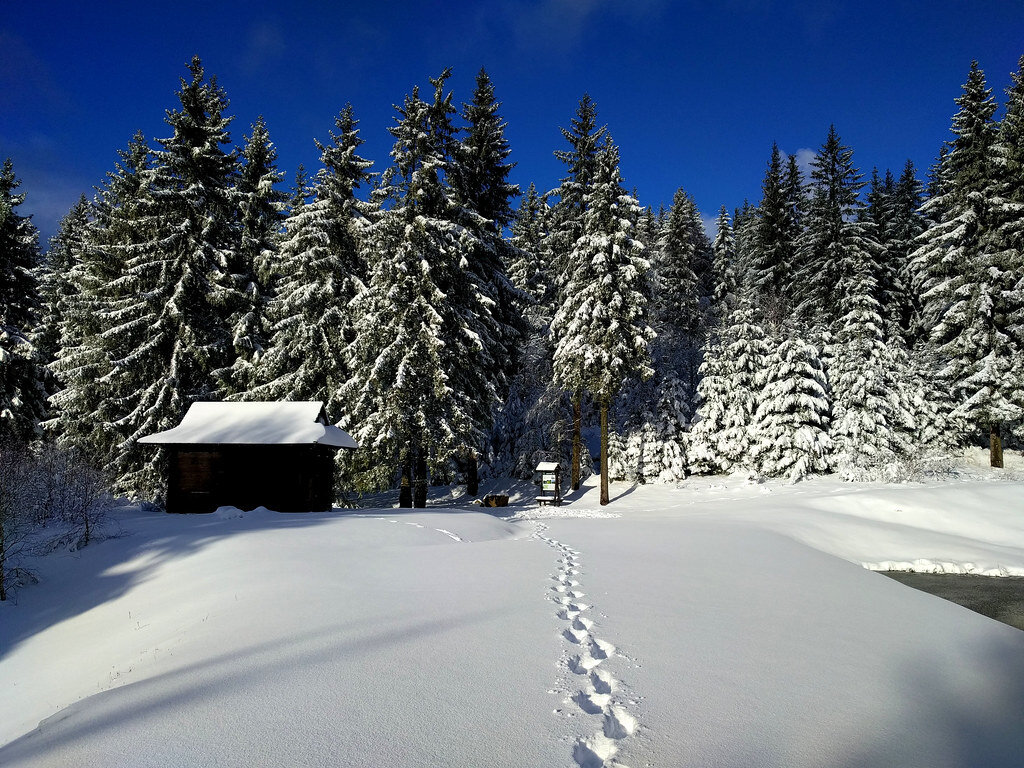
Along the German-Czech border lie the Ore Mountains, one of nature’s grand masterpieces. Stretching over 100 miles, the Ore Mountains appear like a scene out of Narnia: long strips of deep woods sit sprinkled among patches of bright wildflowers, often blanketed in thick snow. The area’s splendid scenery presents itself as the ideal inspiration for painters in search of inspiration.

The history of the region is just as fascinating. Up until their expulsion after World War II, German miners worked the mountain range for its many minerals such as copper, silver and lead. Thus, the range gained its name: the Ore Mountains. After World War II, the small towns that peppered the range lost most of their German populations. These towns were later filled by Czech residents who developed uranium and coal mining. Now, the range’s travel industry has brought much attention to the quaint lifestyle found today in these small towns. 

For guests eager for a gorgeous view or photographers looking for the perfect shot, Fichtelberg Mountain stands as one of the Ore Mountains’ top stops. Fichtelberg Mountain is the second-tallest peak of the Ore Mountains; it sits in the middle of the range and stands nearly 4,000 feet tall. The icy conditions found in the winter attract throngs of alpine skiers, bobsledders and other snow sporters. When the weather warms toward summer, the crowds of snow sporters are replaced by hikers and photographers; trails through patches of woods make for calm hiking opportunities, while the peak itself provides a 360-degree view of the surrounding mountain range.

Snow in the Ore Mountains. VicunaR. CC BY-SA 2.0. 

Another destination sure to pique anyone’s interest is the small town of Seiffen, Germany. Seiffen holds only around 3,000 people, but its influence as a stronghold of local culture makes up for it. The town is famous for its role in the toymaking industry, with over 100 craftsmen living in it alone. Seiffen often appears like something out of Christmastime folklore, as it is known for its top-notch toymaking and stellar artisan Christmas decorations. For the woodmakers of this town, their craft is far more than just a profession. It is common that the artisans of Seiffen pass their craft down from generation to generation, making their work not just a form of income, but a lifestyle. 

Although at first glance the Ore Mountains may appear to be just another mountain range, the wide variety of activities and rich history make it a fascinating spot to explore. 


Ella Nguyen

Ella is an undergraduate student at Vassar College pursuing a degree in Hispanic Studies. She wants to assist in the field of immigration law and hopes to utilize Spanish in her future projects. In her free time she enjoys cooking, writing poetry, and learning about cosmetics.

7 of the World’s Most Beautiful Libraries 

These libraries demonstrate some of the world’s most jaw-dropping examples of architecture, ranging from Gothic and Renaissance to contemporary. 

Libraries are havens of information. They are key in preserving the written history, culture and heritage of an area, and are often intricately designed, with architecture that is sure to impress visitors. Libraries are sometimes just as impressive from an architectural standpoint as they are from a literary one, and these seven libraries provide prime examples of stunning architecture. They are all widely different, some dating to medieval times and some opening as recently as the early 2000s. Each one, though, has a style that will make patrons eager to get lost in the stacks, from translucent floors and floating shelves to ancient frescoes and sustainable construction. 

1. Biblioteca Vasconcelos, Mexico 

Mexico City’s Biblioteca Vasconcelos spans over 400,000 square feet and has a unique, whimsical design that mimics the feeling of being lost in a book. Photographer James Florio described Biblioteca Vasconcelos as “like entering an alternate universe.” The library, which opened in 2006, features translucent walls and floors, multistory windows, mismatched levels, and a labyrinth of balconies and pathways that seem to float above the ground level. Often referred to as a “megalibrary,” Biblioteca Vasconcelos holds hundreds of thousands of titles. In addition to the stunning interior architecture and endless books to browse, the grounds of Biblioteca Vasconcelos are home to an extensive botanical garden. Architect Alberto Kalach designed the building and grounds to promote ecological regeneration, turning a barren plot of land into one overflowing with plants and information. 

2. The Library of El Escorial, Spain

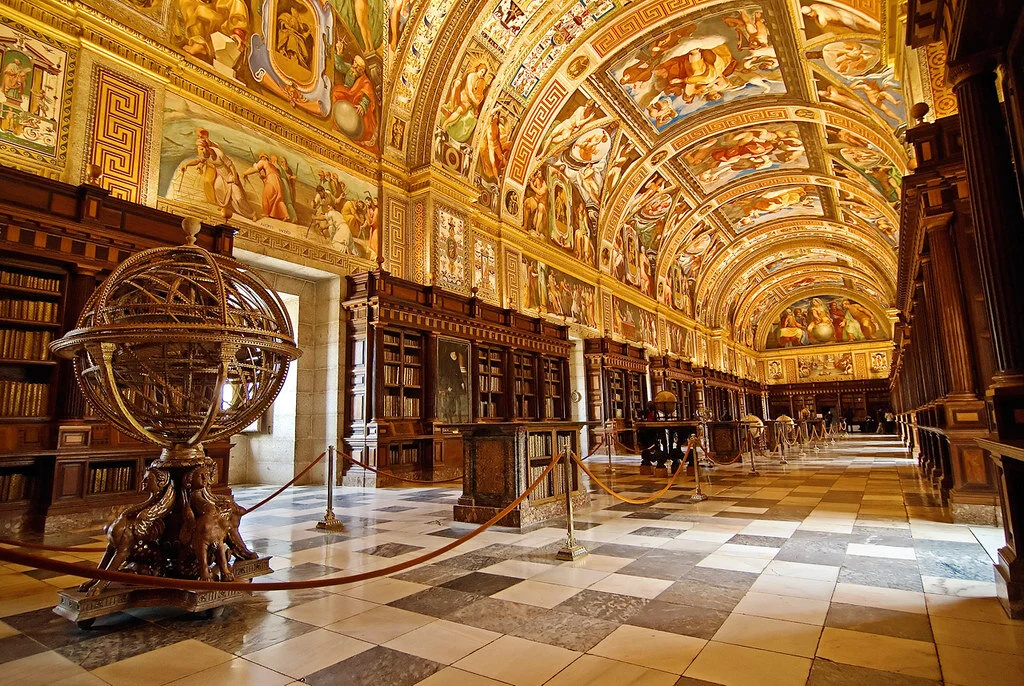
The Library of El Escorial is located within the Royal Monastery of San Lorenzo de El Escorial, a vast building complex located about 30 miles from Madrid. The complex, which includes a monastery, church, royal palace, college and library, was conceived by King Philip II and built during the mid-to-late 1500s. Each building in the complex reflects the ornate architecture of the Spanish Renaissance, and the interiors are decorated with sprawling frescoes, paintings and sculptures by notable Spanish and Italian artists from the 16th and 17th centuries, like El Greco. The library itself, also known as the Royal Library, is made up of many rooms, but today only the Main Hall is open to visitors. The Main Hall is 177 feet long, 30 feet wide and 33 feet high, and gives visitors a good look at the stunning frescoes, woodwork and ancient books. El Escorial Library holds more than 40,000 printed books, as well as 4,700 manuscripts, many dating back to the era when the library was constructed. El Escorial was the first library to do away with book bays, instead placing bookshelves up against the walls where the collection could better be admired. 

3. Tama Art University Library, Japan

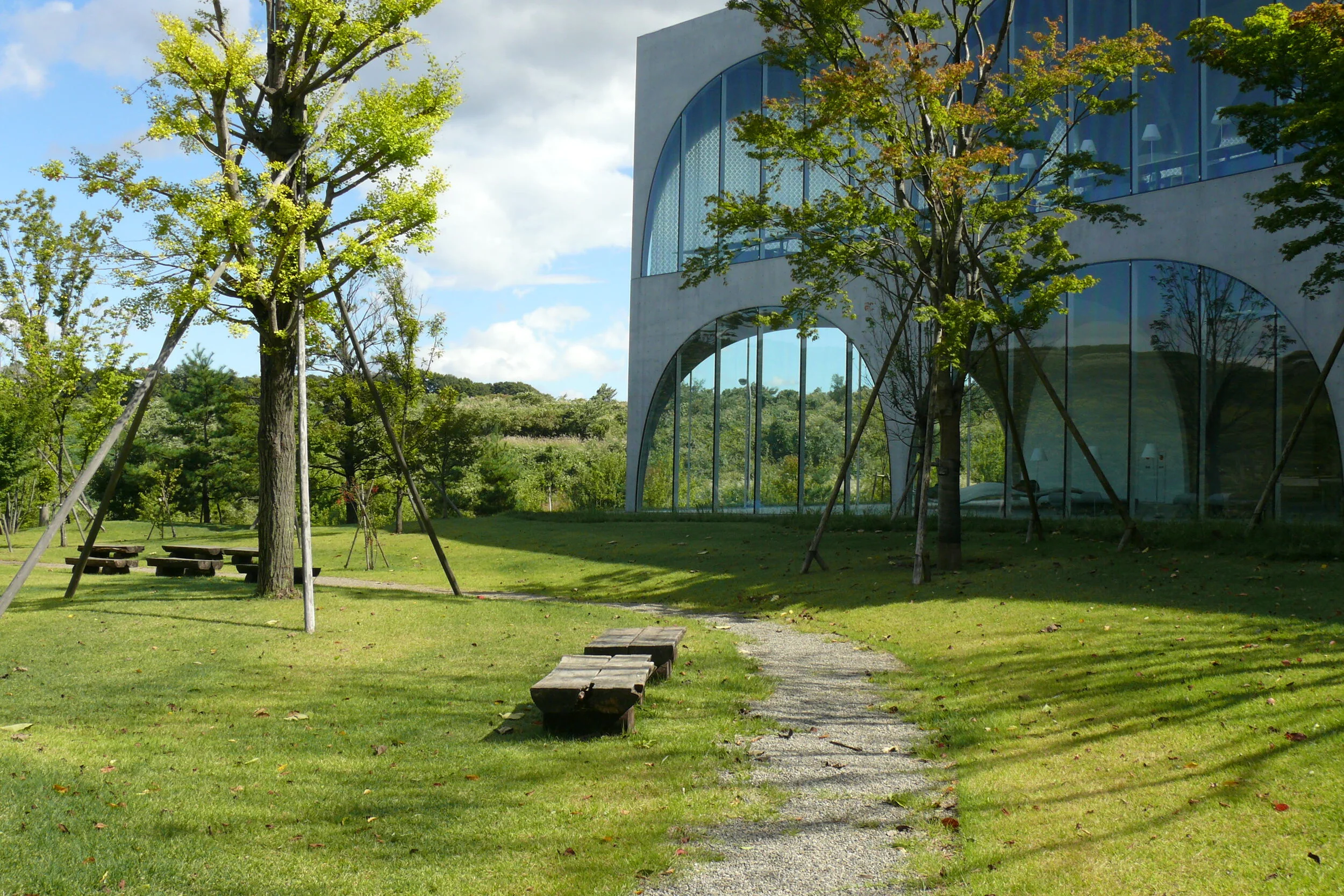
In the Tokyo suburbs, on the campus of Tama Art University, is the Tama Art University Library, a two-story building with massive arches and floor-to-ceiling windows. These arches are made of steel but coated in pure concrete, offering up a unique look developed by the building’s designer, Toyo Ito. Inside, the library is mostly one continuous space on each floor, with the only divisions between areas coming from shelves, study desks, glass partitions and more arches. This way, the library is divided into sections in a way that doesn’t interrupt the flow of the room. The windows allow library patrons to gaze out over one of the campus’s lush gardens, and the library is full of reference books for the university’s students. It was added to the campus in 2007 as a common space. 

4. Royal Portuguese Cabinet of Reading, Brazil

The Royal Portuguese Cabinet of Reading is located in the center of Rio de Janeiro and contains the largest collection of Portuguese books outside of Portugal, with over 350,000 titles. Three towering stories of books rise above the library’s open floor, leading to a stained-glass dome overhead. The library was built in the 1880s, after a group of 43 Portuguese immigrants and political refugees living in Brazil decided they wanted a way to preserve their written culture and heritage. Statues of important Portuguese figures, including writers and explorers, are placed throughout the library. The exterior of the building similarly preserves Portuguese history; Rafael da Silva e Castro, the library’s architect, designed the building in the style of 16th-century Portuguese architecture, and the library’s facade is made of Lisbon stone brought to Rio de Janeiro by ship. The library is open for visitors, publishes a journal on Portuguese literature and culture, and offers college-level courses on literature, history, anthropology, the arts and the Portuguese language. 

5. Bodleian Old Library, England

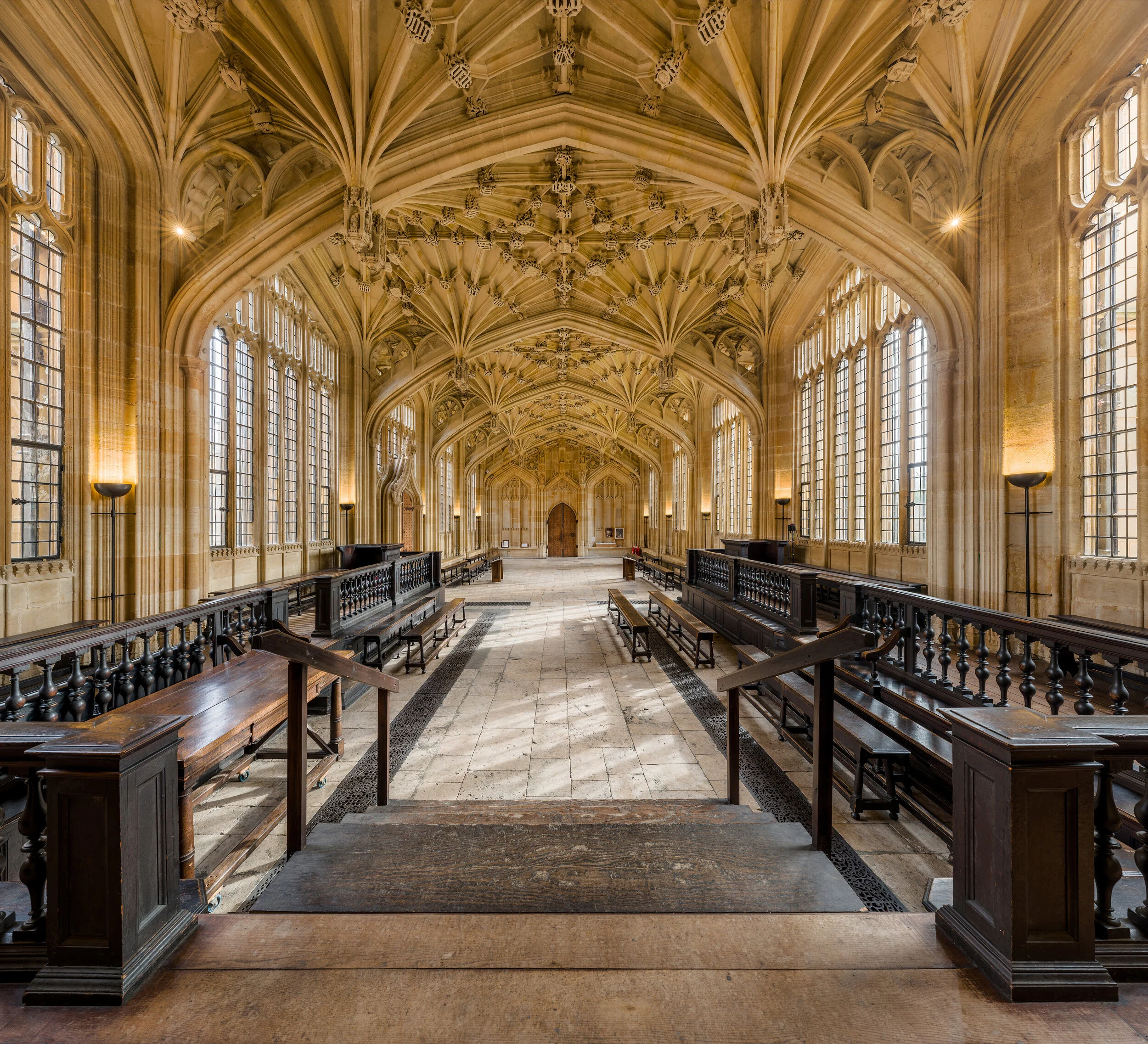
The Bodleian Libraries are a group of 28 libraries across Oxford, England, that are all part of the Oxford University system. Bodleian Old Library is the principal university library and the oldest of the group, having been in use since the 1300s. Bodleian Old Library houses over 12 million printed works, including first editions of Charles Darwin’s “On the Origin of Species” and Jane Austen’s “Emma.” The historic library looks like a castle, with magnificent, grand-scale Gothic architecture that has been featured in films like the “Harry Potter” series. As well as housing a jaw-dropping number of books, Bodleian Old Library contains the Divinity School, Oxford’s oldest teaching and examination room. Visitors to the library need to purchase tickets for a tour, where they will see the Divinity School, Duke Humfrey’s medieval library, and the library’s stunning Upper and Lower Reading Rooms. 

6. Beitou Public Library, Taiwan

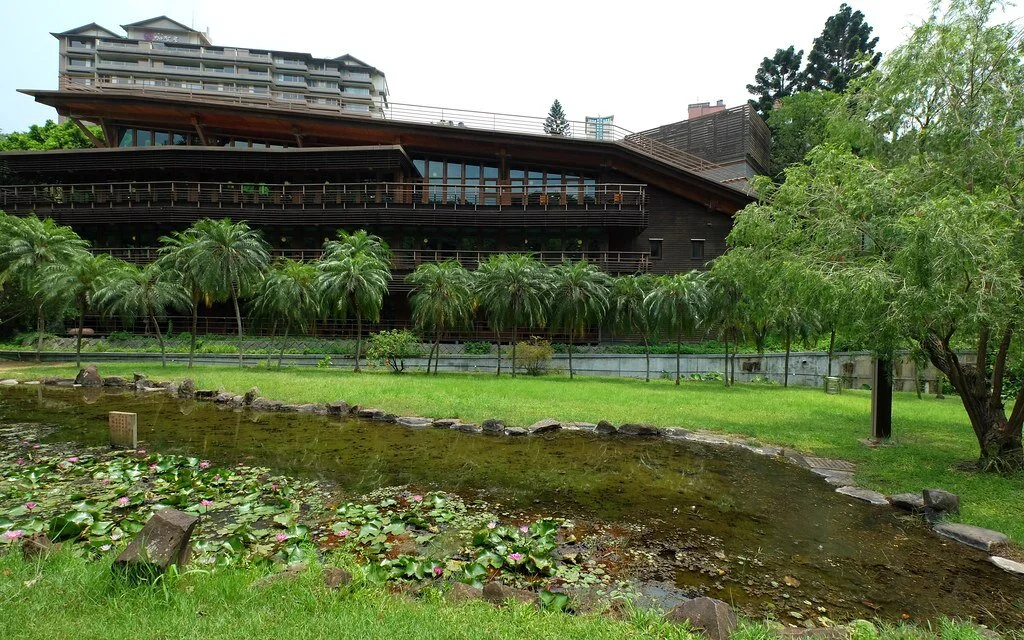
The Beitou Public Library in Taipei, Taiwan, was the island’s first certified “green building,” constructed in 2006. The library is on the grounds of the Beitou Park, which is famous for its hot springs, and was designed to look like a large treehouse. It is built mainly of wood, boasts large French windows and fits seamlessly into its surrounding environment. Beitou Public Library qualifies as a green building under Taiwan’s “Ecology, Energy Saving, Waste Reduction and Health” (EEWH) certification system, which aims to reduce the impact of buildings on the natural environment. The wood used for the library was harvested from managed forests rather than primary rainforests, the windows allow for natural lighting and cooling, part of the roof is covered in solar panels, another section is covered in a layer of soil to improve thermal insulation, and the roof’s slope allows for runoff from rain to be collected and used in the library’s plumbing. Views from the Beitou Public Library are gorgeous, as it looks out onto Beitou Park, and the library contains over 20,000 English and Chinese titles. 

7. Bibliotheca Alexandrina, Egypt

Billed as the “New Library of Alexandria,” Bibliotheca Alexandrina sits along the harbor of Alexandria, Egypt, and contains six specialized libraries, 12 academic research centers, a planetarium and several museums. The library opened in 2002 and aspires to “recapture the spirit of the original library of Alexandria,” which was destroyed centuries ago. The complex receives about 1.5 million visitors each year, all flocking to experience the incredible volume of knowledge the library offers and to admire the beauty of the complex itself. The library stands 11 stories high and is notable for its circular and tilted shape, as well as its surrounding reflecting pool. Bibliotheca Alexandrina mixes a contemporary exterior design with an interior that holds thousands of years of knowledge.


Rachel Lynch

Rachel is a student at Sarah Lawrence College in Bronxville, NY currently taking a semester off. She plans to study Writing and Child Development. Rachel loves to travel and is inspired by the places she’s been and everywhere she wants to go. She hopes to educate people on social justice issues and the history and culture of travel destinations through her writing.

A Canvas of Colors: Chile’s Majestic Marble Caves

Mother Nature is often mentioned causing destructive hurricanes, explosive volcanic eruptions and other Earth-shattering natural disasters. Just as easily as she causes destruction, though, she creates unparalleled beauty. 

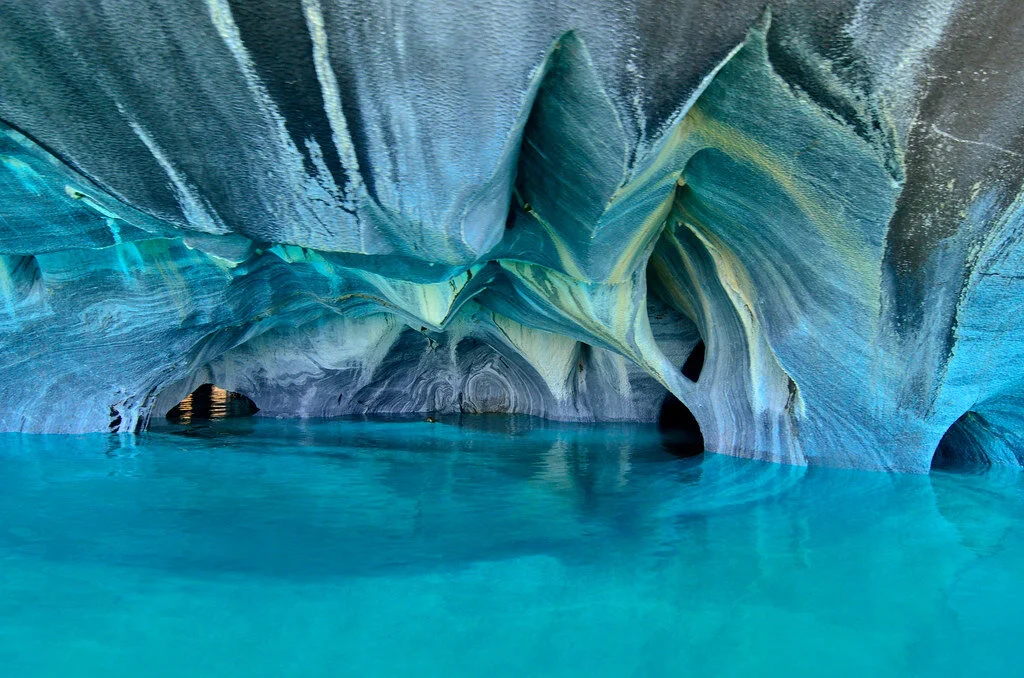
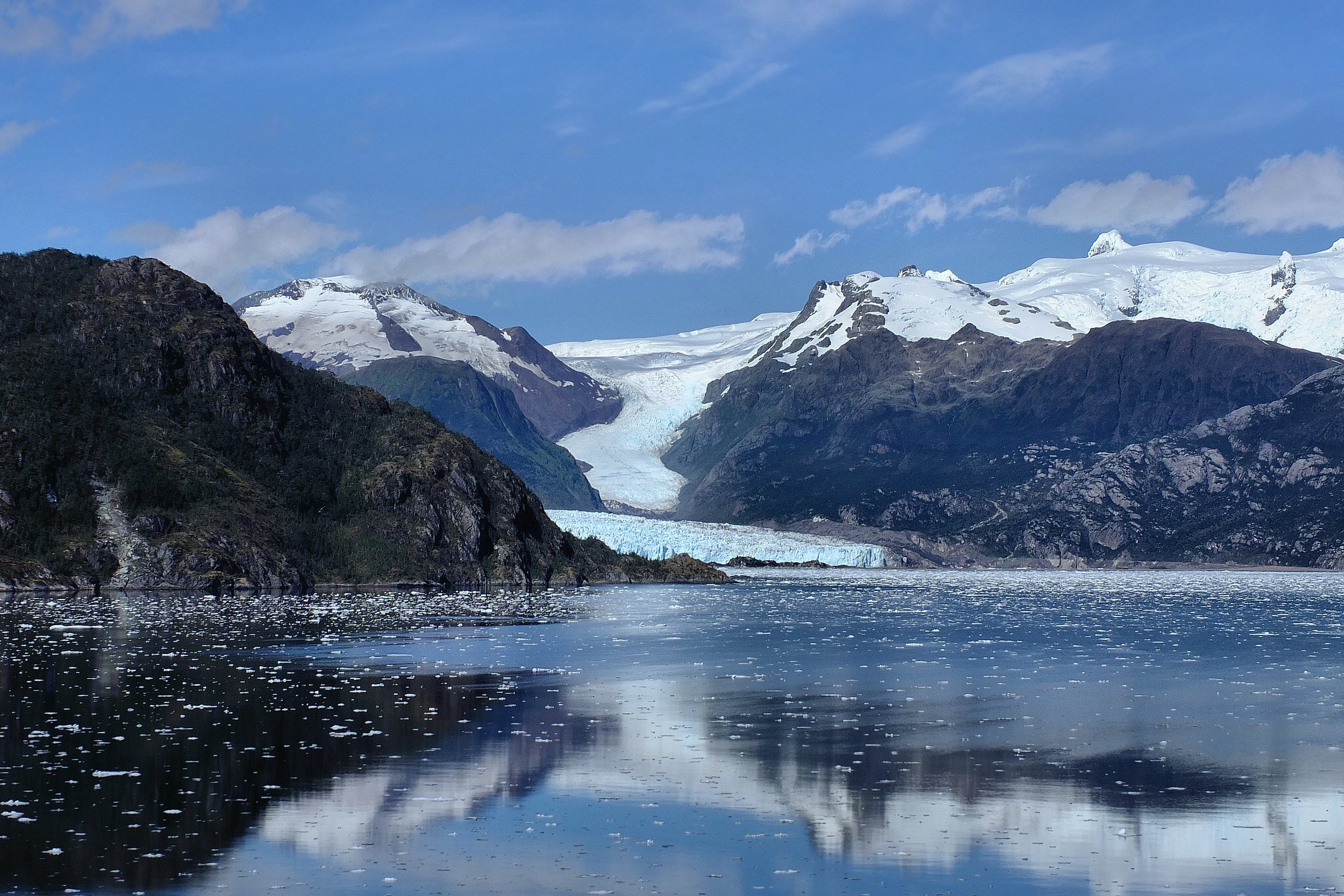
The Marble Caves in Chile. Javier Vieras. CC BY 2.0. 

In every region of the world lies some kind of cave system; they range from the awfully eerie such as Hellhole Cave in West Virginia to the wholly tantalizing psychedelic salt mines of Russia. Although all are beautiful in their own way, few turn heads quite like one such cave system in Chilean Patagonia. Situated along one lake is a particularly artistic cavern system called the Marble Caves. 

At the Argentina-Chile border lies the majestic General Carrera Lake. The lake is the largest in Chile, with a town called Chile Chico resting on its southern shore. Although the town itself is a quaint and quiet getaway, the treasures of the lake draw most visitors to the area; the massive lake boasts a dynamic palette of mesmerizing shades of sapphire and cobalt. The lake is an incredibly remote glacial lake, making it quite the journey to reach. The lake is surrounded by grand forestry, and enjoys a calm backdrop of snowcapped mountains against an expansive sky. In order to get to General Carrera Lake, visitors must depart from the city of Santiago, then embark on a string of drives totaling about 1,000 miles. From there, visitors can only visit the cave system by boat or kayak. 

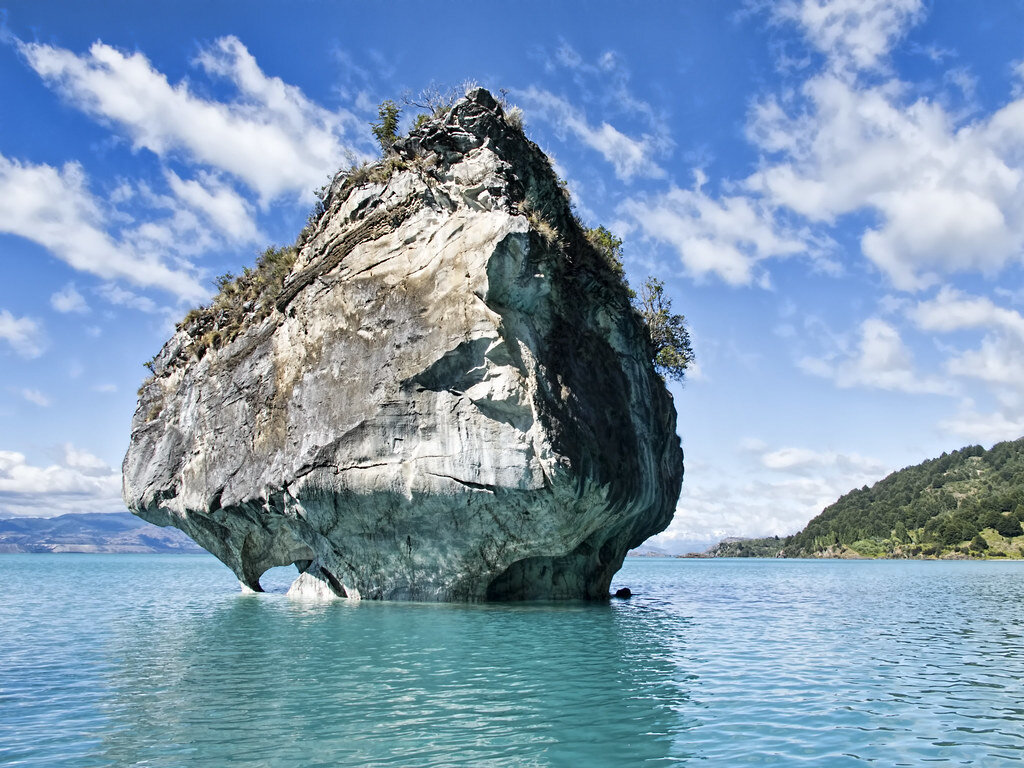
General Carrera Lake. Dan Lundberg. CC BY-SA 2.0. 

Far from the coast of the lake stands a gargantuan block of calcium carbonate from which the caves formed. For over 6,000 years, the lapping waves of the lake eroded the calcium carbonate, slowly but gracefully constructing the Marble Caves. The mineral-rich location is protected from potential mining projects.

The caves earned their name from the masterfully striped walls; the reflection of the waters below create a cerulean painting on them, with complementary hints of yellow, turquoise, black and white. The caves house different cuts and textures due to the patterns of the eroding waves; some parts are rounded while other areas display sharp rocky points. In addition, the open layout of the cave serves it well, providing ample light for the various hues to stay in the spotlight. 

The vast range of the cave’s colors is ever changing. In spring, the lower water levels provide a sparkly turquoise-green shade, while the summertime gifts the walls a splendidly deep royal blue. 

Time and time again, travelers have found that Mother Nature can create just about any magnificent work of art. The local residents of the lake and any visitor bold enough to endure the journey to it can certainly attest that the Marble Caves are no exception. 


Ella Nguyen

Ella is an undergraduate student at Vassar College pursuing a degree in Hispanic Studies. She wants to assist in the field of immigration law and hopes to utilize Spanish in her future projects. In her free time she enjoys cooking, writing poetry, and learning about cosmetics.
5 Ways to Discover the Distinctive Landscapes of Madagascar

Travelers will surely appreciate the island’s unique biodiversity, but ought to also learn about ongoing social issues in the country.

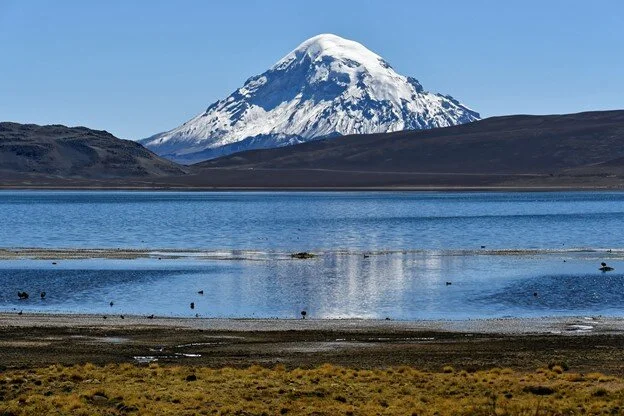
A scenic view in Madagascar. anmede. CC BY-SA 2.0

Located 250 miles from East Africa, the island nation of Madagascar is one of the most unique places on the planet. Interestingly, the Malagasy people are more closely related to Indonesians than East Africans; they have also developed cultural and linguistic ties with West Africa due to French colonialism. Madagascar is especially known for its incredible biodiversity. At least 80% of Madagascar’s flora and fauna cannot be found anywhere else on Earth, including many species of lemurs, chameleons and butterflies. 

Despite the island's idyllic landscapes, Madagascar’s recent history has been anything but peaceful. After gaining independence from France in 1960, political unrest, countless coups and widespread corruption have dominated the headlines. The most recent coup in Madagascar occurred in 2009 and resulted in massive social unrest and international sanctions, further crippling the country’s economy. Currently, Madagascar is the poorest country in the world that is not mired in conflict, with 92% of the country’s population living on less than $2 a day. 

Deforestation and environmental degradation remain pressing concerns as well. Many of Madagascar’s lush forests have been chopped down to make way for rice paddies and to harvest wood for export. Currently, significant forests only remain on the northern and eastern portions of the island. Southern Madagascar has been experiencing severe drought since 2014, which has left up to 1 million people without food. The country also continues to be ravaged by the COVID-19 pandemic with a  Level 4 (very high) level of transmission according to the U.S. Centers for Disease Control and Prevention. 

Despite Madagascar’s turbulent history, the country is one of the most beautiful in the world with stunning landscapes and kind people. Read on to learn about key sites to visit once Madagascar fully reopens. 

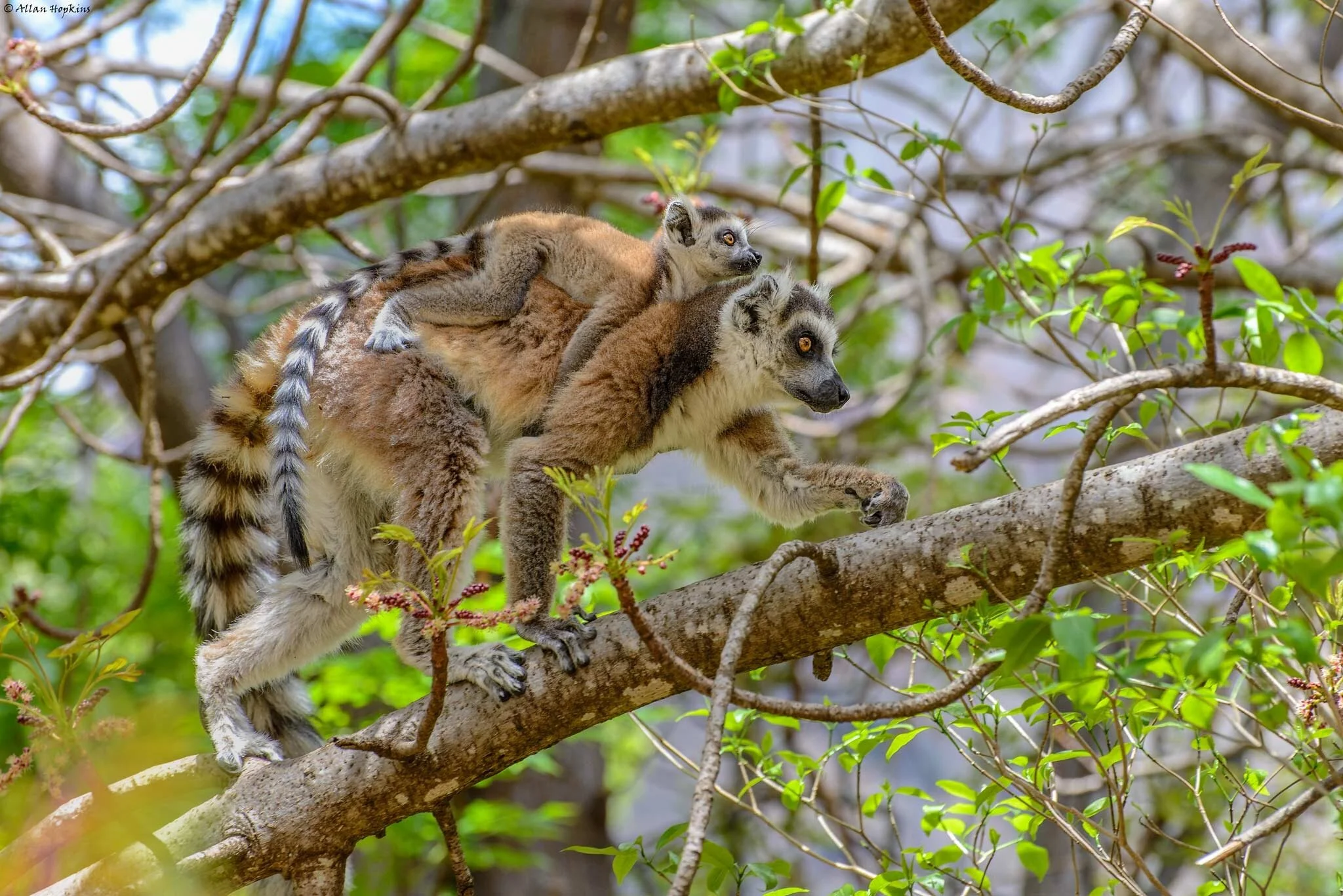
A mother ring-tailed lemur with her baby. Allan Hopkins. CC BY-NC-ND 2.0

1. Lemurs

Starting with Madagascar’s furriest (and cutest) attraction, these primates cannot be found anywhere else on Earth. Although they are likely related to monkeys, the exact origin of the species is not known. There are over 100 species of lemurs in total, some of the most notable being the ring-tailed lemur with its long black-and-white striped tail, the sifaka and the elusive aye-aye. There are many national parks where visitors can observe these animals in their natural habitat, including Isalo and Zombitse-Vohibasia. 

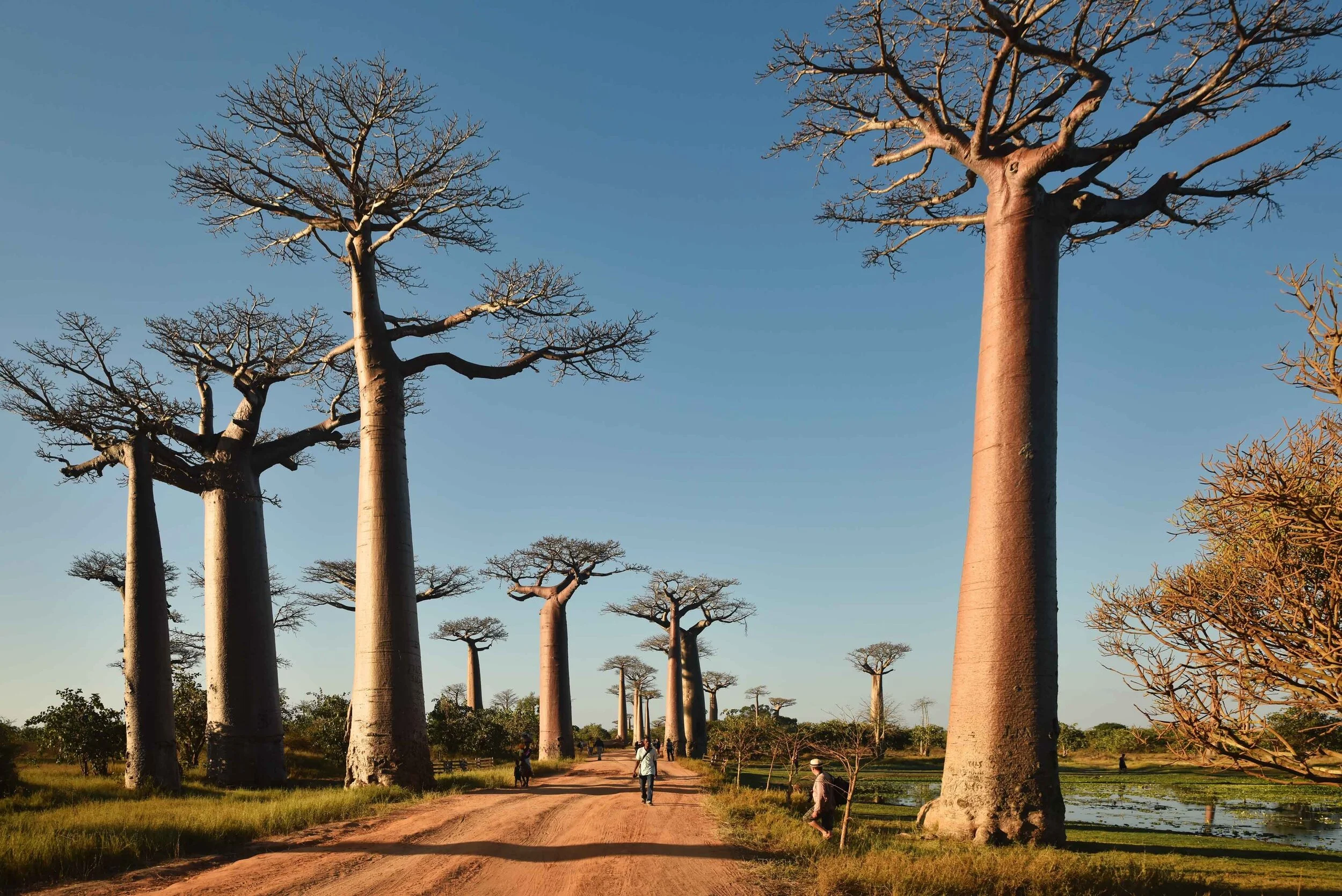
Avenue of the Baobabs in Madagascar. Rod Waddington. CC BY-SA 2.0

2. Avenue of the Baobabs

Baobabs are some of the most distinctive trees found anywhere in the world. Six species of baobab grow in Madagascar. Also known as the “mother of the forest” in Malagasy, they have large, bulbous trunks that store water, allowing baobabs to survive in dry climates. Many of Madagascar’s giant baobabs can be found along the Avenue of the Baobabs, located roughly 12 miles from Morondava. Travelers will have the opportunity to walk among these magnificent trees, some of which are over 800 years old!

A beautiful beach in Madagascar. Tatogra. CC BY-SA 2.0

3. Nosy Be

Nosy Be is the largest of a dozen small islands off the northwestern coast of Madagascar. These islands are teeming with rich marine life and offer perfect opportunities for snorkeling, diving and kayaking. Known as Ambariobe, or “the great island” in the local language, Nosy Be is a perfect launching point for cruises traveling to the other islands. Other notable islands in the region include Nosy Komba, often known as lemur island, and Nosy Sakatia, which contains both winding forest trails and pristine dive sites

A humpback whale. Krishna Naudin. CC BY-SA 2.0

4. Humpback Whale Sightings 

Humpback whales can be spotted off the eastern coast of Madagascar annually from June to September. Recognized by their black backs and white bellies, humpback whales arrive in Madagascar for the mating season after traveling over 900 miles from the Antarctic coast. If you’re lucky, you may even see a mating dance or a live birth! Ecotourism organizations such as Cetamada allow travelers to view humpbacks up close in an ecologically responsible way. Popular destinations for whale sightings include Nosy Be, Ile Sainte-Marie and Antongil Bay. 

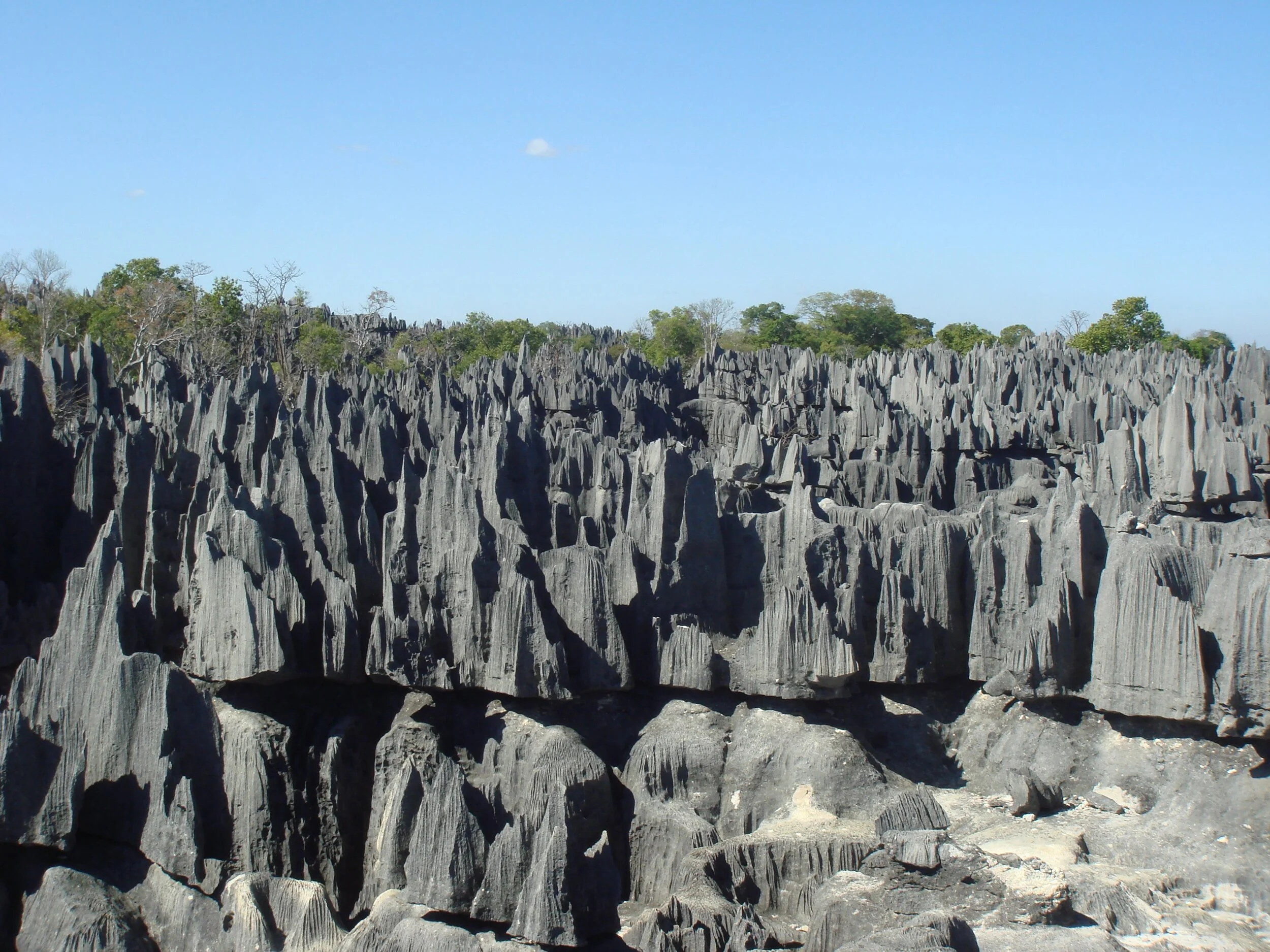
Tsingy formations in Madagascar. Oliver Lejade. CC BY-SA 2.0

5. Tsingy de Bemaraha National Park

Characterized by fossilized shell formations, these unique structures known as “tsingys” can be found in several regions of Madagascar. Tsingy de Bemaraha National Park is one of the best places to see these interesting structures and is located west of Madagascar’s capital, Antananarivo. The tsingy formations in the Melaky and Diana regions of Madagascar are both UNESCO World Heritage Sites and deserve a visit. 

Although Madagascar faces many environmental and social dilemmas, the country has strong potential and an undeniable natural beauty. 


Megan Gürer

A Glimpse at Azerbaijan, Central Asia’s ‘Land of Fire’

Although a relatively new nation, Azerbaijan’s multifaceted culture from its historic tea rituals to its unique pomegranate festival makes it especially intriguing.

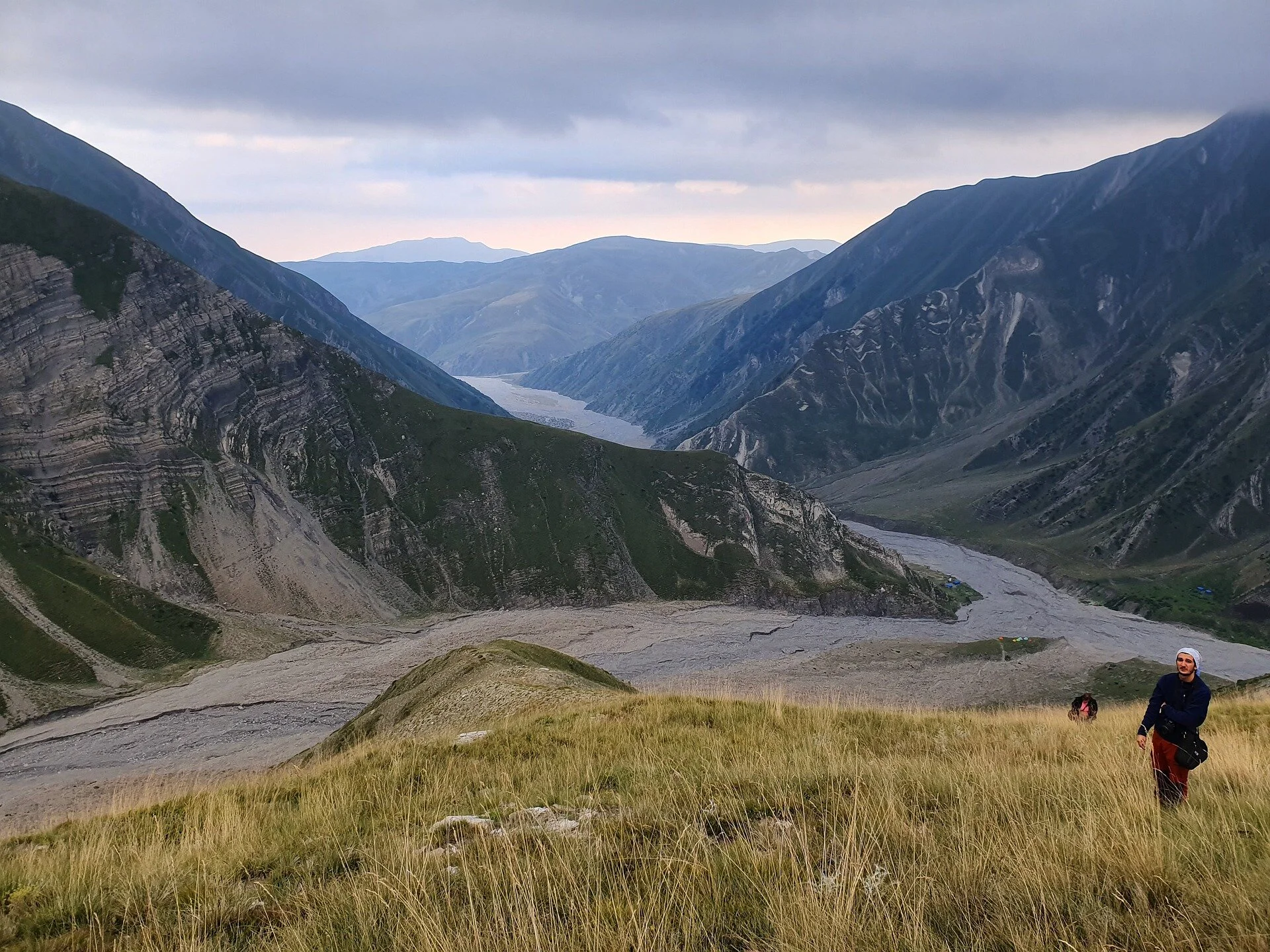
 A mountainous region in Azerbaijan. Pozziss. CC0.

Azerbaijan, a former Soviet republic located in the southern Caucasus, stands as a diverse and exquisite country. Although the Russian imperialism of the past retains some influence, the “Land of Fire” prides itself on its many unique traditions which can be fully experienced today.  

Tea Rituals

 Black tea served in an armudu. Idin Ebrahimi. Unsplash

Tea is a prevalent part of Azeri culture, to the extent that it is served with every meal. The locals predominantly drink black tea and serve it in a pear-like glass called an armudu. This tradition was passed down from medieval times, when black tea was taken alongside a sugar cube to avoid assassination, as sugar tends to react with potential toxins in the drink. This tradition continues even today, as locals can be seen taking a bite of a sugar cube before sipping their tea. 


The Importance of Fire

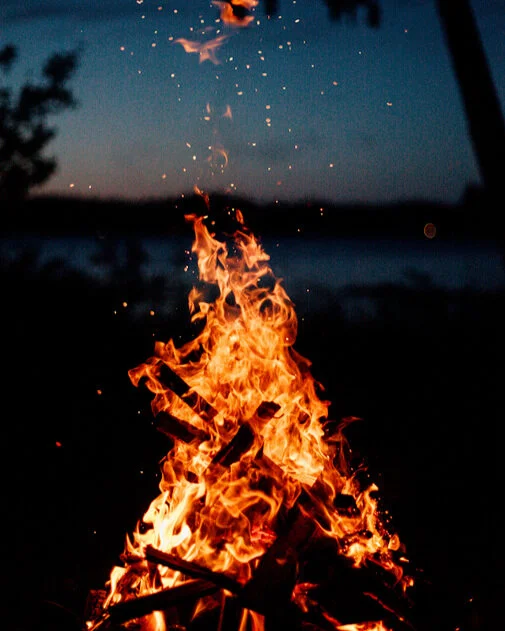
 Temple of Fire in Baku. Diego Delso. CC BY-SA 4.0

Azerbaijan is also known for its national symbol of fire, and the country is recognized as a place where “the sacred fire is preserved.” “Azer” in Persian means “fire,” and the entire country is known as the “Land of Fire.” Although the exact reason behind this cannot be tracked to one specific moment, there are various potential reasons for why fire holds such a special place in this nation. First, although a large proportion of Azeris are Muslim, Zoroastrianism still holds a large influence on Azerbaijan. Zoroastrianism focuses on the worship of fire, water, Earth and wind. Thus, respect for nature is highly ingrained within Azeri culture. Moreover, the country’s “huge underground gas deposits” commonly lead to natural flames. 


Food 

 Azeri dish known as kelem dolmasi. CC BY 3.0

Food is also a large part of Azeri culture, and one can find an array of distinct, delicious and healthy dishes. The reason for this is the large farming culture in Azerbaijan, which is possible due to the country’s extensive tracts of fertile land. This means that the nation grows a multitude of vegetables and fruits, with flavorful meats and herbs rounding out Azeri meals. Due to Azerbaijan’s vibrant culinary scene, food is given a high position in culture, where sharing food with another person is a sign of friendship. 


 Goychay Pomegranate Festival

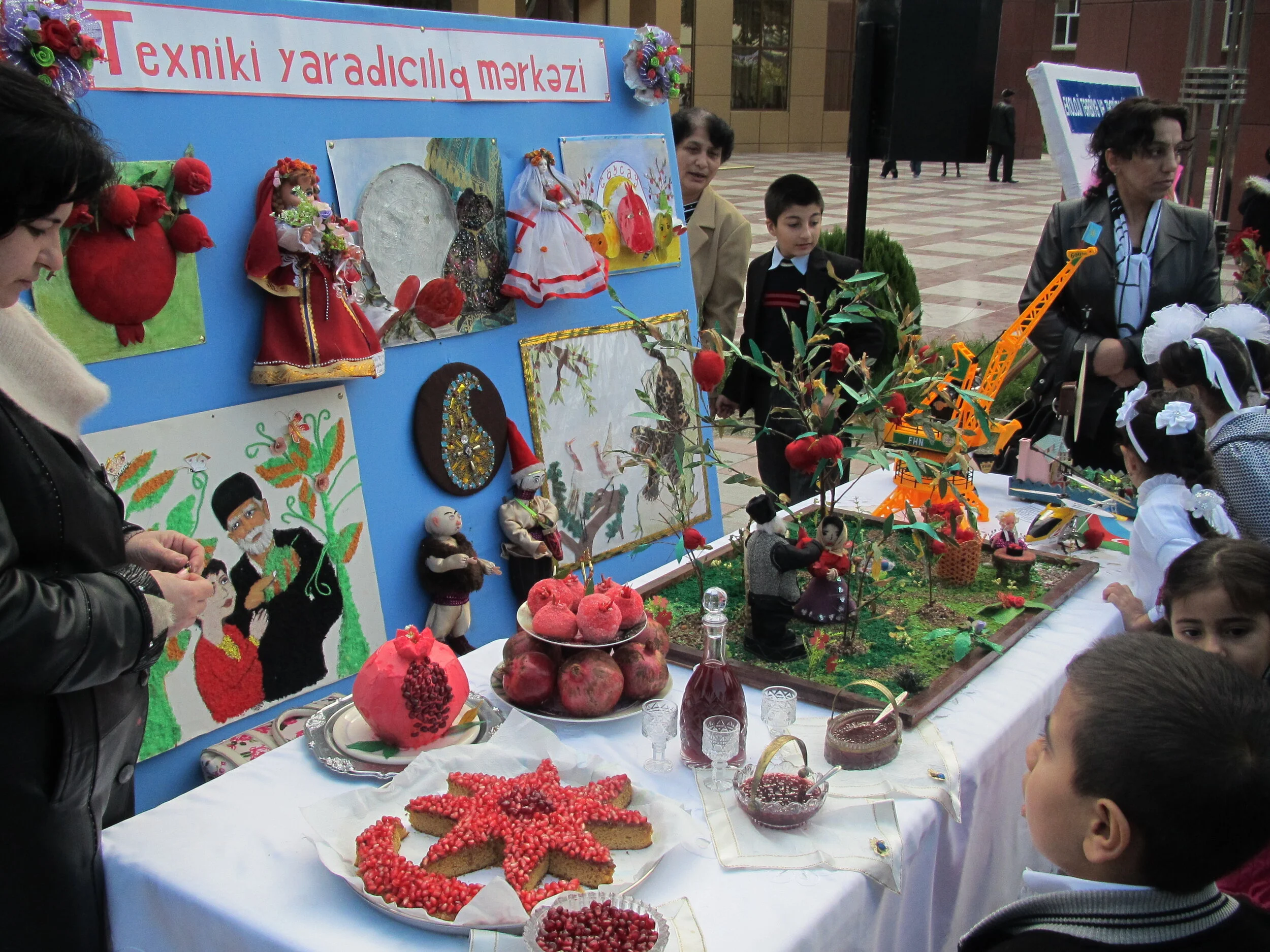
 A booth at the Goychay Pomegranate Festival. Moonsun1981. CC BY-SA 3.0

Although many fruits are popular in Azerbaijan due to its fertile land, pomegranates are given the highest title as the symbol for love, luxuriance and eternal life. To commemorate the importance of this fruit, a pomegranate festival known as Nar Bayrami is celebrated every November in the city of Goychay, where over 50,000 tons of pomegranates are produced annually. Guests in this festival are welcomed by locals with an array of pomegranate dishes ranging from jams to baked goods to juices. Moreover, during the festival many vendors set up their shops with distinct varieties of this fruit. Other festivities include traditional dancing, instrumental music by local musicians, and competitions such as picking out the heaviest pomegranates from the lot. 

 Strides Toward Gender Equality

Kalbajar School in Azerbaijan. World Bank Photo Collection. CC BY-NC-ND 2.0

In 1918, Azerbaijan became the first country in the Islamic world to give women the right to vote. Gender equality comes partly as a legacy of Russian imperialism, as the culture placed large importance on respecting women. Women’s equality continues to be a notable social norm in Azerbaijan, and it is normal for Azeri women to hold positions of political power. On a day-to-day basis, men commonly offer their seats to women and hold the door for them.


Gracious Hospitality

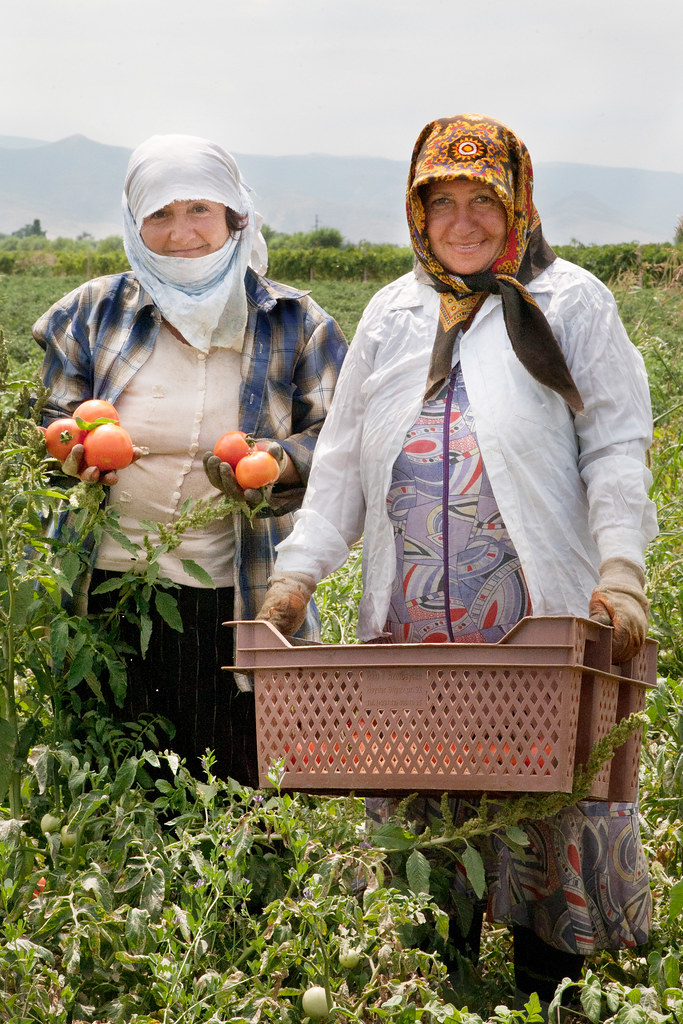
 Two Azeri women picking out tomatoes. Asian Development Bank. CC BY-NC-ND 2.0

 Generous behavior isn’t only reserved for women in Azerbaijan; it extends to guests as well. Hospitality is a common trait across the majority of Azeri citizens, who are often willing to provide shelter and food to their guests, regardless of the trouble they must go through. If one receives the luxury of going to a Azeri’s home, they should remember to take off their shoes before entering, and to remain standing until told where to sit. Moreover, as Azerbaijan is renowned for its food, guests should not refuse a serving as that may be misunderstood as a rude gesture. 

 In all, Azerbaijan’s riveting culture makes it an intriguing nation to visit. Despite its minuscule size, the country has much to offer to those willing to take a chance on it. 

WANT TO LEARN MORE? CHECK OUT THIS VIDEO AND EXPLORE THE MAGNIFICENCE OF AZERBAIJAN.


Swati Agarwal

Swati is a sophomore at University of California, San Diego, where she is studying Environmental Sciences and Theatre. Although born in India, she was raised in Tokyo, which gave her the opportunity to interact with diverse people from distinct cultures. She is passionate about writing, and hopes to inspire others by spreading awareness about social justice issues and highlighting the uniqueness of the world.

10 Indigenous American Historical Sites to Visit

Ten million people lived in what is now the United States before Europeans arrived. These Indigenous Americans lived in complex cultures and completed amazing architectural feats that persevere to this day.

By the time European explorers arrived in the Americas, the Western Hemisphere was already home to more than 50 million people. Ten million of these people lived in what is now the United States. These Indigenous Americans developed intricate communities, religions and lifestyles, and made a lasting impact on American history and culture. Incredible sites built by Indigenous people can be found throughout the U.S. today, including cliff dwellings, multistory stone houses, earth lodges and effigies, and other stunning ruins. The history of Indigenous people is often overlooked or swept under the rug in favor of European colonists when looking at the larger context of American history, but preserved sites teach visitors about the complex cultures that came before Western settlers. These 10 sites showcase some of the impressive architectural triumphs of Indigenous people and pass on their histories. 

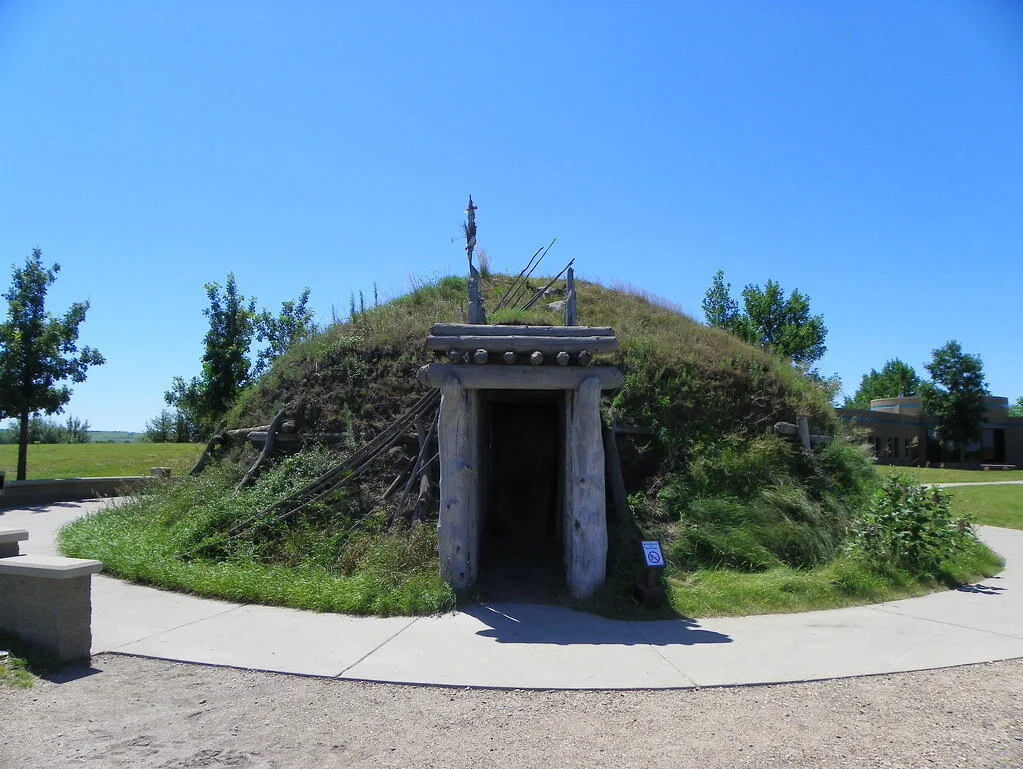
1. Knife River Indian Villages National Historic Site, North Dakota

Located near Stanton, North Dakota, the Knife River Indian Villages National Historic Site preserves the history of the Knife River region. The Knife River region, an area in North Dakota centered around a tributary of the Missouri River, has been home to a number of people groups for around 11,000 years. Not much is known about the cultures that have inhabited the Knife River region because very few artifacts from the area remain, but early written records document the lives of the Hidatsa people. Like the Mississippian people, the Hidatsa resided in earth lodges. The Mandan and Arikara were also earth lodge residents who settled in the Knife River region, and all three groups pioneered agriculture in the area while still hunting and gathering. Villages were the center of earth lodge peoples’ lives, and the park features the remains of three large villages constructed by the Hidatsa: Awatixa Xi’e village, Hidatsa village and Awatixa village

2. Puu Loa Petroglyphs, Hawaii 

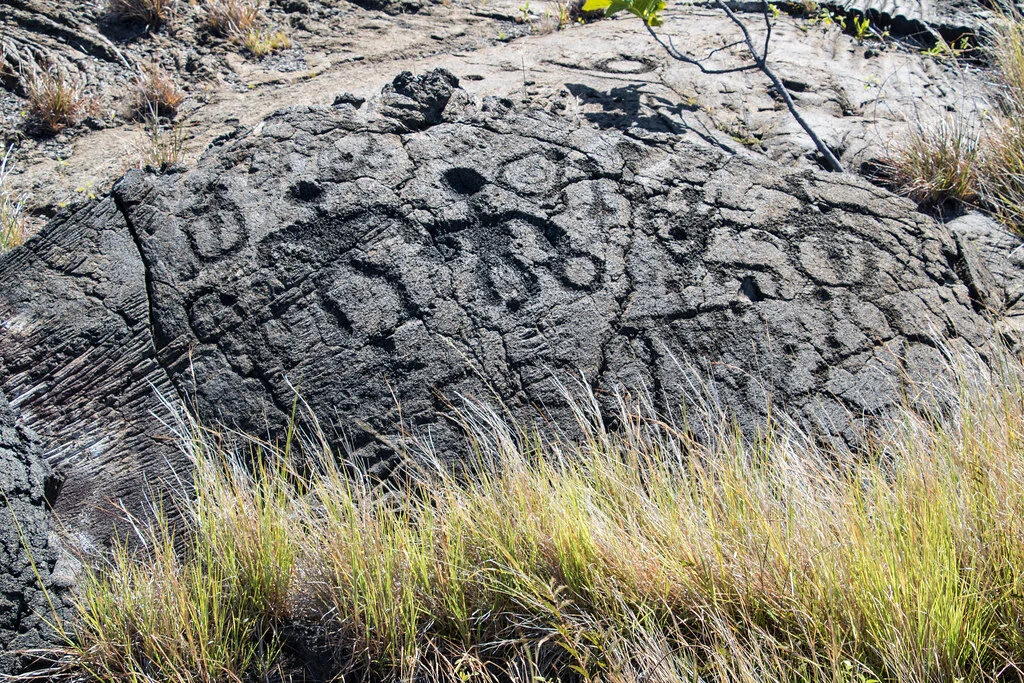
Hawaii Volcanoes National Park, on Hawaii’s Big Island, protects Mauna Loa and Kilauea, two of the world’s most active volcanoes. It is also home to the Puu Loa petroglyphs, stone etchings that document the lives and culture of the Native Hawaiian people. The petroglyphs are located in a lava field that is at least 500 years old, and the site has over 23,000 different petroglyphs. There are a variety of geometric designs, as well as depictions of people and tools, such as canoe sails. A number of the petroglyphs contain cupules, or holes where a portion of the umbilical cord was placed after the birth of a child in order to ensure long life. The first known written account of the petroglyphs is attributed to missionary Rev. William Ellis in 1823, but some petroglyphs likely date to the 1600s or even earlier. In addition to being used to ensure long life, some petroglyphs were used to record the movements of travelers on the island. Visitors to Hawaii Volcanoes National Park can take a 1.4-mile round trip day hike on a boardwalk to admire the petroglyphs up close. 

3. Mesa Verde National Park, Colorado

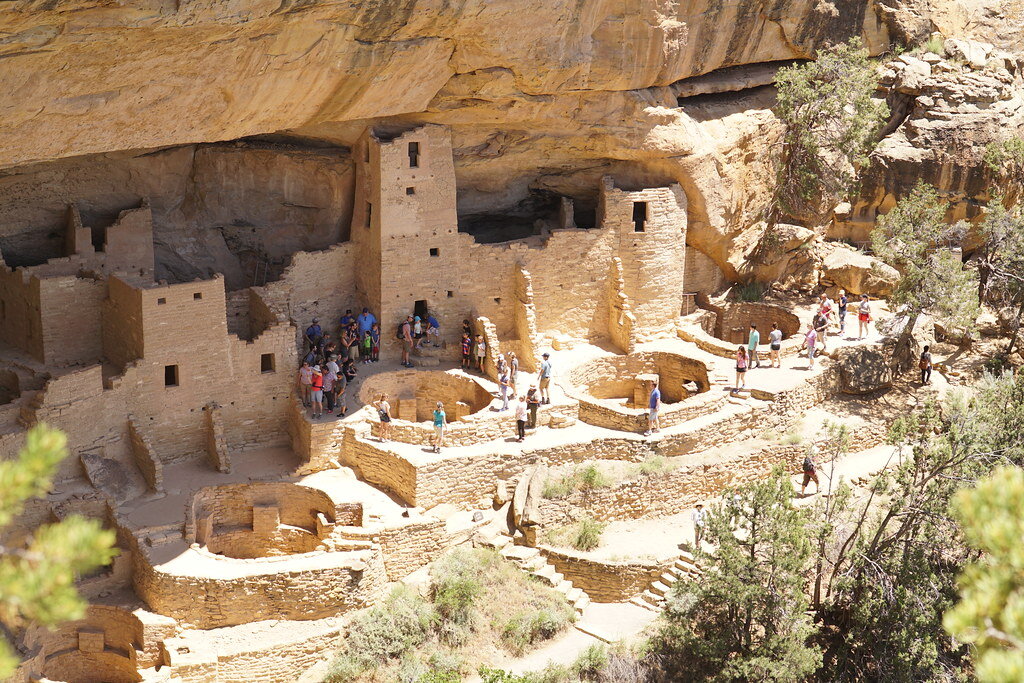
Probably one of the most well-known Indigenous sites in the United States, Mesa Verde National Park in Colorado preserves almost 5,000 historical sites of the ancestral Pueblo people, including 600 cliff dwellings. The ancestral Pueblo people lived at Mesa Verde for more than 700 years, from 550 to 1300 A.D. The first people settled at Mesa Verde in 550 A.D., turning from hunting and gathering to agriculture and building small villages of pithouses, sometimes sheltered in cliff alcoves. Around 750 A.D., these people began building houses above ground and became known as the Pueblo people, meaning “village dwellers.” The houses evolved from being made of poles and mud to being skillfully constructed from stone. Then, in 1200 A.D., for reasons that are unknown, the ancestral Pueblo began to move back into cliff alcoves and developed the cliff dwellings that make Mesa Verde famous. Mesa Verde’s cliff dwellings are truly incredible examples of Indigenous architecture, ranging from one- to 150-room houses. They are also some of the best-preserved cliff dwellings in North America, and visitors can tour some of the structures, like Balcony House and Cliff Palace

4. Effigy Mounds National Monument, Iowa

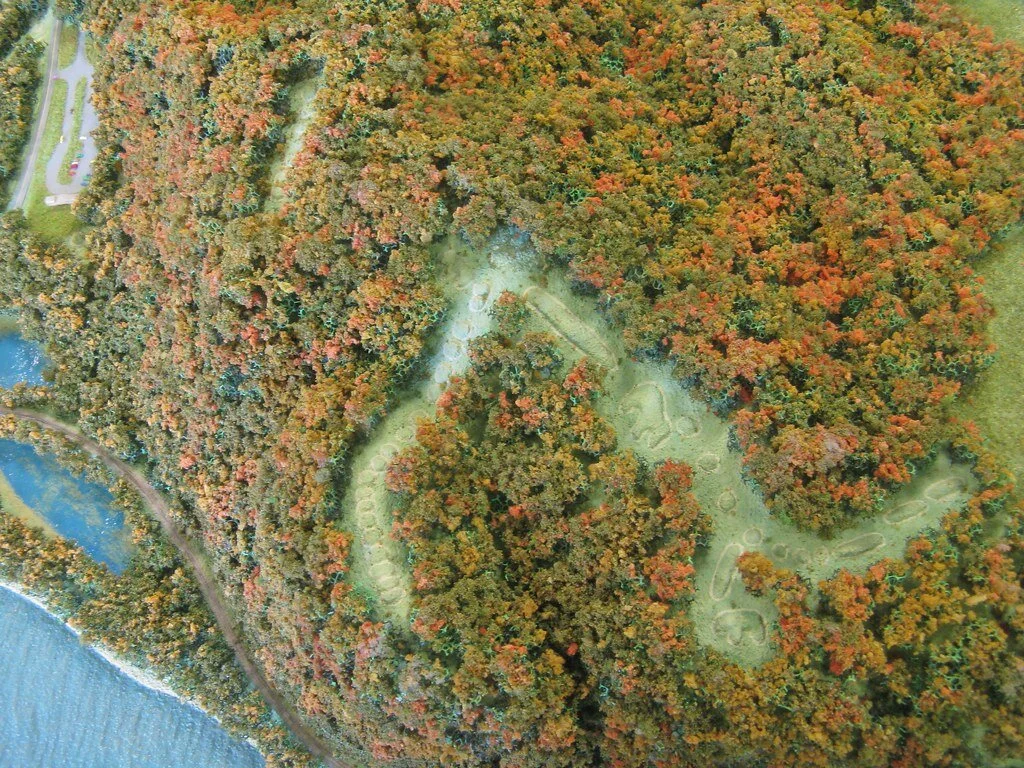
Ceremonial mounds created by Indigenous Americans can be found across the United States. Effigy Mounds National Monument preserves more than 200 distinct mounds built by people known as the Woodland Indians and gives visitors a glimpse directly into Woodland Indian culture. The mounds, found in northeastern Iowa, are unique because a large number of them are effigies in the shape of animals. Thirty-one of the mounds are bear or bird effigies. The Woodland culture consisted of hunter-gatherers who during the summer lived in large campsites along the Mississippi River, which they relied on for food and water. Archaeologists and researchers do not know precisely why the effigy mounds were built, but they guess that they may have been made for religious rituals or burial ceremonies. Guided tours are available throughout the summer at Effigy Mounds to teach visitors more about the area’s rich history, and there are also hiking trails around the site. 

5. Chumash Painted Cave State Historic Park, California

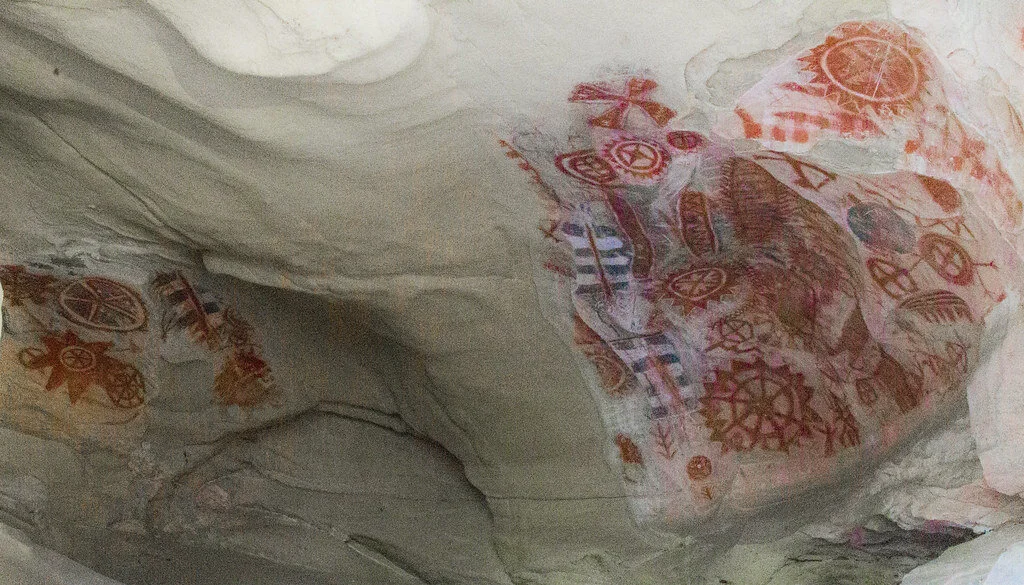
Just outside of Santa Barbara sits the Chumash Painted Cave, a room-sized sandstone cavern filled with colorful anthropomorphic and geometric figures. The exact age of the cave paintings is unknown, but archaeologists estimate that they date to the 1600s or earlier. The paintings are attributed to the Chumash, a name referring to several groups of Indigenous people who lived along the coast of Southern California and on the nearby Channel Islands. The Chumash groups spoke a variety of what linguists refer to as the Hokan language, and they constructed canoes from pine or redwood planks, which they used to sail up and down the California coast to hunt, gather and trade with other tribes. The Chumash lived in round homes known as “aps,” organized into villages. A number of archaeological sites displaying Chumash rock art have been discovered, and the Chumash Painted Cave is one of the most well preserved. The meaning behind the figures at the painted cave is unknown, but the art may be connected to Chumash astrology and cosmology. 

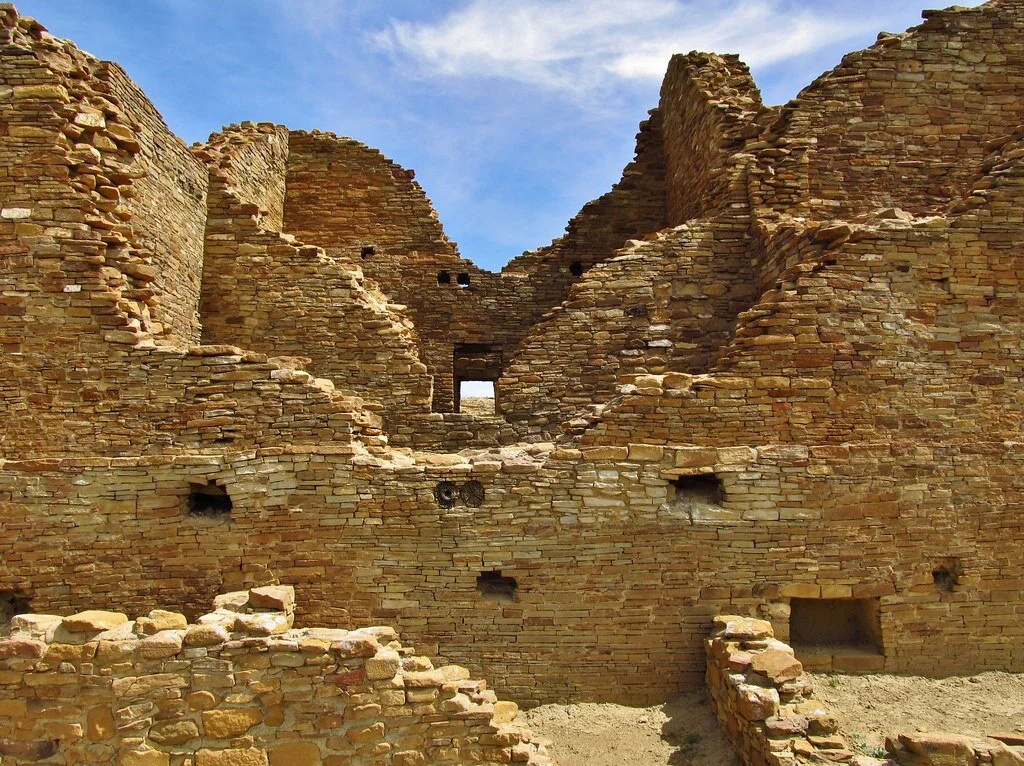
6. Chaco Culture National Historical Park, New Mexico

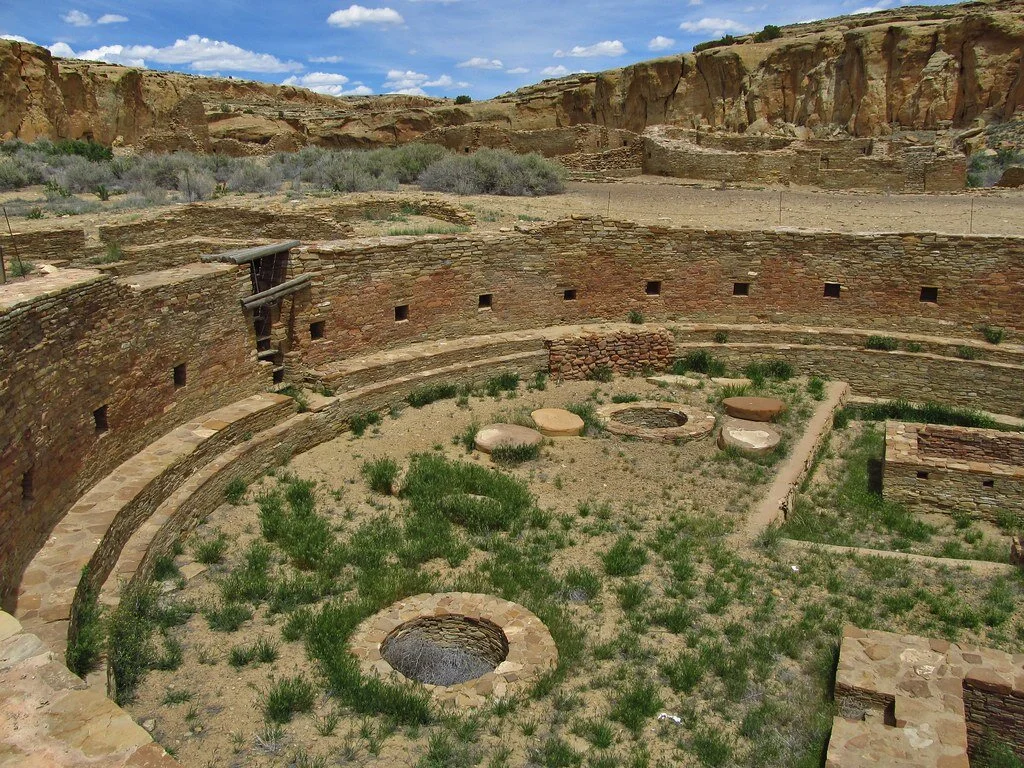
A valley in the high desert of northwestern New Mexico houses an ancient, sprawling center of ancestral Pueblo culture. Between 850 and 1250 A.D., the area that is now Chaco Culture National Historical Park was the epicenter of a widespread expansion of Chacoan culture. The Chacoan people used unique masonry techniques to construct stone houses multiple stories high, some containing hundreds of large rooms. The buildings were intricately planned out and often constructed according to solar, lunar and cardinal directions, as well as to maintain clear lines of sight between houses. By 1050, Chaco was the economic and cultural center of the San Juan Basin, with people from all over the area gathering there to share knowledge and traditions and to participate in ceremonies. A number of the great houses have been preserved and can be seen today, along with petroglyphs made by the Chacoan people. Since 2013, Chaco has also been designated an International Dark Sky Park, meaning it is one of the best places in the country to get a view of the night sky untainted by light pollution. Visitors can look at the sky the same way the Chaco people saw it a millennium ago. 

7. Ocmulgee Mounds National Historical Park, Georgia

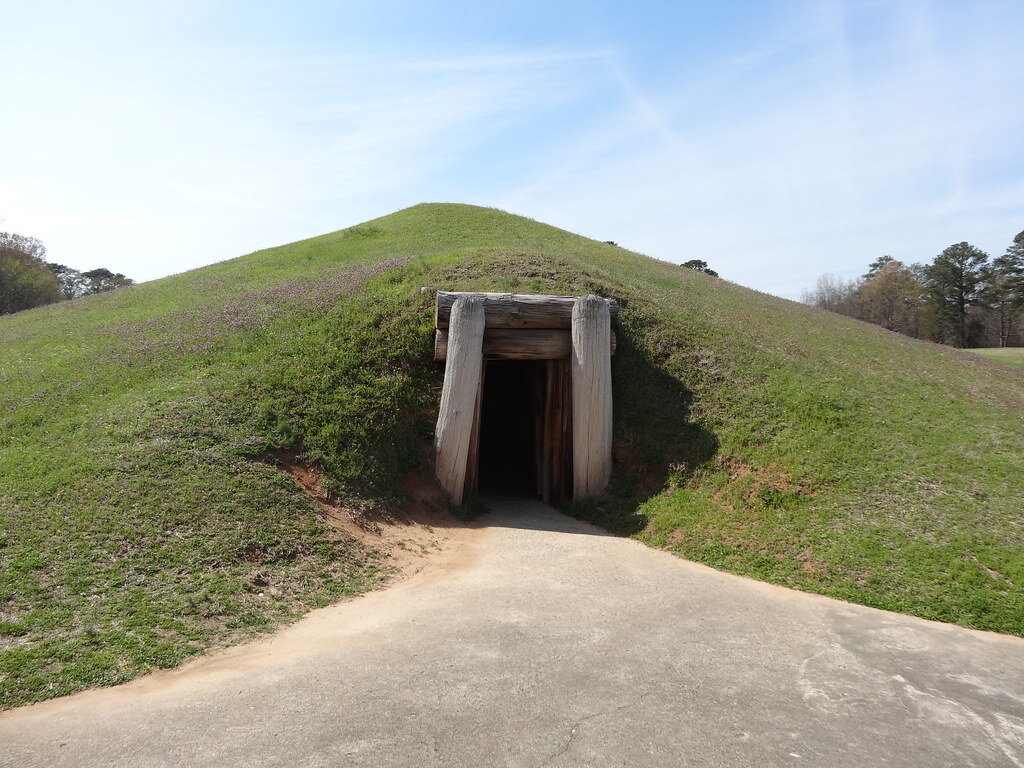
Minutes outside of downtown Macon, Georgia, lies Ocmulgee Mounds National Historical Park, a site shaped by 17 millennia of habitation, dating back to prehistoric times. The nomadic Paleo-Indian people arrived at the site in around 17,000 B.C., during the last ice age. Around 9,600 B.C. the Paleo-Indian era gave way to the Archaic era. The Early Archaic people were nomadic hunters as well, but evidence suggests that by the Middle Archaic period people began to build more permanent settlements and gather food. It wasn’t until the Mississippian people, who migrated to the area in 900 A.D., that the land was permanently changed, however. The Mississippians constructed impressive villages that literally reshaped the landscape, forming elaborate earthen lodges and temples that are still visible today. The Mississippian culture declined after the 1539 arrival of Spanish explorer Hernando de Soto, who brought with him foreign diseases that devastated the Mississippian people. Descendants of the Mississippian people, the Muscogee Creek Nation, who lived at Ocmulgee from 1600 until their forcible removal by Andrew Jackson in 1836, considered the mounds built by their ancestors to be sacred. Today, visitors to the site can see several of the mounds constructed by the Mississippian people, as well as the location of two Civil War battles. 

8. Little Bighorn Battlefield National Monument, Montana

Little Bighorn Battlefield National Monument memorializes the site of the Battle of Little Bighorn, a fight between the 7th Regiment of the U.S. Cavalry and thousands of Sioux, Cheyenne and Arapaho tribe members. It lies within the Crow Indian Reservation in southeastern Montana. On June 25, 1876, the 7th Regiment, led by Lt. Gen. George Custer, attacked a village of free Lakota and Cheyenne people. The battle was part of the U.S. campaign to force Indigenous people to comply with the 1868 Treaty of Fort Laramie, which created a large reservation in South Dakota intended to house the Lakota. Many Lakota did not want to give up their nomadic lifestyle in favor of a life controlled by the U.S. government, resulting in a number of armed conflicts. The Battle of Little Bighorn proved deadly for both sides, but the Lakota and Cheyenne ultimately triumphed, defeating Custer and his troops. Though the Lakota and Cheyenne tribe members won the battle, Custer’s defeat became a rallying cry for U.S. efforts to force Indigenous people onto reservations, and stronger military forces were sent to conquer the tribes. The monument includes the battlefield itself, as well as the Custer National Cemetery and a number of hiking trails. 

 9. Aztec Ruins National Monument, New Mexico

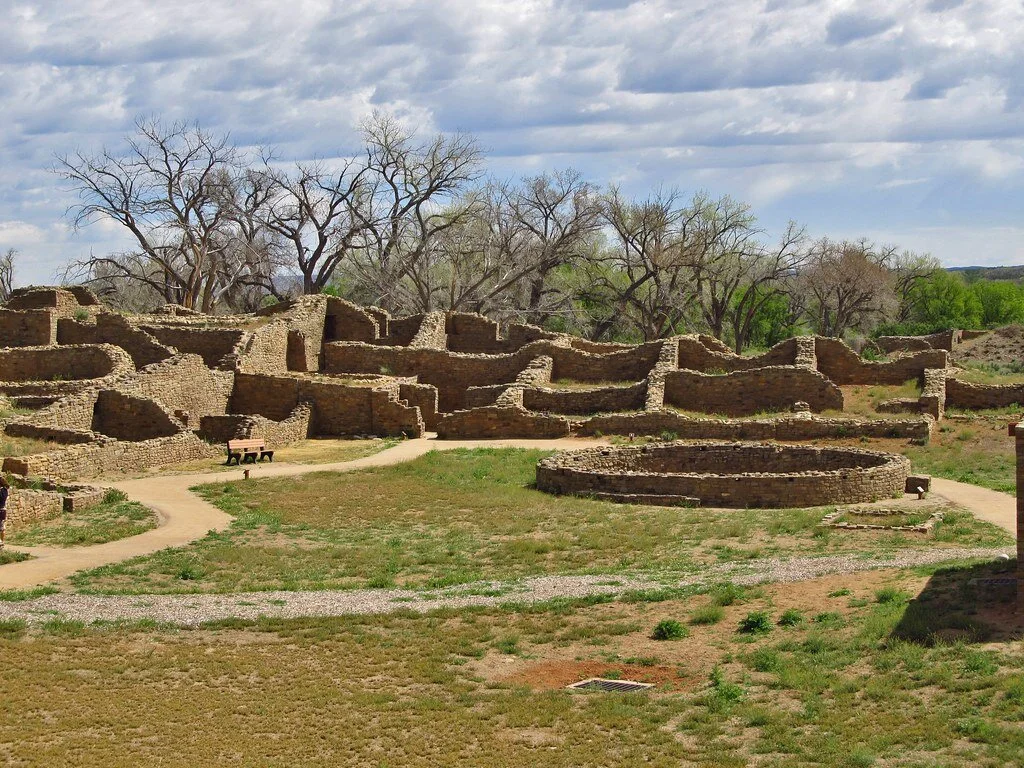
Despite its name, Aztec Ruins National Monument has no association with Mexico’s Aztec empire. These large, multistory stone buildings, located within the city limits of Aztec, New Mexico, were constructed by the ancestral Pueblo. Early Western settlers thought that the site was built by the Aztecs, so they named the area “Aztec,” and the name remained even after the true builders of the ruins were discovered. Aztec Ruins was the largest ancestral Pueblo community in the Animas River valley. The site features a number of “great houses” made of stone, including the West Ruin, which had over 400 interconnected rooms. Each great house had a “great kiva,” a large, underground circular chamber used for ceremonies. Aztec Ruins also has three above-ground kivas, each encircled by three walls forming a triangle. Aztec Ruins was likely influenced by Chacoan culture, and may have even been an outlying community of Chaco. Visitors can wander through the rooms of West Ruin on a self-guided tour, or participate in ranger-led programs. 

10. Hopewell Culture National Historical Park, Ohio

The term “Hopewell culture” refers not to a specific tribe, but to a “distinctive set of artifacts, earthworks and burial practices” common in areas of southern Ohio during the Middle Woodland period, from around 1 to 400 A.D. The Hopewell Mound Group is an 130-acre earthwork complex, which contains 29 burial mounds and was once enclosed by an enormous earthen wall that spanned over 2 miles and was up to 12 feet high. Remnants of the walls are still visible, as are several of the large, uniquely shaped mounds. Hopewell Culture National Historical Park encompasses five additional sites, all with fascinating remnants of the Hopewell culture. Settlements typically consisted of a few families living close together in rectangular houses with a shared garden nearby. In addition to growing domesticated plants, people of the Hopewell culture were hunters, fishers and gatherers. Visitors to the park will discover the commonalities between each distinct site by exploring the incredible Hopewell Mounds and looking at preserved artifacts.


Rachel Lynch

Rachel is a student at Sarah Lawrence College in Bronxville, NY currently taking a semester off. She plans to study Writing and Child Development. Rachel loves to travel and is inspired by the places she’s been and everywhere she wants to go. She hopes to educate people on social justice issues and the history and culture of travel destinations through her writing.

Exploring the Wonders of Australia’s Wild and Remote Kimberley

The Kimberley region of Western Australia boasts a spectacularly diverse landscape offering both biodiversity and impressive geological formations.

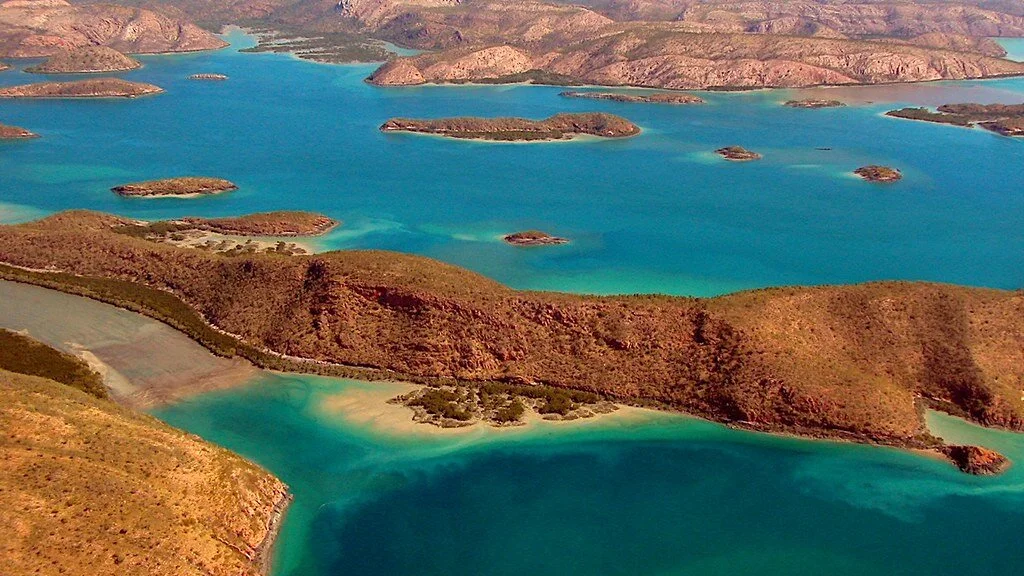
Aerial view of the Kimberley. Drumsara. CC-BY-SA 2.0. 

Although Australia provides plenty of examples of nature’s extraordinary beauty, few compare to the Kimberley region. Situated in Western Australia’s northernmost corner, the Kimberley is a grandiose territory teeming with rich ecosystems. A plethora of microcommunities sprinkle across its sundry landscapes while towering hills spill into vast canyons neighboring pristine swimming holes. 

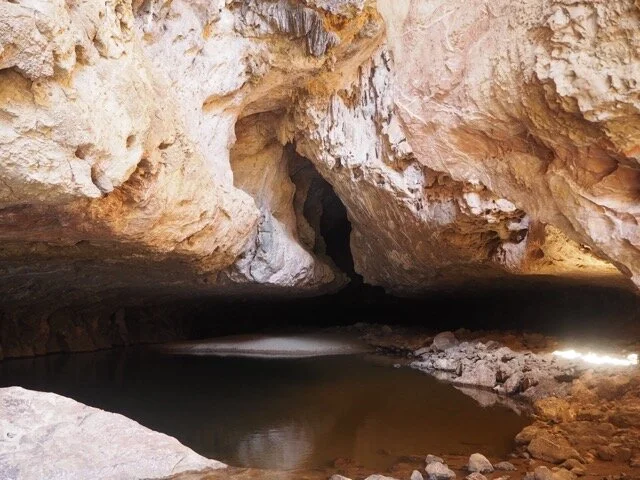
The region covers over 150,000 square miles, with only about 40,000 residents inhabiting the area. Perhaps the most famous part of the Kimberley is Broome’s Cable Beach, ranked as one of the world’s most gorgeous stretches of sand and sea. The beach displays nearly 14 miles of fine sand meeting glassy waters. The beach itself has an interesting history; the name “Cable Beach” comes from the telegraph cable placed there in 1889. For adventurers more daring, Tunnel Creek National Park houses the oldest cave system in Australia. Again, the history of the stop is fascinating; Aboriginal leader Jandamarra hid in the cave system but was later caught and killed at its opening. 

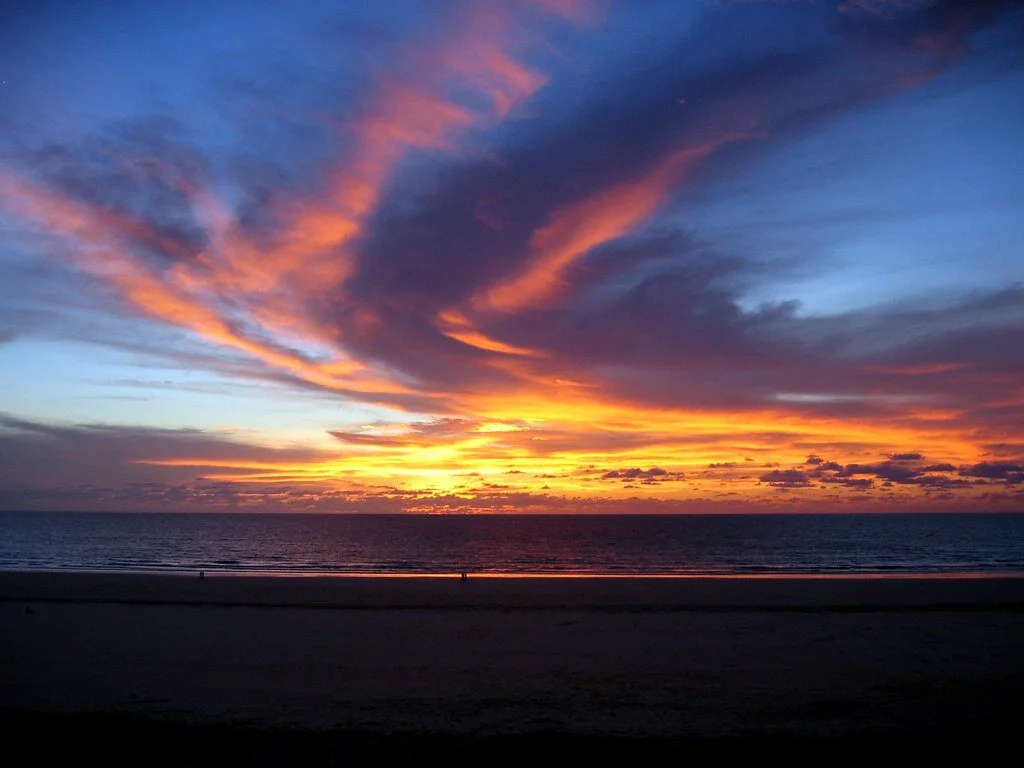
The swirling sky at Cable Beach in Broome. hmorandell. CC BY-NC-SA 2.0. 

However, the history of the land tells a story drastically different than the extravagant serenity the region now boasts. 

Exploration of the Kimberley by Europeans was initiated in 1879 by government surveyor Alexander Forrest, who explored much of Western Australia. Upon arrival, Forrest made note of the region’s vast landscape which made it ideal for cattle grazing. From this point on, the resources of the land quickly became tied to conflict; diggers struck gold which led to a quickly fleeting gold rush, and conflicts over cattle grazing raged between the Indigenous population and newly arrived Europeans. In the mid-20th century irrigation projects led to the rise of extensive farming, primarily that of sugar cane and rice. Oil drilling and diamond mining are now conducted in the region. 

Today, the Kimberley contains residents as diverse as its wildlife; there are over 100 Aboriginal communities that share the region’s unmatched tranquility as well as its bustling economic opportunities. Due to the region’s iconic landscape, nearly 300,000 travelers visit every year, producing over $300 million annually. 

Tunnel Creek National Park. Nievedee. CC BY-SA 4.0. 

As with most dazzling spectacles of nature, the region boasts pristine weather that complements the untouched wilderness. The wet season extends from November to April and is characterized by heavy rain and humid, sticky air. From May to October is the dry season, which is characterized by sun-drenched days and cloudless, baby blue skies. 

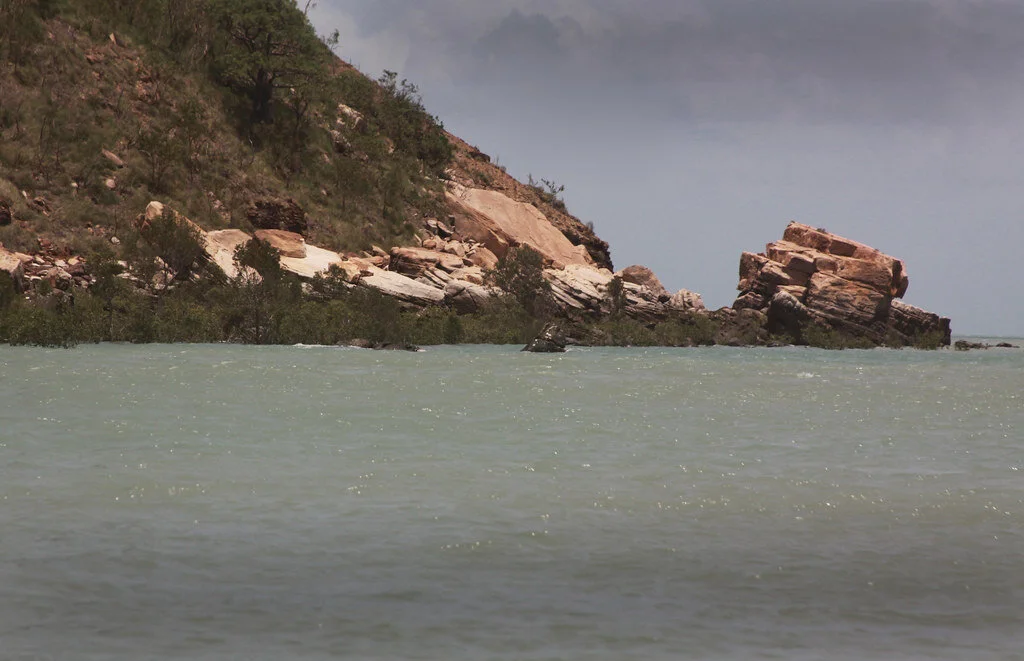
Raft Point. Johnny. CC BY-NC 2.0. 

An exciting history and a dazzling landscape make Australia’s Kimberley region a powerfully adventurous destination. Surely any visitor will find their imagination stretched by the area’s countless wonders.


Ella Nguyen

Ella is an undergraduate student at Vassar College pursuing a degree in Hispanic Studies. She wants to assist in the field of immigration law and hopes to utilize Spanish in her future projects. In her free time she enjoys cooking, writing poetry, and learning about cosmetics.