Flip Your Map and Up Your Impact

Part 1 of a 2-part series on Maps

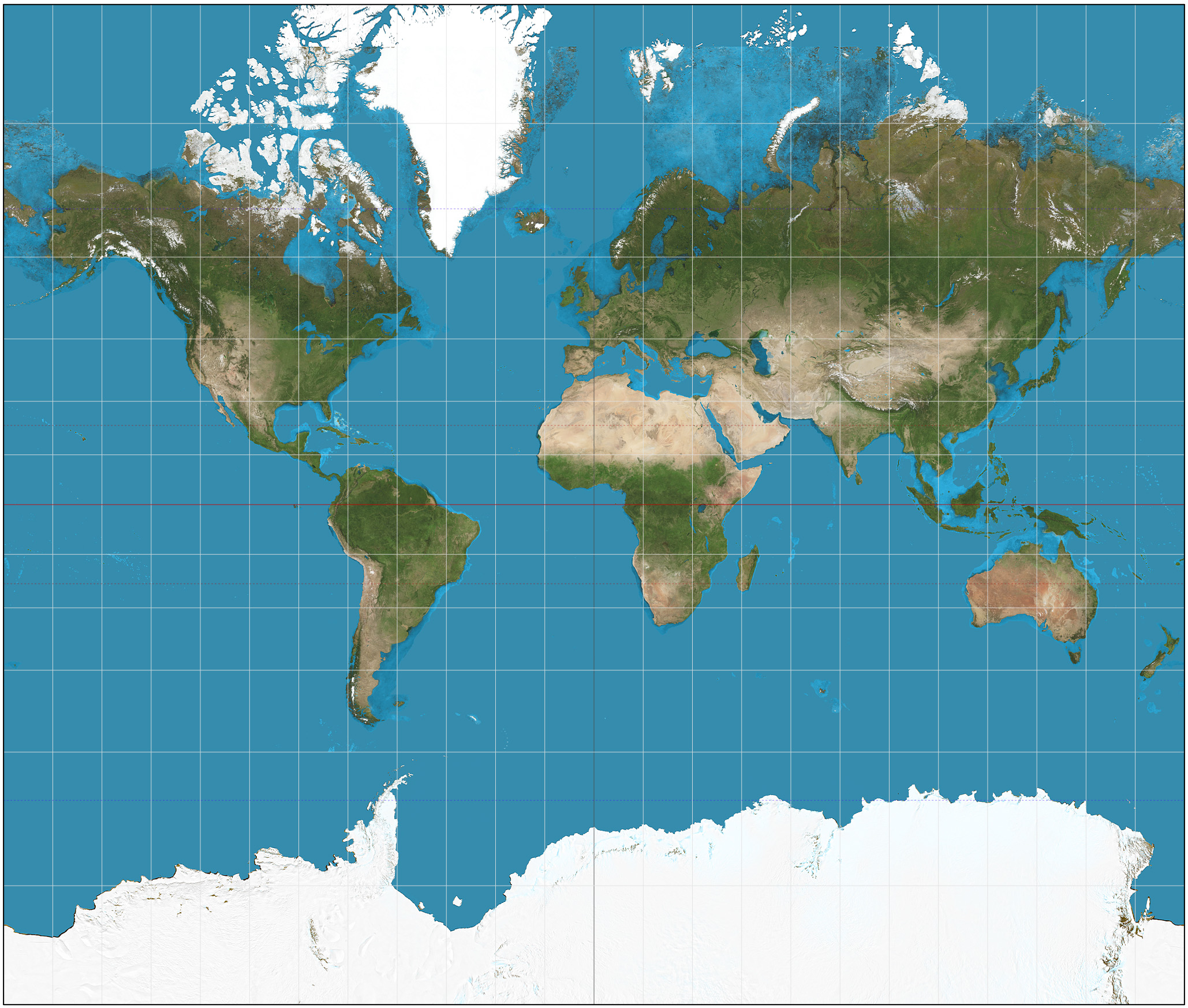
The map of the world.

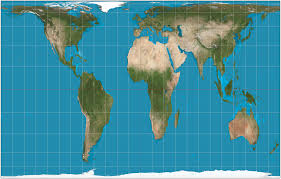
When we look at the most commonly-seen map of the world, we assume that it depicts the earth as it truly is. But this particular projection of the world, like all others in existence, isn’t completely accurate, as it is impossible to avoid distortions when translating three dimensions into two.  Known as the Mercator projection, this map was designed for navigation but distorts relative size, artificially enlarging land masses further from the equator.  The result is more severe than you might imagine: Africa appears smaller than Greenland, when it is actually fourteen times larger. See this for yourself here.


There are many other, less common projections which you can explore here.  Some are equal area projections, such as Gall-Peters, which manage to avoid the relative size distortion of Mercator but are then much less useful for navigation and less accurate with regard to shape. While the Mercator projection has been abandoned by atlases in favor of projections with more balanced distortion profiles, it is still used by popular online navigation tools such as Google Maps given its navigational prowess (unless you happen to be exploring one of the poles, where it is practically useless).
 

Gall-Peters Projection

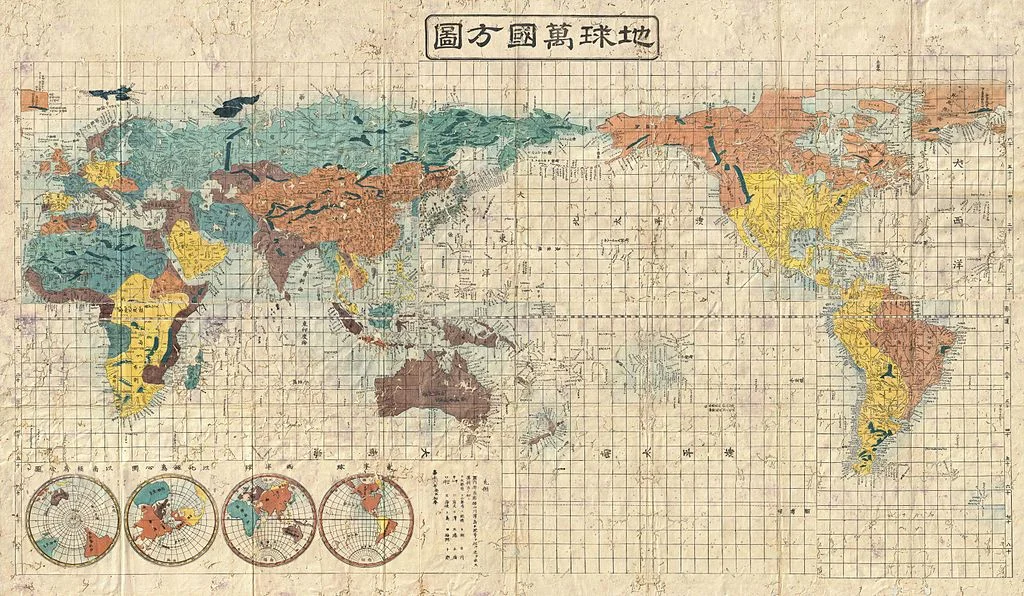
The most commonly-seen map of the world also has a particular orientation and center: north-up and the Atlantic.  Yet this framing is neither inevitable nor inherently more correct. Medieval maps were often East-up, Pacific-centered maps pop up in Asia, and a National Geographic feature on the world’s oceans opted to carve up continents instead of bodies of water.

As a result of the complex politics of map-making over time and the inertia of convention, the north-up, Atlantic-centered Mercator projection is the most prevalent, making it not only a navigation tool, but also the image of the world in our mind’s eye. But why does this matter? If all projections are distorted in some way, and orientation, although heavily influenced by historical political jockeying, is ultimately arbitrary, can’t we just continue using it? 
 

There is a big reason why this is not such a great idea: where things are on the map and how big they are in relation to other things affects what we think of them.

Research has shown that we (English-language users) tend to associate up with goodness and down with badness; think about upper and lower class, movement along the socio-economic ladder, “started from the bottom now we’re here”, the assumed location of heaven and hell, and the connotations of uptown and downtown.  It has also shown that we tend to associate up with north and down with south (“up north”, “down south”) despite the fact that up/down is an orientation to gravity while cardinal direction is an orientation to the poles. When we are repeatedly exposed to the north-up world map, it reinforces the association of up with north and down with south, and therefore strengthens the association of north with the positive qualities associated with up, and south with the negative qualities associated with down. The popularity of the north-up map makes us more readily associate positive things with northern places.

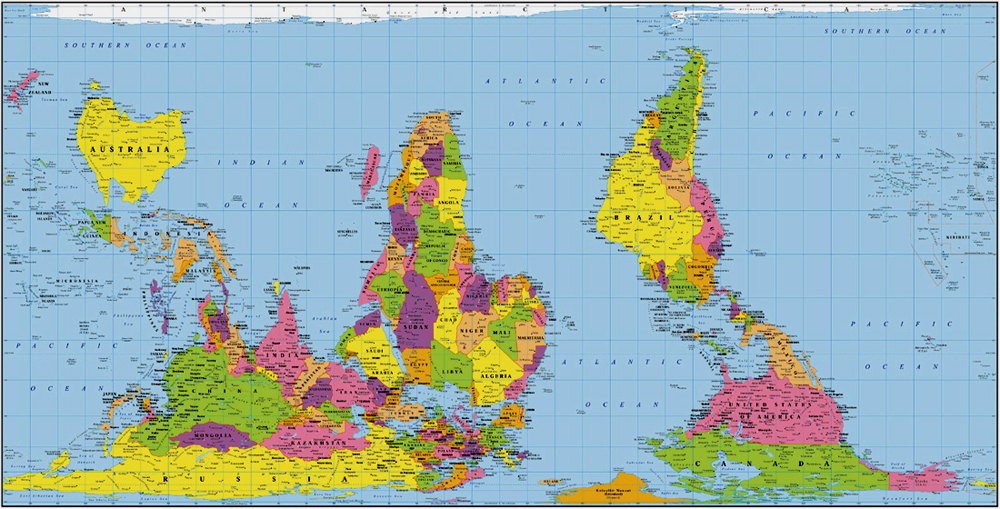
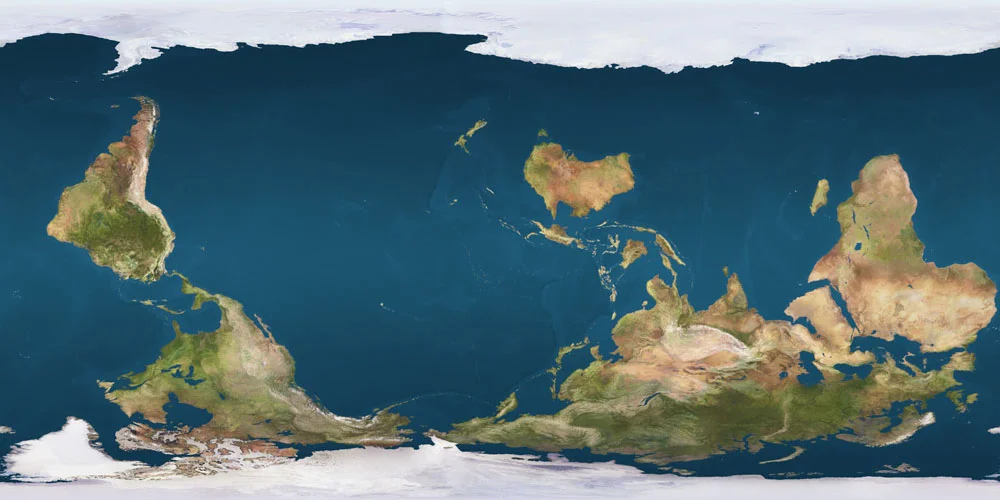
We also tend to associate things in the center of an image with importance, and large objects with importance and strength. Overall, this means that we tend to equate things that occupy large, upper (northern), central places on the map with goodness, importance and strength; and things that occupy smaller, lower (southern) and peripheral places with badness, insignificance and weakness.  It is therefore not surprising that some Australians, Asian states, geographers, educators, and even people on The West Wing have pushed for south-up, Pacific-centric and non-Mercator maps.

Now you might be thinking, but I know that those things don’t always match up!   Rwanda has a higher percentage of female Members of Parliament than any other country on earth even though it’s in the Global South! China is hugely important in the global economy even though it’s on the periphery of the map! Israel is powerful even though its relatively small size is exaggerated by its proximity to the equator!

But these mental links, also called implicit associations, are mostly unconscious, and they show up in many areas of our lives even when we consciously know and believe that they aren’t correct.  In other words, stereotypes and generalizations affect our decisions and behaviors even though we know they aren't always true.  This insight comes from implicit association tests, which show that we are quicker and more accurate at sorting things into bins when the bins match up with unconscious associations in our brains, even when we report not having these associations. For example, when sorting words or images that are often perceived as fitting into just one of four categories -  fat, skinny, good, bad -  we tend to be faster and more accurate when we are putting items that we perceive as fat or bad into one box, and items that we perceive as skinny or good into the other box. We are on average slower and more likely to mess up when we instead have to sort into a box for skinny or bad items, and a box for fat or good items. And this happens even when we report that we don’t believe fatness is inherently associated with badness, or skinniness with goodness. See this for yourself by taking multiple versions of this test.

The most probable explanation for this phenomenon is that it's an evolutionary remnant, which in the earlier days of humanity helped to keep us alive by allowing us to quickly distinguish between safe and unsafe through stereotyping. But the modern-day implication is clear: even if we don't explicitly think that northern, central, or large countries are better, stronger and more important, associations between these categories probably lurk in our psyches.  Where things are on the map and how big they are in relation to other things affects what we think of them regardless of whether or not we realize it’s happening. We don’t just shape maps, maps shape us.

These mental links may seem harmless, but researchers have suggested that implicit associations in general contribute to everything from childcare expectations for different genders to police brutality against people of color. They affect decisions like whether or not to cross the street when we see someone walking towards us, where to travel, and which deaths from terrorist attacks to change our profile pictures for. 

The particular mental links created and reinforced by this map aren’t harmless either, as they correlate with current and historical global patterns. And when these mental links line up with what’s happening in the world, they perpetuate each other.  Although it is sometimes quite handy that associations from our dominant map match reality, it is also limiting, as we tend to see characteristics of certain places as natural and normal, and the resulting global power dynamic as inevitable. For instance, this map and the associations it fortifies make it harder for us to imagine a world where the West (a confusing term generally used to refer to Northwestern Europe, the US and Canada) isn’t the most powerful and important group of countries. When we see things as inevitable and can’t fathom a different reality, we are less likely to intervene to change the course of history.  We cannot go somewhere that we have not first traveled in our minds, and with maps reinforcing the status quo instead of igniting our imagination of how the world could be, we are more likely to perpetuate global systems of oppression. 


The mental links reinforced by repeated exposure to this map don't just prevent us from taking action, they can also lead us to take part in less-than-ideal action. For example, this particular map reinforces the belief that the West is inherently good and that all countries should strive for our way of life. This belief then informs actions in many sectors, from foreign policy to international development, often resulting in detrimental outcomes for people and planet. Individually, we are encouraged to engage in well-intentioned efforts such as teaching English, which, instead of indisputably beneficial, can be seen as an effort to make “them” more like “us”. Beliefs arising from the associations this particular map reinforces don’t just prevent us from changing things, they support harmful things happening right now.   

Instead of being held back by exclusive familiarity with only one of an infinite number of possible projections of earth, we can improve our chances of having a genuinely positive impact by changing our maps.  We can continue to use Mercator projections for navigational purposes, but we should switch it up for non-navigational purposes.  When hunting down the exact location of a current event you’re reading about, scroll over a pole in Google Earth to flip the world upside down. If you’re buying a world map poster to plan your next trip or track where you’ve been, consider a Gall-Peters projection, south-up or Pacific-centered map; all are relatively easily to find online. 

Over time, as you expose yourself to different maps, your mental maps will shift, decreasing the power of certain associations and helping you combat your unconscious internal bias. While daily exposure to our culture and language makes it very hard to de-link up from good, and large and center from important and powerful, changing your maps can delink north from goodness, Africa from weakness, and Small Island States from insignificance (they are, after all, a key climate change frontline).  Switching between maps will also remind you that the map is not the territory, and that all maps simultaneously obscure and illuminate.  We can also expose ourselves to stories and other media that contradict these associations, a tactic which has been shown to reduce bias when measured with implicit association tests. Purposefully and regularly exposing yourself to other perspectives is also a good life practice, especially for people of privilege, and one of the things travel is perfect for. 


SARAH LANG

Instigated by studies in Sustainable Development at the University of Edinburgh, Sarah has spent the majority of her adult life between 20+ countries.  She is intrigued by the global infrastructure that produces inequality and many interlocking revolutionary solutions to the ills of the world as we know it.  As a purposeful nomad on a journey to eradicate oppression in all its forms, she has worked alongside locals from Sweden to Zimbabwe.  She is a lover of compassionate critique, aligning impacts with intentions, and flipping (your view of) the world upside down. 

Less than Two Gallons a Day in Ethiopia

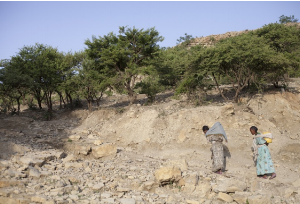
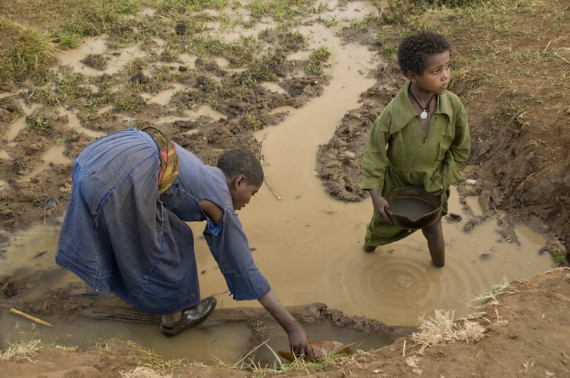
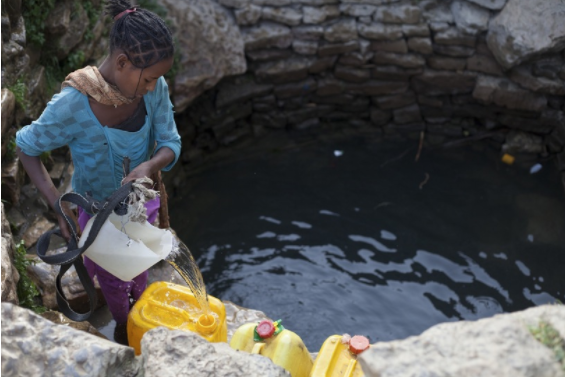
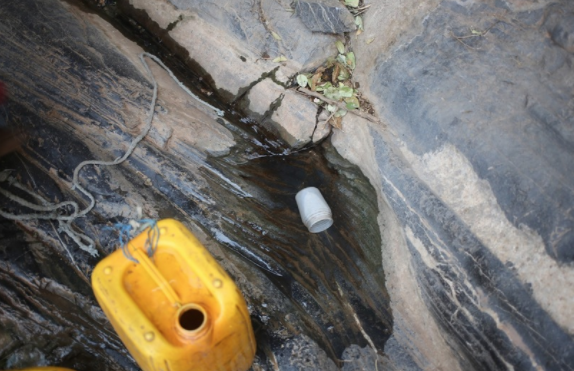
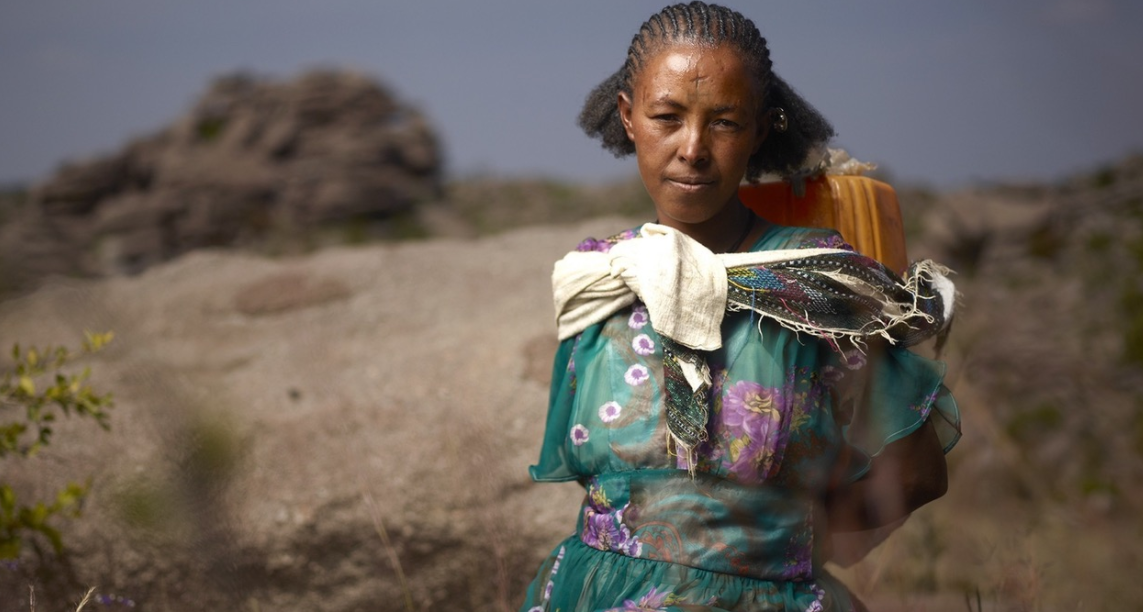
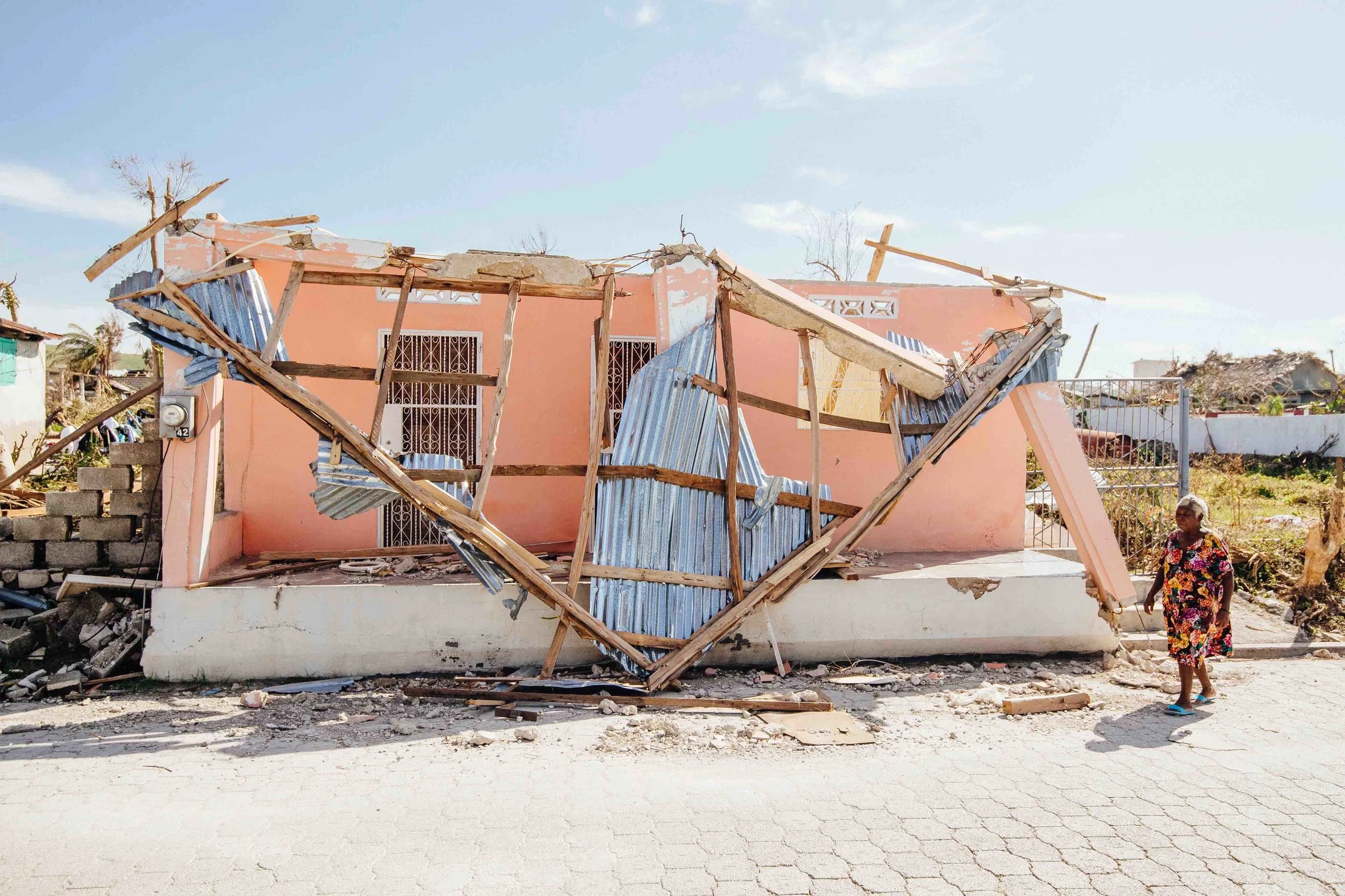
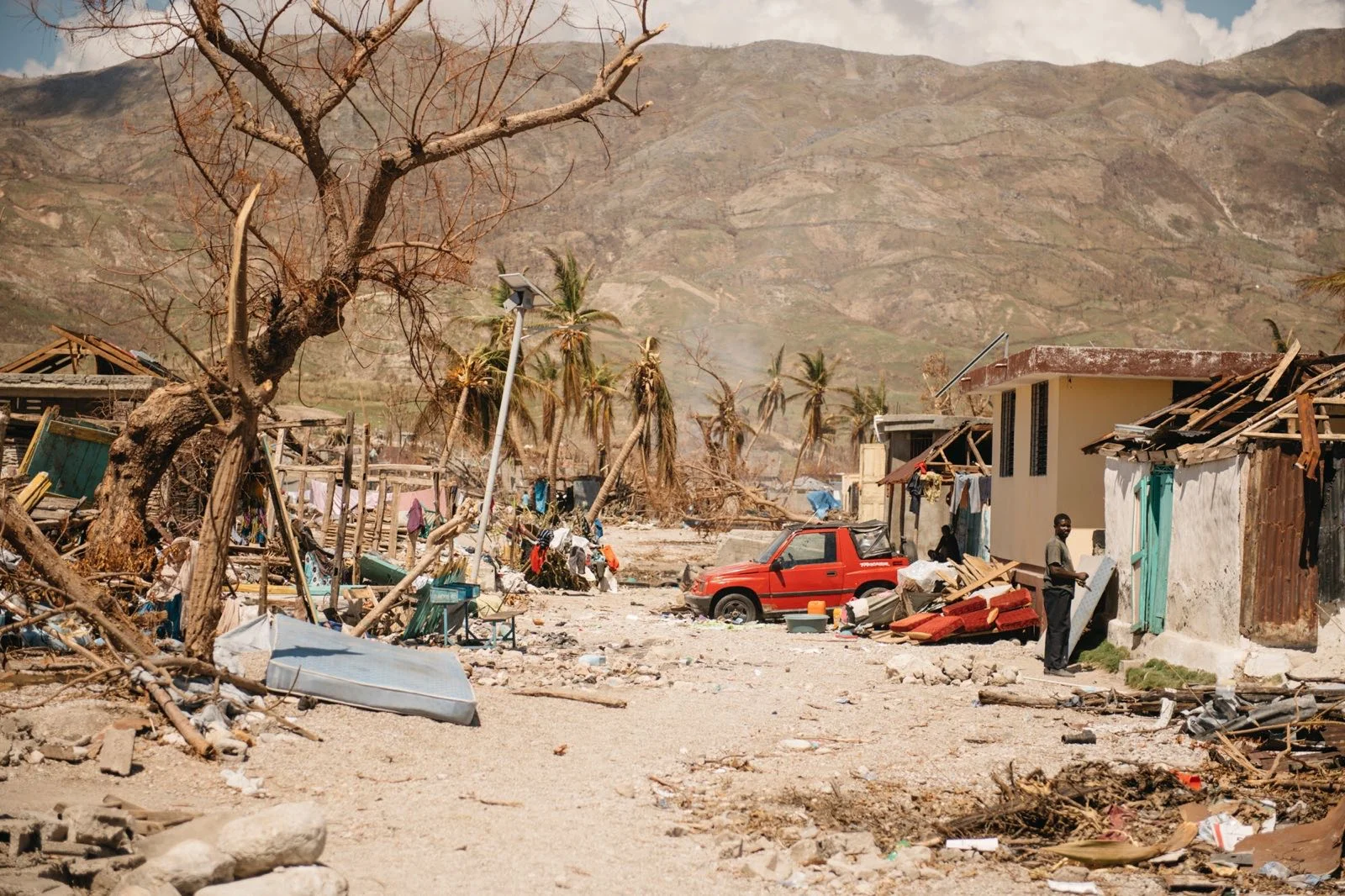
In rural Ethiopia, water is so scarce that many families survive on less than two gallons per day and walk up to four hours to find it.

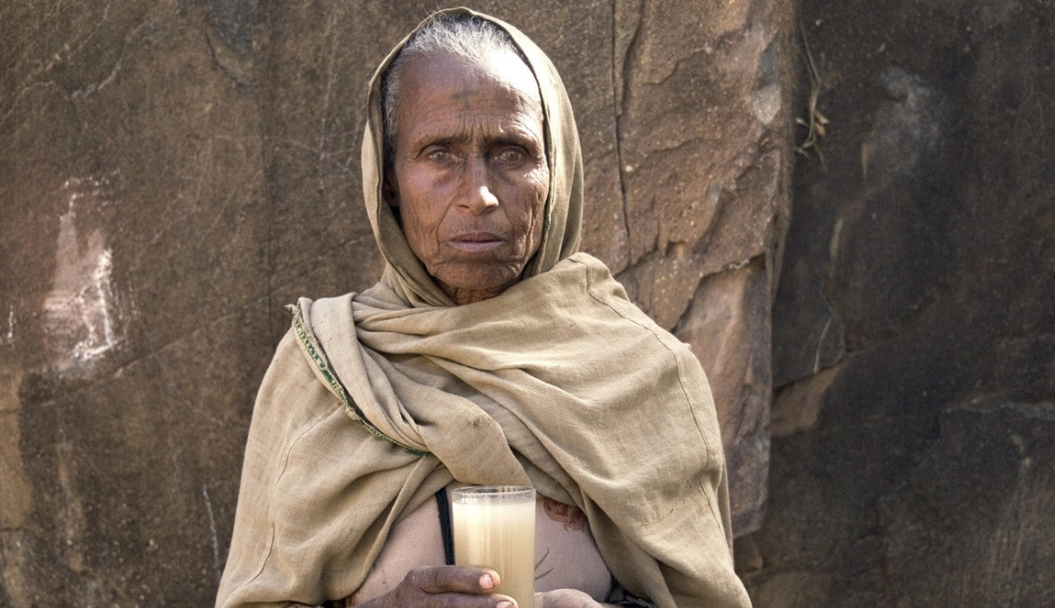
Their water sources, often nearly-dry river beds or muddy holes that communities have dug together, offer water that sometimes needs to be poured through cloth to filter out leeches and debris.

Since 2007 charity: water has been working in the Tigray region of Ethiopia with the government and local water partners working towards a vision of 100% clean water coverage.

With the help of hundreds of thousands of supporters from around the world — like Noah, who taught his classmates how to weave and sold enough hand-made art to fund hand-dug wells — we’ve now funded more than 3,000 water projects in Tigray that will serve over 1.1 million people with clean and safe water near their homes. Not only that, but the community has also been trained by our local partners on safe hygiene practices and basic maintenance of their water project.

Take yourself on the charity: water journey into the heart of Ethiopia in this video series following our Content Strategist, Tyler, as he experiences life without water and meets the incredible people of Ethiopia.

THIS ARTICLE WAS ORIGINALLY PUBLISHED ON MAPTIA.

How to Find Authenticity in a Globalized World

Why do we travel? 

For those of us privileged enough to be able to travel voluntarily, reasons often include becoming more fully ourselves and experiencing something genuinely different. This desire for authenticity, in ourselves and in that which we perceive to be other and outside our current experiences, is widespread enough to be noticed and exploited by the tourism industry, with signs reading “experience the REAL Thailand” and “find yourself in Bali”.

Seeking authenticity in our travels comes from a good place. It highlights our desires for genuine interactions with other human beings, for learning about the experiences of those with different life paths and identities, and possibly even for utilizing our privilege to support real people instead of opportunistic corporations removed from the locations in which they operate.

However, as is the case with many good intentions, this desire for authenticity can be harmful. Much of this harm stems from a strict and arbitrary idea of what counts as authentic and the fact that the privileged traveler has the power to decide what makes the cut. For instance, while spending 3 months in Zimbabwe a few years ago, I asked several friends what their cuisine had looked like prior to British colonization.  As their current main foodstuff, a labor-intensive dry porridge called sadza that holds its shape when spooned onto a plate, is made of cornmeal, it couldn’t have existed prior to the transfer of corn to Africa from the Americas.  I’ve had similar questions about Italian, British and South Asian cuisines before tomatoes, potatoes, and chili peppers made a similar journey.  From my perspective, sadza was a colonial by-product, as was the black tea served alongside it.  When I shared this view with my friends, the effect was clear: my strict and arbitrary definition of what could be considered authentically Zimbabwean delegitimized and minimized their identity and emotional ties to the food they knew and loved. 

This highlights a tendency in our search for authenticity - to regard older traditions and cultural forms and those which predate recent cultural exchange as more authentic.  This viewpoint is understandable, especially as a reaction against the infiltration of Western corporations such as Coca Cola into most crannies of the world, including a remote village in eastern Zimbabwe, and the Westernization of many popular tourist destinations, from food offerings to street signs. Yet the reality is that all places and peoples are dynamic.  Historical and current globalization, the movement of people, ideas and things, has fostered cultural exchange and the transformation of traditions over time.  Cultures also evolve without interaction with outside forces. When we define authenticity as similarity of a particular part of a culture to its version at a particular point in history, we mistakenly regard people and places as static, freezing them in time.  

Aside from our tendency to award authentic status to more longstanding traditions, we also withhold this label unless the cultural form feels “other” enough and different enough from our cultural forms to be plausibly untainted by them.  But ironically and cruelly, our globally dominant culture and associated language simultaneously demand conformity for material gain and social acceptance. Without this, the inherent amount of difference between cultures would render many practically inaccessible to travelers.

When we travel in search of authenticity with these unconscious assumptions and unfair expectations lurking in our minds, we often end up unknowingly demanding that locals perform a certain version of their culture for our tourist dollars. The result is a paradox: we want specific historical versions of cultures that are different enough from our own to feel authentic but similar enough to actually understand and enjoy. We travel to search for authenticity, but by traveling we reinforce the global dominance of our culture which demeans and degrades the other cultures we seek to experience. Seeking authenticity obscures it from us.

It also shortchanges us. Traveling with a particular idea of what authentic looks, tastes, smells and sounds like creates expectations and takes our attention away from what is.  When we’re less present with ourselves, where we are, and the people around us, we’re less likely to feel deeply satisfied in addition to being more likely to cause accidental harm.


So, what to do? Here are some guidelines for navigating these realities:

1. Take people and places as they are now

Don’t force them to live up to some idea conjured up by tourist companies, history books, or your own mind as the antithesis to your everyday life. Don’t expect them to be similar enough to be accessible and understandable to you. On the flip side, don’t expect them to be different enough so that you can feel like you’ve escaped your daily grind and your culture.  Manage your expectations or avoid forming them.  Of course, it is very hard to travel with no inkling of what you’re going to find once you arrive, but be honest with yourself.  Why are you drawn to particular places? What expectations do you have?  Find balance - have just enough foresight to plan yet not enough to keep you from accepting what is when you’re there. The best days often come when you're not expecting them. 


2. Only do what you actually want to do

Travel guides and guidance from friends are riddled with “must sees”.  What if nothing on those lists strikes your fancy?  I almost always skip museums when I travel.  While you could argue that I’m missing out on important historical context, I would argue that I’ve never absorbed this information from museums even when I’ve forced myself to go to them. Luckily, each place and culture and even person is unfathomably complex and contains endless dimensions. Engage in the same activities you enjoy in back home and try new ones which feel right.  Do you in a new place. By living your truth while traveling, you’re more likely to find authenticity in the place you’re visiting.


3. Engage other cultures carefully

Cultural exchange can be mutually beneficial but it can also be oppressive.  Acknowledge the power dynamics in your interactions with non-travelers. Be aware that you probably embody and therefore unknowingly reinforce ideals that other people must conform to in order to gain social currency and acceptance.   And make sure your engagement with other cultures doesn’t cross the line into appropriation. Appropriation can take many forms, but it almost always involves travelers benefiting materially from or being praised for a particular cultural form while the people to whom that cultural form belongs are ridiculed, persecuted, or exploited for it. Engage from a place of humility to learn, not to seek validation or make money. Always respect the stated boundaries of engagement, and where appropriate, wait to be invited.

SARAH LANG

Instigated by studies in Sustainable Development at the University of Edinburgh, Sarah has spent the majority of her adult life between 20+ countries.  She is intrigued by the global infrastructure that produces inequality and many interlocking revolutionary solutions to the ills of the world as we know it.  As a purposeful nomad on a journey to eradicate oppression in all its forms, she has worked alongside locals from Sweden to Zimbabwe.  She is a lover of compassionate critique, aligning impacts with intentions, and flipping (your view of) the world upside down. 


Conscious Capitalism: Meet Gingi Medina, Founder of Equites, An Equestrian Lifestyle Brand

Gingi Medina

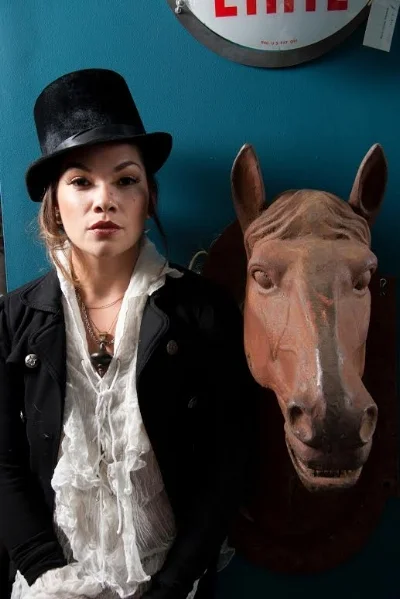
There is a duality that radiates from clothing designer Gingi Medina. She is a determined, audacious business owner, who also cares deeply about the world, and minimizing waste. She struck out on her own, in part, because of the massive overproduction she saw in her industry. After a dozen years working in fashion, Gingi became disgusted by the excessive wastefulness in the manufacturing process, and thought there must be a better way to produce beautifully made garments, without littering the planet. 

She began brainstorming ways to use materials that utilized the entire plant, animal, or raw substance. After years of making clothes, bags, and goods, Medina founded the lifestyle brand, Equites. The company, which is known for its leather, uses reclaimed and raw materials that are sourced ethically, she says.

In deciding to make leather goods, Medina argues that it's an emission-less process. Leather is a "conscious material" she says, because it's sturdy, durable, and long lasting.  "It's a forever piece," she says. "If I make a bag out of leather, it has a far less, if any, carbon footprint left on the planet." Leather, Medina claims, does not require much processing because it utilizes a material that is taken directly from a natural source, versus a synthetic piece or garment-- including vegan leather-- which is manufactured and produced with emissions. She says her goods can last a consumer’s lifetime, so a buyer will need only one of her bags for example, rather than multiple synthetic bags that eventually wear out and need to be replaced. "The carbon footprint from a manmade item is far more extensive," Medina says.

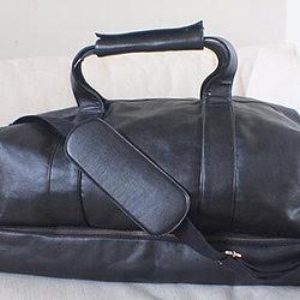
The Weekender Bag, £800 [$1006 USD]

Medina didn't always know she'd be a conscientious designer. As a child growing up in Los Angeles, she imagined she'd be "an astronaut or the next Madonna." Magician also made the list of what Gingi thought she'd do one day. By the time she was 9 years old, she began calling herself "a designer." She recalls watching her first fashion show and thinking of predicting trends, sewing, and being able to say, "I made that." Ten years later those predictions began springing to life, and she entered the fashion realm as a fit model for petites. One day a designer asked her what she wanted to do, and she replied, "your job." That not so quiet confidence, that some have called "crazy", has served her well. 

During her younger years, while partying in Hollywood, she says she encountered a well-dressed guy. Upon learning he was a designer, she offered to be his apprentice, working for free. Everyday for a year, beginning at 7am, Gingi set out to learn all she could about design. She learned how to construct leather, metal and denim. She made clothes for rock musicians, and clothing for tours-- most notably Ozzfest.

Medina’s work has also included her dressing celebs, working on TV shows, and ensuring certain designers' wares were featured prominently via product placement. She's worked as a buyer, and also in private label-- offering clothing styles to retailers who then put their own label on the garments. Medina has worked and studied fashion overseas. It was during her travels abroad and also mingling with and being inspired by people who've worked abroad, that she had some of her most successful innovations. She designed the Von Dutch "No More Landmines" tee-shirt after Angelina Jolie did mission work with the Halo Trust, which deactivates land mines in war ravaged regions. It was also during this time, that Medina began to reflect on the inefficiencies within fashion production and wondered, "Am I harming or helping... in my career." She remembers seeing freight containers filled with the previous fashion season's discarded garments and the subsequent feelings of what such wastefulness does to the planet. She noted that her clothes, and other finely made garments, were items consumers could have "for a lifetime", and even be "passed down", minimizing some of the waste. The ideas for change were within her, still she said it was, "hard to keep focus when the world is crumbling around you." 

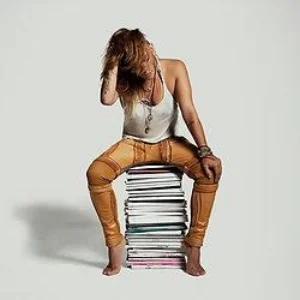
Leather Riders, £1800 [$2265 USD]

Ultimately, Median created her own brand, Equites, in 2011. She describes it as a "five tier label where performance meets fashion." Her line includes leather goods—pants, bags and jackets—but also cashmere, performance gear, and transition wear. She says her clothes serve as a "smart garment" that allows customers to segue "between worlds" and be just as comfortable and coiffed wearing riding pants, for instance, in an equestrian event as one would be at a premiere. Her line's leather pants, for example, are made of 17 panels sewed together on top of a water wicking, breathable legging, making it suitable for multi directional athletic endeavors and fitting to wear throughout the day.

When she initially showcased these designs, Gingi says her "idea was turned down by every label," so she produced them herself. Still committed to minimalism, and anti-waste, Gingi sought out hardware for use in buttons, and researched international communities that use the entire animal, and where she could also use their skins for her leather. 

She found the Eid al-Adha, or the Festival/Feast of Sacrifice, in Indonesia. This global Muslim holiday commemorates Abraham's willingness to obey God, and sacrifice his son, who was ultimately spared, and a ram was sacrificed in his stead. During this multi-day festival, livestock—cows, goats, sheep, and camels, depending on the region—are sacrificed, and the meat, in part, is given to the poor. After the festival, some temples will sell the animal skins to Westerners, Medina says, which she considers ethical. 

Gingi describes the “ethical use of a skin" as being "when the entire animal is used and not only sought out for its skin to make a product." Her company Equites, she says, searches "far and wide for leather or a fur that has already been used," to then "recycle or upcycle the piece into something new. [We] make sure we know where it's come from.” Medina asserts that she doesn't use slaughterhouse leathers, and does “not support, nor purchase from major manufacturing facilities,” but rather acquires her animal skins and materials in “smaller, traditional ways,” like from temples. The fabrics are naturally woven, she says, and there are no chemicals used in the dying process, which further eliminates waste.

Brass Capped Knee Height Riding Boots, £1000 [$1258 USD]

Once she gets the rawhide materials back to her factory, the leather is treated with natural ingredients like oils and rocks. Occasionally vegetable dyes are used, when a customer requests a special color. Much of her items are bespoke—made to order. Turnaround can take between 45-60 days, Gingi says. She says her method of manufacturing is less wasteful and more supportive of the planet. She claims there are no companies quite like hers. In an environment where most fashion lines are “being gluttonous and over-producing,” Gingi believes her company is “doing a better job.” Although she’s unfamiliar with any manufacturers creating clothes in the same manner and impact as she does, Medina welcomes competing brands. She wants to encourage companies to elevate their corporate responsibility. 

Medina would also like to form an alliance across industries. Fashion is seen as a “status industry”, but Gingi also has a passion to “do right by the earth”, she says. Her warehouse is slated to use a Tesla Powerwall battery—which stores electricity and solar energy for later use—and she wants to partner with other companies that have a similar vision and commitment to the environment.

Medina’s company Equites is headquartered in London and the line will be available to the masses in Fall 2017. Her wares will be available in Harrods, Harvey Nichols, boutiques, country clubs, equestrian specific stores, and on her company’s website. During the company’s soft launch, Equites currently has jewelry and wearable art, bags, and boots available at equites.co.uk  and on their Facebook page. The company is also offering an invitation to its show at London Fashion Week in September of 2017 to its first one hundred customers purchasing "diamond tier" levels of the selection pieces available pre-launch. 


ALEXANDREA THORNTON

Alexandrea Thornton is a journalist and producer living in NY. A graduate of UC Berkeley and Columbia University, she splits her time between California and New York. She's an avid reader and is penning her first non-fiction book.