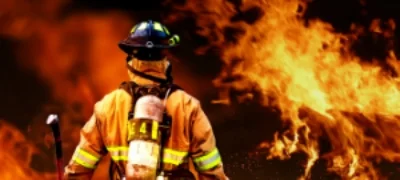
PAKISTAN: Meet 25-Year-Old Shazia, Her Country's First Female Firefighter Who Is Redefining Badass

When we talk about firefighting, most of us picture robust men running out of red fire vans, jumping right into the blazing fire, not giving a damn about their own safety and saving lives. Little or no women choose the profession, at least if you go by the figures in Asia. 

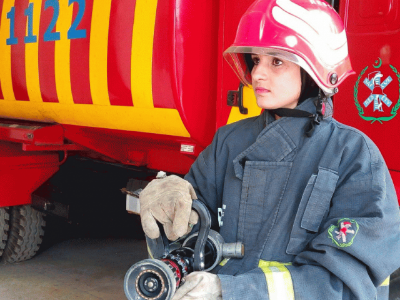
While India got it's first set of women firefighters in Mumbai in 2012, Pakistan has followed suit and 25-year-old Shazia Perveen proudly stands as the first firefighter in the country, according to Rescue 1122, a firefighting training organisation based out of Pakistan. 

Source : vehari.sujag.org

A certified firefighter, Shazia usually helps other firefighters when women victims are involved. 

In a male-dominated profession, Perveen has not only made a mark, but also stands as an inspiration for women across the globe to opt for a profession they usually wouldn't.  

Hailing from the Vehari district in Punjab, Pakistan, Perveen joined the Rescue 1122 emergency services as a firefighter in 2010. What made her choose the profession? Perveen says this has always been a dream job for her and she jumped at the opportunity when Rescue 1122 opened a Women’s Department. 

Source :  www.learyfirefighters.org

Talking to a Pakistani portal, vehari.sujag.org, she said she was enthusiastic about working shoulder-to-shoulder with men. However, it wasn't an easy journey for her. Out of the 600 women who signed up for the training, only she completed it, like a boss! The training included learning to swim, jump, fight fire, and climbing roofs with the help of ropes.

“At the outset, people would laugh at me when they saw me working with male workers. But afterwards, when I saved their precious properties during fires, they started admiring me,” she added. 

“Here, it is believed that women are only able to start fires, whereas I have disproved this old adage and now I extinguish fires,” she signs off.


ORIGINALLY PUBLISHED ON SCOOPWHOOP


Isha Jalan

@Jalanisha 

Isha Jalan is a staff writer for ScoopWhoop, who is "exploring the world outside, and the one inside."

What is Social Justice?

Pop culture has many definitions of the word social justice. After years of working with these issues as an org. and seeing our community make an impact in this world. We are raising our hand and asking "What is Social Justice to you?" We have started this campaign to support individuals and groups in what they are currently doing and to encourage them to get more involved with these issues. This campaign is meant to be a positive and uplifting voice to the conversation about social justice. So we ask...What is social justice to you? www.whatissocialjustice.com

Pop culture has many definitions of the word social justice. After years of working with these issues as an org. and seeing our community make an impact in this world. We are raising our hand and asking "What is Social Justice to you?"


The Love Alliance has started this campaign to support individuals and groups in what they are currently doing and to encourage them to get more involved with these issues. This campaign is meant to be a positive and uplifting voice to the conversation about social justice.
So we ask...What is social justice to you?

LEARN MORE AT whatissocialjustice.com

Systemic Discrimination Against Haitian Workers in the Dominican Republic

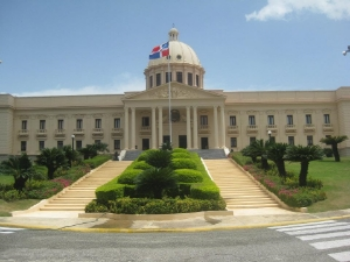
Capitol Building in Santo Domingo, DR

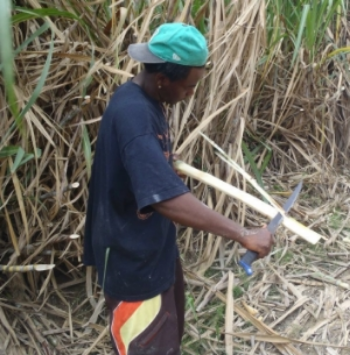
In July 2012, I lived within the sugar cane communities of the Dominican Republic, known as the “Bateyes,” as a volunteer for Save the Children, a nonprofit that advocates for children’s rights. Recent media attention to Dominican immigration reform has provoked international criticism for its perceived racial bias, as it threatens to deport thousands of Hatian workers. My experiences on the ground exposed me to some of the hardships that individuals from this region endure. For members of the Bateyes, destitution and food insecurity are systemic challenges that define everyday life. After hours of hard labor under the Caribbean sun, cane cutters earn an average of less than two dollars per day. Walking between the tall sugar stocks on an impromptu tour of a community, a local resident demonstrated the proper way to cut cane. Since the plants are sensitive, agricultural machinery is less effective than individuals with machetes and gardening tools. The man explained that cane cutters leave for the fields at dawn and work until dusk. The only available form of nutrition is the sugar cane, which is absorbed from bits of chewed stock consumed throughout the day. 

Cane cutting demonstration in Bateye Margarita

Back in the communities, families stretch their two-dollar income to purchase food such as rice from the sundry store. When fellow volunteers and I asked the kids at a small, under-resourced school what they wanted to be when they grew up, they were excited to share dreams that resembled those of children everywhere: doctors, police officers, astronauts, and beyond. I thought back to the truck of cane cutters I watched disappear into the fields earlier that day and was reminded of the tragic reality that awaits this population: Undocumented in the eyes of the law, these children will either remain in the Bateyes as workers and wives or else be deported to Haiti. 

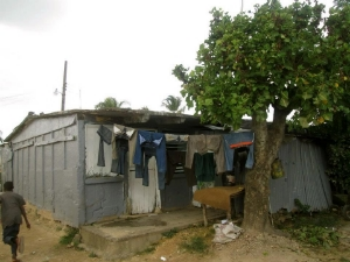
In 2004, Dominican authorities passed an immigration law specifying that children born to undocumented immigrants would be excluded from Dominican nationality. Over the past 50 years, the DR has recruited thousands of Haitian laborers to cut sugar cane under two bilateral agreements signed by the countries in 1959 and 1966. First-person accounts describe a form of modern slavery, in which Haitians were deceived by promises of better opportunities, taken across the border in buses in the middle of the night, then stripped of their papers that declare citizenship status. The impoverished families were left with no alternative but to work in the cane fields and reside in the neglected communities they now call home. 

Typical home in Bateye Experimental

After decades of struggle in the Bateyes, a population that is 90% Haitian, a 2013 Dominican Constitutional Court decision reinterpreted the immigration law. This decision altered the law to extend its definition to individuals born between 1929 and 2010, and ordered government officials to revoke citizenship from those who no longer qualified. A naturalization law was passed the same year as a pathway to gain citizenship, but the process was marred with bureaucratic roadblocks and inconsistencies. The deadline to register passed at the end of June 2015: Almost 200,000 individuals remain at risk of deportation back to Haiti. 

During my time in the Bateyes, I stayed at a quasi-hostel run by a missionary. In addition to lodging, the woman created a pathway for the undocumented to restore their citizenship. While her service has provided an opportunity to rise above the inescapable cycle, the cost is $40 dollars (American). It often takes years — if not decades or a lifetime — to save that much money. And since the communities are nestled across a large swath of farmland, the missionary shared stories of people walking up to 18 miles to reach her office. The line is always out the door, and if the father of a household is the one to obtain the papers, he has to take a day off work. 

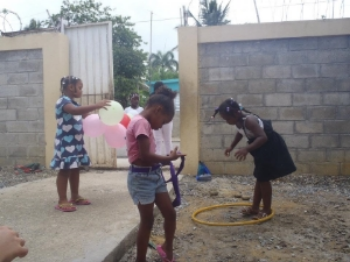
Children at play in Bateye Don Juan

A long legacy of racial and political tensions between the two countries that divide the island of Hispaniola contributes to a national ambivalence toward the situation. Sugar is also one of the Dominican Republic’s most lucrative exports. One of the main buyers is Hershey, which is popular in countries like the United States. As consumers, it is our responsibility to be conscious of the supply chain behind the products we purchase: Ignorance should not be an excuse. 

While inflammatory headlines such as Huffington Post’s “Thousands Woke Up At Risk Of Deportation In The Dominican Republic. Almost All Of Them Are Black,” help shed light upon the issue, they also run the risk of dehumanizing what’s occurring. International pressure has prompted the DR to reform policy in the past, but another way to help these people is to practice conscious consumerism. Choosing not to buy products that contain sugar from the Dominican Bateyes, for example,candy from The Hershey Company, demonstrates individual dissatisfaction with abusive work practices. I am grateful for my opportunity to have volunteered in the sugar cane communities and will never forget the people I worked alongside during that time.


SARAH SUTPHIN

Sarah is an undergraduate at Yale University and a content editor for CATALYST. As a traveler who has visited 30 countries (and counting!), she feels passionate about international development through sustainable mechanisms. Sarah has taken an interest in the intersection between public health and theater, and hopes to create a program that utilizes these disciplines for community empowerment. She is a fluent Spanish speaker with plans to take residence in Latin American after graduation. 

Bridging the Inequality Gap for Panama’s Darién Province

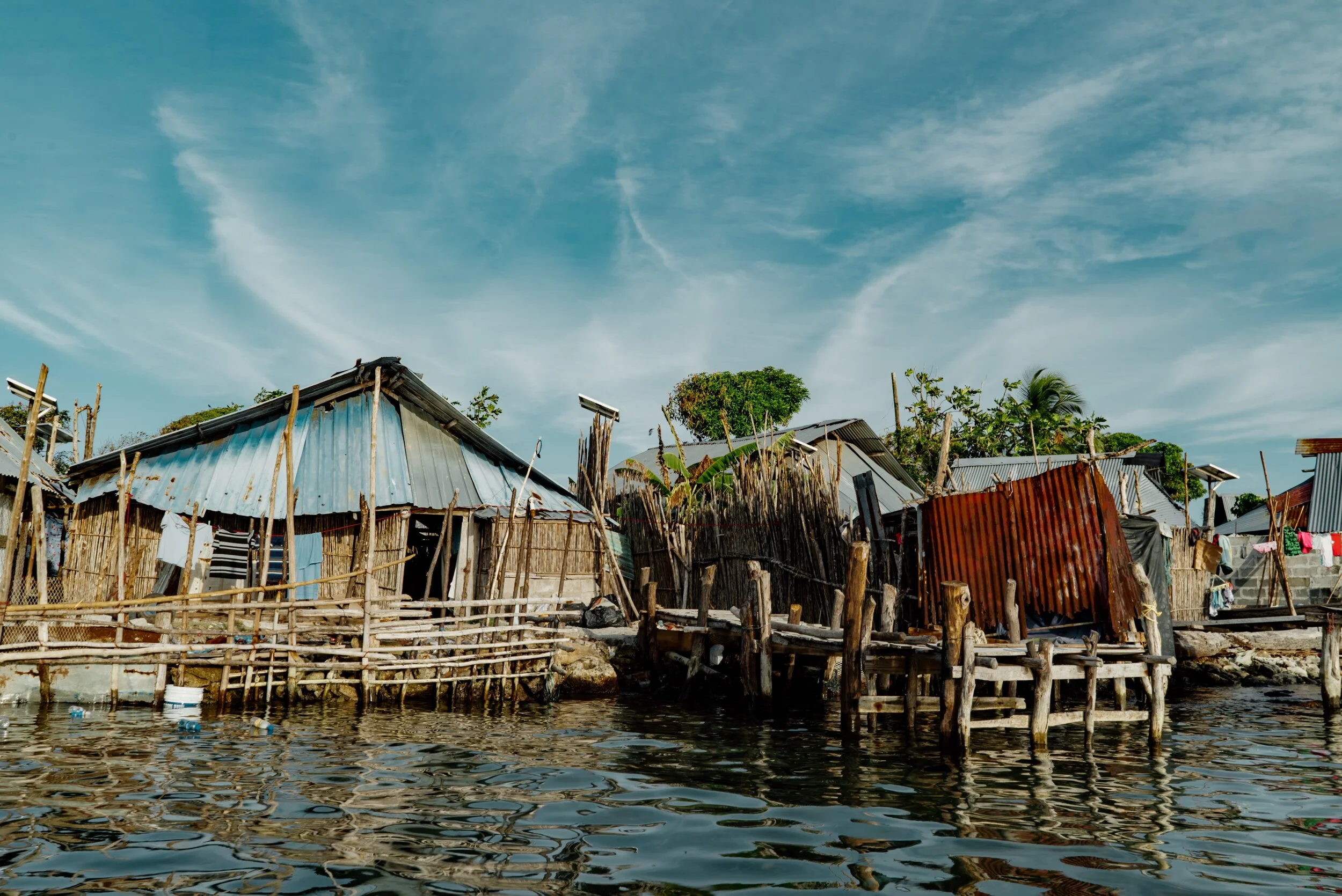
Photo by Katie Chen on Unsplash

The Gallup-Healthways Global Well-Being Index has ranked residents of Panama as the leaders in “well-being” for two consecutive years. However, three weeks in communities of the Darién province exposed me to the destitution and gubernatorial neglect that blankets this eastern region. Inhabitants of the Darién have been stigmatized, leaving them without access to clean water, health care facilities, or economic opportunity. My experience led me not only to question the validity of the Index, but also to consider the ways we can empower a forgotten sub-population.

“A little further down the road, you’ll find that it comes to an end,” my local Panamanian guide remarked while en route to the compound where we reside for the following three weeks. At the time, the idea of a place with no road was beyond comprehension. How could people stay connected? How could they receive supplies? The answer to these questions is simple —they don’t.

Soon after arriving in Panama, I began to comprehend the “Darién Gap” which is a 99-mile swath of undeveloped swampland and forest located within Panama’s Darién province — a symbol of the many development projects that have been discontinued in the region over the past decades. I found that the double-edged sword of indigenous isolation offers cultural preservation on one side, clean water and healthcare deficiencies on the other.

The border between Panama and Colombia is the only one in the world that remains unpaved! While the decision to stop construction of the Pan-American Highway provided benefits to some groups, such as law enforcement officers against drug traffickers and indigenous inhabitants of the Gap who wish to preserve a traditional lifestyle, it also resulted in neglect of an entire region. With the fastest-growing economy in the Americas, Panama now has an opportunity to improve the quality of life for all of its citizens. Yet, despite the recent boom, the nation has the greatest economic inequality in the Americas with nearly 40 percent of the country living in poverty. Many of those who endure economic destitution live in the eastern half of the country, particularly in the Darién. 

My three weeks in Panama were dedicated to community visits throughout this beleaguered province. We met with officials and members of individual households, and conducted surveys to determine the accessibility to fundamental necessities, such as clean water, health care, and education. I was an intern for a nonprofit based in Panama City, but which conducts most of its projects with American undergraduates serving communities of the Darién. This nonprofit creates partnerships with communities located in proximity to a road or a rocky pathway that Panamanian officials call highway. More indigenous groups are sheltered within the Darién Gap, undisturbed and unacknowledged.

According to community members who responded to our surveys in July 2014, lack of access to clean water is the main problem affecting daily life for an appreciable number of residents in the Darién province. Although the Panamanian government’s Ministry of Health is responsible for water distribution by means of aqueduct systems, complications such as project incompletion, water shortages, pipeline damages, and contamination from pesticides/animals inhibit achievement of the goal. Residents described complex, inconsistent, and seasonally based methods for receiving water. In the past, families might go two months without water when a government-constructed pipeline to a water tank is broken. When water finally arrives, it will sometimes come out dirty or contaminated from passage through farmland. 

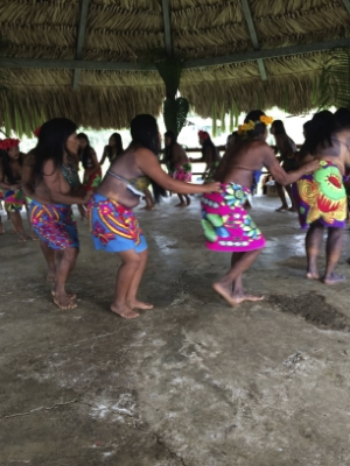
Observation and conversation with members of various communities taught me that collaboration between locals and external, resource-rich groups has been a driver for successful growth in this area. Yet, one person I met described the Darién province as “the temple of abandoned development projects” for the number of missionary and nonprofit groups that have attempted and failed to provide assistance to families in the greatest need. In an indigenous community named Emberá Puru, I noticed little blue water filters strewn about the property. The leaders explained that a missionary group had provided over 100 filters, but not explained how to use them. The group left after a week of what could be described as “voluntourism” — volunteering abroad that resembles a tourism opportunity — and the community was left with pieces of plastic polluting the land.

The neglected Darién province is not a unique case. Panamanians from other parts of the country (like Panama City) expressed surprise and/or distaste when my group revealed we were working in this eastern region. These people hold onto misconceptions, such as the idea that the Darién is filled with dangerous members of drug cartels or that it’s a completely unlivable swampland.

While the “Darién Gap” might lack a constructed road, the population of this area has done its best to overcome deficiency through resiliency. When a government or its people show indifference toward improving the lives of an entire population sector, outside measures need to be taken to reduce inequality. However, these outside measures should also be performed through culturally conscious and responsible mechanisms in order to achieve sustainable success. No clear-cut solution exists to resolve problems such as clean water, healthcare, and education inaccessibility in the Darién province, Panama. However, creative and collaborative efforts have the power to mediate substandard conditions and to catalyze change one household at a time.


SARAH SUTPHIN

Sarah is an undergraduate at Yale University and a content editor for CATALYST. As a traveler who has visited 30 countries (and counting!), she feels passionate about international development through sustainable mechanisms. Sarah has taken an interest in the intersection between public health and theater, and hopes to create a program that utilizes these disciplines for community empowerment. She is a fluent Spanish speaker with plans to take residence in Latin American after graduation. 

The Peace Corps in Rwanda, Part 2

A Peace Corps Christmas in Rwanda

In my last update, I talked a bit about the path that led me to the Peace Corps and the basics of the three-month training program that was my day-to-day life. For a while, most of that remained unchanged. After returning from visiting my final site outside Nyungwe National Park, I was back to the grind of daily Kinyarwanda lessons; classroom management sessions, and any other miscellaneous bit of training that the Peace Corps deemed necessary for its education volunteers.

I mentioned in my first post how the community-based training program, while undeniably effective when it comes to integration and language acquisition, can quickly leave you desperate for just a small taste of the familiar. As soon as we had the chance, we all embraced that ideal wholeheartedly with the help of surprise birthday parties, pumpkin carving for Halloween, a massive collaborative Thanksgiving dinner, and most recently coming back together for Christmas and New Year’s celebrations.

Admittedly, some of the days have felt long and drawn out, but it’s amazing how fast the weeks have flown by. As I write this, my training has finished and I have been officially sworn in as an official Peace Corps Volunteer. After three months of training as a group, we are now scattered around the country in the communities that we will be working in for the next two years. The whole transition is a somewhat bittersweet. While I’m experiencing a freedom that I haven’t had for what seems like an eternity, it also means separating myself from the people, both in my host family and training group, that I’ve grown close to over the past months. In addition, as an education volunteer, I was installed on site during the holiday break. This meant that for a while there was little for me to do but hang out in the school offices or walk around and introduce myself (a bit of a challenge since most of the people in the community assume, at first glance, that I’m the same volunteer that has been working here the past two years).

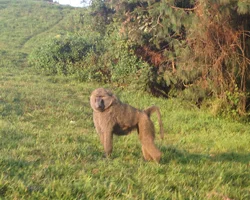
On top of the conflicts that come from simultaneous feelings of freedom, boredom, and missing friends, I’ve been finding that my site is in an unusual limbo of classic Peace Corps life and unexpected luxury. I can start my day with a bucket bath and hand washing a load of laundry, followed by browsing the web in my school’s modern offices. I can then head up a partially eroded hillside staircase past a couple troops of baboons and struggle to light a charcoal stove in order to cook dinner. I can lounge in my tile-floored house and watch a movie, only to be woken up in the middle of night to chase mice out of the room.

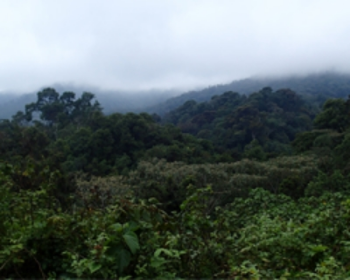
To be clear, none of these are meant as complaints; just the opposite. I was all set to be handling all these things and more, but my assignment here is most definitely not what I was expecting from the Peace Corps (in the best possible way). Just walking around the campus is an experience in itself, with forested hills stretching into the distance as far as the eye can see. 

I cannot wait to get started with my work here, although that still seems to be a long way off. While the semester for the rest of my colleagues started last week, I’m here to teach at a school for conservation and environmental management that has the students completing internships around the country for their first month. As a result, I’ve got a nice, long, and quite possibly cabin fever-inducing chunk of time off before I can begin teaching in February.

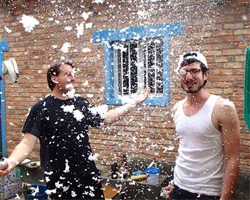
Thankfully, I’ve been able to stave off boredom by traveling for the holidays, visiting friends and getting to see a bit more of Rwanda in the process. The festivities made it a little more like home with the help of cheap Christmas decorations bought in the capital, a tiny plastic tree, and a can or two of white foam marketed as ‘fake snow’ (a surprisingly good substitute for a white Christmas, once you get past the lingering soap smell in the air). But now the holidays have come and gone and everyone is getting to work for the New Year, so it’s back to site for me. With any luck I’ll be able to find some projects to pass the time and supply me with some good stories moving forward.

READ SCOTT'S FIRST UPDATE ON THE PEACE CORPS IN RWANDA.


SCOTT JENKINS

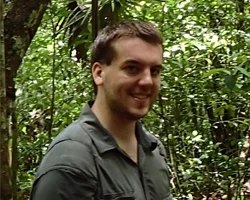
Scott Jenkins grew up in Ridgewood, NJ and graduated from NYU in 2012 with a degree in Anthropology and Linguistics. His passion for travel, adventure, and helping others led him to apply to the Peace Corps in September of 2012. He was invited to teach in Rwanda, where he is currently serving for the next two years. 

The Peace Corps in Rwanda, Part 1

I’ve known for a while now that I wanted to work abroad, even though I only recently figured out what I want to do with my life. I studied Anthropology and Linguistics at NYU, traveled when I could, spent a semester in Ghana, and since graduating in 2012 I had been searching high and low for positions in countless NGO’s, volunteer organizations, ecotourism companies, even the Foreign Service. Nothing was working out, until last September when I applied to the Peace Corps.

            Like a lot of people my age, I had heard of the Peace Corps in passing but had never really given it much thought. Young Americans heading off to teach abroad is hardly a novel concept anymore, with more organizations and programs offering that sort of position than you can count. And while I may not have been entirely sure of my future aspirations, being a teacher had never been at the top of my list. Nevertheless, I put in my application and started crossing my fingers to be placed in one of the environmental or agricultural programs run by the Peace Corps. Lo and behold, however, I received my invitation to serve in Rwanda as a secondary school teacher, leaving in September 2013. It wouldn’t have been my first choice, but the more I looked into things and now that I’m here in country, I don’t think I could have asked for better.

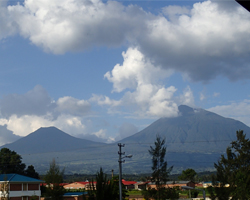
            When most people (my former self included) think of Rwanda, all that comes to mind is the genocide that took place in 1994. It has been nearly twenty years since that tragedy, however, and the strides that Rwandans have been able to make in that time is nothing short of astonishing. Add to that the natural beauty of the country – mountains, volcanoes, rainforests, and rolling green hills as far as the eye can see – and you have a place that I am beyond lucky to be living in for the next 26 months of my life.

            When you join the Peace Corps, you spend three months of training in-country before heading off to your final site. That training is where I am now, about one month into the thick of it. There are 34 volunteers in total here, each of us paired with a different Rwandan host family throughout the district of Kamonyi, a relatively short drive from the capital city of Kigali. I was placed, as were a decent number of my fellow volunteers, with a farming family in one of the many small towns within the district. Most of us have at least limited access to electricity in our homes, although running water is still, and I’m sorry in advance for the pun, a bit of a pipe dream. While this hasn’t been my first brush with bucket baths, hole-in-the-ground latrines, or hand-washing laundry, it still seems surreal to me that this is what life will look like for some time to come.

            Day to day, there’s not much variation to speak of. When I’m not spending the day studying the local language of Kinyarwanda I’m listening to a lecture on Peace Corps policy, safety procedures, or the Rwandan education system. I was warned that training feels like the longest and hardest part of service and I’m always looking at the light at the end of the tunnel, but sometimes that’s easier said than done. After a couple days of complete immersion, it’s amazing what a relief it is just to hear a few simple words of English. On the other hand, however, I can’t deny that the Peace Corps approach to language training works like a dream. On my first night here in the village I sat in awkward silence with my host family, occasionally trying my hand at some cross-cultural charades to try to explain something. Now, less than a month later, I can show up to the dinner table and have a pleasant, albeit simple, conversation with my host parents.

           A lot of things seem to move slowly around here, but one happy exception to the rule was the early announcement of our final site placements. Just this past week, we were each assigned to our permanent positions throughout the country and given a couple of days off to go visit and get a feel for what our actual service will look like. Since training can tend to seem a bit repetitive, this trip has been a much-needed break in the monotony of Kinyarwanda lessons and technical training. I am beyond ecstatic to announce that I will be teaching at the Kitabi College of Conservation and Environmental Management (KCCEM) in the Nyamagabe District down in the Southern Province. Although my primary job description is still teaching English, my post is incredibly different from all of the others in the country. Rather than a crowded secondary school with classes numbering around fifty young students, KCCEM caters to a small class (only around twenty students in total) of park rangers from Rwanda and the surrounding countries. In addition to teaching English, I will have my choice of any side projects that I might want to try my hand at – an especially exciting prospect given our proximity to Nyungwe National Park, a mountainous rainforest that is home to an overwhelming diversity of flora and fauna. I’m also particularly excited to be able to continue one of my hobbies from home and get involved in the large beekeeping cooperative here in the town of Kitabi.

Having finished my site visit, I know that my time in the Peace Corps will be far from the normal experience that most volunteers have. Even so, I wouldn’t change it for the world – this school is a better fit than I could have ever hoped for and I’m looking forward to making the most of every moment I have here. There will be more updates to come as I make my way through my service and I hope that you’ll all be as excited as I am to see what Rwanda has in store for me.


SCOTT JENKINS

Scott Jenkins grew up in Ridgewood, NJ and graduated from NYU in 2012 with a degree in Anthropology and Linguistics. His passion for travel, adventure, and helping others led him to apply to the Peace Corps in September of 2012. He was invited to teach in Rwanda, where he is currently serving for the next two years. 


Interview with Taylor Conroy: A New Model for Philanthropy

CATALYST speaks with Taylor Conroy about why it's time to abandon the "broken" traditional model of philanthropy and what it means to "devote his life to the world."

Tell us more about your theory that the traditional model of nonprofit fundraising—as you say the one where "organizations use guilt to make people cough up cash"—is broken. Is it time for us to abandon this model completely? 

Yes. As in it should’ve ended YESTERDAY. That system has been broken since it was devised in the first place. While it may have started from a place of people really just wanting to help, it has been bastardized and overdone to epic proportions. I believe that though this "model” is in place to raise funds to decrease poverty, it actually increases it. The model perpetuates a separateness mentality by making people who are likely proud, beautiful, wonderful people into "them." It makes westerners look at people in poverty as very different from "us," and they are not. 

If we in the developed world knew that one of our siblings was starving, malnourished and exposed to diseases that were easily preventable we wouldn't stand for it. Same as if it was a friend of ours. Why? Because we feel connected to them. We look at our siblings or friends as the same as us—and thus we would never stand for seeing them in unnecessary pain. When we see pictures of people in the developing world, we don't look at them as being the same as us. So we tolerate it. And poverty porn—which is exactly what those images are—is part of the reason we tolerate it.

What made you decide to give 10% of your income away to causes you care about? Especially when you were driving a car with no reverse and only had 3 t-shirts in your outfit rotation? 

My life coach told me to. I had just hired her, and thought she was nuts. I had gone to her to learn how to make money, not give it away. She insisted. She had a nice big house on the ocean… I had a crappy rented basement suite, so I took her advice. I thought I would wait till I made money to give it, until I heard this: "If you won't give 10 cents out of a dollar, you will never give $100,000 out of a million."

As you know, social media can be an incredibly valuable tool for galvanizing money and support. There’s been a lot of debate, especially after the Invisible Children’s Kony video, about how social media is used to bring attention to humanitarian issues. How do you use social media/the internet to make a difference, without oversimplifying or stripping the issues of substance? 

I don't use it to make a difference, and thus I don't have to worry about over simplifying or stripping anything. I use social media to share what I am up to and to be social because that's what it's for. The Kony 2012 video will be getting analyzed up and down for years. People will use it to hear themselves talk and feel like they know what they are talking about by saying it was positive or it was negative, when really, no one can know. We cannot see what is going to happen in the next 10 years because of it, or what will not happen because of it.

You wrote on your website, “I vowed to devote my life to the world for all of 2012.” What does devoting your life to the world mean? 

That I would be of as much service to the world as possible for one year, without thinking about my own profit or advancement whatsoever. I would use, "is this the best thing I could be doing for the world" as my decision maker and only do what was my highest and best use for the world. Keep in mind though, I am a believer that the more fun I am having, the better my work is, and that one needs to be happy personally FIRST, before being able to make others happy. So I concentrate just as much energy on making sure I am very happy.

In your TED talk you mention books that make you think “if everyone read this book, the world would be a better place.” What books have inspired you? 

Half the Sky. I am going to leave it at just that one for now.

What’s the one thing you can’t travel without? 

Audio books. Do you have any idea how much you can learn while in airports?!!?! I crush an audio book or two on every trip. As soon as I get into the airport, the headphones are in and I am learning about ancient spiritual teachings, world issues, great entrepreneurs, or how to have better sex. I love audiobooks… and if you listen to them on an iPhone, you can double the speed and rip through ‘em.

What advice would you give to a young person working full time with a limited salary who wants to make a difference in the world? 

I wouldn't give them advice, because the biggest thing I have learned after doing this stuff is that I don't know anything. Everyone is different, and everyone has their own special thing to give. I just happen to be in a place where I feel I should be doing things on a big scale. But that will pass. I know that within the next 5 years, I will move into a new phase, and to tell you the truth, that phase may involve me meditating in a cave in India for a few years. All I know is I am going to keep doing what I think is right for me to be doing right NOW, ‘cause that's all I got.

Now that you’ve shown the world that you can raise $5000 with a text message, and $10,000 to build a school in 3 hours, what’s next for Taylor Conroy? 

Raising $10,000,000 to build over 1000 schools, libraries, water projects, and more to improve the lives of 1,000,000 deserving people in 10 countries. Then I’m going surfing.


What's Wrong with a Box of Toys?

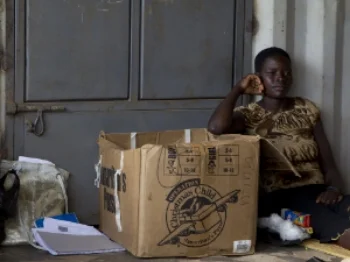
It’s December 10th and Tom, Saskia and I have come to the half-completed Karin Children’s Clinic to watch a local women’s group hold a weekly meeting to discuss administrative matters. They manage projects from beadmaking to raising livestock on a pay-it-forward scheme amongst various families in the group. A man from the Heifer Foundation is busy reporting on the status of the cow breeding program. Nobody seems particularly impressed. I feel hot, having decided to stand outside to take pictures of the proceedings. We have arrived in time for what appears to be the last item on the day’s agenda. The opening of a large cardboard box with a Samaritan’s Purse logo on the side. I sigh.

The last memory I have of Samaritan’s Purse was seeing a manicured lawn and suburban house with SP signage square in the middle of an Ethiopian village that appeared wholly undeveloped. I still use that sight as a metaphor for badly-intended aid. Aid spent on the expats, not the community. What little I know of them, they seem to be a faith-based organisation of some kind. With, I suspect, much of the naive worldview that it entails. They are also somehow responsible for the arrival of The Box. The lady leading the meeting reads out a letter that came with The Box. I roll my eyes. 

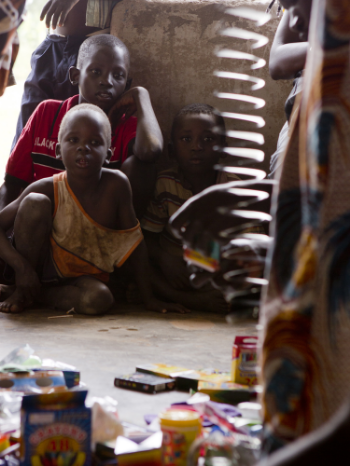
Everyone applauds. The Box is opened. Pens and pencils are first apportioned out to the various parents in the group, so that they can hand them on to their kids for their school work. Then the remaining toys are handed out to the parents and to some additional children who have taken to looking at the proceedings with wide eyes. There was a huge collection of toys, many of which I would have considered trading my brother for in my youth. 

There was a slinky, and a stuffed green amphibian of some sort, as well as plasticine, koki pens, stickers, bubbles and all manner of other fun things. The toys were warmly received by children and parents alike. The kids who were in attendance went outside immediately to play with their allocated toys. One who had received a toy parachutist would throw it up in the air and catch it again in delight as it floated back down with an open parachute. Then throw it again immediately, over and over. Another who had stickers (but nothing on which to immediately stick them) promptly covered himself and his nearest friend. The point here, is that everyone loved the toys.

I had stopped my ‘holier-than-thou eye rolling at this point, having replaced it with a sort of philosophical confusion that I have still not managed to reconcile. On the one hand, I think that glee boxes full of toys like this are little more than a guilty West trying to salve its conscience with a dollop of God-inspired charity. The structural features in the relationship between the US and places like Uganda that brought about this inequality and sustain it (in the larger sense) remain as strong as they ever were. So you have some toys. Whoop. It would be even nicer if the people in the world with the money and the guns had made sure you had a better life from the beginning. If they had used them more responsibly, more humanely.

And yet.

There is no denying that this lone box, for all my bitching and angst against international politics, really did bring a good deal of joy. That the community of the Fairview Baptist Church probably meant well when they sent it. This box of toys was never intended to make the US get firmer about catching LRA leaders, or stop its corporations buying the minerals from the neighbouring  DRC. The ones which pay for continued bloodletting. Nope. The single, carefully-packed purpose of this box was to reach some children who had no toys, and give them the joy of the parachuting man. The stickers you can stick on your friends. A green frog toy.

So can I judge them wrong for sending it? Would I prefer that the box had never been posted, and that the Fairview Baptist Church had instead gone to picket Congress?

In my heart, honestly, I would have to pick The Box.

And then there are the pictures. I deeply dislike the stereotype that the kids in raggedy-looking clothing looking at the box of toys represents. They are pictures that I would refuse to allow published because they say all the wrong things to people who weren’t there to see them as live, happy, rich individuals. But what other pictures do you take to tell the story of kids waiting on a box of brand new toys? And if those are the pictures you end up with, should you never show them at all?

The pictures lie. Partly because they aren’t everything, and partly because we are so conditioned to respond to photographs like these with pity. Which can be powerfully dehumanizing and completely the wrong response. But rather than nothing at all, take the images as a poor facsimile of reality.

They won’t tell the story, just as that box won’t fix poverty. But they are an innocent effort by people who mean well. And wish to do better.


Richard Stupart is a freelance photojournalist with an interest in postconfilct recovery and representations of Africa. He writes regularly at www.wheretheroadgoes.com