
In the face of limited equality for LGBTQ+ individuals across the globe, these activists are dedicating their lives to raising awareness and making change in their home countries.
Read MoreBikepacking 101: Everything You Need to Know About the Growing Trend
Distinct from bike touring, bikepacking emphasizes off-road adventure, minimalism and freedom of movement — the pursuit has grown enormously in popularity in recent years.
Read MoreSelling Citizenship: A Saving Grace or Path to Corruption?
Numerous programs offering citizenship in exchange for hefty investments have popped up worldwide, bringing problems and questions along.
Read MoreGlobal Pride Amid Rising Hostility Toward LGBTQ+ Communities
LGBTQ+ Pride has grown massively in scale and support since its emergence, but many cities around the world have either maintained or enacted threatening legislation undermining the event.
Read MoreThe Ethical Questions Surrounding “Dark Tourism”
“Dark tourism” attracts modern visitors to horrific sites, from concentration camps to war memorials, to view historical atrocities.
Read MoreOff the Beaten Path: 10 Places to Escape Overtourism
In a travel-hungry world, it’s time to celebrate lesser-known treasures while prioritizing eco-consciousness, intimacy and crowd-free escapes.
Read MoreThe 8 Best Sustainable Travel Companies
Booking a trip with a responsible tourism company can help ensure that you leave a positive impact on the communities you visit.
Read More10 Places to See Before They Disappear
The casualties of industrialization and climate change.
Read More7 Loving Mother’s Day Traditions Across the Globe
From observing religious customs to simply gifting their mothers flowers, individuals around the world take part in cherishing maternal figures through their own Mother’s Day celebrations.
Read MoreOpening the World to Deaf Travelers with Lily Yu
Zoe Lodge
The creator of Deaf Journey strives to make travel more accessible, one destination at a time.
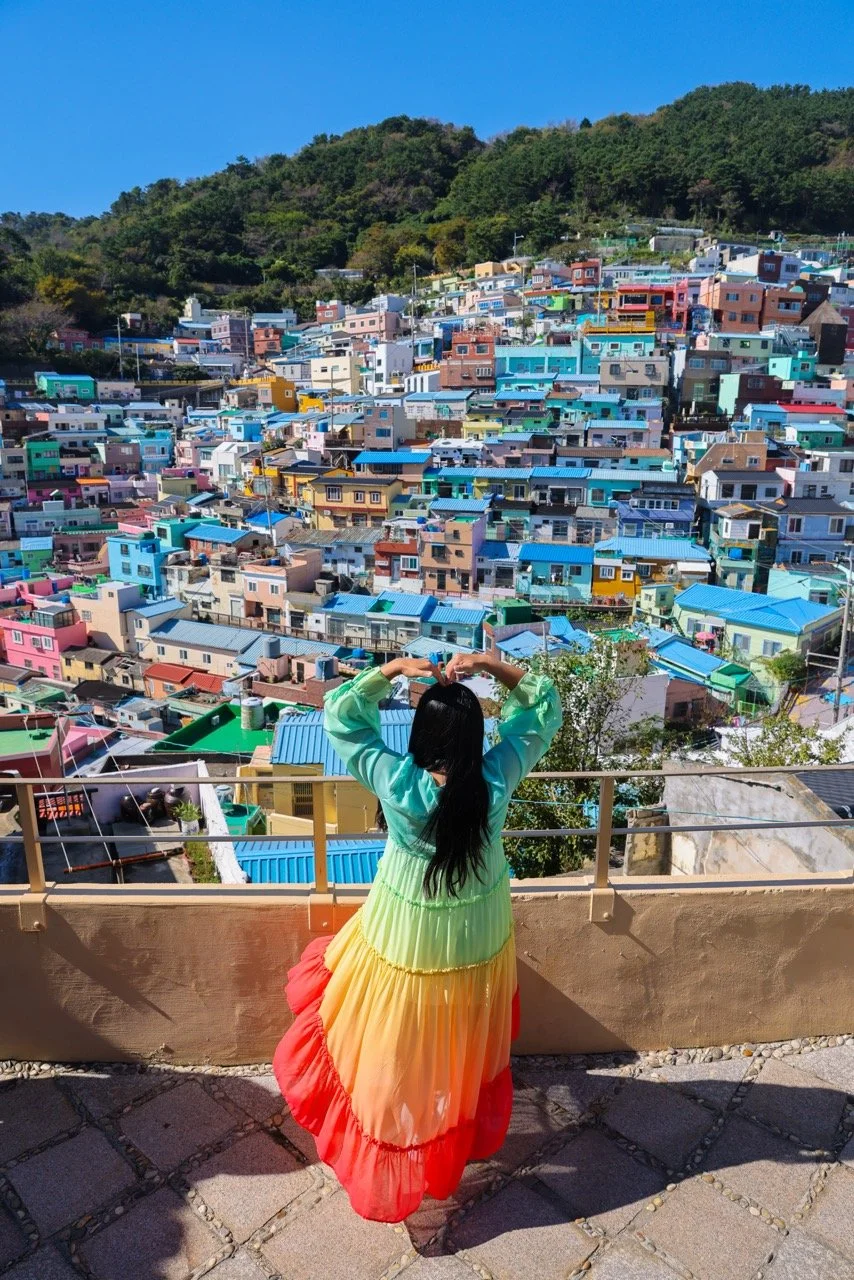
Gamcheon Culture Village in Busan, Korea.
When Lily Yu and her husband, Daniel Heidemeyer, both deaf individuals, began sharing travel photos on social media in 2018, she didn’t expect it to grow into a viral movement and a new career opportunity. What began as a private account for friends and family soon evolved into Deaf Journey, a travel media brand focused on sharing accessible guides, amassing over 100,000 followers across Instagram, Facebook, TikTok, YouTube and her blog.
Yu’s mission goes far beyond that of a typical content creator focused on travel. As a deaf traveler, she’s become a leading advocate for accessible travel, working to ensure that deaf and other disabled individuals are considered and included in every part of the travel experience, from hotel rooms to museum tours. “I want to make sure traveling is accessible for the deaf community,” Yu says. “That means having interpreters, flashing light fire alarms and visual doorbells in hotels, and captions or transcripts in museums and tours.”
Yu was raised on the East Coast and is a graduate of Gallaudet University, America’s only liberal arts university for the deaf. She began her travel content journey by posting photos from her trips for close friends. “People would ask, ‘How did you find that place?’” she said. “So I kept sharing, and then my husband and I created a public account. That’s when Deaf Journey really began.” Since then, the couple has traveled across all 50 U.S. states, partnered with nearly 40 tourism boards and visited 54 countries. Her husband often handles videography, while Yu takes the lead on editing and blogging. “I love writing and sharing stories that not only inspire but also educate,” she said.
Traveling while deaf presents unique challenges. Yu pointed out that travel accessibility tends to focus on mobility, including ramps, elevators and wheelchair access, but often allowing deaf-specific needs to fade into the background. “Hotels might have accessible rooms for wheelchairs, but nothing for deaf people. When we’re showering, we can’t hear someone knocking or a fire alarm going off,” she said. “I give advice to hotels about things like flashing light signals, visual doorbells or providing video relay services with interpreters.”
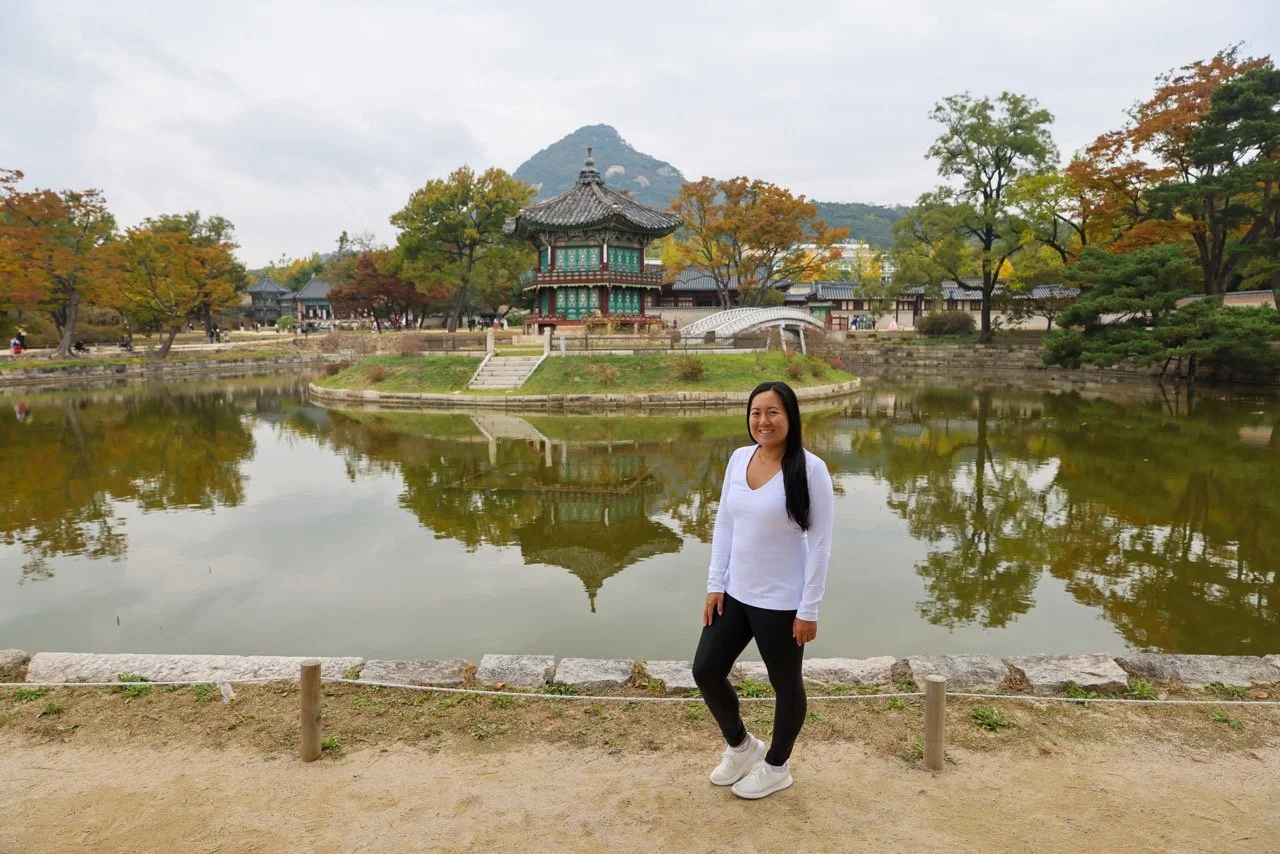
Gyeongbokgung Palace in Seoul, Korea.. Courtesy of Lily Yu.
From the sweeping beauty of national parks to hidden small-town charm, Yu's adventures have offered a broad view of the diverse travel landscape available within the United States. She described the natural beauty of Hawaii, noting the islands as one of her favorite destinations within the U.S. However, Yu was also surprised by smaller cities like Boise, Idaho, and Bentonville, Arkansas. “Boise had amazing food and outdoor activities. Bentonville really impressed me with its modern art museums and bike trails,” she said. “Every place is different, and that’s what makes traveling here so special.”
While visiting every corner of the U.S. was her first major travel goal, Yu is now setting her sights globally. She’s already visited 54 countries and has noted Japan as a particular champion of accessibility. “In Japan, even the soda cans have braille,” she says. “Crosswalks have both visual lights and floor indicators, which are helpful for blind travelers too. And in hotels, you can select your language on digital screens to communicate. I’ve never seen that level of accessibility before.” Yu also shared how museums in places like Ireland and Boston have become exemplary leaders in the world of accessibility. “During our trip to Ireland, the Guinness Storehouse provided us with an iPad featuring an International Sign interpreter. I’m also fluent in International Sign, which is different from American Sign Language (ASL). In Boston, there was a deaf guide giving an ASL tour. That kind of access makes a big difference.”
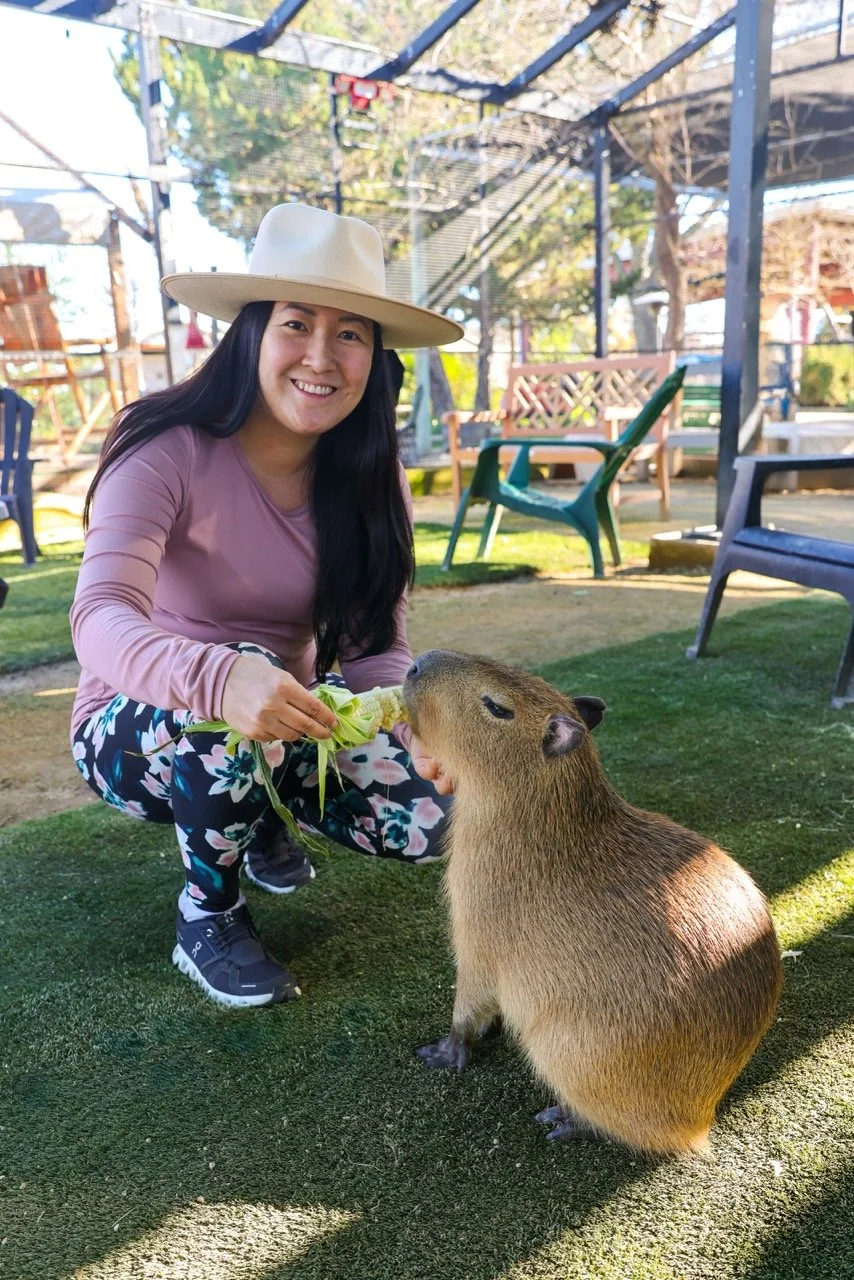
Yu with a capybara at Zoo to You in Paso Robles, California. Courtesy of Lily Yu.
Yu’s vision for Deaf Journey is not just to document her own experiences as a deaf traveler and content creator, but also to provide ease for future travelers. She’s passionate about providing accessibility tips, raising awareness on social media and consulting directly with businesses. “I think spreading awareness is key,” she says. “We need to educate hotels, airlines, museums and tourism boards on how to be more inclusive. And we need to share both the positives and the gaps, what works and what doesn’t, so we can keep improving.” Yu also emphasized the importance of using respectful and inclusive language. “We prefer to be called ‘deaf,’ not ‘hearing impaired,’” she said. “That term feels outdated and even offensive within our community.”
After conquering all 50 states, Yu’s next challenge is tackling the rest of the world, one accessible destination at a time. “I haven’t made a full plan yet,” she said. “TBut I’m hoping to partner with more tourism boards internationally. There’s still so much work to do.” With every post, blog and video, Lily Yu is proving that travel doesn’t have to be outside of the realm of possibility for disabled adventurers. It can, and should, be made accessible for everyone.
Zoe Lodge
Zoe is a student at the University of California, Berkeley, where she is studying English and Politics, Philosophy, & Law. She combines her passion for writing with her love for travel, interest in combatting climate change, and concern for social justice issues.
The Hidden Cost of Counterfeit Luxury
Zoe Lodge
Though the price tag might be tempting, counterfeit goods have a broader negative societal and environmental impact than many realize.
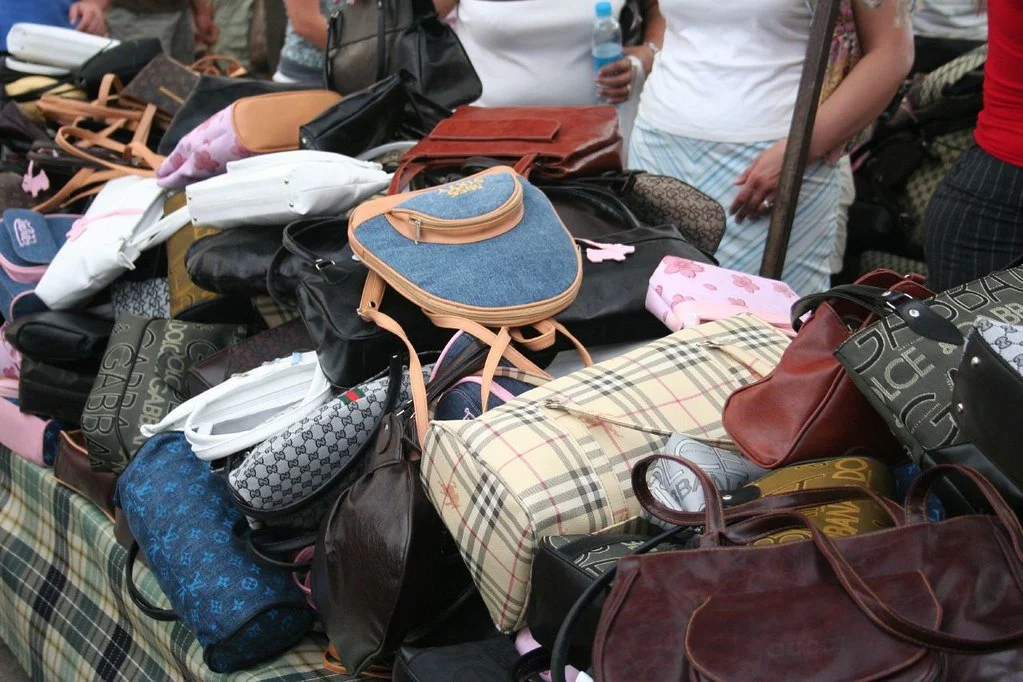
Street stand selling counterfeit bags. Nick Adams. CC BY-NC-SA 2.0.
The counterfeit goods market has expanded dramatically in recent years, moving far beyond street vendors in tourist hotspots to major online marketplaces like Temu, AliExpress and DHGate. Emma Warbey, Detective Chief Inspector of the Police International Property Crime Unit in London, noted that “it’s becoming easier for counterfeit goods to enter the marketplace, with online sales portals, social media, and apps.”
What was once a niche market has become a booming industry, driven in part by social media influencers showcasing “dupe hauls” of fake designer bags, shoes and clothing, promoting the overconsumption of counterfeit luxury goods. While these “dupe” items offer an affordable way to mimic luxury, the reality of their production and ethical impact is far less glamorous.
Luxury fashion is synonymous with exclusivity, as high-end designer items remain out of reach for most consumers due to high prices and limited availability. Through nearly identical copies of luxury items sold at a fraction of the price, counterfeit goods offer an illusion of prestige without the financial burden. Social media influencers have only fueled this trend by normalizing the purchase of fake goods, often describing them as “budget-friendly” alternatives rather than illegal imitations.
Growing demand has created an underground economy that thrives on accessibility and affordability. According to Keith Goldstein, the president and COO of VerifyMe, “the total amount of counterfeit goods sold each year comes in at around $1.7 trillion to $4.5 trillion, which would make counterfeiting at least the tenth largest economy […] It’s also responsible for 2.5 million jobs lost globally.”
Despite their popularity, purchasing counterfeit goods comes with a number of ethical issues. First and foremost, they are illegal to manufacture, sell, and, in many cases, even possess. Many countries have strict intellectual property laws prohibiting the production and distribution of fake designer products, with penalties ranging from hefty fines to imprisonment. Luxury brands invest significant resources in protecting their designs through trademarks, and counterfeit operations directly undermine these efforts.
Additionally, the quality of counterfeit goods is often leagues below the original. Many are made from cheap materials that do not match the durability or craftsmanship of genuine designer pieces. While the items may look similar at first glance, they can fall apart and show signs of wear after minimal use, making them a poor investment even at a lower price point.
Beyond the personal drawbacks of purchasing counterfeit items, the industry itself has serious ethical and environmental implications. Counterfeit production often relies on exploitative labor conditions, including underpaid workers, child labor and unsafe workplaces. Many counterfeit factories operate in countries with weak labor regulations, allowing manufacturers to cut costs and skirt the law at the expense of workers’ rights and safety.
The industry’s environmental impact is equally concerning. Counterfeit goods are frequently produced using toxic materials, synthetic dyes and low-quality plastics that contribute to pollution and waste. The sheer volume of goods produced and shipped worsens global overconsumption, contributing more products to landfills. Unlike reputable brands that are increasingly prioritizing sustainability and ethical sourcing, counterfeit manufacturers have no incentive to follow environmental guidelines. The result is a shadowy industry that promotes unsustainable practices while flooding the market with disposable, low-quality goods.
As counterfeit luxury items continue to gain popularity, consumers must be mindful of their purchasing decisions. The short-term benefit of a cheap designer look comes at the considerably higher cost of legal risks, poor quality, exploitative labor and environmental harm.
GET INVOLVED:
Instead of opting for counterfeits, consumers can explore ethical alternatives by shopping at second-hand luxury markets, designer rental services and brands that prioritize affordability without compromising quality or ethics.
For example, The RealReal is a verified online retailer featuring secondhand designer goods at reasonable prices, allowing consumers to shop at lower cost to both their wallet and the environment.
Apps and websites such as Pickle, Rent the Runway and Nuuly offer short-term rentals of designer items at a fraction of the cost, enabling a cyclical and sustainable use of well-crafted fashion items.
Zoe Lodge
Zoe is a student at the University of California, Berkeley, where she is studying English and Politics, Philosophy, & Law. She combines her passion for writing with her love for travel, interest in combatting climate change, and concern for social justice issues.
WWOOF: Live, Work and Farm for Free Around the World
WWOOF (World Wide Opportunities on Organic Farms) connects travelers with organic farms across over 130 countries, offering room and board in exchange for labor.
Read MoreBeyond the Caribbean, 10 Tropical Escapes the World Over
For those looking to escape frigid winter temperatures, these 10 destinations will satisfy wanderlust while offering tropical climates, beaches, diverse cultures and more.
Read MoreWander Women: 6 of the Safest Destinations for Solo Female Travelers
Around the world, solo trips are becoming increasingly popular. Here are some of the safest places for women to explore on their own.
Read MoreThe Northern Lights: The 6 Best Viewing Destinations
Exploring the top locations around the world for an unforgettable aurora experience.
Read More6 Cool Spots to Escape the Summer Heat
Escape Northern Hemisphere hot spells at these chilly locales.
Read MoreHow to Score Cheap International Flights
International travel doesn't have to break the bank - learn how to find the best deals.
Read MoreSleep Around the World
How do country and age affect how we sleep?
Read MoreThe 10 Most Pet-Friendly Cities Around the World
From the solemn streets of Berlin to the lively waterways of the Netherlands, here are 10 places to visit with your beloved furry friend by your side.
Read MoreThe Great Barrier Reef is Disappearing—Here’s Why That’s Important
With the pressing issues of climate change, the Great Barrier Reef is at risk of vanishing completely, but there are still ways to help.
Read More