
Julia Kelley
In the face of limited equality for LGBTQ+ individuals across the globe, these activists are dedicating their lives to raising awareness and making change in their home countries.
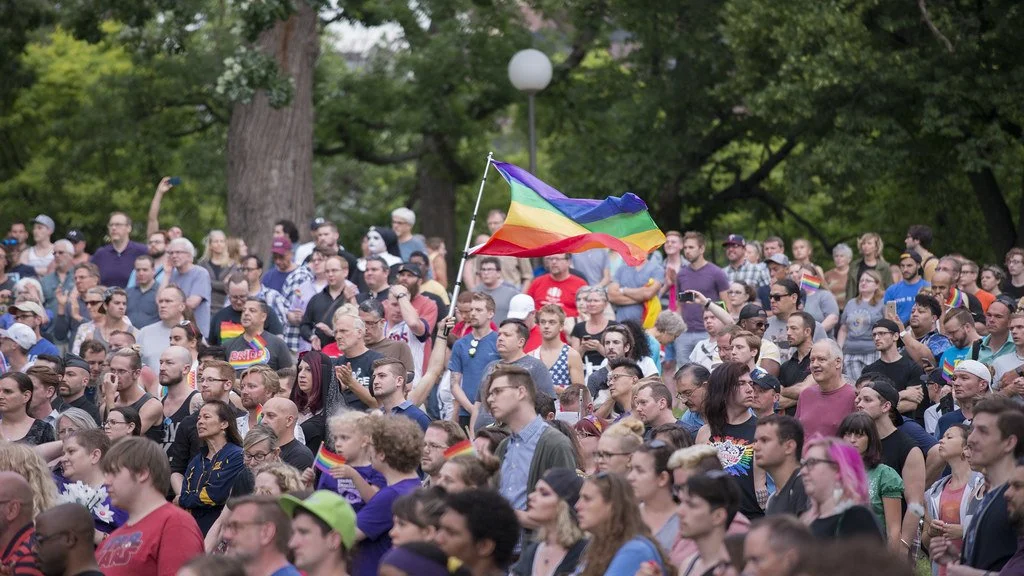
Pride Flag at a Vigil. Fibonacci Blue. CC BY 2.0.
As Pride Month begins in June of every year, members of the LGBTQ+ community around the world celebrate their identities. However, this time also brings a stark reminder of inequality in many different countries. Over the past few decades, LGBTQ+ activism and movements have made significant strides, paving the way for increased equal rights. However, despite many years of positive movement, there is still much work to be done, as millions of LGBTQ+ people still face death or imprisonment in many countries across the globe. LGBTQ+ individuals in such countries and beyond have felt a call to respond to this suppression through activism, working hard and facing threats to bring awareness to the struggles that many in the LGBTQ+ community face and ultimately attain equal rights.
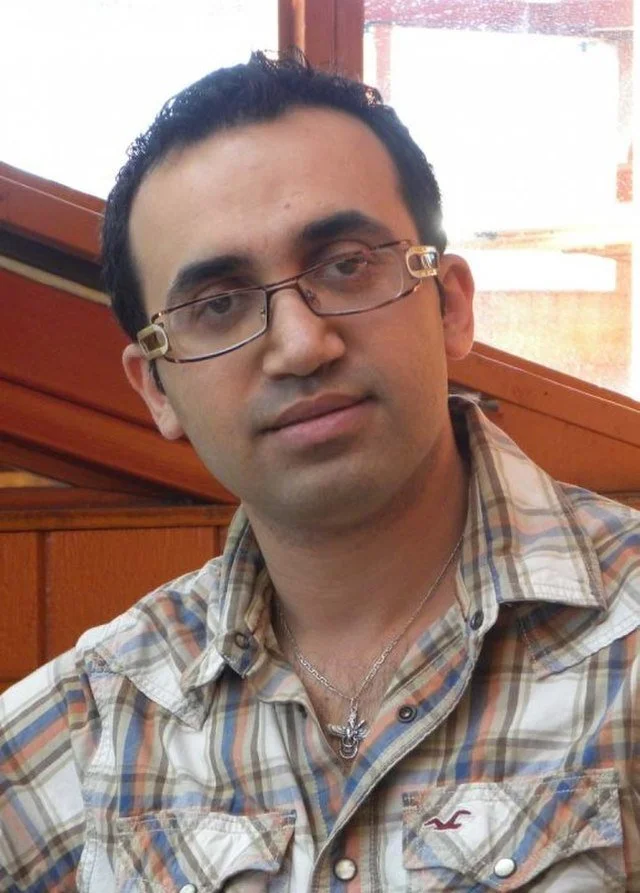
Arsham Parsi. Goshtasbiran. CC0
1. Arsham Parsi
Iran/Canada
Originally from Iran, Arshan Parsi is a queer activist currently living in exile in Canada. In Iran, homosexuality is entirely illegal and punishable by death. Parsi, facing violence and death because of his identity, found refuge in Turkey and then fled to Toronto in 2006, where he continues to advocate for equality in his home country and abroad.
His activism began in Iran when he started using secret chat rooms to unite the country’s LGBTQ+ community. After fleeing to Canada to escape the Iranian police, he founded the Iranian Railroad for Queer Refugees, a nonprofit that seeks to support LGBTQ+ refugees living in Turkey by providing basic necessities, sponsorship and financial and settlement assistance. Today, the organization has helped over 1900 refugees of different nationalities, a majority of whom are Middle Eastern, who have had to flee their homes due to suppressive anti-LGBTQ+ laws.
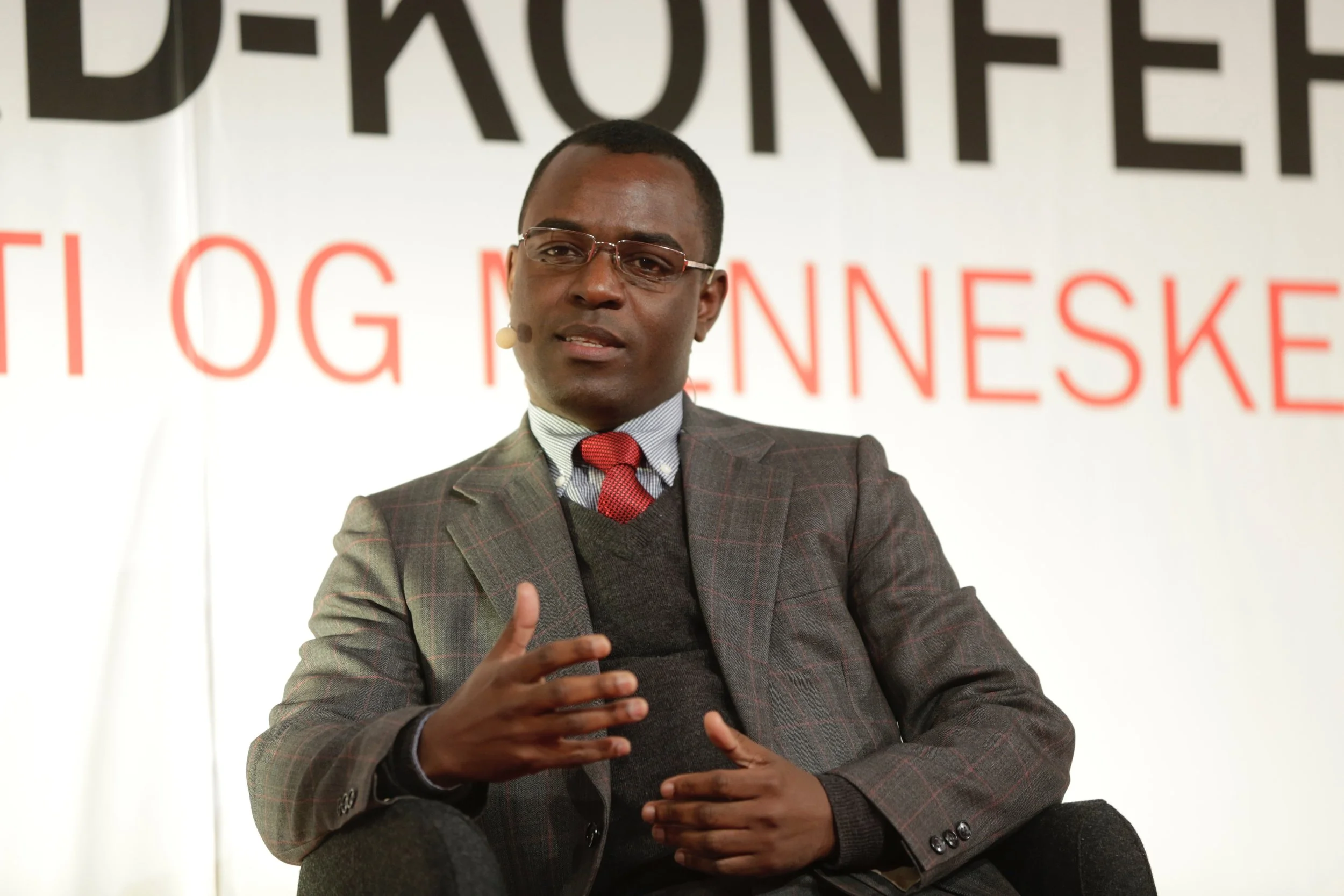
Frank Mugisha. Norwegian Agency for Development Cooperation. CC BY-NC-ND 2.0.
2. Frank Mugisha
Uganda
Much like in Iran, the LGBTQ+ community in Uganda has faced stifling persecution, most recently with the courts upholding the Anti-Homosexuality Act in 2024 that makes way for increased discrimination. Ugandan native Frank Mugisha has dedicated much of his life to fighting against these sentiments. Being openly gay in Uganda since he was young, Mugisha has faced continuous violence and seen his friends killed, risking his own life due to the severity of LGBTQ+ criminalization.
During college in 2004, his activism began with Icebreakers Uganda, an organization dedicated to guiding those coming out to their families, while also providing safe spaces, psychosocial support and sexual education. Additionally, in 2013, after his friend and founder of Sexual Minorities Uganda was murdered after being publicly identified as a gay man, Mugisha became the executive director of the organization, continuing to provide support and bring awareness to LGBTQ+ struggles in Uganda. He remains tremendously outspoken for the Ugandan LGBTQ+ community, especially as discriminatory legislation is passed.
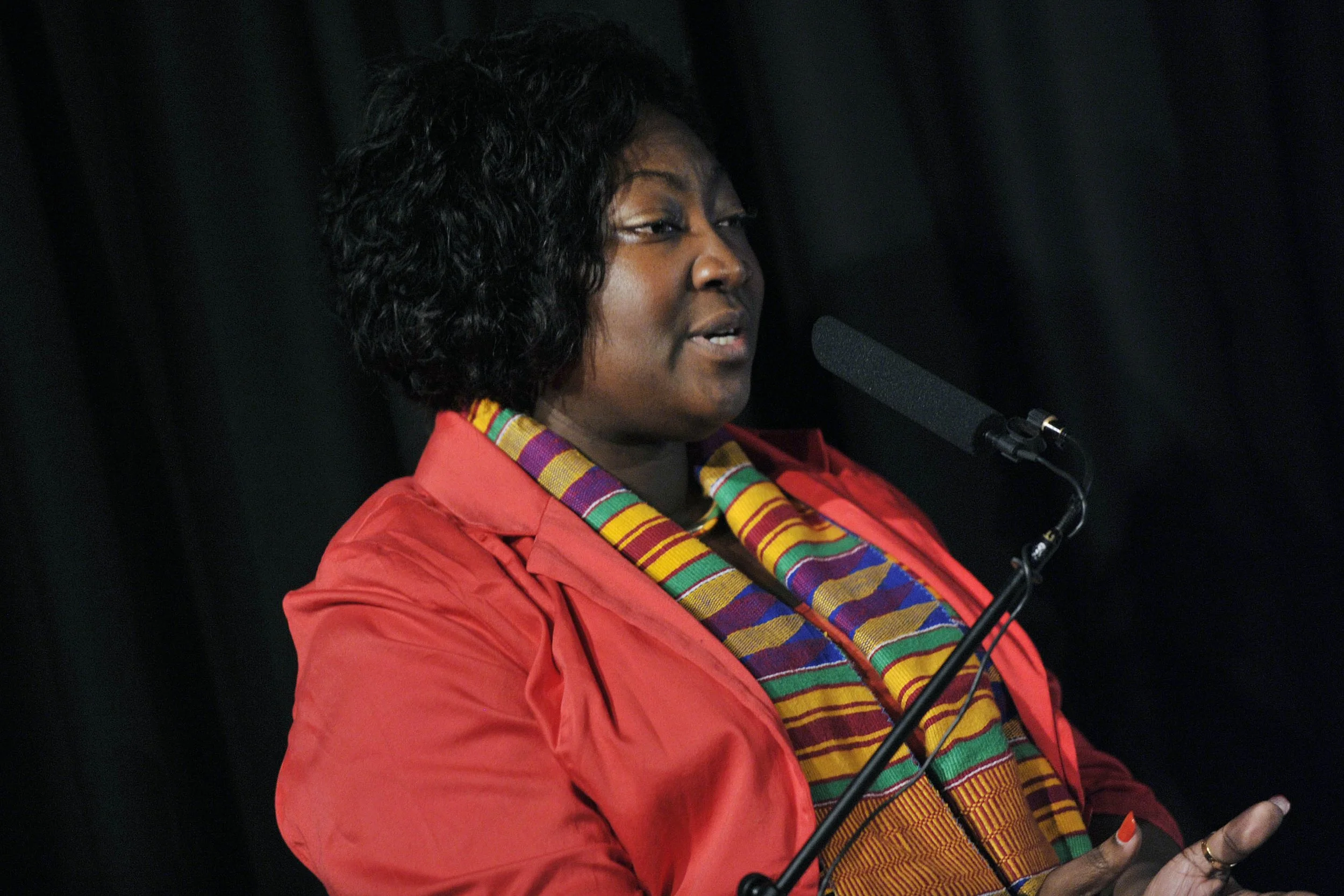
Lady Phyll in March 2014. Sarah Jeynes of http://sarahjeynes.com/ (according to EXIF metadata). CC BY 2.0.
3. Lady Phyll
United Kingdom
Phyll Opoku-Gyimah, better known as Lady Phyll, is a British activist and co-founder and chief executive of U.K. Black Pride, the world’s largest celebration for LGBTQ+ individuals of African, Asian, Caribbean, Latin American and Middle Eastern descent. Conscious of discrimination since she was a young child, Lady Phyll made it her life’s mission to combat the inequality she saw around her.
Her advocacy began while working as a civil servant in trade unions, where she negotiated terms for those working in the Ministry of Justice and the Ministry of Defence, ultimately becoming the union’s head of equality. From there, Opoku-Gyimah worked for five years as CEO of The Kaleidoscope Trust, a nonprofit that campaigns for LGBTQ+ rights worldwide. Additionally, she has developed her activism by working with other LGBTQ+ organizations, such as the Albert Kennedy Trust and Stonewall, as well as writing and editing “Sista!,” an anthology of writings by Black and LGBTQ+ women.
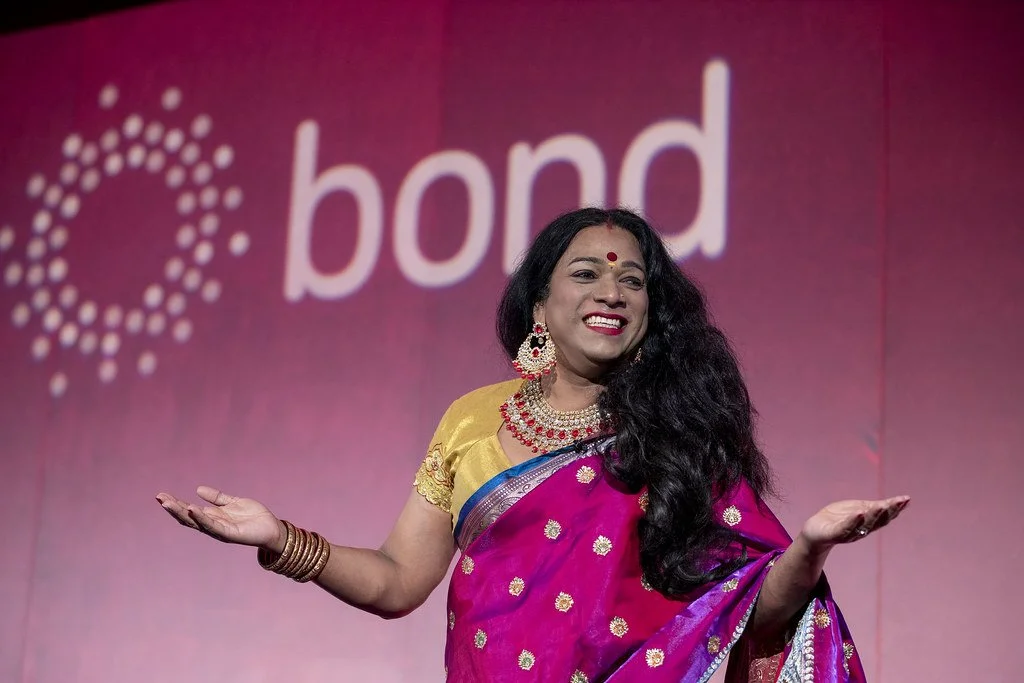
Abhina Aher at Bond Conference, 2019. bondorguk. CC BY-NC 2.0.
4. Abhina Aher
India
Part of India’s “hijra,” or “third gender” community, Abhina Aher has been vocal in her advocacy for transgender empowerment. The LGBTQ+ community in India has experienced expanded rights over the past seven years, with homosexual activity becoming legal in 2018. Transgender individuals have achieved landmark victories with the country’s Supreme Court as well, who recognized the hijra community as a third neutral category next to male and female in 2014.
Aher has been at the front of this advocacy for years, beginning in 2003 when she founded Dancing Queens, a dancing group of transgender and LGBTQ+ members who use the stage to bring awareness to queer rights and visibility. Moreover, she facilitates her activism through many different networks, including working as a program manager for the India HIV/AIDS Alliance and leading HIV/AIDS programs in a nonprofit named Global Action for Trans Equality. She has also been a member of numerous organizations, such as the Asia Pacific Transgender Network, the International Reference Group of Transgender Women and HIV, the International Trans Fund and the United Nations’ 2016 High-Level Meeting on Ending AIDS.
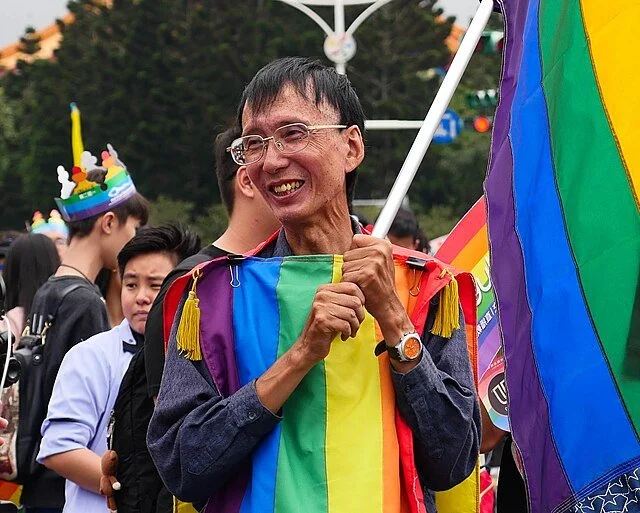
Chi Chia-wei at Taiwan Pride, 2016. KOKUYO. CC BY-SA 4.0.
5. Chi Chia-wei
Taiwan
Chi Chia-wei has long been at the forefront of LGBTQ+ activism in his home country of Taiwan. In recent years, Taiwan has also seen increased equal rights for LGBTQ+ individuals, most notably with the legalization of same-sex marriage in 2017. Chi was incredibly significant in this achievement, a tribute to his almost 40 years of advocacy.
In March 1986, Chi broke boundaries by becoming the first person in Taiwan to come out as gay on national television, but was subsequently imprisoned for 162 days. Since being pardoned by a judge, he has spent his entire life advocating for LGBTQ+ equality, including marriage equality. Through his tireless work and bringing equal rights cases to the courts, he led to the Grand Justices’ interpretation of the constitution that legalized same-sex marriage, making Taiwan the first country in Asia to do so. He has also been instrumental in raising funds for AIDS victims in Taiwan. Working as an LGBTQ+ consultation hotline operator and operating a halfway house for HIV/AIDS patients, Chi helps to create awareness around the LGBTQ+ community and AIDS while creating a safe space.
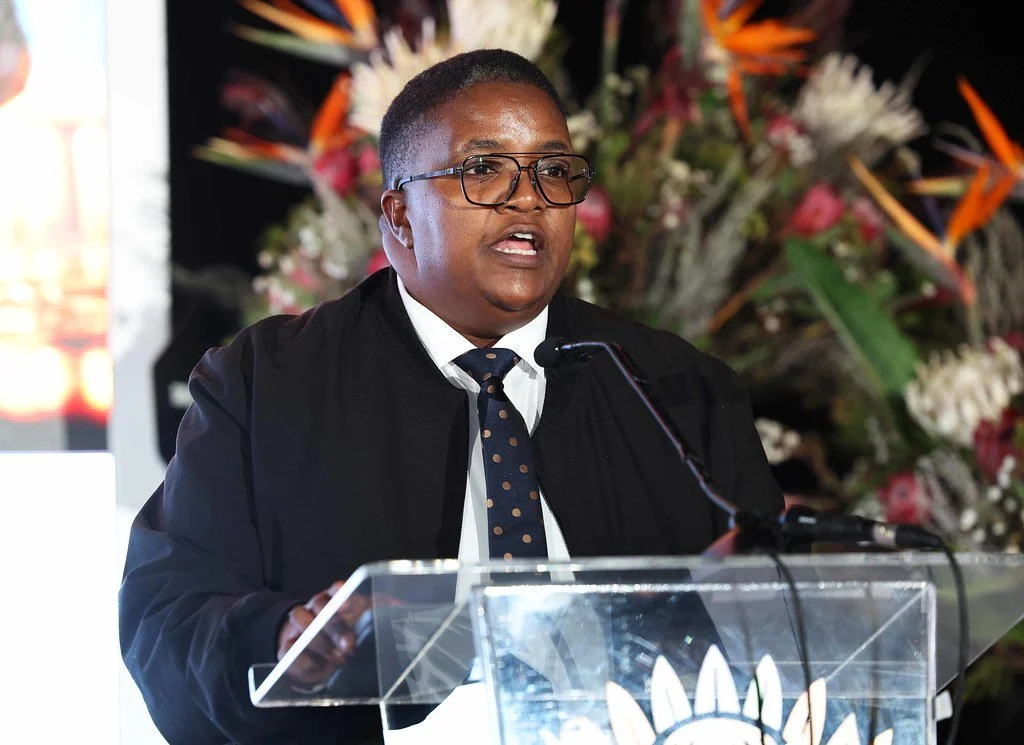
Steve Letsike at a conference. GovernmentZA. CC BY-ND 2.0.
6. Steve Letsike
South Africa
A human rights and LGBTQ+ advocate, Steve Letsike, is a prominent voice for AIDS activism in South Africa. From a young age, she engaged in advocacy by challenging her high school’s dress code for not allowing girls to wear pants, and created the school’s first female soccer team. Since then, she has been a prominent member of many important organizations.
Currently, she serves as a co-chairperson for the South African National AIDS Council, member of the African National Congress’s National Executive Committee, the first Black queer woman to serve, and Deputy Minister of Women, Youth and People with Disabilities for South Africa. However, her activism reaches even further with her own organization, named Access Chapter 2, aimed at promoting human rights and empowering women and LGBTQ+ individuals. She also co-chairs the National Task Team to attend to hate crime cases and chairs the Commonwealth Equality Network, representing organizations working for LGBTQ+ rights.
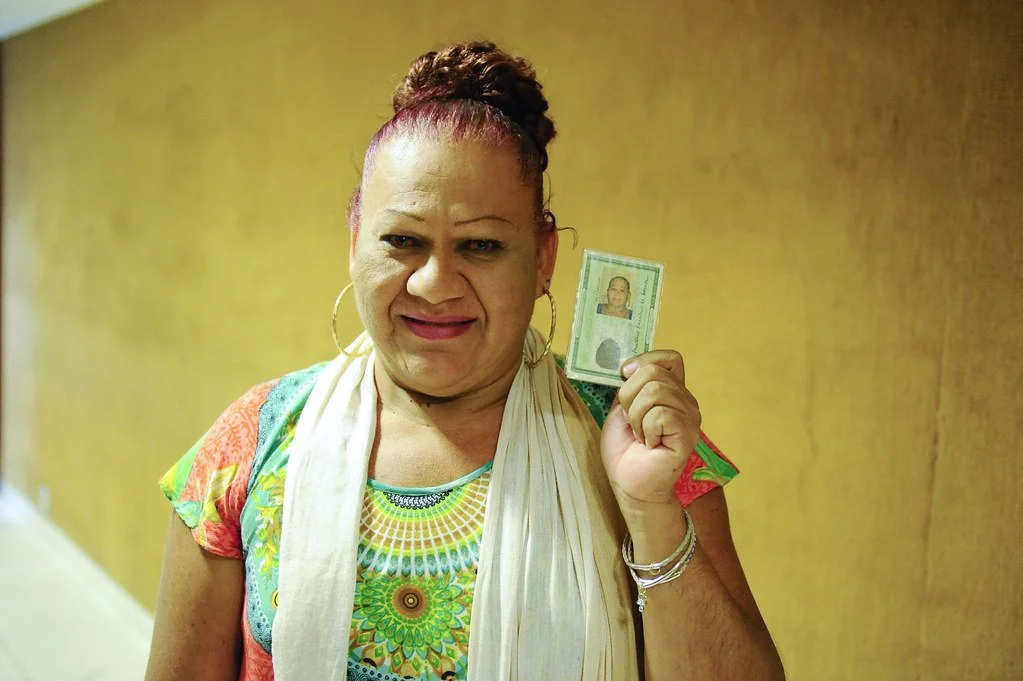
7. Keila Simpson
Brazil
Keila Simpson is a leading transgender activist in Brazil. Beginning her work with the LGBTQ+ community in 1991, she has remained a pioneer in bringing awareness to not only the trans community but also HIV/AIDS in Brazil.
In 1992, Simpson founded and continues to chair the National Association of Transvestites and Transsexuals (Associação de Travestis e Libertados), an organization dedicated to supporting and meeting the needs of transgender people in Brazil. This association remains one of the most significant for transgender equality worldwide. In addition to previously serving as vice president of the Brazilian Association of Gays, Lesbians, Bisexuals, Transvestites, Transsexuals and Intersex and president of the National Council to Combat LGBT Discrimination, she has recently received the National Human Rights Award for her work in advocating and protecting the rights of LGBTQ+ persons.
Julia Kelley
Julia is a recent graduate from UC San Diego majoring in Sociocultural Anthropology with a minor in Art History. She is passionate about cultural studies and social justice, and one day hopes to obtain a postgraduate degree expanding on these subjects. In her free time, she enjoys reading, traveling, and spending time with her friends and family.