
AJ+'s Dena Takruri shows you how, after three years of drought, population growth and inadequate planning, Cape Town might be the first major city in the world to run out of water.
ICELAND: 10 Days, One Road
10 Days, One Road is a cinematic video journal of our time exploring the edges of Iceland, for 10 days we drove along the ring road and seen a fraction of what Iceland has to offer.
Hana and I travelled around the ring road for 10 days capturing the beautiful landscapes of Iceland through every weather condition you could think of. Whilst on the road, the two of us experienced heightened emotions – we were scared, happy, nervously panicking at random points during our trip... we drove under the sunshine, through a blizzard, climbed a mountain as it hailed, rained... we cried, laughed and loved every moment in this beautiful country. This experience was emotionally draining yet rewarding in so many ways. Documenting our journey was incredible and we can't wait to share it with all of you. We hope you enjoy how we experienced Iceland in this travel journal of ours – 10 days, One road.
INDIA: Sadhu: Beyond the World of Illusion
When a rare outside viewpoint gives context to your own life, you can’t help but feel the mold within you bend and twist into something new. In Varanasi, one of the oldest inhabited cities on Earth, I came to know India’s holy men, the Sadhu
Derived from the Greek asketes, meaning “monk” or “hermit,” ascetics are individuals who chose a life characterized by severe self-discipline and abstinence from all forms of indulgence. Almost every major religion breeds ascetics, and for many thousands of years, there have been wandering monks who have renounced all earthly possessions, and chosen to dedicate their lives to the pursuit of spiritual liberation. For many of these individuals, reality is dictated only by the mind, not material objects. India’s holy men, the Sadhu, are one such example.
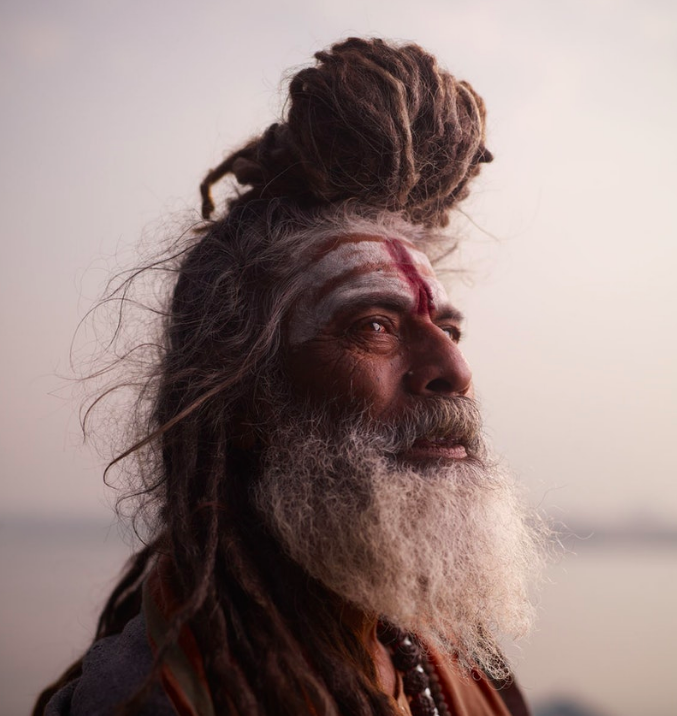
Above: Portrait of Baba Nondo Somendrah in Varanasi.
Varanasi is one of the oldest inhabited cities in the world, and it is thought that people may have lived in this place for about 3,000 years or longer. As the epicenter of Hindu faith, it is similar to Jerusalem for Christians and Mecca for Muslims. The images in this story are part of my “Holy Men” series, featuring religious ascetics from around the world.
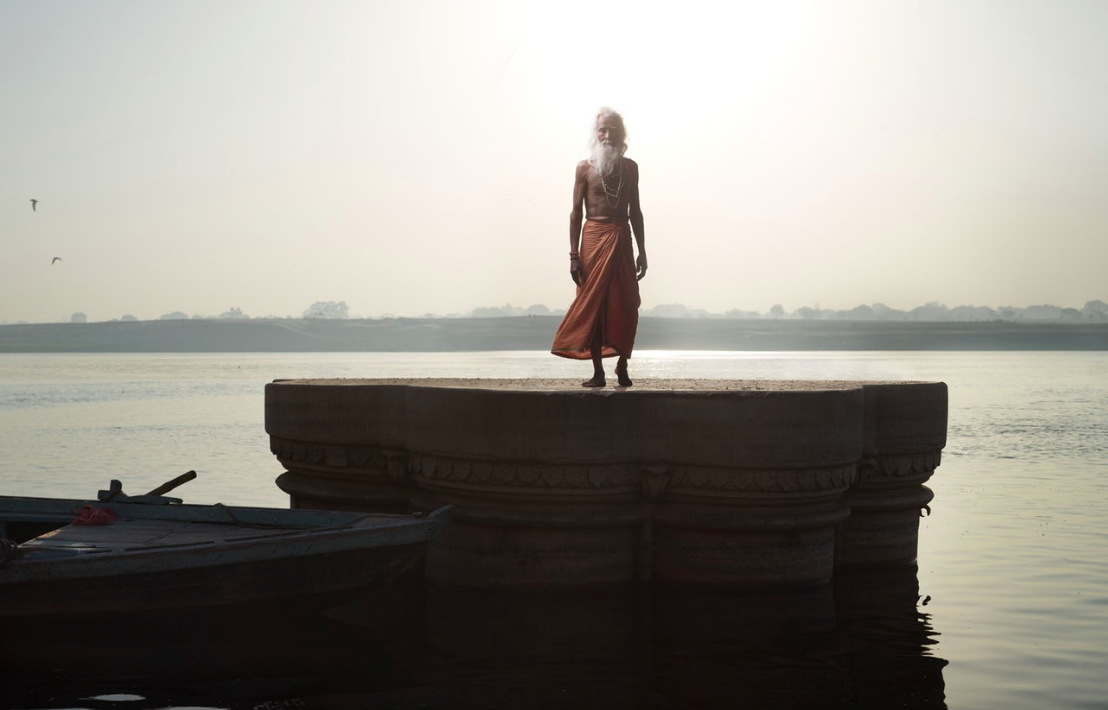
Above: Shiv Ji Tiwari stands on a sunken temple in Varanasi.
I first began this collection with a photo series from the North of Ethiopia focusing on Coptic Christianity. Although Coptic Christian monks and Sadhus live in different corners of the world, the connection all of these subjects have to each other is profound. I have been working with some of the same sadhus from Varanasi since I was 16 years old, and coming to know these individuals has truly been a life changing experience.
When a rare outside viewpoint gives context to your own life, you can’t help but feel the mold within you bend and twist into something new.
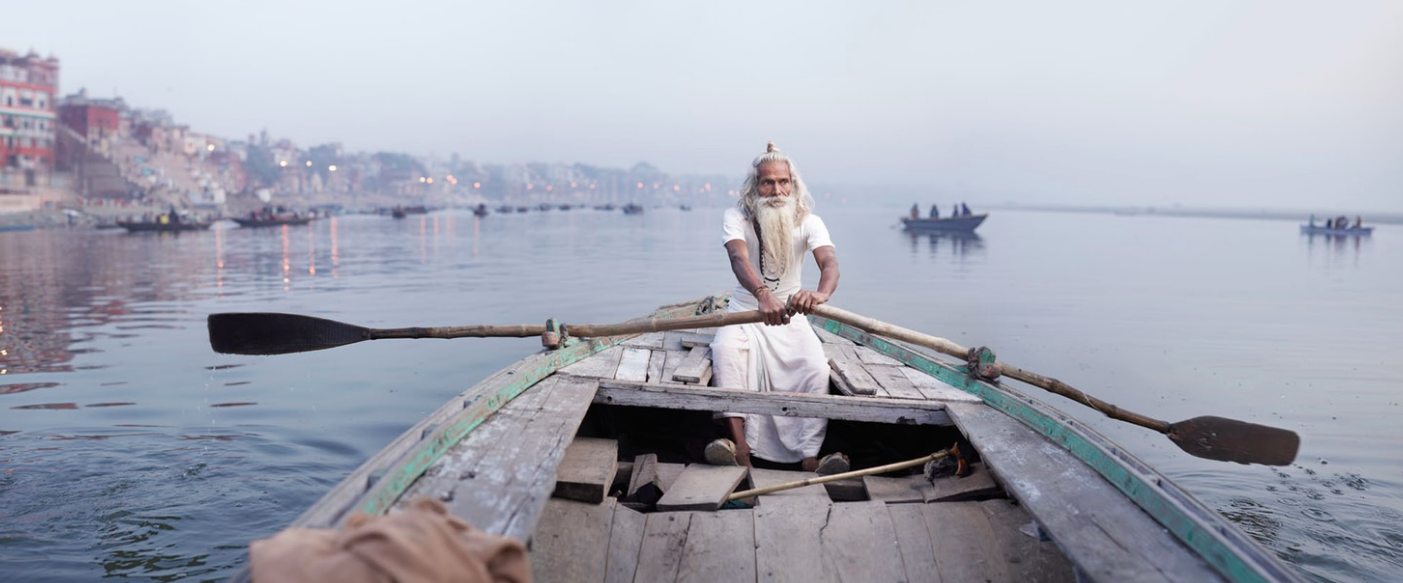
Above: Ascetic priest Baba Vijay Nund rows a boat along the Ganges River.
In particular, I came to know some members of the Aghori, an intense sect of Sadhu infamous for overcoming all things taboo. For instance, they may meditate on corpses, even eat human flesh as part of a sacred ritual, or keep a skull as a reminder of the impermanence of life.
The Aghori have a profound connection with the dead. Death is not a fearsome concept, but a passing from the world of illusion.
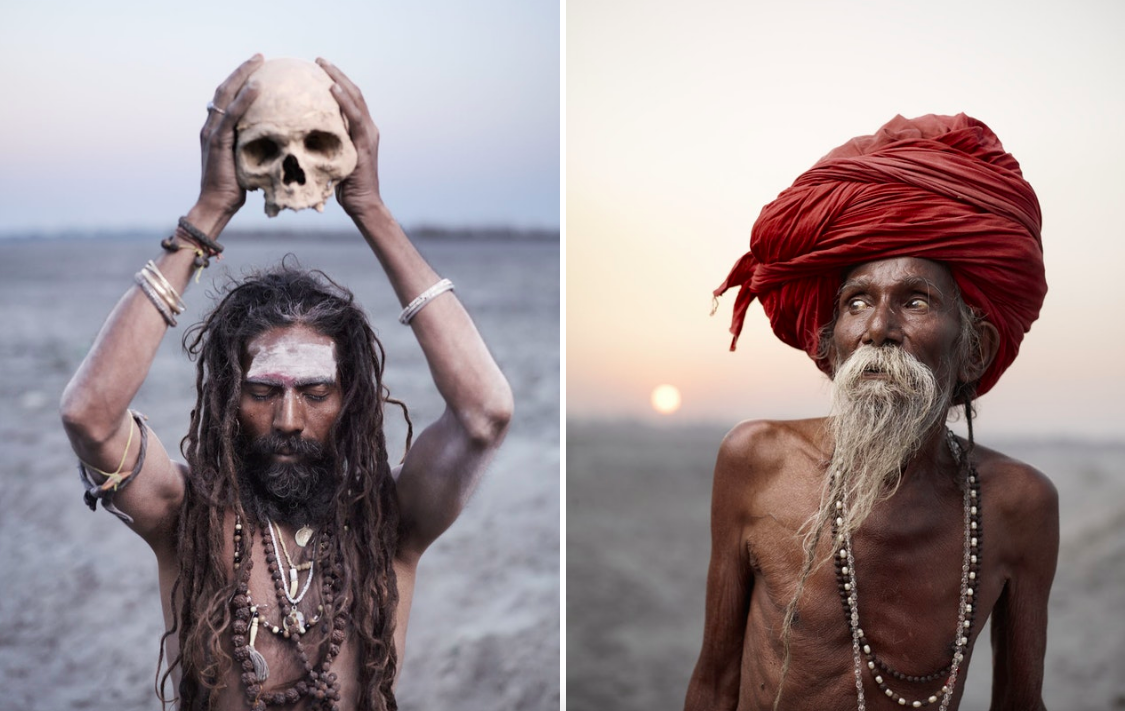
Sadhus live a very different life from most of us. A sadhu renounces his earthly life, all his worldly attachments, and leaves home and family. As part of this renunciation, they also leave behind their clothes, food and shelter, and live on the generosity of others. Another part of renouncing your former life is to attend your own funeral and die to yourself, and be reborn into your new life as a sadhu. Below you see Magesh, who left a well paid job as an IT computer consultant to pursue to path of Aghora. After years of practice, he finds no temptation to return to his old life.
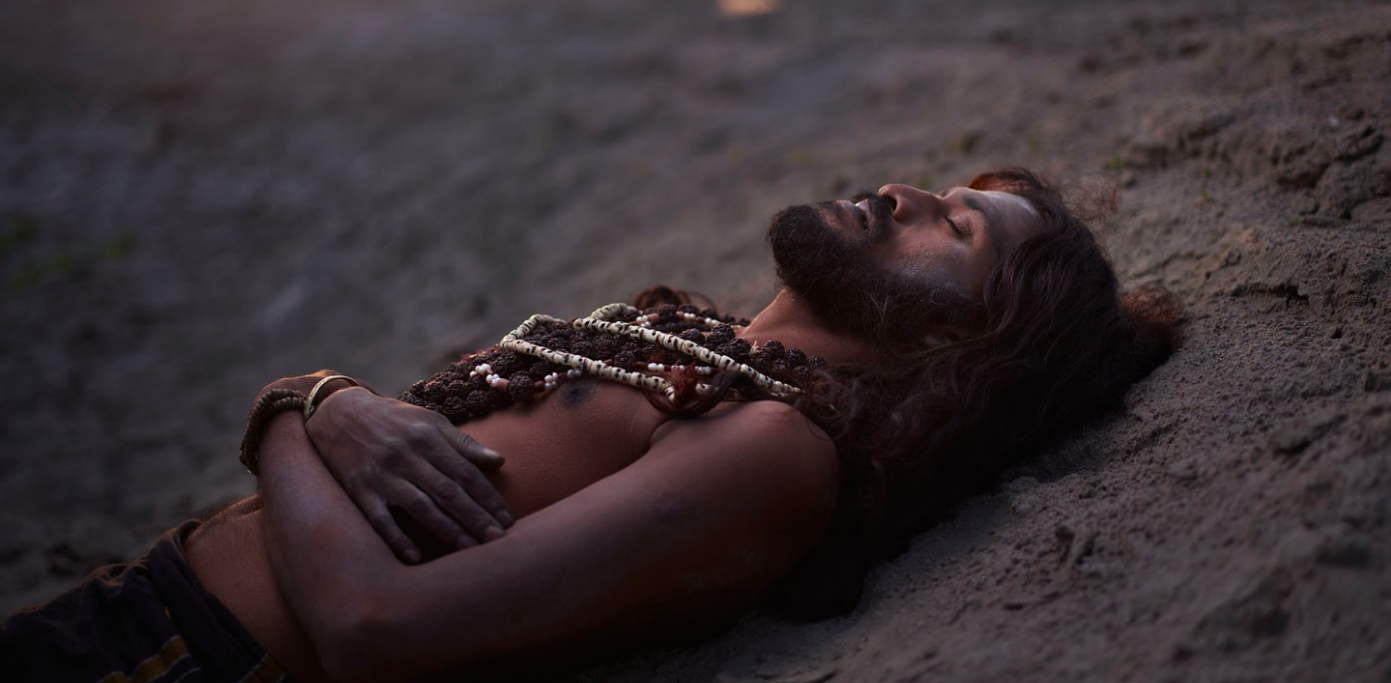
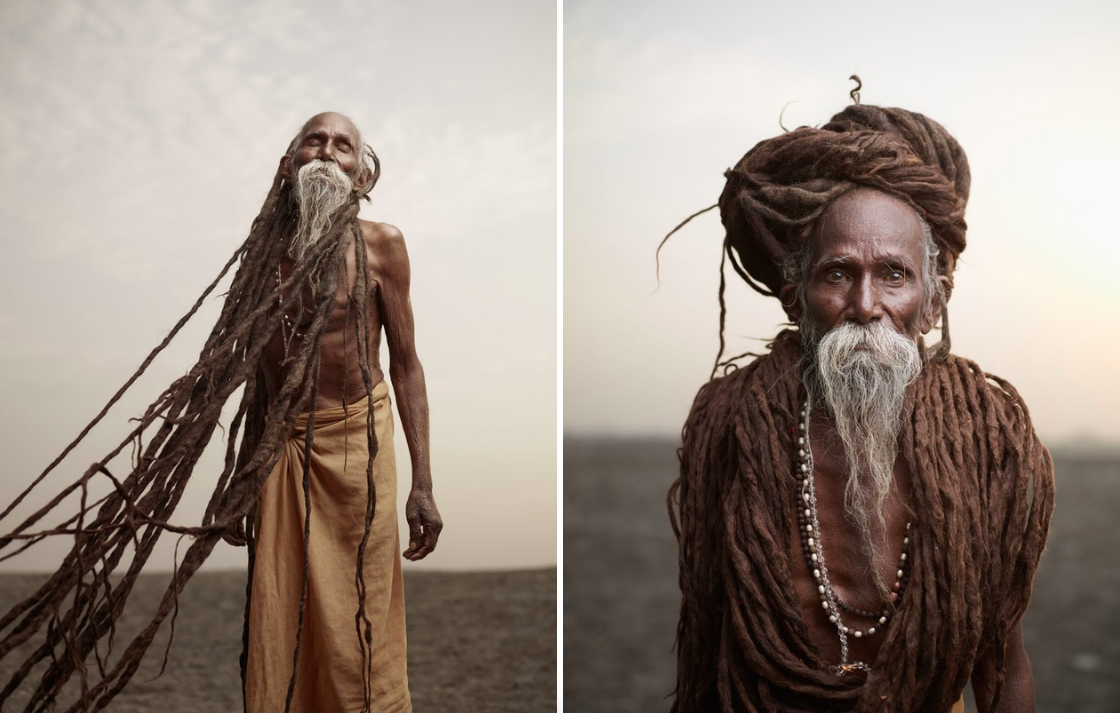
When he was young, Lal Baba’s parents arranged a marriage for him. Uncertain about his future, he ran away from home in Bihar Siwan and took up the lifelong task of becoming a sadhu. He has dreadlocks (jatas) several meters long, which have been growing for over 40 years. For sadhus, jatas are a sign of renunciation and a life dedicated to spirituality.
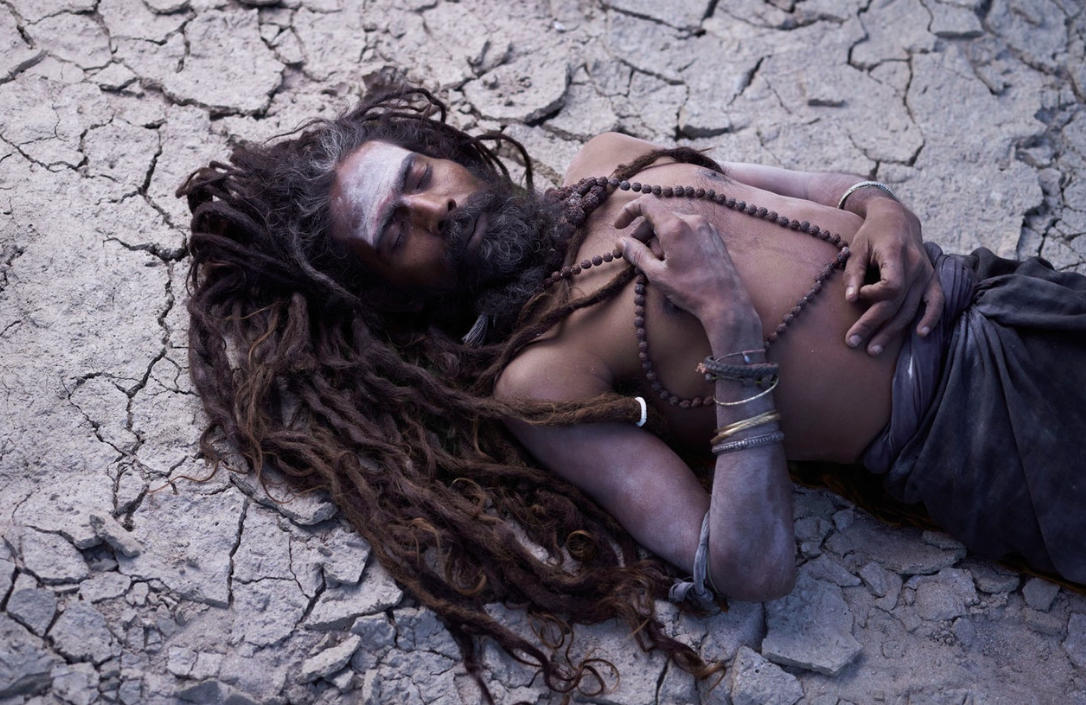
Another important and sacred ritual for Aghori sadhus, is covering themselves with human ash, which is the last rite of the material body.
To many Hindus, Sadhus serve as an earthly reminder of the divine, and may take on the role of a healer as someone who can help to rid others of negative energies. As a part of their daily routines, sadhus will arise before sunrise and bathe in cold water, before starting their daily prayers.
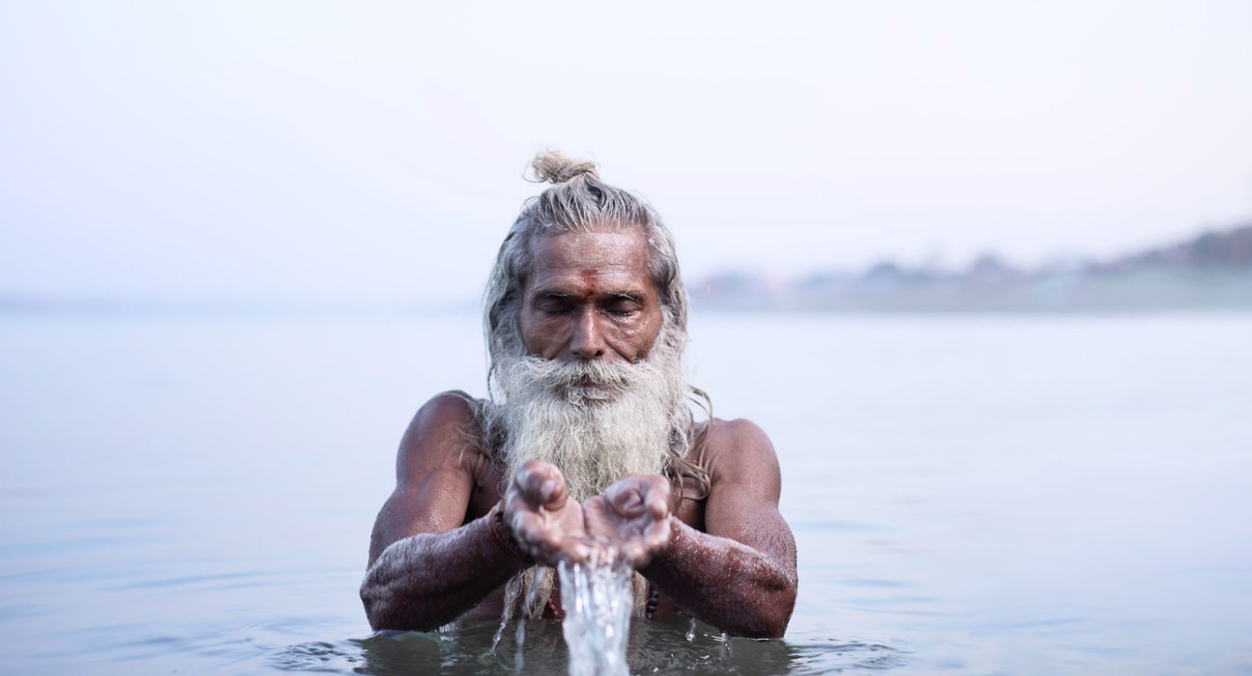
Above: Vijay Nund performing morning rituals in the Ganges River, the most sacred river in Hinduism.
The Ganges River is an important subject in this photo series, creeping into the background, giving the holy men and their students a sense of environment. In the Hindu faith and Indian society, the Ganges River holds a prominent, special, and sacred place. Hindus believe that the Ganges is divine, in part, because it flows from the heavens. This is understandable when you realize that the Ganges is primarily composed of Himalayan meltwater, which falls from the heavens as snow.
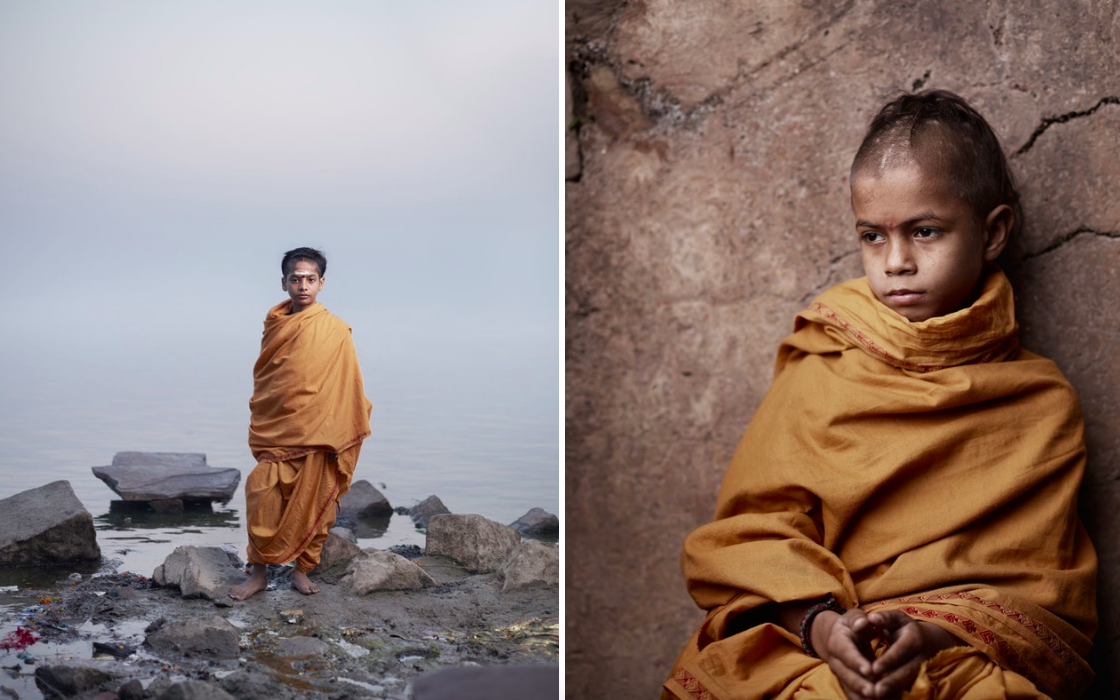
Above: Saurav Kumar Pandey and Amit Byasi, Batuk students in Varanasi.
One of the most sacred aspects of the Ganges is that Hindus believe that bathing in the Ganges reduces a person’s sins and increases the chances for eternal liberation from the cycle of life, death and rebirth.
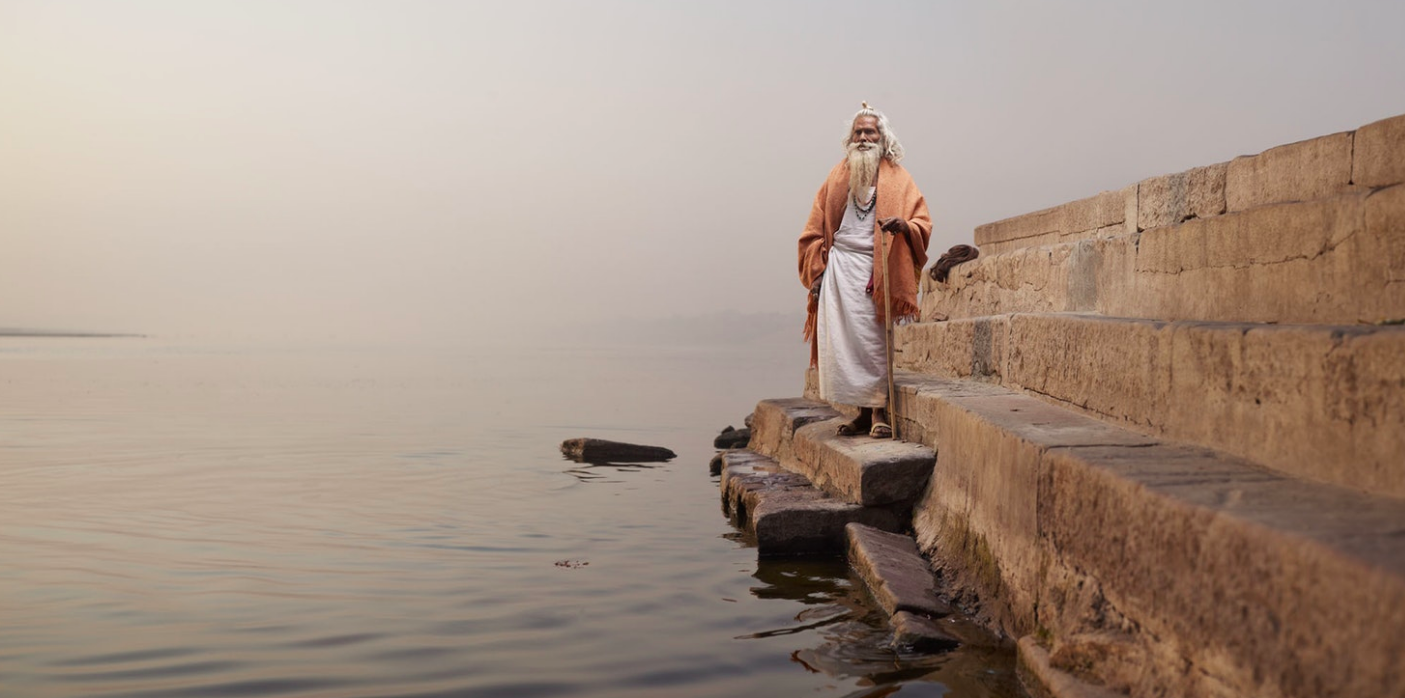
Above: Baba Vijay Nund on the steps of Chet Singh Ghat on the banks of the Ganges River.
Although considered extremely polluted with human waste, garbage and industrial waste, the Ganges is still considered sacred, and some believe there’s nothing that can be done to diminish its holiness. The Ganges has been the spiritual and physical lifeblood of northern India for ages.
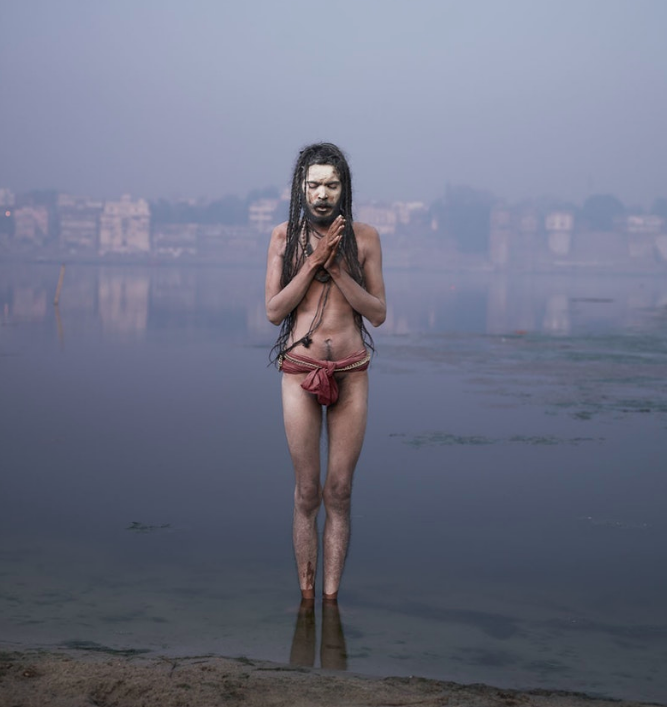
Above: Baba Mooni conducting Aghori Puja in the Ganges river.
The unique perspectives of the Sadhu, and other ascetics like them, challenge the way we interpret the world around us. There are so many places to explore and people to photograph, it keeps me up at night.
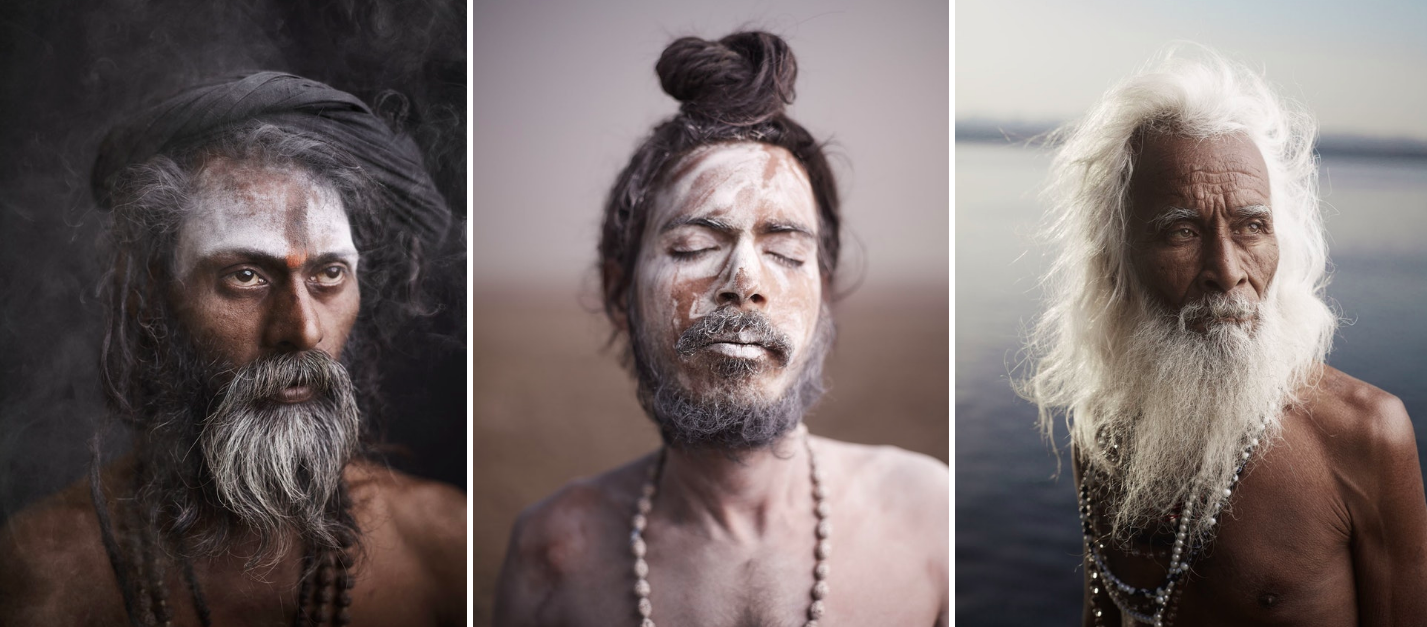
Above: Portraits of Baba Mooni and Shiv Ji Tiwari.
Winds from Morocco
This video captures scenes in Morocco ranging from the deserts to the cities.
Read MoreWakhan, An Other Afghanistan
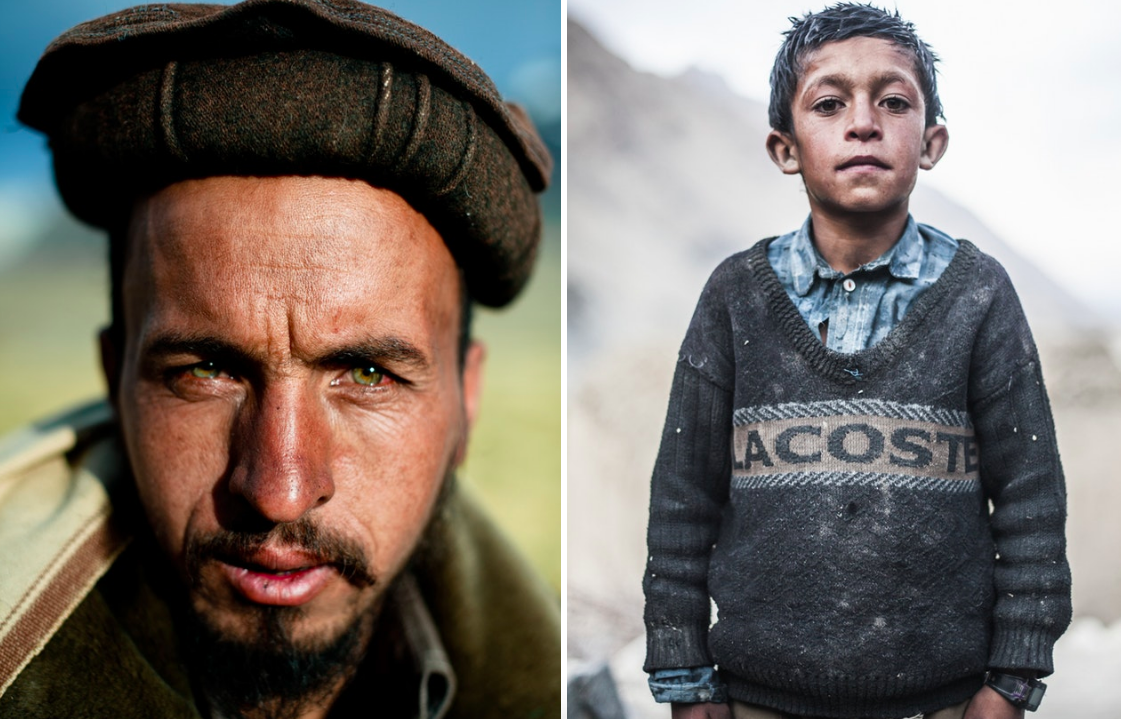
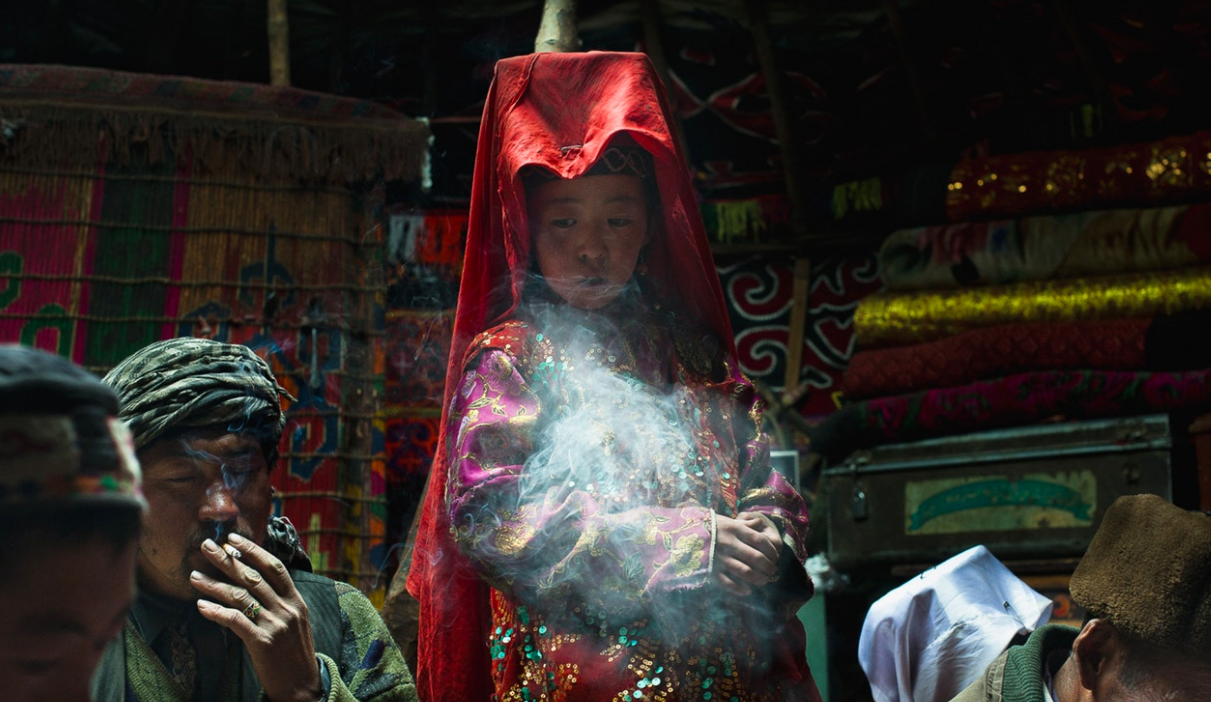
Journeying through a remote region of northeastern Afghanistan, untouched by the war and preserved from the Taliban regime, this story pays tribute to the ancient culture of this land, which has never disappeared but which has simply been forgotten.
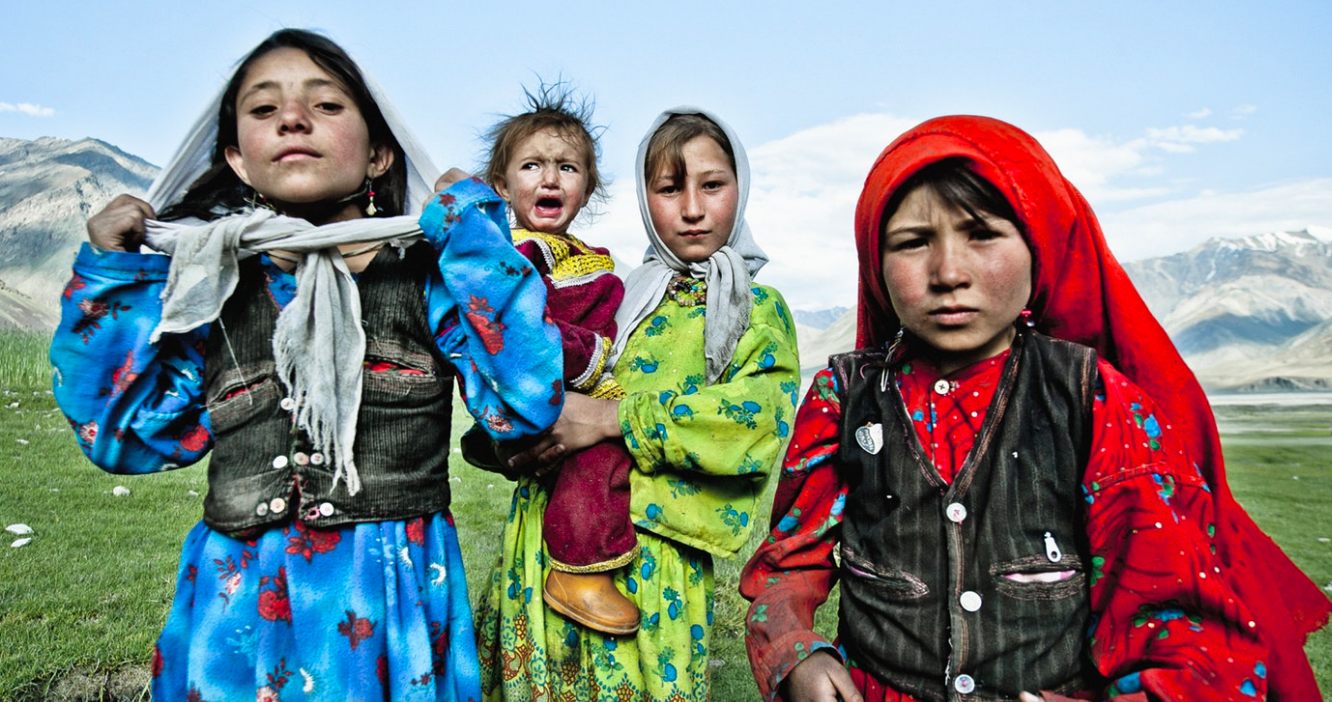
This narrative serves as an introduction to my multi-platform project, ‘Wakhan, an other Afghanistan’. One of the photos from this project won first prize in the 24th annual National Geographic Traveler Photo Contest, and the 78-minute film ‘Wakhan’ was selected as one of the firm favourites to feature in the Etonnants Voyageurs Festival in St-Malo, France.
My mind takes me back to 8 August 2011. It must have been around 2 o’clock in the afternoon, but in any event, time here takes on an alternative dimension, something which we have been discovering and settling into since the beginning of our journey.
Then I remember a young Afghan saying to me a few weeks earlier, “You have your watches, and we have the time.”
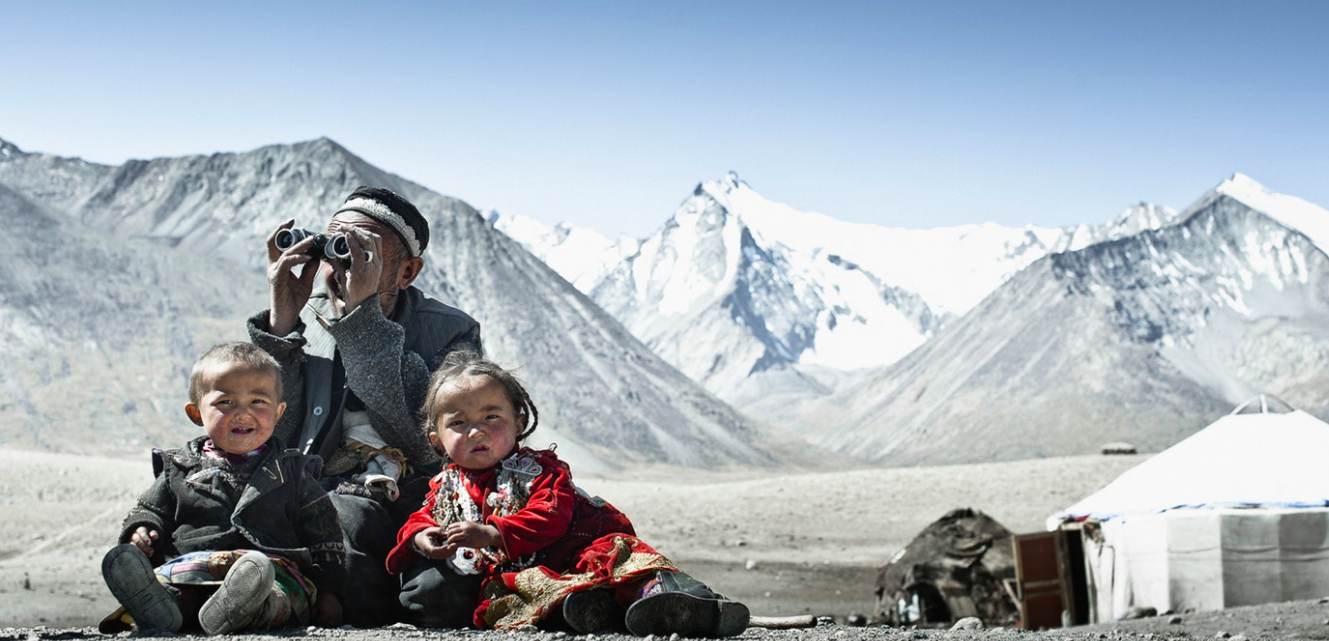
Under the arborescent canopy of a small shelter made with stones and yak excrement, Fabrice and I wait for our hosts to bring us bread and tea, which has been our sole source of nutrition morning, noon and night for more than three weeks. Dates, energy bars, dried fruit — these are a thing of the past, and I have already lost 15 kilos.
We had planned ahead with two people in mind, forgetting on market day at Ishkashim — the village on the border between Tajikistan and Afghanistan — that we would be accompanied by one guide or several for this expedition along the Wakhan Corridor, as far as China.
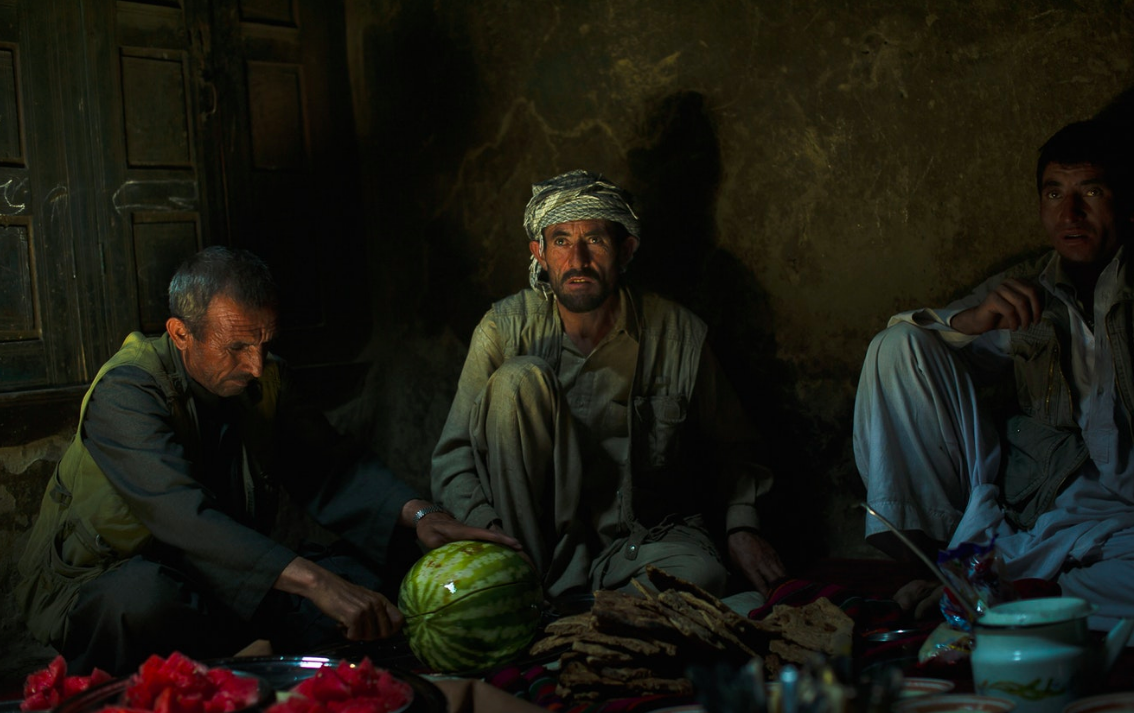
We travel for a month in the company of Amonali and Souleman, two Ismaili Wakhis of twenty-four and thirty-two years of age, who are taking care of our horse and our donkey. A last-minute addition to the group is QuarbonBek, a twenty-year-old Sunni Afghan and real ‘city boy’, who we have picked up at Ishkashim to fill the role of interpreter.
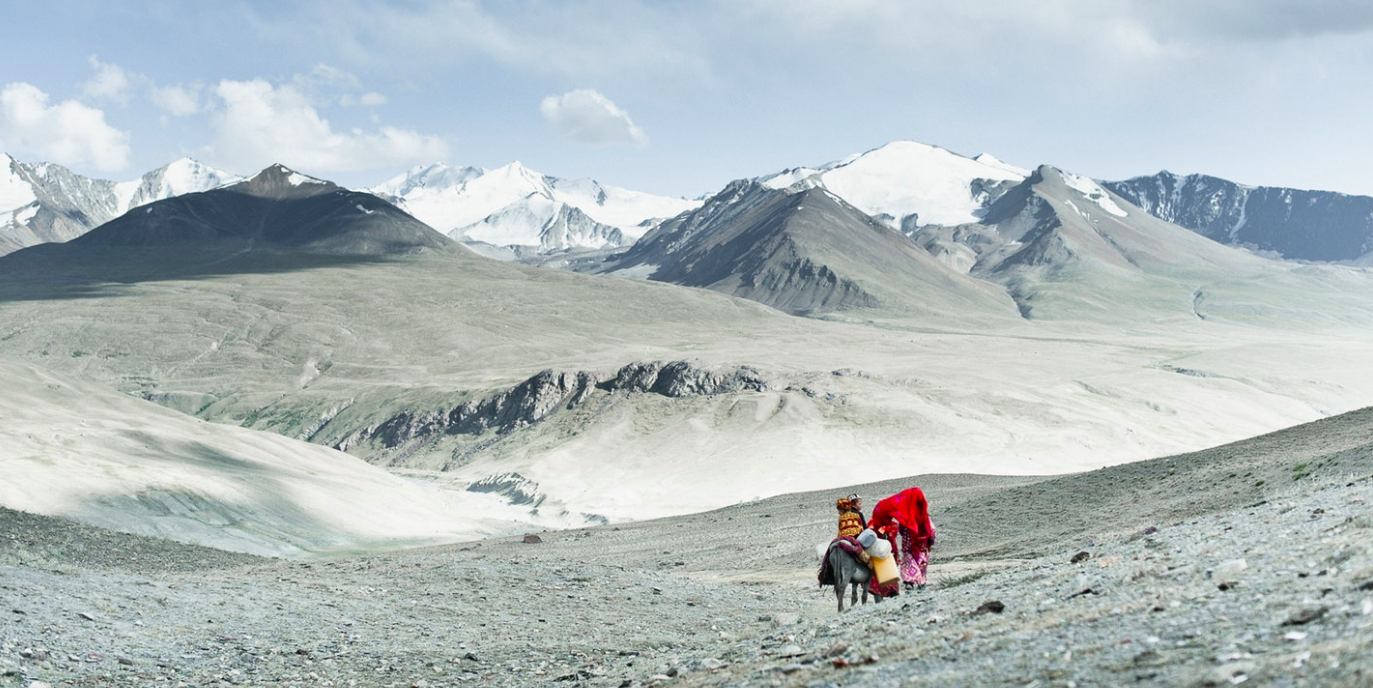
After the first week of hiking across the Hindu Kush at 3,500 to 5,500m above sea level, we have exhausted all our supplies, and from now on we have to satisfy ourselves with the low-calorie diet of bread and tea with yak milk which is provided — and which we can buy — in every village. We have chanced upon small quantities of rice here and there, and then three days ago some lamb for the first time, which has ended up making us all ill, as if our bodies were rejecting the meat.
Humbly and respectfully we have been adapting for three weeks to the local diet, experiencing firsthand the process of survival to which all these families remain inextricably bound. Every encounter and every meal reminds us that in this region, which fully awakens the senses and intensifies the emotions of the traveller, life expectancy stops short at 50 and the infant mortality rate verges on 60% — the highest in the world.

We pause for several hours in one of the villages situated along the Corridor ‘high route’ that is the pathway for the return journey, making a transition from the lands of the Khirghizes to Wakhi territory. From Ishkahim to Erjhail — one of the last of the Corridor villages to border with China — we will probably walk more than 450 kilometres over the course of 30 days, following in the footsteps of Marco Polo and Alexander the Great in crossing the entirety of the Wakhan Corridor.
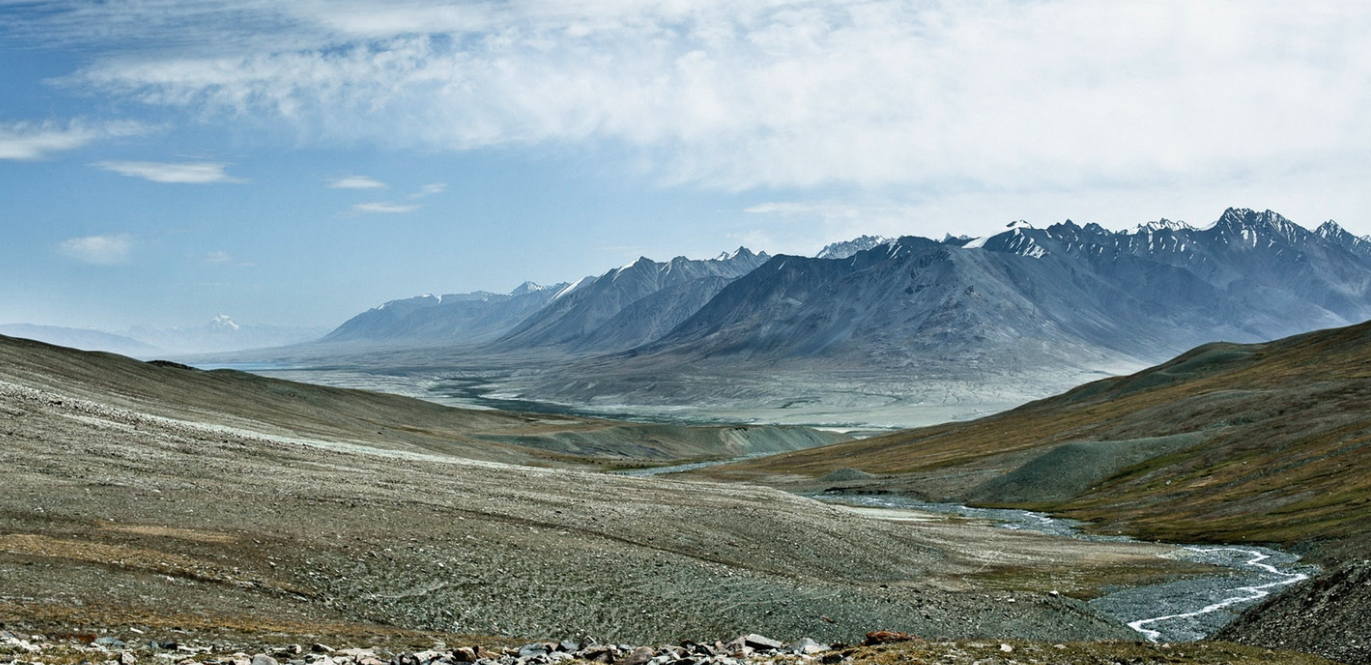
Our horse carries the rucksacks, tent, sleeping bags, camping stoves and gas cylinders, as well as the few additional clothes we have — outer-layers, rather than spare garments — while our donkey is loaded with 40 kilos of photo, video, sound and IT equipment, wrapped in two flexible solar panels, an essential for recharging all the batteries in a region which we assume to be completely without power.
Yet to our astonishment, the Khirghizes — a nomadic people of Mongolian aspect, the last remaining descendants of Genghis Khan, living on the highest plateaux of Wakhan, several weeks’ walk away from any of the main Pakistani, Afghan, Tajik or Chinese villages — have solar panels, satellite aerials, television sets, and an impressive array of batteries, cables and chargers. And when Oji Ossman, the chief Kyrgyz in the village of Kashch Goz, produces a mobile phone from his military jacket — even though obviously there is no network coverage — in order to take our photograph, all our assumptions about these tribes, the idea that they are still leading the lives of their ancestors, seem absurd and unfounded.
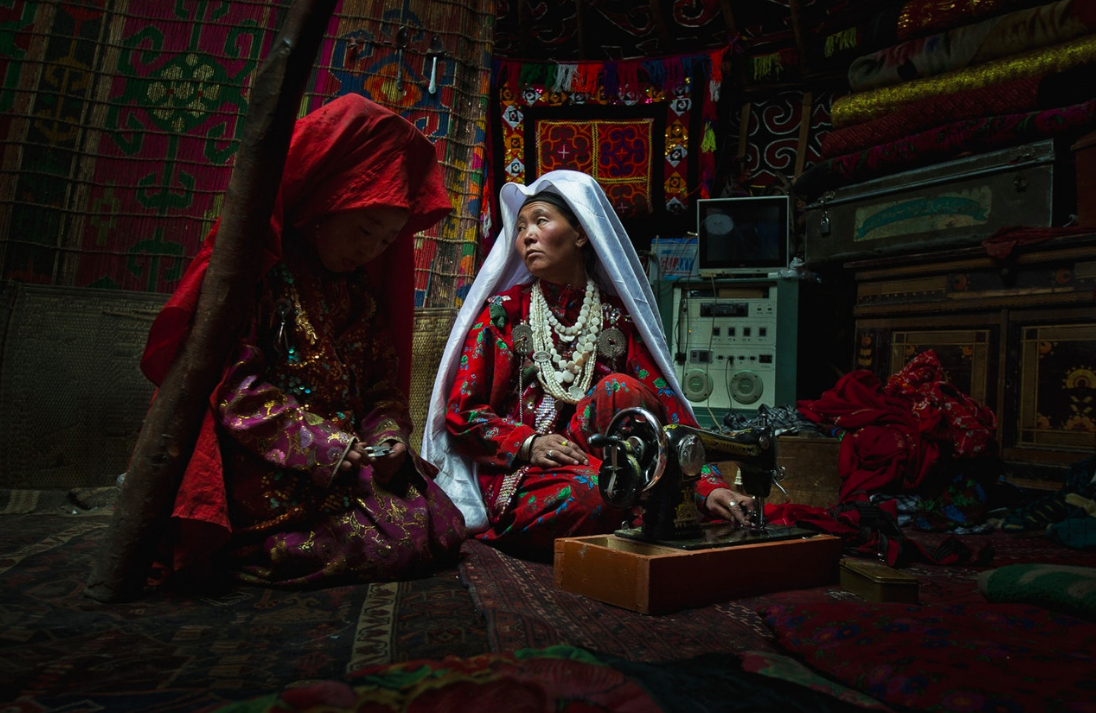
People in this part of the world are undoubtedly feeling the effects of new technology, a process triggered by the exchange of goods.
The Wakhan Corridor, as part of the Silk Road, has been established for centuries as a route for traffic and trade of all kinds. Pakistanis, Afghans and Tajiks still spend weeks at a time traversing the mountains, on foot or on horseback, to purchase from the Khirghizes the herds of yak, goats and sheep which have always been at the root of their livelihood.
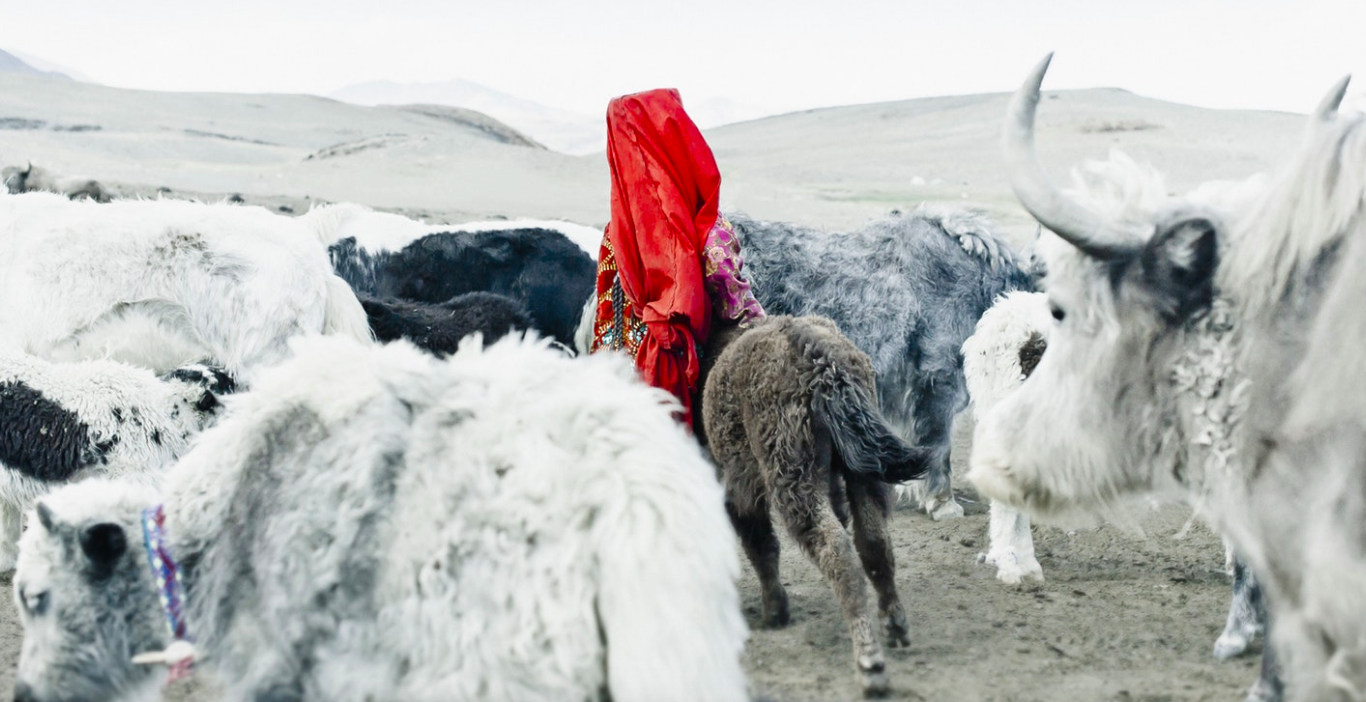
We shared the guest yurt in KashGoz with three Pakistani herdsmen, who had come from the Hunza Valley with the intention of obtaining a herd of goats in exchange for a television satellite aerial, several solar panels, and some sacks of rice and flour.
In Erjhail, we encountered Ramine and his brother, two young Afghans who had walked in excess of four weeks from Kabul to buy around one hundred goats and ten yaks from the village chief. We would go on to spend two days in their company before travelling together for several days on the journey home, until our paths went their separate ways.
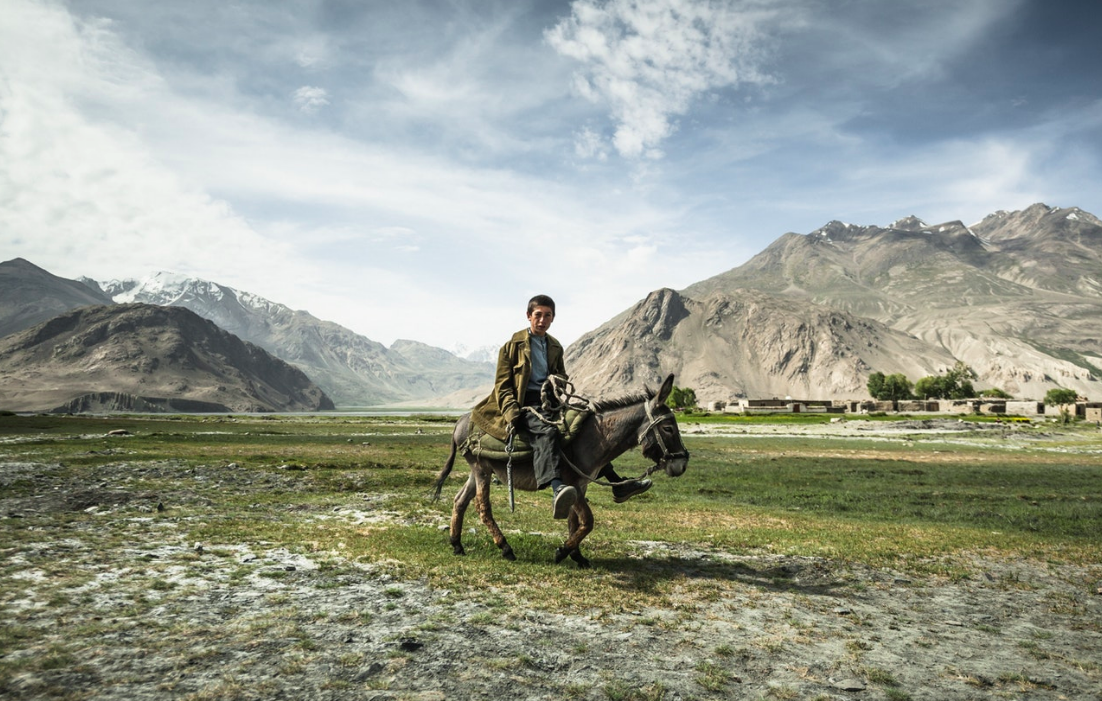
As always, the looks we attract from the four herdsmen in the Wakhi village perched high in the mountains, where we rested for a few hours, are benevolent, but also perplexed. They are asking themselves, “What are these two strangers doing here?” “A report about us” is the most likely answer from Souleman, pointing out with his finger the camera and video equipment placed on a piece of cloth on the ground.
Of course, we are the foreigners, the exotics — and sometimes even the object of complete incomprehension. “Why do they come and live like us in such hardship?” is the feeling we often detect in our conversations.
Our hosts frequently thank us for coming to meet them and for taking an interest in their lives. Repeatedly we feel the sadness in their gaze as they watch us leave again. I have the feeling that they are somehow counting on us from the moment we are welcomed.
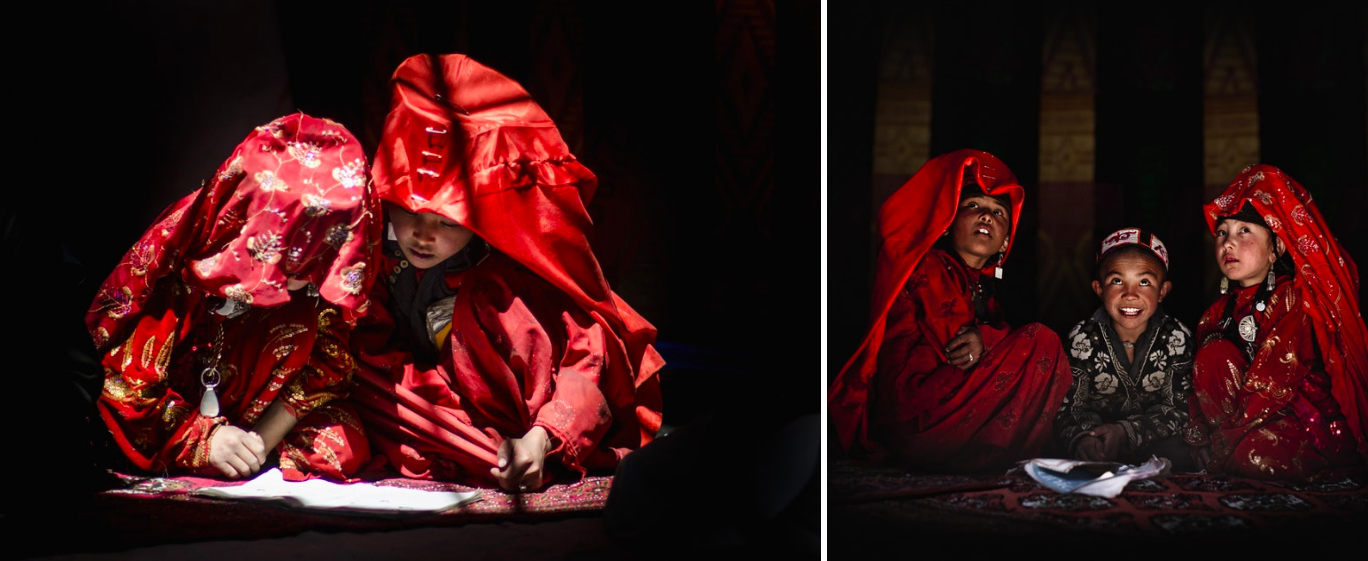
We are now in a relatively advanced state of physical and mental fatigue, and the distance separating us from each other is immense. Throughout the whole journey we have felt ourselves connected, part of a shared experience and a brotherhood.
But at this exact moment, our facial expressions and the breakdown of our appearance betrays the disconnection. Even though we know exactly where we are on the topographical map, in our heads it is the first time that we are feeling so distant, maybe even lost?
Considering the original motivation behind an experience like this, what have we truly uncovered in the Wakhan? What will we be able to share on our return, and through our photographs?
What stories to tell? There are so many.
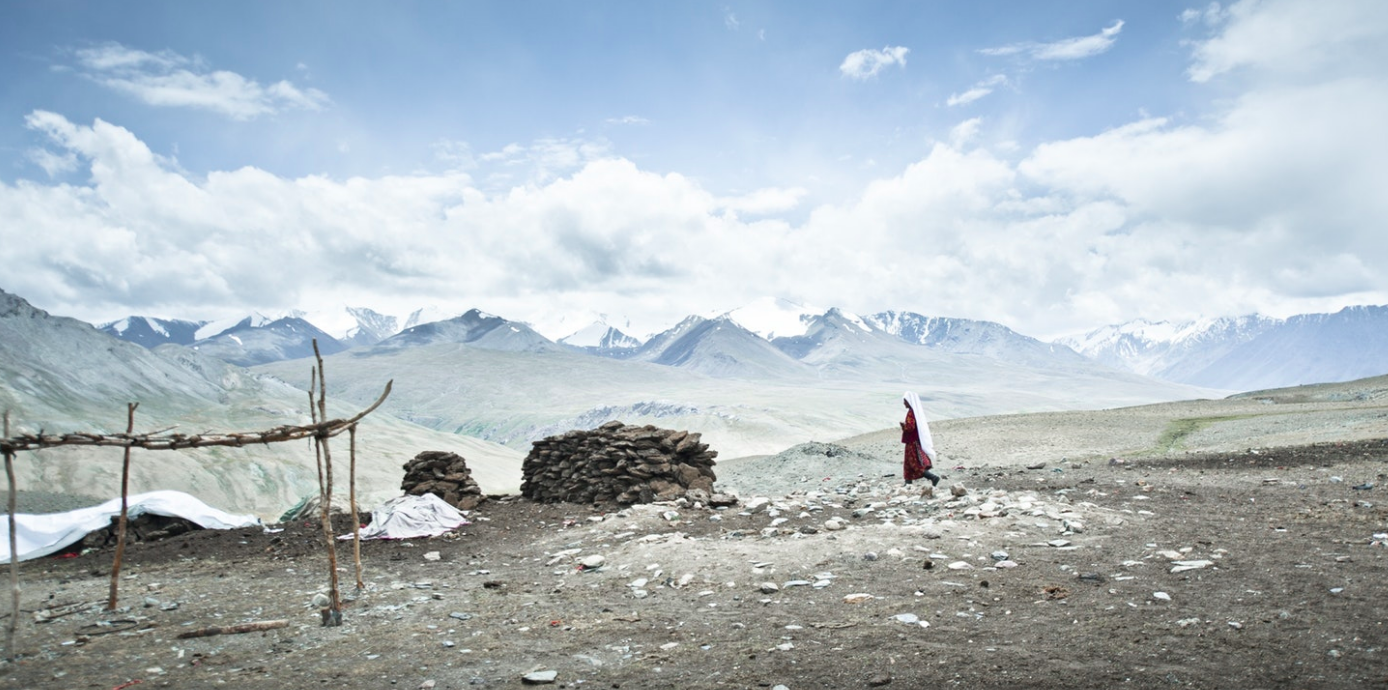
At the heart of a journey devoted to documentary, it is the personal and professional questions which confront each other, providing answers and sometimes shedding light on one another. And when I look at Fabrice, who is silent as I am, my companion of days gone by, of this moment and always, I feel myself reconnecting.
There we are, the two of us. We have been searching for something, and only now do we find its presence — a profound sense of humility.
We have never been consciously afraid, neither of the mountains, nor of all that we have witnessed in Afghanistan in more than 20 years, yet the self-knowledge of this moment is deeply reassuring.
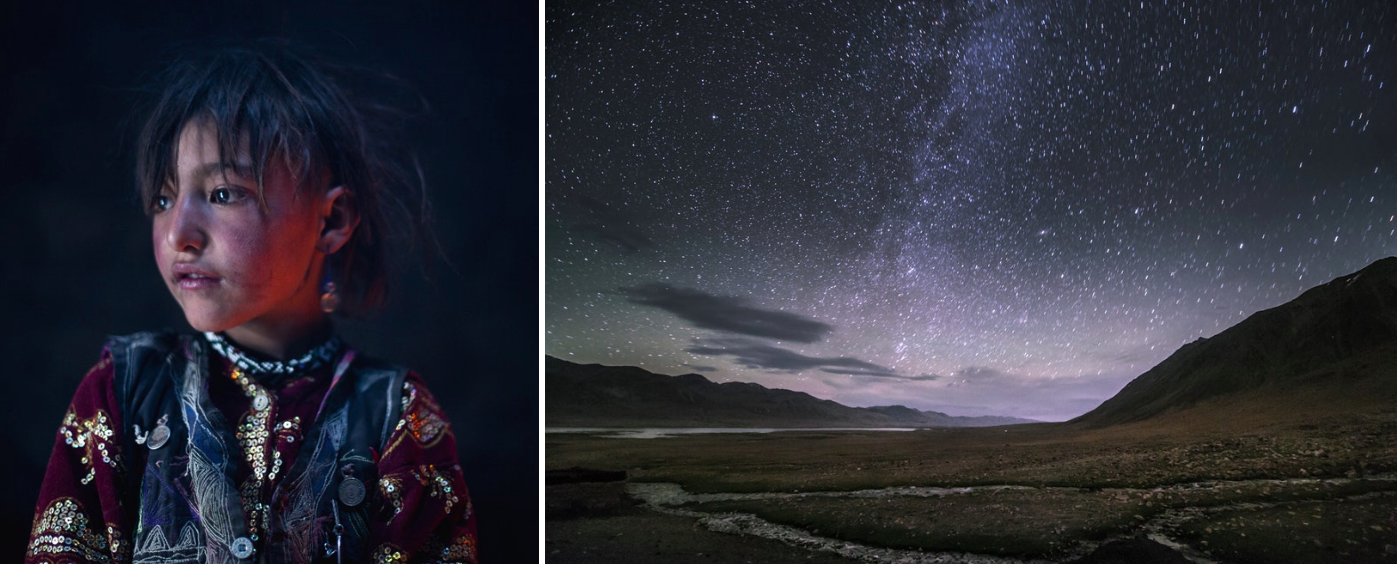
Because if I ever shut down — something which I feel capable of right now — he will be there to restore me. By shutting down, I mean cutting the cord, and no longer being able to endure the weight of escalating hardship, a burden which grows hour after hour, days and weeks on end.
As a humanist, it pains me to see so many men, women and children living under such extreme conditions, and myself unable to endure any longer the psychological torture of knowing that the next bit of potato or piece of fruit is a mere three weeks walk away.
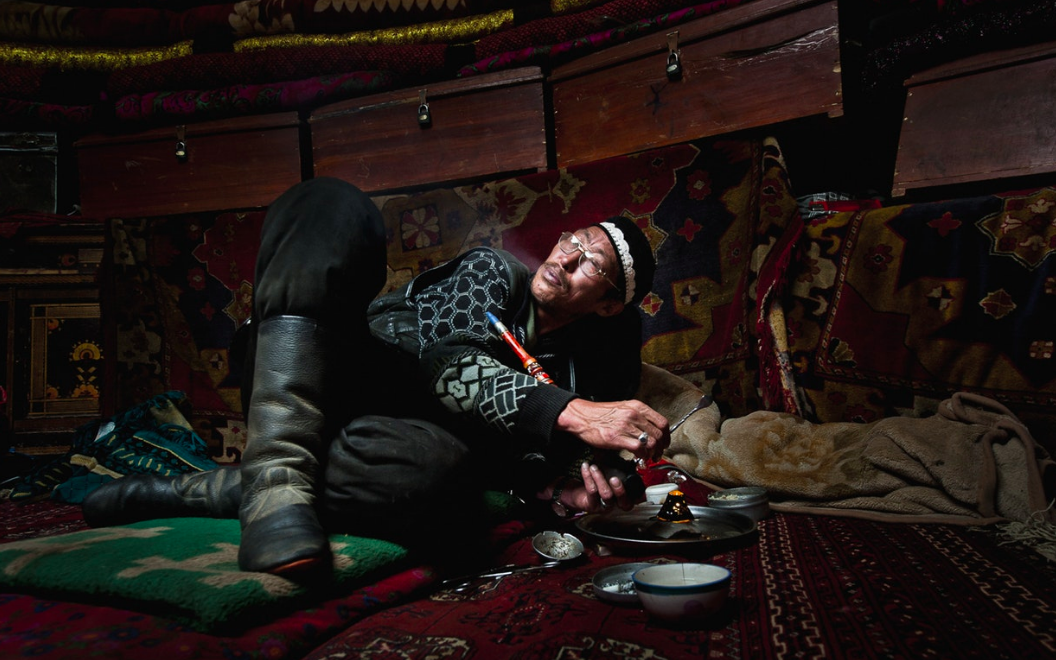
Have we become psychological prisoners of our own investigation? I watch Souleman, crouched down opposite me. This young man, who seems ten or fifteen years older than his thirty, is smiling, supporting me now as he has done for the last three weeks, in such a way that with every gesture I make, I can feel his watchful presence.
I cannot allow myself to betray the trust he has placed in us both, since the start of this journey, and which we feel on so many levels.
I sense that it is not just the traveller that this young man is supporting and protecting, but also the writer, who has promised, with all his photographic and cinematic recording kit, to uncover to the rest of the world his very existence, that of his loved ones and of his community as a whole. We cannot afford to show any sign of weakness.
So when the bread and tea are eventually served, bringing us back to our senses and to the harsh reality, I look at Souleman and smile at him in my turn. Through this knowing smile, a mutual promise is made.
He will keep me safe and sound until the end of my journey, and I will pay homage on our return to all those we have encountered, opening the world’s eyes to an other Afghanistan, which has never disappeared but which has simply been forgotten.
THIS ARTICLE WAS ORIGINALLY PUBLISHED ON MAPTIA
VARIAL CÉDRIC HOUIN is a photographer, creative director, writer, explorer, seeker. He has put his artistic chops in the service of the planet.
BANGKOK: Muay Thai Boxing
A surreal, atmospheric descent into the psyche of a Muay Thai boxer in the days leading up to a fight.
This intimate portrait reveals the rituals and pressures in Bangkok's boxing culture that have shaped our boxer and that cause him mounting physical and psychological tension as his dedication, faith, and doubt intersect.
Shot at a bare-bones training gym on the grounds of a Buddhist Temple, and in Bangkok’s historic Rajadamnern Stadium, the film captures the world-wide phenomenon of Muay Thai as it has been practiced for centuries.
Wild Africa
Leaving the urban setting and modern life behind, for 15 years I have been privileged to travel through some of the wildest regions left on our planet — compelled to capture the unique personalities and expressiveness of the magnificent wild animals of Africa. All in black and white, all part of one big family album.
My first meeting with Africa was like a thunderbolt.
There was a part of me that wanted to return to our roots, and Africa resonated with me like the animal instinct that lies deep within each of us. After travelling for thousands of miles, I always have this incredibly vibrant feeling of being in entirely unknown territory. Africa is always evolving, free, and wild... hugely wild.
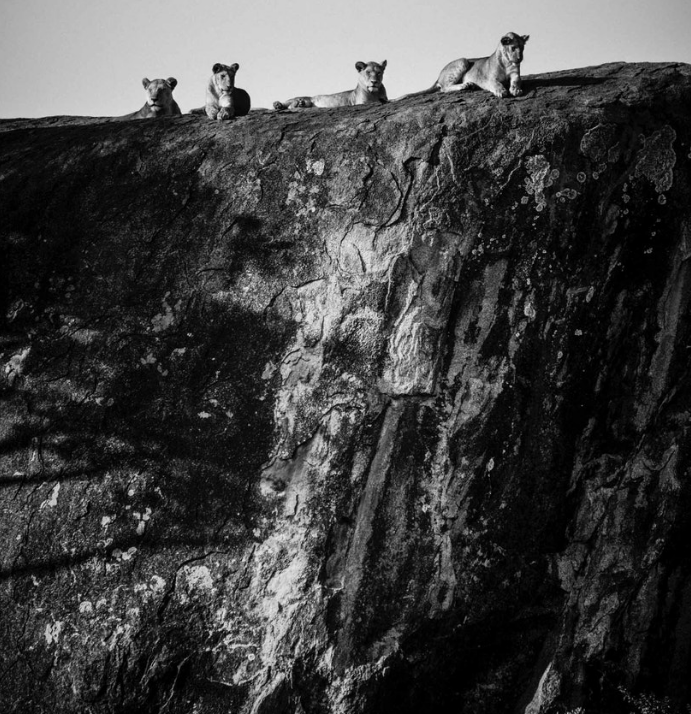
Above: Lioness (2015)
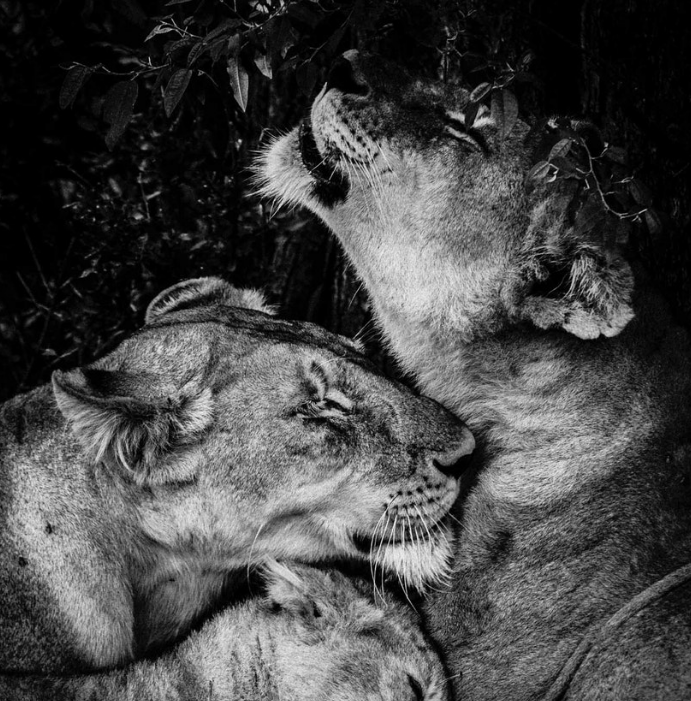
Above: Hugs of lioness (2006)
Utterly disconnected from our urban environment, for more than fifteen years I have been drawn — mind, body and soul — to photograph the remarkable animals from this land of light and contrast.
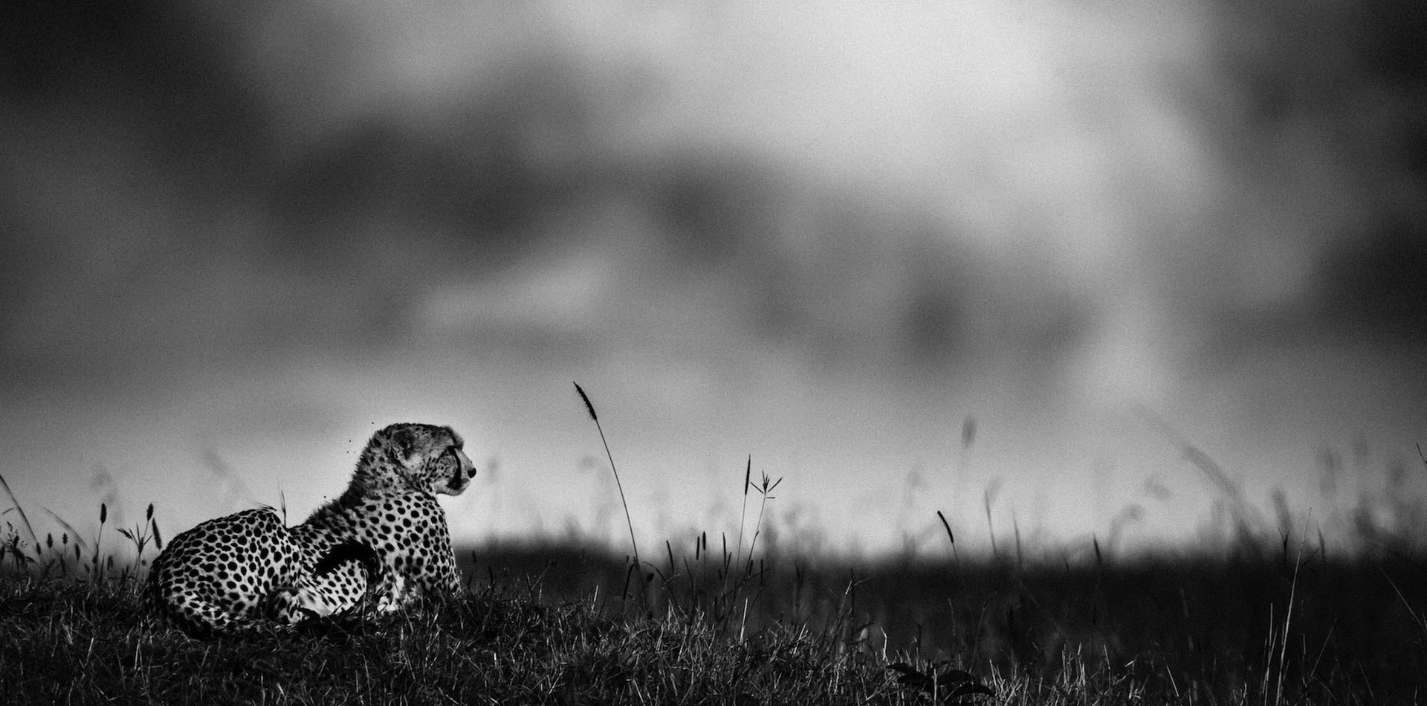
Above: Cheetah before the rain (2006)
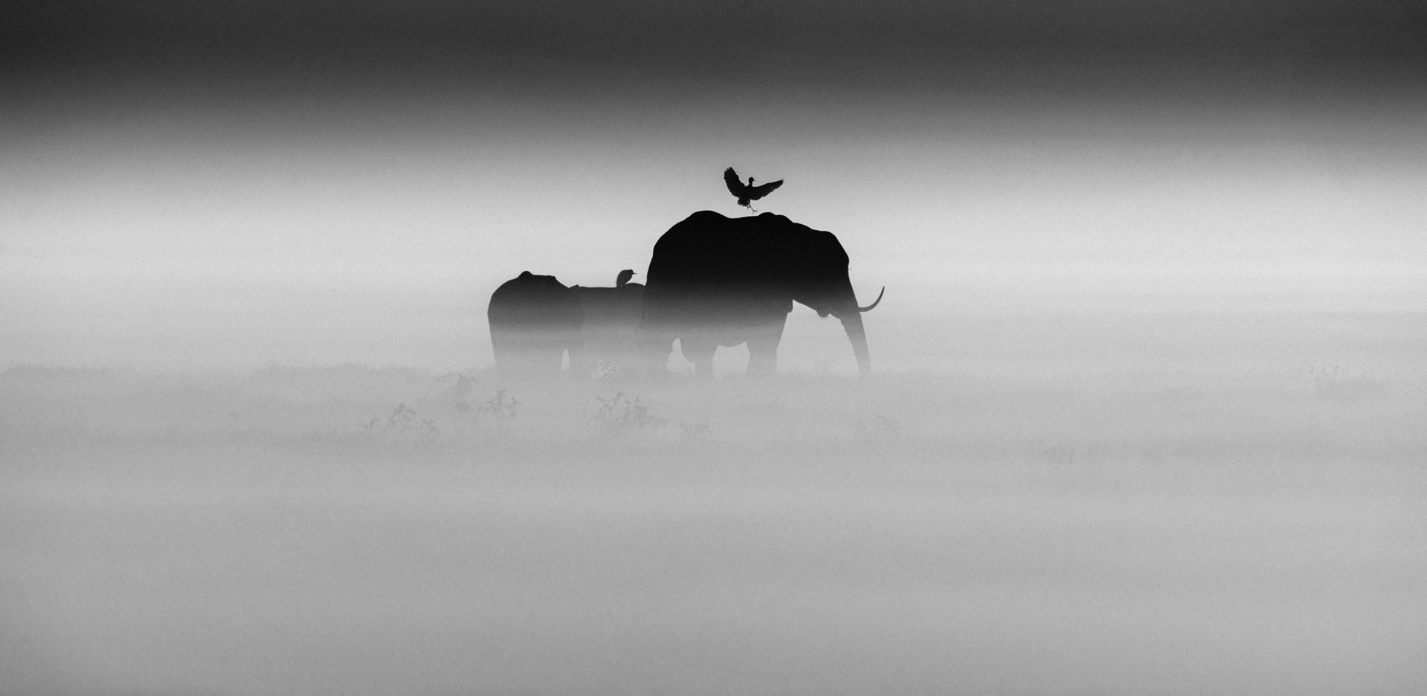
Above: Elephants and bird (2015)
I am constantly inspired by the sense of serenity and harmony between the natural landscapes and the diverse wildlife that roams these lands.
Everything is connected and the animals are totally adapted to their environment. I take photographs based on my gut instinct. For me, the thing that matters the most is the connection.
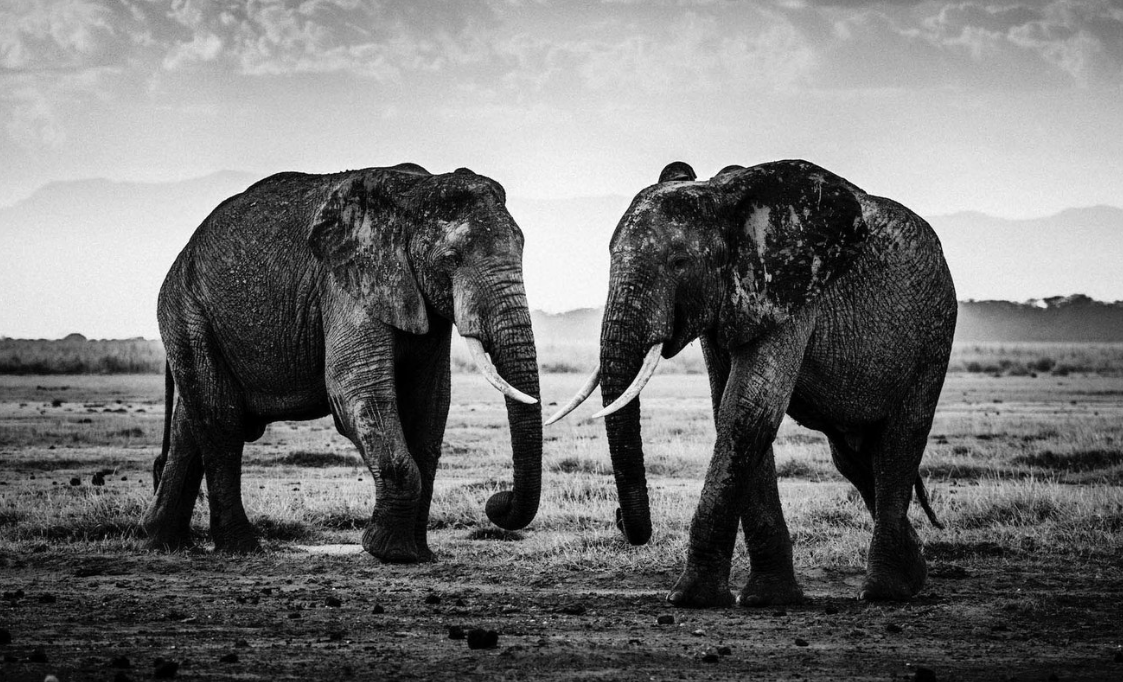
Above: Elephant, The road is closed (2015)
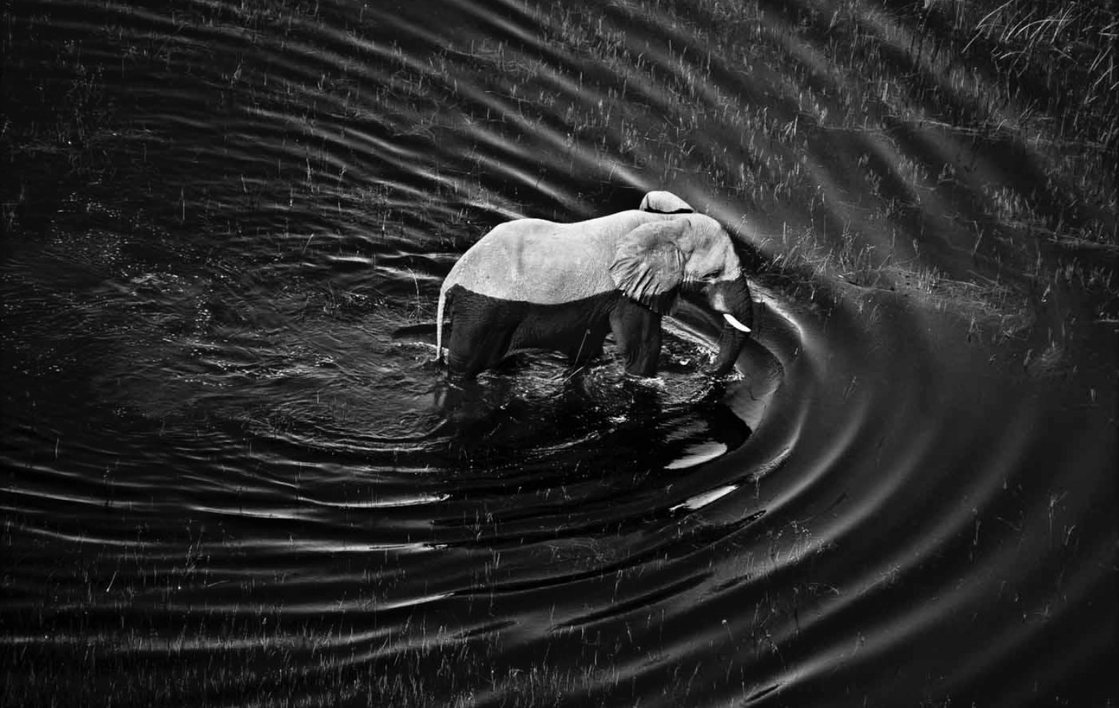
Above: Elephant crossing the river (2009)
I cannot stand strict pre-visualisation or procedures that lock people into pre-formatted ways of work. My conviction is never to prepare my shots. I prefer to be guided by luck, and to be inspired by the ever-changing spectacle of wildlife. Out in the field, I often work with a local guide who will drive the car while I concentrate on taking photos. It is very important to be utterly present in the moment, and not to be disturbed.
Opportunities in wildlife photography never come twice.
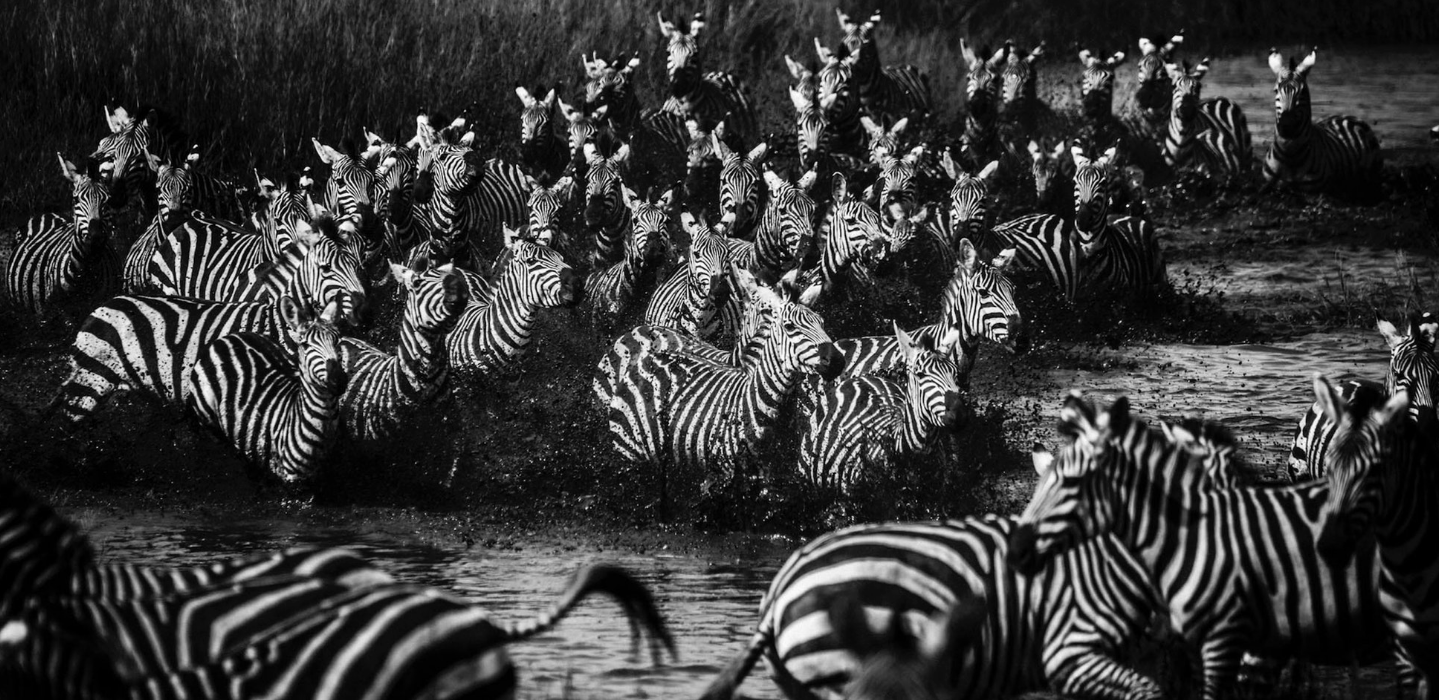
Above: Zebras crossing the river (2015)
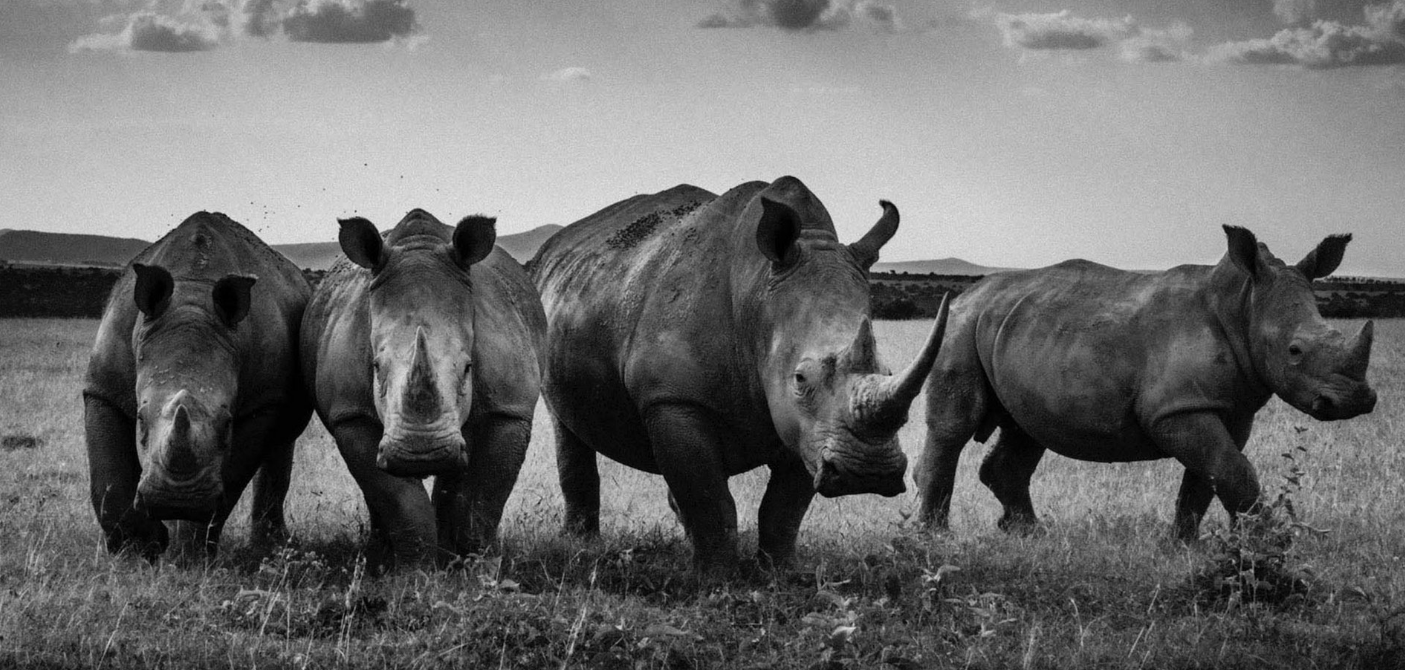
Above: Rhinos quartet (2013)
For me, there is no difference between animals and humans in terms of photography technique. When I take a picture of a lion or a giraffe, I use exactly the same approach as when I photograph people. I try to capture something of the animal’s unique personality and expressiveness, as well as their strength and sense of freedom. I believe my pictures can create a connection between the animal and viewer, as the viewers discover a personality in these animals, and realise they have emotions too.
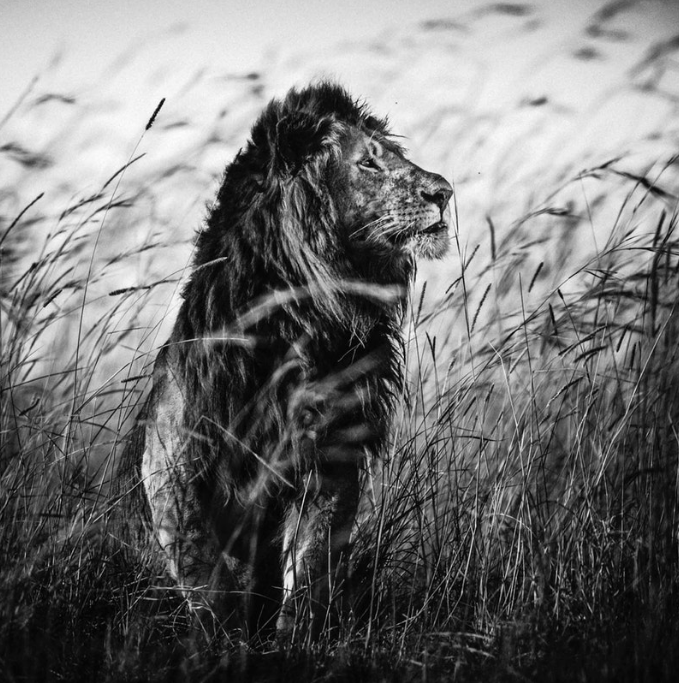
Above: Lion in the grass (2013)
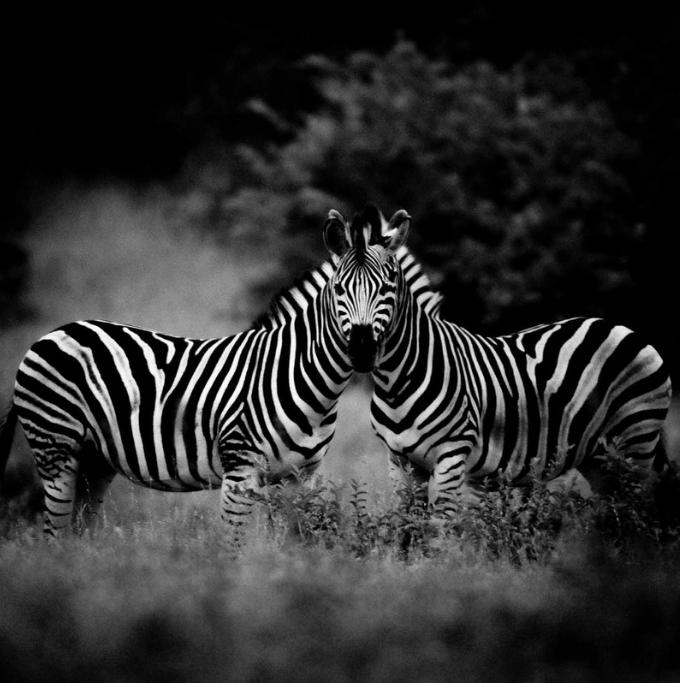
Above: Two zebras (2004)
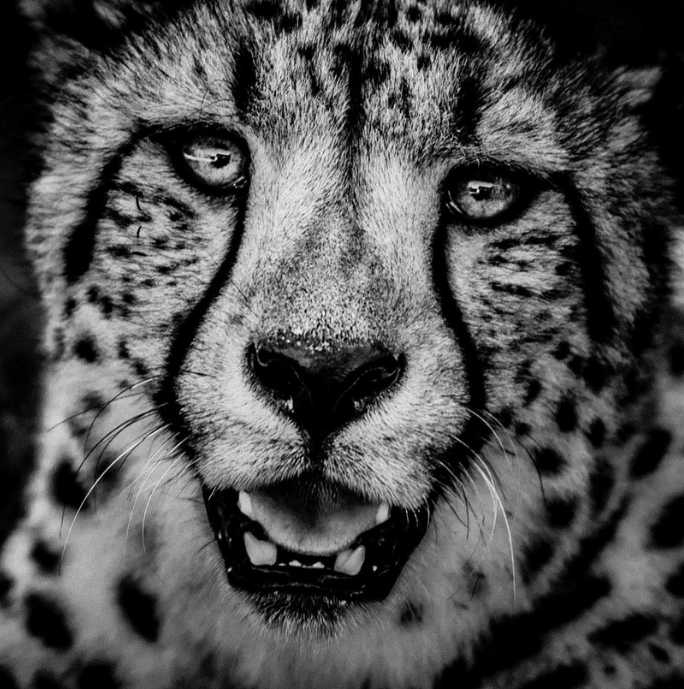
Above: Cheetah portrait (2013)
I am always filled with a great sense of tranquility and happiness when I leave the urban setting and modern life behind — travelling for weeks on end through some of the wildest regions left on our planet.
For me, there is nothing more powerful than the strength and beauty of Nature, and yet, at the same time, it is very fragile and precarious.
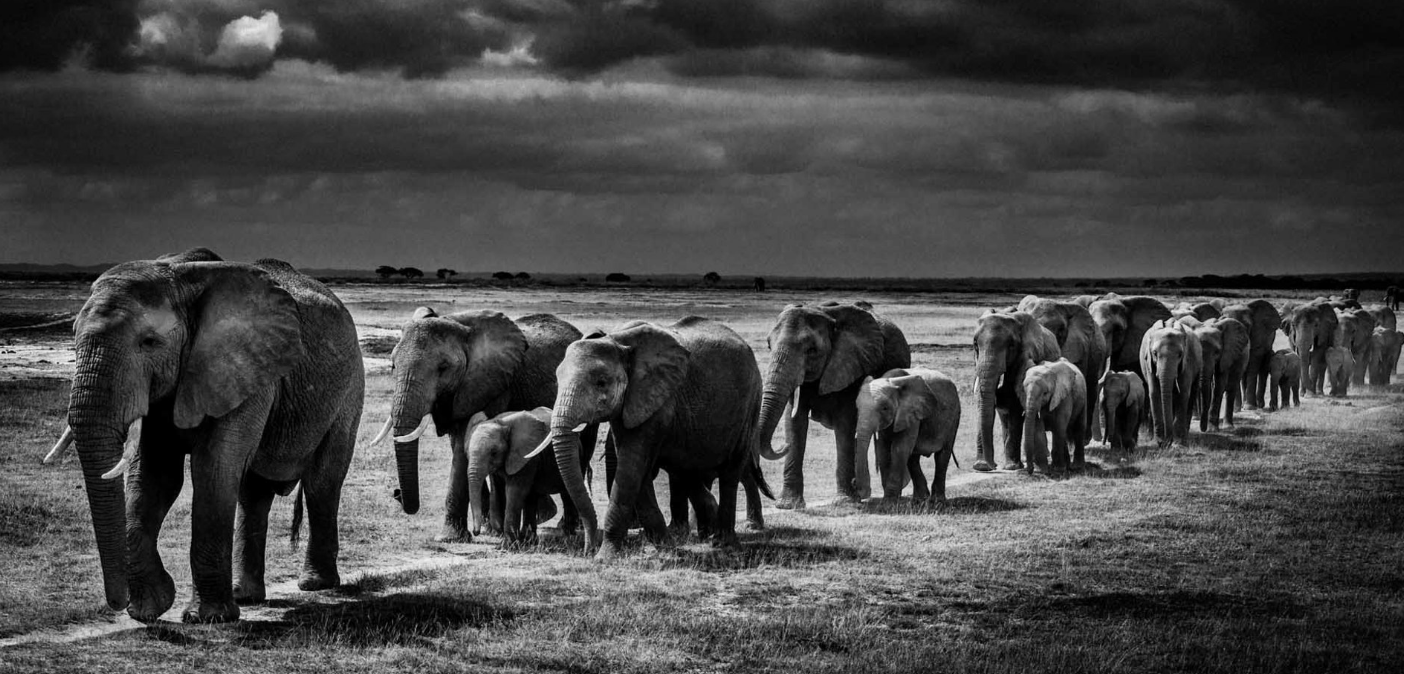
Above: Elephants crossing the plain (2013)
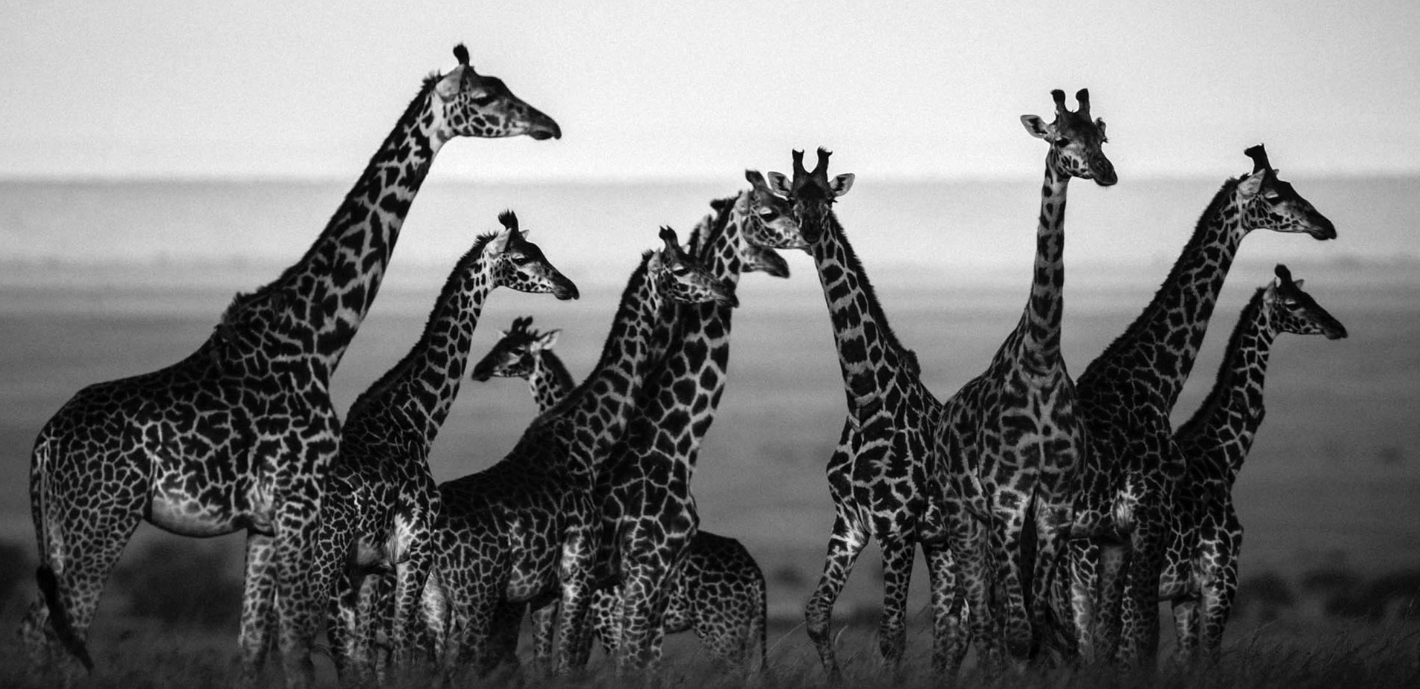
Above: Giraffe in harmony with their natural setting (2013)
Today, the fall of wildlife in Africa and elsewhere is disastrous.
I cannot know if we will discover more effective methods to halt or reverse this devastating change. However, I choose to hope and believe that we can. I believe that people are fed up with shocking images of destruction, poaching and deforestation — and yet it is of grave importance that we share these images, as we must all know what is happening on our planet. I don’t know exactly how photography can help preserve our wild ecosystems, but I feel proud when people experience my images and understand that these animals are just as ‘human’ as we are — with a personality, and a family.
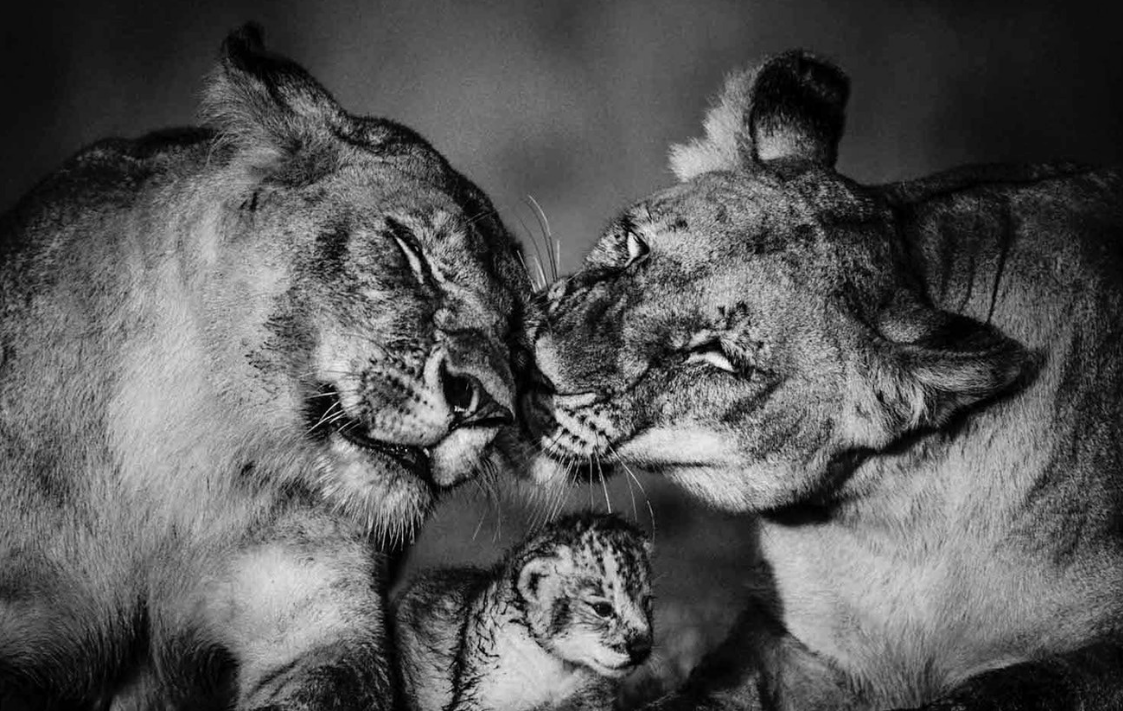
Above: Lion, The small one (2013)
I believe that we must have a sincere conscience for our fellow animals, and the devastating impact our species is having on so many of them. We must open our minds and hearts to the fact that we all part of a living, breathing planet, and recognise that we are just one piece of this wonder.
We must leave more space, more life, for all the other species, because we will not survive their extinction. It is humanity’s greatest challenge.
* * *
THIS ARTICLE WAS ORIGINALLY PUBLISHED ON MAPTIA
LAURENT BAHEUX
I am a self-taught French photographer inspired by the soul of nature and wildlife. I express this only in Black and White, like a big Family Album. www.laurentbaheux.com
RUSSIA: Kamchatka Volcanoes
Russia's Kamchatka Peninsula has the highest concentration of active volcanoes on Earth, and this video shows the Kamchatka Peninsula landscape. There are a total of 160 volcanoes in this region, and 29 of them are currently active.
ESTONIA: No Man’s Land: The Island Where Women Rule
On the little island of Kihnu, seven miles off the coast of Estonia, women run the show. The island still functions as one of the last matriarchal societies left in the world. Historically, Kihnu’s men spend most of the year fishing at sea in order to provide for their families back home. In their absence, the women lead the community of 400 strong, cultivating a vibrant folk culture while protecting and preserving their ancient traditions.
I did nothing all over the world
I have been traveling around the world for two years doing mostly nothing. The places where I did the most nothing are probably Indonesia, my six weeks in Japan and my collective three months in French Polynesia, but I have done nothing all over the world.
See, on the surface, travel seems like it should be nonstop action — go, go, go, fill the day! But in reality, you can travel to do absolutely nothing, like I do.
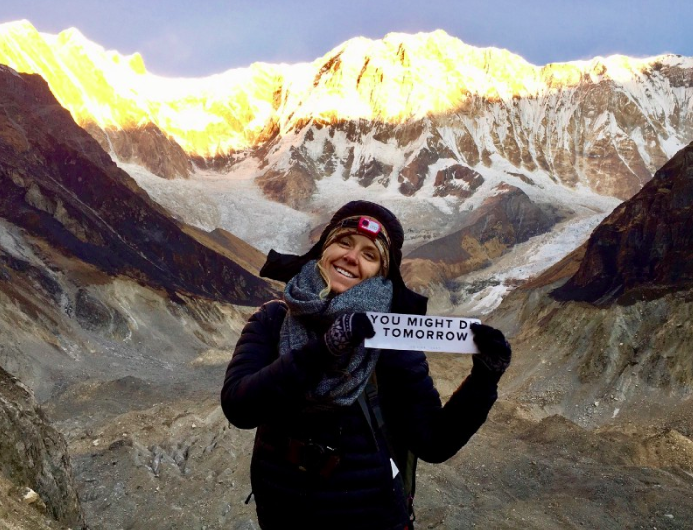
Okay, so in some cases you have to do a lot of something to then do nothing. A good example is when I climbed to Annapurna Base Camp in Nepal. We huffed up and down hills and stairs with our stuff on our back for five days! Just to get up there and exist for a moment. To stop the marching band of thoughts that bangs away in my head and be quiet. To appreciate the nature that was all around me even before I started that damn trek.
In Japan, it was easy to do a lot of nothing, especially out in the country. The culture can be a bit isolating, and Japanese people are generally a hushed people. You might be horrified to learn that there were many days during my time in Japan in which I would sit in my Airbnb, drink soup, and do a puzzle or some writing. All of complex, stunning, delicious Japan sparkled out my window, and I would sip tea and clatter away on the keyboard in a sweater. In Japan, the days felt long. The country invites you to be quiet, to be slower and more deliberate, to speak only when there is something meaningful to be said.
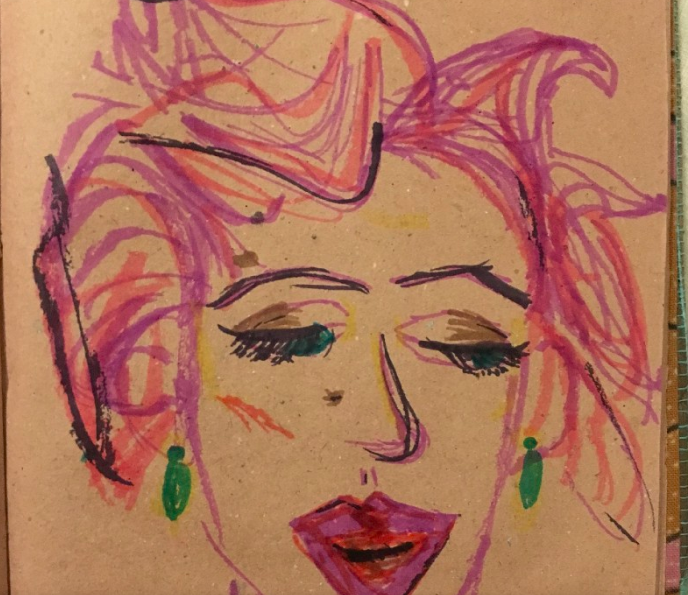
A drawing I did on a beautiful, quiet night in Tokyo.
In general, travel invites the traveler to slow down rather than speed up.Laundry on the road is an all-consuming task. Rinse, wash, wring, hang, fold. It is a meditation within itself. Pack and unpack the suitcase. Dine at a restaurant upon which you have stumbled as you walked with no particular destination. Listen. Observe. Experience.
Travel itself facilitates interactions and experiences for which we do not give ourselves time for back at home. To stop and shoot the shit with the old woman on the corner, to walk around with no particular destination, to be open to diversion, to sit at a cafe and watch the world go by; these are beautiful “wastes” of time that almost exclusively in travel become “valid” uses of time.
I’ve had moments when I look back on my trip that I wonder what the hell I did for the past two years. I just returned from three months of driving around the country with my dog. I looked through my photos and realized we did not once set foot in a kayak, other than one on the side of the road. We climbed no mountains, sailed no seas. What we did do is drive around to some beautiful places, meet interesting people, and just take it all in. I haven’t skydived in Oregon, but I can tell you about the guy we met on the coast who, out of nowhere, quit his job and cycled from Florida to Canada. We didn’t camp deep inside the Redwood forest, but we met a guy named Antonio at the rest stop who has the most tragic and beautiful life stories I’ve ever heard. We didn’t climb some huge cliff to see the eclipse, but down at the fish hatchery on that day, we did meet a gaggle of ladies with whom we still keep in touch to this day.
It’s about the pilgrimage, I think. Travel allows us to open our eyes to things which we glaze over every day. People. Natural beauty. Stories. Empathy.
The journey is the hard part, the fun part, a big part of the spiritual allure. But when you get to nothing — the moment when you can let go in joy, awe, and gratitude — that’s when you know you’ve made a worthwhile journey.
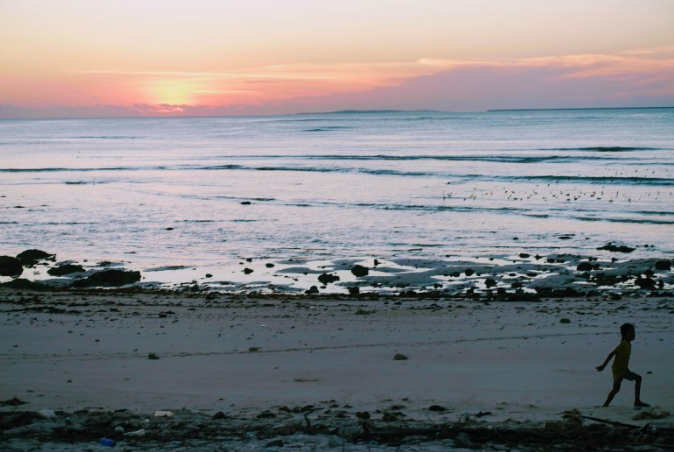
I went to this island that no one has ever heard of in Indonesia completely alone and spent time just thinking about life.
Step Inside Iran’s Kaleidoscopic Mosque
Iran’s Nasir al-Mulk, commonly known as "The Pink Mosque," is a technicolor daydream. Although the exterior showcases traditional Islamic architecture, hidden inside is an interior covered with intricate stained glass windows, creating a stunning kaleidoscopic effect each time they catch morning sunlight. The unique design and gorgeous color palette create a peaceful environment for prayer, drawing worshippers from all around the world.
KENYA: How Maasai sandals are made
This short clip explains how Maasai sandals are made in Kimana, Kenya. Each sandal is specifically designed for one person and is handcrafted with old motorcycle tires. Mostly, the sandals are crafted for the Maasai warriors; therefore, the tread marks left in the Earth signal a Maasai warrior has been there.
PERU: Weavers of the Sky
Traditional handwoven fabrics embody the living history and heritage of the Peruvian highlands. Intricate textile patterns with expressive names such as Mayu Qenqo (meandering river) or Pumac Makin (puma footprints) tell tales of the geography and events of the Andean region and its history over thousands of years.
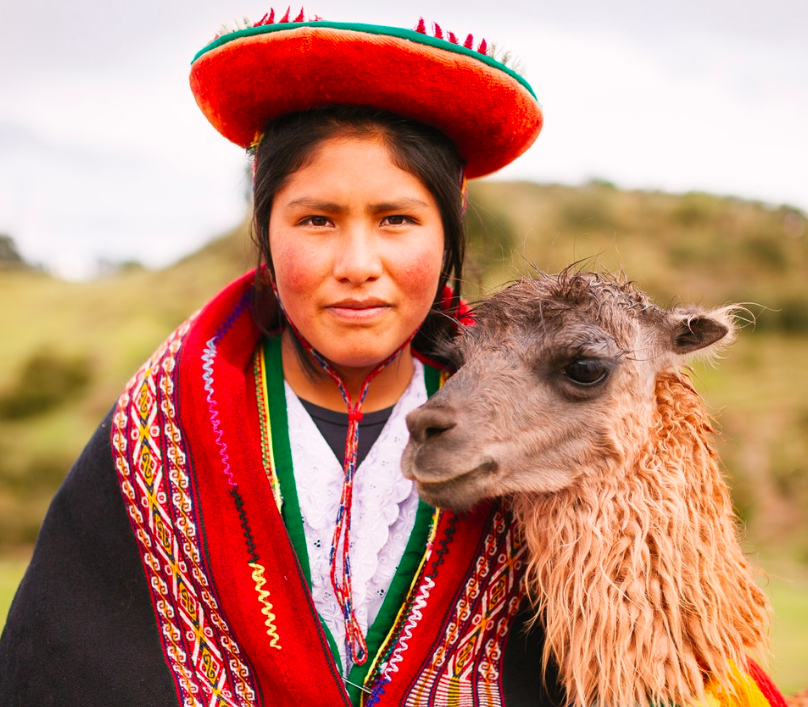
“Weaving is part of how we communicate our history to younger generations and the rest of the world,” Rosemary tells me, as she runs her fingers through alpaca thread in her home. Her fervour is palpable, as she explains how skilled weavers have passed ancient knowledge from old to young, generation after generation.
For years, hand-woven fabrics have embodied the living history and culture of the Peruvian Highlands. Textile patterns with expressive names like Mayu Qenqo (Meandering River) or Pumac Makin (Puma Footprints) tell tales of the events in the Andean region, as well as its diverse and chaotic landscape and sacred history spanning thousands of years.
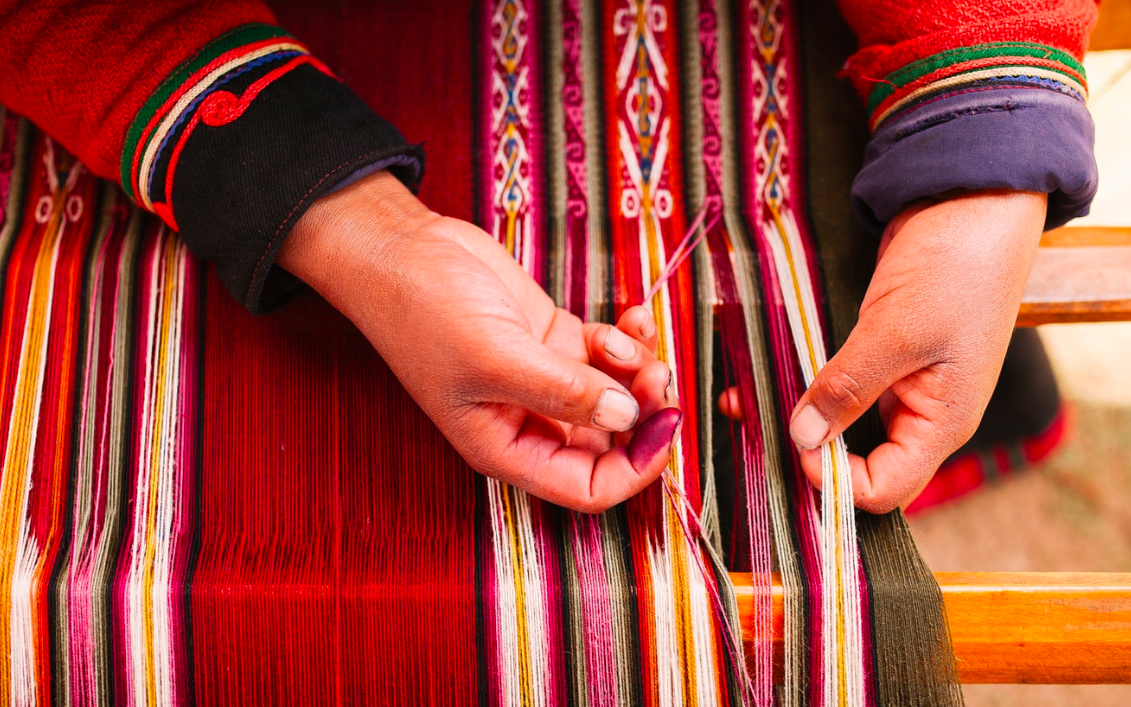
Above: Detail of Asunta, a young Andean weaver from a traditional Quechua community in the Piuray Lagoon weaving a new textile. Weaving is done using a simple backstrap loom, and the pattern design is woven only from memory.
As I made my way through the thundering mountains that so gracefully embrace the Sacred Valley, I listened with fascination to the ancient — yet living — stories about Quechua customs that my driver Elvis was reciting. He proudly told me the history of his land and the people who have inhabited it since pre-Columbine times. The ambition and scale of his tales matched any Western classic, despite never being written down.
“Manco Capac was the first and greatest of all the Inca — son of Inti, the Sun, who brought him up from the depths of the Lake Titikaka to rule from the great city of Cusco, the navel of the Earth.”
We take an unexpected left turn off of the main road, and start to approach Piuray Lagoon, as Elvis continues with his story. “Manco Capac had two children, a girl and a boy. Then one day Inti asked Manco Capac to go and find his children so that they could spend the sunset together. Yet when he went looking for them, he found in their place two lagoons; the Huaypo Lagoon (his son) and the Piuray Lagoon (his daughter).”
“These two lagoons,” explains Elvis, announcing our arrival, “represent the duality and balance of the sexes in modern day Quechua culture.”
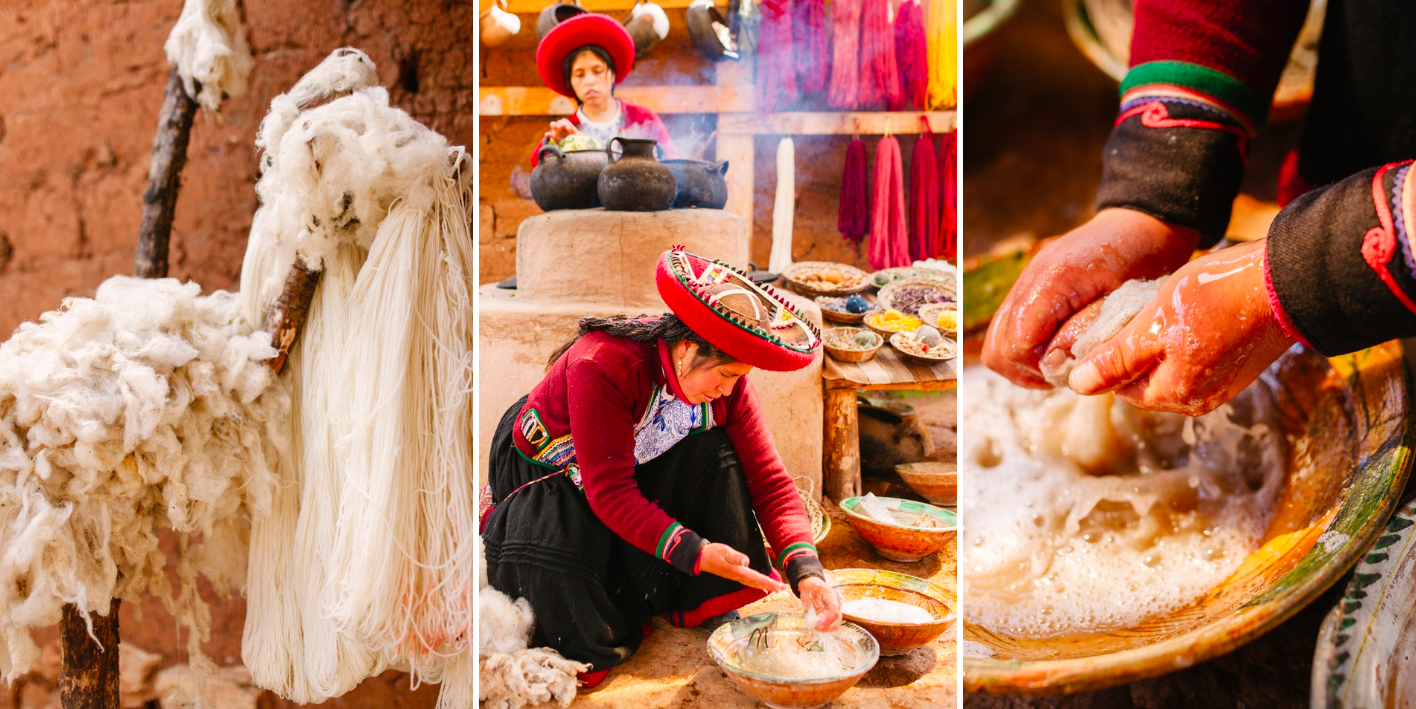
Above: In the home of Rosemary (22), a young Andean weaver in Piuray Lagoon, raw alpaca fibre and traditionally processed yarn hang from a branch. The raw alpaca fibres are carefully washed by hand using a soap prepared from the yuca root, preparing them to be hand spun into yarn.
In 1528 the Spanish colonisation of the Inca Empire destroyed and eradicated all written records of Incan culture, which was the only palpable account of Quechua customs and folklore. Now, the only original testament is found between the threads of intricate textile designs handwoven by indigenous communities of the Puna (Andean highlands).
Right up until the present day, Quechuan communities from the Peruvian highlands have been the keepers of tradition and the sustainers of an ancient yet arduous way of life. They work in absolute harmony with the Peruvian mother earth, whom they call Pachamama. Their unique weaving practices and patterns date back to pre-Columbian civilisations, and continue to be a great symbol of Quechuan cultural identity.
Reaching a small village near Piuray, we meet Mariana, a young girl with innocent features wearing a traditional montera (hat) and iliclla (black shoulder cloth) paired with a colourful vest and skirt. Walking beside her llama, Mariana explains how the women of Chinchero proudly wear their hand woven textiles and clothing on a daily basis, to differentiate the identity of their community from others in the highlands.
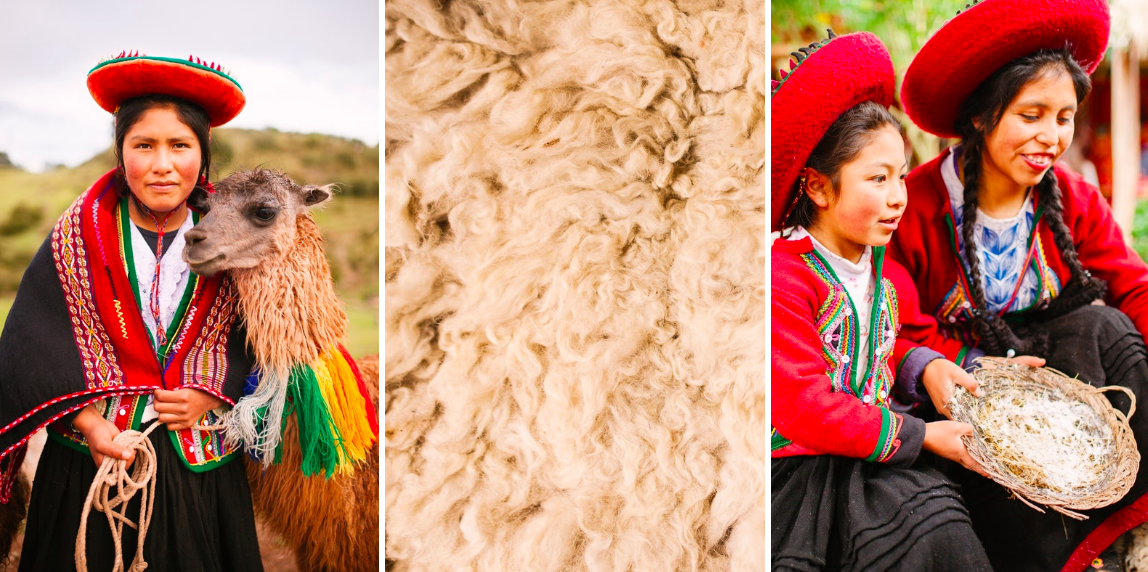
Above: Mariana (18), a young Andean girl from a traditional Quechua community in Piuray Lagoon, poses for a portrait with her llama. Both llamas and alpacas, domesticated species of camelid, provide lanolin-free fibres, making them soft and insulating, no matter the climate.
The region of Chinchero, at 3,780 meters above sea level in the province of Urubamba, is home to several Quechua communities. The men farm the land and harvest potatoes, barley, and quinoa to feed their families and sell at nearby markets, while the women raise llamas and alpacas to obtain textile fibres to weave. Alpaca and llama threads are lanolin-free, making them soft and insulating, regardless of the climate.
Women like Mariana spin on simple drop spindles and weave their colourful yarn on traditional back-strap looms while tending to their flock of alpacas or letting their family’s food cook over a fire, just as their forebears did before them for centuries. “I started playing with wool and spindles when I was very young. Then, around the time I was six years old, my older sisters started teaching me simple weaving techniques and patterns through observation and repetition,” explains Mariana.
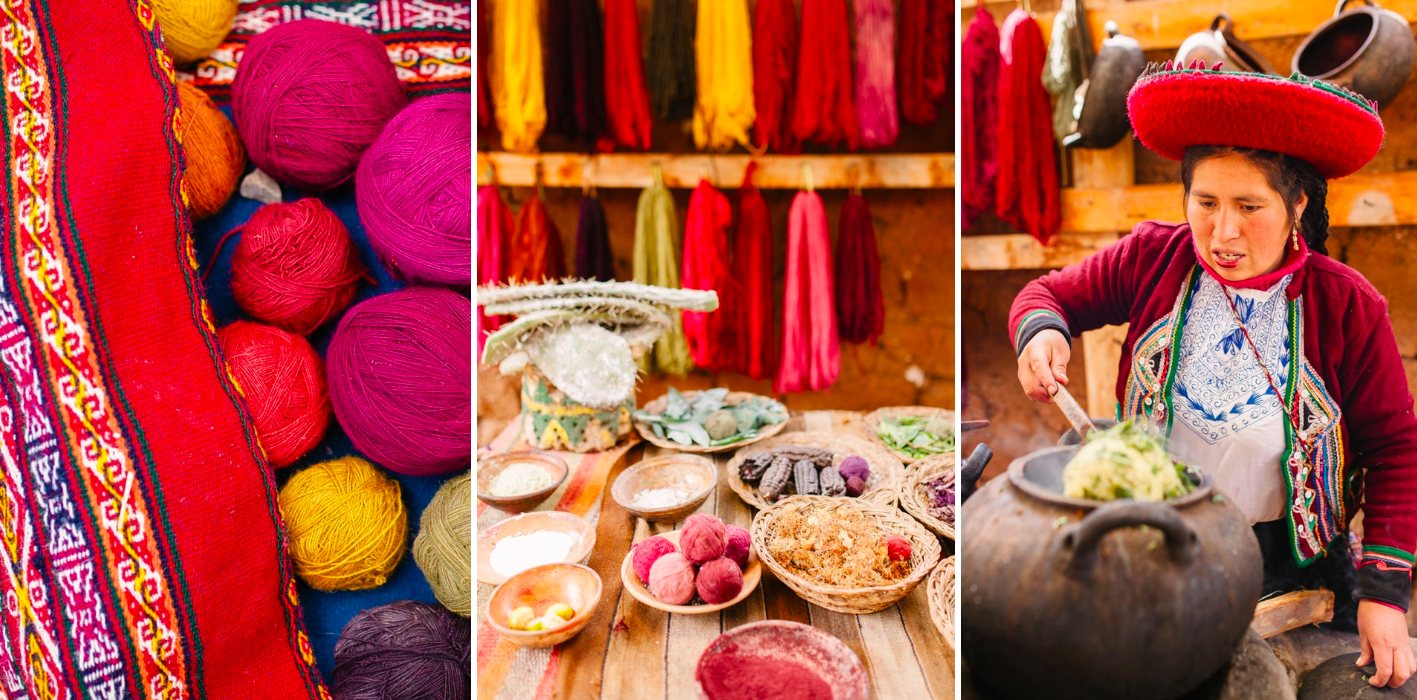
Above: The patterns on this fabric represent Mayu Qenqo (Meandering River), Pumac Makin (Puma Footprints), and the Piuray and Huaypo lagoons. Rosemary (22), a young Andean weaver from the Piuray Lagoon, checks the dye process of a natural ball of yarn inside the colouring pot.
Chinchero has traditionally relied on farming for financial sustainability, yet in the recent years, demographic and social changes have forced these small communities to find new ways to sustain themselves. Competition with large agricultural corporations means that local farmers can no longer rely on farming to financially support their families. Indigenous women who used to weave just to serve their family have now had to increase their production and sell textiles in local markets.
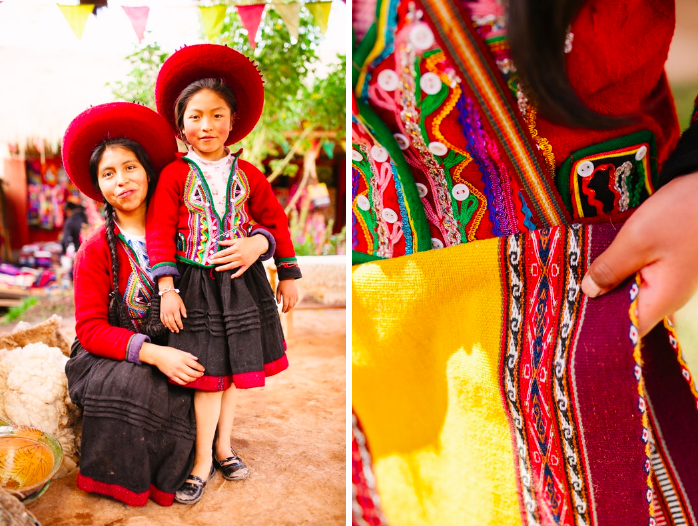
Above: Concepcion (24) and her daughter Feliciana (7), from a traditional Quechua community near Piuray Lagoon, pose for a portrait in the weaving workshop.
“They want to change Chinchero,” explains Concepcion, a weaver and mother of two. “The government has seized some land to make an international airport and to build big hotels that cater to the growing tourism that is overwhelming the city of Cusco [50km away from the village of Piuray]. This is changing everything for our communities, forcing us to give up our ancient way of life, which will soon be unsustainable in competition with the growing demands of tourism.”
The women of the Chinchero region are regarded as the keepers of tradition and the cultural identity of their community. Concepcion’s daughter Felicia, at the tender age of 7, is already learning the elaborate process of weaving through her mother and the women in her family.
By the 1970s, as a result of the exponential growth of tourism in the Sacred Valley, mainly due to the popularity of Machu Picchu, many Quechua weavers started to change their production. They began using artificial aniline dyes instead of natural ones and making simple patterns on more homogenised non-traditional fabrics to keep up with the increasing demand from tourism. These new textile designs no longer reflect the ancient weaving traditions of the communities, and their culture and identity are now sadly at risk of being lost and forgotten.
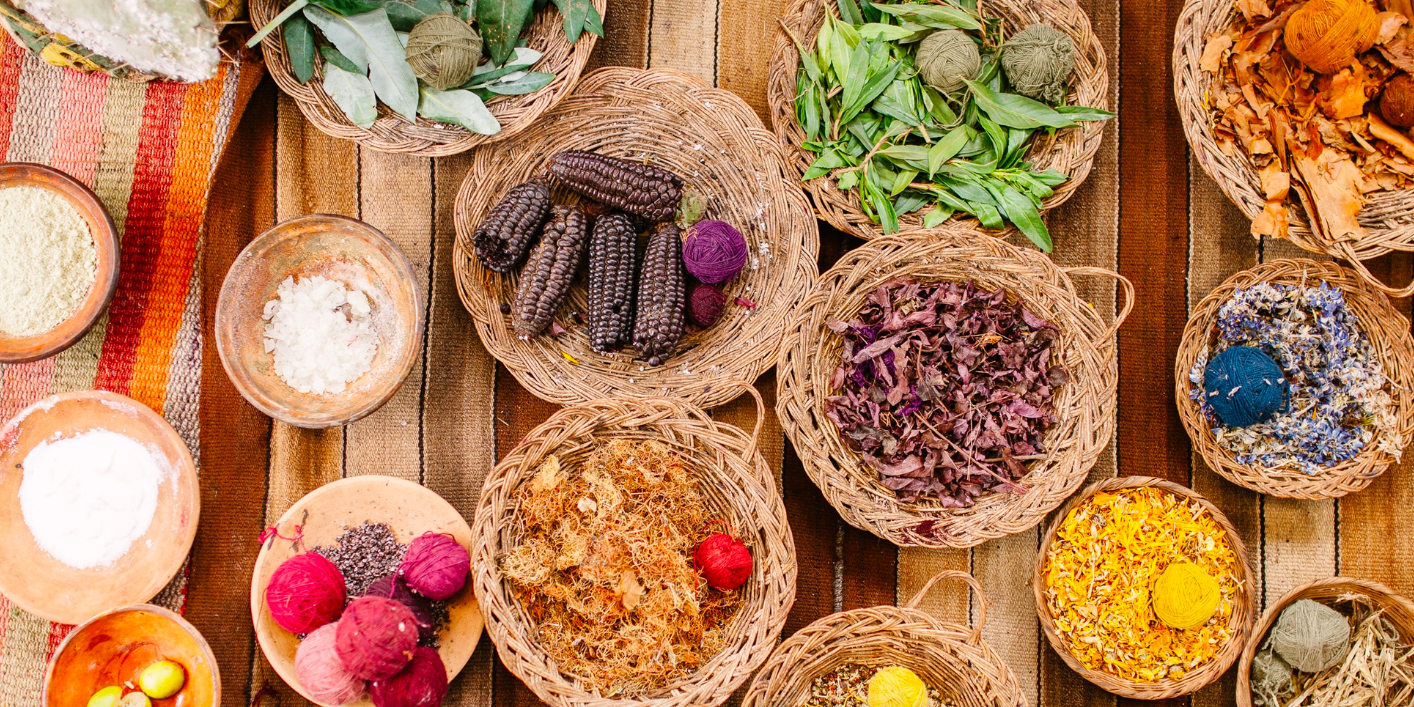
Above: A selection of natural produce such as purple corn, green coca leaves, blue flowers, cochineal, salts and beans, all found growing in the Urubamba Valley and the Andean highlands. They are used by local Quechua communities to create natural dyes for colouring fibre and wool.
The balance between financial sustainability, quality of life, and sustaining the heritage of the Quechua people is a delicate one. Back in Rosemary’s home, she explains, “It is not only a cultural art form, but an integral part of our social organisation and economic situation.” She goes quiet for a while, before returning to the fibres on a drop spindle.
Today, although few in number, there still exist communities that remain largely unchanged in the face of globalisation. In a visit to some of the less transited areas of the highlands, I discovered villages that are winning the battle to preserve their customs, despite the increasing difficulties they face. They hold firm against the alluring tide of modernity, passing down knowledge from older to younger generations, from mother to daughter.
It is my hope that they will continue do so, whilst also benefitting from better access to healthcare and education, for many years to come.
THIS ARTICLE WAS ORIGINALLY PUBLISHED ON MAPTIA
MARTA TUCCI
Documentary photographer and writer, specializing in human rights, with a particular focus on issues of identity, migration and social exclusion. www.martatucci.com
HONG KONG: In the Kong
Hong Kong is one of the hardest cities to film skateboarding in. It's dense, hilly and crusty, but within several short trips to HK we pieced together this short cinematic clip featuring some of Hong Kong's finest.
The video features HK locals Chris Bradley (Vans/Victoria), Piet Guilfoyle (Vans/Victoria), Jay Meador (Vans, Vagabond) and Ho Yeung.
Shot by Charles Lanceplaine, Jay Meador & Kristian Kvam Hansen
Edited by Charles Lanceplaine & Kristian Kvam Hansen
Music by Yuki Ame - KNW THT
CANADA: Nova Scotia
The Perennial Plate spent a month in Nova Scotia, documenting the province's fishermen and farmers in a series of films, this is montage compiles some of their favorite moments from the shoot.
Travel to Cuba
A return to the past, old cars, colonial houses, and decoration anchored in the 50s. Cuba, marked by dictatorships and political revolutions, maintains its lifestyle intact. A tour of the north and center of the island: Havana, Viñales, Cayo Jutías, Playa Larga, Bahía Cochinos, Playa Girón, Trinidad, Cienfuegos, Santa Clara, Cayo Santa María.
TANZANIA: The Last Hunter Gatherers
Hunting only with bows, arrows, and their ingenuity, what marked my time with the Hadza was how remarkably happy they seemed. In their language, there is no word for “worry” and by following their ancestral ways, the Hadza truly live in the moment.
Read MoreLiving on the Most Crowded Island on Earth
Two hours off the coast of Colombia is a small island home to over 1,200 people. As the entirety of Santa Cruz del Islote only spans the length of two soccer fields, residents live in close quarters, making the island four times as dense as the borough of Manhattan. Despite the circumstances, the community makes the most of their limited surface area, packing in a school, two shops and one restaurant. Only 150 years ago, the island was uninhabited; today, generations of families are proud to call Santa Cruz del Islote home.
The Origins of Pama-Nyungan, Australia’s Largest Family of Aboriginal Languages
The approximately 400 languages of Aboriginal Australia can be grouped into 27 different families. To put that diversity in context, Europe has just four language families, Indo-European, Basque, Finno-Ugric and Semitic, with Indo-European encompassing such languages as English, Spanish, Russian and Hindi.
Australia’s largest language family is Pama-Nyungan. Before 1788 it covered 90% of the country and comprised about 300 languages. The territories on which Canberra (Ngunnawal), Perth (Noongar), Sydney (Daruk, Iyora), Brisbane (Turubal) and Melbourne (Woiwurrung) are built were all once owned by speakers of Pama-Nyungan languages.
All the languages from the Torres Strait to Bunbury, from the Pilbara to the Grampians, are descended from a single ancestor language that spread across the continent to all but the Kimberley and the Top End.
Where this language came from, how old it is, and how it spread, has been something of a puzzle. Our research, published today in Nature Ecology and Evolution, suggests the family arose just under 6,000 years ago around what is now the Queensland town of Burketown. Our findings suggest this language family spread across Australia as people moved in response to changing climate.
Aboriginal Australia is often described as “the world’s oldest living culture”, and public discussion often falsely assumes that this means unchanging. Our research adds further evidence to Australia pre-1788 being a dynamic place, where people moved and adapted to a changing land.
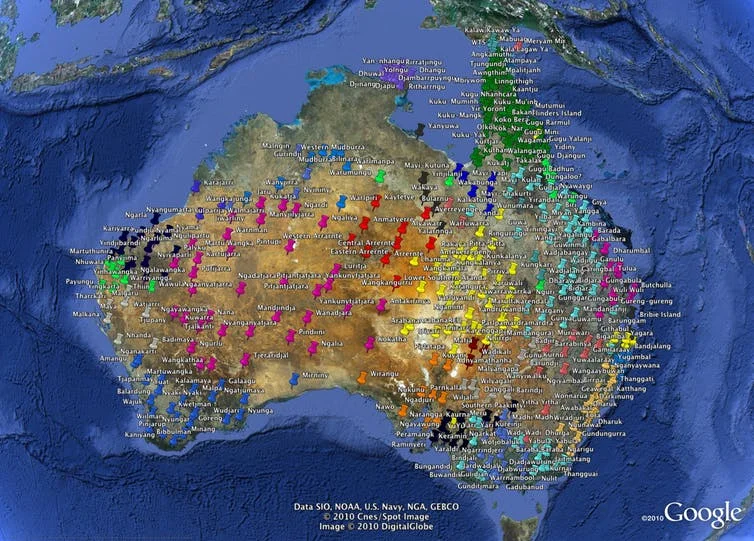
Map of Pama-Nyungan languages, coloured by their main groupings. Compiled by Claire Bowern using data from National Science Foundation grant BCS-0844550.
Tracing Pama-Nyungan
We used data from changes in several hundred words in different languages from the Pama-Nyungan family to build up a tree of languages, using a computer model adapted from those used originally to trace virus outbreaks.
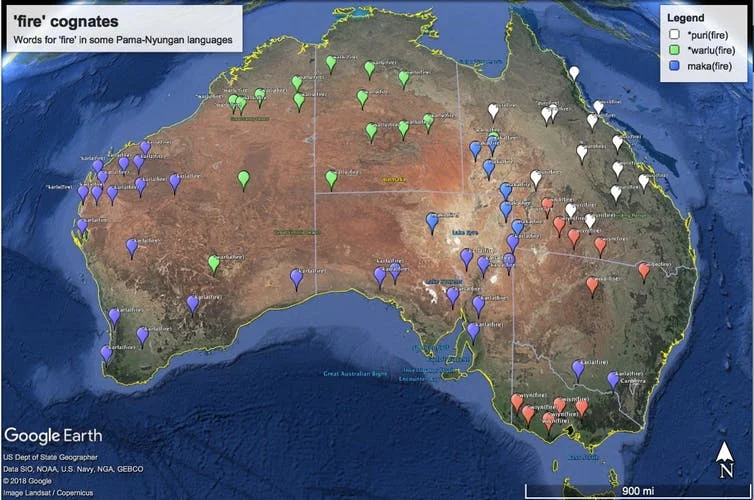
Different related words for ‘fire’ in certain Pama-Nyungan languages. Green dots show languages with a word for ‘fire’ related to *warlu; white has *puri; red has *wiyn; blue has *maka, and purple *karla. Chirila files (http://chirila.yale.edu) and google earth for base image.
Because our models make estimates of the time that it takes for words to change, as well as how words in Pama-Nyungan languages are related to one another, we can use those changes to estimate the age of the family.
We found clear support for the origin of Pama-Nyungan just under 6,000 years ago in an area around what is now the Queensland town of Burketown. We found no support for the theories that Pama-Nyungan spread earlier.
The timing of this expansion is consistent with a theory that increasingly unstable conditions caused groups of people to fragment and spread. But correlation is not causation: just because two patterns appear related, it does not mean that one caused the other.
In this case, however, we have other evidence that access to ecological resources has shaped how people migrated. We found that, in our model, groups of people moved more slowly near the coast and major waterways, and faster across deserts. This implies that populations increase where food and water are plentiful, and then spread out and fissure when resources are harder to obtain.
You can see a simulated expansion here. The spread of Pama-Nyungan languages mirrored this spread of people.
What languages tell us
Languages today tell us a lot about our past. Because languages change regularly, we can use information in them to work out who groups were talking to in the past, where they lived, who they are related to, and where they’ve moved. We can do this even in the absence of a written record and of archaeological materials.
For places like Australia, the linguistic record, though incomplete, has more even coverage across the continent than the archaeological record does. At European settlement, there were about 300 Pama-Nyungan languages. Because there are at least some records of most of them we are able to work with these to uncover these complex patterns of change.
There are approximately 145 Aboriginal languages with speakers today, including languages from outside the Pama-Nyungan family. Many of these languages, such as Dieri, Ngalia and Mangala, are spoken by only a few people, many of whom are elderly.
Other languages, however, are actively used in their communities and are learned as first languages by young children. These include the Yolŋu languages of Arnhem Land and Arrernte in Central Australia. Yet others (such as Kaurna around Adelaide) are undergoing a renaissance, gaining speakers within their communities.
Nathan B. performing “Yolŋu Land” using English and Yolŋu Matha.
Finally, though not the focus of our study, there are also new languages, such as Kriol spoken across Northern Australia, Palawa Kani in Tasmania, and Gurindji Kriol. Many Aboriginal and Torres Strait Islanders also know English, and most Indigenous Australians are multilingual.
Without records of all these languages, and without ongoing work to support speakers and communities, we aren’t able to do research like this, and Australia loses a vital link to its history. After all, European settlement of Australia is a tiny chunk of the time people have lived on this land.
This article was originally published on The Conversation.

CLAIRE BOWERN
Claire Bowern is Professor of Linguistics at Yale University. Her 2004 PhD is from Harvard University and examined the historical morphology of complex verb constructions in a family of non-Pama-Nyungan (Australian) languages. Her research focuses on the Indigenous languages of Australia, and is concerned with language documentation/description and prehistory.
Strained Lebanon
Directed, filmed, and edited by Yuribert Capetillo Hardy.
He says of this film: "Growing up in the streets of Habana and now living in Europe, I didn’t had a lot of information about the middle east (except from what the mainstream media want you to see & read). This has been the biggest motivation for me to go to Beirut and find out about it myself. I found a country that’s driven by “Peaceful coexistence” a term that I’ve heard in Lebanon for the first time, and it fascinates me ever since."