
Since the Supreme Court ruling, Grants Pass v. Johnson, upended protections for the unhoused, sweeping of homeless encampments has drastically increased.
Read MoreWear Once, Waste Always: The Hidden Toll of Festival Fashion
Festival fashion is fast, flashy and overwhelmingly disposable.
Read MoreInternational Students Put at Risk by Harvard Ban
The Trump administration’s ban on admitting international students to Harvard leaves them in uncertainty amid First Amendment violations and poses concerns to all international students in the US.
Read MoreCalifornia’s Fashion Act: Fighting For Accountability
California’s Fashion Accountability Act is bringing environmental transparency to the trillion-dollar industry.
Read MoreFirst Amendment Freedoms in Danger: Greenpeace Ordered to Pay $667M to Oil Company
Julia Kelley
A North Dakota jury has ordered environmental group Greenpeace to pay Dakota Access Pipeline’s operating oil company in a case sparking controversy around Americans’ right to freedom of speech and protest.
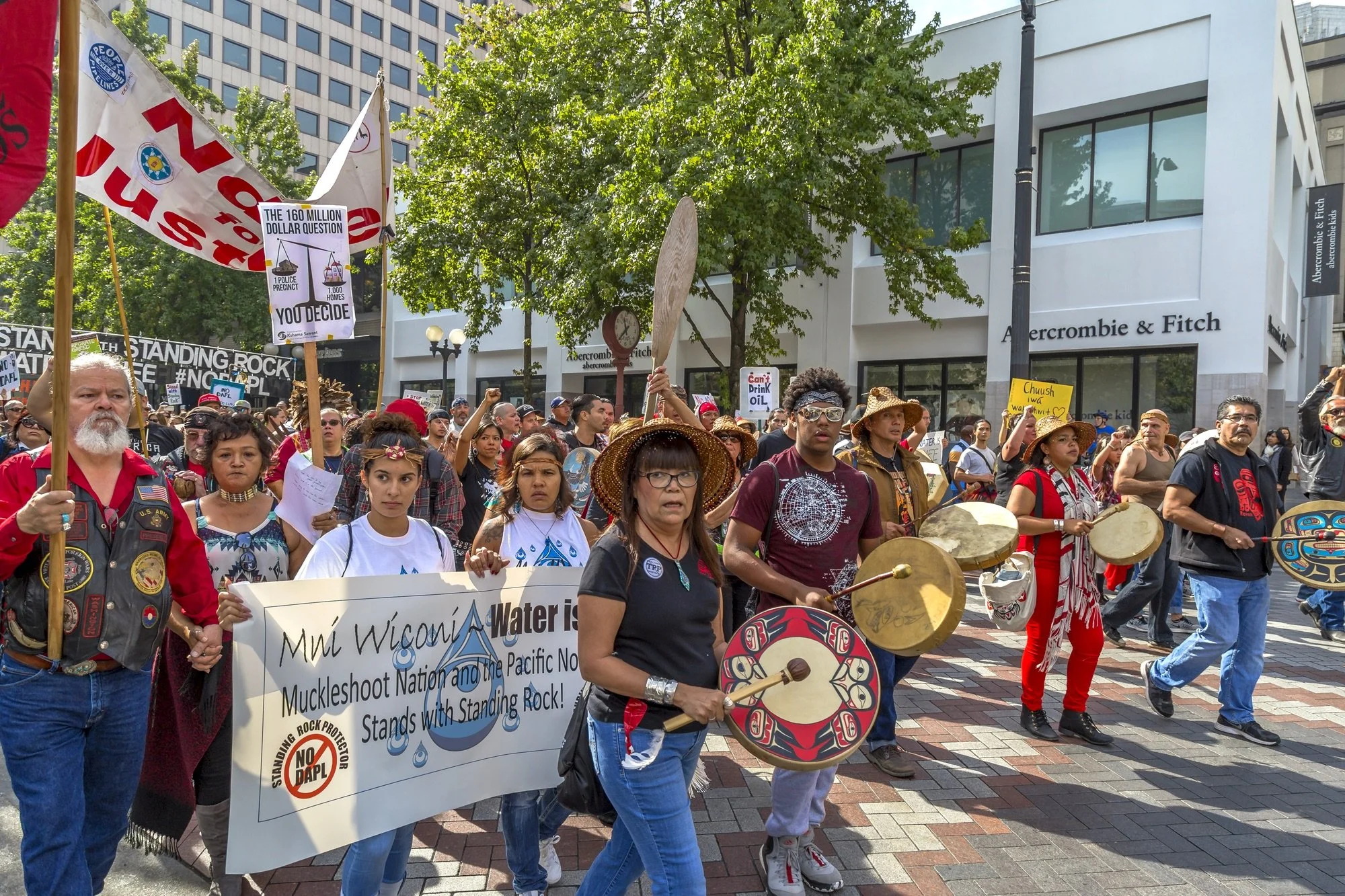
Protest Against Dakota Access Pipeline. John Duffy. CC BY 2.0
On March 19, 2024, a North Dakota jury found Greenpeace, a global environmental nonprofit network, guilty of defamation and destructive protest action against the Dakota Access Pipeline, ordering the nonprofit to pay its operating oil company $667 million. This decision comes after years of national pushback against the Dakota Access Pipeline due to the project’s potential environmental hazards; the 1,172-mile-long underground pipeline transfers crude oil from North Dakota to an oil terminal in Patoka, Illinois. Moreover, the pipeline stretches within a half-mile of the current Standing Rock Sioux Reservation boundaries, posing potential risks to significant cultural and burial sites. As such, since its approval in 2016, protests led by Native tribes and environmental groups such as Greenpeace began sprouting up around the pipeline’s construction sites and sacred Native American areas. In many instances, demonstrations resulted in violence between protesters and law enforcement. It is because of these protests that the builders of the pipeline, oil company Energy Transfer, praised the jury’s March 19 decision, echoed in its counsel’s statement: “Peaceful protest is an inherent American right; however, violent and destructive protest is unlawful and unacceptable.”
In response to this decision, however, environmental activists and Tribal nations have taken a much different position. Contrary to Energy Transfer’s sentiment, many have determined this verdict to be an attack on First Amendment rights rather than a protection against unnecessary violence and destruction. Those associated with Greenpeace have even named the case a Strategic Lawsuit Against Public Participation, or a suit that intentionally targets those speaking out against public interest issues in an attempt to intimidate critics and force them to spend money. To those opposing the pipeline, not only has this lawsuit silenced years-long appeals for environmental safety and Native land protection, but has also cost Greenpeace an immense amount of money to defend its position, thus delaying progress in such areas. Despite being a major nonprofit, Greenpeace has previously warned that losing this case could potentially lead to bankruptcy. Those involved now fear that this could be a reality, as financial reports demonstrate that its total assets from 2023 may not be enough to ensure a supersedeas bond, in which a surety insurer would put up the bond necessary to pay the court-ordered amount. If not, then Energy Transfer would be able to begin seizing Greenpeace’s assets, including all cash needed to keep it operating.
Moreover, Greenpeace has come to represent freedom of speech and protest in general. In an interview with Democracy Now, Steven Donziger described the trial as a way to “silence people’s legitimate constitutionally protected right to speak out,” founded on a false narrative that protesters were violent while it was actually “law enforcement agencies […] hired by Energy Transfer that were really committing violence.” Critics warn that this will have effects that go beyond support for environmental and Native protections, potentially posing detrimental risks to nonprofit work as a whole. With a rise in anti-protest bills since 2017 mirroring a rise in major protest movements, much of this newly proposed legislation calls for increased liability against organizations not directly involved with protests but who offer support, including nonprofits or religious groups. In addition, the potential bankruptcy of Greenpeace, a substantial and largely influential organization, signals even fewer protections for smaller nonprofits, who may not have the same amount of financial support or as wide of a network. This could significantly decrease charities’ ability to speak out on various issues, for fear that they could easily be sued by larger corporations. Such concern would halt imperative support for causes across the country, a major blow to many movements. .
In the wake of the lawsuit, supporters of Greenpeace, environmental protection and the Standing Rock Sioux Tribe have critiqued and denounced the jury’s final decision. Despite the shock that the trial has caused, such advocates find hope in Greenpeace’s intention to appeal the case, as the organization declared in a statement released a day after the verdict. In addition to this, Greenpeace also highlighted the increased support it has gained over the past year, as opposed to a dissolution of its movement risked by the court case. The statement’s overall message affirms Greenpeace’s continued efforts as well, signaling that their work is still not over: “we will not be silenced, and our movement will endure.”
GET INVOLVED:
For those looking to get involved with environmental protection in the United States, researching local or state legislation is a great place to start. Looking into advocacy on a federal scale can be powerful as well, especially through staying updated on EPA regulations and making comments. In addition, check out organizations like the Environmental Defense Fund, The Nature Conservancy, We Act For Environmental Justice or the National Environmental Education Foundation, all of which are focused on making environmental change and expanding awareness through public policy support and education. Those interested in supporting Native American rights can look into the Native American Rights Fund, the Association on American Indian Affairs, the American Indian Policy Institute or Cultural Survival.
Julia Kelley
Julia is a recent graduate from UC San Diego majoring in Sociocultural Anthropology with a minor in Art History. She is passionate about cultural studies and social justice, and one day hopes to obtain a postgraduate degree expanding on these subjects. In her free time, she enjoys reading, traveling, and spending time with her friends and family.
Pigs Over People: The Environmental Racism of North Carolina’s Hog Farms
Hog farming in North Carolina's Black Belt is disproportionately impacting Black and Brown communities, leading to severe health and environmental consequences.
Read MoreTrump’s USAID Freeze: A Staggering Loss for Humanitarian Aid
Trump’s decision to freeze USAID threatens millions worldwide who rely on humanitarian aid for survival
Read More4B: Why are American Women Swearing Off Men?
American women are participating in the 4B Movement which originated in South Korea, swearing off dating, marriage and sex.

Women in South Korea at a 4B protest. Free Malaysia Today. CC BY 4.0.
In the wake of Donald Trump winning the 2024 U.S. Presidential Election, social media flooded with thousands of posts from women announcing that they were swearing off men as part of the 4B Movement. But what exactly is the 4B Movement, and what does it hope to accomplish?
Originating in South Korea, the feminist 4B Movement derives its name from its four tenets, which all start with the Korean prefix “bi” (or “no”) and denote a denial of something. Indeed, these four “Bs” are: don’t have children (bichulsan), don’t have sex with men (bisekseu), don’t date men (biyeonae) and don’t marry them either (bihon). The movement began in the mid-to-late 2010s as a protest against rising anti-woman sentiments among the nation’s men — especially following the hate-motivated stabbing of a young woman in Seoul in 2016. By withholding heterosexual attachments and exacerbating the nation’s flagging birth rates, South Korean women hope that the movement will provoke the nation’s leadership and male population into caring more about women’s rights. “I think a lot of women, through not participating in marriage and childbearing or relationships with men see a value in dropping the numbers to show through these statistics that women are not going to participate in [any] national agenda unless you listen to where women are coming from,” as Yale sociologist Meera Choi told The Times.
In South Korea, 4B is primarily a fringe movement. Its practices are so elusive and decentralized that the best estimate we have for its total number of participants is anywhere between 5,000 and 50,000, a wide range that highlights researchers’ uncertainty. However, since Nov. 5, 2024, some women in the United States have expressed a desire to introduce the movement mainstream in the West. Immediately following the 2024 U.S. Presidential Election, many expressed shock and fear that Donald Trump — a figure with a well-documented history of sexual misconduct — had again achieved the highest office in the country. Particularly, some were distressed by the sheer number of men that had turned out for Trump, believing their votes to represent endorsements of or even apathy toward Trump’s misogynistic behaviors (“Among men, who made up 47% of the electorate,” NBC News reported, “Trump won 55%”).

Trump supporters at one of his rallies in August 2024. Greg Skidmore. CC BY 2.0.
For these women, 4B’s appeal of sticking it to the government and an indifferent, if not overtly hostile, male population was immediate. “Young men expect sex, but they also want us to not be able to have access to abortion. They can’t have both,” Michaela Thomas told The Washington Post, referring to Trump’s first-term Supreme Court nominations who helped overturn Roe v. Wade. “Young women don’t want to be intimate with men who don’t fight for women’s rights; it’s showing they don’t respect us.”
4B’s popularity quickly caught on across social media. “Good luck getting laid, especially in Florida! [...] Me and my girlies are participating in the 4B Movement,” user @brielleybelly123 posted to TikTok. User @rabbitsandtea also posted on the platform: “Doing my part as an American woman by breaking up with my [R]epublican boyfriend last night and officially joining the 4B [M]ovement this morning.” Some liberal men have also expressed support for 4B. “The best way to show the importance of taking away women’s rights is to make sure men are affected as much as possible alongside them,” a Buzzfeed commenter wrote. As Instagram user @nosybystanders told her female fanbase: “Why exactly are you going to keep be[ing] subservient to a nation that [literally doesn’t] care about you?”

An anti-Trump women’s march following his election in 2016. Fabrice Florin. CC BY 2.0.
4B finds footing in an America currently experiencing a widening political gender gap. Young women are becoming more liberal as men drift further to the right and deeper into conservatism. In October 2024, a New York Times/Siena College poll found that “young women — those ages 18 to 29 — favored Vice President Kamala Harris for president by 38 points. And men in the same age group favored former President Donald J. Trump by 13 points. That is a whopping 51-point divide along gender lines, larger than in any other generation.” As Claire Cain Miller reported, this is partly because young women have been “politically galvanized” by “tthe triple punch of Hillary Clinton’s loss to Mr. Trump, the #MeToo movement and the overturning of Roe v. Wade.” On the other hand, young men feel increasingly “unvalued” by young women and “see former President Donald J. Trump as a champion of traditional manhood.” In terms of the 4B Movement, participants know firsthand how this male-harbored resentment can manifest in internet trolls’ hate comments.
Under @brielleybelly123’s video, @user813858060727 commented, “Thanks for not reproducing. You’re doing us all a favor.” Elsewhere, beneath a separate post under the 4B Movement hashtag, TikTok user @feronity commented, “Took a fu—kin new president just to stop being wh—res.” In the context of this vitriolic pushback — coupled with increased threats of “Your Body, My Choice” among young right-wing men — it becomes less surprising that women are joining the 4B Movement.
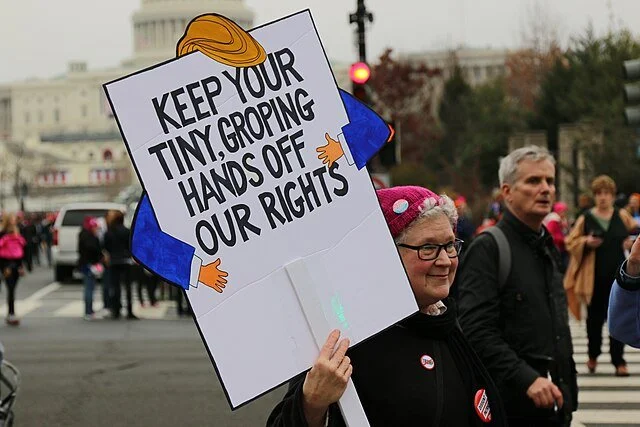
A protestor carrying an anti-Trump sign at the 2017 Women’s March. CC0.
Some of the online discourses surrounding women’s participation in the 4B movement are likely exaggerations: not every woman who posts about partaking in 4B is likely to completely follow through with its tenets, especially in the long term. For all of the buzz that it’s created in the U.S., 4B has never been among the top 100 trending hashtags on TikTok, signaling that hype for the movement has been largely sensationalized. But so long as Trump continues to campaign on misogynistic rhetoric and policies — and men continue to listen — the underlying sentiments of 4B will remain real, and so will their implications for increasingly fed-up women.

Bella Liu
Bella is a student at UC Berkeley studying English, Media Studies and Journalism. When she’s not writing or working through the books on her nightstand, you can find her painting her nails red, taking digicam photos with her friends or yelling at the TV to make the Dodgers play better. Bella is a student at UC Berkeley studying English, Media Studies, and Journalism. When she’s not writing or working through the books on her nightstand, you can find her painting her nails red, taking digicam photos with her friends or yelling at the TV to make the Dodgers play better.
Casting Lines and Breaking Barriers: Women Redefining Fishing
Creating global change by empowering women through fishing.
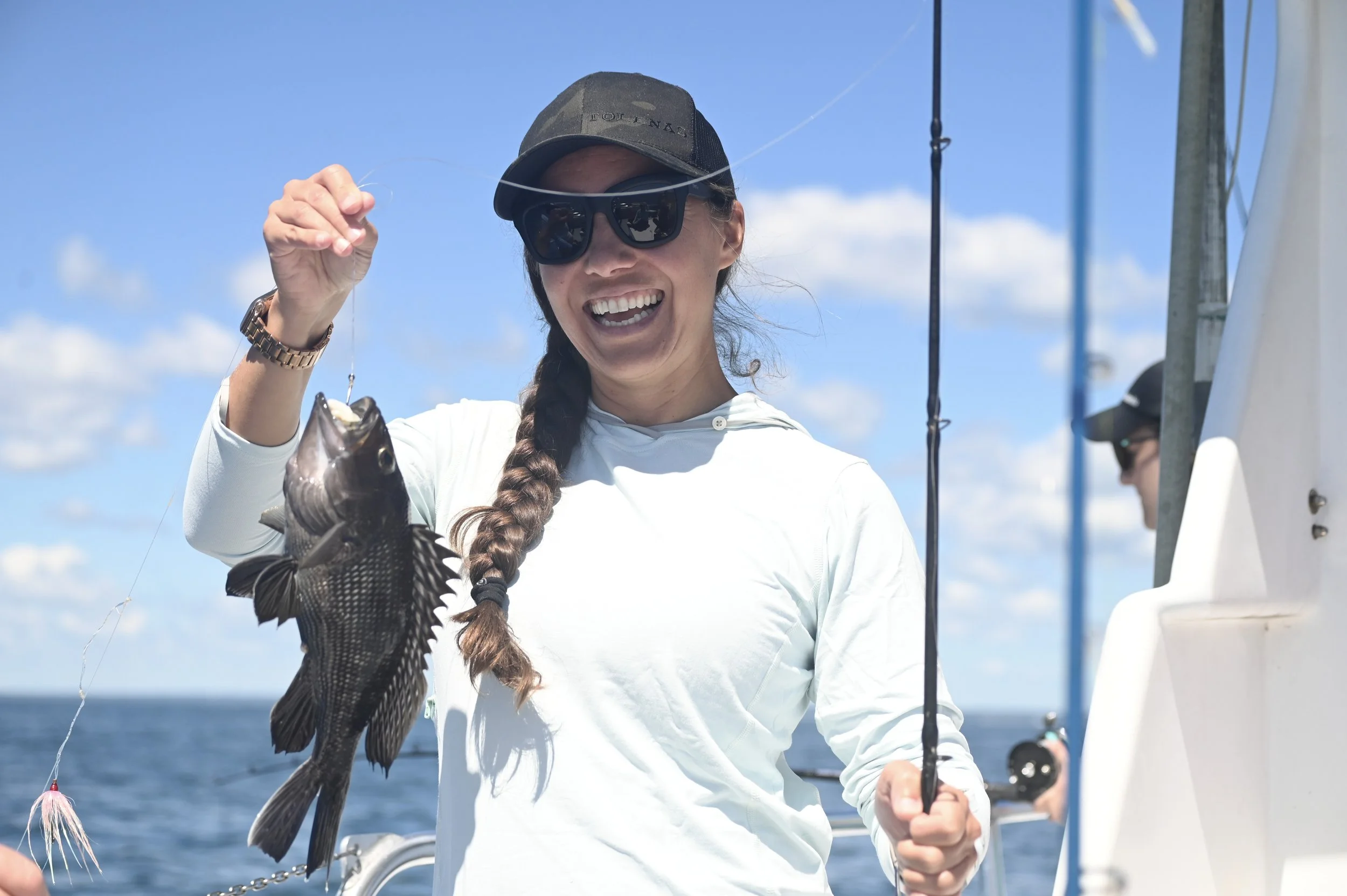
Woman holding a fish she caught offshore fishing in Rhode Island, USA. Courtesy of Take Me Fishing.
Many of us have nostalgic memories of learning to fish with our grandparents. They took us to the pond, put the bait on our hook, and gave us our first casting lesson. However, there is a noticeable disparity between male and female children who continue their fishing experiences. According to a study by The Recreational Boating & Fishing Foundation (RBFF), only 19% of female anglers between the ages of 13-17 continue fishing after age 12 opposed to 30% of their male counterparts. Additionally, the RBFF found that only 19% of women “see themselves” represented in the fishing industry. As of 2024, 37% of all anglers in the United States are female-identifying—the highest number on record.
In August 2024, I proudly joined those numbers. I was lucky enough to accompany a crew of fisherwomen on an excursion with Take Me Fishing (TMF) in Rhode Island. TMF is a nonprofit that creates opportunities to introduce women to fishing by providing resources and hosting educational events.
My time on the water was spent learning the ropes of offshore and flyfishing. After cruising ten nautical miles out to sea to try my hand at offshore fishing, I learned some valuable lessons in resilience. Admittedly, I spent a good portion of the day leaning across the vessel, seasick. However, the excitement and upbeat spirit of other eager fisherwomen made it all worth it. By the end of the day, I could confidently set up my own pole, bait a hook, and even handle some of the gnarly-looking sea creatures we caught.
The next day, I swapped my action rod for a fly rod. With instruction from a kind guide, I began getting the hang of flyfishing's active nature. Mimicking the motions of an insect on the water, there was something both peaceful and powerful about handling a rod. I felt I truly could have spent days out on the shore. When it was time to pack up, I realized I could easily see flyfishing becoming a regular part of my life.
After two days on the water, I felt more confident and mentally rested than I had in weeks.
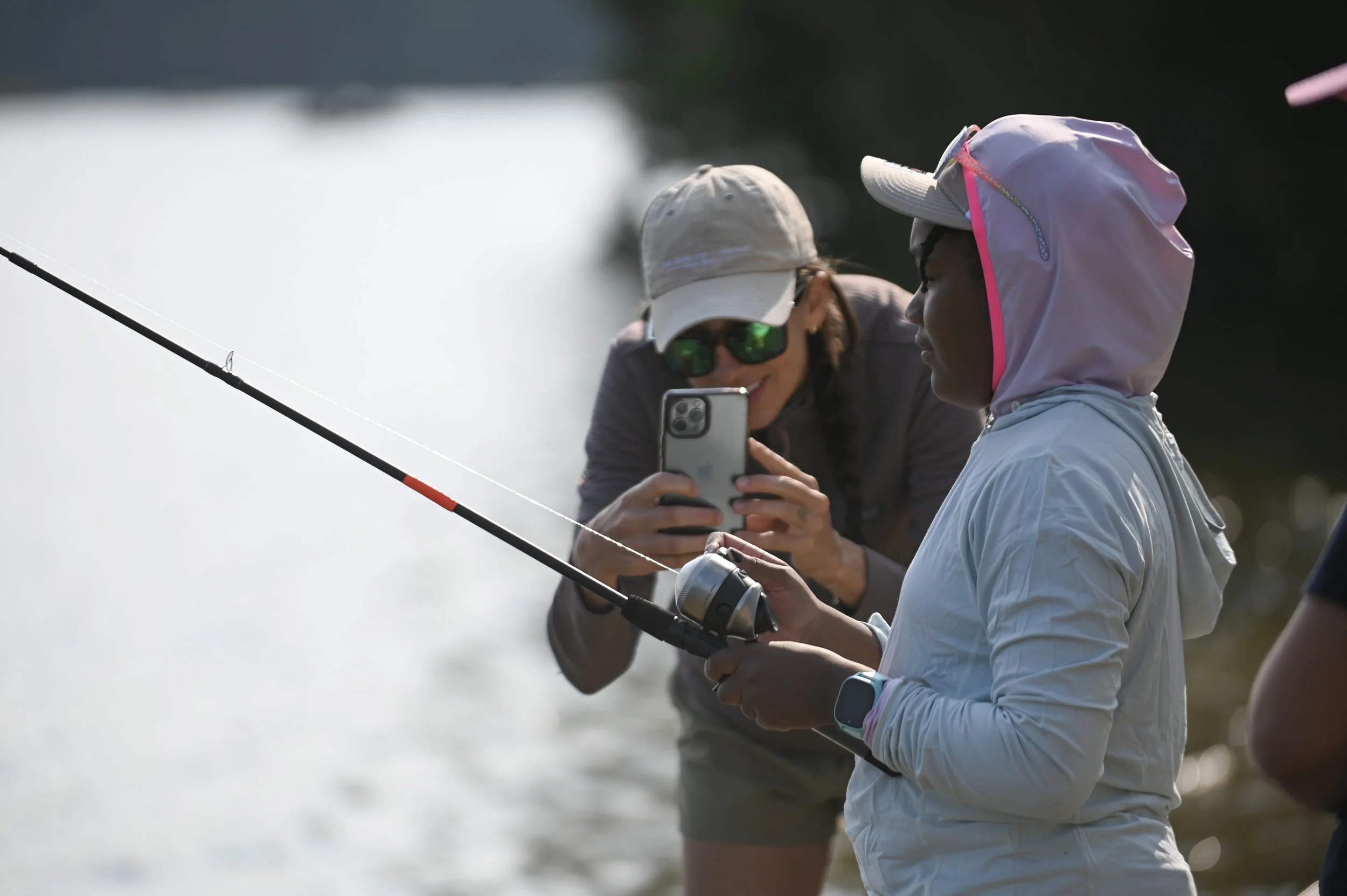
A young girl fishing in Rhode Island. Courtesy of Take Me Fishing.
Studies provided by the RBFF found that female anglers were 25% more likely to feel that they were in good health than non-anglers. Additionally, 1 in 5 women anglers believed that fishing has allowed them to accomplish anything they put their mind to. Women being excluded from traditionally male-dominated sports has a direct effect on their health and confidence. Nonprofit organizations like Take Me Fishing help to bridge this gap by offering inclusive fishing opportunities for those new to the sport.
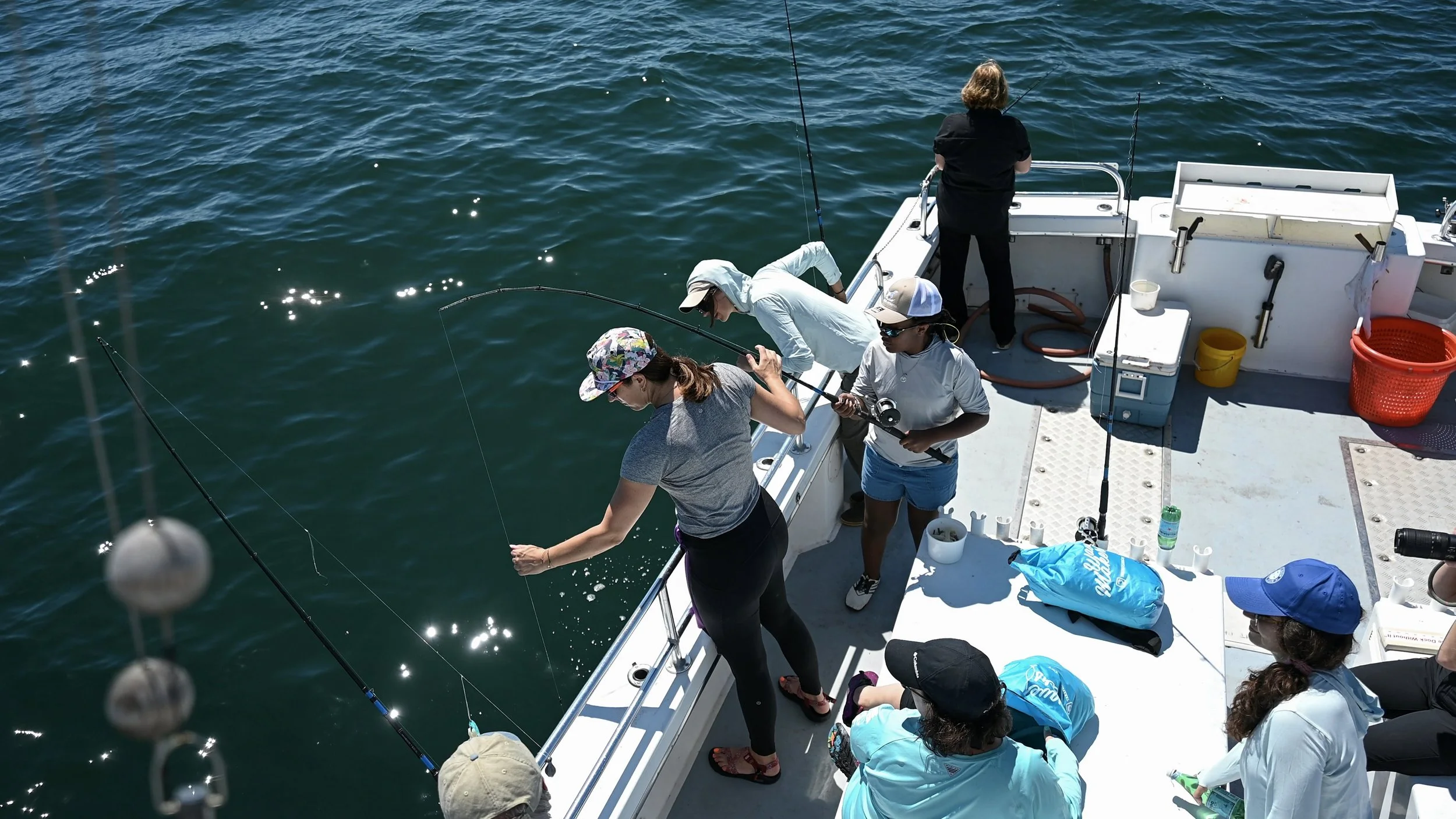
Women on a fishing boat in Rhode Island. Courtesy of Take Me Fishing.
It would be remiss to ignore the fishing disparity between races. Of the 57.7 million Americans who went fishing in 2023, only 5.2 million identified themselves as Black and 6.3 million as Hispanic.
While these numbers are pulled from data taken within the United States, the lessons are transferable worldwide. Women experience inequality in sports around the world. Having personally experienced the immediate benefits of fishing as a woman, I can attest that getting young girls and women out on the water can have a lasting effect on our world. When organizations work to bring opportunities and awareness to these communities, it will help create change on a global scale.
To Get Involved:
Take Me Fishing provides fishing opportunities and events throughout the United States. Further resources can be found with the Recreational Boating & Fishing Foundation, Outdoor Foundation and Sports Fishing Restoration.

Cait Kontalis
Cait is a Chicago-based Greek-American but spends most of her year floating around the globe. She holds a B.A. in Communications and a M.A. in Nonprofit Management. Her favorite destinations include visiting her homeland in Greece and the Black Hills of South Dakota. Cait is also a powderhound, taking to ski slopes in the Rocky Mountains and around the globe.
Stopping AAPI Hate: Checking in on the Lead Asian Hate Prevention Group
With Anti-Asian hate on the rise, see what Stop AAPI Hate is doing to combat it and how you can help.

A Stop Asian Hate demonstration in Washington, DC. Elvert Barnes. CC BY 2.0
In the wake of the COVID-19 pandemic, the United States saw a dramatic increase in anti-Asian hate crimes and attacks. According to the FBI’s data reports, the number of recorded hate crimes exploded to 424 in 2020, up almost 175% from 2019. A survey by the Pew Research Center showed 1 in 3 Asian Americans knew someone who had been attacked or threatened because of their race. Many believed that Sinophobic rumors placing the origin of the COVID-19 virus in China fueled this sharp increase in violence.
Out of this crisis arose the organization Stop AAPI Hate. Initially meant to document anti-Asian hate in the US, Stop AAPI Hate has become a full-fledged advocacy group. The organization has several ongoing campaigns, such as the wildly successful No Place for Hate movement. The group also advocates for policy changes (such as a law in California that aims to prevent harassment on public transit), working to strengthen civil rights protections across the board. In 2023, Stop AAPI Hate fought to stop a potential Texas law that would prevent AAPI (Asian Americans and Pacific Islanders) immigrants from purchasing houses.
More recently, Stop AAPI Hate has moved towards bolstering the confidence and security of AAPIs across the country. In May 2024, a national survey by the organization showed the value of pride and supportive narratives in combating the fear spread by hate crimes. In response to this data, Stop AAPI Hate has announced a new program, Spread AAPI Love, which aims to foster supportive and celebratory connections between AAPIs across the country.
Stop AAPI Hate’s progress has been somewhat restricted by a seemingly unending rise in anti-Asian hate. The organization’s annual survey this year revealed that almost half of all AAPIs in the US were subject to some form of racism or hate. In 2024, there have been a number of reports documenting anti-Asian violence. In February, a man assaulted a Filipino woman on the street in New York. In April, a Massachusetts man ran over a Vietnamese man with his car. In August, a 26-year-old Korean girl calling for medical assistance was instead shot dead by police. The government has acknowledged these crimes and the systems preventing them from being properly reported, but bureaucracy has prevented true justice.
Stop AAPI Hate is doing its best to call attention to these cases as instances of anti-Asian violence continue to rise since the COVID-19 pandemic. Although they have made great progress, their mission is far from complete.
How You Can Help
Stop AAPI Hate is always accepting donations and support, both in general and for their specific campaigns. Many other organizations also dedicate themselves to stopping the spread of hate, including Asian Americans Advancing Justice, Red Canary Song, and the National Asian Pacific American Women’s Forum.
Ryan Livingston
Ryan is a senior at The College of New Jersey, majoring in English and minoring in marketing. Since a young age, Ryan has been passionate about human rights and environmental action and uses his writing to educate wherever he can. He hopes to pursue a career in professional writing and spread his message even further.
Long, Strange Trip: Psychedelic Drug Use and Legalization
With psychedelic drug reform still underway, research indicates that microdosing may be useful for medical and therapeutic treatment.

Capitol Records Cover. Daniel Yanes Arroyo on Flickr. CC BY-NC 2.0
In the 1960s, psychedelic drugs became central to counter cultural identity, as they were believed to expand human consciousness and helped inspire the era’s writing, art and music scene. Their acceptance only went so far, however, the war on drugs led to the ban of psychedelic drug use in 1968. These drugs include psilocybin mushrooms (magic mushrooms), MDMA (ecstasy, molly), and LSD (acid). But recent studies show that psilocybin may be used to treat alcohol and tobacco dependence, as well as mood disorders like anxiety, depression and OCD. The U.S. Food and Drug Administration has already declared psilocybin as a “breakthrough therapy,” with growing evidence for its efficacy in treating cases of depression that have proven resistant to psychotherapy and traditional antidepressants.

Psilocybin mushrooms. Mushroom Observer on Wikipedia Commons. CC BY-SA 3.0
Some argue that the legalization of psychedelic drugs would be positive, with regulated companies outcompeting the black market and manufacturing safer drugs (e.g., there would be little risk of products being laced with fentanyl). The status of drug policy reform varies across the U.S. Some states—including Washington, Texas and Connecticut—are actively studying the medical effects of psilocybin. In California, several cities, including Oakland, Santa Cruz, Arcata, Berkeley and San Francisco, have already passed resolutions to decriminalize the possession of psychedelic drugs, excluding peyote. The use of peyote in Native American ceremonies and sacraments is protected under the First Amendment of the Constitution as a form of Free Exercise of Religion. Despite this, the supply of Peyote is severely limited, to the point of being listed as vulnerable to extinction on the IUCN Red List. In several states, including New York, Florida and Utah, legislators have introduced bills to legalize psilocybin for clinical use that ultimately failed to pass. Psychedelic drugs remain illegal under the Controlled Substances Act at the federal level in the U.S.
Legislation varies even more worldwide, but many countries have less stringent laws than the United States. In Australia, MDMA and psilocybin may be prescribed for PTSD for depression. In the Bahamas and British Virgin Islands, psilocybin is legal to possess but not to sell. In Mexico, citizens cannot be prosecuted or charged if psilocybin is used for spiritual or religious purposes. Most of Europe has either decriminalized or deregulated aspects of the use or trade of psychedelic drugs, including countries like Portugal, Spain, the Netherlands, and Switzerland. The definition of “decriminalization” varies, but usually implies that one can possess a certain amount of a substance avoiding fines or other penalties, despite it being illegal.
While concerns regarding the safety of psychedelic drugs are and will continue to be raised, statistics show that emergency room visits related to psilocybin and LSD are infrequent. Legalizing psychedelic drugs would signify for advocates a stride toward personal autonomy, enabling individuals to make informed choices about what they put in their bodies. This shift mirrors a growing global interest in investigating the therapeutic and medical potential of psilocybin, prompting a reevaluation of 20th century policies.
Agnes Moser Volland
Agnes is a student at UC Berkeley majoring in Interdisciplinary Studies and minoring in Creative Writing, with a research focus on road trip culture in America. She currently writes for BARE Magazine and Caravan Travel & Style Magazine. She is working on a novel that follows two sisters as they road trip down Highway 40, from California to Oklahoma. In the future, she hopes to pursue a career in journalism, publishing, or research.
Americana in the Dust: Ghost Towns Along Route 66
Spanning from Chicago to LA, the once-bustling Route 66 now symbolizes a nostalgic era of road trips and small-town charm.
Read MoreBecome an Artist-in-Residence at a National Park
Writers, painters and musicians can receive a stipend to create in some of the most majestic landscapes in the US.

Woman painting outdoors. Caroline Veronez. Unsplash
There is a long-running debate over whether to preserve the natural beauty of western landscapes or exploit them. The Artist-in-Residence program many national parks are now offering serves as a compromise, honoring these landscapes and giving back to the parks once inhabited by native tribes. This program provides writers, painters, musicians and other artists the chance to refine their art in some of the country’s most scenic landscapes. Selected artists live in the park and receive a stipend, as well as coverage for food and travel expenses. The stipends can reach up to $5,000, with half of it usually given at the start of the program and half at the end. The program lengths vary, but typically last between two to four weeks. These residencies are inclusive, welcoming artists of all backgrounds and ages (although only legal adults may submit applications). Each artist's primary task is to create art inspired by their natural surroundings and—upon completion of their residency—donate a piece of their work to the park.
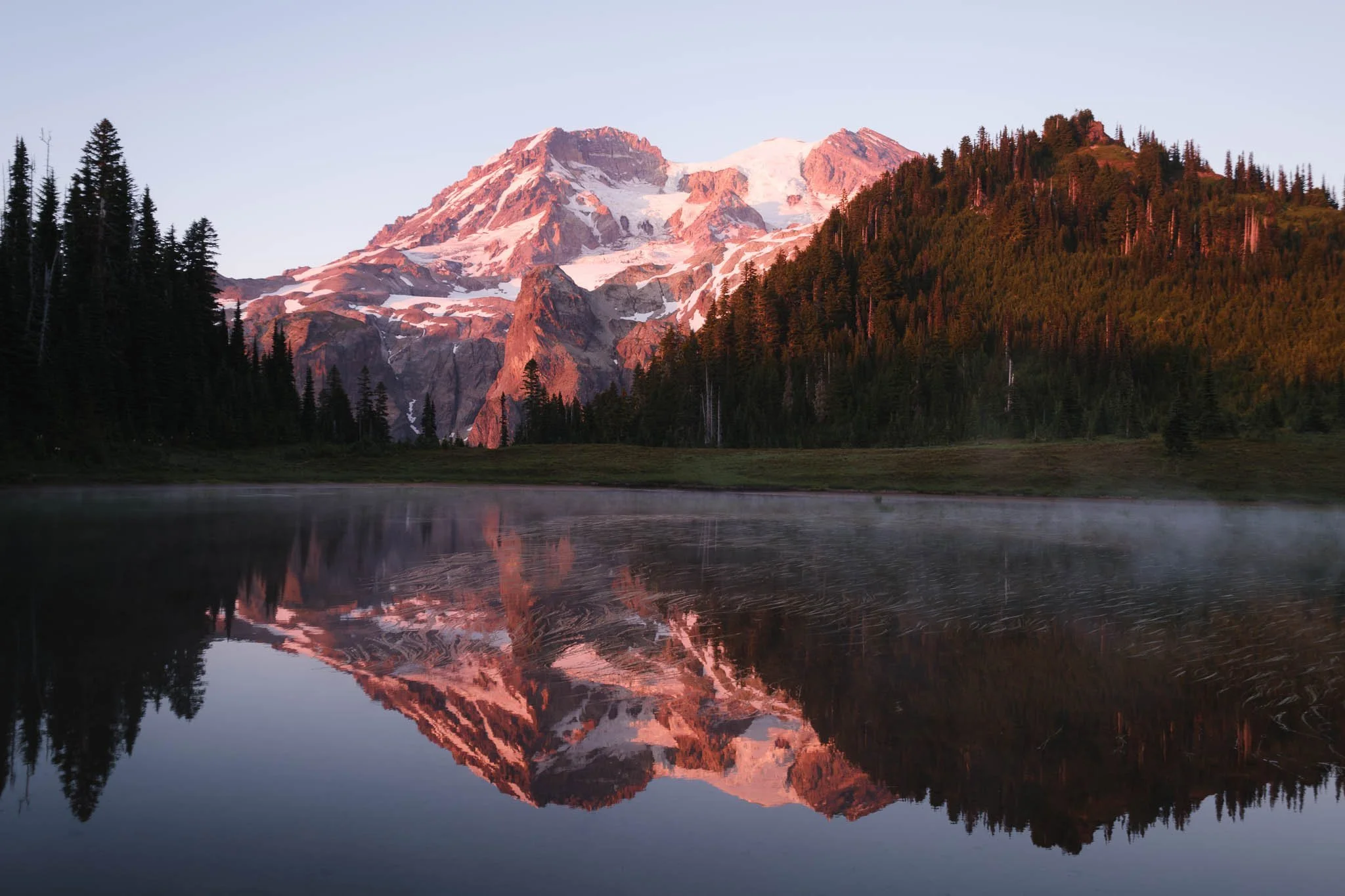
Mount Rainier National Park. Lily M. Tang. CC BY-NC-ND 3.0
Artist-in-Residence programs welcome unique projects. Felix, a musician, served as the 2021 Artist-in-Residence at Canaveral National Seashore. His project, Listeners, was a collaborative sonic experience, capturing the park’s soundscape through contributions from people who live, work and visit there. Casey, a food writer, served as the 2022 Artist-in-Residence at Acadia National Park. She released a recipe book, Maine Ingredients: Recipes Inspired by Acadia National Park, crafting dishes using local ingredients and traditional regional cuisine.
These programs give artists the chance to immerse themselves in natural landscapes, gaining insight into the indigenous peoples who occupied western landscapes before us and learning about how their legacies live on today. While some view national parks as a byproduct of white settlement, the Artist-in-Residence program forces us to consider how we can shift the narrative, redirect the focus back onto their original inhabitants. The submission window for applicants is open during the summer, so act now! Keep in mind acceptance rates vary based on the park’s popularity. Check out NPAR openings here.
Agnes Moser Volland
Agnes is a student at UC Berkeley majoring in Interdisciplinary Studies and minoring in Creative Writing, with a research focus on road trip culture in America. She currently writes for BARE Magazine and Caravan Travel & Style Magazine. She is working on a novel that follows two sisters as they road trip down Highway 40, from California to Oklahoma. In the future, she hopes to pursue a career in journalism, publishing, or research.
Summer Road Trip to the Tetons and Yellowstone
From experiencing geysers, to hot springs to glacial lakes, this is an adventurous road trip that offers exceptional and unique camping lodging.
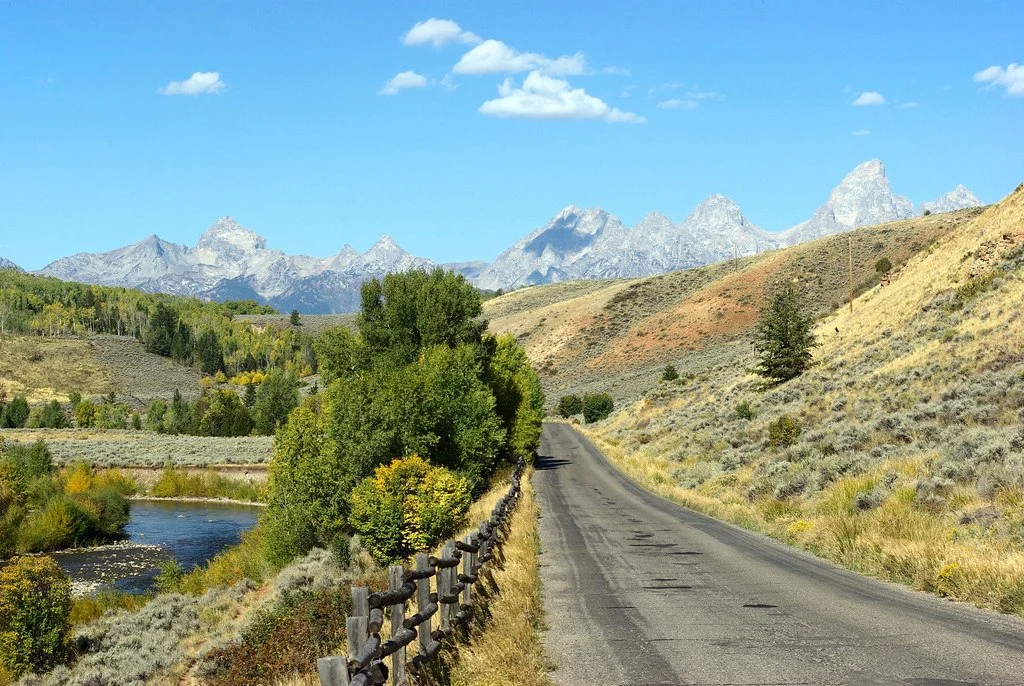
Gros Ventre Road. Mike Goad. CC0 1.0
Grand Teton and Yellowstone are neighboring National Parks celebrated for their rich biodiversity, particularly vibrant during the summer months. A scenic drive through both parks typically spans about a week, allowing time to explore key attractions along the route. Yellowstone National Park is renowned for its geothermal vents, pine tree forests and grasslands, while Grand Teton National Park is known for its rugged landscape, including lush fields and U-shaped valleys. For those planning a summer road trip to Wyoming, here are the top attractions, hiking trails and campgrounds in the Tetons and Yellowstone.
Attractions
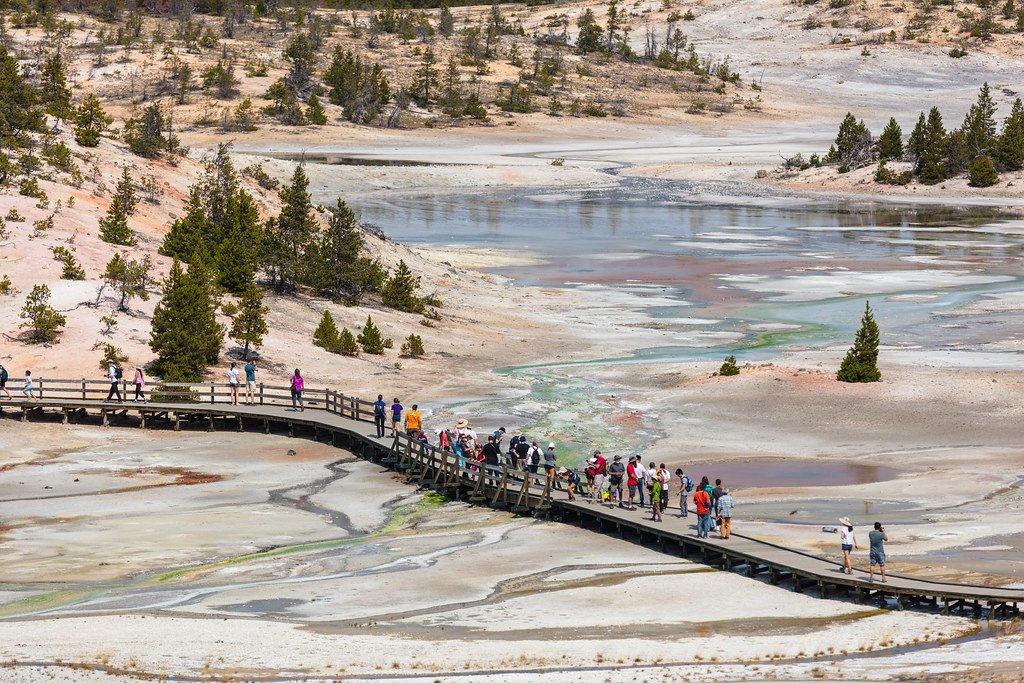
Norris Geyser Basin boardwalk. Yellowstone National Park. PDM 1.0
Norris Geyser Basin, the hottest geyser basin in Yellowstone, erupts every 20 to 80 minutes. A 1.8-mile loop trail, accessible via a boardwalk, offers views of steaming blue pools, and bison are sometimes spotted in the area. Notably, it features the Steamboat Geyser, the world's largest active geyser, known to reach heights of up to 380 feet.
Side note: for visitors road tripping through the Tetons and Yellowstone, I recommend purchasing the $80 America the Beautiful pass, granting access to attractions in all National Parks.
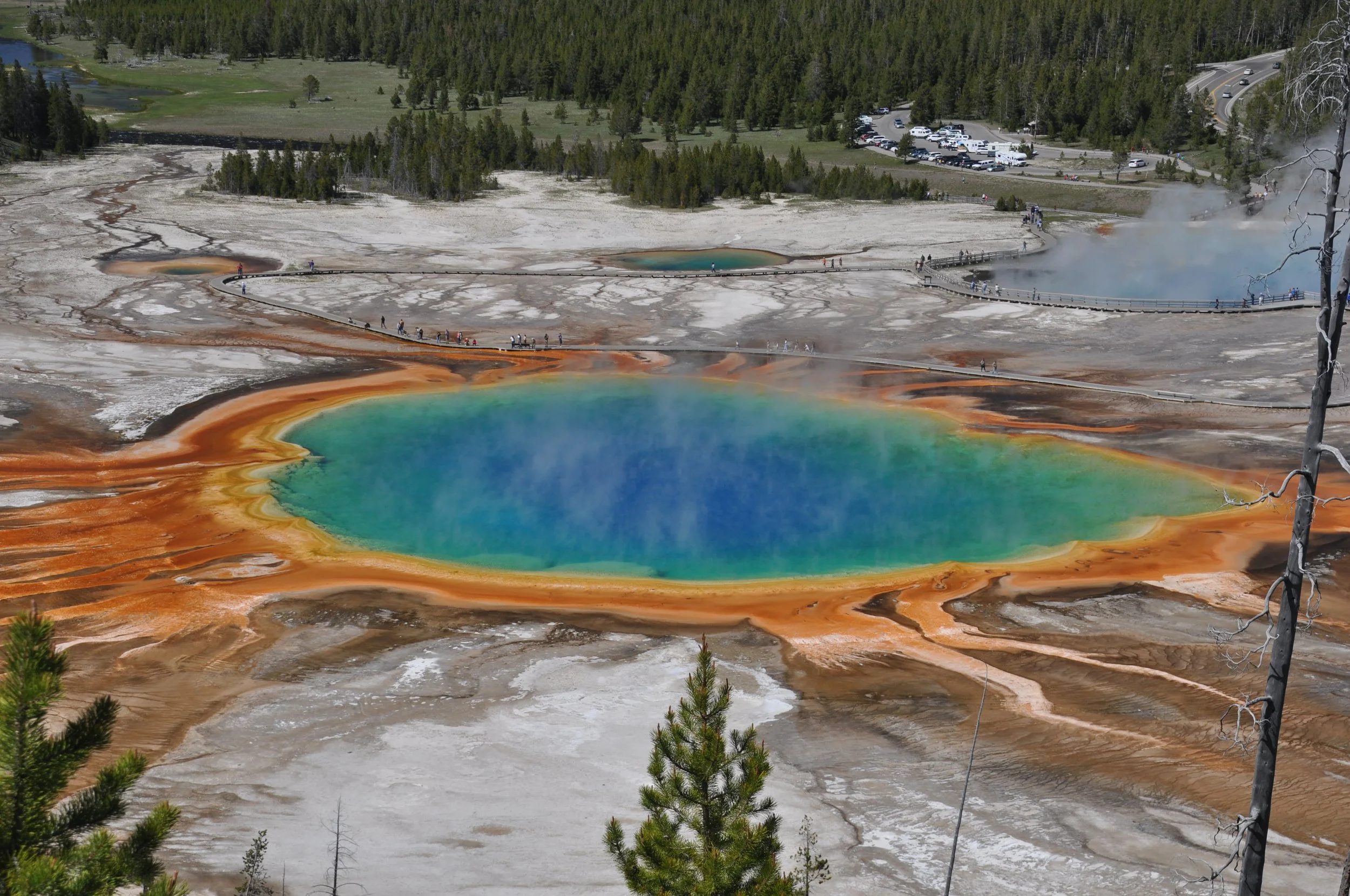
Grand Prismatic Spring. James St. John. CC BY 2.0
Yellowstone’s Grand Prismatic Spring, the largest hot spring in the United States, is celebrated for its vibrant colors—a teal blue pool with bands of orange and yellow. For a viewpoint overlooking the spring, follow the 0.5-mile Fairy Falls trail.
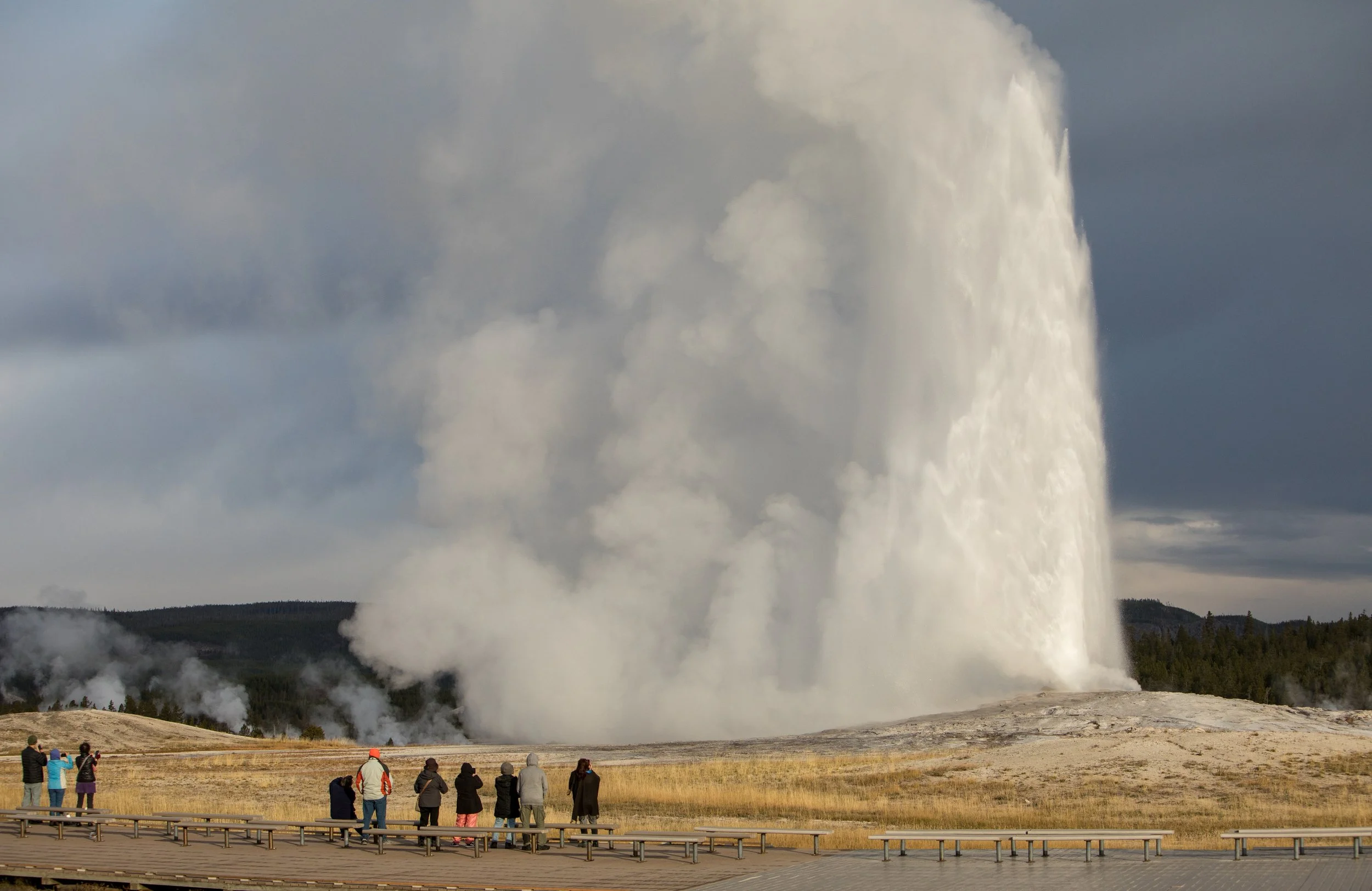
Old Faithful Geyser. National Parks Gallery. PDM 1.0
Old Faithful Geyser erupts regularly, every forty minutes to two hours. Located in West Yellowstone near the Old Faithful Inn, the 0.7-mile loop trail offers convenient access to the geyser.
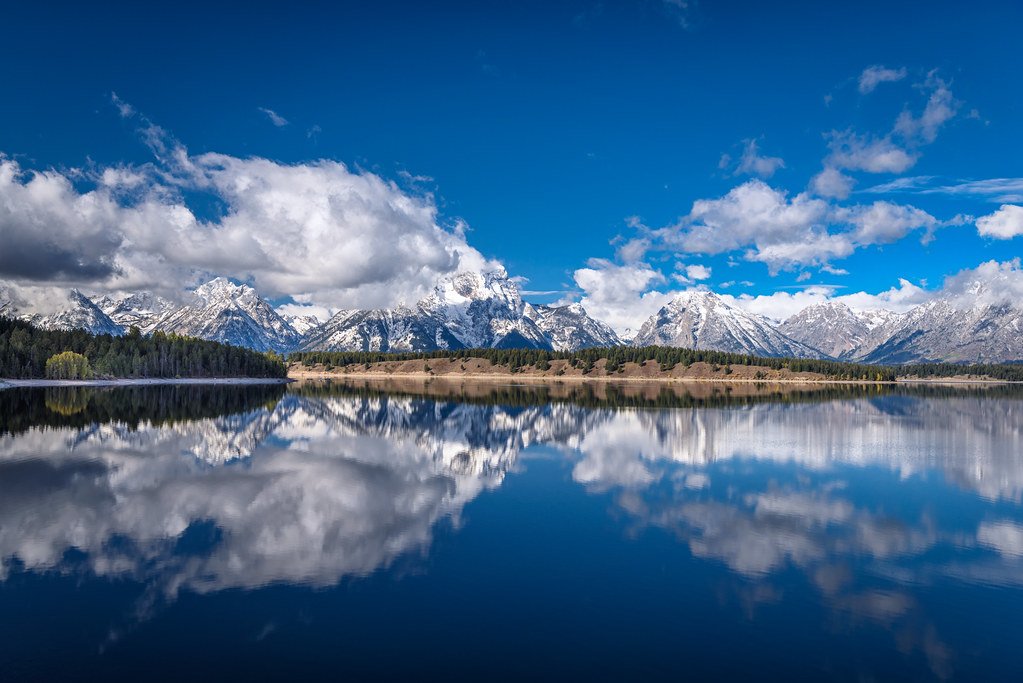
Jackson Lake. Diana Robinson. CC BY-NC-ND 2.0
Jackson Lake is a glacial lake known for its clear, icy water, surrounded by snow-capped mountains. Colter Bay picnic area and beach provide opportunities for fishing, boating and polar plunging. The Colter Bay campground is convenient for water enthusiasts and is the largest campground in the Tetons.
Hikes
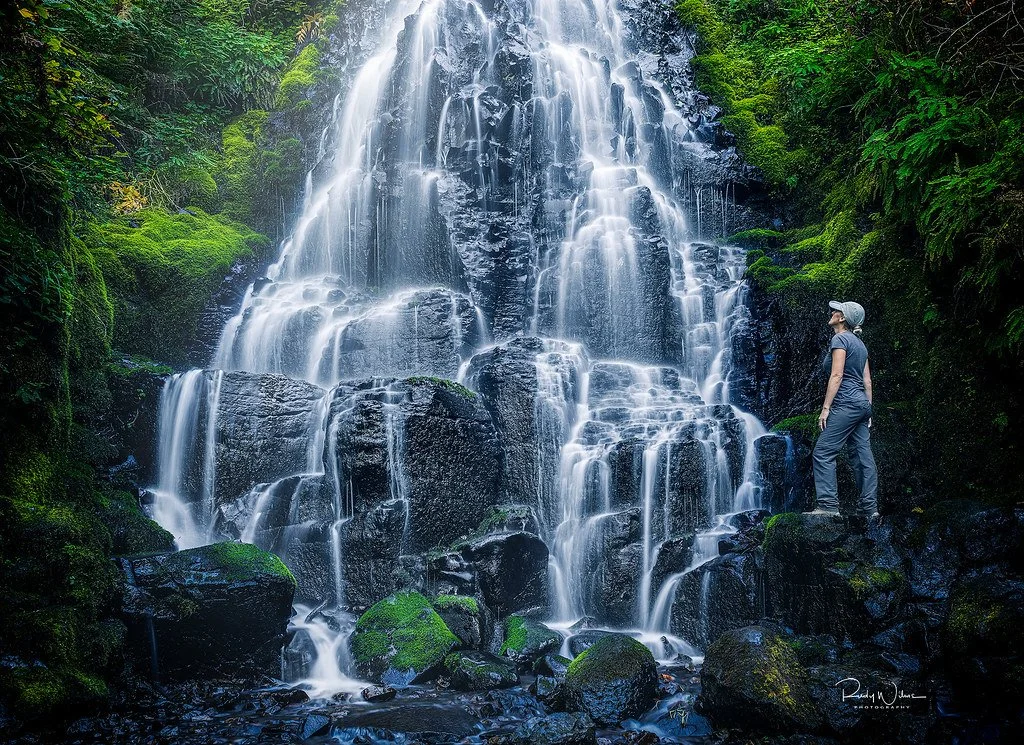
Fairy Falls. Rudy Wilms. CC BY-NC-ND 2.0
For outdoors lovers, there are can’t-miss hikes in both parks. In Yellowstone, the Fairy Falls trail is an easier, flatter route, a 1.6-mile hike to a waterfall surrounded by lush greenery. A little longer, Mystic Falls is a 2.4-mile hike to a cascade-type waterfall. Pelican Valley is a 6.2-mile hike, providing a quieter, less touristy experience through serene meadows. In the Tetons, Cascade Canyon is a 9.1-mile out-and-back trail to a glacier-formed canyon, with wildflowers that are most vibrant during spring and summer months. It’s a more strenuous hike, so less experienced trekkers may opt for the Cascade Canyon Express to experience panoramic views of the area.
Campgrounds
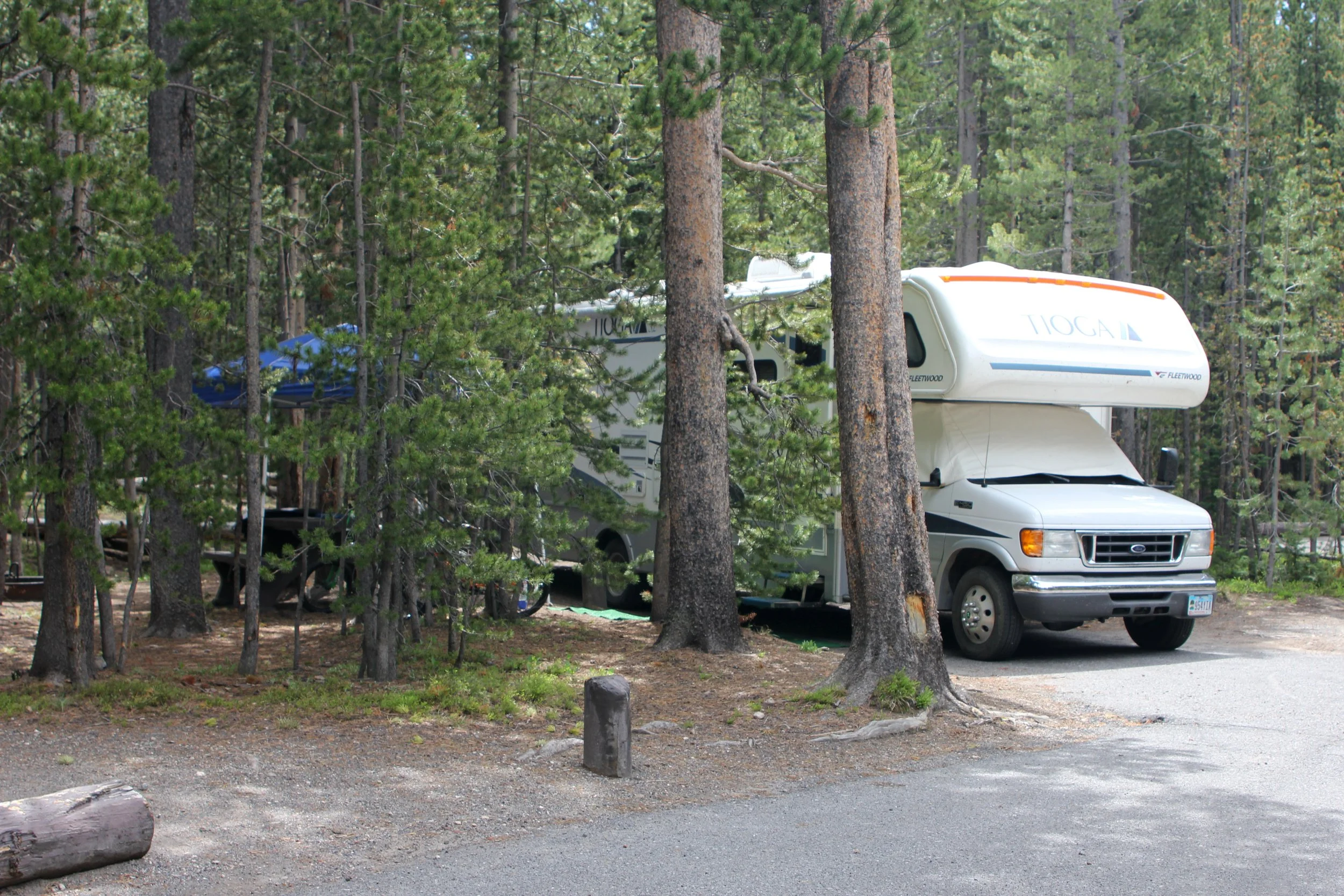
Canyon campground site. Yellowstone National Park. PDM 1.0
In Yellowstone, both Madison campground and Canyon campground are centrally located. Madison is close to the Old Faithful area and Madison River, while Canyon is near the Geyser Basins. Canyon campground arguably has more privacy, mostly due to the shade from pine trees.
In the Tetons, Jenny Lake campground is next to the scenic Jenny Lake, providing expansive views of snow-peaked mountains.
Yellowstone is recognized by the National Park Service as one of the planet's last and largest natural ecosystems. The Tetons, often overshadowed by Yellowstone, are just as worth visiting. Experience the unbeatable views, attractions and trails of Grand Teton and Yellowstone National Parks on a road trip this summer.
Agnes Volland
Agnes is a student at UC Berkeley majoring in Interdisciplinary Studies and minoring in Creative Writing, with a research focus on road trip culture in America. She currently writes for BARE Magazine and Caravan Travel & Style Magazine. She is working on a novel that follows two sisters as they road trip down Highway 40, from California to Oklahoma. In the future, she hopes to pursue a career in journalism, publishing, or research.
The Oregon Coast: An Underrated Road Trip
If you’re planning a road trip up the Oregon coast, here are the best pit stops for outdoors lovers.
Read MoreClimate Change on Trial: Vermont Passes Climate Reparations Bill
After historic flooding, Vermont calls for “Big Oil” to pay its share of the damages.
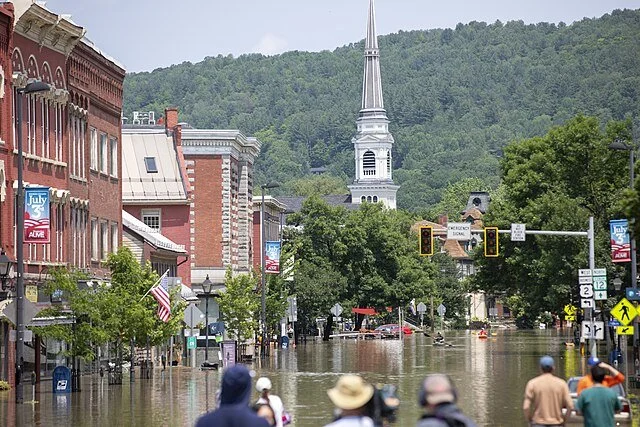
The Great Vermont Flood of 2023 in Montpelier, Vermont. The National Guard, CC BY-SA 2.0
Climate change has become a serious issue across the globe. Freak weather events, increased global temperatures and glacial melt, among other crises, have made it almost impossible to ignore. And for residents in one state, climate change has come right to their doors for what lawmakers intend to make the last time.
Vermont suffered severe flooding during the summer of 2023—the water completely submerged parking meters in the capital city of Montpelier. Thousands of residents lost cars, homes and businesses. According to the National Weather Service, the damages from this event alone rivaled—and even exceeded—the damage caused by Hurricane Irene back in 2011.
Now, the state government has passed a bill forcing fossil fuel companies to pay for a portion of the damages caused by climate change. Vermont is now the first state in the Union to take these organizations to task for externalities caused by fossil fuel emissions. According to the bill, the Agency of Natural Resources will create a report by 2026 that estimates the cost of climate change-based damage since 1995. This will examine aspects such as public health, agriculture and economic development.
The bill has been lauded for its progressive approach to climate justice, as holding companies accountable for pollution is, perhaps unsurprisingly, very widely supported. However, several Vermont politicians have also expressed concern over what will surely turn into a knock-down, drag-out legal battle come the report’s publication.
This bill marks a huge turning point in the climate justice movement. Although the legal battle has yet to begin, the precedent set by this bill is groundbreaking. The federal government has taken little serious action toward climate change reparations, as they are a divisive issue on a national level. Some consider the process to have very little legal basis, which naturally spawns skepticism that the legislation can actually be enforced.
However, regardless of how the bill has been received, the progress here is undeniable. There’s something to be said for the power of precedent in legal situations. Reparations have been divisive in the court system on account of being largely untested in a legal setting. Most court cases on a federal level are decided largely based on the results of similar cases in the past. Much of the heel-dragging over climate change, then, can be explained by how new and untested many of these legal approaches are.
It’s far more difficult to pass a bill at the federal level than the state, especially when trying to attack such an inflammatory issue. That said, states taking action—successful or not—could begin to wear down that resistance. If Vermont manages to extract reparations from the targeted companies, other states may follow suit. With enough states unified towards climate reparations, the federal government may be forced to take a stance. It likely won’t be for some time, but Vermont’s actions now are potentially paving the way for a massive shift in the governmental response to climate change in future years.
Ryan Livingston
Ryan is a senior at The College of New Jersey, majoring in English and minoring in marketing. Since a young age, Ryan has been passionate about human rights and environmental action and uses his writing to educate wherever he can. He hopes to pursue a career in professional writing and spread his message even further.
Florida Reef Farmers Revitalizing Coral Reefs
A group of environmentalists based out of the Florida Keys have devised a way to farm coral and help rebuild dead reefs.
Read MoreGen Z’s Growing Criticism of the Peace Corps
The Peace Corps was built upon the ideals of “world peace and friendship,” but Gen Z is analyzing the organization through a new lens.
Read MoreWhale Watching in Washington State in the San Juan Islands
Experience a beautiful archipelago off the coast of Washington State that’s bursting with natural splendor
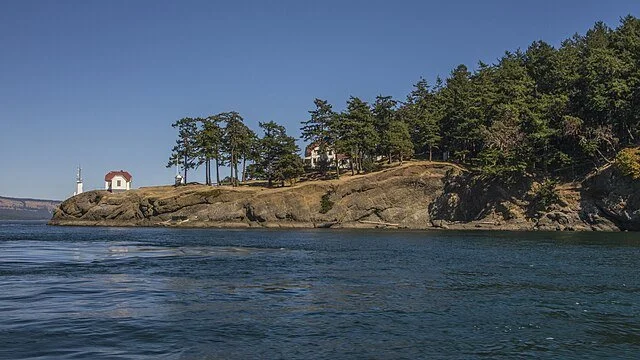
The coast of Orca Island in the San Juan Islands. Bureau of Land Management, CC0
Only an hour and a half by ferry from the coast of Seattle, Washington, the San Juan Islands are an incredible destination for any wilderness-seeking wanderers. After only a week, I’d seen dozens of whales and porpoises, and explored miles of the main island both on foot and by bicycle. My friends and I still consider this one of our greatest trips! From whale watching and sea kayaking to hiking and ziplining, these islands provide the perfect “surf-and-turf” nature experience.
The small archipelago is by far most famous for its local orca pods. A rarity in American waters, the Northwest's Gulf of Georgia boasts three local pods that feed primarily on salmon, as well as a traveling pod from Canada that feeds on the local harbor seal population. In addition to the orcas, a wide variety of marine mammals can be spotted both along the shoreline and out in the heart of the Gulf. On our first whale watching tour from the main island my companions and I saw humpback whales, Steller sea lions and a variety of dolphins and porpoises keeping pace with our boat.
The archipelago is made up of four main bodies of land: San Juan, Orcas Island, Lopez Island, and Shaw Island. The first, San Juan, is the largest and most visited island in the chain, and is home to the beautiful town of Friday Harbor. In addition to being the ferry’s main landing point and the heart of the archipelago itself, Friday Harbor is the main hotspot for whale watching tours. The guides provide an excellent experience; ours taught us all about the native marine animals and the history of the islands. We spent most of our time on San Juan during our tour, hiking across the hilly terrain to the south for some amazing views.
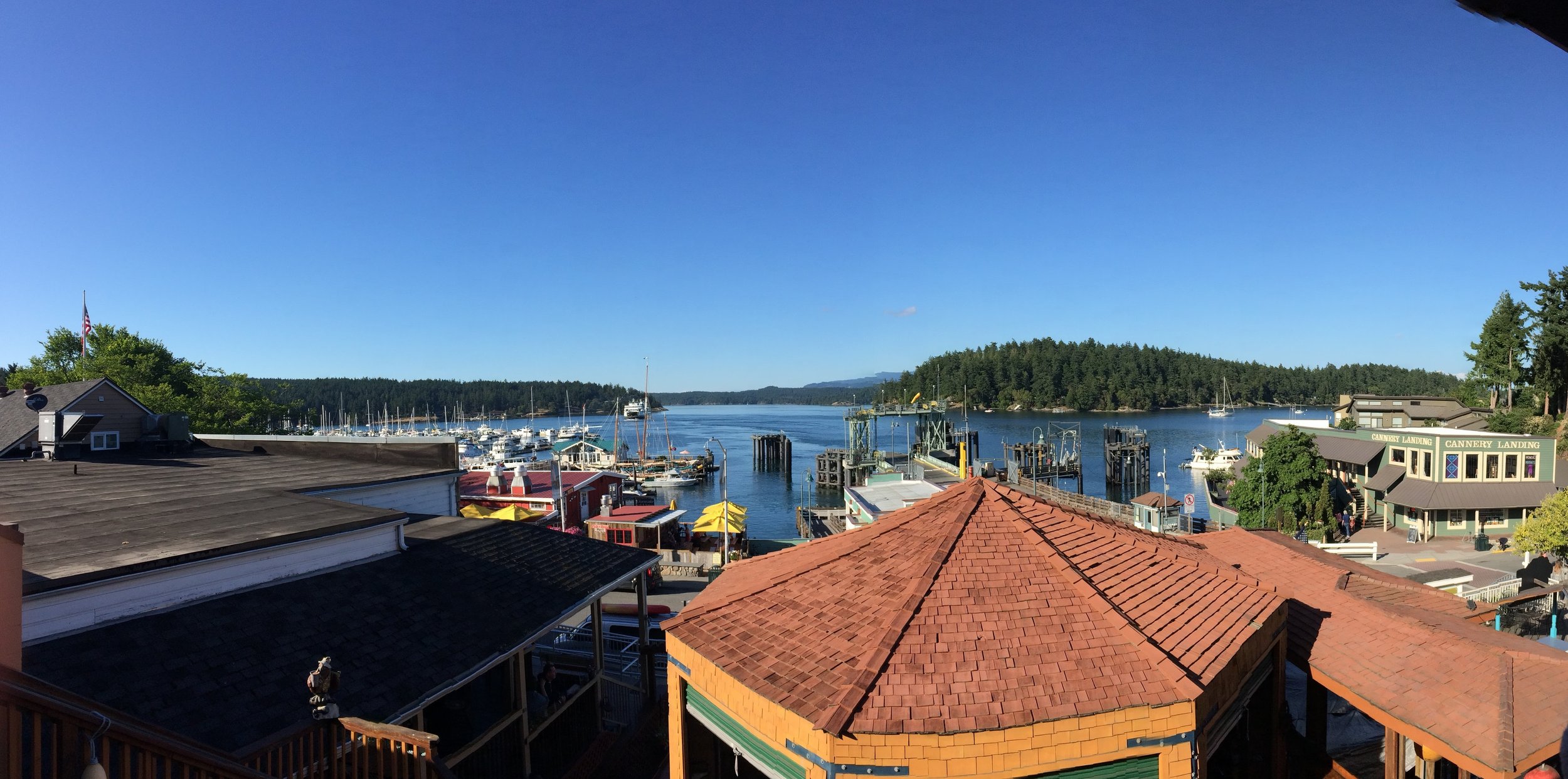
A view of Friday Harbor from the balcony of a local restaurant. Image from author. Ryan Livingston
But perhaps the best thing about Friday Harbor is the locals. In particular a harbor seal named Popeye, who likes to spend her mornings floating outside of the dockside restaurants in the hopes of getting some handouts. She’s very friendly, and has become something of a mascot for Friday Harbor!
San Juan is also the site of Lime Kiln Point State Park, which is lauded as one of the best whale watching sites in the world. The park is also a hangout spot for the river otter population around the islands. Lime Kiln Point is also an excellent hiking spot, with a trail leading up to a vintage lighthouse that is the park’s main landmark. This lighthouse provides an excellent view of most of the Gulf.
On the latter half of our trip, my friends and I paid Orcas Island a visit. Known for its rich artistic history, it is known locally as the “Gem of the San Juans.” The coastal towns include a variety of sailing, fishing and whale watching charters, as well as a few sea kayaking companies that give tours of the island and its history. With their friendly and informative tour guides, you’ll wind up learning about everything from jellyfish to the islands’ border disputes back in 1949! Orcas Island is also the site of Moran State Park, an excellent site for hiking, biking, camping and boating on the small lakes situated across the landscape.
The other two islands are well worth visiting, although I wound up spending all of my time on San Juan and Orcas. Lopez Island is by far the least hilly of the four, and as a result has been adapted into a fantastic biking location. With trails all over the island and tons of rental shops to choose from, Lopez is the biker’s dream. In addition, for any eco-minded travelers, a visit to Lopez Island can include a variety of volunteer opportunities, including trash pickup, injured and beached animal rescue training and more.
Finally, we have Shaw, the smallest island in the archipelago and home to the one-of-a-kind Our Lady of the Rock Monastery. Built on living in the same traditional lifestyle as its founders, the nuns tend a sprawling farm that, like the monastery itself, is open to the public. Although it does offer worship sessions, the architecture and rich history are reason enough to visit.
Whether you’re looking for an escape into nature or searching for the elusive mammals of the sea, the San Juan Islands are a uniquely beautiful experience. The best times to visit are between May and August, when the salmon runs are at their highest and orca and porpoise sightings are the most common. Whale watching tours can be booked out of any of the four islands at places like San Juan Excursions, and hotel bookings can range from $157 to around $300 a night in the heart of Friday Harbor. Camping in the various state parks is also an excellent option.
Ryan Livingston
Ryan is a senior at The College of New Jersey, majoring in English and minoring in marketing. Since a young age, Ryan has been passionate about human rights and environmental action and uses his writing to educate wherever he can. He hopes to pursue a career in professional writing and spread his message even further.
10 Best Places to Travel in the US this Spring
A guide to the most beautiful spots to experience in the springtime
Read More