
Kleigh Carroll
Since the Supreme Court ruling, Grants Pass v. Johnson, upended protections for the unhoused, sweeping of homeless encampments has drastically increased.
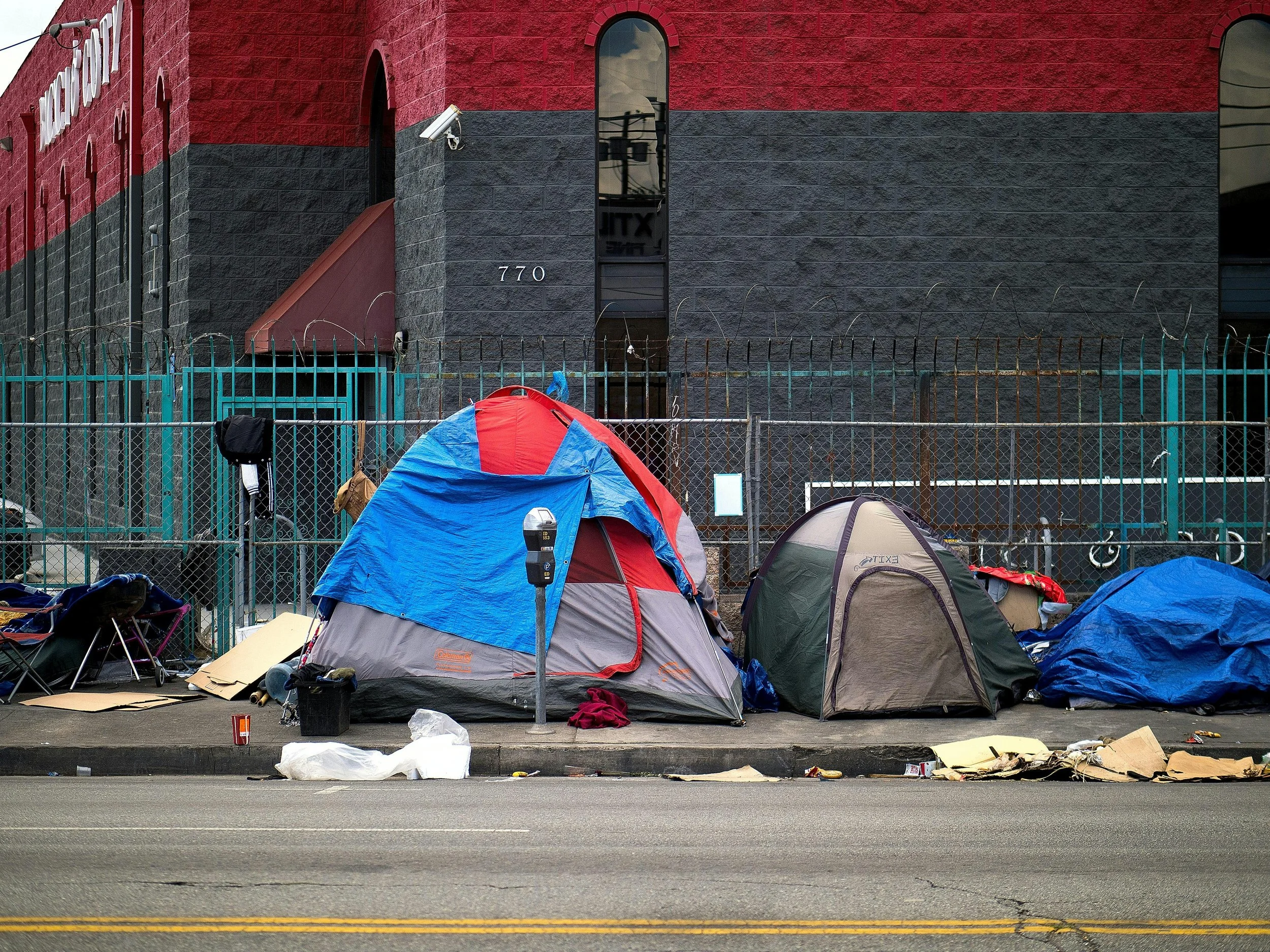
Encampment in Los Angeles. Milan Cobanov. CC0.
Last June, the Supreme Court ruled in a 6-3 decision that city governments can enforce anti-camping bans even if there are no available shelters for unhoused people. This ruling overturned a previous decision made by the Ninth Circuit Court in a case out of Grants Pass, Oregon, in which the justices argued that unregulated sweeps in cities without adequate homeless shelters constitute “cruel and unusual punishment,” prohibited by the Eighth Amendment. Before, cities could not enforce anti-camping ordinances in public spaces at night and were required to issue a 24-hour warning during the daytime. Following the ruling, they were essentially free to sweep encampments at any time, in any place.
Homelessness is on the rise nationally, with the number of people without shelter reaching record highs in 2024. More than 770,000 people were living in shelters or outside in January, according to an annual federal report on homelessness by the Department of Housing and Urban Development. Proponents of the ruling claim it is an important step to addressing the problem of growing encampments, which bring crime, unruliness, medical issues and drug use to cities and communities. Critics argue that the sweeps are inhumane, that people should have the right to shelter and to sleep, and that it criminalizes the very existence of unhoused people. Many cities are not prepared to accommodate the people they displace when they execute a sweep. When the court originally prevented cities from enforcing anti-homeless legislation under the Eighth Amendment, there were no city-run homeless shelters in Grants Pass.
The Supreme Court’s decision gave city governments the green light to crack down on homelessness. In California, where the number of people experiencing homelessness has increased by 14% since 2019, the response has been particularly aggressive. Governor Gavin Newsom is known for his tough stance on homelessness and has allocated a substantial budget to addressing the crisis. He has emphasized that it is up to cities and counties to clean up the streets, not the state.
Despite an outcry from activists, cities are continuing with enforcement.
San Francisco
In the aftermath of the ruling, San Francisco intensified its efforts to clear homeless encampments. Police ceased issuing advance warnings before sweeps, and individuals found camping were given minimal time to vacate, with threats of citations and property confiscation. An investigation by the nonprofit CalMatters found that while sweeps have become more frequent, people often refuse shelter. They may feel unsafe due to overcrowded conditions, a lack of supervision, privacy and personal space, or the possible theft of their personal belongings. Additionally, moving to a shelter implies leaving familiar surroundings and may be accompanied by feelings of embarrassment or shame. According to the city, typically only between 20% and 30% of people accept a shelter bed when it’s offered.
Former Mayor London Breed built a large part of her campaign around the issue of homelessness. Following the ruling, she announced the beginning of “very aggressive” sweeps. In August, she issued an executive order directing homeless outreach workers to prioritize “relocation support” out of the city over housing or shelter.
Oakland
The city of Oakland has adopted a similarly aggressive approach, clearing large encampments near Lake Merritt and Mosswood Park. The city recorded 63 encampment closures in February 2025, the highest in four years. Despite these efforts, Oakland is facing a significant shortfall in shelter capacity, with over 5,400 unhoused residents and only about 1,300 shelter beds available. A new hotel purchase funded by state and city money aims to provide temporary housing for 150 individuals, with plans for permanent supportive housing.
Seattle
Seattle has also set record numbers of displacements. In 2024, the city carried out over 2,000 sweeps, 84% of which were done with little to no prior notice. Prior to the decision, the city had already taken an aggressive approach to homelessness. In 2023, sweeps of unhoused people and their encampments tripled under Mayor Bruce Harrell. The ruling has only underscored this precedent. According to Jay Jones of Stop the Sweeps, there has been an increase in “brazenness” since the Grants Pass decision was passed down. “Essentially, it seems like they’re just more okay with there not being enough shelter beds for people at sweeps,” Jones told The Urbanist.
Without adequate shelter, people are simply shuffled around cities, and the cycle of displacement continues. Experts agree that clearing or sweeping encampments alone cannot end homelessness. Efforts to expand shelter capacity, provide mental health services, and develop long-term affordable housing solutions are essential to effectively address the crisis and provide a path to shelter. On their own, sweeps can be traumatic and have adverse effects — such as people becoming more likely to lose touch with support services and essential items like birth certificates. Earlier this year, a man was killed by a bulldozer in Atlanta during an encampment sweep. Rather than simply displacing the unhoused, who lack the resources to improve their condition on their own, cities must implement alternative approaches to criminalization and invest in affordable housing.
GET INVOLVED:
It is important to treat unhoused people you encounter with respect. Familiarize yourself with resources in your area and pass that information along. Consider making hygiene kits with essentials such as socks and water, and keeping them in your car or bag. Additionally, you can volunteer in homeless shelters in your community. There are many organizations you can donate to that are working to end homelessness, including Family Promise, Volunteers of America, National Alliance to End Homelessness, and The Salvation Army.
Kleigh Carroll
Kleigh is a student at UC Berkeley studying Geography and Journalism. She hopes to integrate her skills in these fields in pursuit of a career in journalism. She is passionate about being outside, exploring, and writing in all of its forms.