From Ocean Voyage to Space Travel

Reid Stowe has done a 1000+ day sea voyage, and now he’s focused on opening new possibilities for humans in space.

Reid Stowe. Desmond K. Shaw. CC BY-SA 4.0

A lover of the ocean and all types of art, Reid Stowe is an American craftsman, sailor and adventurer, who completed a more than three year ocean voyage without stopping on land aboard the Anne, a gaff-rigged schooner Stowe built himself.

The iconic journey began on April 21, 2007 from the 12th St. Pier, Hoboken, New Jersey. One thousand one hundred and fifty-two days later, on June 17, 2010,Reid sailed his schooner up the Hudson River and docked at Pier 81 in Manhattan, New York  — a potential record for the longest continuous sea voyage without resupply or stepping on land. 

With all the experience Reid has built up on the ocean, the renowned sailor has started a new program, meant to help astronauts who are looking to go on a mission to Mars in the 2030s. As Reid has put it, “the deep models of today could provide a role model for space bearers tomorrow,” and plans to use his journey at sea as a blueprint of sorts to help guide these future astronauts.

Reid Stowe working on Anne. @reid_stowe_art. Instagram.

Because those going on the Mars mission will be finding themselves on the ship for almost three years, it brings the concept of “isolation” into perspective. What will they do to cope, being in an enclosed area for such a long period of time? Reid knows what that’s like. He never needed coping mechanisms to prepare himself for his sea journey. There was nothing to “cope” with, and he was always able to love what he was doing. Reid’s new program will tackle these issues and answer the question: “What kind of person will it take to survive a trip to Mars?” 

But this training initiative represents more than just valuable lessons for Reid. It didn’t matter that he was on his boat and “being turned upside down by storms,” because knowing that this journey would be worth it for everyone was more than enough.

One of Reid’s recent artworks. @reidstowepaintings.com

“How did I keep myself happy and healthy?” Reid said. “Believing that what I was doing was good for all of creation. Because I was showing that humans could live in a place where I never imagined before and by opening new doors of perception for what we’re capable of.”

But sailing isn’t the only thing Reid finds passion and purpose in. His Instagram features many of his artworks in great detail. Ever since he was young, he would paint or draw boats or mariners, even before he knew he wanted to be a sailor. And as he grew up, his art became more and more integrated into his sailing — to the point where his artistic drive encouraged him to embark on the longest sea voyage in history.

Schooner Starship Anne. @reid_stowe_art. Instagram.

Each of Stowe’s paintings has layers of meaning and connection. Many of the artworks he made while at sea empowered his voyage, the same way the voyage empowered the artwork. Much more can be found on his own website.

A more than 3 year adventure at sea is an effectively unique accomplishment. But Reid Stowe was able to use his incredible feat to offer guidance, spread awareness and most importantly — tell his own unique stories to the rest of the world. 

Michelle Tian

Michelle is a senior at Boston University, majoring in journalism and minoring in philosophy. Her parents are first-generation immigrants from China, so her love for different cultures and traveling came naturally at a young age. After graduation, she hopes to continue sharing important messages through her work.

7 Spectacular Global Theatres Stealing the Show

From Elizabethan Theatre to Peking Opera, these are 7 diverse storytelling formats that create awe-inspiring fusion of entertainment and ritual.

Peking Opera, the Legend of the White Snake. JS Dust. CC BY 2.0.

Theater stands out as an extraordinary art form that embodies the vibrant cultures spanning the globe. It not only boasts the distinction of being the oldest form of artistic expression but also captivates audiences by showcasing the essence of life and tradition. In the days preceding the advent of television and the internet, theater reigned supreme as a source of entertainment, and every aspect of it, from costumes to stage design, holds immense cultural significance. Whether we delve into the realms of renowned Greek and Shakespearean theater or venture into the lesser-known stages of India's Kathakali and Indonesia's Wayang Kulit, each theatrical masterpiece offers a profound and memorable experience.

1. Noh Theatre—Japan

Classical Japanese musical performance of Noh theater at the festival.Jim Epler. CC BY 2.0.

When exploring Japanese stage art, one’s imagination is often filled with vivid images of menacing masks, ritualistic movements, and enigmatic dialogues. Yet, these elements merely scratch the surface of Japanese performing art. Among them were the two prominent forms, Noh and Kabuki. The very term “Noh”, derived from the Japanese language, embodies the essence of “talent” and “skill.” Emerging as one of Japan’s oldest performing arts, Noh’s formalization took shape in the late 14th century, with roots in the traditional Kagura dances, a reverent homage to the gods for bountiful harvests. In stark contrast to Western theater, Noh does not have explicit plotlines, offering an abstract emotional experience. A single overpowering emotion such as jealousy, rage, or sorrow dominates the central character, portrayed through highly stylized performances. Symbolistic aesthetics play a crucial role, with distinct masks representing various character archetypes—Gods, Warriors, Women, the Deranged, and Demons. Noh explores themes of love, loss, aging, and the supernatural. UNESCO acknowledged Noh as a valuable intangible cultural heritage in 2001, solidifying its significance.

While many Noh plays are lost in history, nowadays, there are still around 200 captivating pieces that continue to enthrall audiences. Among them, “Atsumori” as a classic. This poignant tale unveils the tragic fate of Taira no Atsumori, a young warrior slain by Kumagai no Jiro Naozane during the Genpei War. As Kumagai, now a monk, revisits the battlefield, he encounters Atsumori's ghost. The story of Atsumori's demise is retold by a villager, leading to a confrontation where Atsumori realizes the absence of true enemies. Derived from the renowned “Tales of Heike,” depicting the intense struggles between the Taira and Minamoto clans, “Atsumori '' captivates Noh audiences.

2. Kathakali—India

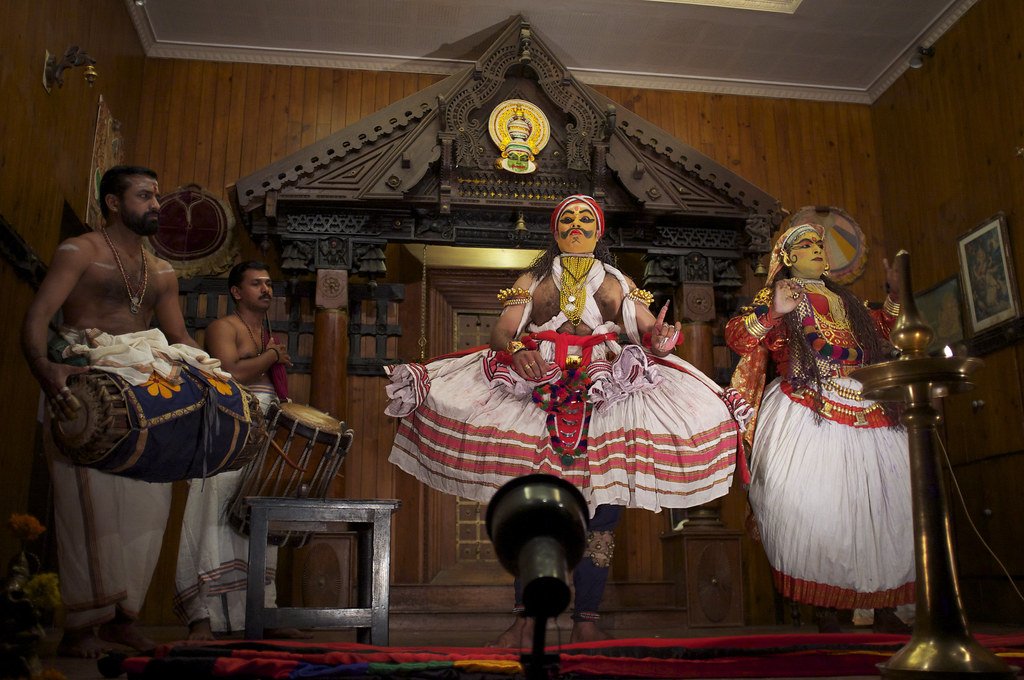
Kathakali performance.Aleksandr Zykov. CC BY-SA 2.0.

India’s vibrant Kathakali theater enchants the senses with its dazzling array of colors, intricate costumes, and captivating dance performances. Born on the shores of Kerala over 300 years ago, Kathakali weaves together elements of dance, dramatic storytelling, and mythological traditions. Drawing inspiration from the intricate temple sculptures of the 16th century, the dance sequences in Kathakali often portray the distinct square and rectangular positions characteristic of that art form. The very term “Kathakali” signifies the art of storytelling through dance drama, and the narratives themselves have been passed down through generations via oral tradition. These tales are often related to deities, demons, and other mysterious characters. 

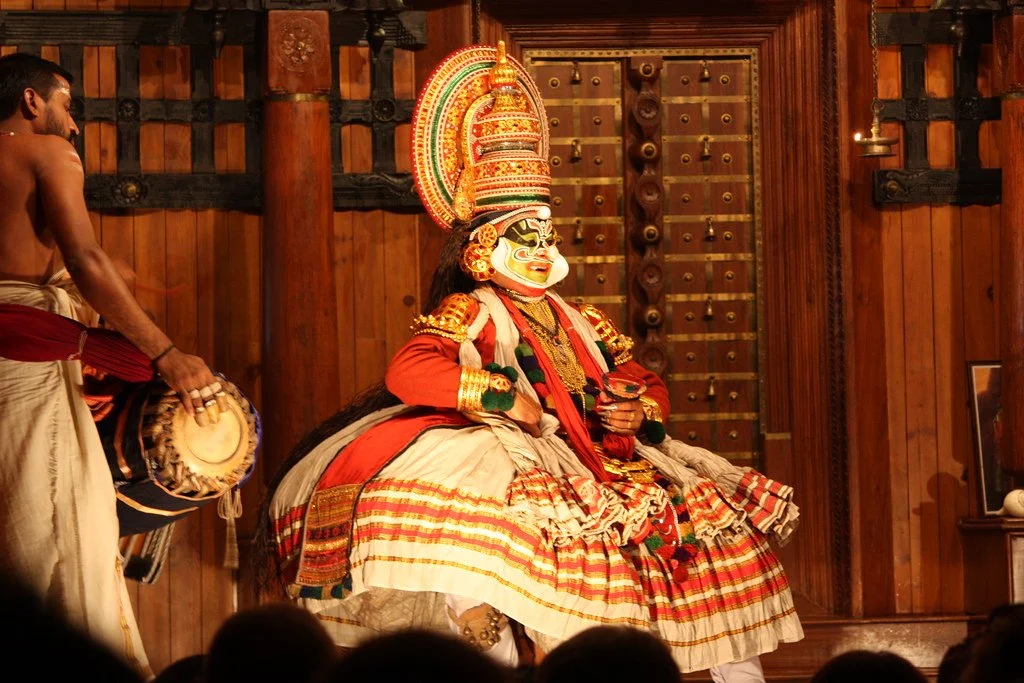
Kathakali performance.Aleksandr Zykov. CC BY-SA 2.0.

To bring epic stories to life on stage, Kathakali performances are typically held outdoors on a bare stage, accompanied by seasoned musicians. The heartbeat of a Kathakali production lies in the rhythmic pulse of percussion instruments like the Chenda and the Maddalam, setting the stage for the unfolding drama. As the melodies intertwine with the beats, the actors, adorned in elaborate makeup, step into their roles — a process that takes several hours to complete. The distinctive makeup style enables the performers to communicate a range of emotions through codified facial expressions, meticulously synchronized with the sung verses known as “padams.” The music serves as the lifeblood, infusing each movement and gesture with depth and meaning.

One of the most beloved tales performed in Kathakali is “Nala Charitam,” derived from the Mahabharata. This epic story spans four nights, narrating the journey of King Nalan and his beloved Damayanthi. Advised by Sage Naradan, they face plots from Goddess Kali, leading to separation. However, a hunter rescues Damayanthi, while Nalan finds solace in Kosalam. With the assistance of Kesini, they reunite, reconcile misunderstandings, and rediscover happiness. 

3. Greek Tragedy—Greece

Ancient Greek theater in Delos. Bernard Gagnon. CC BY-SA 3.0.

Greek tragedy, one of the world’s most renowned ancient performance arts, finds its origins in the sacred rituals of Dionysus, the god of pleasure, fertility, wine-making, ecstasy, and theater. Spanning from the late 6th century BCE, Greek tragedies delved into the tragic downfall of heroes due to their inherent flaws, incorporating a mix of spoken and sung narration along with divine interventions. Accompanied by the Greek chorus, the dramatic actors engaged in dialogue, typically in iambic tetrameters, a poetic meter consisting of three iambic units (unstressed-stressed syllable pairs) per line. This rhythmic structure infused the lines with a sense of cadence and harmony. The theater was accessible to the public, as the cost was kept low through subsidies provided by the polis, or city-state. Performances took place outdoors, featuring a chorus and three actors who portrayed all the roles. These plays were often staged in competitive settings, allowing the audience to vote for their favorite, reflecting the preferences and tastes of both the Greek elite and ordinary citizens.

Renowned playwrights Aeschylus, Sophocles, and Euripides have left an enduring legacy with their masterpieces of Greek tragedy. One such opus is Sophocles’ “Oedipus Rex,” also known as “Oedipus the King.” This play, believed to have been performed between 430 and 426 BCE, stands as a pinnacle of achievement in classical Greek drama.The story revolves around the haunting concept of fate’s inevitability. Oedipus, the central character, finds himself bound by a prophecy that foretells his patricide and an incestuous union with his mother. Compelled by the prophecy, Oedipus is forced to abandon his home of Corinth, and unwittingly journey to Thebes. However, this pursuit comes with great suffering, as Oedipus inevitably faces hardship as a result. “Oedipus Rex” examines profound themes of fate and truth, captivating audiences with its exploration of human nature, forcing them to contemplate their inexorable destinies. 

4. Elizabethan Theater—United Kingdom

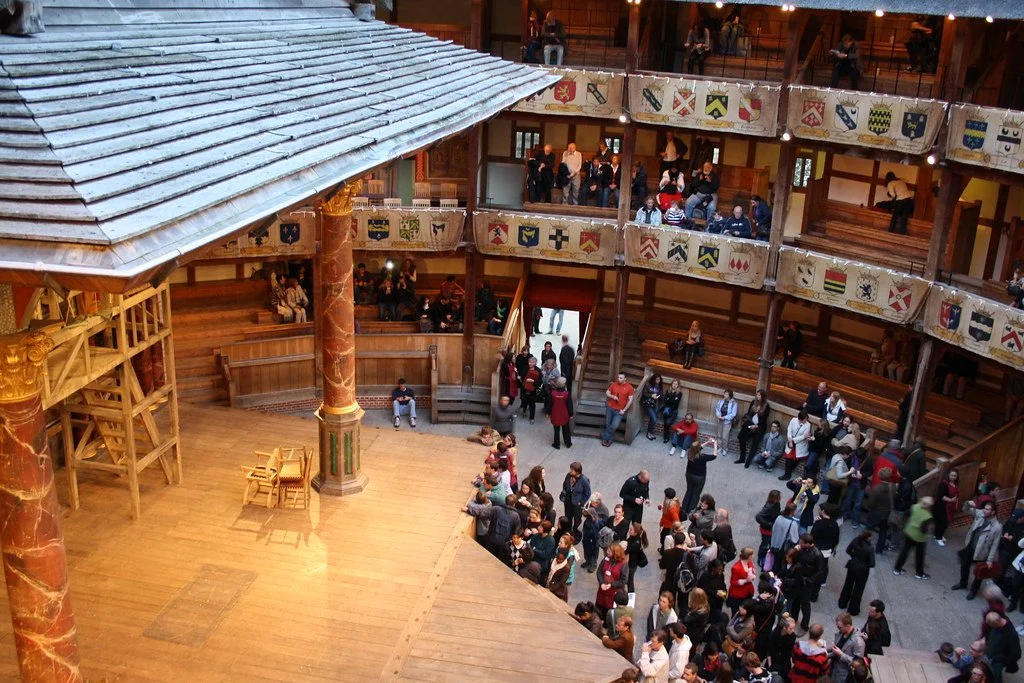
Inside Shakespeare's Globe Theatre. Andrew_j_w.CC BY-SA 2.0.

When discussing theater, the name that immediately springs to mind is none other than William Shakespeare. However, it was the vibrant cultural landscape of Elizabethan theater that set the stage for Shakespeare’s glorious triumphs. One of the most significant accomplishments of this era was the establishment of professional acting groups, which mirrored the structure of modern-day theater and captivated audiences with their mesmerizing performances.

Scene from Winedale Shakespeare Festival.Ajleon. CC BY 2.0.

Shakespeare, undoubtedly the shining star of Elizabethan theater, embarked on his theatrical journey at an open-air playhouse in Shoreditch. It was a time when public playhouses were just beginning to emerge in the then-bustling London. Not only was Shakespeare an exceptional playwright, but he also graced the stage as a talented actor. He joined a renowned theater company and remained loyal to them throughout his illustrious career. During his remarkable tenure at The Globe Theatre, an iconic London venue where Shakespeare’s King’s Men theater company took center stage starting in 1599, debuting an extraordinary collection of over 30 plays that continue to hold a prominent place in world literature. Among his unparalleled creations are timeless tragedies like “Hamlet” and “Macbeth,” which have endured the test of time, captivating audiences with their profound exploration of human nature and themes of suffering, equivocation and remorse.

The Tempest” embodies the essence of Shakespearean plays, blending tragedy, comedy and the transformative power of art to reflect the complexities of human existence within the grand collection of Elizabethan theater. The sorcerer Prospero, a master of illusion and manipulation, orchestrates a captivating tale of shipwrecks, revenge, and redemption on a mystical island. Amidst this magical turmoil, love blossoms, treachery unfurls, and forgiveness emerges triumphant. The play’s allure lies in its openness to diverse interpretations: is it an allegory of Shakespeare's farewell to the stage, or a reflection on European colonization of foreign lands?

5. Tango Theater—Argentina

Tango show in Buenos Aires. Audrey_sel. CC BY-SA 2.0.

Coming into its own in the late 19th century, Tango has its roots in the vibrant neighborhoods of La Boca in Buenos Aires and Montevideo, where a blend of European, African, and Argentine influences converged. This fusion of diverse cultures gave birth to a unique dance that tells stories of passion, longing, and resilience. In the heart of Buenos Aires, the Tango is more than just a dance; it is an art form that embodies the spirit of the city. From its early roots in small ensembles, such as the tango sextet, with piano, double bass, violins, to the larger tango orchestras, or guitars, drums, vocalists, and tango dancers, the Tango Theatre presents a diverse range of musical expressions. Here, the Tango comes alive, showcasing its elegance, sensuality, and emotional depth.

Tango’s journey is a testament to its enduring allure. Initially shunned by mainstream Argentine society as indecent, it found unexpected recognition and adoration in the upper-class circles of Paris, thanks to Argentine intellectuals who introduced it abroad. From there, the Tango quickly swept across Europe and the Americas. As it returned to its homeland, it evolved and transformed, reflecting the changing times and influences it encountered. Famous tango theaters, such as La Ventana in San Telmo, distinguishes itself from the rest by showcasing not only tango but also a rich array of folkloric music. This captivating show offers a well-rounded experience, featuring music and dance from various regions of the country. Many Tango folk styles, from the lively rhythms of chamame to the vibrant melodies of chacarera and Zamba, come  from provinces like Salta and Santiago del Estero in the northern interior. 

6. Wayang Kulit—Indonesia

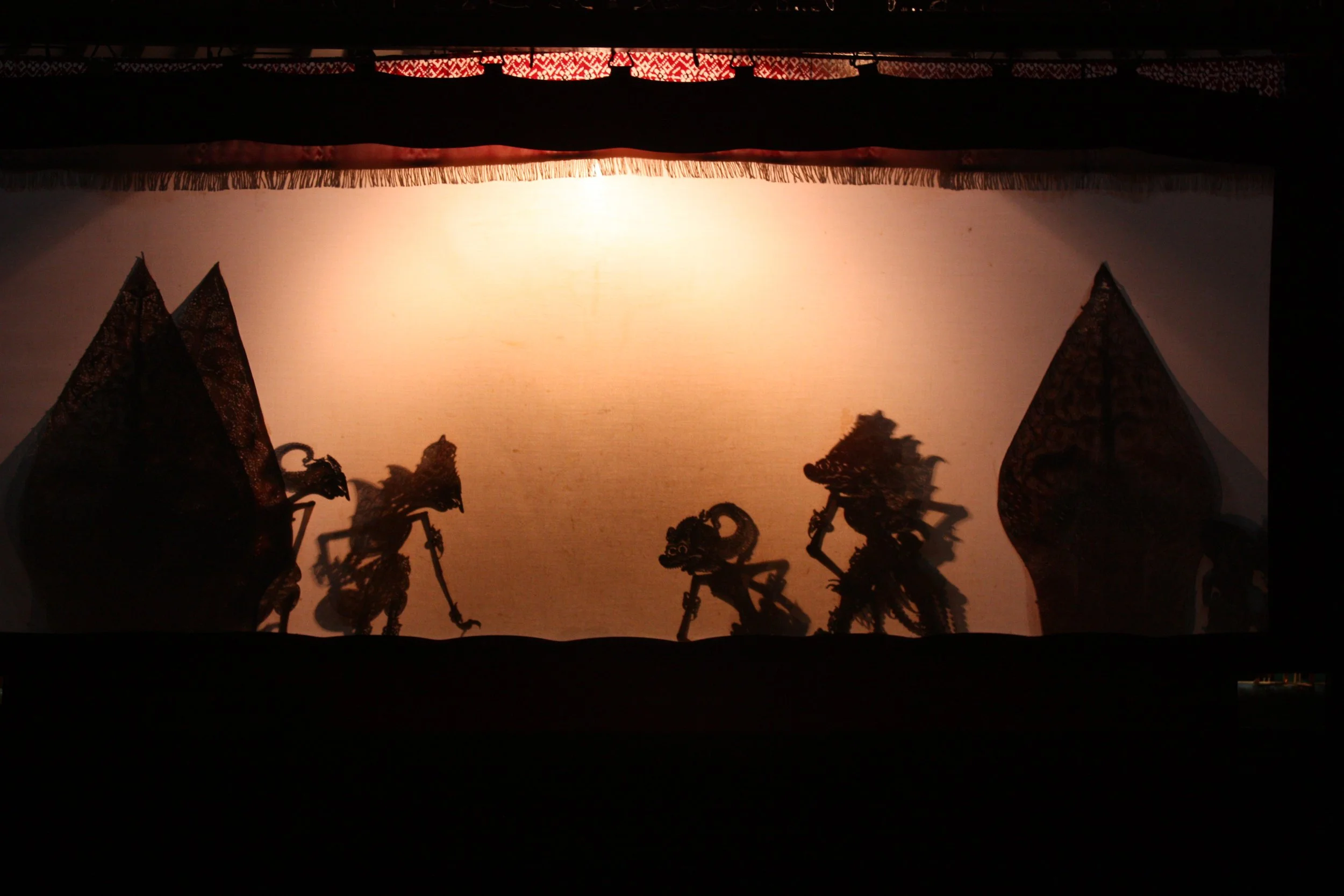
Wayang kulit from Indonesien performed at Paris.Dalbera.CC BY 2.0.

In Indonesia, master puppeteers captivate audiences with mesmerizing stories in performances of Wayang Kulit, or shadow puppetry. Meticulously crafted from buffalo hide, the puppets boasted intricate designs that brought characters to life. Traditional oil lamps gave way to modern lighting, illuminating the stage and infusing the ancient spectacle with new magic. Inspired by Hindu epics, Ramayana and Mahabharata, the performances transported spectators to mythological times. Wayang Kulit gave birth to other art forms, including three-dimensional puppets and wooden figures manipulated by rods. Through witty actions, puppeteers conveyed social and political criticisms, creating a legacy of cultural significance. Passed down through generations, Wayang Kulit wove together indigenous myths, Indian epics, and Persian heroes, forming a rich tapestry of folklore and tradition.

Yogyakarta, Wayang Kulit. Arian Zwegers. CC BY 2.0.

The ancient Ramayana takes center stage in the Wayang Kulit tradition. In a distant land, Prince Rama and the beautiful Princess Sita find themselves exiled to the depths of the forest. Amid the wilderness, an evil and cunning demon king named Ravana set his wicked eyes upon the exquisite Sita, devising a sinister plan to possess her. Upon discovering Sita's abduction, Rama's heartache turned into fierce determination. With unwavering courage, he embarked on a perilous journey to rescue his beloved princess. This epic battle between good and evil has become a timeless legend, celebrated through the artistry of Wayang Kulit, captivating audiences with its riveting storylines and masterful puppetry.

7. Peking Opera—China

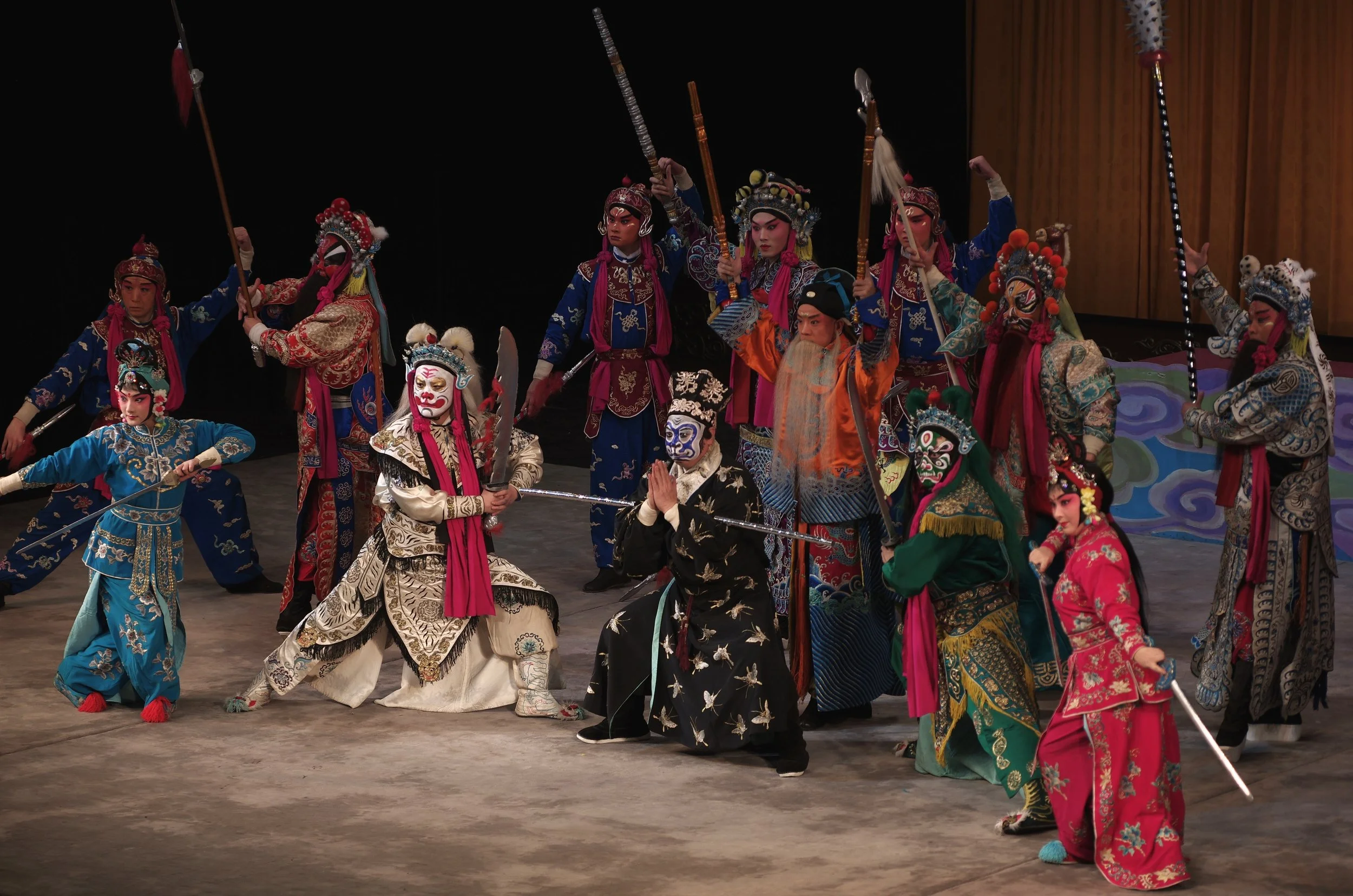
Havoc in Heaven Peking Opera. Chenwen. CC BY 2.5.

China boasts a diverse array of over 300 opera types, and among the most celebrated is Peking Opera. Regarded as the pinnacle of Chinese art, Peking Opera has a remarkable history spanning 160 years. This captivating art form combines singing, acting, recitation, and martial arts to bring stories of history, society, and everyday life to the stage. The music of Peking Opera sets the rhythm and atmosphere, while the elaborate costumes and symbolic makeup vividly depict the personalities of the characters. Peking Opera is an art that is carefully passed down through generations via master-student training, ensuring the preservation of China's cultural heritage. Alongside Greek tragedy and Indian Sanskrit opera, it stands as one of the ancient operas of the world. Breaking free from the limitations of time and space, Peking Opera employs a unique style that blends reality and illusion, captivating audiences with stunning performances. For an authentic experience of this renowned opera, the Liyuan Theatre, located in Beijing’s Qianmen Hotel, offers a luxurious setting for up to 1000 viewers. The theater features a traditional stage where actors adorned in exquisite makeup bring the stories to life, immersing the audience in the captivating world of Peking Opera. It is an opportunity to witness the richness of Chinese culture and indulge in the beauty of this cherished art form.

One of the most significant plays in the Peking Opera tradition, “The Drunken Concubine,” is set in the Tang Dynasty, and its plot revolves around Yang Yuhuan, a beloved concubine of Emperor Xuanzong and one of ancient China's Four Beauties. The opera portrays the poignant love between the emperor and Yang. Through heartfelt lyrics, Yang expresses her emotions, symbolically embedding them onto the moon, as it rises above the island. The opera's moon-themed lyrics make it especially fitting to enjoy during the Mid-Autumn Festival. Despite cultural barriers, Peking Opera continues to captivate audiences worldwide. “The Drunken Concubine” has been performed in various countries, including Russia, Austria, and North Korea, demonstrating the art form’s international appeal.

From China’s Peking Opera to Indonesia’s Wayang Kulit, these vibrant performance arts create a magnificent fusion of entertainment and ritual. While this article highlights the emblematic theaters of specific countries, it is merely a glimpse into the vast treasure trove of world theater. Regardless of language or cultural variances, the power of storytelling resonates universally in the realm of theater, captivating audiences with its emotive depth and captivating beauty.


Hope Zhu

Hope is a Chinese international student at Wake Forest University in North Carolina studying sociology, statistics, and journalism. She dreams of traveling around the globe as a freelance reporter while touching on a wide range of social issues from education inequality to cultural diversity. Passionate about environmental issues and learning about other cultures, she is eager to explore the globe. In her free time, she enjoys cooking Asian cuisine, reading, and theater.

Indigenous Fashion is Redefining the Runway

The ‘I’ in BIPOC has remained largely absent in the fashion industry, until now. 

Models pose at Vancouver Indigenous Fashion Week. Vogue. CC BY-SA 2.0.

Once restricted to the top floor ateliers and hidden workshops of century-old brands, the world of high fashion is increasingly public. As a trillion dollar industry, one would expect fashion to have more than enough space for designers from all backgrounds to create and show their art, but as is the case, the market remains dominated by a handful of ancient European and American household names. More recently, designers of color have begun to break onto the haute couture scene as the Council of Fashion Designers of America (CFDA), among other notable fashion institutions across the world have made a strong effort to increase the visibility of BIPOC designers. The one minority notably absent, however, are Indigenous designers whose designs and culture have been repeatedly appropriated for years by brands such as Victoria Secret, Caroline Herrera, and Loewe, among others.

The First Nations Fashion and Design runway show in 2021 only included First Nations models. Stefan Gosatti. CC BY-SA 2.0

While the American fashion scene is notably lacking an Indigenous presence, Canada and Australia both hold annual Fashion Week events solely dedicated to showcasing Indigenous designers and models. In fact, the latter received a lot of positive attention in 2021 for local brand First Nations Fashion and Design’s runway show, which consisted entirely of First Nations models wearing First Nations-made garments. The show included a number of live musical performances and was interspersed with various homages to the claim of First Nations peoples to Australian land, none of which are common occurrences in Australia’s Fashion Week. The audience, however, absolutely loved it: creative designer Grace Lillian Lee along with her CEO and co-designer Teagan Cowlishaw walked out at the end of the show to a standing ovation. According to Cowlishaw, the show was about “the movement of giving our land back to its rightful owners,” a theme common among other runway shows and fashion collections created by First Nations designers.

South Sudanese-Australian model Adut Akech was named Model of the Year in 2018. Hot in Juba. CC BY-NC-ND 2.0

In parallel with this sudden increase in Indigenous fashion exploding onto the scene in the past few years, demand for models of First Nations heritage has also skyrocketed. This previously untapped pool of talent is finally receiving the attention it deserves, with Indigenous models appearing with increasing frequency in print ads, television commercials, and of course, on runways. Australian modeling agencies can’t seem to sign Indigenous models fast enough, which has created a space for agencies that only represent models of First Nations heritage. According to some, this shift began with the appearance of several South Sudanese-Australian models who have gone on to become internationally renowned, but were firstly instrumental in redefining Australian standards of beauty: tanned, blonde, and bikini-wearing hegemony has been pushed aside in favor of a much more diverse range of skin colors and body types. Thus began the growing presence of First Nations faces in fashion campaigns both in Australia, and now, across the world.

Designers on stage at the National Indigenous Fashion Awards Ceremony in 2022. NIFA. CC BY-NC 2.0

In order to further support the work of First Nations designers in Australia, the National Indigenous fashion Awards (NIFA) were launched in 2020 to celebrate the cultural diversity and traditions of First Nations artists and designers in fashion and textiles. The annual event presents awards in six different categories including a Community Collaboration Award and a Wearable Art Award, each of which aims to promote the ethical and sustainable production practiced by many First Nations designers, as well as highlight traditional textile manufacturing techniques. The winning designers receive monetary awards as well as educational opportunities both locally and abroad to further develop their skills. This year, the event will take place on August 9 in the Darwin region of Northern Australia, an area traditionally owned by the Larrakia people, an Aboriginal nation with a population of roughly 2,000. While nominations closed in April, anyone who visits the NIFA website when it opens again for next year will be able nominate their favorite brands and designers, from those catering exclusively to the haute couture market, to brands showcasing their wares on social media, so long as they are of Aboriginal or Torres Strait Islander heritage. In addition, NIFA is launching a new showcase tour initiative this year that will allow shortlisted nominees and winners of the 2023 awards to display their designs to the public at four convention centers across the country.

NIFA award-winner Philomena Yeatman pictured in her studio with one of her traditionally woven tapestries. NIFA. CC BY-NC 2.0

Among the past winners is 59 year old Esther Yarllarlla, an artist of the Kunibidji who has been practicing and perfecting her traditional weaving techniques for decades. The piece which won her the Traditional Adornment Award was commissioned by the Bábbarra Women’s Center — a mókko or traditional womenswear garment with an open back, but her work also includes delicately knotted bags woven from banyan tree fiber. Another expert weaver, Philomena Yeatman received the Textile Design Award in 2022 for fusing traditional palm fiber weaving techniques with modern materials to create beautiful tapestries that tell the stories of her people, the Yarrabah. By contrast, last year’s recipient of the Business Achievement Award was a First Nations-run organization called Clothing the Gaps which engages in various social action campaigns to diversify Australia’s fashion sector. Through their community of youth leaders and community advocates, the organization has built a large following both in person and on social media, and helped them to successfully reclaim the First Nations flag in a legal campaign that ended successfully in 2022.

The list goes on: each shortlisted and winning designer or artist has dedicated their lives to advancing their craft and sharing their culture with the wider Australian community. While there is undoubtedly still work to be done, the burgeoning First Nations presence in Australia’s fashion scene is setting a positive precedent for the road forward, championing appreciation instead of appropriation, and carving out a space for Indigenous designers around the world that should really have been there from the beginning. As the words splashed across the backdrop of that fateful runway show in 2021 announced, “This is not a moment. This is a movement.”


Tanaya Vohra

Tanaya is an undergraduate student pursuing a major in Public Health at the University of Chicago. She's lived in Asia, Europe and North America and wants to share her love of travel and exploring new cultures through her writing.

Eat for Under $15 at these 7 Global Cuisine Restaurants in NYC

Let your tastebuds travel without leaving the Big Apple.

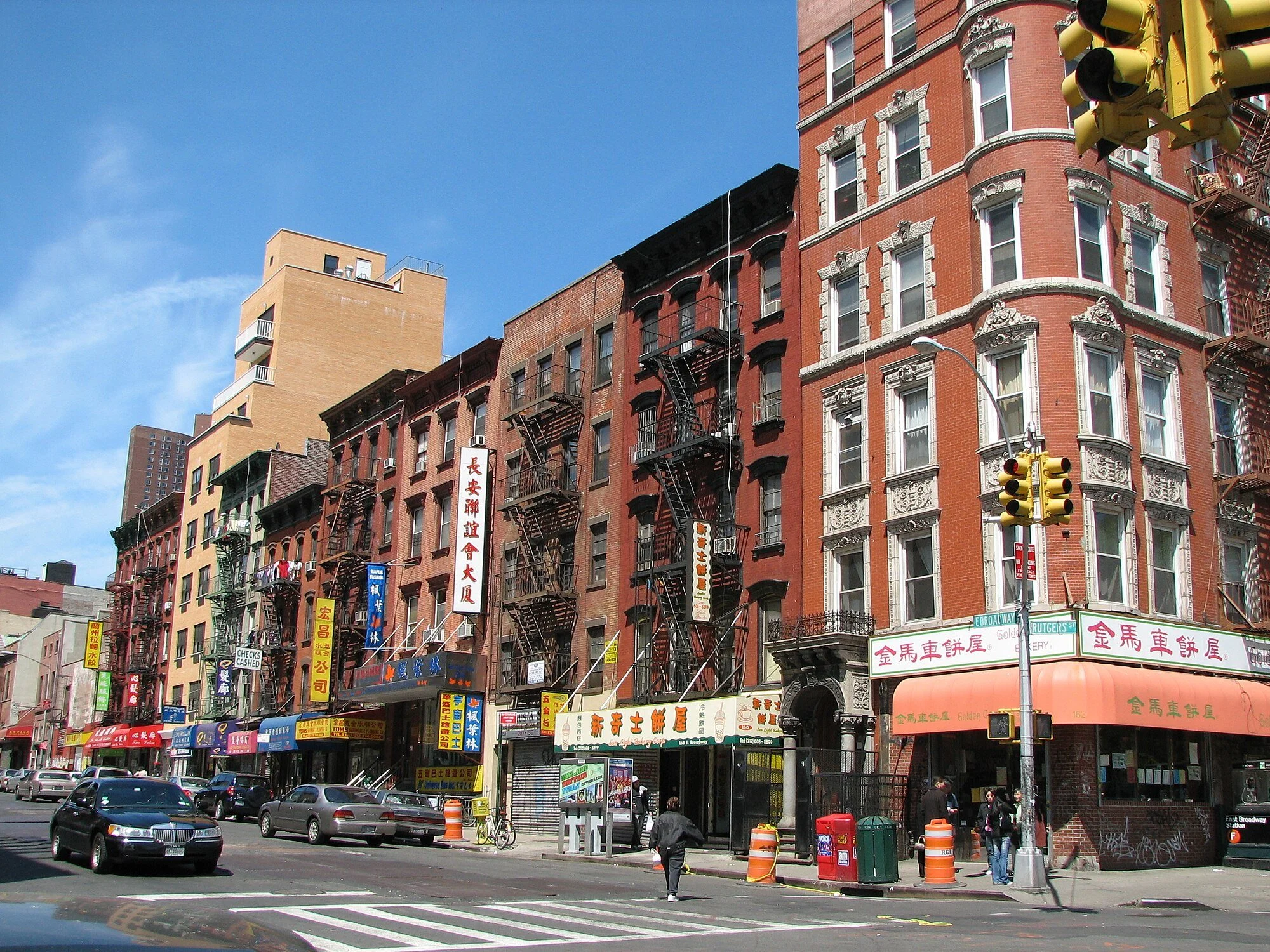
Chinatown in New York City. Norbert Nagel. CC by 3.0.

Beyond its famous museums and fashion, New York City is recognized as the food capital of the United States. Every year foodies flock to the city’s restaurants for unique menus and interpretations of global cuisine. But this top-notch culinary environment typically comes—quite literally— with a price. New York restaurants are often criticized for their exorbitant prices. But fear not, there are plenty of restaurants in the city that offer authentic international cuisine for a reasonable price. Whether you are a college student on a budget or a lifelong fan of global cuisine looking for food made with a lot of love, these restaurants will leave both your stomach and your wallet happy.  

1. Super Taste

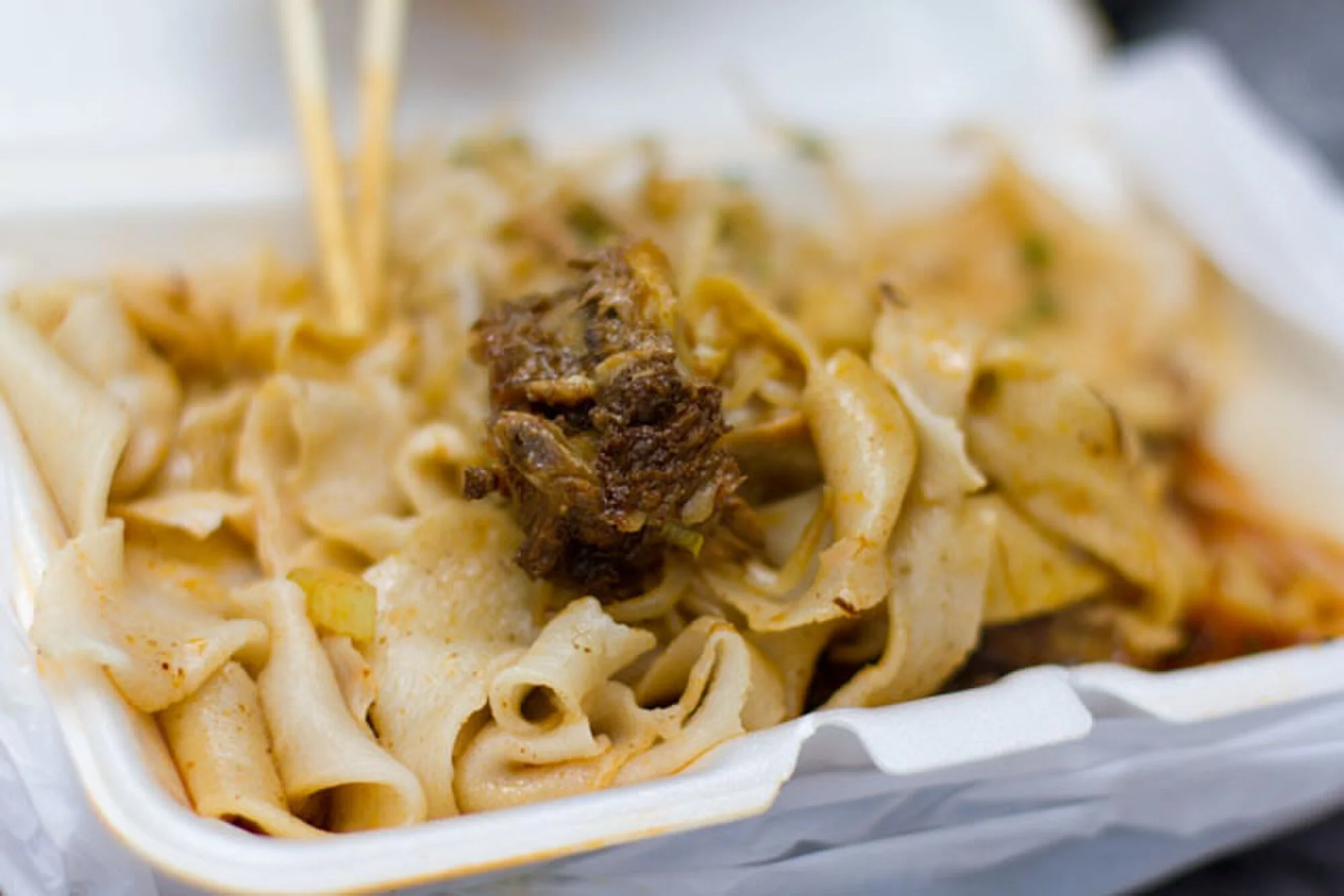
Hand-Pulled Noodles with Lamb. Jason Lam. CC by 2.0.

Located in the famous culinary neighborhood of Chinatown, Super Taste may be the most well-known restaurant on this list. If you find yourself craving Chinese food, Super Taste is a classic, must-go stop. The most notable dish on the menu is their hand-pulled noodles. These silky and addictive noodles can be paired with chicken, beef, or mutton at the customer’s request. But if you aren’t in the mood for noodles, the five for $10 pork and chive dumplings drenched in sweet-spicy chili oil are always a crowd pleaser. Although there is limited seating inside, Super Taste is perfect for on-the-go enjoying. Their menu can be found here

2. Pyza

Borscht topped with sour cream. Liz West. CC by 2.0.

Warm and delicious, Pyza serves Polish food so good it could be mistaken for a home-cooked meal. Located in Greenpoint, Brooklyn, this restaurant specializes in plates piled high with food that makes you feel like family. Its menu features traditional dishes like stuffed cabbage, tongue in horseradish sauce, and various types of pierogies. A stand-out dish is their chicken cutlet, breaded and paired with a dollop of sour cream. Their soups range from a reasonable $5-$8, so tuck in with a bowl of borscht and enjoy the homey atmosphere. Additional items and prices can be found here

3. Birria-Landia

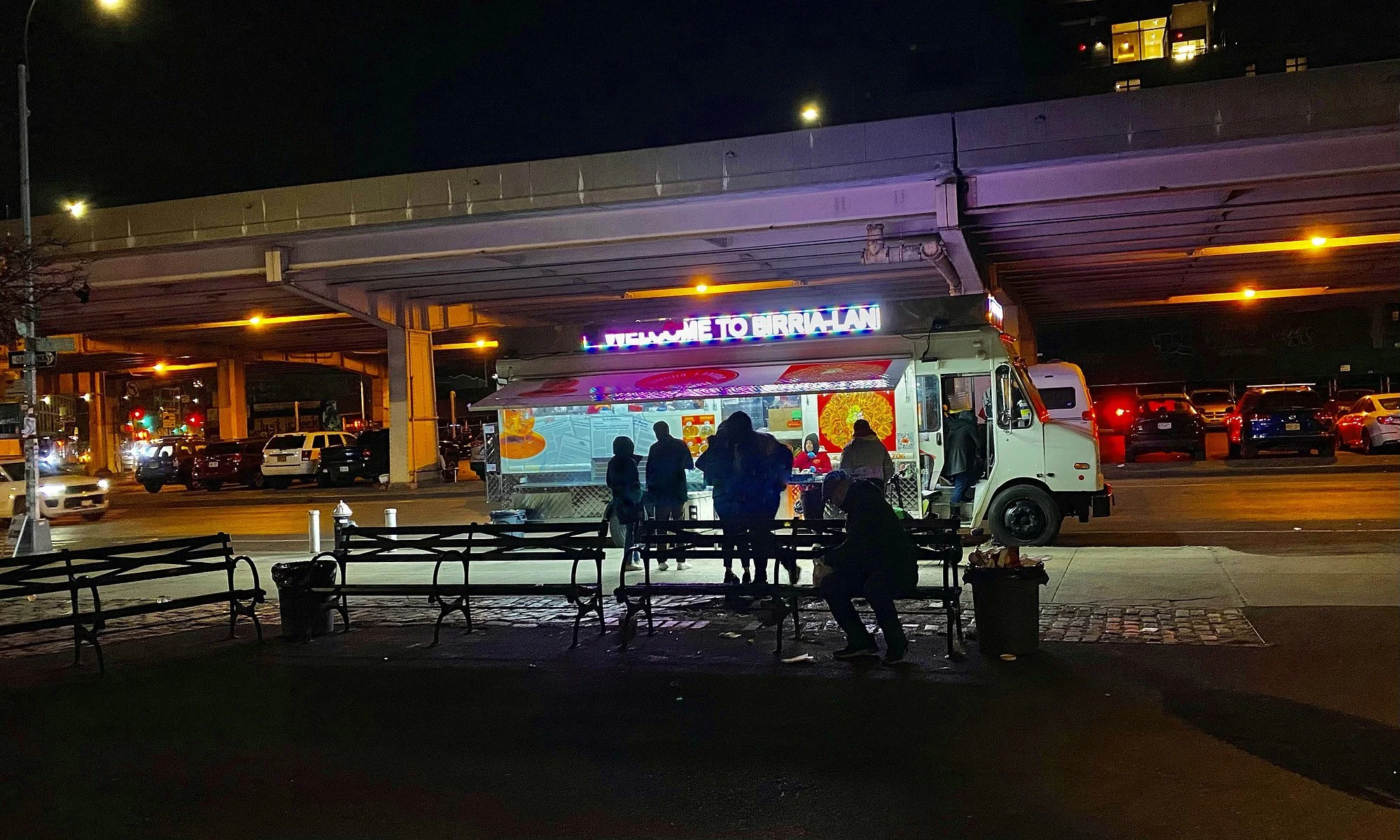
Brooklyn location of Birria-Landia. Andre Carrotflower. CC by 4.0.

This Mexican spot may differ from most foodies’ perceptions of a typical restaurant. Instead of a usual sit-down experience, Birria-Landia started as a single Jackson Heights food truck. The operation has since expanded to include additional trucks in the Lower East Side, the Bronx, Jackson Heights, and Williamsburg. Their specialty dish, birria, features tacos topped with fresh cilantro and salsa paired with a rich, smooth dipping broth. The meat of the tacos—often beef—is first marinated in mixtures of spices and dried chillies before being cooked low and slow in broth. This lengthy process creates mouth-watering and juicy tacos that can be enjoyed for only $4.50. In addition to their exceptional tacos, their consummé broths, tostadas, and quesadillas can be found here.

4. Kassim’s Bakery

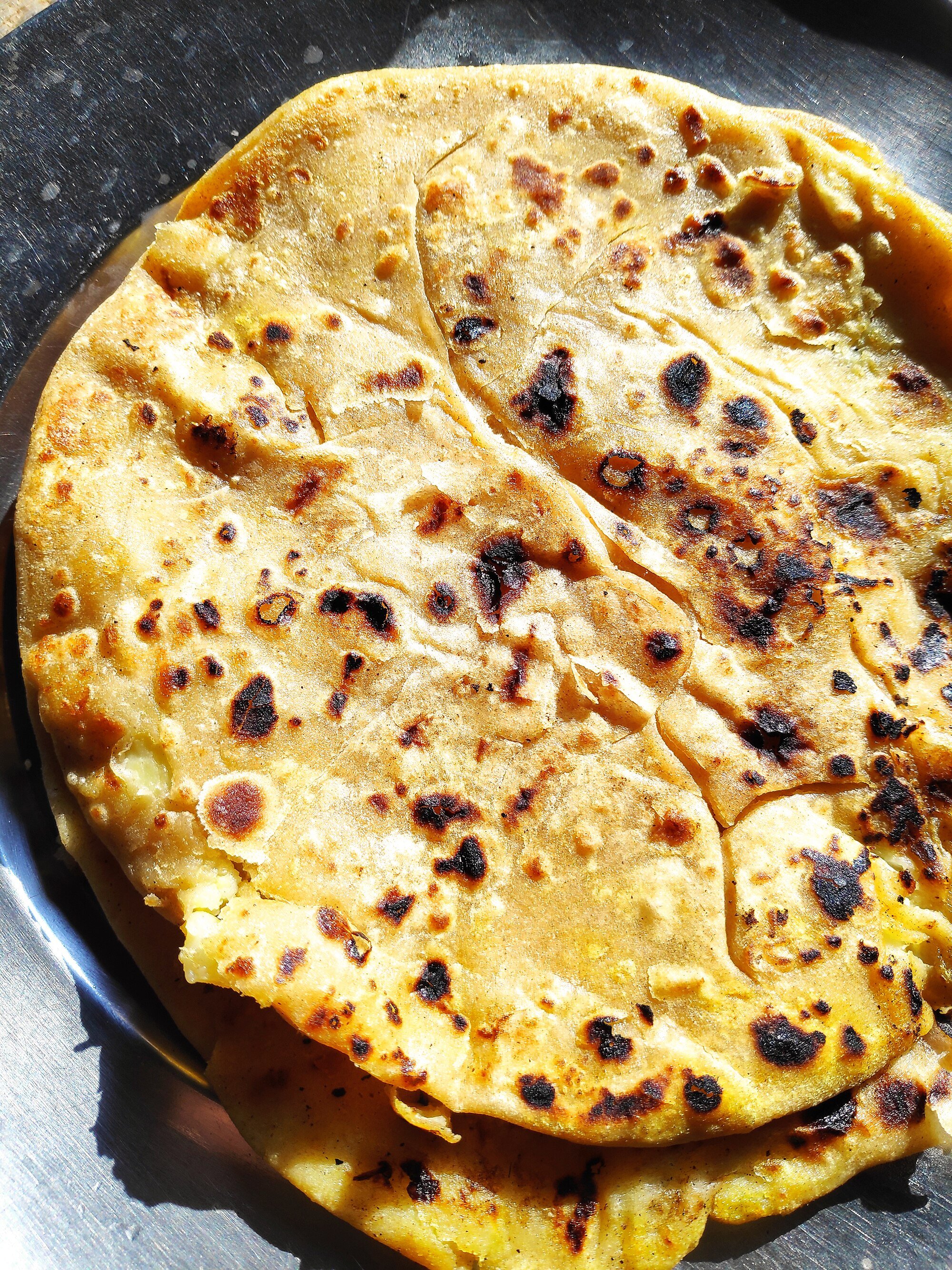
Aalu Roti. Guarav Dhwaj Khadka. CC by 4.0.

Whether you prefer your dishes savory or sweet, there is something for everyone at this Queens restaurant. Kassim’s serves a wide variety of Caribbean lunch and dinner foods, but also offers a tasty variety of pastries and baked goods. One of the menu’s highlights is the selection of roti; each variation of the dish is under $10. Roti is a wheat flatbread that at Kassim’s is paired with beef, chicken, duck, goat, and pachownie (innards of lamb). After finishing a main dish, customers can explore Kassim’s dessert menu. Their cassava pone is perfect for those with a sweet tooth; cassava, also called yuca, has an edible root often used to make starchy desserts. More of Kassim’s sweet and savory treats can be found here.

5. Punjabi Grocery & Deli

Samosas paired with chutney. K Spoddar. CC by 4.0.

Can you claim to have visited New York if you didn’t find yourself in a deli at some point during the trip? Although it also doubles as a grocery store, this Lower East Side joint’s Indian food makes it stand out. Even better, the deli only serves vegetarian food, making it the perfect spot for travelers with this dietary restriction. At only 50 cents, Punjabi Deli might have the most affordable Samosas in the city. They also offer an assortment of rice dishes where customers can mix and match different vegetable options to create the perfect bowl for only $6 or $8, depending on if you want a small or large meal. The $2 chai is a perfect way to wash everything down. More exciting dishes and beverages can be found here

6. SVL Souvlaki Bar

Grilled kebabs. Glen Edelson. CC by 2.0.

From spanakopita to greek fries, SVL Souvlaki Bar combines tradition with innovation to create unique Greek food. They have two Queens locations, with one on Steinway Street and the other on Astoria Boulevard. Perhaps the most exciting aspect of this quick and fresh spot is their “build your own” options. You can customize salads and bowls, or even create entire plates filled with pita, kebabs, vegetables, and sauces. Their iconic SVL sauce combines sweet, tangy, and creamy flavors— it is the perfect way to top off any customized dish. Or, if the extent of customization is intimidating, you can always enjoy classic chicken souvlaki kebab for only $4.50. Even better, the Bar’s food is made with hormone-free meat and fresh produce. Read more about their ingredients, mission, and menu here

7. Bunna Cafe

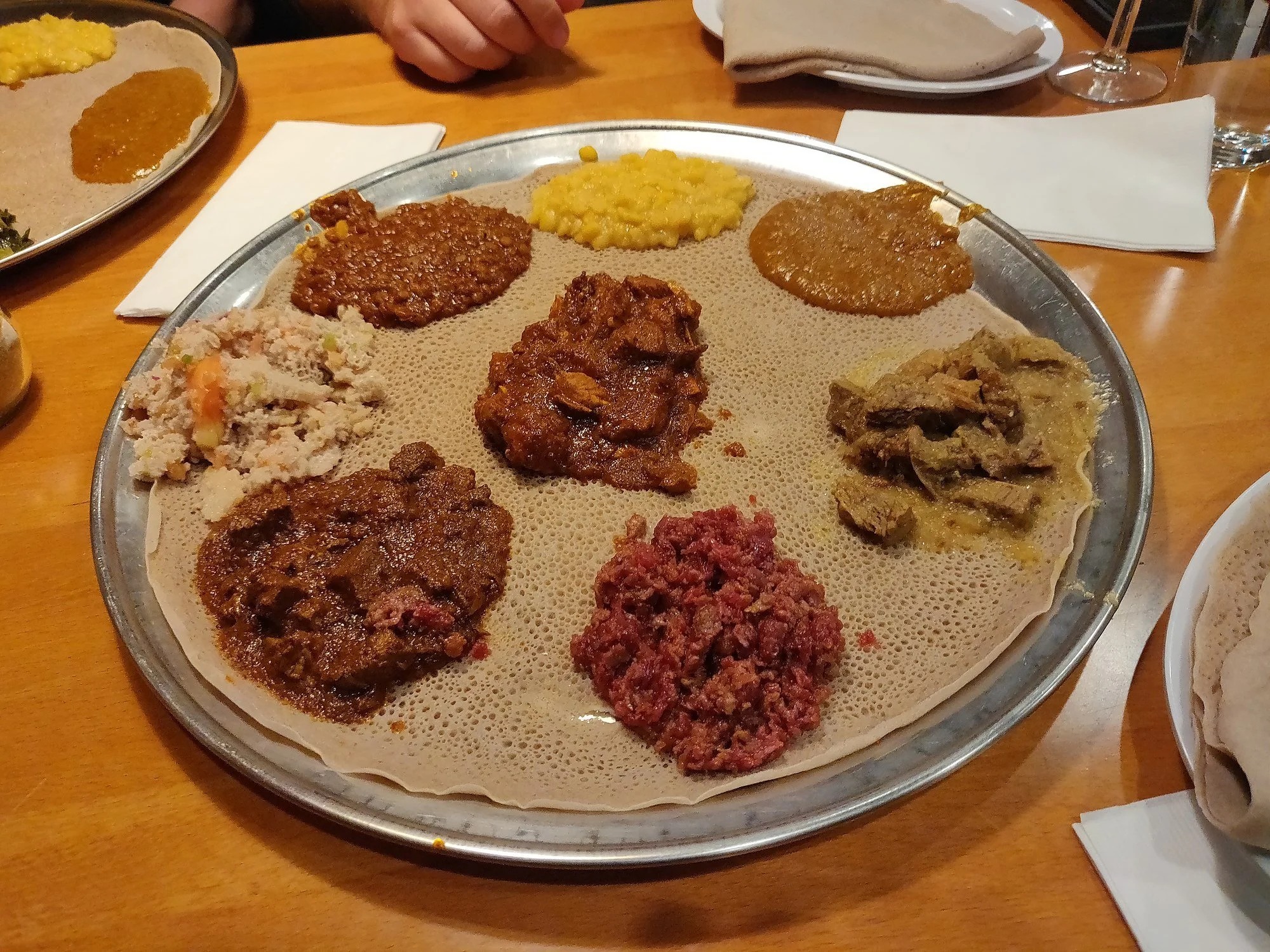
Injera topped with assorted vegetables. Kurt Kaiser. CC by 2.0.

If you’re looking for more of a sit-down experience, Bunna Cafe is the perfect destination. They are a Black-owned and vegan Ethiopian restaurant located in Bushwick, Brooklyn. The restaurant’s family-style meal environment creates the perfect atmosphere for hearty food paired with good conversation. Scoops of vegetables are served in piles on injera, a fermented sourdough flatbread. Customers can select a variety of different sides, mixing to create new flavors and combinations. Or, if you’re dining alone, the $12 lunch special comes with individual scoops of four different items. Although, with such generous portions, you may want to bring a friend to share. Further details about their menu and strong variety of sides can be found here.


Carina Cole

Carina Cole is a Media Studies student with a Correlate in Creative Writing at Vassar College. She is an avid journalist and occasional flash fiction writer. Her passion for writing overlaps with environmentalism, feminism, social justice, and a desire to travel beyond the United States. When she’s not writing, you can find her meticulously curating playlists or picking up a paintbrush. 

6 Global Visions of the Afterlife

Journey through the kaleidoscope of cultural perspectives on death, from India's embrace of reincarnation to the haunting underworld of Greek myth.

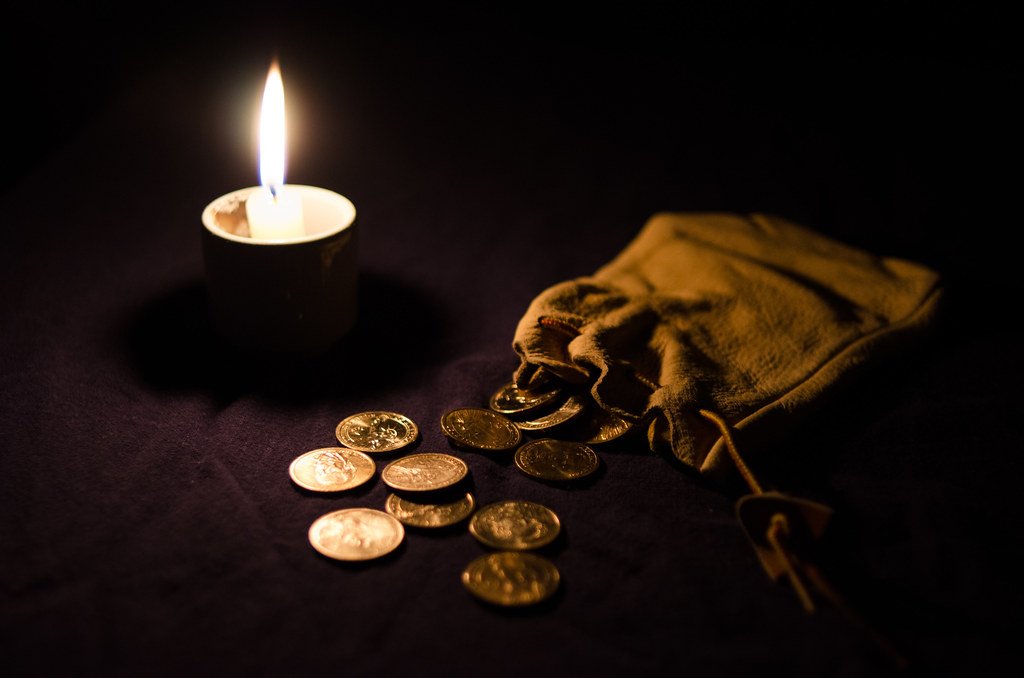
Charon’s Obol, putting a coin within the deceased’s eyes as a symbolic fare across the lake of Styx in the ancient Greek underworld. Tim Pierce. CC BY 2.0.

Death, the inevitable destination for all living beings, holds different meanings in various cultures. For example, Egypt sees it as a gateway to a transformative journey, whereas India and Japan believe in ancestral worship and reincarnation. Regardless of the connotations, death reveals humanity's contemplation of life's purpose and respect for the natural world. Here, we delve into the interpretations of death in seven countries:

1. Egypt

Egyptian Mummy. Mamamusings. CC BY-SA 2.0

With a profound mythological heritage, the Egyptians held a deep belief in the afterlife, considering it a testament to the morality exhibited during one’s lifetime. They perceived death as a temporary interruption and acknowledged the importance of honoring the deity overseeing the realm of the deceased both before and after life on Earth. According to Egyptian beliefs, although the physical body may perish, the soul could transcend its mortal shell and embark on a journey to the afterlife. Mummification, a significant ritual, aimed to preserve the corpse, preventing its decay and ensuring its integrity in the realm beyond. The Egyptian concept of death, known as “Duat,” was envisioned as a five-point star encircled by the sun and stars. Within Duat existed mystical elements, including a lake of flames, enchanted trees, and formidable iron walls (perhaps mundane to modern people, but positively spectacular in the largely pre-iron Bronze Age!). Those who successfully traversed this treacherous realm could ascend as Akh spirits. However, this elevation came with two challenges: proving one’s innocence before 42 divine judges regarding their earthly life and undergoing the weighing of the heart against the feather of Ma’at, symbolizing truth and justice. Wrongdoings in life carried weight, making the heart heavier than the feather.  While the true complexity of ancient Egyptian afterlife beliefs surpasses this narrative, it captures the essence of their profound worldview.

2. Japan

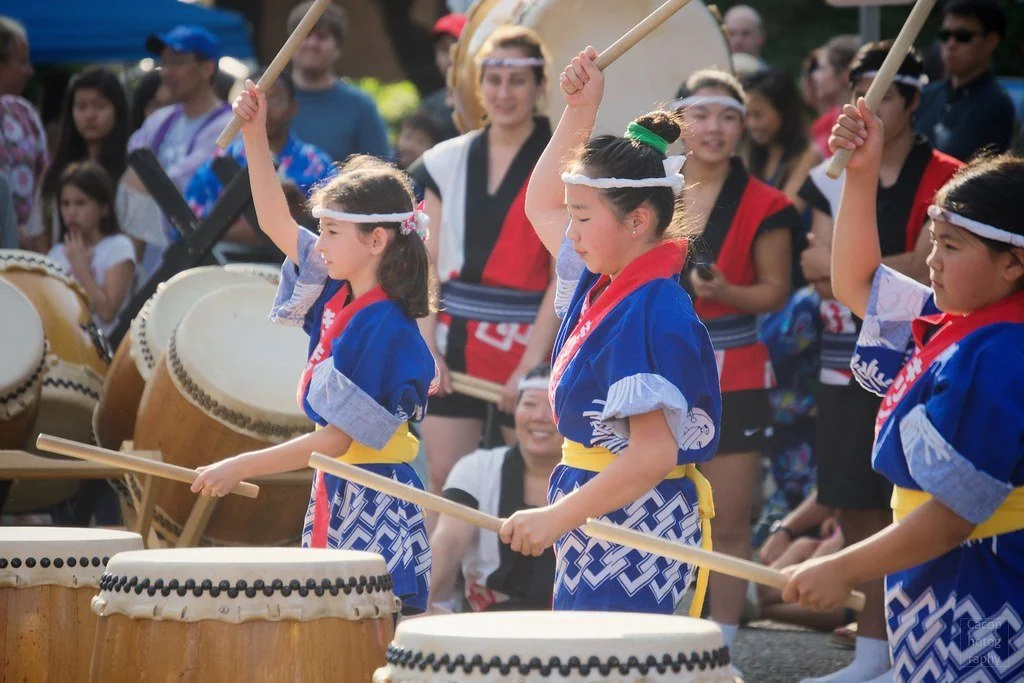
The Obon festival. Cacophotography. CC BY-NC-SA 2.0.

In Japan, the perception of the afterlife emerges from the interplay between Shinto and Buddhist beliefs. The Japanese understanding of the soul, referred to as Reikon, entails its departure from the physical body upon death to reunite with ancestors. This cultural foundation has fostered a strong ancestral worship tradition, wherein children are entrusted with the responsibility of honoring their parents and forebears through extensive rituals and offerings throughout their lives. By diligently fulfilling these obligations, individuals gain protection against malevolent forces. The Obon festival exemplifies this reverence, with chochin lanterns illuminating the graves of departed family members, guiding their spirits back to the household altars. As death gradually loses its mystique in Japanese society, attitudes have evolved, becoming more open and innovative. Notably, companies like Ginga Stage offer unique services such as launching the ashes of the deceased into space and scattering them in the ocean.

3. Mexico

Day of the Dead Altar. Señor Codo.CC BY-SA 2.0.

Mexican cultural practices around death are most famous for the vibrant commemoration known as the “Day of the Dead”. While the visually stunning and emotionally touching portrayal of the Land of the Afterlife in the 2017 film “Coco” received tremendous acclaim, the actual celebration surpasses its depiction. From October 27th to November 1st, during the “Day of the Dead,” altars adorned with offerings can be found throughout plazas. October 31 marks the opening of the gates of heaven for the spirits of departed children, while November 1 is dedicated to adult spirits reuniting with their families. Mexico wholeheartedly revels in the festivities of the Day of the Dead. Elaborate altars, intricately designed sugar skulls, and vibrant symbols represent this internationally recognized event. 

Day of the Dead makeup. Robert Couse-Baker. CC BY 2.0.

La Catrina, a revered figure representing the perpetual cycle of life, stands as an indispensable icon during the Day of the Dead festivities, often brought to life through elaborate skull-like face paintings. Rather than succumb to sorrow over life’s end, Mexicans embrace death as an inseparable aspect woven into the intricate tapestry of existence.

4. India

Puja,a Hinduism ritual , held in Dashashwamedh Ghat. Ganges. Franx. CC BY-NC 2.0.

At the core of India’s perspective on death is the concept of reincarnation, the cycle of rebirth and renewal known as samsara in Sanskrit. Reincarnation serves as a common thread among Hinduism, Jainism, and Buddhism, some of the most prevalent native religions in India. The destiny of one’s subsequent life is determined by their actions, known as karma, throughout their current lifetime. Karma dictates the form into which the departed individual will be reborn. Leading a virtuous life in accordance with the spiritual teachings of sacred texts paves the way to moksha, liberation from the perpetual cycle of birth and death. Regarding the afterlife, Hindus believe in the existence of seven realms, encompassing both higher and lower planes. The righteous ascend to the upper realms, where they are rewarded for their virtuous deeds and subsequently reborn as human beings. On the other hand, those who have committed evil deeds descend to the lower realms, enduring suffering and taking birth as lower beings, such as animals and insects. 

5. Greece

The imaginary vestibule of Hades. Maxwell Hamilton.CC BY 2.0.

In the realm of Greek mythology, the underworld is governed by the fearsome duo of Hades and Persephone. Described in the Odyssey as a somber expanse encircled by the Acherusia Lake and traversed by three rivers—Styx, Kokytos (Cocytus), and Pyriphlegethon—it is the shadowy abode where most souls are believed to dwell after death. While some may perceive it as akin to a realm of torment, the Greek notion of heaven lacks a deity personifying its ethereal domains. In contrast, Hades presides over the underworld with a sense of justice tinged with cruelty. A figure so formidable that uttering his name struck fear in the hearts of many Ancient Greeks, he subjects the departed to moral judgment, where heroes may revel in rewards while villains endure the agonizing consequences of their deeds. For ordinary mortals, the passing of their souls is believed to involve a departure from their physical forms. It was the solemn duty of women to carefully dress and clean the lifeless bodies, adorning them in humble garments and placing a coin within the deceased’s eyes as fare to pay for their passage across the enigmatic River Styx into the vast underworld. At the break of dawn, the departed soul is borne away upon the back of a noble steed, embarking on a somber journey towards their final resting place.

6. Sweden

Illustration of Ragnarok. Louis Moe.C BY-SA 4.0.

Deeply interwoven within the fabric of Norse mythology, the Vikings held a faith in the existence of Valhalla—an ethereal realm reserved exclusively for those valiant warriors who, through their unwavering courage, had carved a path of honor upon the battlefield. Battle-hardened Vikings aspired to secure their rightful place in Valhalla through honorable deaths in combat. Once admitted to this hallowed sanctuary, known as the dwelling of the Einherjar, the fallen warriors did not languish in lifeless repose. Instead, they fervently engaged themselves in preparations for the impending Ragnarok, the final battle between the mighty Gods of Asgard and the frost giants. Such epic clashes have since become a recurring theme in the realms of video games and movies, captivating the imaginations of countless enthusiasts. 

In the myriad perspectives on death across the globe, its significance is similar to that of life itself. Amid the tumultuous tides of change happening in the world these days, bidding a proper farewell remains an immensely pertinent subject. The imagery of heaven, a sanctuary for the virtuous, and hell, a place of punishment for the malevolent, is just one of many ways cultures have conceptualized an afterlife both past and present. The commemoration and even celebration of death can rival the jubilation accorded to the birth of a new life.


Hope Zhu

Hope is a Chinese international student at Wake Forest University in North Carolina studying sociology, statistics, and journalism. She dreams of traveling around the globe as a freelance reporter while touching on a wide range of social issues from education inequality to cultural diversity. Passionate about environmental issues and learning about other cultures, she is eager to explore the globe. In her free time, she enjoys cooking Asian cuisine, reading, and theater.

8 Independent Bookstores From Around the World

From shiny cafés to ancient theaters, here are some of the best independent bookstores to put on your travel list.

With more people ordering books online, it is more important than ever to support independent booksellers. jmm. CC BY-NC-ND 2.0

For those of you that never travel without a book, or always finish the one you bring on the plane, this list of independent bookstores around the world could inspire you to make a reading detour on your next trip. While floor to ceiling bookshelves are the norm on this list, each shop has its own unique character, history, and traditions. Most importantly, they all boast an impressive selection of literature, some showcasing fresh local talent while others house rare ancient gems.

1. Topping & Company Booksellers - Edinburgh, Scotland

Located at the base of Edinburgh’s Calton Hill, Topping & Company Booksellers houses a massive selection of literature. Edinburgh News. CC BY-NC 2.0

The first Topping & Company bookshop opened in the town of Ely back in 2002, but the newest addition to the independently owned chain is one of the largest in the UK. The Edinburgh branch opened in 2019 and houses three floors of handcrafted floor-to-ceiling bookshelves and over 70,000 individual volumes, drawing in readers of all ages and interests. Their first floor has an impressive display of valuable rare and signed editions of various books, while the upstairs areas are split into specific genres ranging from award winning fiction to business and economics. Readers can use the signature Topping sliding ladders to grab a book off of the top shelves, or settle down into one of the many reading nooks scattered throughout the store to enjoy free servings of tea and biscuits. The store also holds a number of events throughout the year, hosting both established authors and rising stars, making it one of the premier literary hubs in Edinburgh.

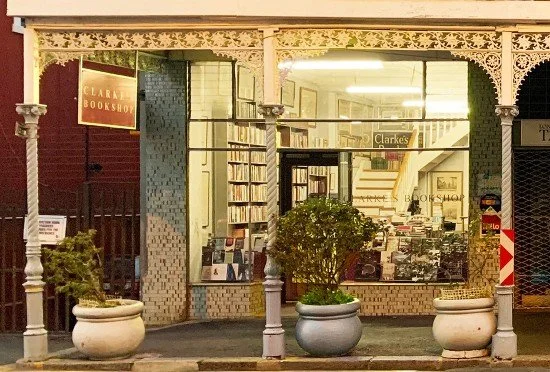
2. Clarke’s Bookshop - Cape Town, South Africa

The facade of Clarke’s Bookshop on Long Street is favorite amongst locals who have been visiting for decades. Clarke’s Bookshop. CC BY-SA 2.0

Established back in 1957 as a secondhand bookstore by local Anthony Clarke, Clarke’s Bookshop is one of the longest running independent booksellers in South Africa. During the Apartheid Era, reading material was heavily censored by the country’s white supremacist regime and books deemed controversial often had to be smuggled in. Clarke’s was one of the few places that offered customers a wide variety of genres at an affordable price, and continues to live up to this legacy of intellectual tolerance today. While they still carry a large selection of previously used volumes, the shop began to specialize in African and South African specific works in the 1970s and has grown its collection exponentially since then. The store’s focus is to uplift South African stories and authors, with two entire floors dedicated to Africana works written by emerging South African authors. Clarke’s also has an impressive collection of rare texts that are no longer in print, and supply a number of libraries both locally and around the world.

3. Strand Book Store - New York City, USA

The iconic storefront of the Strand Bookstore in New York City has stood there since 1927. Ajay Suresh. CC BY 2.0

This could not be a list of independent bookstores without including Strand Book Store, located in midtown Manhattan. Founded almost a century ago by the then twenty-five year old Ben Bass, the store takes its name from the famous London street frequented by writers like Charles Dickens and William Thackeray, among others. Today, the Strand is proudly the largest bookstore in New York City and carries over a whopping 2.5 million volumes as well as an impressive selection of literary themed merchandise from stickers and magnets to tote bags and onesies. For those on a budget, the pavement outside the store is lined with its famous dollar carts, although finding a reasonably priced gem inside the store is always an option as well. Alternatively, if you have run out of space on your bookshelf at home and are looking to refresh your library, the Strand will also be happy to help provide a new home for your books and will make you an offer in either cash or store credit. From fashion almanacs to the newest fiction bestsellers, the Strand quite literally has it all.

4. Epigram Books - Singapore

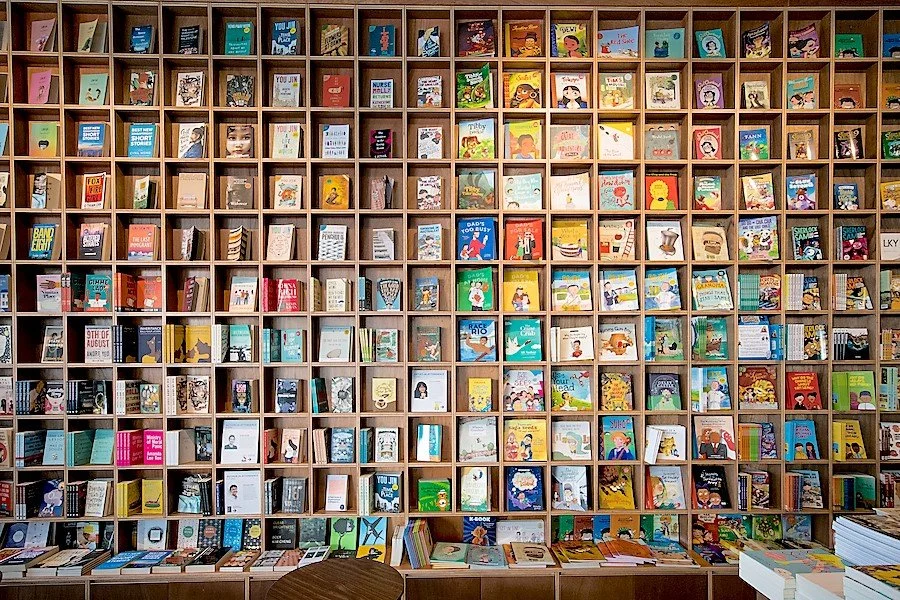
The iconic floor-to-ceiling bookshelf in Epigram only contains titles published or written by Singaporeans. Nicholas Tan. CC BY-SA 2.0

In addition to being a bookstore, Epigram Books is also an established independent publishing house in Singapore working to showcase local poets, playwrights, and authors. In fact, the bookstore did not open properly until late 2022 after existing as a pop-up store around the city for a year. Hailed by many as being the best and one of only a few purveyors of Singaporean and Southeast Asian narratives, locals often enjoy browsing their beautiful wooden shelves while enjoying a coffee by in-house baristas. In 2015, they launched the Epigram Books Fiction Prize which takes creative writing submissions from all over Southeast Asia. All of the books shortlisted for the annual prize are always made available front and center in the store, along with an incredible collection of literature published by other Singaporean houses. Epigram’s tagline, “Hold Singapore in Your Hands,” speaks to its goal of creating a space in the literary world for local talent—one of the tables in their store is reserved for authors and artists to chat with readers and help visitors find inspiration amongst the shelves.

5. El Ateneo Grand Splendid - Buenos Aires, Argentina

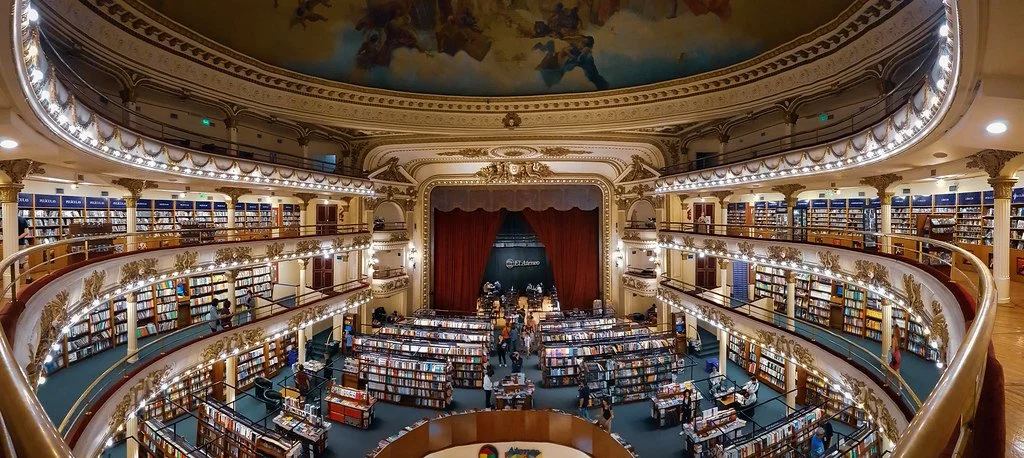
El Ateneo Grand Splendid is located in a converted theater built over a century ago. Lorena Vb. CC BY-NC-SA 2.0

For those of you who love music just as much as books, El Ateneo Grand Splendid is the perfect destination. The building was first opened in 1919 as a theater for ballet, opera, tango, and musical performances with a seating capacity of over 1,000, but eventually became a bookstore in 2000 after a short stint as a recording studio and radio station. Many have named this incredible space “the world’s most beautiful bookstore” because of its intricate frescoes and gilded bookshelves, but the atmosphere inside El Ateneo is as warm and welcoming as your neighborhood bookshop. The café built on the stage of the grand hall offers coffee and pastries to visitors who simply want to sit back and admire the emporium’s Latin architecture, while those looking to purchase have access to thousands of books, CDs, DVDs, and more. While the space welcomes over a million people every year, the orchestra and mezzanine areas as well as the luxury boxes have been converted into quiet reading spaces where you can enjoy Argentina’s rich literary tradition and history.

6. Wuguan Books - Kaohsiung City, Taiwan

Navigating Wuguan Books can be tricky given the almost total lack of light in the store. Jonny Diamond. CC BY-SA 2.0

If you have ever been told not to judge a book by its cover, this store makes it hard to do much else. Located in an art center that used to be a warehouse, Wuguan Books immerses visitors in almost complete darkness with only dim yellow lights illuminating the covers, while a small handful of reading lights are scattered through the space. The design was carefully thought up and executed by award winning architect Chu Chih-kang, who wanted the books to feel as if they were floating, and fully committed to the atmosphere by using thick carpets to absorb the sounds of footsteps and dark shelves that melt into the background. The goal was to allow people to really focus on the books without any other sensory distractions, so visitors are also required to follow rules which prohibit flash photography or flashlights. The store also houses a coffee bar and sells a variety of other merchandise, but is only accessible to those over the age of 18 due to the sensitive topics covered by some of the books. In an age where Instagram worthy aesthetics are all the rage, the inability to digitally document this space only adds to its intimate setting.

7. Another Story Bookshop - Toronto, Canada

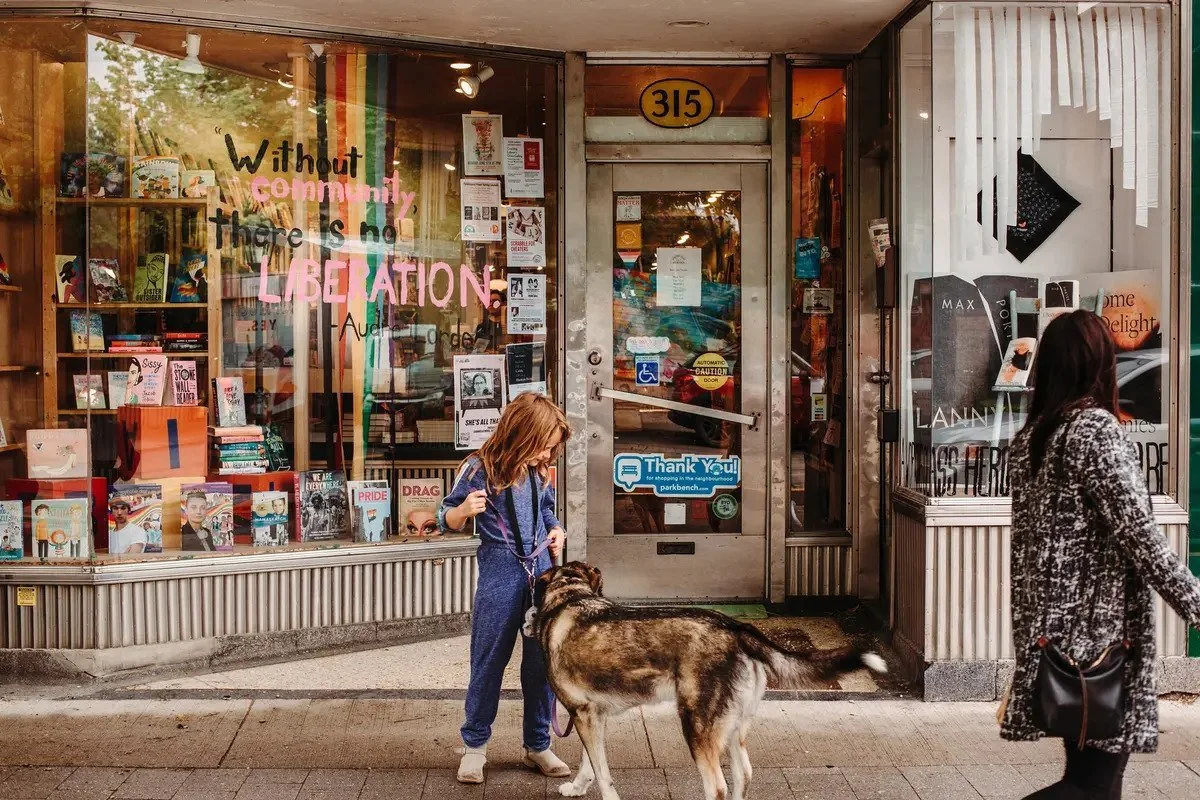
The colorful window display of Another Story showcases a small fraction of its diverse selection. Arden Wray. CC BY-NC-ND 2.0

Just over thirty years ago, local Torontonian Sheila Koffman founded Another Story Bookshop in the basement of a downtown building with the goal of putting “diverse books into diverse hands.” She sadly passed away in 2017, but her efforts to provide a platform for authors who were queer or people of color live on in the store’s new location in the Roncesvalles Village neighborhood and through its loyal employees. The prevailing theme of the store is social justice, which becomes evident from its wide selection of both fiction and non-fiction for young readers and more seasoned ones. In fact, half of the store’s inventory caters specifically to children, and they also provide books to a number of local schools. The staff put in effort to locate stories and titles that are not available elsewhere in order to ensure that marginalized narratives, including and especially those of indigenous peoples, are heard. The staff’s hard work to ensure that every book they carry has a message that is, in their best judgment, the best way to pay tribute to Sheila’s founding vision.

8. Libreria Acqua Alta - Venice, Italy

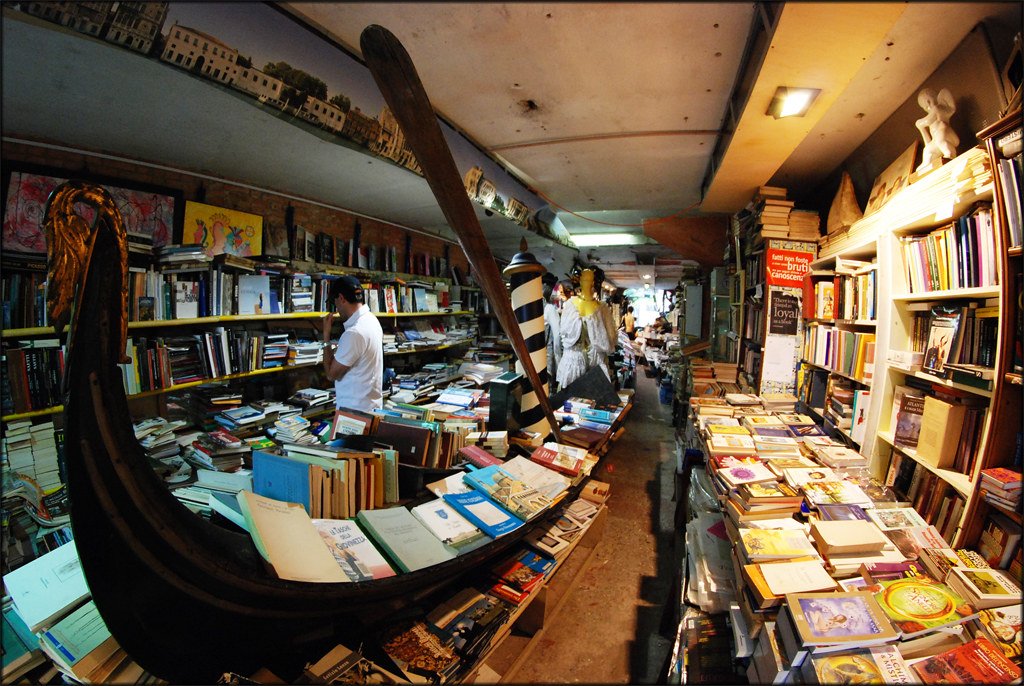
All of the books in Libreria Acqua Alta are stored in waterproof containers to keep them dry during high tide. a2zphoto. CC BY-NC-ND 2.0

Books and water typically do not mix, but the staff at the Libreria Acqua Alta in Venice have found a solution. The shop is located on an island in the middle of one of the city’s countless canals, and all of its precious books are stored in various waterproof bins, bathtubs, and even a full-sized gondola. True to its name which translates to “Library of High Water”, this innovation provides a safe sanctuary when the tide rises and water floods to a few inches in height. The store is fantastical in every way, with giant leather-bound volumes stacked haphazardly against the wall, ships’ wheels and other maritime gadgets scattered across the piles, and an entire staircase made of books. For those looking to make a literary purchase, the store has an amazing inventory of both new and secondhand books in a variety of languages as well as a large collection specifically about Venice. On the other hand, the store also offers a number of vintage souvenirs and is home to a handful of friendly cats for those who simply want to experience another bookstore heralded as among the most beautiful in the world.


Tanaya Vohra

Tanaya is an undergraduate student pursuing a major in Public Health at the University of Chicago. She's lived in Asia, Europe and North America and wants to share her love of travel and exploring new cultures through her writing.

From Mento to Reggae: Jamaica's Vibrant Music Scene

Captivating melodies, profound stories, and deep cultural ties have woven a musical tapestry unique to the Caribbean nation. 

Reggae concert. Image by Yardie. 

In the early 1900s, Jamaican music underwent a transformative journey influenced by myriad cultural expressions. Rooted in the rich traditions of African folklore, Anansi stories of the eponymous trickster/spider god Anansi took center stage, captivating listeners with hypnotic chants to enchanting stories. Over time, these stories evolved into the rhythmic beats of digging signs sung by field workers, resonating with the experiences and unity of working-class Jamaicans. During the same period, ring tunes’ for kids and dancing tunes’ joyous melodies and communal spirit became an integral part of the music scene, encouraging lively community dances and bringing people together. Jamaica’s rhythmic interplay and narrative-driven art, the cultural influences of Anansi stories, digging sings and ring tunes played a pivotal role in shaping the evolving sounds of Jamaican music, laying the foundation for the genres that would continue to capture the people’s triumphs, struggles, and celebrations. The echoes of these musical styles reverberate from the early 1900s Jamaican music landscape, paving the way for the rhythmic revolutions of mento and ska and the profound social commentary of rocksteady and reggae from the 1940s-1960s.

Mento: A Time Capsule of Jamaican Life and Resilience 

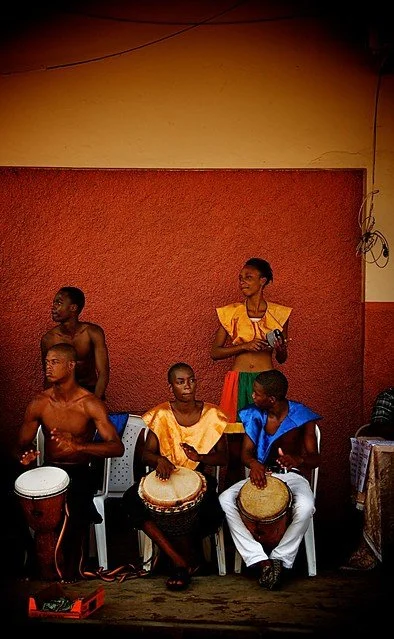
A painting of mento drummers. Mento2011 Fallmouth Jamaica

Born from a fusion of rhythms brought to the West Indies by enslaved West Africans, European musical traditions, and the Indigenous sounds of Jamaica's Taino people, the late 1940s birthed a vibrant expression of everyday life: mento. Mento vividly captured the spirit of Jamaican communities, offering a window into their triumphs and challenges through lively melodies and infectious rhythms, played on instruments like the banjo, guitar, and maracas. It became a testament to the indomitable spirit of the Jamaican people, celebrating their traditions and cultural identity.

Mento’s most outstanding achievement was laying the foundation for future genres. Specifically, its rhythms and energy paved the way for the revolutionary beats of ska in the 1950s, while its resilience and vibrancy found their way into the iconic reggae anthems, symbolizing Jamaican identity worldwide. Through mento, the rich roots of Jamaican folk music intertwined with the heritage of diverse influences, deciding with finality that music is for the people. Today, mento continues to captivate audiences connecting them to the vibrant past of the island.

Fishbone playing in Los Angeles.  

Ska: A Joyful Revolution with a Powerful Beat

In the transformative 1950s, ska emerged as a genre that reflected the social and political upheaval of the time and became a catalyst for change. With its energetic tempo, infectious rhythms, and the unmistakable resonance of brass instruments, ska created a pulsating sound that swept a generation. Inspired by Jamaican mento and Trinidad and Tobago’s calypso, ska was a jubilant call to unity, a musical expression of the collective yearning for a better world.

As the vibrant ska beats enveloped the airwaves and dancehalls, it carried a profound message. Through its lyrics, ska shed light on the harsh realities of poverty, inequality, and discrimination that plagued Jamaican society. It served as a powerful voice, amplifying the concerns and struggles of the marginalized and disenfranchised. Yet, amidst the social challenges, ska embodied a spirit of resilience, hope, and determination. It became a unifying force, inspiring people to unite, rise above adversity, and strive for a more inclusive and equitable future.

 Crowd at a live music event. Image by Yardie.

Rocksteady: The Soulful Bridge to Reggae 

Between the exciting ska era and the rise of reggae lies the soulful interlude of rocksteady, a genre that left an indelible mark on Jamaica's musical landscape. In the mid-1960s, as the country underwent significant social and political shifts, among the most significant being political independence from the British Empire, rocksteady emerged as a musical bridge, connecting ska’s exuberance with reggae’s even more profound social commentary.

Rocksteady's distinct sound captivated listeners with smooth, melodic rhythms. Influenced by American soul and rhythm and blues, the genre introduced a slower tempo and more introspective grooves, reflecting the changing landscape of Jamaican society. Historically, rocksteady emerged when Jamaica was transitioning from its colonial past to a newfound sense of cultural identity and political consciousness. The smooth and soulful melodies of rocksteady expressed the Jamaican people’s evolving aspirations and struggles. It provided a platform for introspection, offering a sanctuary of musical solace amidst social and political transformations. Some rocksteady songs went on to become hits outside of Jamaica, as with ska, helping to secure the international base reggae music has today.

Reggae: A Cultural Anthem of Love, Unity, and Social Justice

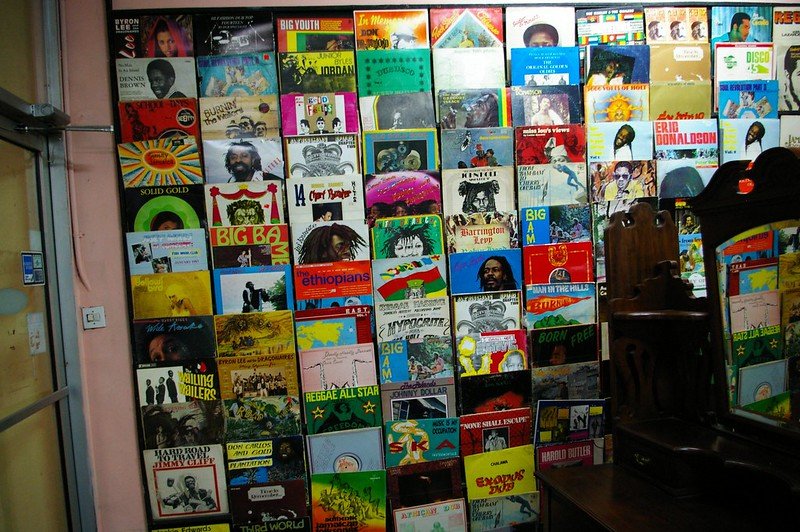
The wall of records. Christina Xu

Undoubtedly, the most renowned and internationally celebrated genre of Jamaican music is reggae. Born in the late 1960s against the backdrop of a dynamic Jamaican society, reggae emerged as a powerful and transformative force, both musically and culturally. It was a fusion of various influences, including mento, ska, rocksteady, R&B, and the religio-liberationary message of Rastafari, which came together to form a genre with a distinct sound and a profound global impact.

Reggae became the quintessential voice of Jamaica's cultural identity and pride. Its roots ran deep in the history and struggles of the Jamaican people, serving as a vessel for their collective experiences and aspirations. The soul-stirring messages of reggae spoke directly to the hearts and minds of listeners. Its lyrics, laden with social and political commentary, addressed love, unity, and social justice issues, offering a compelling call to action.

Reggae's global impact cannot be overstated. It has become synonymous with Jamaica, attracting audiences from around the world who resonate with its powerful messages and irresistible grooves. Reggae's cultural significance extends beyond music, influencing fashion, art, and of course social movements. Its legacy as a music of liberation and empowerment continues to inspire generations, reminding us of the power of music to transcend borders and ignite positive change.

Explore the world of Jamaican folk music, and immerse yourself in the pulsating energy of live performances at local clubs and music festivals, where the air is thick with the collective joy of dancing to the irresistible beats. More immediately, check out this playlist we created with some of our favorite Jamaican music.


Raeann Mason

Raeann is a traveler, digital storyteller, and guide writer, with a degree in Mass Communication & Media from the Walter Cronkite School of Journalism. She is passionate about a/effective journalism and cultural exchange, and is an advocate of international solidarity and people's liberation. Her work at CATALYST focuses on reshaping the culture of travel and hospitality to be more ethically sound and sustainable.

CATALYST Summer Reading List

Books that will take you around the world, through a lens of travel and social action.

Summer has officially arrived, and CATALYST knows that our readers won’t just be flipping burgers on the grill or swimming at the beach. Here are 8 great travel and social action-oriented books for your summer reading.

1. Underjungle 

James Sturz, author of the novel Sasso, is set to release another heavy-hitting thriller this August 2023: Underjungle. Underjungle tells the story of a group of predatory sea creatures called the yc who happen upon a human corpse near the seafloor. The plot unfolds as the ocean’s creatures begin to consider the effects of this corpse and a tale of grief and loss springs from the metaphysical narration. The novel is set deep underwater, inspired by Sturz’s own scuba diving career. As such, the book intrinsically promotes a protection of the treasures found where human eyes rarely see: the sea floor. Sturz’s new piece promises to enrapture the reader in all its fantastical, science fiction glory and its multidisciplinary approach: Sturz includes literary-philosophical and artistic elements, which are intertwined with the novel’s focus on marine science.

2. If I Survive You

Eight  powerful, interconnected short stories that explore the complexities of cultural identity comprise Jonathan Escoffery’s If I Survive You. This work,  which is a finalist for the 2023 Pen/Faulkner Award and was nominated for the 2023 Pen/Bingham Prize and the 2023 Carnegie Medal for Excellence in Fiction, follows a protagonist named Trelawny as he navigates the American cultural landscape. The son of immigrant parents from Jamaica, Trelawny finds himself struggling to fit into society, a problem which is further exacerbated by Hurricane Andrew, the 2008 recession, and racism. The tale of Trelawny’s family is not one without hope, though, as all members fight to remain motivated and survive in America. Escoffery’s lyricism, use of humor, and incorporation of the second person take the wheel and bring the stories of If I Survive You to life. For readers seeking a dense read and one that promises a greater social consciousness, If I Survive You might be for you.

3. The Books of Jacob

Polish Nobel-prize winning author Olga Tokarczuk’s magnum opus, The Books of Jacob, is a dense, yet rewarding read. This 912-page book, first published in Poland in 2014, might be an entire summer sort of read, but its ambitious nature defines and enriches the narration. The Books of Jacob’s many awards, which include being named Best Book of the Year by The New York Times, The Wall Street Journal, Time, and The New Yorker, celebrate its power and scope. Tokarczuk’s ninth novel is a historical fiction piece that centers on the true figure, Jacob Frank, a Jew that traverses the Austro-Hungarian and Ottoman Empires in the 18th century, attracting followers and enemies with every turn. Perceived as a messiah, he leads his followers from Judaism, to conversion to Catholicism and ultimately to Islam. The mysterious, polarizing figure of Frank, based on a true historical figure, is examined and narrated by his supporters, enemies, and betrayers in separate segments of the book. The novel focuses on themes of identity–as Frank matures–and religion as well as what it means to redefine one’s religious identity.

4. The White Girl

A celebration of Aboriginal women and Indigenous voices, The White Girl was written by an Indigenous storyteller named Tony Birch. The Australian novelist condemns Australia’s racist post-colonial policies in The White Girl, which profoundly explores topics of Indigenous identity and threats to the Indigenous way of life. In the novel, Odette Brown, a Deane resident and Aboriginal, protects her fair-skinned granddaughter Sissy from authorities that threaten to separate them. The novel, set in the 1960s, elaborates on the challenges and threats encountered by the duo as well as their hope for the security of their future. The novel reminds readers of the Australian government’s policy of separating Indigenous children from their families (the Stolen Generations) while also inspiring kindness and a limitless love toward humanity.

5. Eleutheria

Allegra Hyde’s Eleutheria could be called a cli-fi novel, a neologism for the relatively new genre of climate fiction, if most of the events in the novel weren’t currently taking place. Hyde’s novel, declared a New Yorker Best Book of the Year, examines climate change from the perspective of Willa Marks, a young visionary hopeful for the future of the world despite the consistently rising ocean levels. Willa’s adventure to fight climate change takes her to the island of Eleutheria, where she reinvigorates a group of ecowarriors who inhabit the appropriately titled Camp Hope. Willa attempts to fulfill Camp Hope’s mission of fighting climate change. While the novel is set in the near future and alerts readers to the present climate crisis, it also tells the more personal story of a lost, naive individual trying to find an identity through her attachment to a cause.  

6. When We Were Sisters

Although Fatimah Asghar’s gut-wrenching When We Were Sisters was just released in October 2022, the novel has won the Carol Shields Prize for Fiction and has been named one of the Best Books of the Year by The New Yorker, Time, PopSugar, and Vox. However, these awards cannot do justice to Asghar’s narration. The award-winning author examines the lives of three orphaned Muslim sisters who must raise and support one another. Each sister tackles the loss of their parents differently: Aisha grasps for a sense of family, the book’s narrator Kausar is consumed by grief while contemplating the concept of gender, and Noreen tries to assume the role of the mother. Each sister’s fully fleshed out plot brings sorrow to the reader but also allows them space for introspection. The reader will question what it means to be Muslim in America and the principles of sisterhood and family.

7. The Seven Moons of Maali Almeida

Sri Lankan author Shehan Karunatilaka’s second novel The Seven Moons of Maali Almeida, following his first humorous novel Chinaman: The Legend of Pradeep Mathew, was an instant national bestseller and winner of the 2022 Booker Prize. The satirical piece is set in Sri Lanka in the 1980’s during the country’s multi-decade civil war, and follows deceased photographer Maali Almeida as he attempts to solve the case of his own death in seven moons. Although the novel focuses on Maali’s experience of the afterlife, the piece also includes much detail of Sri Lankan life during its civil war: suicide bombers, police suspects, and death squads litter the country. Using the second person, Karunatilaka offers a disturbing view of his country at war with itself, complete with vivid images of disturbing brutality, and yet one that is also fashioned with Karunatilaka’s gripping humor.

8. Black Cake

Charmaine Wilkerson’s debut novel Black Cake follows Byron and Benny’s attempt to solve the mystery of their mother Eleanor Bennett’s death. Eleanor’s two children must piece together the details of her death from an intriguing element of their inheritance: the family’s Caribbean black cake recipe. Throughout the novel, more family secrets and betrayals pop up; readers begin to wonder if the once-estranged siblings can find the truth about their lineage and how their family’s heirloom black cake fits into its inter-generational history. This New York Times bestselling novel expertly and beautifully analyzes the meaning of lineage, especially one riddled with important memories, and comments on the importance of exploring one’s own past back through the generations. Currently, Black Cake is also set to premiere on the screen as a Hulu original series.


Su Ertekin-Taner

Su Ertekin-Taner is a first year student at Columbia University majoring in creative writing. Her love for the power of words and her connection to her Turkish roots spills into her satire, flash fiction, and journalistic pieces among other genres. Su hopes to continue writing fearless journalism, untold stories, and prose inspired by her surroundings.

Uncovering the Diversity of African Music

If you are a music buff looking to expand your horizon, check out these 5 African music genres.

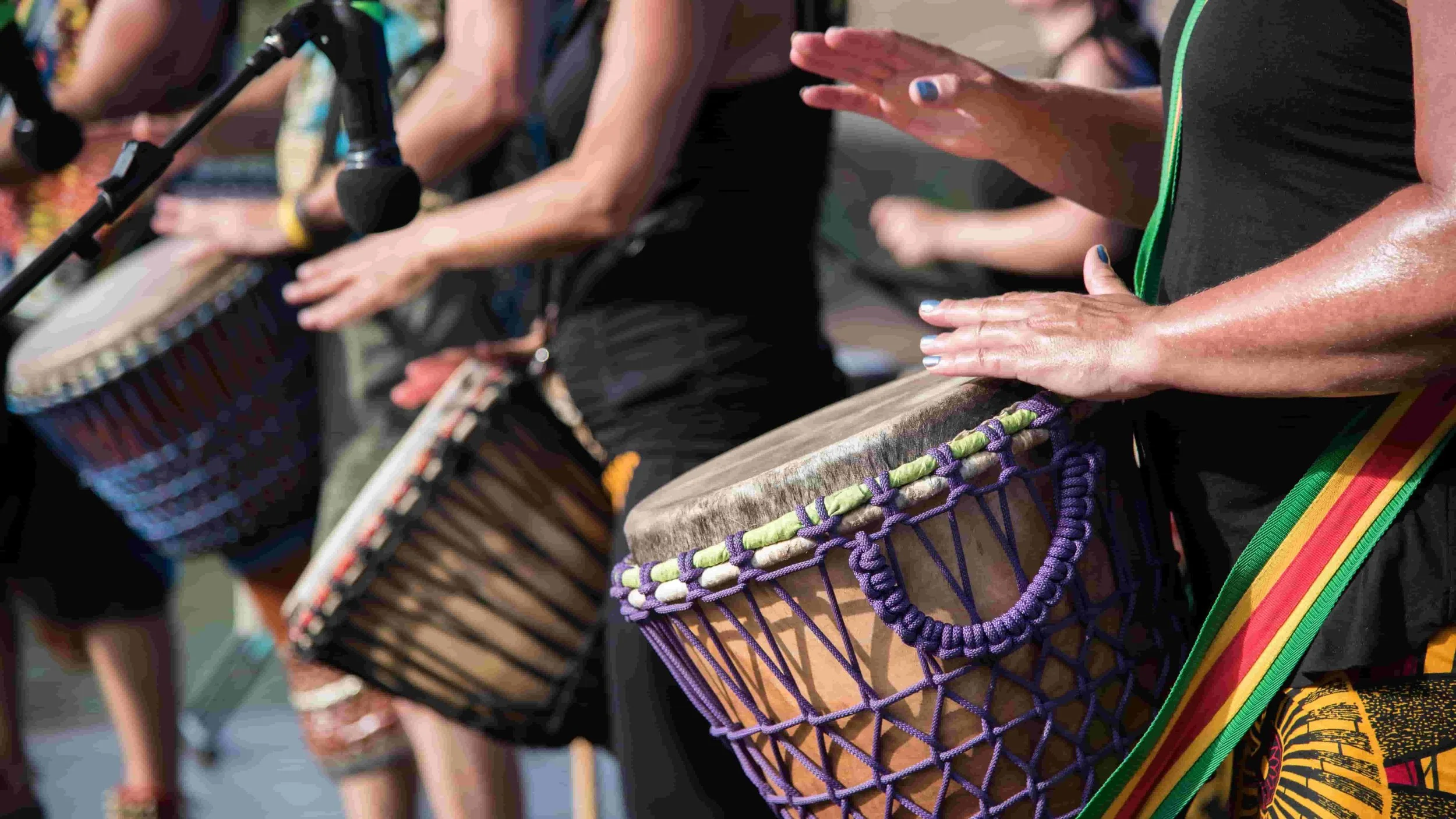
African drums. Lee Pigott. Unsplash.

People all across the African diaspora share a love for music, which connects everyone to the same frequency. Many are familiar with Afrobeats, a style of music from Nigeria, but there are many different and diverse genres to explore the sounds of, from the likes of Amapiano to Chimurenga.

Amapiano

Two people singing Amapiano together.. The Charles Gallery. Unsplash

Amapiano is a genre of music originating from South Africa characterized by a mixture of jazz, house and Gospel music. Amapiano is composed heavily of synthesizers, percussion, soulful vocals, and repetitive melodies. This genre of music is relatively new, coming into being in the early 2010’s.  Amapiano is a Zulu word meaning “the pianos.” Amapiano is a form of music South Africans believe can bridge people together, and a musical escape for the younger generations.

Listen to a Youtube playlist of Amapiano music

Juju

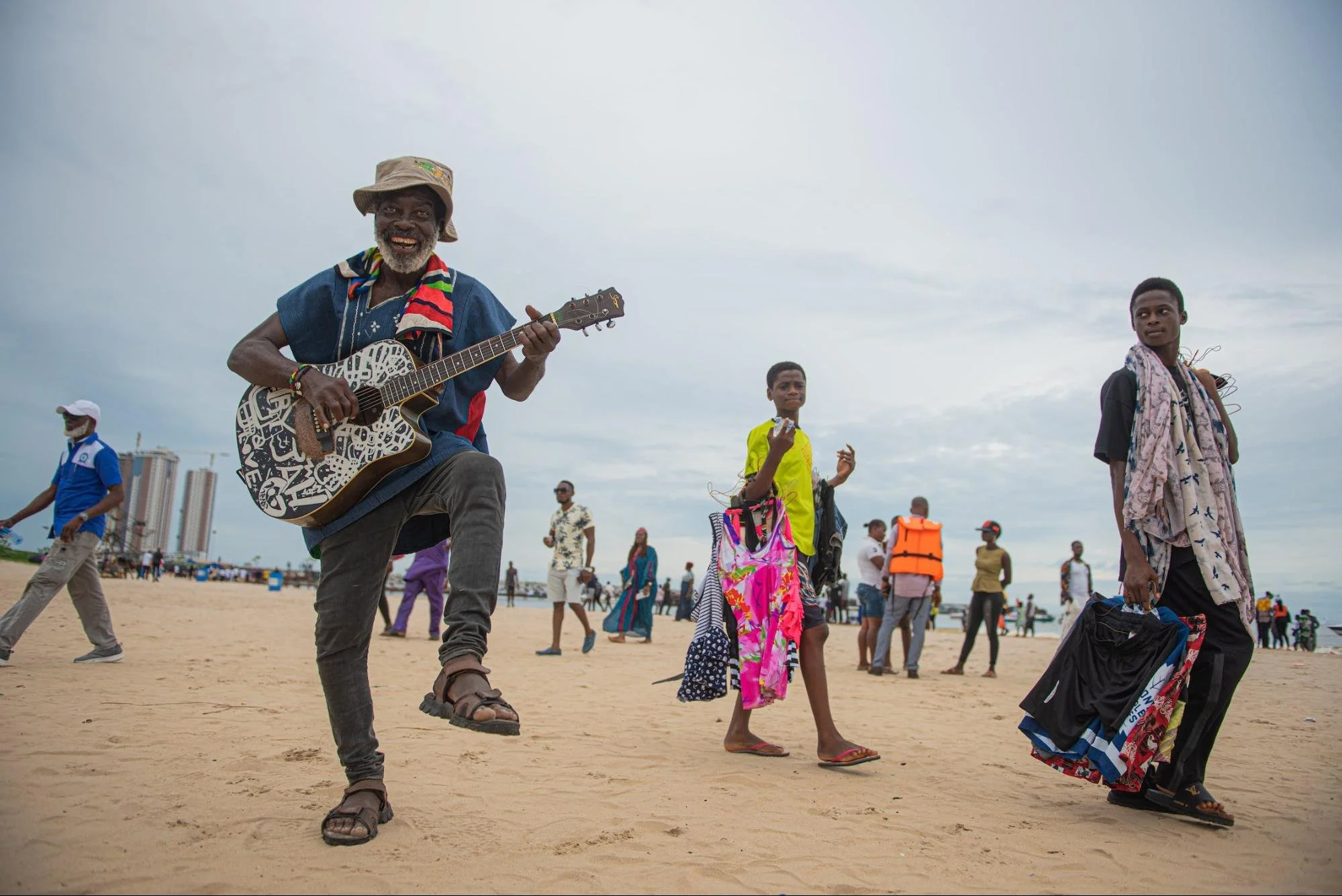
Man playing music on the beach. Seun Adeniyi-CCO.

Juju is a genre of music that originates from Nigeria, specifically its Yoruba region. It’s a musical style that is composed of praise-singing accompanied by a guitar or banjo and a gourd shaker. This genre of music was traditionally played in taverns or during festivals as dance music, but became modernized and generally popular by the 1980’s. As it grew in popularity, it led to the birth of many other genres of music like Highlife or Afrobeats, as we know of them today.

Listen to a Youtube playlist of Juju music

Coupe decale 

A group dances to Coupe Decale. Tommy. CC 2.0

Coupe Decale is a genre of music created by Cote D'ivoirians living in France in the early 2000’s. It’s a musical style composed of ‘computerized circular beats’ mixed with Ivorian rhythms . The lyrics themselves are inspired by the West African griot tradition of story-telling, and the genre’s primary message focuses on providing a space for many people to dress nice, go clubbing, and forget their problems during a time of economic and political crisis.

Listen to a Youtube playlist of Coupe Decale music

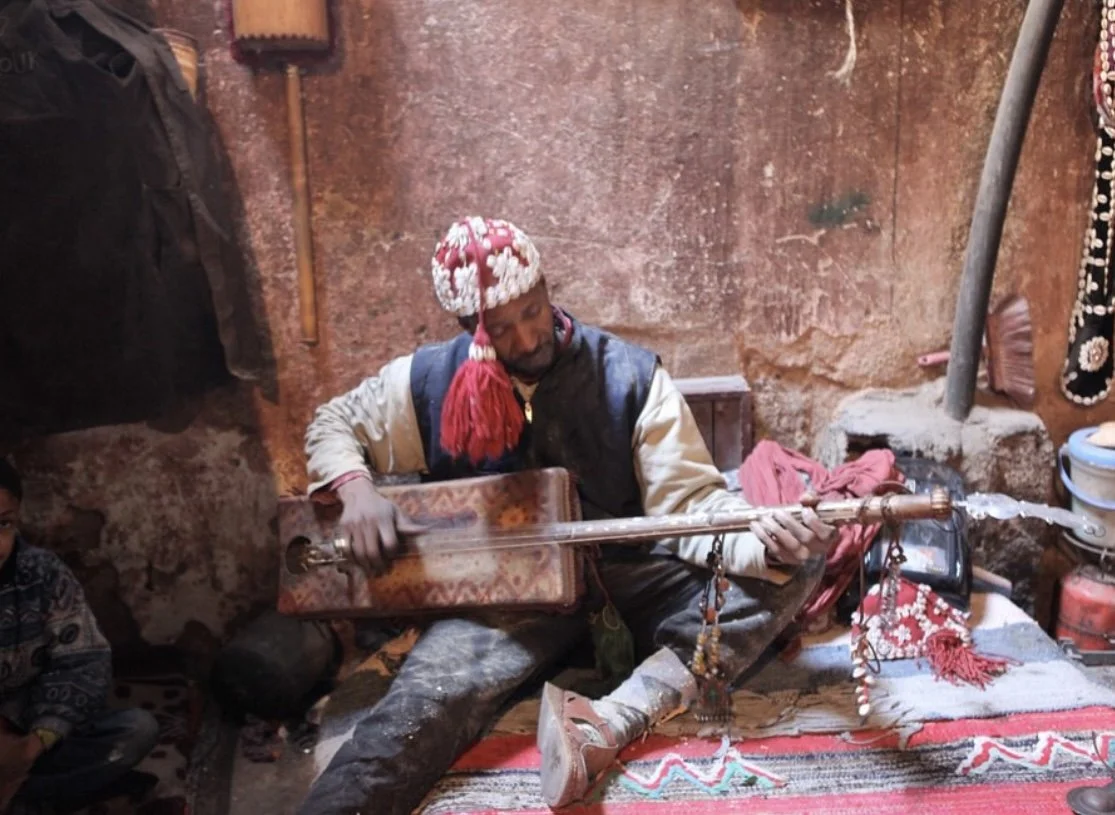
Gnawa–saharan Folk music

Man playing Moroccan bass lute. Marrakech Riad-CCO.

Gnawa is a folk  genre that originates from Morocco. It’s a musical style that has its roots in ancient African tradition, as it’s the result of formerly enslaved black Africans integrating into Moroccan life. It serves as a preservation of the folkloric music of their ancestors, as well as a means to heal from collective trauma. Interestingly it is also said to have healing properties for those that are possessed by ‘genie spirits.’ Its musical style is composed of African percussion, metallic castanets, and bass lutes.’ Gnawa at its core is a combination of poetry, music and dancing. This genre shares many similarities with its American counterparts Jazz and the Blues, as all three share the same purpose. The genre’ songs consist of references to the singer’s origins and history regarding enslavement. 

Listen to a Youtube playlist of Coupe Decale music

Chimurenga 

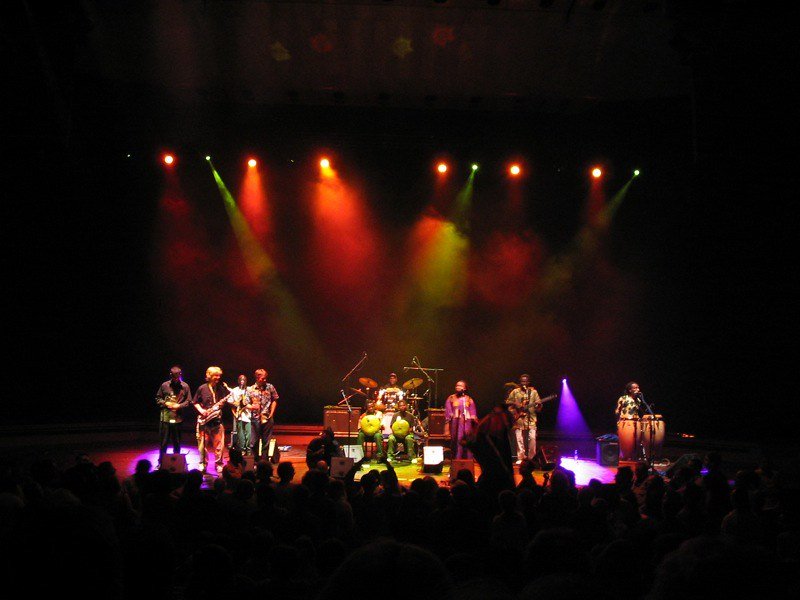
Thomas Mapfumo, the creator of Chimurenga music performs. Cultrvultr-CC BY NC-SA 2.0

Chimurenga is a genre of music that was developed in Zimbabwe. It was used to protest colonial rule in the 70s, and more generally is used to discuss and inform on societal issues and movements important to the singer. Because of this, it is recognized as ‘music for the people’s struggle’. This musical genre can be accredited to the Shona musician Thomas Mapfumo. He was inspired by the rock bands he heard playing growing up and his Shona background to create a political movement through music.

Listen to a Youtube playlist of Chimurenga music


Kadija Diallo

Kadija is a student at Georgia State in Atlanta, Ga. She is a creative spirit who loves traveling and seeing new places. She also enjoys using her love for writing/storytelling to make an impact on the world. One day she hopes to make new connections and share stories as she travels to every continent. 

How Fast Food Adapts to Local Tastes Around the World

Exploring unique regional items from KFC, McDonald’s, Pizza Hut and other fast food giants.

Fast Food Mull. Tim Reckmann. CC BY 2.0.

Fast food is a universal language that transcends borders and cultures. Whether you are craving a burger in Beijing or a pizza in Paris, you can always rely on fast food chains to provide a consistent, reliable experience. However, in the modern world, fast food chains are constantly adapting to local tastes and incorporating unique ingredients to create various flavor combinations. Here below is a flavor adventure that explores the wacky and wonderful world of region-exclusive fast food items.

1. Kentucky Fried Chicken

Kentucky Fried Chicken in Shanghai. Gwydion M. Williams.CC BY 2.0.

Kentucky Fried Chicken, or KFC for short, has come a long way since its humble beginnings in Corbin, Kentucky. Today, the iconic fast food chain can be found in almost every corner of the globe, serving up crispy fried chicken to hungry customers worldwide. But while the Colonel’s original recipe may be the same everywhere, KFC has become famous for its wildly creative region-exclusive items. For example, in the United Kingdom, KFC has introduced the “Scoff-ee Cup”, a creation that combines a biscuit cup with white chocolate to keep coffee hot and fingers crispy. Meanwhile, in Asia, KFC has rolled out some innovative treats, like the Brown Sugar Boba Tea Tart, a pastry filled with milk tea custard and boba jelly, inspired by the popular Taiwanese drink.

But KFC’s regional items are not just about sweet treats. In Korea, the chain offers Tender-Rice, a combo of crispy chicken tenders and seasoned rice. And in Malaysia, customers can try the Wasabi Rice Wrap, a fusion of Japanese and Vietnamese flavors that is designed for people on the go. According to Ling Mee Jiuan, Senior Vice President of KFC Malaysia, the Wasabi Rice Wrap was designed specifically with young, busy consumers in mind. The local team wanted to create something that was quick, convenient, and bursting with flavor for people who are always on the move. 

2. McDonald’s

McArabia. Tracy Hunter.CC BY 2.0.

McDonald’s is the poster child for the rapid spread of Western fast food across the globe. The term “McDonaldization” was coined to describe what started as a Speedee Service System, which prioritized efficiency, predictability, calculability, and control by offering a limited menu of 15-cent hamburgers, fries, and shakes. However, McDonald’s has slowed its pace and started introducing region-exclusive items that cater to local taste buds. For instance, in 2001, McDonald’s added the McFalafel sandwich to its menu in Egypt. This sandwich features three pieces of falafel, a patty-shaped fritter of Arab origin that is deep-fried and served with garnishes like tomatoes, lettuce, onions, and pickles, all wrapped in a freshly baked tortilla wrap and topped with Tahini sauce. 

But McDonald's is not just adding local twists to its burgers - the company also creates entirely new menu items for specific regions, you can find the Teriyaki Burger, which features a savory teriyaki sauce and is served on a rice bun instead of a traditional burger bun. In South Korea, McDonald's offers the Bulgogi Burger, which features marinated beef and a spicy sauce made from Korean chili paste.

McDonald’s has also tailored its famous bread to suit local palates. In China, for instance, McDonald’s introduced the distinctive Black and White Burgers. These “half burgers” were packaged in a small box and were possibly inspired by the yin-yang symbol. The black burger consisted of a beef patty with chopped onions, black pepper sauce, and a black bun topped with white sesame seeds. The white burger, in contrast, featured a chicken patty with sweet and spicy sauce and a white bun with black sesame seeds. While some of these attempts at innovation were mocked, they demonstrate a willingness to experiment and accommodate local tastes.

3. PizzaHut

Pizza Hut Pizza in Japan.Yoko Nekonomania.CC BY 2.0.

Founded in 1958 by two Wichita University students, Pizza Hut has grown to become the world's largest pizza company, with over 11,000 restaurants in 90 countries. But Pizza Hut's success isn't just due to its massive size - the company’s commitment to innovation and customer service has set it apart from competitors. 

However, some of Pizza Hut’s more unconventional offerings have raised eyebrows, and possibly even the ire of traditionalists. Weirder items, such as the “Double Sensation” in Singapore, may seem like two pizzas squished into one. The outer crust is stuffed with a melange of melted mozzarella, Parmesan, and cheddar cheeses that ooze out of holes in the crust, while the outer pie is topped with turkey ham, bell peppers, mushrooms, and salsa sauce. And for reasons beyond comprehension, a single cherry adorns the center of the pizza.

Meanwhile, Pizza Hut in China has added Peking duck as a meat topping to its menu, alongside specialized pizzas crafted with different veggies to complement the duck’s unique flavors. For many, duck is not a meat that adapts easily to other dishes. But for the daring foodies who are willing to try new things, Pizza Hut in China offers a delicious and adventurous take on traditional pizza.

4. Burger King

Burger King Halloween Whopper Black Bun. Mike Mozart. CC BY 2.0.

In 1953, Keith Kramer and his wife’s uncle Matthew Burns were struck with inspiration after visiting the original McDonald's in California. Their brainchild, Insta-Burger King, was born from their desire to create a unique restaurant experience. Equipped with a special grill machine, the Insta-Broiler, the duo set out to make their mark in the fast-food industry.

Now, with over 19,000 locations worldwide, Burger King is a force to be reckoned with in the fast-food world. While its competitors strive to innovate their international menus, Burger King takes a different approach—stuffing as much as humanly possible between two buns. Take, for example, the Bacon Lover, available in France and Switzerland, which boasts two flame-grilled beef patties, onions, tomatoes, cheese, bacon, and smoked sauce, all served between two bacon-studded buns.

But the Garlic Meat Beast in Japan takes the cake for the most outrageous offering. This monstrosity features a quarter-pound beef patty, teriyaki chicken breast, and garlic pork patty, all slathered in scallion miso sauce and topped with lettuce, tomato, onion, and bits of fried garlic. And if that’s not enough to satisfy the consumers, Burger King‘s Windows 7 Whopper hit Japanese locations for a limited time, featuring a whopping seven beef patties, plus all the usual fixings, for the price of $5.94, a nod to the release of Microsoft's Windows 7 operating system.

5. Taco Bell

Taco Bell Beefy Fritos Burrito. Willis Lam.CC BY-SA 2.0.

Taco Bell is the new kid on the block when it comes to multinational fast food chains, but it has made its presence known around the world with its Mexican-inspired menu. The company’s catchy slogans, from “Think Outside the Bun” to “Live Mas,” have resonated with customers in Asia, Europe, and beyond. But Taco Bell’s true innovation lies in what's inside the bun (or wrap). Take, for instance, the Kimchi Quesadilla, which can be found at Taco Bell locations in Korea. This fusion dish combines the traditional Korean dish of spicy fermented cabbage with spicy chicken and a blend of melted cheeses, creating a unique flavor that is all its own. Or consider the Chicken Tikka Masala Burrito in India, where grilled chicken, Mexican rice, onion, cilantro mix, and Tandoori Mayo Sauce are wrapped in a grilled flour tortilla, showcasing Taco Bell's willingness to experiment with unorthodox flavor combinations. Other region-exclusive menu items include the Shrimp and Avocado Burrito in Japan and the Chili Cheese Burrito in the United States.

6. Domino’s

Domino’s pizza in Japan with Lazagniano and Super Deluxe. Puamelia. CC BY-SA 2.0.

Domino’s, the pizza giant with over 17,644 restaurants around the world, has managed to achieve a global presence with its menu. However, their international menu seems to be an experimental playground that has no bounds. Japan’s Boba Tapioca Pizza is a clear demonstration of the chain’s willingness to embrace bizarre combinations that cater to local tastes. The pizza’s blend of black tapioca pearls and mozzarella cheese has gotten mixed reactions from customers. While it is true that some of Domino’s experiments are not well-received, the Lotta-Chocca Pizza in the United Kingdom has won the hearts of many, thanks to its unique fusion of pizza and milk chocolate. Domino's New Zealand has also managed to make an impact with its Apricot Chicken Deluxe, a delicious combo of chicken and apricot sauce. 

From rice and curry to kimchi to Beijing duck, the amalgamation of western industrialization and local cuisine gives rise to region-exclusive fast food items that are uniquely flavorful, providing a glimpse into the cultural diversity that exists across the globe. The presence of such multicultural menus in fast food chains not only reflects the dynamism of global markets but also serves as a testimony to the importance of inclusivity and open-mindedness in our increasingly interconnected world.


Hope Zhu

Hope is a Chinese international student at Wake Forest University in North Carolina studying sociology, statistics, and journalism. She dreams of traveling around the globe as a freelance reporter while touching on a wide range of social issues from education inequality to cultural diversity. Passionate about environmental issues and learning about other cultures, she is eager to explore the globe. In her free time, she enjoys cooking Asian cuisine, reading, and theater.

The Concept of Time in Different Cultures

How where you live and the language you speak affects your view of time.

Self portrait - Ticking away, MattysFlicks, CC BY 2.0.

Over the summer I would get up at about 7:00 am every morning. By 8:30, I’d have eaten breakfast, showered, gotten dressed, and left for work. When work ended, I’d make sure to always have a plan for what to do after, whether that was hang out with friends, work out, or write something. I’d usually be done with that by around 8, at which time I’d heat something up for dinner, usually a meal I prepared in bulk on the weekend. Afterwards, I’d watch shows until I fell asleep. The next day, I would get up, and repeat. 
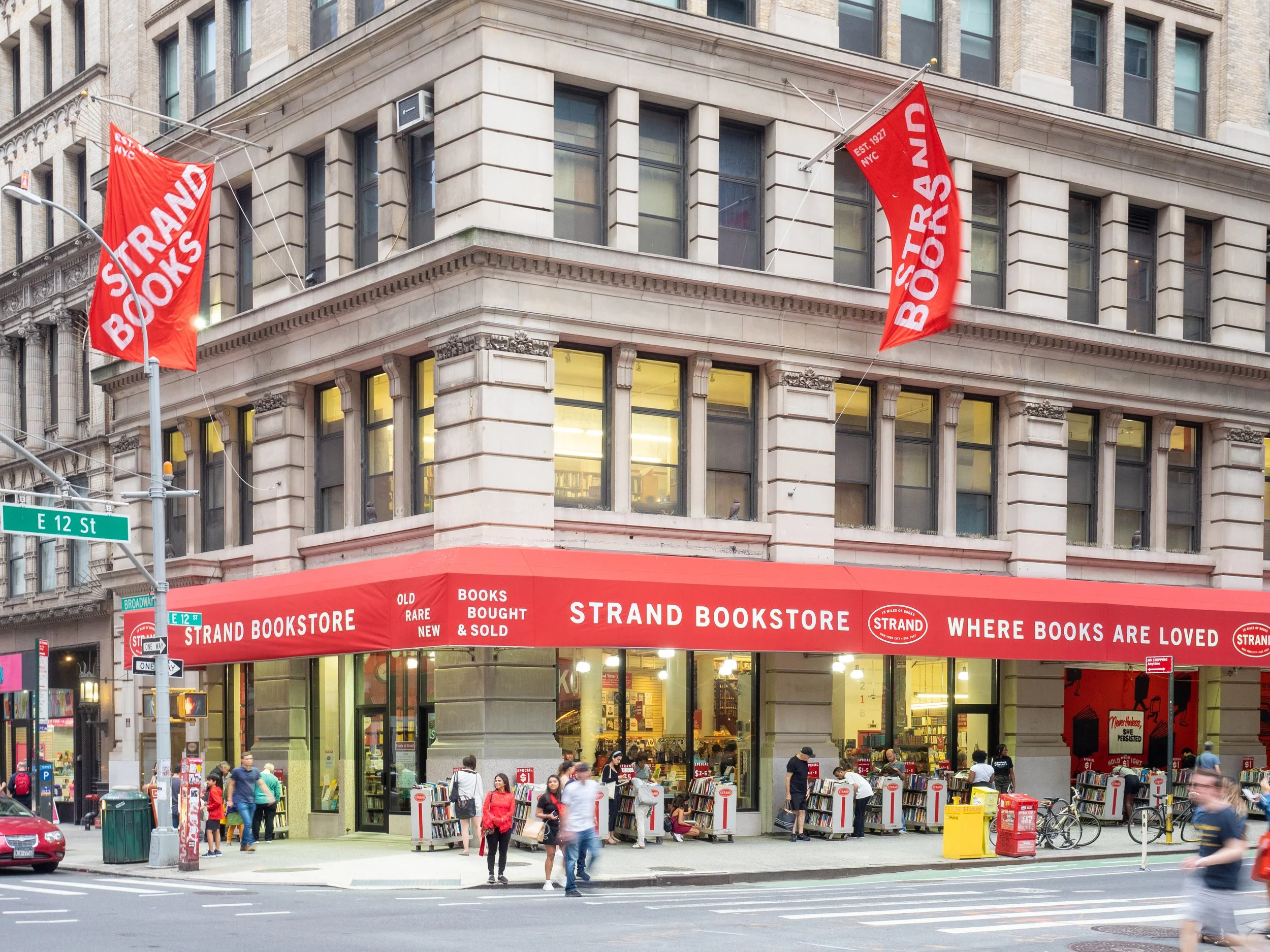
Like most other English speaking Americans, I view time as linear, heading from a defined beginning to a final end. Every moment is something that I can spend, save, or waste. And, I believe that if I waste too many of these moments, it could have a disastrous impact on my future. 

However, this is just one of many ways to view time. Depending on where you live, what you believe, and what language you speak, you may view time in a completely different way.

Monochronic Time and Polychronic Time

Business Calendar & Schedule, photosteve101, CC BY 2.0.

Monochronic Time is divided into small segments, allowing it to be managed and scheduled easily. It is treated as a resource, just like any other. Being used by countries such as the United States, Japan, and Germany, monochronic time is essentially the time model of industrialization. People in monochronic societies tend to be on time to meetings; similar to the schedule I described above, every moment has a distinct purpose. Wasted time can cause great stress, and going off-schedule can mean that all necessary tasks may not get completed. This causes countries with monochronic time to typically have a faster pace of living. Even times of rest are often scheduled, regulating them to certain days or hours. 

Four seasons in Japan, vitroid, CC BY 2.0

Polychronic time is much more fluid, where many things can be done at once. Rather than emphasizing the efficient use of each and every moment, people in polychronic societies tend to focus more on their relationships and traditions. Instead of organizing  time through rigid schedules, for people in these cultures the seasons, religious calendars, and community life serve as the main signs of the passage of time.  India, Mexico, and many other countries in Latin America are Polychronic. 

I am currently studying abroad in Ecuador, a largely polychronic country, where I have had to adapt to the different view of times. Unlike the United States, deadlines are rarely strict. I’ve frequently been told lunch is at 1, and then ended up not eating until 2:30. In addition, planning is often more last second. I have lived with two host families, and we often have weekend plans. In each case, I have rarely known said plans until I’m on the way to my destination. While this was stressful for me at first, I have come to appreciate it, as my host families have seemed to have a much easier time living in the present because of it.

Past, Future and Present Oriented Societies

Go Fisherman go - Gokarna India 2011, rundenreisen.org, CC BY 2.0

Past Oriented Countries, like the UK or India, have incredibly long and storied histories. Instead of living for the present alone, past oriented societies see themselves as only the newest iteration of an incredibly old tradition. This causes them to view time in a more casual manner, as the waste of an hour or a day is inconsequential when compared with thousands of years of history.

In addition, many eastern past oriented countries adhere to what is called cyclic time. This is the idea, that like the seasons, time repeats itself, and events are bound to happen again. This means that, whenever considering a major decision, it is critical to evaluate the events of the past.

Getting cab times square, new york, andre stoeriko, CC BY-NC-ND 2.0

Future oriented countries, like the United States, are young and hungry. Without thousands of years of culture to fall back on, citizens of the United States tend to look forward. In future oriented countries, every moment matters, as only by maximizing these moments can a person truly succeed. 

Juma River, Amazonas, Brazil, Alexey Yakovlev, CC BY-SA 2.0

Present Oriented Societies are rare, but they do exist. The Indigenous Piraha tribe of the Amazon Rainforest has no past tense in their language. They have no origin story or particular religious beliefs, no reverence for their ancestors, and tell no stories. For them, things just are. What has happened in the past is not relevant.

Language and Time

Washing line, Kate#2112, CC BY 2.0.

Anglophones usually think about time as something that has length. Phrases such as “a long day” or “a never-ending year” are common. In Swedish, time is viewed in this same way.

In Spanish, days are described as “full,” instead of long. Rather than as a line, time is visualized as a container waiting to be filled. 

This is most interesting when it comes to bilingual speakers, as it has been proven that they have the ability to, in switching languages, change how they view time. If someone bilingual is spoken to in English, they will view time as a line, and if they are spoken to in Spanish, they will visualize it as a container, giving them a foot in both worlds.


Jeremy Giles

Jeremy is a Writing Seminars and International Studies major at Johns Hopkins University. He is an avid writer and the Co-Founder of Writers’ Warehouse, Johns Hopkins’ first creative writing group. He is an advocate for Indigenous rights, and studies how Indigenous philosophies can be used to help prevent climate change. Using his writing, he hopes to bring attention to underrepresented voices in today’s world.