What I Couldn’t Admit Until Now After Months Of Traveling While Black

I’ve been trying to find a way to write this since I’ve gotten back to the United States with a single backpack and next to no money. For the four months that I was away, the United States of America seemed to unravel in a way that I hadn’t seen before and my bones felt so excited, so prepared to come back.
Starting in December 2016, I traveled throughout the Philippines for three months and spent another month in South Korea. This trip was integral, influential in so many ways to me. I dove headfirst into a new region of the world that I’d previously not given much thought to and I can still recall sitting in this bedroom only a week or two before that trip began and thinking, “What am I getting myself into?” as I researched the ins and outs of some of the things that I might experience.
Sometimes I feel that there is a switch in black people specifically. We tread through the world as flawlessly or strongly as possible. We climb ladders, break glass ceilings, win athletic events, and do so in the name of a lineage that has been stripped away from us. The black experience in the United States is so unique and tortured and real in ways that is still hard to express to people who haven’t been born into it or have spent their entire lives trying to contextualize it.

I believe this switch in each black person is a way to protect us, push us forward, and allow us to navigate spaces that we are not always readily welcomed into. As I traveled through the Philippines more specifically, this switch was turned on all the time. From the very first days of stepping off the plane and meeting people of different backgrounds and classes and political ideas, I was faced with a wave of self protection that was layered into how I interacted with anyone that I met.

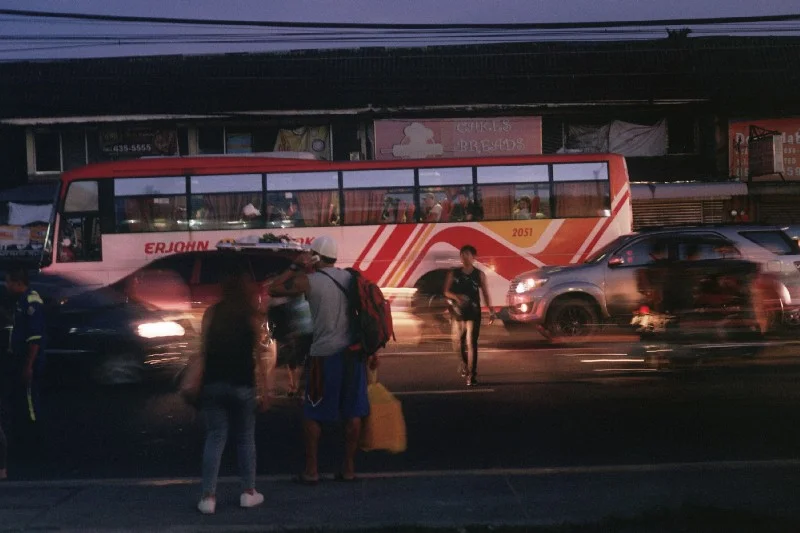
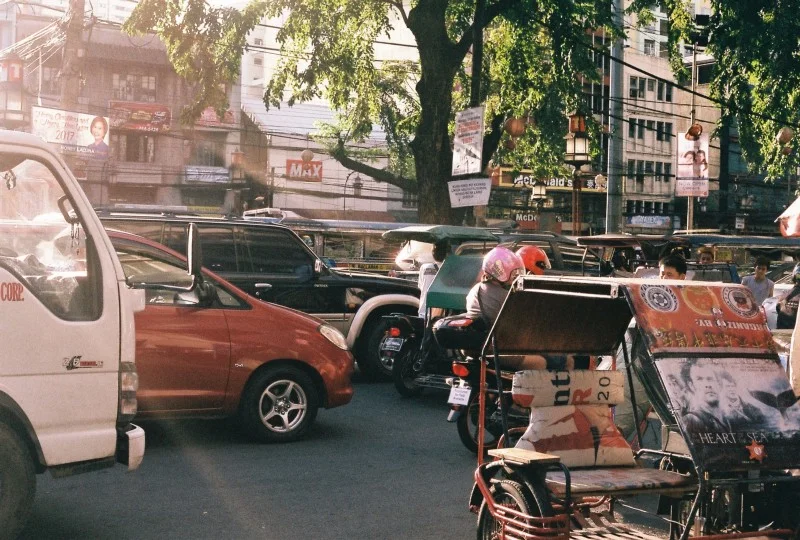
Kids would follow me in the streets and point. Some people would ask to take photos. Others would ask questions about my dreadlocks. One time in Chinatown, my friend exclaimed behind me, “Wow, a black person!” because as he walked behind me in the crowded city streets of Manila, it became so obvious that people just didn’t stare as I walked by. They gawked. Kids sometimes called me the N-word because it was probably what they’d seen black people call each other in rap videos or movies.

“Wassup my brother?” was also a common thing for kids to say to me.

I had moments where I had to explain the basics of anti-blackness in the United States to some Filipinos. One time a woman told me that my hair looked crazy. One night I was lost while trying to meet friends and at a club. Filipino cops stopped me and asked if I needed help. During their gracious car ride, they asked me if it was true that black men had bigger penises.

Layer all of this with the fact that I am queer and understand that much of the world has a complicated relationship/ideal of acceptance towards the LGBT community; you can begin to guess why this guardedness was a part of how I interacted with people.

As a black person, I have learned to demand presence in so many spaces that I step into. As an activist, I try to be intersectional and aware of the political context of spaces that I enter. I could never go wholeheartedly into another country as an American and expect everyone to be educated on the nuances of life as queer, black male in the United States. Culture is deep and can be changed in an instant or over the course of decades, centuries.

But with this deep need to understand things as they come, feelings often get muddled. In South Korea and the Philippines, I would let people touch my hair, something that’s sort of an unspoken violation of respecting black folks and their bodies. At the time, I chalked it up to exhaustion, a lack of willingness to fight for respect for my racial experience at all times. Now that I am faced with the prospect of wondering if I should go back to the region of SE Asia for another trip, I am finally able to realize the whopping truth of what I often felt.

Humiliation

I felt humiliated and tried to stuff it inside of myself, wake up every day and face the adventure of being a backpacking entrepreneur on the other side of the world, something that is a privilege of it’s own. But the truth was that I’d drained my bank account to be there. I constantly thought,

“Why the fuck did I travel across the world to deal with this racist bullshit?”

Most of the time I was too afraid to express these feelings to Filipino people, almost in the same web of anxiety that I used to have when censoring myself when around white folks here in the States. In fall of 2016, I helped organize a memorial for Ty’re King, a 13 year old boy shot and killed by Columbus Police. At the memorial, a white guy came over and expressed his condolences. Then he compared the 13 year old boy to Osama Bin Laden and tried to spew his white privilege and fragility all over a space meant to show respect for black pain and this boy’s life.

I remember being angry, telling the guy to get the fuck away from me and how hot and immediate my body felt. So much of the past three years to me has been trying to dig into the power that allows myself to believe, “It’s okay to be angry. It’s okay to admit that you were humiliated. It’s okay to pop off.”

As black folks, we are so often used to being told that we hold the weight of our entire community on our backs. This is a reinforced ideal, that for black folks, is so different than the language around other racial groups. If you are black, how many times have you heard the following?

Don’t be hanging with those white folks and thinking you can do all the things that they do.

You gotta work twice as hard to get half of what they do.

Those white folks will be watching you.

I took care of you so you could hopefully take care of me and your father one day.

All of these are signifiers of the complicated bridge that weaves the black experience. We want to be seen and heard, but when we are denied representation, we claw our way into spaces and tell ourselves that we are “unapologetically black”.

Issa Rae, the creator of the show Insecure, recently said, “So much of the media presents blackness as fierce and flawless. I’m not.” This statement immediately made sense to me because the Strong Black Woman stereotype has been around for a reason. Self care is discussed, but how do we exercise it? Why are black people often left with the burden of contextualizing how racism and stereotypes continue to exist and hurt us? Why do we believe that we have to be so damn strong, so damn resilient all the time? What would break if we let the dam loose, let the world know how we really feel?

Is it because if we are afraid that the world would aim to destroy us once more if we were honest?

The answer could be in afro-pessimism and what Frank B. Wilderson III describes in an interview:

Normally people are not radical, normally people are not moving against the system: normally people are just trying to live, to have a bit of romance and to feed their kids. And what people want is to be recognized, to be incorporated. And when we understand that recognition and incorporation are generically anti-Black, then we don’t typically pick up the gun and move against the system, even though that’s impossible. And I think that our language is symptomatic of that when we say that ‘I don’t like police brutality’. Because, here we are saying to the world, to our so-called ‘people of color allies’ and to the white progressives, ‘we’re not going to bring all the Black problems down on you today. If you could just help us with this little thing, I won’t tell you about the whole deal that is going on with us.’
*
What freaks them out about an analysis of anti-Blackness is that this applies to the category of the Human, which means that they have to be destroyed regardless of their performance, or of their morality, and that they occupy a place of power that is completely unethical, regardless of what they do. And they’re not going to do that. Because what are they trying to do? They’re trying to build a better world. What are we trying to do? We’re trying to destroy the world. Two irreconcilable projects.

Maybe self care starts with recognizing the disappointment I felt every time in the Philippines when I’d be informed that I was “the first black person” to frequent a particular business or area of the country. Not only was my mind mangled by trying to contextualize all of the racist/stereotyping attempts by people I’d met trying to get to know me, but I was also faced with the fact that, once again, I was one of few to explore in certain ways.

So I’ll say it again. I felt humiliated and as I sit here, I find it hard to come up with many reasons to go back for the foreseeable future. When I admit this, a deeper anxiety slips in that I refuse to really indulge. This anxiety says, “Well, if you’re a traveler and you’re black, does this mean you’ll never really find a home in the world? A place that gets what it’s like to be you?”

As for the answer to this question, I don’t know, but the hopeful part of me says that I need to keep searching on my own terms before I allow my already short life of 23 years to be marred by a belief that the world is wholly inaccessible to me, a black person that wants a world where different identities are respected, but never vital to someone’s value.

If I wanted to put these horrible realizations to deeper use, I would ask myself the question, “Well, what would I feel if I just went back? And got over it?”

Maybe I’d be attempting to actualize a stronger version of myself that can deal with being stared at all the time, asked if I play basketball and told I should put my sexuality (which is fetishized by white supremacy) to good use. That version of myself, I don’t think I would like very much. That version of myself would lessen the vulnerability that I feel is so integral to creating compelling art and embodying the kind of blackness that acknowledges the strength of who we are/what we are capable of while not stripping myself of the ability to feel pain, anxiety, anguish, and humiliation.

This vulnerable version of myself is what I believe is the ideal reality to struggle towards. One where walls and borders and barriers that are physical become as obsolete as the one in our minds, but maybe that reality is only possible with people like me (and hopefully you), who face the turmoil as it comes and uses it as a way to inform how we go into the world next time around.


THIS ARTICLE WAS ORIGINALLY PUBLISHED ON FUTURE TRAVEL.


PRINCE SHAKUR

Pro-black, feminist, lover of locs and queer with restless feet.


Into the Outback

An epic and ancient landscape, deeply entwined with the artistic, musical, and spiritual traditions of Indigenous Australians, the Outback is one of the largest remaining, intact natural areas on Earth. A cultural, ecological, and geological wonder, I explore and capture these vibrant regions on foot and from the air.
 

Known for its Aboriginal peoples and its vast, ancient landscapes, the Outback is an incredibly special place for me. I think that once you get that distinctive red dust in your blood it never comes out.

My roots are deeply connected to the rural areas of western Queensland and from a very young age, the never-ending expanse of inland Australia has been something that has captivated me. Ever since I can remember, we would take long road trips out to a family-run cattle station, and there was always this great sense of wonder and adventure. In the Outback, you can travel for days in any direction and stumble across places that are unique, untouched, and rarely visited. It was on these early trips that I fell in love with the bush, the people, and its landscape. I’ve never stopped venturing back.

Pannawonica Hill, near the small town of Pannawonica, a tiny iron-ore mining settlement in the Pilbara region of Western Australia. // © Dan Proud

Drawn to remote, wide open spaces, to the dusty and the desolate, I have found that there are countless unique rocky outcrops and ridges to explore. From the arid and ancient regions of Kimberly and Pilbara in Western Australia, to the rugged, weathered peaks and dramatic rocky gorges found in the Flinders Ranges of South Australia, to the red centre and Australia’s most famous monolith, Uluru — it is not only the sheer size of the Outback that is astounding (it could encompass almost all of Europe), it is also home to some of the world’s most spectacular and untouched landscapes. Over the past few years, I’ve been lucky enough to photograph, film, and fly over these regions — both in light aircraft, and more recently, with drones.
 

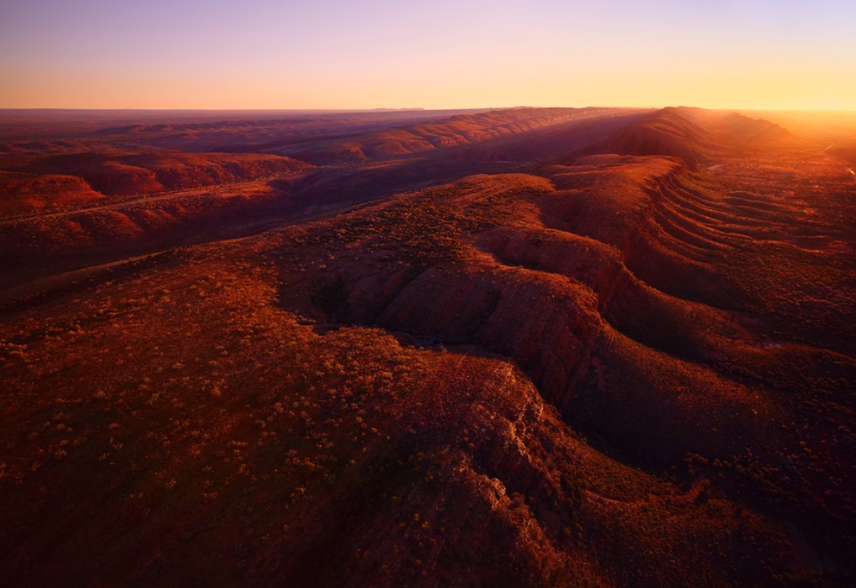
The West MacDonnell Ranges, known as the West Macs, seen from the air. Found in Australia’s Red Centre, west of Alice Springs. // © Dan Proud

Deeply entwined with the landscape itself are the artistic, musical, and spiritual traditions of the Indigenous Australians, among the longest surviving cultural traditions in human history. Some 30,000 to 70,000 years ago — many millennia before the European colonisation that would come to threaten and profoundly disrupt many Aboriginal communities — the first inhabitants of Australia arrived from the north, making them amongst the world’s earlier mariners. They spread throughout the landmass, surviving even the harsh climatic conditions of the Last Glacial Maximum.

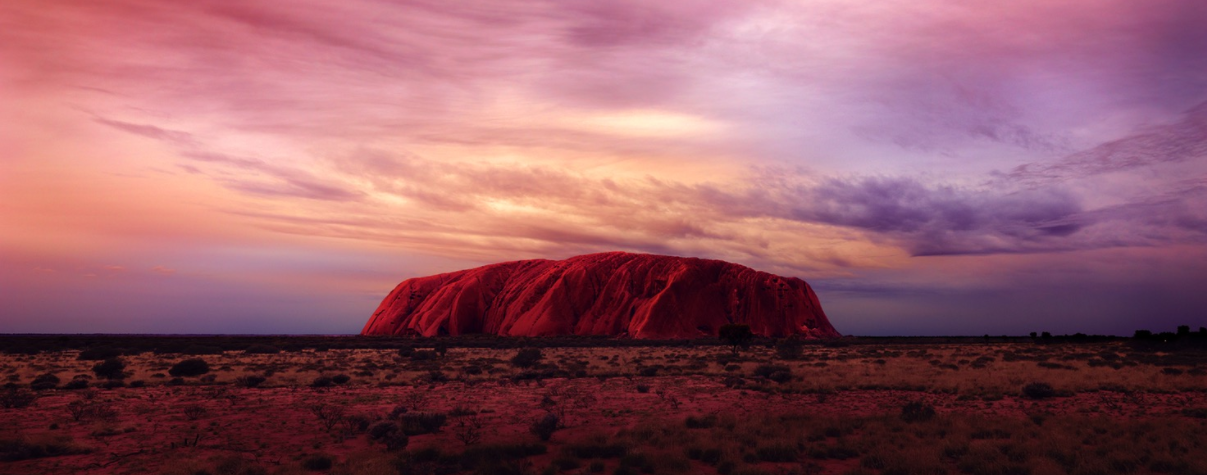
Evidence of ancient Aboriginal art is found all over the Outback, most notably at Uluru and Kakadu National Park in the Northern Territory. An impressive sandstone rock formation, Uluṟu — as it called by the Pitjantjatjara Anangu, the Aboriginal people of the area — or Ayers Rock, still holds great sacred and cultural significance for the local indigenous population. Appearing to change color at different times of year, this natural monolith is quite magnificent as it glows a deep red or purple at sunrise and sunset.
 

Uluru, or Ayers Rock, the huge sandstone monolith in Australia’s Red Centre, glows deep red at sunset. // © Dan Proud

It was only in 1606, little over four centuries ago, that the first known European landing was made by Dutch navigator Willem Janszoon on the western shore of Cape York, in Queensland. This discovery was closely followed by that of Dirk Hartog, another Dutch explorer, who sailed off course during a voyage in 1616 and landed on what is now known as Cape Inscription, thus discovering the coast of Western Australia.

For many decades to come, the true extent of the continent would not be known, and with the exception of further Dutch visits to the west, Australia remained largely unvisited. Although a number of shipwrecks are evidence that other Dutch and British navigators did encounter the coast during the 17th century, usually unintentionally, it would be over 150 years before the crew of HMS Endeavour, under the command of British explorer Lieutenant James Cook, sighted the east coast of Australia in 1770 and Europeans widely came to believe that the great, fabled southern continent existed.
 

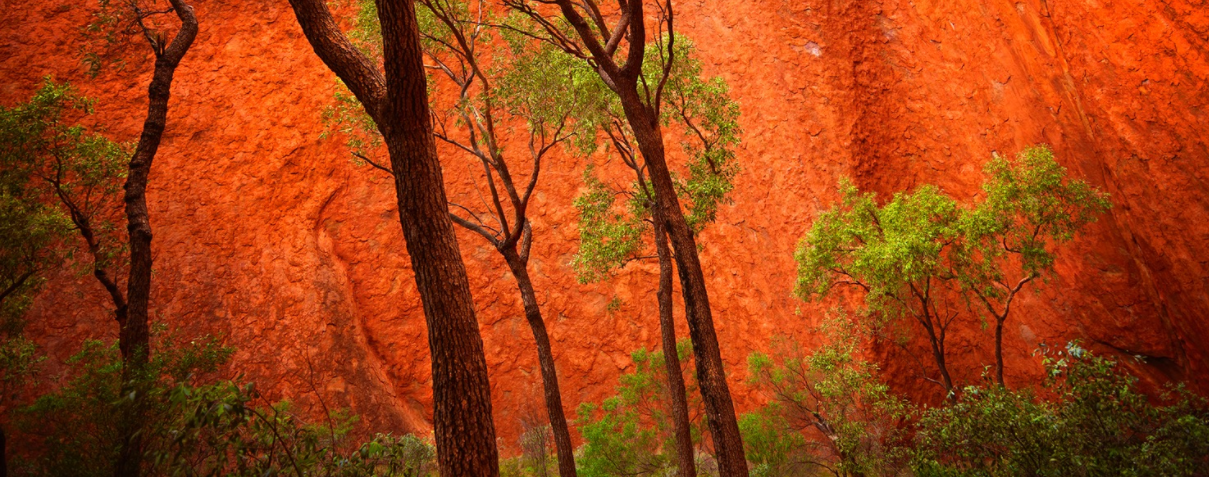
Trees in stark contrast with the vibrant orange of Uluru, or Ayers Rock. // © Dan Proud

Running in parallel ridges to the east and west of Alice Springs, through Australia’s Red Centre, lie the East and West MacDonnell Ranges, also known as the Macs. Most people imagine the Outback to be completely flat, but these mountains run for more than 600 kilometres and in places reach heights of over 1,500 metres. Formed 300 to 350 million years ago, folding, faulting, and erosion have since shaped the Macs to form numerous narrow gaps and gorges, and they contain many areas of cultural significance. Seen from the air, their undulating and intricate rock formations are spectacular.
 

The West MacDonnell Ranges seen from the air, in Australia’s Red Centre, west of Alice Springs. // © Dan Proud

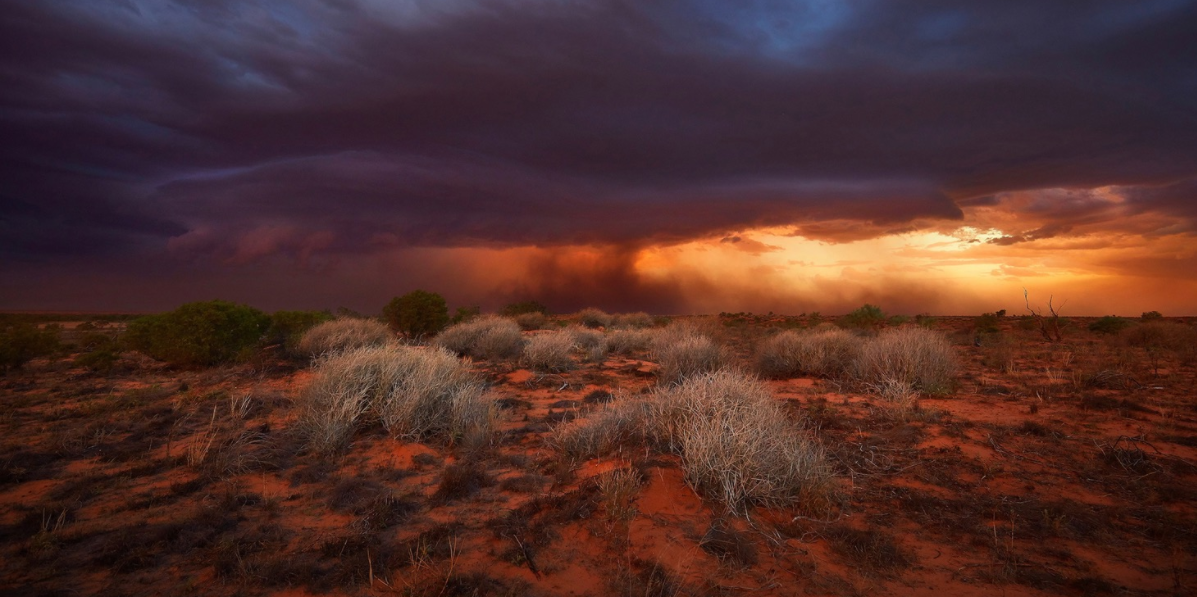
Weather patterns in the Outback are also something that surprises many people. While often envisaged as a uniformly arid area, the Outback regions stretch from the northern to southern Australian coastlines, and encompass a number of climatic zones — including tropical and monsoonal climates in northern areas and temperate climates in the southerly regions. At times, dramatic dust and thunder storms roll in, soaking the dry ground and often causing flash flooding. Witnessing these storms is an incredible experience.
 

Dust and thunder storm meet near the tiny settlement of Innamincka, Southern Australia. Situated on the banks of Cooper Creek, it is surrounded by the Strzelecki, Tirari and Sturt Stony Deserts. // © Dan Proud

Reflecting its wide climatic and geological variation, the Outback contains a number of distinctive and ecologically-rich ecosystems, along with many well-adapted animals, such as the red kangaroo, the emu, and the dingo, which are often to be found hidden in the bushes to keep cool during the heat of the day. Recognised as one of the largest remaining, intact natural areas on Earth, the Outback is home to many important endemic species.

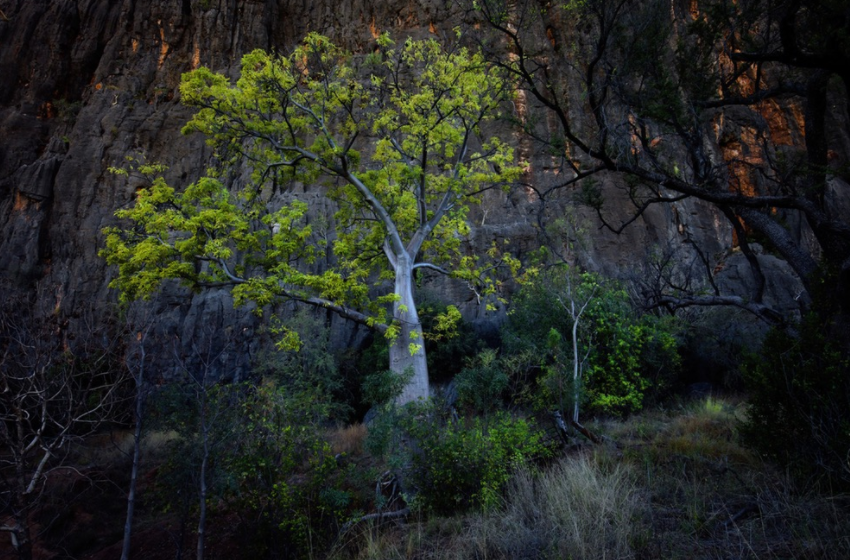
One such species is Adansonia gregorii, known locally as the boab tree, which is found nowhere else in the world but the Kimberley region of Western Australia, and east into the Northern Territory. With their striking swollen trunks, boab trees can reach up to five metres in diameter at their base, and amazingly, some individual trees are more than 1,500 years old, making them the oldest living beings in Australia, and among the oldest in the world.

For thousands of years, Indigenous Australians have used these giants for shelter, food and medicine; often collecting water from hollows within the tree, and using the white powder that fills the seed pods as food. Decorative paintings or carvings were also made on the outer surface of the fruit.
 

A boab tree growing in the Kimberly region of Western Australia. // © Dan Proud

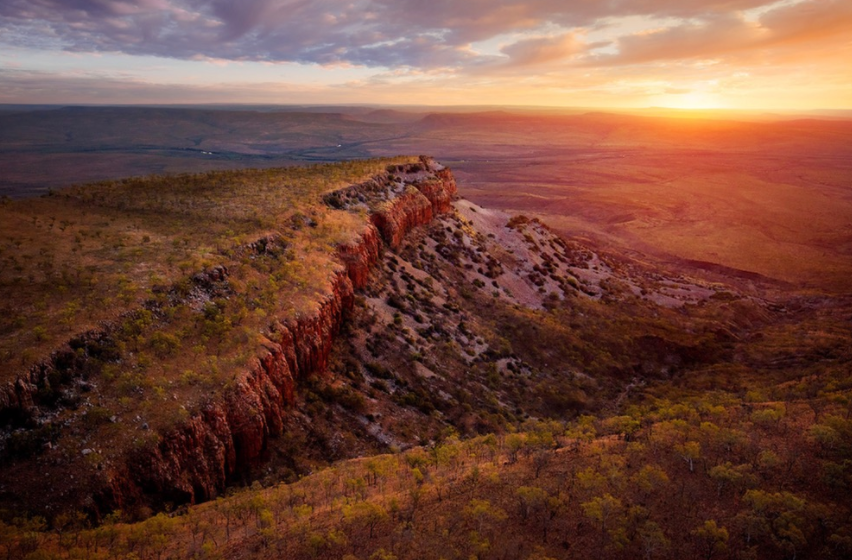
Also found in the Kimberly region is the Cockburn Range, a magnificent sandstone escarpment that rises for 600 metres above the surrounding plains. Shaped like a vast fortress with towering orange cliffs, many rivers have cut through the formation to form steep-sided gorges. Flying above the Range at sunset, when the western face is lit up with a brilliant red glow, reveals another of the Outback’s epic and ancient landscapes.
 

Sunset flight over the Cockburn Ranges in Kimberley, Western Australia. // © Dan Proud

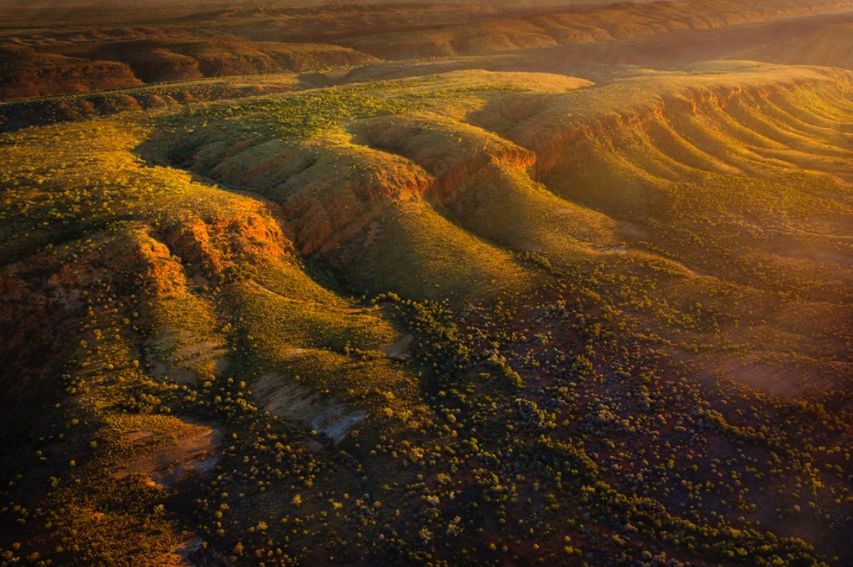
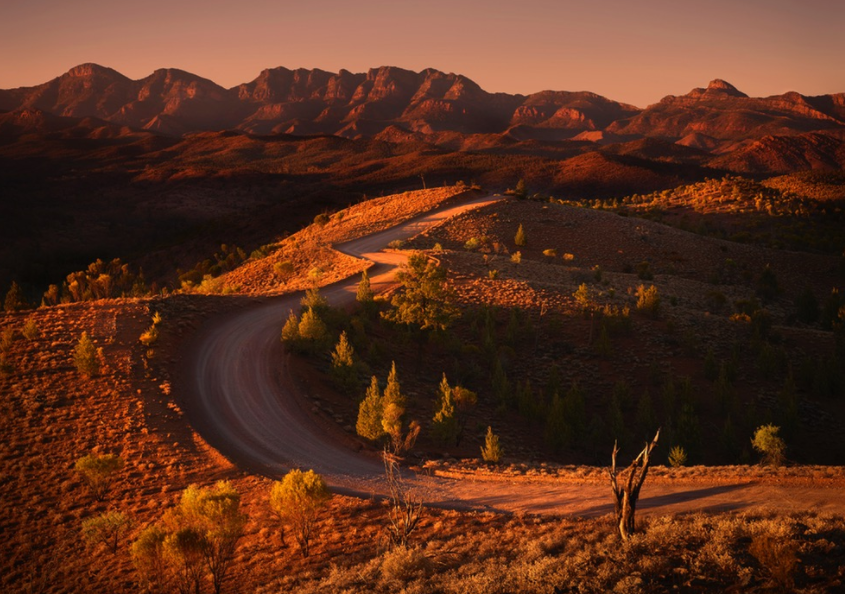
The geology of South Australia’s Outback is no less dramatic, and among the rugged, weathered peaks and rocky gorges of the Flinders Ranges, some of the oldest fossil evidence of animal life was discovered in 1946, in the Ediacara Hills. Similar fossils have been found in the Ranges since, but their locations are kept a closely guarded secret to protect these unique sites.
 

Cast in golden light, Bunyeroo Valley in Southern Australia. // © Dan Proud

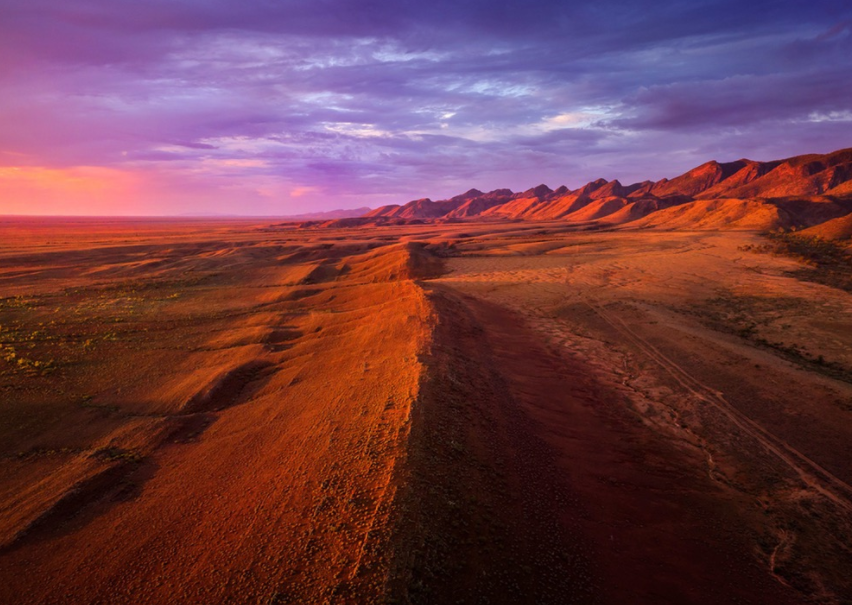
The first humans to inhabit the Flinders Ranges were the Adnyamathanha people — meaning “hill people” or “rock people” — whose descendants still reside in the area, and also the Ndajurri people, who no longer exist. Cave paintings and rock engravings tell us that the Adnyamathanha have lived in this region for tens of thousands of years. Though my perspective is usually broad and from the air, in the nooks and crannies of these arid landscapes live the yellow-footed rock-wallaby, which neared extinction after the arrival of Europeans due to hunting and predation by foxes, and also two of the world’s smallest marsupials — the endangered dunnart, and the nocturnal, secretive planigale, smallest of all, often weighing less then five grams.
 

The dramatic Flinders Ranges of Southern Australia seen from above, photographed by drone. // © Dan Proud

Last but certainly not least, we come to the spectacular Pilbara region of Western Australia. Stretching over a vast area of more than 500,000 square kilometres in the north of Western Australia, it is home to some of Earth’s oldest rock formations, dating back an impressive two billion years.

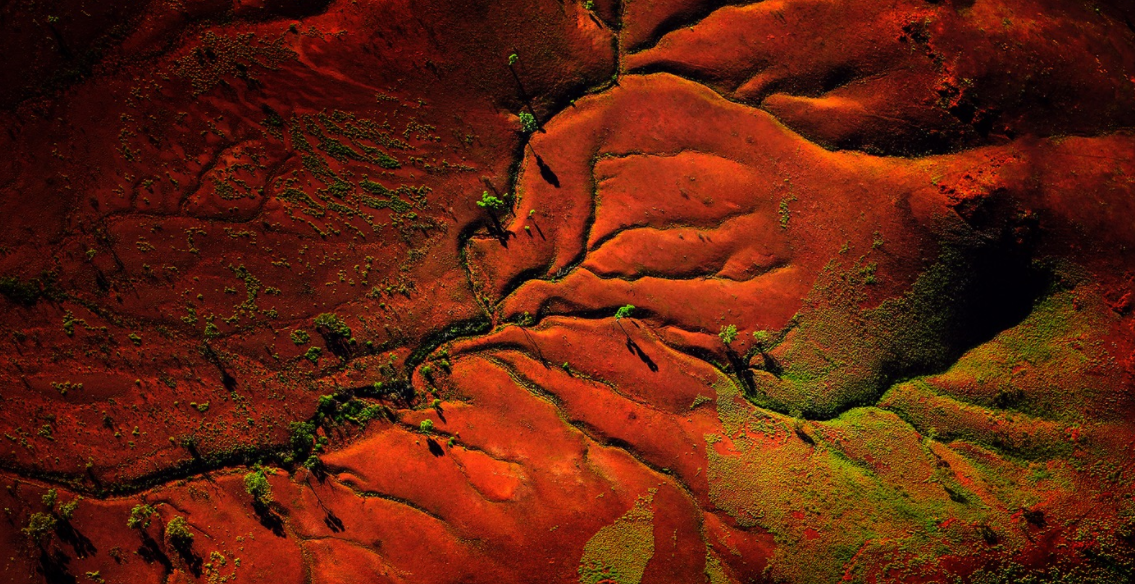
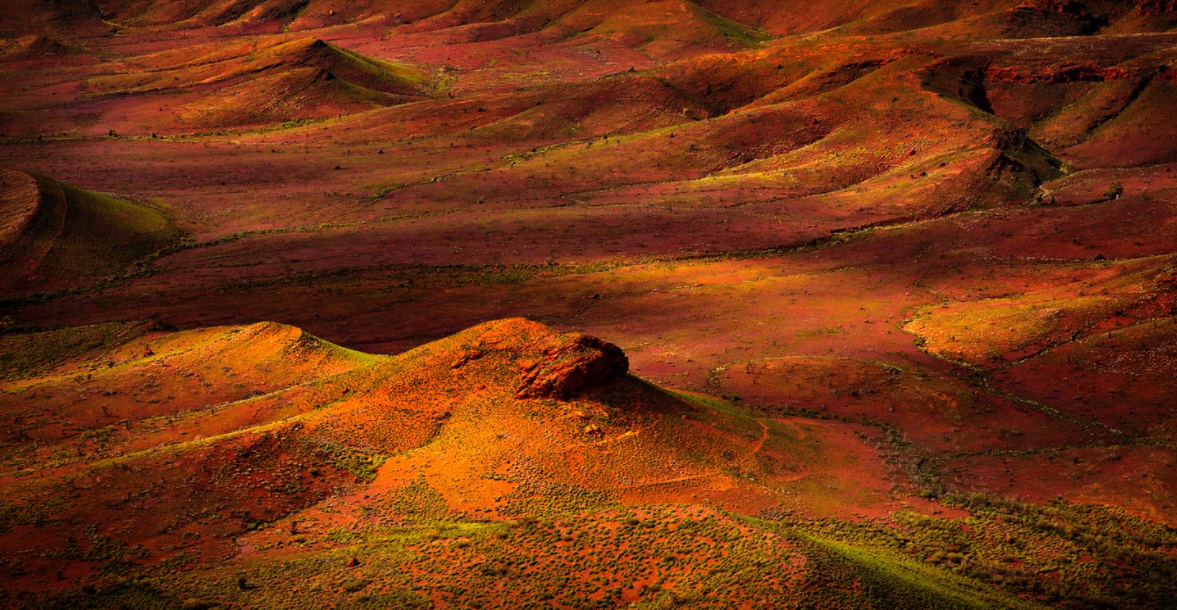
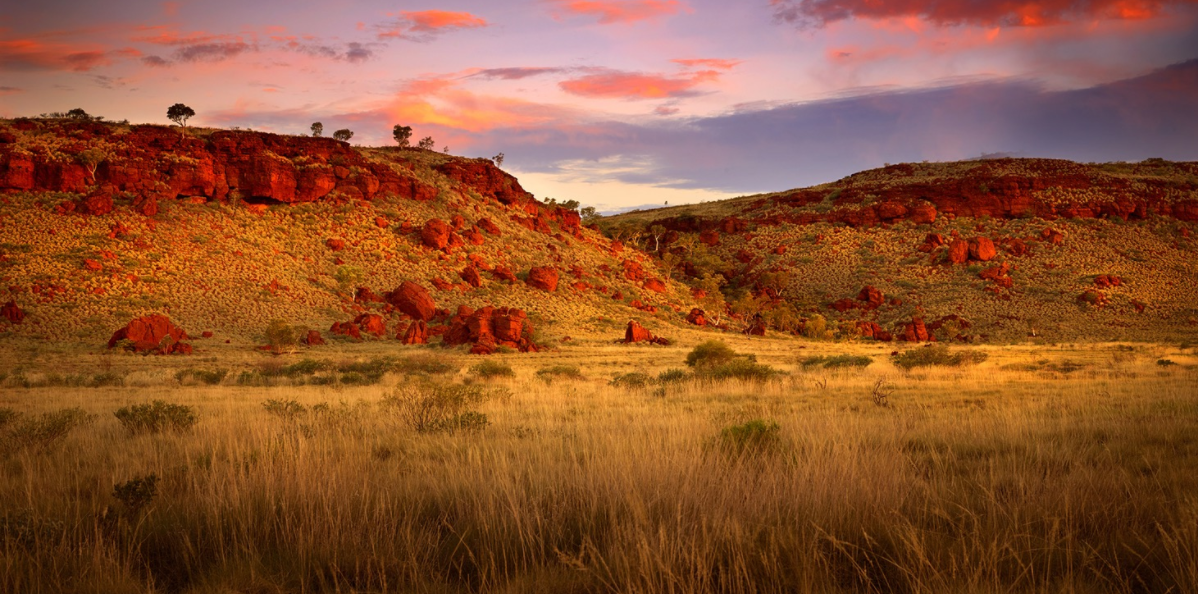
Seen from the air, parts of the Pilbara can sometimes resemble another planet. Yet the greens and yellows of the acacia trees, the hardy shrubs, and the drought-resistant Triodia spinifex grasses — contrasting so spectacularly with the brilliant orange and ochre of the land itself — remind us that life can flourish and adapt even in the most challenging of conditions.
 

The vibrant colors and unusual contours of the mineral-rich Pilbara landscape in Western Australia. // © Dan Proud

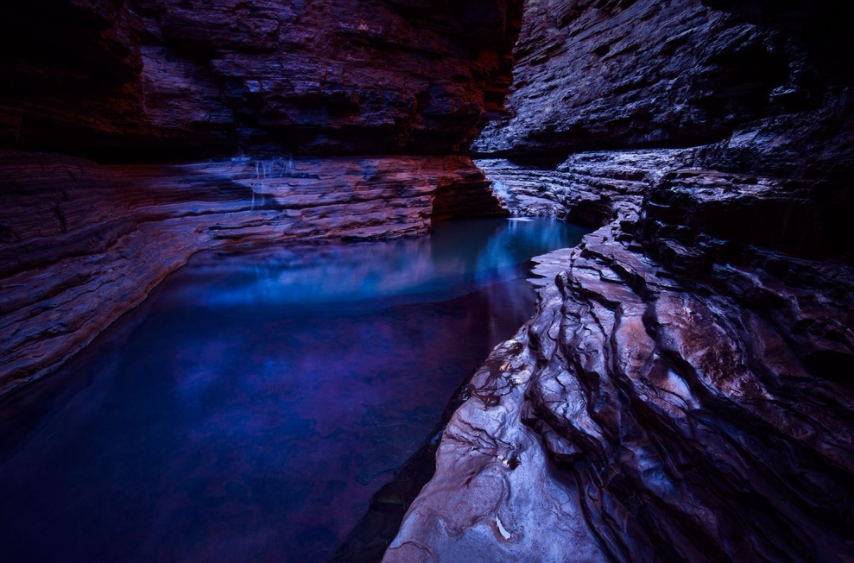
Known also for its vast mineral deposits, for many years the Pilbara has been a mining powerhouse for crude oil, natural gas, salt, and iron ore. Today, although the fragile ecosystems of this area have been damaged by these extractive industries, a number of Aboriginal and environmentally sensitive areas now have protected status in the Pilbara — including the stark and beautiful Karijini National Park with its deep gorges and striking canyons.
 

Stunning displays of rock layers at Hancock Gorge in the Pilbara. // © Dan Proud

Culturally, Australia’s Outback regions will always be deeply ingrained in our country’s heritage, history, and folklore. For Indigenous Australians, creation of the land itself is believed to be the work of heroic ancestral figures who traveled across a formless expanse, creating sacred sites on their travels. Ecologically, it is one of the most untouched and intact natural areas we have left on the planet, and home to a plethora of important endemic species. Geologically, it represents a vast and ancient landscape — one of the most unique on Earth and one that I could never tire of exploring. Every time I head up into the air or set out to photograph the Outback, I’m blown away.
 

Dotted with acacia trees, the striking landscape of Pilbara’s Outback region at dusk. // © Dan Proud


THIS ARTICLE WAS ORIGINALLY PUBLISHED ON MAPTIA.


DAN PROUD

Dan Proud is a Queensland-based photographer and film maker with a passion for aerial cinematography and capturing the magical wide open spaces of Australia.