
By Kate Dawson
As humanity loses its view of the cosmos, a small island northeast of New Zealand stands as a rare refuge where community, culture and ecology keep the Milky Way alive.
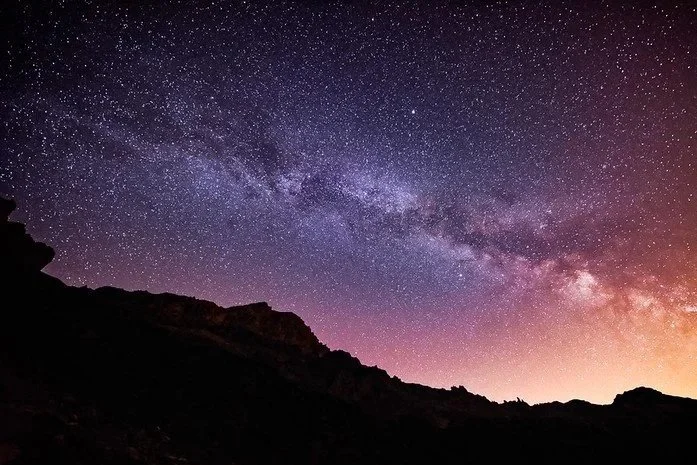
Day transitioning into a starry night. Riccardo Maria Mantero. CC BY-NC-ND 2.0.
On this remote coral island, night arrives like a curtain drop. As the last pieces of light fade, the sky erupts. The Milky Way stretches from horizon to horizon, a river of light so bright that it casts faint shadows.
For travelers who have spent their lives under the haze of cities and the glow of satellite constellations, the experience is eye-opening. True darkness has become a rarity on Earth, and Niue, with a population of fewer than 2,000, has become one of the last locations to find it.
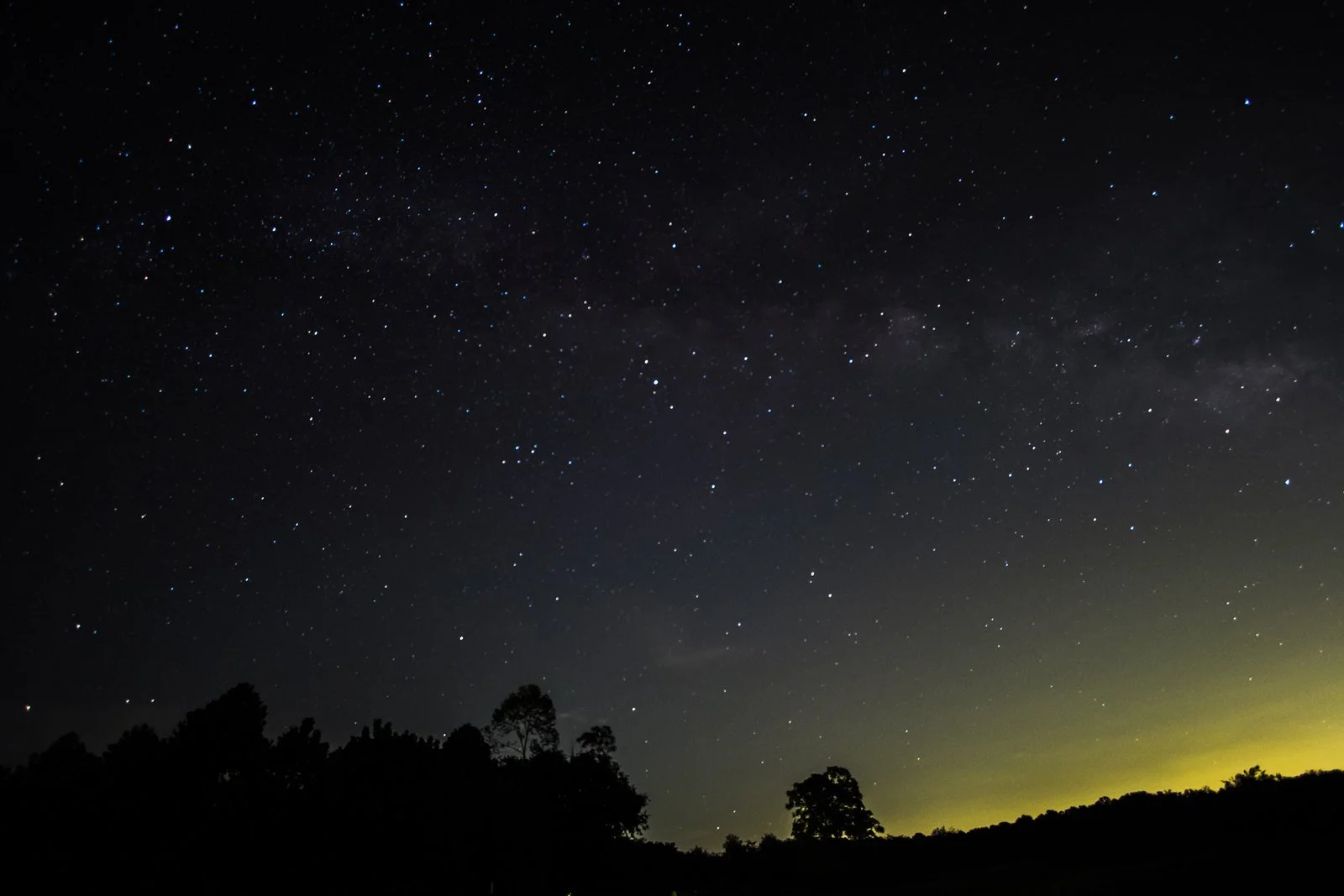
A starry night with light pollution glows. Stephen Rhan. CC0.
Urban sprawl, 24-hour economies and the global shift to high-intensity LEDs have washed out the night sky for most of the world. Even rural regions are not spared, with satellites that reflect sunlight across the atmosphere, creating bright streaks across the sky. Scientists warn that light pollution is increasing rapidly, altering wildlife behavior, disrupting human circadian rhythms and erasing cultural traditions tied to the stars. Darkness, once taken for granted, is now an endangered resource.
That scarcity has sparked a new form of travel: astrotourism. People are traveling to stand under dark skies, including places certified by DarkSky International, an organization that advocates to reduce light pollution, to get a glimpse of the cosmos unobstructed by human interference.
Niue, the world’s first Dark Sky Nation, sits at the center of this movement because its people made a deliberate choice to protect the night.
Thanks to efforts centered around community meetings, village councils and elders who understood that darkness was a critical part of their heritage, Niue transformed. The island’s ancestors navigated by the stars, shared stories shaped by the constellations and relied on the rhythms of night to guide fishing and farming. When the government partnered with astronomers to pursue Dark Sky Nation certification, residents embraced the idea as a way to preserve both culture and environment.
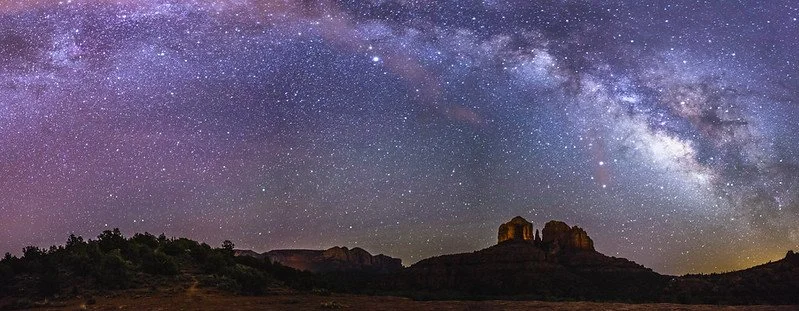
Milky Way landscape. Coconino NF Photography. CC0.
Today, Niue’s lighting footprint is extremely low. Street lamps are shielded and dimmed. Businesses use warm, low-lumen bulbs. Homes angle their lights downward, and even the airport limits illumination to essential safety needs. The result is a nation that glows gently rather than glaringly; an island where sustainability also means protecting the sky.
For those looking to support astrotourism in Niue, planning a trip around a new moon with a local guide is best. Local guides use red-light flashlights to preserve the dark sky. The Niue Island Dark Sky page gives travelers rules to aid in minimizing light pollution and its impact.
Around the world, darkness protection is expanding through a combination of cultural and environmental movements. Indigenous communities are advocating for “night sky rights,” ecologists are encouraging cities to dim lights during bird migrations and even satellite companies are experimenting with darker coatings. What began as an astronomer’s concern is sparking global conversation about what humanity stands to lose.
DarkSky International has now certified more than 250 places, protecting over 61,000 square miles of land under night skies in 22 countries and across six continents.
Back on Niue, the night sky remains vast, wild and humbling for many reasons. Darkness is not emptiness; it is heritage, ecology and wonder. In places like Niue, it is possible to experience the beauty of the night while supporting environmentally sensitive tourism.

Kate Dawson
Kate is a student at the University of North Carolina at Chapel Hill, double majoring in Public Policy and Journalism. Her passion to share stories and love for environmental justice inspires her writing. She hopes to change the world by empowering others.