
By Charles Costal
Travelers can journey from Barcelona to the Amalfi Coast by train, ferry and bus, turning transportation into part of a sustainable Mediterranean experience.
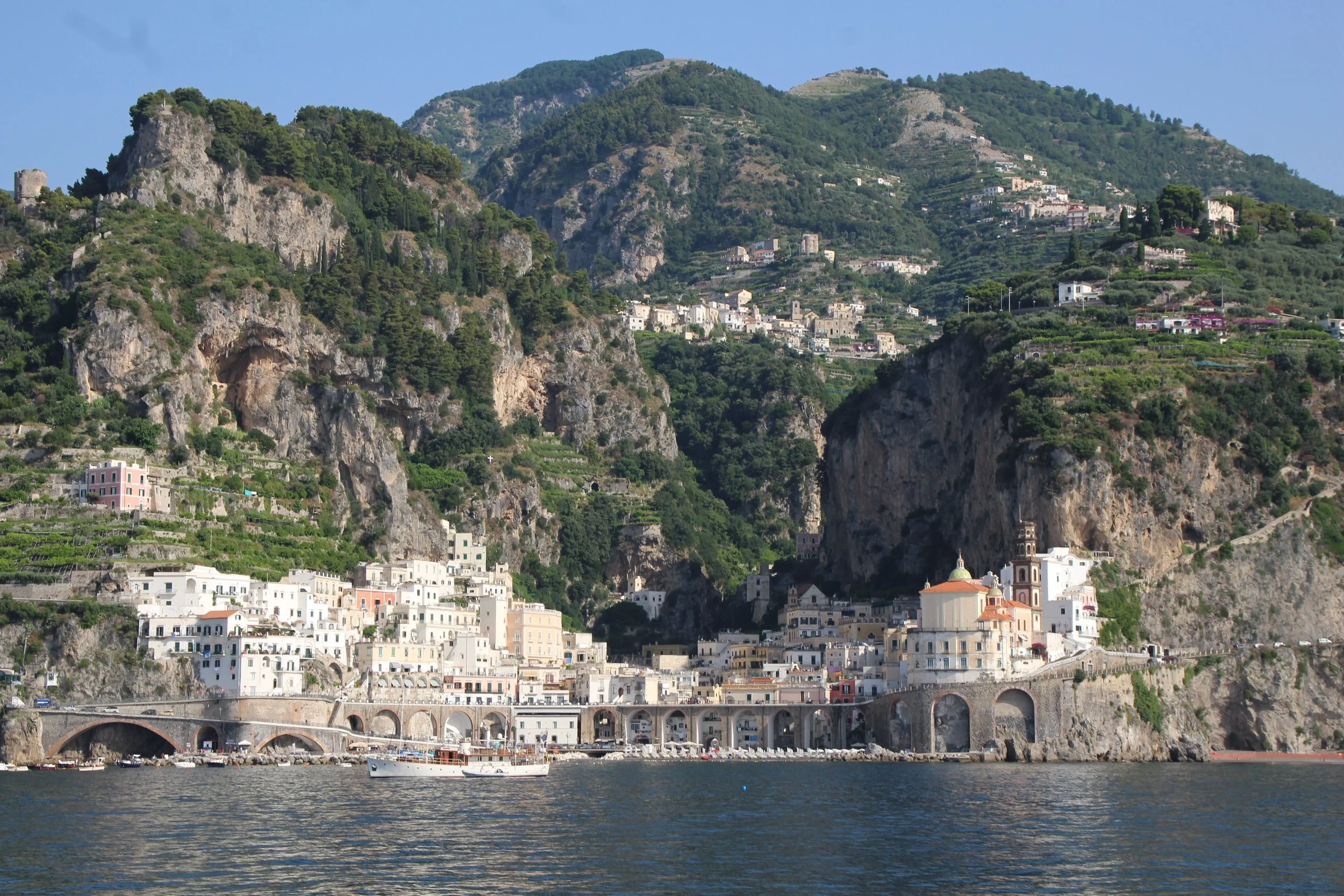
Amalfi, Italy. Michelle Toma. Pexels.
A Mediterranean journey from Barcelona to the Amalfi Coast sounds like a road trip waiting to happen. Considering I was only 20 the last time I visited Europe, it didn’t exactly scream this to me. But the route spans three countries, hundreds of miles of coastline and destinations often associated with winding coastal highways and rental cars. In practice, however, Barcelona, Southern France and Italy form a surprisingly navigable chain of trains and ferries. The journey is not only convenient but surprisingly cost-effective. It also makes transportation part of the experience, not an obstacle between destinations.
Stop 1: Barcelona to Southern France
The first stretch of the trip is also one of the simplest. International trains leave Barcelona Sants and travel north through Catalonia before crossing into France, where travelers can stop in Montpellier, Nimes, Avignon or Marseille. Sites such as Rail Europe and Omio are convenient, but often charge third-party booking fees. Carriers such as SNCF Connect, however, do not. Montpellier offers compact plazas and a historic center within walking distance of its central station, making it a worthwhile stop whether travelers have a full day or only a few hours.
Marseille, on the other hand, provides a livelier introduction to the French Mediterranean through its walkable port, diverse neighborhoods and waterfront markets. Although I did not make this journey, either option turns what could have been an airport day into a journey through changing coastlines, languages and landscapes.
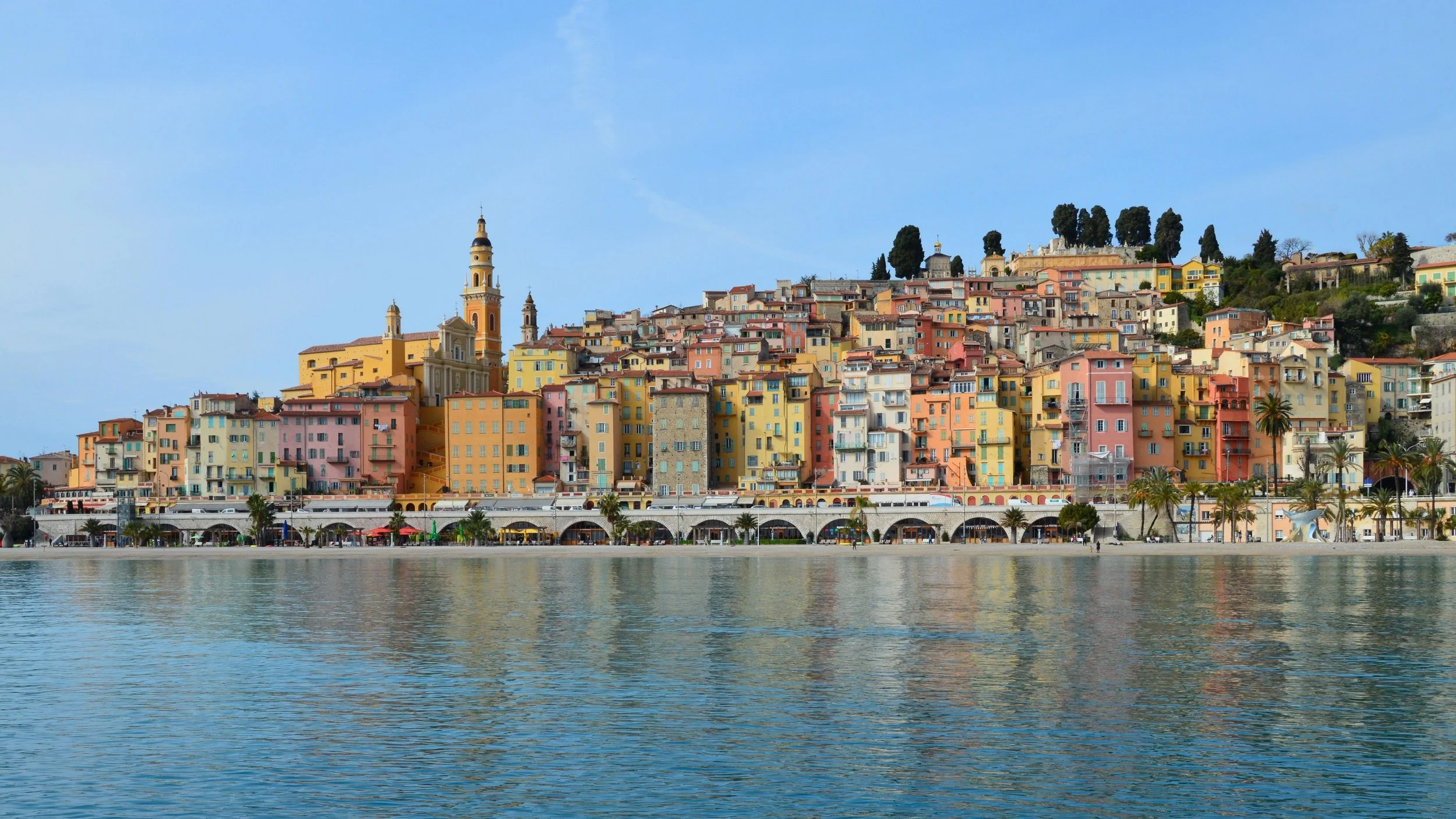
French Riviera. SlimMars 13. Pexels.
Stop 2: Marseille and the French Riviera
From Marseille, the journey begins to feel less like transportation and more like sightseeing. Trains run east toward Nice through Provence and Cote d’Azur, passing towns that would normally require hours of highway driving and expensive parking. Travelers with additional time can break up the route in Cannes, Antibes or Menton, while those following a tighter itinerary can reach Nice from Marseille in under three hours. Because stations sit inside the communities they serve, even a one-night stop can feel worthwhile rather than rushed. Though it can be easy for this trip to feel like station-hopping, planning which cities to spend two or more nights in can break up the experience. It’s important to enjoy the transportation, but don’t let it rob you from the enjoyment of the cities themselves.
Stop 3: Crossing into Italy
The French-Italian border is one of the few places where the journey requires a little patience. From Nice, regional trains continue east to Monaco and Menton before crossing into Italy at Ventimiglia, the first major Italian station across the border. Travelers can then transfer to an Italian service toward Sanremo, Genoa or the Ligurian coast. For me, this journey was slightly frustrating. I faced delays at the border and a crowded train; however, nothing could distract me from the beautiful landscapes passing by my window. The change may lack the smoothness of a direct high-speed route, but it also allows the landscape to shift gradually: French resort towns give way to Italian seaside communities without an airport terminal to separate them. Trenitalia’s Intercity network runs along the Ligurian coast toward Rome, Naples and Salerno.
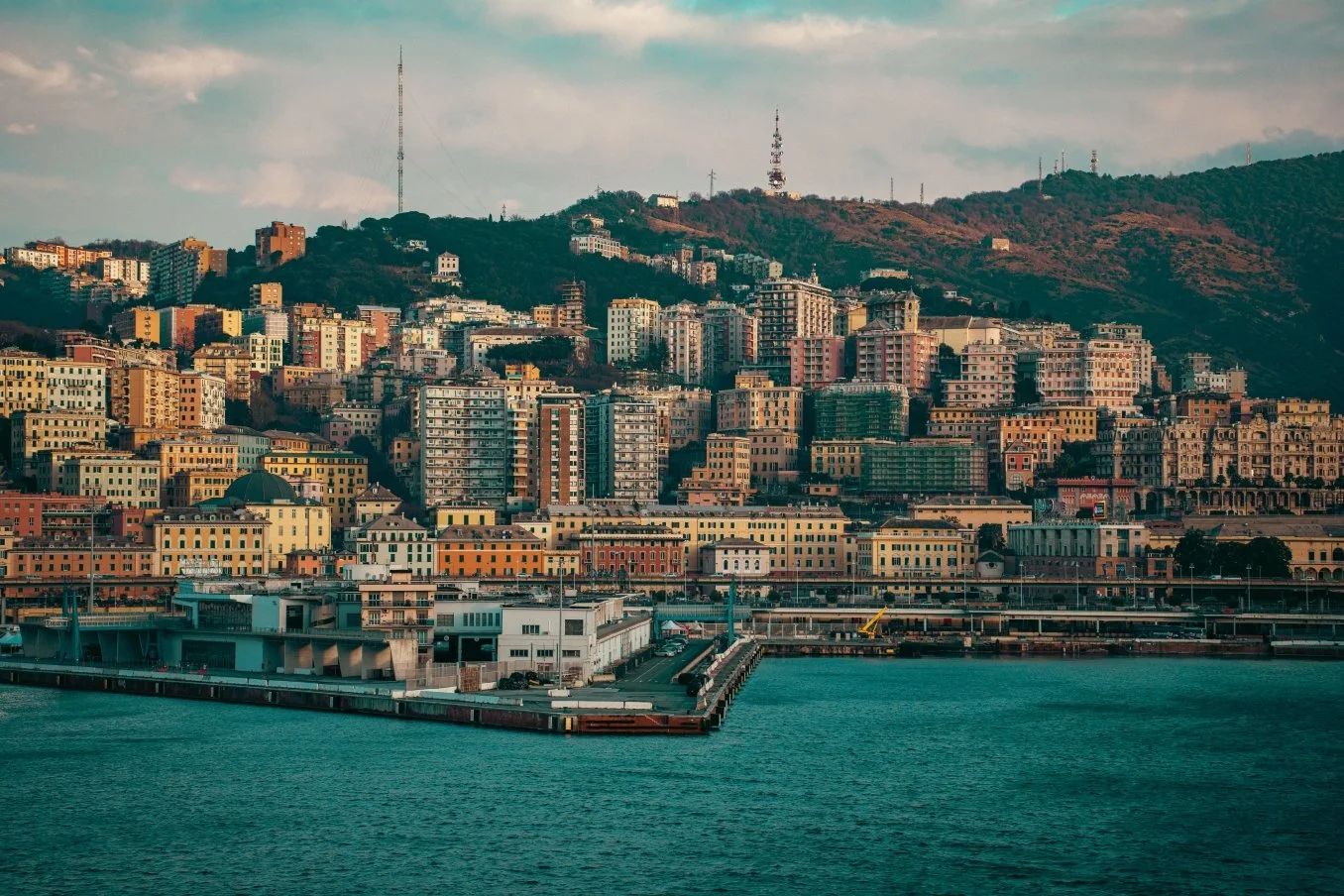
Port of Genoa. Olivia. Pexels.
Stop 4: Choose a Northern Italian Base
Once inside Italy, travelers face the trip’s most tempting problem: too many places to stop. Genoa maintains the route’s port-city character, with narrow historic streets spreading outward from one of the Mediterranean’s most important harbors. Farther south, La Spezia provides rail access to the five villages of Cinque Terre, where regional trains replace the need to navigate narrow coastal roads. The best choice depends less on which destination is “essential” and more on whether the traveler wants city life, hiking or a few slower days beside the water.
In my opinion, each destination offers an experience tailored for a specific type of traveler. I found La Spezia to be the best family-friendly option with the cheapest prices and most accessible accommodations when traveling with large luggage and many people. For those looking for the classic Ligurian coast experience and the best Instagram pictures, Cinque Terre is the best choice. For architecture, history and food lovers, look no further than Genoa. For travelers with plenty of time on their hands, these three destinations are a convenient Trenitalia train away, so visiting all three is very possible.
Stop 5: The Long Journey South
The longest portion of the itinerary connects northern Italy with Campania. Travelers can break it up with several nights in Rome or continue farther south toward Naples and Salerno. Booking a reserved intercity or high-speed train in advance generally makes the trip easier and less expensive, while regional trains remain useful for shorter side trips. It is a full travel day, but one that delivers passengers directly into the center of the next city rather than leaving them at a distant airport.
Car-free travel does not make a Mediterranean vacation impact-free, but it changes how visitors move through places already struggling with traffic and overtourism. Trains connect city centers without requiring travelers to rent a vehicle for the entire route, while local transit and ferries reduce the need to bring another car onto the narrow roads of the Amalfi Coast. The slower journey also encourages longer stays and less rushed stops, allowing travelers to spend more time, and potentially more money, in each community rather than seeing them as scenery through a windshield.
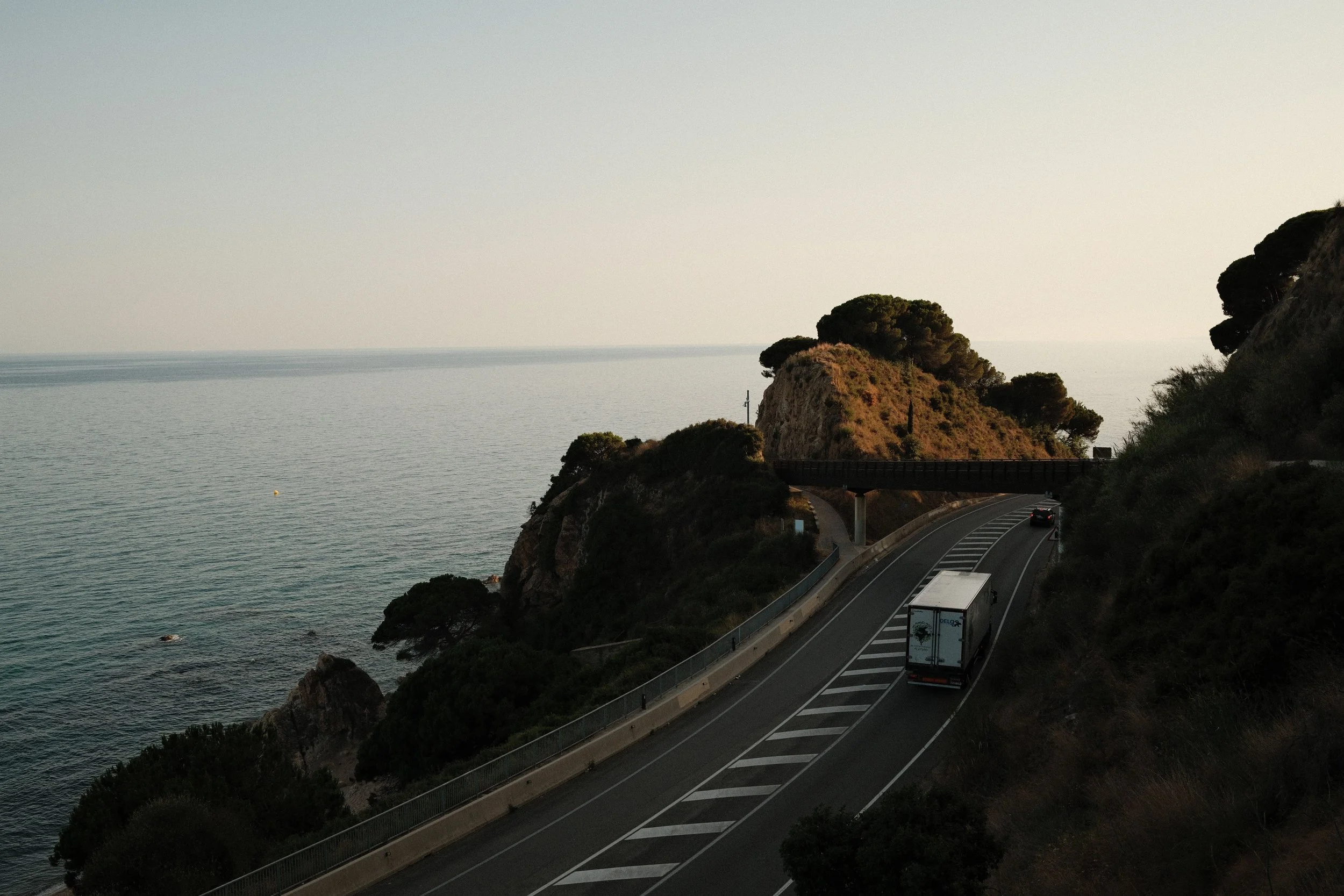
A Spanish highway on the Mediterranean. Alex Kalinin. Pexels.
TRAVELING THERE:
Booking the trip is easiest when travelers divide it by country rather than searching for a ticket covering the entire journey. Renfe is typically the best starting point for Barcelona and the international train into France, while SNCF Connect handles most French routes and Trenitalia covers the Italian portion. The longest and most expensive legs, especially Barcelona to southern France and long Italian high-speed journeys, should be booked first because fares rise significantly closer to departure. Short regional trains are often more flexible, but travelers should still leave extra time for international transfers, particularly at Ventimiglia. A rail pass may be worthwhile for travelers taking frequent long-distance trains, though point-to-point tickets can be cheaper for a fixed itinerary. Packing lightly also makes the trip considerably easier, since the route includes station stairs, platform changes and ferry docks. For booking resources, see below:
Trains
SNCF Connect: French Regional Trains. A booking service for Southern France, Marseille and the French Riviera.
Trenitalia: An all-encompassing service for train travel in Italy.
Italo: Private High-Speed Italian Trains. High-speed train booking service for over 50 Italian cities.
Ferries
Travelmar: For the Final Leg of the Trip. Convenient ferries in Naples and Salerno.
NLG, Navigazione Libera del Golfo: Bay of Naples and Amalfi Coast. Cheap ferries between Naples and throughout the Amalfi Coast and Capri.
Direct Ferries: Ferry Price Comparison Service. A price comparison website for ferries all across Italy.
Local Transportation
TMB Barcelona: Metro and Bus Network. A guide and ticket service for local transport in Barcelona.
RTM Marseille: A guide and ticket service for local transport in Marseille.
ZOU! Regional Transport: Regional transport booking service for the Southern Province of France.
Cinque Terre Railcard: Local metro railcard for Cinque Terre.
Hotels and Hostels
Hostelworld: Budget Hostels. The largest selection of hostel booking, featuring over 180 different countries.
Booking.com: A broad selection of hotels, hostels and room shares across the world.

Charles Costal
Charlie is a senior at the University of North Carolina at Chapel Hill currently pursuing a degree in Journalism and Public Policy. He is also an avid traveler, writer, and performer. His work at CATALYST aims to spread awareness on environmental sustainability and responsible traveling.