
By Claire Park
If you loved Christopher Nolan’s film, here’s how to follow Odysseus’ epic journey around the Mediterranean Sea.
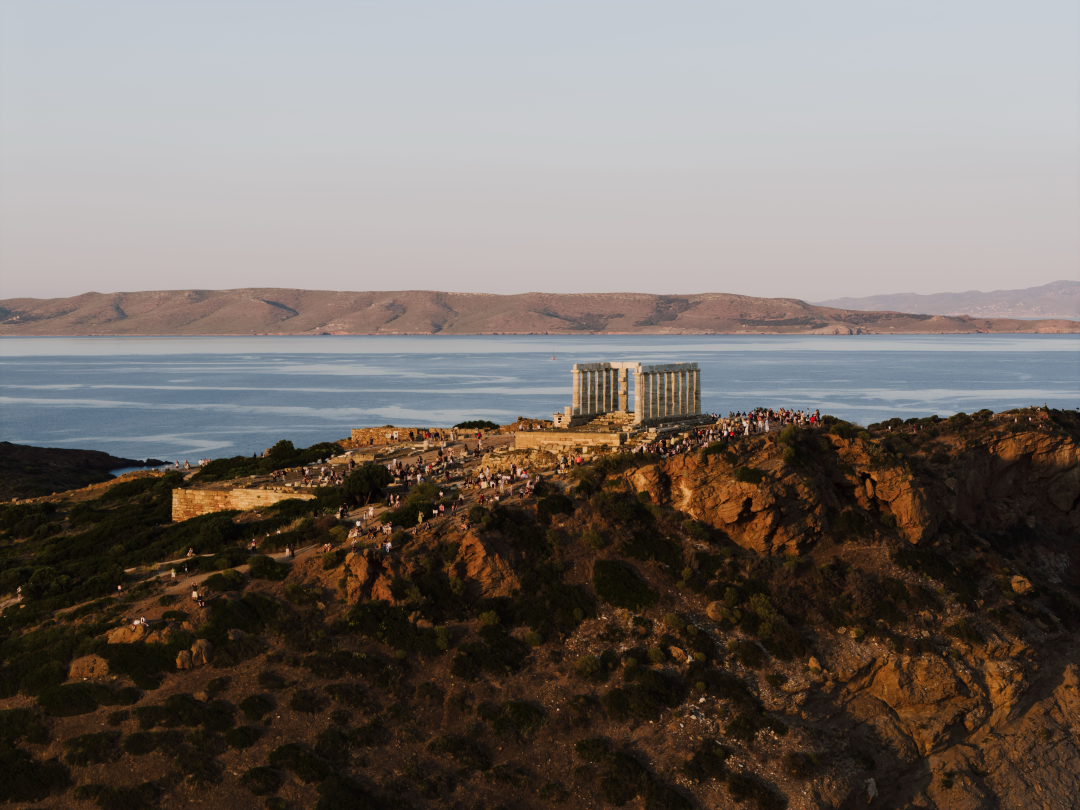
Temple of Poseidon overlooking the Aegean Sea. K. Pexels.
Whether you’re a Greek mythology enthusiast, a film fanatic inspired by Christopher Nolan’s adaptation of the Odyssey or simply seeking a Mediterranean adventure infused with history and literary culture, Odysseus’ renowned 10-year voyage home from Troy is a journey worth considering. While your own odyssey may be completed in just a few weeks and will, hopefully, involve much smoother sailing, perhaps by the end, you, like Odysseus, will emerge as a testament to strength, perseverance and personal growth.
Starting point: Troy: modern-day Hisarlik, Turkey
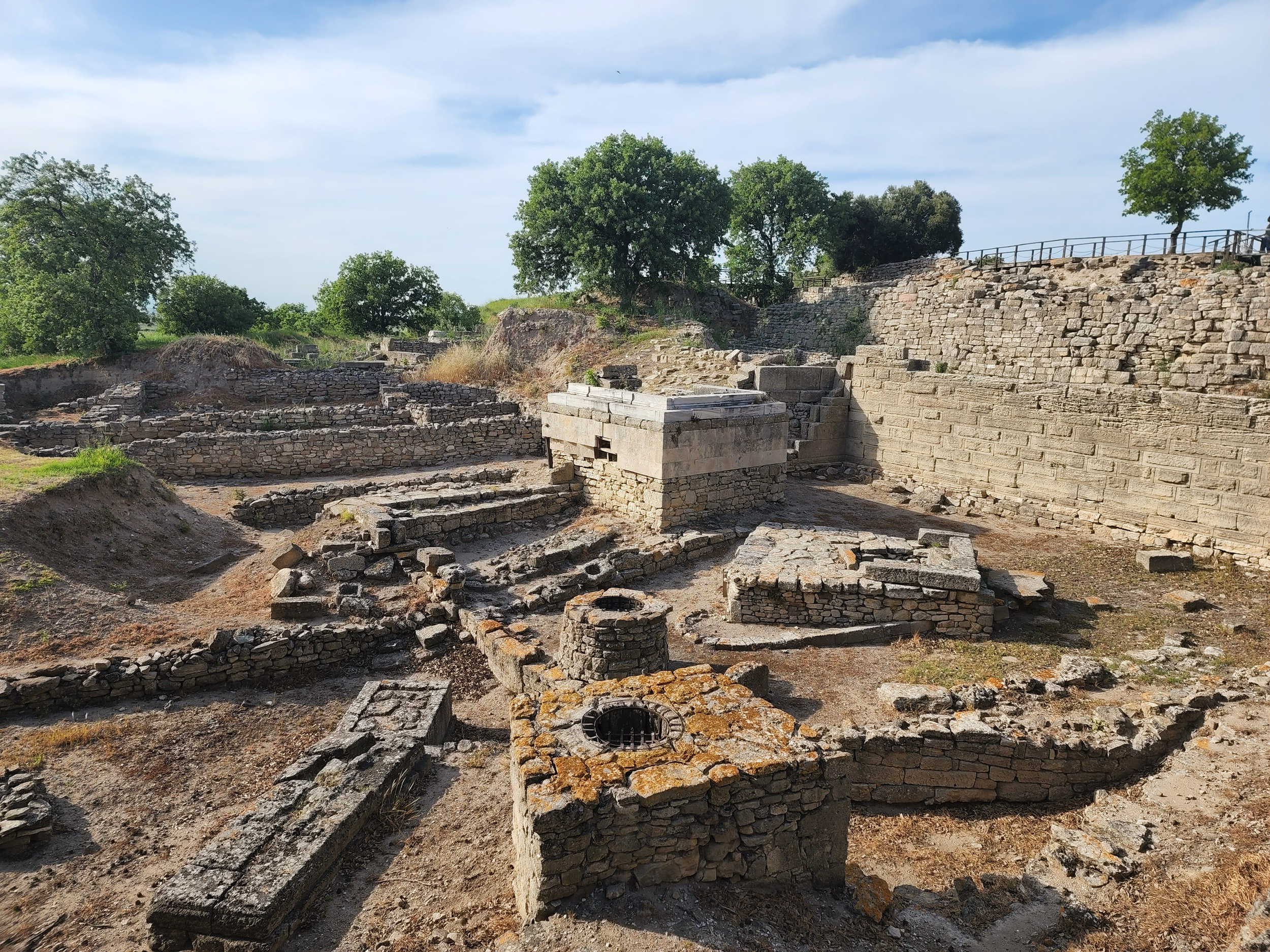
Ancient ruins of Troy at Hisarlik. Seckin. Pexels.
After 10 years of warfare, the sack of Troy marked the beginning of Odysseus’ epic journey home to the kingdom of Ithaca. The Greeks captured Troy through Odysseus’ plan to hide Greece’s best warriors in a wooden horse, offer it to the Trojans under the guise of a divine offering and open the gates at nightfall. With the strategy’s success, the Greeks’ actions, particularly the desecration of Athena’s temple, angered the gods, setting the stage for his long ordeal at sea.
To be transported into the action, explorers can walk the Bronze Age walls and inspect the stone fortifications of Troy VI and Troy VII, whose layers are associated with the Homeric era. They can also tour the Troy Museum, filled with weapons, gold jewelry and pottery from the Trojan War strata, and take photos with the symbolic wooden horse structure standing at the archaeological site.
First stop: Land of the Cicones: modern-day Maroneia, Greece
Immediately after winning the Trojan War, Odysseus and his crew sailed to the coastal region of Thrace, stopping in the city of Ismarus. There, they encountered Troy’s allies, the Cicones, and raided their city, killing their men and plundering their wealth, wine and livestock. They proceeded to feast in celebration, giving the surviving Cicones enough time to rally reinforcements from inland and attack at dawn, successfully driving the Greeks back to their ships and killing 72 of Odysseus’ companions.
Historically one of the wealthiest cities in the ancient world, and noted in the “Odyssey” for its wine, Maroneia is rich in archaeological sites and engulfed in decades-old olive groves and vineyards producing local wine and olive oil. Visitors can spend time exploring massive ruins like the Ancient Theater of Maroneia, hiking along Mount Ismaros, swimming in the sparkling sea at Profitis Ilias beach and enjoying fresh Mediterranean seafood at local waterfront taverns.
Second stop: Island of the Lotus Eaters: modern-day Djerba Island, Tunisia
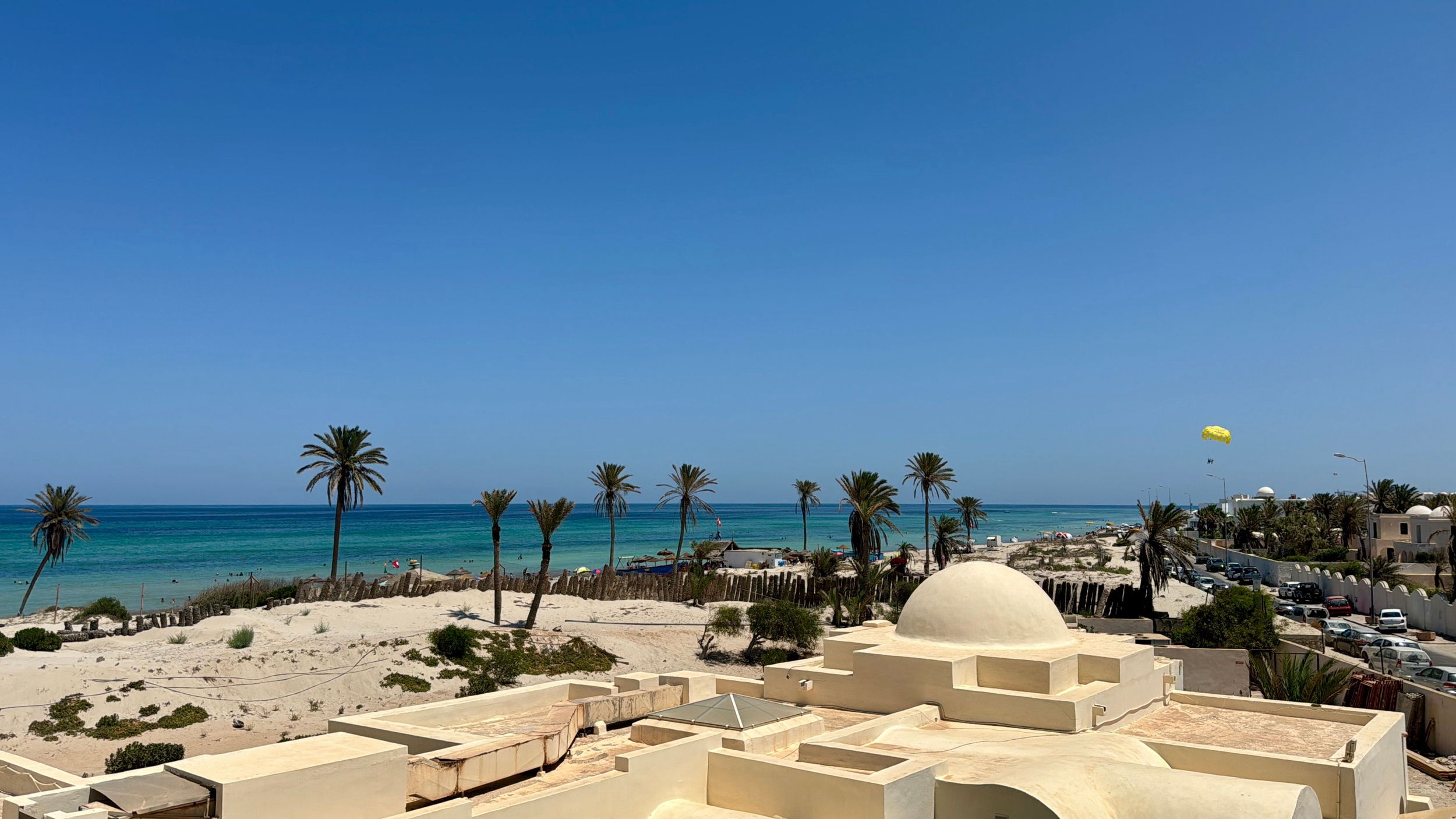
Beach scene on Djerba Island. Pedro Dias. Pexels.
Following their defeat at the hands of the Cicones, Odysseus’ fleet arrived at the land of the Lotus Eaters, a peaceful tribe. When Odysseus sent a scouting party ashore, the Lotus Eaters offered them their native lotus fruit. Those who ate it lost all desire to return home as the fruit induced a blissful state of forgetfulness. Odysseus dragged them back to the ship, tying them to the rowing benches to prevent them from returning to shore.
To connect with Djerba’s ancient legacy, travelers can explore Meninx, a Phoenician and Roman architectural site linked to the shores where Odysseus’ men were stranded. The Guellala Museum is also available to visitors wanting to learn about the island’s roots and the civilizations that have shaped its culture. For more cultural immersion, tour Borj El Kebir, a fortress overlooking the fishing port in Houmt Souk, the island’s main town, offering a beautiful view of the Mediterranean. Houmt Souk is also filled with traditional whitewashed houses and lively souks to walk around, and the relaxing white sand Sidi Mahres Beach is only a 20-minute drive away.
Third stop: Island of the Cyclops: modern-day Mount Etna, Italy
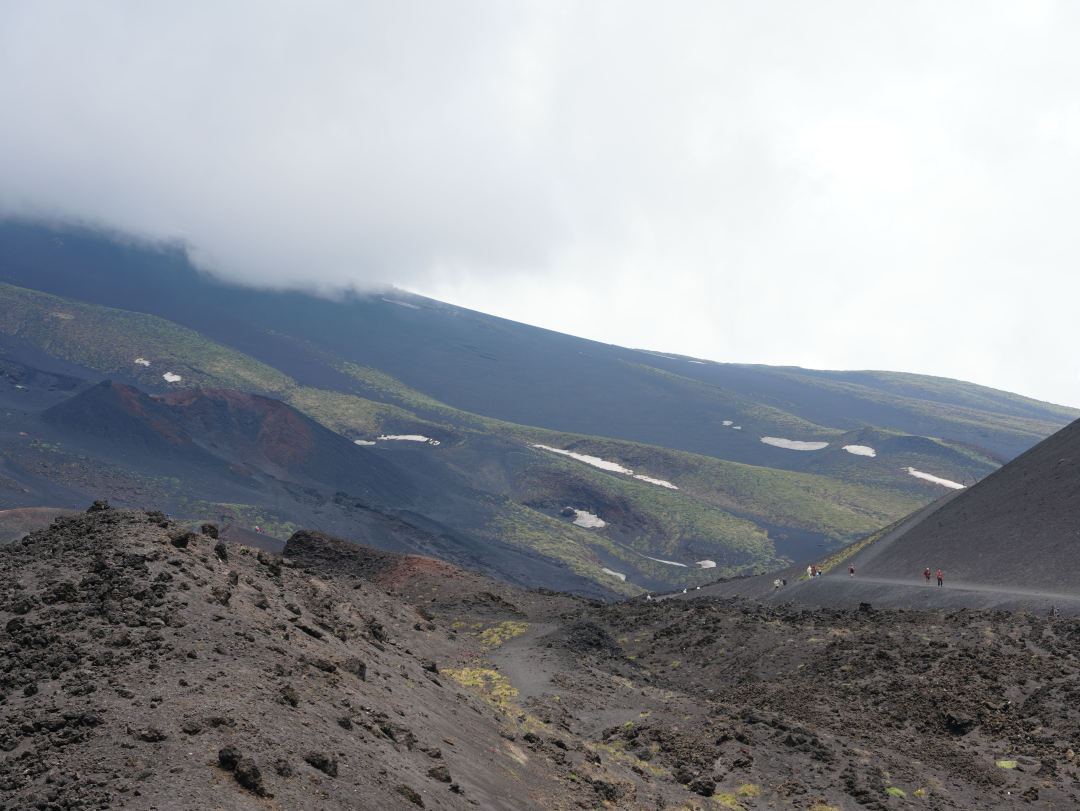
Mount Etna’s volcanic landscape. Xintao Zhou. Pexels.
Odysseus and his best men entered a cave expecting hospitality from its inhabitant, only to find themselves trapped by Poseidon’s one-eyed son, Polyphemus. Odysseus devised a plan to escape, setting it in motion by giving the giant some wine and telling him his name was “Nobody.” Once Polyphemus fell asleep, the men drove a stake into his eye. He cried out that “Nobody” was hurting him and, thinking nothing was wrong, the other Cyclopes failed to help him. Odysseus and his surviving men escaped by clinging to the underside of the giant’s sheep and successfully sailed away. Odysseus, moved by his own pride, shouted out his real name, allowing Polyphemus to pray to his father for vengeance; a curse that plagued Odysseus for the rest of his journey.
Ancient tradition places the Cyclopes around Mount Etna, with the most famous identification being the cluster of sea stacks off the coast of Aci Trezza, near Catania in eastern Sicily. At this active volcano, you can hike summit craters, tour ancient lava caves or ride the cable car to reach the highest accessible viewing point. Afterward, relax in the foothills with a wine-tasting tour or grab a meal in the charming village of Zafferana Etnea.
Fourth stop: Island of Aeolus: modern-day Aeolian Islands, Italy
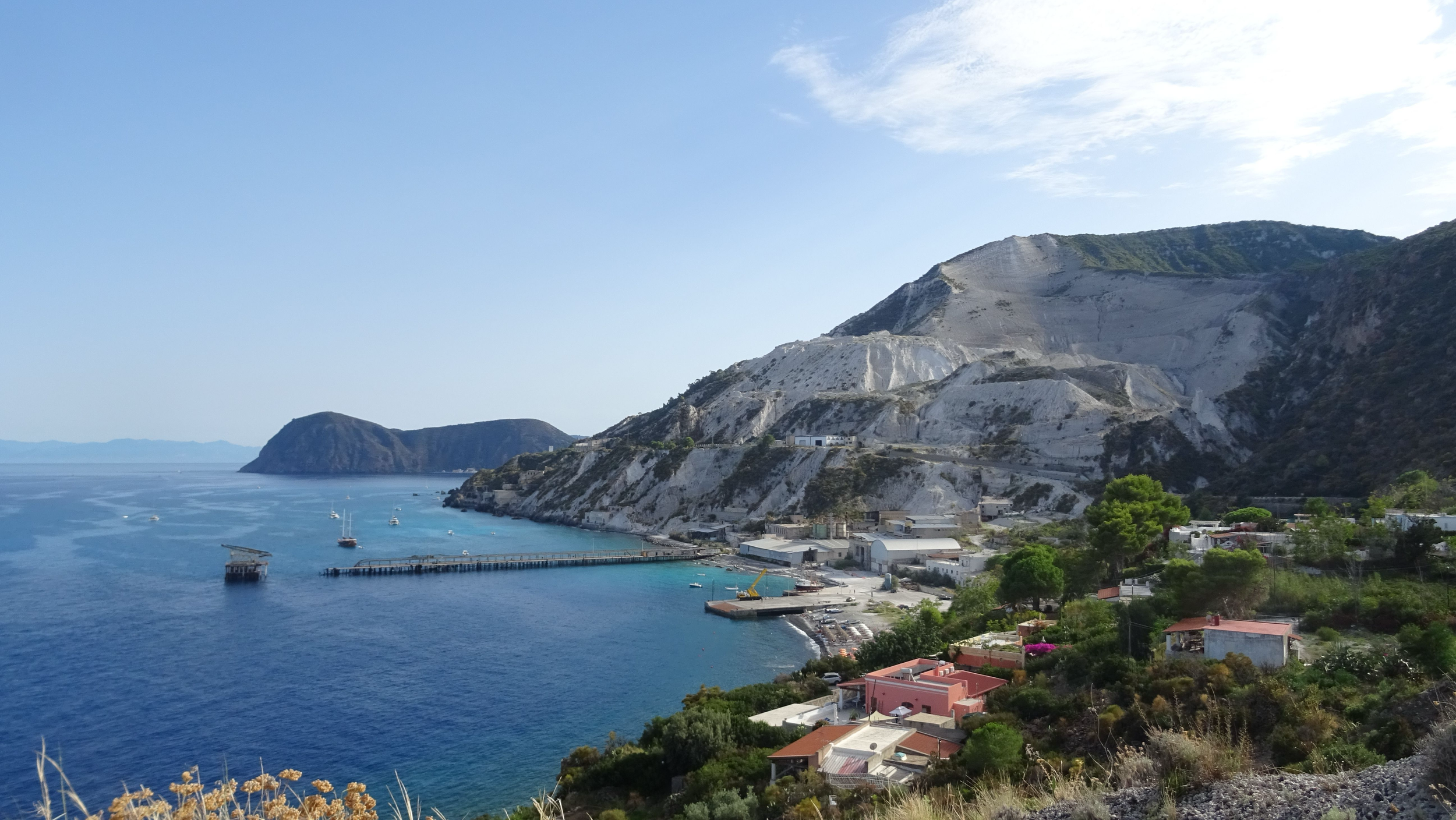
The beautiful hills and clear blue sea on Lipari’s coast. Clarissa Schwarz. Pexels.
Odysseus was welcomed to the floating island of Aeolia by Aeolus, keeper of the winds. Upon departure, Aeolus gave Odysseus a bag containing all the adverse winds, leaving only the gentle west wind free to carry the ships directly to Ithaca. Odysseus steered the ship without rest, coming within visible distance of his kingdom’s shores. However, he fell asleep, and his crew, suspicious of the bag’s contents, opened it, freeing the trapped winds and causing a storm that blew them back to Aeolus’ island.
The largest island in the volcanic archipelago, Lipari, is the most common identification of Aeolus’ island. Travelers can stroll through the town, visit the Acropolis, and explore the Archaeological Museum. Off the southwestern coast, they can venture to the Pietra Lunga and Pietra Menalda sea stacks, whose dramatic, dark formations are reminiscent of Homer’s “Wandering Rocks.” Boat tours are also available to see the uninhabited, jagged islet of Basiluzzo, where its dramatic cliffs and deep blue surrounding waters evoke the ancient seas described in the epic poem.
Fifth stop: Land of the Laestrygonians: modern-day Formia, Italy
After sailing away from Aeolus’ Island again, the fleet arrived at the land of the Laestrygonians, a race of giant cannibals. Of all the ships, only Odysseus cautiously anchored his ship outside the harbor entrance. When scouts encountered the Laestrygonians’ queen, she called her husband, who seized and devoured one of Odysseus’ men. The giants hurled massive boulders from the cliffs, smashing the trapped ships and speared the men, leaving only Odysseus’ ship free to escape the massacre.
The Laestrygonians’ city, Telepylus, is connected to the area around Formia, on the coast of southern Lazio, Italy. There, you can unwind at Vindicio Beach, where Odysseus’ ships were famously destroyed. Just south of Formia, the Gaeta Gozzo Boat Excursion takes you along the cliffside where Odysseus’ fleet was pelted with boulders; the natural harbor at Gaeta, with its narrow entrance and surrounding cliffs, matches Homer’s description.
Sixth stop: Island of Circe: modern-day Mount Circeo, Italy
After arriving at the island of Aeaea, Odysseus sent half of his crew to explore. They stumbled upon Circe’s palace, and she welcomed them inside, serving them a feast laced with a magical drug. When, with a tap of her wand, she transformed them into pigs, Eurylochus ran to warn Odysseus. On his way to rescue the men, Odysseus encountered the god Hermes, who gave him the herb moly as protection against Circe’s magic. When Circe recognized Odysseus, whose coming had been prophesied, she restored his men and became his lover. After a year, Odysseus’ men urged him to depart, and Circe informed Odysseus he must first visit the Underworld to consult the prophet Tiresias. She also provided instructions for navigating later challenges: the Sirens, Scylla and Charybdis.
Visitors can immerse themselves in this mythological lore by hiking the Picco di Circe, Circe’s Peak, the 541-meter limestone summit of Mount Circeo with panoramic views of the coast. They can also explore the ancient Acropolis of Circeii, which dates back to the thirds century B.C. and is believed to be the ancient stronghold where the sorceress resided. Lastly, explorers can visit the Grotta delle Capre, Goats’ Cave, a massive grotto accessible by land and sea. Shepherds traditionally used the area to shelter their flocks, echoing the mythological swine herding overseen by Circe.
Seventh stop: The Underworld: modern-day Naples, Italy
Following Circe’s instructions, Odysseus sailed to the edge of the world where the sun never shines. At the entrance to the Underworld, he dug a trench and made blood offerings to summon the dead. The prophet Tiresias appeared and prophesied that Odysseus would return home, but only if his men didn’t kill Helios’ sacred cattle on the island of Thrinacia. In addition, he foretold that Odysseus would find suitors devouring his household and would need to destroy them. Among the spirits, Odysseus also encountered his fallen soldiers, his mother, and fellow heroes like King Agamemnon, Achilles and Ajax.
The entrance to the Underworld is most commonly linked to Lake Avernus, a volcanic crater lake located in the Phlegraean Fields near Naples, Italy, due to its sulfurous fumes and dark, still waters. To experience the myth, visitors can walk the 3-kilometer perimeter path and inspect the first-century A.D. thermal ruins of the Temple of Apollo. About a mile away, travelers can also explore the Cave of the Cumaean Sibyl, a monumental tufa tunnel where the prophetic priestess guided heroes toward the nether realms.
Eighth stop: Island of the Sirens: modern-day Li Galli Islands, Italy
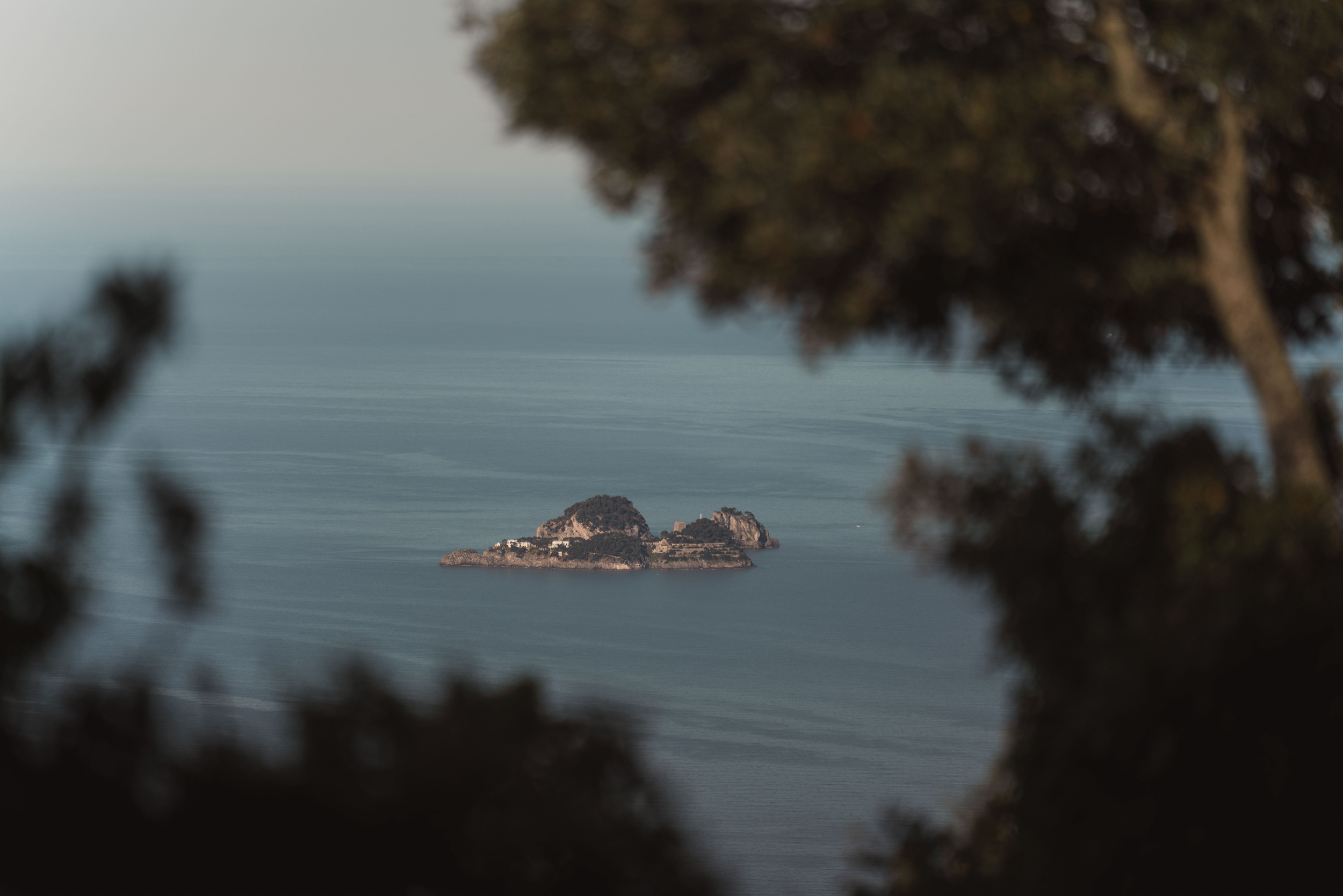
View of secluded Li Galli Islands encompassed by the sea. Ahmet Yuksek. Pexels.
As the ship approached the Sirens’ island, Odysseus followed Circe’s instructions and plugged his crew’s ears with beeswax so they couldn’t hear the deadly song. Odysseus, wanting to listen, was tied to the ship’s mast and ordered his crew not to release him. The Sirens sang to Odysseus, promising knowledge of all that happened at Troy and all that would happen on Earth. Their voices offered irresistible knowledge to any listener, and despite Odysseus’ pleas to be untied, his crew refused, allowing the ship to safely sail on.
To immerse themselves in the legendary home of the Sirens, journeyers can take a myth-inspired boat tour from nearby Positano or Sorrento to trace the path where Odysseus encountered the alluring creatures. Additionally, travelers can view the archipelago’s three rocky islets, Gallo Lungo, La Rotonda and La Castelluccia, from a charter boat. Sunset excursions to see the jagged cliffs are also popular, allowing visitors to emulate the ancient Greek sailors viewing the shores. Lastly, swimming and snorkeling are recommended activities, particularly in the Punta Campanella Marine Reserve and the Immersive Seafloor Exploration, where myth says ships crashed.
Ninth stop: Scylla and Charybdis: modern-day Strait of Messina, Italy
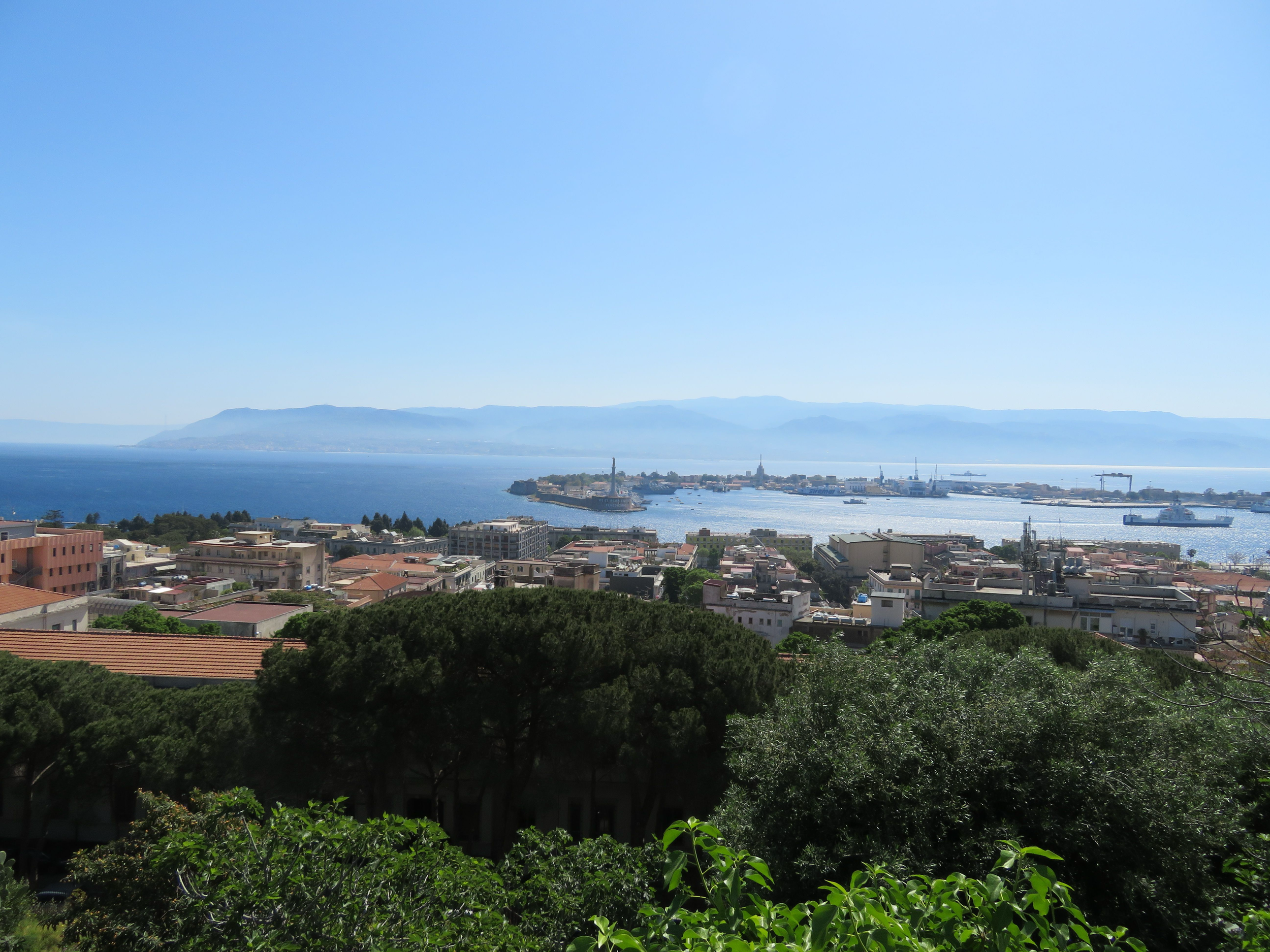
Aerial view of Messina overlooking the Mediterranean Sea. Judicael C. Pexels.
Circe had warned Odysseus about the narrow strait guarded by Scylla, a six-headed monster dwelling in a cliffside cave, and Charybdis, a massive whirlpool. Odysseus heeded her advice and steered toward Scylla, choosing to lose six men rather than the whole ship. Unable to bear telling his crew their fate, Odysseus armed himself as they entered the passage and watched as some of his men were snatched from the boat.
The Strait of Messina is, indeed, known for its dangerous currents, whirlpools and unpredictable water conditions due to the tidal forces between the Tyrrhenian and Ionian seas. At the meeting point of Capo Peloro, visitors can stand to watch the rushing tides and natural swirling patterns that inspired Charybdis. Adventurers can also take a public ferry across the strait to the picturesque town of Scilla on the Italian mainland. Note that the rocky cliffs you’ll pass are traditionally identified as Scylla’s lair!
Tenth stop: Thrinacia (Island of Helios): modern-day Sicily, Italy
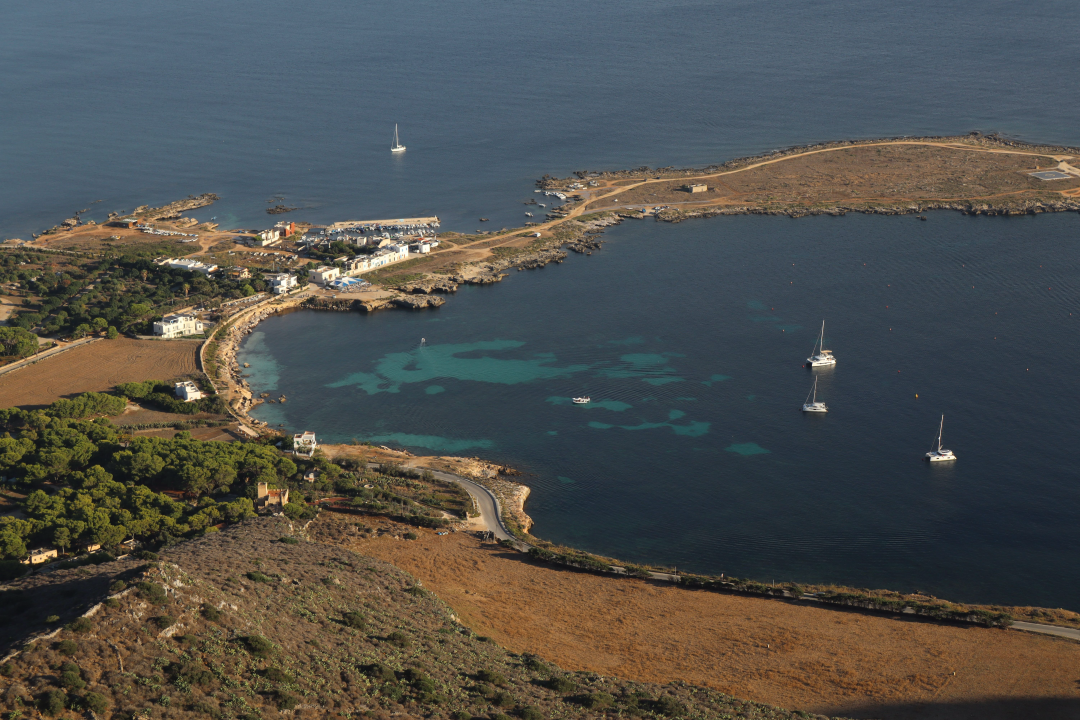
Coastal harbor in Sicily, Italy. Matteo Mazza. Pexels.
Remembering Tiresias and Circe’s warning, Odysseus wished to bypass the island of Thrinacia completely, but his crew insisted on stopping to rest. He reluctantly obliged and made his men swear not to touch the sacred cattle of Helios. However, adverse winds trapped them on the island, and their provisions ran out, leading Odysseus’ men to slaughter the finest cattle and feast while he was away. When they finally set sail, Zeus struck the ship with a thunderbolt at Helios’ demand, obliterating it and leaving every man, except Odysseus, to drown.
Sicily is historically associated with the location where Odysseus landed to resupply, while Favignana, the next island to the west, served as the stand-in for Odysseus’ home of Ithaca in Christopher Nolan’s recent film. To be transported onto the set, visitors can view Castello di Santa Caterina, the 15th-century hilltop fortress doubling as Odysseus’ palace; walk around Cala del Bue Marino, the tufa rock quarries serving as the film’s Temple of Athena; and explore Cala Rossa, the iconic turquoise cove used for sweeping coastal landscapes.
Eleventh stop: Ogygia (Island of Calypso): modern-day Gozo, Malta
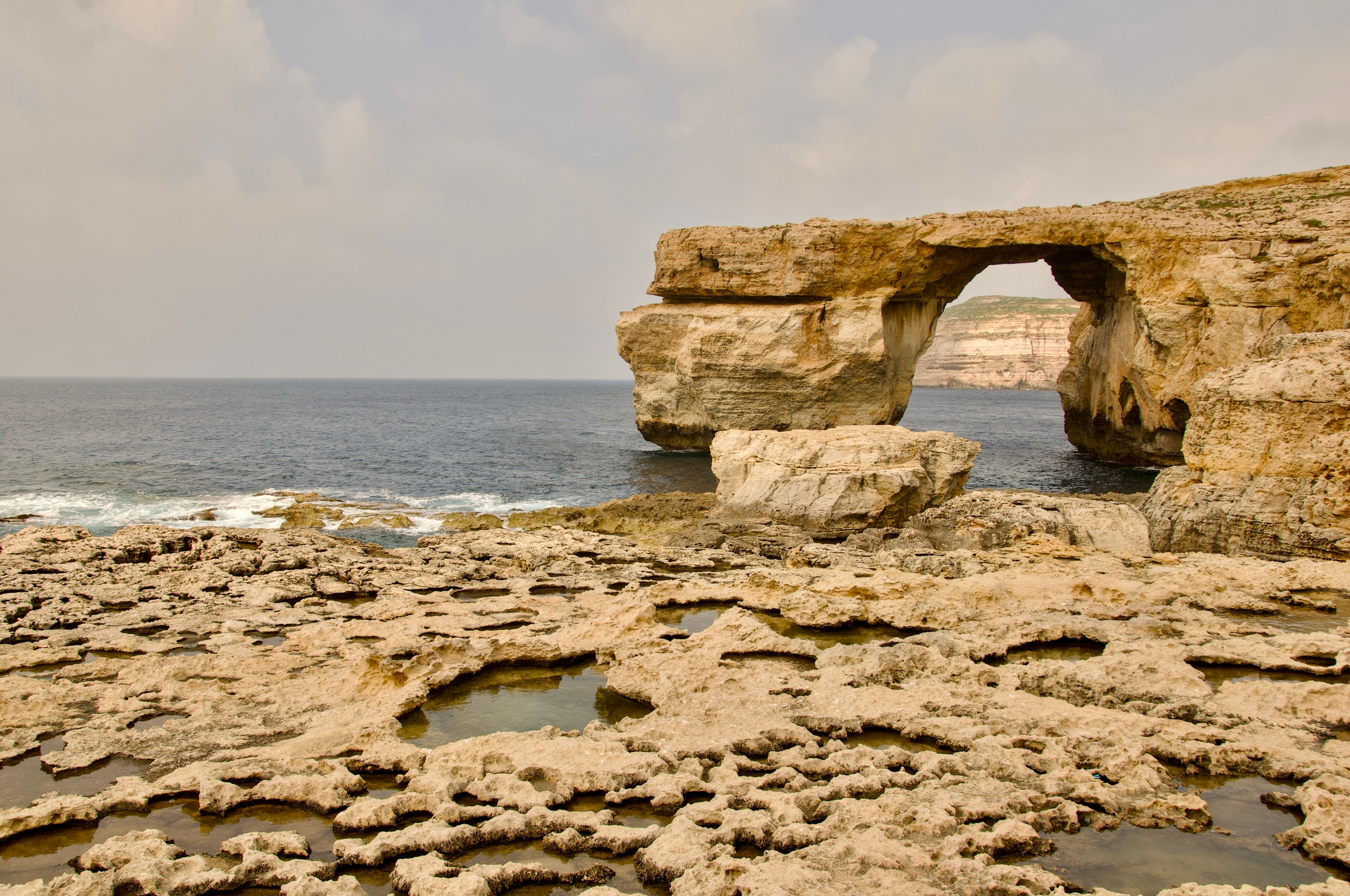
The Azure Window rock in Gozo, Malta. Dominic Muser. Pexels.
After the shipwreck, Odysseus washed up on the shores of Ogygia, the remote island home of the nymph Calypso. She fell deeply in love with him, keeping him there for seven years and offering him the gift of immortality and eternal youth if he chose to live with her forever. But Odysseus longed for home, and Athena pleaded his case to Zeus, who sent Hermes to command Calypso to release him. She reluctantly obeyed and helped him build a raft bound for Ithaca.
To decide for yourself if you’d stay on Calypso’s lush island, go directly to the source with one of Gozo's most popular attractions, Calypso’s Cave. While the interior of the cave is closed for safety, the viewpoint remains open, allowing travelers to overlook the golden-red sands of Ramla Bay, also known as the base of Calypso’s home, where Odysseus gazed out at the Mediterranean Sea yearning to go home.
Twelfth stop: Phaecia (Land of the Phaeacians): modern-day Corfu, Greece
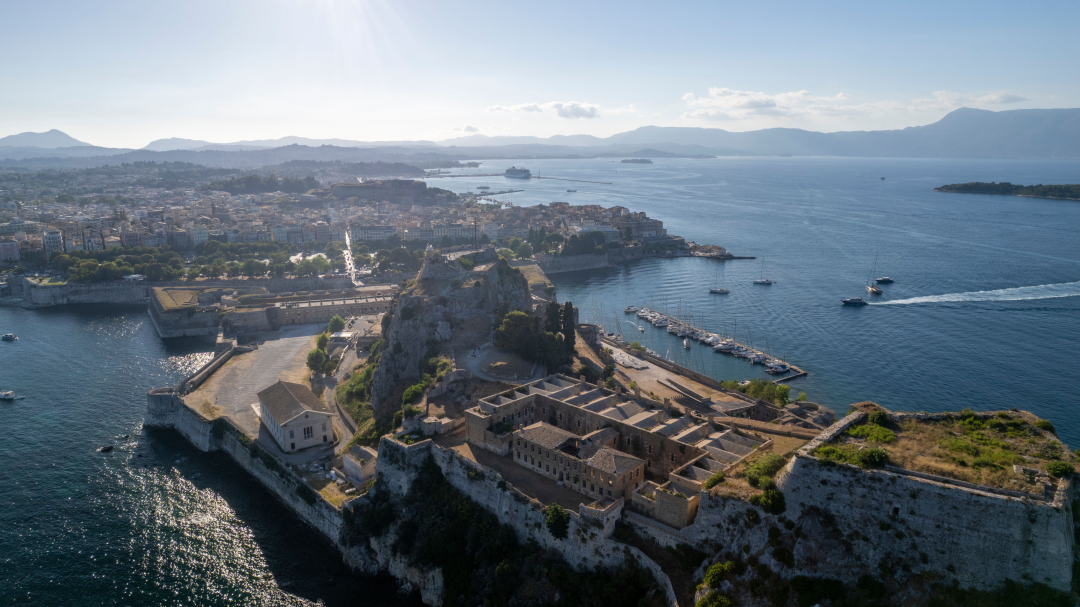
Aerial view of Corfu’s coast fortresses meeting its coasts. Ollie Craig. Pexels.
After leaving Ogygia, Poseidon produced a storm that sent Odysseus washing up on Phaecia’s shores. He was discovered by Princess Nausicaa, who took him to her father’s palace. King Alcinous and Queen Arete received him hospitably and hosted a banquet where Odysseus wept at a bard’s singing, revealing himself as more than a shipwrecked survivor. Pressed to reveal his true identity, Odysseus told the full story of his wanderings, and the Phaeacians, moved by his tale, loaded a ship with gifts and sailed Odysseus home to Ithaca while he slept.
For an “Odyssey”-inspired trip to Corfu, visitors can walk the coast where Princess Nausicaa found Odysseus at Paleokastritsa Bay. This coastal landscape features stunning, crystal-clear turquoise waters and six sand-and-pebble coves. Travelers can also venture to Pontikonisi, also known as Mouse Island, the tiny islet that legend claims is the petrified Phaeacian ship Poseidon turned to stone in retaliation for the Phaeacians aiding Odysseus.
Final stop: Ithaca: Ithaca, Greece
After the Phaeacians deposited a sleeping Odysseus on Ithaca’s shores, Athena appeared to him, revealing what was happening in his palace: the suitors were destroying it and were pressuring his wife, Penelope, to choose one of them to marry. Athena disguised him as an elderly beggar, allowing him to observe the situation without being recognized, and he reconnected with his swineherd, Eumaeus, and his son, Telemachus. Together, they devised a plan to defeat the suitors, and Odysseus entered the doors of his home. Penelope, still faithful to Odysseus, announced a competition, declaring she’d marry whoever could string Odysseus’ bow and shoot an arrow through 12 ax heads. When only the disguised beggar accomplished the task, Odysseus revealed his identity, slaughtered every one of the suitors, and, at last, reunited with his family.
To conclude your Odyssean journey through the Mediterranean, hike up to the School of Homer, an archaeological site believed to hold the remains of Odysseus’ actual palace. Afterward, migrate to the main square of Stavros Village to see a detailed model of the palace alongside a bust honoring Odysseus. Heading toward the epic’s legendary waters, hike downward to the southern cliffs of the Spring of Arethusa where Eumaeus let his pigs drink. Lastly, for a full circle completion of the trip, stop by Dexa Beach, the calm bay where traditions suggest Odysseus finally returned home.

Claire Park
Claire Park is a sophomore at the University of California, Berkeley studying English and Media Studies with a minor in Music. Her experience writing lifestyle content for UC Berkeley's The Daily Californian newspaper has inspired her to expand her scope to the realm of travel, pursuing her aspirations of becoming a travel journalist. When not writing, Claire can be found singing, reading romance books, journaling at the beach, or acquiring a sweet, caffeinated beverage.