
By Claire Garvin
Brain stunting, a detrimental cognitive effect of early childhood malnutrition, threatens to preserve economic inequality and injustice in the Philippines.

Mother holding her infant in Bacolod City, Philippines. Brian Evans. CC BY-ND 2.0.
The effects of chronic childhood malnutrition are often strikingly visible, including stunted height, low weight and muscle deterioration. Today, a less visible effect threatens around one in four children under five years old in the Philippines: brain stunting.
In children, stunted growth is defined by a child’s height-for-age in relation to the mean guideline set by the WHO Child Growth Standards Median, which are the international growth guidelines based upon data from 8,500 children from a wide range of cultural backgrounds, including Brazil, Ghana, India, Norway, Oman and the United States. According to Emmanuel Jay Dimal, the chief of nutrition information and education at the National Nutrition Council in the Philippines, “the high-impact consequence of physical stunting is the cognitive (aspect), the brain stunting.”
Brain stunting occurs due to chronic malnutrition during the first 1,000 days of a child’s life. After this period, the cognitive effects are generally permanent.
Brain stunting often presents itself in early infancy, as children display impaired motor skills and attention deficits. When children enter school, the effects of brain stunting crystallize: impaired focus, learning difficulties and challenges with analytical thinking. As chief nutritionist of Quezon City, Jai Sideco notes, “When the child starts schooling, that is where you see it. They find it hard to focus. Their performance is low. They get sick more often because their immune system is also compromised.”
These effects are not merely observational. In one clinical study performed in Jakarta, Indonesia, impaired cognitive, motor and adaptive abilities were observed in undernourished children. Neuroimaging studies using EEG and MRI scans reveal disrupted neural anatomy and metabolism mediated by chronic malnutrition and physical stunting.
Brain stunting threatens to perpetuate a vicious cycle; those facing the effects receive poor grades and are less likely to enroll in school, thereby limiting future earning potential. With over 40% of children in the lowest wealth quintile experiencing stunting in the Philippines, poverty remains a key driving force behind malnutrition and brain stunting; thus, the cycle continues. High pregnancy rates among Filipino adolescent girls exacerbate the issue, as nearly one in five experience stunted growth themselves. Facing nutritional depletion and undernourishment, these high-risk pregnancies augment the chance of low birth weight, thus compounding the risk of childhood stunting.
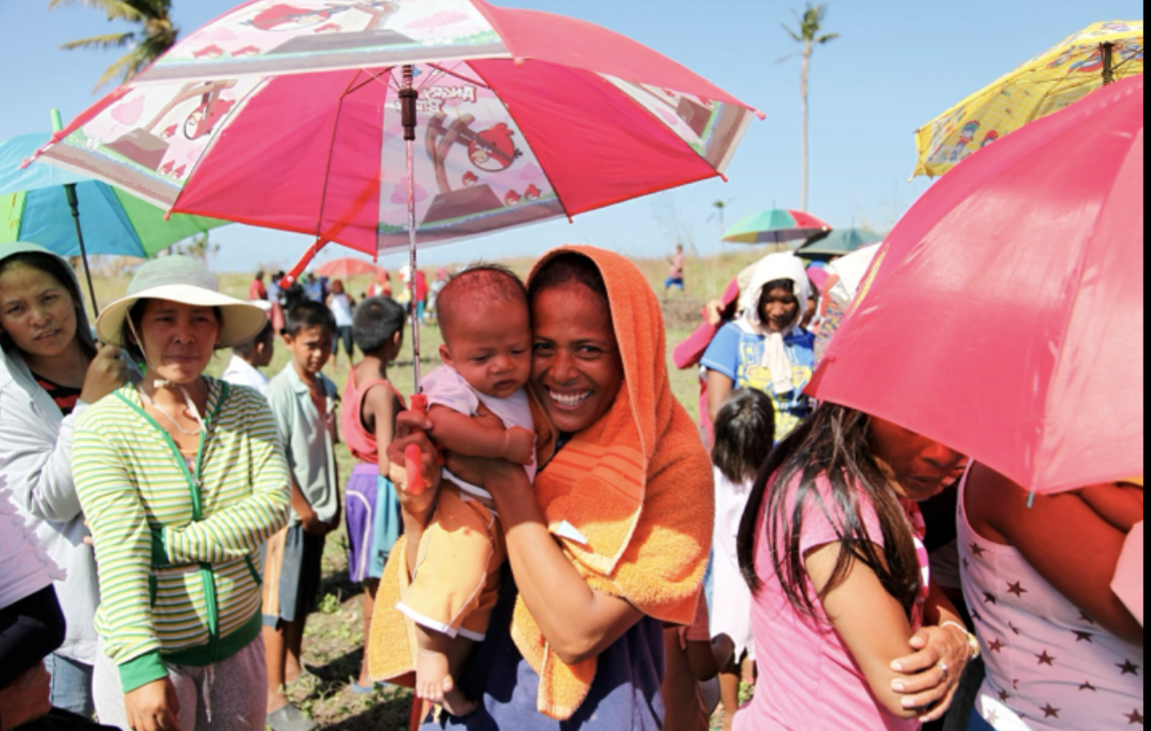
Filipino woman holding a child. Simon Davis. CC BY 2.0.
The Philippines is not the only country with high rates of stunted growth and malnutrition. Recent data from 2024 indicate that nearly one in three children in West and Central Africa, East and Southern Africa and South Asia face childhood stunting. However, although stunting rates have declined over the last three decades in the Philippines, “most low- and middle-income countries recorded a better showing” than the Philippines in 2025. This disparity lies, in part, due to its economic and political history.
Socioeconomic inequality and government policies are pivotal determinants of childhood health outcomes. The Philippines entered the global economy primarily through exporting goods, such as sugar, tobacco and coconuts, from tenant and indebted labor farms, which created concentrated wealth without food security. In the 20th century, American and Western European interference introduced public education, health benefits and social goods without altering the societal structure of oligarchical land elites. A small number of people retained control of the land and government. Today, land inequality in the Philippines remains higher than the median in East Asia.
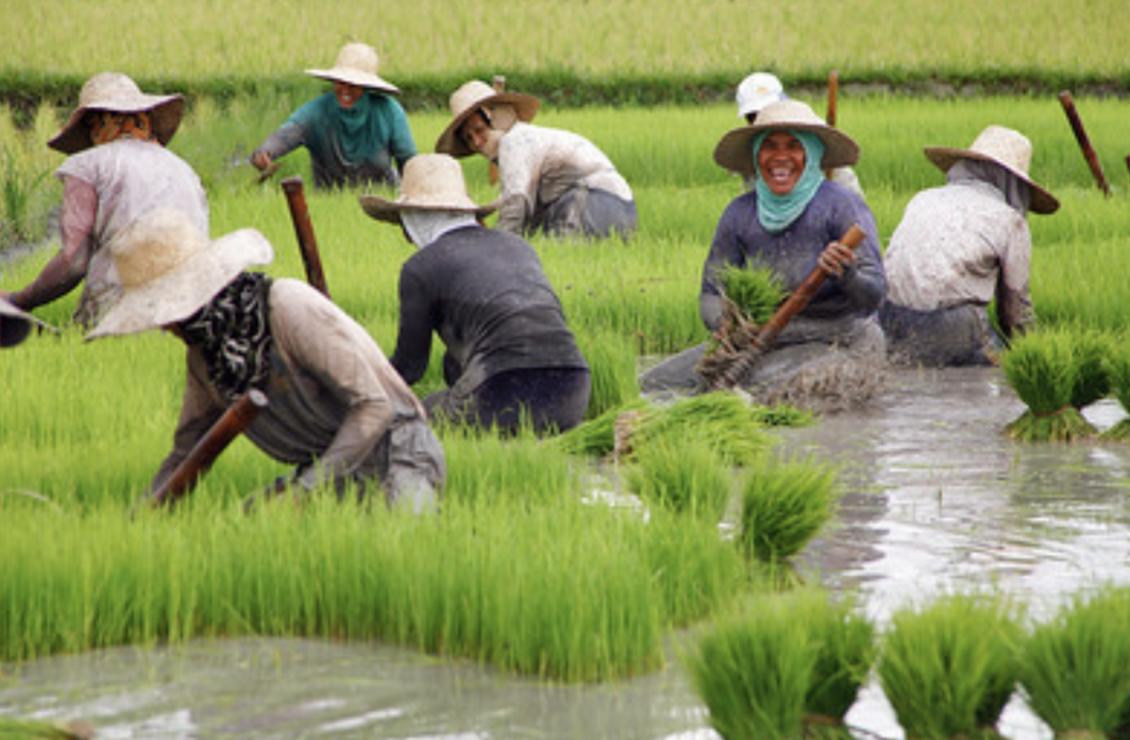
Agricultural workers harvesting rice in Nueva Vizcaya, Philippines. ILO Asia-Pacific. CC BY-NC-ND 2.0
Compared to other Asian nations, which have increasingly turned to factory work, the Filipino economy remains rooted in agriculture. Manufacturing jobs have been critical in advancing upward mobility in many Asian nations; however, as of 2023, manufacturing comprises only 17% of the Filipino economy, a rate much lower than neighboring Asian countries. While the Filipino poverty rate has significantly declined over the past decade, over 15% of the national population remains below the poverty line, and an additional 28% of Filipinos remain vulnerable to that same fate.
Amending economic inequality remains key to addressing the roots of widespread stunting rates in the Philippines. However, short-term relief efforts have gained traction in working to halt the poverty cycle. A 2018 law mandated increased nutritional assistance during pregnancy and the first 1,000 days of a child’s life, although the absence of a set budget amount for this economic assistance has hindered its effect. Today, the National Nutrition Council dietary supplementation program works to deliver nutritional support for pregnant women and infants, as an adequate prenatal environment and early childhood nutrition would each promote 20% reductions in childhood stunting levels.
GET INVOLVED:
Learn more about Save the Children, a non-profit offering nutritional assistance for pregnant mothers and young children. Get involved with or donate to Reach Out Feed Philippines, which offers nutritional meals for young children throughout the Philippines.

Claire Garvin
Claire is a fourth-year student at Barnard College, Columbia University studying Neuroscience. She is interested in writing as a means of understanding the world, and she hopes to ignite meaningful change through her journalism. Outside of class, she enjoys baking, painting, and reading.